

Social Skills Activities for Children with Autism
AutismTeachingStrategies.com
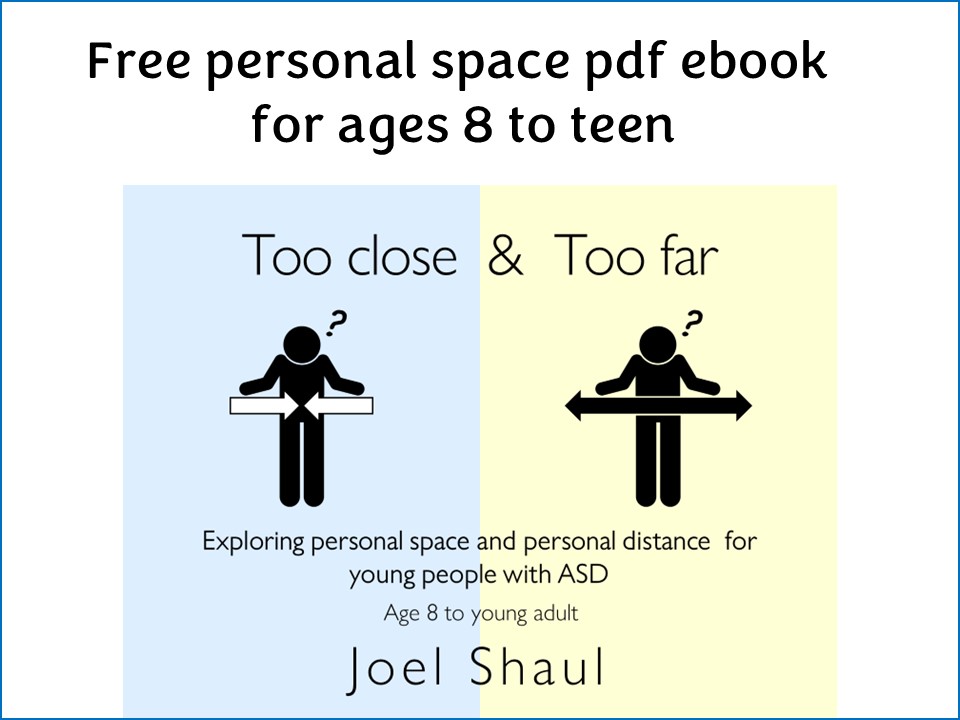
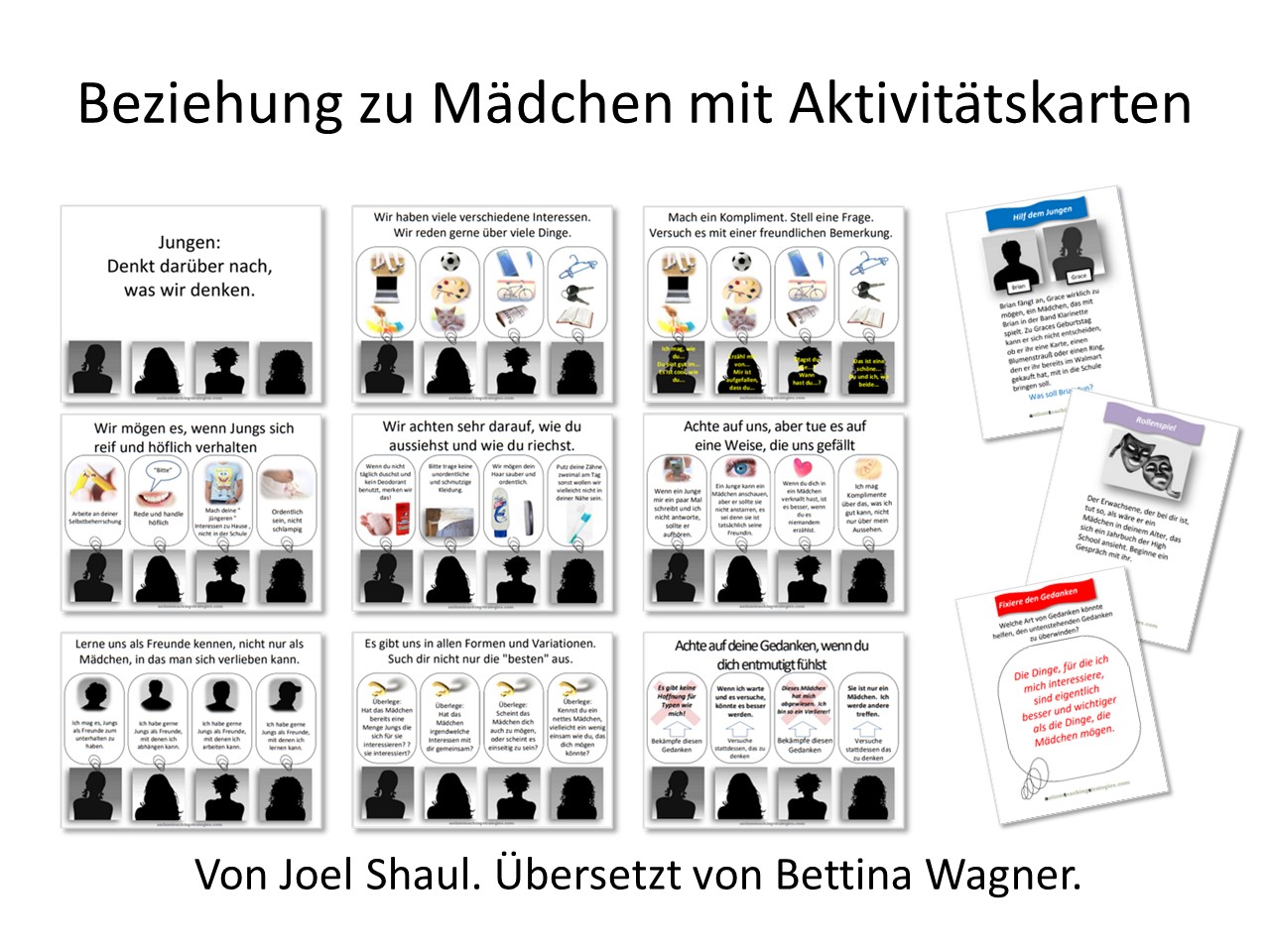
German translation of this book
Irish translation of this book
Hebrew translation of this book
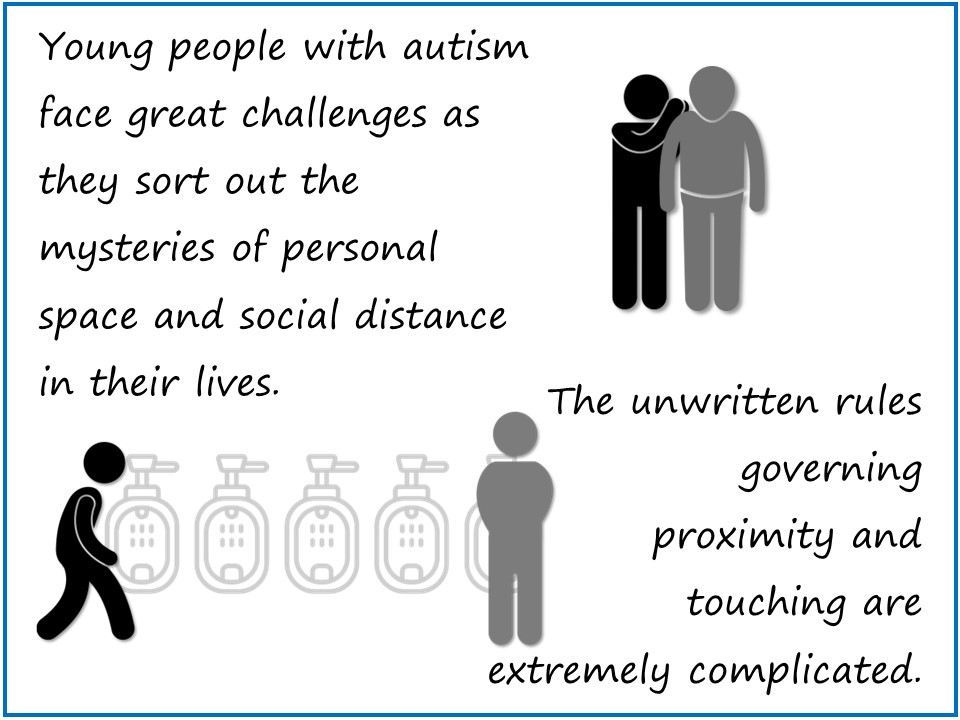
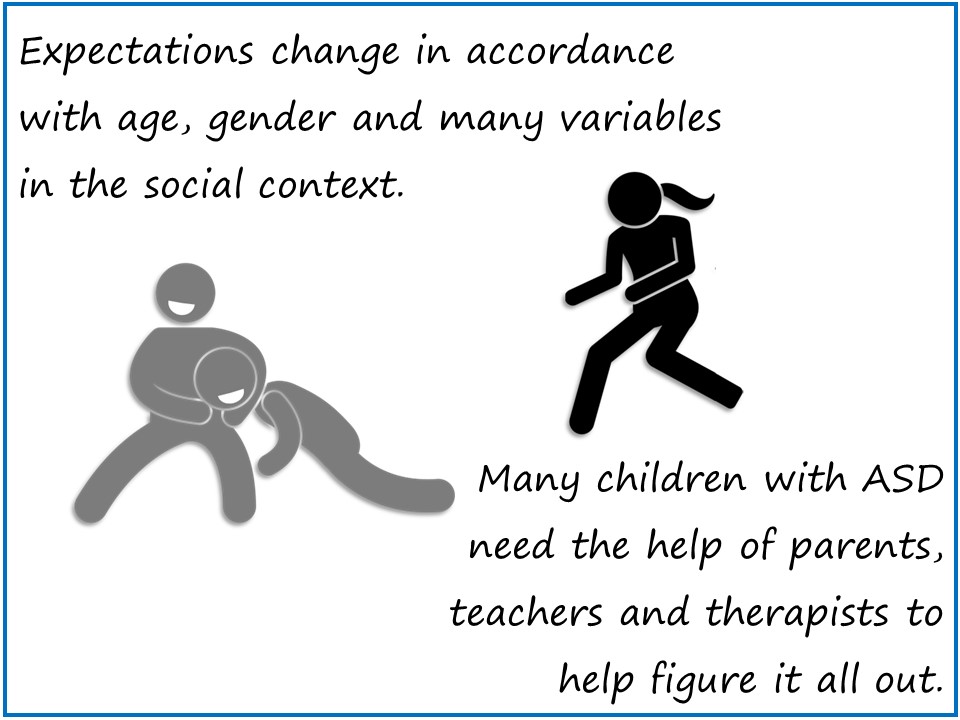
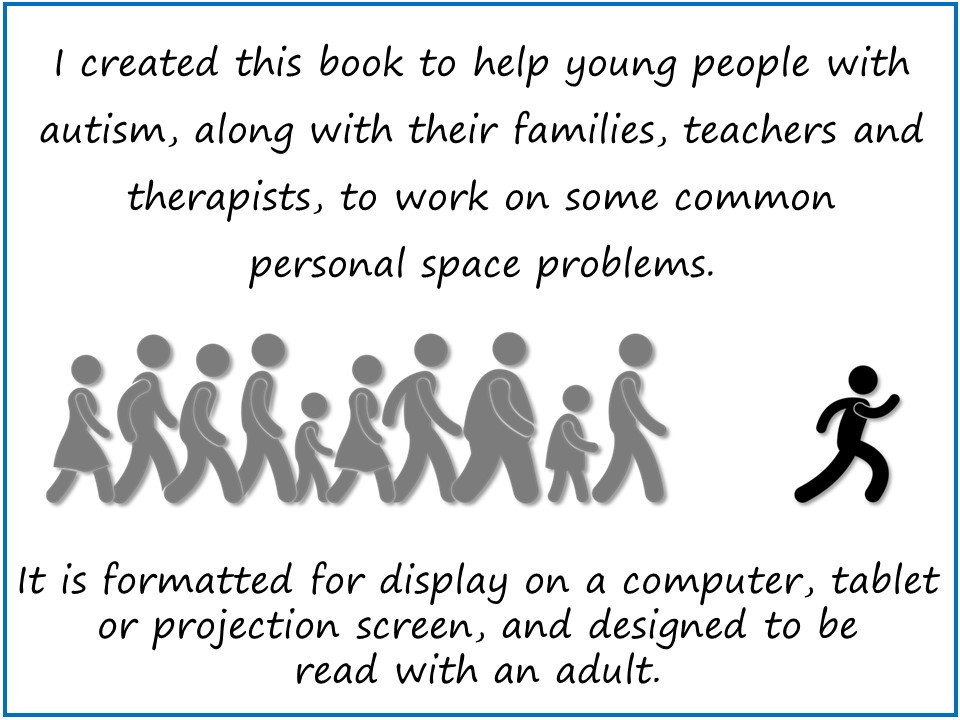
I created this resource for several reasons.
First, although there are many resources available to help children with autism to learn about personal space, the resources tend to be simple and formulaic. In my own experience helping young people on the autism spectrum to learn about personal space, the actual unwritten rules are so complicated that merely relating some simple rules isn’t good enough.
Second, there are few resources on personal space and distance designed to help older children, teens and young adults. As children on the spectrum grow up, the personal space rules affecting them get more and more complicated, especially if the young person is involved in a variety of challenging interactions in the community.
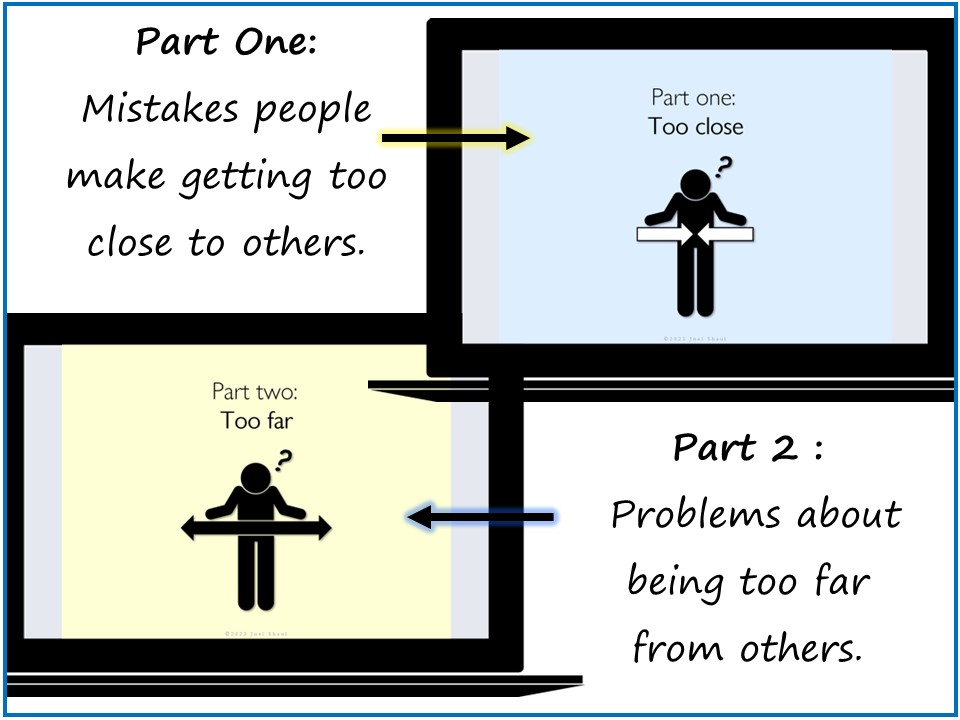
Third, I have come to view problems with getting too close as part of a spectrum of personal distance perception challenges that also includes getting too far away. My own clients over the years who tended to make mistakes with getting too close or inappropriately touching people also had difficulty with getting too far away from the expected social grouping.
I designed this eBook to help young people, over a wider range of ages, with a more broadly defined set of challenges involving personal space and distance.
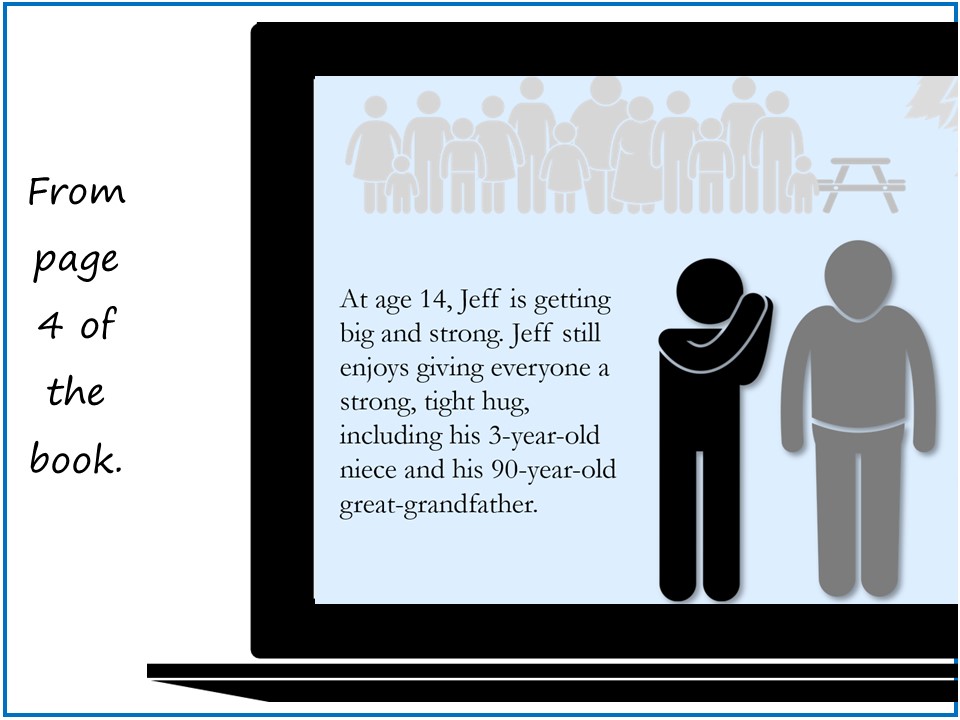
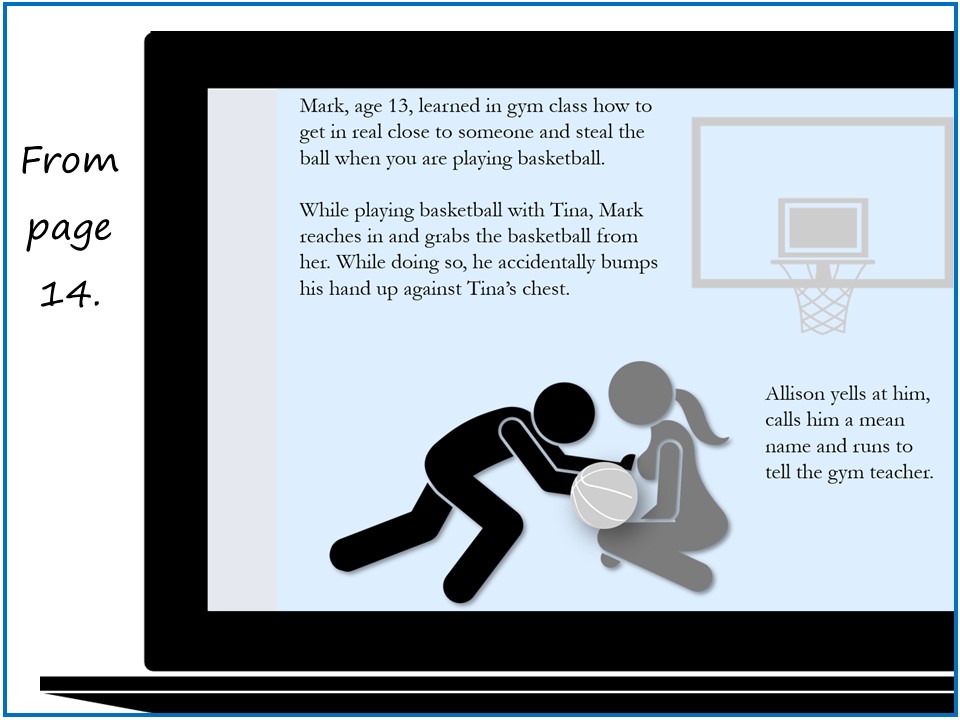
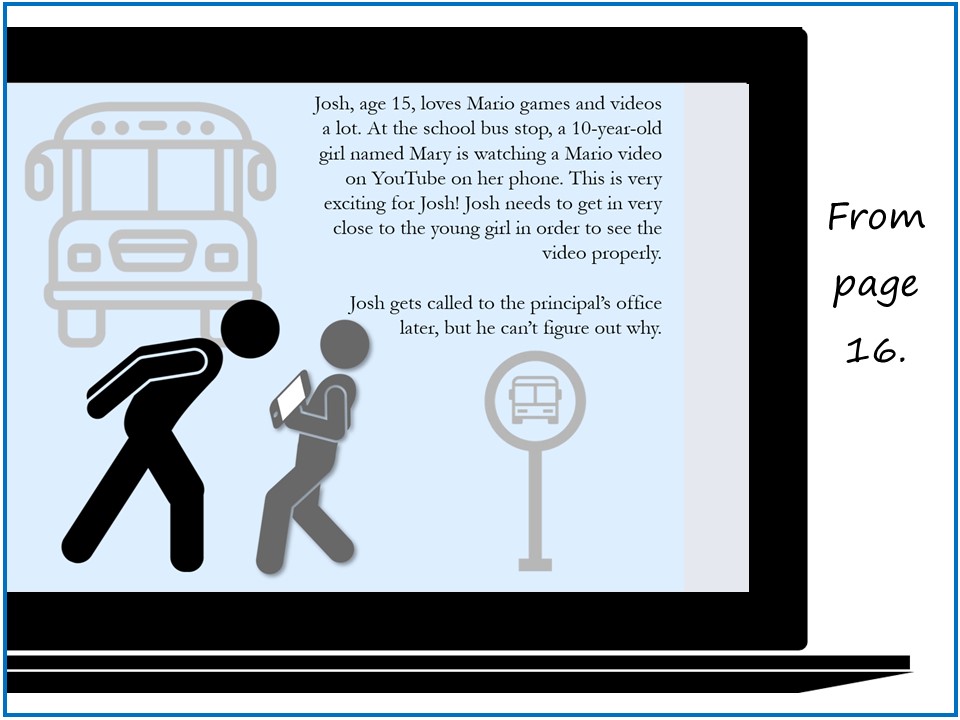
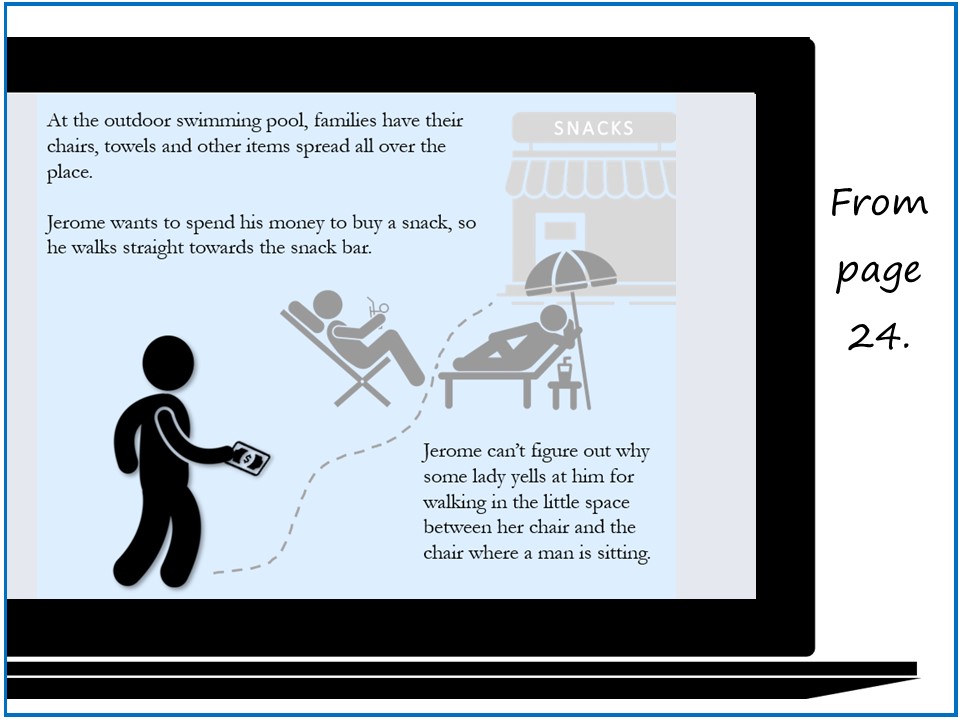
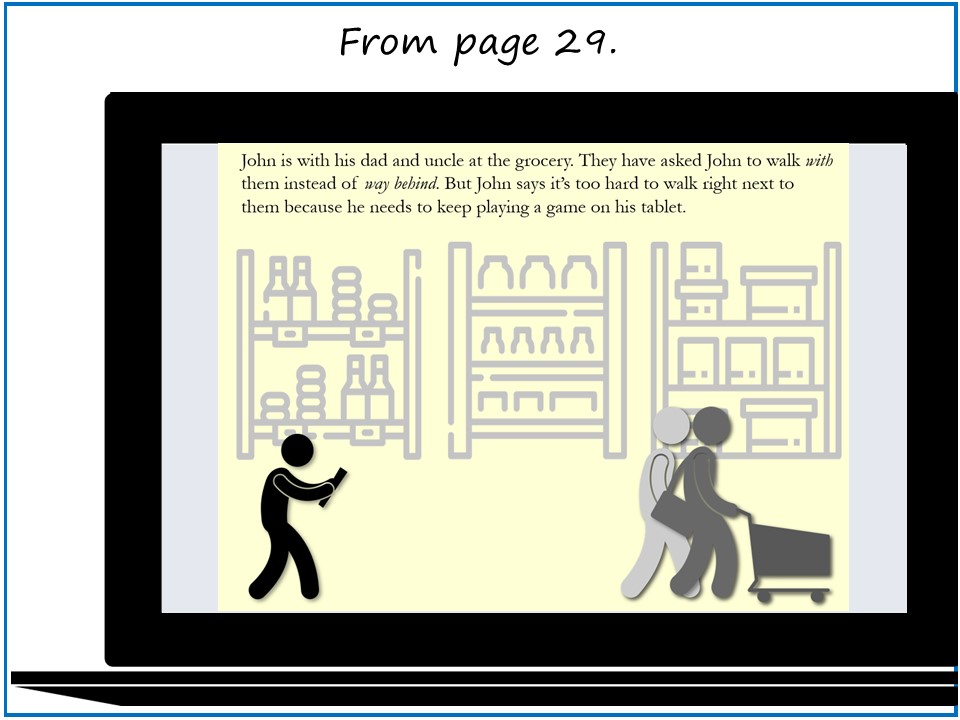
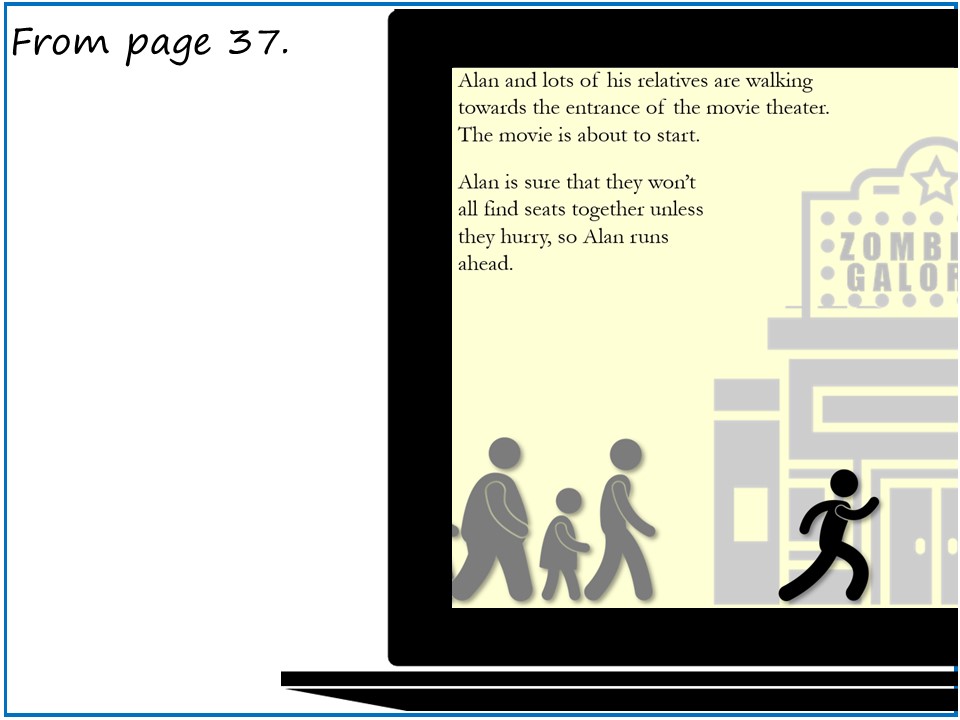
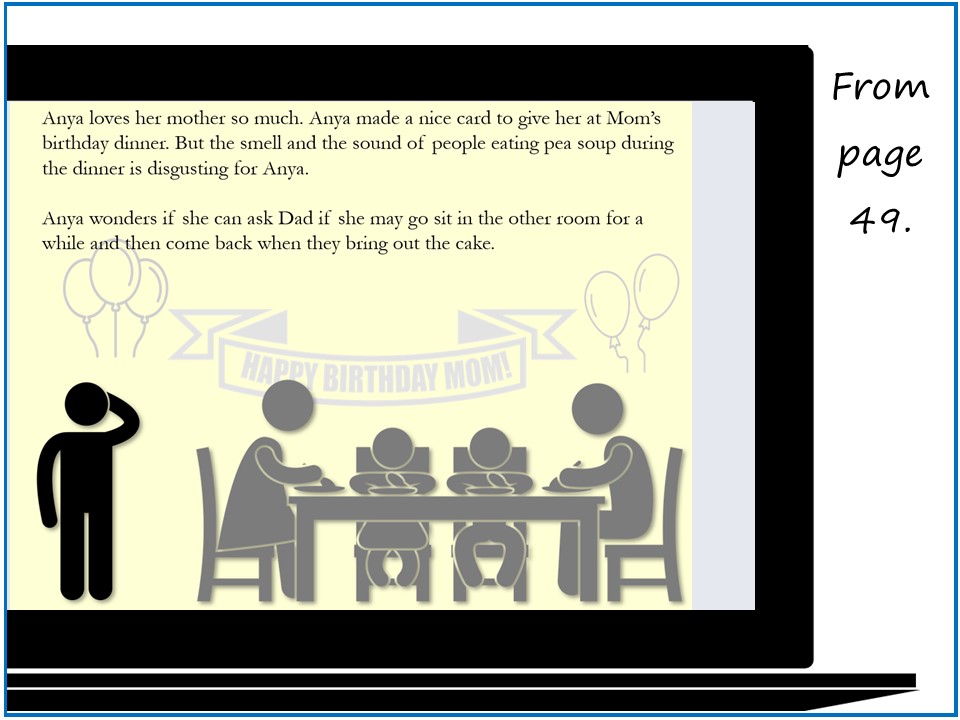
The pictures below show some pages from the book, illustrating the wide variety of personal space problems that autistic youth are constantly under pressure to solve. The examples come from my many years of work with autistic children and teens in therapy, classrooms and especially in my ten years of running summer youth programs for teens on the spectrum.
Here is in a one-minute, illustrated tutorial in which this important principle is explained.
September 2021
Many of us in education, mental health and speech spent hundreds of hours providing services remotely through our computers in 2000 and 2021.
At times, it certainly made us feel burnt out. Not to mention how it may have affected our students and clients.
Maybe you, like me, have also learned from working remotely and grown professionally because of it. Although I went through lots of frustration, I have to say it really had some very positive effects on my work. I started out with limited skills in teletherapy but then I got much better at it, to the point that a majority of the families I work with would have preferred continuing in remote services with me if insurance providers and regulatory agencies would have allowed it.
While doing all that therapy remotely through computer screens, I did a few things which have affected the way I now do my in-person mental health therapy and social skills training for young people with autism.
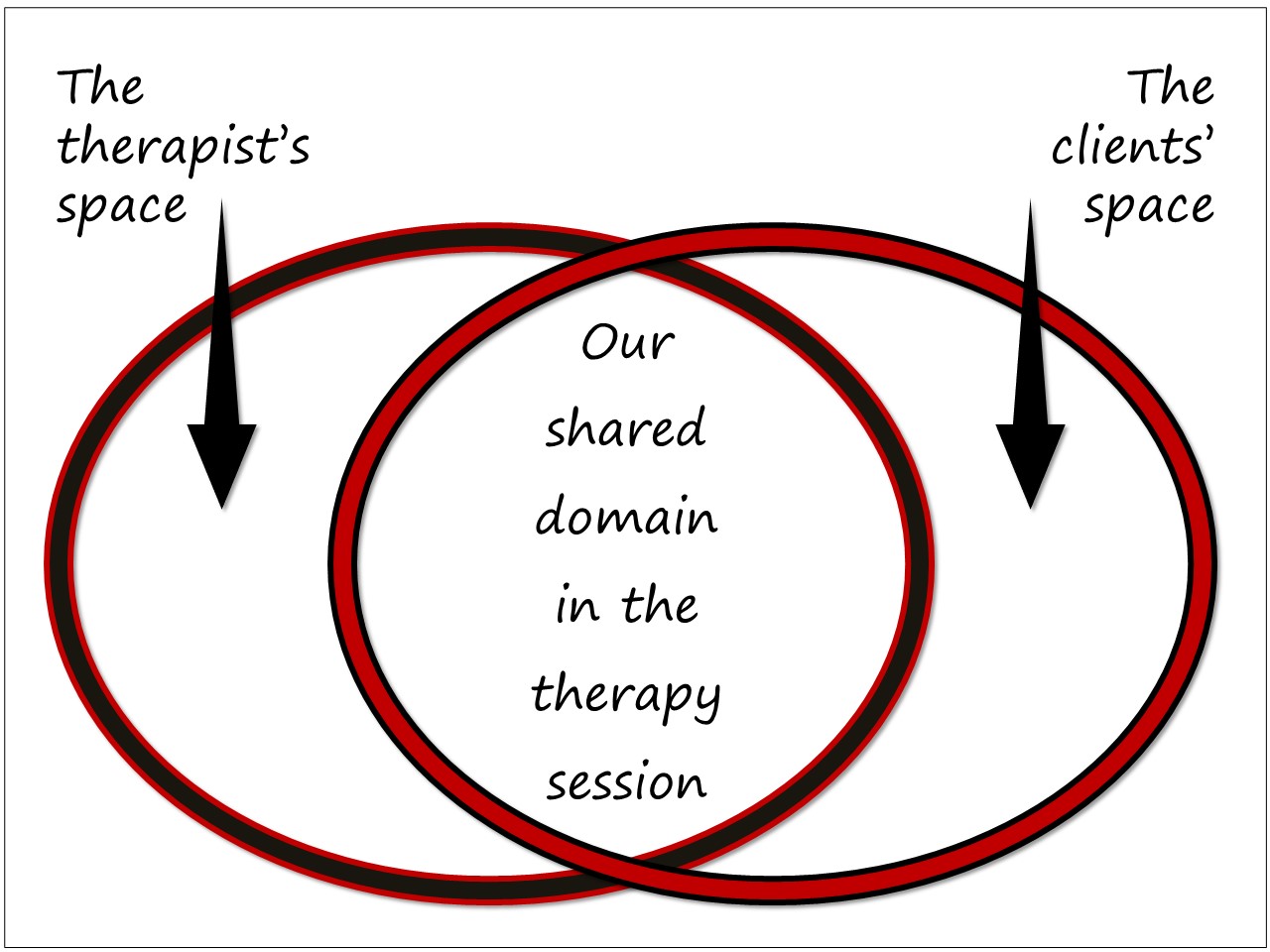
Doing teletherapy, in a shared, virtual space instead of our own offices, can have the effect of breaking down some power dynamics that might not be beneficial to the needs of the child and the family. We – the professional, the child, the parent – work together in teletherapy in a space we jointly nurture and develop. It sometimes does not work so terrific, but when it does, it’s great.
Now that we are back in in-person sessions, providing services in our professional space, there are many things I can do to continue to work together with families in an egalitarian and collaborative manner. I can get out a drawing the child made in the past and stick it on the wall during the session. I can work more diligently with the parent as a therapeutic ally and perhaps have them in the therapy room for more of the session.
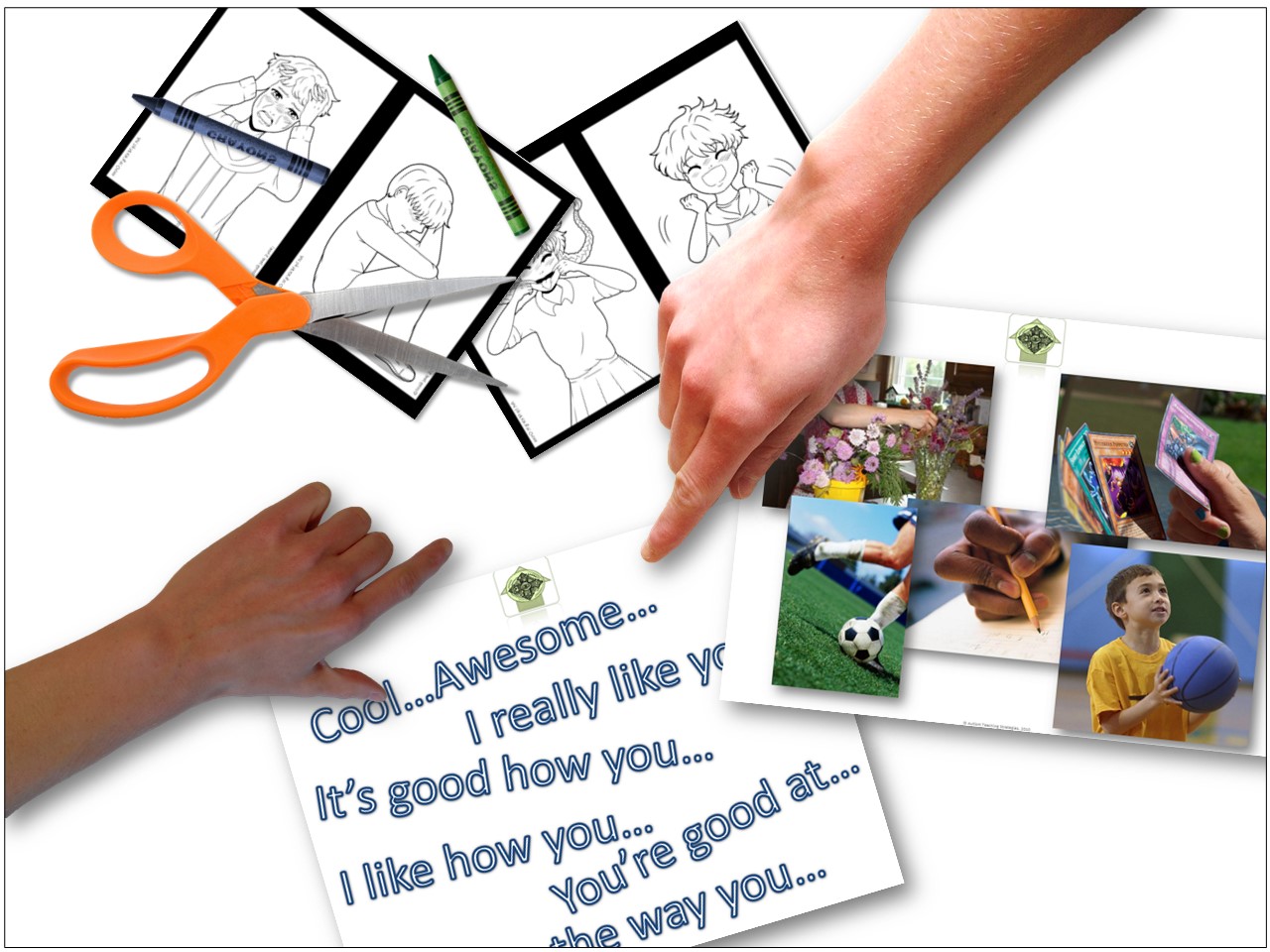
The experience of doing teletherapy made it more clear than ever how important it is to use the clearest and most engaging visuals I can find. I noticed, in teletherapy with young people on the autism spectrum, that I needed to use colorful, engaging and strategic visuals on the shared screen as much as possible to supplement the verbal exchange and engage distractible eyes. Now that I am back to seeing children in person, I find I am using visuals – social skills games, picture cards, very simple worksheets – more than ever, since for so many months I had no other choice while carrying out teletherapy sessions with children on the autism spectrum.
In your own in-person teaching and therapy, you are invited to supplement your own repertoire of engaging visuals with whatever you might find on my website. My website’s download section has dozens of free printable games, pictures, coloring sheets and simple worksheets.
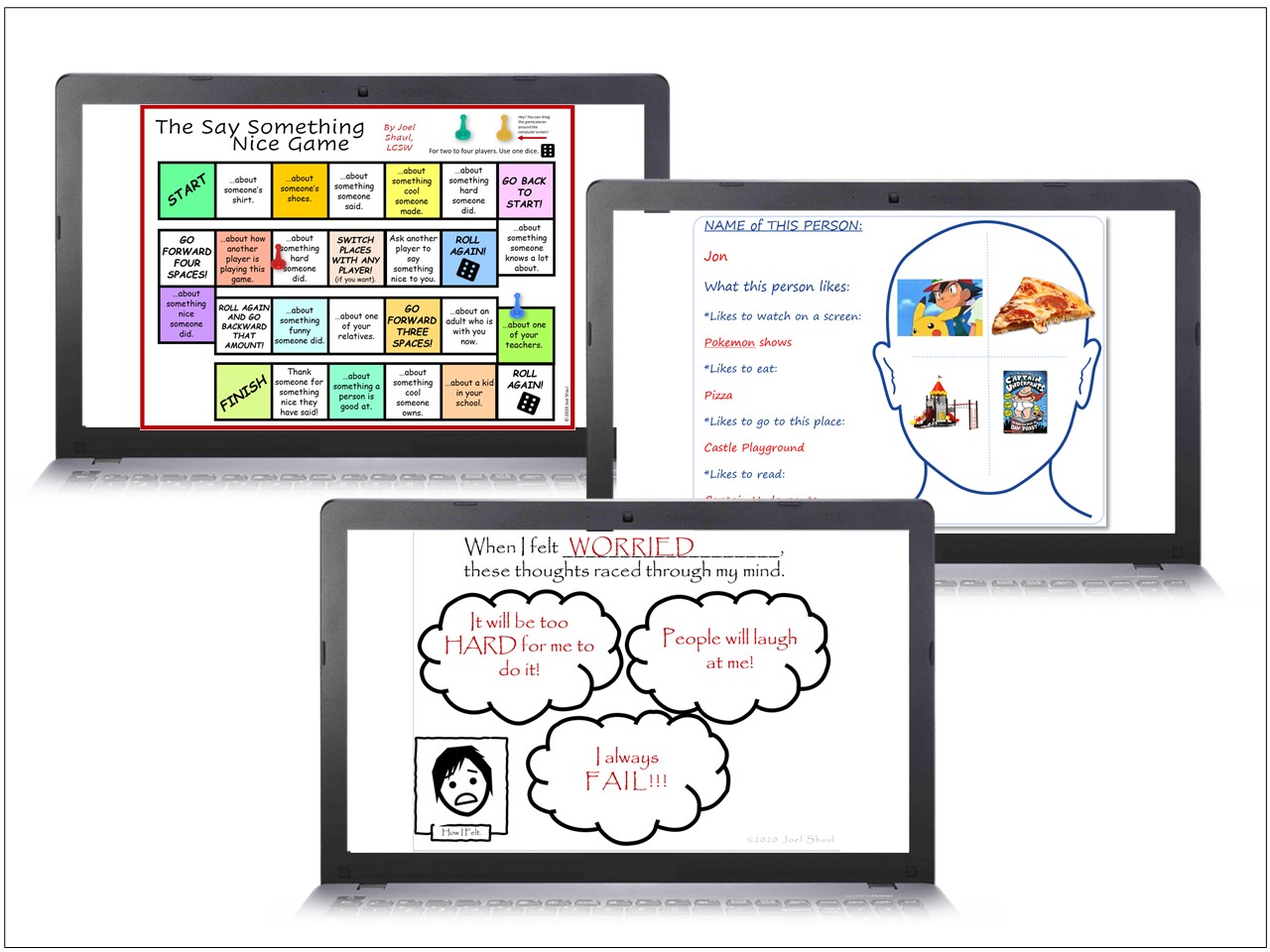
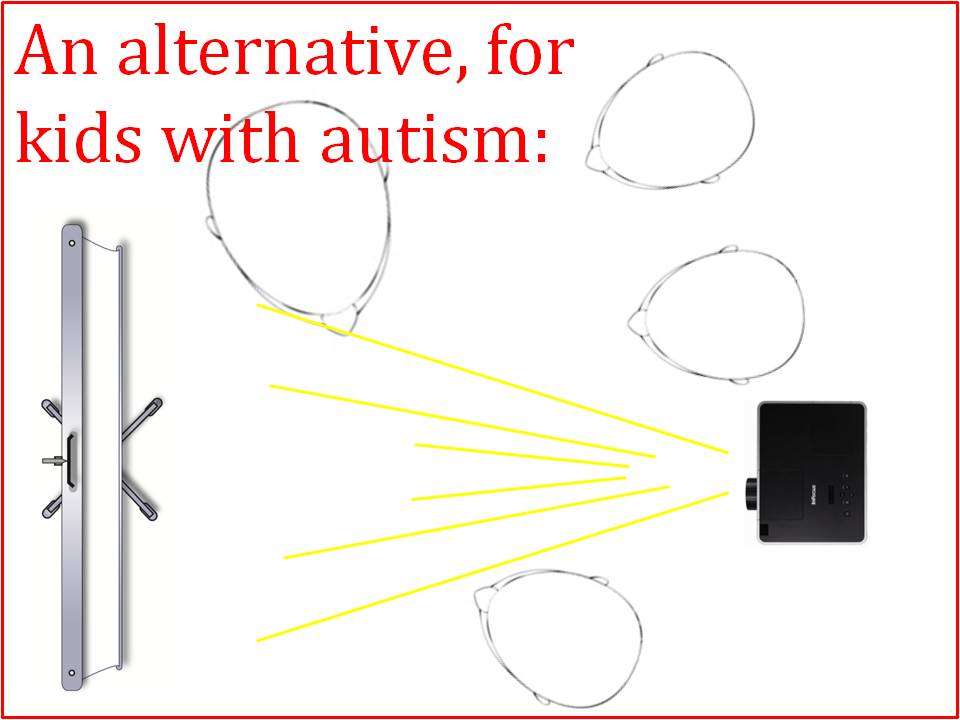
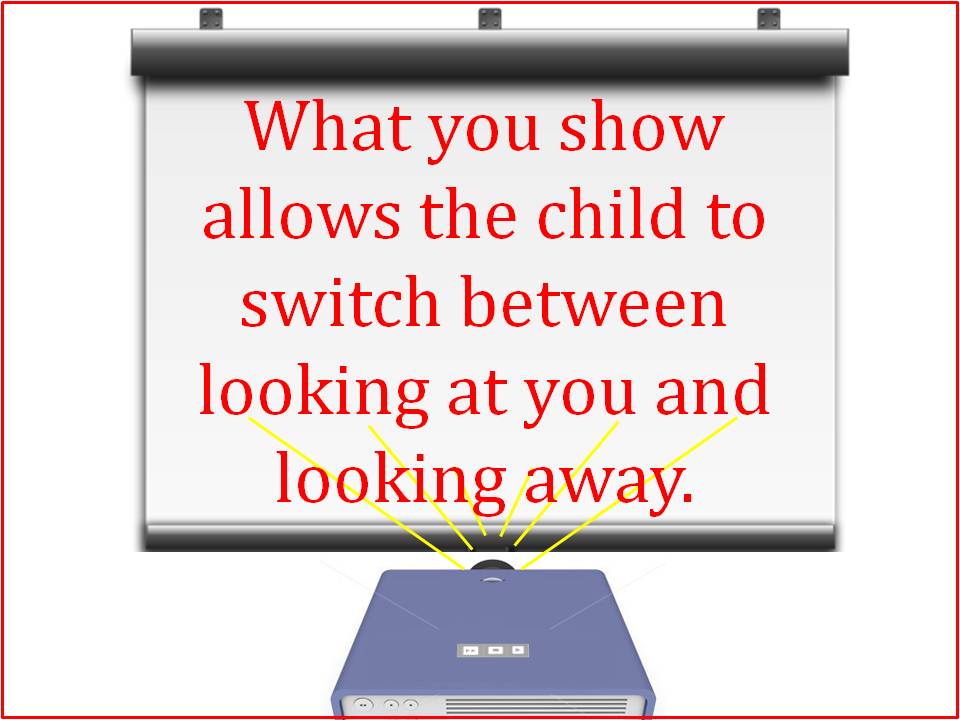
Many kids with ASD will lose focus and feel uncomfortable if obligate them to face us directly for too long. In teletherapy, I often spent more than half the session working with them while we looked together at a game, online worksheet or video. Although I used to use screen-based therapy tools often before the pandemic, I find I am employing them even more now after 18 months of teletherapy experience.
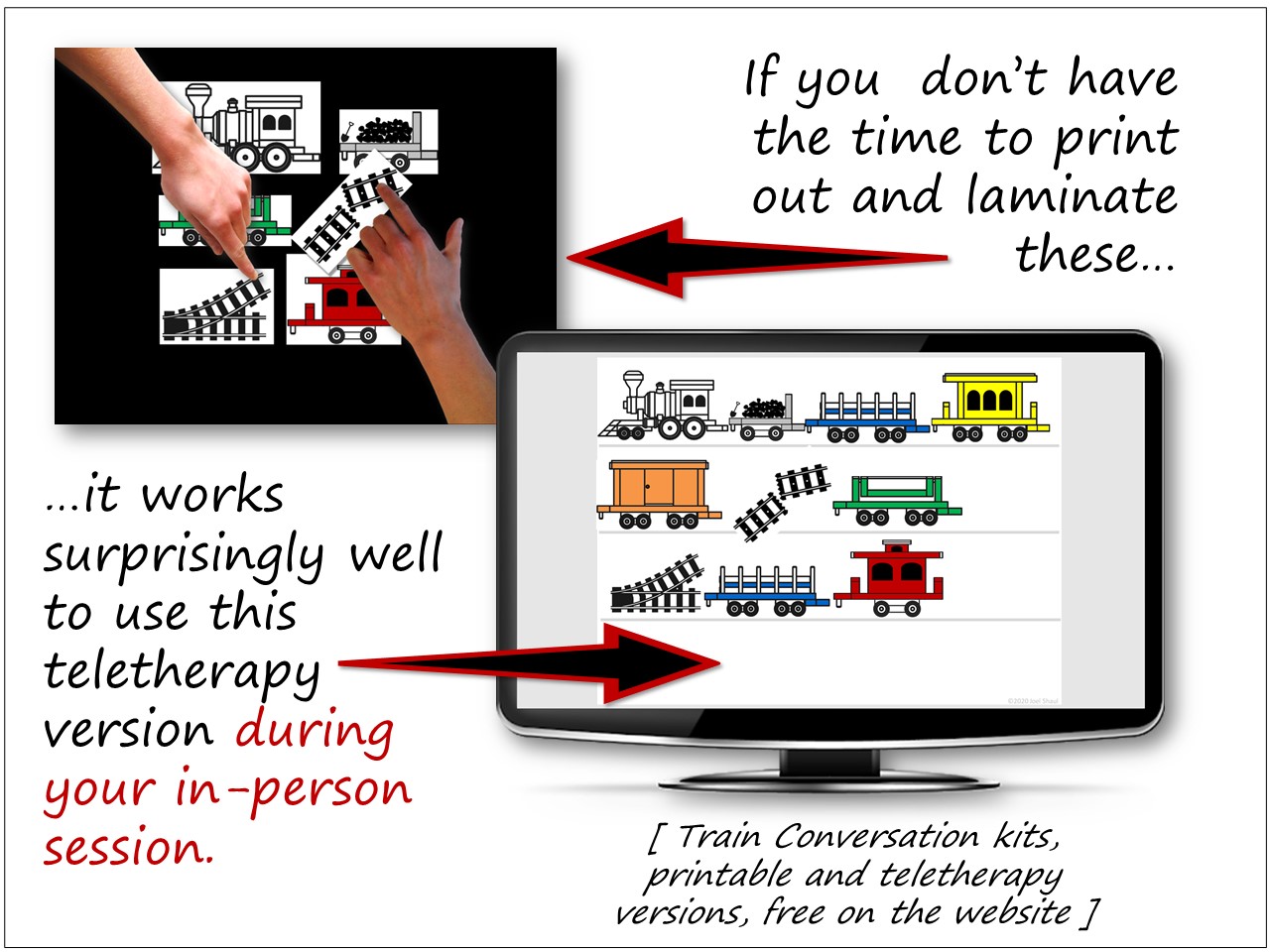
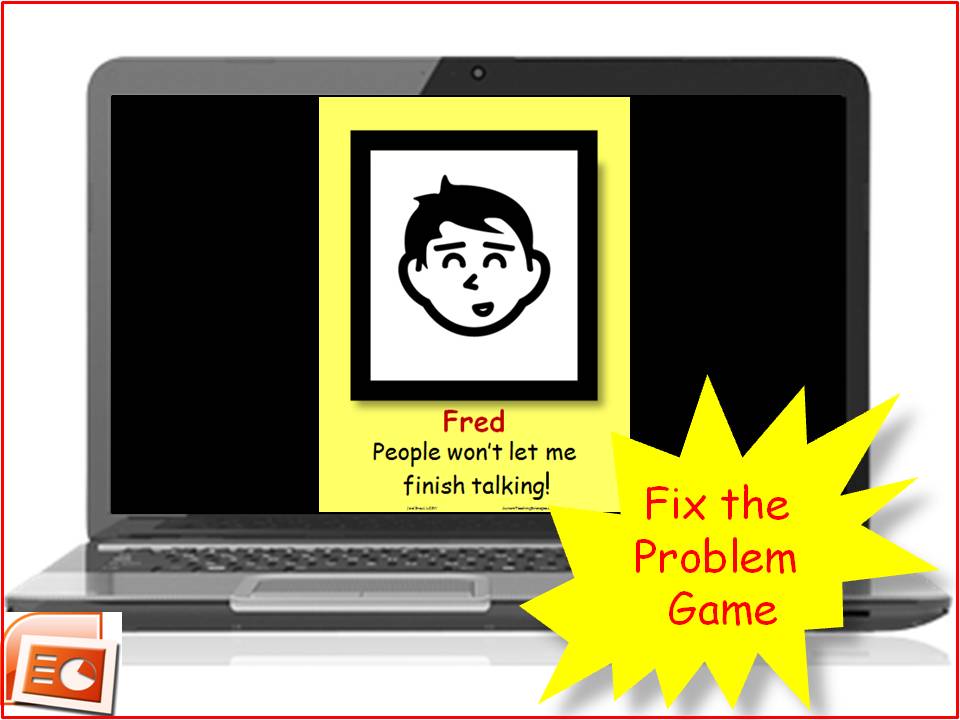
Some of these screen-based teletherapy resources I developed work even better than the printable resources I based them on. See this example below.

On my website, there are hundreds of pages of downloadable free resources for children on the autism spectrum.
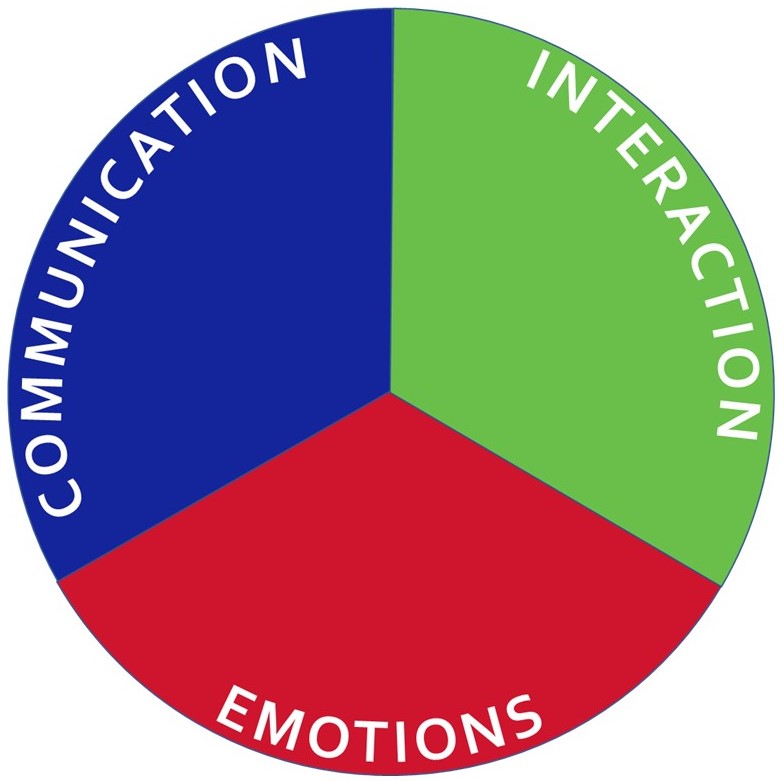
Most of my free downloads to help children on the autism spectrum are grouped into these three categories:
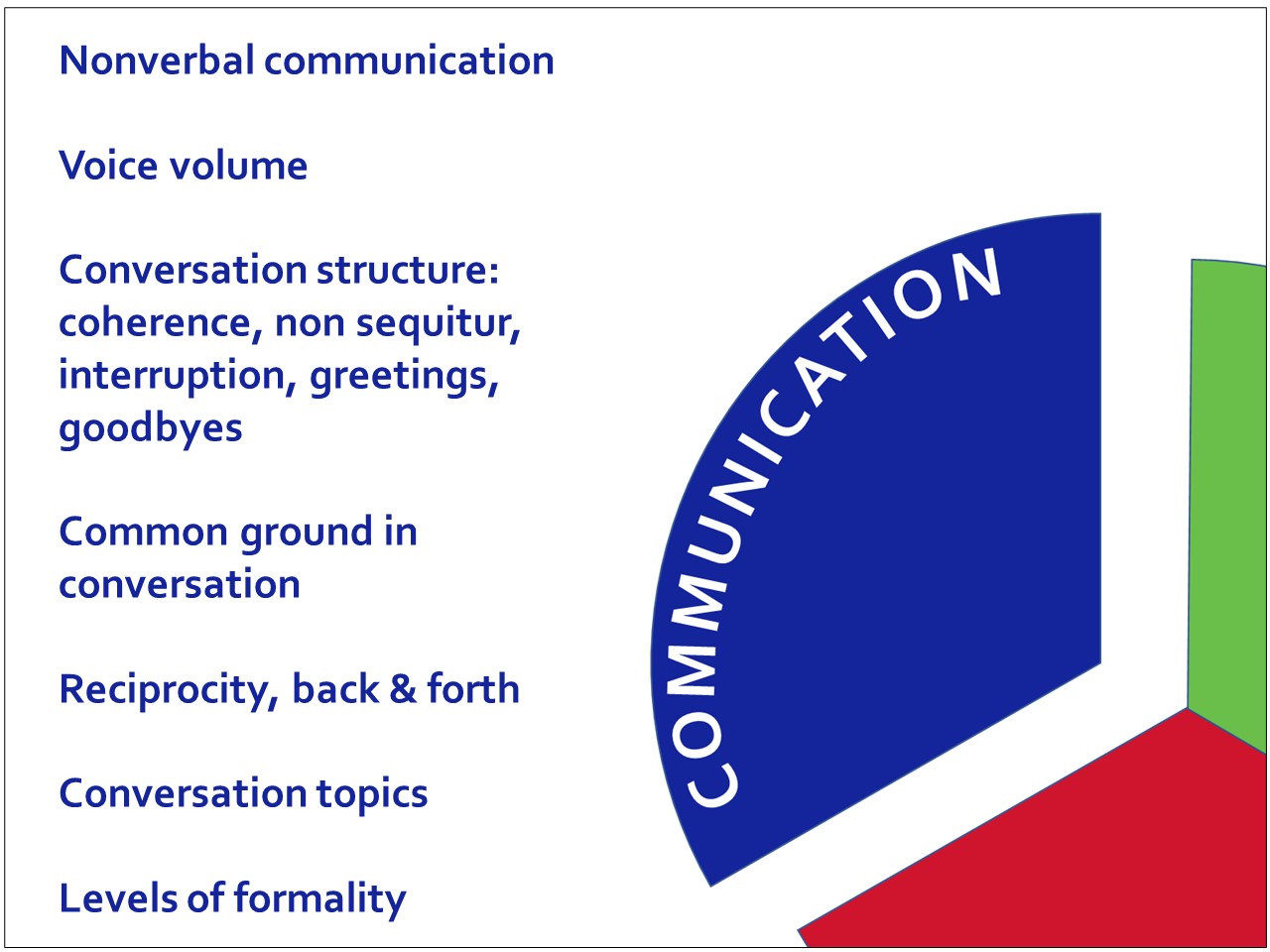
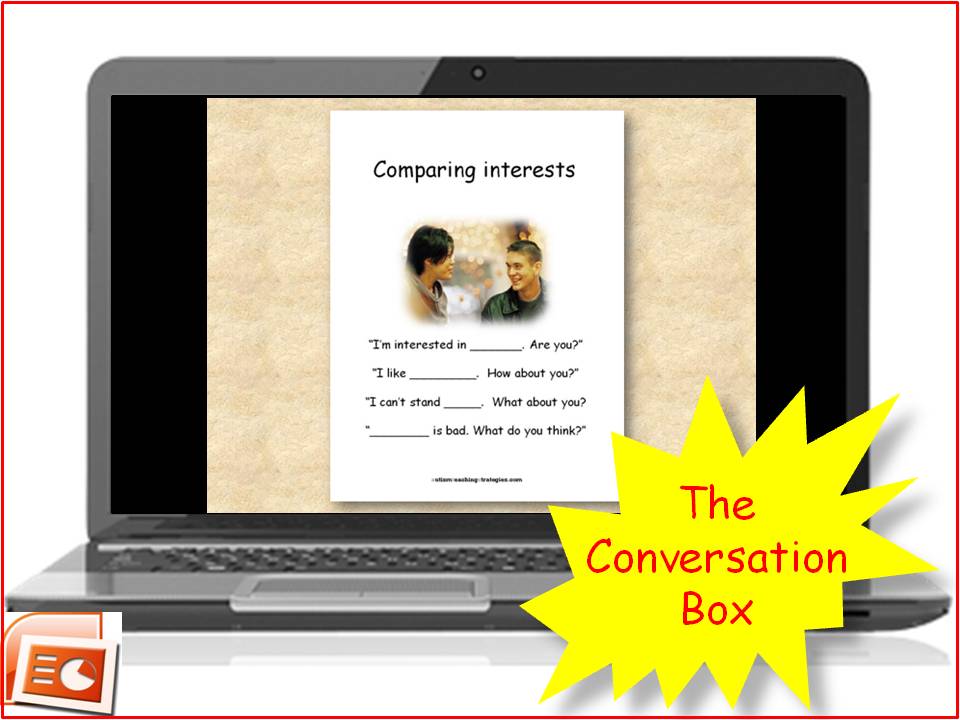
I have dozens of free resources to help children with ASD to practice conversation, nonverbal communication and diverse aspects of social communication. To access free resources on communication skills, click here. Communication .
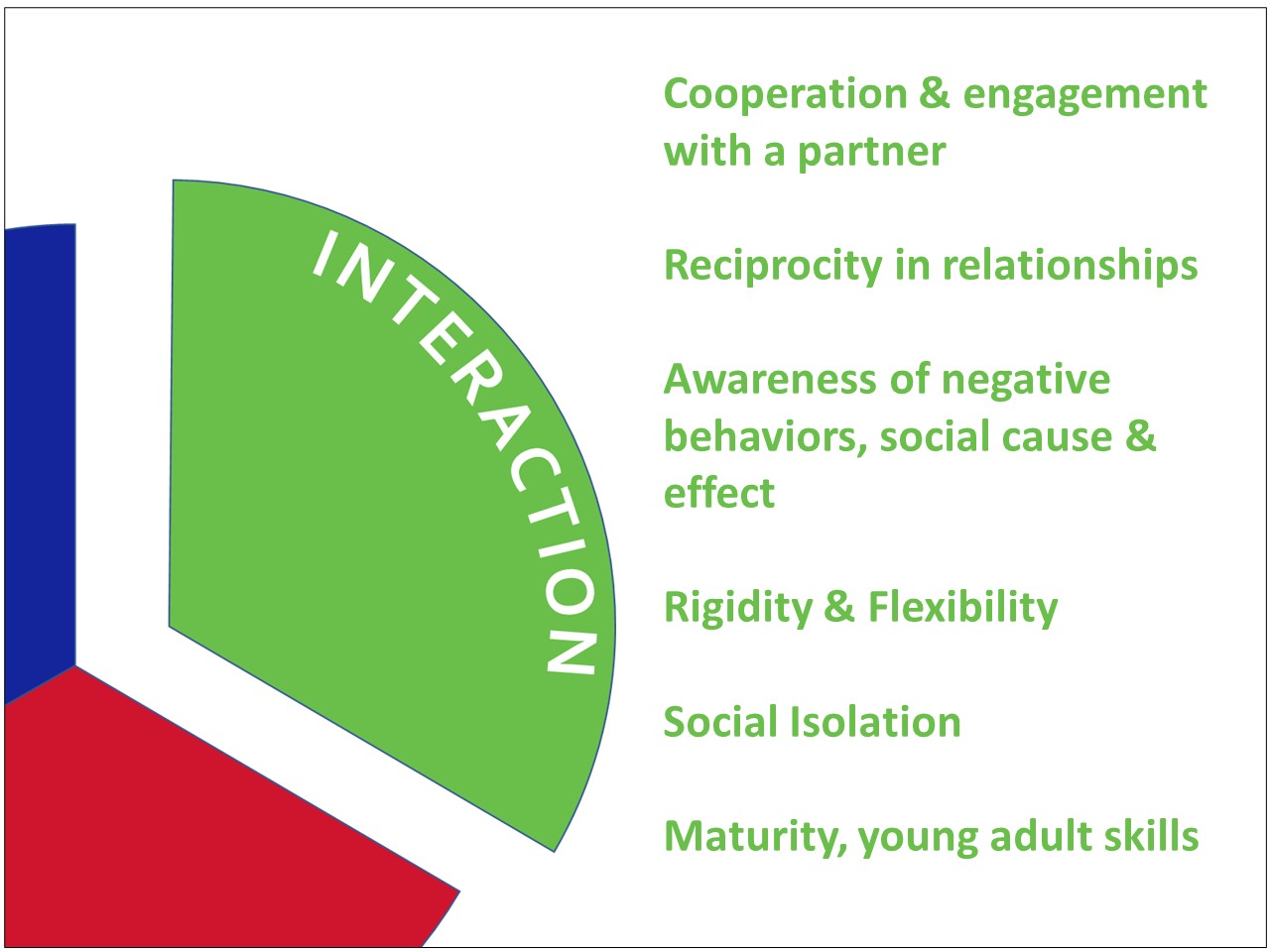
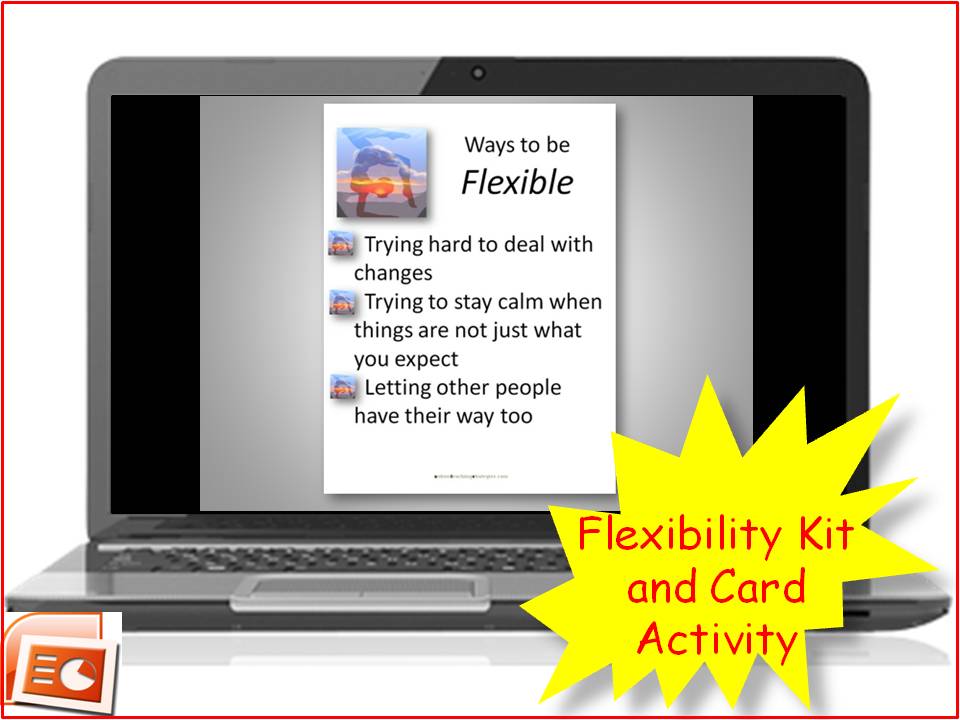
There are a number of free social skills resources to help children with autism learn about and troubleshoot many different issues pertaining to social interaction. To access free downloadable resources on social interaction skills, click here: Interaction .
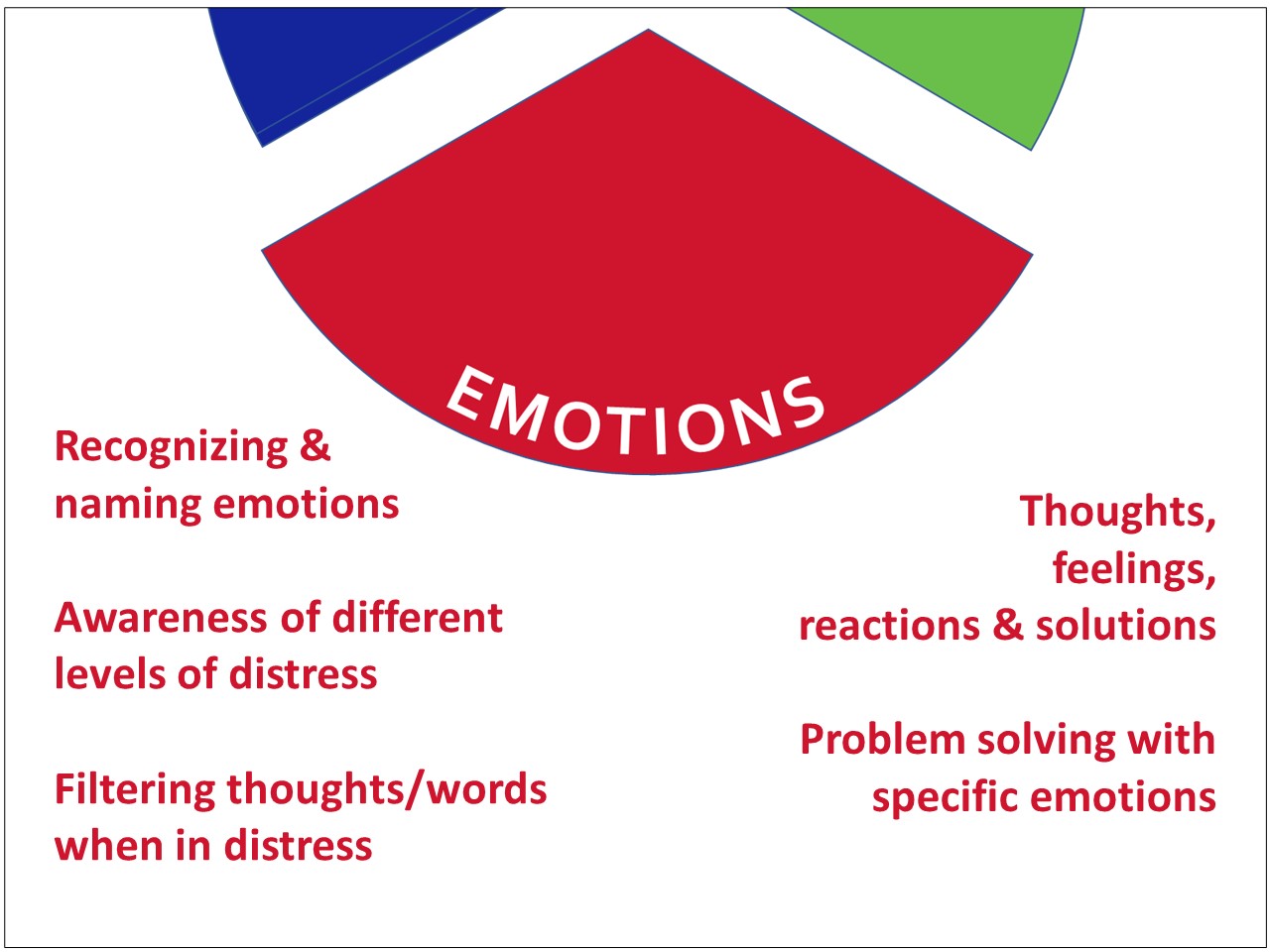
I have created a large number of appealing, user-friendly worksheets, games and videos to help children on the autism spectrum with emotional regulation. To access free materials on emotional regulation, click here: Emotions
All of the free resources that don’t fit into the categories of Communication, Interaction and Emotions are grouped into a fourth category, “Other.” This includes therapy/teaching methods, demonstration videos and other resources.
Whether you are coming to this website as a professional working with children on the spectrum, or as a family member caring for a child or young adult with autism, I hope some of these things I have created are useful for you.
Click on Communication, Interaction, Emotions or Other below to be directed to the respective categories.
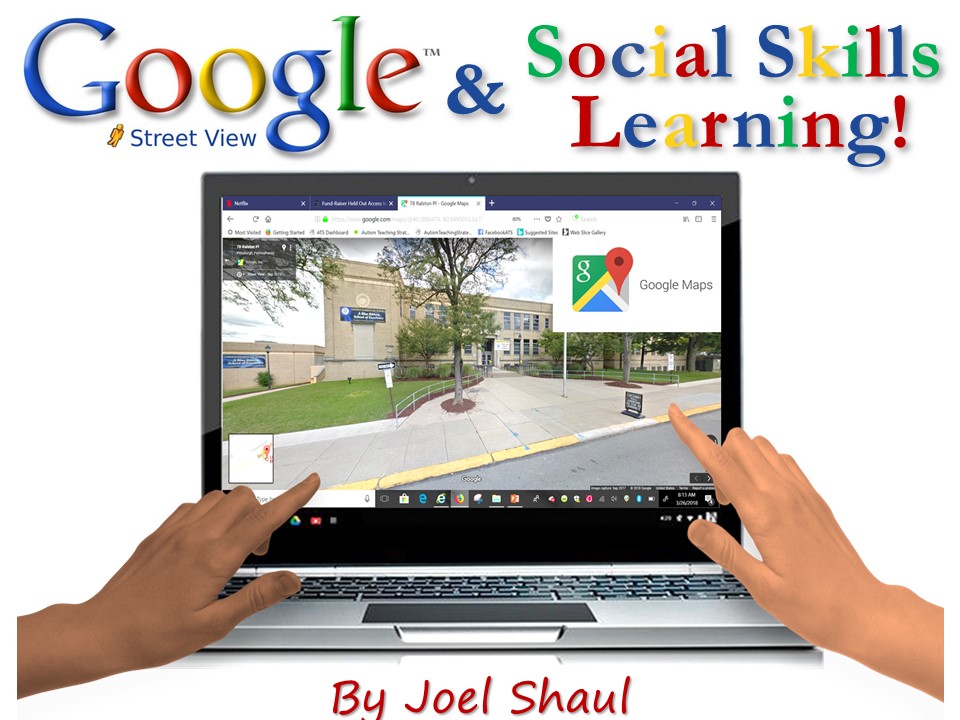
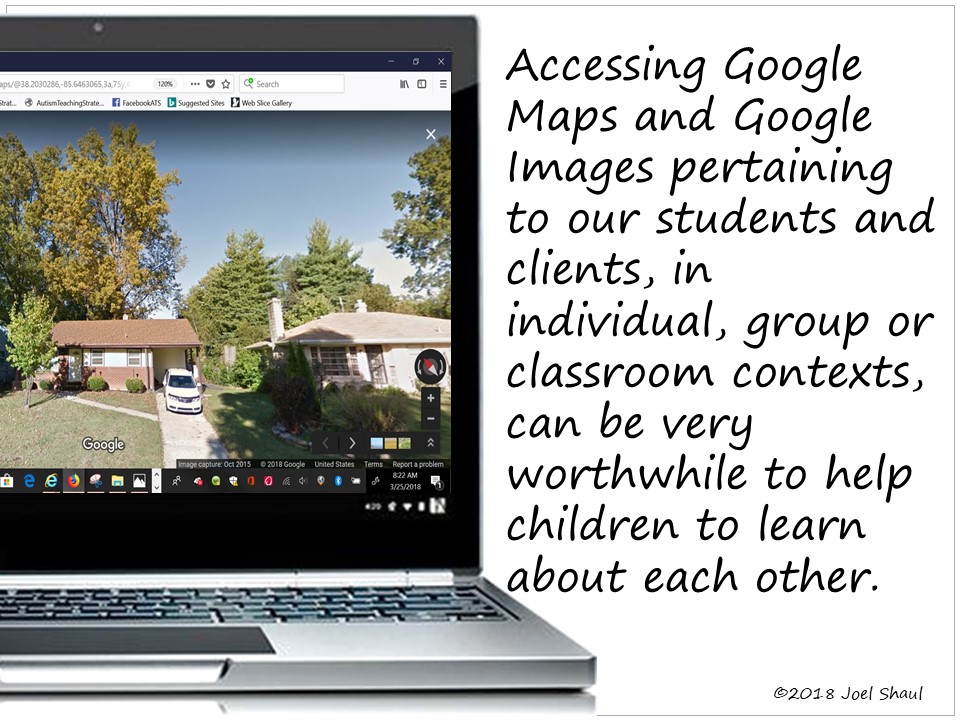
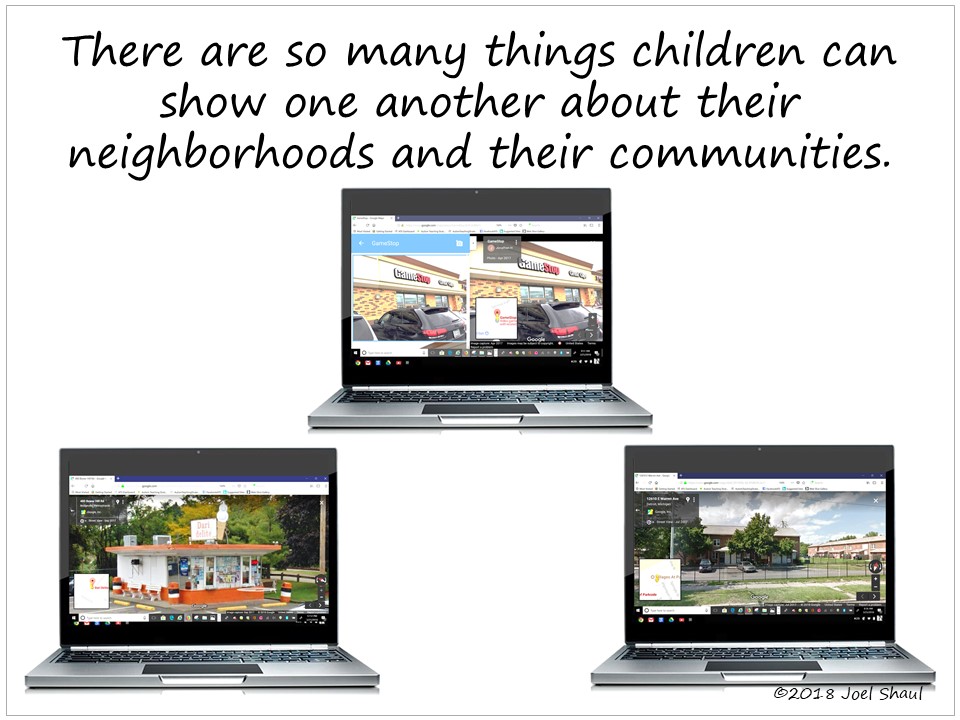
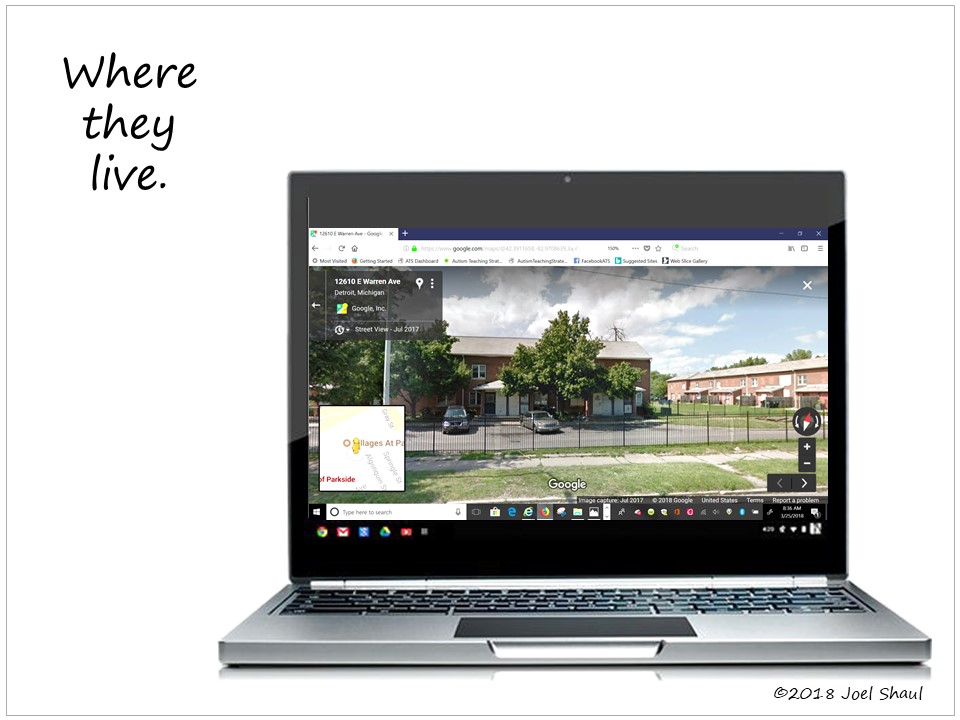
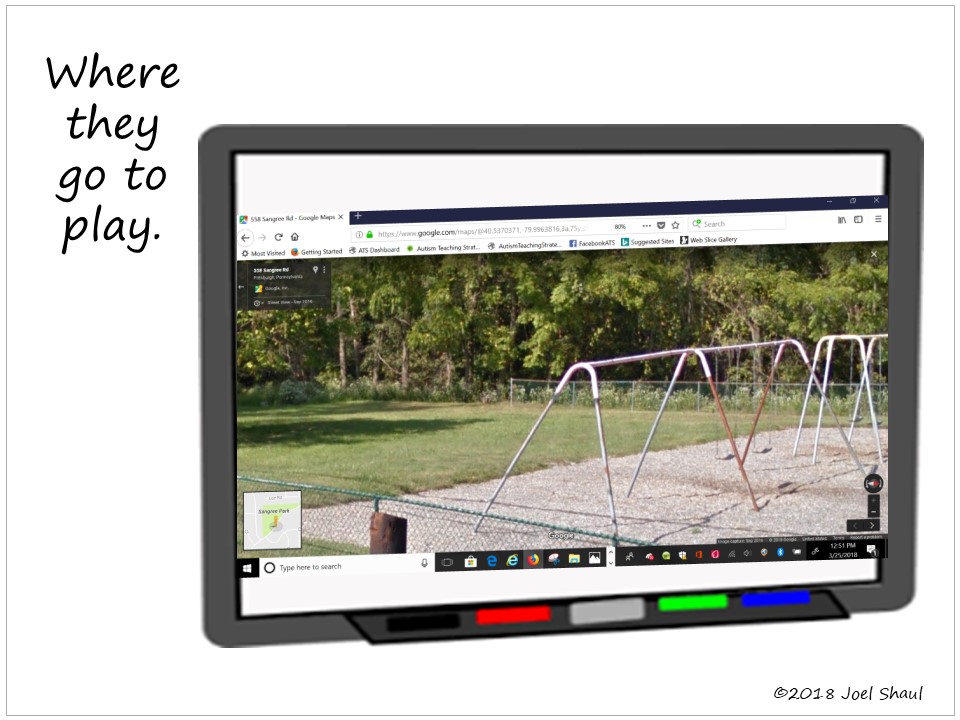
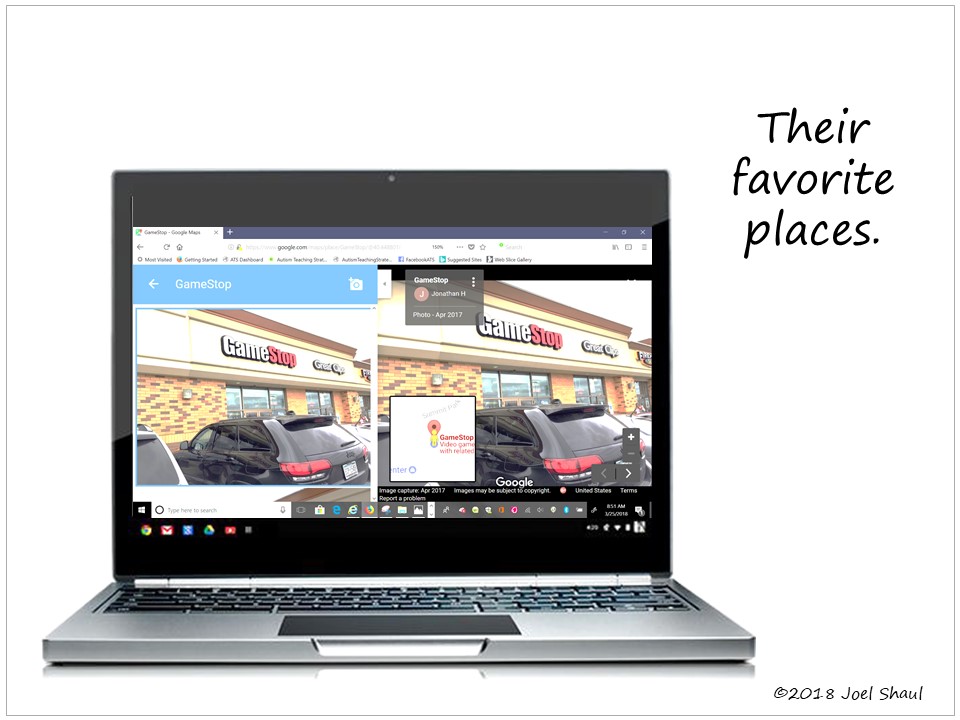
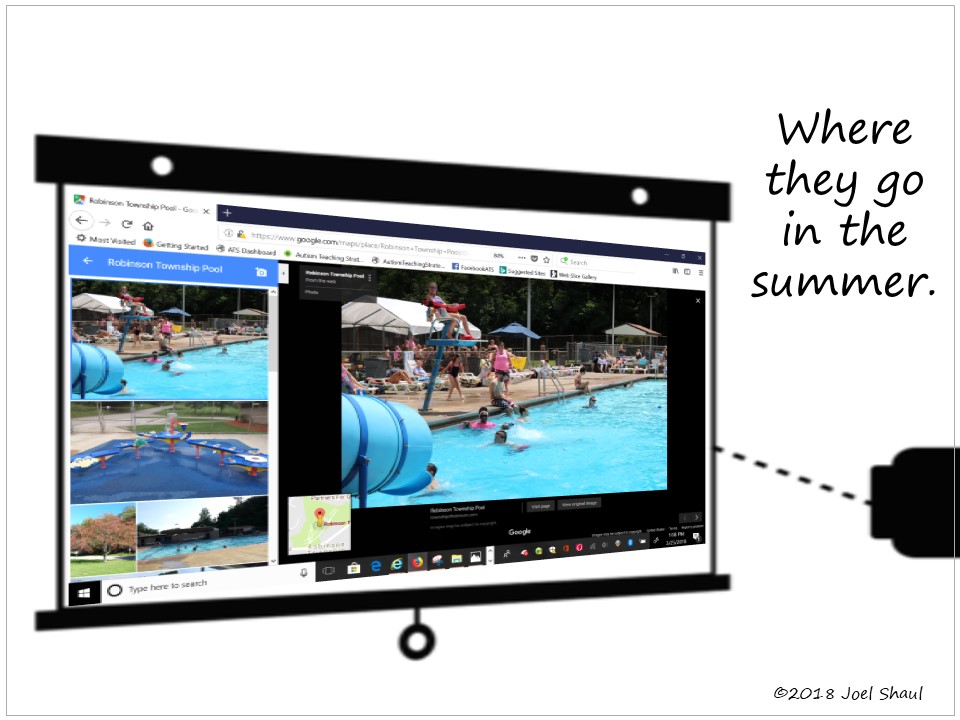
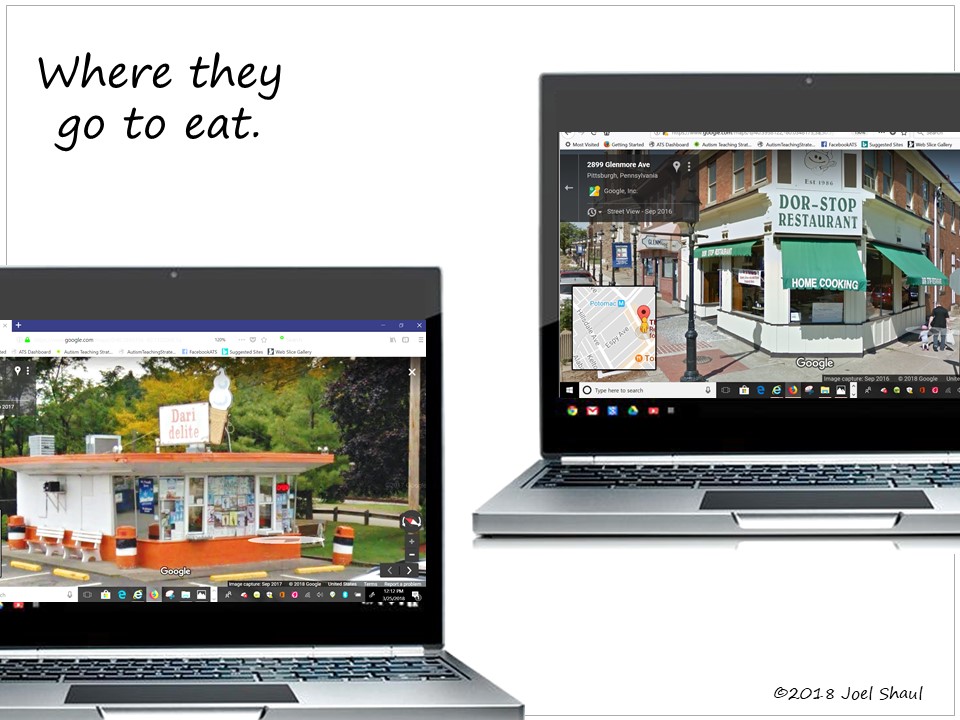
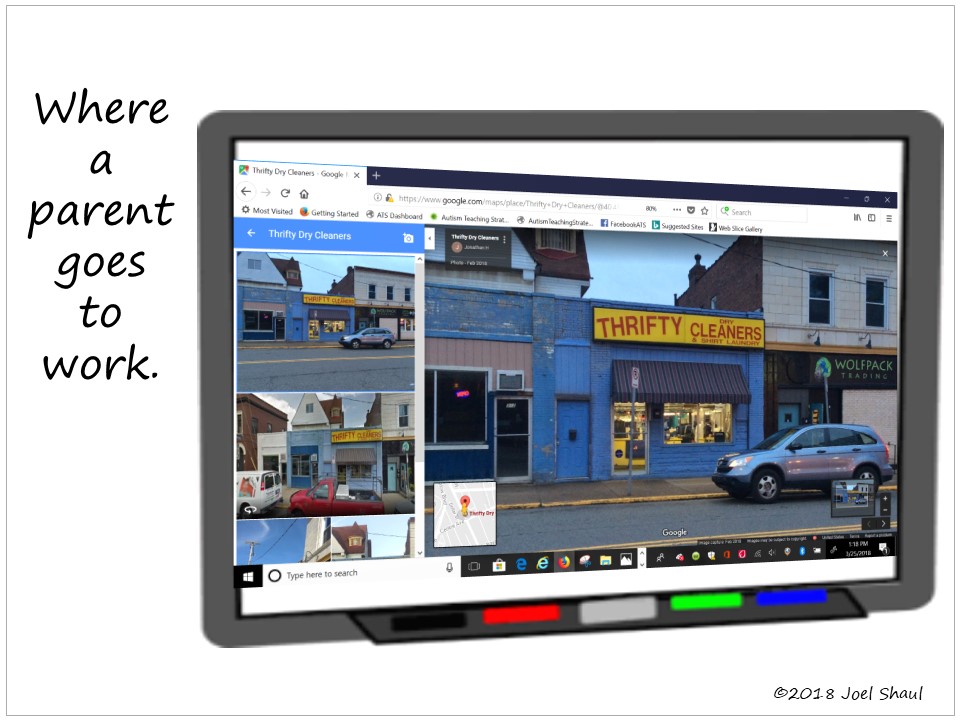
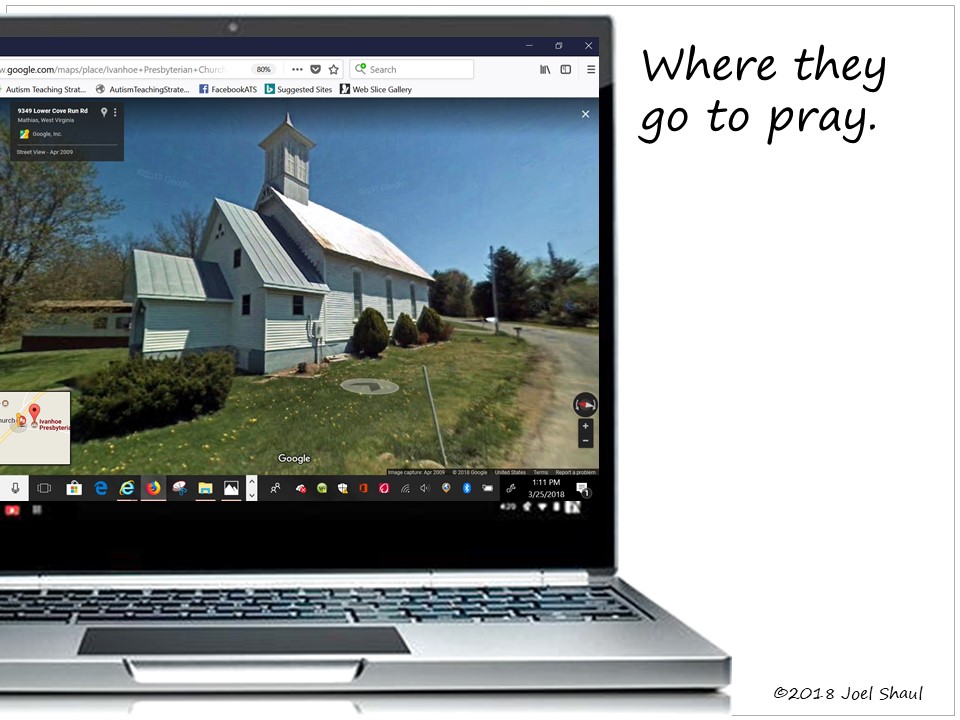
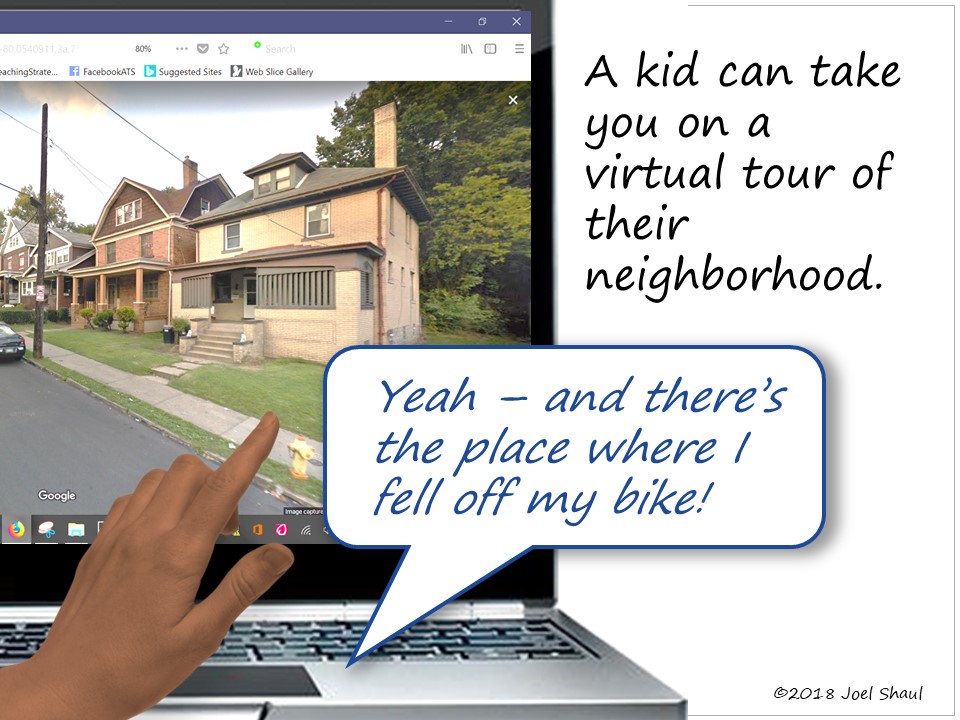
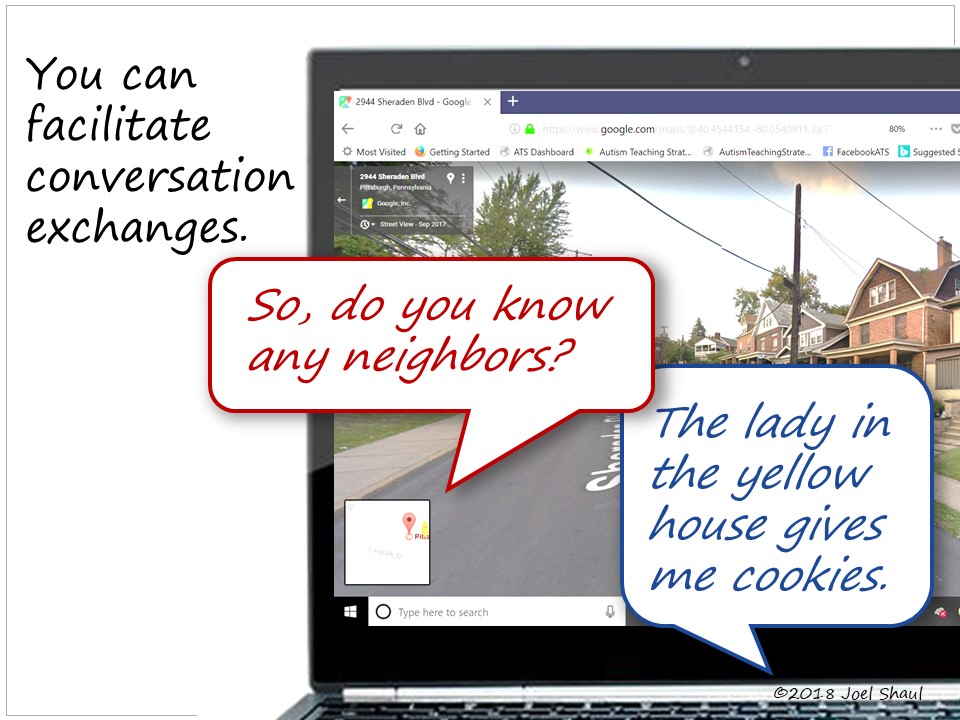
Here is another activity to promote learning about peers – check it out.
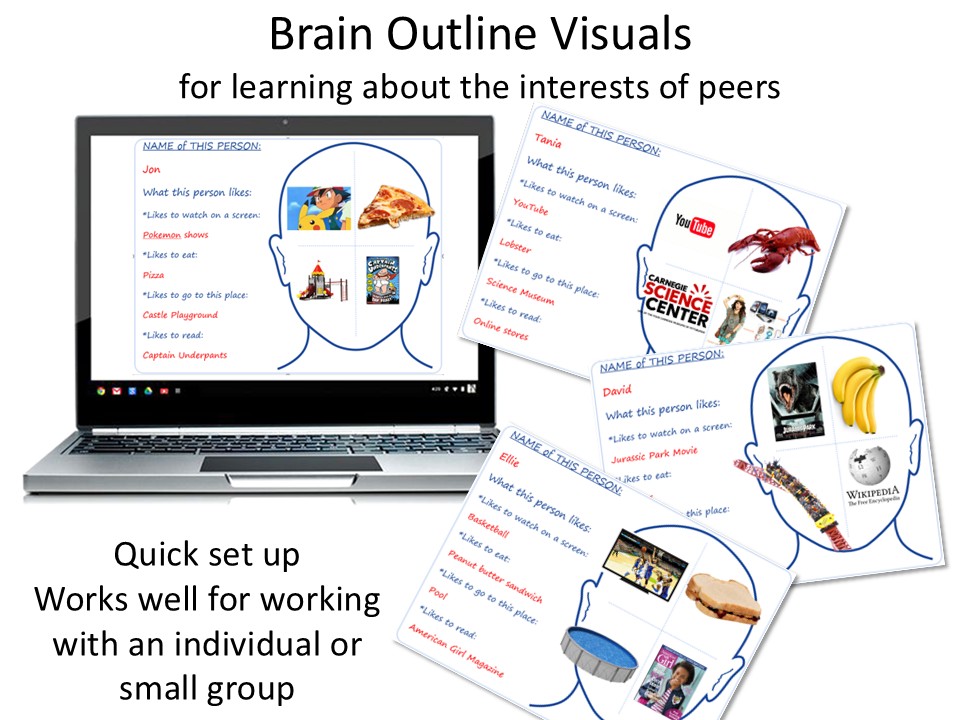
This is a good activity to do along with the Google maps activity. It further develops knowledge and interest about peers.
Your comments on these resources are most welcome, and often helpful. Click HERE to send an email.
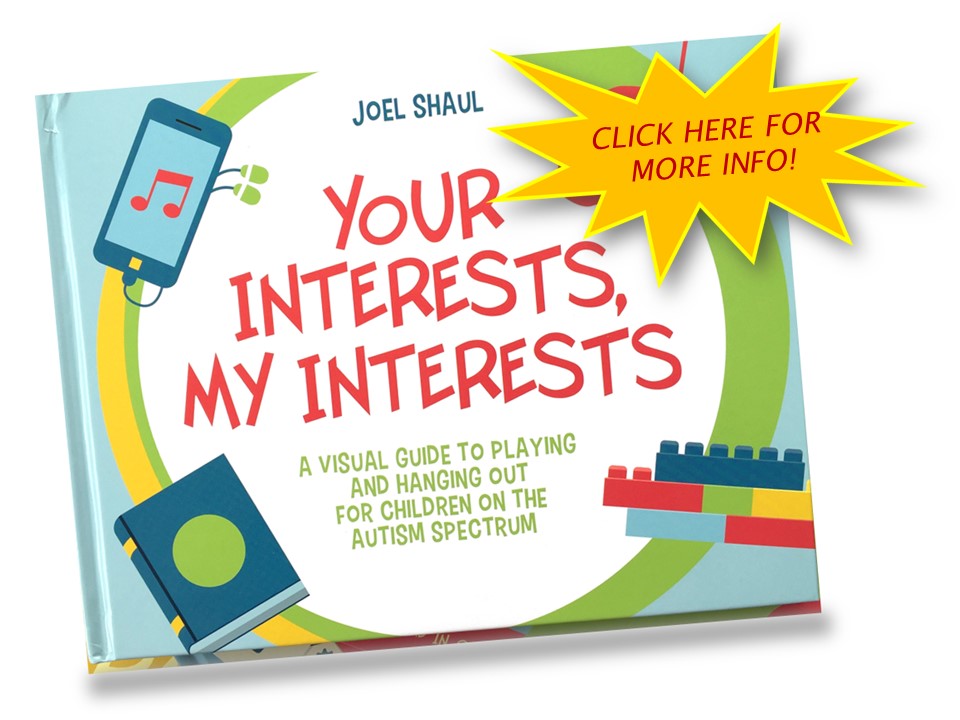
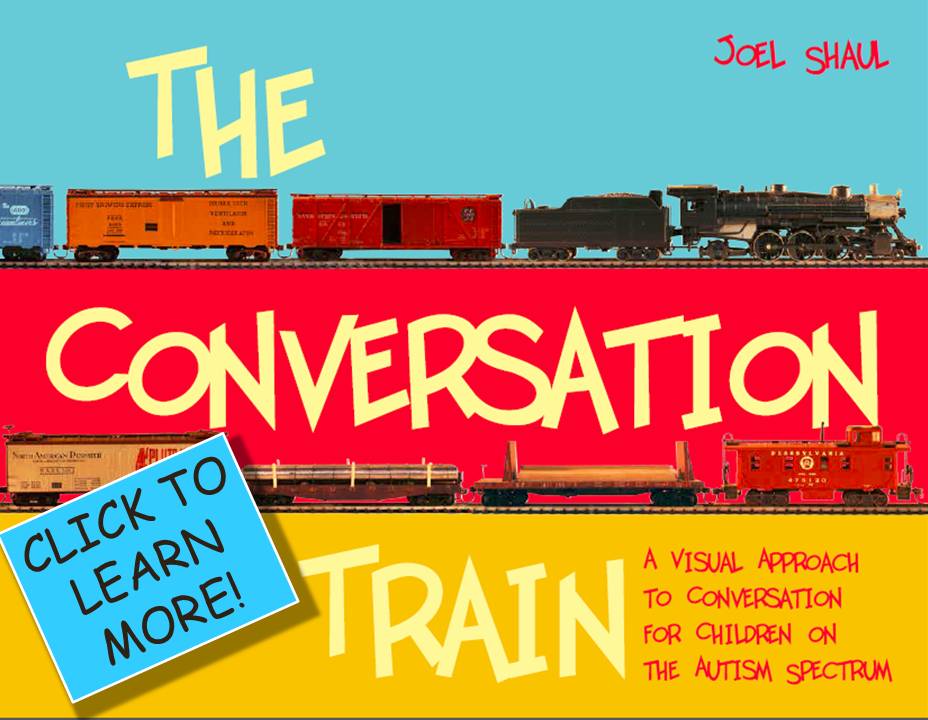




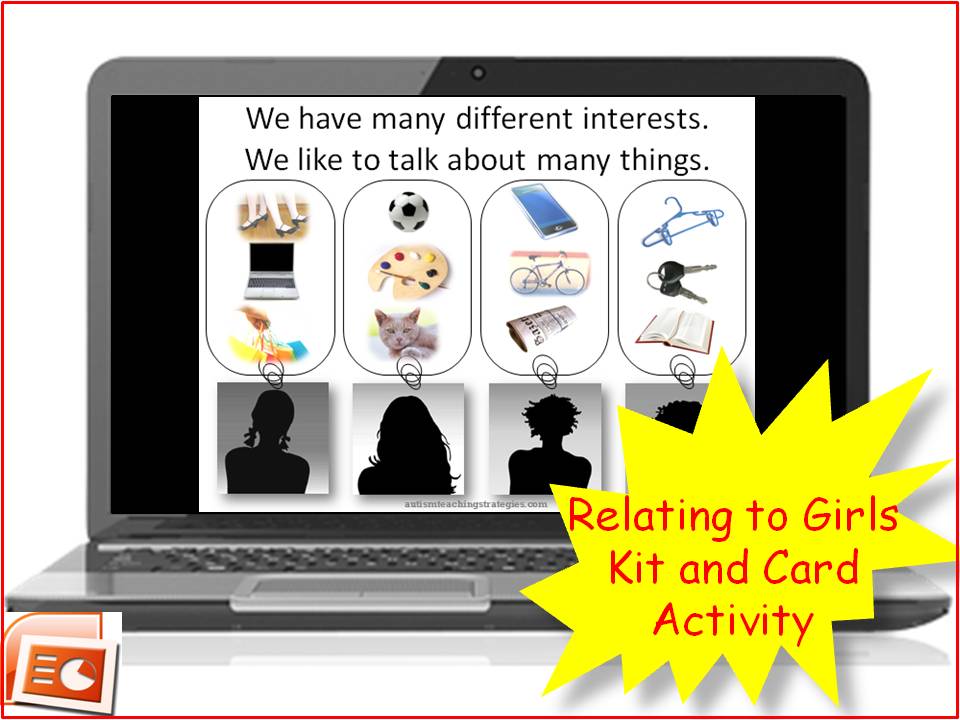

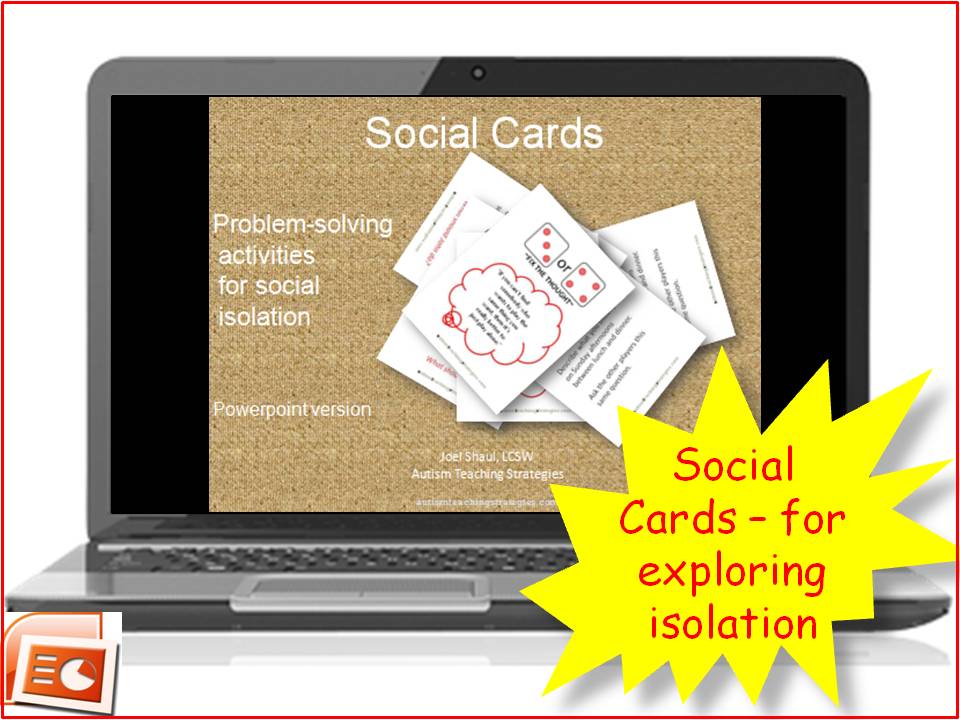
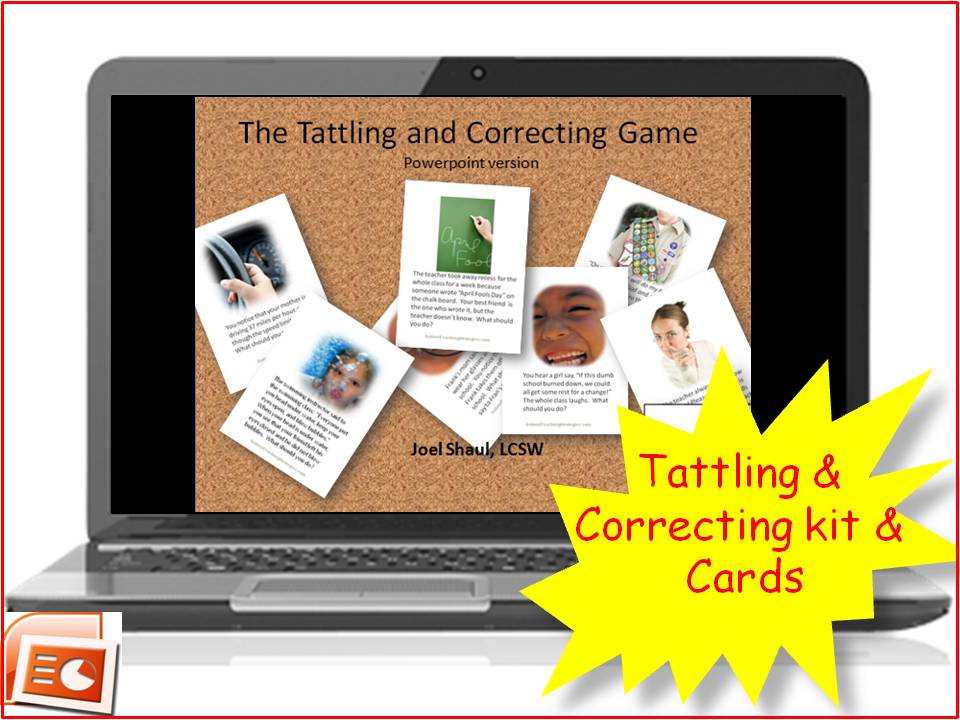
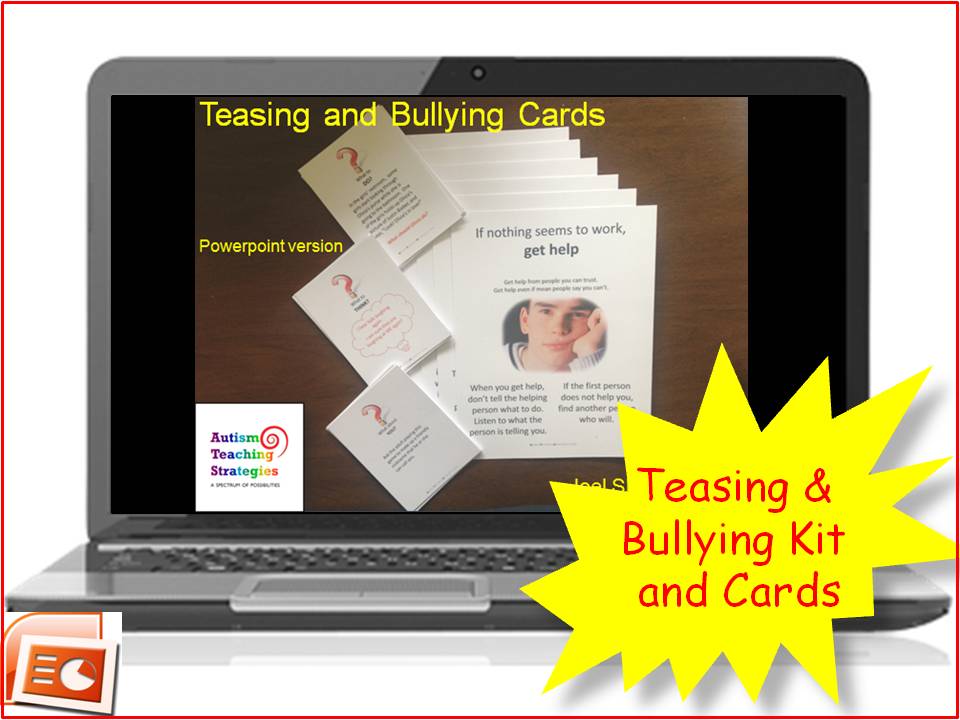
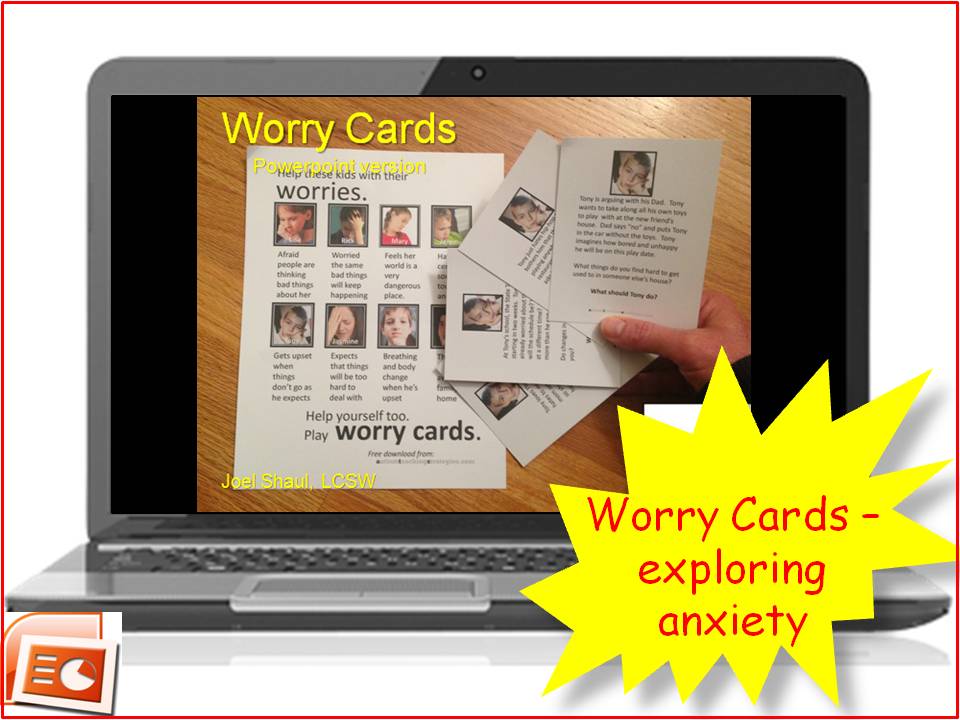

Update – In addition to the resources shown on this page, I now have a large collection of teletherapy resources, all adaptable for office-based and classroom instruction. Click HERE to access teletherapy resources and Boom Cards.
Children with autism spectrum disorders can find it very difficult to know what to say to their peers. Children with ASD tend to fall back on their own preferred topics.
Here are some activities to increase awareness of various things that other people find interesting to talk about. The activities employ the thumbs-up “like” symbol, which is very familiar to most children as an indicator of what pleases another person.
1. How Interesting Is It? topic list [fragment shown below].
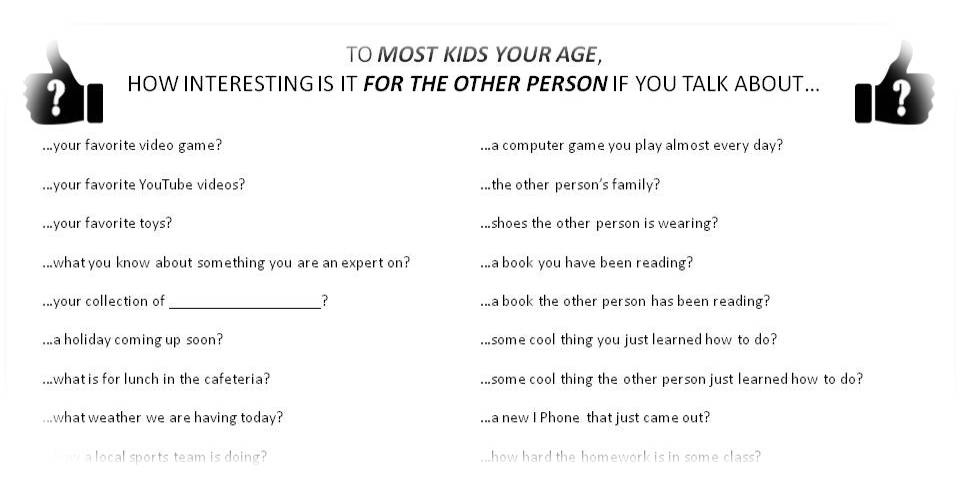
This is a list of ninety different conversation topics. You read them out loud to children so they can rate how interesting they are.
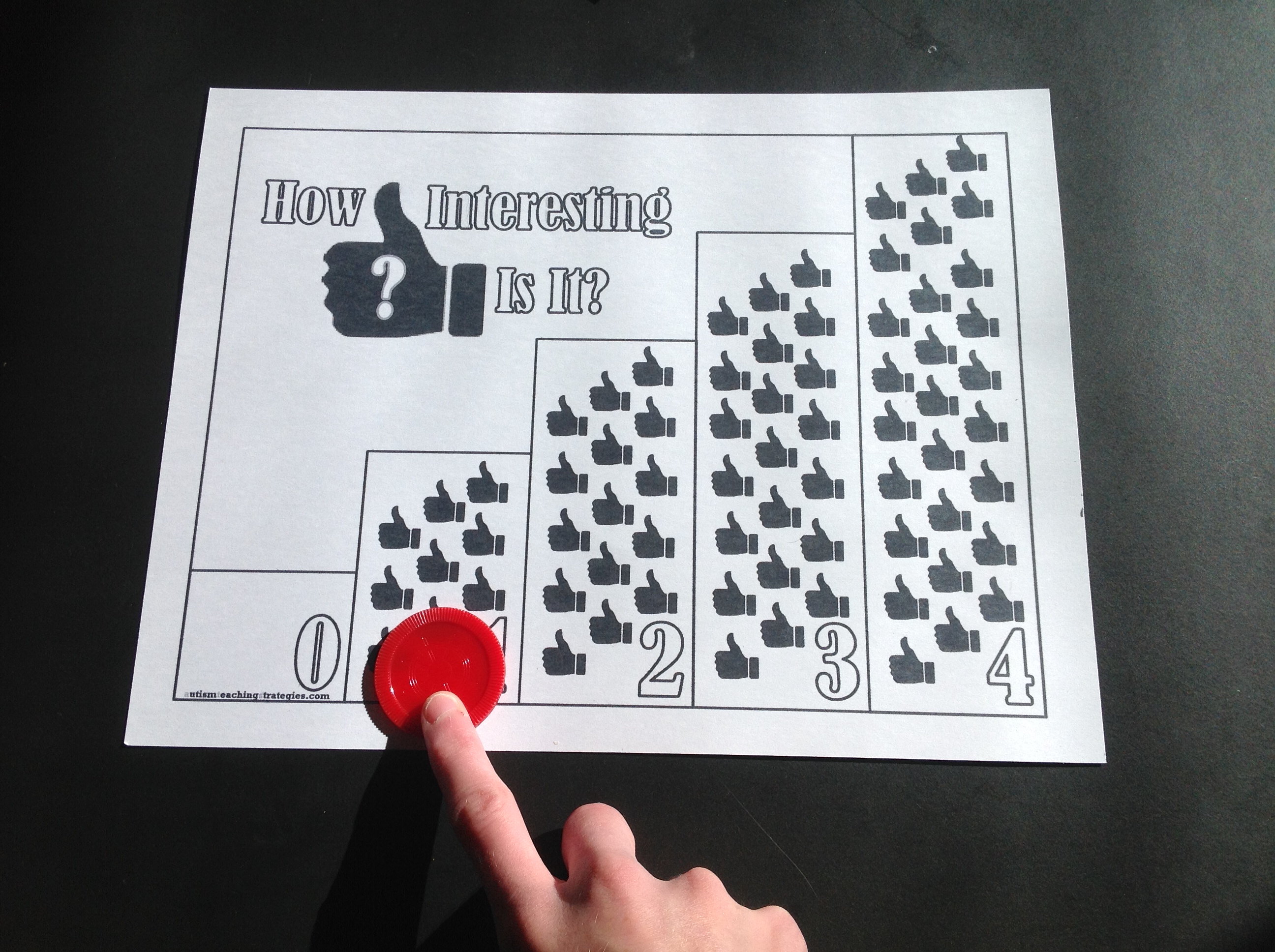
2. How Interesting Is It? rating sheet [shown below].
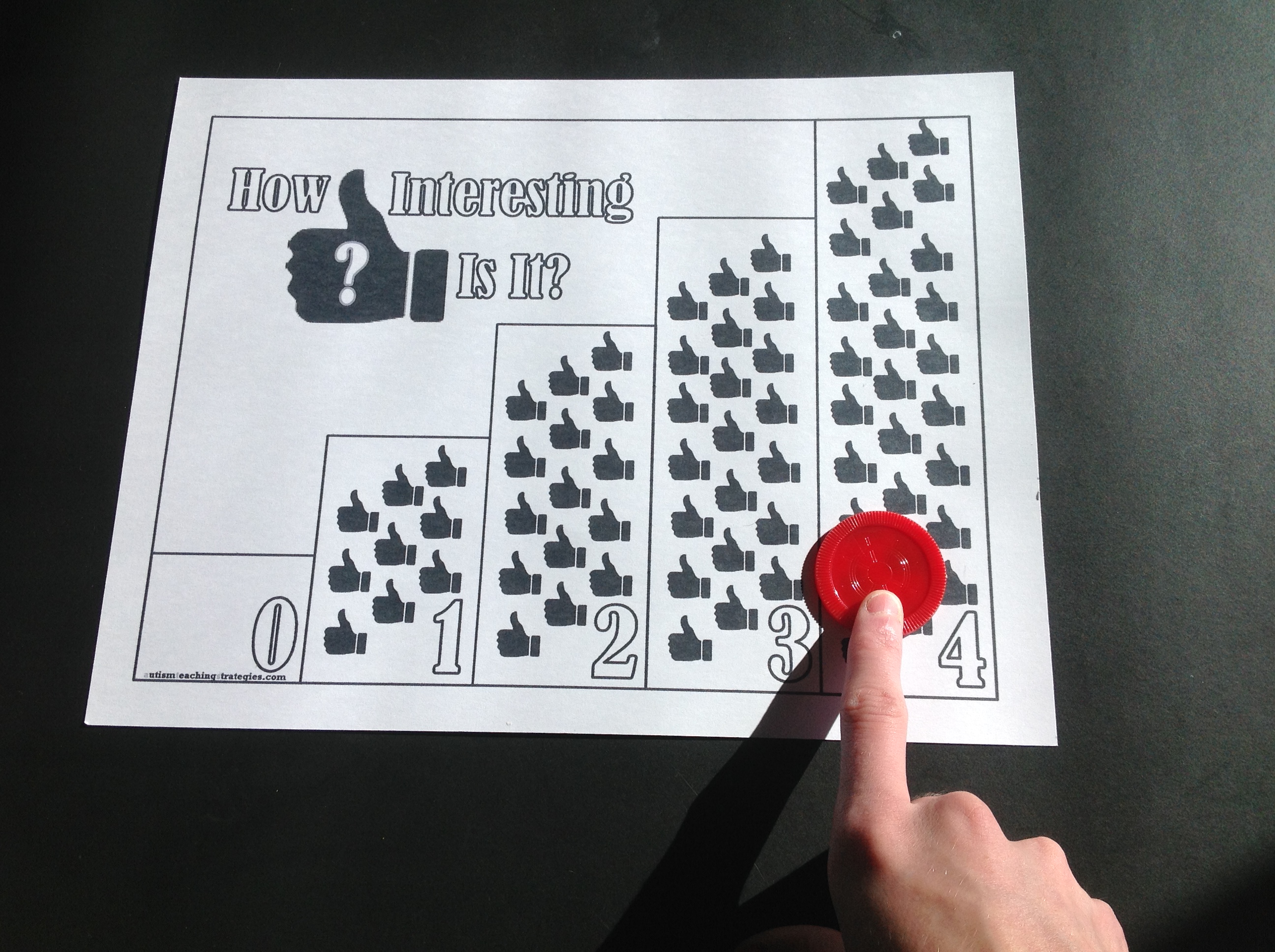
Children move a chip between 0 and 4 based on how interesting they think a particular conversation topic might be for another person.
3. How Interesting Is It? picture worksheets [examples shown below]
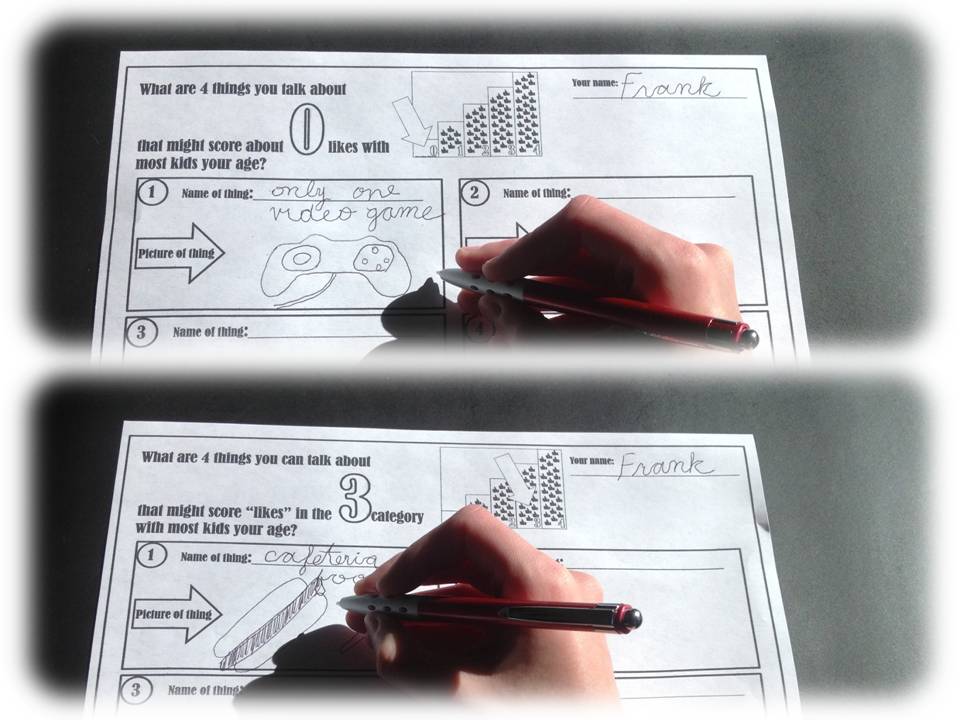
This set of five worksheets is to help children who need more practice.
“Who has ever seen the ‘like’ icon on Facebook or other places online? What does it mean? It means someone likes something that they see or hear online. Some things online get lots of ‘likes’. Some get few, or none.
When you are talking to other people, you might also be scoring ‘likes’ – in their minds. Or you might not be scoring ‘likes’ at all. When you are ‘interesting,’ it is something like scoring ‘likes’. When you are not interesting, or boring, you are not scoring ‘likes’.
You can get much better at scoring ‘likes’ in conversation by paying close attention to what you are saying and what the other person might find to be interesting. Your own words might seem really interesting to your own ears. Maybe the other person will like your words too. But, depending on the topic and what the other person finds interesting, your words might not score any ‘likes’ at all.
Here are some activities to help you get better at scoring ‘likes’ when you talk.
1. How Interesting Is It? rating sheet. I will read you a number of different conversation topics. For each one, you have to take a guess on how interesting, on a scale of 0 to 4, it might be to the other person. Place your chip on the number that you think shows how interesting it is to the other person, not you. [Note to teacher: alter the wording as you read through the list, to clarify and specify as you see fit.]
2. How Interesting Is It? picture worksheets. For the Zero sheet, pick out some things from the list that might be uninteresting to most kids – or things that you think of yourself. Write them down on the sheet and draw small pictures. For the 1, 2, 3 and 4 sheets, write and draw things that kids your age might find more interesting.”
Note to teacher/therapist: These activities work best when you add role play practice. Select a number of topics that would rate a 3 or 4 with most children. You play the role of the other child in the conversation. Then, assign the children to converse with you on these selected topics.
I hope you find these materials enjoyable and useful.
Your comments on these resources are most welcome, and often helpful. Click HERE to send an email.
Children with Asperger’s and other autism spectrum disorders may experience a number of problems involving emotions. They may have difficulty recognizing and naming a nuanced range of emotions in themselves in themselves. They can find it hard to accurately identify emotions in other people. Kids on the autism spectrum may find it challenging to discern emotions in others through observation of facial expression and body posture. Young people on the spectrum can find it bewildering to sort out what causes various emotions and how unpleasant emotions can be relieved.
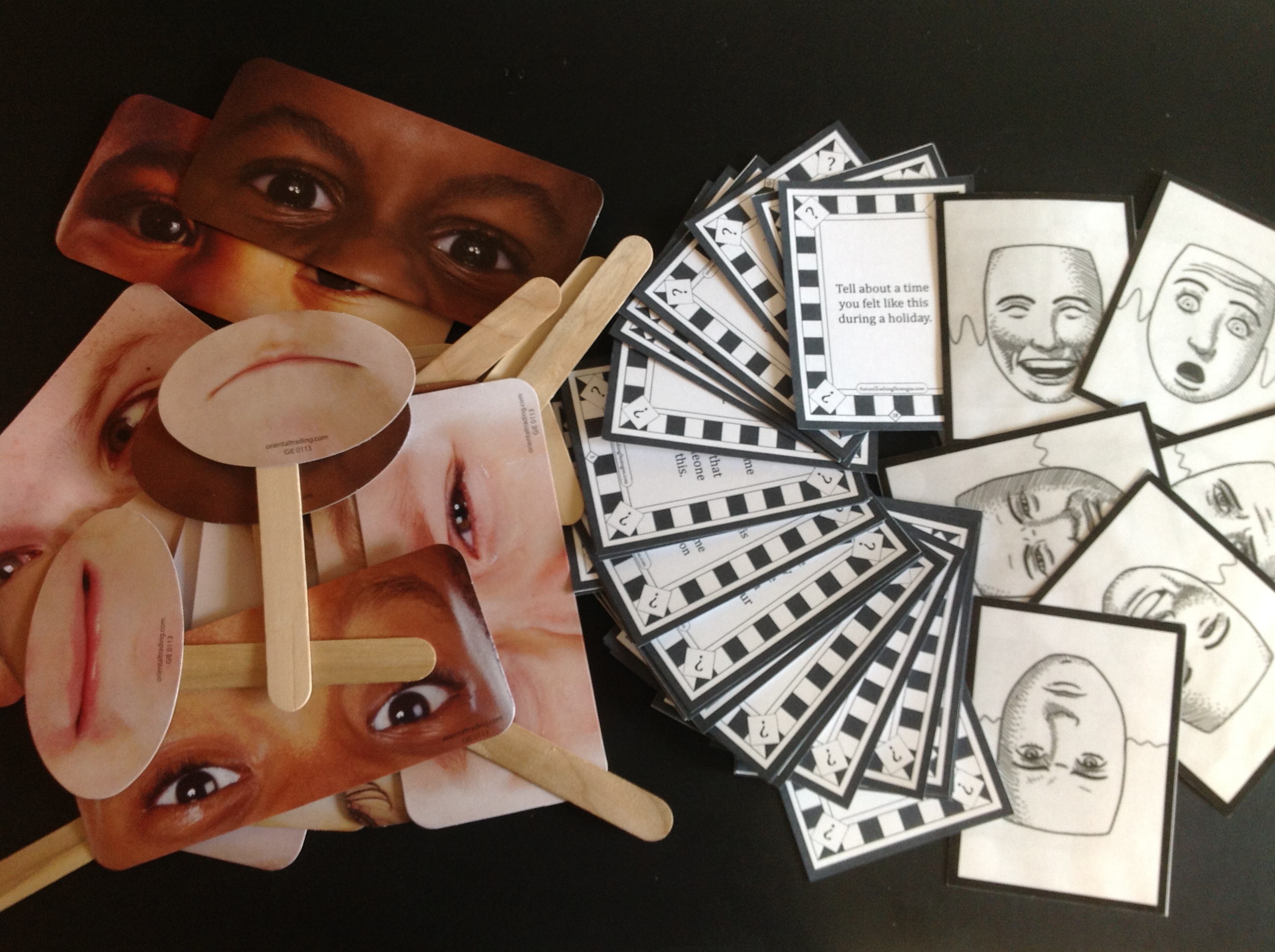
In this blog post, I present a kit of visual and game resources I have put together for my own use in social skills therapy and social skills groups. Some of this kit is available for free download elsewhere on my website (Emotion Question Cards). Another part of this kit is available for purchase online at a ridiculously low price (Emotion eyes and mouth visuals). The third part of the kit I put together using appealing emotion drawings found in a textbook on how to draw comics.
Although I designed this kit primarily to be used for kids with high functioning autism, the materials have many applications for children who don’t have autism.
Many kids on the spectrum can spend years learning emotional regulation skills. It can be tough going for them. By the time you, as a teacher, SLP or mental health professional, are working with a child on these issues, the child may have already received a lot of teaching about emotions, much of it under very stressful circumstances. It seems reasonable, and strategic, to lighten it up sometimes in social skills teaching.
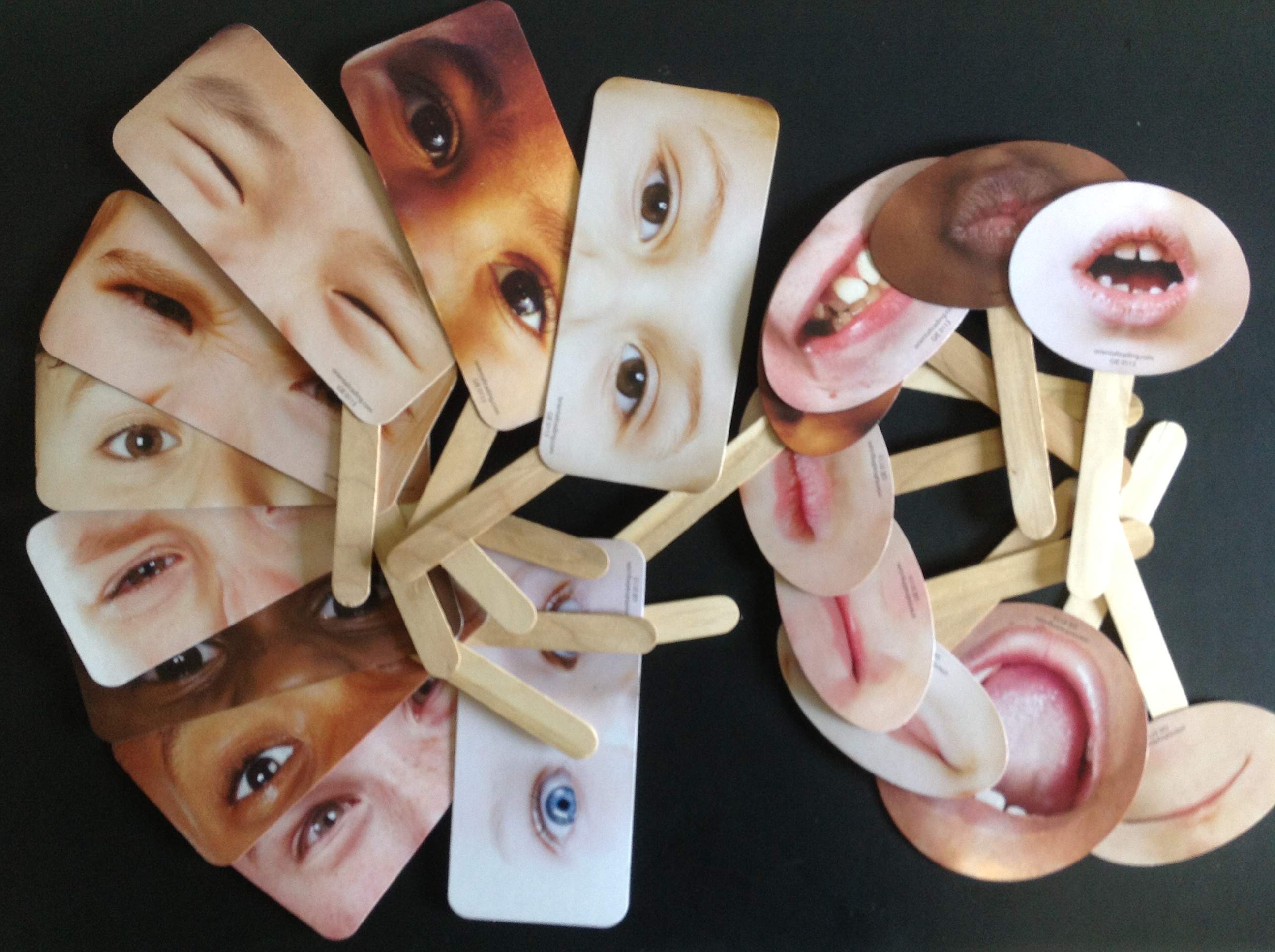
These are available for orientaltrading.com for $5.25 a set! I bought three sets for myself.
Here are some ways to use these. I am sure you will think up a lot more.

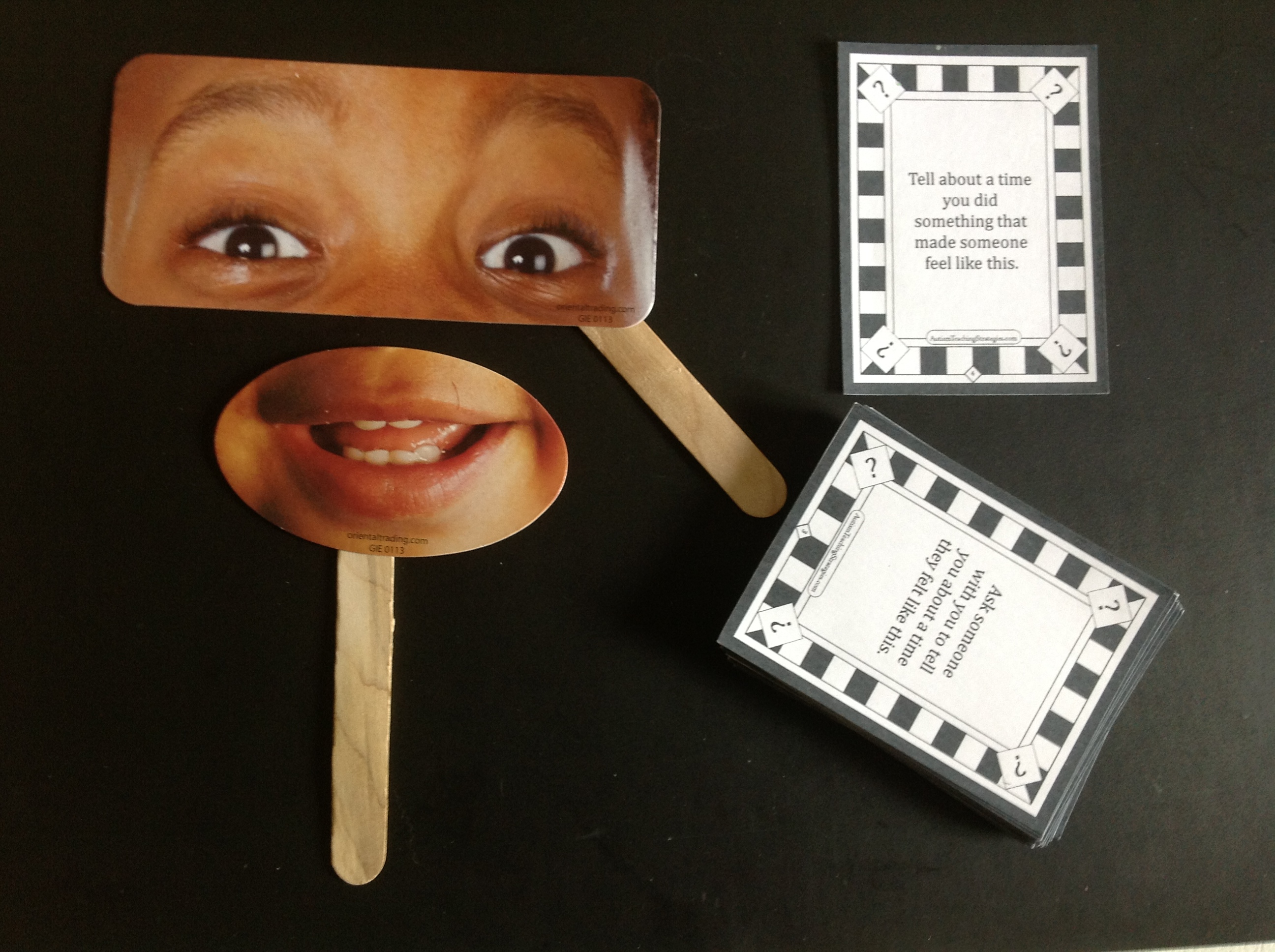
In the example above: First the child matches up the various eyes with the various mouths. Next, use my Emotion Question Cards (free download from another post: click HERE). This sets up a large variety of interesting and fun problem-solving game activities. Here is another example below.
I found a wonderful book that shows artists how to create comics. Here is the book:
 I found pages full of very appealing drawings rendering a range of emotions in six categories. I extracted the images to create my own set of cards to use with my clients.
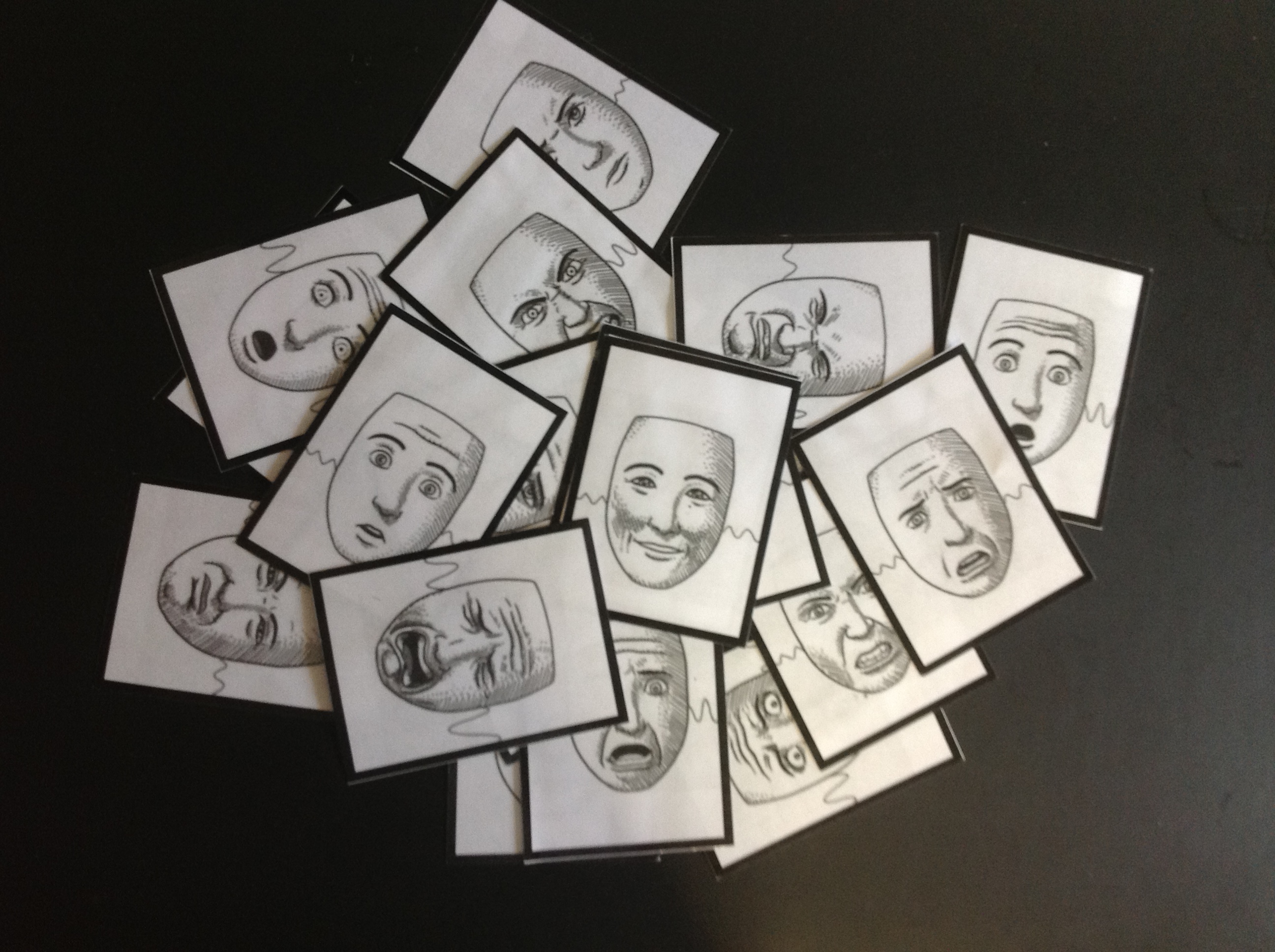
Here is a close-up of a few of the cards. I love the detail of the drawings.
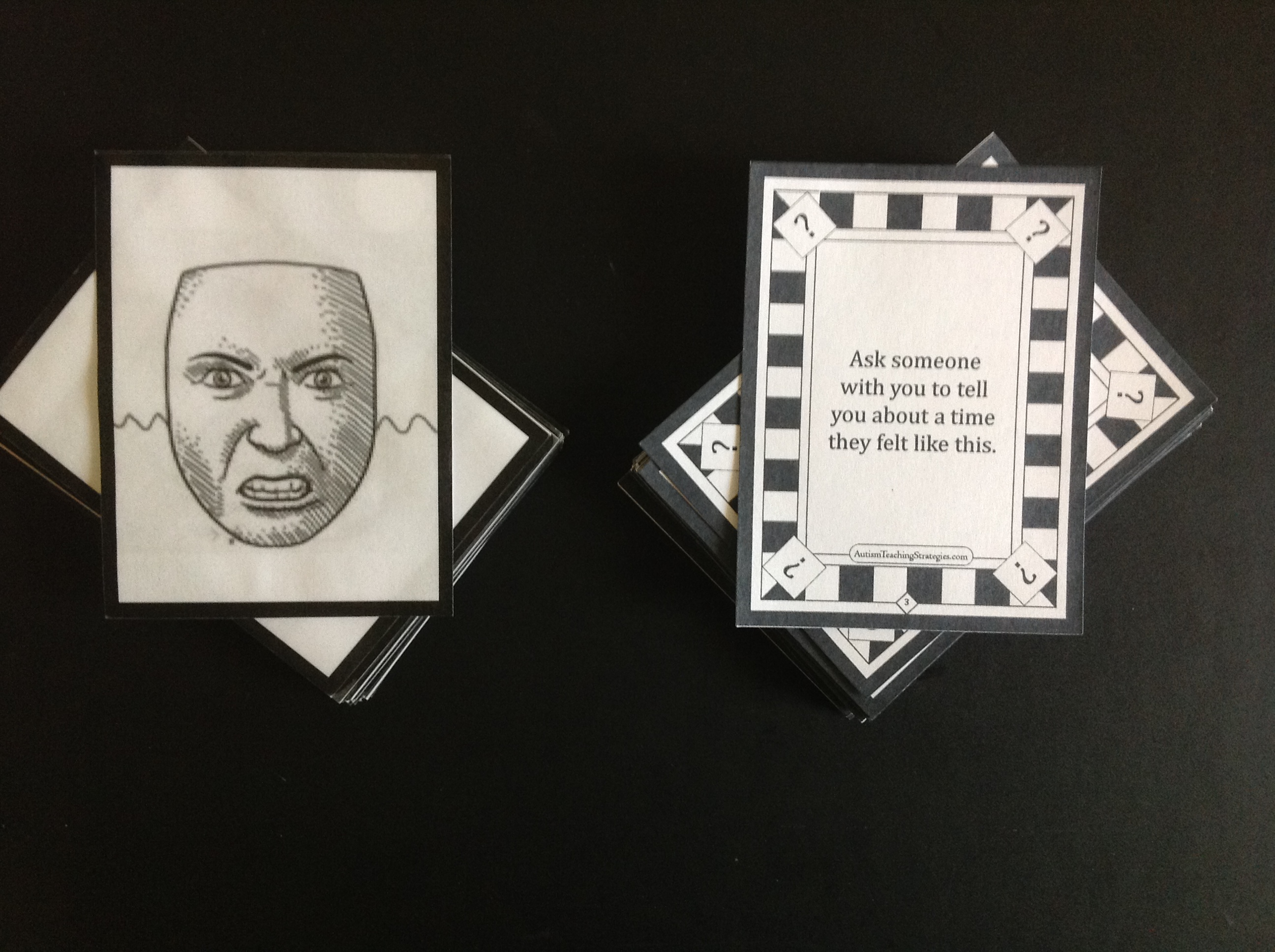
 Below is one example of how to use the Emotion Question Cards with the Emotion Face Cards. There are many possibilities.
I hope you find these ideas helpful. For more resources to help children with ASD to understand emotions and to cope with difficult emotions, follow this link HERE.
Joel Shaul, LCSW