
Social Skills Activities for Children with Autism
AutismTeachingStrategies.com
Our aim in doing CBT with children should be to extract helpful and useful methods from CBT concepts. The children we see vary a great deal in age, intellect, temperament and predilections, so we should avoid getting locked into CBT treatment practices that are too rigid. As much as possible, we should allow our interventions to be shaped by the individual child we are treating.
Factors one should consider when selecting psychotherapy tools for children
There are so many different things to be considered when planning therapy interventions. Here are some factors I have thought of, along with examples of resources I have developed in an effort to accommodate different learning styles. Although I do quite frequently employ resources developed by others in the field, in this article I am primarily displaying resources I have developed myself, available for free download or in my books.
Attention span
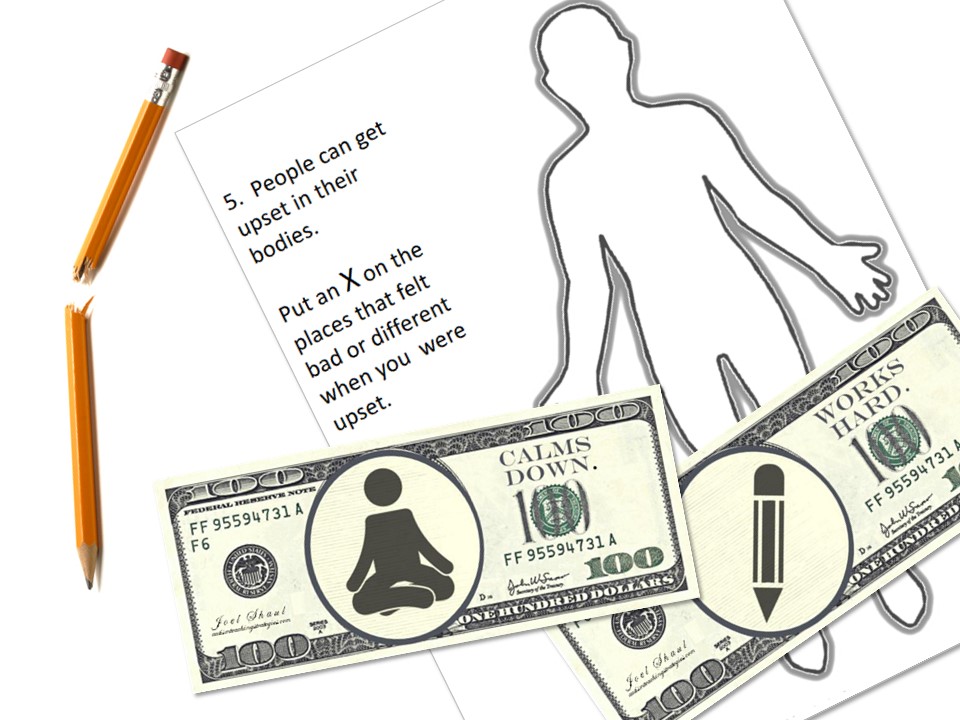
Many children need frequent, positive prompting to stay focused. Some benefit from token prompts, like the ones shown below.
Preference to face towards therapist directly vs. indirectly
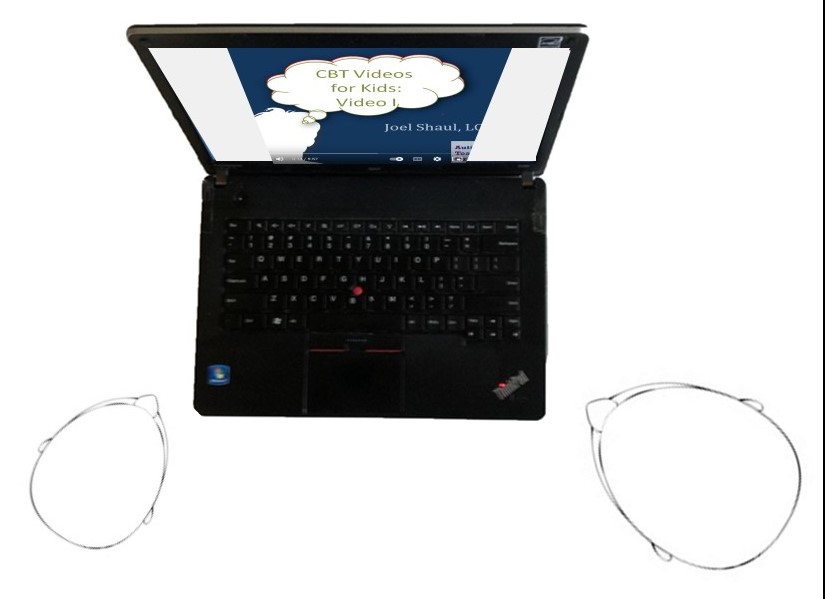
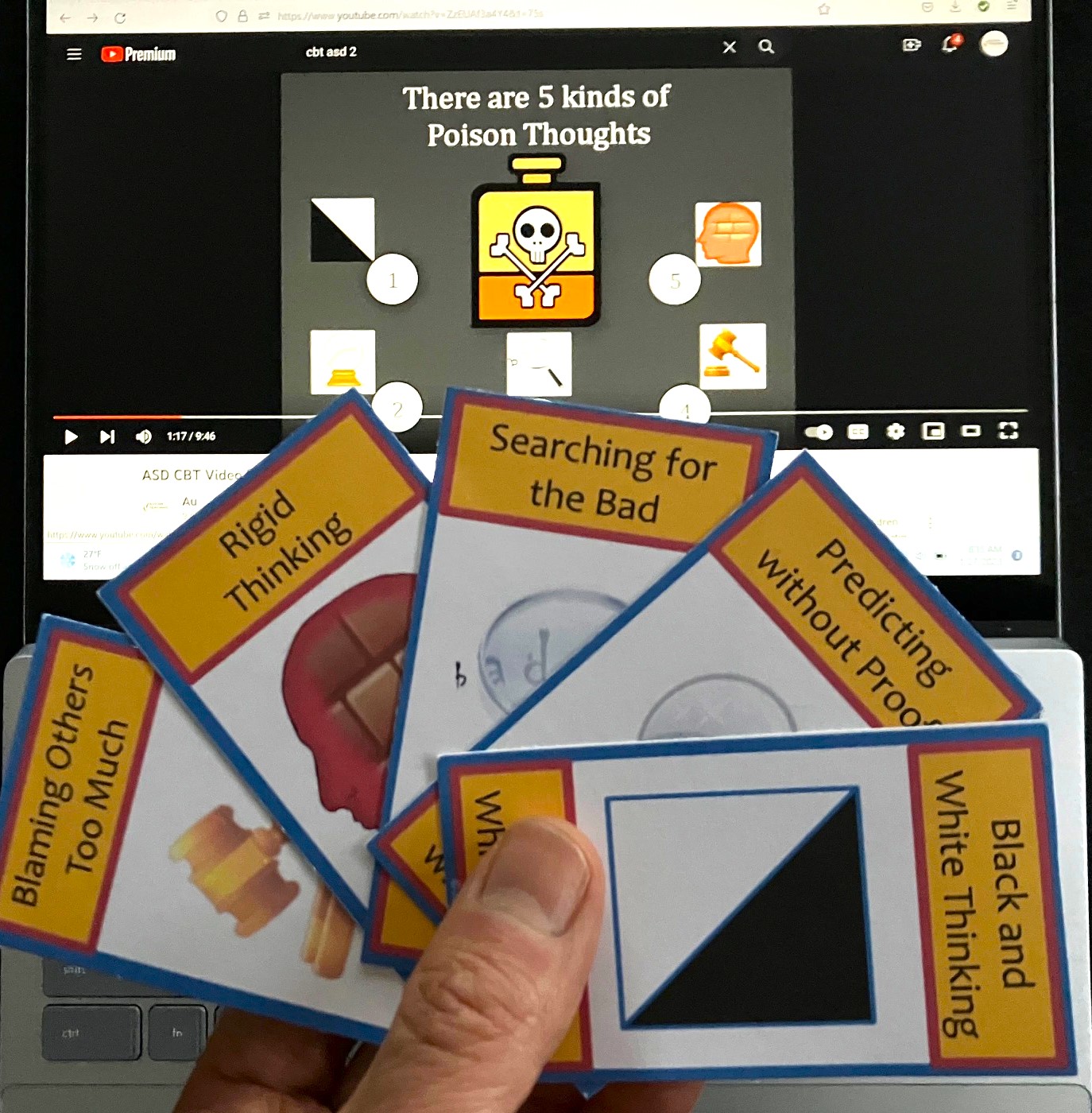
Many children, especially children with autism, have a limited capacity to look directly towards the therapist. It can really help to arrange for both you to direct gaze towards something in between both of you. The example shown below is a laptop with one of my CBT videos on the screen.
Levels of intellect, education, language comprehension and reading ability
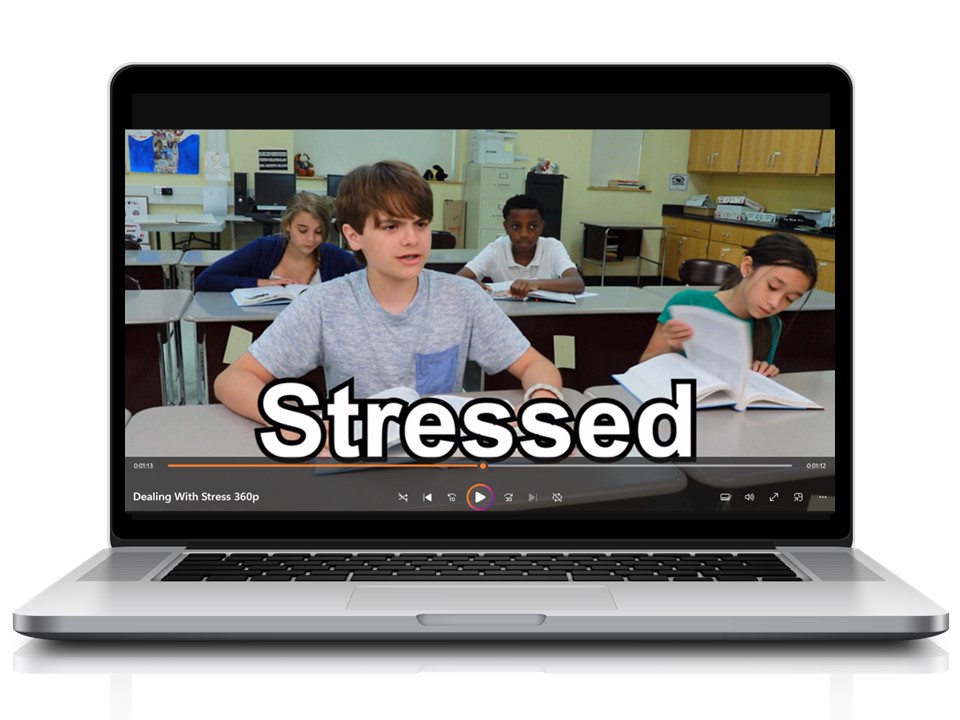
It is easy for us to end up confusing our young clients with our language and concepts. There are some resources available that are simple, appealing and very helpful. An example, shown below, is a screen shot from one of the hundreds of Everyday Speech Videos.
Special interests
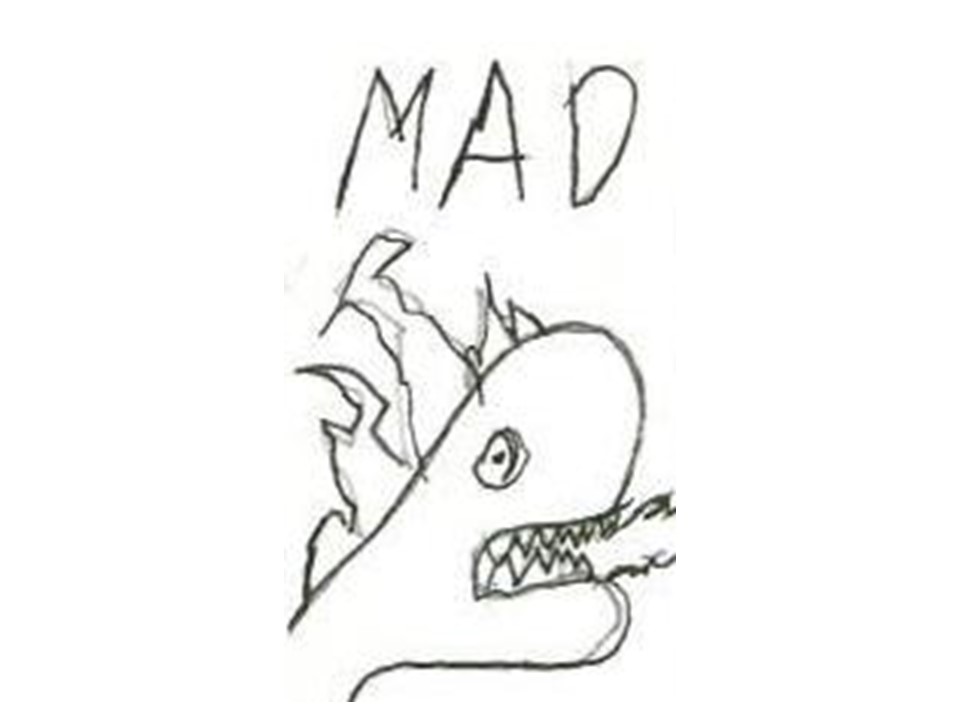
Many children, especially children with autism, are strongly motivated by therapy content that references their particular interests. For example, a child with an interest in Godzilla movies could be reinforced by an anger management activity that involves drawing Godzilla.
Ability to remain seated vs. need to stand and move around
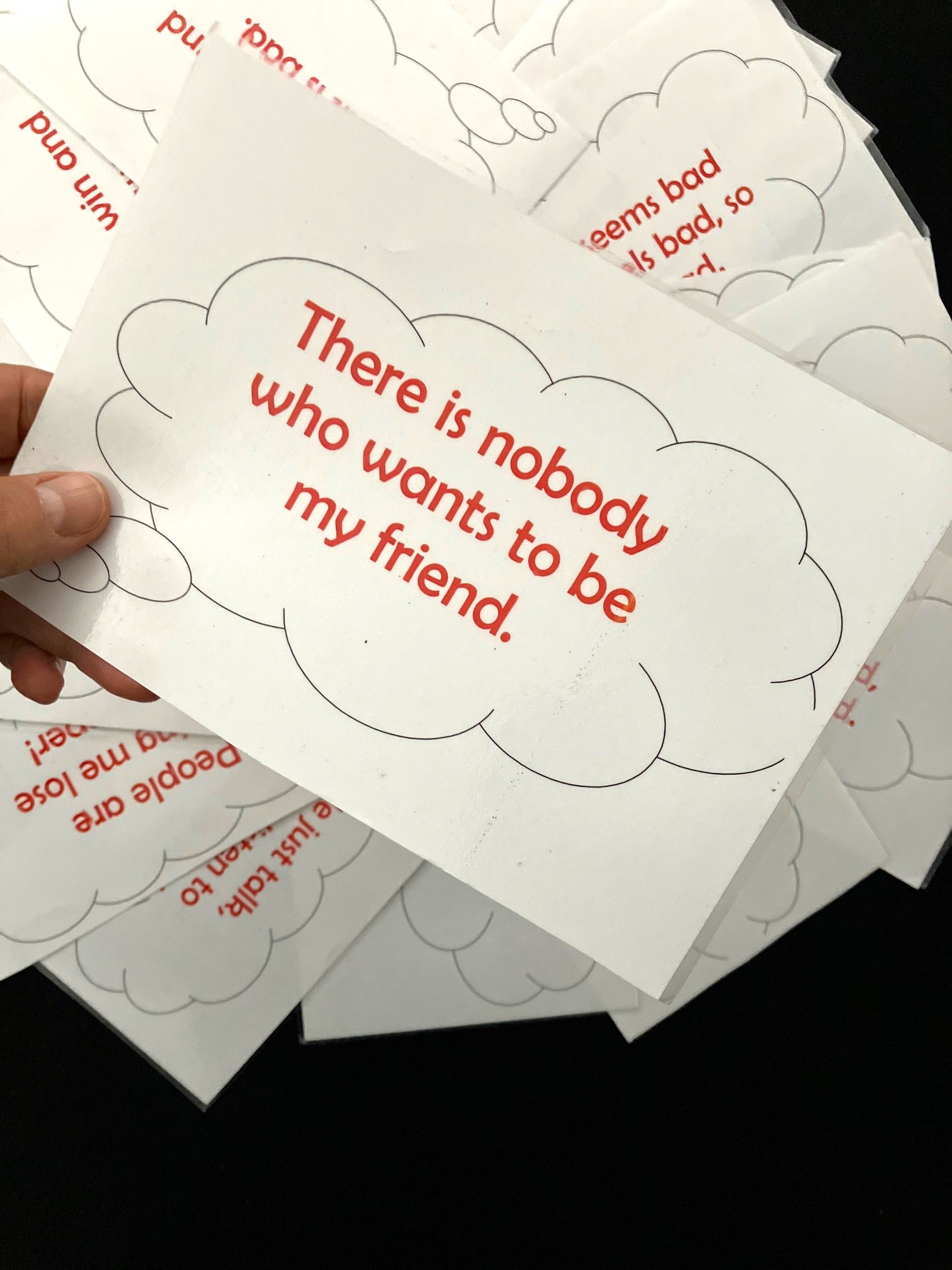
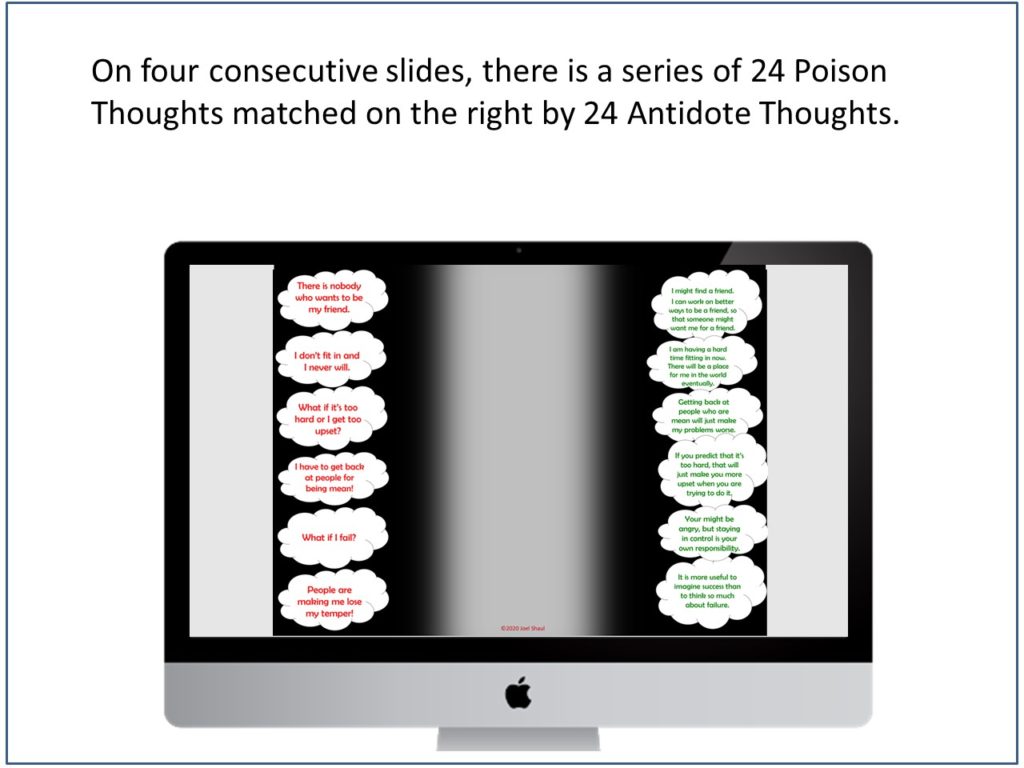
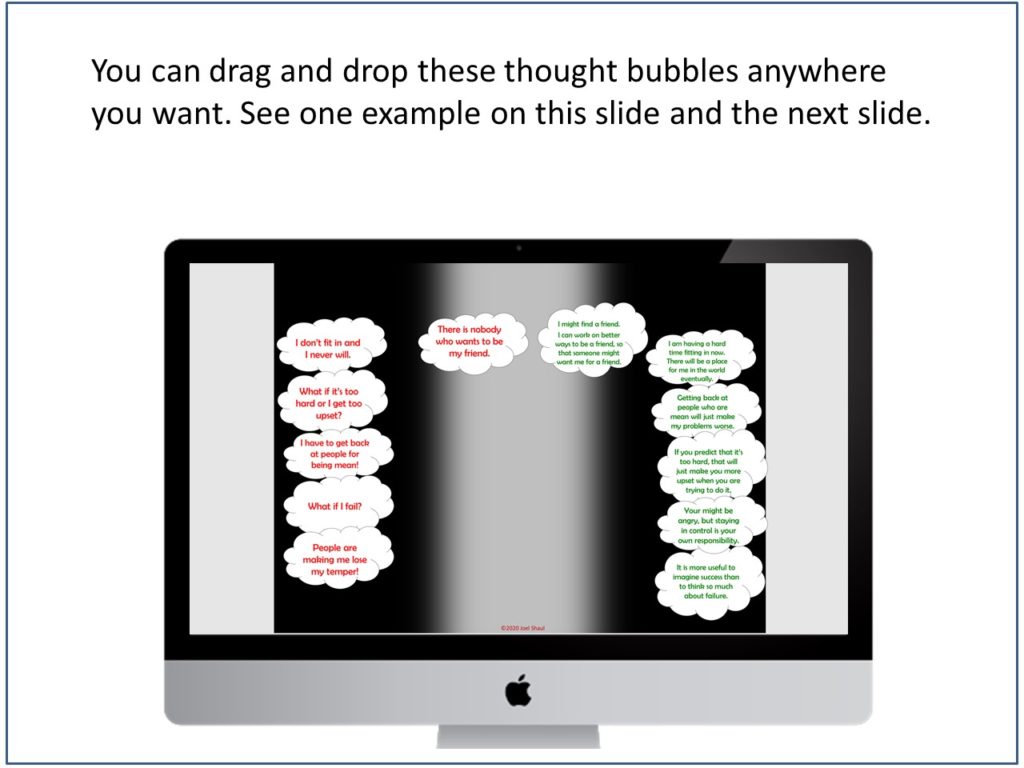
In my own work years ago in a community-based summer teen program for kids with autism, we sometimes did CBT-based activities in small groups while standing. In one such activity, I spread CBT Thought Bubbles all over the floor and asked the participants to walk around and match up “Poison Thoughts” with corresponding “Antidote Thoughts.”
Receptivity to information and instruction coming from a computer screen
Many children are strongly conditioned to pay close attention to information presented on a computer screen. We therapists sometimes overvalue our spoken words. Most kids, and not just the ones with ASD, often consider information viewed on a screen as somehow more noteworthy that the same thing viewed in the “real world.”
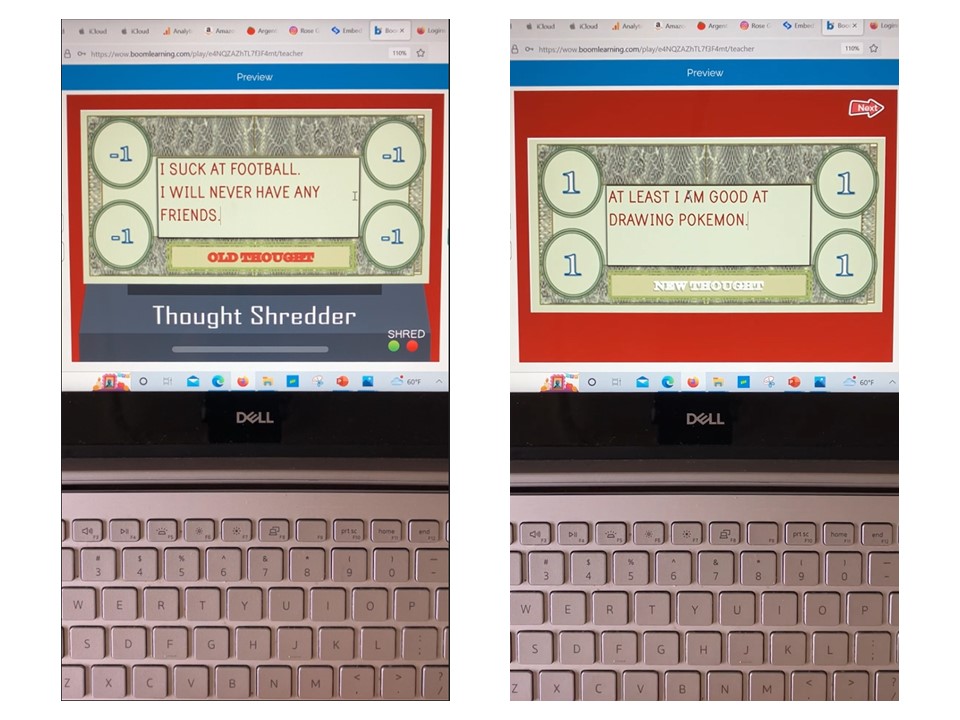
For that reason, quite a few of the CBT activities on my website can be accessed in both printable and screen-based versions. One example is the Mint New Thoughts activity, in which “Old Thought” play money is torn up or shredded and then replaced with “New Thought” money. When I later made it available in an animated, screen-based version, most of my clients came to prefer it that way. See the example below – check out the short YouTube demo.
Preference / need for having something in their hands
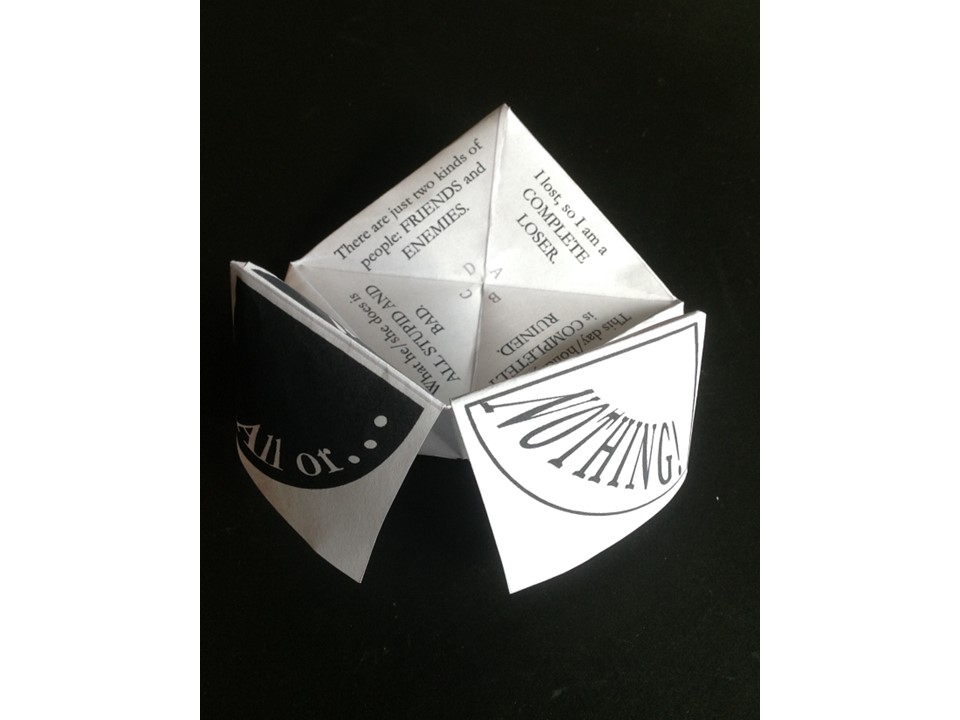
Quite a few of the children I have seen in therapy, especially children on the autism spectrum, need to be holding something while they are talking with me. I have spent a lot of time creating things for them to hold which are related to our therapy work. An example, shown below, is one of three CBT-themed paper fortune tellers on my website.
Aversion to prolonged out-loud verbal interaction with the therapist
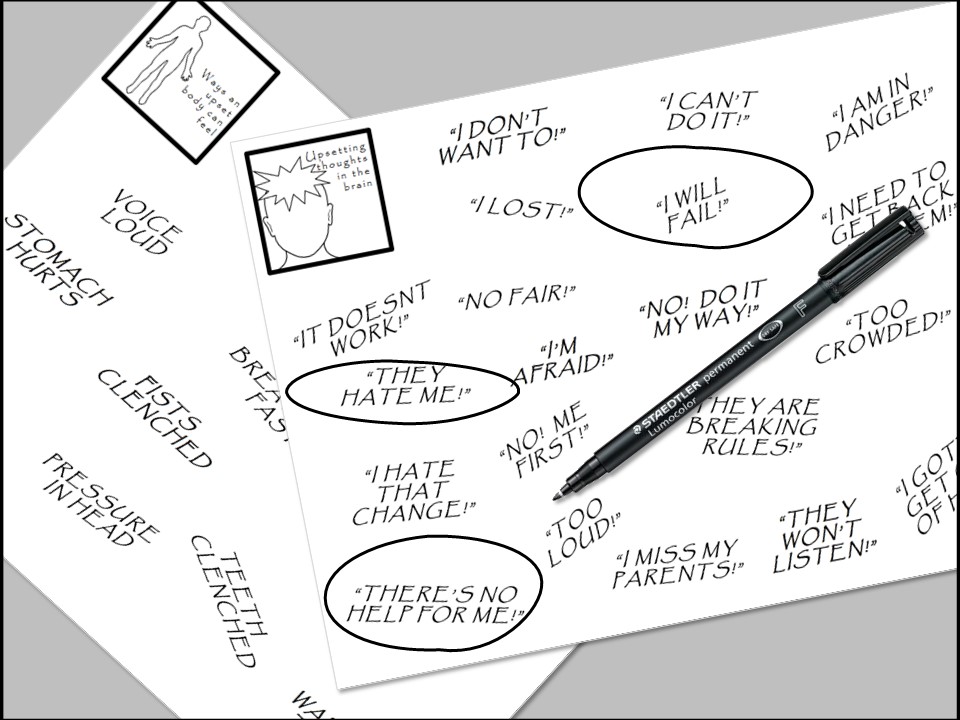
Many children, most notably ones with ASD, need to be offered productive alternatives to merely talking in therapy sessions. Many children highly value activities in session in which the therapist is saying relatively little while the child works on something meaningful. Below are two worksheets that go along with the Emotional Thermometer download from this website. These simple sheets can expedite an inquiry while affording the child a chance to not hear the therapist talk for a little while. Many children will in fact express things by writing, circling or drawing that they would be averse to saying aloud.
Preference for tangible product of the therapy session
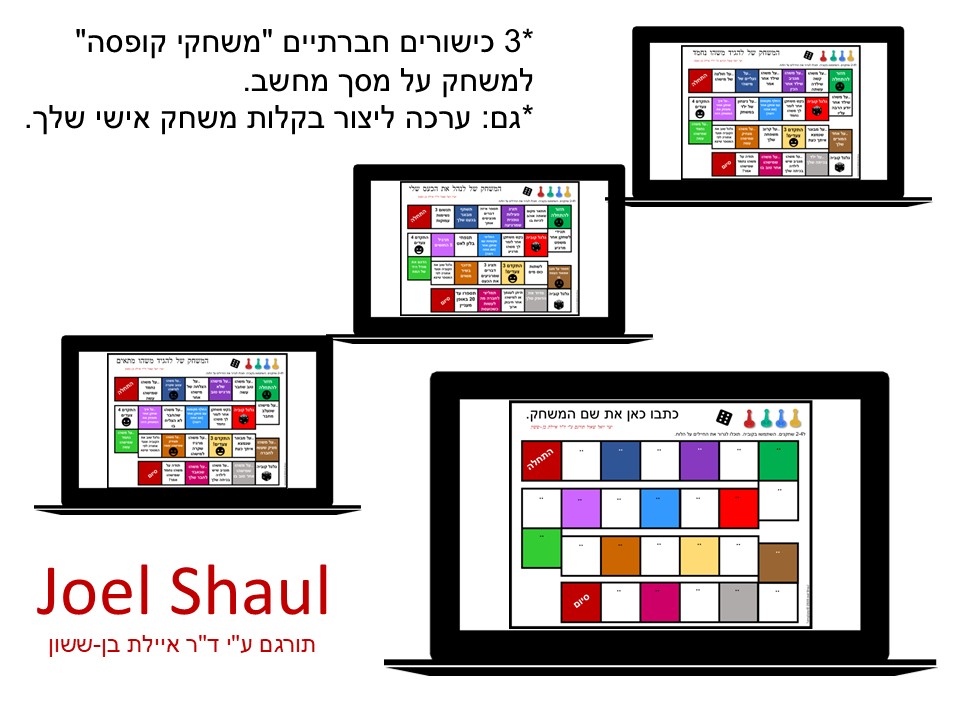
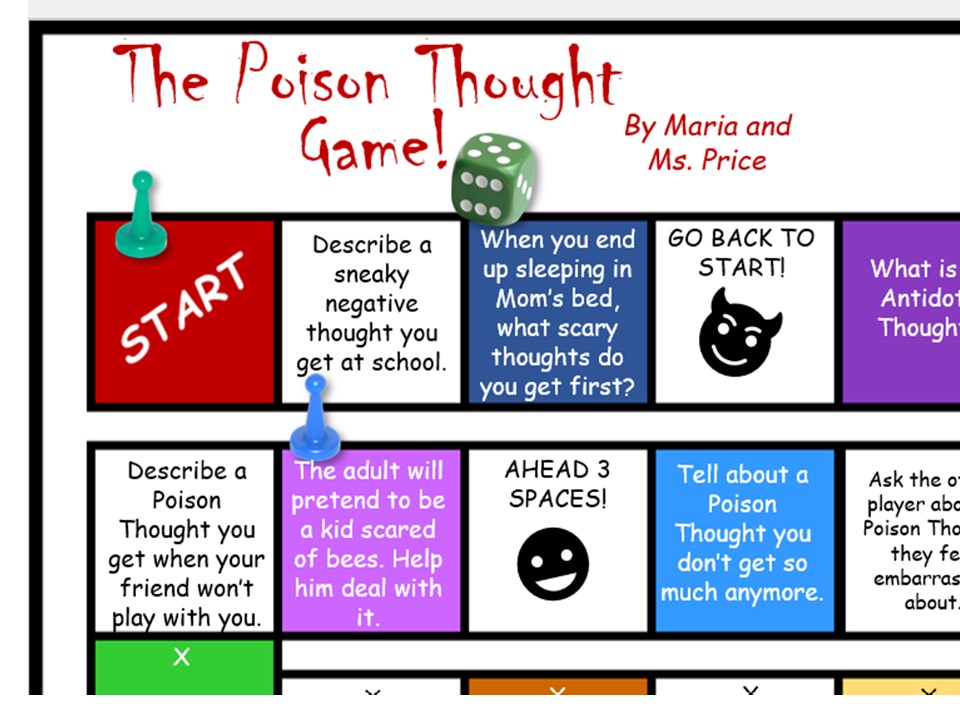
Many children value doing and making things in therapy sessions more than talking about them. The image below shows a “board game” similar to ones I have made with children in therapy sessions. You create these in PowerPoint and after you play the game with the kid, you can print it out, or email it to the child’s home, if the child feels this would be helpful.
Need for family participation to generalize learning
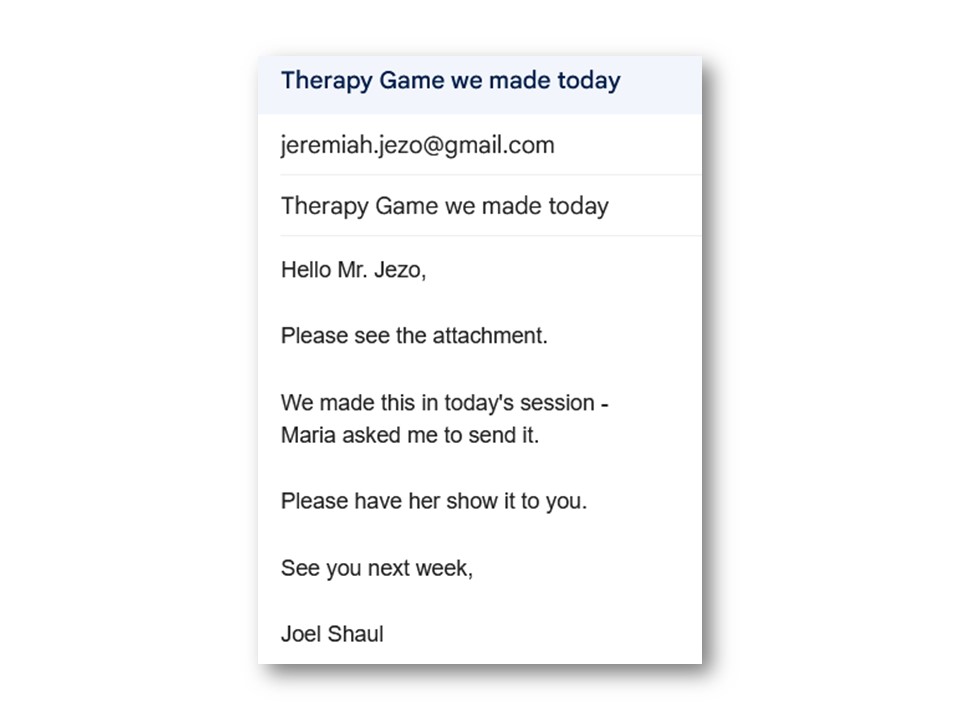
Most of the kids we see in therapy will need to follow up at home with real-world practice. If children want or need parental involvement, then it helps if the tangible product of the session is something the child can actually help show and explain to the parents. Below is a mock-up of the sort of email one might send in these kinds of situations.
I wish you success with your own CBT interventions with children.
Joel Shaul
Click on links below to access other parts of this series on CBT refinements for children.
Intro: Refinements to Make CBT Better Suited for Kids [link]
Part 1: About CBT YouTube Videos & How to Use Them [link]
Part 2: CBT Token Systems – CBT Cards, a Free Download [link]
Part 3: More CBT Token Systems – Using Mr. Yuk Stickers [link]
Part 4: Creating Thought “Enemies” and “Heroes” in Child CBT [link]
Part 5: Tailoring CBT Methods & Media to the Individual [link]
Creating thought “enemies” and “heroes” in CBT
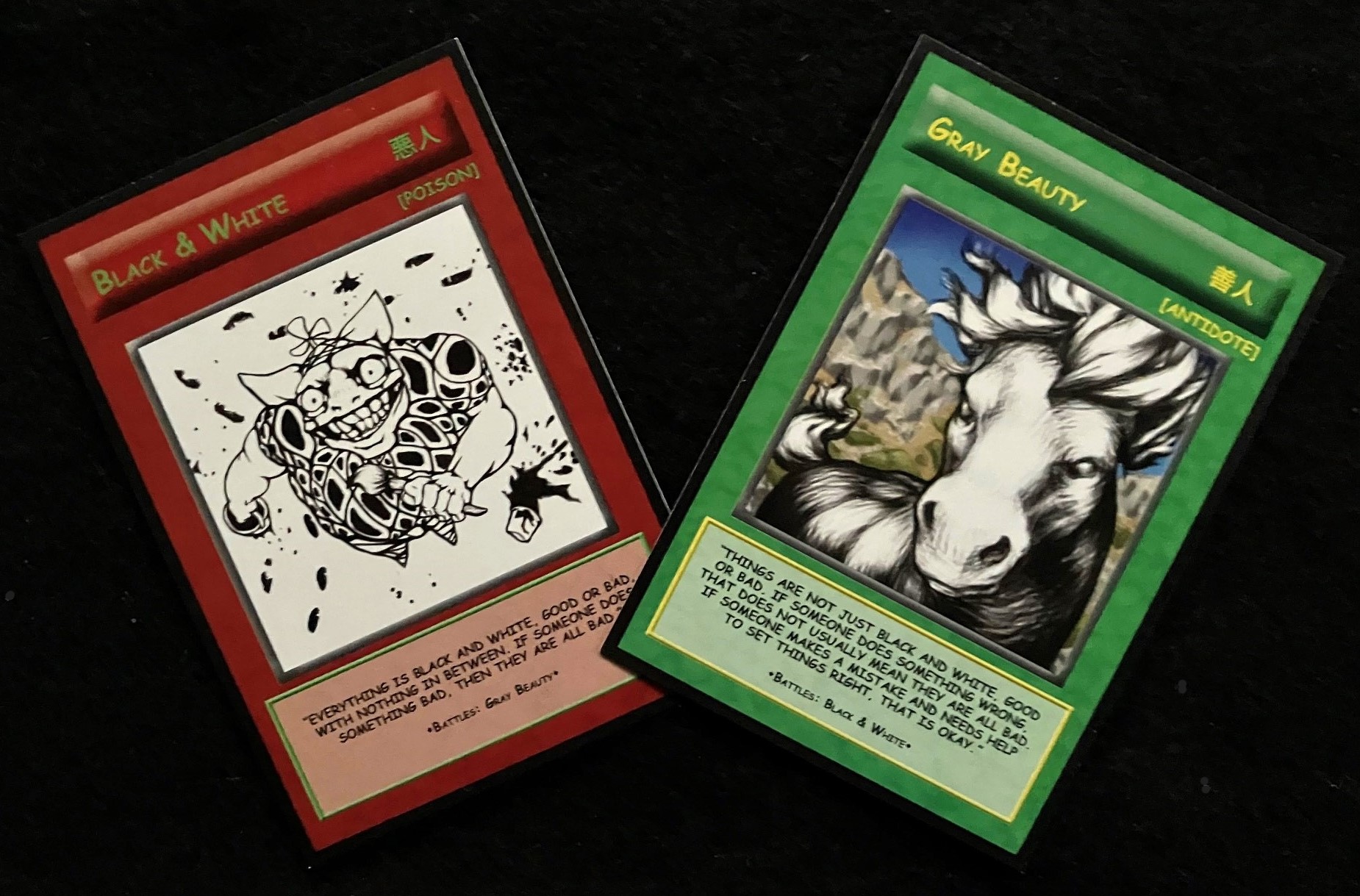
For a long time, people helping children with social and emotional skills have employed imaginary characters to represent various desired and undesired child behaviors. Many of these efforts are more preachy and pedantic than actually helpful, but other systems of “problem and solution” characters have the potential to be really useful in child therapy applications. This article briefly surveys a few of these, and references a character creation kit I made that enables you and a child to quickly fashion custom-designed “problem / solution” characters.
Reasons to employ problem and solution imaginary characters in CBT therapy with kids
A child with serious and persistent social and emotional problems can become demoralized by their constant struggles. The “problem child” can end up feeling so closely linked to their problems that they end up disliking themselves.
Creating problem and solution characters can enable a child to feel little more separate from their problems. Using this method can help a child to view their social or emotional challenge as a sort of adversary that can be fought against with the help of therapists, teachers and family.
Here are the therapeutic elements of creating problem and solution characters with children in therapy, from my perspective. First, this therapy activity can help restore a child’s self esteem by differentiating their essential self from the problems they experience. Second, this method can help a child to focus on central therapy issues. Third, this fantasy-based technique capitalizes on hero / anti-hero narrative systems that are well established in youth culture.
Ready-made problem & solution characters
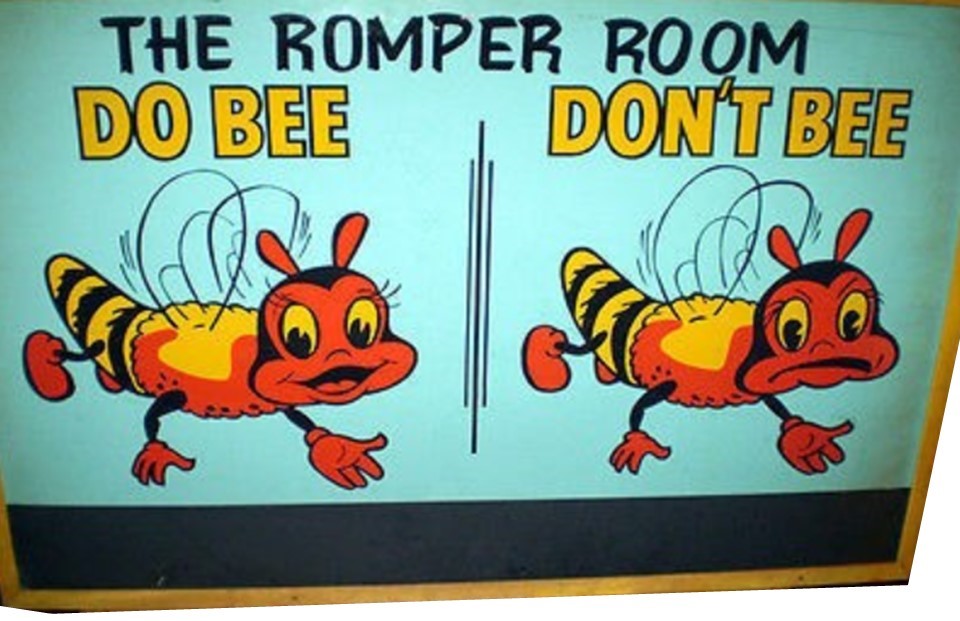
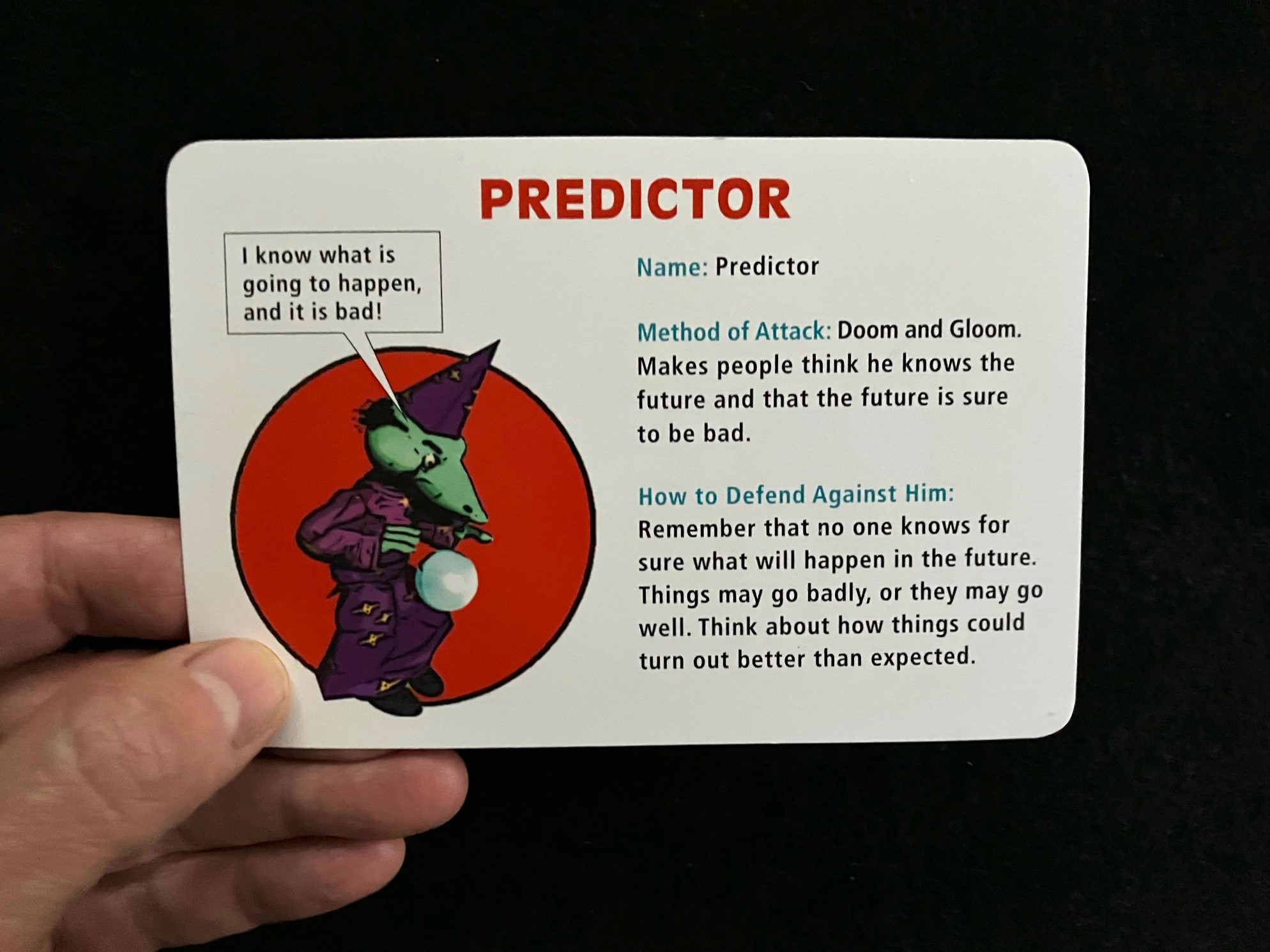
There are many problem and solution character systems out there. Many are not very good. Here is one I recall from my youth.
Here are some problem and solution tools that I have found can be pretty useful in CBT applications.
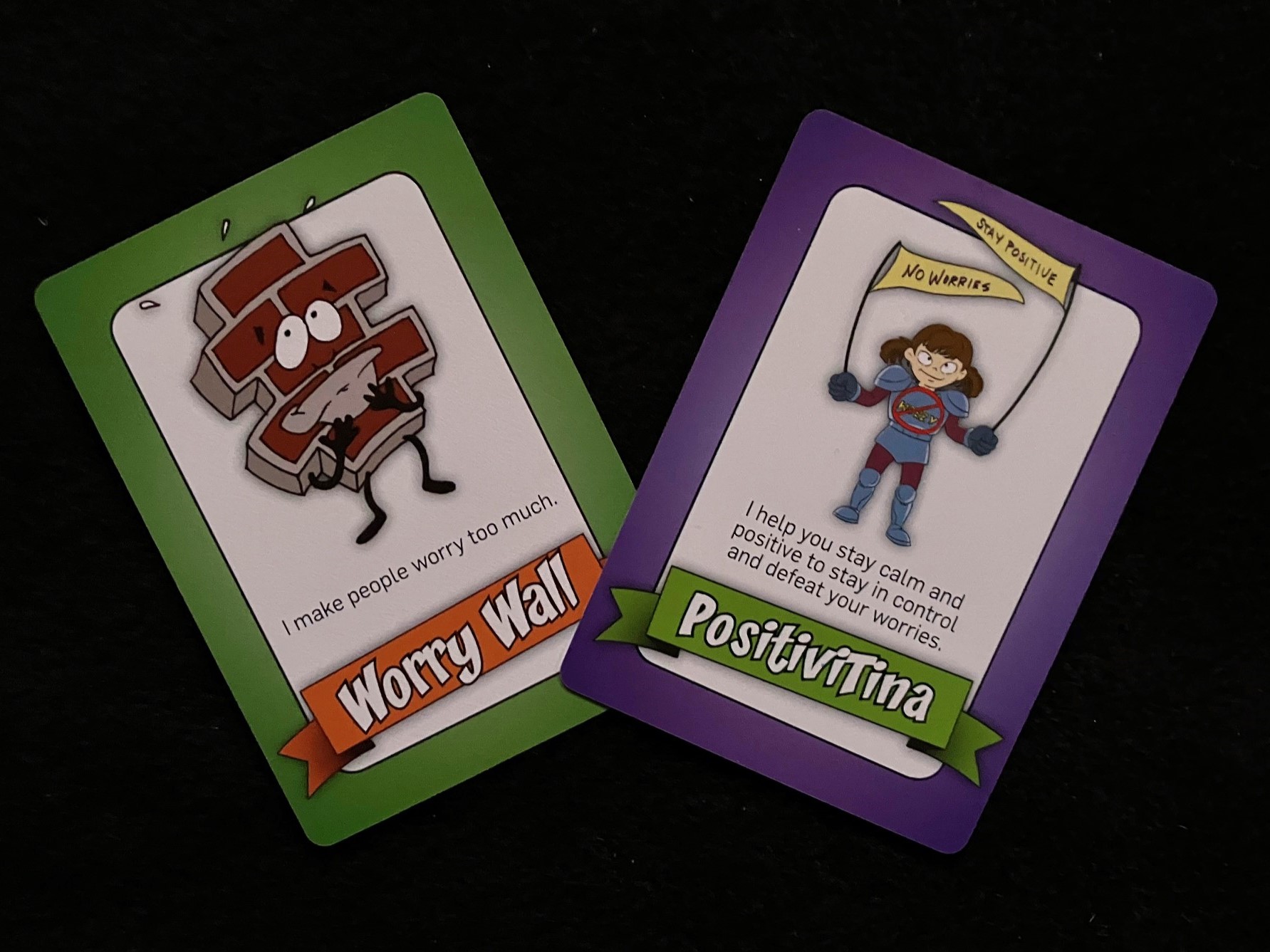
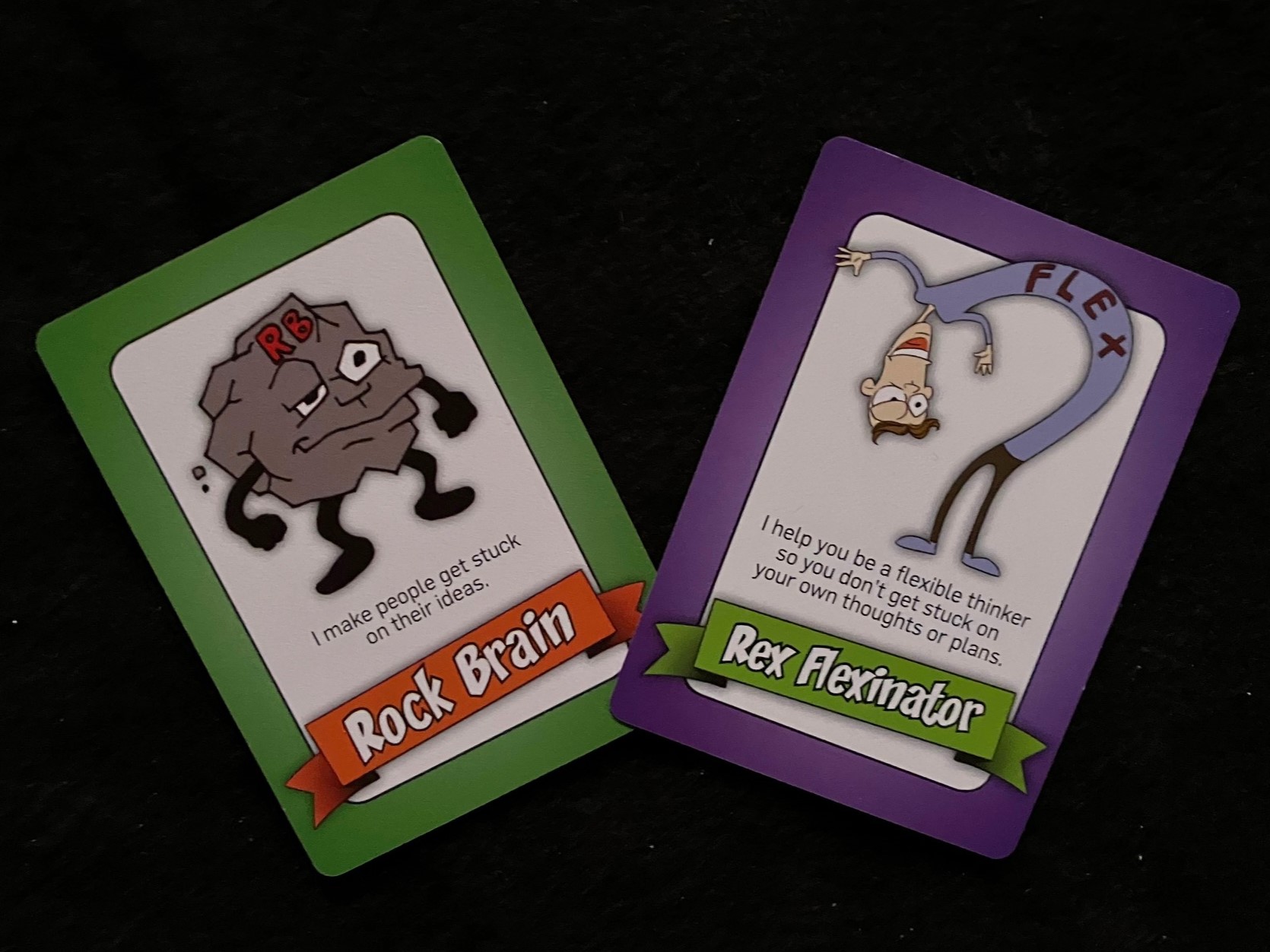
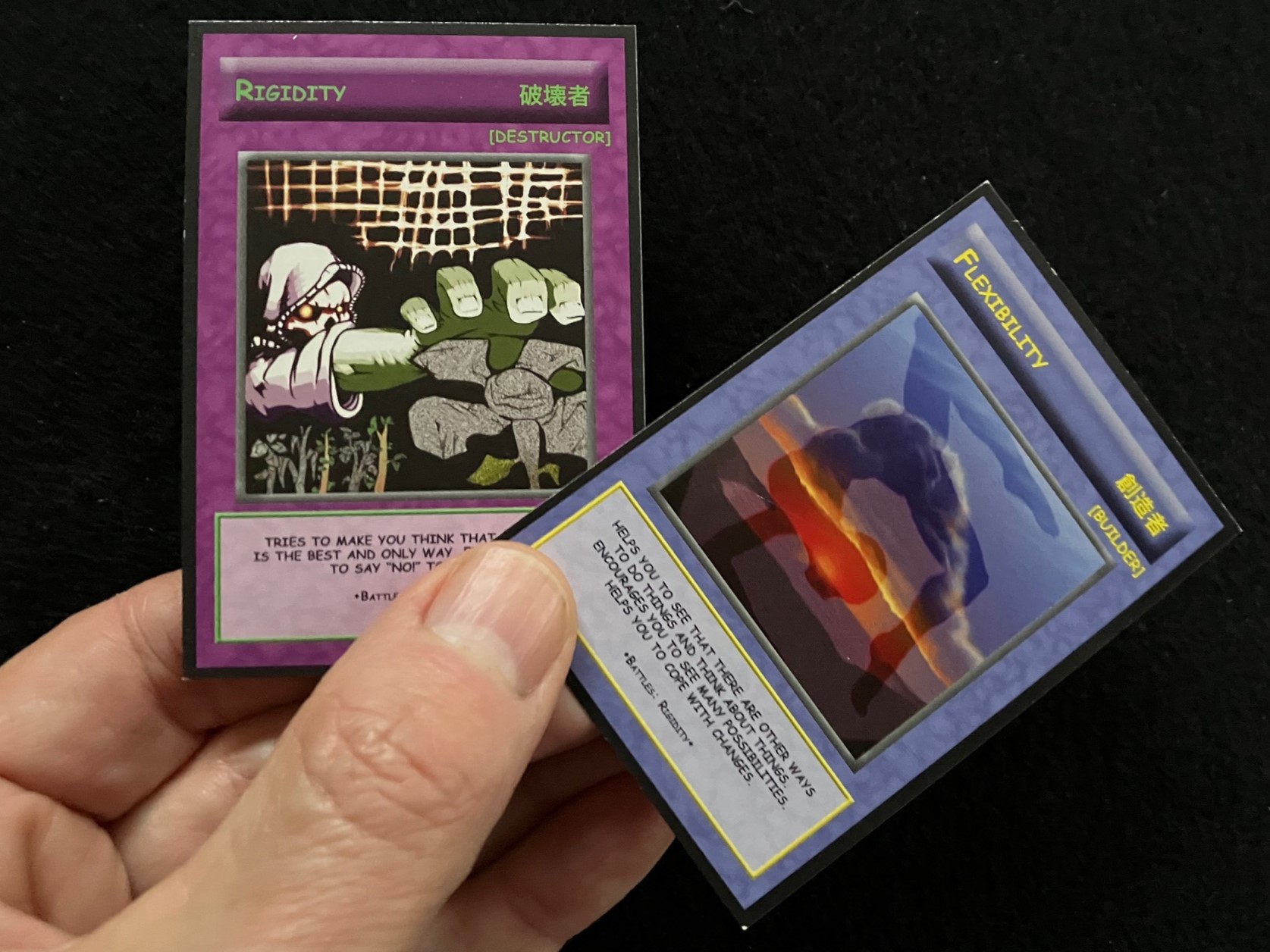
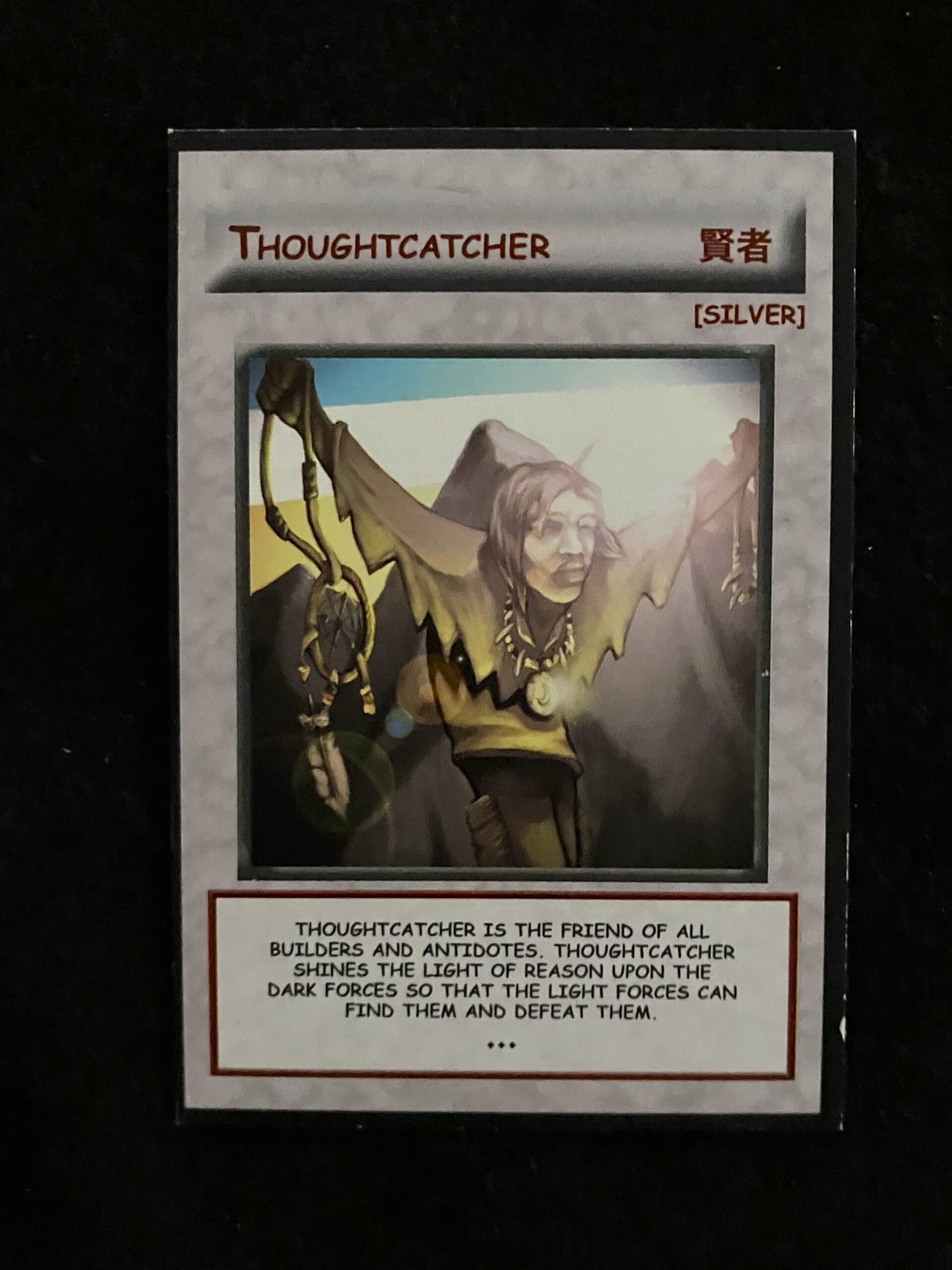
Problem and solution characters that children can create on their own with your guidance
In previous blog posts, I presented a free kit enabling children to create problem and solution characters by either drawing them or via a simple drag & drop system in which numerous images are pre-loaded to select. Here are some pictures showing typical results you might expect. I have used this kit a great deal in my CBT work.
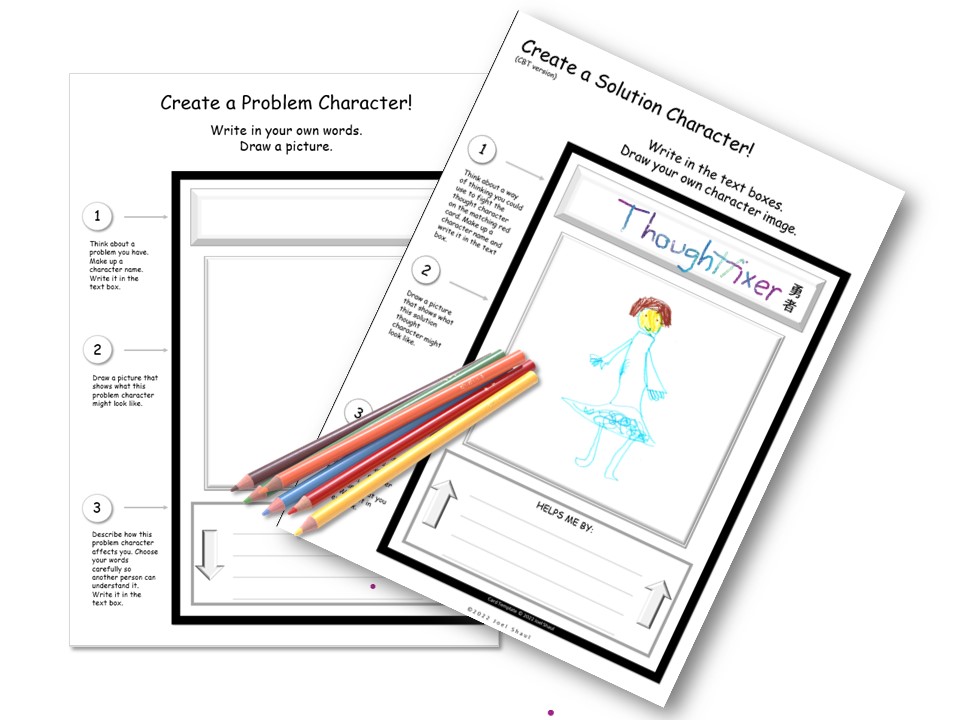
This short YouTube video demonstrates how to do use the rapid PowerPoint template to create the cards without drawing.
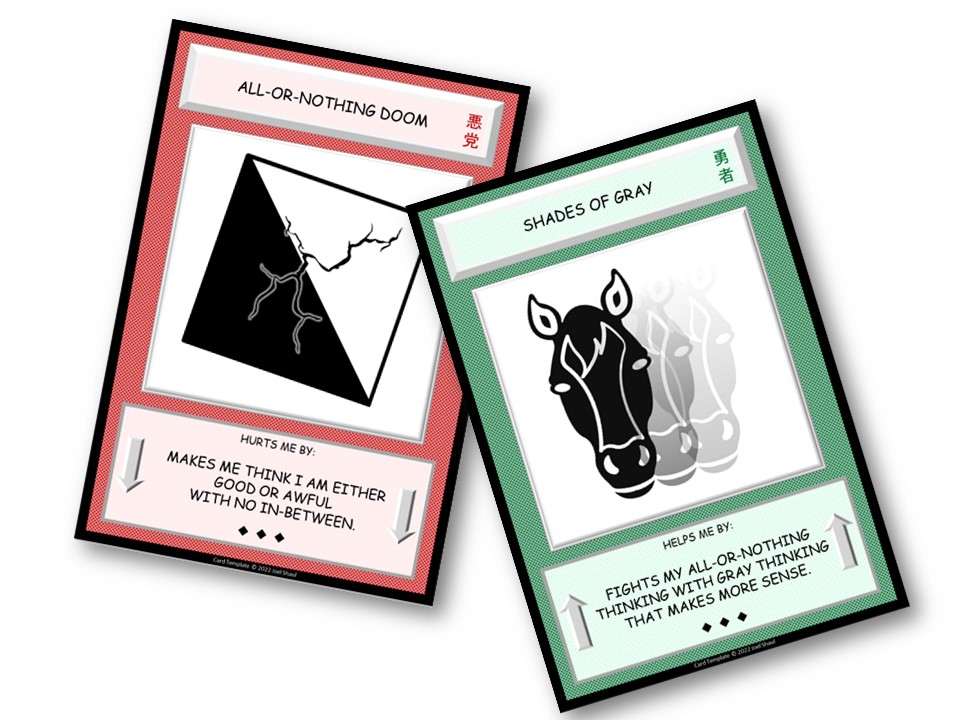
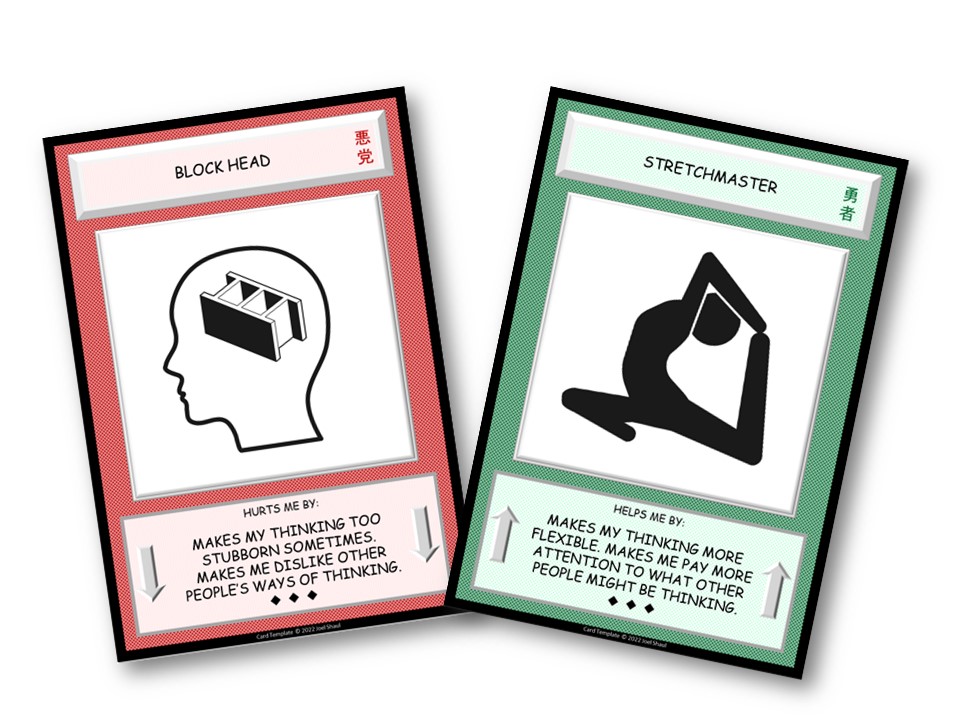
Joel Shaul, LCSW
Click on the links below to connect with other parts of this series.
Intro: Refinements to Make CBT Better Suited for Kids [link]
Part 1: About CBT YouTube Videos & How to Use Them [link]
Part 2: CBT Token Systems – CBT Cards, a Free Download [link]
Part 3: More CBT Token Systems – Using Mr. Yuk Stickers [link]
Part 4: Creating Thought “Enemies” and “Heroes” in Child CBT [link]
Part 5: Tailoring CBT Methods & Media to the Individual [link]
When we are doing CBT with children, we often need to add some game-like element or levity. CBT is hard and serious work, but these are kids after all.
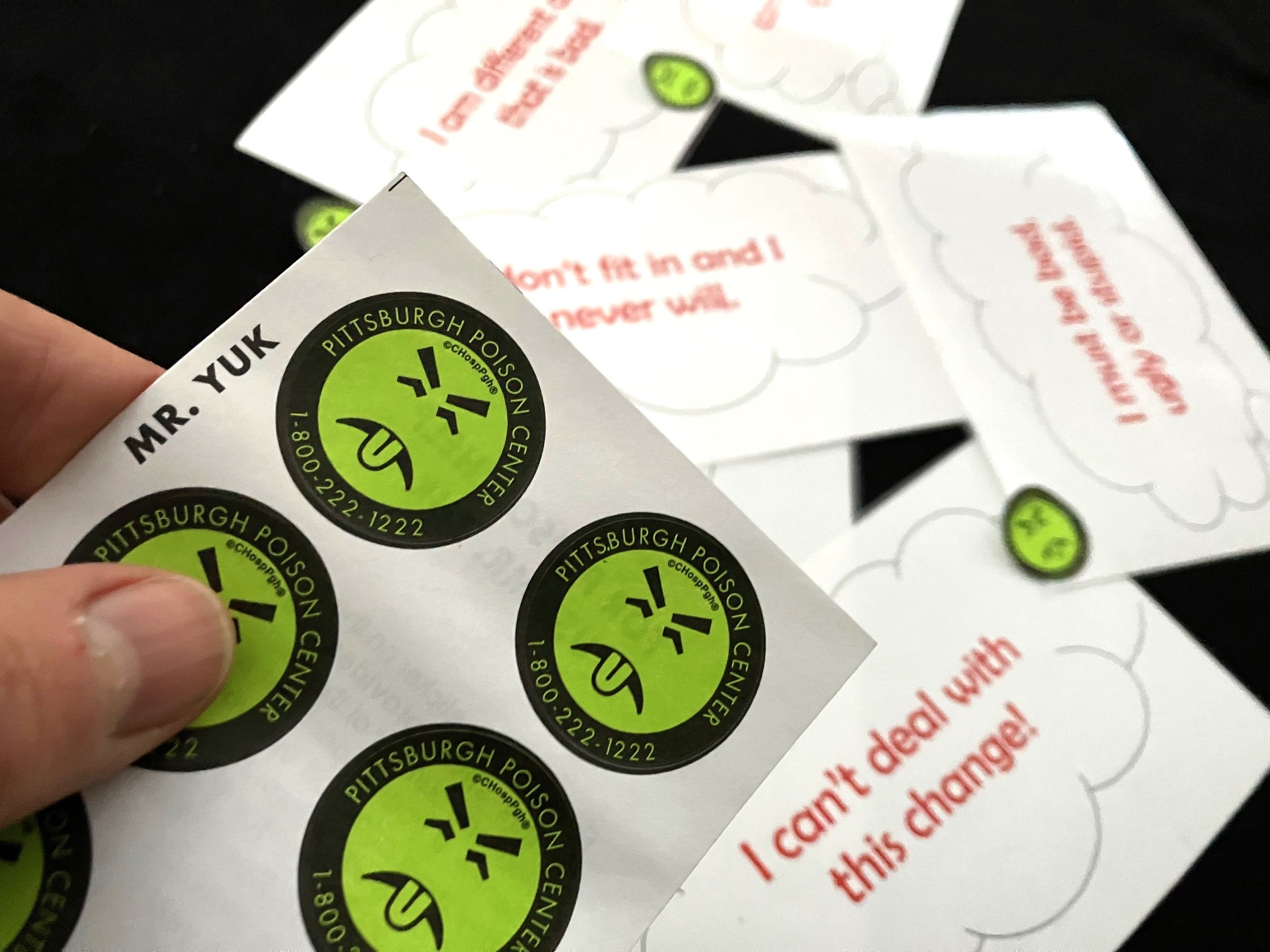
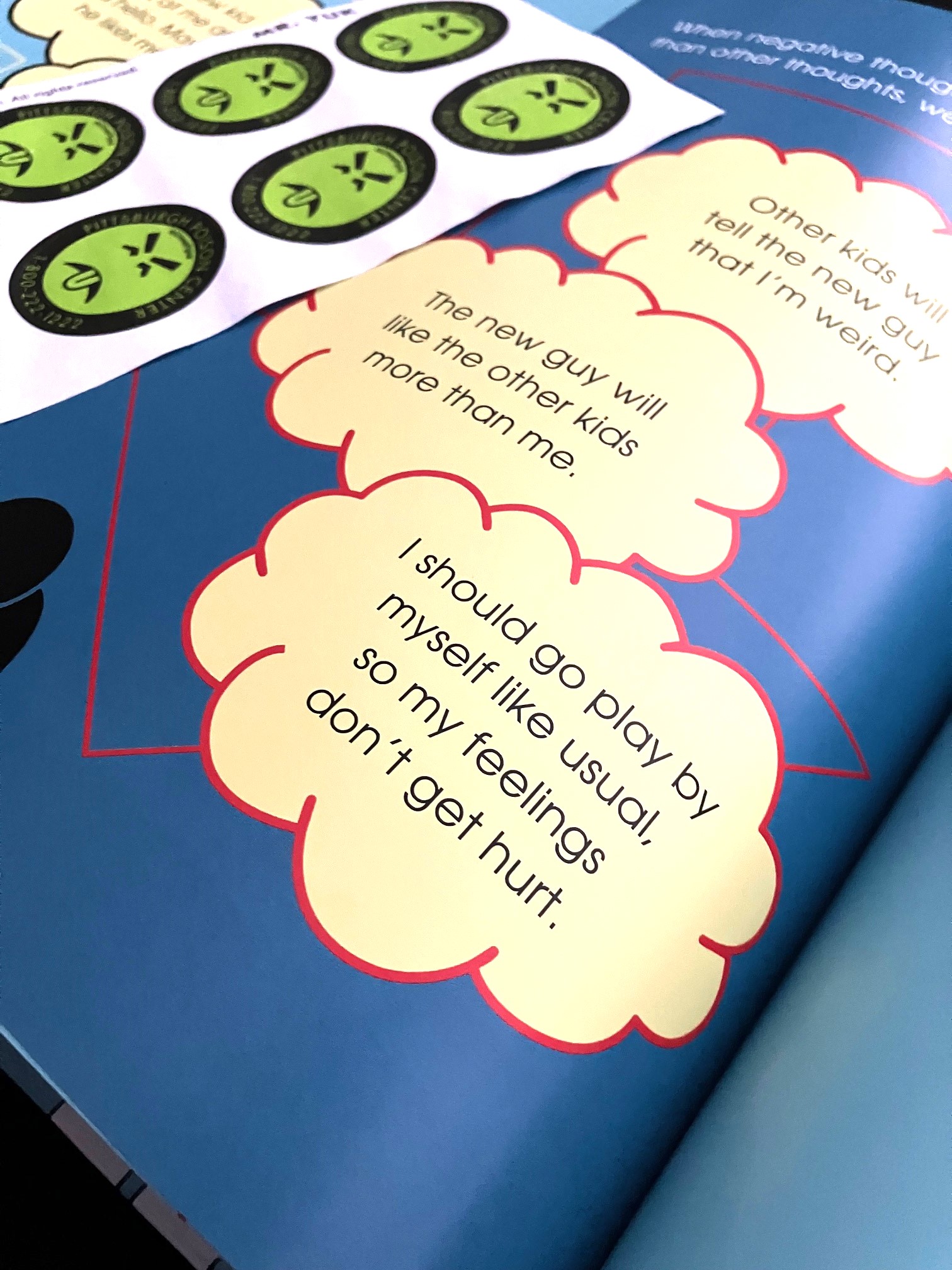
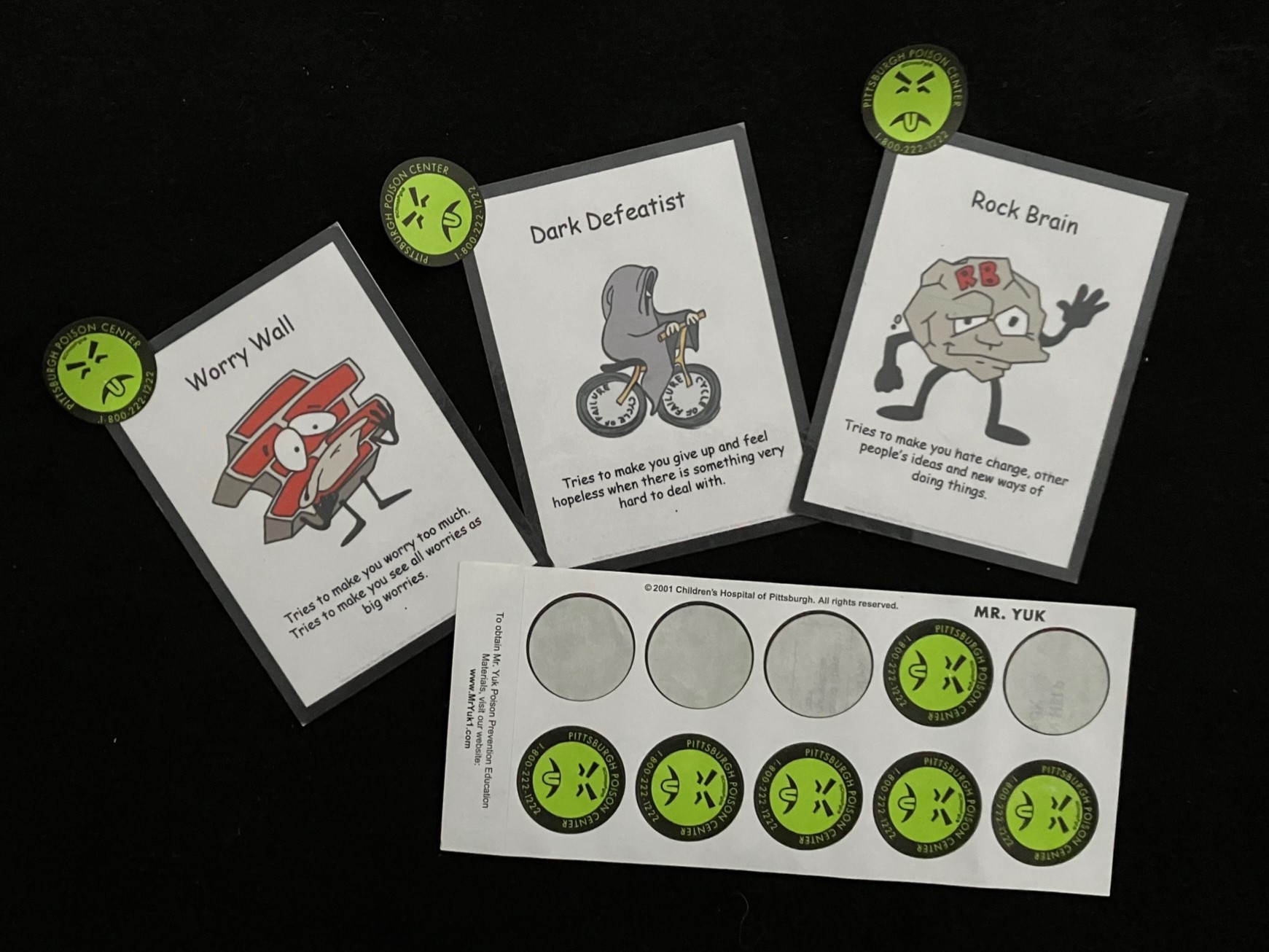
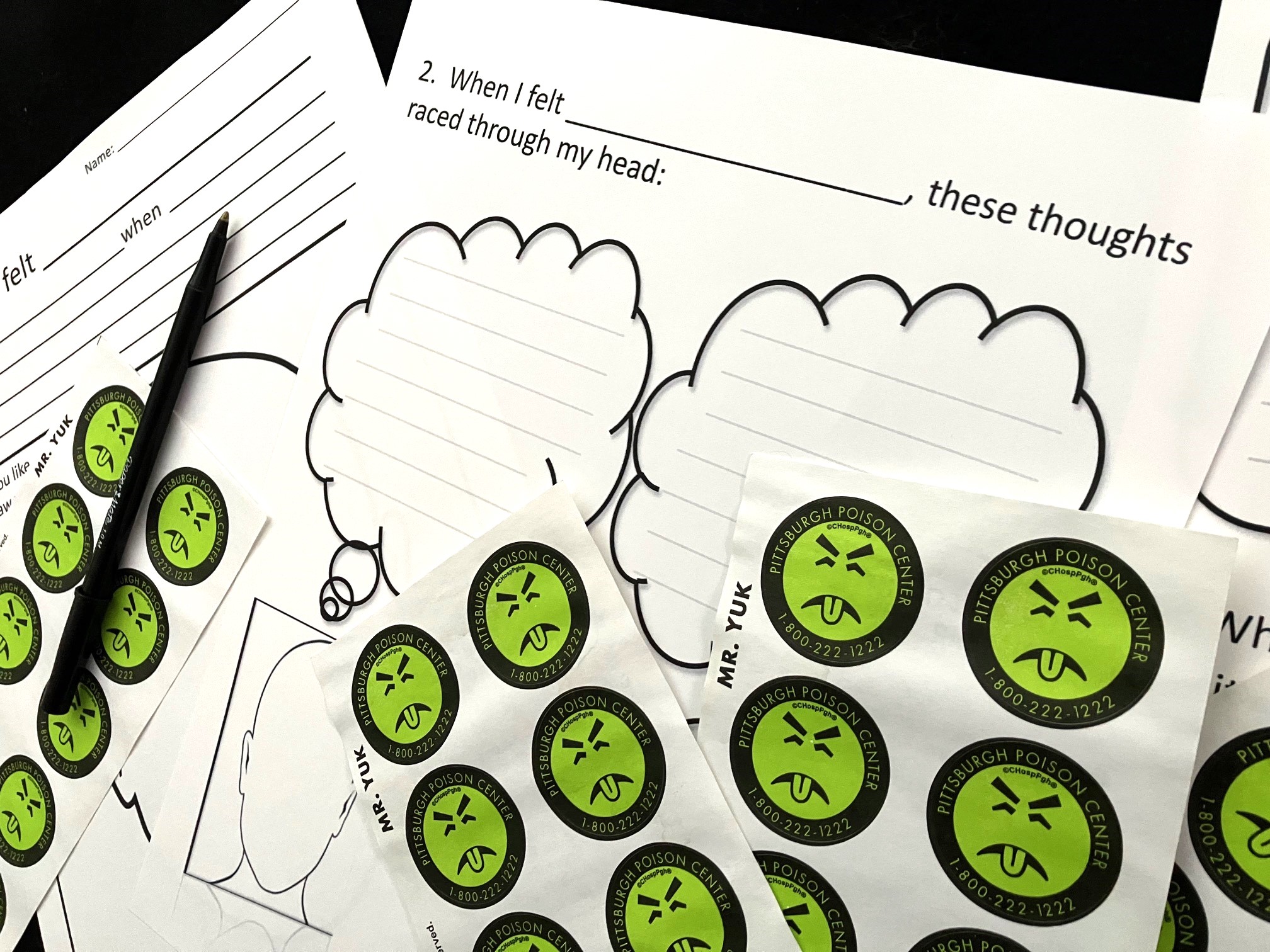
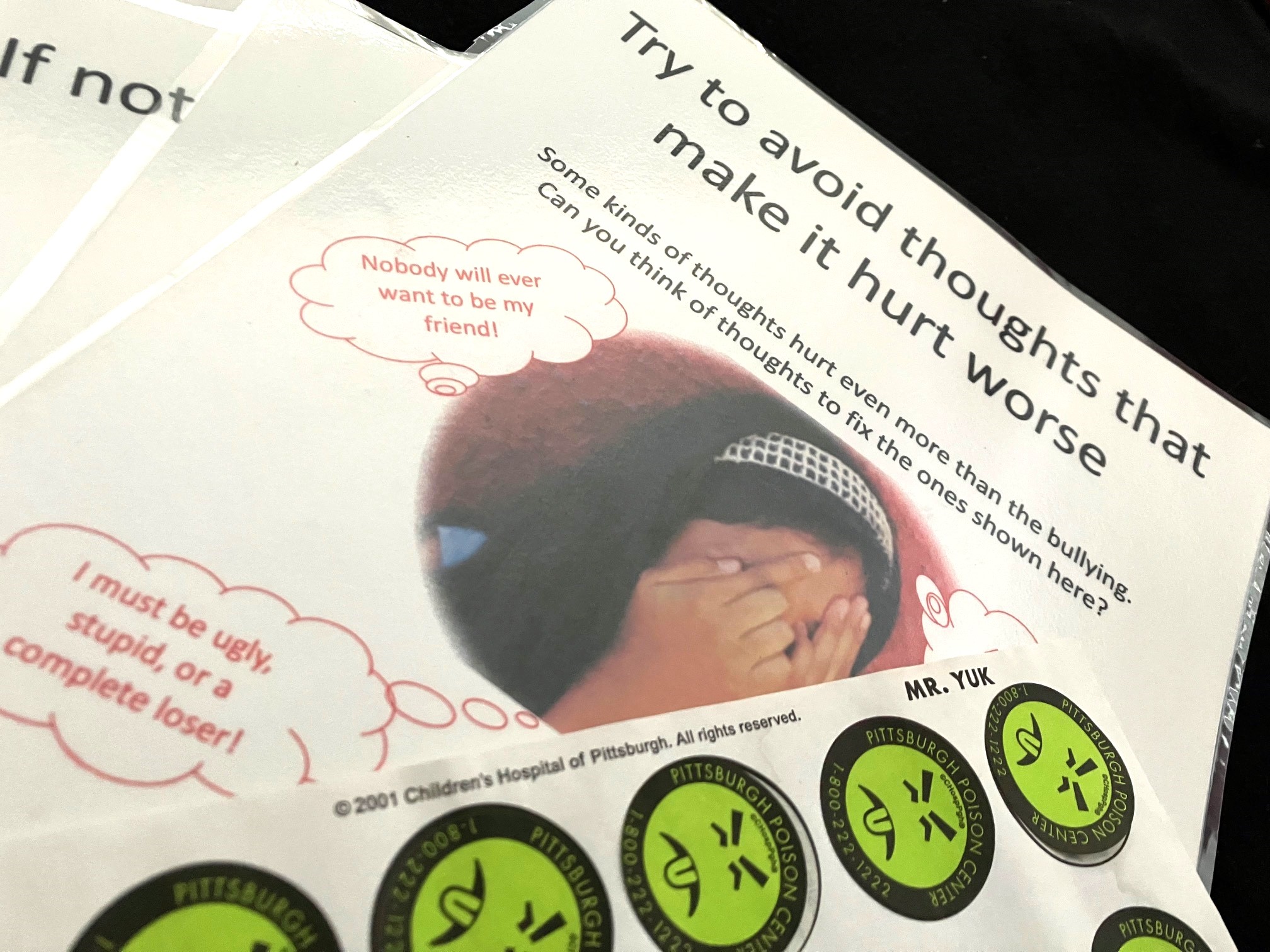
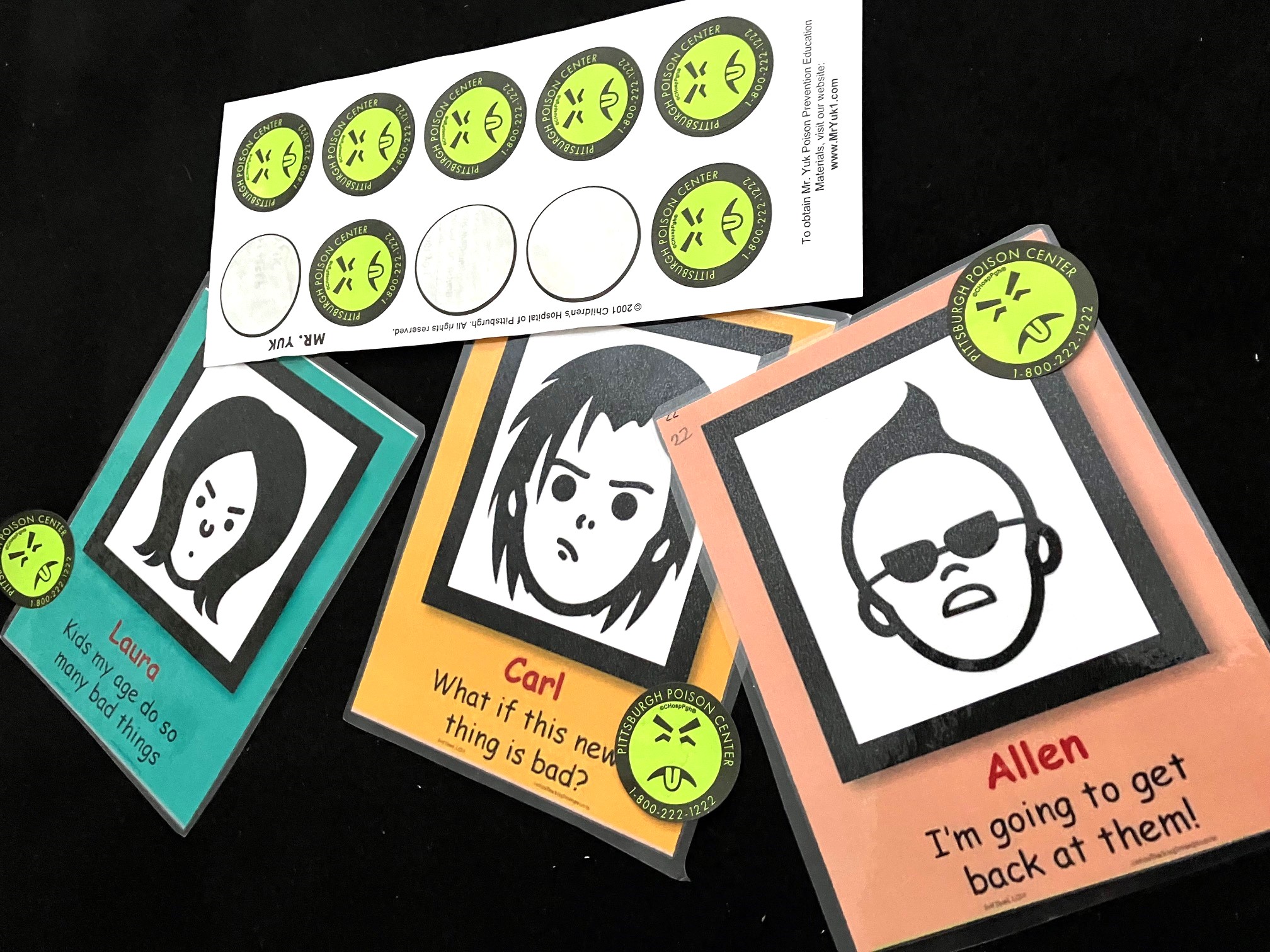
A useful and simple add-on to try sometime is using Mr. Yuk stickers. This is not for every session, but perhaps just once or now and then, to make the point, in an engaging manner, that automatic negative thoughts are like poison, which we should avoid, or use antidote thoughts to be rid of them. Mr. Yuk stickers are available on Amazon – the last time I checked they were $16.99 for 200 of them.
About Mr. Yuk stickers
These are used all over the US, and perhaps elsewhere, to warn children away from poisons. I believe that nearly all children in the US understand the meaning of the Mr. Yuk icon.
Comments about their appropriate use
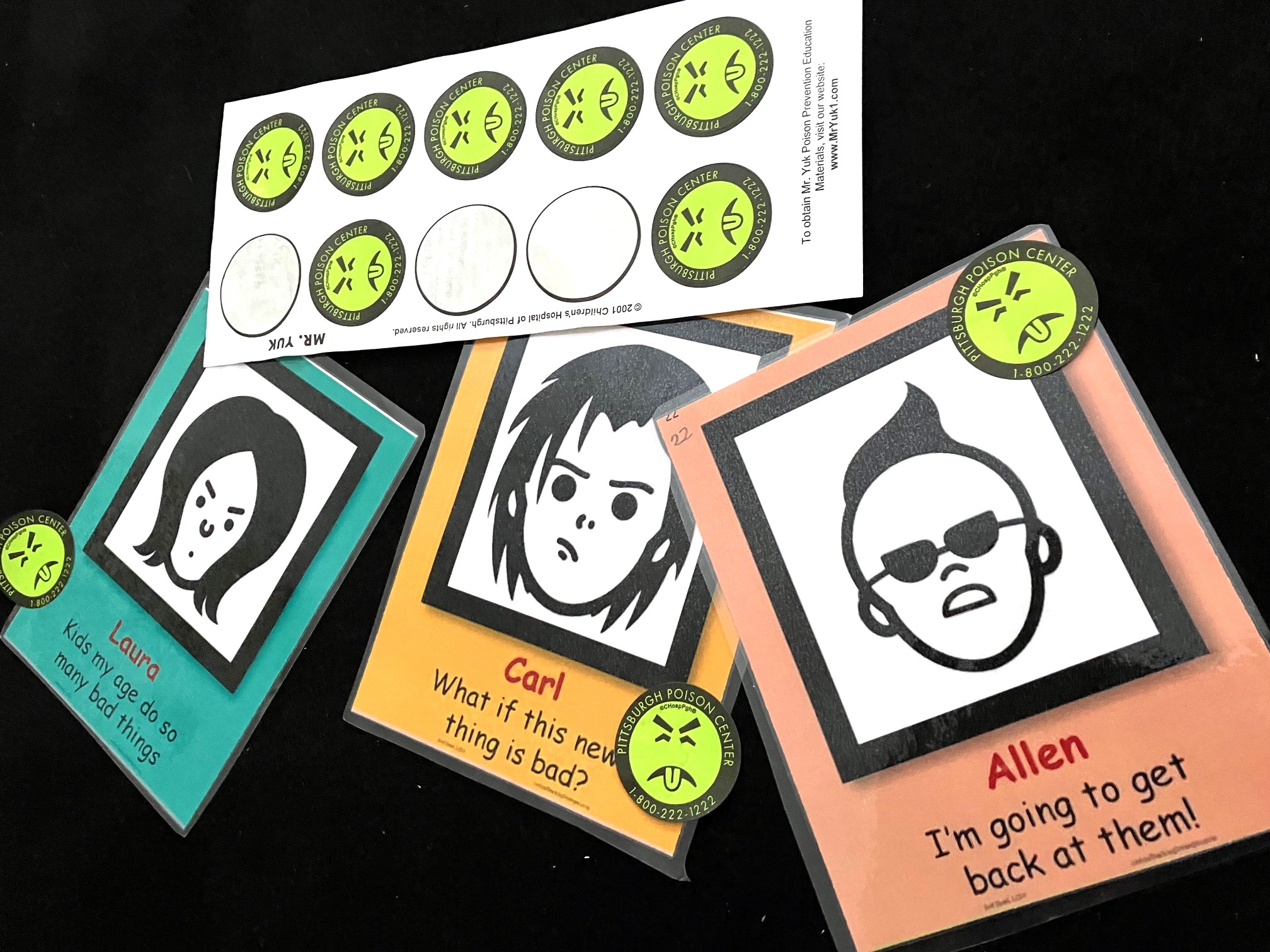
Obviously, these stickers were not designed and manufactured for counselors, therapists and other professionals to use in therapy. You of course would need to explain carefully to children that this is a special activity with the stickers and that if they see Mr. Yuk stickers anywhere in the home, school or community they should not touch them because it means POISON. Don’t give the stickers out to children to play with randomly.
Using them in CBT work
First, show children this short video which explains the meaning of “Poison Thoughts.”
Introduce the stickers using language something like this:
“Everyone knows you must never touch poison or let it get inside you. Mr. Yuk stickers are to warn us that poison can harm us.
We have been learning about sneaky thoughts called Poison Thoughts. They try to get inside our minds.
Let’s use these Mr. Yuk stickers today by placing them on words and objects that have to do with these automatic negative thoughts we call Poison Thoughts.”
After that, use the Mr. Yuk stickers once or twice, or once in a while, to drive home to kids the essential toxic nature of automatic negative thoughts.
Playful elements in CBT do not imply that CBT is “play.”
Maybe this should go without saying, but I will say it anyway. Anxiety, depression and other debilitating emotional conditions are real in children, and work involving Mr. Yuk stickers is not some kind of “lite” version of therapy. These game-like elements are calculated measures taken to help our young clients persist with their CBT therapy.
Joel Shaul, LCSW
Click on the links below to view the other parts of this CBT series.
Intro: Refinements to Make CBT Better Suited for Kids [link]
Part 1: About CBT YouTube Videos & How to Use Them [link]
Part 2: CBT Token Systems – CBT Cards, a Free Download [link]
Part 3: More CBT Token Systems – Using Mr. Yuk Stickers [link]
Part 4: Creating Thought “Enemies” and “Heroes” in Child CBT [link]
Part 5: Tailoring CBT Methods & Media to the Individual [link]
CBT token systems – CBT cards, a free download
Cognitive behavioral therapy, whether it’s for a kid or an adult, can be hard and discouraging. After all, the main work involves the arduous process of finding and rooting out automatic negative thoughts that get stuck in our minds. When we are doing CBT with children, we obviously can’t turn this therapeutic activity into something “fun,” but by adding some game-like elements we can can help propel our work forward.
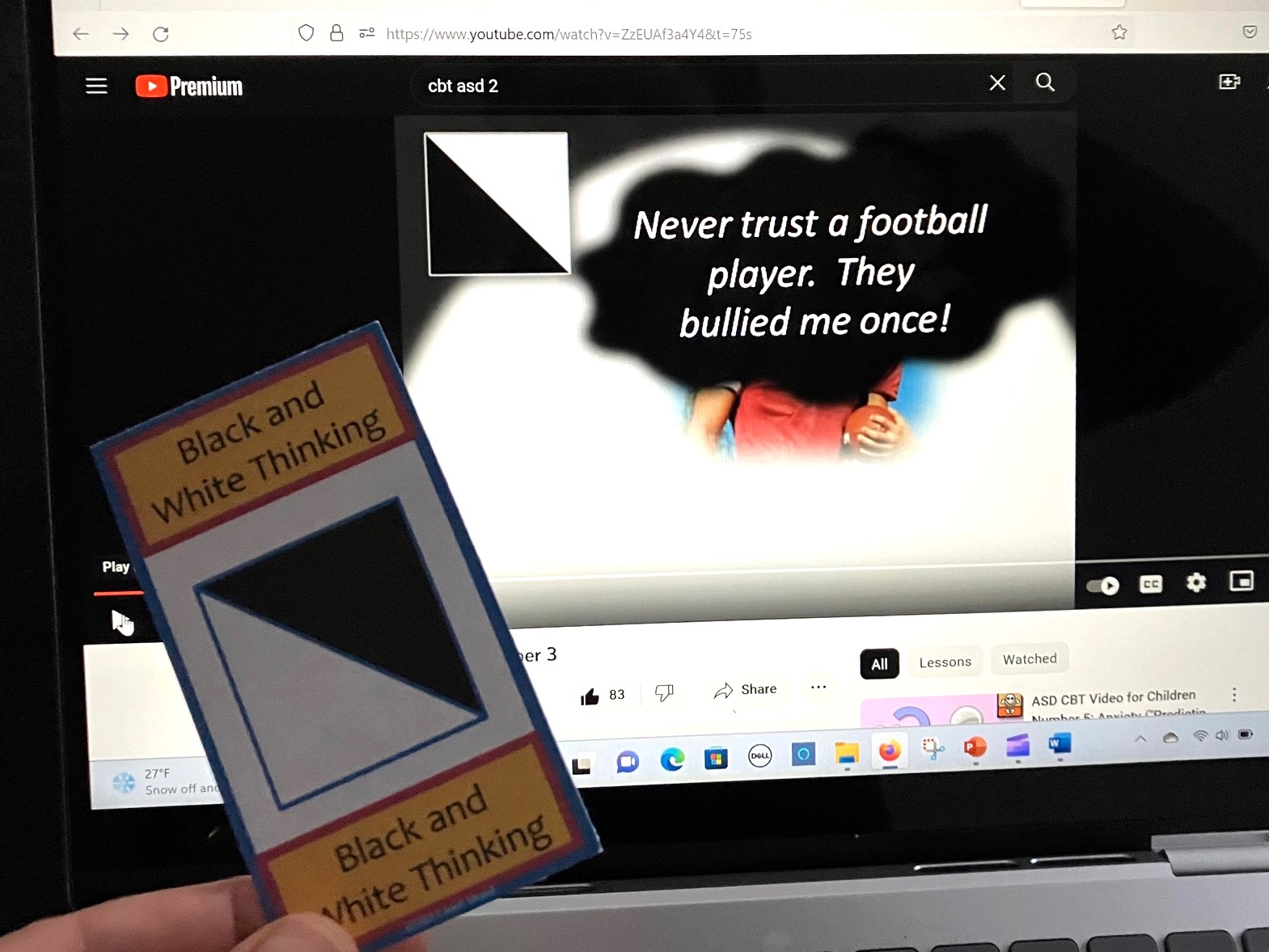
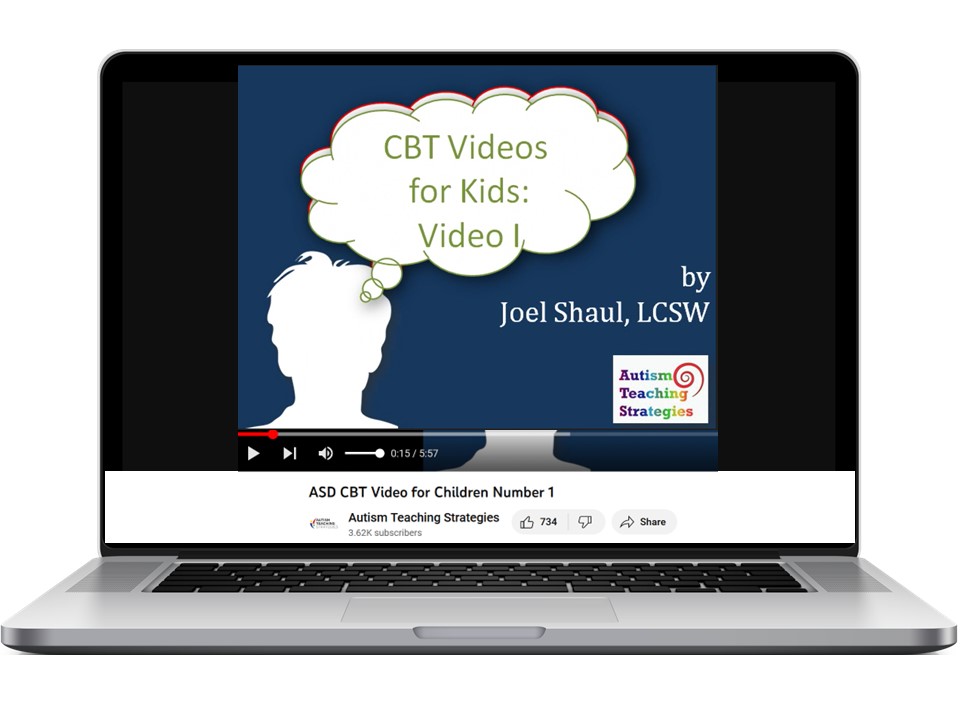
This article introduces a game-like token system with a free download. It is a set of cards you can use along with the CBT YouTube Videos for Kids (these videos are explained in much detail here).You use the cards to reward the child for identifying automatic negative thoughts in the videos and in their own minds.
How to make the cards
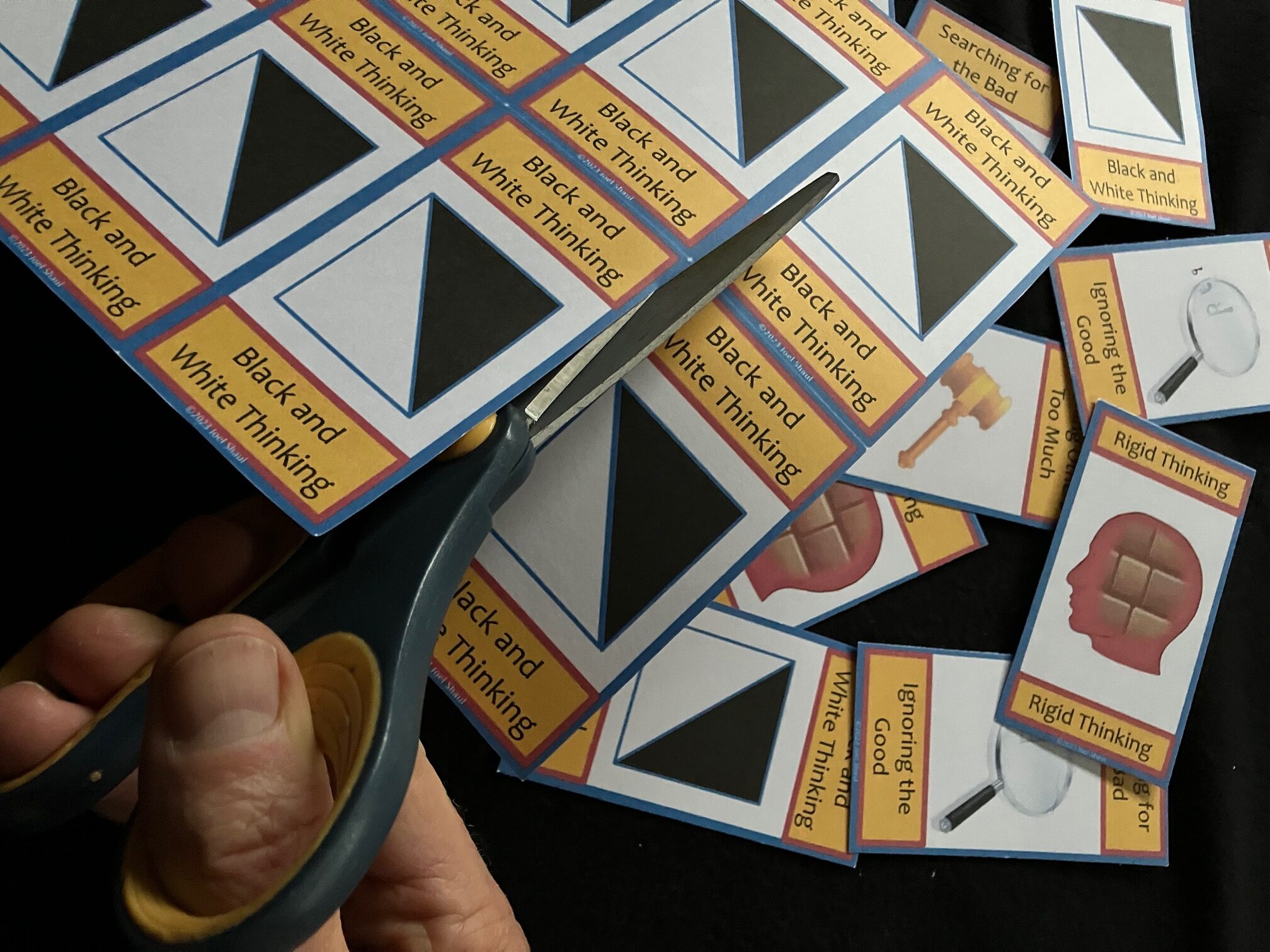
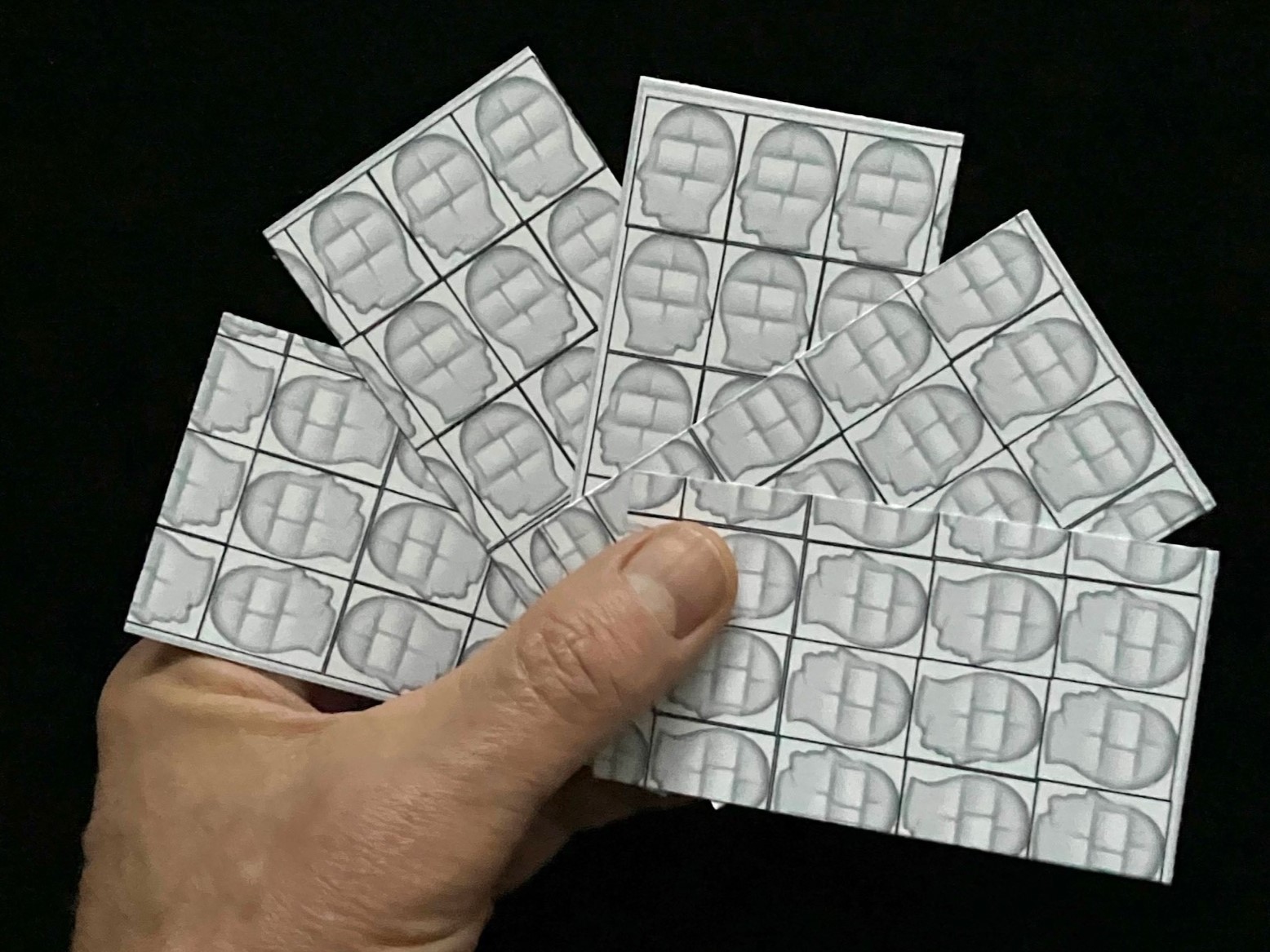
Print the cards on card stock, or on paper that you will then laminate. If you want to get fancy, print the decorative back before printing out the front of the cards.
How to use the cards
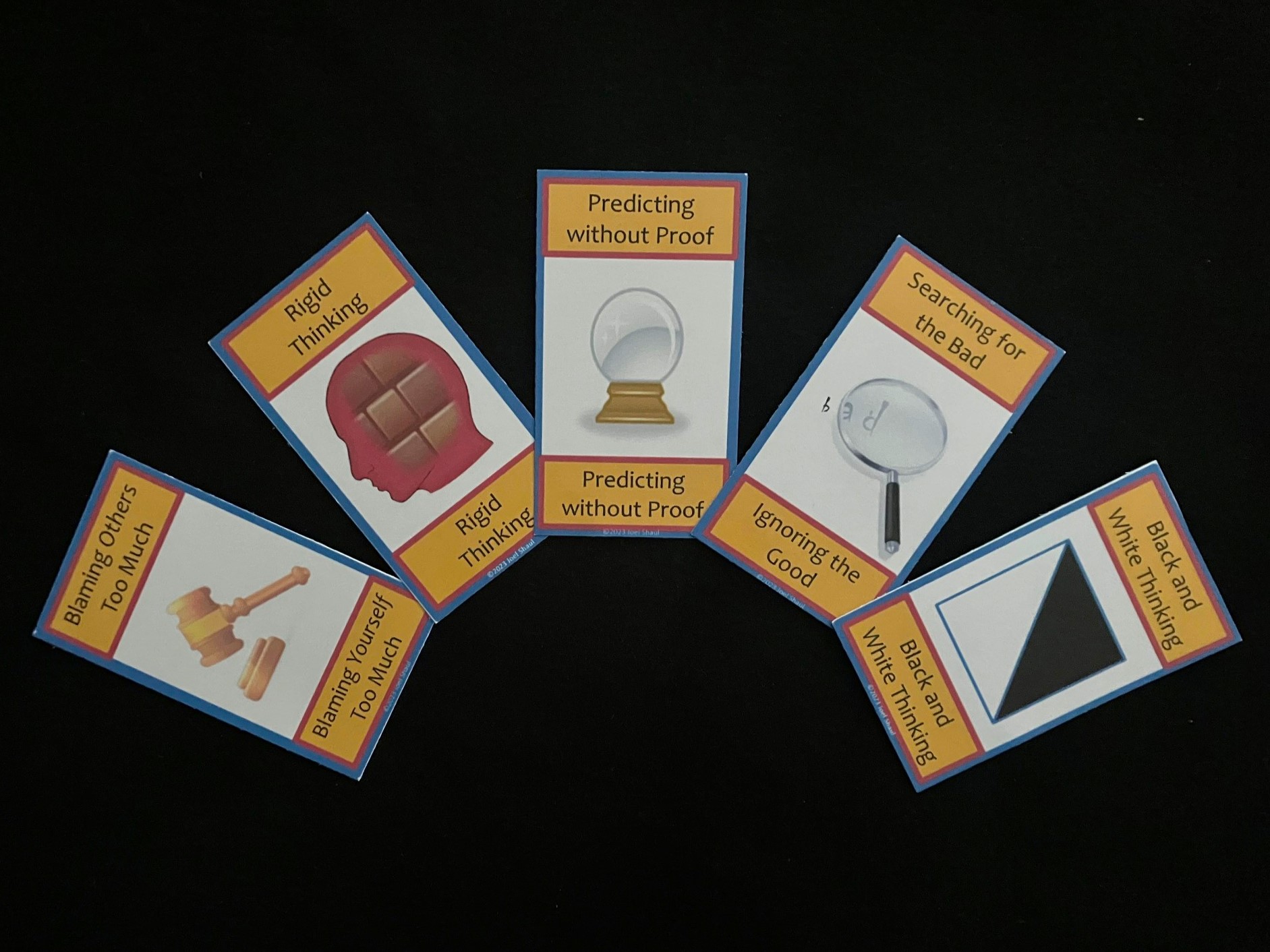
Once you have introduced the five Poison Thought categories, you can keep five piles of the Poison Thought Cards handy while viewing the CBT Videos for Kids. Then, you can hand out the cards one by one to children in order to recognize and reinforce a child’s success in:
a. Identifying a Poison Thought experienced by a child in the video
b. Identifying one of their own Poison Thoughts
c. Thinking of Antidote Thoughts which might apply.
Certain kinds of children tend to like token systems like the CBT cards
I have often used these cards when doing CBT activities with children on the higher end of the autism spectrum. I have found that children and teens with ASD are often very receptive to these game-like devices in therapy. First, young people with ASD might not notice or be sufficiently reinforced by the subtle, spoken encouragement offered by clinicians during therapy sessions. They may actually prefer a small pile of CBT cards as tangible evidence that they are “getting it” during therapy. Second, neurotypical children, when they approach teenage years, tend to become averse to these playful gambits and they can feel manipulated by them. But teenagers with autism are actually seldom put off by these CBT cards, so with them I use them often.
I have used cards like this in my work for years. I have to say that it is a really straightforward and useful tool to use. It adds a little levity to hard work without undermining the serious nature of CBT. If you print out these cards, you probably will end up using them over and over when you work with the CBT Videos for Kids.
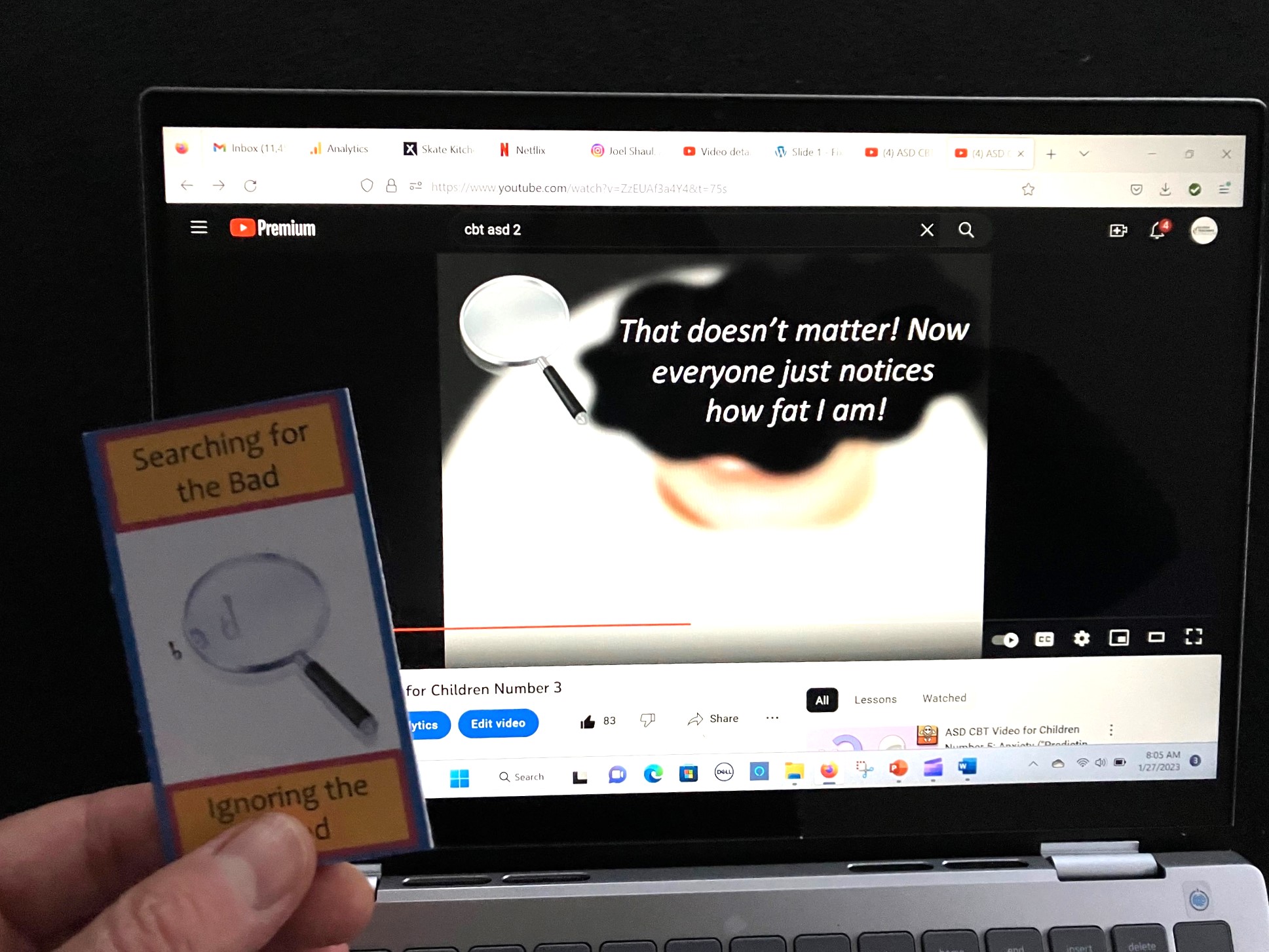
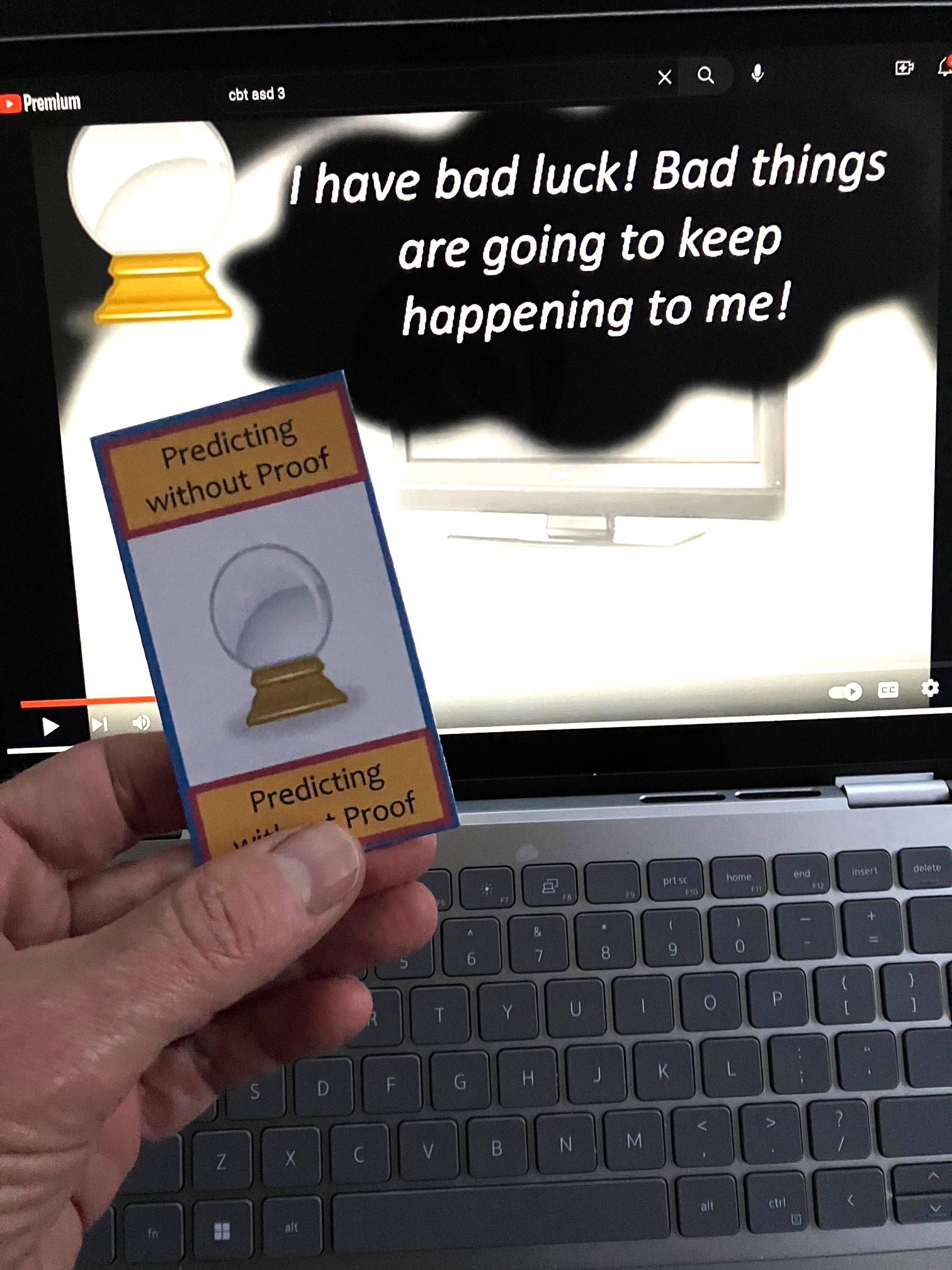
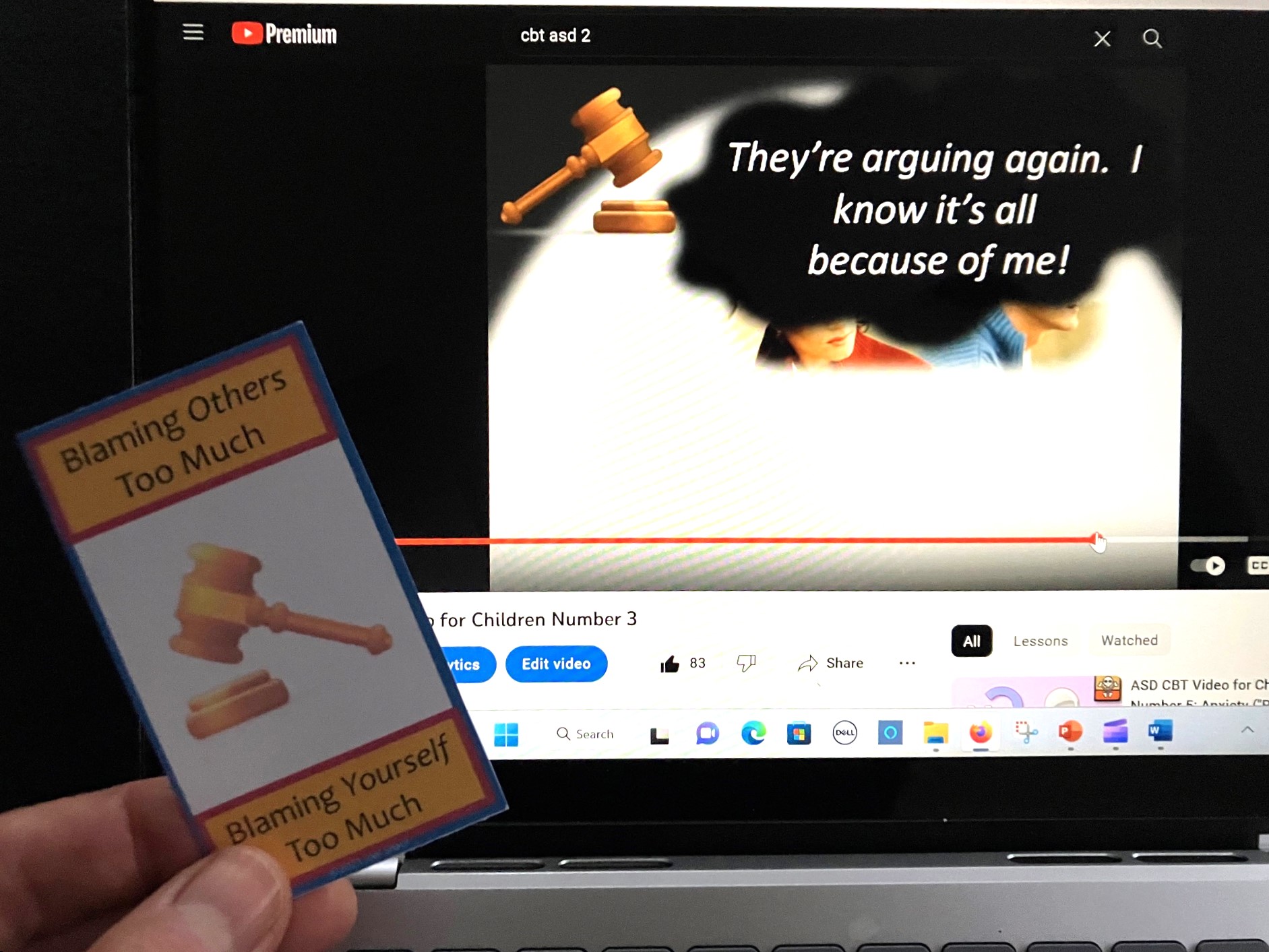
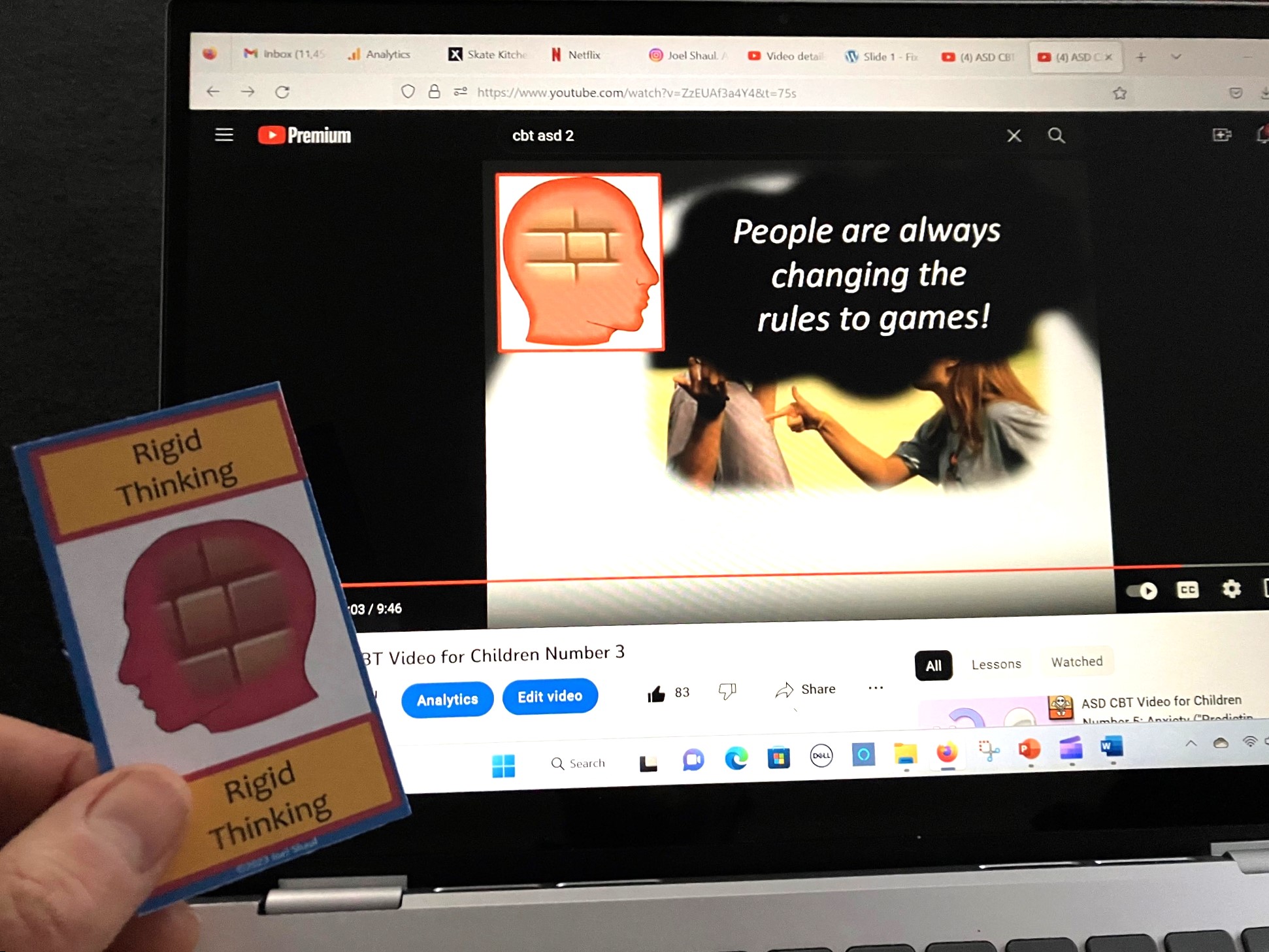
Joel Shaul, LCSW
Follow these links to other posts in this series.
Intro: Refinements to Make CBT Better Suited for Kids [link]
Part 1: About CBT YouTube Videos & How to Use Them [link]
Part 2: CBT Token Systems – CBT Cards, a Free Download [link]
Part 3: More CBT Token Systems – Using Mr. Yuk Stickers [link]
Part 4: Creating Thought “Enemies” and “Heroes” in Child CBT [link]
Part 5: Tailoring CBT Methods & Media to the Individual [link]
(click HERE to link to the CBT Videos for Kids)
About CBT YouTube videos and how to use them
Many years ago, I had noticed that many children and teens appeared disengaged and discouraged in cognitive behavioral therapy.
First, lots of children and teens found the conventional CBT terminology too complex and the automatic thought categories too numerous. Second, the heavy and exclusive focus on the child’s problem thinking seemed too intense for many children, causing them to back away from the work.
In 2014, I developed the eight CBT videos in an effort to address these sources of resistance in CBT work.
Fewer categories and simpler language
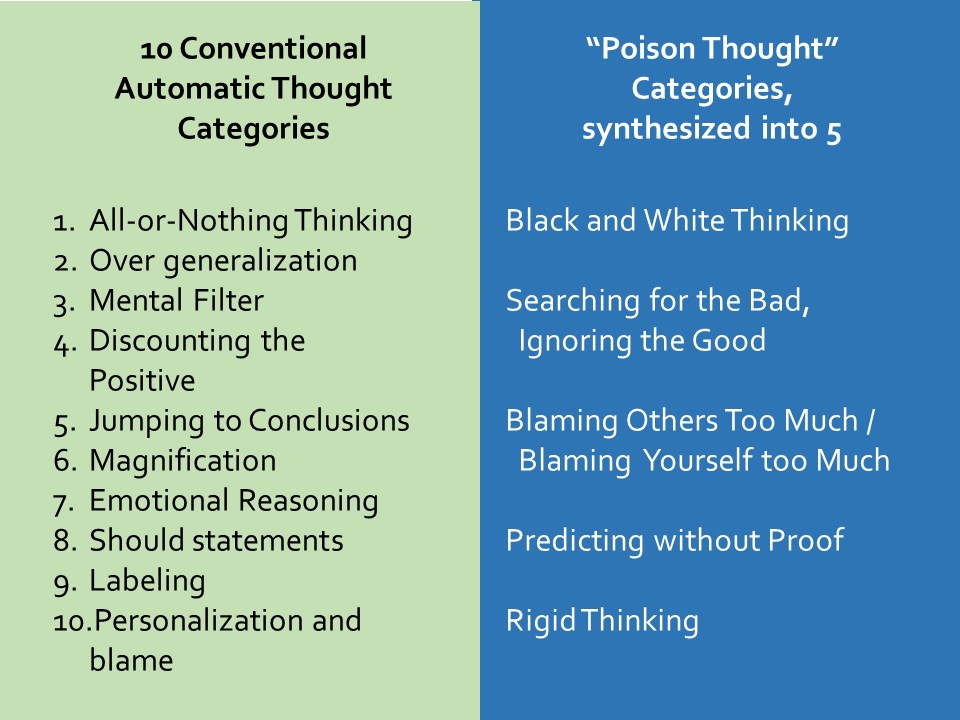
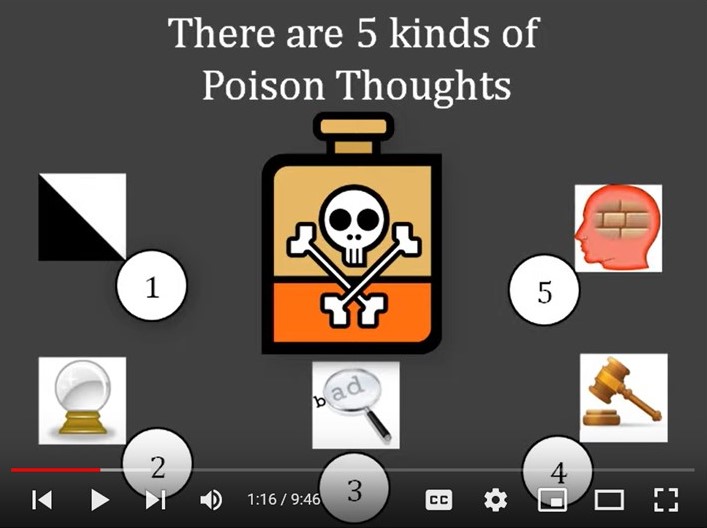
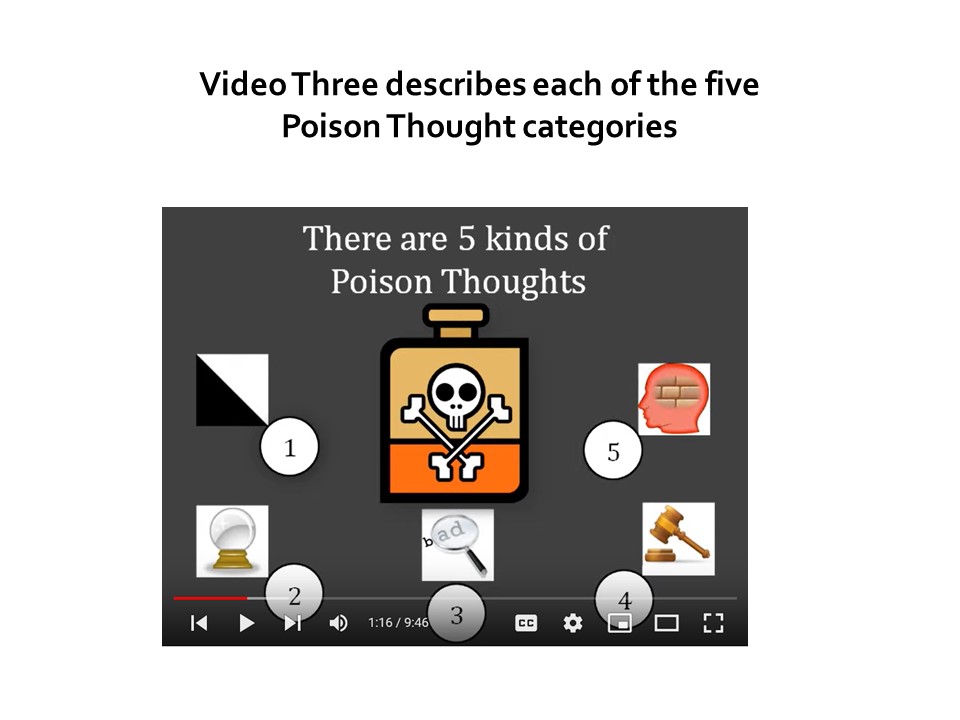
Finding the conventional 10 CBT thought distortions too numerous, wordy and overlapping for children, I crunched them down to 5 categories, using language that is less complicated. I then created icons to go with each category. I found that most children could grasp the basics of these five modified categories of automatic negative thoughts, so I made them the foundation of the CBT videos.
On the left side below are the 10 original automatic negative thought categories. On the right are the 5 “crunched together” categories I created. Children seem to be able to grasp these fewer categories more easily.
Initial focus on hypothetical examples
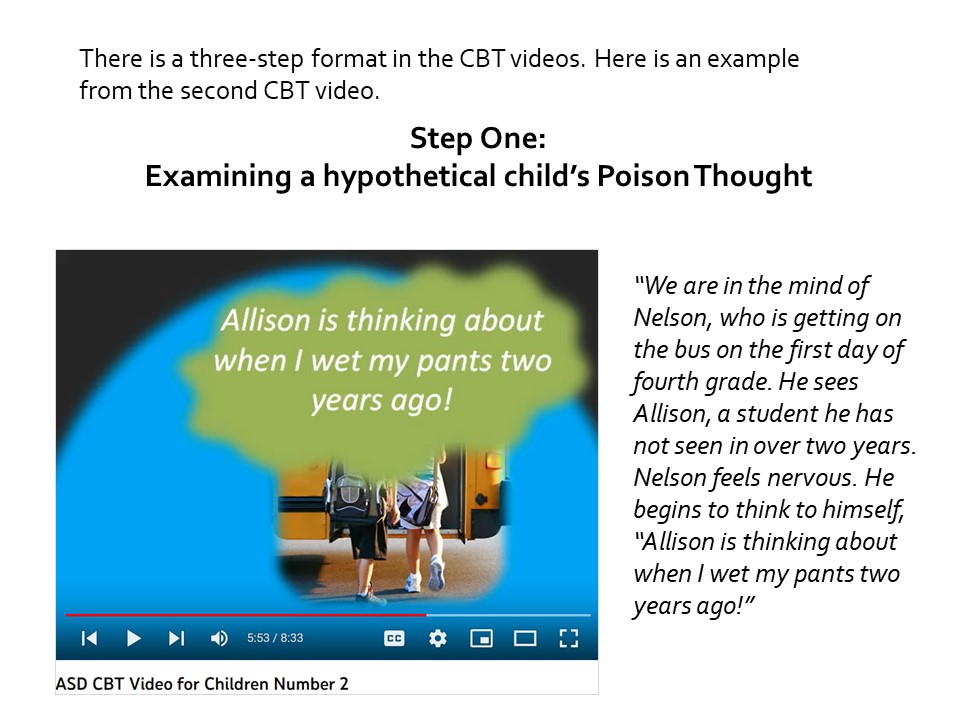
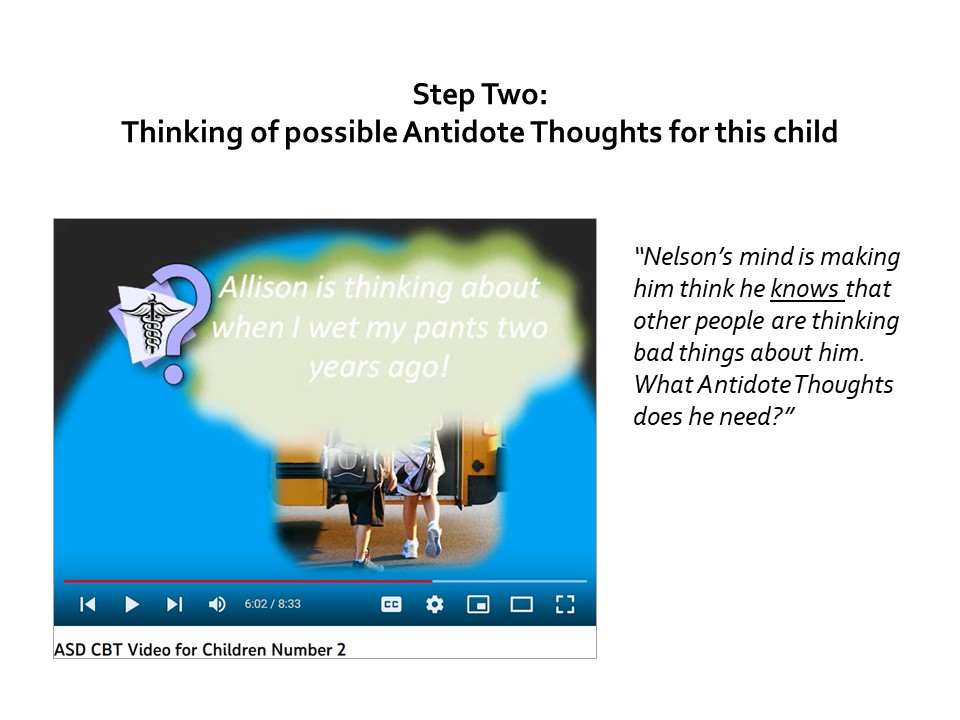
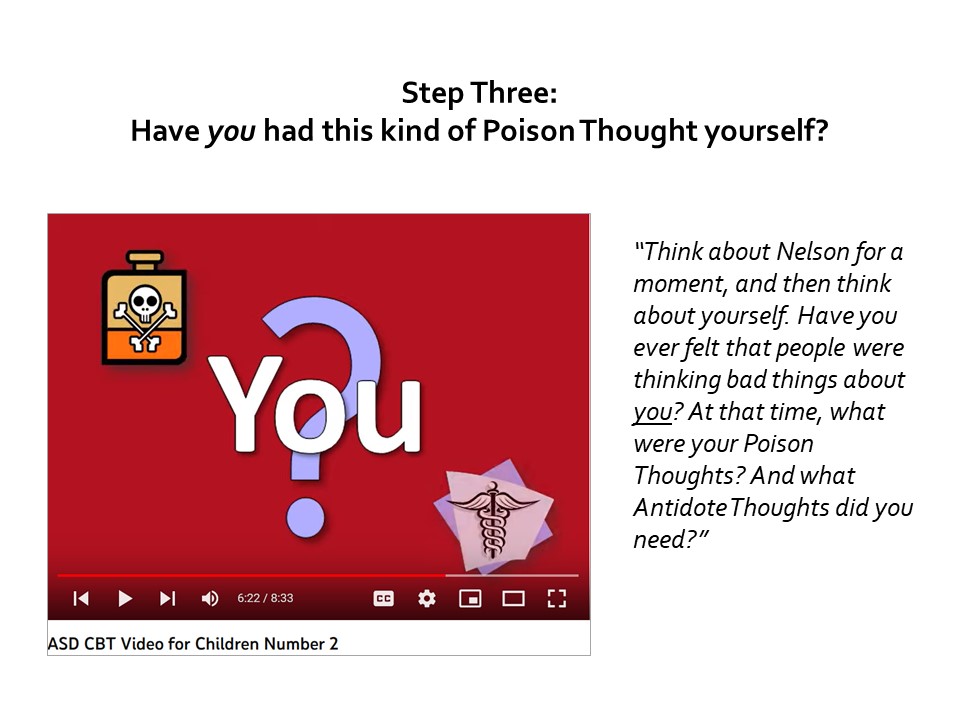
In the videos, I placed less initial emphasis on the problem thinking of the child viewing the video, and instead directed attention to hypothetical problems of other children. I found that by beginning the work in this manner, children subsequently were more confident and successful in assessing their own self-defeating thoughts and actions.
The videos were designed for children with ASD, but you can use them with neurotypical kids.
I created these videos originally for use with children on the higher end of the autism spectrum. You will notice that quite a few of the hypothetical scenarios deal with challenging situations typically encountered by autistic children. However, quite a lot of the videos’ content concerns problems that neurotypical children would also encounter, and in fact I have gotten feedback from many clinicians who use the videos with neurotypical kids and just skip over the parts that appear tailored for autism.
How to use the videos
The videos are designed to be viewed with an adult, with very frequent pauses for discussion. Although the first three videos are important to view in full, it is not always necessary to watch every subsequent video or every part of any video that you start. You can skip around, placing more emphasis on the videos that address the most relevant concerns.
Video Number One is shorter and simpler than the remaining seven. It introduces Poison Thoughts (automatic negative thoughts) and Antidote Thoughts.
Video Number Two takes the viewer into the minds of various children experiencing Poison Thoughts, and demonstrates how these can be countered with Antidote Thoughts.
Video Number Three (see screen shot above) introduces the 5 Poison Thought categories, showing examples of each in the minds of various children.
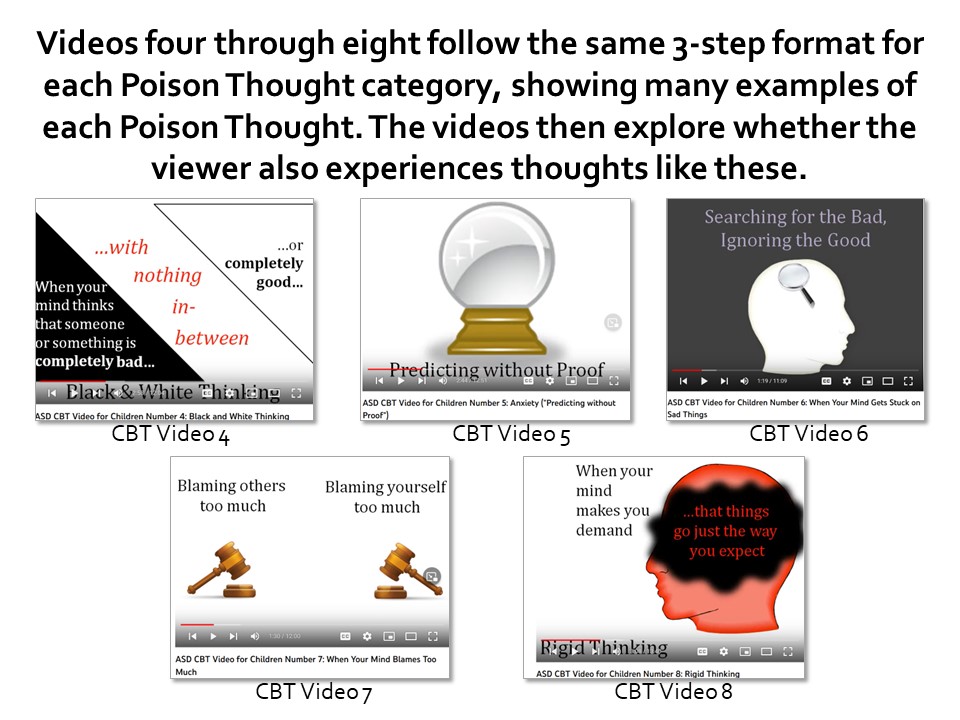
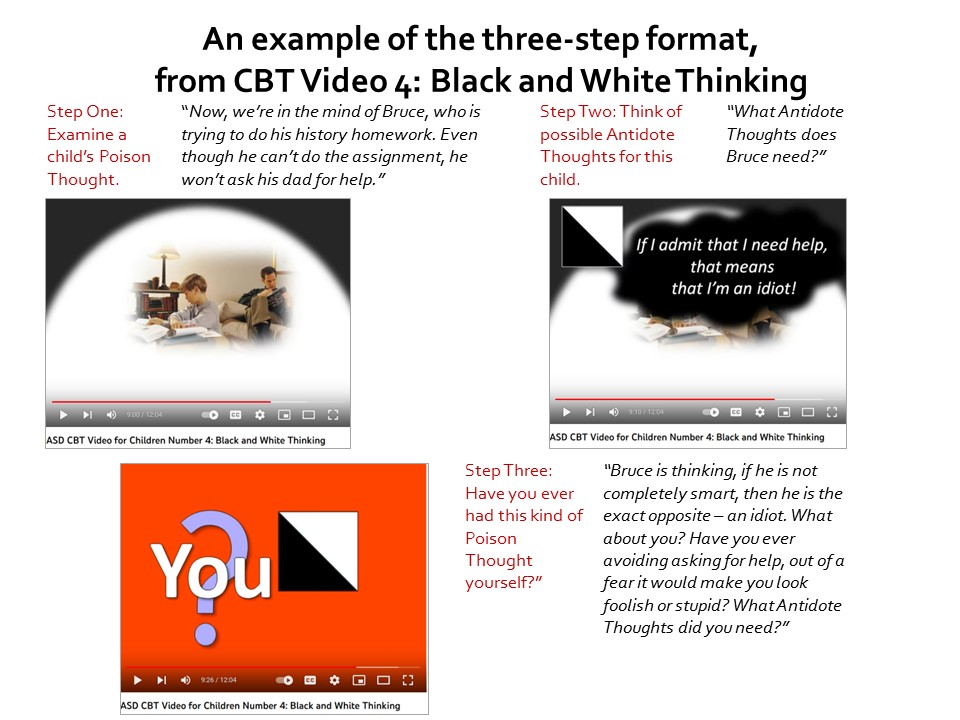
Videos Four through Eight go over each of the 5 Poison thought categories in turn, using many examples of how various children are affected by the thoughts. In each example, after first identifying and “fixing” the problem shown in the example, the viewer is asked whether they themselves are affected by such thoughts. Again, pausing frequently for discussion, especially when a child is talking about their own “Poison Thoughts,” is important.
Joel Shaul, LCSW
Here are links to the other parts of this series, Refinements to help make CBT more suitable for kids.
Intro: Refinements to Make CBT Better Suited for Kids [link]
Part 2: CBT Token Systems – CBT Cards, a Free Download [link]
Part 3: More CBT Token Systems – Using Mr. Yuk Stickers [link]
Part 4: Creating Thought “Enemies” and “Heroes” in Child CBT [link]
Part 5: Tailoring CBT Methods & Media to the Individual [link]
Refinements to make CBT better suited for kids
Cognitive behavioral therapy was developed originally not for children, but for educated adults. Over time, child psychotherapists have incorporated various refinements to make CBT accessible and useful for children.
This 5–part series pulls together some of my own efforts to make CBT as helpful as possible for young people.
The titles for each part are listed below. Read them in order or select any one by clicking on the link.
Intro: Refinements to Make CBT Better Suited for Kids [link]
Part 1: About CBT YouTube Videos & How to Use Them [link]
Part 2: CBT Token Systems – CBT Cards, a Free Download [link]
Part 3: More CBT Token Systems – Using Mr. Yuk Stickers [link]
Part 4: Creating Thought “Enemies” and “Heroes” in Child CBT [link]
Part 5: Tailoring CBT Methods & Media to the Individual [link]
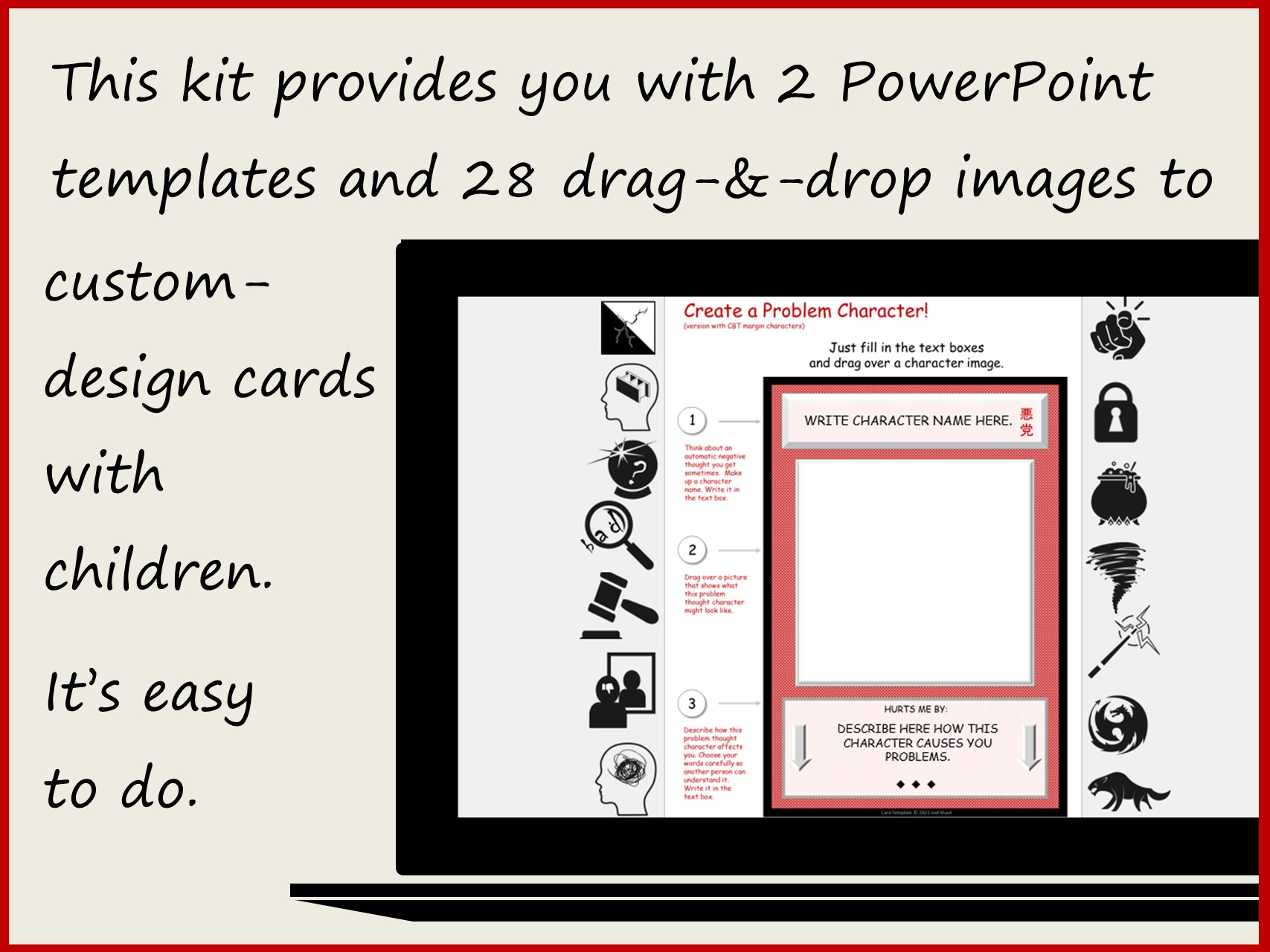
Cognitive behavioral therapy picture cards for children and teens to focus attention on cognitive distortions
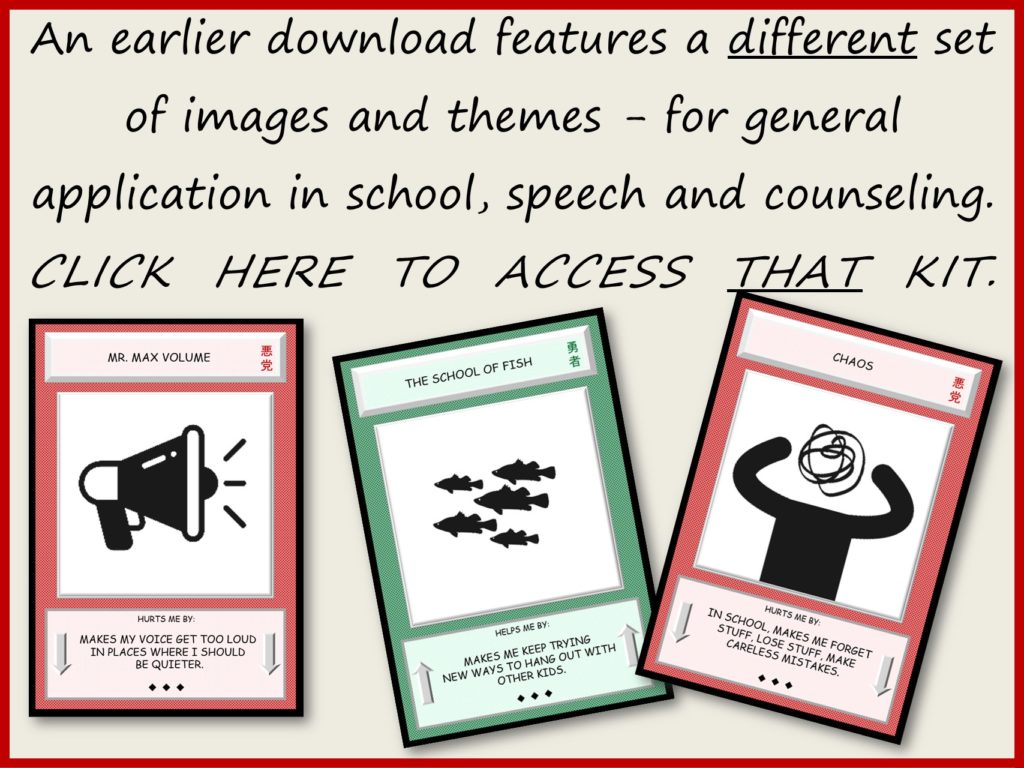
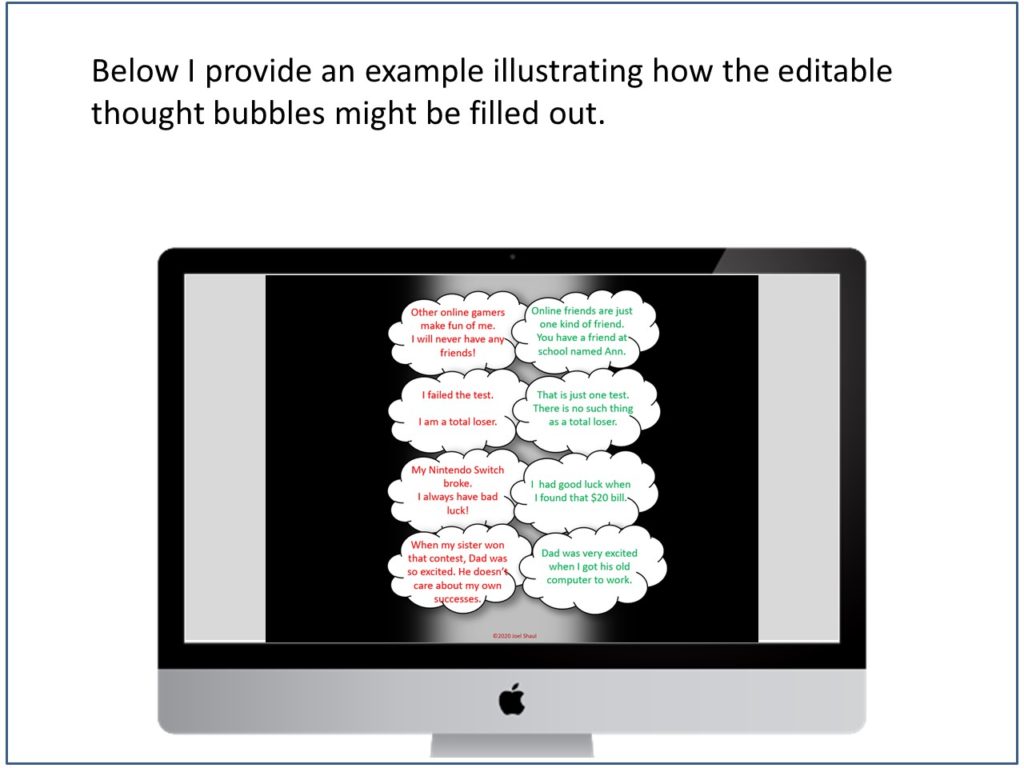
A previous post introduced the first version of this activity featuring a different selection of drag-and-drop images for a variety of social and emotional concerns. Here I provide a second version, featuring images tailored for CBT work.
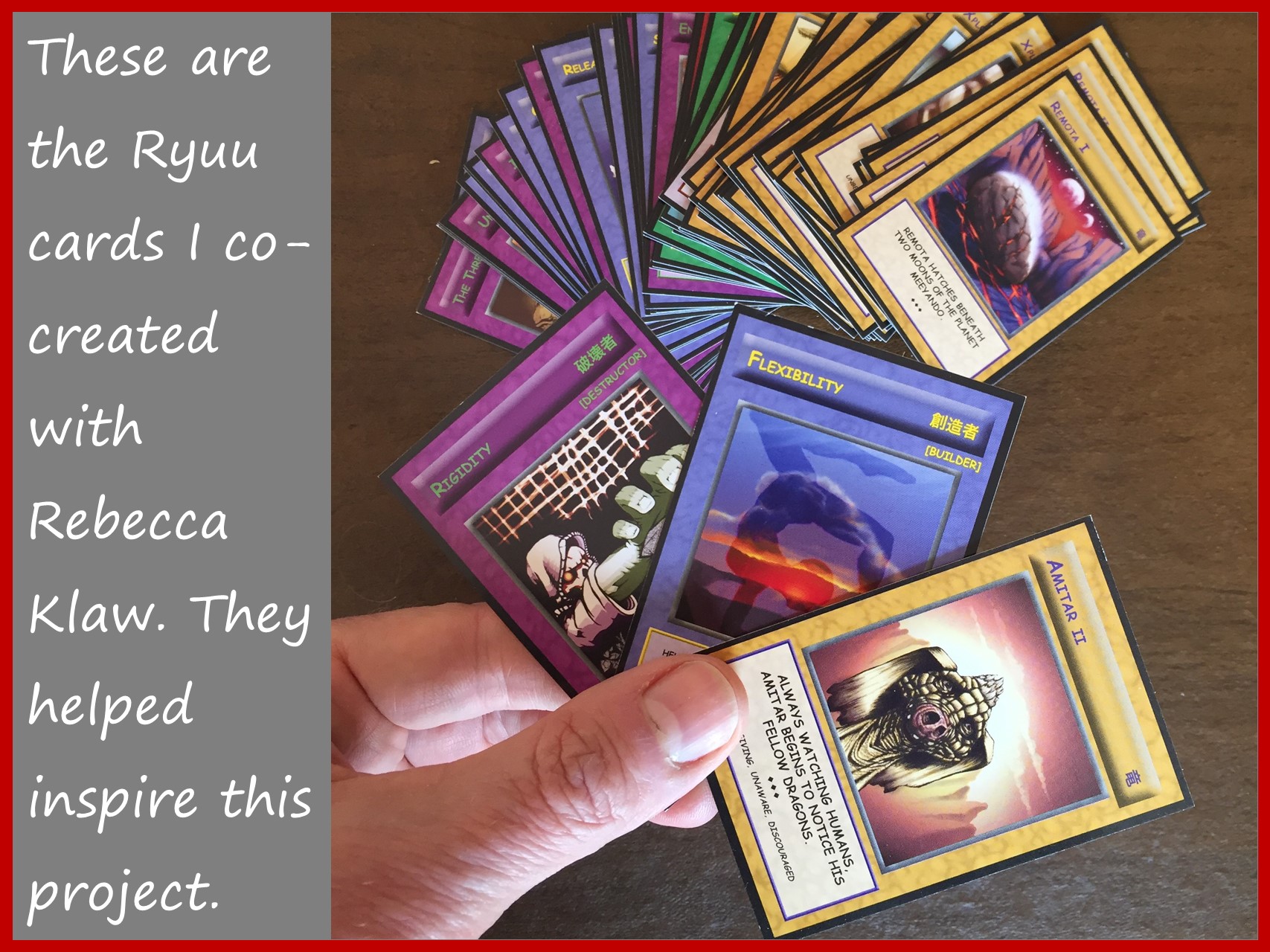
To capitalize on youth culture themes of “good guys” and “bad guys” from movies, stories, video games, and in trading card sets such as Pokémon and Yu-gi-oh, I designed this free, easy card-making project. In my own work, I find it really useful for focusing children’s attention on their problematic patterns of thinking.
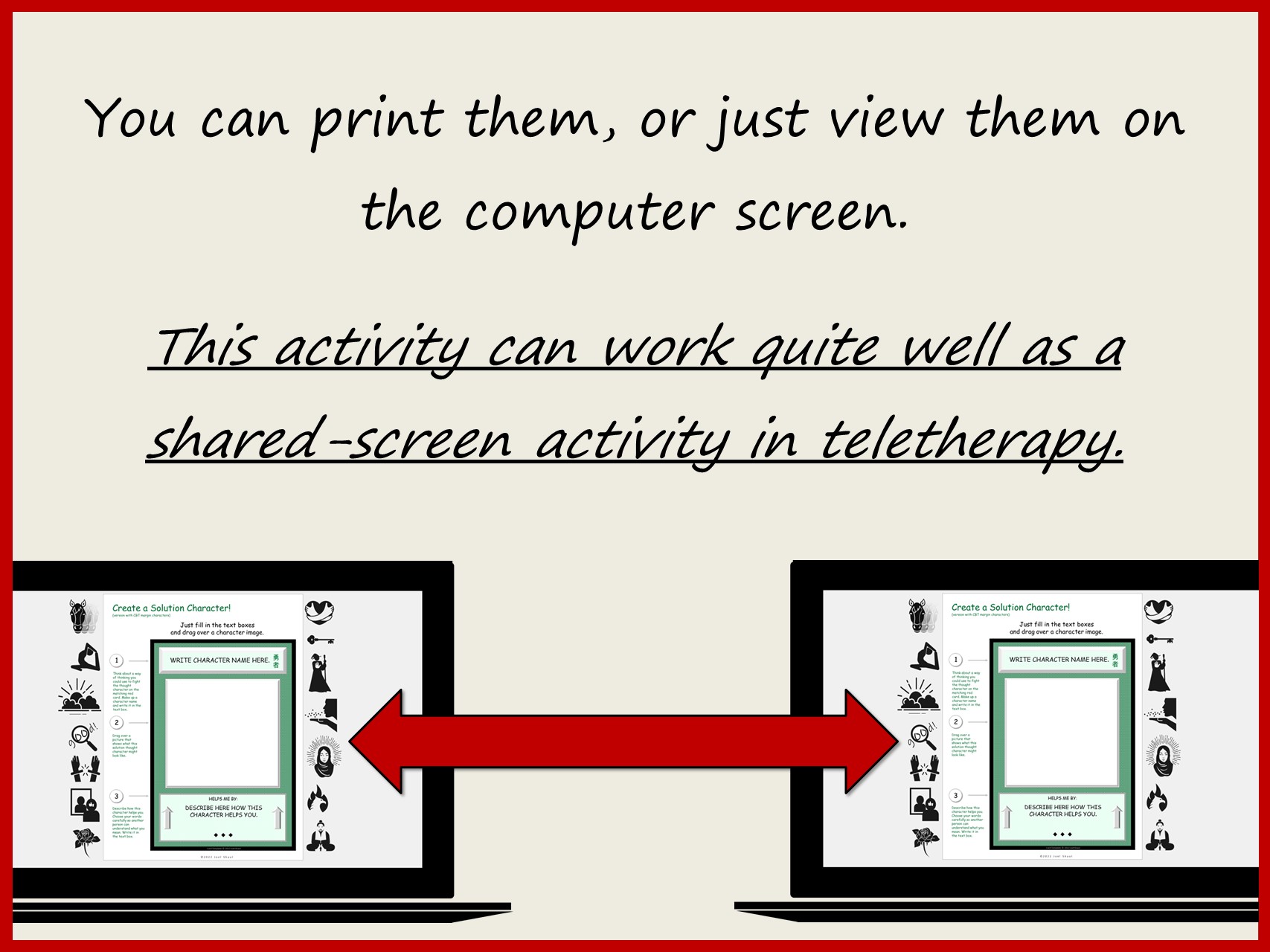
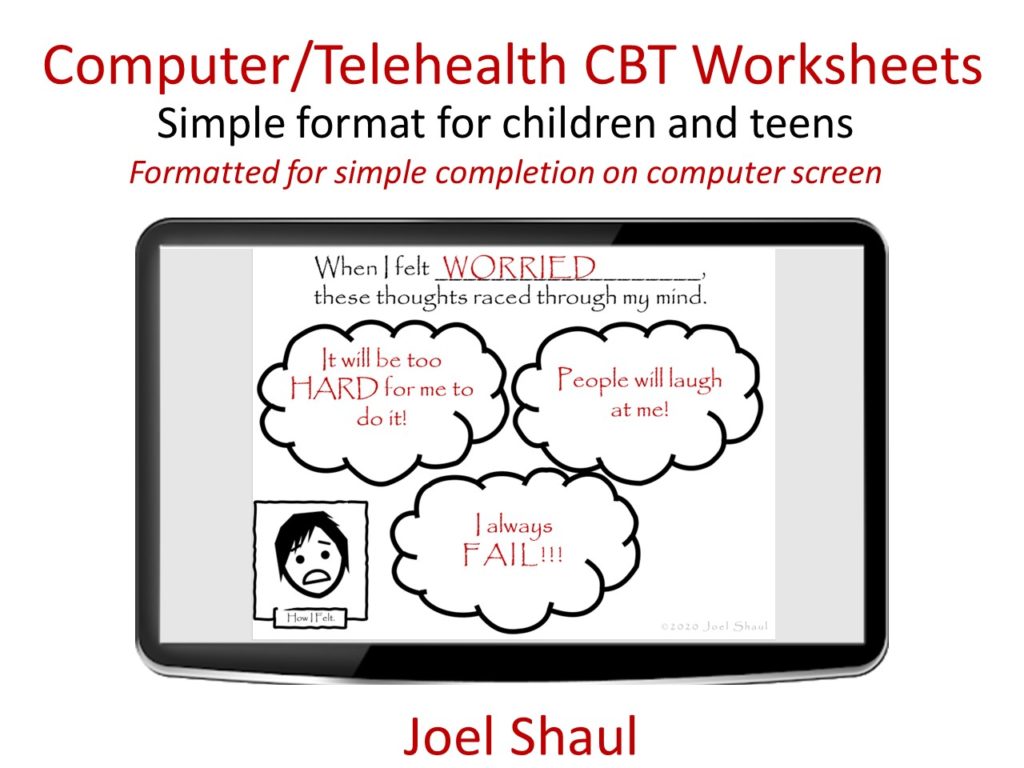
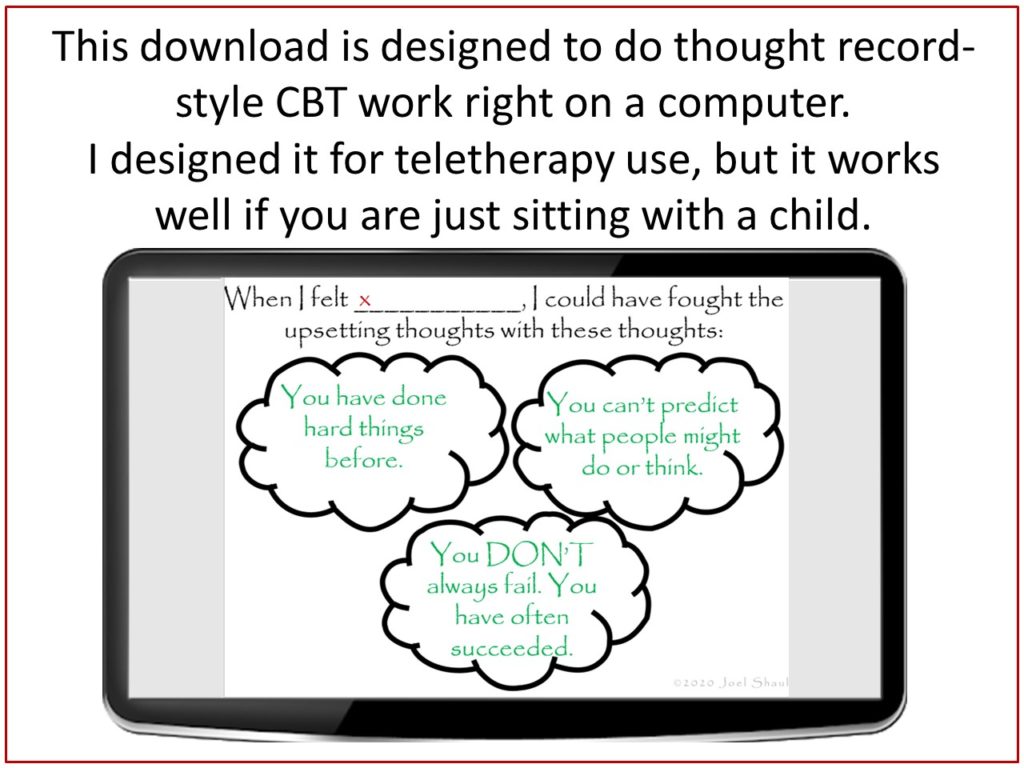
Although this is designed for in-person work, it is also ideally suited for teletherapy, since the collaborative work takes place on a shared computer screen and you can mail or email the finished product to your client.
Here is a one-minute demo on YouTube of how it works.
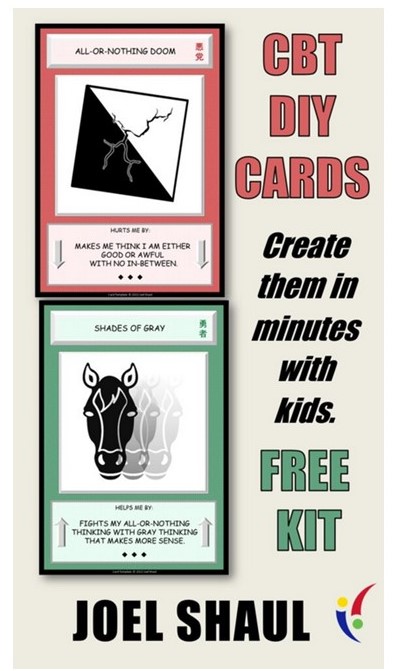
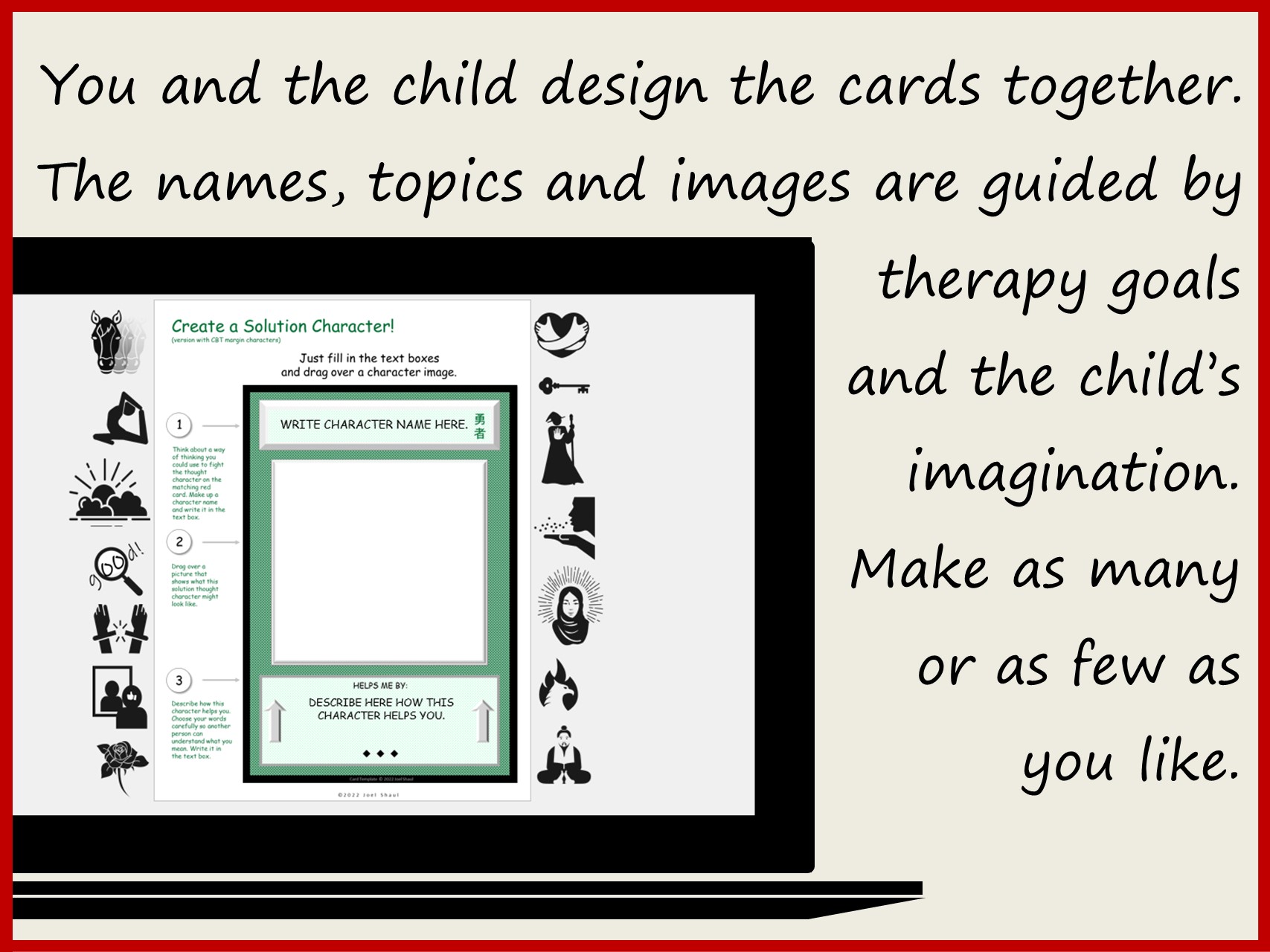
You and the child design the cards together. The names, topics and images are guided by therapeutic goals and the child’s imagination. Make as many or as few cards as you like.
An earlier download features a different set of images and themes – for general application in school, speech and counseling.
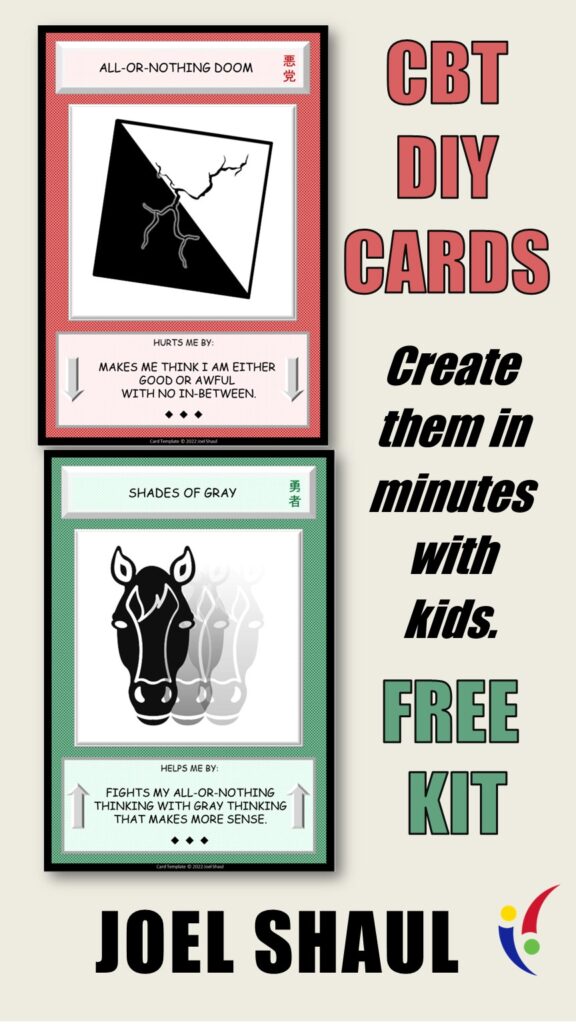
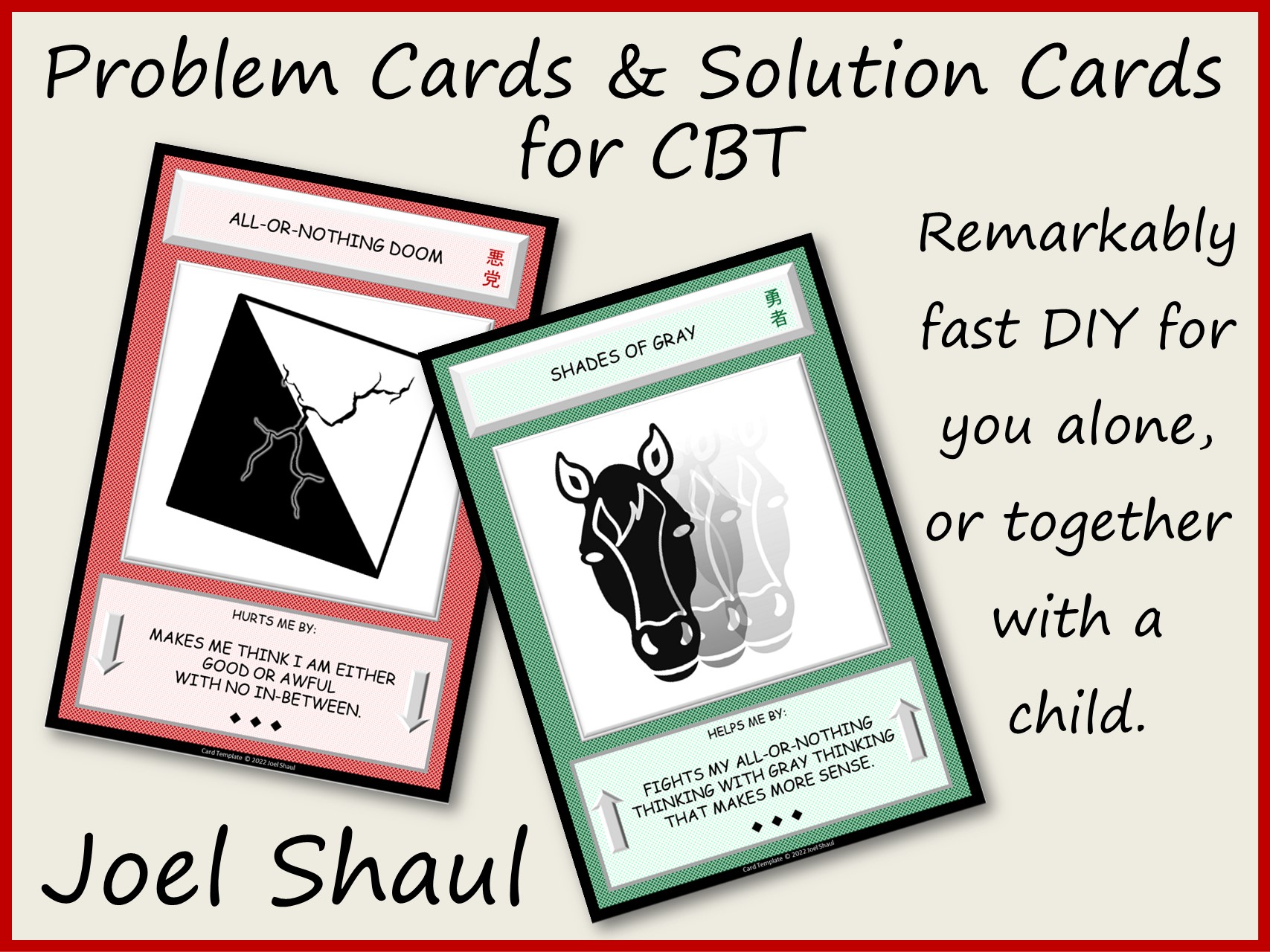
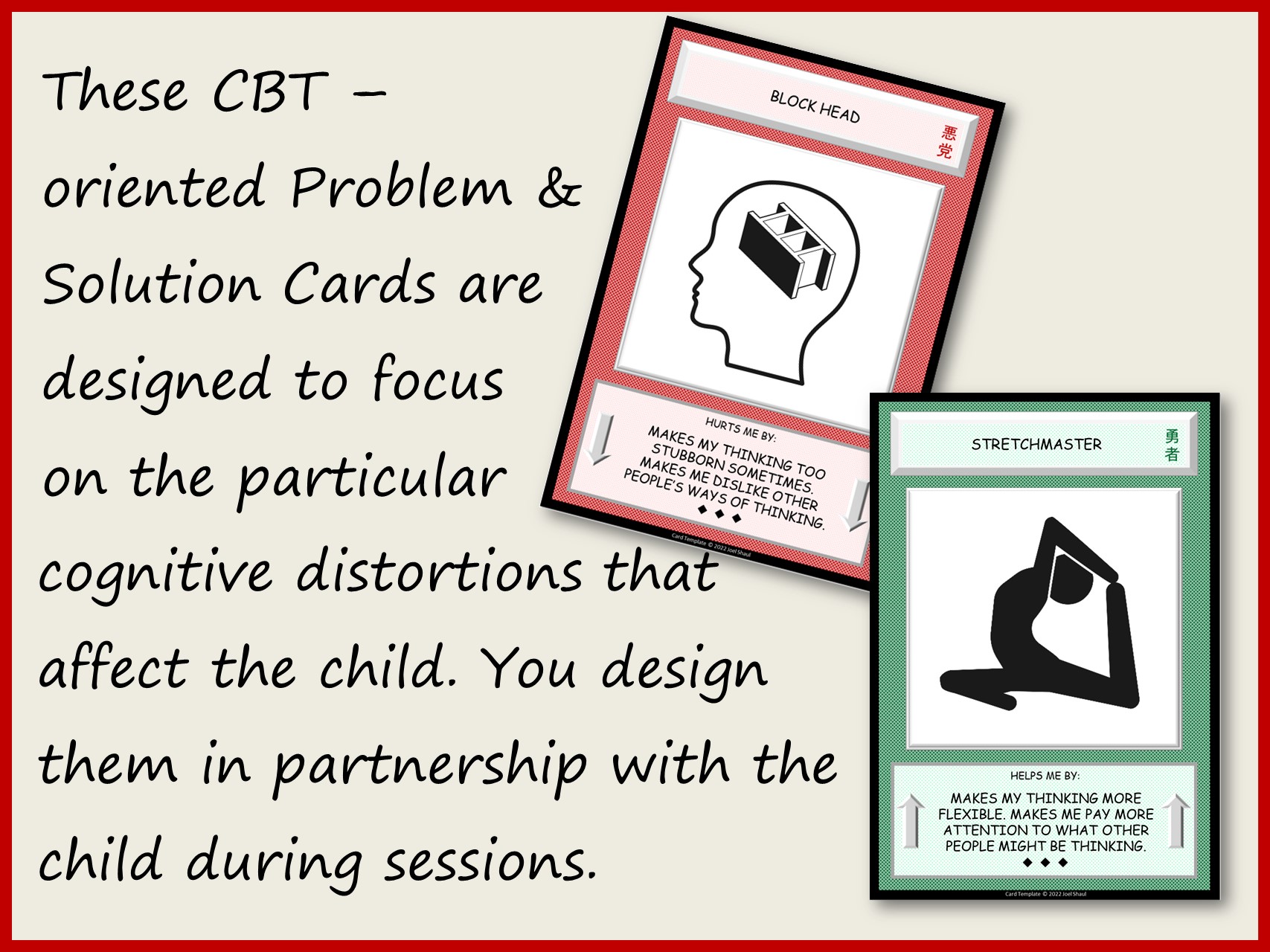
These CBT-oriented Problem & Solution Cards are designed to focus on the particular cognitive distortions that affect the child. You design them in partnership with the child during the session.
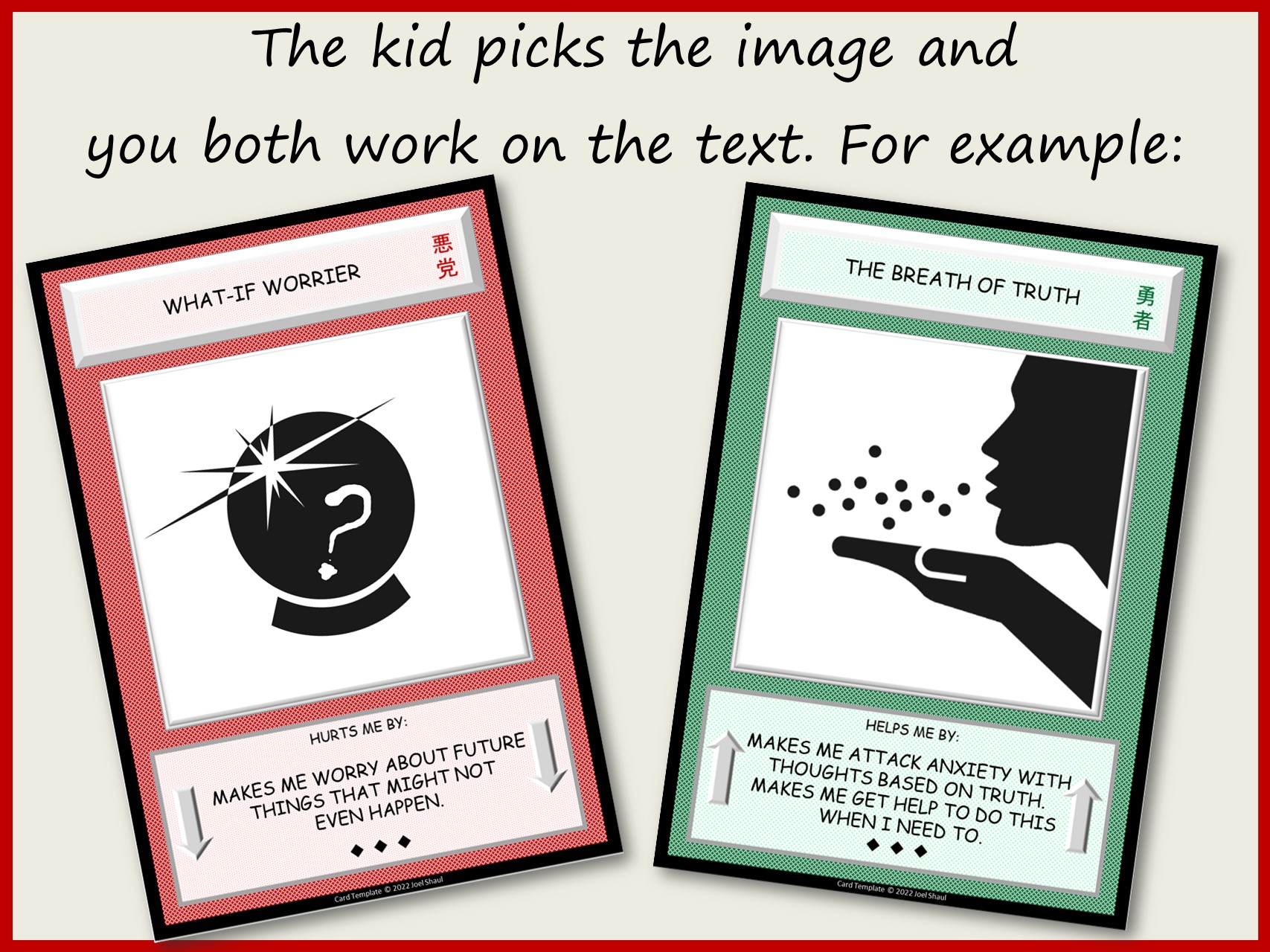
The kid picks the image and you both work on the text. Here are some examples.
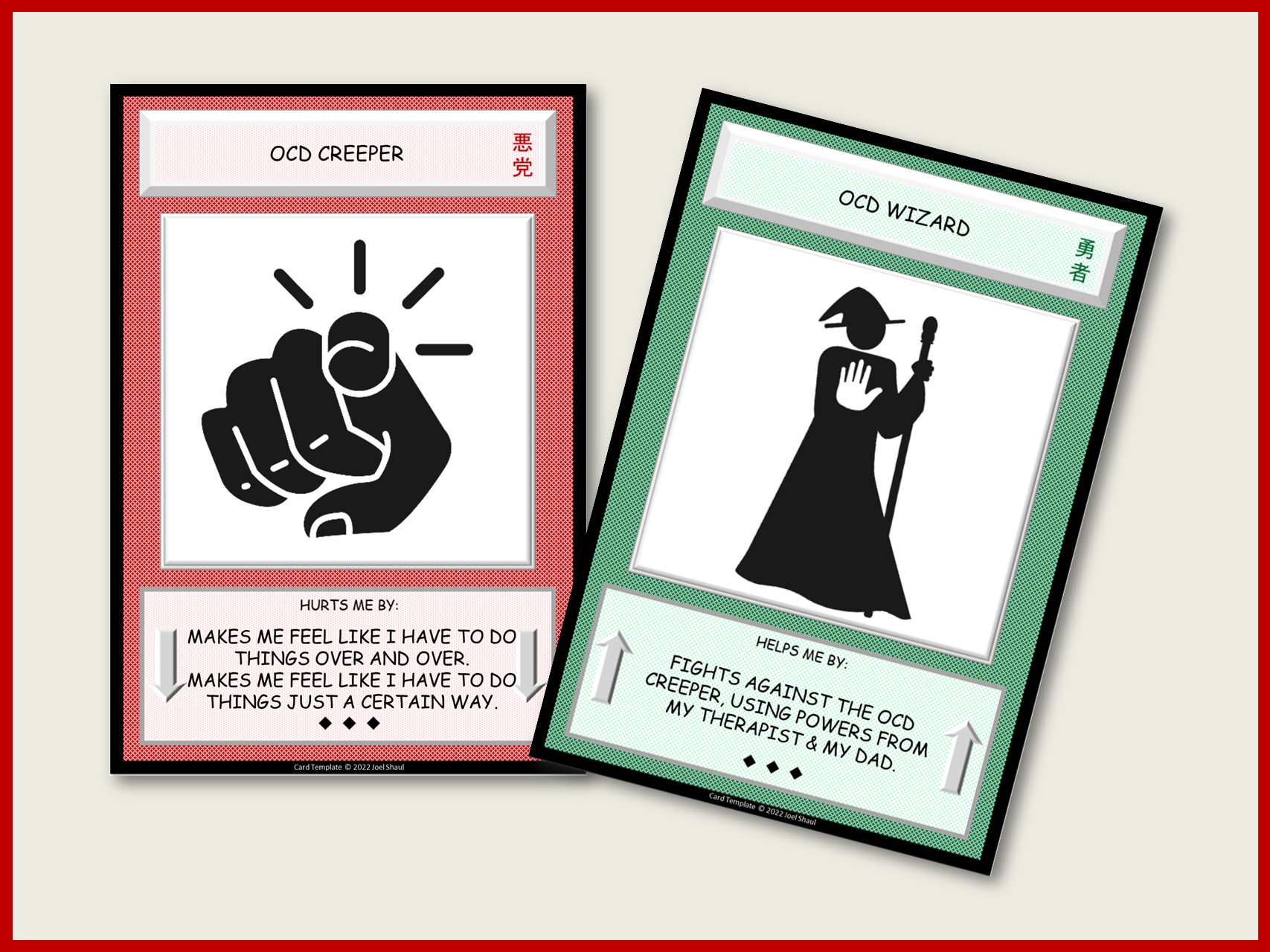
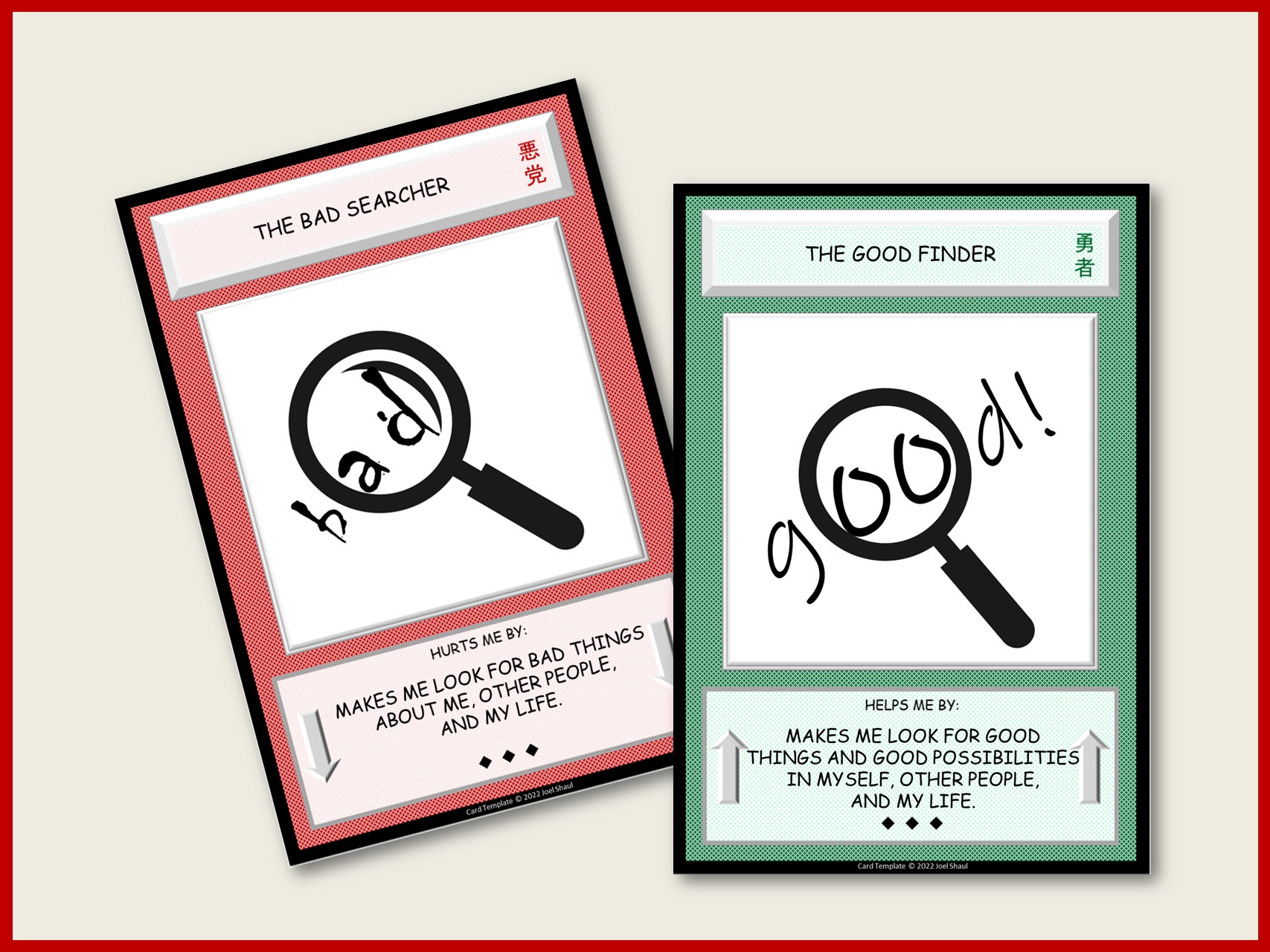
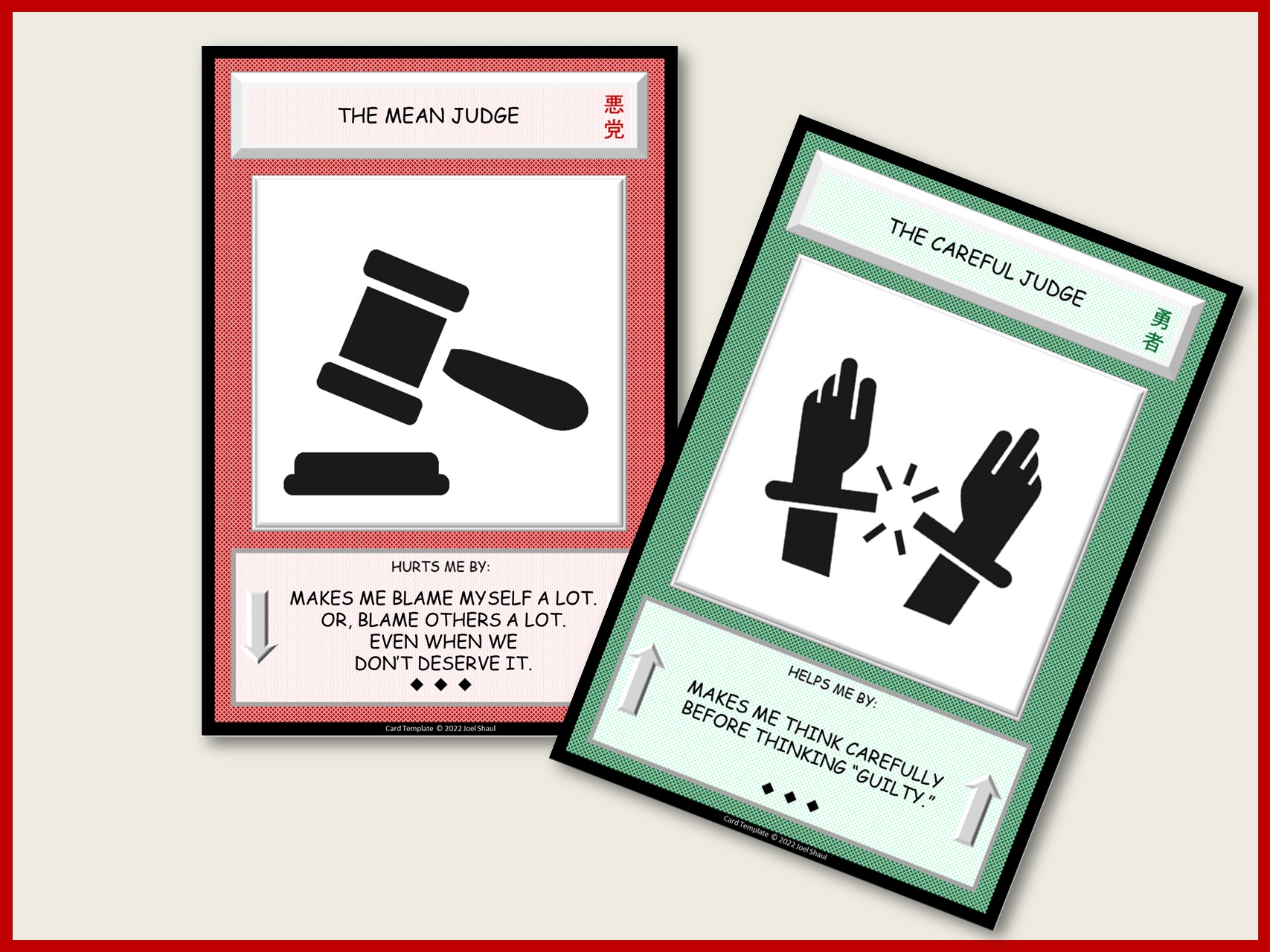
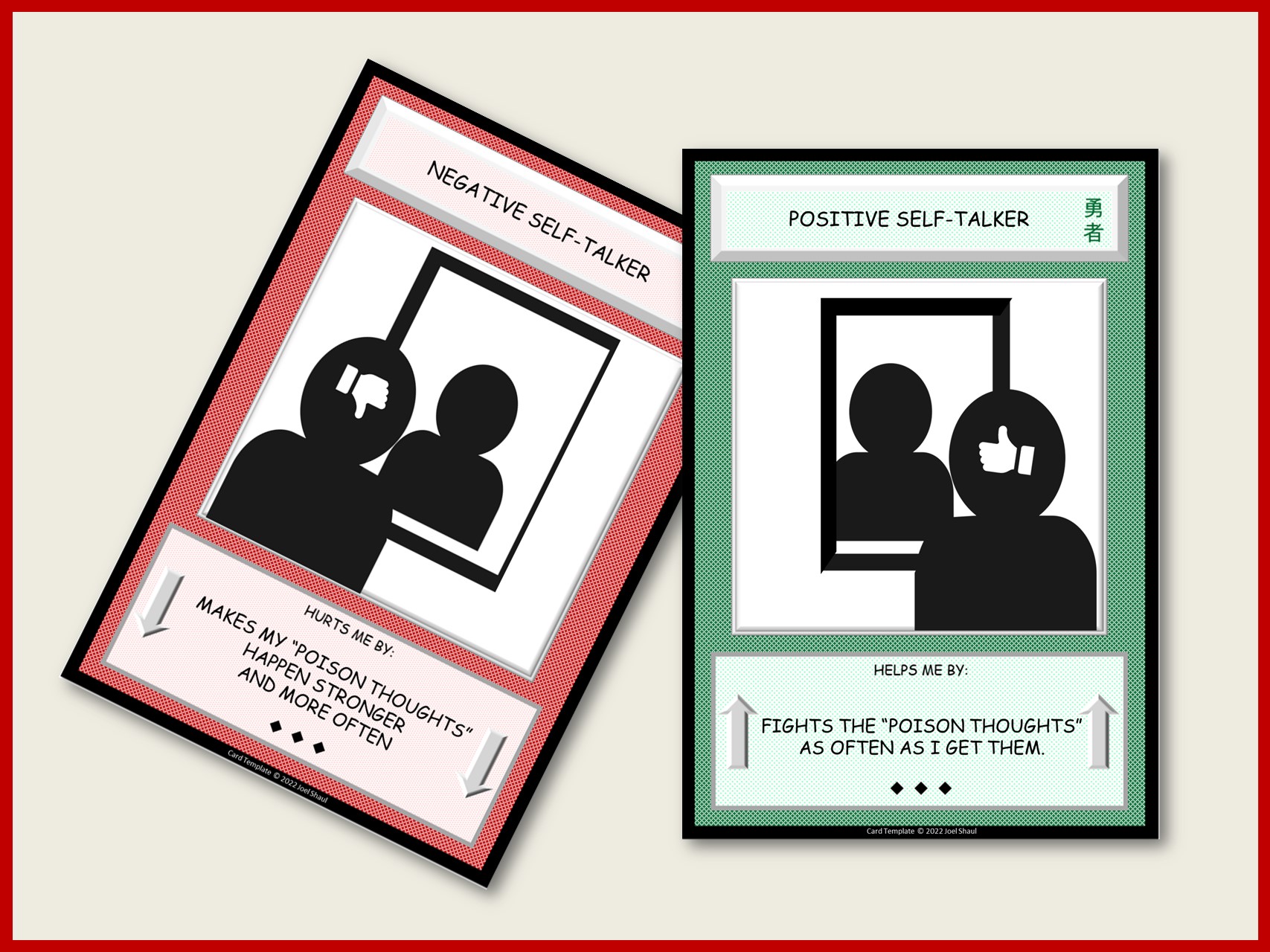
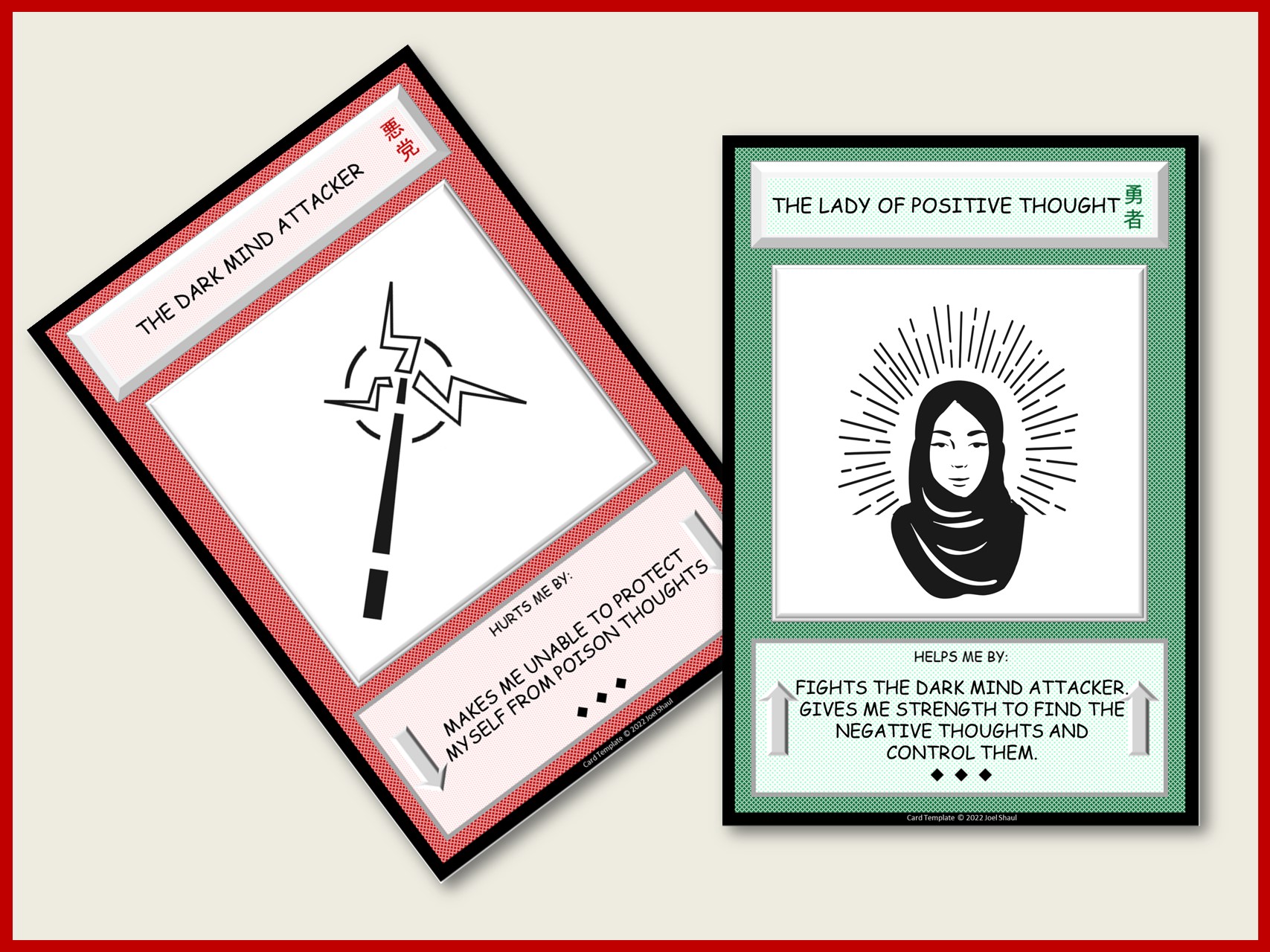
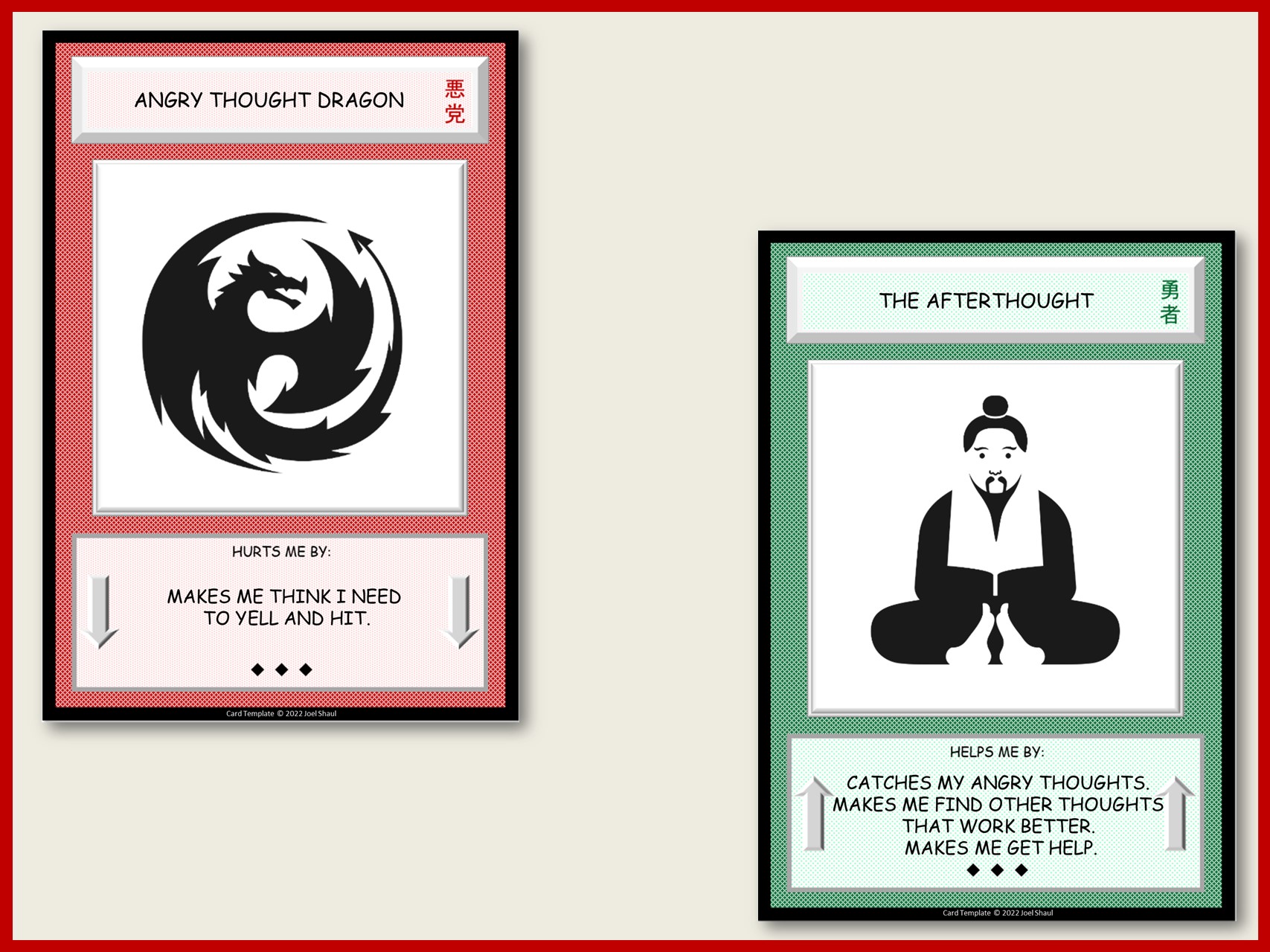
I would like to emphasize that these things are quick and easy to create. In my own work with children and teens on the autism spectrum, I typically can co-create as many as five pairs of cards in a 45 to 50 minute session. Children appreciate being able have input into naming the characters and selecting among the various drag-and-drop images.
There is great potential to add more cards, or modify existing cards, in subsequent sessions. You can print them, or just view them on the computer screen.
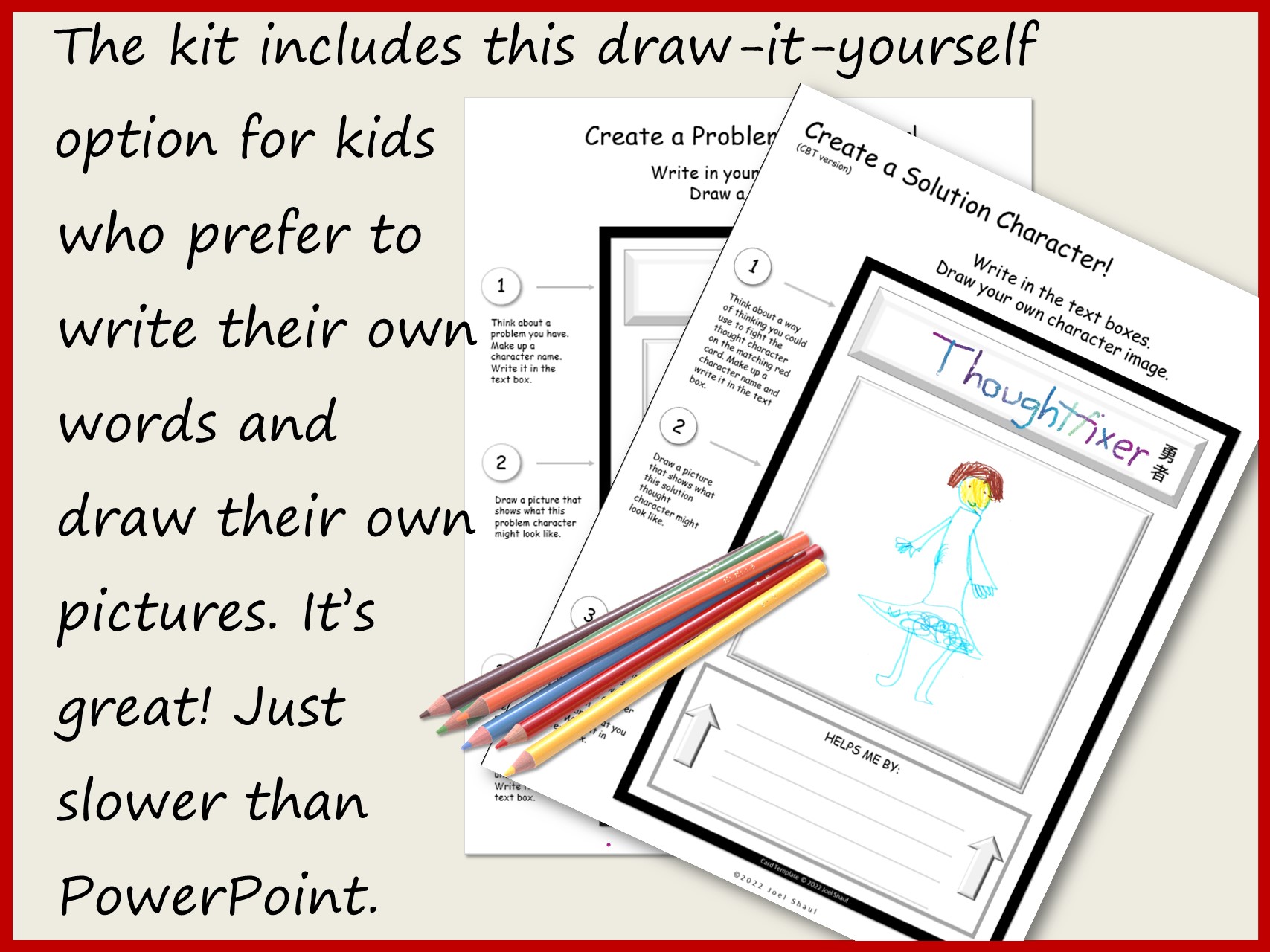
The kit includes this draw-it-yourself option for kids who prefer to write their own words and draw their own pictures.
I have lots of other CBT activities on the website to use with this activity, regular and teletherapy. Check them out.
If you’re looking for the printable version of this resource, here it is:
Your comments on these resources are most welcome, and often helpful. Click HERE to send an email.

For and excellent Boom Card version of this resource, click HERE:
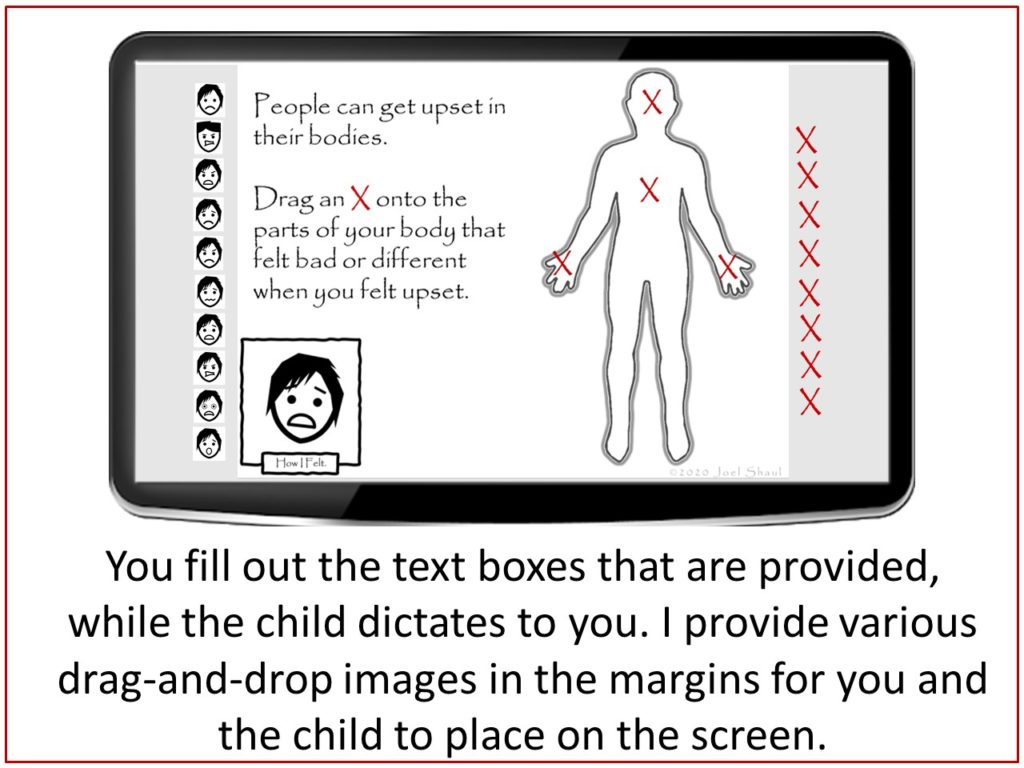
Your comments on these resources are most welcome, and often helpful. Click HERE to send an email.