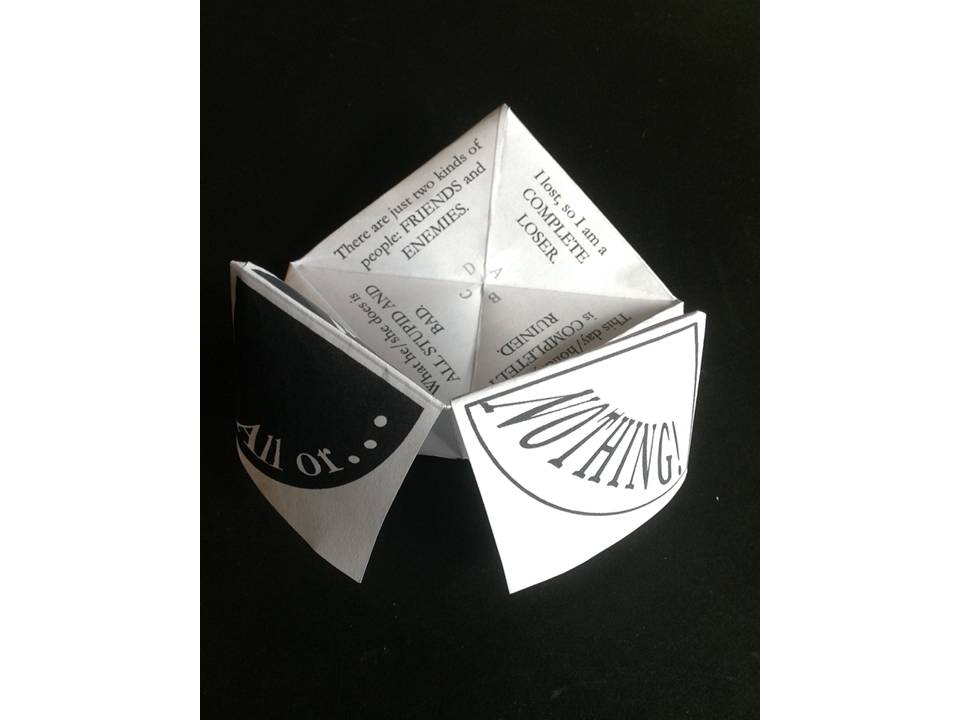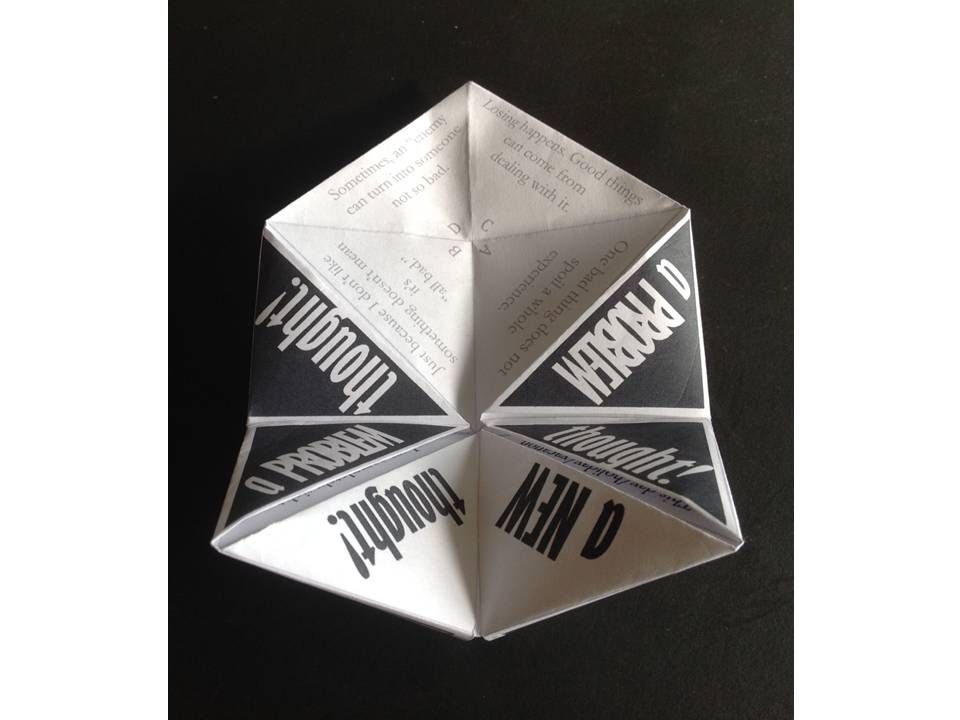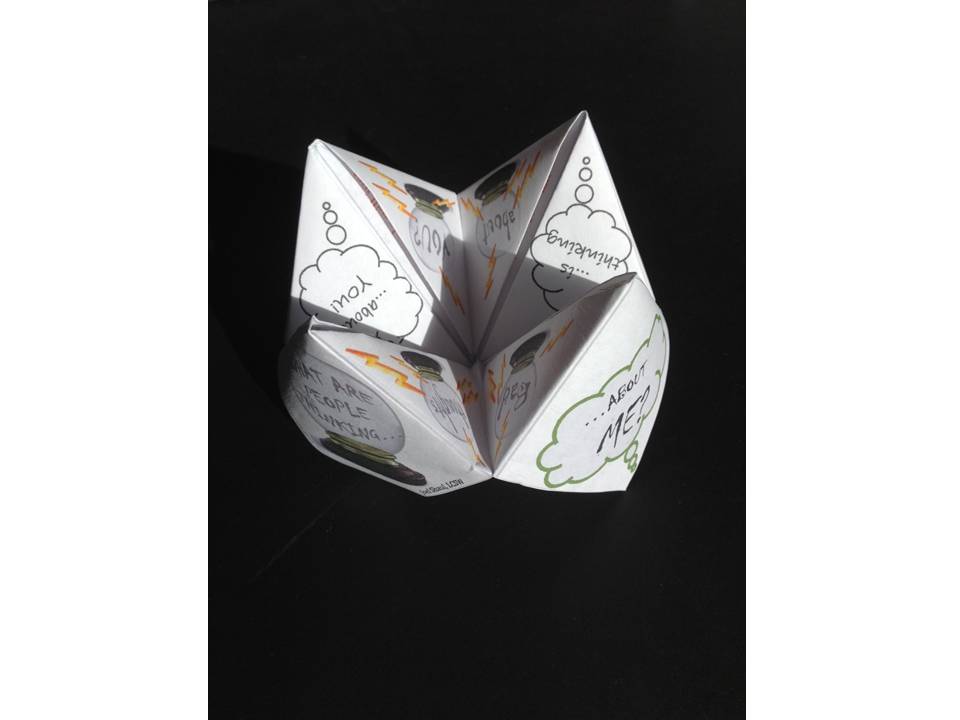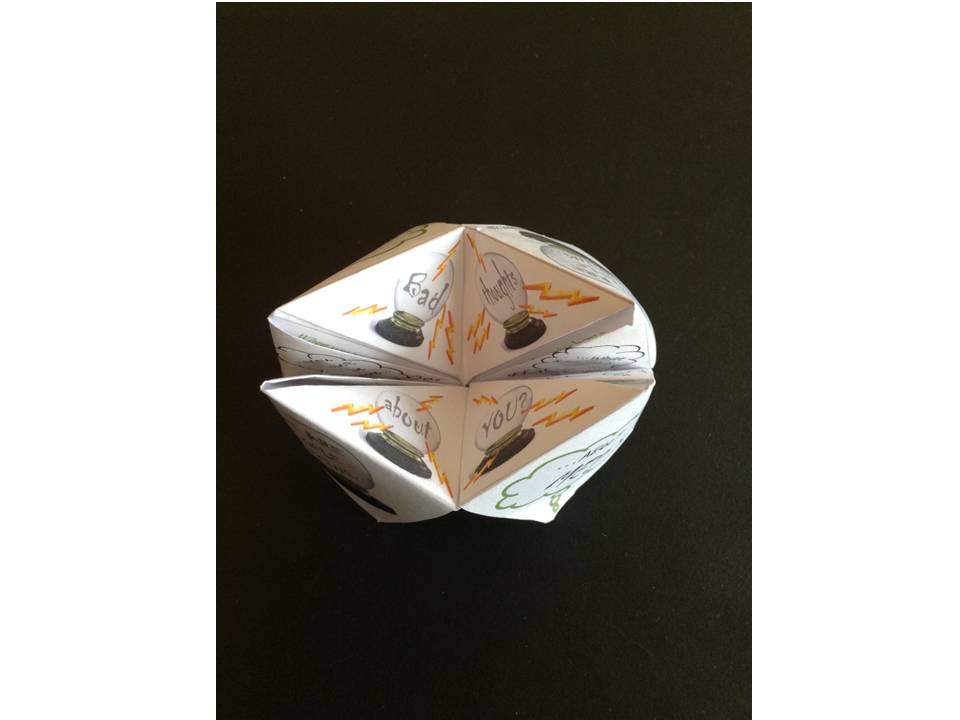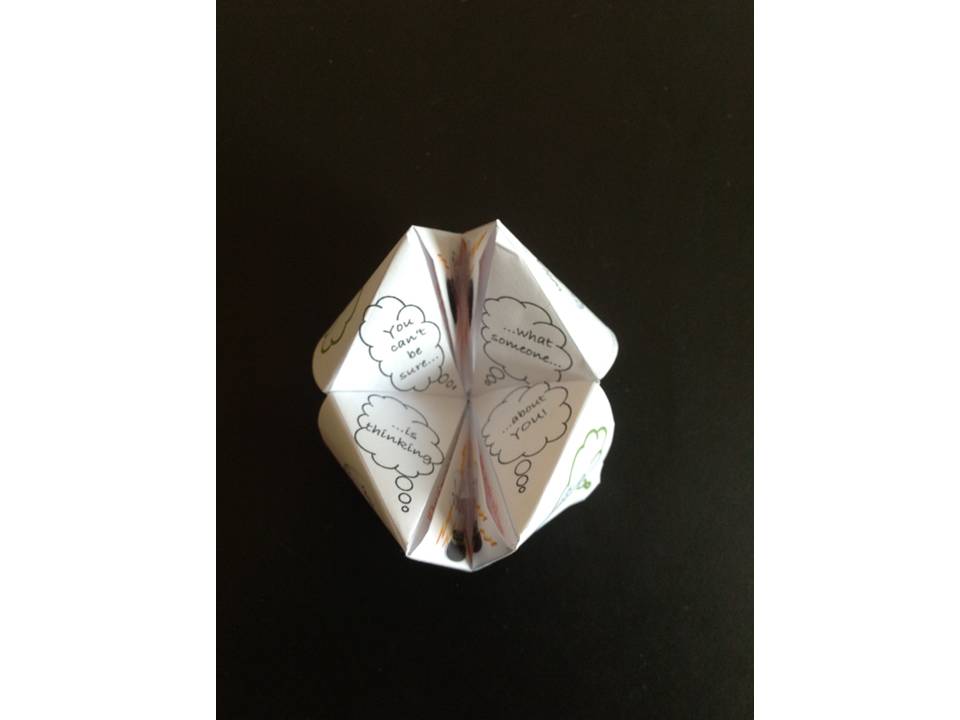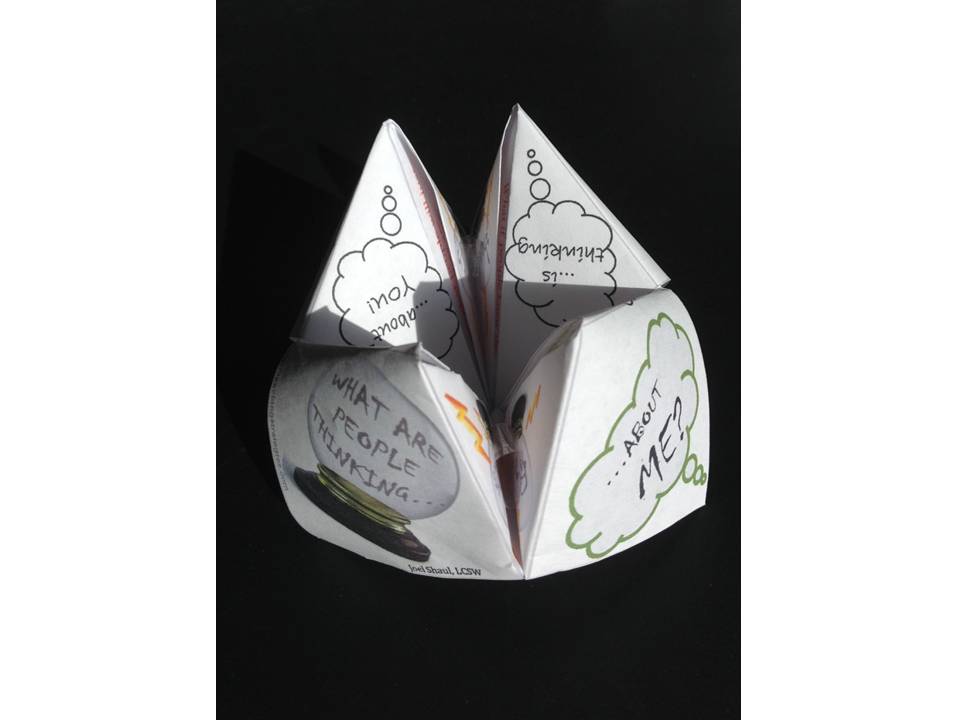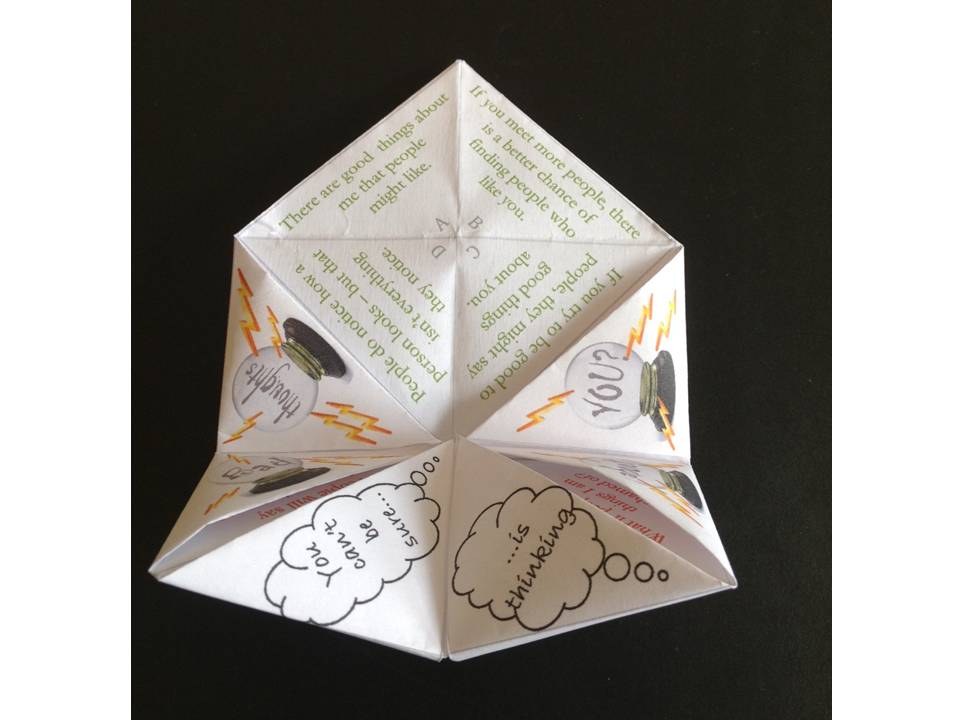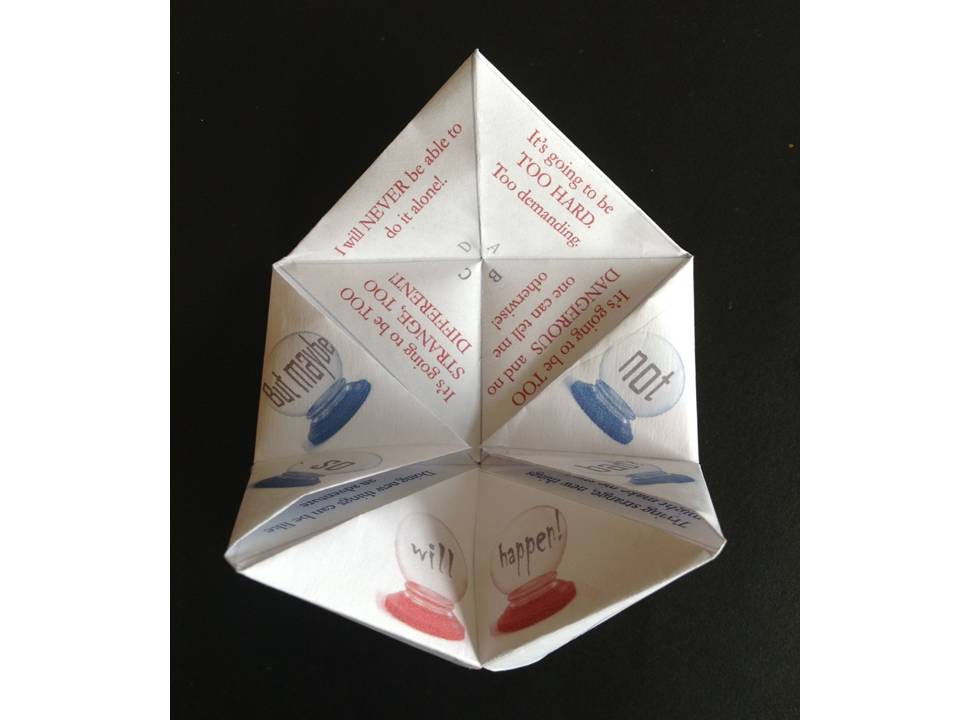

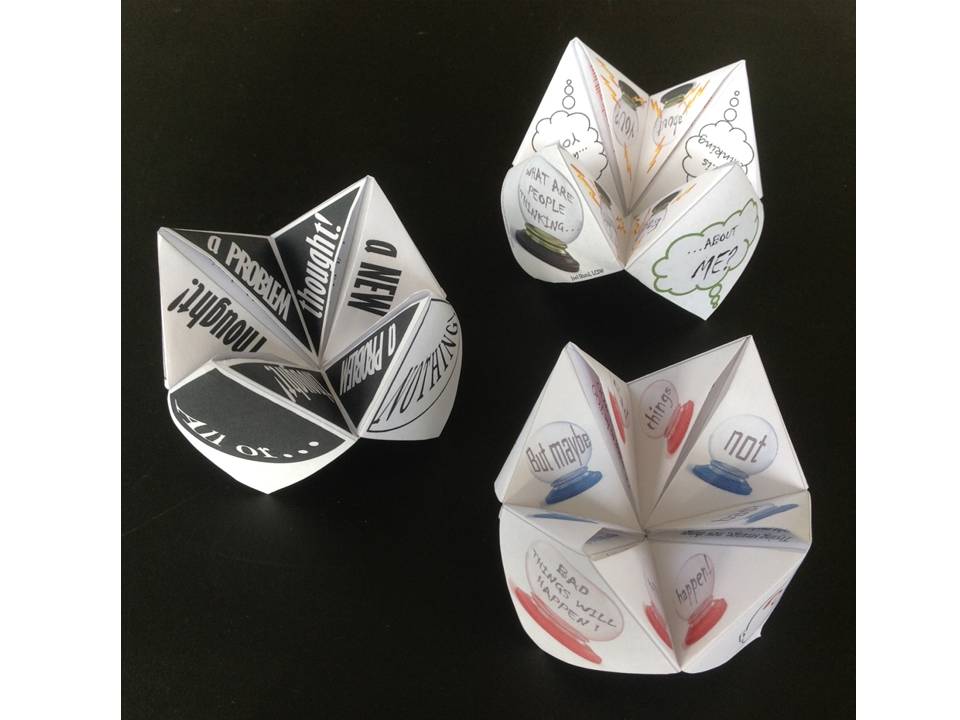
Free Paper Fortune Tellers: Cognitive Behavioral Therapy Games for Counseling and Classroom

Cognitive Behavioral Therapy Paper Game for Children

To download the PDF files for these three paper fortune tellers, click on the RED link right below here:

CBT Paper Fortune Tellers for Anxiety & Other Issues

Helping children to work on upsetting emotions using cognitive behavioral therapy game activities

Many young people have persistent problems with anxiety, sadness, anger and other upsetting emotions.  To maintain engagement in counseling and psycho-education, we need to provide novel approaches and introduce some levity whenever possible.

To check out a dozen other paper fortune tellers, on diverse social skills themes, please click here.

For a summary and links to all the free CBT materials on my website, please click here.

Some suggestions for introducing these  Fortune Tellers:

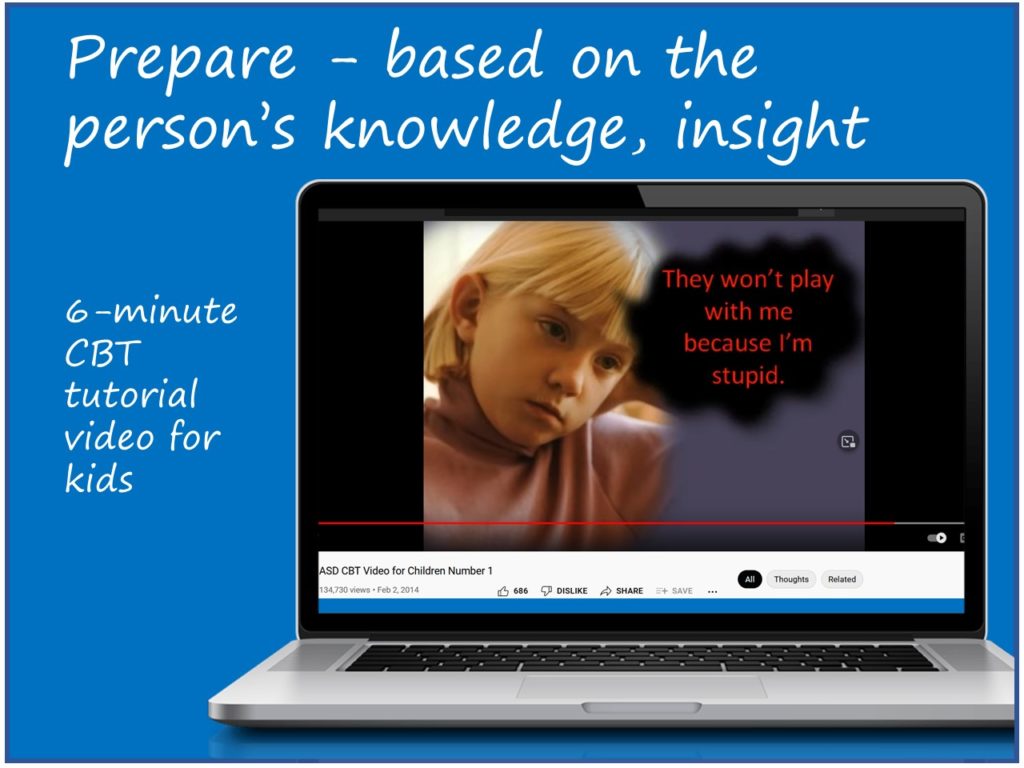
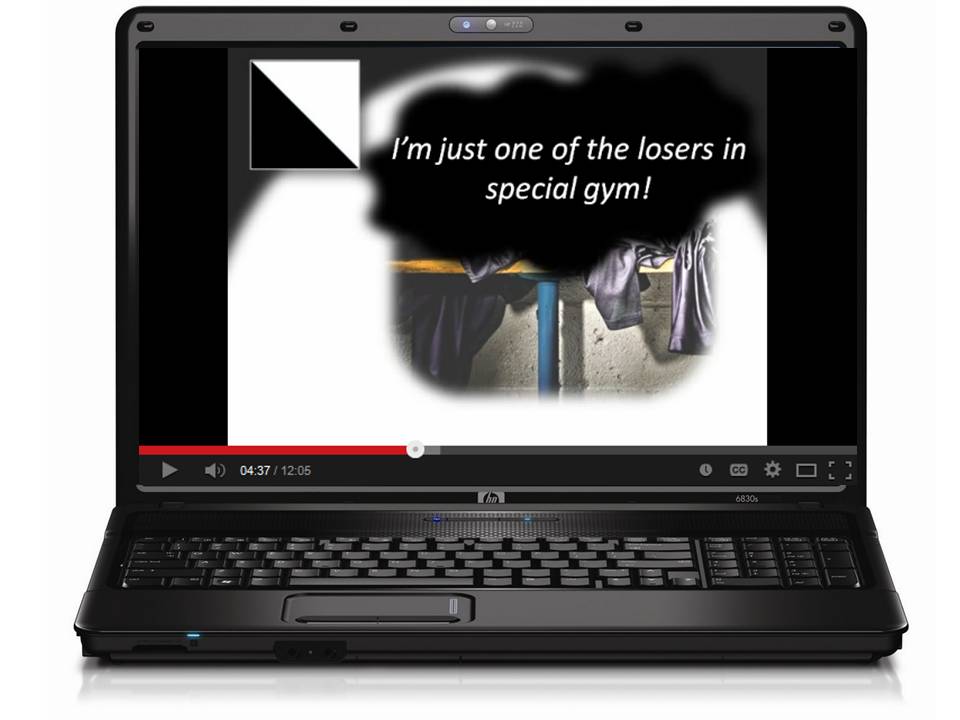
1.     Introduce some basics concerning the connection between automatic  negative thoughts and negative emotions.  I suggest you do this by viewing , with children, this very short video I made:

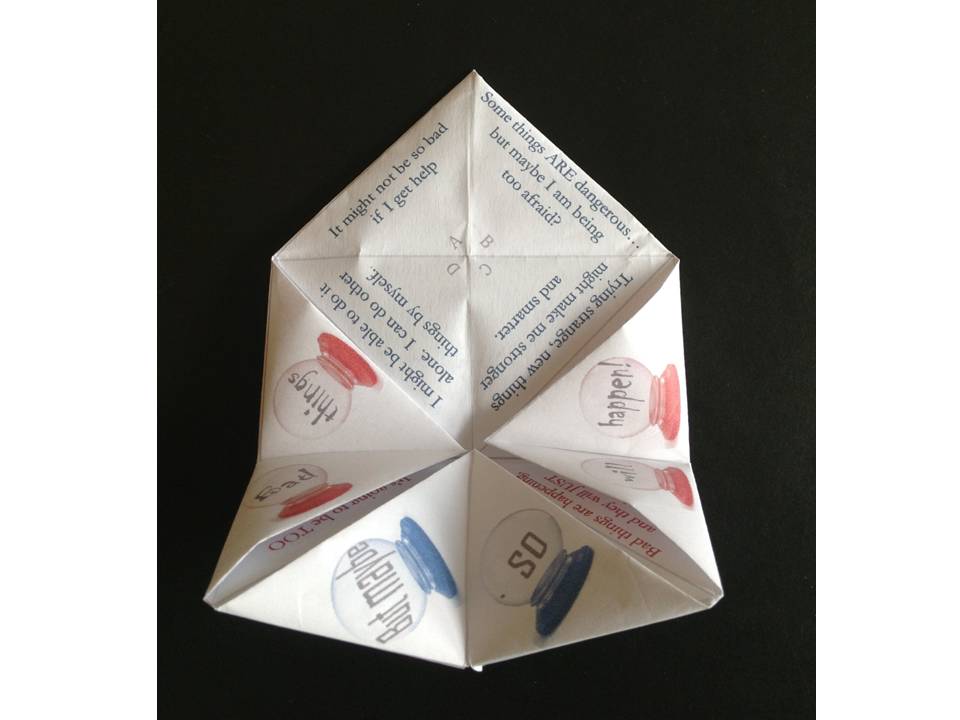
2.     Working in pairs, and taking turns, person number one says, “Spell your name.”  For each letter, the child holding the Fortune Teller manipulates the device back and forth.

3.     Person number two is then shown the two options appearing on the inner triangles.  Person one says, “Pick which one you want.”  You can see photos of this farther down on this page.

4.     Person one opens up the innermost petals, where four options appear.  He tells person two, “Pick A, B, C or D.” Person one reads the option selected.  If the option read is a negative thought, person two has to tell how to deal with such thoughts.  If the option selected is a positive thought, person two must describe a time when he needed to use such a thought to solve a problem.

I really enjoyed creating these paper devices.  Don’t be afraid to try folding them.  Here is an illustrated guide to folding them.

My best wishes for your work with children,

Joel Shaul, LCSW
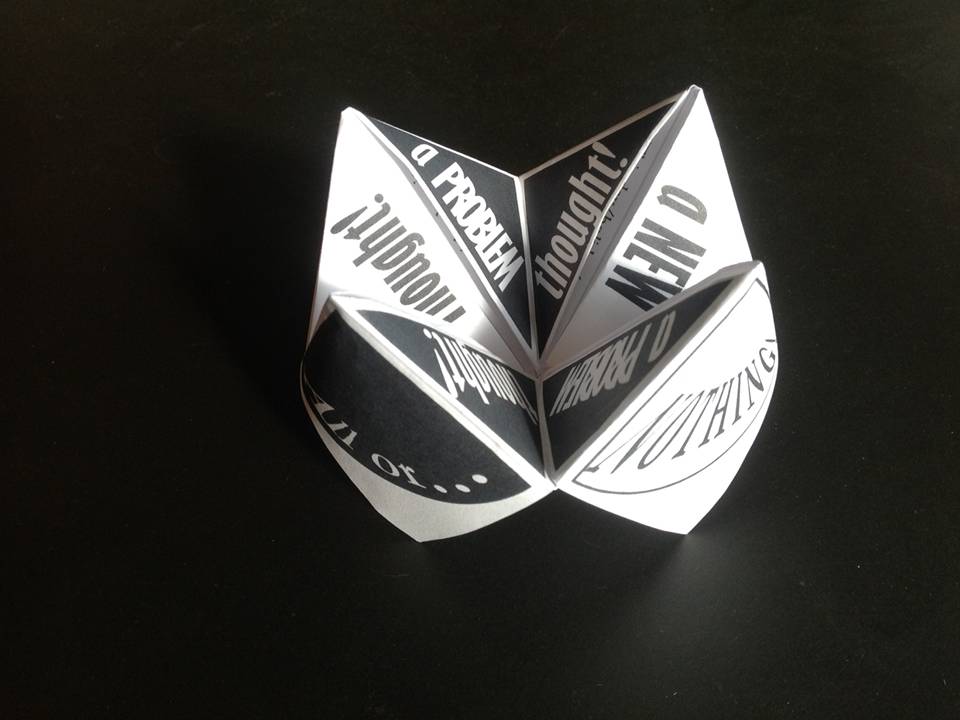
paper fortune teller cognitive behavioral therapy children

Slide14

Slide13

Slide12

Slide11

Slide10

Slide9

Slide8

Slide7

Slide6

Slide5

Slide4

Slide3

Slide2

Slide1


Your comments on these resources are most welcome, and often helpful. Click HERE to send an email.
ASD Feel Better Promo square directing to JKP

The Conversation Train Book

Green Zone Book Cover Click to Learn More

Your Interests Promo image for website

Cognitive-behavioral therapy teaching materials for children with high functioning autism: Many engaging activities with free downloads

Cognitive-behavioral therapy and children with high functioning autism

I have posted an extensive amount of free cognitive behavioral therapy materials on the website.  The following post is to summarize them in one place and provide more convenient links to each of them.

Many are available in screen-based / teletherapy versions. Some are available in translations.

To be connected with each free resource, click on the IMAGE.

CBT videos for children

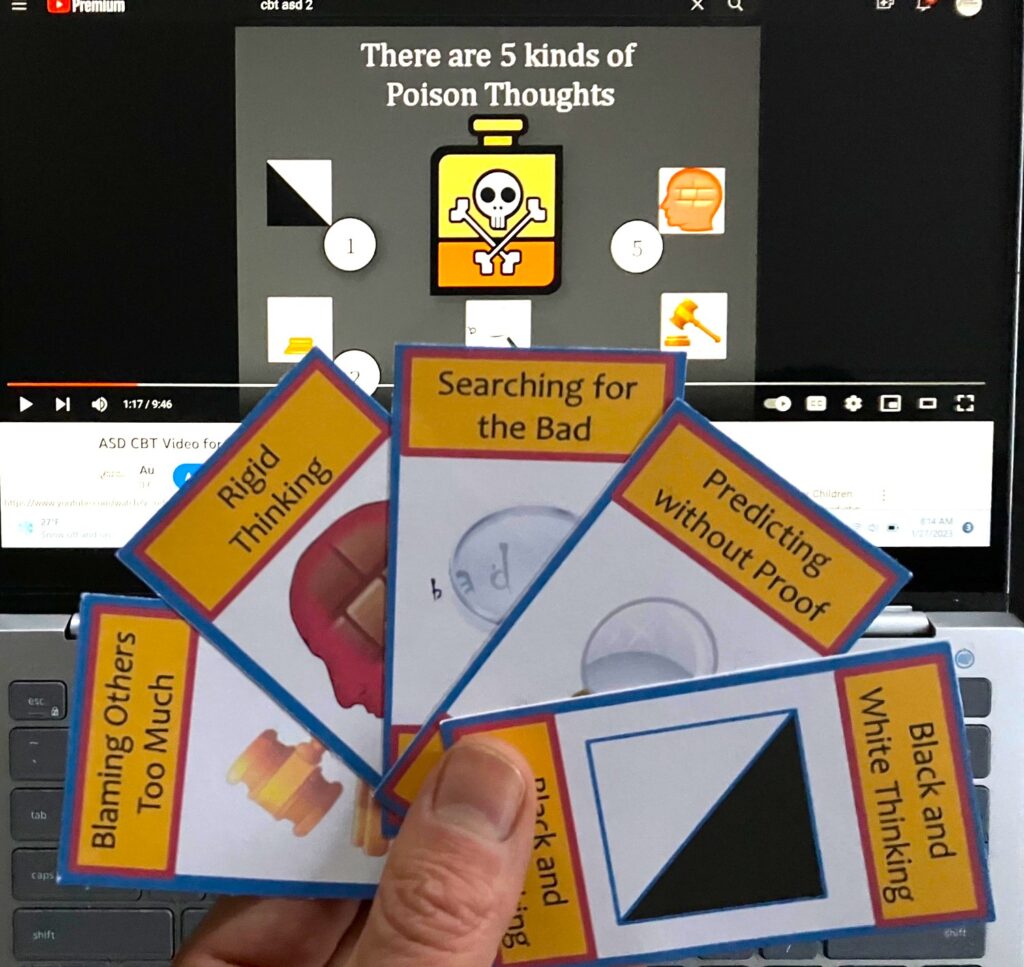
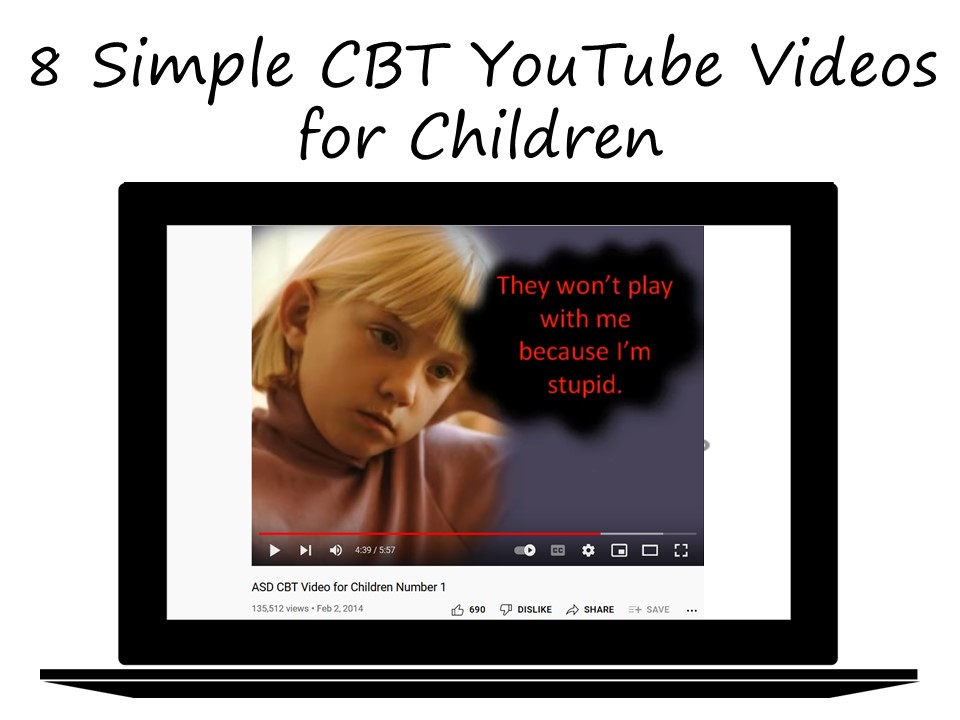
If you are just beginning to explain the basics of CBT, I really recommend you watch the first video in this series. It is short, very visual, and clear. The subsequent videos focus on specific categories of automatic negative thoughts, which I refer to as Poison Thoughts.

Here is a concise guide to using the CBT Videos which you should find helpful.

CBT Cards to use with the 8 CBT Videos

Download and cut these out. They are very handy to use while viewing the 8 CBT Videos. The download includes suggestions on different ways to use them.

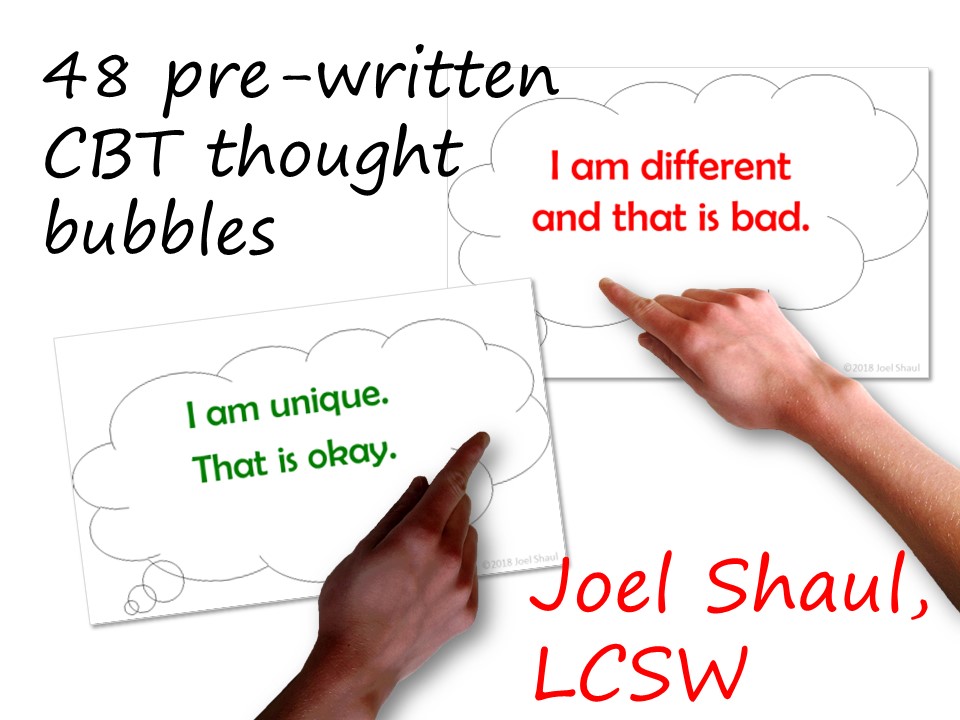
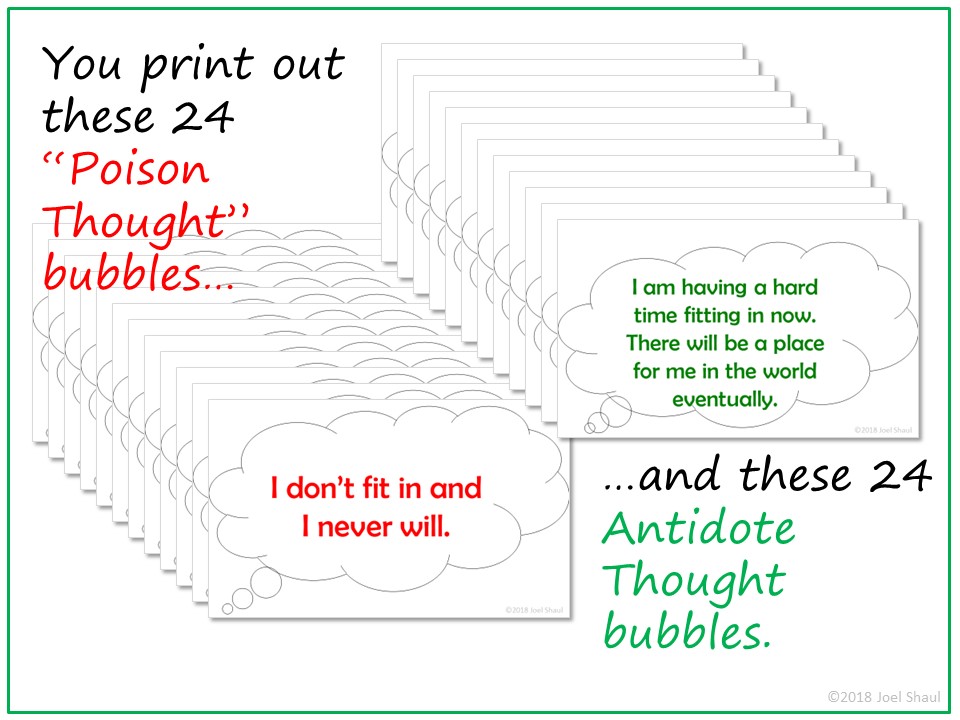
CBT Thought Bubbles, printable and screen-based / teletherapy versions

These have many uses. You can print them and leave them lying around during sessions. You can put them on the wall. The screen-based version is very useful for groups or for teletherapy.

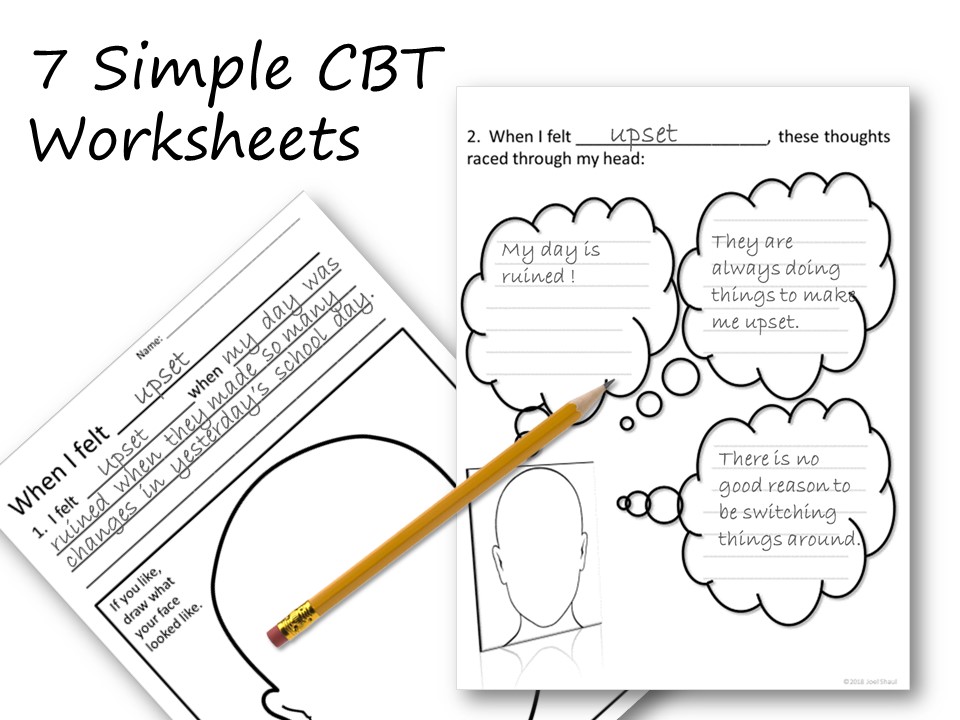
CBT Worksheets for children

I created these years ago because all the CBT worksheets I could find lacked visual elements and required children to write too small. The teletherapy versions of these are very useful, especially the Boom Cards version.

The CBT Worksheets are available in several translations.


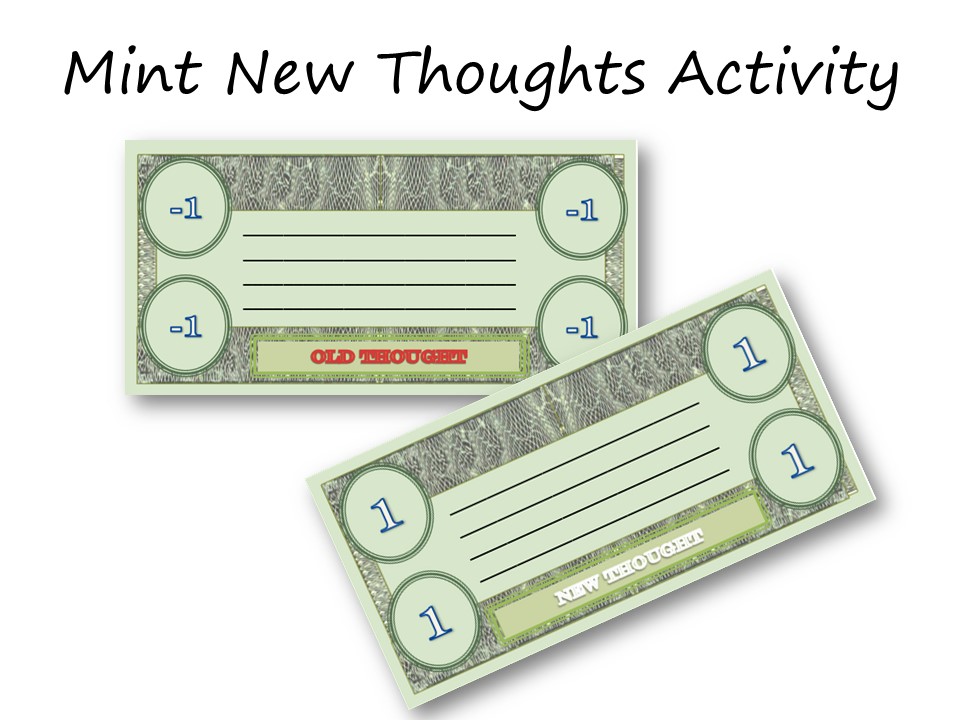
Mint New Thoughts CBT Activity

This is a CBT extension activity. You explain to children how they can create new thoughts to replace flawed ones, just like they do when printing currency. The Boom Cards version of this is particularly good and very useful in teletherapy.

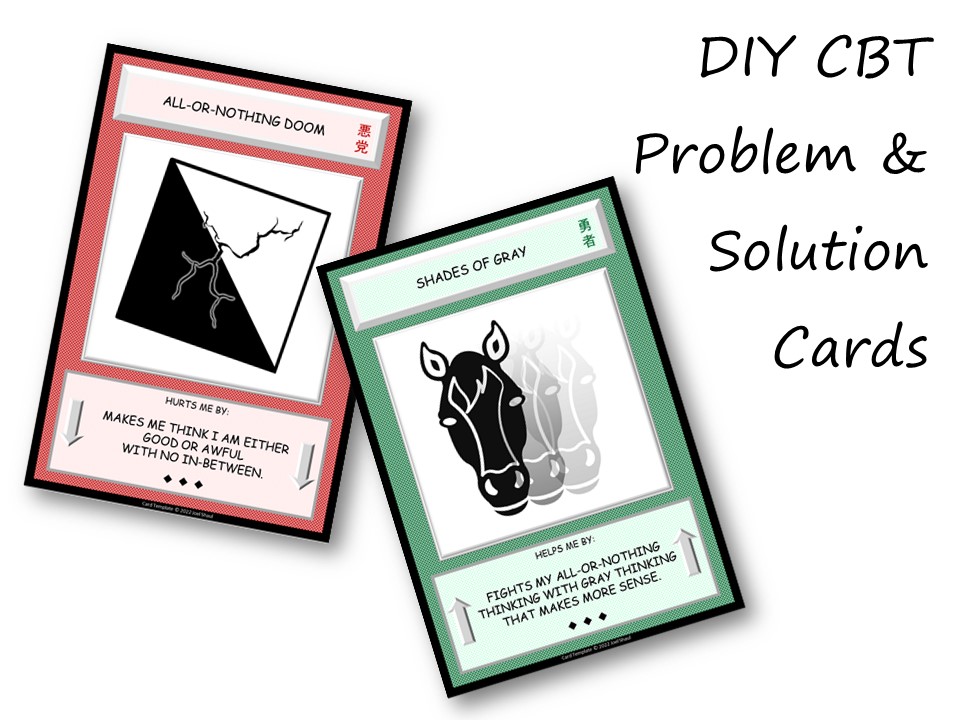
DIY CBT Problem & Solution Cards

In PowerPoint, using my prepared template, text boxes and drag-and-drop images, you quickly create these cards. It’s easy enough to do with the child present and it works well in teletherapy, too.

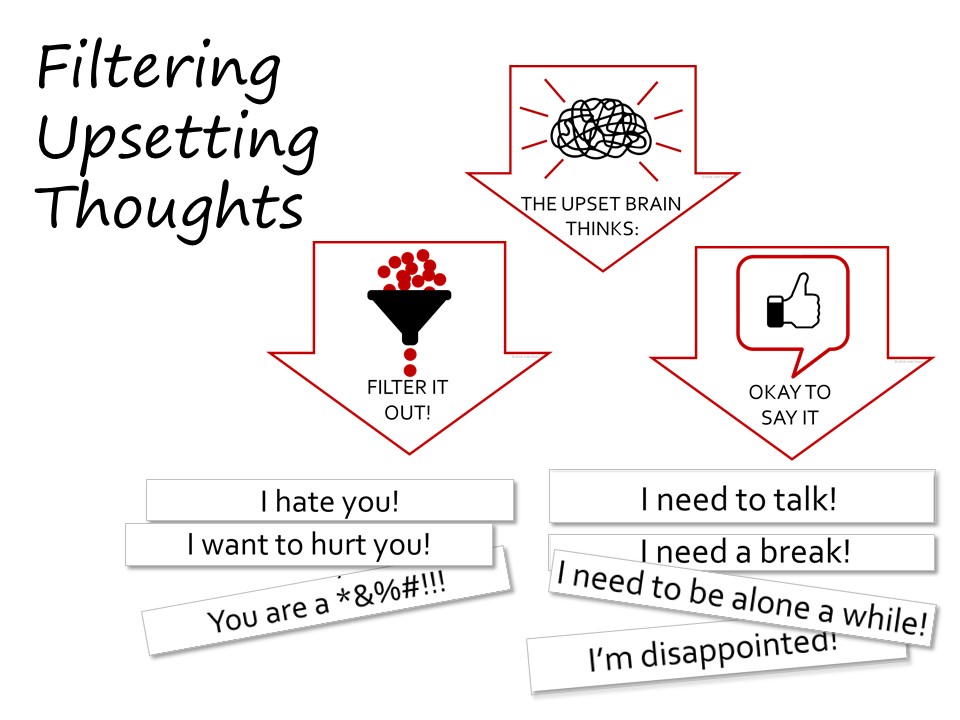
Filter the Upsetting Thoughts Activity

In this hands-on project, you print out dozens of pre-written paper strips showing a wide variety of thoughts that a person might have when they are feeling upset. The child sorts these into categories based on whether they are useful statements or unfiltered thoughts turned into words that may make things worse.

The teletherapy version works the same way, except you drag the statements around a PowerPoint screen to sort them.


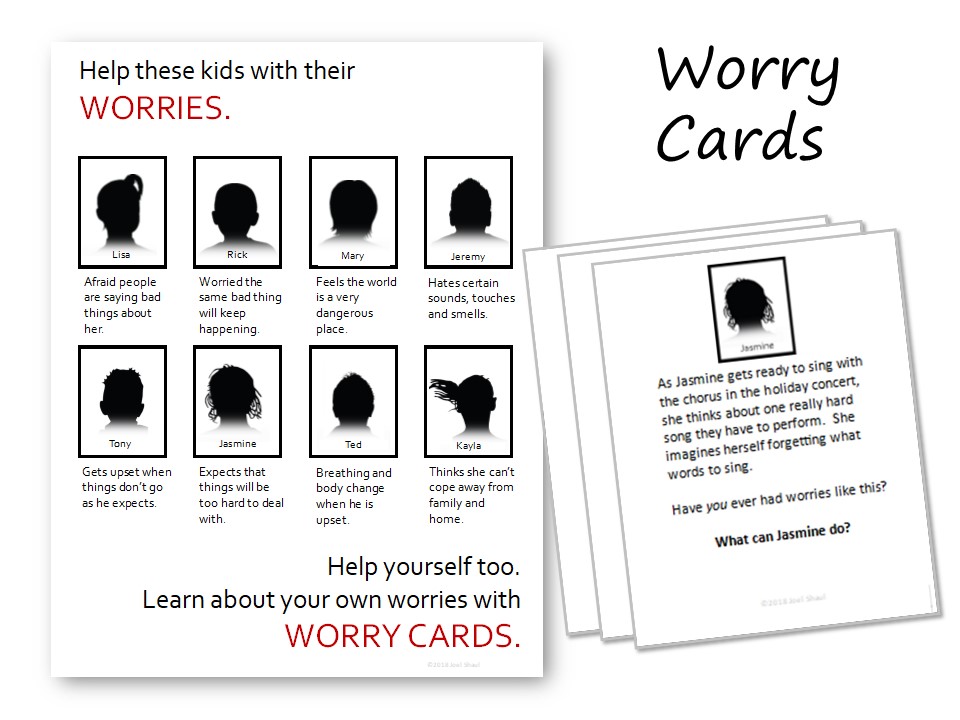
Worry Cards

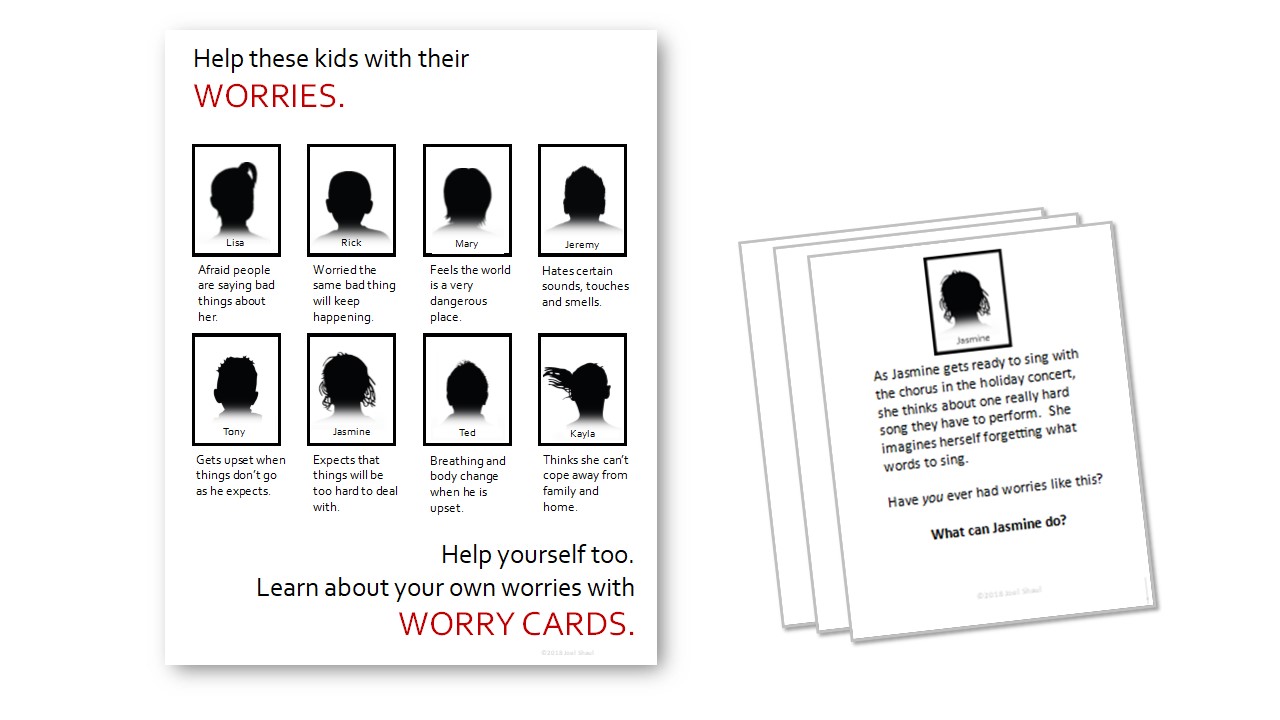
These problem-solving cards describe ten young people, each experiencing anxiety in a different way.

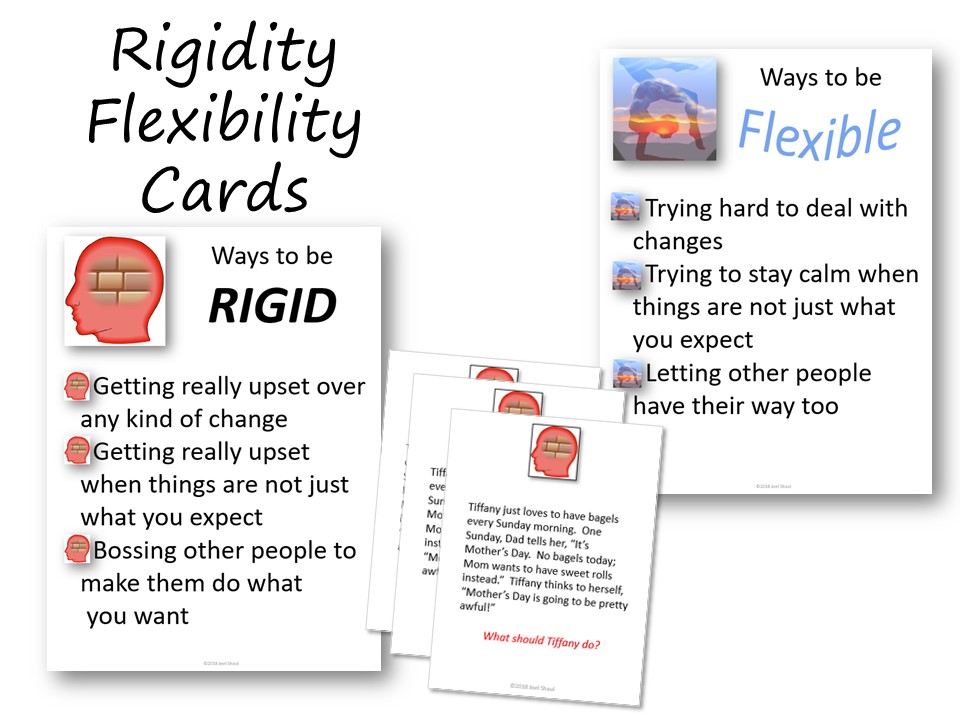
Rigidity Flexibility Cards

These problem exploration cards explore multiple manifestations of rigidity in a number of hypothetical children.

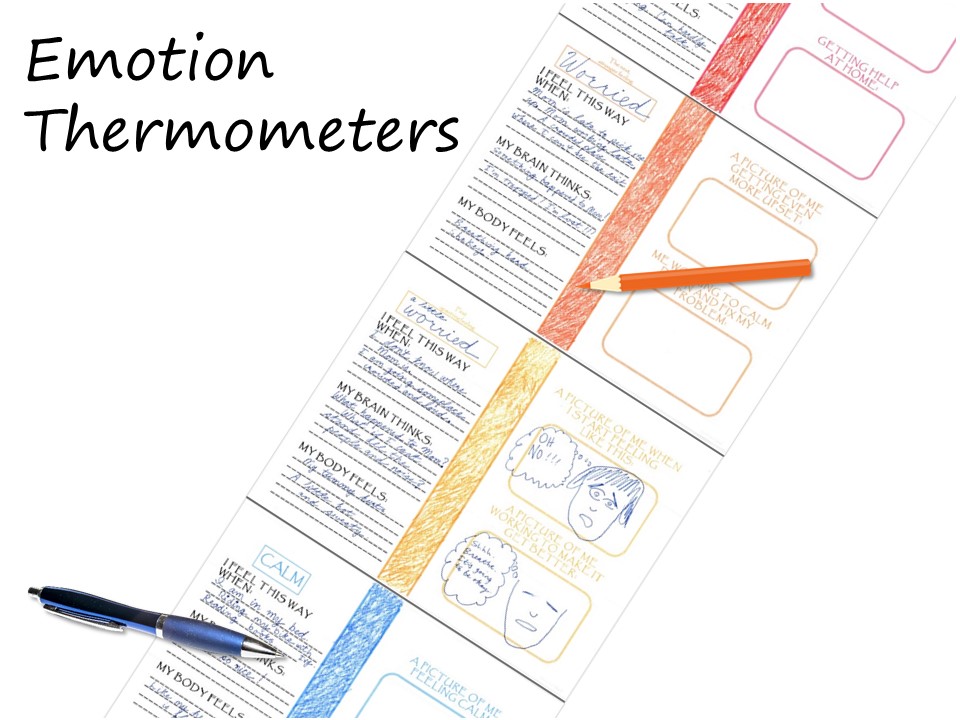
Emotion Thermometers

These large format emotion thermometers include blanks for children to customize them with words and drawings.

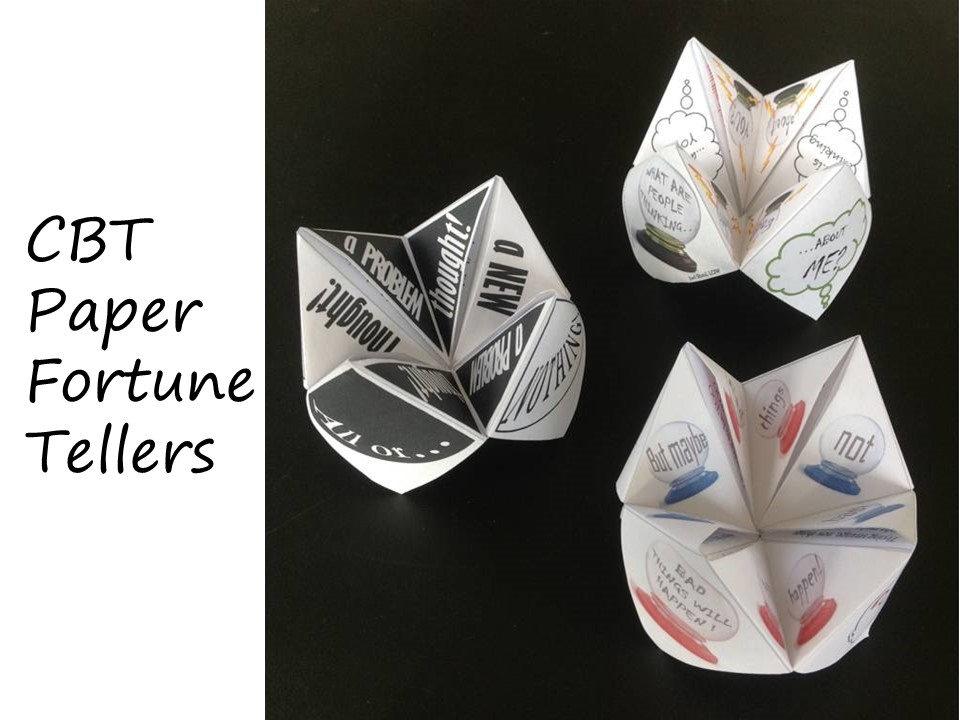
CBT Paper Fortune Tellers

These three paper fortune tellers explore anxiety and black and white thinking.

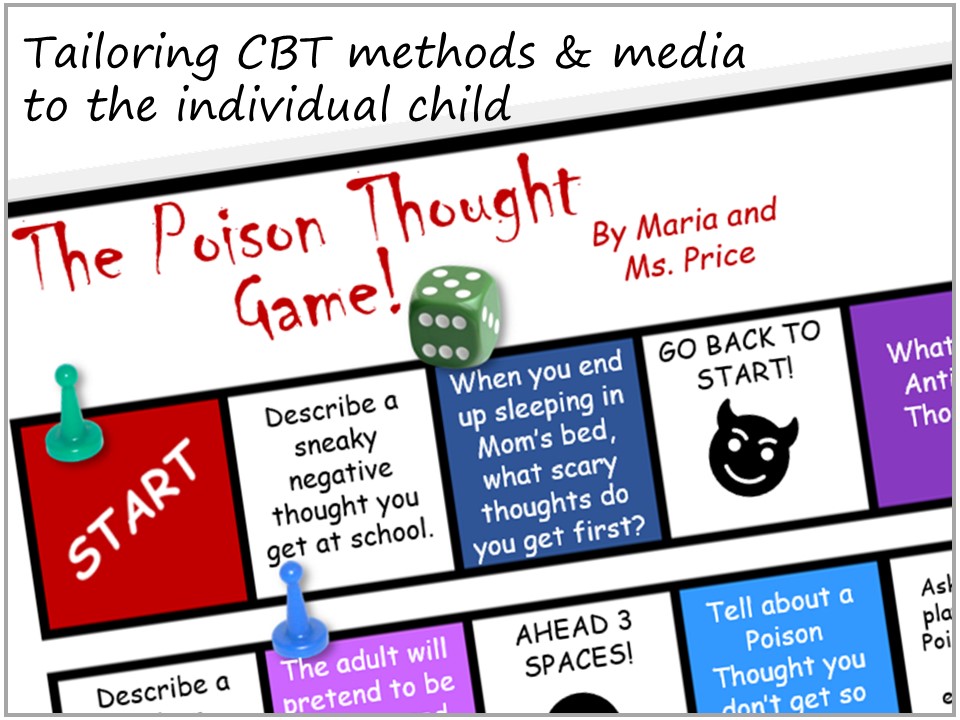
Tailoring CBT to the Individual Child

This illustrated tutorial explores how to take the individual child’s abilities, preferences and temperament into account when planning CBT interventions with children. This includes clickable links to resources, including the one shown in the picture above.

Joel Shaul, LCSW


Green Zone Book Cover Click to Learn More


ASD Feel Better Promo square directing to JKP

CBT Emotion Worksheets: Links to each worksheet series

cbt worksheet free

Here are links to my free CBT worksheets, some explanations on how to use them, and suggestions on how to use the worksheets in combination with other free child therapy resources on the website.

7 cognitive behavioral therapy worksheets with other free CBT resources

Telehealth Computer Based CBT Worksheets Download

In Polish: CBT Karty Pracy
In Albanian: Shtatë Materiale të thjeshta pune CBT

In Spanish: 7 hojas de trabajo de Terapia Cognitivo-Conductual

In German: 7 Arbeitsblätter zur kognitiven Verhaltenstherapie für Kinder

In Hebrew: 7 CBT Worksheets for Children

Boom Card Version of CBT Worksheets

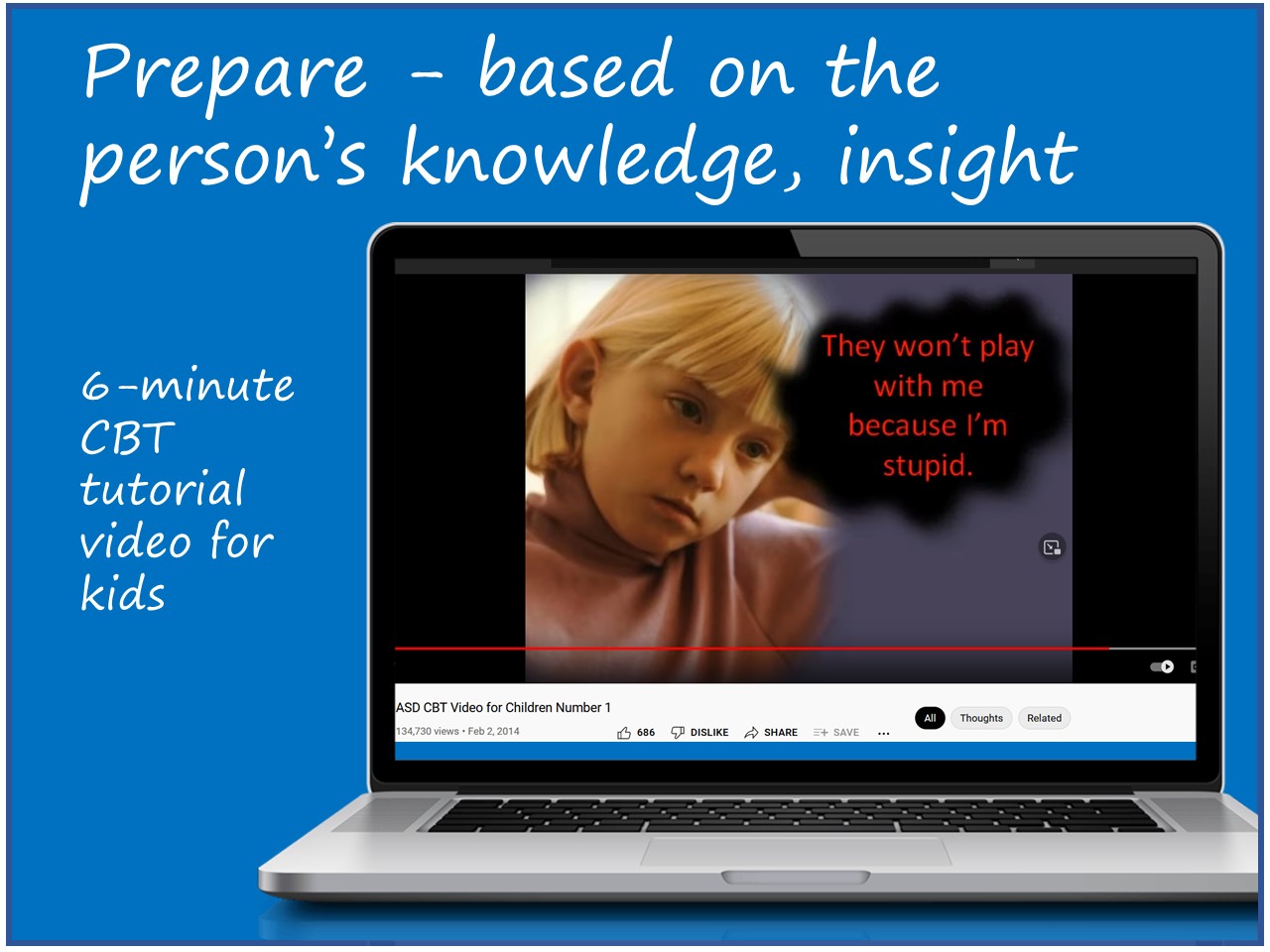
CBT was originally designed for educated adults. Before attempting to use any elements of CBT with young people, it is important to simplify it as much as possible and to make it appealing. I really recommend you consider starting out by viewing this six-minute CBT video which was designed for ~ age 7 through late teens.

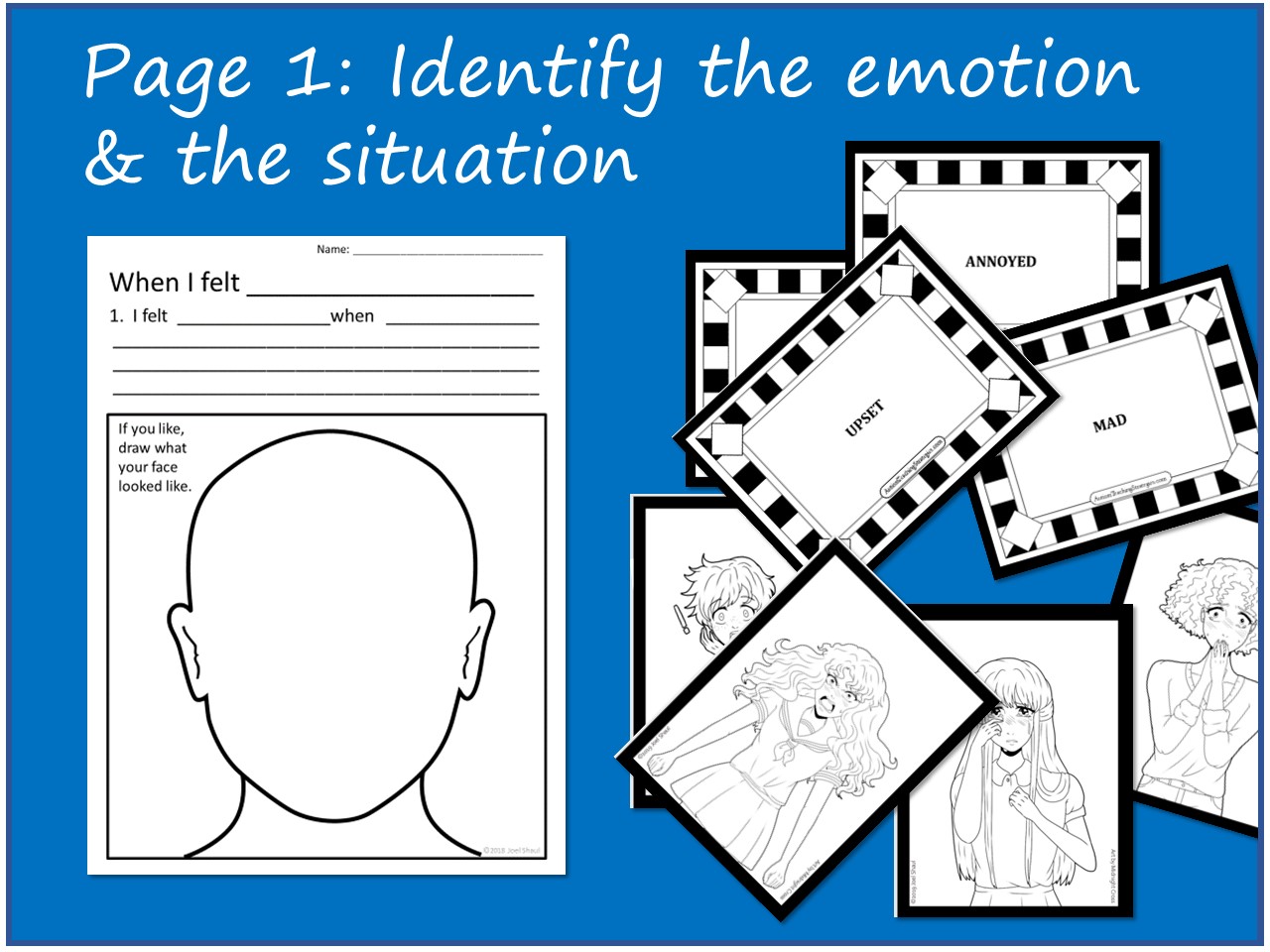
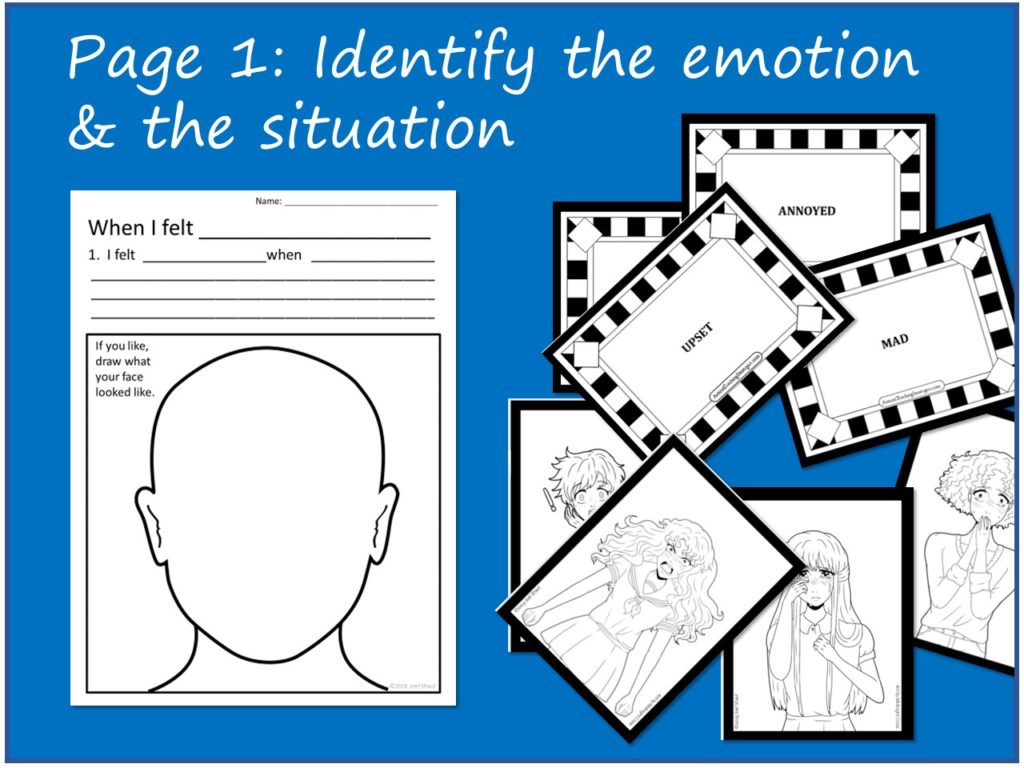
The first page is help identify the problem emotion. It may be necessary to take this step slowly and carefully. I have several free therapy resources that can be helpful, 21 Anime Emotion Cards and Emotion Cards.

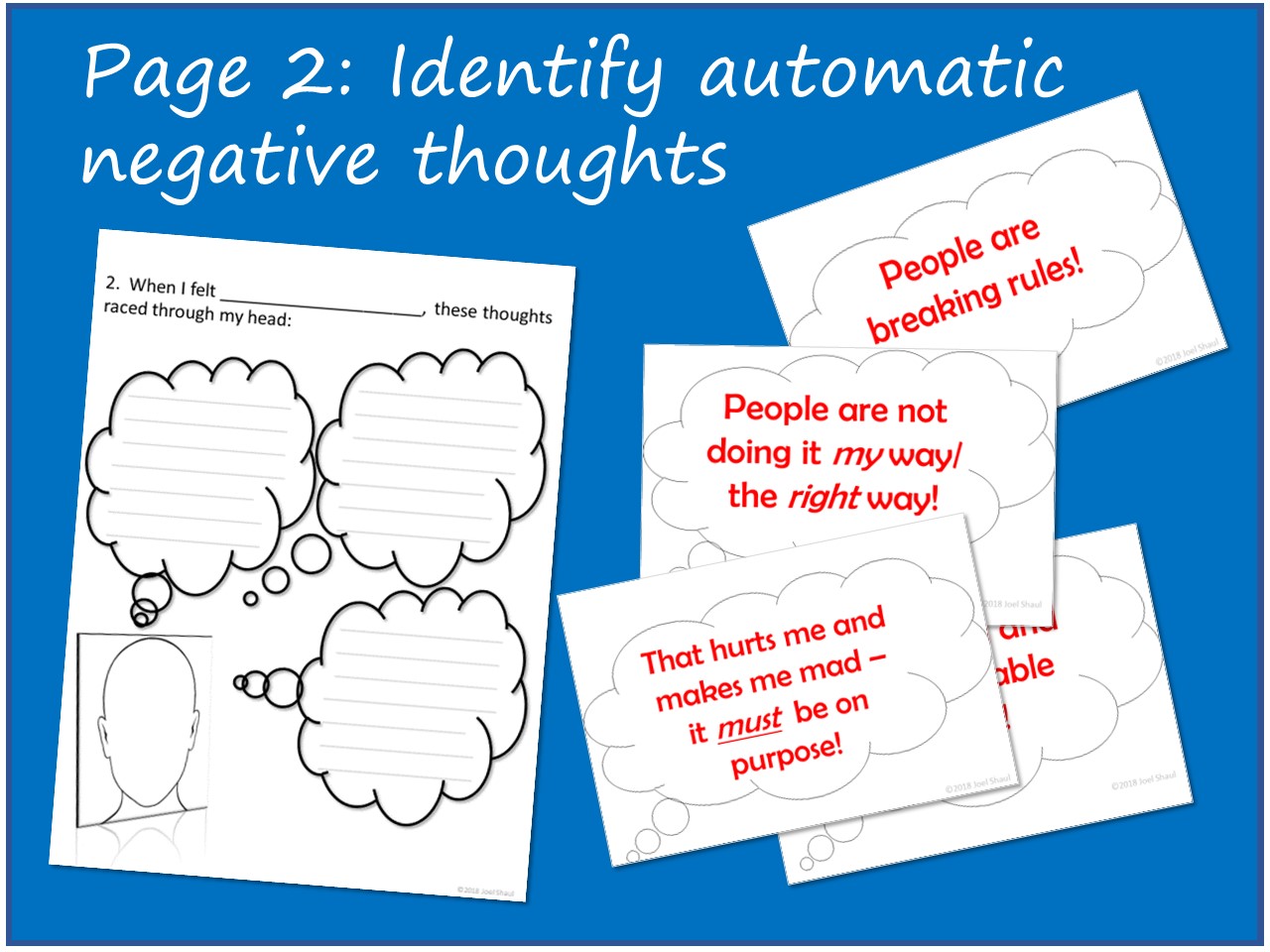
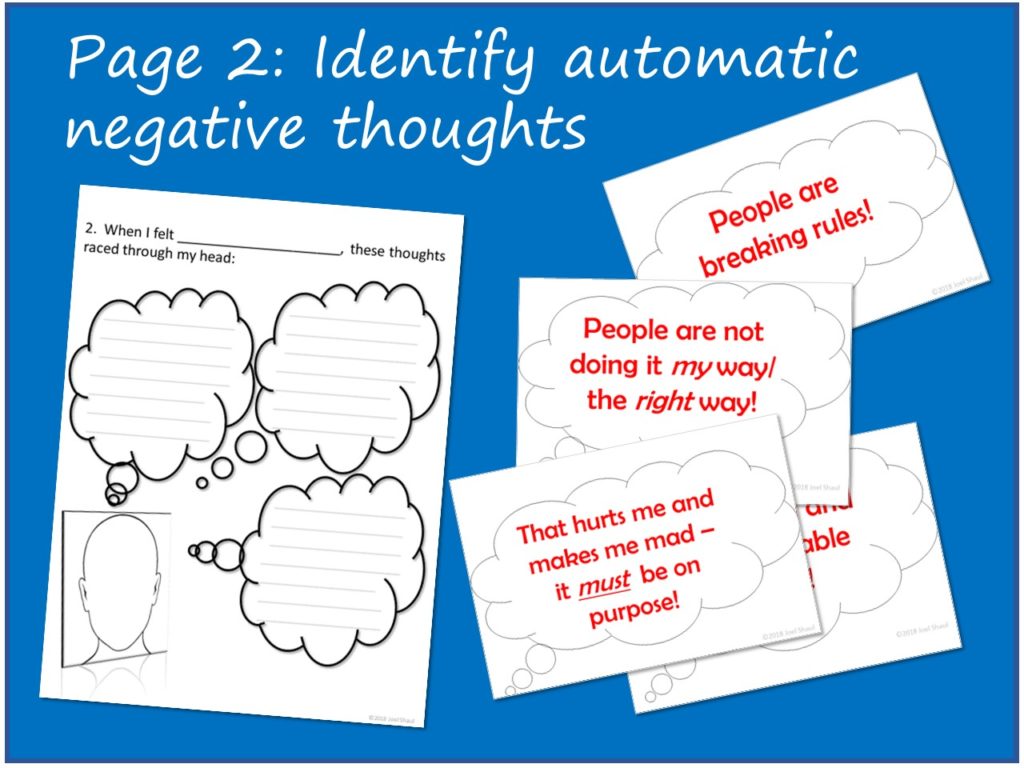
Identifying automatic negative thoughts, which I call “poison thoughts” in my own work, is challenging to learn, even for many adults. But it is surprising how many children can get really good at it. To practice it, I suggest you return to the series of 8 Simple CBT Videos, or access the free download of 48 Cognitive Distortion Thought Bubbles (printable or screen-based version). For additional, game-like incentives to identify “poison thoughts,” you can try these free Poison Thought Cards or using Mr. Yuk stickers.

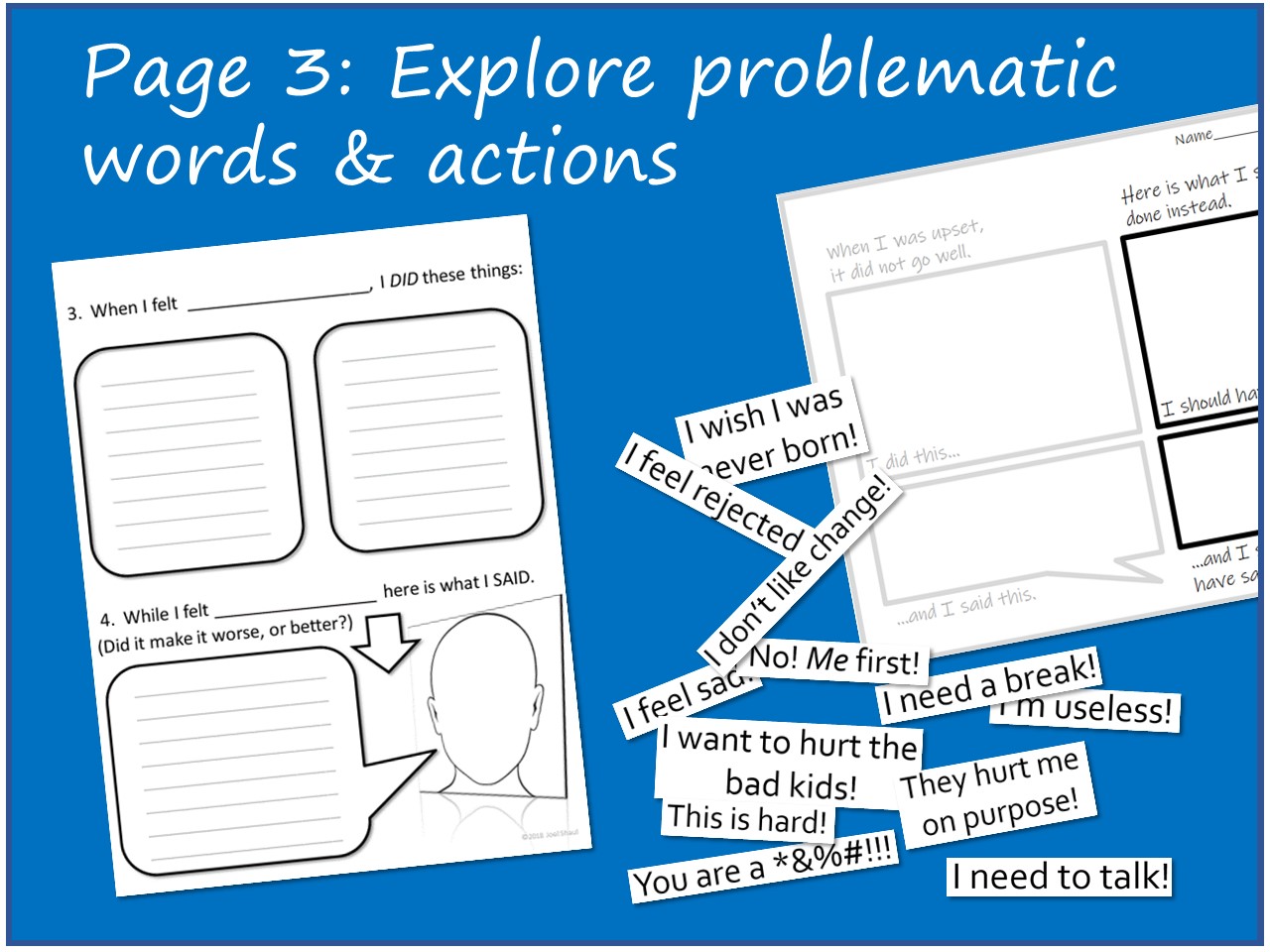
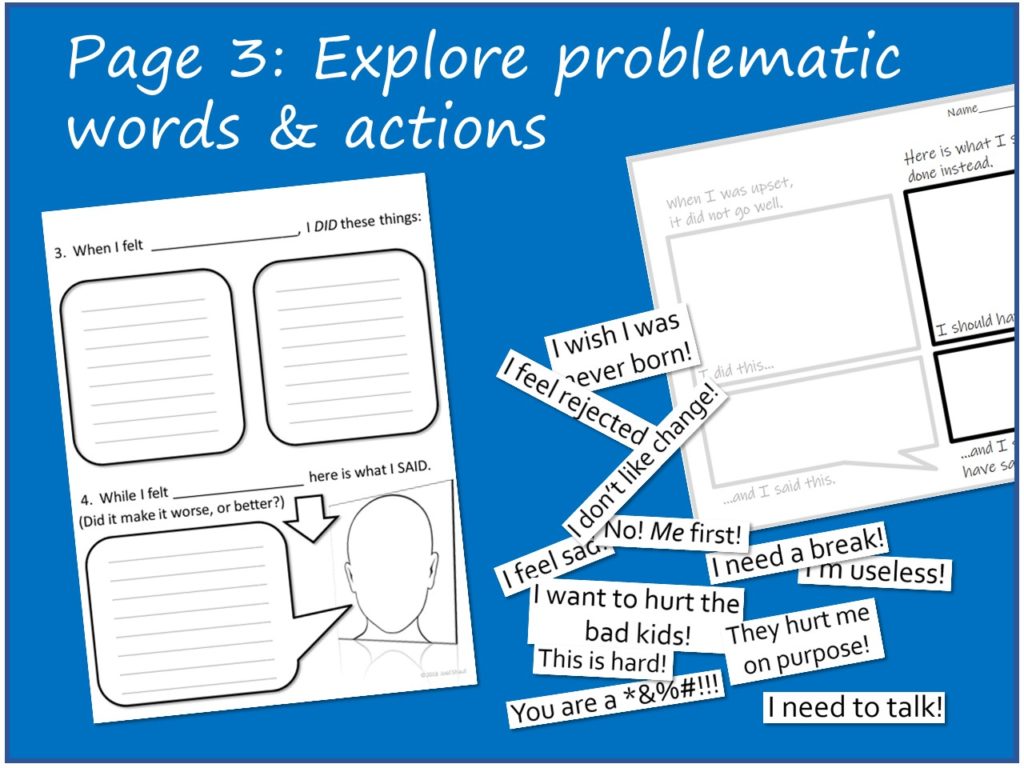
Page 3 is to help the young person to focus carefully on their specific words and actions during their episode of distress. There are two downloadable resources that help with this (both available in both printable and screen-based versions), Filter the Upsetting Thoughts & Words and the What I Should Have Done Different worksheet.

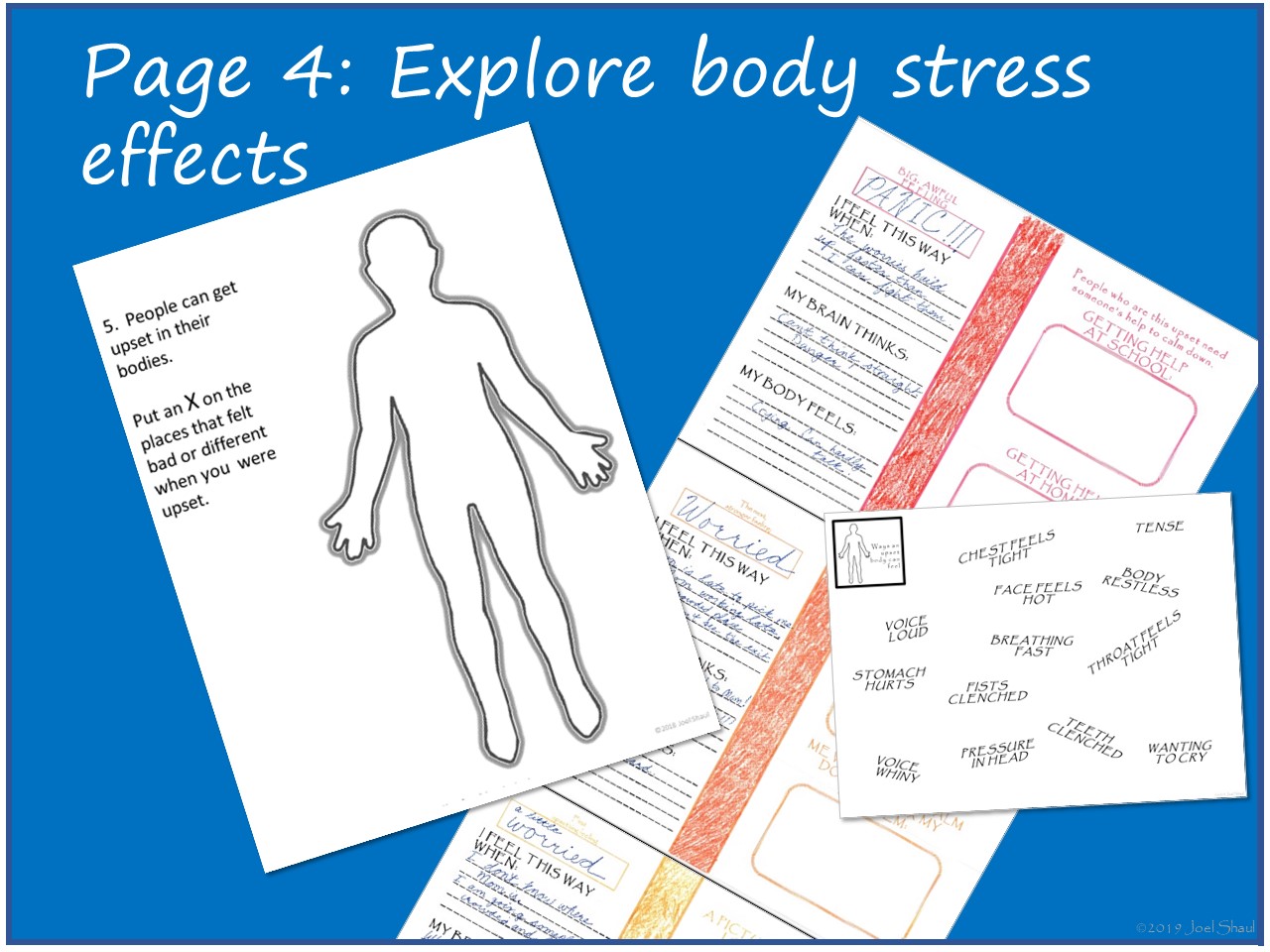
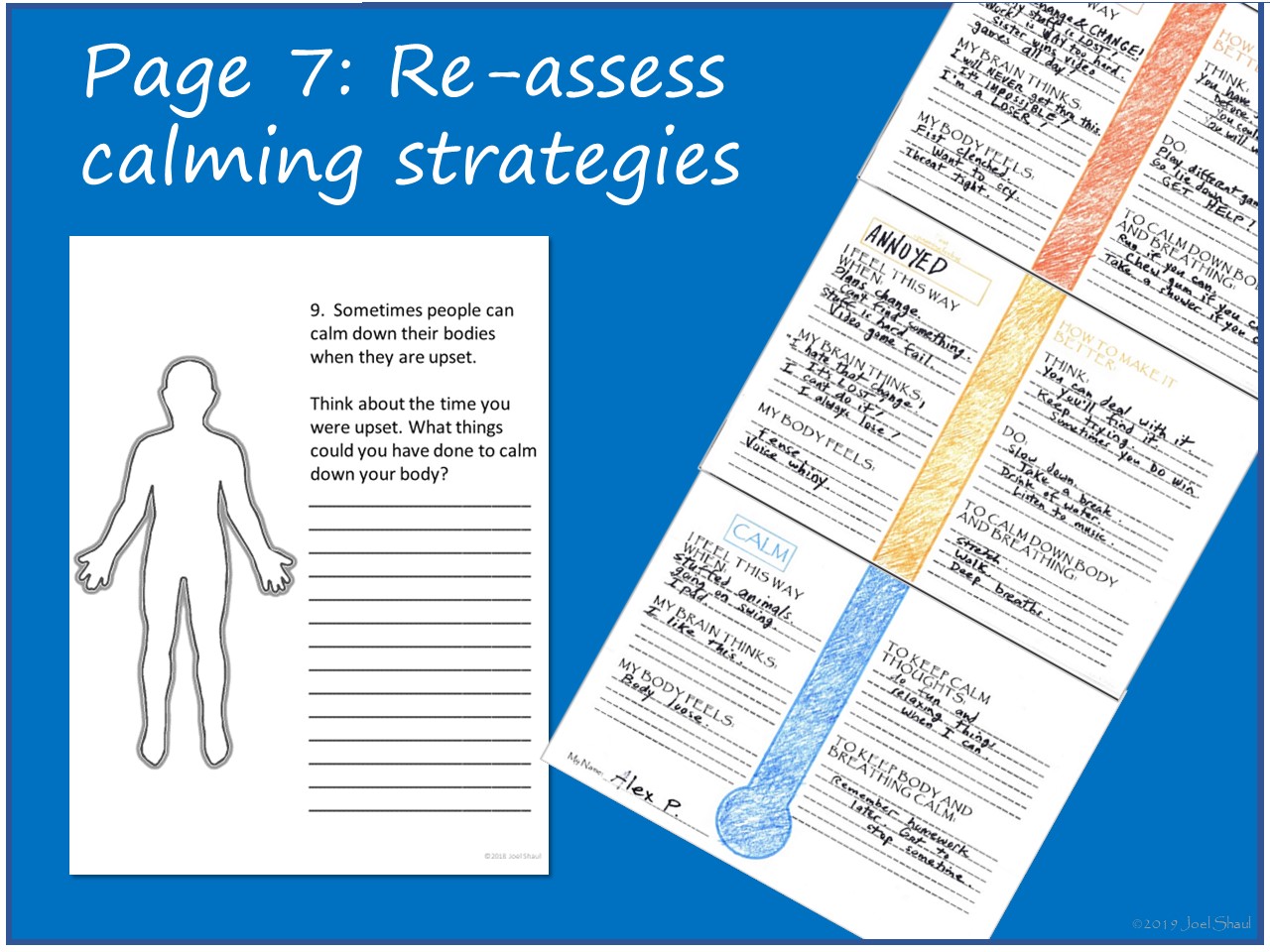
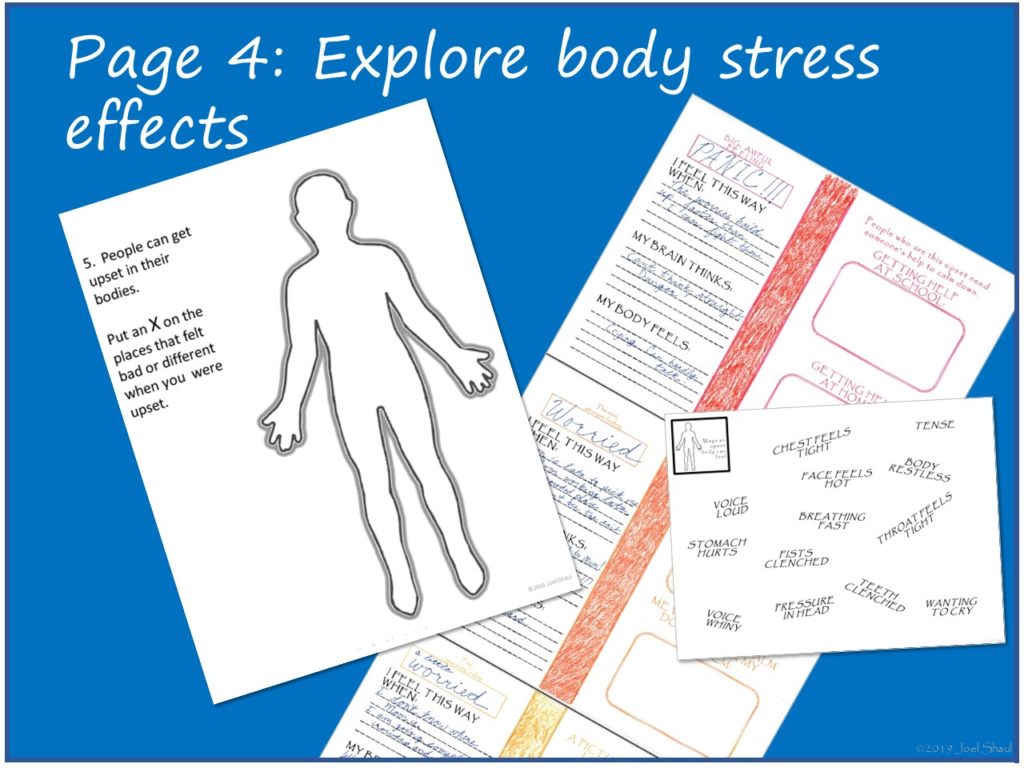
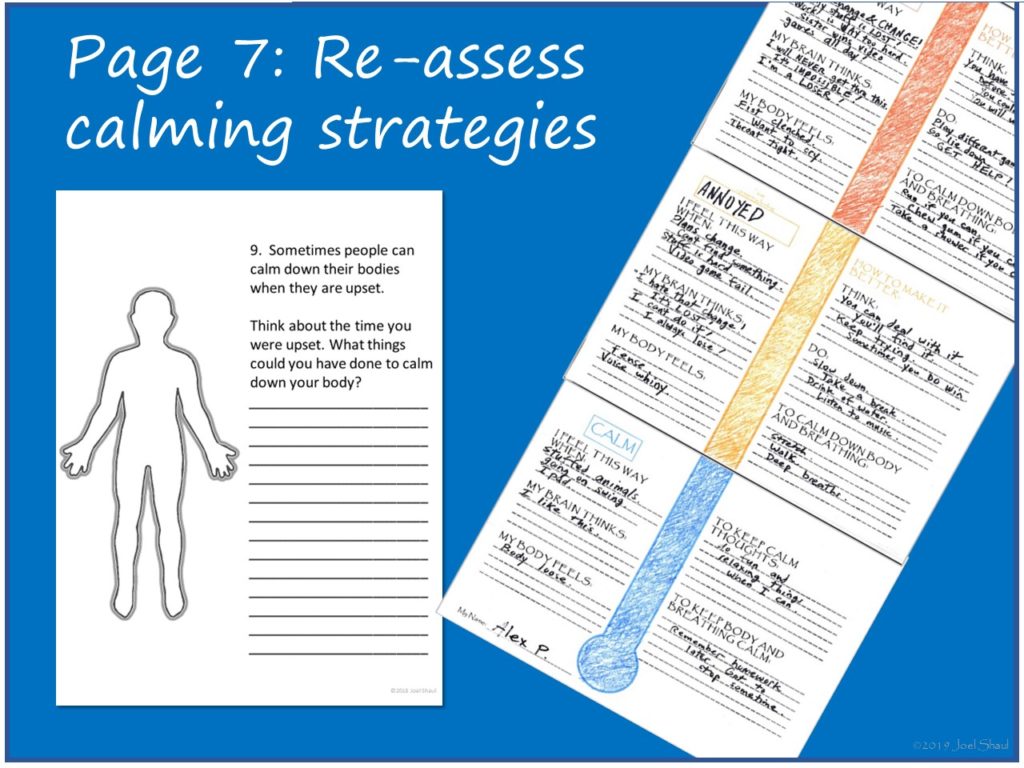
Depending on the child, gaining understanding of bodily manifestations of stress can be significant or the most important part of the work. Shown in the picture are two components of the free download of the Emotion Thermometer.

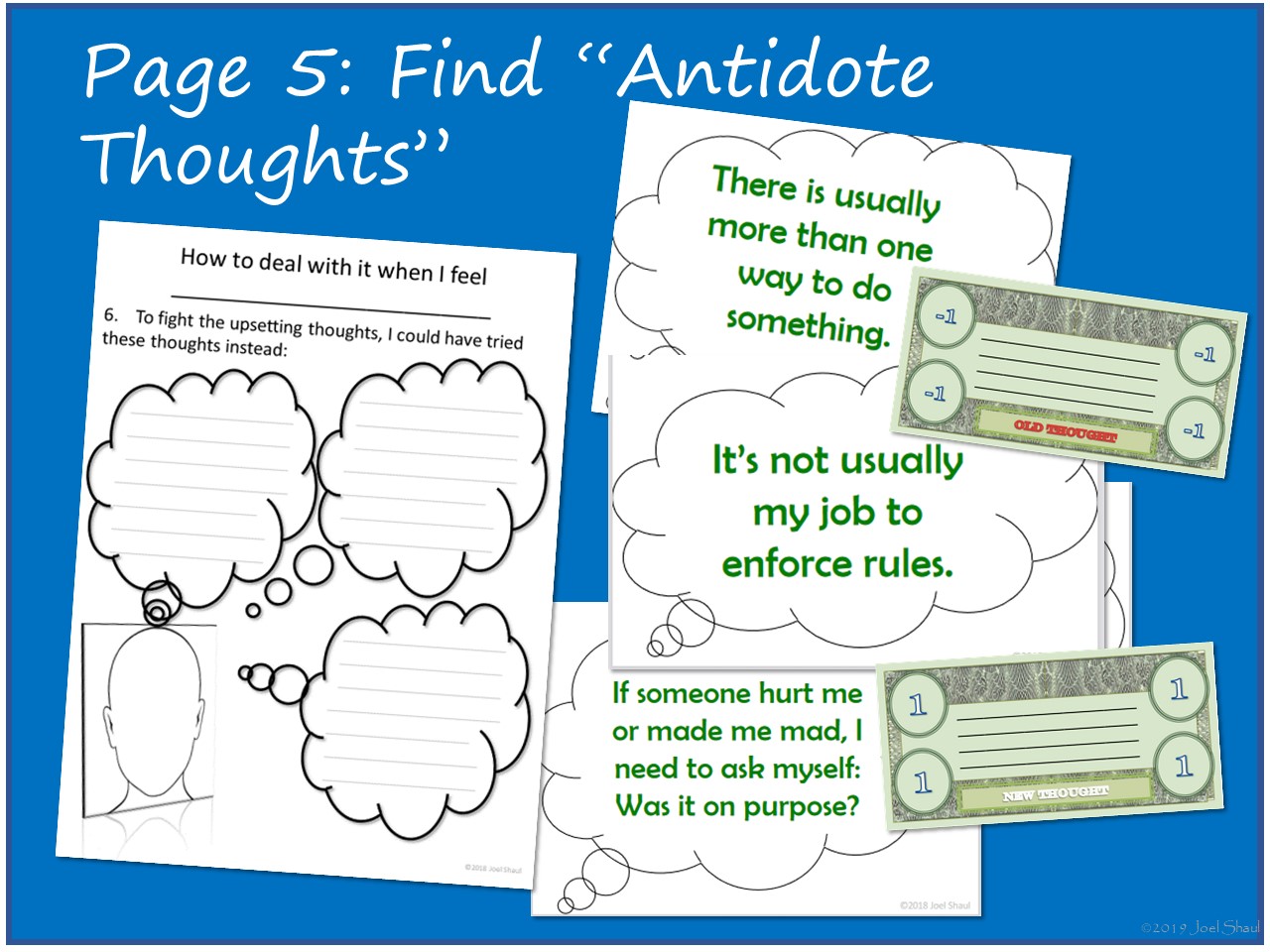
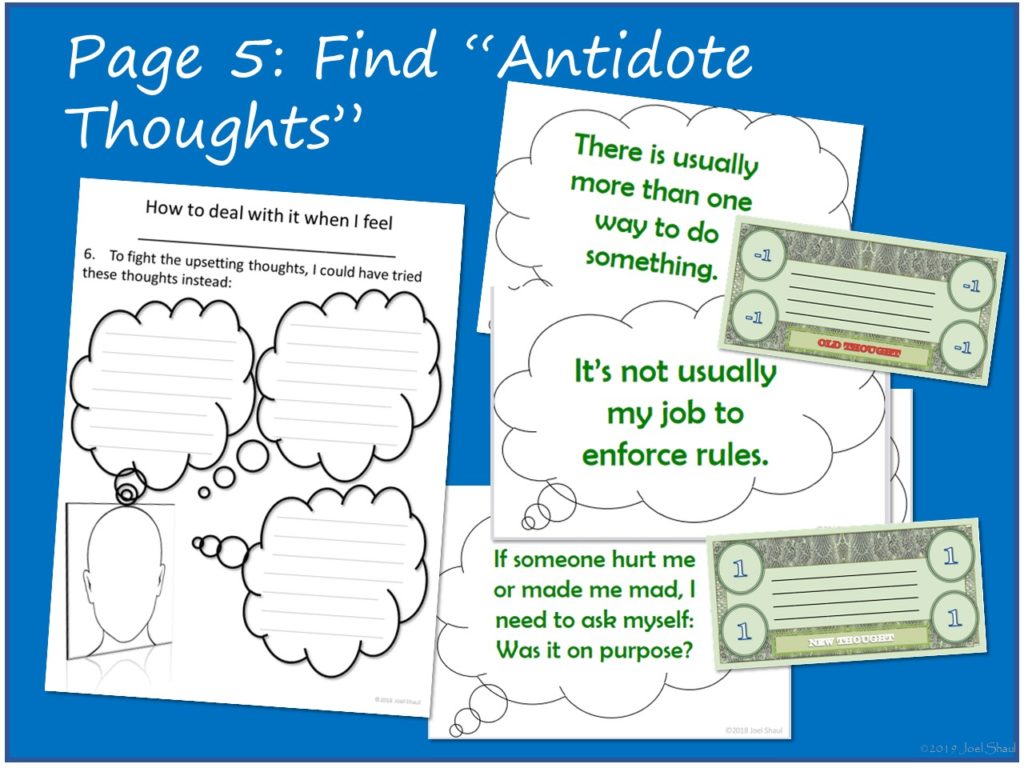
Correcting cognitive distortions, or “creating Antidote Thoughts,” is the work carried out on page 5. Two of my free resources are helpful with this step, 48 Cognitive Distortion Thought Bubbles and the Mint the New Thoughts Kit. Both are available in both printable and screen-based versions.

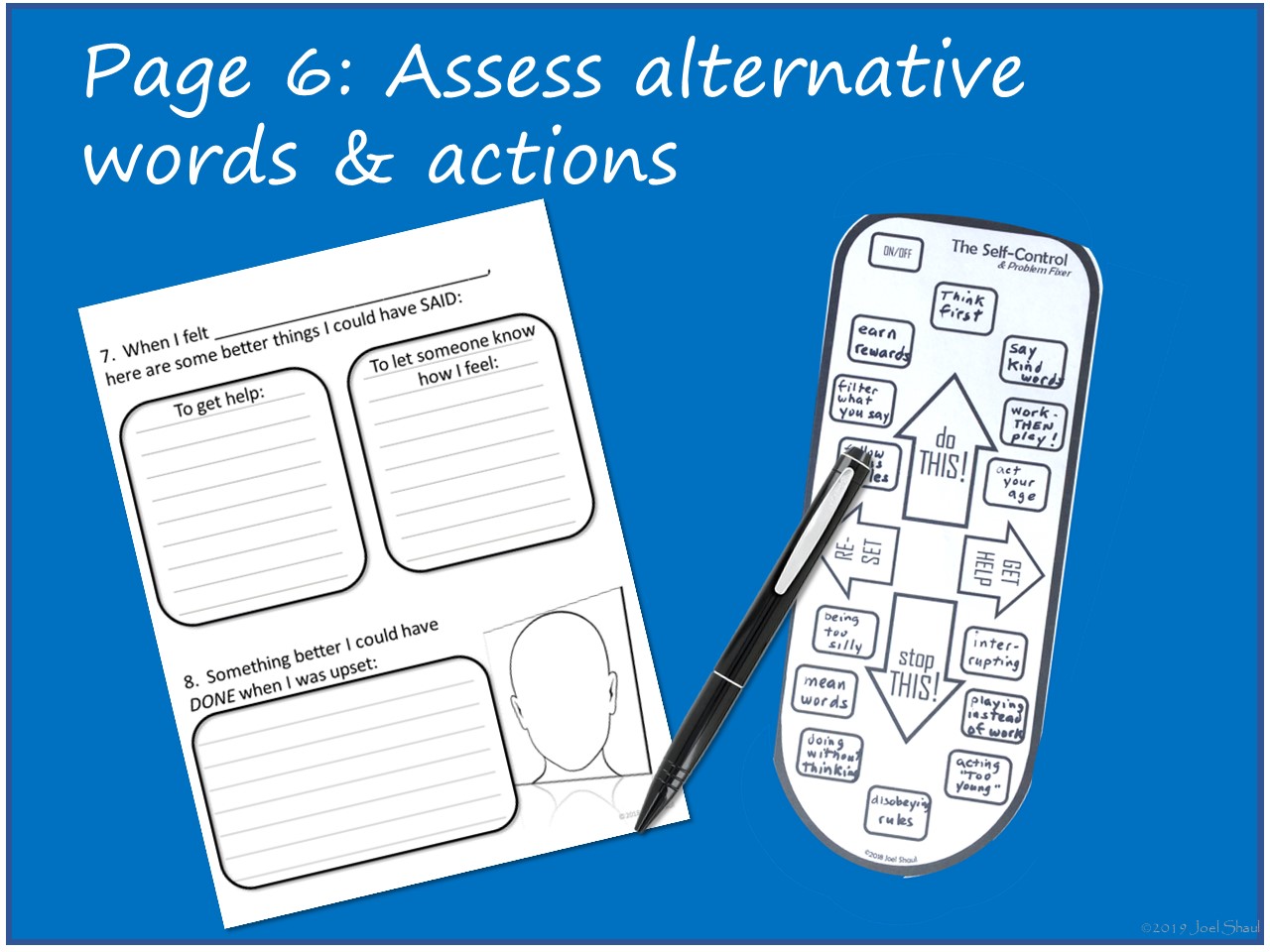
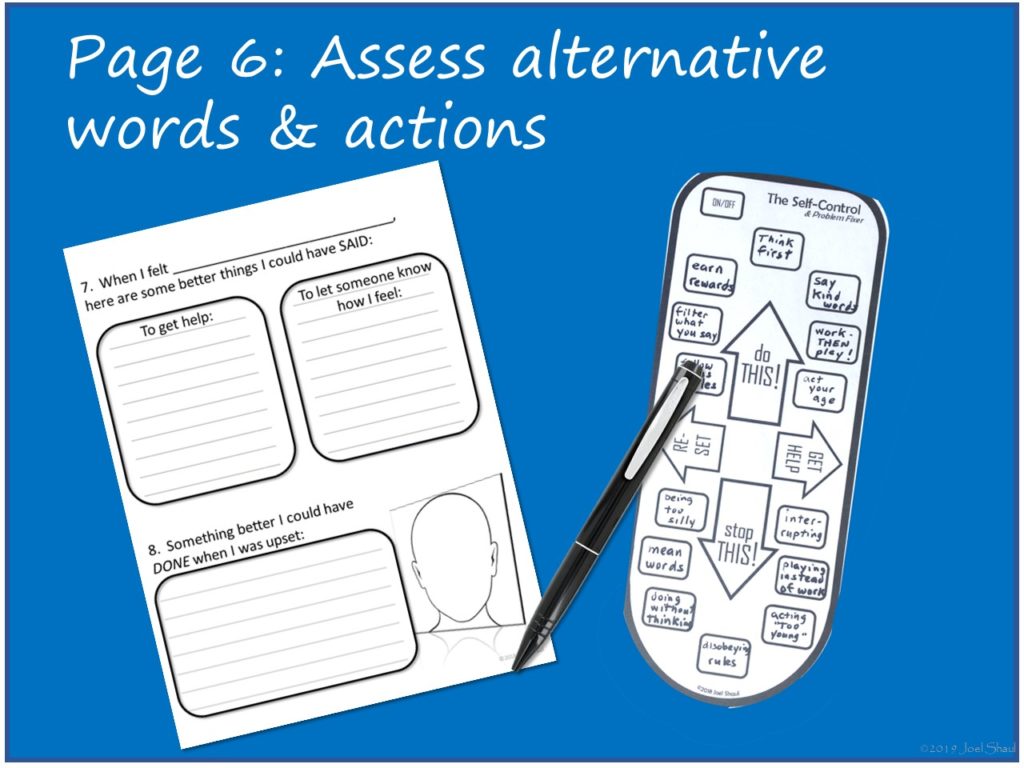
Once the child has explored alternative ways of thinking, we move on to alternative actions and words. A resource to consider for increasing awareness of different ways to behave is Self-Control Problem Fixer.

The final CBT worksheet is a companion to page 4. Displayed here as a suggested related activity is the same Emotion Thermometer shown on page 4.

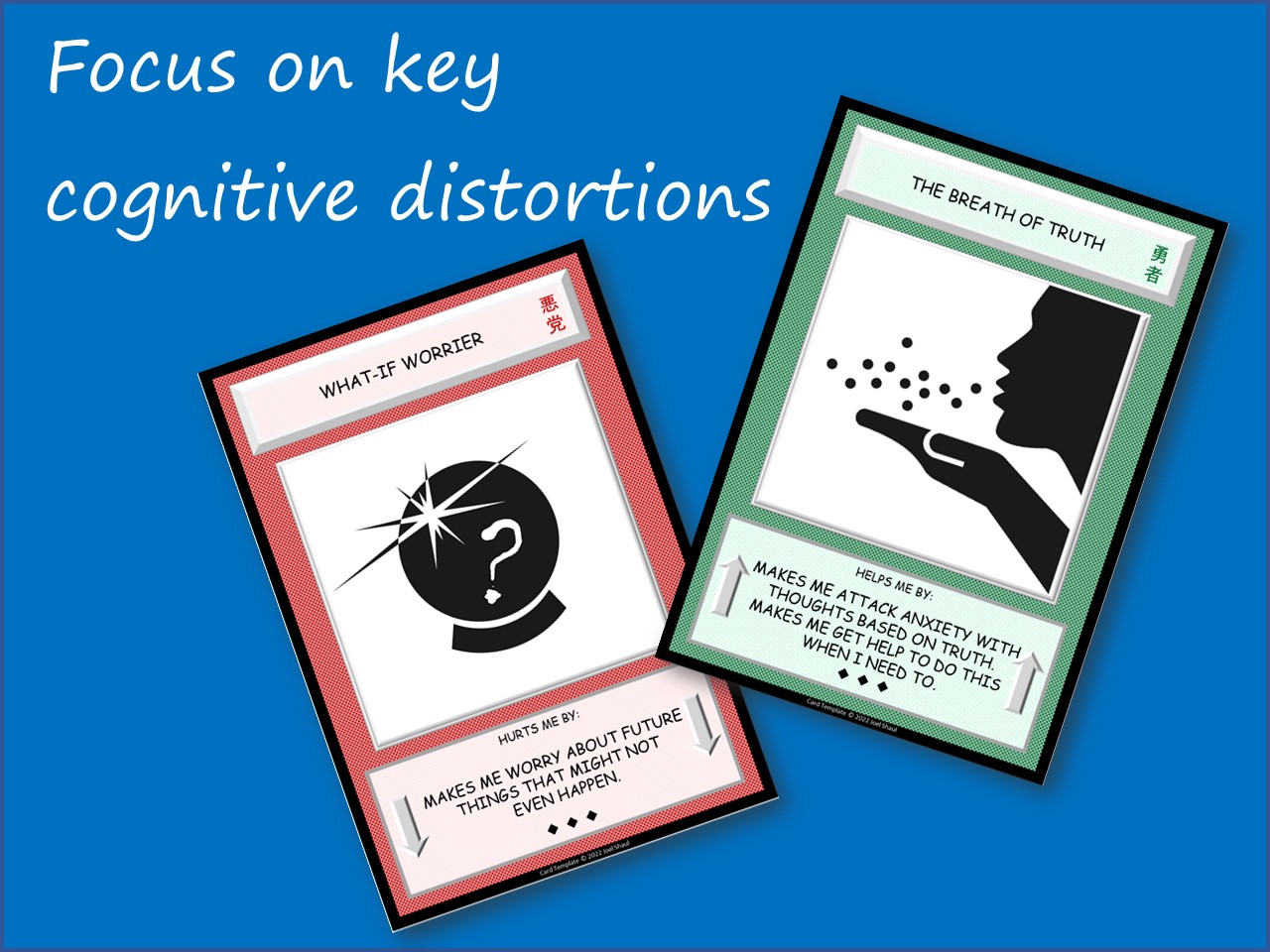
Everyone has different patterns of cognitive distortions. On the website is a super easy drag-and-drop PowerPoint kit for custom designing CBT cards like these two examples shown.

Additional suggestions for using the CBT worksheets

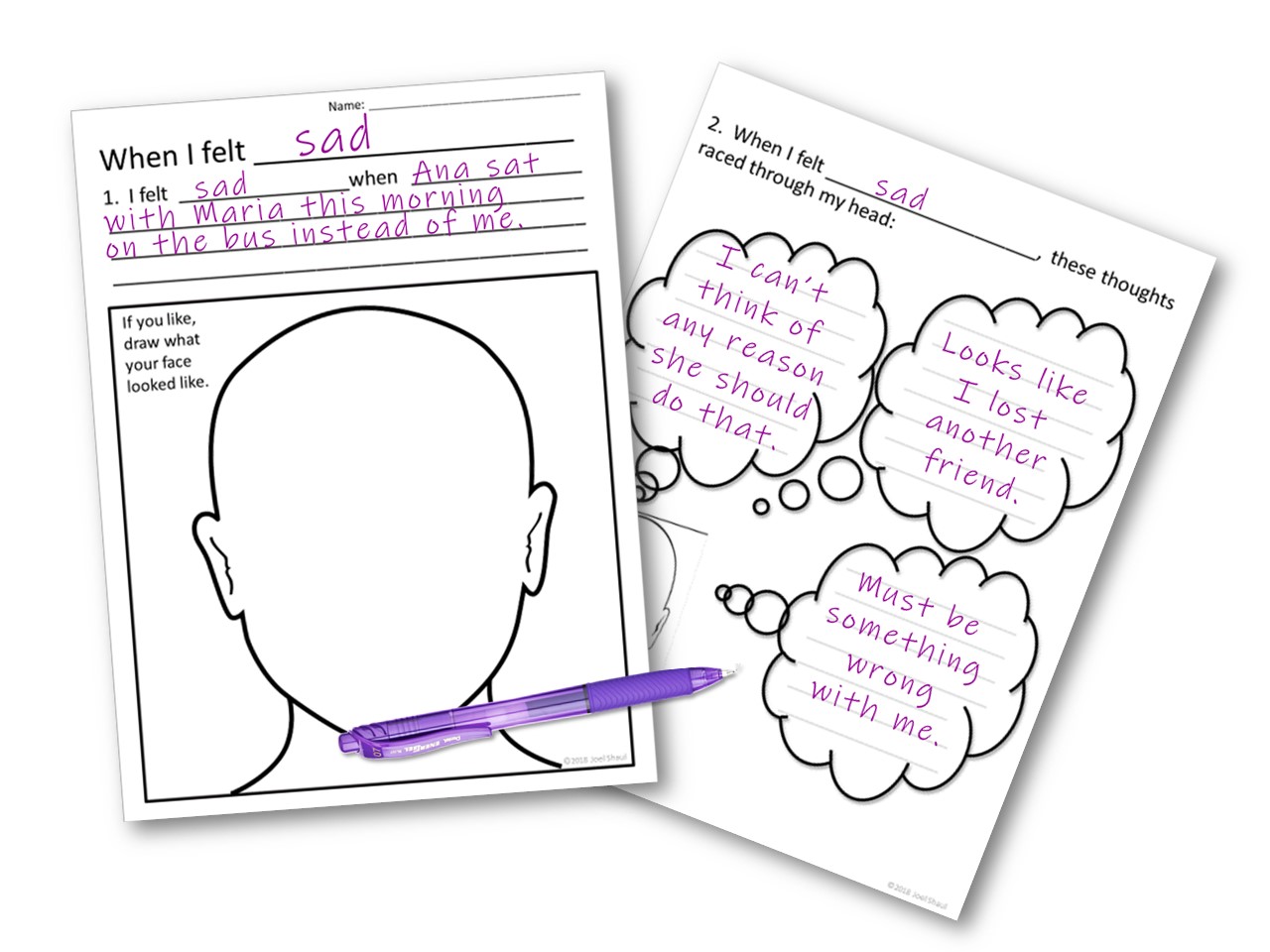
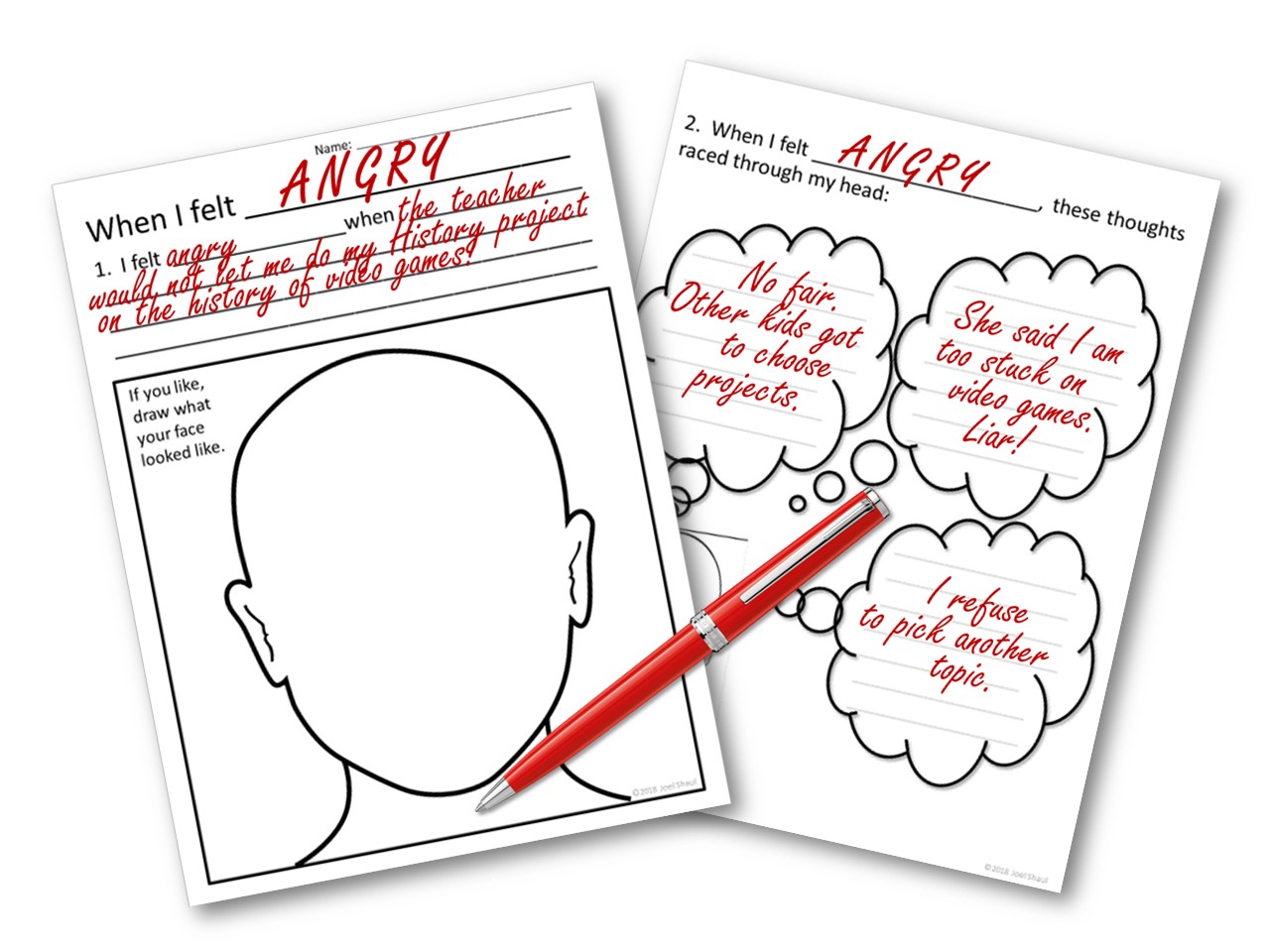
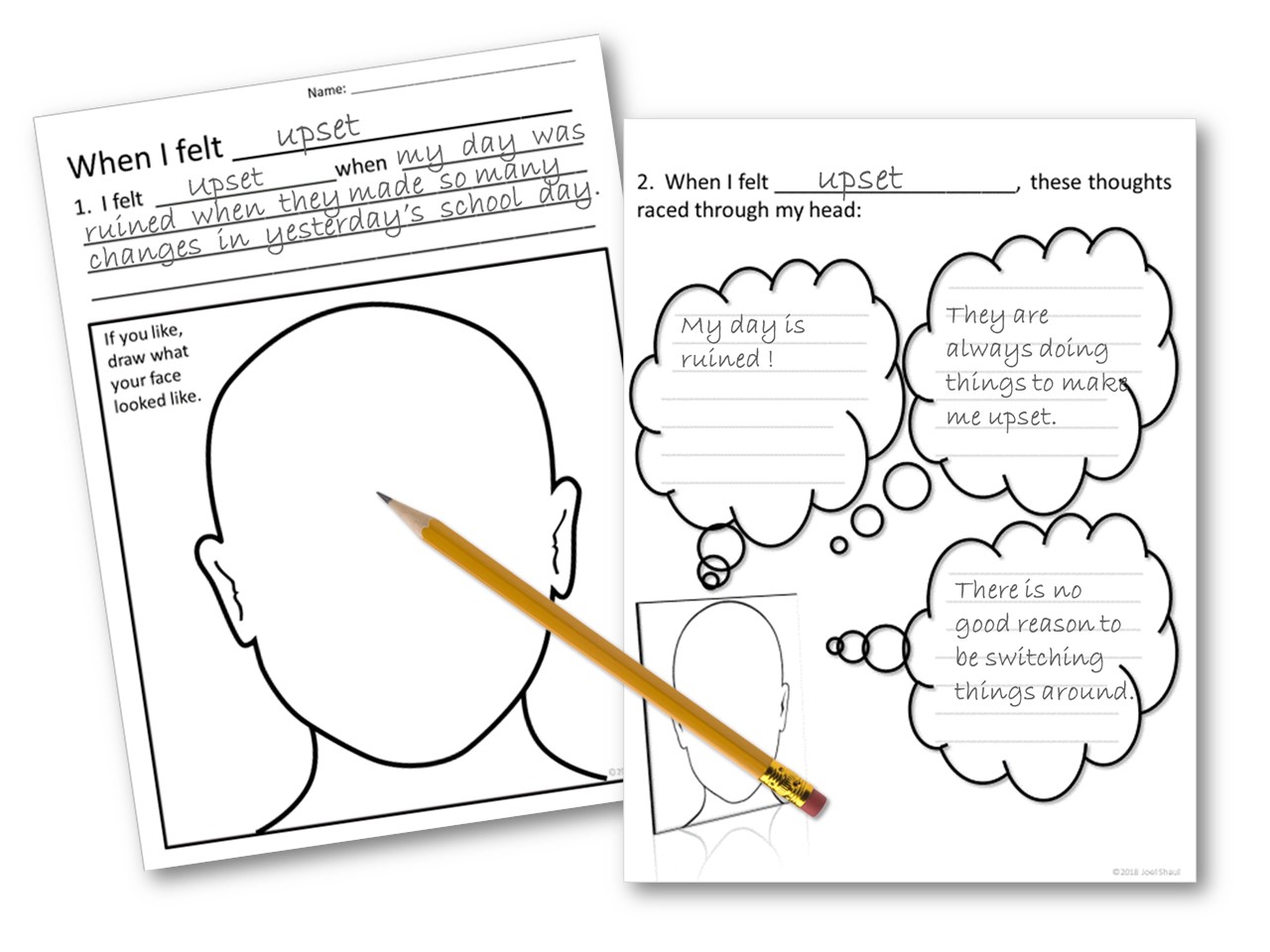
*It is not a requirement that children draw the face on page 1. Some kids find it helpful, others not.

*Pay close attention to whether the child wants to do their own writing, or if they would prefer that you write as they dictate. There is no downside to the adult actually doing the writing (or the typing in the screen-based versions).

*There is quite often no need to go through each worksheet in the series. I recommend in fact that you don’t put all the worksheets down in front of the child all at once. Get out the worksheets one at a time, and be prepared at any time to switch away from the worksheets into purely spoken exchange, watching a video, or focusing more on one of the other downloads.

*There are many ways to tailor CBT to the needs of children and the learning styles of individual children. Here is an illustrated review of factors to consider when doing CBT with kids.


I wish you success incorporating CBT resources and concepts into your own work with children.

Joel Shaul

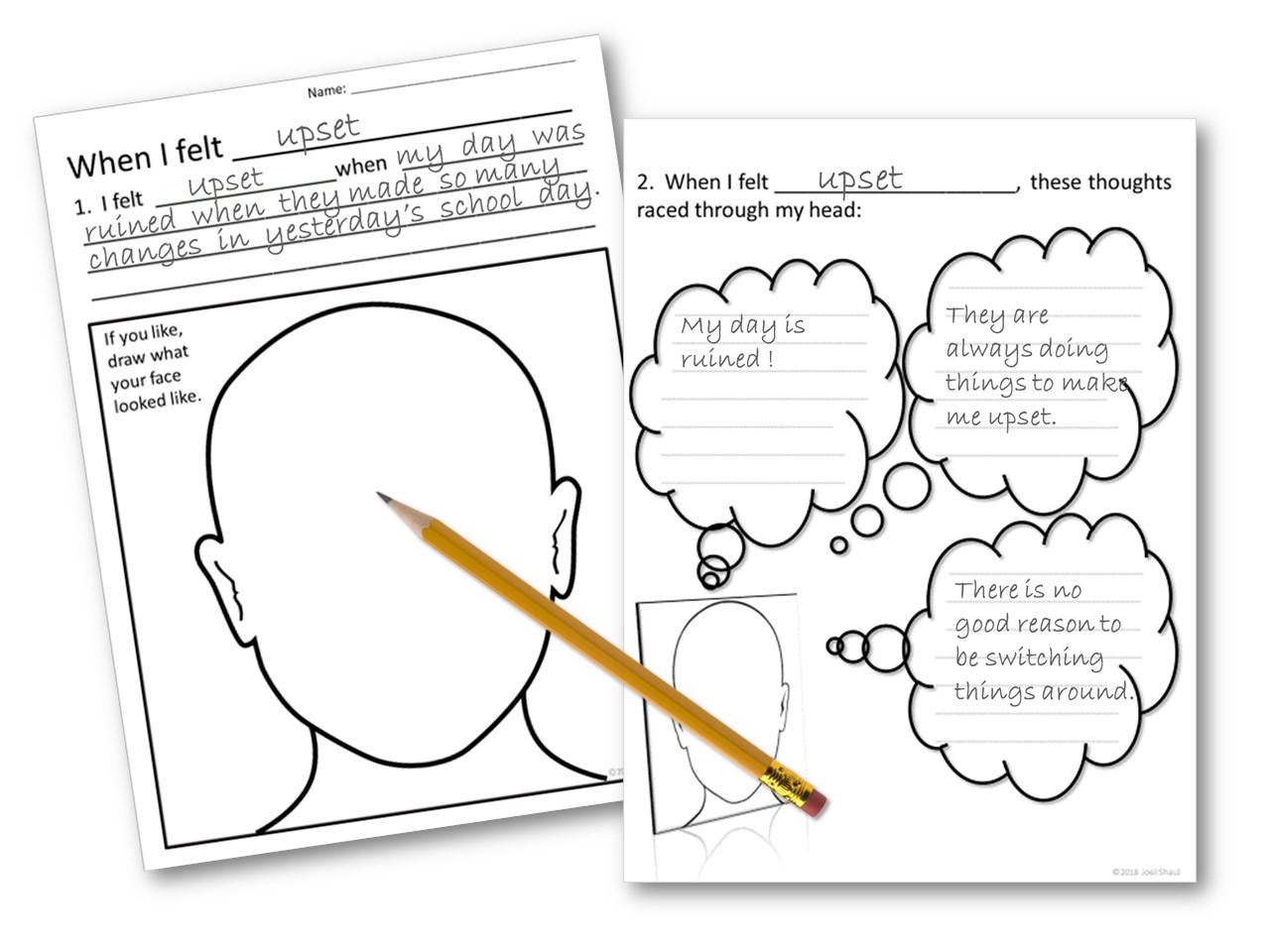
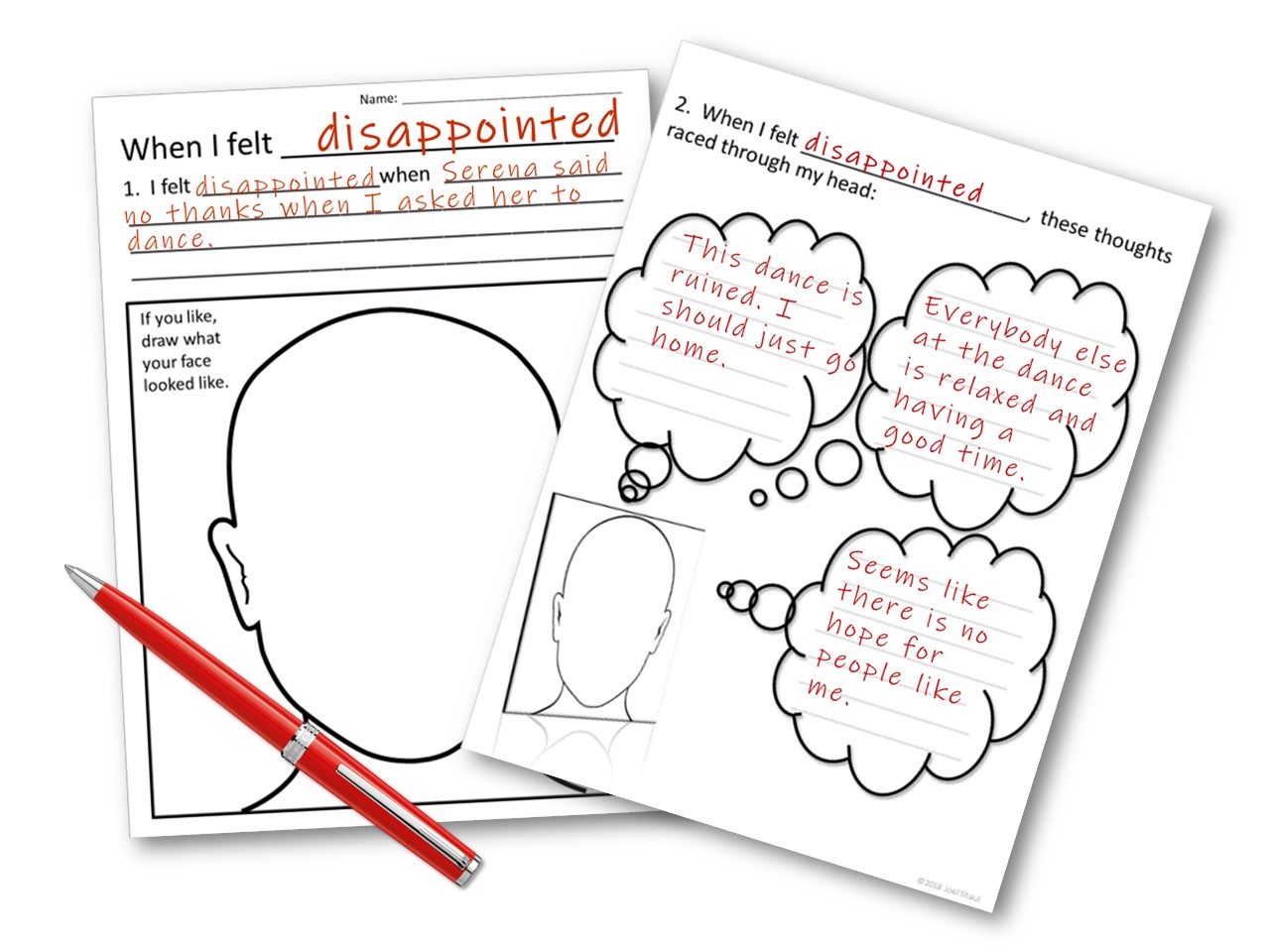
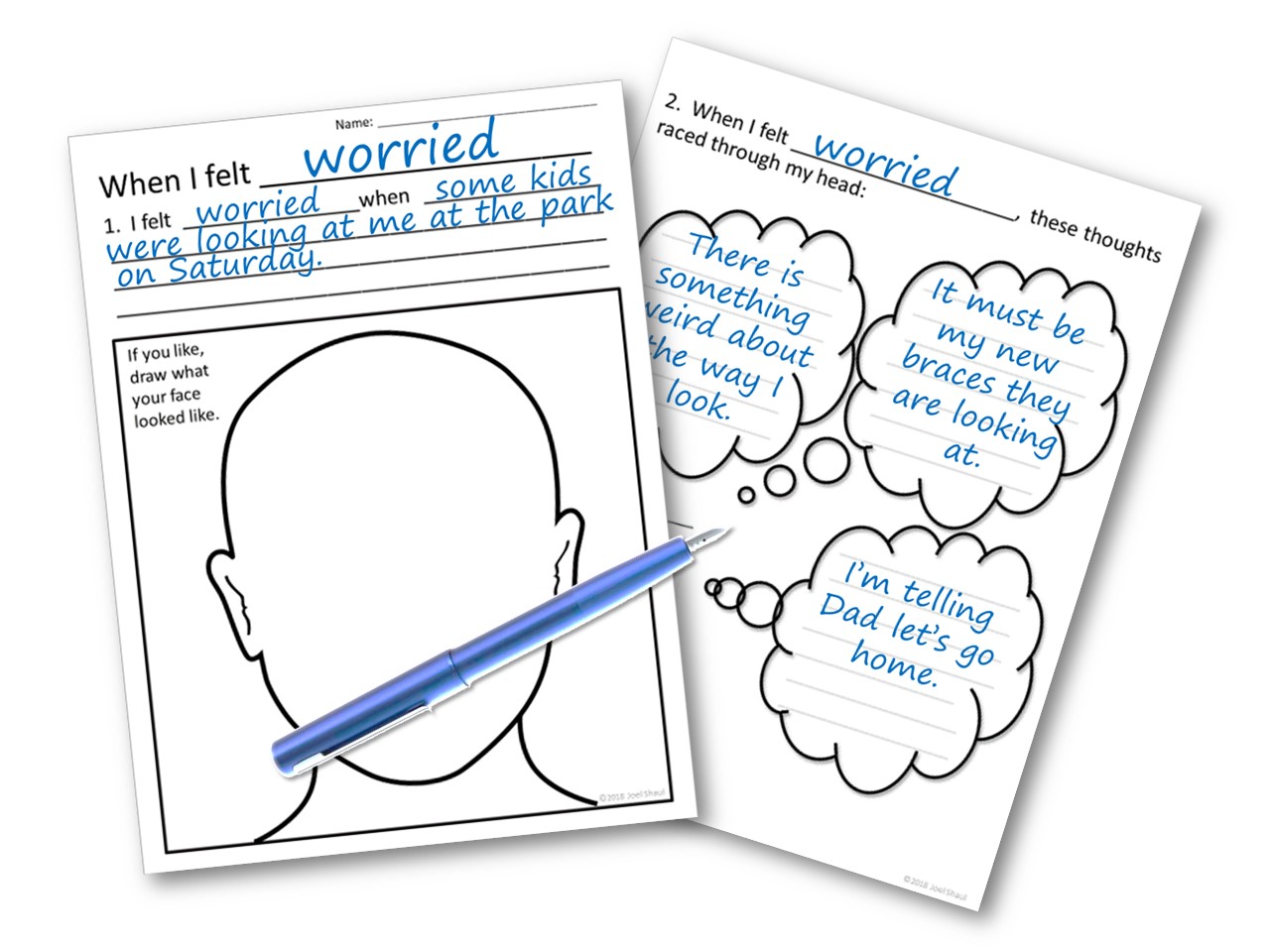
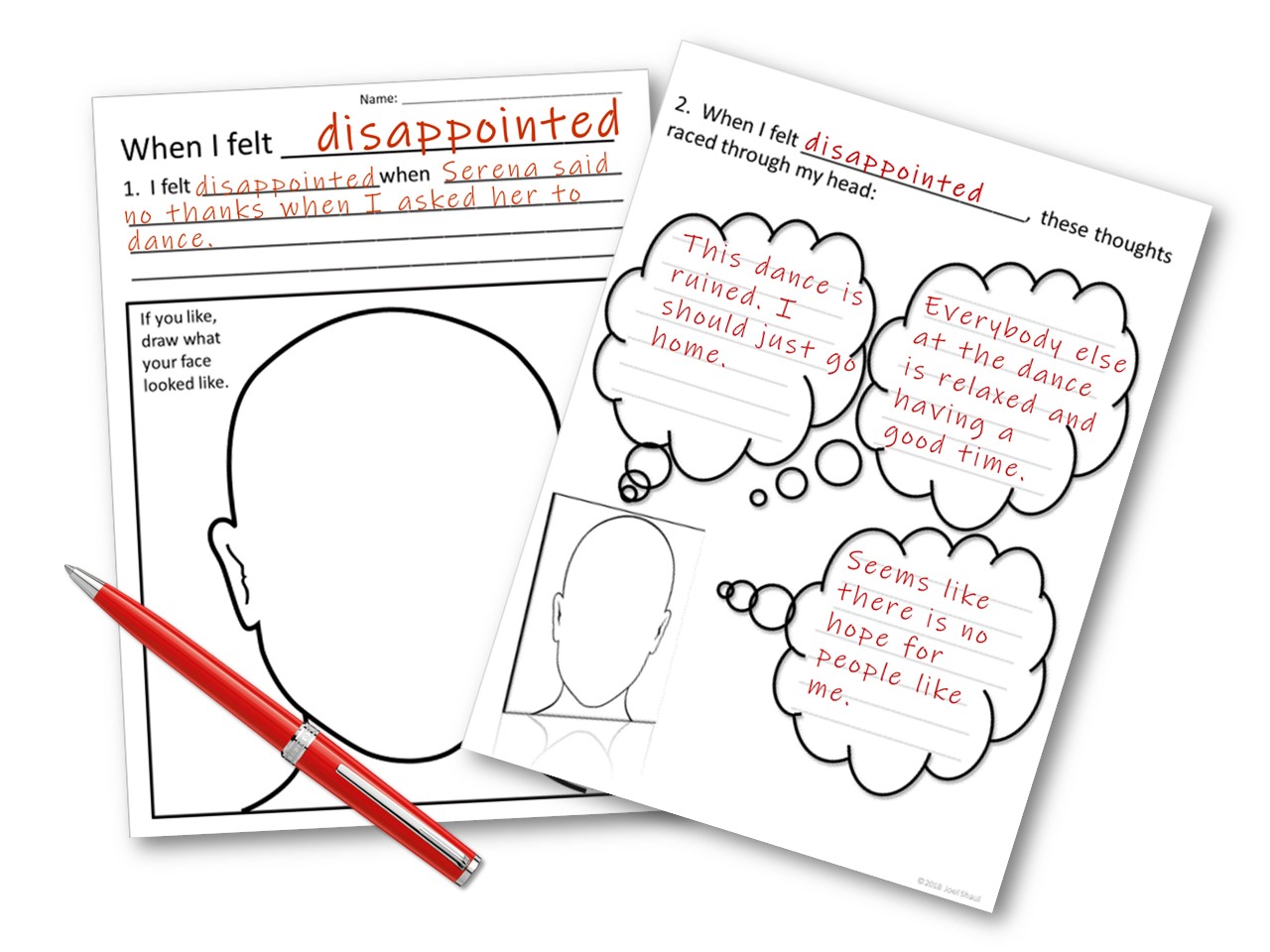
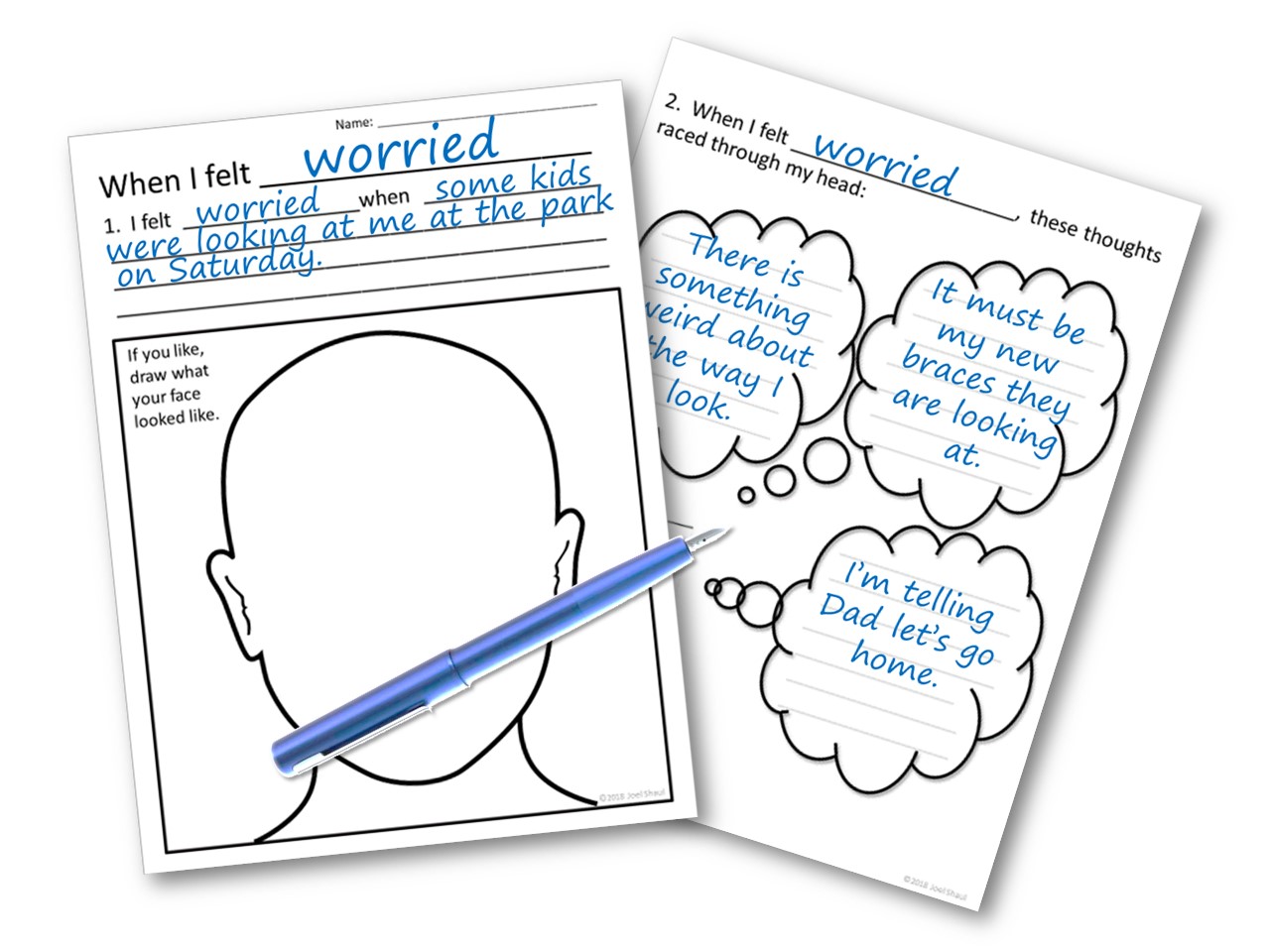
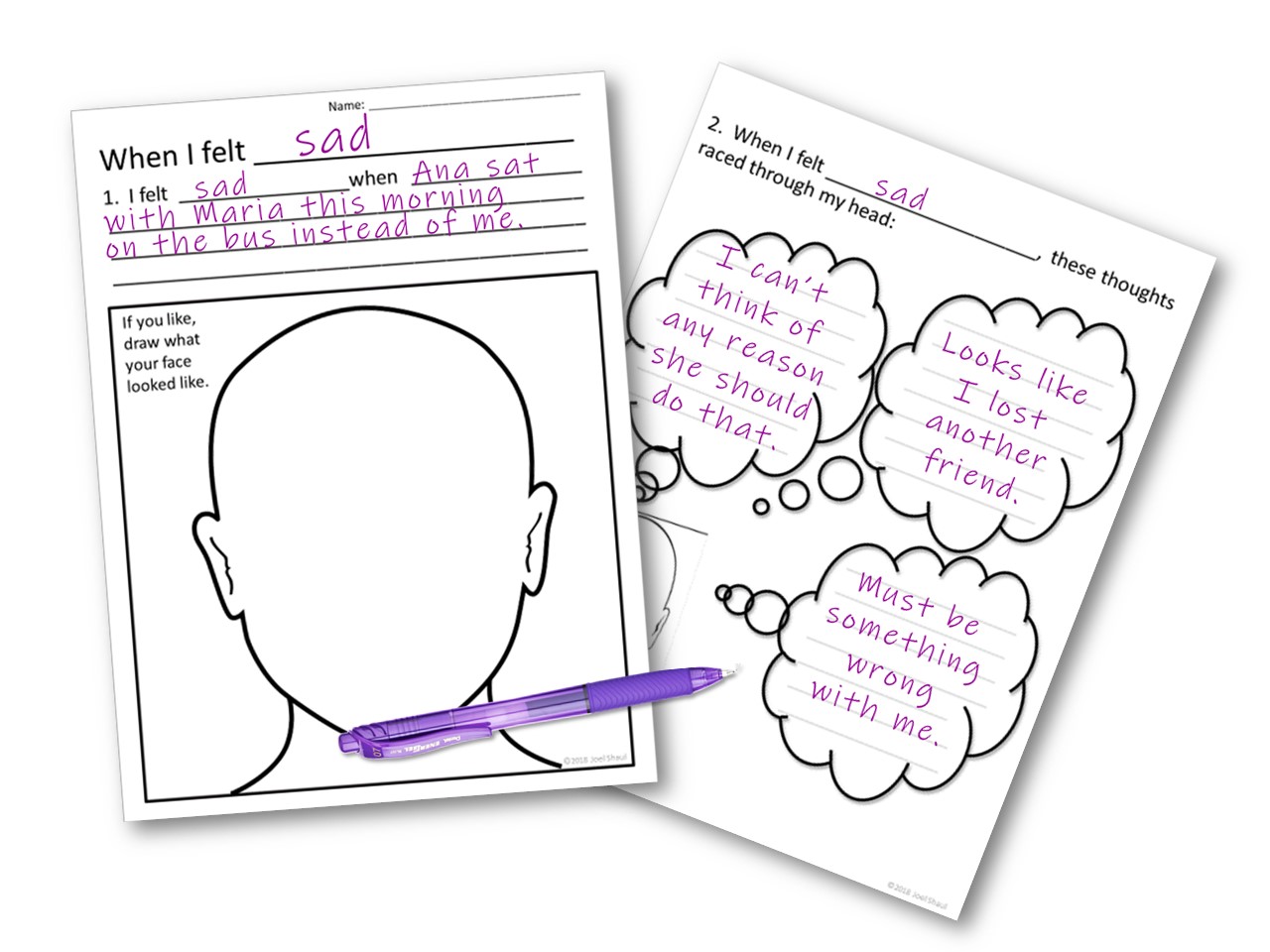
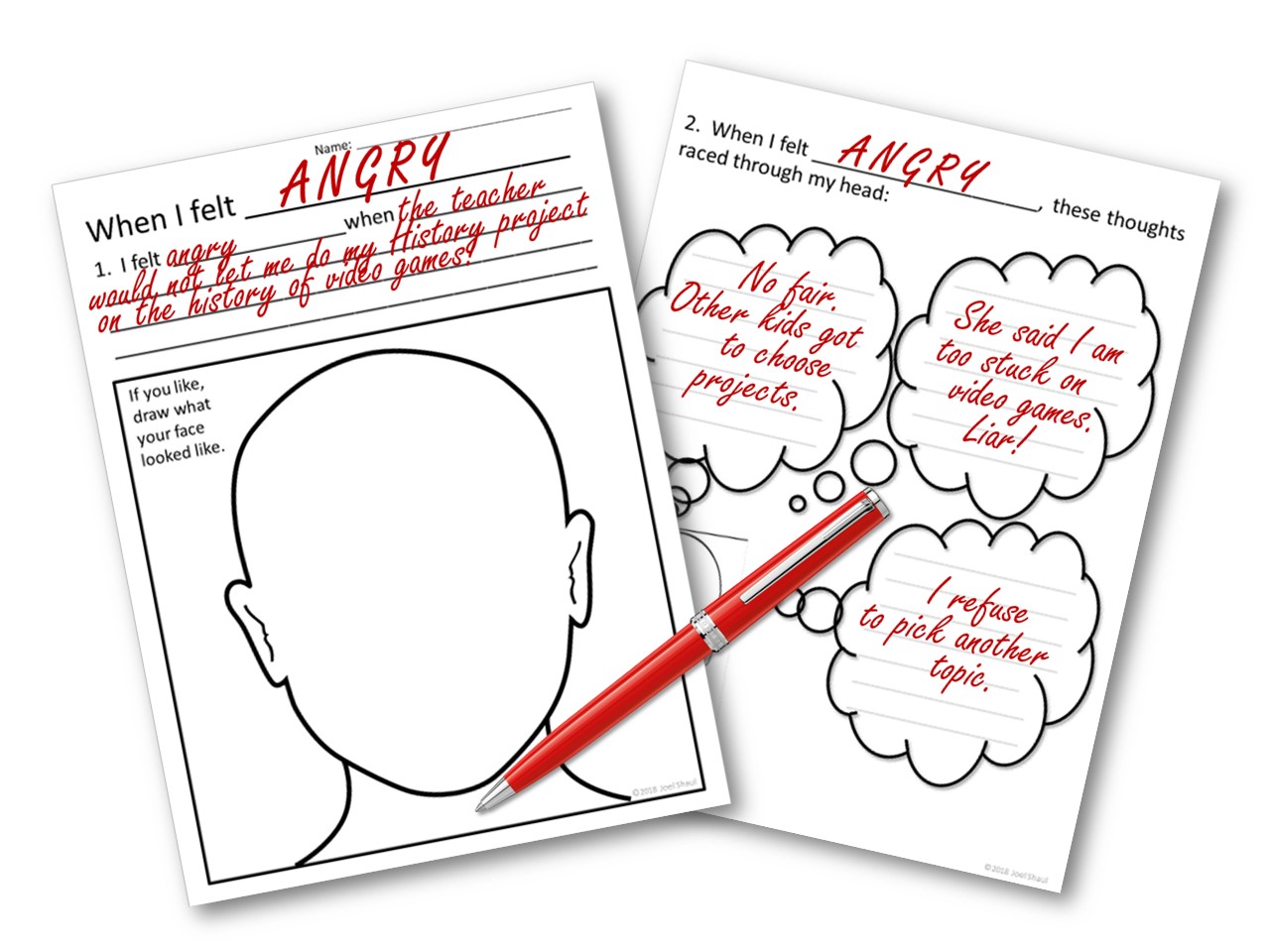
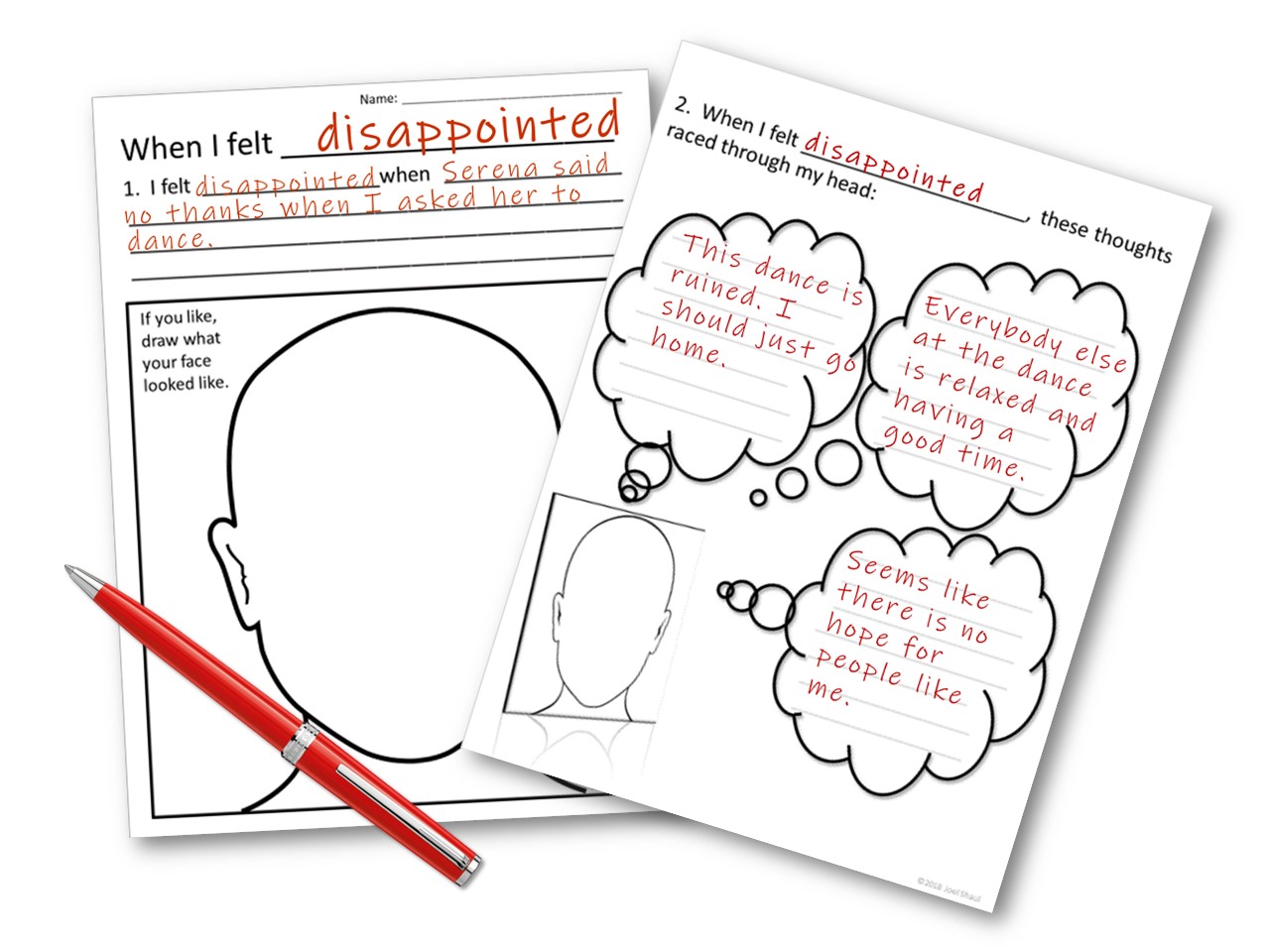
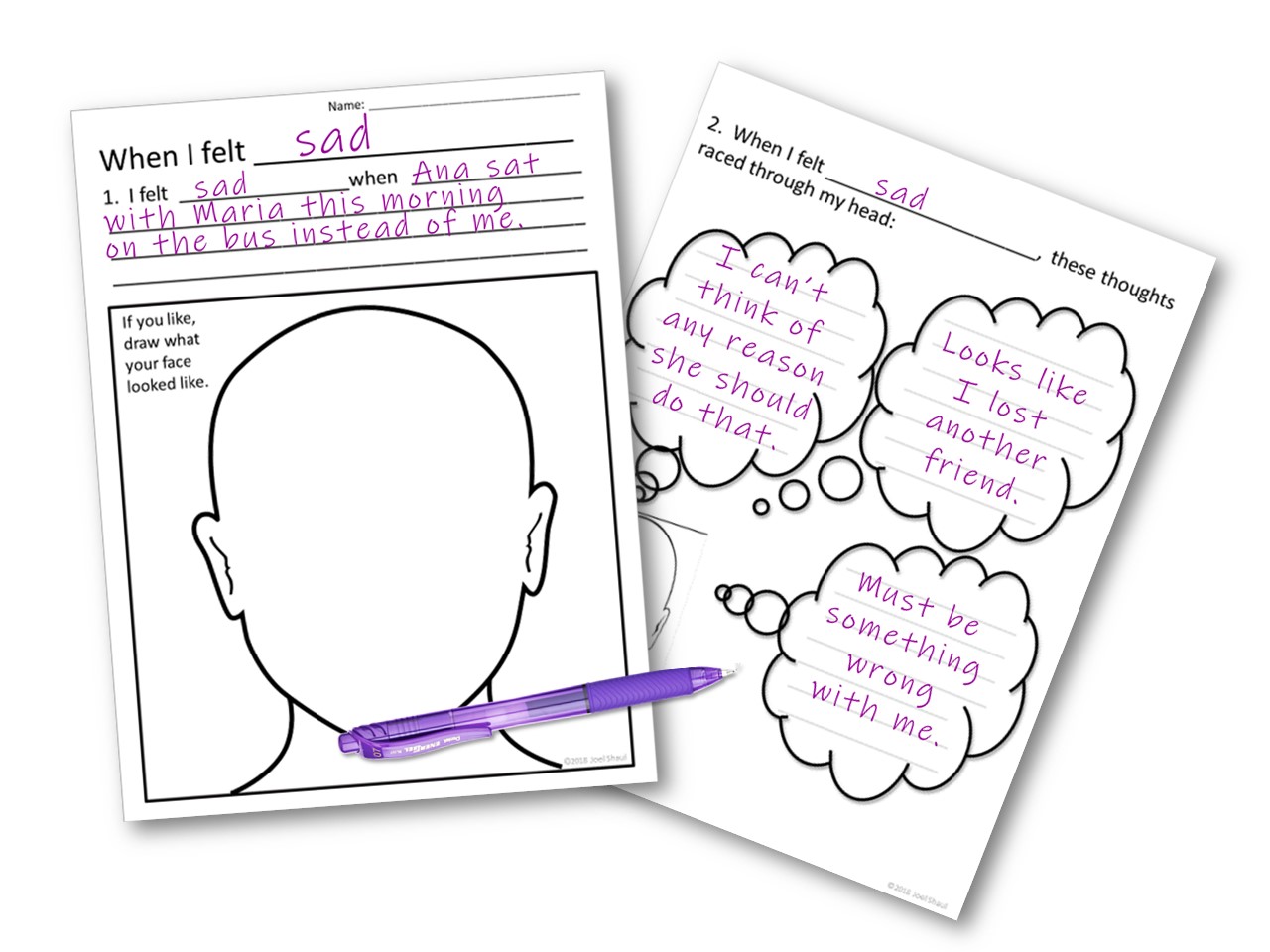
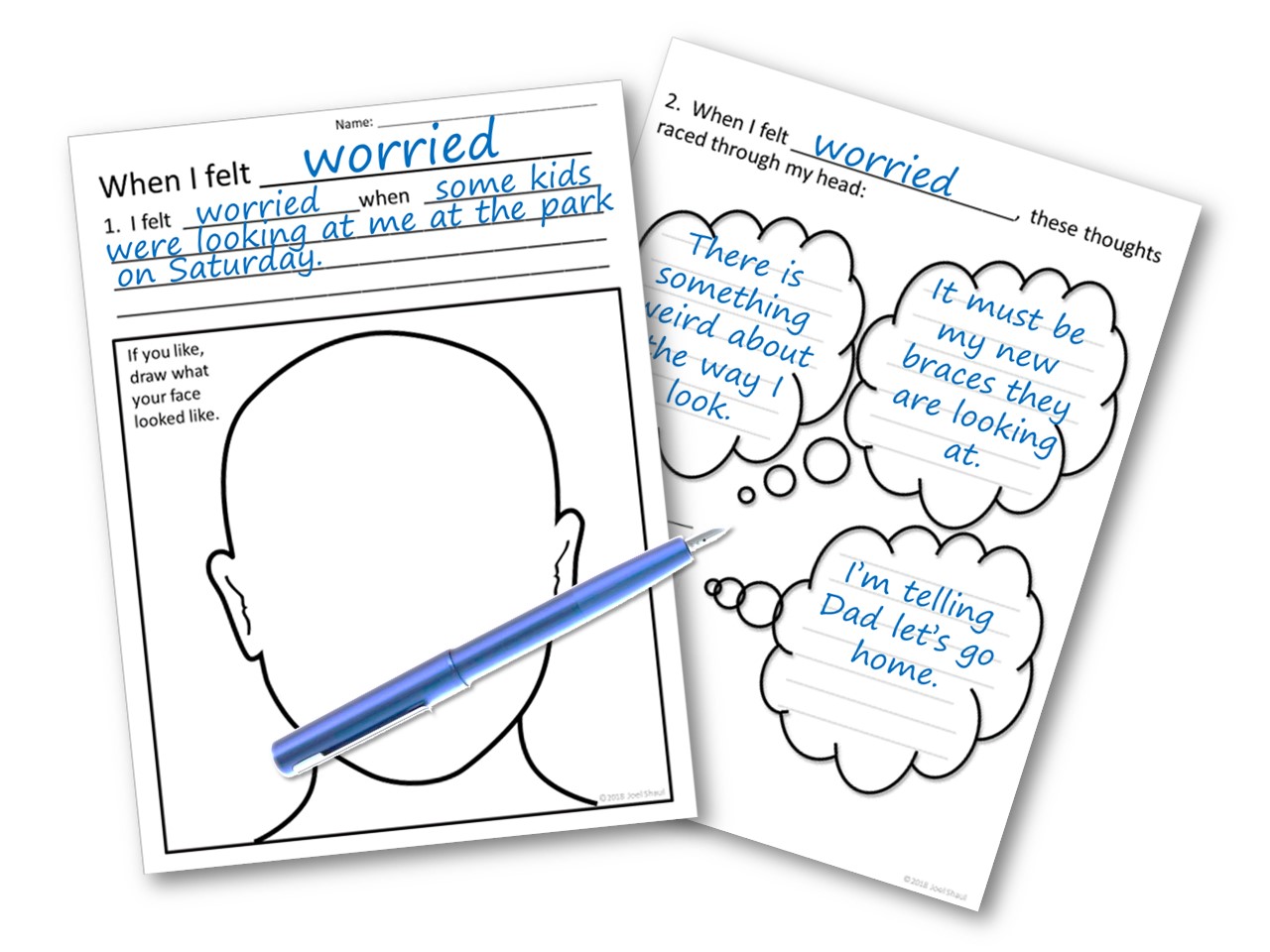
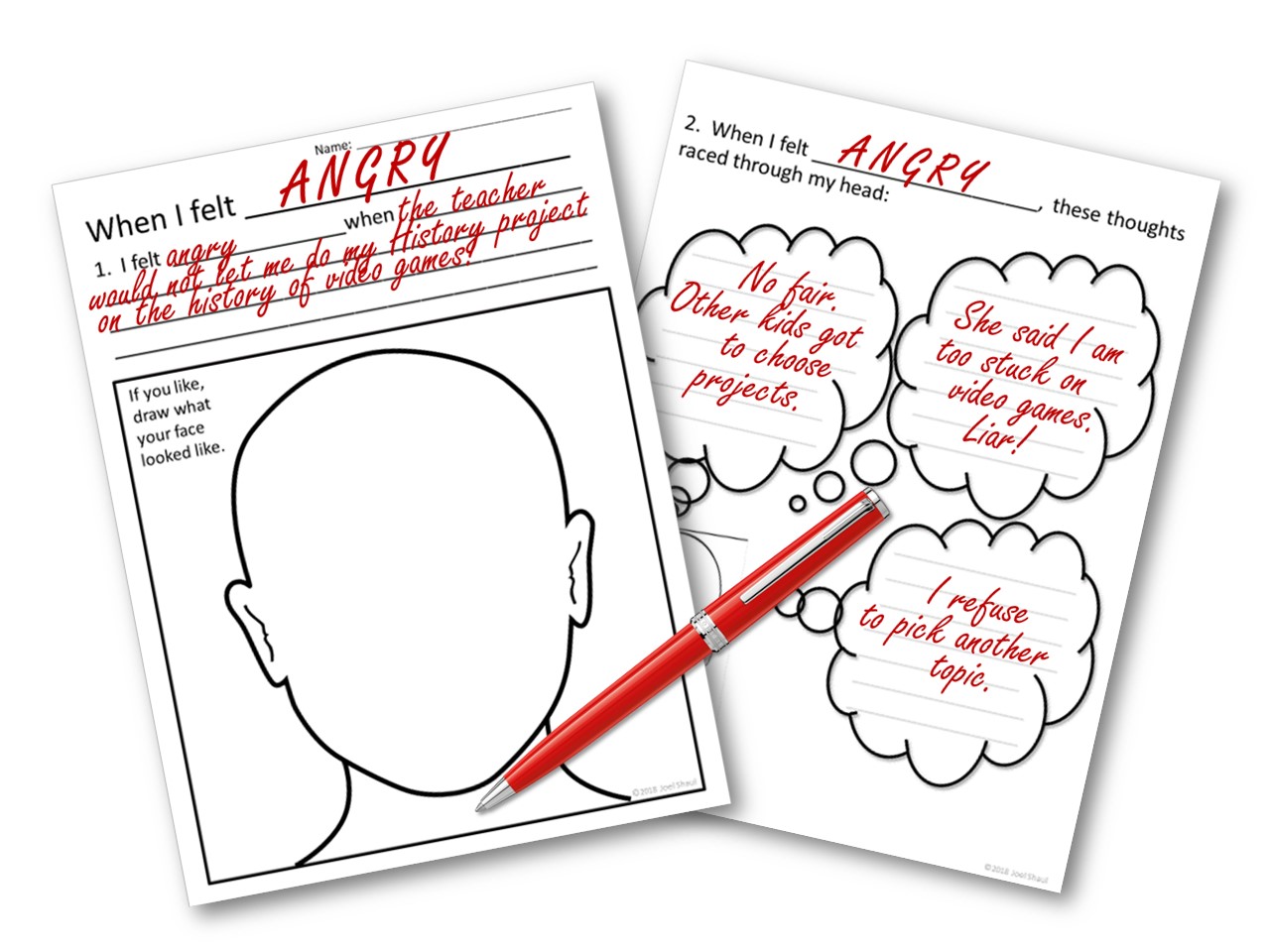
The filled-out CBT worksheets shown below I created myself to represent a few typical problems you might encounter doing CBT work.

Your comments on these resources are most welcome, and often helpful. Click HERE to send an email.

ASD Feel Better Promo square directing to JKP

The Conversation Train Book

Green Zone Book Cover Click to Learn More


CBT Children’s Emotion Worksheet Series: 7 Worksheets for Dealing with Upsetting Emotions

CBT worksheet for children

Here are links to my free CBT worksheets, some explanations on how to use them, and suggestions on how to use the worksheets in combination with other free child therapy resources on the website.

Telehealth Computer Based CBT Worksheets Download

In Polish: CBT Karty Pracy

In Spanish: 7 hojas de trabajo de Terapia Cognitivo-Conductual

In Albanian: Shtatë Materiale të thjeshta pune CBT

In German: 7 Arbeitsblätter zur kognitiven Verhaltenstherapie für Kinder

This image has an empty alt attribute; its file name is Slide2-1-1024x768.jpg

CBT was originally designed for educated adults. Before attempting to use any elements of CBT with young people, it is important to simplify it as much as possible and to make it appealing. I really recommend you consider starting out by viewing this six-minute CBT video which was designed for ~ age 7 through late teens.


This image has an empty alt attribute; its file name is Slide3-1-1024x768.jpg

The first page is help identify the problem emotion. It may be necessary to take this step slowly and carefully. I have several free therapy resources that can be helpful, 21 Anime Emotion Cards and Emotion Cards.

This image has an empty alt attribute; its file name is Slide4-2-1024x768.jpg

Identifying automatic negative thoughts, which I call “poison thoughts” in my own work, is challenging to learn, even for many adults. But it is surprising how many children can get really good at it. To practice it, I suggest you return to the series of 8 Simple CBT Videos, or access the free download of 48 Cognitive Distortion Thought Bubbles (printable or screen-based version). 

This image has an empty alt attribute; its file name is Slide5-1-1024x768.jpg

Page 3 is to help the young person to focus carefully on their specific words and actions during their episode of distress. There are two downloadable resources that help with this (both available in both printable and screen-based versions), Filter the Upsetting Thoughts & Words and the What I Should Have Done Different worksheet.

This image has an empty alt attribute; its file name is Slide6-1-1024x768.jpg

Depending on the child, gaining understanding of bodily manifestations of stress can be significant or the most important part of the work. Shown in the picture are two components of the free download of the Emotion Thermometer.

This image has an empty alt attribute; its file name is Slide7-1-1024x768.jpg

Correcting cognitive distortions, or “creating Antidote Thoughts,” is the work carried out on page 5. Two of my free resources are helpful with this step, 48 Cognitive Distortion Thought Bubbles and the Mint the New Thoughts Kit. Both are available in both printable and screen-based versions.

This image has an empty alt attribute; its file name is Slide8-1-1024x768.jpg

Once the child has explored alternative ways of thinking, we move on to alternative actions and words. A resource to consider for increasing awareness of different ways to behave is Self-Control Problem Fixer.

This image has an empty alt attribute; its file name is Slide9-1-1024x768.jpg

The final CBT worksheet is a companion to page 4. Displayed here as a suggested related activity is the same Emotion Thermometer shown on page 4.

Additional suggestions for using the CBT worksheets

*It is not required for children to draw the face on page 1. Some kids find it helpful, others not.

*Pay close attention to whether the child wants to do their own writing, or if they would prefer that you write as they dictate. There is no downside to the adult actually doing the writing (or the typing in the screen-based versions).

*There is quite often no need to go through each worksheet in the series. I recommend in fact that you don’t put all the worksheets down in front of the child all at once. Get out the worksheets one at a time, and be prepared at any time to switch away from the worksheets into purely spoken exchange, watching a video, or focusing more on one of the other downloads.

*There are many ways to tailor CBT to the needs of children and the learning styles of individual children. Here is an illustrated review of factors to consider when doing CBT with kids.


I wish you success incorporating CBT resources and concepts into your own work with children.

Joel Shaul

The filled-out CBT worksheets I created and displayed below represent some typical problems you might encounter in CBT work with children.

The Conversation Train Book

Green Zone Book Cover Click to Learn More

“Worry cards” – Free download card game activity to help kids with ASD deal with anxiety

Worry Cards Blog Image Display

Children with ASD’s deal with a lot of anxiety.  Here is a card-based activity to use with individuals and small groups. It’s designed to help kids to talk about their anxiety, learn something about what causes it, and begin to explore ways to help themselves.
 

Download the cards – click here: Worry cards, Activity to explore anxiety

Polish translation available

Spanish language translation: Las Fichas Sobre Miedos


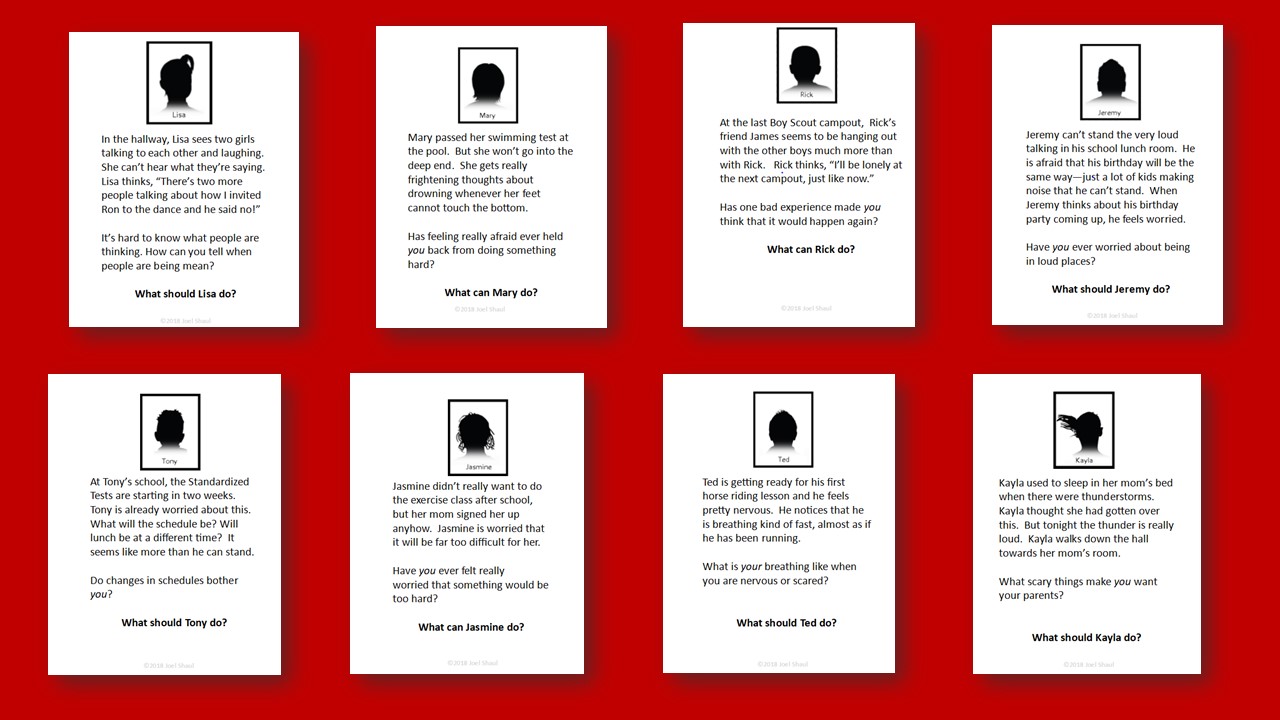
The characters in the cards:

Lisa: She makes negative predictions about what people are thinking about her.
Rick: He assumes that if bad things happened before, then they will continue to occur in the future.
Mary: She views the world as a place full of danger and peril.
Jeremy: He has “sensory issues” which make him dread unpleasant sounds, textures, smells, etc.
Tony: He craves sameness and he fears the unexpected.
Jasmine: She lacks confidence in her ability to deal with new challenges.
Ted: His body (breathing, muscle tension, sweating, etc)  overreacts to stress.
Kayla: She gets panicky when she is away from her family and her home.
Worry Cards Blog Image Display 2
 

Introducing the Worry Cards:

You can try words like this if you like:  “We are going to play with Worry Cards and learn about worries.  Everybody gets nervous, anxious and scared in different ways.  The eight Worry Cards characters each have their own way of getting upset.”
 
[Now, show them the panel that briefly describes each character.  Embellish on each one.  It works really well, actually, to enact each character briefly in the first person so the kids really get it]
 
“The Worry Cards are shuffled up.  When you draw a random card, you have to try to figure out how to help the Worry Card character. If you can think of some good ideas, that’s great.  It’s even better if you can answer the other question on the card, the one that asks about you.”

Tips on using the Worry Cards:

I suggest you avoid using the word “anxious” unless you are positive that the children understand it.
 
You can place cards in the deck strategically so the kids draw the particular cards that seem to  pertain to them.
 
You can try a score system to encourage self disclosure.  Say it’s one point to help the kid in the card, and two points if you can talk about yourself and work on your own worries.
 
I hope you find the Worry Cards useful.  I enjoyed creating them.
 
Joel Shaul, LCSW

Other  Free Cognitive Behavioral Resources on my website:

click HERE.

Your comments on these resources are most welcome, and often helpful. Click HERE to send an email.
ASD Feel Better Promo square directing to JKP

The Conversation Train Book

Green Zone Book Cover Click to Learn More

Cognitive Distortion Thought Bubbles–Simple Cognitive Behavioral Method for kids with High Functioning Autism

Cognitive behavioral therapy method for children with Asperger's and autism spectrum disorders

This resource is also available in Polish.

CBT Thought Bubbles Teletherapy / On-Screen Version; no printing needed


Here are some other free Cognitive Behavior Therapy resources for children with autism:

8 Simple CBT YouTube Videos for Kids

Simplified CBT Worksheets for Kids

Mint New Thoughts CBT Activity

Emotion Thermometers

Your comments on these resources are most welcome, and often helpful. Click HERE to send an email.
 Green Zone Book Cover Click to Learn More

ASD Feel Better Promo square directing to JKP