

Hebrew translations of free resources
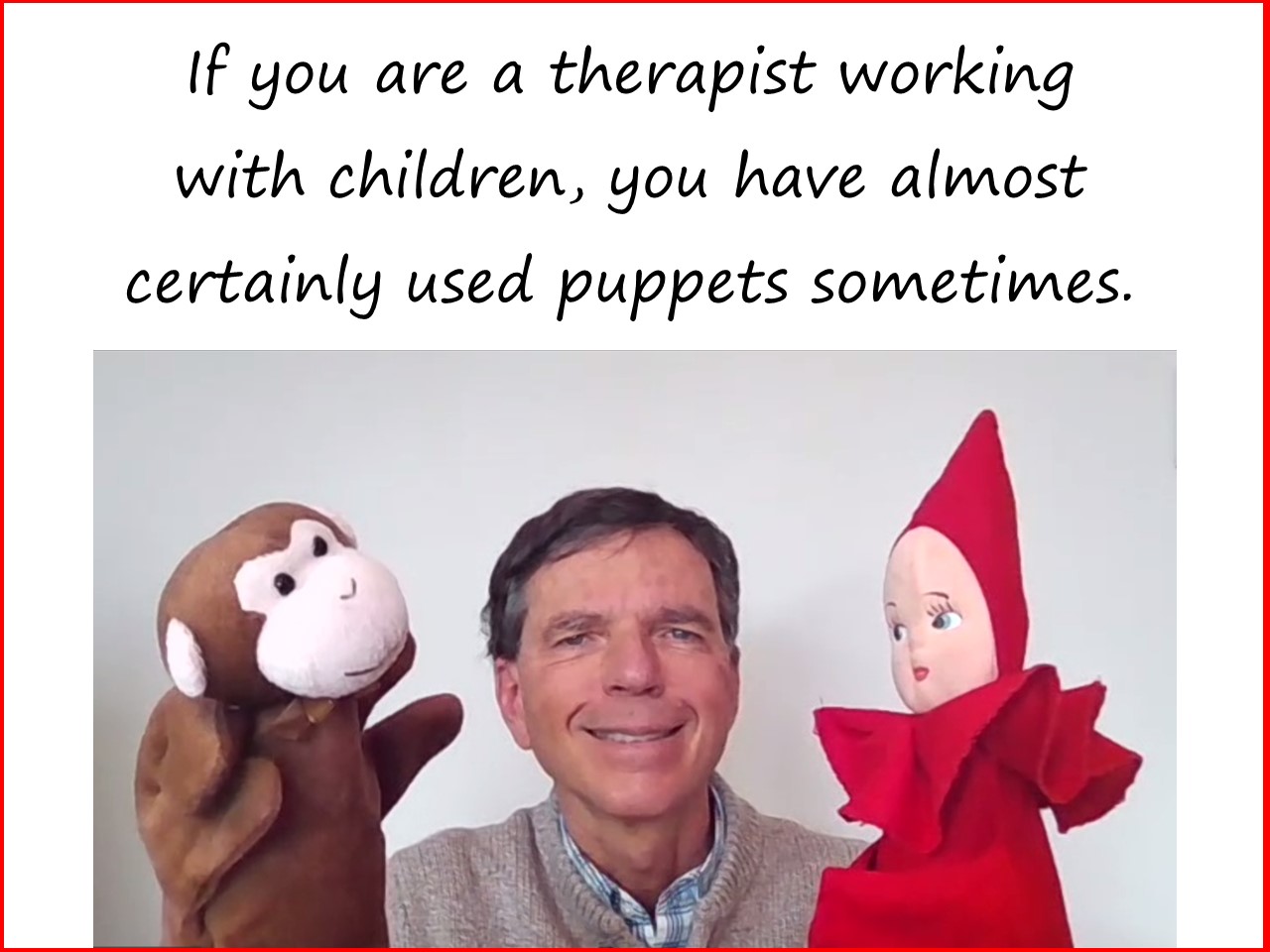
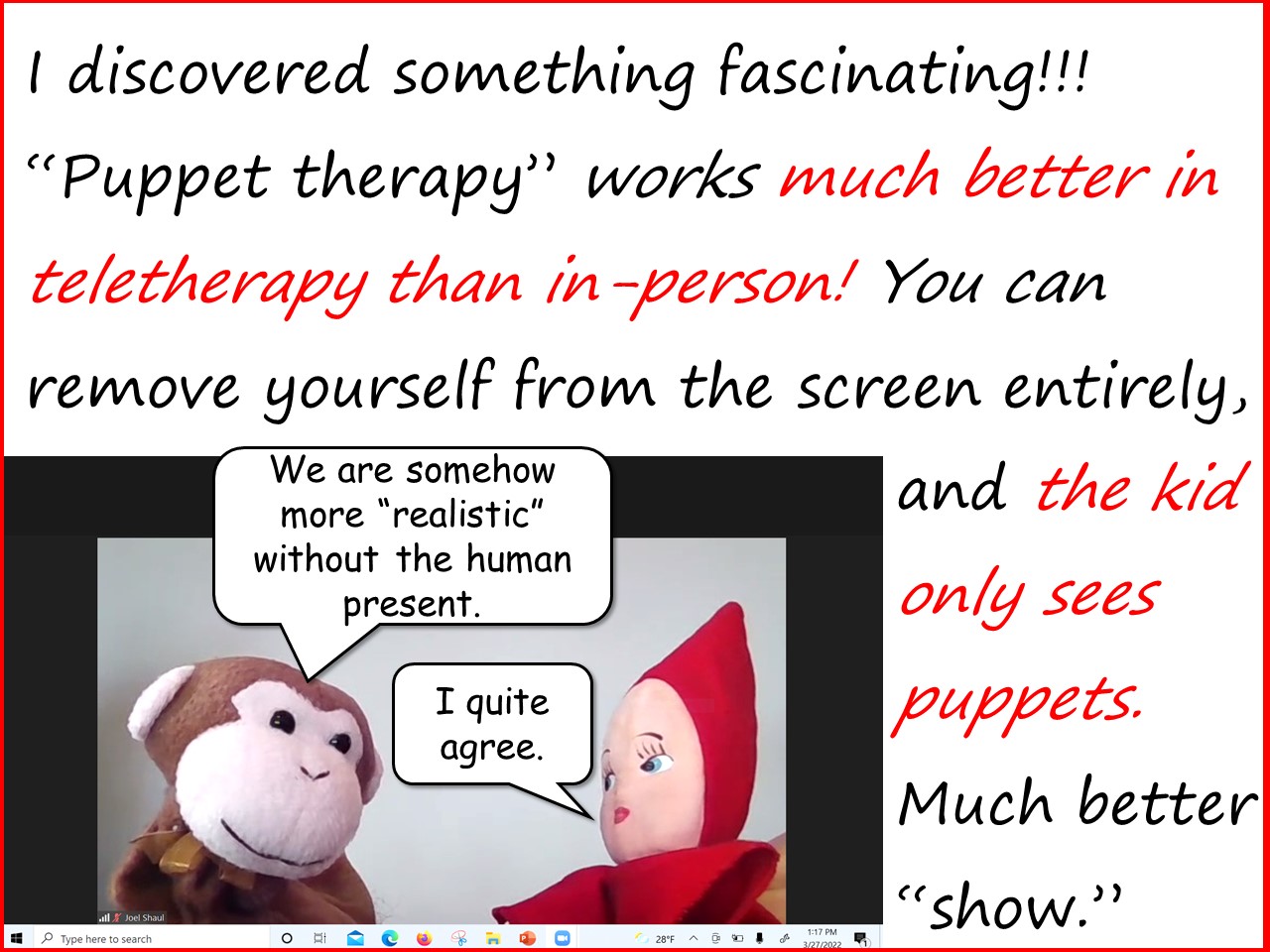
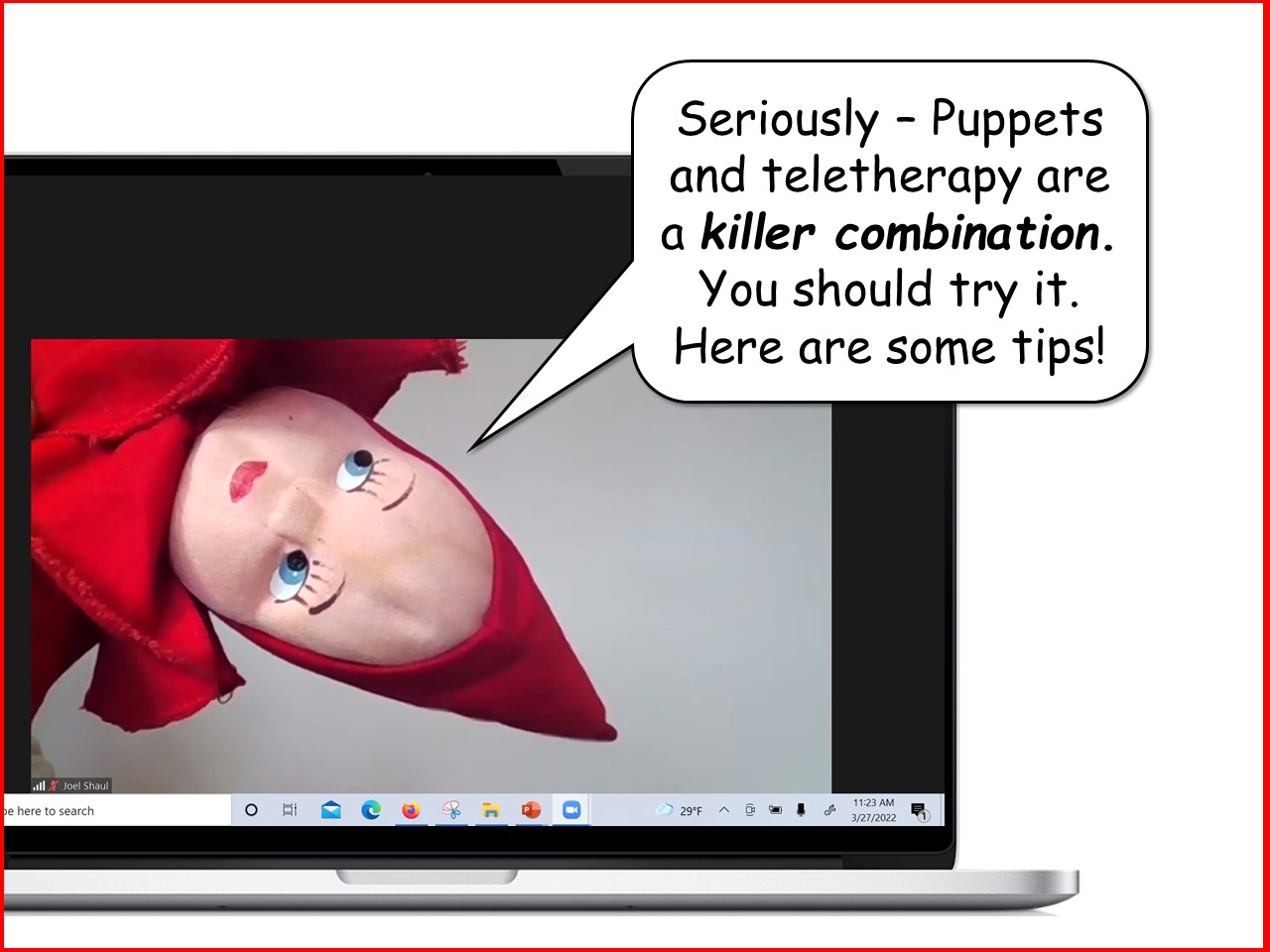
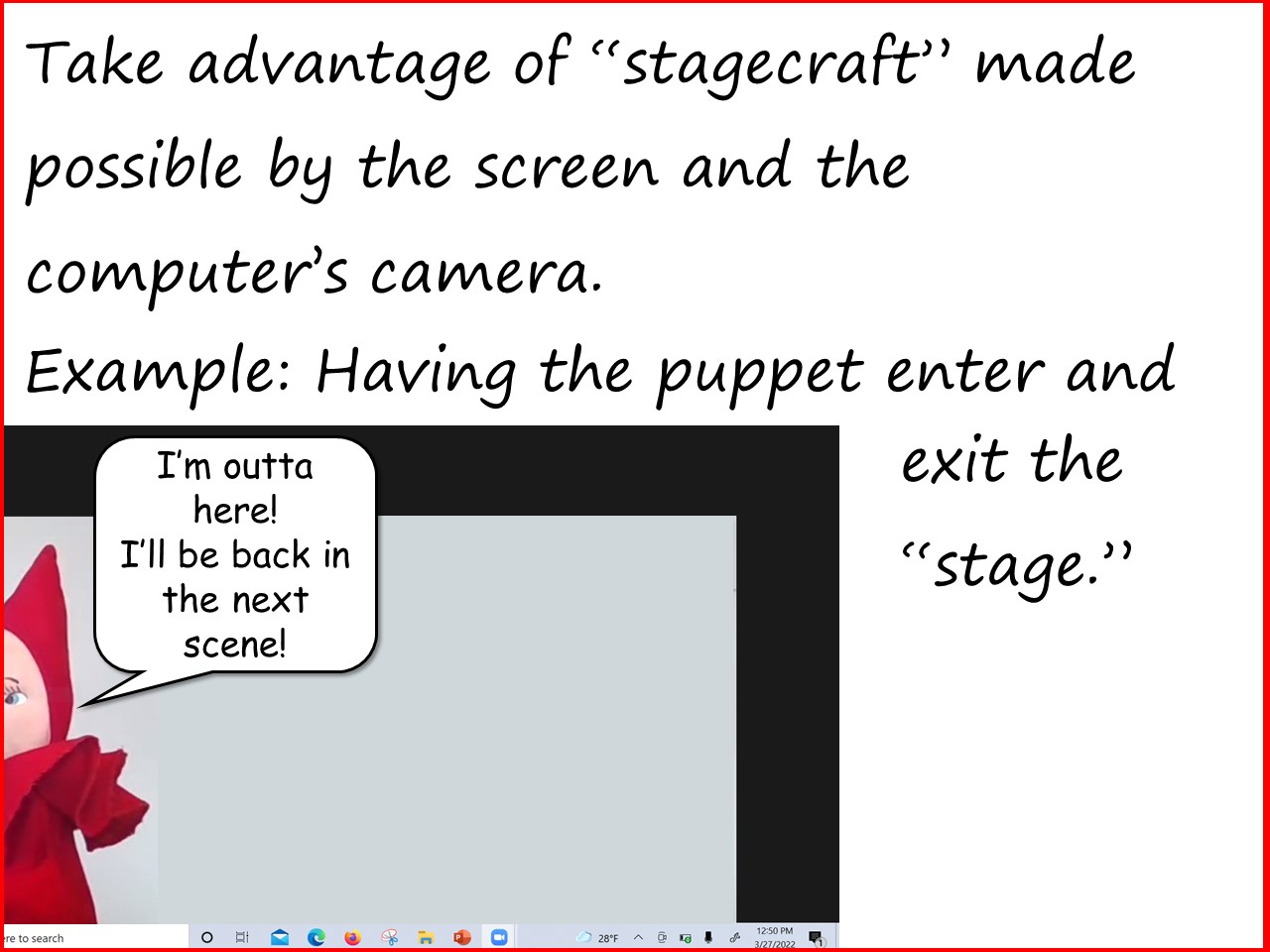
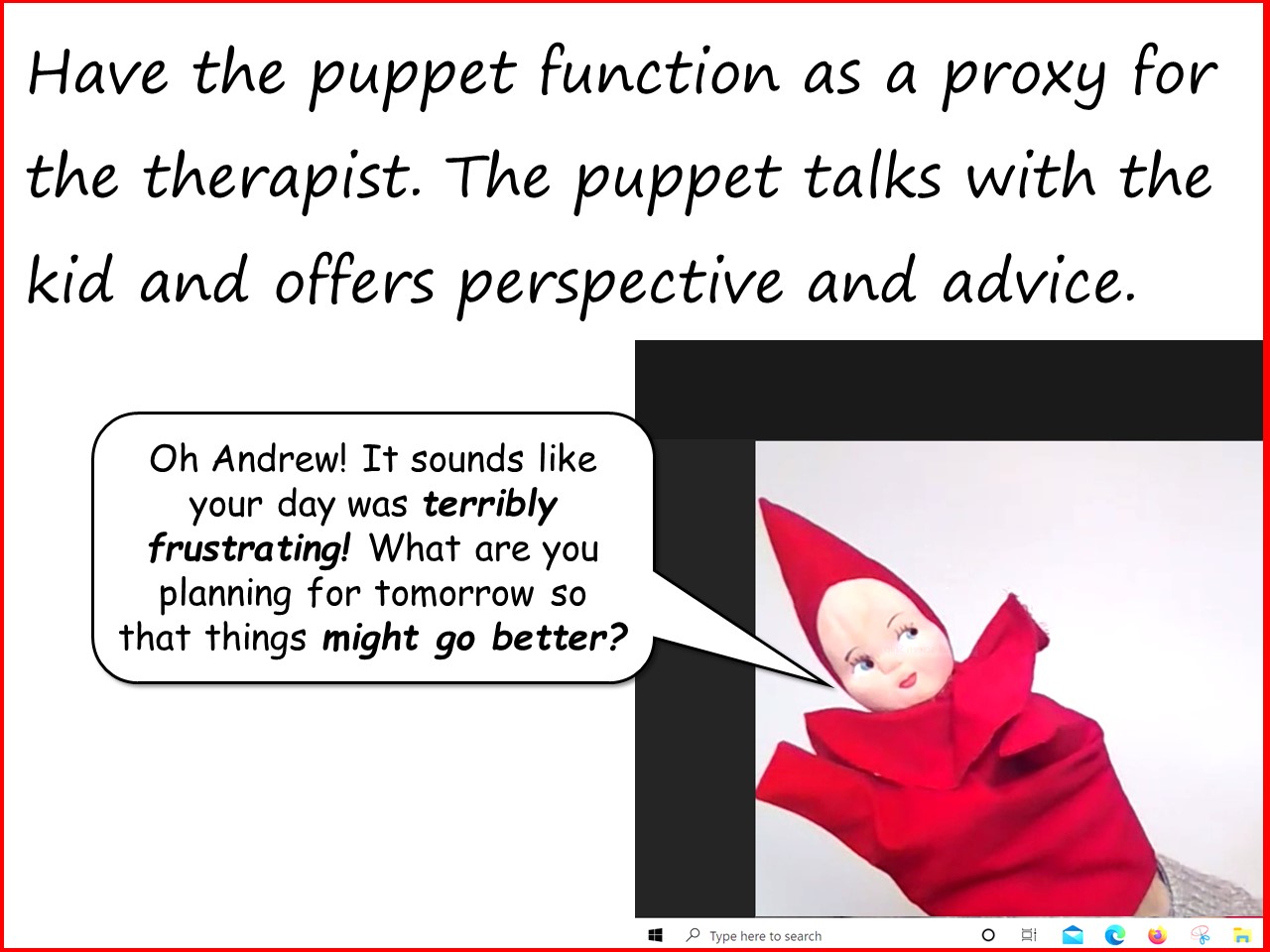
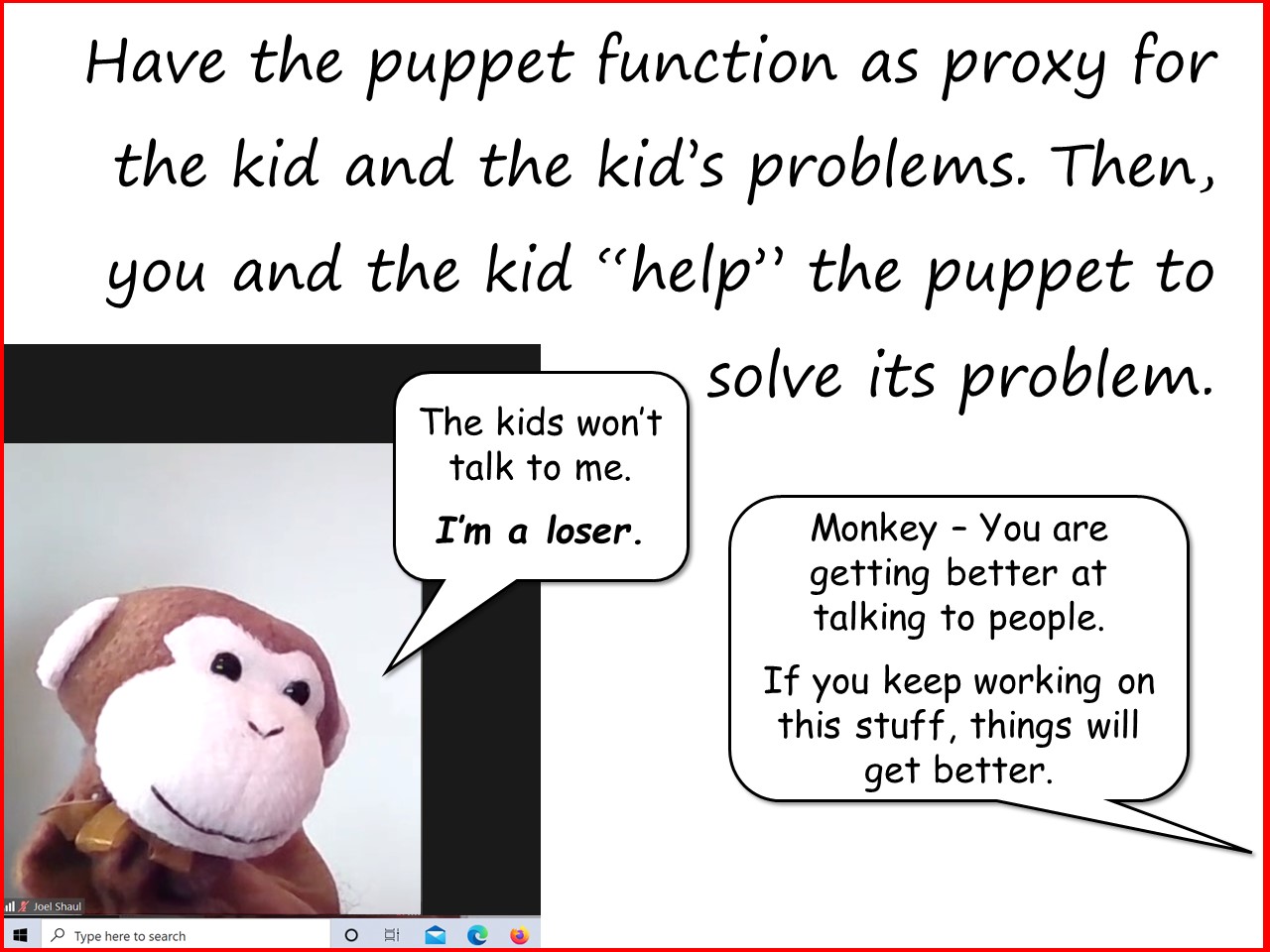
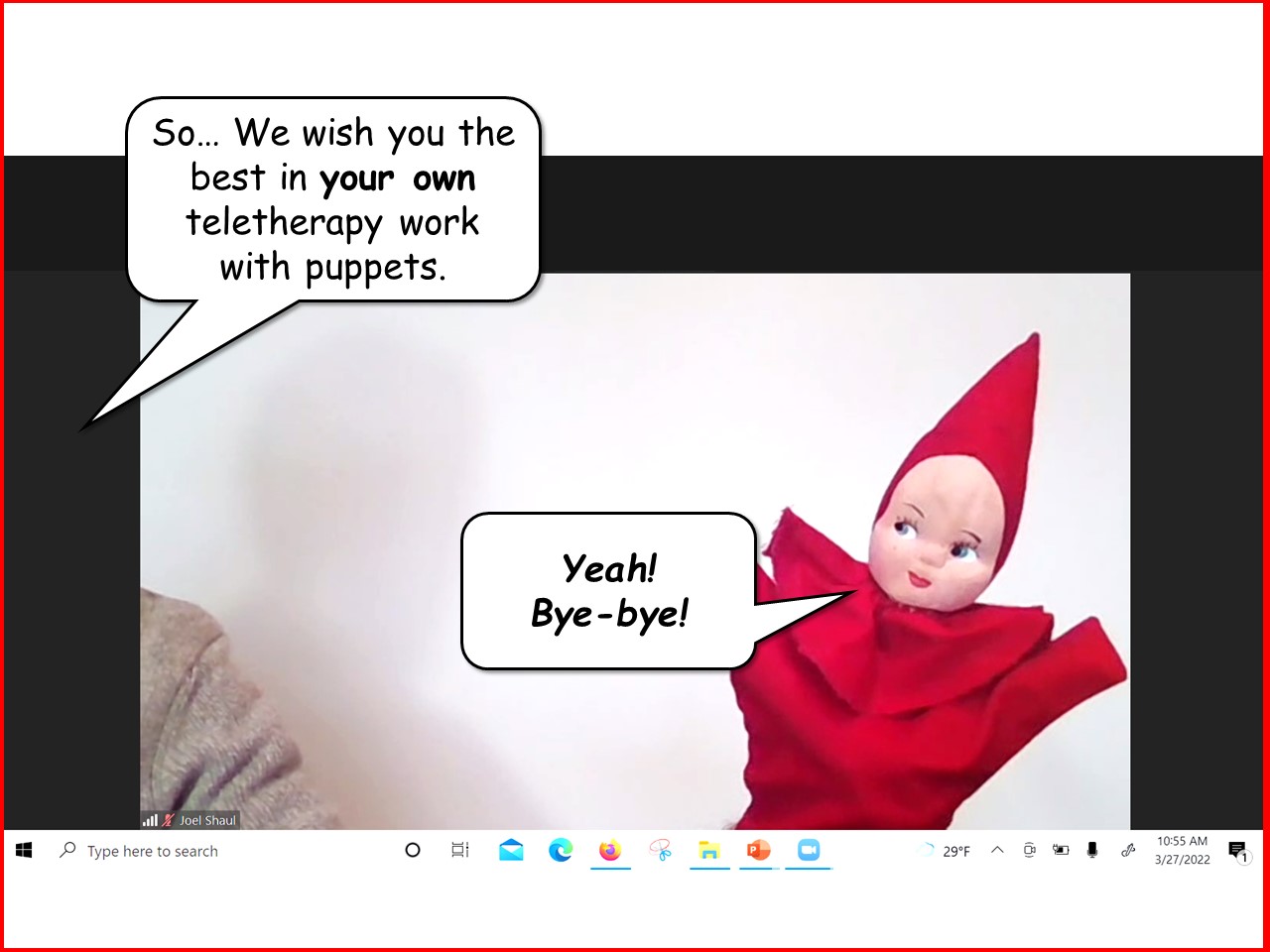
Puppets are great in teletherapy. How to use them.





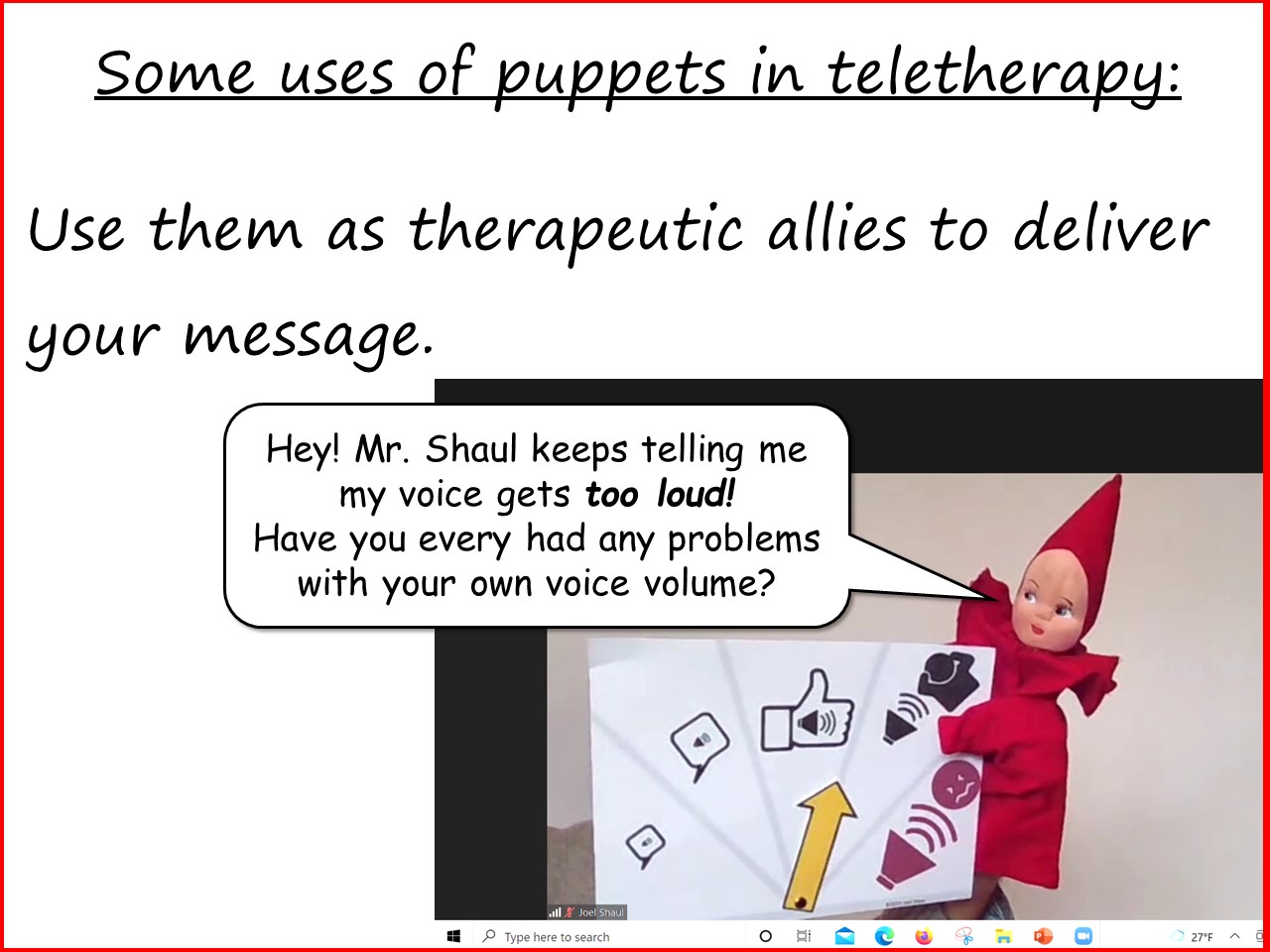
The resource shown above is a simple DIY called a Voice Volume Control-o-meter. Click here to access the description and the free download.
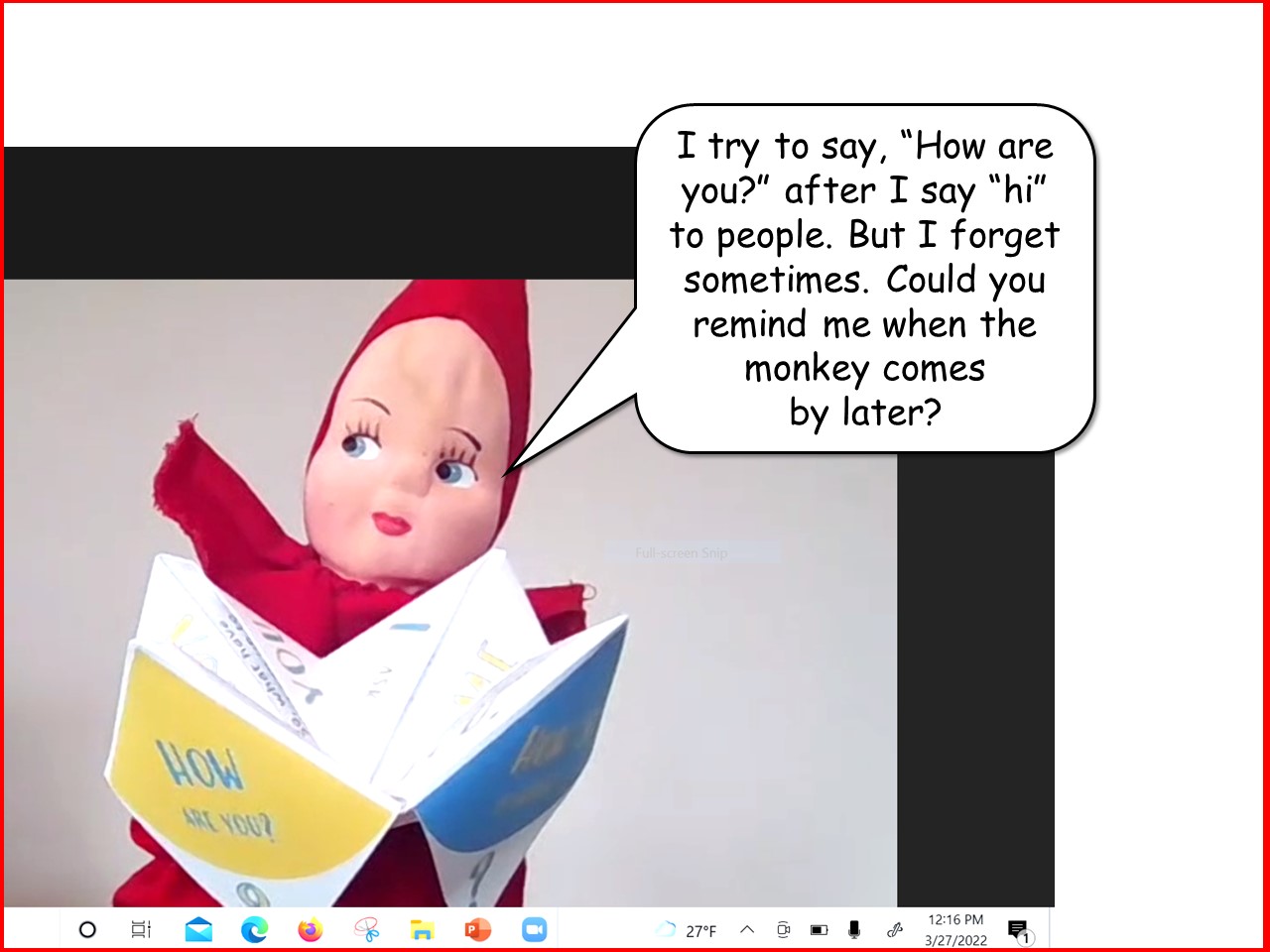
The resource shown here is a free download: Paper Fortune Tellers for practicing How Are You questions.
Here is another teletherapy resource that is greatly enhanced by involving puppets: Virtual games of catch – social skills activities in teletherapy to strengthen connection.

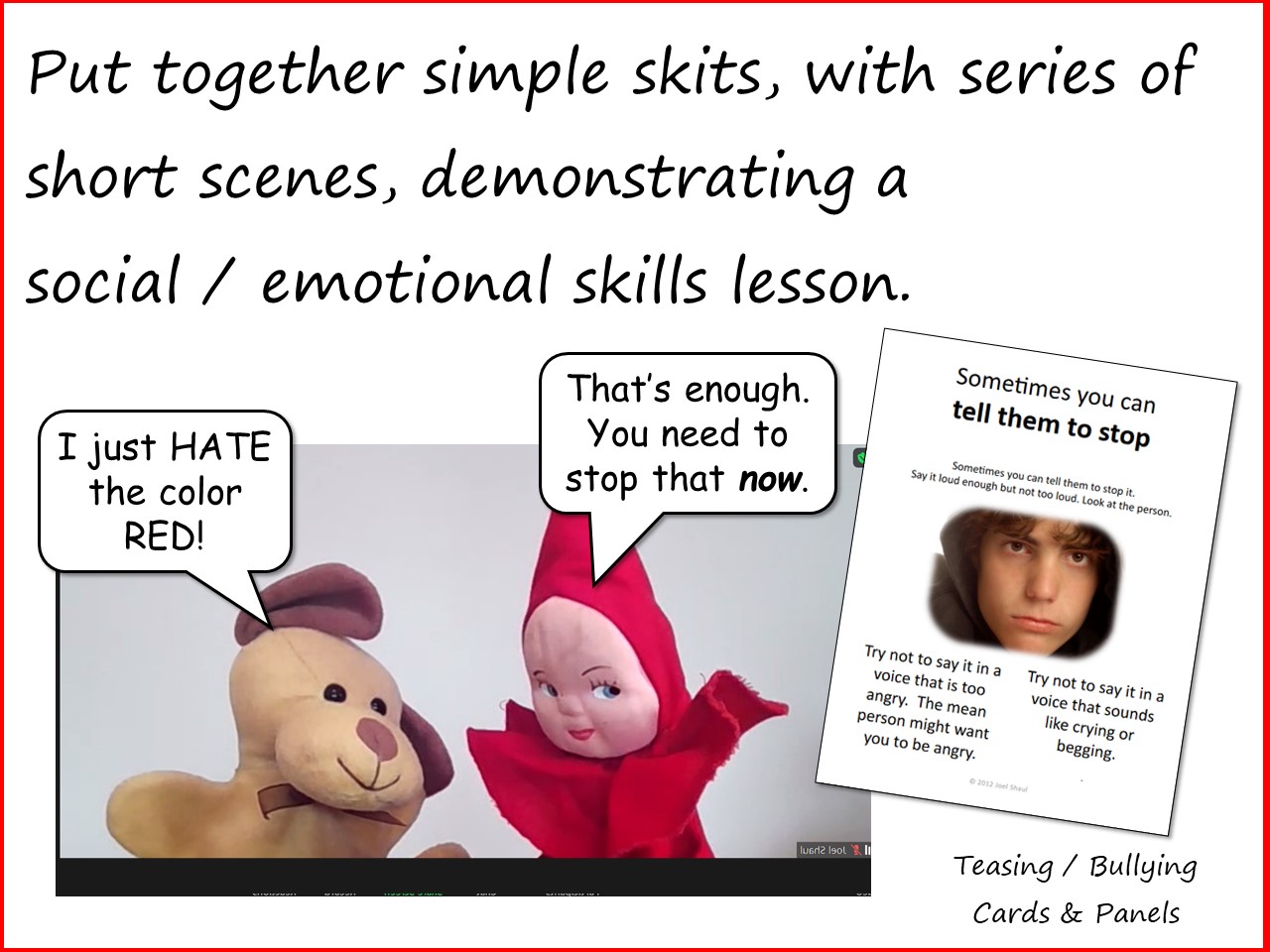
The resource shown here is part of a free kit for dealing with teasing and bullying.

Your comments on these resources are most welcome, and often helpful. Click HERE to send an email.
Problem & Solution Cards II: CBT variation. Easy & helpful mental health PowerPoint-based activity
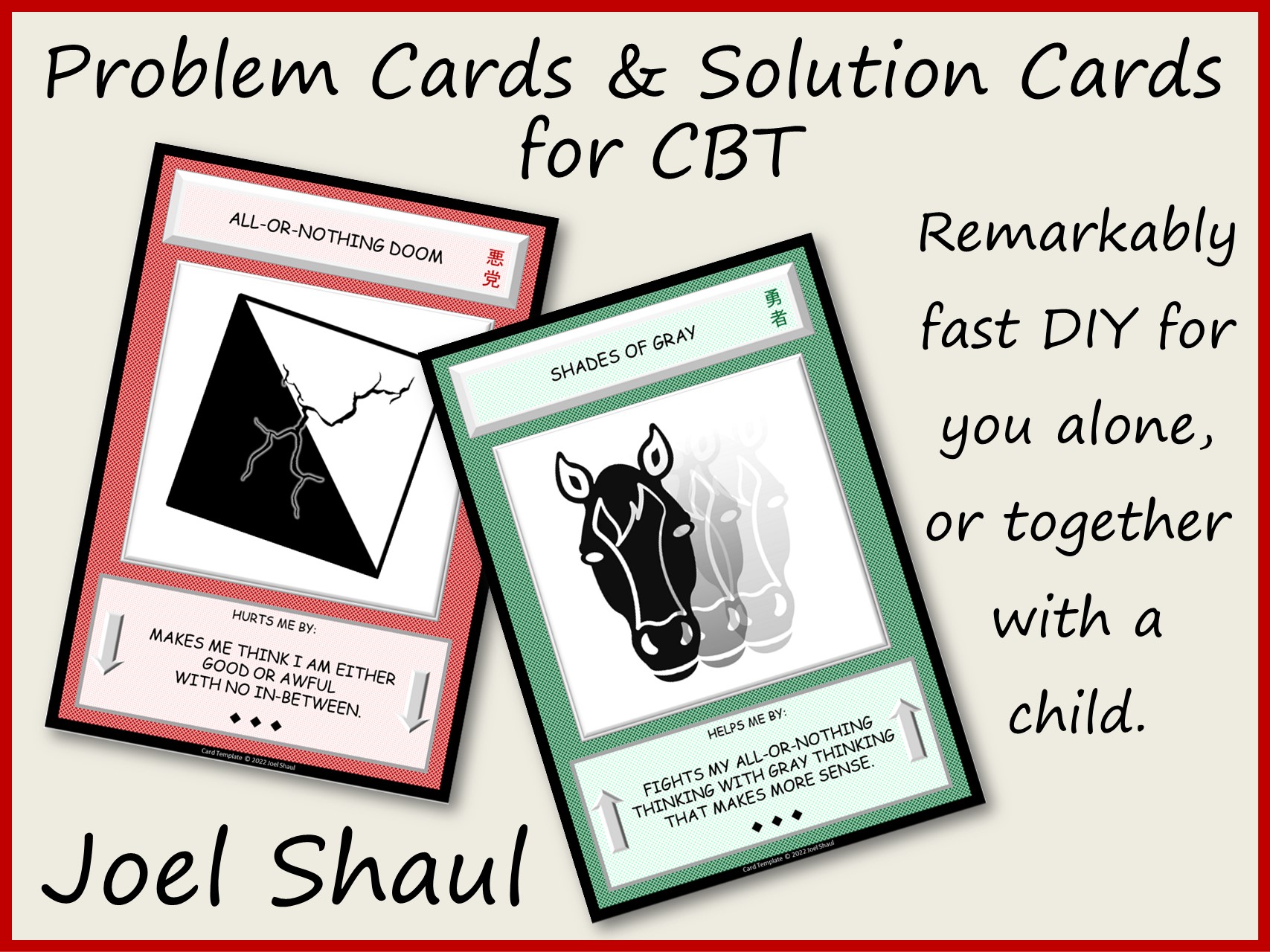
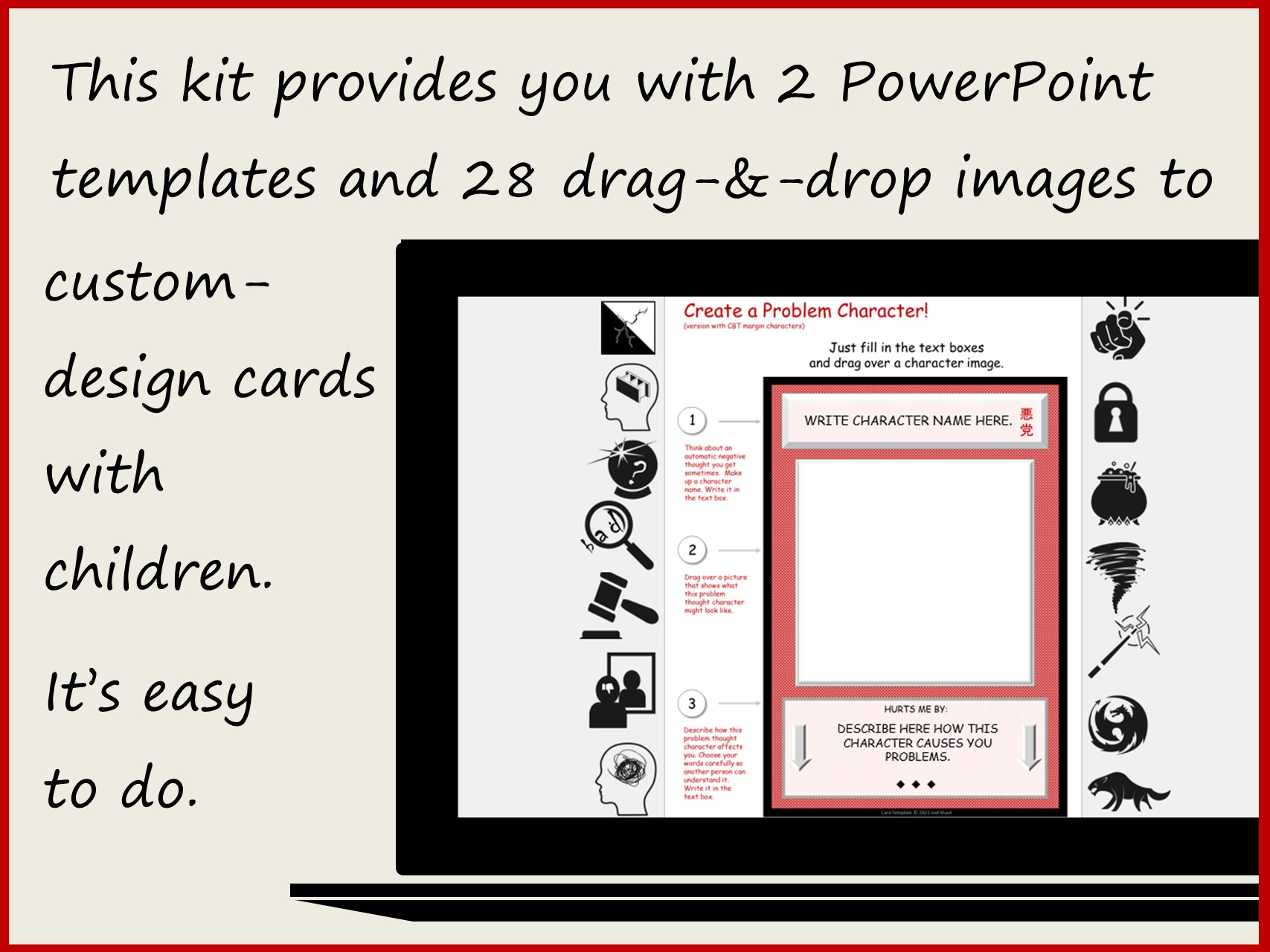
Cognitive behavioral therapy picture cards for children and teens to focus attention on cognitive distortions
A previous post introduced the first version of this activity featuring a different selection of drag-and-drop images for a variety of social and emotional concerns. Here I provide a second version, featuring images tailored for CBT work.
To capitalize on youth culture themes of “good guys” and “bad guys” from movies, stories, video games, and in trading card sets such as Pokémon and Yu-gi-oh, I designed this free, easy card-making project. In my own work, I find it really useful for focusing children’s attention on their problematic patterns of thinking.
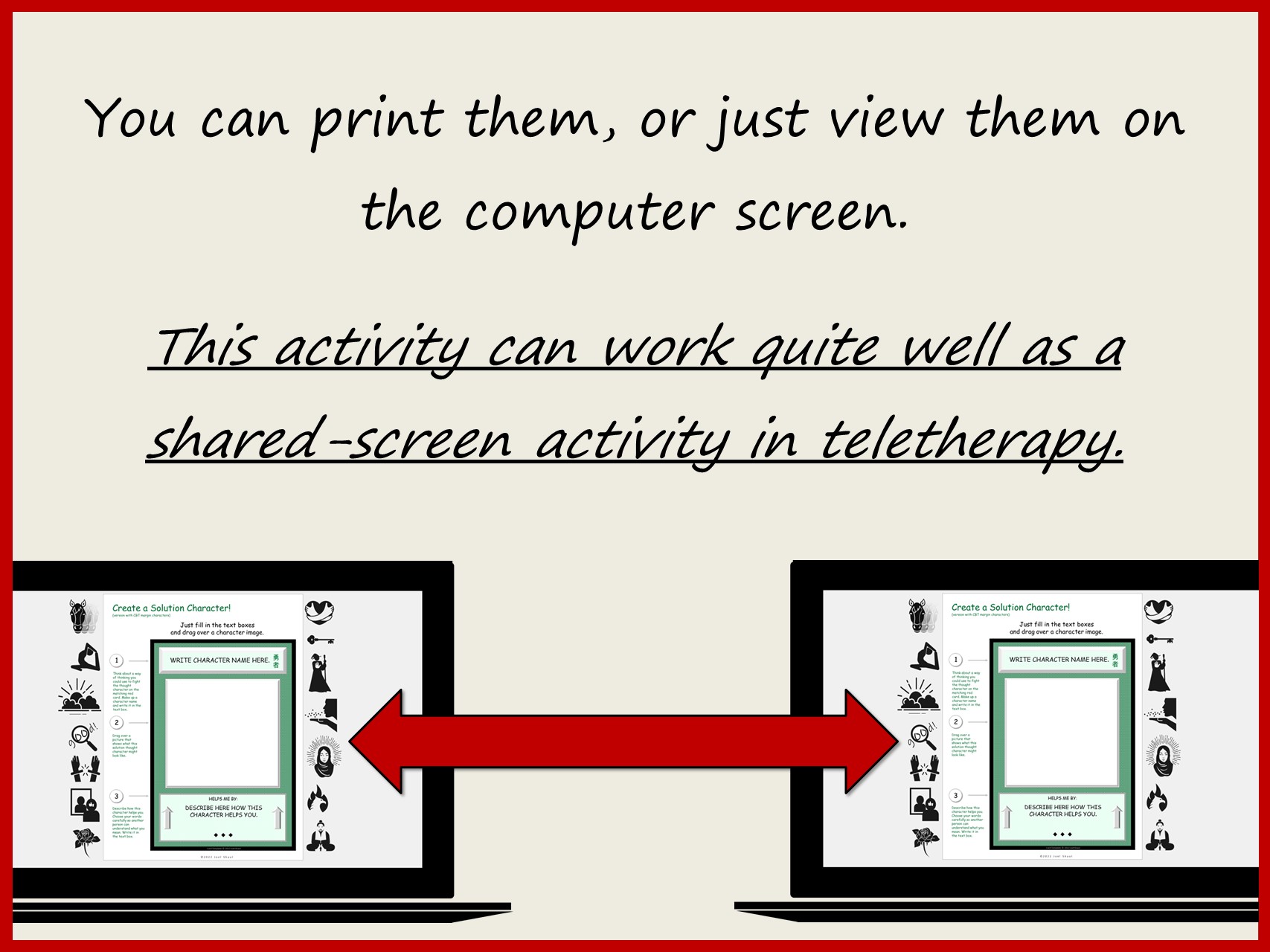
Although this is designed for in-person work, it is also ideally suited for teletherapy, since the collaborative work takes place on a shared computer screen and you can mail or email the finished product to your client.
Here is a one-minute demo on YouTube of how it works.
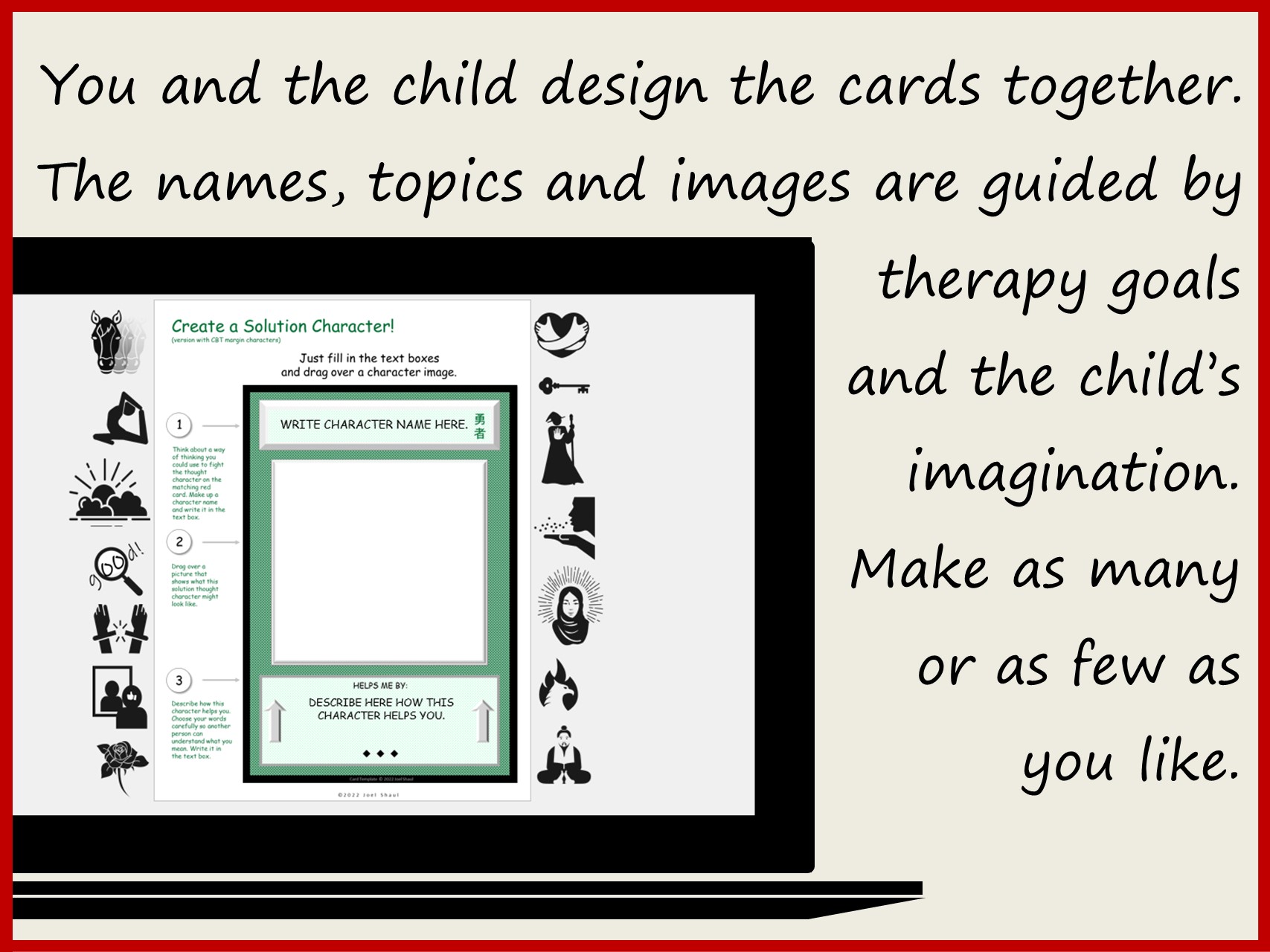
You and the child design the cards together. The names, topics and images are guided by therapeutic goals and the child’s imagination. Make as many or as few cards as you like.
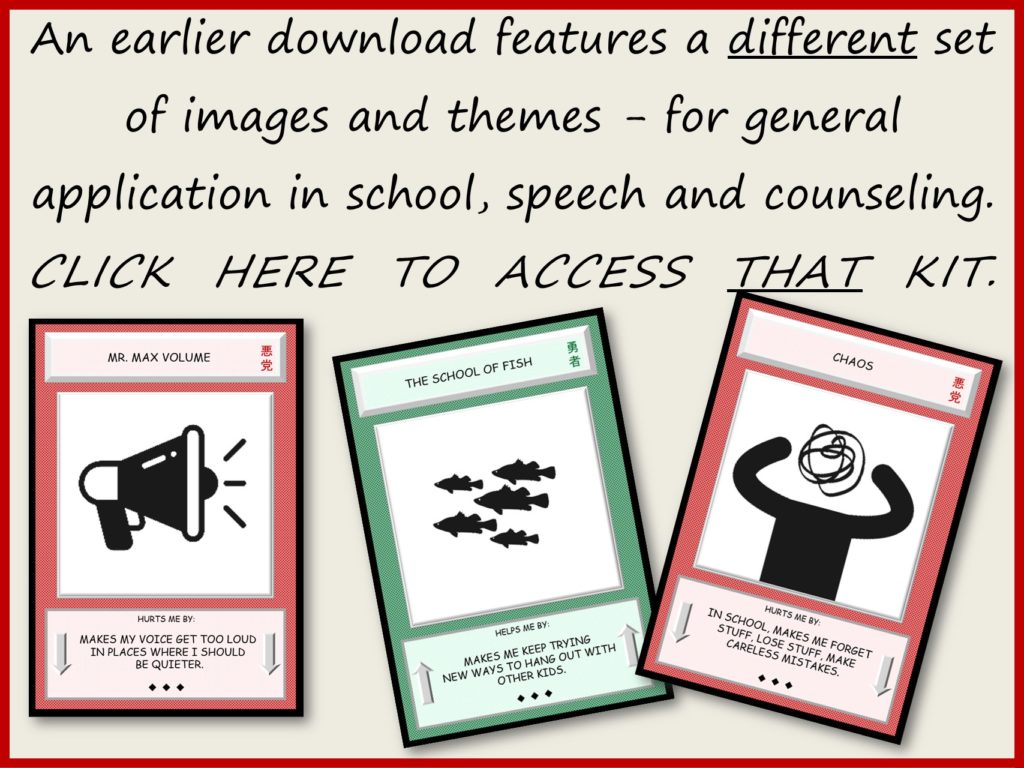
An earlier download features a different set of images and themes – for general application in school, speech and counseling.
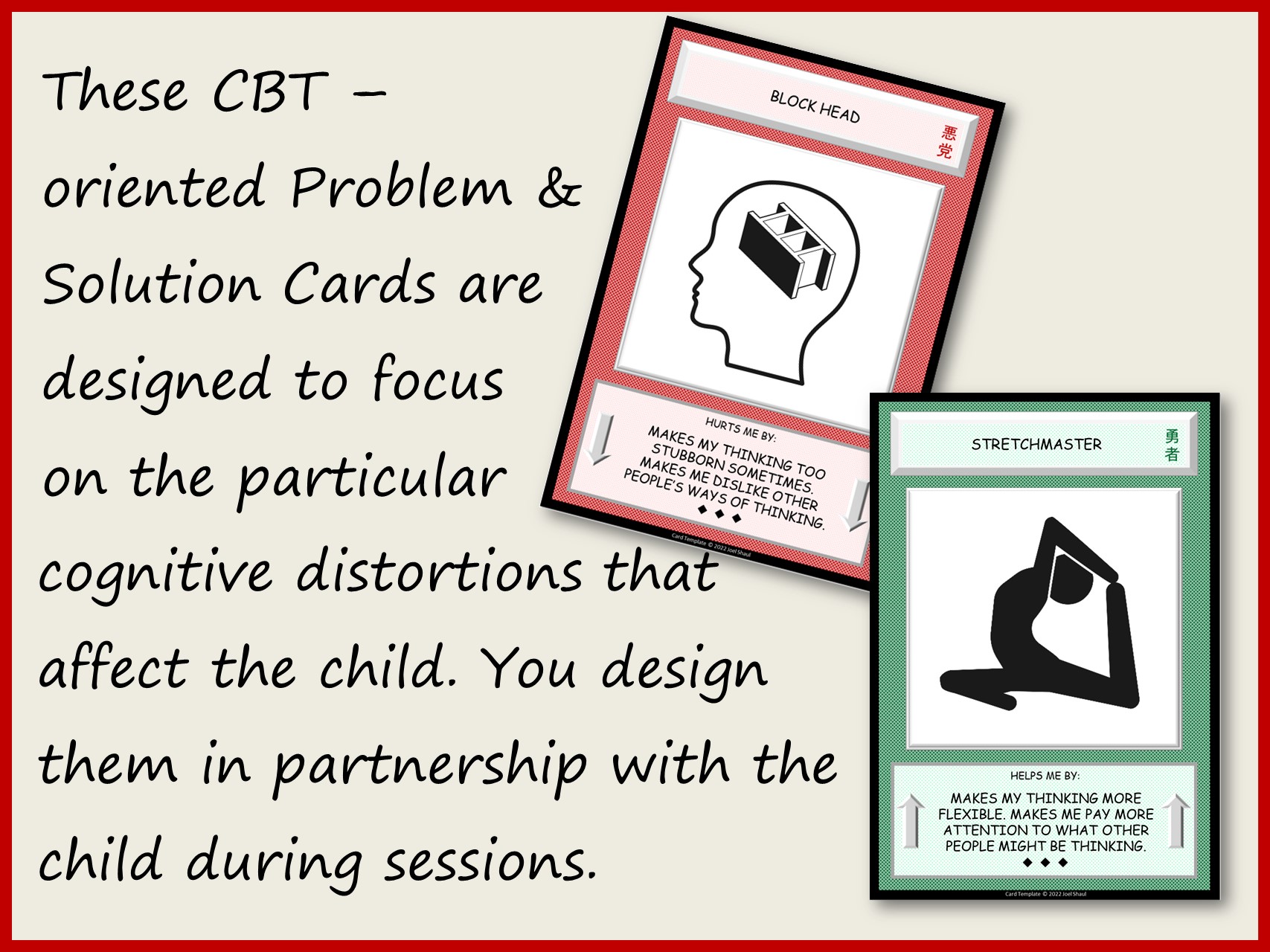
These CBT-oriented Problem & Solution Cards are designed to focus on the particular cognitive distortions that affect the child. You design them in partnership with the child during the session.
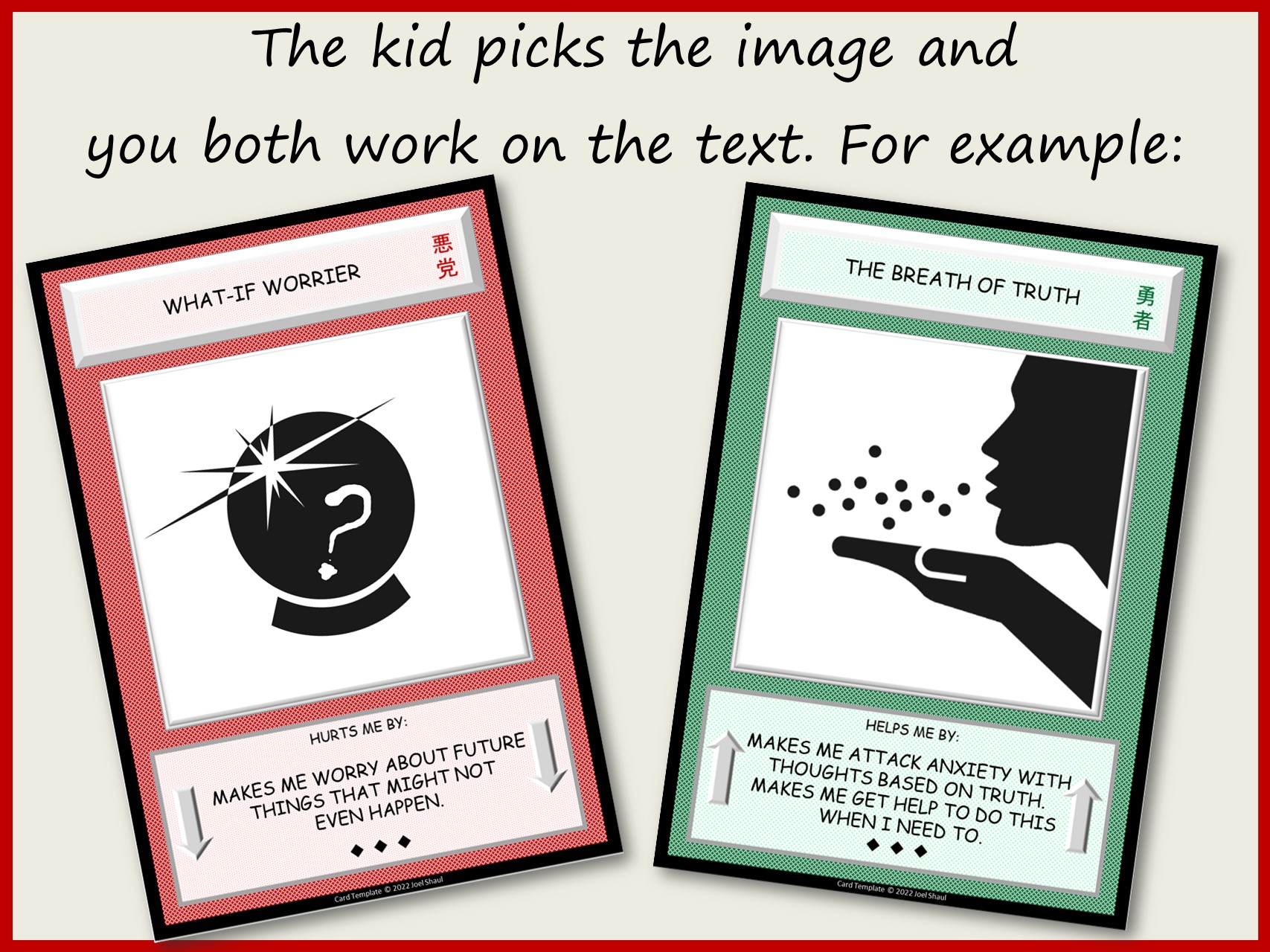
The kid picks the image and you both work on the text. Here are some examples.
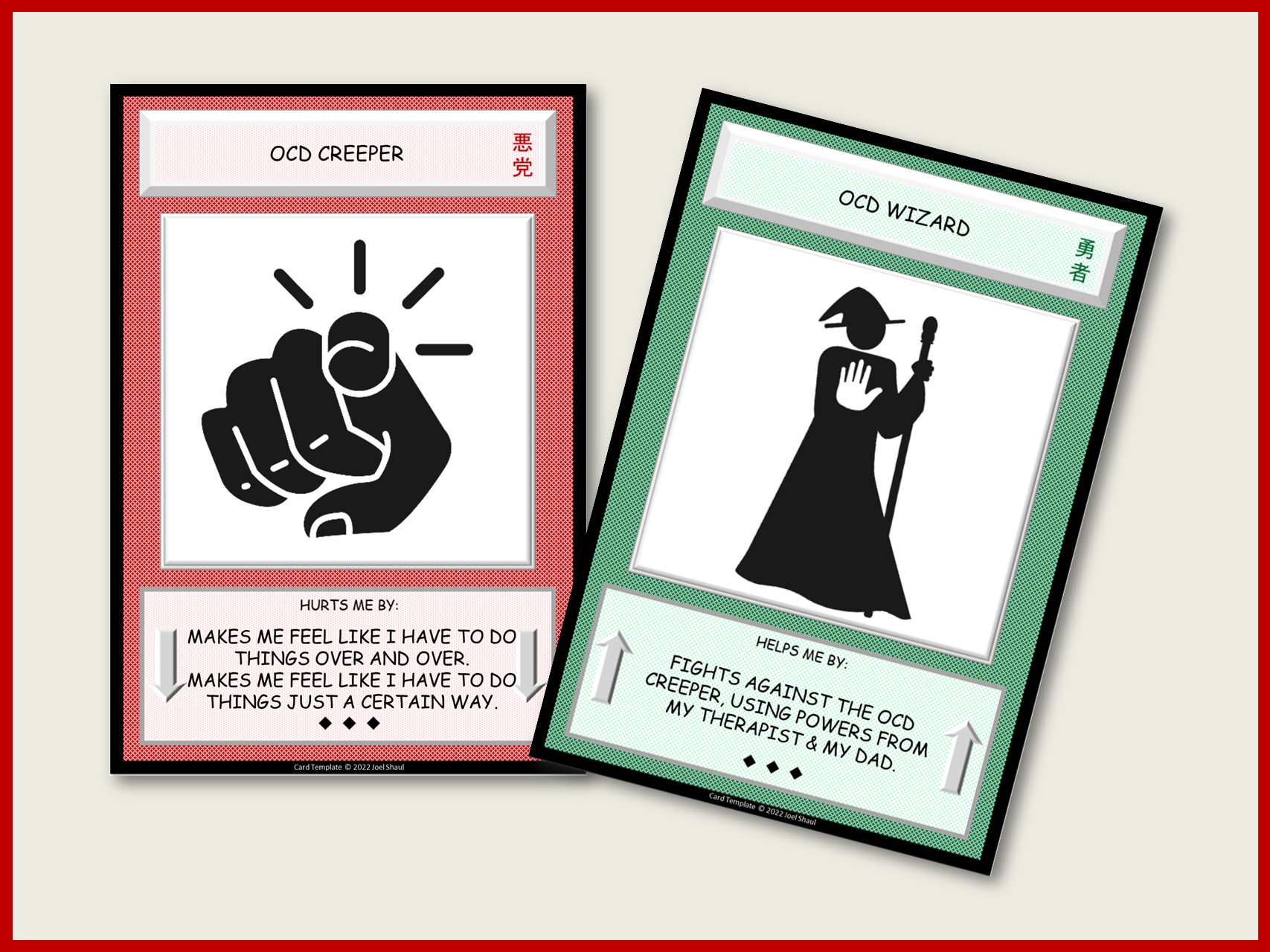
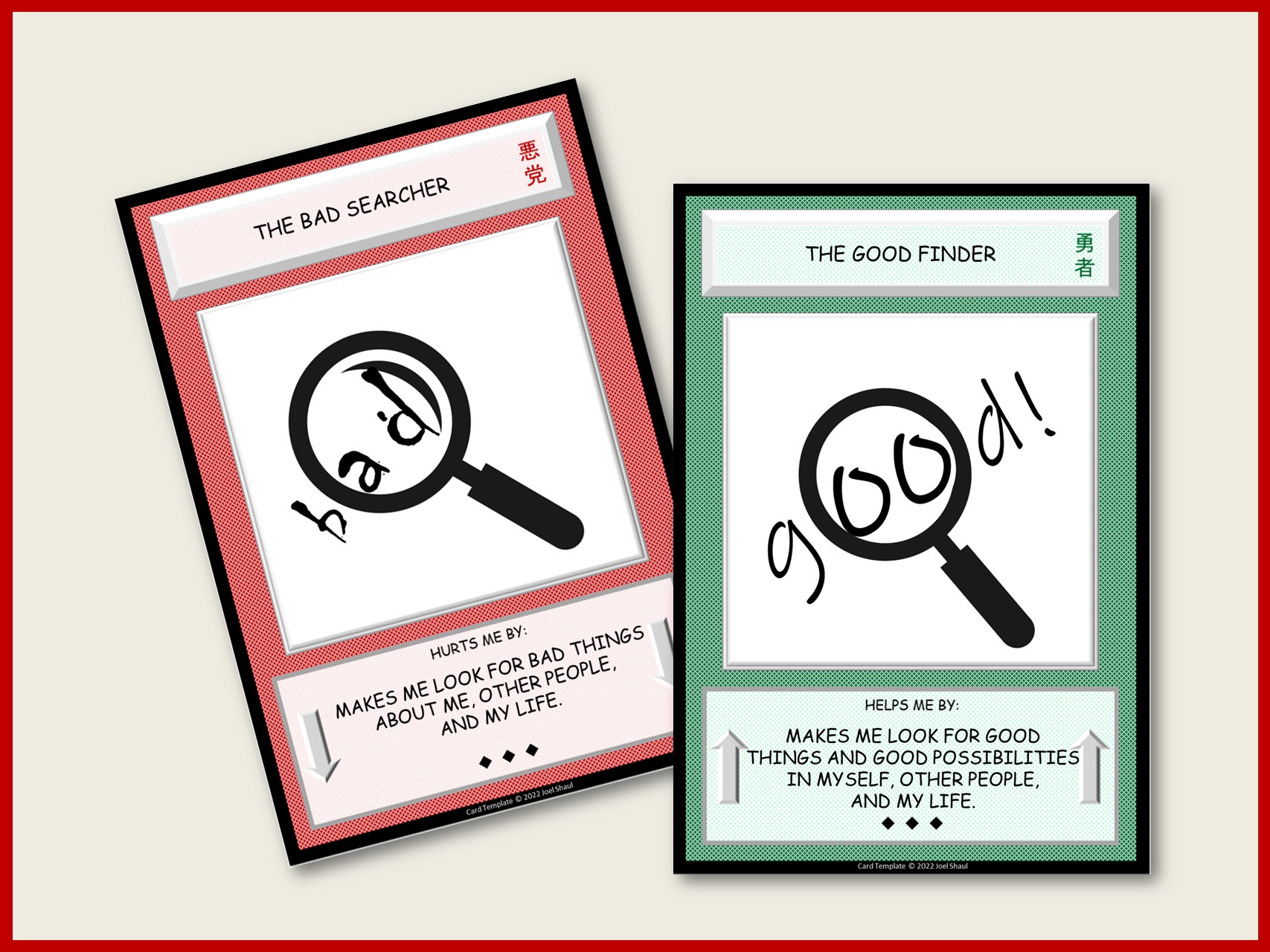
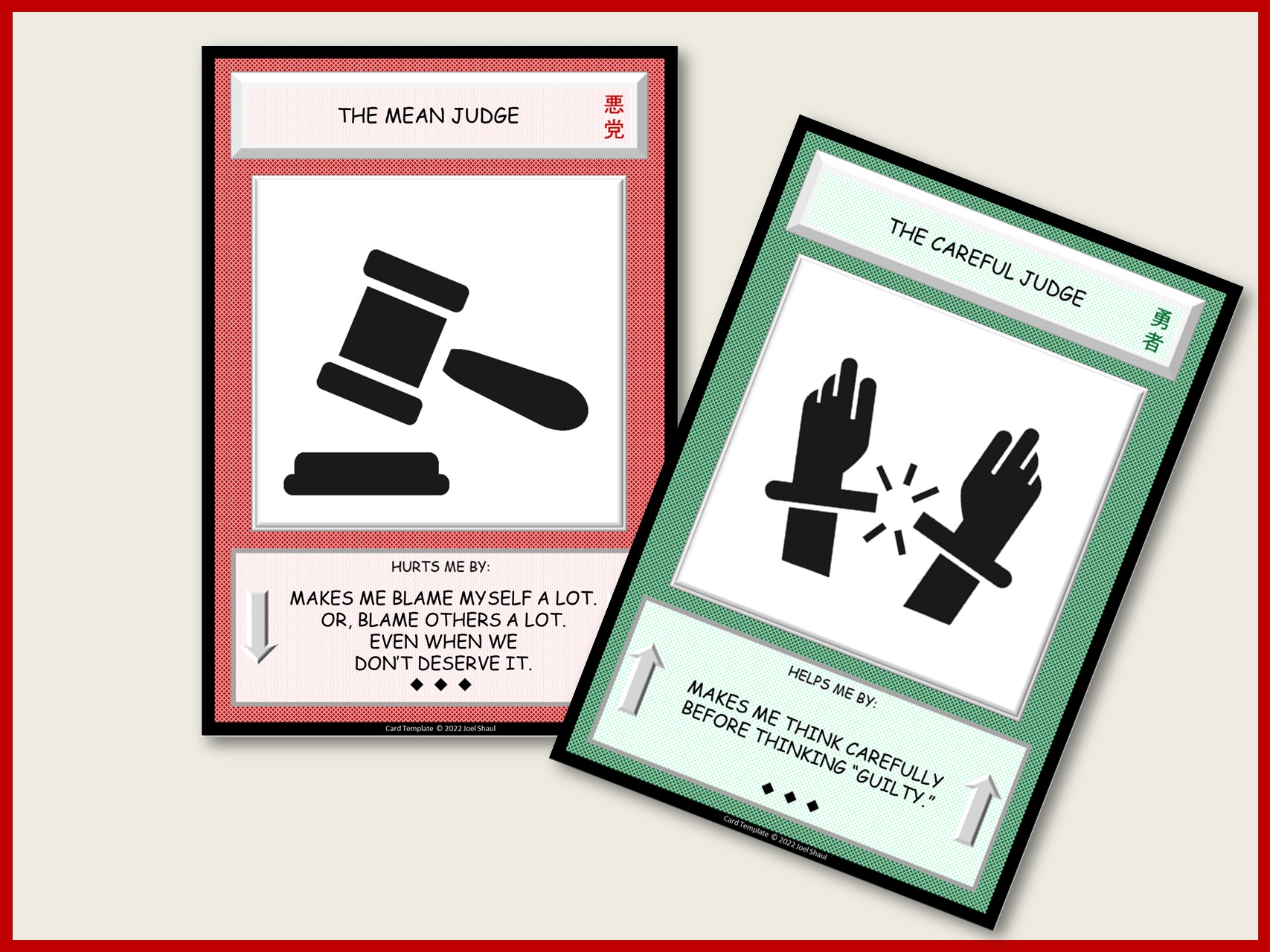
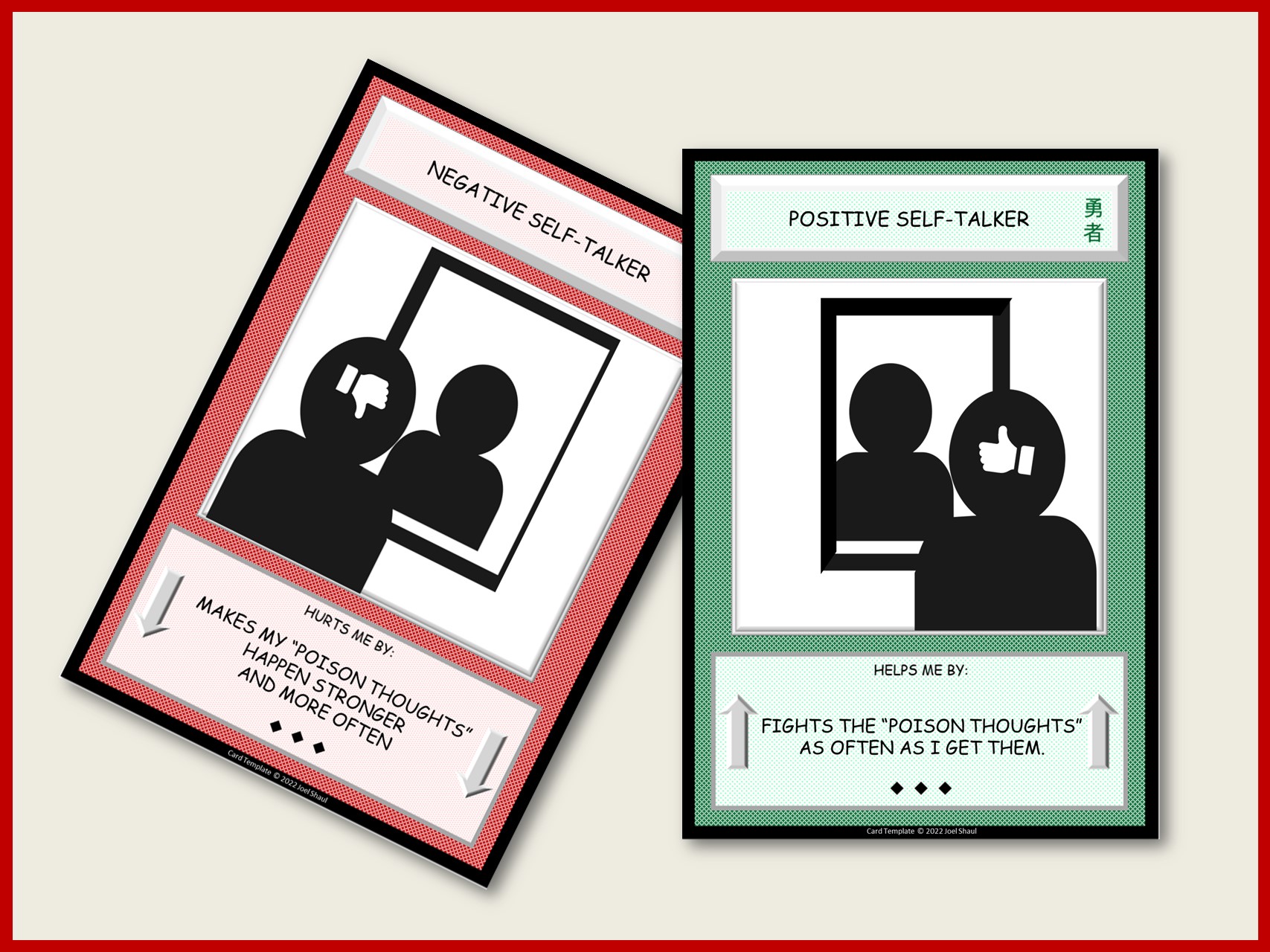
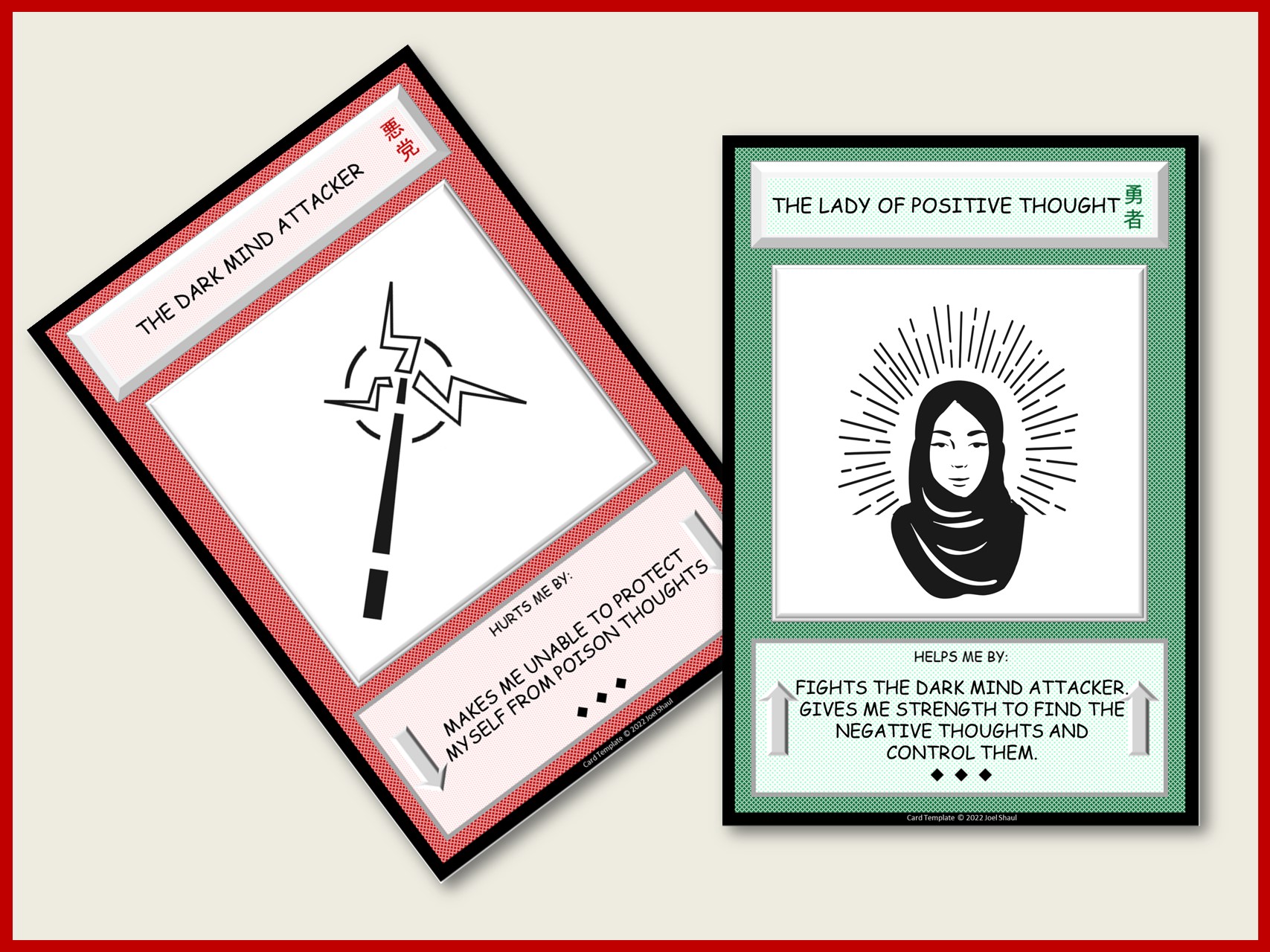
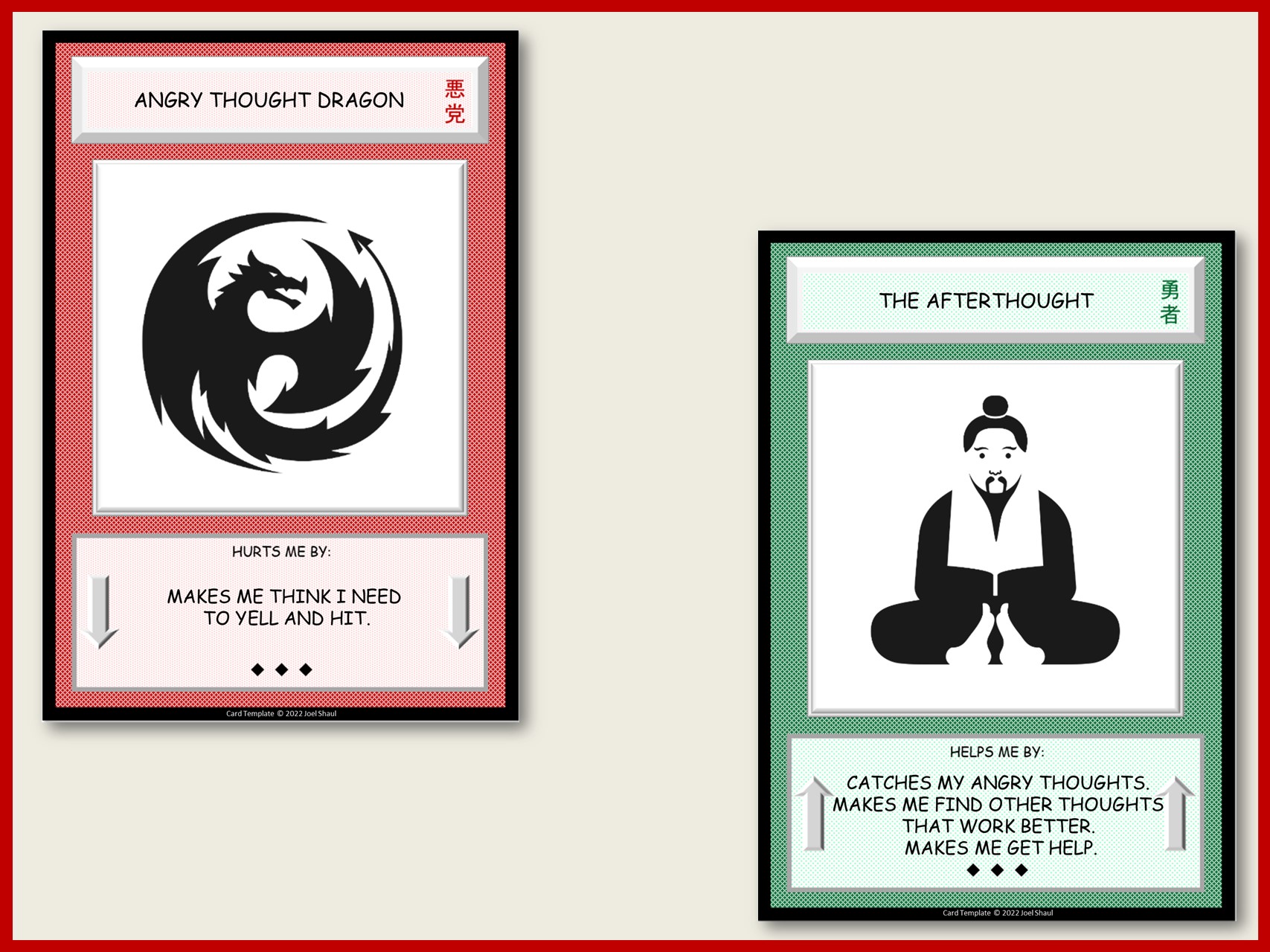
I would like to emphasize that these things are quick and easy to create. In my own work with children and teens on the autism spectrum, I typically can co-create as many as five pairs of cards in a 45 to 50 minute session. Children appreciate being able have input into naming the characters and selecting among the various drag-and-drop images.
There is great potential to add more cards, or modify existing cards, in subsequent sessions. You can print them, or just view them on the computer screen.
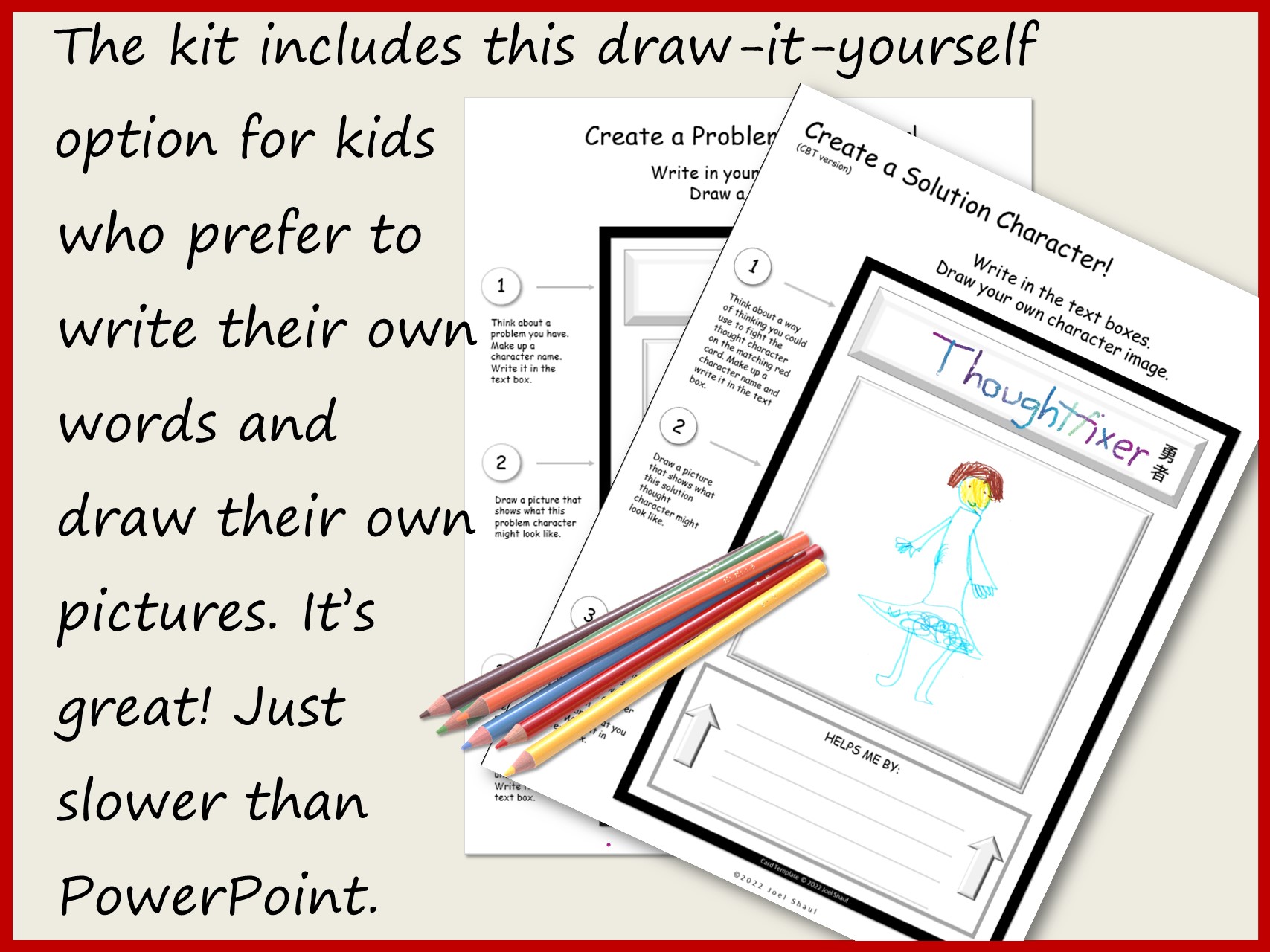
The kit includes this draw-it-yourself option for kids who prefer to write their own words and draw their own pictures.
I have lots of other CBT activities on the website to use with this activity, regular and teletherapy. Check them out.
Problem and Solution Cards ~ Fast and fascinating self-awareness project easily completed with child during sessions
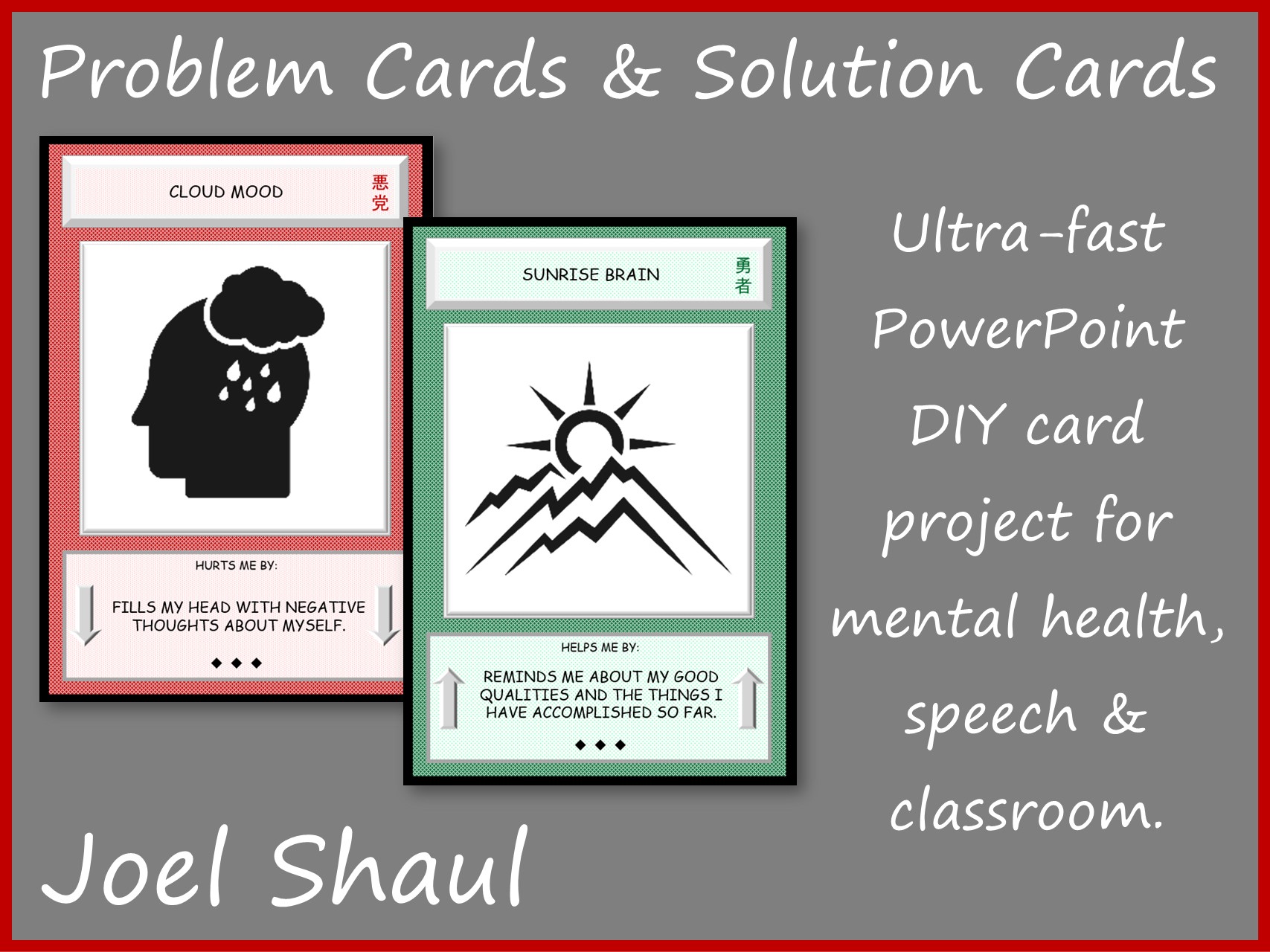
Do-it-yourself social skills cards designed to look like Pokémon and Yu-gi-oh
In mental health, special education and speech therapy, children experiencing multiple challenges can feel demoralized by being the “problem child” all the time. It can be useful sometimes to help our young clients externalize their problems onto fantasy characters which we can help them to fight against.
Many young people relate strongly to youth culture themes of “good guys” and “bad guys” through movies, stories, video games, and in trading card sets such as Pokémon and Yu-gi-oh. To capitalize on this, I designed this free, easy card-making project to help children focus on therapy issues and coping strategies.
Although this is designed for in-person work, it is also ideally suited for teletherapy, since the collaborative work takes place on a shared computer screen and you can mail or email the finished product to your client.
I developed this resource over a number of years of drafts and refinements. I thoroughly tested it in my own work with autistic youth and can attest to its usefulness.
The images below explain how to set it up and use it in your own work.
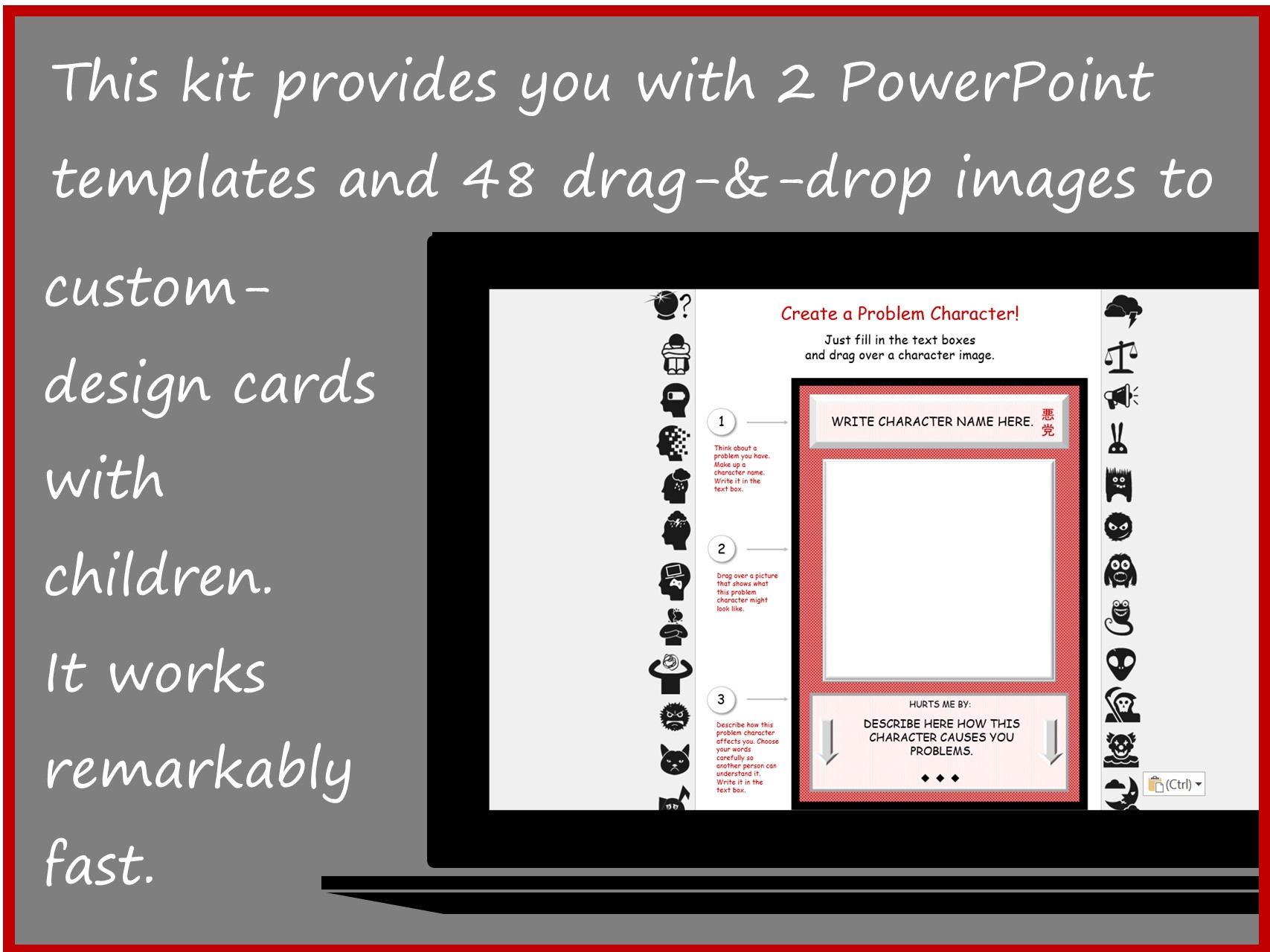
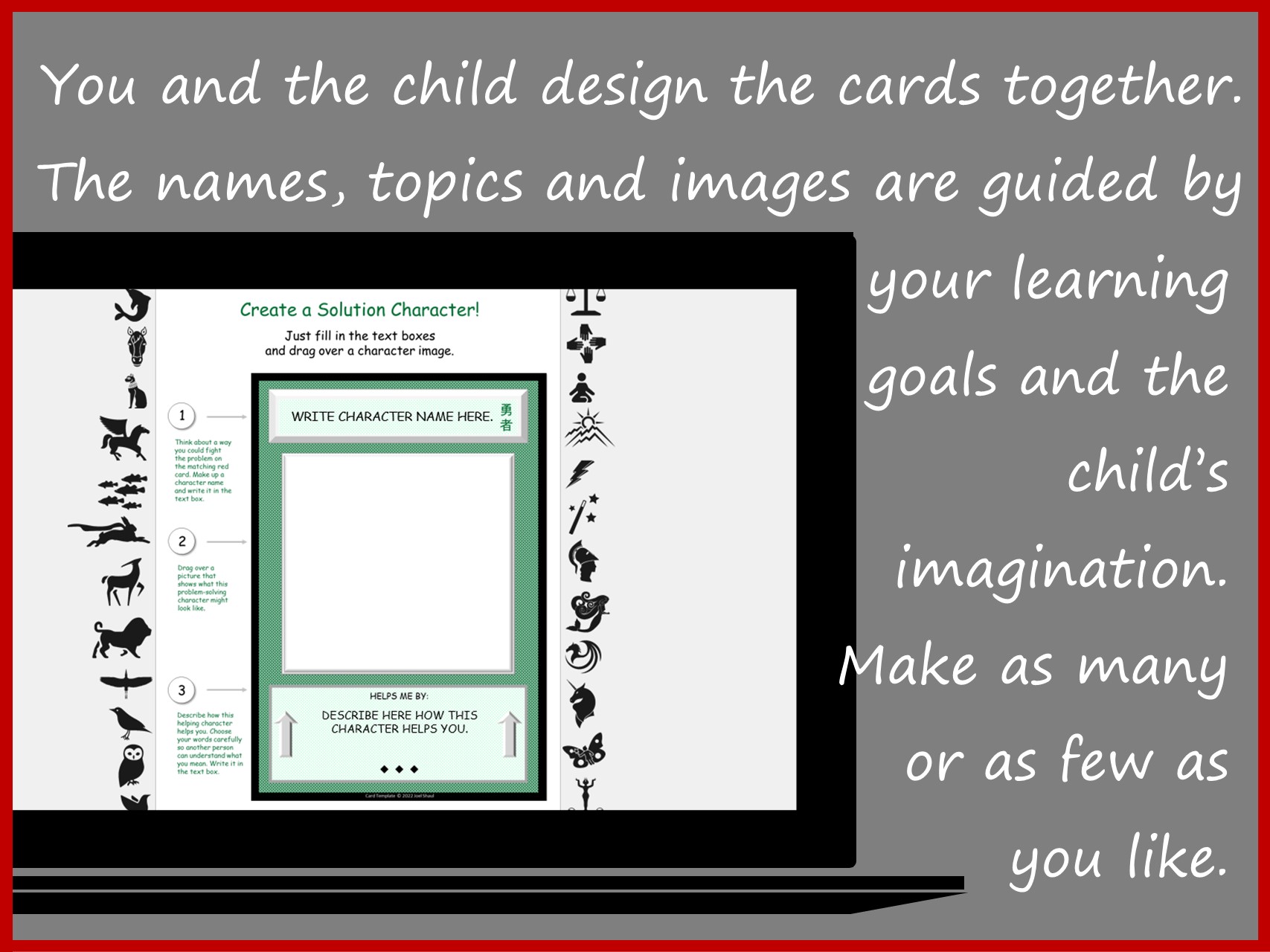
By dragging images onto the card, and filling in the text boxes to name and describe the character, you and the child can quickly create instructive and “cool” cards.
In my own work with children and teens on the autism spectrum, I typically can co-create as many as five pairs of cards in a 45 to 50 minute session. Children appreciate being able have input into naming the characters and selecting among the 48 drag-and-drop images.
There is great potential to add more cards, or modify existing cards, in subsequent sessions.
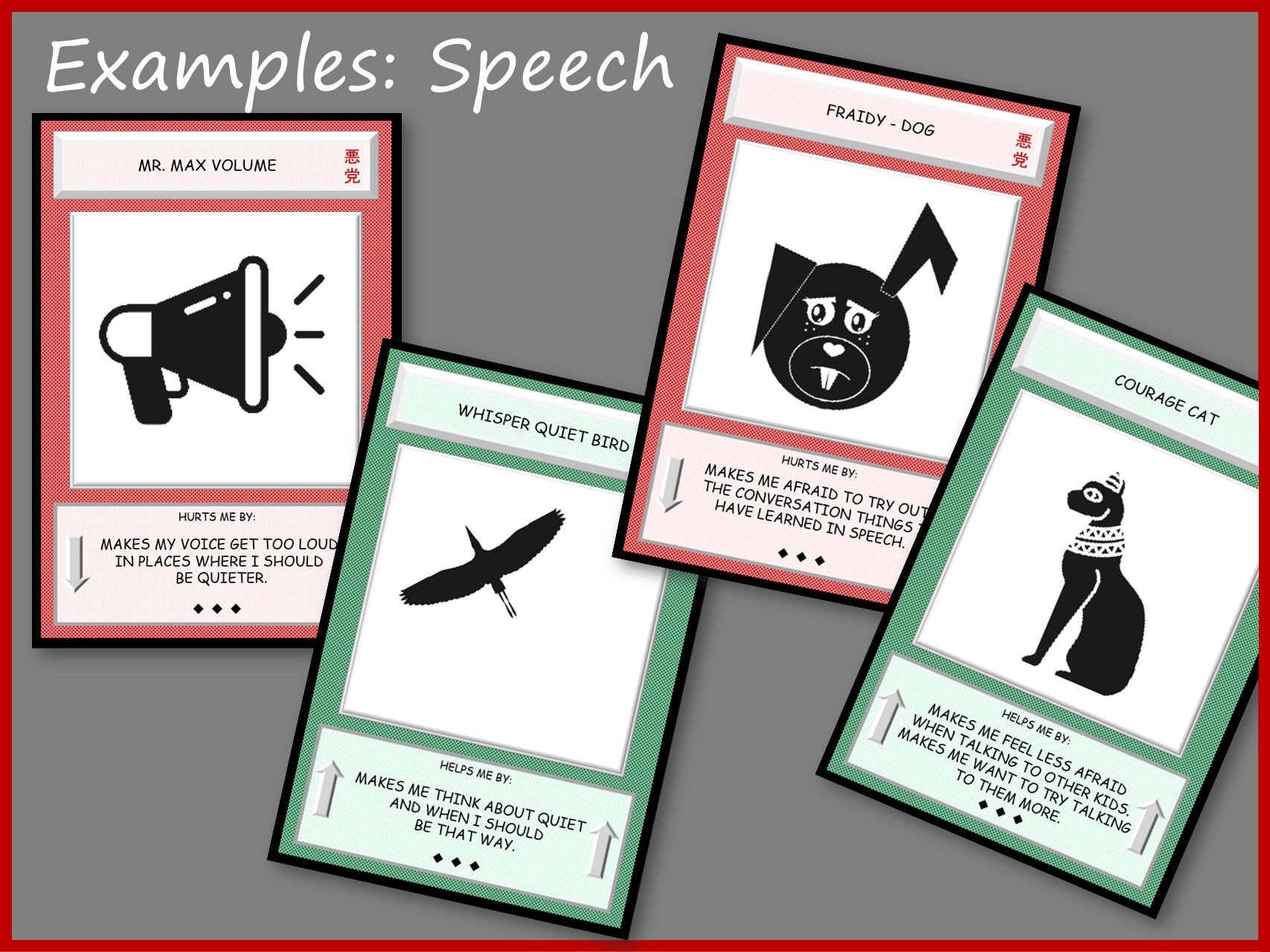
The picture above shows some possible cards that a speech and language therapist could create, corresponding to typical speech goals.
Although I am a mental health professional, in my own work with young people who have ASD, I do a great deal of work on social communication. In my experience, most of the children I work with can quickly make up clever character names. Most can come up with a coherent narrative under “helps me by…” [Obviously, the sample cards shown were not created by clients 🙂 ]
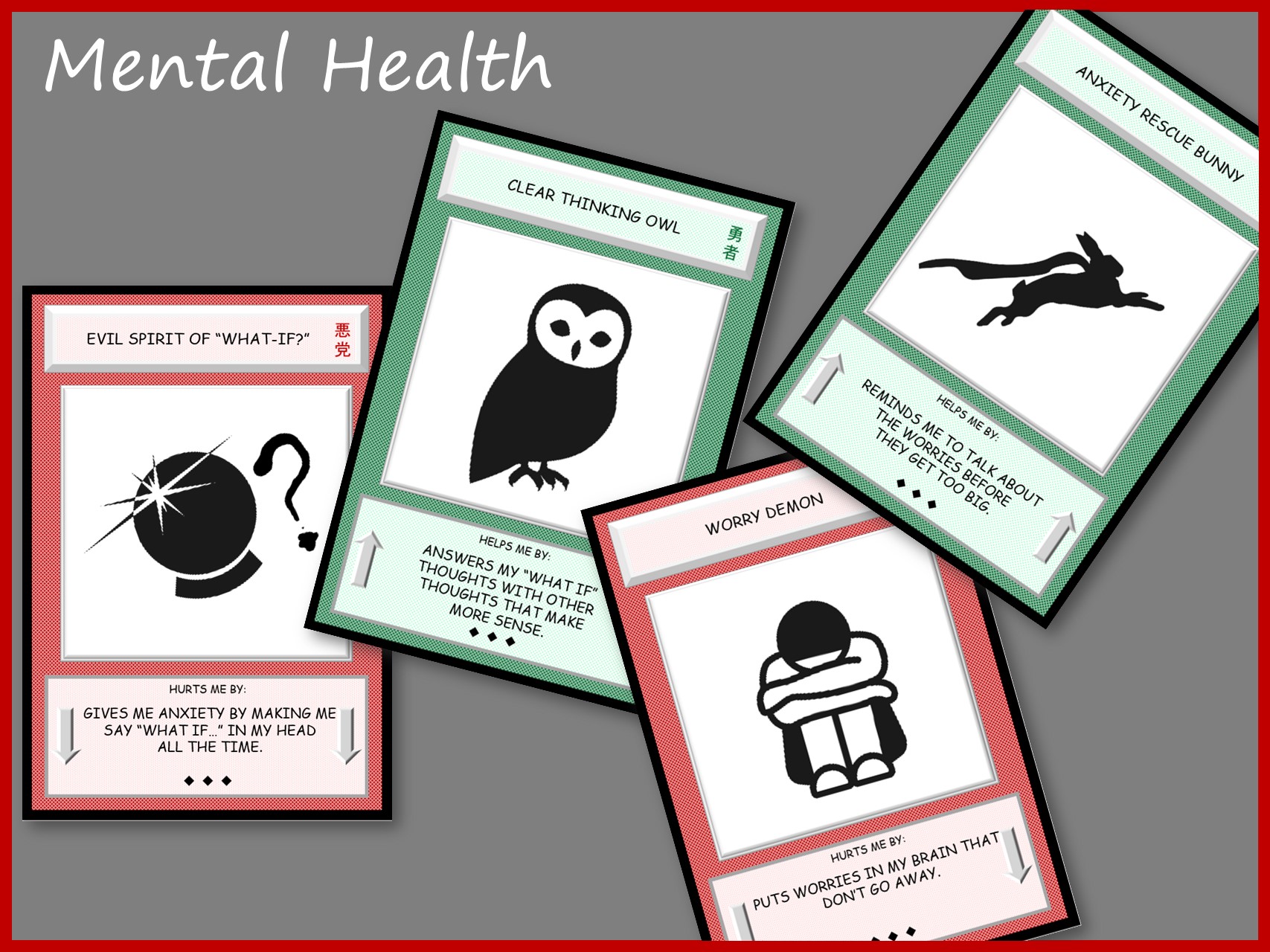
Here above are some examples of cards that could be created for mental health applications. For my fellow mental health professionals: These DIY cards are ideally suited for CBT.
Please note that I have a completely separate CBT-based Problem Solutions Cards kit available with drag-and-drop images specifically selected for mental health therapy.
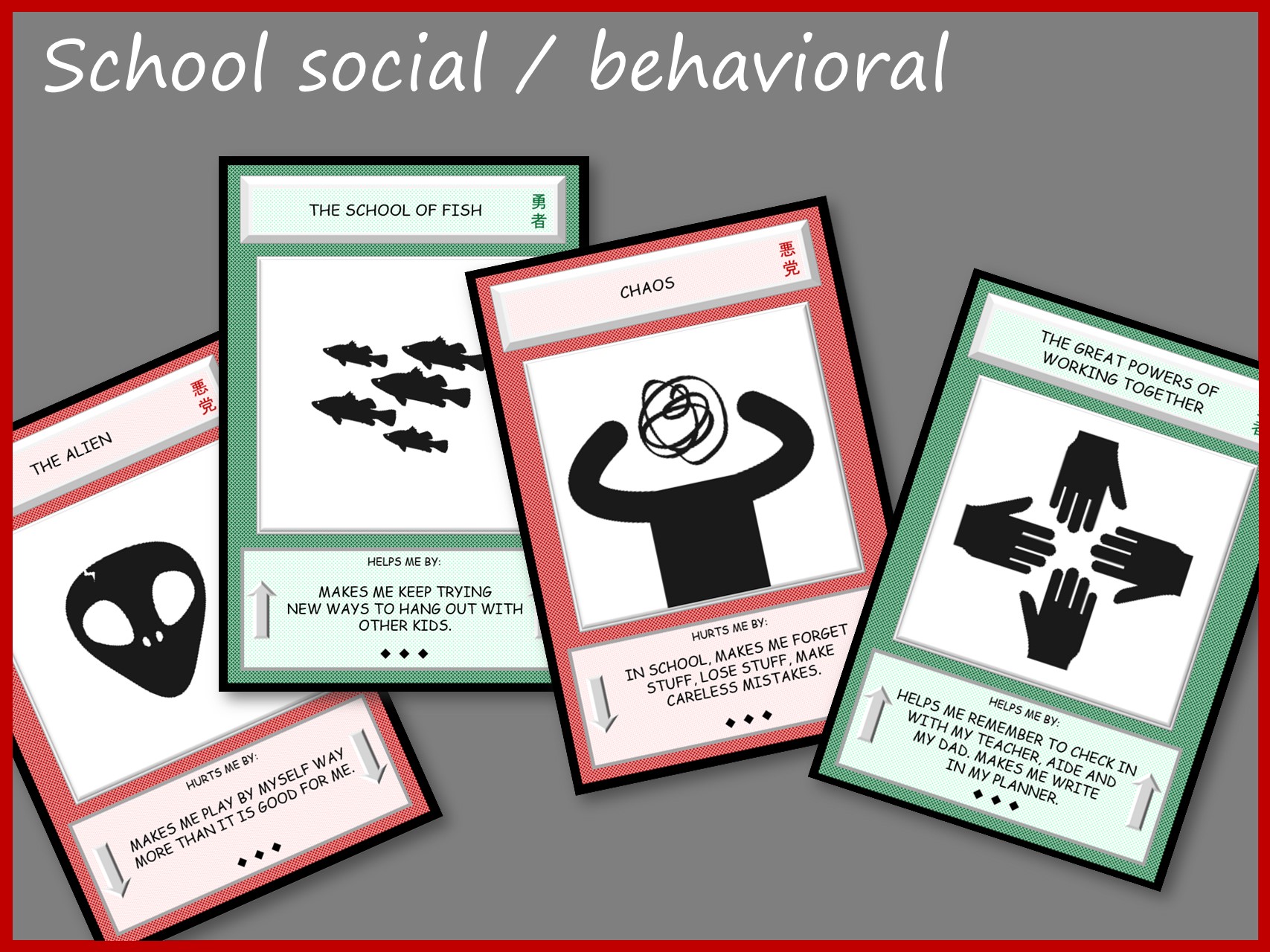
Shown above are four examples of cards that could be created to highlight typical social and behavioral goals in the school setting.
I am not currently working in schools, but the fact that this project is carried out on-screen in PowerPoint would seem to make it well-adapted for groups and small classroom work for children with emotional and behavioral concerns.
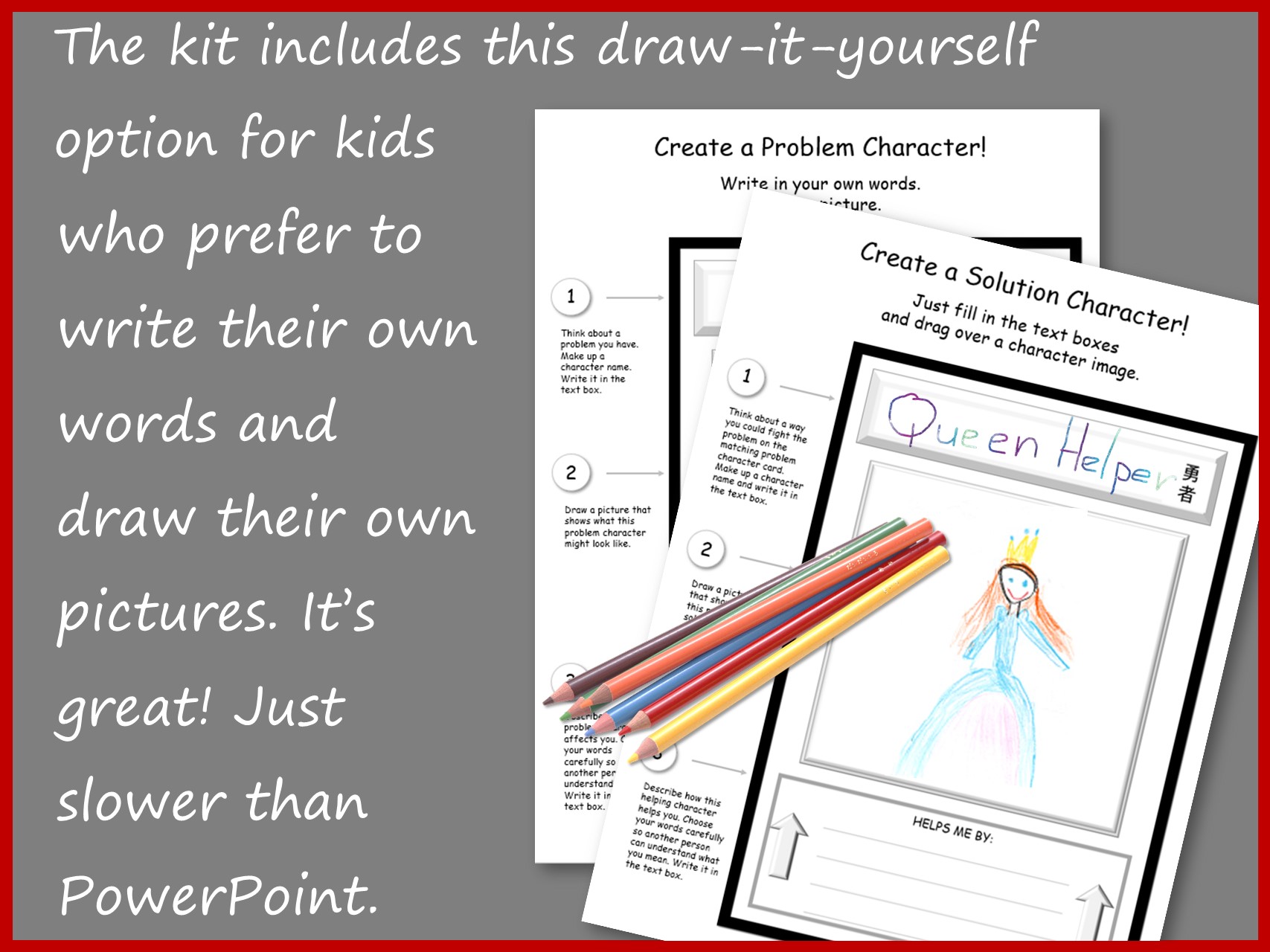
The draw-your-own version of this (shown in the picture above) is similar to a popular download I posted years ago, Dark Force / Light Force Worksheets. In my own work, I like to get children to draw as much as possible in structured therapy projects. Having done this project many times both ways, both through drawing and via drag-and-drop image selecting, I would say that both versions have advantages. One important consideration is that many young people just don’t want to draw. Another consideration is that many of them draw more slowly than might be useful or convenient in the context of a therapy session.
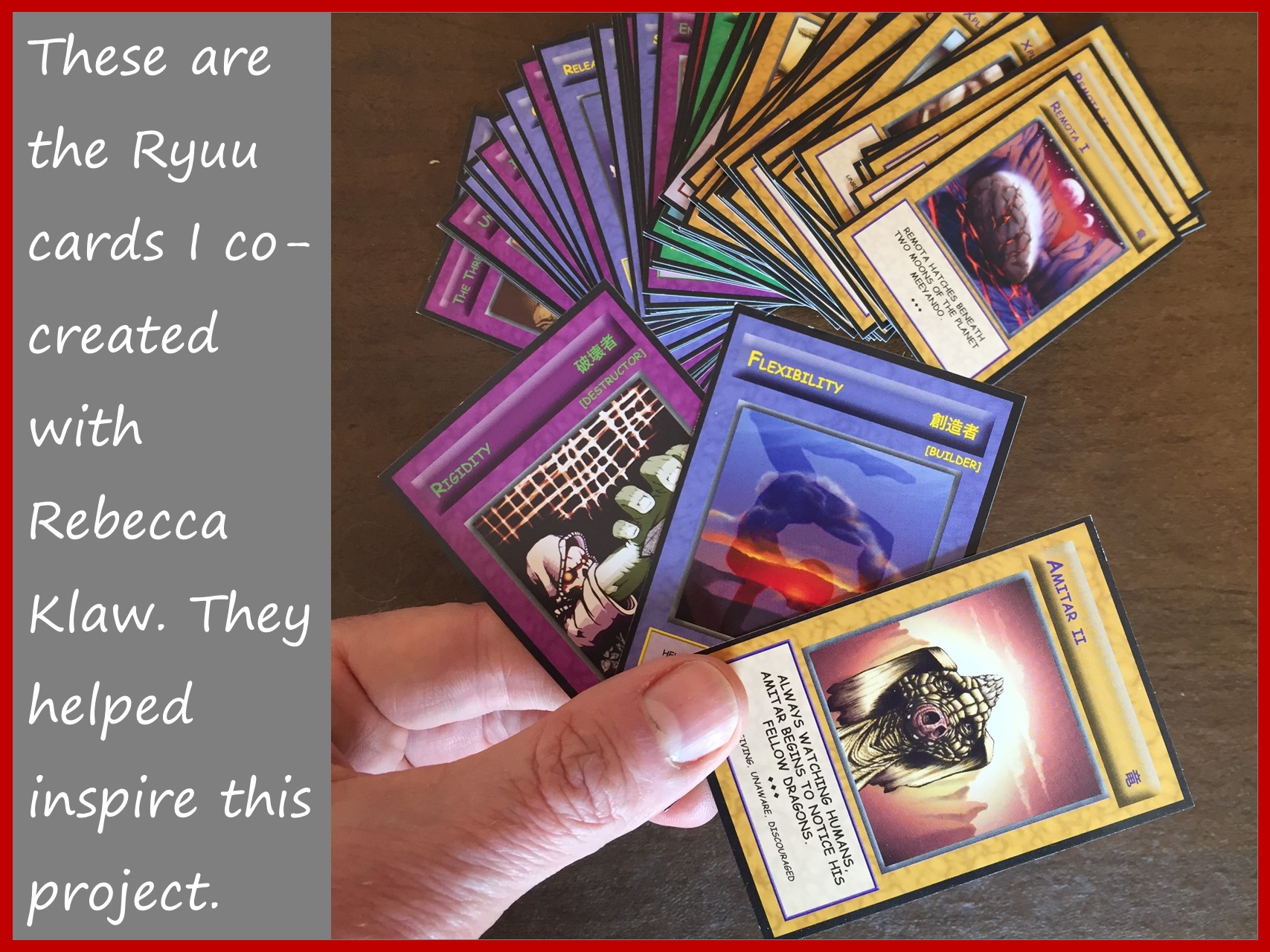
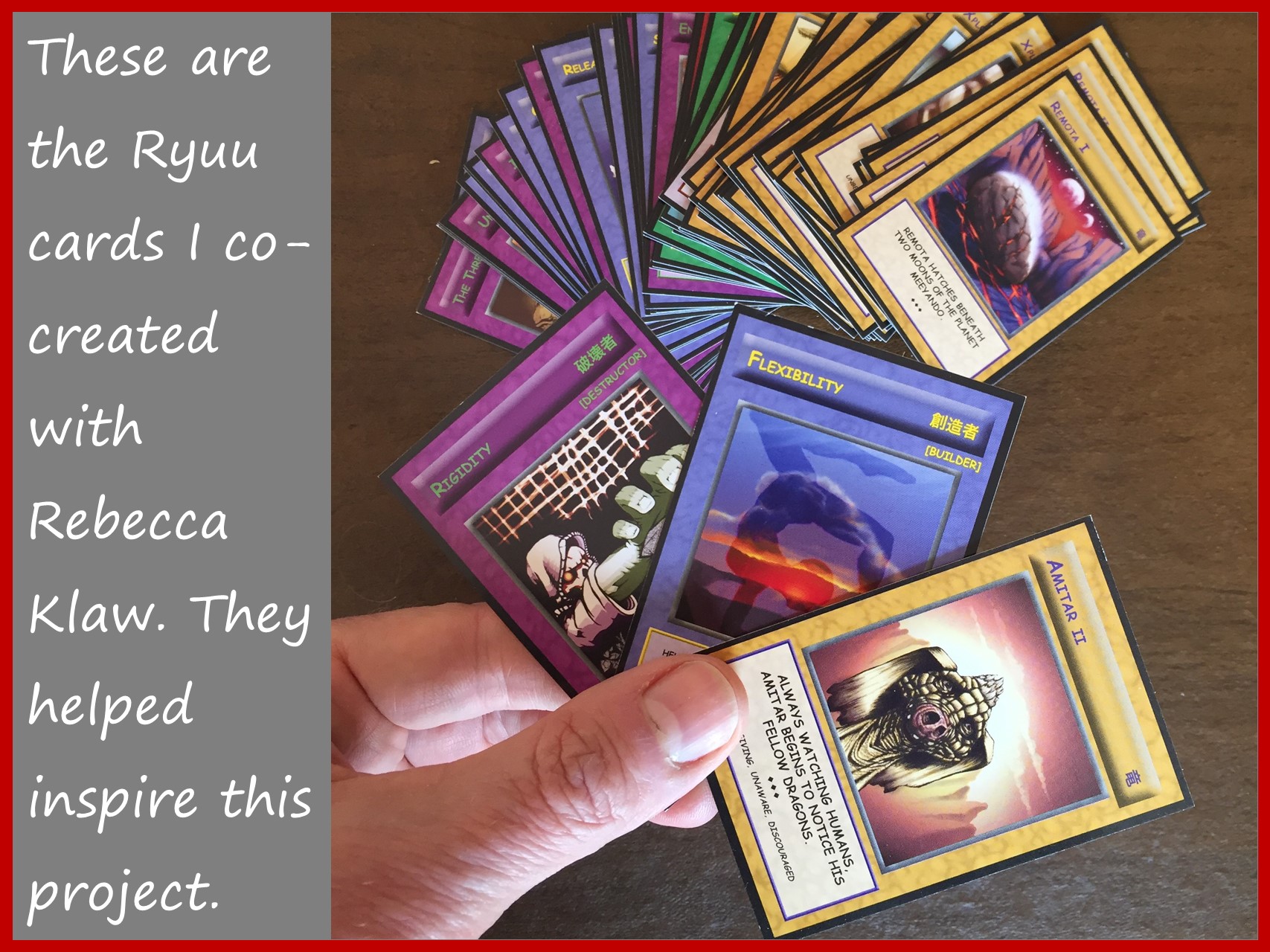
For many years, until 2019, Rebecca Klaw and I sold these cards that we invented, along with related therapy materials.
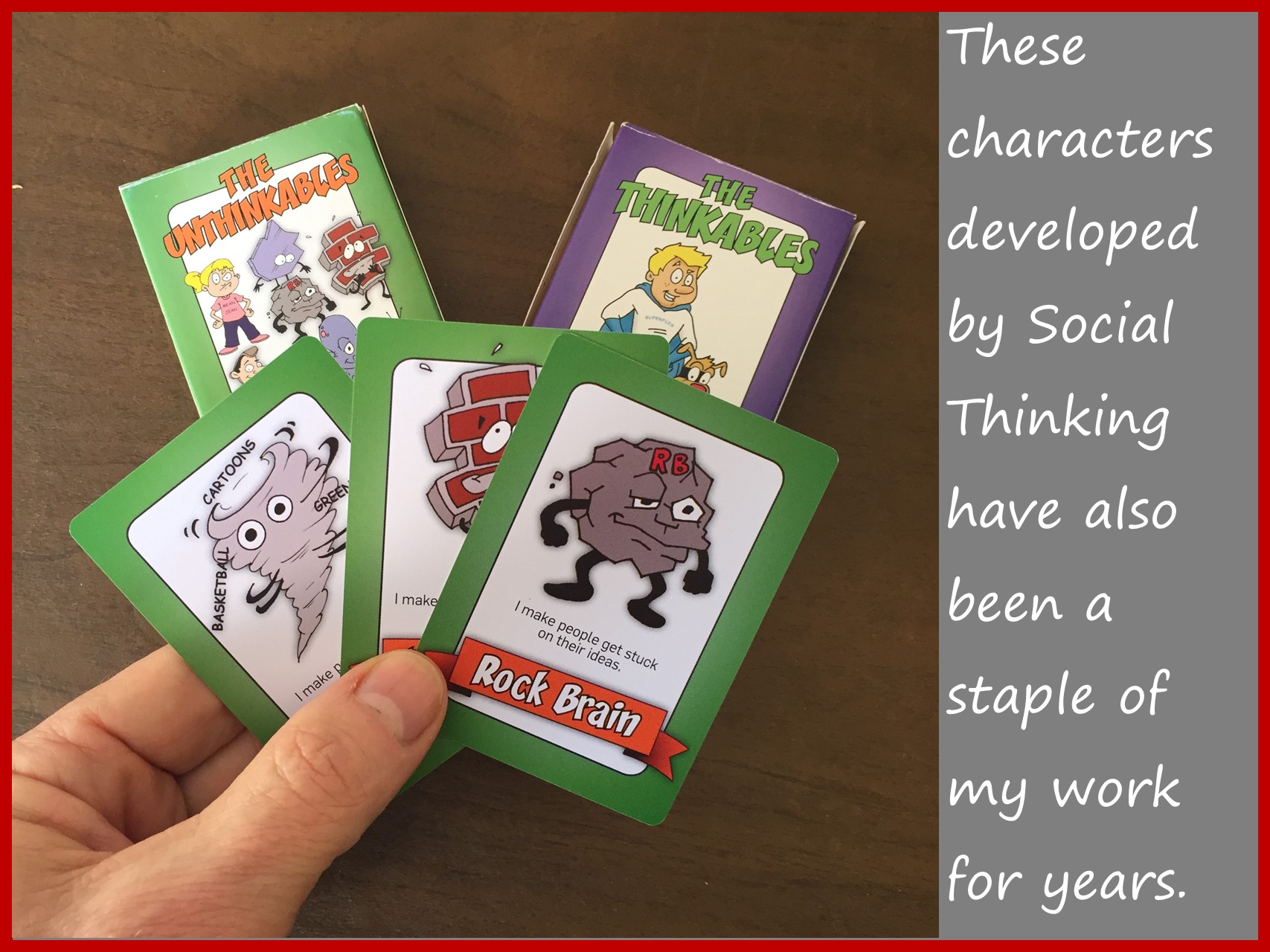
You are probably familiar with these Social Thinking materials based on Unthinkables and Thinkables characters. If not, you should check them out.
On-screen PowerPoint Comic Book Conversations & Social Stories. Free template download.
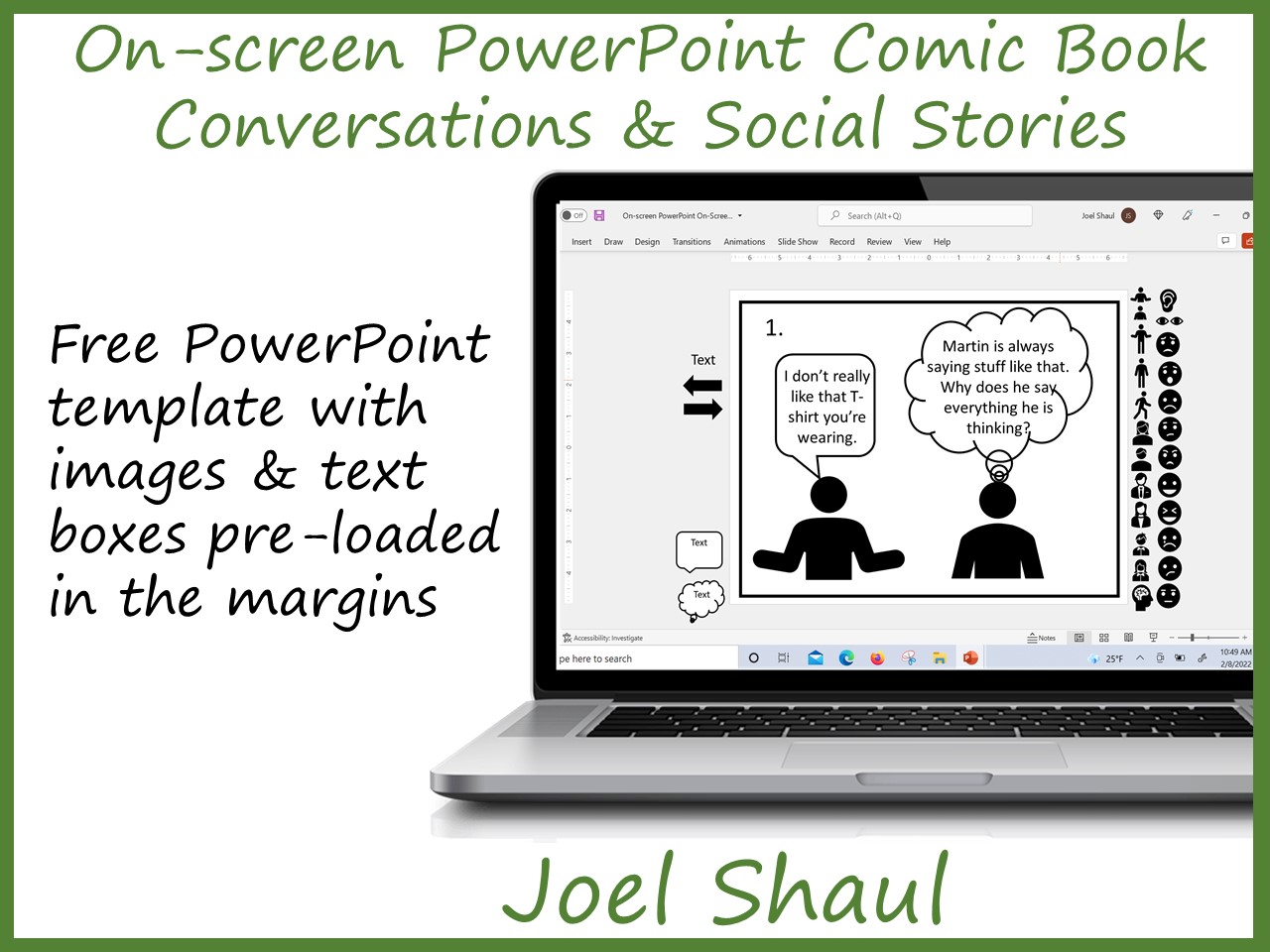
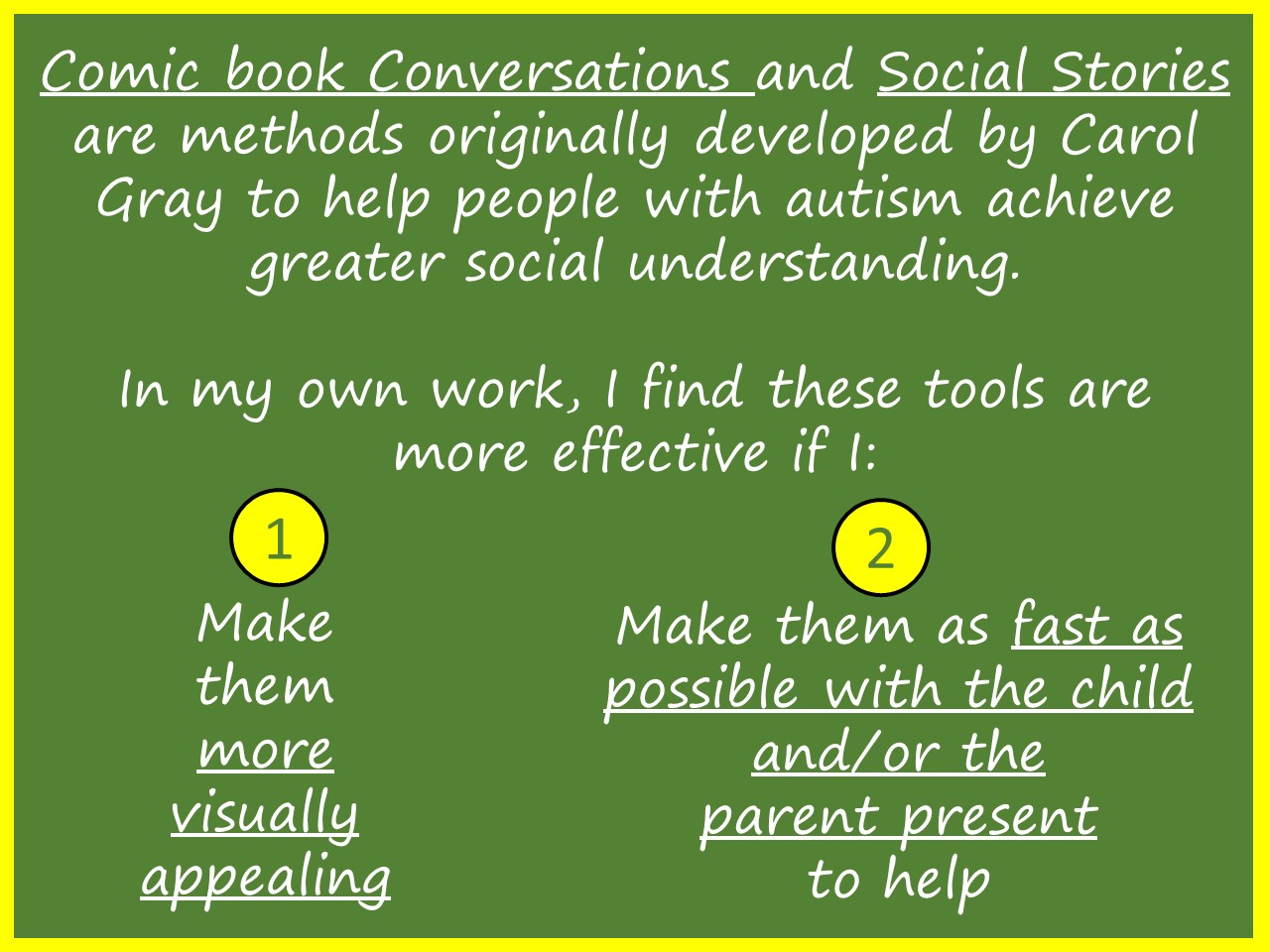
Comic book conversations, social stories and social skills therapy
Comic Book Conversations and Social Stories were identified as important and useful ways to break down complicated social situations so that individuals on the spectrum could understand them better. These days, almost any therapist or educator working with autistic children will create social stories and simple drawings frequently.
I have always used lots of social stories and comic book conversations in my own work. But my own paper and pen, stick-figure social skills materials never looked very good. So, over time, in my individual and group work with young people on the autism spectrum, I learned how to use PowerPoint rapidly, during sessions, to be able to put together text, word/thought bubbles and images to make much better, and quicker, Comic Book Conversations and Social Stories. Children liked them much better. And since they were in my computer, I could quickly share my work with families and other professionals.
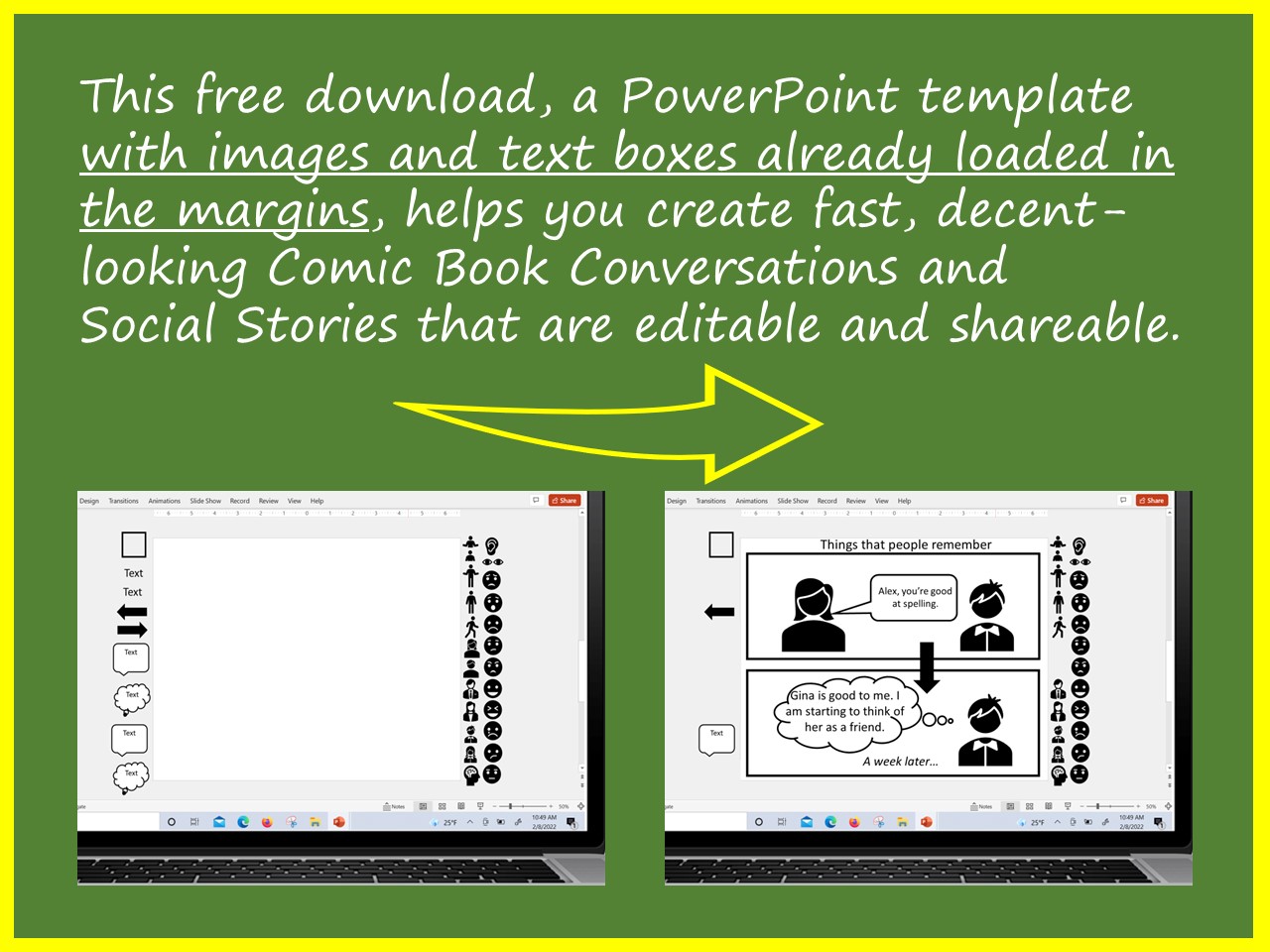
Some months ago, to prepare for my own therapy sessions, I started prepping blank PowerPoint slides with lots of the basic images and shapes I would need to help kids with their particular social and emotional issues. I eventually came up with a template, featuring “pre-loaded” images and text boxes in the margins. It was really helpful. I found I could more often sustain the attention of impatient children who wanted results fast.
The following images explain how to use my free PowerPoint template to quickly put together your own social stories and comic book conversations.
I have loaded the margins with the graphic and text elements I use most often. You can easily customize your own template with additional images.
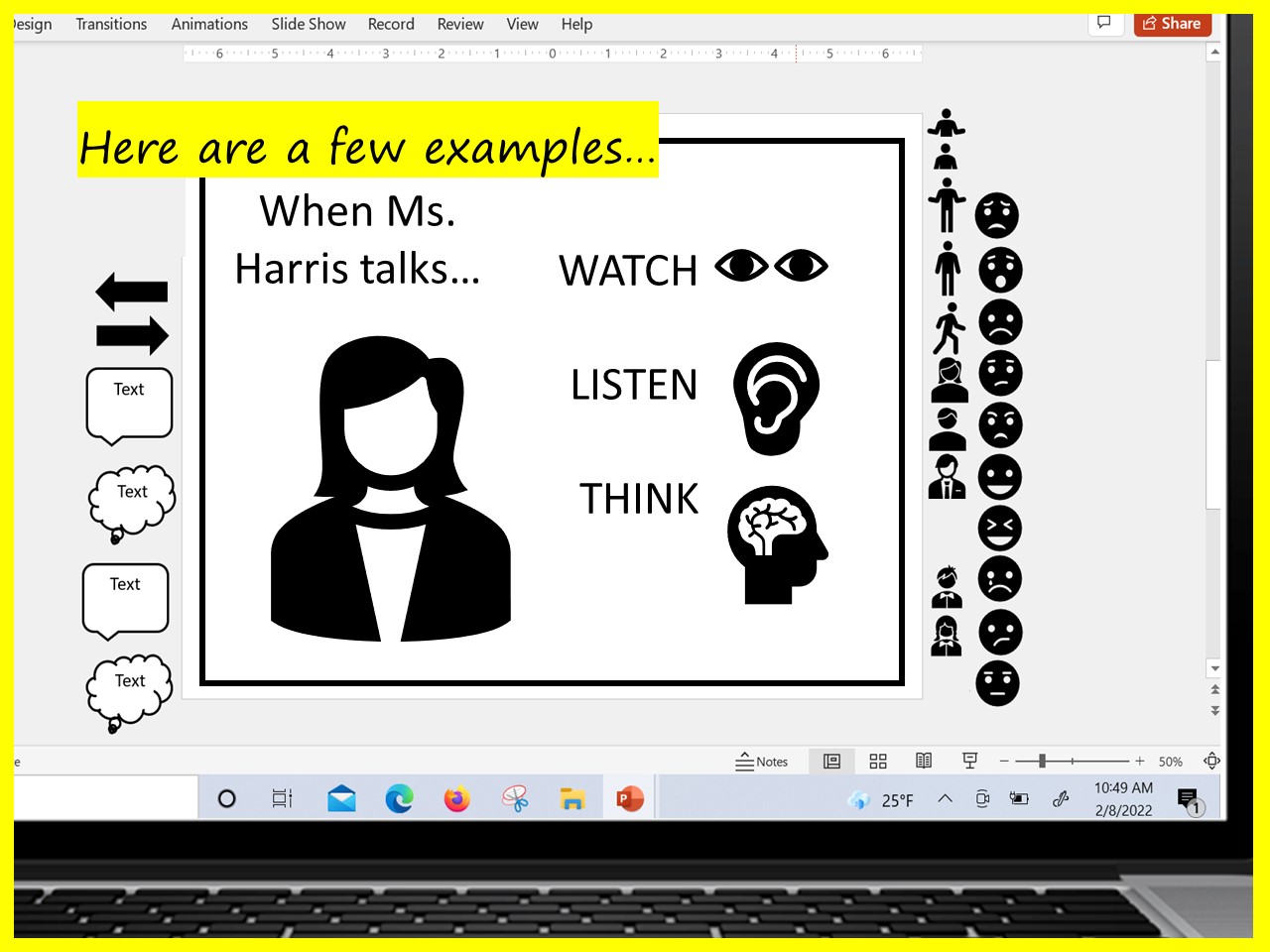
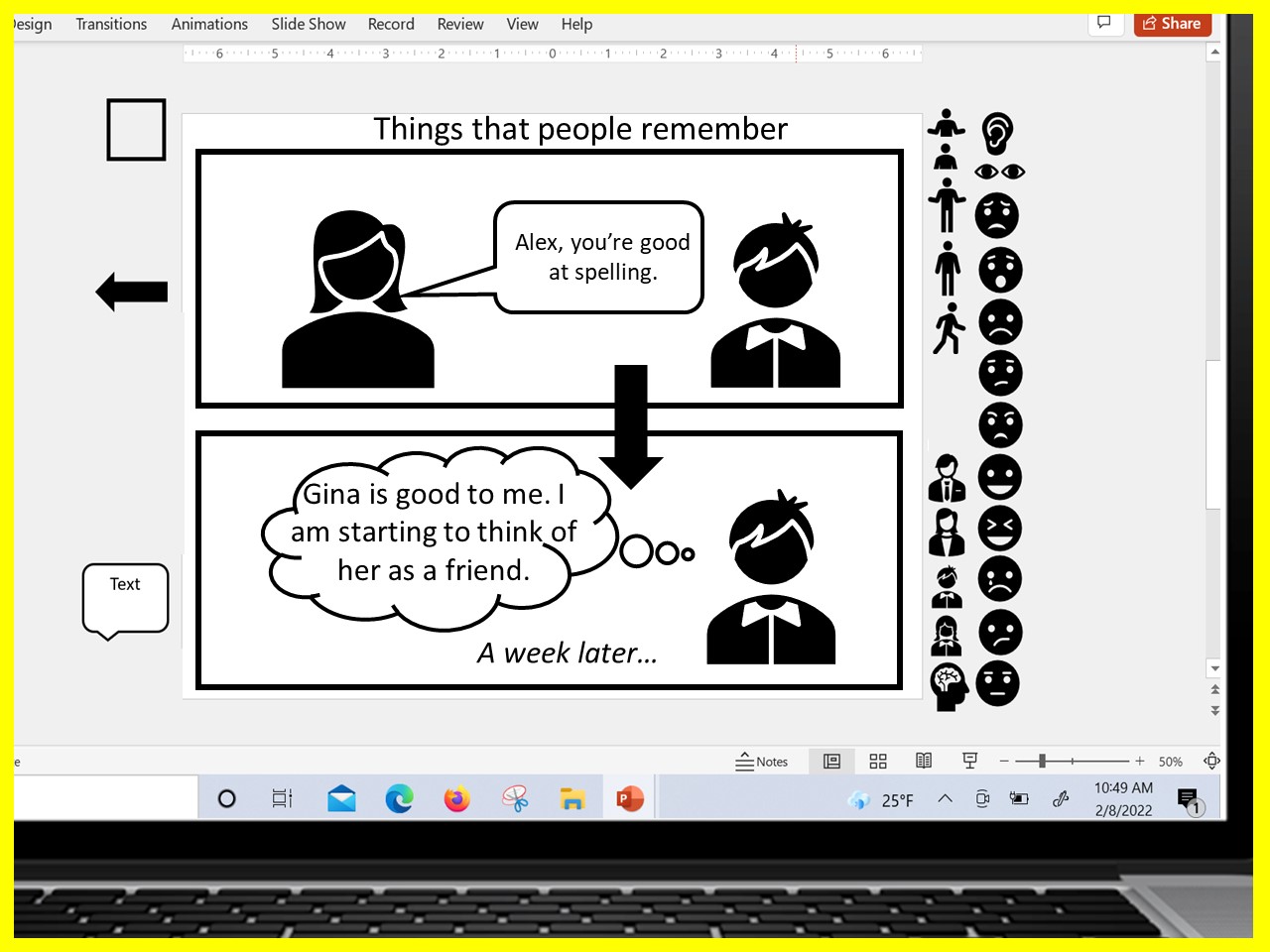
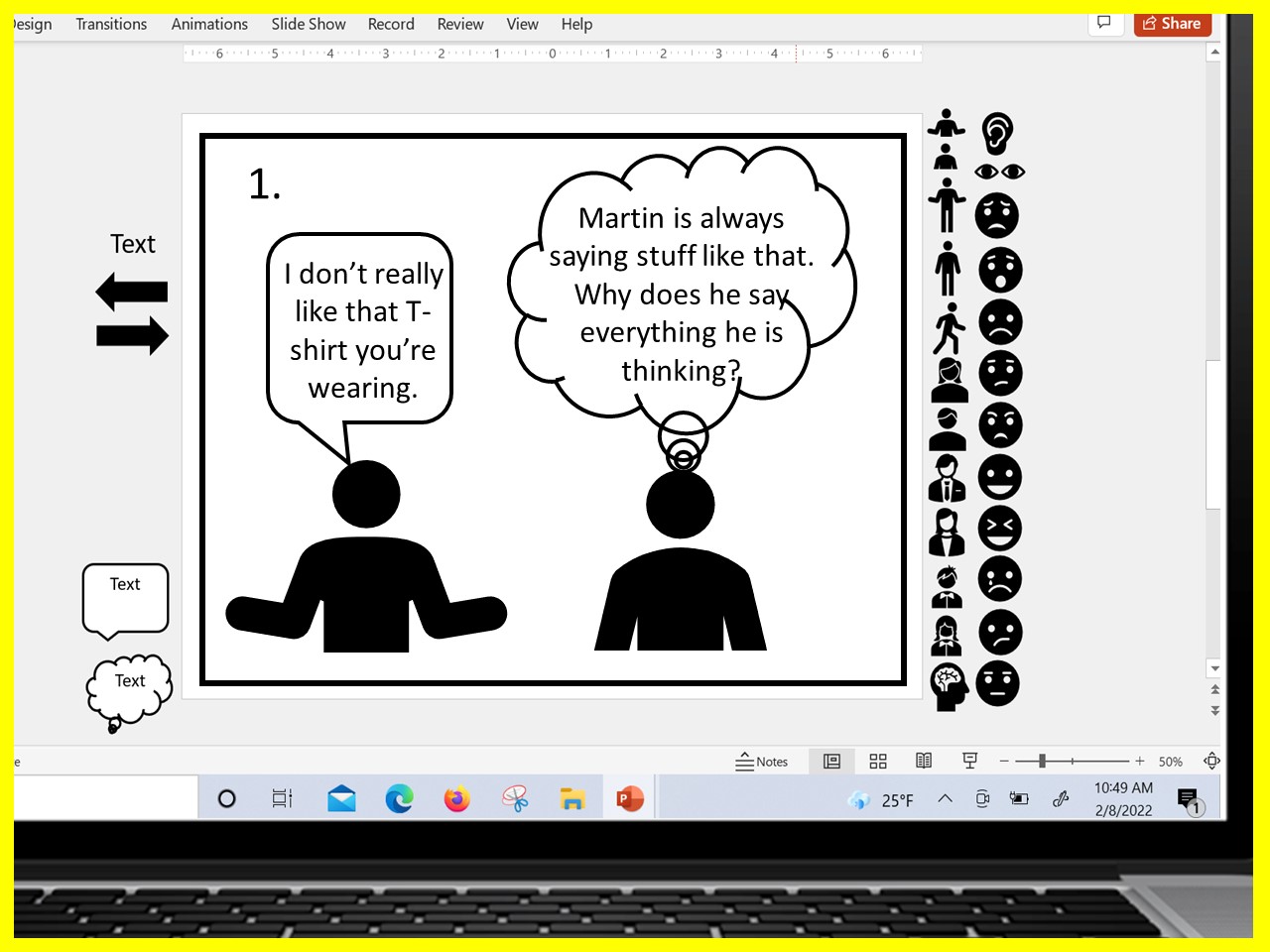
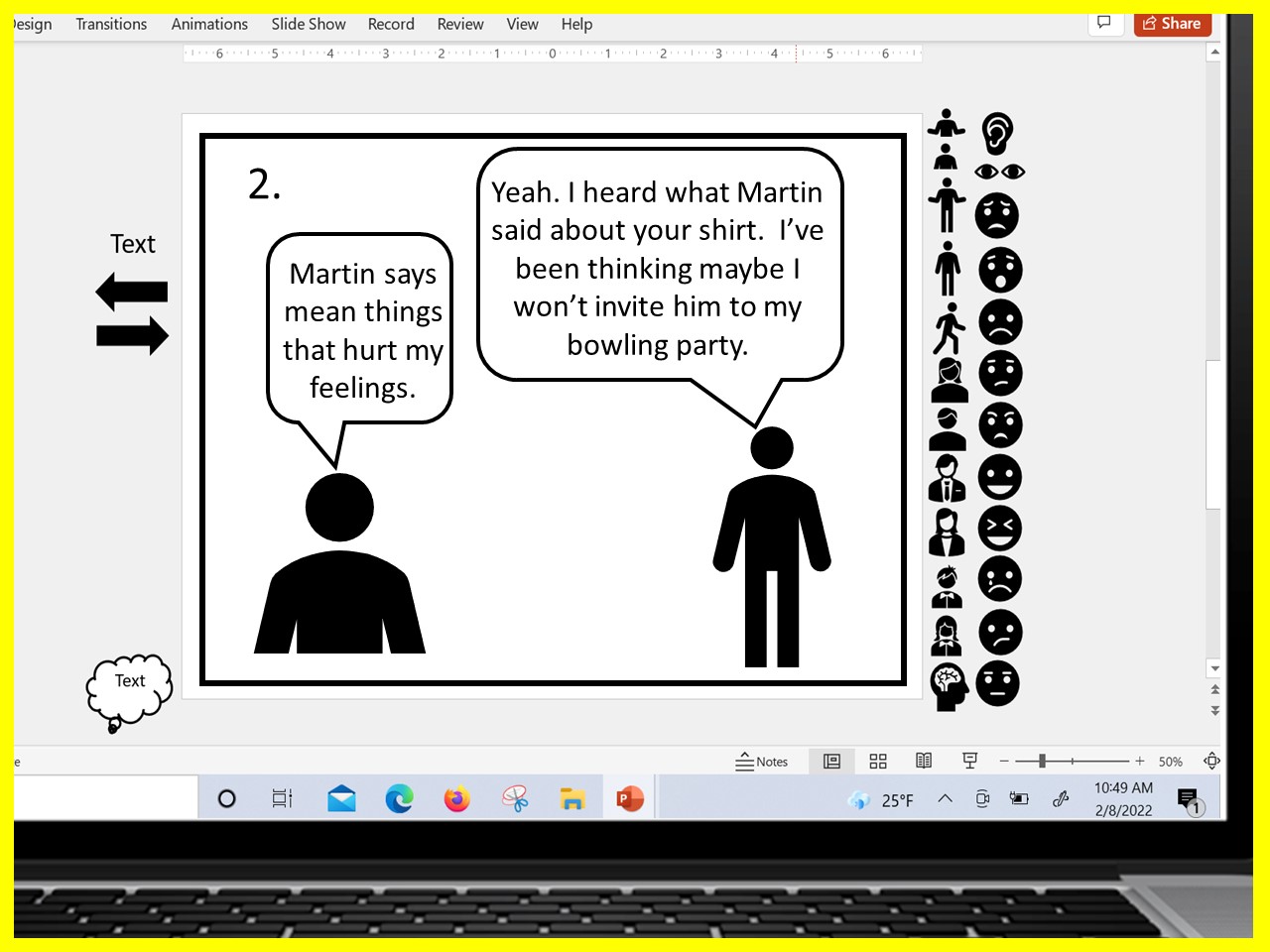
Your comments on these resources are most welcome, and often helpful. Click HERE to send an email.
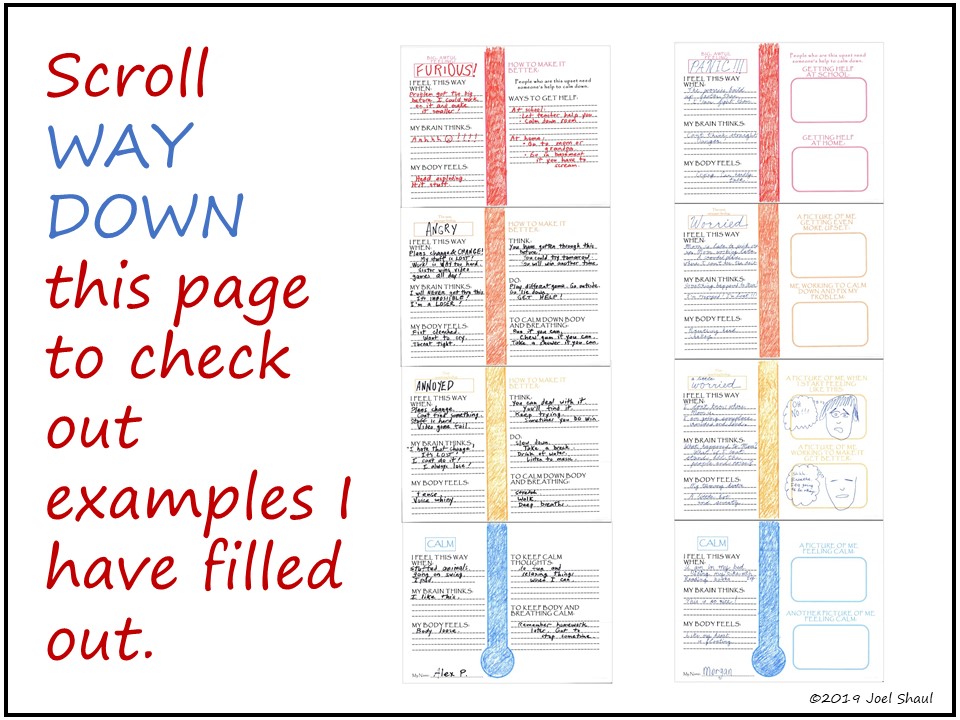
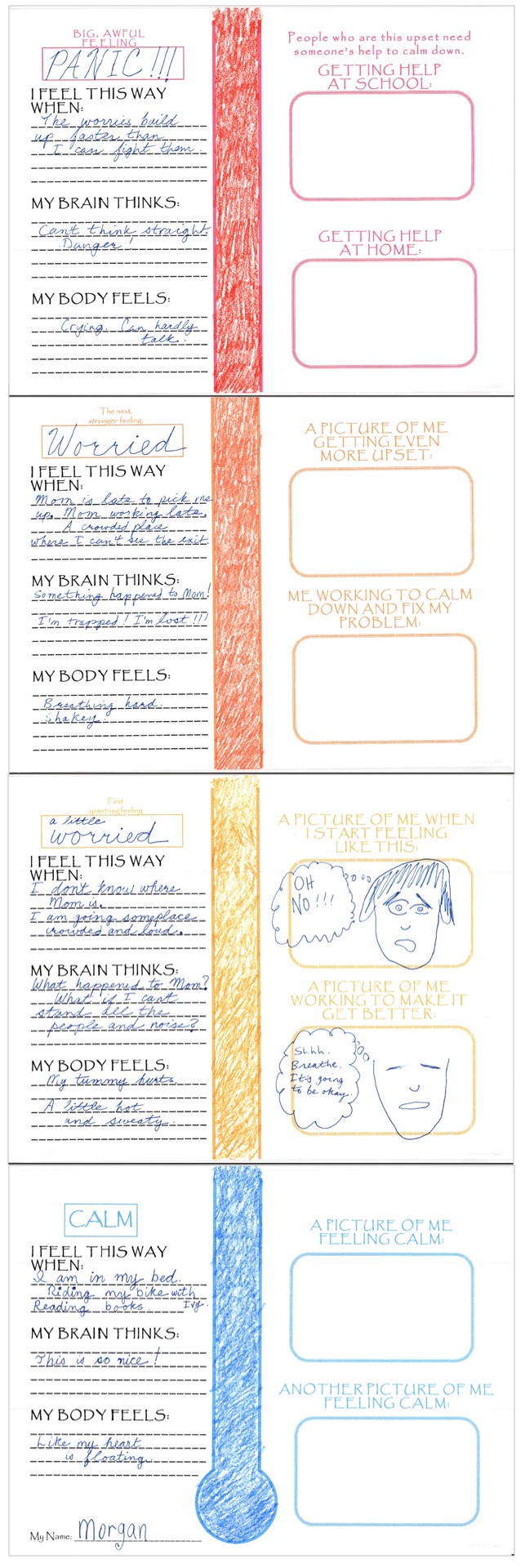
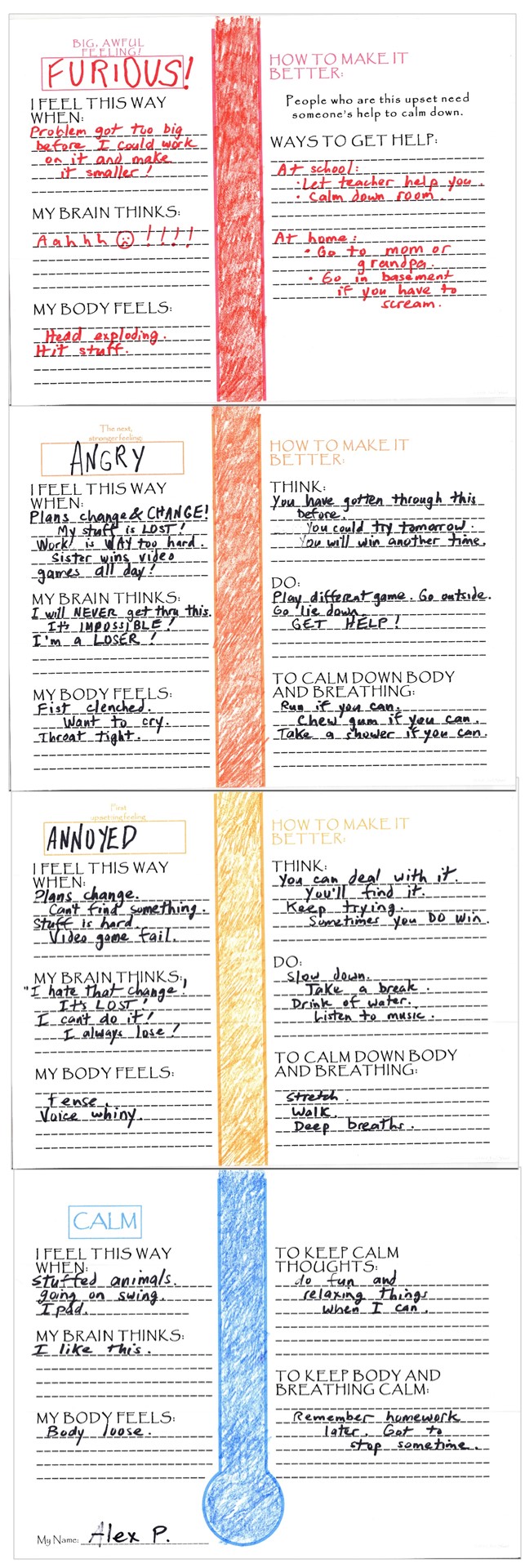
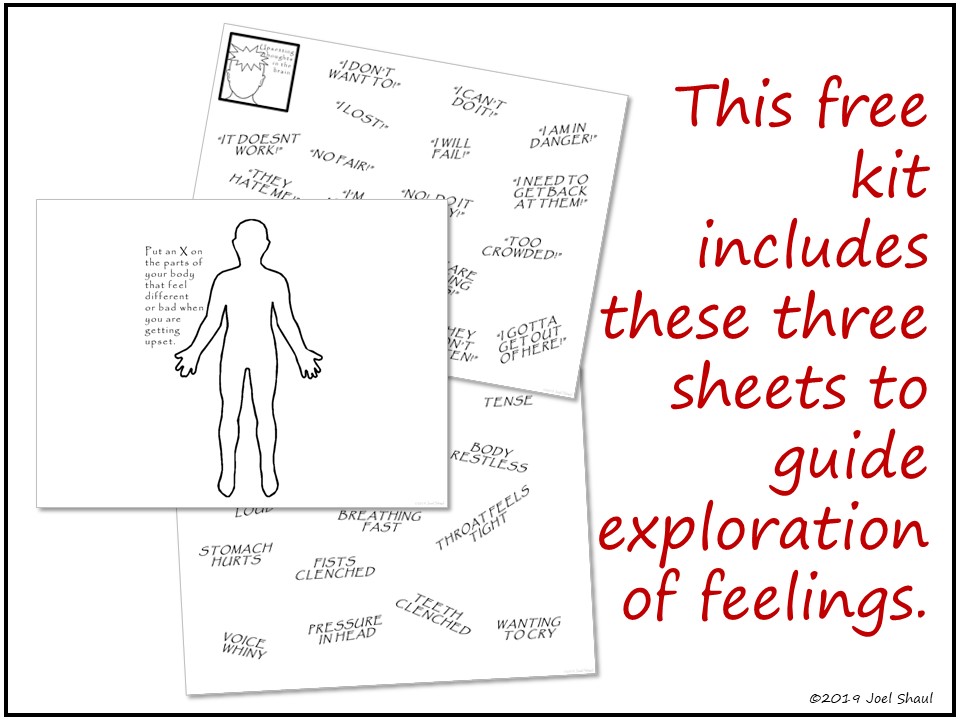
Emotion Thermometers – Free download to help with anger and anxiety
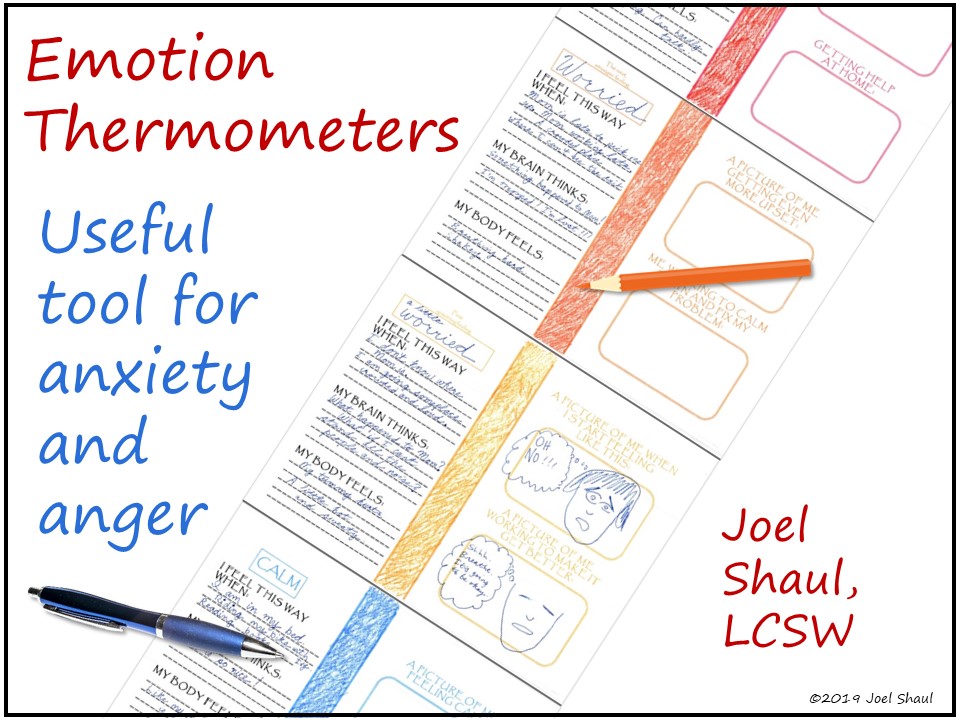
To download this free resource, click on red link here:
Emotion thermometer explanation & download
Emotion Thermometer – in German
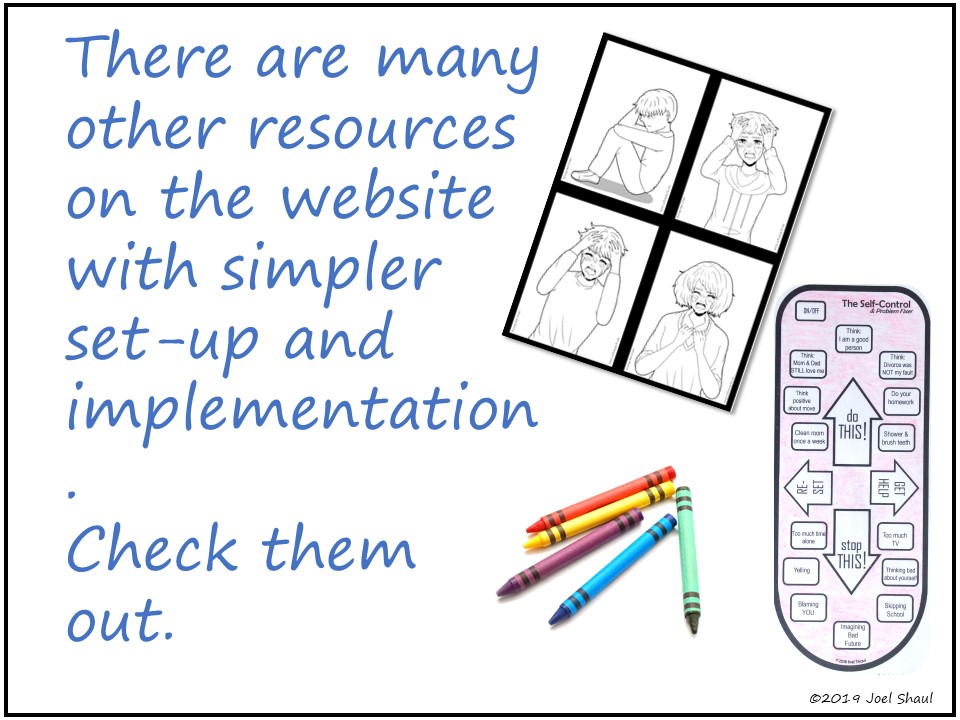
To access other emotional regulation materials, click here.
To access a summary of CBT materials, click here.
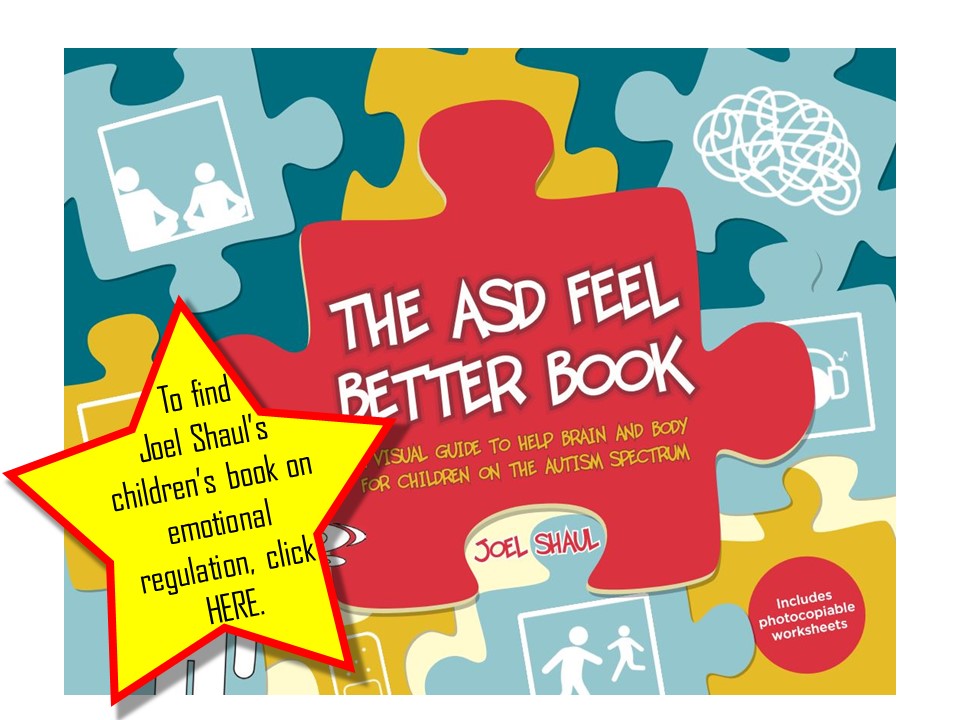
Your comments on these resources are most welcome, and often helpful. Click HERE to send an email.
The Conversation Picture Practice Game: A complete conversation starter kit for children on the autism spectrum
In German: 100 Fotos, die Kindern mit Autismus helfen, Konversation zu üben
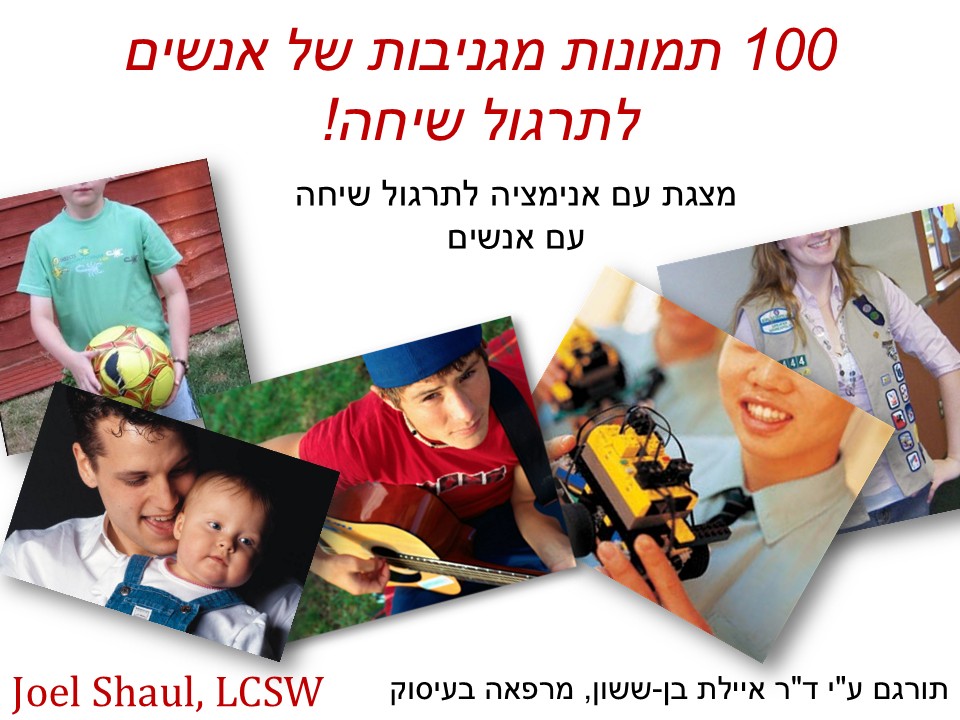
Hebrew translation of this resource
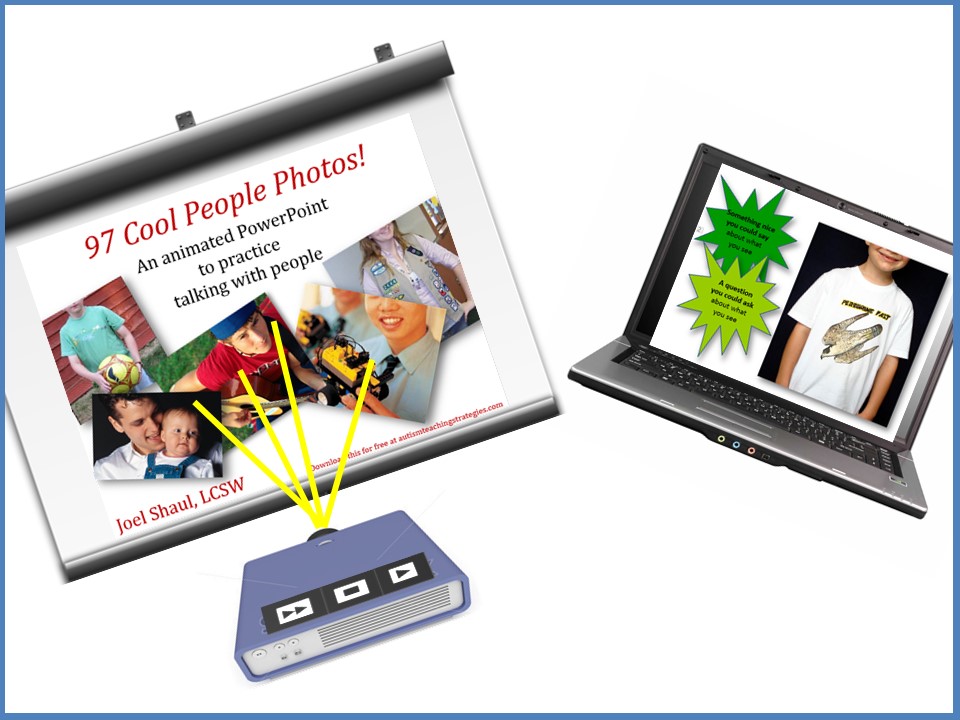
To download the PowerPoint, find the link at the top of this post.
A conversation starter photo kit to project, use on a laptop, use in your tablet in PDF, or print out
Children with autism spectrum disorders usually face enormous difficulties figuring out what to say in diverse social situations. When we are helping such children in counseling, speech sessions and in the classroom, we need to provide them with engaging activities to explore what other people are up to, what other people are thinking, and how to begin conversations based on other people’s interests and circumstances.
Over a period of years I put together a 100 diverse photos that work well for conversation practice. Children really love looking at the pictures and trying to think of something to say.
I put a lot of interesting animated features into this… anything to keep kids engaged in work that is very challenging for them.
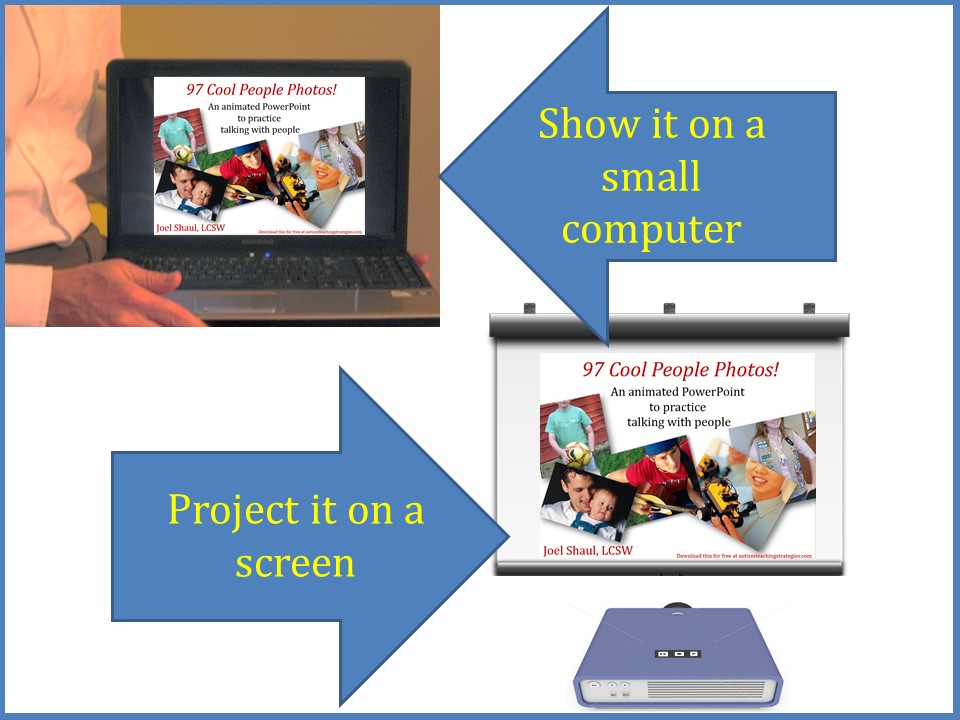
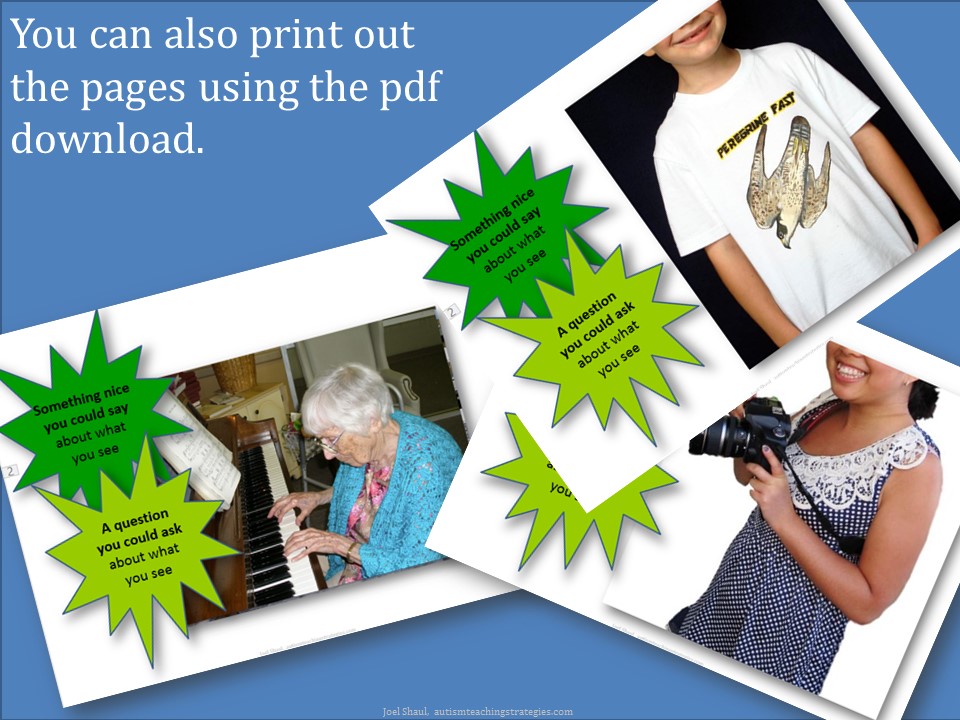

Suggestions for using this kit:
1. It works well if you, the adult, act out the role of the person in each slide. The child then talks to you while you stay in character.
2. For children who read, print out the Question/Compliment/Comment Page (next slide) for each child to use as a reference for words and phrases.
3. It helps enormously if you give out any kind of tokens while you are going through the various scenarios. Here is some cool play money I made.
I hope that you enjoy this social skills activity for children on the autism spectrum. I enjoyed creating it.
Joel Shaul, LCSW
*Don’t miss these other free social skills games, worksheets, speech activities and teaching / therapy aids for helping kids with autism:
Free social skills games & activities, communication / conversation skills for kids with ASD
Free social skills games & activities, social interaction skills for kids with ASD
Free social skills games & activities, emotional regulation skills for kids with ASD
Your comments on these resources are most welcome, and often helpful. Click HERE to send an email.
