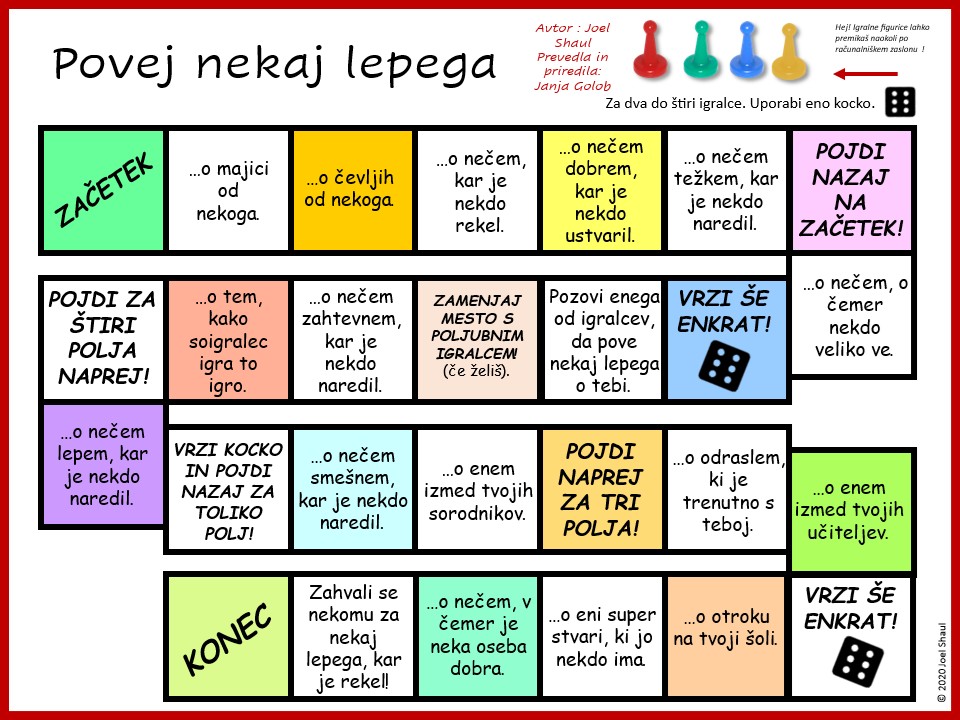
Slovenian translations of free resources

Social Skills Activities for Children with Autism
AutismTeachingStrategies.com
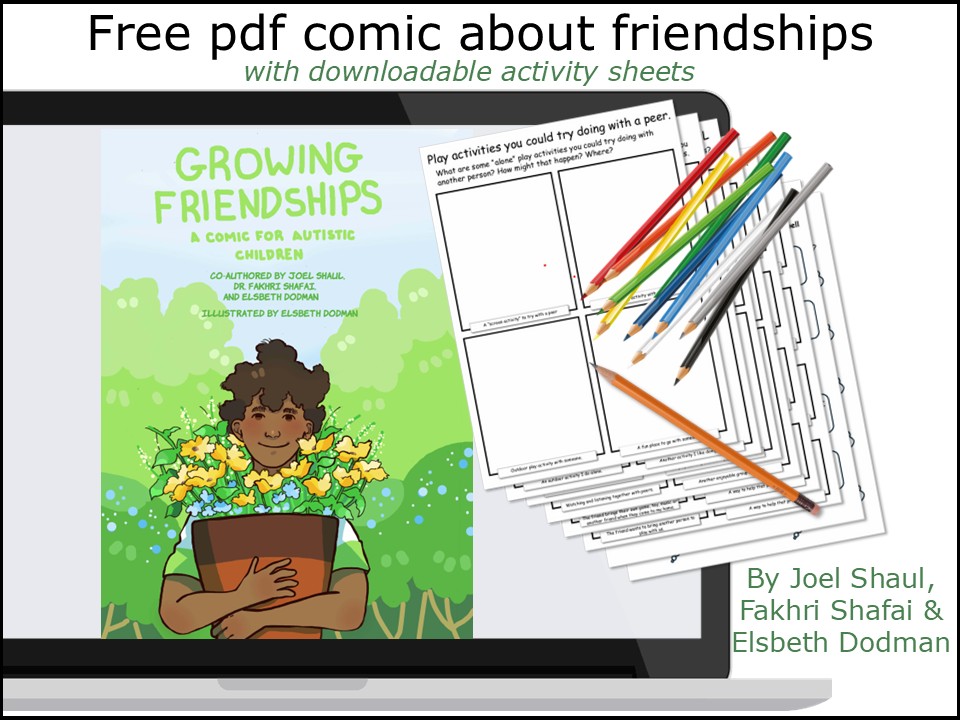
Click HERE to download these resources from the Aide Canada website.
Growing Friendships: A Comic for Autistic Children
Illustrated by Elsbeth Dodman. Written by Joel Shaul, Fakhri Shafai & Elsbeth Dodman
Here is a fine, free comic made available for download by Aide Canada. It is inspired by a free card activity on my website, Friendship Growing Cards. There are some great activity sheets to use in combination with the comic book.
Here are some excerpts.
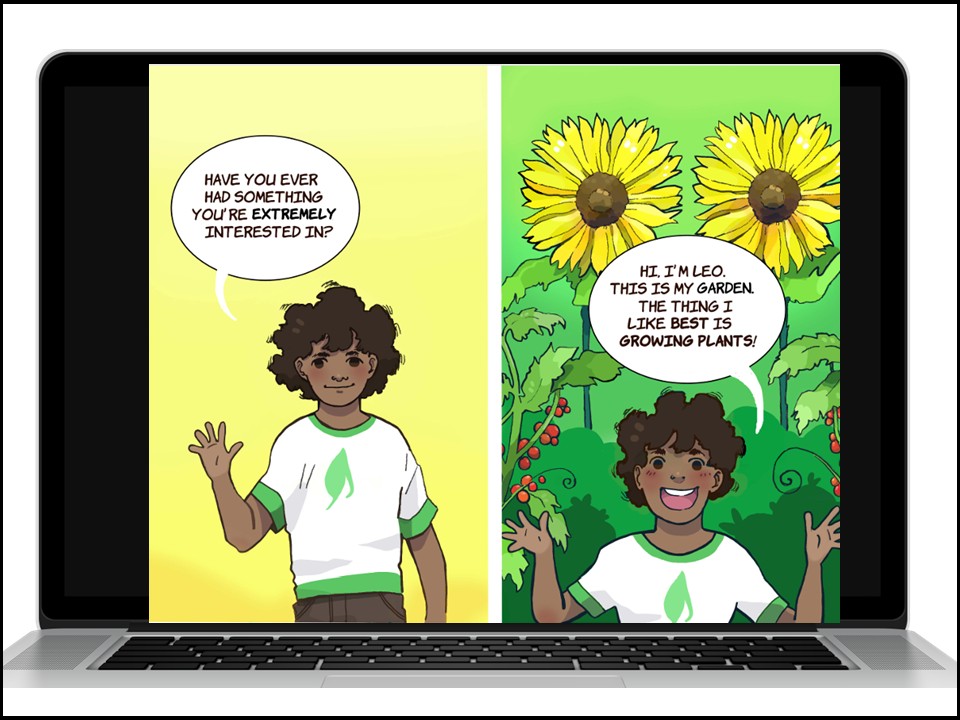
Growing plants is a useful metaphor for “growing friendships.”
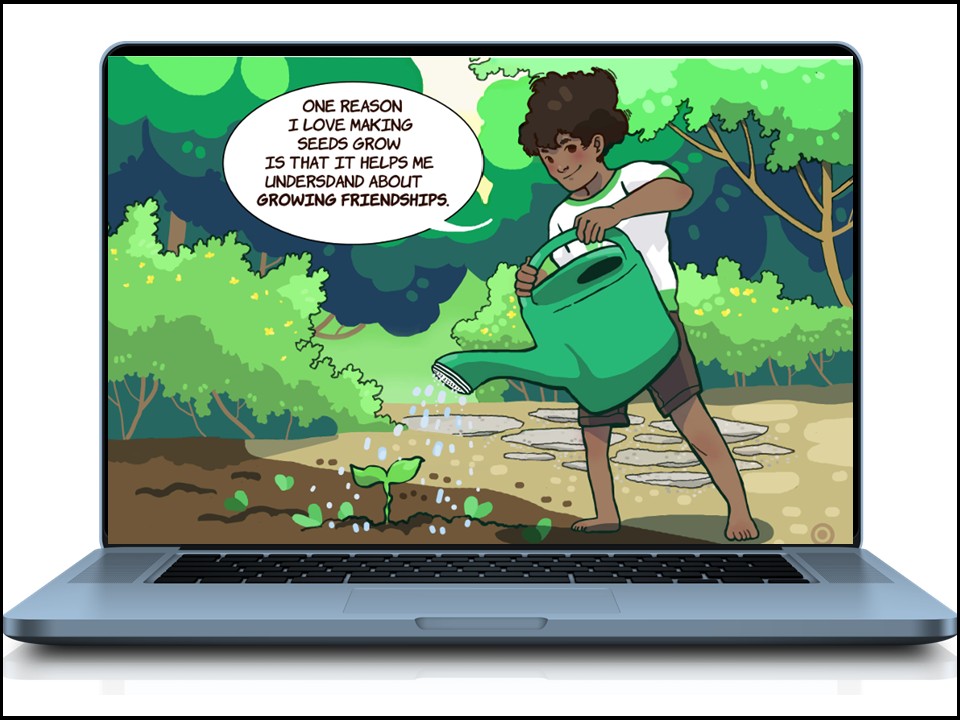
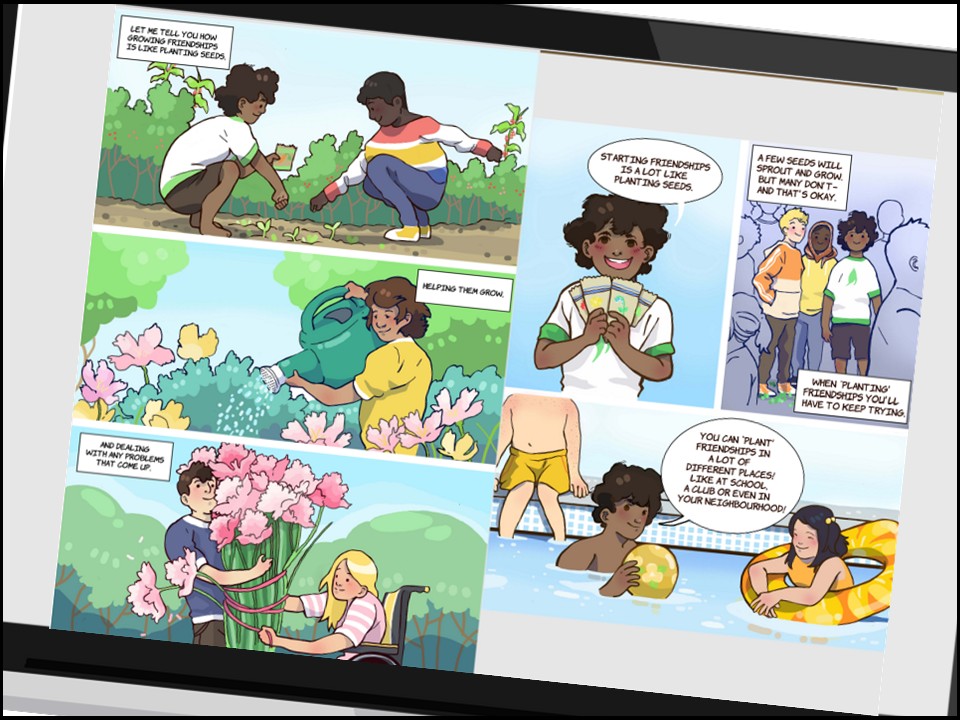
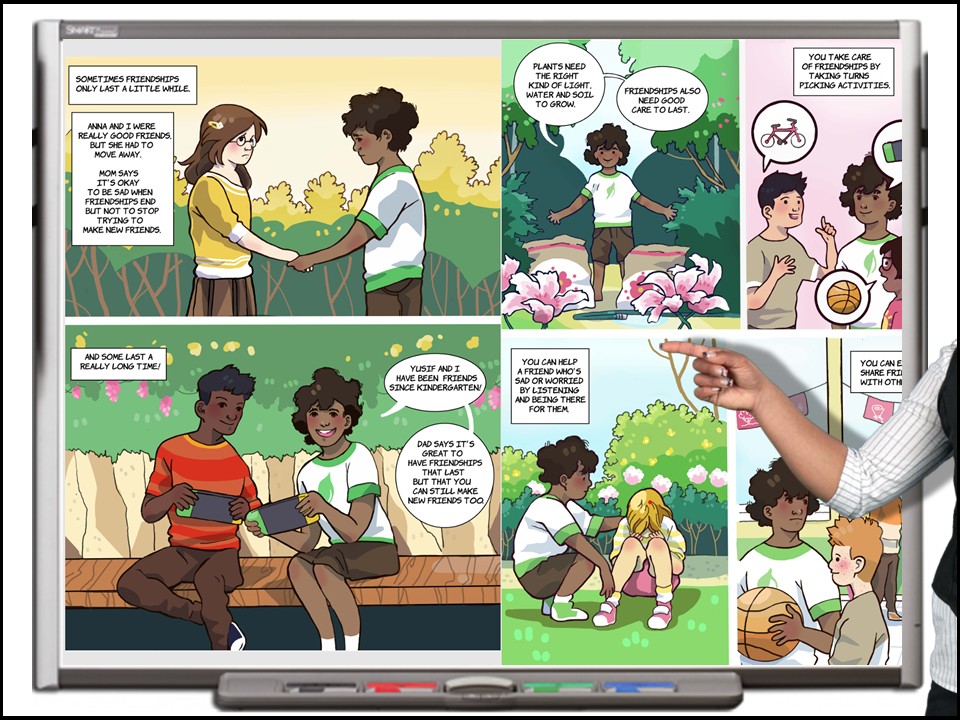
You can show the comic on a computer screen to one child or a small group. Its high-definition images and text can also be projected or shown on a smart board.
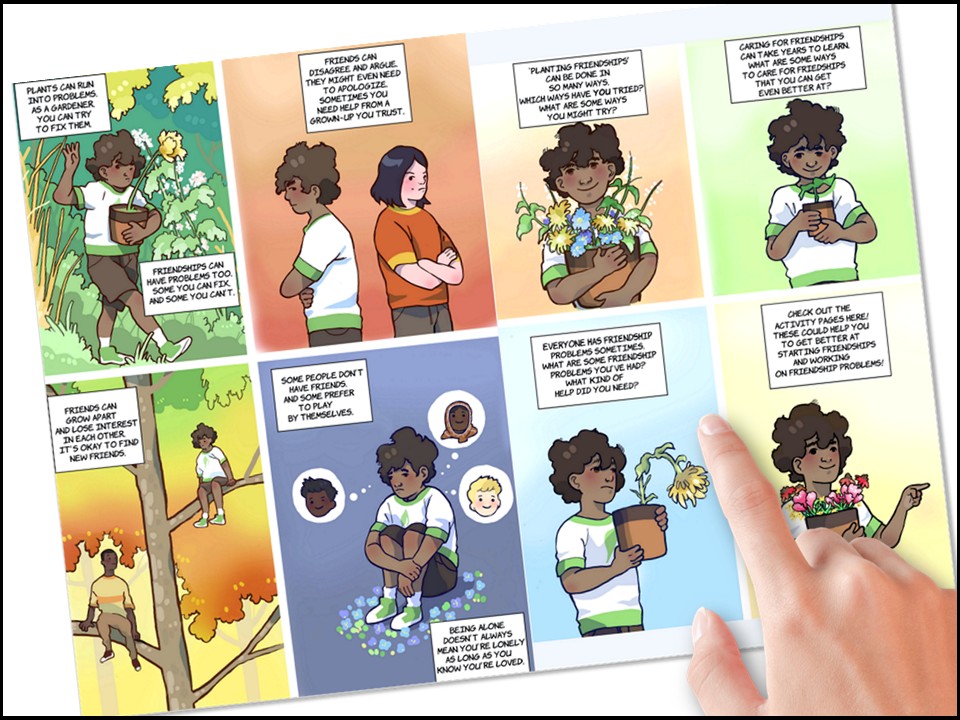
Although the comic is designed to be viewed on a screen, it is possible to print the individual pages.
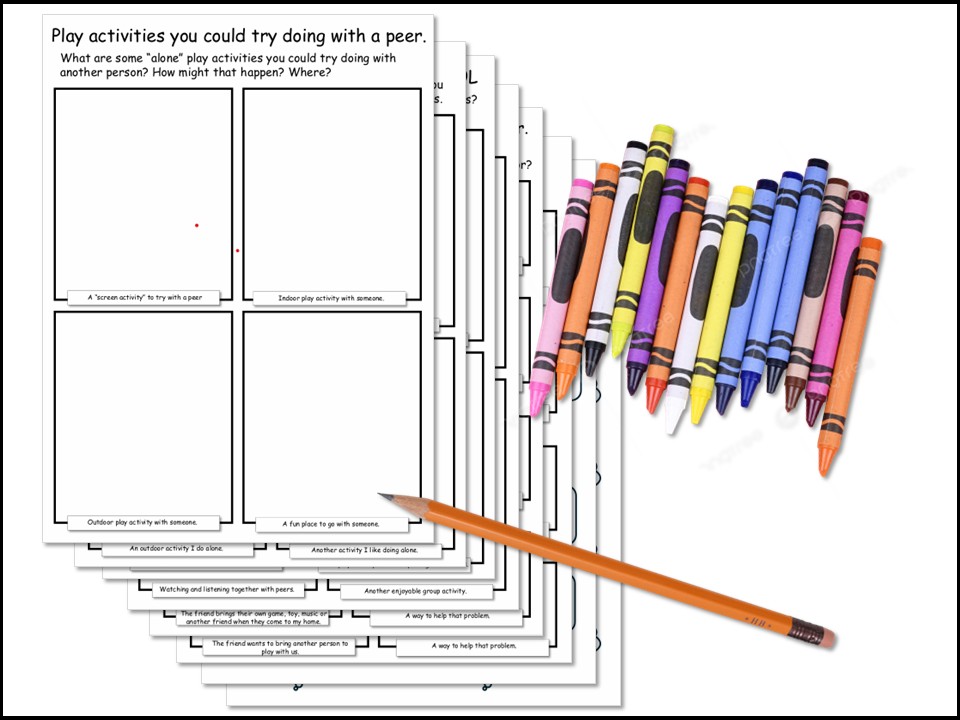
The eight activity pages are very useful to explore the particular ways children are affected by the matter of friendship. The sheets are designed to allow both short answers in written format and simple drawings.
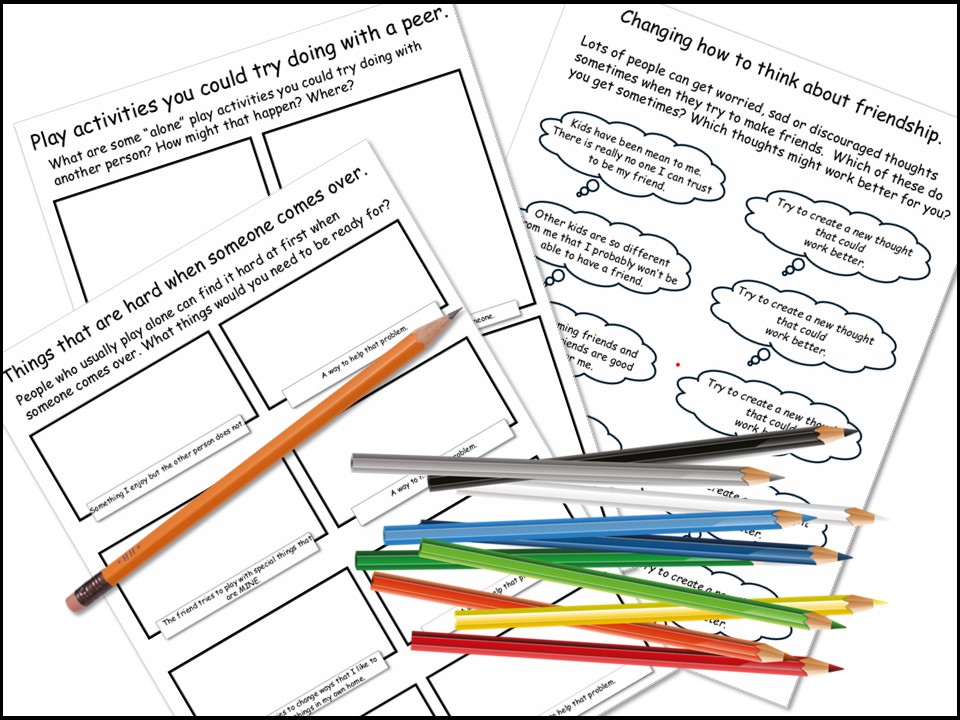
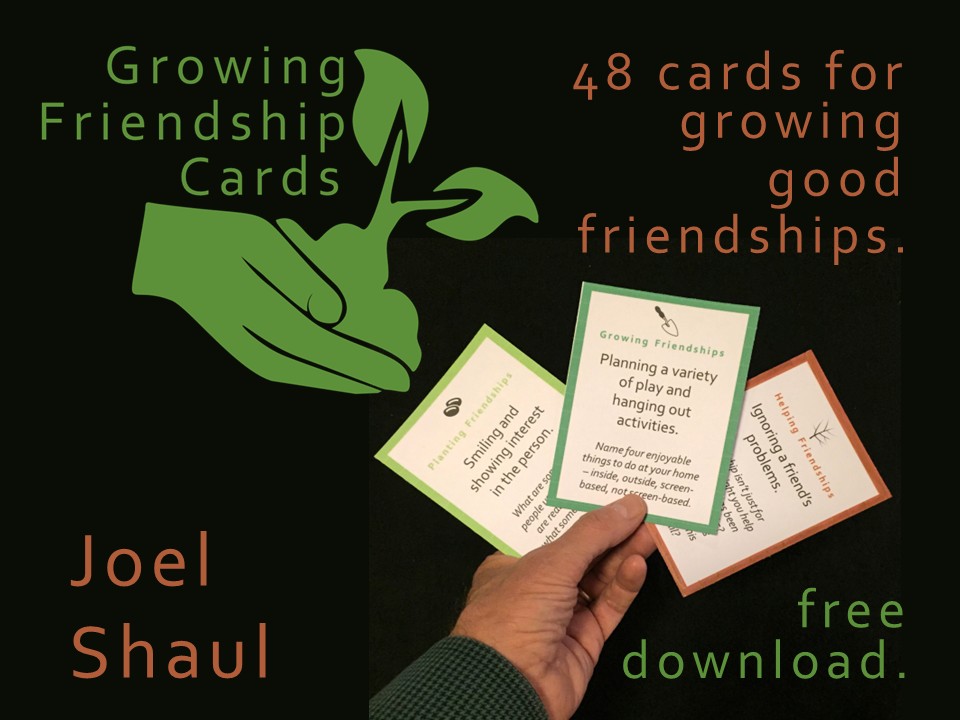
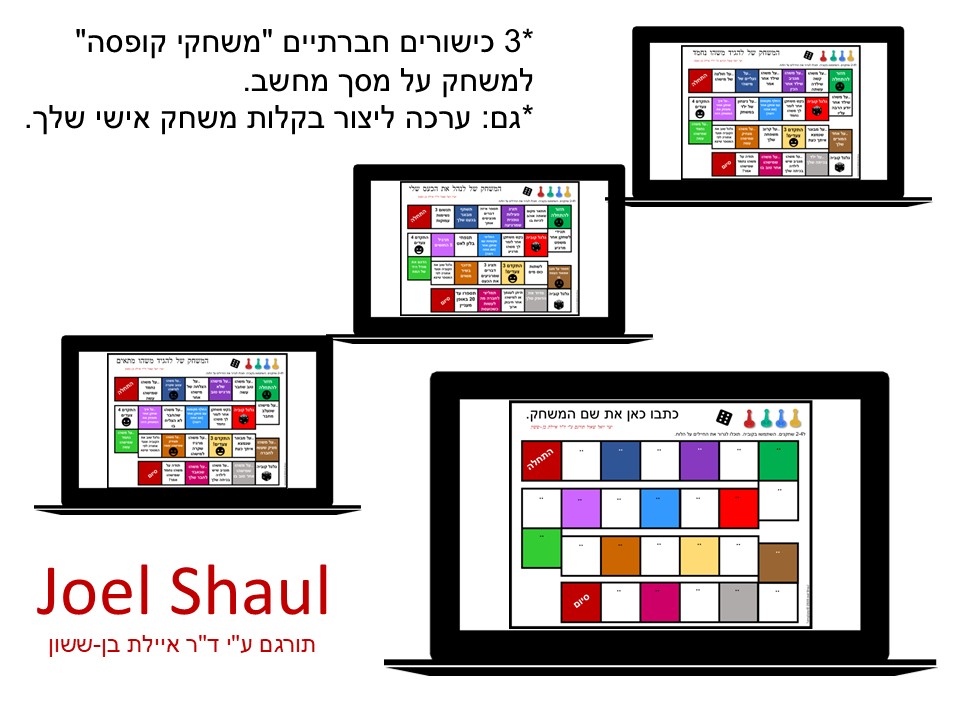
Friendship Growing Cards, which can be printed or else shown on computer screens, add a game-like element to this social skills learning activity and may be used in conjunction with the comic.
I hope you find this collaboration with Aide Canada helpful. And I thank Aide Canada for making this free resource available to you.
Joel Shaul
Teachers and therapists working with young people on the autism spectrum face a dilemma.
While we are facilitating social survival by addressing certain patterns of behavior associated with autism, we must somehow, at the same time, help young people with ASD to value their essential autistic selves and to avoid excessive and harmful “social masking.”
Among professionals in mental health, speech and education, and particularly among autistic people themselves, there has been much useful discussion regarding social masking in recent years. There are important ramifications for professionals who are trying to help young people with ASD.
Validate the emotional strain of how “fitting in” can affect people with ASD.
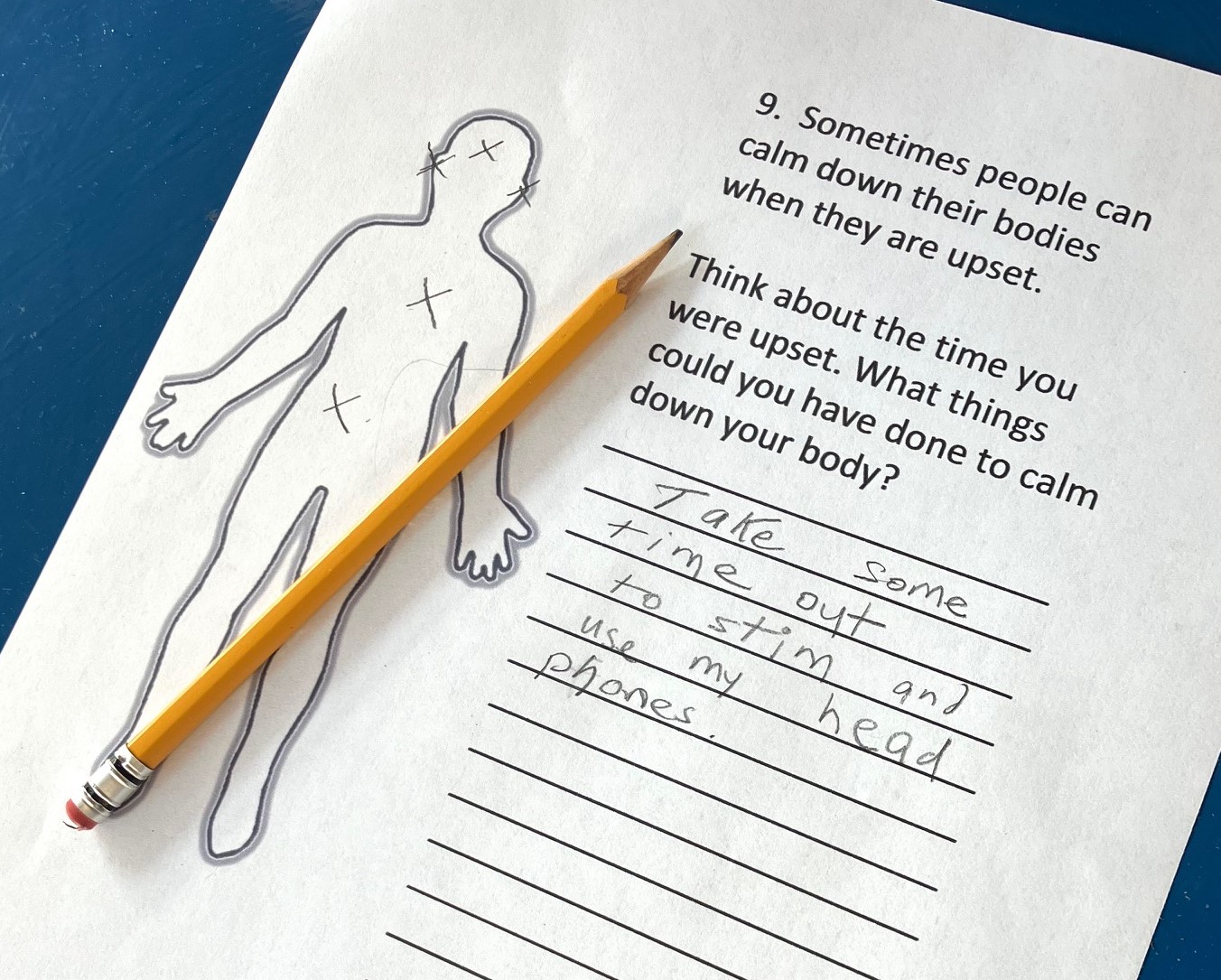
The effort required to decipher and conform to social rules, and to suppress behavior such as public stimming, can be enormous for people with autism. Some experience depression and anxiety from this constant strain. In our classrooms and offices, we should all check in on this frequently. We may need to back off of some things we are asking the child to do, and develop more reasonable expectations. (Photo below is one page from Simplified CBT Worksheets for Children.)
Foster mutual tolerance, respect and accommodation.
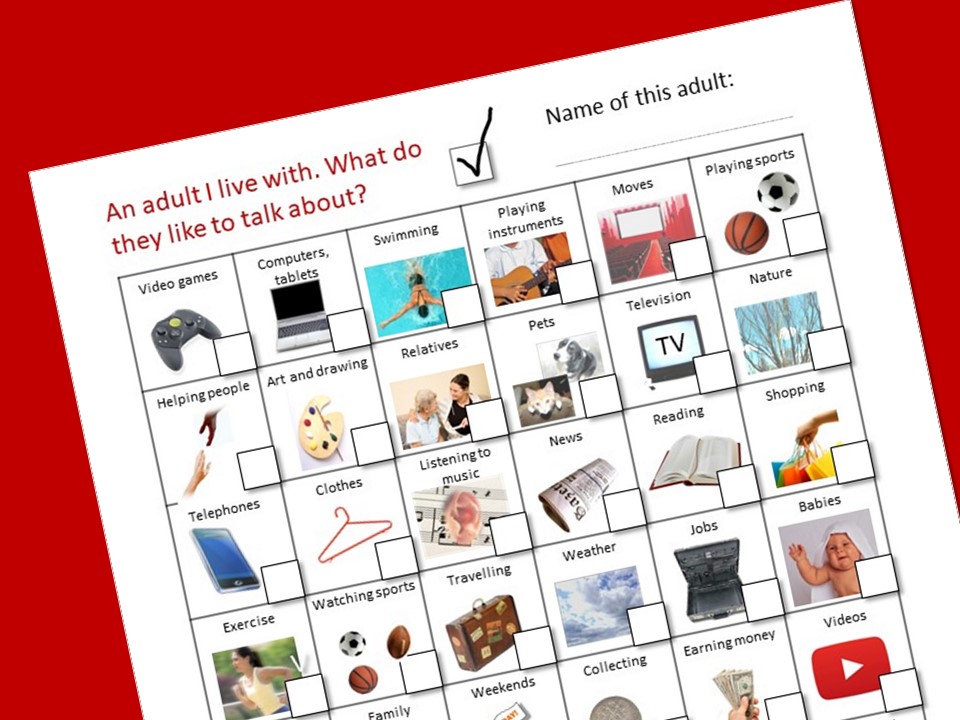
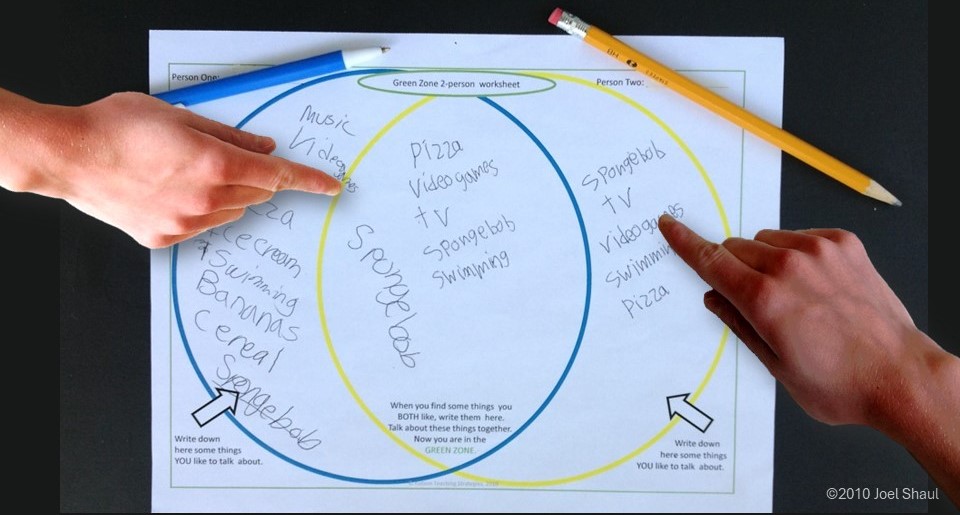
Working with families and peer networks and families, we can all do a lot to foster forbearance. Interestingly, most of my own work over the years encouraging tolerance of “autistic” behavior has been helping young people with ASD to tolerate stimming, self-talk, and topic perseveration in other autistic youth with whom they attended social skills groups and my summer teen day camps.
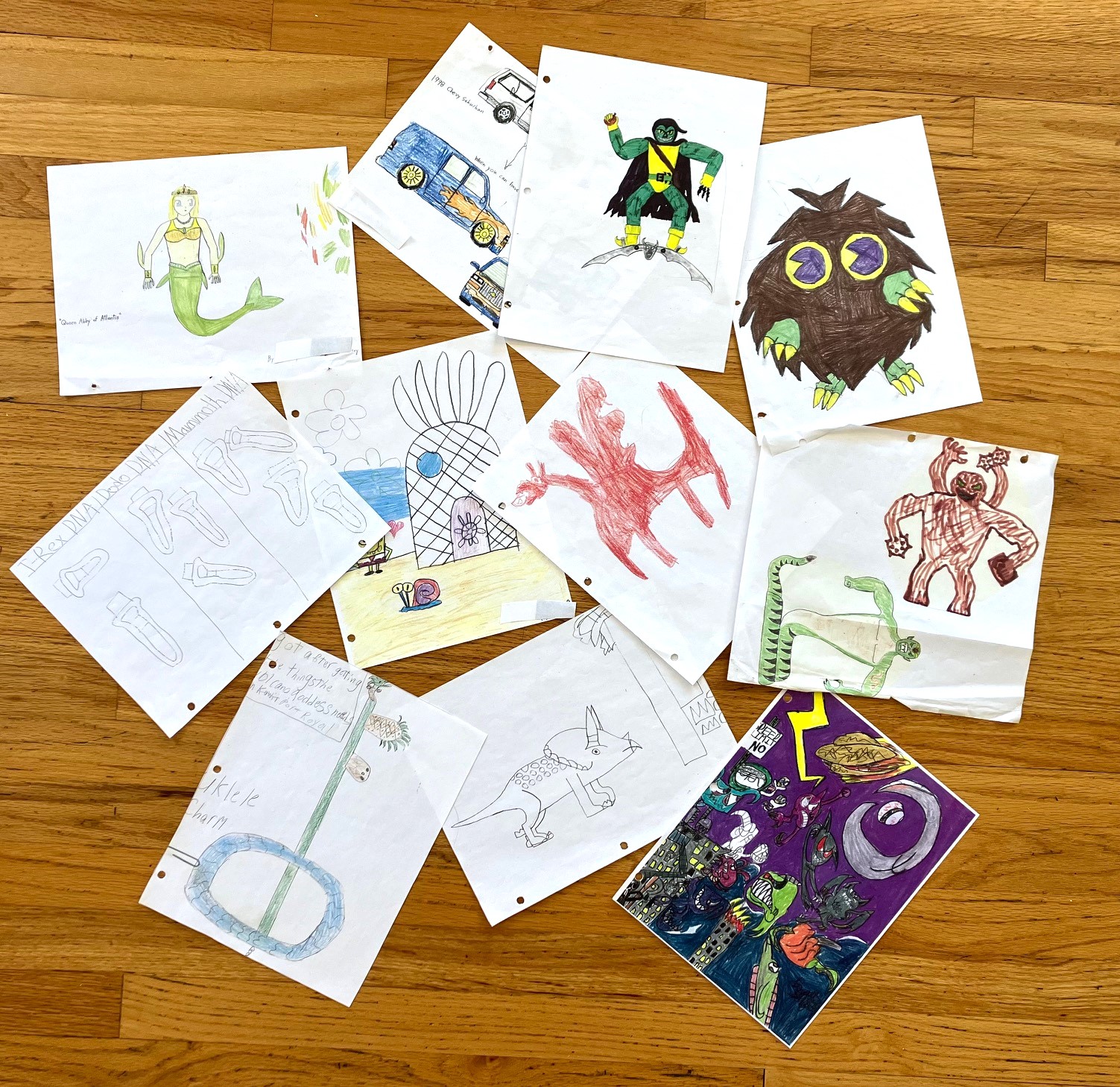
This photo shows a collection of art by a number of attendees in one of my summer teen autism programs. My first objective was to get autistic peers to increase comfort revealing their own “obsessive” interests by drawing pictures proudly displaying those interests. The second objective was to get autistic youth to respect the preferred interests of their autistic peers instead of conveying negative judgment, disdain or annoyance, which I actually ran into a lot among autistic teens getting to know each other.
Working with families where there are autistic children, I promote the same kind of both-way respect.
Identify patterns of problematic thoughts associated with social masking.
Our young clients might become discouraged with their setbacks or slow progress in their social worlds. In psychotherapy, I have seen many young clients show intense negative thinking about themselves when their efforts to filter social expression of their autistic selves yield disappointing results.
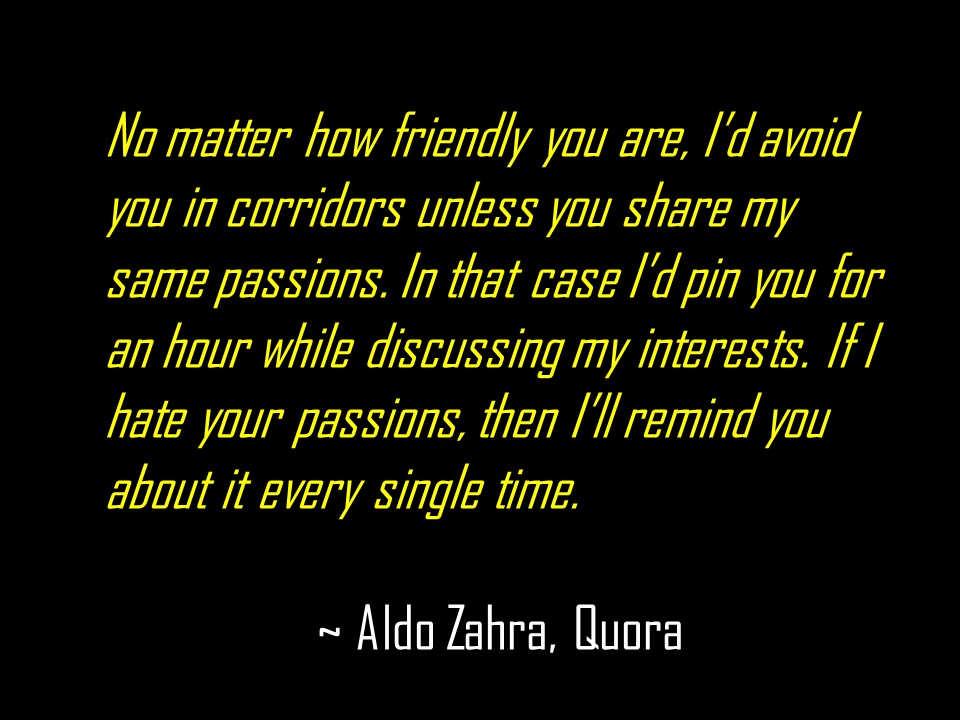
It’s easy to see how some autistic people can develop jaded attitudes regarding society in general from the strain of social masking. Here is an example I found on social media:
I had a young autistic adult client who, after reading online about “autism burnout,” told me that that his own burnout from masking all the time was so severe that he should drop out out of therapy. I validated his distress and discouragement but also encouraged him to keep trying for a while, and he subsequently did noteworthy and successful work overcoming some of his social anxiety issues.
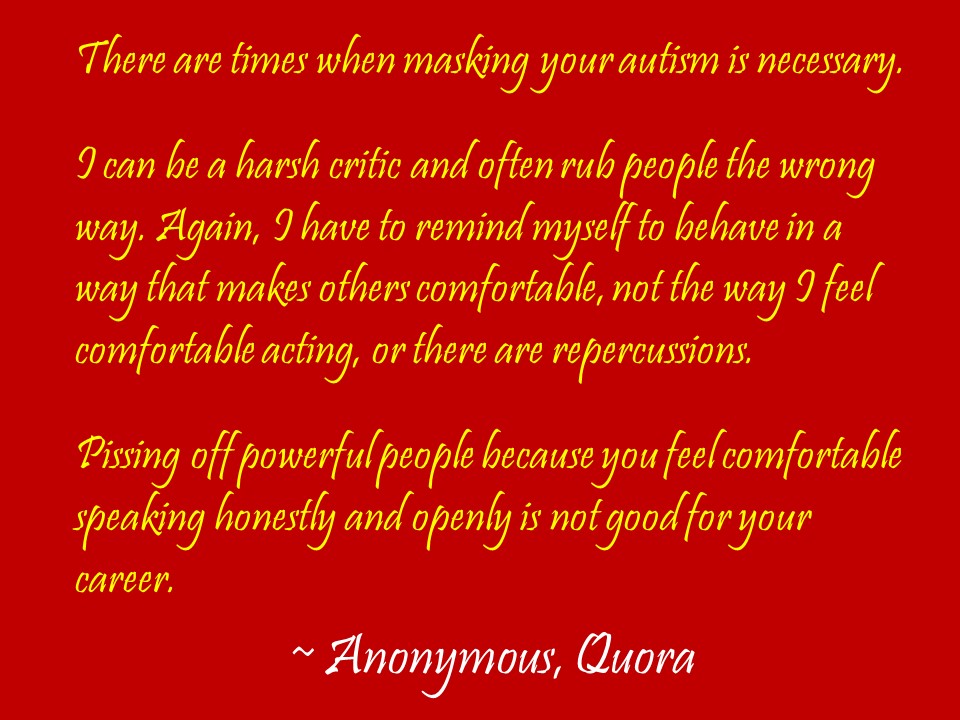
I like to point young people with ASD towards role models of fellow autistic people who aspire to a more nuanced attitude regarding social masking. These two quotes, also from social media, are good examples of developing a strategic and selective approach to masking.
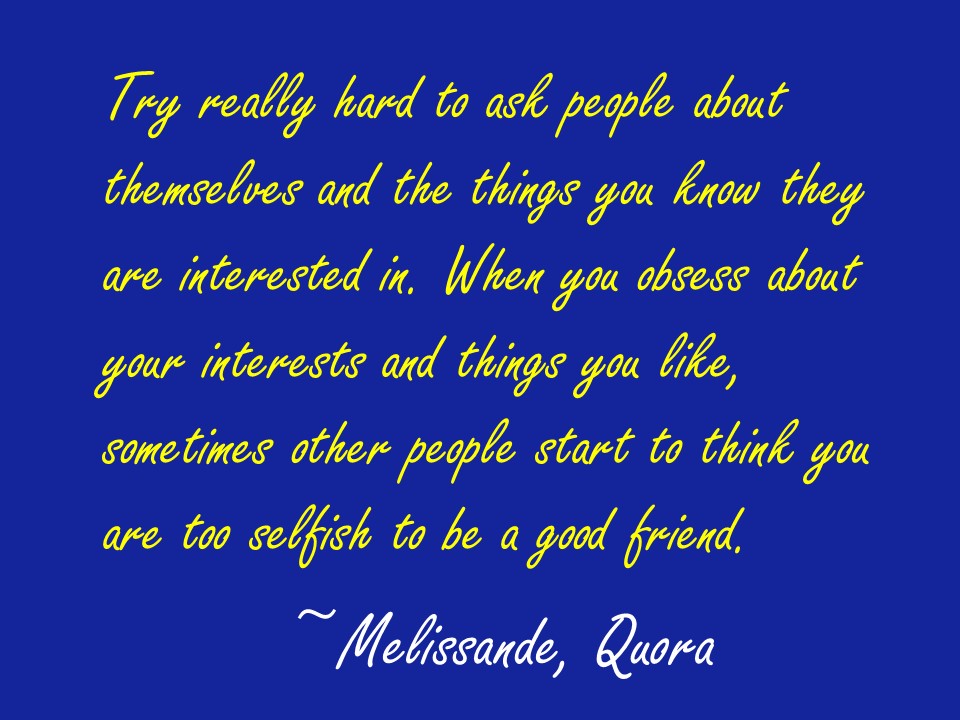
Promote tolerance, but avoid unnecessary accommodations that may not actually be in the long-term interest of the autistic person.
Here are some examples of averting social masking that seem to over-accommodate — at the expense of long-term social goals:
Allow and facilitate autistic people’s reasonable expression of what feels normal and natural to them.
At times, a little tolerance and understanding can go a long way.
I hope that some of this discussion is helpful to you in your own work, as a therapist, teacher or parent, in determining helpful ways to address social masking.
Joel Shaul, LCSW
Contact me to learn about my in-service trainings for speech-language pathologists.
I am available to present on-site at events hosted by your organization, or remotely via Zoom or Teams, in time frames varying from 90 minutes to all day, or two days.
Possible topics include:
Social communication games, activities and worksheets – free, downloadable kits
Communication learning activities for ASD that also address emotion and interaction concerns
Interaction and communication challenges for teens and young adults with ASD – therapy approaches and free resources
Here are some samples of course descriptions:
Contact me to learn about my in-service trainings for educators.
I am available to present at events hosted on site by your organization, or remotely via Zoom or Teams, in time frames varying from 90 minutes to all day, or two days.
Possible topics include:
Lessons, games and activities to address social communication challenges in autistic students
15 free kits for addressing emotional and communication skills in elementary and middle school students with ASD
15 free kits for addressing social, emotional and maturity issues in students with ASD
Here are some sample course descriptions:
Contact me to learn about my in-service trainings for mental health professionals.
I am available to present on-site at events hosted by your organization, or remotely via Zoom or Teams, in time frames varying from 90 minutes to all day, or two days.
Possible topics include:
Mental health interventions for children with autism which also address interaction and communication concerns
Engaging CBT interventions for autistic children and teens – methodology
and free materials
Targeted lessons & tools for school-based mental health intervention with autistic students
Social & emotional challenges for teens and young adults with ASD – therapy approaches and free resources
Here are some samples of course descriptions:
There is a lot we can do as therapists and teachers to support the mental health of young people on the spectrum by appreciating and supporting the art they create when they are not with us.
It is well known that some of the world’s most original creators of art have autism. Many individuals on the spectrum, including quite a few young people in our therapy offices and classrooms, are dedicated practitioners of art.
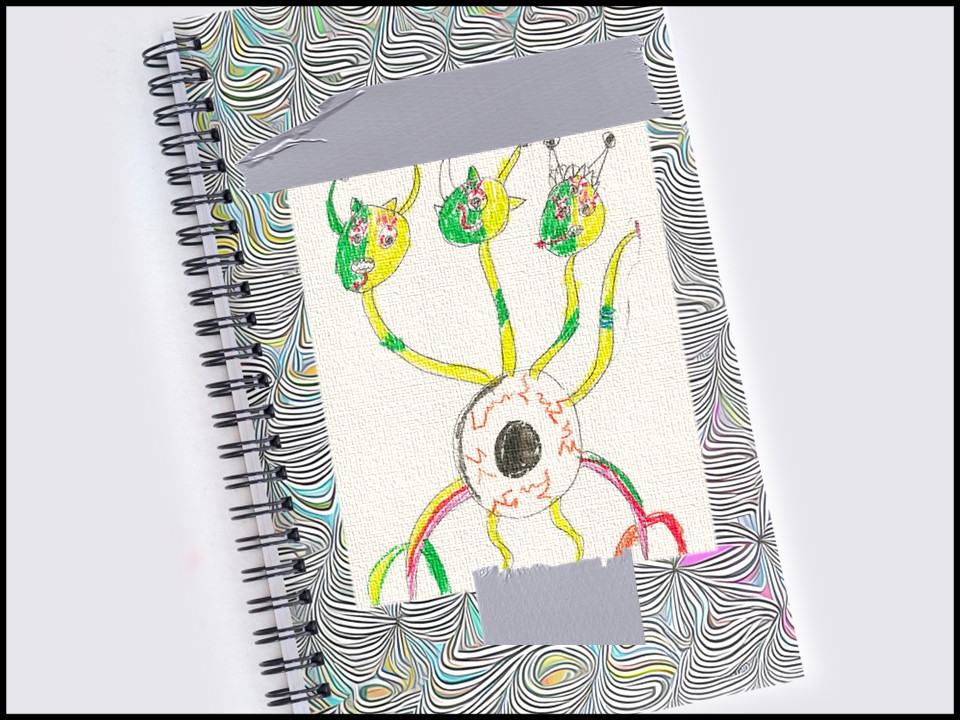
Here are some reasons to explore the art of a young person with autism.
~ To help children to more fully appreciate their own unique interests, perspectives and talents.
People with mind differences might not sufficiently value their own creativity. In fact, they may regard their atypical art as evidence that they are somehow weird and different.
When young people with autism make something that is amazing, they should be made aware of its essential worth. If a child uses a glue gun to fashion new superheroes out of discarded old action figures, or makes alien monsters out of aluminum foil, or creates an imaginary “family” of cartoon characters on their computer, they should know that their work has special value.
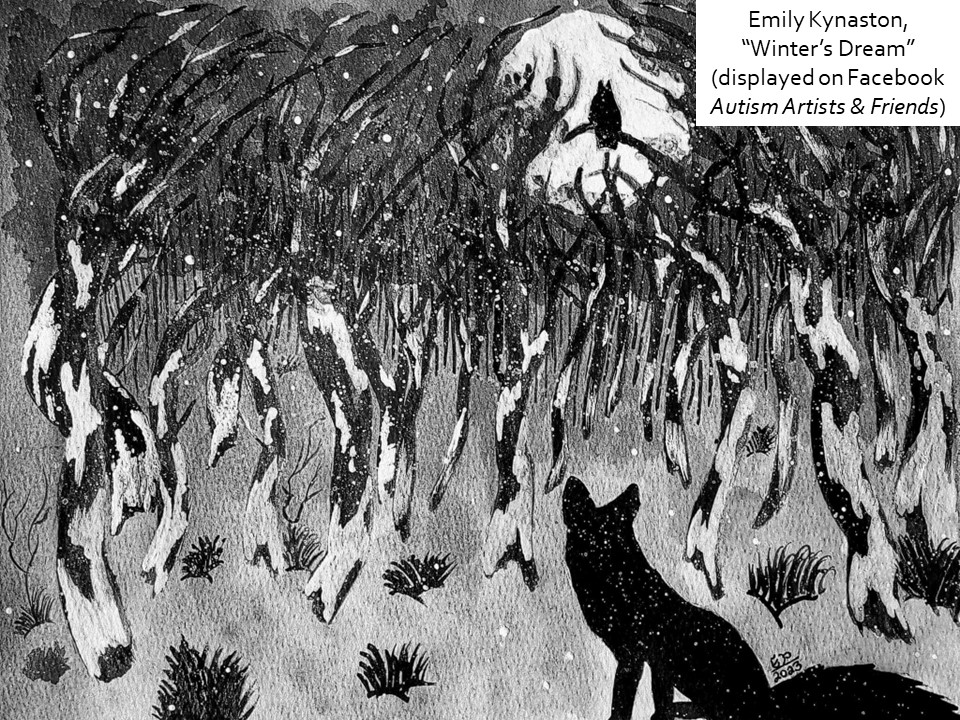
~ To gain insights enabling us to help them more effectively.
Having better awareness of a child’s interests can increase our ability to motivate a child and sustain their interest. For example, seeing a child’s sketchbook full of Harry Potter-themed art might help a therapist to expand therapy session content to include discussion of social skills lessons Hermione offered to Harry and Ron at Hogwarts.
~ To better understand imaginary thinking, and bring to light aspects of fantasy worlds that are helpful or potentially problematic.
Art by a young person based on their private, imaginary world could turn out to be something you, the therapist, might encourage as a healthy expression of individuality and a useful source of relaxation and recharging.
Alternatively, you might discover that the creative, imaginary activity has taken dominion over so much of the young person’s time and energy that it arrests their personal development and adversely influences their mental health. (To learn more about autism and imaginary worlds, see my separate post on that topic).
~ To encourage a child’s own efforts to creatively and independently expand their own social-emotional learning.
It is not uncommon for children receiving social-emotional teaching to amplify or reinterpret their learning through their own art at home.
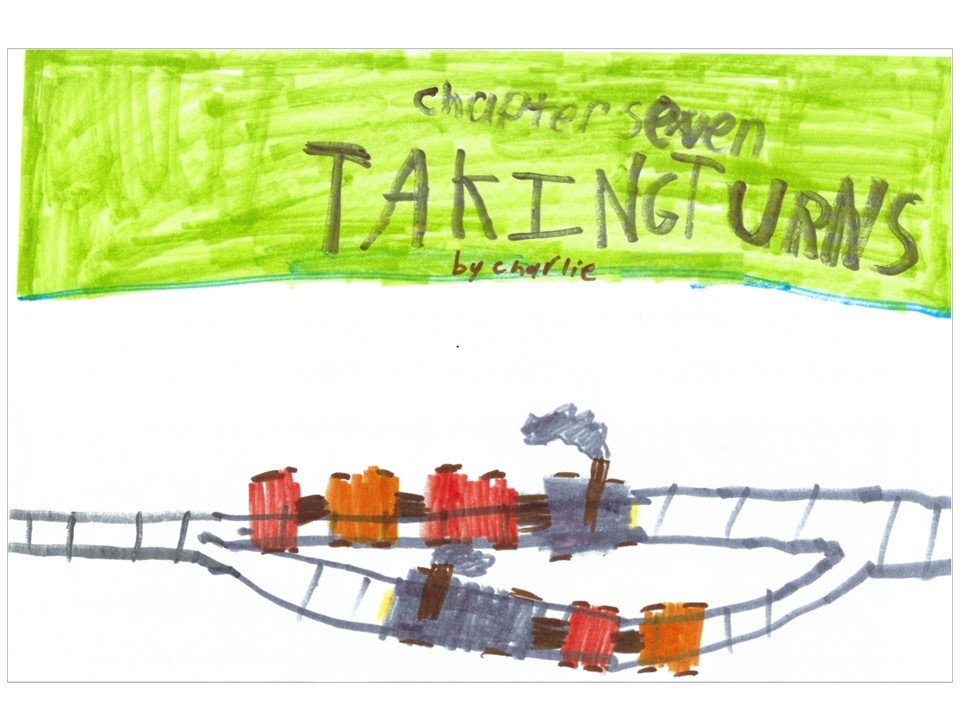
For example, this young artist below created a new “chapter” for my book, The Conversation Train Book. [Images were offered for website display by the child and his parent, who contacted me via my website.]
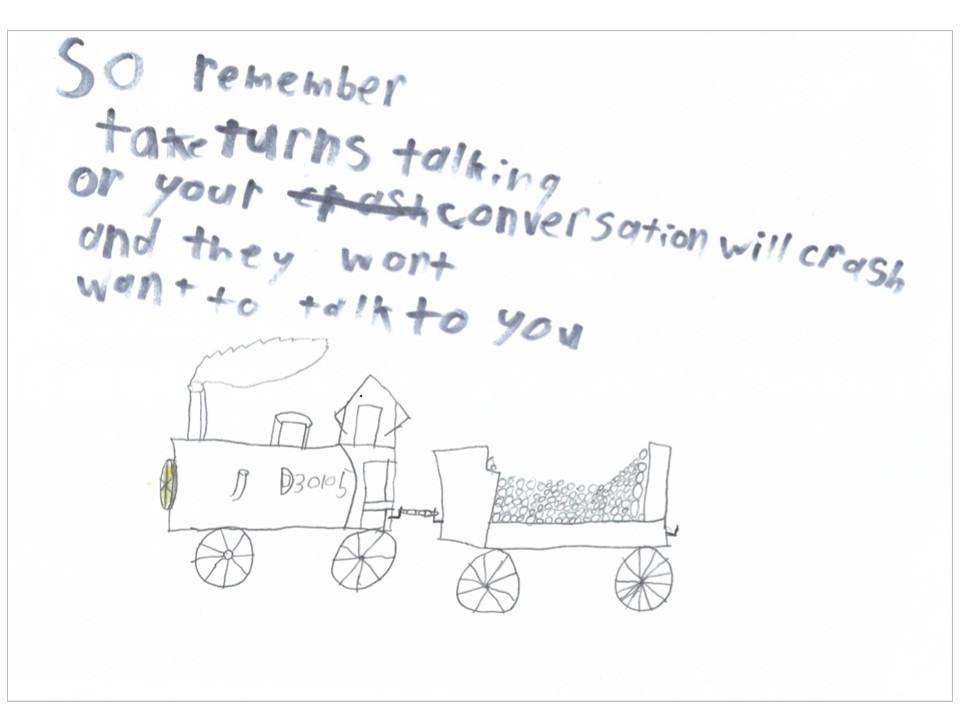
From my own experience as a therapist, there are are abundant examples of children artistically working on therapy issues on their own at home.
One child fashioned decorated conversation tools such as a “communication tube” out of cardboard. Another child invented and drew humanized dog characters that work on social adjustment problems.
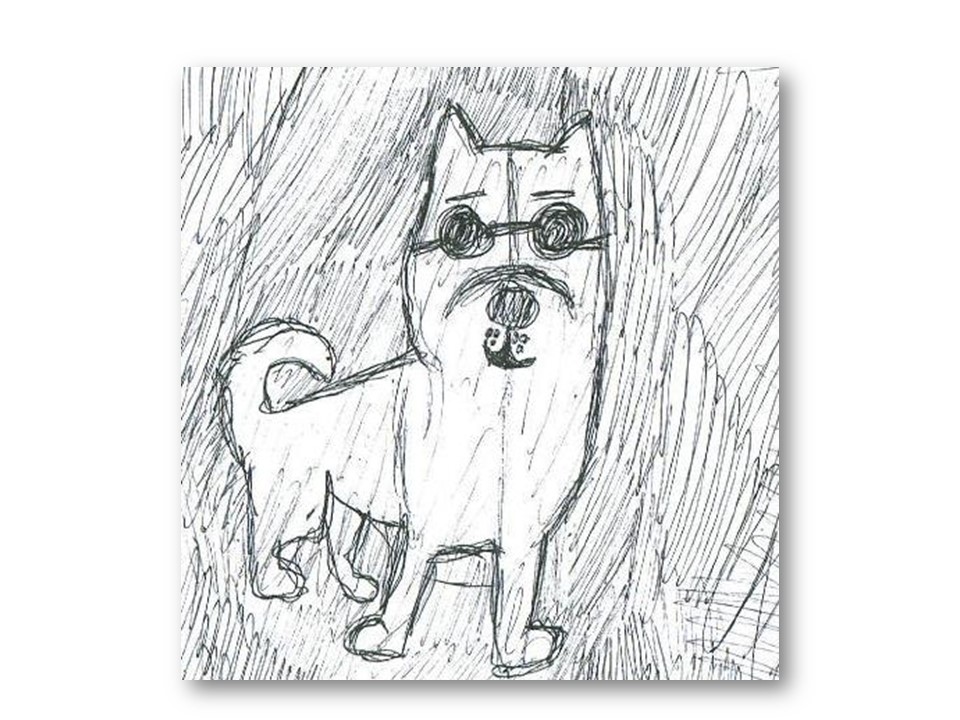
In my work, I have really enjoyed learning new ways for young people to use artistic expression to help them with social and emotional growth. If you have any “art therapy” ideas you wish to share with me, I would sincerely appreciate hearing from you. It’s easy to reach me here.
Joel Shaul, LCSW
Part 2: Assigning individual drawing tasks for social & emotional learning.
Part 3: Assigning collaborative drawing tasks for social learning.
Part 4: Coloring & decorating to add interest & levity to social & emotional learning.
Part 5: Creative use of others’ images and AI for social & emotional learning.
Part 6: Encouraging & validating the child’s own artistic expression in therapy & teaching.
I have included this additional category of art-related therapy resources – use of images not actually created by the child – because I do consider doing this “creative” and since it has its own special utility in social-emotional teaching.
First, it has the potential to create results very quickly.
Second, using borrowed and AI-generated images can be really useful for people who are creative but don’t draw very well. Like me, for example – and like many young people we work with.
These first two examples employ borrowed images. The third example demonstrates some entry-level use of AI pictures. The blue text links to the free downloads.
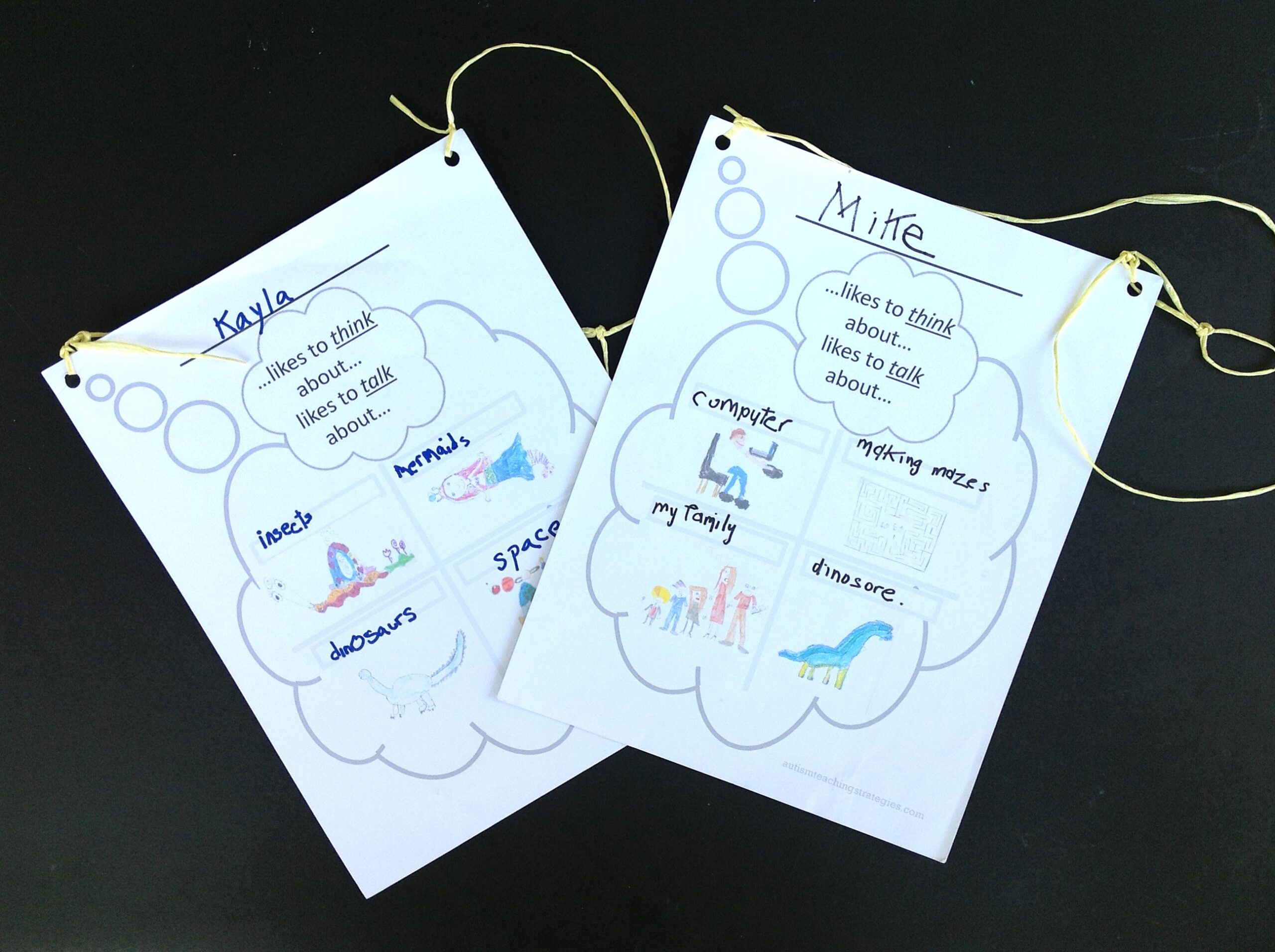
Head Outline Picture Activity to learn about peer interests
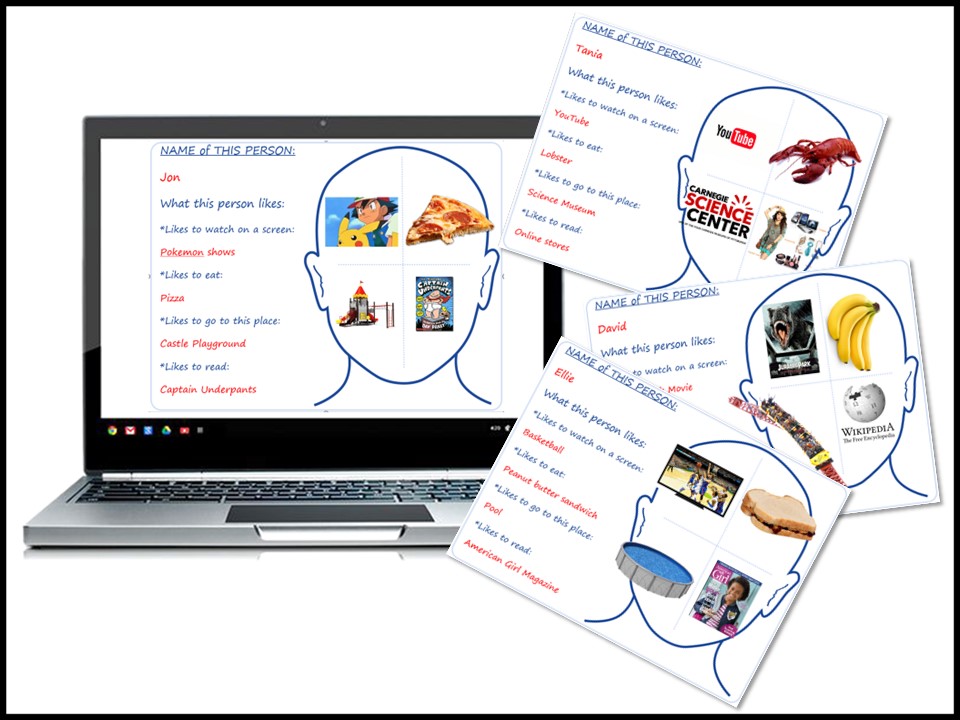
This free download enables you and a child, working side by side at a computer, to quickly put together useful, illustrated guides to other people’s interests. Starting with a PowerPoint template provided in my free download, you copy and paste Google images into the head outlines. Before long, you have picture-based references to other people’s interests.
Some children prefer to complete this activity by producing their own small drawings depicting others’ interests, but quite a few other kids just don’t like drawing, or when they do draw, the results look disappointing to them. Even when children copy and paste pictures in this project, it still qualifies as “creative” in my opinion.
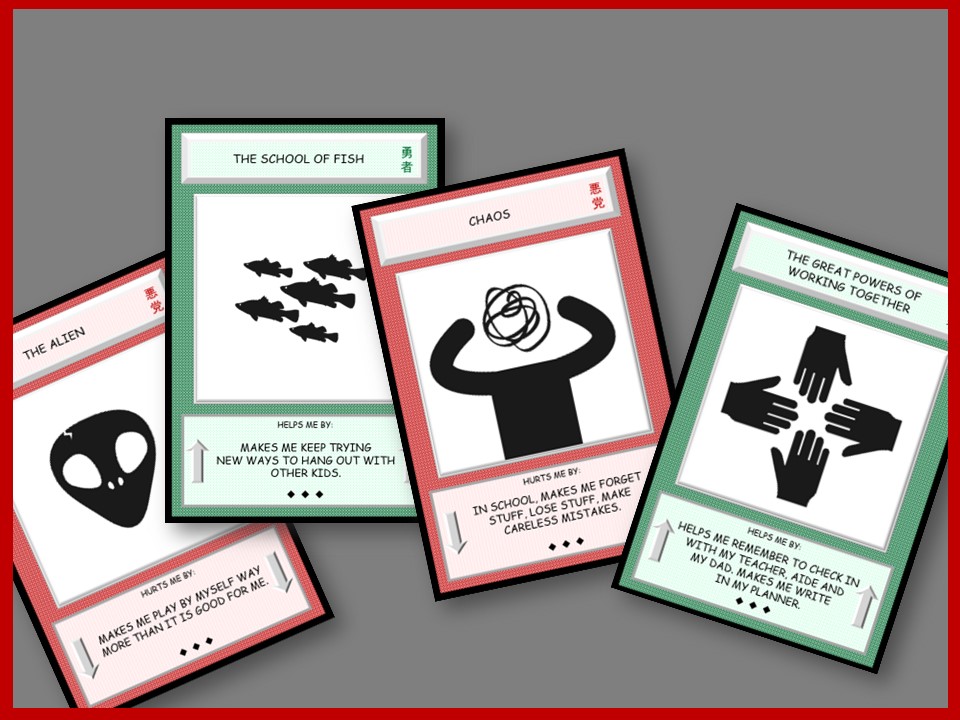
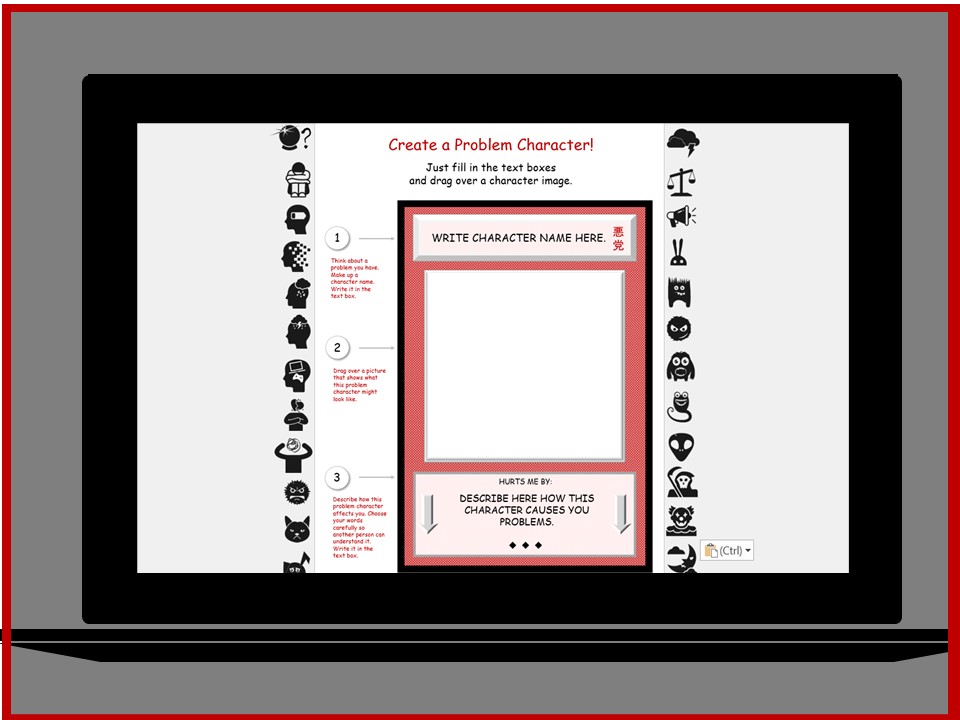
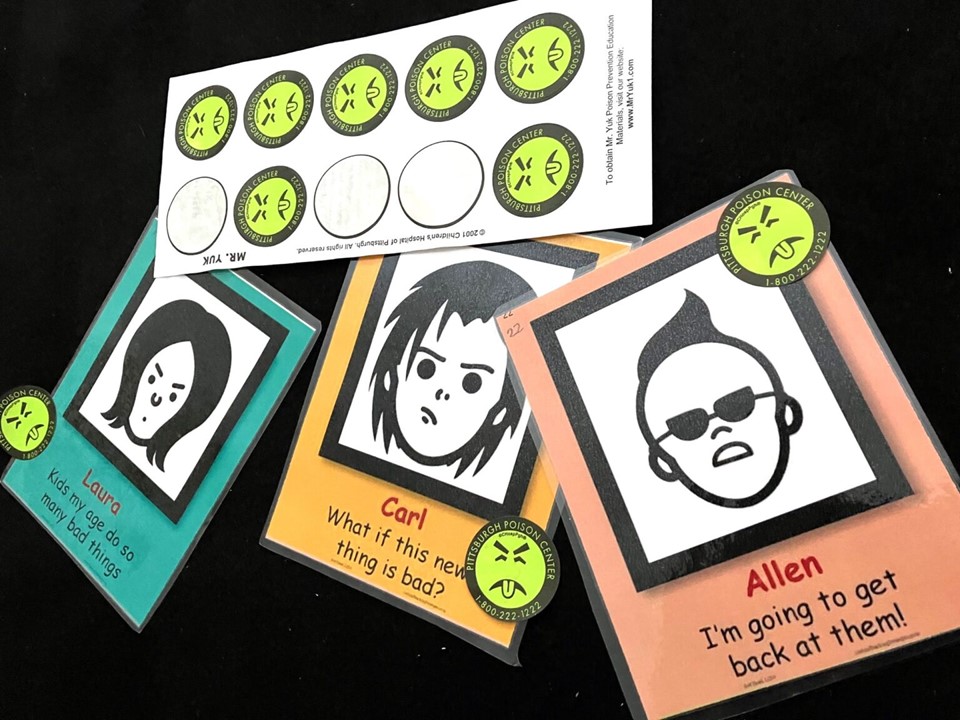
This free download allows you to quickly produce cards resembling Pokémon and Yu-gi-oh to represent problems the child is working on and possible solutions to these problems. The project can also be completed by having the child draw their own pictures, but I generally find that even artistic kids elect to drag and drop the stock images instead of drawing.
Using AI-generated images as a creative element in therapy
I am writing this in early 2024, just a year or so after basic web-accessible AI image generating became available. I have a feeling the following information and examples will soon become outdated, as the quality and variety of AI images gets better and better. Anyhow, here is what I have learned so far.
AI image-creating has terrific potential for introducing an “artistic” visual component to child psychotherapy. Here are a couple quick examples I came up with in just a few minutes on my computer.
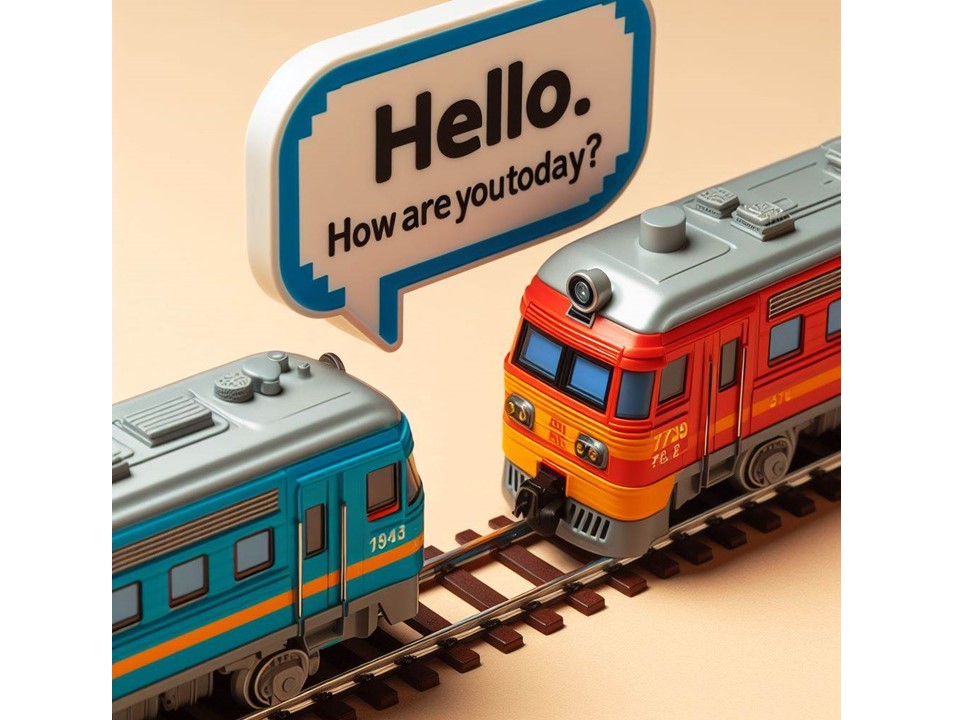
In reference to the AI image shown above: I imagined having a young autistic client who needed help with some rudiments of social communication. I supposed that the child had a strong interest in trains. I created the picture above by telling the online image generator, “Create an image showing two realistic train cars talking together. One says, ‘Hello. How are you today?'”
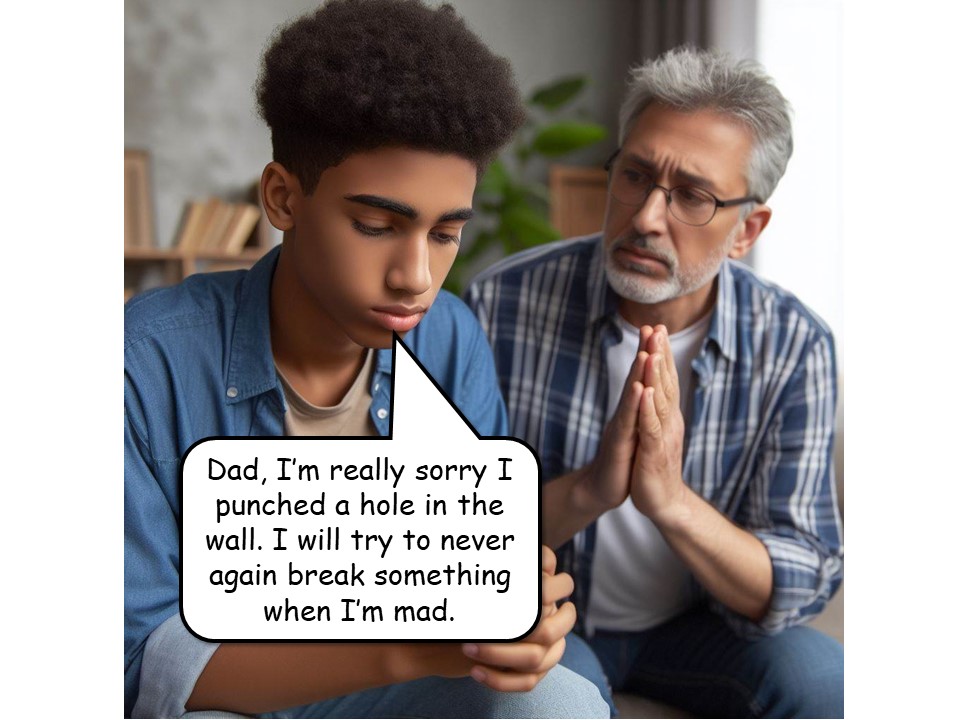
In reference to this second AI image above: I imagined having a teen boy client who was working on some anger management and conflict resolution. I told the online image generator, “Create an image showing a teenage boy apologizing to his father after losing his temper.” I then added, on my own computer, the word bubble and the text.
The next in this series: Part 6: Encouraging & validating the child’s own artistic expression in therapy & teaching.
Joel Shaul, LCSW
Part 2: Assigning individual drawing tasks for social & emotional learning.
Part 3: Assigning collaborative drawing tasks for social learning.
Part 4: Coloring & decorating to add interest & levity to social & emotional learning.
Part 5: Creative use of others’ images and AI for social & emotional learning.
Part 6: Encouraging & validating the child’s own artistic expression in therapy & teaching.