Part 4: Coloring & decorating to add interest & levity to social & emotional learning.

Doing coloring during therapy activities can be beneficial in several ways.

In Part 2 and Part 3 in this series, I described ways that drawing can be used to help social emotional learning in various ways. In this following section, I provide examples and explanation regarding a rather different use of crayons, pencils and markers – coloring and decorating – and how this can enhance our therapy initiatives.

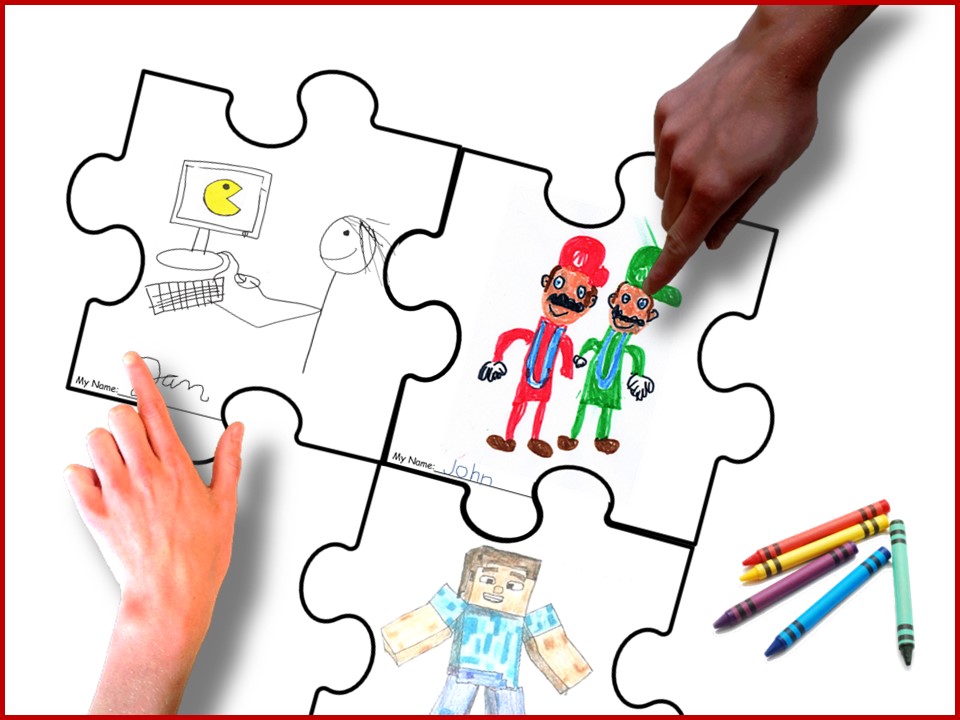
Coloring and decorating might seem like pointless and distracting activities to encourage in a therapy setting. But when used periodically and strategically, coloring can help a child to relax, focus on a therapy task and prolong their attention to an issue of concern during the session. Having the child color or decorate a therapeutic tool has the potential to personalize the task and to help a child to increase investment and commitment to the work.

Here are some examples of therapeutic coloring from my free downloads and from one of my children’s books.

The Self-Control and Problem Fixer
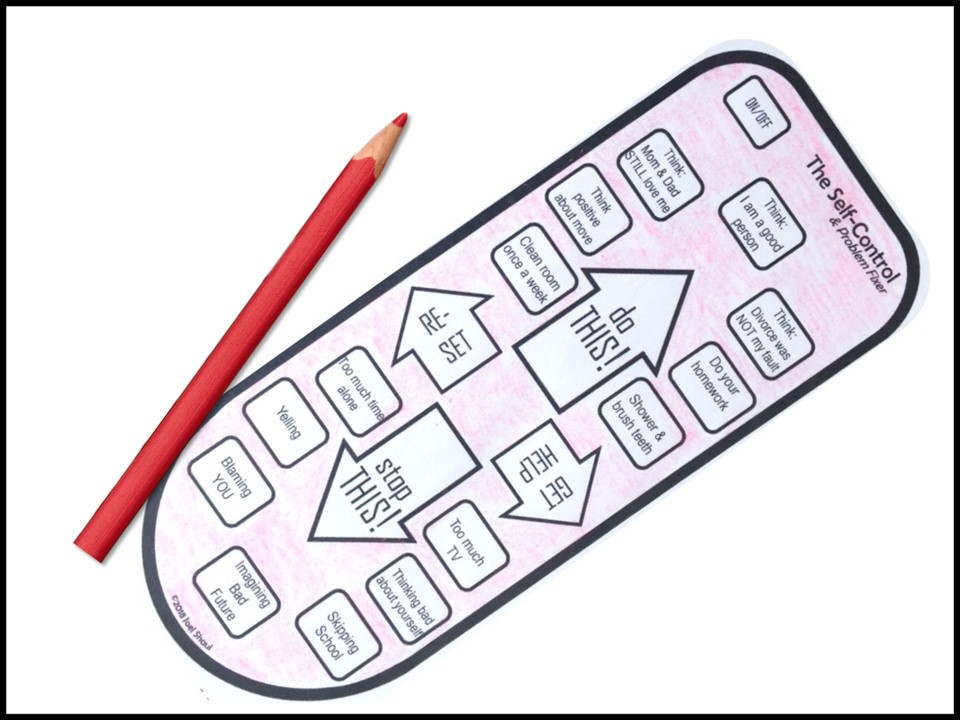
autism child emotion art therapy free

This text on this customizable resource is typed into textboxes on the free download. You assist the child with this at the computer, acting as advisor and “secretary.” After you print it and help the child to cut it out, the child picks out colors and shades the background. This coloring portion can be time consuming, but it affords you, the therapist, a very good opportunity to discuss therapy issues while the child is looking downward, relaxing and coloring.

Remote control channel changer for conversation topics
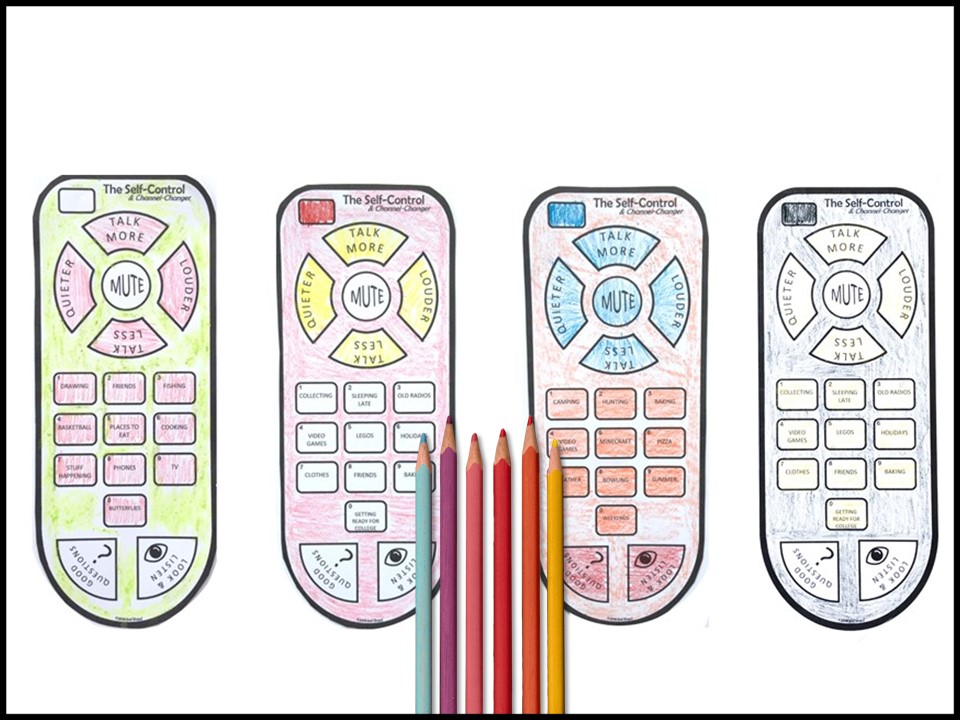
The Remote Control Channel Changer looks something like the Problem Fixer – but it has a different purpose.

The Remote Control Channel Changer looks like the Problem Fixer shown above, but it has an entirely different function – to help raise a child’s awareness of diverse conversation topics. Each of the ten central buttons is blank to begin with and then you fill them in with the child. The free download provides a PowerPoint option in which each button contains a small text box. You and the child type in topics while seated at the computer together.

After you print it and help cut it out, the child colors it in. This provides a relaxed occasion to try out some of the conversation topics listed on the buttons.

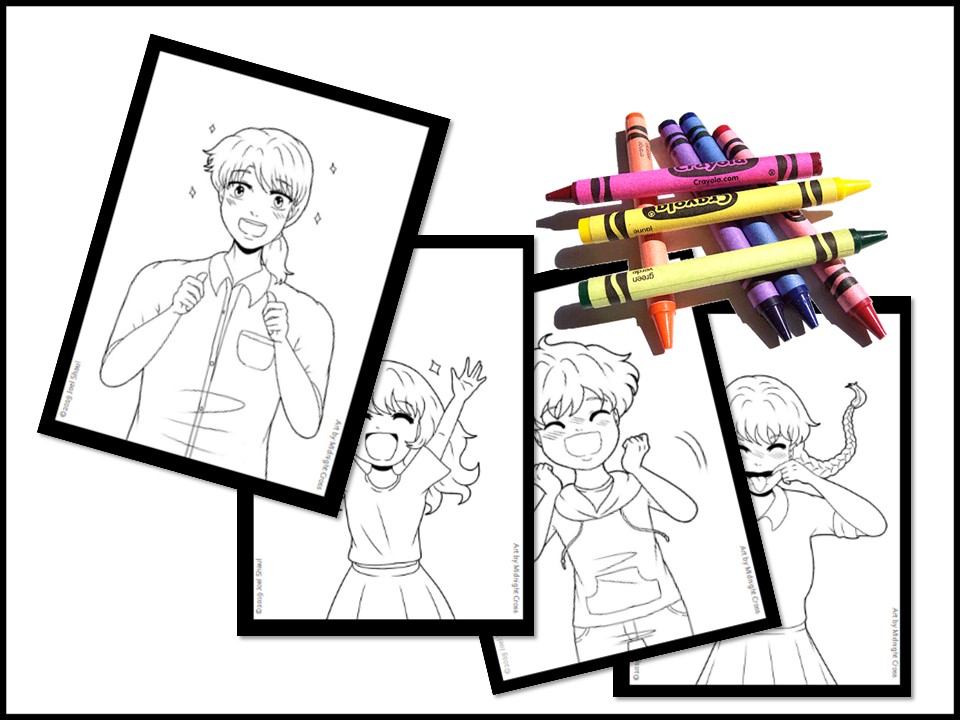
Anime emotion cards and coloring worksheets
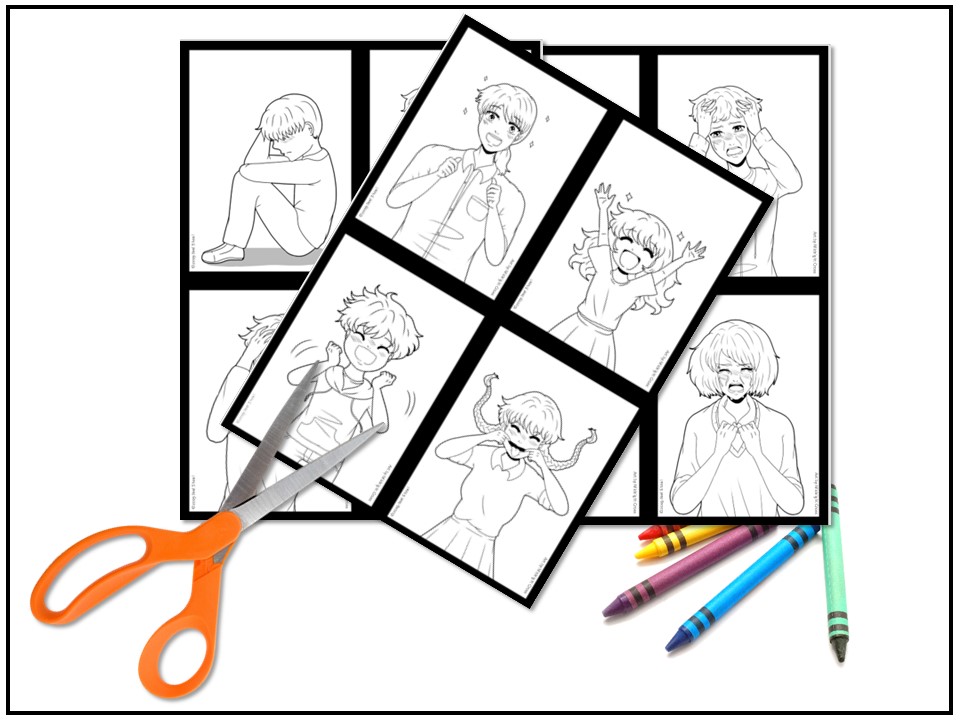
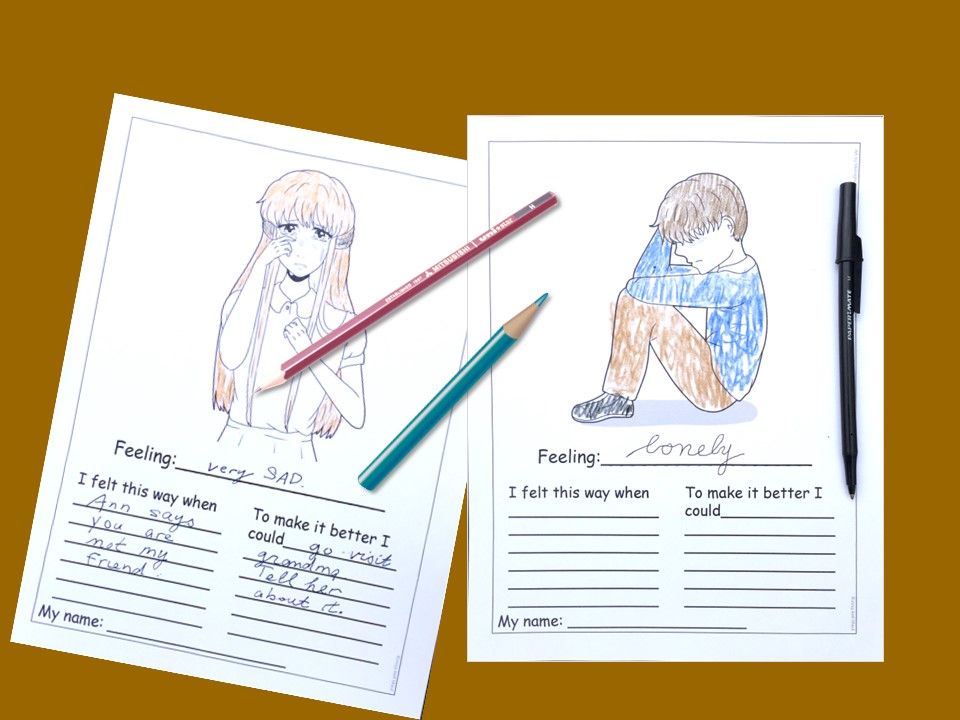
autism child anger management free

In my extensive experience using these resources in my own work, nearly all young people on the spectrum, from young child to young adult, elect to color these when given the option of coloring or not coloring. Some adjust the skin tones to more closely resemble their own skin color.
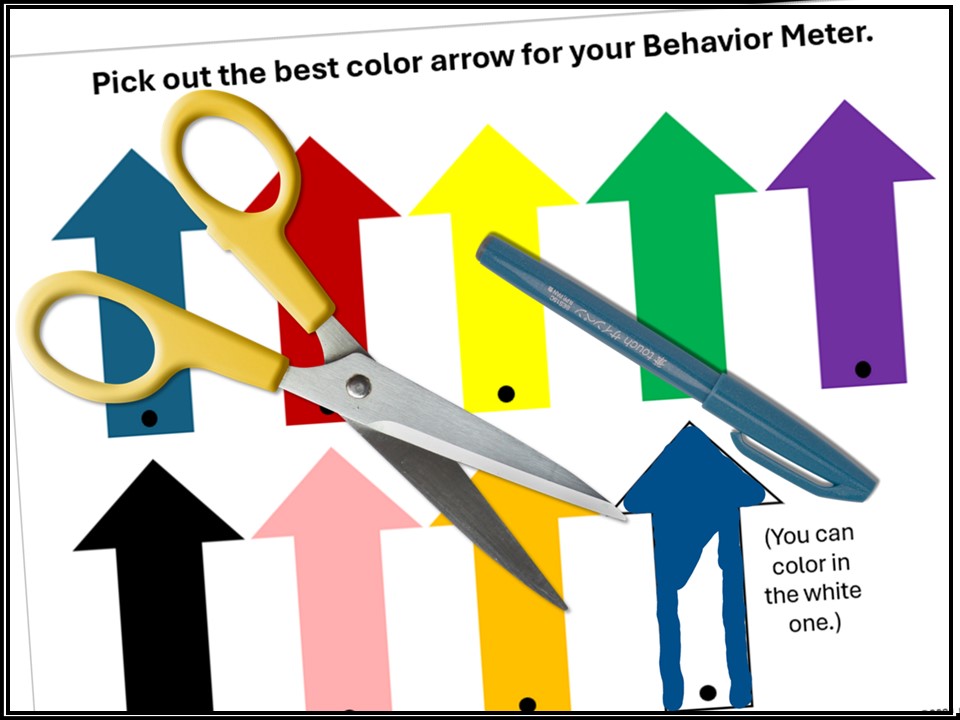
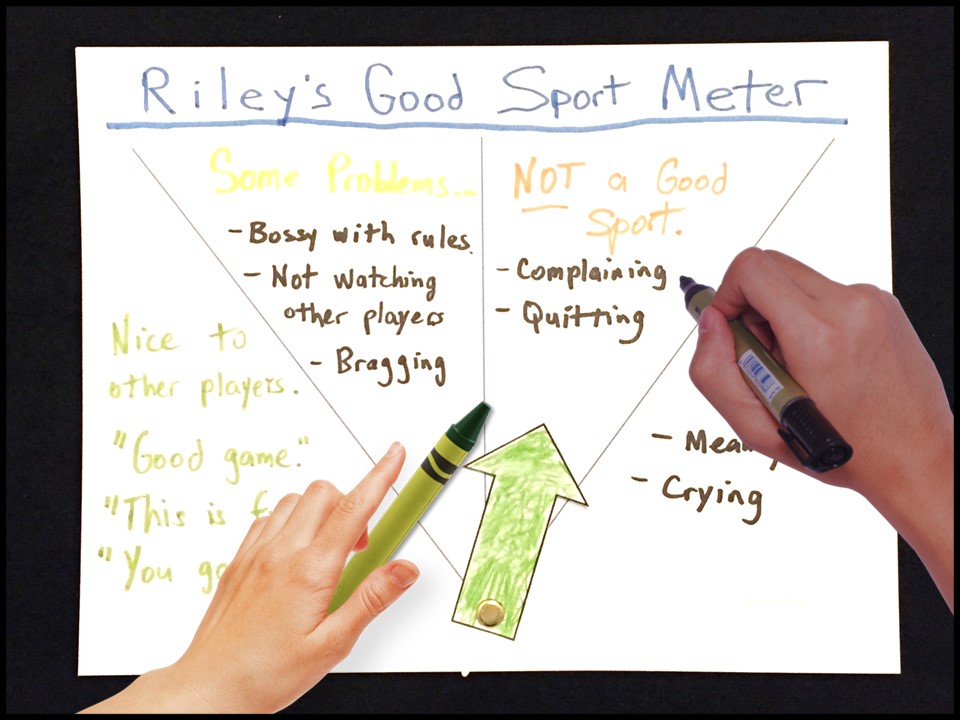
These arrows are components of the Customizable Behavior Meters resource featuring the option of coloring. I include this small example here to emphasize the value of allowing the child to personalize the therapy tools we employ, even in little ways like this, to enhance their own commitment to the work.

Train coloring pages from The Conversation Train Book (2014 Jessica Kingsley Publishers)
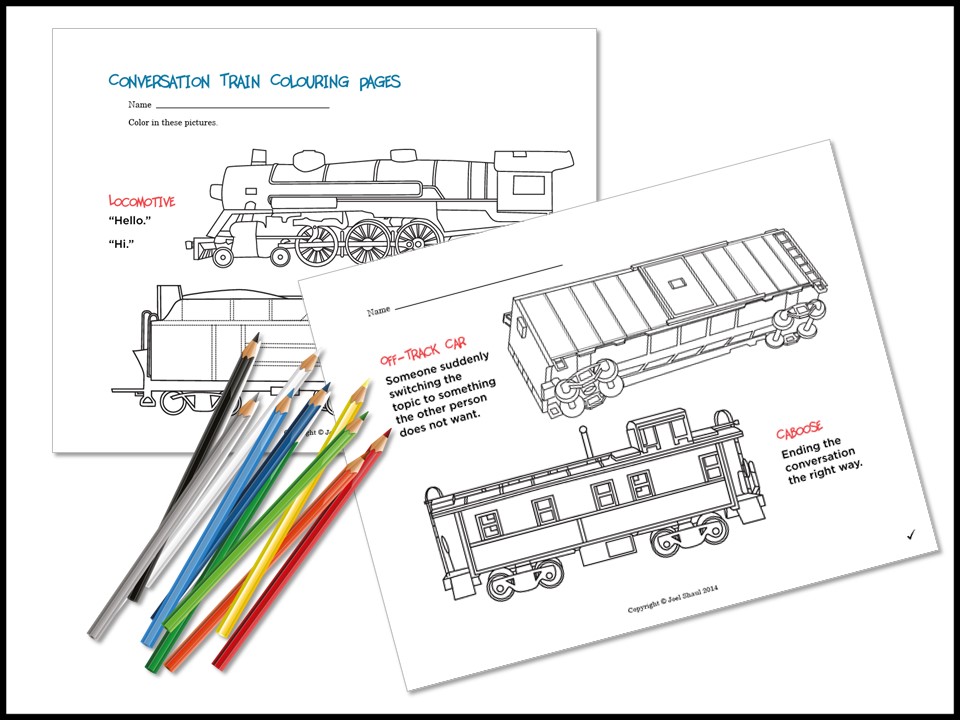
This is a page from my book that uses the parts of a train to represent the different parts of conversation.


The next in this series: Part 5: Creative use of others’ images and AI for social & emotional learning.

Joel Shaul, LCSW


Introduction to series.

Part 1: Reasons to use art in social & emotional teaching. Some guiding principles & professional concerns.

Part 2: Assigning individual drawing tasks for social & emotional learning.

Part 3: Assigning collaborative drawing tasks for social learning.

Part 4: Coloring & decorating to add interest & levity to social & emotional learning.

Part 5: Creative use of others’ images and AI for social & emotional learning.

Part 6: Encouraging & validating the child’s own artistic expression in therapy & teaching.
Part 2: Assigning individual drawing tasks for social & emotional learning.

Why should teachers and therapists have a child on the autism spectrum color and draw while trying to help them with social and emotional skills? Please see Part 1, where I spell out some of the reasons.

There are so many ways to engage children in therapy by asking them to draw something.

Here are a few examples from among the free downloads on this website and my published children’s books. Click on the blue text to access resources.

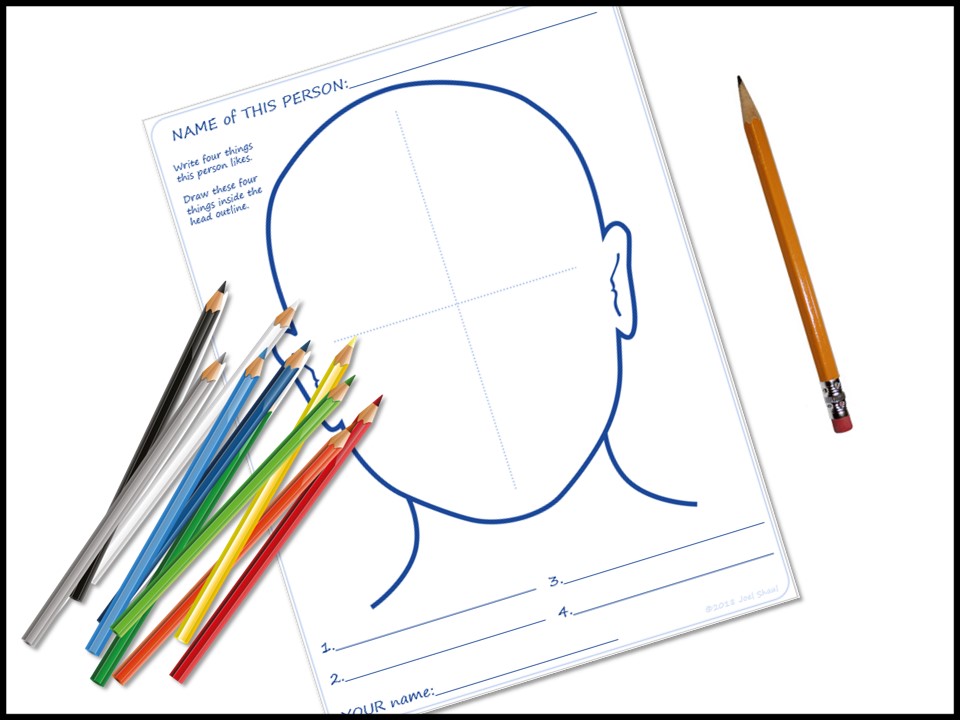
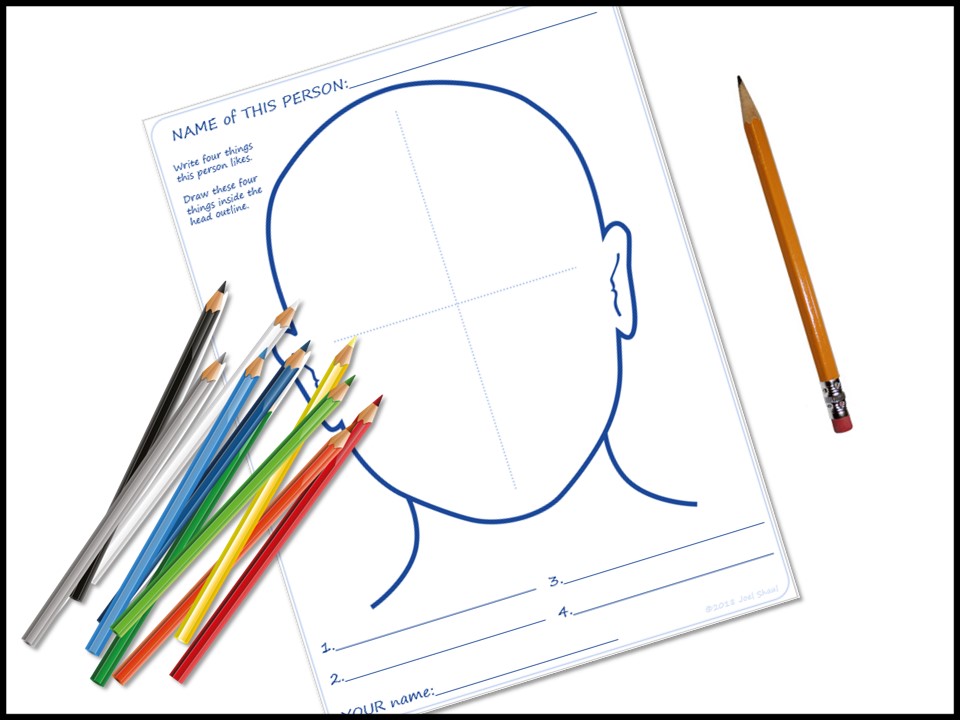
Head Outline Picture Activity to learn about peer interests [drawing option]

This activity also comes in another version requiring no drawing. In that alternative version, you use my prepared PowerPoint download and then copy and paste internet images into the head outline. When you try this activity, you select one option or the other based on the child’s preference and how much time you can devote to this project.

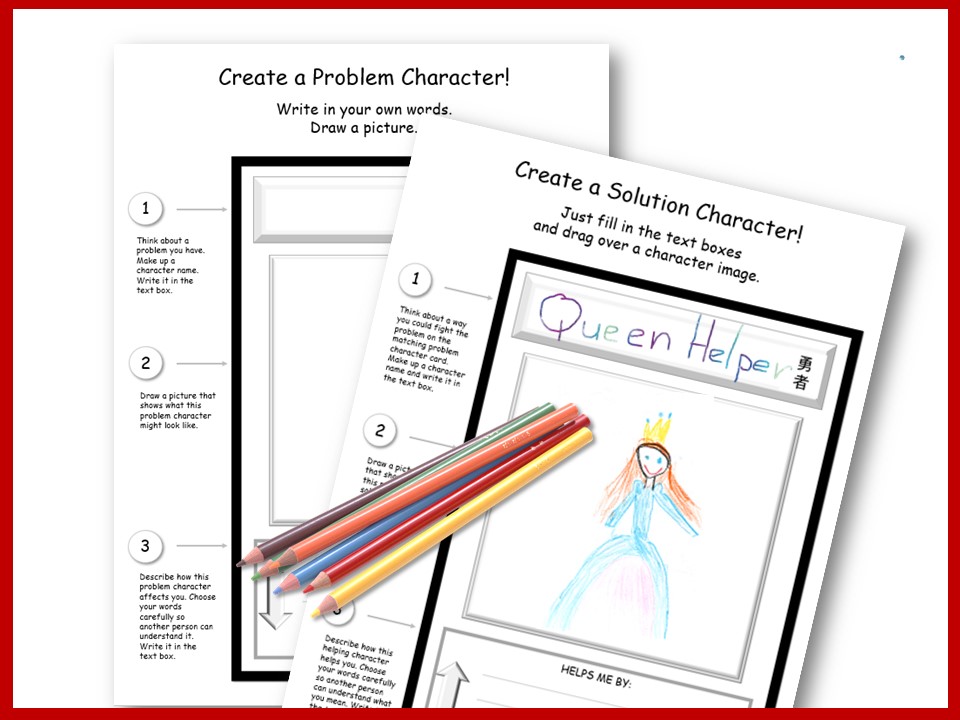
Problem & Solution Cards [drawing option]

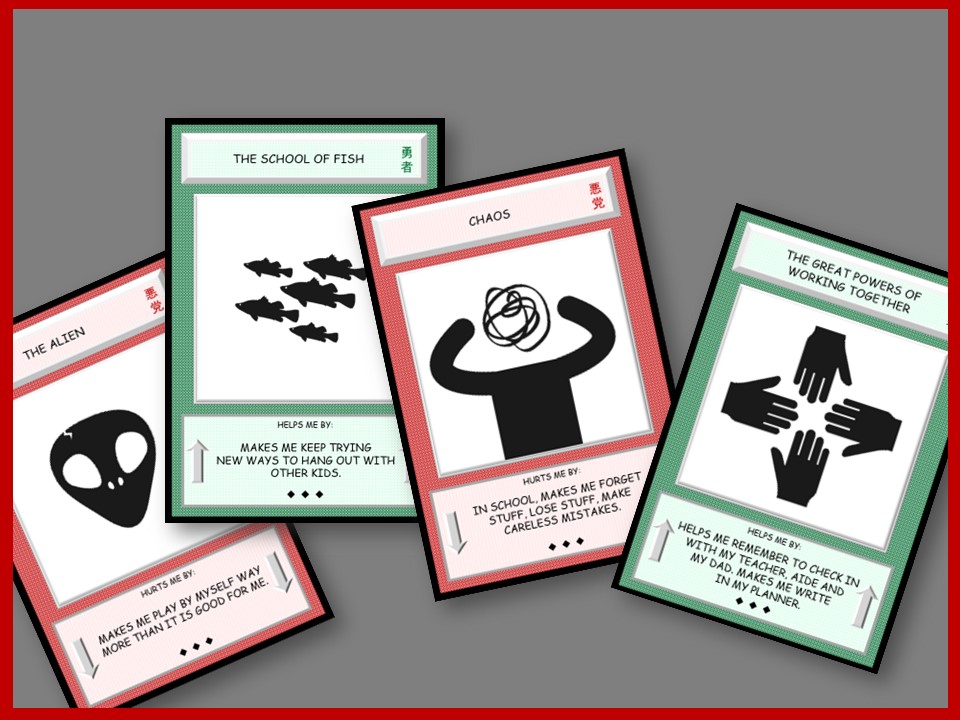
Children experiencing multiple social and emotional challenges can feel demoralized by being the “problem child” all the time. One way to help is to show our young clients how to externalize some of their problems onto fantasy characters which we can help them to fight against. Then, we can show children how to create solution “hero” characters representing various ways children can help themselves.

This resource is also available in a much quicker-to-implement version in which you drag and drop stock fantasy images to create the cards. Which option you select depends on how much time you have available and the child’s inclination.

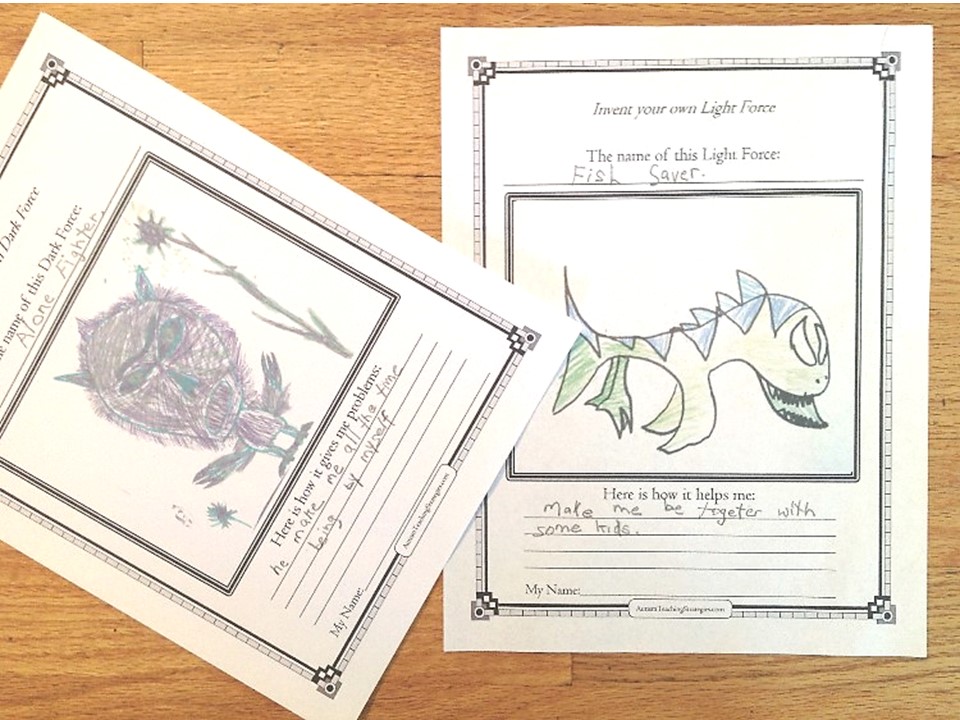
Light Force Dark Force drawing worksheets

This is an earlier version of the Problem and Solution Cards.

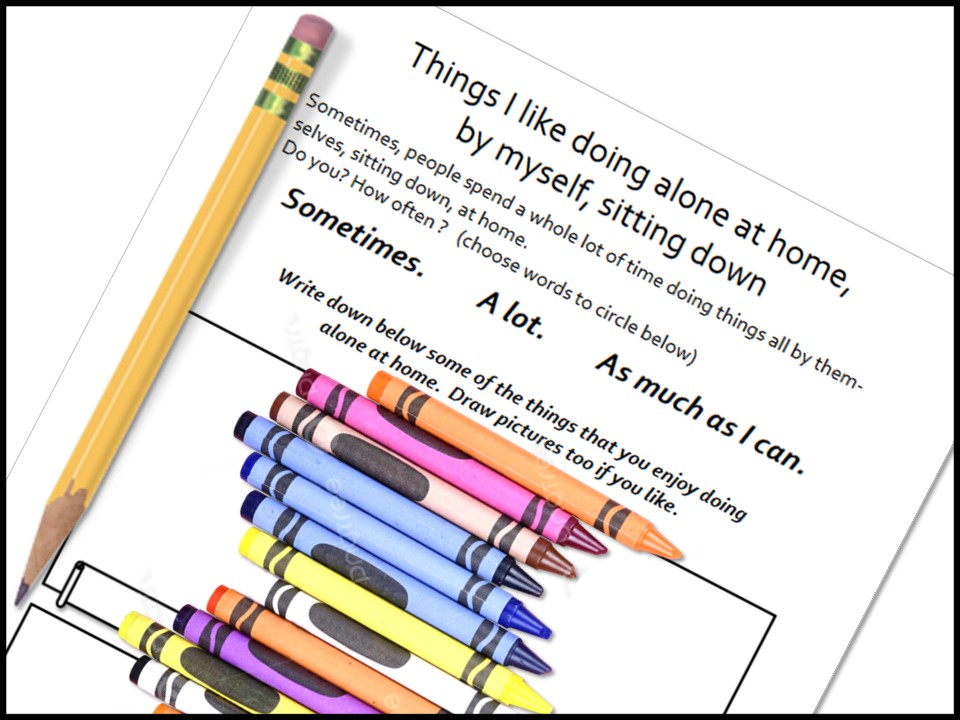
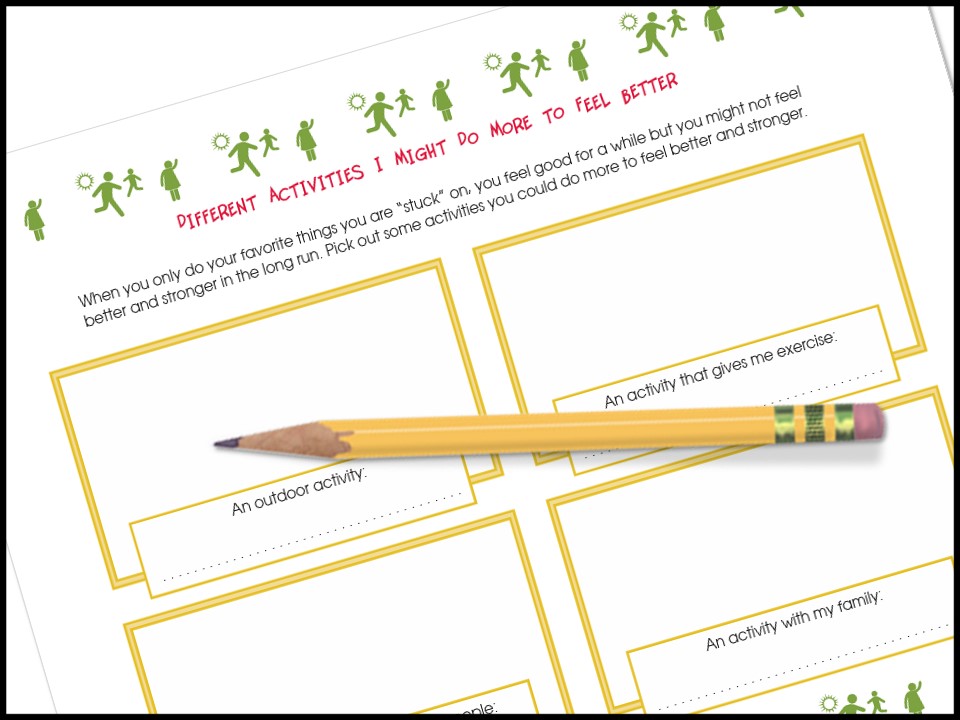
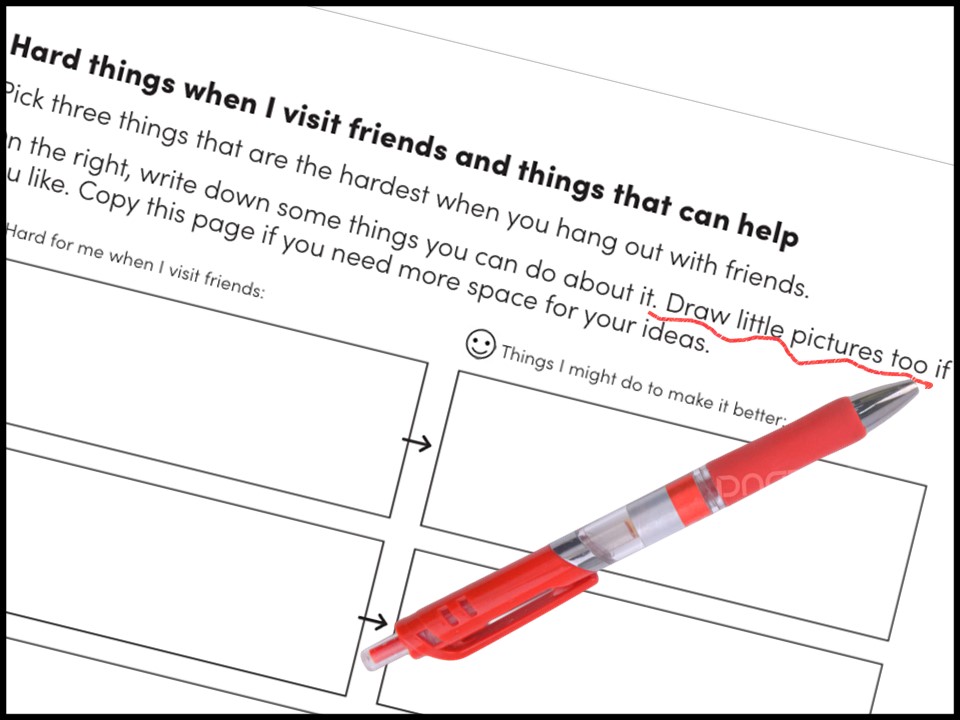
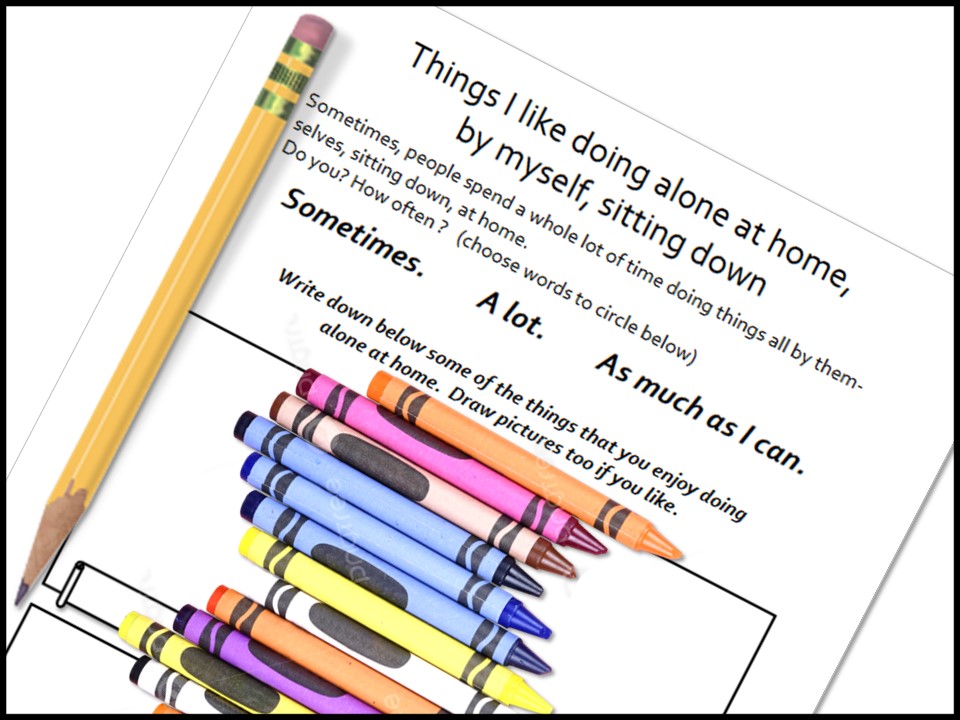
Seven social skills worksheets for children who are isolated

On a couple of these worksheets, there is an option to draw small pictures. When I use these worksheets, many kids do select the option of drawing.

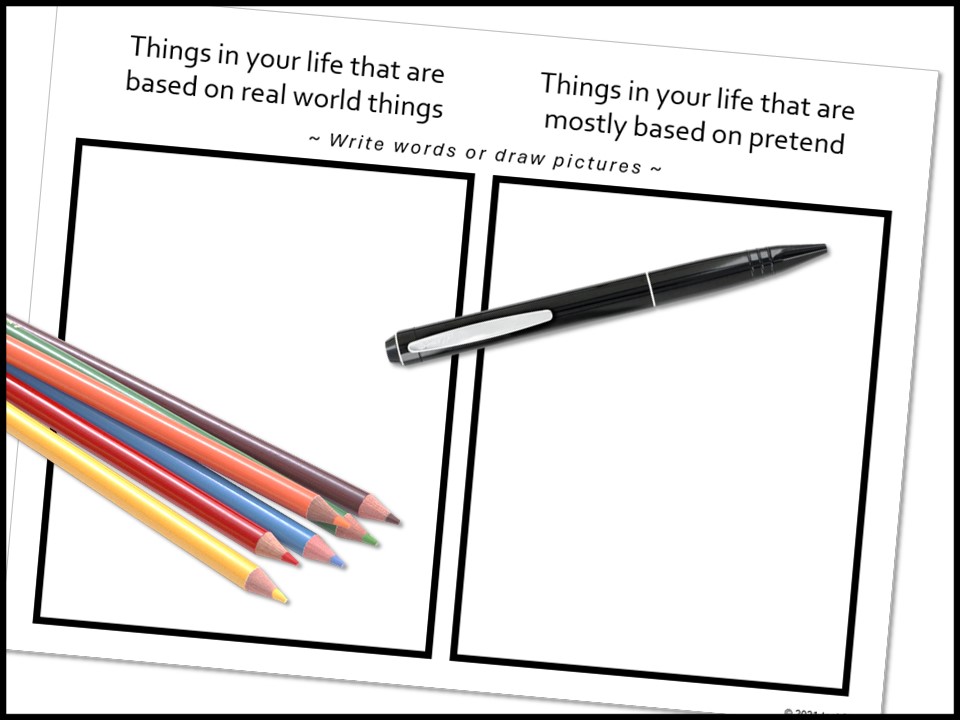
Fantasy Obsession worksheets & checklists with drawing options

This drawing activity is part of a large group of free resources to help raise a child’s awareness of how they are affected, in both helpful and potentially harmful ways, by various kinds of fantasy and pretend. Given the option of writing down words or drawing, on this worksheet many children opt to draw or to combine both writing and drawing.

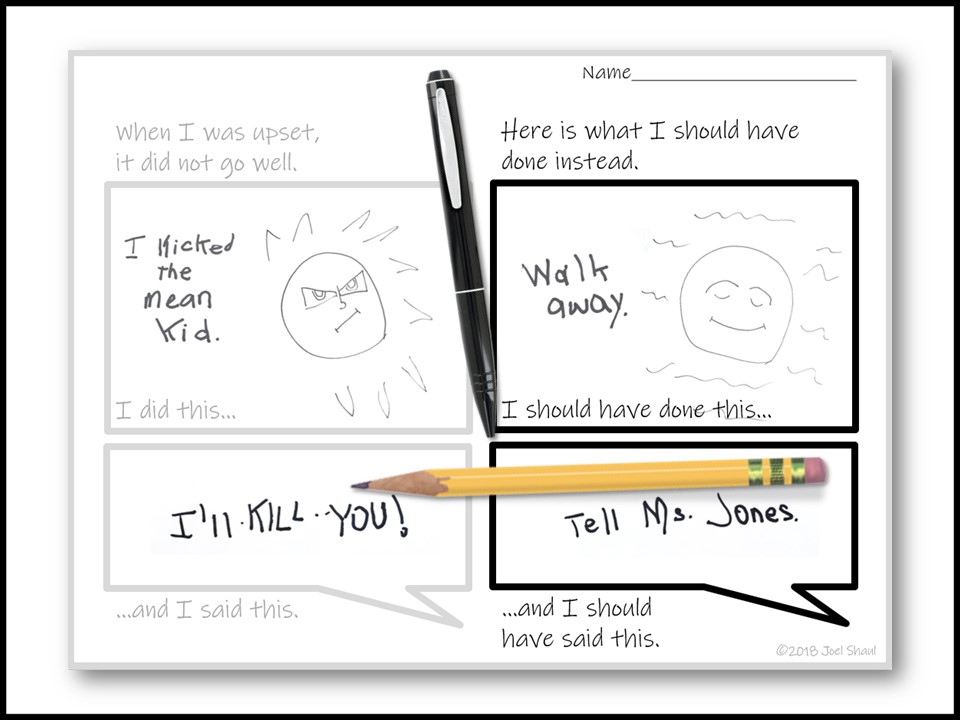
What I Should Have Done Different worksheet

This simple, one-page worksheet is designed to facilitate reflection and retrospective problem solving. Children, when given the option of drawing on it, frequently do so.

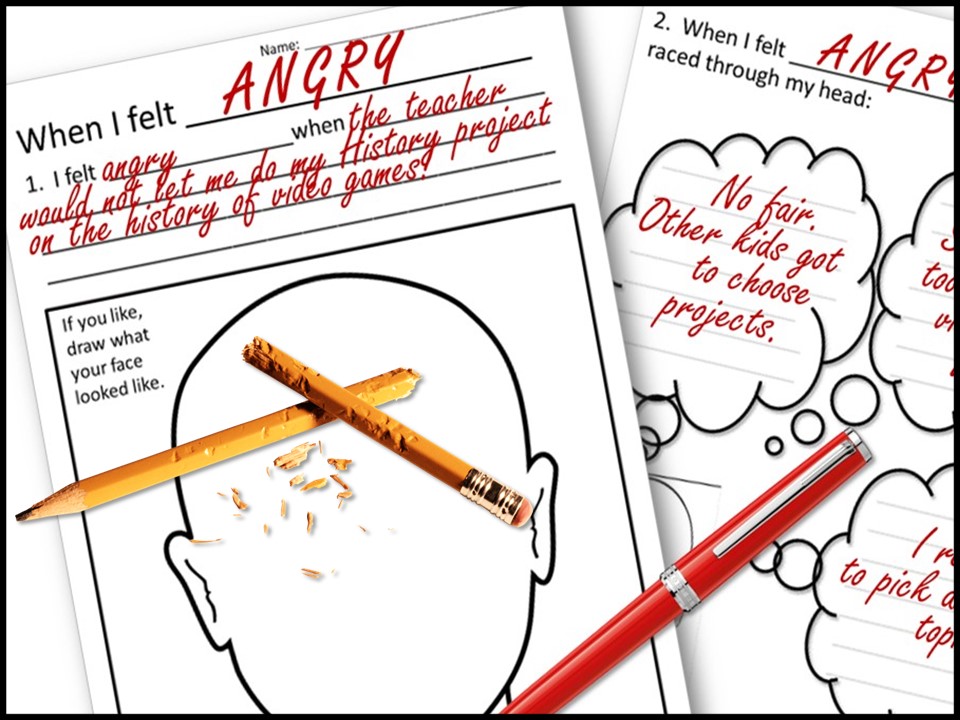
Page 1 of seven-page CBT Worksheets

When I use these worksheets with children, at least half the time children go on to page two and skip the drawing. Other children dwell on the task of drawing their face. This seems to help them to recall the incident and what they were feeling at the time.

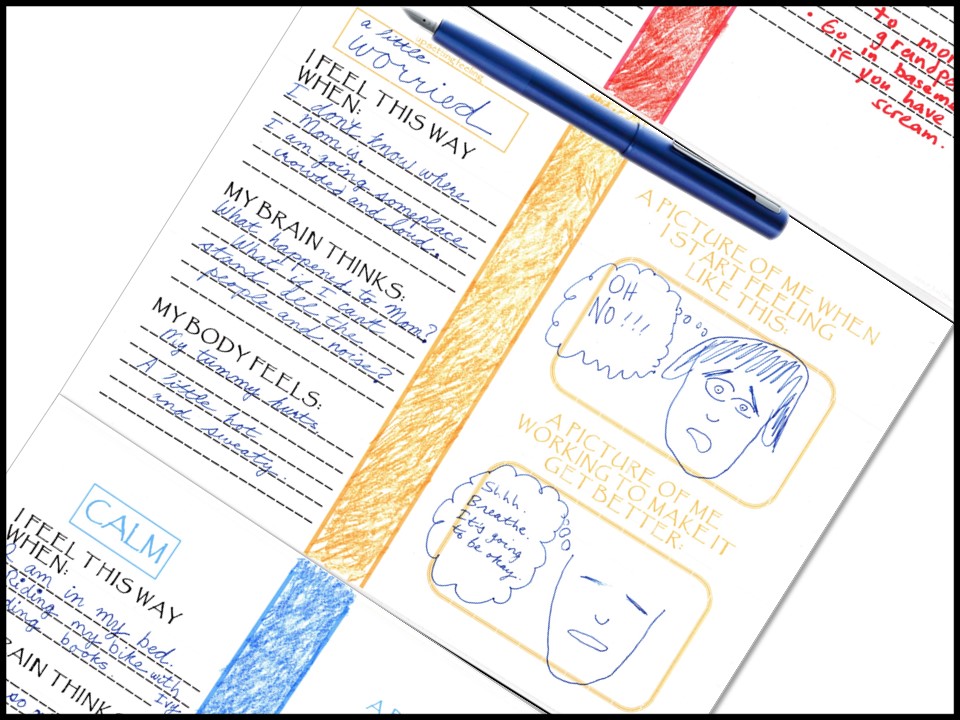
Emotion Thermometers

This set of emotion thermometers requires coloring and there is the option of drawing small pictures.

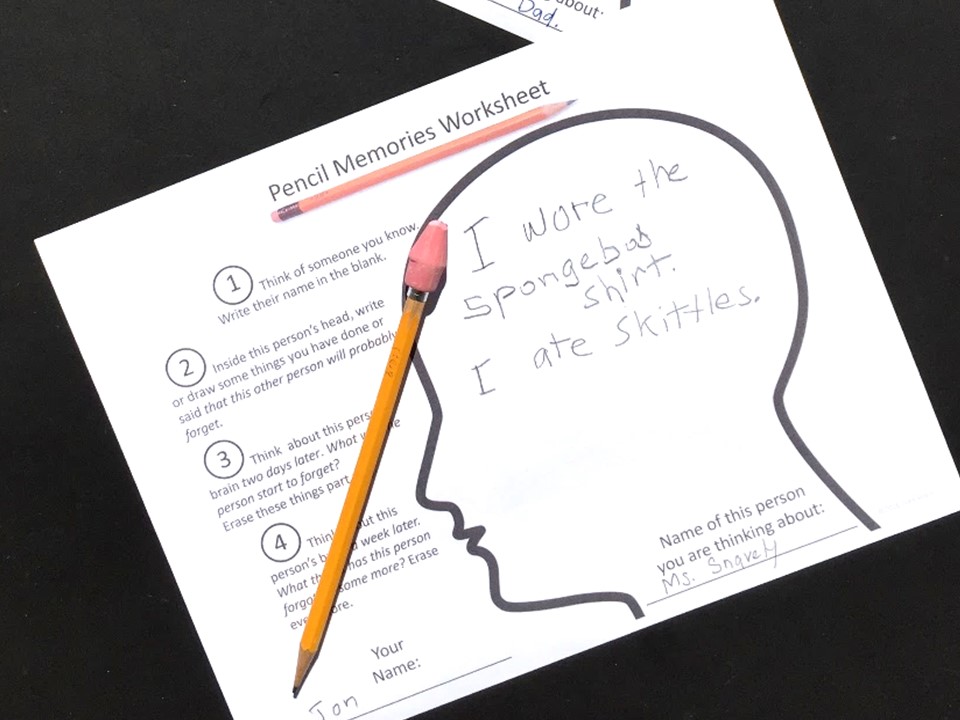
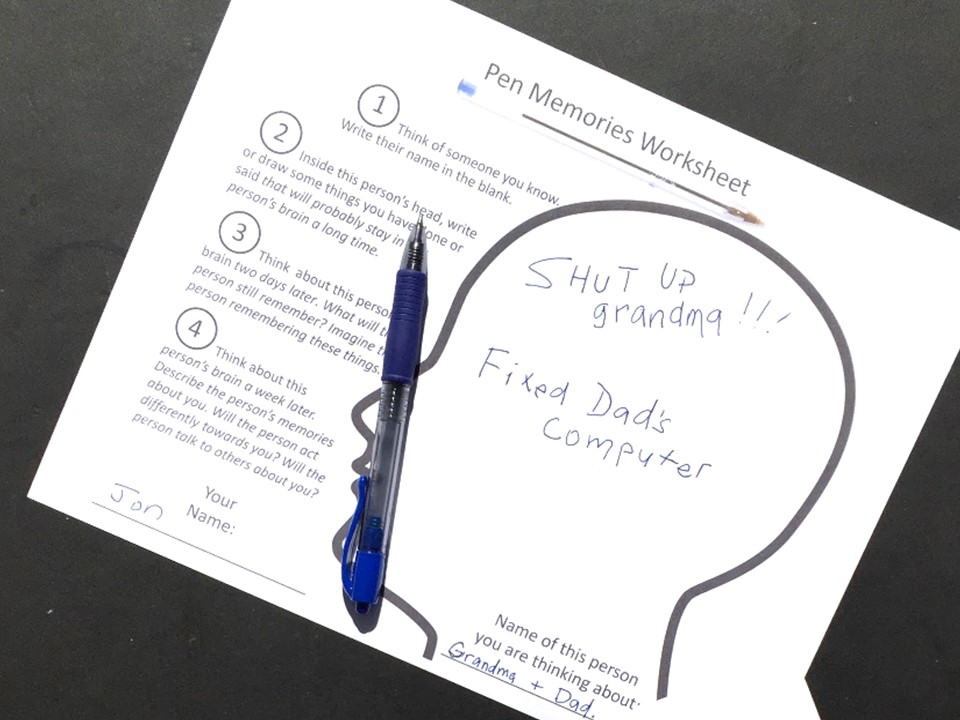
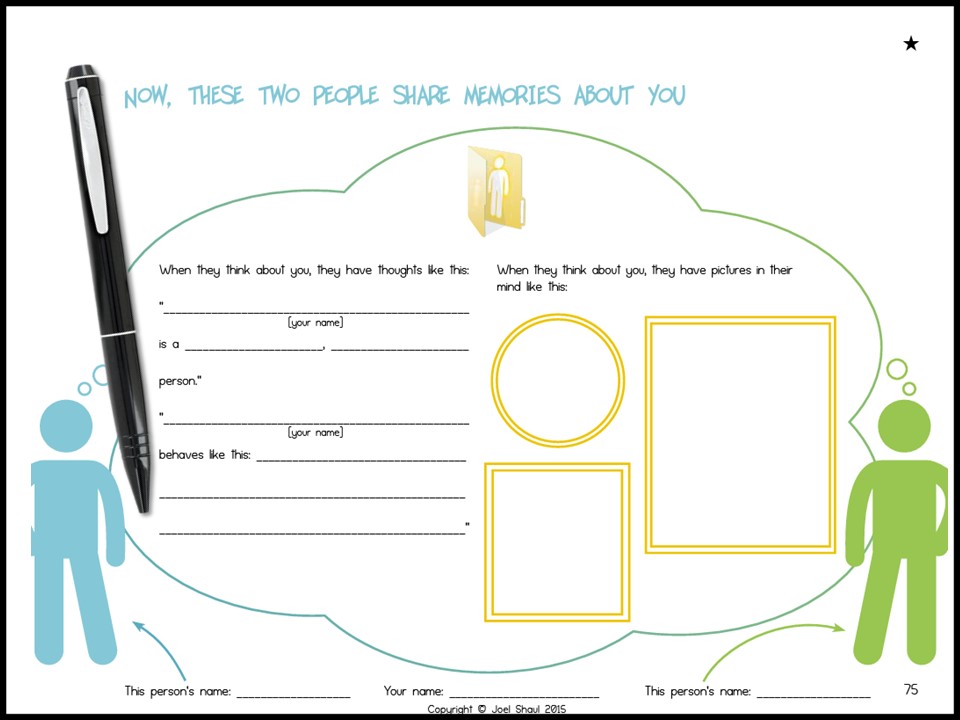
Pencil Memories, Pen Memories worksheets

This set of worksheets is to help children to think about social cause and effect, and how their words and actions might be remembered by others for a short time or a long time. Children can opt to either draw, or write, or both.

Examples of drawing worksheets from my published books

My six published children’s books contain lots of worksheets, some of which involve the option of drawing. Here are a few examples.

Social cause & effect worksheet from Our Brains are Like Computers

Writing/drawing worksheet from The ASD Feel Better Book

Drawing/writing worksheet from Your Interests, My Interests

The next in this series is: Part 3: Assigning collaborative drawing tasks for social learning.

Joel Shaul, LCSW


Introduction to series.

Part 1: Reasons to use art in social & emotional teaching. Some guiding principles & professional concerns.

Part 2: Assigning individual drawing tasks for social & emotional learning.

Part 3: Assigning collaborative drawing tasks for social learning.

Part 4: Coloring & decorating to add interest & levity to social & emotional learning.

Part 5: Creative use of others’ images and AI for social & emotional learning.

Part 6: Encouraging & validating the child’s own artistic expression in therapy & teaching.
Some ways to use art to promote social & emotional learning in children with ASD. Introduction to 6-part series including free downloads.

In my own mental health and social skills work with individuals, groups and classes on the autism spectrum, art-based interventions have for some time been an important part of my repertoire.

Although I am neither an artist nor an “art therapist,” many of my free resources, as well as portions of my published books, include therapeutic exercises incorporating sketching, drawing, coloring and various creative applications of provided images.

This six-part series summarizes my ideas and resources for using drawing, coloring and other kinds of visual creativity to facilitate social and emotional learning, particularly with young people on the autism spectrum.

Most of the printable materials shown can be downloaded for free from this website.

Access the six parts of the series via the links below.

Joel Shaul, LCSW


Part 1: Reasons to use art in social & emotional teaching. Some guiding principles & professional concerns.

Part 2: Assigning individual drawing tasks for social & emotional learning.

Part 3: Assigning collaborative drawing tasks for social learning.

Part 4: Coloring & decorating to add interest & levity to social & emotional learning.

Part 5: Creative use of others’ images and AI for social & emotional learning.

Part 6: Encouraging & validating the child’s own artistic expression in therapy & teaching.
Getting the most out of family participation in a child’s individual therapy

In individual therapy involving children, we therapists sometimes limit progress by making insufficient use of parents’ energy and ideas.

Each participant in therapy can get locked into a habitual pattern that is not really productive, even though each person may think they are “doing their job.” The parent delivers the child to the child’s individual session. While the parent dutifully waits in another room for an hour, the therapist diligently applies their therapeutic repertoire. The child is then returned to the parent until next week’s session.

In family therapy, the therapist’s role is clearly spelled out as we help family members to resolve conflicts and improve communication. But when the child is the designated client in individual therapy, the parents [in this article, this includes other adult guardians as well] often spend too much time in the waiting room with wasted potential.

This article explores ways that we therapists can optimize the therapeutic potential of families in individual therapy.

Whenever possible, for the intake session I ask parents to bring in written information, in addition to the standard intake form, regarding the child. This is not only enormously helpful when I am putting together the patient history, but it empowers the parent from the start regarding the importance of their own contribution to therapy.

I believe that many parents overestimate the therapist’s ability to get a well-rounded impression of how the child is faring in between sessions. I have often used “Waiting Room Update” forms for this reason.

Over a number of years, about 70 percent of my individual clients have been on the autism spectrum. For my sessions to be really worthwhile, I have often needed to be prepared with specific materials and activities ready to go. A few emailed sentences from a parent can be a real blessing when preparing for an individual session.

Another benefit of expecting the parent send a short email is to remind them of their stake in the therapy enterprise. It can help them to think, “What are my priorities this week helping my child? What is something that the therapist and I can troubleshoot together with my child?”

It is important to maintain proper boundaries when having them email between sessions. First, use encrypted email and use your professional email exclusively. Second, email is for you to receive brief information, and not for you to email back and provide advice – that is for the session only.

This is derived from a tip I got 30 years ago in a workshop by Bill O’Hanlon.

The idea is to convey to families that a good idea or beneficial movement towards change might happen at any time and be initiated by anybody – the therapist, the parent or the child. Many times, it seems as if families begin to solve a problem on the way to the session and then the therapist’s role is to refine, reinforce and endorse that change. If the family ends contributing more to the problem’s resolution than the therapist, that is the best possible outcome.

People often drive a long way to and from their appointments with us therapists. Their whole therapy experience might be viewed as lasting three hours – an hour to get to the appointment, an hour of therapy and an hour to get home. I have often “assigned” families to talk about a certain aspect of the session, or practice a certain skill, during at least part of the drive home.

Planning the right kinds of parent meetings, with the right frequency, is important for maintaining alliances with parents.

Many times, parents don’t really need to have separate parent meetings. But some parents don’t communicate clearly, or only speak in euphemisms, when the child is present. Or they might have their own issues that could affect the child’s presenting problem. For example, a mother disclosed to me in a parent meeting that memories of her own childhood abuse were being triggered by certain aspects of her child’s behavior.

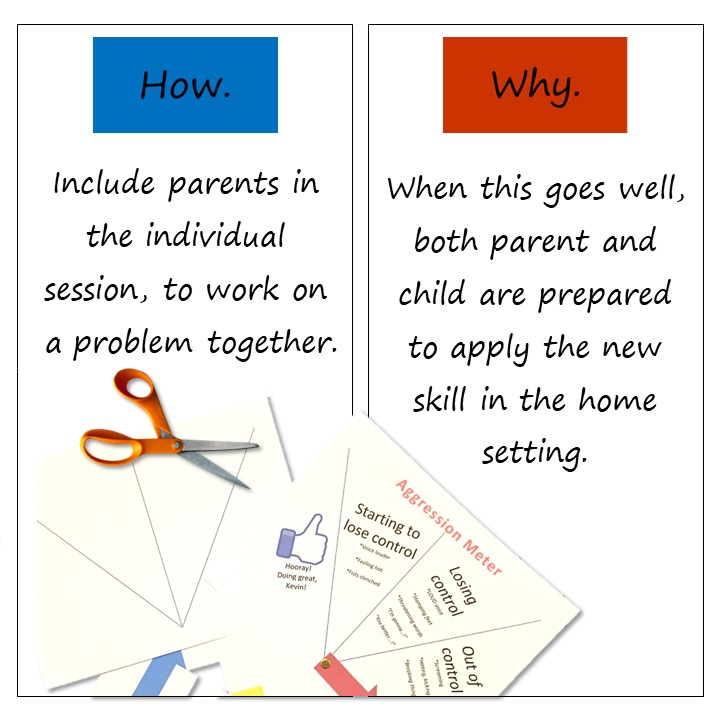
I have found that having parents participate in creative therapy activities has been enjoyable and productive. Most parents seem to look forward to participating in this way. For example, I have often involved parents in the creation of these customizable behavior meters, which is one of the free downloads on this website.

Many of these therapy activities just go better if parents are there to observe and take part. And quite a few therapy activities I do in individual therapy actually require multiple participants. This is especially true with carrying out with role plays, even more so if we are videoing the role plays to play back.

The free resource shown here is Anime Emotion Worksheets.

It has been a great experience for me as a therapist over the years to meet and to work with the helpful siblings of my autistic clients. Many of these siblings of special needs kids have already grown into the helping role at home and their participation in sessions can be invaluable.

Here are just a few of ways that siblings have helped in sessions:

*Being the video camera operator during the recording of role plays

*Operating the laminator when we are creating therapy materials to take home

*Serving as informants regarding the designated client’s social relations at home and in the neighborhood.

The resource shown above is one of 17 therapeutic paper fortune tellers you can download on this website.

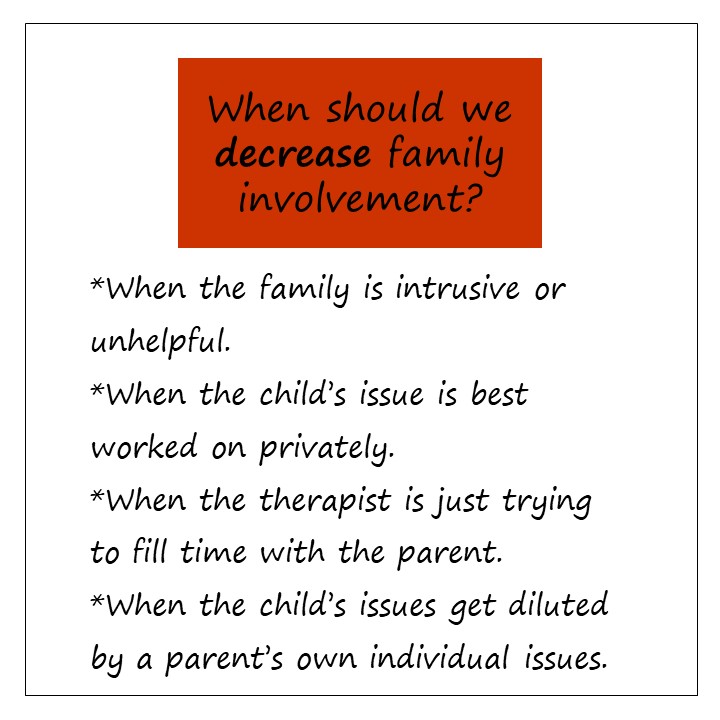
Of course, increasing parent involvement in sessions is not always helpful. Inviting parents into individual sessions should not become automatic by any means.


Fellow therapist, I hope you find some of these ideas helpful to you in your own work.

Part 4: Workplace preparation – Job interview skills, ways to teach them

Almost all of us find interviewing for a job to be a daunting social experience. 

There is so much at stake in a short, intense conversation. And everything about us – our words, demeanor, appearance, and life history – is under focused scrutiny.

Young people on the autism spectrum preparing for job interviews often feel this pressure with great intensity. The demands to answer unfamiliar questions and make a good impression can feel overwhelming to them.

In my own work helping young people with ASD to cope with social and emotional challenges, I have spent many hours helping individuals and groups to get ready for job interviews. My impression overall is that my clients have enjoyed this work and benefited from it.  Some have told me later that job interview practice really helped them feel more confident and competent in a job interview.

Here I would like to summarize some of the methods I have used to boost job interview skills in young people with autism.

Raise awareness about realities of employment and the role of employers and employees.

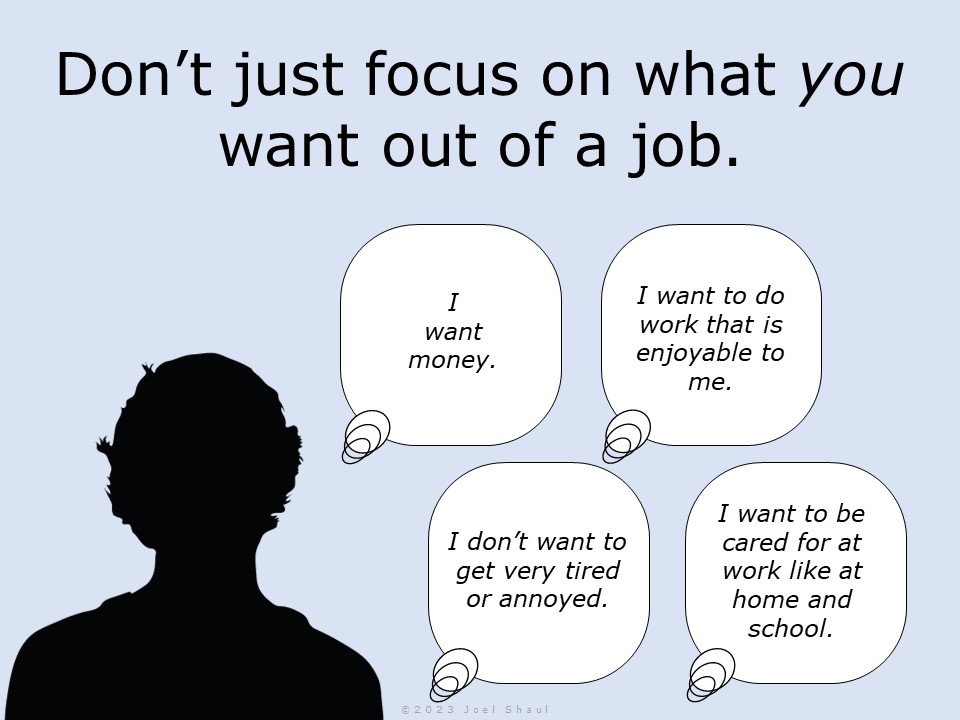
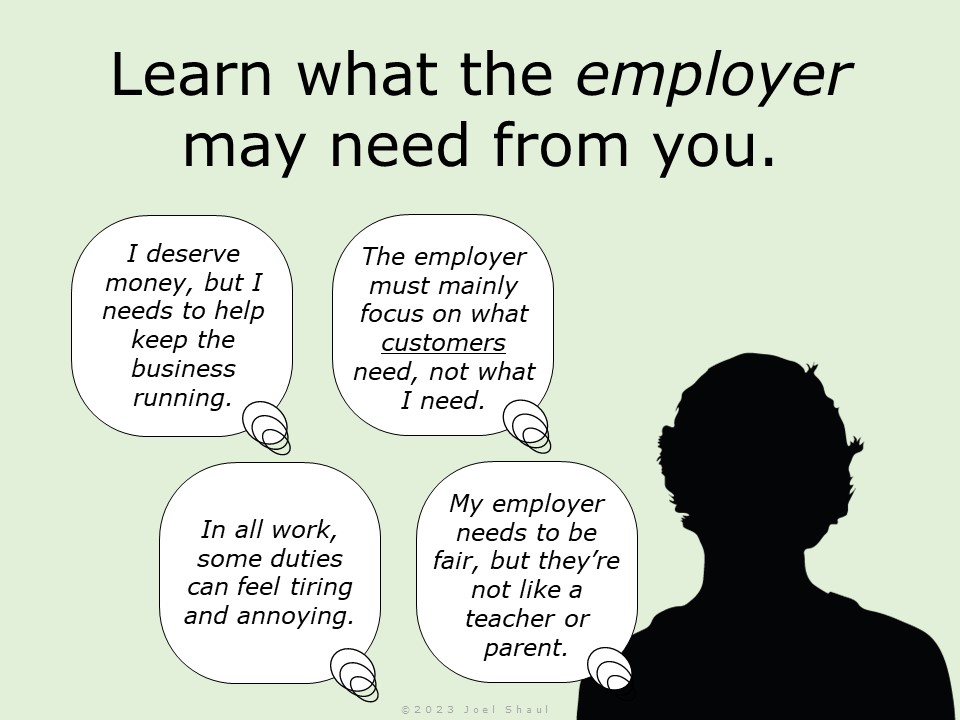
Young people in general, and those with ASD in particular, often lack essential knowledge regarding the employer/employee relationship. So far in their lives, the adults in the lives of young people have been primarily parents and teachers providing nurturance and education.  In employment, it’s different – you are the adult now, the one providing the service to others.

Parts 1, 2 and 3 in this series are to reinforce basic knowledge about employment. If you have not done so already, I suggest you reference at least some parts of the earlier resources before attempting practice job interviews.

Obviously, the responsibilities of employment may be beyond the capacity of some of our young adult clients, who might be very strongly affected by some debilitating aspects of ASD or by co-occurring issues such as intellectual disability or clinical anxiety and depression. Still, in my own work in groups and classrooms, I have generally had everyone take part in workplace awareness education and job interview practice, including individuals who did not appear ready to move into conventional work situations. I feel those not destined for regular employment still benefited by learning important information about what employment is like.

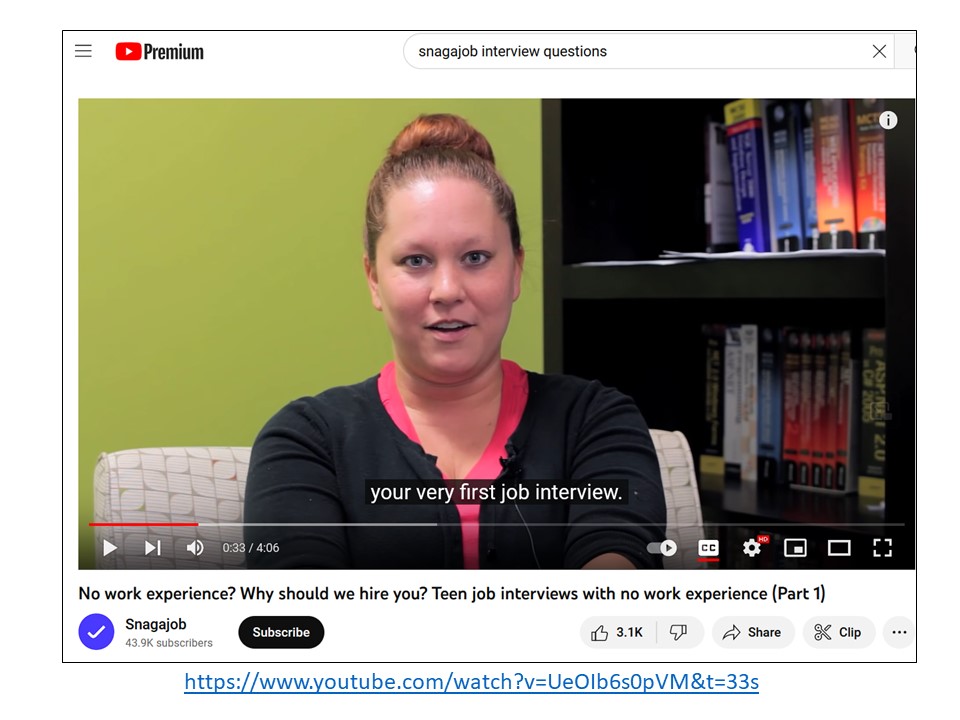
A great way to build interest and awareness about employment is to show YouTube videos on the subject.

I have used the “Snagajob” series below over and over again. It has a tone of levity, but is very informative. It focuses on an aspect of job interviewing that many people with autism find especially difficult: answering tricky questions. Click on the picture below to link to these videos.

Address non-verbal elements of job interviewing.

Points of discussion should include:

*Shaking hands. See the video below. I have spent whole sessions practicing this with individuals and groups.

*Non-verbal Do’s and Don’t’s of job interviews. Years ago, in a practice job interview, a student of mine elected to end the interview by skipping the handshake and giving me, the interviewer, a warm embrace instead.

*Eye contact. Troubleshoot workarounds for when someone is expected to use eye contact but they have an aversion to doing this.

*Posture.

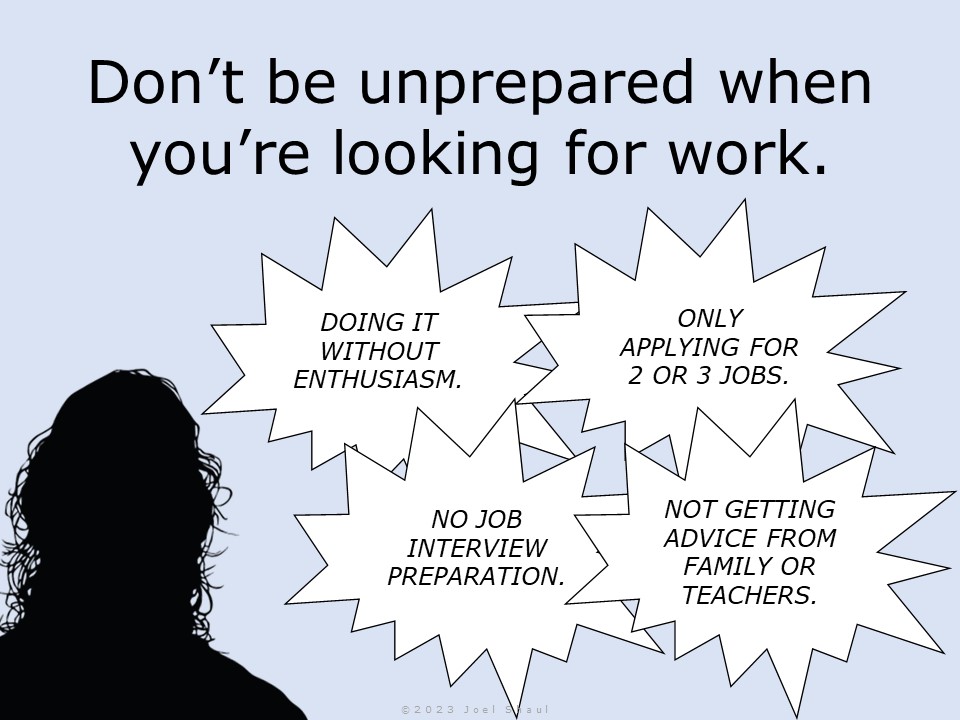
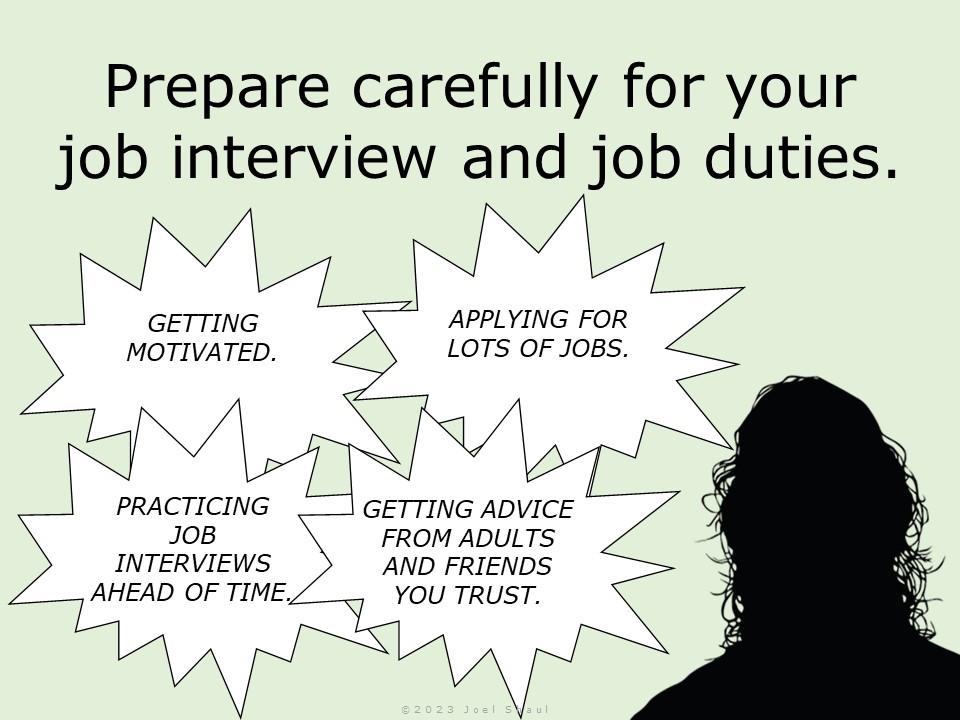
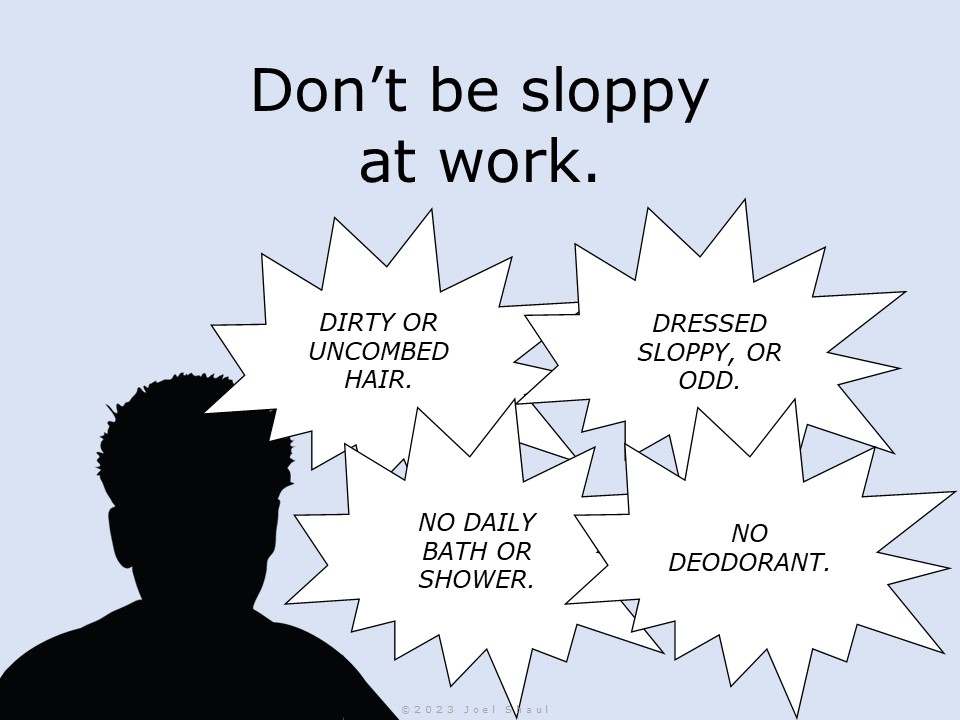
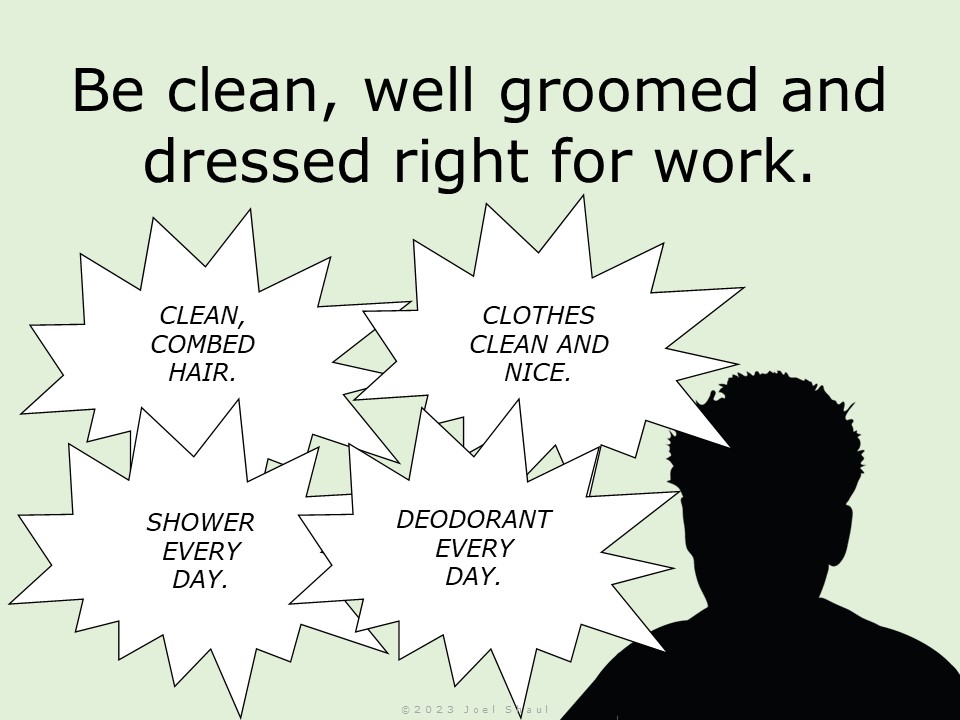
*Attire and hygiene.

Increase awareness of the most common interview questions, and acceptable replies.

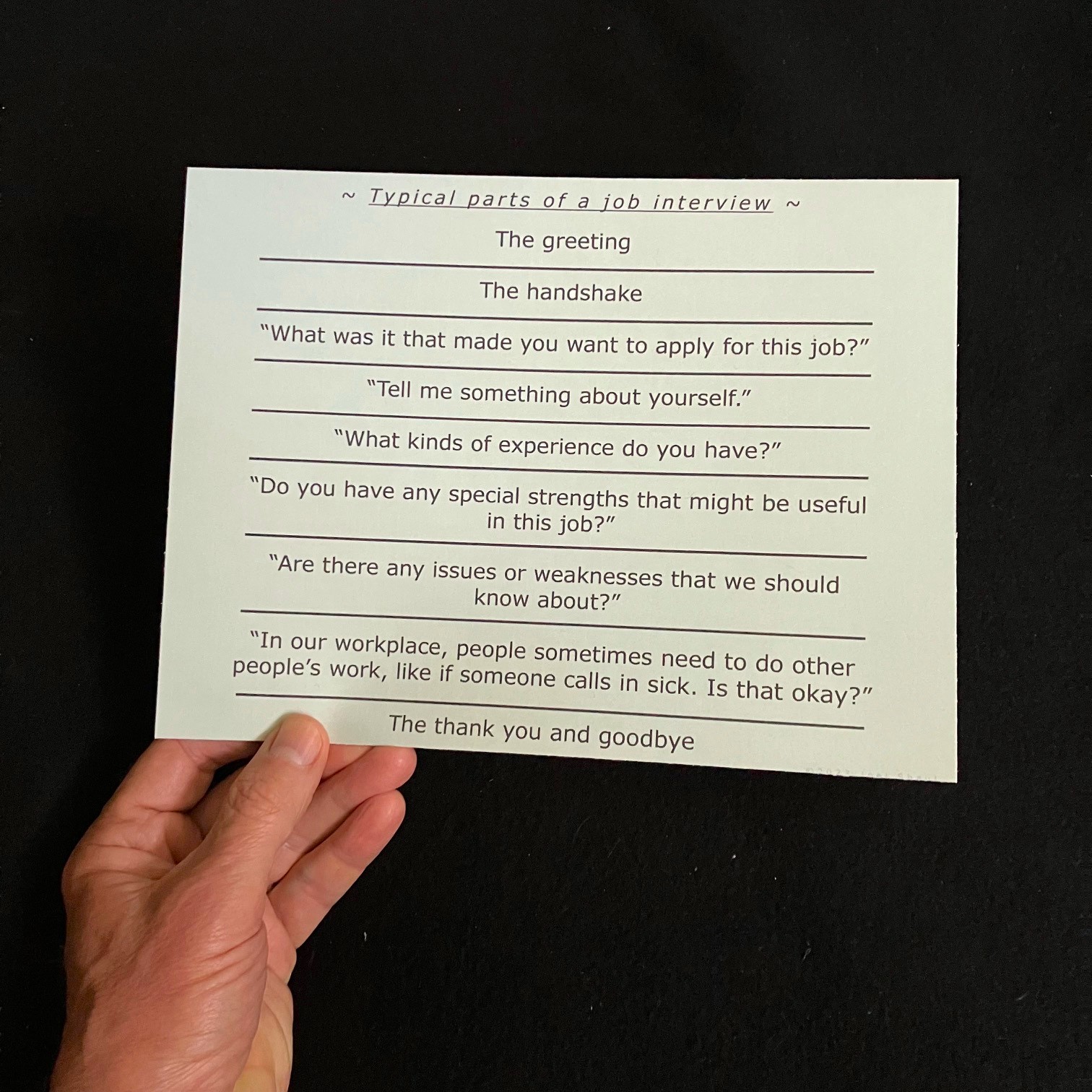
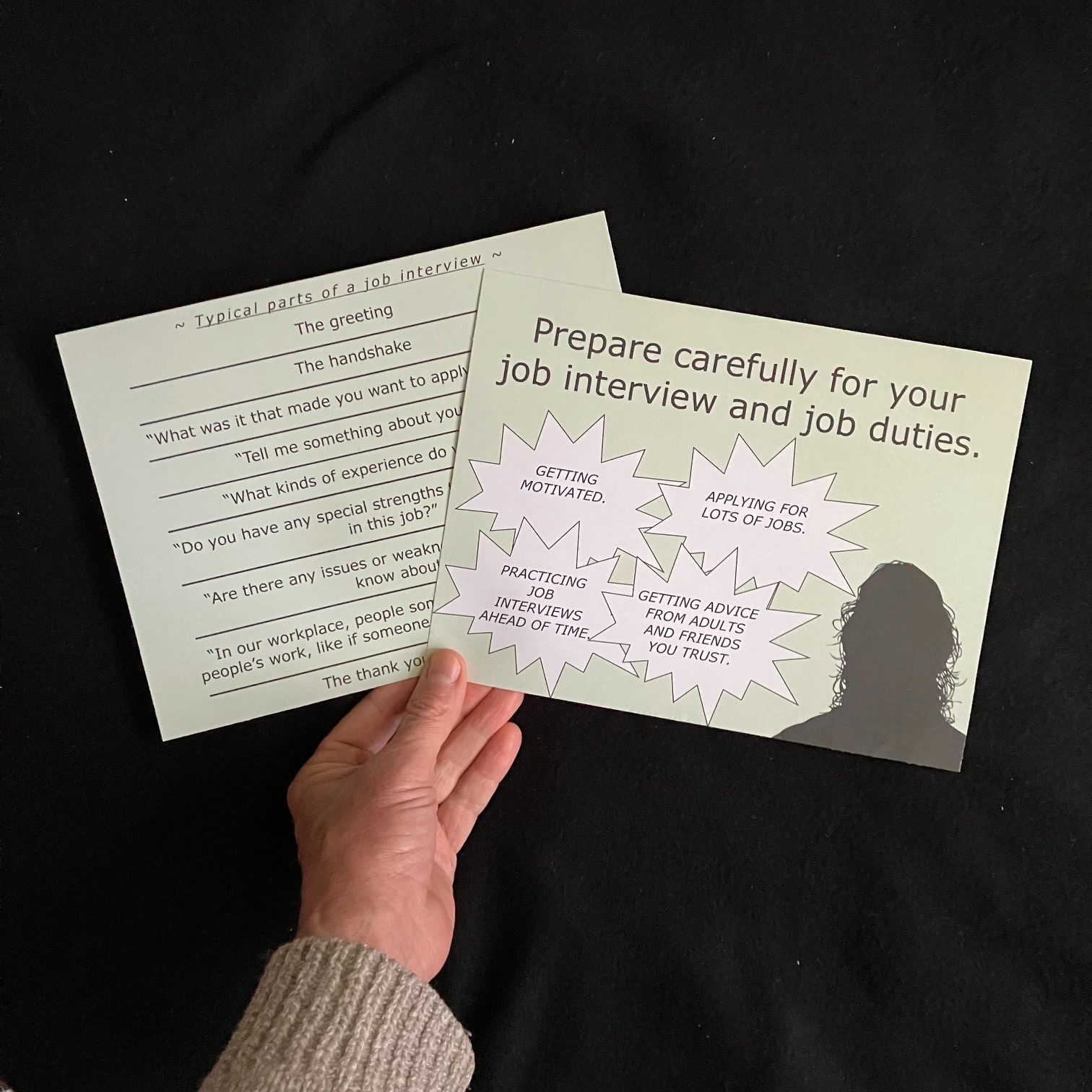
Print out the single-page list of common interview questions. When you start with the practice interviews, I suggest you mainly stick with these questions at first.

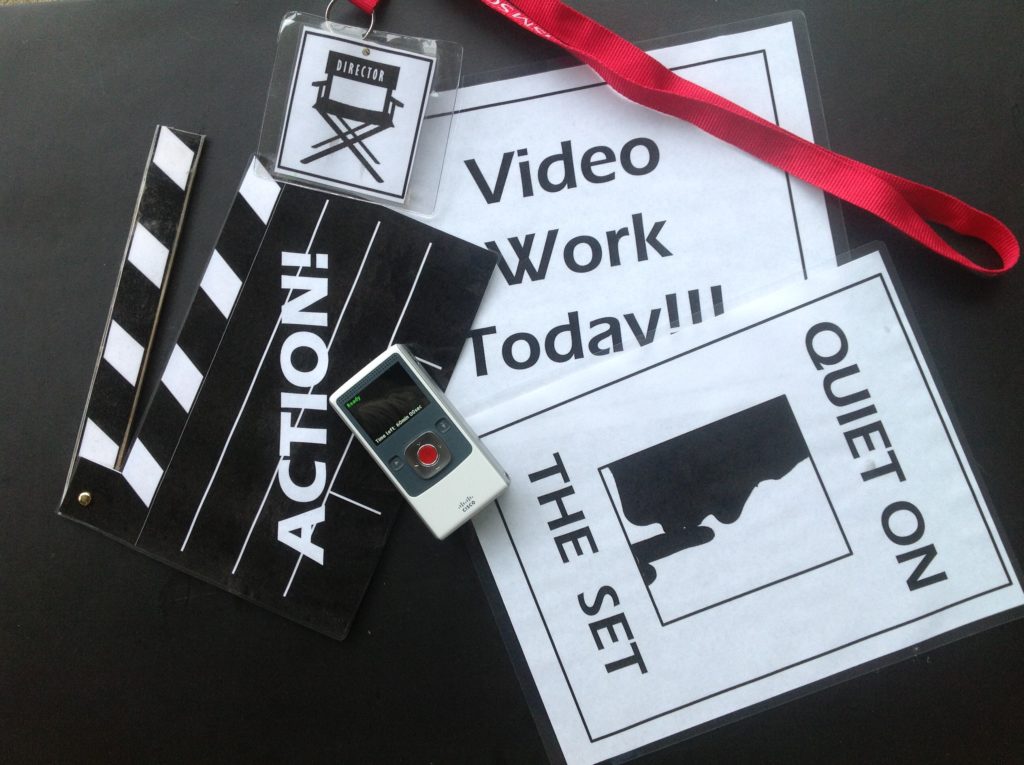
Video the practice job interviews if you can! Most young people really like this, and it makes practice interviewing a much more effective teaching tool.

I have a tutorial on simple ways to do video modelling. I hope you will try doing this.

This image has an empty alt attribute; its file name is Social-Skills-Teaching-Video-Modeling-1-2-1024x765.jpg

Joel Shaul, LCSW


Intro: Workplace preparation resources for young people with ASD

Part 2: Workplace preparation – printable teaching panels

Part 3: Workplace preparation – Q & A cards

Part 4: Job interview skills – how to teach it and provide practice

Part 3: Workplace preparation Q & A cards (printable & screen-based)

A game-like card activity to promote workplace readiness in teens and young adults on the autism spectrum, in printable and screen-based versions.

In German: Bereit für den Arbeitsplatz – Karten

Hebrew translation of this resource

Why I made these cards

To engage teens and young adults on the spectrum in productive discussions about preparing for adulthood, I have found it useful to employ various media and game-like methods. Q & A card resources are one of my mainstays. This method helps to break up the usual adult-questioning-the-child dynamic in therapy and teaching. And in small-group and classroom work, the turn-taking format helps to give everyone, including quieter participants, the chance to talk.

Ways to use these cards

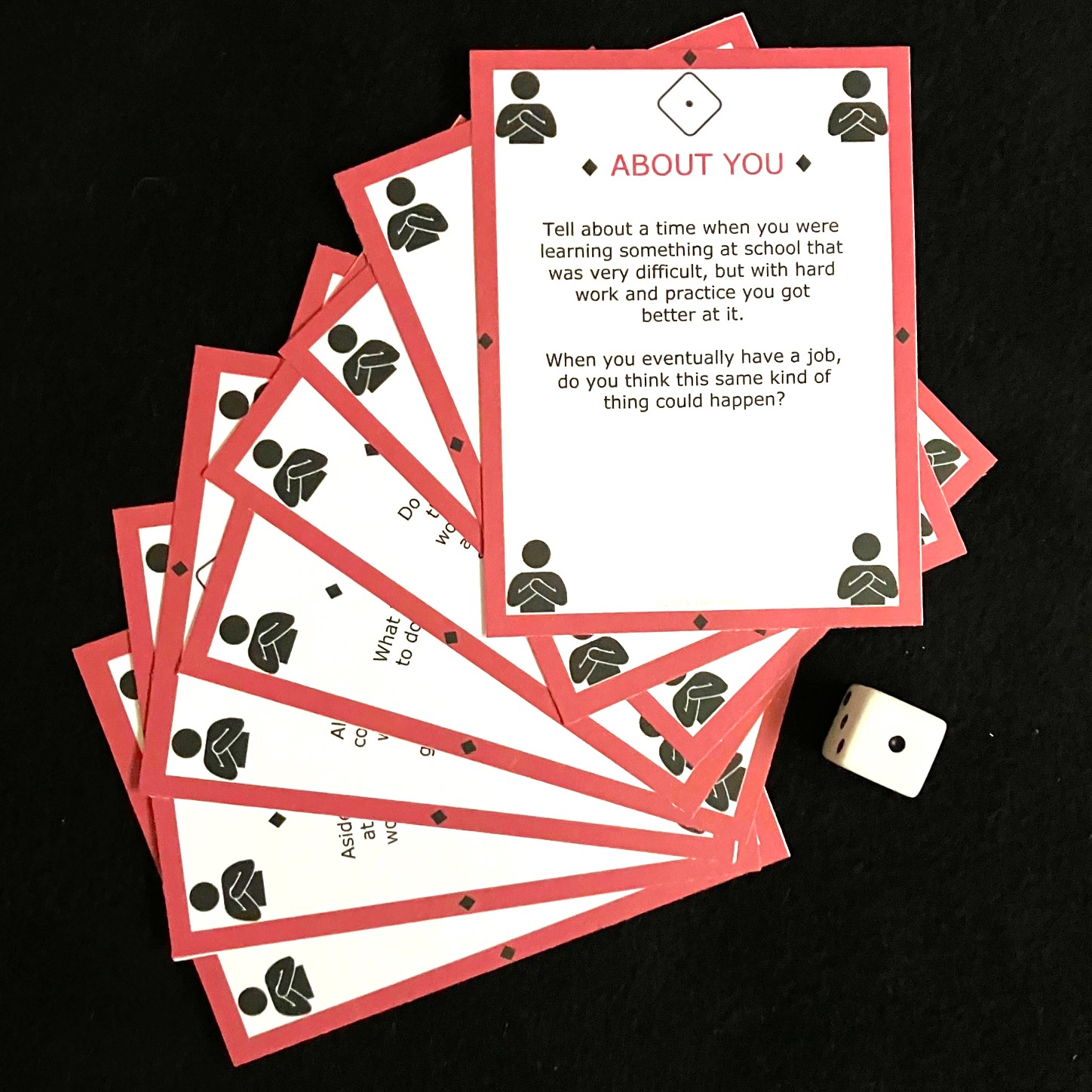
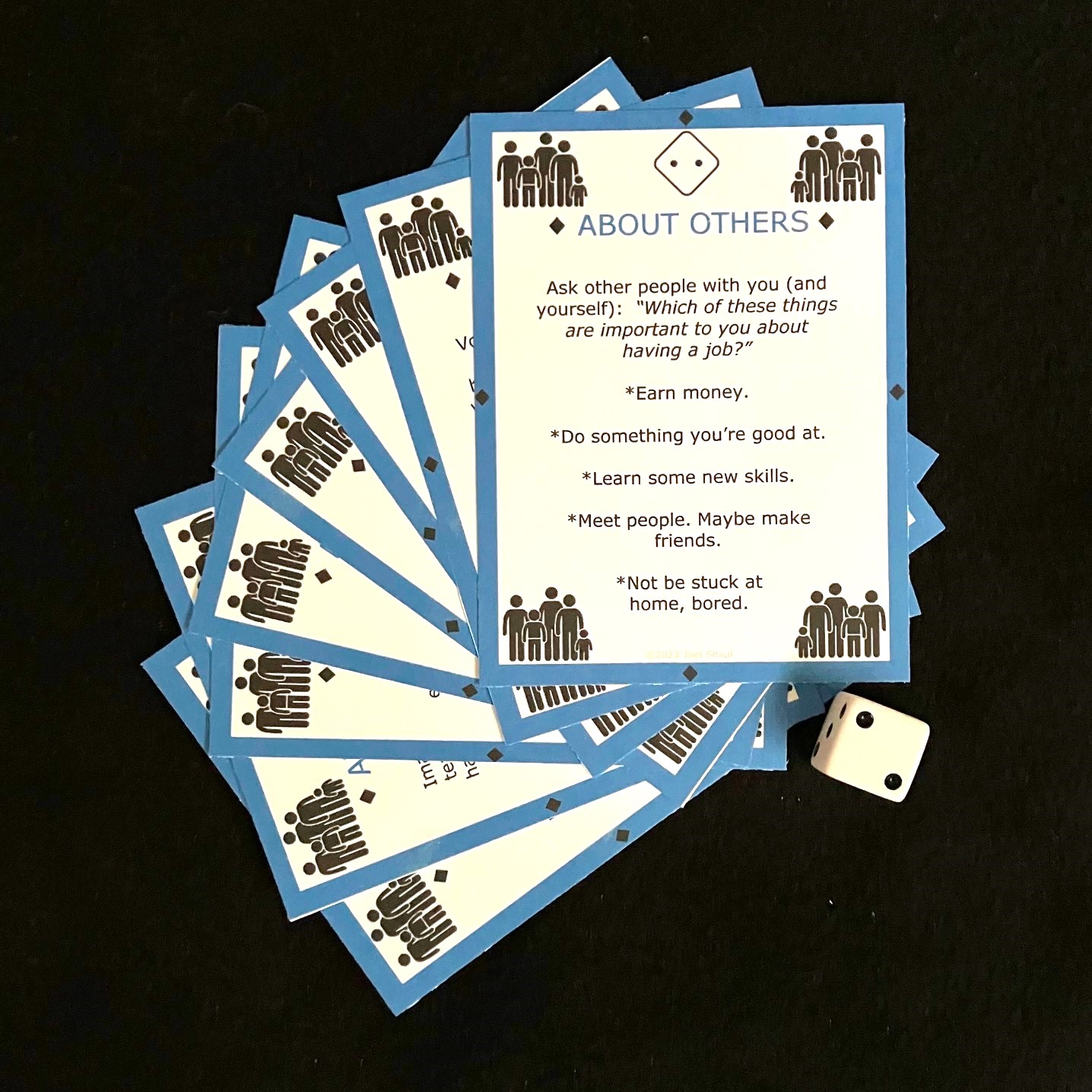
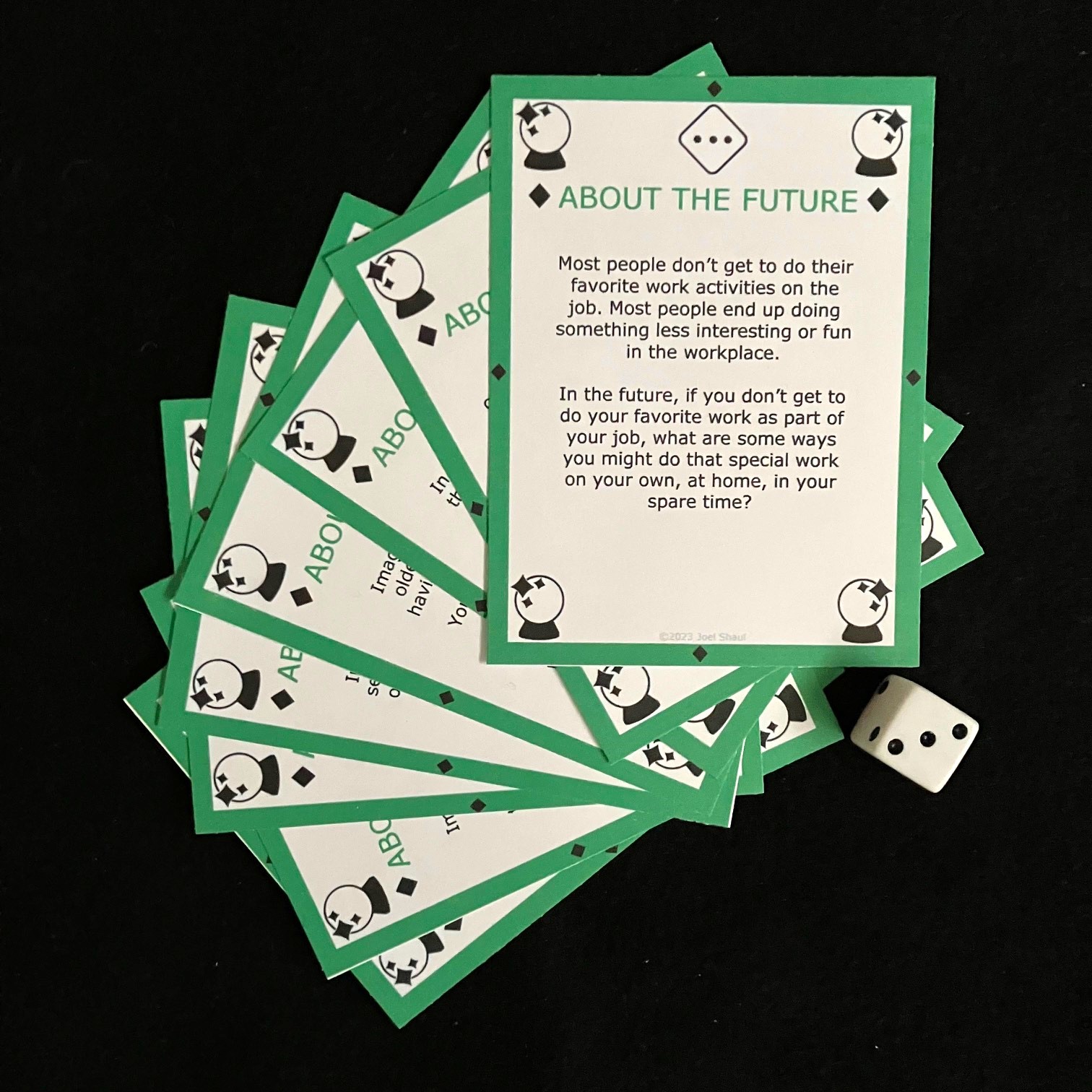
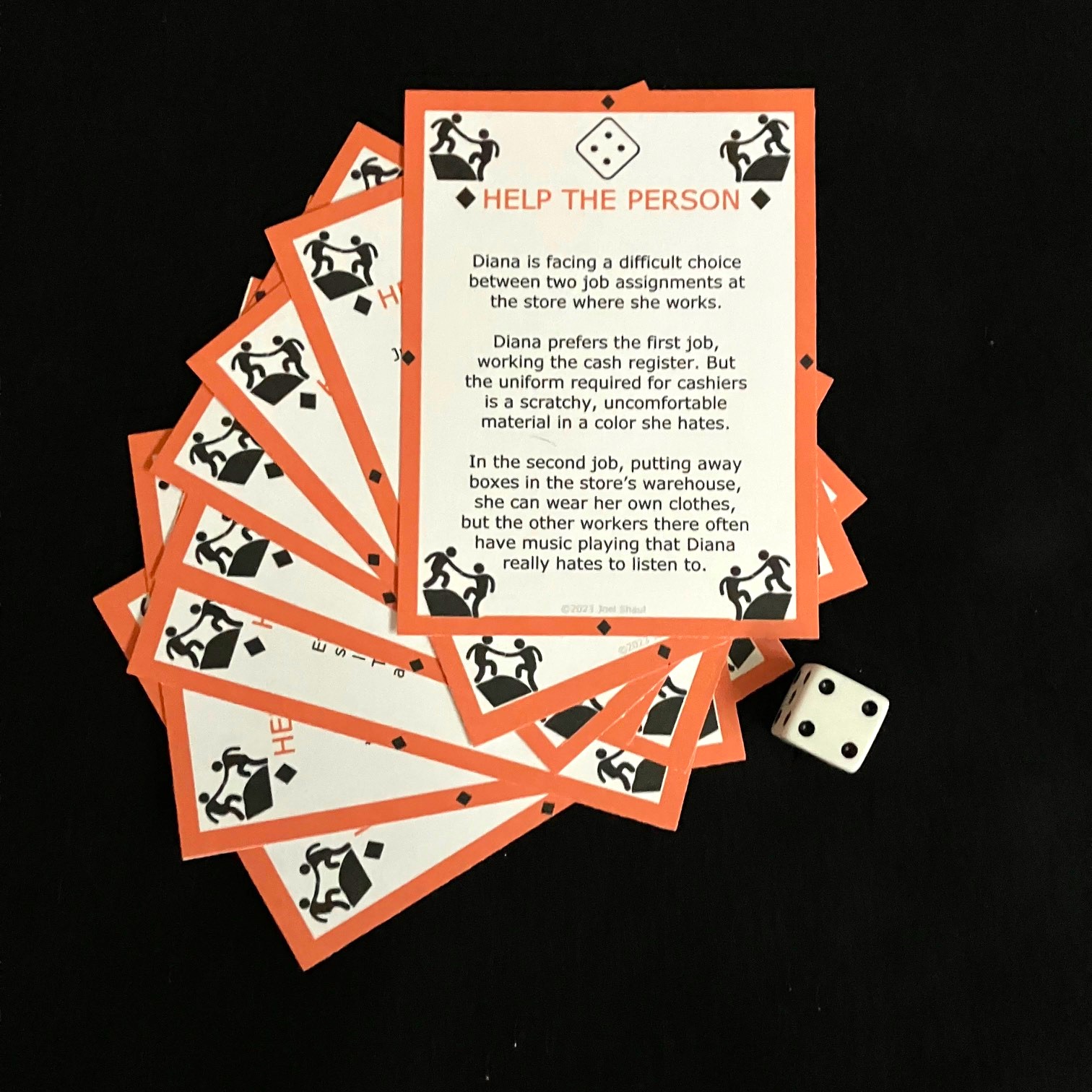
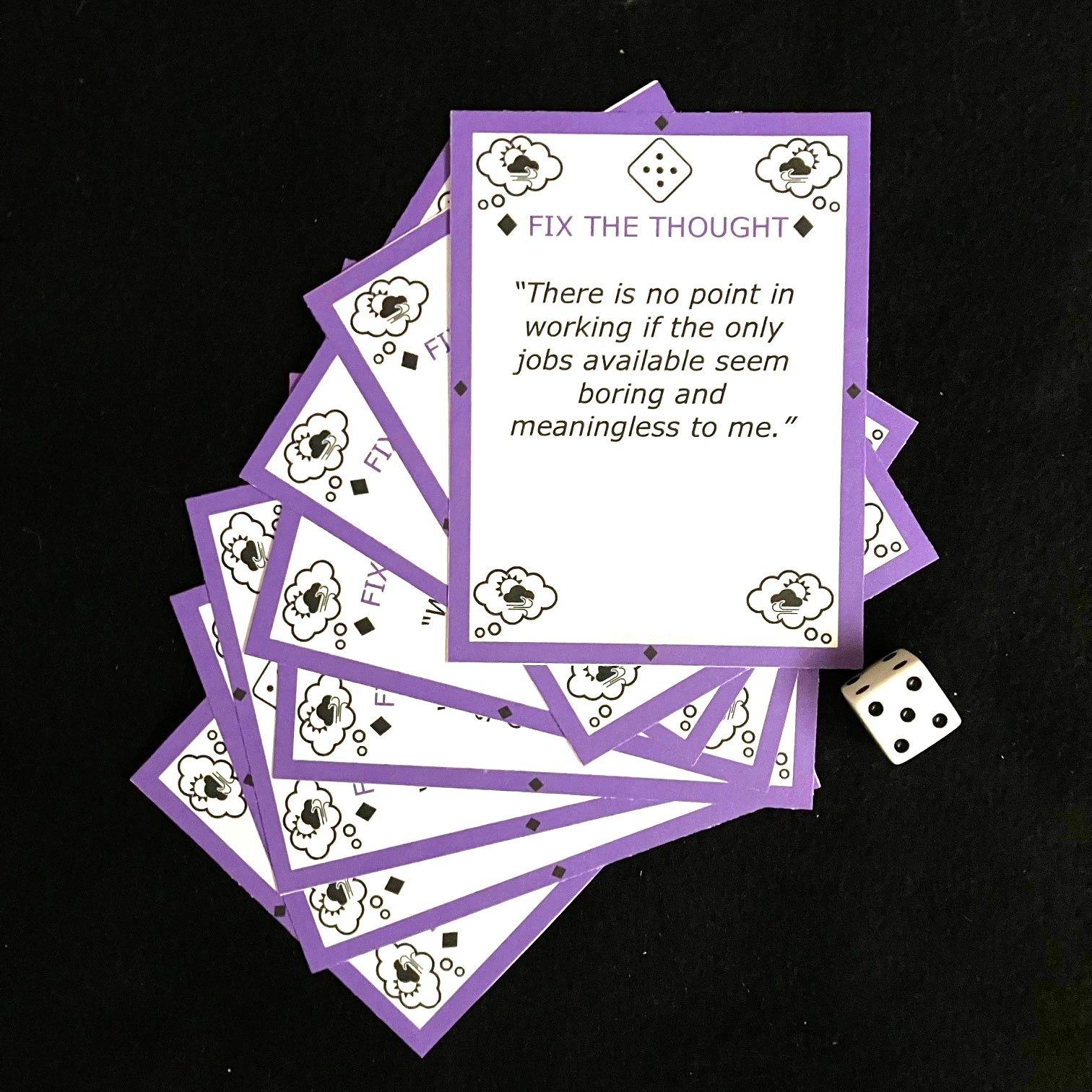
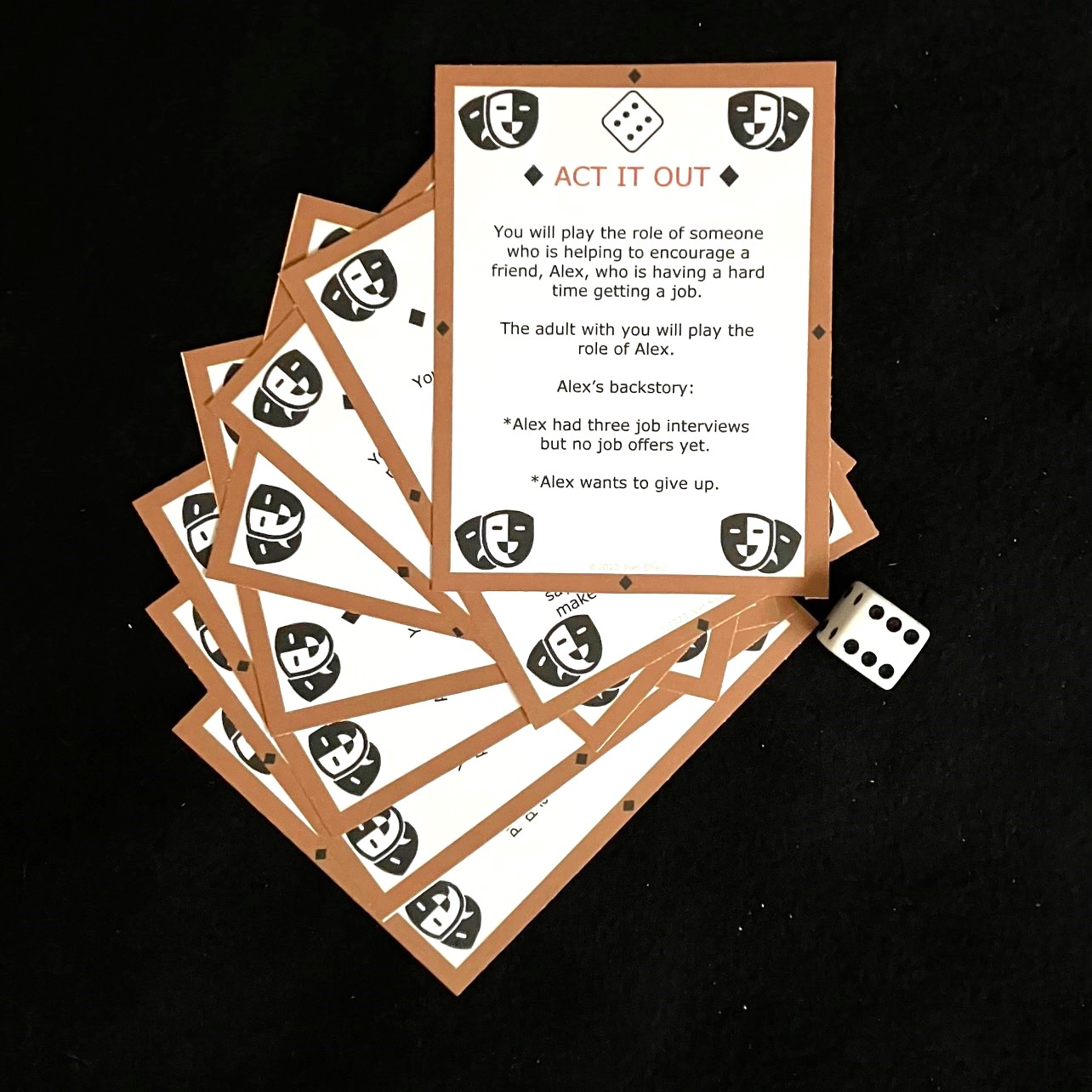
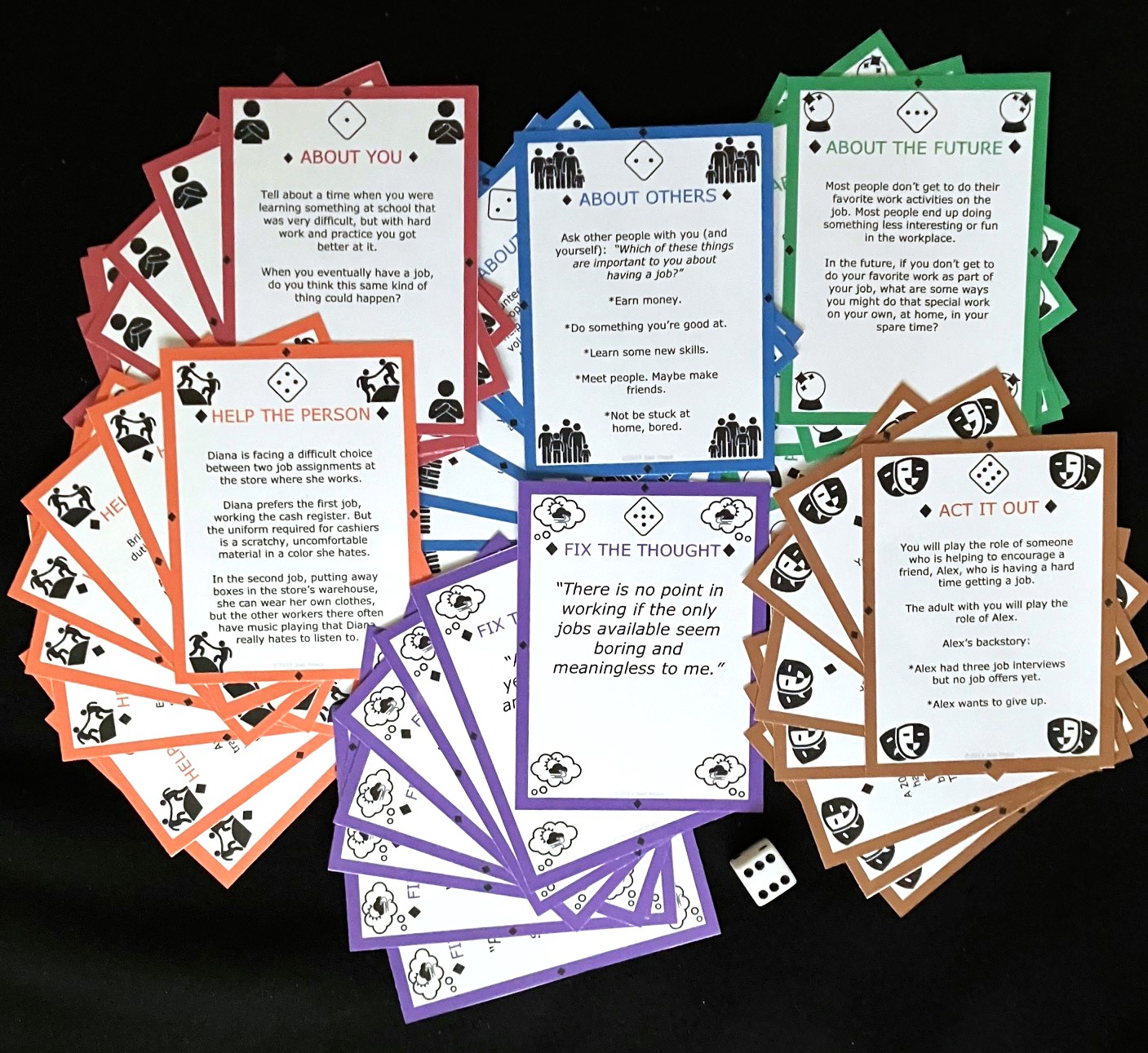
There are six categories of cards, allowing for a game-like element by rolling a die to determine which card a participant has to select.

But you may feel free to use these cards however you like. For example, you can pick through the deck and select the cards you think are most relevant and helpful for the young people you are assisting. You may decide to focus on just one single category of card.

For another card-based resource to explore much broader themes of preparing for adulthood, check out Young Adult Future Cards.

Here are the six different card categories.

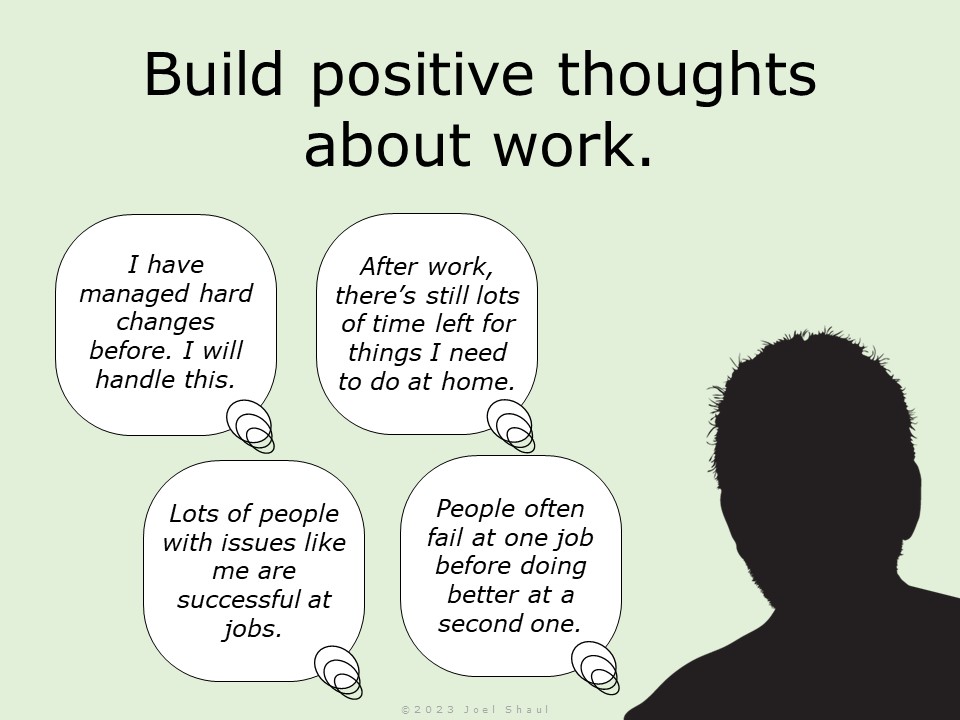
You, the facilitator in this activity, can use the “Fix the Thought” cards in the following manner if you like: You, the facilitator, play the role of a person having this thought. The participants talk to you and offer you alternative ways of thinking.
If you would like to expand on the theme of automatic negative thoughts, check out this video and this resource on “Poison Thoughts.”

You, the facilitator, play an active role with these “Act it Out” cards. Each card gives “stage directions” for carrying out a very short role play.


These cards are part of a series of vocational preparation materials, which you may access by clicking on the links below.

Joel Shaul, LCSW


Intro: Workplace preparation resources for young people with ASD

Part 2: Workplace preparation – printable teaching panels

Part 3: Workplace preparation – Q & A cards

Part 4: Job interview skills – how to teach it and provide practice

Part 2: Workplace preparation printable teaching panels

Workplace preparation panels, Hebrew translation

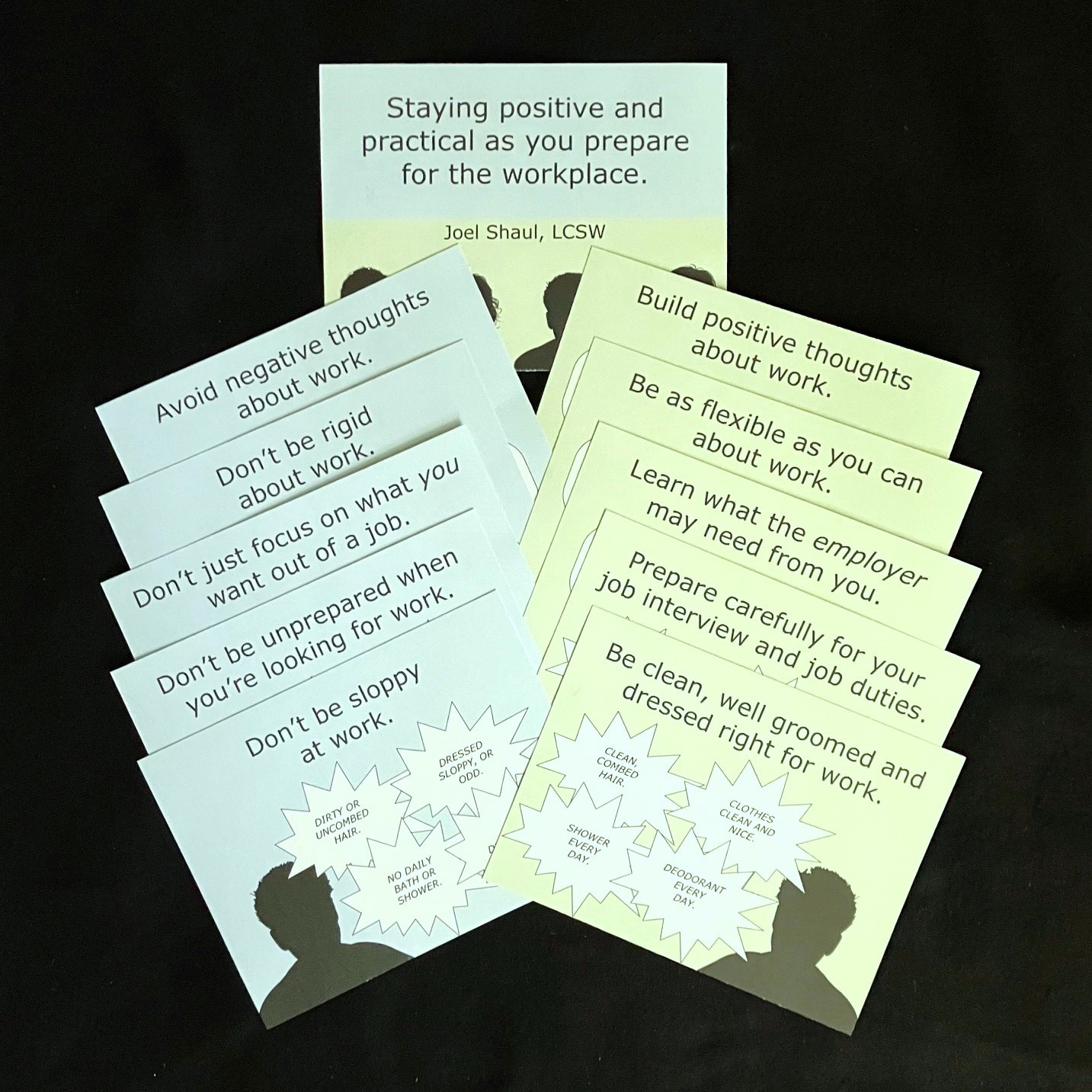
This set of 10 simply-designed teaching panels is designed for individual or group work as well as small classroom work. This resource is to help guide teaching/therapy and provide structure for essential points of discussion with regard to getting ready for the workplace. The panels may also be suitable for wall display.

Projecting the pdf display or showing it on a Smart Board is a useful way to guide group discussion on the topic of vocational preparation.

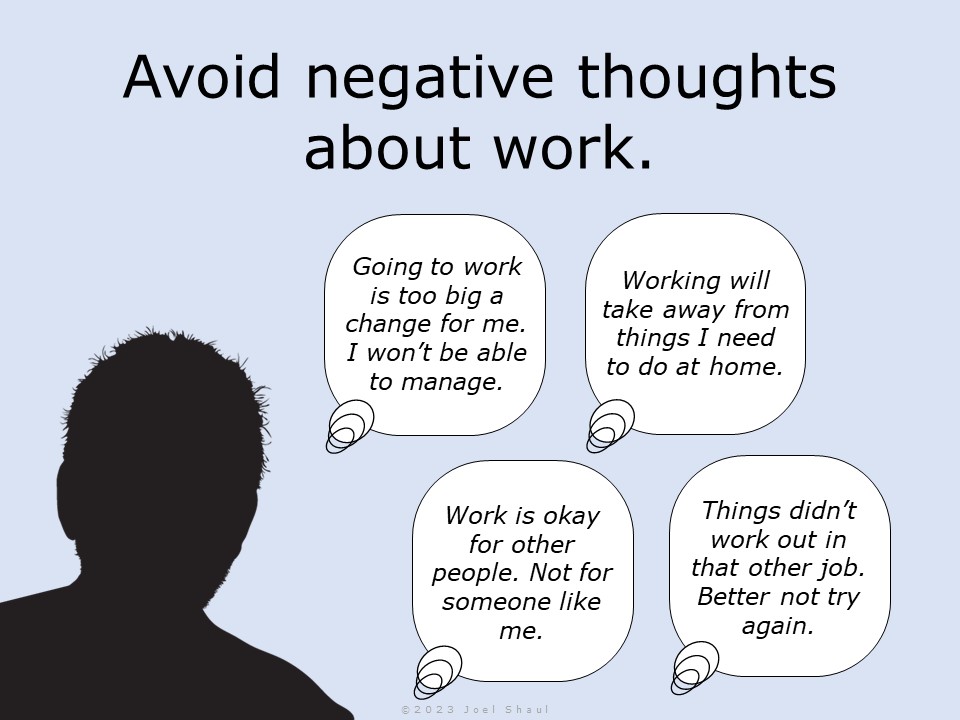
This first pair of teaching panels concerns typical thoughts that can discourage young people with autism who are contemplating the prospect of work.

Our aim should not be to gloss over real challenges and obstacles – young people with autism may have many – but rather, to reduce the debilitating potential of some exaggerated or unsubstantiated concerns.

If you want to explore further regarding automatic negative thoughts, you might check out this short video and these CBT thought bubble materials.

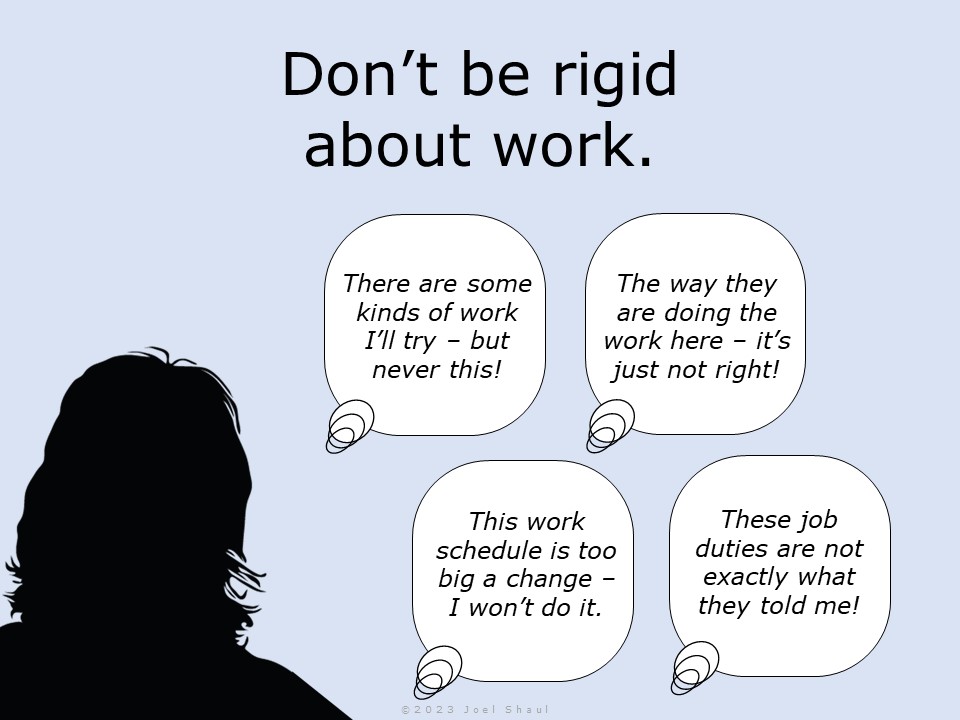
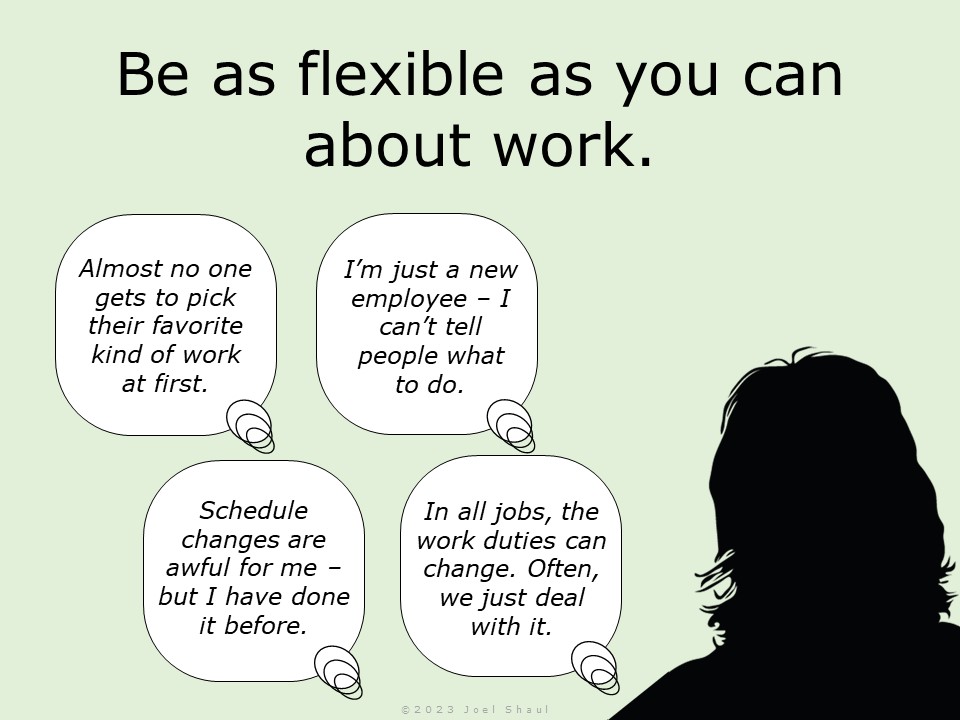
Many people with autism are successful in work, but aversion to changes in expectations and routines can hit them hard, especially at first.

If you would like to broaden your discussion of rigidity, you could check out this video on rigidity or these Rigidity/Flexibility Cards.

Young people with autism are familiar with hierarchies in their homes and schools, but when entering the workplace, they might be confused with new and complex systems of authority and accountability. You might wish to reference portions of this simple and visual guide to hierarchies based on moveable sticky notes.

Please reference the videos and learning materials in Section 4 of this series, which is all about job interviews.

YouTube videos by autistic people about their own job preparation and interview strategies are a rich source of practical advice and inspiration – also reference in Section 4.

Quite a lot of the advice to young workers would of course apply to everyone – not just young people on the autism spectrum.


This resource is designed to be used with other materials you may access below.

Joel Shaul, LCSW

Intro: Workplace preparation resources for young people with ASD

Part 2: Workplace preparation – printable teaching panels

Part 3: Workplace preparation – Q & A cards

Part 4: Job interview skills – how to teach it and provide practice

Part 1: Intro – Workplace preparation for young people with ASD. Therapy strategies & free resources.

This four-part series, containing ideas for teaching and therapy as well as free, downloadable materials, is to help mental health professionals, educators and speech therapists to promote motivation, practical understanding and positive attitudes about work for their young clients on the autism spectrum.

There are links to each of the four sections at the bottom of this page.

Reasons to build workplace readiness into teaching, therapy and speech:

1. Young adults on the spectrum with work exposure tend to do better, socially and emotionally.

In my own professional experience, my clients who have had work opportunities, either paid or volunteer, have done better overall socially and emotionally as young adults compared to those who have not worked.

After their formal education has stopped, work can provide opportunities for continued growth and accomplishment outside the home. Young people on the spectrum who work, even a few hours a week or in volunteer positions, tend to maintain better self-care skills and social skills. Many are assets to their employers. Those of us who can sometimes “recognize” autistic people out in the working world appreciate their being there so much.

A few of my young, autistic clients have had gifted intelligence or rare abilities. Helping these young people to negotiate some of the social and emotional challenges of initial work experiences has sometimes helped them to aspire to their potential.

2. Filling in knowledge gaps, reinforcing emotional preparation and troubleshooting problems can make young people with ASD more successful in their initial work experiences.

Although there are limits to what we can do in our therapy offices, speech rooms and classrooms to promote work readiness, we should all do what we can.

Once years ago, I happened to be standing next to one of my students when he got a call on his cell from a grocery store supervisor who had received his application and wanted to set up an interview. I overheard this student quote directly from some of the stock answers to job interview questions that we had recently practiced in our social skills group. Clearly, what he had learned in our sessions was helpful to him. He ended up getting hired there – his very first job.

3. Workplace preparation is even useful for individuals who are not destined for the workplace.

Some young people with autism might have co-occurring disorders, such as intellectual disability or severe mood or anxiety disorders, making work difficult to realize outside of sheltered workshops. 

In my experience, isolated young people on the spectrum, whose exposure to the world has been largely confined to their homes, schools and computers, show curiosity and lively interest nevertheless in workplace readiness activities, even if conventional employment is not in their future. Although some of the teenagers I have seen in schools and in my office have subsequently not gone on to work very much as young adults, I believe that what they learned about the workplace still has value. They may be able to apply this knowledge later in life if vocational opportunities come up. At the very least, they are building a worthwhile fund of knowledge about the workplace, which may give them useful insights into the lives of family members and other people they know.

Here are the links to all the parts of this series on vocational preparation.

Intro: Workplace preparation resources for young people with ASD

Part 2: Workplace preparation – printable teaching panels

Part 3: Workplace preparation – Q & A cards

Part 4: Job interview skills – how to teach it and provide practice

Joel Shaul, LCSW

Personal Space, Personal Distance ~ free, illustrated pdf eBook for ages 8 to teen

German translation of this book

Irish translation of this book

Hebrew translation of this book

I created this resource for several reasons.

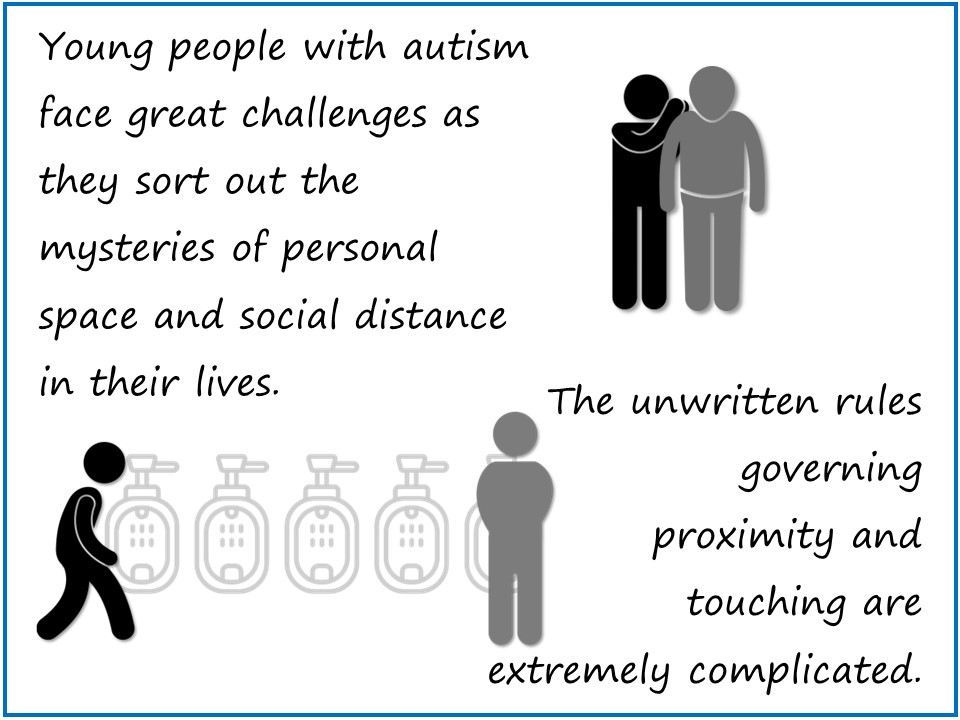
First, although there are many resources available to help children with autism to learn about personal space, the resources tend to be simple and formulaic. In my own experience helping young people on the autism spectrum to learn about personal space, the actual unwritten rules are so complicated that merely relating some simple rules isn’t good enough.

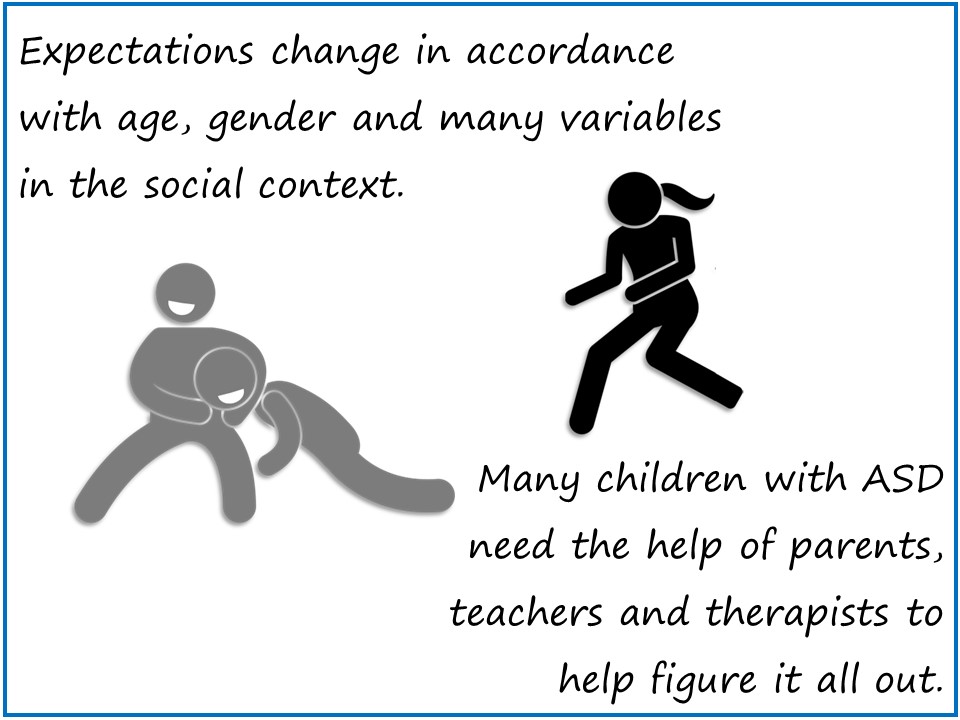
Second, there are few resources on personal space and distance designed to help older children, teens and young adults. As children on the spectrum grow up, the personal space rules affecting them get more and more complicated, especially if the young person is involved in a variety of challenging interactions in the community.

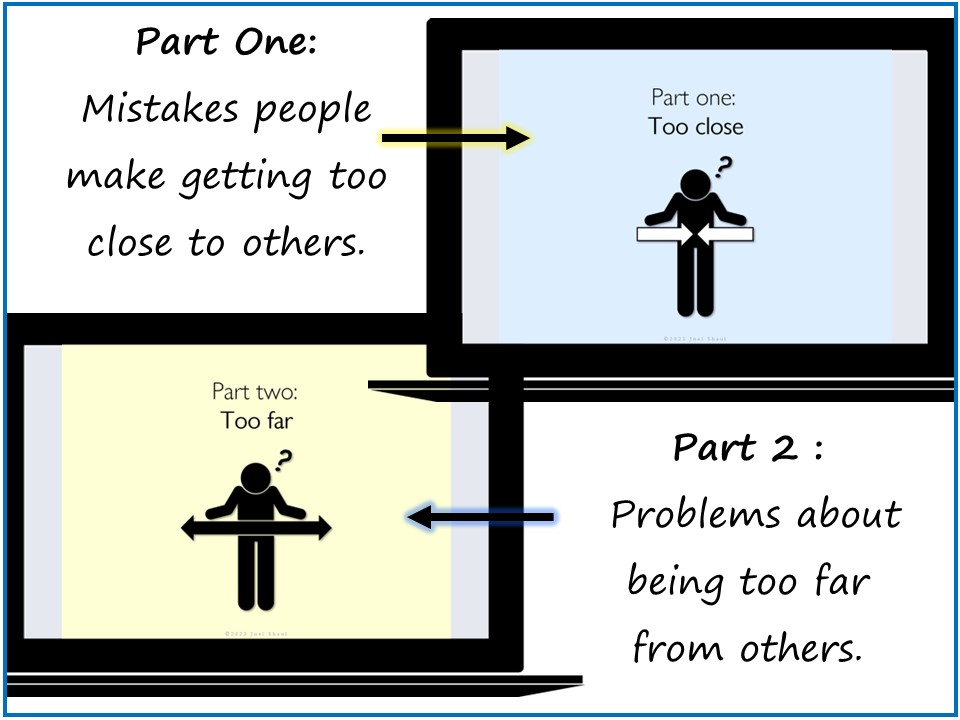
Third, I have come to view problems with getting too close as part of a spectrum of challenges that includes getting too far away. My own clients over the years who made mistakes with getting too close or inappropriately touching people also had difficulty with getting too far away from the expected social grouping.
I designed this eBook to help young people, over a wider range of ages, with a more broadly defined set of challenges involving personal space and distance.
Part 5: Tailoring CBT methods & media to the individual

Our aim in doing CBT with children should be to extract helpful and useful methods from CBT concepts. The children we see vary a great deal in age, intellect, temperament and predilections, so we should avoid getting locked into CBT treatment practices that are too rigid. As much as possible, we should allow our interventions to be shaped by the individual child we are treating.

Factors one should consider when selecting psychotherapy tools for children

There are so many different things to be considered when planning therapy interventions. Here are some factors I have thought of, along with examples of resources I have developed in an effort to accommodate different learning styles. Although I do quite frequently employ resources developed by others in the field, in this article I am primarily displaying resources I have developed myself, available for free download or in my books.

Attention span

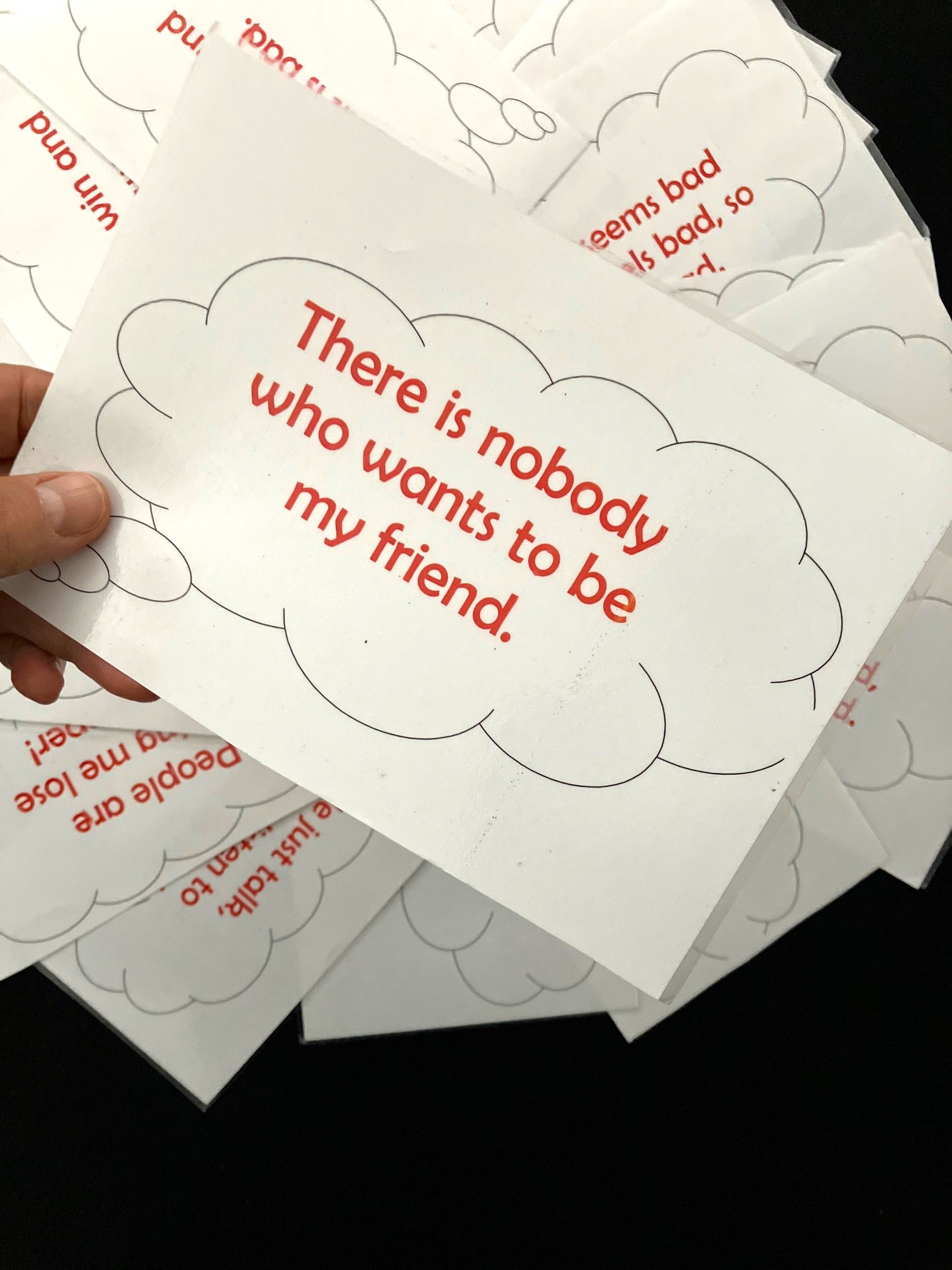
Many children need frequent, positive prompting to stay focused. Some benefit from token prompts, like the ones shown below.

Preference to face towards therapist directly vs. indirectly

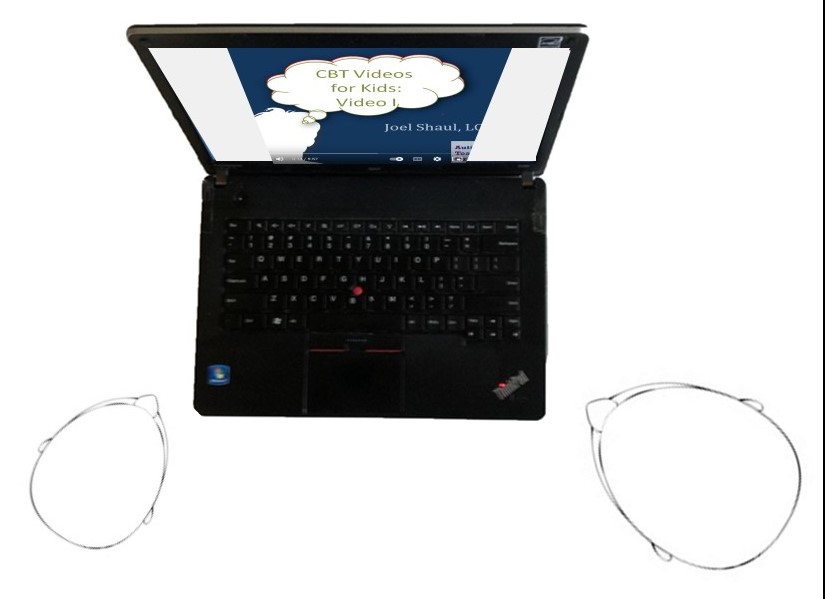
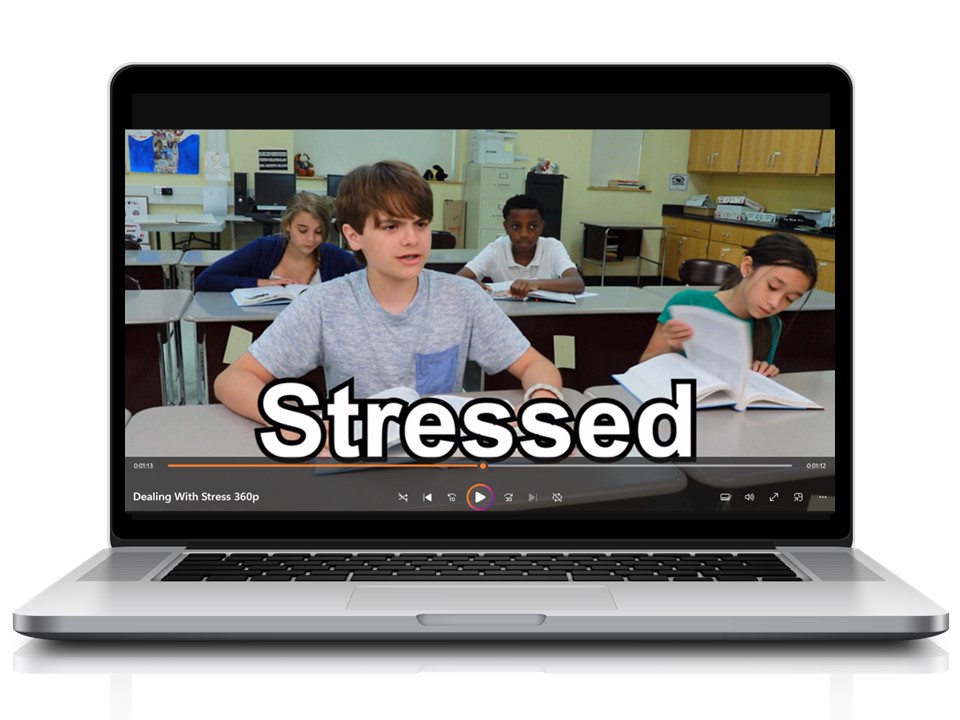
Many children, especially children with autism, have a limited capacity to look directly towards the therapist. It can really help to arrange for both you to direct gaze towards something in between both of you. The example shown below is a laptop with one of my CBT videos on the screen.

Levels of intellect, education, language comprehension and reading ability

It is easy for us to end up confusing our young clients with our language and concepts. There are some resources available that are simple, appealing and very helpful. An example, shown below, is a screen shot from one of the hundreds of Everyday Speech Videos.

Special interests

Many children, especially children with autism, are strongly motivated by therapy content that references their particular interests. For example, a child with an interest in Godzilla movies could be reinforced by an anger management activity that involves drawing Godzilla.

Ability to remain seated vs. need to stand and move around

In my own work years ago in a community-based summer teen program for kids with autism, we sometimes did CBT-based activities in small groups while standing. In one such activity, I spread CBT Thought Bubbles all over the floor and asked the participants to walk around and match up “Poison Thoughts” with corresponding “Antidote Thoughts.”

Receptivity to information and instruction coming from a computer screen

Many children are strongly conditioned to pay close attention to information presented on a computer screen. We therapists sometimes overvalue our spoken words. Most kids, and not just the ones with ASD, often consider information viewed on a screen as somehow more noteworthy that the same thing viewed in the “real world.”

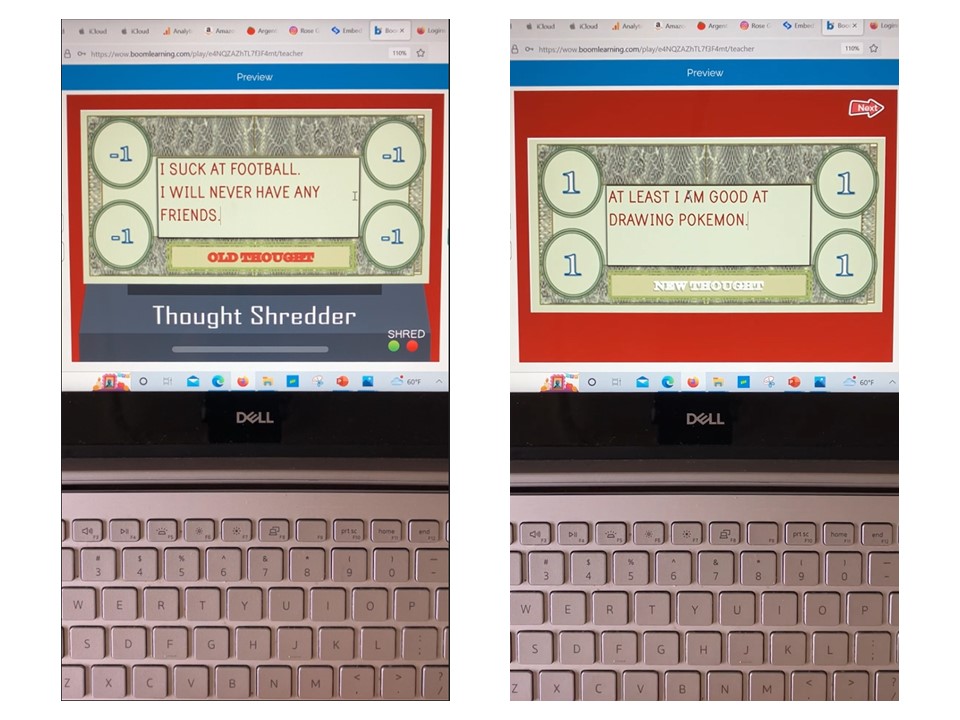
For that reason, quite a few of the CBT activities on my website can be accessed in both printable and screen-based versions. One example is the Mint New Thoughts activity, in which “Old Thought” play money is torn up or shredded and then replaced with “New Thought” money. When I later made it available in an animated, screen-based version, most of my clients came to prefer it that way. See the example below – check out the short YouTube demo.

Preference / need for having something in their hands 

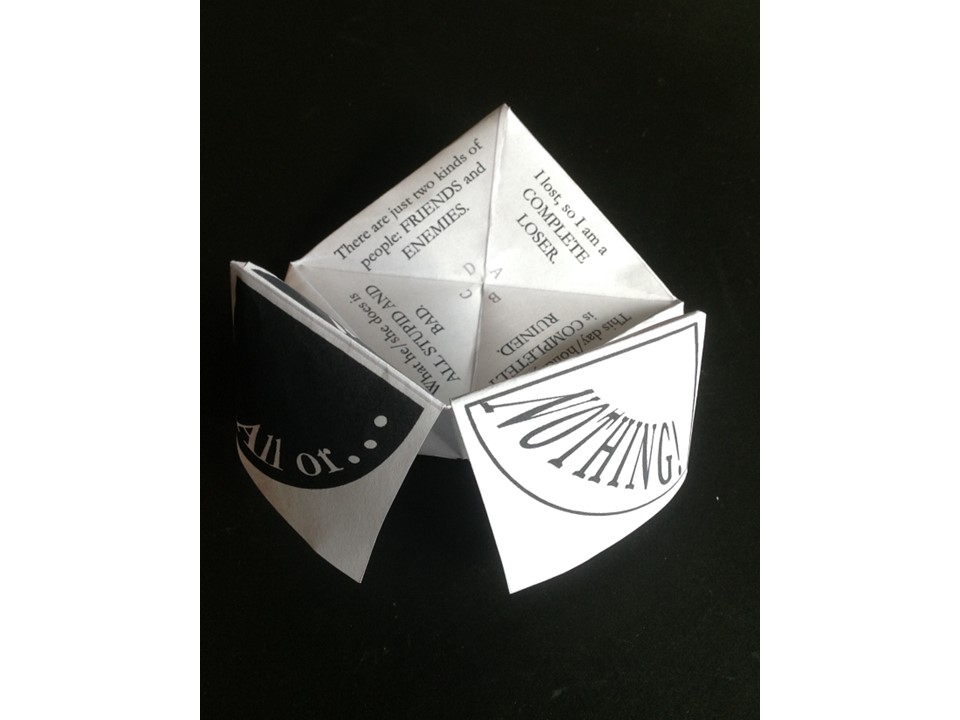
Quite a few of the children I have seen in therapy, especially children on the autism spectrum, need to be holding something while they are talking with me. I have spent a lot of time creating things for them to hold which are related to our therapy work. An example, shown below, is one of three CBT-themed paper fortune tellers on my website.

One of three CBT paper fortune tellers.

Aversion to prolonged out-loud verbal interaction with the therapist

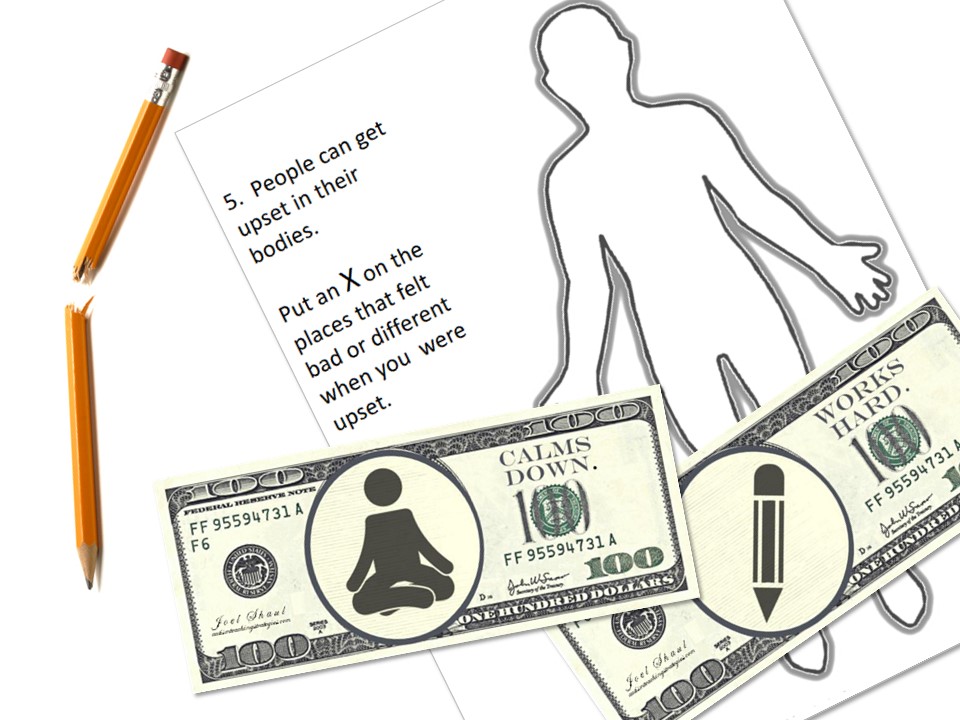
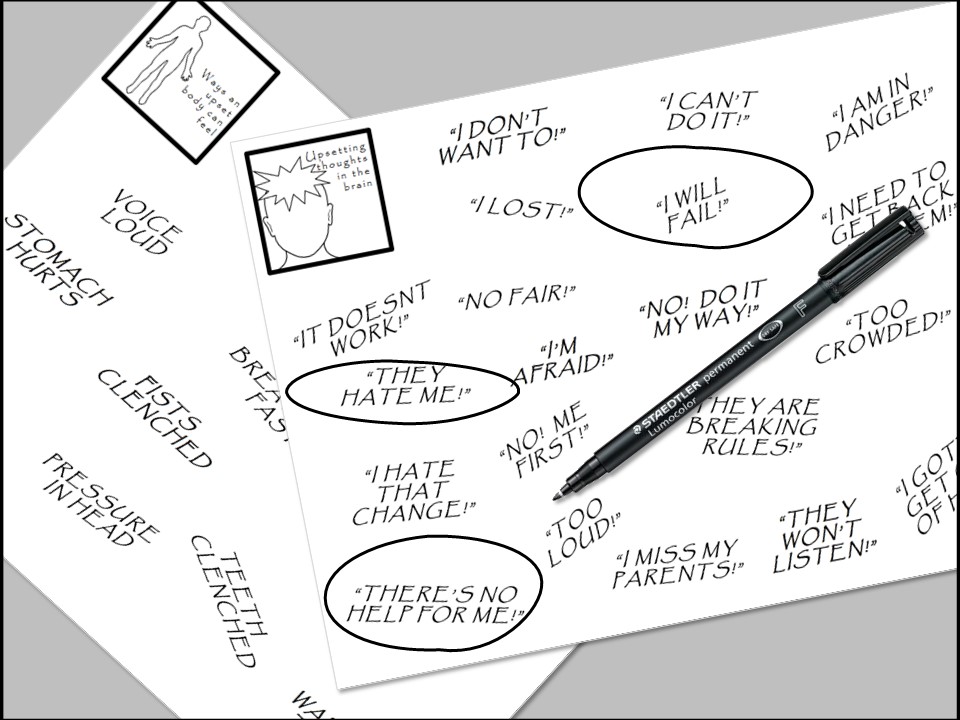
Many children, most notably ones with ASD, need to be offered productive alternatives to merely talking in therapy sessions. Many children highly value activities in session in which the therapist is saying relatively little while the child works on something meaningful. Below are two worksheets that go along with the Emotional Thermometer download from this website. These simple sheets can expedite an inquiry while affording the child a chance to not hear the therapist talk for a little while. Many children will in fact express things by writing, circling or drawing that they would be averse to saying aloud.

Preference for tangible product of the therapy session

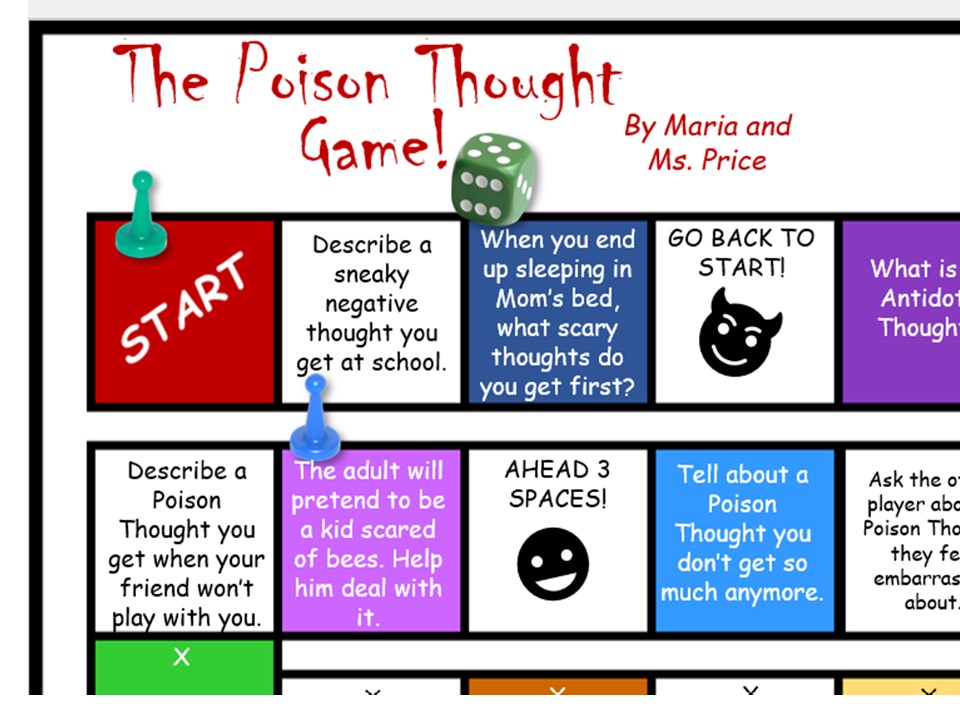
Many children value doing and making things in therapy sessions more than talking about them. The image below shows a “board game” similar to ones I have made with children in therapy sessions. You create these in PowerPoint and after you play the game with the kid, you can print it out, or email it to the child’s home, if the child feels this would be helpful.

Need for family participation to generalize learning

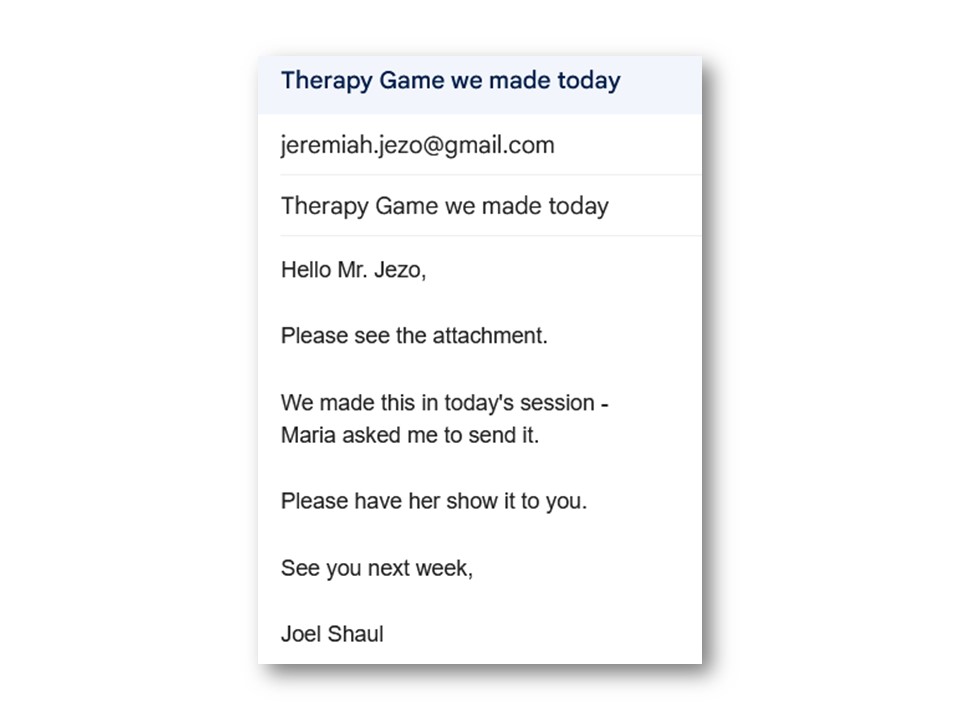
Most of the kids we see in therapy will need to follow up at home with real-world practice. If children want or need parental involvement, then it helps if the tangible product of the session is something the child can actually help show and explain to the parents. Below is a mock-up of the sort of email one might send in these kinds of situations.

I wish you success with your own CBT interventions with children.

Joel Shaul

Click on links below to access other parts of this series on CBT refinements for children.

Intro: Refinements to Make CBT Better Suited for Kids [link]

Part 1: About CBT YouTube Videos & How to Use Them [link]

Part 2: CBT Token Systems – CBT Cards, a Free Download [link]

Part 3: More CBT Token Systems – Using Mr. Yuk Stickers [link]

Part 4: Creating Thought “Enemies” and “Heroes” in Child CBT [link]

Part 5: Tailoring CBT Methods & Media to the Individual [link]