For a long time, people helping children with social and emotional skills have employed imaginary characters to represent various desired and undesired child behaviors. Many of these efforts are more preachy and pedantic than actually helpful, but other systems of “problem and solution” characters have the potential to be really useful in child therapy applications. This article briefly surveys a few of these, and references a character creation kit I made that enables you and a child to quickly fashion custom-designed “problem / solution” characters.
Reasons to employ problem and solution imaginary characters in CBT therapy with kids
A child with serious and persistent social and emotional problems can become demoralized by their constant struggles. The “problem child” can end up feeling so closely linked to their problems that they end up disliking themselves.
Creating problem and solution characters can enable a child to feel little more separate from their problems. Using this method can help a child to view their social or emotional challenge as a sort of adversary that can be fought against with the help of therapists, teachers and family.
Here are the therapeutic elements of creating problem and solution characters with children in therapy, from my perspective. First, this therapy activity can help restore a child’s self esteem by differentiating their essential self from the problems they experience. Second, this method can help a child to focus on central therapy issues. Third, this fantasy-based technique capitalizes on hero / anti-hero narrative systems that are well established in youth culture.
Ready-madeproblem&solution characters
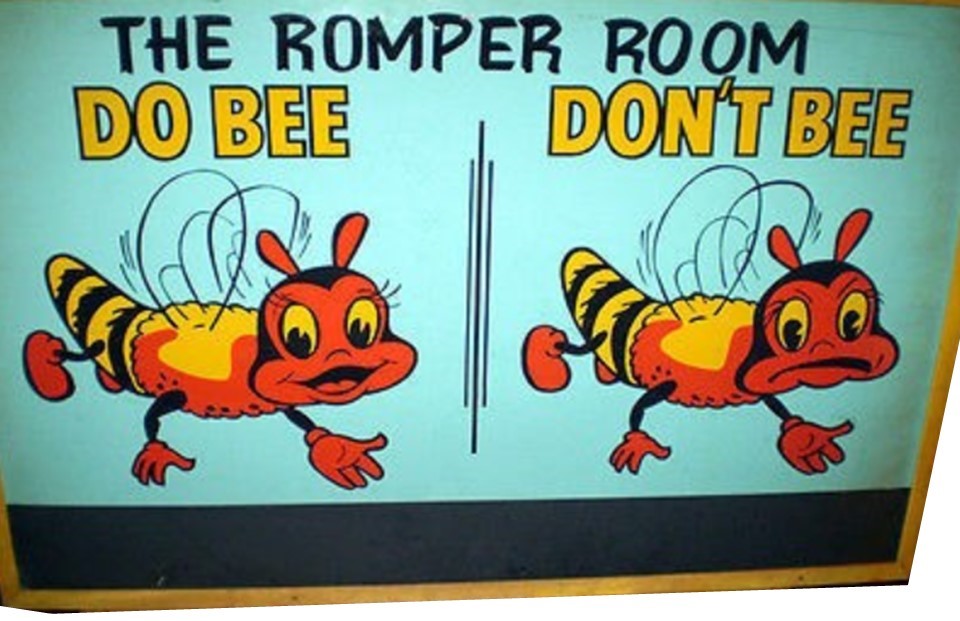
There are many problem and solution character systems out there. Many are not very good. Here is one I recall from my youth.
Example of a not very good or helpful problem / solution system.
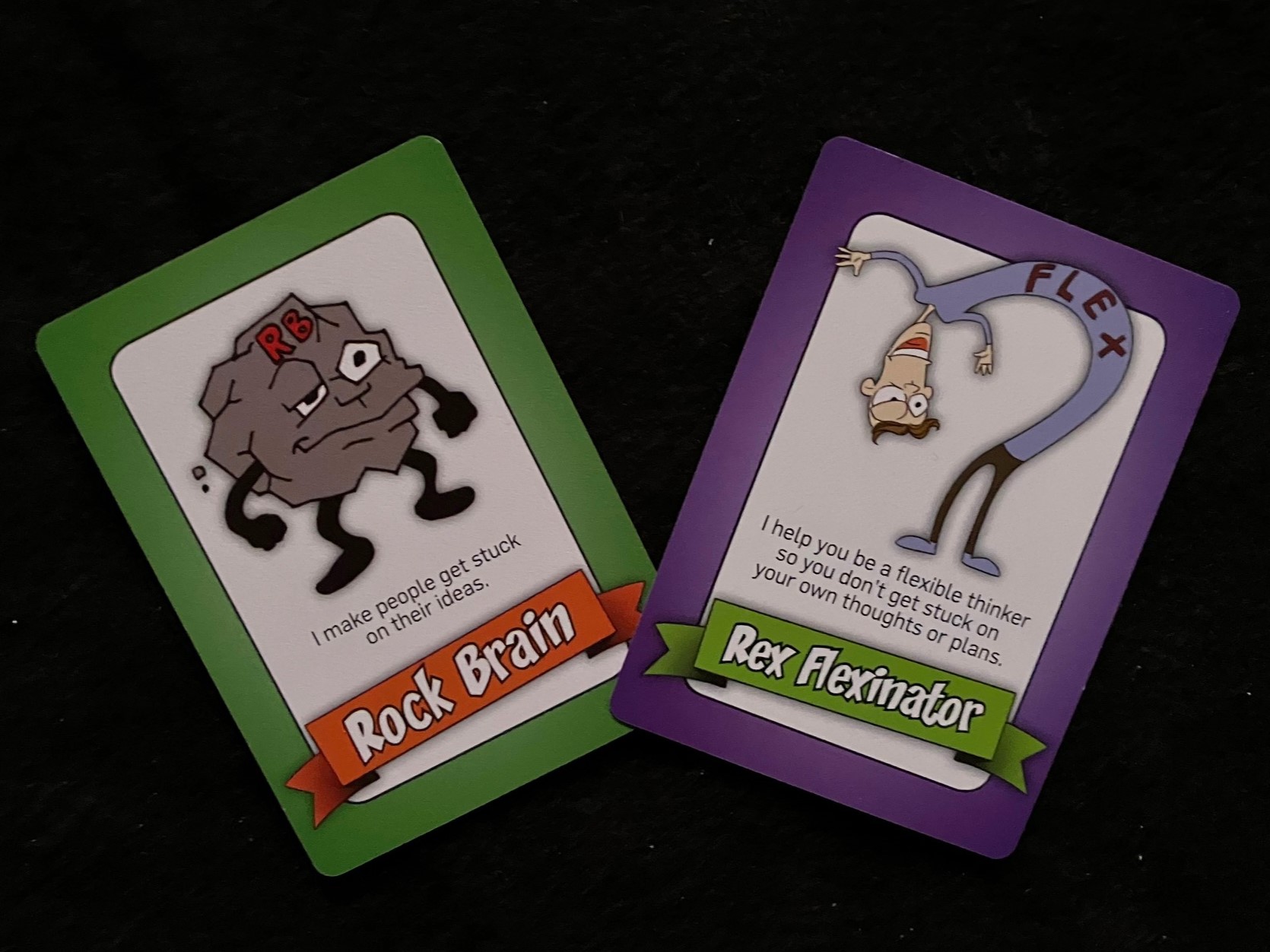
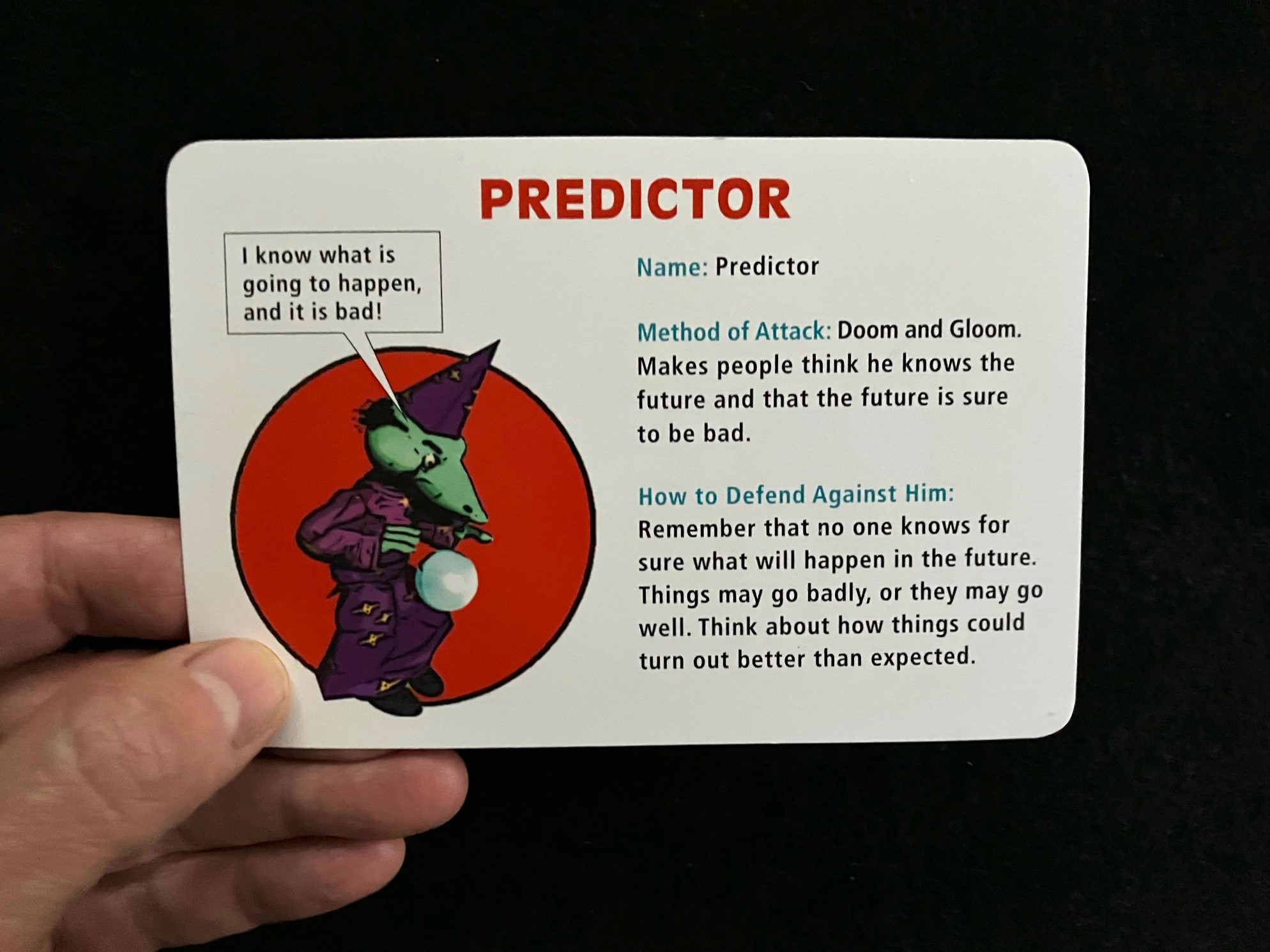
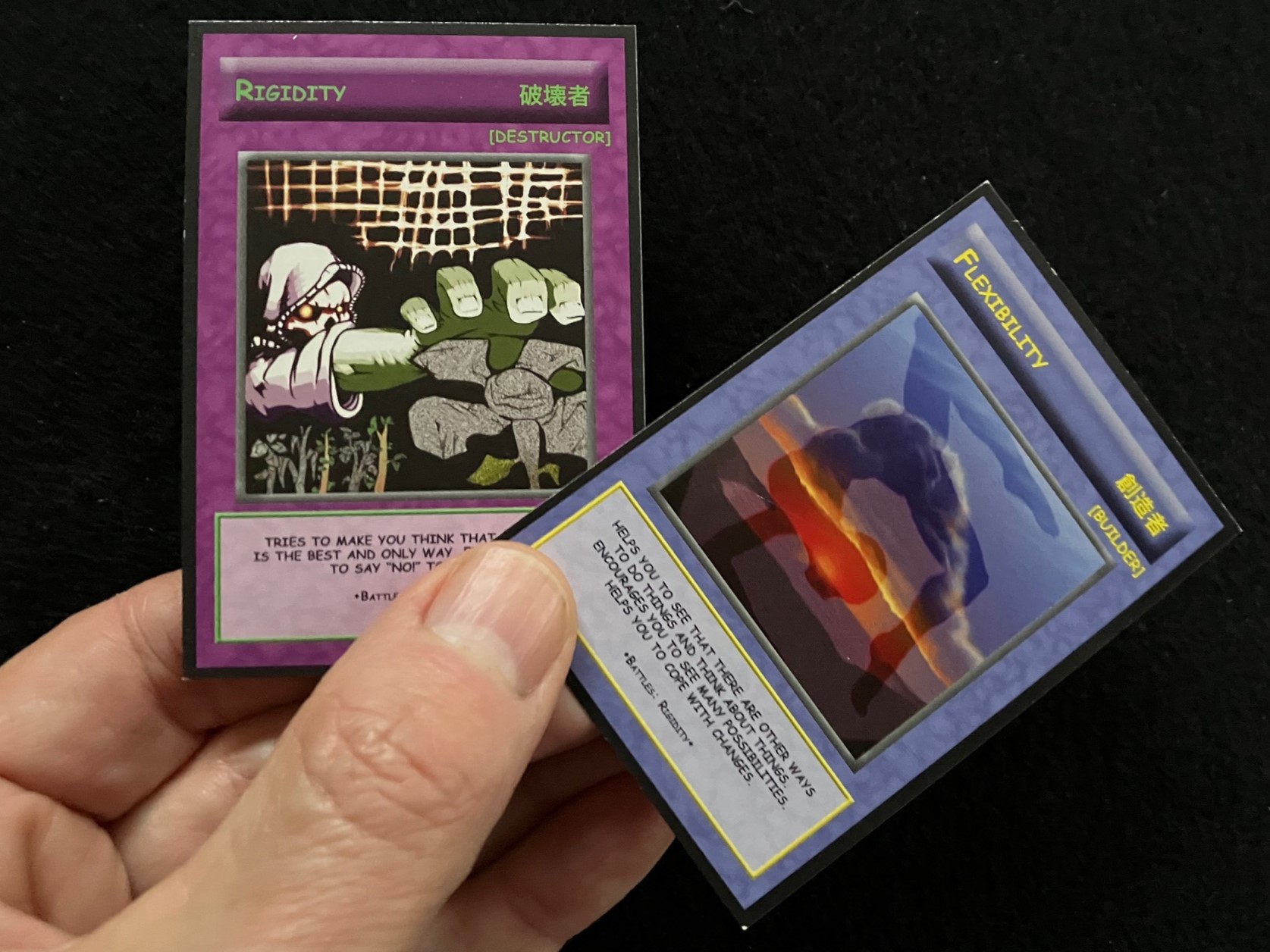
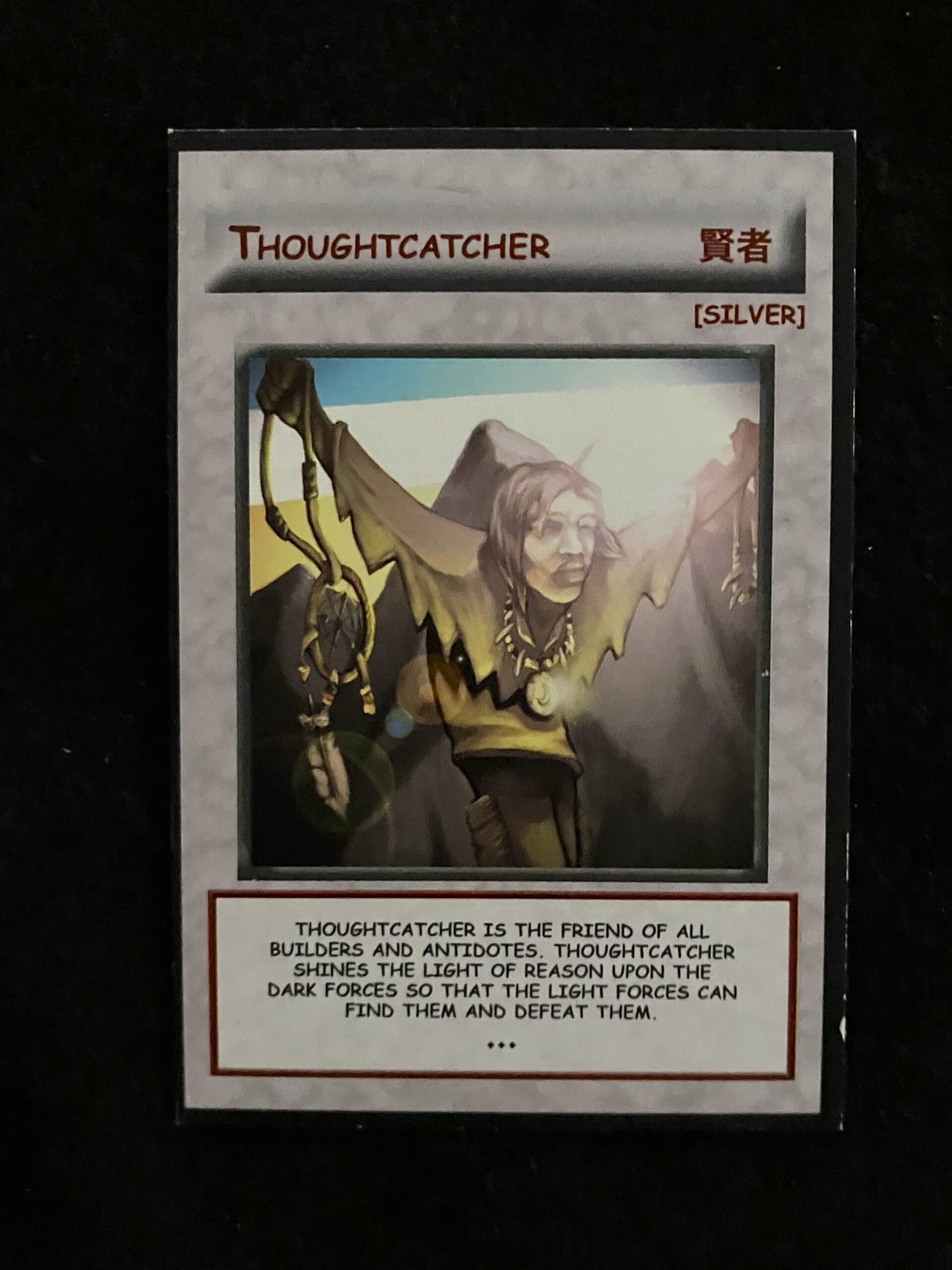
Here are some problem and solution tools that I have found can be pretty useful in CBT applications.
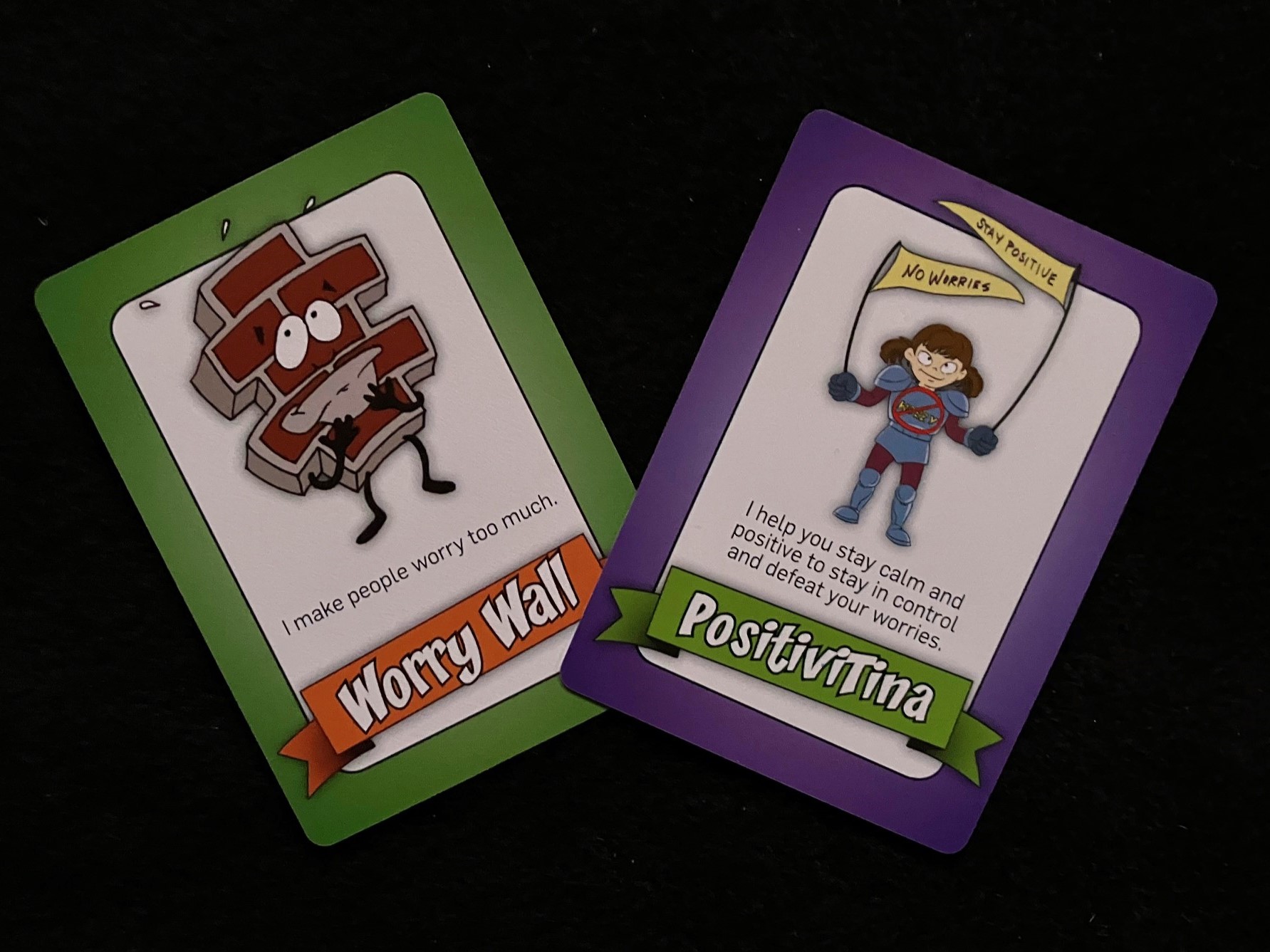
from Social Thinking, “Unthinkables.”
More from Social Thinking.
One of the characters in the Psymon game.
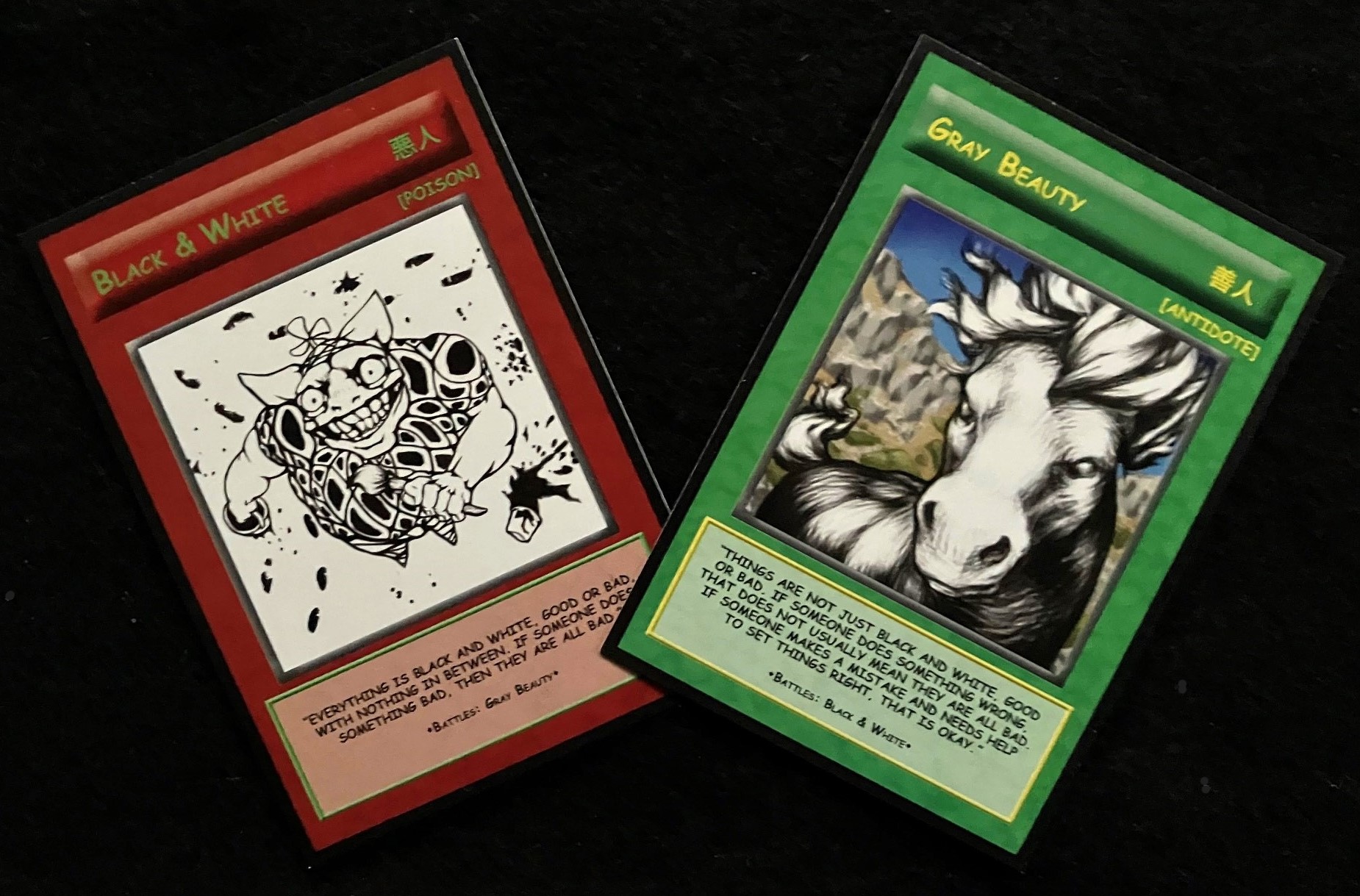
Another pair of Ryuu cards (Ryuu cards are no longer in production)
One more Ryuu card.
Problem andsolution characters that children can create on their own with your guidance
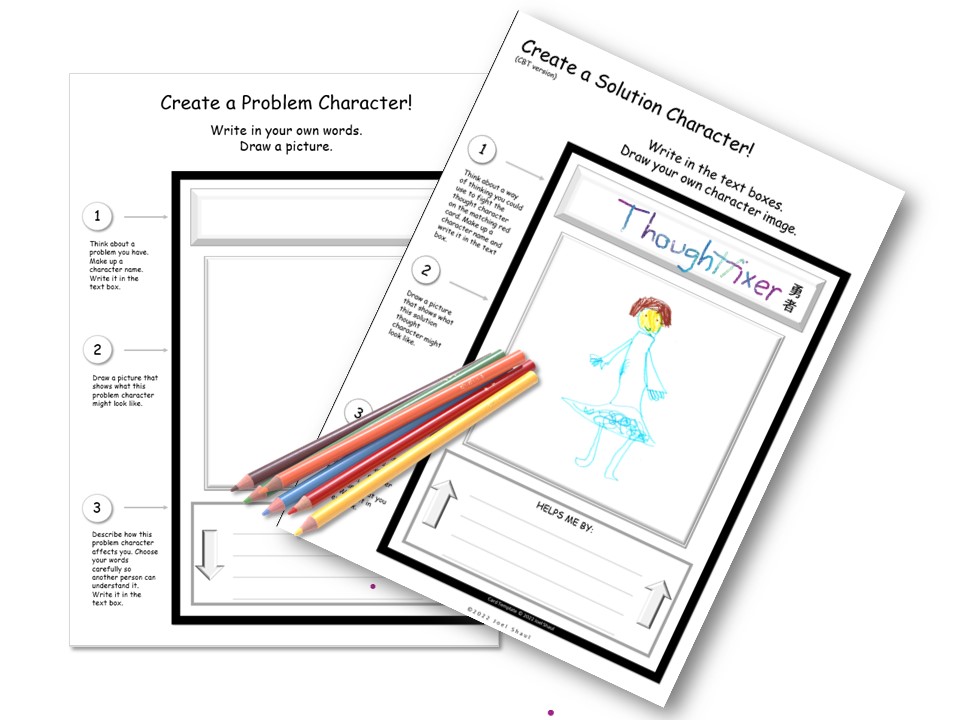
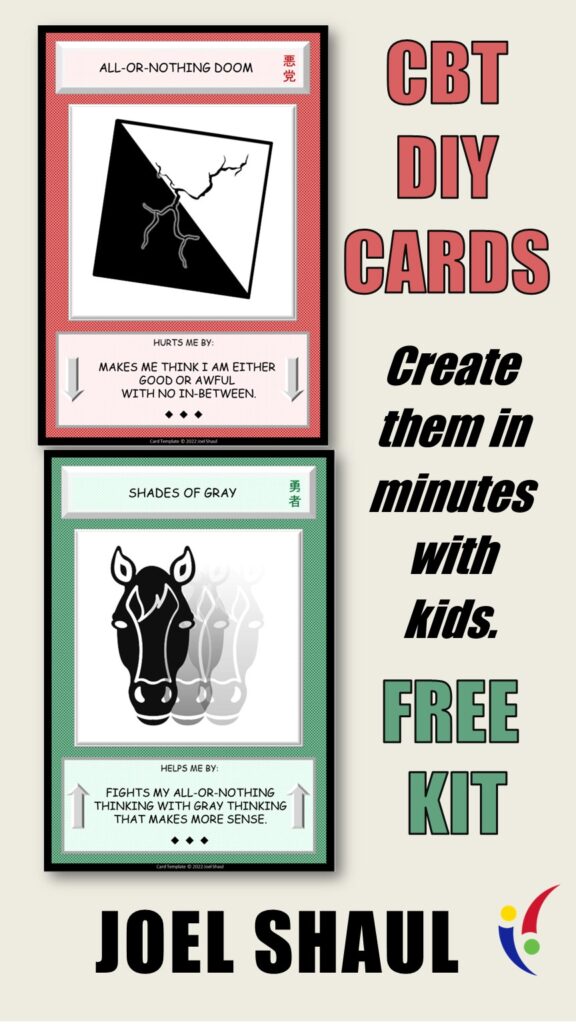
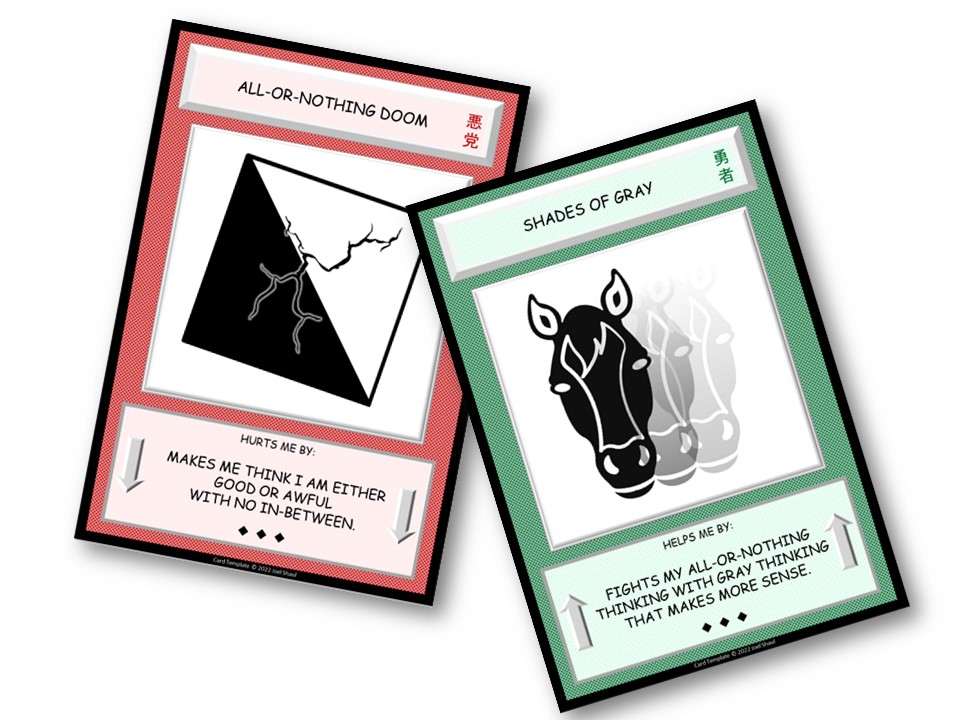
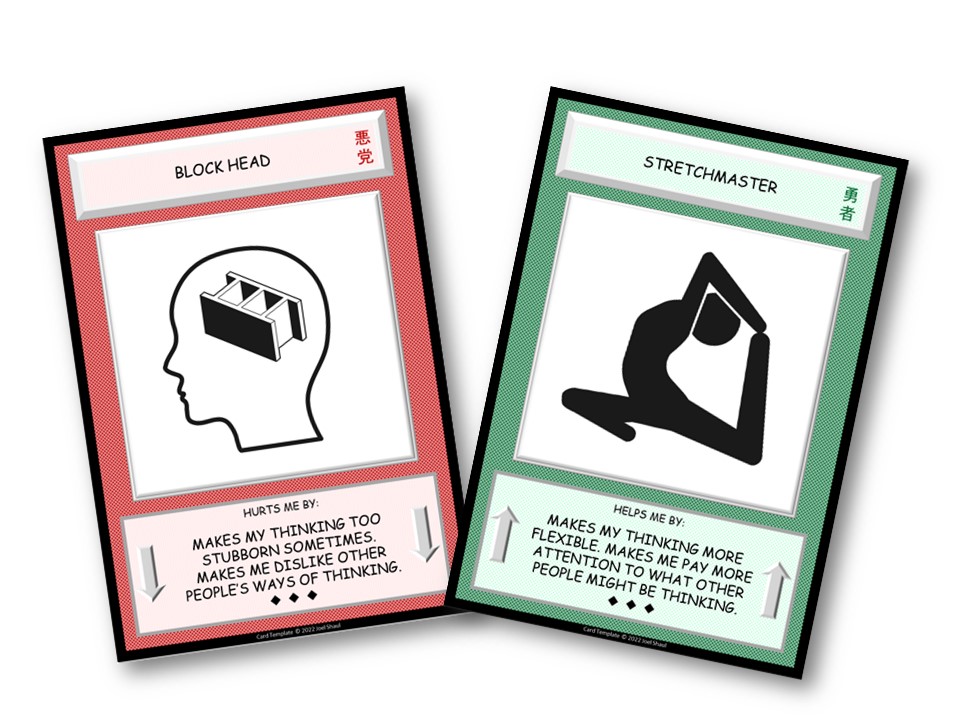
In previous blog posts, I presented a free kit enabling children to create problem and solution characters by either drawing them or via a simple drag & drop system in which numerous images are pre-loaded to select. Here are some pictures showing typical results you might expect. I have used this kit a great deal in my CBT work.
When we are doing CBT with children, we often need to add some game-like element or levity. CBT is hard and serious work, but these are kids after all.
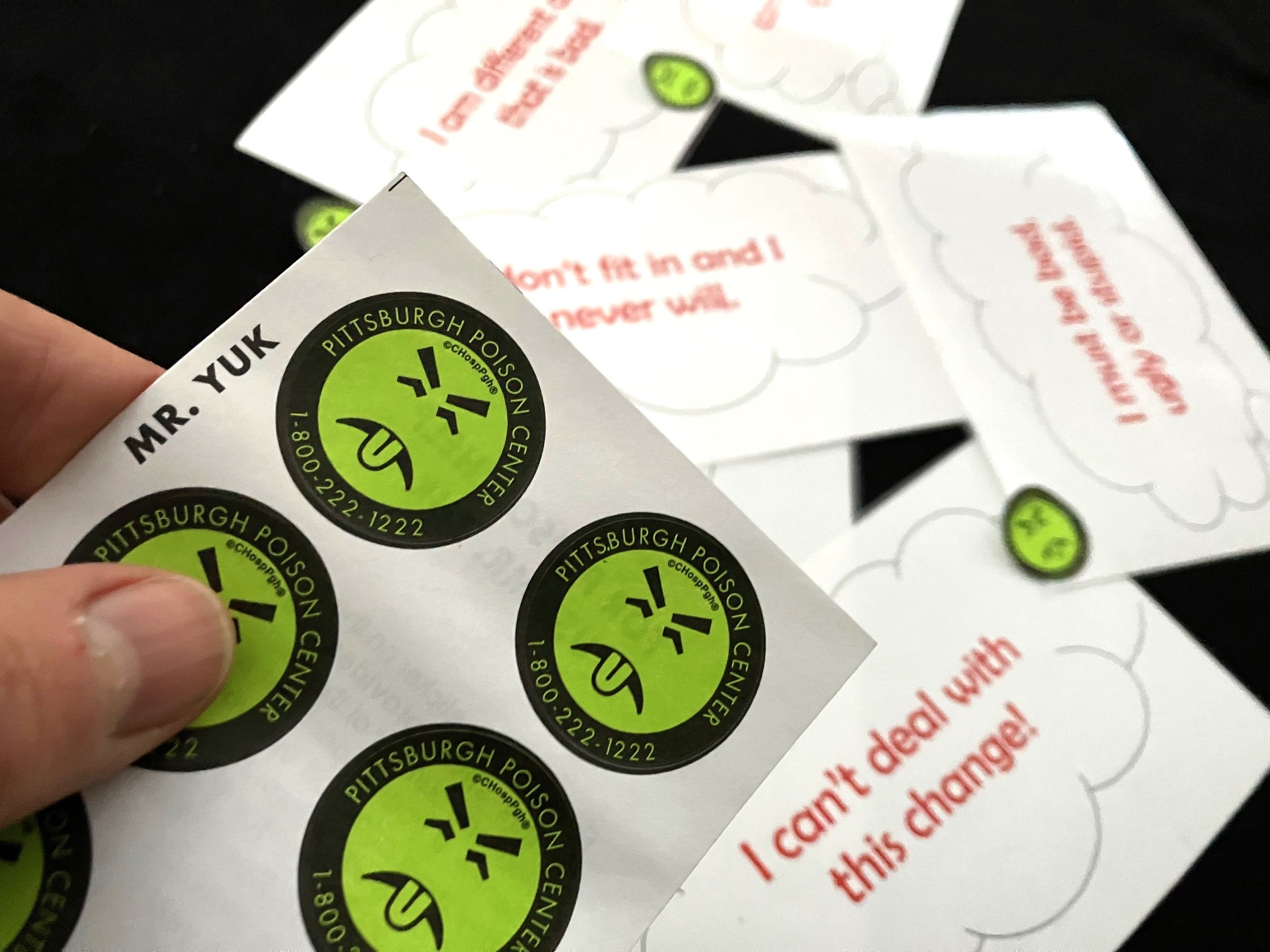
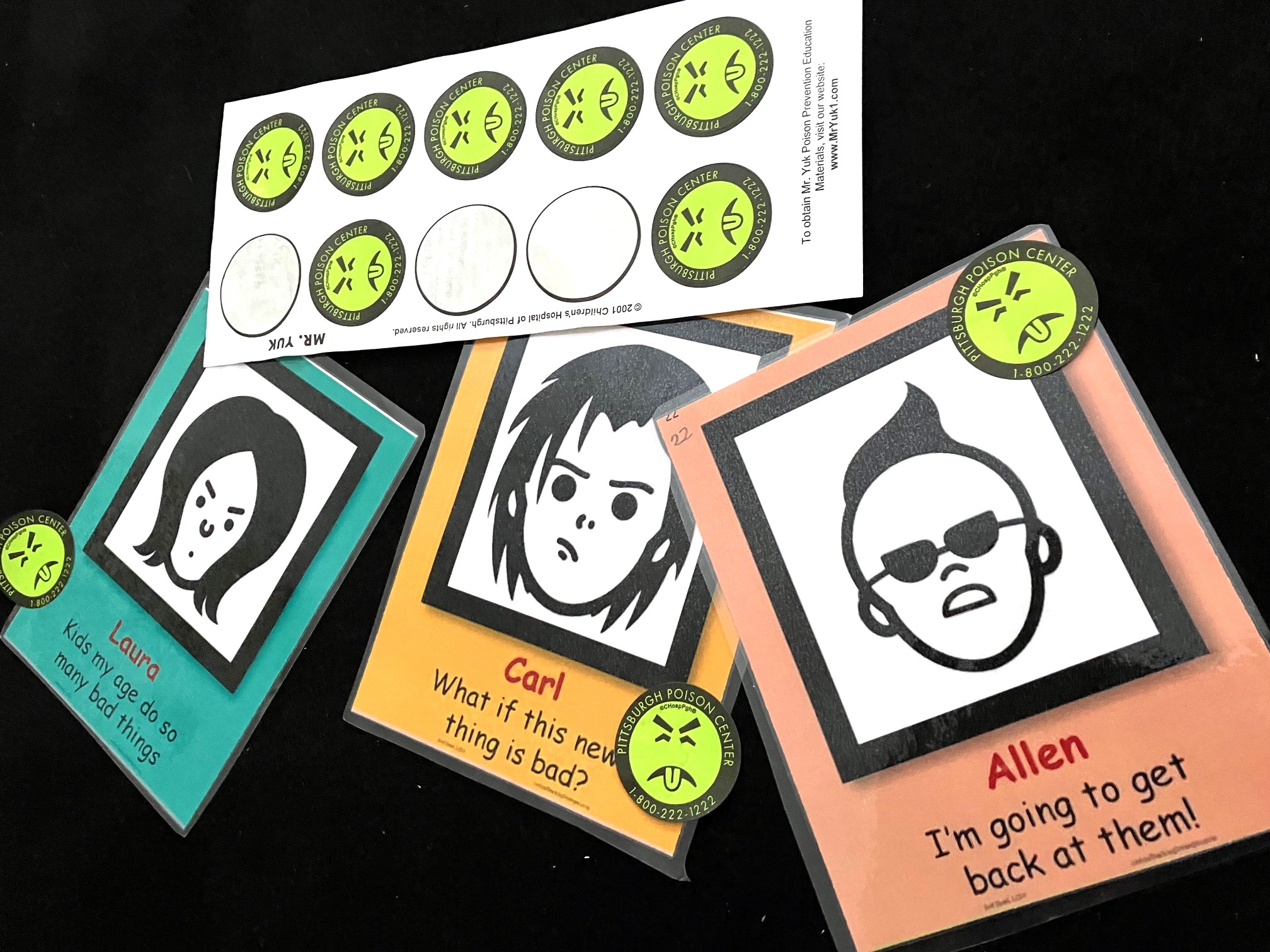
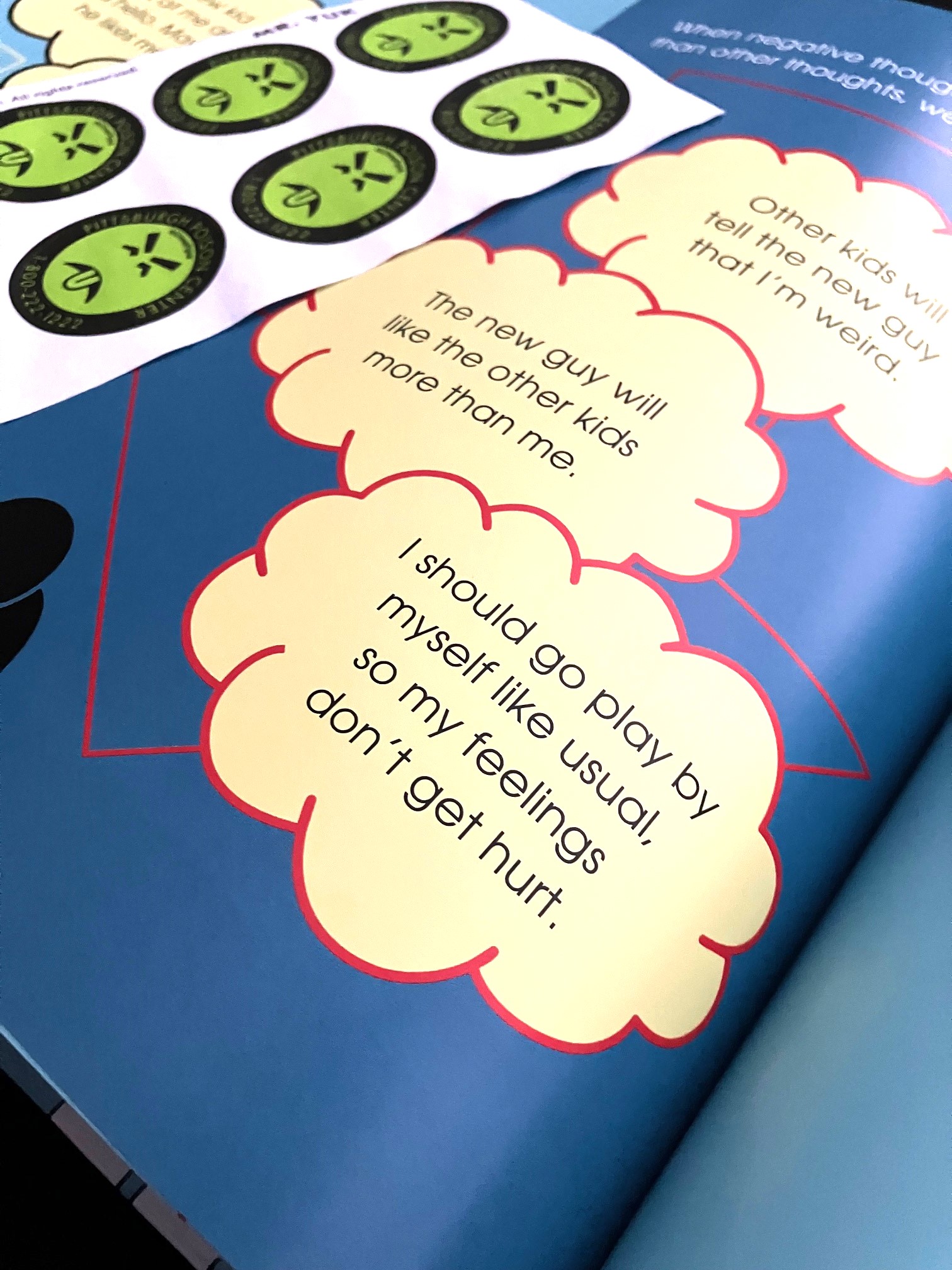
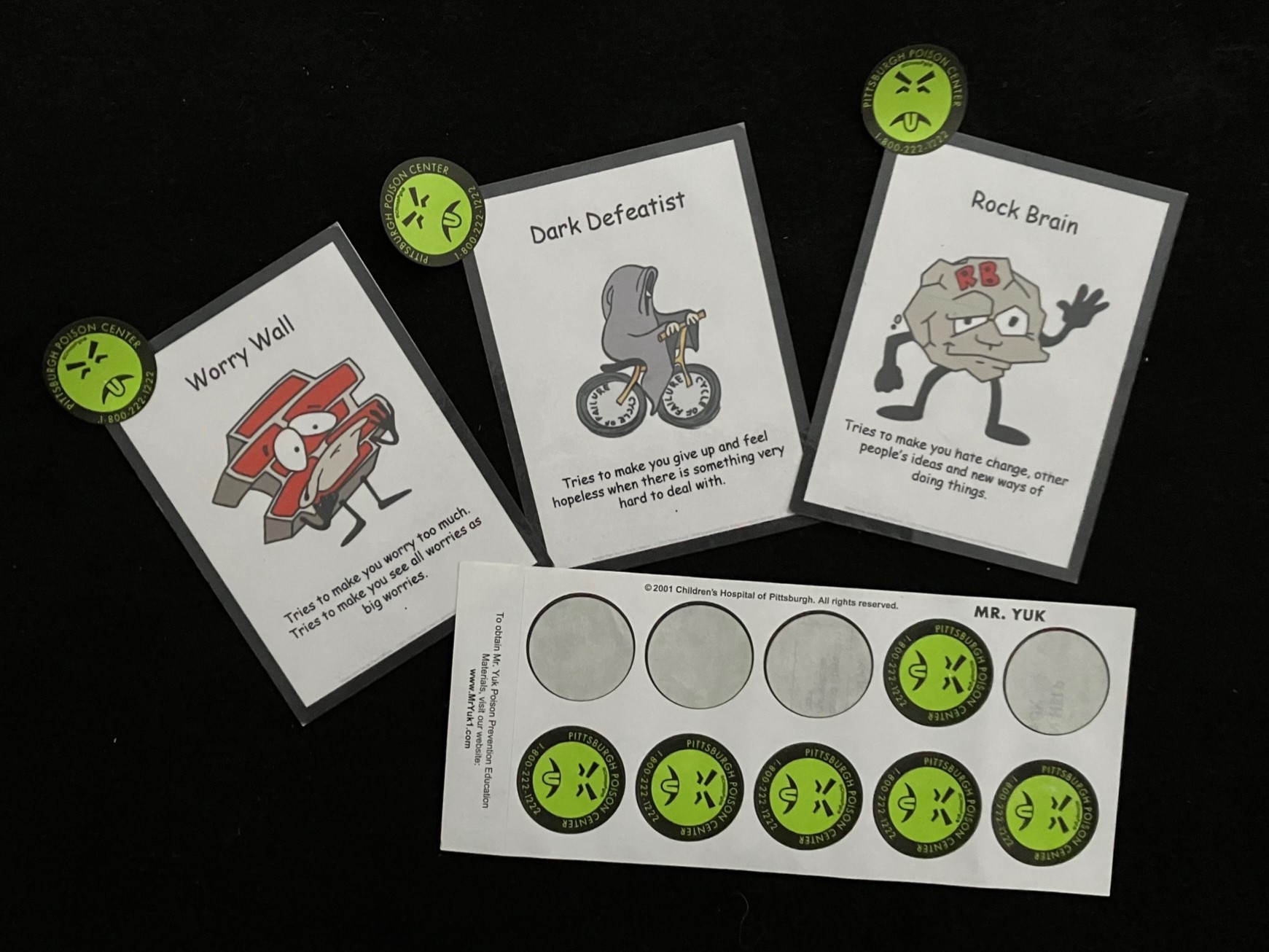
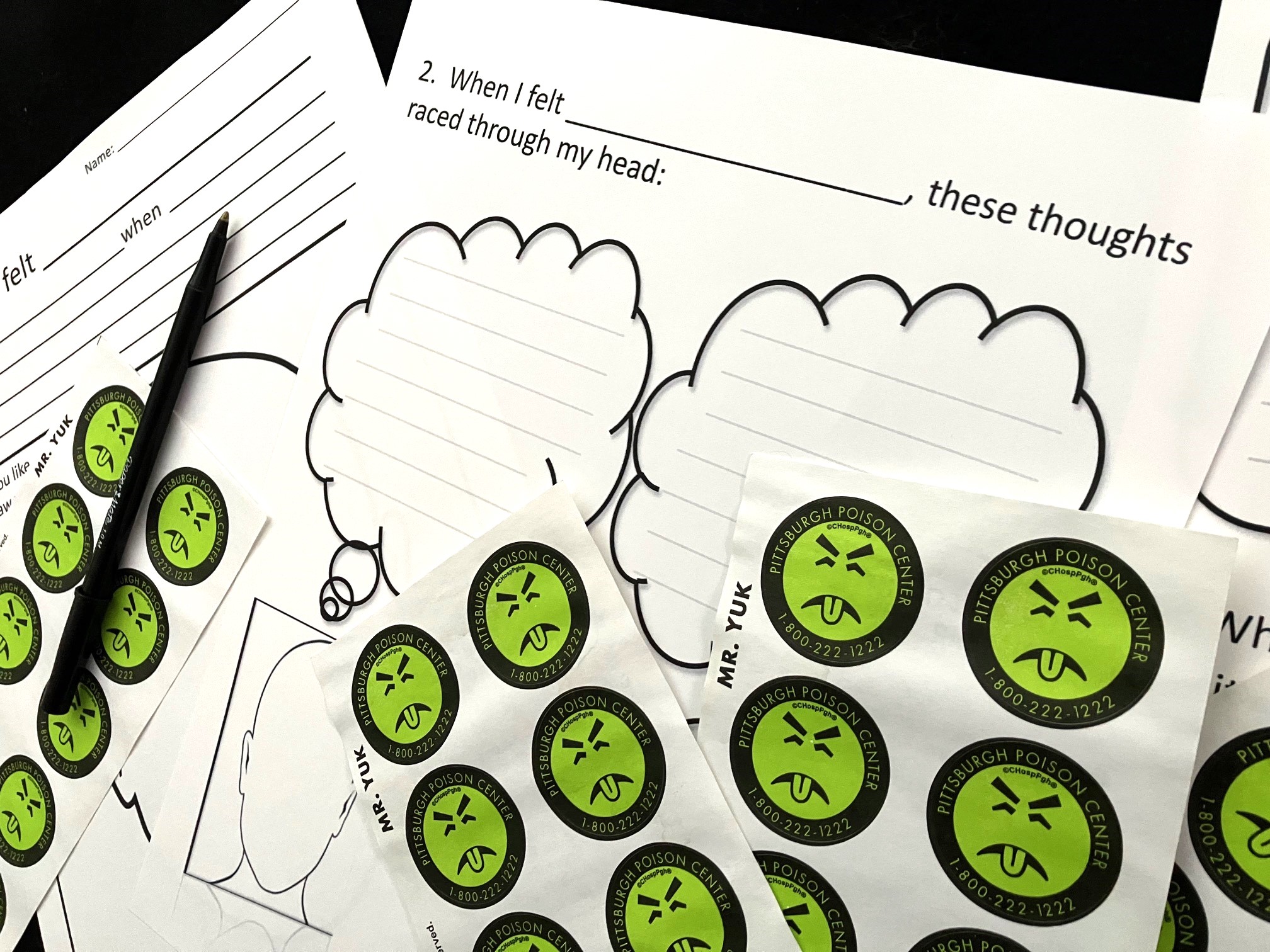
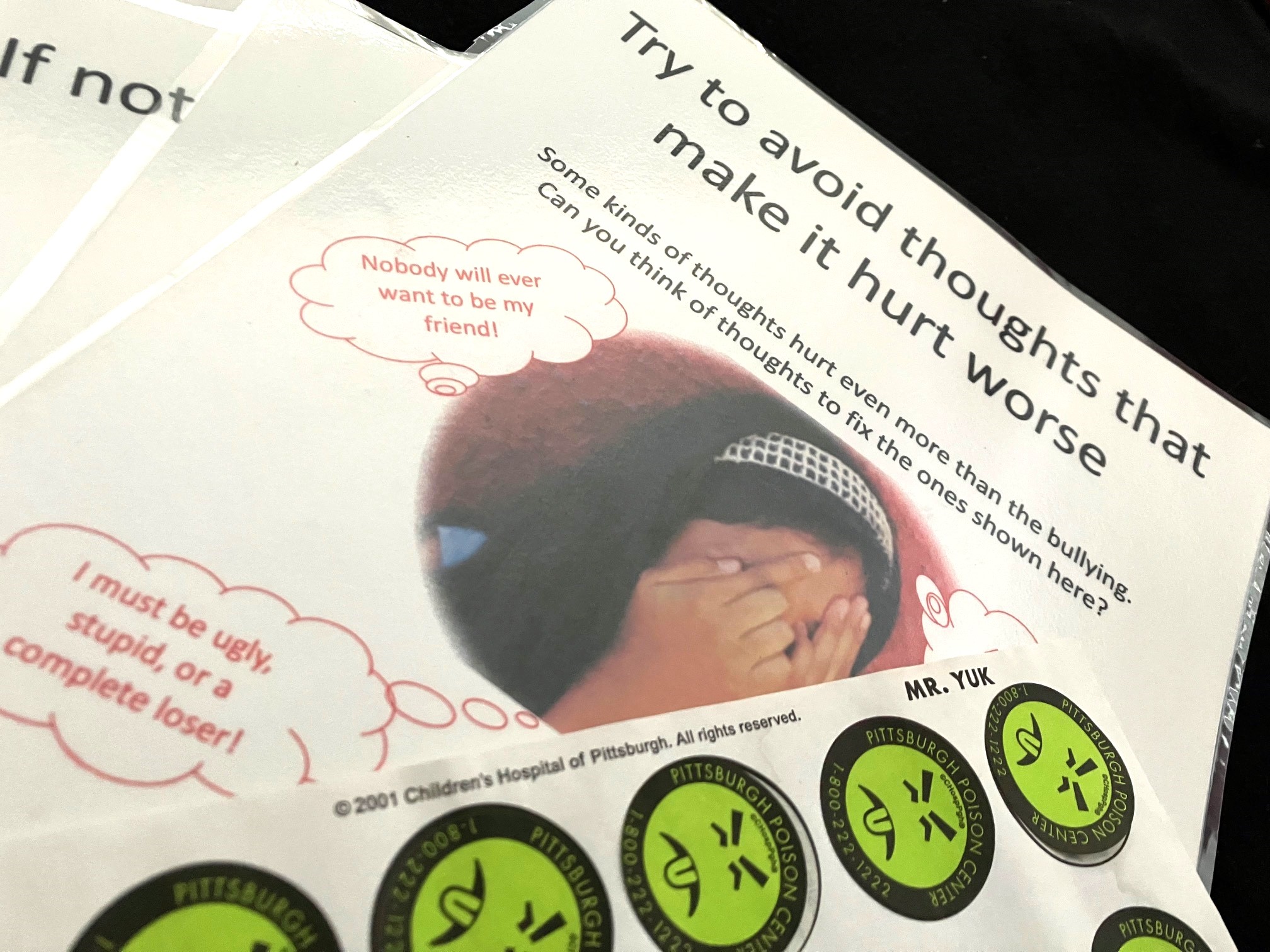
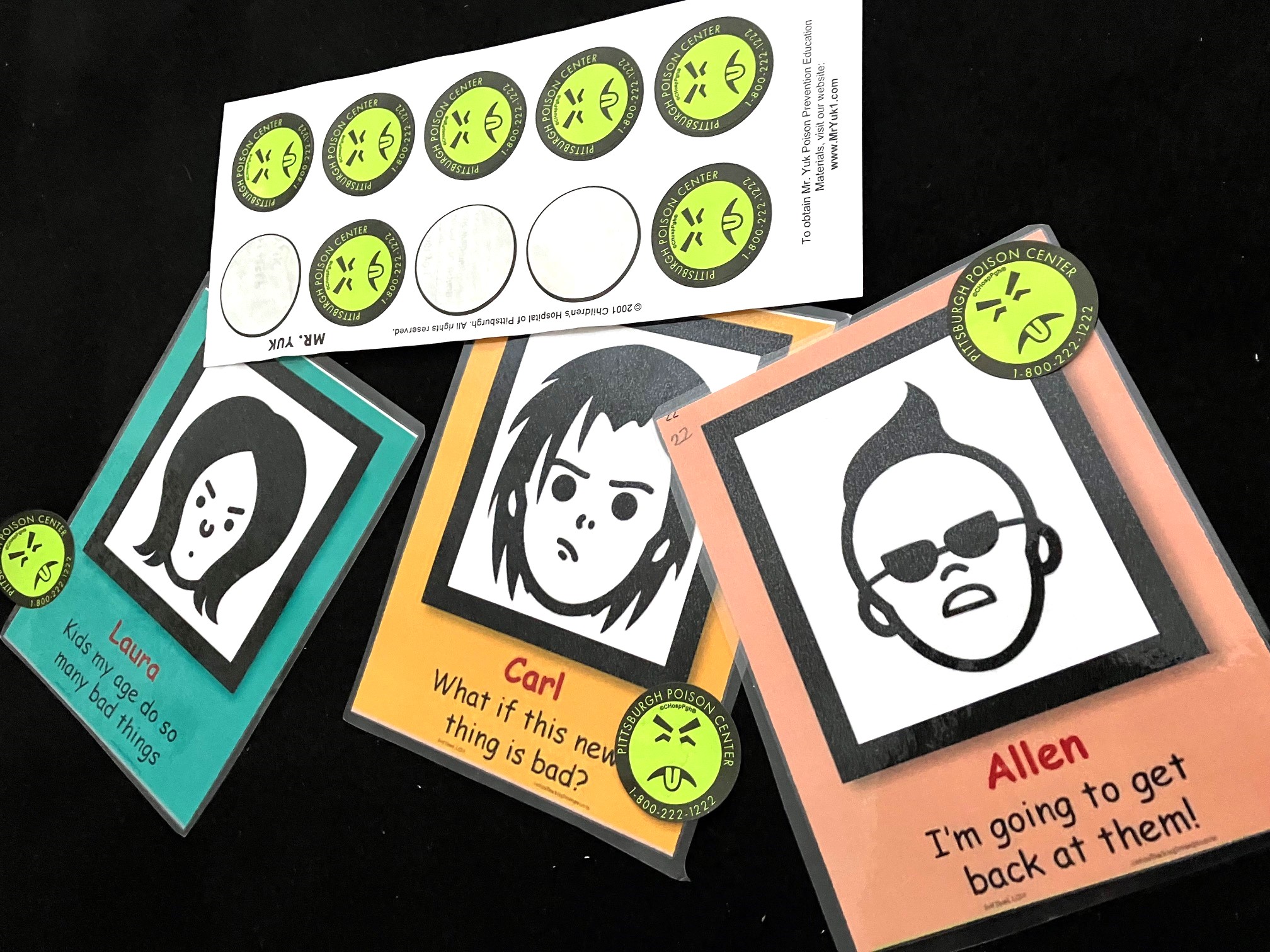
A useful and simple add-on to try sometime is using Mr. Yuk stickers. This is not for every session, but perhaps just once or now and then, to make the point, in an engaging manner, that automatic negative thoughts are like poison, which we should avoid, or use antidote thoughts to be rid of them. Mr. Yuk stickers are available on Amazon – the last time I checked they were $16.99 for 200 of them.
About Mr. Yuk stickers
These are used all over the US, and perhaps elsewhere, to warn children away from poisons. I believe that nearly all children in the US understand the meaning of the Mr. Yuk icon.
Comments about their appropriate use
Obviously, these stickers were not designed and manufactured for counselors, therapists and other professionals to use in therapy. You of course would need to explain carefully to children that this is a special activity with the stickers and that if they see Mr. Yuk stickers anywhere in the home, school or community they should not touch them because it means POISON. Don’t give the stickers out to children to play with randomly.
Using them in CBT work
First, show children this short video which explains the meaning of “Poison Thoughts.”
Introduce the stickers using language something like this:
“Everyone knows you must never touch poison or let it get inside you. Mr. Yuk stickers are to warn us that poison can harm us.
We have been learning about sneaky thoughts called Poison Thoughts. They try to get inside our minds.
Let’s use these Mr. Yuk stickers today by placing them on words and objects that have to do with these automatic negative thoughts we call Poison Thoughts.”
After that, use the Mr. Yuk stickers once or twice, or once in a while, to drive home to kids the essential toxic nature of automatic negative thoughts.
Playful elements in CBT do not imply that CBT is “play.”
Maybe this should go without saying, but I will say it anyway. Anxiety, depression and other debilitating emotional conditions are real in children, and work involving Mr. Yuk stickers is not some kind of “lite” version of therapy. These game-like elements are calculated measures taken to help our young clients persist with their CBT therapy.
Many years ago, I had noticed that many children and teens appeared disengaged and discouraged in cognitive behavioral therapy.
First, lots of children and teens found the conventional CBT terminology too complex and the automatic thought categories too numerous. Second, the heavy and exclusive focus on the child’s problem thinking seemed too intense for many children, causing them to back away from the work.
In 2014, I developed the eight CBT videos in an effort to address these sources of resistance in CBT work.
Fewer categories and simpler language
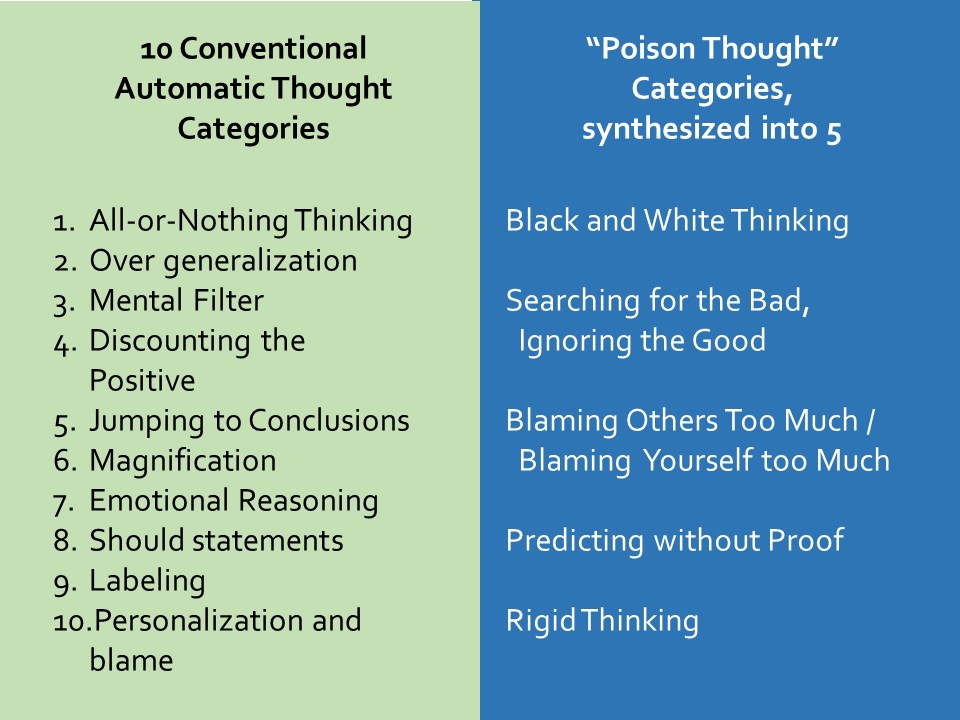
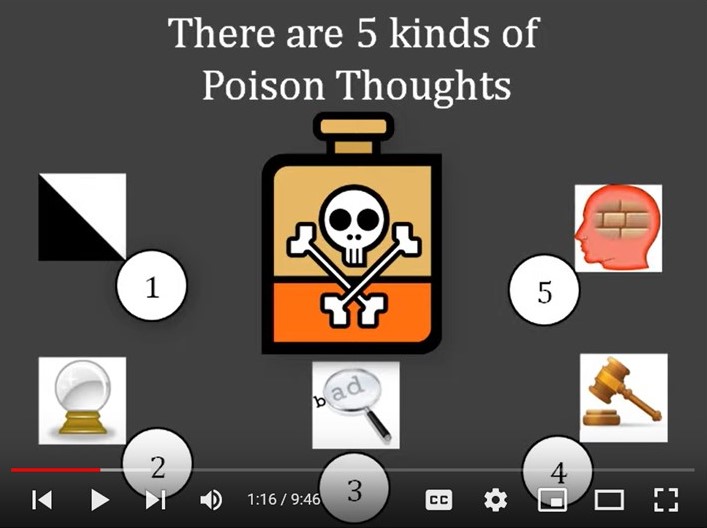
Finding the conventional 10 CBT thought distortions too numerous, wordy and overlapping for children, I crunched them down to 5 categories, using language that is less complicated. I then created icons to go with each category. I found that most children could grasp the basics of these five modified categories of automatic negative thoughts, so I made them the foundation of the CBT videos.
On the left side below are the 10 original automatic negative thought categories. On the right are the 5 “crunched together” categories I created. Children seem to be able to grasp these fewer categories more easily.
The ones on the right I devised to create simpler categories for children.
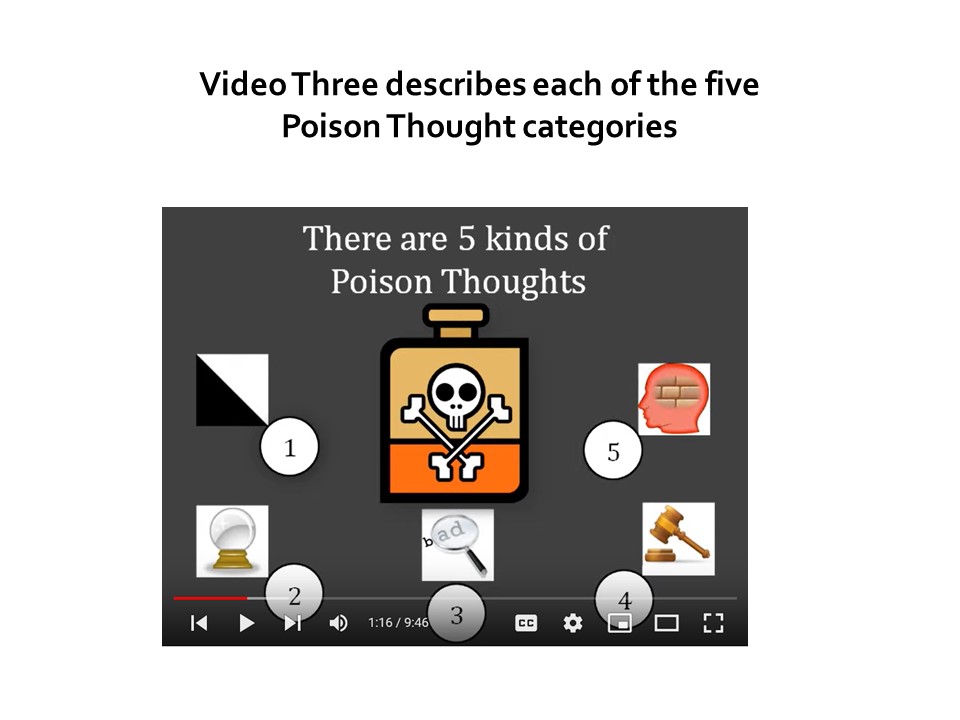
5 “Poison Thoughts,” screen shot from CBT Video Number 3
Initial focus on hypothetical examples
In the videos, I placed less initial emphasis on the problem thinking of the child viewing the video, and instead directed attention to hypothetical problems of other children. I found that by beginning the work in this manner, children subsequently were more confident and successful in assessing their own self-defeating thoughts and actions.
The videos were designed for children with ASD, but you can use them with neurotypical kids.
I created these videos originally for use with children on the higher end of the autism spectrum. You will notice that quite a few of the hypothetical scenarios deal with challenging situations typically encountered by autistic children. However, quite a lot of the videos’ content concerns problems that neurotypical children would also encounter, and in fact I have gotten feedback from many clinicians who use the videos with neurotypical kids and just skip over the parts that appear tailored for autism.
How to use the videos
The videos are designed to be viewed with an adult, with very frequent pauses for discussion. Although the first three videos are important to view in full, it is not always necessary to watch every subsequent video or every part of any video that you start. You can skip around, placing more emphasis on the videos that address the most relevant concerns.
Video Number One is shorter and simpler than the remaining seven. It introduces Poison Thoughts (automatic negative thoughts) and Antidote Thoughts.
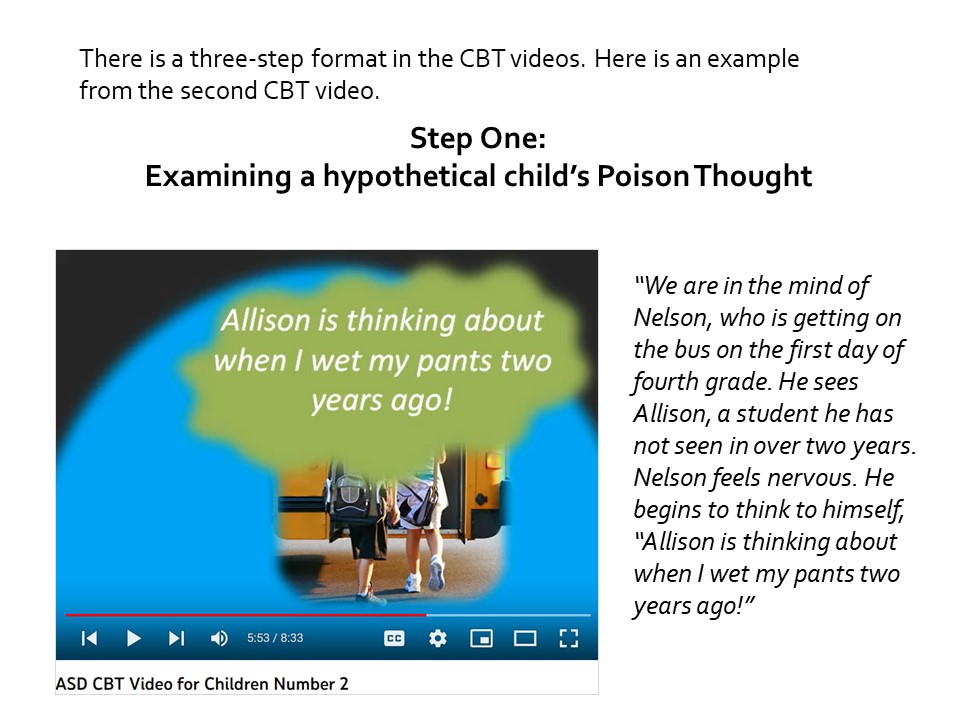
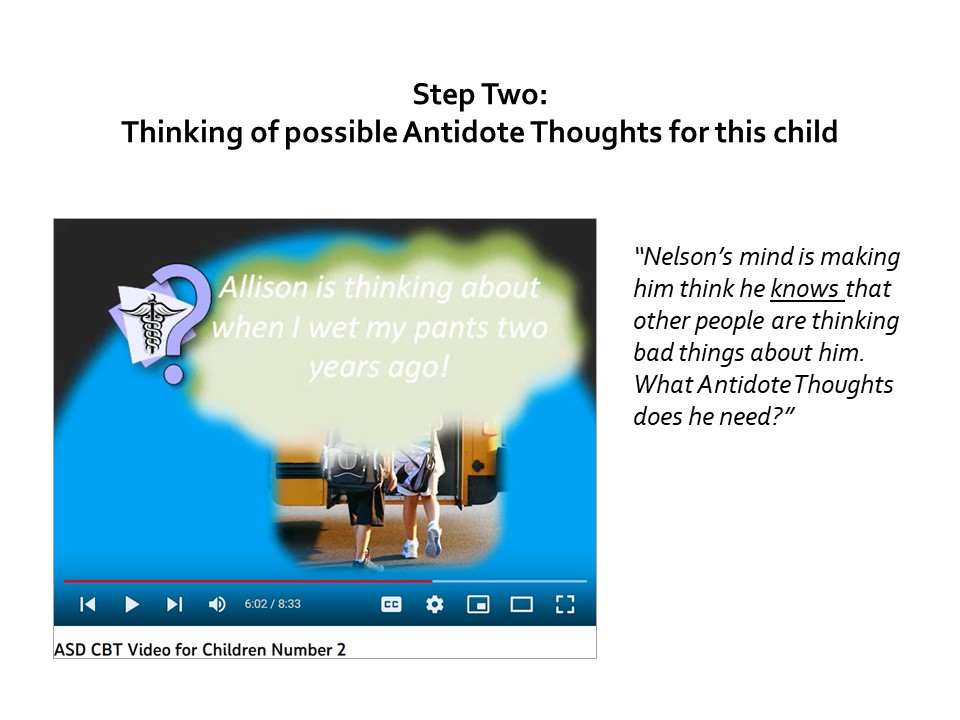
Video Number Two takes the viewer into the minds of various children experiencing Poison Thoughts, and demonstrates how these can be countered with Antidote Thoughts.
Video Number Three (see screen shot above) introduces the 5 Poison Thought categories, showing examples of each in the minds of various children.
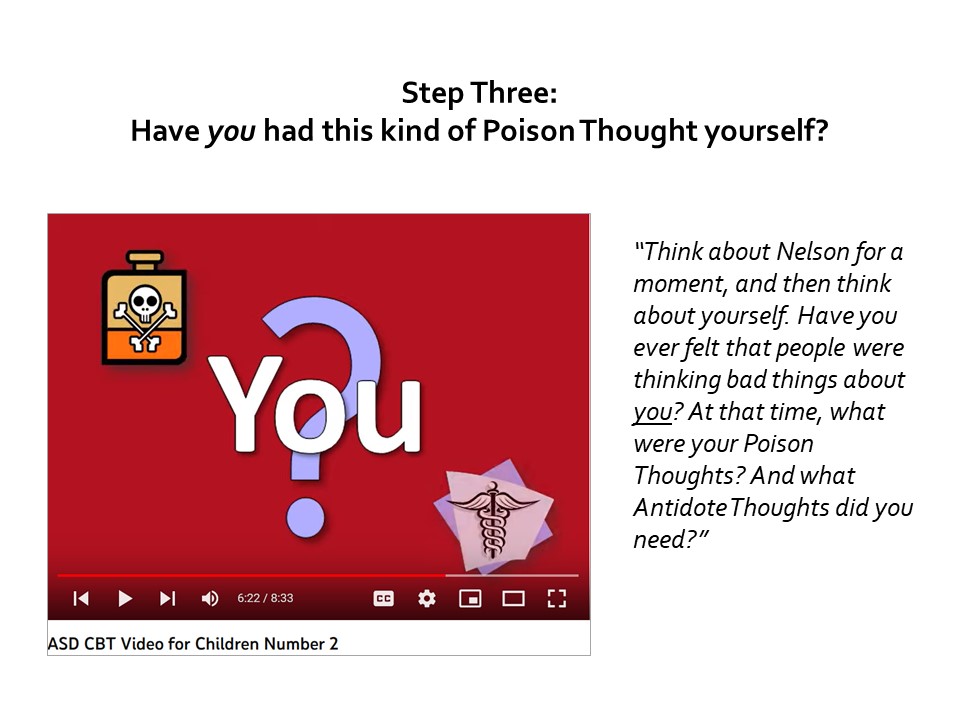
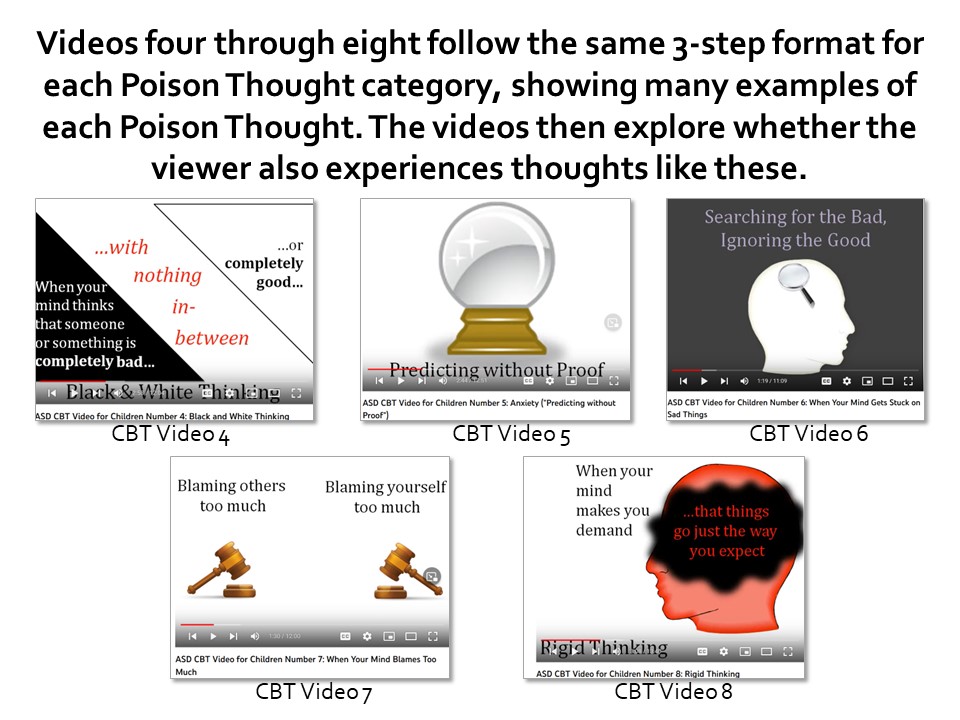
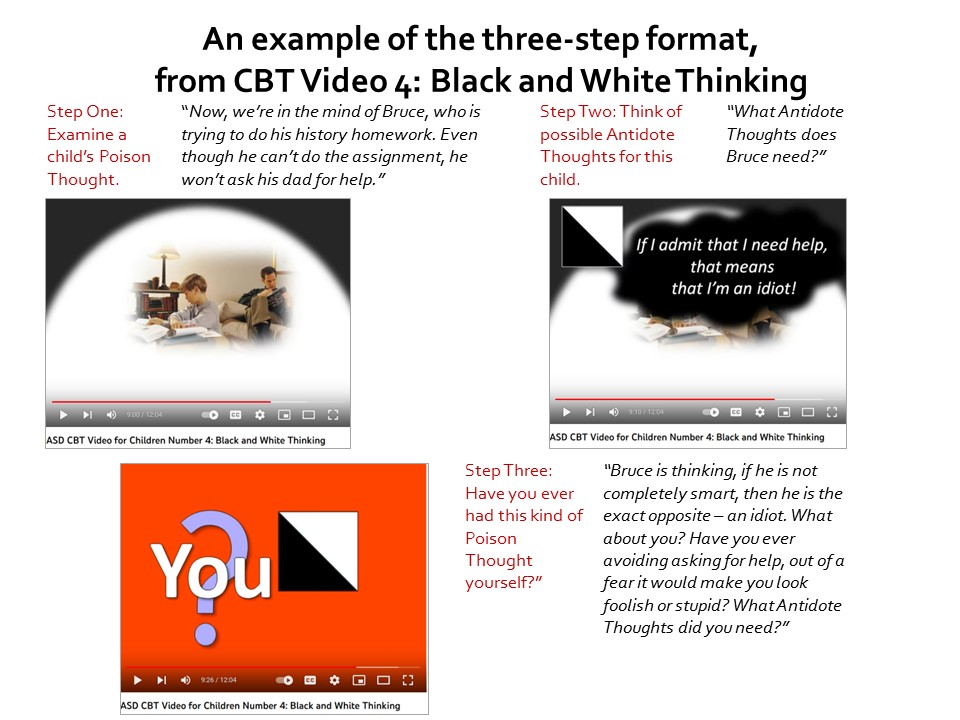
Videos Four through Eight go over each of the 5 Poison thought categories in turn, using many examples of how various children are affected by the thoughts. In each example, after first identifying and “fixing” the problem shown in the example, the viewer is asked whether they themselves are affected by such thoughts. Again, pausing frequently for discussion, especially when a child is talking about their own “Poison Thoughts,” is important.
Joel Shaul, LCSW
Here are links to the other parts of this series, Refinements to help make CBT more suitable for kids.
Cognitive behavioral therapy was developed originally not for children, but for educated adults. Over time, child psychotherapists have incorporated various refinements to make CBT accessible and useful for children.
This 5–part series pulls together some of my own efforts to make CBT as helpful as possible for young people.
The titles for each part are listed below. Read them in order or select any one by clicking on the link.
Boys and teen boys with autism often have a hard time knowing how to interact with peers.
This is especially noticeable when they are interacting with female peers and trying to comprehend female youth culture. There are many ways to help boys with ASD to increase their knowledge about girls. One way is to use girls’ magazines as learning resources, which I explain in detail later in this article.
Reasons why boys with ASD often lack awareness regarding females
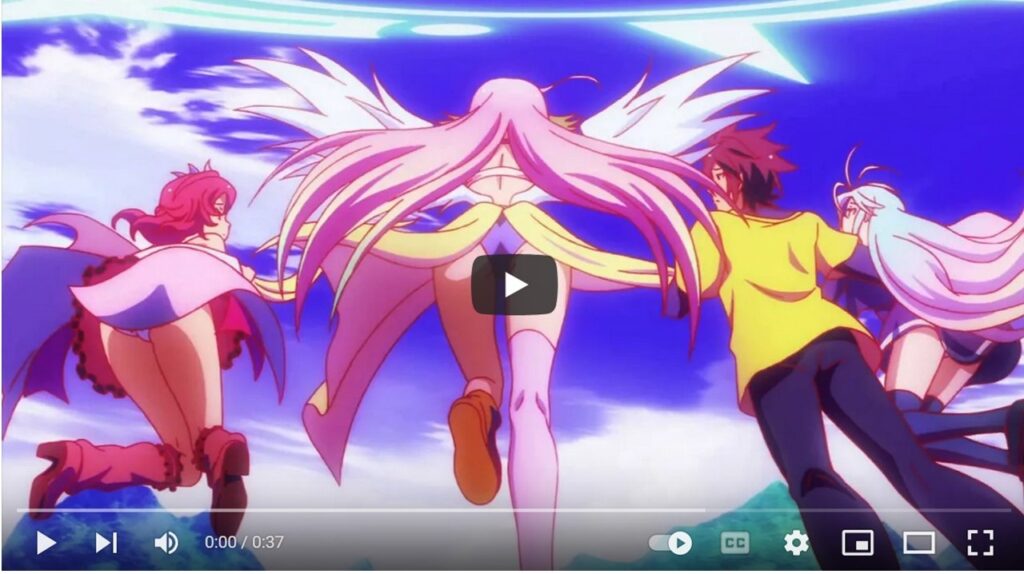
Boys with autism may experience obstacles to social contact with females outside their families. This may be the result of rejection by neurotypical peers or avoidance originating from the autistic boys themselves. Boys with autism might be disdainful of girls, considering them somehow foreign or “weird.” Boys with ASD might feel confused or disturbed by emerging feelings of attraction to girls, which can in turn lead some boys to distance themselves from girls. And finally, boys on the spectrum often have considerable exposure to false, misleading or outright harmful depictions of females through digital media. (See screen shot below as an illustration of this)
Boys routinely view objectified, confusing or just plain harmful female images online. The sexualized girl depictions shown above are quite mild compared to other material boys commonly view in videos.
Resources I have already created to expand awareness of females
Years ago, I created two other free resources, Talk to Family Picture Sheets, which are to help children with autism to explore the interests of family members of any gender, and Helping Teen Boys Relate to Girls. The resource described in this article here involves something you purchase or somehow acquire on your own – illustrated magazines or books that are created for girls rather than for boys.
About using girl magazines to help autistic boys learn more about girls
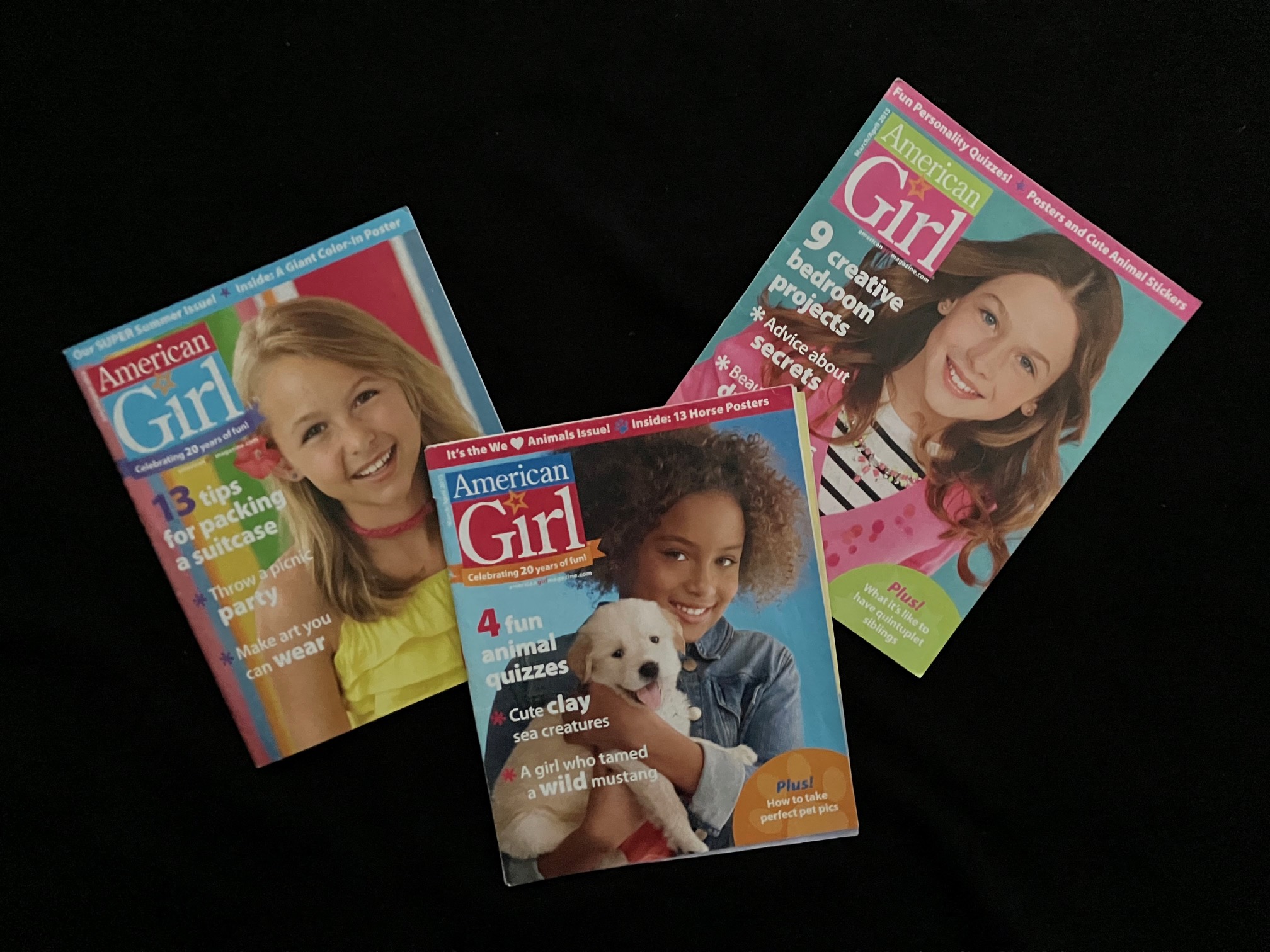
Until just a few years ago, many tween and teen girls regularly purchased and read teen magazines. These magazines are much less common these days now that girls consume popular culture primarily through digital media. However, some good girls’ magazines are still published, such as Girls Life and Teen Vogue. Other fine magazines no longer published, like American Girl, are easily available for purchase second hand. You can get them in large lots, for not much money, from eBay, Etsy and other retailers. That is how I acquired most of the magazines I use in my work with autistic boys.
Boys with ASD needing increased awareness regarding girls should have engaging learning materials.
For many years, I have used girls’ magazines with boys individually, as well as in groups and small classrooms, to liven up discussions about girl youth culture. If you are able to get your hands on a small pile of these magazines, I believe you will find them truly useful again and again. Most of the magazines from even as far back as 15 years ago are full of valid references for girl culture and are still quite timely and relevant.
Girls’ magazines vary according to age range, quality and propriety.
Some I would certainly not recommend based on their confusing content or their promotion of problematic aspects of female youth culture. Look over the magazines carefully before you use them in your work. Personally, I have found back issues of American Girl (tweens and younger teens) and Girls Life (older teens) to be very good, as are some current issues of Teen Vogue. There are surely lots of other good magazines out there that I have not seen yet, in the US and other countries, although as I pointed out, printed girls’ magazines are in decline.
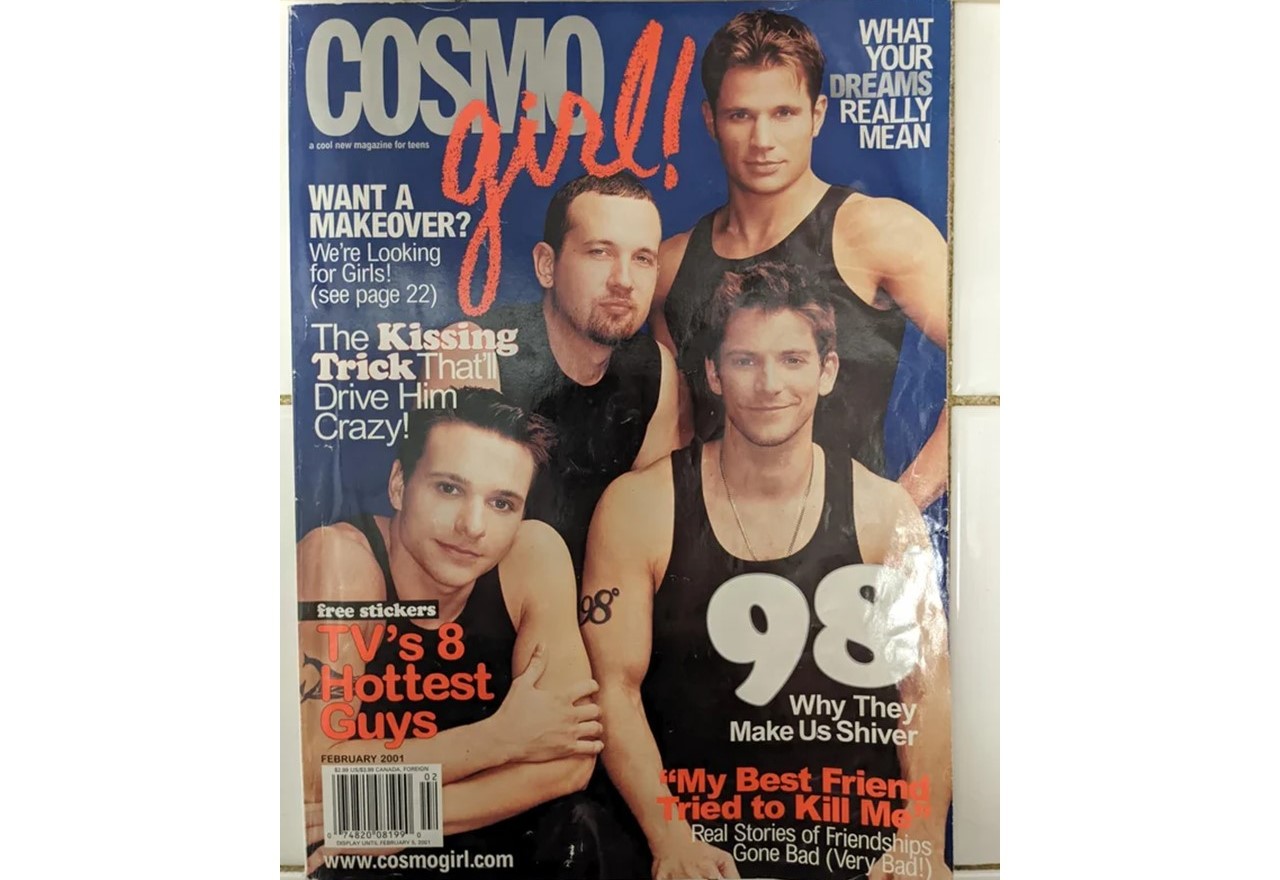
Here is an example of a girls’ magazine not appropriate to help boys learn useful information about girls’ popular culture.
An example of an old girls’ magazine NOT likely to be helpful for boys (or girls either – check out the stories).
Some ways to use girl magazines to promote expanded learning about girls
Pass out the magazines and ask questions, such as: “What are some things that girls do when they hang out together?” “What are some girl interests that seem different than common boy interests?” “What are some girl interests that boys often enjoy just like girls do?” “What are some examples of girl interests that seem just like boy interests?” “What are some girl interests that seem to change as girls get older?”
Girls Life is for older teens. American Girl is for tweens and younger teens. I have used both of these publications a lot in my work with boys.
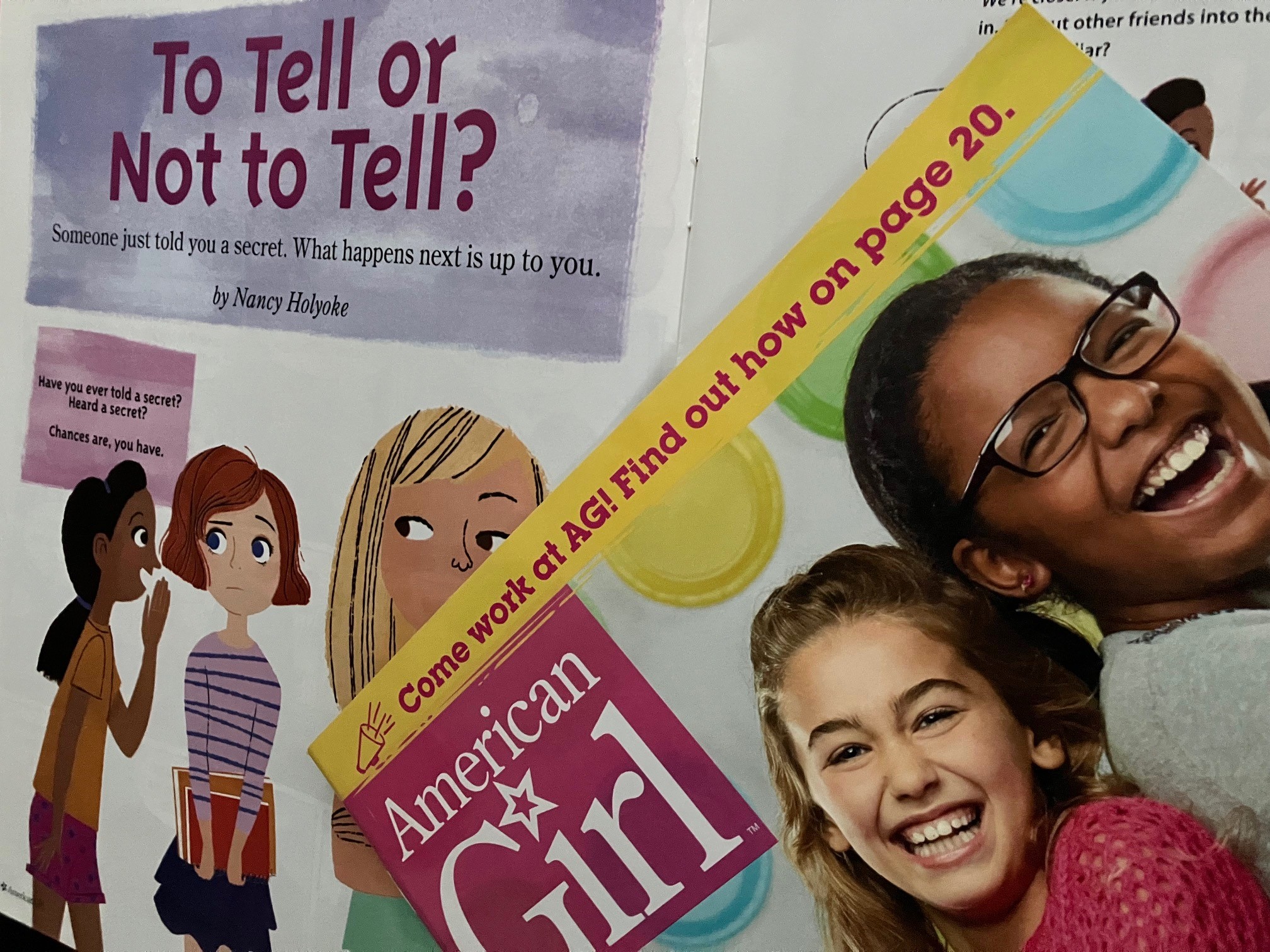
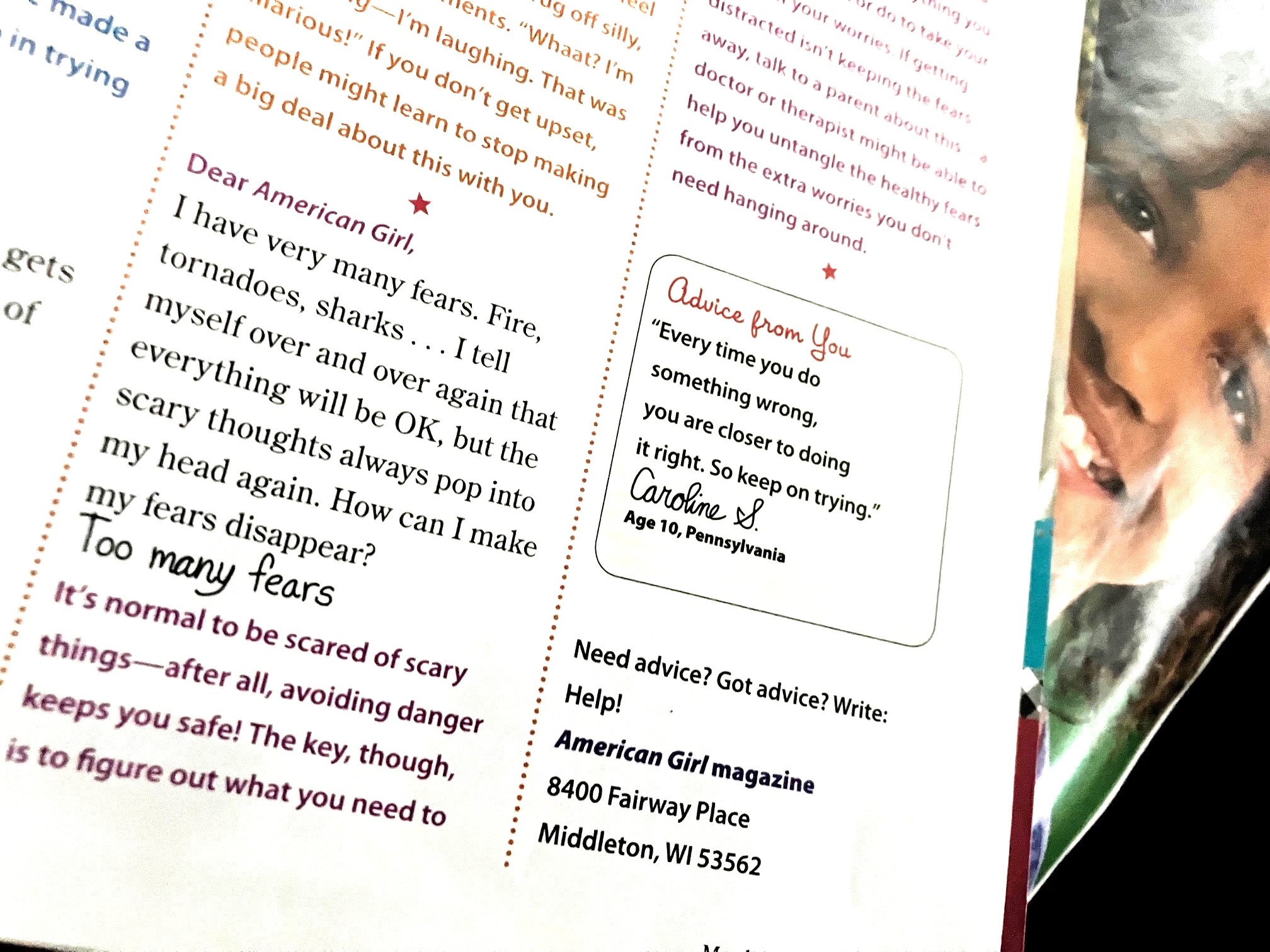
An example of an article featuring an issue very relevant to social skills training for young people on the spectrum.
Check out the “Help” sections of girl magazines and read the questions posed by girl readers. This is one of my favorite learning activities. It provides fascinating insights into the lives of girls, revealing their unique girl concerns as well as generic youth problems which boys with ASD might also experience. You can pose questions such as: “What are some things that might make a girl sad?” “What are some things that might make a girl worried? Have you ever felt worried in this same way?”
This magazine is so old that girls actually WROTE LETTERS to the magazine’s mailing address. But much of the content is still timely and relevant.
Girls’ self-help books can be used in a similar manner as a gateway into female youth culture
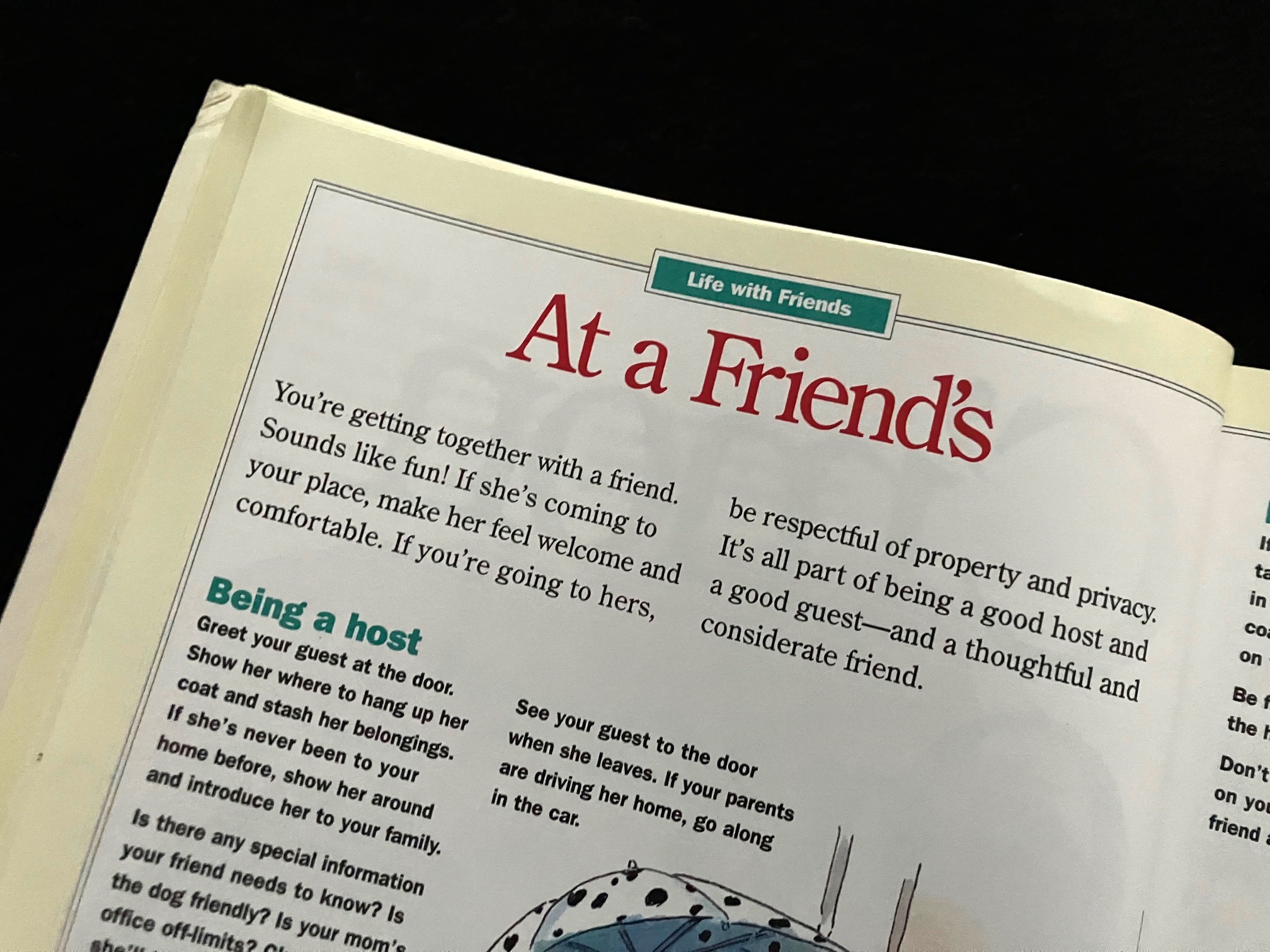
There are many well-written self-help books for girls. Many of us therapists and teachers keep them around to use with our girl clients and students. These books can also be useful for boys on the spectrum, and they can be employed in much the same way as the magazines.
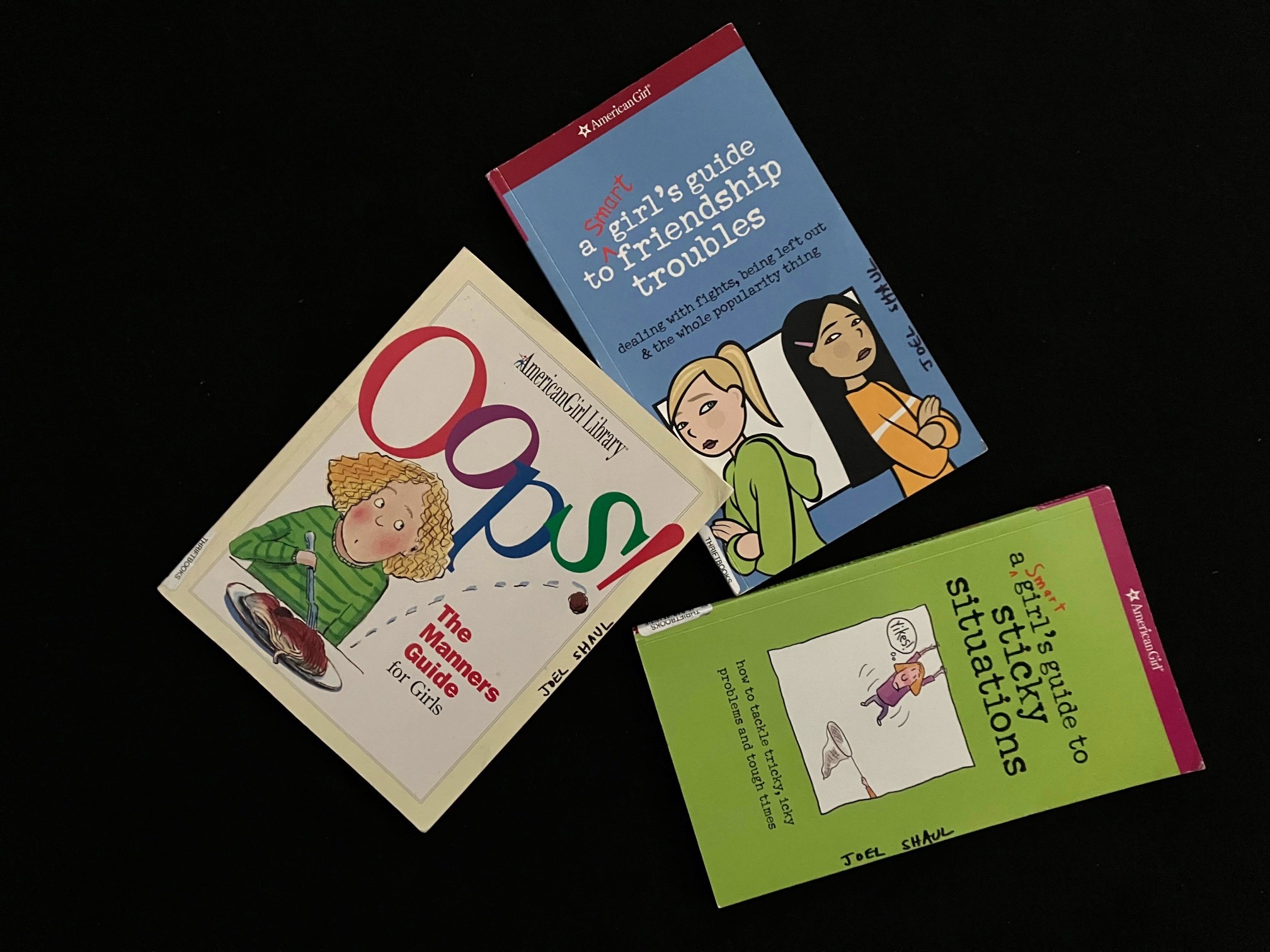
These are really good books you can use to offer boys insights into the lives of girls. Some may be out of print – there are certainly newer ones out there.
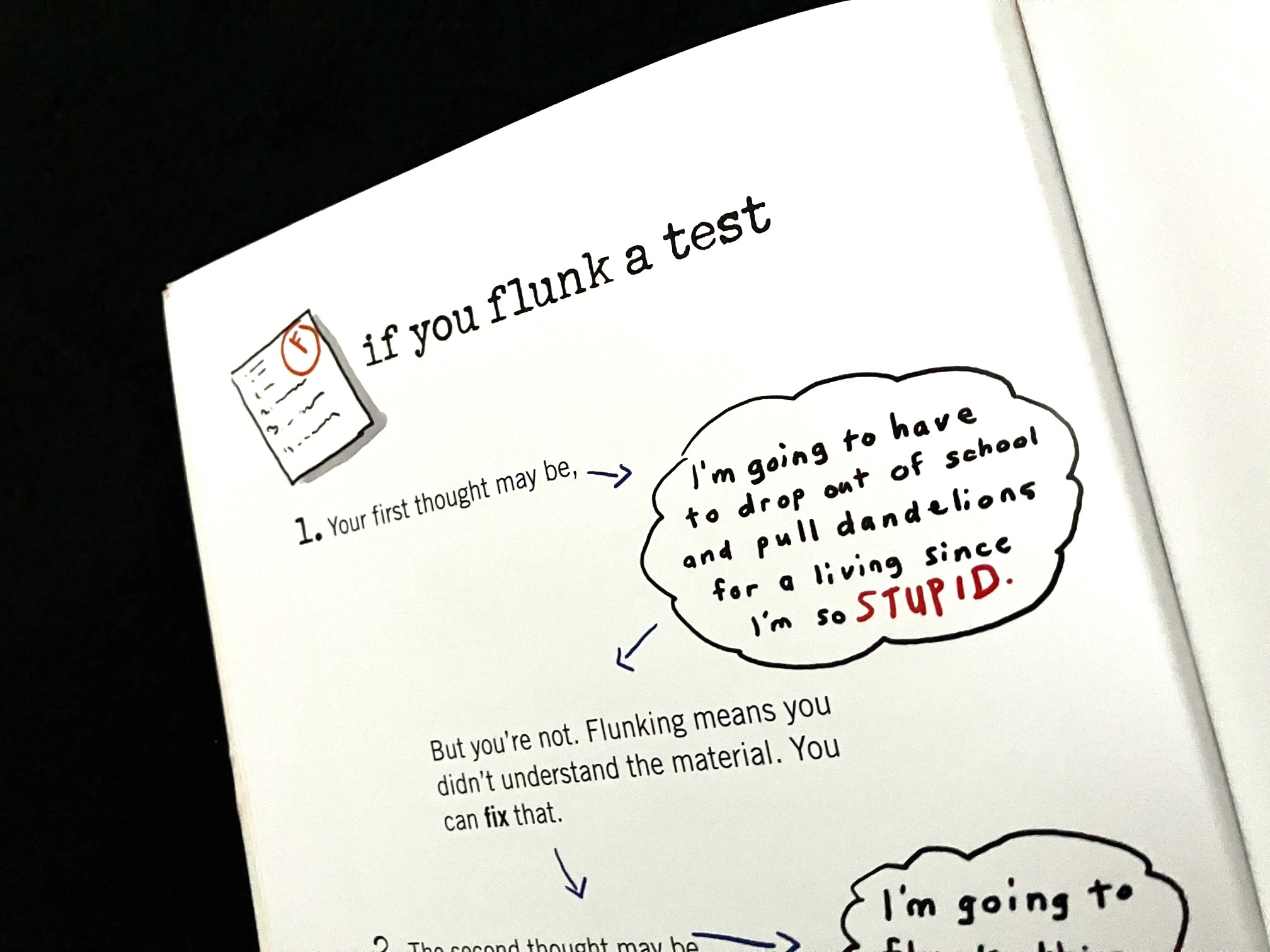
Excerpt from A Girls’ Guide to Sticky Situations. Useful for displaying the thoughts and feelings of female peers.
Page from A Girl’s Guide to Friendship Troubles
Media other than printed media for raising awareness of girl youth culture
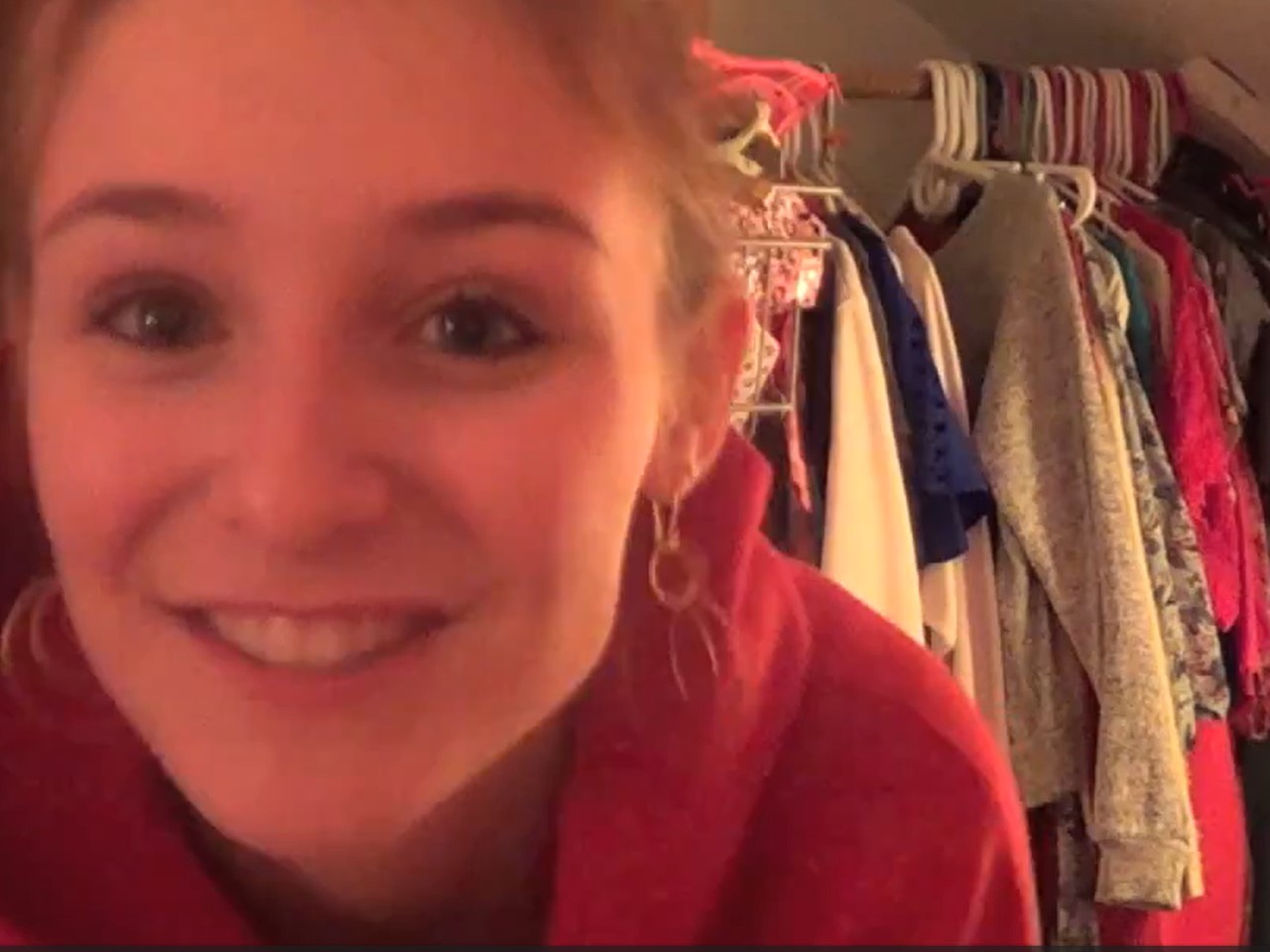
There are multitudes of short videos on YouTube and TikTok for teens that are quite helpful. Among those I have used a lot (which are getting out of date now) are videos of teenage girls showing the insides of their closets, and teen girls giving advice on topics such as how to deal with bullying or how to survive as a high school freshman. (See screen shots below). Once you find your own “go-to” videos in which teen girls are actually talking about their lives, interests and struggles, it will provide remarkable learning opportunities for boys with ASD.
Two girls on YouTube offering social advice on surviving as a freshman in high school.
Girl offering a tour of her closet – clothes, purses, video games, art. I have shown this many times and boys always find it fascinating.
Carefully selected magazines, books and videos can provide windows into the world of girls for the boys we work with.
This can provide boys with invaluable insights and help to clear up confusing and distorted information they get from other sources. For therapists, speech pathologists and special education teachers, these magazines, books and videos can make our social skills work with boys on the autism spectrum more effective.
NEED MORE LEARNING ACTIVITIES FOR TEEN BOYS? I have a kit of instructional panels and q and a cards for teen boys to learn more about interacting with girls. Click HERE to access these free materials.
I am an amateur (not at all accomplished) guitarist and very untrained singer. I have no musical training and I have not studied music therapy. Nevertheless, in my psychotherapy and social skill training work with young people on the autism spectrum, I have periodically employed music. This article summarizes some of what I do, in case colleagues working in speech, mental health or education might find something worthwhile to try in their own work.
Reasons I sometimes use music in my work
To practice fundamental words and phrases in social communication
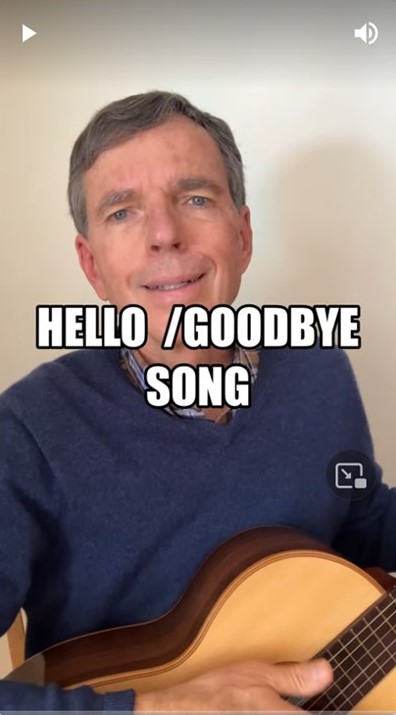
Children with ASD often skip over essential elements of conversation such as greetings, goodbyes and words of validation. I have used two kinds of songs to help with this. The first kind of song is kind of a promotion or “advertisement” for an element of speech such as greetings. Here is one example. Click on the picture to view it on YouTube.
A second kind of song for teaching elements of conversation is one that children sing along with me to facilitate practice and memorization.
I believe that many kids on the autism spectrum are unusually good at learning and recalling the repetitive words and phrases in some of these songs. Maybe this is some functional manifestation of delayed echolalia.
Here below is an example is a song I have often used with younger children to help them get used to greeting / saying goodbye and using the names of other children in a social skills group.
The two songs below are to teach and practice what I call words of validation. These are common words to convey interest and maintain reciprocal flow in conversation, and many young people with autism need help mastering language like this.
To facilitate communication exchange within a group
In the hundreds of social skills groups I have run, my most most important task has been to enable the participants to talk with each other and learn about one another. Here is a call and response song I created to help with this.
To promote and reinforce an important message / lesson in therapy
These are songs that I use to focus on central therapy issues. I sing them to the child, or the child can join in if they like. I have often used variations of “If you’re happy and you know it…” to practice identifying emotions and talking about feelings. For children who have become over-enthralled with pretend and fantasy, I made up a song called, “Don’t Let Pretend Get Too Big.”
Here is a song by Cathy Bollinger about eye contact.
I made up this song about tattling many years ago and I use it occasionally.
To break up the routine of therapy and provide respite and levity
We ask our young clients to do really hard work, week after week, often for years. For many of these kids, a little music now and then helps maintain energy and morale.
To increase focus, comfort and commitment during therapy sessions
Many children with ASD have certain songs or music styles they like to listen to repeatedly. I have occasionally encouraged a child to let me play their favorite music in the background while we work during sessions.
Other ways I have used music in my work
Watching social skills song videos
I don’t do this too much myself, preferring instead to make up my own songs. Some videos out there contain good and useful songs, and others are not so great in my opinion, employing overly complex language and annoying features.
Exploring the child’s musical interests to identify strengths and concerns
I have often explored YouTube with young clients to learn more about children’s interests. I have sometimes discovered that my clients have found music that is helpful and inspiring and which furthers my own therapeutic agenda. Occasionally, I have discovered that a child is into music with negative and harmful messages.
When to not use music
If you are someone like me who enjoys music, you need to be careful that you don’t obligate a kid to participate in some musical activity just because it happens to be part of your therapy routine. I put away the guitar the instant any kid shows disinterest or aversion.
What I have not yet tried with music in therapy activities
As I stated in the Introduction, I am not a music therapist. Music therapists do all kinds of things I can’t do and they have all kinds of cool musical equipment to enable children to participate in a variety of meaningful ways. It would be fun and worthwhile to spend time observing music therapists at work with kids on the spectrum.
Conclusion
Whether you are a musician, or an avid musical dabbler like me, you might consider making music a part of your therapy repertoire when you are working with kids on the autism spectrum. It has often been worthwhile for me.
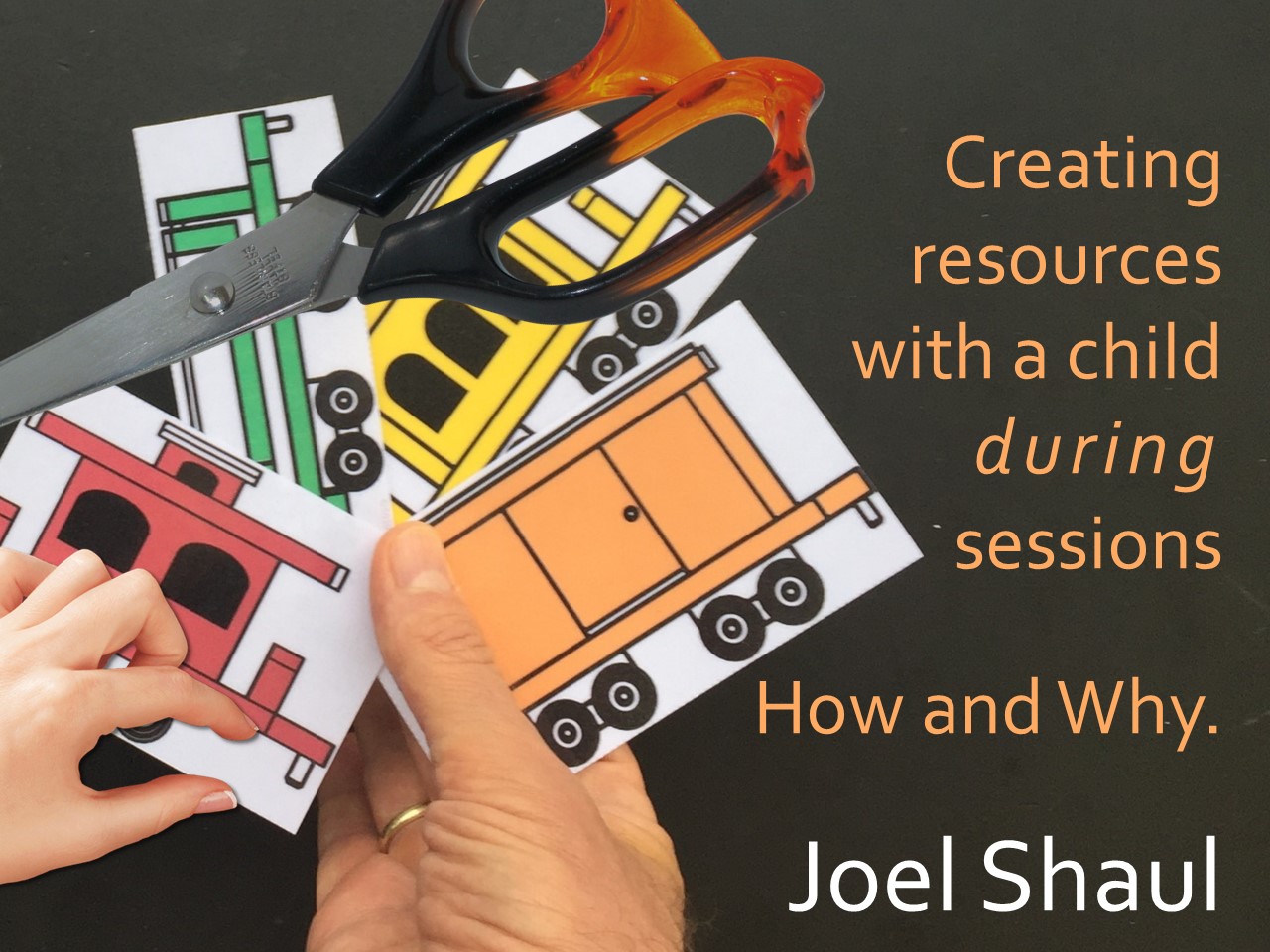
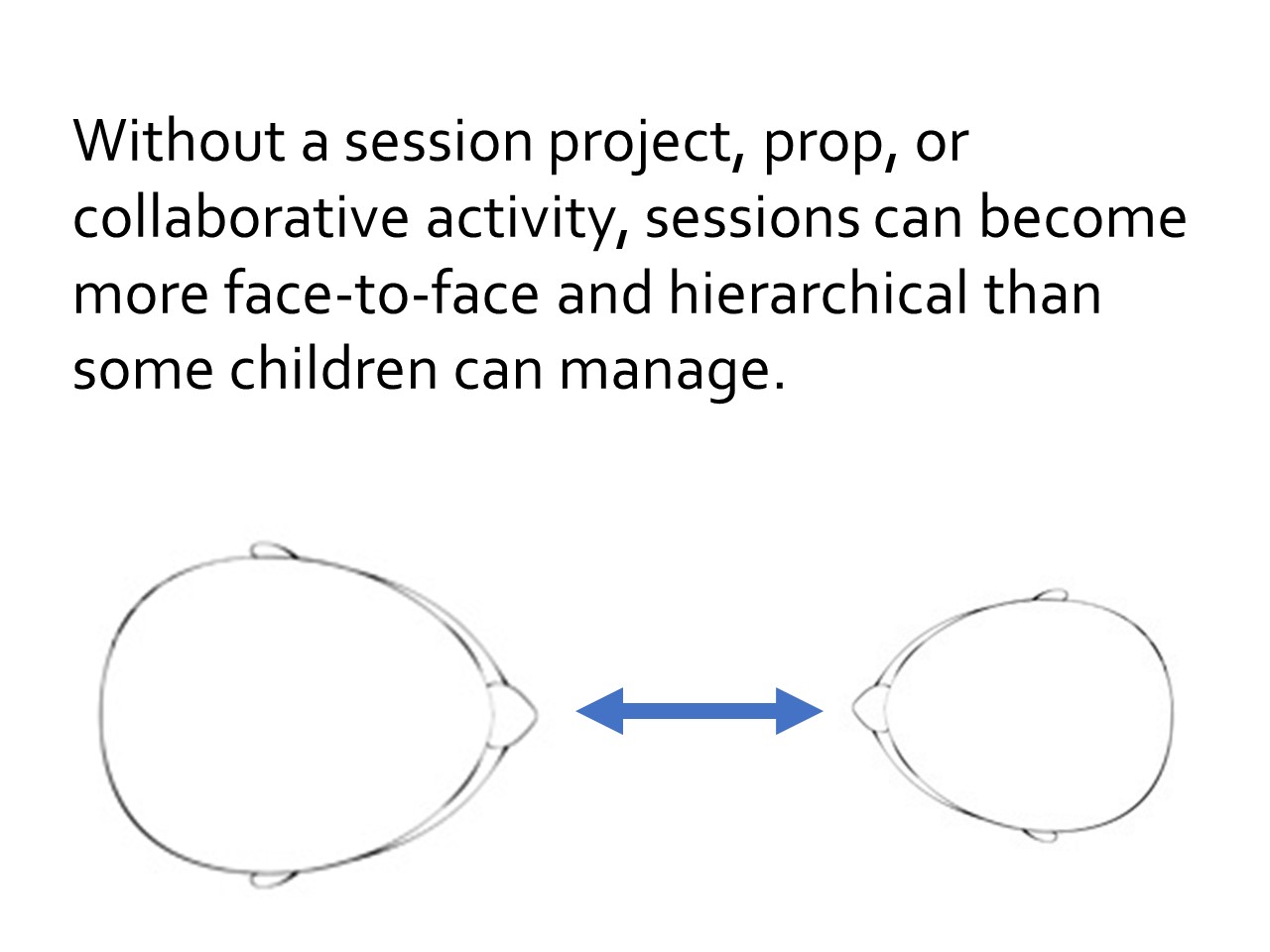
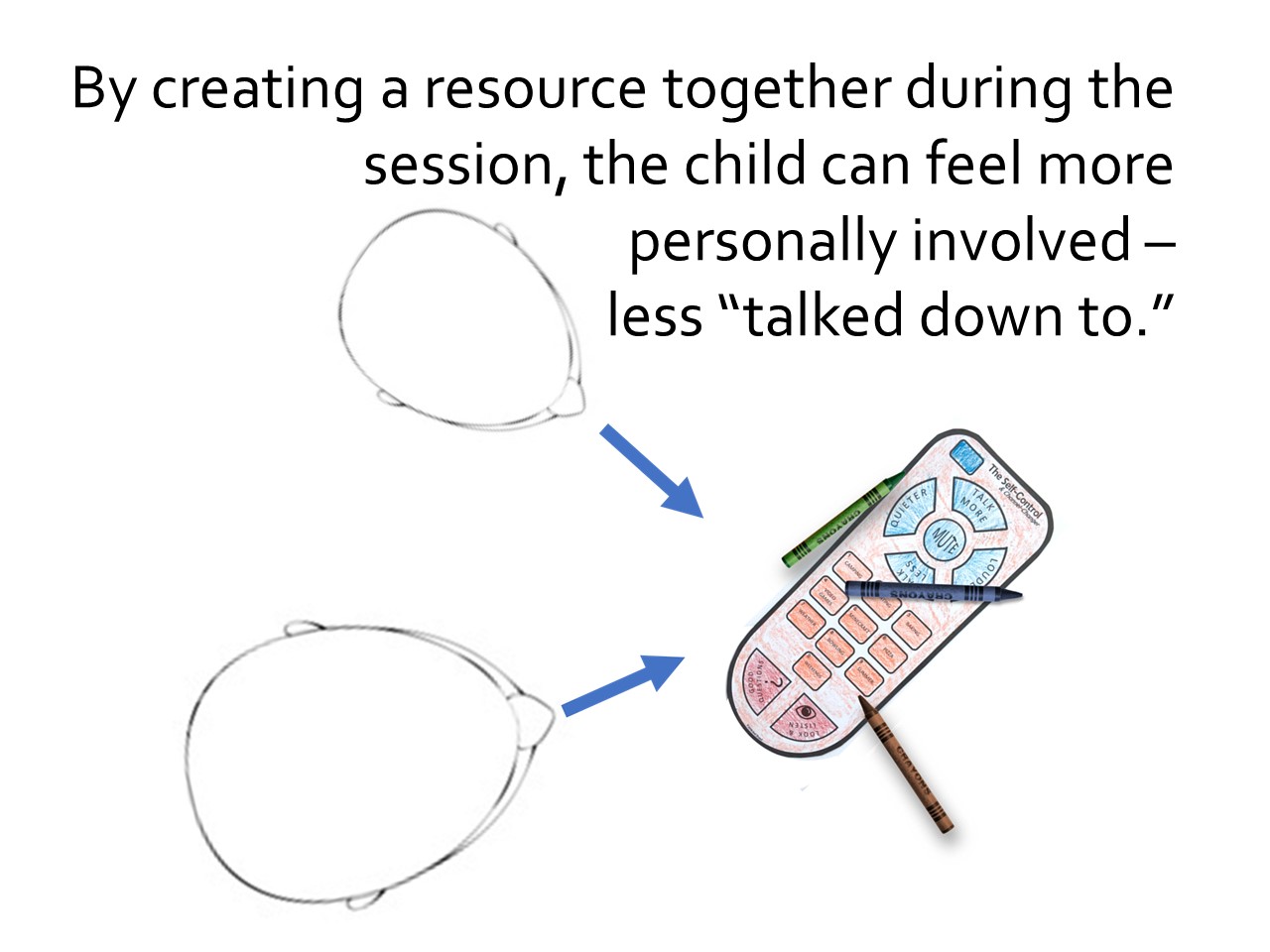
Making the social / emotional skill resource during the session – instead of before – can be very effective.
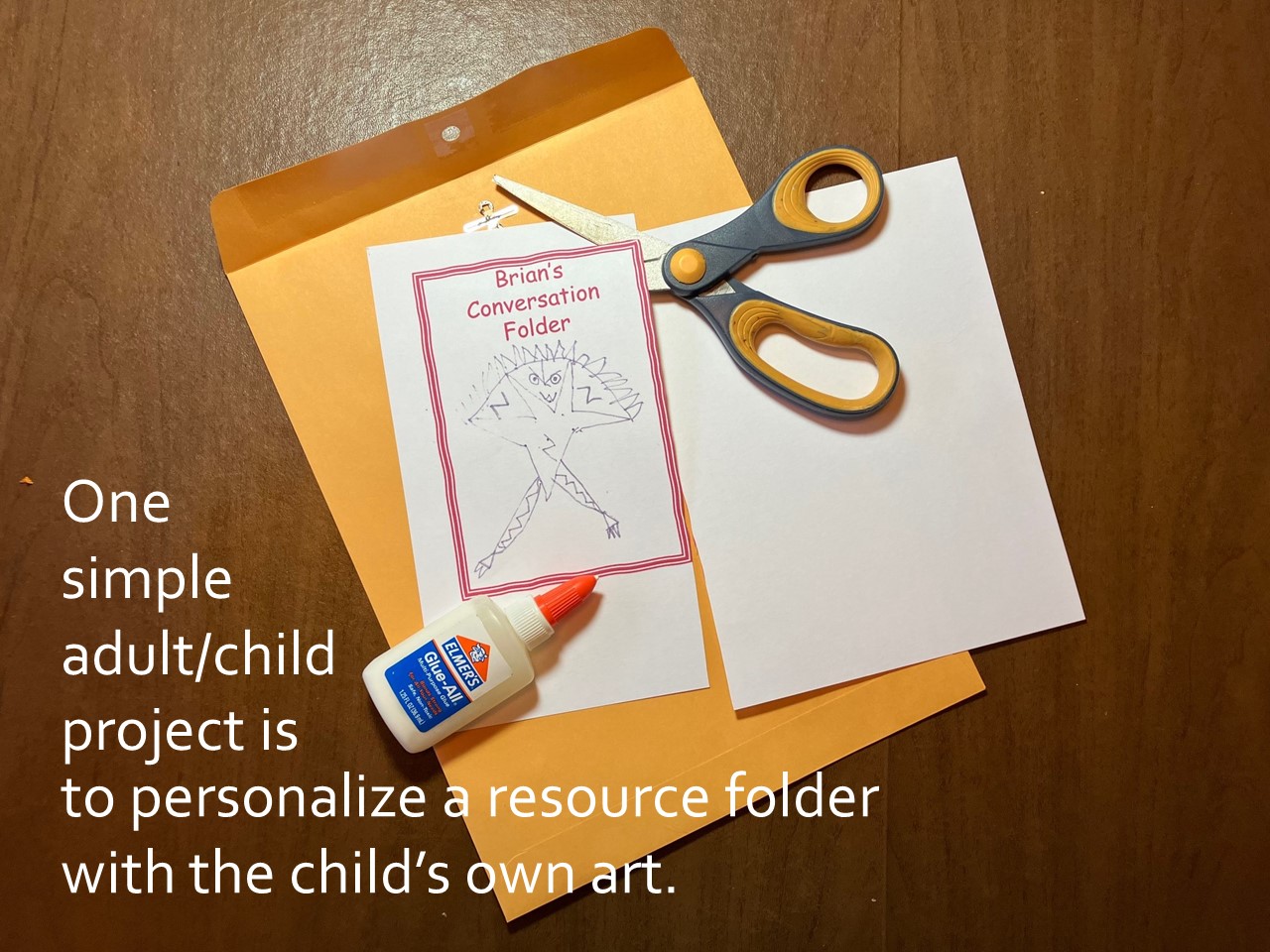
Children with persistent or complex problems can become weary and demoralized in response to the repetitive approaches we employ to help them. One important way to make the helping process more interesting and engaging is to have the child become directly involved in the creation of therapy resources during the session. With just a little preparation, quite a few of the free resources on this website can be created with some level of assistance by a child during sessions.
Quite a number of the free resources on this website can be created during a session with a child.
When you are co-creating a social skills resource during a session, there are different levels of involvement, depending on the child’s interest, temperament and ability. These include:
*Completion of the whole project, beginning to end, with the adult supervising
*The child decorates or personalized the project in some special way
*The child colors the project or helps to cut it out
*The child gets to do the “fun” part of the project, such as running the laminator
One of the most popular downloads on the website is the Train Conversation Printables. This requires printing, cutting and laminating – all things that a child might help to carry out.
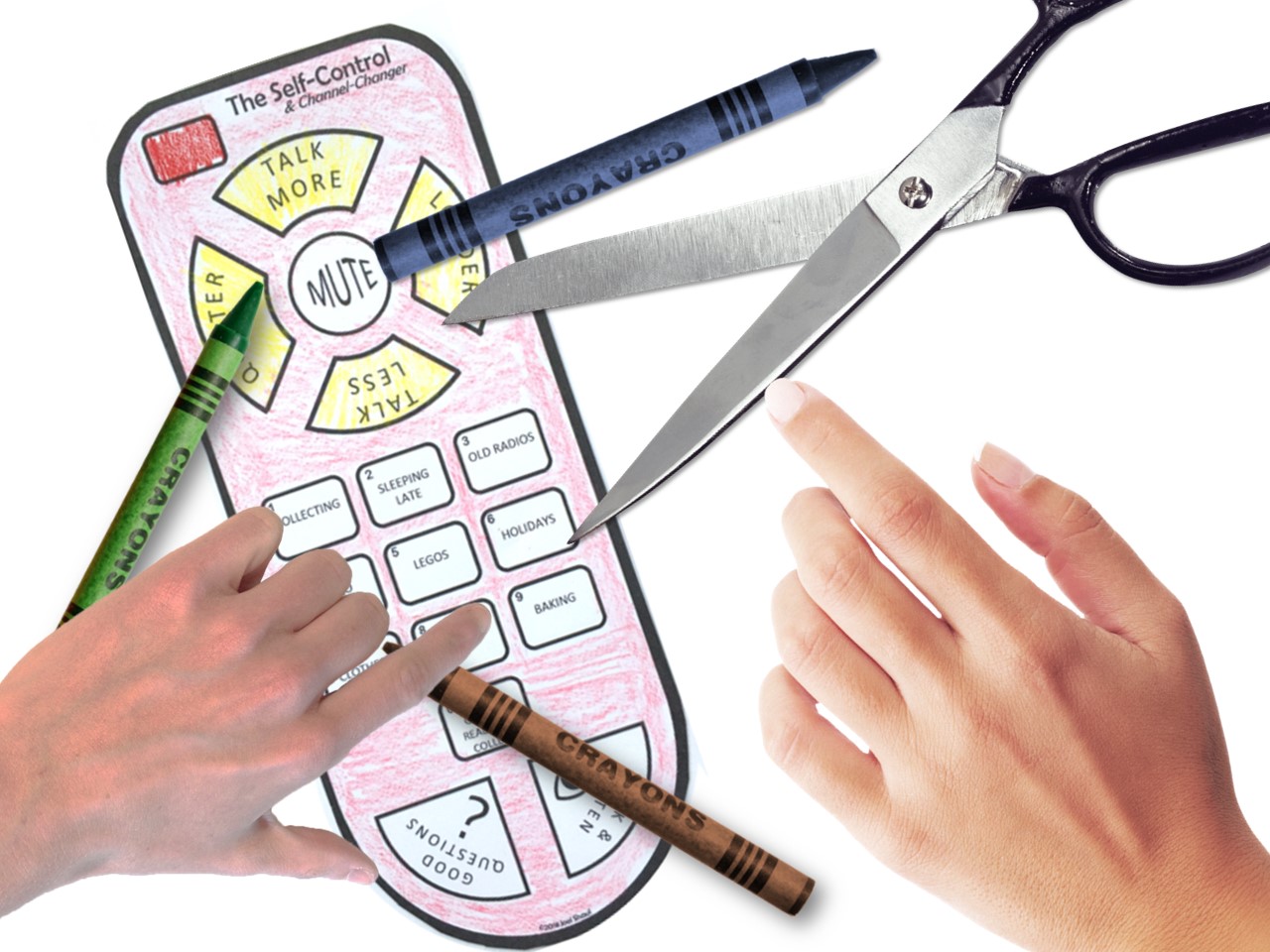
The resource shown above is the Remote Control Channel Changer. Usually, you have the child help to figure out what conversation topics to place on the buttons. The child colors it in, and finally, you laminate it and cut it out.
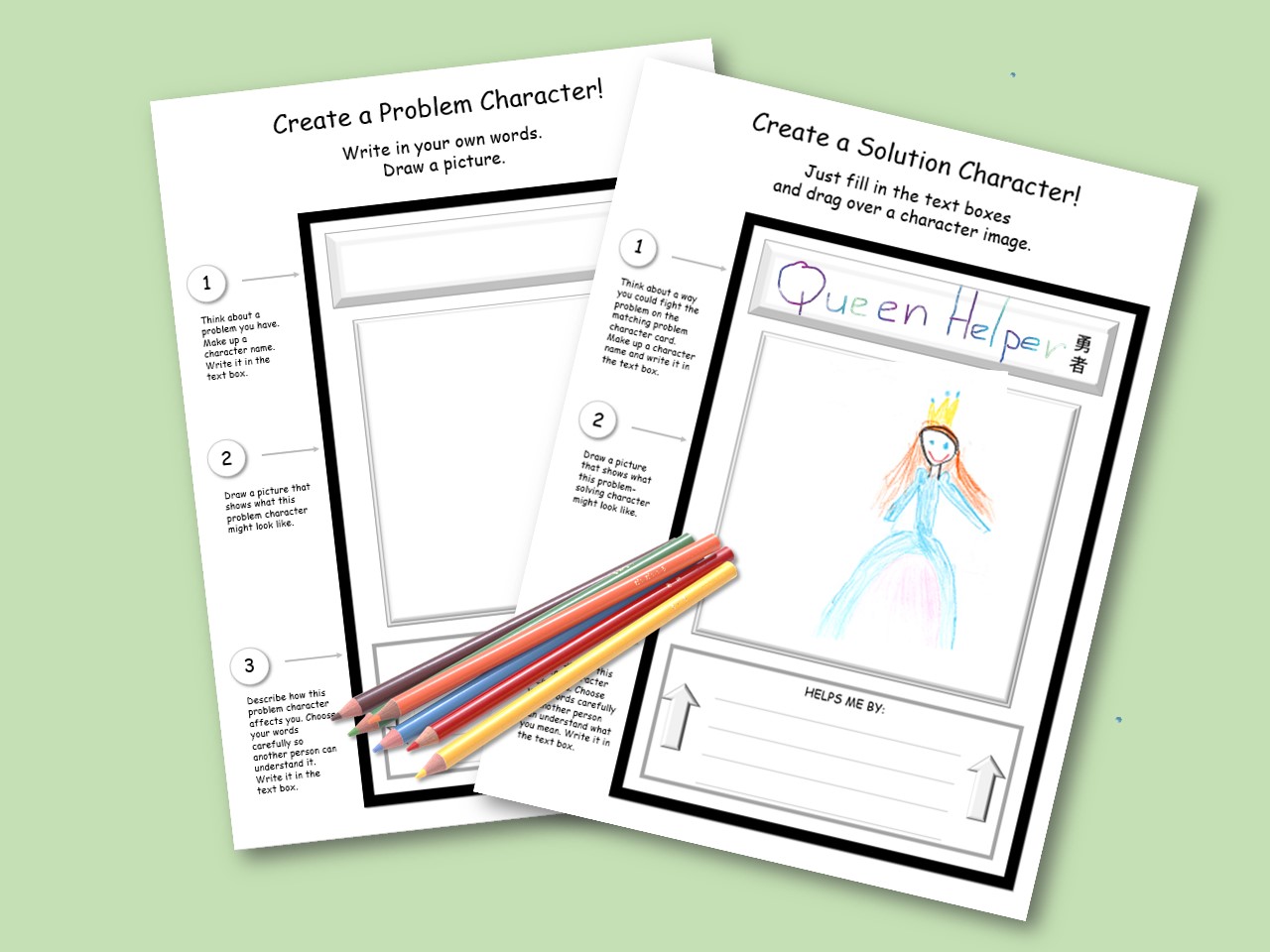
The resource shown above is one part of Problem and Solution Cards. One way to do this project is to print out blanks which the child can complete during a session. This collaborative project can also be carried out entirely on the computer, in PowerPoint, with drag-and-drop images. That option is advantageous if you don’t have much prep time or the child does not like to draw.
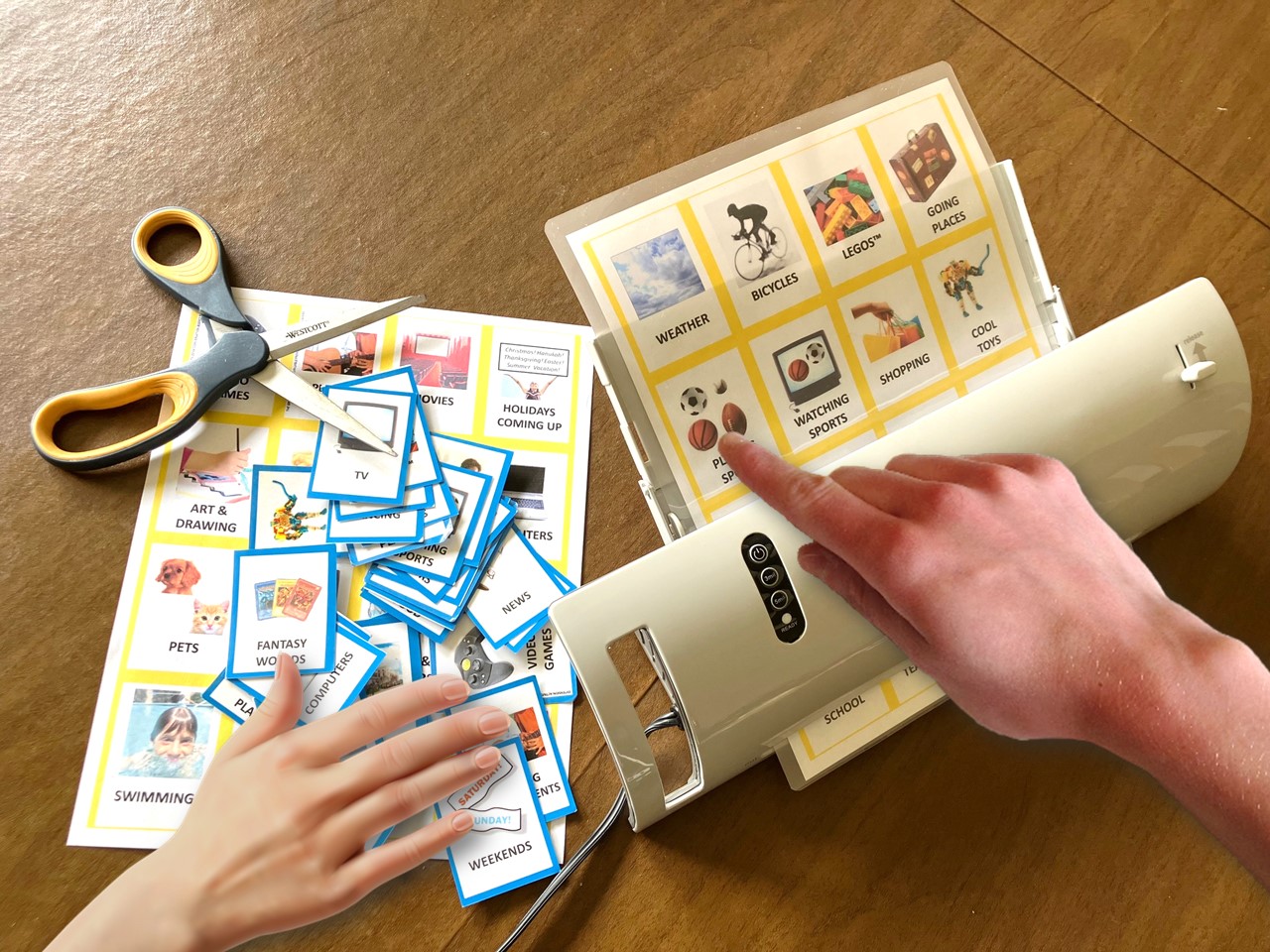
Shown above are Green Zone Picture Cards. These are two identical sets of conversation topic cards that two people compare to find their “common ground” conversation topics.
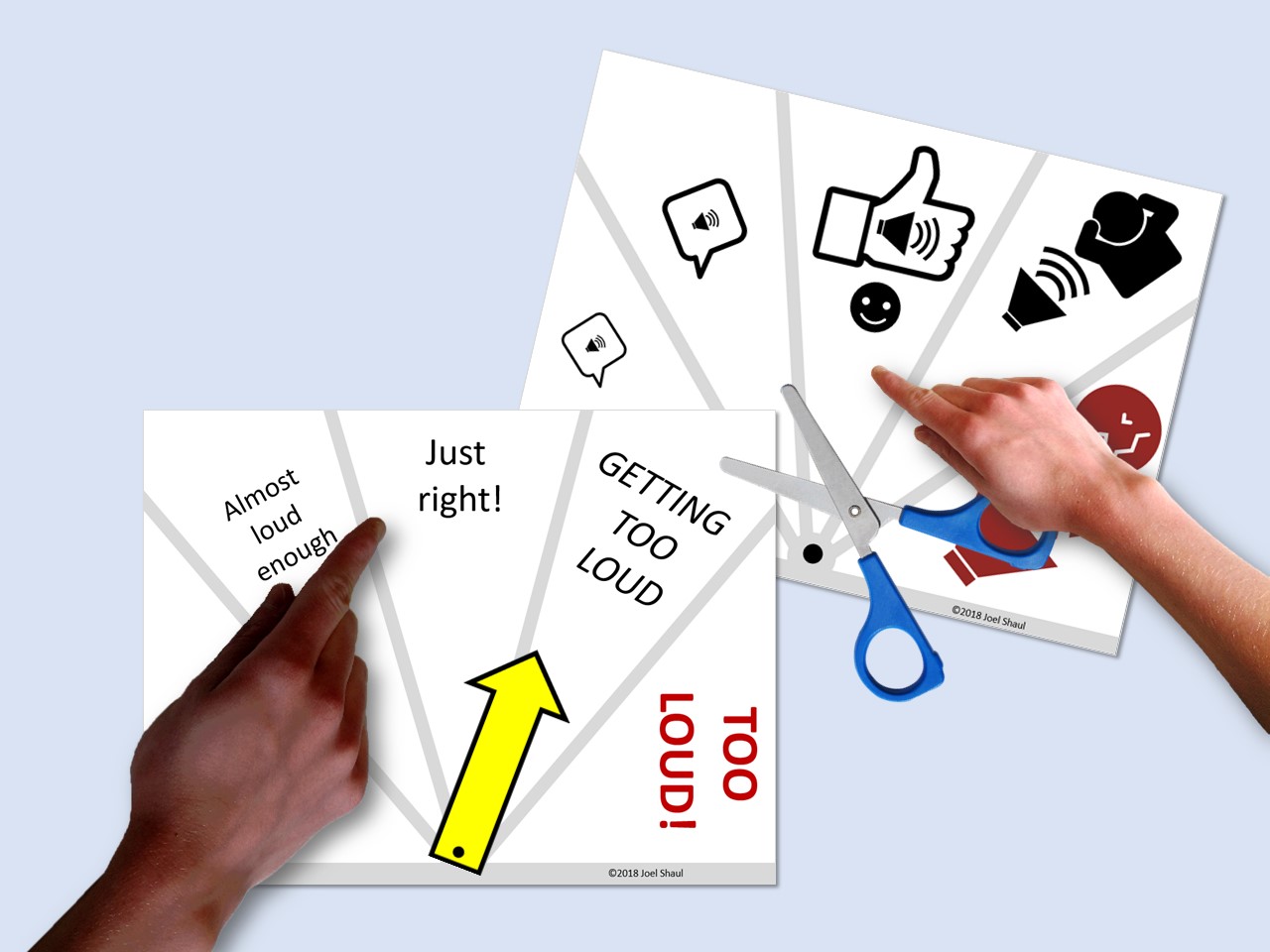
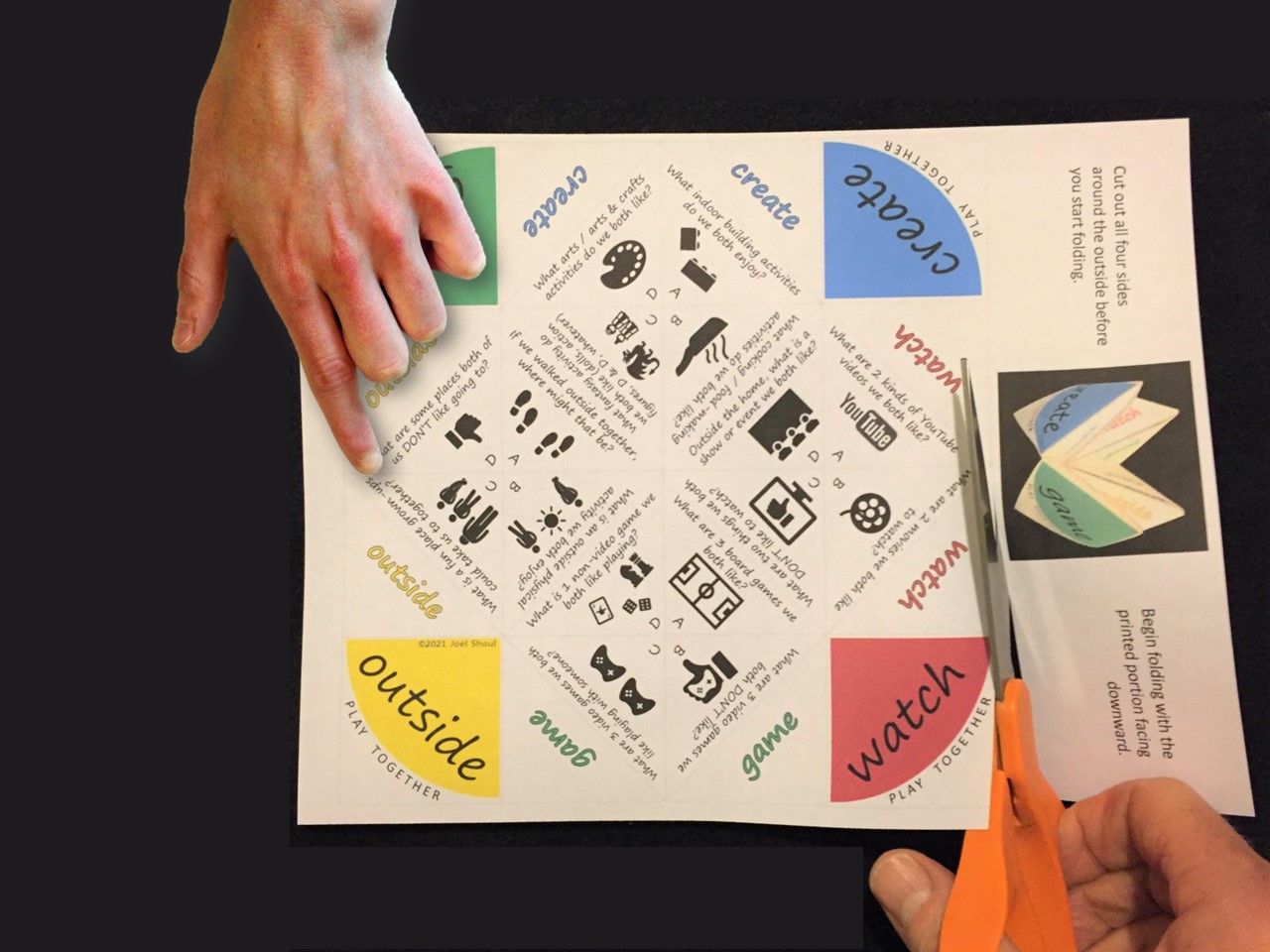
Shown above is one of fourteen Paper Fortune Tellers on the website. You can spend a lot of sessions printing these and folding these with children. They cover many topics including conversation practice, play skills and emotional regulation.
Many of the adult / child collaborative therapy projects on the website require no printing at all and are entirely screen based.
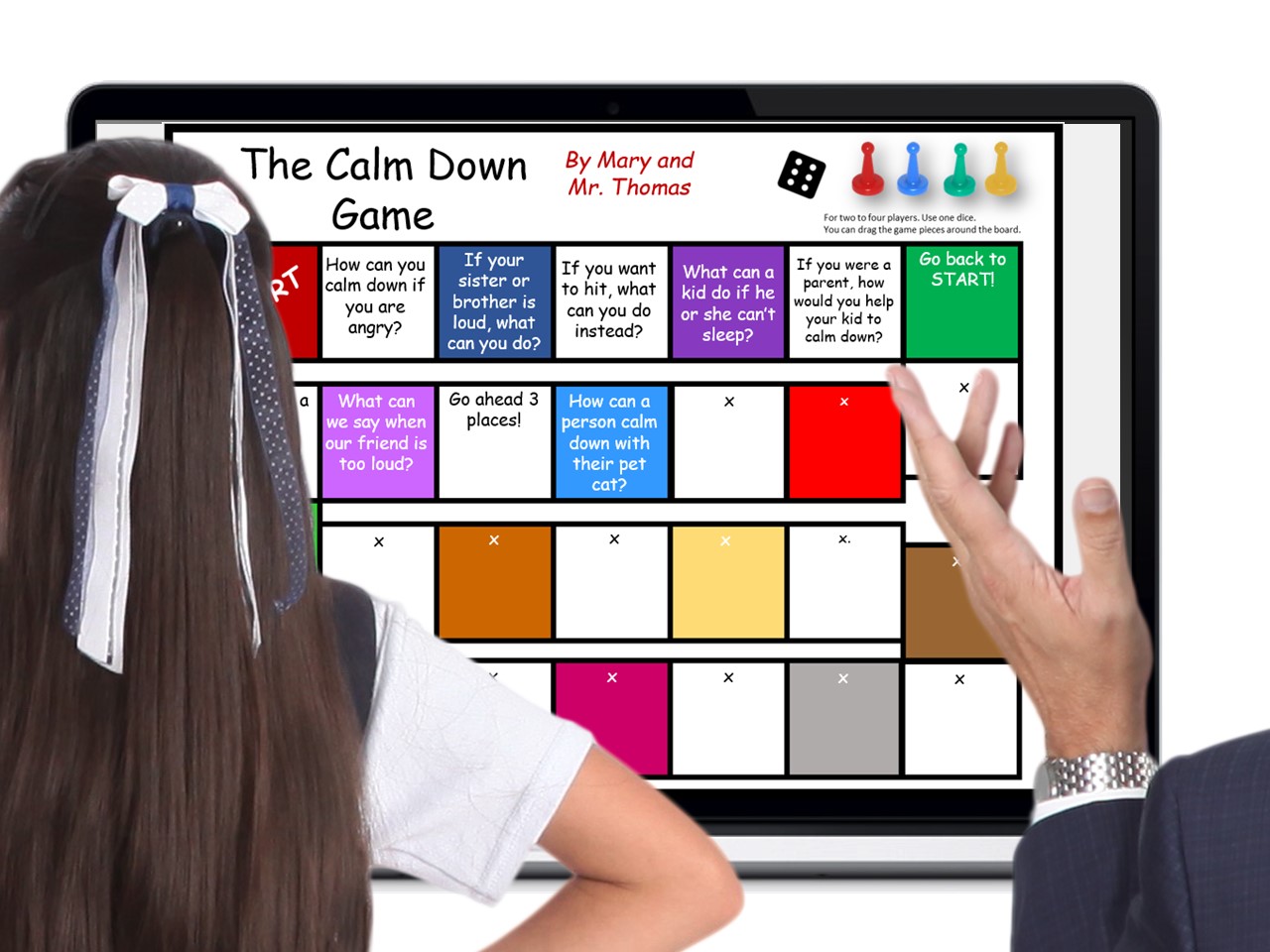
An advantage of the screen-based projects is that there is minimal set-up and clean up. Another advantage is that lots of children like to involve a computer during sessions. The very easy project shown above is Create Your Own PowerPoint Social Skills Game.
I hope you find some of these strategies useful in your own work.
Greetings, saying goodbye and social skills training for children with autism
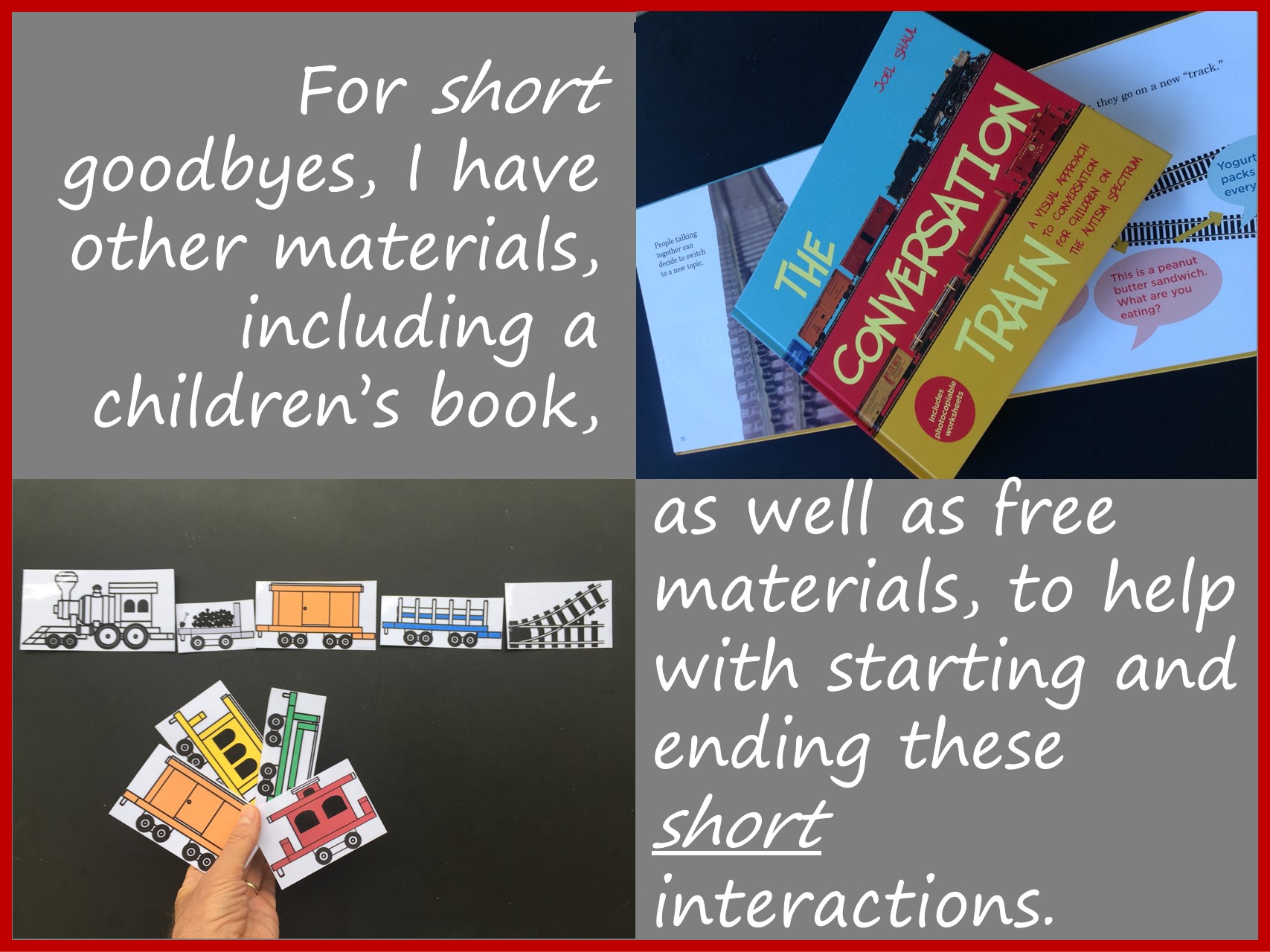
Teachers and therapists work hard to raise young people’s awareness of how and when to begin and end conversations. My free Train Conversation Kits can be helpful to teach these skills.
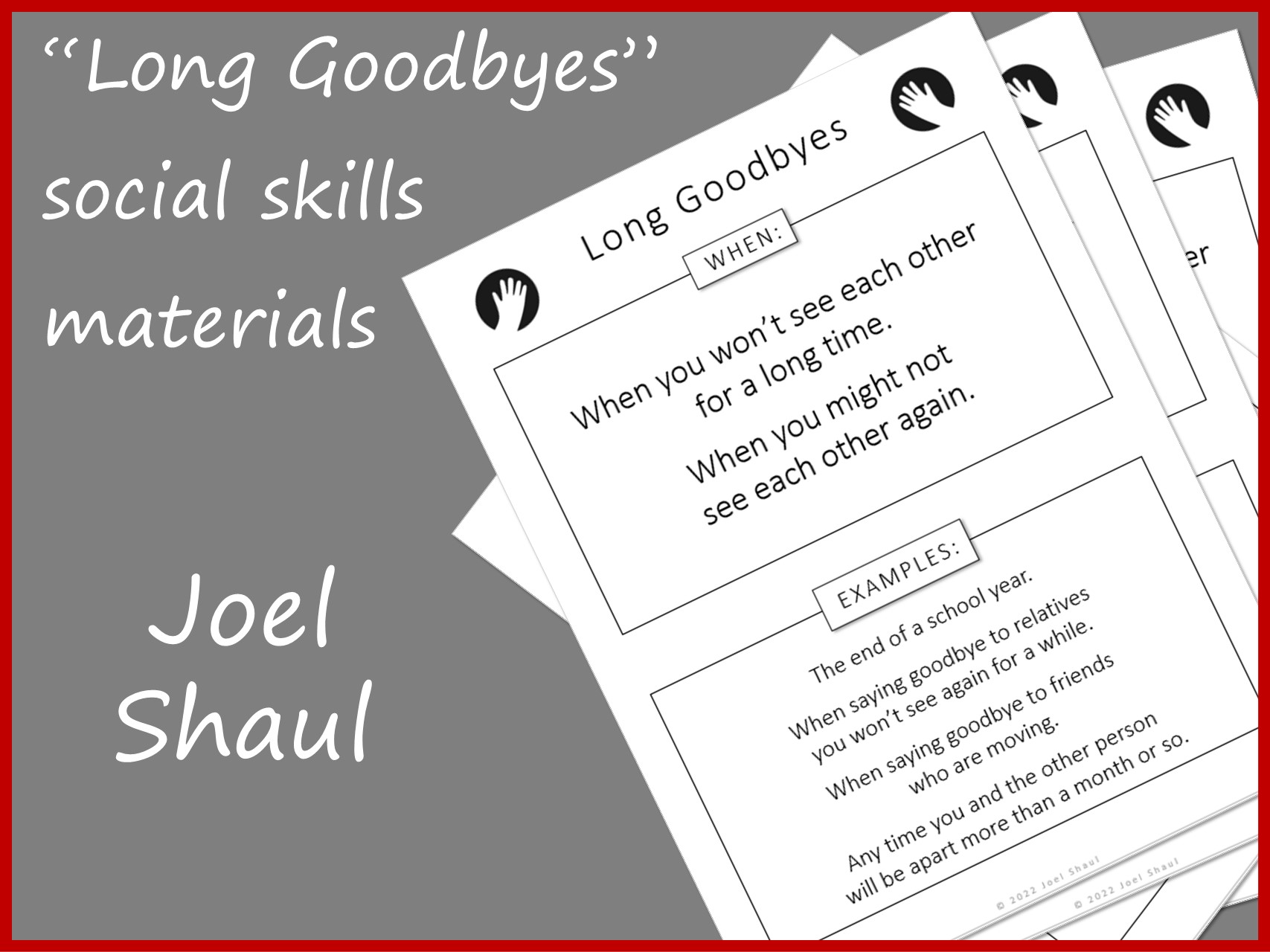
There is a different and more complicated set of conversation skills involved in saying a “long goodbye,” when one is taking leave of another person they might not see for a long time – or ever. In my own experience, young people with ASD’s find “long goodbyes” stressful and confusing, and they are usually very open to advice and role play practice. I have often used this “long goodbye” rubric on occasions when I am ending therapy with a child or helping groups of young people say farewell to one another following a summer program.
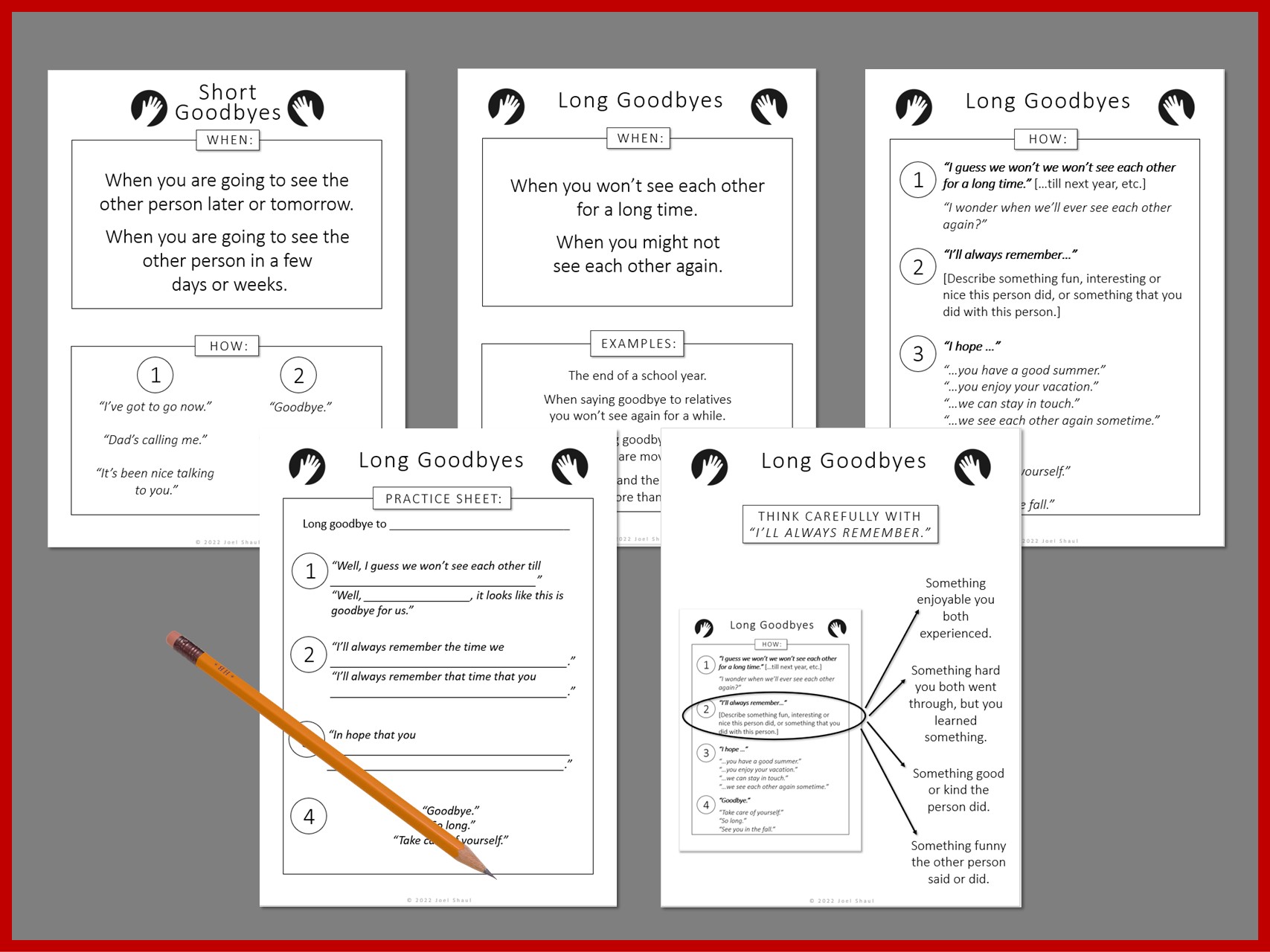
This 5-page pdf download includes:
*A rubric sheet for conventional Short Goodbyes
*A sheet with a brief description of Long Goodbyes with examples of when they occur
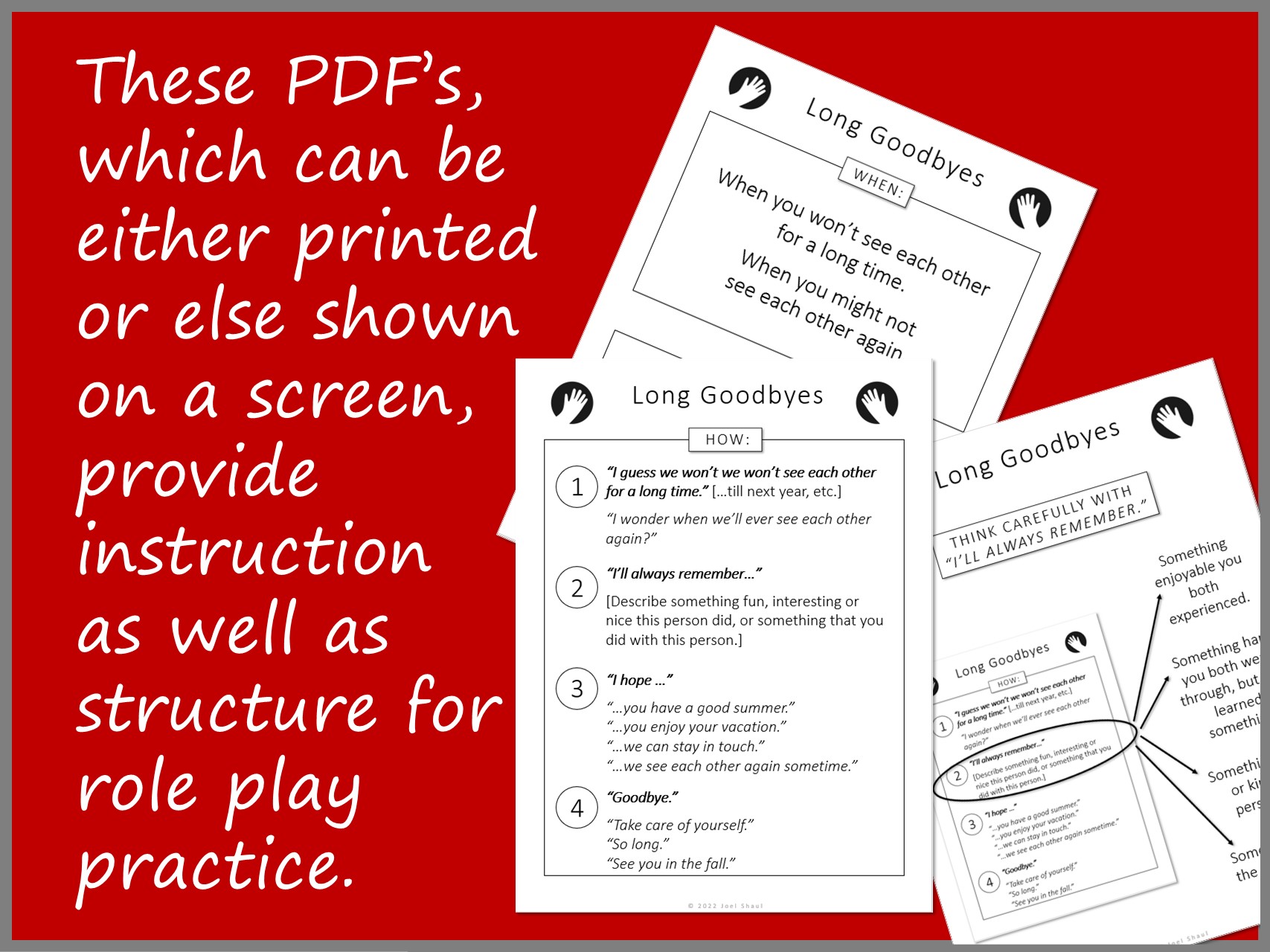
*A summary of the 4 steps involved in carrying out a Long Goodbye
*A practice fill-in sheet for a child to write down a Long Goodbye
*An explanation page for step 2 in Long Goodbyes (the most difficult step) in which one says, “I’ll always remember…”