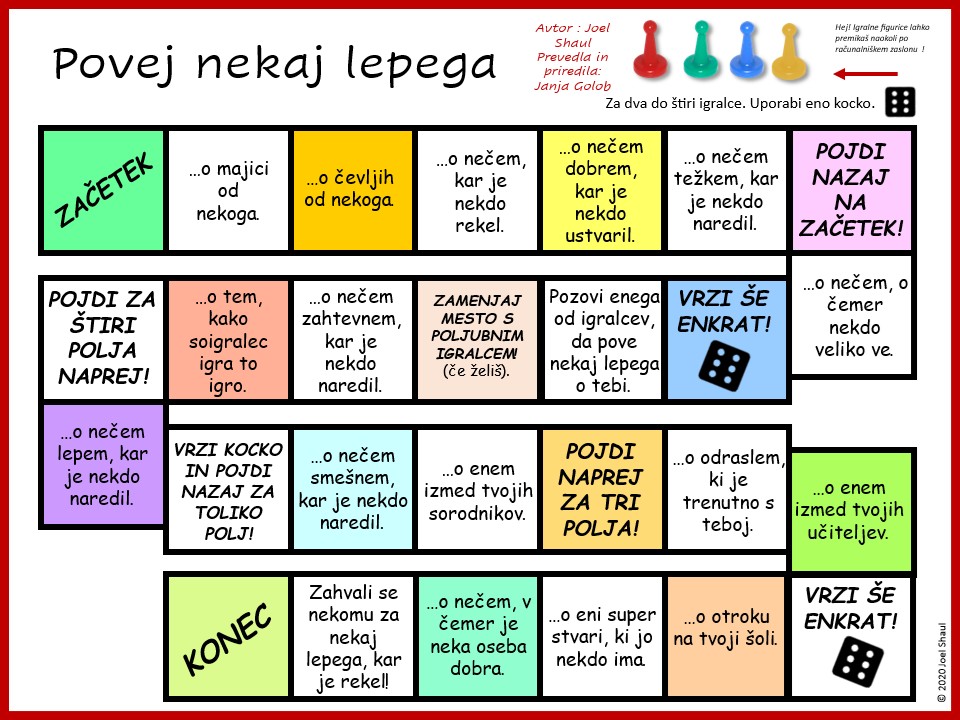
Slovenian translations of free resources

Social Skills Activities for Children with Autism
AutismTeachingStrategies.com
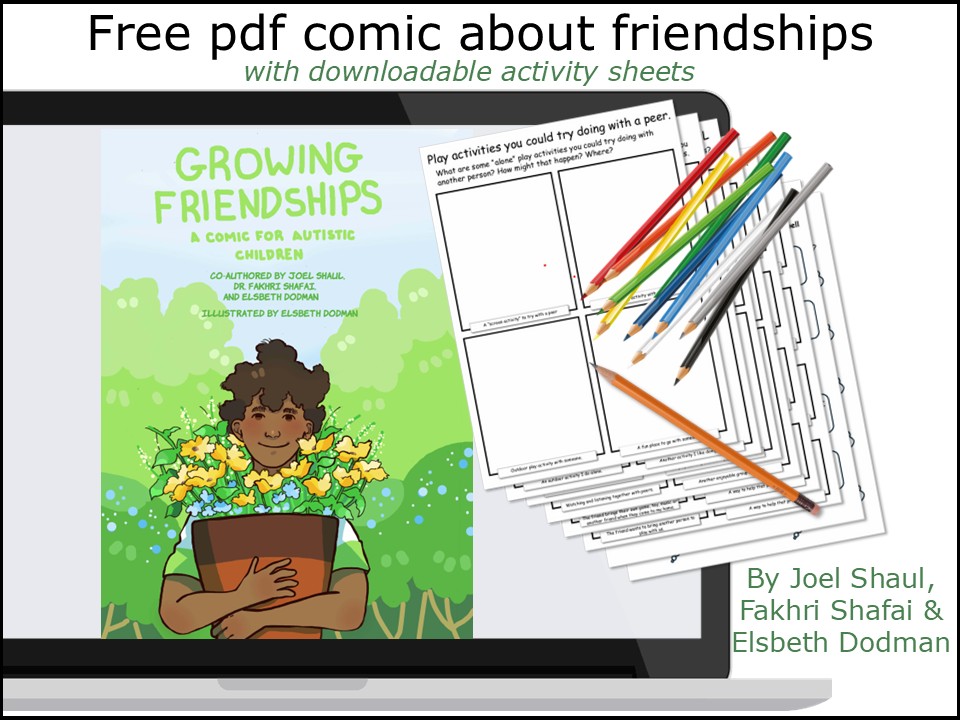
Click HERE to download these resources from the Aide Canada website.
Growing Friendships: A Comic for Autistic Children
Illustrated by Elsbeth Dodman. Written by Joel Shaul, Fakhri Shafai & Elsbeth Dodman
Here is a fine, free comic made available for download by Aide Canada. It is inspired by a free card activity on my website, Friendship Growing Cards. There are some great activity sheets to use in combination with the comic book.
Here are some excerpts.
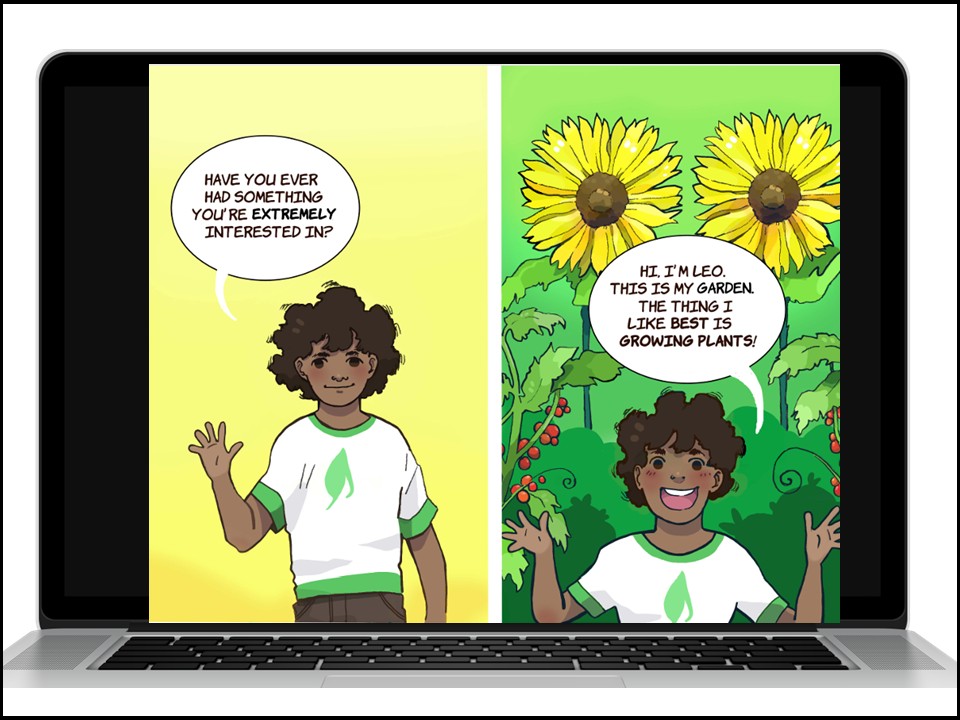
Growing plants is a useful metaphor for “growing friendships.”
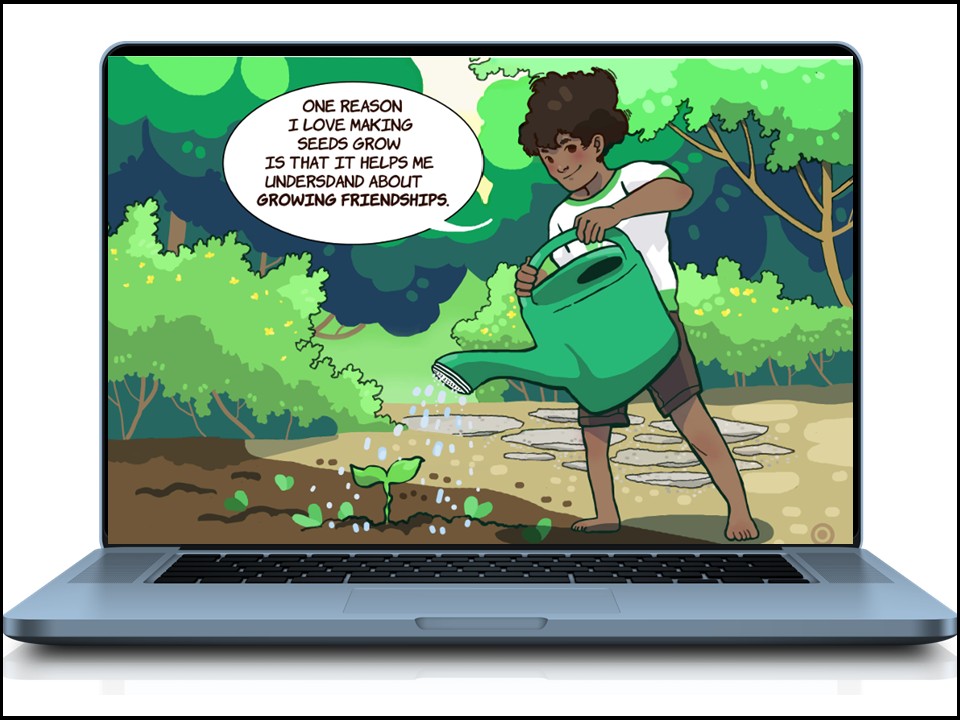
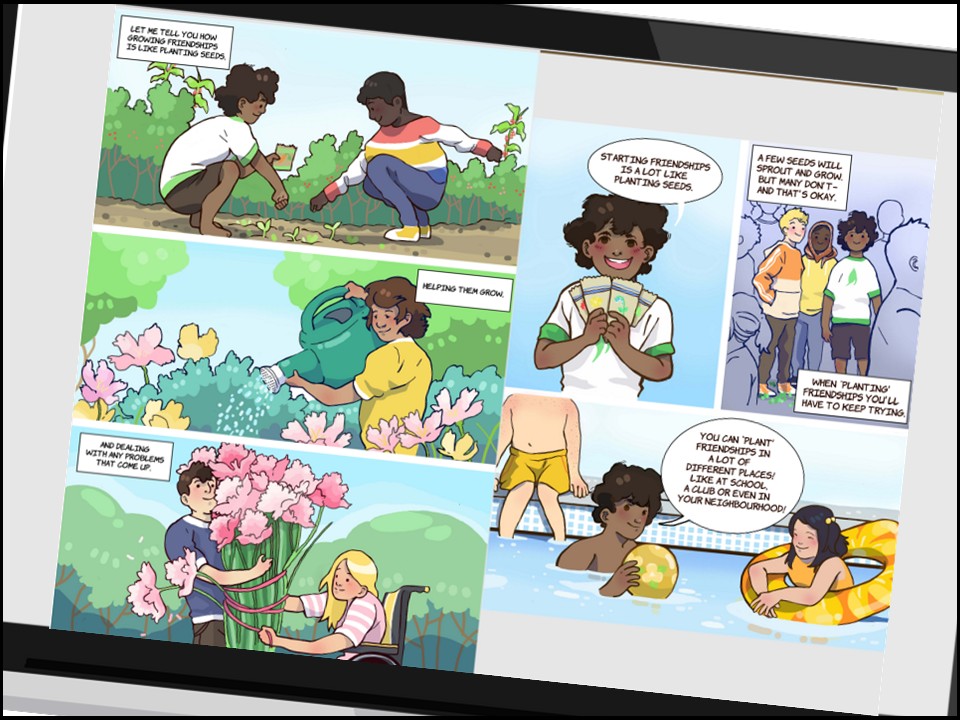
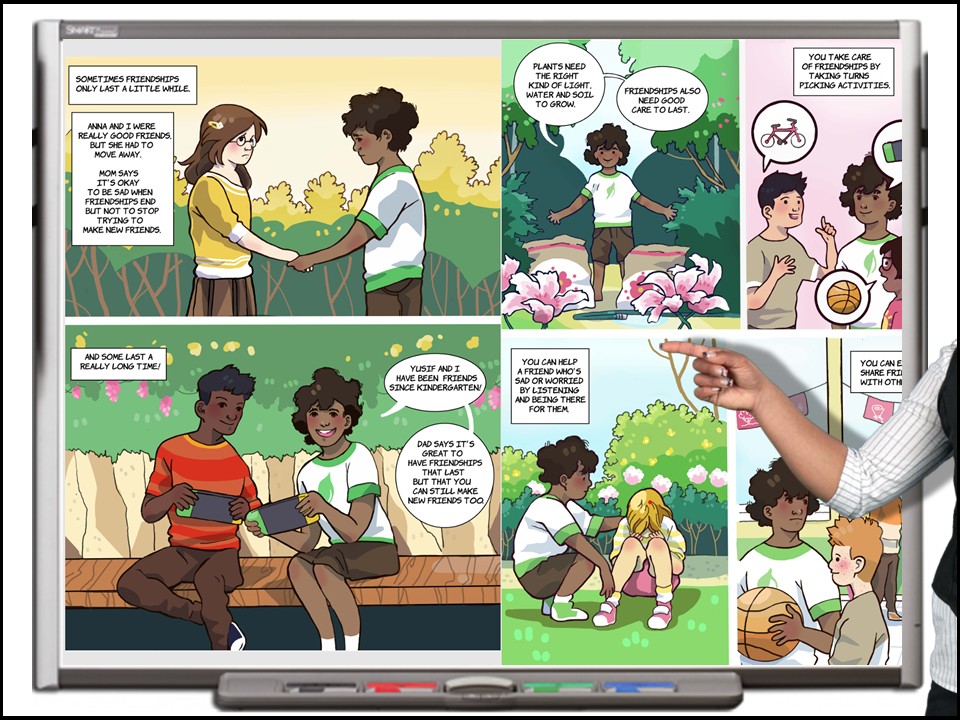
You can show the comic on a computer screen to one child or a small group. Its high-definition images and text can also be projected or shown on a smart board.
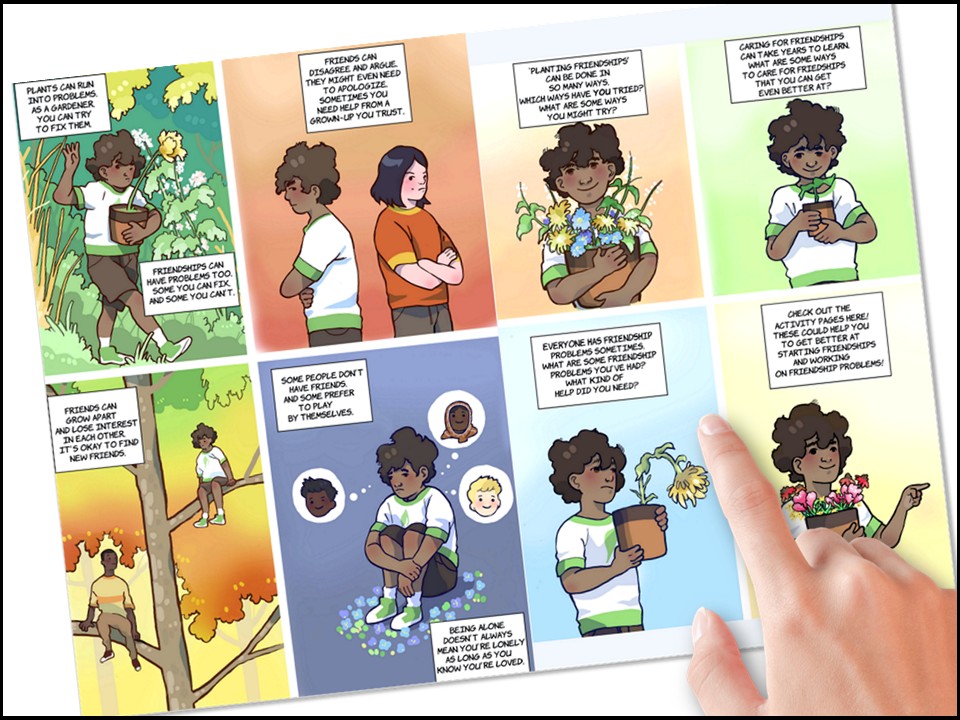
Although the comic is designed to be viewed on a screen, it is possible to print the individual pages.
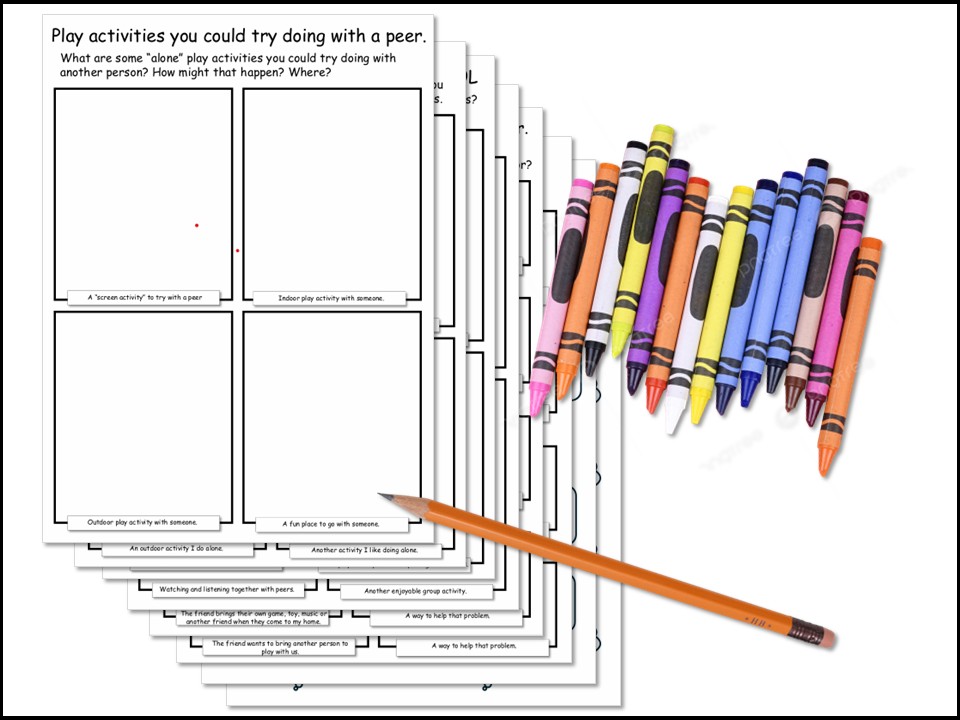
The eight activity pages are very useful to explore the particular ways children are affected by the matter of friendship. The sheets are designed to allow both short answers in written format and simple drawings.
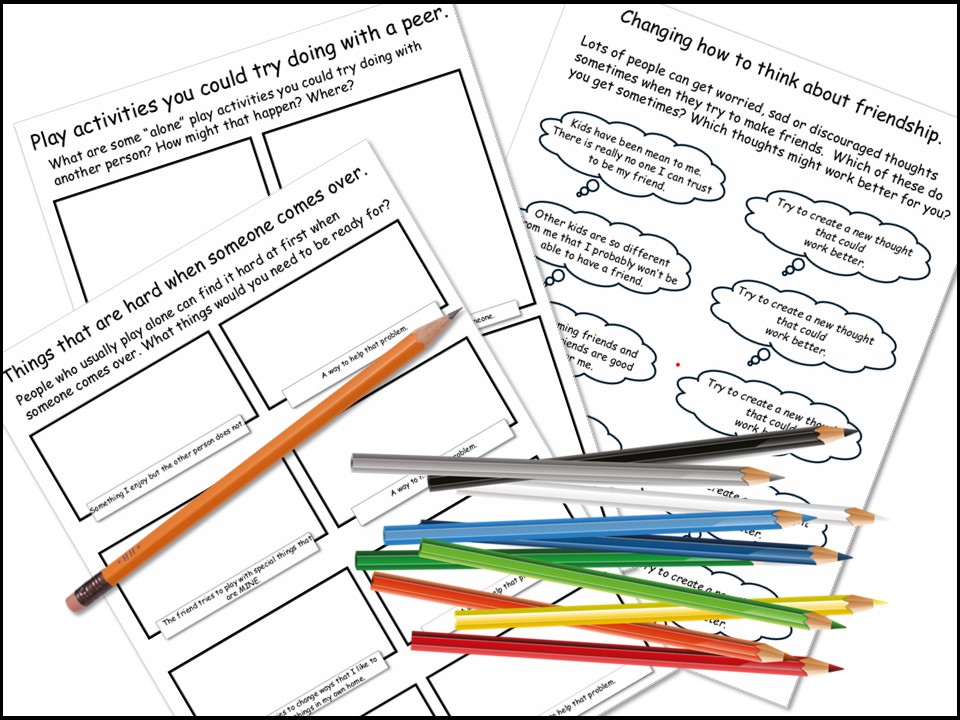
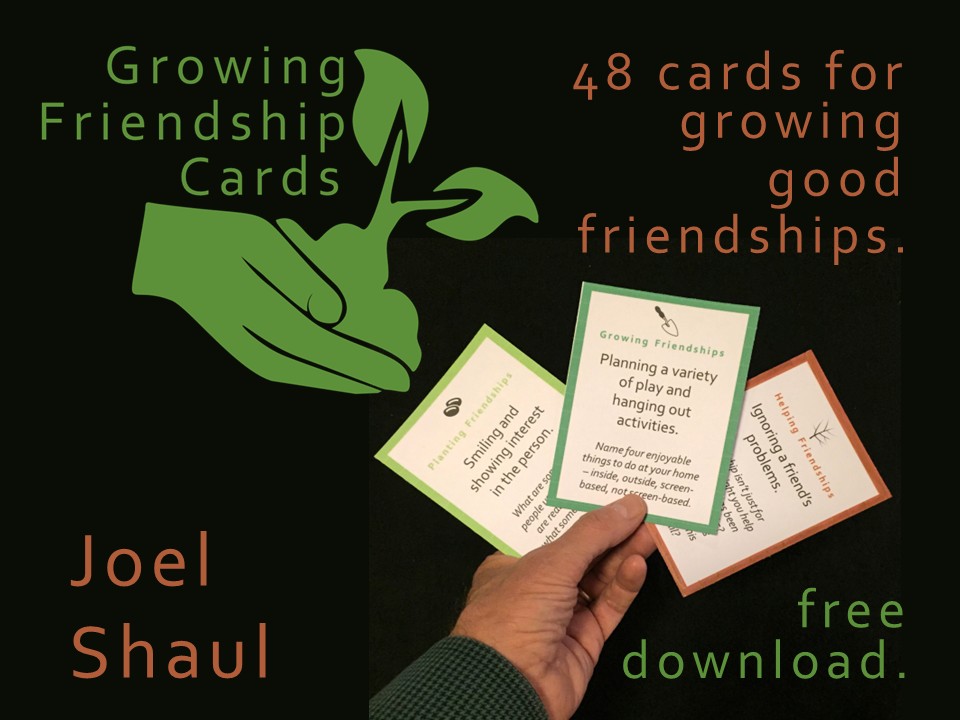
Friendship Growing Cards, which can be printed or else shown on computer screens, add a game-like element to this social skills learning activity and may be used in conjunction with the comic.
I hope you find this collaboration with Aide Canada helpful. And I thank Aide Canada for making this free resource available to you.
Joel Shaul
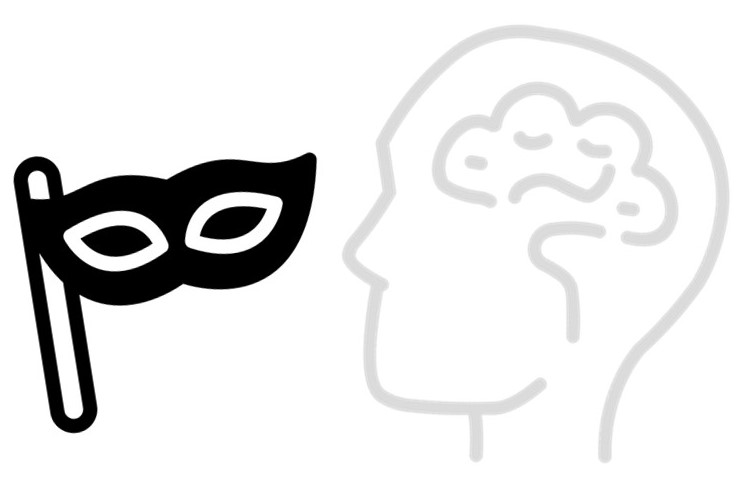
Teachers and therapists working with young people on the autism spectrum face a dilemma.
While we are facilitating social survival by addressing certain patterns of behavior associated with autism, we must somehow, at the same time, help young people with ASD to value their essential autistic selves and to avoid excessive and harmful “social masking.”
Among professionals in mental health, speech and education, and particularly among autistic people themselves, there has been much useful discussion regarding social masking in recent years. There are important ramifications for professionals who are trying to help young people with ASD.
Validate the emotional strain of how “fitting in” can affect people with ASD.
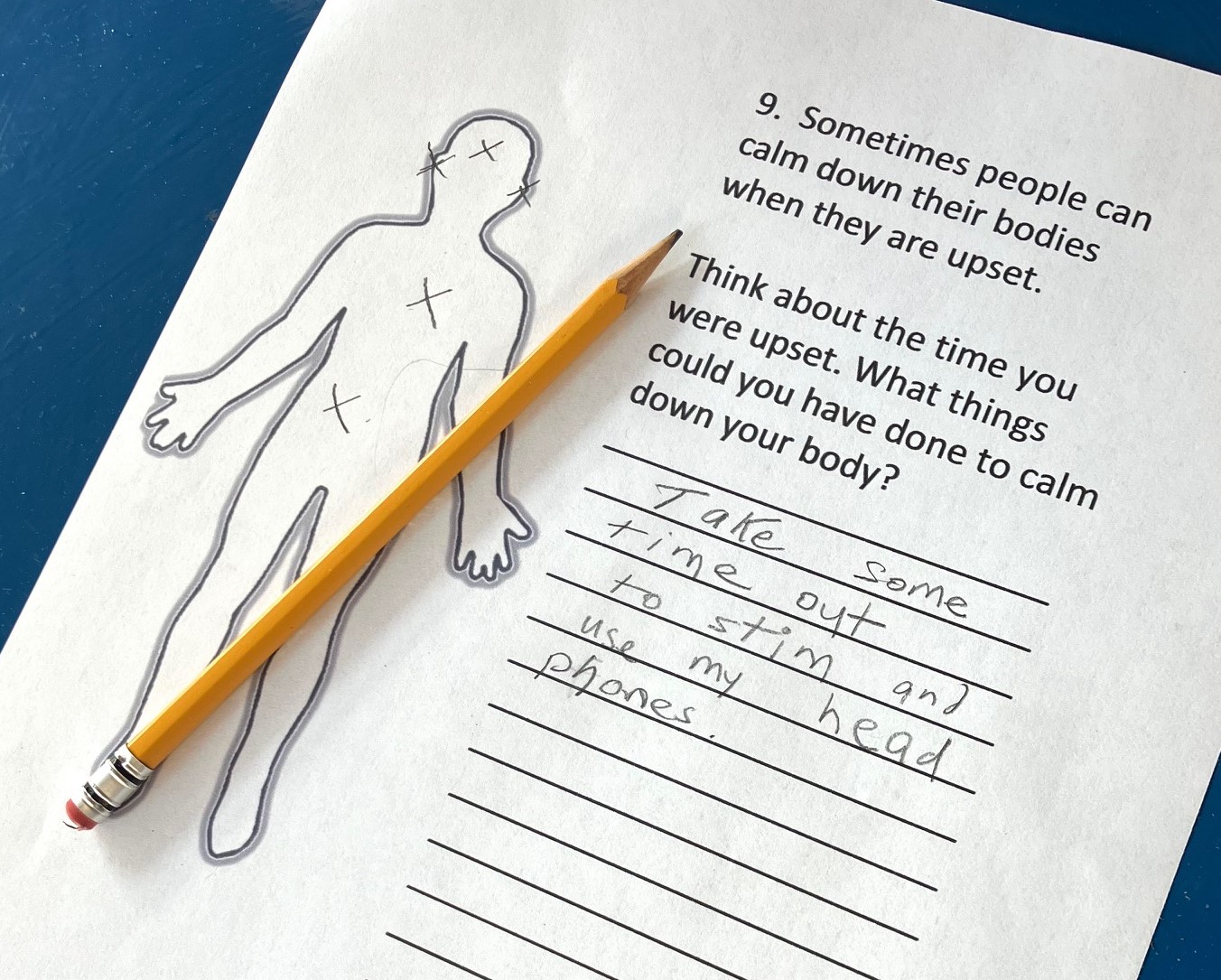
The effort required to decipher and conform to social rules, and to suppress behavior such as public stimming, can be enormous for people with autism. Some experience depression and anxiety from this constant strain. In our classrooms and offices, we should all check in on this frequently. We may need to back off of some things we are asking the child to do, and develop more reasonable expectations. (Photo below is one page from Simplified CBT Worksheets for Children.)
Foster mutual tolerance, respect and accommodation.
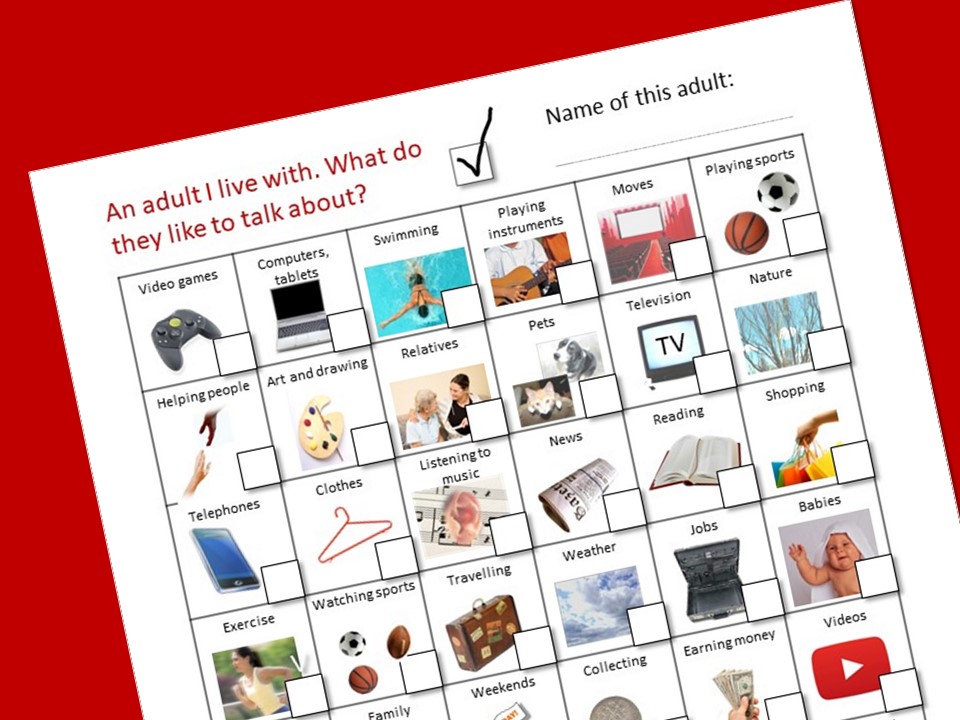
Working with families and peer networks and families, we can all do a lot to foster forbearance. Interestingly, most of my own work over the years encouraging tolerance of “autistic” behavior has been helping young people with ASD to tolerate stimming, self-talk, and topic perseveration in other autistic youth with whom they attended social skills groups and my summer teen day camps.
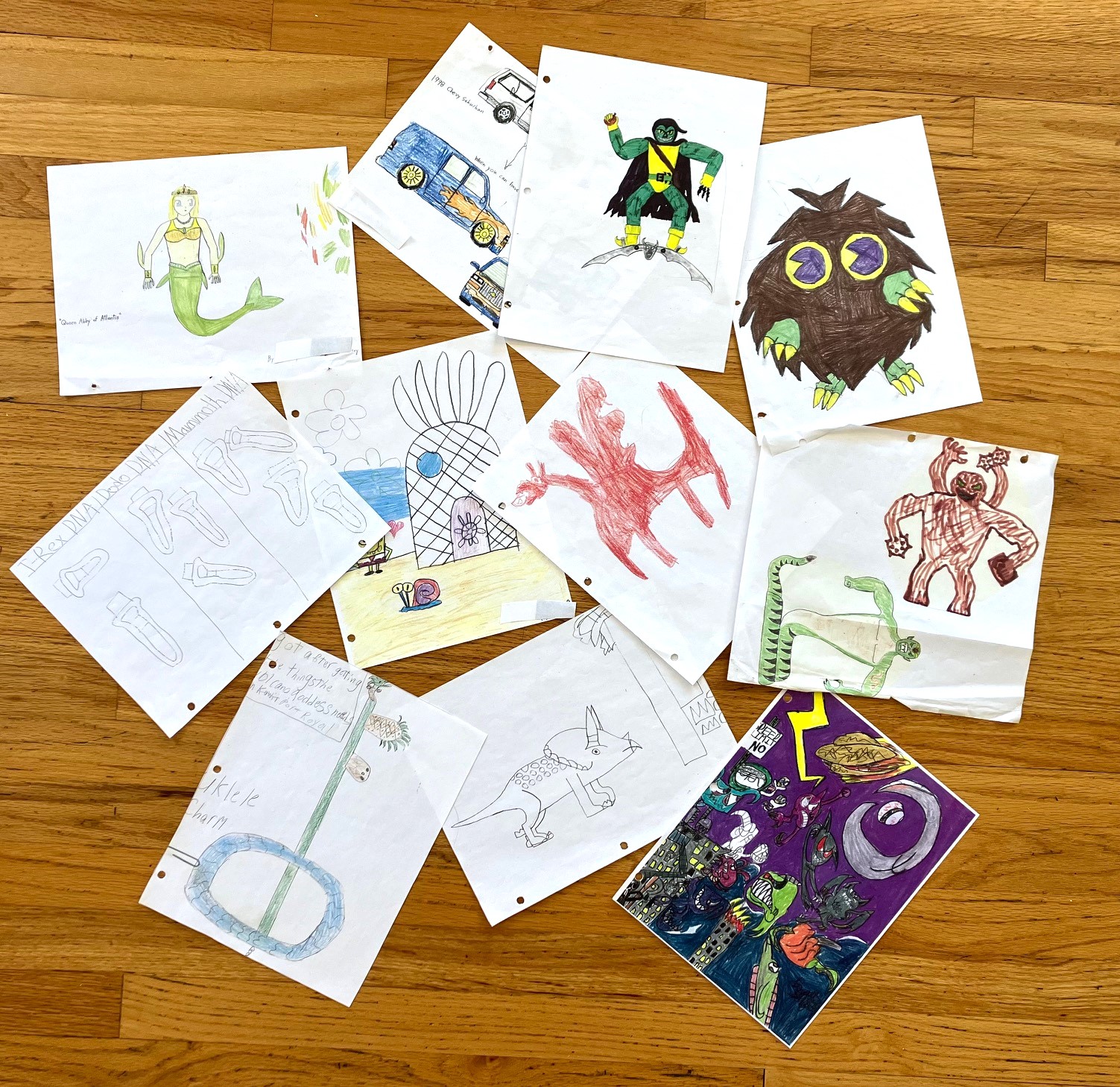
This photo shows a collection of art by a number of attendees in one of my summer teen autism programs. My first objective was to get autistic peers to increase comfort revealing their own “obsessive” interests by drawing pictures proudly displaying those interests. The second objective was to get autistic youth to respect the preferred interests of their autistic peers instead of conveying negative judgment, disdain or annoyance, which I actually ran into a lot among autistic teens getting to know each other.
Working with families where there are autistic children, I promote the same kind of both-way respect.
Identify patterns of problematic thoughts associated with social masking.
Our young clients might become discouraged with their setbacks or slow progress in their social worlds. In psychotherapy, I have seen many young clients show intense negative thinking about themselves when their efforts to filter social expression of their autistic selves yield disappointing results.
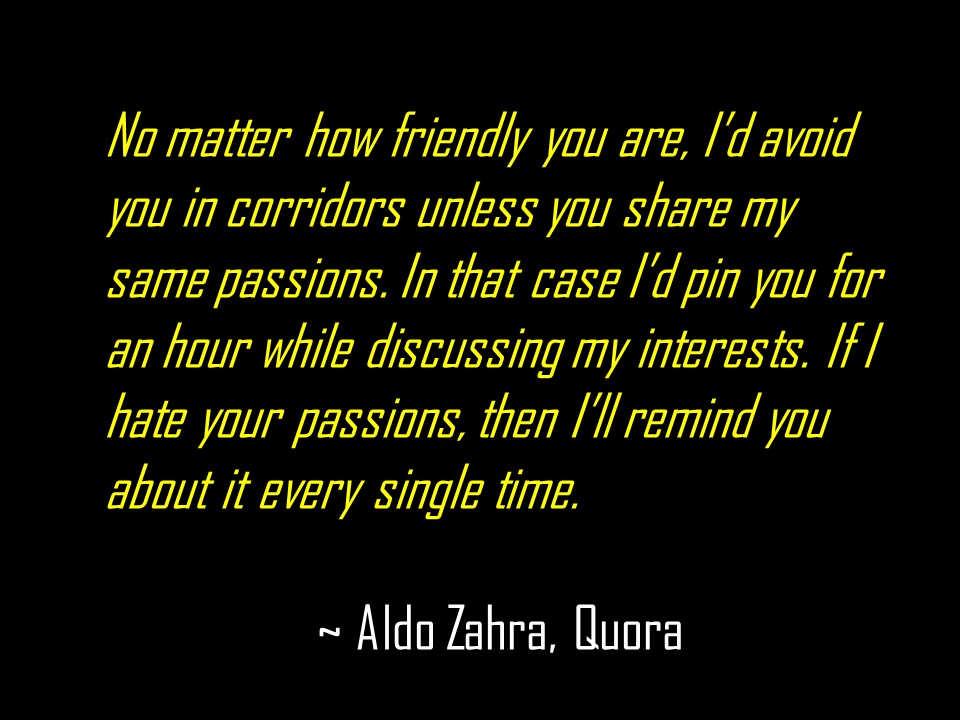
It’s easy to see how some autistic people can develop jaded attitudes regarding society in general from the strain of social masking. Here is an example I found on social media:
I had a young autistic adult client who, after reading online about “autism burnout,” told me that that his own burnout from masking all the time was so severe that he should drop out out of therapy. I validated his distress and discouragement but also encouraged him to keep trying for a while, and he subsequently did noteworthy and successful work overcoming some of his social anxiety issues.
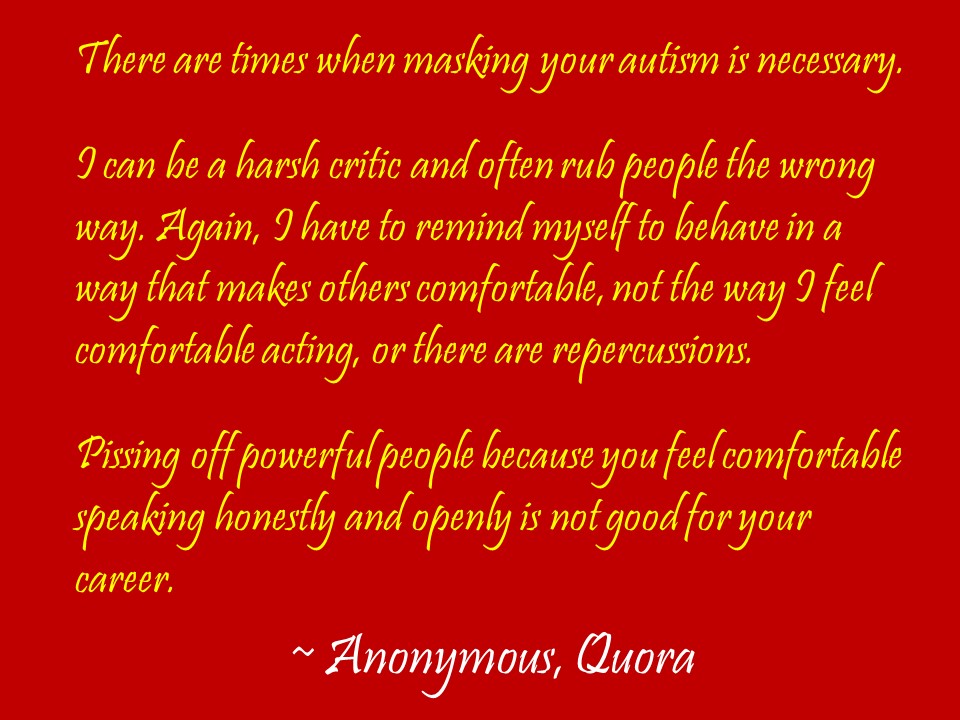
I like to point young people with ASD towards role models of fellow autistic people who aspire to a more nuanced attitude regarding social masking. These two quotes, also from social media, are good examples of developing a strategic and selective approach to masking.
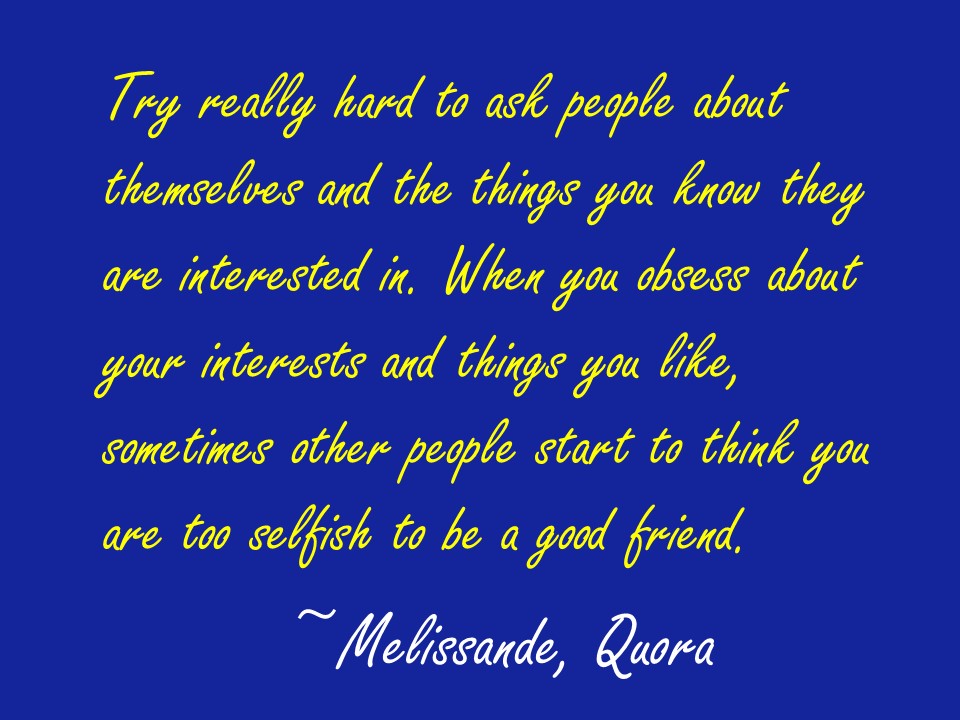
Promote tolerance, but avoid unnecessary accommodations that may not actually be in the long-term interest of the autistic person.
Here are some examples of averting social masking that seem to over-accommodate — at the expense of long-term social goals:
Allow and facilitate autistic people’s reasonable expression of what feels normal and natural to them.
At times, a little tolerance and understanding can go a long way.
I hope that some of this discussion is helpful to you in your own work, as a therapist, teacher or parent, in determining helpful ways to address social masking.
Joel Shaul, LCSW
So many autistic children love to draw. Doing art with others is new to most of them.
Here are some art projects that emphasize the social potential of art – children showing their art, enjoying others’ creations and working together on various creative endeavors. Some examples shown below are projects that you organize from scratch yourself. Others are facilitated by free downloads from my website.
Autistic kids who enjoy creating art may be accustomed to doing so entirely alone – which of course is fine! However, they may have limited experience with the many ways that people can be creative in social contexts, viewing other people’s work and even collaborating on art projects.
In section A, I describe four art projects to put together on your own, each with a different social component.
In section B, I describe four socially collaborative projects that make use of my free downloads.
Section A: Four social component art projects for you to put together on your own.
Facilitating interaction between children drawing together
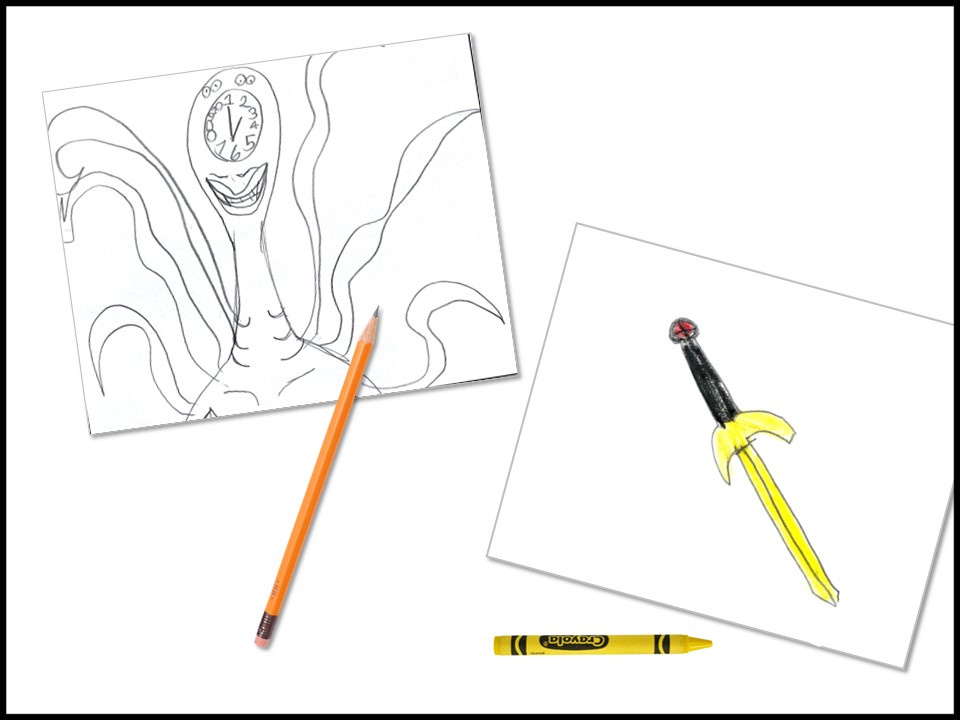
Children accustomed to drawing alone might take little notice of other children nearby and what they are doing.
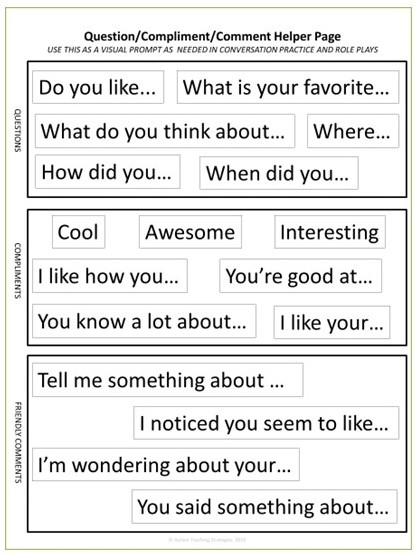
An adult’s careful and tactful social coaching has the potential to transform this solitary, parallel play scenario into a more interactive experience. One way is to offer verbal prompts to offer a comment, compliment or question regarding another child’s drawing. Another way to do this is to set a timer to go off every few minutes, at which point each participant has to stop drawing, take stock of what others are doing, and make some comments or compliments. In both cases, providing simple written scripts nearby for children to refer to (if they read) can be very helpful (see the verbal prompt example below).
Organizing an art collection featuring individual works by members of a group or classroom
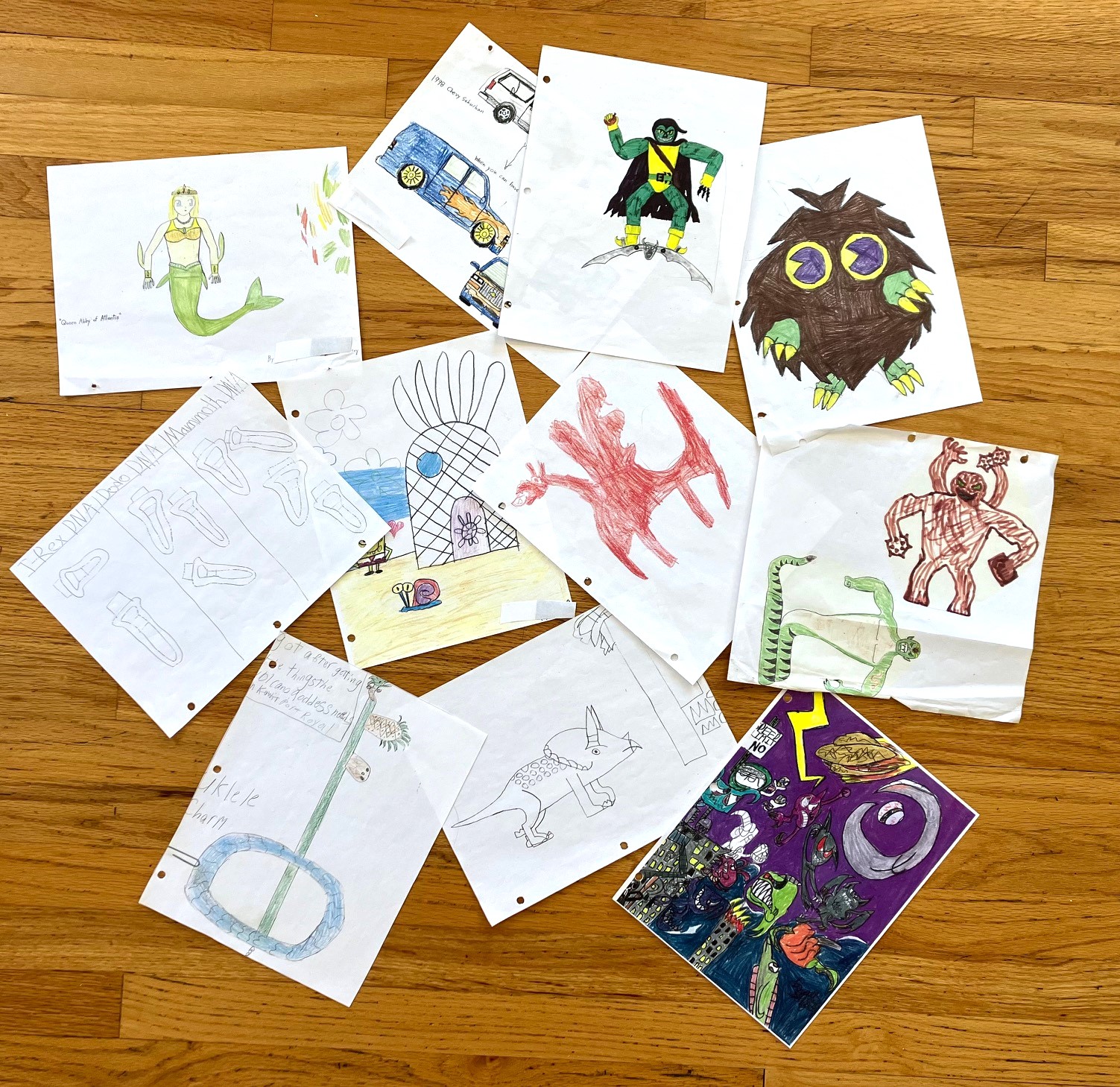
I often facilitated projects like this at a summer teen program that I ran for some years. With groups of teens that included many who enjoyed drawing, it was a favorite activity and really helped some solitary autistic artists to more fully appreciate the creativity of their peers.
Collaborative sign coloring project

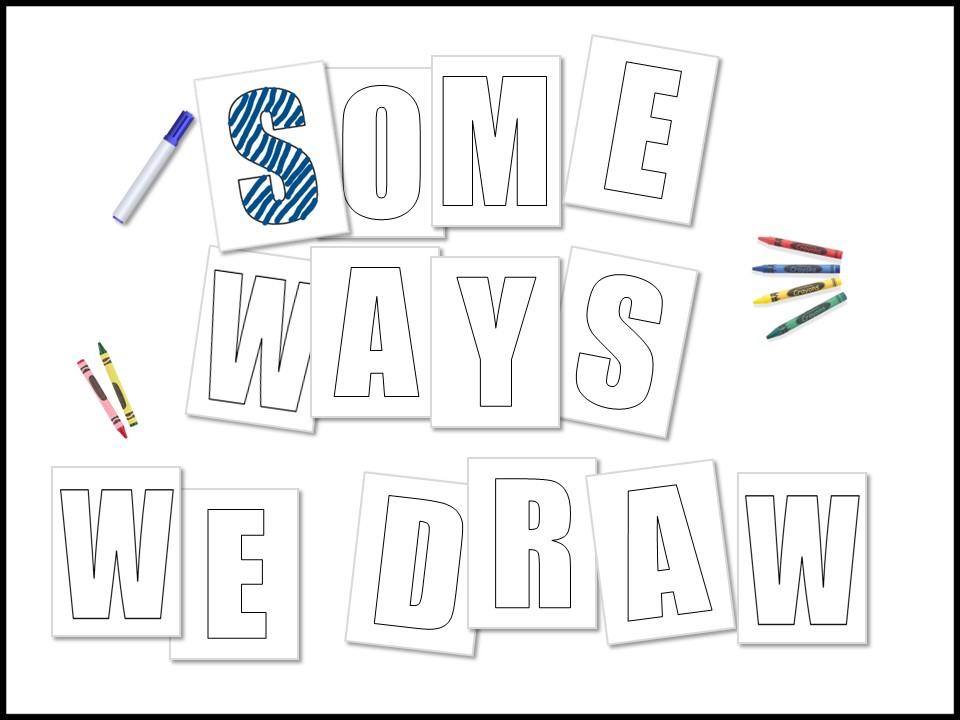
The first step of this project is for you to prepare a number of separate pages featuring the outlines of letters comprising the words you want to display on the wall of your classroom, office, social group room, etc. You can draw the letter outlines by hand, or else type them on your computer.
If you do it on your computer, I suggest you select the font “Impact,” configuring the letters in white with a black outline. Make each letter take up one full sheet of paper.
Each child is assigned to color and decorate one letter. When you finally assemble the letters to make the sign, it creates a sort of entry-level collaborative art project.
I used this project often in social skills groups and a summer teen program.
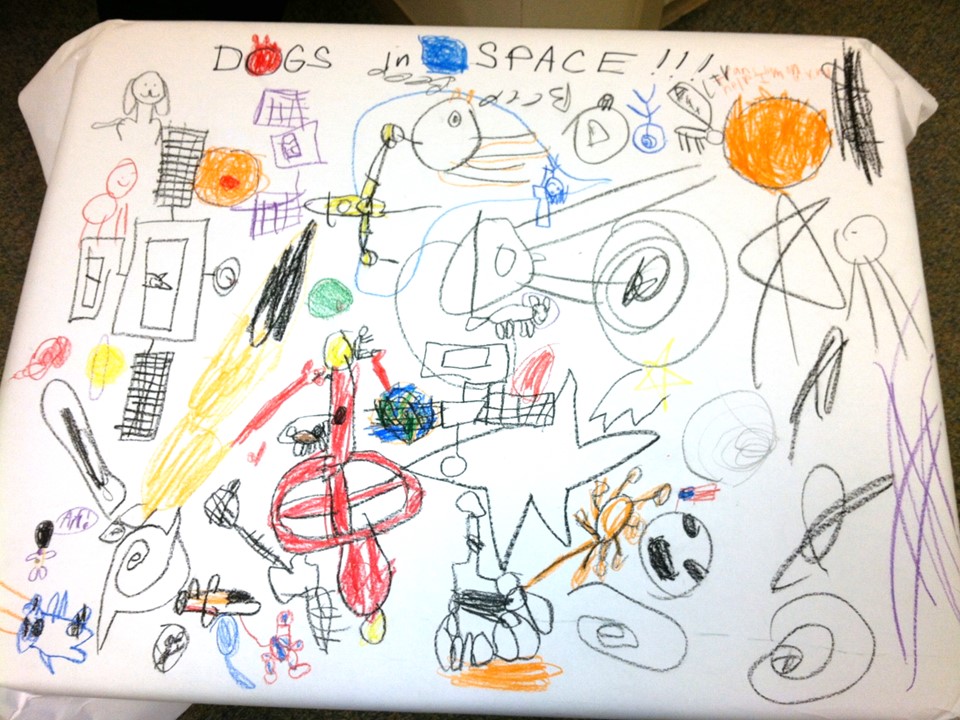
Assigning a few children to create a unified drawing together in the same space
This is a fun project, but also challenging and potentially very frustrating for young people on the autism spectrum. It’s very worthwhile provided you set it up carefully and offer coaching and troubleshooting from beginning to end.
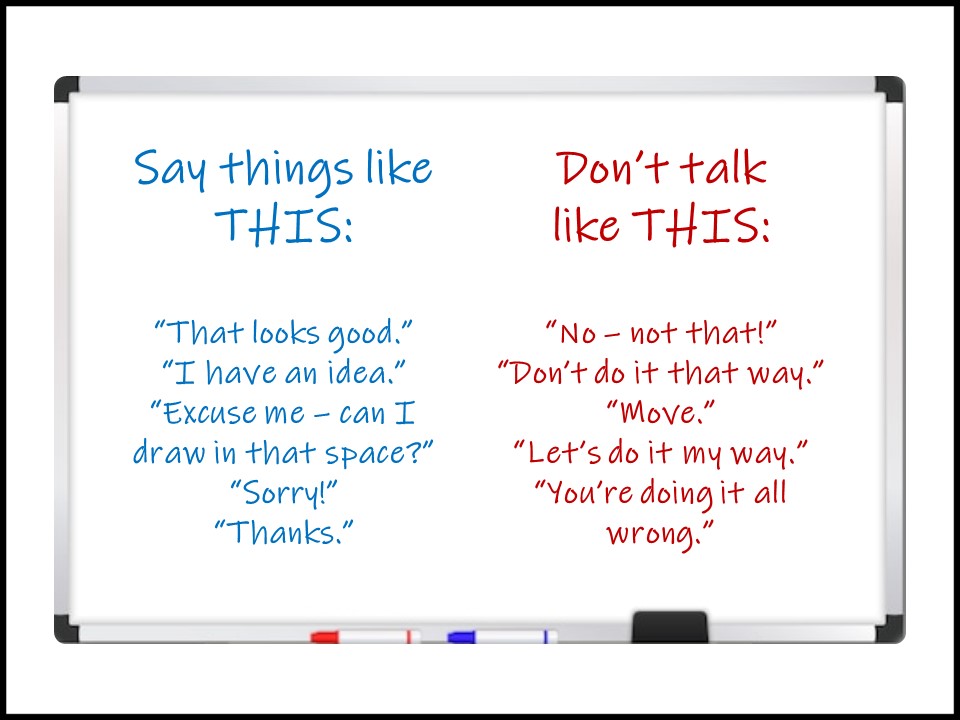
After clearly describing the scope of the assignment, you should post written rules that include language children should use and not use with one another while working together. It’s also worthwhile to enact instructive role plays in which you, the teacher/therapist, demonstrate “right” and “wrong” ways to verbally interact in a collaborative activity.
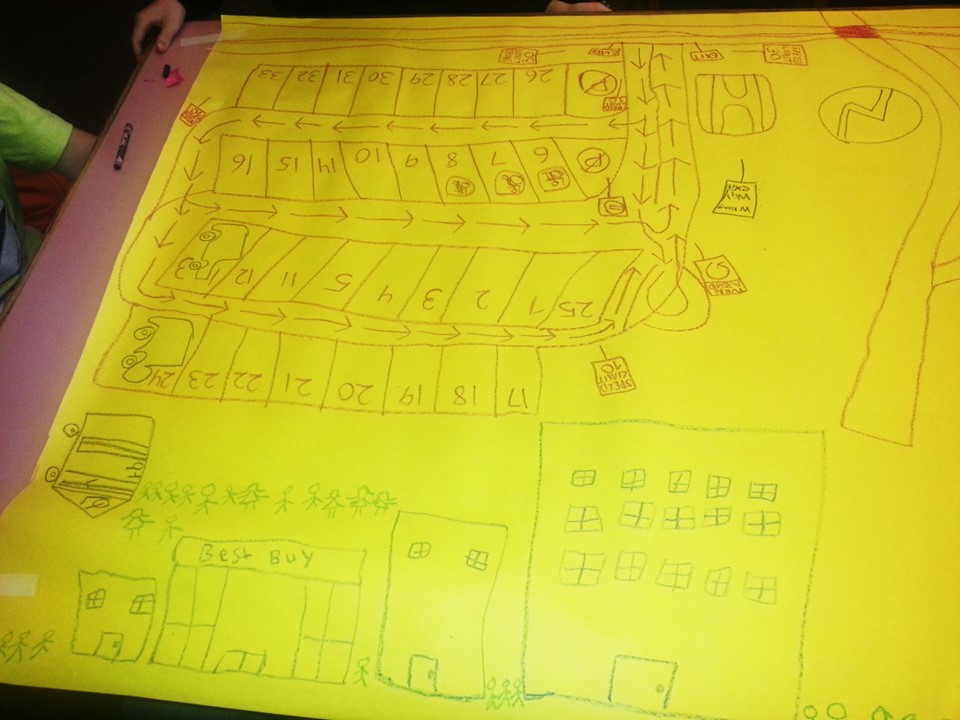
The finished project could end up looking something like these pictures below.
Section B: Four collaborative art projects using free downloads from the website
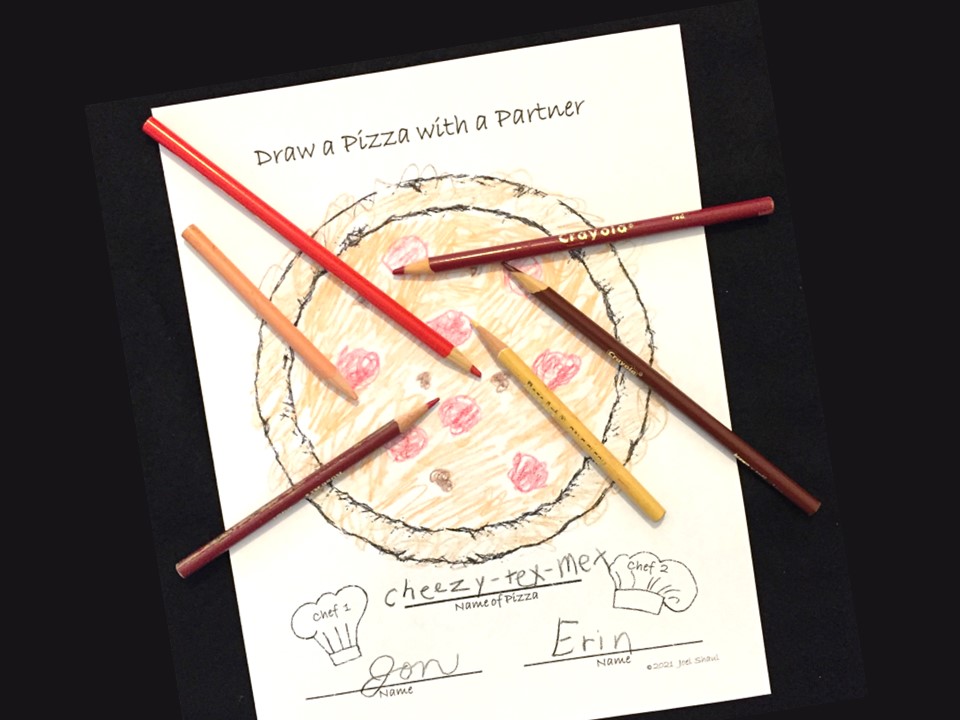
This download comes with the worksheet and the rule sheet below.
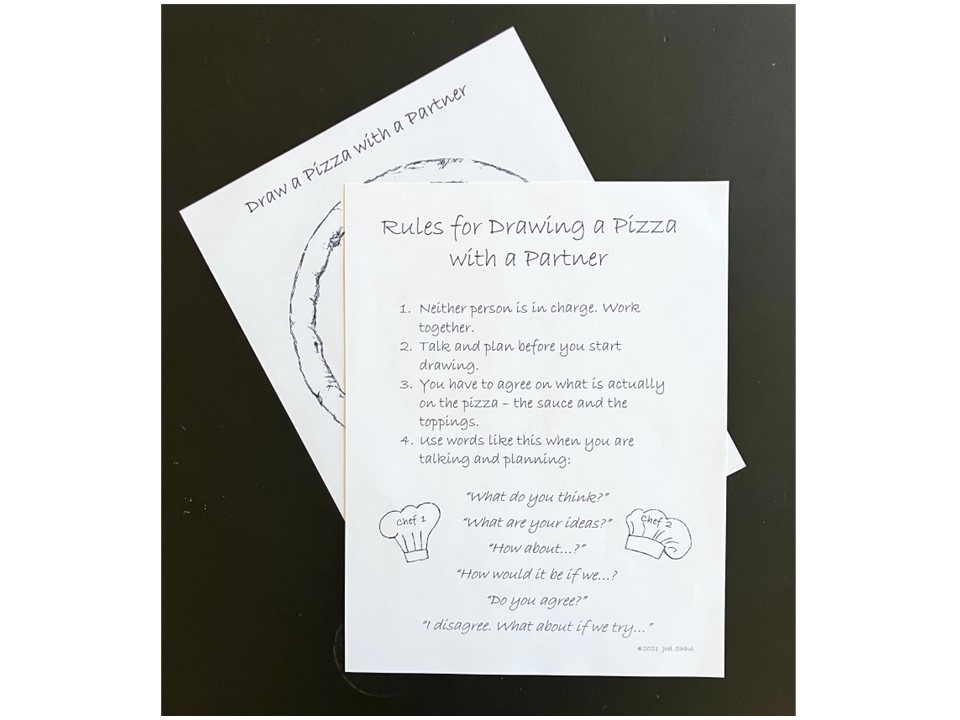
If your young clients like drawing the pizza, there is a another very similar project for you to try, Draw a Cookie with a Partner.
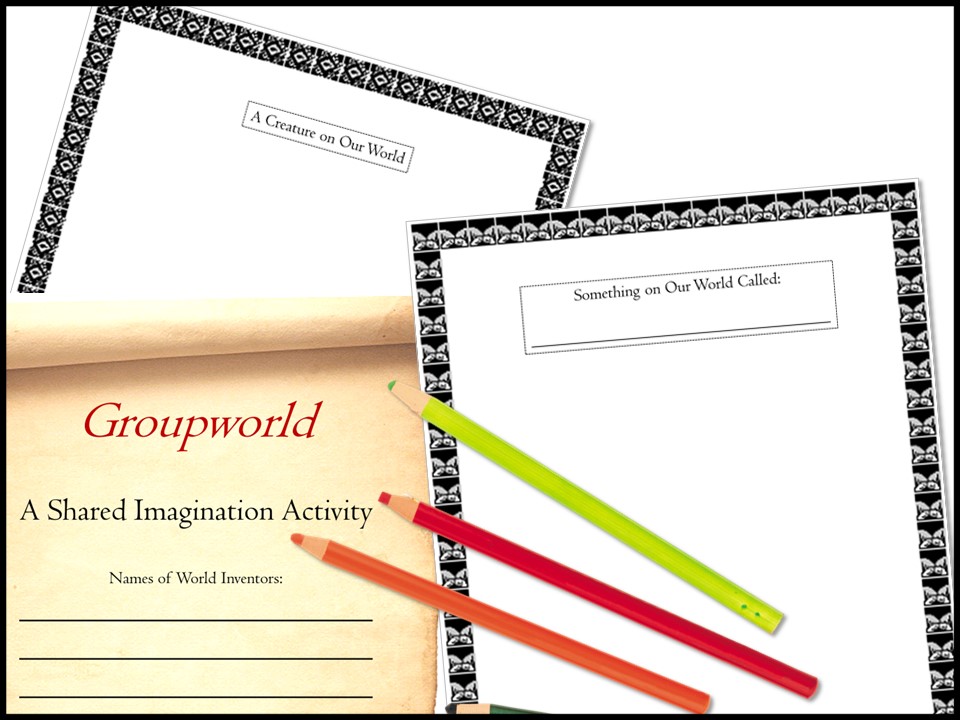
Groupworld project for three or more children or teens
This is a more involved project involving both writing and drawing. The adult facilitator will need to get involved to a significant extent to mediate and keep the work collaborative. It’s easy for this activity to dissolve into a bunch of kids drawing and writing apart from one another, quite disengaged from their peers.
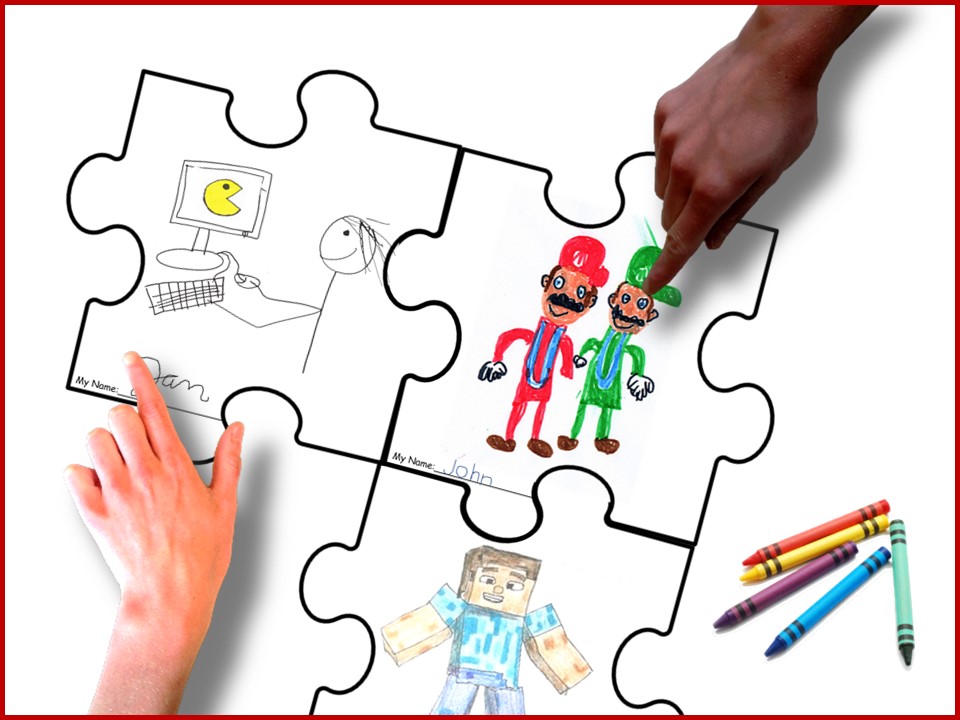
This free download provides several kinds of puzzle templates which, when completed, allow the participants to put together a puzzle representing the connection of their interests. It’s a great activity, but be advised that you will need to cut out the puzzle pieces in advance and that is time-consuming.
The next in this series is: Part 4: Coloring & decorating to add interest & levity to social & emotional learning.
Joel Shaul, LCSW
Part 2: Assigning individual drawing tasks for social & emotional learning.
Part 3: Assigning collaborative drawing tasks for social learning.
Part 4: Coloring & decorating to add interest & levity to social & emotional learning.
Part 5: Creative use of others’ images and AI for social & emotional learning.
Part 6: Encouraging & validating the child’s own artistic expression in therapy & teaching.
Some reasons to use art
A. Art can add levity and variety to social-emotional learning.
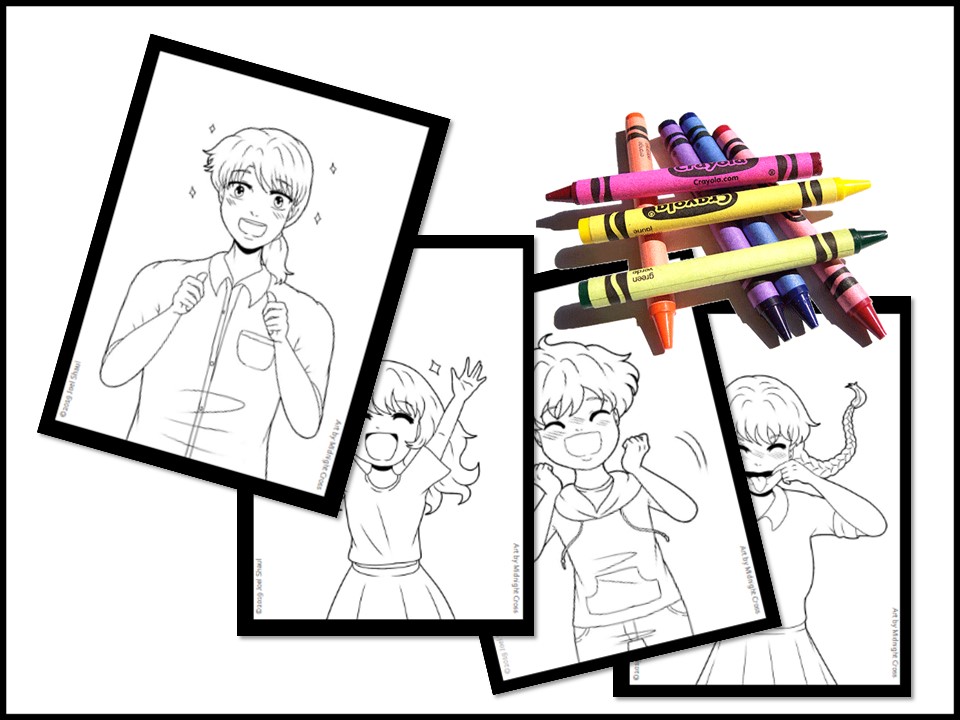
By the time young people with ASD find themselves in our offices and classrooms, they may have experienced a lot of stress, confusion and disappointment with their social and emotional learning. Incorporating some art into our therapy and teaching activities can be one good way to make this difficult work fresh and interesting for many of them.
B. Incorporating art into therapy activities can help to reduce emphasis on spoken exchange in our counseling and teaching.
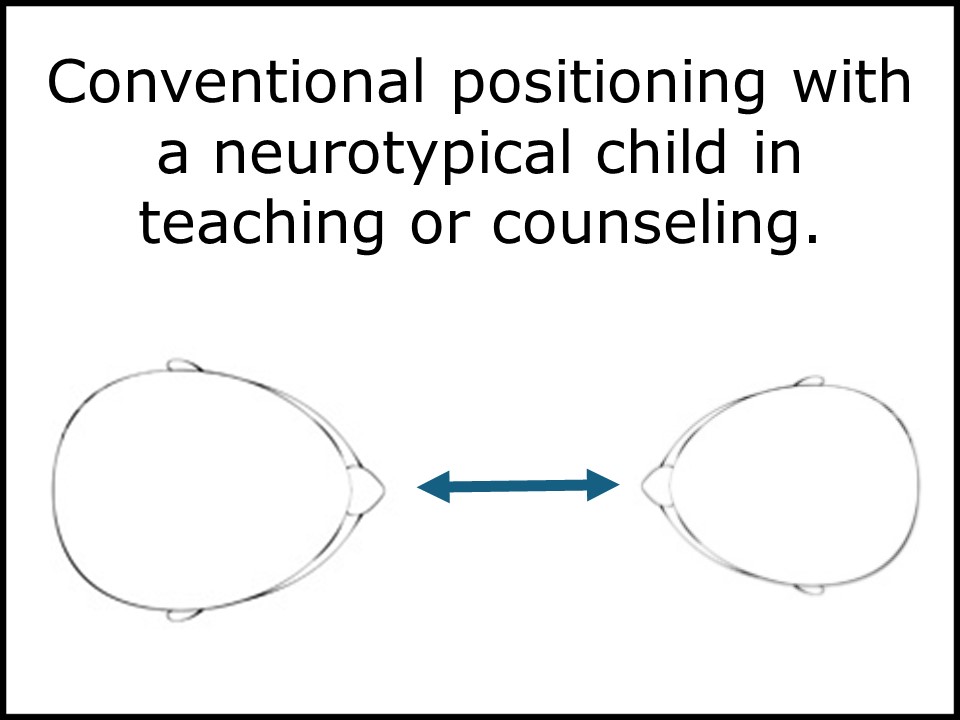
For many young people with autism, uninterrupted, reciprocal spoken exchange – especially face-to-face – can cause fatigue and resistance.
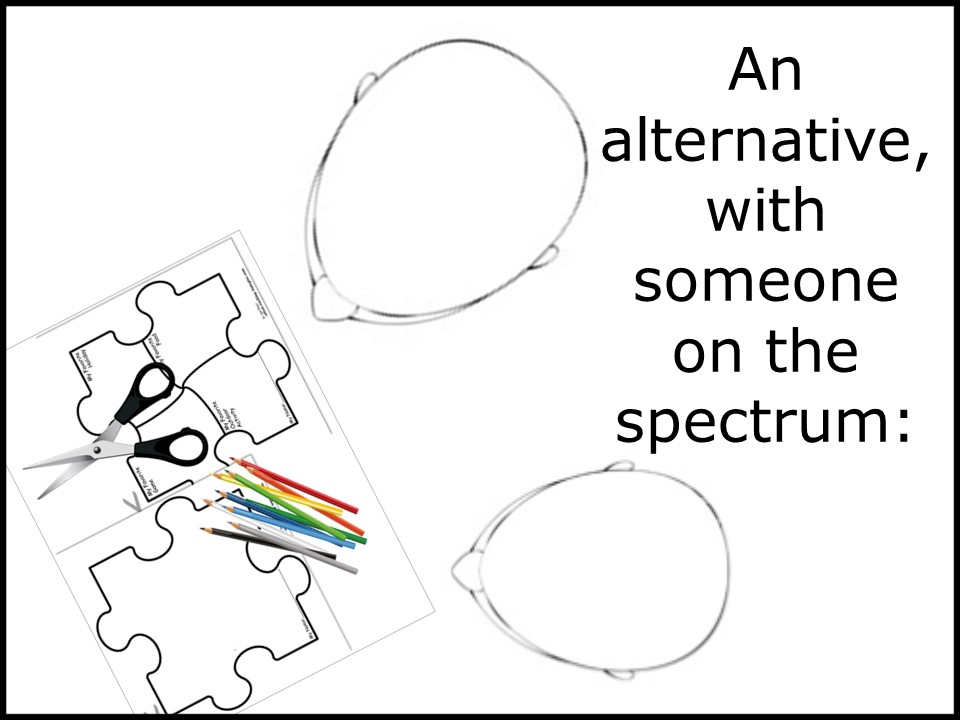
Having the child look downwards towards a therapeutic art project, rather than constantly upward to meet the adult’s gaze, can actually have the effect of increasing focus and stamina.
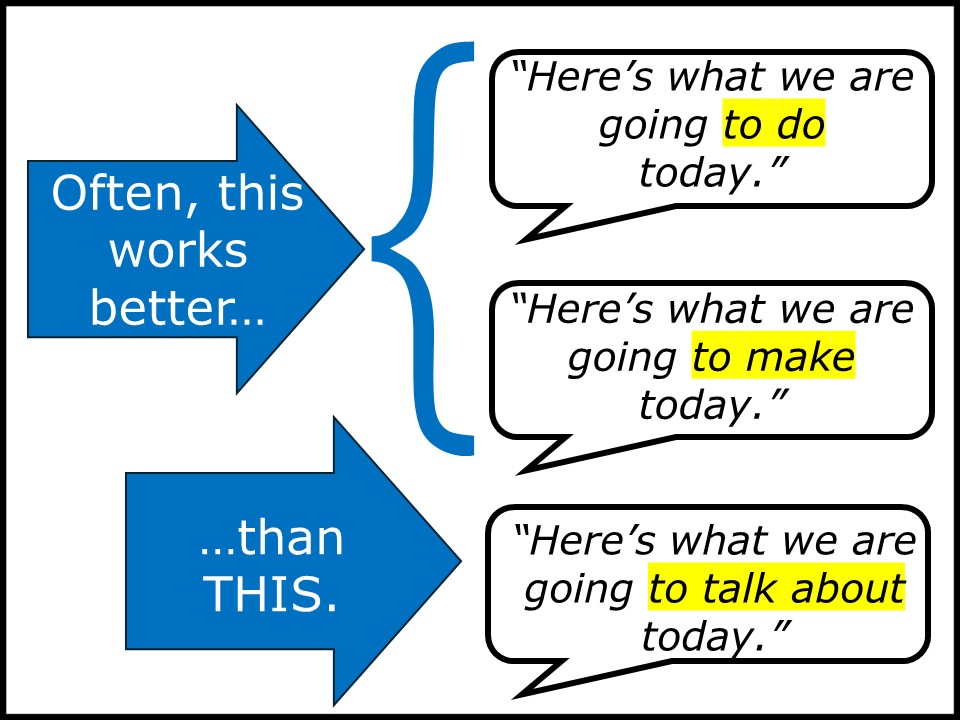
C. Artistic expression can enhance self-revelation and self-reflection.
We often ask children to do hard and painful work in our therapy sessions. Our queries about their problems must feel like relentless interrogation sometimes. Furthermore, the thoughts and feelings we ask children to reveal might be challenging to articulate or uncomfortable for them to put into spoken words. Drawing and coloring offer children other ways to communicate with us.
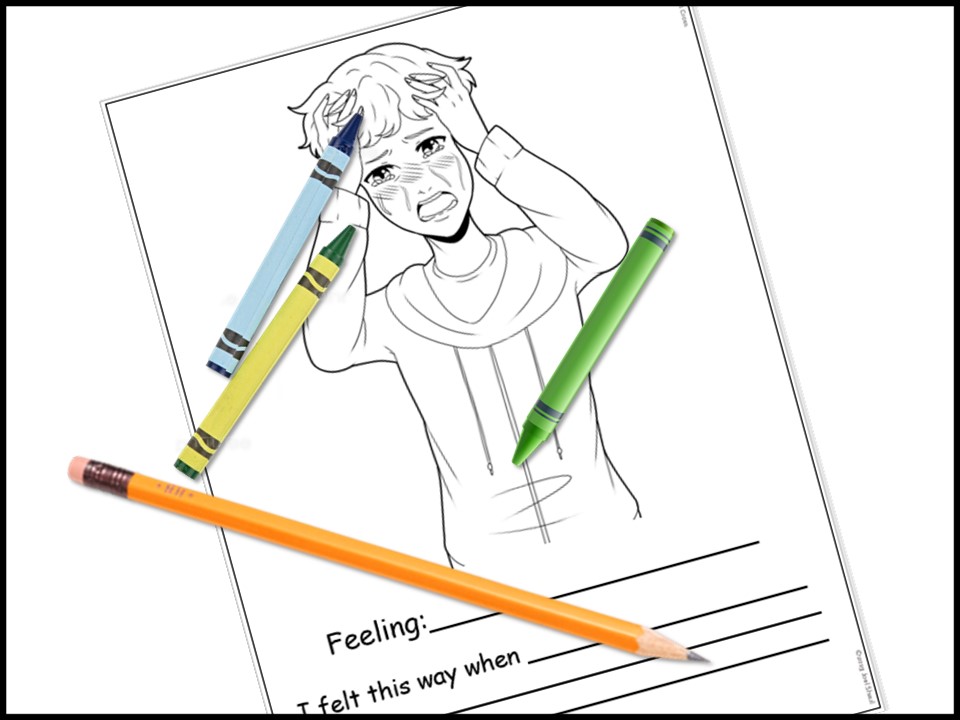
D. Drawing and coloring are activities which in themselves can be calming and centering for many people.
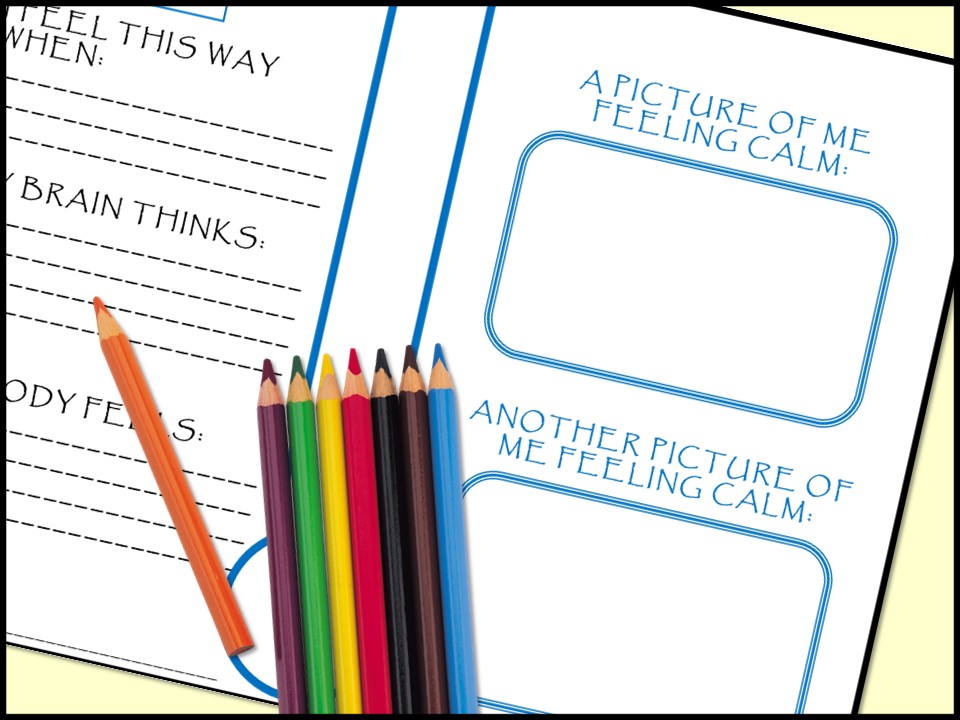
Helping children to feel good and relaxed during our sessions with them can help them get ready to talk about problems. I have often seen young people in individual or group therapy calm themselves while coloring and drawing. Frequently, while holding crayons, markers and colored pencils, they seem more amenable to talking about things that are troubling them.
E. Artistic expression can offer a medium for collaboration and connection.
Employing creative expression can help a child to work more effectively with an adult.
Introducing even a little bit of drawing, coloring or cutting something out can help a child to feel engaged with therapy activities introduced by the adult.
Facilitating art activities can connect socially isolated children with other people.
In my group therapy sessions and classroom interventions, I have often observed children forming social and emotional bonds while looking at the drawings and artistic creations of other young people. Helping children to show their art to others can facilitate social connections for autistic youth, many of whom are accustomed to doing their art entirely in private.
Facilitating collaborative art activities can strengthen perspective taking and working with others.
Coaching autistic children while they are working on creative group projects can help them acquire valuable experience in understanding other points of view and creative preferences.
Principles & professional practices when using art in social-emotional teaching
A. Maintain focus on your therapeutic agenda.
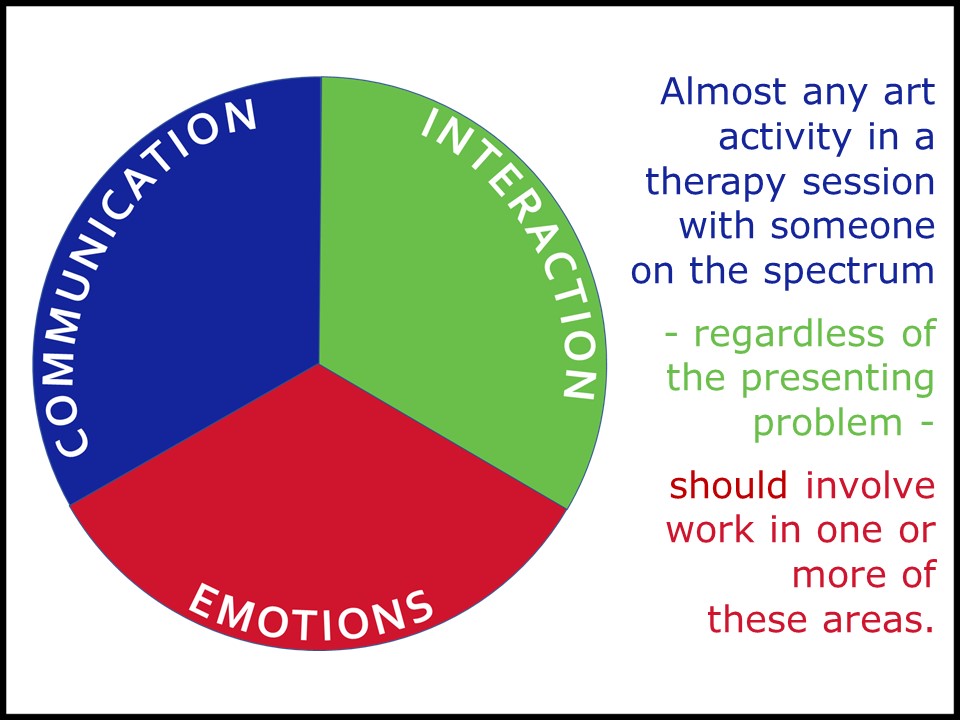
Therapy activities involving art should always have therapeutic benefit – that is, they should all work towards promotion of improved social communication, interaction and emotional regulation.Our art-based activities should focus attention on the therapy, and if drawing and coloring is merely diverting, it’s best to switch methods. Although it may be useful on occasion to use an art activity as a reward, as a rule a therapist or teacher should avoid doing art just for fun or to “kill time.” Above all, we should resist the temptation to assign art activities just because kids find it enjoyable or because we happen to find their art interesting or endearing.
B. Facilitate artistic expression. Don’t force it.
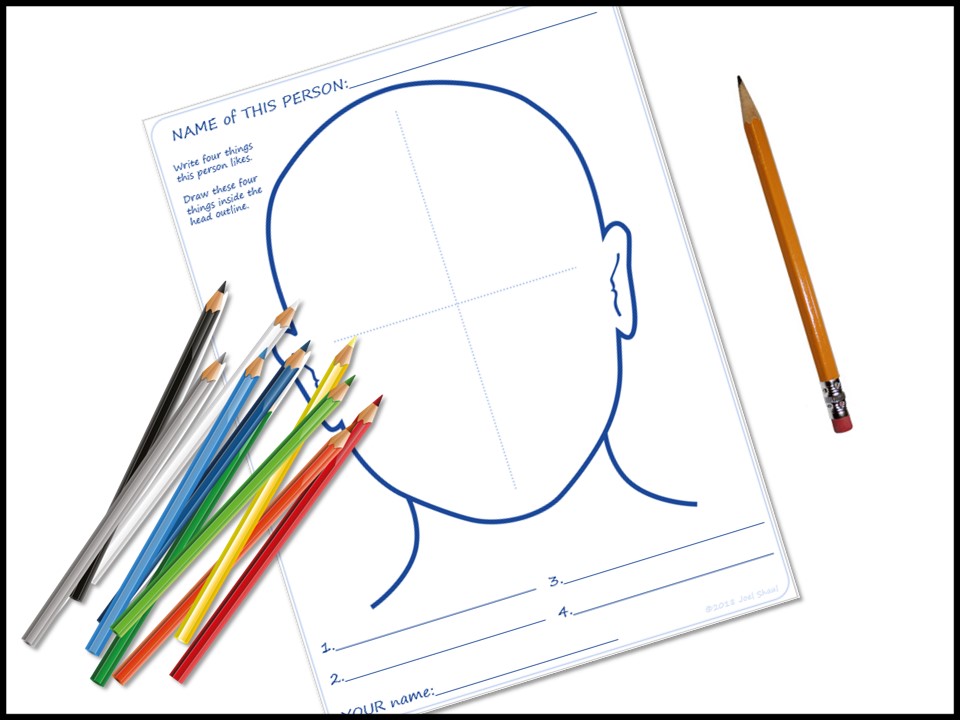
Usually it’s best to provide the options of drawing, or writing, or both. Here is an example below. The person using the CBT Worksheets shown here can draw in the face outline or leave it blank.
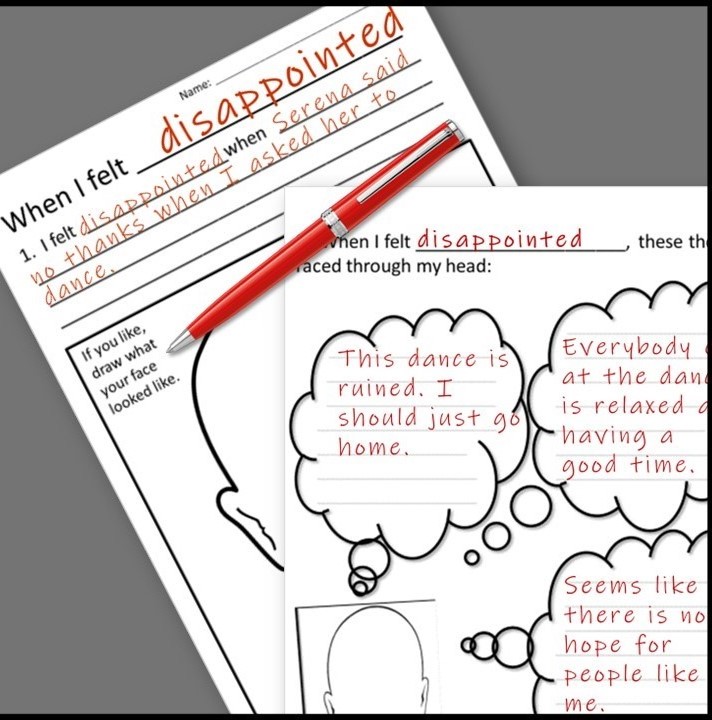
Since an art-based intervention might not work out, we should always be prepared with back-up activities that do not emphasize artistic expression.
C. Account for ability levels and preferences.
Allow for different kinds of intelligence, dexterity, drawing ability, writing ability.
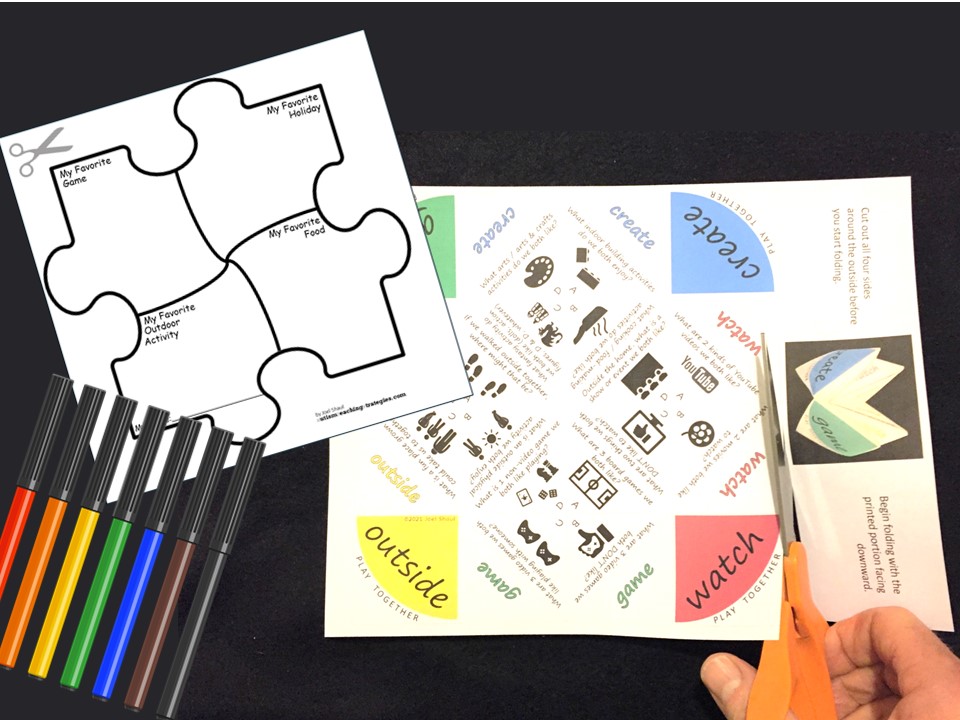
Take into account the age level of participants, but don’t dismiss activities that might be perceived as too juvenile by neurotypical youth. Autistic teens and even young adults might accept and greatly benefit from activities that neurotypical teens might consider too “childish.”
D. Respect privacy and authorship.
Avoid sharing, distributing or posting a child’s art unless you have the child’s permission, a parent’s permission and a valid therapeutic reason for sharing the art.
The next in this series is: Part 2: Assigning individual drawing tasks for social & emotional learning.
Joel Shaul, LCSW
Part 2: Assigning individual drawing tasks for social & emotional learning.
Part 3: Assigning collaborative drawing tasks for social learning.
Part 4: Coloring & decorating to add interest & levity to social & emotional learning.
Part 5: Creative use of others’ images and AI for social & emotional learning.
Part 6: Encouraging & validating the child’s own artistic expression in therapy & teaching.
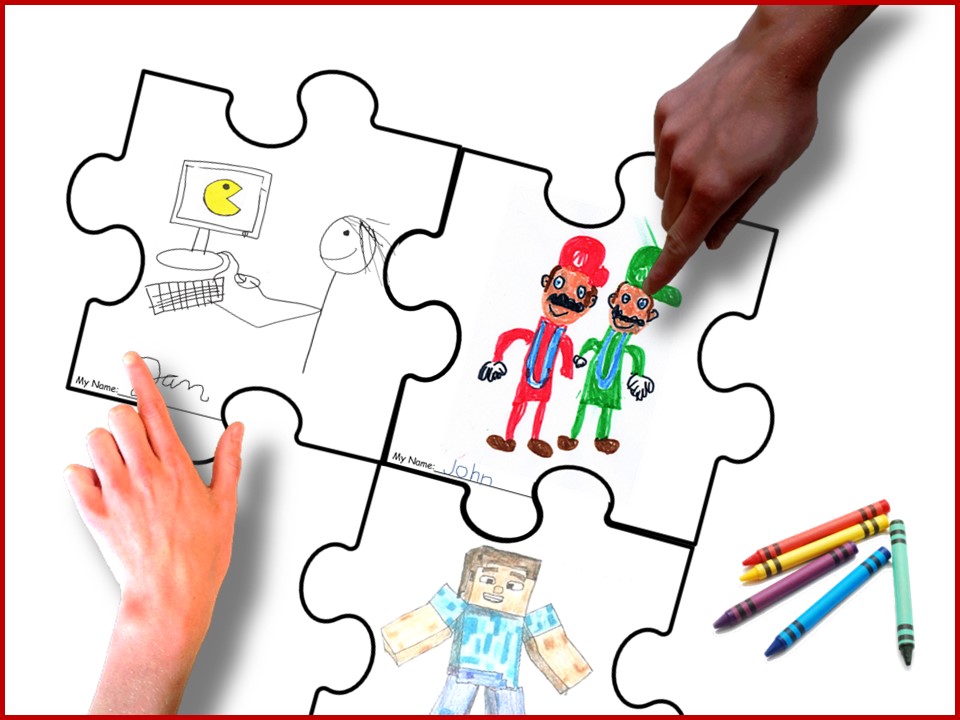
In my own mental health and social skills work with individuals, groups and classes on the autism spectrum, art-based interventions have for some time been an important part of my repertoire.
Although I am neither an artist nor an “art therapist,” many of my free resources, as well as portions of my published books, include therapeutic exercises incorporating sketching, drawing, coloring and various creative applications of provided images.
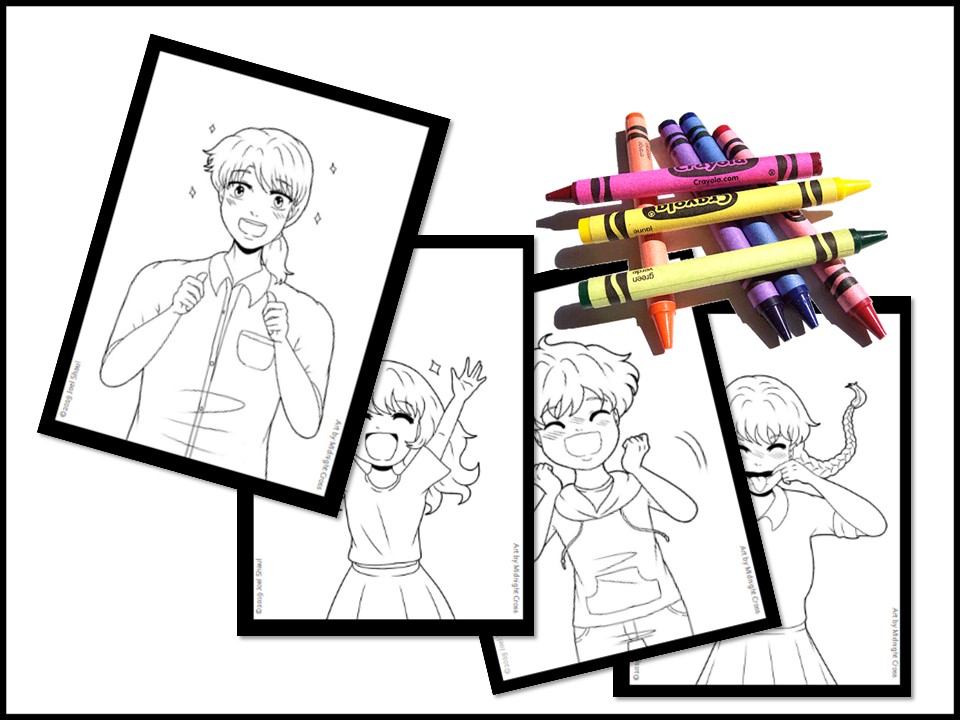
This six-part series summarizes my ideas and resources for using drawing, coloring and other kinds of visual creativity to facilitate social and emotional learning, particularly with young people on the autism spectrum.
Most of the printable materials shown can be downloaded for free from this website.
Access the six parts of the series via the links below.
Joel Shaul, LCSW
Part 2: Assigning individual drawing tasks for social & emotional learning.
Part 3: Assigning collaborative drawing tasks for social learning.
Part 4: Coloring & decorating to add interest & levity to social & emotional learning.
Part 5: Creative use of others’ images and AI for social & emotional learning.
Part 6: Encouraging & validating the child’s own artistic expression in therapy & teaching.
Almost all of us find interviewing for a job to be a daunting social experience.
There is so much at stake in a short, intense conversation. And everything about us – our words, demeanor, appearance, and life history – is under focused scrutiny.
Young people on the autism spectrum preparing for job interviews often feel this pressure with great intensity. The demands to answer unfamiliar questions and make a good impression can feel overwhelming to them.
In my own work helping young people with ASD to cope with social and emotional challenges, I have spent many hours helping individuals and groups to get ready for job interviews. My impression overall is that my clients have enjoyed this work and benefited from it. Some have told me later that job interview practice really helped them feel more confident and competent in a job interview.
Here I would like to summarize some of the methods I have used to boost job interview skills in young people with autism.
Raise awareness about realities of employment and the role of employers and employees.
Young people in general, and those with ASD in particular, often lack essential knowledge regarding the employer/employee relationship. So far in their lives, the adults in the lives of young people have been primarily parents and teachers providing nurturance and education. In employment, it’s different – you are the adult now, the one providing the service to others.
Parts 1, 2 and 3 in this series are to reinforce basic knowledge about employment. If you have not done so already, I suggest you reference at least some parts of the earlier resources before attempting practice job interviews.
Obviously, the responsibilities of employment may be beyond the capacity of some of our young adult clients, who might be very strongly affected by some debilitating aspects of ASD or by co-occurring issues such as intellectual disability or clinical anxiety and depression. Still, in my own work in groups and classrooms, I have generally had everyone take part in workplace awareness education and job interview practice, including individuals who did not appear ready to move into conventional work situations. I feel those not destined for regular employment still benefited by learning important information about what employment is like.
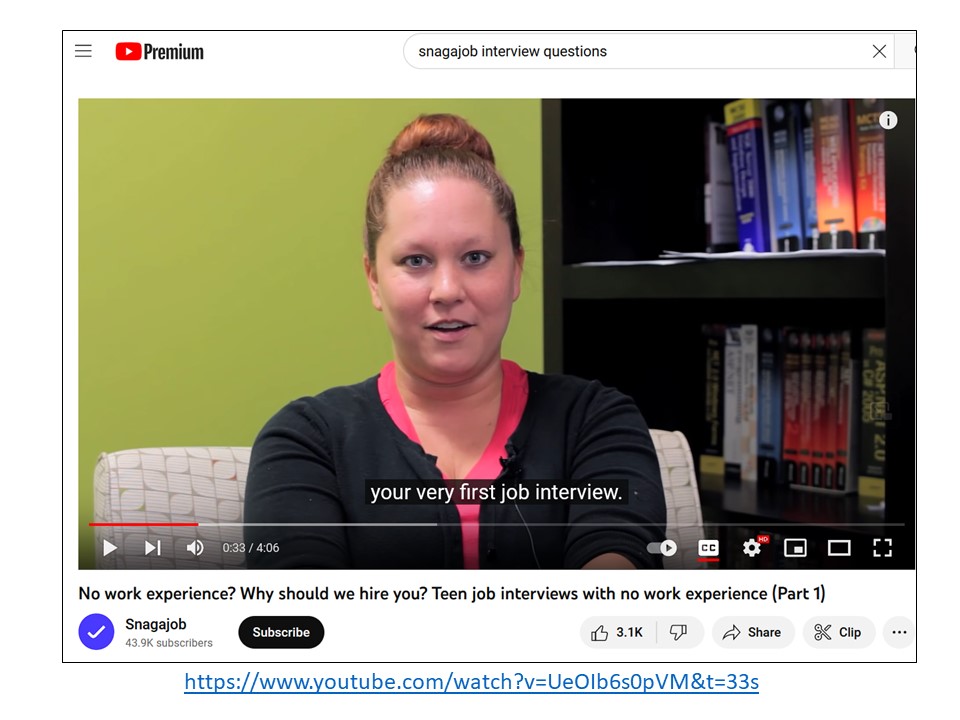
A great way to build interest and awareness about employment is to show YouTube videos on the subject.
I have used the “Snagajob” series below over and over again. It has a tone of levity, but is very informative. It focuses on an aspect of job interviewing that many people with autism find especially difficult: answering tricky questions. Click on the picture below to link to these videos.
Address non-verbal elements of job interviewing.
Points of discussion should include:
*Shaking hands. See the video below. I have spent whole sessions practicing this with individuals and groups.

*Non-verbal Do’s and Don’t’s of job interviews. Years ago, in a practice job interview, a student of mine elected to end the interview by skipping the handshake and giving me, the interviewer, a warm embrace instead.
*Eye contact. Troubleshoot workarounds for when someone is expected to use eye contact but they have an aversion to doing this.
*Posture.
*Attire and hygiene.
Increase awareness of the most common interview questions, and acceptable replies.
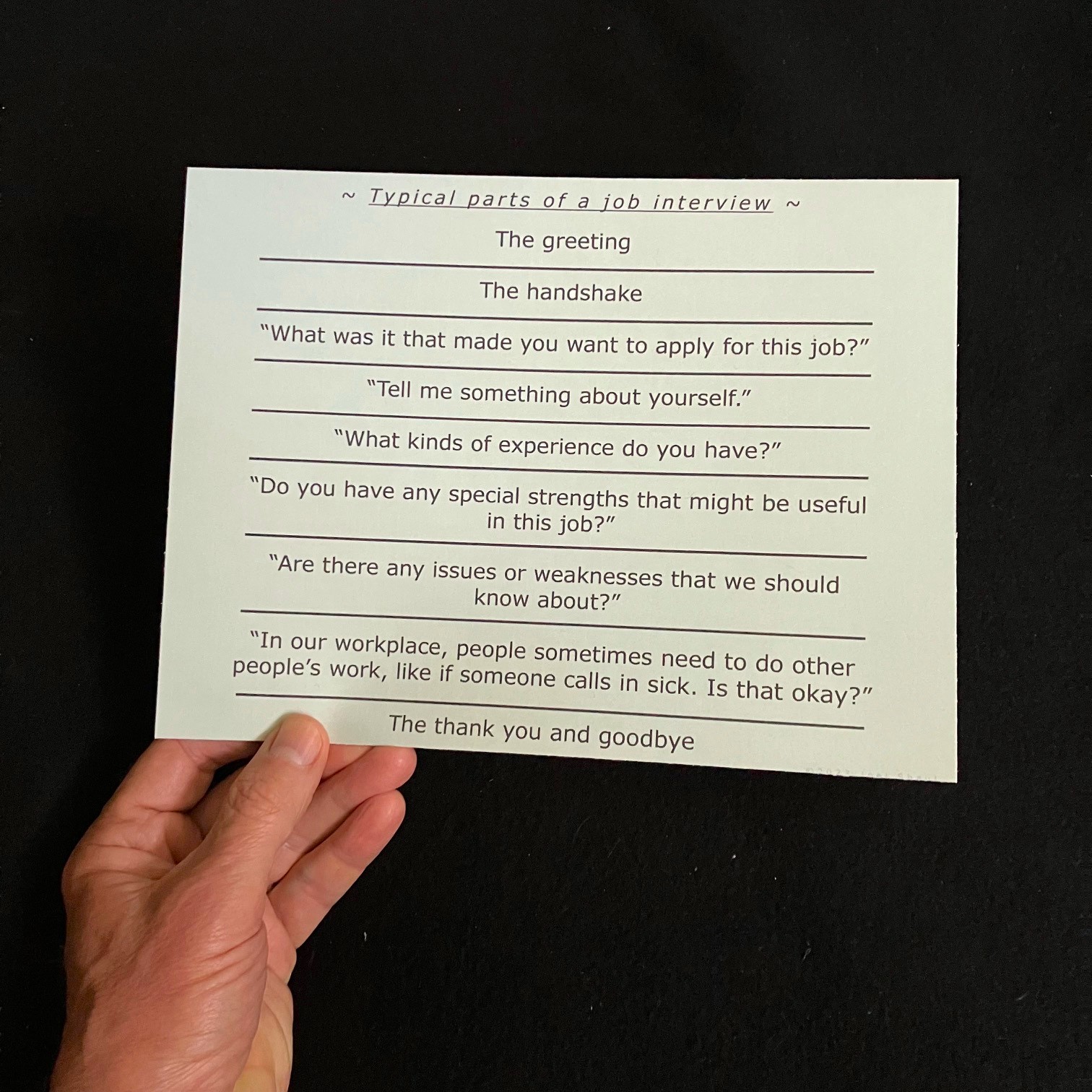
Print out the single-page list of common interview questions. When you start with the practice interviews, I suggest you mainly stick with these questions at first.
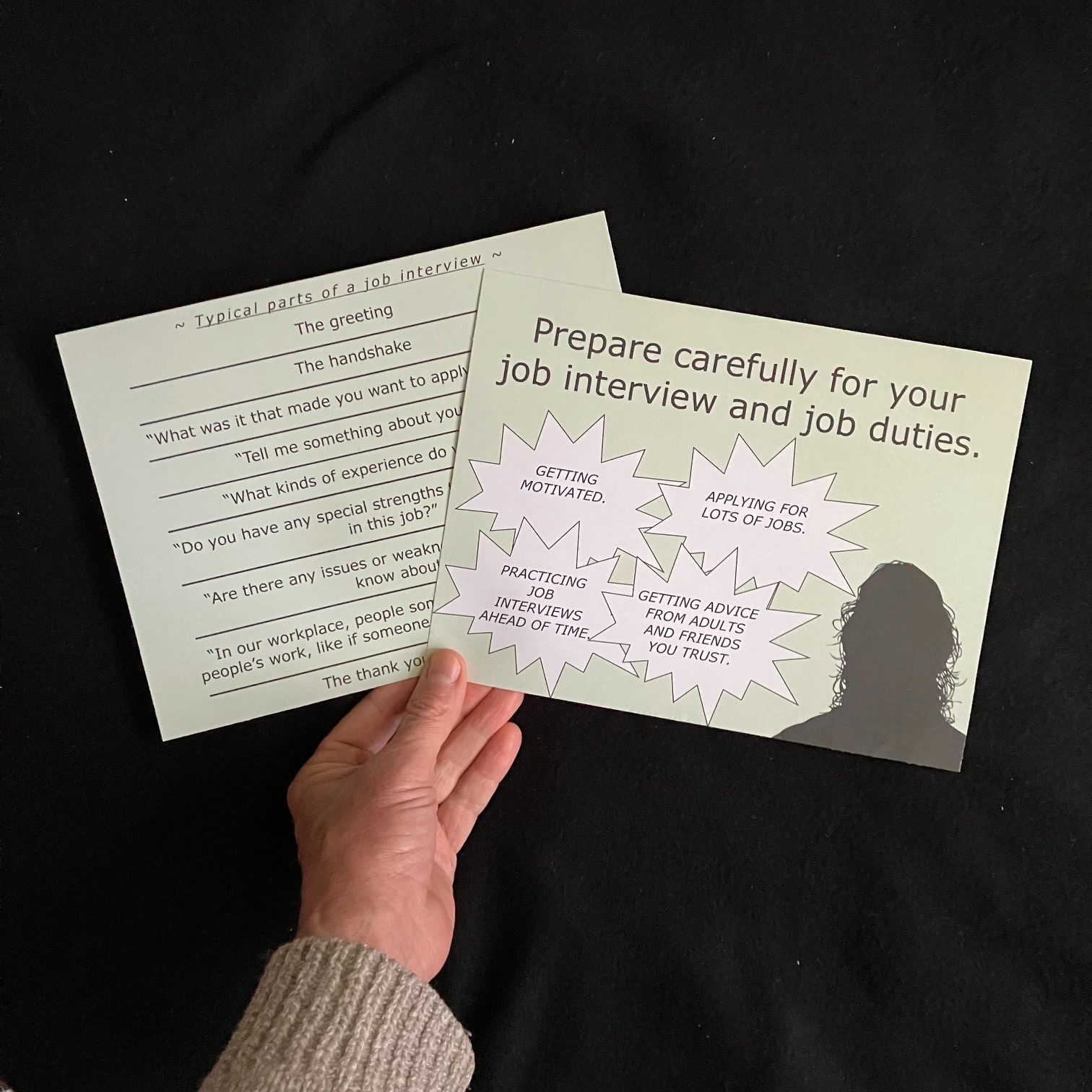
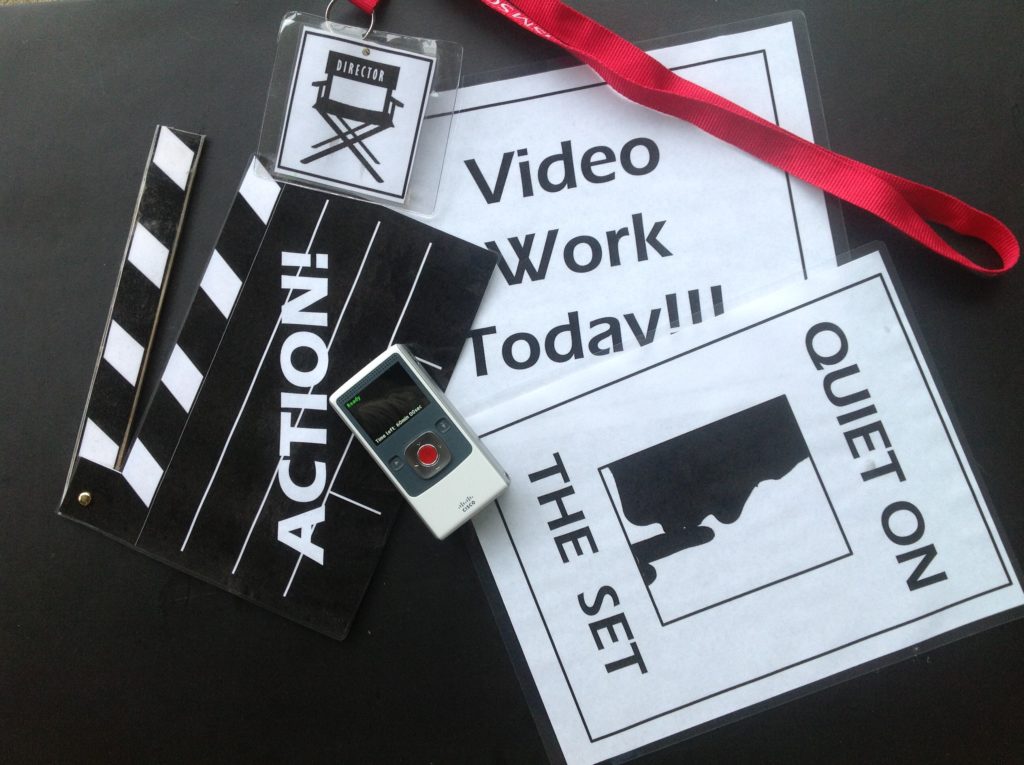
Video the practice job interviews if you can! Most young people really like this, and it makes practice interviewing a much more effective teaching tool.
I have a tutorial on simple ways to do video modelling. I hope you will try doing this.
Joel Shaul, LCSW
Intro: Workplace preparation resources for young people with ASD
Part 2: Workplace preparation – printable teaching panels
Part 3: Workplace preparation – Q & A cards
Part 4: Job interview skills – how to teach it and provide practice
In German: Bereit für den Arbeitsplatz – Karten
Hebrew translation of this resource
Why I made these cards
To engage teens and young adults on the spectrum in productive discussions about preparing for adulthood, I have found it useful to employ various media and game-like methods. Q & A card resources are one of my mainstays. This method helps to break up the usual adult-questioning-the-child dynamic in therapy and teaching. And in small-group and classroom work, the turn-taking format helps to give everyone, including quieter participants, the chance to talk.
Ways to use these cards
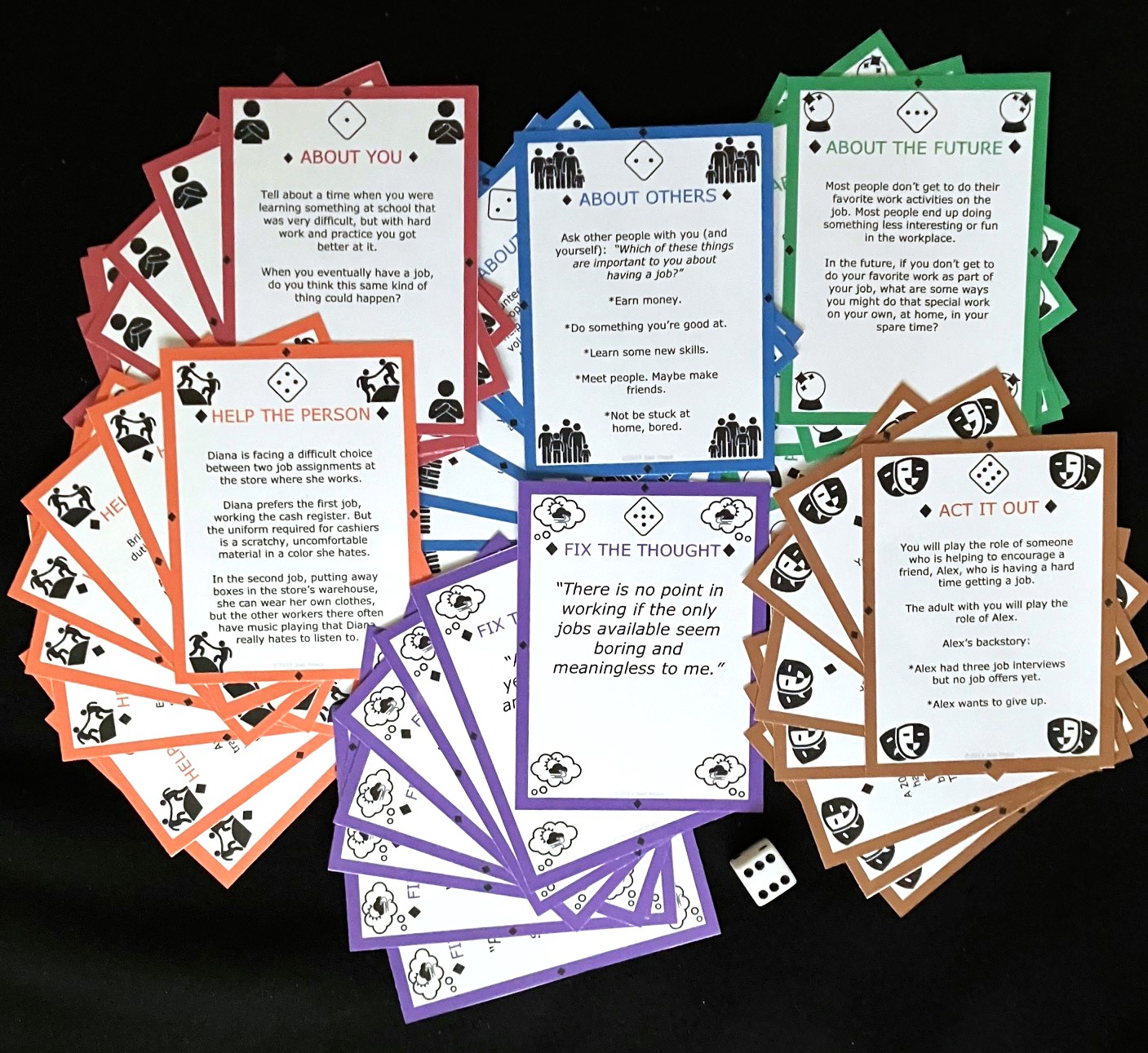
There are six categories of cards, allowing for a game-like element by rolling a die to determine which card a participant has to select.
But you may feel free to use these cards however you like. For example, you can pick through the deck and select the cards you think are most relevant and helpful for the young people you are assisting. You may decide to focus on just one single category of card.
For another card-based resource to explore much broader themes of preparing for adulthood, check out Young Adult Future Cards.
Here are the six different card categories.
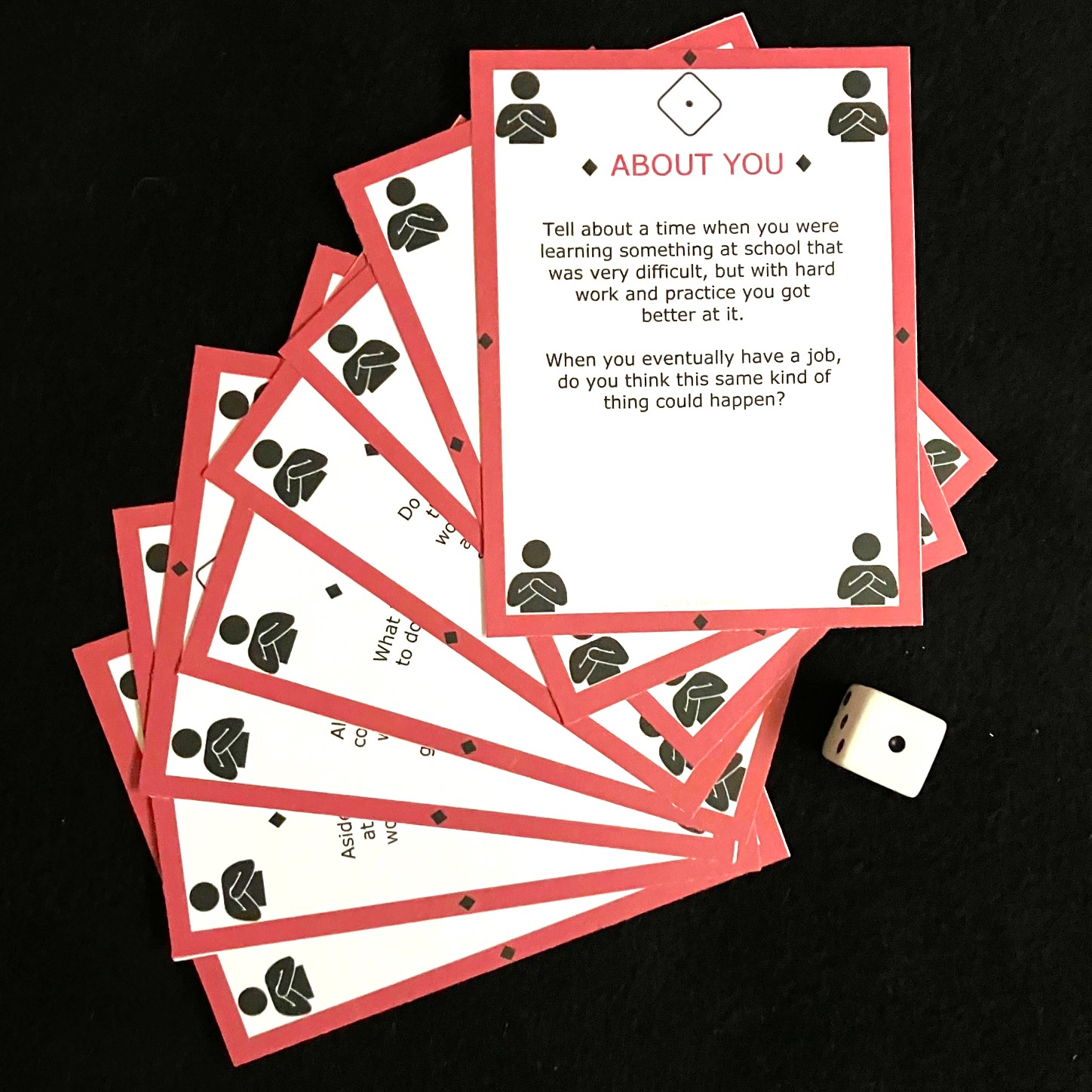
Category 1: About you (shown below). The question posed on each of these cards asks a work-related question pertaining to the person who drew this card.
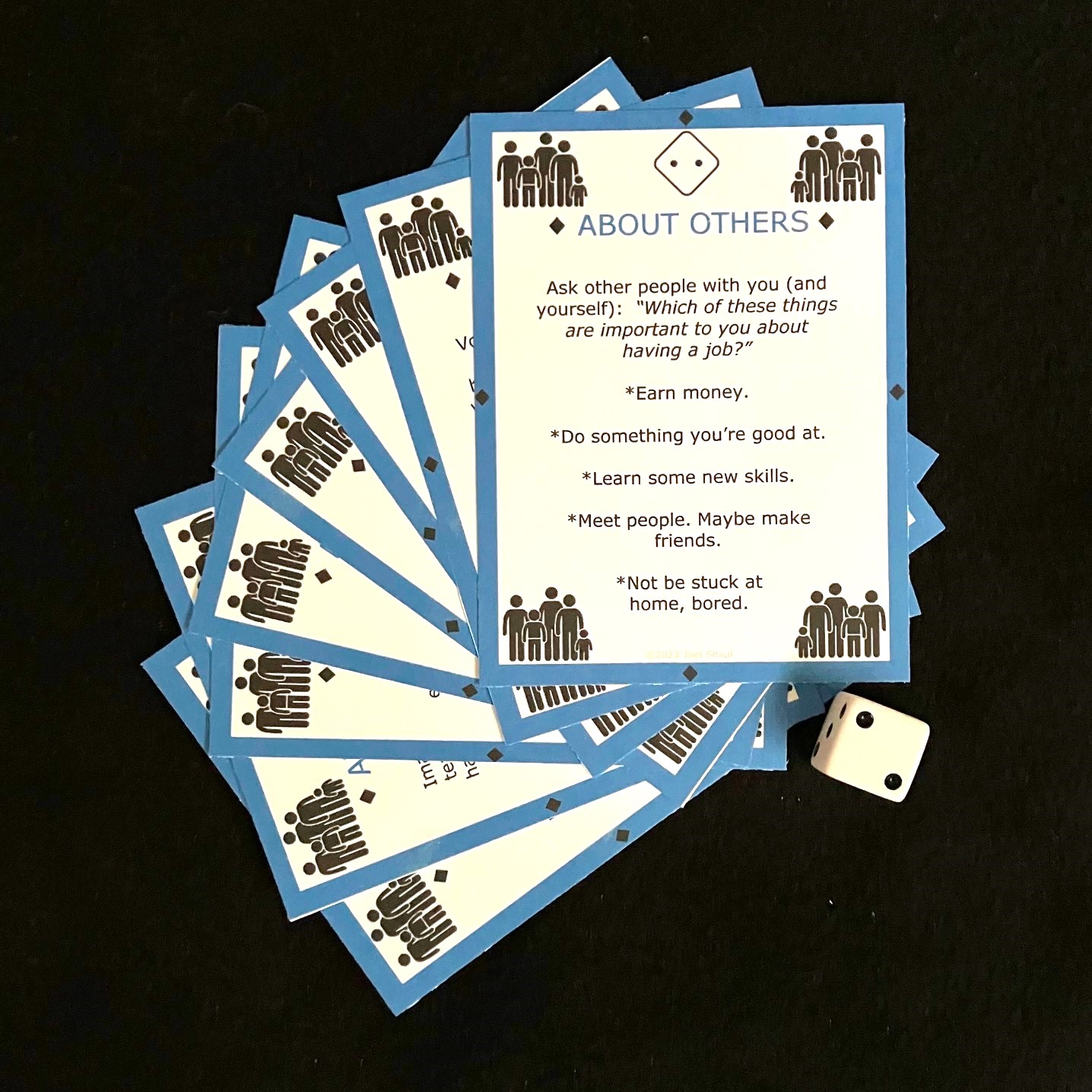
Category 2: About Others (shown below). These cards ask the person drawing the card to pose a certain question to others who are participating in the game.
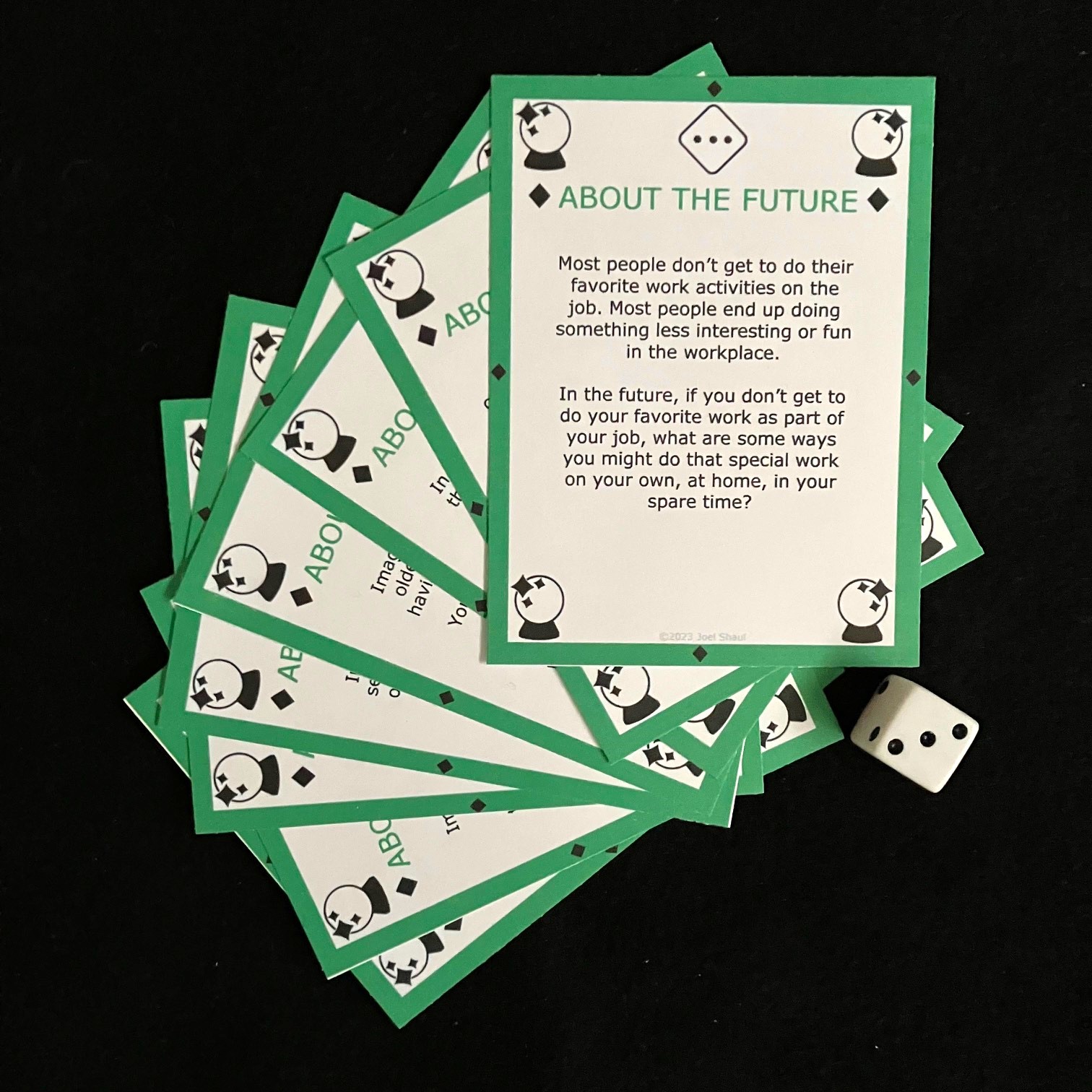
Category 3 (shown below): About the Future. Each question posed pertains to a work-related matter in the future of the person who draws the card.
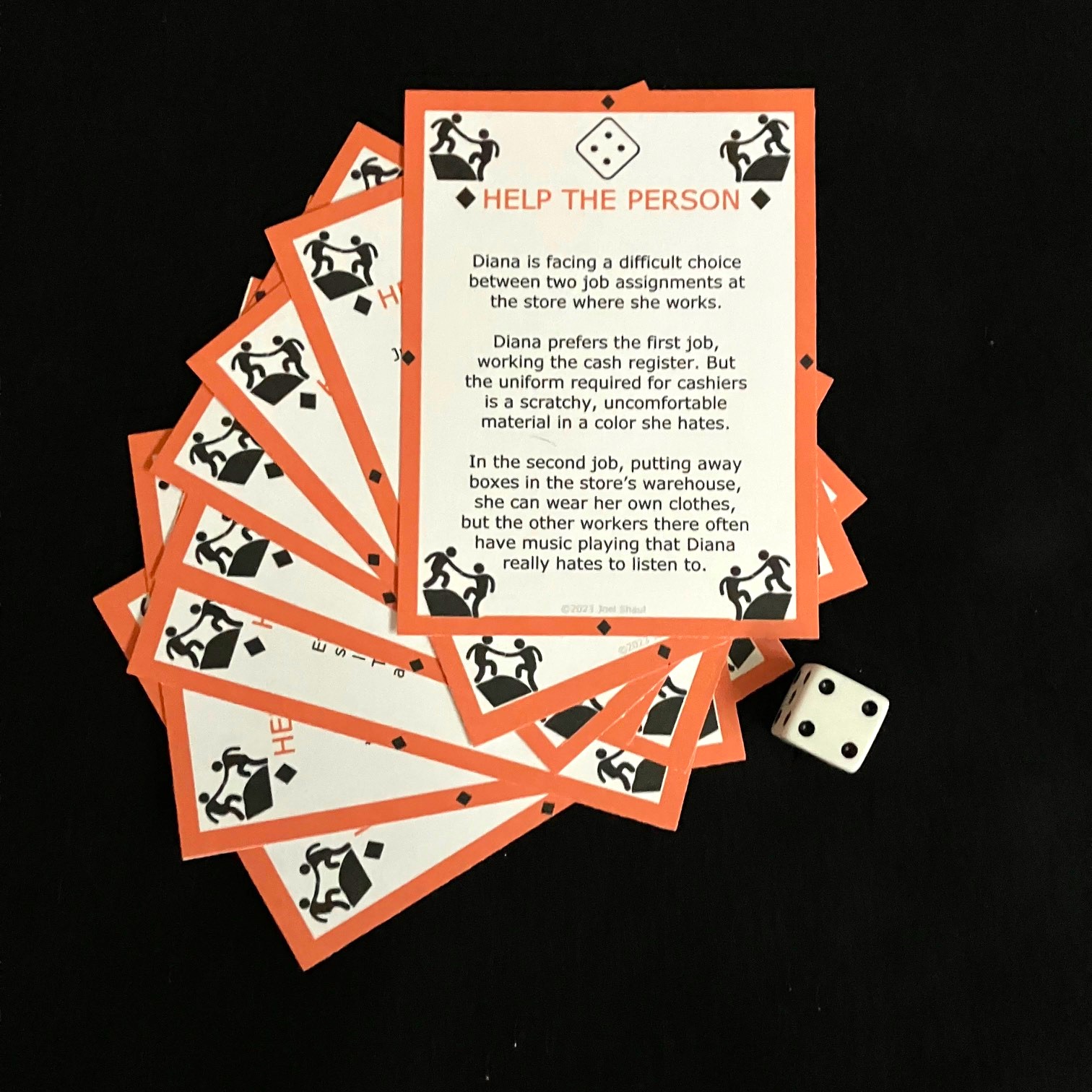
Category 4: Help the Person (shown below). Each card poses questions about a hypothetical young adult facing a work-related problem.
Category 5 (shown below): Each card describes a typical negative thought which a young adult with ASD might have in response to a workplace issue.
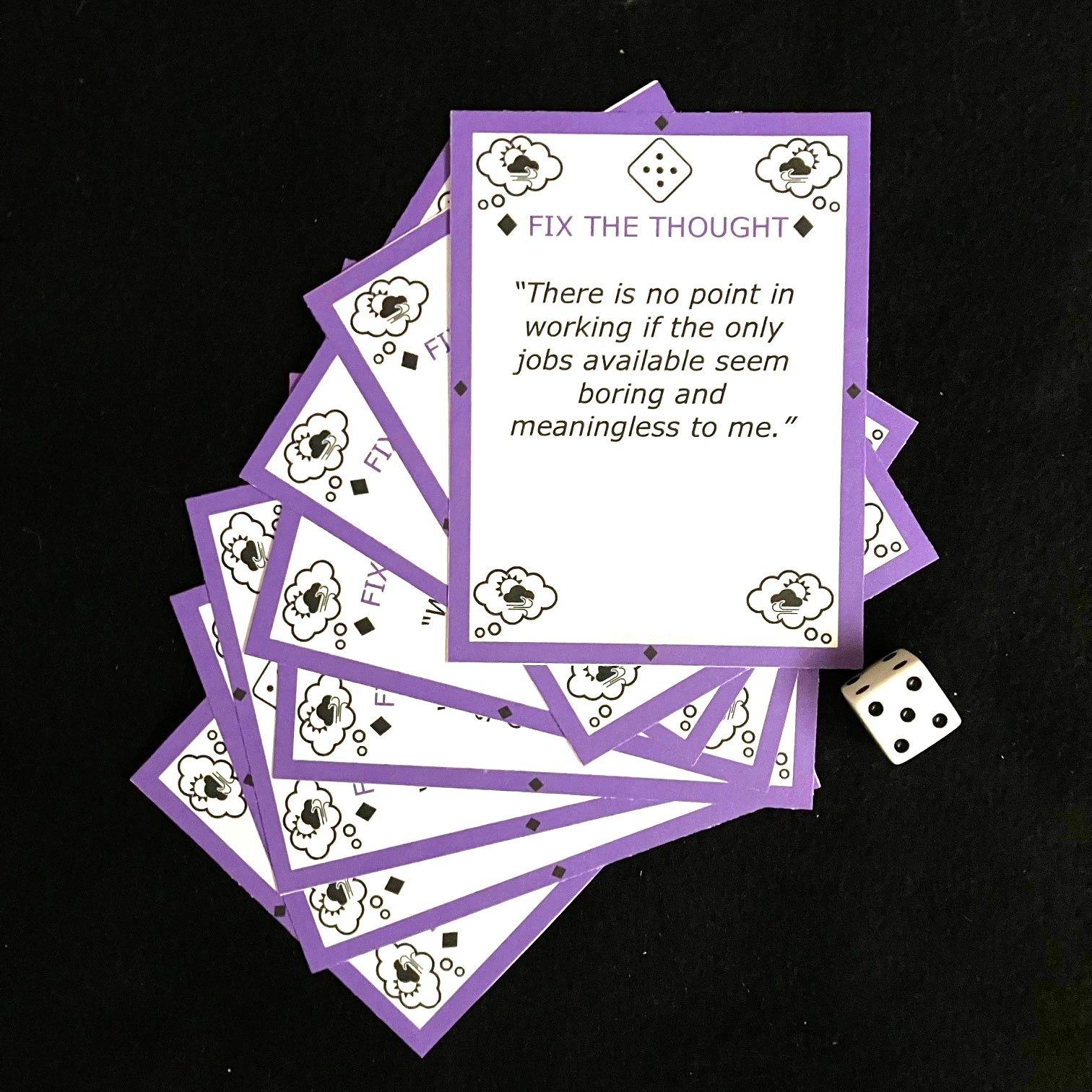
You, the facilitator in this activity, can use the “Fix the Thought” cards in the following manner if you like: You, the facilitator, play the role of a person having this thought. The participants talk to you and offer you alternative ways of thinking.
If you would like to expand on the theme of automatic negative thoughts, check out this video and this resource on “Poison Thoughts.”
Category 6: Act it Out (shown below. These cards obligate the person to enact a brief, work-related role play scenario described on the card.
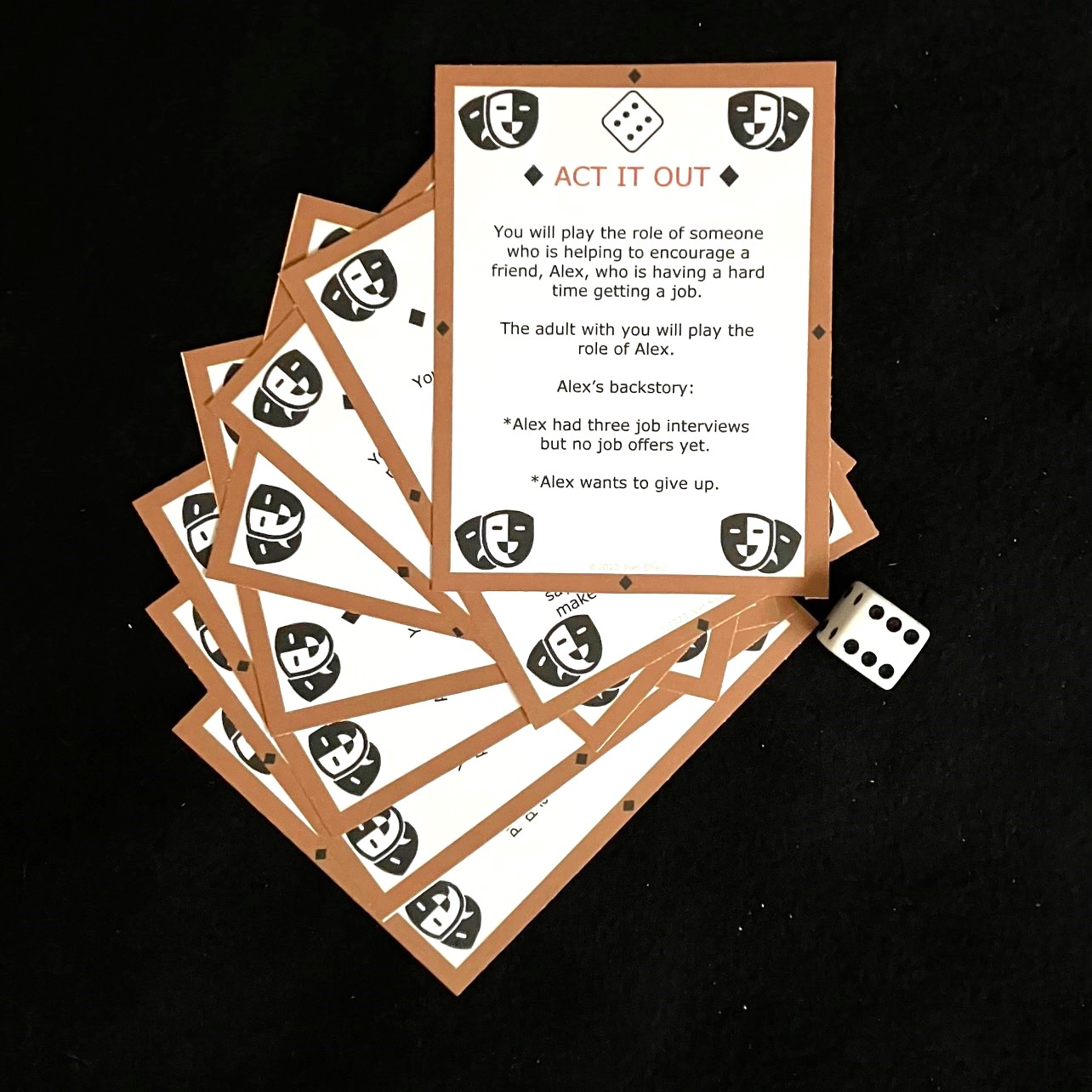
You, the facilitator, play an active role with these “Act it Out” cards. Each card gives “stage directions” for carrying out a very short role play.
These cards are part of a series of vocational preparation materials, which you may access by clicking on the links below.
Joel Shaul, LCSW
Intro: Workplace preparation resources for young people with ASD
Part 2: Workplace preparation – printable teaching panels
Part 3: Workplace preparation – Q & A cards
Part 4: Job interview skills – how to teach it and provide practice
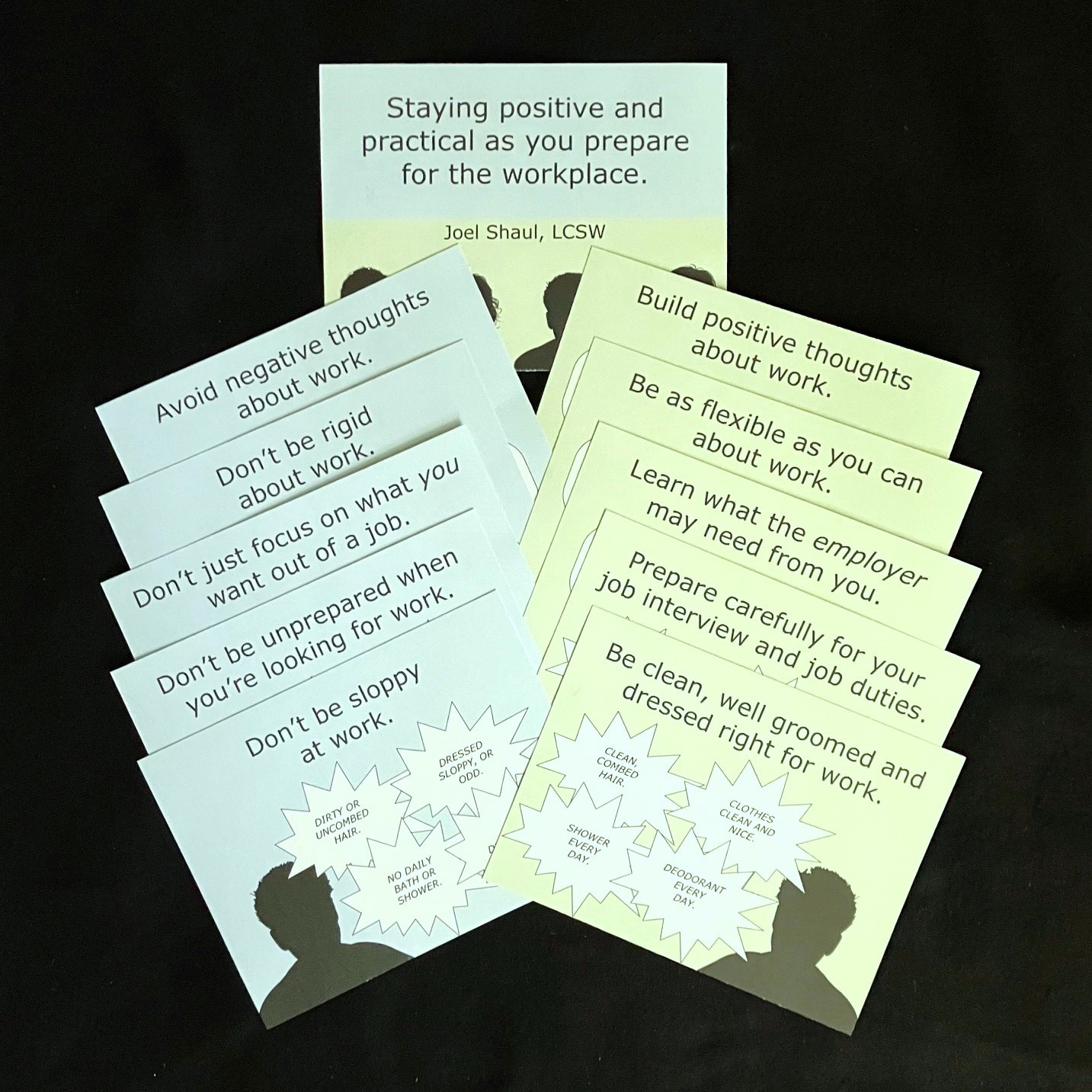
Workplace preparation panels, Hebrew translation
This set of 10 simply-designed teaching panels is designed for individual or group work as well as small classroom work. This resource is to help guide teaching/therapy and provide structure for essential points of discussion with regard to getting ready for the workplace. The panels may also be suitable for wall display.
Projecting the pdf display or showing it on a Smart Board is a useful way to guide group discussion on the topic of vocational preparation.
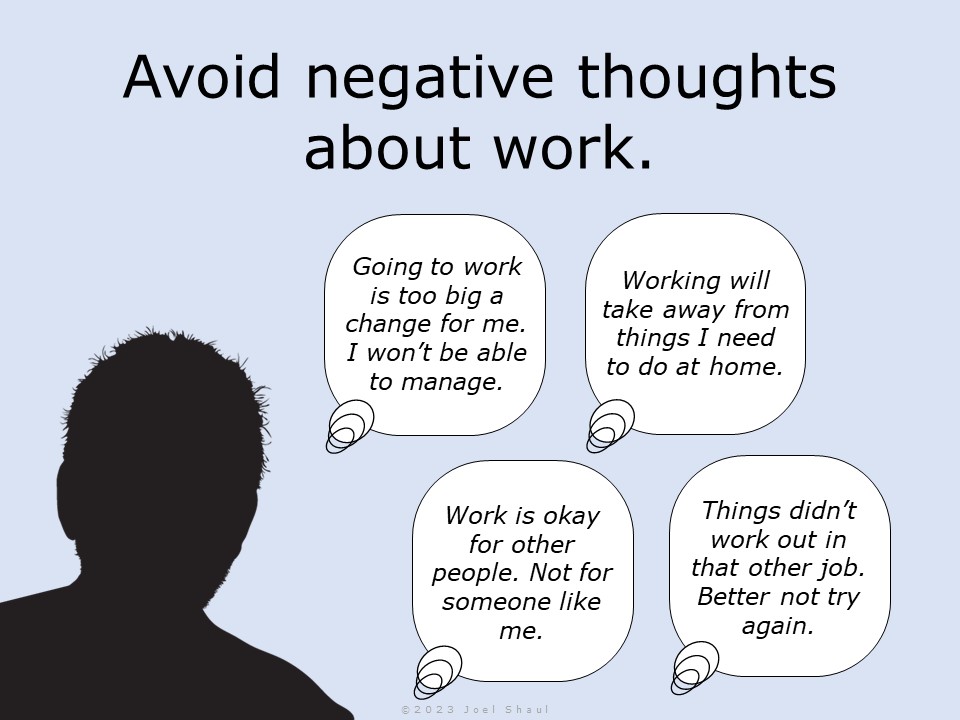
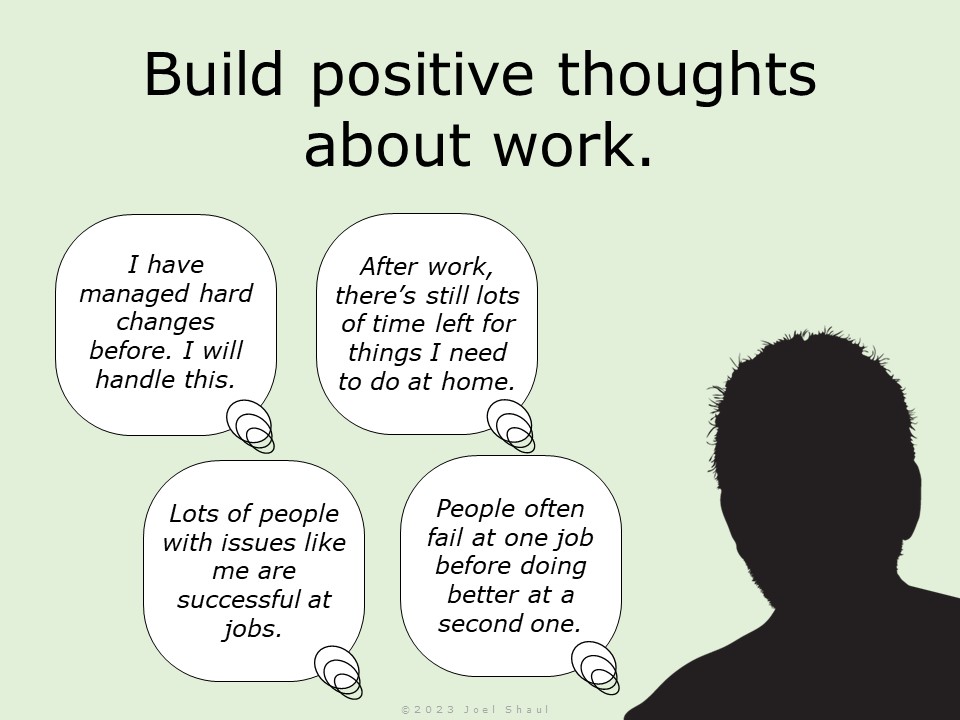
This first pair of teaching panels (shown above) concerns typical thoughts that can discourage young people with autism who are contemplating the prospect of work.
Our aim should not be to gloss over real challenges and obstacles – young people with autism may have many – but rather, to reduce the debilitating potential of some exaggerated or unsubstantiated concerns.
If you want to explore further regarding automatic negative thoughts, you might check out this short video and these CBT thought bubble materials.
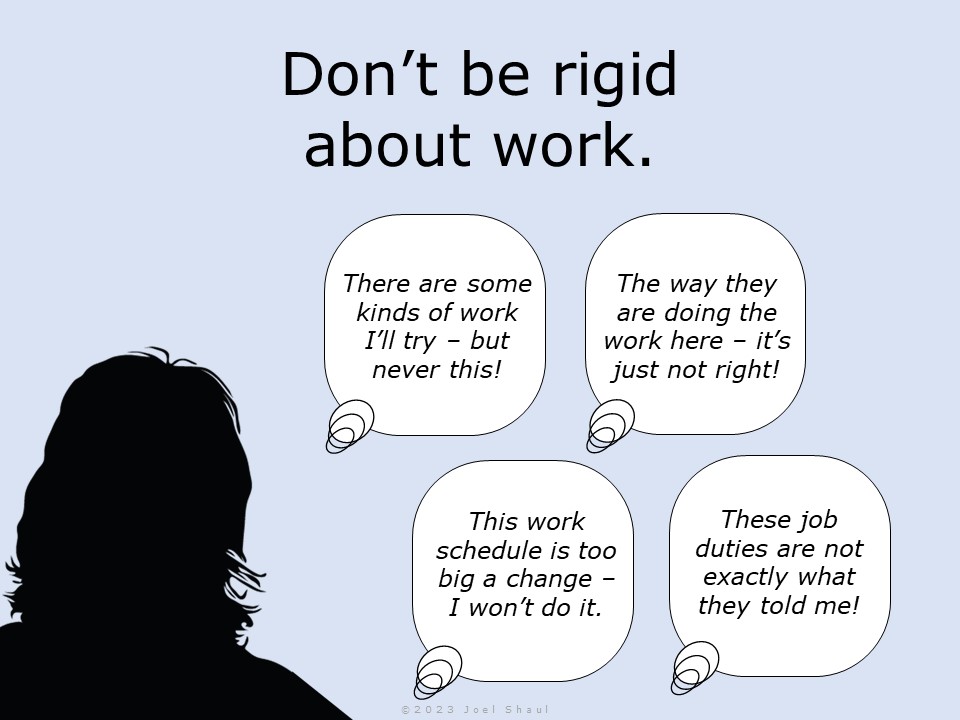
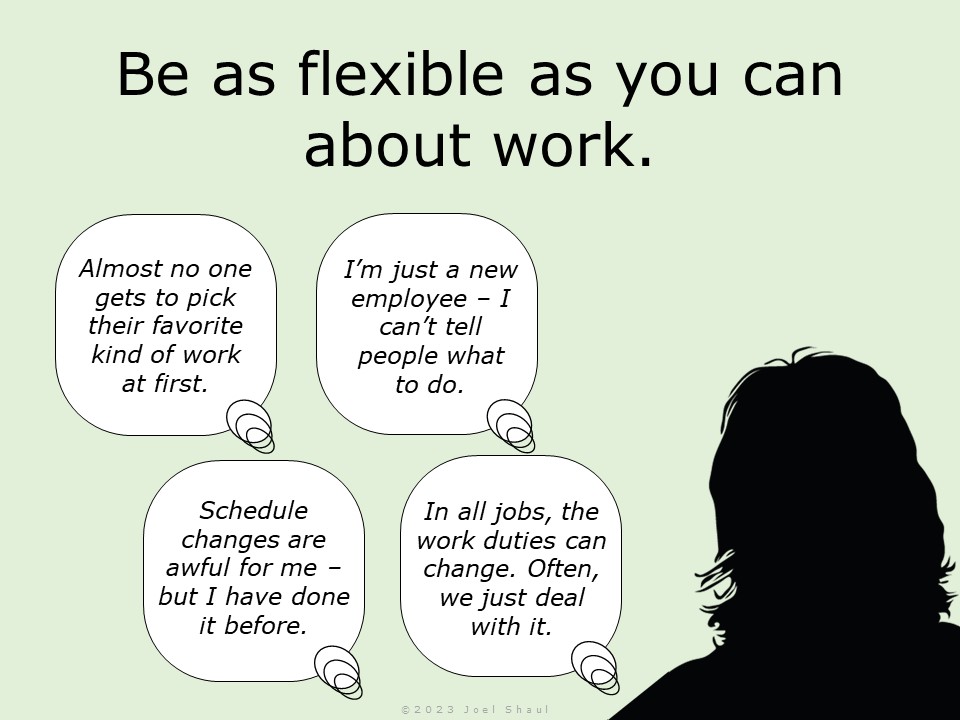
The teaching panels shown above concern flexibility and rigidity. Many people with autism are successful in work, but aversion to changes in expectations and routines can hit them hard, especially at first.
If you would like to broaden your discussion of rigidity, you could check out this video on rigidity or these Rigidity/Flexibility Cards.
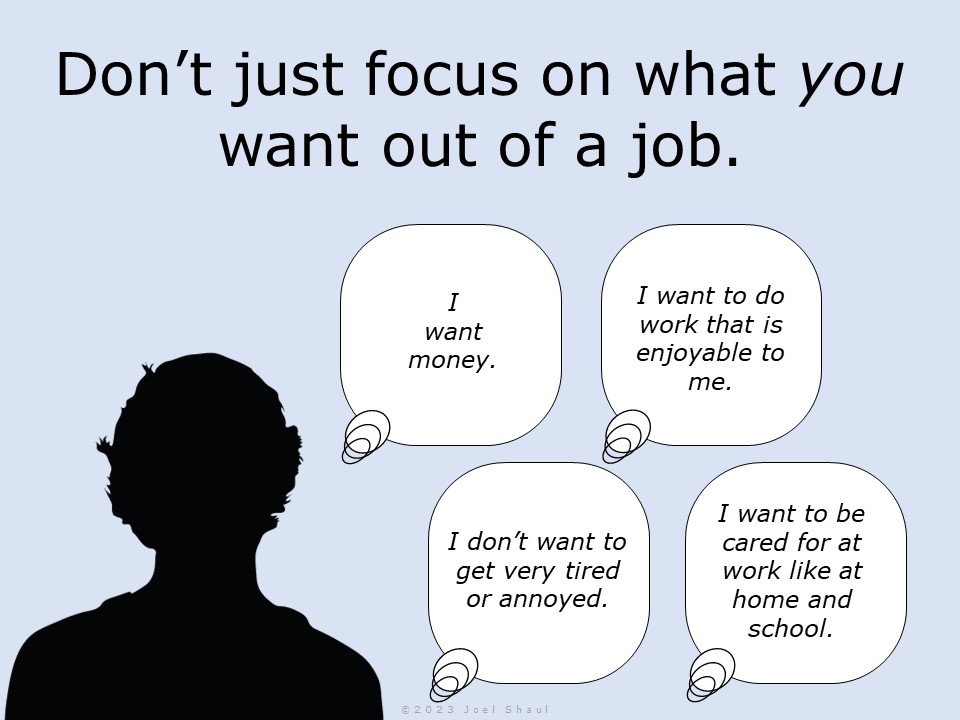
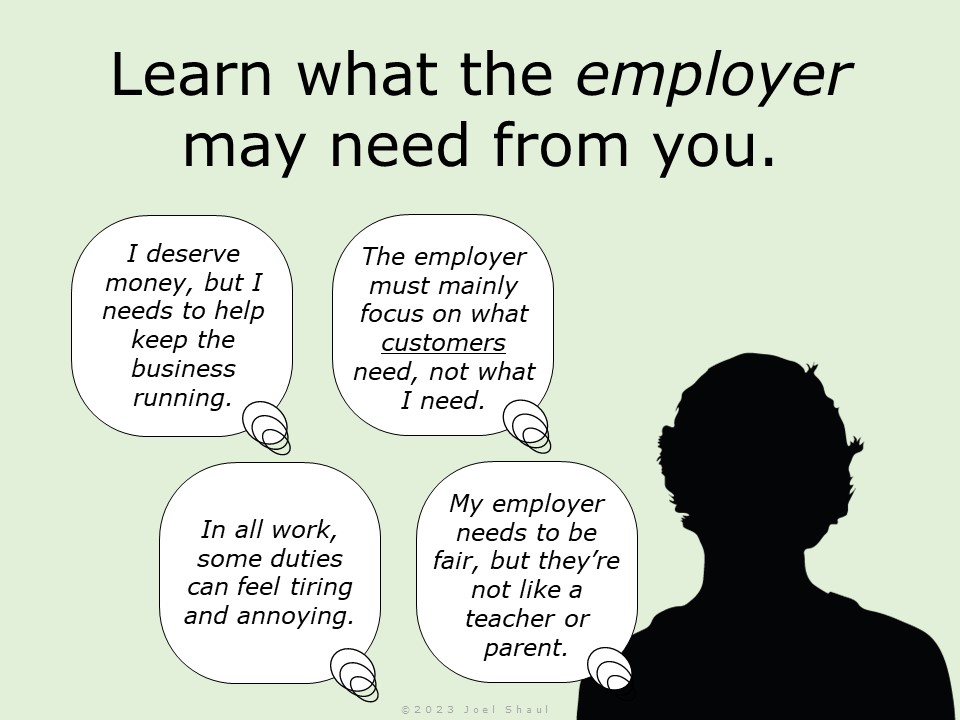
Young people with autism are familiar with hierarchies in their homes and schools, but when entering the workplace, they might be confused with new and complex systems of authority and accountability. You might wish to reference portions of this simple and visual guide to hierarchies based on moveable sticky notes.
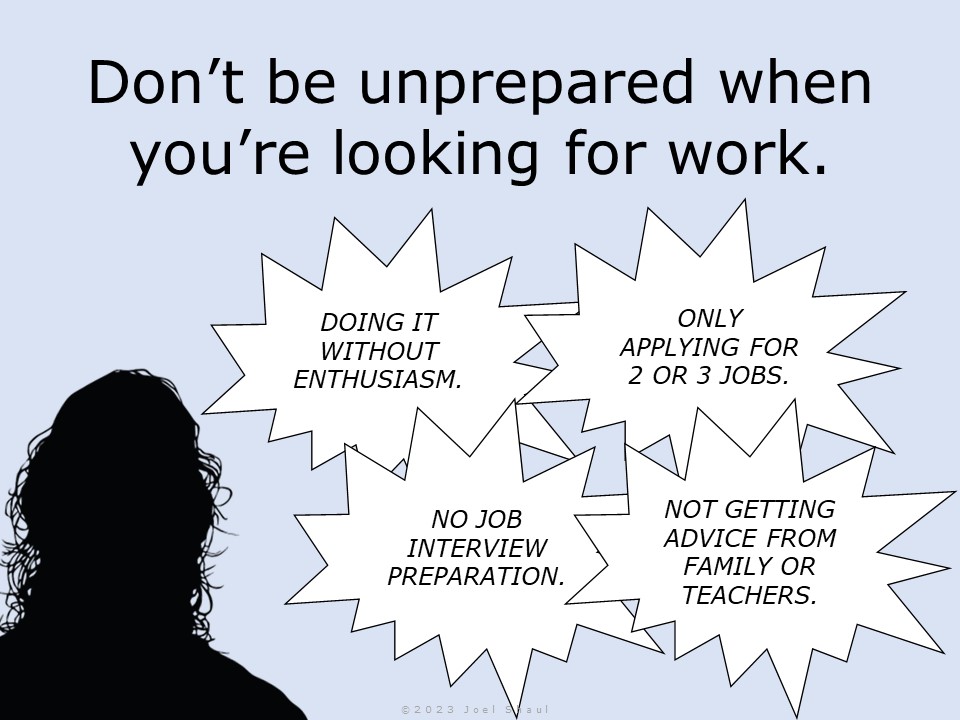
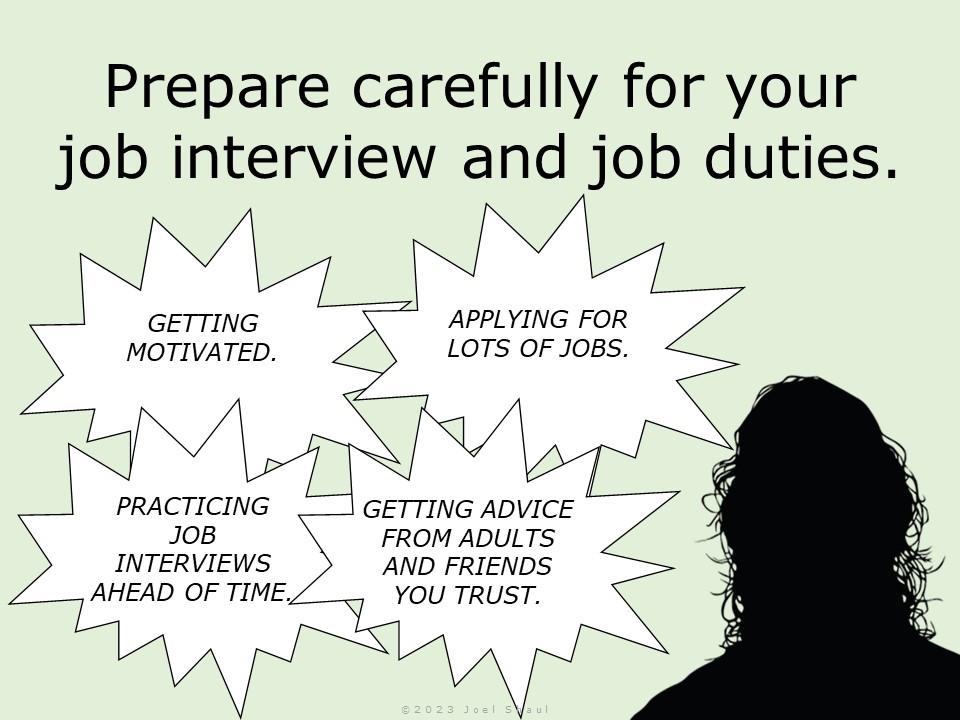
The teaching panels shown above concern job interviews. Please also reference the videos and learning materials in Section 4 of this series, which is all about job interviews.
YouTube videos by autistic people about their own job preparation and interview strategies are a rich source of practical advice and inspiration – also reference in Section 4.
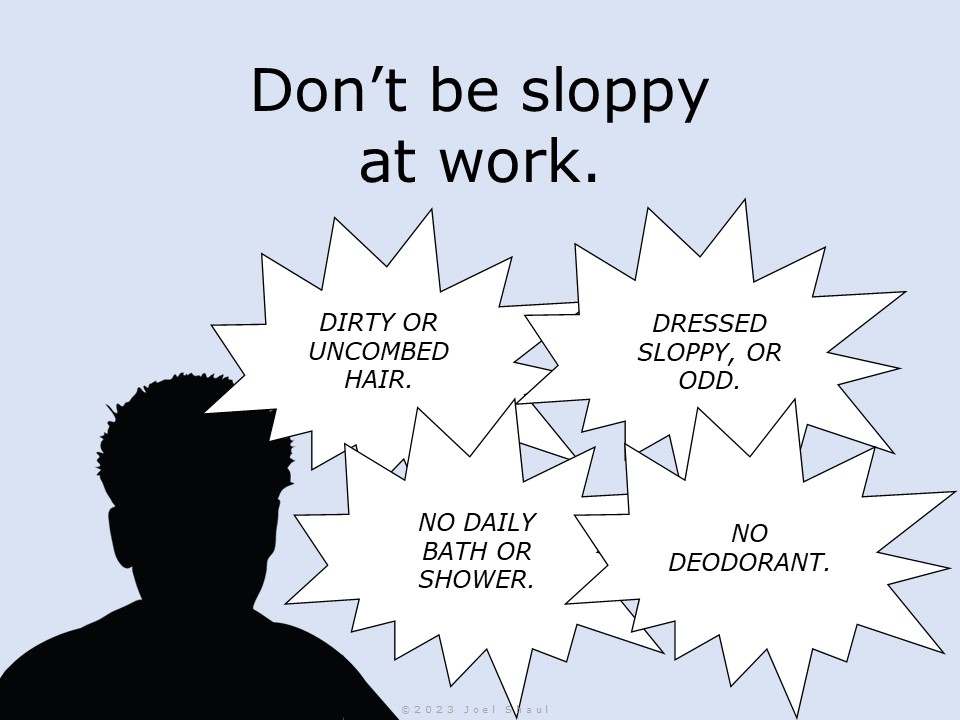
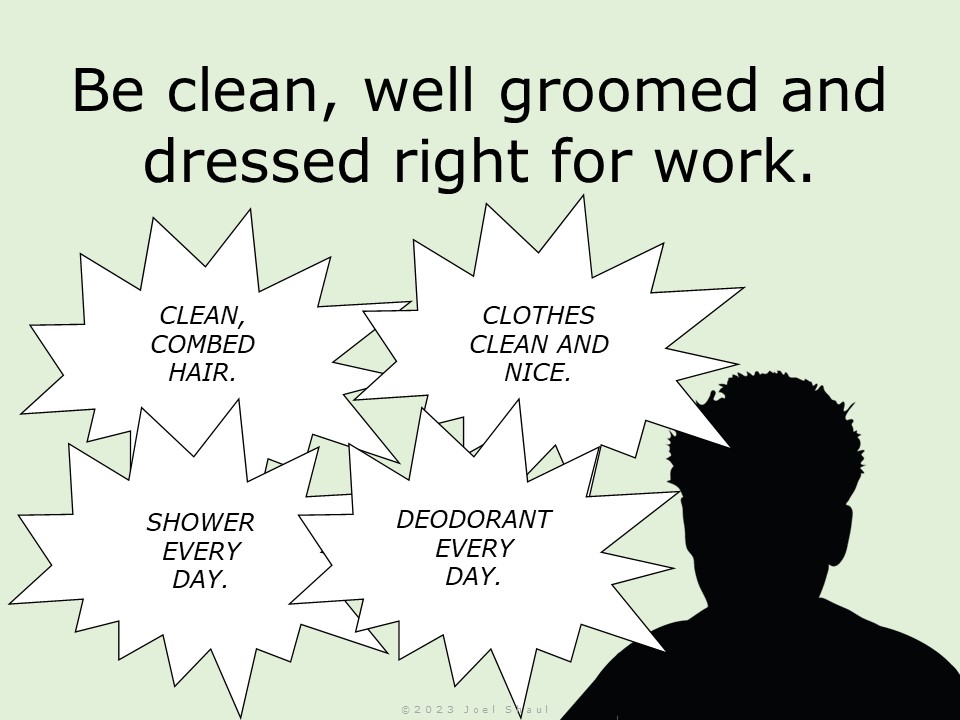
The teaching panels shown above concern hygeine and appearance. Quite a lot of the advice to young workers would of course apply to everyone – not just young people on the autism spectrum.
This resource is designed to be used with other materials you may access below.
Joel Shaul, LCSW
Intro: Workplace preparation resources for young people with ASD
Part 2: Workplace preparation – printable teaching panels
Part 3: Workplace preparation – Q & A cards
Part 4: Job interview skills – how to teach it and provide practice