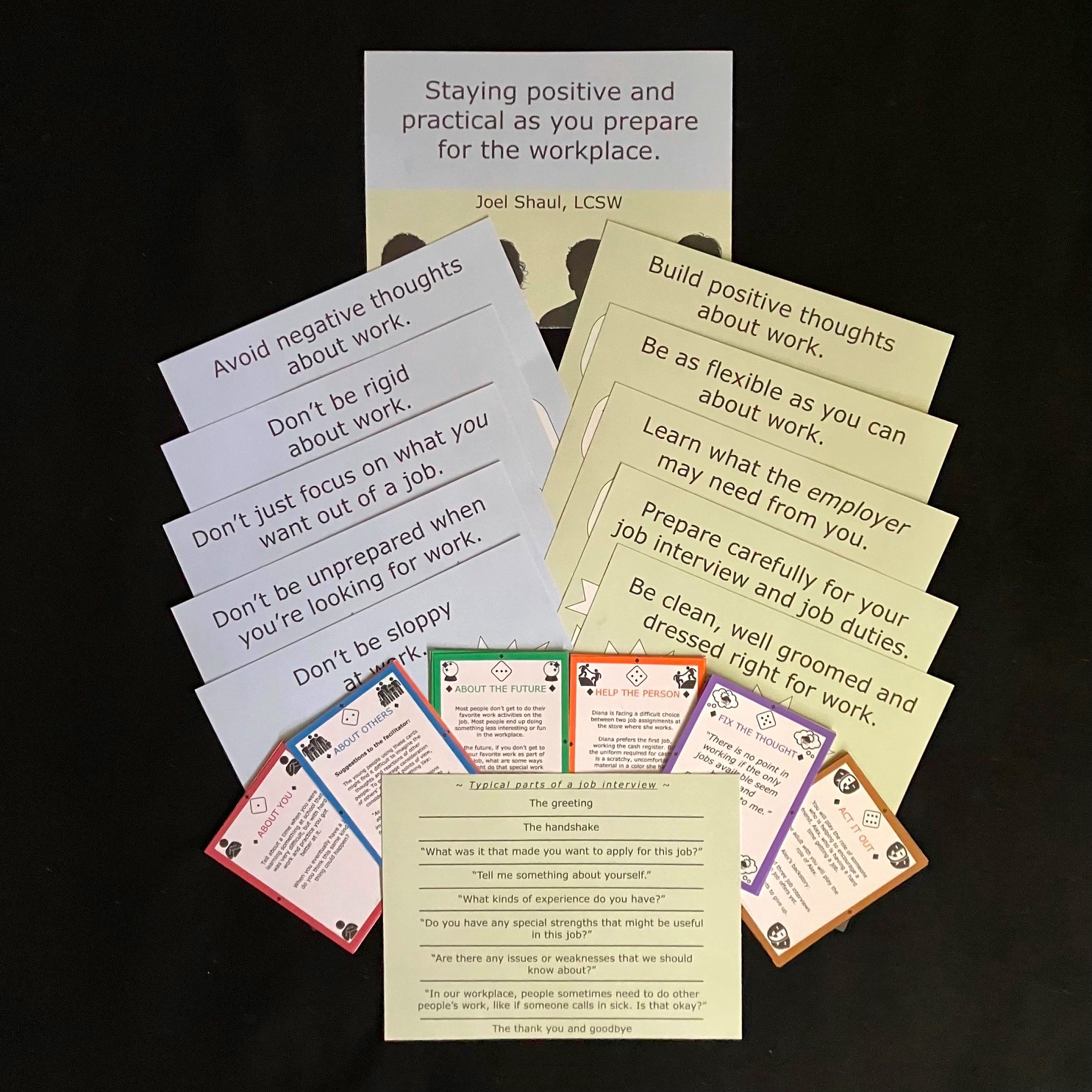
This four-part series, containing ideas for teaching and therapy as well as free, downloadable materials, is to help mental health professionals, educators and speech therapists to promote motivation, practical understanding and positive attitudes about work for their young clients on the autism spectrum.
There are links to each of the four sections at the bottom of this page.
Reasons to build workplace readiness into teaching, therapy and speech:
1.Young adults on the spectrum with work exposure tend to do better, socially and emotionally.
In my own professional experience, my clients who have had work opportunities, either paid or volunteer, have done better overall socially and emotionally as young adults compared to those who have not worked.
After their formal education has stopped, work can provide opportunities for continued growth and accomplishment outside the home. Young people on the spectrum who work, even a few hours a week or in volunteer positions, tend to maintain better self-care skills and social skills. Many are assets to their employers. Those of us who can sometimes “recognize” autistic people out in the working world appreciate their being there so much.
A few of my young, autistic clients have had gifted intelligence or rare abilities. Helping these young people to negotiate some of the social and emotional challenges of initial work experiences has sometimes helped them to aspire to their potential.
2. Filling in knowledge gaps, reinforcing emotional preparation and troubleshooting problems can make young people with ASD more successful in their initial work experiences.
Although there are limits to what we can do in our therapy offices, speech rooms and classrooms to promote work readiness, we should all do what we can.
Once years ago, I happened to be standing next to one of my students when he got a call on his cell from a grocery store supervisor who had received his application and wanted to set up an interview. I overheard this student quote directly from some of the stock answers to job interview questions that we had recently practiced in our social skills group. Clearly, what he had learned in our sessions was helpful to him. He ended up getting hired there – his very first job.
3. Workplace preparation is even useful for individuals who are not destined for the workplace.
Some young people with autism might have co-occurring disorders, such as intellectual disability or severe mood or anxiety disorders, making work difficult to realize outside of sheltered workshops.
In my experience, isolated young people on the spectrum, whose exposure to the world has been largely confined to their homes, schools and computers, show curiosity and lively interest nevertheless in workplace readiness activities, even if conventional employment is not in their future. Although some of the teenagers I have seen in schools and in my office have subsequently not gone on to work very much as young adults, I believe that what they learned about the workplace still has value. They may be able to apply this knowledge later in life if vocational opportunities come up. At the very least, they are building a worthwhile fund of knowledge about the workplace, which may give them useful insights into the lives of family members and other people they know.
Here are the links to all the parts of this series on vocational preparation.
Boys and teen boys with autism often have a hard time knowing how to interact with peers.
This is especially noticeable when they are interacting with female peers and trying to comprehend female youth culture. There are many ways to help boys with ASD to increase their knowledge about girls. One way is to use girls’ magazines as learning resources, which I explain in detail later in this article.
Reasons why boys with ASD often lack awareness regarding females
Boys with autism may experience obstacles to social contact with females outside their families. This may be the result of rejection by neurotypical peers or avoidance originating from the autistic boys themselves. Boys with autism might be disdainful of girls, considering them somehow foreign or “weird.” Boys with ASD might feel confused or disturbed by emerging feelings of attraction to girls, which can in turn lead some boys to distance themselves from girls. And finally, boys on the spectrum often have considerable exposure to false, misleading or outright harmful depictions of females through digital media. (See screen shot below as an illustration of this)
Boys routinely view objectified, confusing or just plain harmful female images online. The sexualized girl depictions shown above are quite mild compared to other material boys commonly view in videos.
Resources I have already created to expand awareness of females
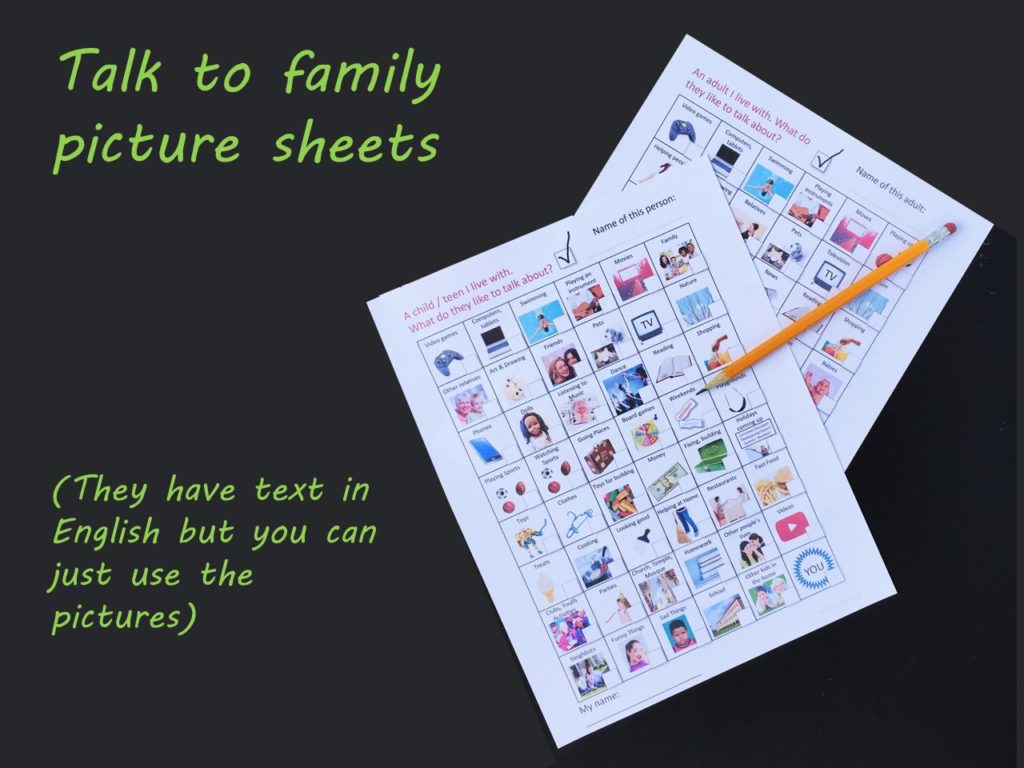
Years ago, I created two other free resources, Talk to Family Picture Sheets, which are to help children with autism to explore the interests of family members of any gender, and Helping Teen Boys Relate to Girls. The resource described in this article here involves something you purchase or somehow acquire on your own – illustrated magazines or books that are created for girls rather than for boys.
About using girl magazines to help autistic boys learn more about girls
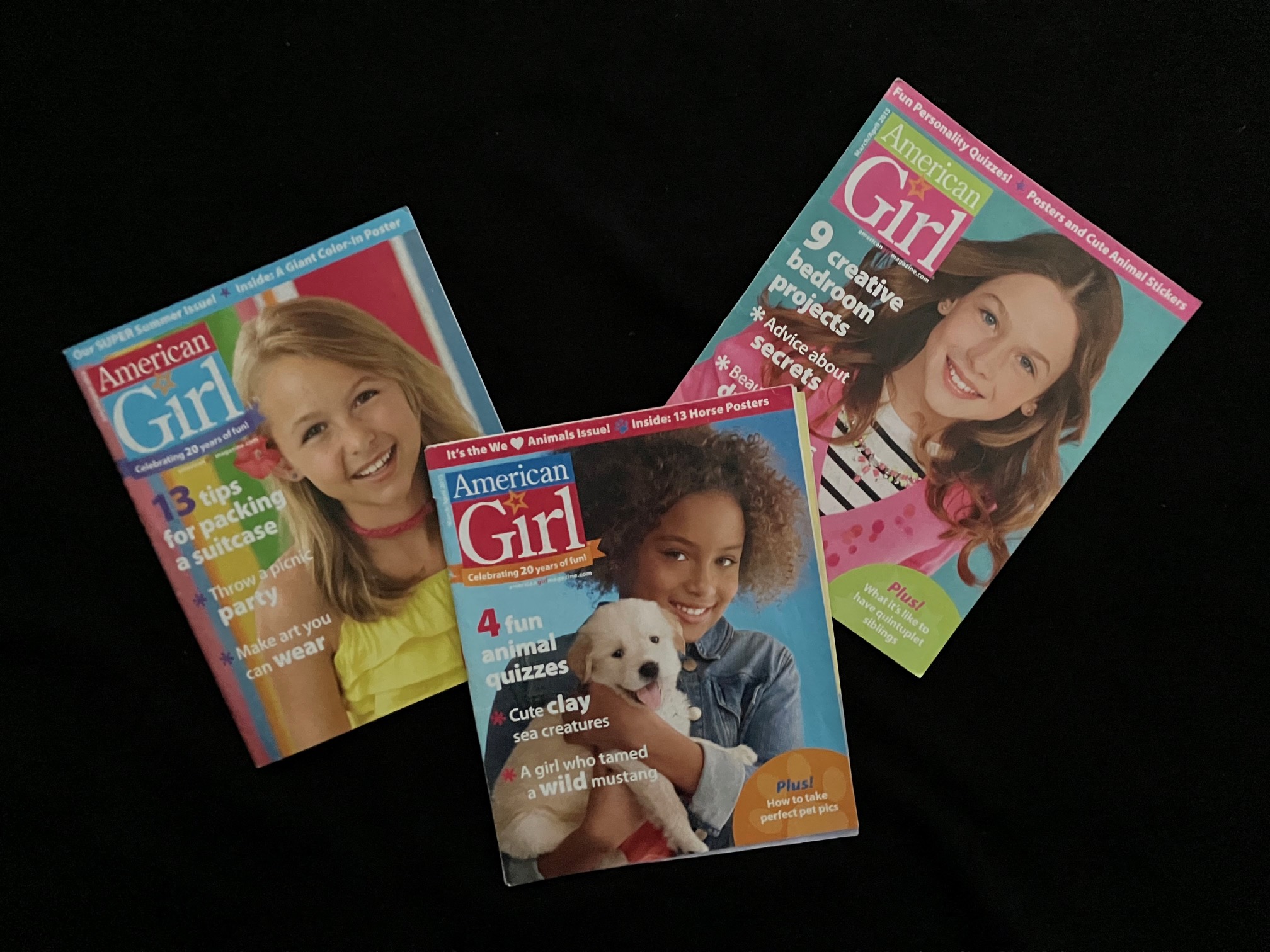
Until just a few years ago, many tween and teen girls regularly purchased and read teen magazines. These magazines are much less common these days now that girls consume popular culture primarily through digital media. However, some good girls’ magazines are still published, such as Girls Life and Teen Vogue. Other fine magazines no longer published, like American Girl, are easily available for purchase second hand. You can get them in large lots, for not much money, from eBay, Etsy and other retailers. That is how I acquired most of the magazines I use in my work with autistic boys.
Boys with ASD needing increased awareness regarding girls should have engaging learning materials.
For many years, I have used girls’ magazines with boys individually, as well as in groups and small classrooms, to liven up discussions about girl youth culture. If you are able to get your hands on a small pile of these magazines, I believe you will find them truly useful again and again. Most of the magazines from even as far back as 15 years ago are full of valid references for girl culture and are still quite timely and relevant.
Girls’ magazines vary according to age range, quality and propriety.
Some I would certainly not recommend based on their confusing content or their promotion of problematic aspects of female youth culture. Look over the magazines carefully before you use them in your work. Personally, I have found back issues of American Girl (tweens and younger teens) and Girls Life (older teens) to be very good, as are some current issues of Teen Vogue. There are surely lots of other good magazines out there that I have not seen yet, in the US and other countries, although as I pointed out, printed girls’ magazines are in decline.
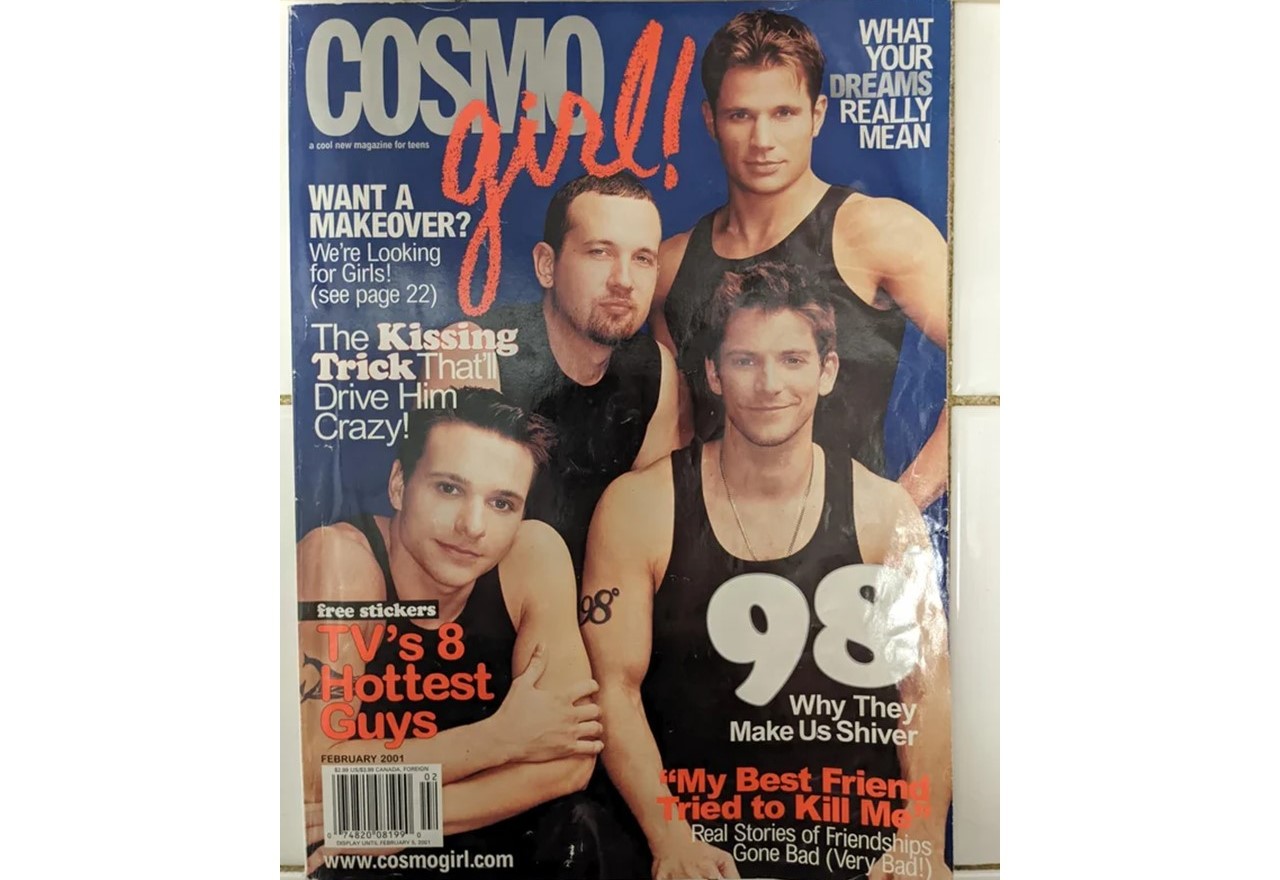
Here is an example of a girls’ magazine not appropriate to help boys learn useful information about girls’ popular culture.
An example of an old girls’ magazine NOT likely to be helpful for boys (or girls either – check out the stories).
Some ways to use girl magazines to promote expanded learning about girls
Pass out the magazines and ask questions, such as: “What are some things that girls do when they hang out together?” “What are some girl interests that seem different than common boy interests?” “What are some girl interests that boys often enjoy just like girls do?” “What are some examples of girl interests that seem just like boy interests?” “What are some girl interests that seem to change as girls get older?”
Girls Life is for older teens. American Girl is for tweens and younger teens. I have used both of these publications a lot in my work with boys.
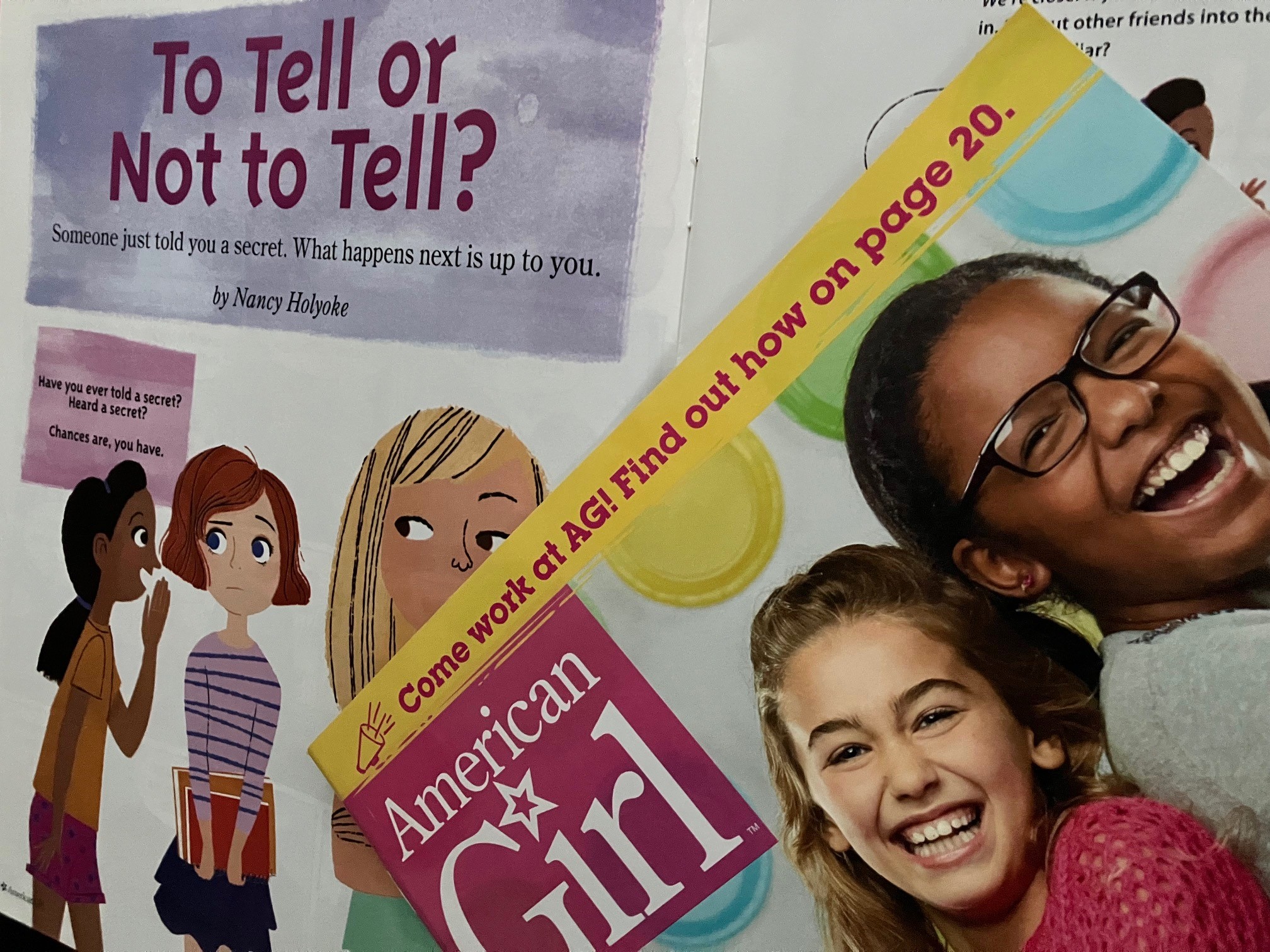
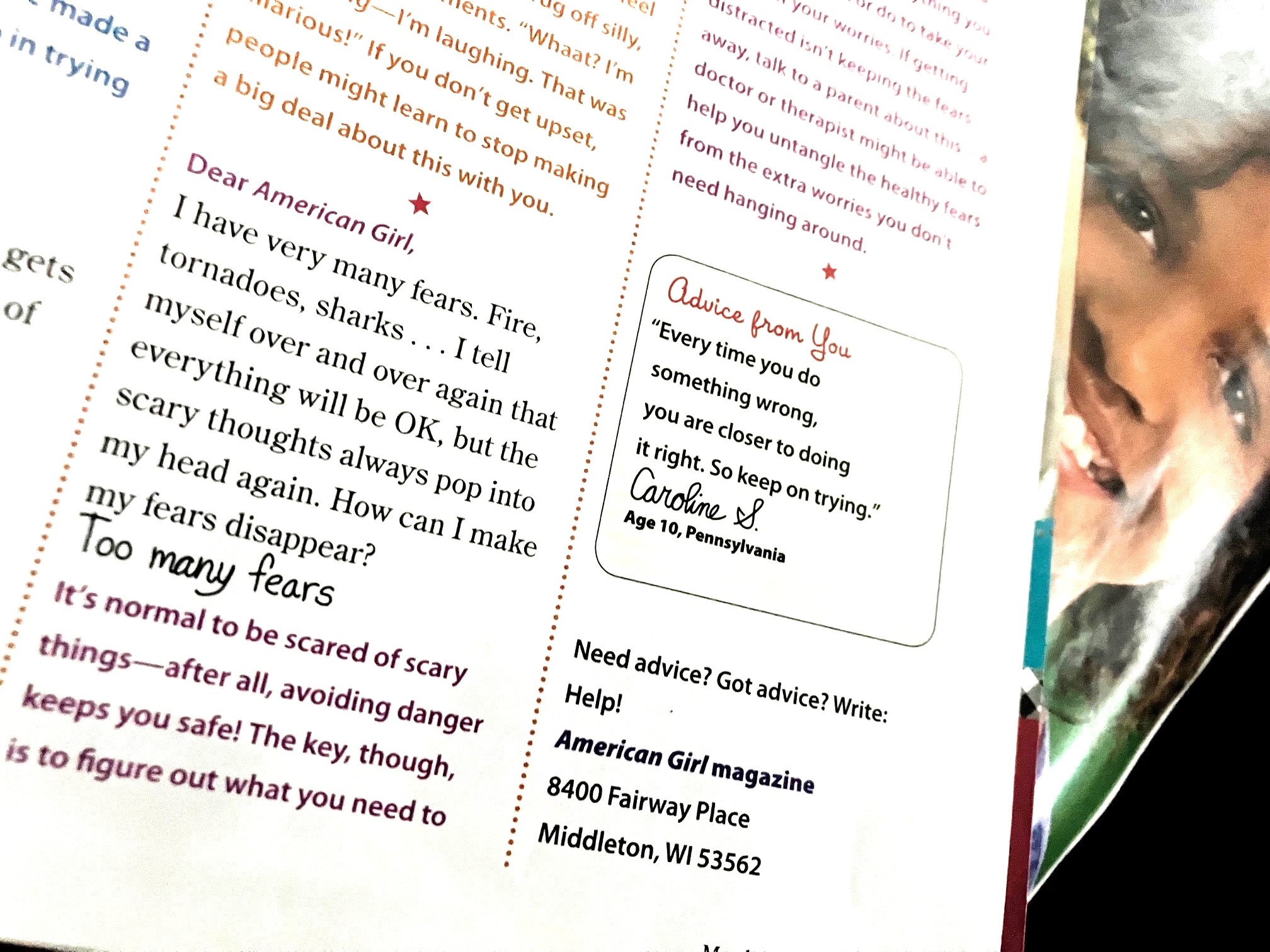
An example of an article featuring an issue very relevant to social skills training for young people on the spectrum.
Check out the “Help” sections of girl magazines and read the questions posed by girl readers. This is one of my favorite learning activities. It provides fascinating insights into the lives of girls, revealing their unique girl concerns as well as generic youth problems which boys with ASD might also experience. You can pose questions such as: “What are some things that might make a girl sad?” “What are some things that might make a girl worried? Have you ever felt worried in this same way?”
This magazine is so old that girls actually WROTE LETTERS to the magazine’s mailing address. But much of the content is still timely and relevant.
Girls’ self-help books can be used in a similar manner as a gateway into female youth culture
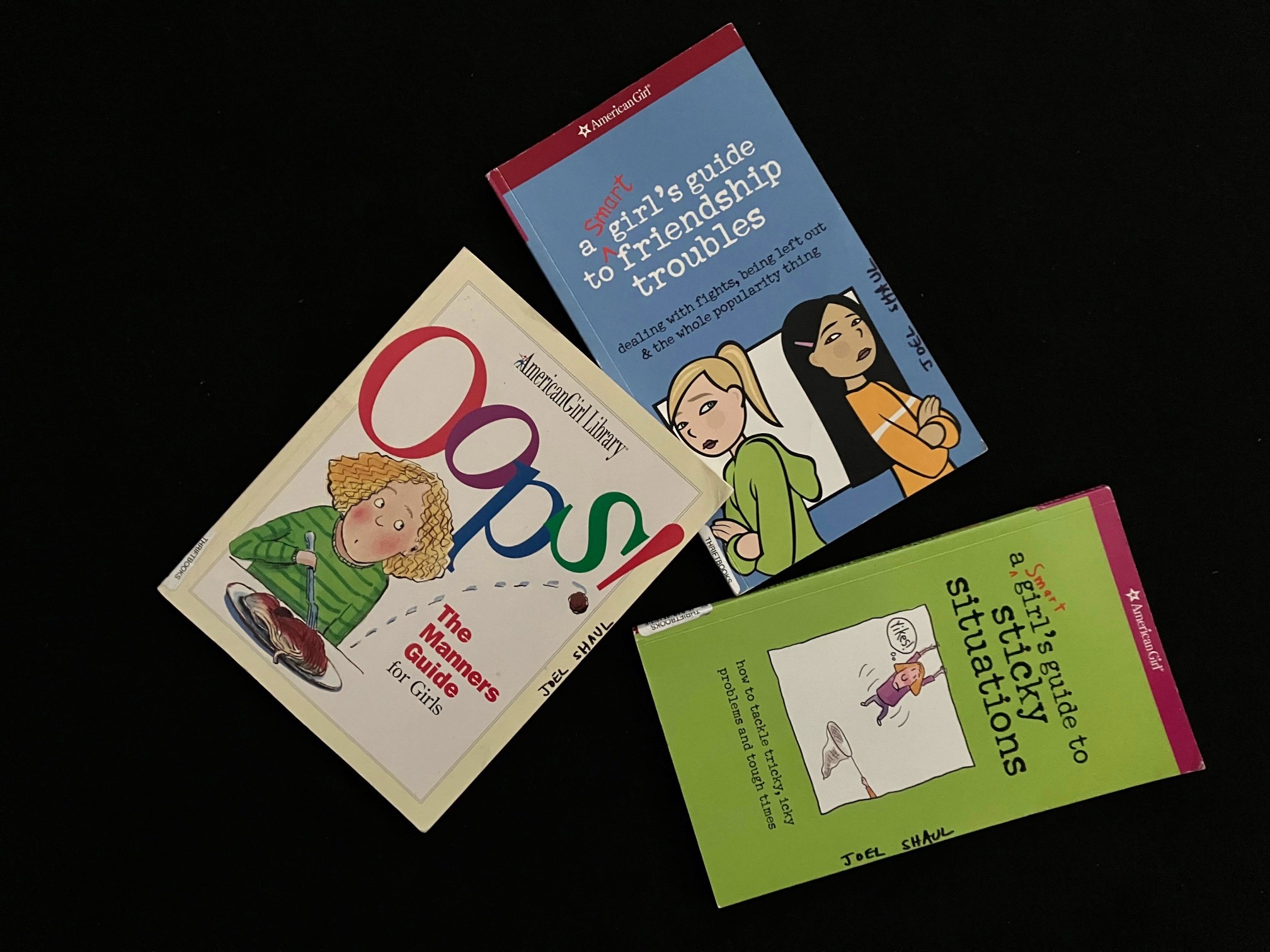
There are many well-written self-help books for girls. Many of us therapists and teachers keep them around to use with our girl clients and students. These books can also be useful for boys on the spectrum, and they can be employed in much the same way as the magazines.
These are really good books you can use to offer boys insights into the lives of girls. Some may be out of print – there are certainly newer ones out there.
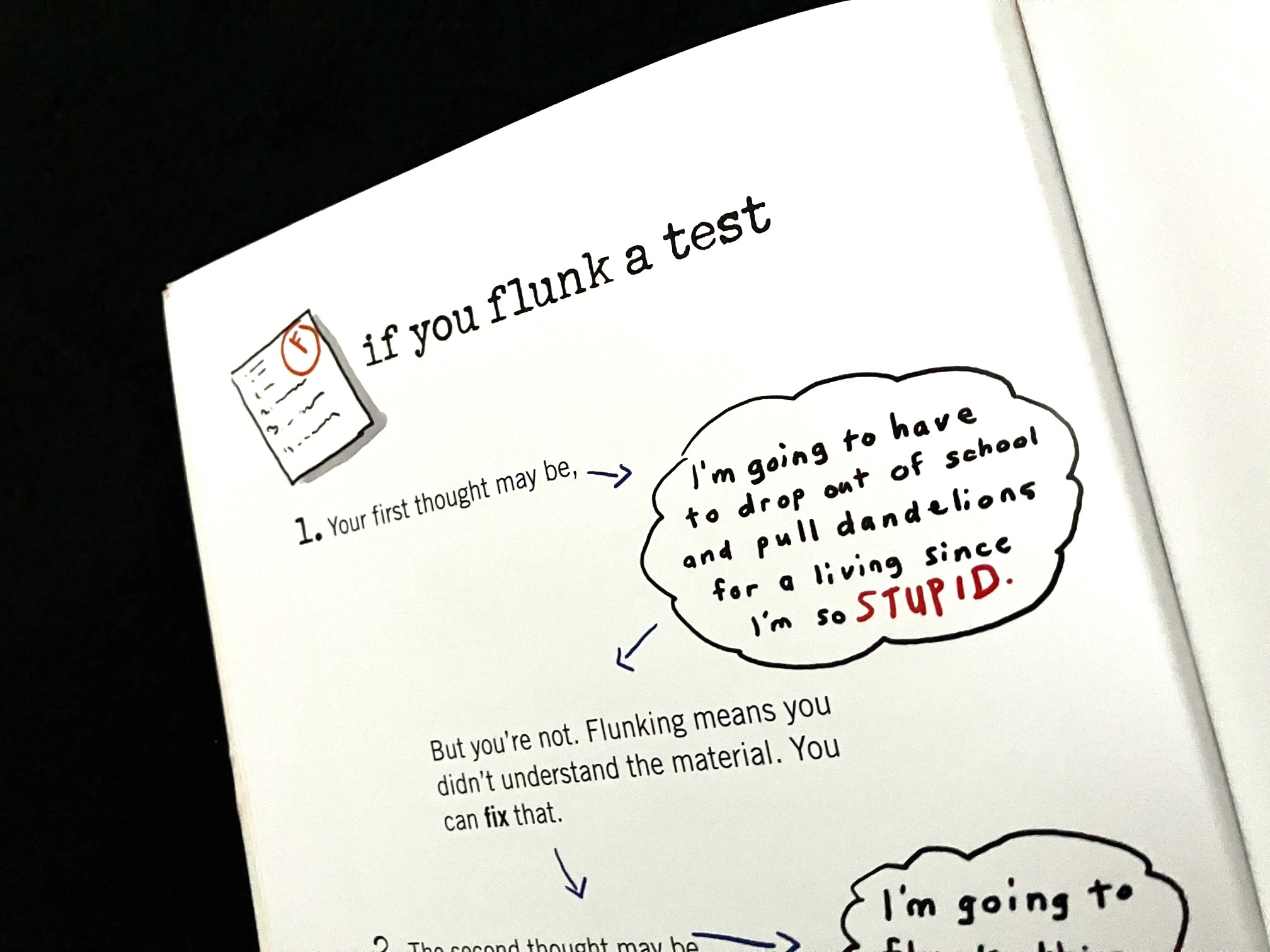
Excerpt from A Girls’ Guide to Sticky Situations. Useful for displaying the thoughts and feelings of female peers.
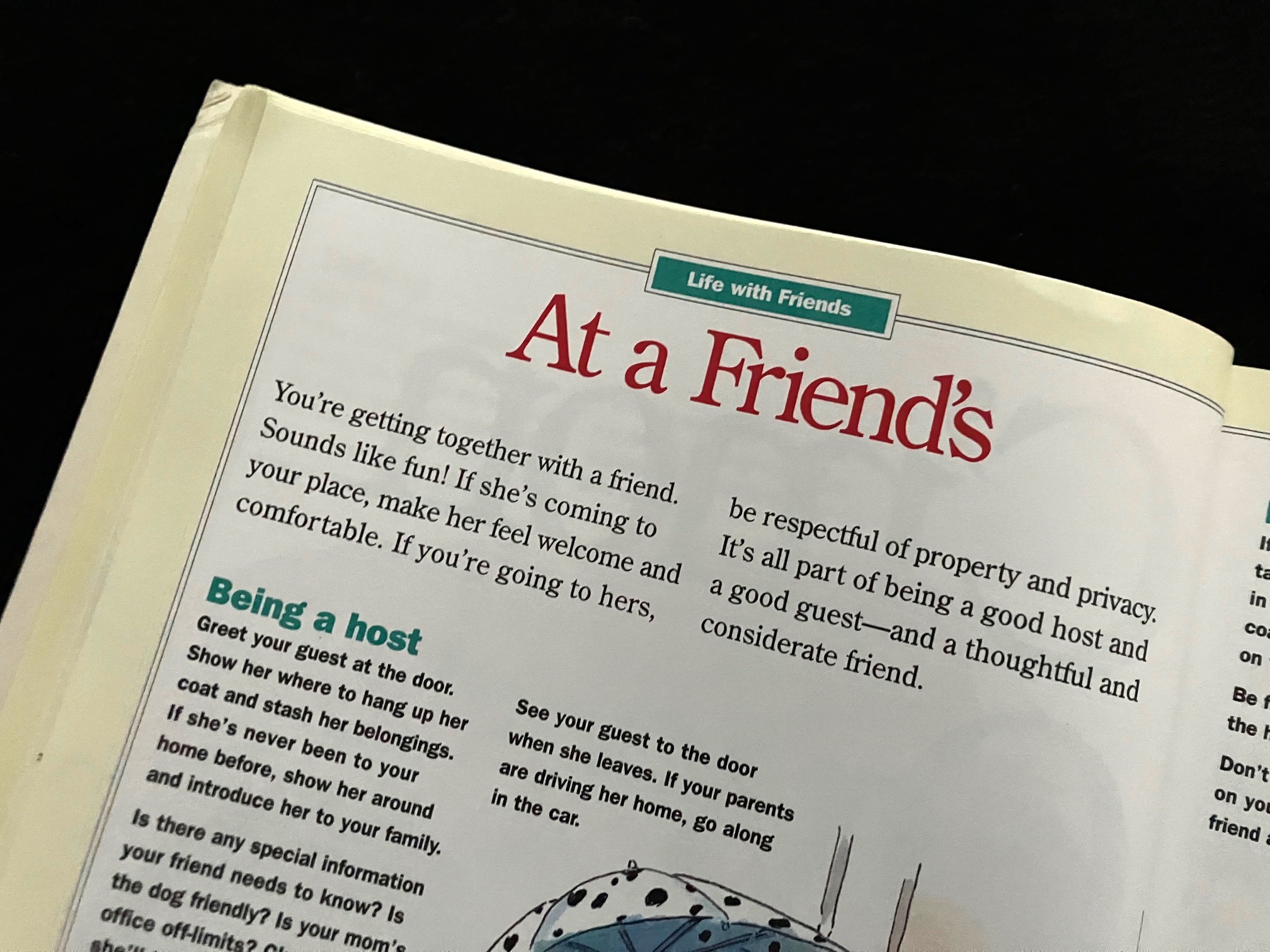
Page from A Girl’s Guide to Friendship Troubles
Media other than printed media for raising awareness of girl youth culture
There are multitudes of short videos on YouTube and TikTok for teens that are quite helpful. Among those I have used a lot (which are getting out of date now) are videos of teenage girls showing the insides of their closets, and teen girls giving advice on topics such as how to deal with bullying or how to survive as a high school freshman. (See screen shots below). Once you find your own “go-to” videos in which teen girls are actually talking about their lives, interests and struggles, it will provide remarkable learning opportunities for boys with ASD.
Two girls on YouTube offering social advice on surviving as a freshman in high school.
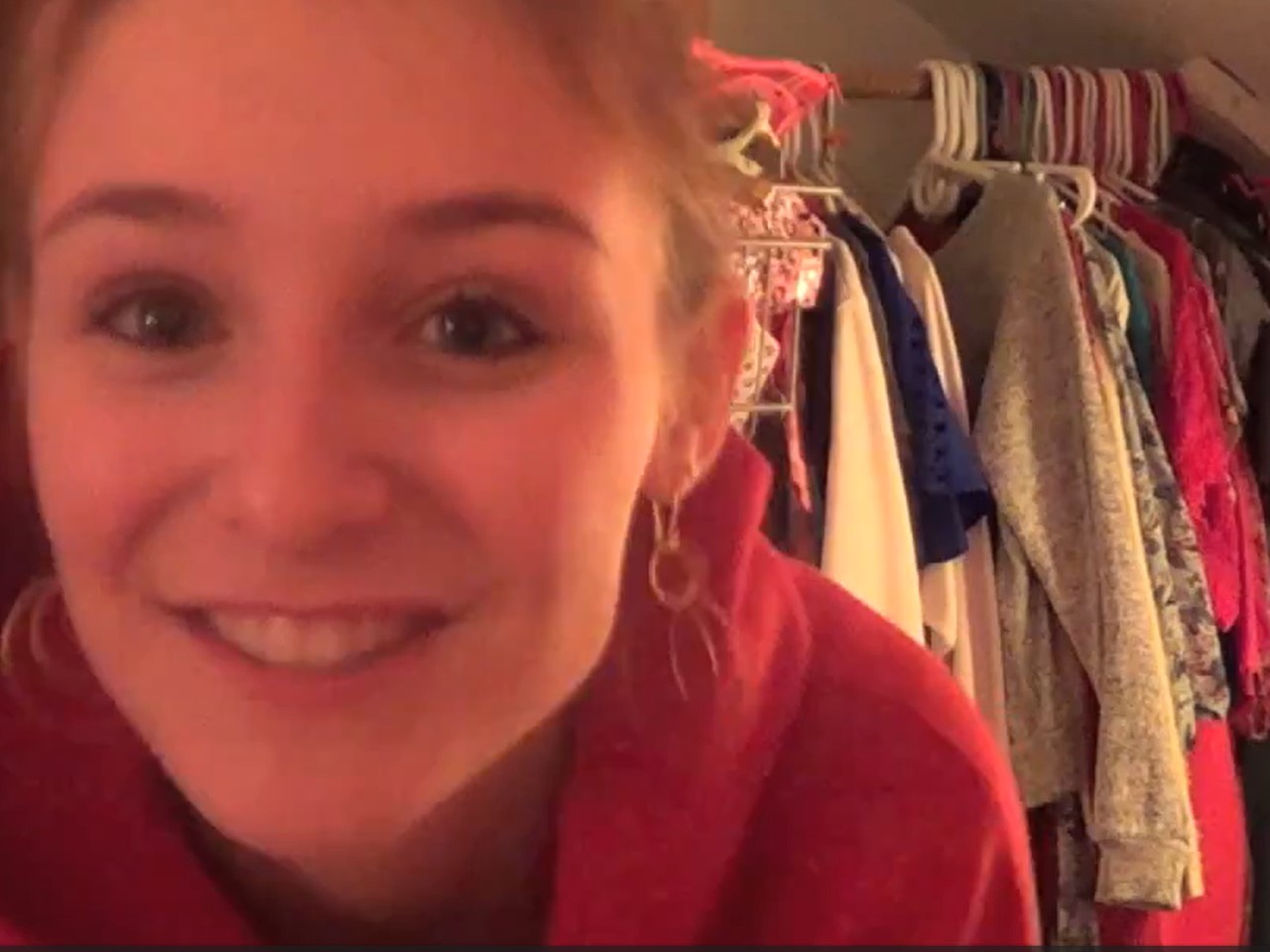
Girl offering a tour of her closet – clothes, purses, video games, art. I have shown this many times and boys always find it fascinating.
Carefully selected magazines, books and videos can provide windows into the world of girls for the boys we work with.
This can provide boys with invaluable insights and help to clear up confusing and distorted information they get from other sources. For therapists, speech pathologists and special education teachers, these magazines, books and videos can make our social skills work with boys on the autism spectrum more effective.
NEED MORE LEARNING ACTIVITIES FOR TEEN BOYS? I have a kit of instructional panels and q and a cards for teen boys to learn more about interacting with girls. Click HERE to access these free materials.
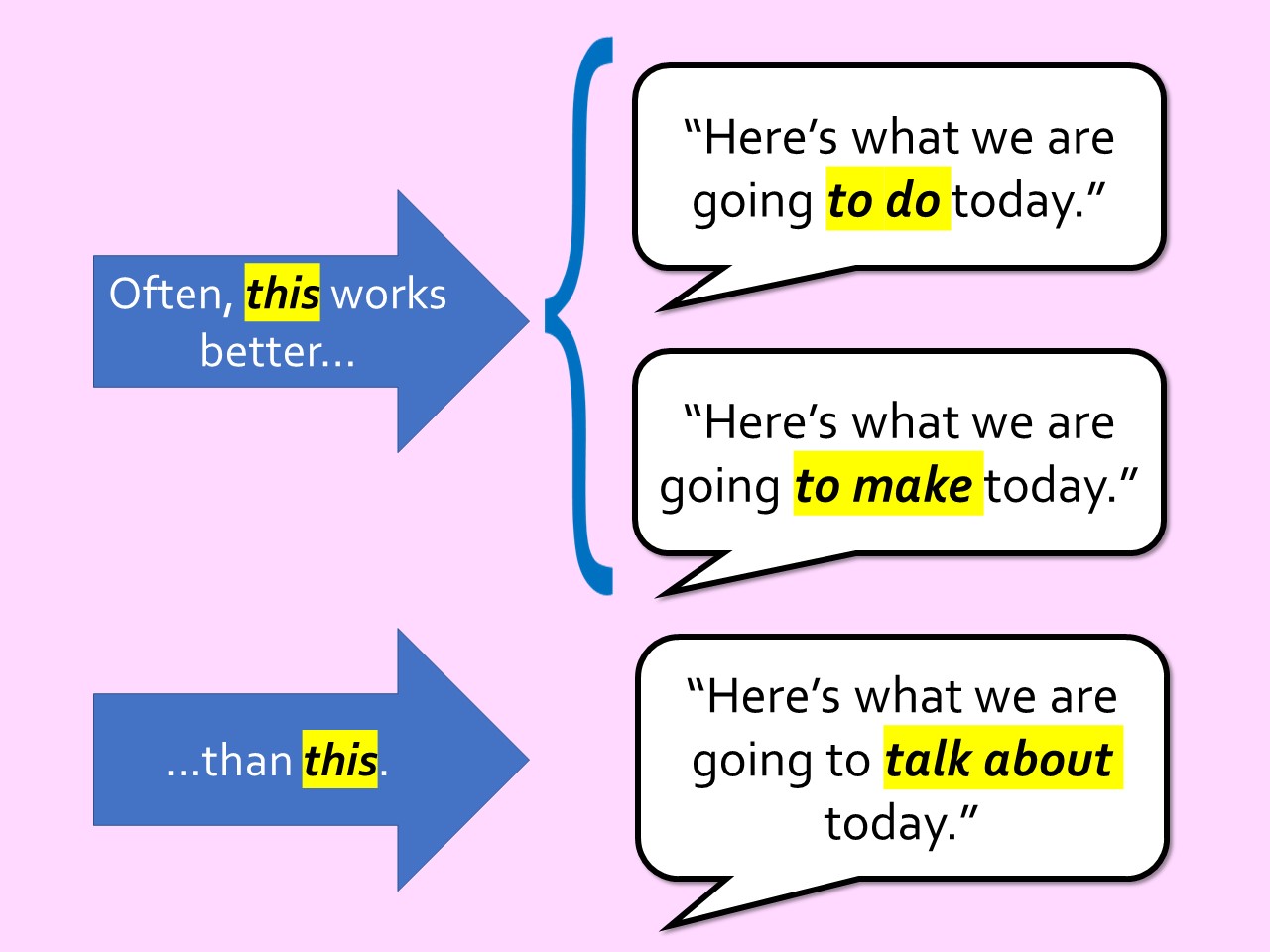
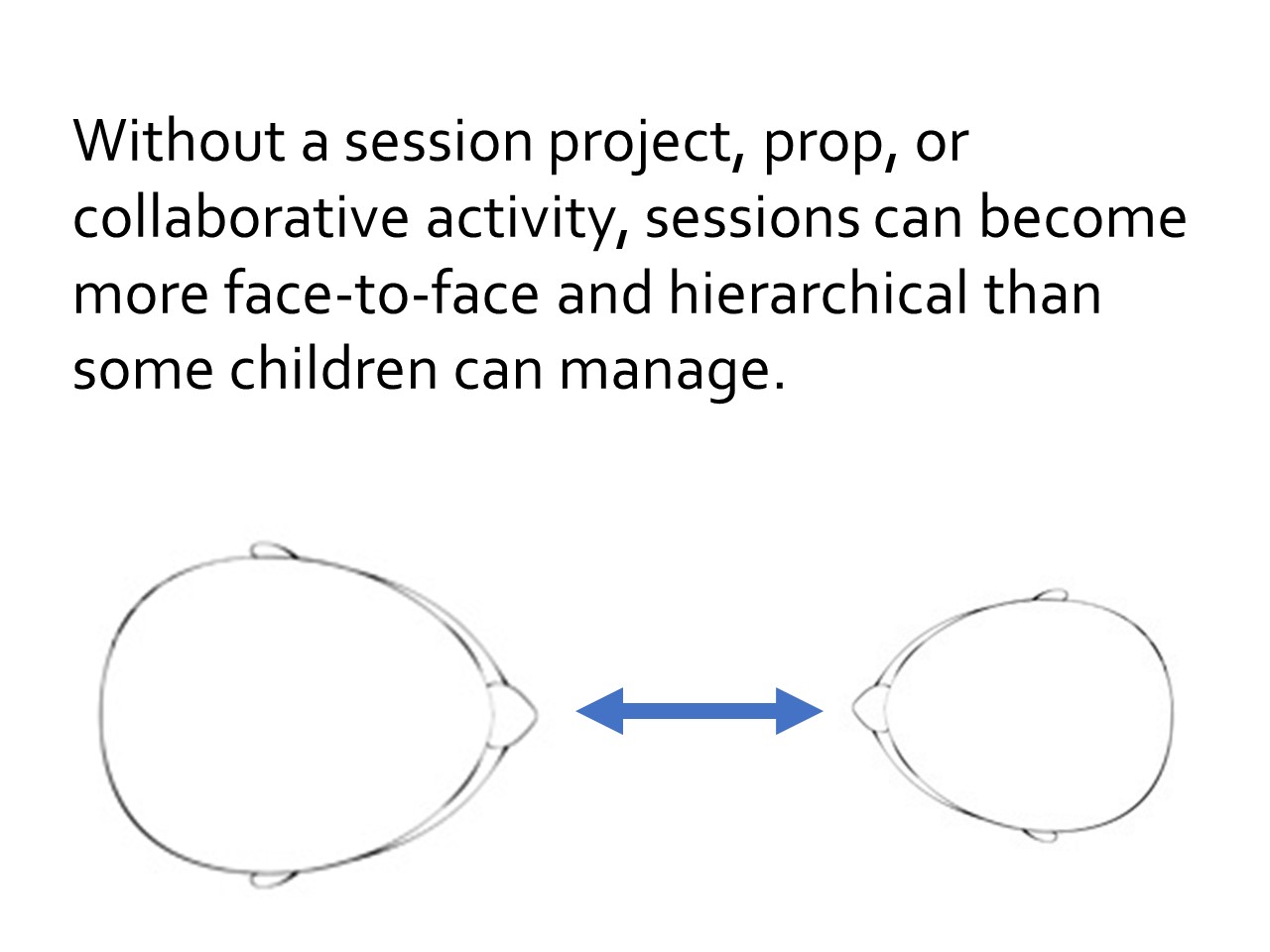
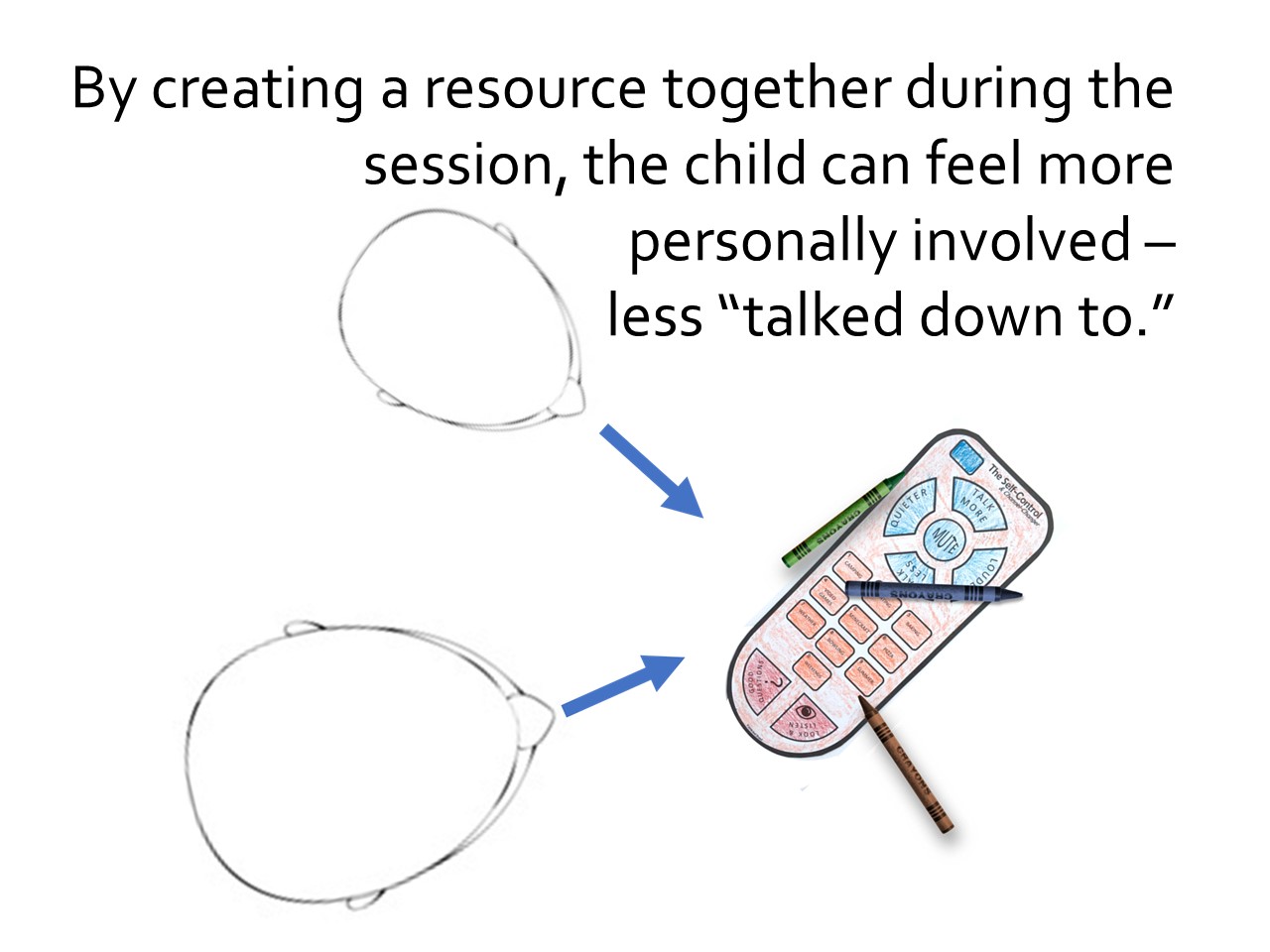
Making the social / emotional skill resource during the session – instead of before – can be very effective.
Children with persistent or complex problems can become weary and demoralized in response to the repetitive approaches we employ to help them. One important way to make the helping process more interesting and engaging is to have the child become directly involved in the creation of therapy resources during the session. With just a little preparation, quite a few of the free resources on this website can be created with some level of assistance by a child during sessions.
Quite a number of the free resources on this website can be created during a session with a child.
When you are co-creating a social skills resource during a session, there are different levels of involvement, depending on the child’s interest, temperament and ability. These include:
*Completion of the whole project, beginning to end, with the adult supervising
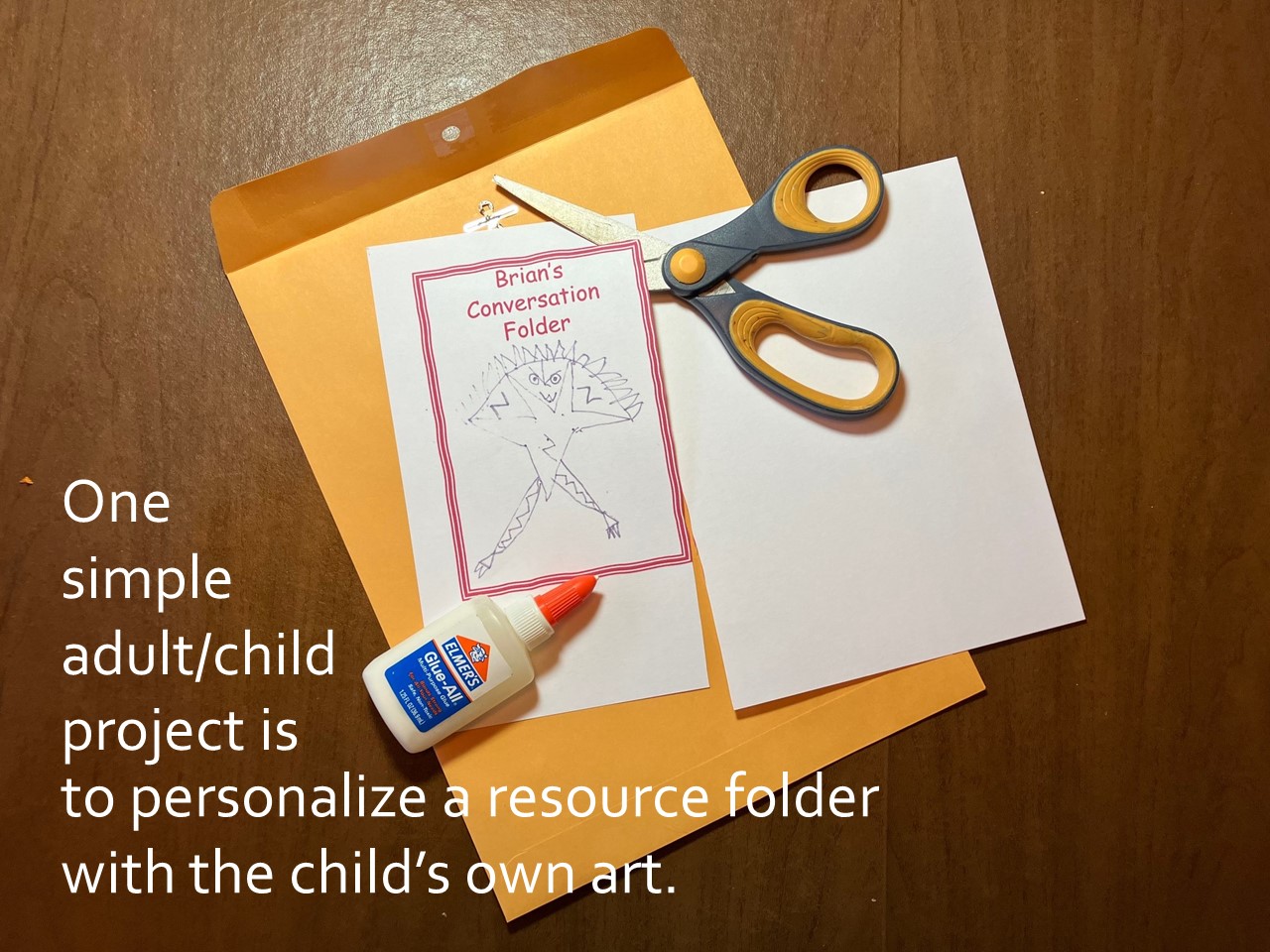
*The child decorates or personalized the project in some special way
*The child colors the project or helps to cut it out
*The child gets to do the “fun” part of the project, such as running the laminator
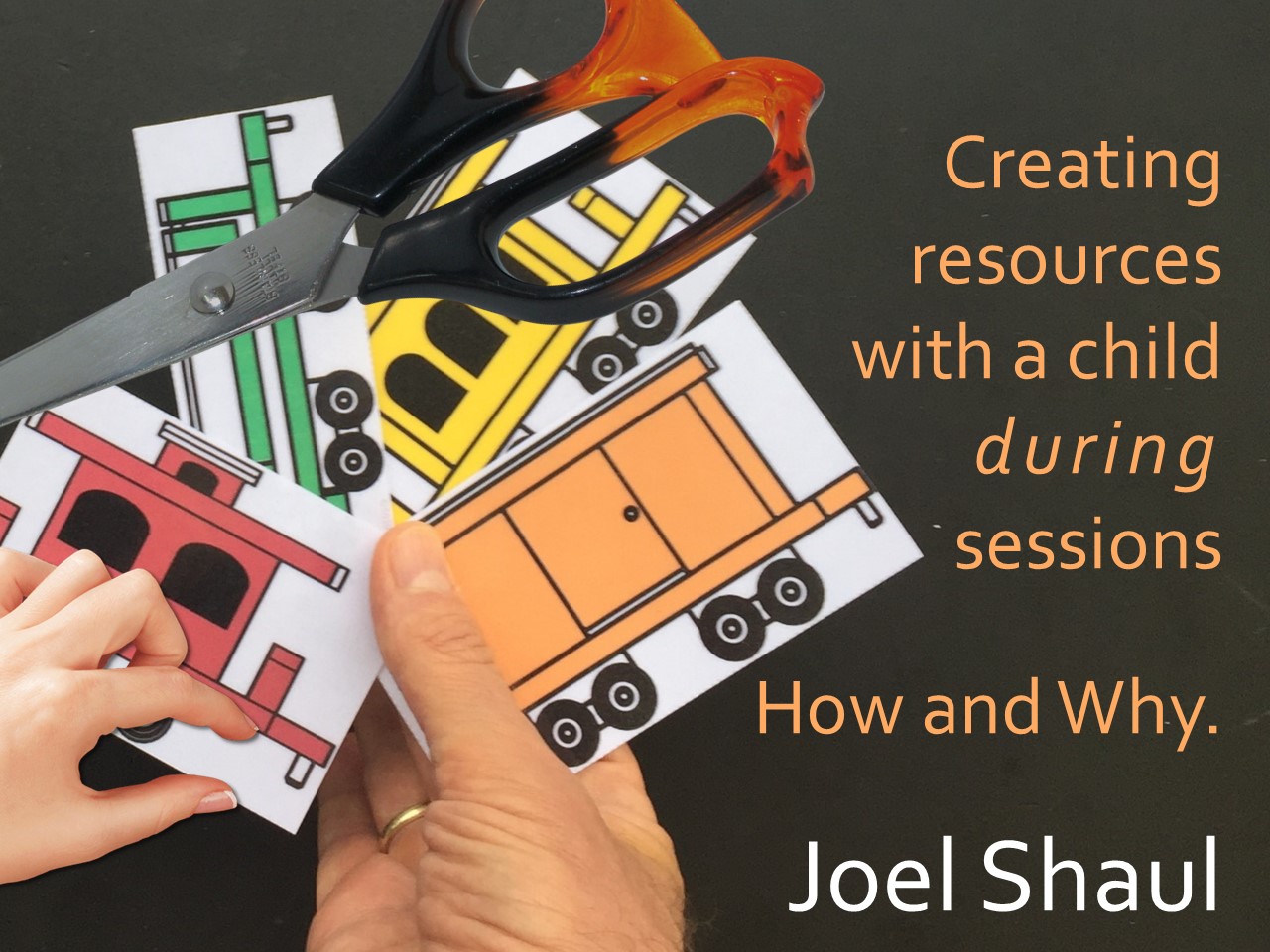
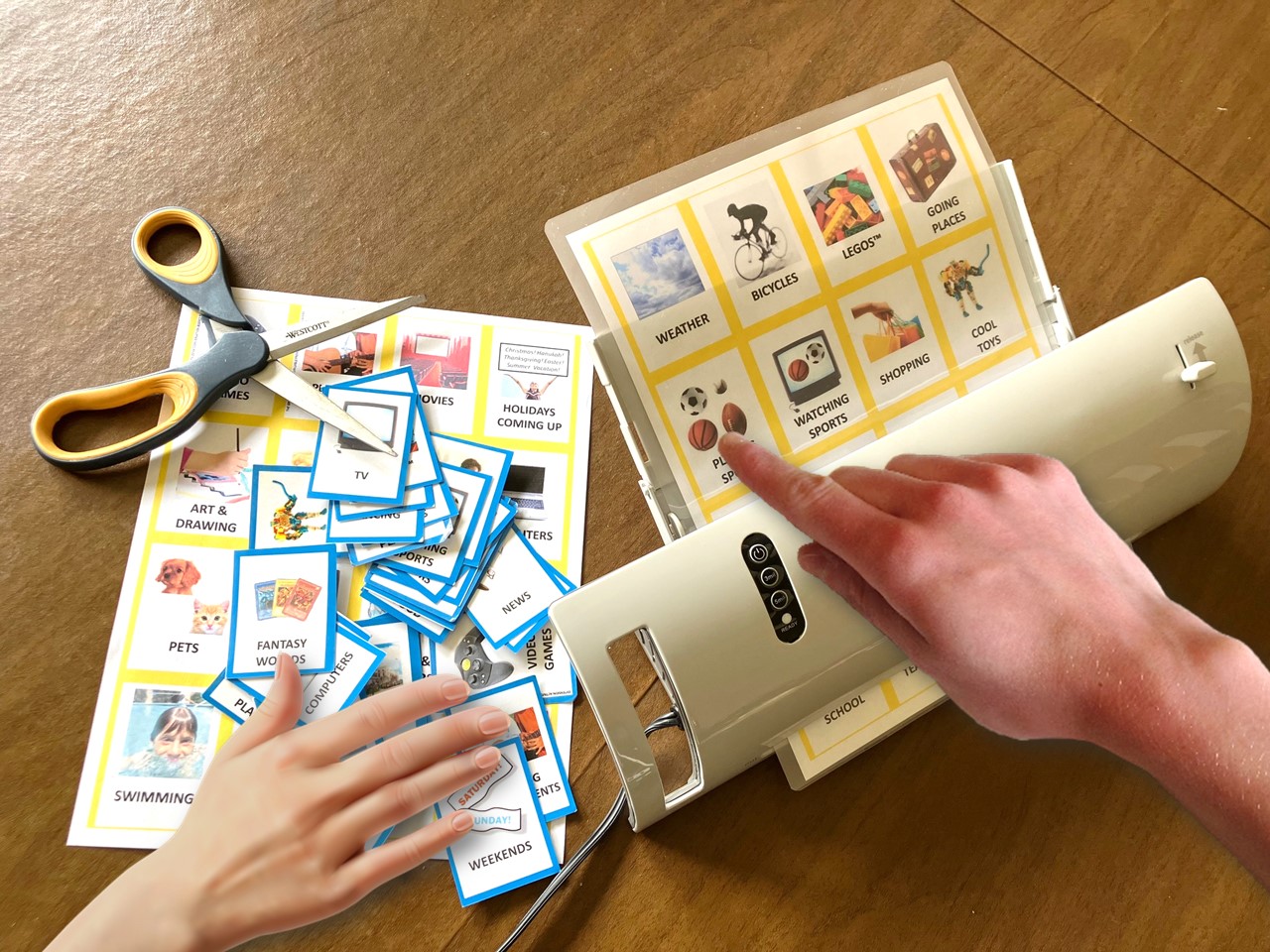
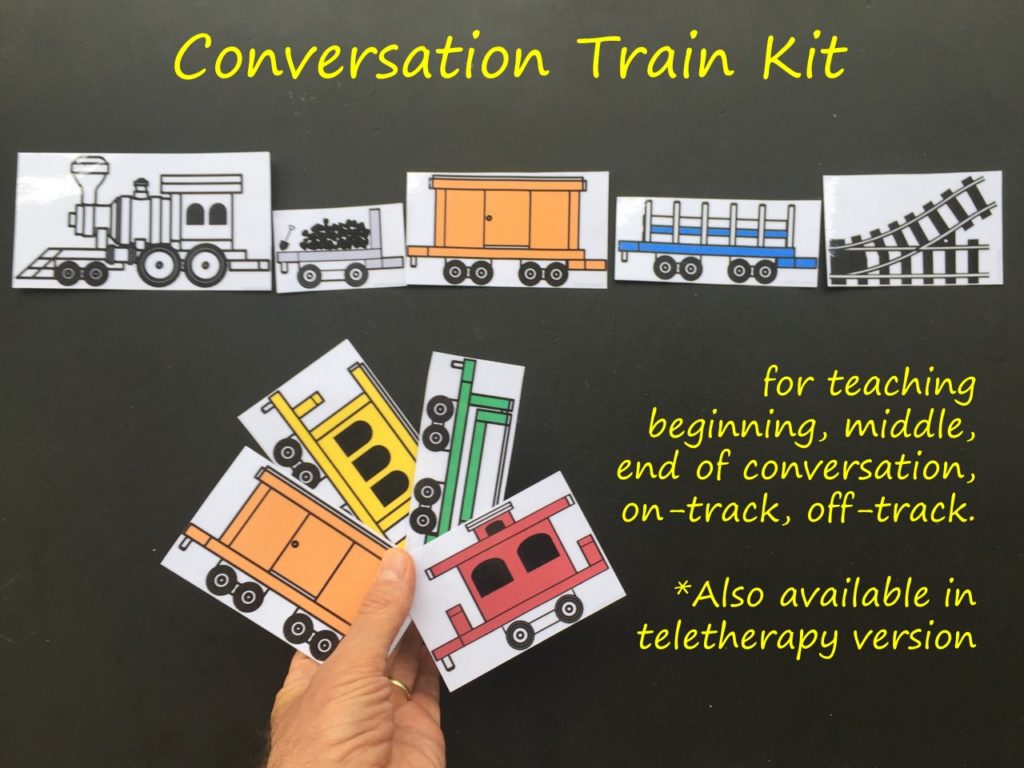
One of the most popular downloads on the website is the Train Conversation Printables. This requires printing, cutting and laminating – all things that a child might help to carry out.
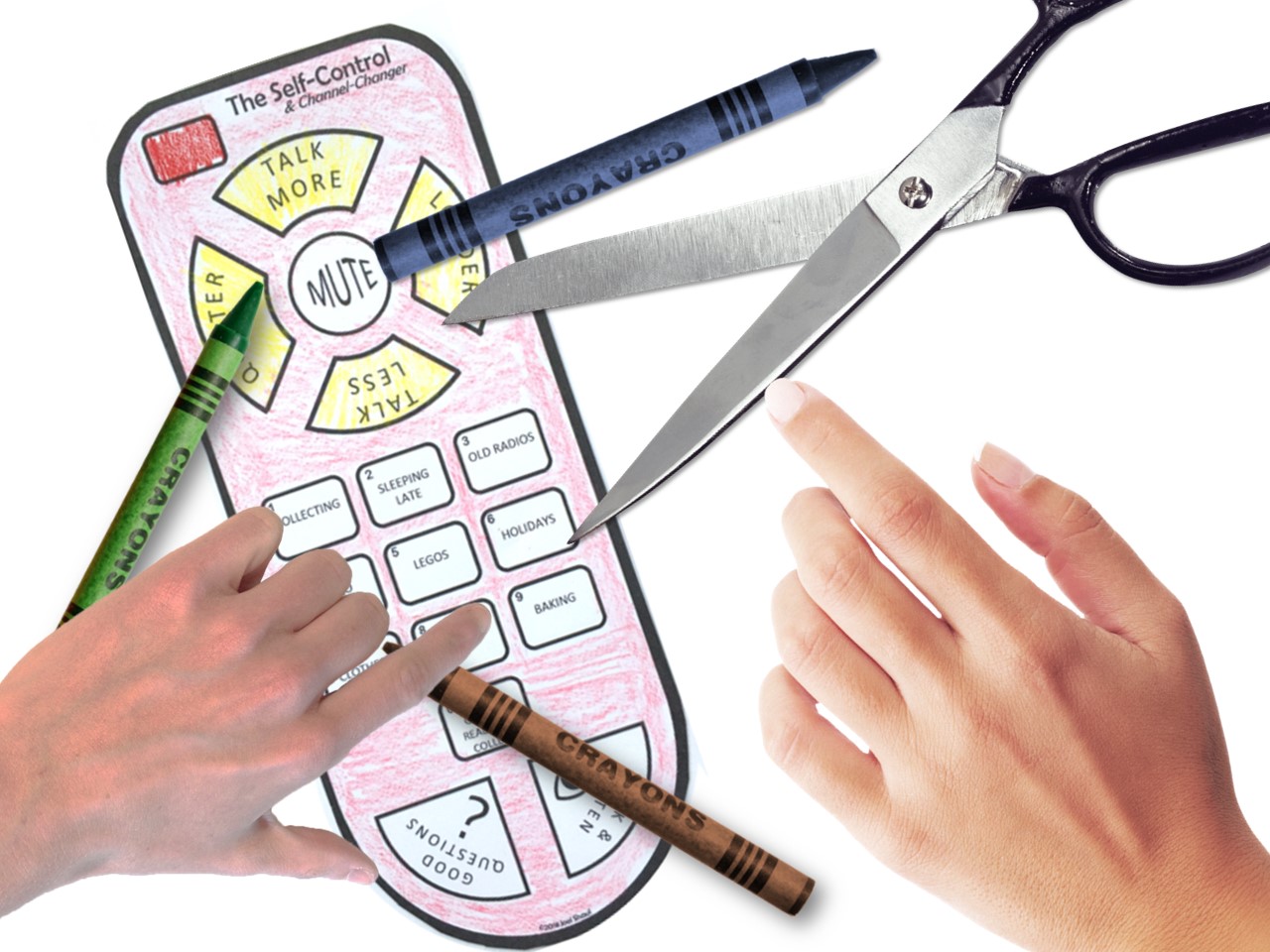
The resource shown above is the Remote Control Channel Changer. Usually, you have the child help to figure out what conversation topics to place on the buttons. The child colors it in, and finally, you laminate it and cut it out.
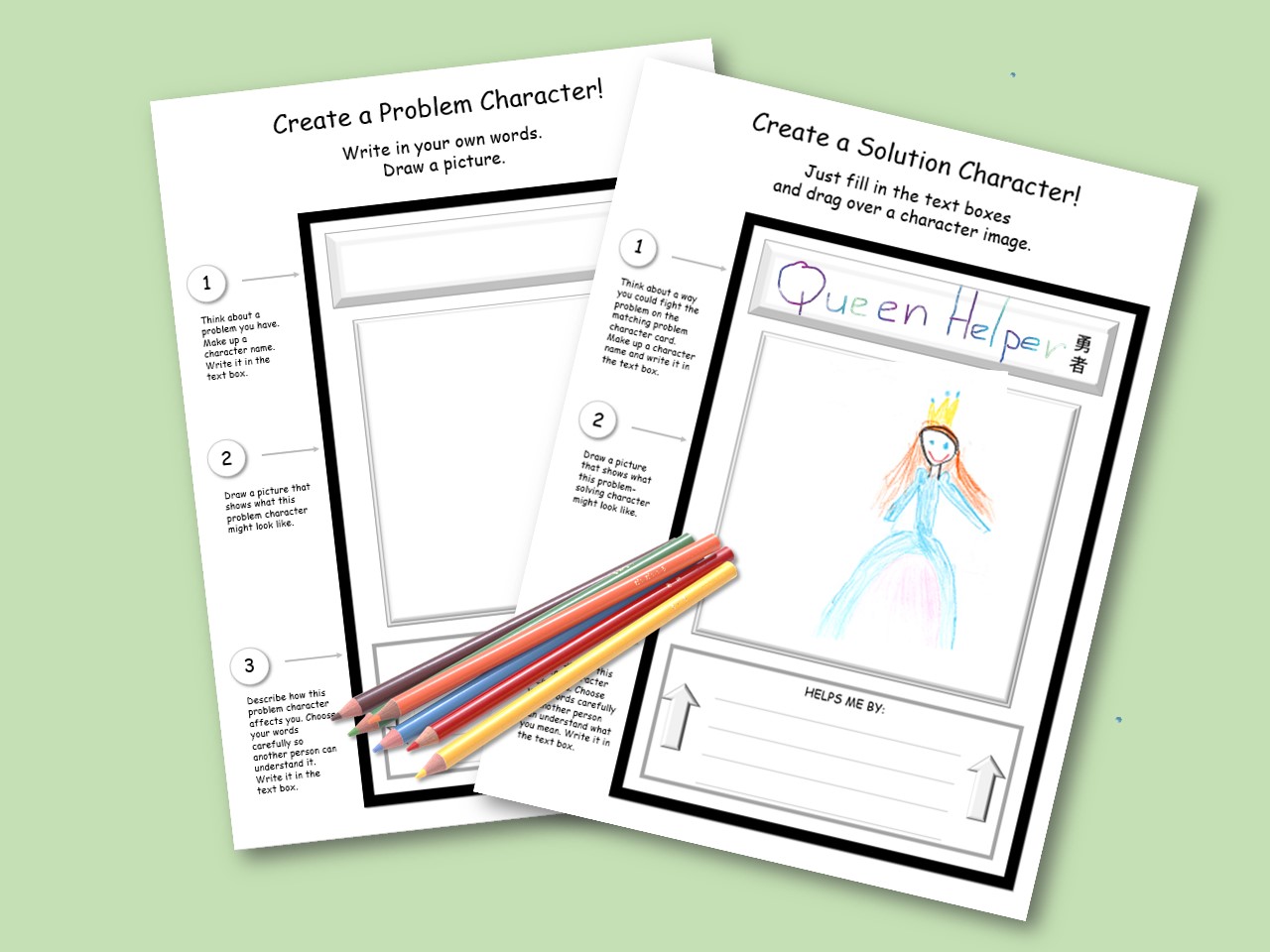
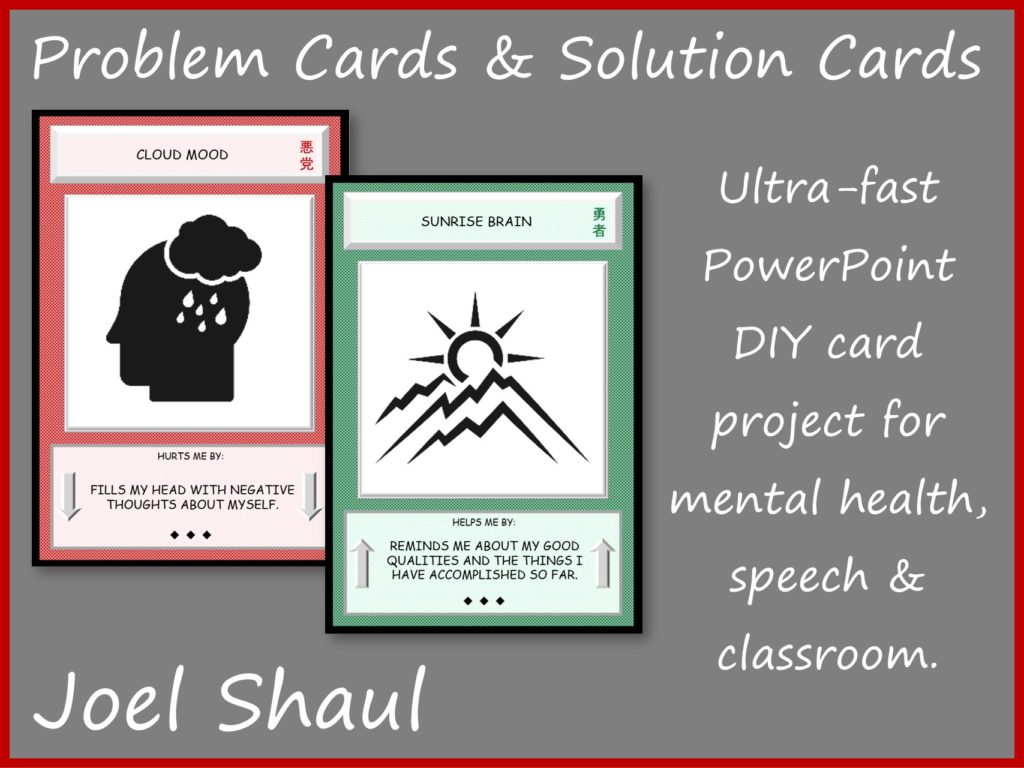
The resource shown above is one part of Problem and Solution Cards. One way to do this project is to print out blanks which the child can complete during a session. This collaborative project can also be carried out entirely on the computer, in PowerPoint, with drag-and-drop images. That option is advantageous if you don’t have much prep time or the child does not like to draw.
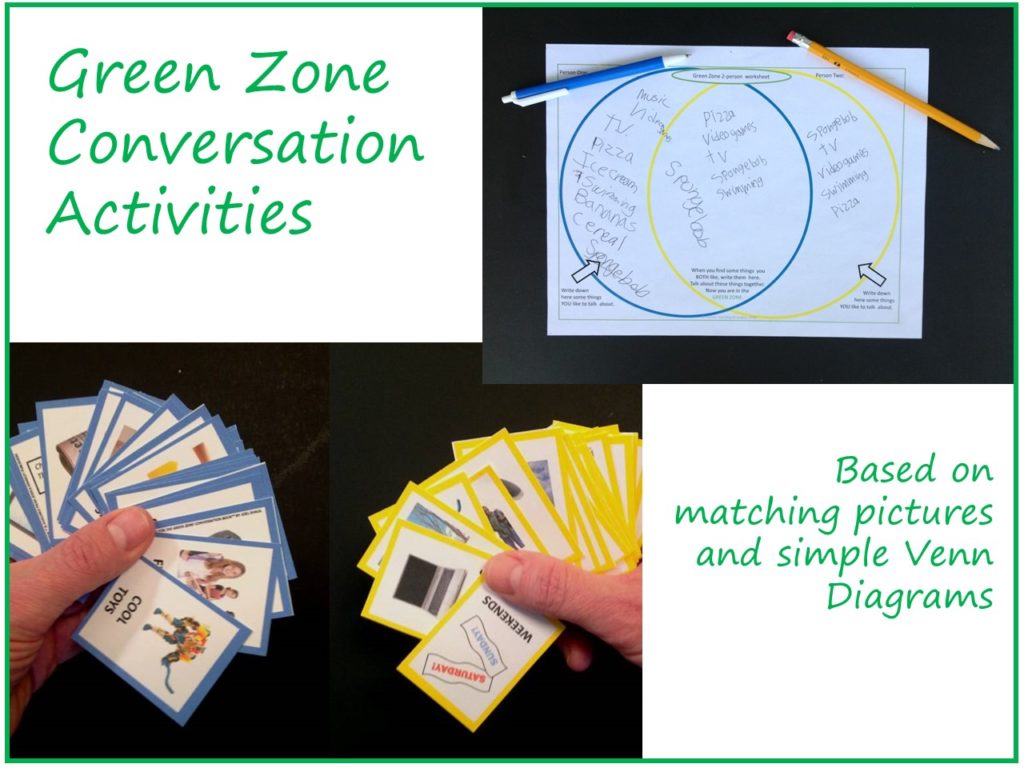
Shown above are Green Zone Picture Cards. These are two identical sets of conversation topic cards that two people compare to find their “common ground” conversation topics.
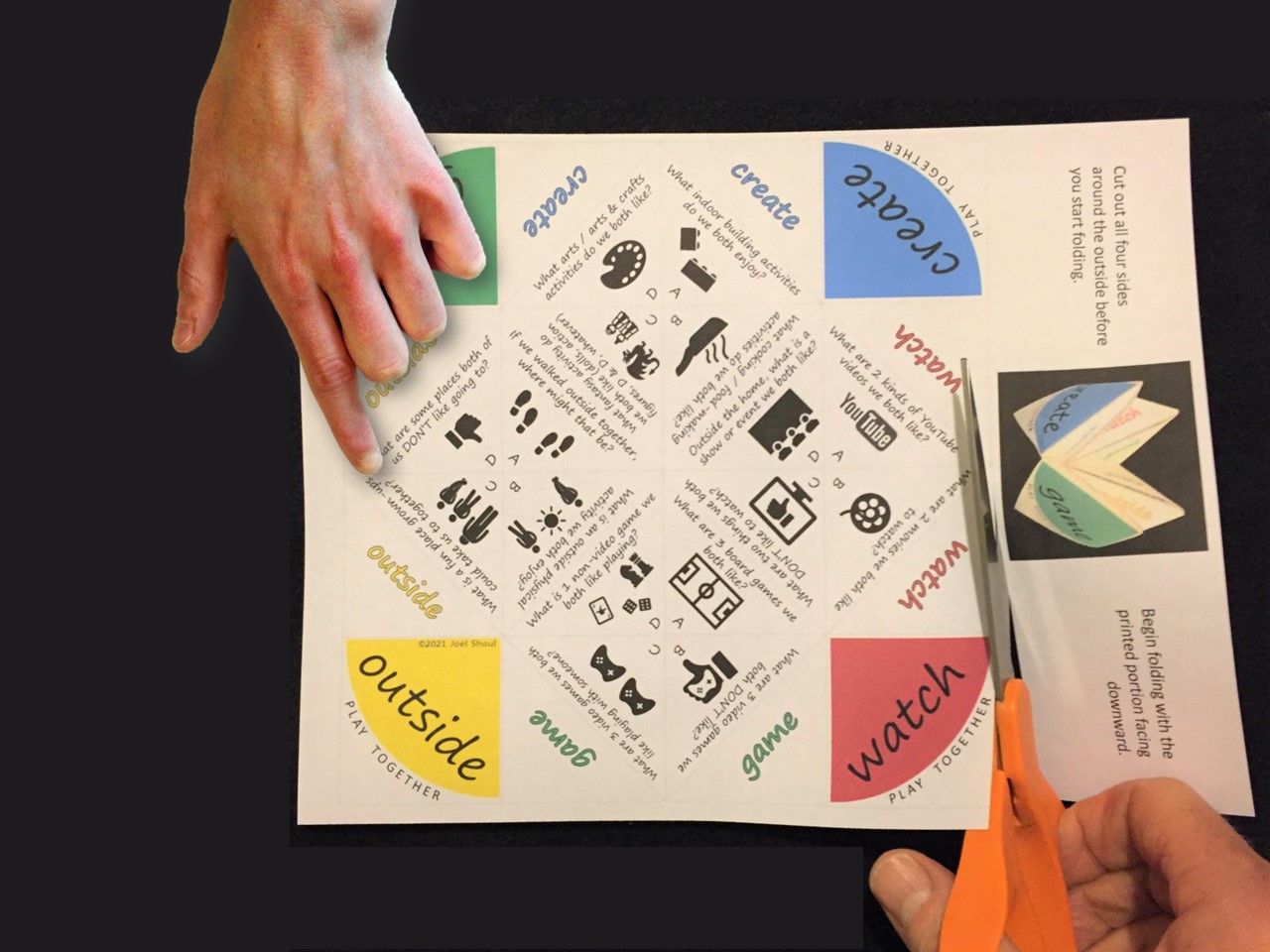
Shown above is one of fourteen Paper Fortune Tellers on the website. You can spend a lot of sessions printing these and folding these with children. They cover many topics including conversation practice, play skills and emotional regulation.
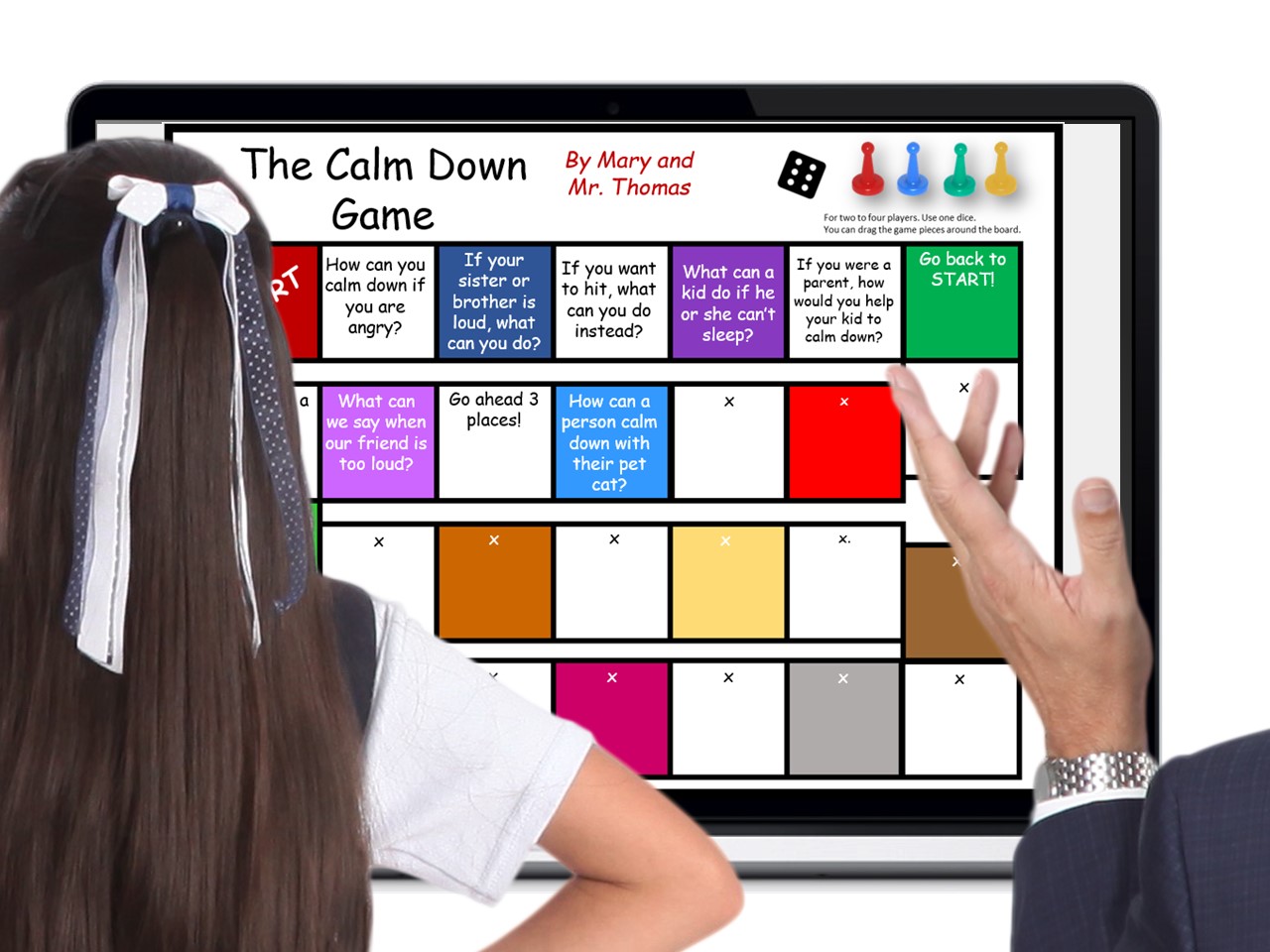
Many of the adult / child collaborative therapy projects on the website require no printing at all and are entirely screen based.
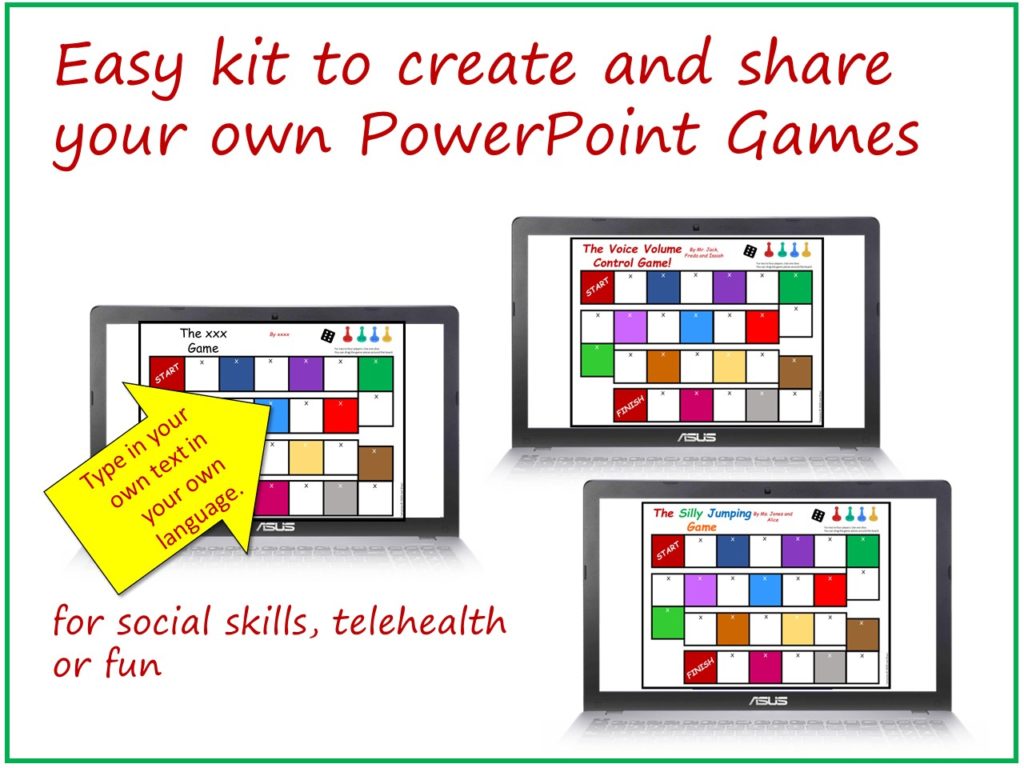
An advantage of the screen-based projects is that there is minimal set-up and clean up. Another advantage is that lots of children like to involve a computer during sessions. The very easy project shown above is Create Your Own PowerPoint Social Skills Game.
I hope you find some of these strategies useful in your own work.
Greetings, saying goodbye and social skills training for children with autism
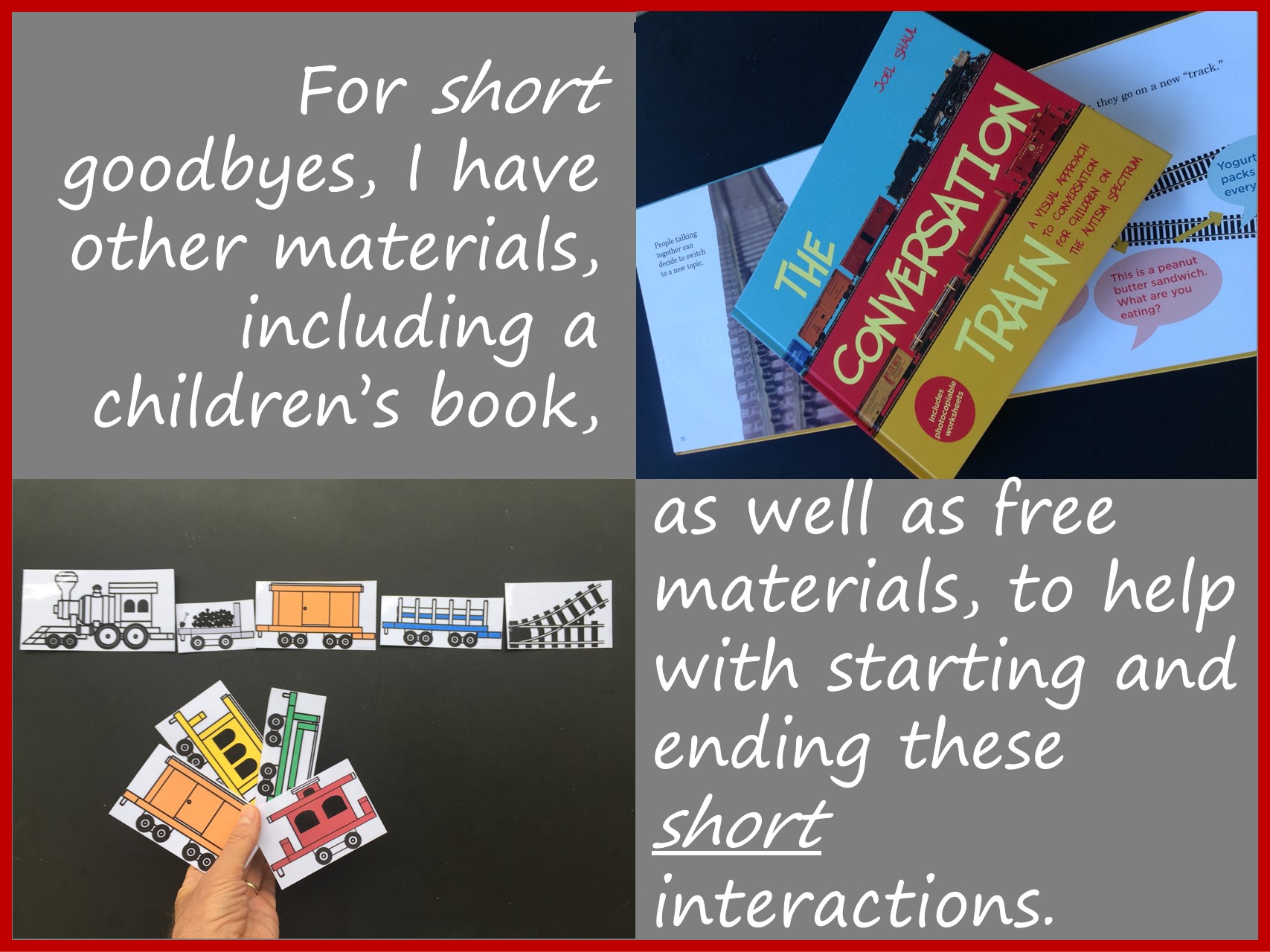
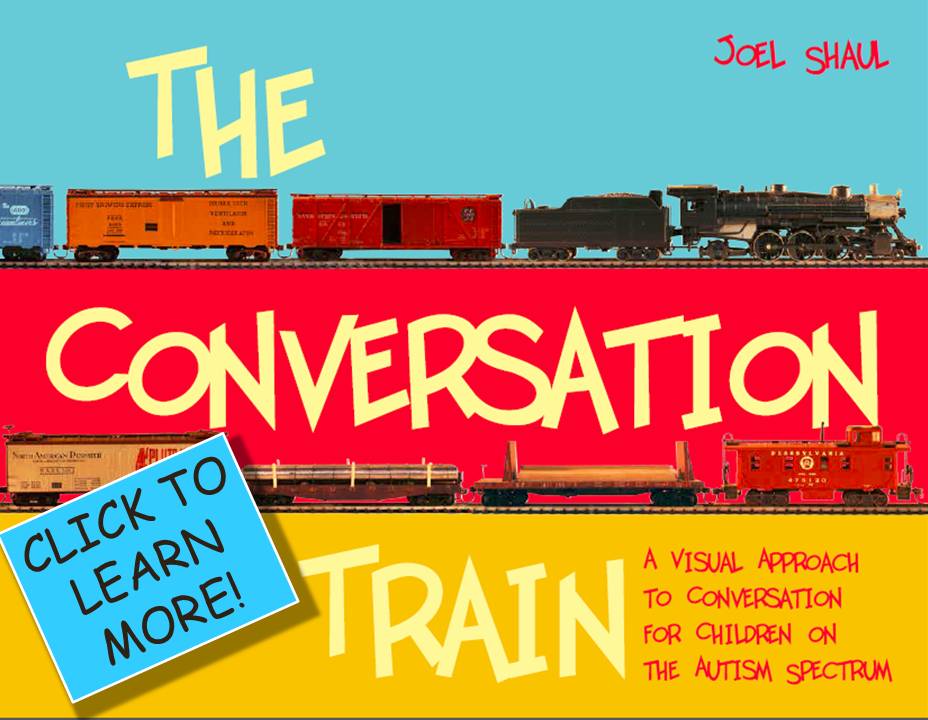
Teachers and therapists work hard to raise young people’s awareness of how and when to begin and end conversations. My free Train Conversation Kits can be helpful to teach these skills.
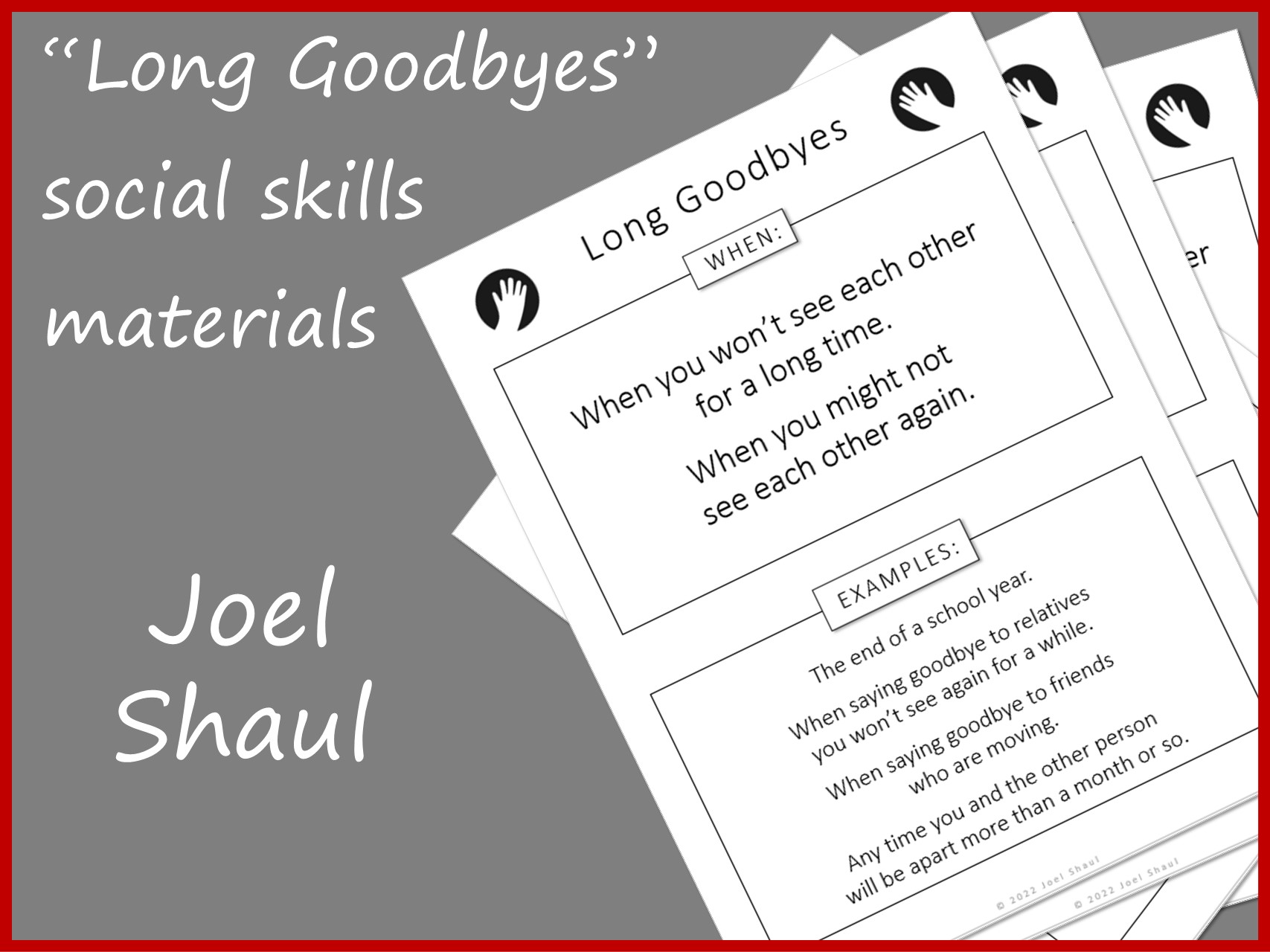
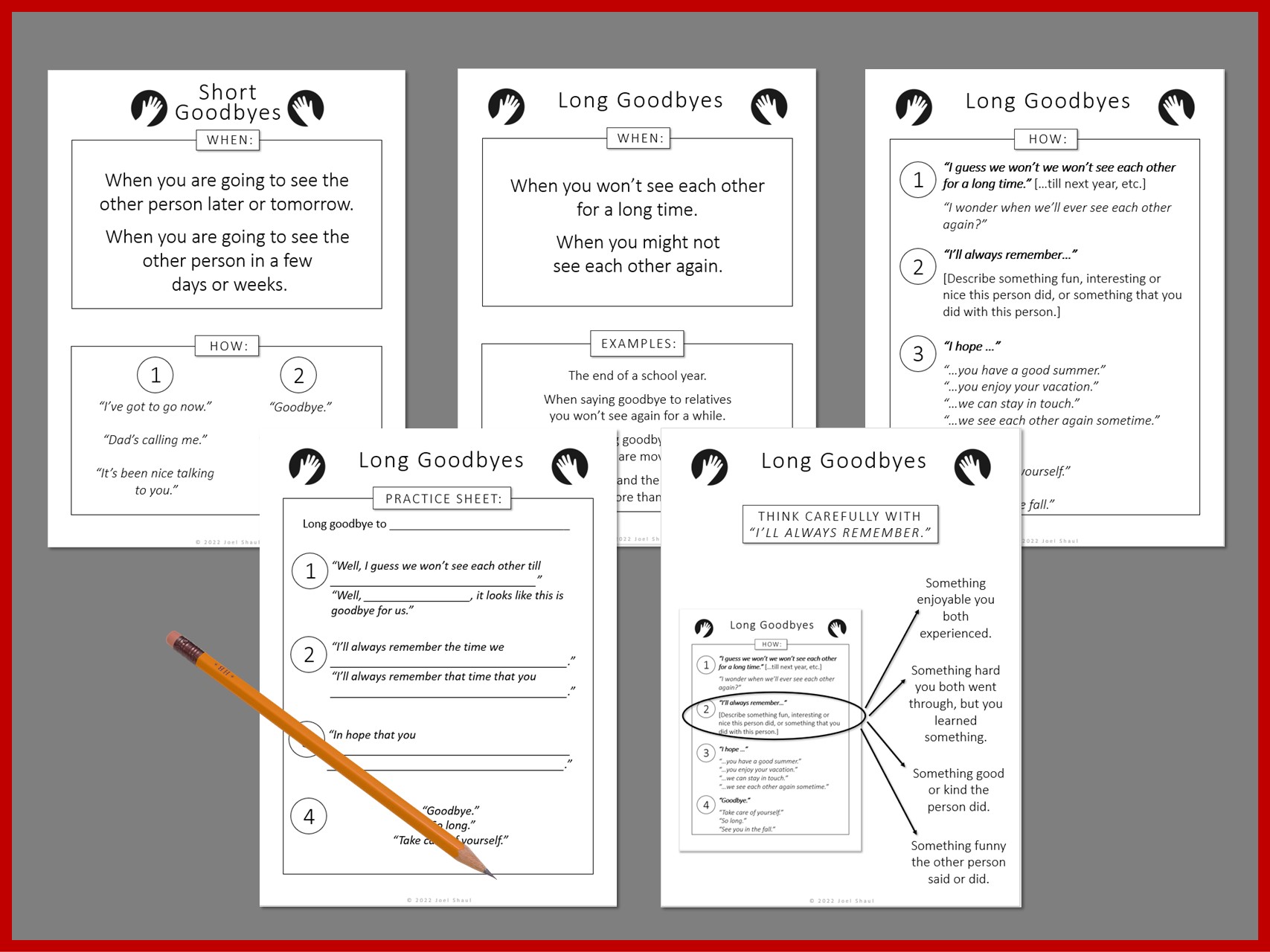
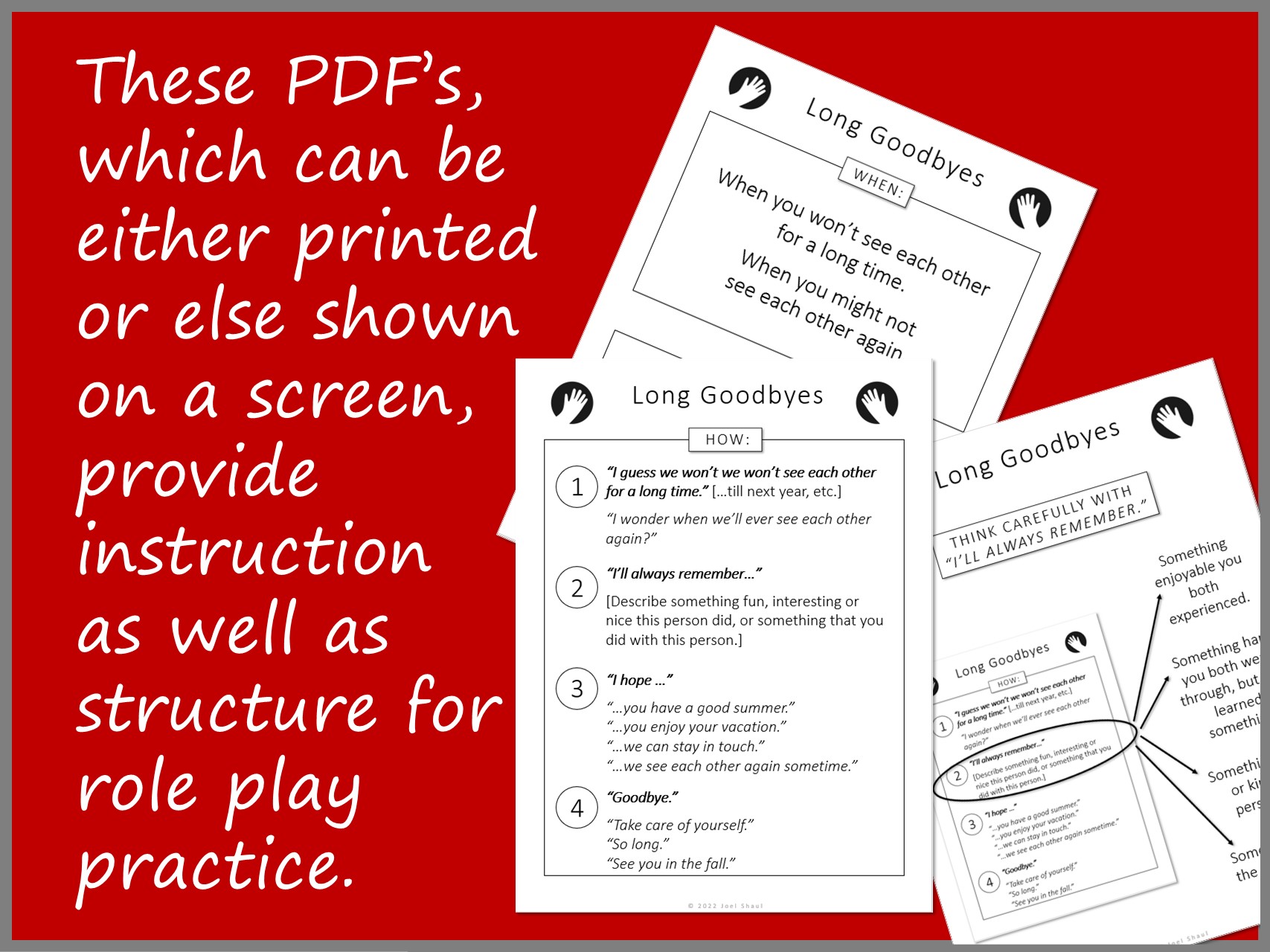
There is a different and more complicated set of conversation skills involved in saying a “long goodbye,” when one is taking leave of another person they might not see for a long time – or ever. In my own experience, young people with ASD’s find “long goodbyes” stressful and confusing, and they are usually very open to advice and role play practice. I have often used this “long goodbye” rubric on occasions when I am ending therapy with a child or helping groups of young people say farewell to one another following a summer program.
This 5-page pdf download includes:
*A rubric sheet for conventional Short Goodbyes
*A sheet with a brief description of Long Goodbyes with examples of when they occur
*A summary of the 4 steps involved in carrying out a Long Goodbye
*A practice fill-in sheet for a child to write down a Long Goodbye
*An explanation page for step 2 in Long Goodbyes (the most difficult step) in which one says, “I’ll always remember…”
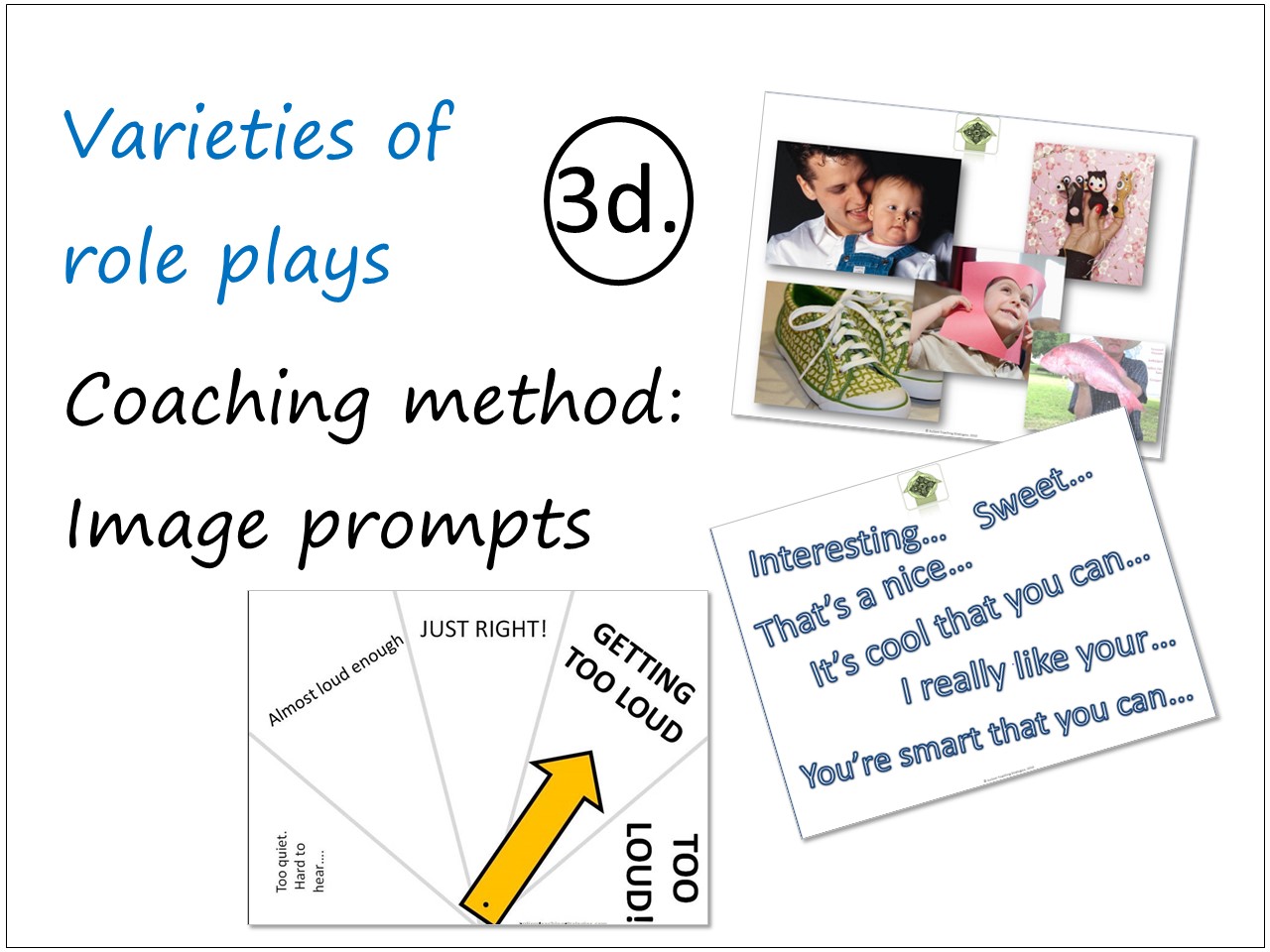
Role playing is an essential social skills training method when we are working with young people on the autism spectrum. Most of us probably employ them often in our work. But years ago when I was learning how to use role plays, I muddled through it on my own, and if there was anything out there that instructed professionals how to do role plays, I was unaware of it.
Here is a summary of using role plays for social skills training, with links to free download resources which support the use of role plays.
When we are teaching young people with autism what to say and do in social situations, we should never just expect them to implement this learning on their own. They need to practice it in a safe setting where they can be coached, guided and encouraged.
We should be doing role playing often enough in our work that our clients expect it. I have a few clients who actually ask for it.
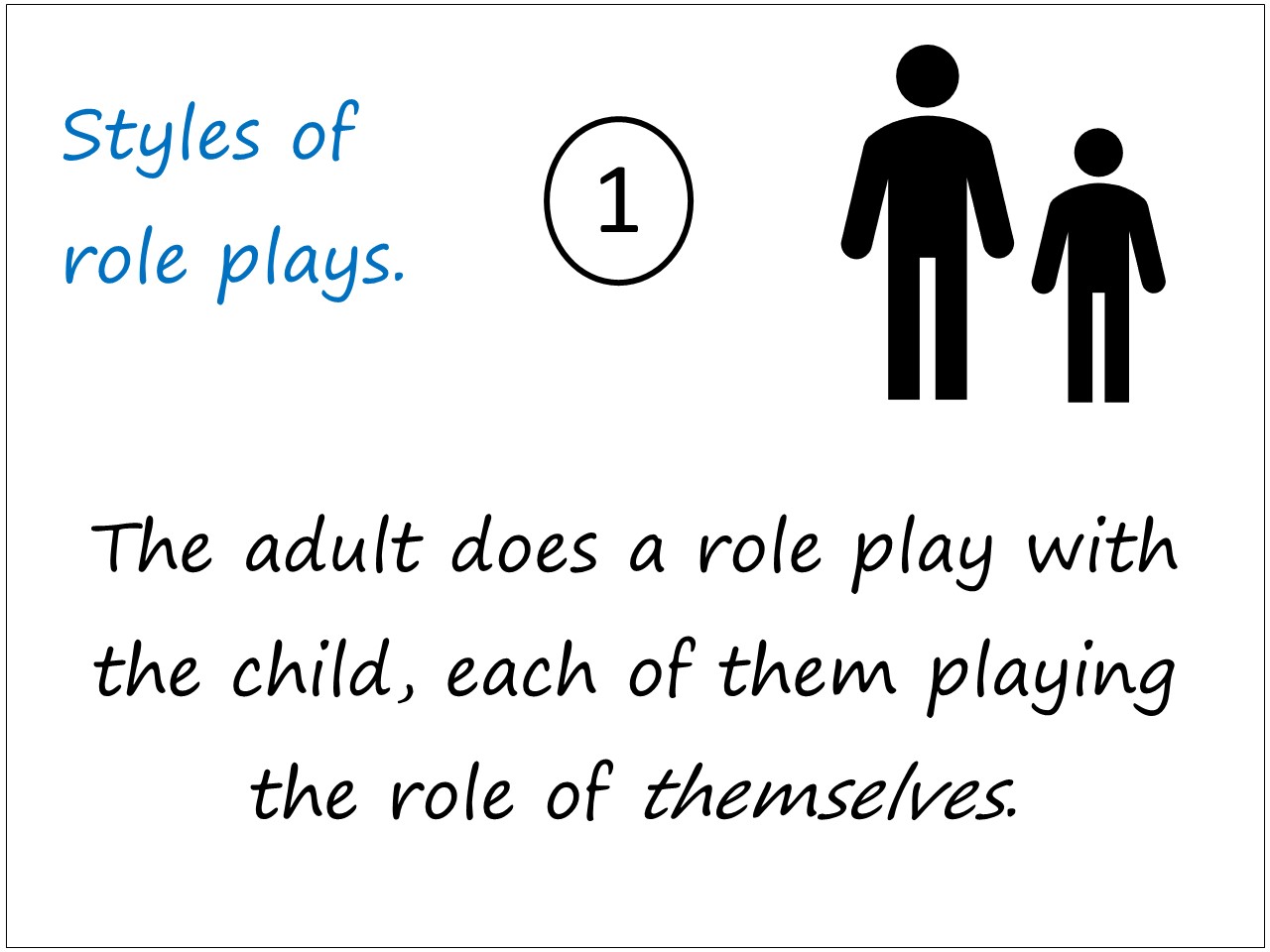
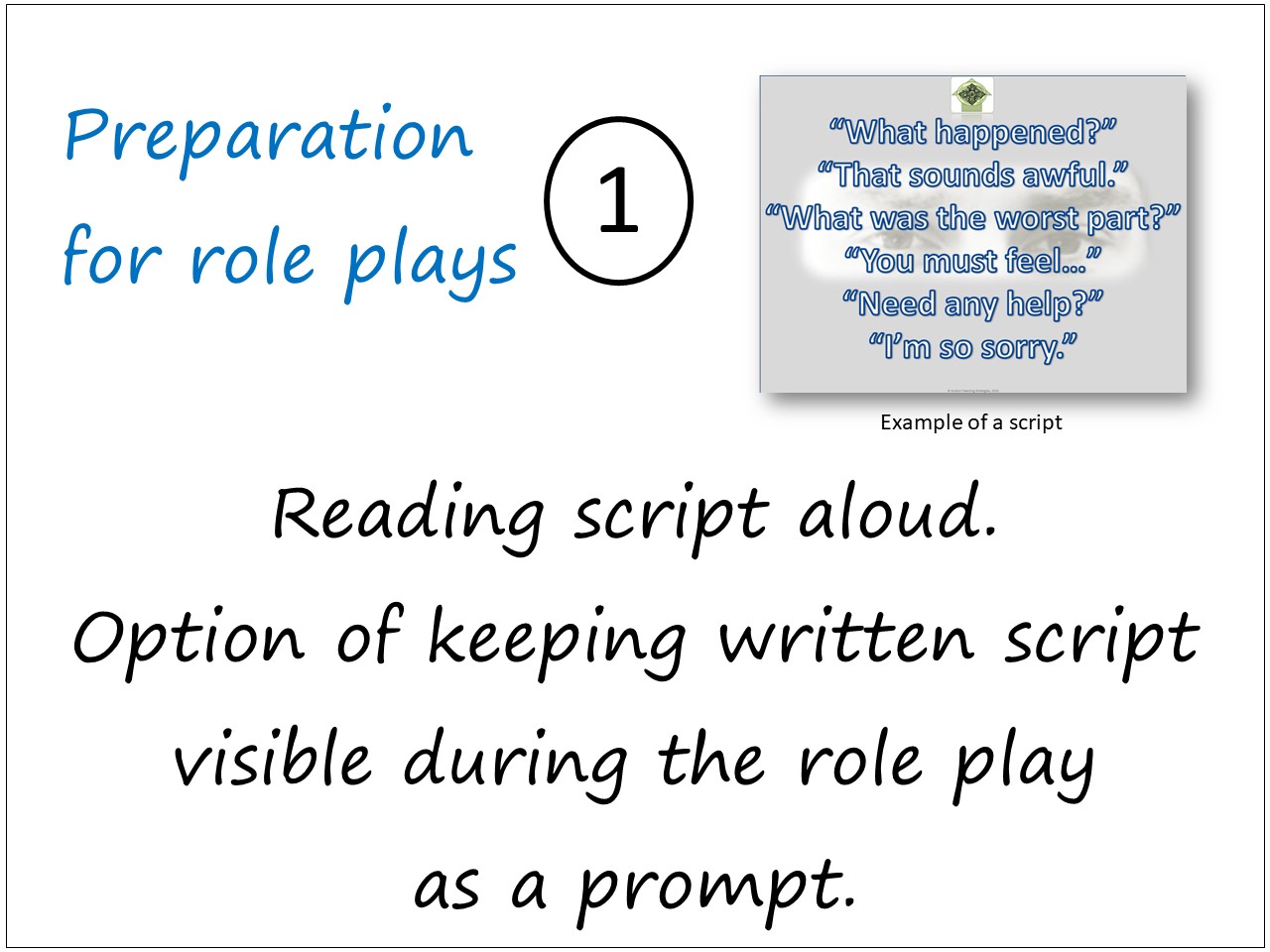
A simple role play set-up can be carried out by printing these How Was Your Day? script sheets and then following the prompts, with both you and the child playing the role of yourselves.
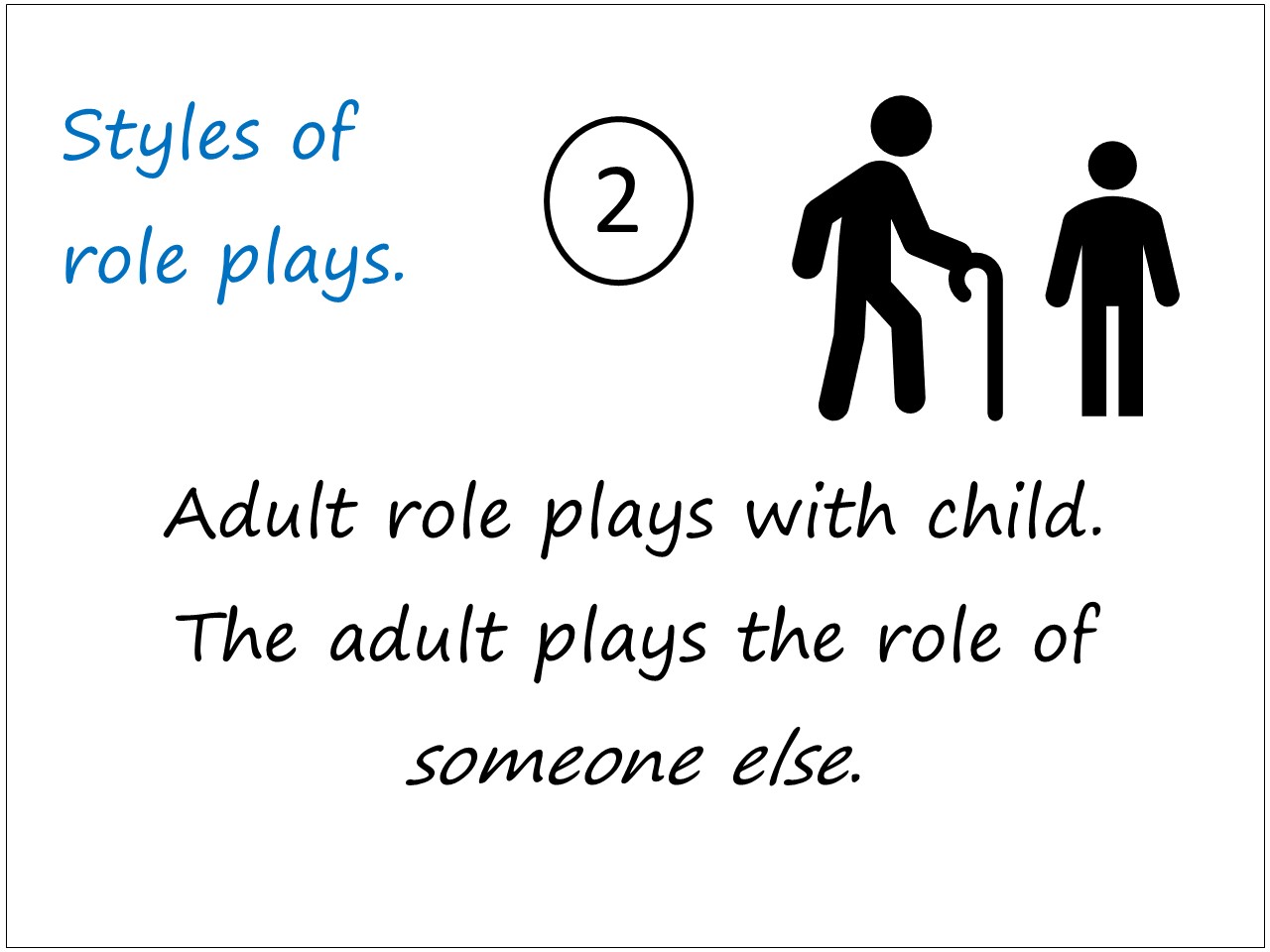
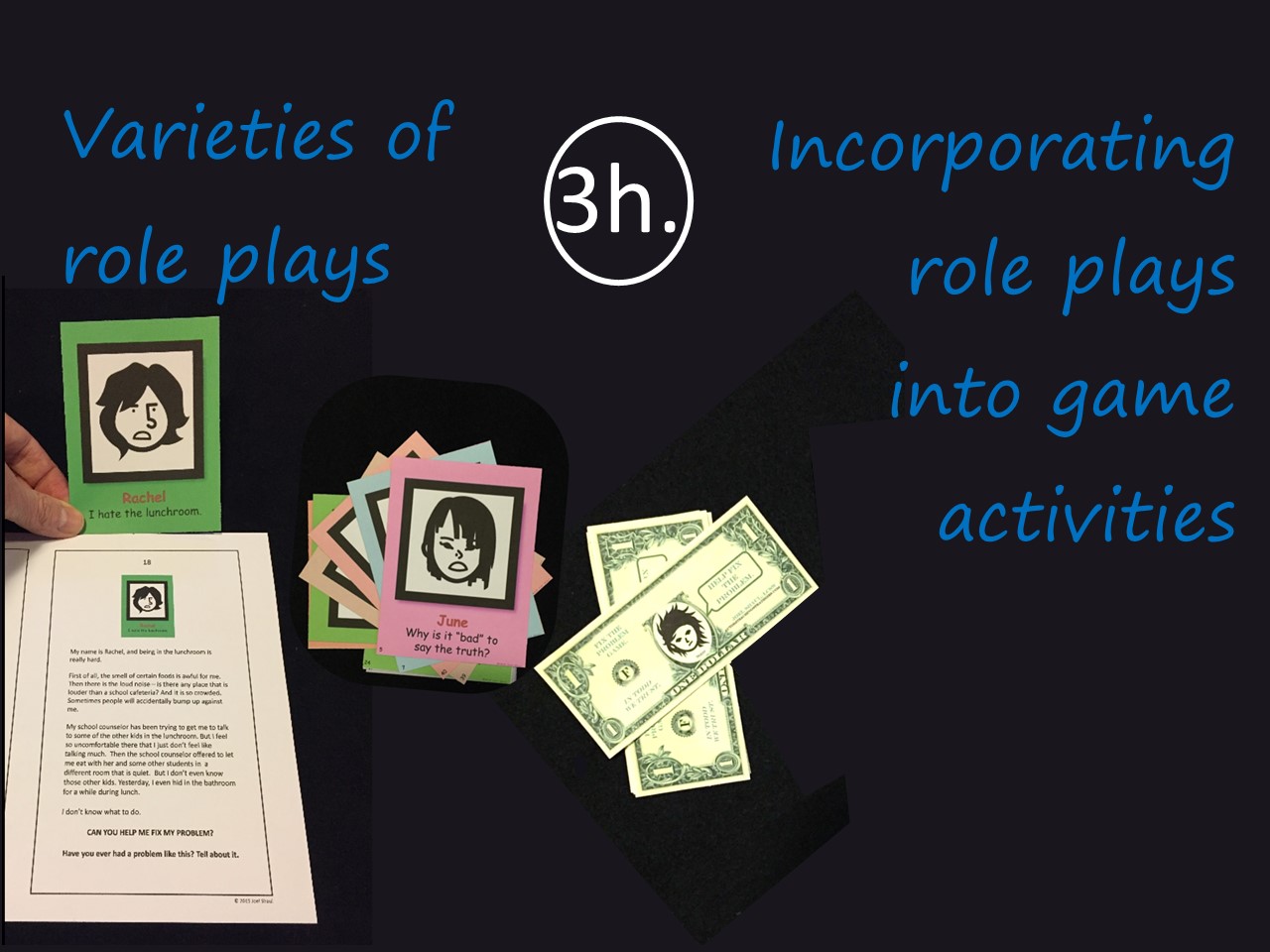
In my own work, my clients are accustomed to me saying things like, “Okay, I am going to play the role of Maria, a girl in your lunchroom.” You might assume that children with autism are too concrete to allow this, but actually that is seldom the case.
When you are setting up role plays like this, make your own role as executive director clear. A fun accessory is this free download to create a “Director” lanyard for you to wear when you are running the role plays.
Here is a guide to using puppets in teletherapy – something you really should try if you do teletherapy.
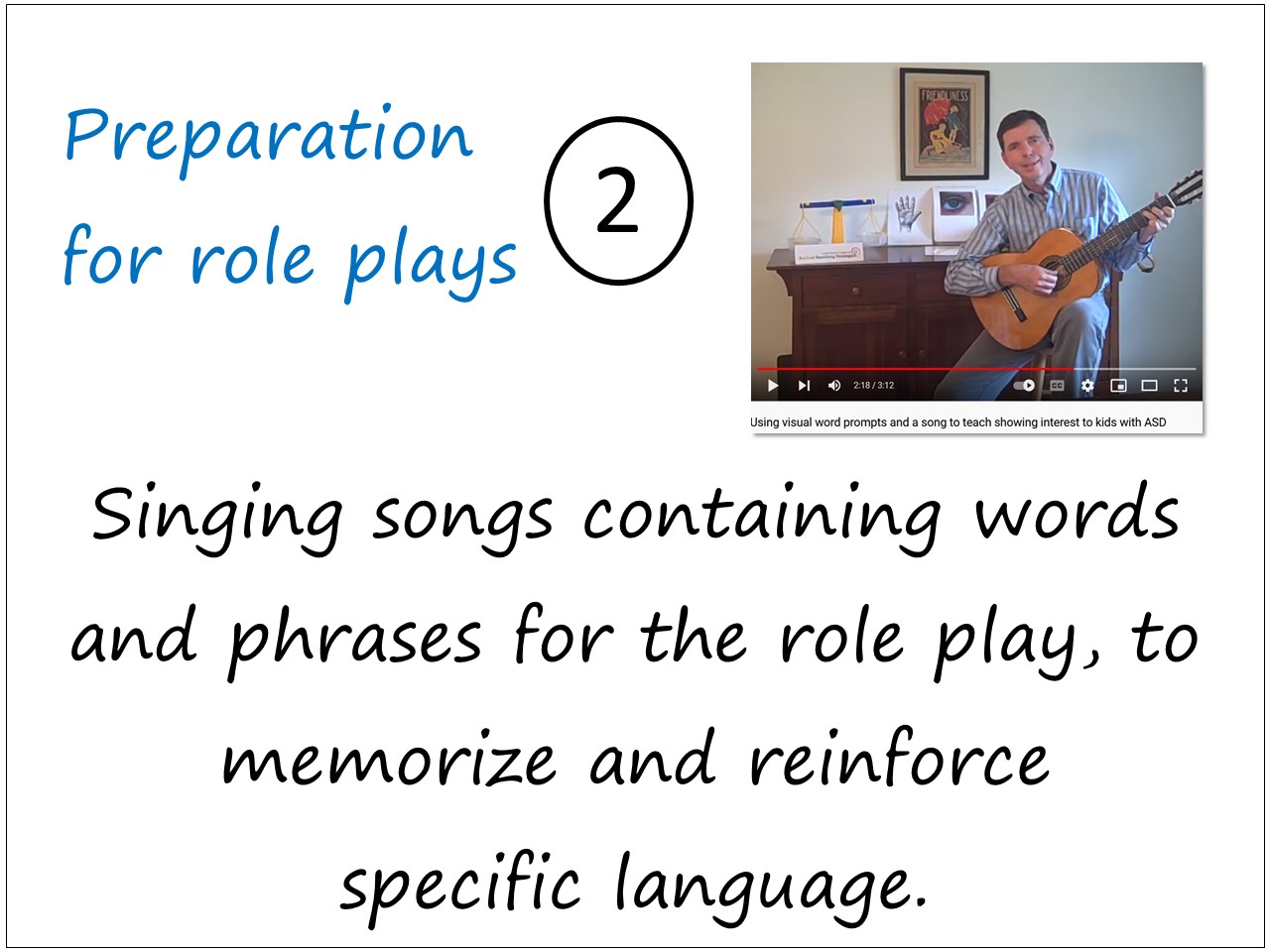
Don’t worry if you are kind of a bad singer (like me). Here is a short YouTube video in which I demonstrate a simple demo of useful language to “script” for showing concern for another person.
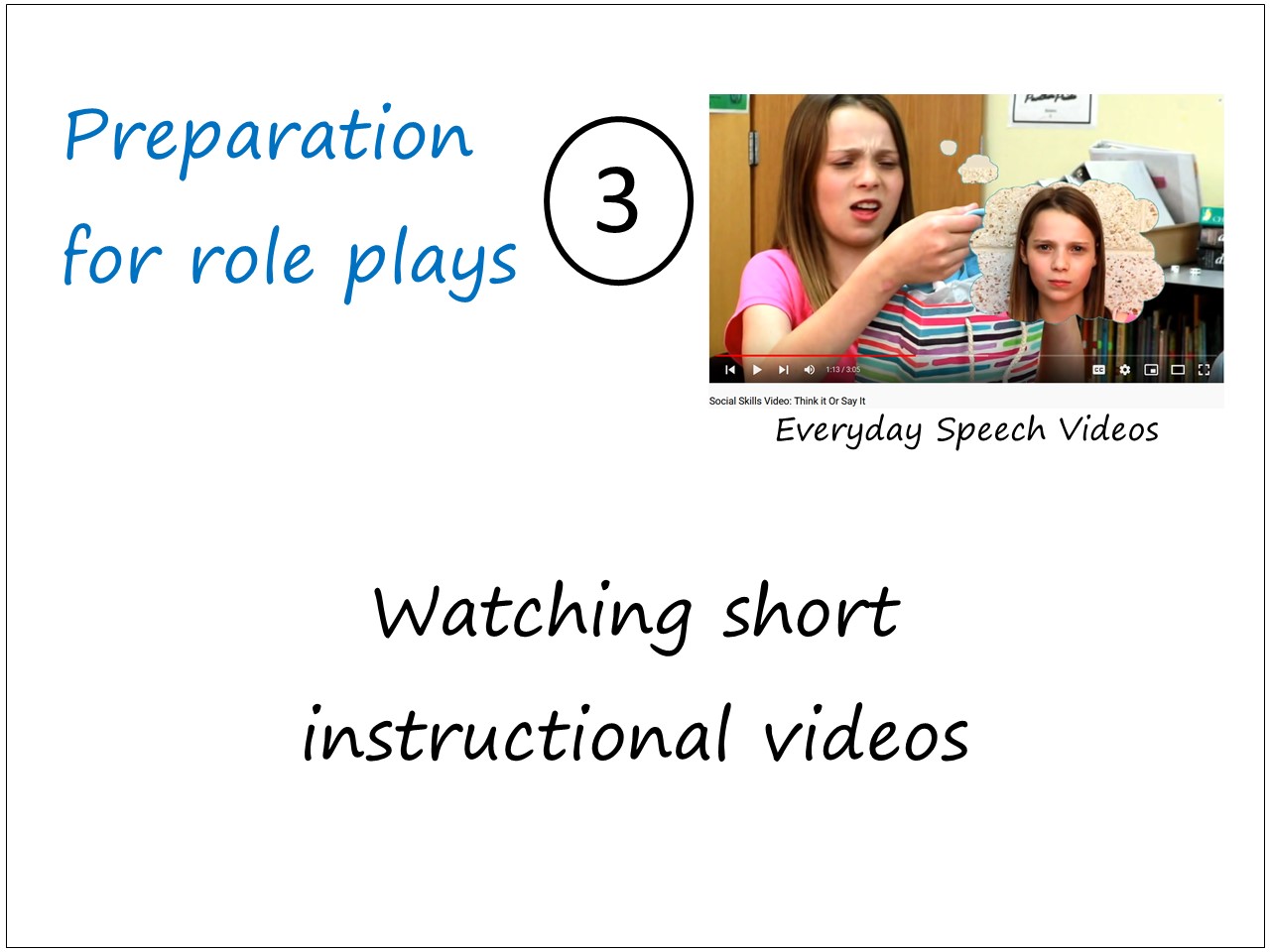
Everyday Speech Videos (shown above) are invaluable for setting up role plays. You get them via subscription – they are well worth the cost. Here is a free sample on YouTube.
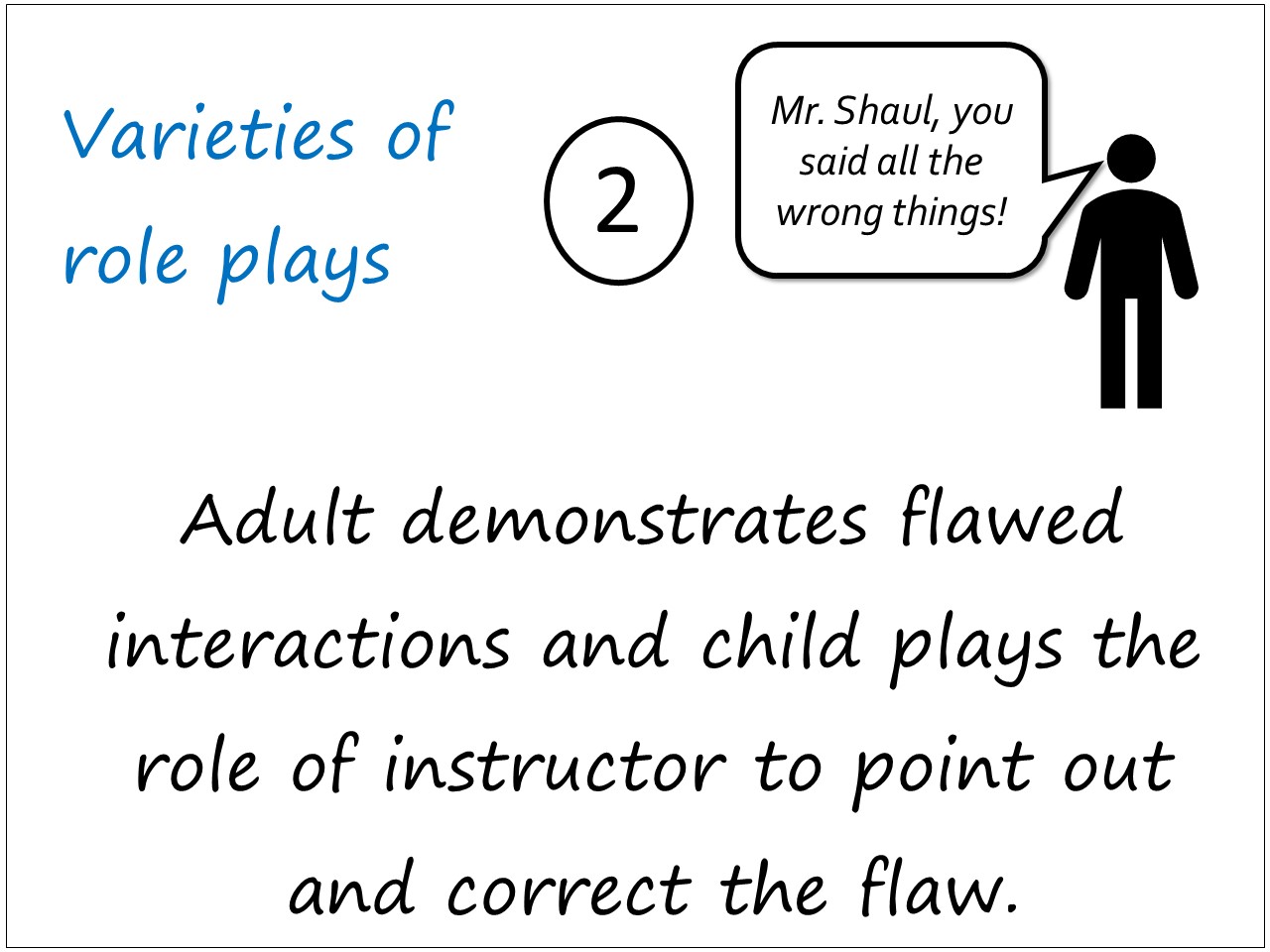
Children receiving social skills training get sick of being scrutinized, criticized and corrected by adults all the time. They always appreciate the opportunity to be the “expert” and point out flaws in somebody else. There are no downsides to using this “flawed adult” technique – I do it all the time in my own work.
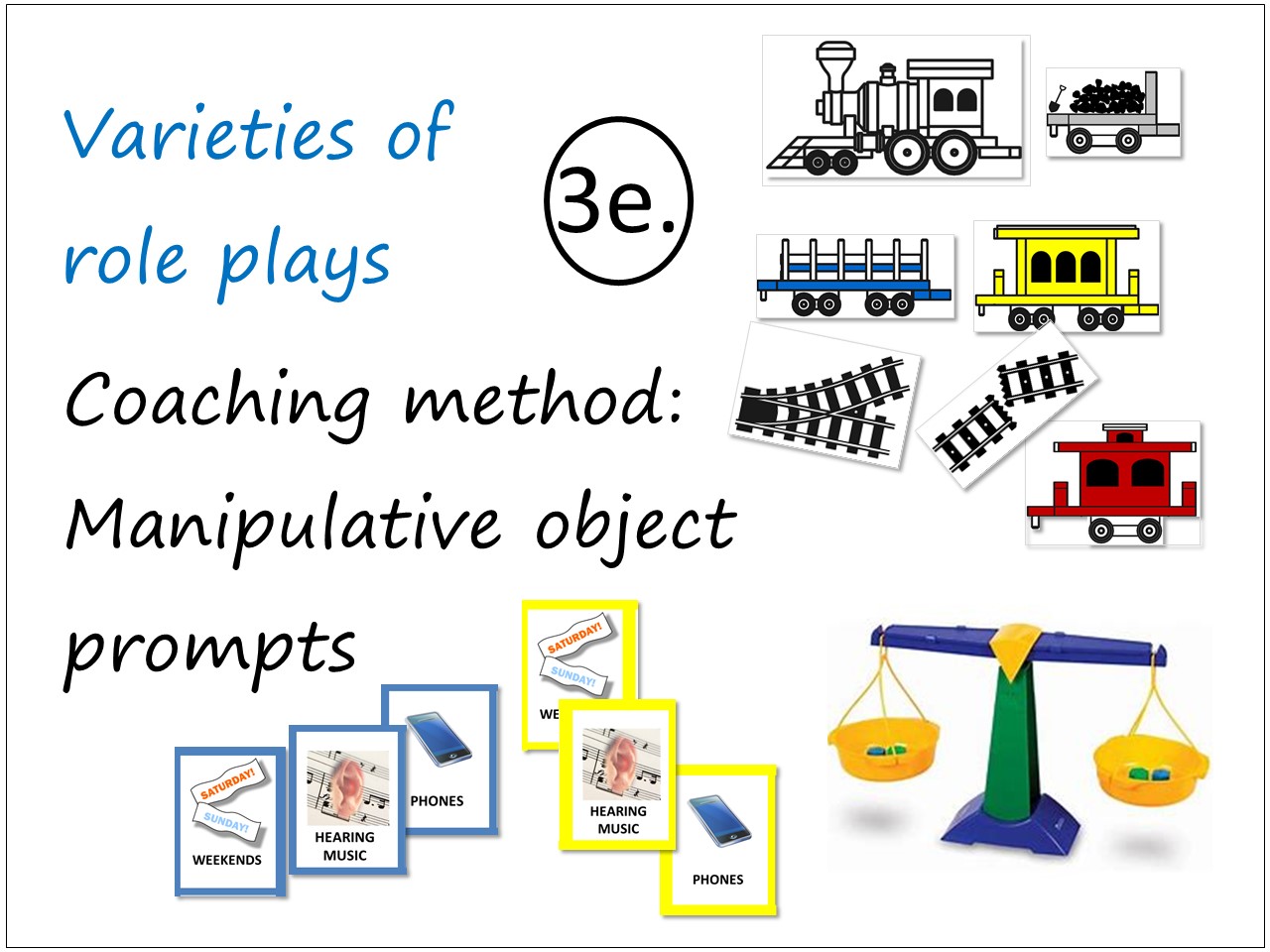
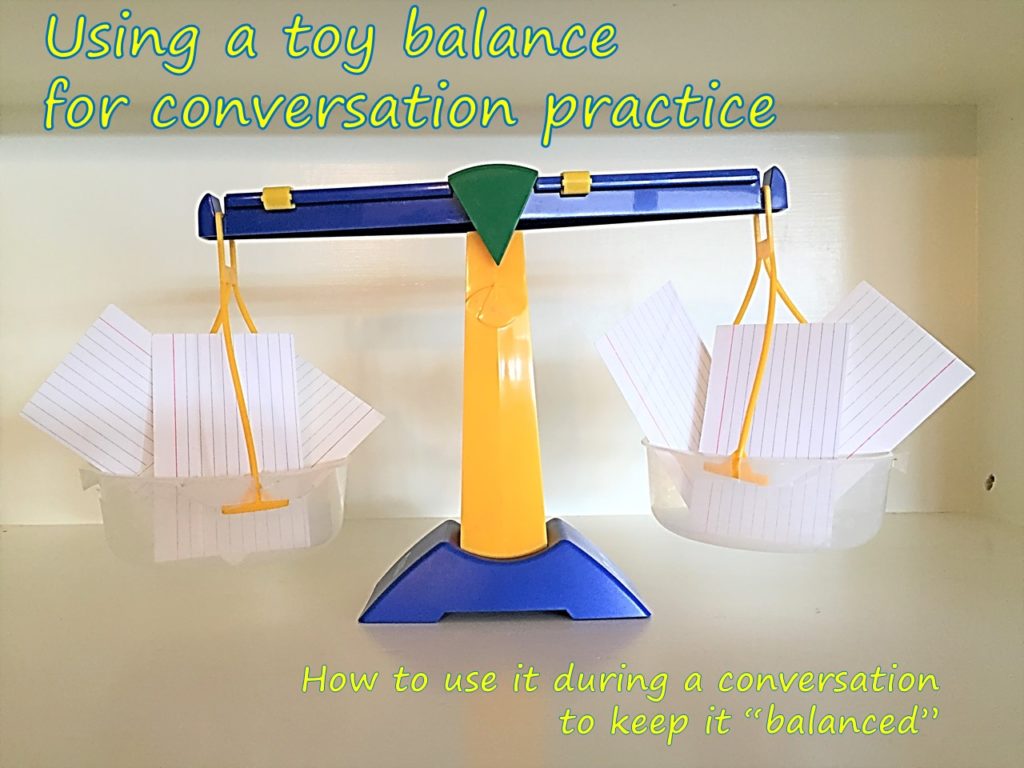
It might sound strange if you have never tried it, but it can be very engaging and effective to conduct role pays at the same time you are manipulating objects between the role play participants, or having them move the objects themselves. The balance (shown above) is an extremely useful, moveable prompt for reciprocal role plays. I explain how to use it here. The Train Conversation Printable Kit is used to map out a conversation in real time while it is happening, with beginning, ending, changing topics and “off track.” The picture cards shown are two pairs of matching 23-card decks which two conversation participants use to compare interests and find common ground (Green Zone Picture Card Activity).
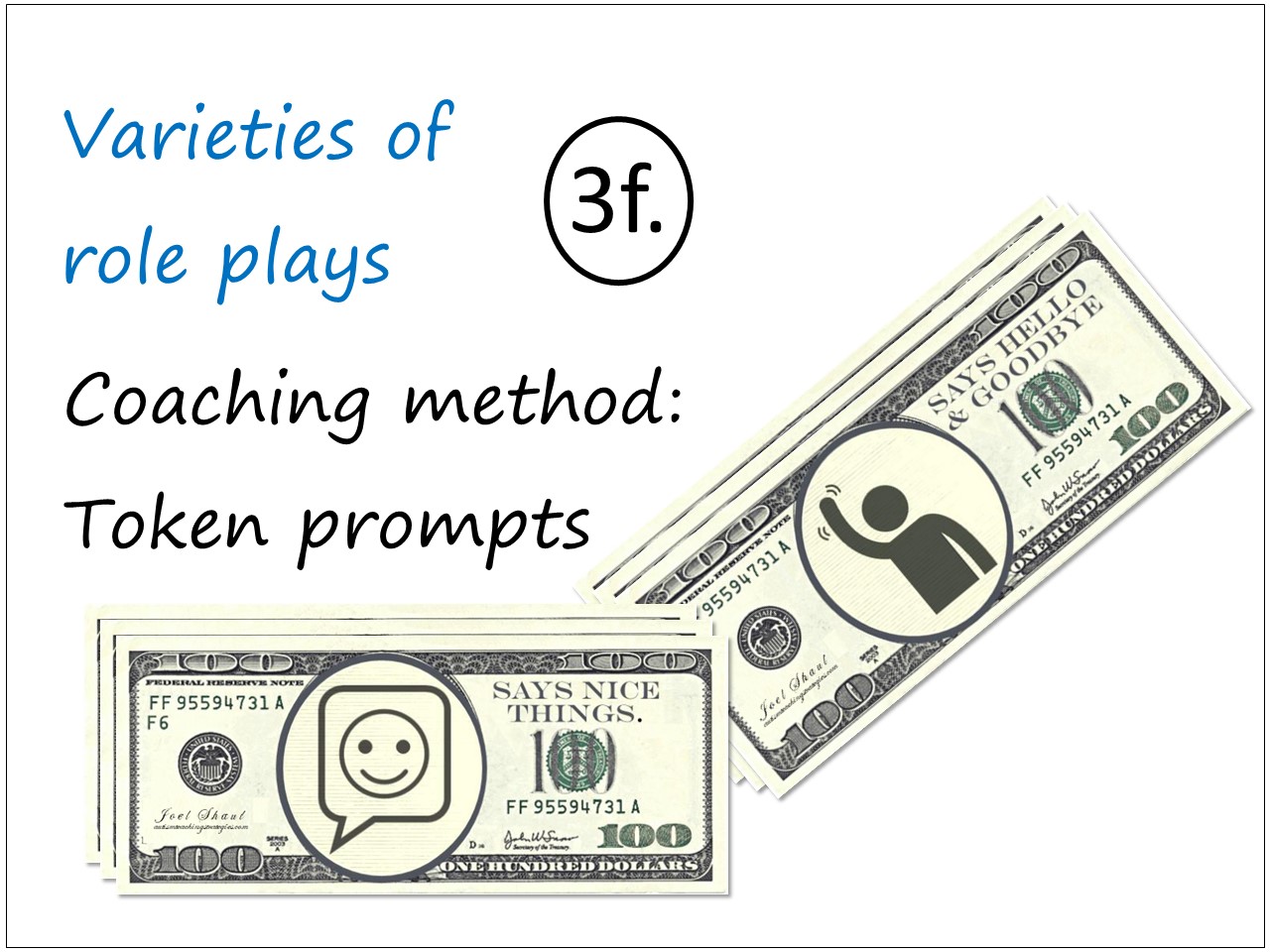
You can use token prompts in a variety of ways in role plays. For example, if you are trying to get a child to practice hellos and goodbyes, or give compliments, you could hand out these free downloadable money tokens (shown above).
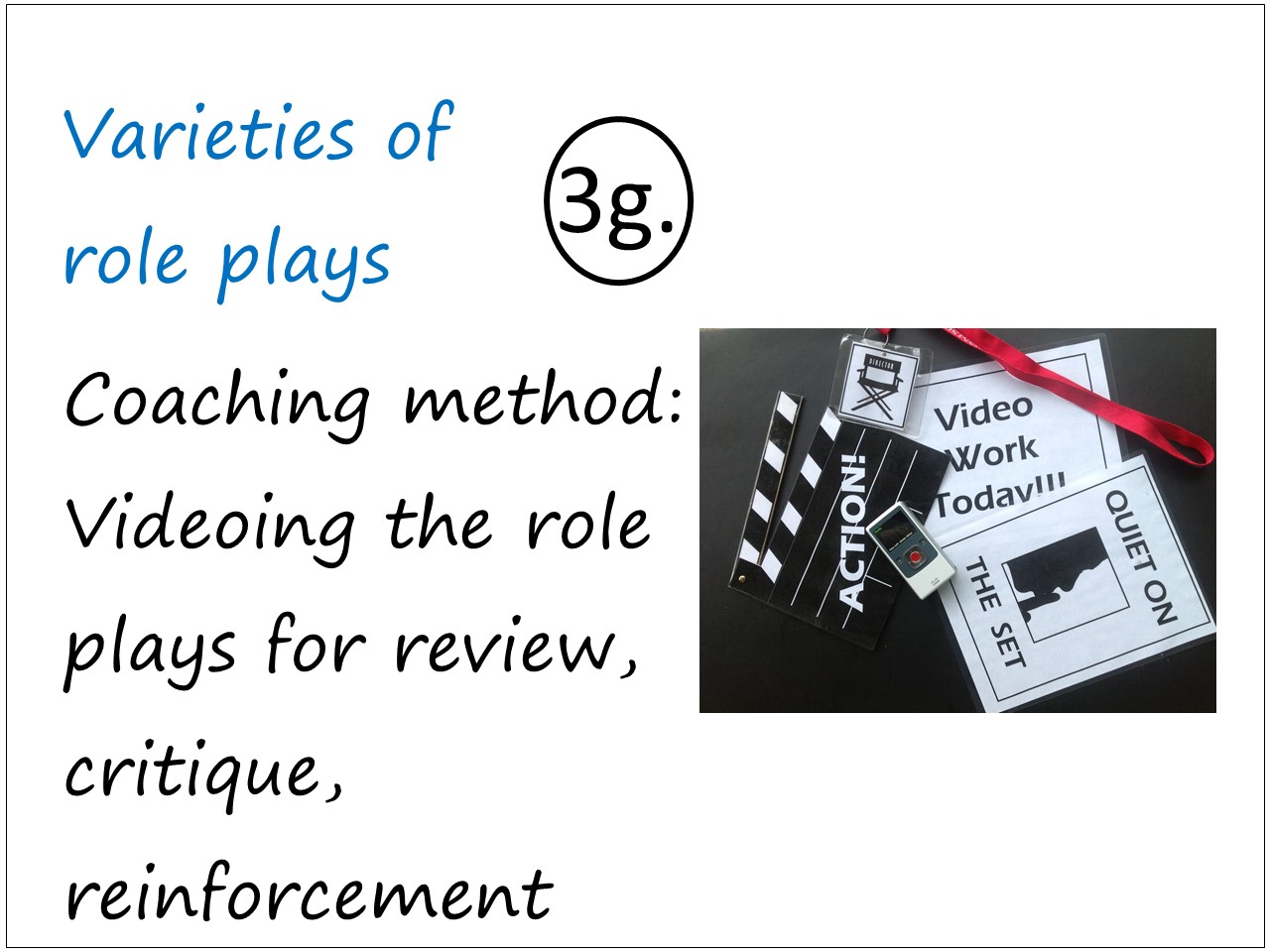
I shoot video and replay video all the time in my sessions. It almost always makes role play work better. Most young people like it a lot. I honestly cannot figure out why other clinicians don’t use video cameras very much these days, except to avoid having to fill out permission forms and so forth.
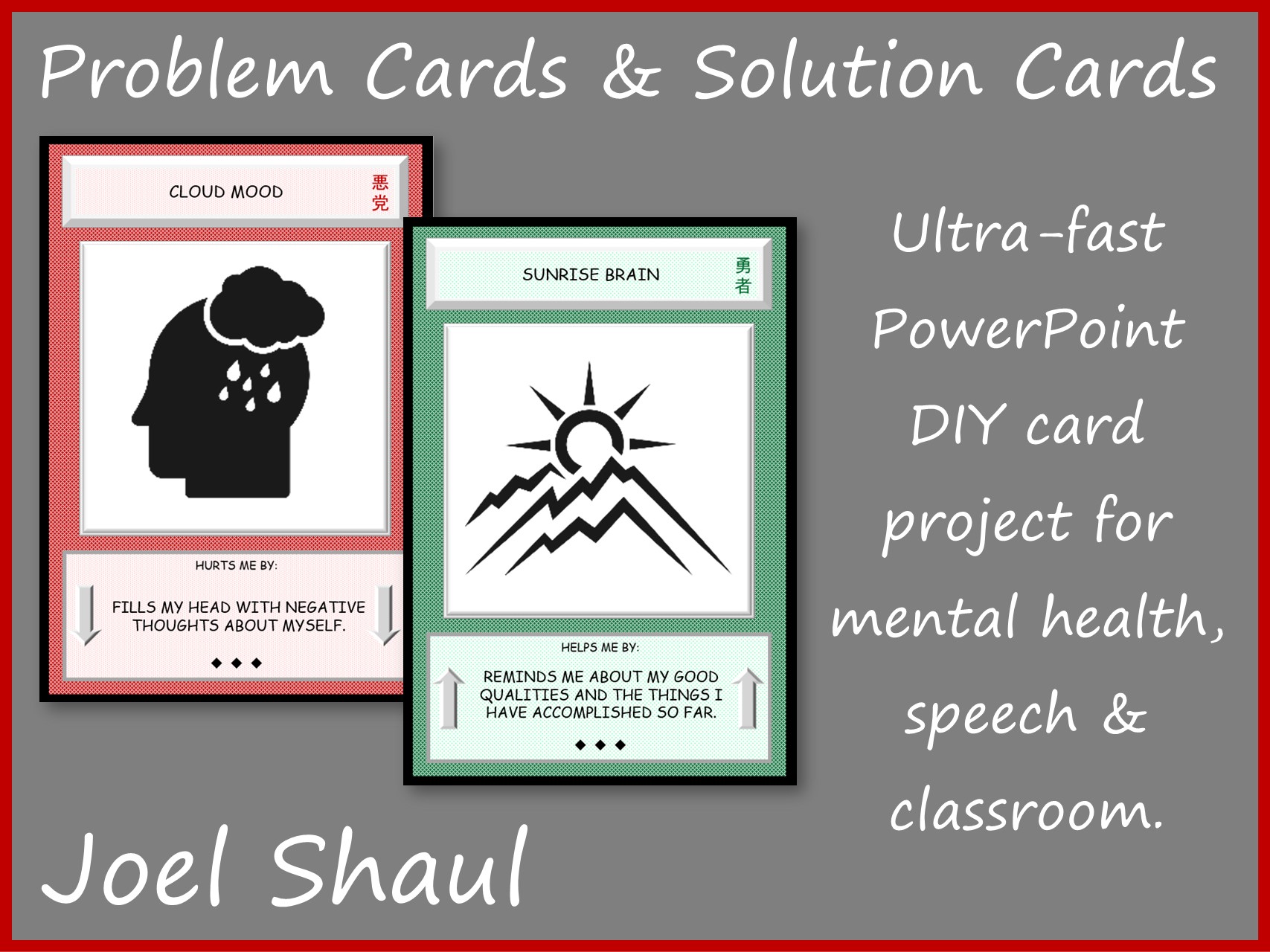
In mental health, special education and speech therapy, children experiencing multiple challenges can feel demoralized by being the “problem child” all the time. It can be useful sometimes to help our young clients externalize their problems onto fantasy characters which we can help them to fight against.
Many young people relate strongly to youth culture themes of “good guys” and “bad guys” through movies, stories, video games, and in trading card sets such as Pokémon and Yu-gi-oh. To capitalize on this, I designed this free, easy card-making project to help children focus on therapy issues and coping strategies.
Although this is designed for in-person work, it is also ideally suited for teletherapy, since the collaborative work takes place on a shared computer screen and you can mail or email the finished product to your client.
I developed this resource over a number of years of drafts and refinements. I thoroughly tested it in my own work with autistic youth and can attest to its usefulness.
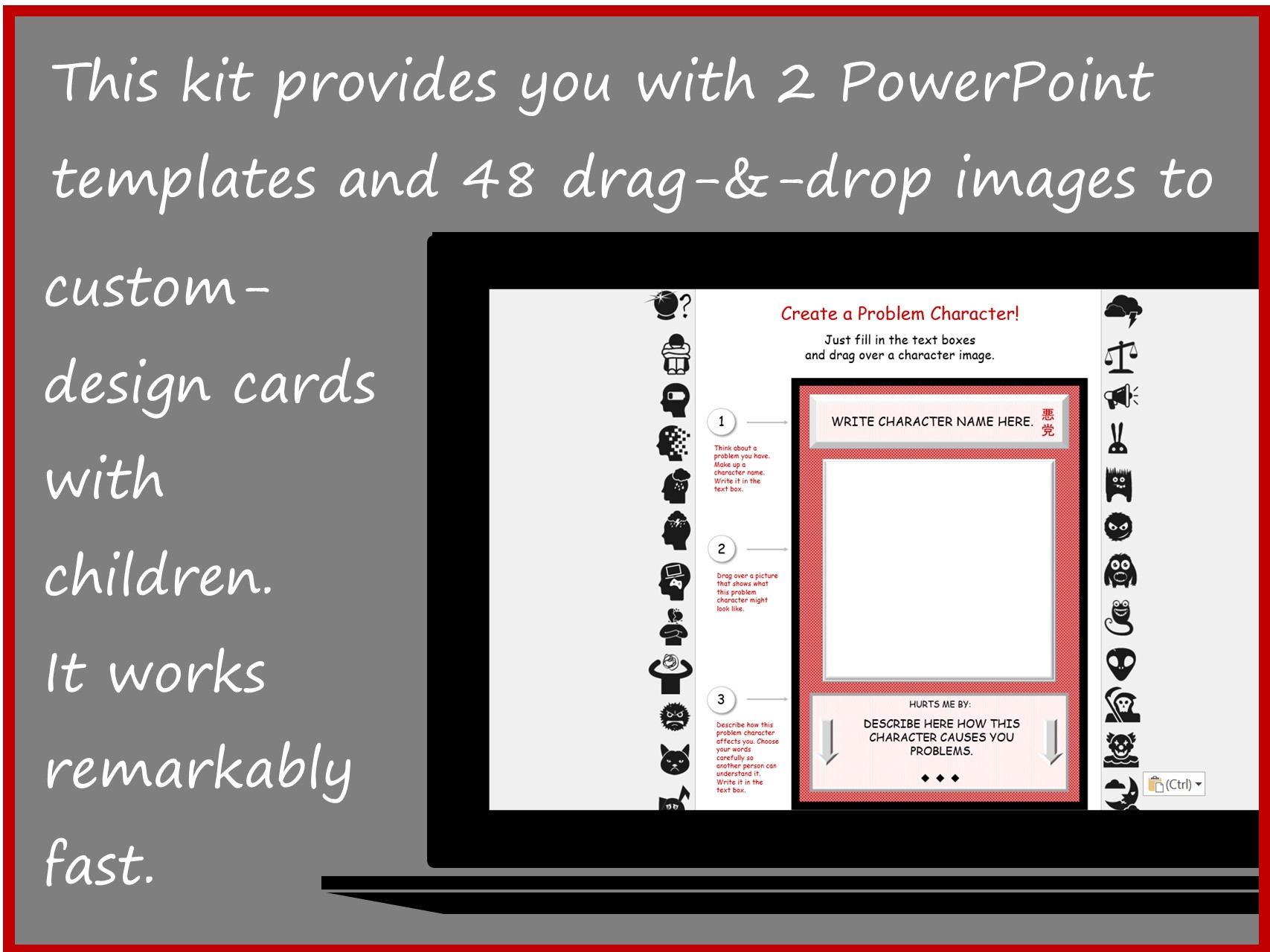
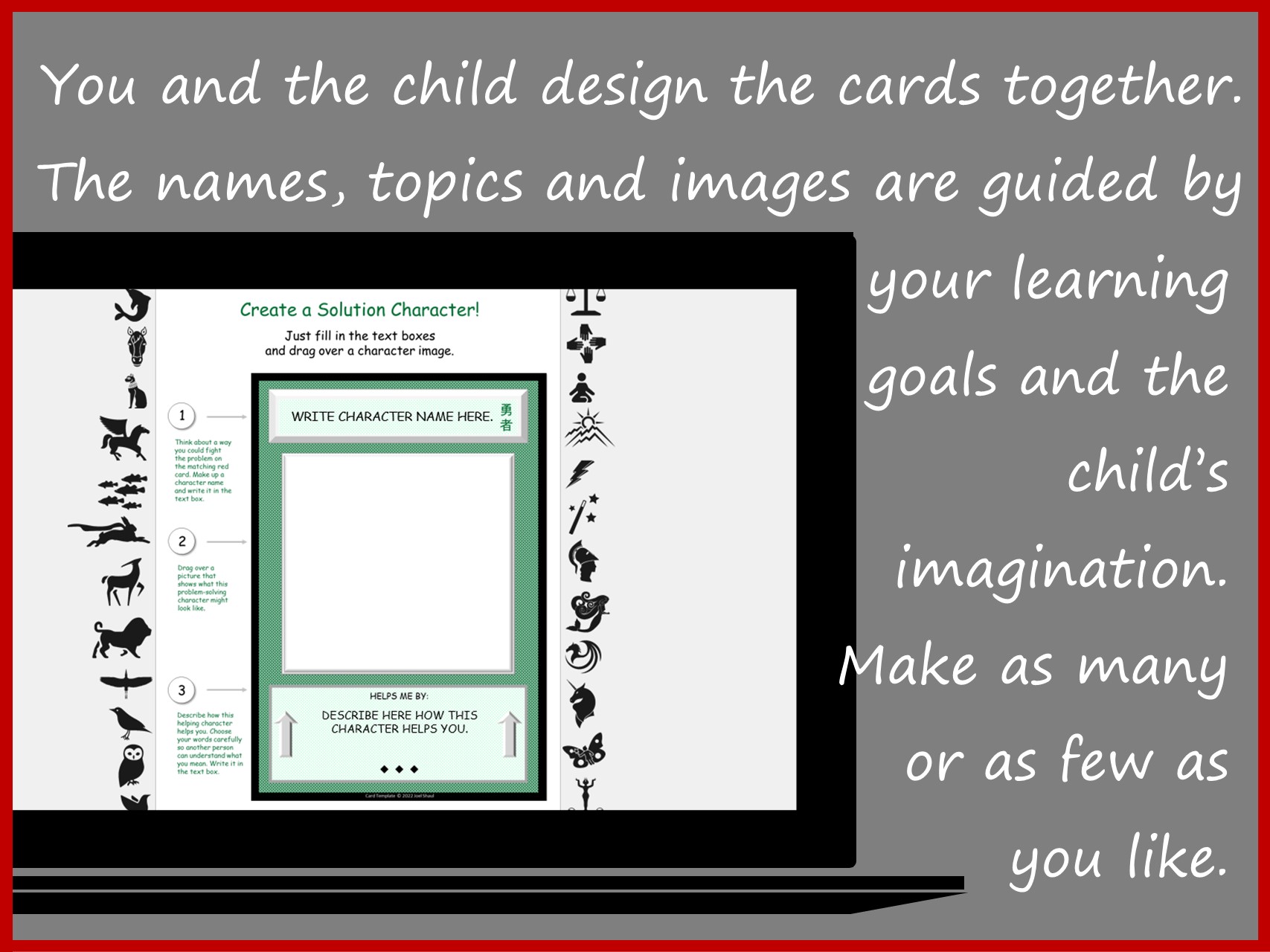
The images below explain how to set it up and use it in your own work.
By dragging images onto the card, and filling in the text boxes to name and describe the character, you and the child can quickly create instructive and “cool” cards.
In my own work with children and teens on the autism spectrum, I typically can co-create as many as five pairs of cards in a 45 to 50 minute session. Children appreciate being able have input into naming the characters and selecting among the 48 drag-and-drop images.
There is great potential to add more cards, or modify existing cards, in subsequent sessions.
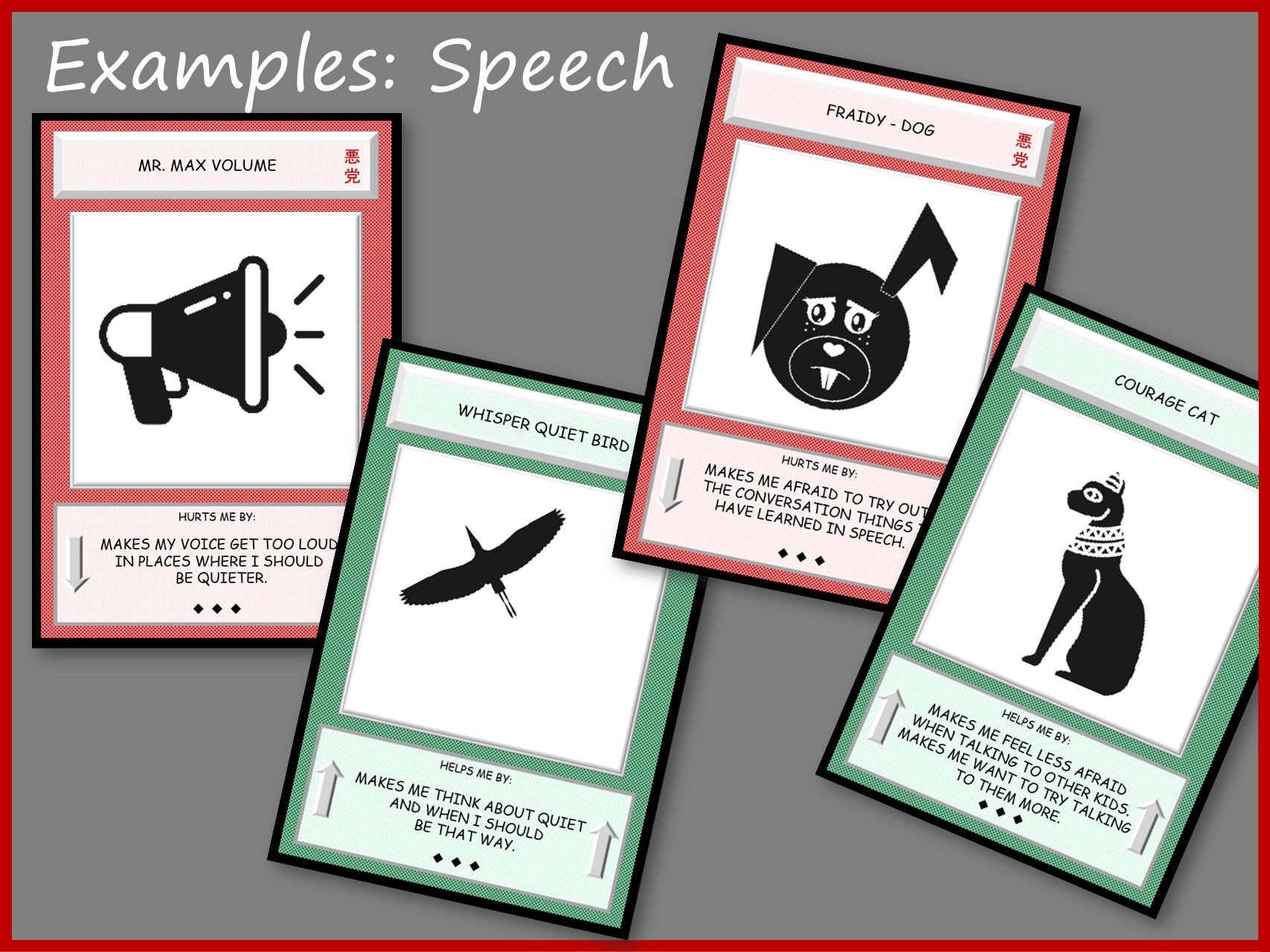
The picture above shows some possible cards that a speech and language therapist could create, corresponding to typical speech goals.
Although I am a mental health professional, in my own work with young people who have ASD, I do a great deal of work on social communication. In my experience, most of the children I work with can quickly make up clever character names. Most can come up with a coherent narrative under “helps me by…” [Obviously, the sample cards shown were not created by clients 🙂 ]
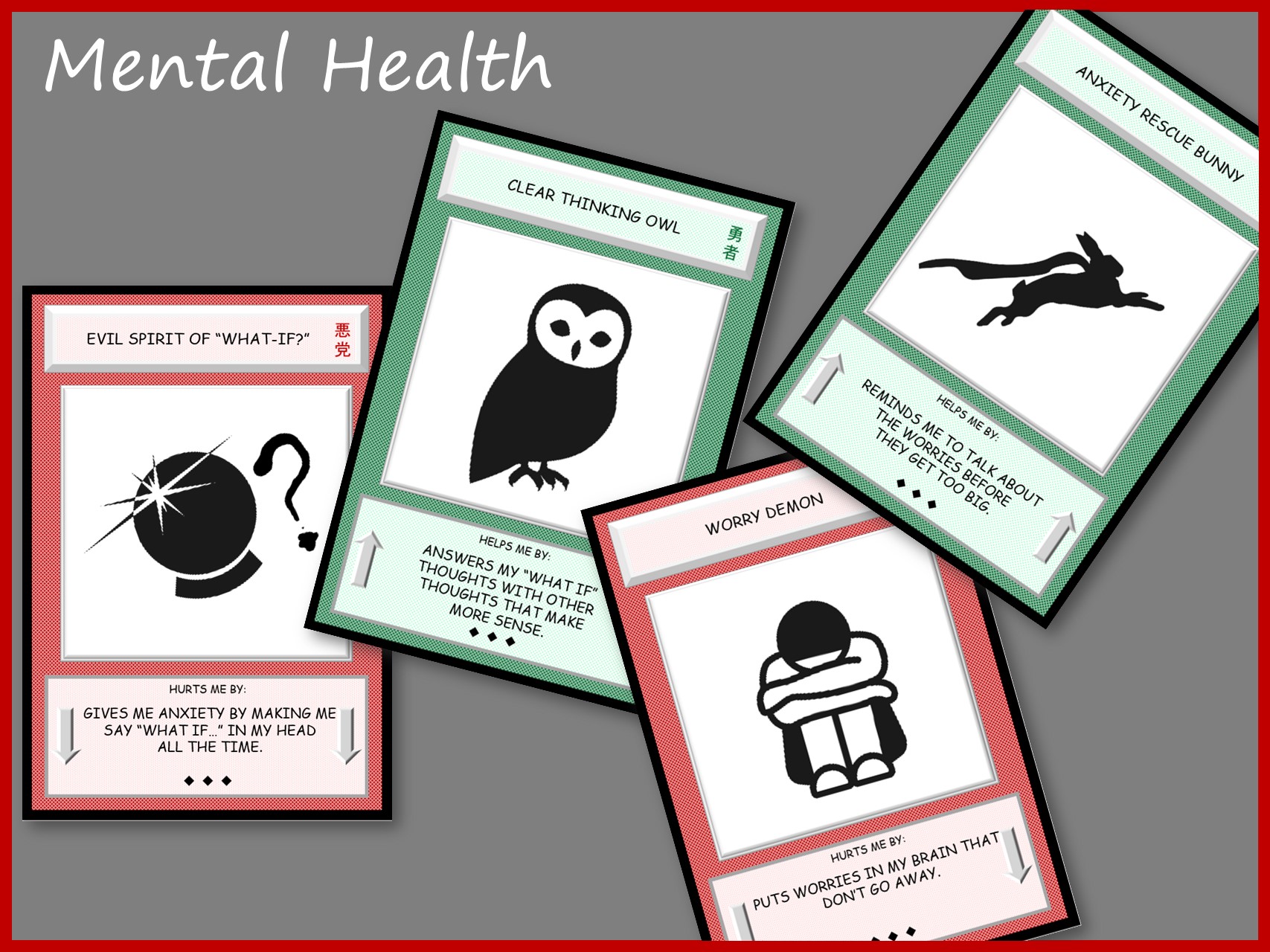
Here above are some examples of cards that could be created for mental health applications. For my fellow mental health professionals: These DIY cards are ideally suited for CBT.
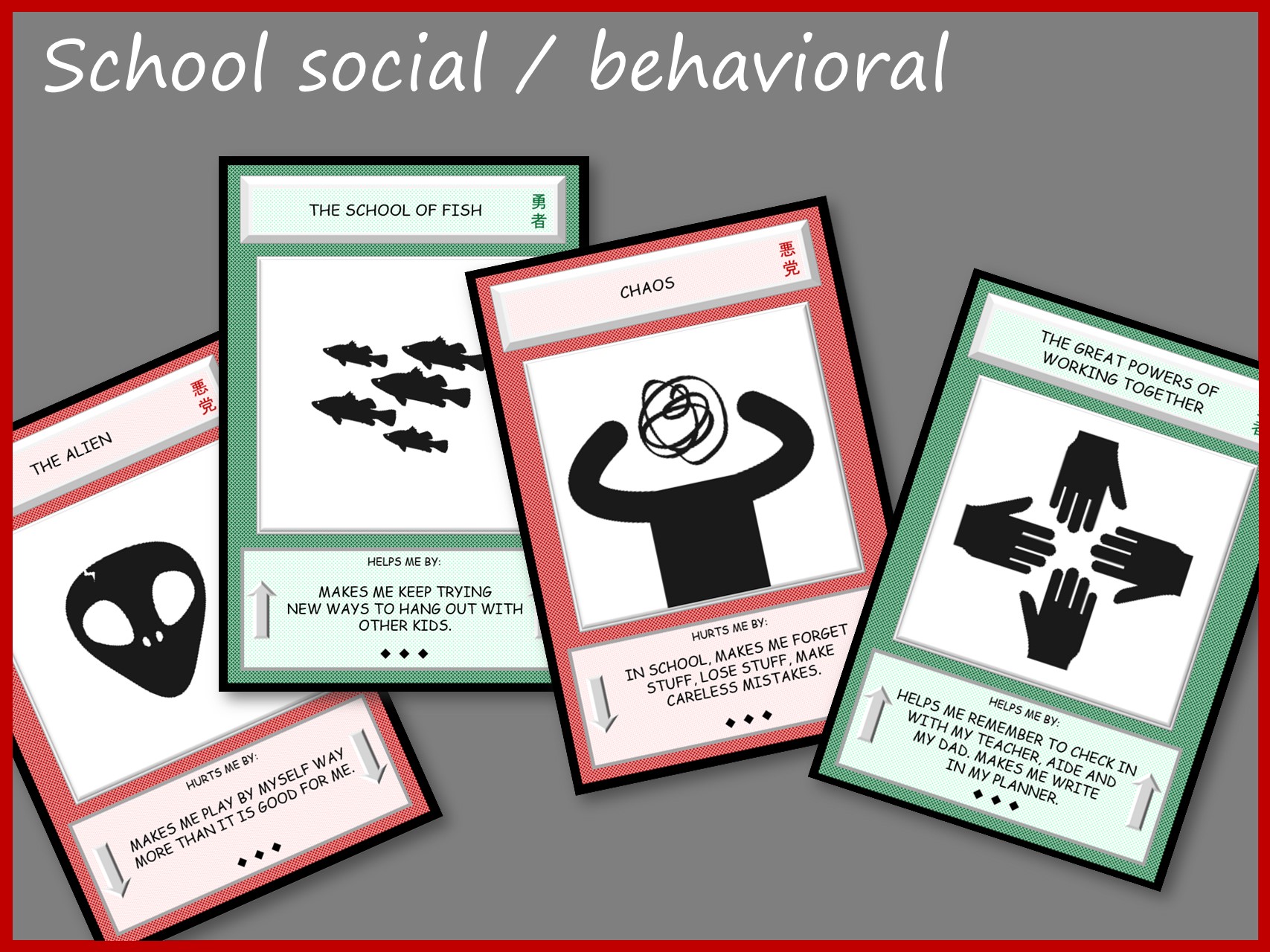
Shown above are four examples of cards that could be created to highlight typical social and behavioral goals in the school setting.
I am not currently working in schools, but the fact that this project is carried out on-screen in PowerPoint would seem to make it well-adapted for groups and small classroom work for children with emotional and behavioral concerns.
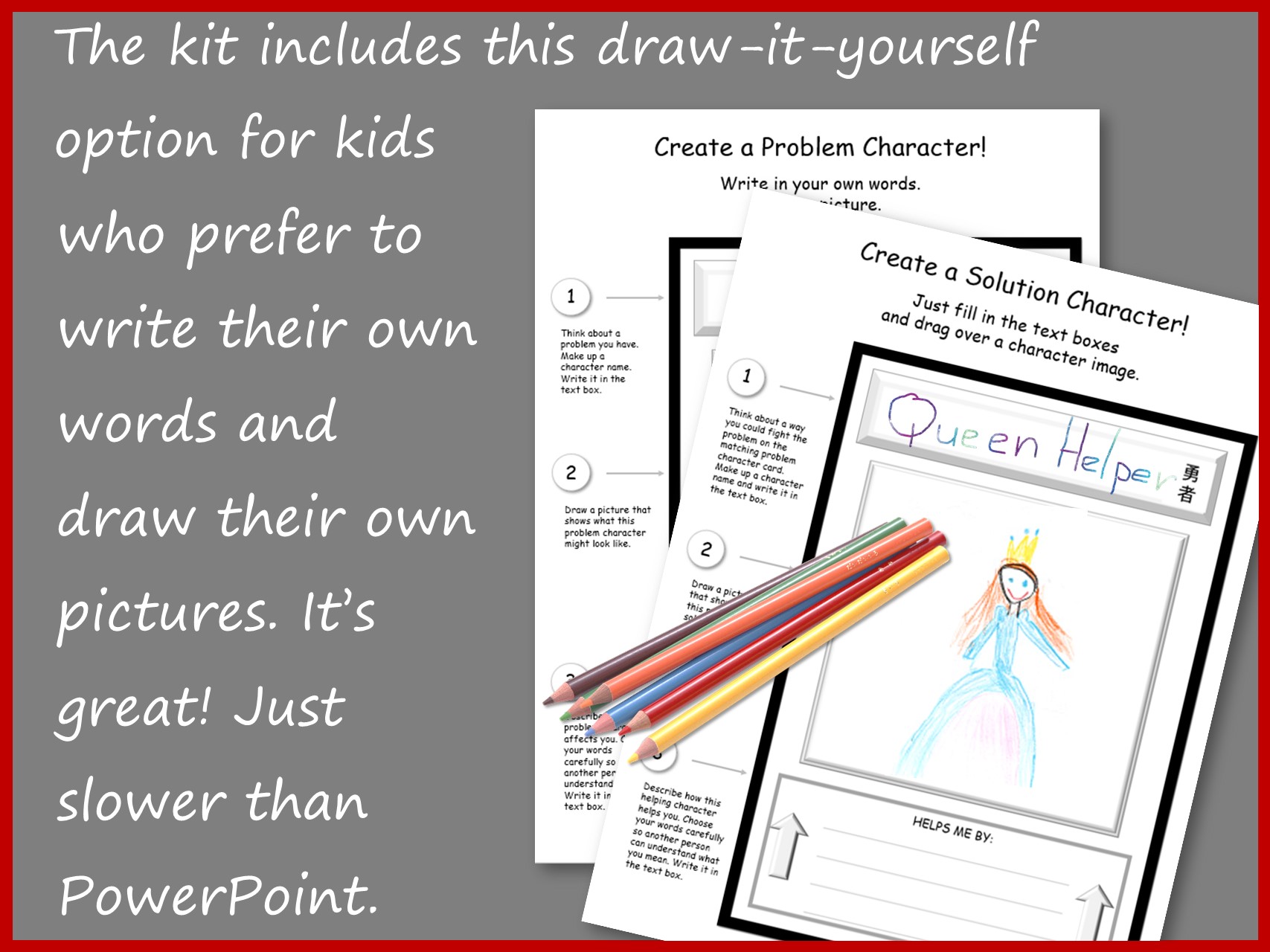
The draw-your-own version of this (shown in the picture above) is similar to a popular download I posted years ago, Dark Force / Light Force Worksheets. In my own work, I like to get children to draw as much as possible in structured therapy projects. Having done this project many times both ways, both through drawing and via drag-and-drop image selecting, I would say that both versions have advantages. One important consideration is that many young people just don’t want to draw. Another consideration is that many of them draw more slowly than might be useful or convenient in the context of a therapy session.
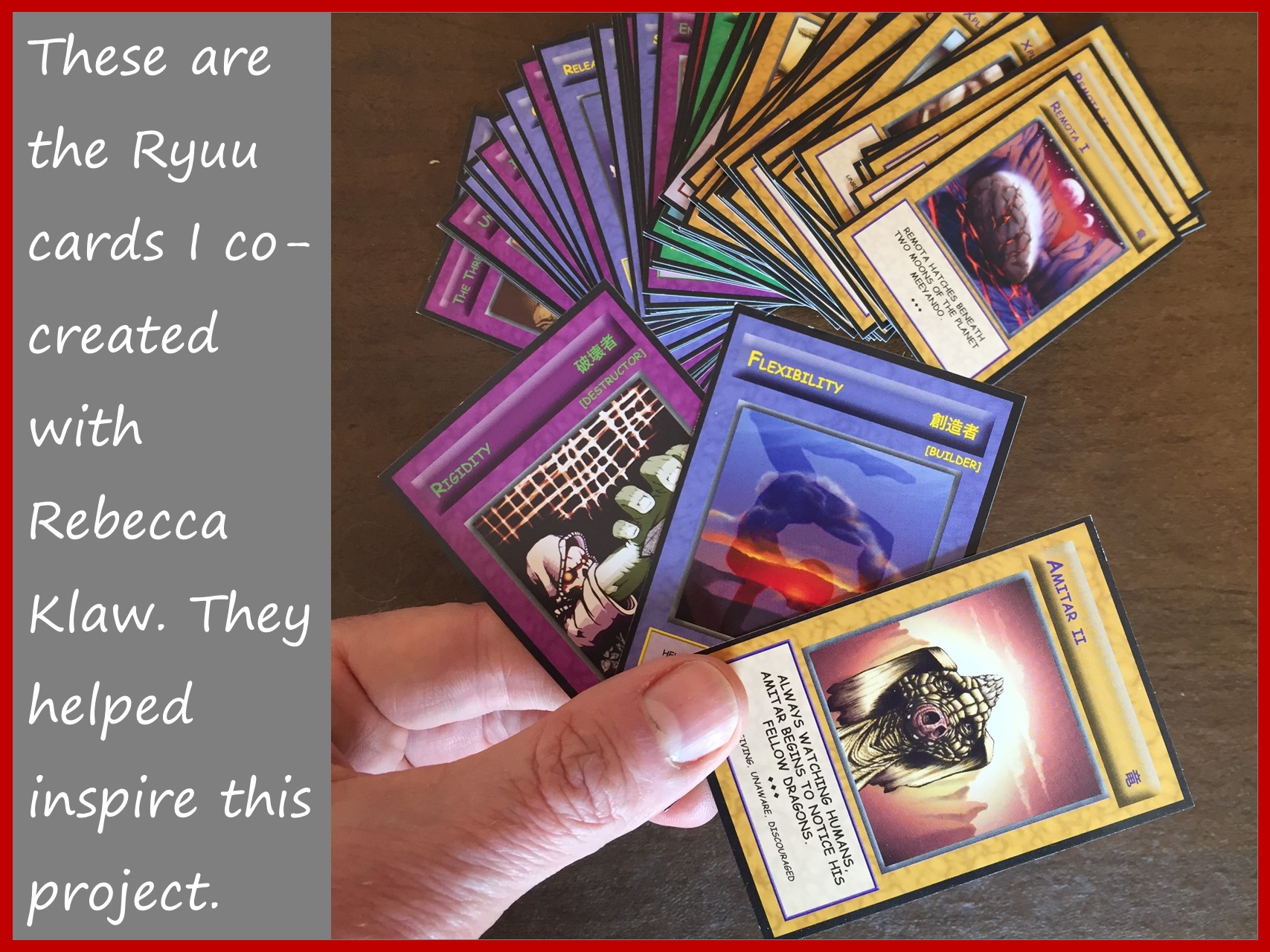
For many years, until 2019, Rebecca Klaw and I sold these cards that we invented, along with related therapy materials.
Comic book conversations, social stories and social skills therapy
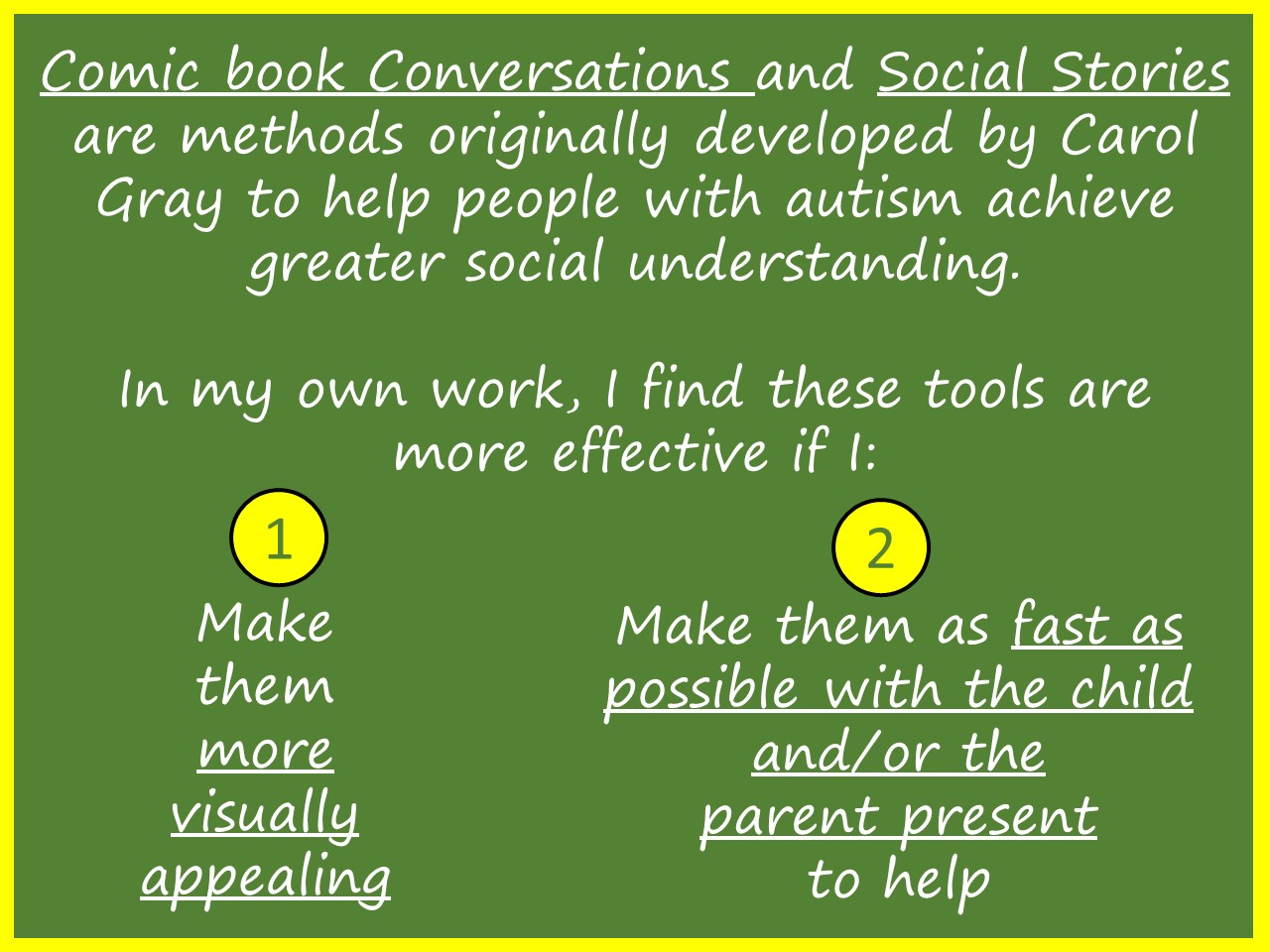
Comic Book Conversations and Social Stories were identified as important and useful ways to break down complicated social situations so that individuals on the spectrum could understand them better. These days, almost any therapist or educator working with autistic children will create social stories and simple drawings frequently.
I have always used lots of social stories and comic book conversations in my own work. But my own paper and pen, stick-figure social skills materials never looked very good. So, over time, in my individual and group work with young people on the autism spectrum, I learned how to use PowerPoint rapidly, during sessions, to be able to put together text, word/thought bubbles and images to make much better, and quicker, Comic Book Conversations and Social Stories. Children liked them much better. And since they were in my computer, I could quickly share my work with families and other professionals.
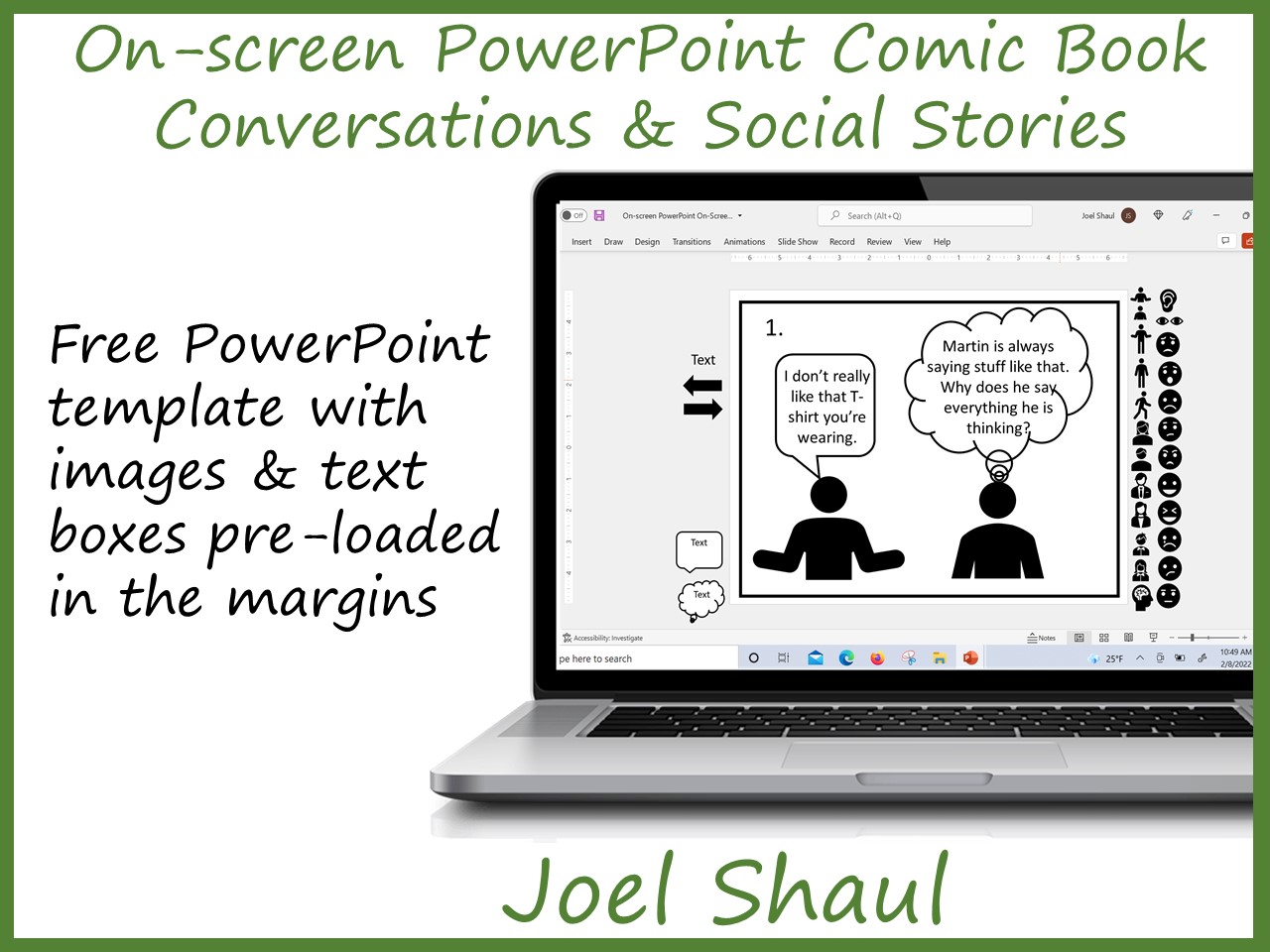
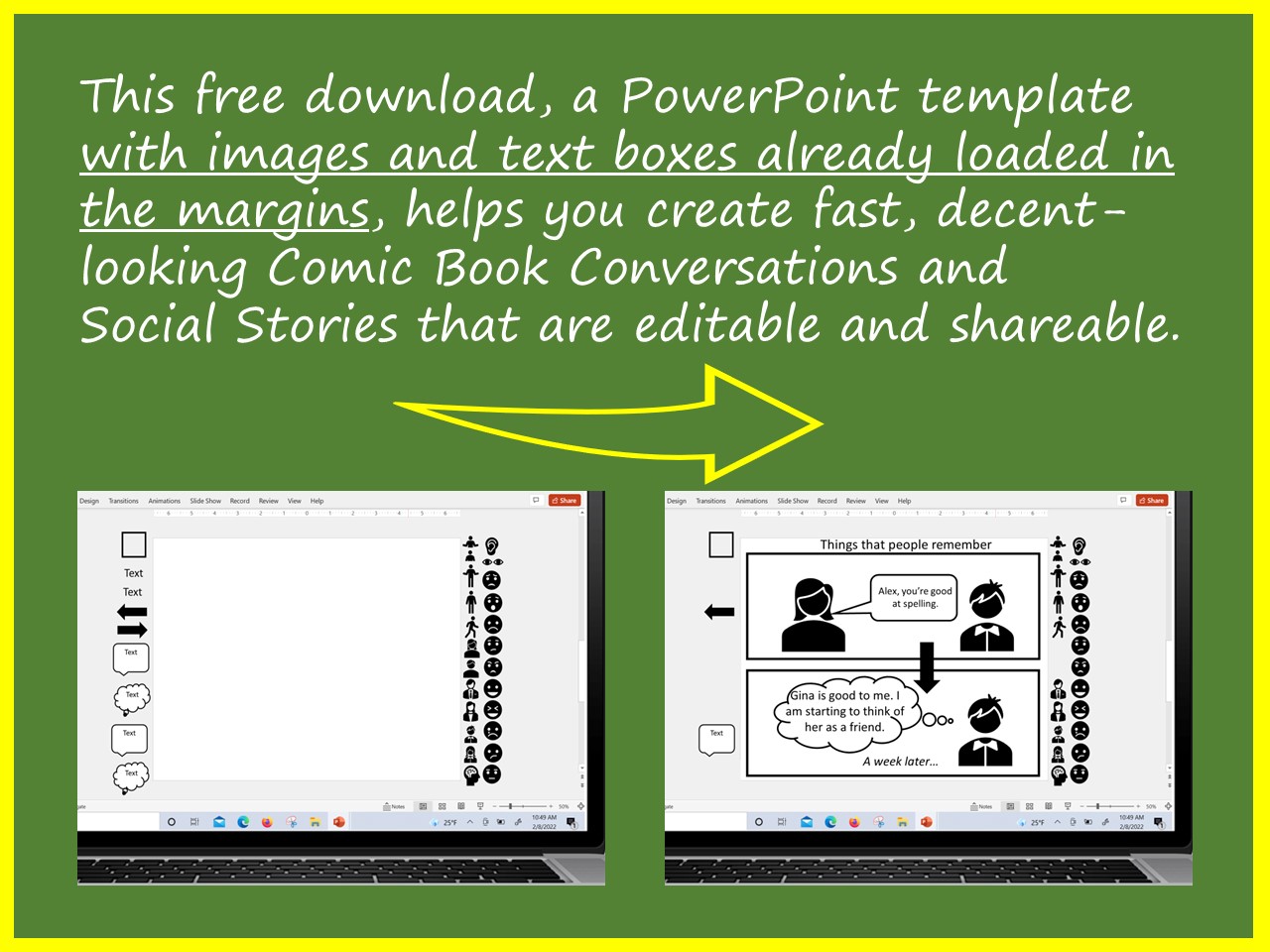
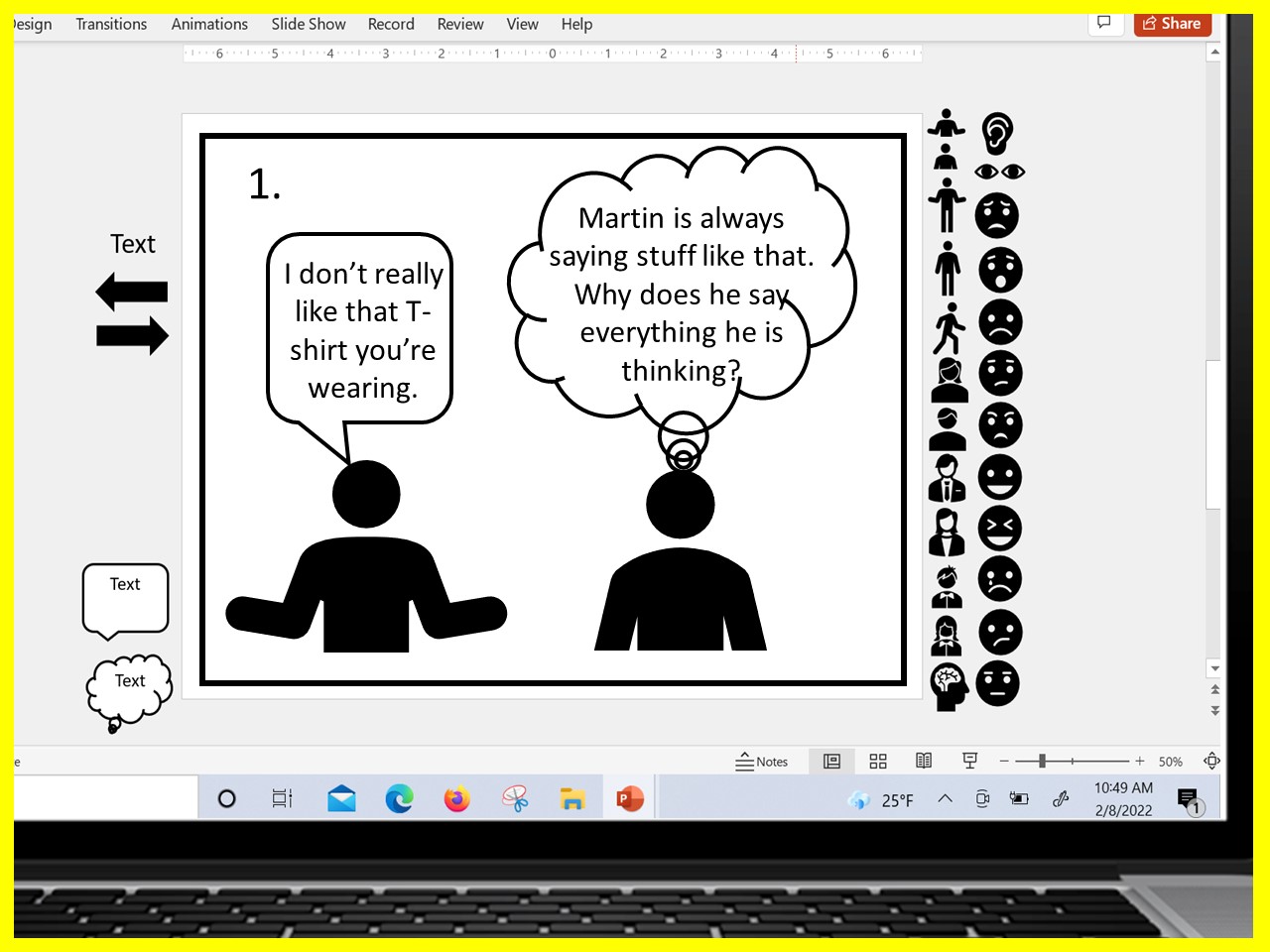
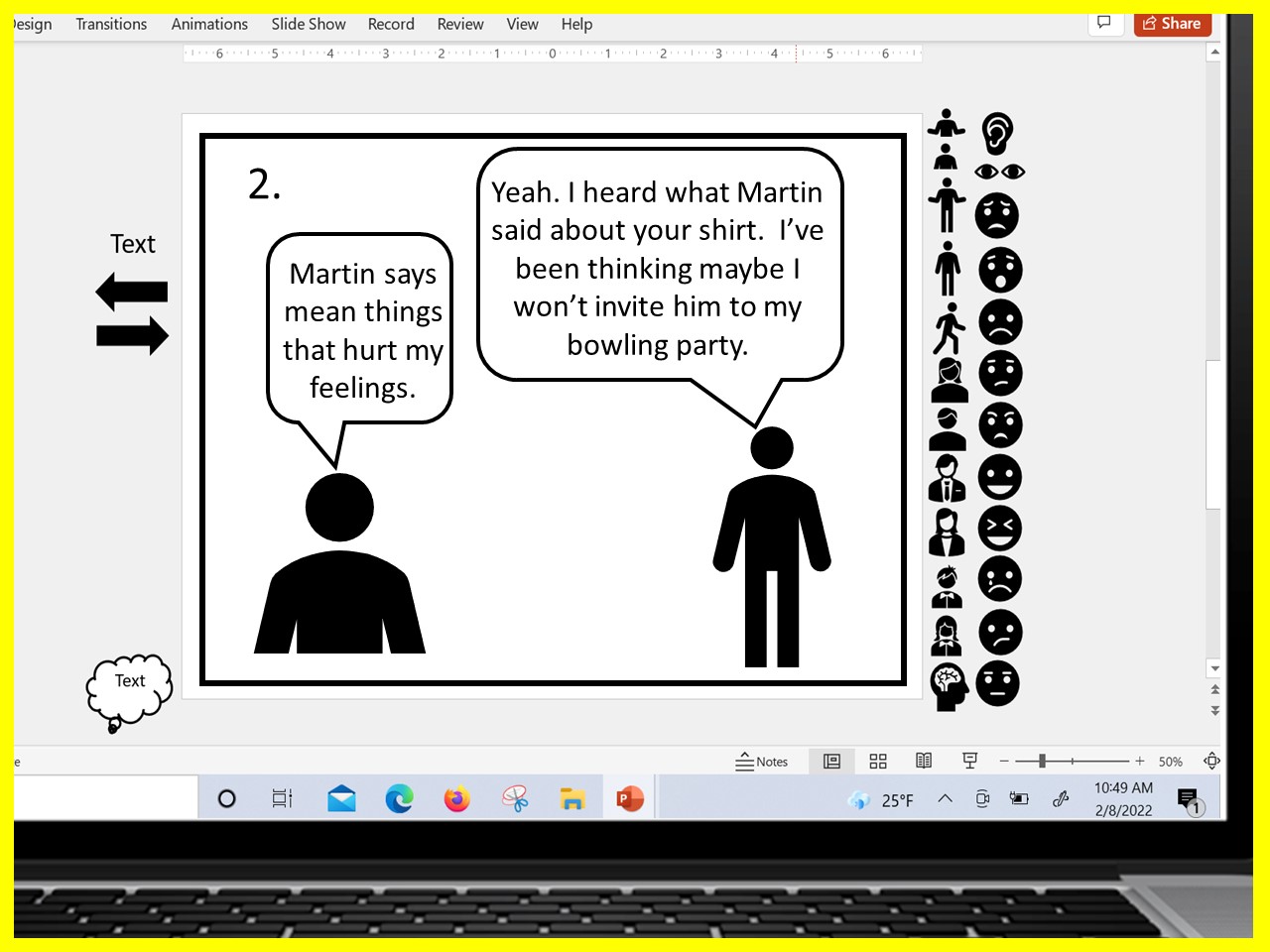
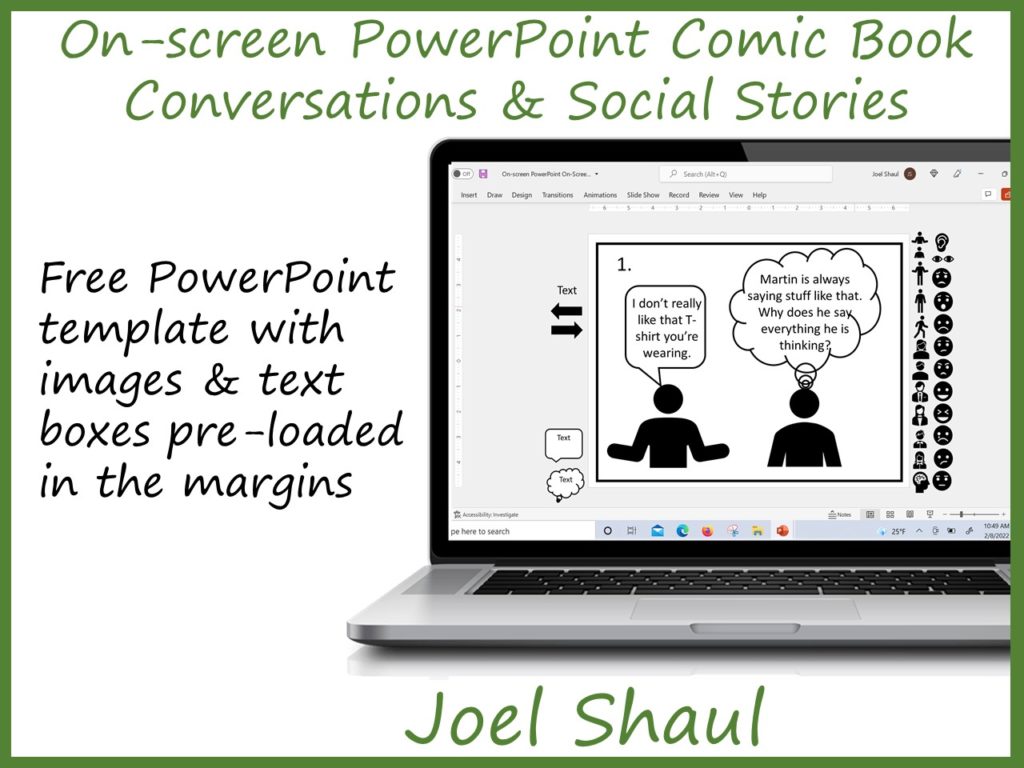
Some months ago, to prepare for my own therapy sessions, I started prepping blank PowerPoint slides with lots of the basic images and shapes I would need to help kids with their particular social and emotional issues. I eventually came up with a template, featuring “pre-loaded” images and text boxes in the margins. It was really helpful. I found I could more often sustain the attention of impatient children who wanted results fast.
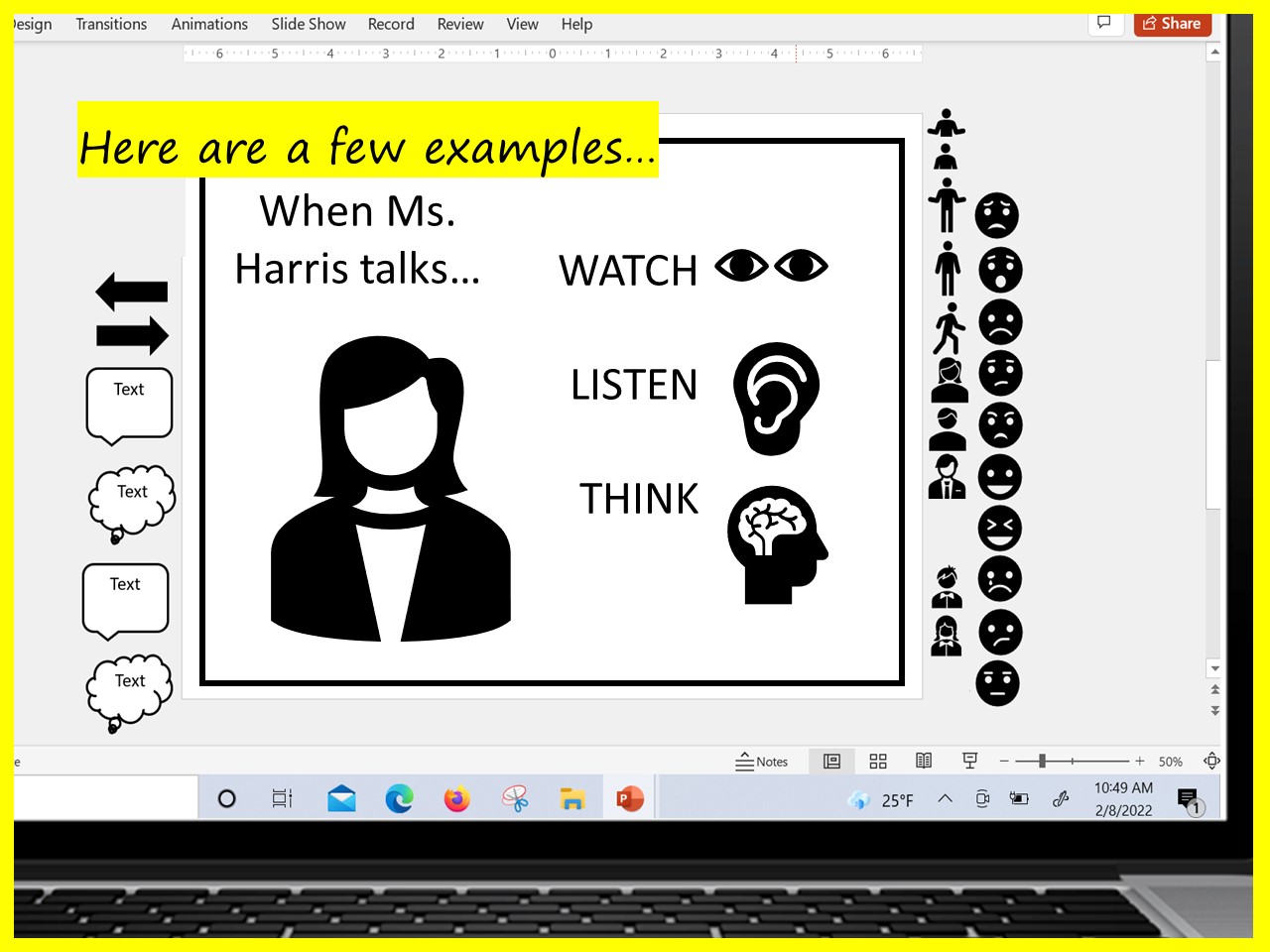
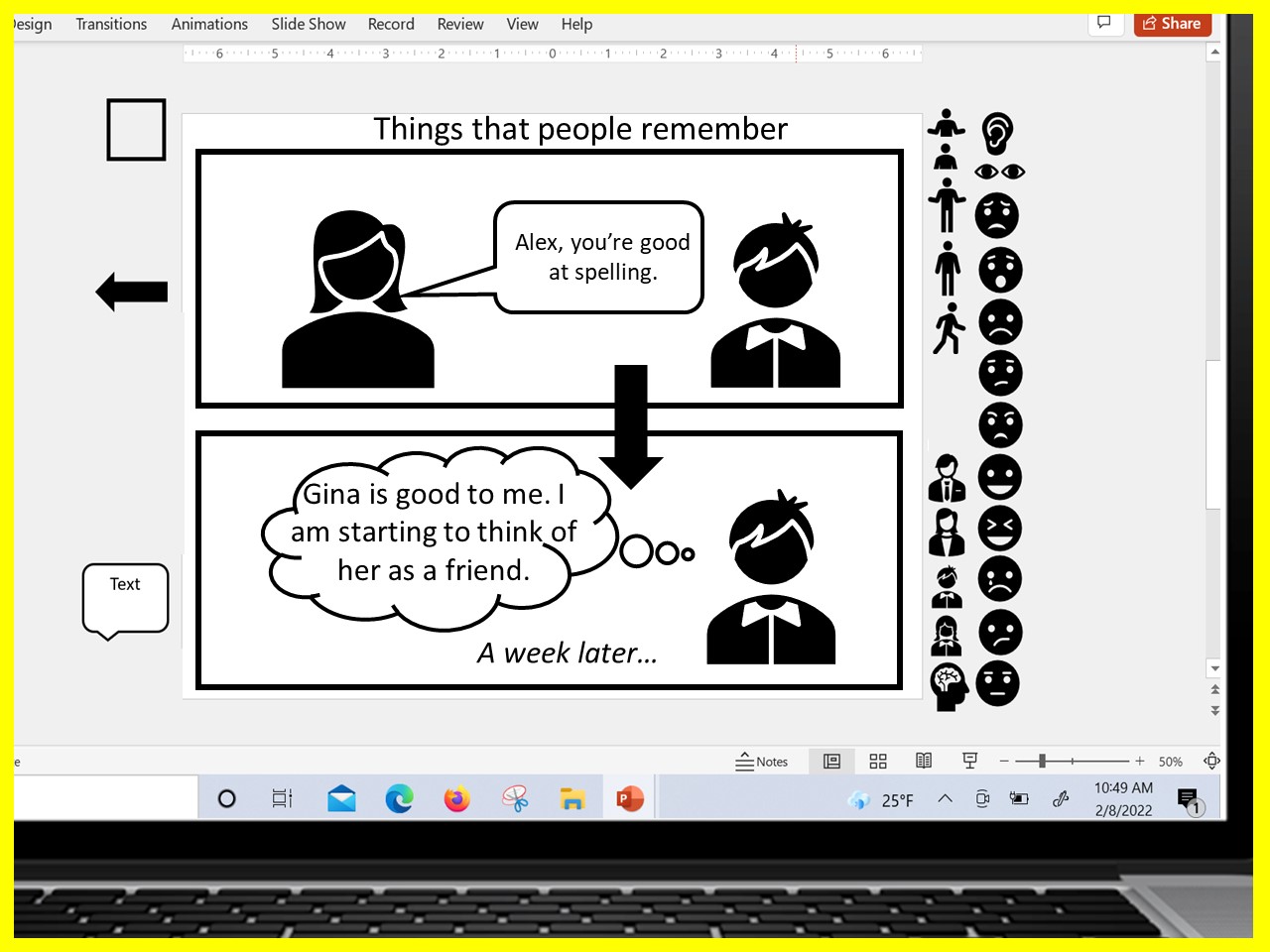
The following images explain how to use my free PowerPoint template to quickly put together your own social stories and comic book conversations.
I have loaded the margins with the graphic and text elements I use most often. You can easily customize your own template with additional images.
This is one of my best hands-on resources for helping children practice conversation basics including greetings, “how are you’s,” staying “on track,” switching topics, and ending the conversation. There is also a screen-based version that works really well. The principles are derived from my book, The Conversation Train.
The simple Venn diagram worksheet can easily be modified for non-English speakers. (It is currently translated into Spanish and Polish). Most of the picture cards work fine without being able to read the English text. These resources are derived from my book, The Green Zone Conversation Book.
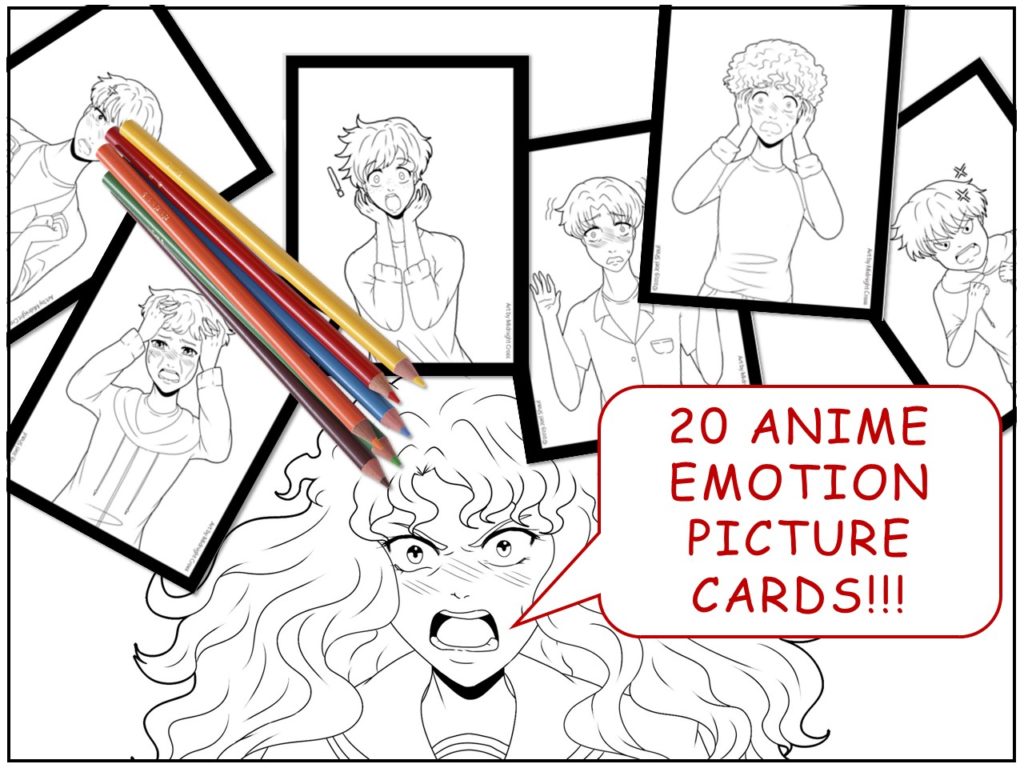
I collaborated with an Australian to produce this popular set of resources. The emotions appear to be universal. You don’t have to color them, but children enjoy doing it. (It is currently translated into Spanish, German, French and Hebrew.)
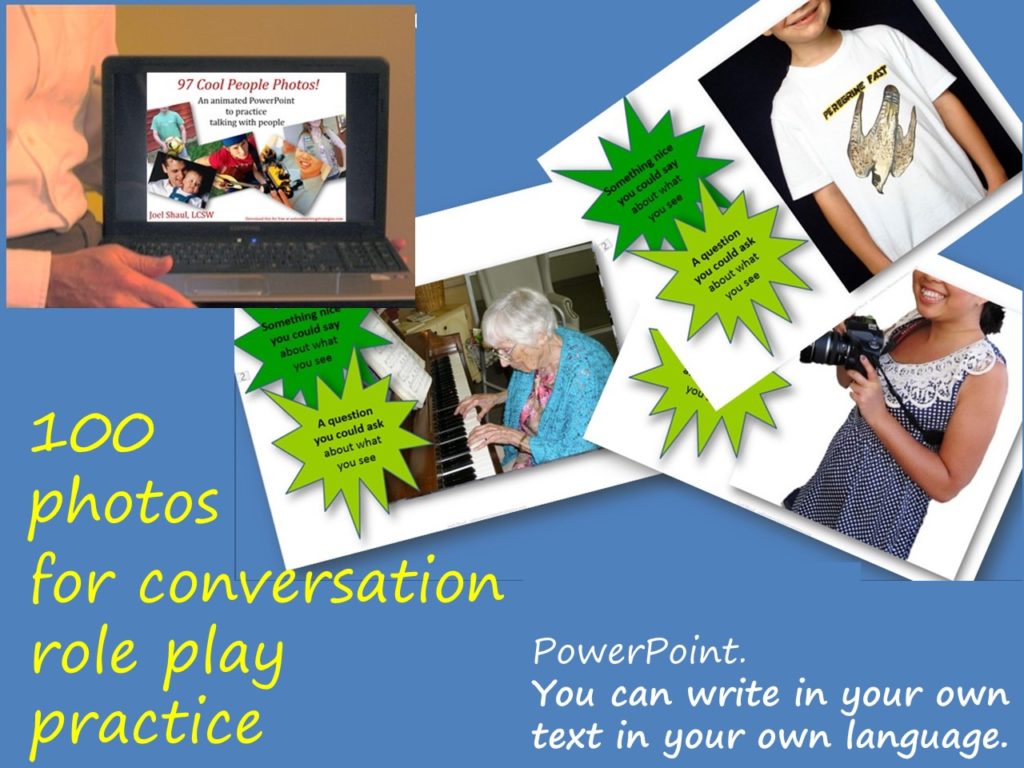
This will work in any language. The card templates are in PowerPoint and you add your own text – in any language.
Talk to Family sheets are currently translated into French and Spanish.
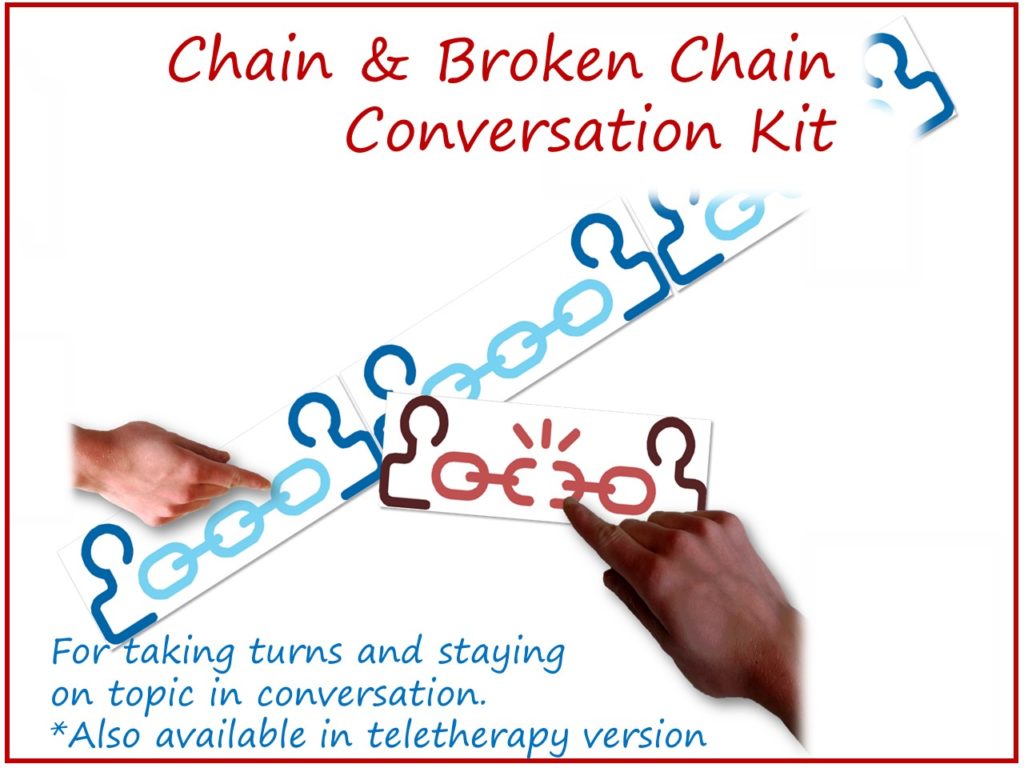
This resource is used in a similar manner to The Conversation Train printables, except the broken chain image is used instead of the broken train track to represent “off topic” statements. (This resource is currently transferred into German and Polish).
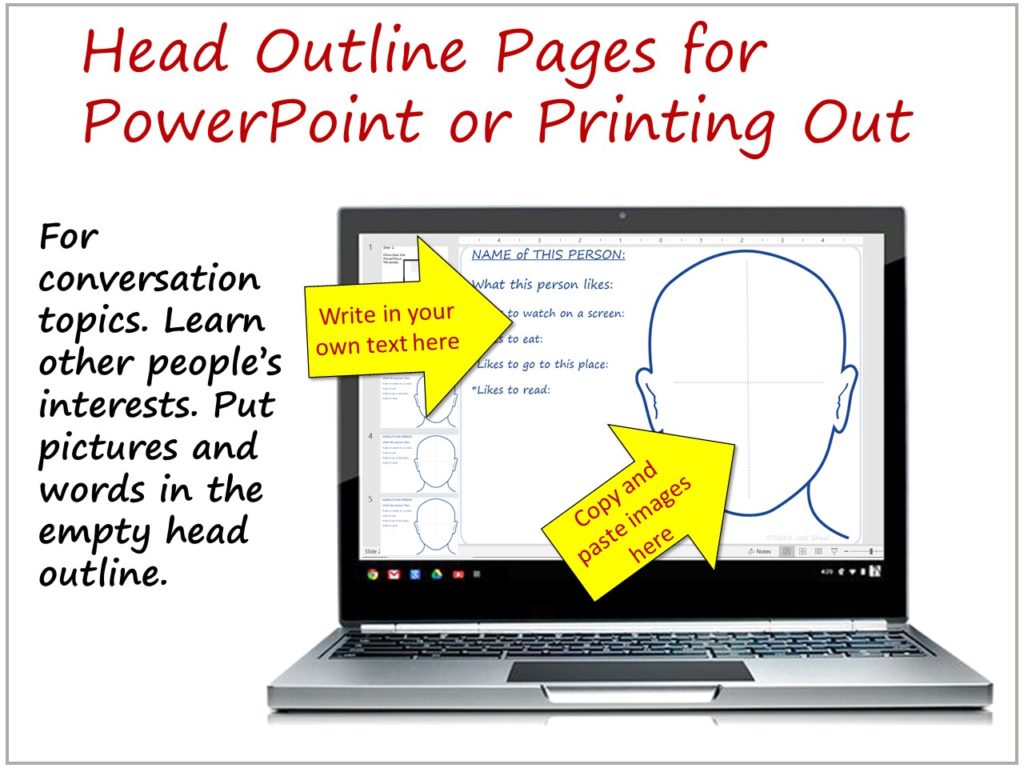
Head Outline Pages is available in a Spanish translation.
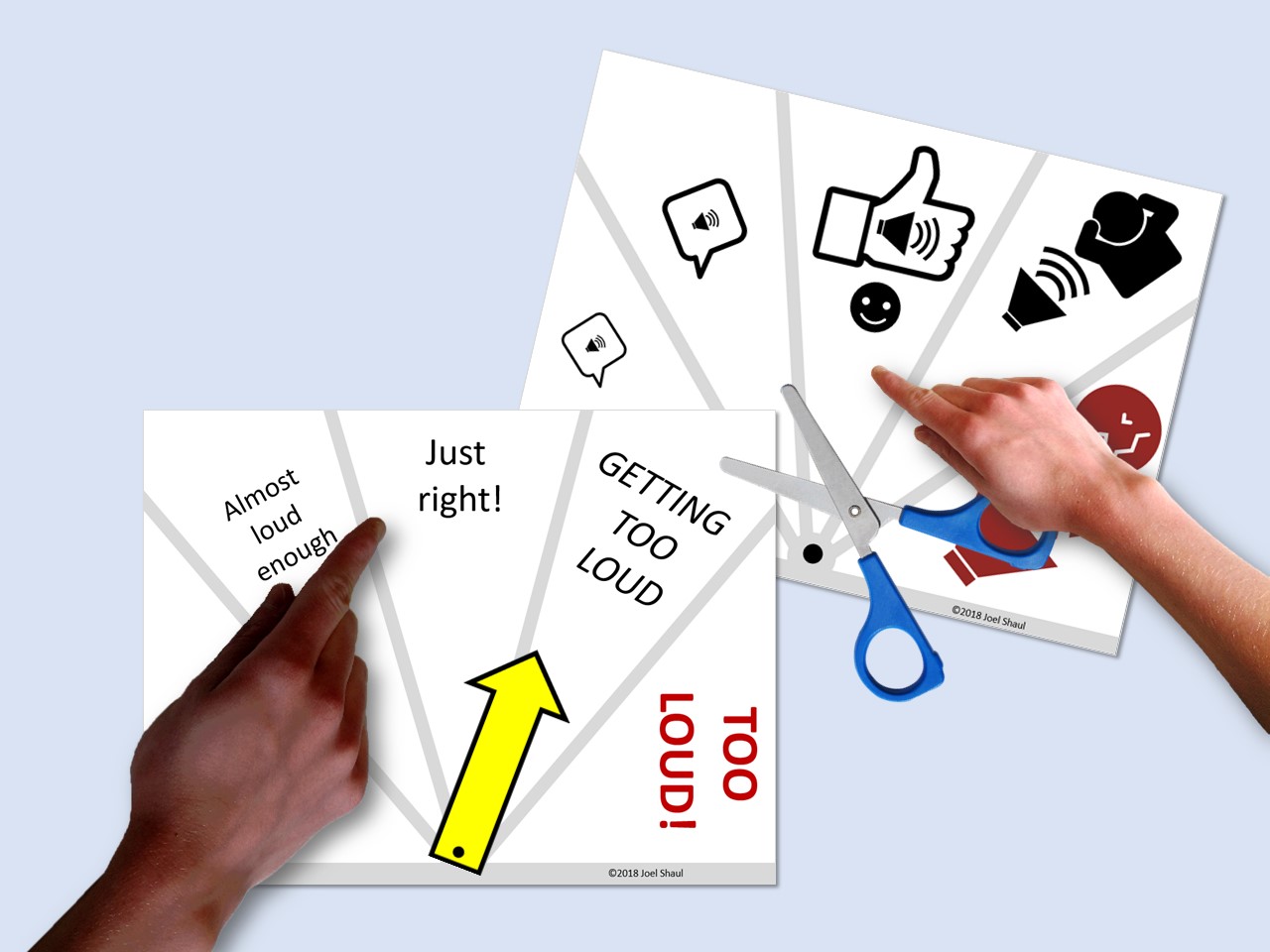
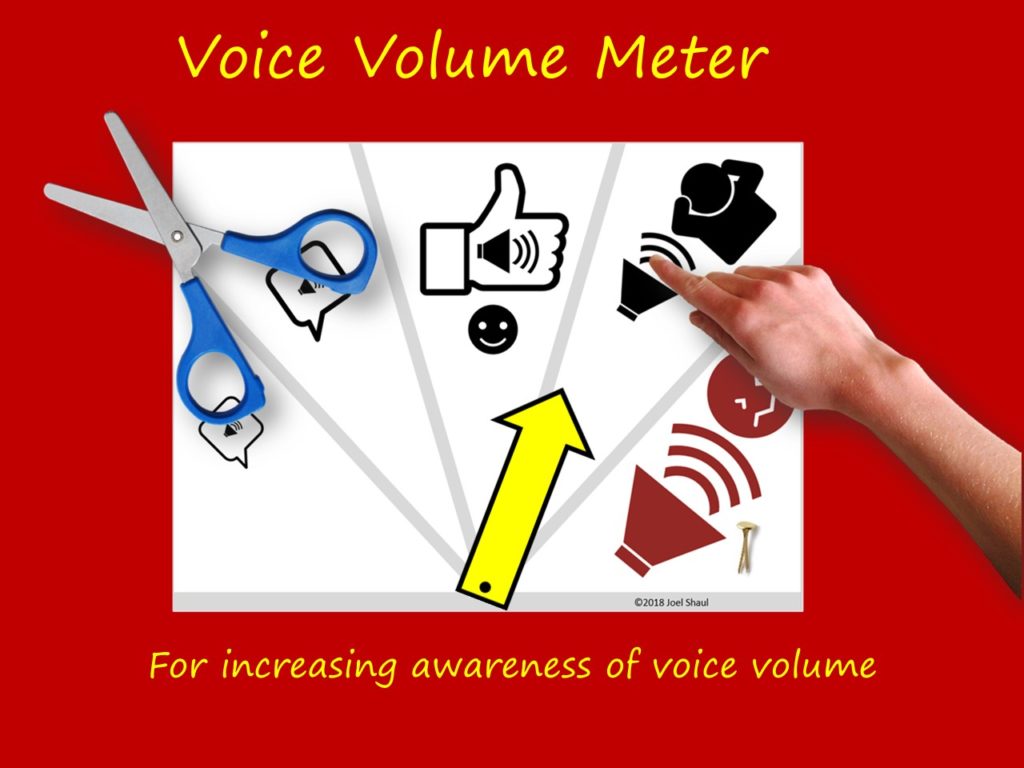
Voice Volume Meter is available in a Spanish translation.
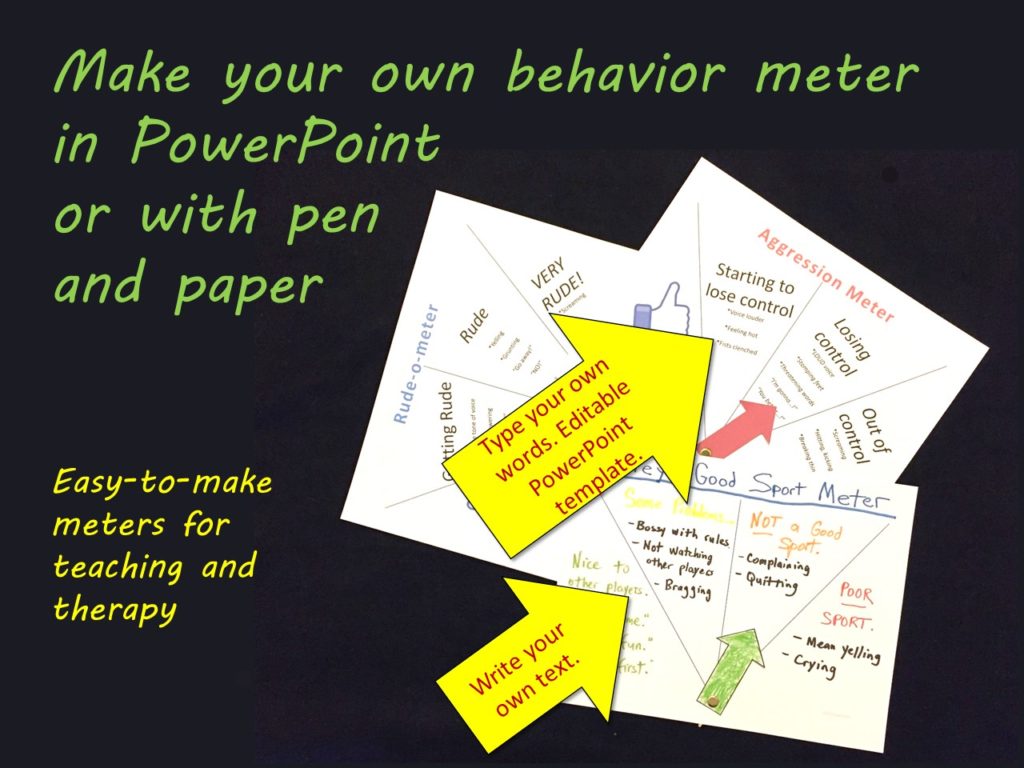
This is a very useful resource. In my own work, I use it several times a week. Children enjoy taking part in the creation of the meters, and it provides helpful continuity between one therapy session and the next.
Add you own text – in any language.
A toy balance is an invaluable social skills resource for your office, speech room or classroom.
I designed this resource carefully so that it is easy to use. You can create a game ahead of time for the children, but in my own work I prefer to create the game with the children, during our time together, so that the children are actual co-creators of the game.
[This is page 10 of the English and French versions of my book, The Conversation Train.]
Young people with autism and “How are you?” questions
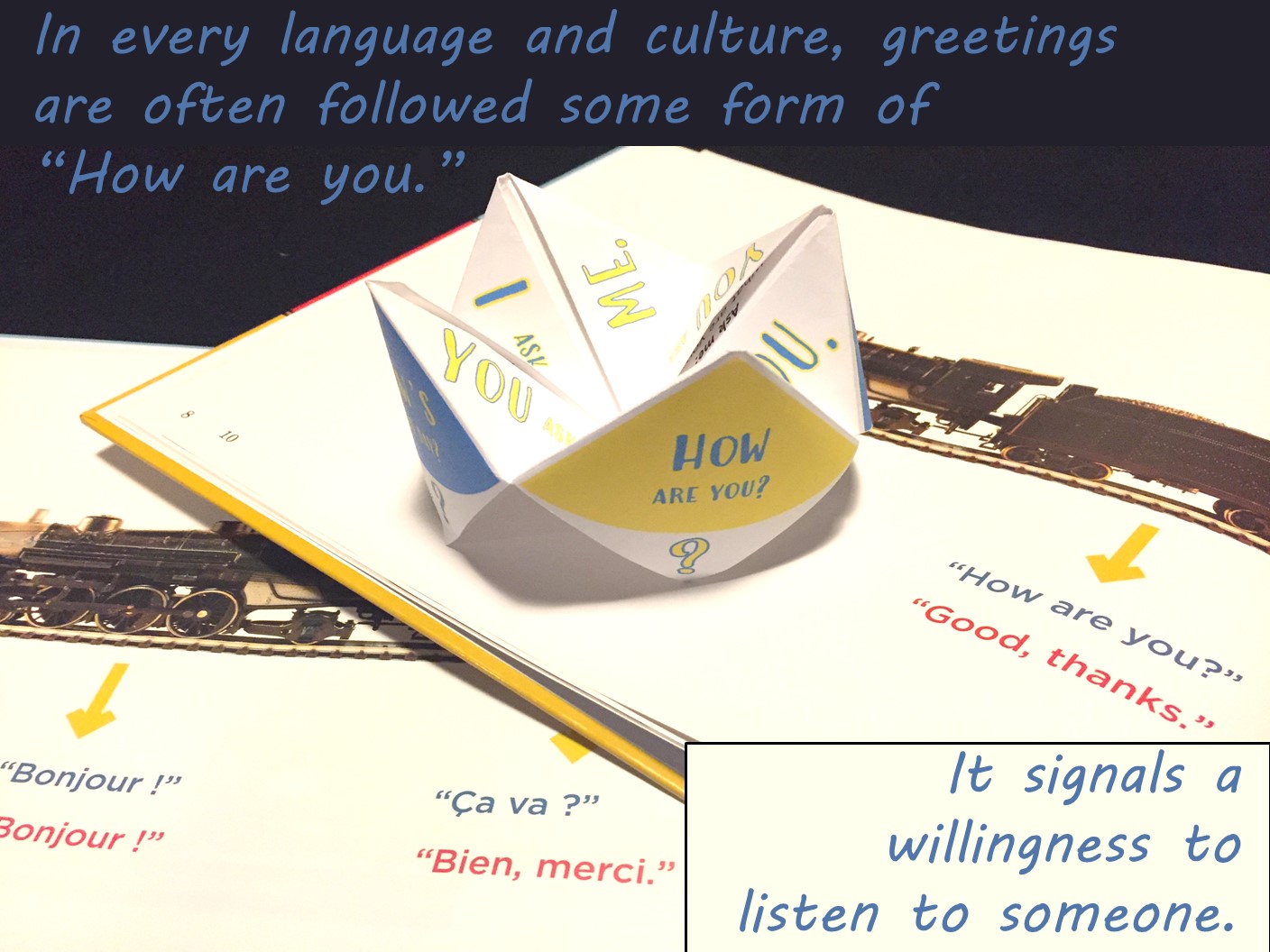
When people with ASD are asked open-ended questions like “How are you doing?”, “What’s up?” or “How’s it going?”, they often can’t figure out just what it is the other person wants to know. Also, individuals with autism might be inexperienced at employing various quick, formulaic replies like “Fine, thanks” or “I’m doing okay. You?”
When people with autism are expected to ask other people “How are you?” or “How’s it going?”, many just avoid saying it altogether. There are several reasons for this. First, the unfolding of a conversation containing “How are you?” can be very unpredictable in length and in content. Asking a person how they are doing often elicits a lot of information that someone with ASD may feel unprepared to take in. Second, a person on the autism spectrum might not grasp the imperative of reciprocity in conversation, so when someone asks them “How are you?” they don’t end up asking the same thing in reply.
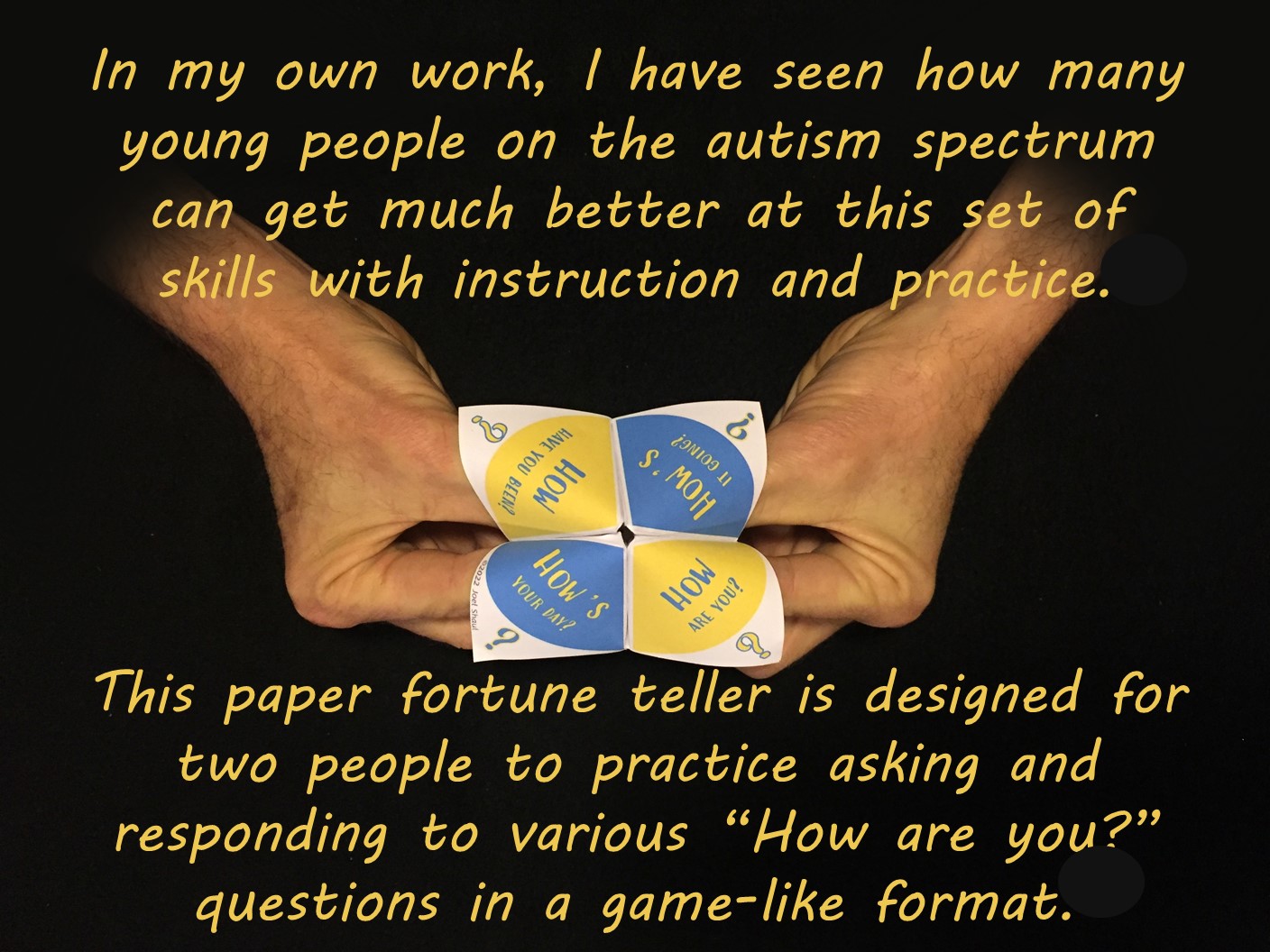
In my own work, I have seen how many young people on the autism spectrum can get much better at this set of skills with instruction and practice.
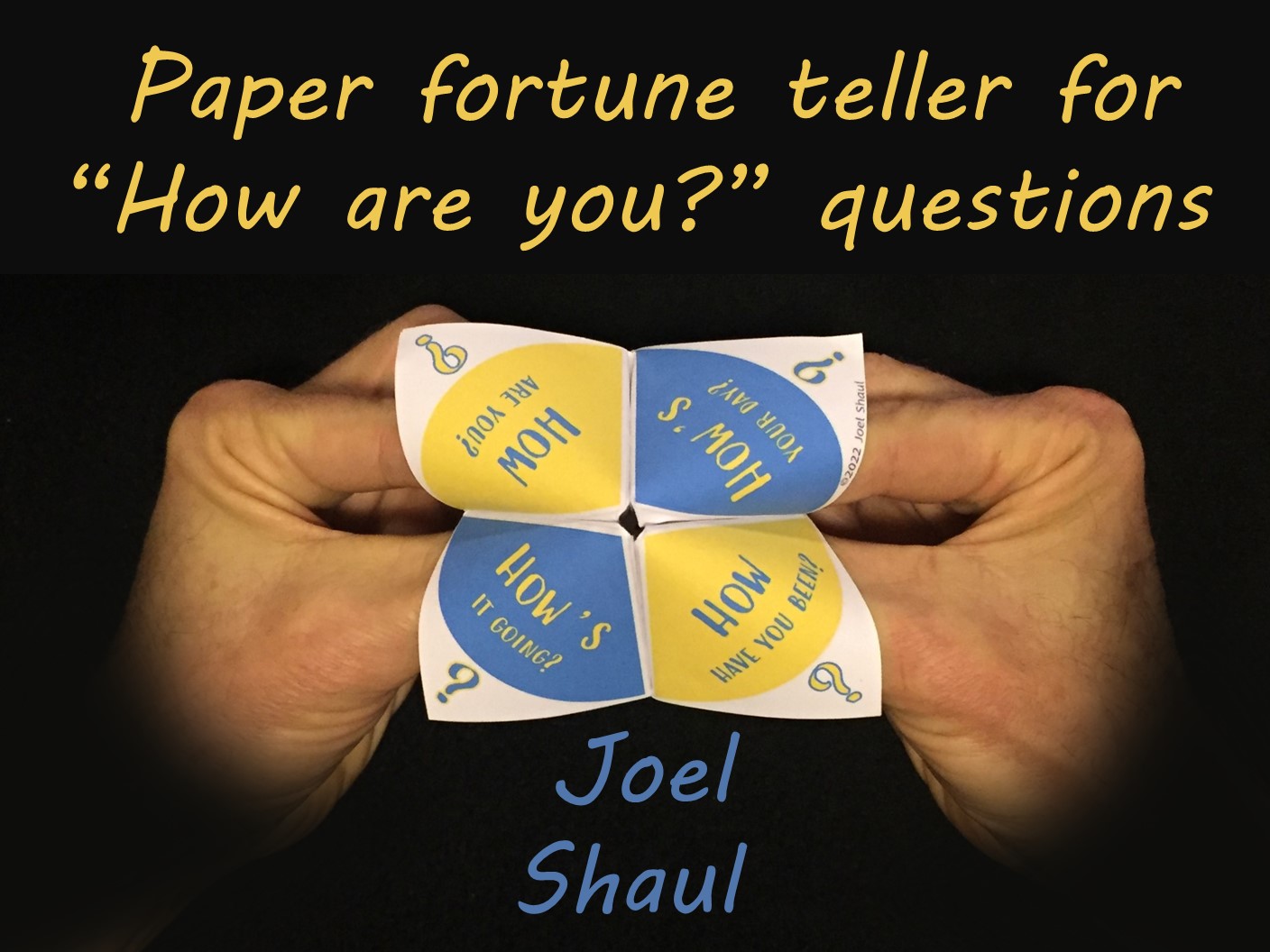
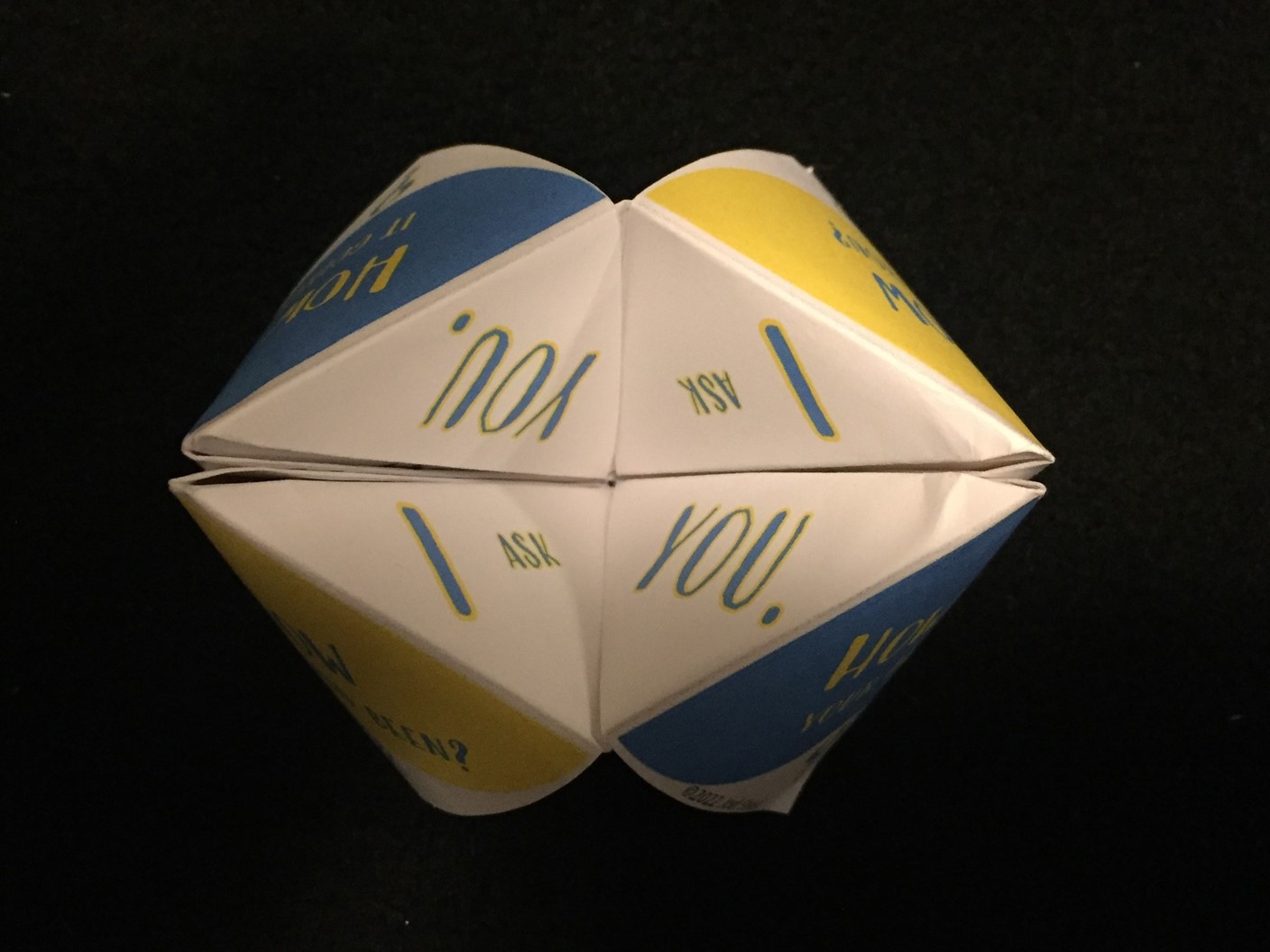
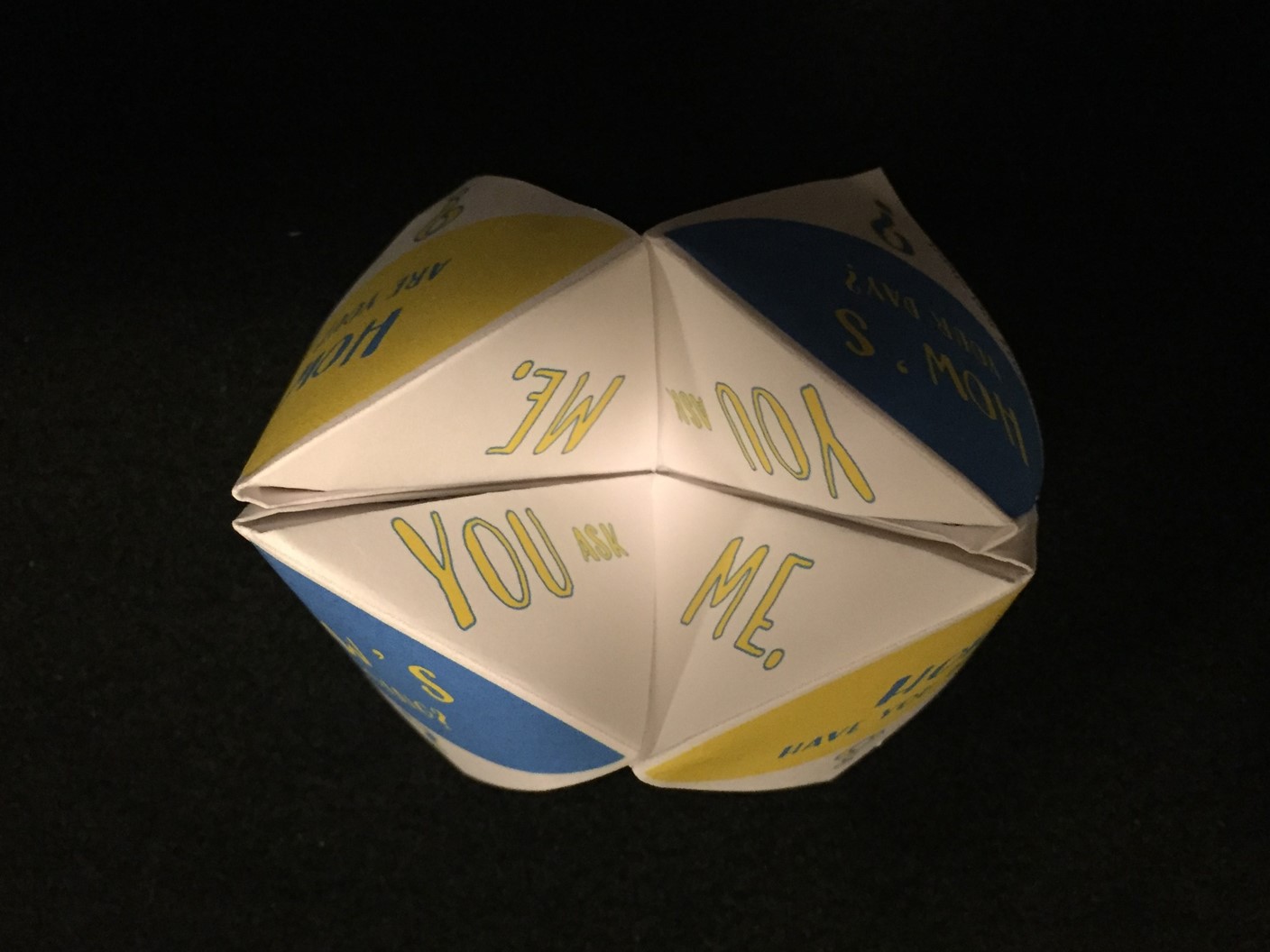
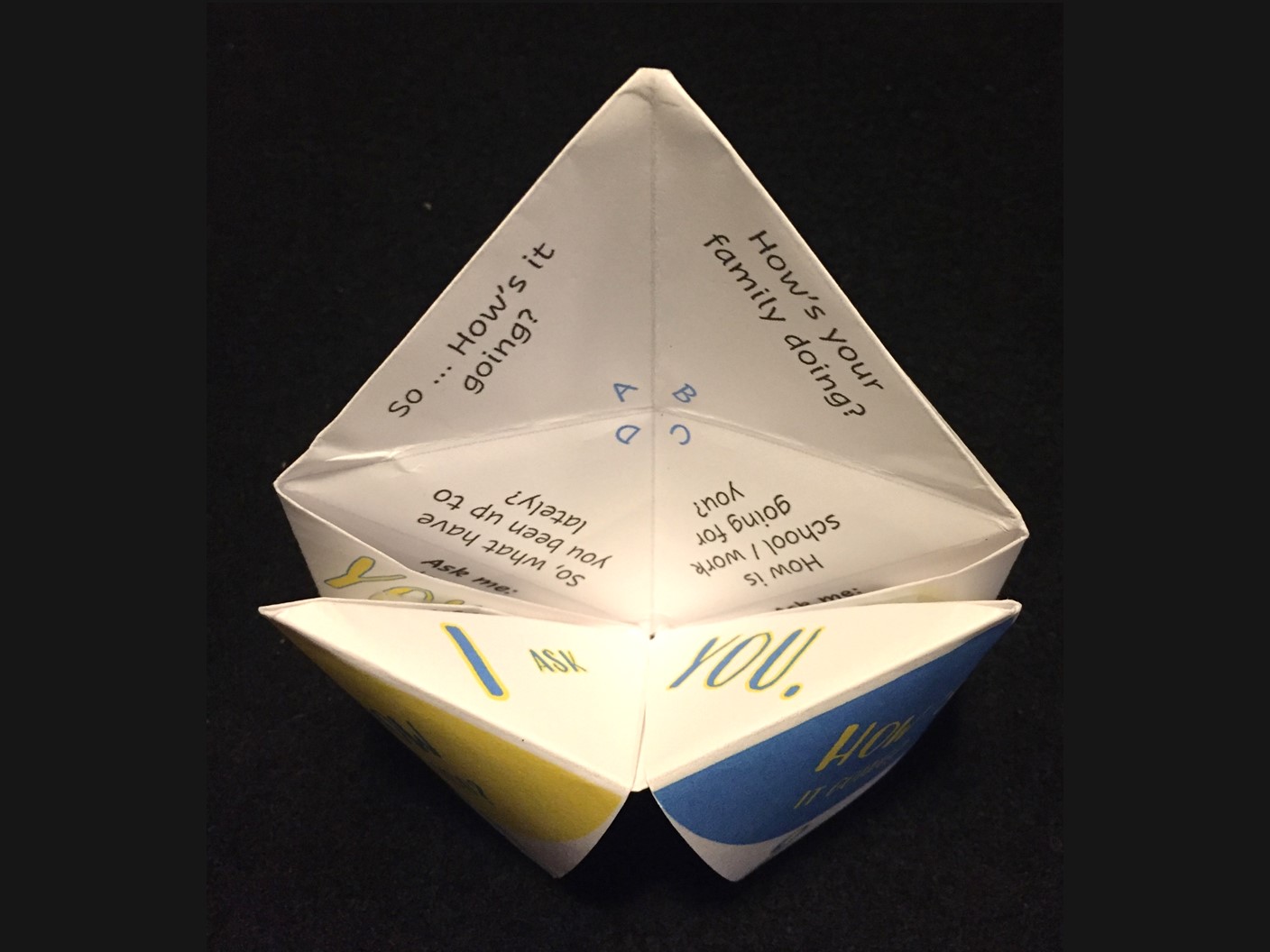
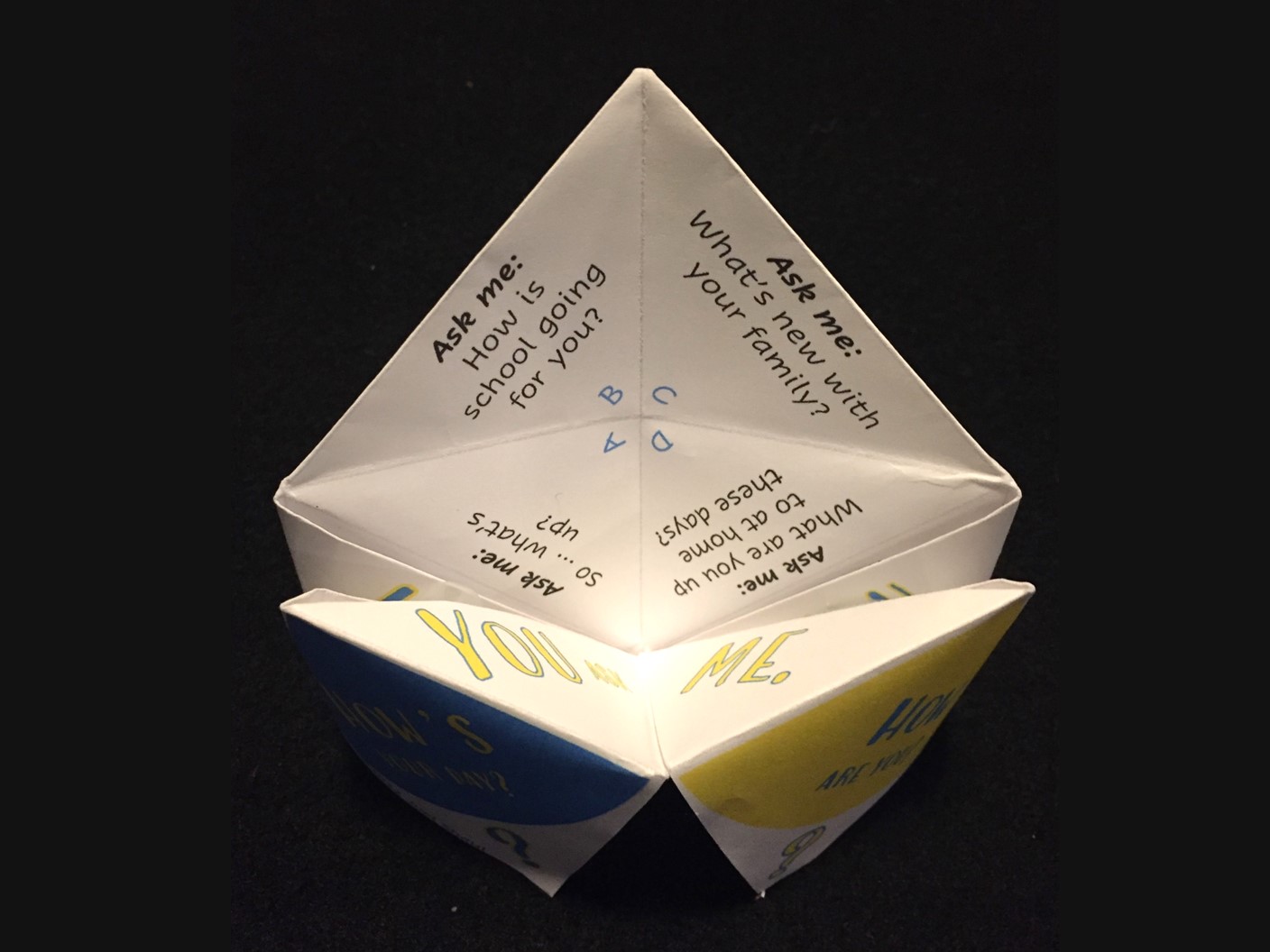
Paper fortune tellers work well for two children, or an adult and the child, to practice specific conversation skills. I have used my own, custom-designed ones for many years in my work. There are many other conversation-based paper fortune tellers on the website to practice other elements of social communication. I also show how to fold them.
Don’t miss these other free worksheets, games, and teaching / therapy resources for children on the autism spectrum:
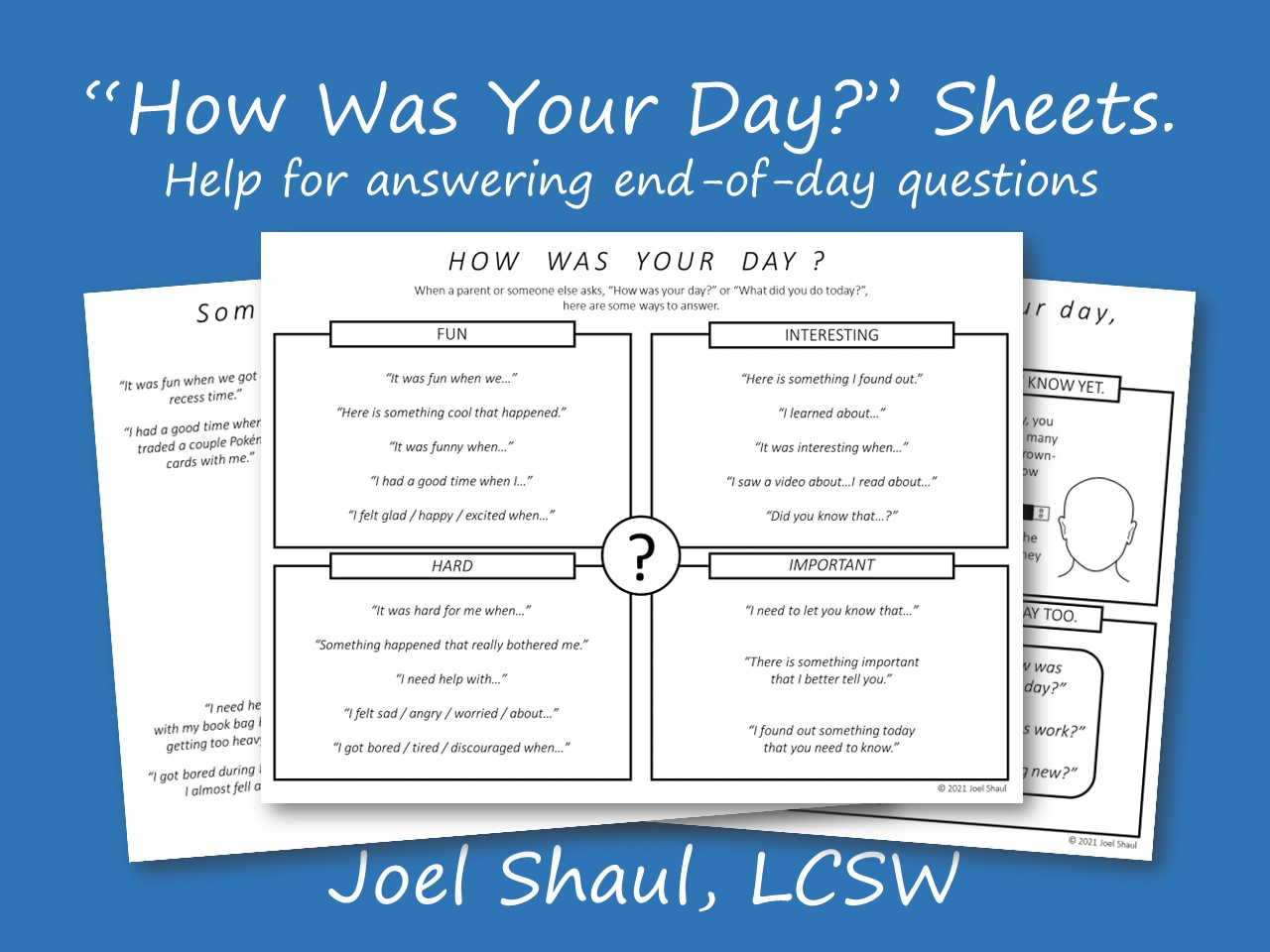
Many children, especially children with autism spectrum disorders, have difficulty answering these questions from their parents at the end of the day. Children might be tired or distracted. They might not grasp the importance of exchanging information about the school day. They may have an impaired sense of what the parent knows or does not know.
I designed these sheets so that:
*Parents can use them as written prompts
*Mental health therapists and speech therapists working with children with autism can use them for guidance and practice for this important aspect of the parent-child relationship.
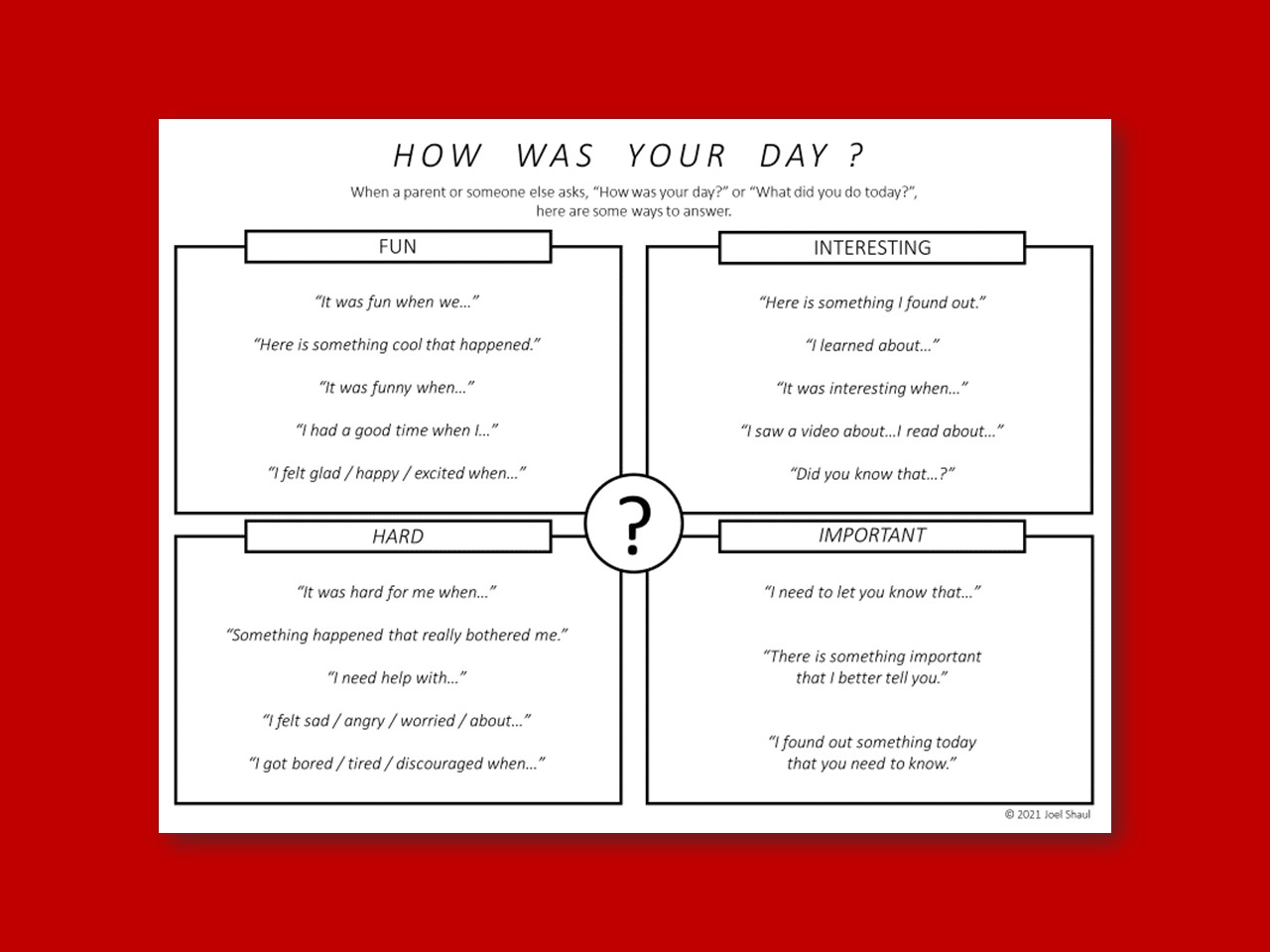
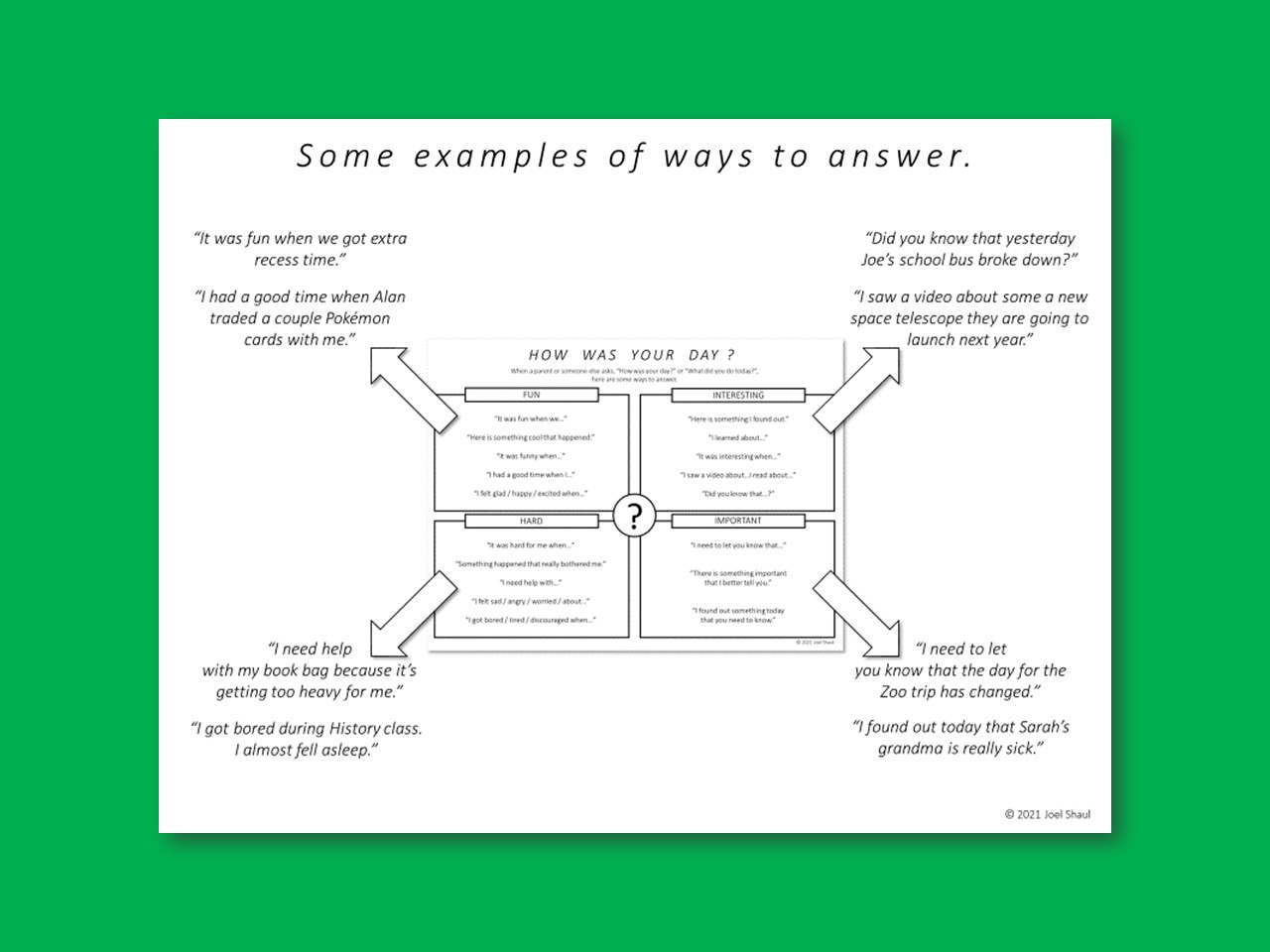
This first sheet offers examples, in thematic categories, of useful statements and phrases to use when answering “How was your day” kinds of questions.
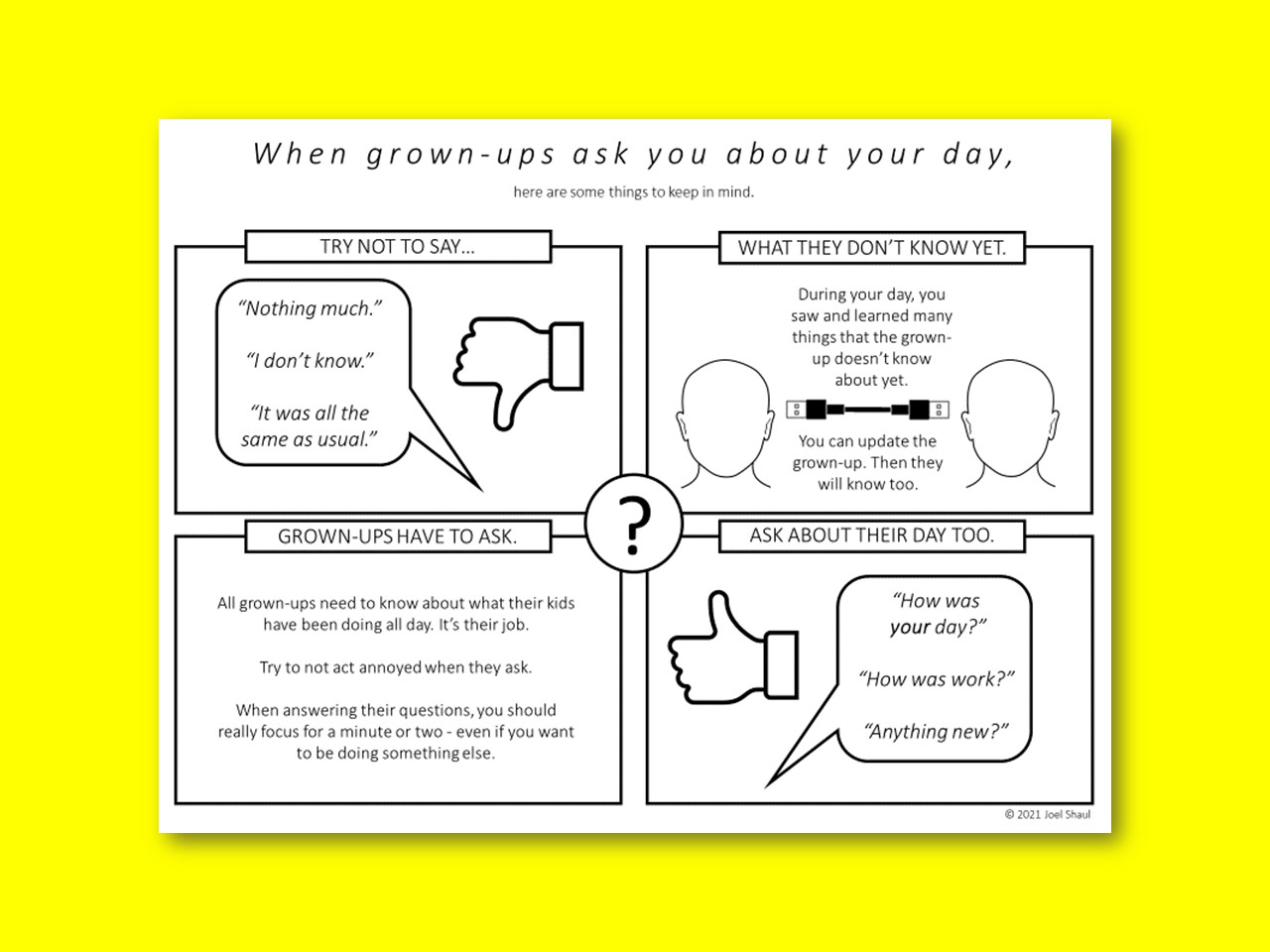
This second page offers a variety of helpful suggestions.
The third sheet offers examples of how to use the phrase prompts from page 1.
In my own work with the parents of children on the spectrum, I have gotten a lot of good feedback about the design and utility of these conversation prompts. I hope that you also find them useful.
Joel Shaul, LCSW
For more materials to facilitate conversation between the child and family members, here is another set of free materials: Talk to Family Picture Sheets.
For more practice on asking and responding to “How are you?” questions, here is a cool and fun paper fortune teller on that topic.