

Welcome to my website

On my website, there are hundreds of pages of downloadable free resources for children on the autism spectrum.
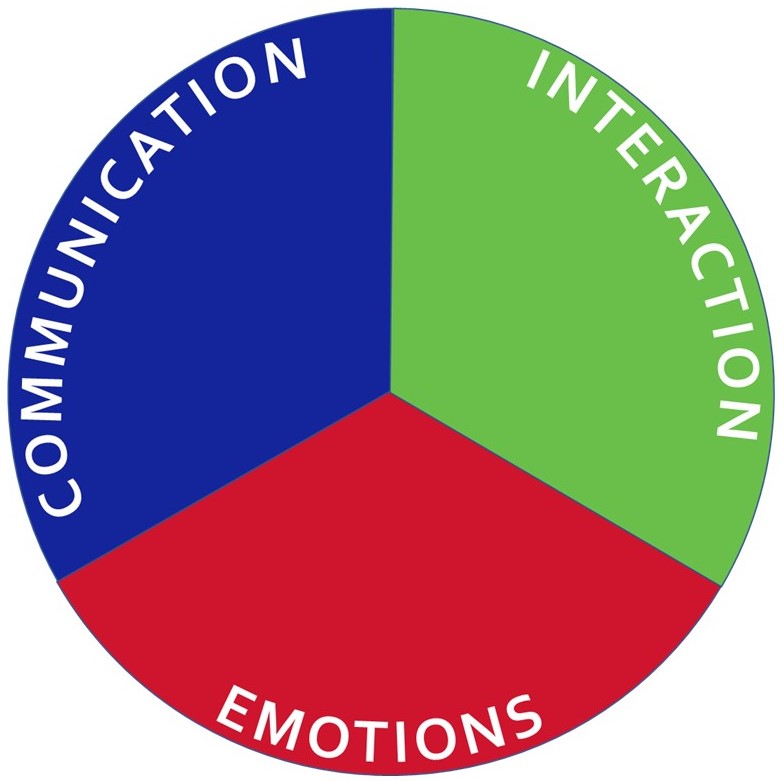
Most of my free downloads to help children on the autism spectrum are grouped into these three categories:

Communication – – – Interaction – – – Emotions
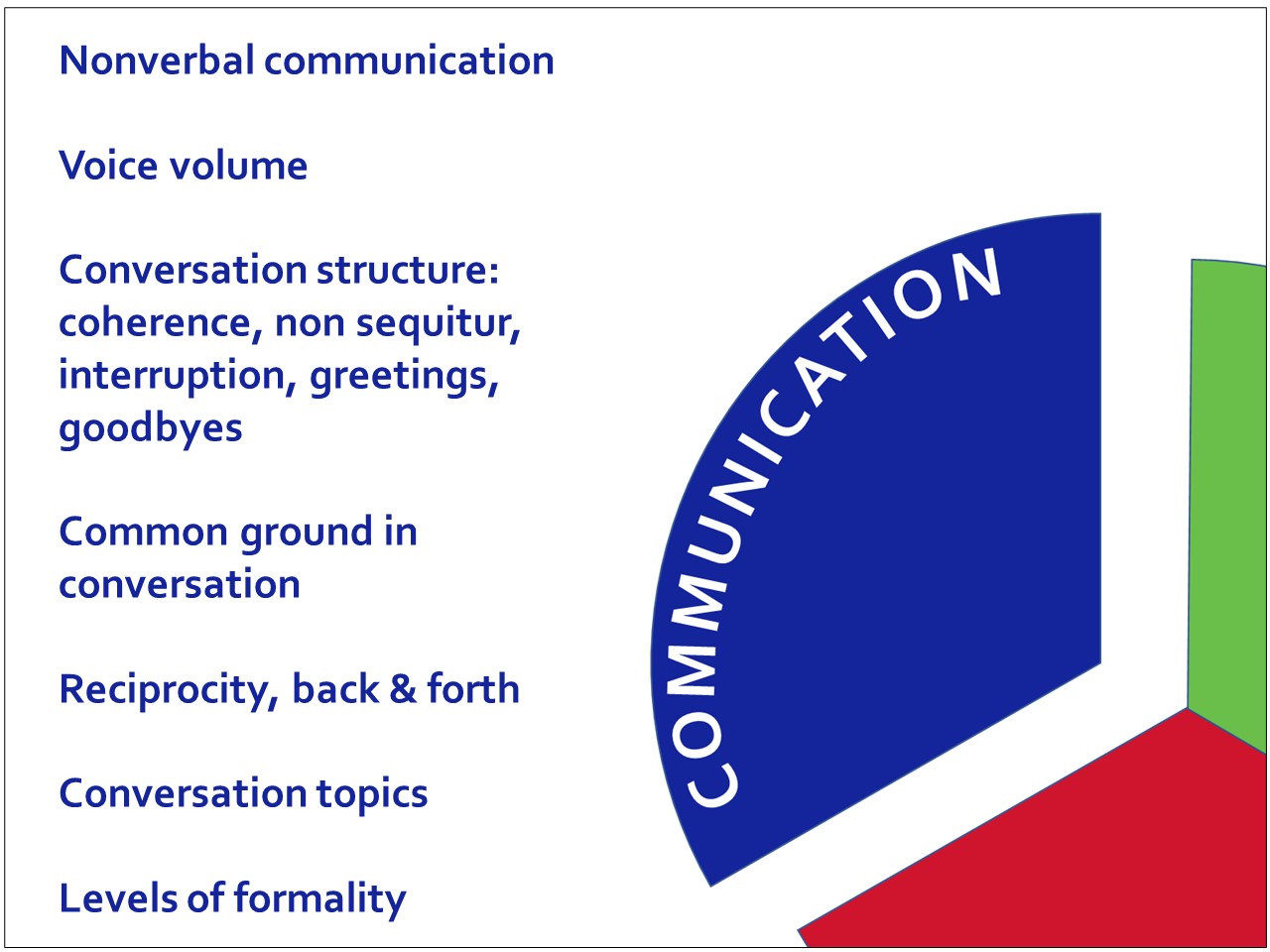
I have dozens of free resources to help children with ASD to practice conversation, nonverbal communication and diverse aspects of social communication. To access free resources on communication skills, click here. Communication .
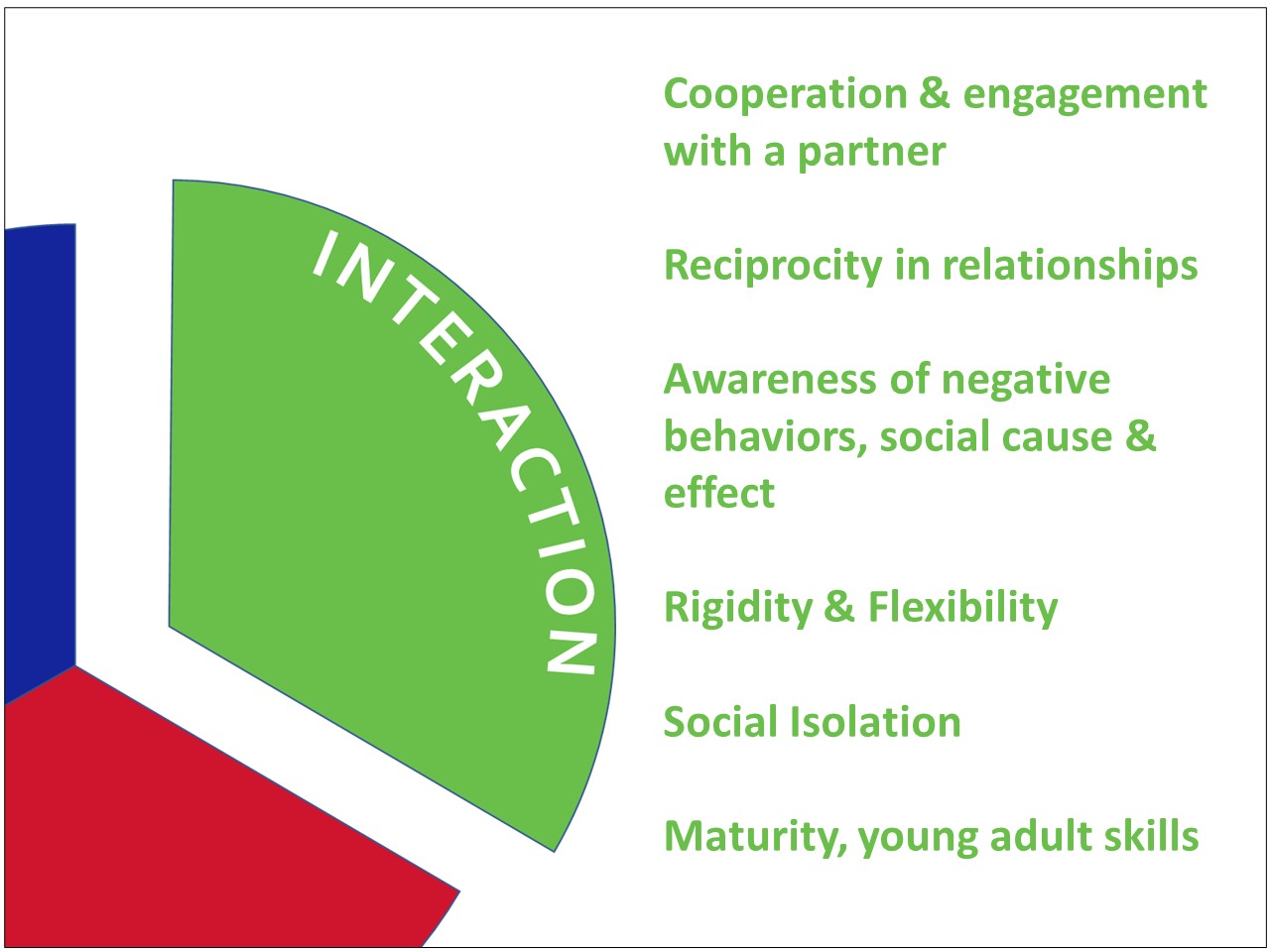
There are a number of free social skills resources to help children with autism learn about and troubleshoot many different issues pertaining to social interaction. To access free downloadable resources on social interaction skills, click here: Interaction .
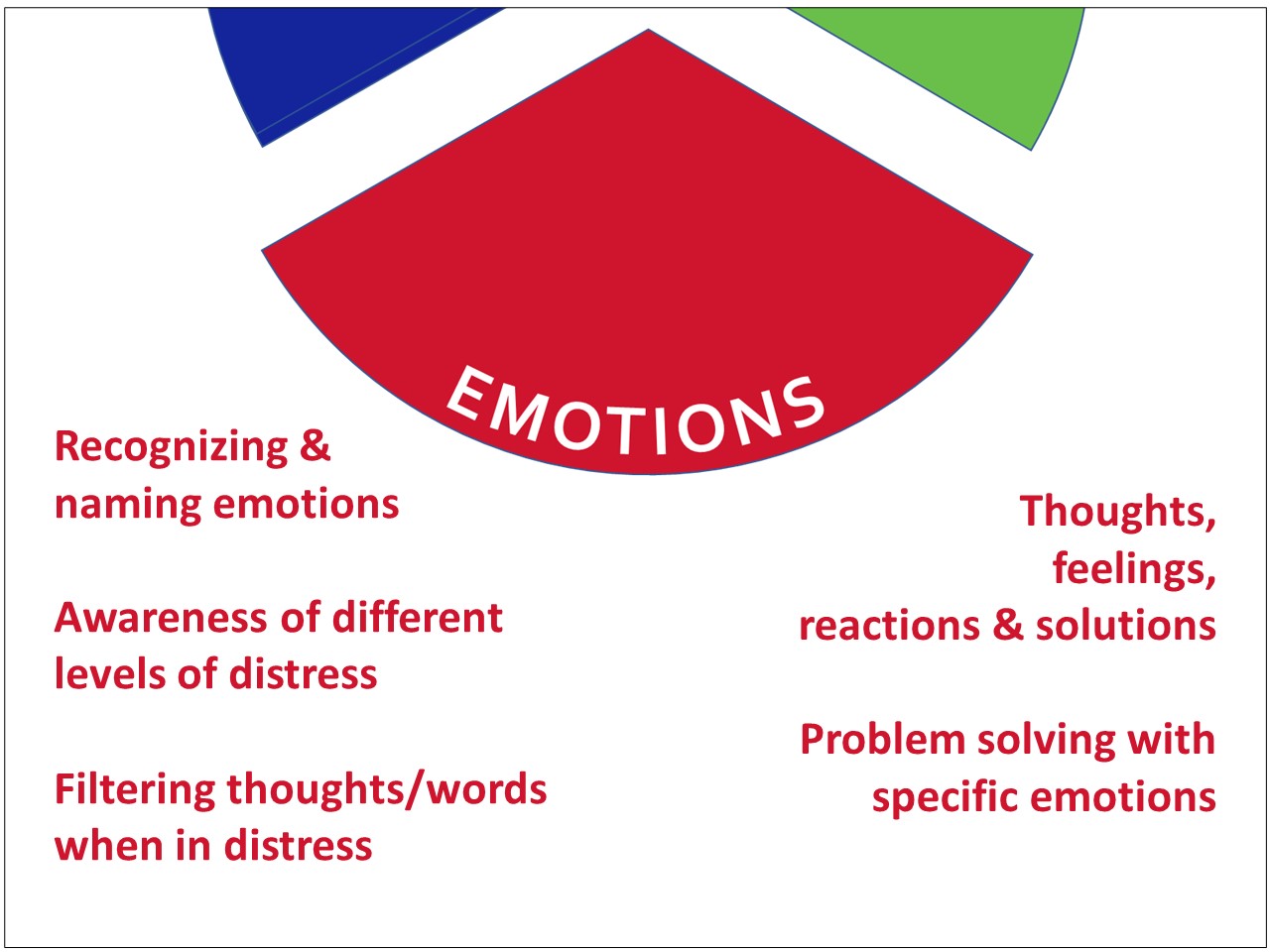
I have created a large number of appealing, user-friendly worksheets, games and videos to help children on the autism spectrum with emotional regulation. To access free materials on emotional regulation, click here: Emotions

All of the free resources that don’t fit into the categories of Communication, Interaction and Emotions are grouped into a fourth category, “Other.” This includes therapy/teaching methods, demonstration videos and other resources.

Whether you are coming to this website as a professional working with children on the spectrum, or as a family member caring for a child or young adult with autism, I hope some of these things I have created are useful for you.

Click on Communication, Interaction, Emotions or Other below to be directed to the respective categories.

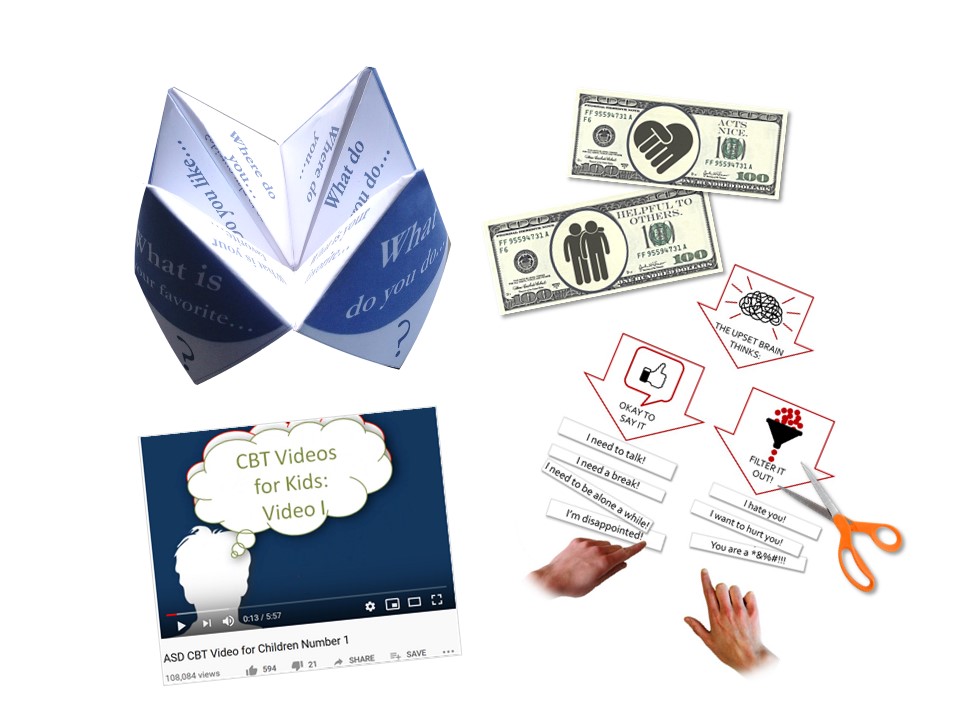
Communication

Interaction

Emotions

Other

~ Joel Shaul

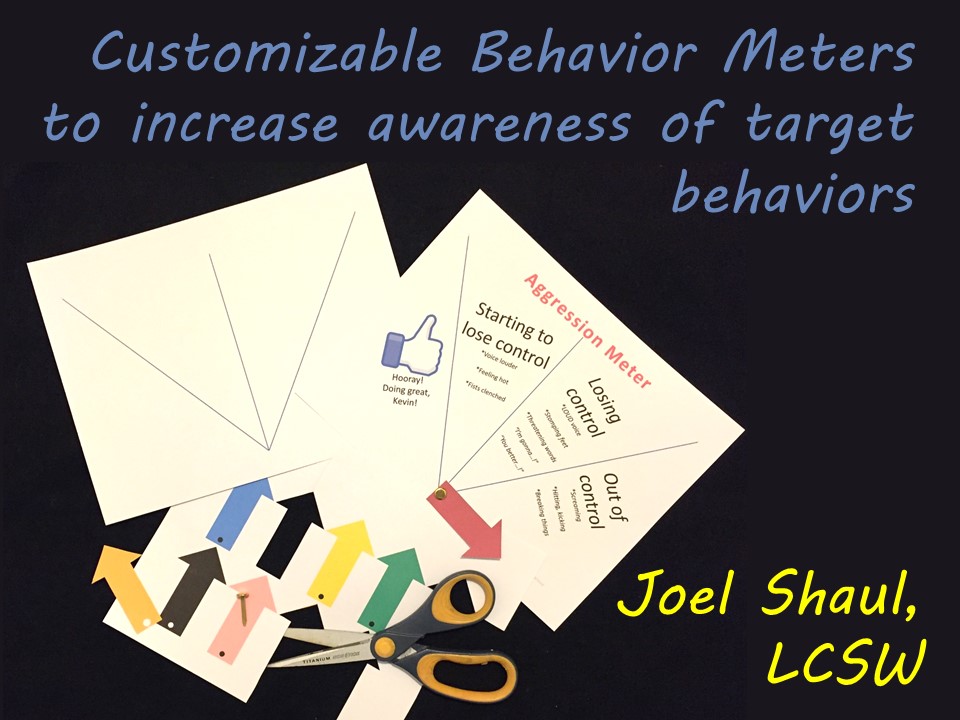
Customizable behavior meters ~ to increase awareness of target behaviors

Customizable Behavior

German translation of this resource

In my own work with children on the spectrum, I frequently almost always found that merely talking about a problem wasn’t good enough alone. Kids get tired of being scrutinized and criticized. Kids with autism in particular can get fidgety and impatient during sessions.

Many years ago, I found other therapists employing handmade cardboard meters they had put together to help children focus on issues such as voice volume. After much experimentation, I found that these meters have many applications on a wide variety of problems that are the focus of therapy interventions.

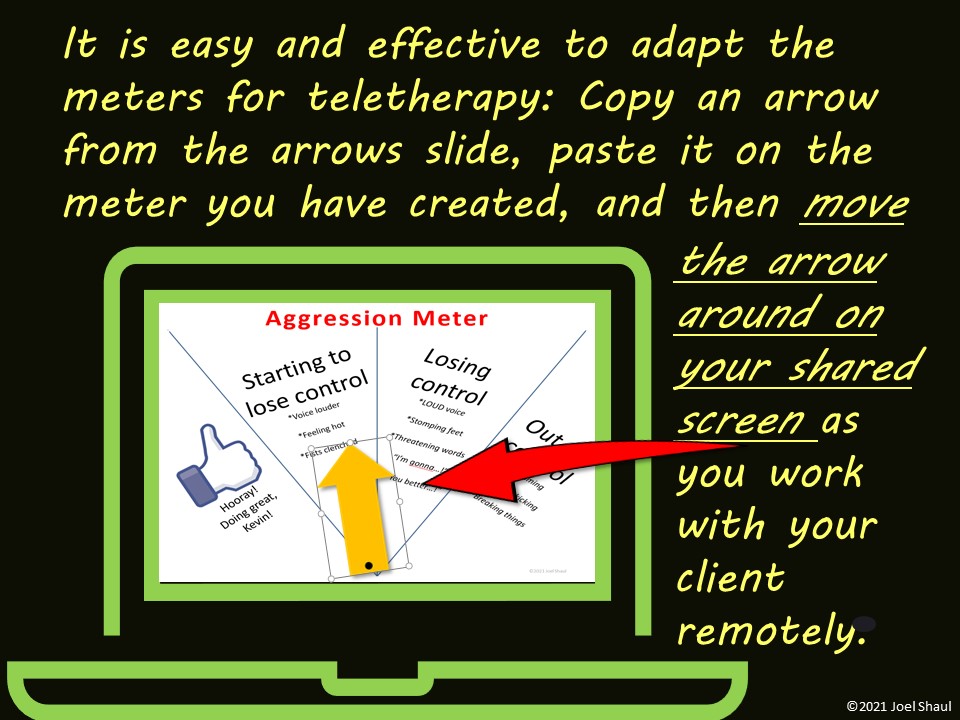
This kit enables you to use my template to quickly create nice-looking meters for whatever problem area you are working on. The advantage of putting the meter on a computer screen is that you and the child can easily look at the screen together and collaborate on its design.

Most kids also really like to take part in cutting it out and laminating it. This can afford them a sense of agency in the therapeutic process.

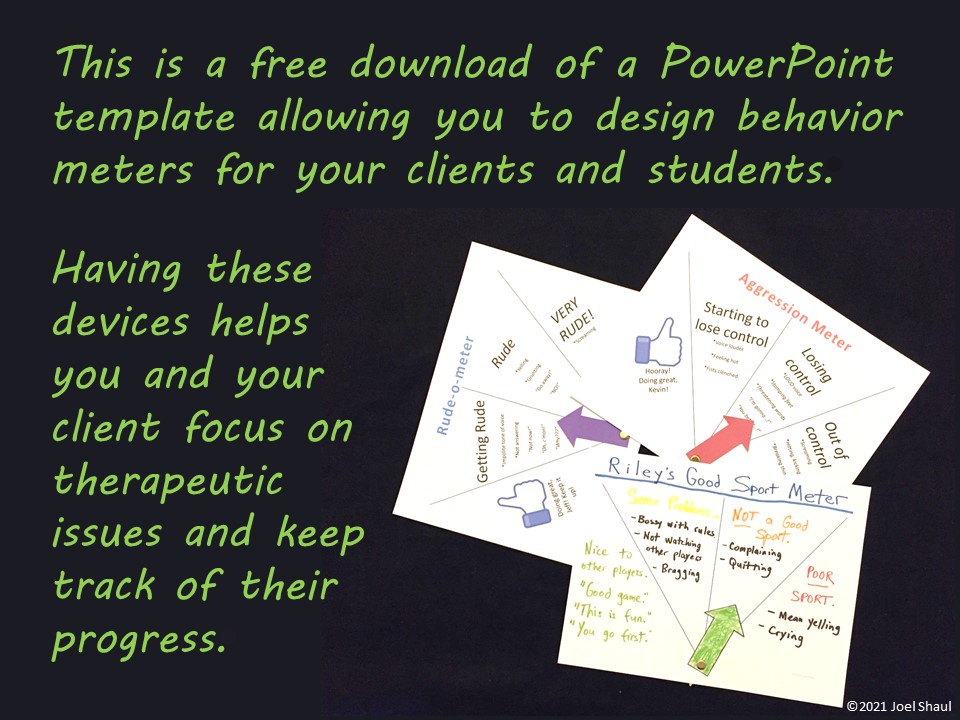
The pictures below provide some examples of what the behavior meters look like and some tips on creating them and using them.

Having these custom-made meters helps you and the child to focus on therapeutic issues and keep track of progress.
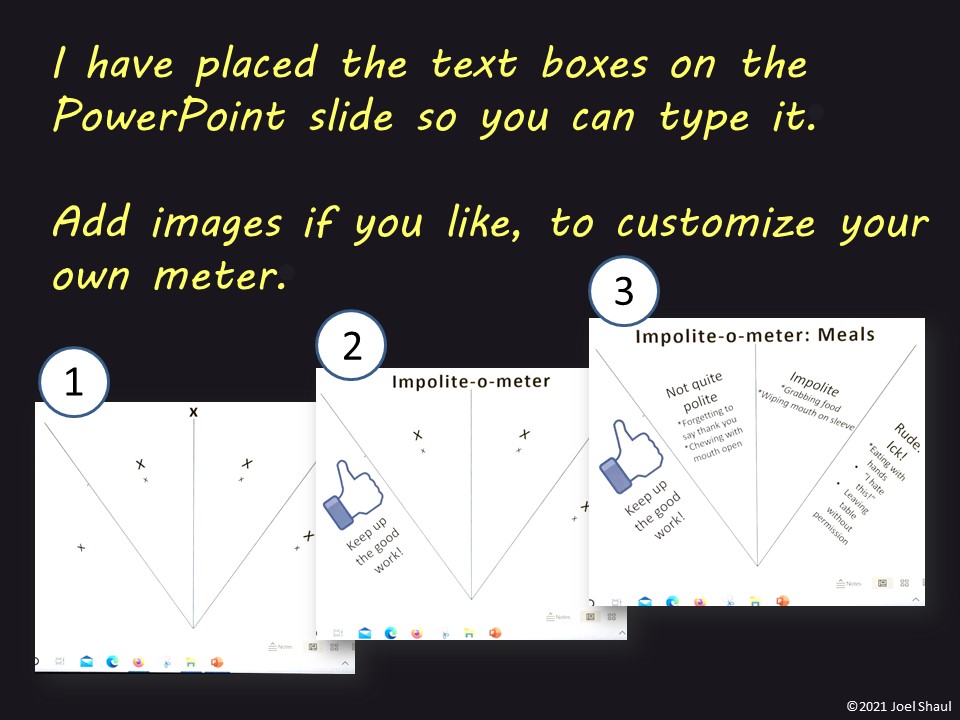
I have placed text boxes on the PowerPoint slide so you can type on it. You can also add images to customize the meter.
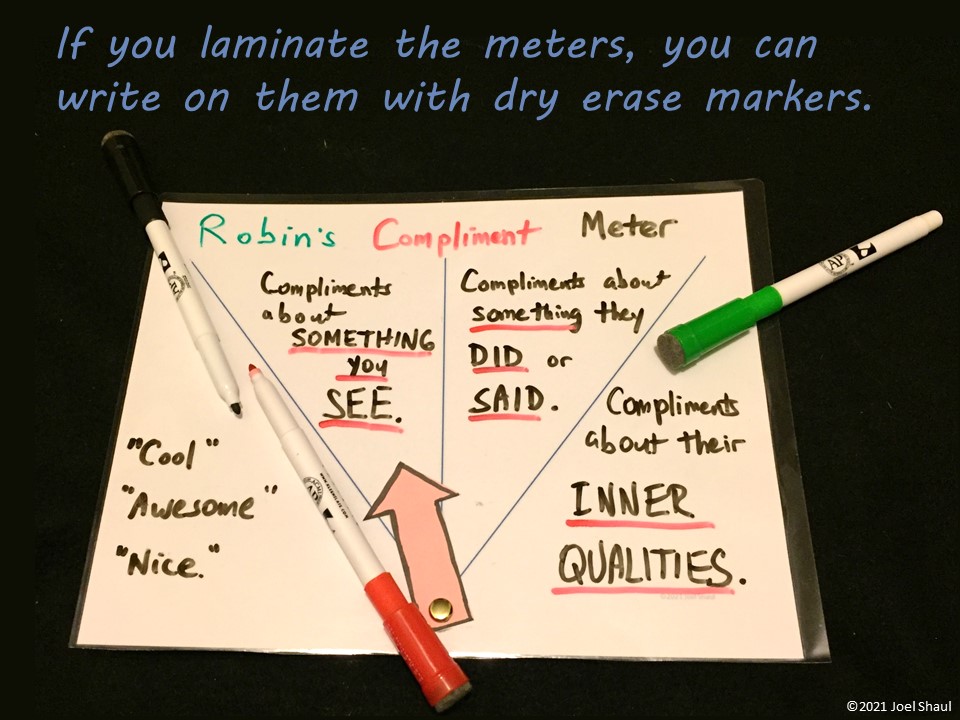
If you laminate the meters, you can write on them with dry erase markers.
You can create the meter with a child in real time during a session. It works whether you are seeing the child in person or in teletherapy.

Elsewhere on my website, you will find links to some meters that are pre-made on topics such as voice volume and fantasy enthrallment.

There are other free, downloadable “meters” on the website.

Annoy-o-meter, Nice-o-meter

Printable Voice Volume Meters

Your comments on these resources are most welcome, and often helpful. Click HERE to send an email.

ASD Feel Better Promo square directing to JKP

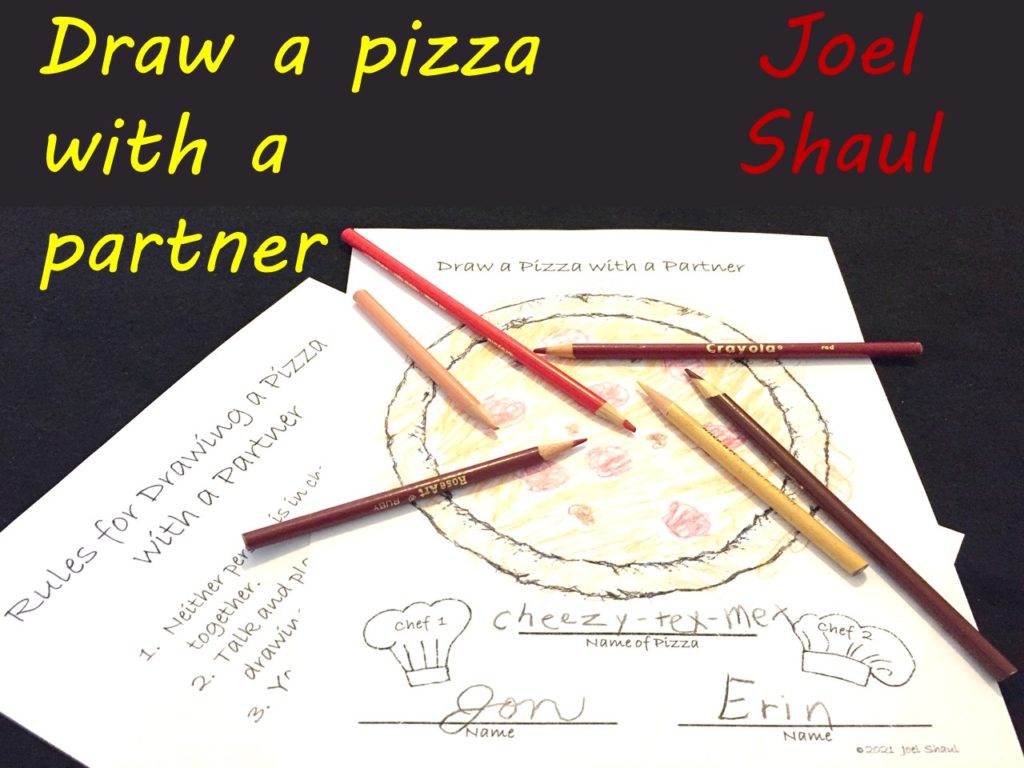
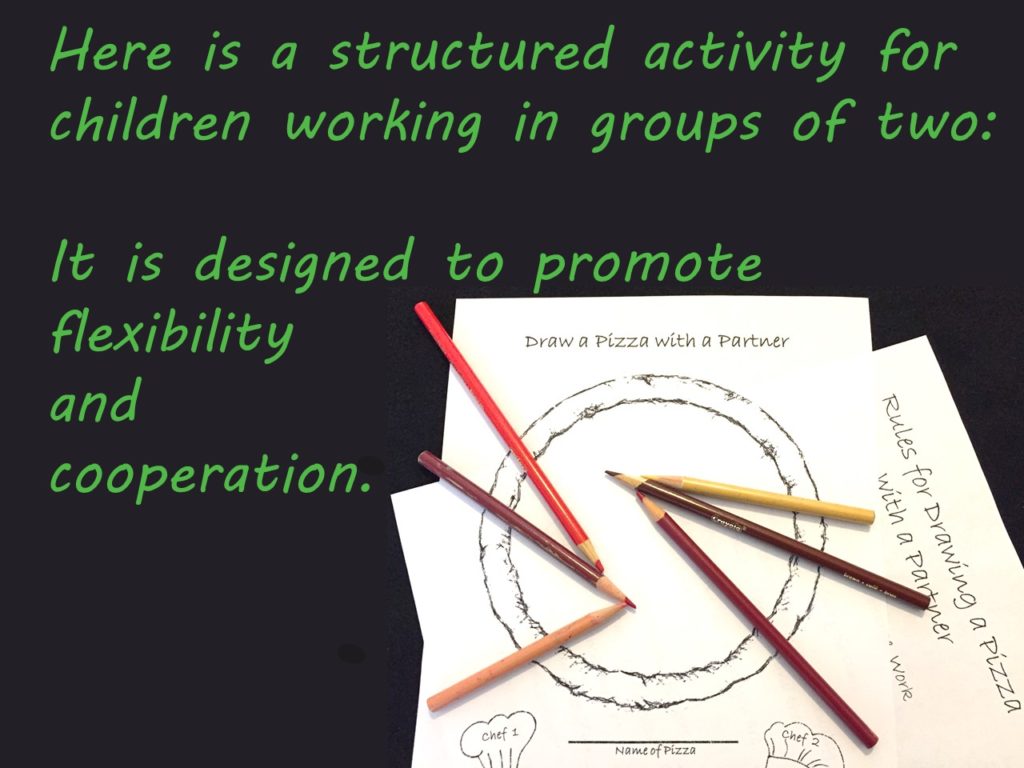
Draw a pizza with a partner worksheet – social skills activity to promote flexibility & compromise

in Spanish: Dibuja una pizza con un compañero – hoja de trabajo para fomentar la flexibilidad y la cooperación

in Hebrew: 2-Person Pizza Drawing Worksheet

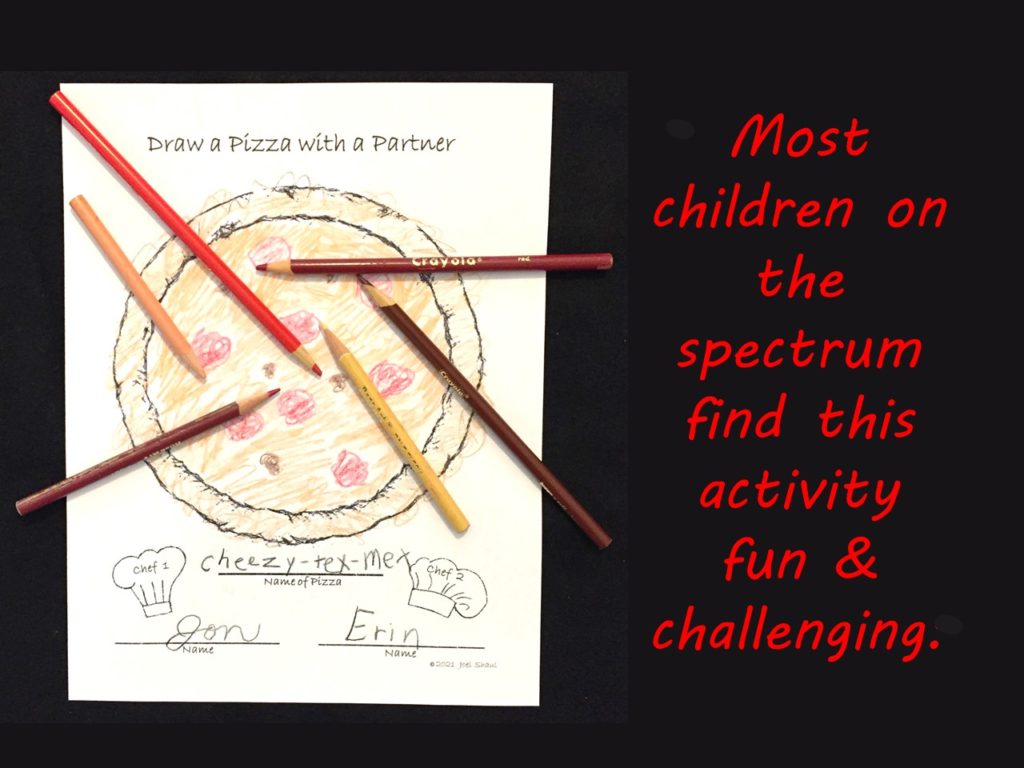
Picture showing completed pizza picture drawn cooperatively by two children together.
These sheets are to promote flexibility and cooperation between two children.

The autistic children I have worked with are usually not lacking in creative ideas and artistic creativity. But when it comes to collaborating with others on a creative endeavor, they can get confused and frustrated without adult guidance and clear cooperation rules to follow.

This printable activity sets up a one-page drawing and writing activity that two kids on the spectrum have to complete jointly. Each group of two children, in either a social skills group or a classroom setting, are instructed to invent, name, describe and jointly draw a pizza together. It’s hard, but fun, and in my own work children usually like it.

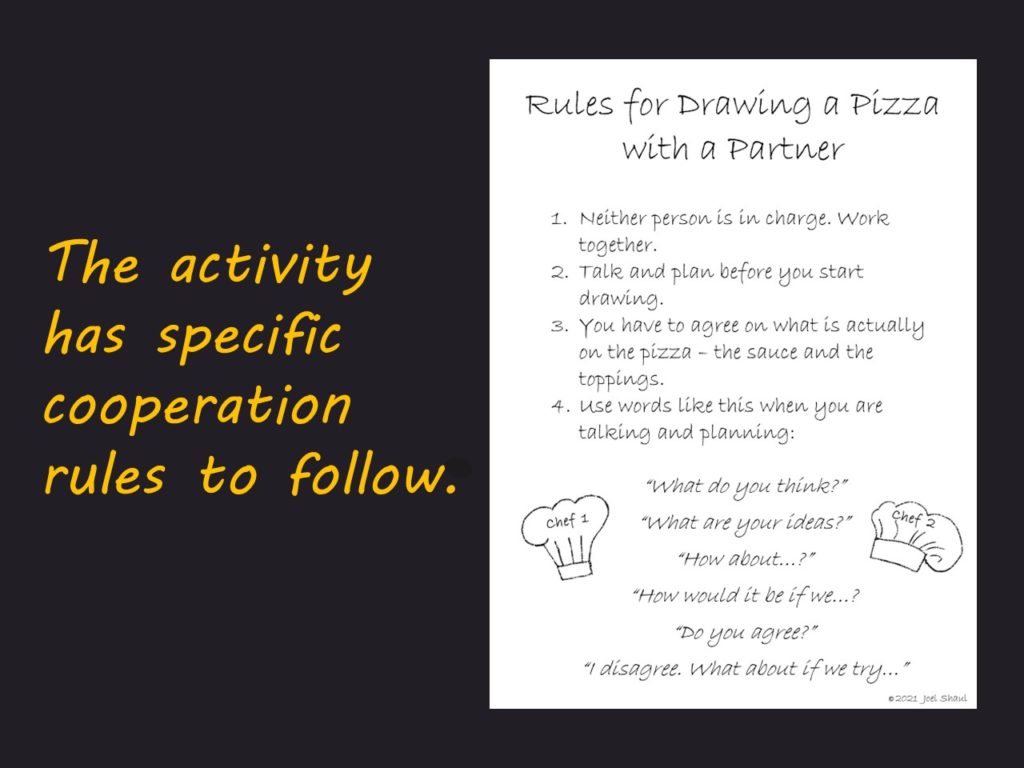
Picture showing the Rules sheet explaining the do's and don't's of working together with a partner.

It’s important to go over these cooperation rules carefully ahead of time and to practice aloud the specific “cooperation language.”

This drawing project is fun but also very challenging.

I have used this cooperative drawing activity with children age 8 right up to young adult.

In my experience, some kids need very close supervision in completion of this project, as they may highly value their own ideas and find it jarring and offensive to have someone else draw on “my pizza.”

This activity is frequently downloaded from my website.

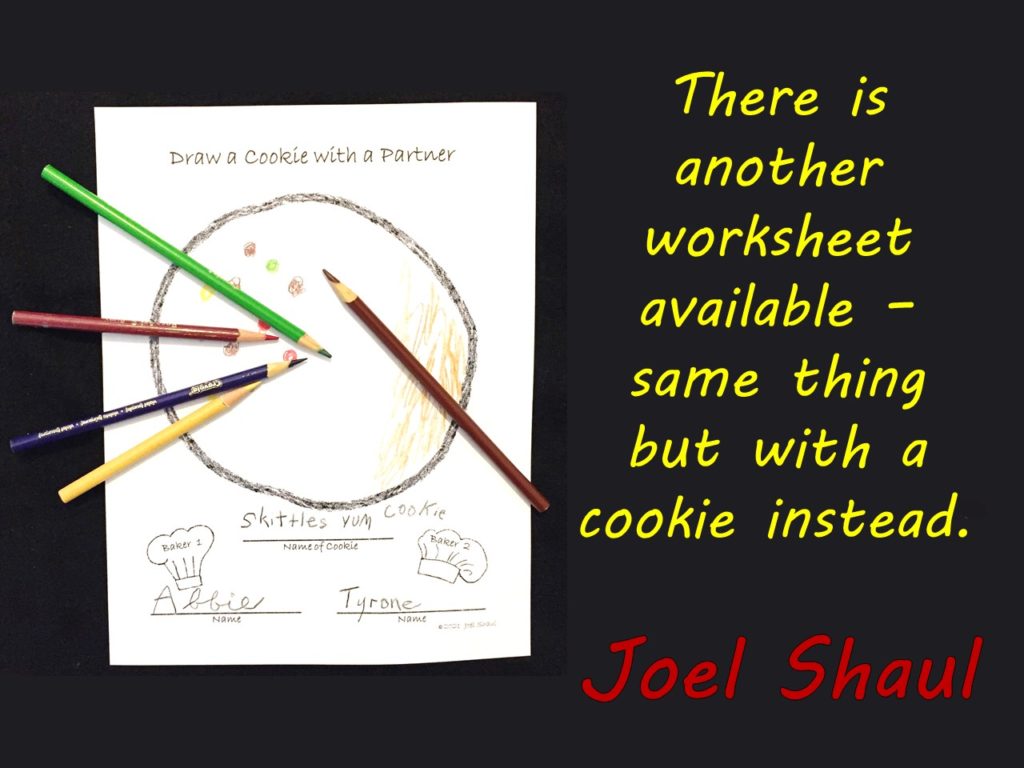
A separate worksheet has children draw a cookie together instead of a pizza.

More collaborative drawing tasks for children on the spectrum – see below.

There are lots more great ways to help pairs and groups of kids with ASD to practice cooperation and creating things together. I have a whole section on this for you to explore: See “Collaborative drawing tasks for social learning” for information and ideas, like the one shown above.

Your Interests Promo image for website

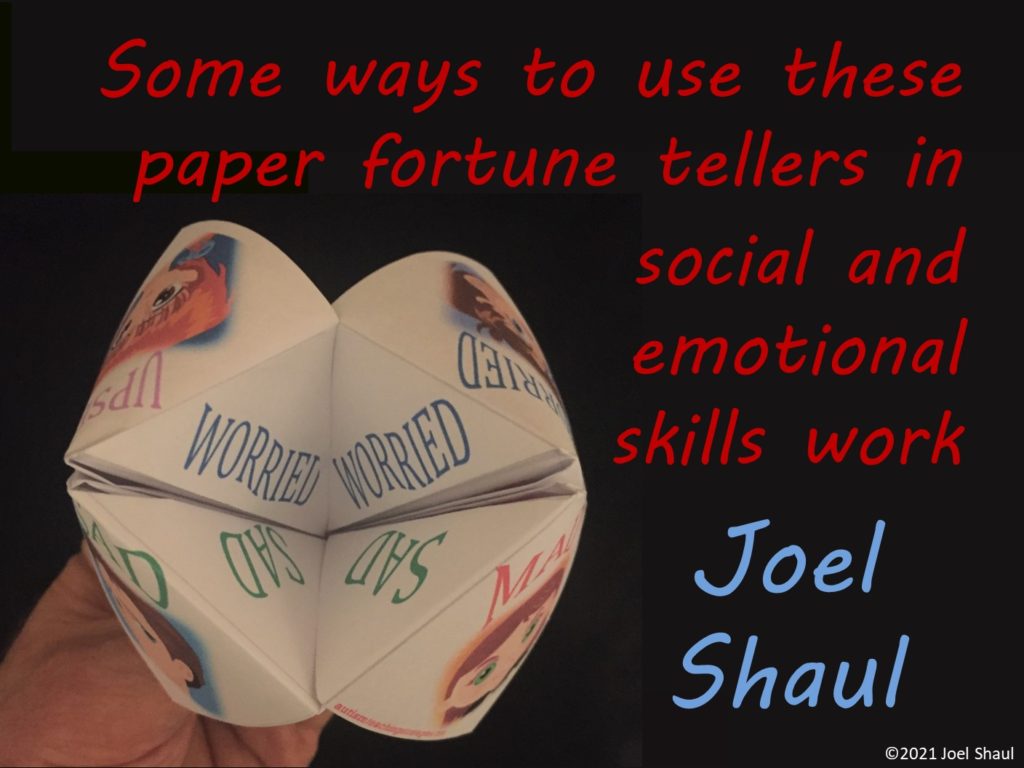
Ways to use these paper fortune tellers in your social /emotional skills teaching

How to use a paper fortune teller in social skills work with children.

I have created many paper fortune tellers and over some years I have often found good uses for them in small groups, classrooms and individual therapy.

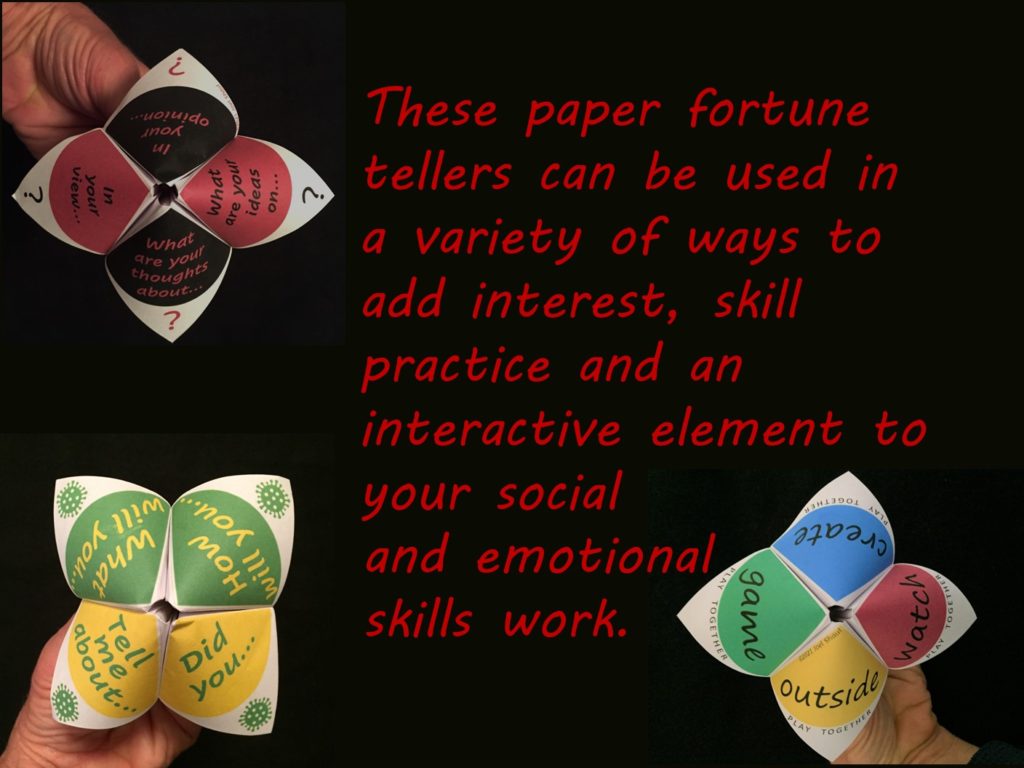
My custom designed paper fortune tellers can be used in many ways.

Paper fortune tellers can be used in a variety of ways to add interest, skill practice and an interactive element to your social and emotional skills work.

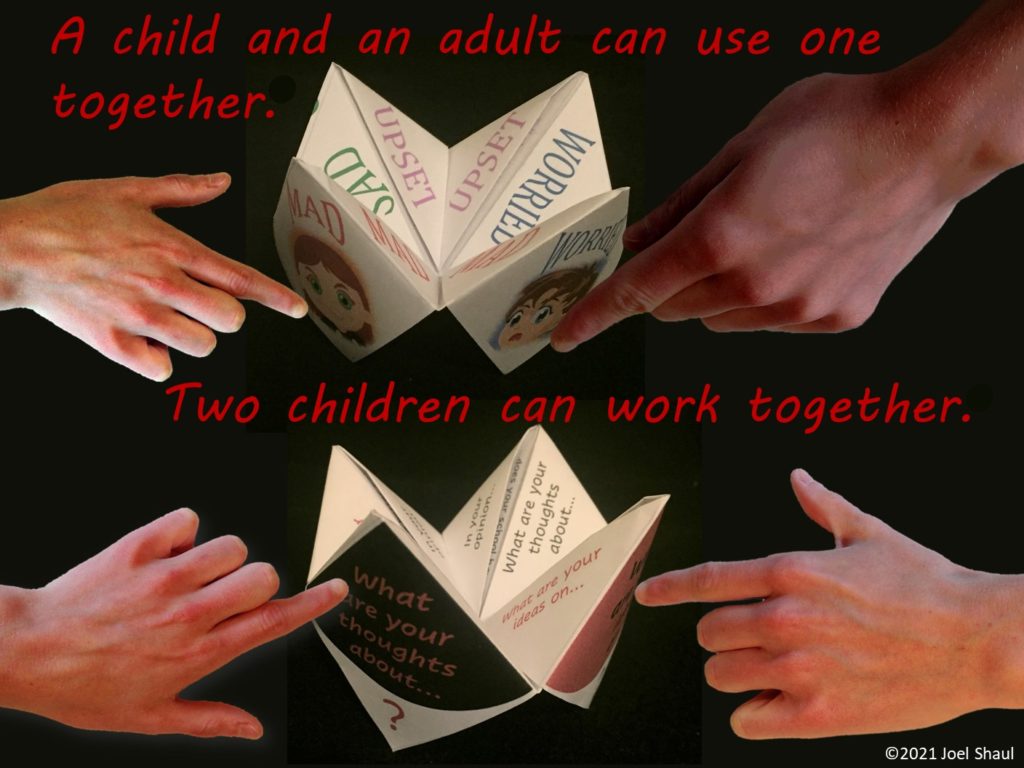
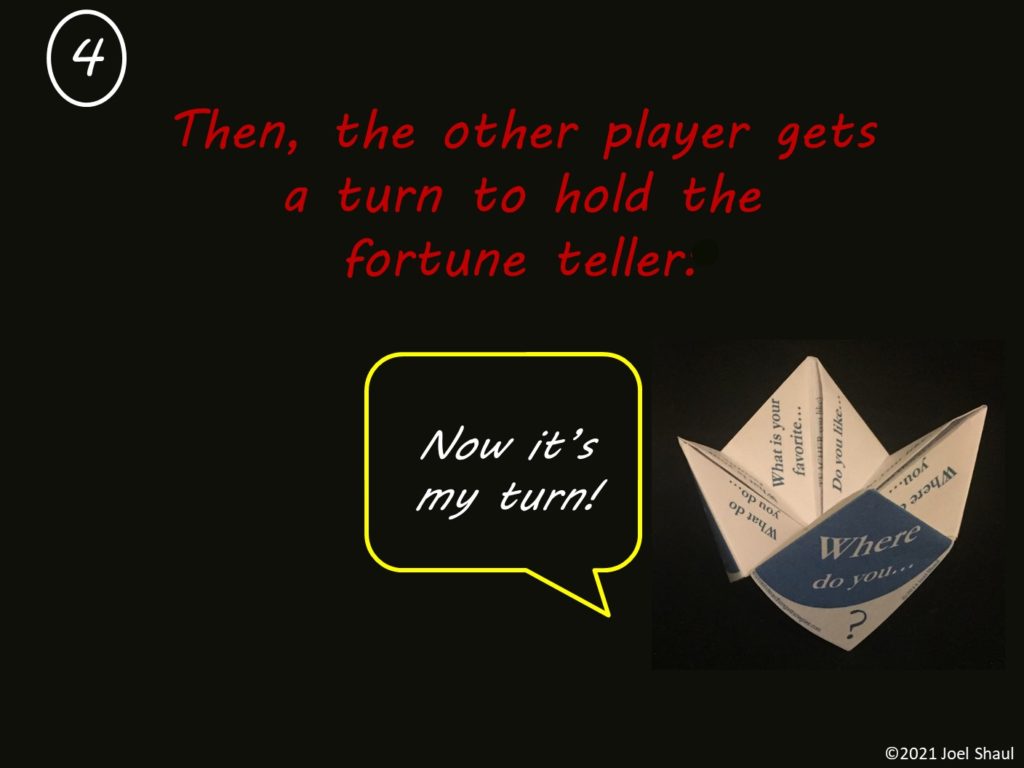
Two children can use one together. An adult and a child can use one together.

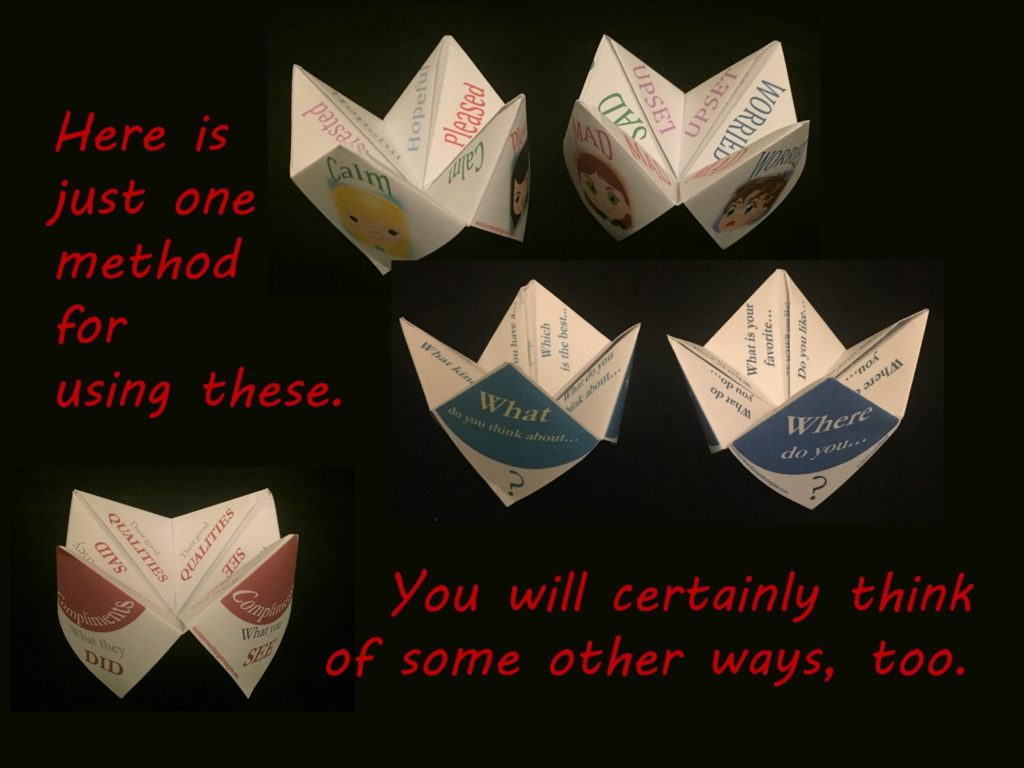
Here is one method for using these. You will certainly think of some other ways, too.

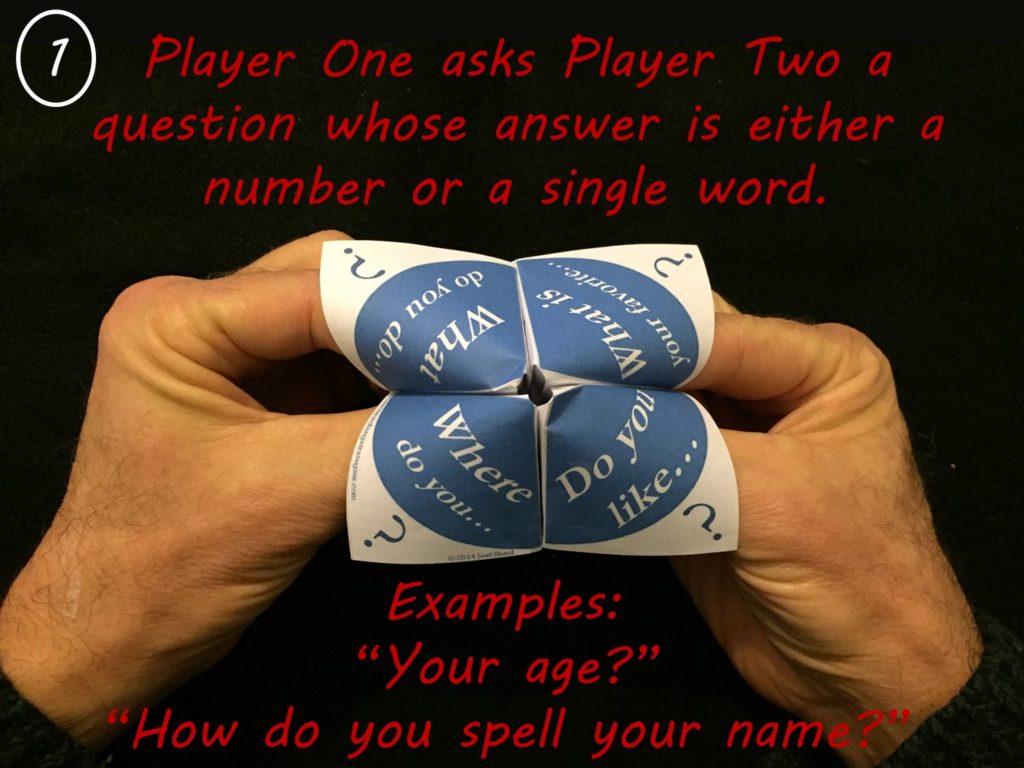
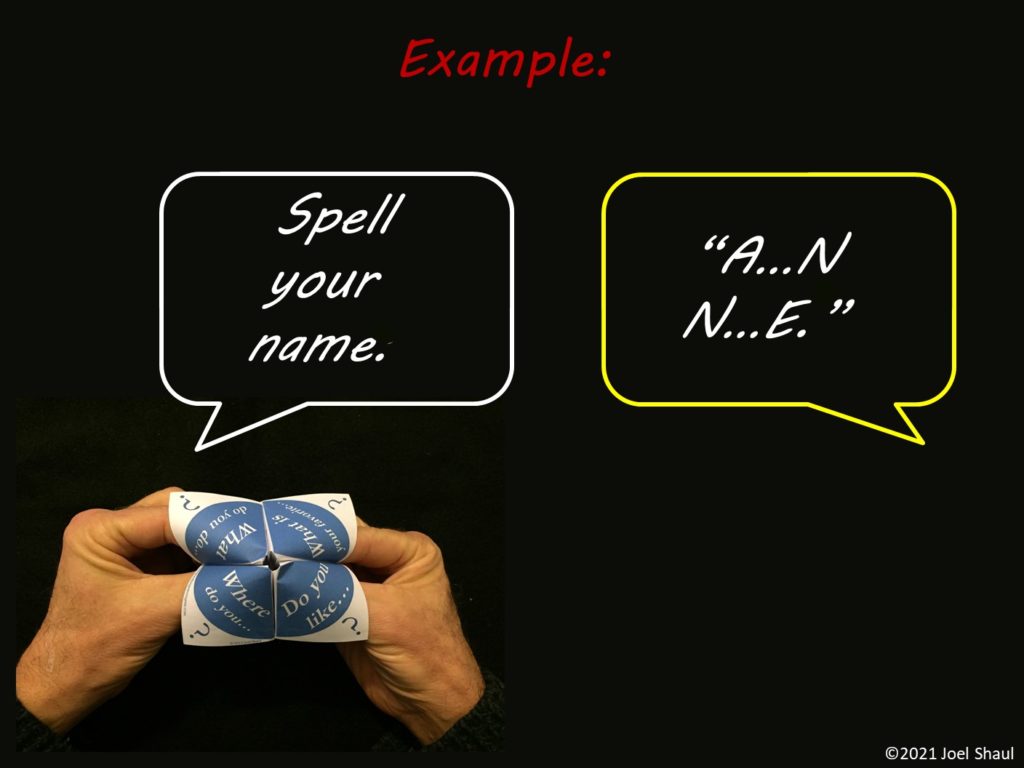
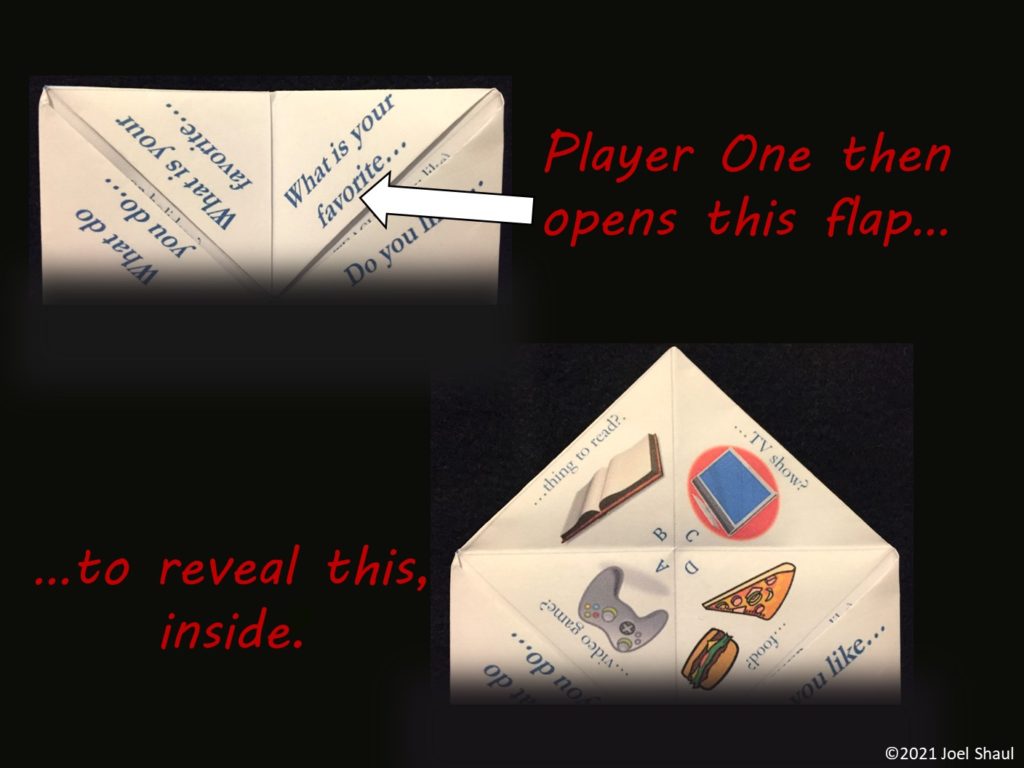
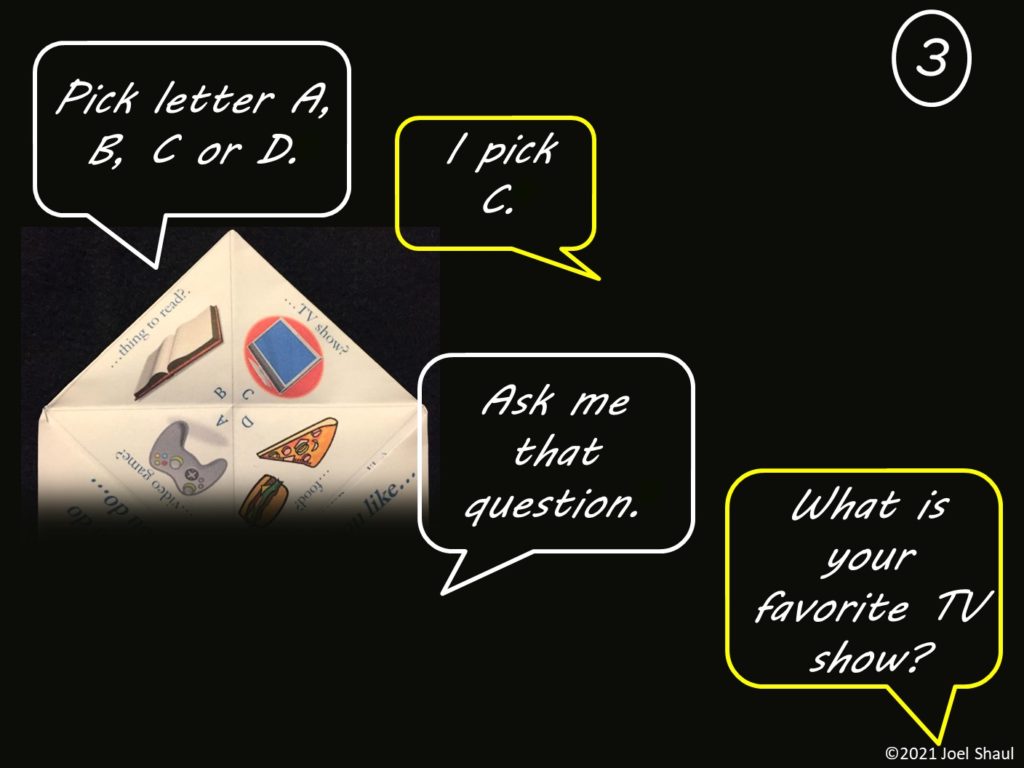
Step one: Player 1 asks player 2 a question whose answer is either a number or a single word. Examples: “What is your age?” “How do you spell your name?”

"Spell your name."
"A...N...N...E."

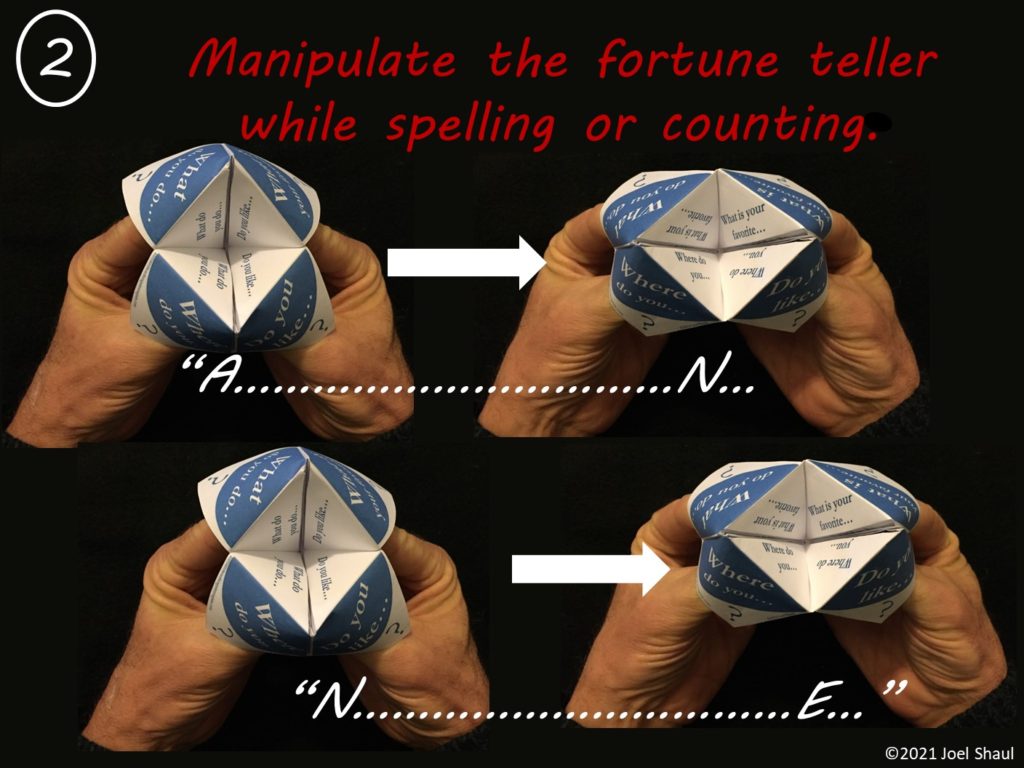
Then, manipulate the paper fortune teller while spelling or counting.

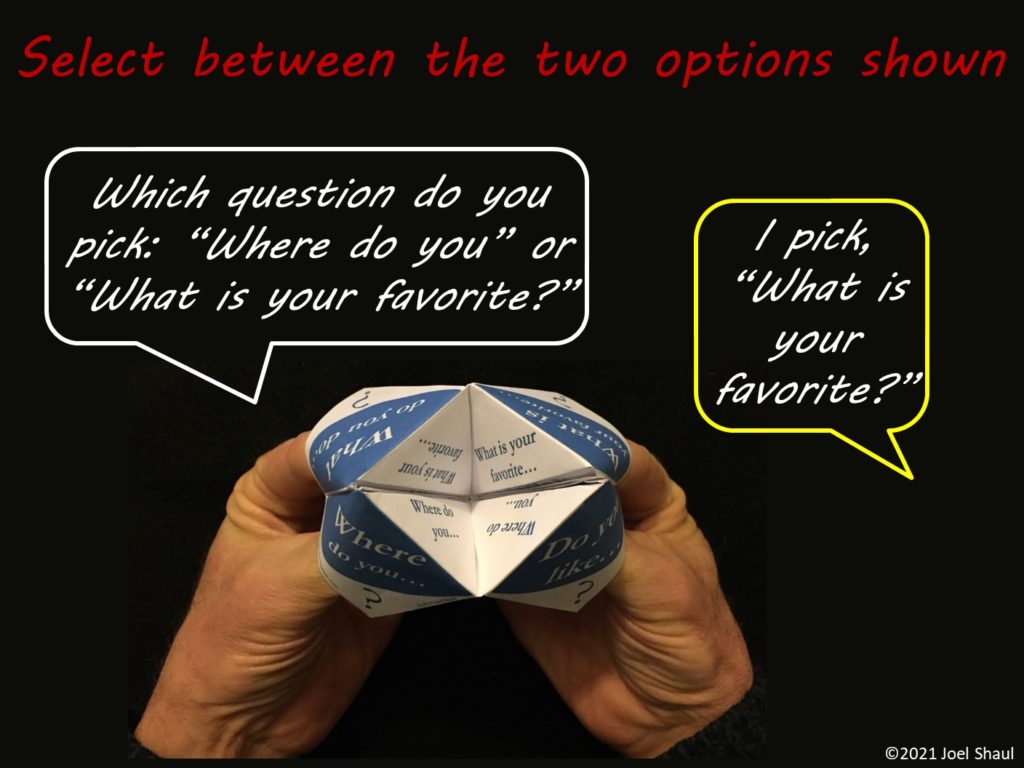
Say, “Which question do you pick: ‘Where do you…’ or ‘What is your favorite…?”

Always have two children use one paper fortune teller. If each child has their own, it enables solitary play instead of an interactive activity.

Your comments on these resources are most welcome, and often helpful. Click HERE to send an email.

Paper fortune teller for asking other people about their opinions

Paper fortune teller for asking about others' opinions.

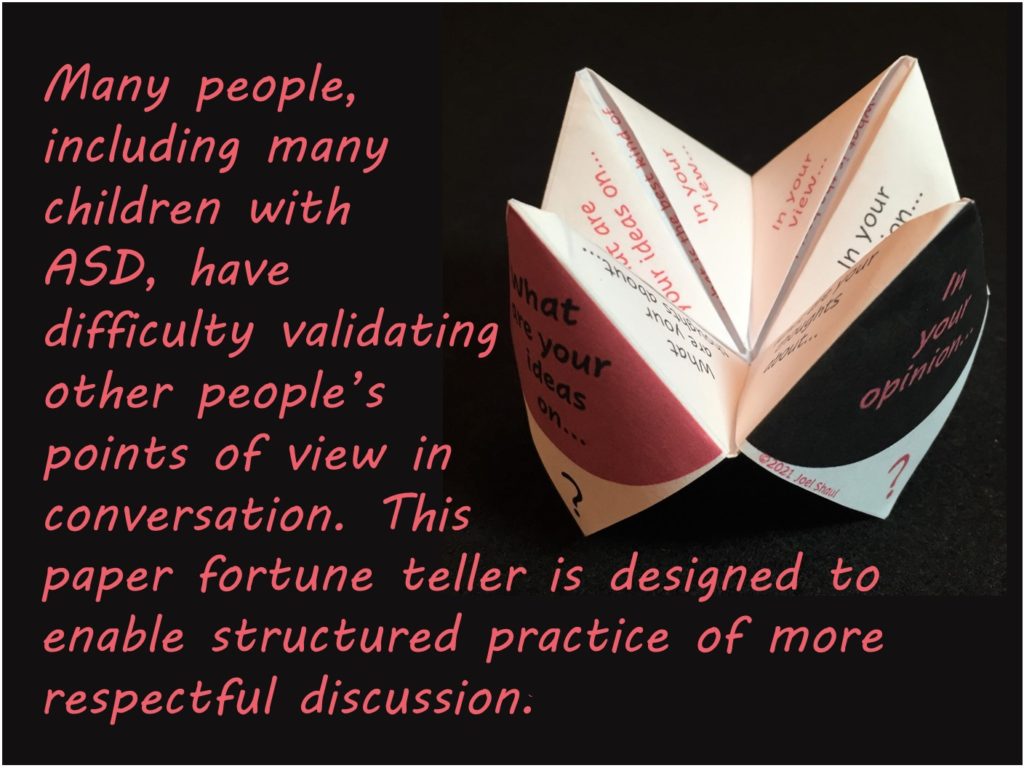
Children with autism may have a difficult time exploring other people’s opinions. Children on the spectrum might be preoccupied with their own established viewpoints, and in the rapid exchange of typical conversation, the contrasting point of view might catch them off guard. In my own work with kids on the spectrum, I have found it very useful to provide specific question language to employ when asking other people their opinions. And providing practice is essential. That’s why I developed this paper fortune teller. It’s useful for having two children, or the child and the helping adult, to take turns inquiring about the other person’s point of view. I used it fairly often in my work, and found it useful for children capable of reading the text on the paper fortune teller.

The following images walk you through how to introduce the paper fortune teller and use it with a child.

Many children with ASD have difficulty validating other people's points of view. This paper fortune teller is enable structured practice of more respectful communication.
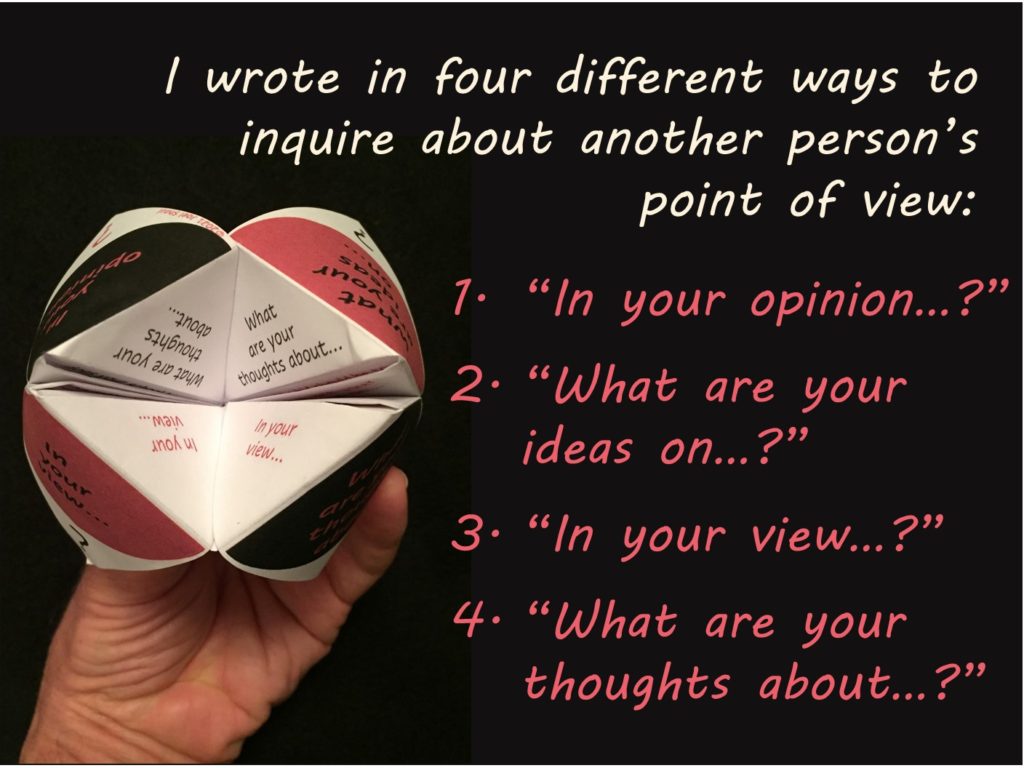
This paper fortune teller shows how to ask, "In your opinion...", "What are your ideas on...", "In your view..." and "What are your thoughts about..."
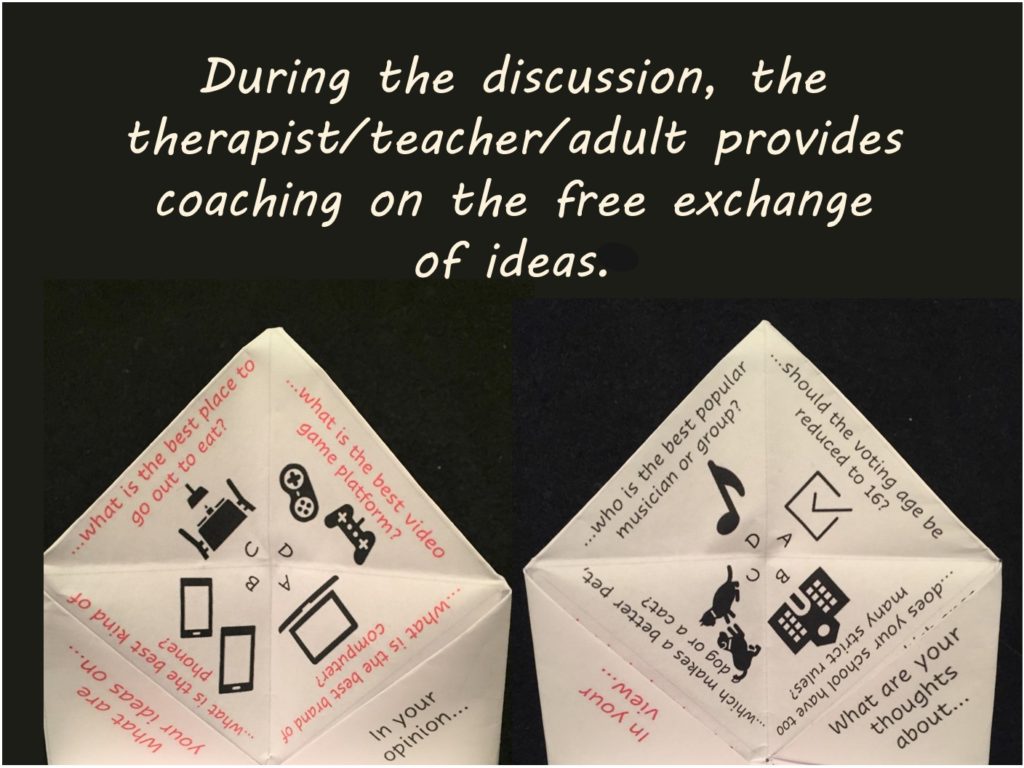
The inside of the paper fortune teller gives 16 examples of different opinion topics one can practice asking about.
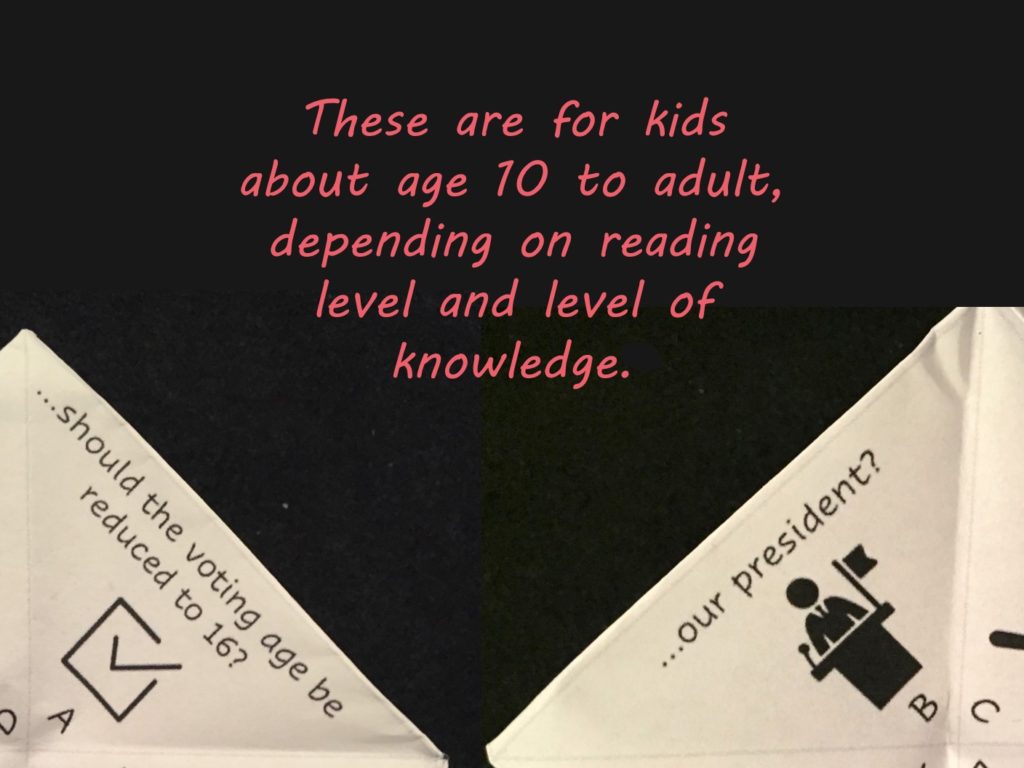
These are for age 10 to adult.

Your comments on these resources are most welcome, and often helpful. Click HERE to send an email.

Green Zone Book Cover Click to Learn More

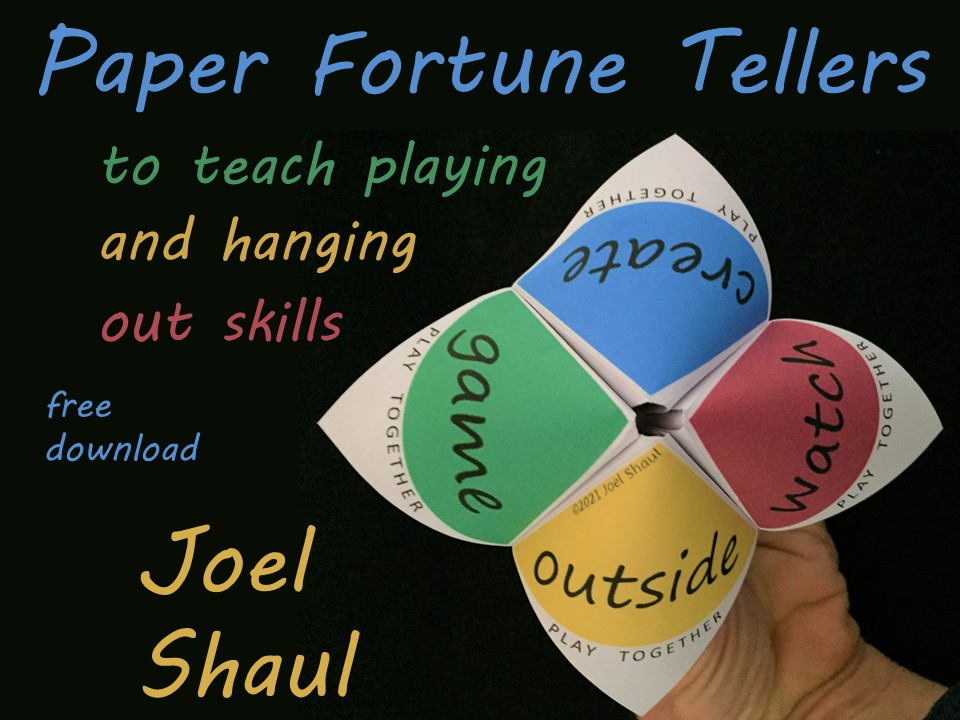
Paper fortune teller for playing and hanging out social skills

German language version

Many years ago, I got interested in paper fortune tellers. After learning how to fold them, I figured out how to custom design them to teach various social and emotional skills, and to facilitate reciprocal conversation between pairs of autistic children in group therapy and classroom settings.

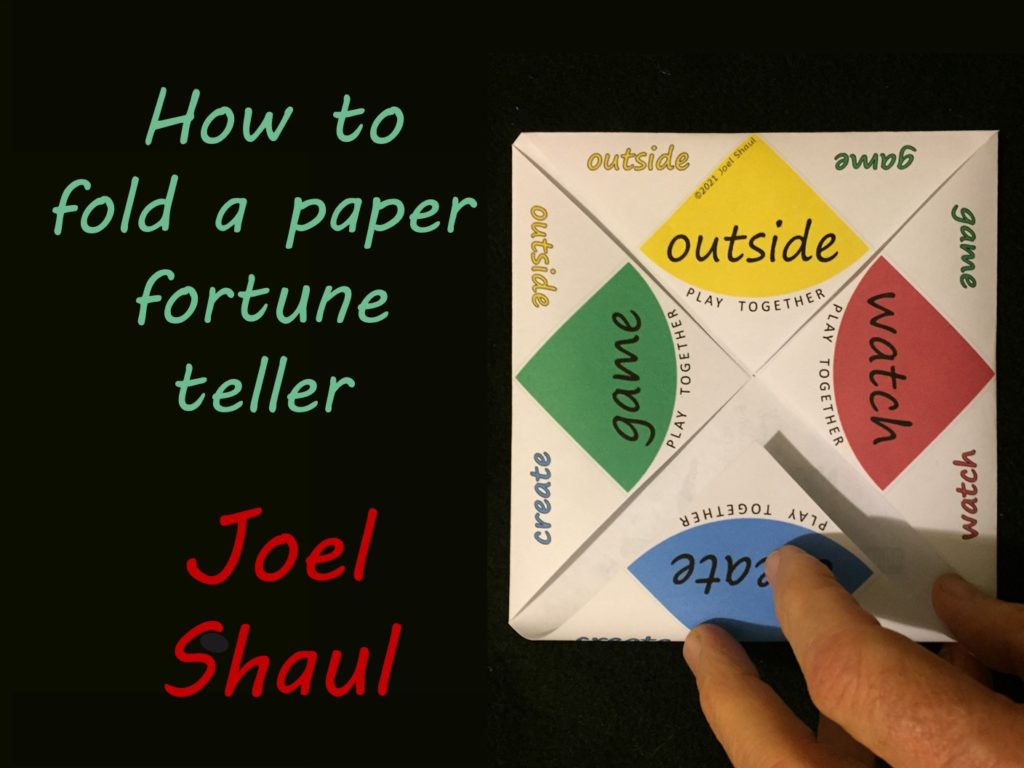
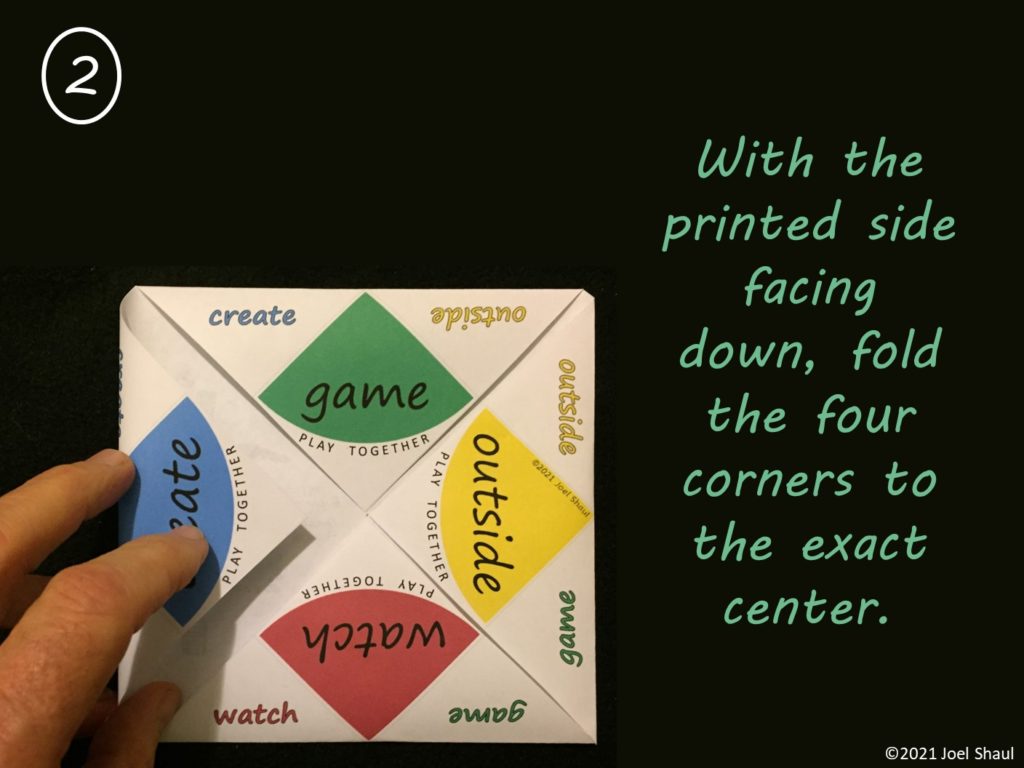
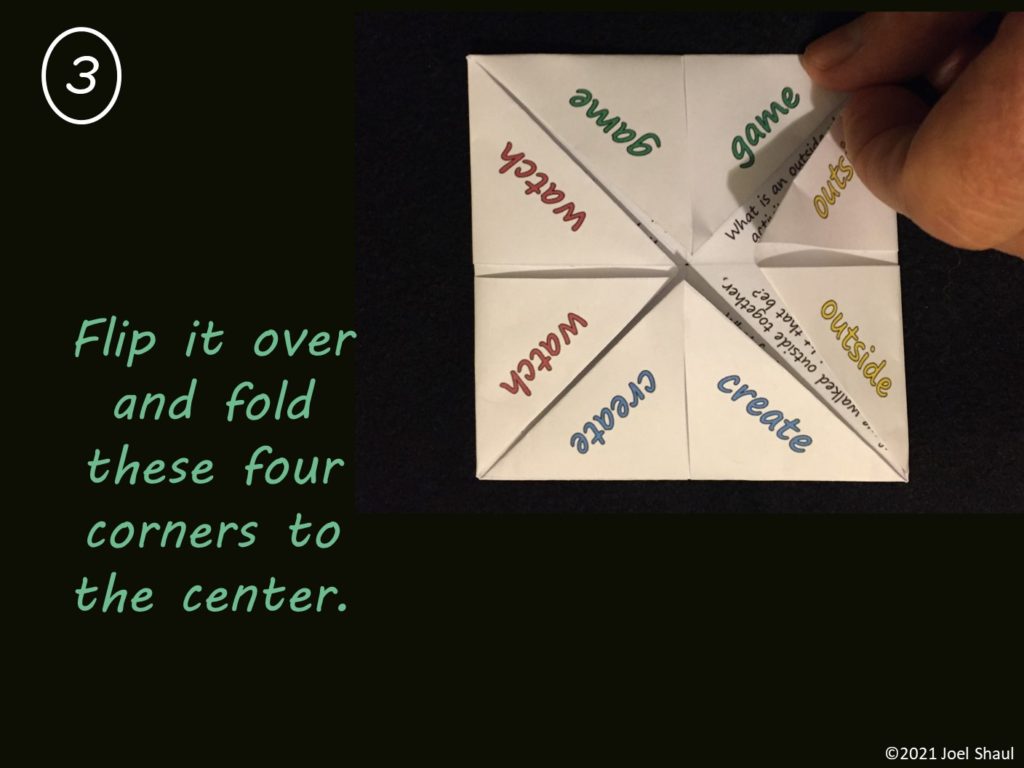
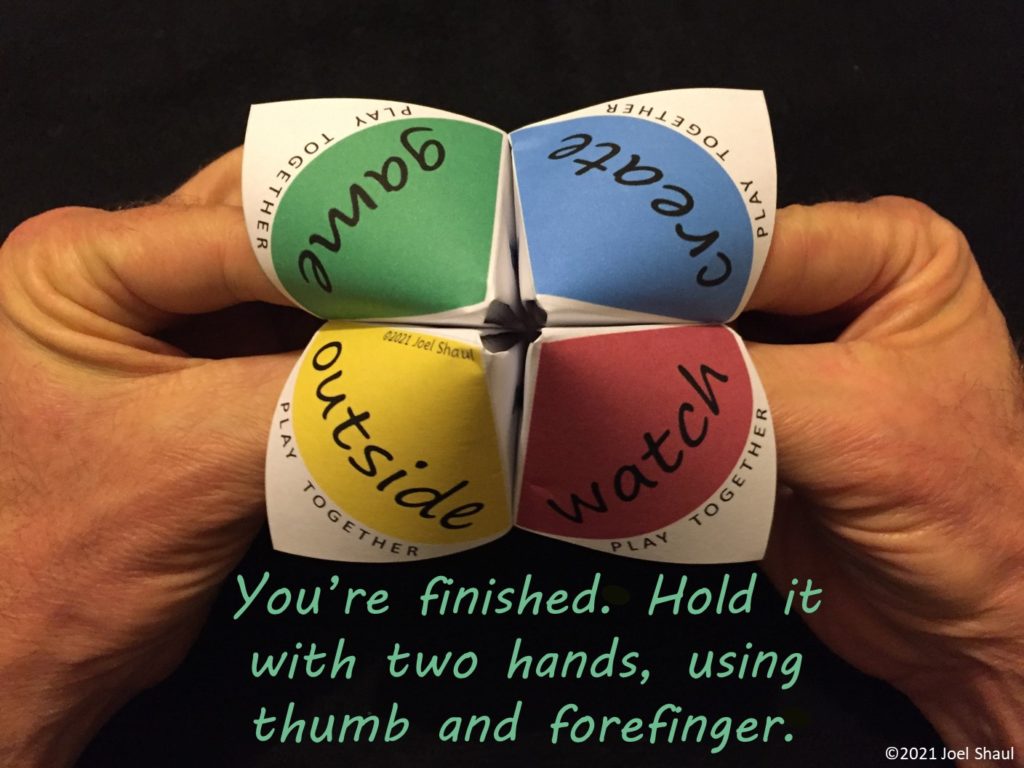
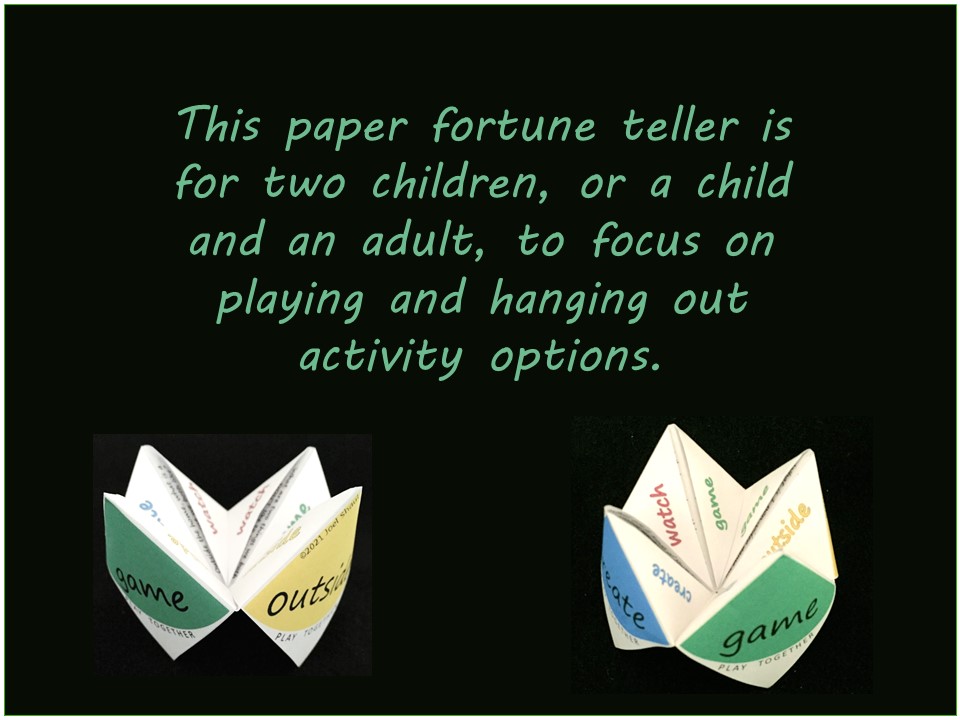
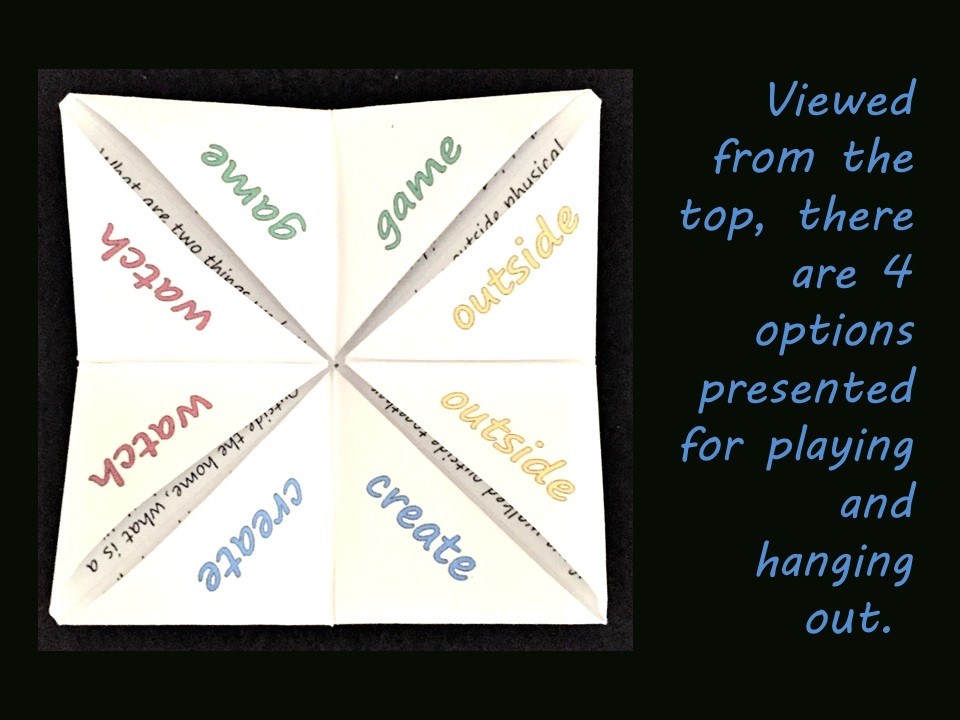
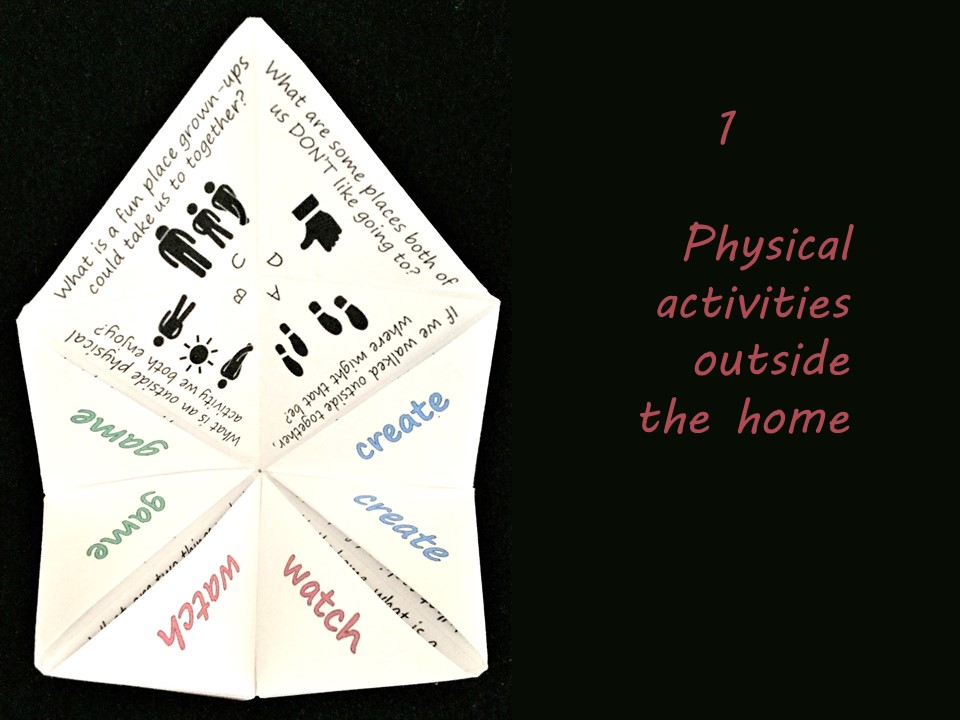
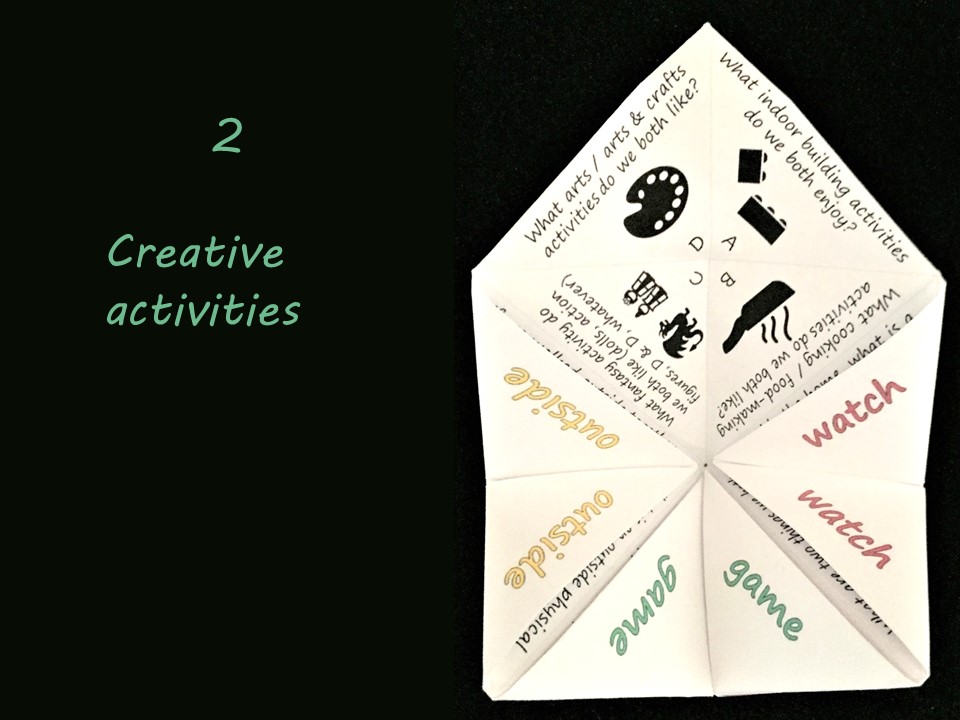
This paper fortune teller is to help two children to jointly explore playing and hanging out activities.
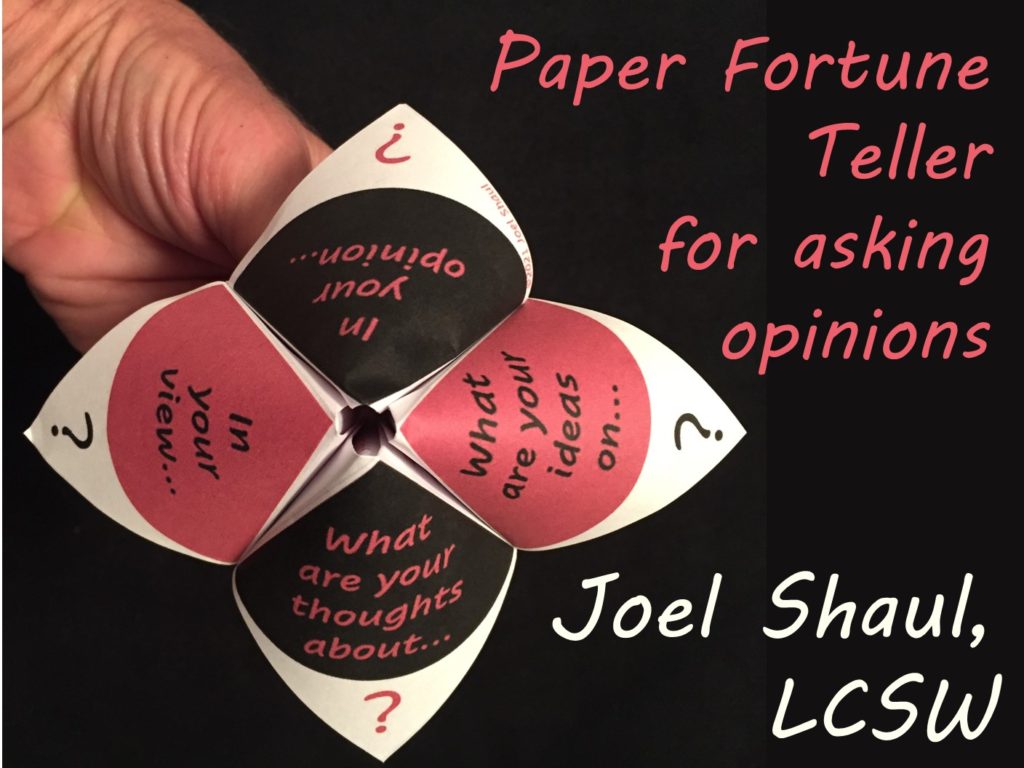
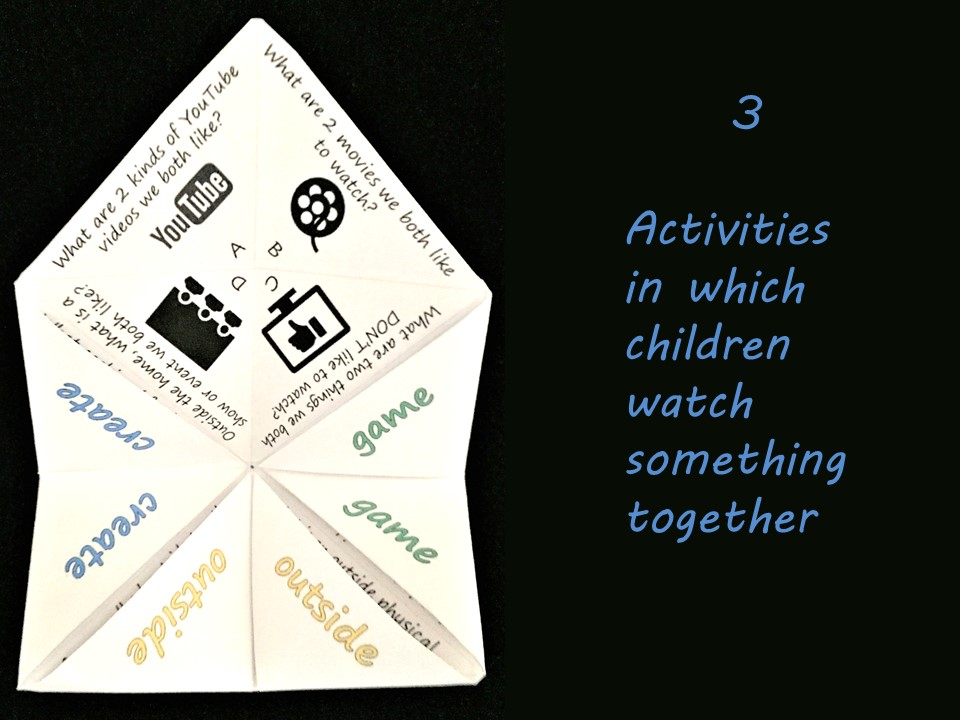
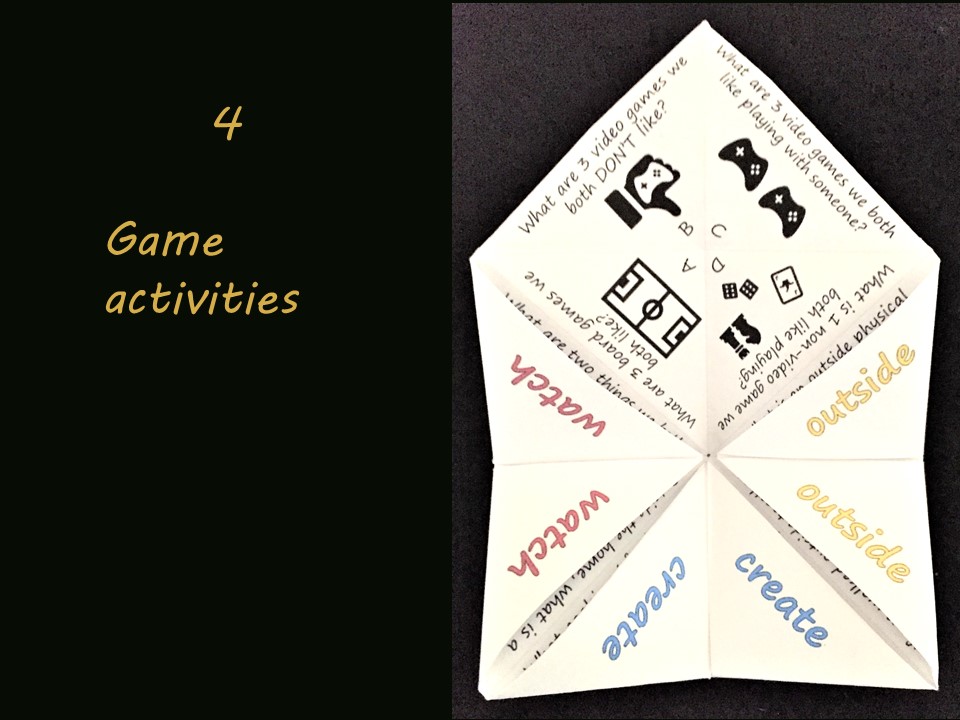
Here are some pictures to show what the paper fortune teller looks like as the two players unfold it during play.
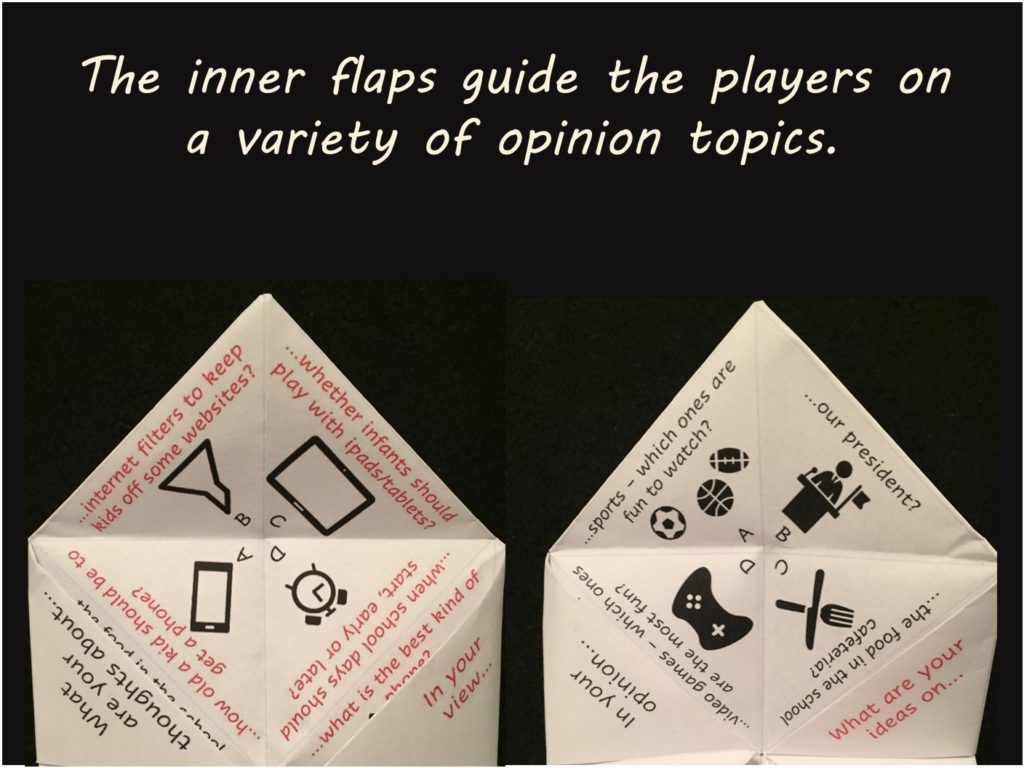
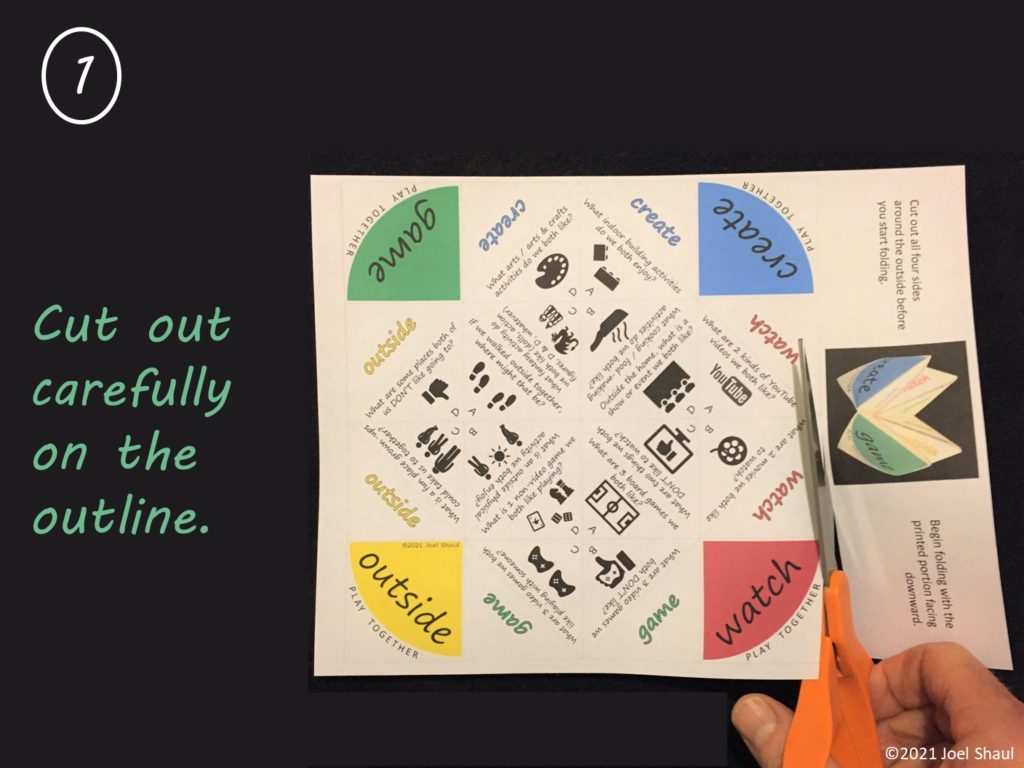
This is a great activity, but keep in your planning, keep in mind that there is significant prep time involved. In my experience, most children cannot fold these together adequately in a group setting – you are much better off starting the activity with the paper fortune tellers already made.

Your comments on these resources are most welcome, and often helpful. Click HERE to send an email.

Your Interests Promo image for website