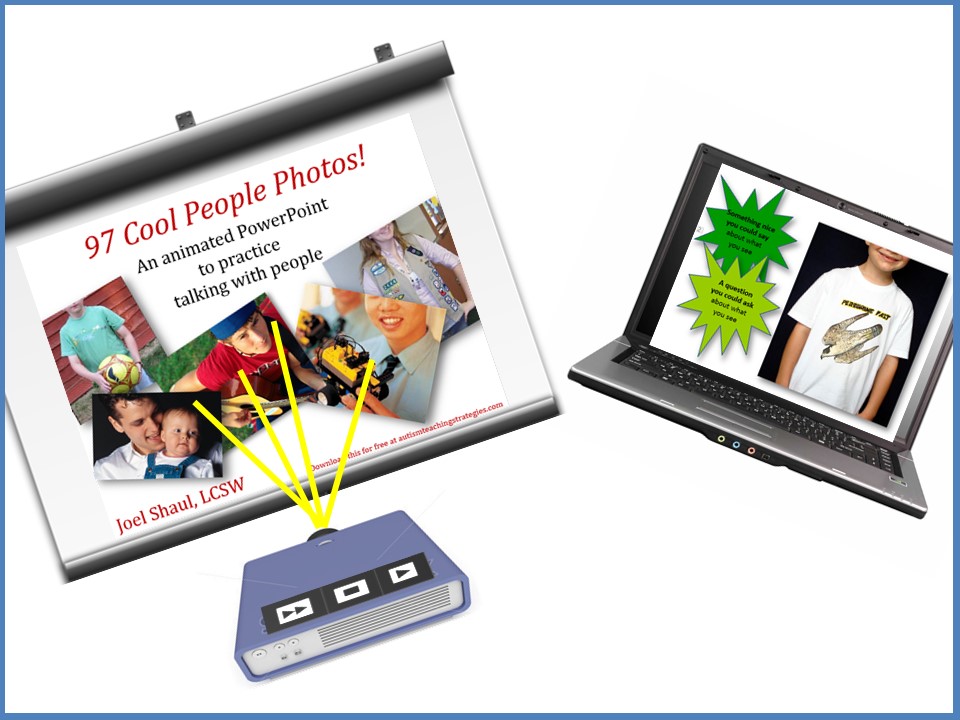
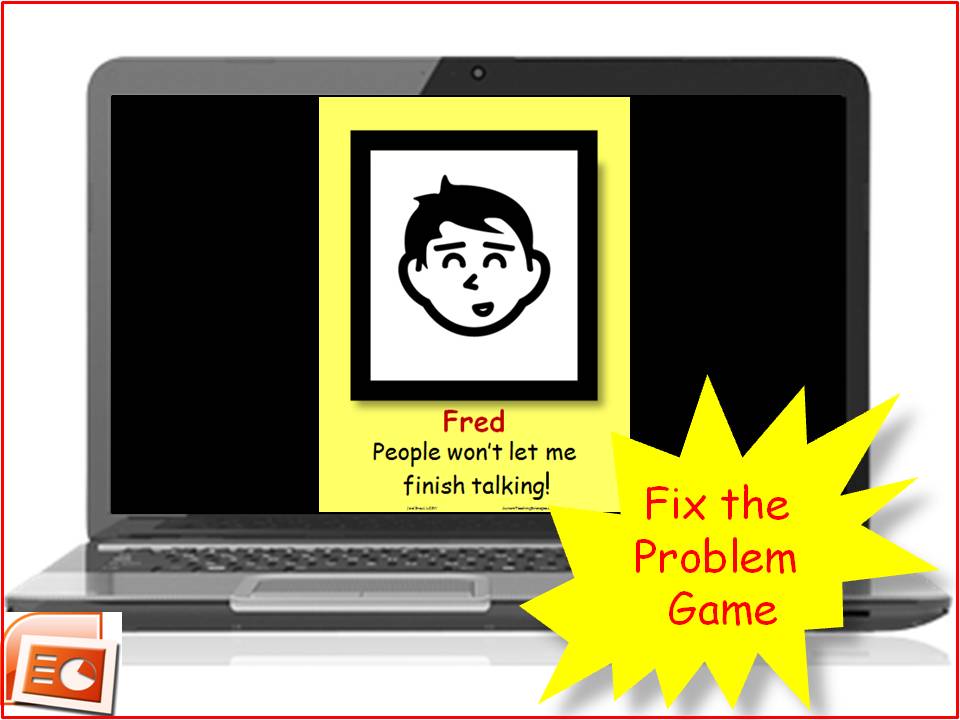
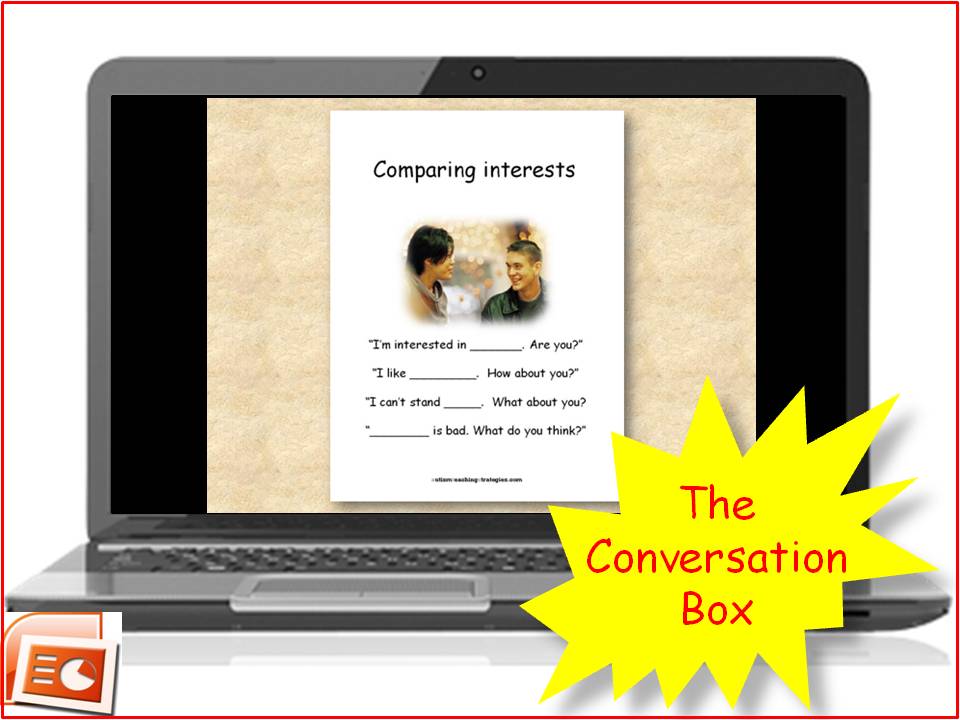
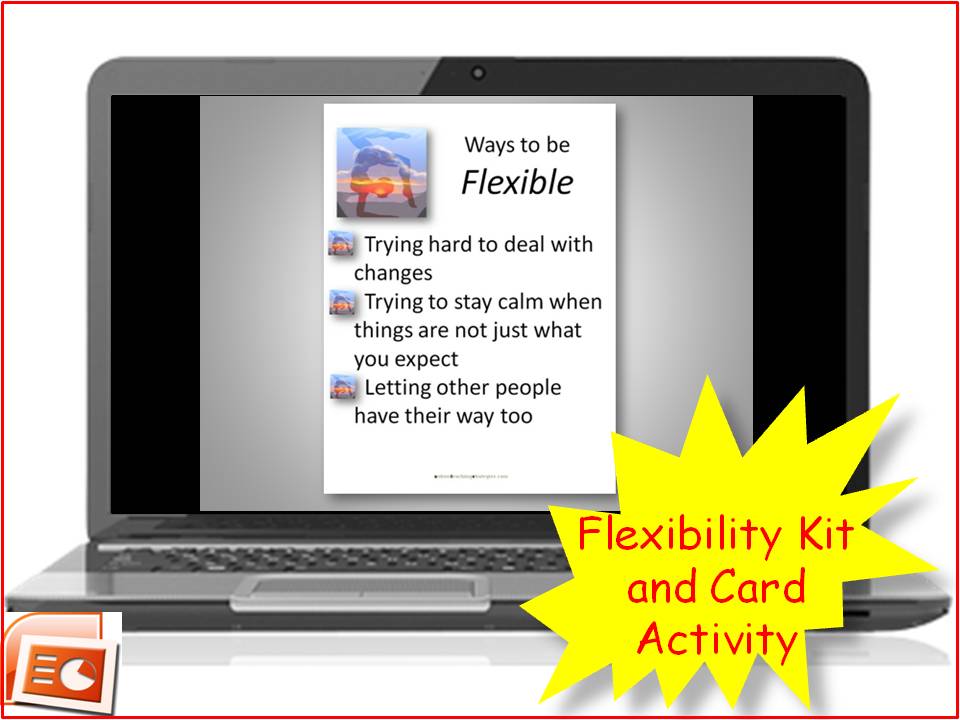
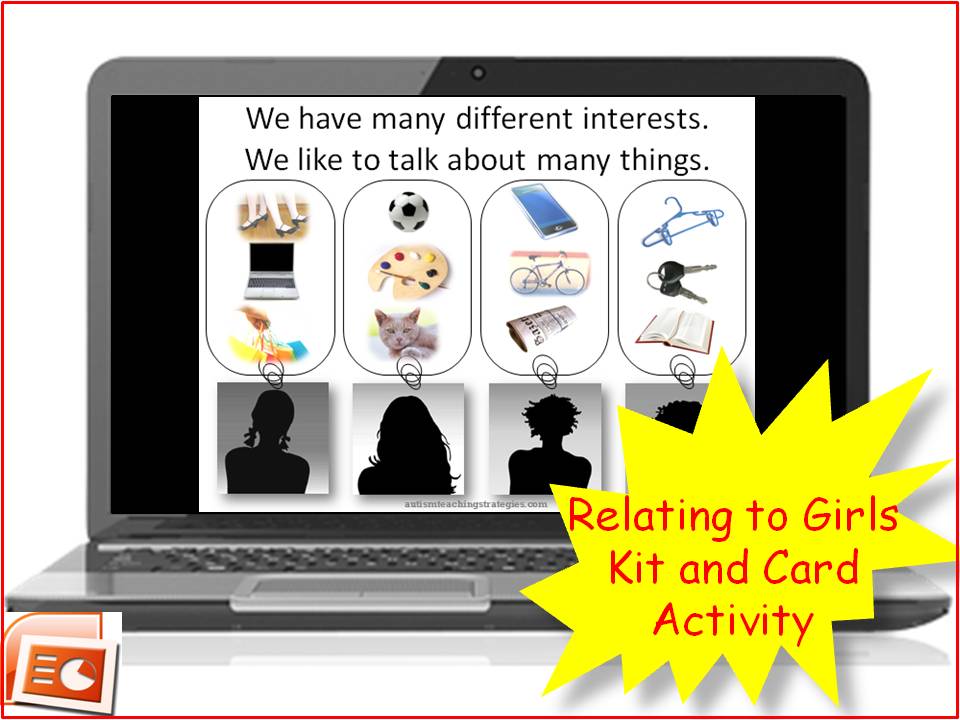
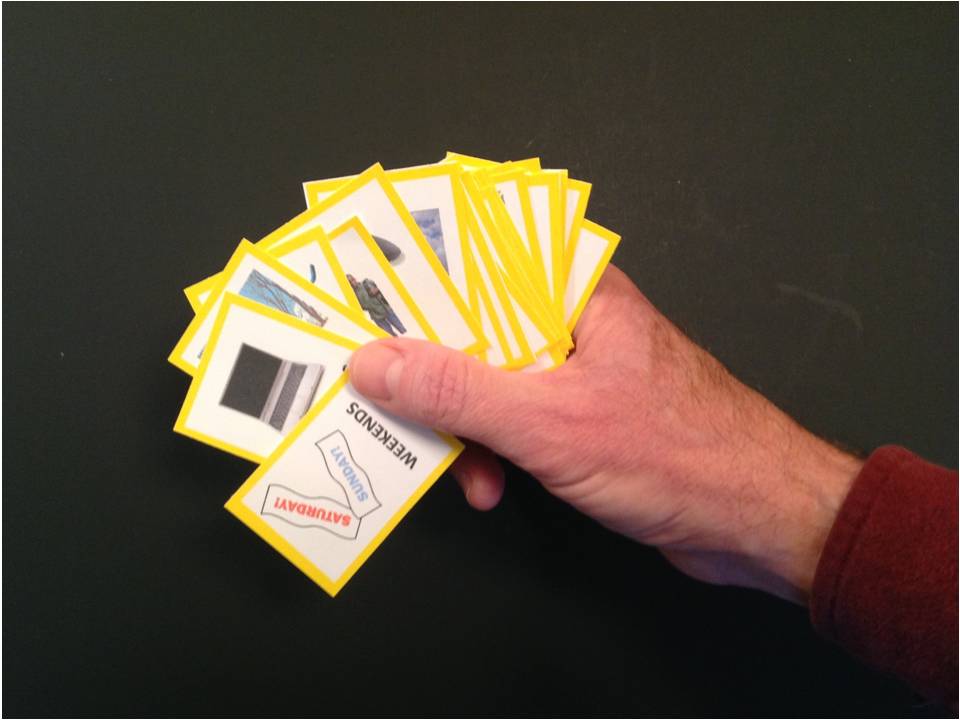
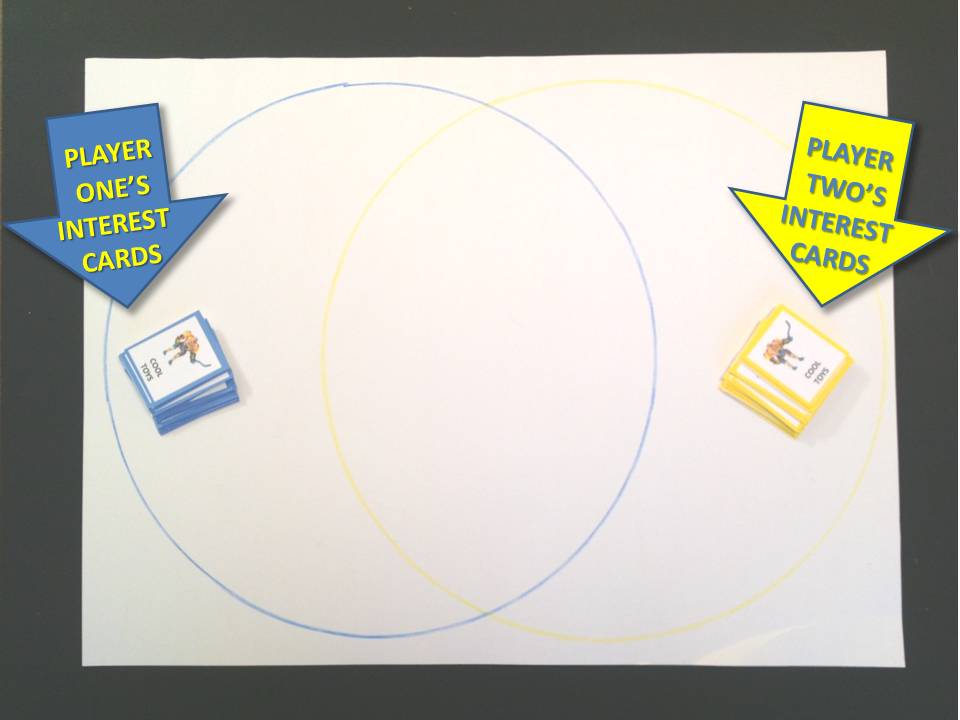
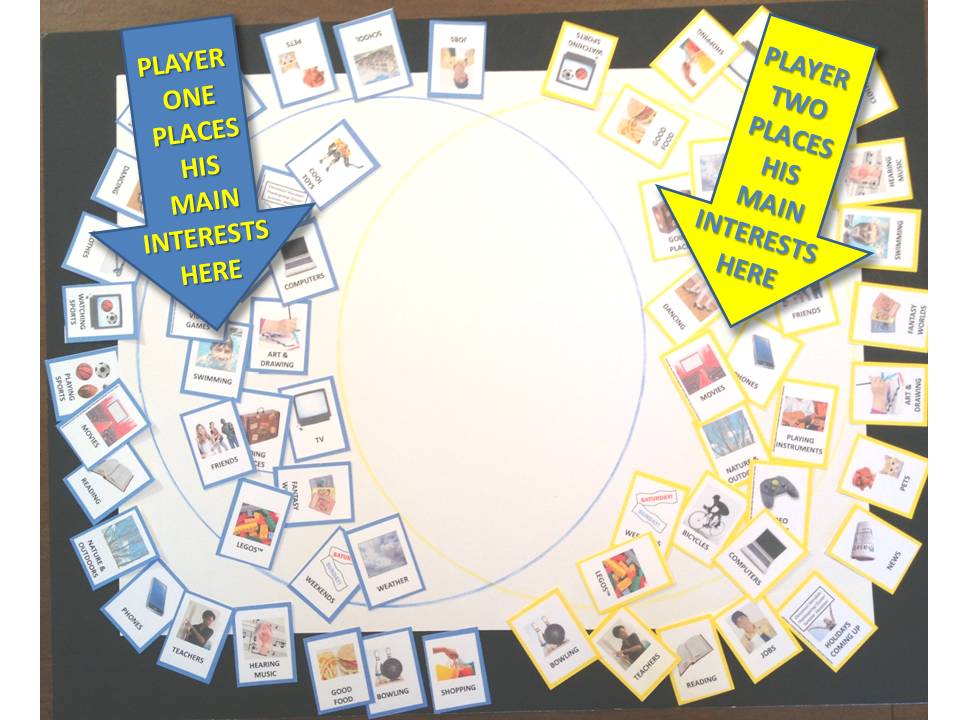
To download the PowerPoint, find the link at the top of this post.
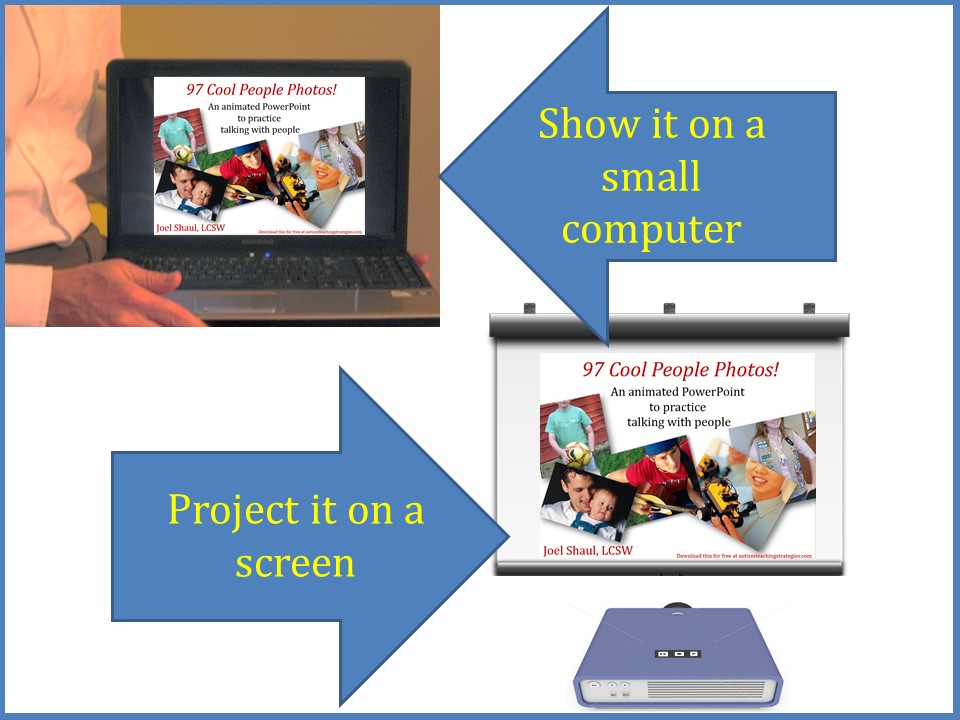
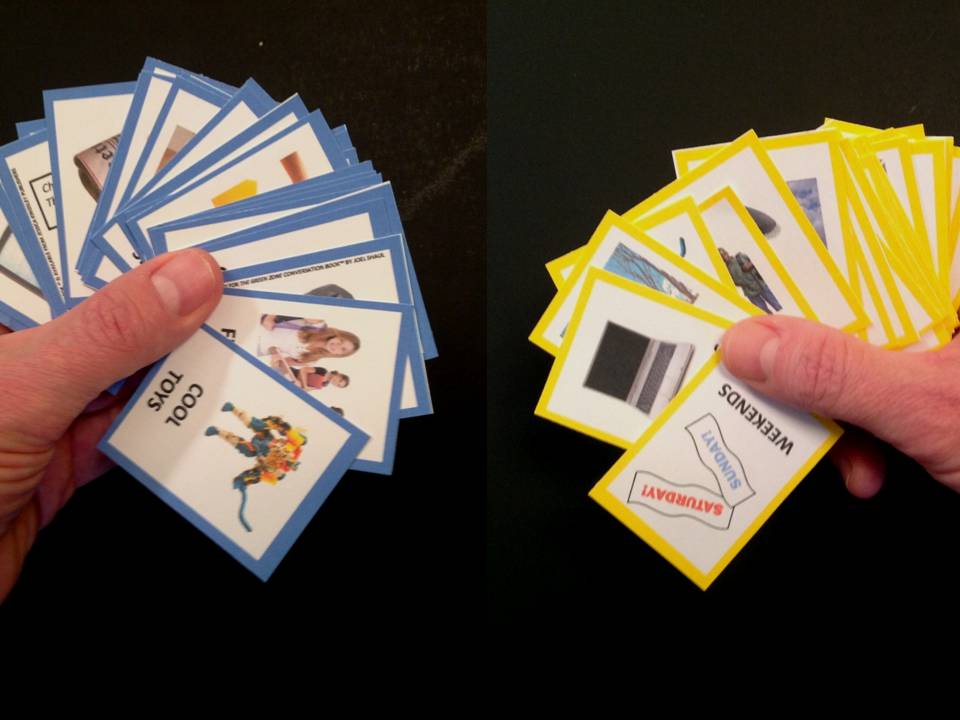
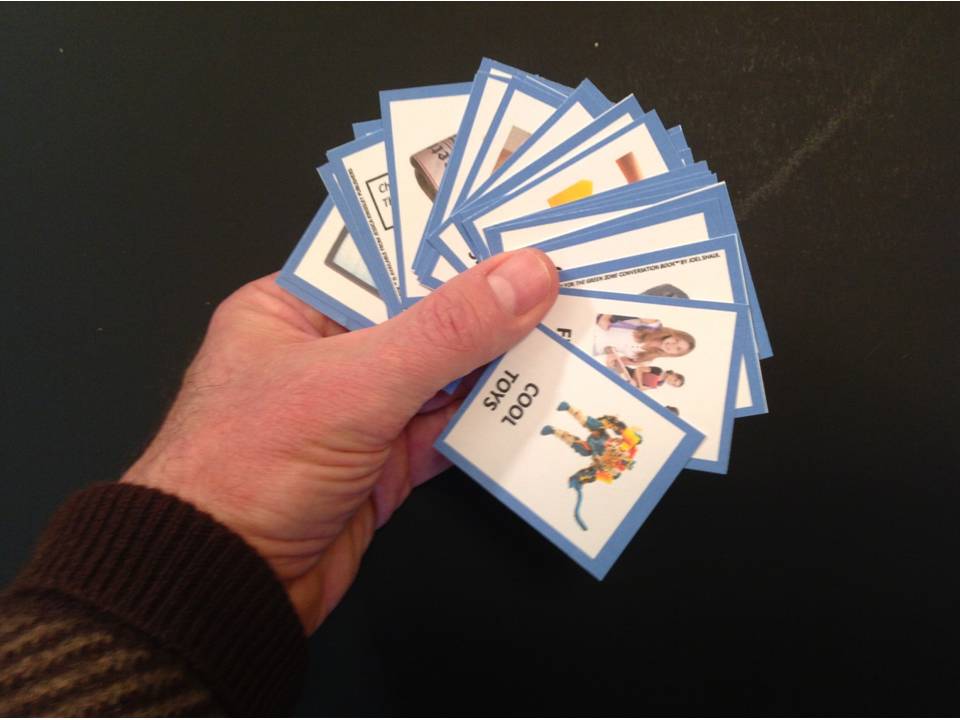
A conversation starter photo kit to project, use on a laptop, use in your tablet in PDF, or print out
Children with autism spectrum disorders usually face enormous difficulties figuring out what to say in diverse social situations. When we are helping such children in counseling, speech sessions and in the classroom, we need to provide them with engaging activities to explore what other people are up to, what other people are thinking, and how to begin conversations based on other people’s interests and circumstances.
Over a period of years I put together a 100 diverse photos that work well for conversation practice. Children really love looking at the pictures and trying to think of something to say.
I put a lot of interesting animated features into this… anything to keep kids engaged in work that is very challenging for them.
Suggestions for using this kit:
1. It works well if you, the adult, act out the role of the person in each slide. The child then talks to you while you stay in character.
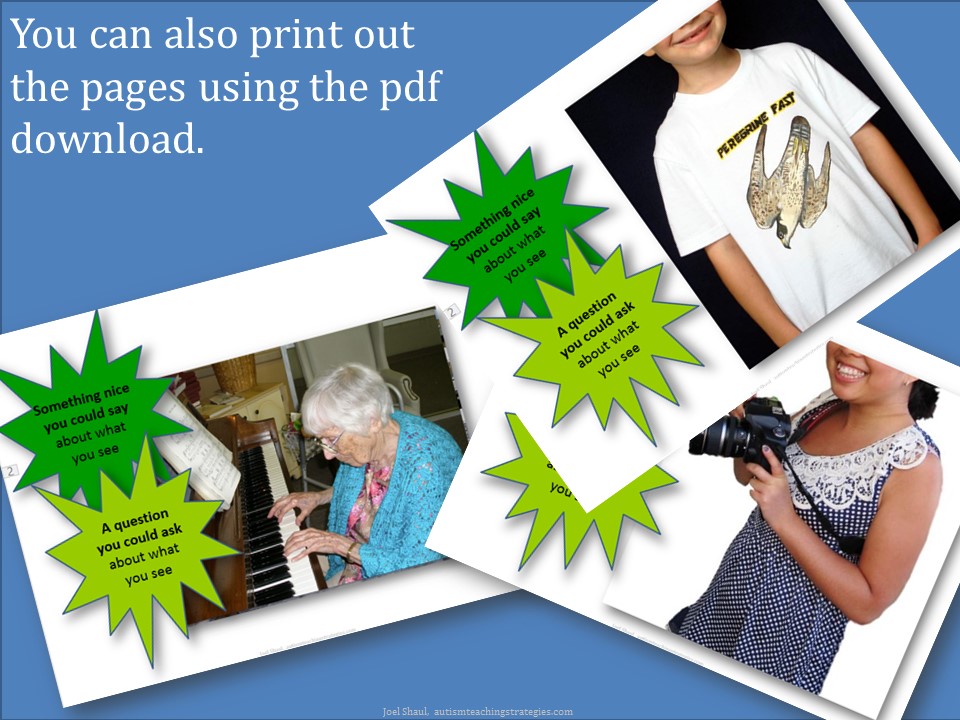
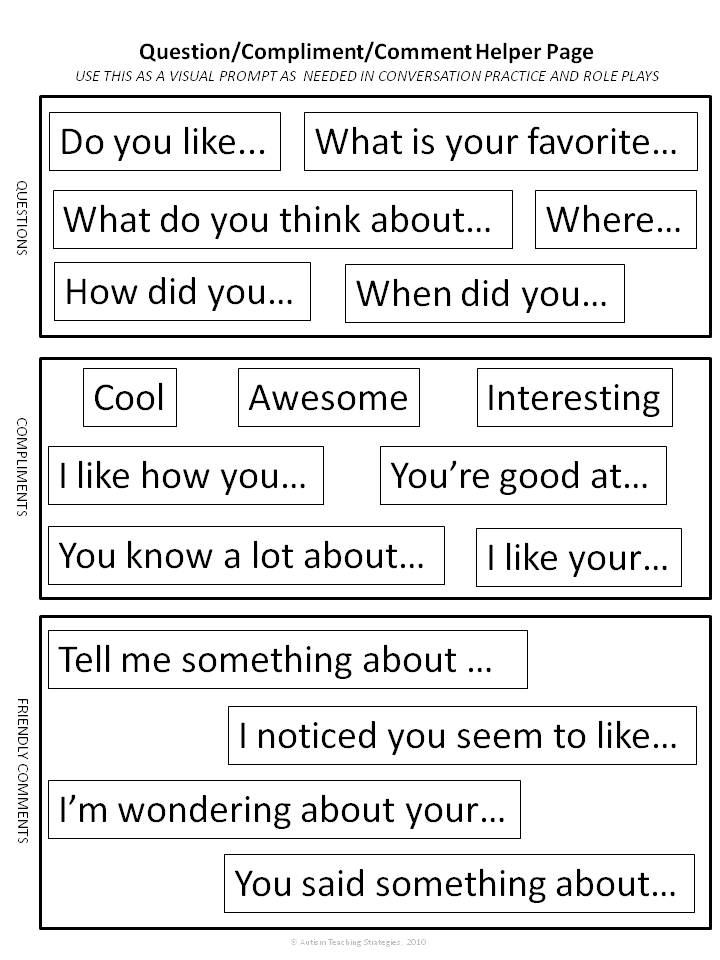
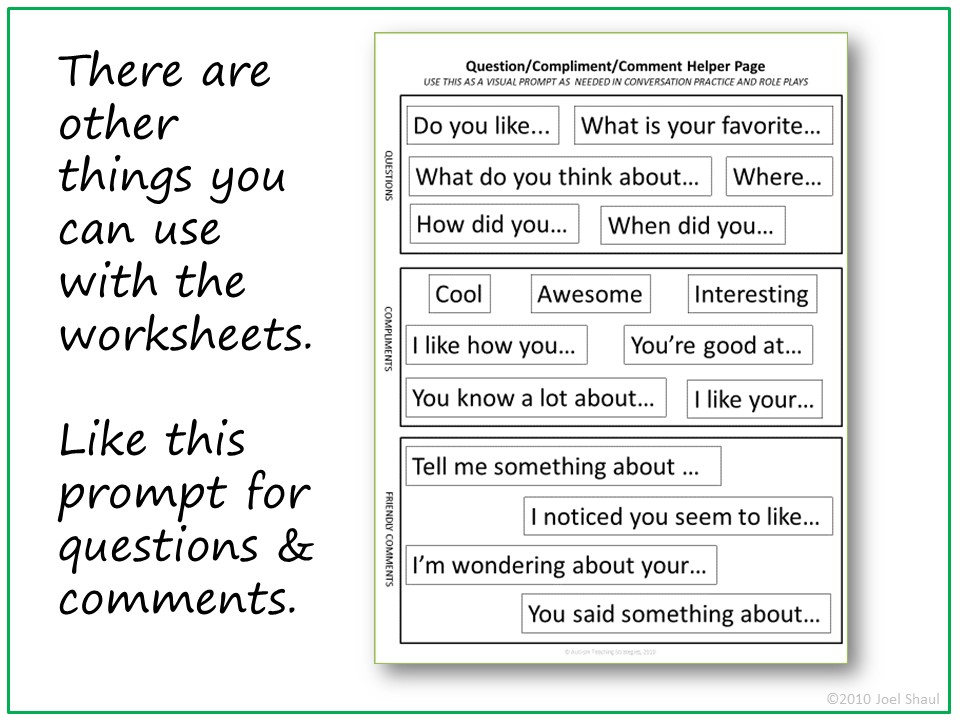
2. For children who read, print out the Question/Compliment/Comment Page (next slide) for each child to use as a reference for words and phrases.
3. It helps enormously if you give out any kind of tokens while you are going through the various scenarios. Here is some cool play money I made.
I hope that you enjoy this social skills activity for children on the autism spectrum. I enjoyed creating it.
Joel Shaul, LCSW
*Don’t miss these other free social skills games, worksheets, speech activities and teaching / therapy aids for helping kids with autism:
Update – In addition to the resources shown on this page, I now have a large collection of teletherapy resources, all adaptable for office-based and classroom instruction. Click HERE to access teletherapy resources and Boom Cards.
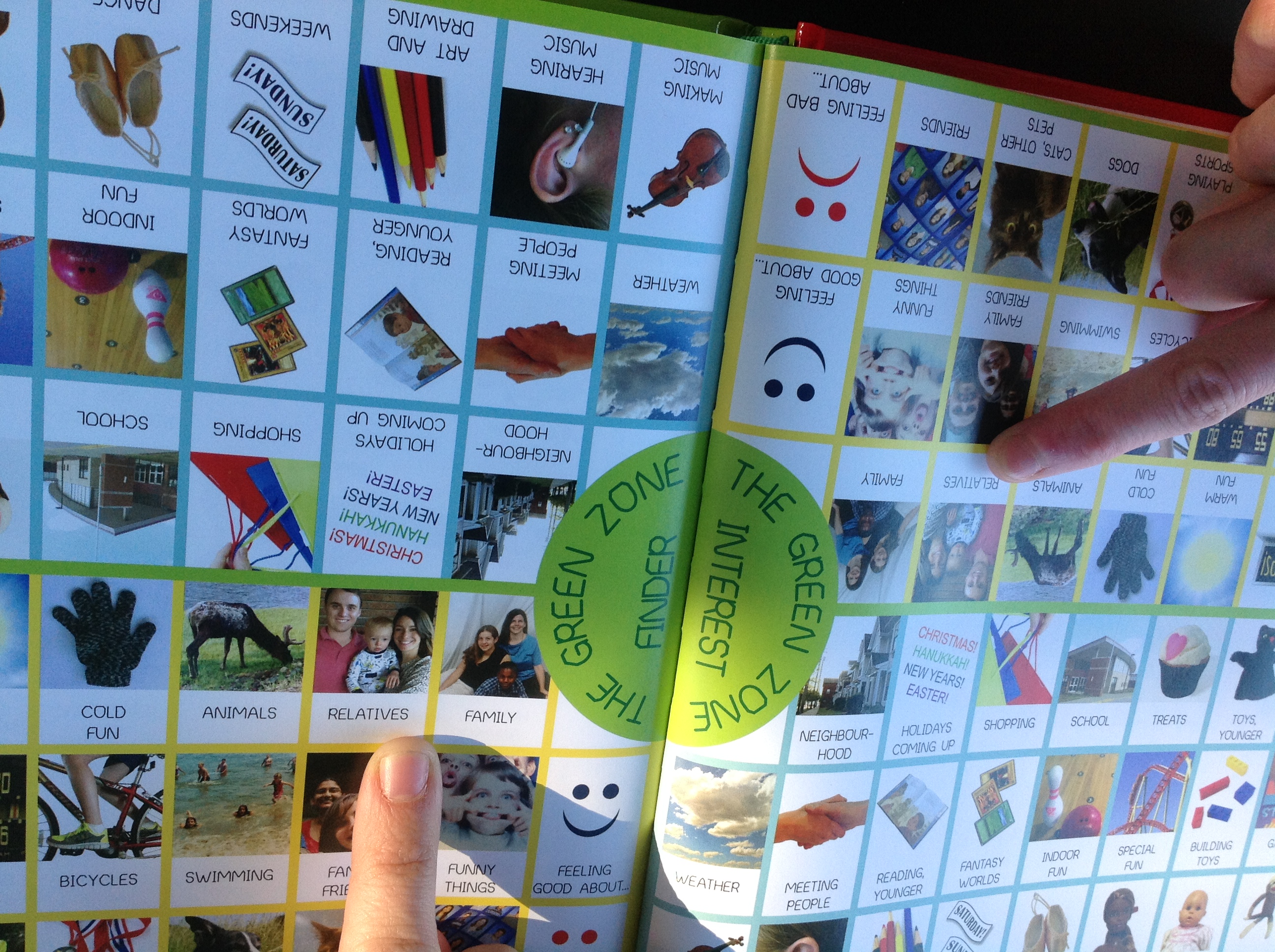
Green Zone Picture Card Social Skills Game – a free download
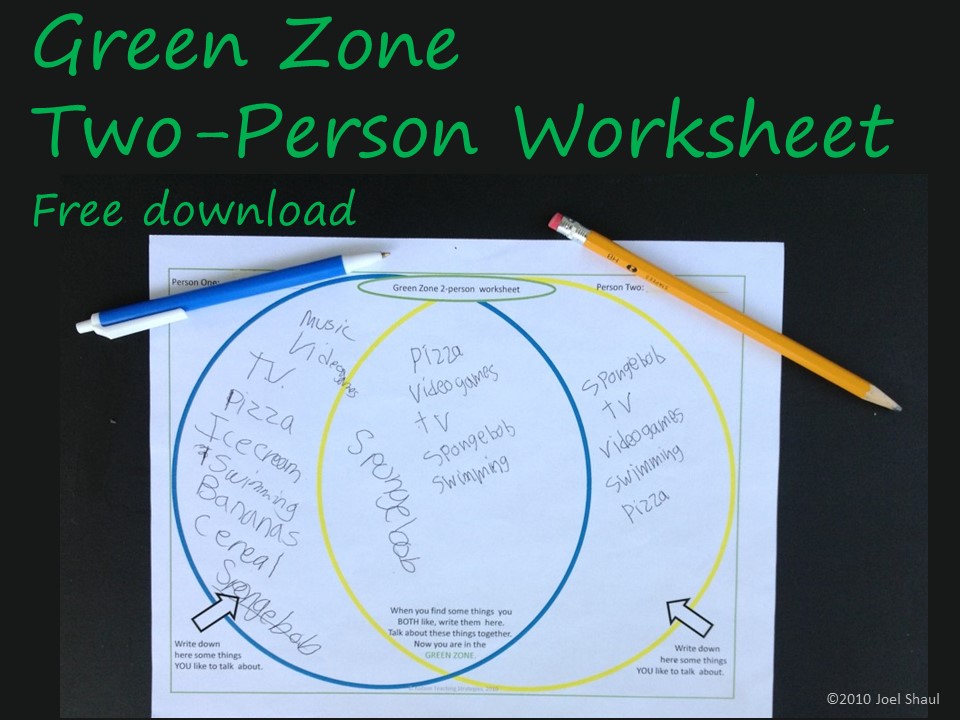
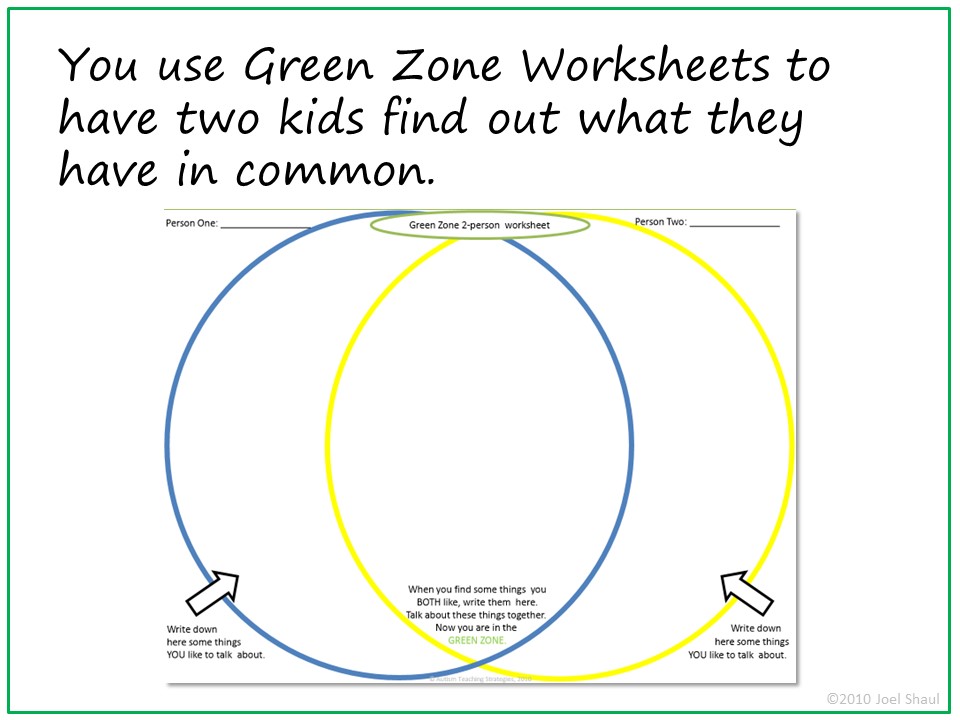
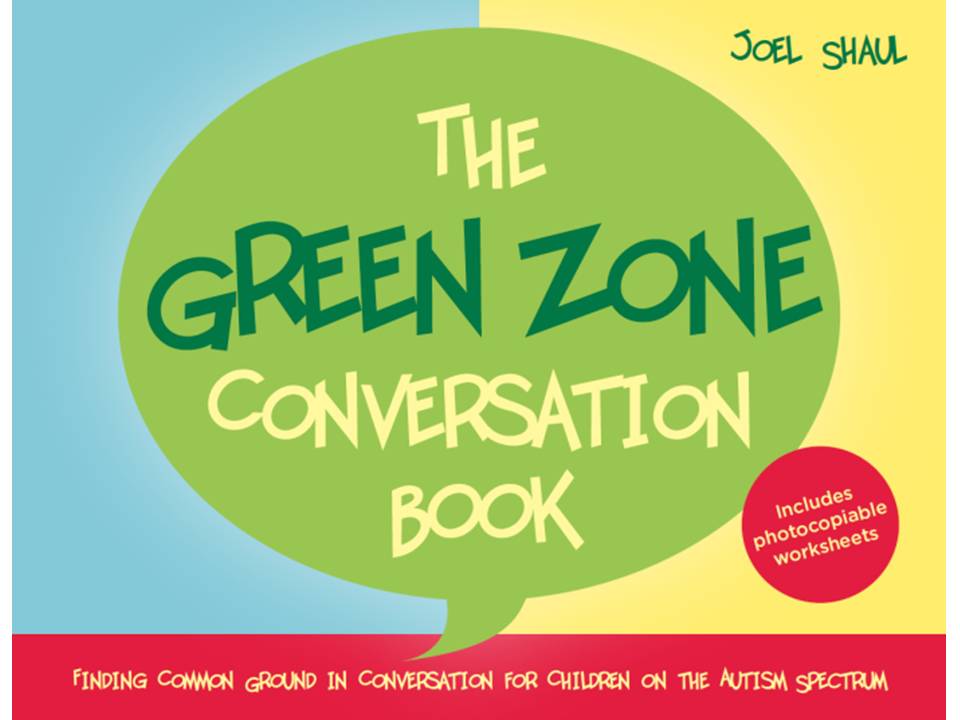
Children on the autism spectrum often struggle to discern the interests of other people and to take these interests into account in conversation. This social skills game employs a picture-based strategy works well in a variety of ages and reading levels. I would then encourage you to go on to fully explore this fun, visual method in my illustrated children’s book, The Green Zone Conversation Book, published by Jessica Kingsley Publishers.
To download the activity, click on the red link below.
I wish you success in your social skills work with children on the autism spectrum.
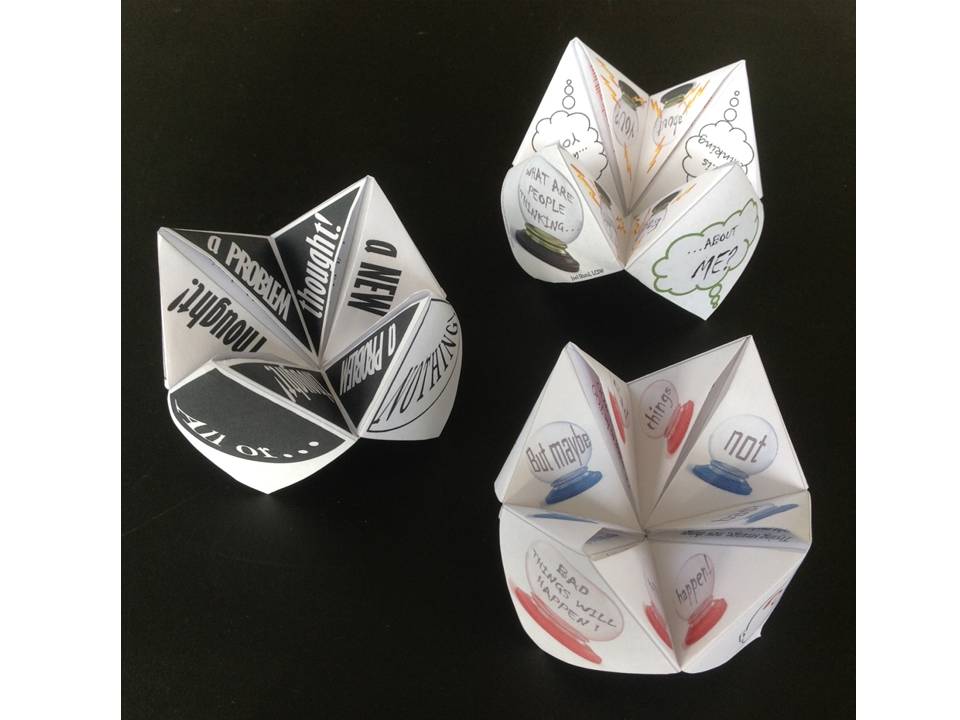
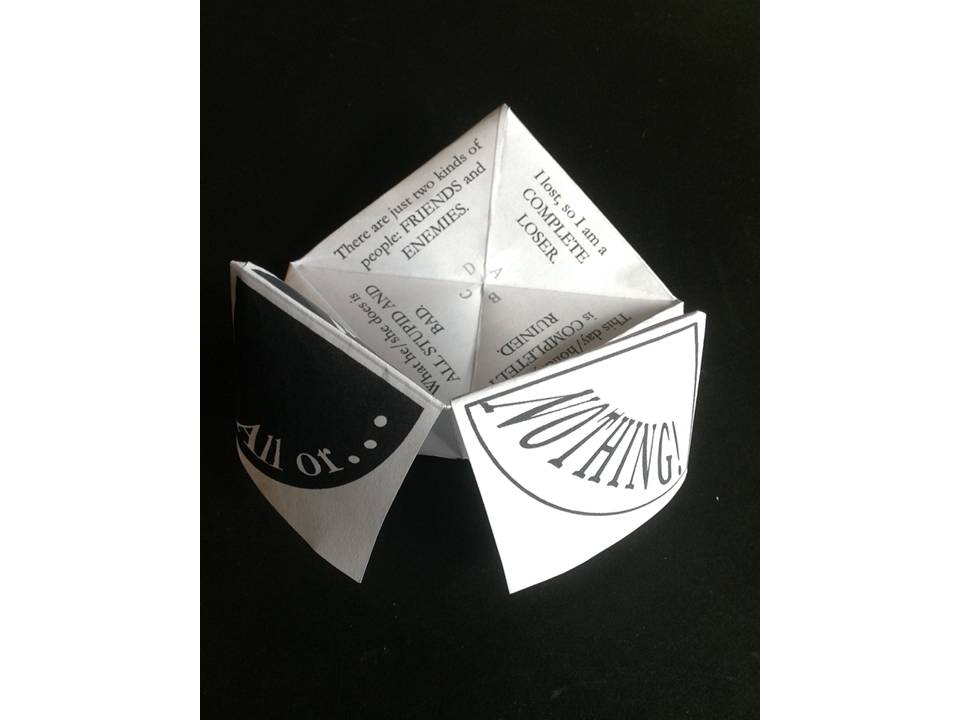
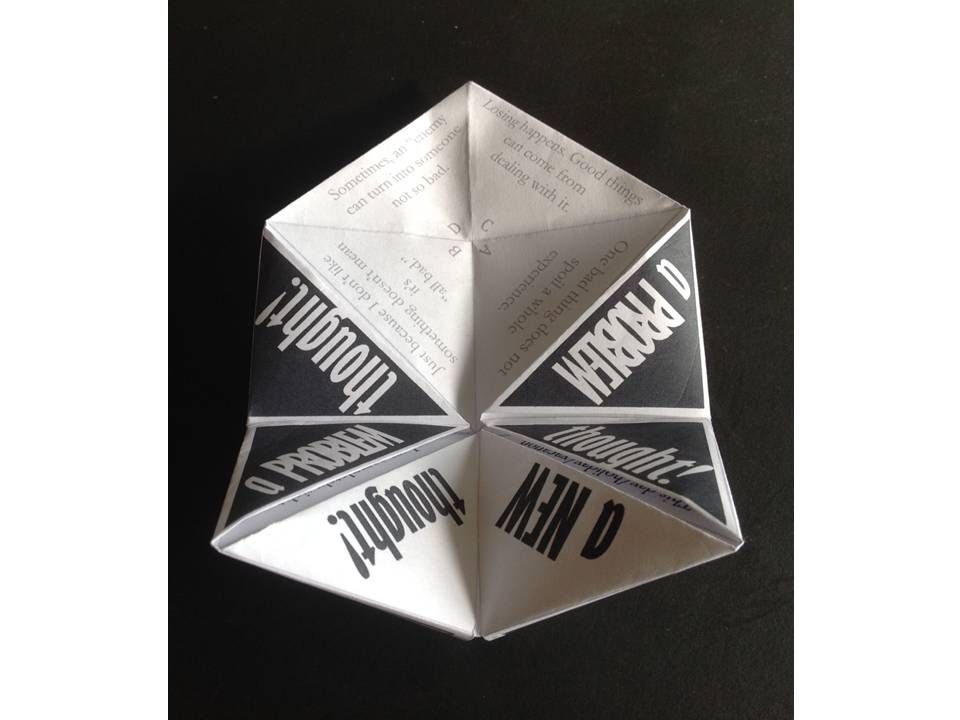
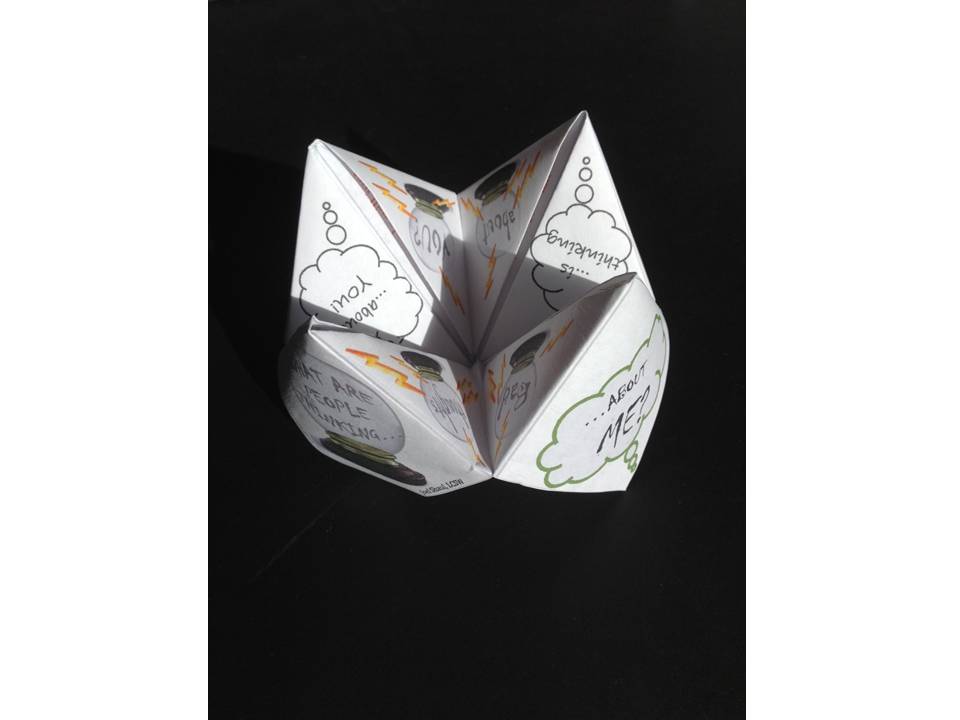
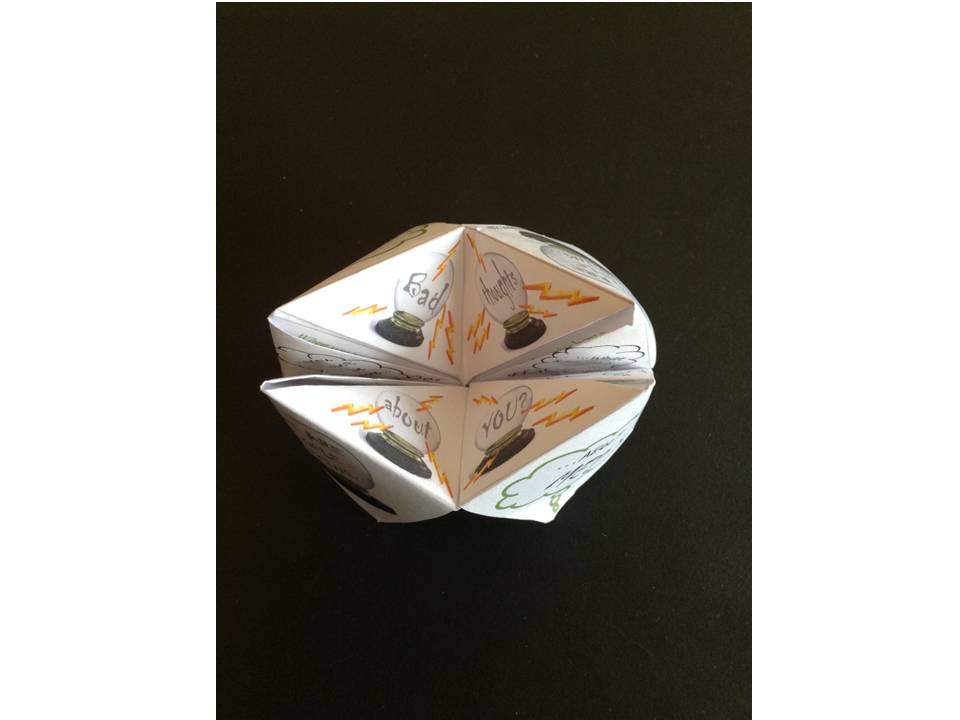
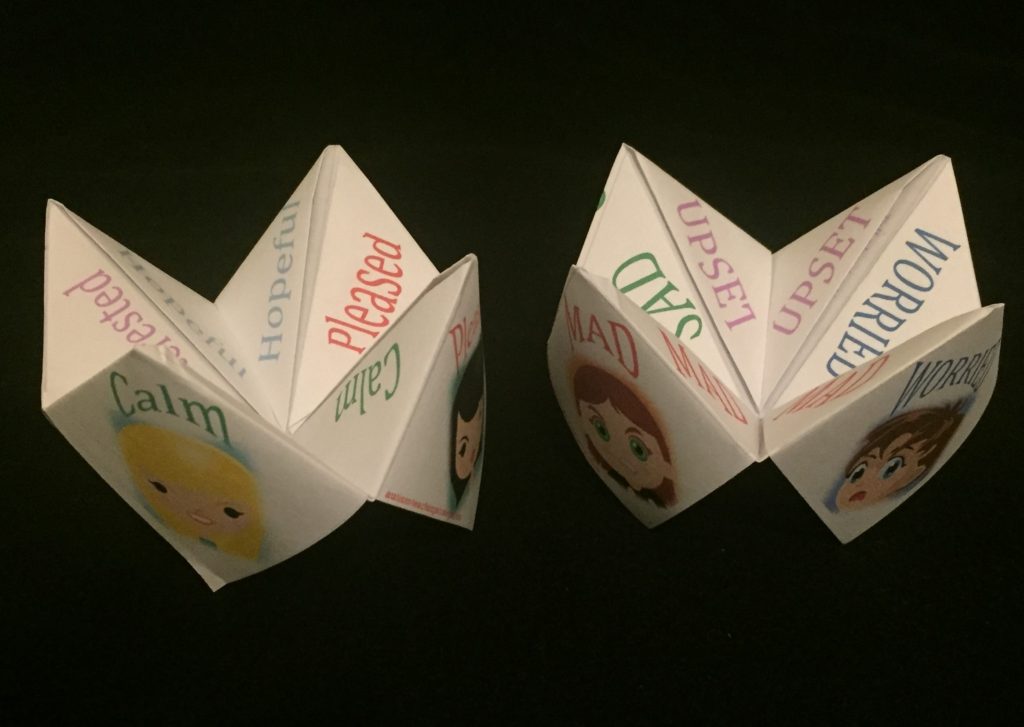
Helping children to work on upsetting emotions using cognitive behavioral therapy game activities
Many young people have persistent problems with anxiety, sadness, anger and other upsetting emotions. To maintain engagement in counseling and psycho-education, we need to provide novel approaches and introduce some levity whenever possible.
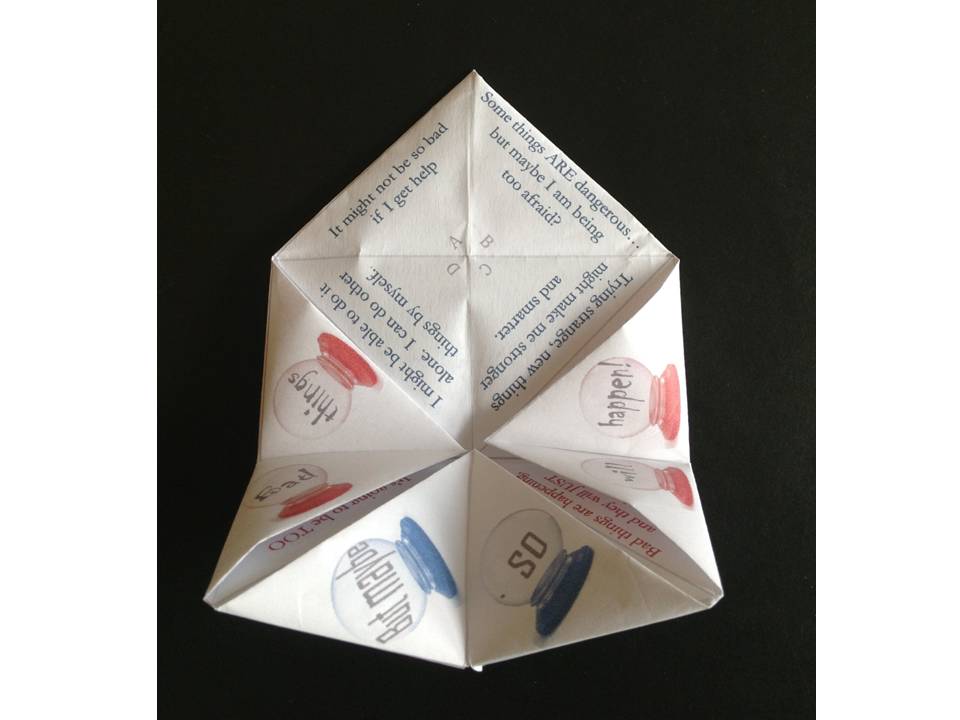
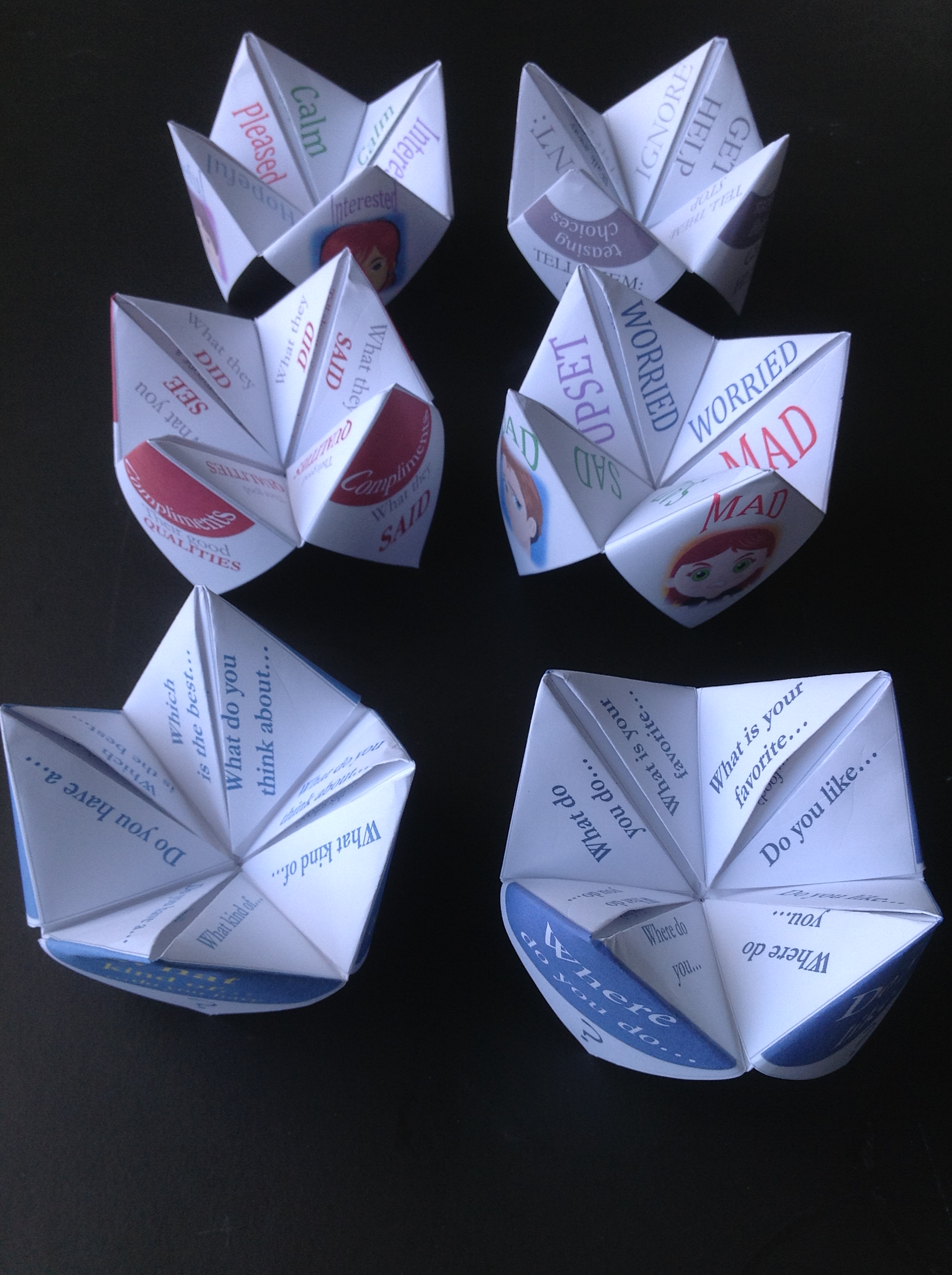
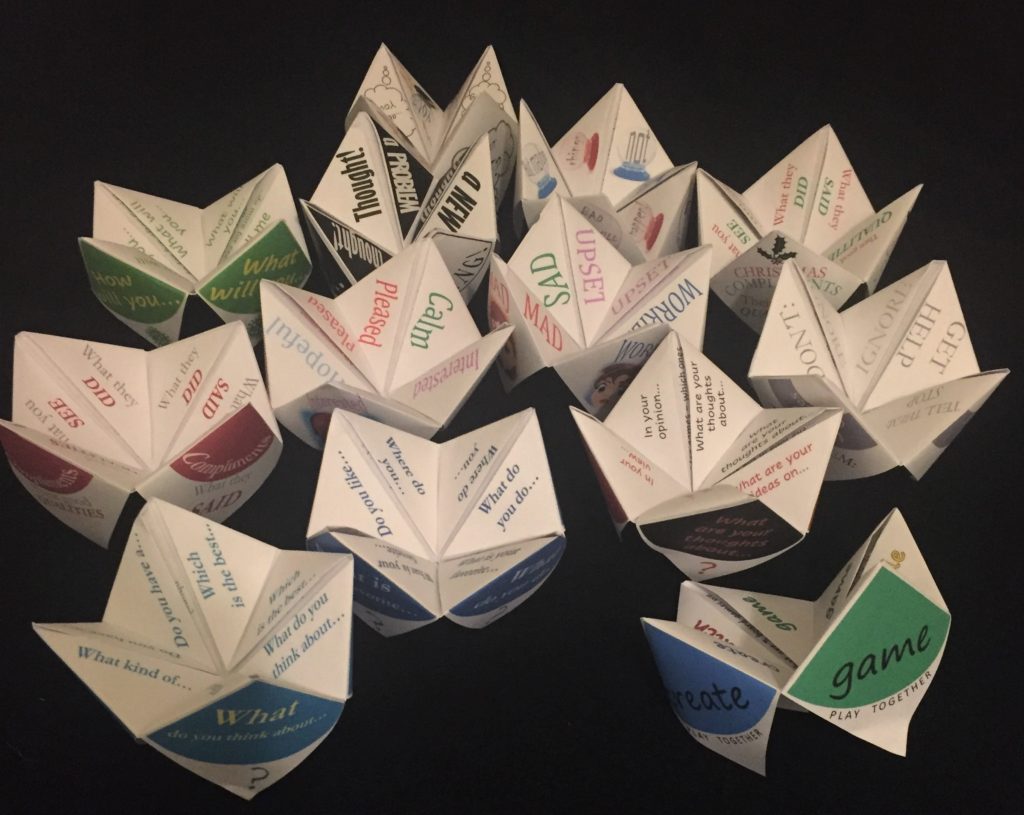
To check out a dozen other paper fortune tellers, on diverse social skills themes, please click here.
For a summary and links to all the free CBT materials on my website, please click here.
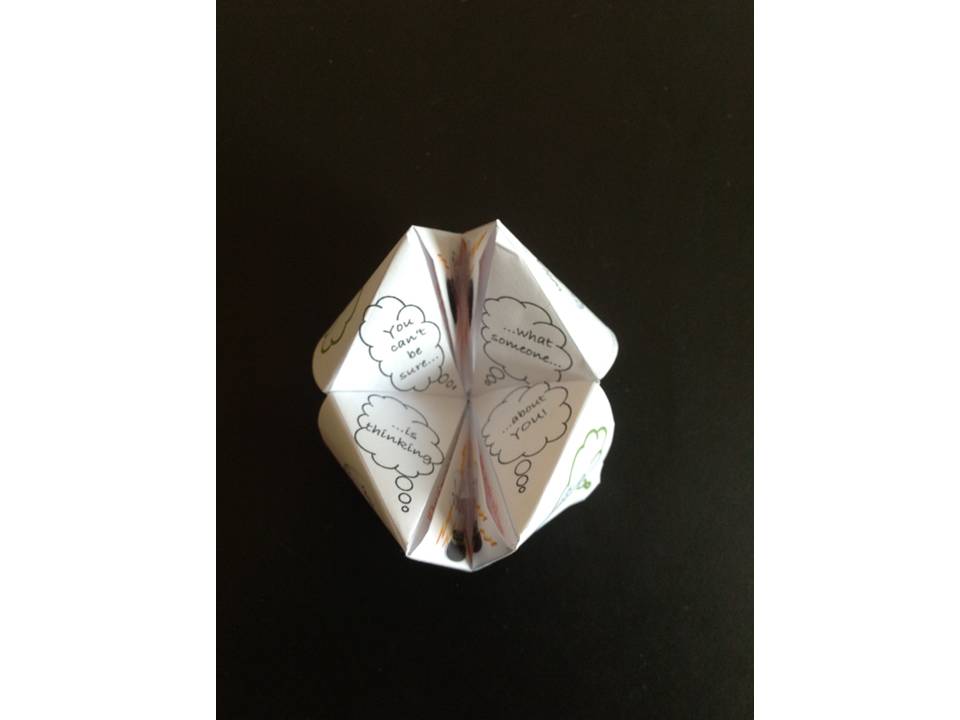
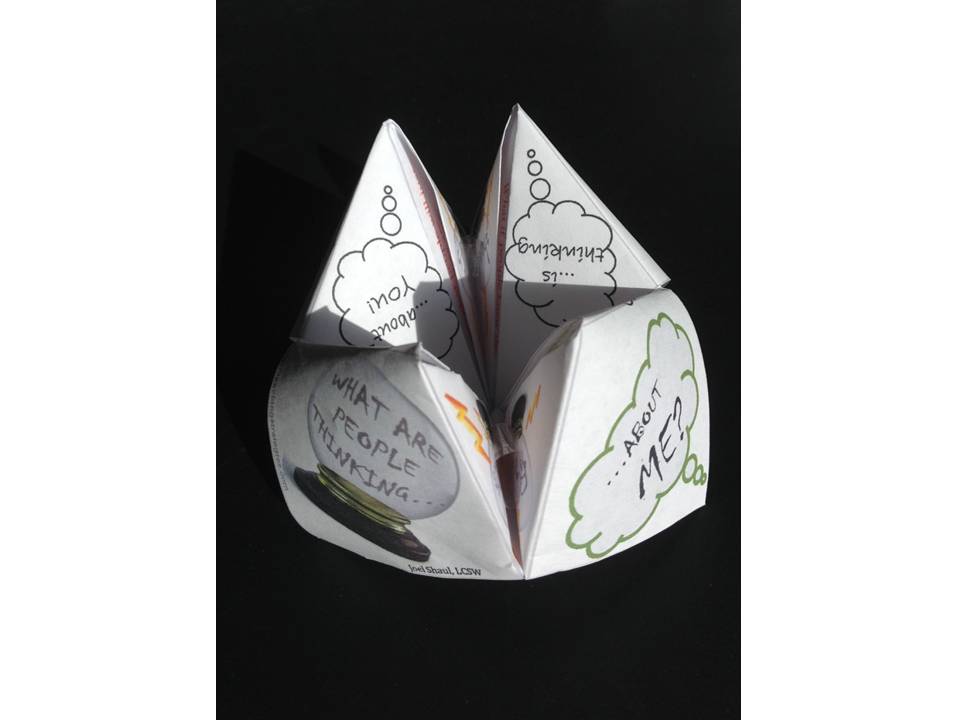
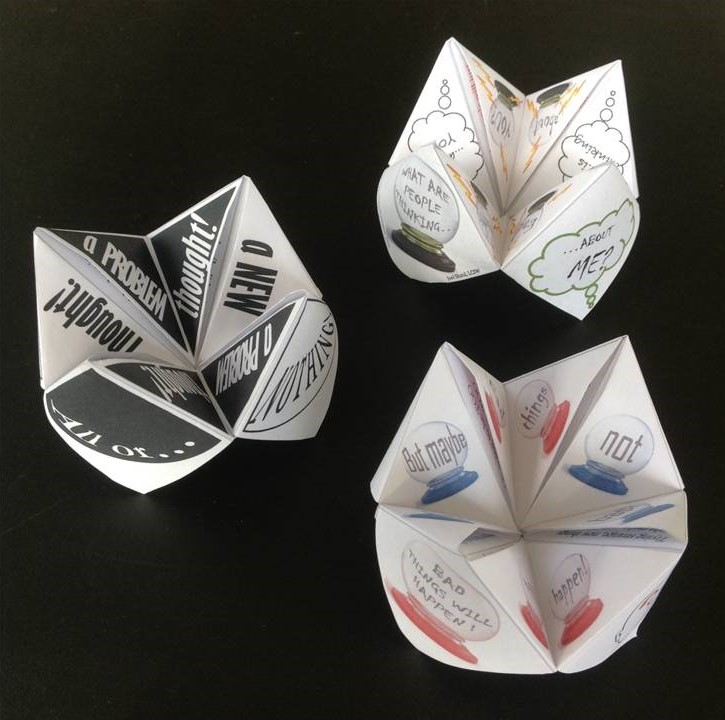
Some suggestions for introducing these Fortune Tellers:
1. Introduce some basics concerning the connection between automatic negative thoughts and negative emotions. I suggest you do this by viewing , with children, this very short video I made:
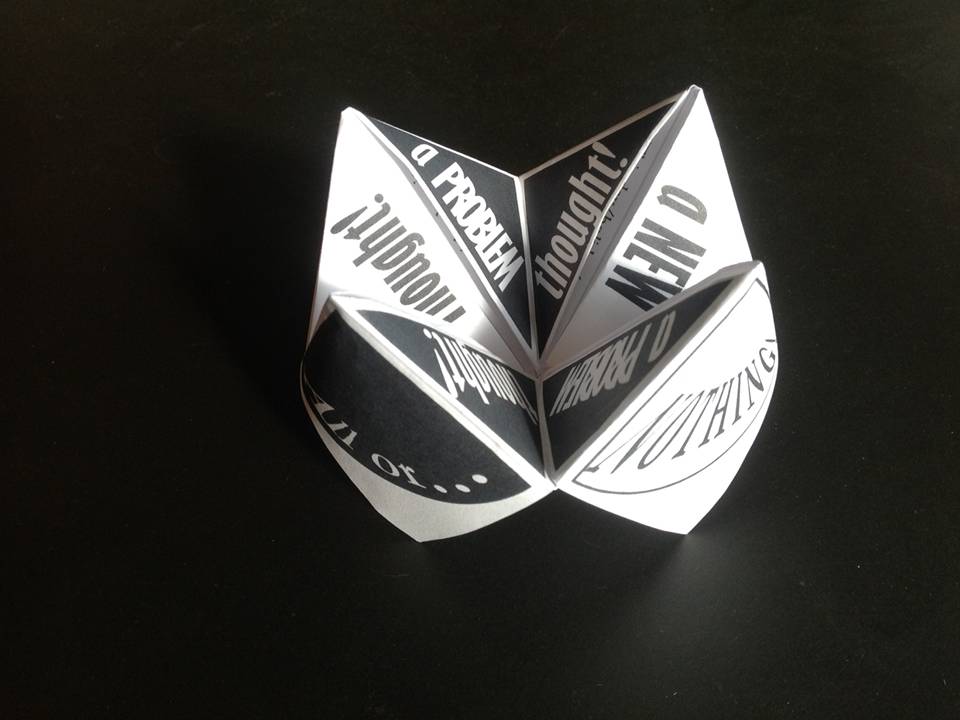
2. Working in pairs, and taking turns, person number one says, “Spell your name.” For each letter, the child holding the Fortune Teller manipulates the device back and forth.
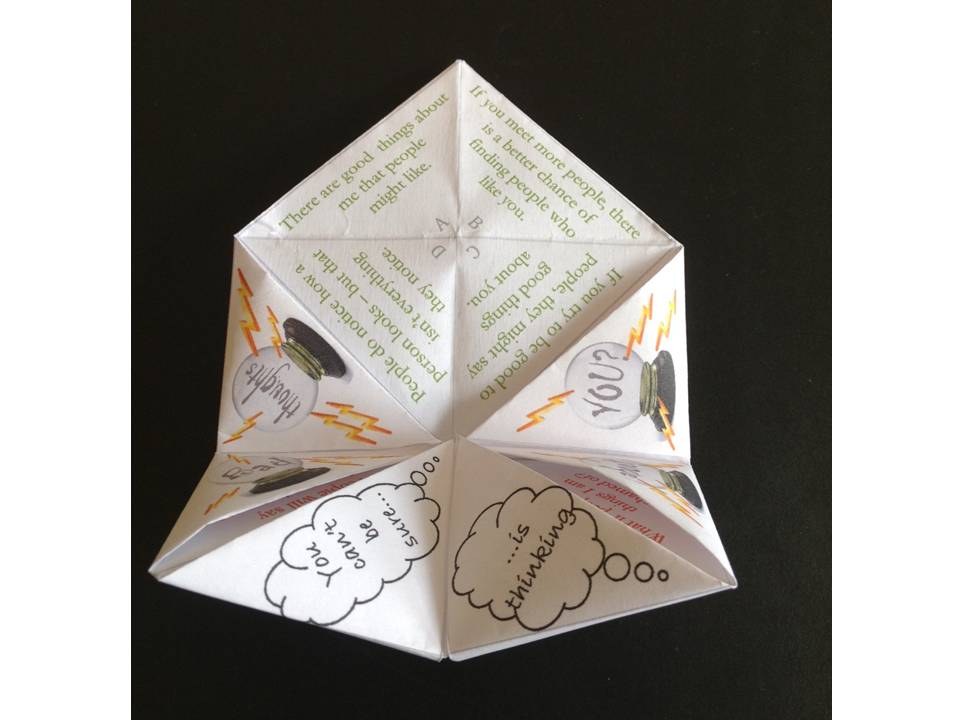
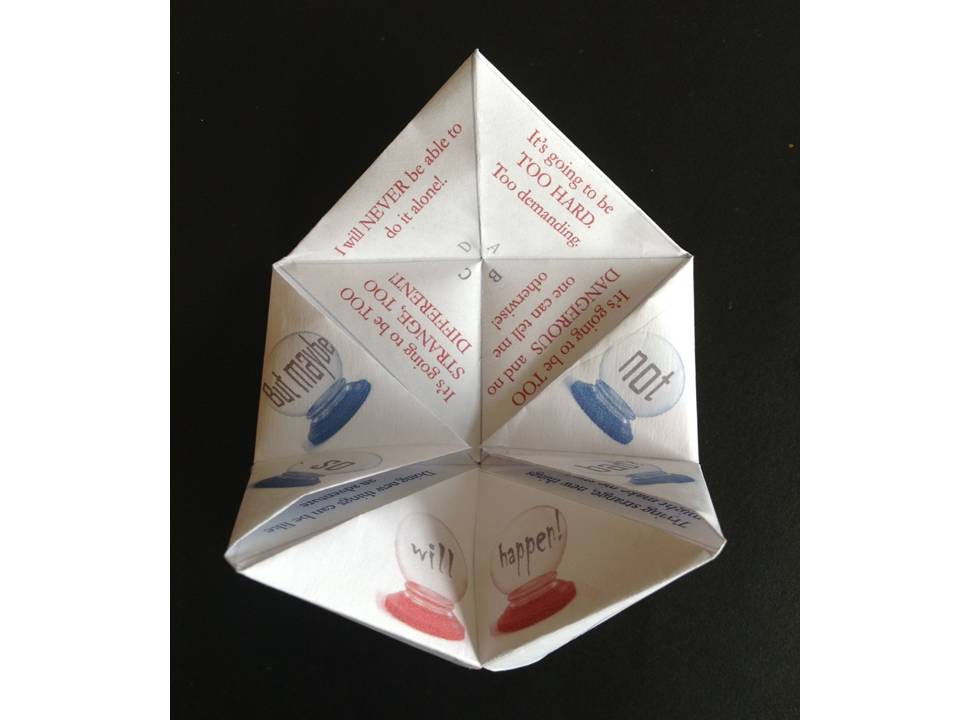
3. Person number two is then shown the two options appearing on the inner triangles. Person one says, “Pick which one you want.” You can see photos of this farther down on this page.
4. Person one opens up the innermost petals, where four options appear. He tells person two, “Pick A, B, C or D.” Person one reads the option selected. If the option read is a negative thought, person two has to tell how to deal with such thoughts. If the option selected is a positive thought, person two must describe a time when he needed to use such a thought to solve a problem.
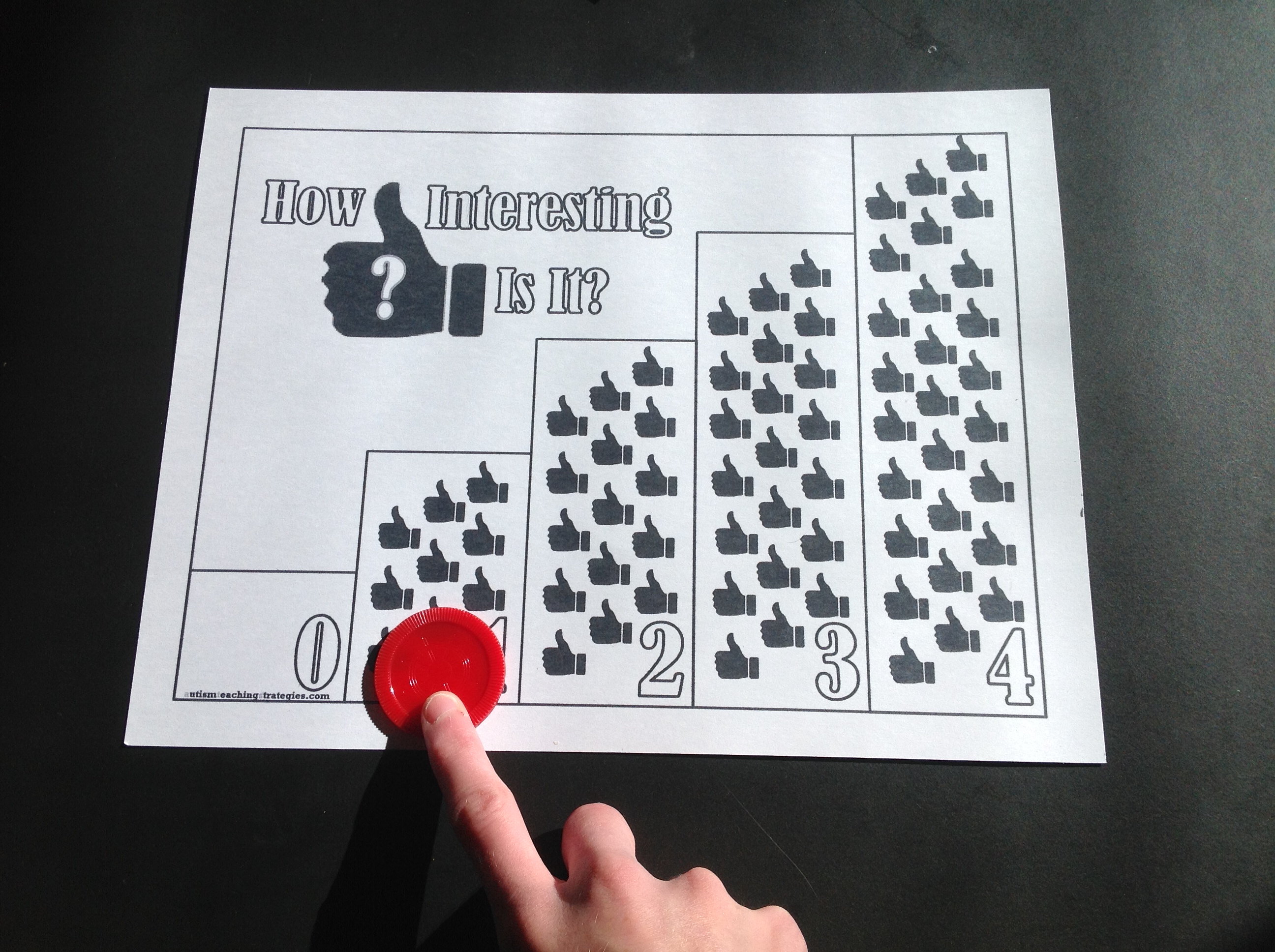
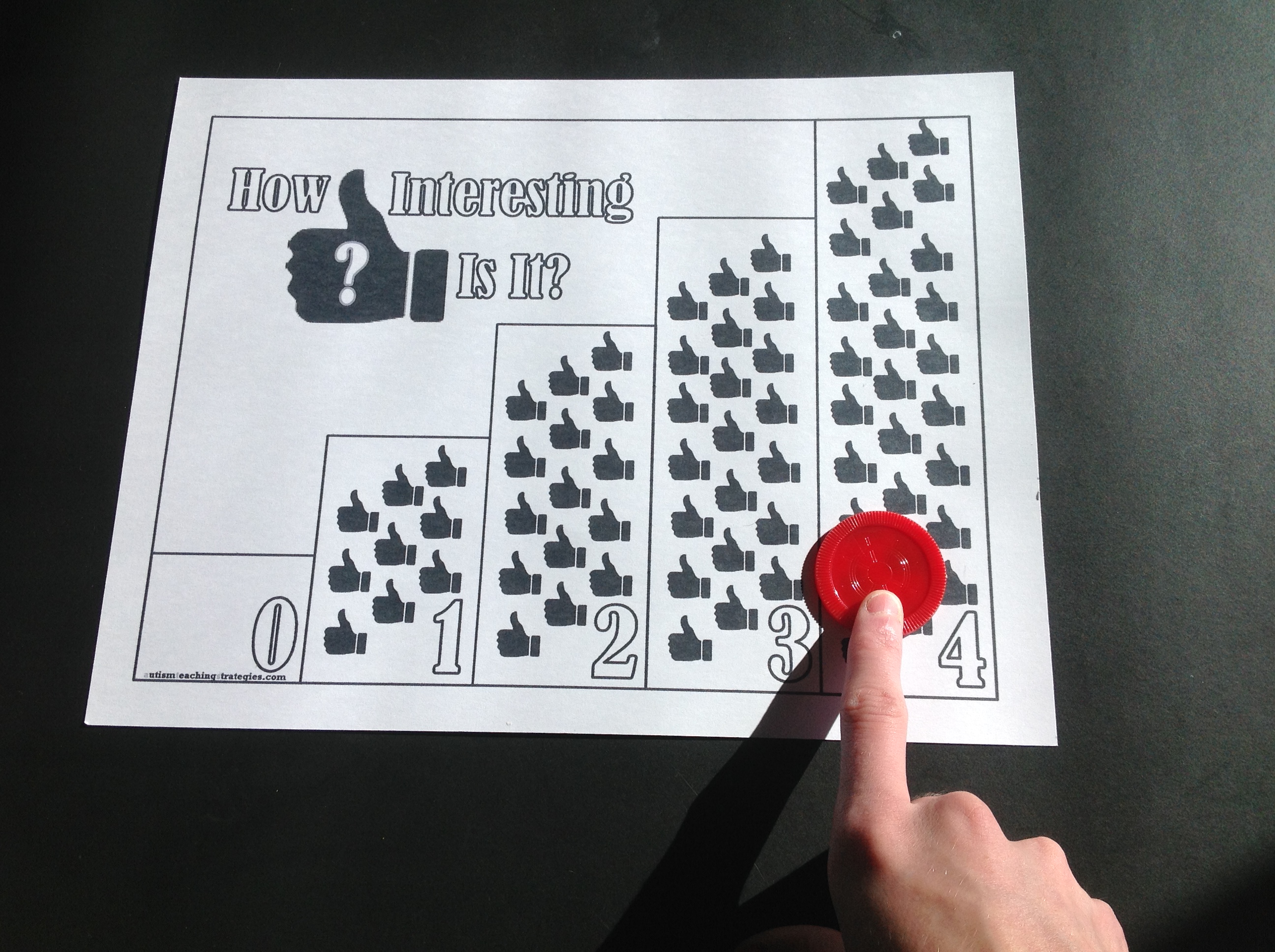
Here is part of the How Interesting Is It? kit. The child moves the chip from one category to the next based on his assessment of how interesting a topic is to another person.
A set of social skills learning materials to help teach what conversation topics tend to score “likes” with peers
Children with autism spectrum disorders can find it very difficult to know what to say to their peers. Children with ASD tend to fall back on their own preferred topics.
Here are some activities to increase awareness of various things that other people find interesting to talk about. The activities employ the thumbs-up “like” symbol, which is very familiar to most children as an indicator of what pleases another person.
This kit includes:
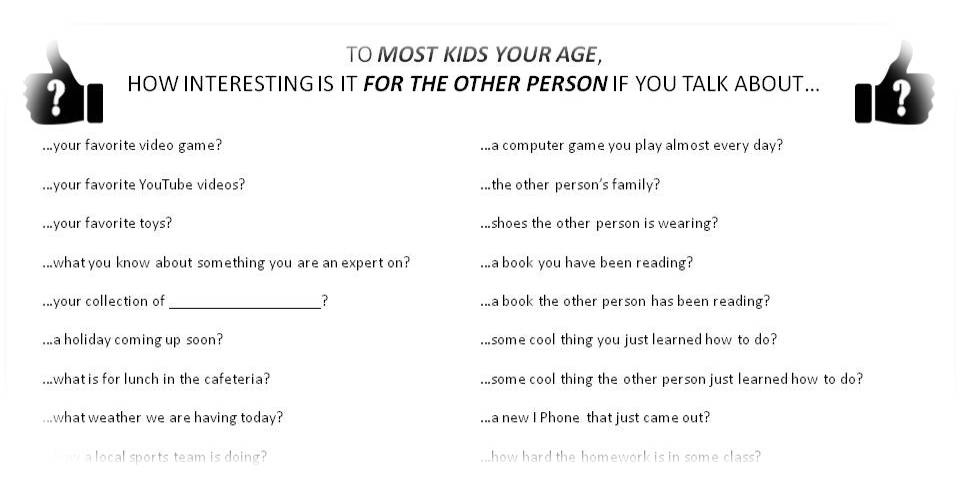
1. How Interesting Is It? topic list [fragment shown below].
This is a list of ninety different conversation topics. You read them out loud to children so they can rate how interesting they are.
2. How Interesting Is It? rating sheet [shown below].
Children move a chip between 0 and 4 based on how interesting they think a particular conversation topic might be for another person.
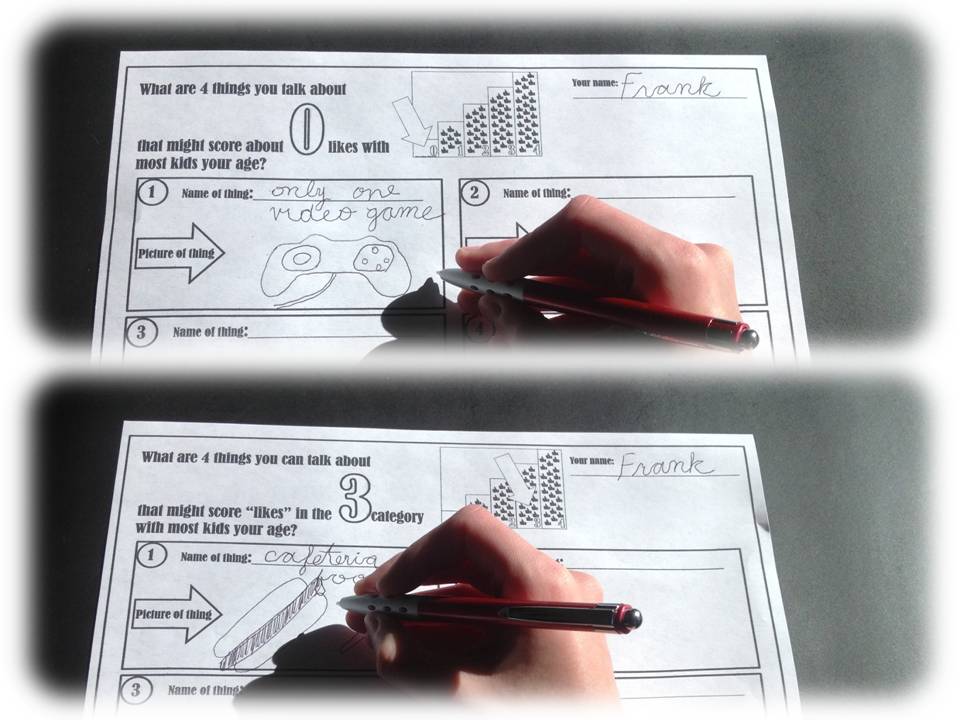
3. How Interesting Is It? picture worksheets [examples shown below]
This set of five worksheets is to help children who need more practice.
Some suggested language to use when introducing these activities:
“Who has ever seen the ‘like’ icon on Facebook or other places online? What does it mean? It means someone likes something that they see or hear online. Some things online get lots of ‘likes’. Some get few, or none.
When you are talking to other people, you might also be scoring ‘likes’ – in their minds. Or you might not be scoring ‘likes’ at all. When you are ‘interesting,’ it is something like scoring ‘likes’. When you are not interesting, or boring, you are not scoring ‘likes’.
You can get much better at scoring ‘likes’ in conversation by paying close attention to what you are saying and what the other person might find to be interesting. Your own words might seem really interesting to your own ears. Maybe the other person will like your words too. But, depending on the topic and what the other person finds interesting, your words might not score any ‘likes’ at all.
Here are some activities to help you get better at scoring ‘likes’ when you talk.
1. How Interesting Is It? rating sheet. I will read you a number of different conversation topics. For each one, you have to take a guess on how interesting, on a scale of 0 to 4, it might be to the other person. Place your chip on the number that you think shows how interesting it is to the other person, not you. [Note to teacher: alter the wording as you read through the list, to clarify and specify as you see fit.]
2. How Interesting Is It? picture worksheets. For the Zero sheet, pick out some things from the list that might be uninteresting to most kids – or things that you think of yourself. Write them down on the sheet and draw small pictures. For the 1, 2, 3 and 4 sheets, write and draw things that kids your age might find more interesting.”
Note to teacher/therapist: These activities work best when you add role play practice. Select a number of topics that would rate a 3 or 4 with most children. You play the role of the other child in the conversation. Then, assign the children to converse with you on these selected topics.
I hope you find these materials enjoyable and useful.
Imagination, cooperation, and children with high functioning autism
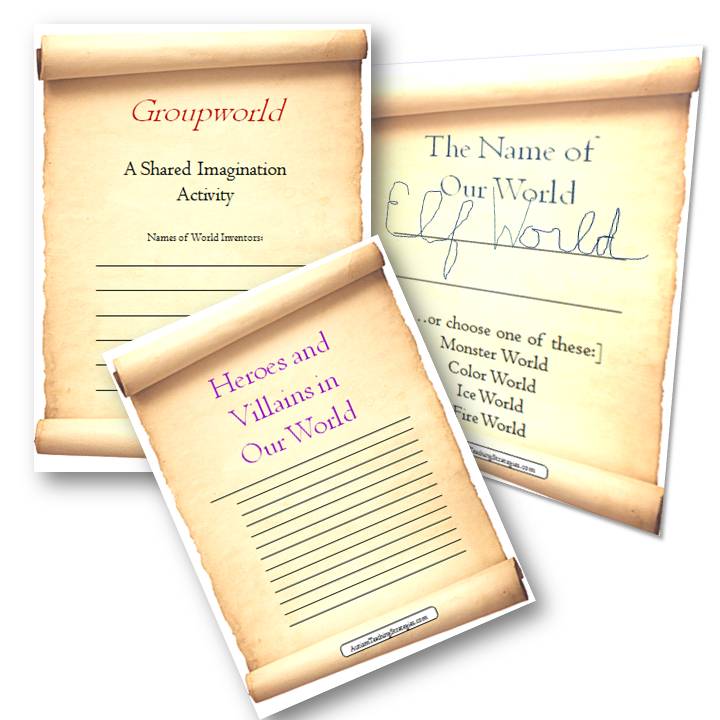
Here is a fun, challenging activity to promote group cooperation skills. It is derived from an idea I found in a book years ago. I have provided you with print-outs to help structure the activity. This activity works well for many children ages 7 and up.
Many children have very rich lives of imagination. Children with ASD’s often have involved fantasy worlds – worlds they mainly keep to themselves. The Groupworld activity is designed to make imagination more interactive by having children work together to invent a world of their own together.
Here is some language you may consider using to introduce the activity:
“We are doing The Groupworld activity. You all have great imaginations, but you are used to using your imagination all by yourself. In the Groupworld activity, you will have to combine your ideas with the other people here to make a world that has not just your own ideas in it, but everybody else’s ideas as well.
This will be fun, but it will also be hard. People naturally like their own ideas. It takes effort, and practice, to mix your ideas with other people’s ideas and not get into arguments.”
This activity is derived from an idea I found in Relationship Development Intervention with Children, Adolescents and Adults, by Gutstein and Sheely.p
I hope you enjoy this social skills activity. To learn about more group activities to foster sharing, collaboration and creativity, click here.
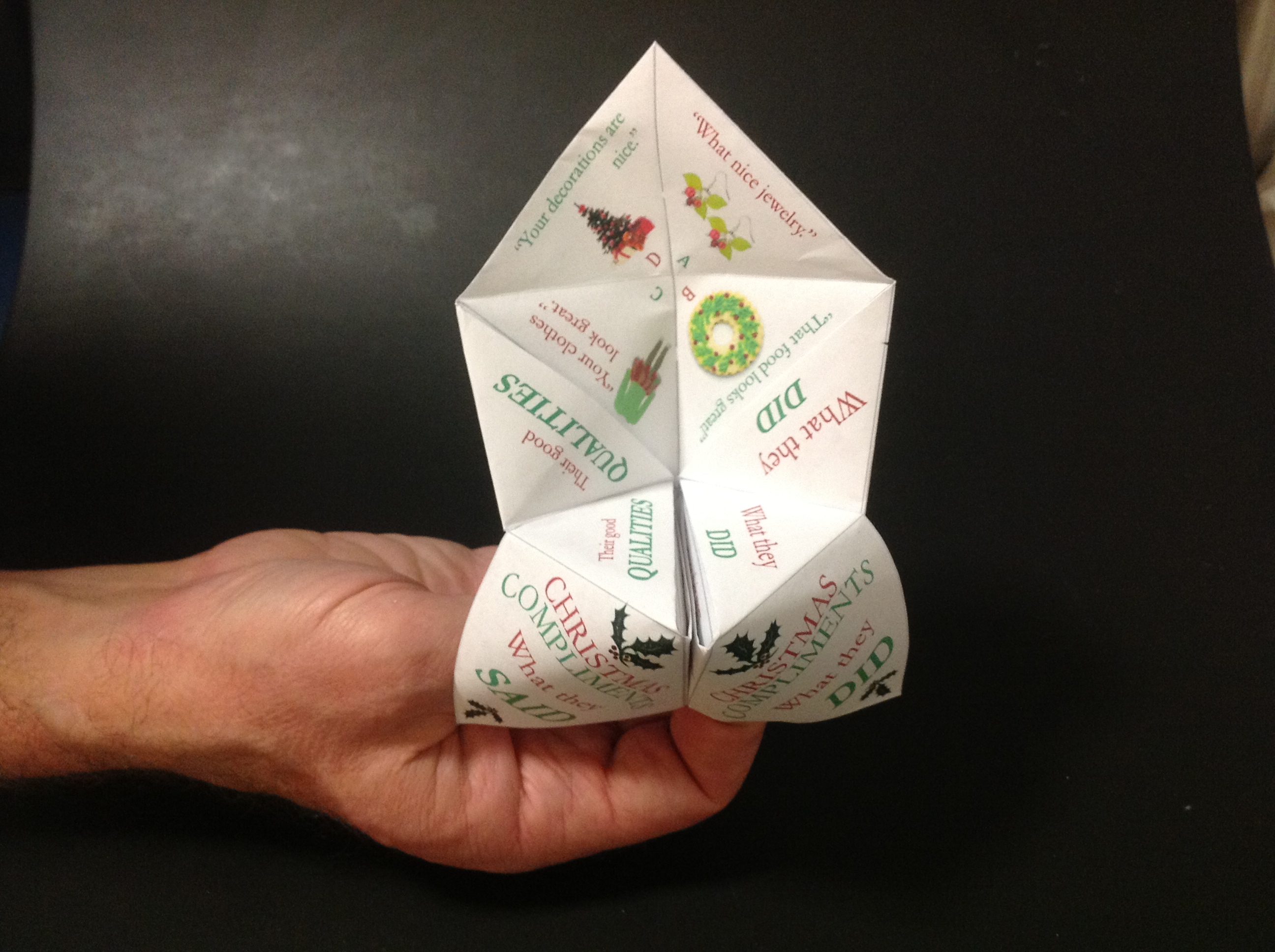
[ for another holiday-themed social skills activity, CLICK HERE ]
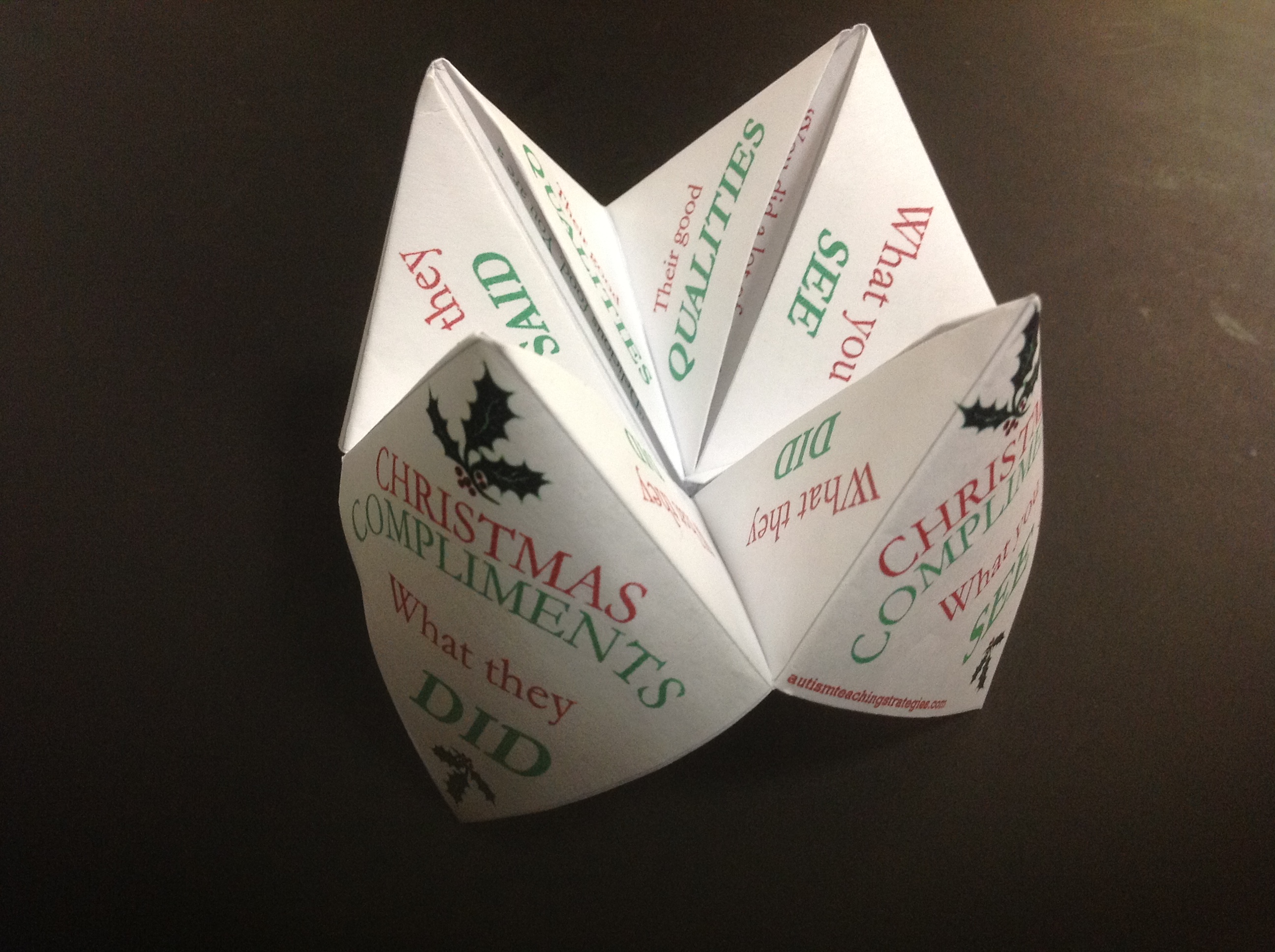
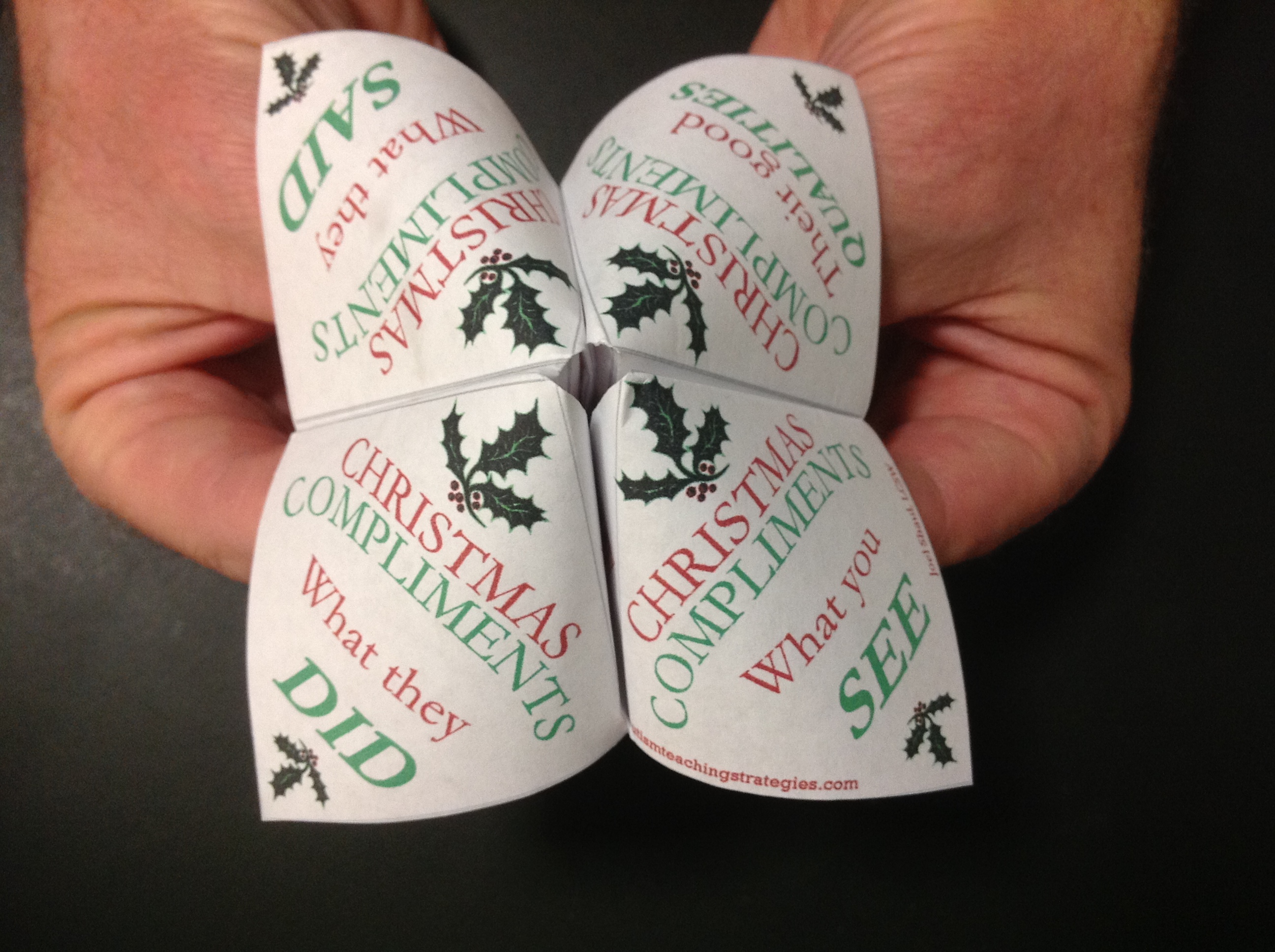
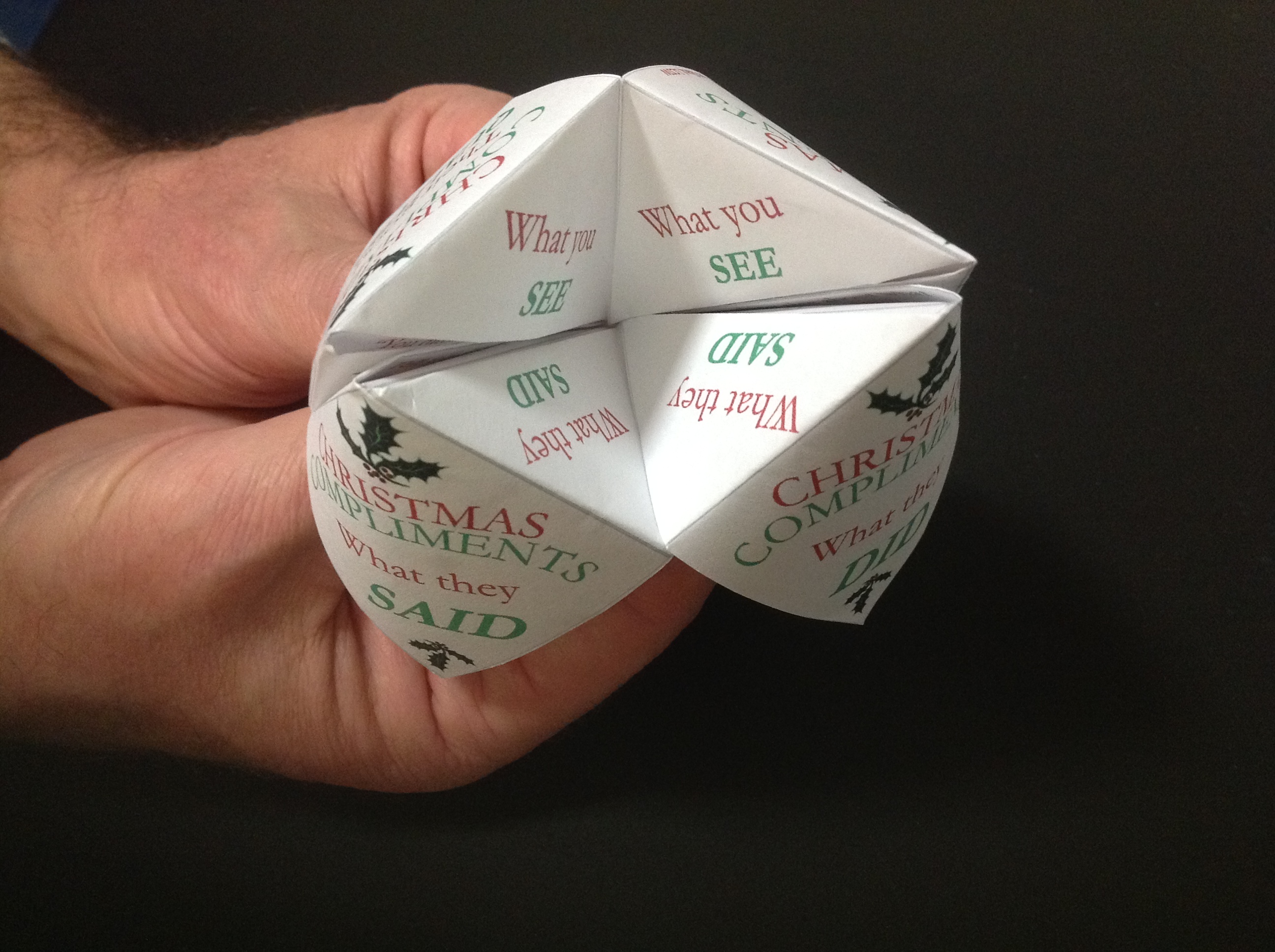
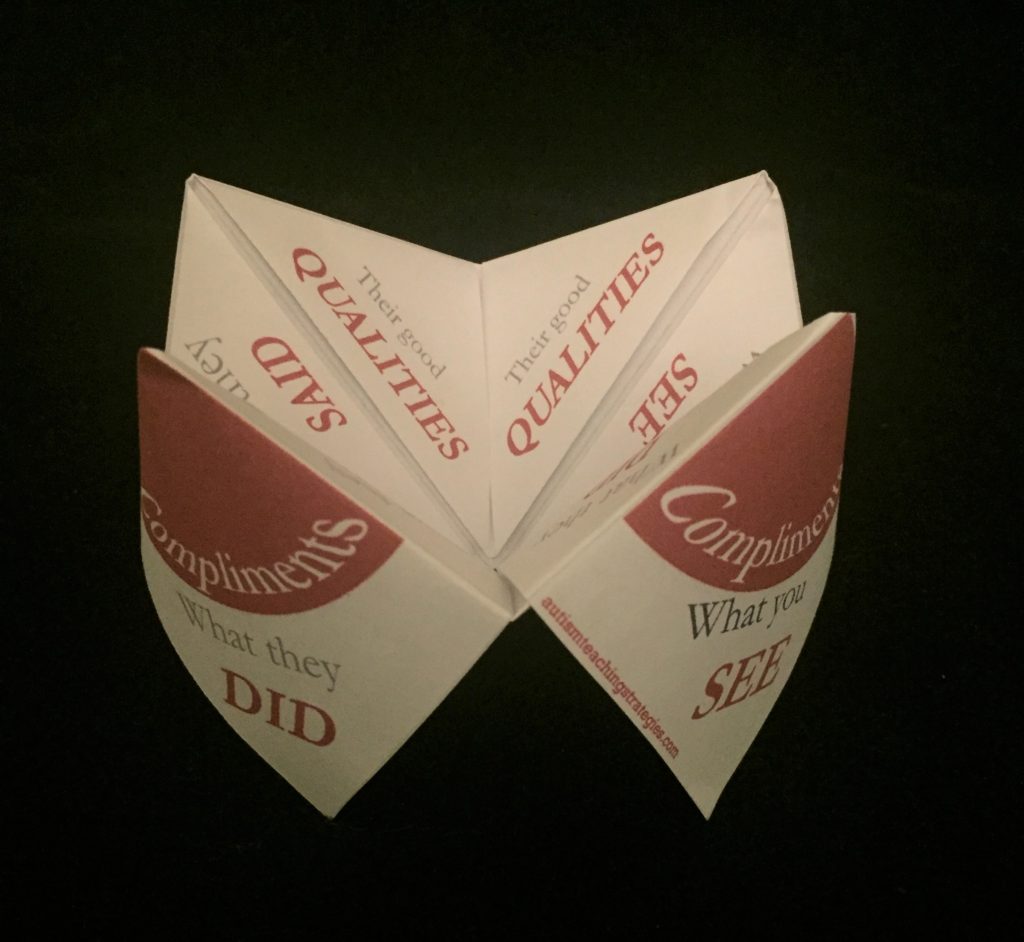
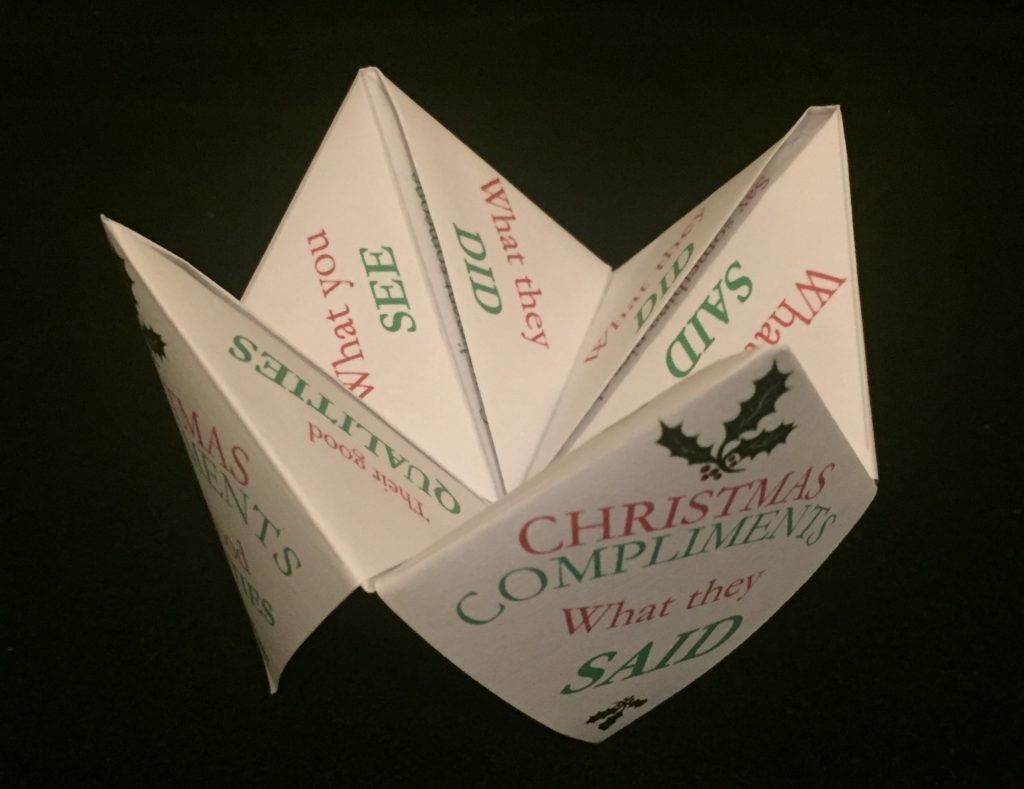
Children on the autism spectrum are often deficient in the skill of giving compliments. They tend to not be aware of the obligation and necessity of offering compliments to build and maintain good will in relationships.
During holidays in which family and friends give and receive gifts, and adults host meals, parties and other celebratory events, part of the expectation is that those on the receiving end will praise that which is provided for them to play with, eat and enjoy. It is useful for children with ASD to practice the social skill of giving compliments in advance of such occasions.
I have put a lot of free downloads on this website to promote giving compliments. Here are a few to check out:
*For a video demo on folding and using these things by Carla Butorac, SLP, click HERE.
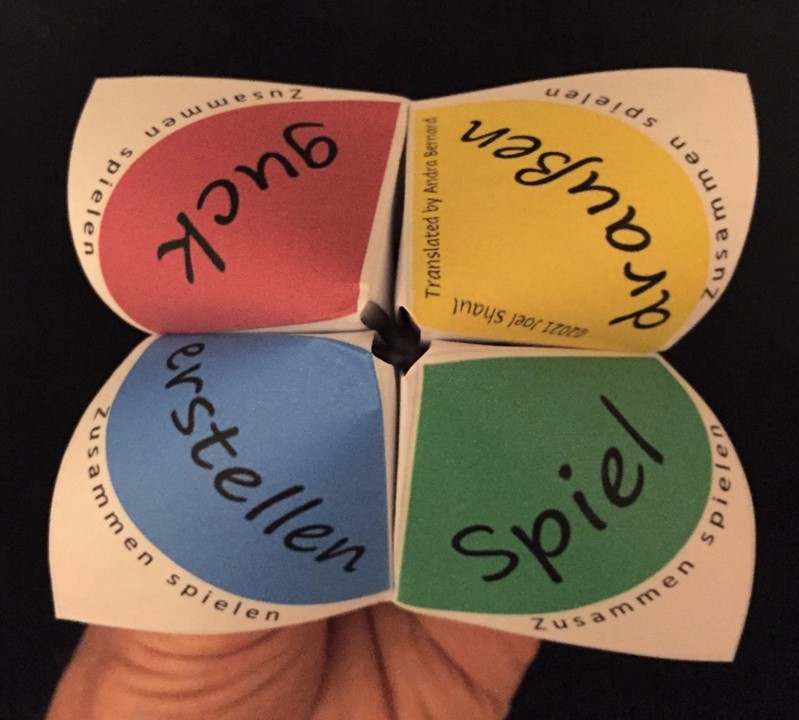
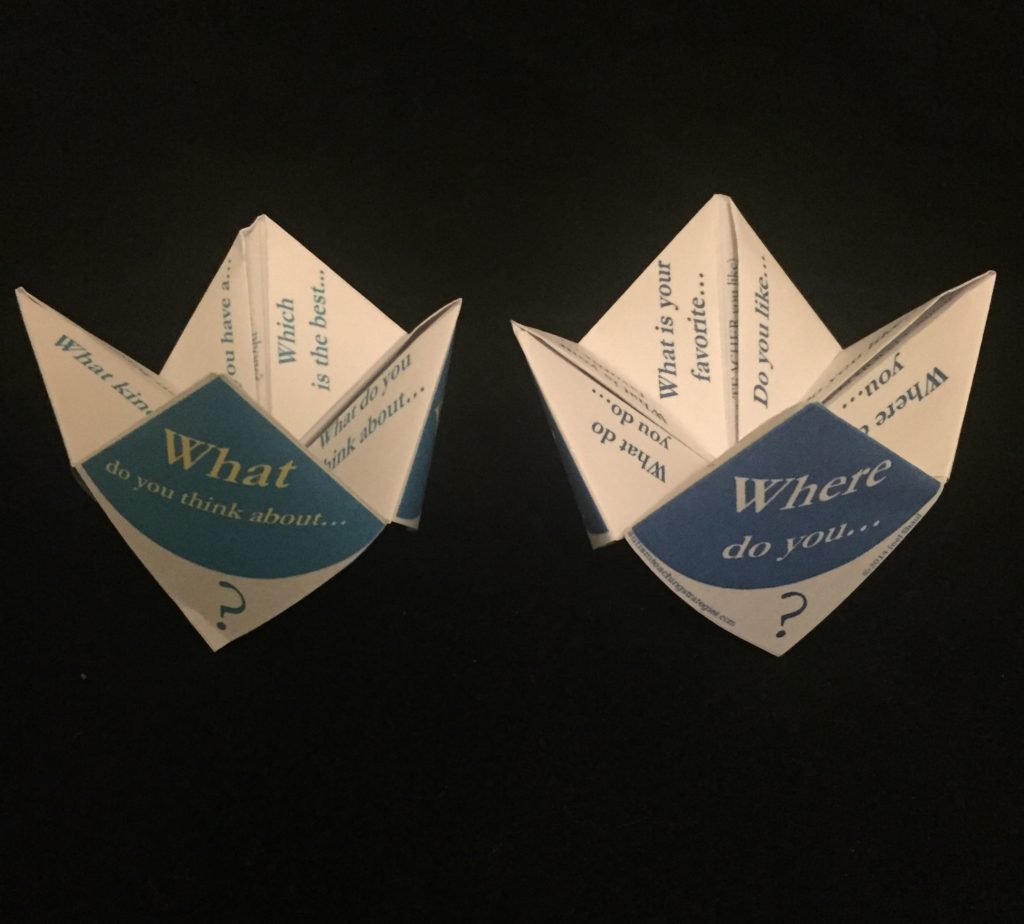
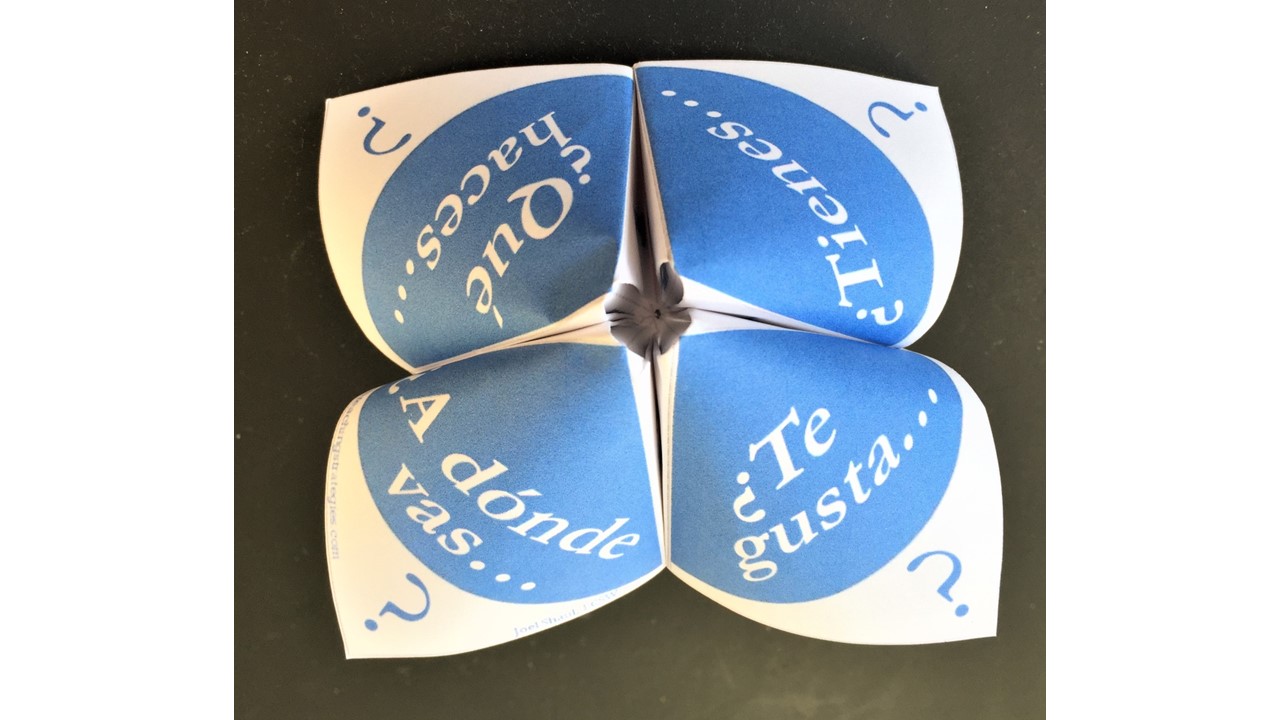
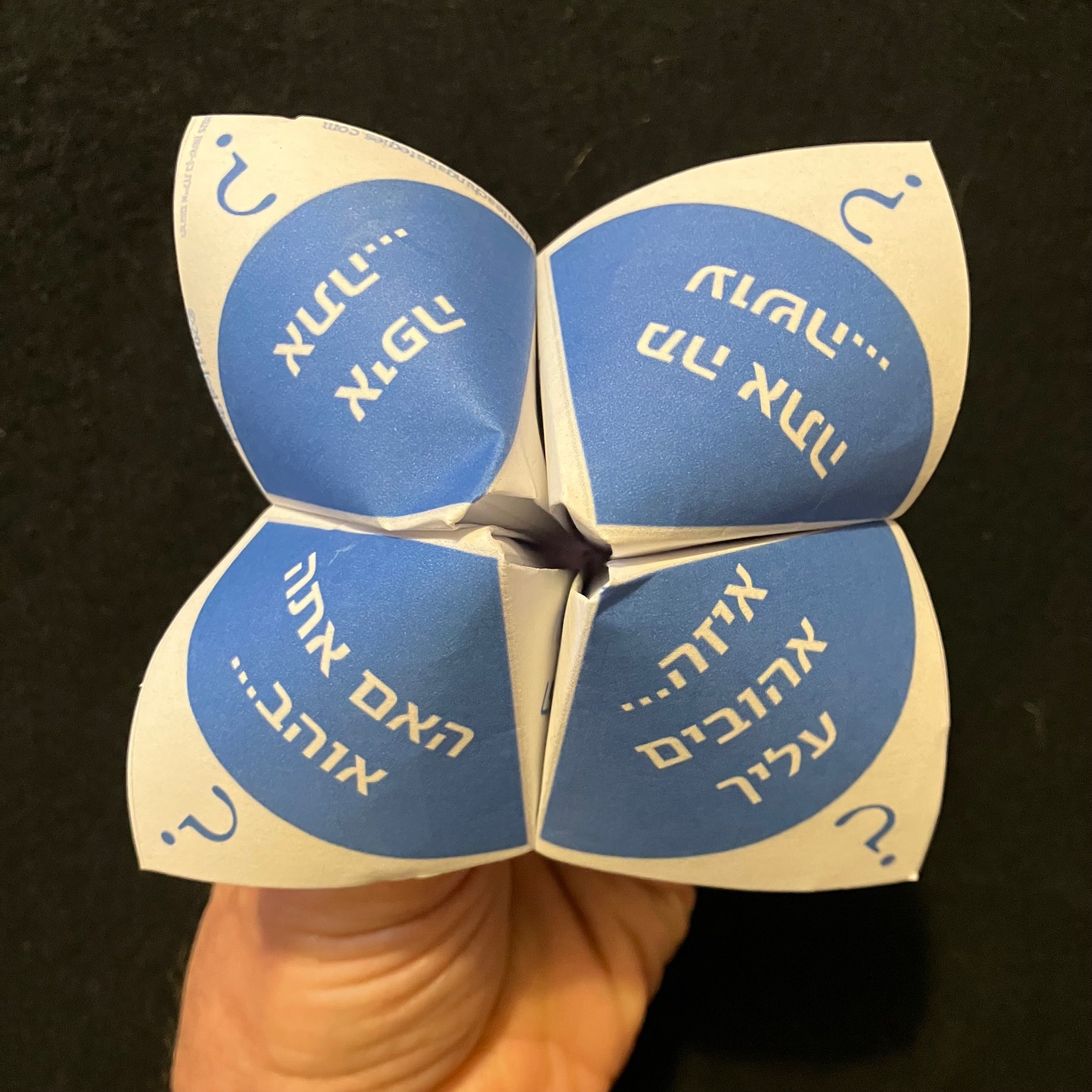
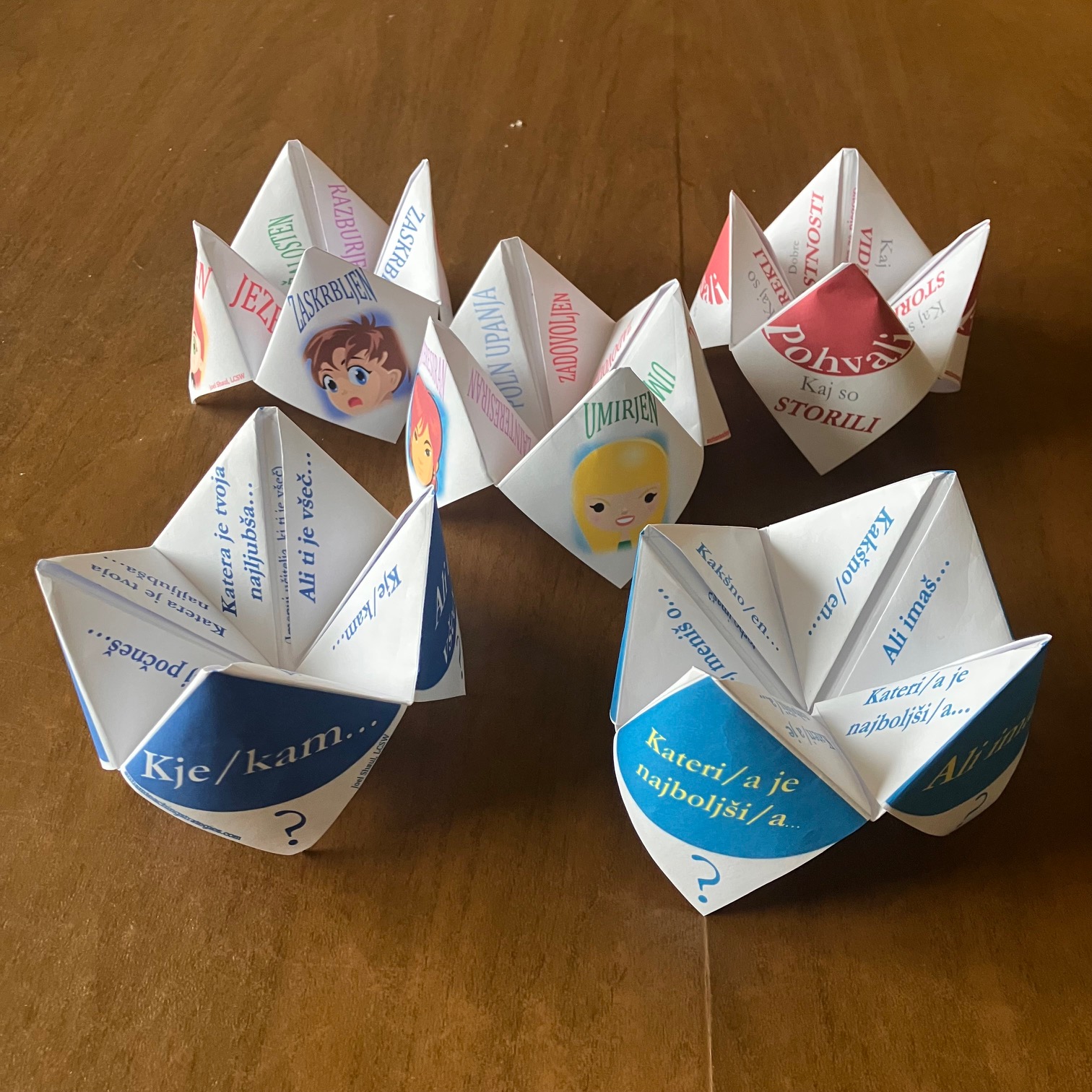
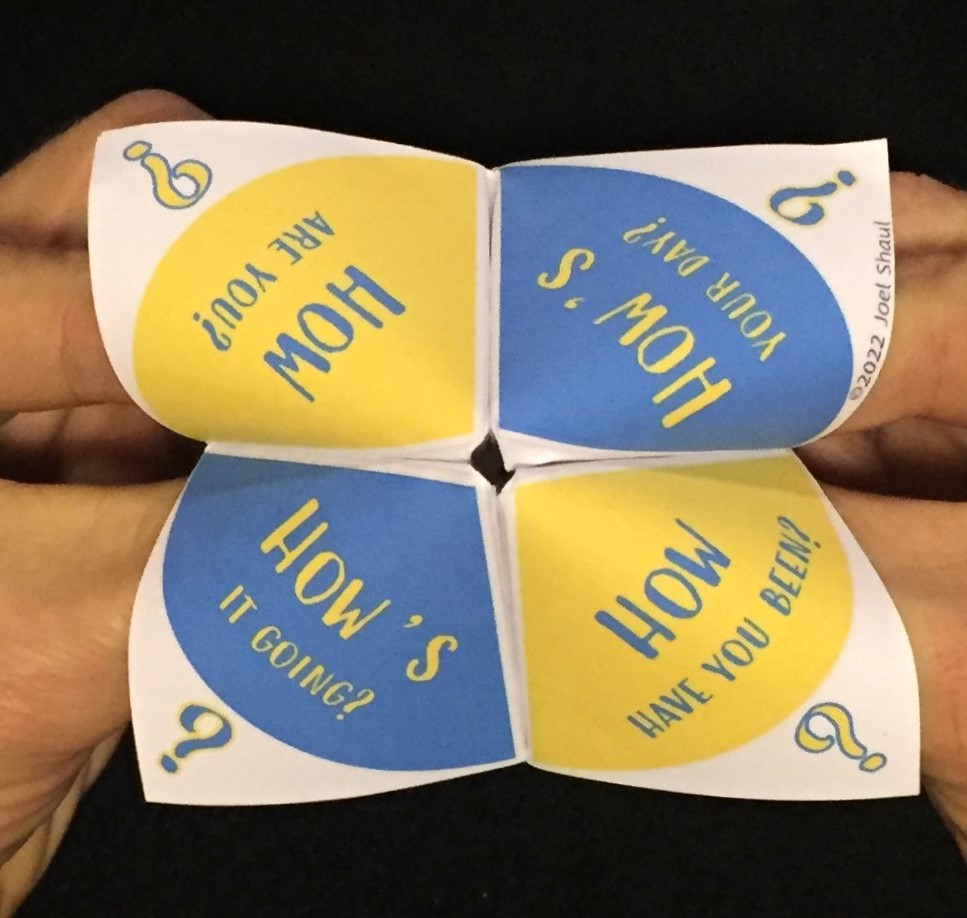
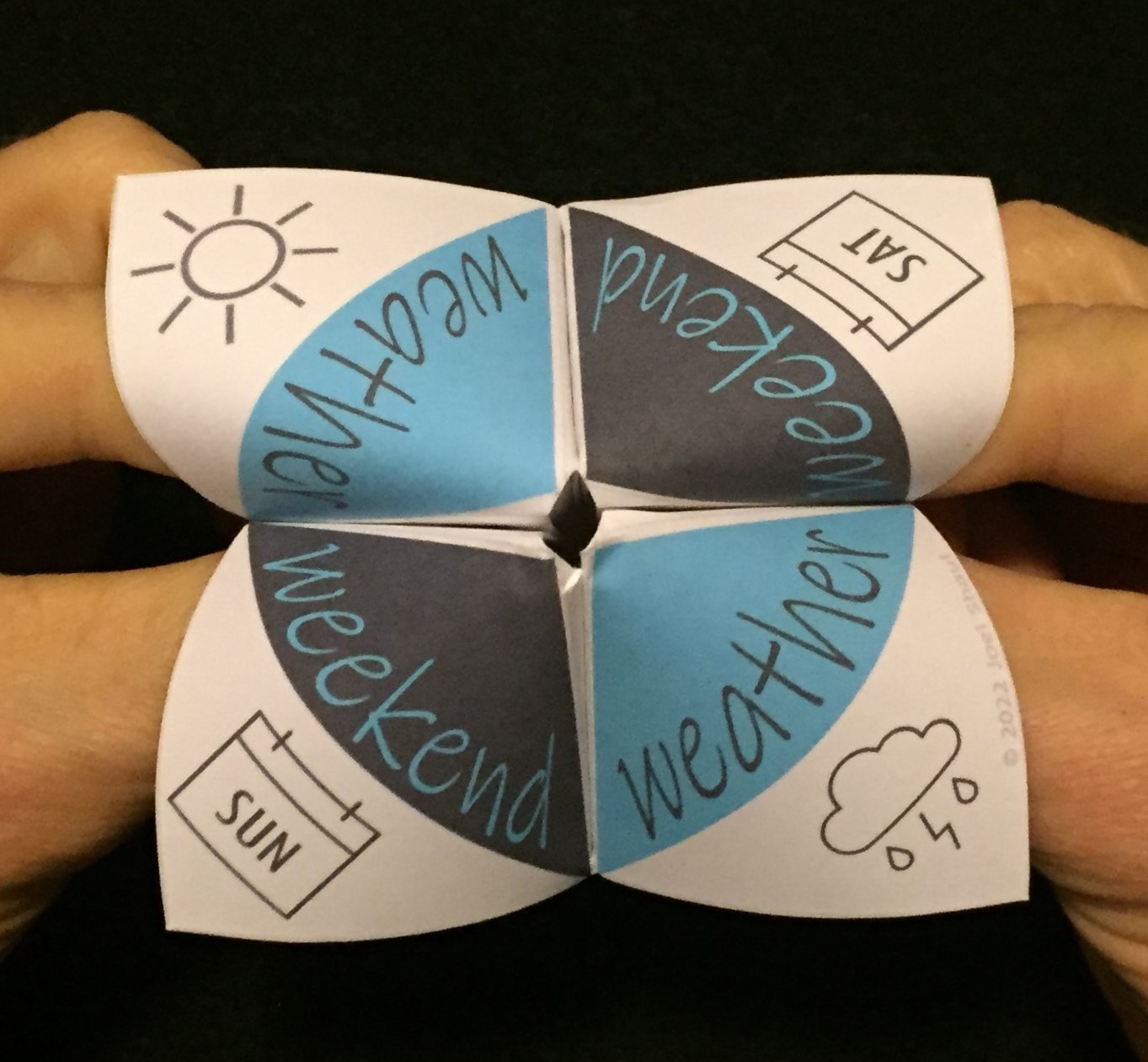
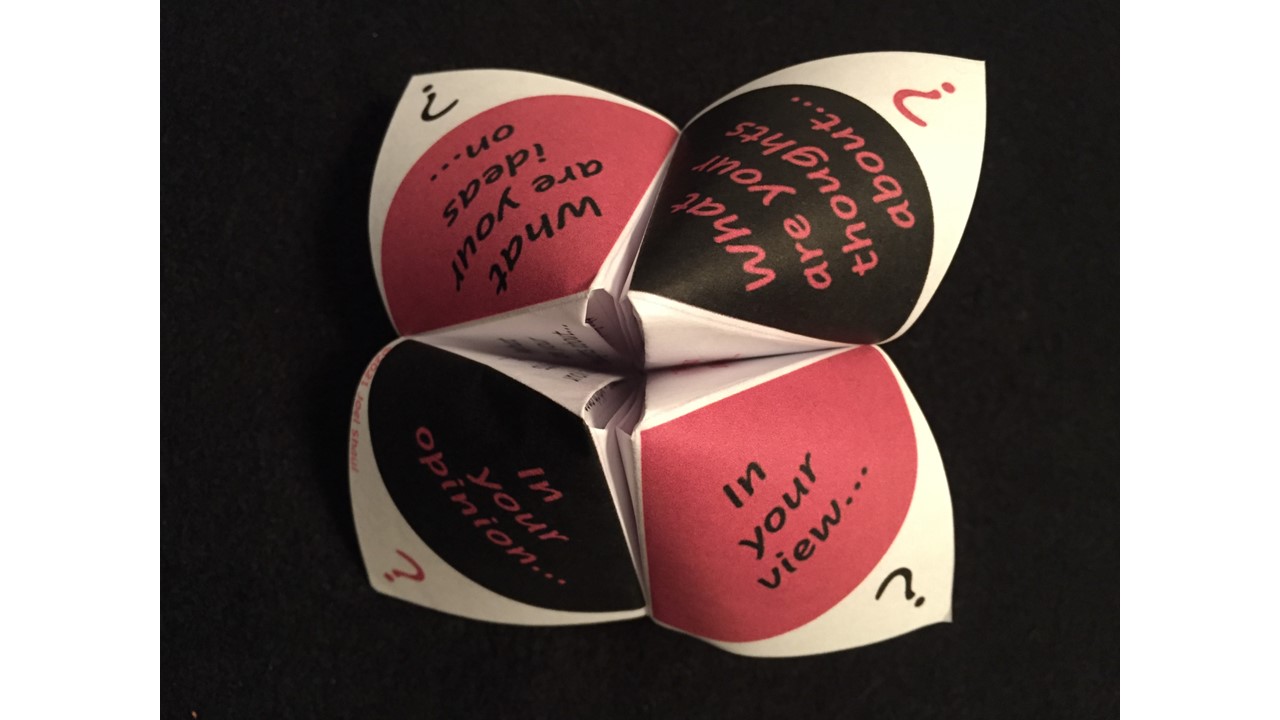
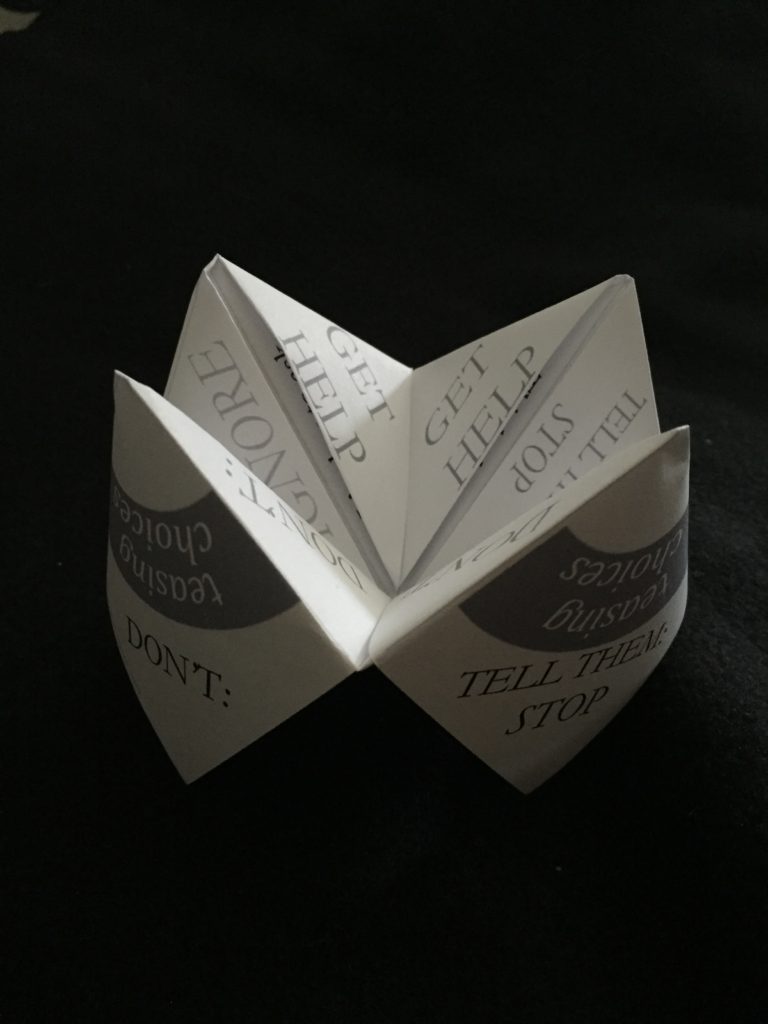
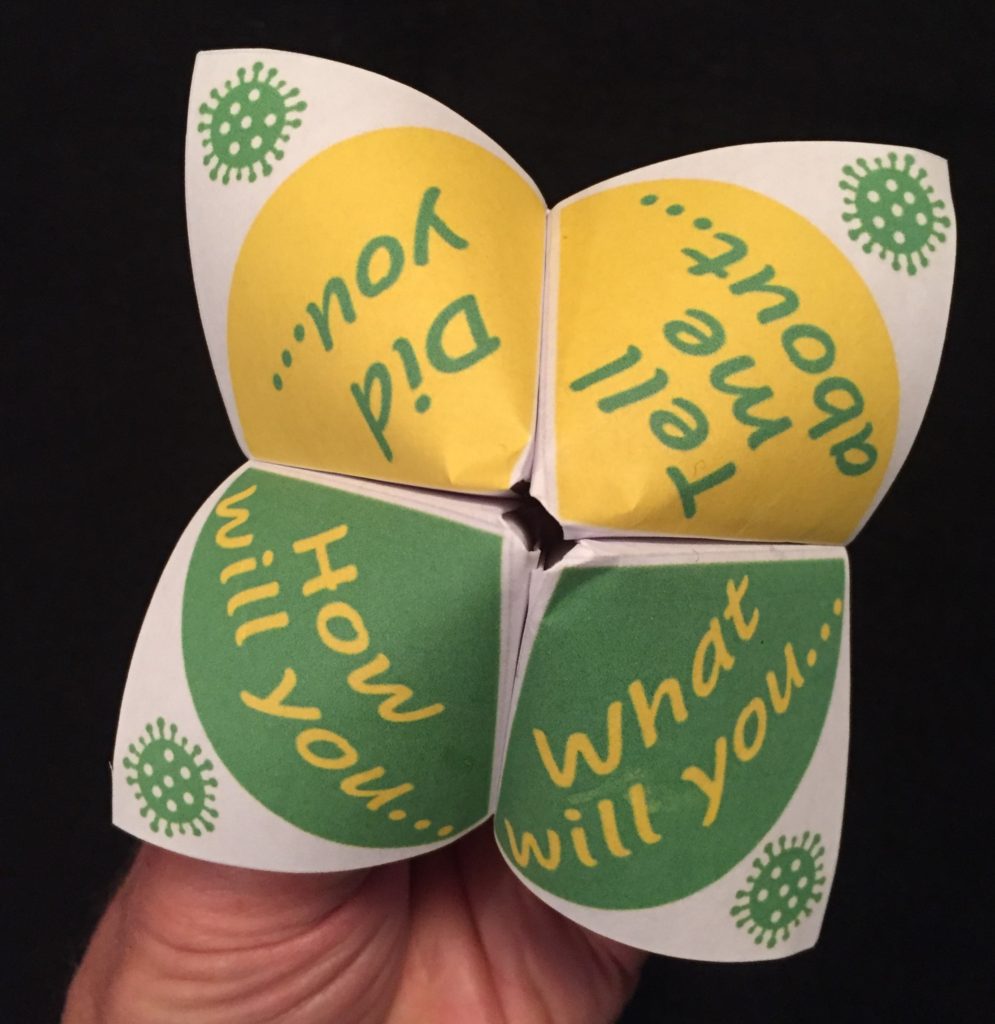
Paper fortune tellers can be useful therapy / teaching tools, especially for young people with ASD.
*The turn-taking that naturally occurs when two people use a paper fortune teller promotes the reciprocal conversations we are trying to promote.
*Each paper fortune teller emphasizes an important skill area in our social/emotional teaching.
*Paper fortune tellers are engaging and fun.
Here are some tips for using these many paper fortune tellers in your work.
You need to make them in advance yourself. Although some children can fold these things with your supervision, most won’t be able to manage it.
Assess in advance to what extent your client(s) can manipulate the paper fortune tellers with their fingers. Some might not be able to manage it.
Provide one paper fortune teller for each pair of participants. If you give out one per participant, you can end up with solitary play rather than reciprocal interaction.
Autistic children and showing concern for others / empathy
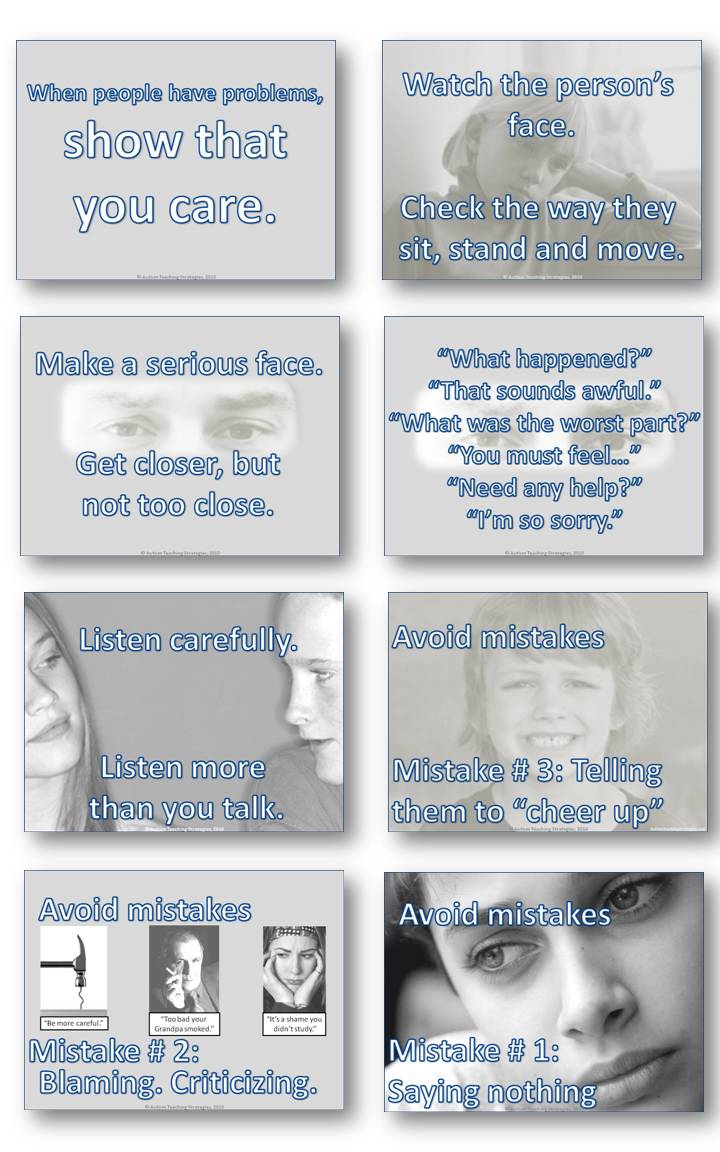
Children on the autism spectrum often have great difficulty with this important skill. They often spend less time observing others than typical children, and they might not notice another person’s distress. They often are perplexed by the typical signs of upset feelings in another person. They might have normal feelings of sympathy for the other person, but they might be at a loss regarding the necessity to express concern and the social conventions for going about it.
It is well known that there is quite a lot of variability in the distribution of empathy skills both among autistic people and among neurotypical people. But even autistic children who have a refined sense of feeling for others may lack in willingness and ability to show their concern and display it tactfully.
How to use the illustrated panels:
You can use them as a wall display. You can also use them in preparation for role play practice.
I hope you find these materials useful.
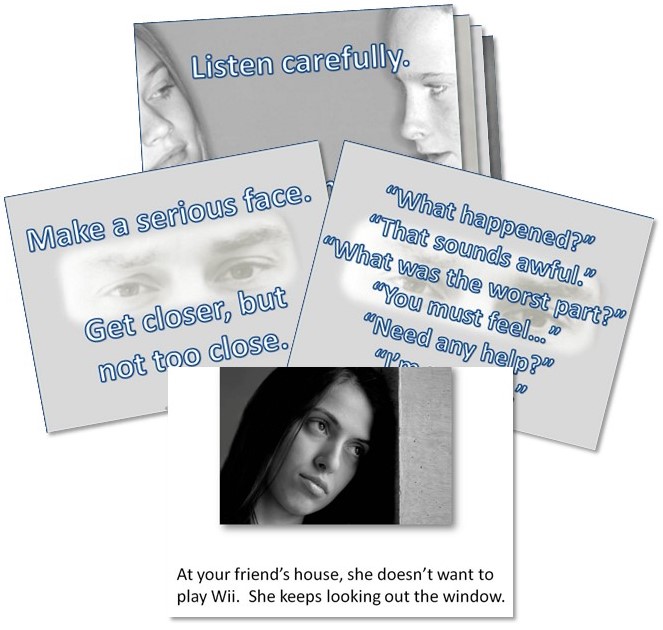
Using the Showing Concern Wall Display panels in combination with the Showing Concern Picture Cards:
It is very useful to use both these resources together.