[For lots of other free autism teletherapy activities, click HERE.]
Many children find it difficult to feel connected with their teacher or therapist through computer screens. I designed this set of activities to strengthen ties between professionals and children and between children.
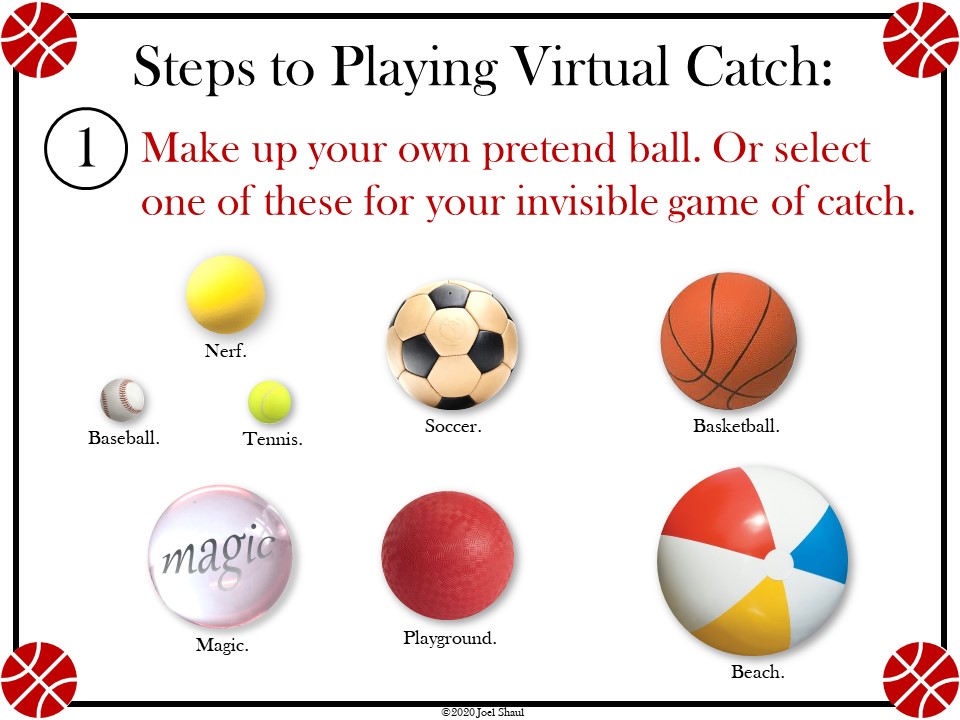
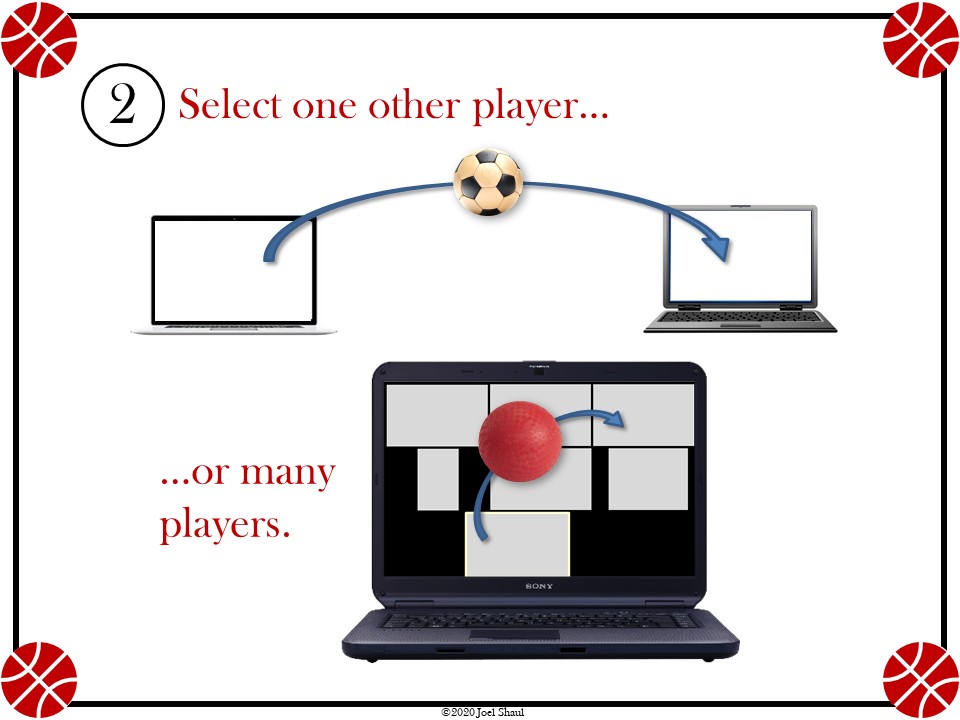
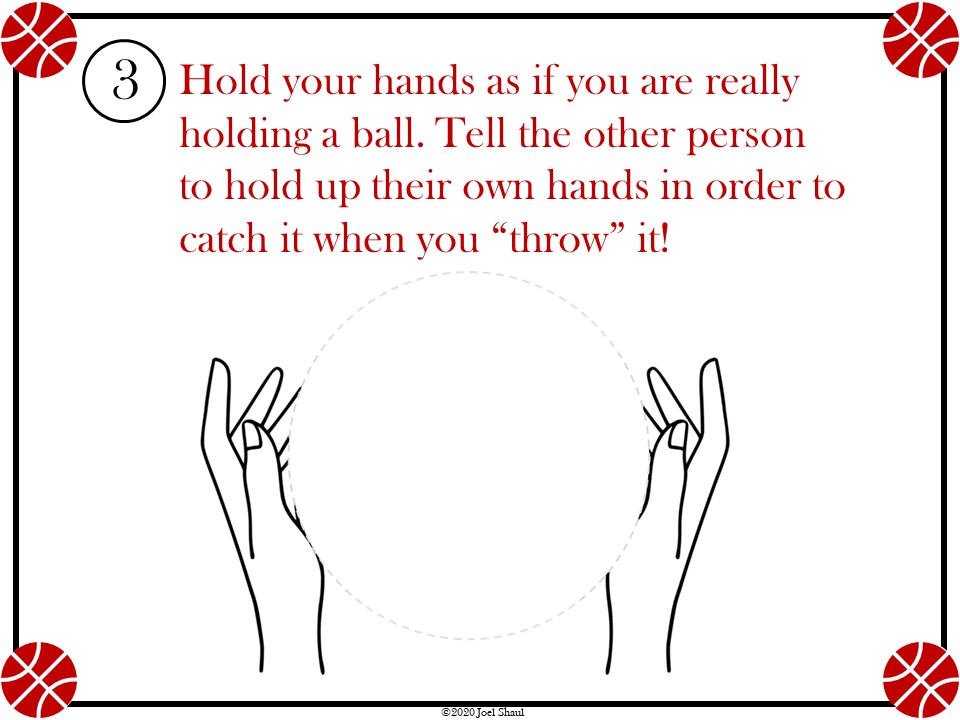
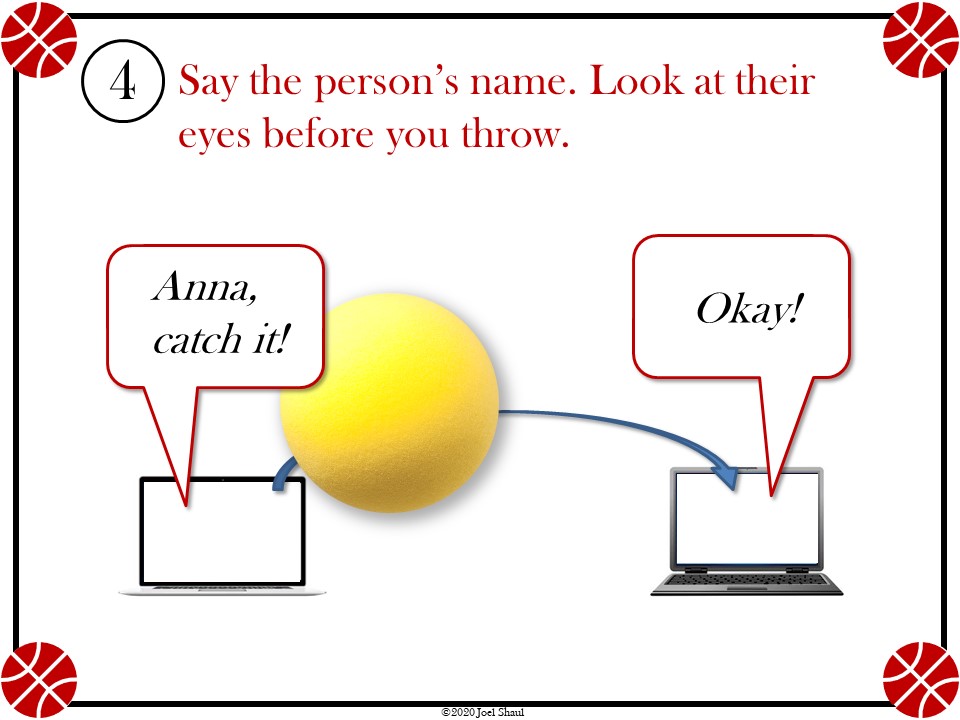
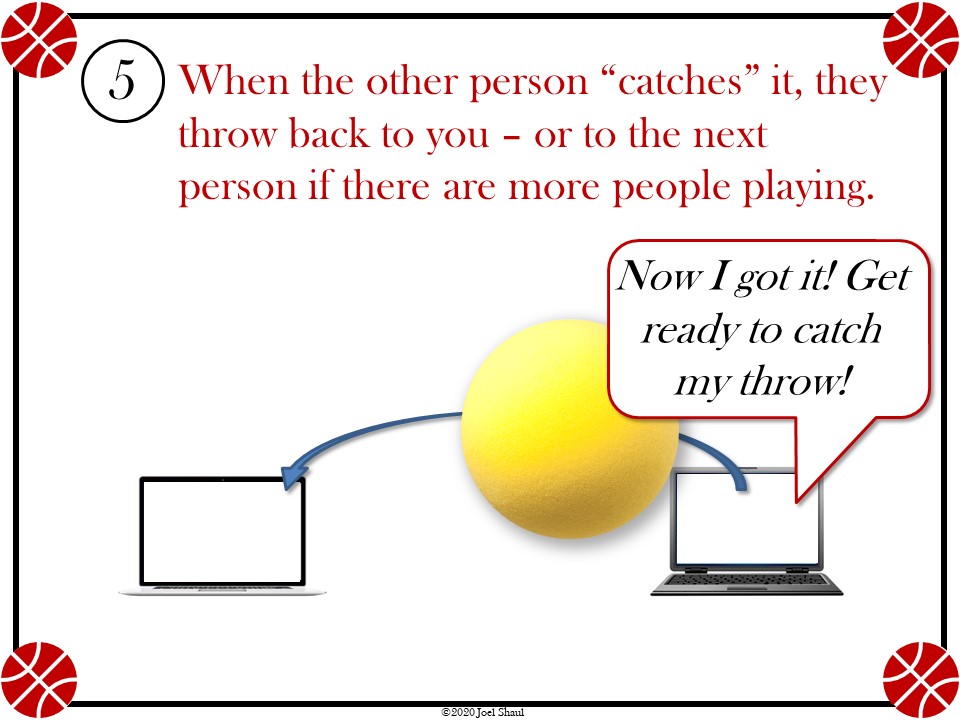
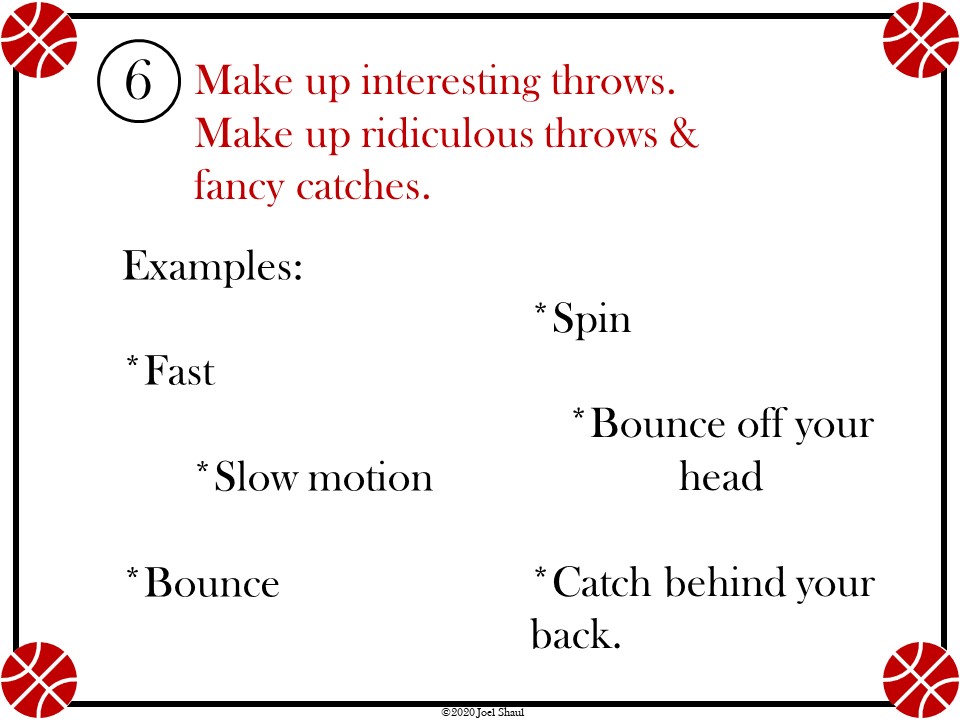
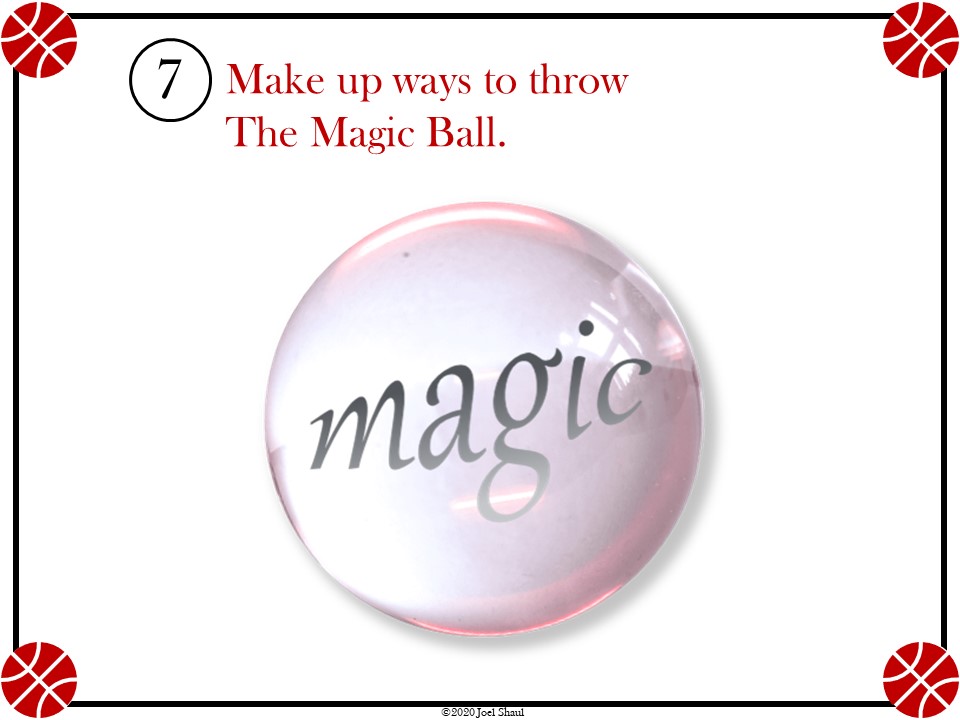
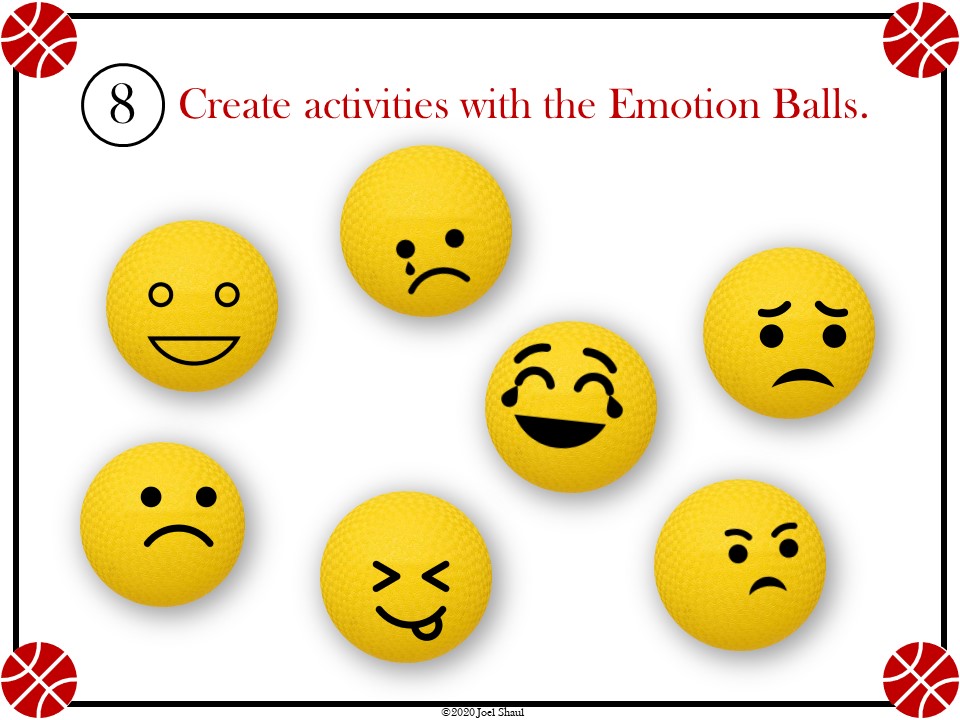
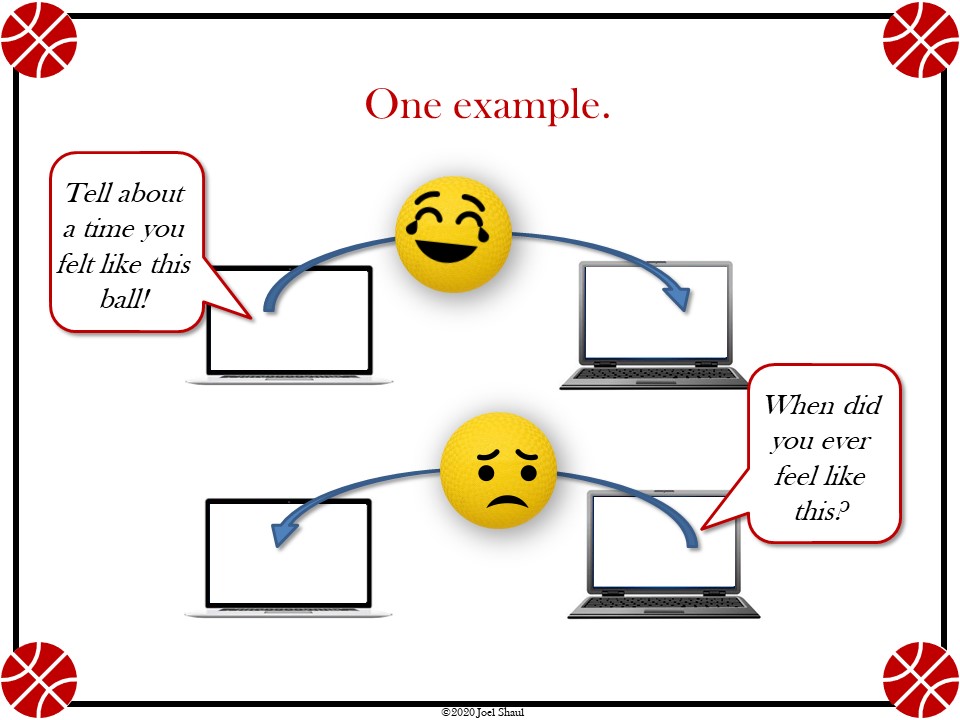
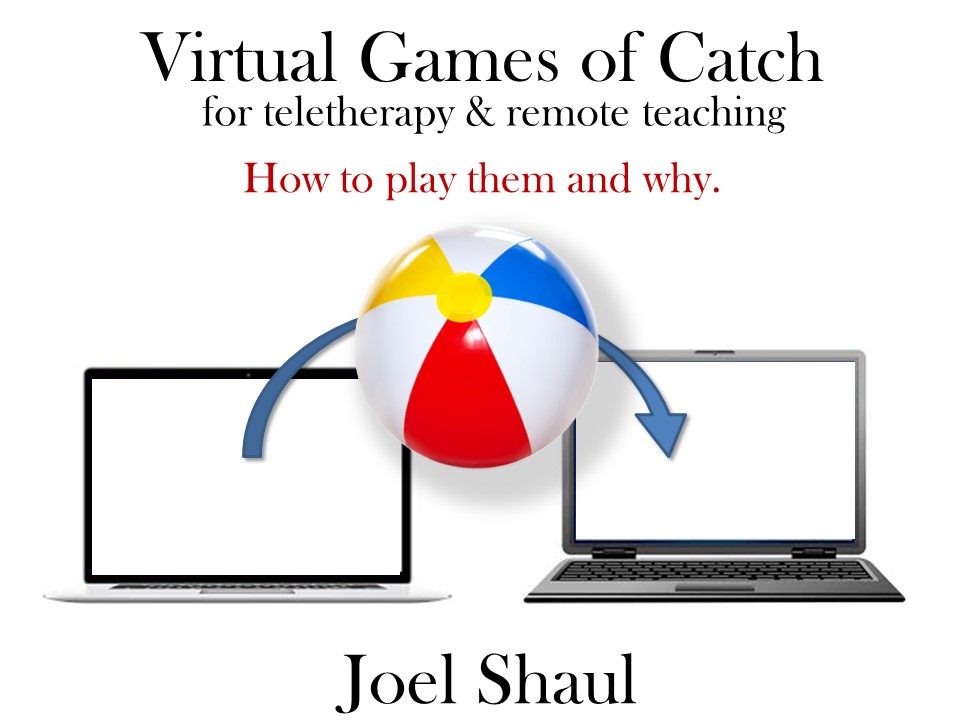
In our offices and classrooms, many of us play games of catch with children for sensory breaks, to encourage turn-taking and other reasons. By pretending to throw an imaginary ball back and forth to one another on screen, we can extend these throwing activities into teletherapy – and even make them better. The following set of images tells you how to employ “virtual games of catch” to teach conversation reciprocity and facilitate connection with children in remote teaching and remote teletherapy. I have used this method a great deal in my own teletherapy work.
Whether you are doing teletherapy, or you wish to try screen-based therapy games and activities in your office-based sessions, you will find lots of variety on this website.
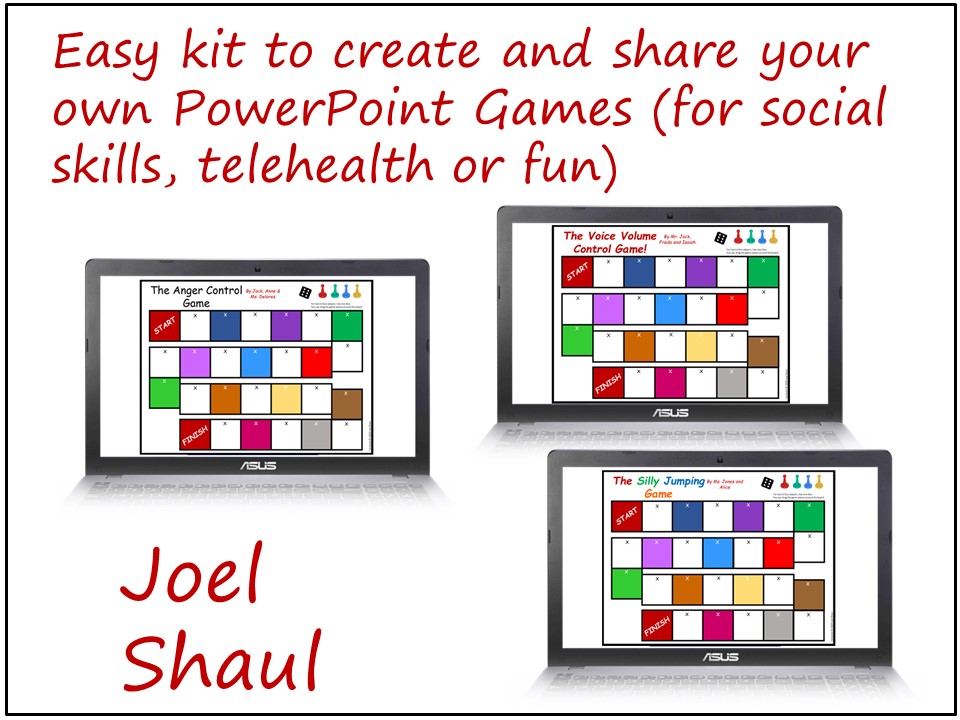
The kit to quickly create PowerPoint “board games” on your computer is remarkable easy to use. You can customize this tool for the particular needs of the child.
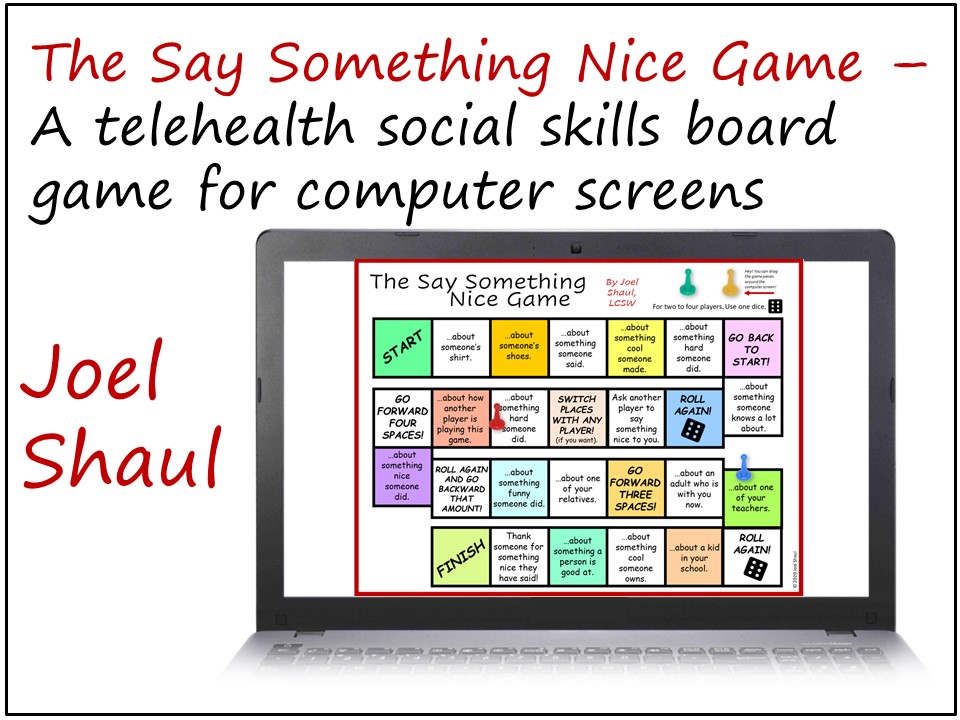
The Say Something Nice Game, which teaches the social skills or making compliments, is ready to play and requires zero prep time.
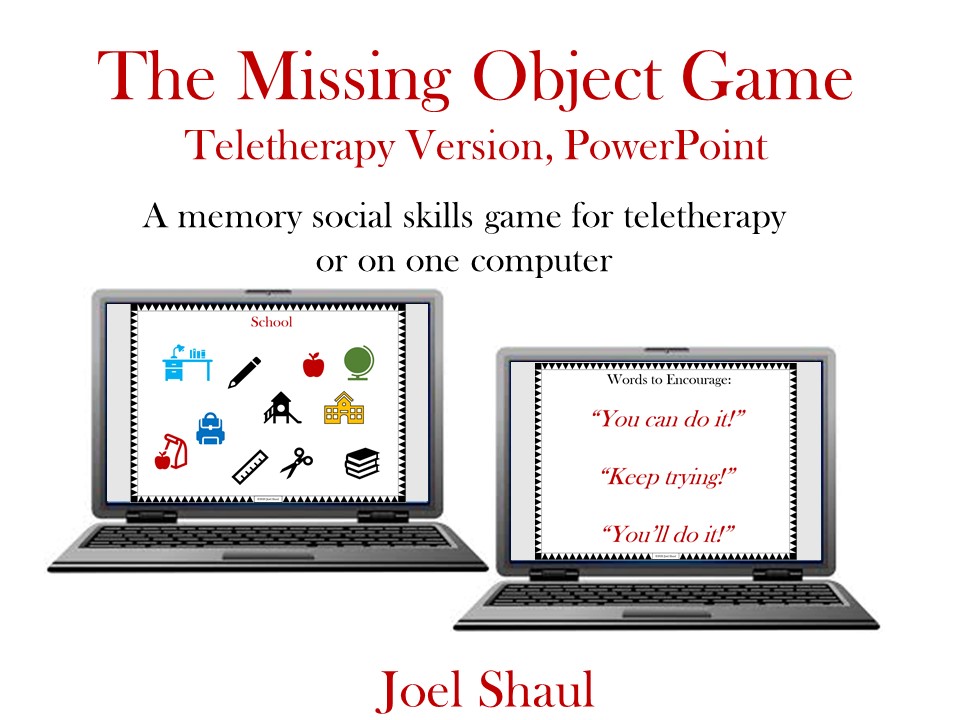
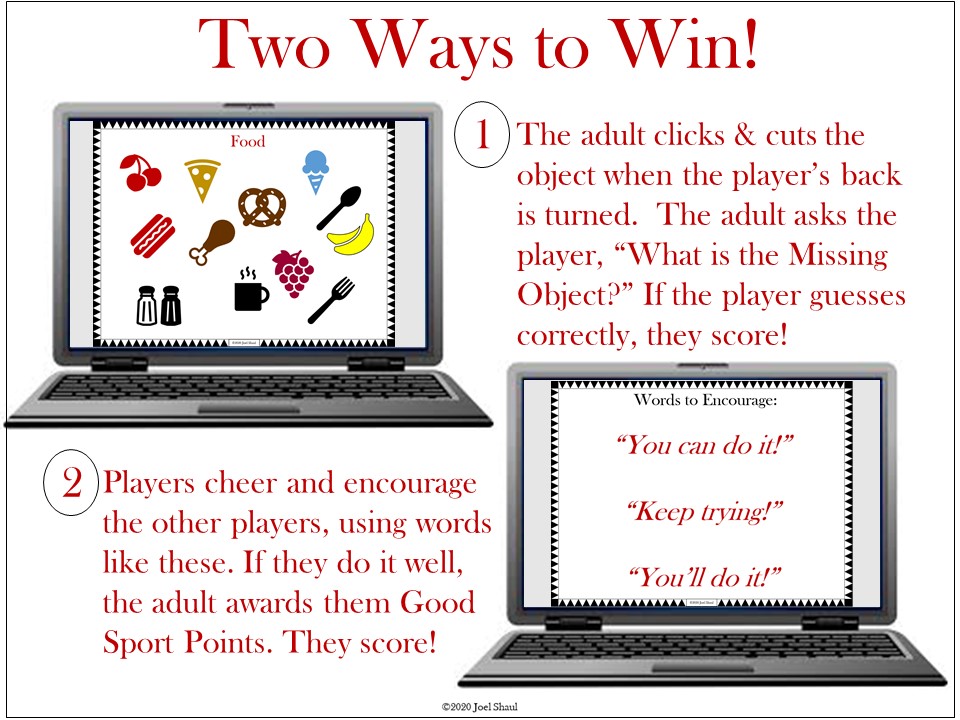
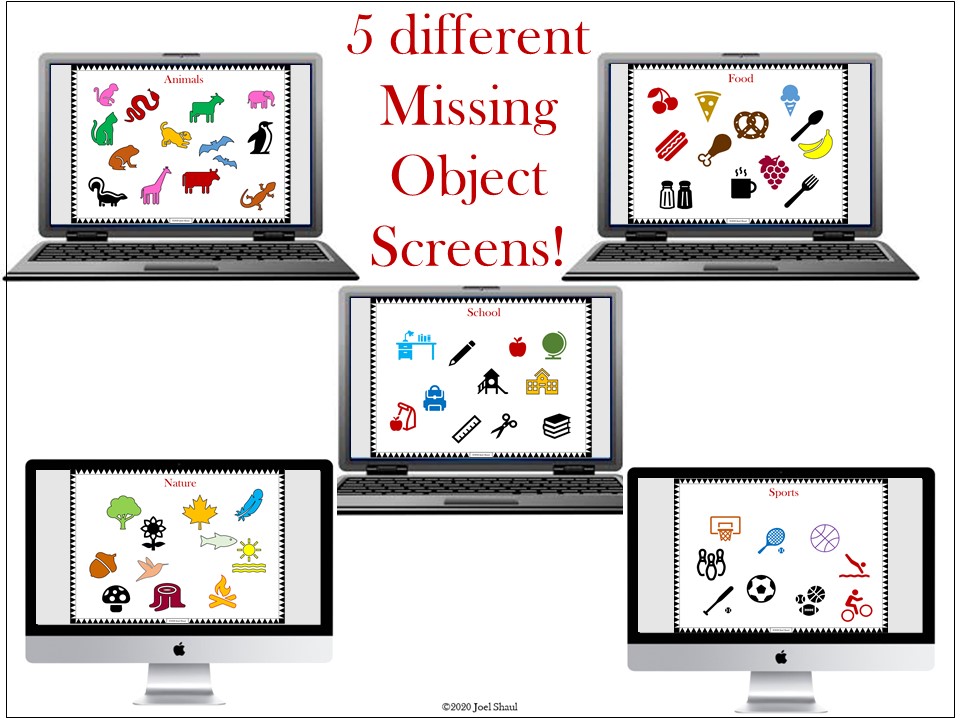
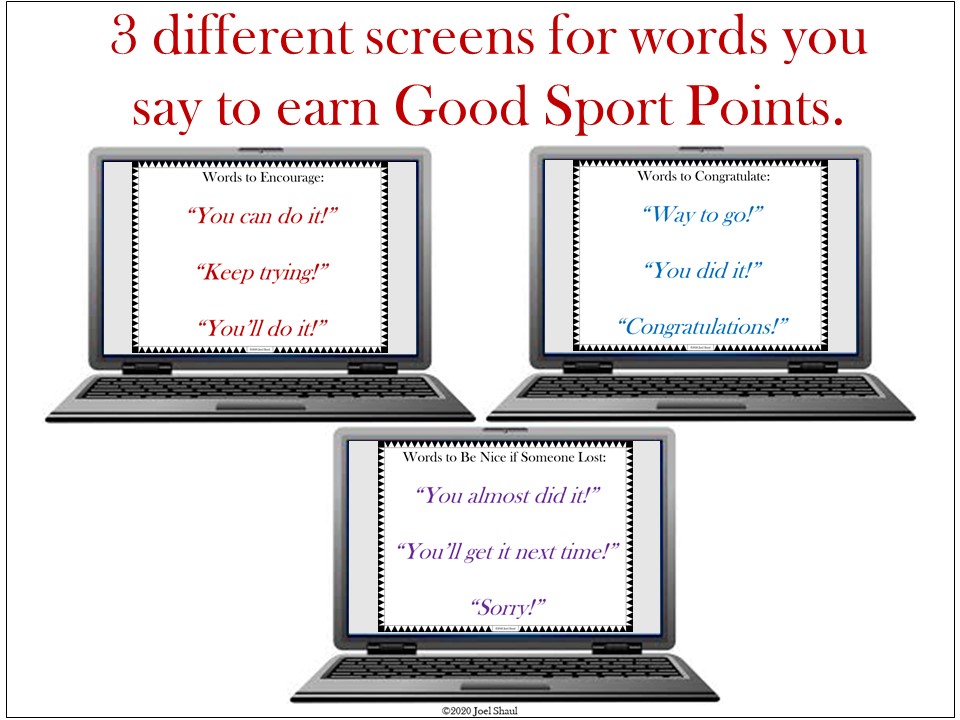
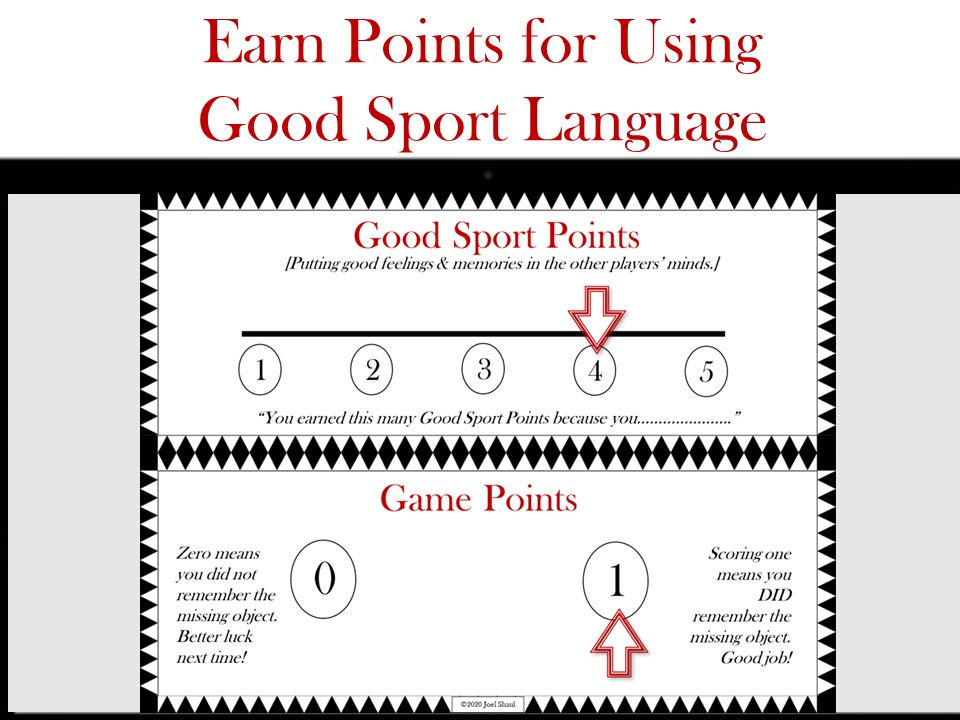
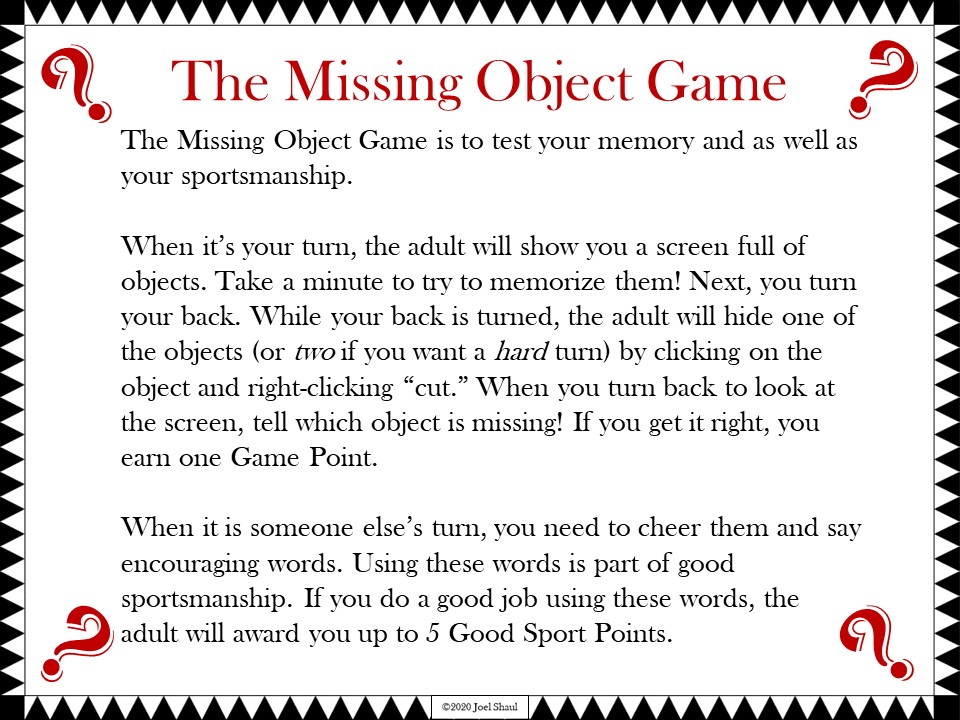
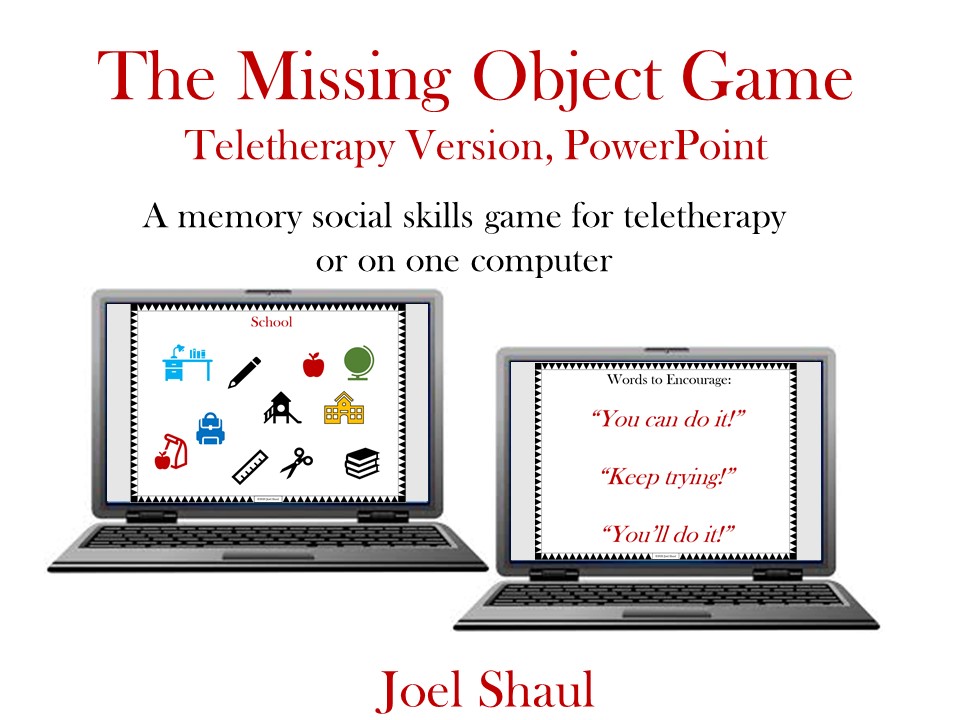
The Missing Object Game, which teaches aspects of sportsmanship, can be played on-screen, or you can play it in person by putting together your own collection of random small objects.
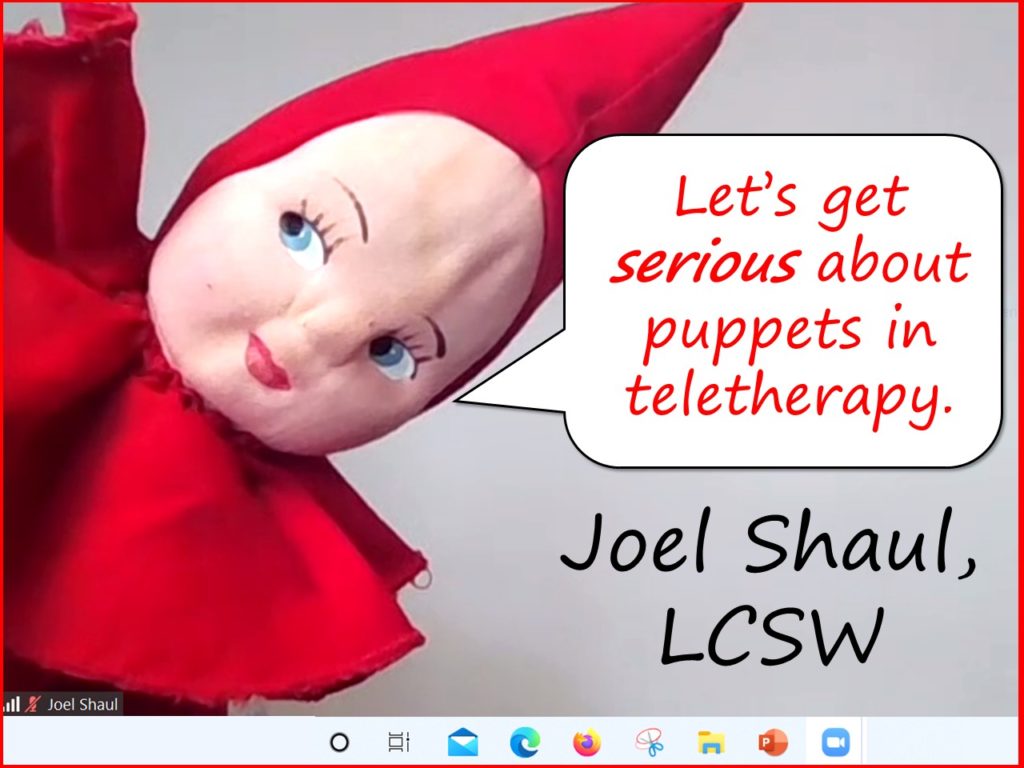
If you haven’t tried using puppets in therapy, check this out.
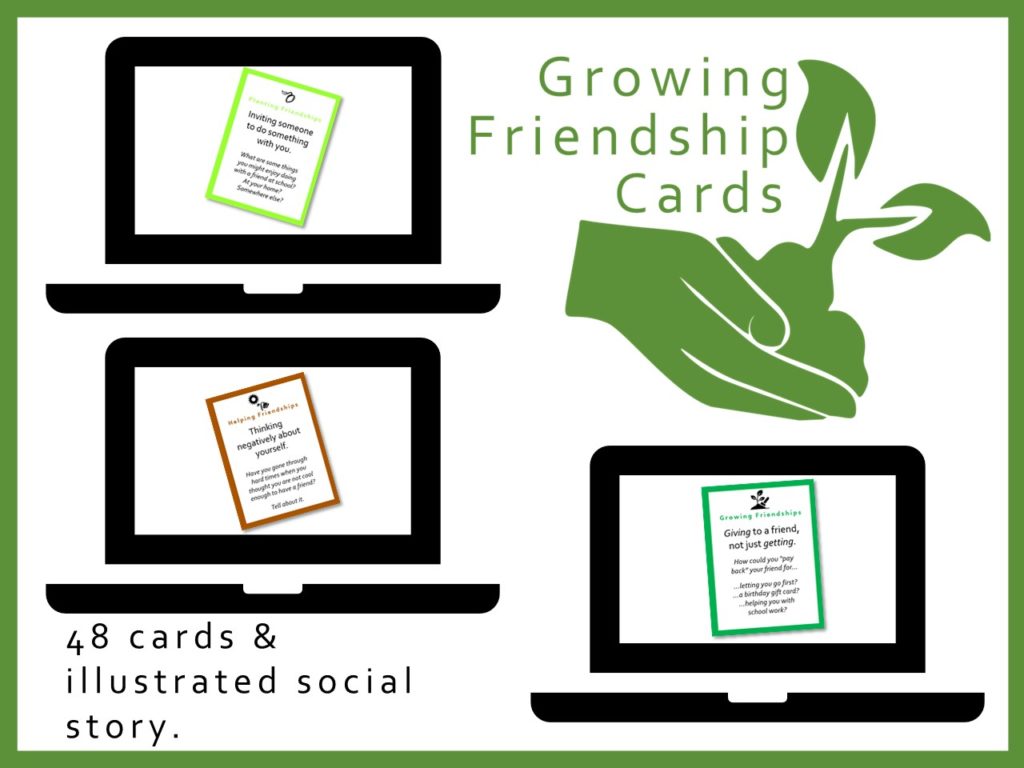
The Growing Friendship Cards can either be printed out to create conventional cards, or each card can be viewed individually via a second download.
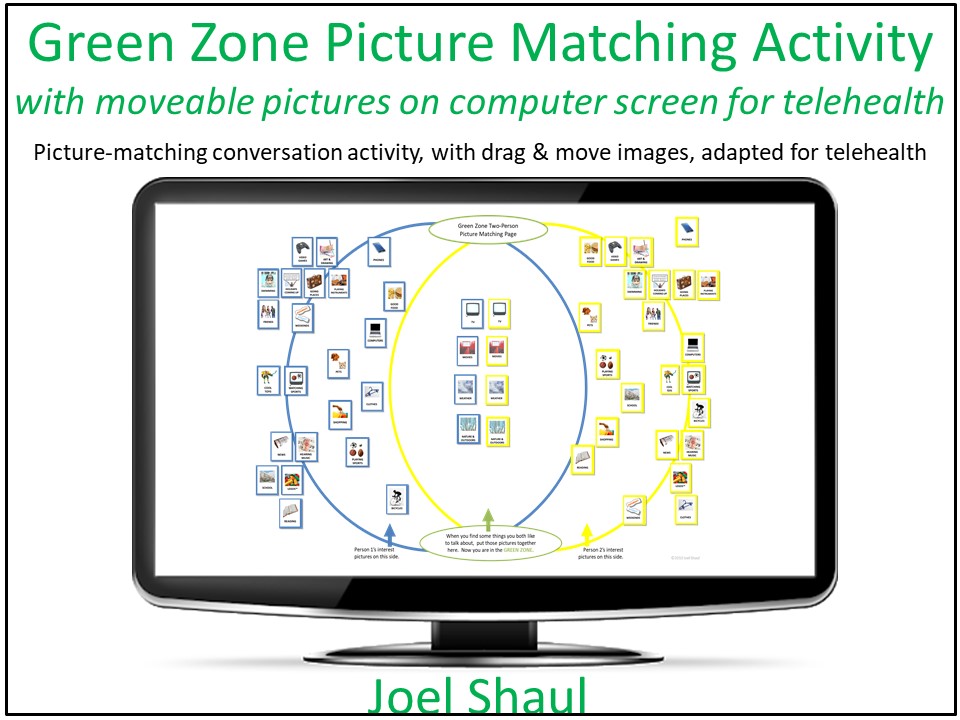
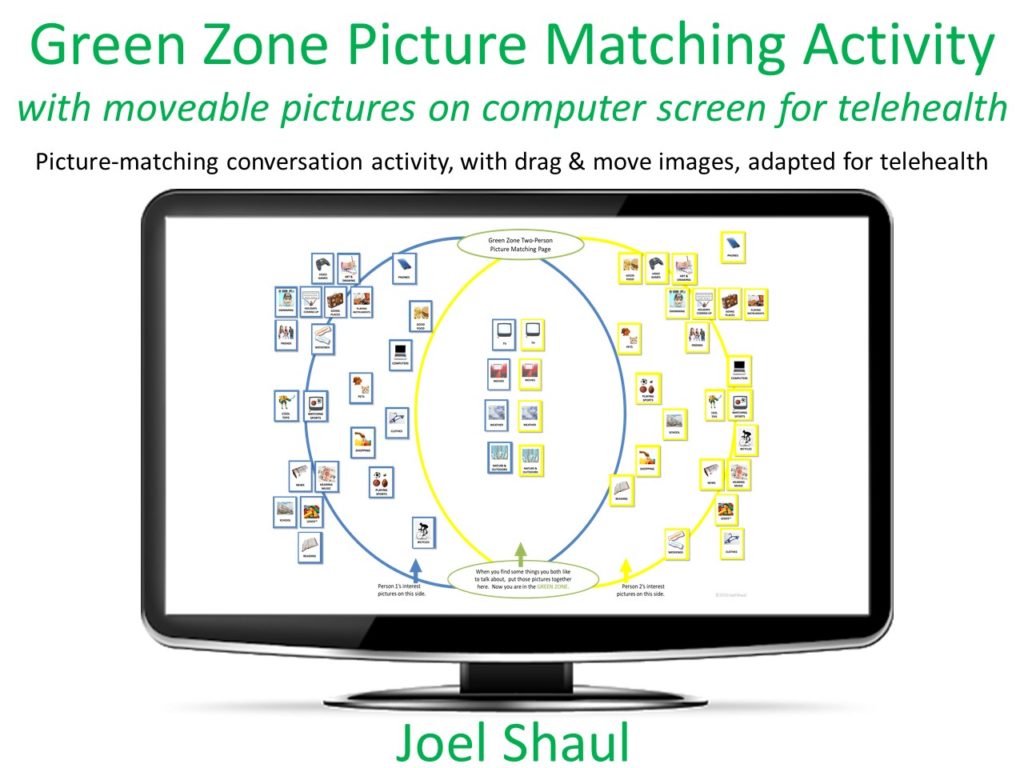
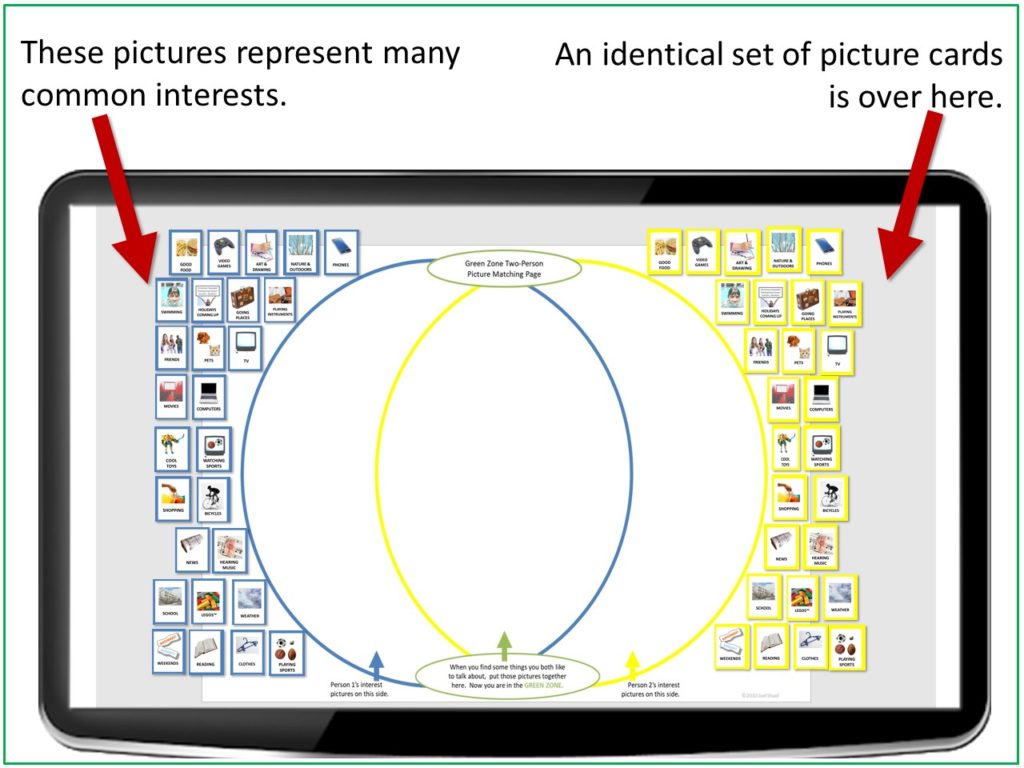
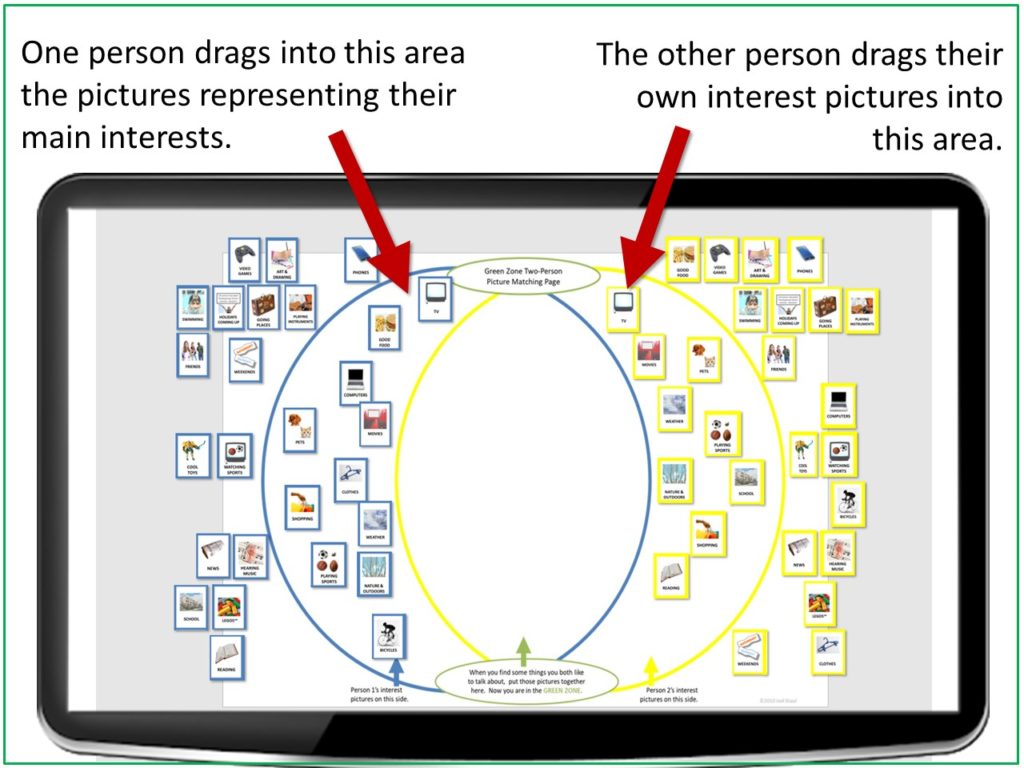
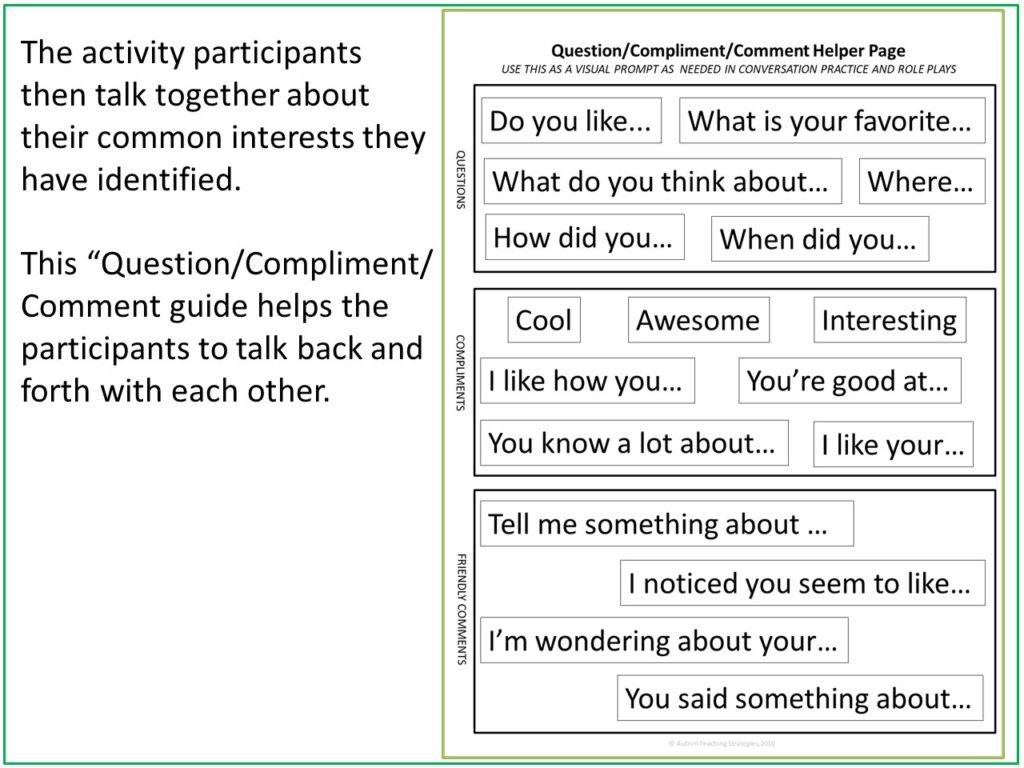
This activity, which uses Venn diagrams to raise awareness of common ground as a basis for conversation, works very well in this screen-based version.
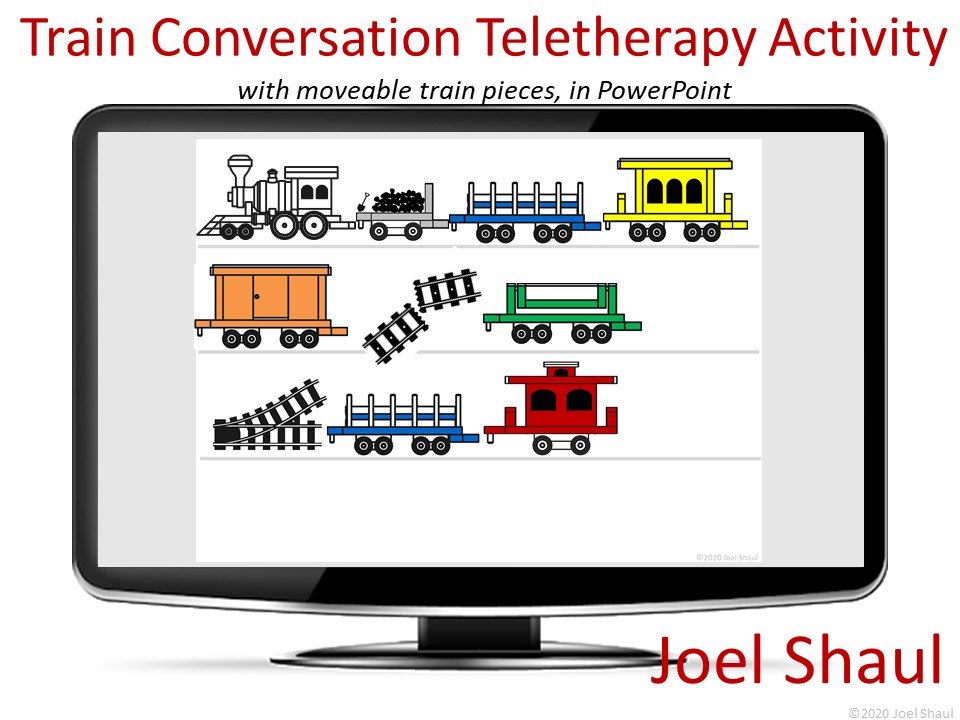
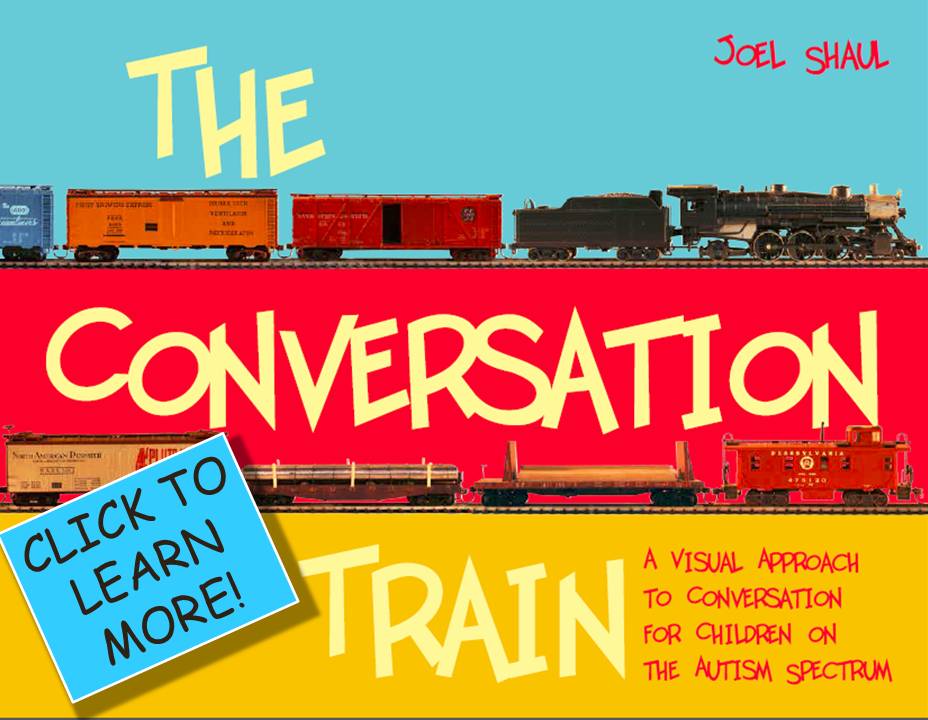
This is the screen-based version of The Train Conversation activity. You move the various train images around on the screen to demonstrate how to keep conversation “on track” with beginning, middle and end of conversation.
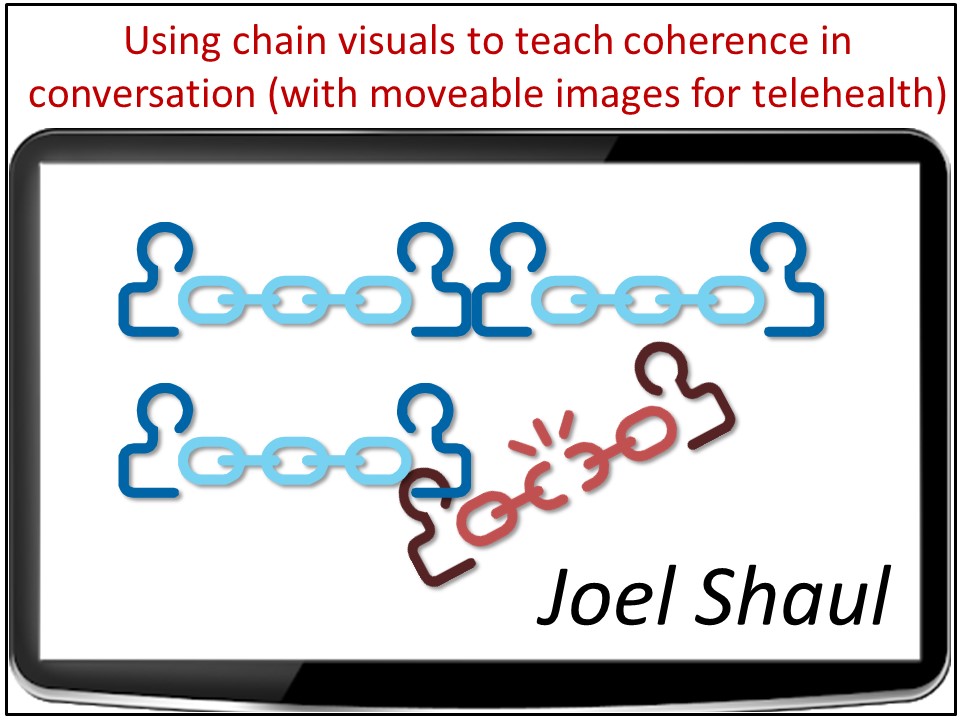
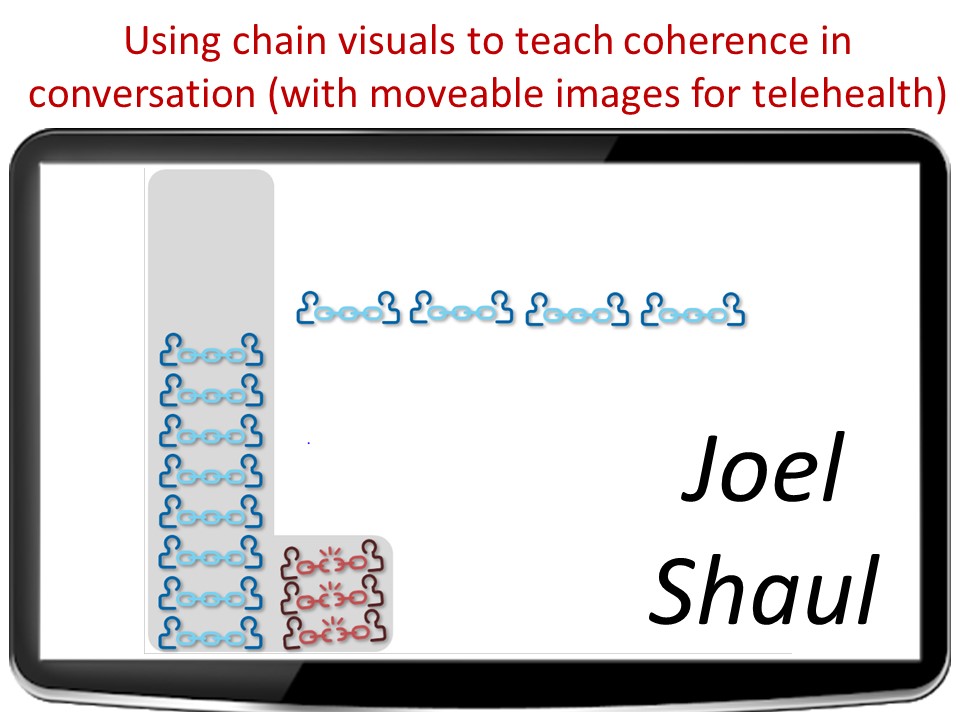
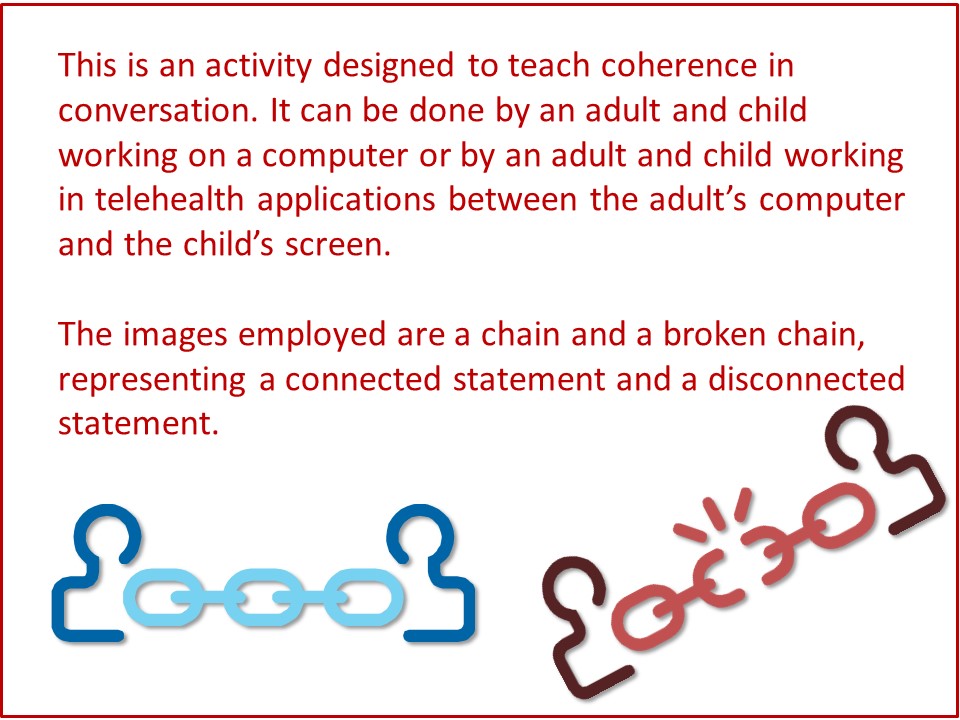
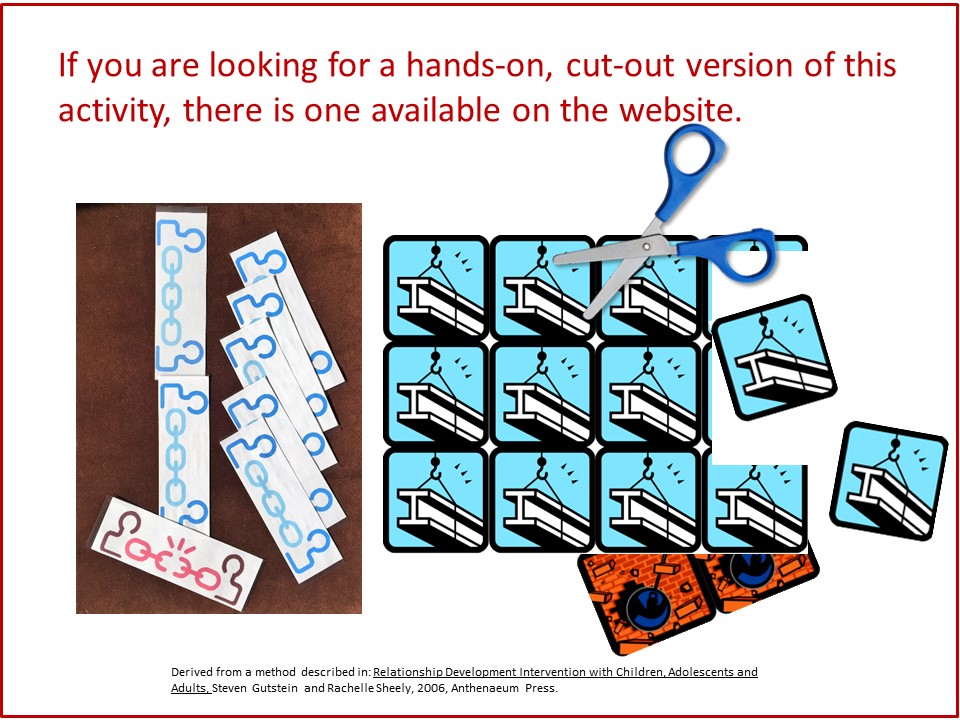
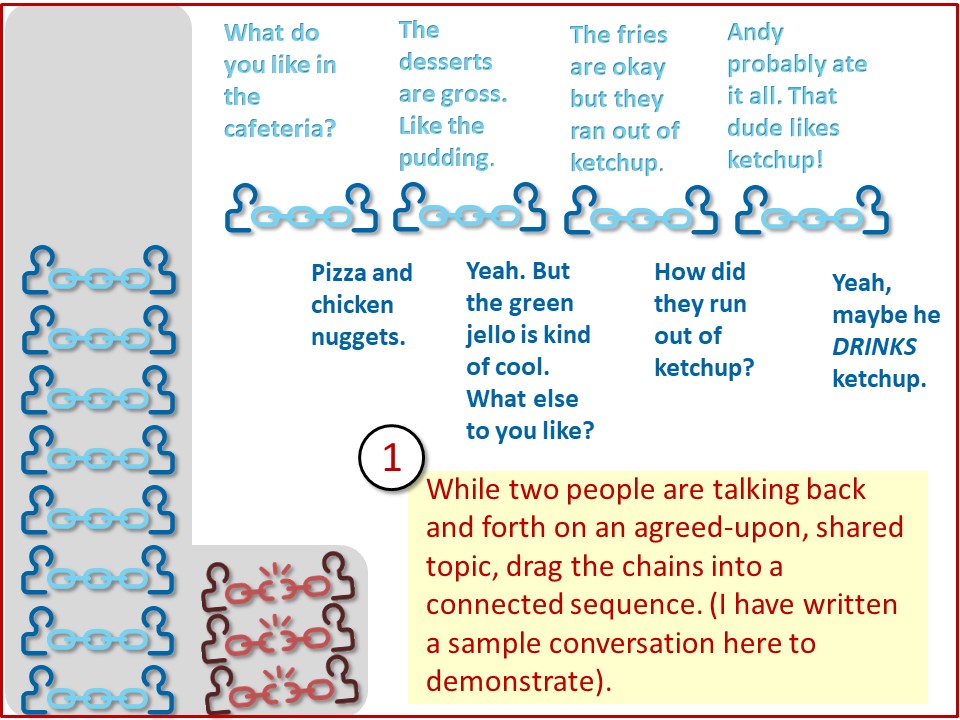
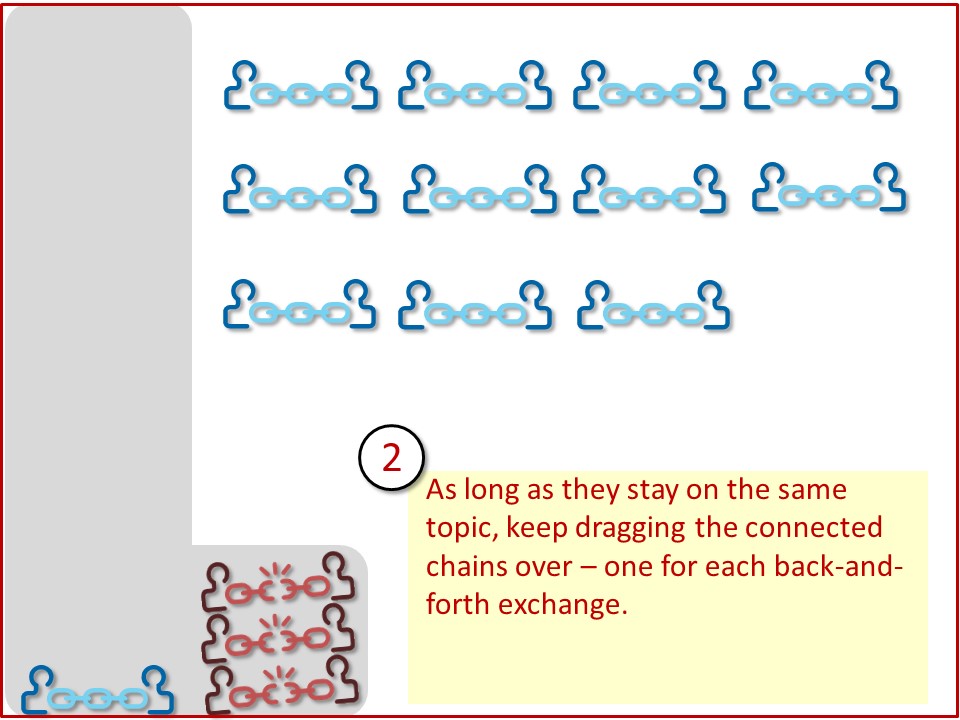
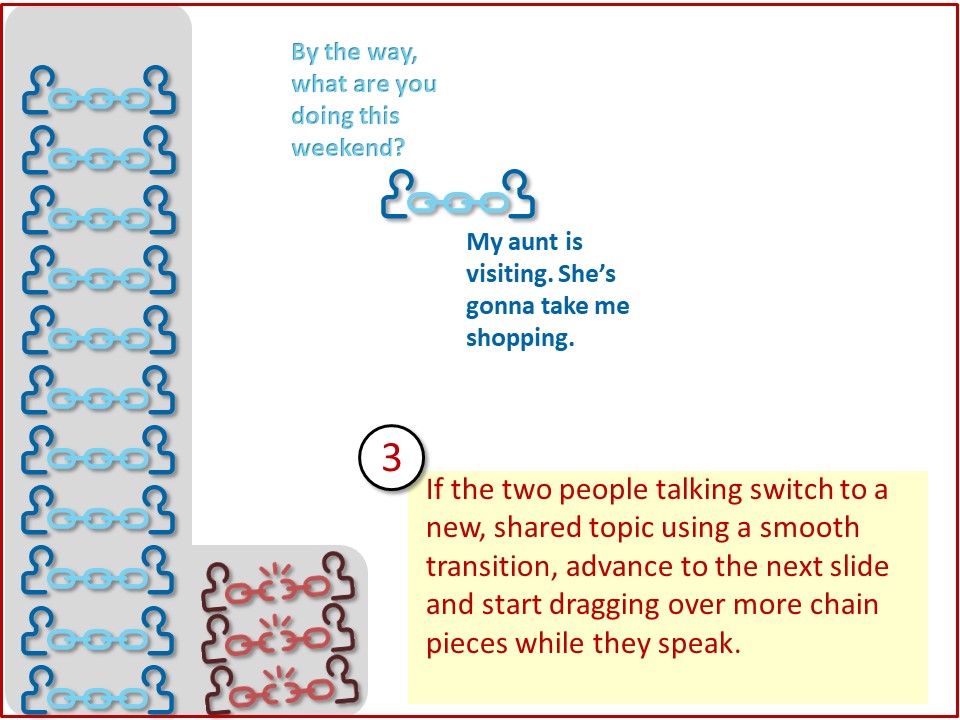
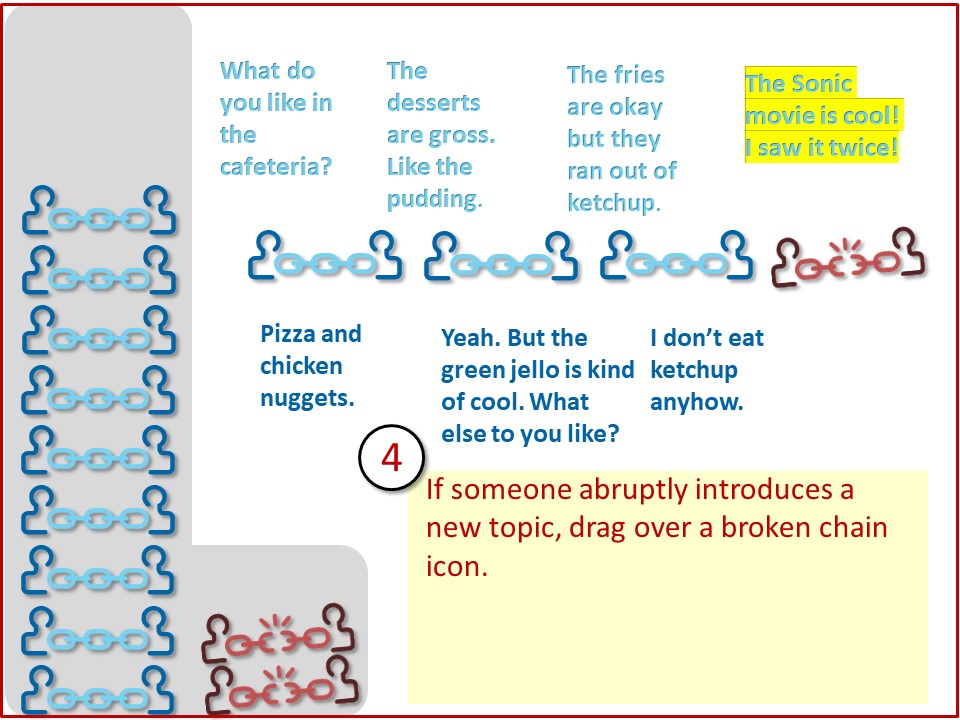
Somewhat similar to the Train Conversation activity. You move chain and broken chain images around to demonstrate when conversation is “connected” or “a broken chain.”
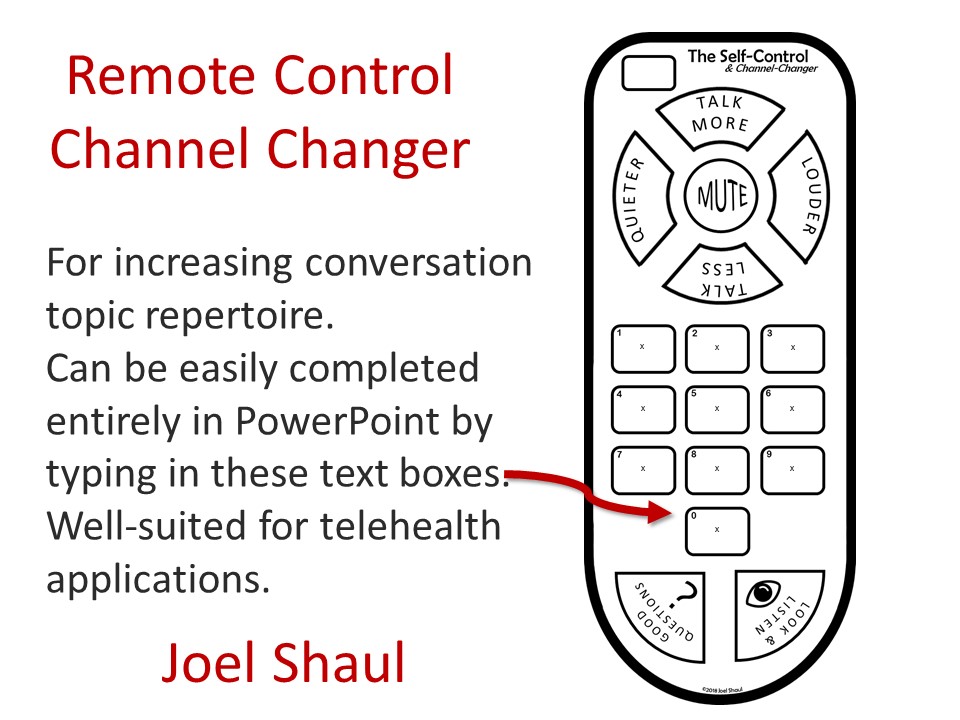
The Remote Control Channel Changer is to teach children to vary their conversation topics. On your computer, you and the child write in conversation topics on each of the ten channel buttons.
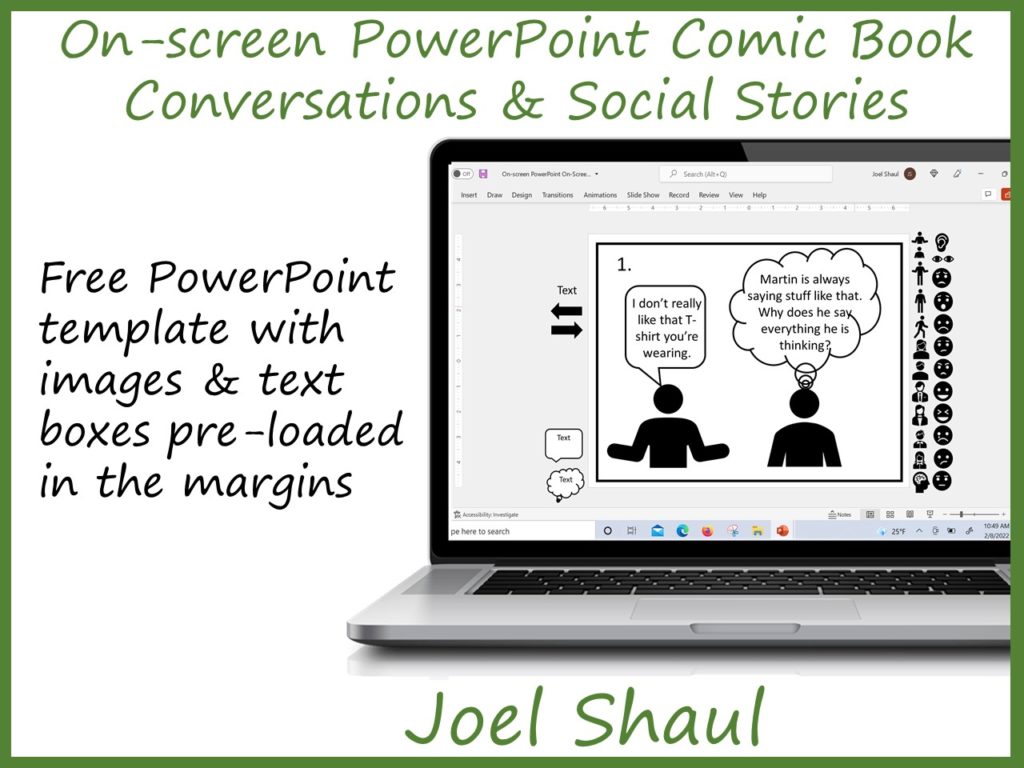
Most of us working with autistic children are used to making Comic Book Conversations with pencil and paper. This on-screen kit enables you to make these things faster and better – write on the computer screen.
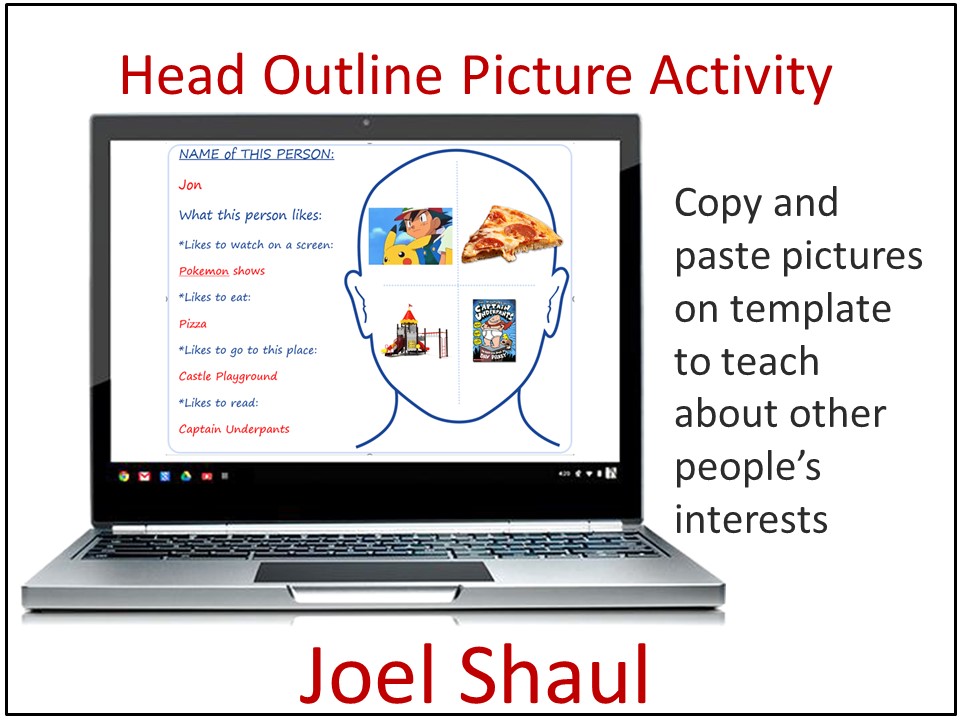
The Head Outline Picture Activity allows you, using my PowerPoint template, graphically demonstrate what other people like to talk about. It’s easy to create a number of these with a child, and they can then be used for the child to boost his conversation skills with friends and family.
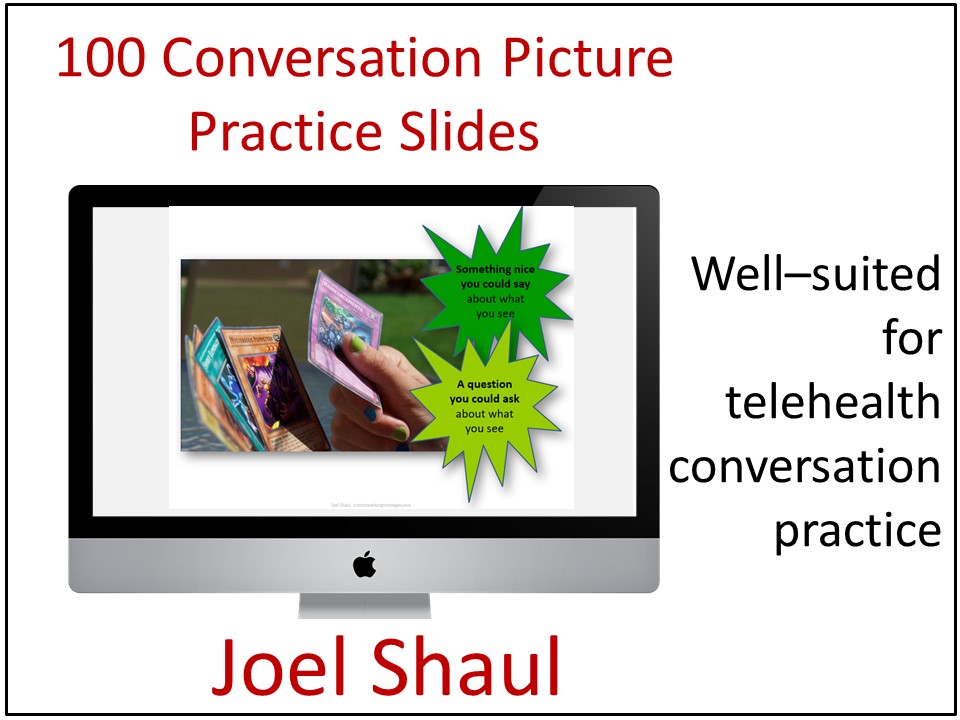
100 Conversation Picture Practice Slides lets you set up conversation practice with 100 hypothetical people – based on what they are wearing, holding or doing in the photos.
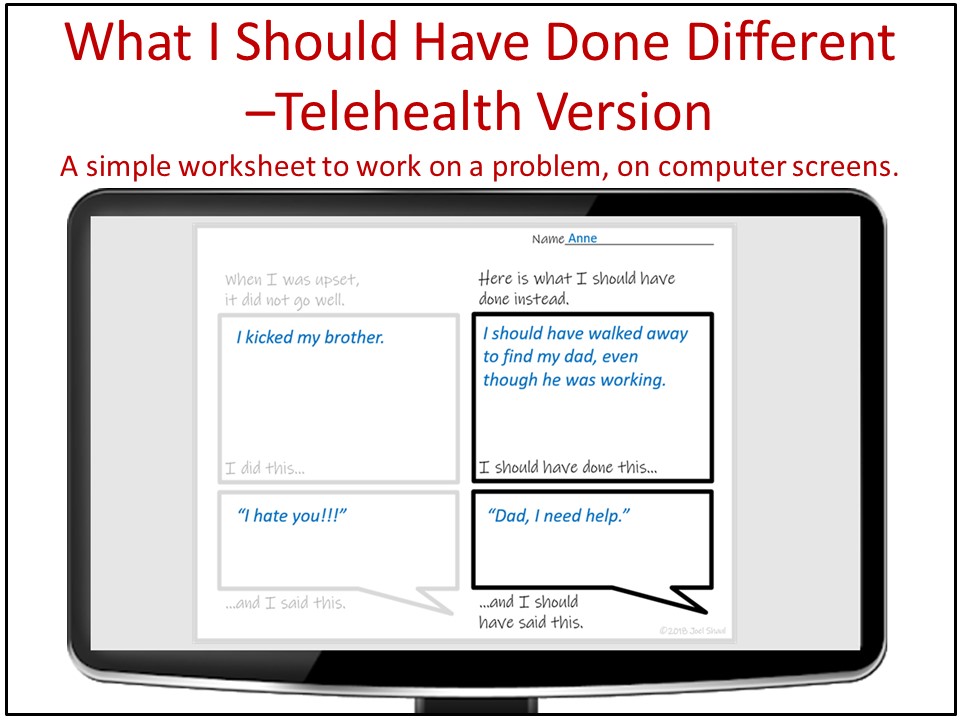
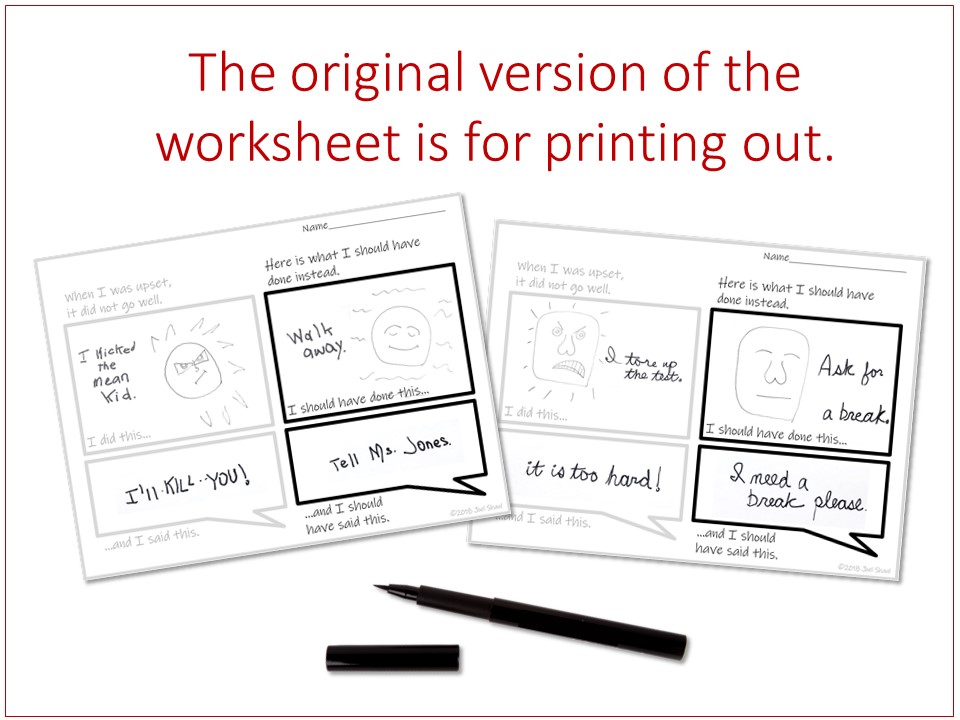
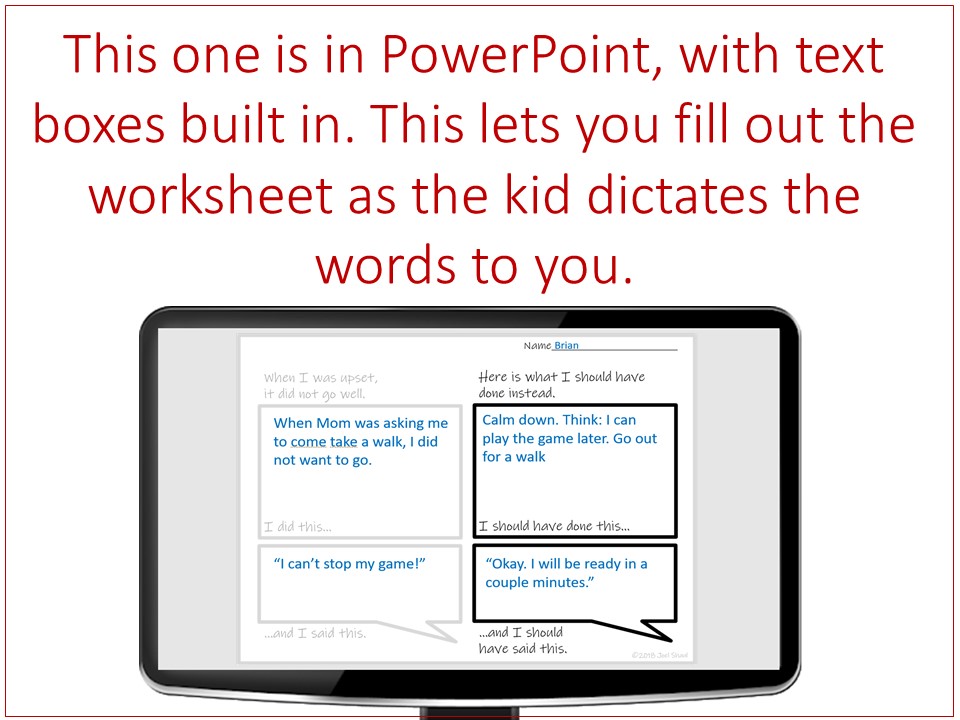
The What I Should Have Done Different worksheet, a simple and popular resource, is available in a screen-based version.
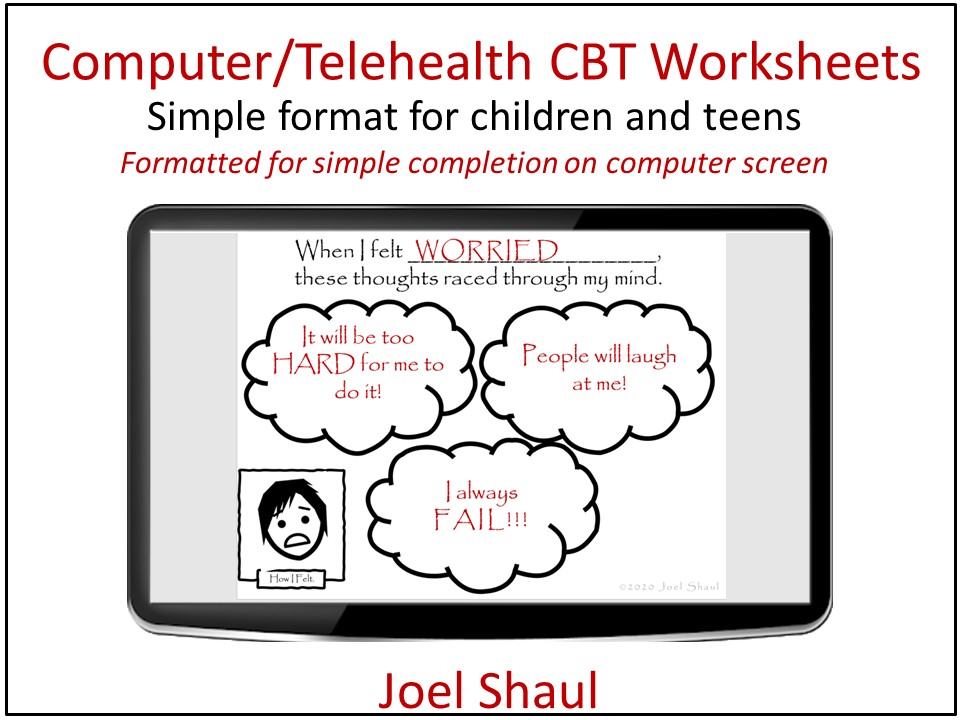
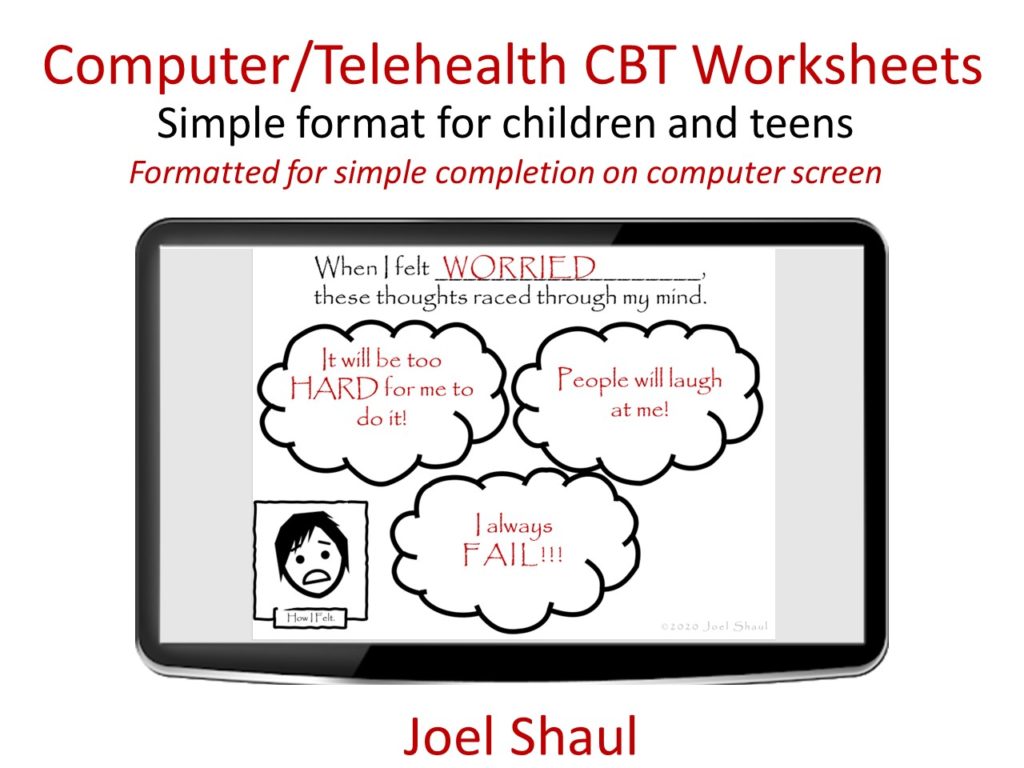
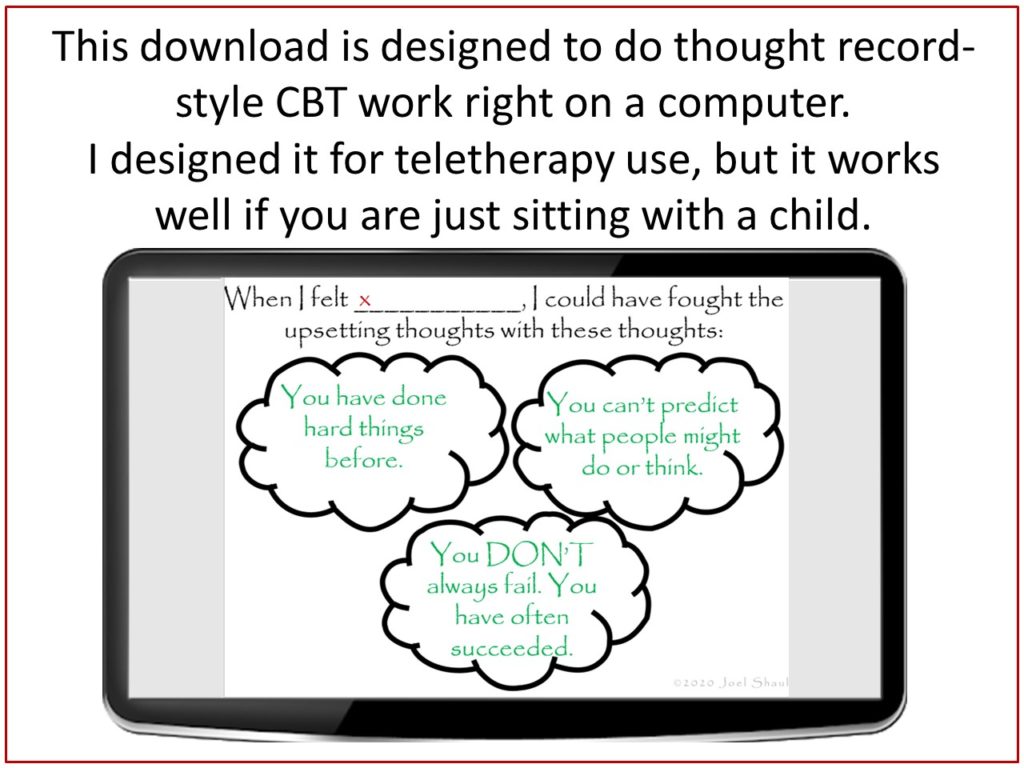
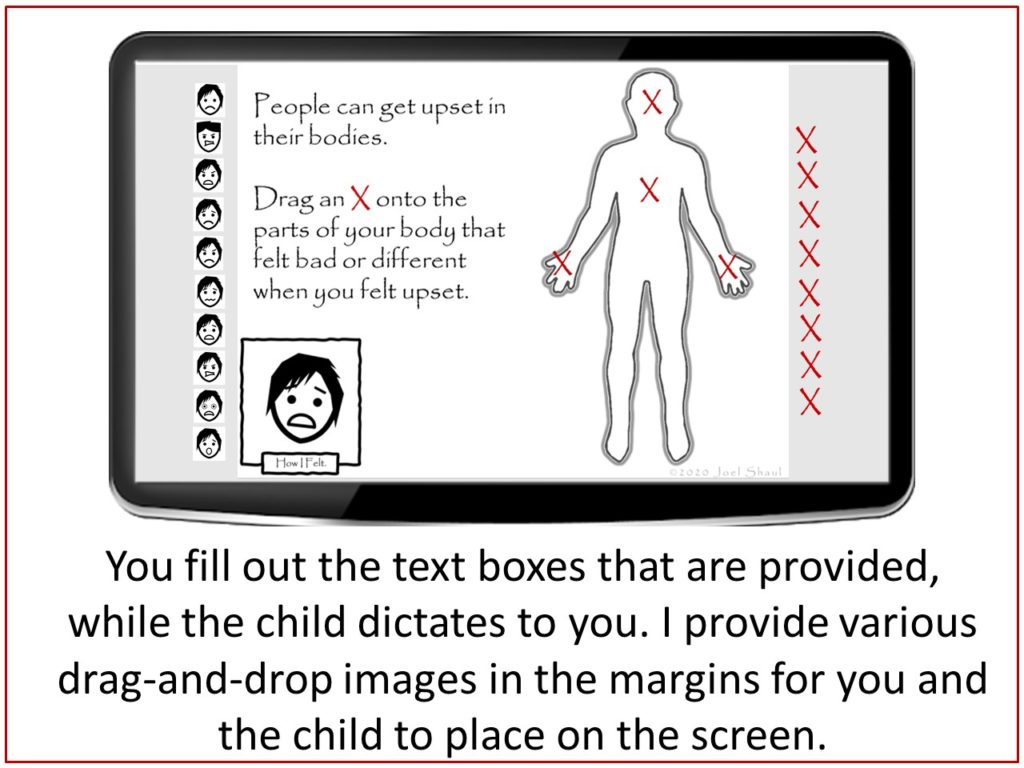
7 Simple CBT Worksheets. I designed this many years ago as a printed worksheet. It is also available in this screen-based version.
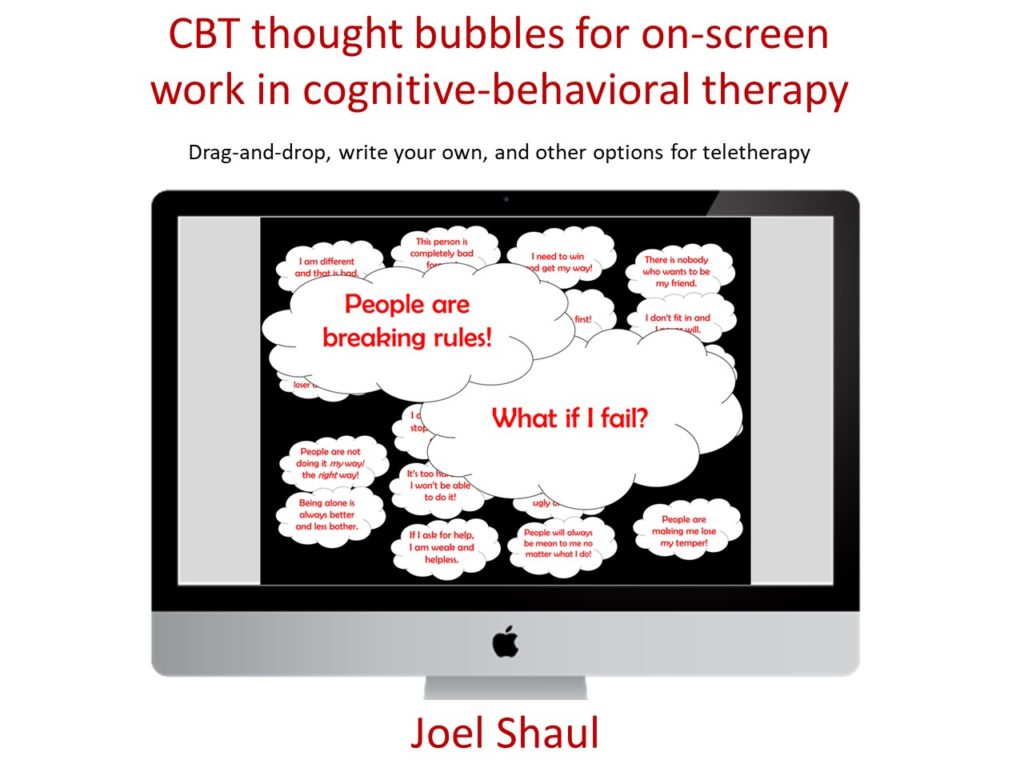
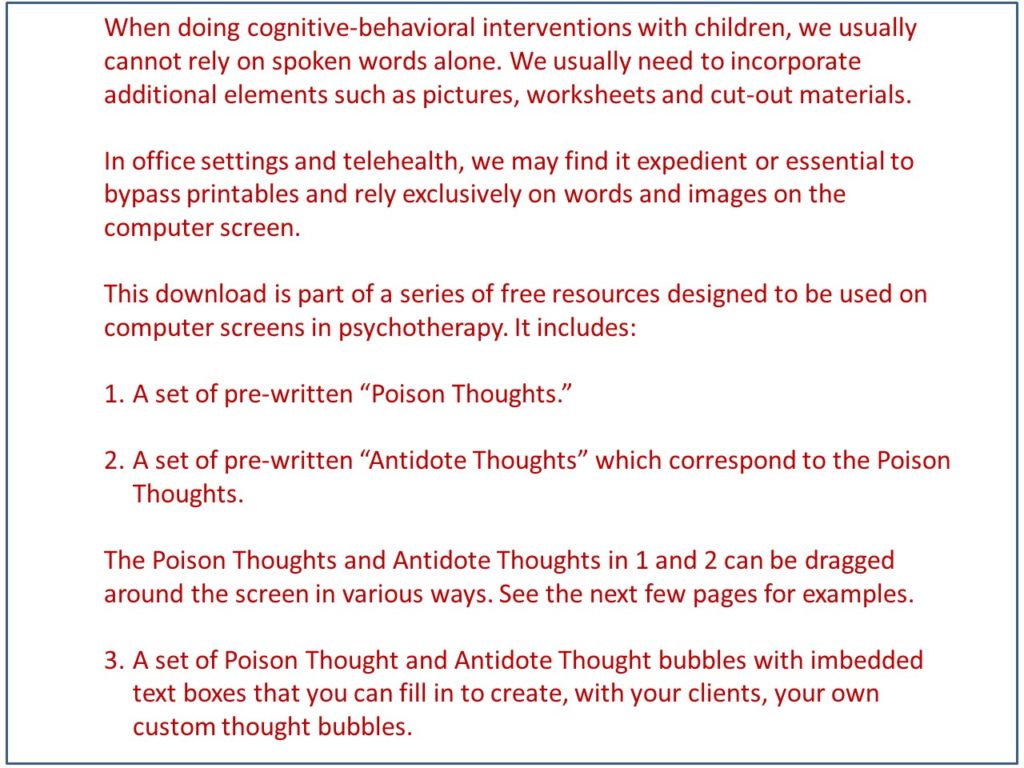
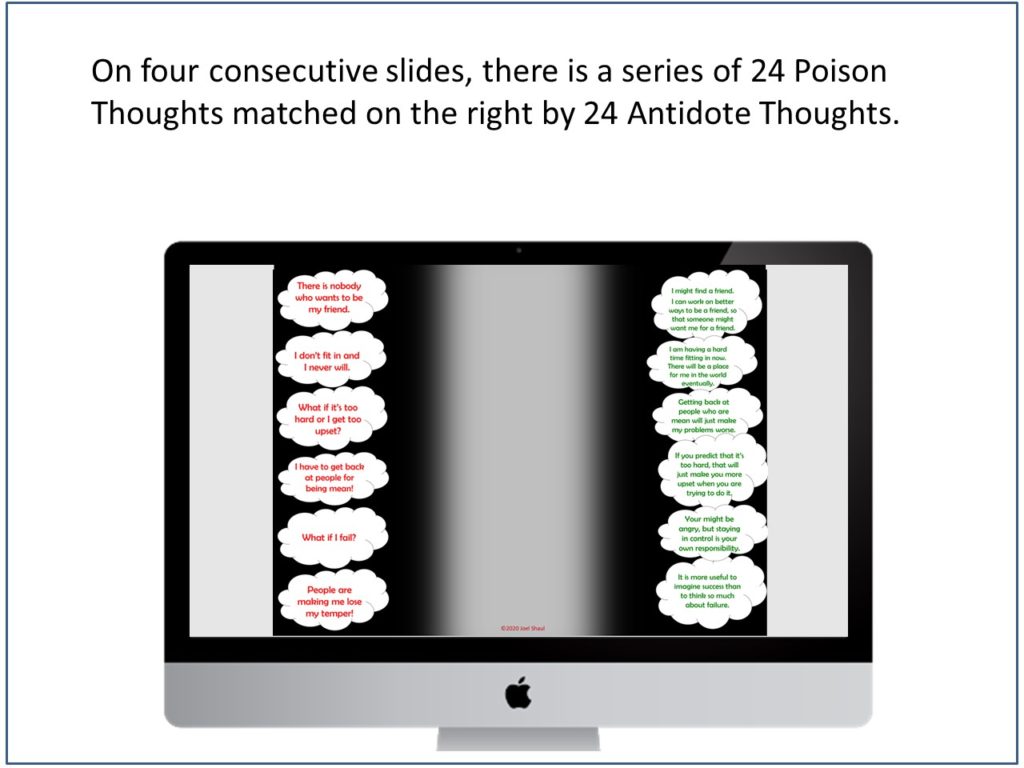
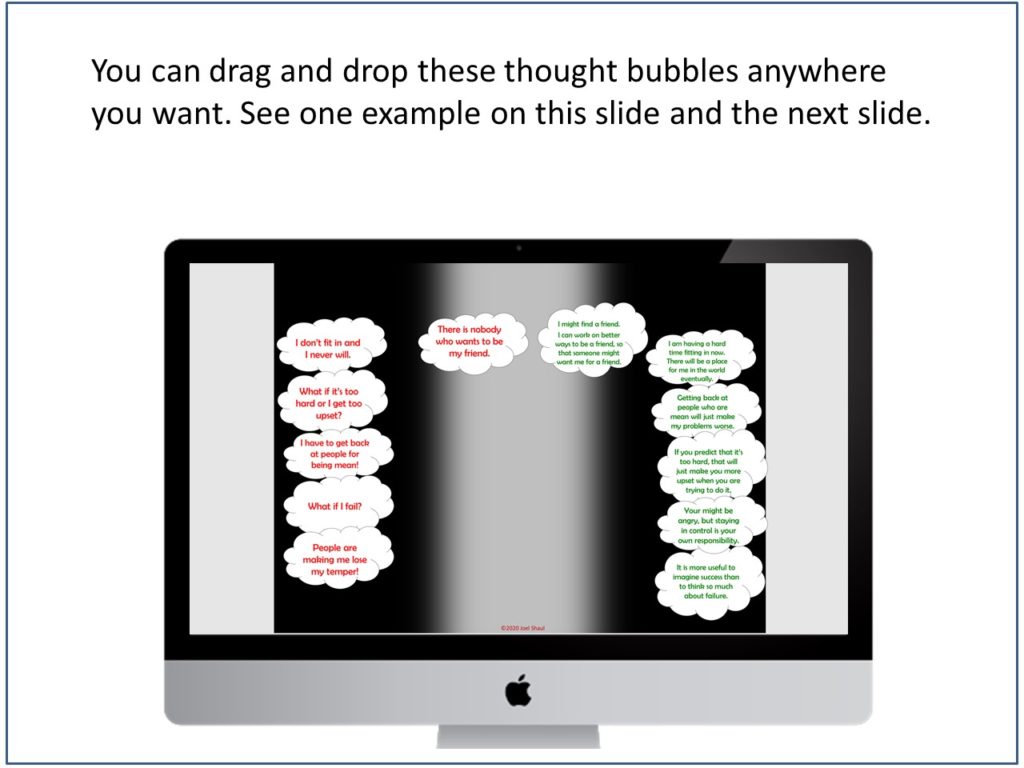
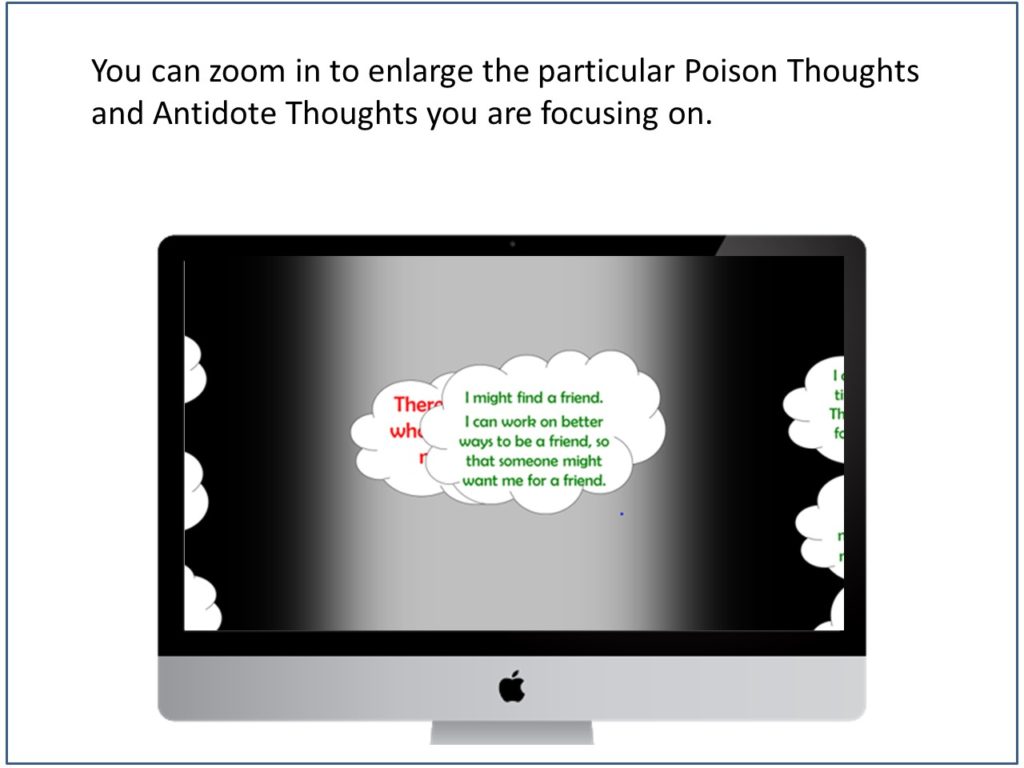
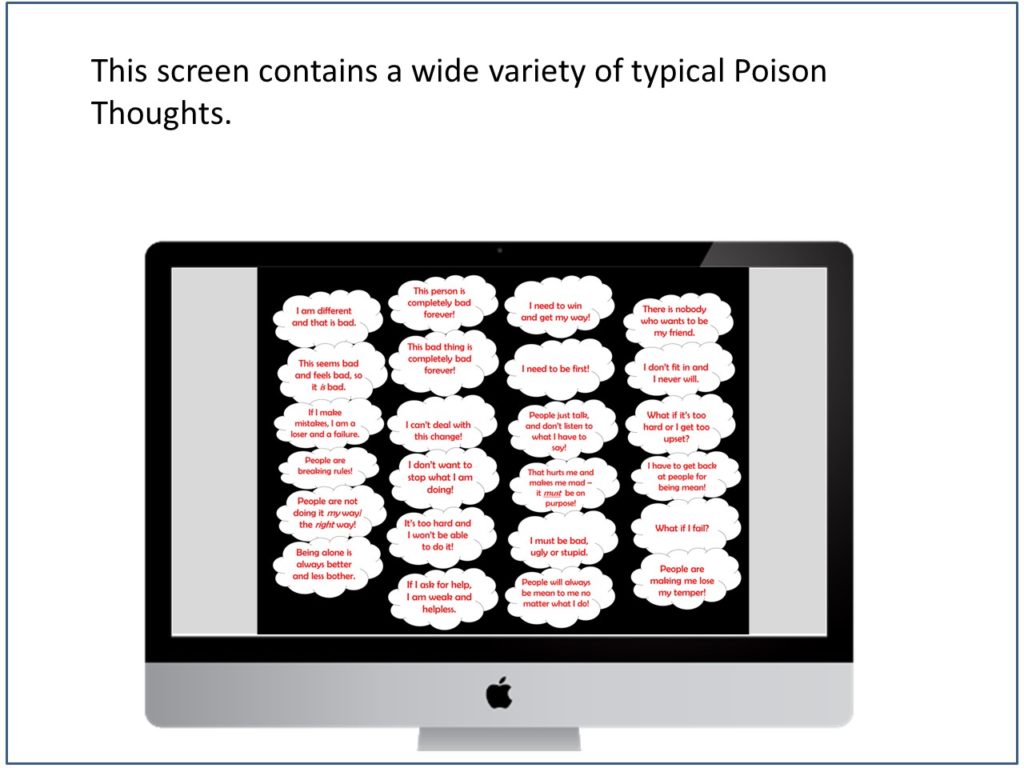
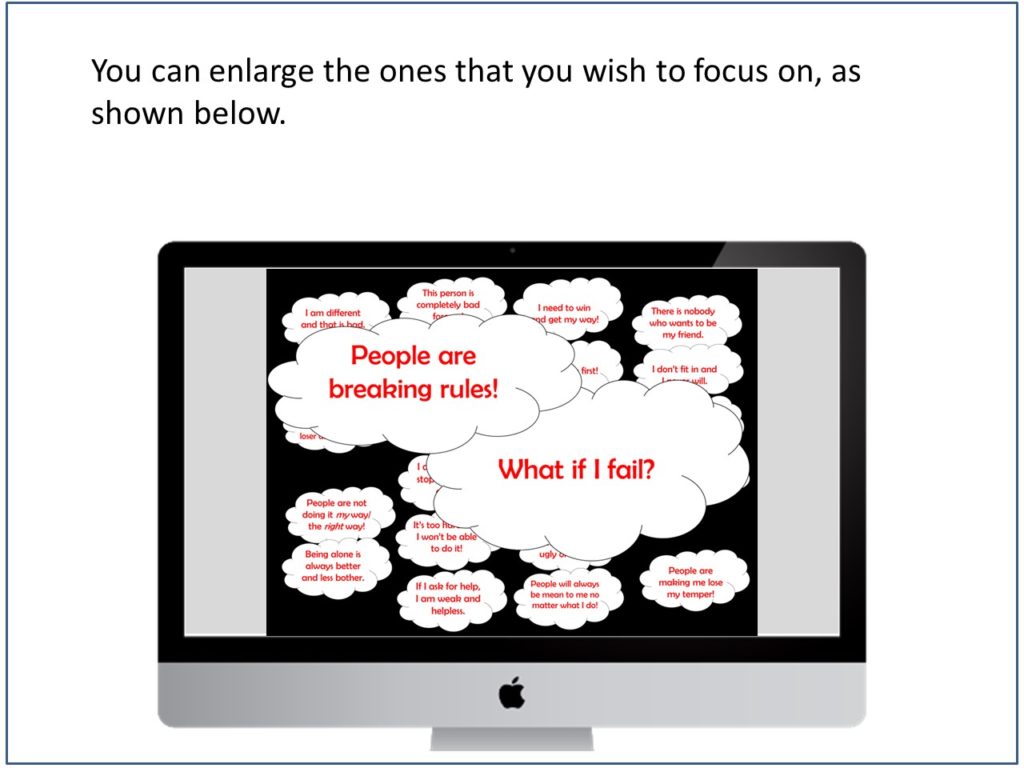
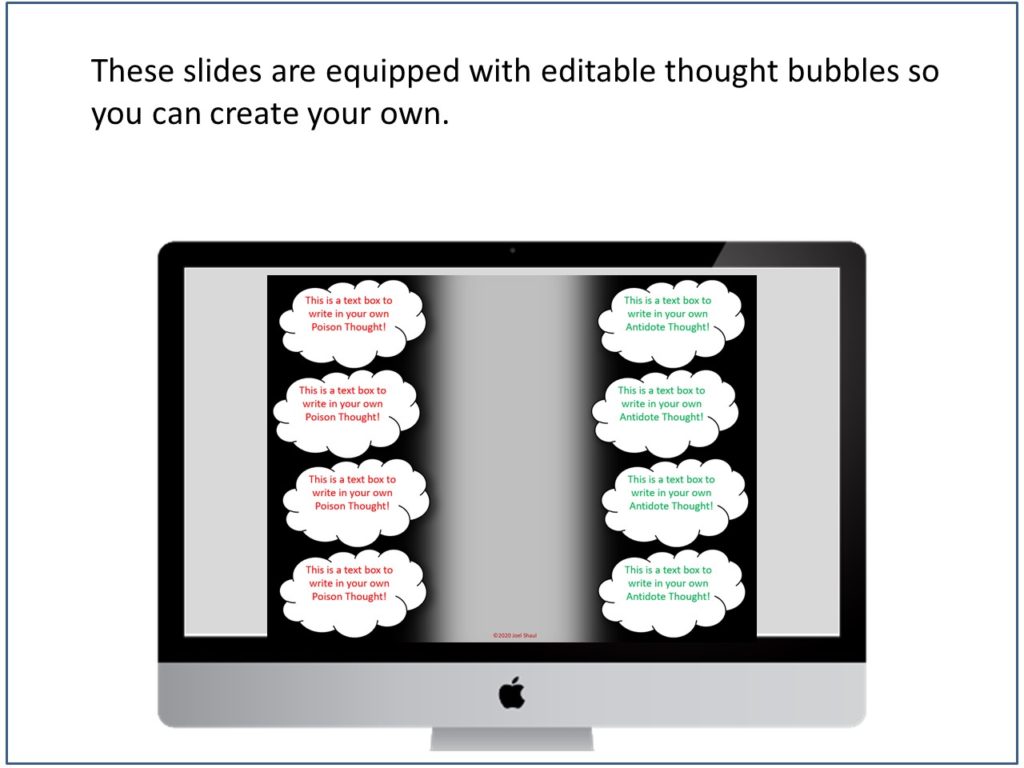
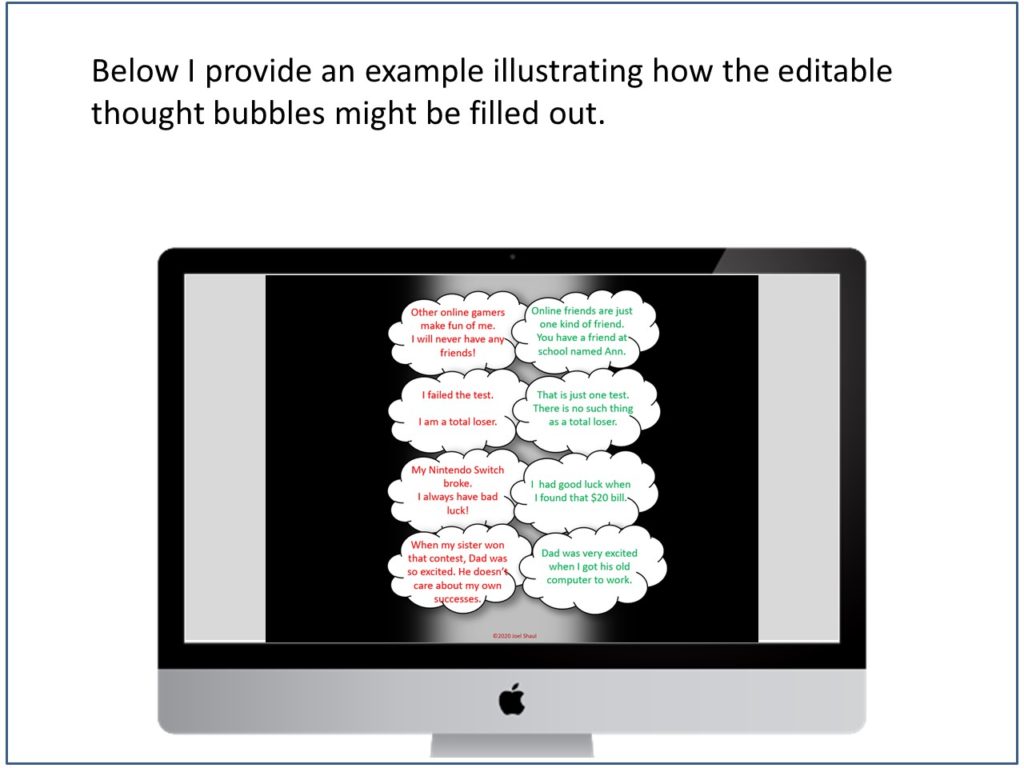
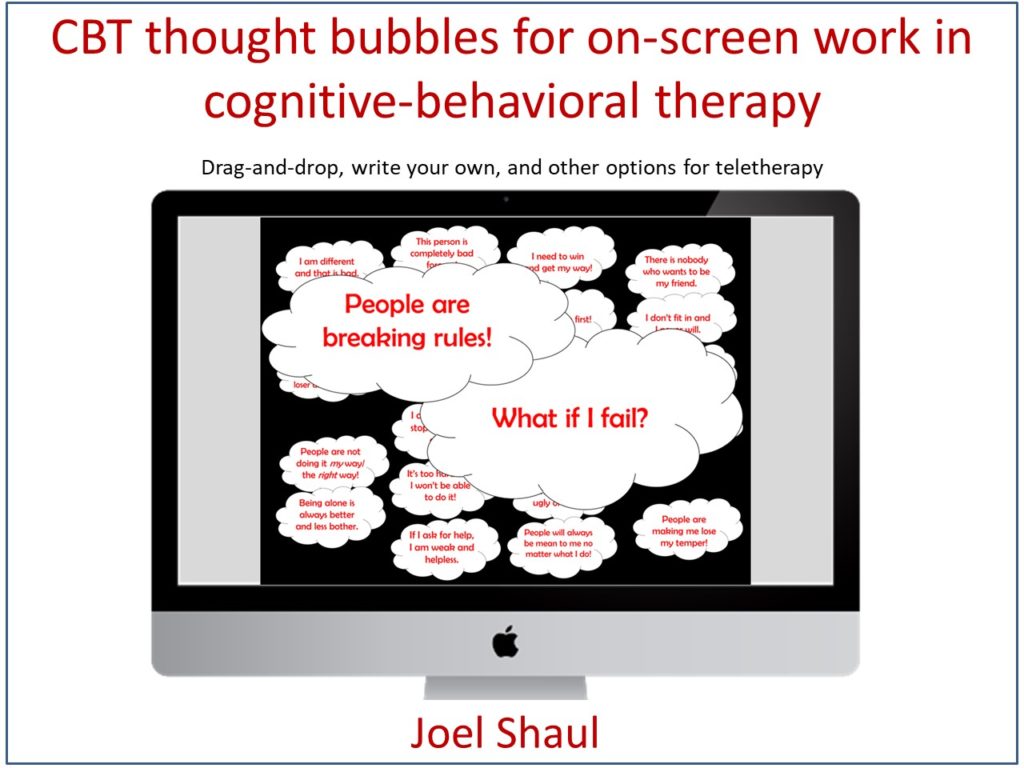
These 48 CBT Thought Bubbles are available in a screen-based version. I have used it a lot – this format works well.
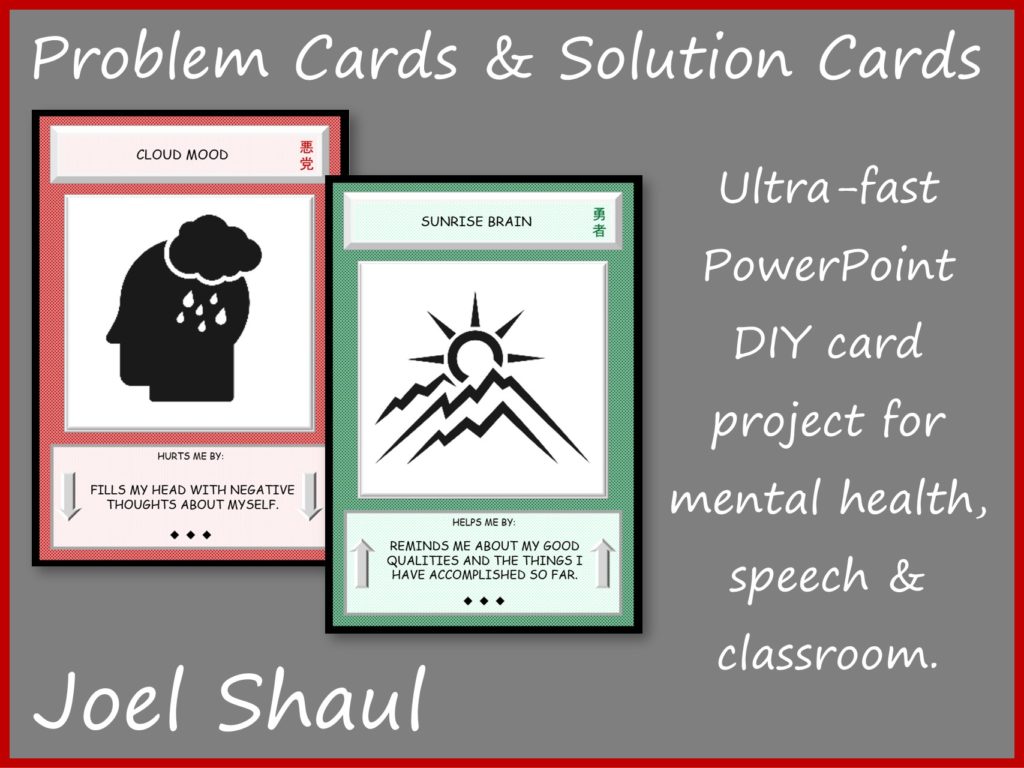
Problem Cards and Solution Cards allow you to quickly put together cards that look a lot like Yu-gi-oh cards. These are PowerPoint templates with built-in textboxes and multitudes of appealing images in the margins that you can easily drag and drop into place. It works best if you design these in close partnership with the child.
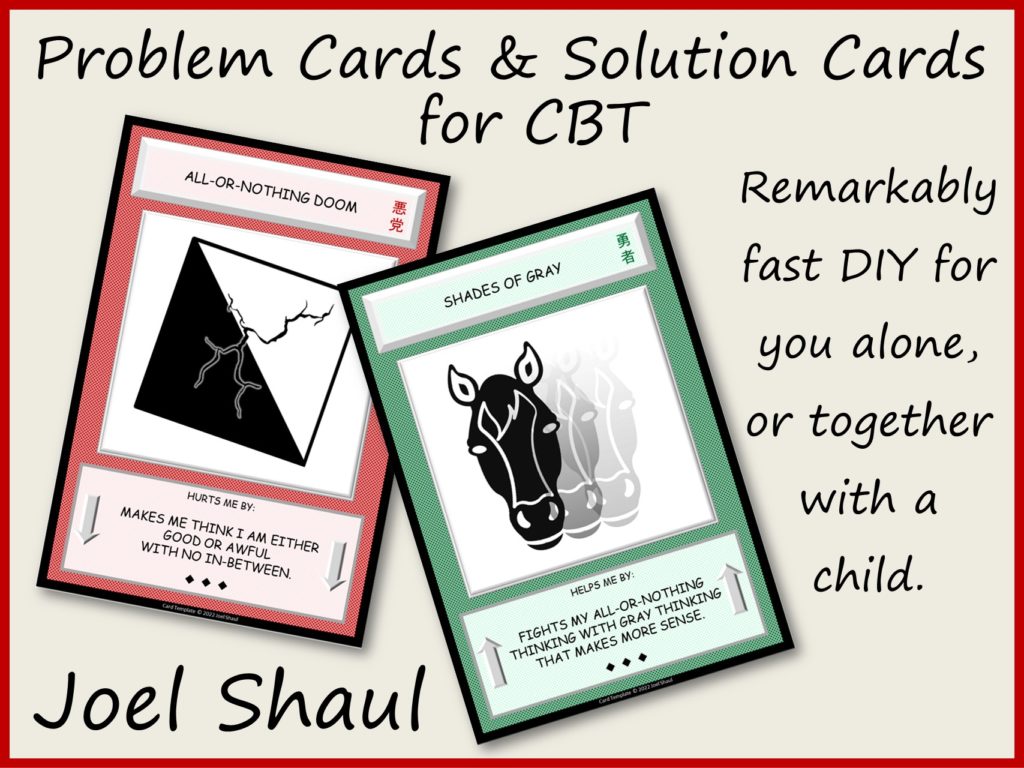
Problem & Solution Cards for CBT are just like the other cards just described, but I provide a completely different set of images to choose from – images that are specifically suited for mental health work.
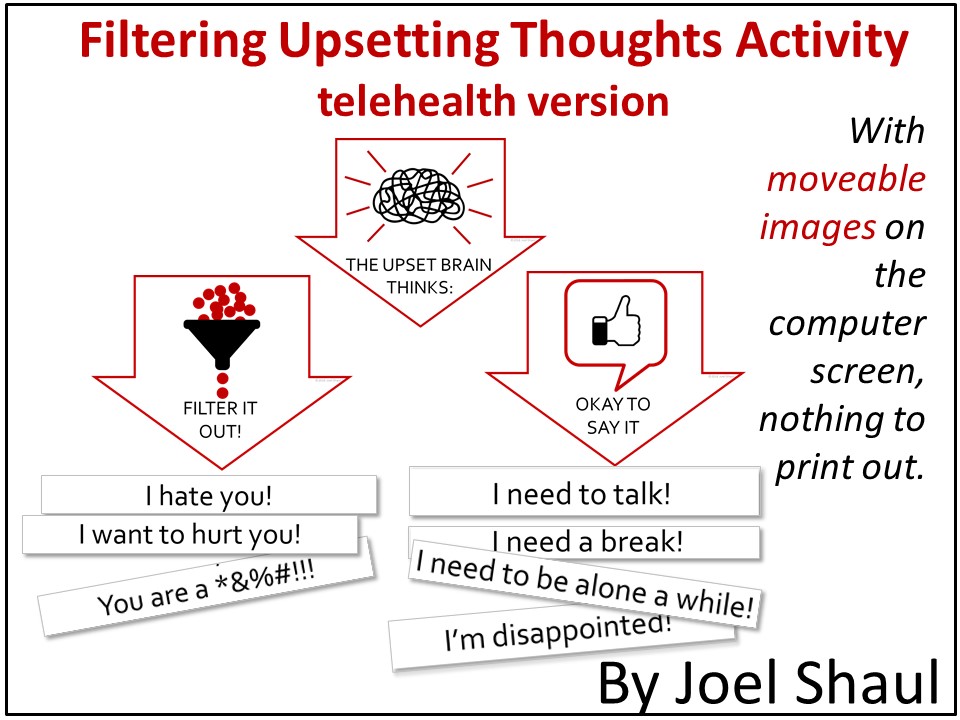
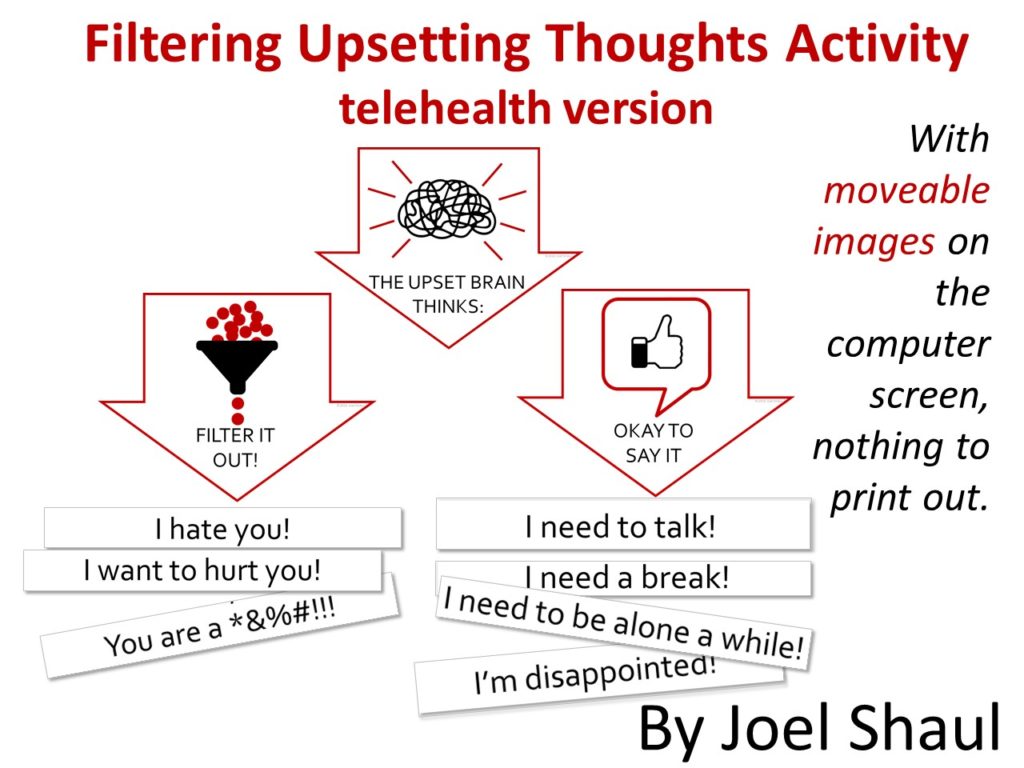
Having used both the print-out version and this on-screen version of the Filtering Upsetting Thoughts activity a number of times, I think that both work very well.
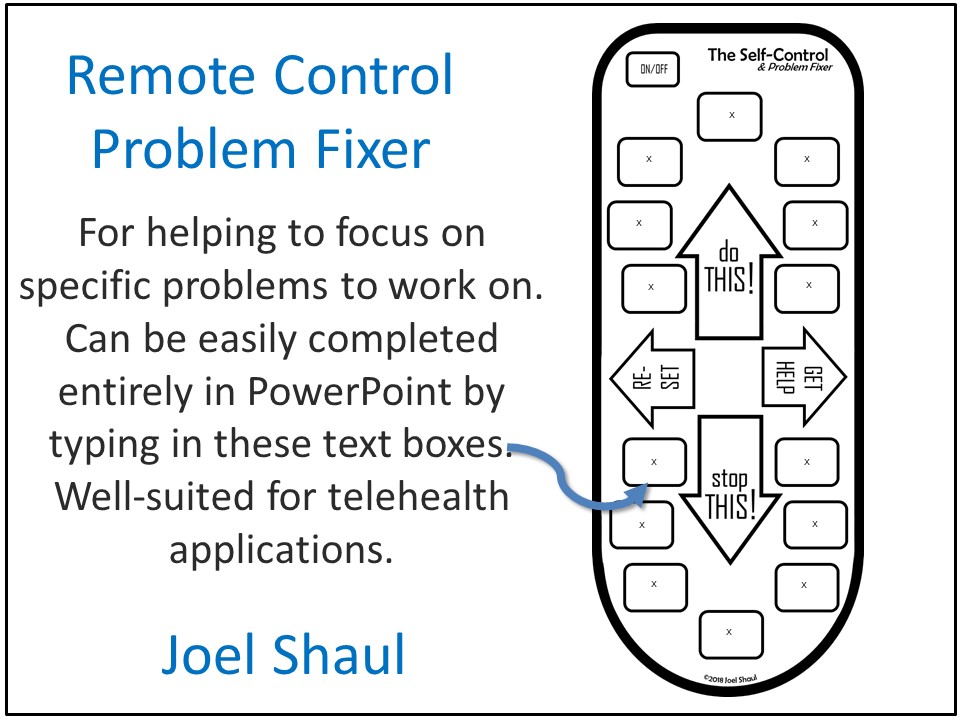
The Remote Control Problem Fixer is to help children focus on specific problems to work on. It can also be printed, cut out and colored.
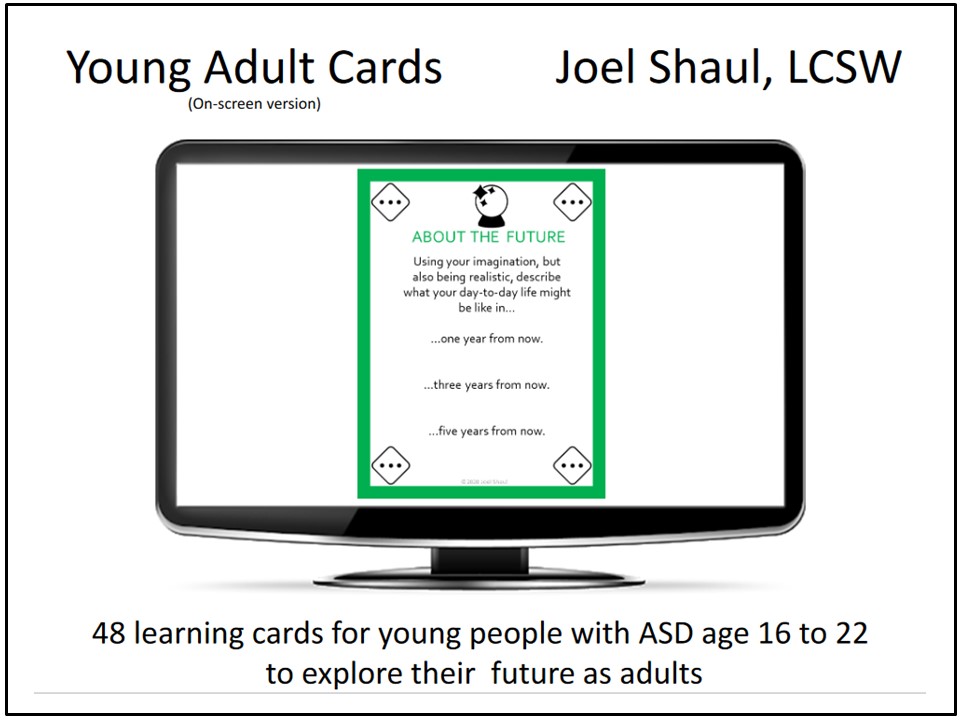
These are 48 cards that guide productive discussion on the challenges of becoming an adult. The screen-based version is useful if you don’t have the time to print and cut out these cards.
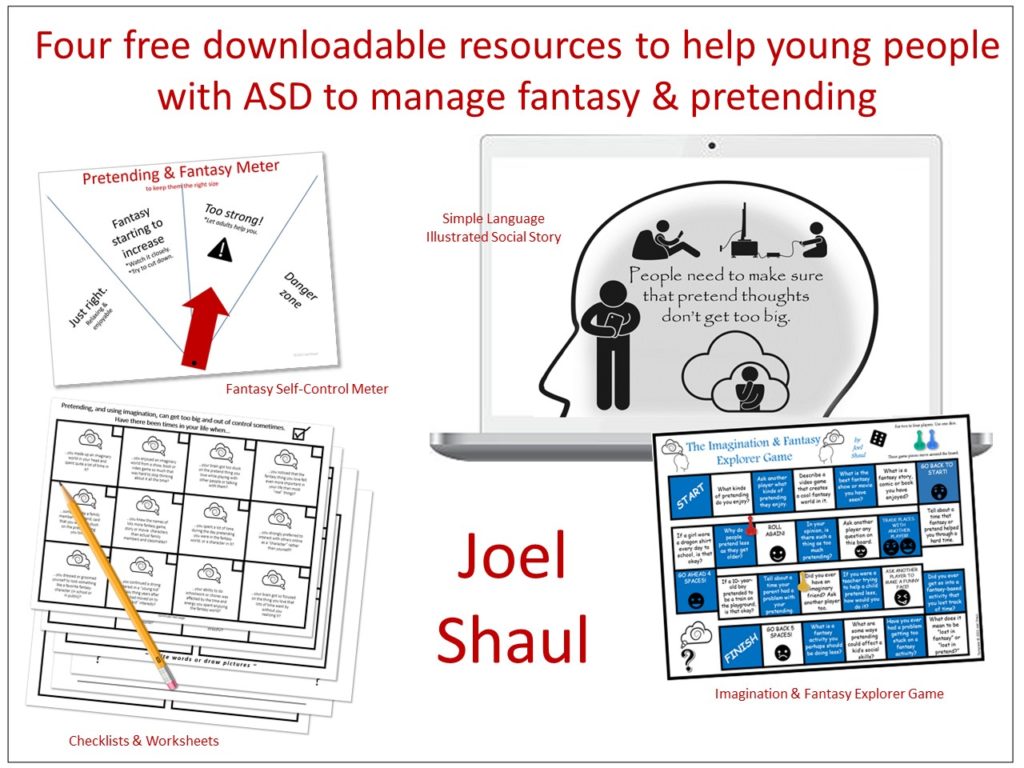
Four resources for helping young people with ASD to manage fantasy and pretending. Children and teens with autism often have rich imaginations. These four resources are designed to increase awareness of imagination and fantasy, promote appreciation of these qualities, and raise awareness of the problems associated with fantasy enthrallment.
Marty Jones, a special education teacher in Texas, created lots of outstanding Boom Cards for my free online resources. Check them out if you use Boom Cards.
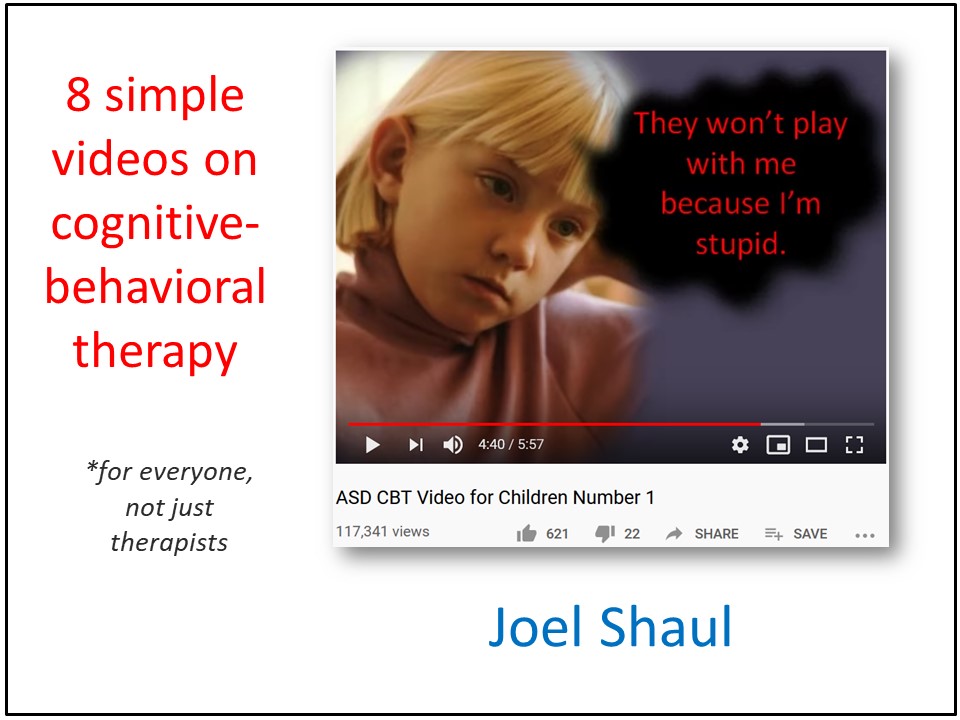
My CBT Videos for Kids have gotten over 700,000 views. If you do mental health work with children, please check them out.
For an EXCELLENT Boom Card version of this resource, click HERE.
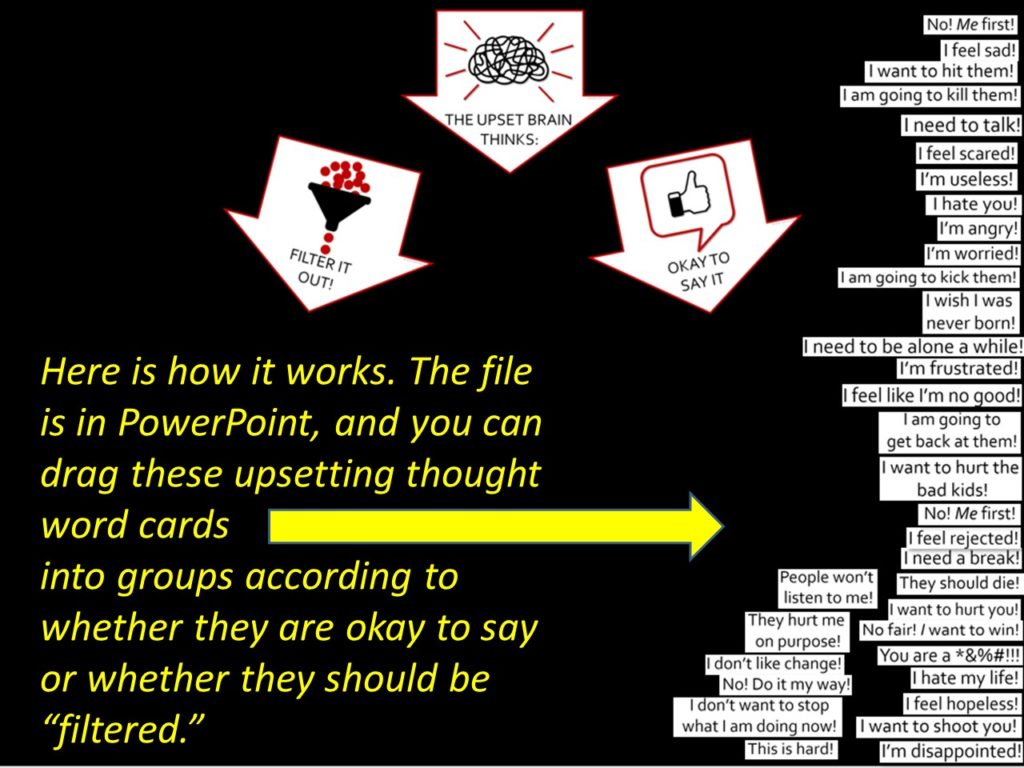
The file is in PowerPoint, and you can drag the upsetting thought cards in to groups according to whether they are okay to say or whether they should be “filtered.”
In social skills training in schools and psychotherapy settings, young people on the autism spectrum often struggle with controlling angry verbal outbursts.
This is an on-screen version of the original cut-out paper kit that creates a hands-on activity to teach and practice filtering upsetting thoughts and avoiding blurting out things that are frightening or confusing to others.The Filter the Anger Activity is designed to:
* Raise awareness of okay vs. not-okay things to say when you are mad
*Introduce and reinforce the idea that thoughts can be “filtered” before they are turned into spoken words.
Sample introduction to this activity:
“When we are upset, we can have many, many upsetting thoughts going through their mind, very quickly. The thoughts can be so many, and so powerful, that they can “escape” out of your mouth if you are not careful. Your mind has a filter in it, to help us to say the right things, instead of every one of our thoughts to rush out of our mouths.”
(Now describe a filter; depends on knowledge level of participants. Show them the filter visual)
“There are different kinds of filters.” (have them name some: coffee filter, water filter, oil filter, etc. If you have a prop to demonstrate a filter now, that is good—try a colander, a coffee filter, etc)
“You can’t see the filter in your brain, but the way it works is kind of the same. It is especially important to use your brain’s filter when you are upset or angry, so that you say things that are good, and get you help, and so you avoid saying things that frighten, confuse or anger other people.”
How do this activity:
On the PowerPoint computer screen, together with the child, sort the statements into things that are okay to say, sometimes okay to say, and almost never okay to say. Use the “Filter These Out” and “You can say these” visuals to help them with the sorting. Many children can do this on the computer while you just watch.
Usually, the child will spontaneously start talking about times they made unfiltered angry statements. This provides opportunities for learning and adds a visual dimension that is very helpful.
Variations: You, the adult, can try acting out the role of an upset person who is not succeeding in filtering his words. Ask the young participants to help you to filter what you say. Ask them to offer you alternative ways to express your upset feelings.
This is a good teaching/therapy activity for social skills training and anger management for kids with autism spectrum disorders. I hope you find it helpful.