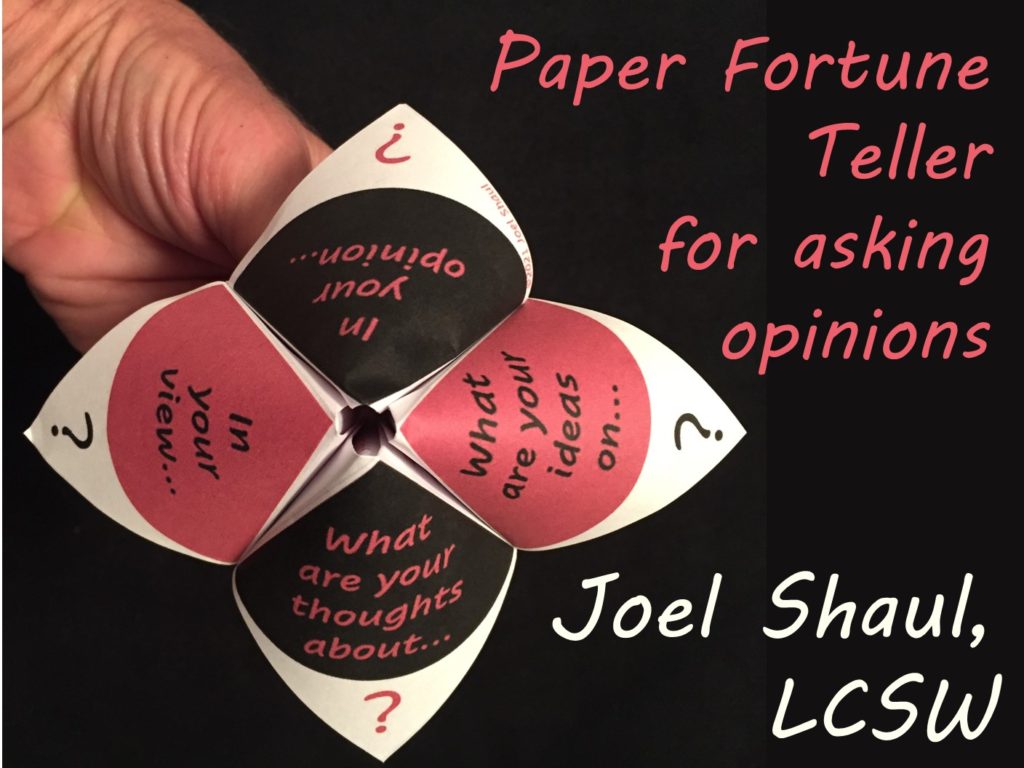
Paper fortune teller for asking other people about their opinions

Paper fortune teller for asking about others' opinions.

Children with autism may have a difficult time exploring other people’s opinions. Children on the spectrum might be preoccupied with their own established viewpoints, and in the rapid exchange of typical conversation, the contrasting point of view might catch them off guard. In my own work with kids on the spectrum, I have found it very useful to provide specific question language to employ when asking other people their opinions. And providing practice is essential. That’s why I developed this paper fortune teller. It’s useful for having two children, or the child and the helping adult, to take turns inquiring about the other person’s point of view. I used it fairly often in my work, and found it useful for children capable of reading the text on the paper fortune teller.

The following images walk you through how to introduce the paper fortune teller and use it with a child.
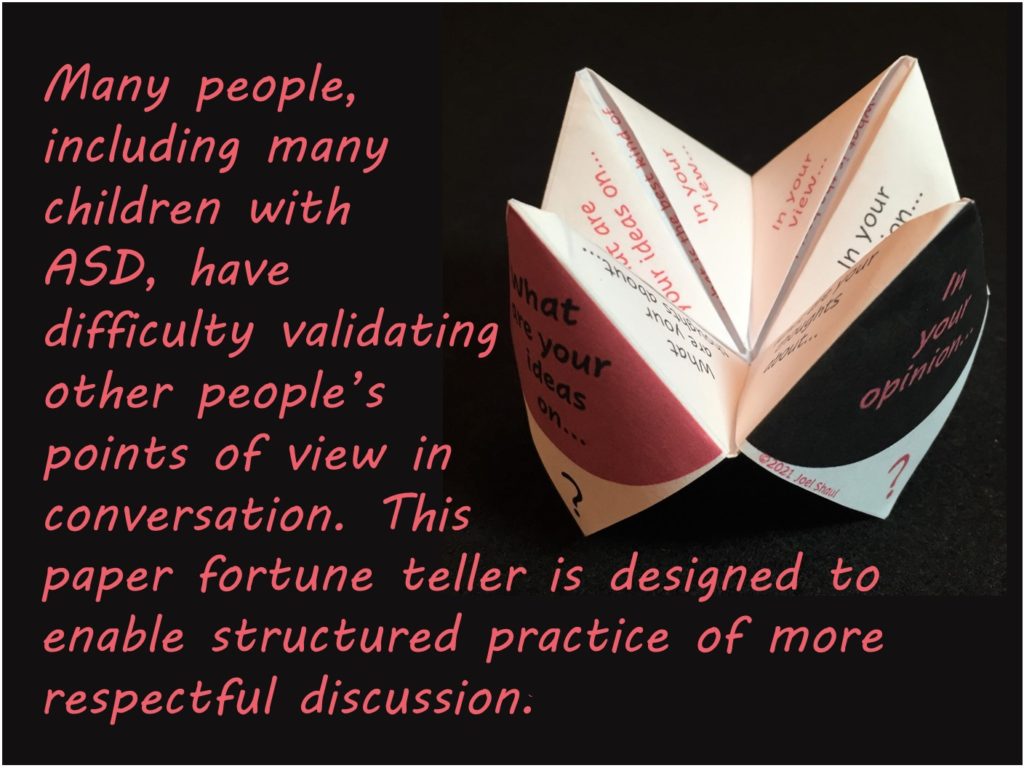
Many children with ASD have difficulty validating other people's points of view. This paper fortune teller is enable structured practice of more respectful communication.
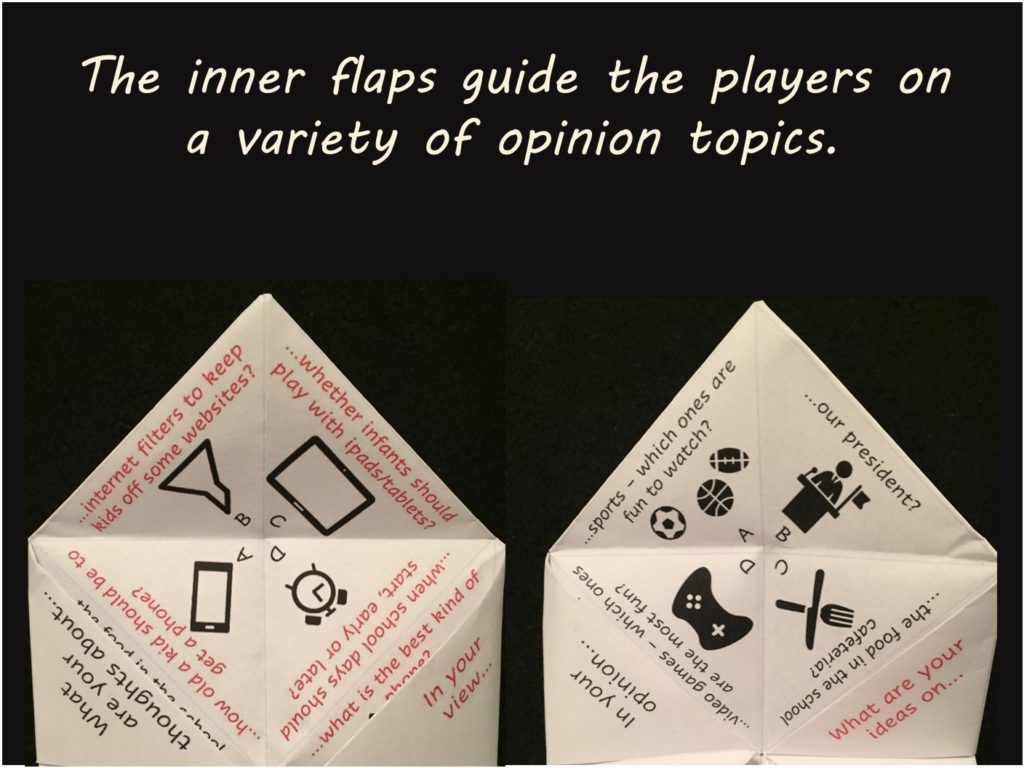
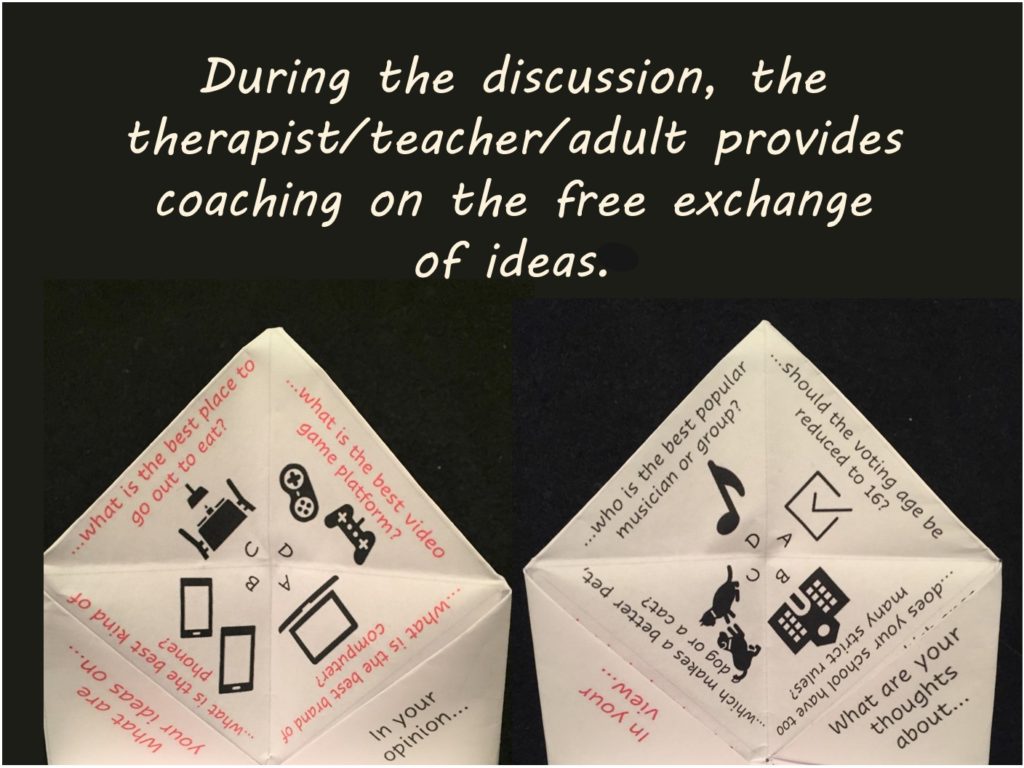
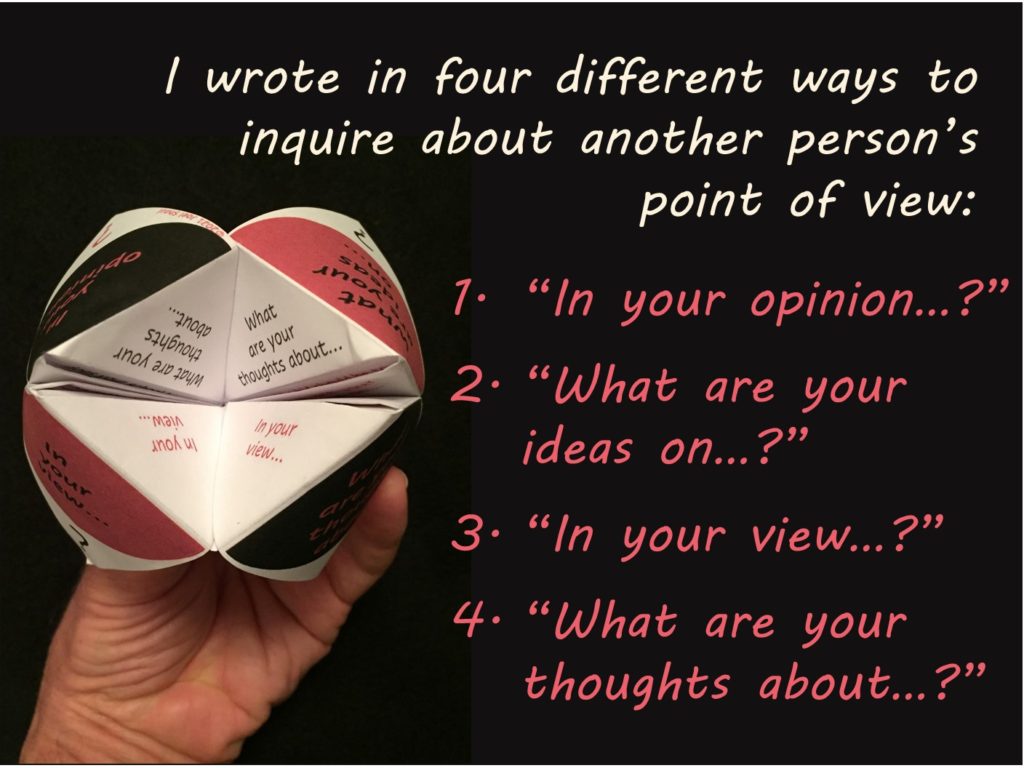
This paper fortune teller shows how to ask, "In your opinion...", "What are your ideas on...", "In your view..." and "What are your thoughts about..."
The inside of the paper fortune teller gives 16 examples of different opinion topics one can practice asking about.
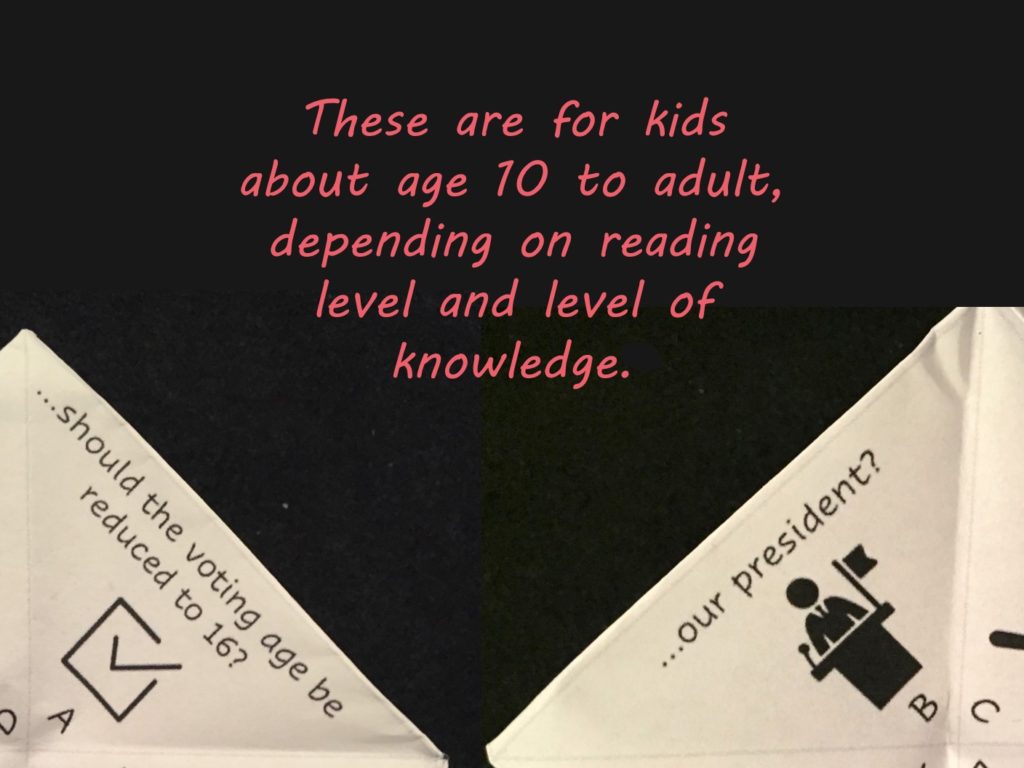
These are for age 10 to adult.

Your comments on these resources are most welcome, and often helpful. Click HERE to send an email.
Green Zone Book Cover Click to Learn More

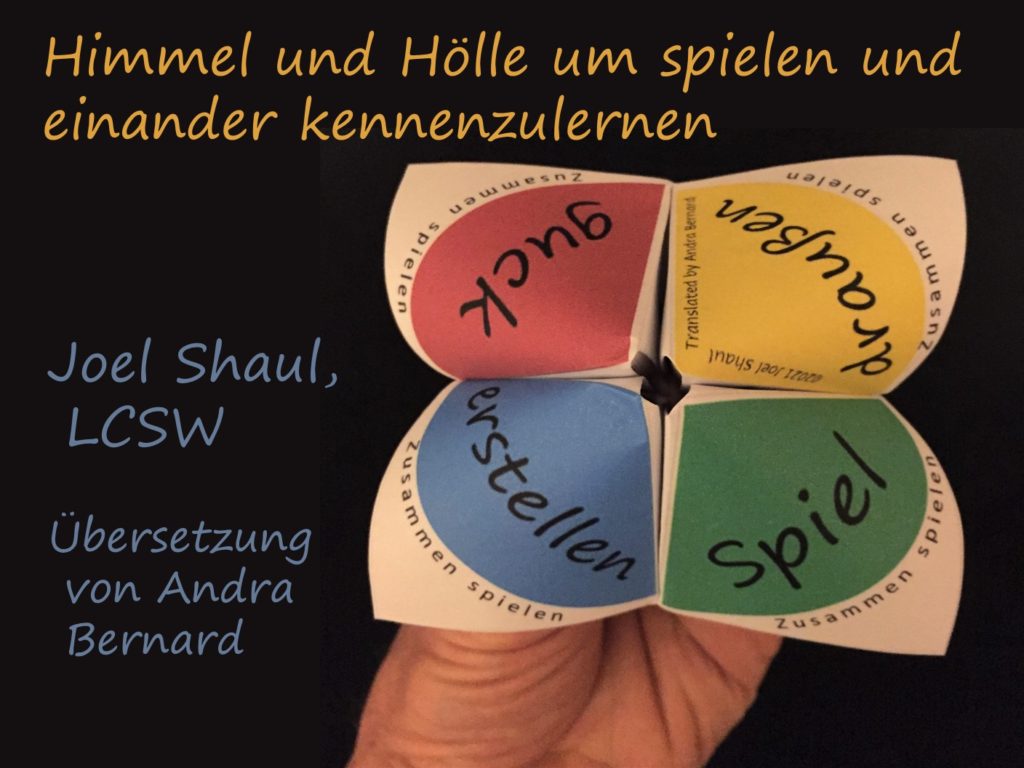
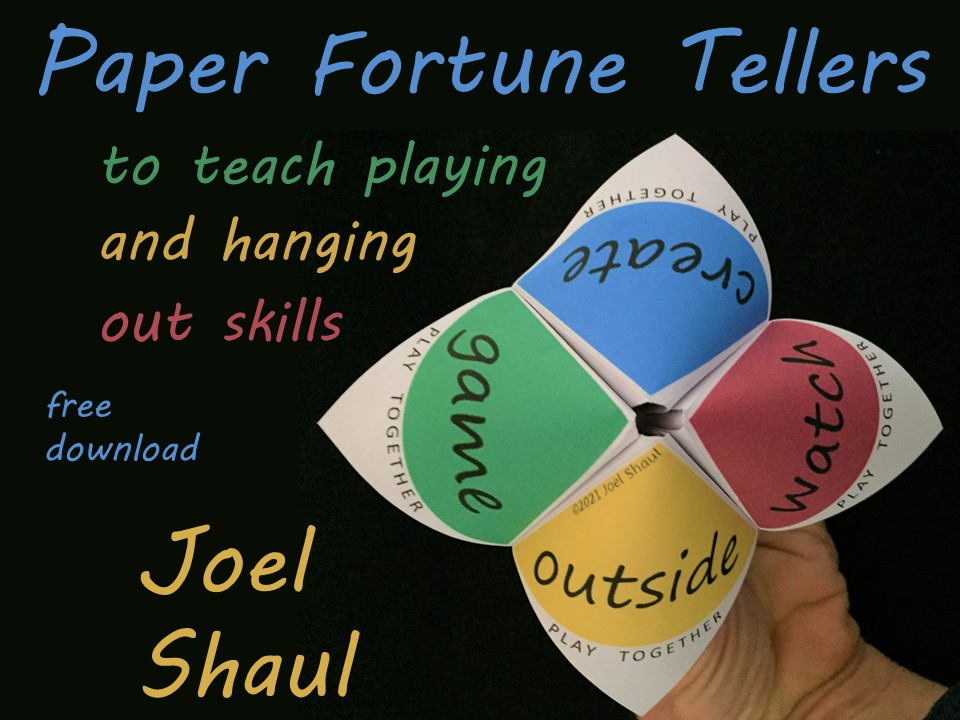
Paper fortune teller for playing and hanging out social skills

German language version

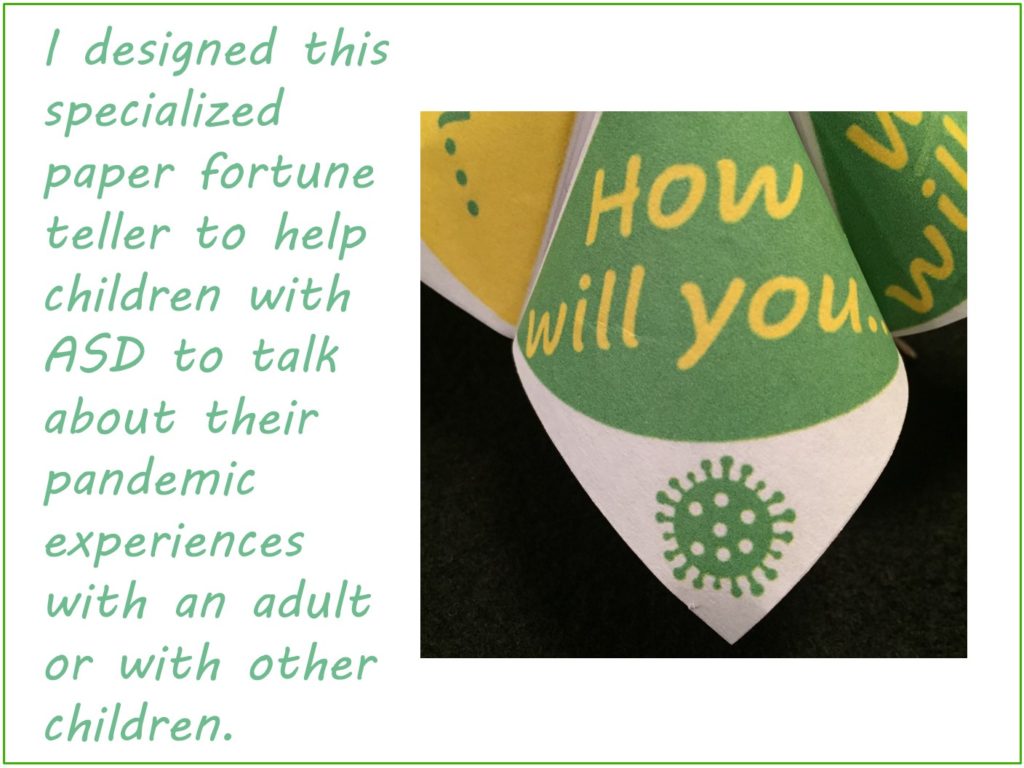
Many years ago, I got interested in paper fortune tellers. After learning how to fold them, I figured out how to custom design them to teach various social and emotional skills, and to facilitate reciprocal conversation between pairs of autistic children in group therapy and classroom settings.

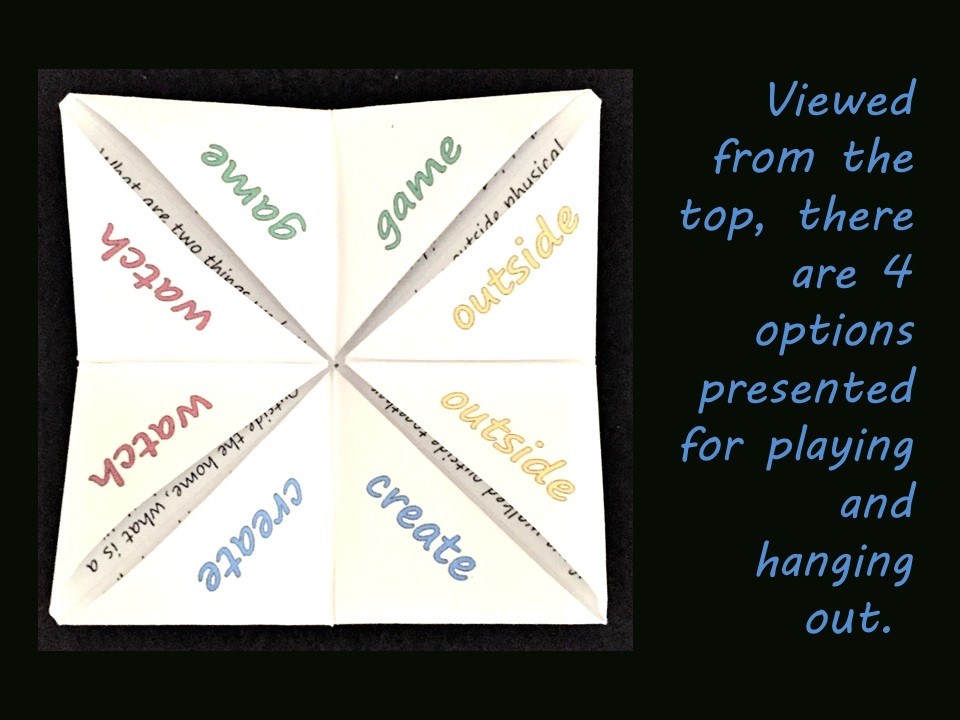
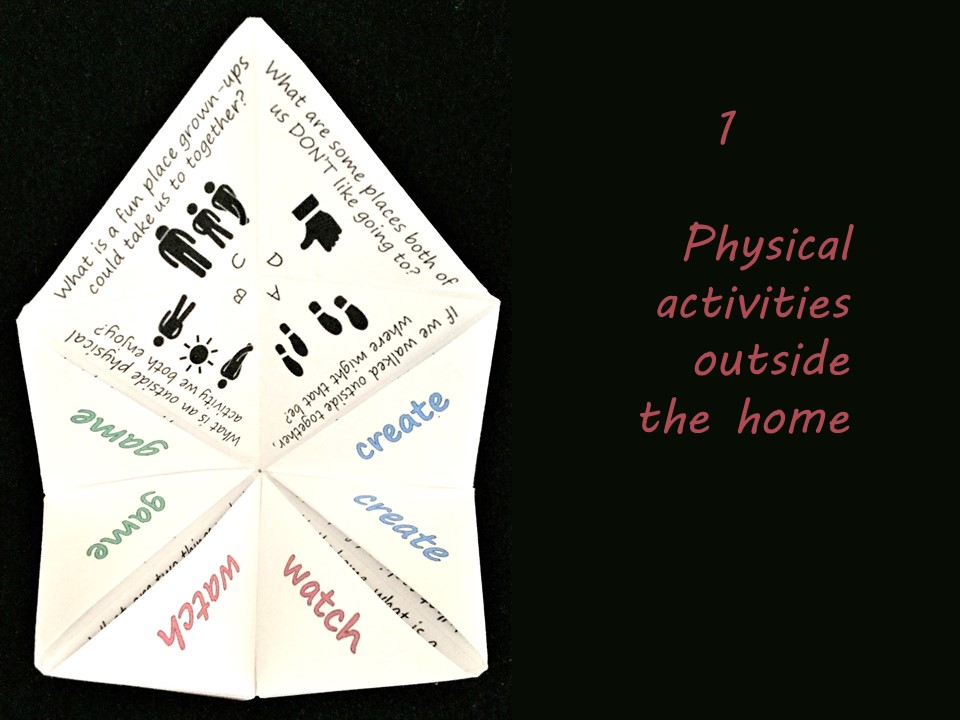
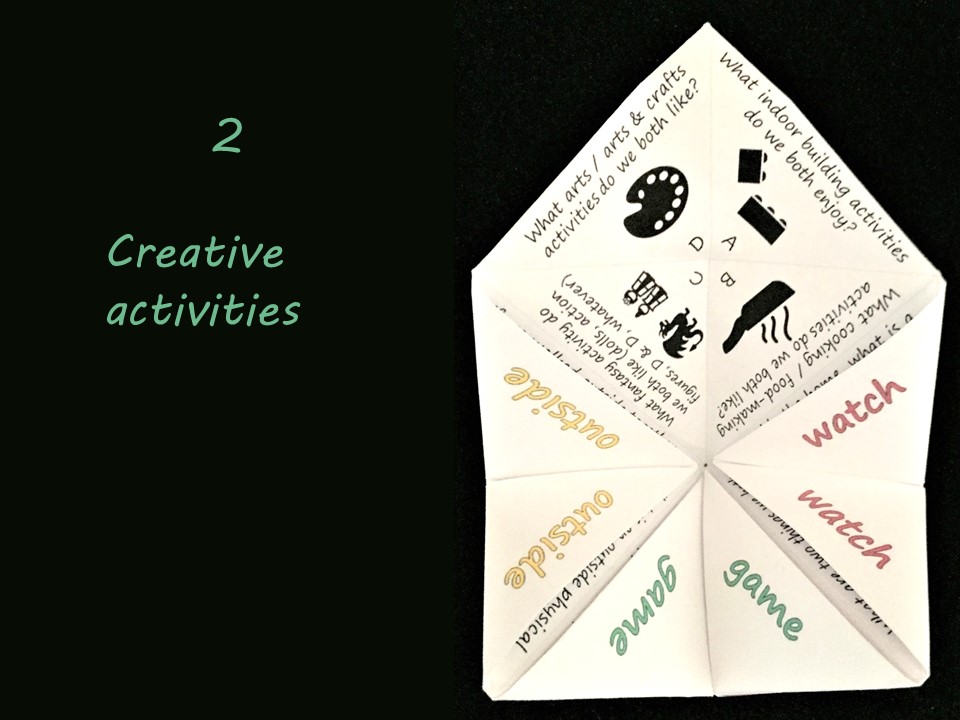
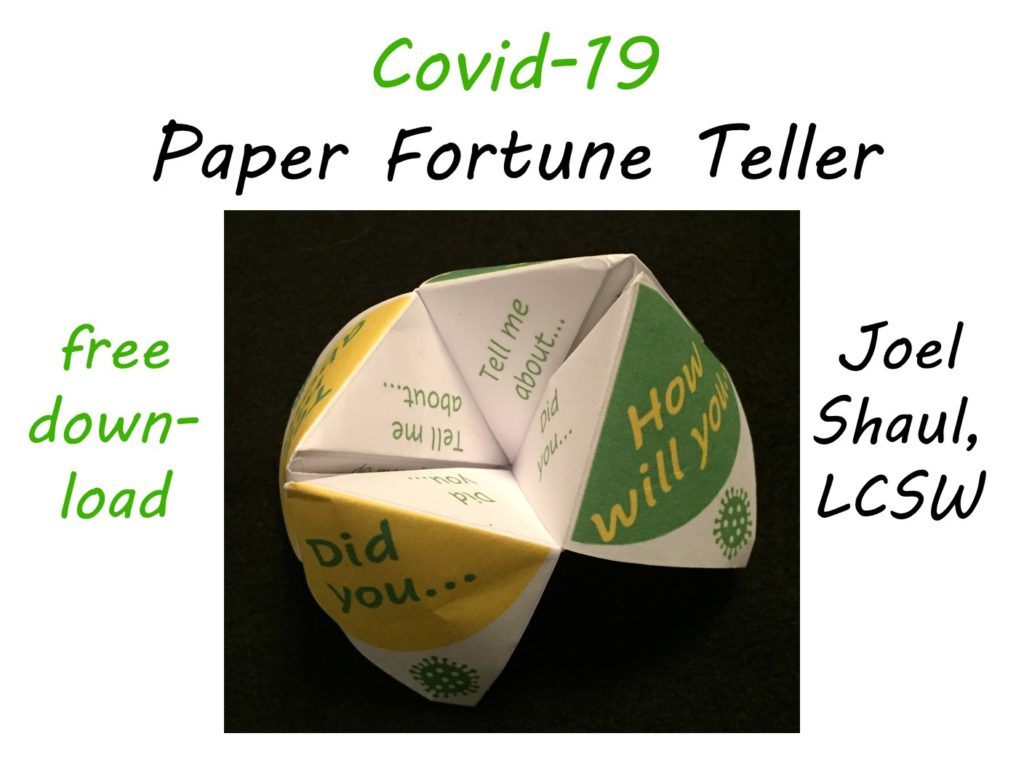
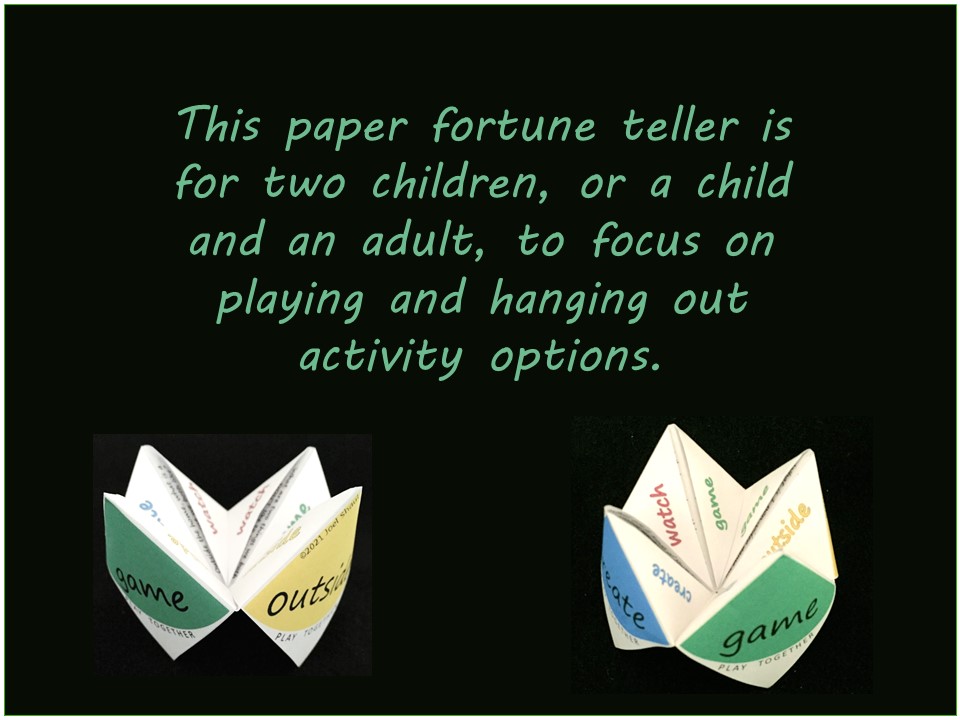
This paper fortune teller is to help two children to jointly explore playing and hanging out activities.

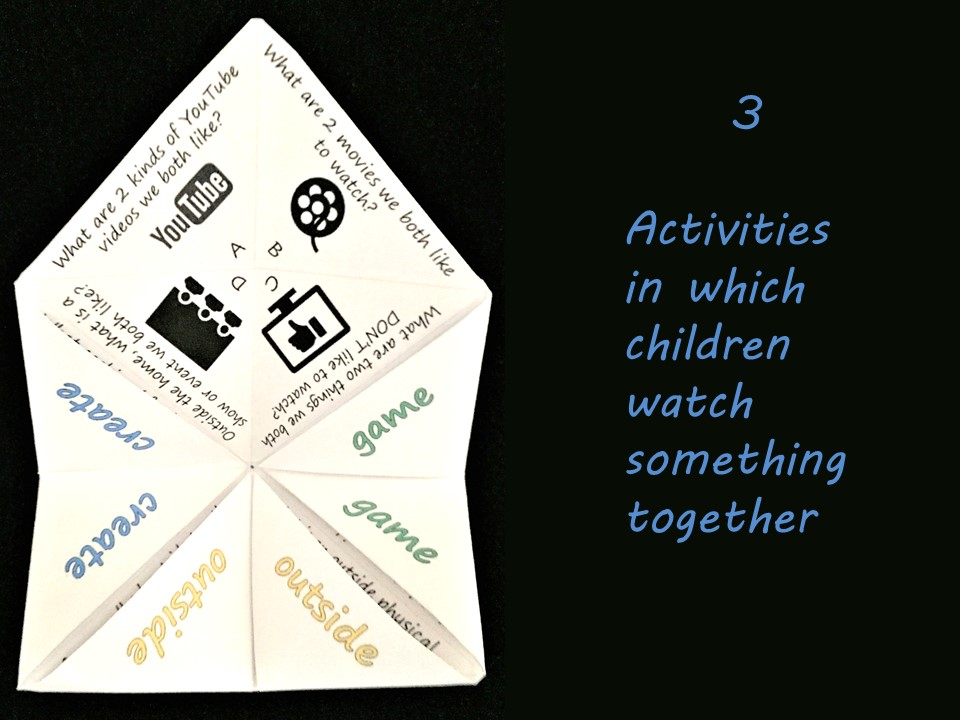
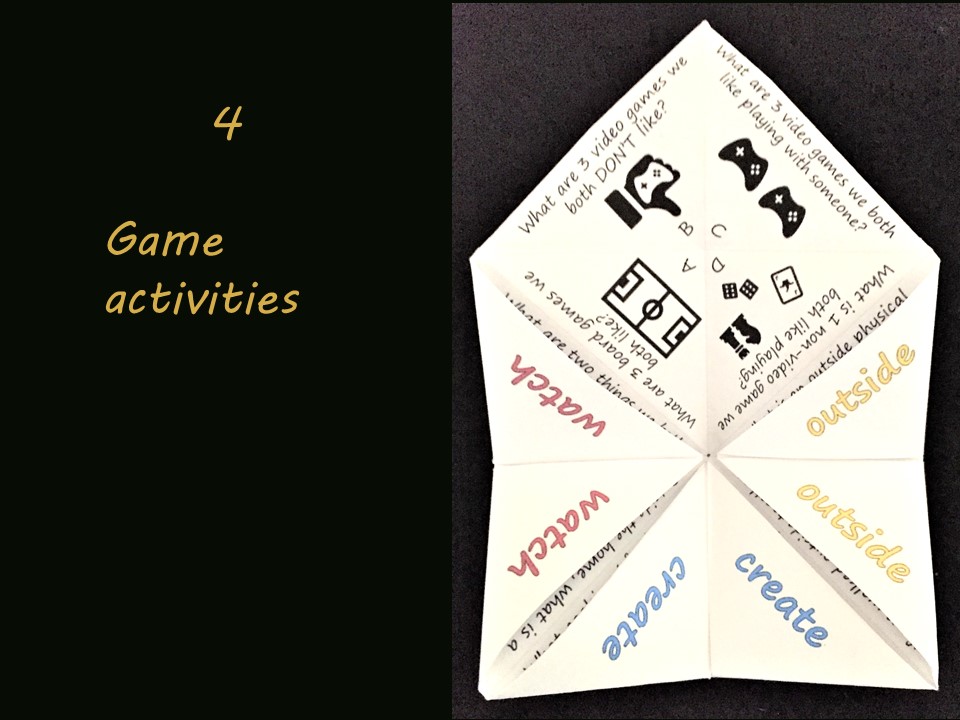
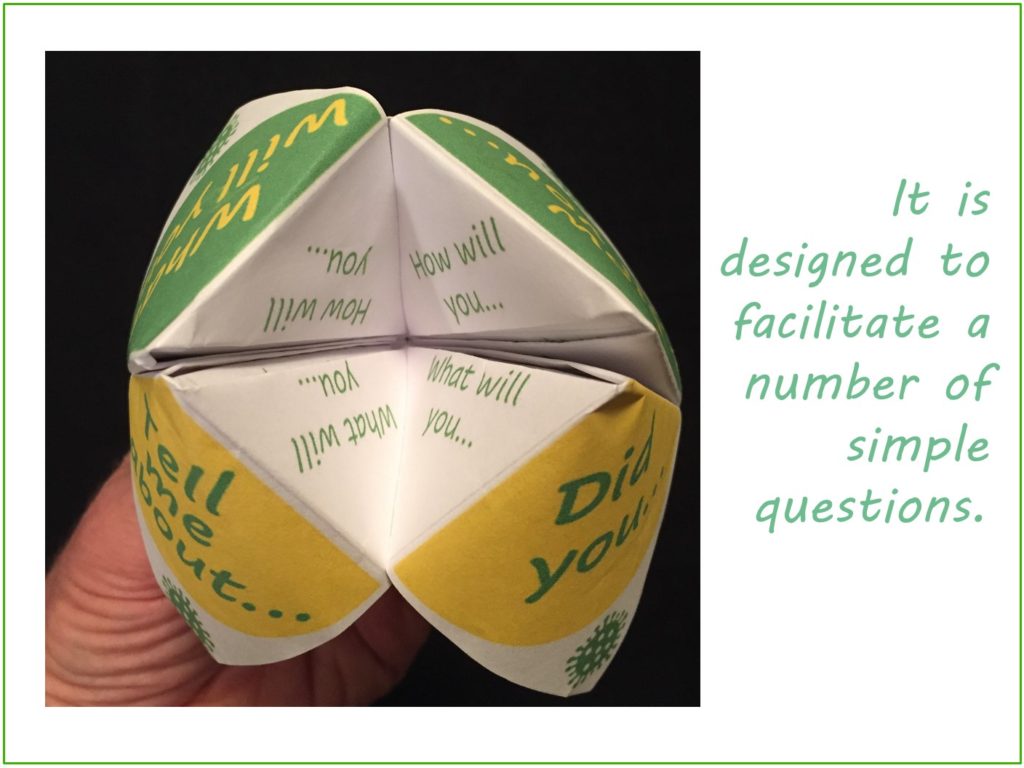
Here are some pictures to show what the paper fortune teller looks like as the two players unfold it during play.

This is a great activity, but keep in your planning, keep in mind that there is significant prep time involved. In my experience, most children cannot fold these together adequately in a group setting – you are much better off starting the activity with the paper fortune tellers already made.

Your comments on these resources are most welcome, and often helpful. Click HERE to send an email.
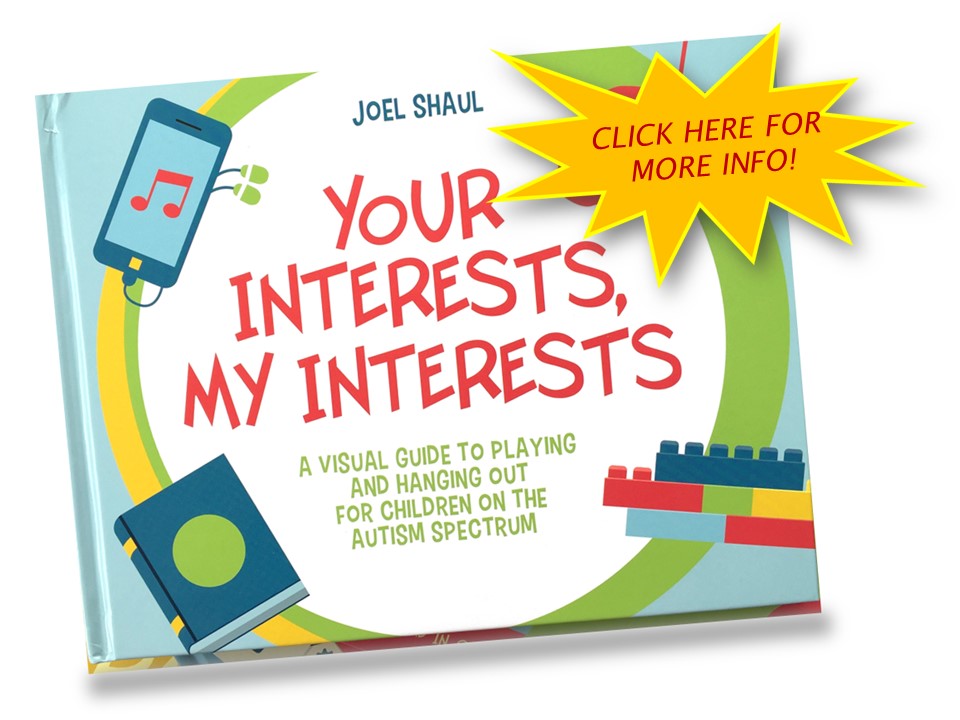
Your Interests Promo image for website

Young Adult Cards – free print-out & teletherapy resource for ages 16-22 exploring their future

Young Adult Cards in Boom Cards format, click HERE.

German translation of this resource

For Young Adult Cards specifically for workplace readiness skills, click HERE.


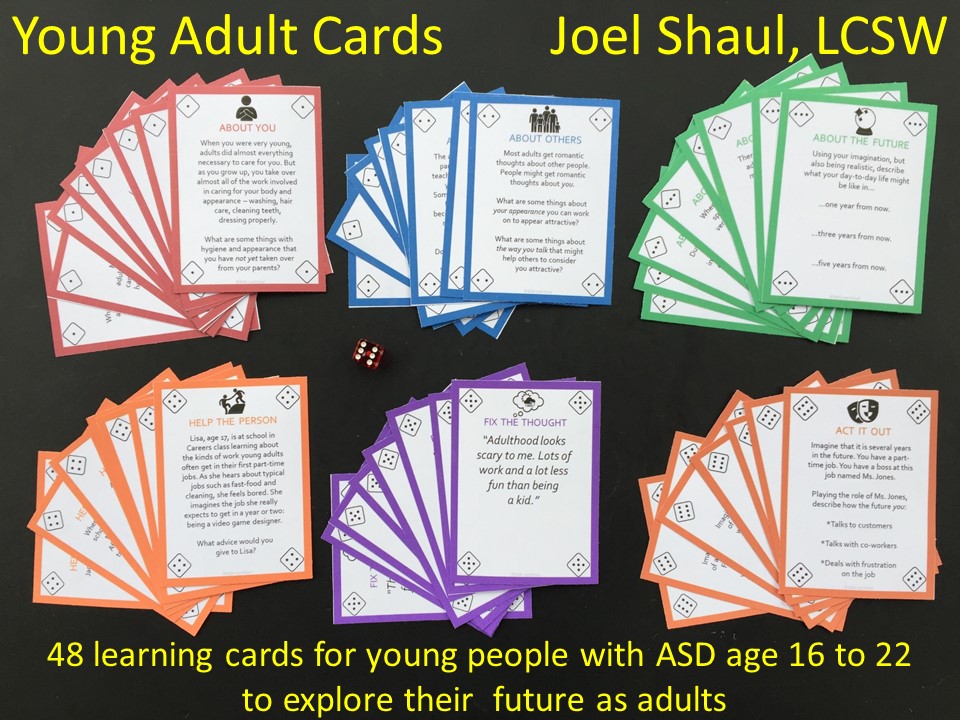
In my work with young adults on the spectrum, in individual therapy, school settings and group therapy, I often found it useful to incorporate game-like activities to promote productive discussion and problem solving of diverse young adult challenges. After some experimentation I eventually finalized this set of Young Adult Cards, which I then often used in my own work.

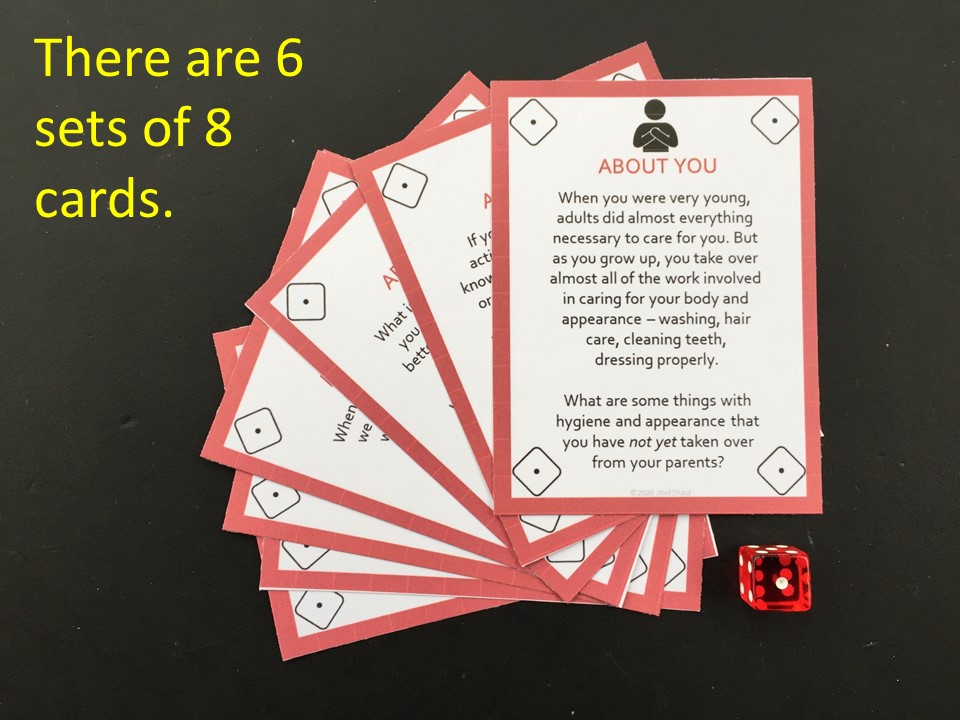
The first of the 6 card categories, About You, poses questions pertaining to typical problems faced by young adults on the spectrum. There are 8 cards in each of categories.

The second category, About Others, poses questions about how the young adult’s words and actions might affect others in the social network.

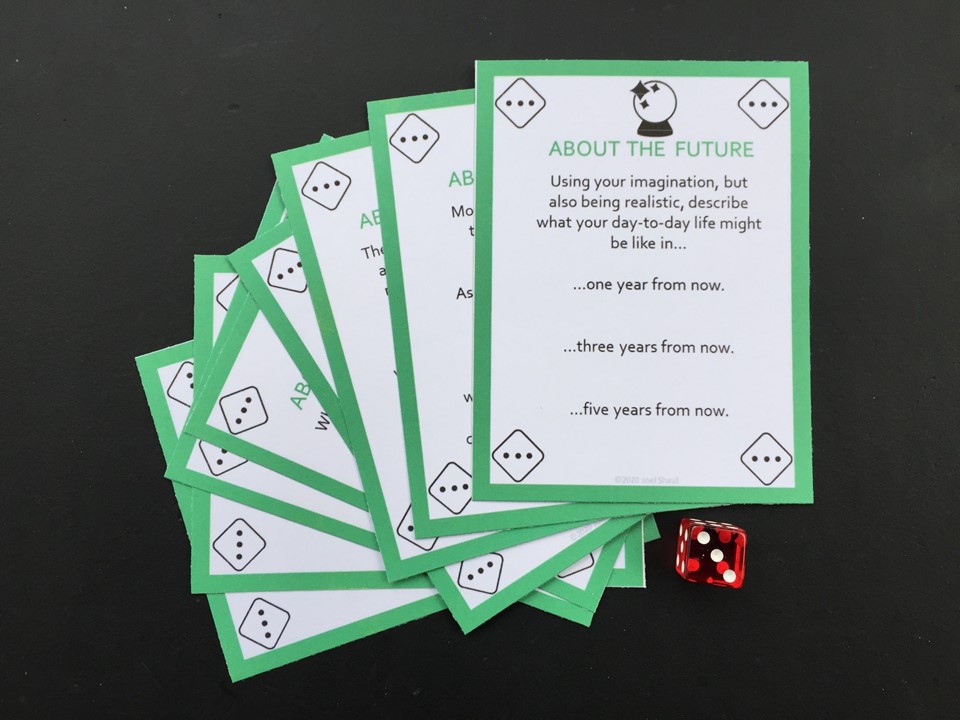
The About the Future cards task the player with imagining their future as an adult and how they will cope with new opportunities and challenges. Here they are.

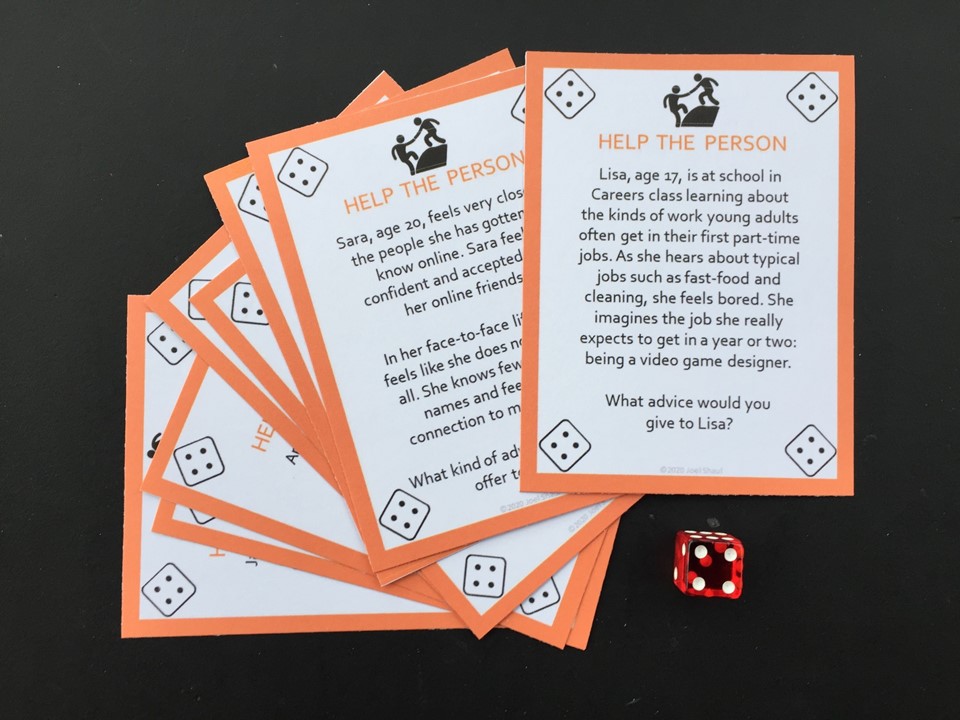
The Help the Person cards describe hypothetical social dilemmas faced by various young adults, for which the card player must offer solutions. Check out the examples below.

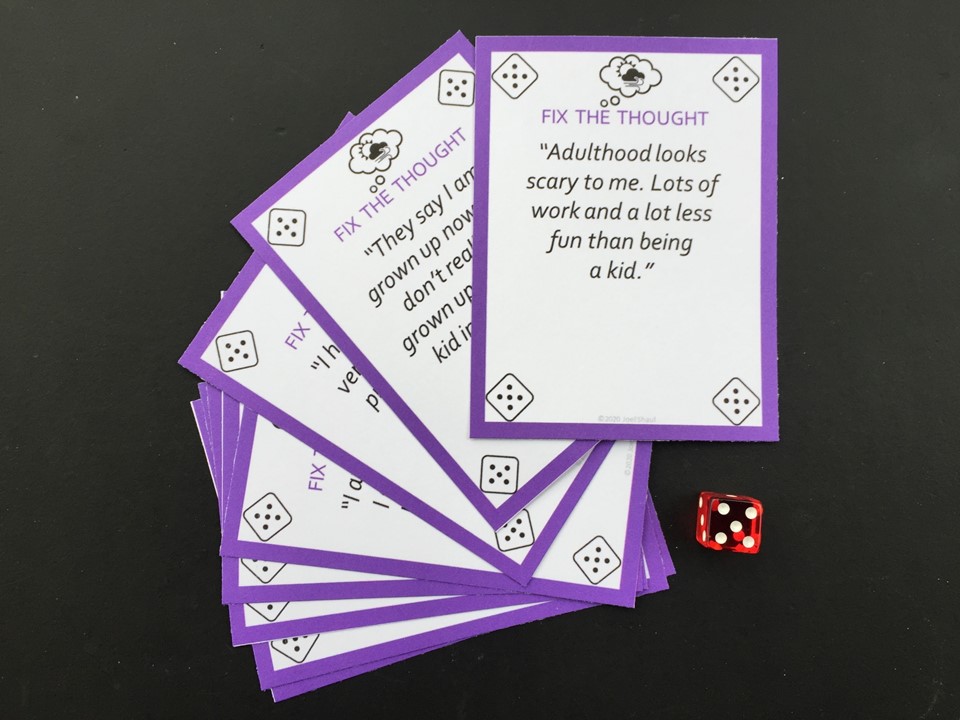
The Fix the Thought cards each describe typical negative thoughts experienced by many young adults with autism, and asks the card player to offer positive, rational counter-thoughts. See example below.

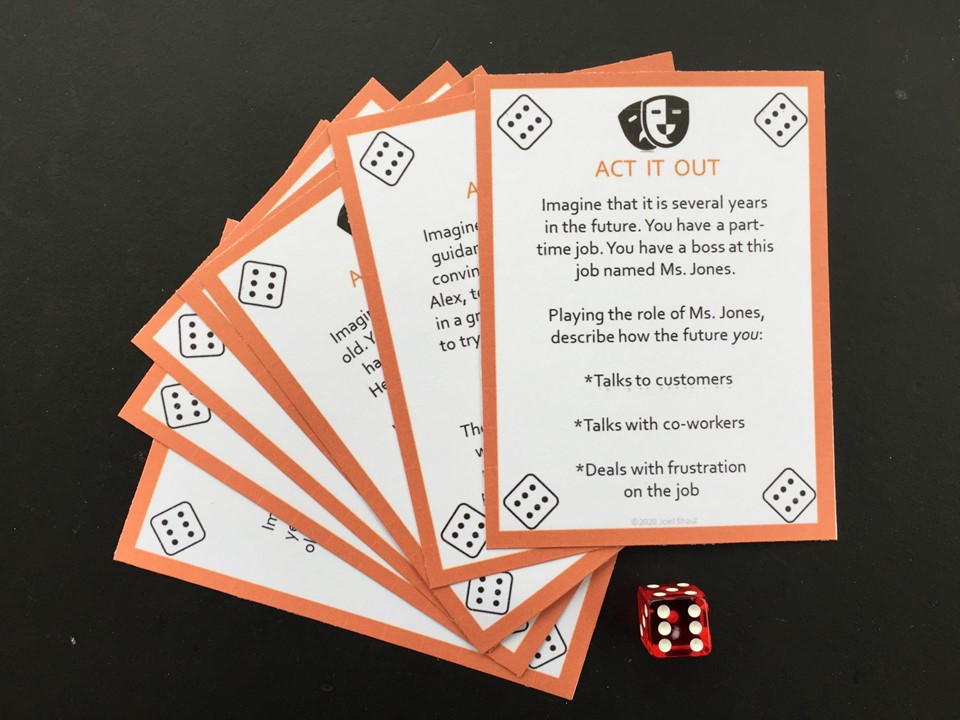
The Act it Out cards set up short role play scenarios on various social dilemmas described on the cards. Here is an example.

There are many ways to use these cards, in individual therapy, small group, or classroom settings.

There is a similar set of cards available on a specific young adult theme, preparing for the workplace. They are called Workplace Preparation Q & A cards.

Your comments on these resources are most welcome, and often helpful. Click HERE to send an email.
Your Interests Promo image for website

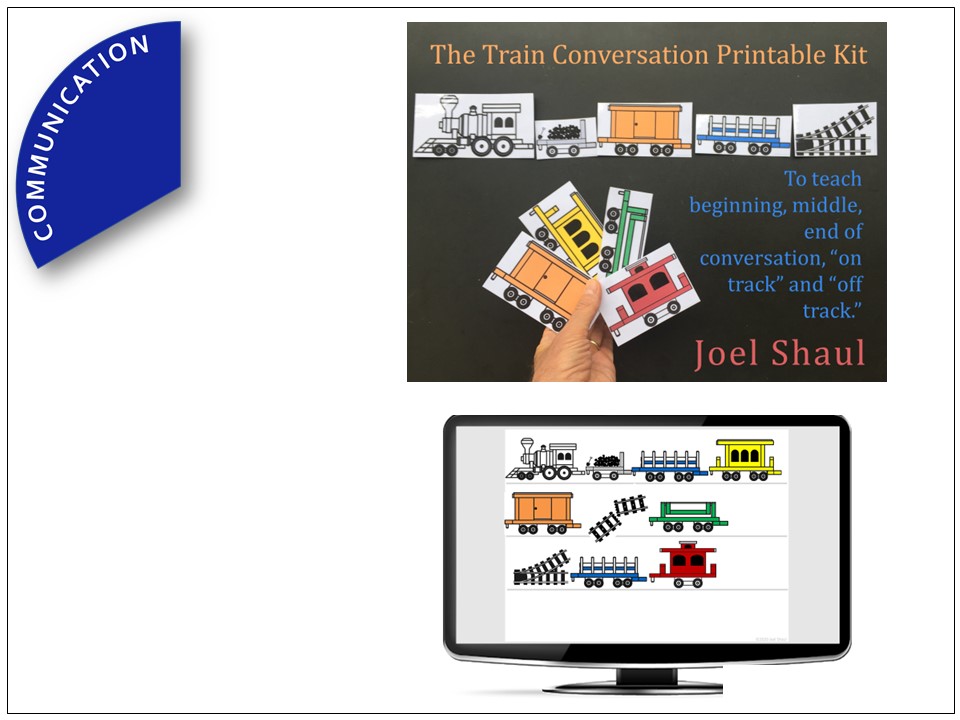
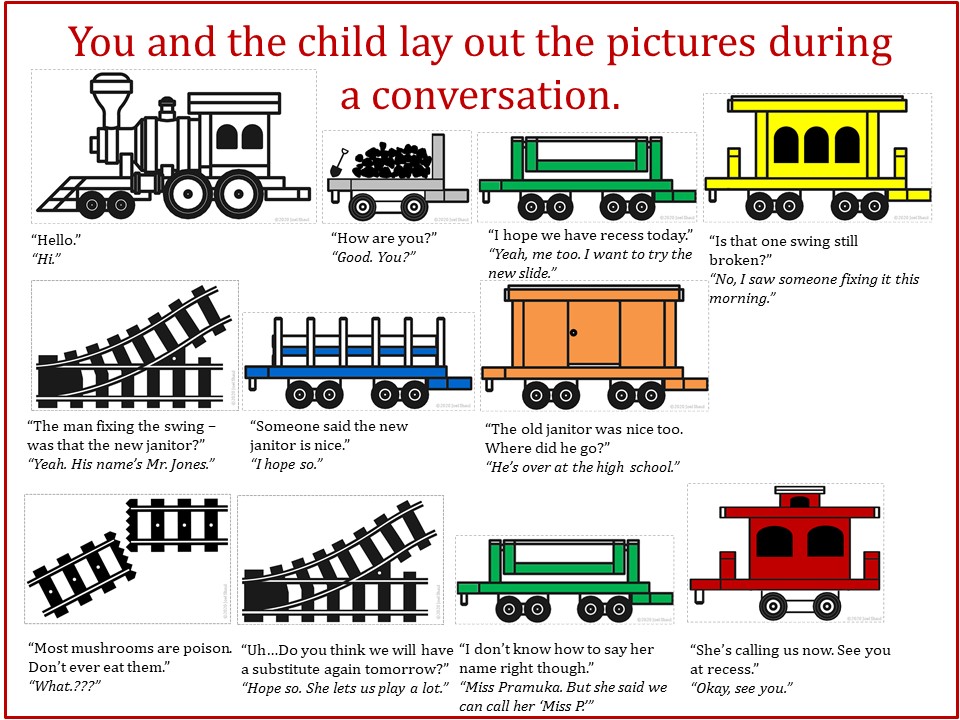
Train Conversation Activity for kids with ASD, print-out version

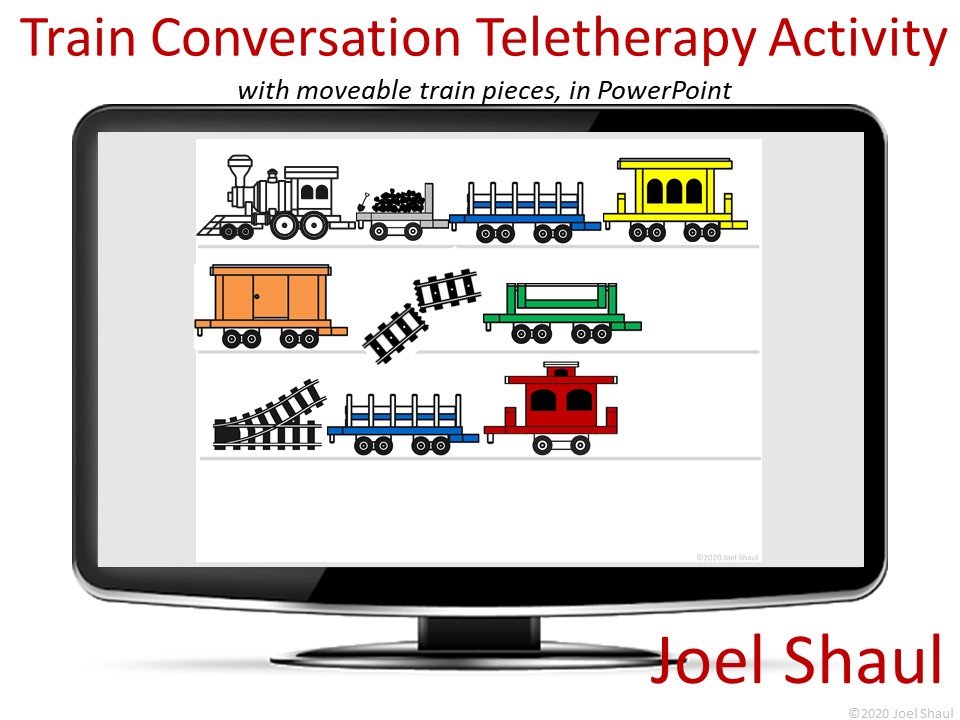
For the computer screen-based, teletherapy version of this resource, click HERE

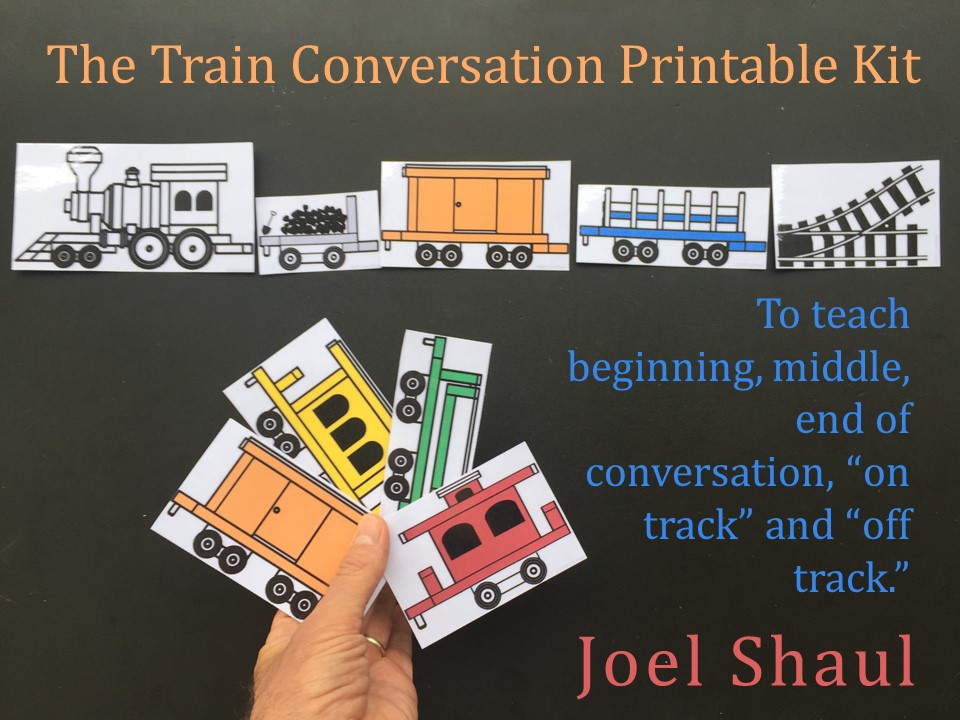
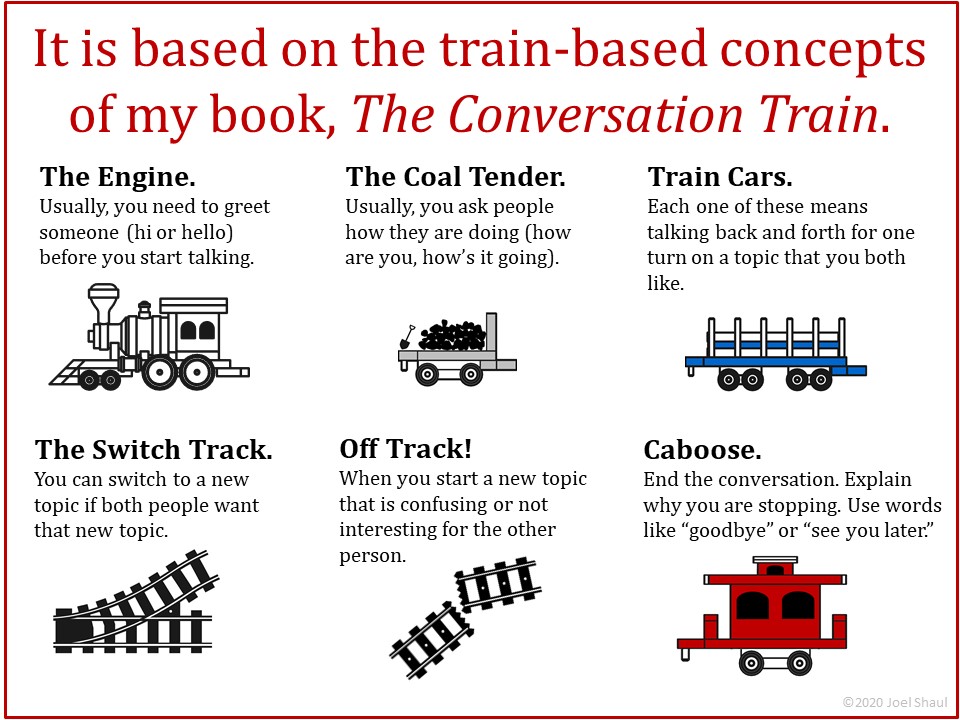
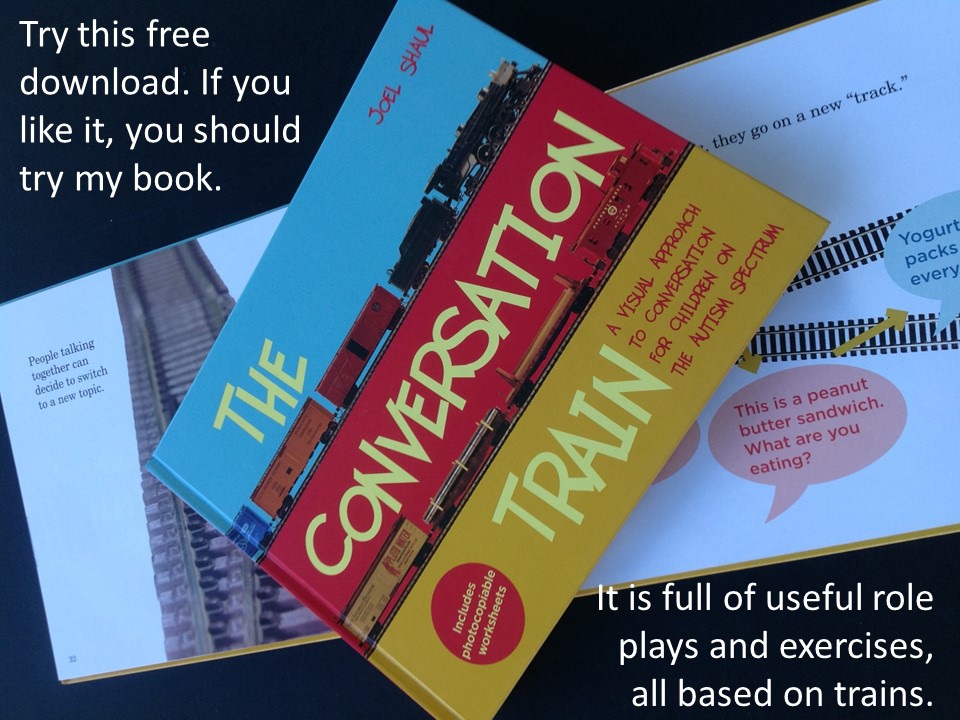
When helping young people with ASD to learn conventions of conversation such as greetings, goodbyes, topic coherence and how to avoid non-sequiturs, it really helps to employ hands-on methods to engage and sustain children’s interest. Using hand-held train pictures to practice “connected” conversation is a method I refined over many years in my own work with children on the spectrum. This downloadable kit might become a useful addition to your repertoire of methods for teaching conversation pragmatics.

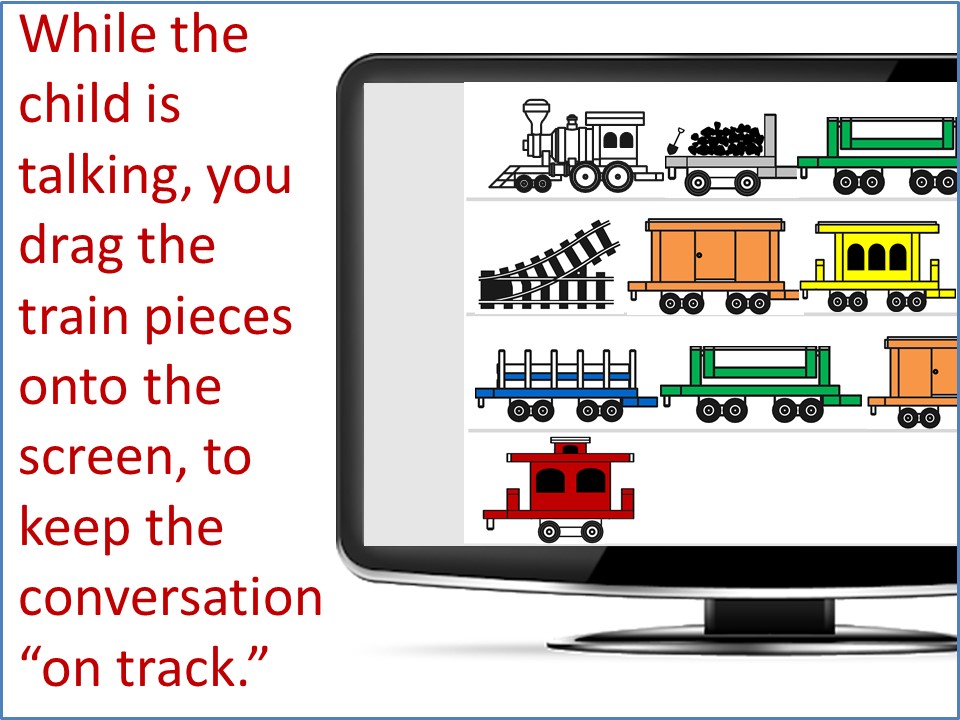
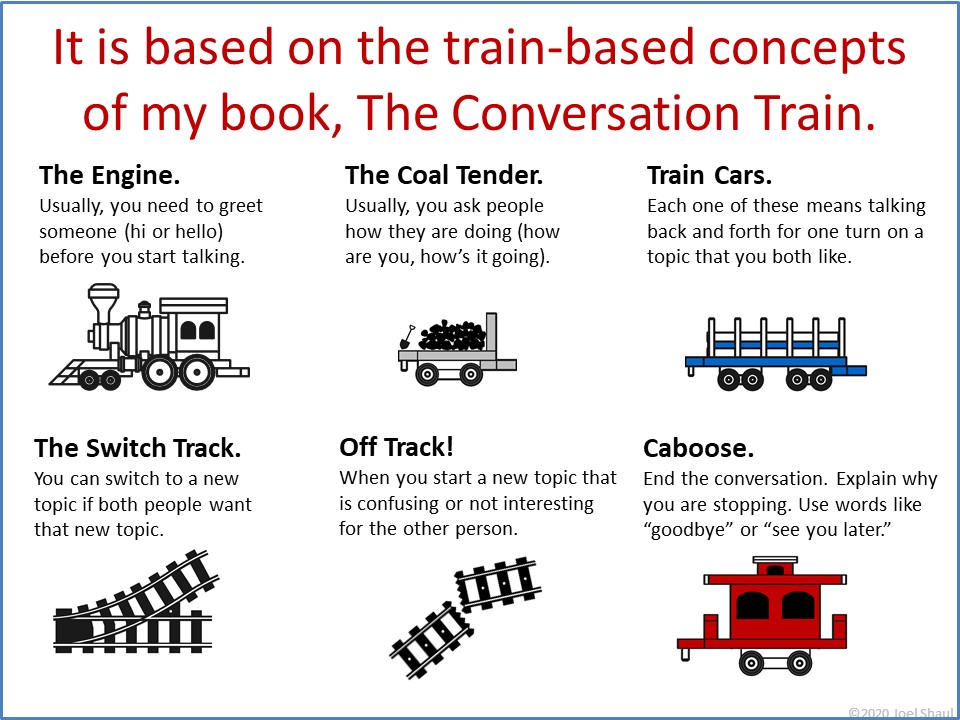
The Train Conversation download is based on the different parts of a train. The engine, train cards and caboose represent beginning, middle and end in conversation.
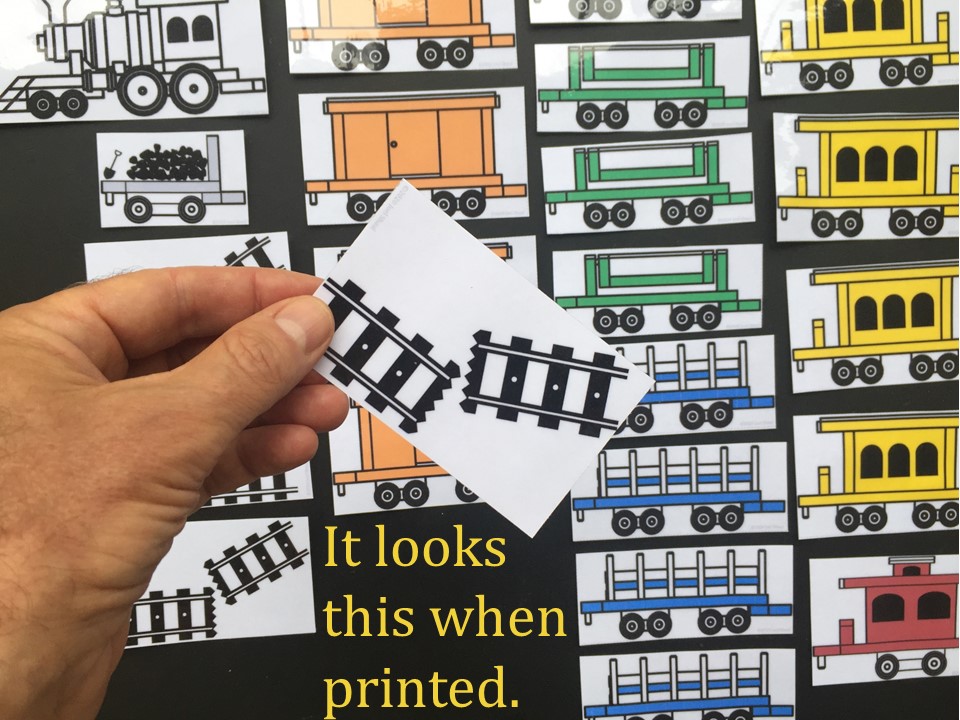
The Train Conversation kit includes train pictures you cut out. You use the train pieces to map out conversations with the autistic child.
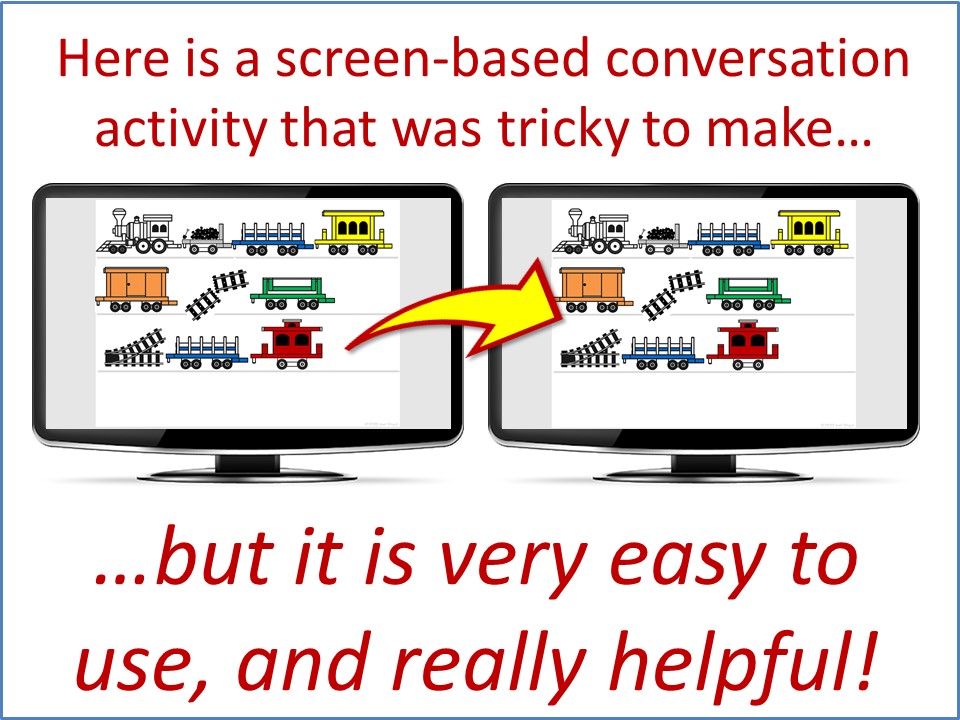
There is a good screen-based version of the Train Conversation kit. It works great, and you don't have to cut out the train pictures.

Green Zone Picture Cards for Conversation Topics, Common Ground

Green Zone Two-Person Worksheet for Conversation Common Ground

Your comments on these resources are most welcome, and often helpful. Click HERE to send an email.