Green Zone Picture Card Social Skills Game – a free download
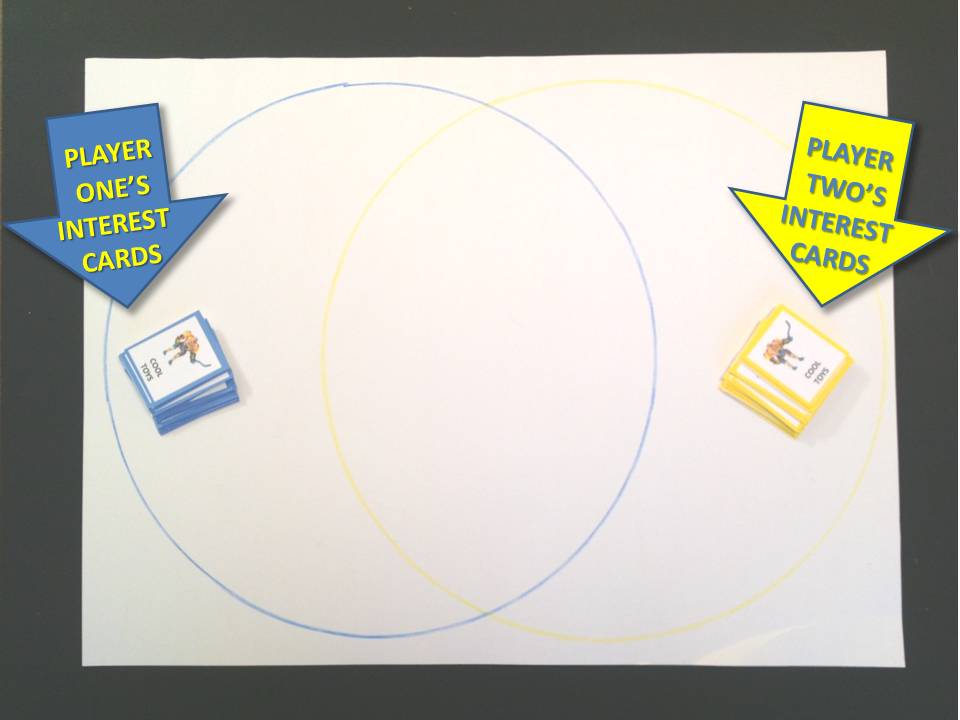
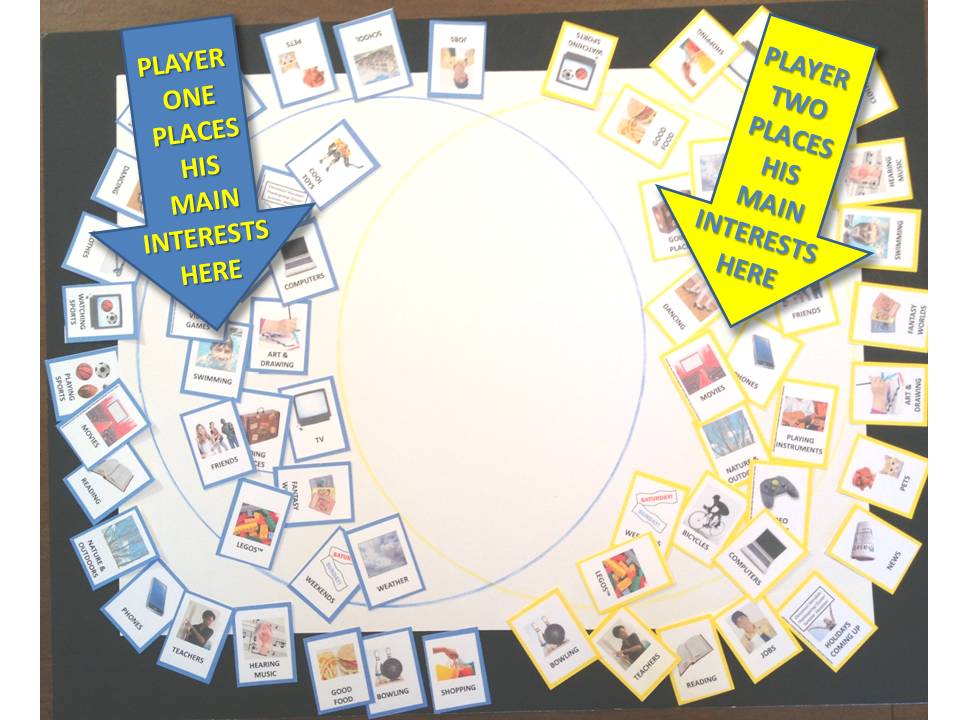
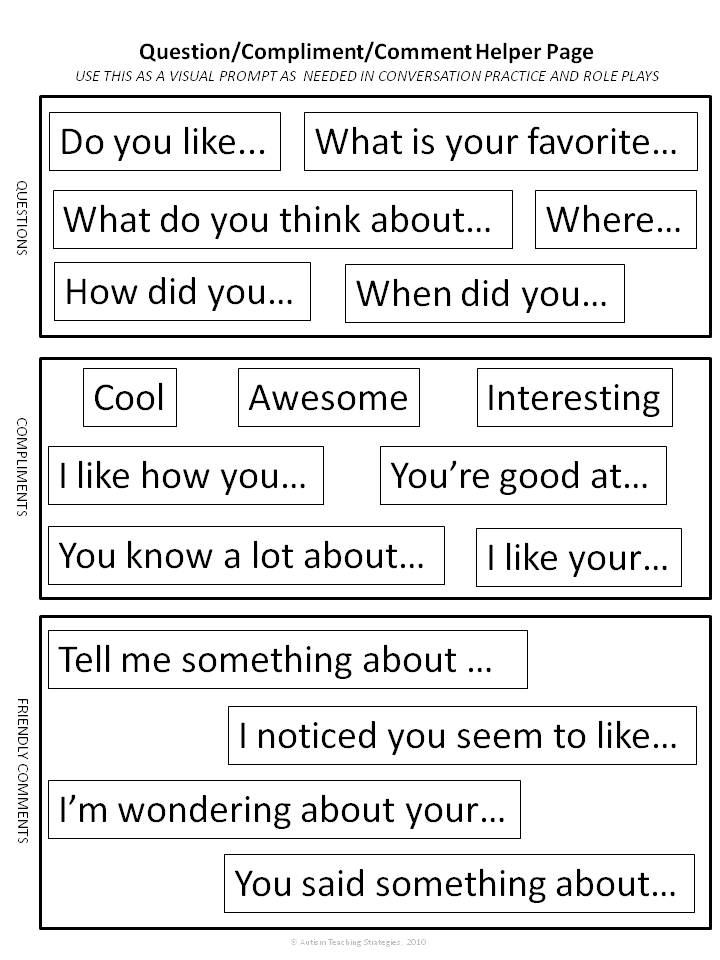
Children on the autism spectrum often struggle to discern the interests of other people and to take these interests into account in conversation. This social skills game employs a picture-based strategy works well in a variety of ages and reading levels. I would then encourage you to go on to fully explore this fun, visual method in my illustrated children’s book, The Green Zone Conversation Book, published by Jessica Kingsley Publishers.
To download the activity, click on the red link below.
I wish you success in your social skills work with children on the autism spectrum.
Helping children to work on upsetting emotions using cognitive behavioral therapy game activities
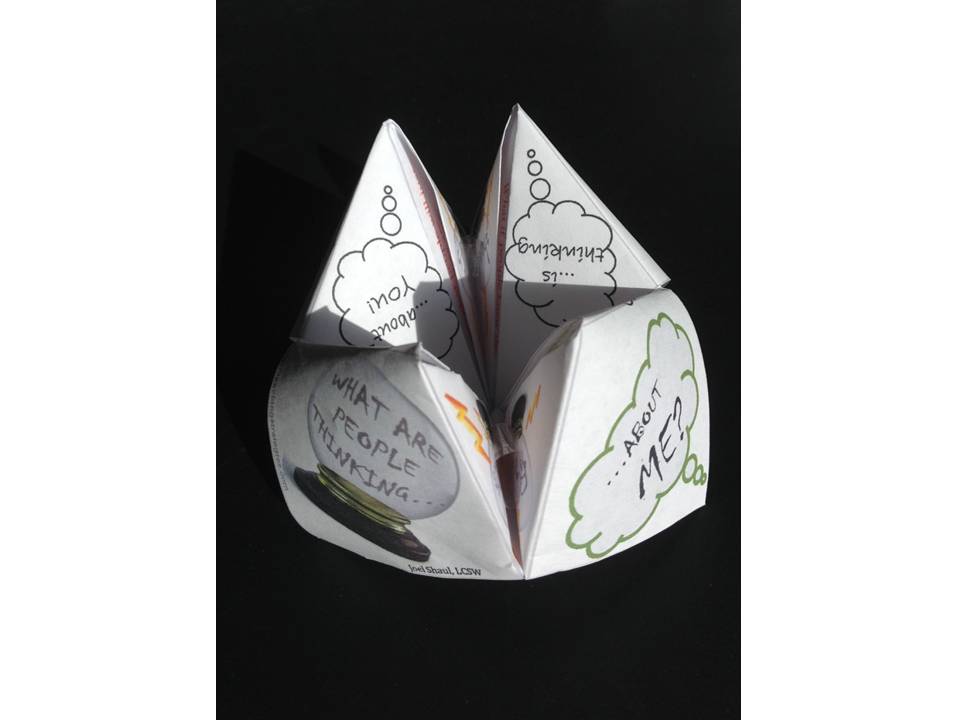
Many young people have persistent problems with anxiety, sadness, anger and other upsetting emotions. To maintain engagement in counseling and psycho-education, we need to provide novel approaches and introduce some levity whenever possible.
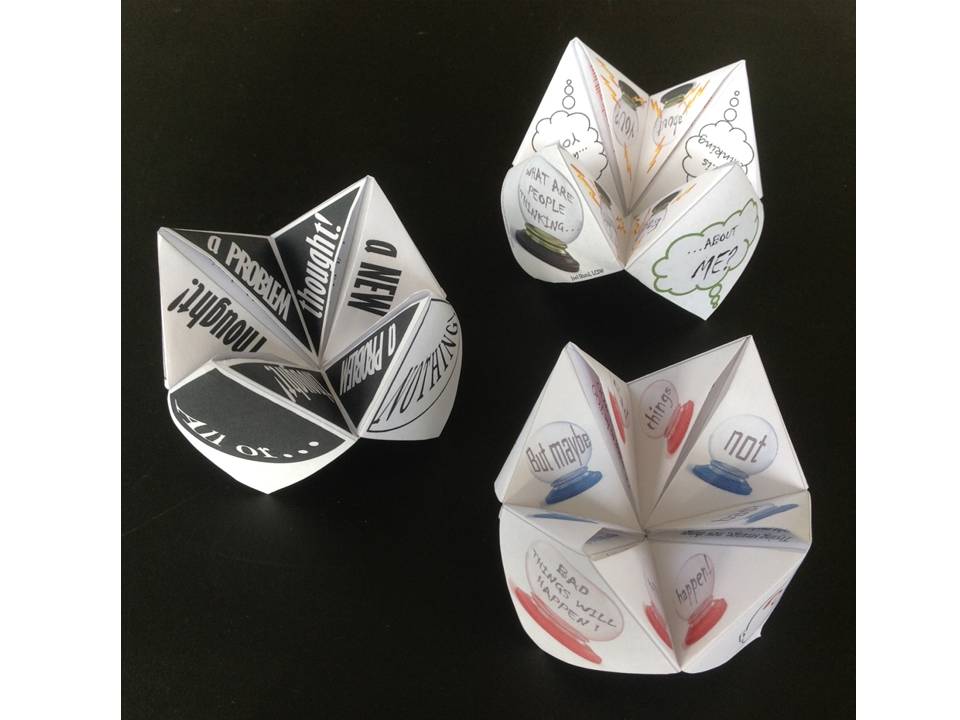
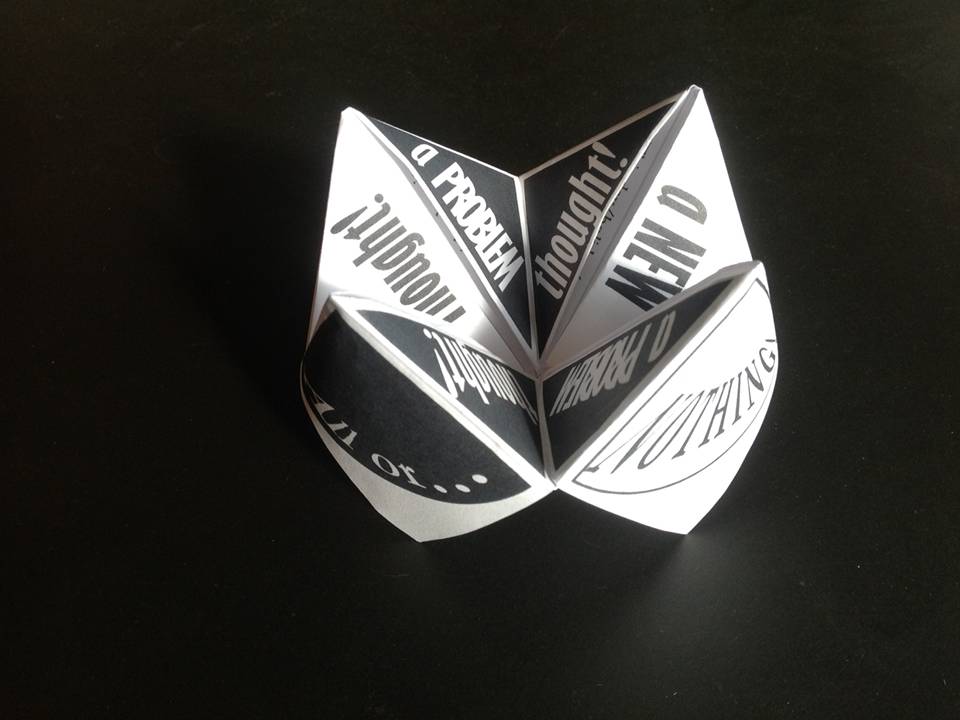
To check out a dozen other paper fortune tellers, on diverse social skills themes, please click here.
For a summary and links to all the free CBT materials on my website, please click here.
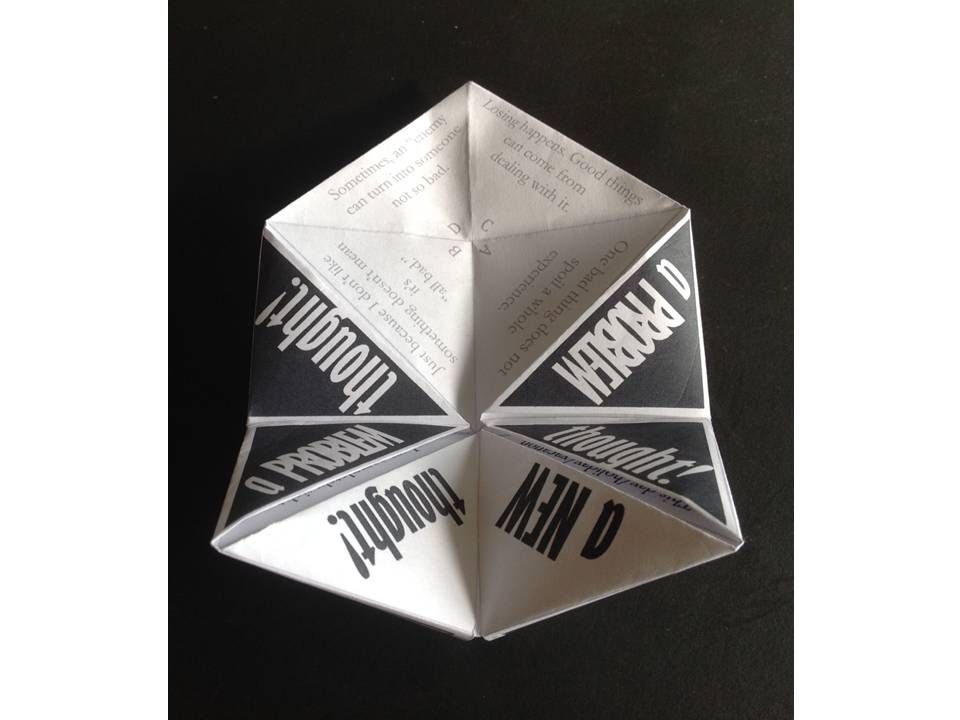
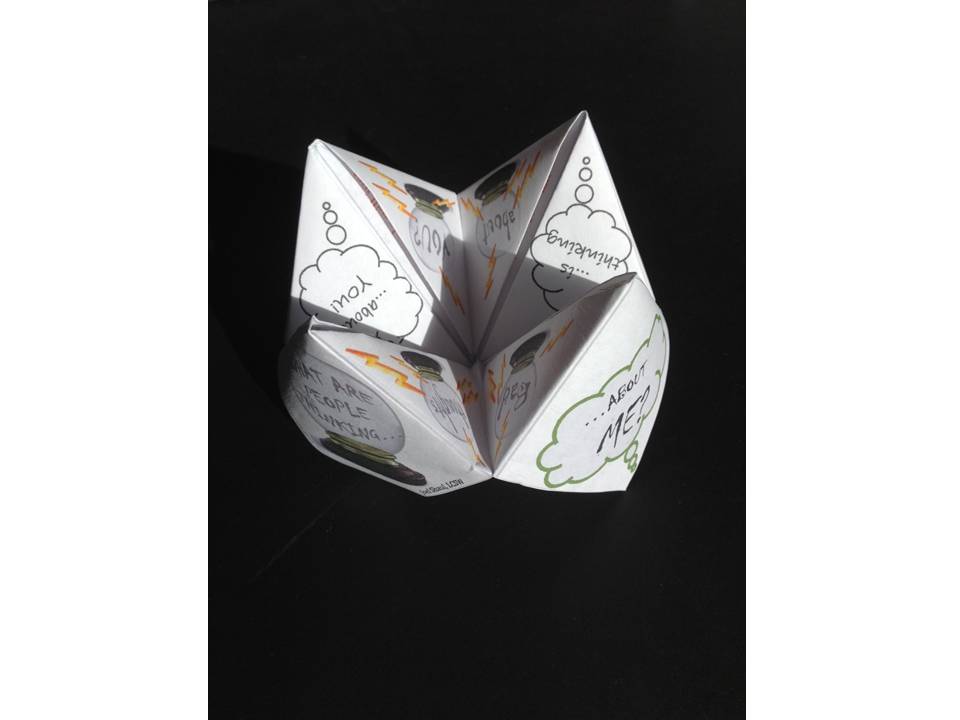
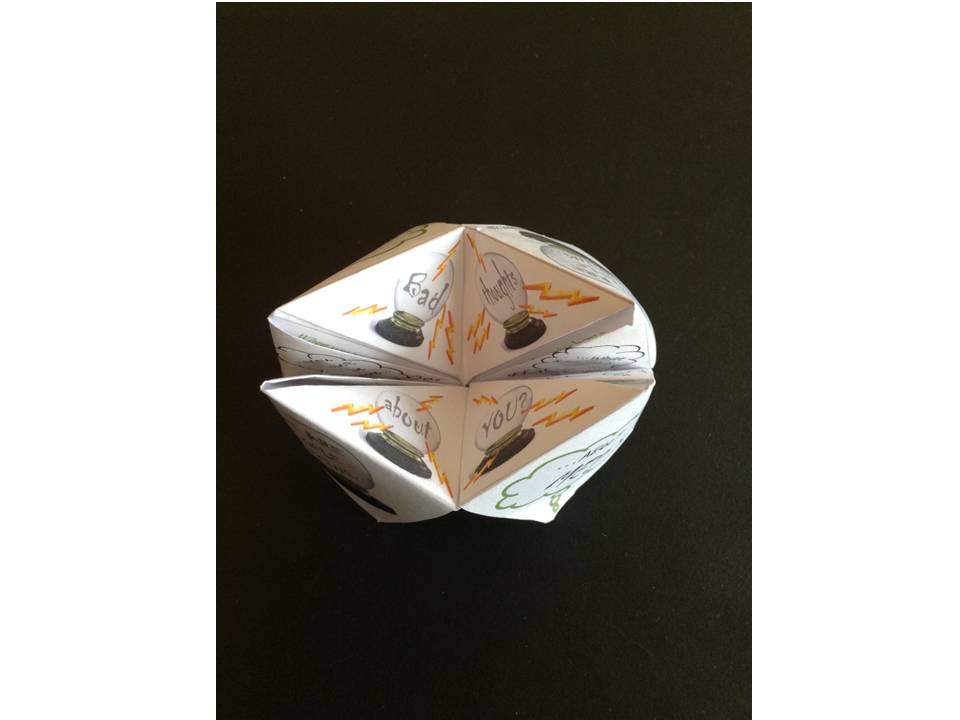
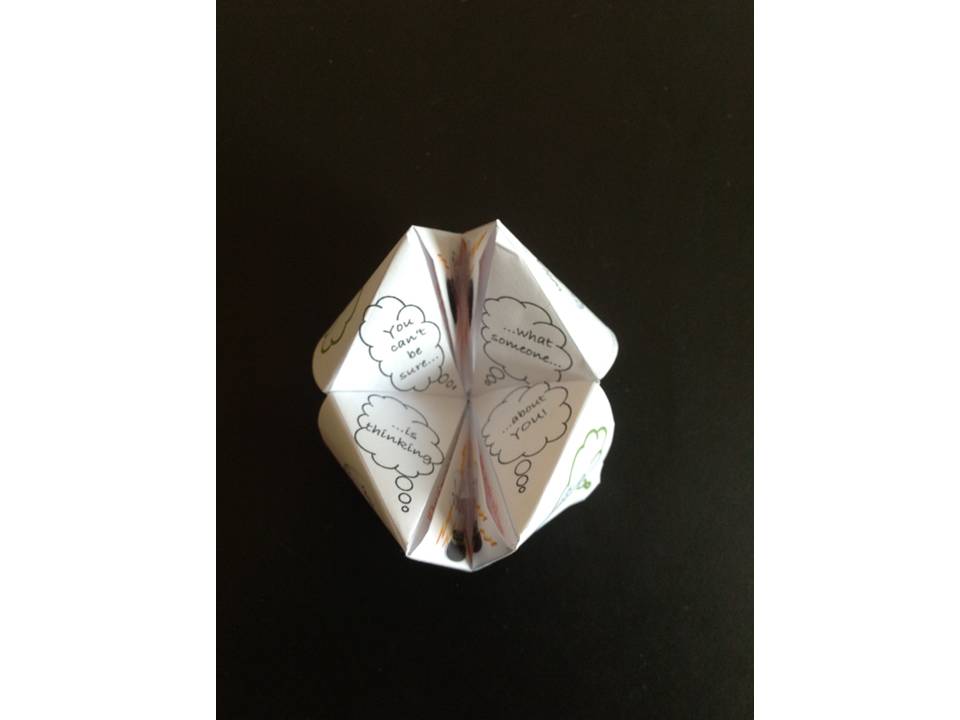
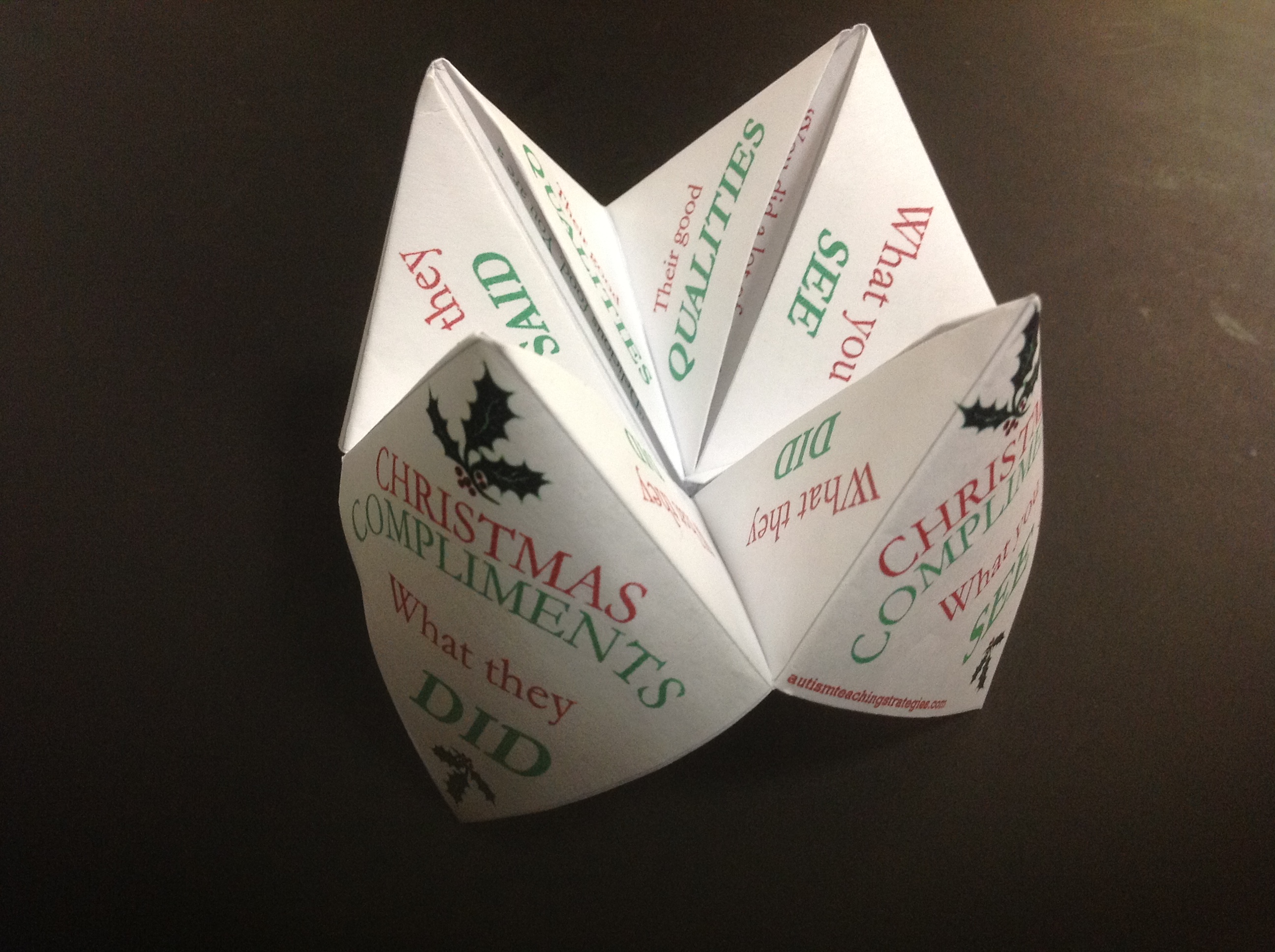
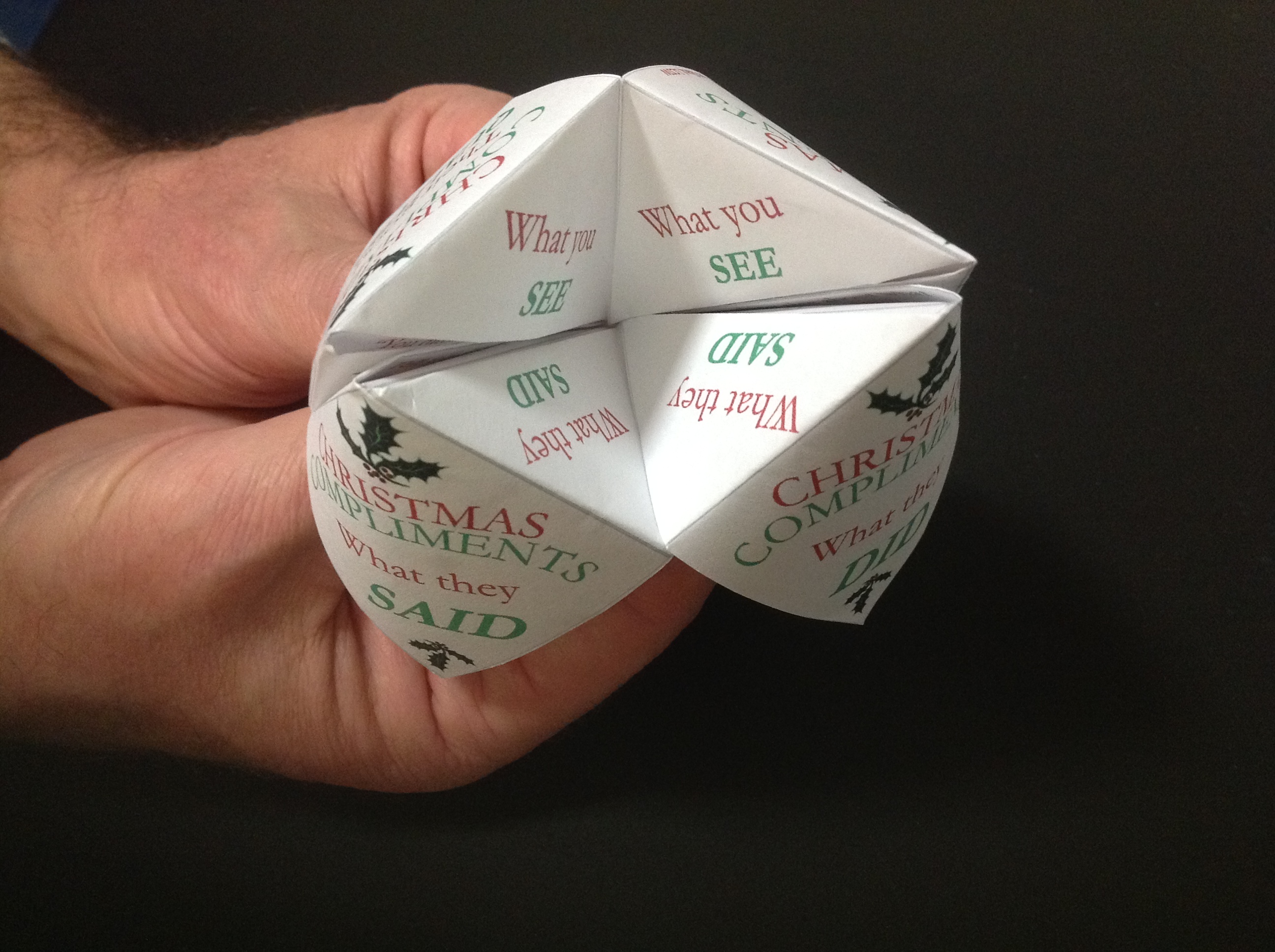
Some suggestions for introducing these Fortune Tellers:
1. Introduce some basics concerning the connection between automatic negative thoughts and negative emotions. I suggest you do this by viewing , with children, this very short video I made:
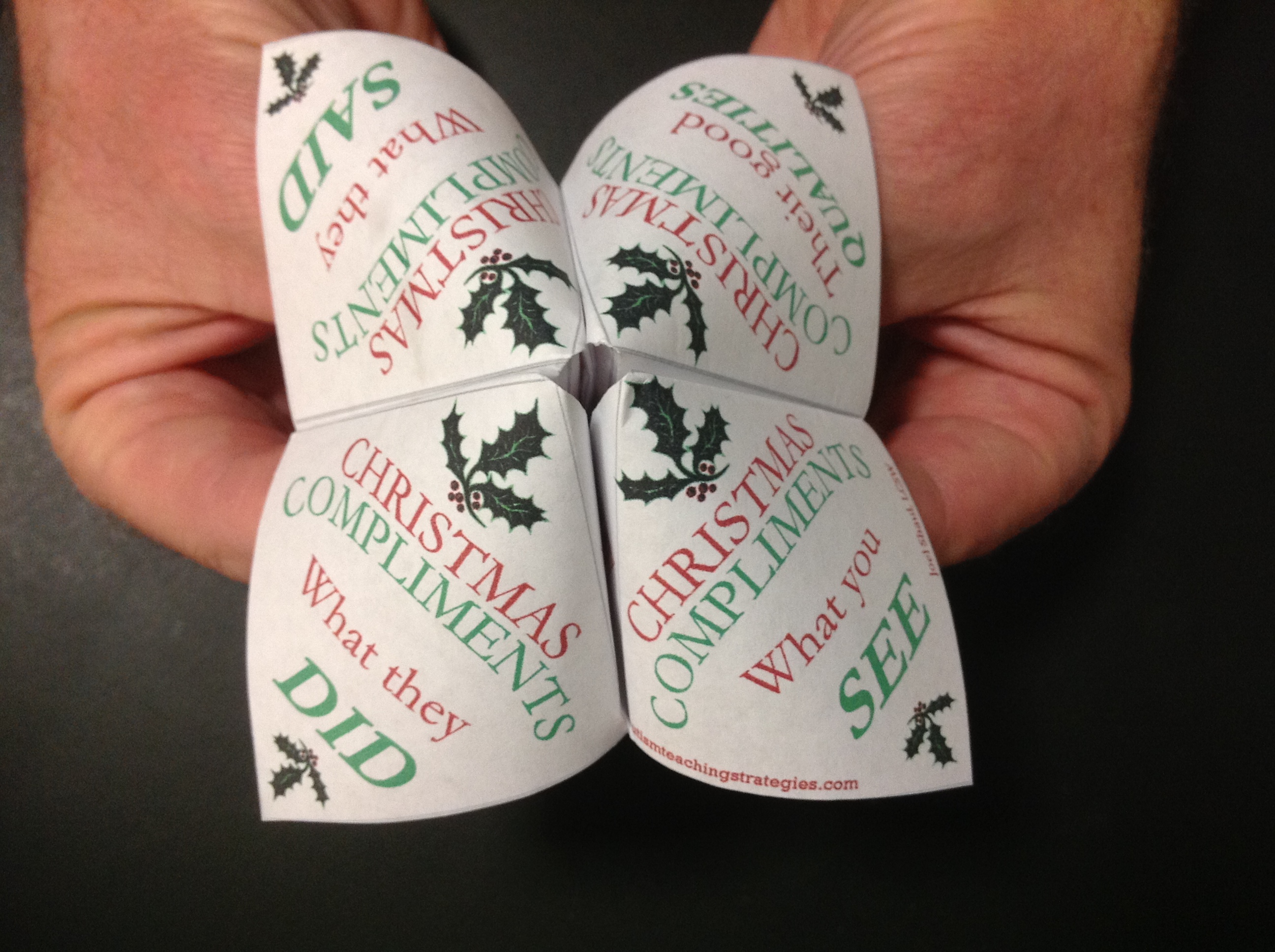
2. Working in pairs, and taking turns, person number one says, “Spell your name.” For each letter, the child holding the Fortune Teller manipulates the device back and forth.
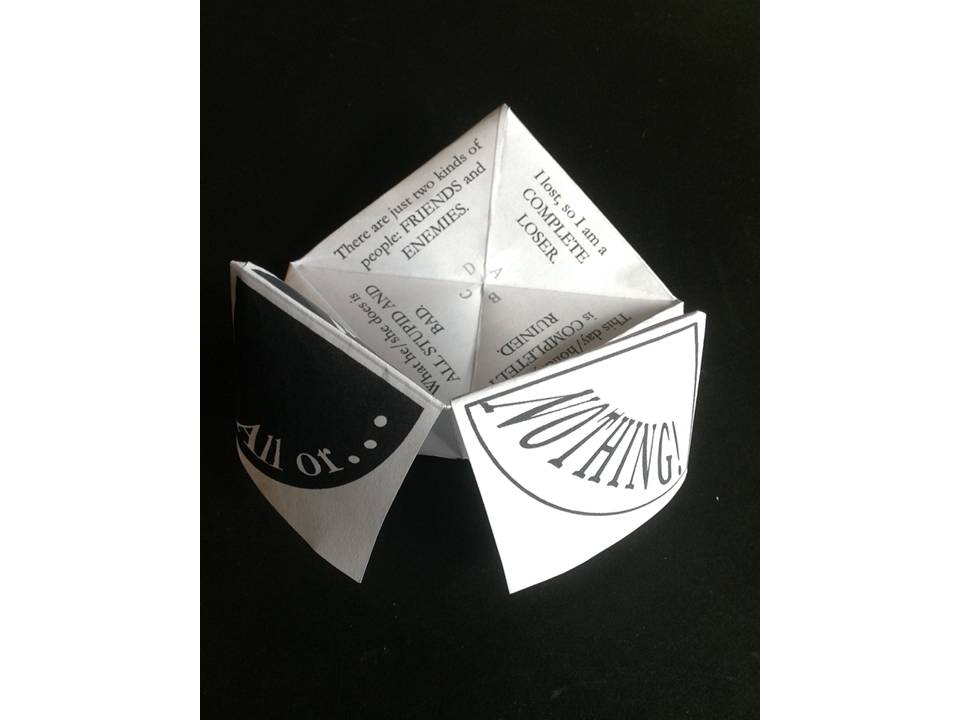
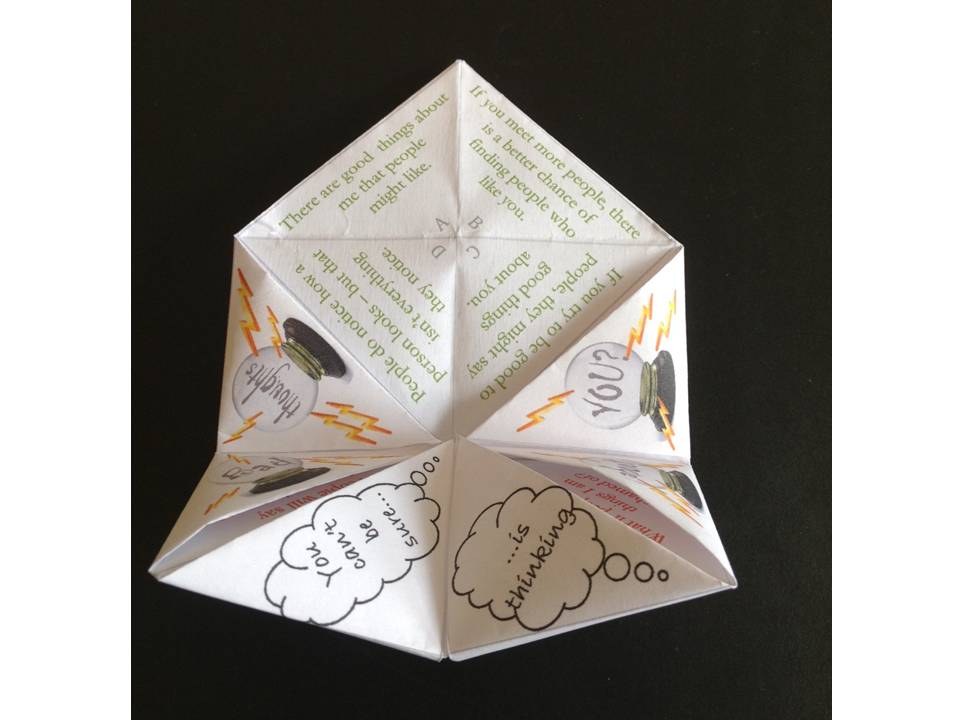
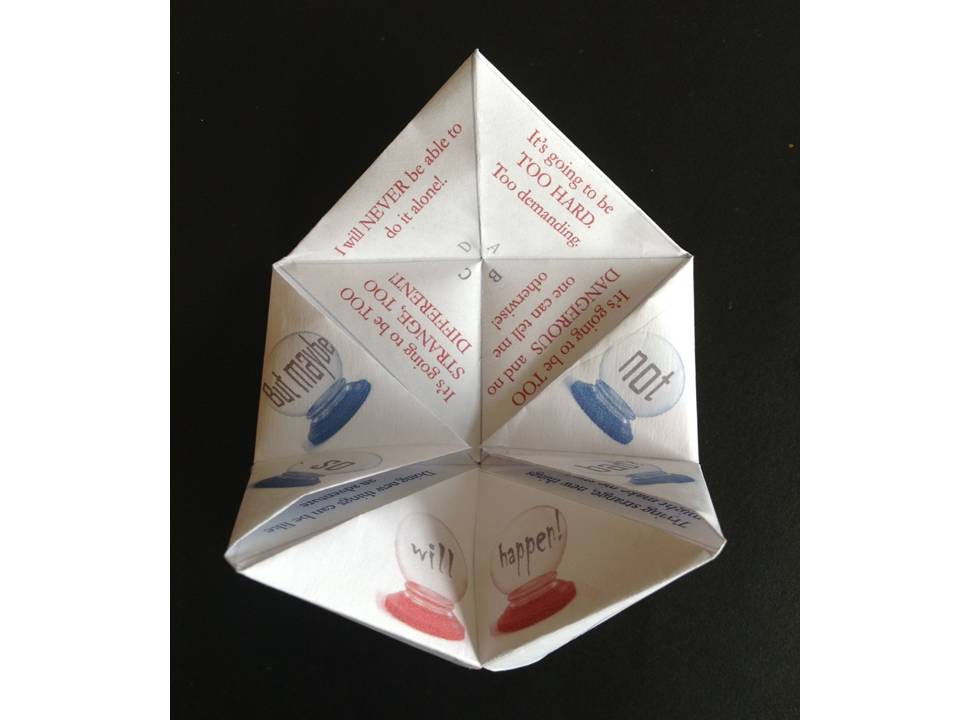
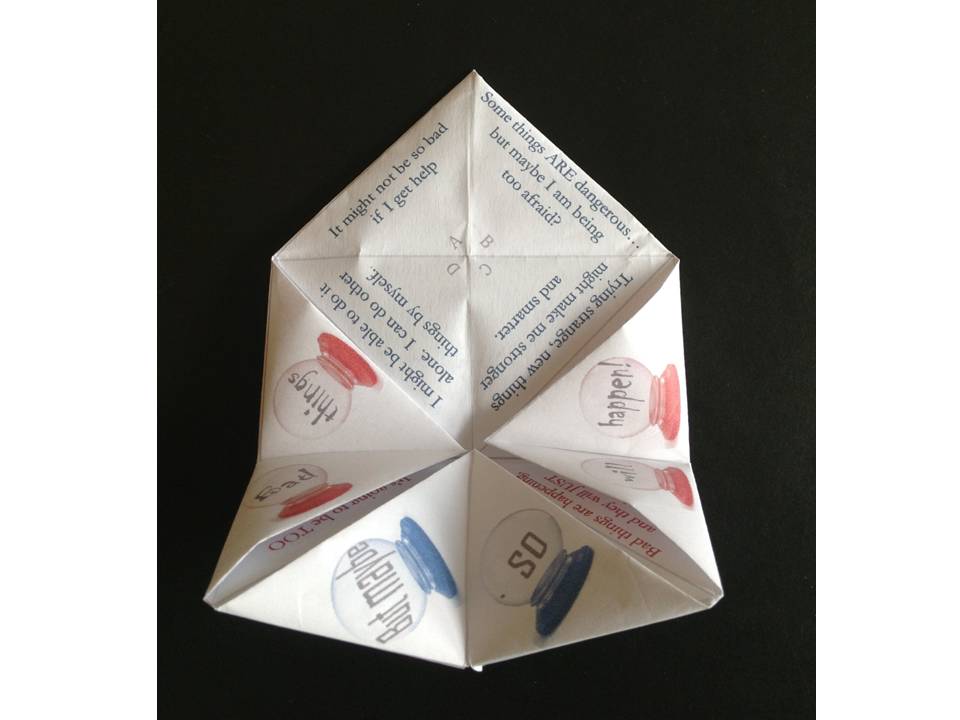
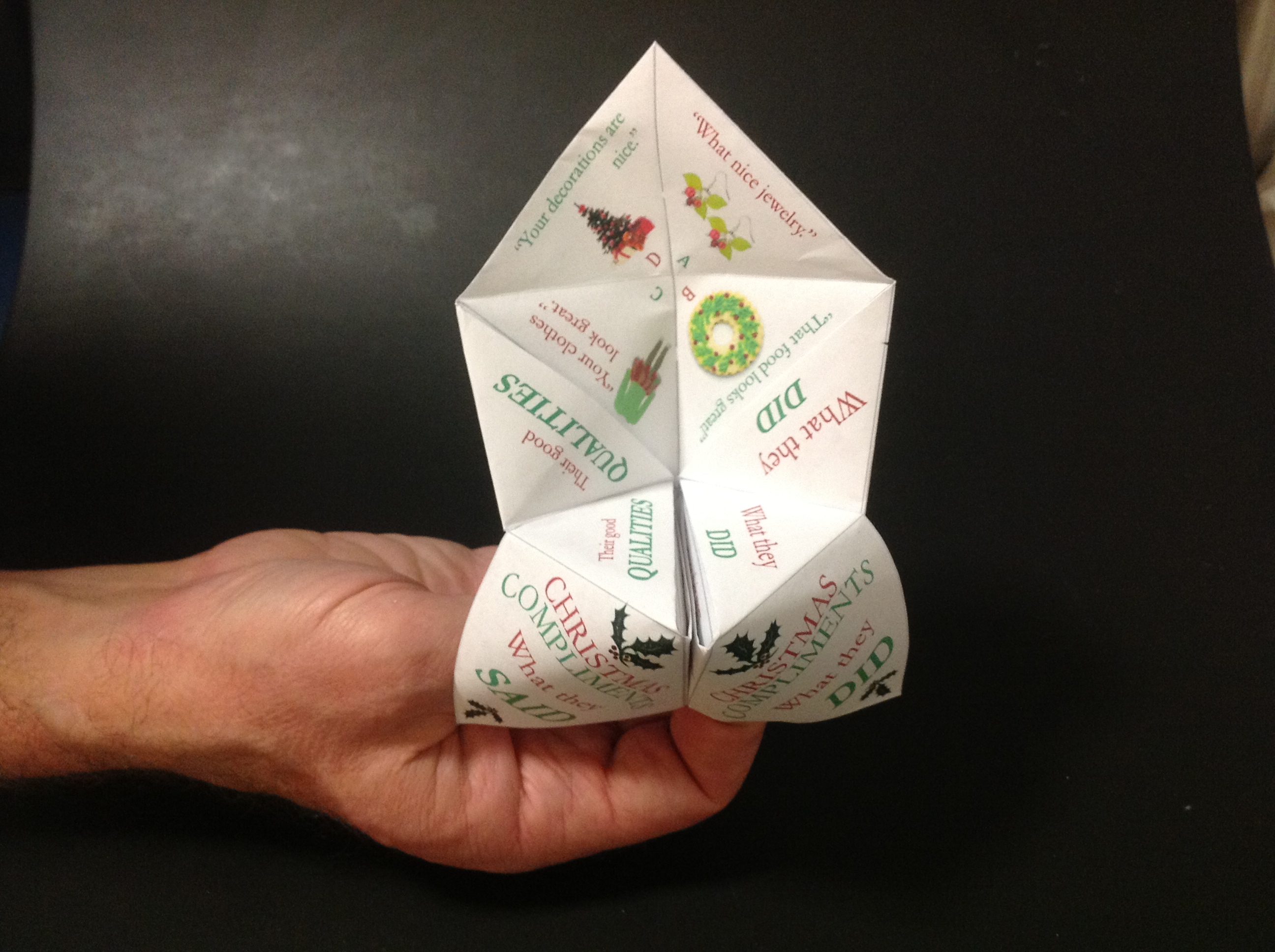
3. Person number two is then shown the two options appearing on the inner triangles. Person one says, “Pick which one you want.” You can see photos of this farther down on this page.
4. Person one opens up the innermost petals, where four options appear. He tells person two, “Pick A, B, C or D.” Person one reads the option selected. If the option read is a negative thought, person two has to tell how to deal with such thoughts. If the option selected is a positive thought, person two must describe a time when he needed to use such a thought to solve a problem.
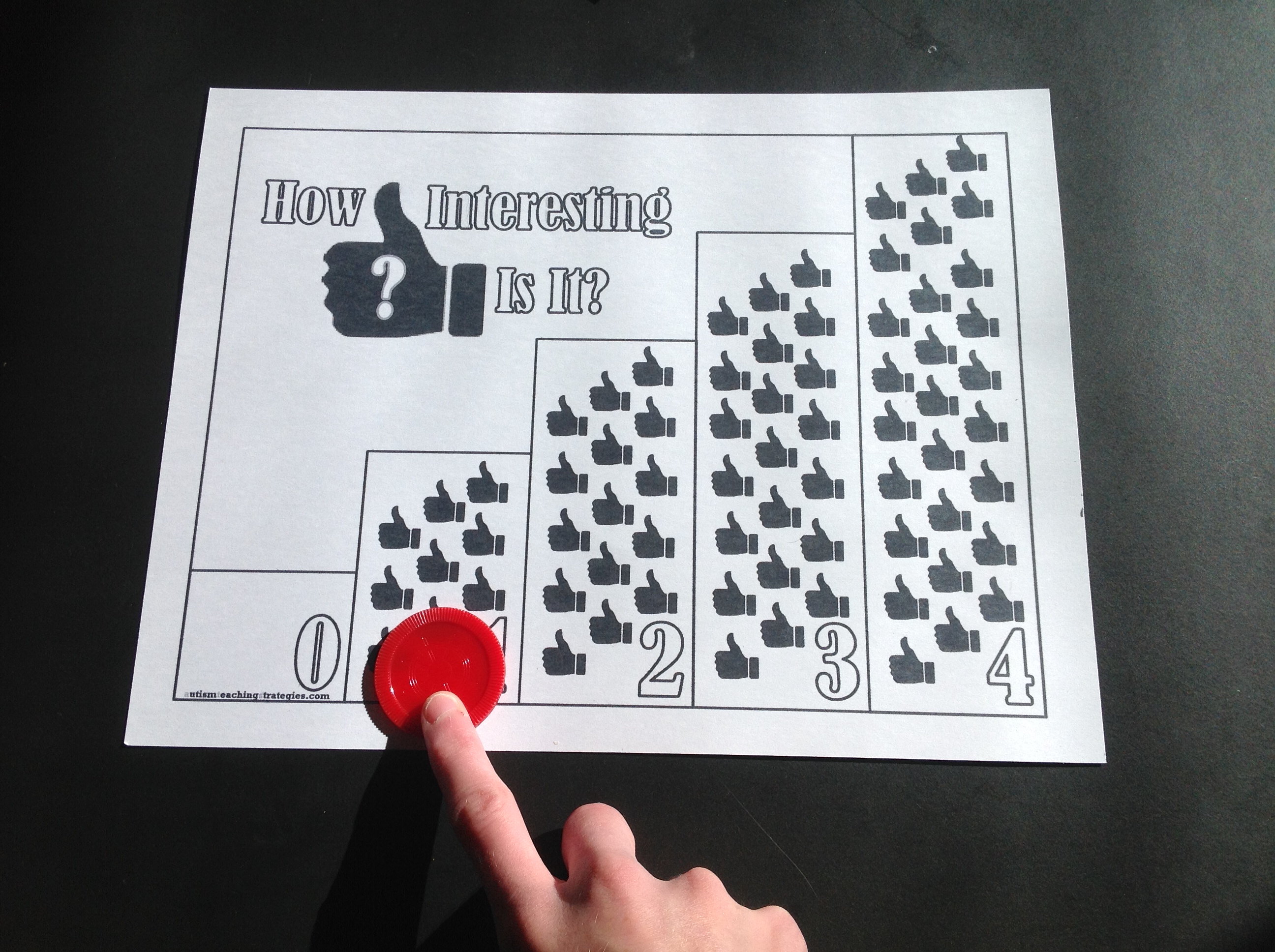
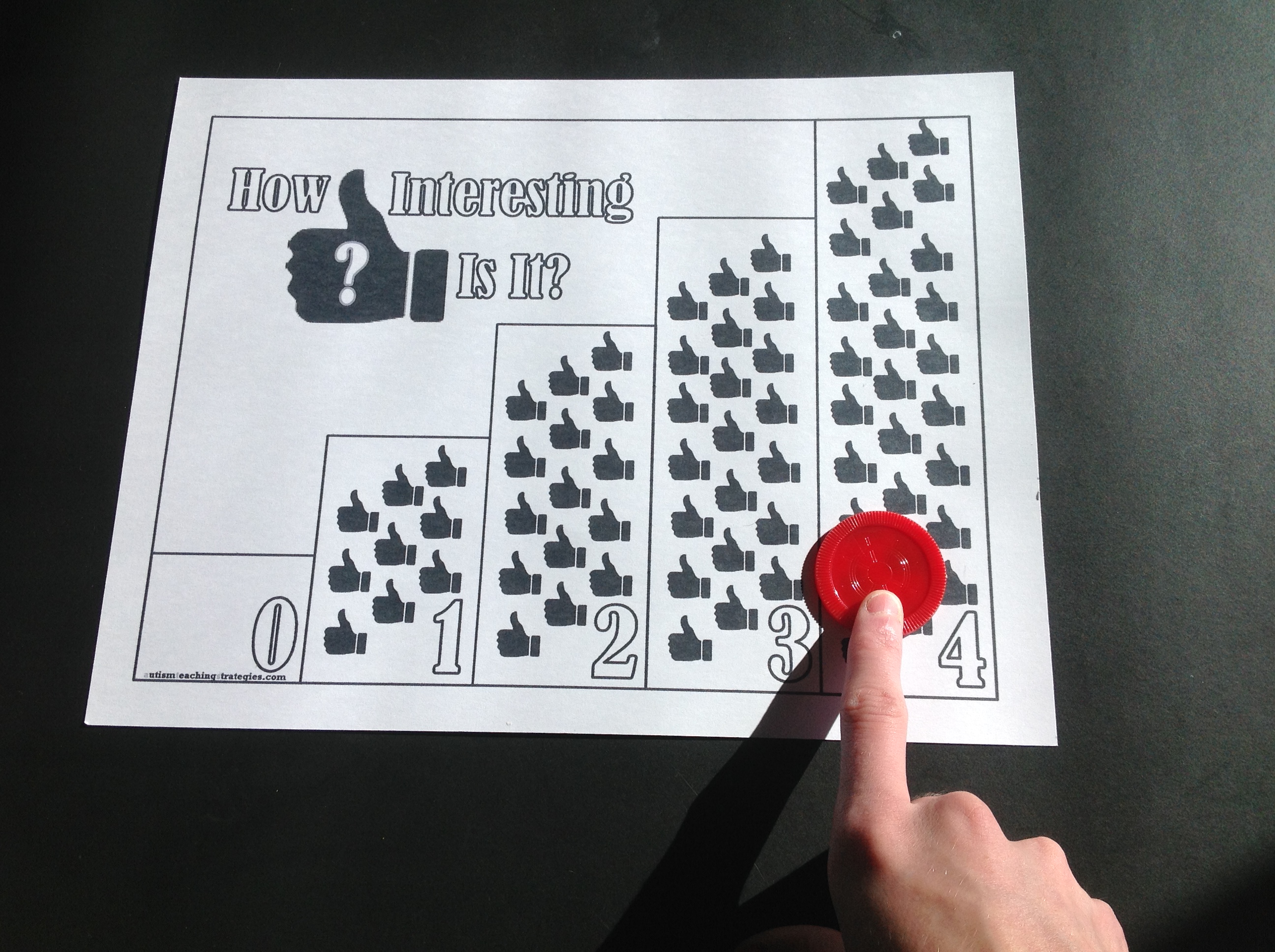
Here is part of the How Interesting Is It? kit. The child moves the chip from one category to the next based on his assessment of how interesting a topic is to another person.
A set of social skills learning materials to help teach what conversation topics tend to score “likes” with peers
Children with autism spectrum disorders can find it very difficult to know what to say to their peers. Children with ASD tend to fall back on their own preferred topics.
Here are some activities to increase awareness of various things that other people find interesting to talk about. The activities employ the thumbs-up “like” symbol, which is very familiar to most children as an indicator of what pleases another person.
This kit includes:
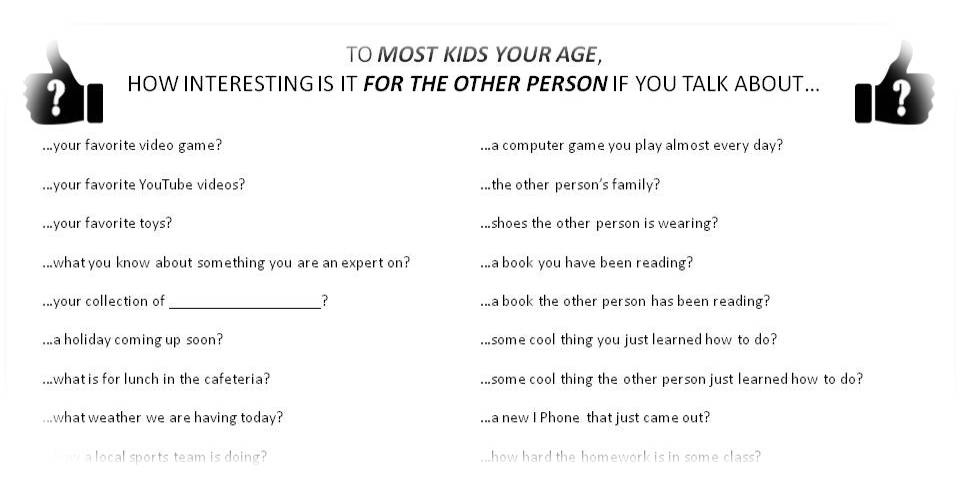
1. How Interesting Is It? topic list [fragment shown below].
This is a list of ninety different conversation topics. You read them out loud to children so they can rate how interesting they are.
2. How Interesting Is It? rating sheet [shown below].
Children move a chip between 0 and 4 based on how interesting they think a particular conversation topic might be for another person.
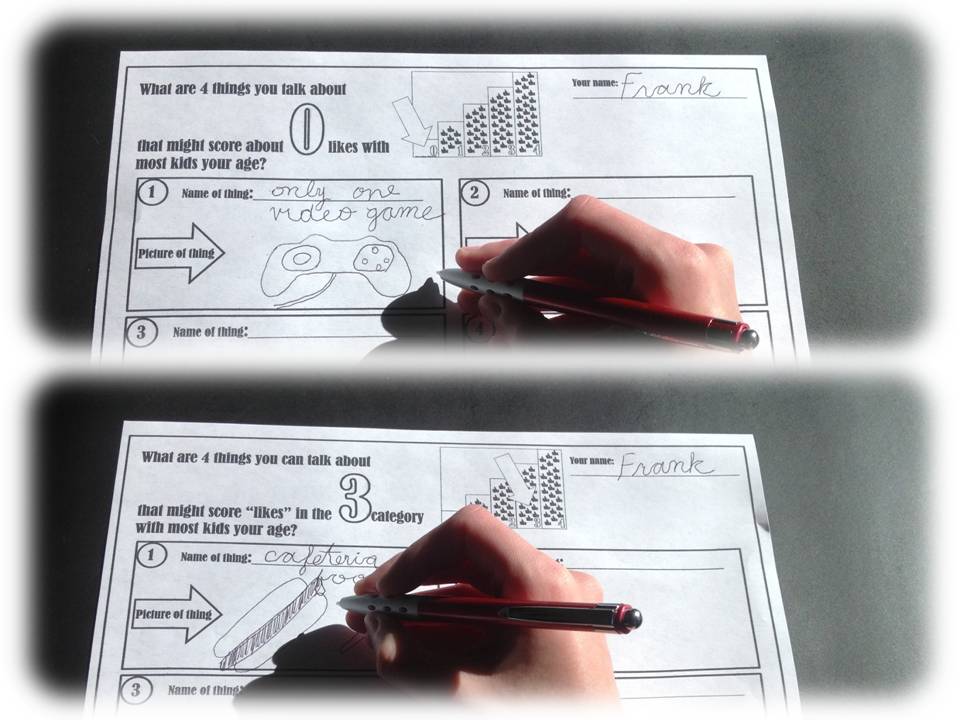
3. How Interesting Is It? picture worksheets [examples shown below]
This set of five worksheets is to help children who need more practice.
Some suggested language to use when introducing these activities:
“Who has ever seen the ‘like’ icon on Facebook or other places online? What does it mean? It means someone likes something that they see or hear online. Some things online get lots of ‘likes’. Some get few, or none.
When you are talking to other people, you might also be scoring ‘likes’ – in their minds. Or you might not be scoring ‘likes’ at all. When you are ‘interesting,’ it is something like scoring ‘likes’. When you are not interesting, or boring, you are not scoring ‘likes’.
You can get much better at scoring ‘likes’ in conversation by paying close attention to what you are saying and what the other person might find to be interesting. Your own words might seem really interesting to your own ears. Maybe the other person will like your words too. But, depending on the topic and what the other person finds interesting, your words might not score any ‘likes’ at all.
Here are some activities to help you get better at scoring ‘likes’ when you talk.
1. How Interesting Is It? rating sheet. I will read you a number of different conversation topics. For each one, you have to take a guess on how interesting, on a scale of 0 to 4, it might be to the other person. Place your chip on the number that you think shows how interesting it is to the other person, not you. [Note to teacher: alter the wording as you read through the list, to clarify and specify as you see fit.]
2. How Interesting Is It? picture worksheets. For the Zero sheet, pick out some things from the list that might be uninteresting to most kids – or things that you think of yourself. Write them down on the sheet and draw small pictures. For the 1, 2, 3 and 4 sheets, write and draw things that kids your age might find more interesting.”
Note to teacher/therapist: These activities work best when you add role play practice. Select a number of topics that would rate a 3 or 4 with most children. You play the role of the other child in the conversation. Then, assign the children to converse with you on these selected topics.
I hope you find these materials enjoyable and useful.
Imagination, cooperation, and children with high functioning autism
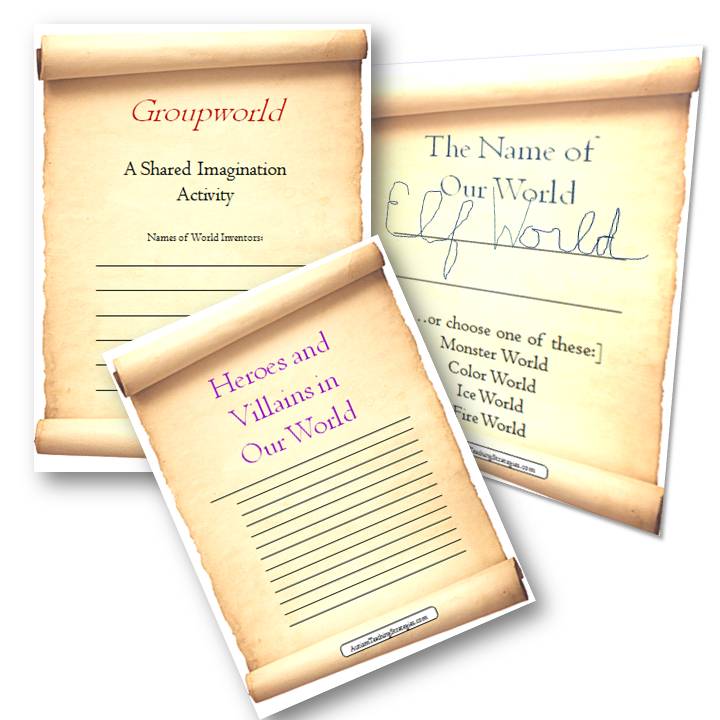
Here is a fun, challenging activity to promote group cooperation skills. It is derived from an idea I found in a book years ago. I have provided you with print-outs to help structure the activity. This activity works well for many children ages 7 and up.
Many children have very rich lives of imagination. Children with ASD’s often have involved fantasy worlds – worlds they mainly keep to themselves. The Groupworld activity is designed to make imagination more interactive by having children work together to invent a world of their own together.
Here is some language you may consider using to introduce the activity:
“We are doing The Groupworld activity. You all have great imaginations, but you are used to using your imagination all by yourself. In the Groupworld activity, you will have to combine your ideas with the other people here to make a world that has not just your own ideas in it, but everybody else’s ideas as well.
This will be fun, but it will also be hard. People naturally like their own ideas. It takes effort, and practice, to mix your ideas with other people’s ideas and not get into arguments.”
This activity is derived from an idea I found in Relationship Development Intervention with Children, Adolescents and Adults, by Gutstein and Sheely.p
I hope you enjoy this social skills activity. To learn about more group activities to foster sharing, collaboration and creativity, click here.
[ for another holiday-themed social skills activity, CLICK HERE ]
Children on the autism spectrum are often deficient in the skill of giving compliments. They tend to not be aware of the obligation and necessity of offering compliments to build and maintain good will in relationships.
During holidays in which family and friends give and receive gifts, and adults host meals, parties and other celebratory events, part of the expectation is that those on the receiving end will praise that which is provided for them to play with, eat and enjoy. It is useful for children with ASD to practice the social skill of giving compliments in advance of such occasions.
I have put a lot of free downloads on this website to promote giving compliments. Here are a few to check out:
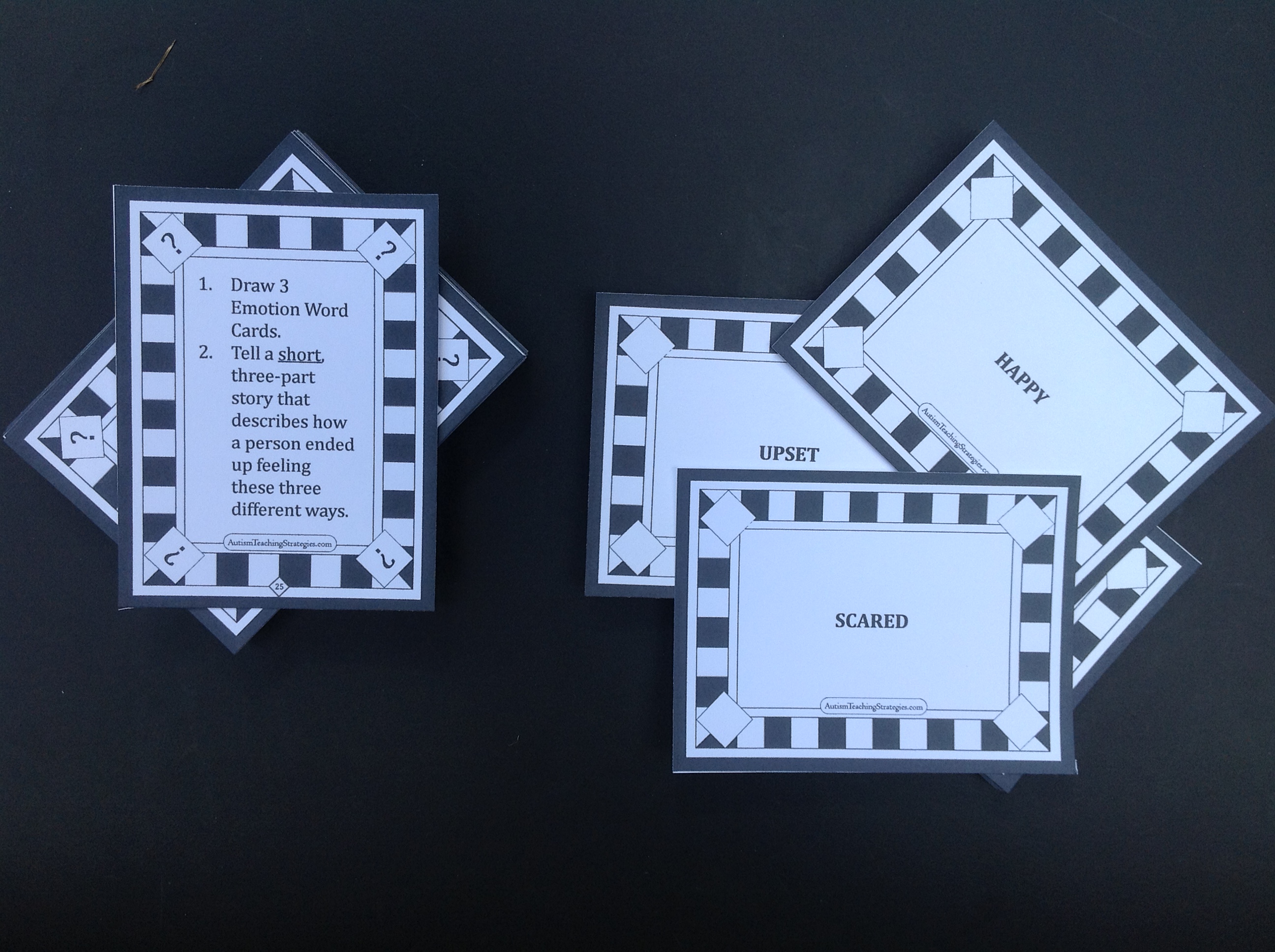
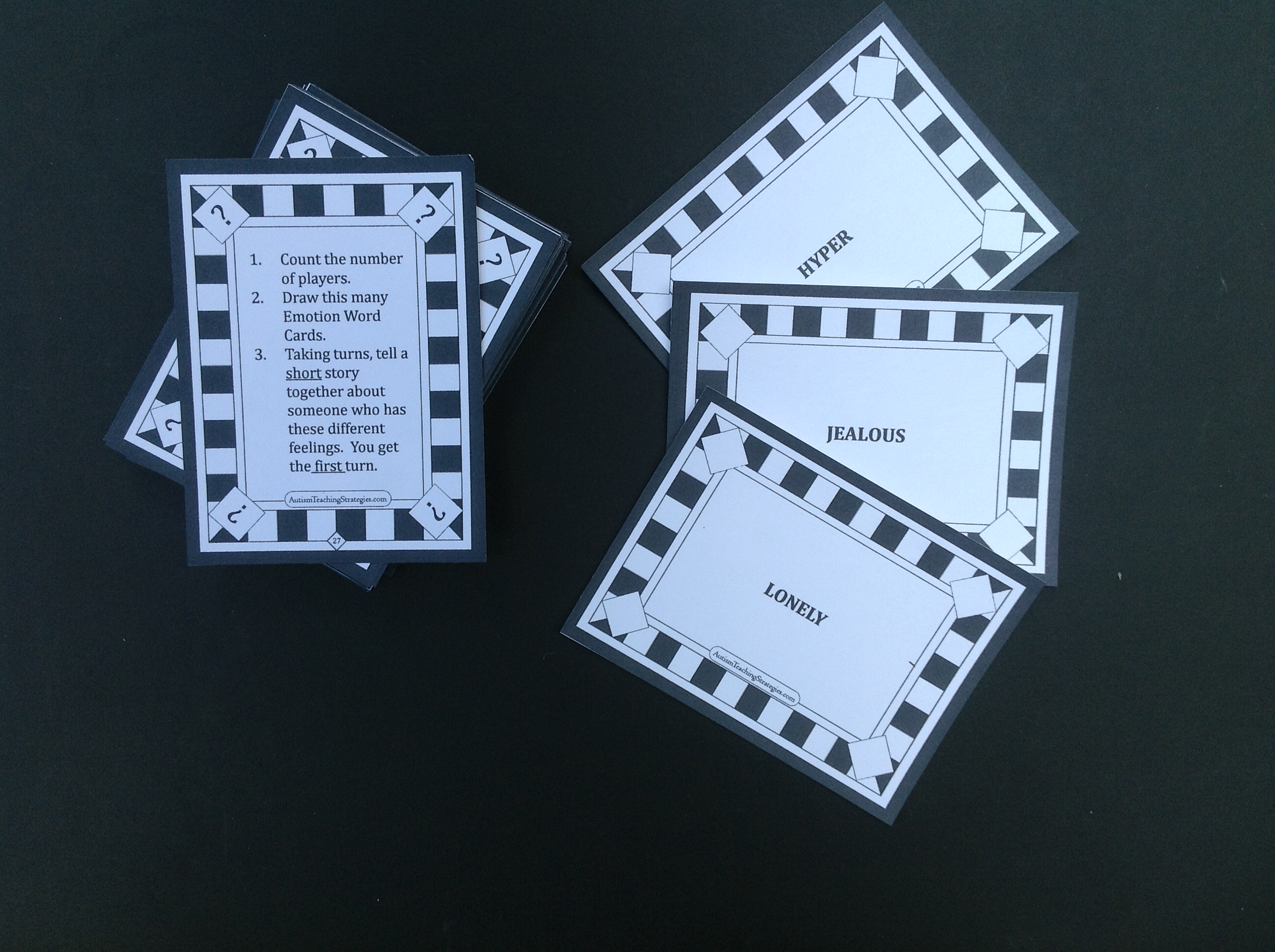
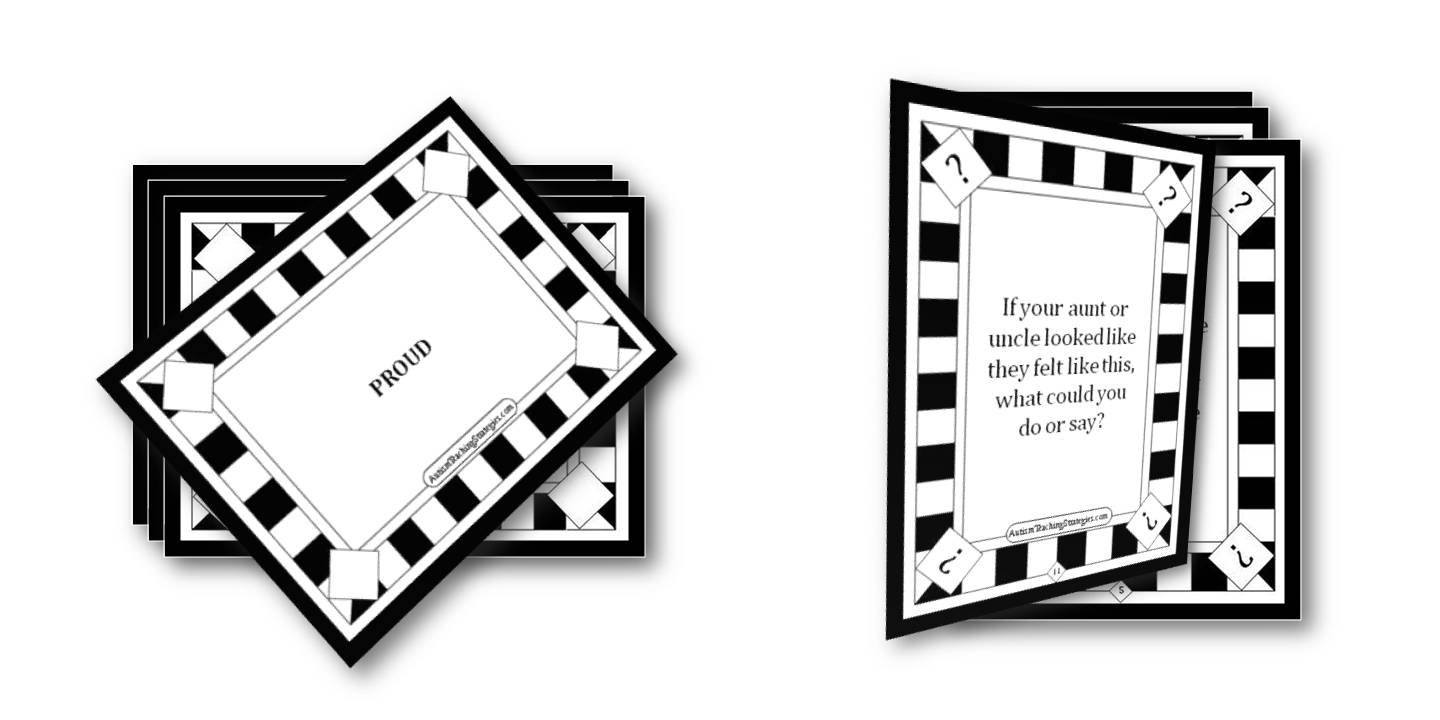
Here is a set of emotion cards that can be used in all kinds of ways in social skills teaching. There are two card decks which are used together: Emotion Word Cards and Question Cards.
Children with ASD and Emotional Awareness
Children on the autism spectrum may experience a range of challenges with respect to emotions. They may find it difficult to accurately recognize and name their own emotions. They may find it confusing to imagine the emotions of other people. They often find it difficult to understand how the words and actions of one person may affect the emotions of another person.
Elsewhere on this website, I have provided a number of free games and activities to help children with ASD to understand emotions and deal with upsetting feelings (follow link HERE to find these).
Download the Emotion Cards PDF by clicking on the red link below:
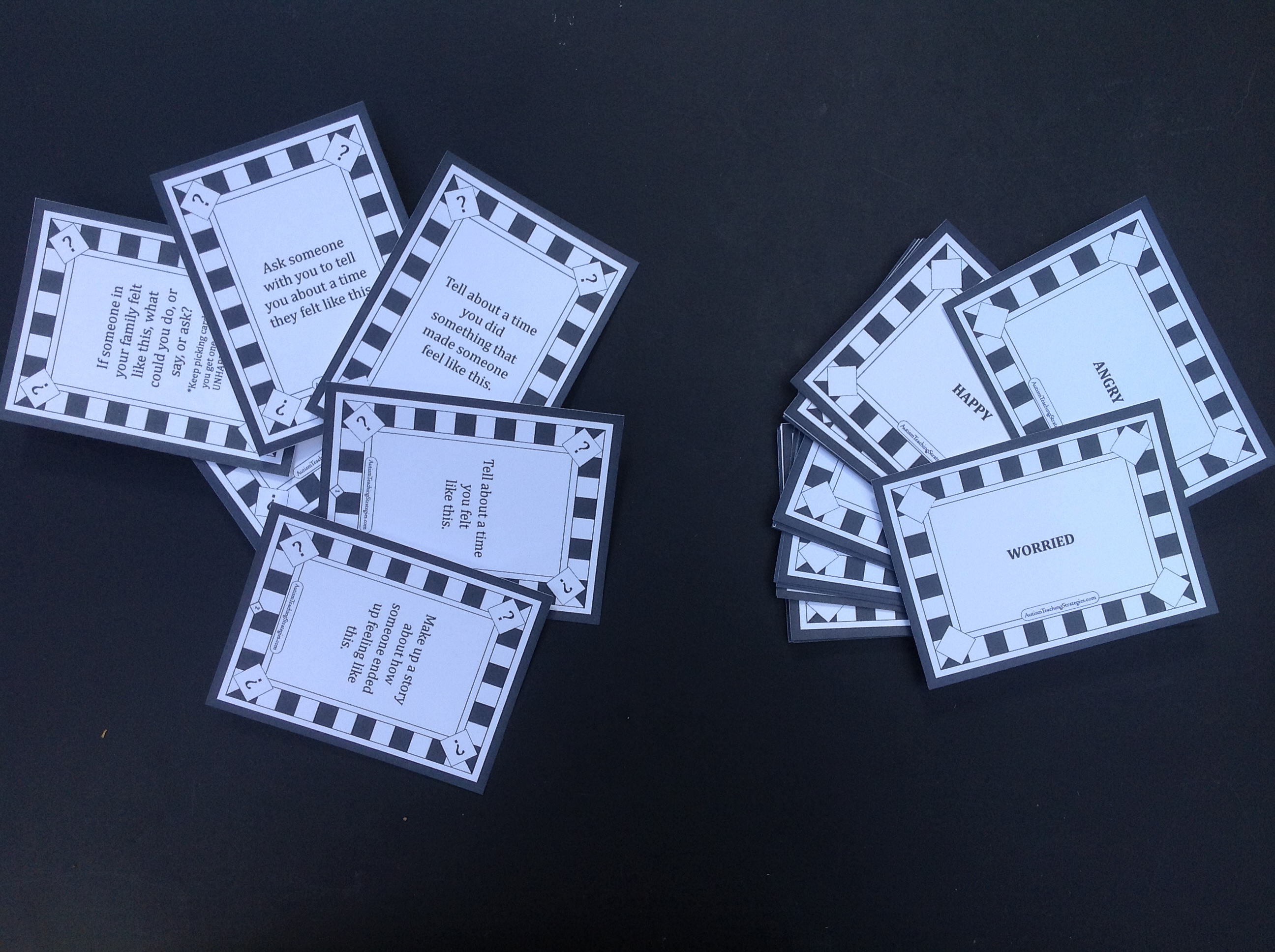
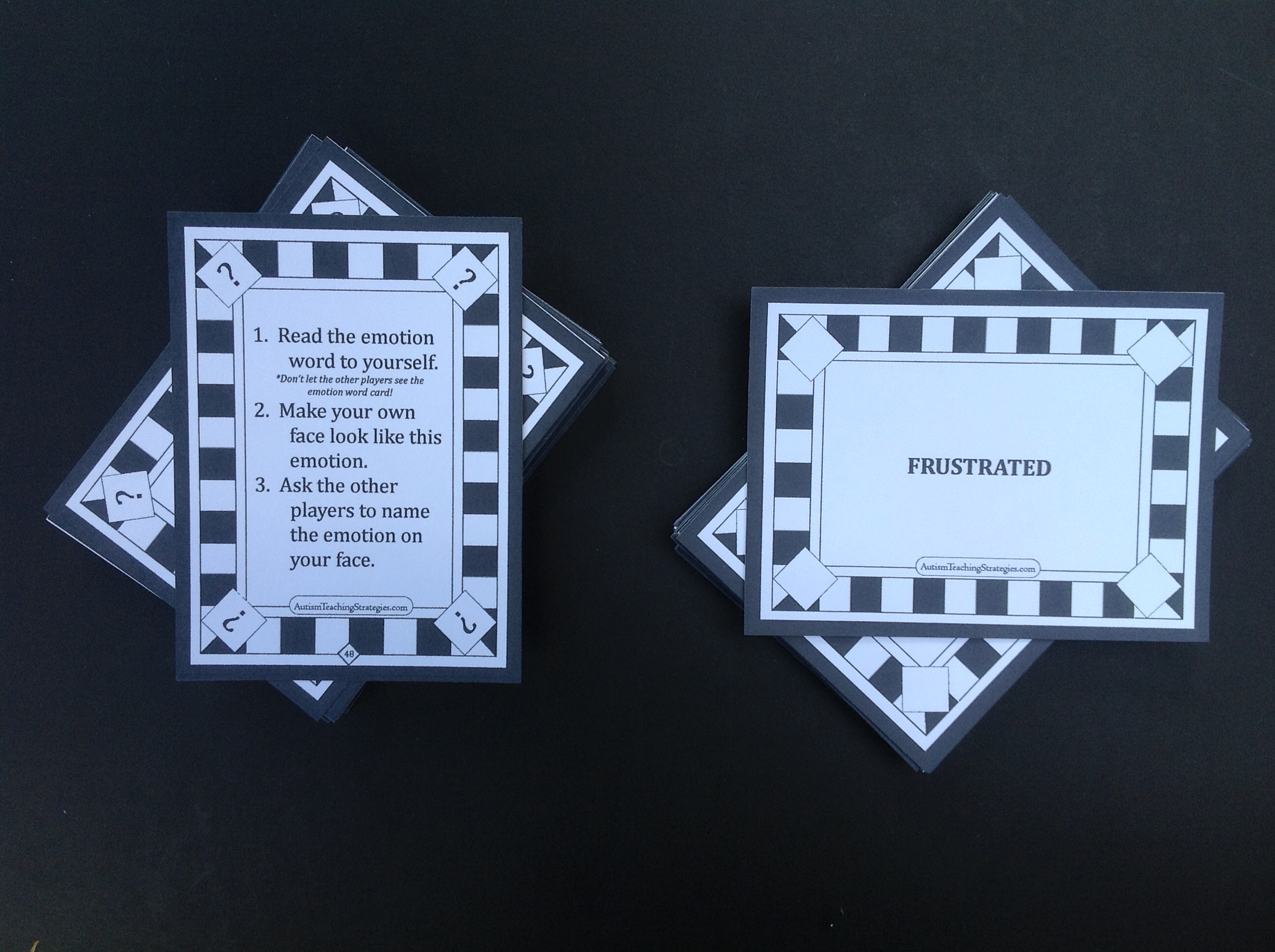
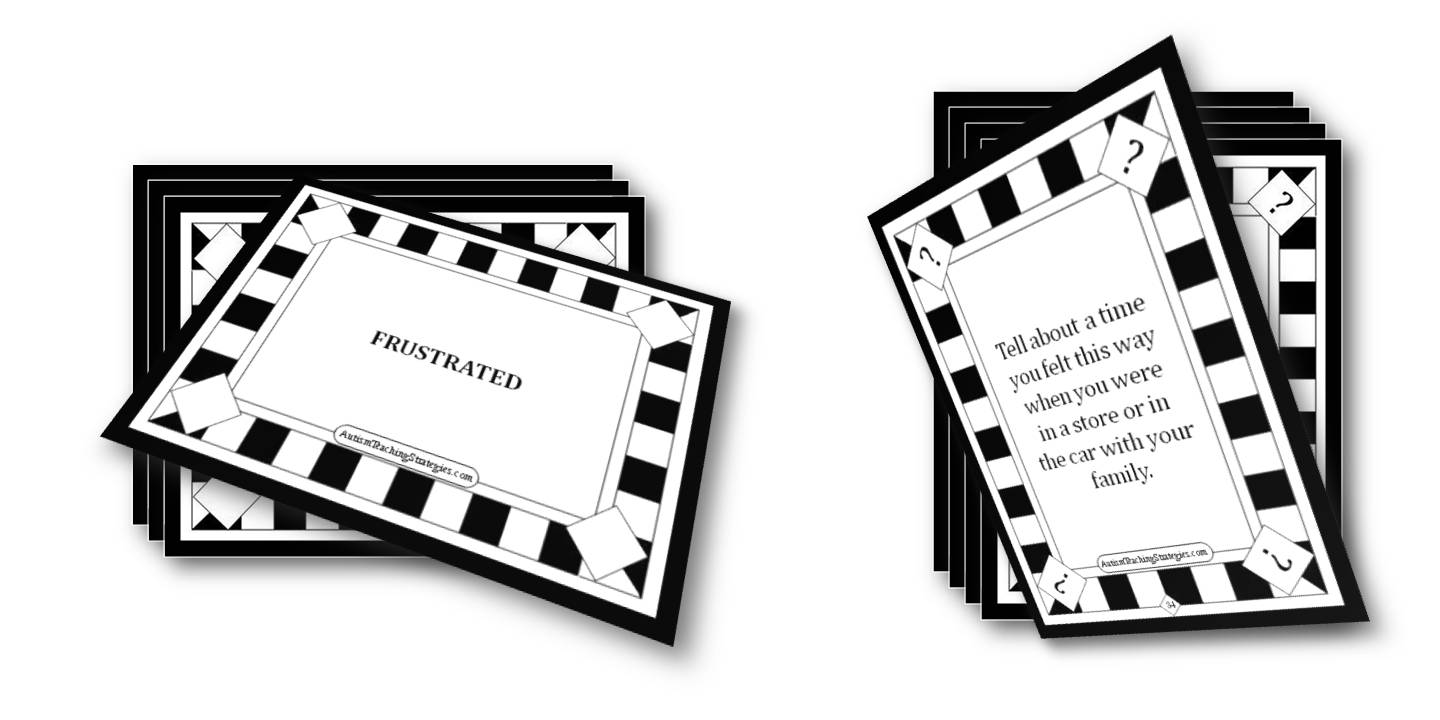
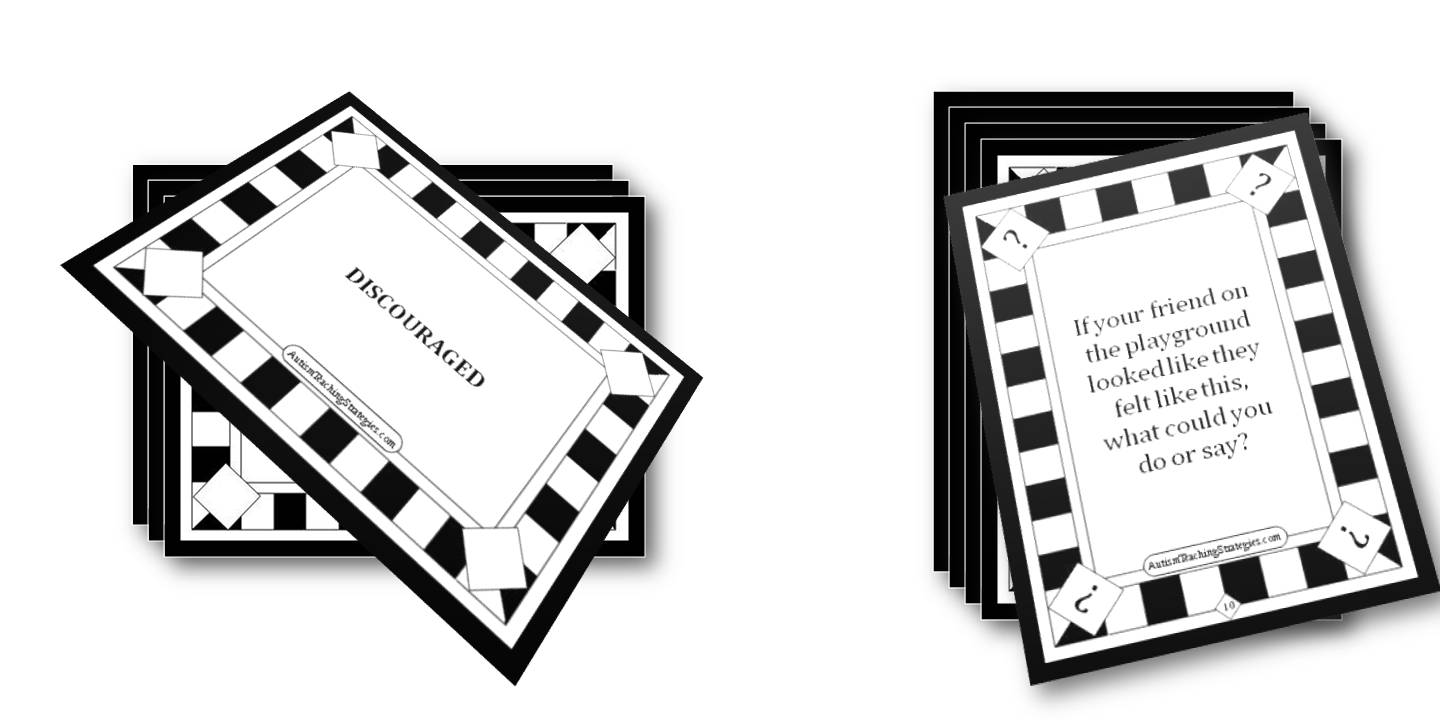
There are two decks of cards. The first deck, Emotion Word Cards, features 44 different words describing positive and negative emotions. The second deck, comprised of 48 Question Cards, has a wide variety of questions, tasks and role play assignments.
The most basic game to play with the cards is to place each deck face down, and direct the player to draw one card from each deck. The combination of cards drawn determines what task the player is directed to perform. For example, if the player draws the Emotion Card, “WORRIED,” and the Question Card, “Tell about a time you felt like this,” then the player must tell about a time he felt worried.
Here are a few variations on using the cards.
Several of the Question Cards direct the player to make their face look like the feeling on the Emotion Card they drew.
In the example right above, the player is directed to make up a story featuring three Emotion Cards he drew. There are other related Question Cards which direct the player to cooperate with other players in telling a sequential story involving a series of Emotion Cards (see example below).
Below are several more typical combinations of cards that can come up. Look them over and see whether these might be useful for your students or clients.
How to make the cards:
You will need to print them on card stock, or on paper which you will then laminate.
Joel Shaul, LCSW
Don’t miss these other free games, worksheets and activities to help children with autism learn about emotions and feelings.
Autistic children and showing concern for others / empathy
Children on the autism spectrum often have great difficulty with this important skill. They often spend less time observing others than typical children, and they might not notice another person’s distress. They often are perplexed by the typical signs of upset feelings in another person. They might have normal feelings of sympathy for the other person, but they might be at a loss regarding the necessity to express concern and the social conventions for going about it.
It is well known that there is quite a lot of variability in the distribution of empathy skills both among autistic people and among neurotypical people. But even autistic children who have a refined sense of feeling for others may lack in willingness and ability to show their concern and display it tactfully.
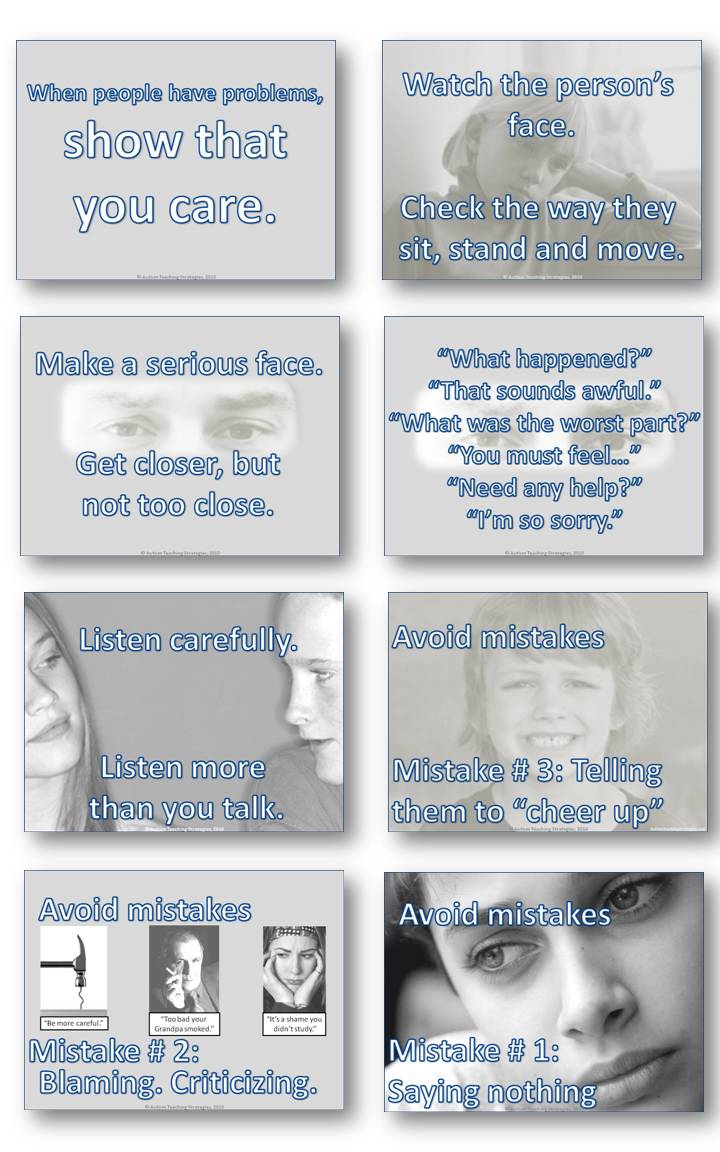
How to use the illustrated panels:
You can use them as a wall display. You can also use them in preparation for role play practice.
I hope you find these materials useful.
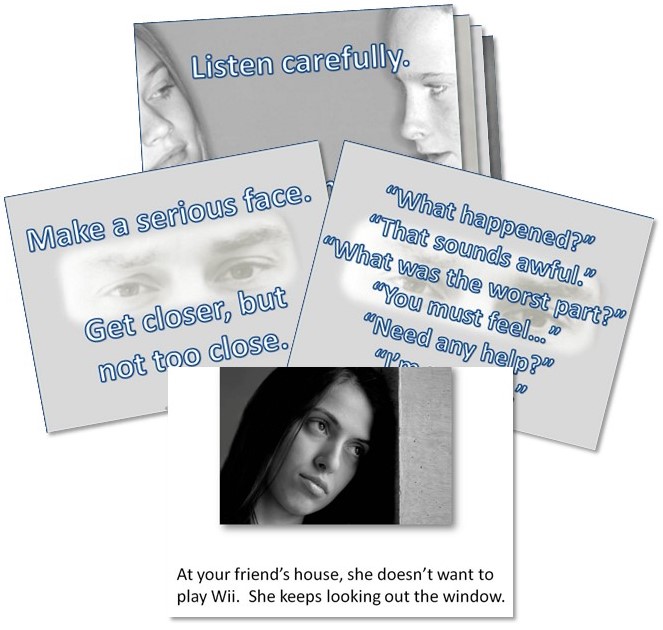
Using the Showing Concern Wall Display panels in combination with the Showing Concern Picture Cards:
It is very useful to use both these resources together.
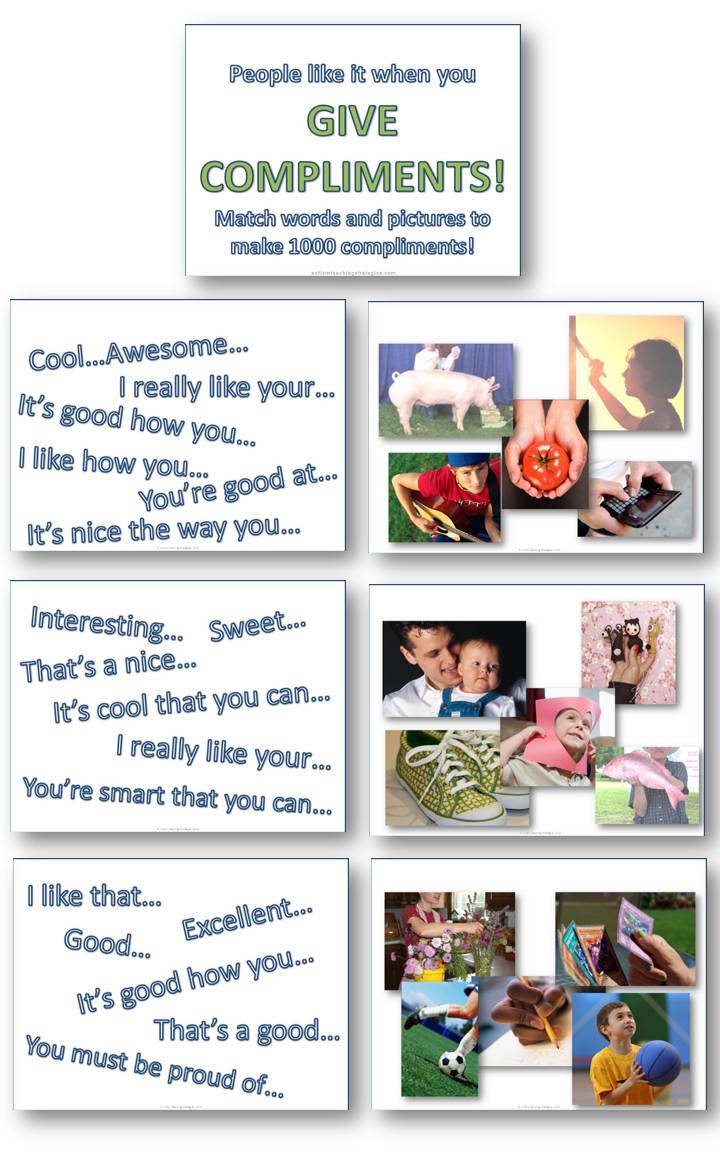
Kids on the autism spectrum often do not give and receive compliments in accordance with social expectation. They might like something someone said, or something someone did, but they often fail to follow up with a positive, validating statement. Or, instead of saying nothing, children with ASD might make blunt declarations of opinion. Kids with Asperger’s and other autism spectrum disorders can get so much better at giving compliments when they are taught in an engaging manner with engaging visuals.
Suggestions for using the compliment prompt panels:
1. Have the kid(s) point from the word portion to the picture portion while you give compliments according to their directions.
2. You point from words to picture and the kids create compliments.
3. Follow up with having the kids offer compliments to others in the room. Coach the proper “thank you” response.
4. Explore with the kids when and how they can give compliments in various settings. Create simple thought bubble drawings to increase awareness of how others might feel when they receive compliments.
Joel Shaul, LCSW
Here are some other free resources to help children with autism to learn giving compliments.
Helping children with autism spectrum disorders to deal with losing and disappointment
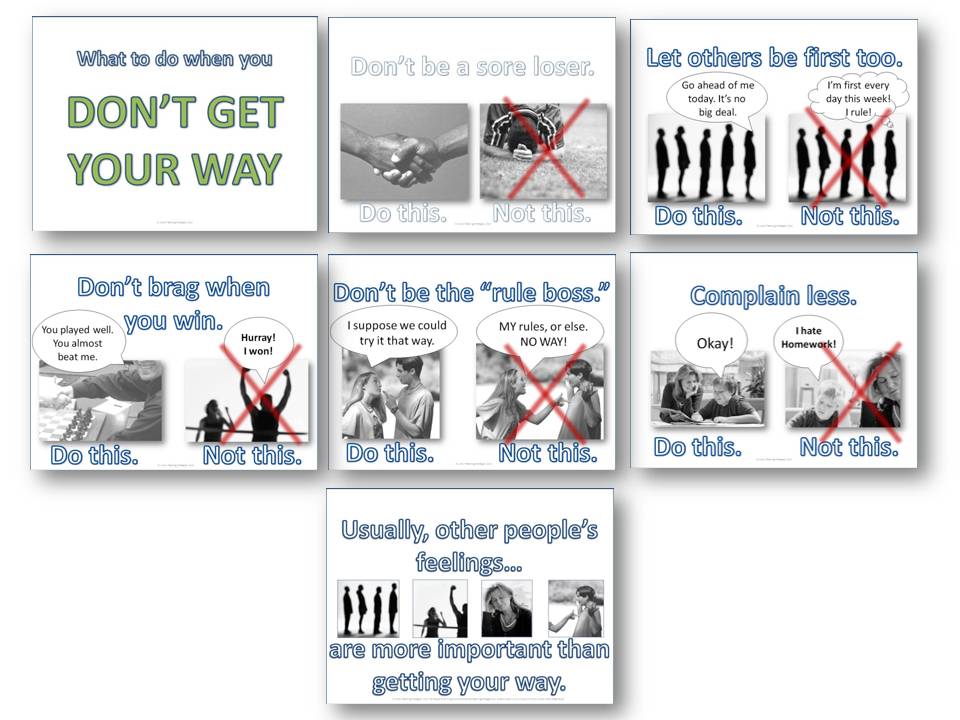
Children with ASD often have particular problems with losing: Not getting their way, not being first, not being chosen or called on, not winning. Here are some reasons for this. First, their lack of perspective-taking abilities can make children with ASD less aware of unwritten social agendas: others also want to be first; others like to win, too. Second, many children with autism struggle with problems regulating upsetting emotions. Third, lots of kids with ASD have tough lives day to day. When something does not go their way, it might be the last straw in a long string of deeply frustrating experiences.
The illustrated panels are for you to use either as talking points in a discussion in a social skills lesson or counseling session, or to place on your wall. The lessons apply to all children, not just those on the autism spectrum.
Good luck in your social skills counseling and social skills teaching.
Joel Shaul, LCSW
Here is a related resource to explore, a free social skills game for children with autism designed to teach sportsmanship skills, The Missing Object Game.
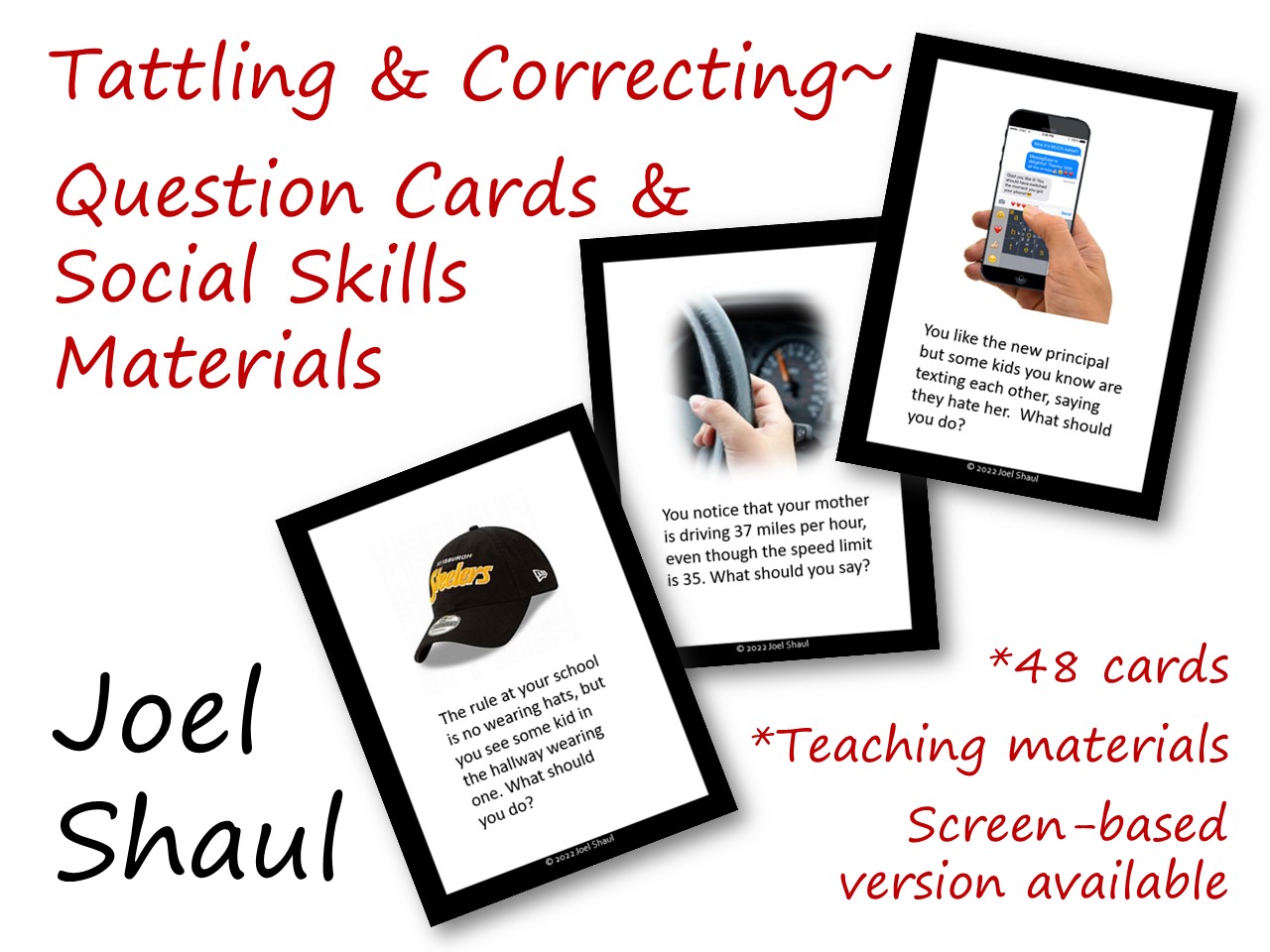
Social skills games and learning activities for tattling and correcting
I created these materials ten years ago and just finished a re-design of the whole kit.
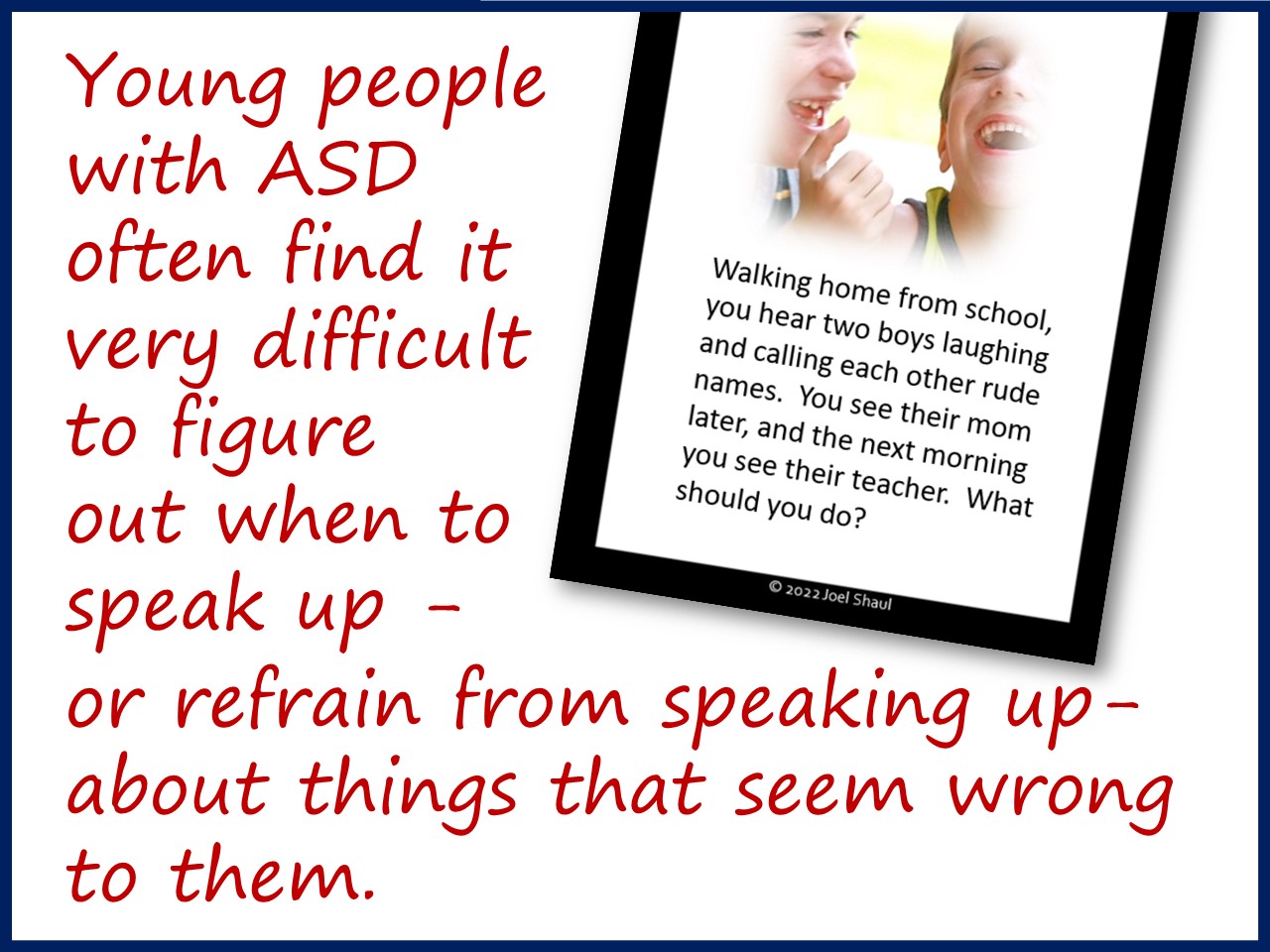
Young people on the autism spectrum can come across as rigid and bossy at times to their peers. Children with ASD can misinterpret complex social situations and express themselves too openly, without considering the broader social consequences.
Figuring out when to “tattle” or correct someone is very hard. I designed the 48 question cards to include not just “easy” ones but also a lot of challenging questions that don’t have clear-cut answers.
When you use the cards, feel free to go through the deck and select the ones that seem best for the young people you are helping, based on their age, level of comprehension and particular issues they are dealing with.
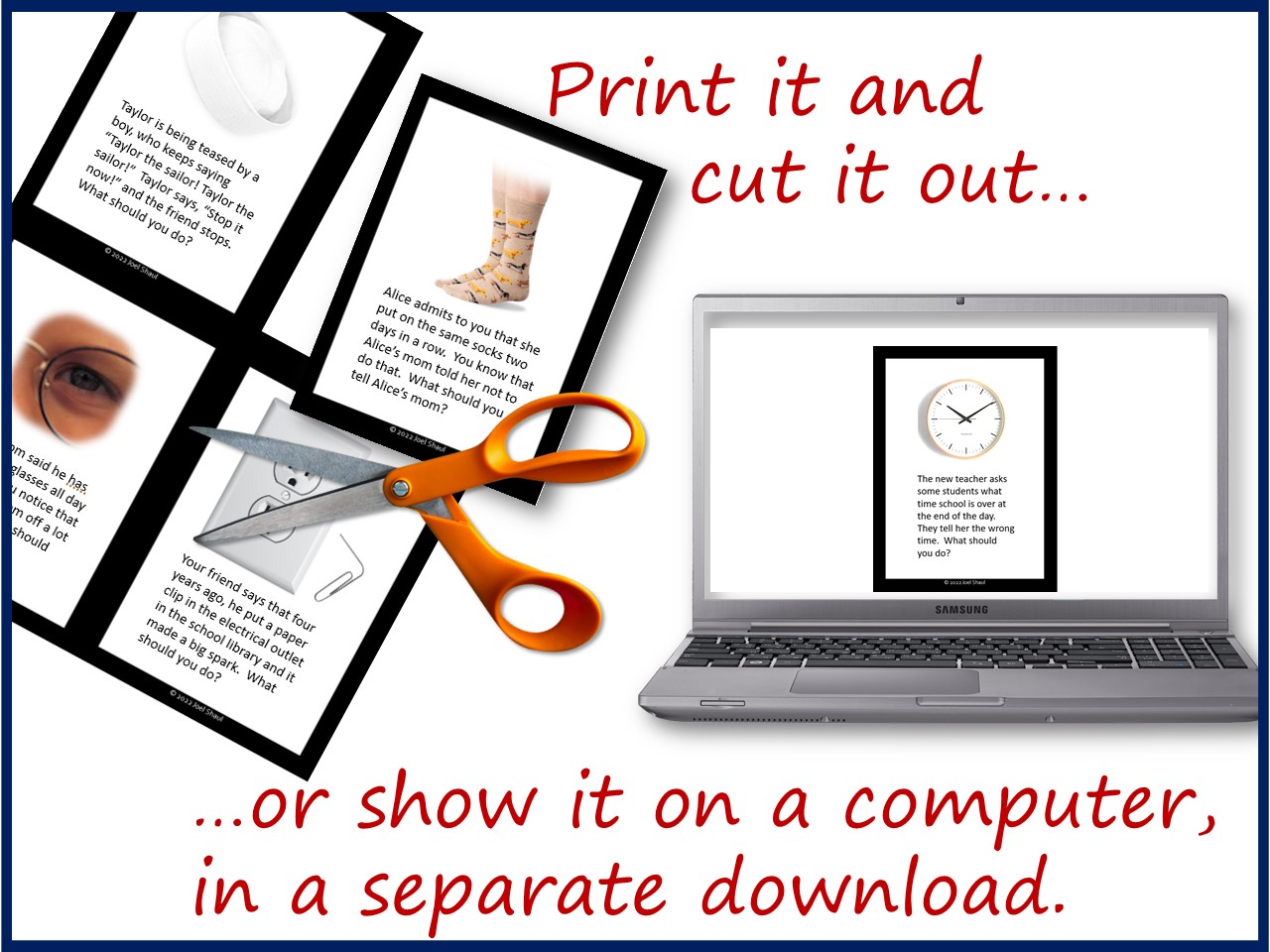
Children like to hold the cards and have an actual “deck” to play with, but this social skills activity also really works well in the screen display version (which is the version I most often use myself, for groups and teletherapy).
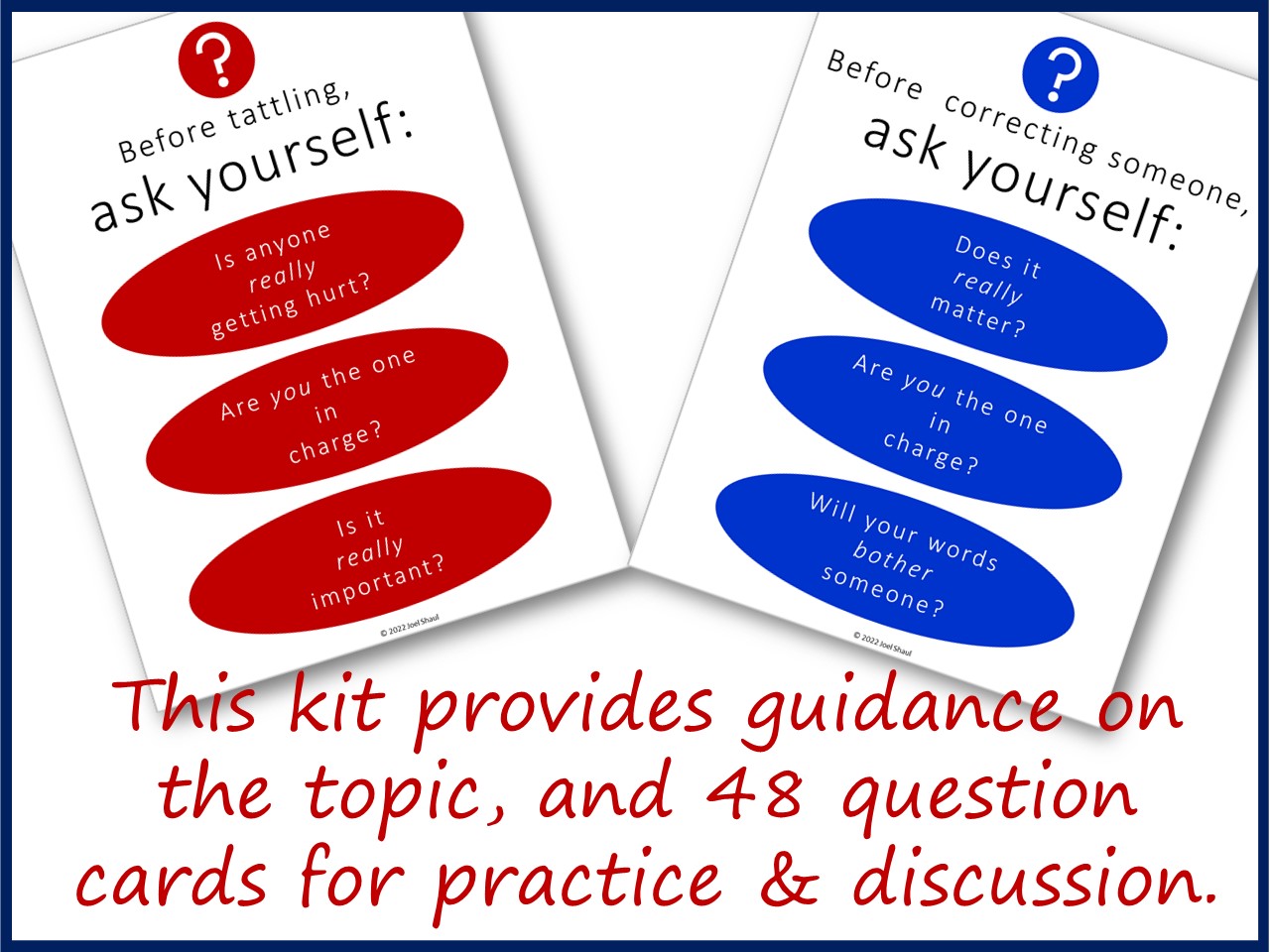
I have gotten good feedback from teachers, who sometimes post the two one-page summaries (Before Tattling, Ask Yourself and Before Correcting, ask yourself) on their classroom walls.
I hope these materials are useful for you in your work.


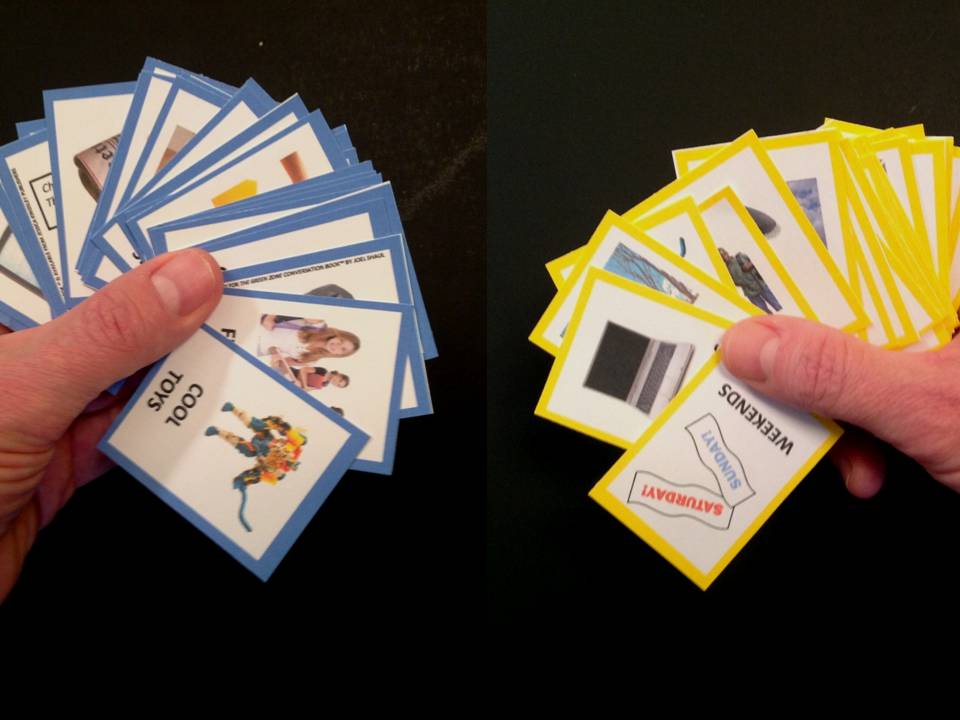
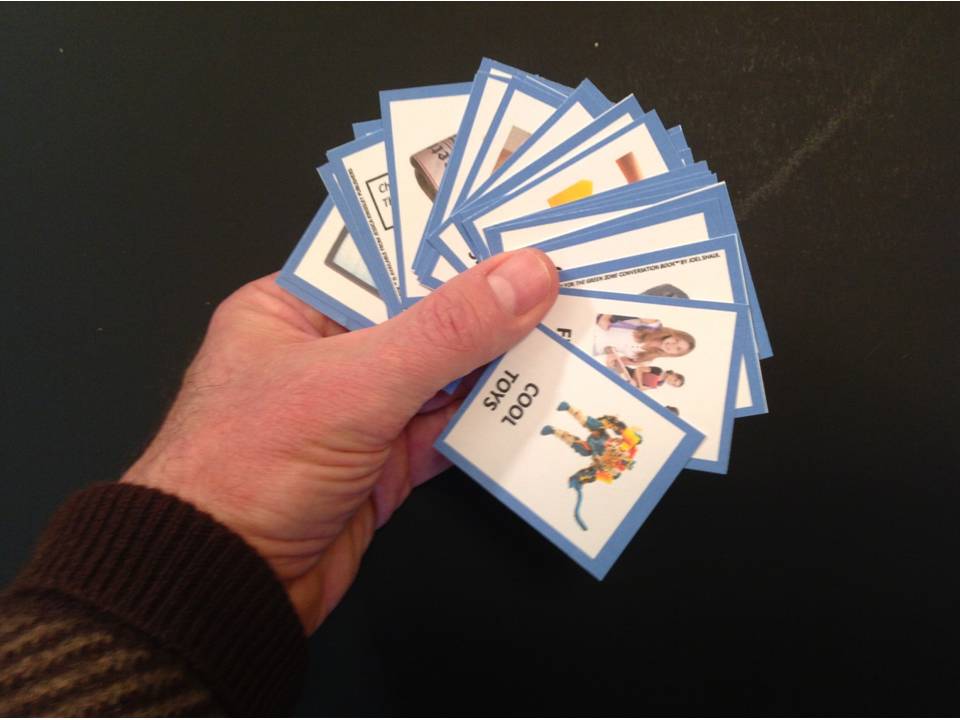
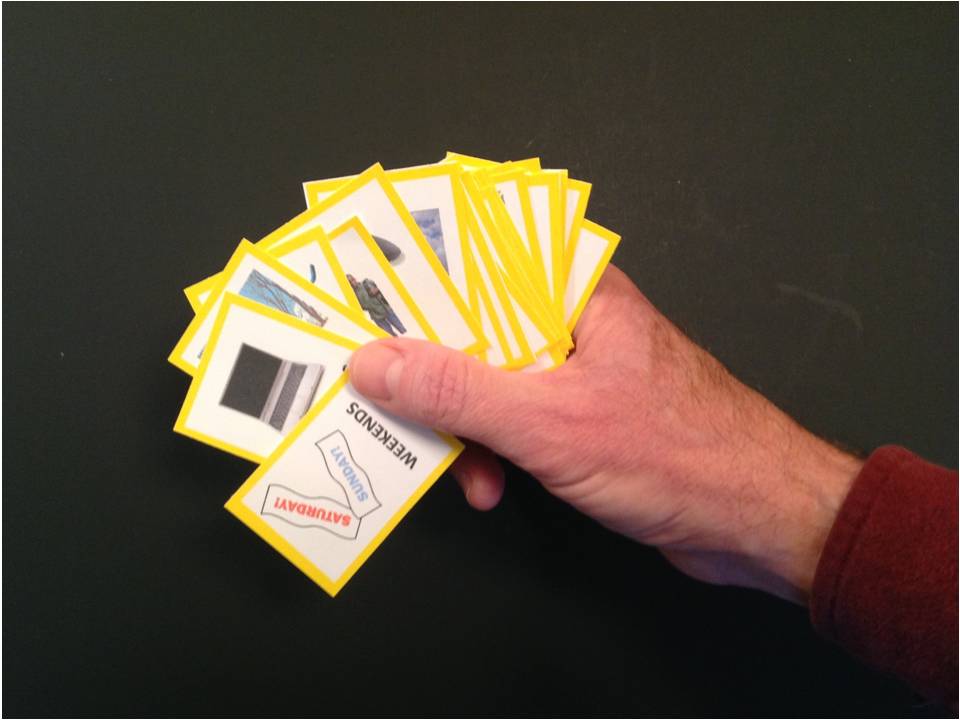

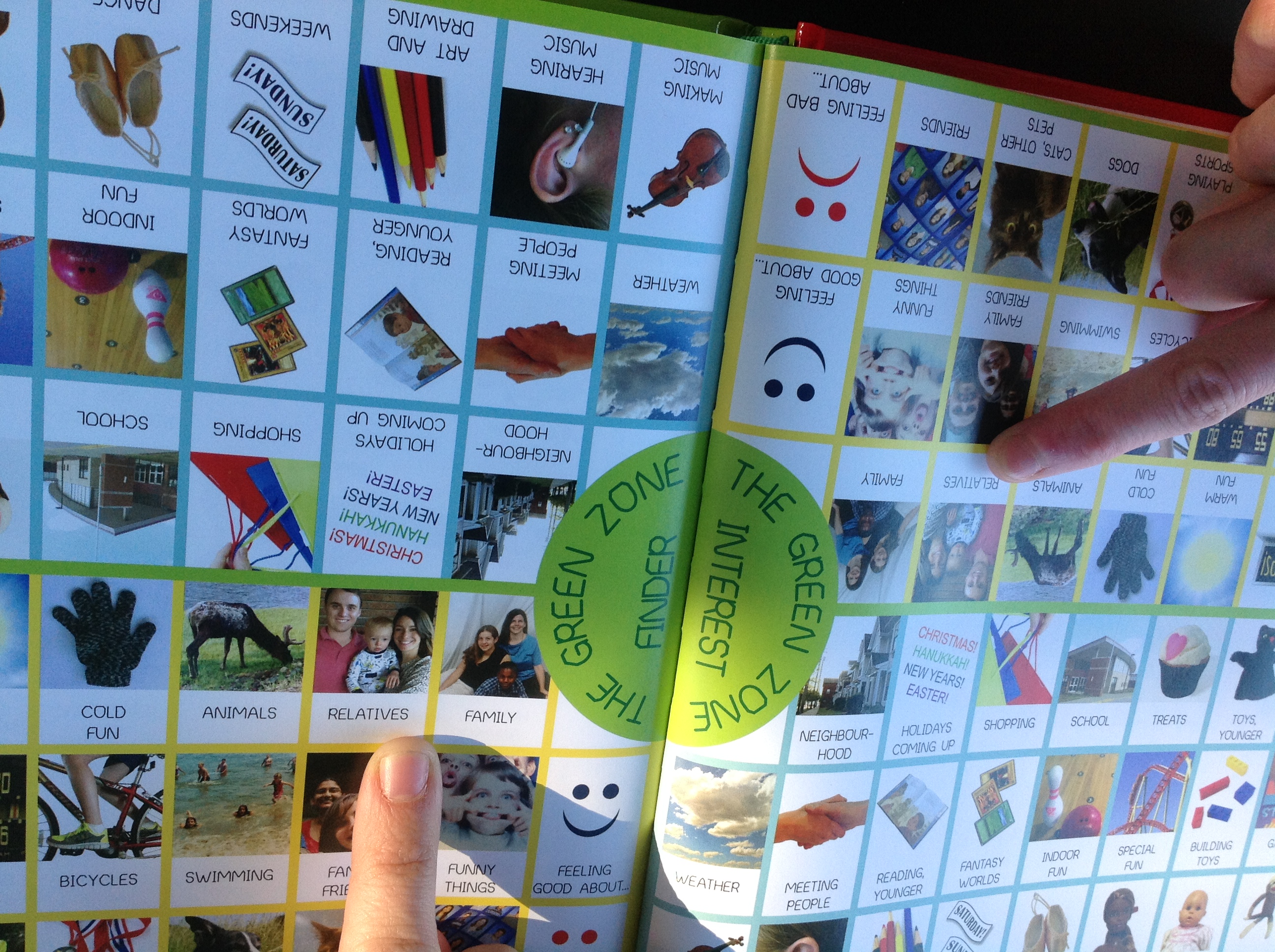
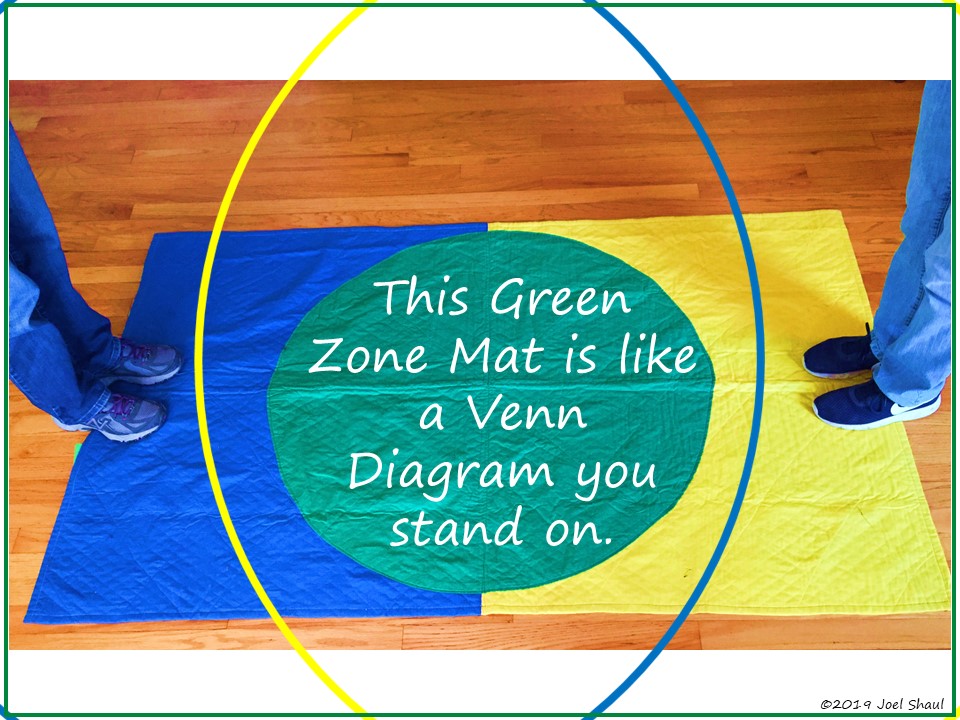 In another post, I have directions for making and using this fun variation, the Green Zone Mat.