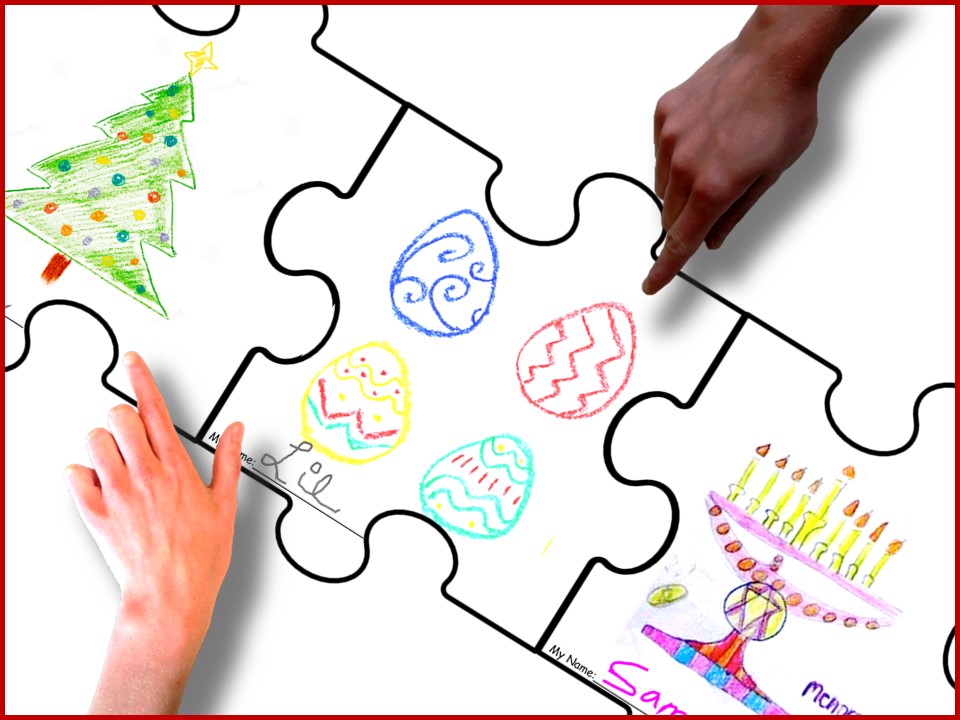
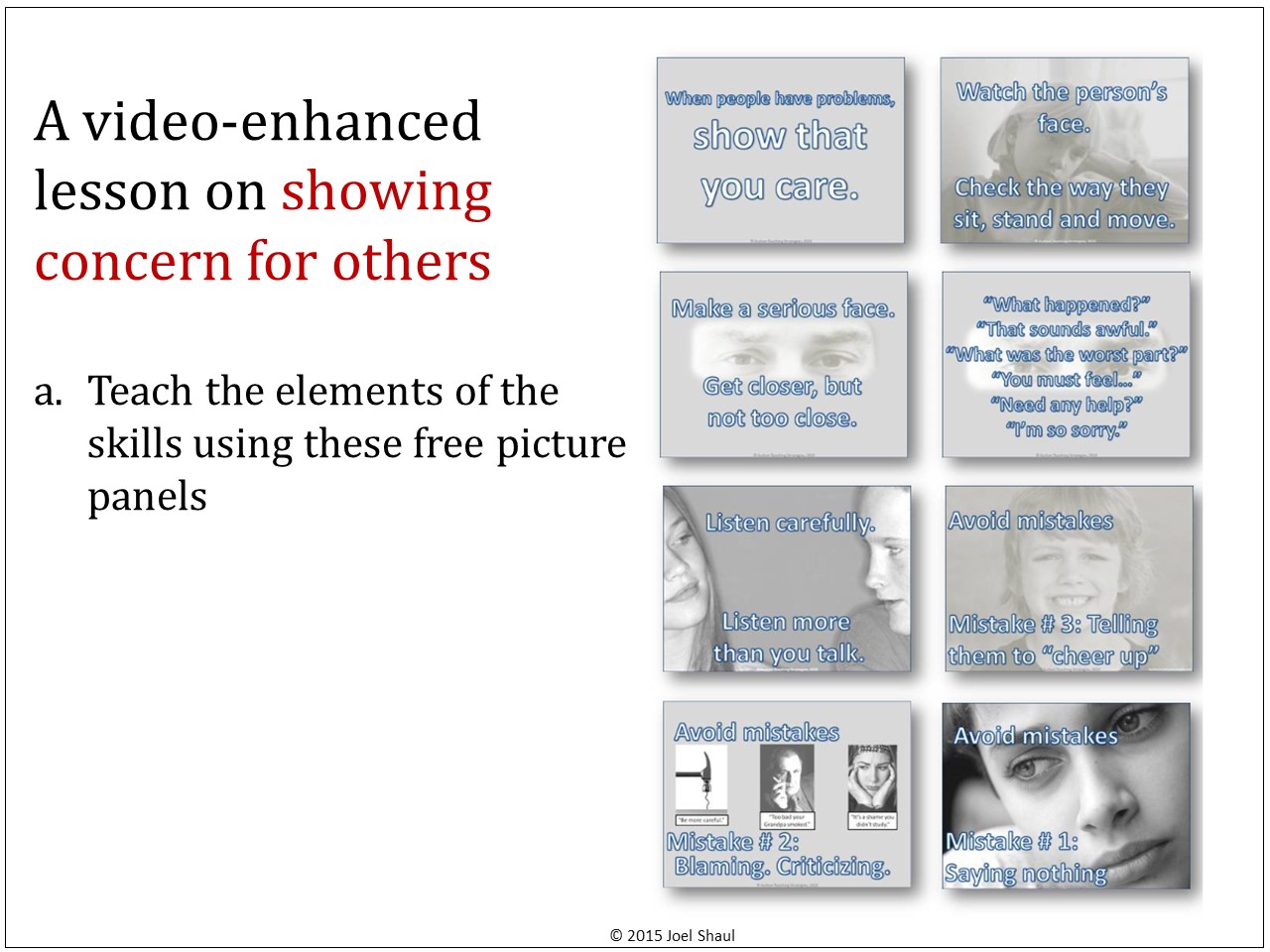
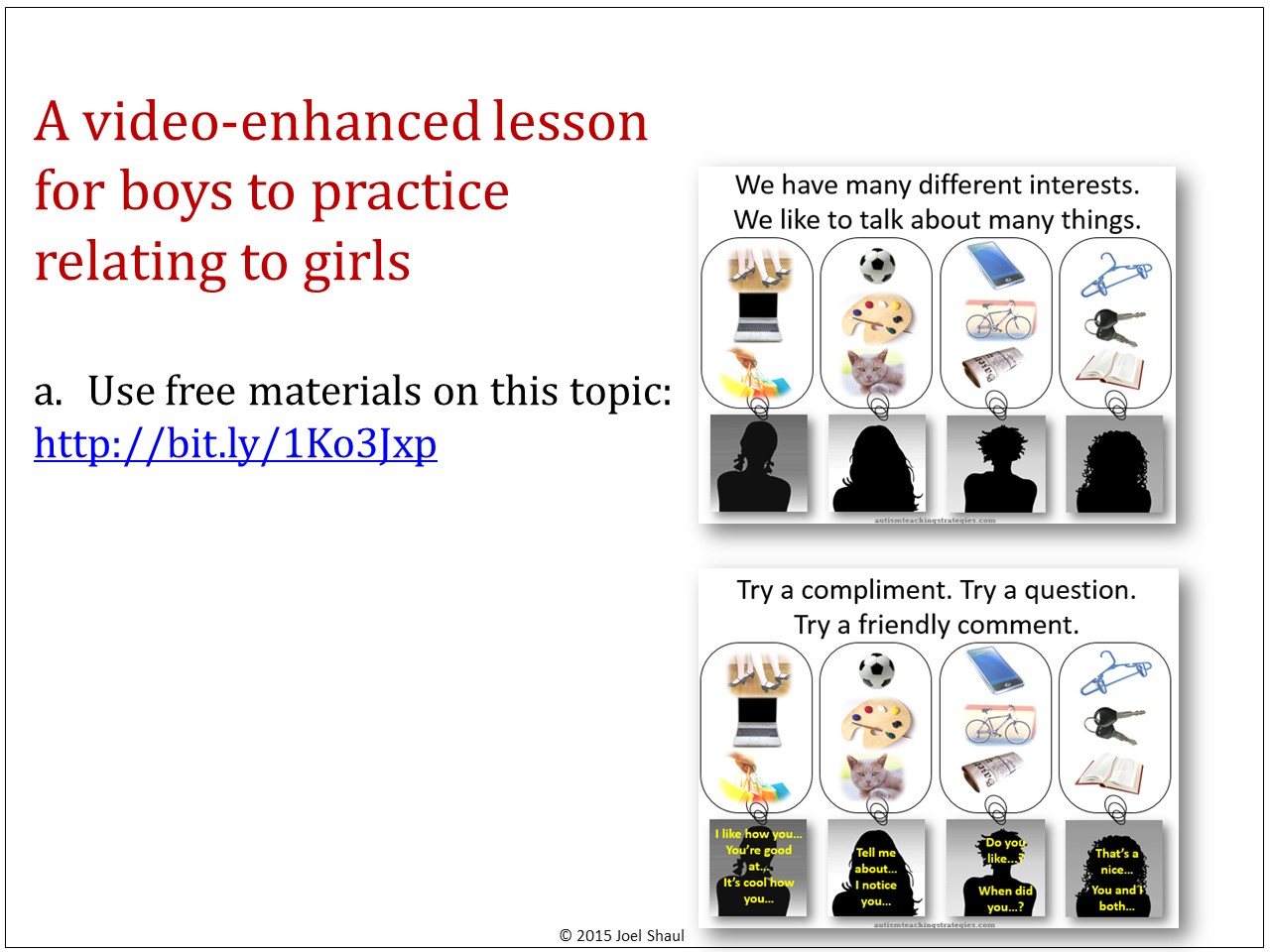
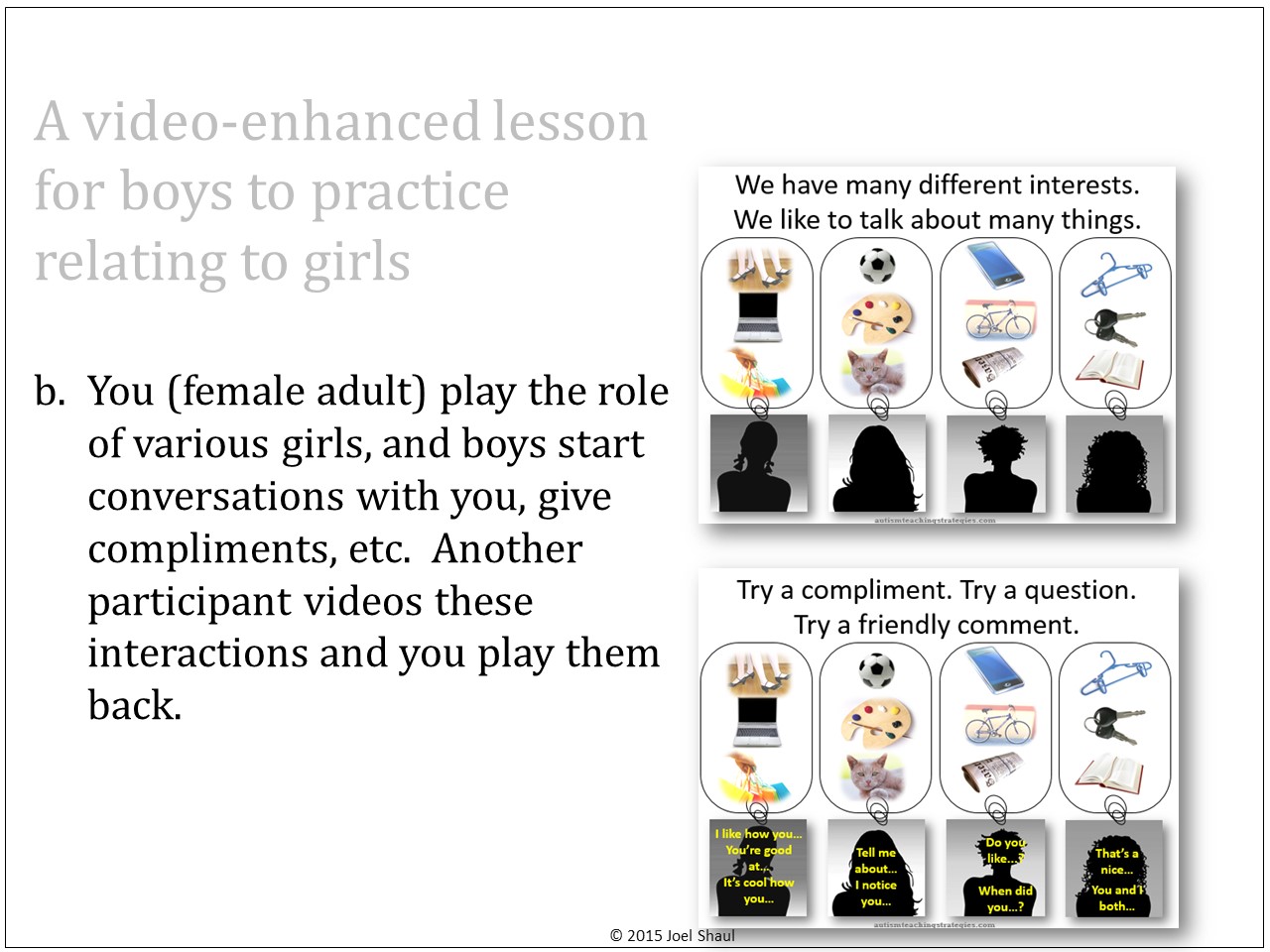
In this engaging set of activities, children explore how they all “fit together” as a group or a class even though they are all different.
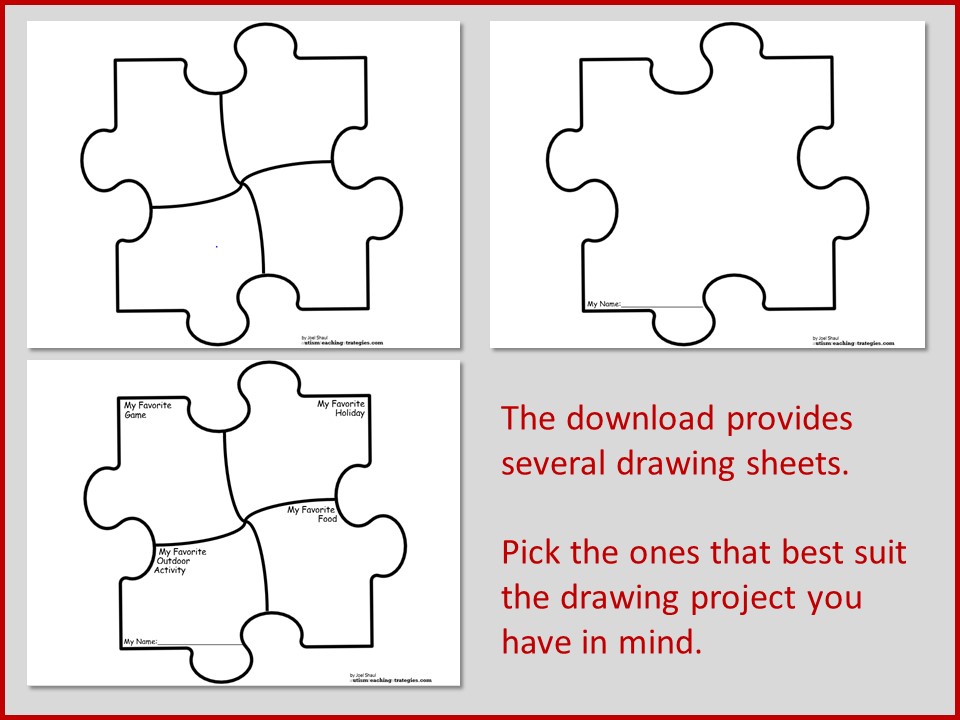
The download provides a variety of puzzle sheets. You can either cut them out, or not, depending on how much prep time you have.
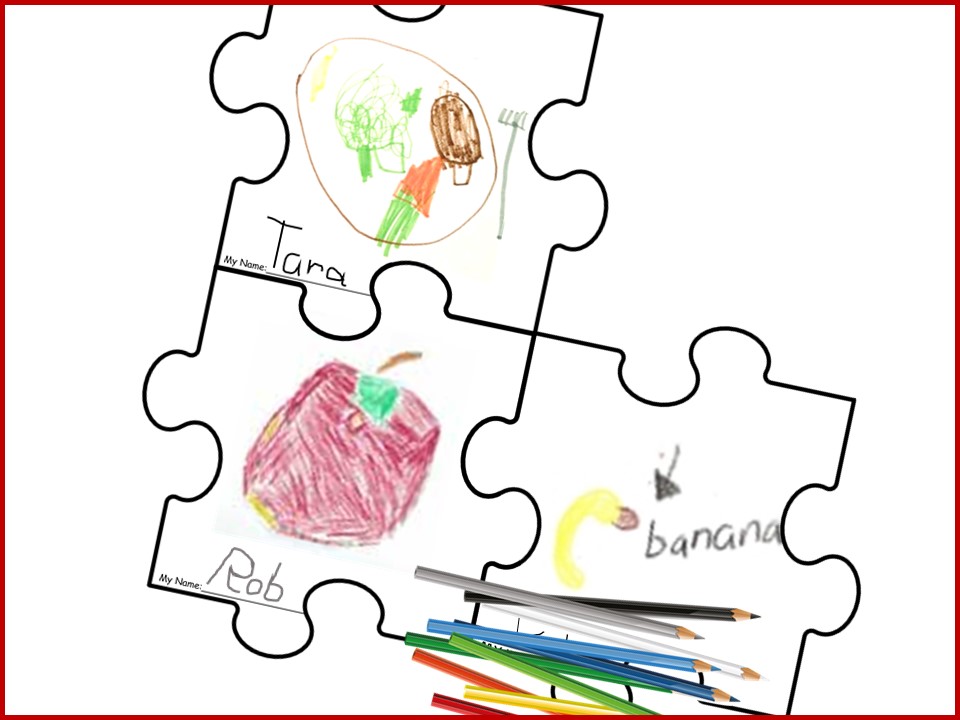
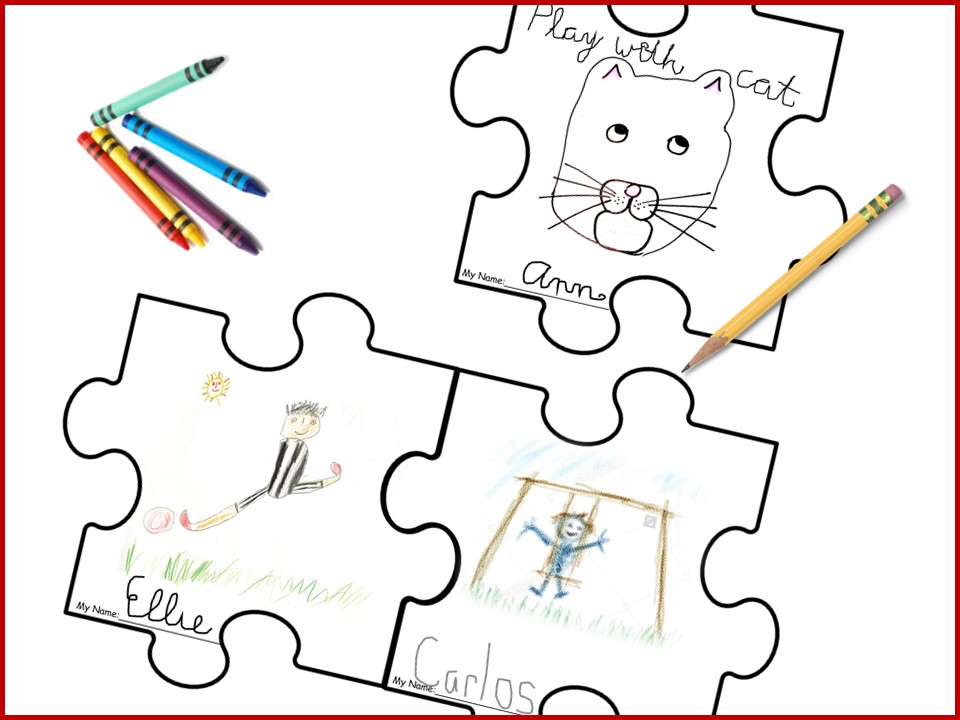
The completed, cut-out puzzle pieces can be fitted together by the children on the floor or on the wall. It also makes an attractive and meaningful wall display.
You can introduce the activity using words something like this:
“When we are part of a group, we have to learn how we all fit together. Fitting together well means knowing how you are like the other people and how you are different from them.”
I hope you enjoy this social skills activity for children with (and without) autism.
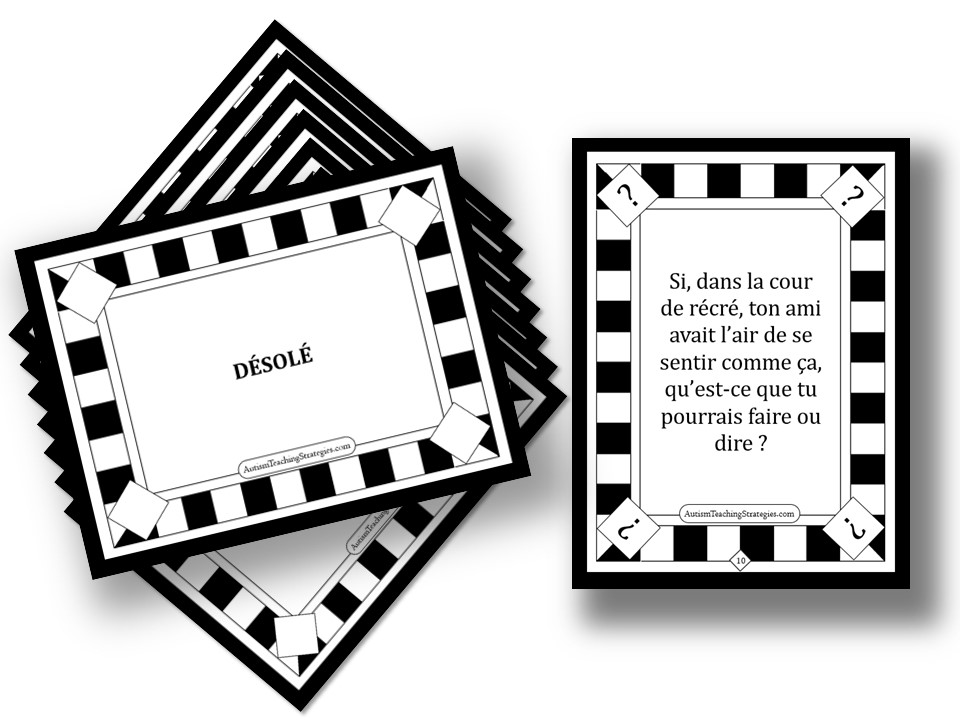
Ce Jeu de Cartes à Emotions est conçu pour aider à enseigner une variété de compétences liées à la conscience des émotions et à la résolution de problèmes en lien avec les émotions. Les cartes sont destinées à être utilisées de manière flexible. Différentes suggestions d’utilisation sont fournies ci-dessous. Avant d’utiliser les cartes, retirez toutes les cartes qui ne semblent pas répondre aux besoins des enfants avec lesquels vous travaillez. Certaines cartes de questions apparaissent plus d’une fois dans ce paquet de cartes.
Activité 1: En utilisant uniquement les cartes « Emotions », placez le paquet de cartes face cachée et, à tour de rôle, faites-les piochez une carte et lire l’émotion. Demandez-leur de parler d’un moment où ils ont ressenti cette émotion, ou demandez-leur de demander à quelqu’un d’autre un moment où il s’est senti ainsi. Suggestion: « arrangez le paquet de cartes » : arrangez l’ordre des cartes de façon à faire ressortir des émotions spécifiques.
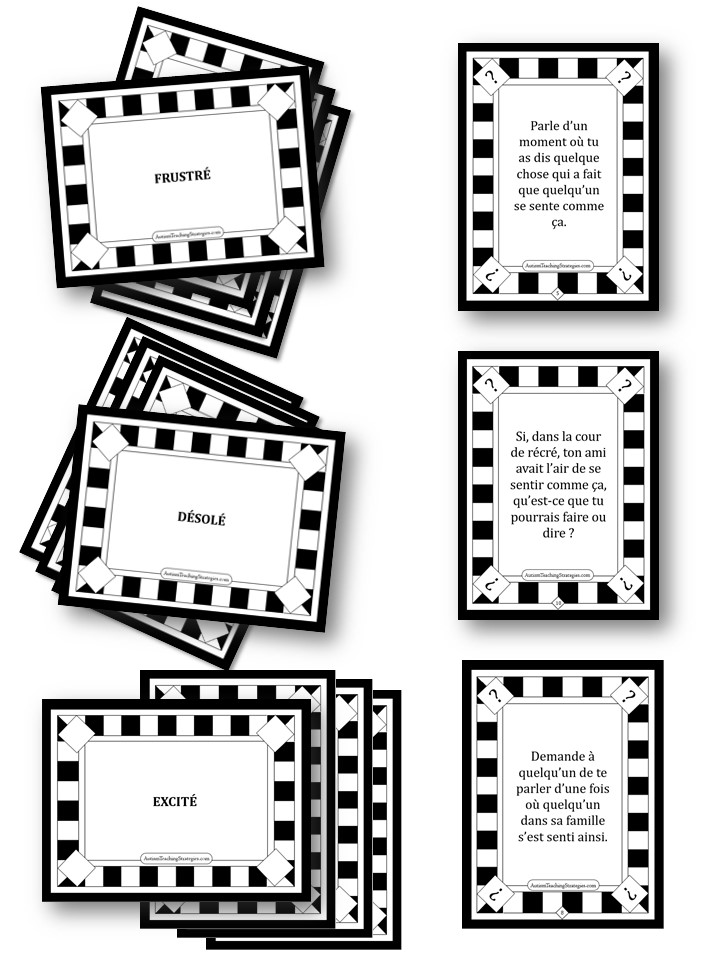
Activité 2: Placez les paquet de cartes « Emotions » et « Questions » face cachée côte à côte. Chaque joueur tire une carte « Emotion » et une carte « Question ». La carte « Question » donne au joueur un problème à résoudre, une question à répondre ou une activité à faire, spécifiquement basée sur la carte émotion qu’il a tirée. (Voir les exemples aux pages 2 et 3)
Activité 3: En utilisant uniquement le jeu de cartes « Emotions », demandez aux joueurs de suivre les instructions de la carte 45. C’est une activité intéressante à elle seule, sans les cartes « Questions ». Faire cette activité avec un miroir ou une caméra vidéo peut être utile.
Activité 4: Récit d’émotion. Utilisez uniquement les cartes 21 à 28. Il s’agit d’une activité difficile, qui sollicite à la fois l’intelligence émotionnelle et les compétences coopératives, et peut facilement se faire comme une activité entièrement distincte. (Voir l’exemple à la page 4)
J’espère que vous apprécierez ces cartes.
Joel Shaul, LCSW
Traduit de l’Anglais au Français par Yorgo Hoebeke
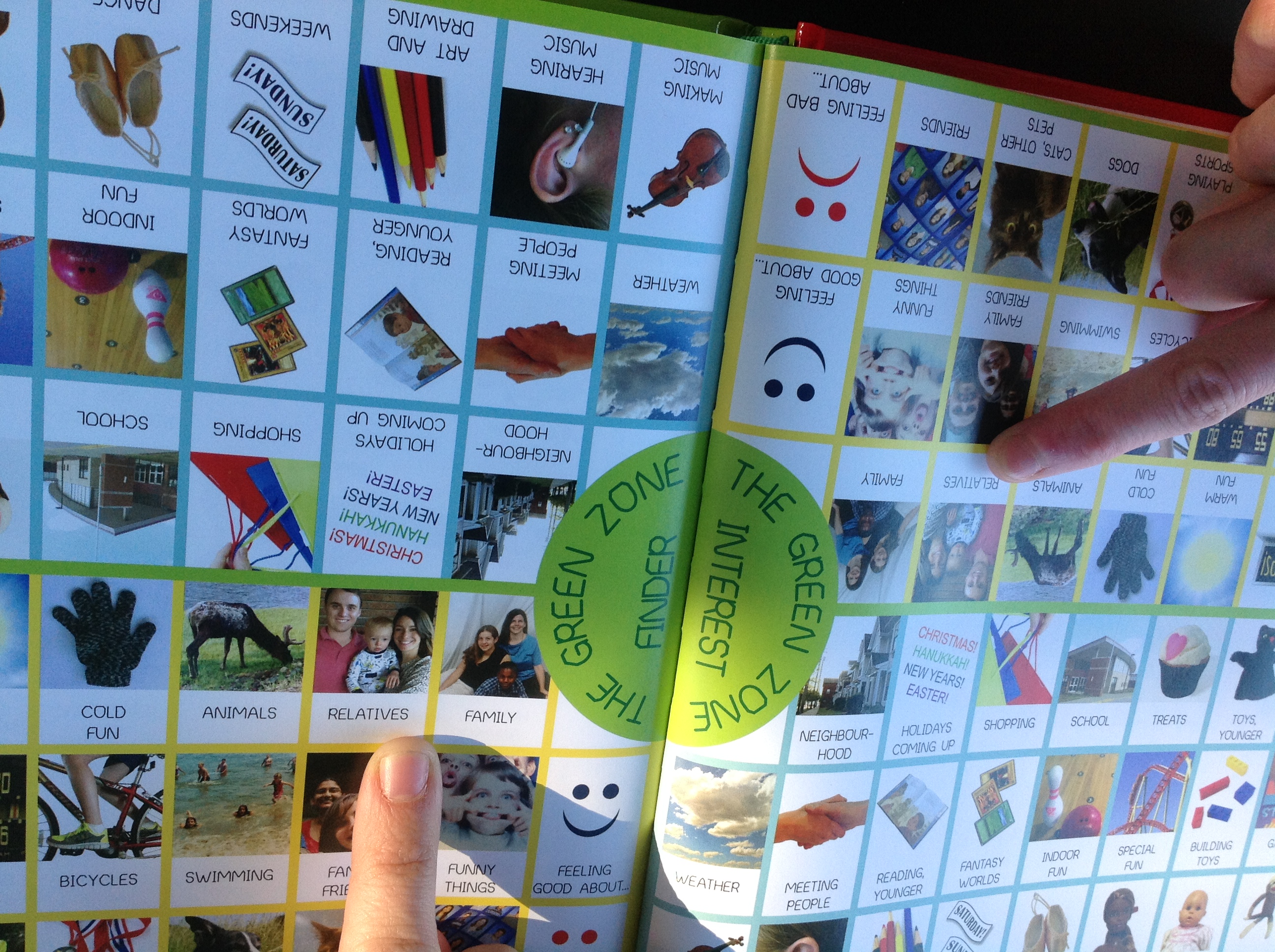
Green Zone Picture Card Social Skills Game – a free download
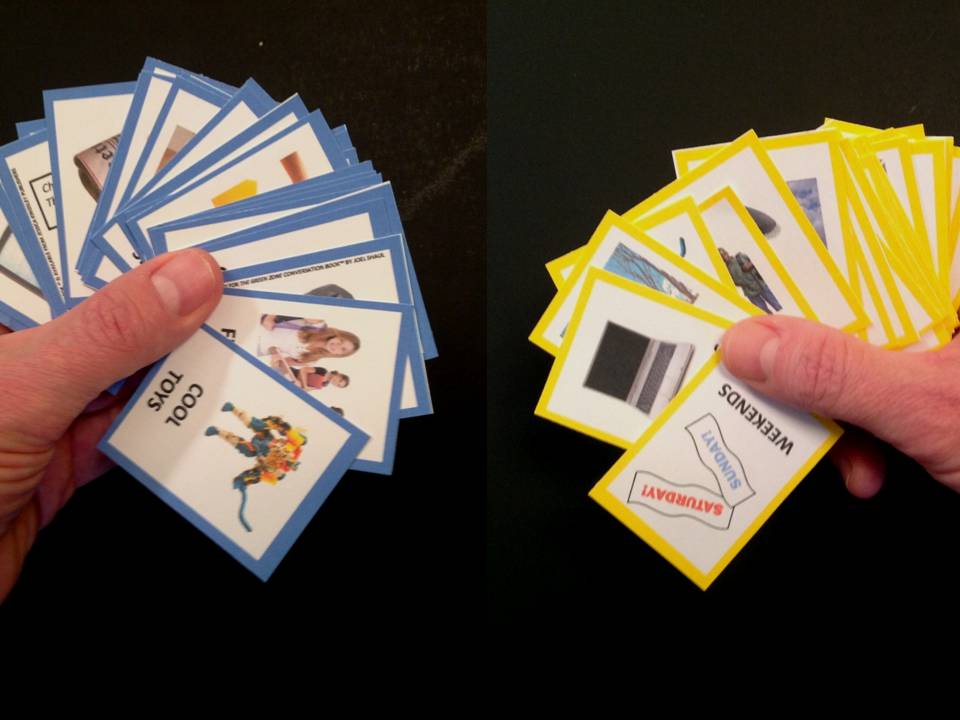
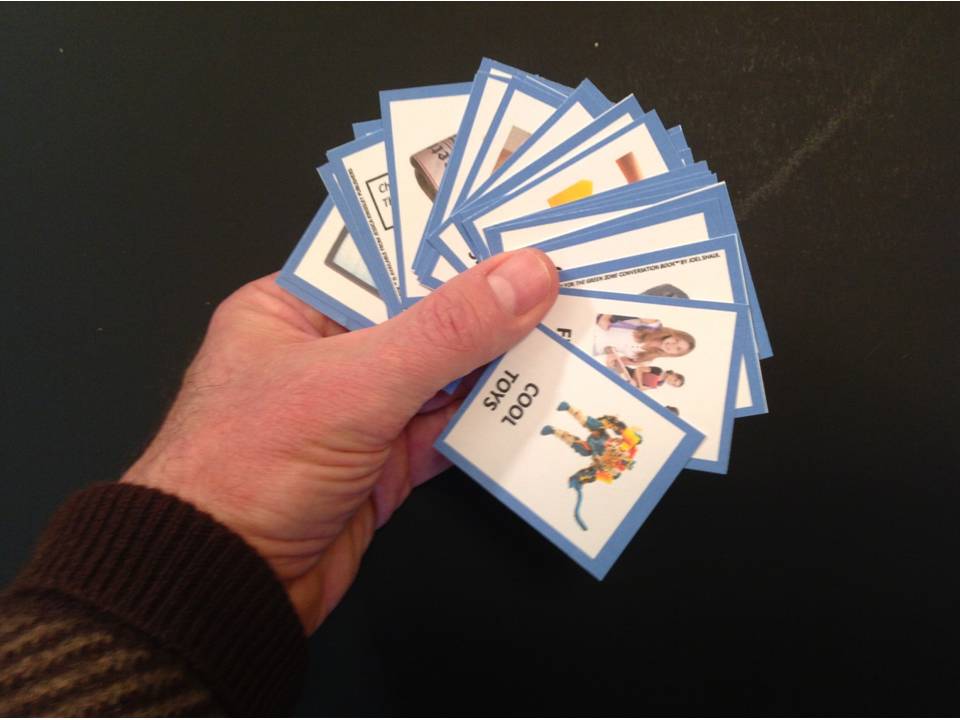
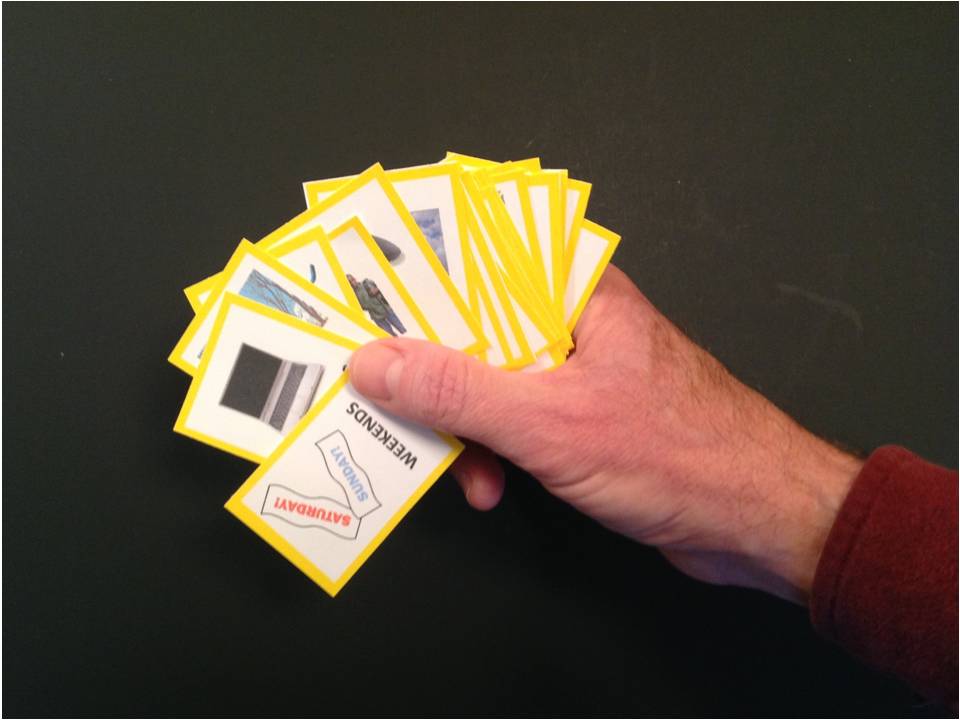
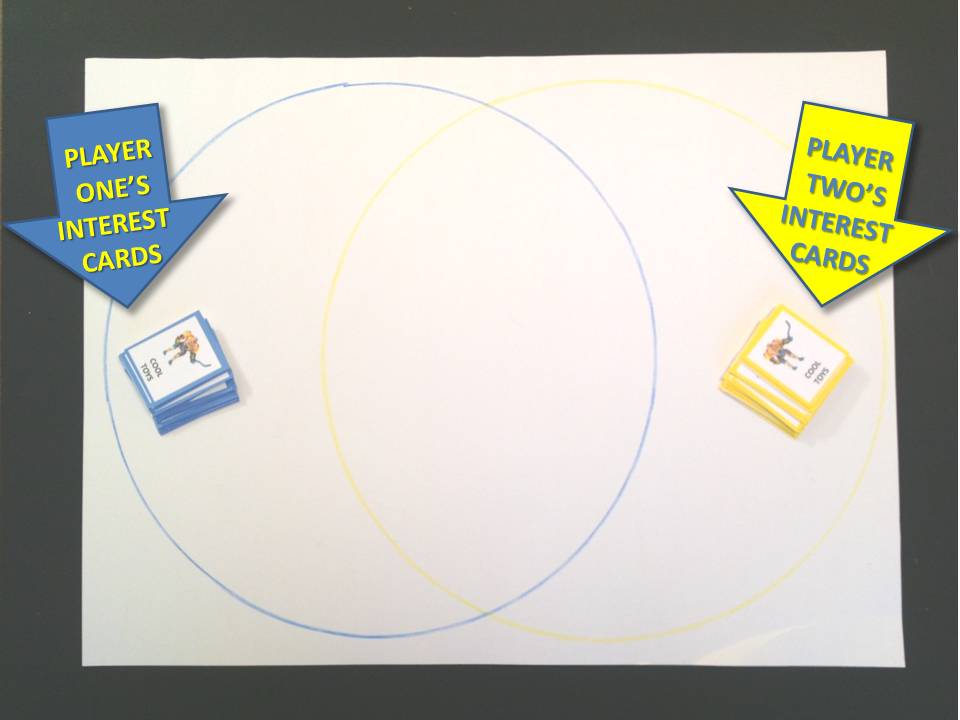
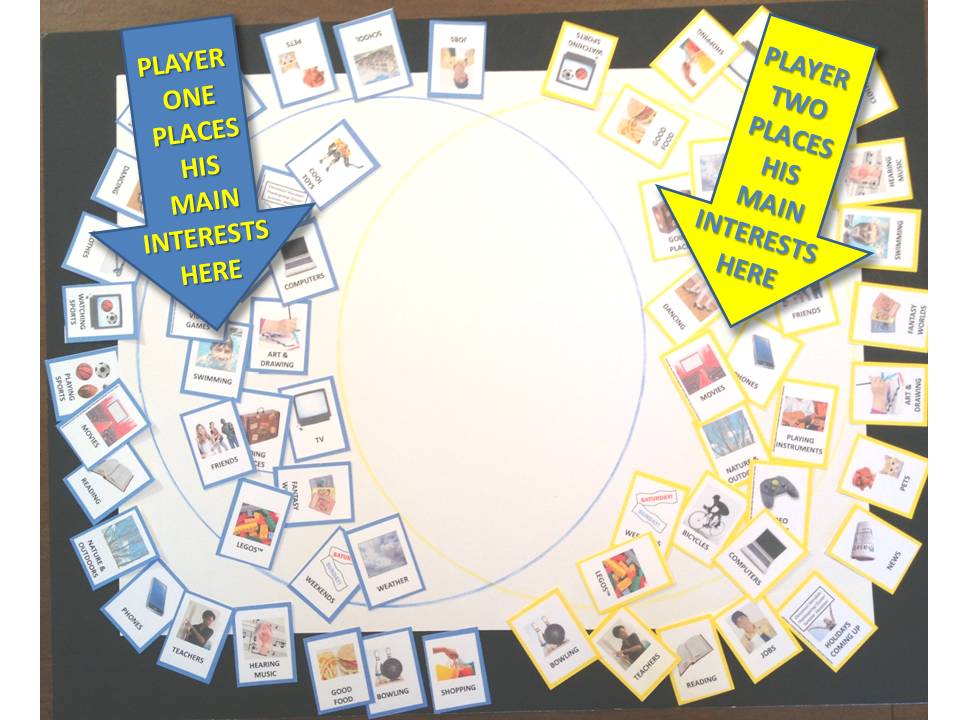
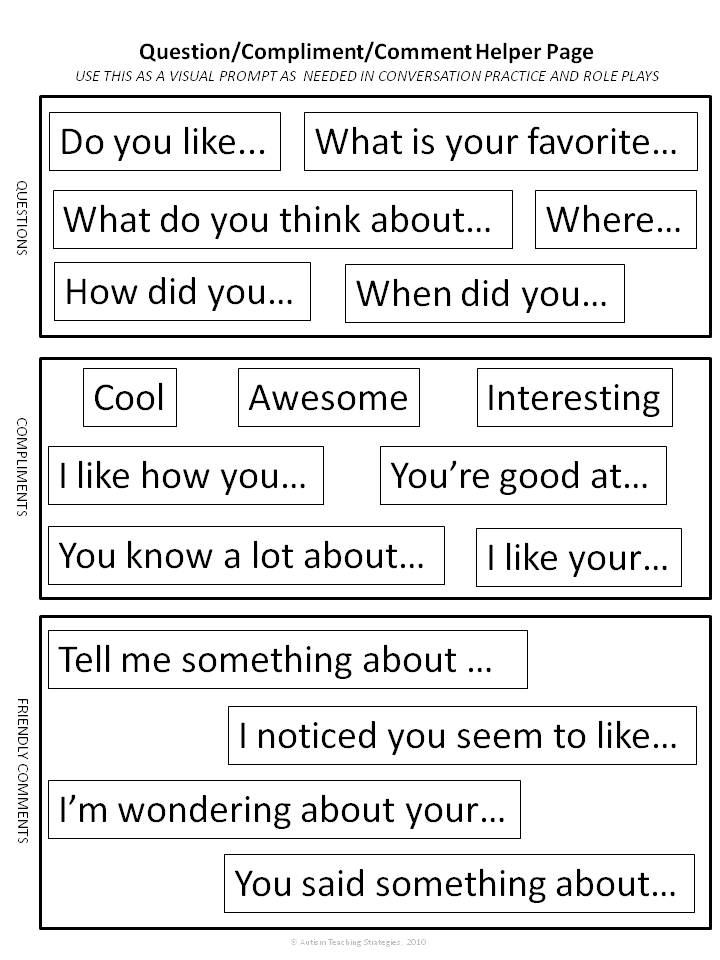
Children on the autism spectrum often struggle to discern the interests of other people and to take these interests into account in conversation. This social skills game employs a picture-based strategy works well in a variety of ages and reading levels. I would then encourage you to go on to fully explore this fun, visual method in my illustrated children’s book, The Green Zone Conversation Book, published by Jessica Kingsley Publishers.
To download the activity, click on the red link below.
I wish you success in your social skills work with children on the autism spectrum.
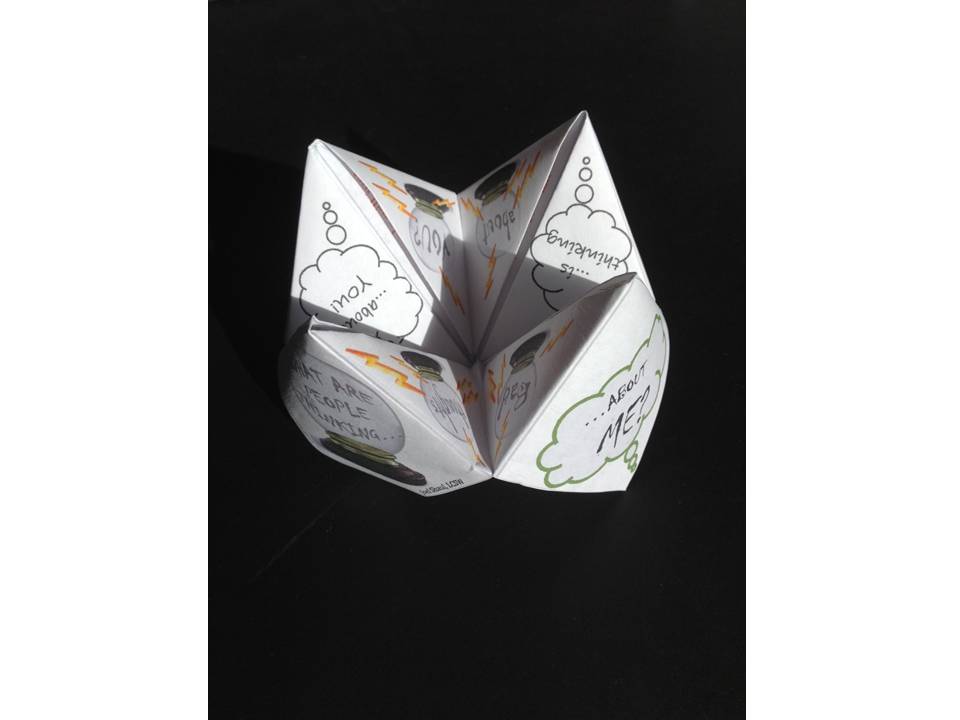
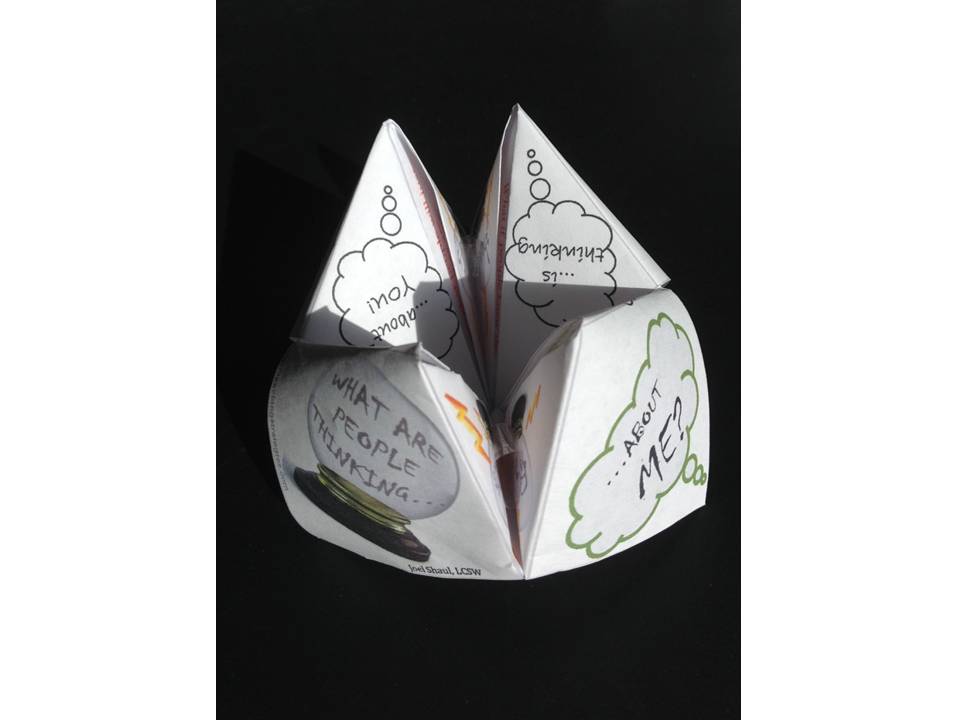
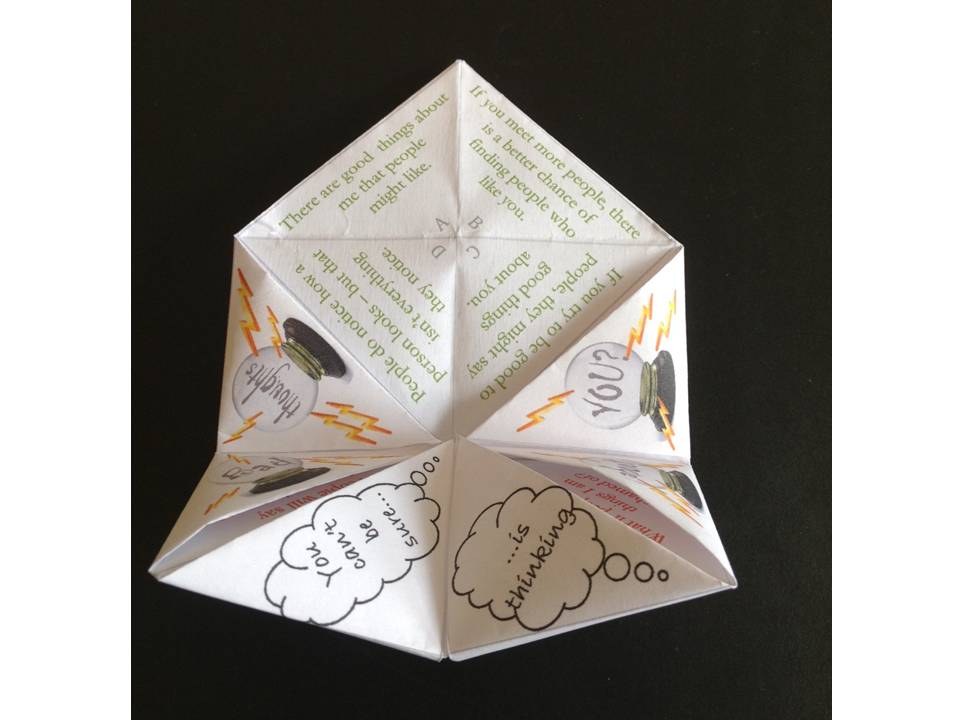
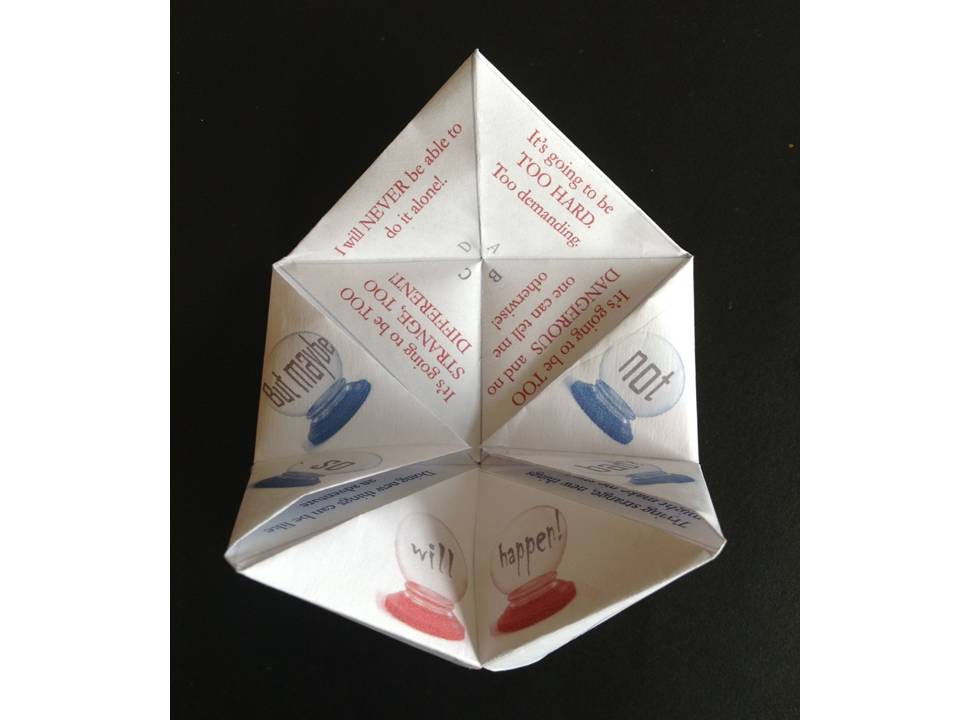
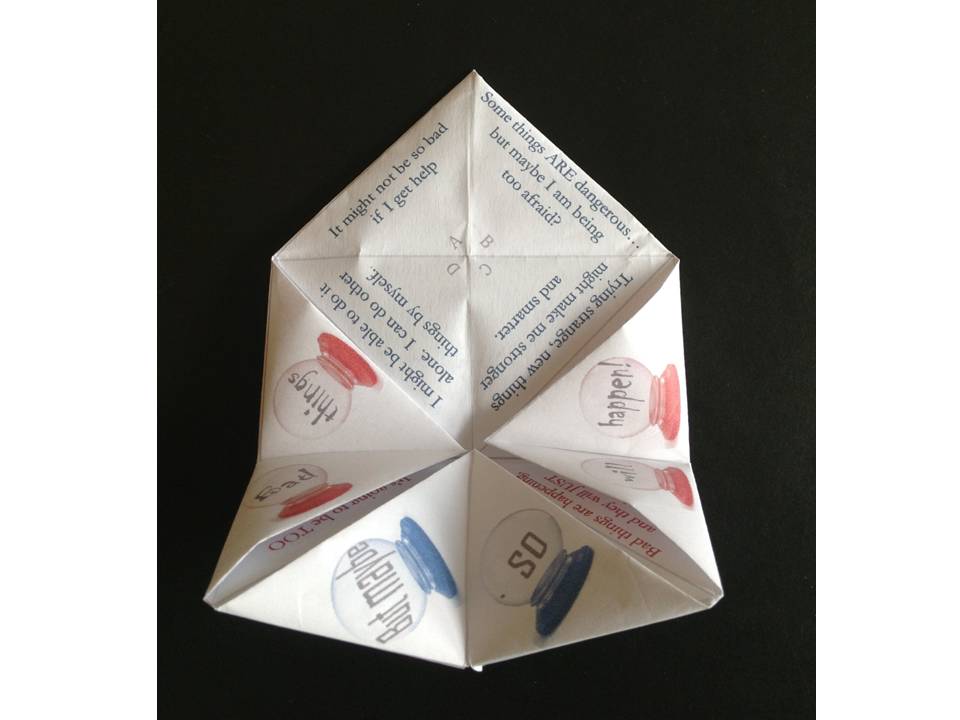
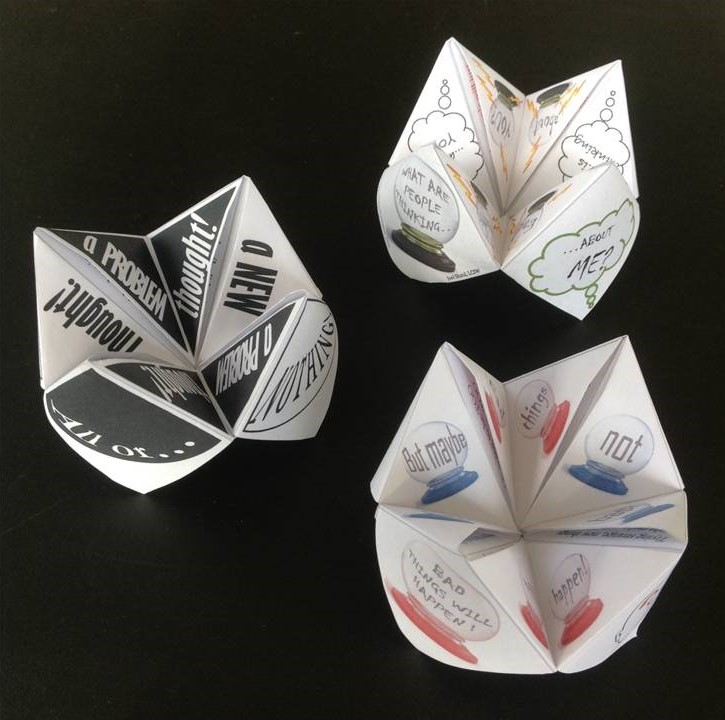
Helping children to work on upsetting emotions using cognitive behavioral therapy game activities
Many young people have persistent problems with anxiety, sadness, anger and other upsetting emotions. To maintain engagement in counseling and psycho-education, we need to provide novel approaches and introduce some levity whenever possible.
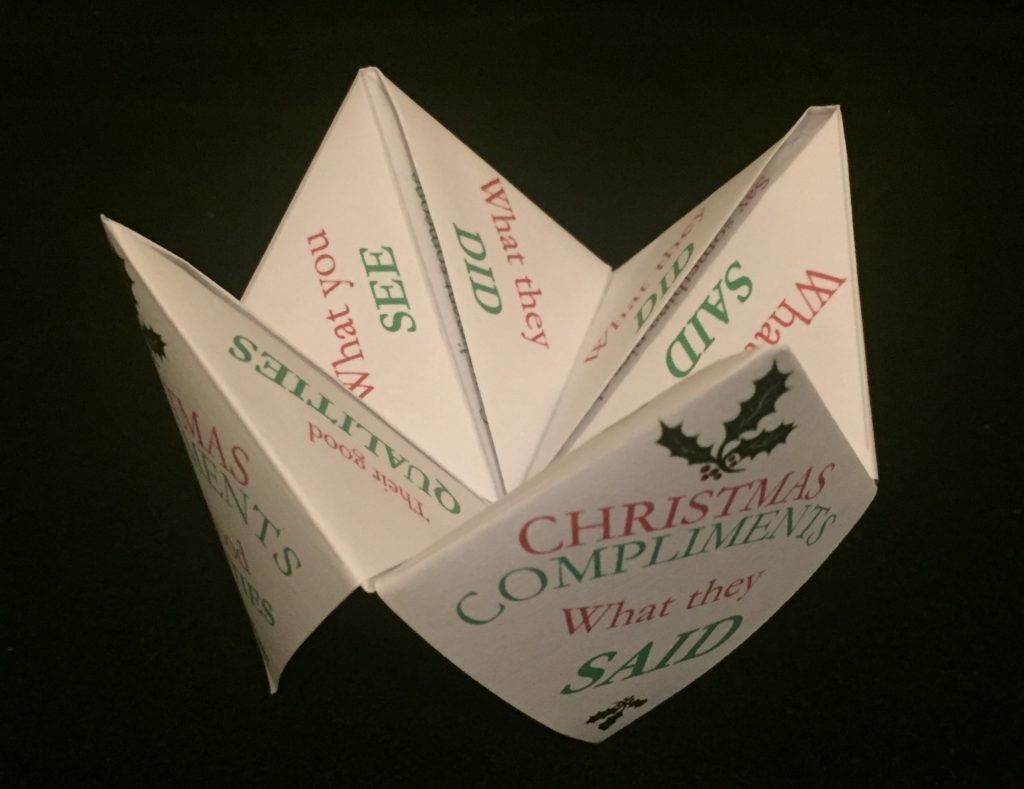
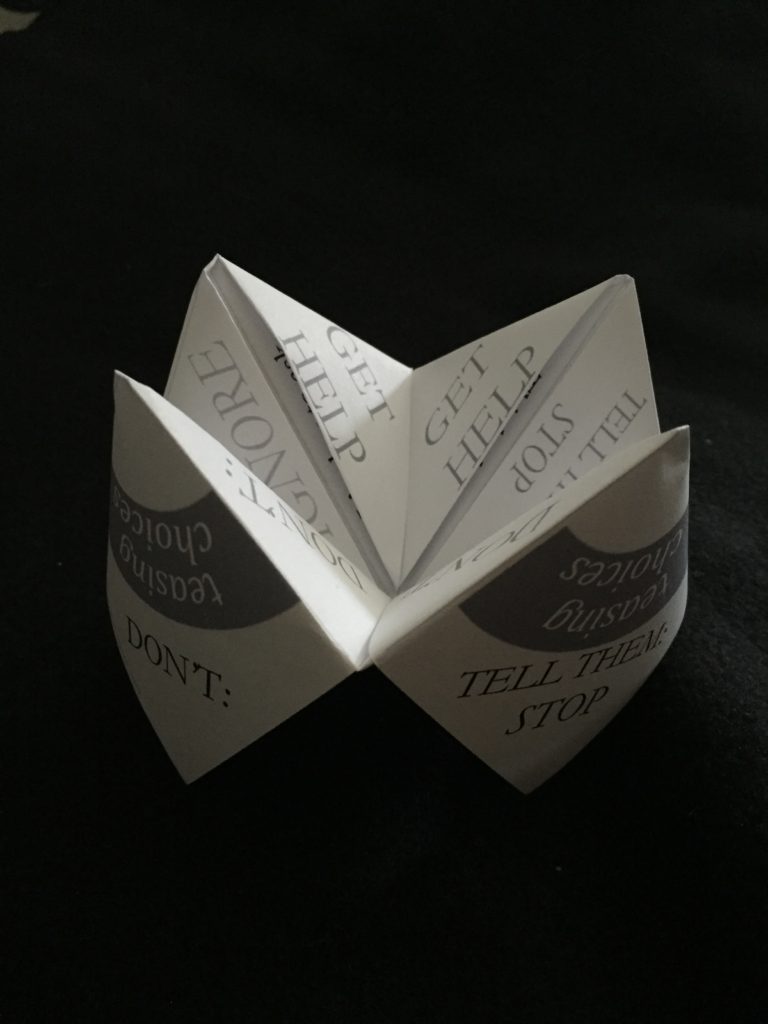
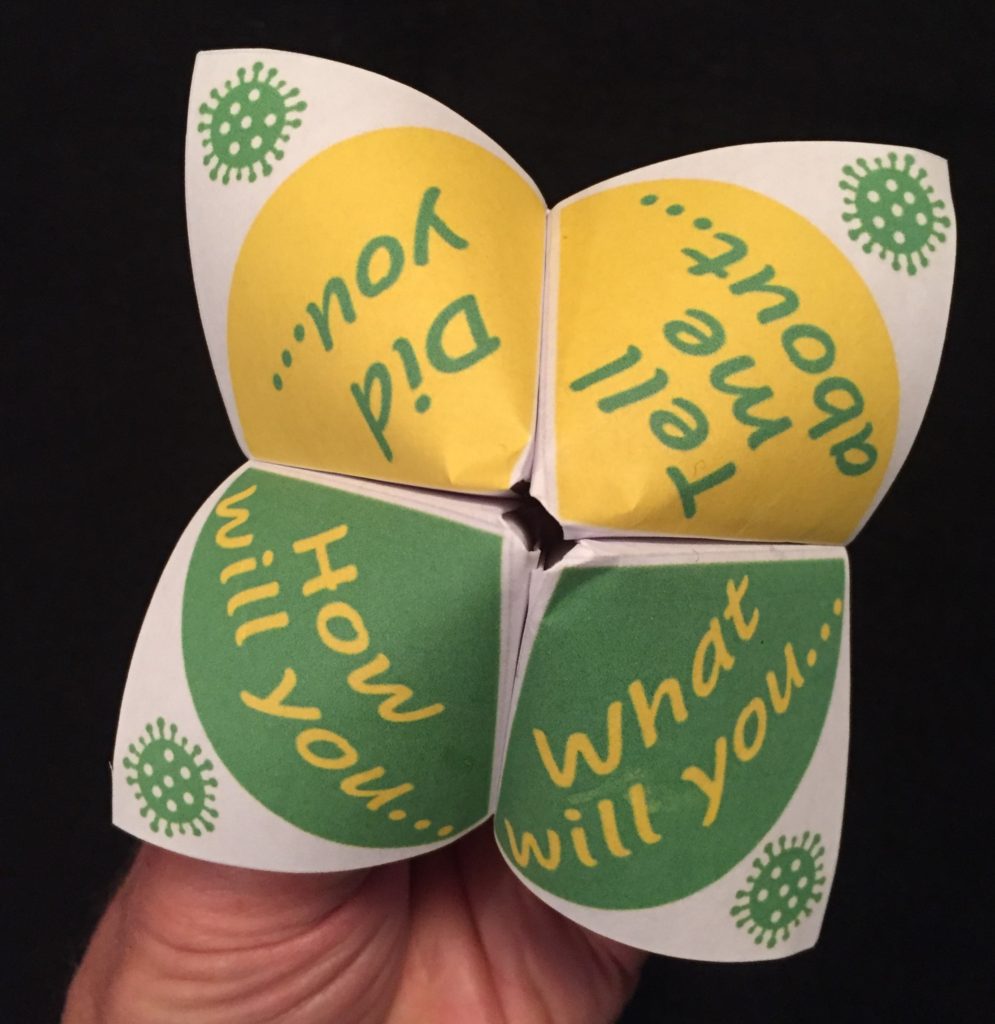
To check out a dozen other paper fortune tellers, on diverse social skills themes, please click here.
For a summary and links to all the free CBT materials on my website, please click here.
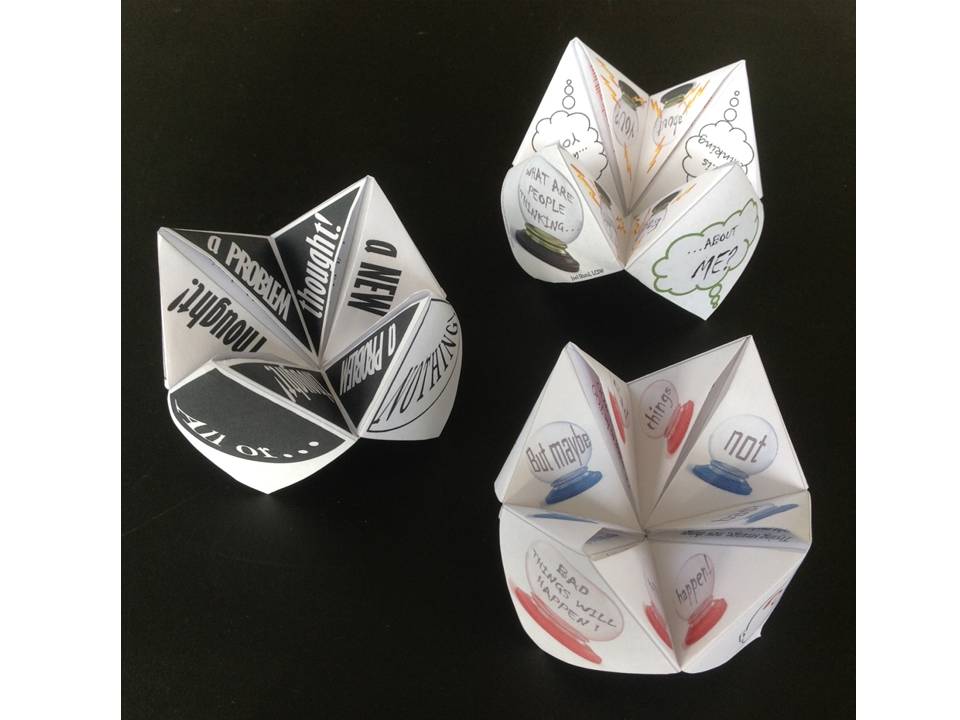
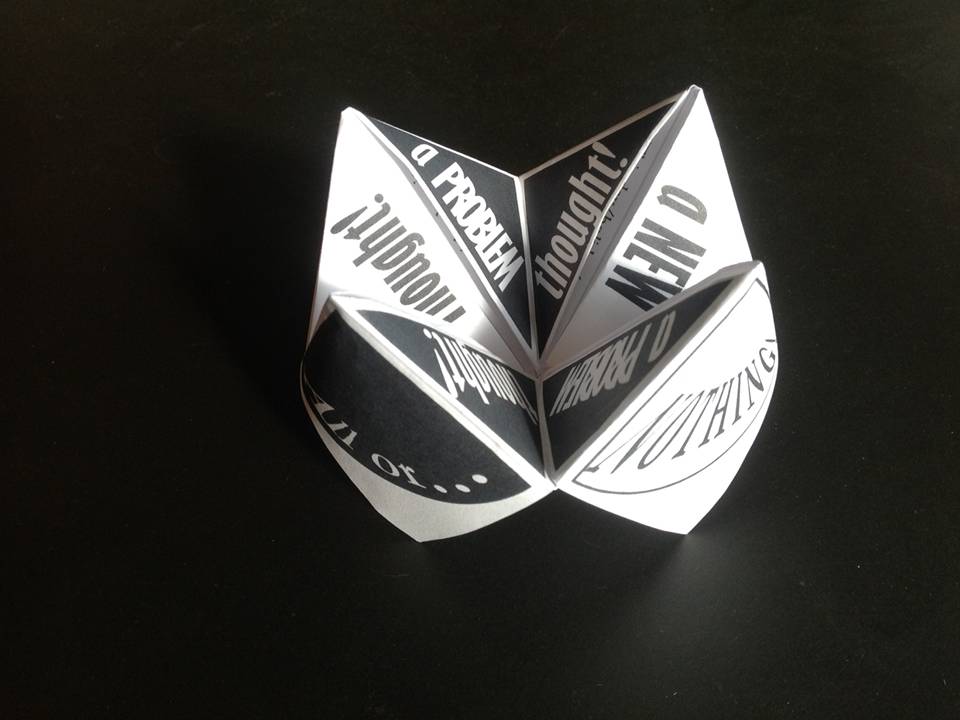
Some suggestions for introducing these Fortune Tellers:
1. Introduce some basics concerning the connection between automatic negative thoughts and negative emotions. I suggest you do this by viewing , with children, this very short video I made:
2. Working in pairs, and taking turns, person number one says, “Spell your name.” For each letter, the child holding the Fortune Teller manipulates the device back and forth.
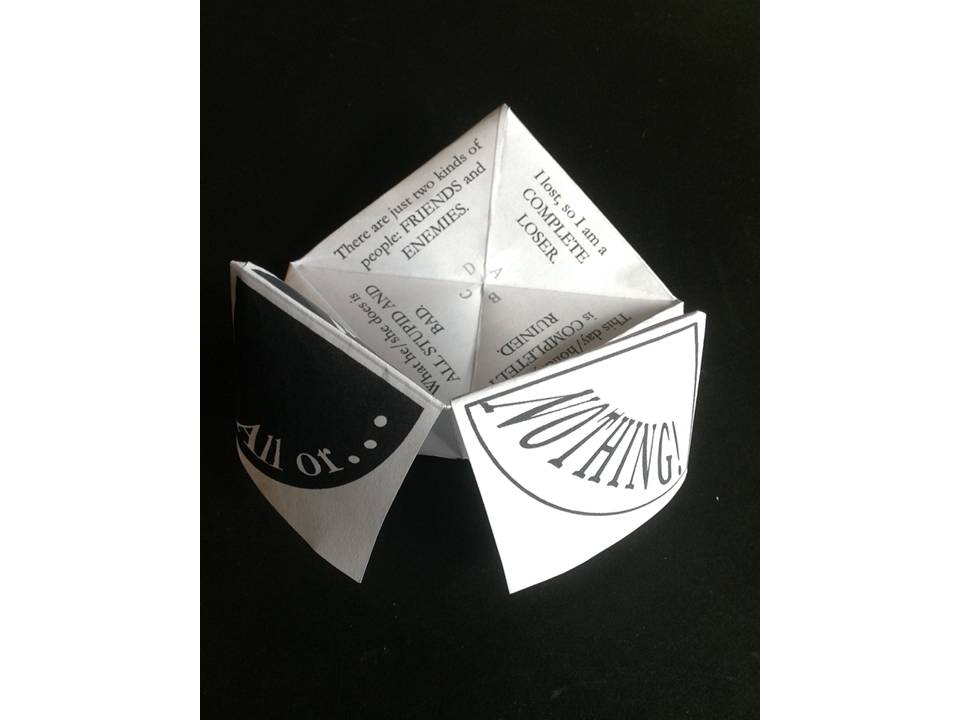
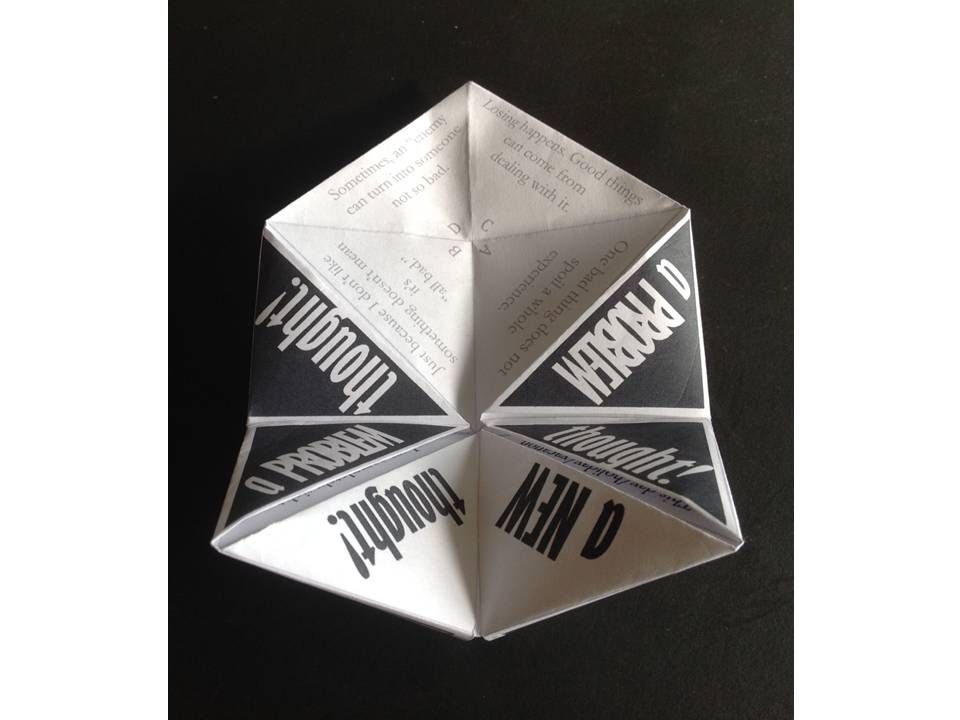
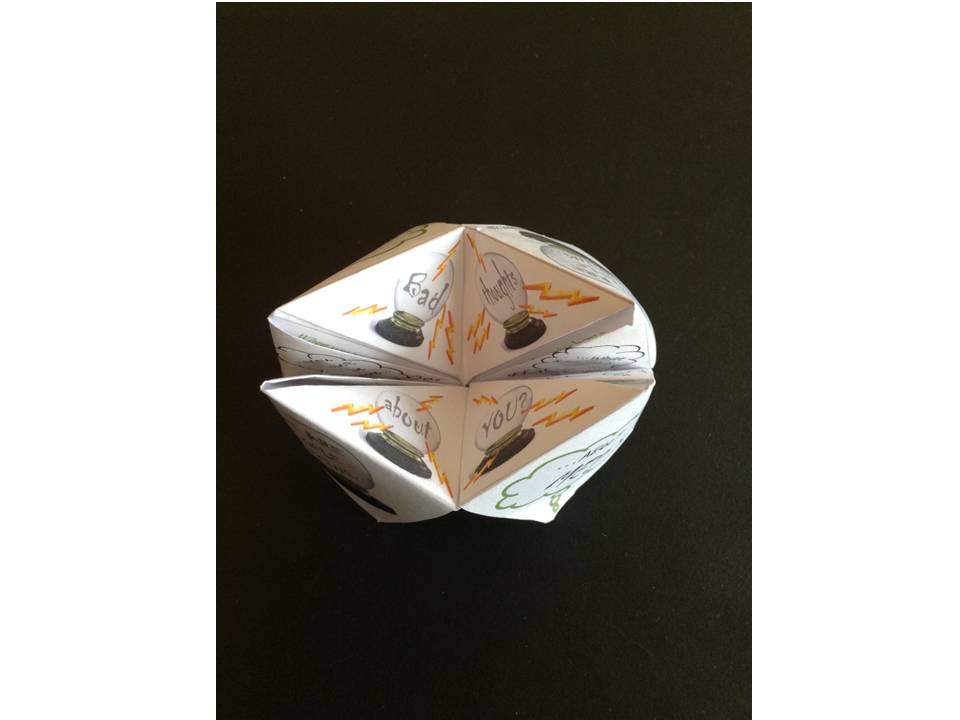
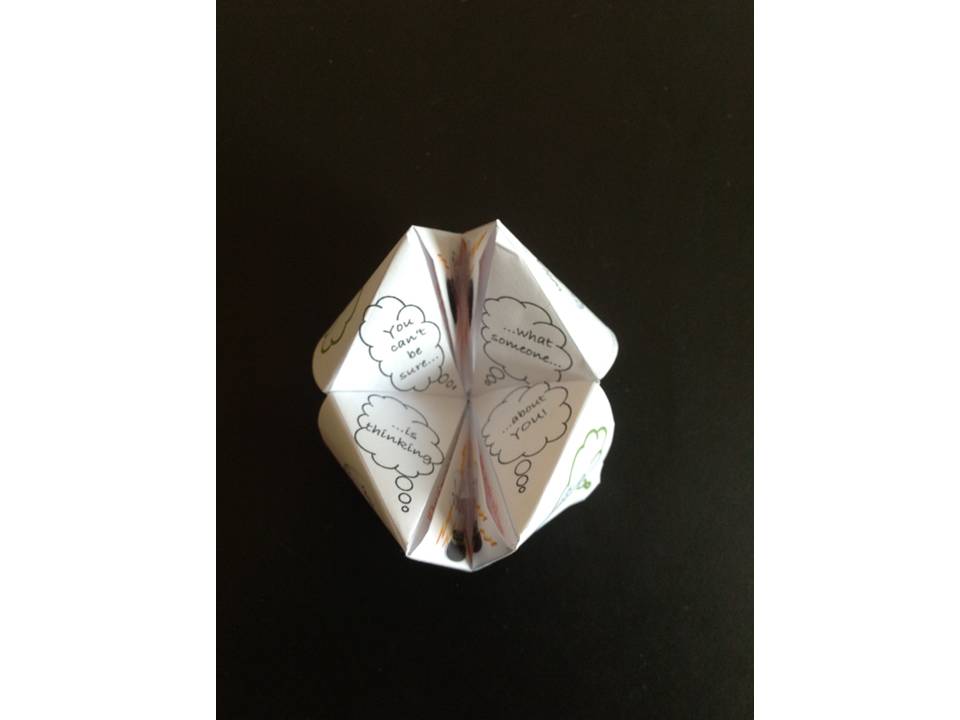
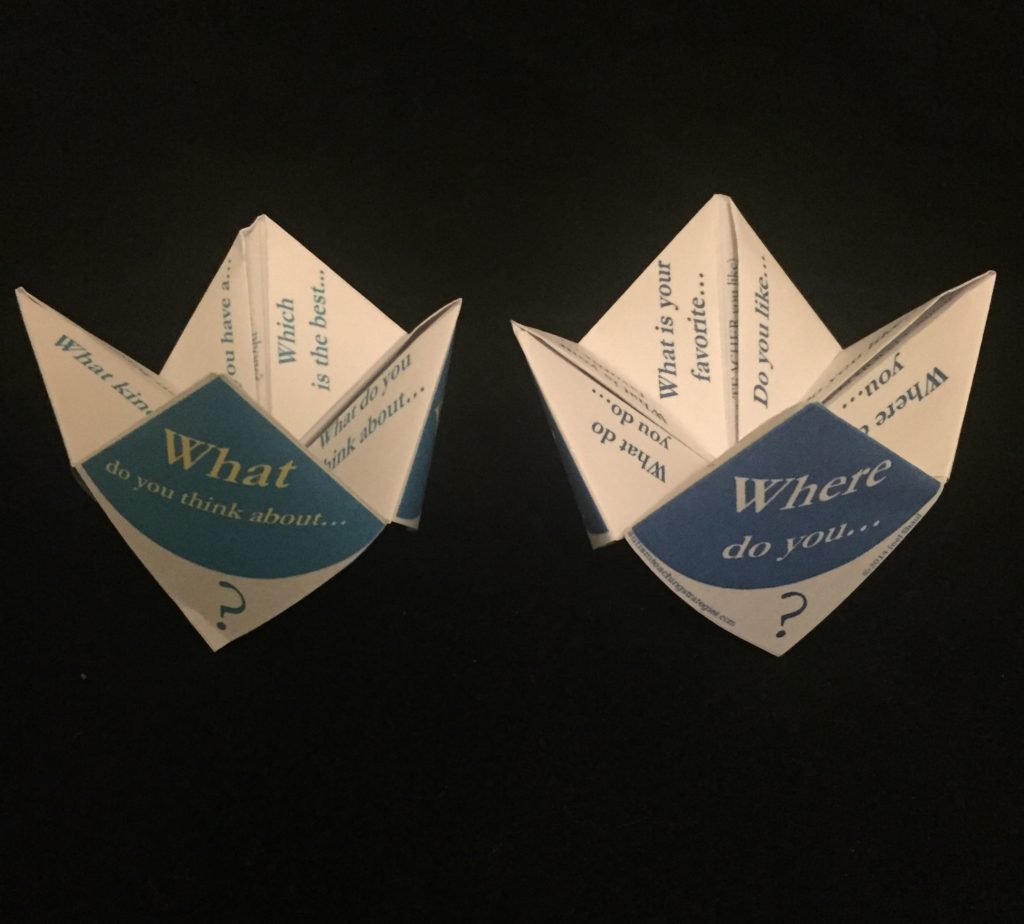
3. Person number two is then shown the two options appearing on the inner triangles. Person one says, “Pick which one you want.” You can see photos of this farther down on this page.
4. Person one opens up the innermost petals, where four options appear. He tells person two, “Pick A, B, C or D.” Person one reads the option selected. If the option read is a negative thought, person two has to tell how to deal with such thoughts. If the option selected is a positive thought, person two must describe a time when he needed to use such a thought to solve a problem.
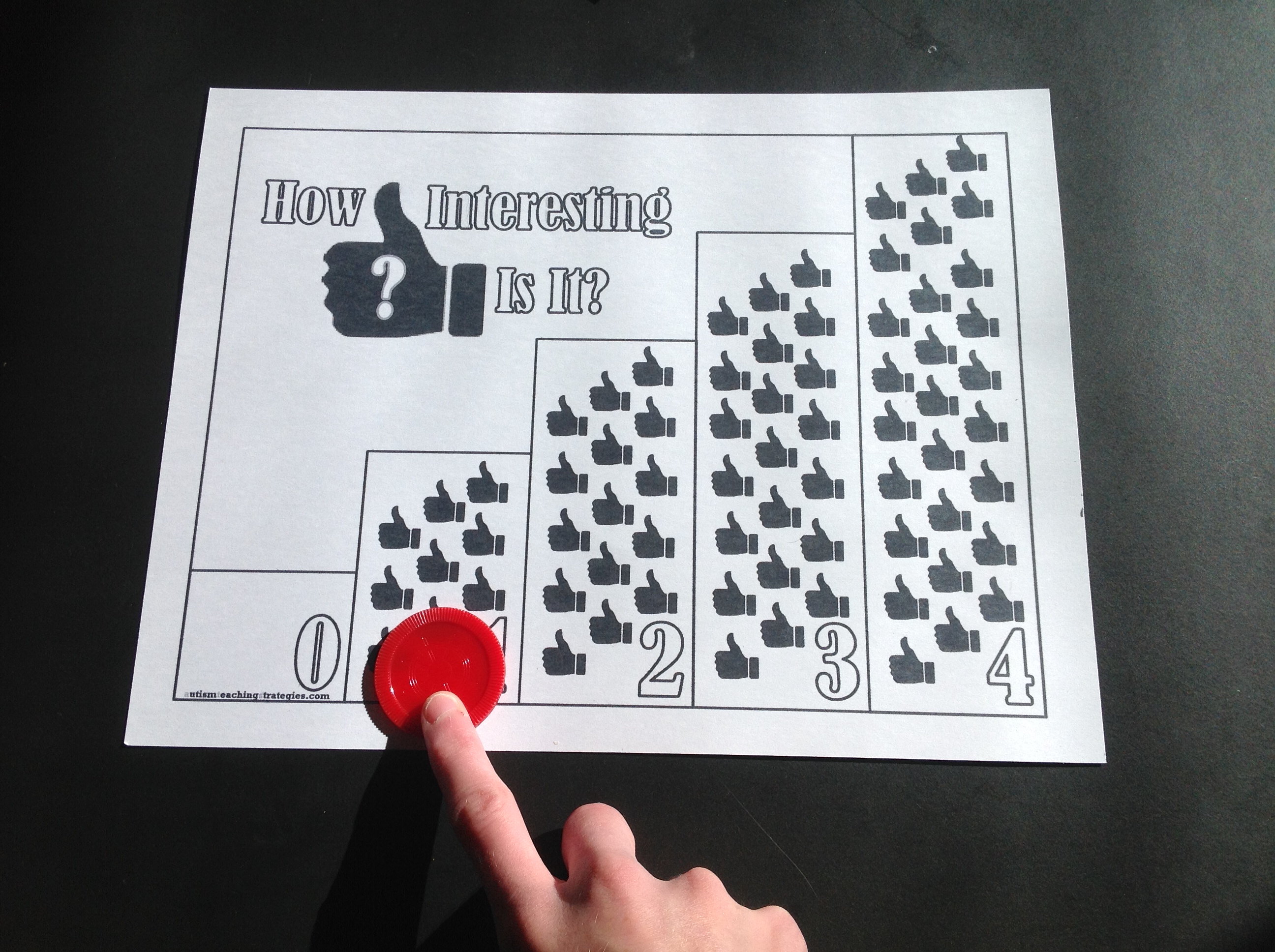
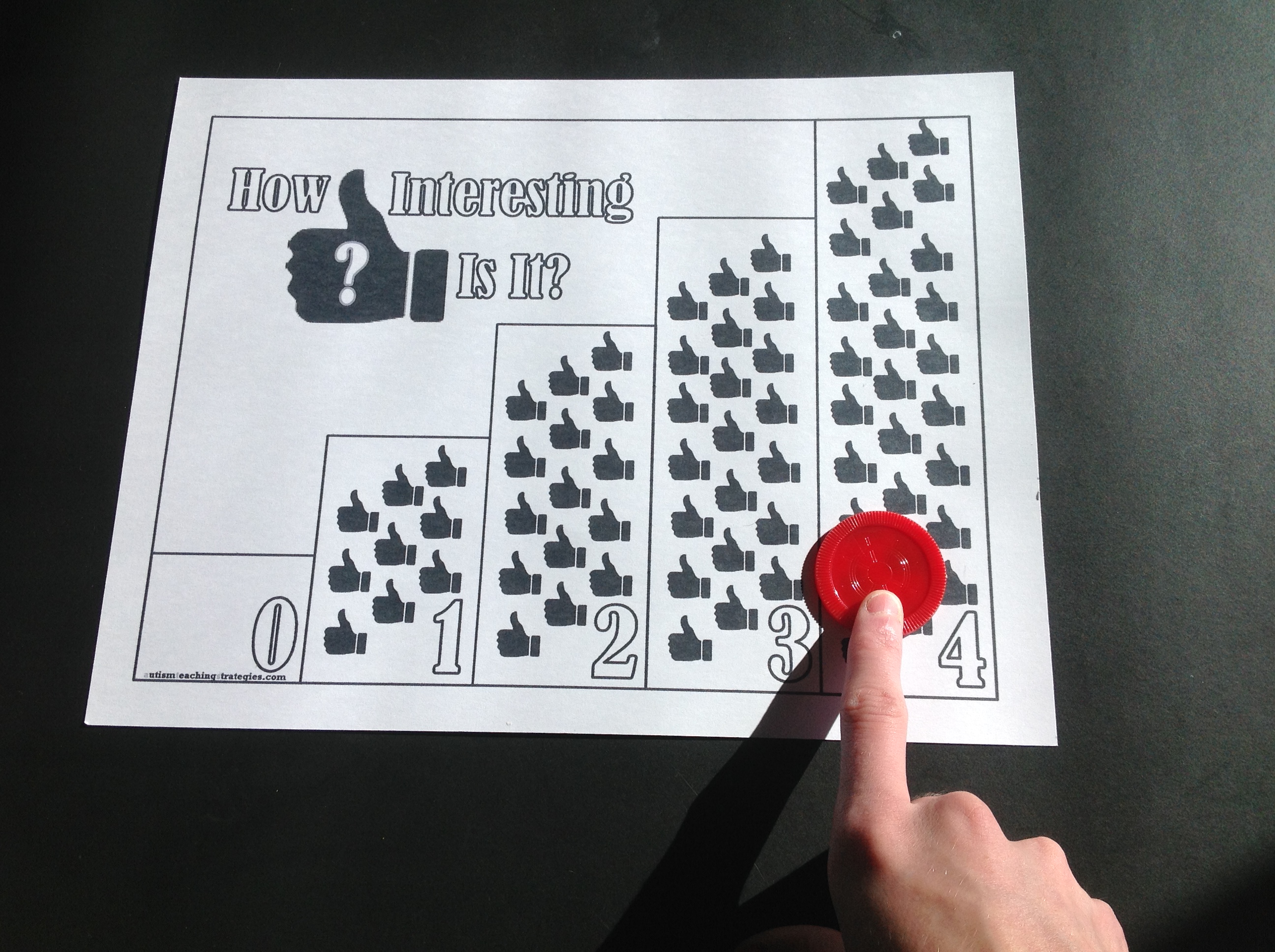
Here is part of the How Interesting Is It? kit. The child moves the chip from one category to the next based on his assessment of how interesting a topic is to another person.
A set of social skills learning materials to help teach what conversation topics tend to score “likes” with peers
Children with autism spectrum disorders can find it very difficult to know what to say to their peers. Children with ASD tend to fall back on their own preferred topics.
Here are some activities to increase awareness of various things that other people find interesting to talk about. The activities employ the thumbs-up “like” symbol, which is very familiar to most children as an indicator of what pleases another person.
This kit includes:
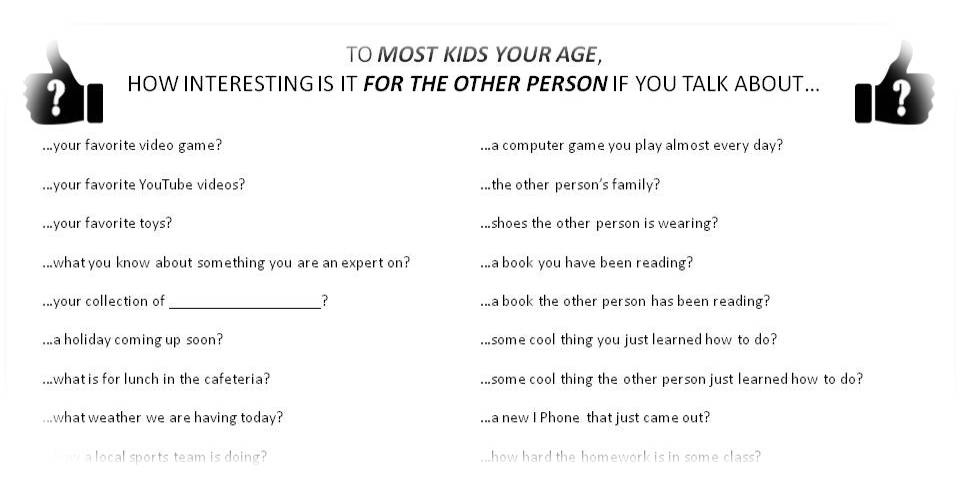
1. How Interesting Is It? topic list [fragment shown below].
This is a list of ninety different conversation topics. You read them out loud to children so they can rate how interesting they are.
2. How Interesting Is It? rating sheet [shown below].
Children move a chip between 0 and 4 based on how interesting they think a particular conversation topic might be for another person.
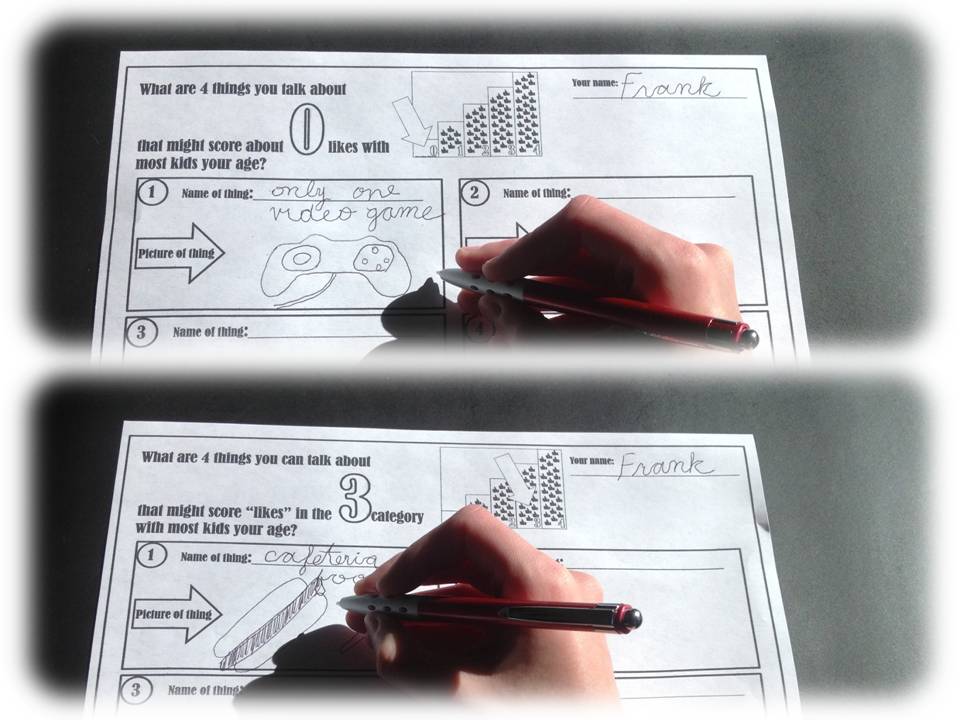
3. How Interesting Is It? picture worksheets [examples shown below]
This set of five worksheets is to help children who need more practice.
Some suggested language to use when introducing these activities:
“Who has ever seen the ‘like’ icon on Facebook or other places online? What does it mean? It means someone likes something that they see or hear online. Some things online get lots of ‘likes’. Some get few, or none.
When you are talking to other people, you might also be scoring ‘likes’ – in their minds. Or you might not be scoring ‘likes’ at all. When you are ‘interesting,’ it is something like scoring ‘likes’. When you are not interesting, or boring, you are not scoring ‘likes’.
You can get much better at scoring ‘likes’ in conversation by paying close attention to what you are saying and what the other person might find to be interesting. Your own words might seem really interesting to your own ears. Maybe the other person will like your words too. But, depending on the topic and what the other person finds interesting, your words might not score any ‘likes’ at all.
Here are some activities to help you get better at scoring ‘likes’ when you talk.
1. How Interesting Is It? rating sheet. I will read you a number of different conversation topics. For each one, you have to take a guess on how interesting, on a scale of 0 to 4, it might be to the other person. Place your chip on the number that you think shows how interesting it is to the other person, not you. [Note to teacher: alter the wording as you read through the list, to clarify and specify as you see fit.]
2. How Interesting Is It? picture worksheets. For the Zero sheet, pick out some things from the list that might be uninteresting to most kids – or things that you think of yourself. Write them down on the sheet and draw small pictures. For the 1, 2, 3 and 4 sheets, write and draw things that kids your age might find more interesting.”
Note to teacher/therapist: These activities work best when you add role play practice. Select a number of topics that would rate a 3 or 4 with most children. You play the role of the other child in the conversation. Then, assign the children to converse with you on these selected topics.
I hope you find these materials enjoyable and useful.
Imagination, cooperation, and children with high functioning autism
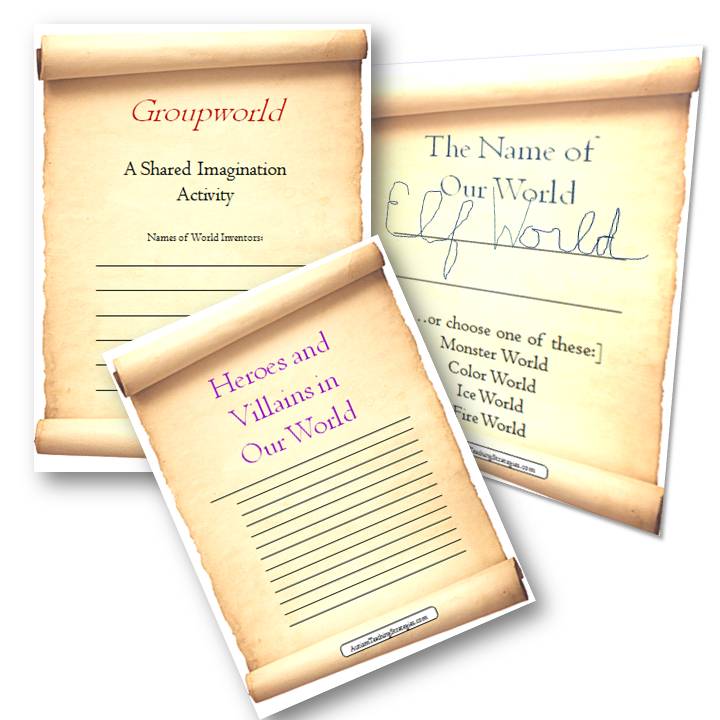
Here is a fun, challenging activity to promote group cooperation skills. It is derived from an idea I found in a book years ago. I have provided you with print-outs to help structure the activity. This activity works well for many children ages 7 and up.
Many children have very rich lives of imagination. Children with ASD’s often have involved fantasy worlds – worlds they mainly keep to themselves. The Groupworld activity is designed to make imagination more interactive by having children work together to invent a world of their own together.
Here is some language you may consider using to introduce the activity:
“We are doing The Groupworld activity. You all have great imaginations, but you are used to using your imagination all by yourself. In the Groupworld activity, you will have to combine your ideas with the other people here to make a world that has not just your own ideas in it, but everybody else’s ideas as well.
This will be fun, but it will also be hard. People naturally like their own ideas. It takes effort, and practice, to mix your ideas with other people’s ideas and not get into arguments.”
This activity is derived from an idea I found in Relationship Development Intervention with Children, Adolescents and Adults, by Gutstein and Sheely.p
I hope you enjoy this social skills activity. To learn about more group activities to foster sharing, collaboration and creativity, click here.
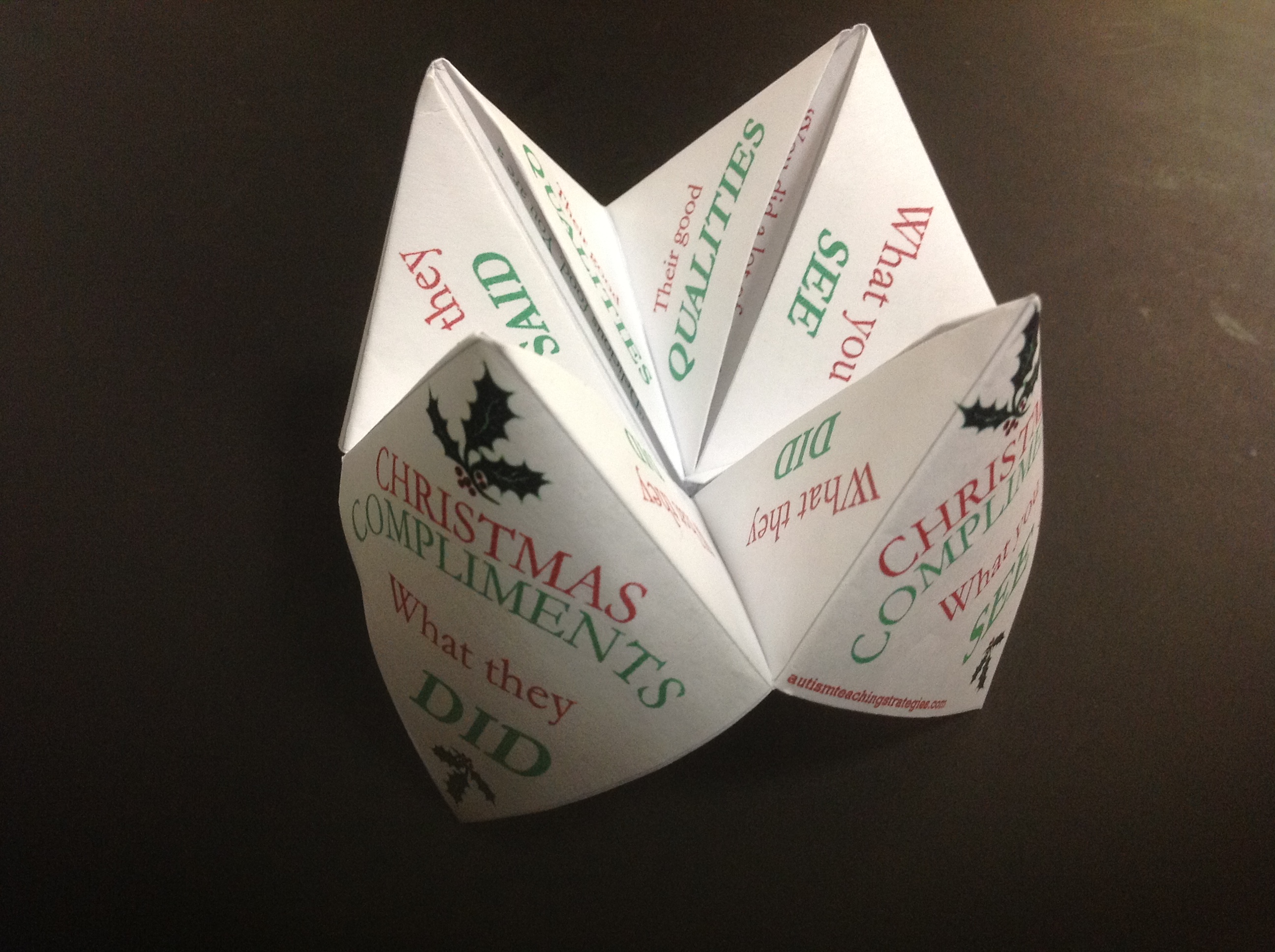
[ for another holiday-themed social skills activity, CLICK HERE ]
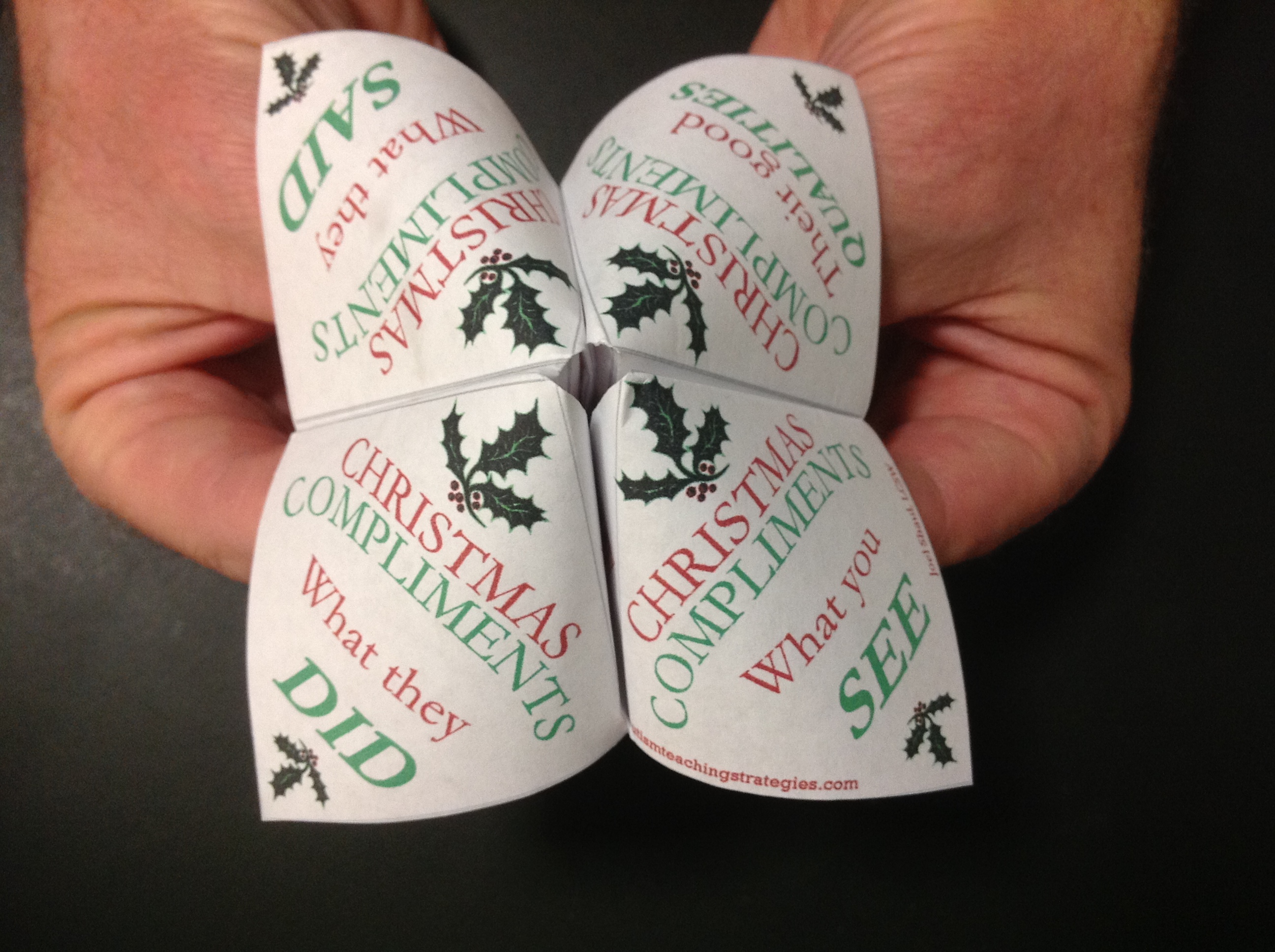
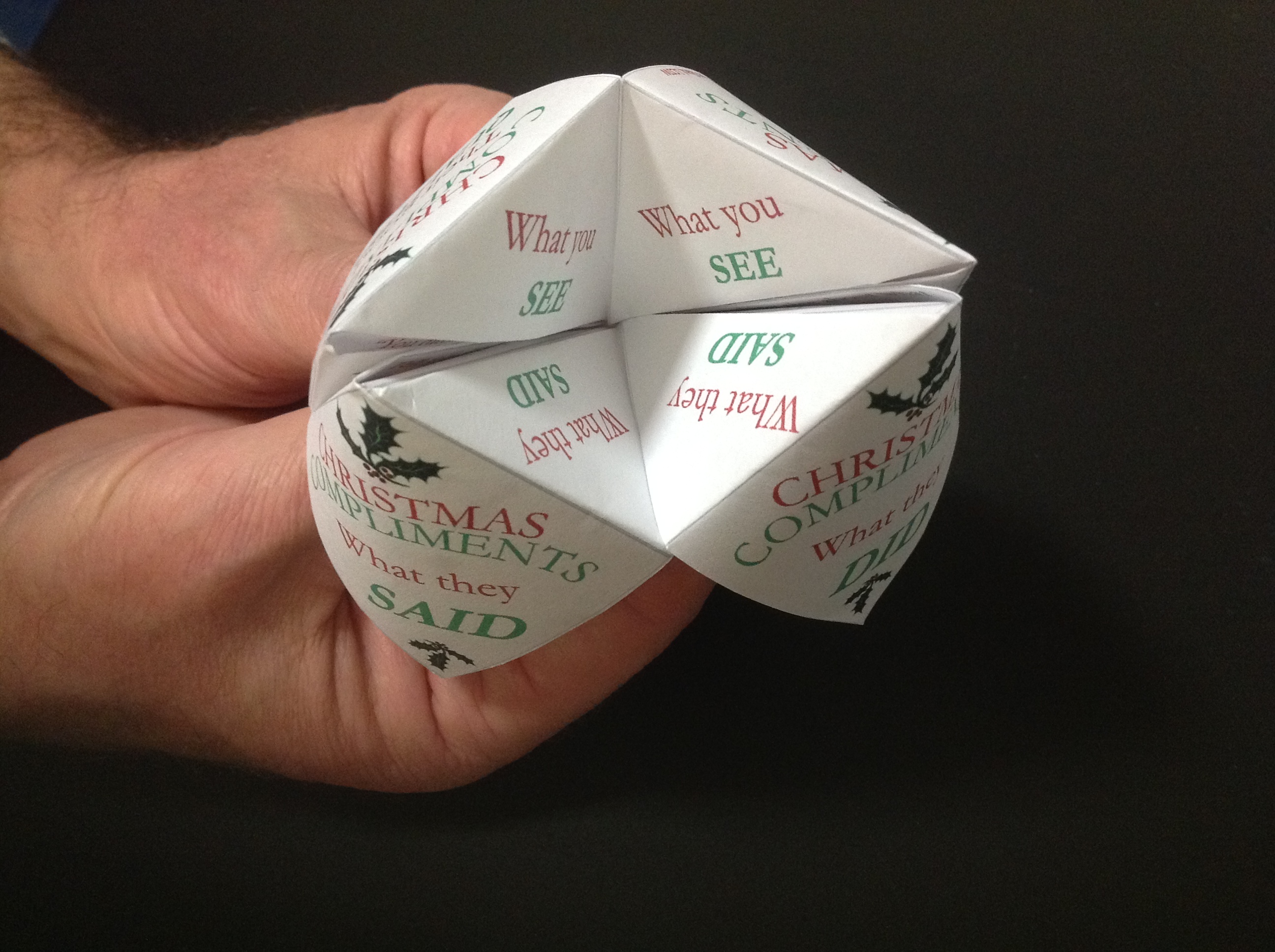
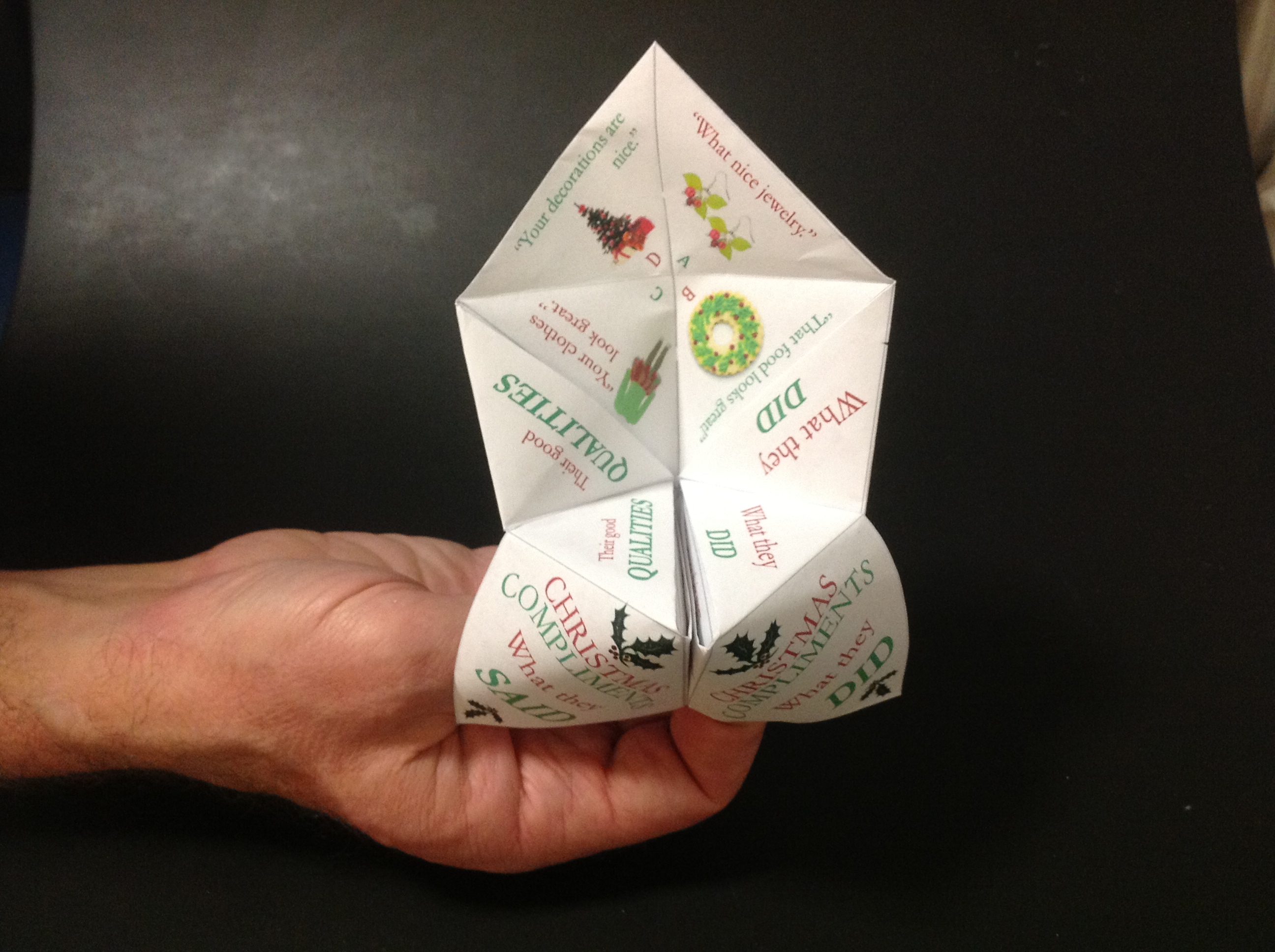
Children on the autism spectrum are often deficient in the skill of giving compliments. They tend to not be aware of the obligation and necessity of offering compliments to build and maintain good will in relationships.
During holidays in which family and friends give and receive gifts, and adults host meals, parties and other celebratory events, part of the expectation is that those on the receiving end will praise that which is provided for them to play with, eat and enjoy. It is useful for children with ASD to practice the social skill of giving compliments in advance of such occasions.
I have put a lot of free downloads on this website to promote giving compliments. Here are a few to check out:
In this post, I provide some ideas on how to put together a kit of emotion face visuals, combining inexpensive resources with home made and free downloads.
Children with Asperger’s and other autism spectrum disorders may experience a number of problems involving emotions. They may have difficulty recognizing and naming a nuanced range of emotions in themselves in themselves. They can find it hard to accurately identify emotions in other people. Kids on the autism spectrum may find it challenging to discern emotions in others through observation of facial expression and body posture. Young people on the spectrum can find it bewildering to sort out what causes various emotions and how unpleasant emotions can be relieved.
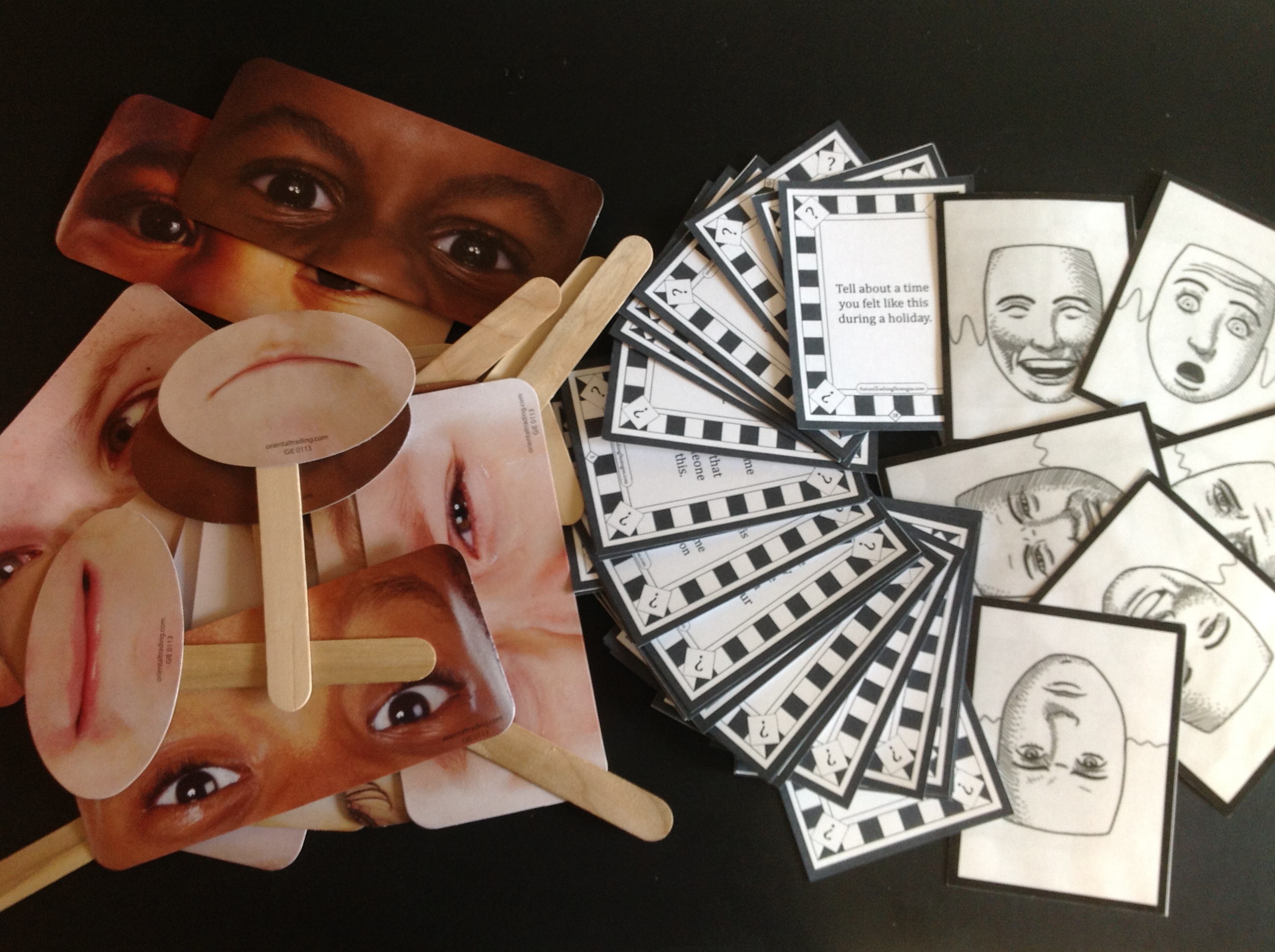
In this blog post, I present a kit of visual and game resources I have put together for my own use in social skills therapy and social skills groups. Some of this kit is available for free download elsewhere on my website (Emotion Question Cards). Another part of this kit is available for purchase online at a ridiculously low price (Emotion eyes and mouth visuals). The third part of the kit I put together using appealing emotion drawings found in a textbook on how to draw comics.
Although I designed this kit primarily to be used for kids with high functioning autism, the materials have many applications for children who don’t have autism.
Why to employ a game-like format when helping children on the autism spectrum with emotions
Many kids on the spectrum can spend years learning emotional regulation skills. It can be tough going for them. By the time you, as a teacher, SLP or mental health professional, are working with a child on these issues, the child may have already received a lot of teaching about emotions, much of it under very stressful circumstances. It seems reasonable, and strategic, to lighten it up sometimes in social skills teaching.
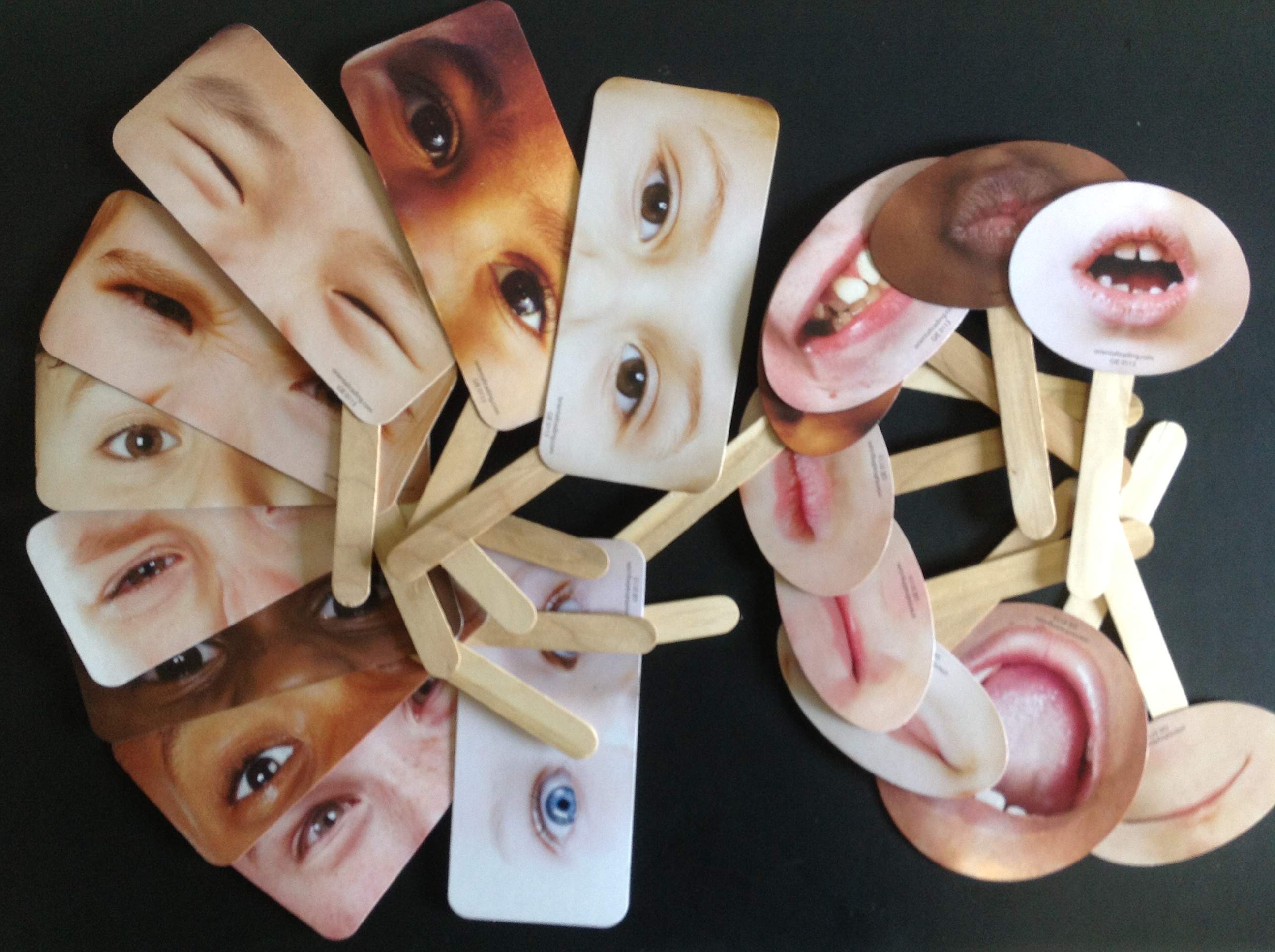
Face and mouth photo visuals
These are available for orientaltrading.com for $5.25 a set! I bought three sets for myself.
Here are some ways to use these. I am sure you will think up a lot more.
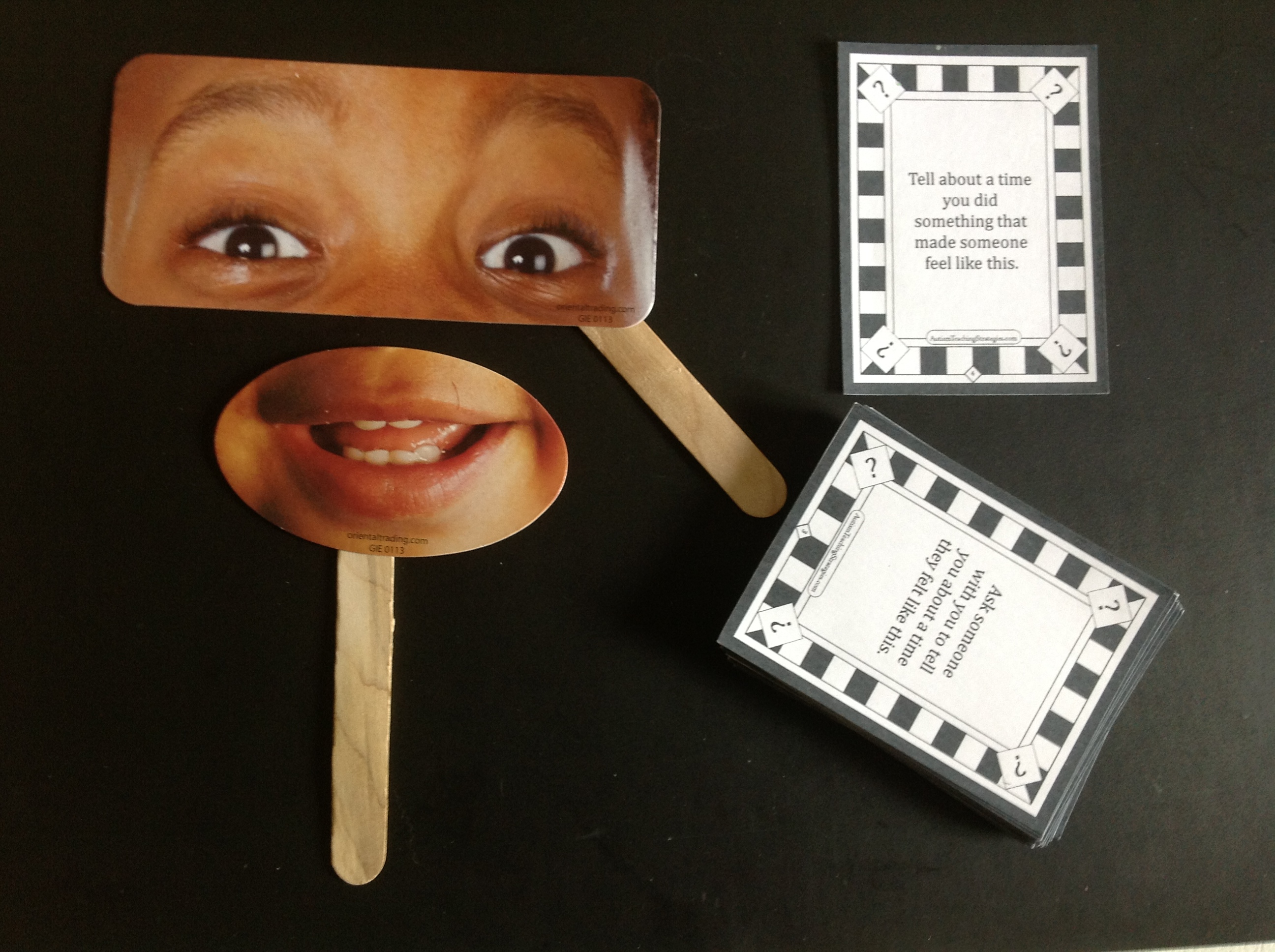
In the example above: First the child matches up the various eyes with the various mouths. Next, use my Emotion Question Cards (free download from another post: click HERE). This sets up a large variety of interesting and fun problem-solving game activities. Here is another example below.
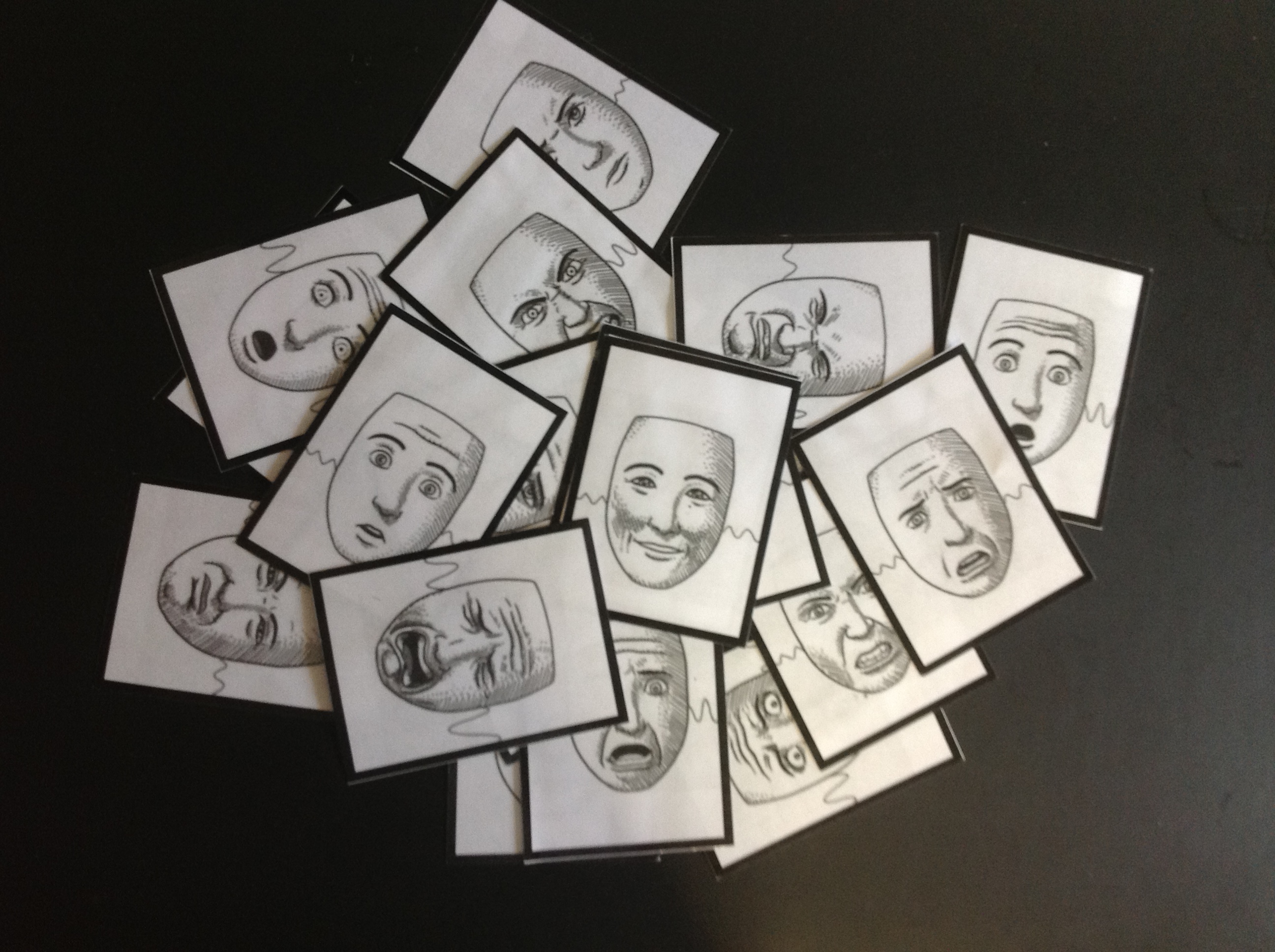
Emotion Face Cards
I found a wonderful book that shows artists how to create comics. Here is the book:
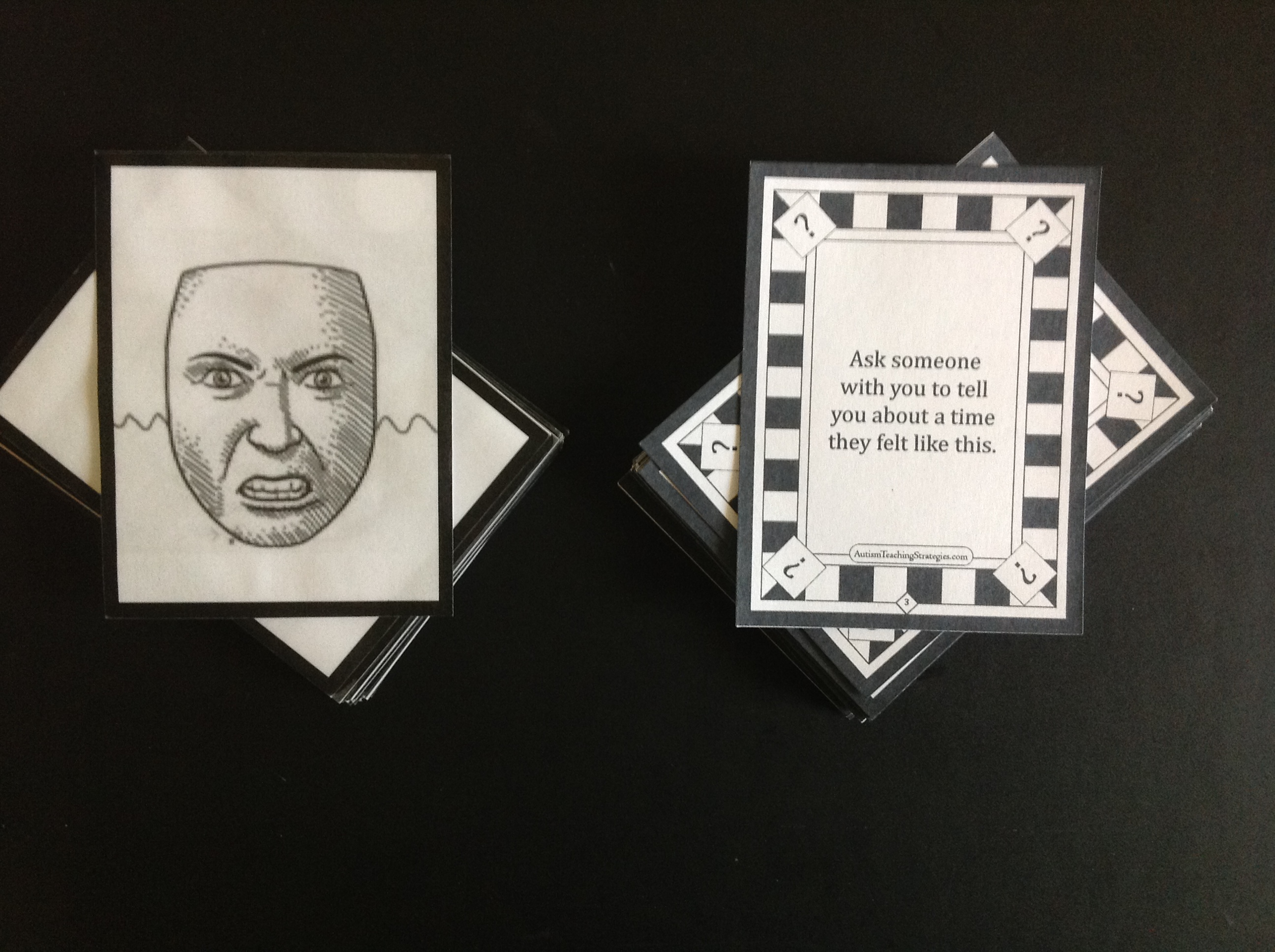
I found pages full of very appealing drawings rendering a range of emotions in six categories. I extracted the images to create my own set of cards to use with my clients.
Here is a close-up of a few of the cards. I love the detail of the drawings.
Below is one example of how to use the Emotion Question Cards with the Emotion Face Cards. There are many possibilities.
I hope you find these ideas helpful. For more resources to help children with ASD to understand emotions and to cope with difficult emotions, follow this link HERE.
*For a video demo on folding and using these things by Carla Butorac, SLP, click HERE.
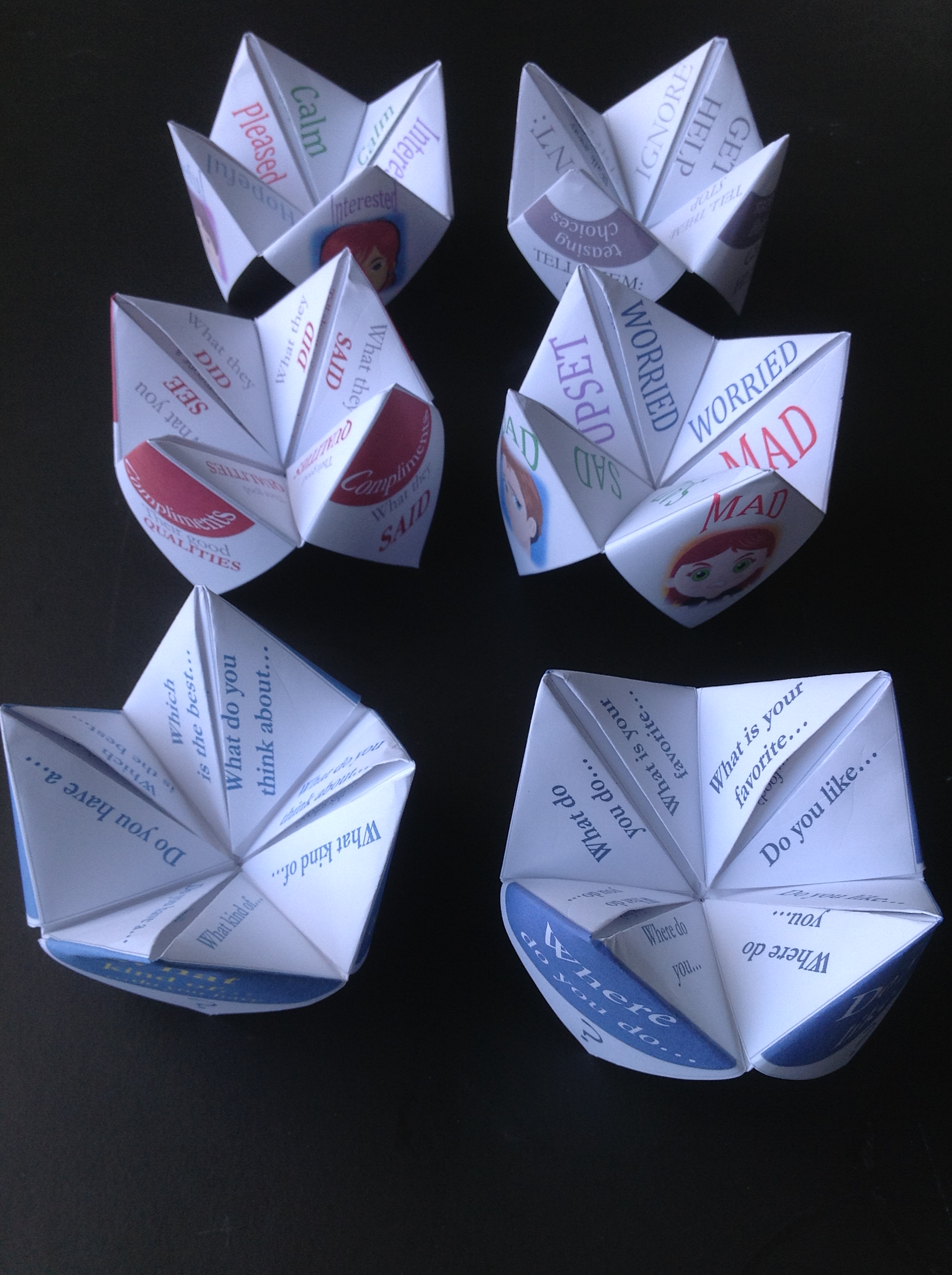
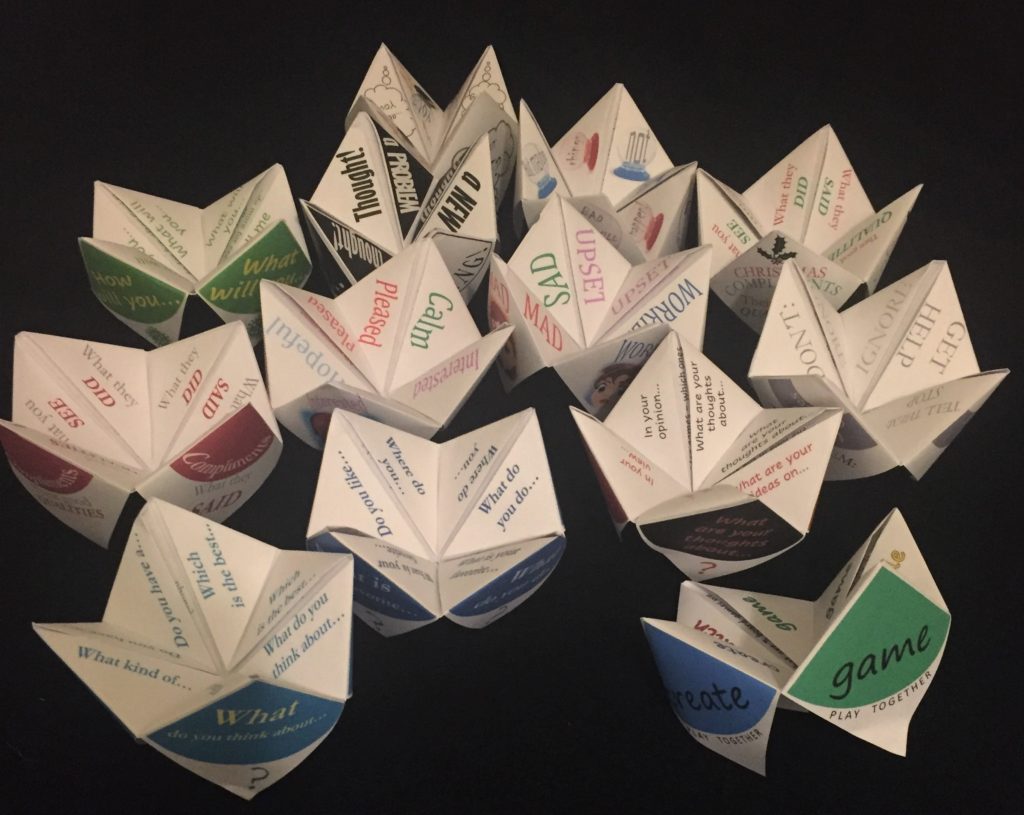
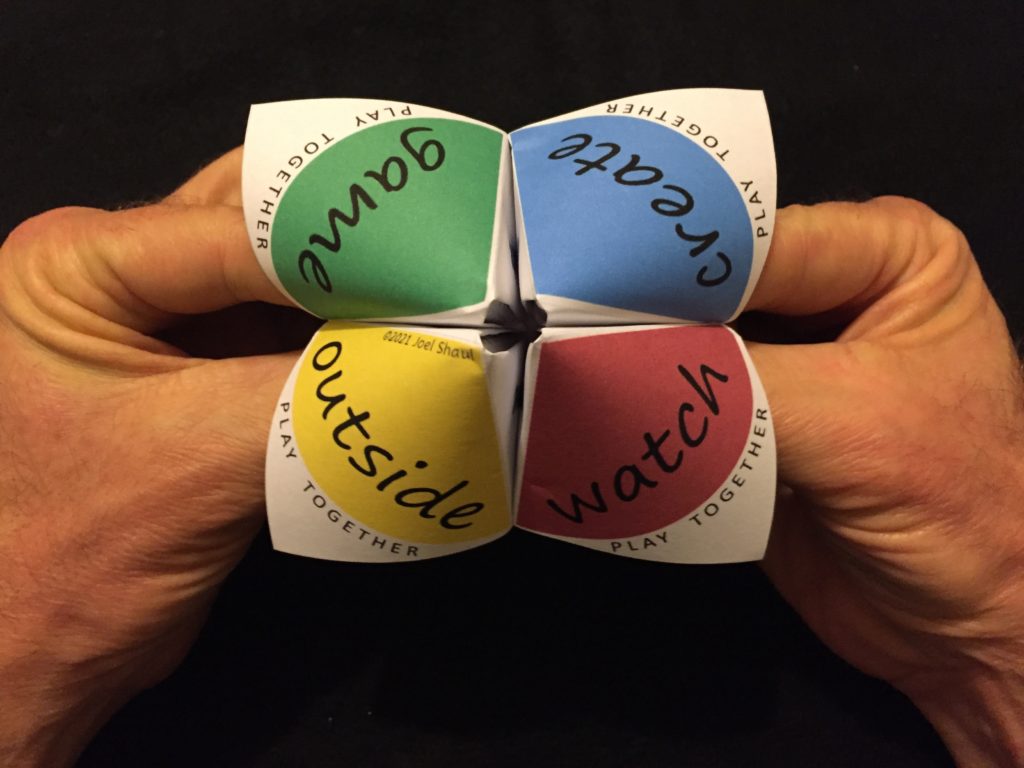
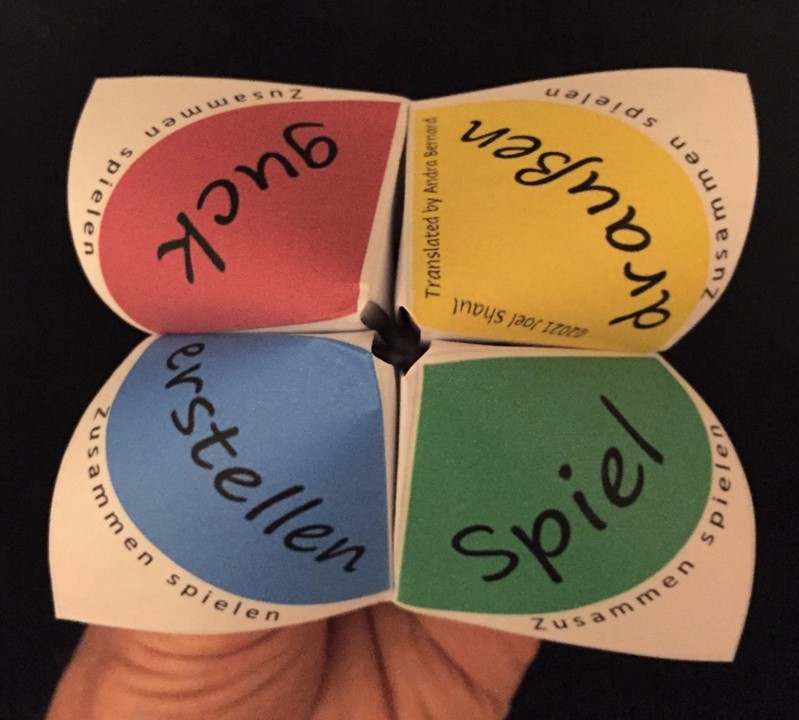
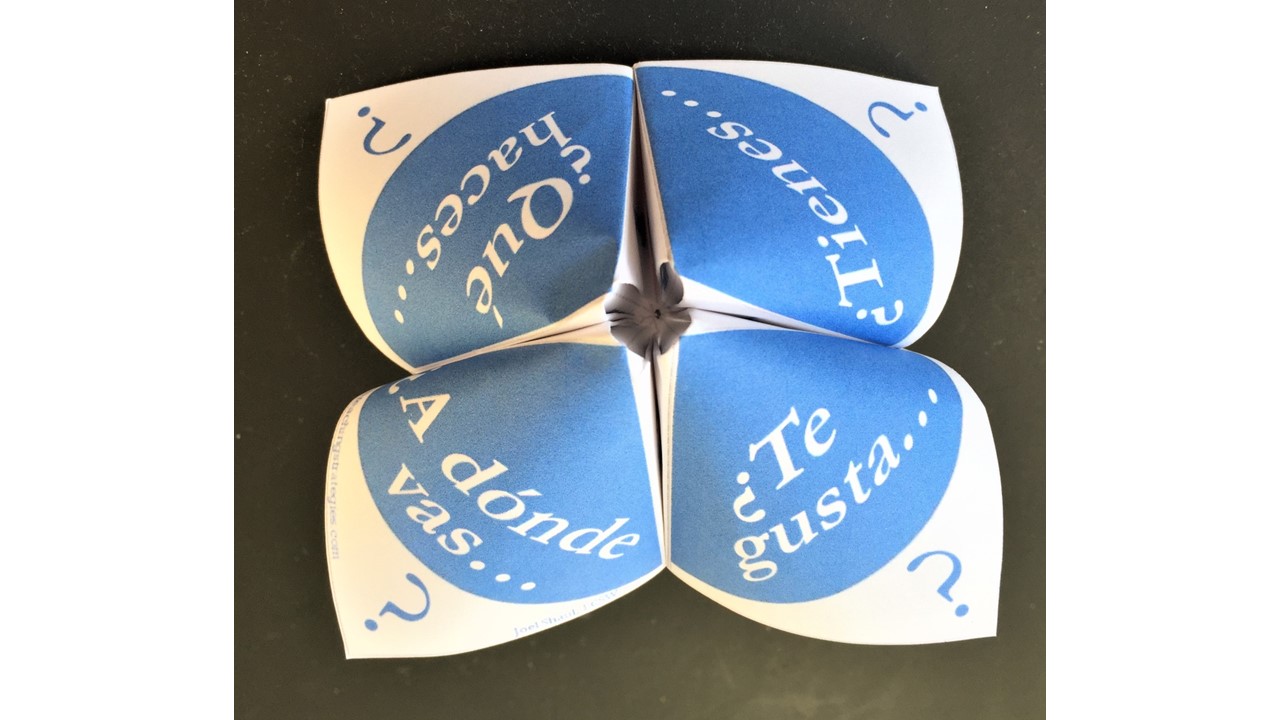
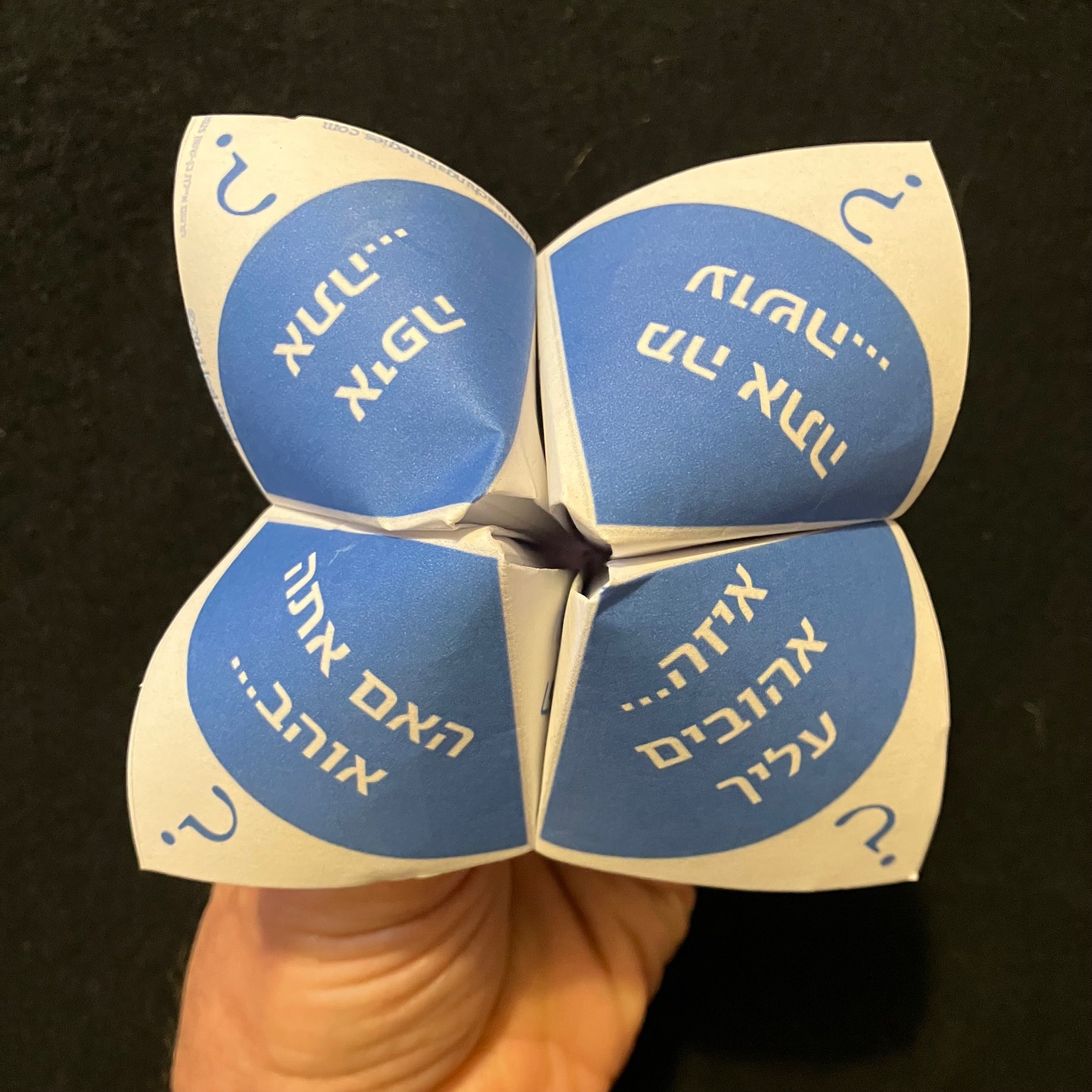
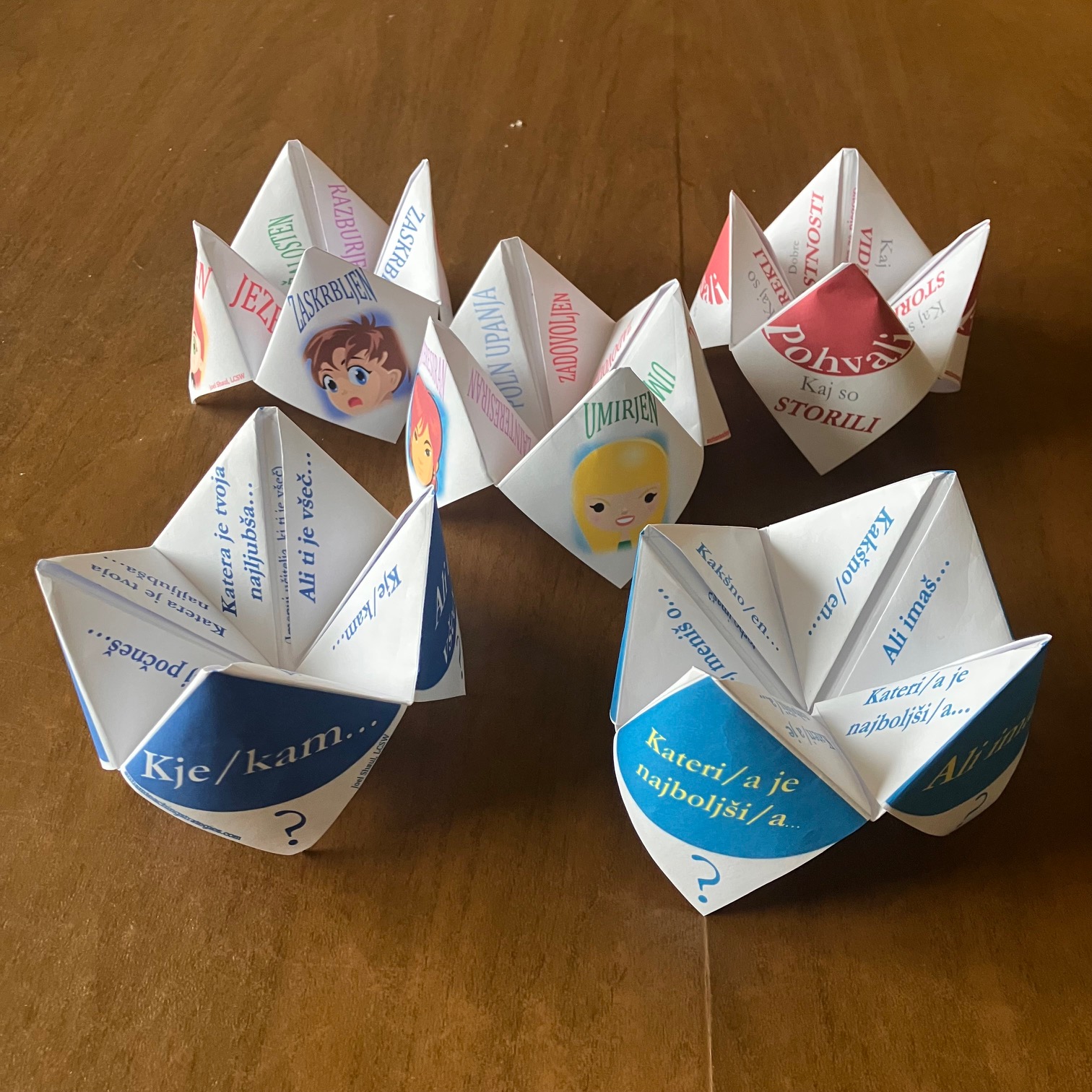
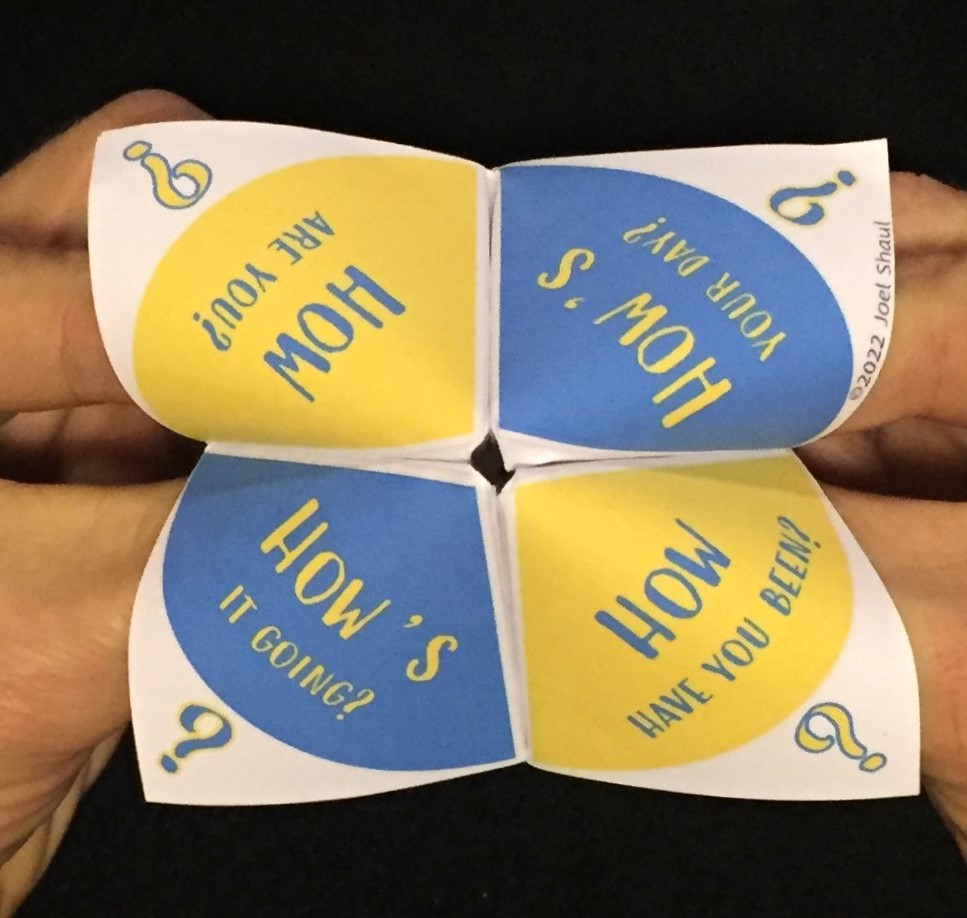
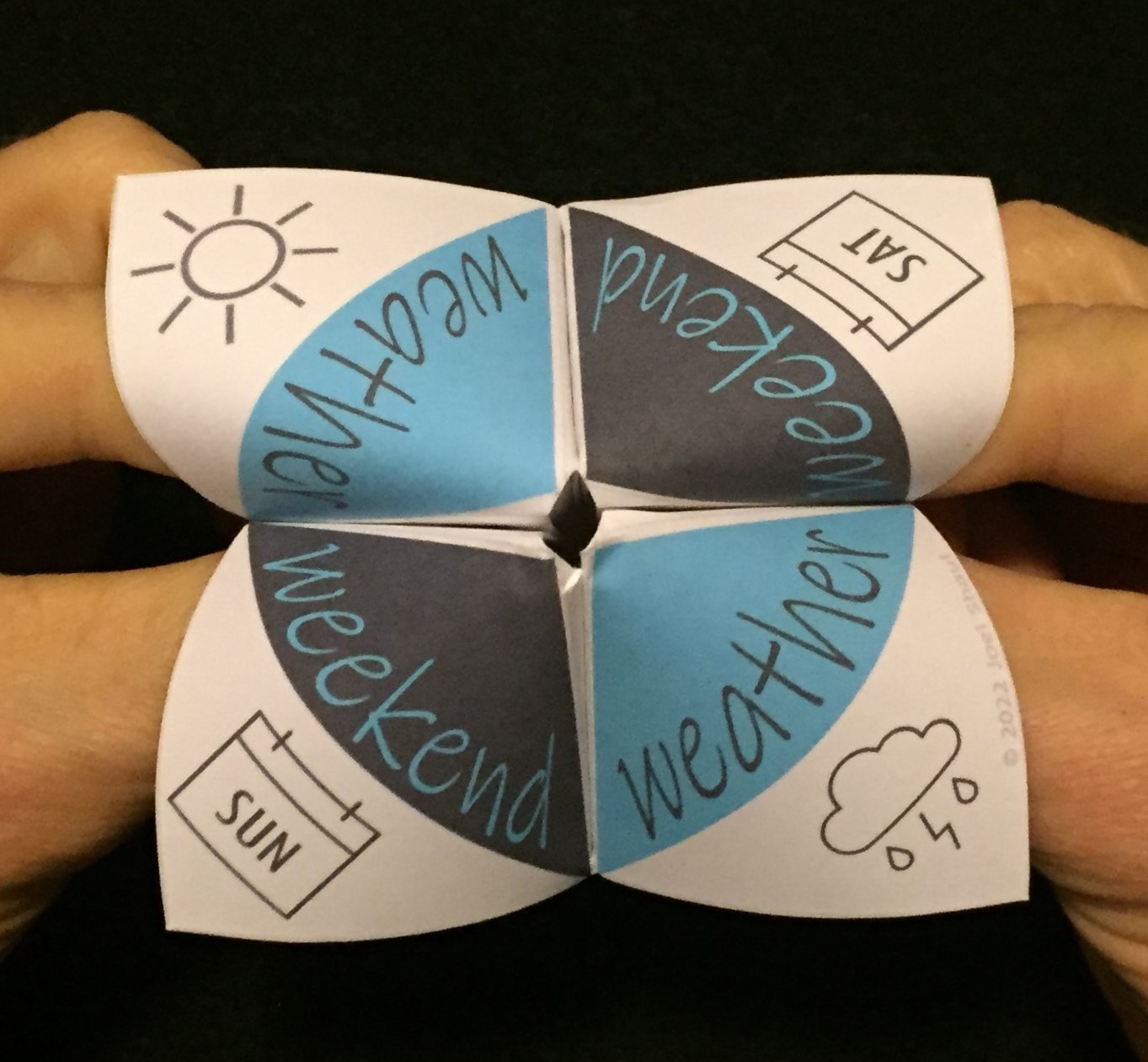
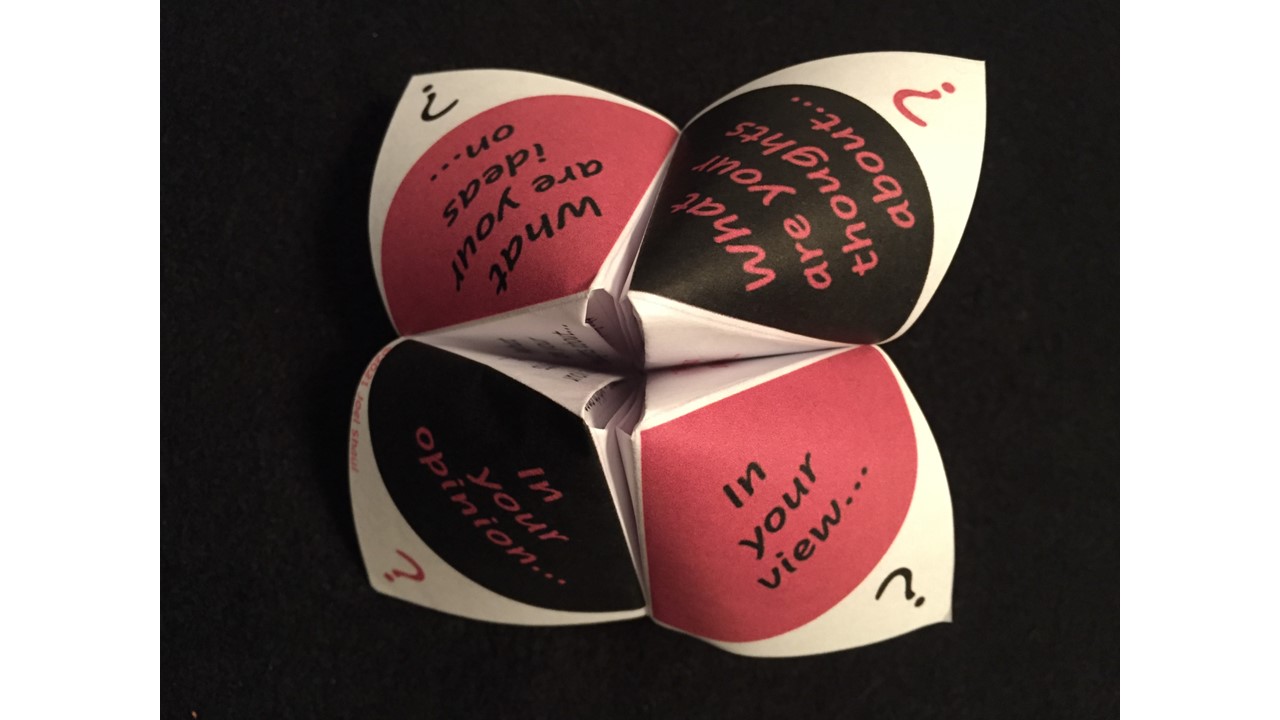
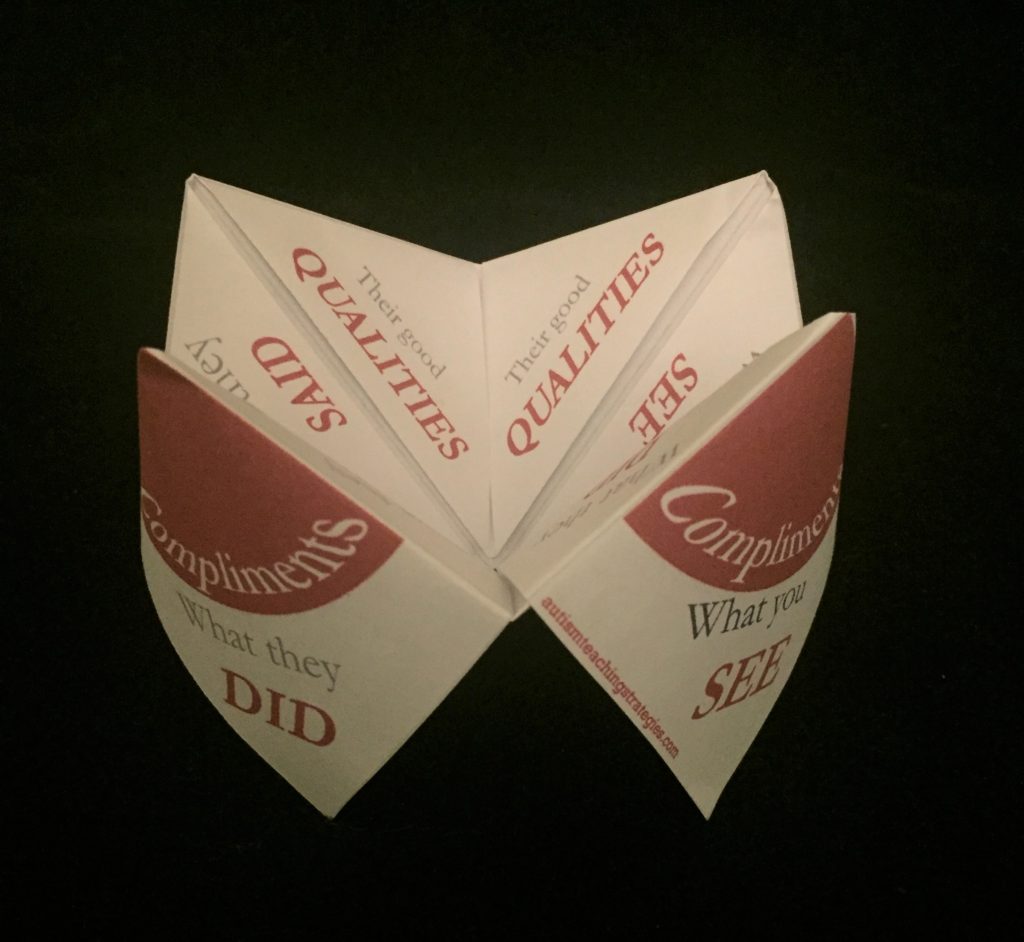
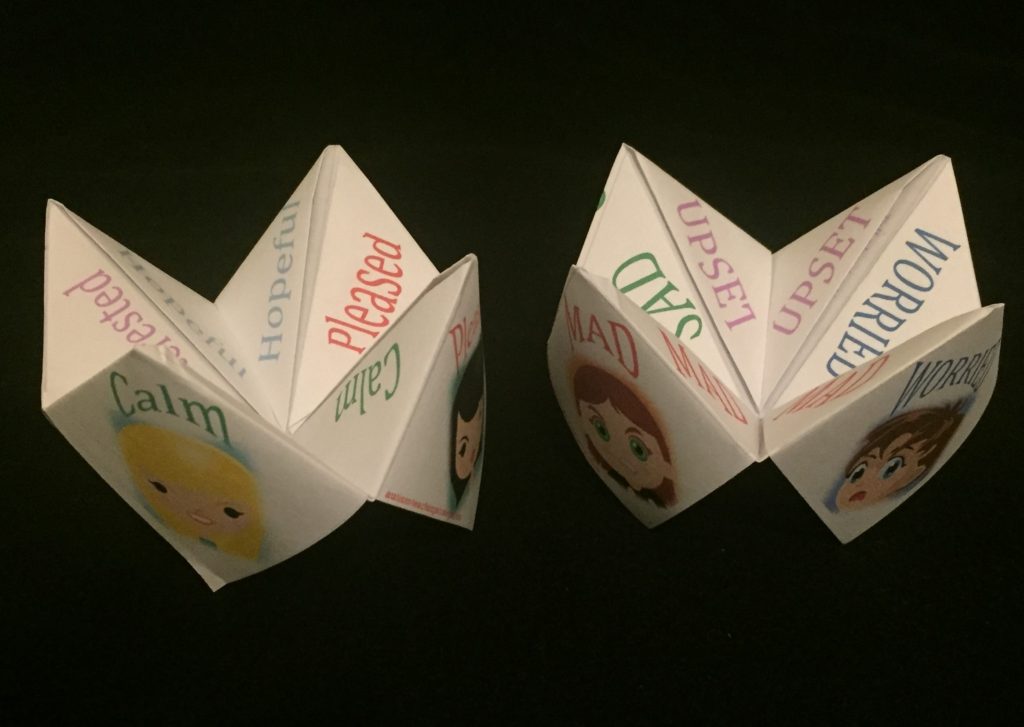
Paper fortune tellers can be useful therapy / teaching tools, especially for young people with ASD.
*The turn-taking that naturally occurs when two people use a paper fortune teller promotes the reciprocal conversations we are trying to promote.
*Each paper fortune teller emphasizes an important skill area in our social/emotional teaching.
*Paper fortune tellers are engaging and fun.
Here are some tips for using these many paper fortune tellers in your work.
You need to make them in advance yourself. Although some children can fold these things with your supervision, most won’t be able to manage it.
Assess in advance to what extent your client(s) can manipulate the paper fortune tellers with their fingers. Some might not be able to manage it.
Provide one paper fortune teller for each pair of participants. If you give out one per participant, you can end up with solitary play rather than reciprocal interaction.