Downloads for Social Skills, Mental Health, Schools, Families



Social Skills Activities for Children with Autism
AutismTeachingStrategies.com

To learn about workshops, professional training and webinars offered by Joel Shaul, click HERE.

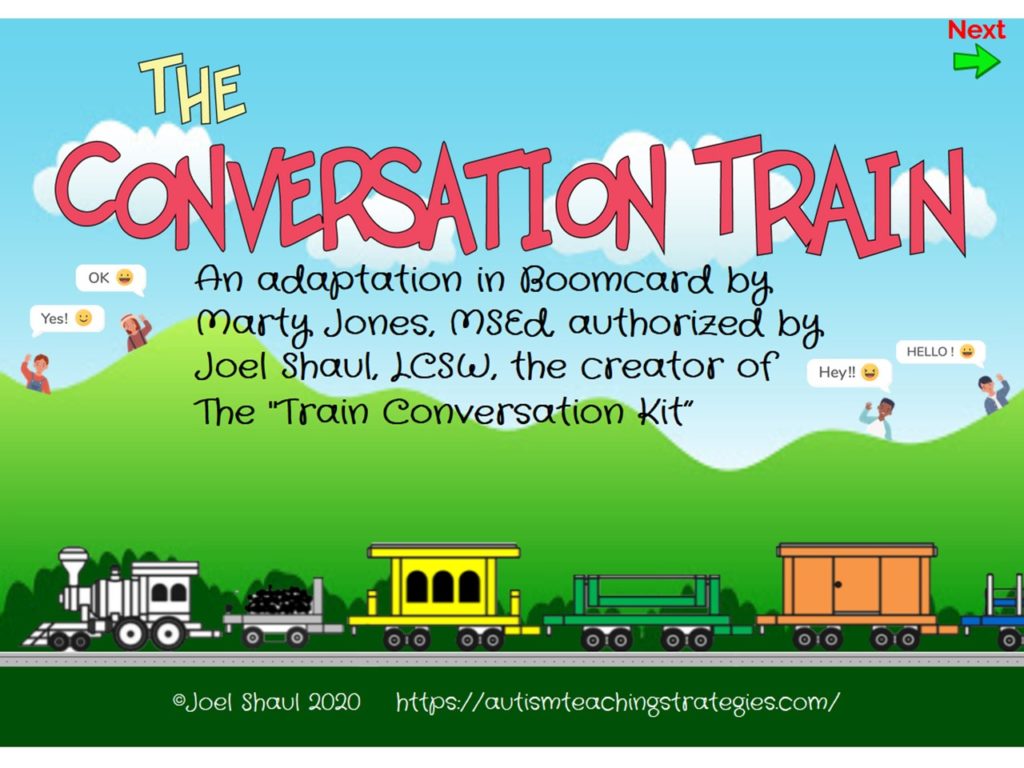
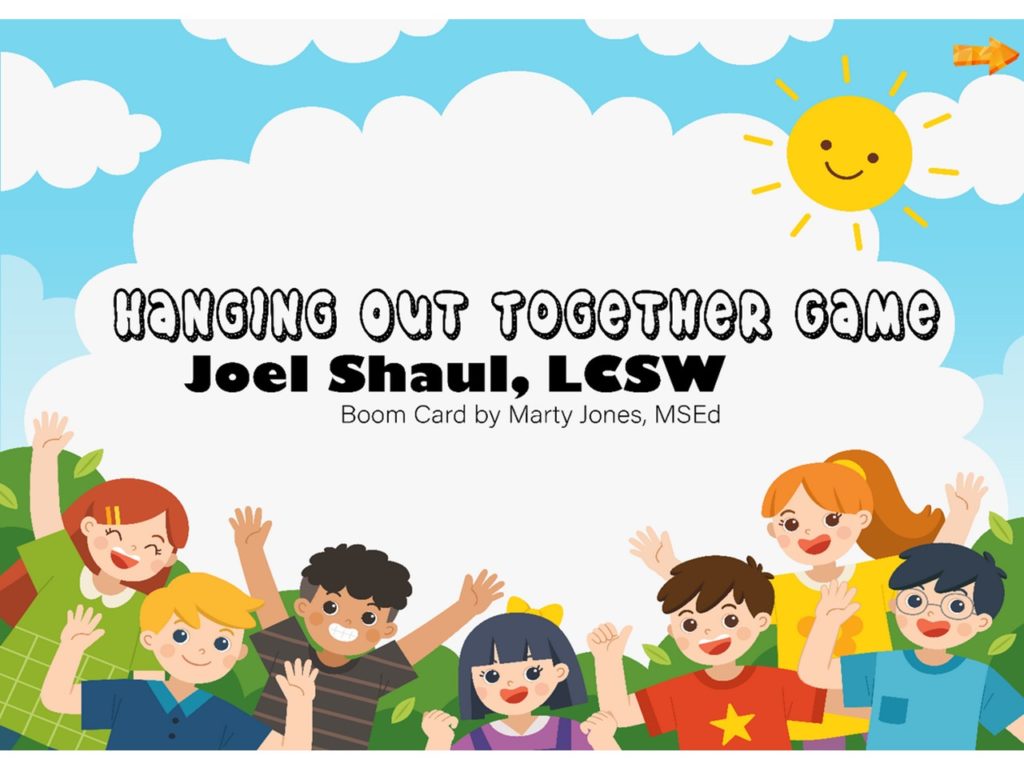
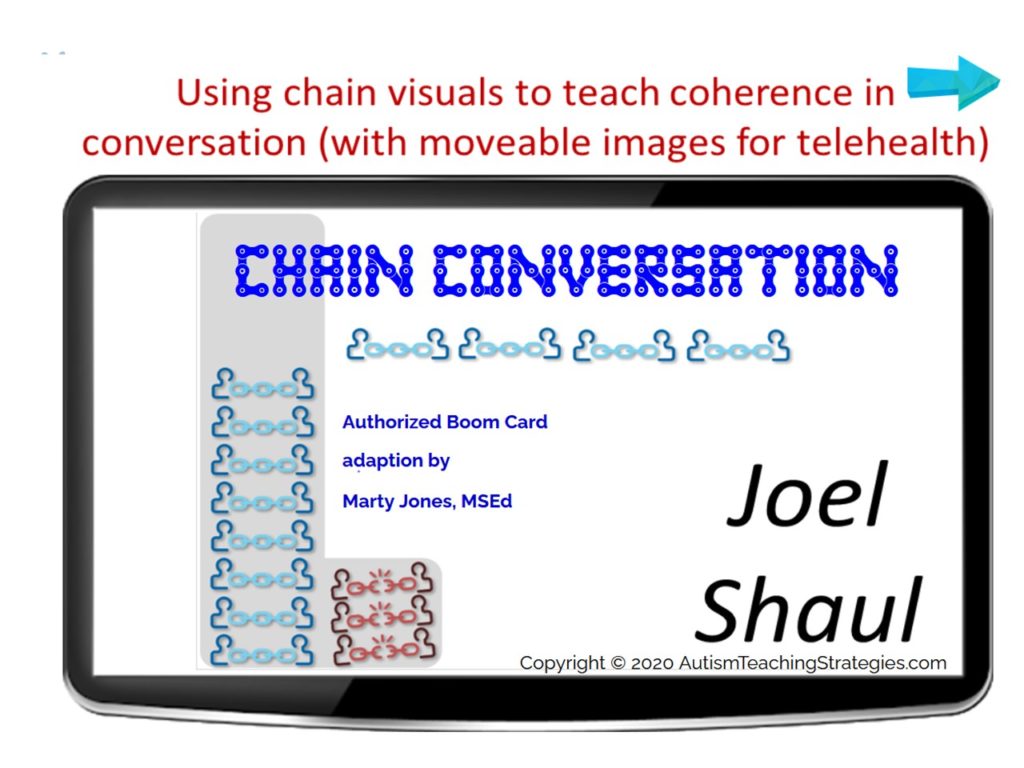
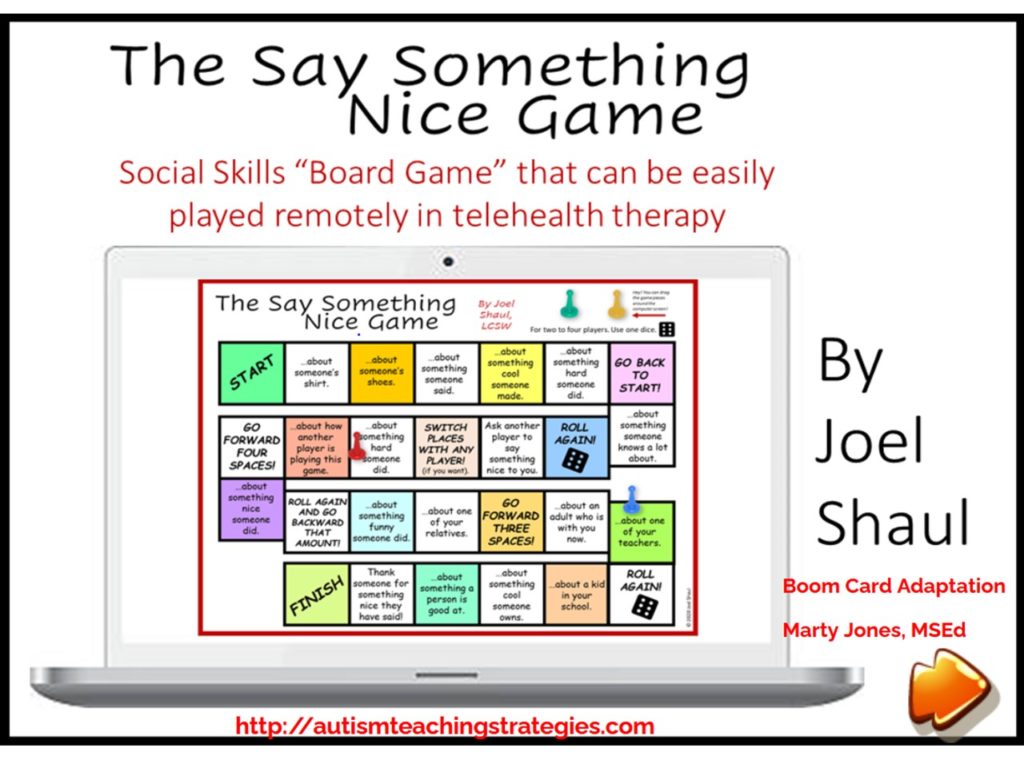

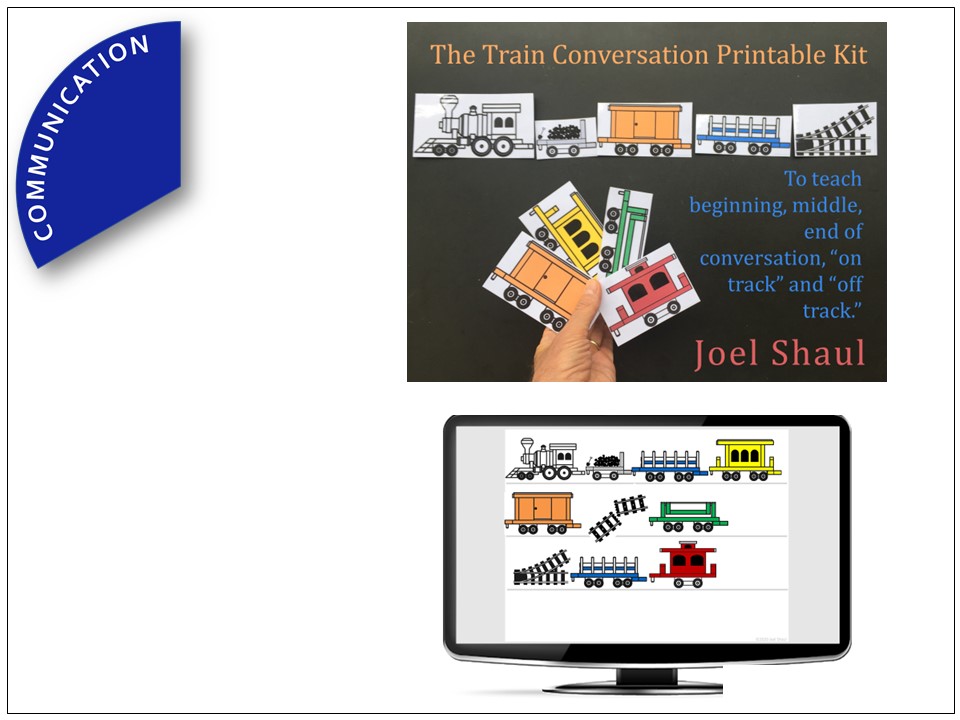
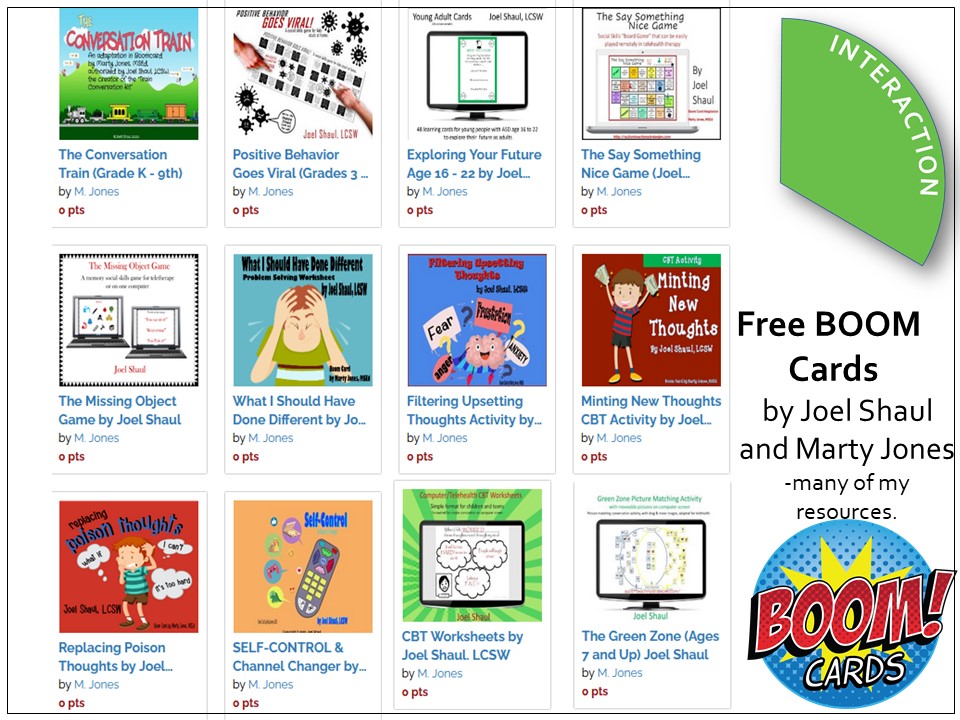
The Conversation Train by Joel Shaul Free Social Skills Resource
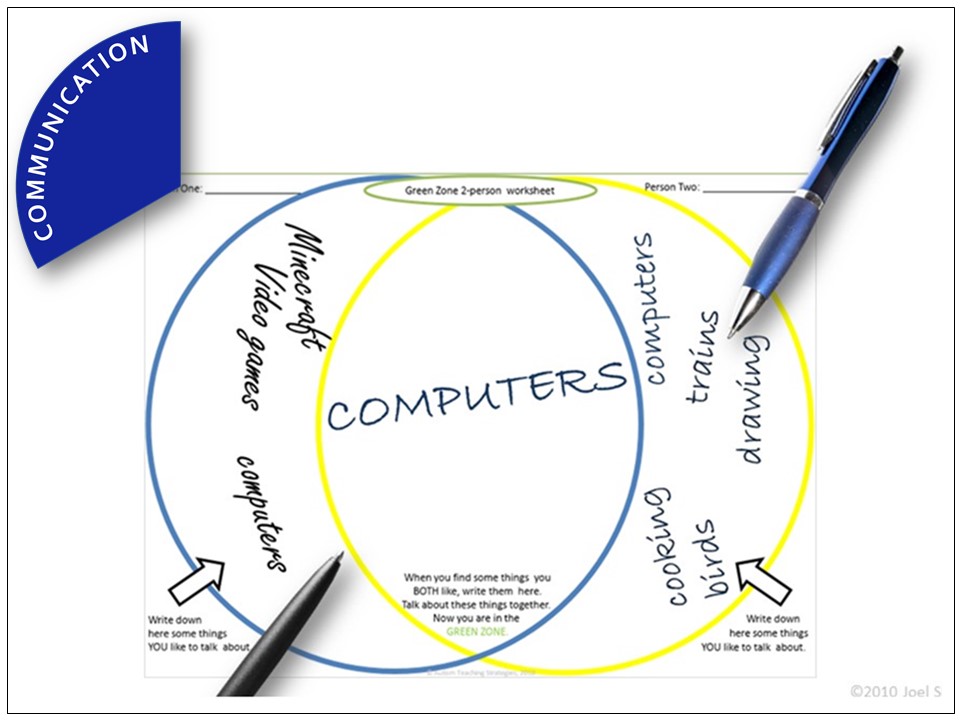
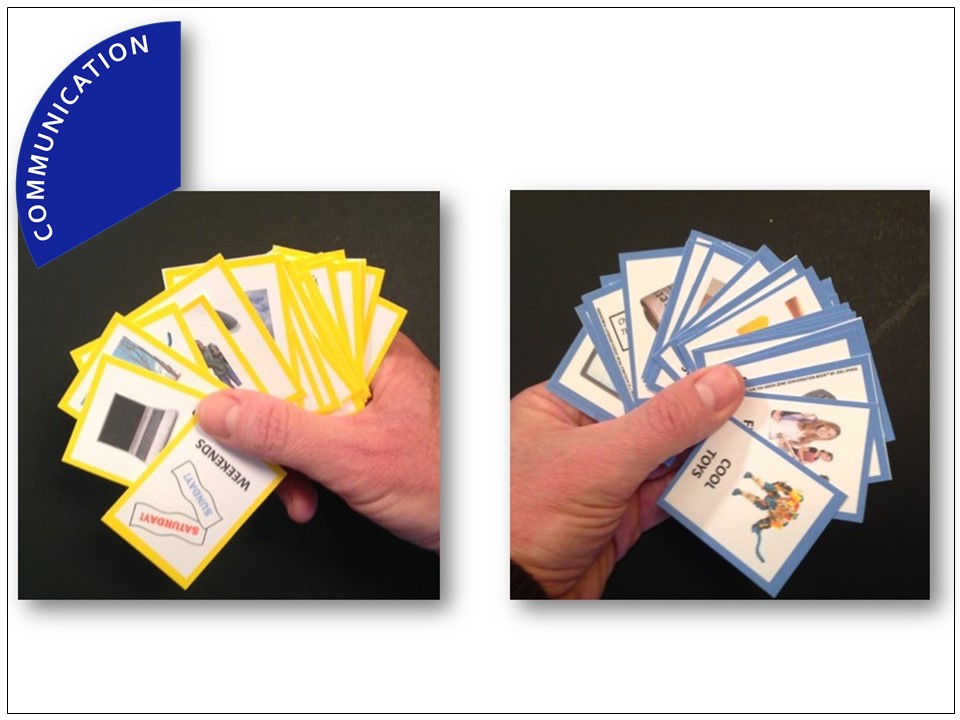
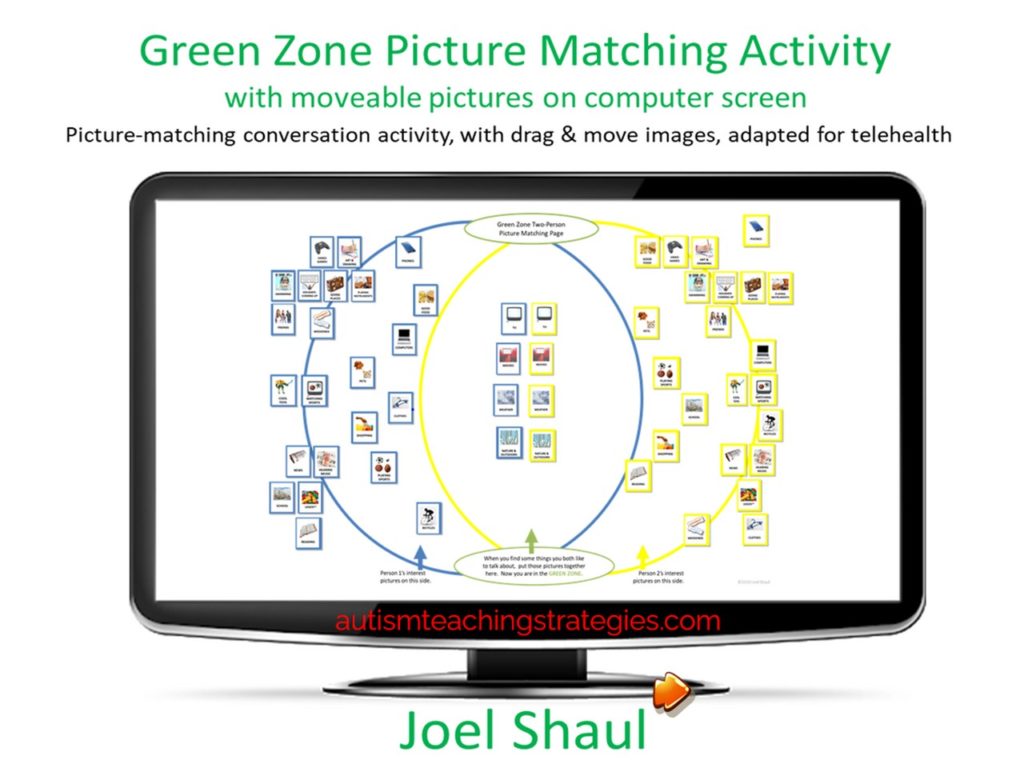
The Green Zone Conversation Free Social Skills Resources
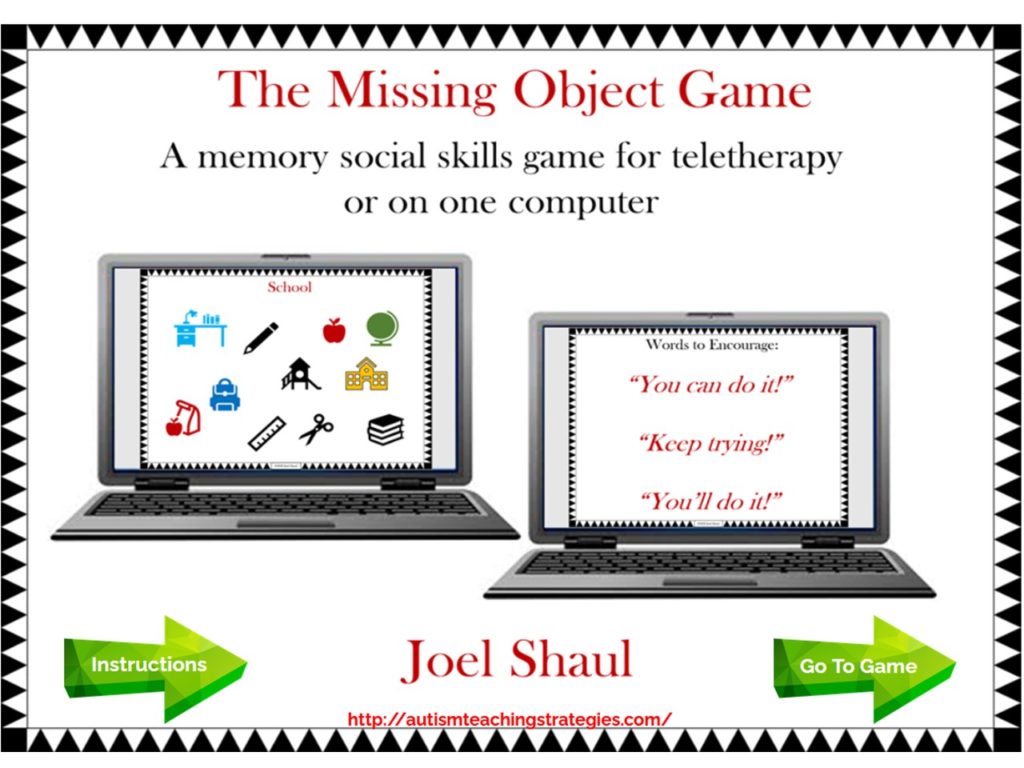
The Missing Objects Social Skills Sportsmanship Game
Minting New Thoughts CBT Printable Version
Replacing Poison Thoughts, On-Screen Versions
Replacing Poison Thoughts, Printable CBT Thought Bubbles
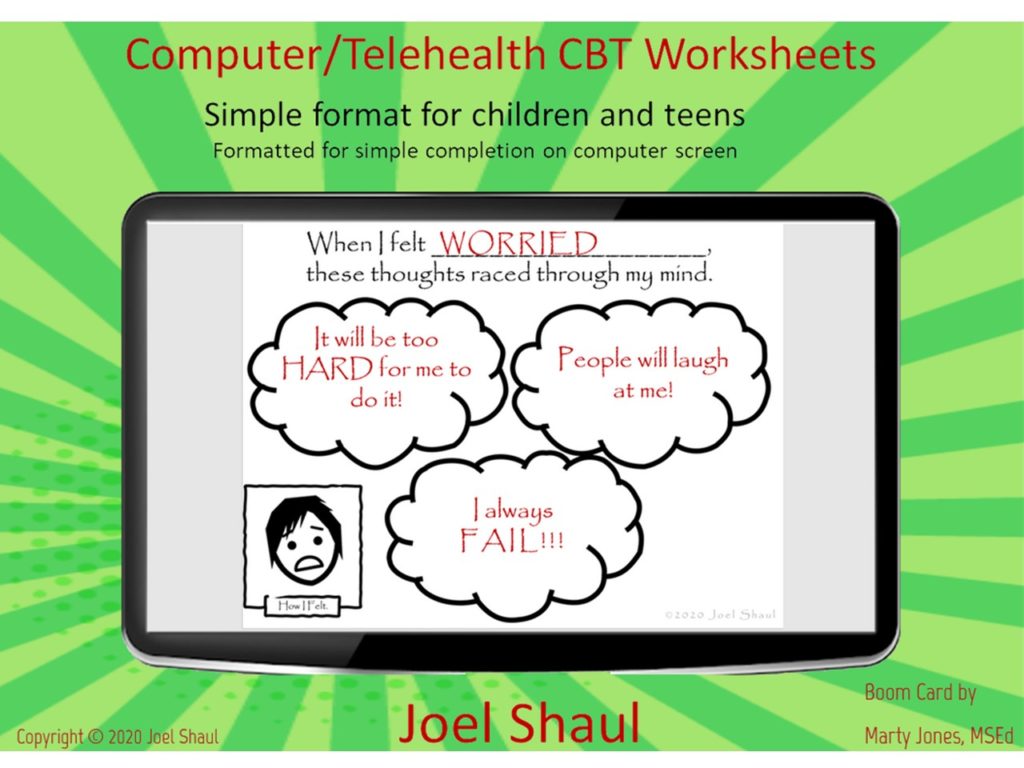
Simple CBT Worksheets for Children, Printable
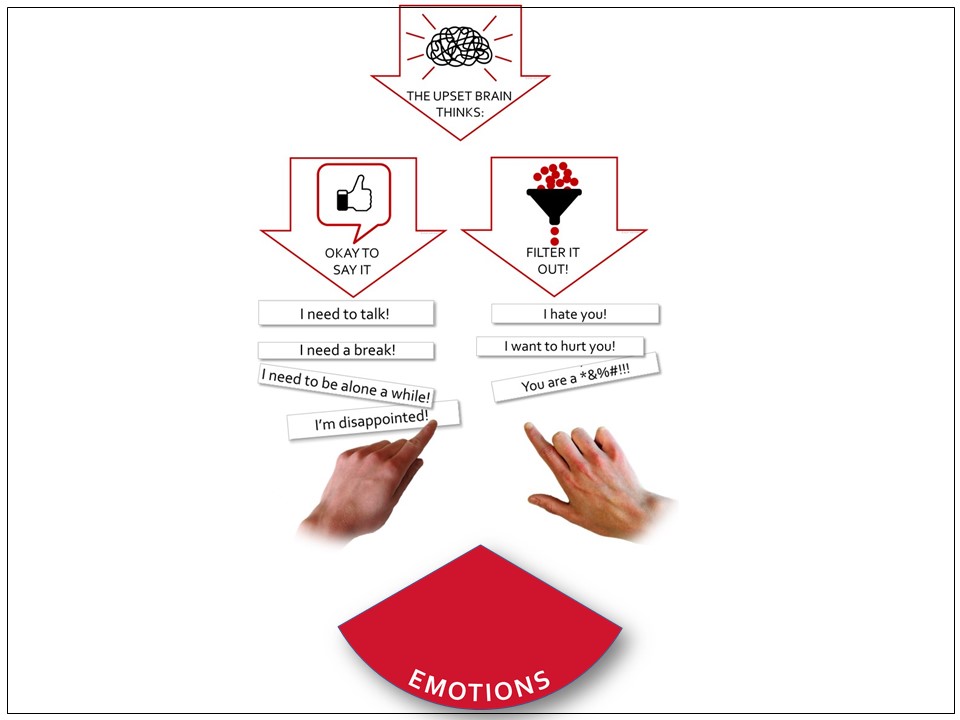
Filtering Upsetting Thoughts, Printable CBT Activity
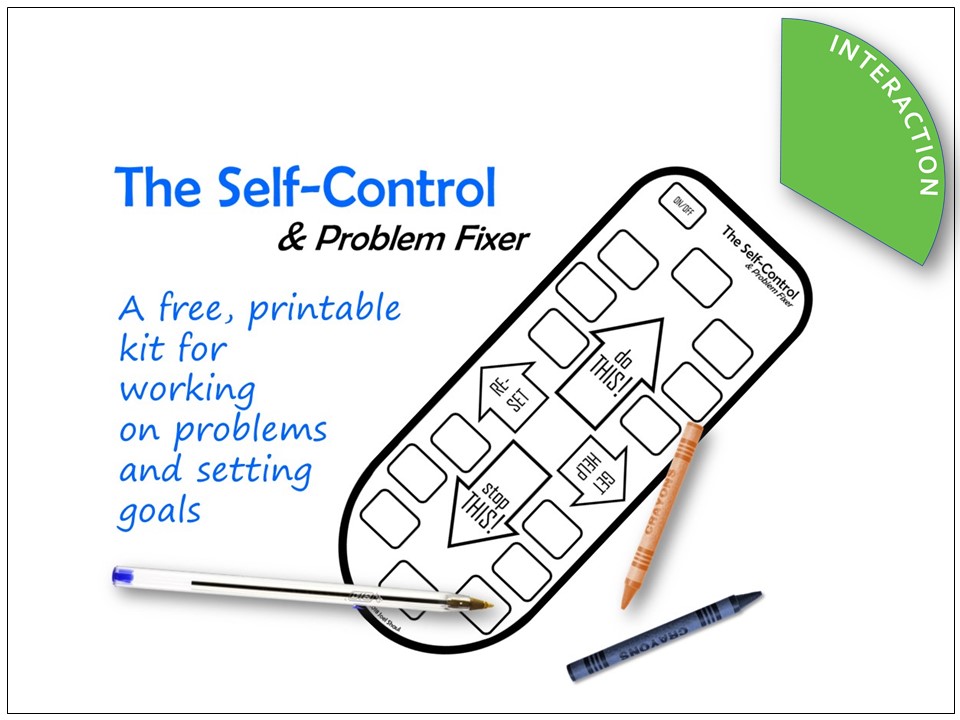
Self-Control Channel Changer for Conversation Topics, Printable
What I Should Have Done Different Worksheet, Printable
Positive Behavioral Goes Viral
In German: Problemlösungs-Spiel
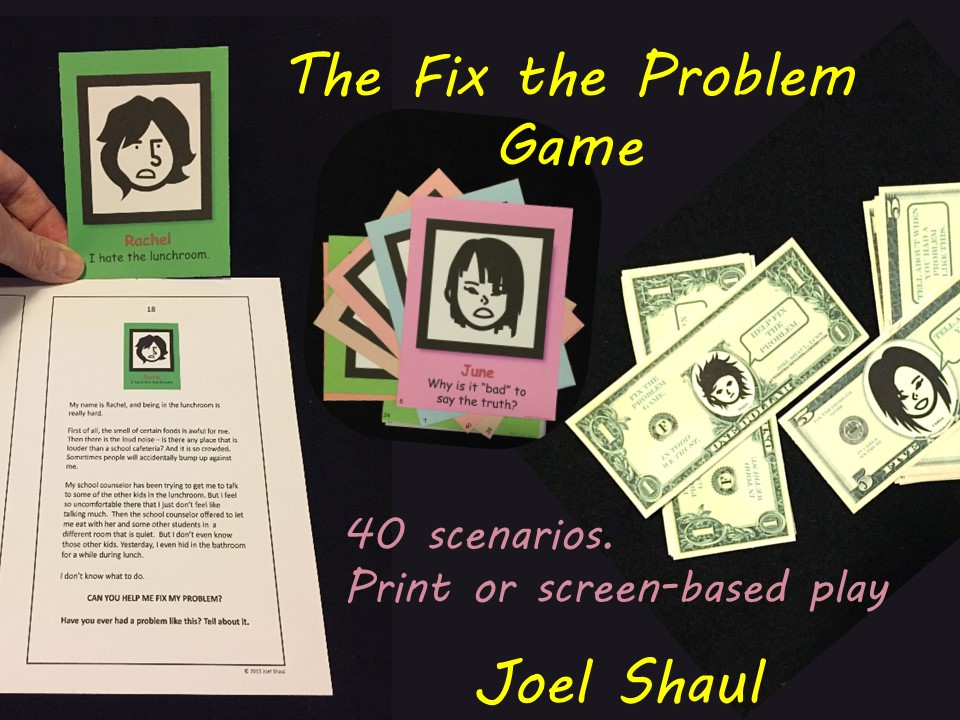
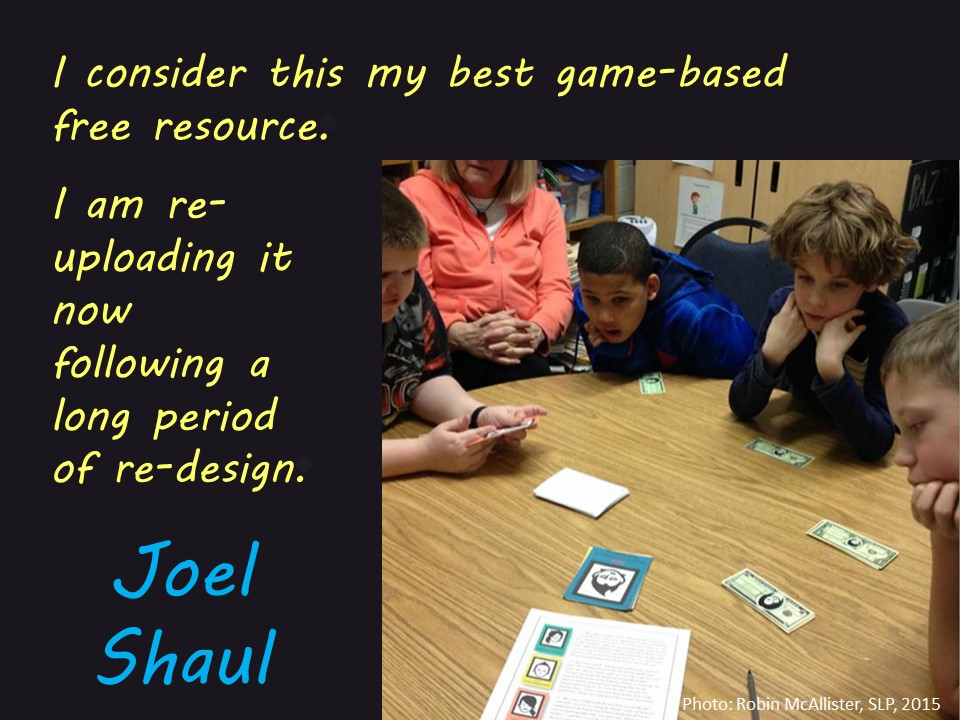
In my work as a psychotherapist and social skills trainer in individual and group settings, I spent years developing game-like activities to engage autistic youth in learning challenging social and emotional skills. The Fix the Problem Game evolved over about ten years of experimentation and refinement. Children and teens usually like it a lot. It is frequently downloaded by users of this website, who have provided positive feedback regarding its usefulness.
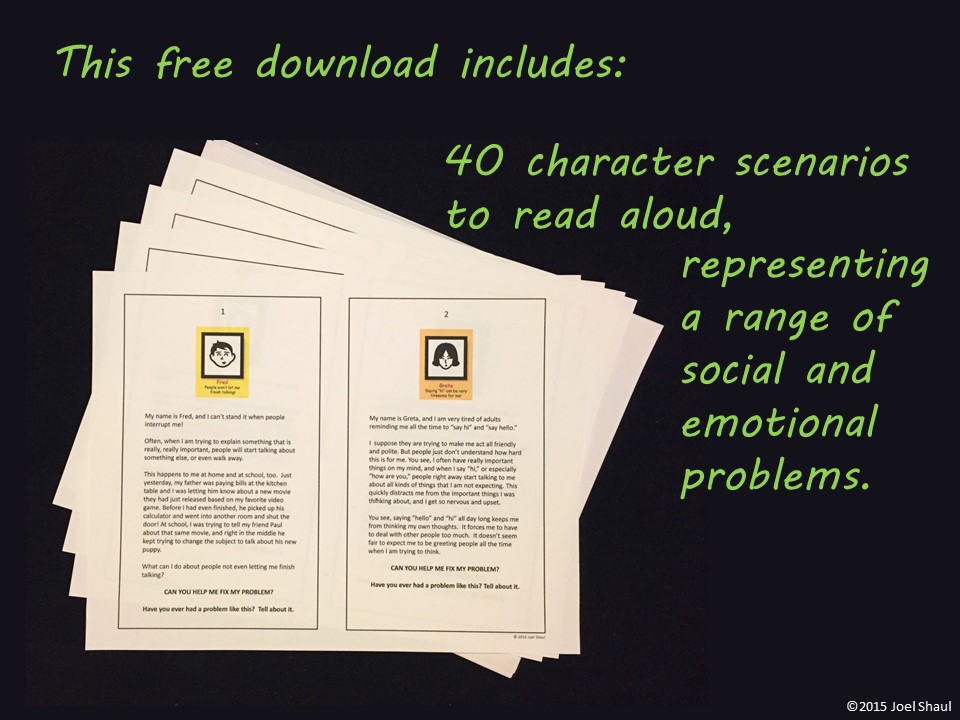
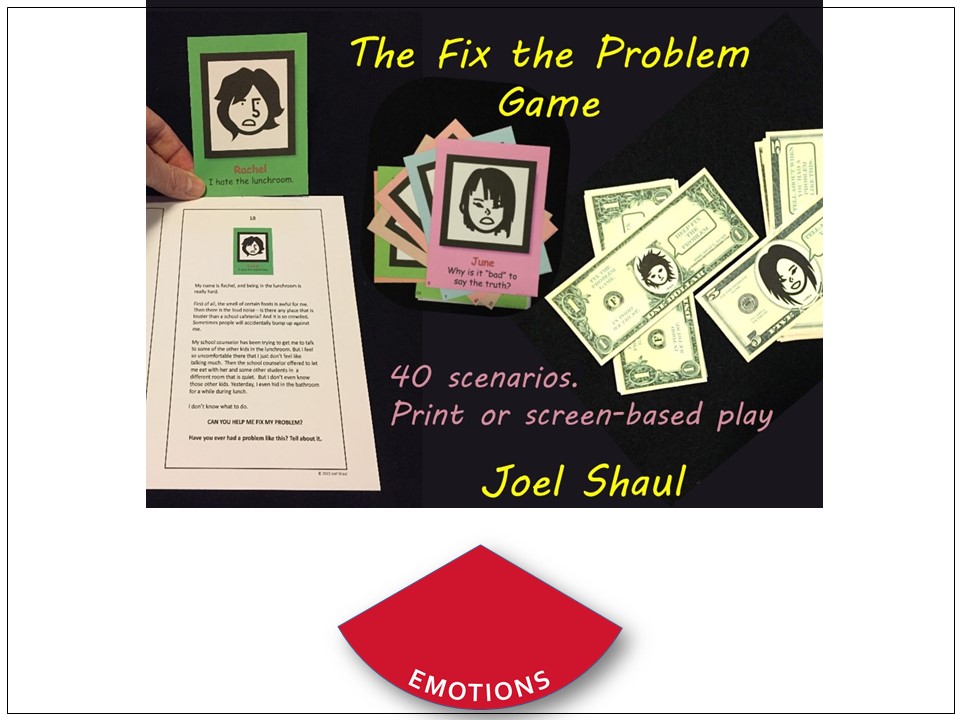
The first download includes 40 first-person character scenarios to read aloud, representing a wide range of social and emotional problems.
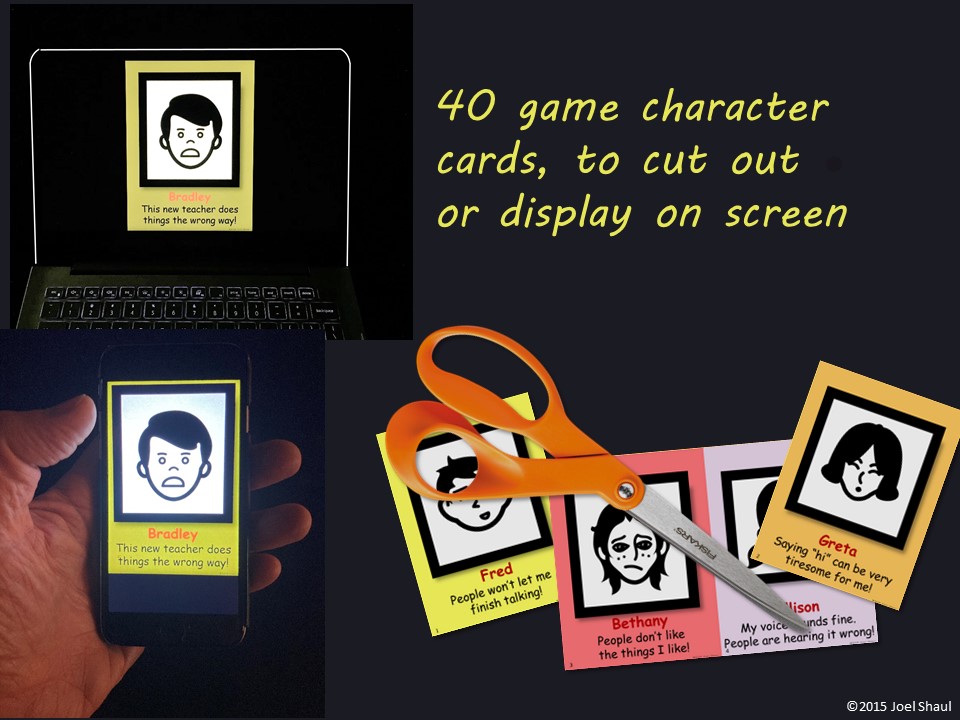
Also included are 40 game character cards (shown above), to cut out or display on a screen.
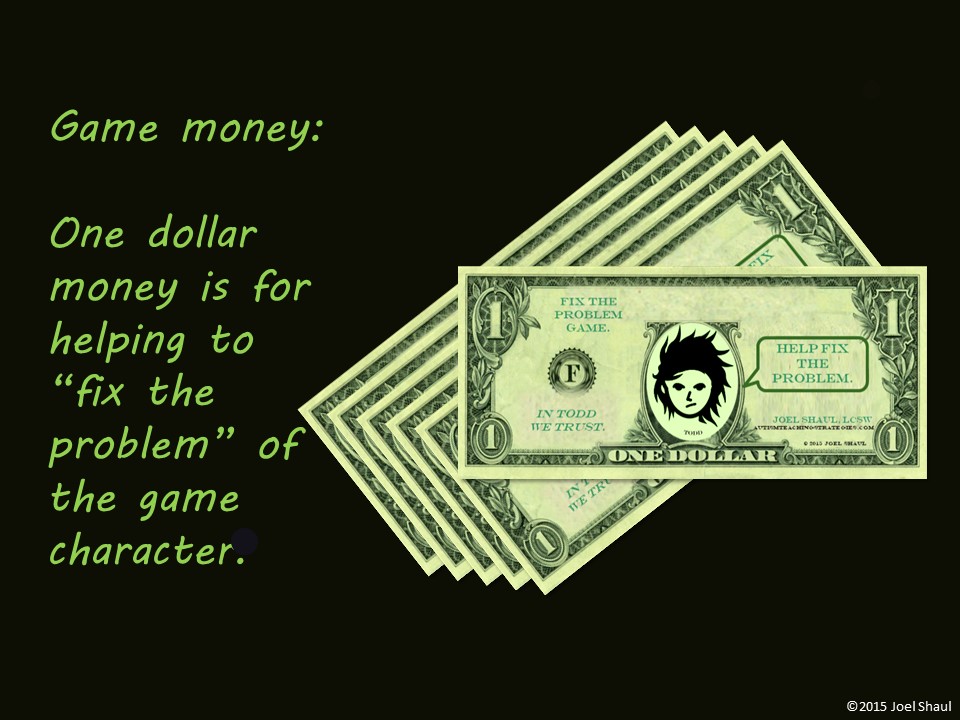
Special game money (shown above) is provided. You give it out to players who provide the most useful suggestions on “fixing the problem” presented by the game character.

This 5-dollar game money (shown above) is harder to earn – the player must describe a time when they themselves experience the problem described by the game character.
More about the Fix The Problem Game
Children with autism spectrum disorders often get tired of scrutiny and criticism. They may be quite aware of their need to work on things like conversation, social skills and difficult emotions. But it can feel confrontational and discouraging to have parents, teachers and therapists pointing out their problems all the time.
The Fix the Problem Game takes a different approach which many children find more relaxed, engaging and even fun. Rather than zeroing in immediately on the child’s own difficulties, we back off and look at other people’s problems instead. Often, when children learn about somebody else’s problem, they are able to examine the situation objectively and come up with useful solutions. This indirect problem solving seems less personal – more like a game or puzzle. Then, once children experience the success of solving a hypothetical problem, they are more open to an examination of their own issues.
The Fix the Problem Game is designed to help children with ASD to examine their own social and emotional challenges by engaging them in the process of analyzing somebody else’s problems first. The game features 40 child characters and 40 first-person scenarios, each describing problems experienced by many young people on the spectrum. For each scenario, the reader is asked by the game character to “fix my problem.” Afterwards, the game questions ask, “What about you? Have you ever had a problem like this?”
After experiencing success helping game characters, children are often more insightful and confident with their work on their own similar problems.
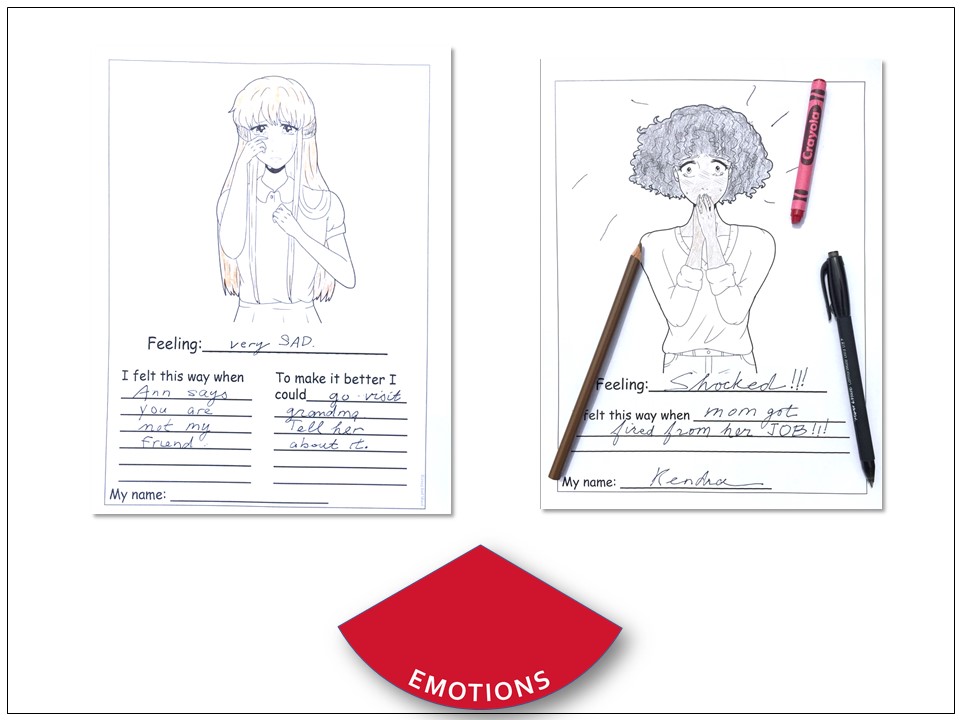
Free social skills games & activities, emotional regulation skills for kids with ASD
Free social skills games & activities, communication / conversation skills for kids with ASD
Free social skills games & activities, social interaction skills for kids with ASD

German translation of this resource
In my own work with children on the spectrum, I frequently almost always found that merely talking about a problem wasn’t good enough alone. Kids get tired of being scrutinized and criticized. Kids with autism in particular can get fidgety and impatient during sessions.
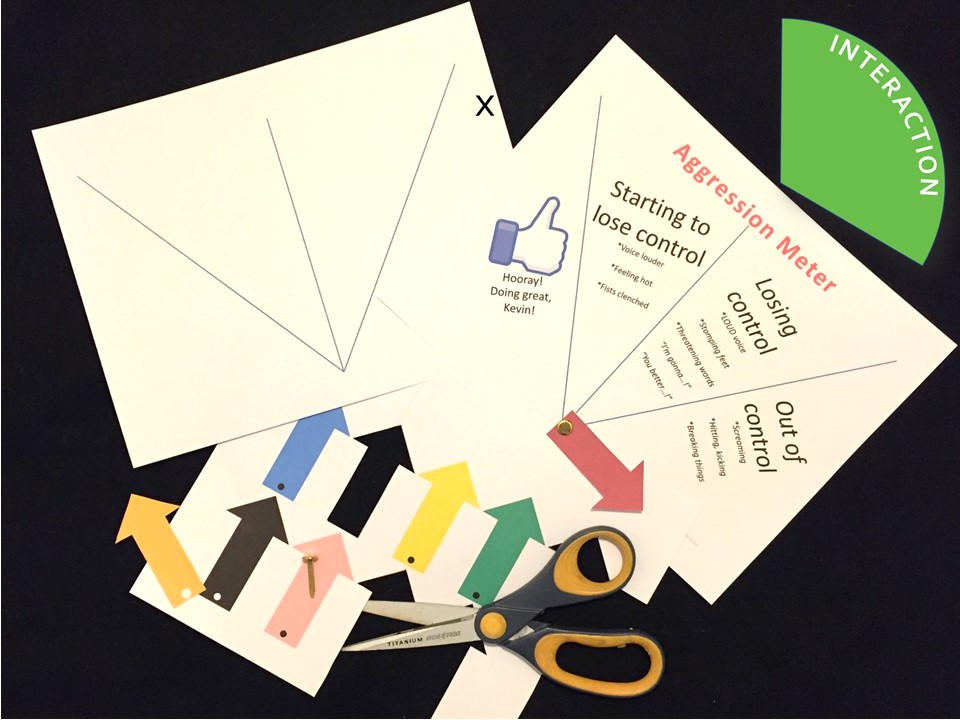
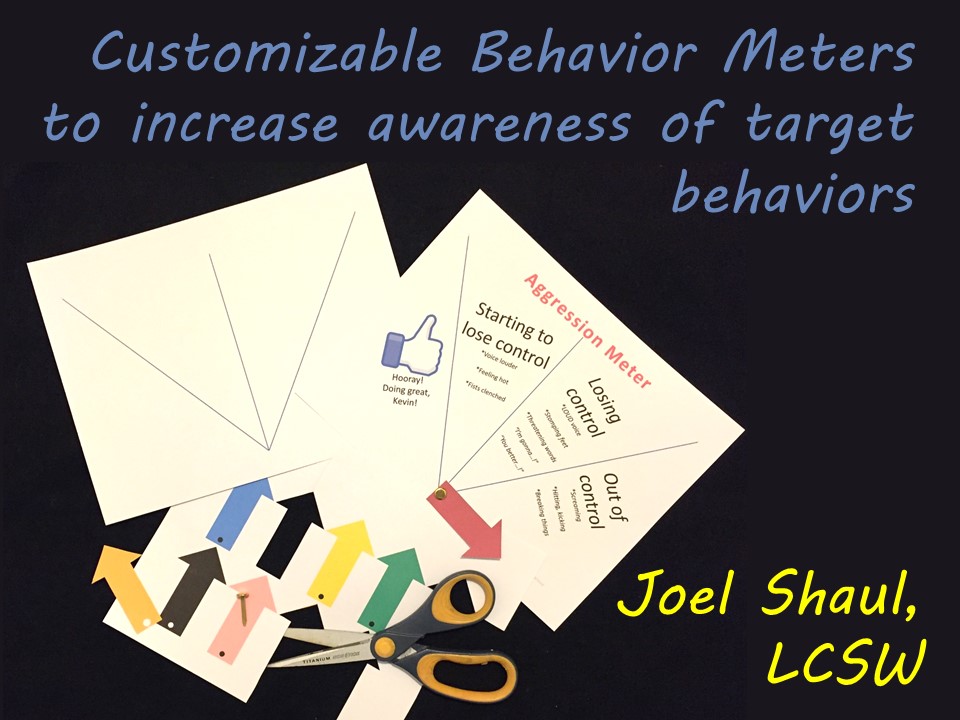
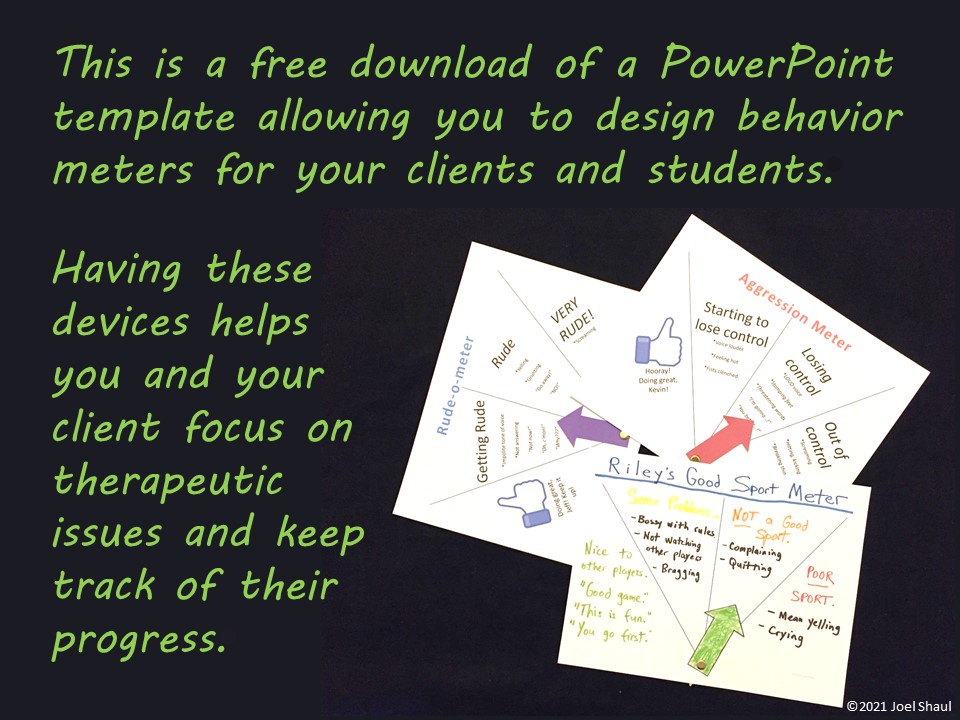
Many years ago, I found other therapists employing handmade cardboard meters they had put together to help children focus on issues such as voice volume. After much experimentation, I found that these meters have many applications on a wide variety of problems that are the focus of therapy interventions.
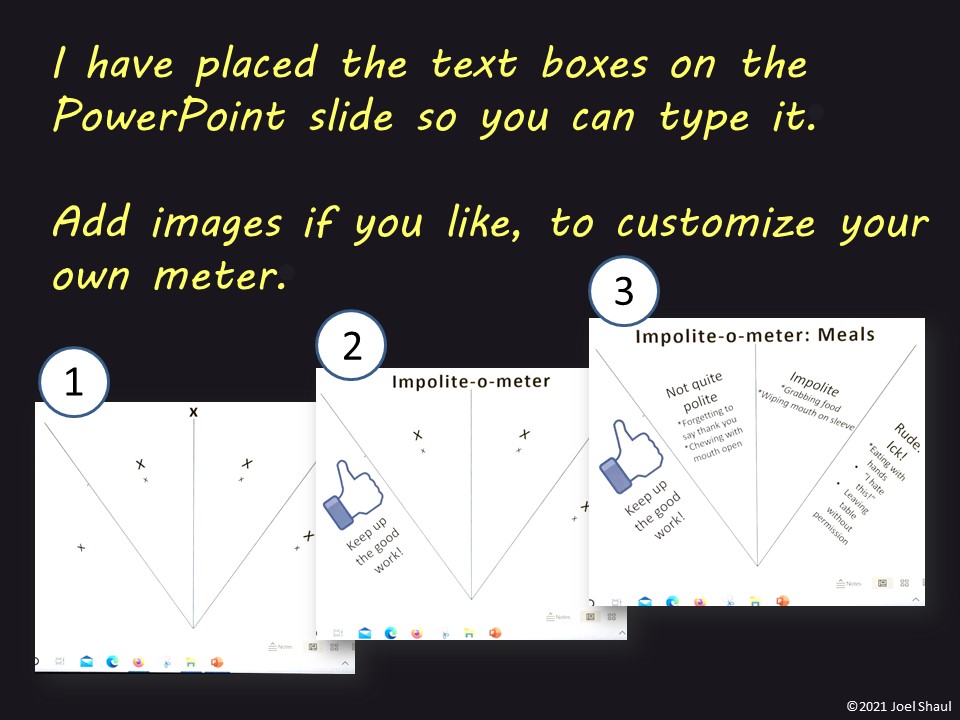
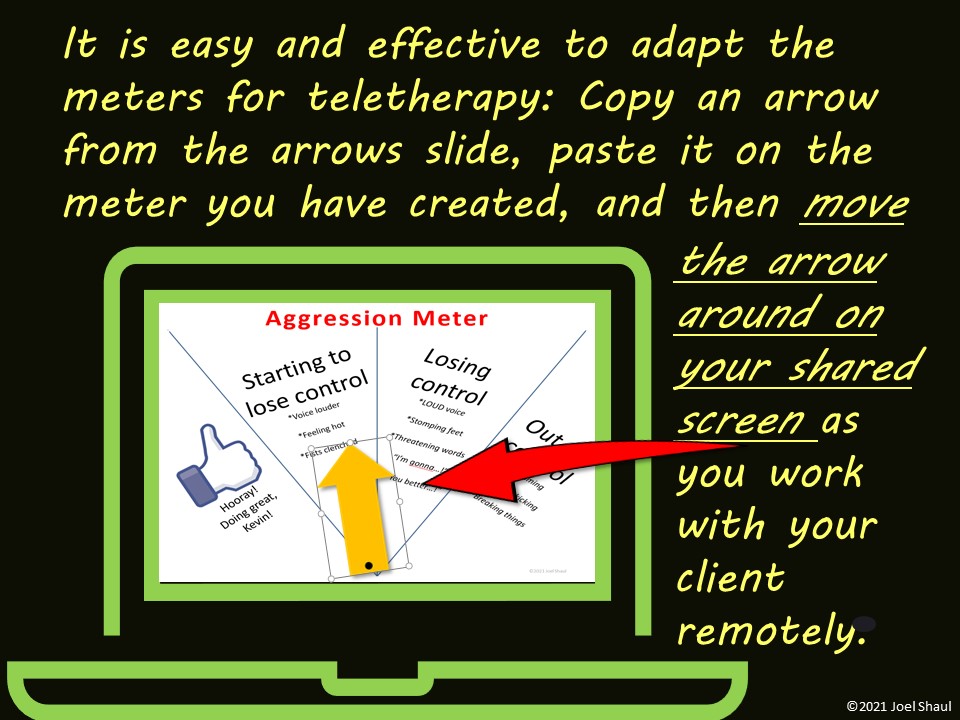
This kit enables you to use my template to quickly create nice-looking meters for whatever problem area you are working on. The advantage of putting the meter on a computer screen is that you and the child can easily look at the screen together and collaborate on its design.
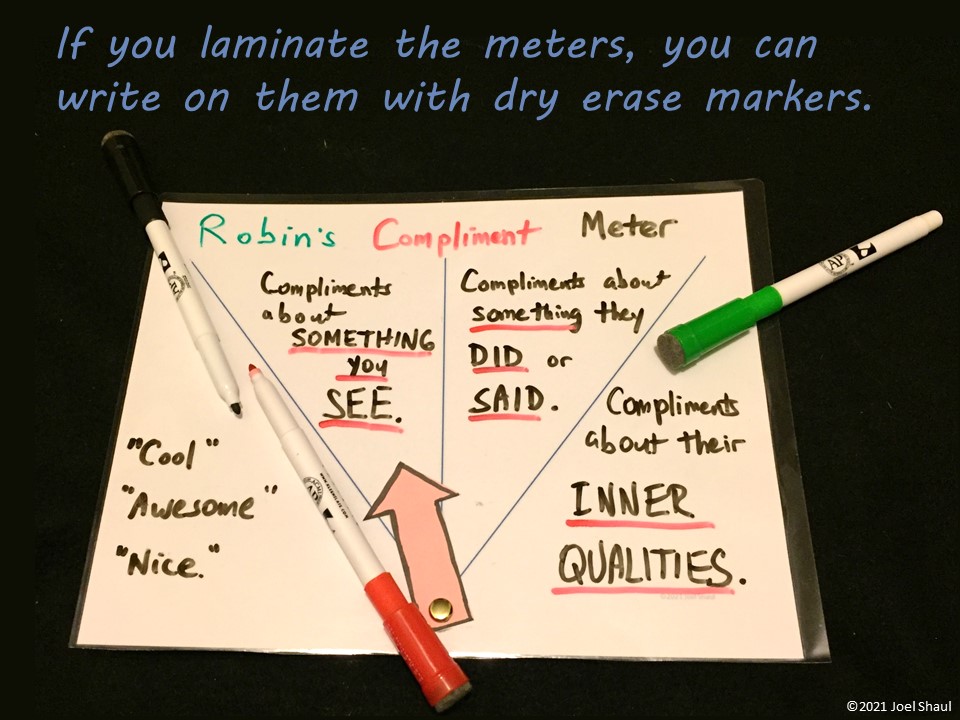
Most kids also really like to take part in cutting it out and laminating it. This can afford them a sense of agency in the therapeutic process.
The pictures below provide some examples of what the behavior meters look like and some tips on creating them and using them.
Elsewhere on my website, you will find links to some meters that are pre-made on topics such as voice volume and fantasy enthrallment.
There are other free, downloadable “meters” on the website.
Your comments on these resources are most welcome, and often helpful. Click HERE to send an email.
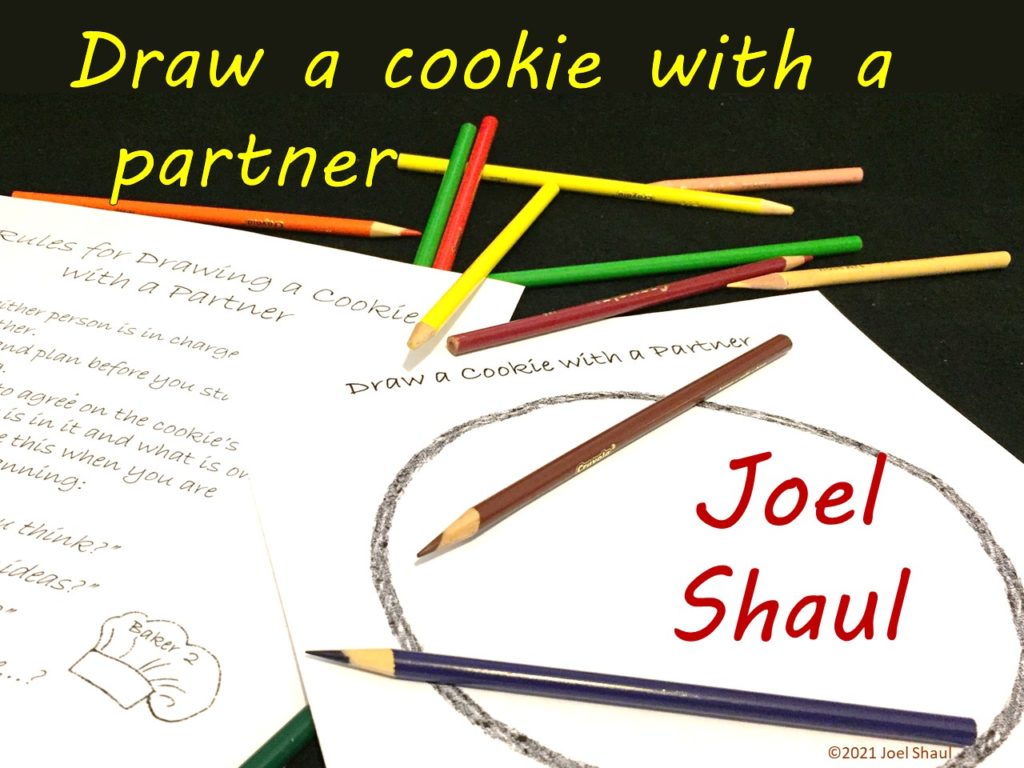
Autistic children are very often uniquely creative when they draw or create other kinds of art. But cooperating with others in creative endeavors can make them confused and unless they have adequate adult guidance and clear cooperation rules to follow.
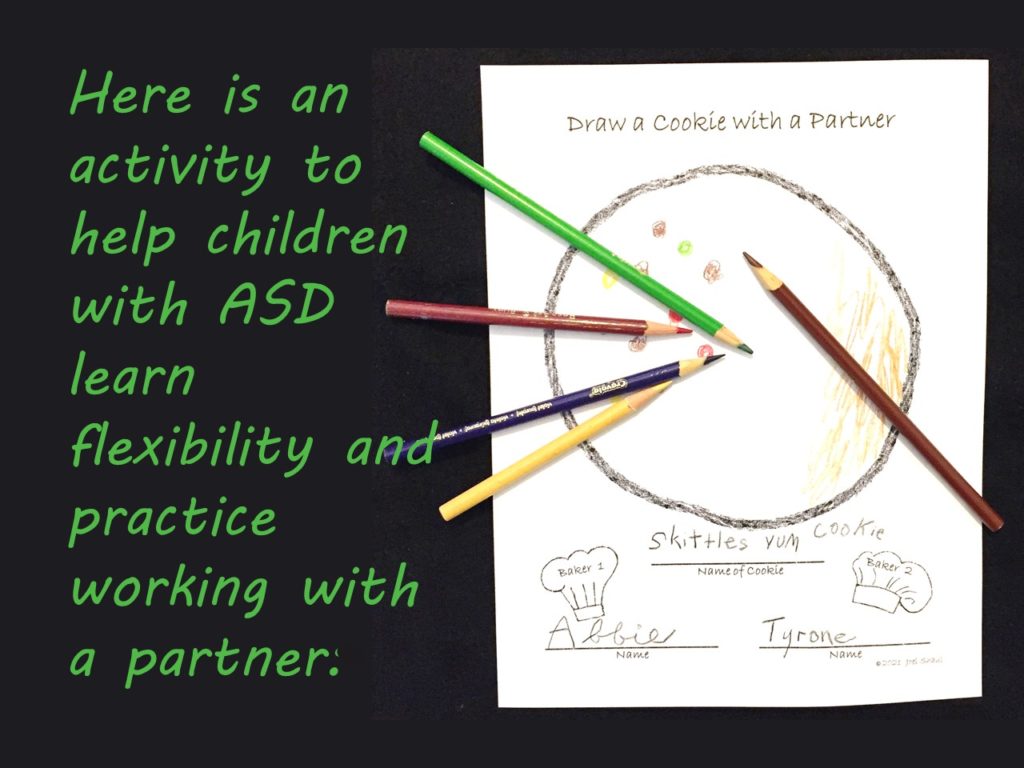
This printable activity sets up a one-page drawing and writing activity that two children are assigned to complete jointly. The objective is to help children with ASD to practice elements of cooperation and flexibility in a joint drawing project. Each pair of children, in either a social skills group or a classroom setting, is instructed to invent, name, describe and jointly draw a cookie together. It’s not easy, but it can be very fun. On the many occasions I have used it, it usually works out well.
Here below is an example of how the Cookie with a Partner drawing sheet might look when completed.
It’s essential to go over the cooperation rules (shown below) carefully ahead of time. Practice aloud the specific phrases of “cooperation language.”
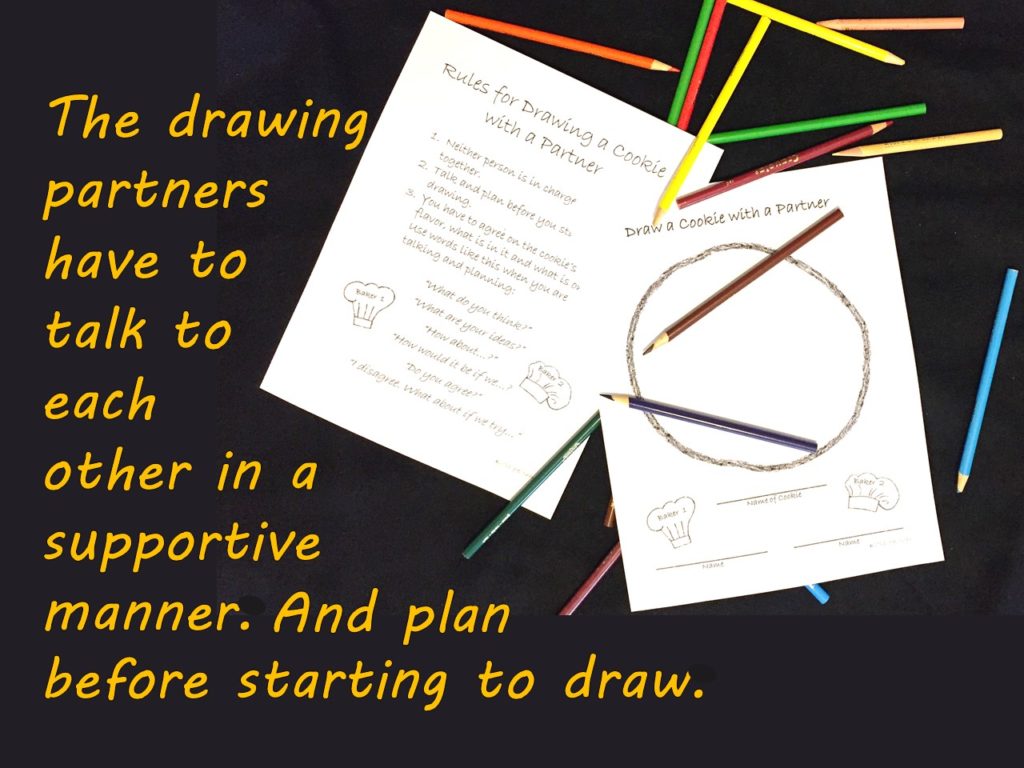
I have found I need to be vigilant to help mediate disagreements, and to help the participants to actually work together instead of each one just drawing “my half of the cookie.”
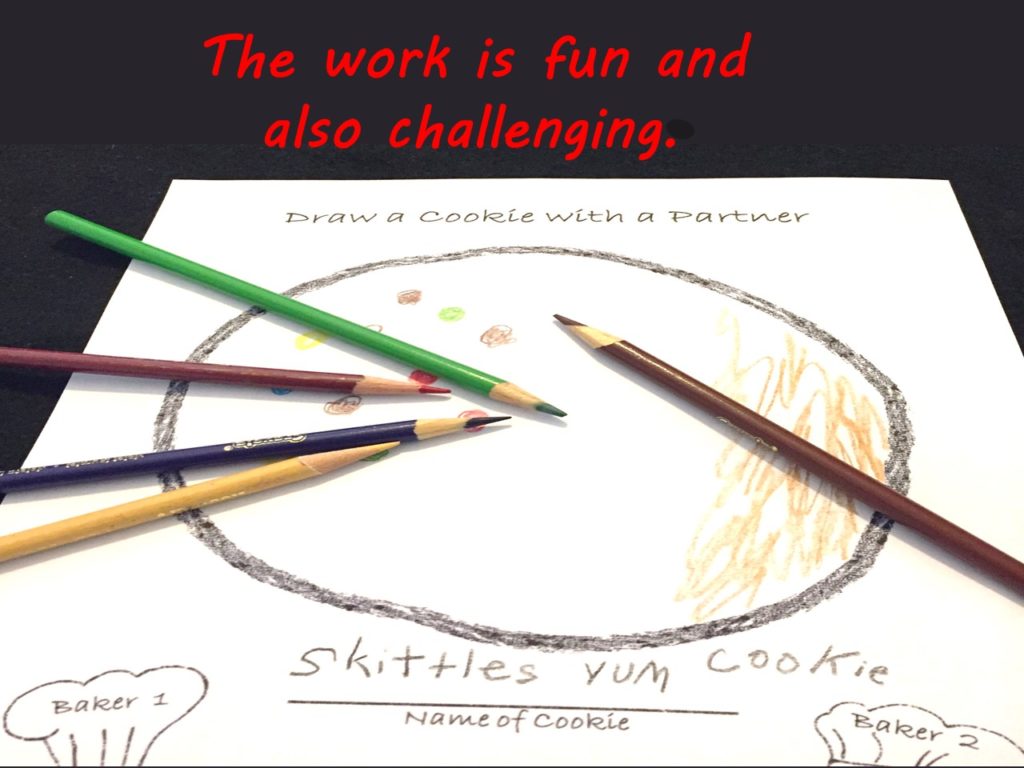
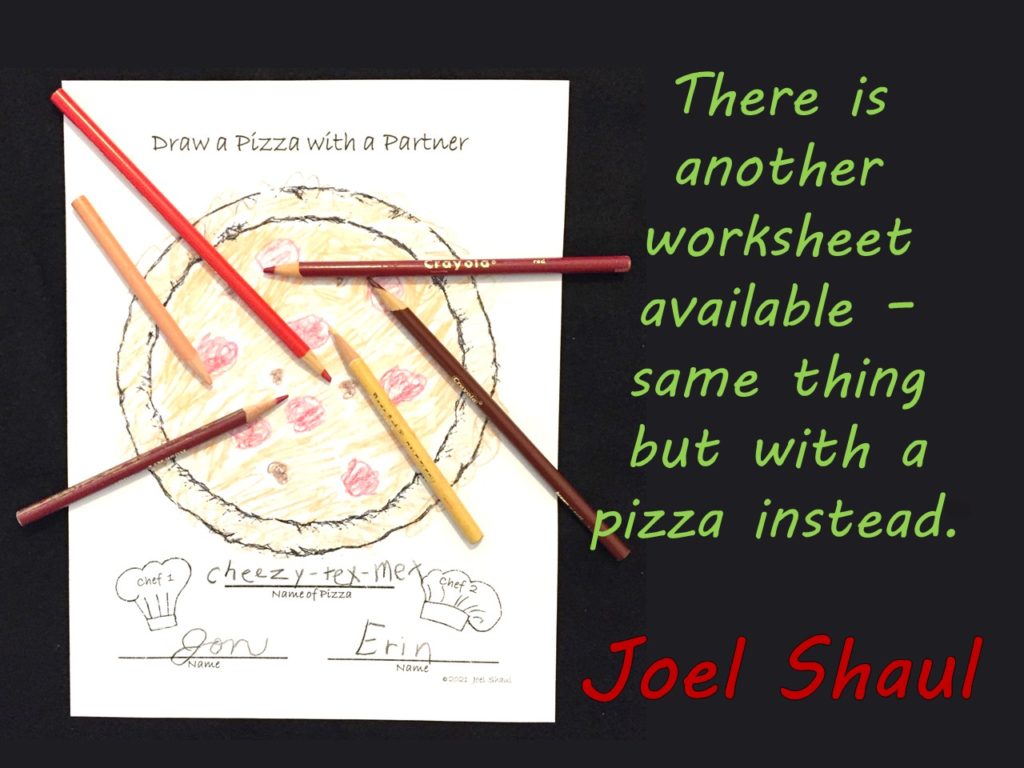
To find a similar worksheet on jointly drawing a pizza (see picture below) instead of a cookie, click here.
More collaborative drawing projects for children on the spectrum –
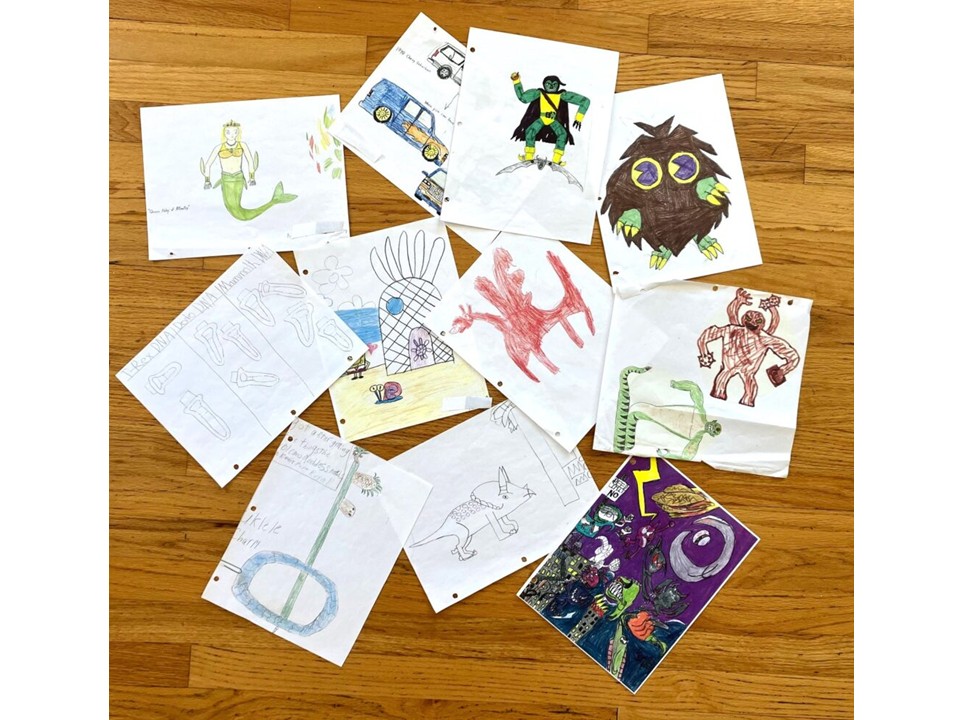
There are lots more great ways to help pairs and groups of kids with ASD to practice cooperation and creating things together. I have a whole section on this for you to explore: See “Collaborative drawing tasks for social learning” for information and ideas, like the one shown above.
Your comments on these resources are most welcome, and often helpful. Click HERE to send an email.
in Spanish: Dibuja una pizza con un compañero – hoja de trabajo para fomentar la flexibilidad y la cooperación
in Hebrew: 2-Person Pizza Drawing Worksheet
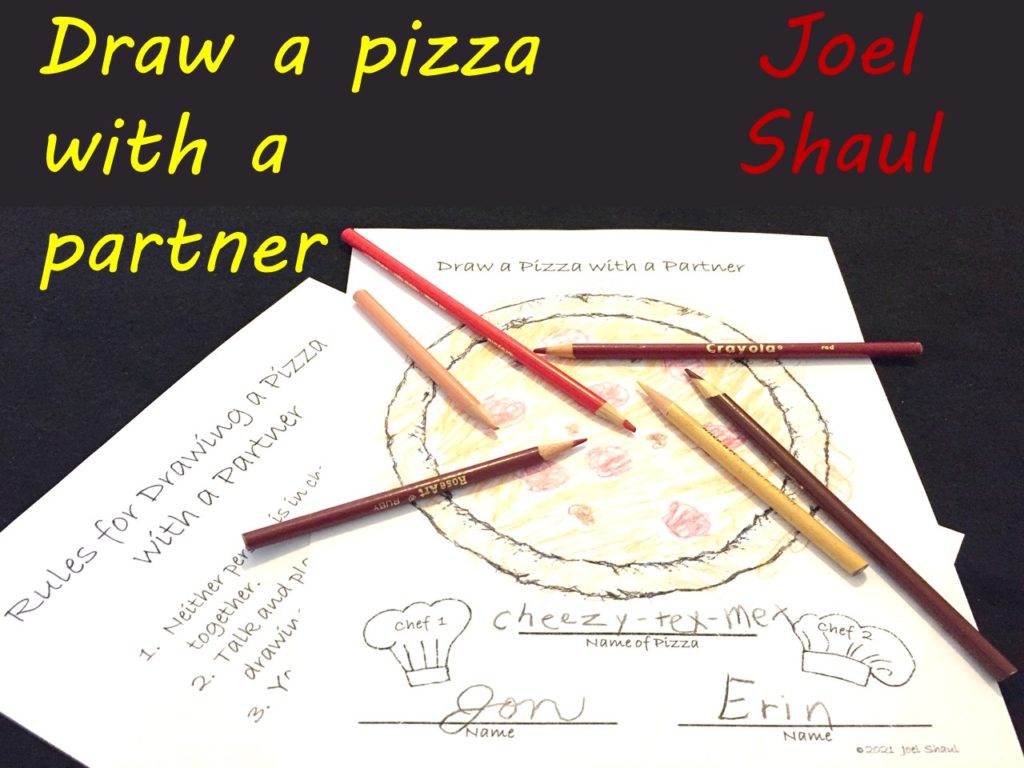
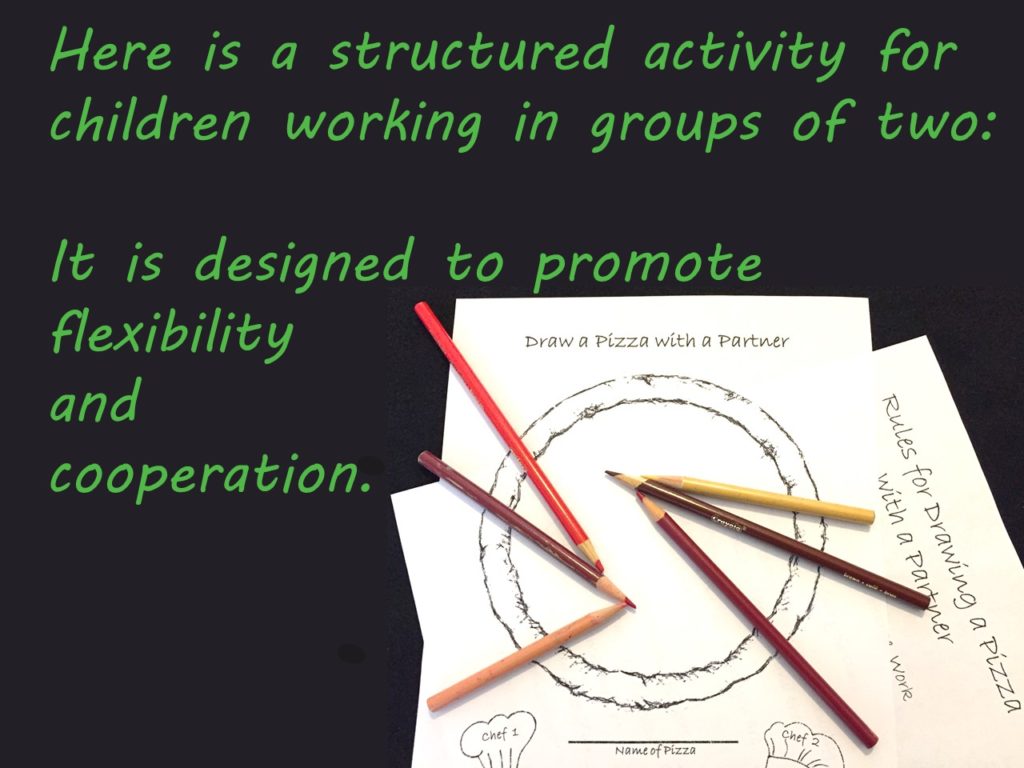
The autistic children I have worked with are usually not lacking in creative ideas and artistic creativity. But when it comes to collaborating with others on a creative endeavor, they can get confused and frustrated in the absence of adult guidance and clear cooperation rules to follow.
This printable activity sets up a one-page drawing and writing activity that two kids on the spectrum have to complete simultaneously together. Each group of two children, in either a social skills group or a classroom setting, is instructed to invent, name, describe and jointly draw a pizza together. It’s hard, but fun, and in my own work children usually like it.
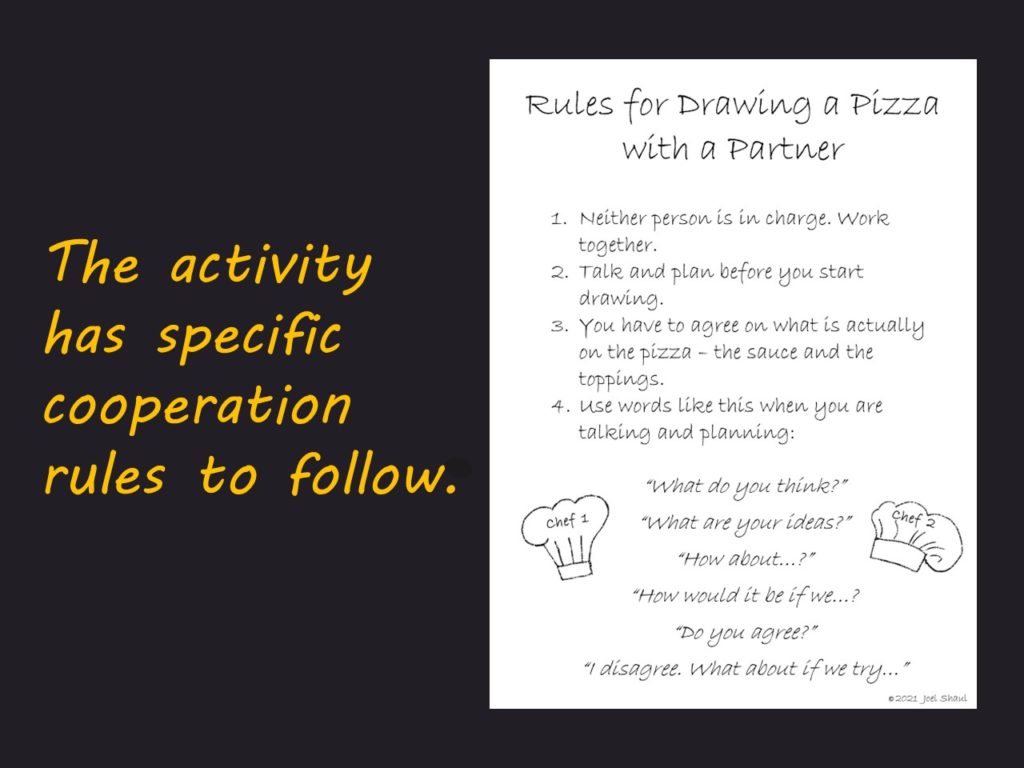
It’s important to go over these cooperation rules carefully ahead of time and to practice aloud the specific “cooperation language.”
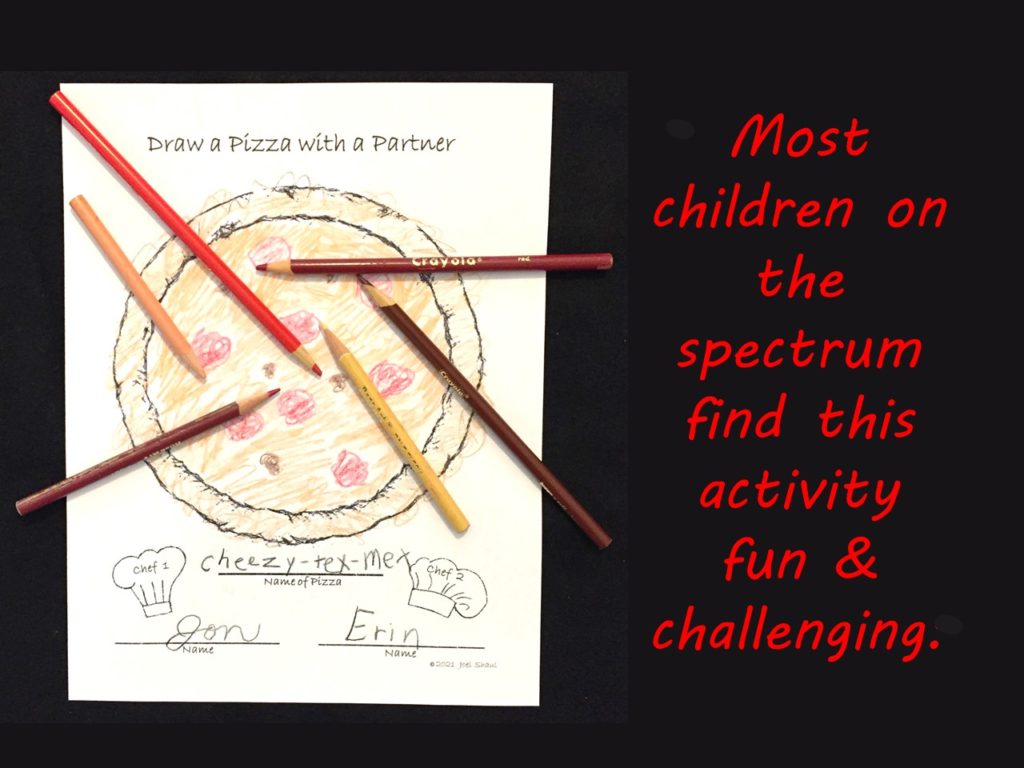
I have used this cooperative drawing activity with children age 8 right up to young adult.
In my experience, some kids need very close supervision in completion of this project, as they may highly value their own ideas and find it jarring and offensive to have someone else draw on “my pizza.”
This drawing activity is frequently downloaded from my website.
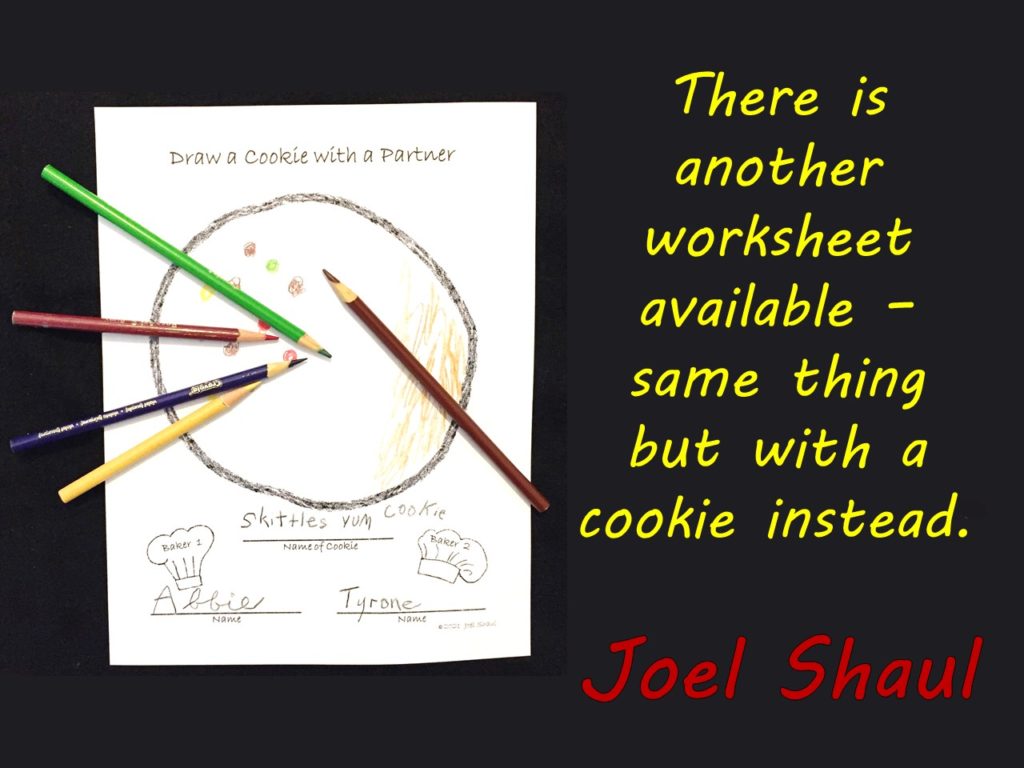
More collaborative drawing tasks for children on the spectrum – see below.
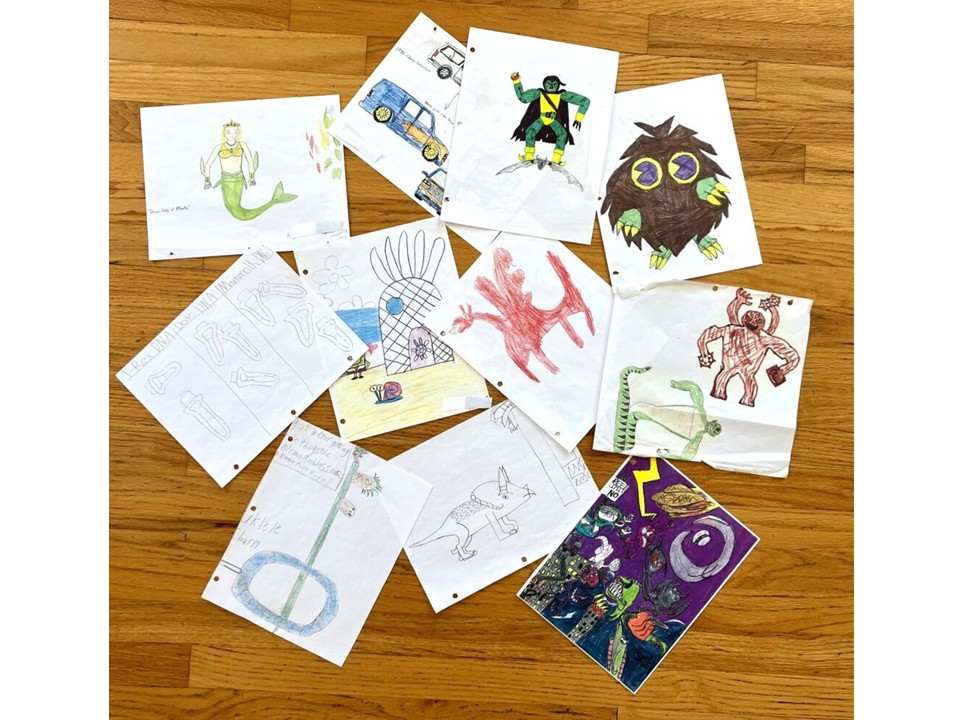
There are lots more great ways to help pairs and groups of kids with ASD to practice cooperation and creating things together. I have a whole section on this for you to explore: See “Collaborative drawing tasks for social learning” for information and ideas, like the one shown above.
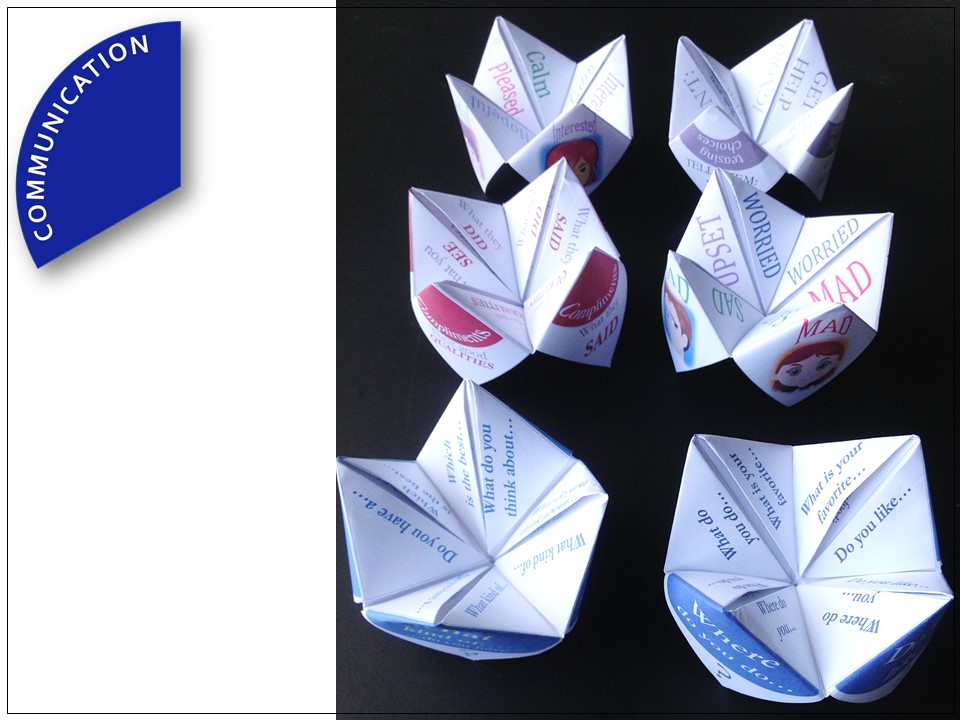
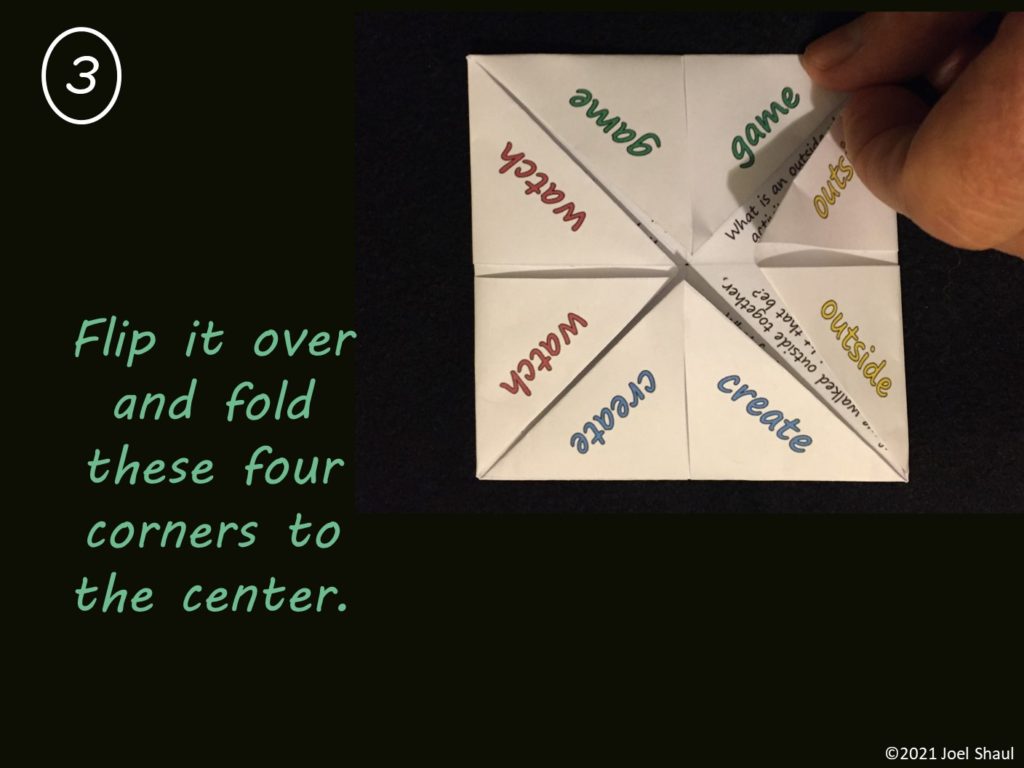
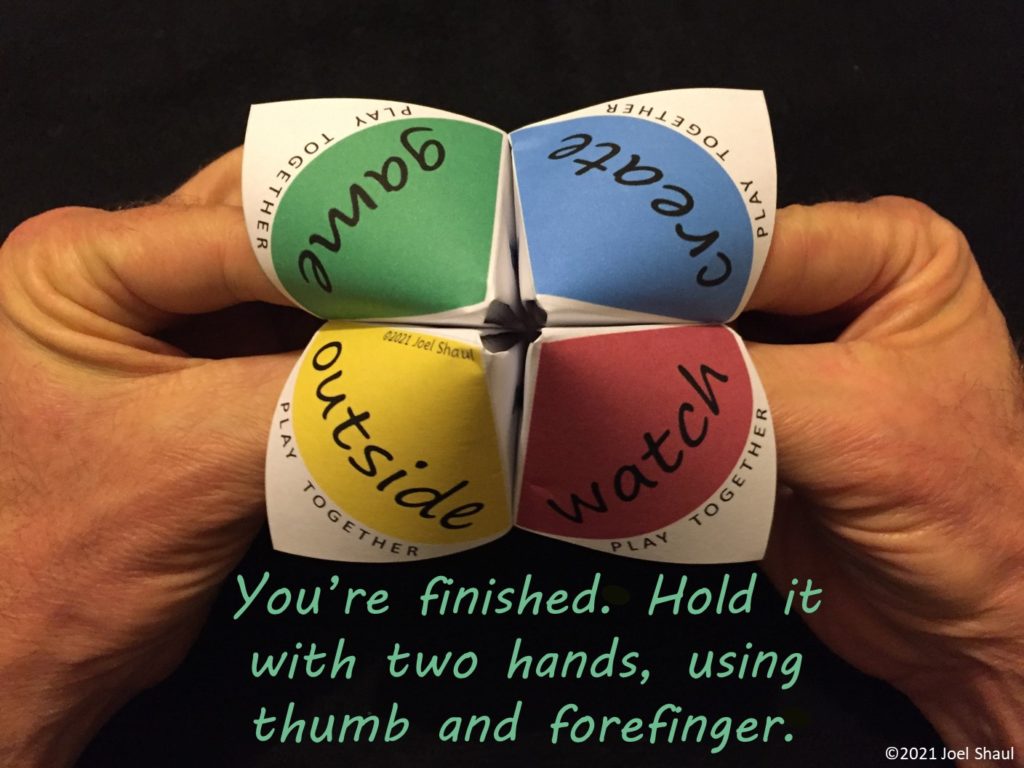
Over the years, I have had a few young clients that can fold these as well as me, but nearly all children will need you to fold the paper fortune tellers ahead of time!
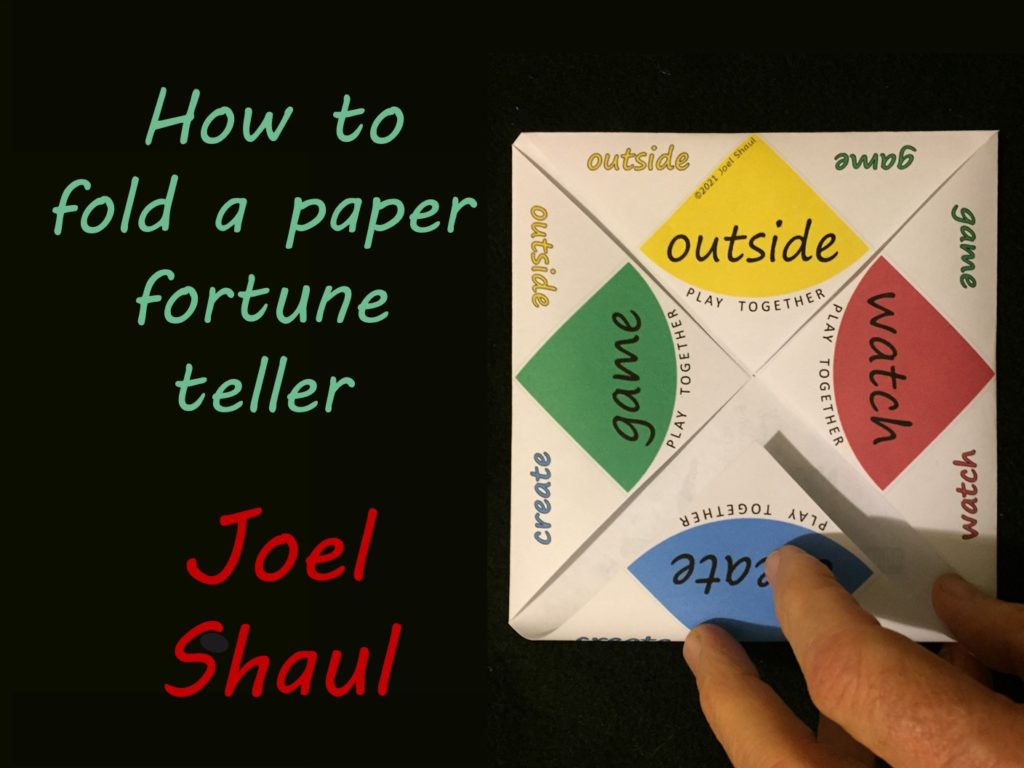
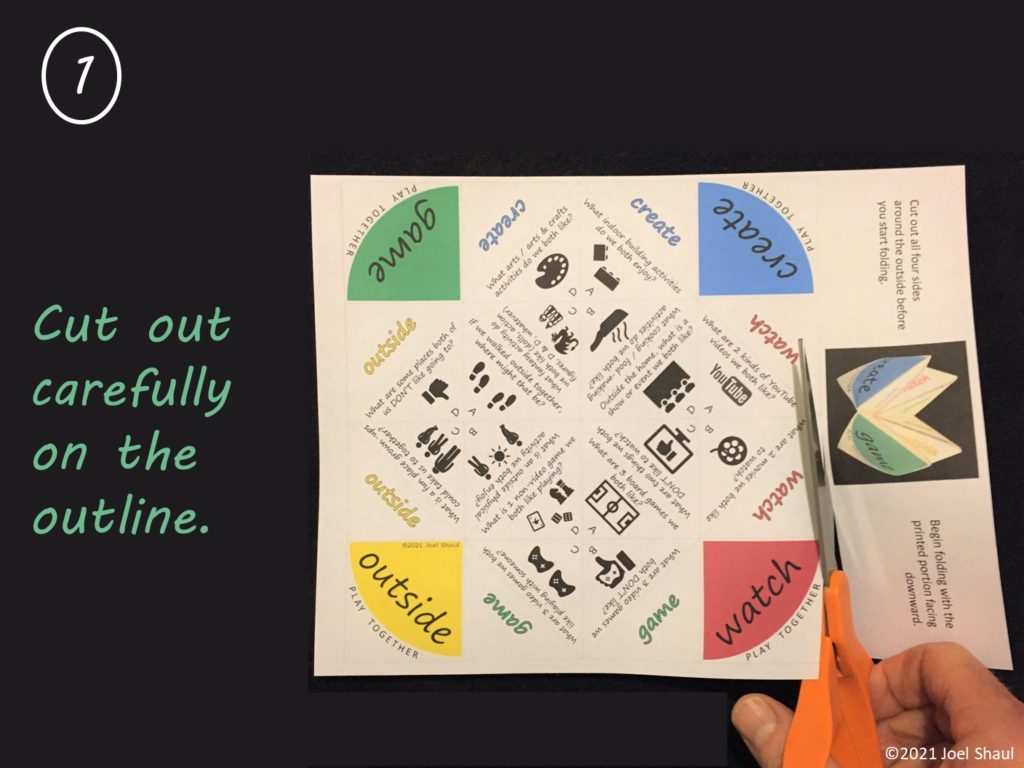
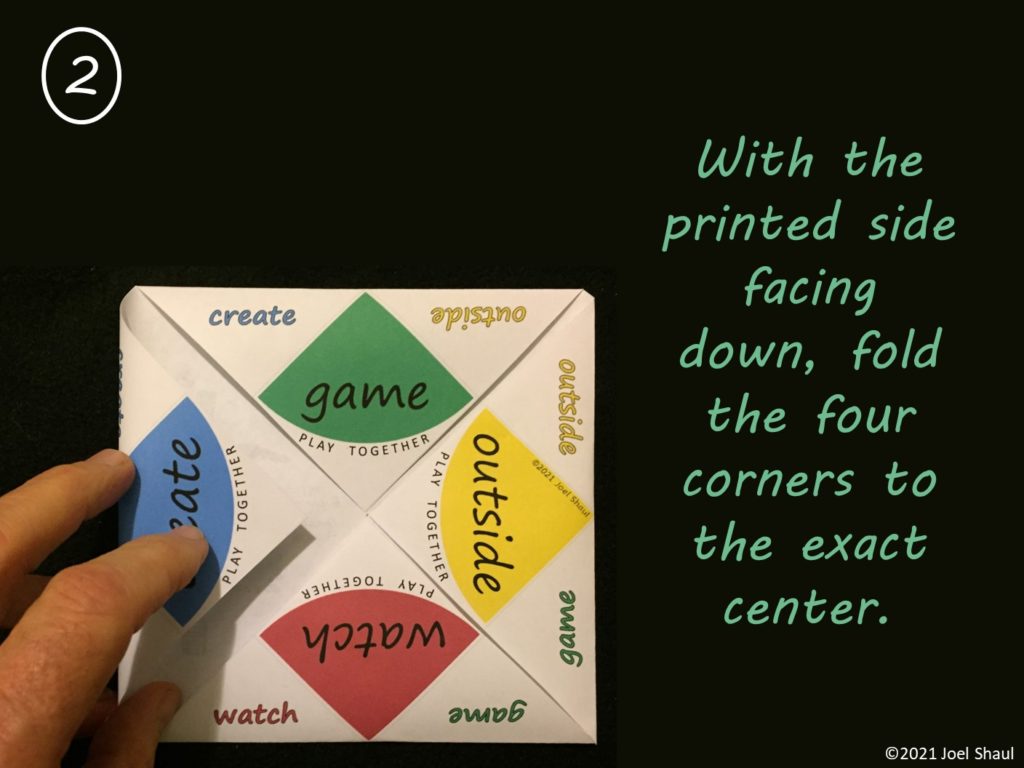
Your comments on these resources are most welcome, and often helpful. Click HERE to send an email.
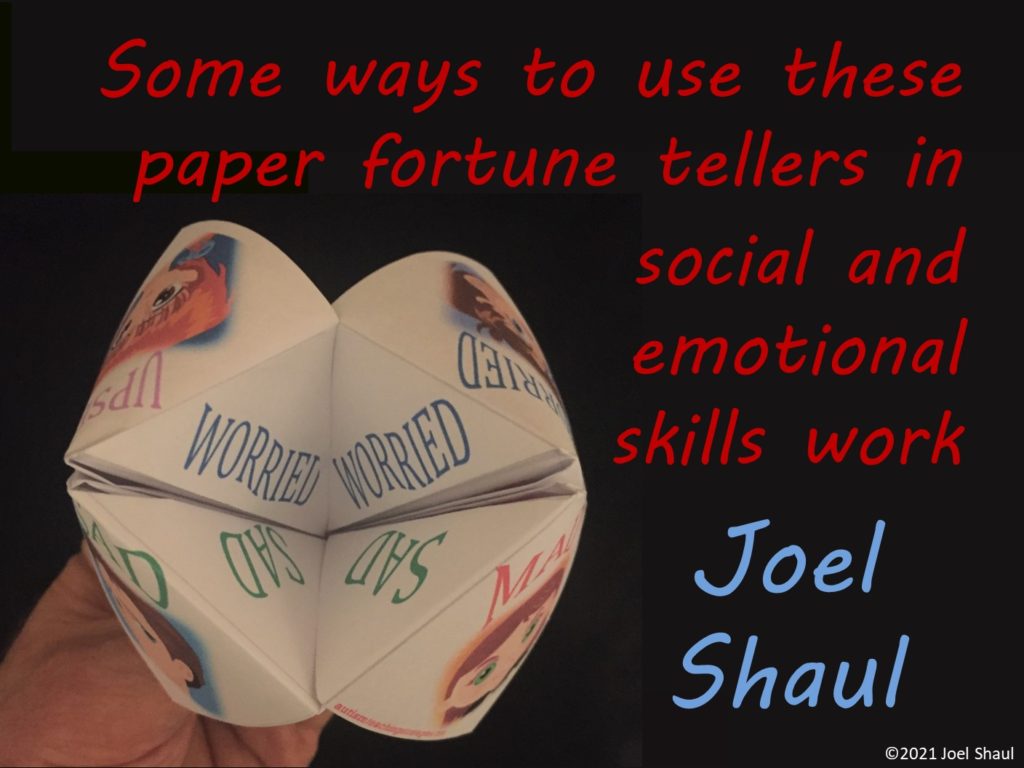
I have created many paper fortune tellers and over some years I have often found good uses for them in small groups, classrooms and individual therapy.
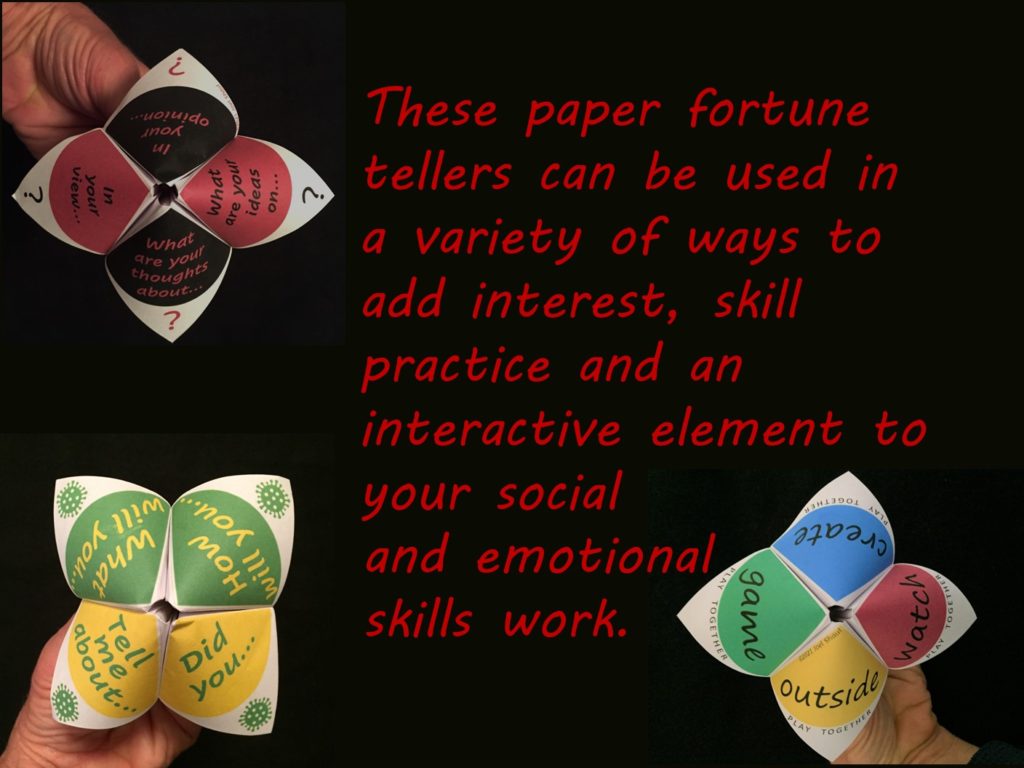
Paper fortune tellers can be used in a variety of ways to add interest, skill practice and an interactive element to your social and emotional skills work.
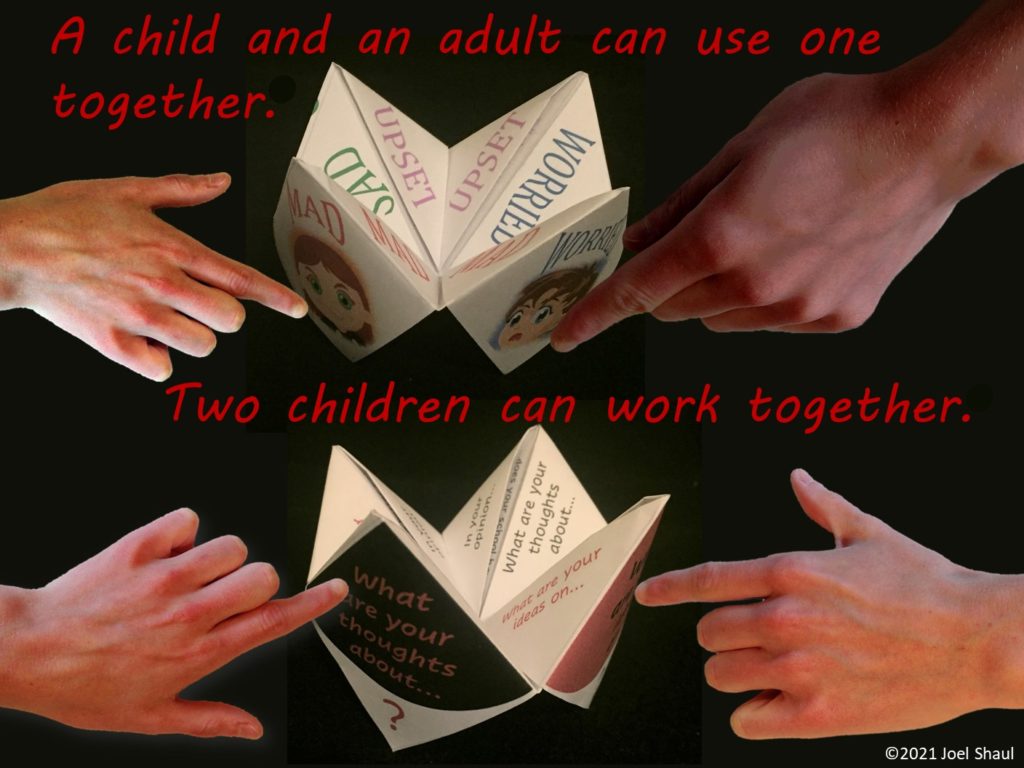
Two children can use one together. An adult and a child can use one together.
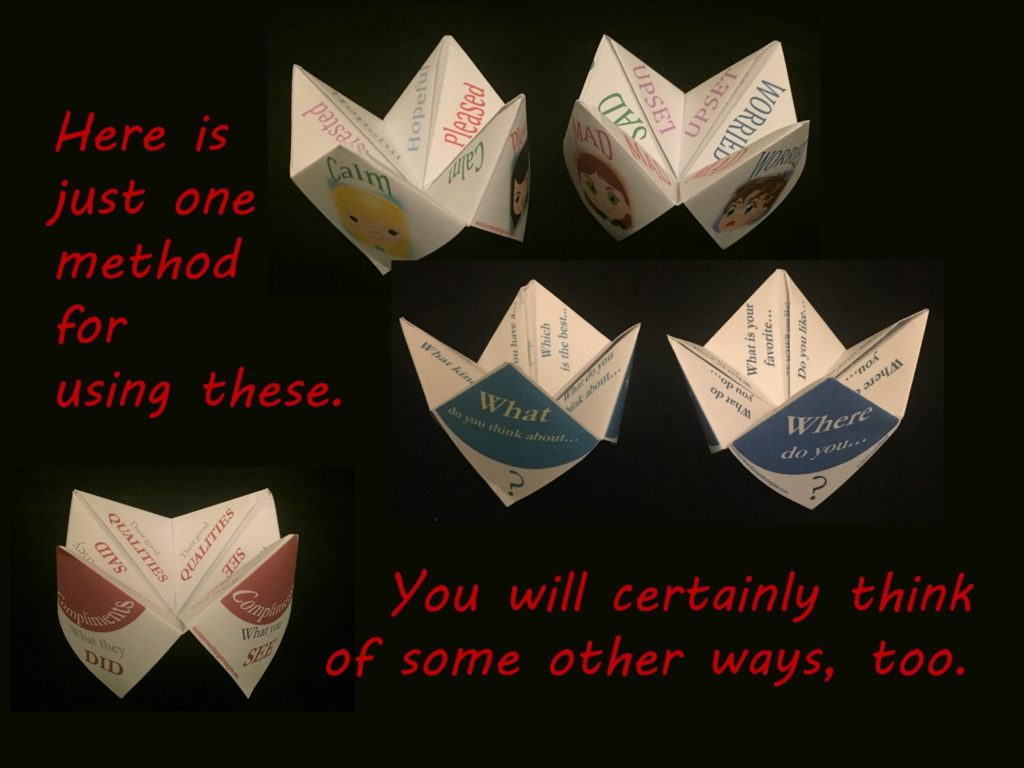
Here is one method for using these. You will certainly think of some other ways, too.
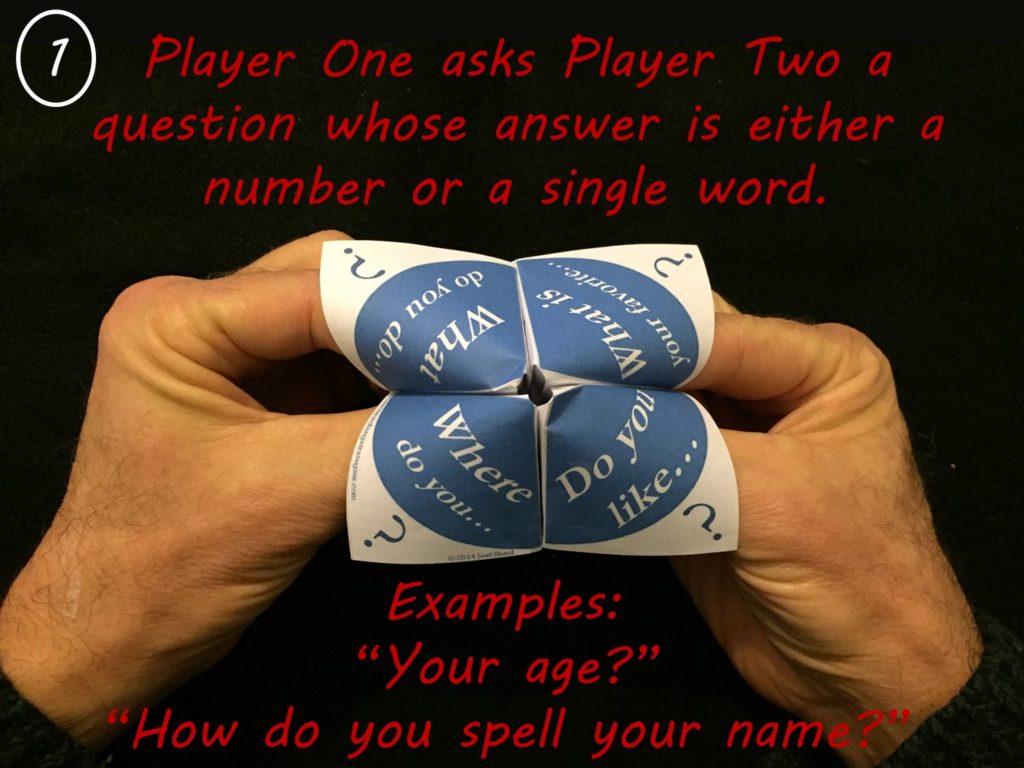
Step one: Player 1 asks player 2 a question whose answer is either a number or a single word. Examples: “What is your age?” “How do you spell your name?”
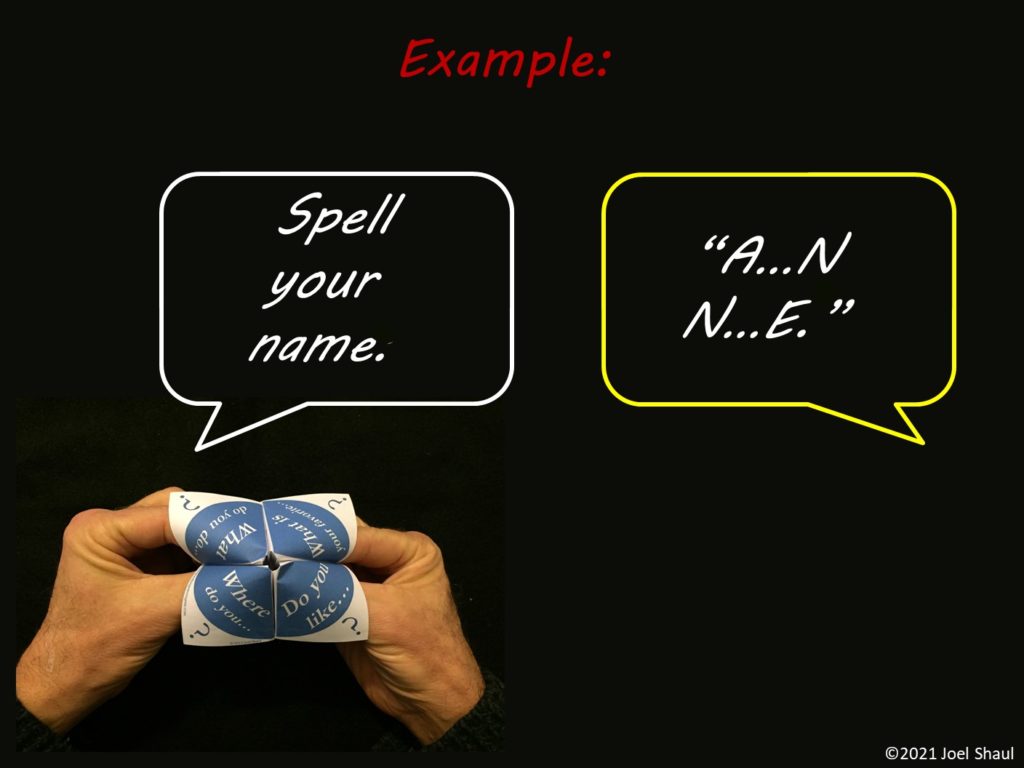
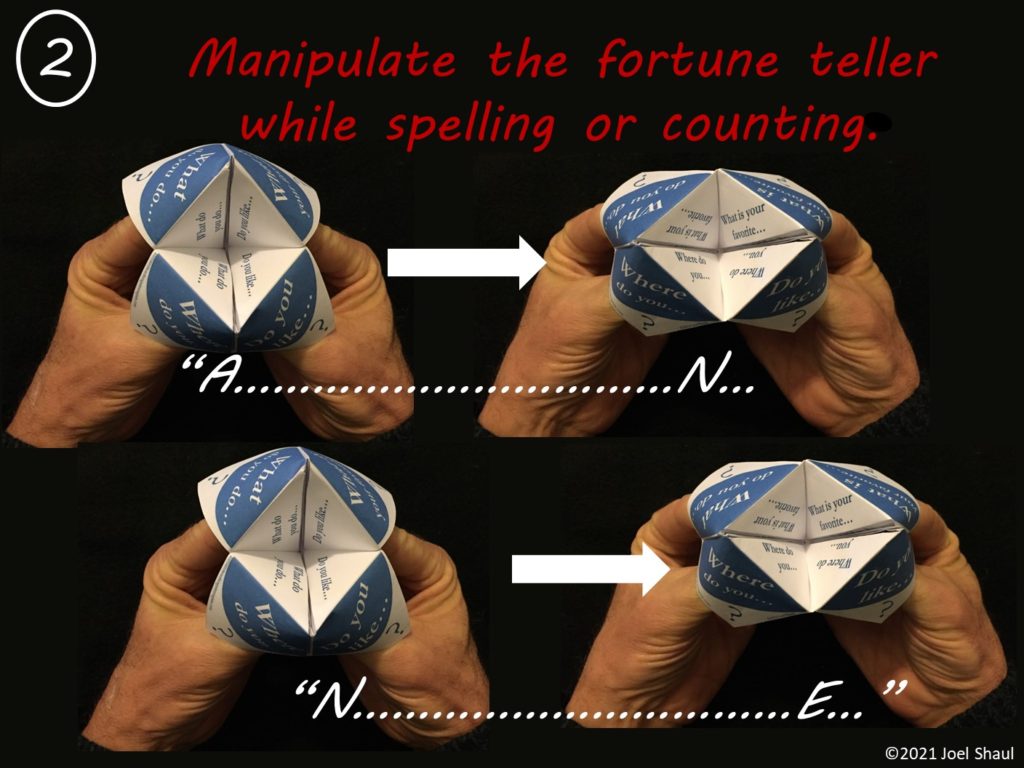
Then, manipulate the paper fortune teller while spelling or counting.
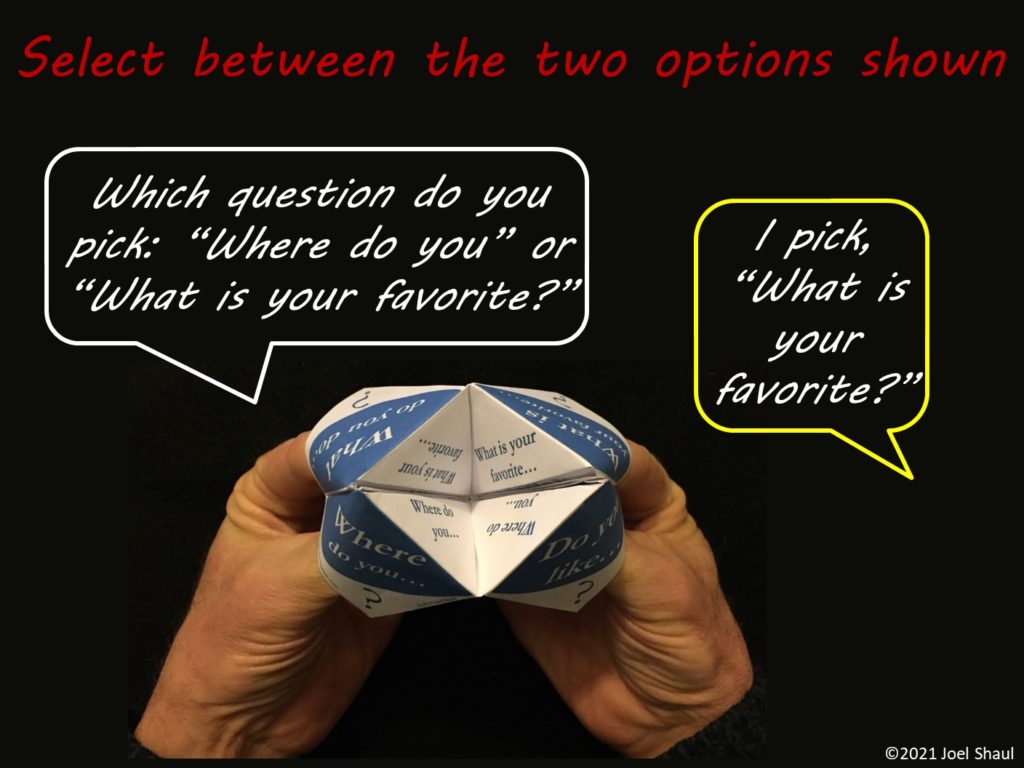
Say, “Which question do you pick: ‘Where do you…’ or ‘What is your favorite…?”
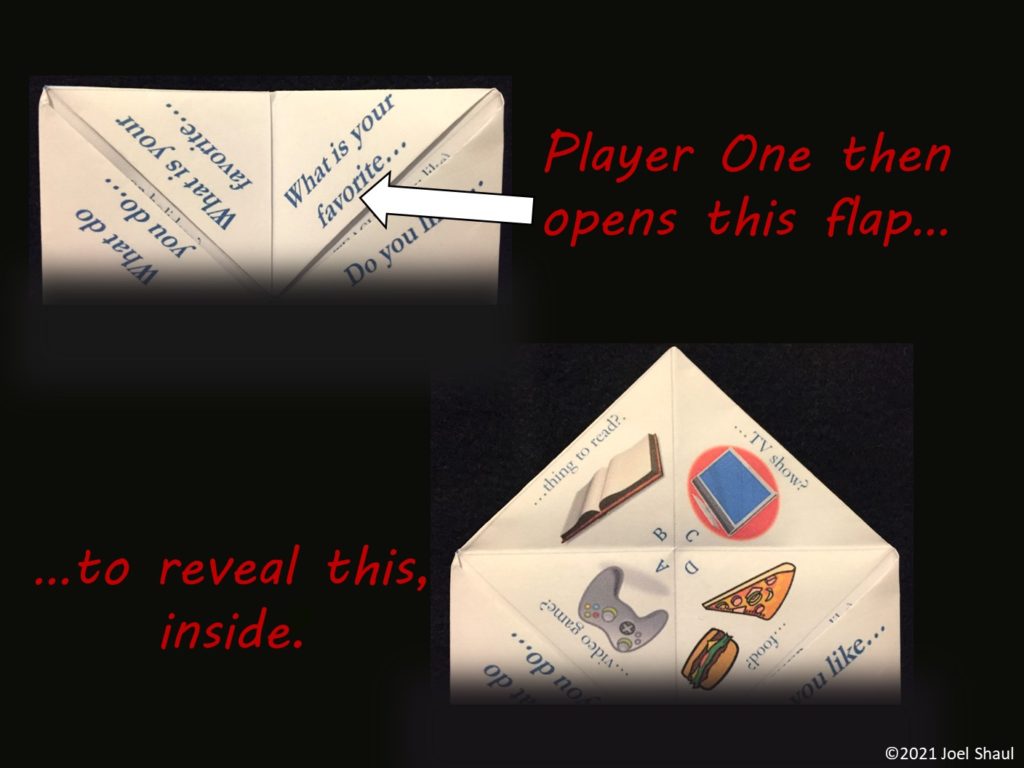
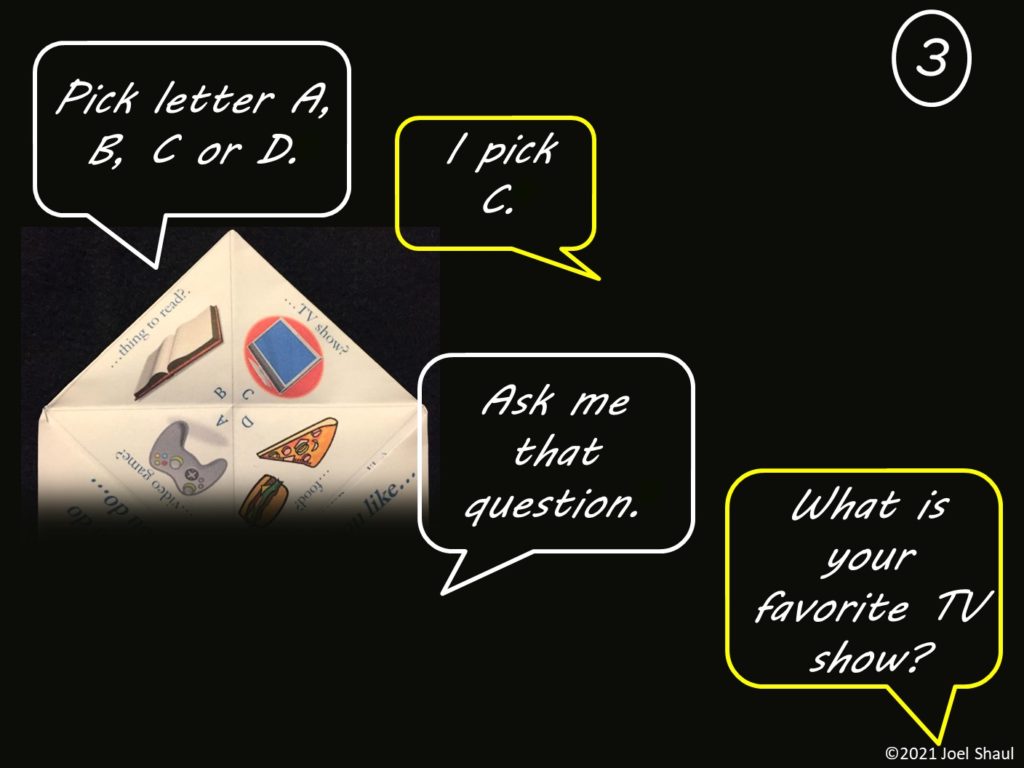
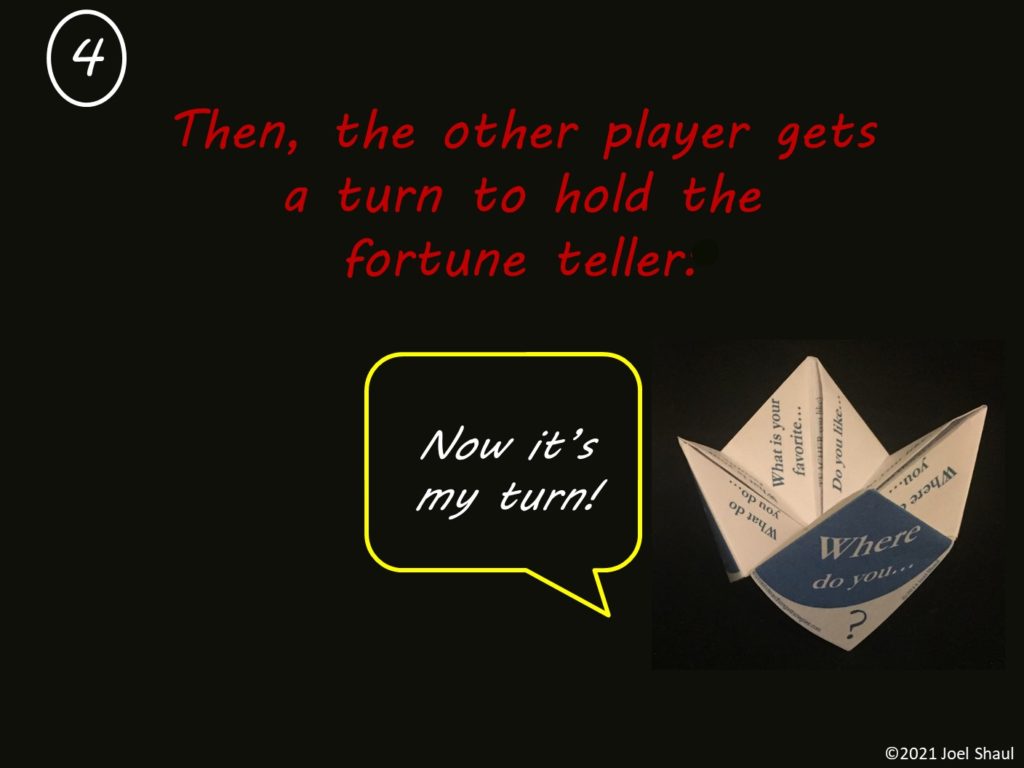
Always have two children use one paper fortune teller. If each child has their own, it enables solitary play instead of an interactive activity.
Your comments on these resources are most welcome, and often helpful. Click HERE to send an email.
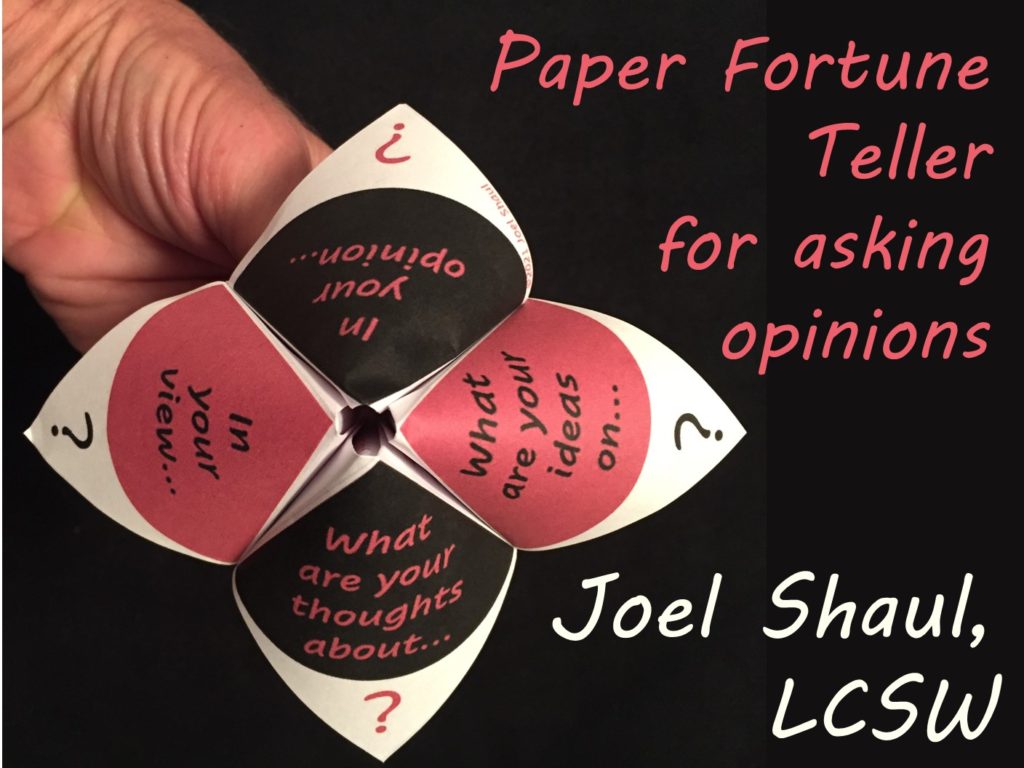
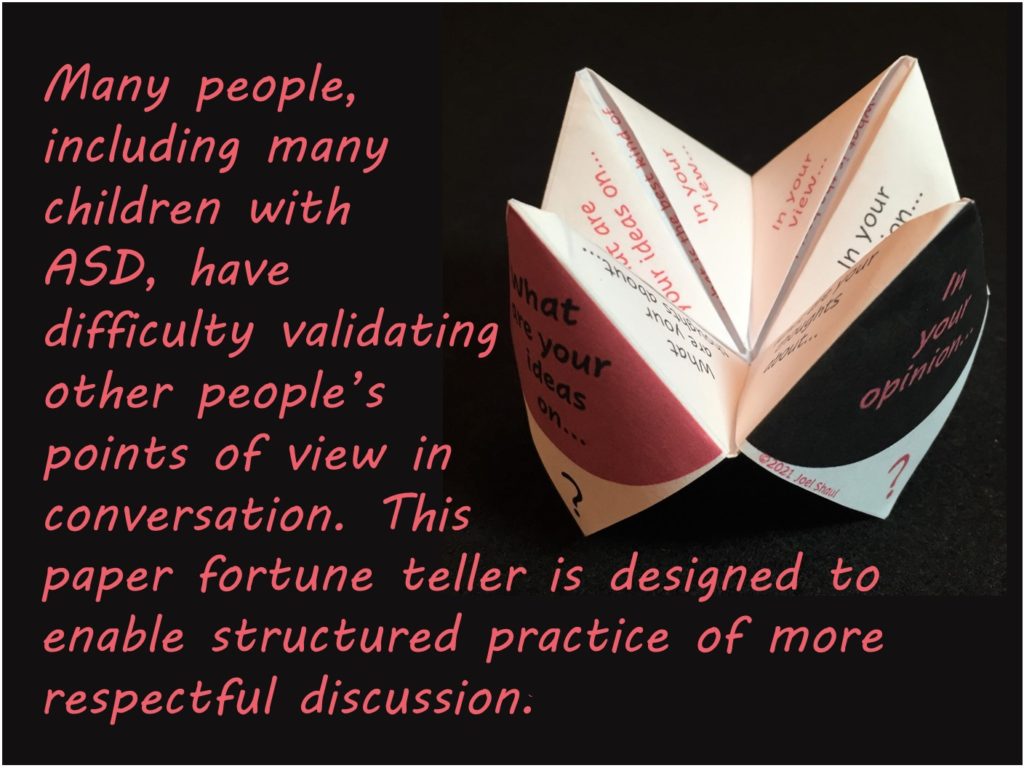
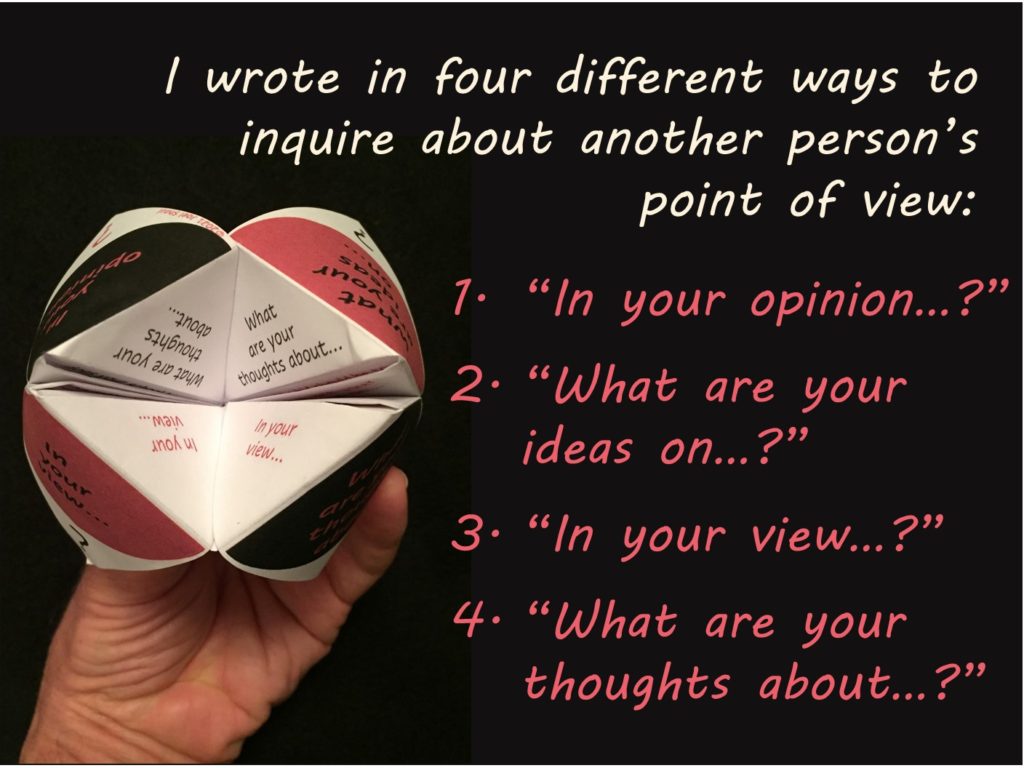
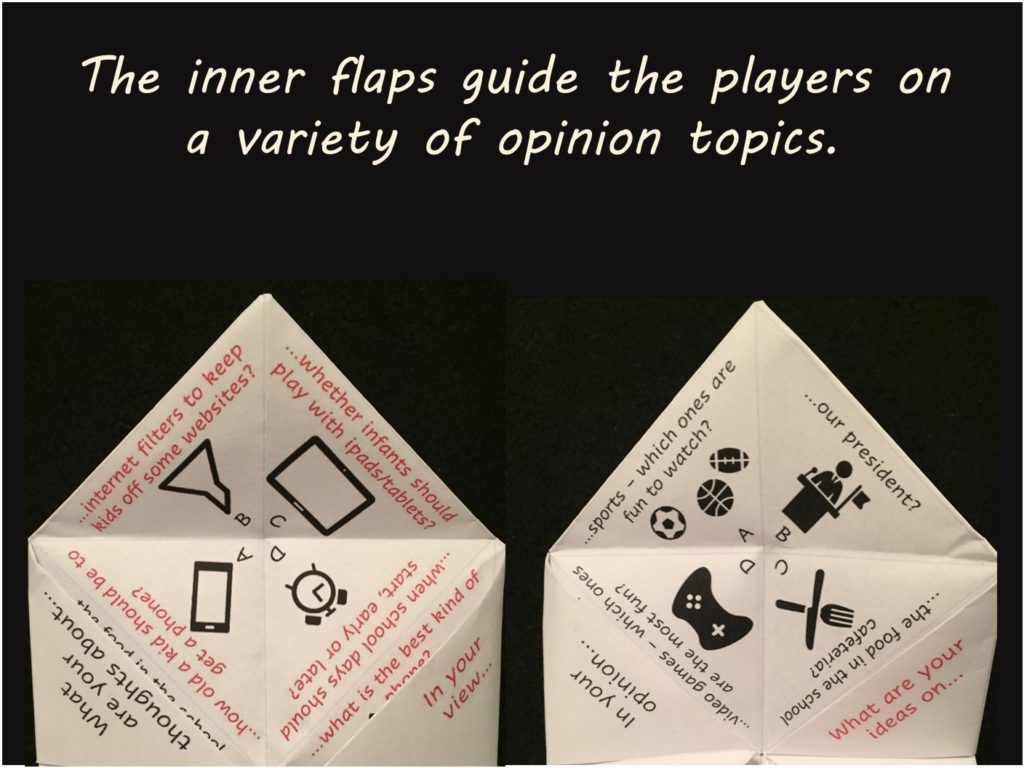
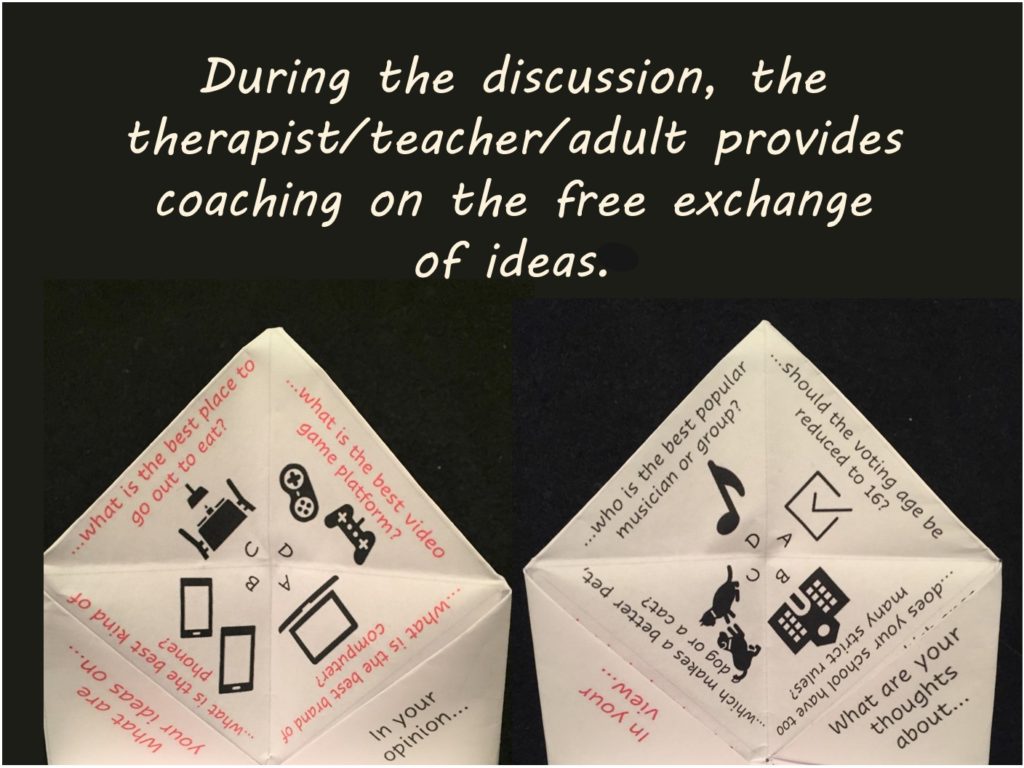
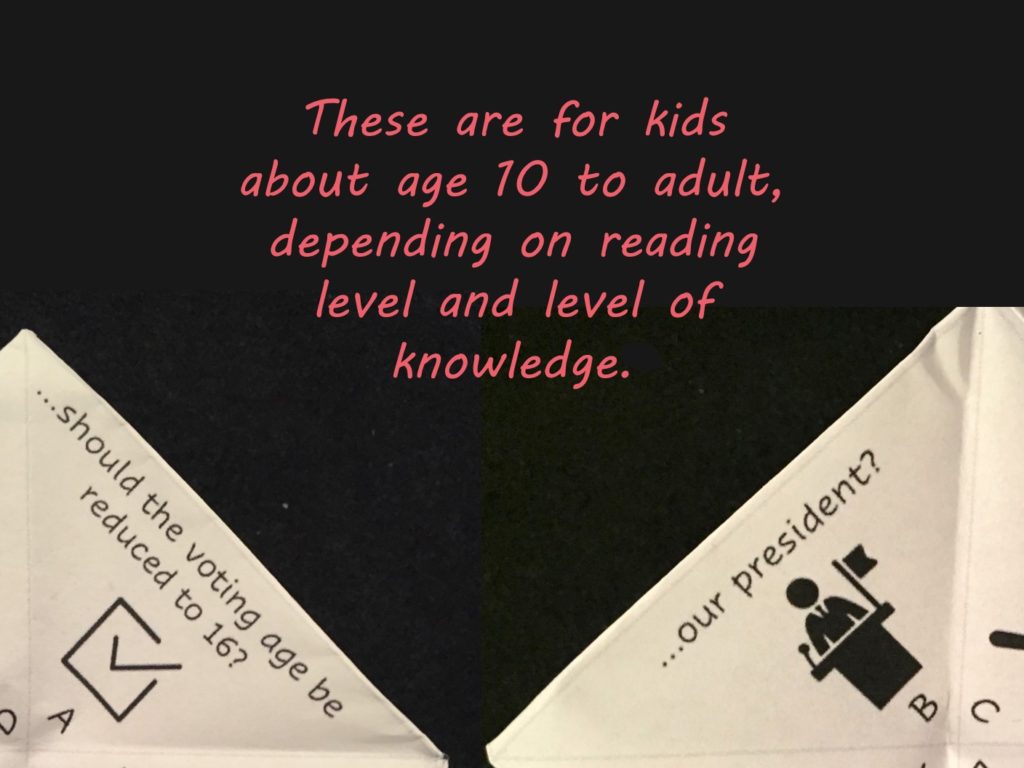
Children with autism may have a difficult time exploring other people’s opinions. Children on the spectrum might be preoccupied with their own established viewpoints, and in the rapid exchange of typical conversation, the contrasting point of view might catch them off guard. In my own work with kids on the spectrum, I have found it very useful to provide specific question language to employ when asking other people their opinions. And providing practice is essential. That’s why I developed this paper fortune teller. It’s useful for having two children, or the child and the helping adult, to take turns inquiring about the other person’s point of view. I used it fairly often in my work, and found it useful for children capable of reading the text on the paper fortune teller.
The following images walk you through how to introduce the paper fortune teller and use it with a child.
Your comments on these resources are most welcome, and often helpful. Click HERE to send an email.