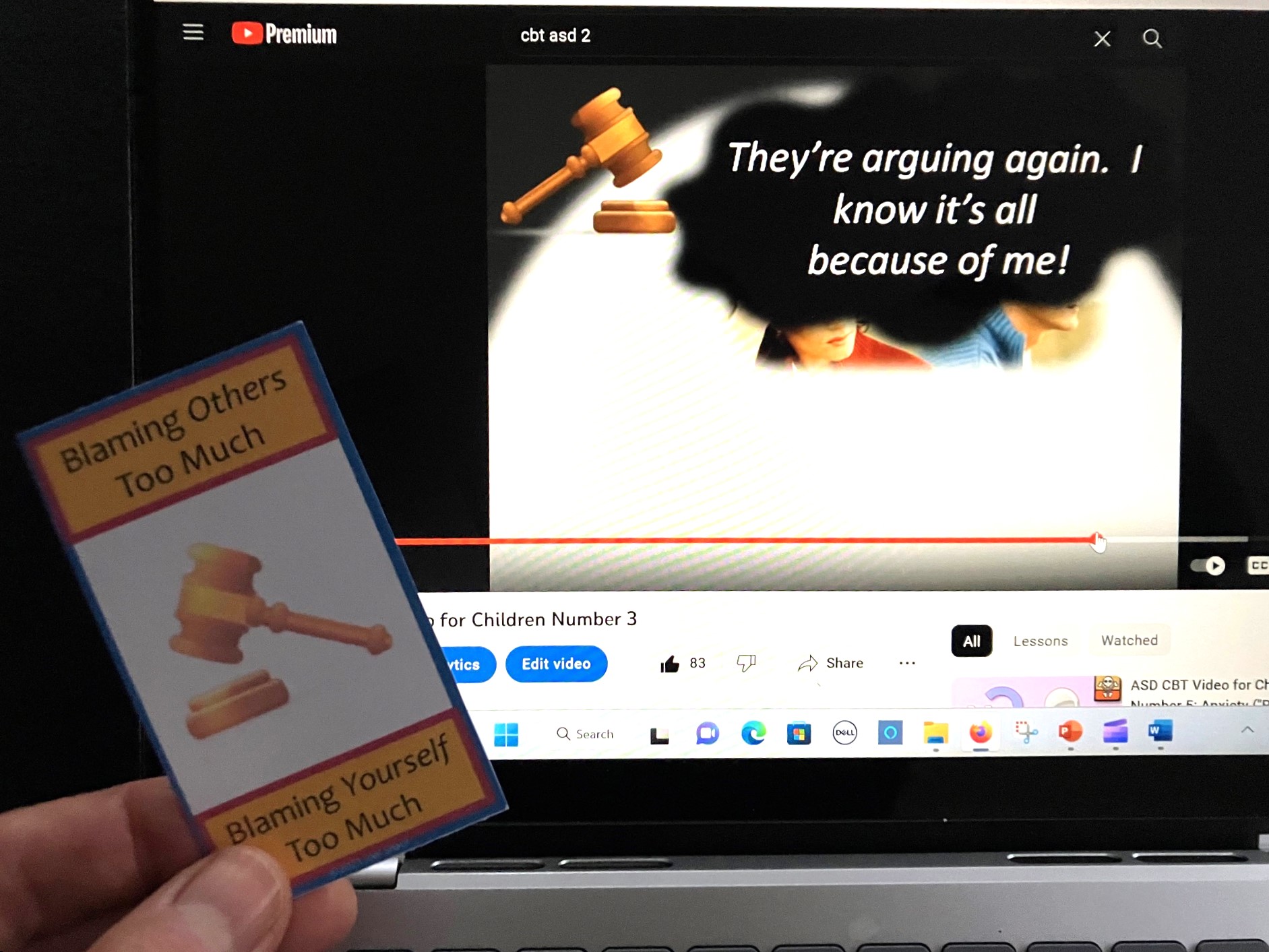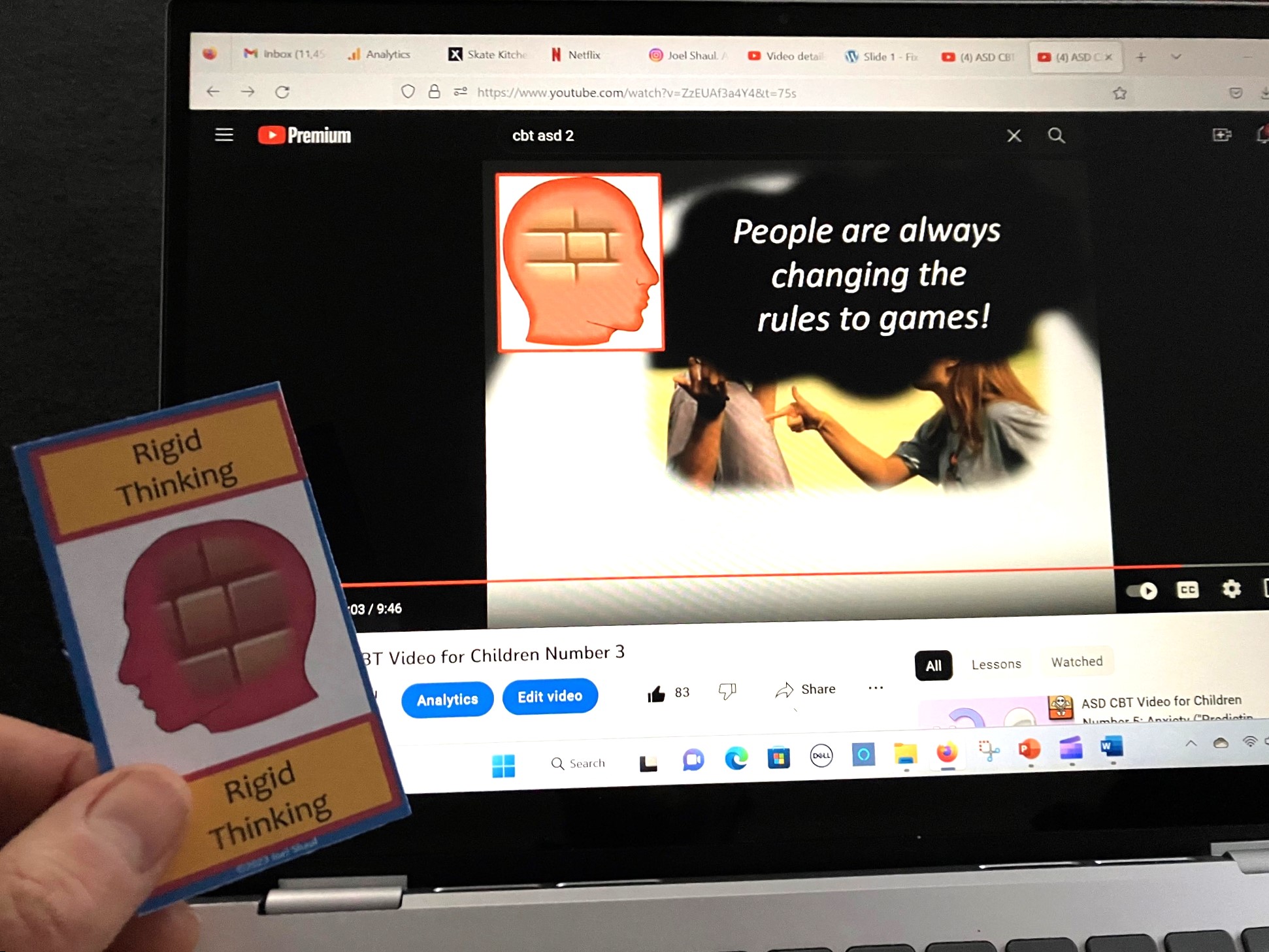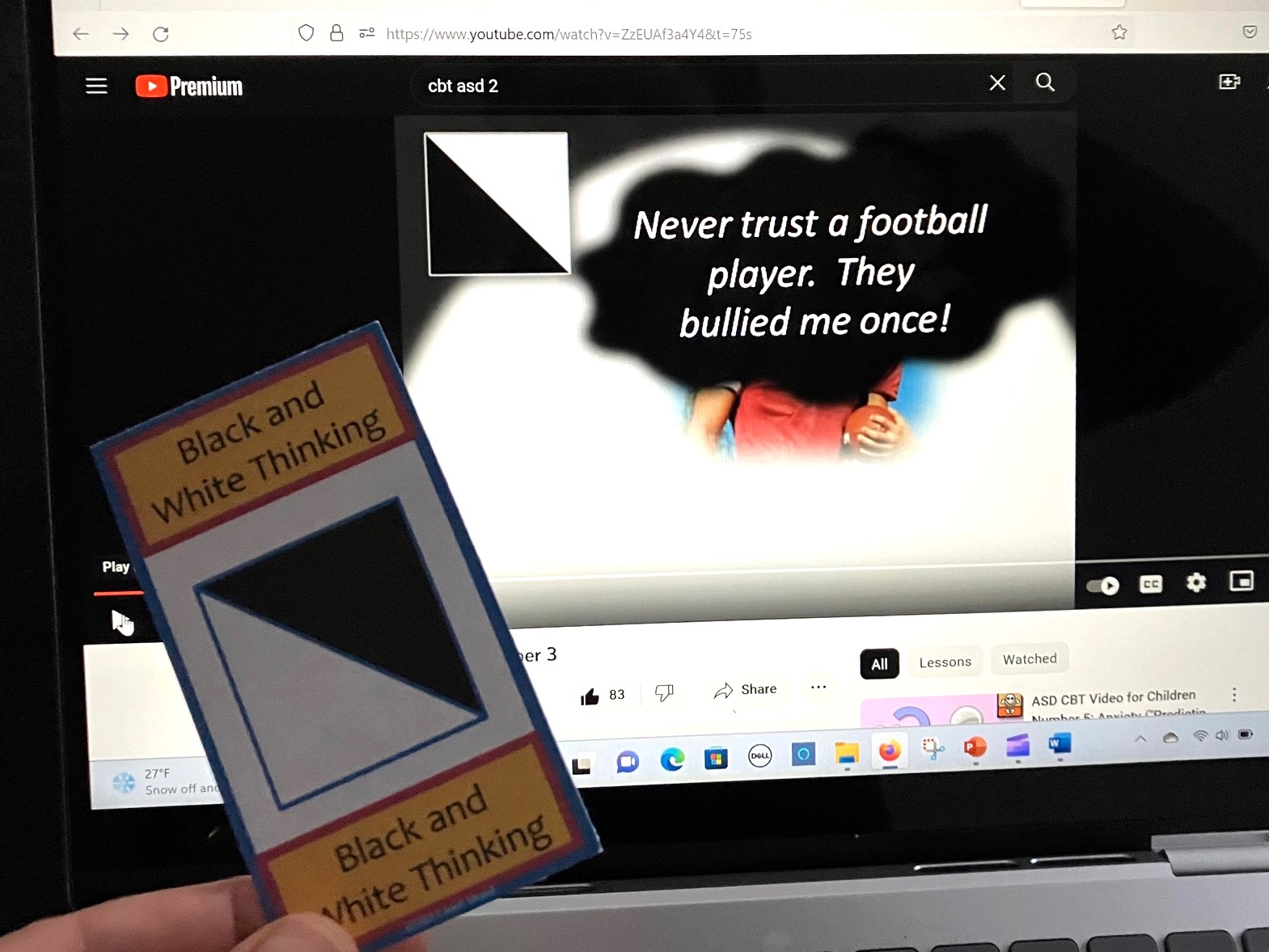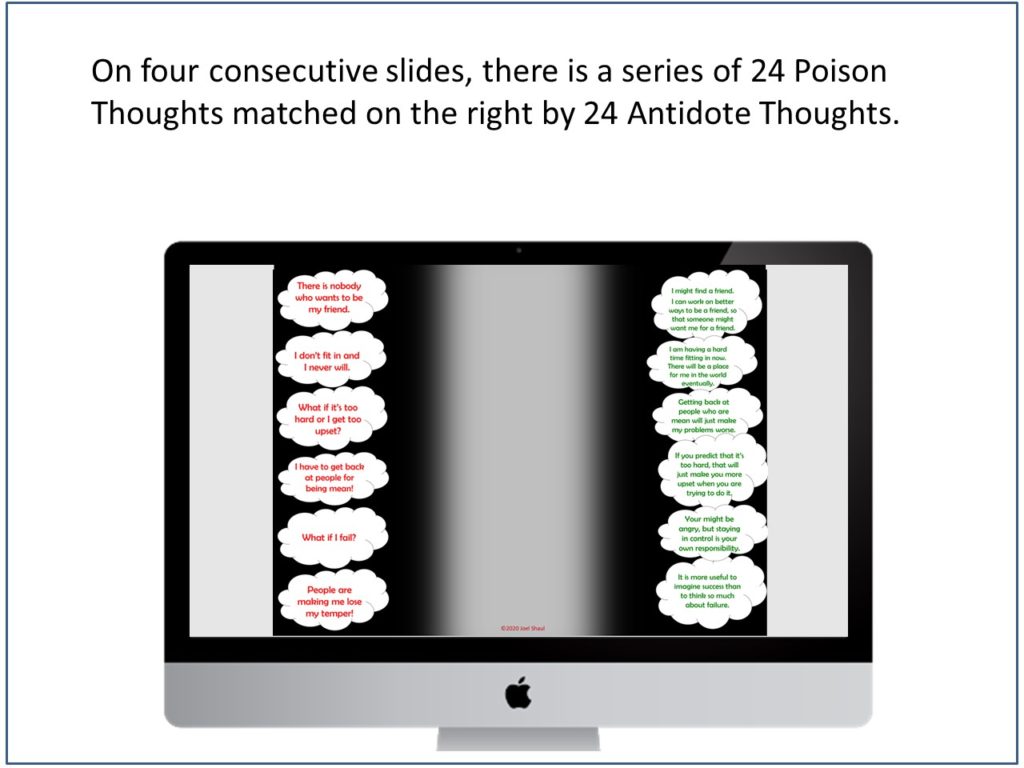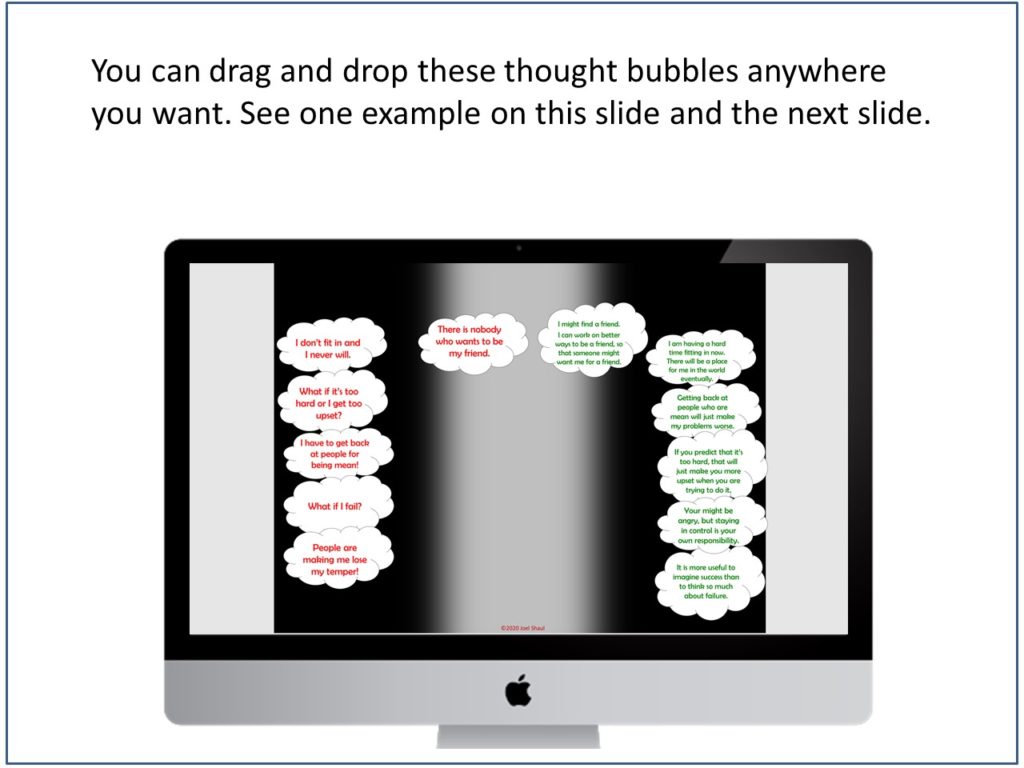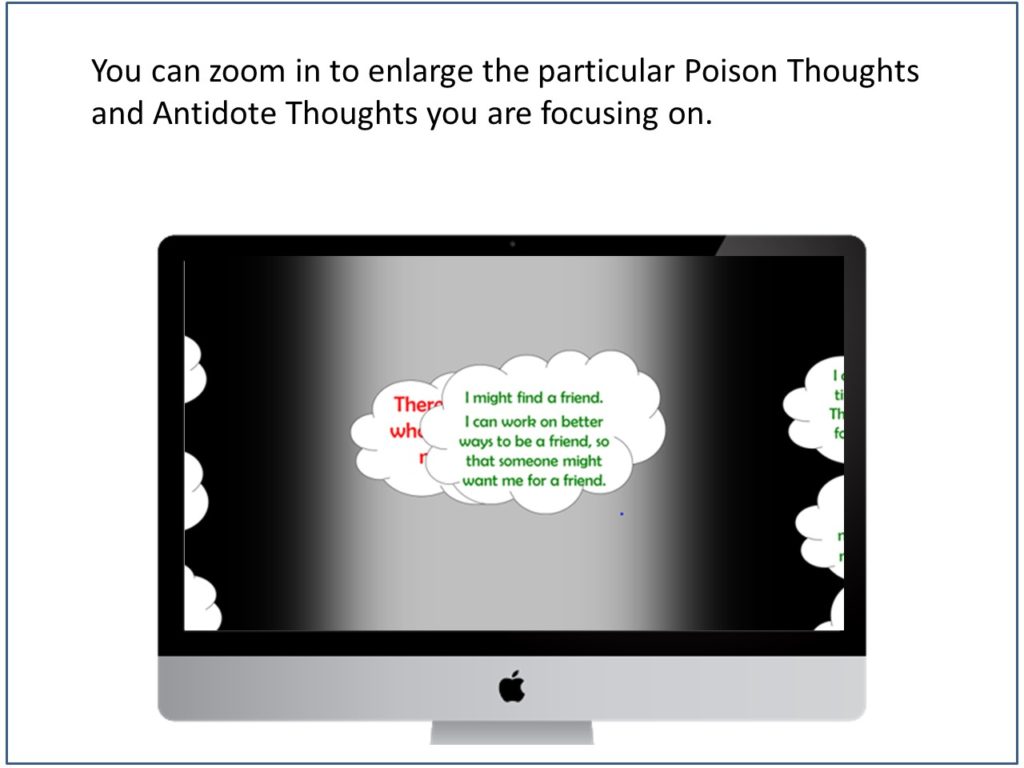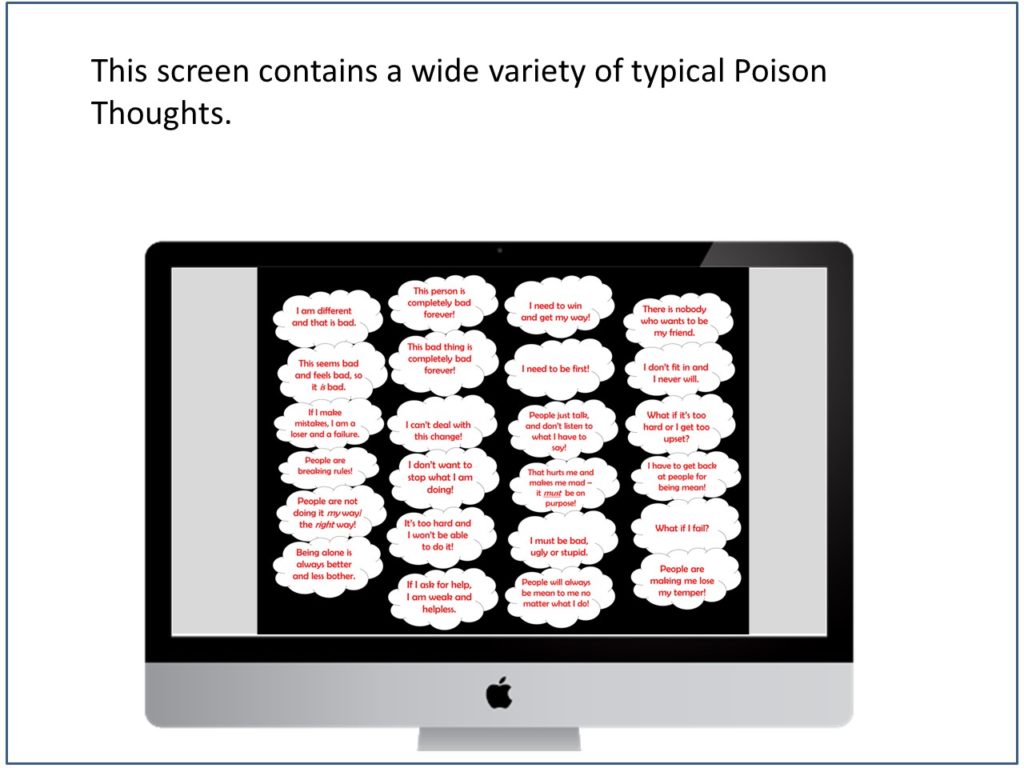
Part 2: CBT token systems – CBT Cards, a free download

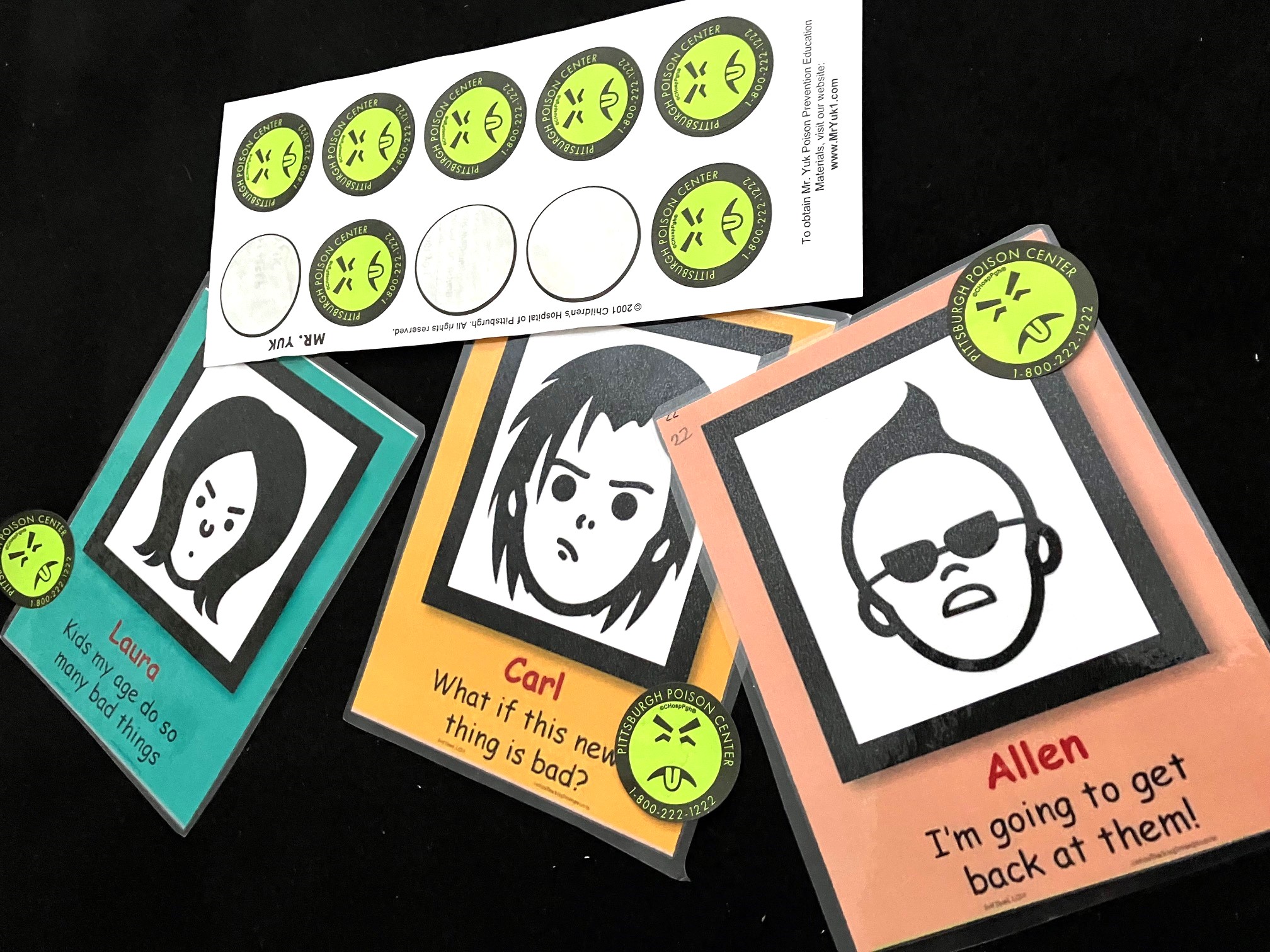
These free download cards are designed to accompany my CBT Videos for Kids.

CBT token systems – CBT cards, a free download

Cognitive behavioral therapy, whether it’s for a kid or an adult, can be hard and discouraging. After all, the main work involves the arduous process of finding and rooting out automatic negative thoughts that get stuck in our minds. When we are doing CBT with children, we obviously can’t turn this therapeutic activity into something “fun,” but by adding some game-like elements we can can help propel our work forward.

This article introduces a game-like token system with a free download. It is a set of cards you can use along with the CBT YouTube Videos for Kids (these videos are explained in much detail here).You use the cards to reward the child for identifying automatic negative thoughts in the videos and in their own minds.

How to make the cards

Print the cards on card stock, or on paper that you will then laminate. If you want to get fancy, print the decorative back before printing out the front of the cards.
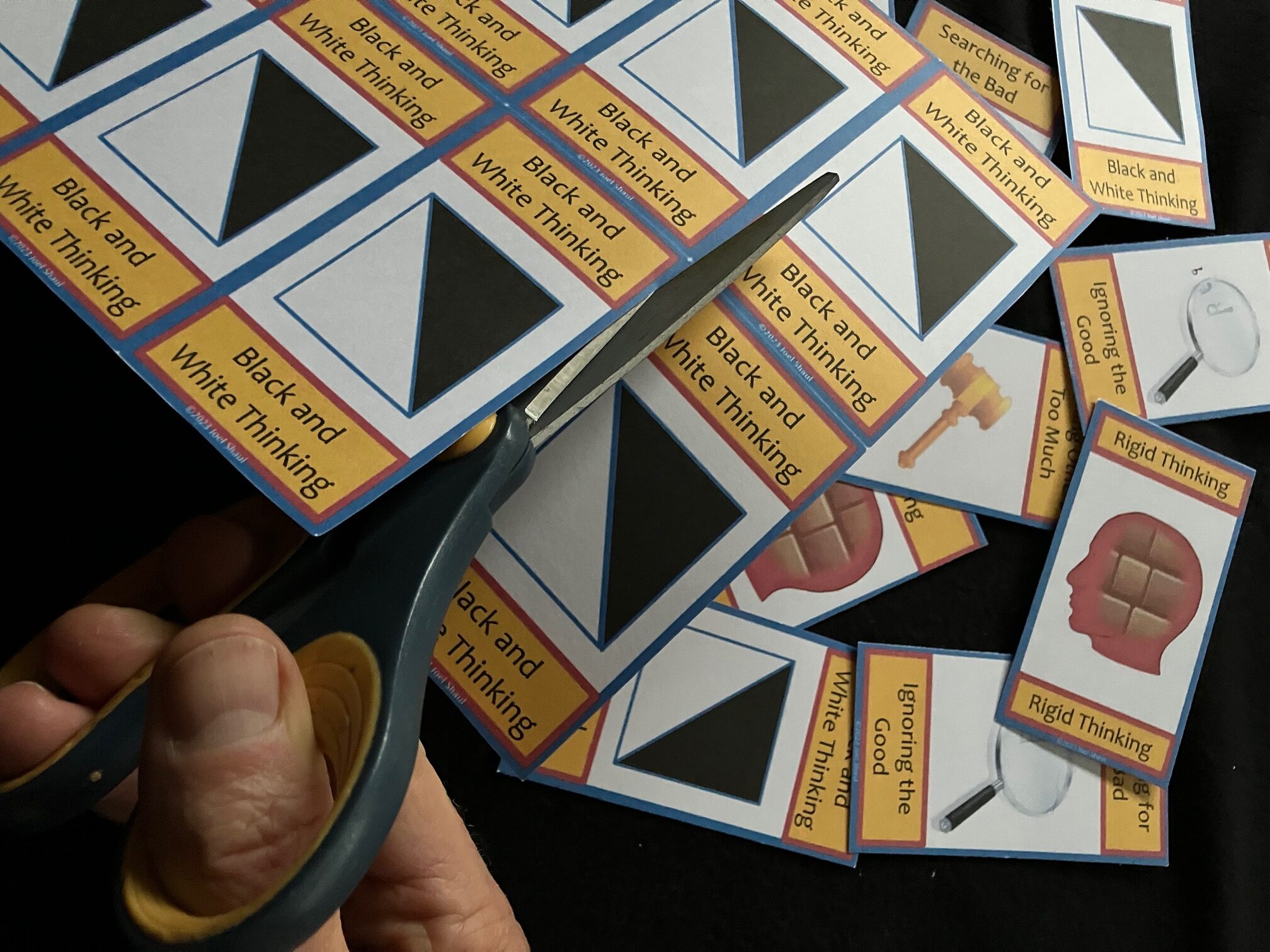
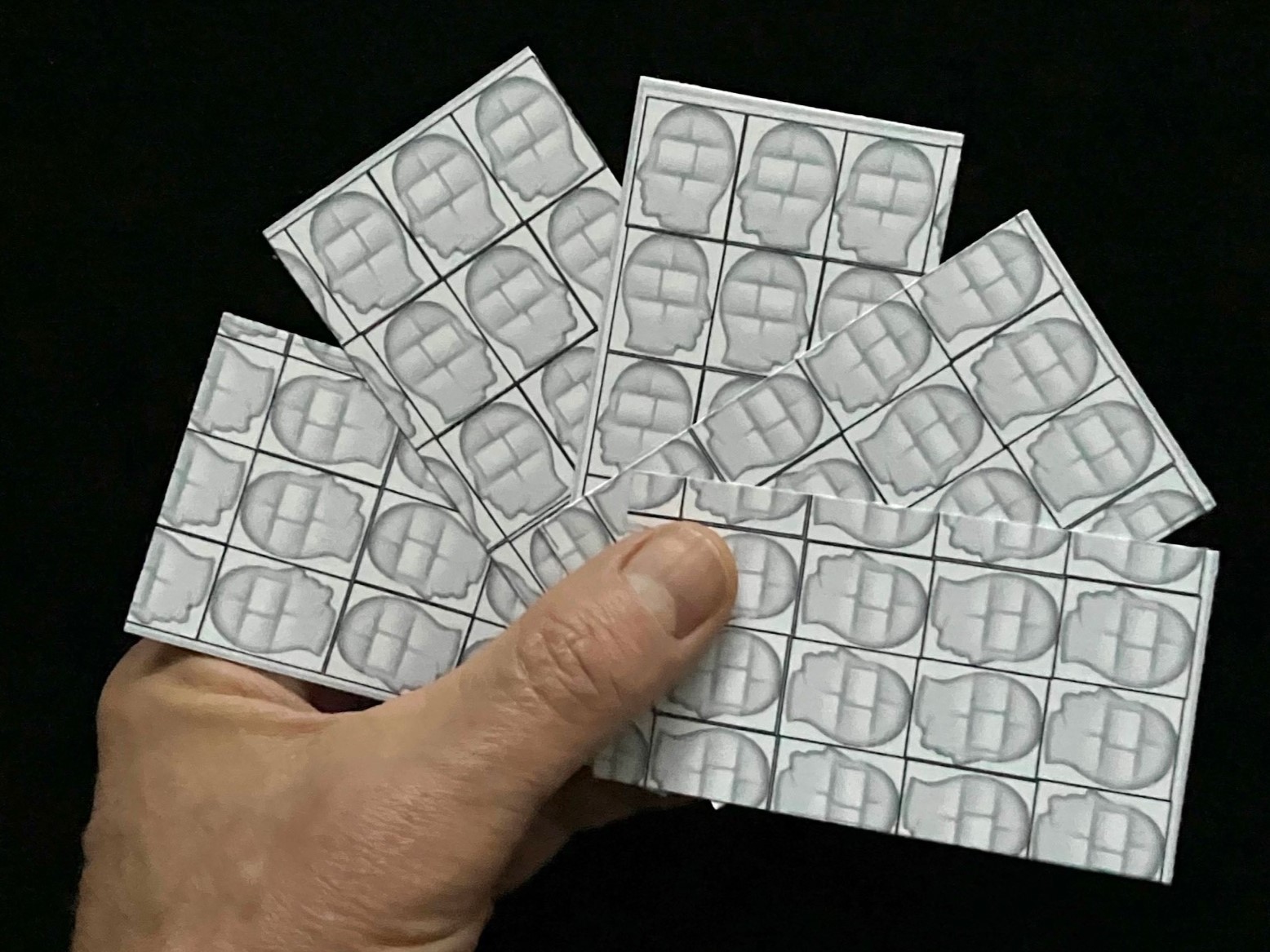
The back of the cards.

How to use the cards

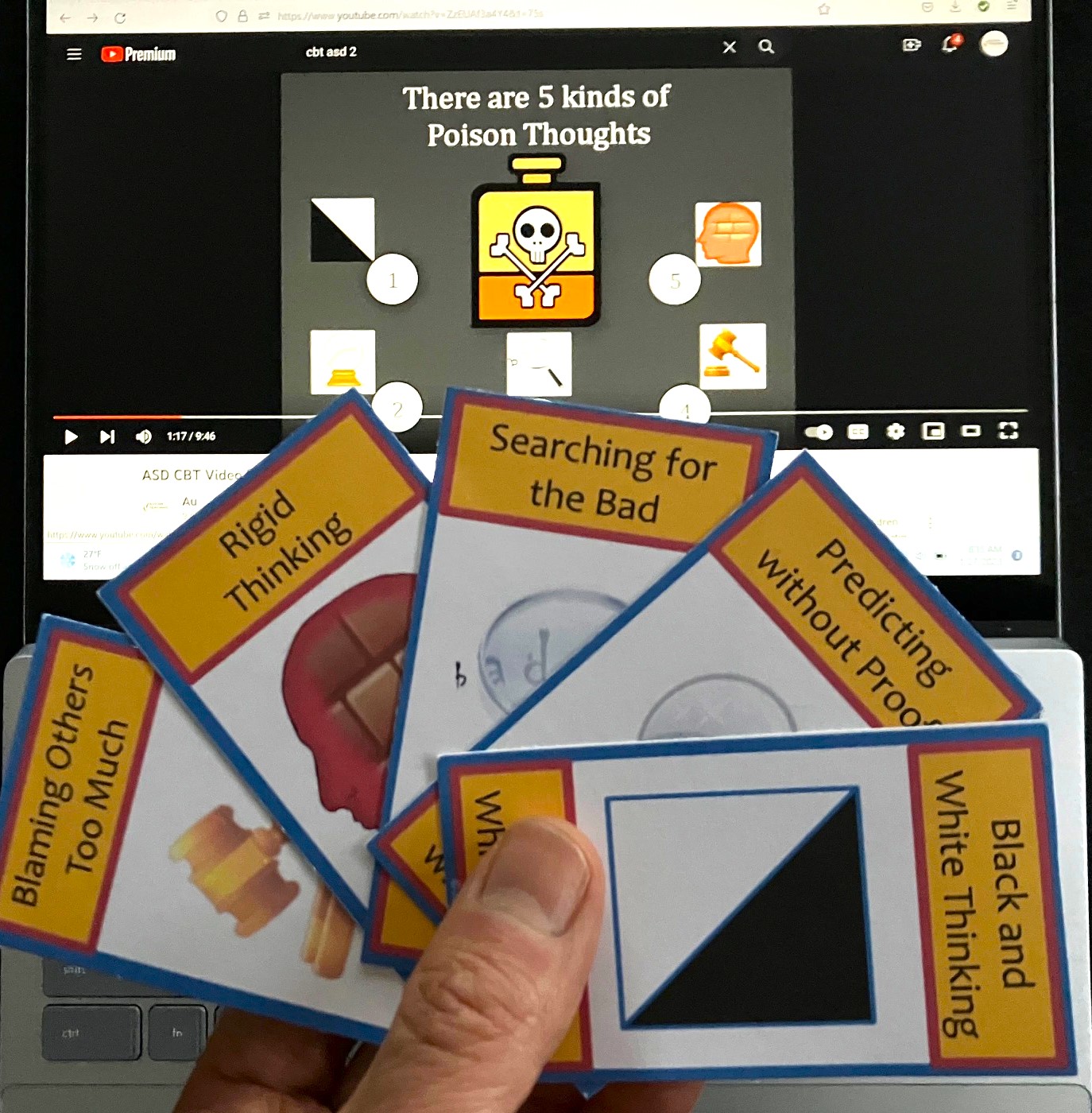
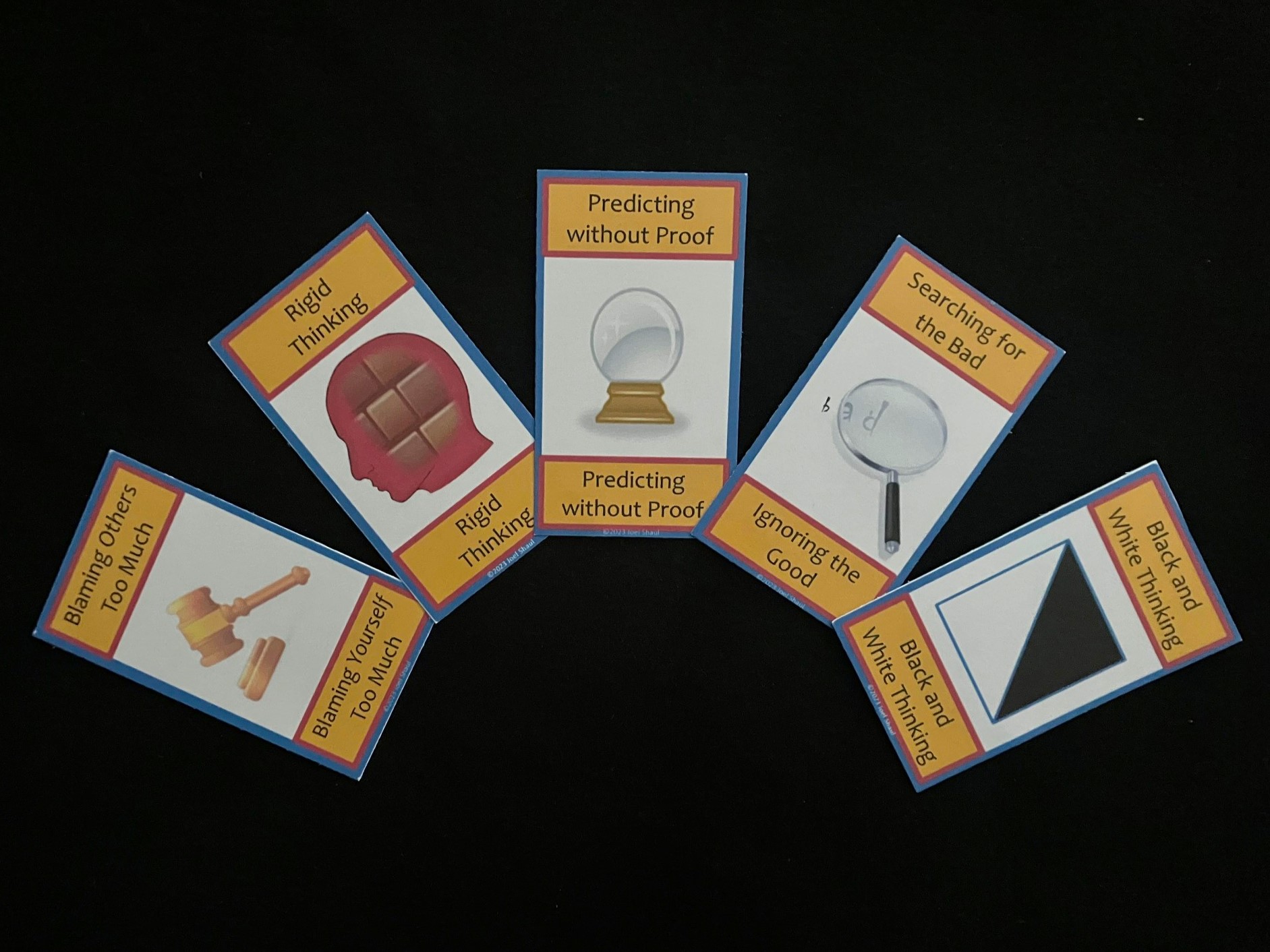
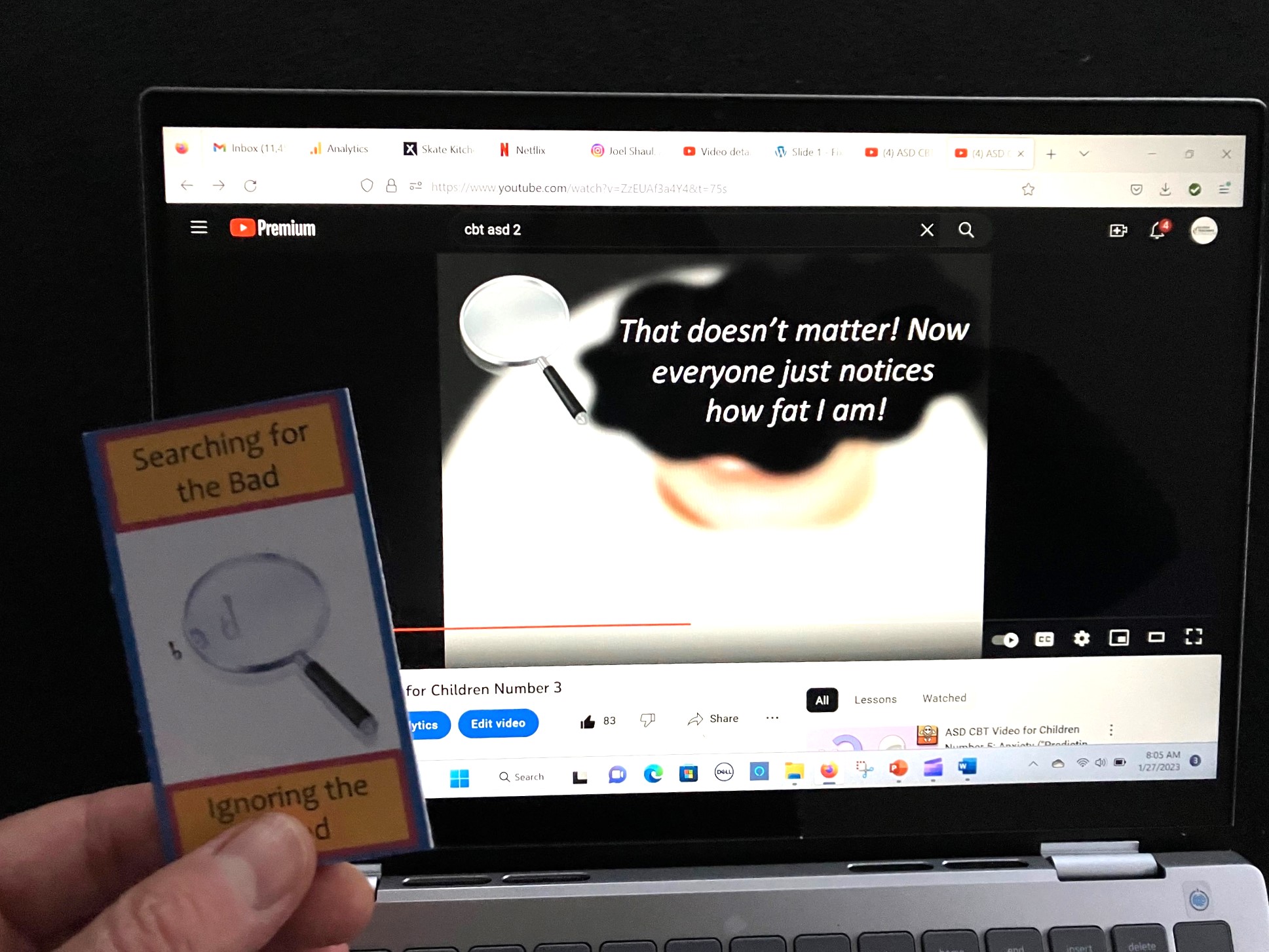
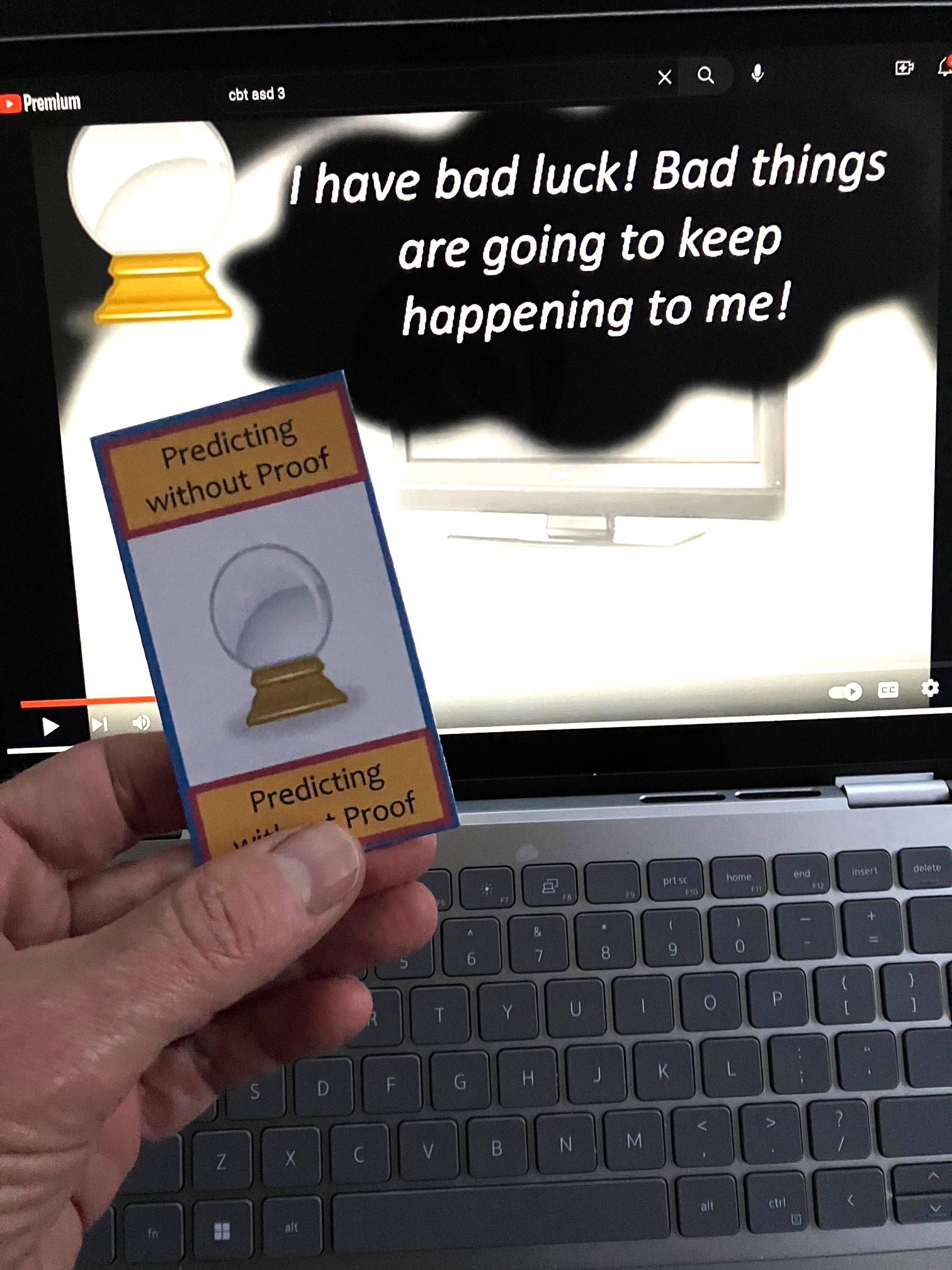
Once you have introduced the five Poison Thought categories, you can keep five piles of the Poison Thought Cards handy while viewing the CBT Videos for Kids. Then, you can hand out the cards one by one to children in order to recognize and reinforce a child’s success in:

a. Identifying a Poison Thought experienced by a child in the video

b. Identifying one of their own Poison Thoughts

c. Thinking of  Antidote Thoughts which might apply.
Certain kinds of children tend to like token systems like the CBT cards

I have often used these cards when doing CBT activities with children on the higher end of the autism spectrum. I have found that children and teens with ASD are often very receptive to these game-like devices in therapy. First, young people with ASD might not notice or be sufficiently reinforced by the subtle, spoken encouragement offered by clinicians during therapy sessions. They may actually prefer a small pile of CBT cards as tangible evidence that they are “getting it” during therapy. Second, neurotypical children, when they approach teenage years, tend to become averse to these playful gambits and they can feel manipulated by them. But teenagers with autism are actually seldom put off by these CBT cards, so with them I use them often.

I have used cards like this in my work for years. I have to say that it is a really straightforward and useful tool to use. It adds a little levity to hard work without undermining the serious nature of CBT. If you print out these cards, you probably will end up using them over and over when you work with the CBT Videos for Kids.
Joel Shaul, LCSW


Follow these links to other posts in this series.

Intro: Refinements to Make CBT Better Suited for Kids [link]

Part 1: About CBT YouTube Videos & How to Use Them [link]

Part 2: CBT Token Systems – CBT Cards, a Free Download [link]

Part 3: More CBT Token Systems – Using Mr. Yuk Stickers [link]

Part 4: Creating Thought “Enemies” and “Heroes” in Child CBT [link]

Part 5: Tailoring CBT Methods & Media to the Individual [link]
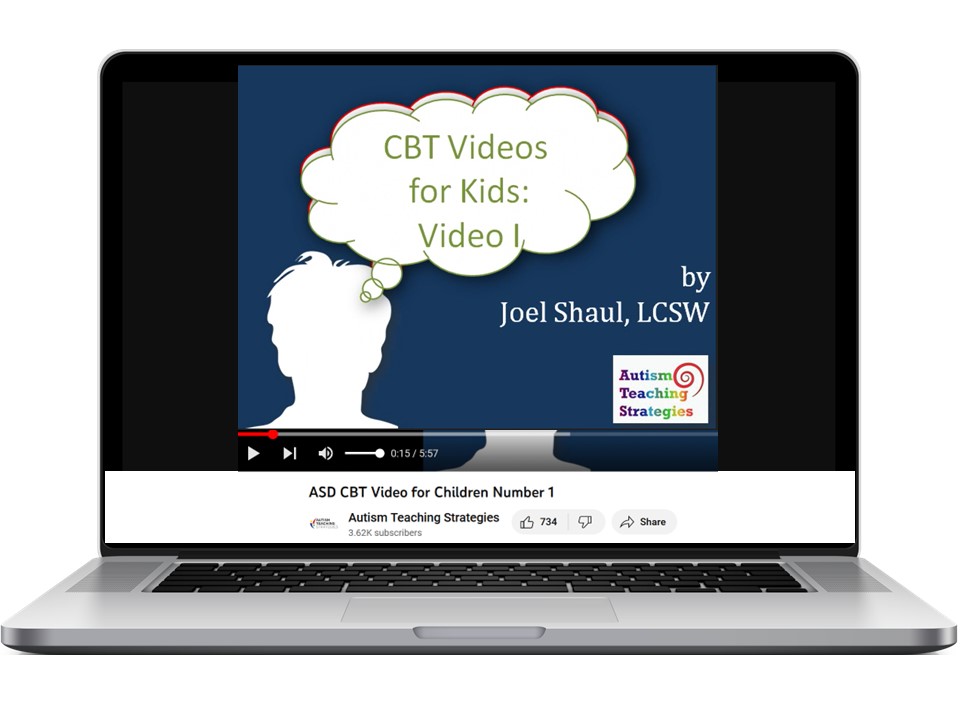
Part 1: About the CBT YouTube videos and how to use them

(click HERE to link to the CBT Videos for Kids)

About CBT YouTube videos and how to use them

Many years ago, I had noticed that many children and teens appeared disengaged and discouraged in cognitive behavioral therapy.

First, lots of children and teens found the conventional CBT terminology too complex and the automatic thought categories too numerous. Second, the heavy and exclusive focus on the child’s problem thinking seemed too intense for many children, causing them to back away from the work.

In 2014, I developed the eight CBT videos in an effort to address these sources of resistance in CBT work.

Fewer categories and simpler language

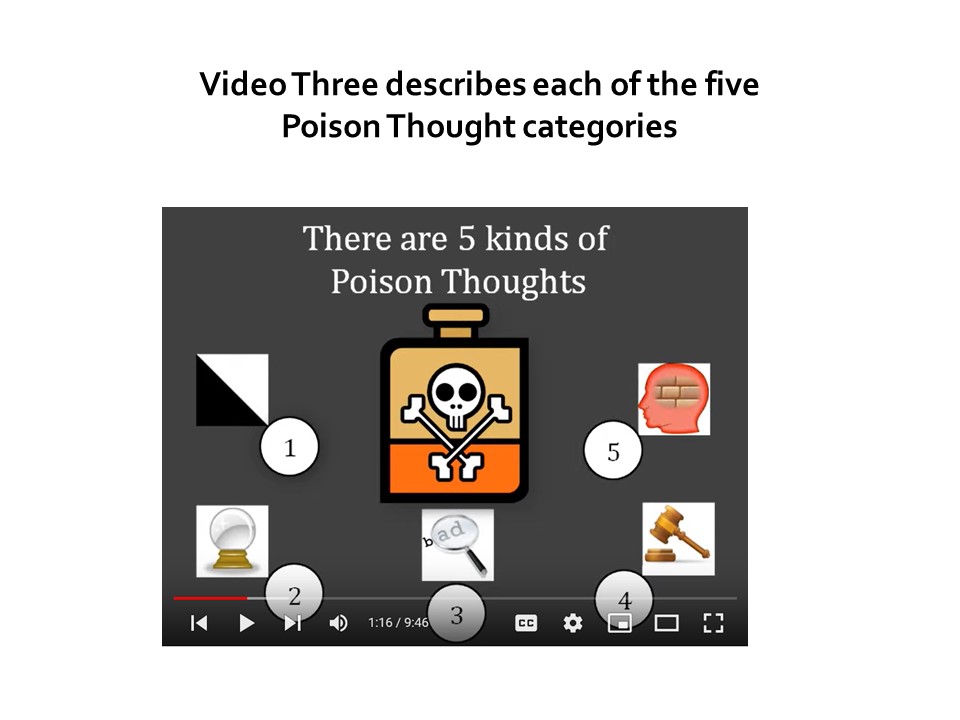
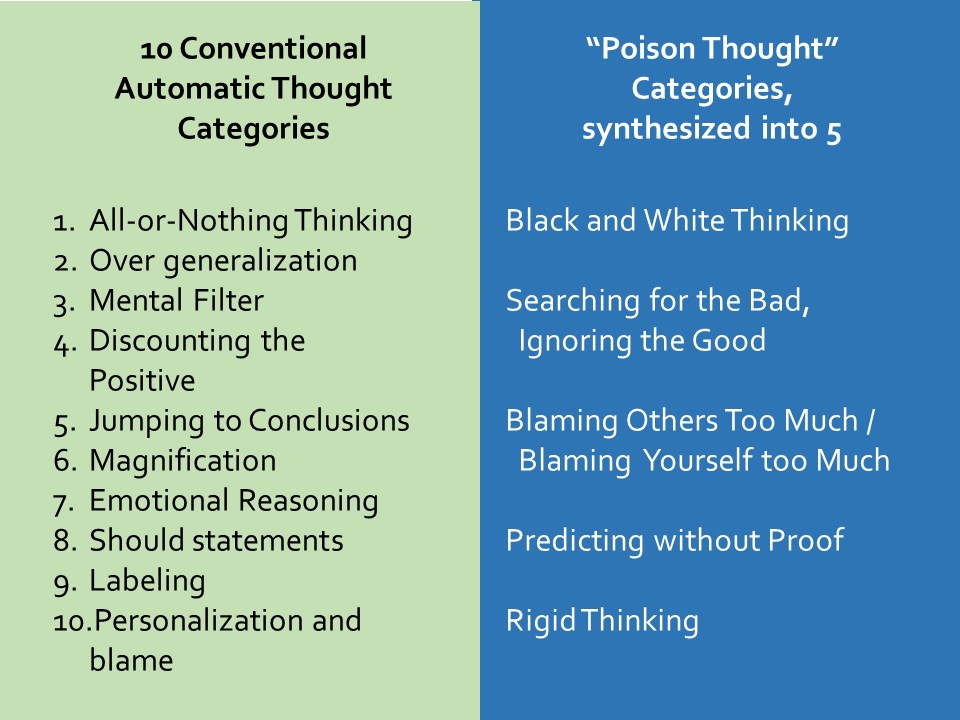
Finding the conventional 10 CBT thought distortions too numerous, wordy and overlapping for children, I crunched them down to 5 categories, using language that is less complicated. I then created icons to go with each category. I found that most children could grasp the basics of these  five modified categories of automatic negative thoughts, so I made them the foundation of the CBT videos.

The ones on the right I devised to create simpler categories for children.
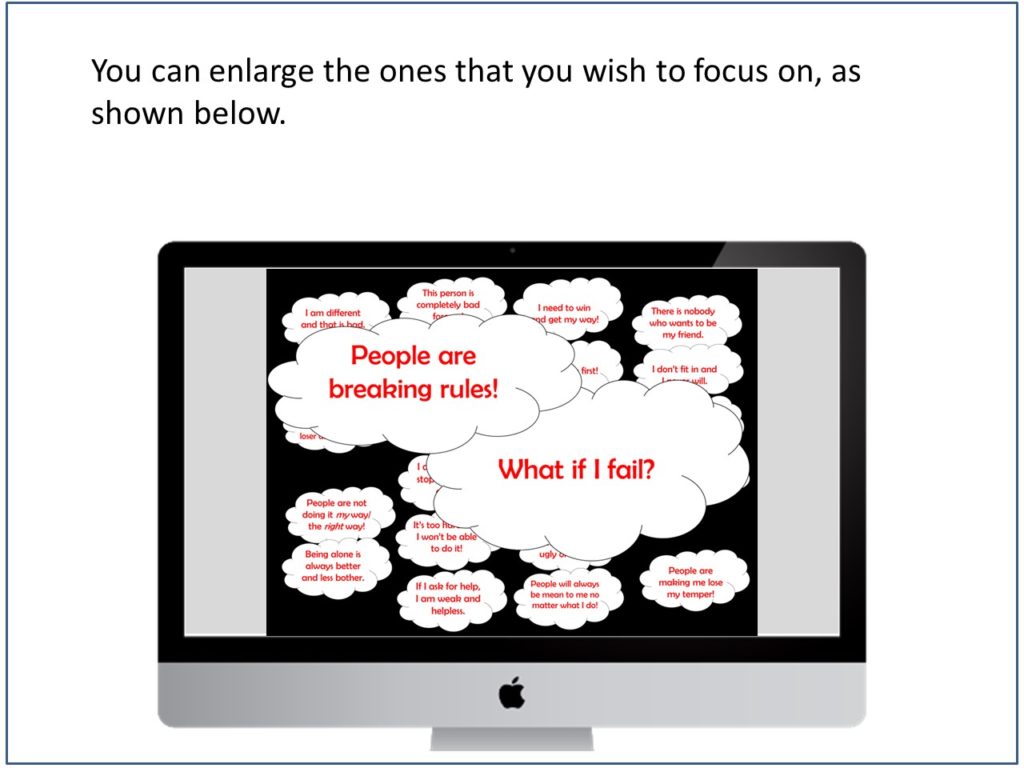
CBT Automatic Negative Thoughts
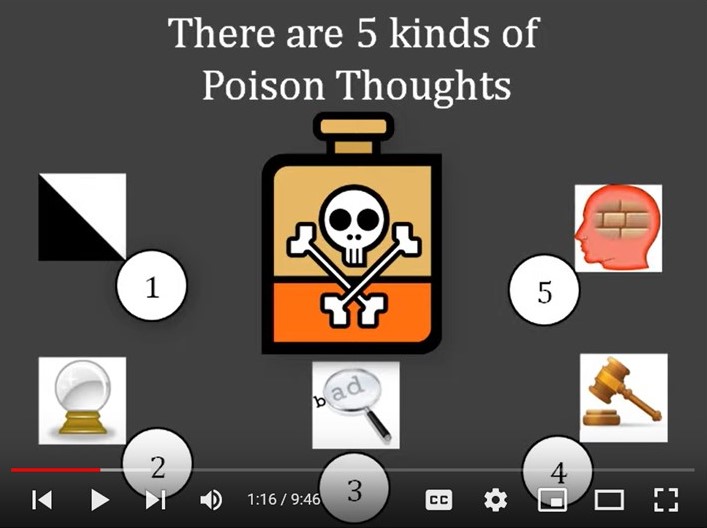
5 “Poison Thoughts,” screen shot from CBT Video Number 3

Initial focus on hypothetical examples

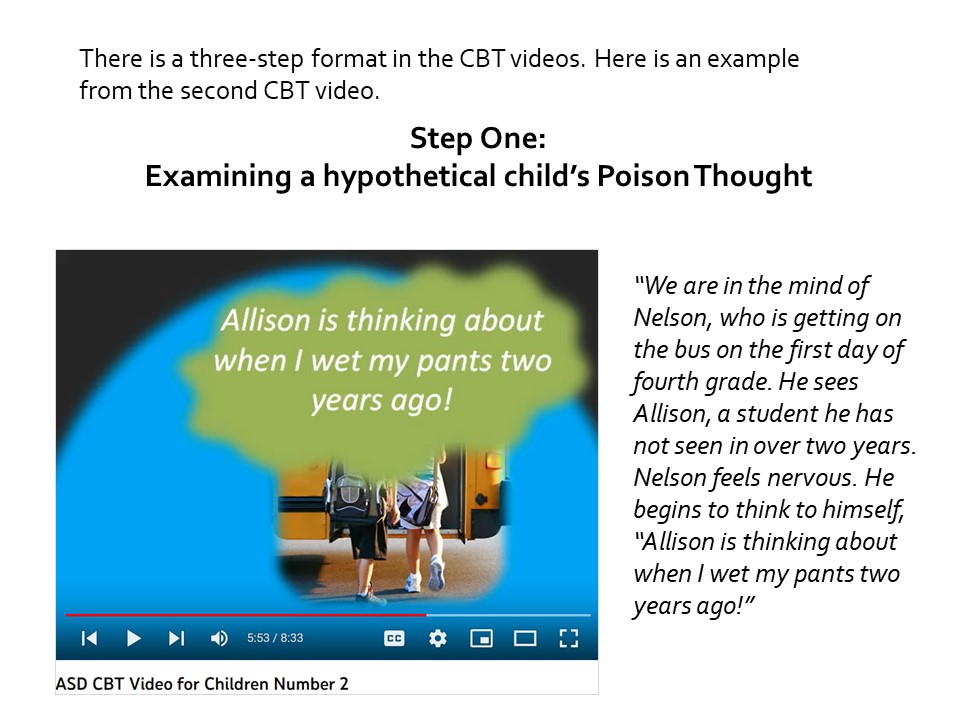
In the videos, I placed less initial emphasis on the problem thinking of the child viewing the video, and instead directed attention to hypothetical problems of other children. I found that by beginning the work in this manner, children subsequently were more confident and successful in assessing their own self-defeating thoughts and actions.

The videos were designed for children with ASD, but you can use them with neurotypical kids.

I created these videos originally for use with children on the higher end of the autism spectrum.  You will notice that  quite a few of the hypothetical scenarios deal with challenging situations typically encountered by autistic children. However, quite a lot of the videos’ content concerns problems that neurotypical children would also encounter, and in fact I have gotten feedback from many clinicians who use the videos with neurotypical kids and just skip over the parts that appear tailored for autism.

How to use the videos

The videos are designed to be viewed with an adult, with very frequent pauses for discussion. Although the first three videos are important to view in full, it is not always necessary to watch every subsequent video or every part of any video that you start. You can skip around, placing more emphasis on the videos that address the most relevant concerns.

Video Number One is shorter and simpler than the remaining seven. It introduces Poison Thoughts (automatic negative thoughts) and Antidote Thoughts.

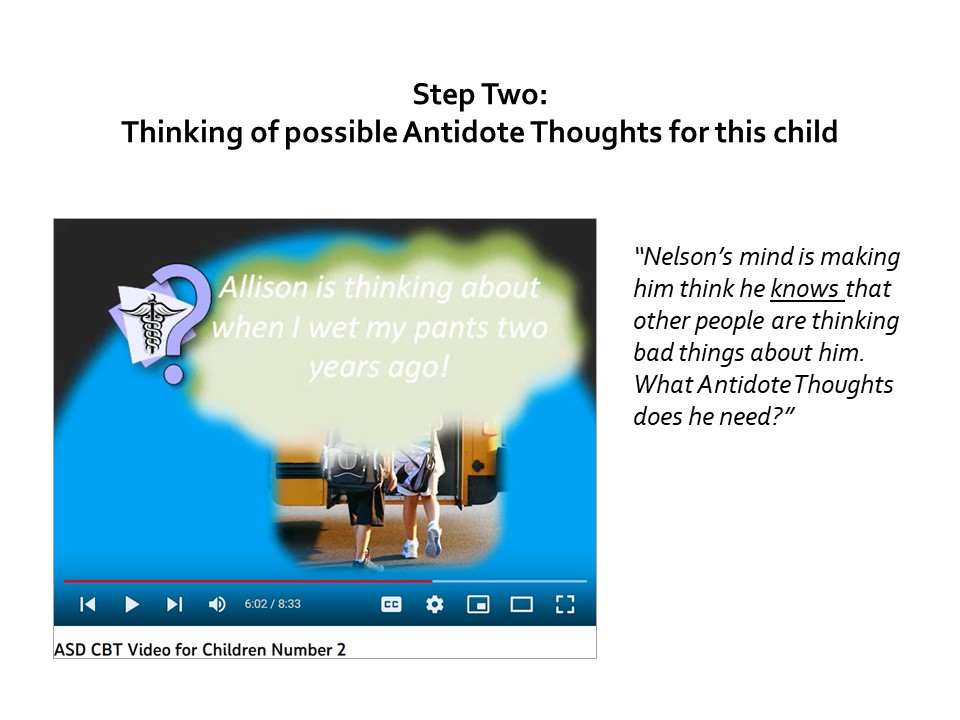
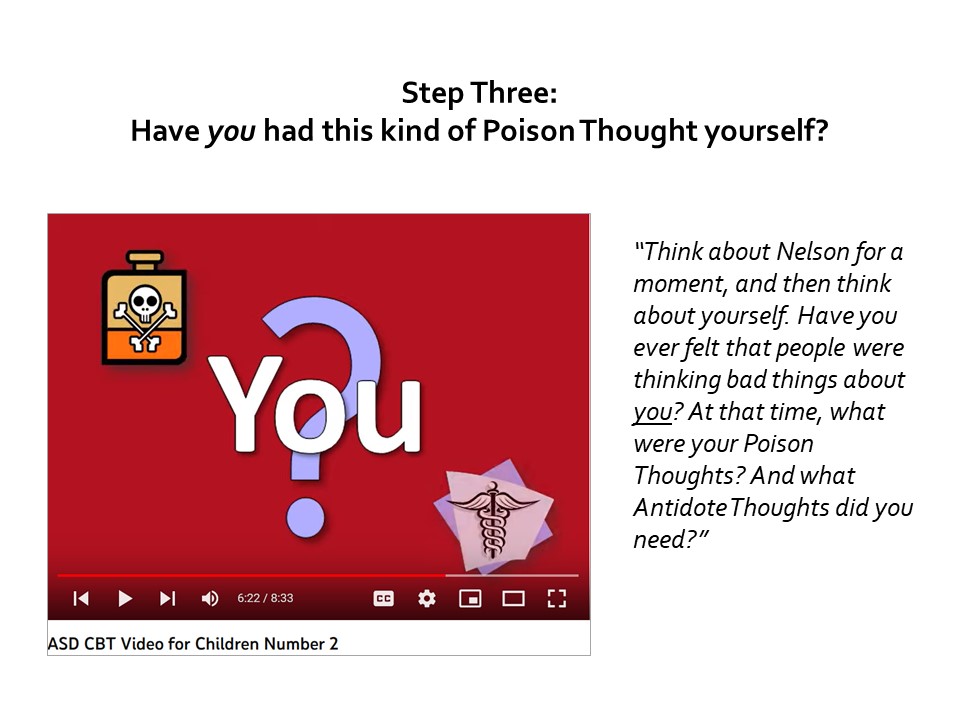
Video Number Two takes the viewer into the minds of various children experiencing Poison Thoughts, and demonstrates how these can be countered with Antidote Thoughts.

Video Number Three (see screen shot above) introduces the 5 Poison Thought categories, showing examples of each in the minds of various children.

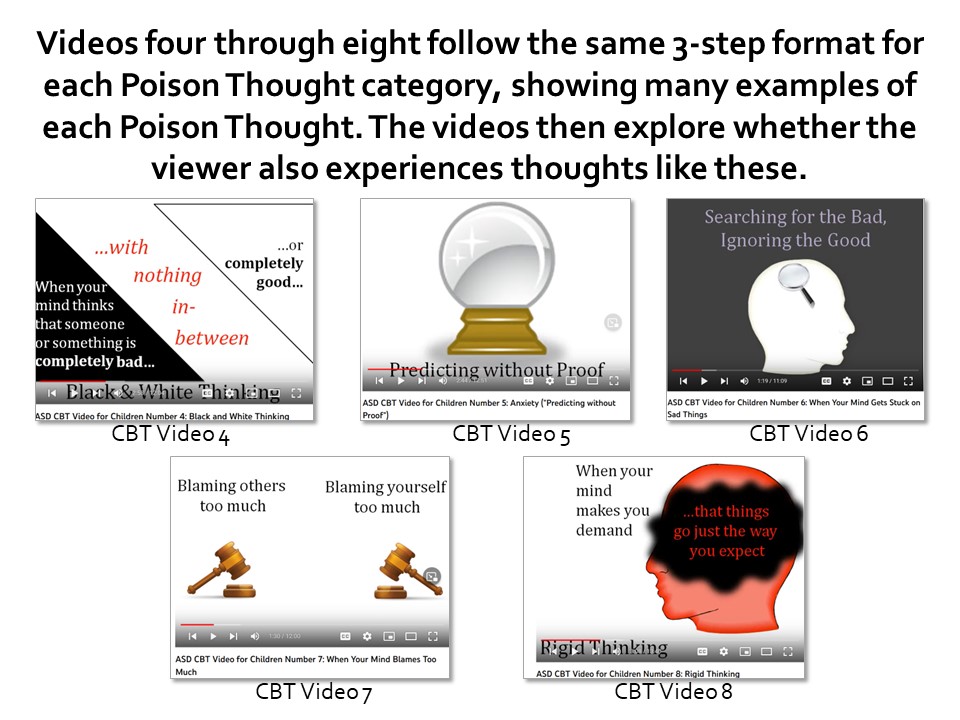
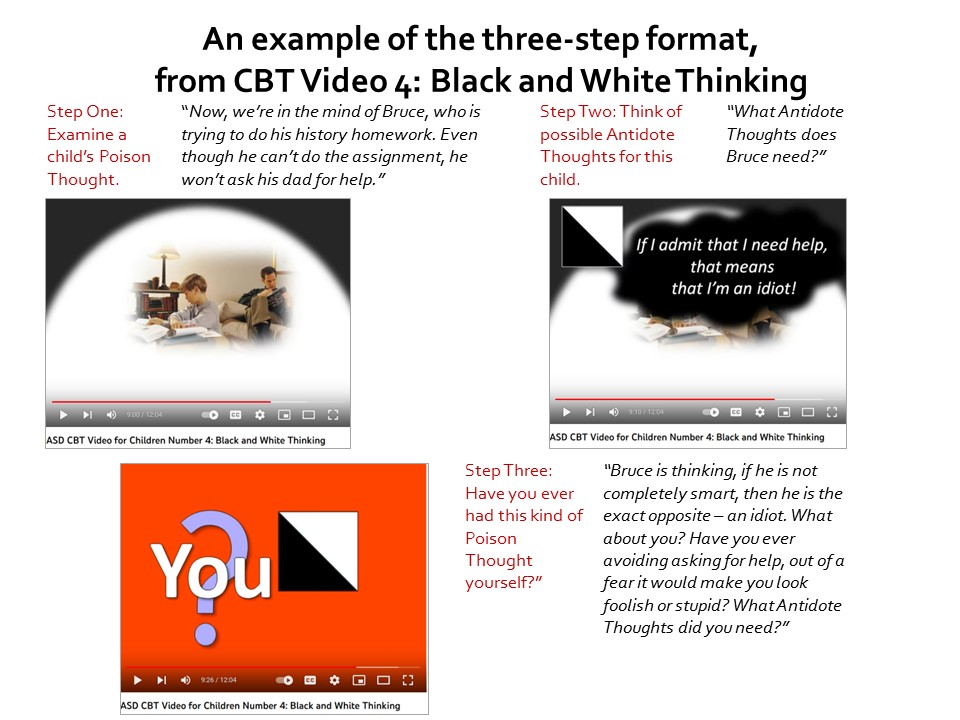
Videos Four through Eight go over each of the 5 Poison thought categories in turn, using many examples of how various children are affected by the thoughts. In each example, after first identifying and “fixing” the problem shown in the example, the viewer is asked whether they themselves are affected by such thoughts. Again, pausing frequently for discussion, especially when a child is talking about their own “Poison Thoughts,” is important.

Joel Shaul, LCSW


Here are links to the other parts of this series, Refinements to help make CBT more suitable for kids.

Intro: Refinements to Make CBT Better Suited for Kids [link]

Part 2: CBT Token Systems – CBT Cards, a Free Download [link]

Part 3: More CBT Token Systems – Using Mr. Yuk Stickers [link]

Part 4: Creating Thought “Enemies” and “Heroes” in Child CBT [link]

Part 5: Tailoring CBT Methods & Media to the Individual [link]
Intro: Refinements to help make CBT better suited for kids

Refinements to make CBT better suited for kids

Cognitive behavioral therapy was developed originally not for children, but for educated adults. Over time, child psychotherapists have incorporated various refinements to make CBT accessible and useful for children.

This 5–part series pulls together some of my own efforts to make CBT as helpful as possible for young people.


The titles for each part are listed below. Read them in order or select any one by clicking on the link.

Intro: Refinements to Make CBT Better Suited for Kids [link]

Part 1: About CBT YouTube Videos & How to Use Them [link]

Part 2: CBT Token Systems – CBT Cards, a Free Download [link]

Part 3: More CBT Token Systems – Using Mr. Yuk Stickers [link]

Part 4: Creating Thought “Enemies” and “Heroes” in Child CBT [link]

Part 5: Tailoring CBT Methods & Media to the Individual [link]
A few ways to use music in therapy & social skills teaching for kids with ASD

Introduction

I am an amateur (not at all accomplished) guitarist and very untrained singer. I have no musical training and I have not studied music therapy.  Nevertheless, in my psychotherapy and social skill training work with young people on the autism spectrum, I have periodically employed music. This article summarizes some of what I do, in case colleagues working in speech, mental health or education might find something worthwhile to try in their own work.

Reasons I sometimes use music in my work

To practice fundamental words and phrases in social communication

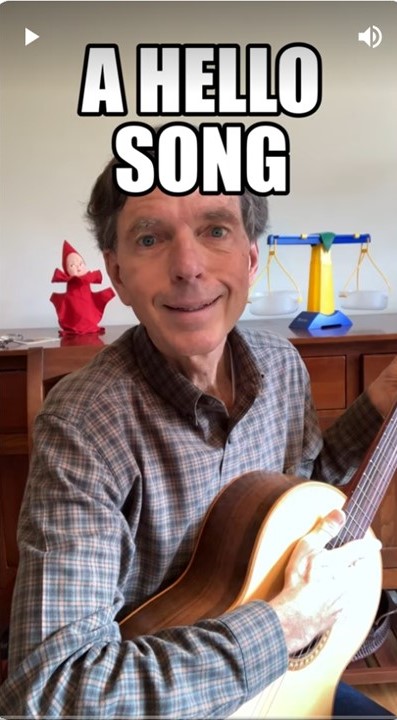
Children with ASD often skip over essential elements of conversation such as greetings, goodbyes and words of validation. I have used two kinds of songs to help with this. The first kind of song is kind of a promotion or “advertisement” for an element of speech such as greetings. Here is one example. Click on the picture to view it on YouTube.

A second kind of song for teaching elements of conversation is one that children sing along with me to facilitate practice and memorization.

I believe that many kids on the autism spectrum are unusually good at learning and recalling the repetitive words and phrases in some of these songs. Maybe this is some functional manifestation of delayed echolalia.

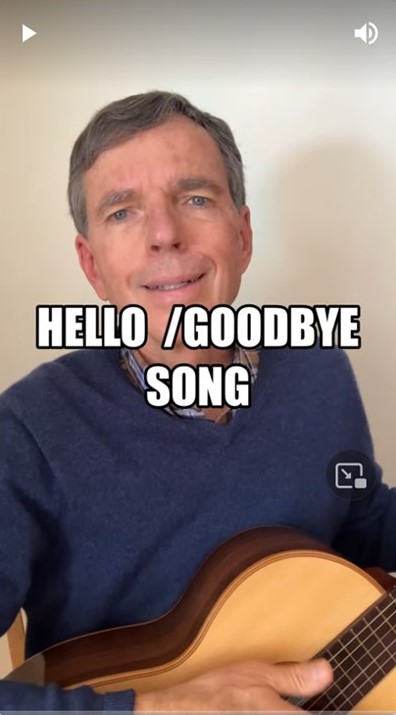
Here below is an example is a song I have often used with younger children to help them get used to greeting / saying goodbye and using the names of other children in a social skills group.

The two songs below are to teach and practice what I call words of validation. These are common words to convey interest and maintain reciprocal flow in conversation, and many young people with autism need help mastering language like this.

To facilitate communication exchange within a group

In the hundreds of social skills groups I have run, my most most important task has been to enable the participants to talk with each other and learn about one another. Here is a call and response song I created to help with this.

To promote and reinforce an important message / lesson in therapy

These are songs that I use to focus on central therapy issues. I sing them to the child, or the child can join in if they like. I have often used variations of “If you’re happy and you know it…” to practice identifying emotions and talking about feelings. For children who have become over-enthralled with pretend and fantasy, I made up a song called, “Don’t Let Pretend Get Too Big.”

Here is a song by Cathy Bollinger about eye contact.

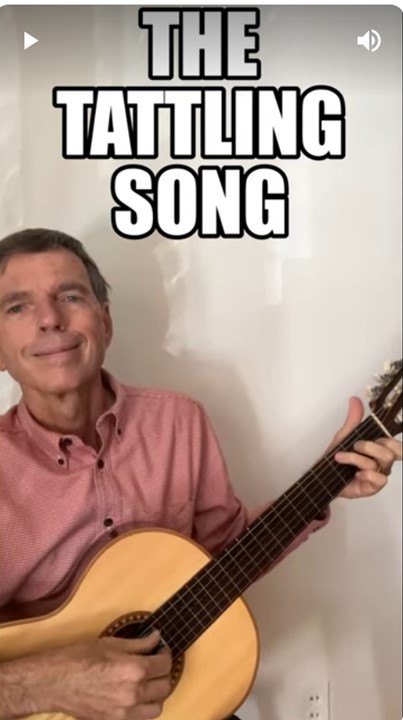
I made up this song about tattling many years ago and I use it occasionally.

To break up the routine of therapy and provide respite and levity

We ask our young clients to do really hard work, week after week, often for years. For many of these kids, a little music now and then helps maintain energy and morale.

To increase focus, comfort and commitment during therapy sessions

Many children with ASD have certain songs or music styles they like to listen to repeatedly. I have occasionally encouraged a child to let me play their favorite music in the background while we work during sessions.

Other ways I have used music in my work

Watching social skills song videos

I don’t do this too much myself, preferring instead to make up my own songs. Some videos out there contain good and useful songs, and others are not so great in my opinion, employing overly complex language and annoying features.

Exploring the child’s musical interests to identify strengths and concerns

I have often explored YouTube with young clients to learn more about children’s interests. I have sometimes discovered that my clients have found music that is helpful and inspiring and which furthers my own therapeutic agenda. Occasionally, I have discovered that a child is into music with negative and harmful messages.

When to not use music

If you are someone like me who enjoys music, you need to be careful that you don’t obligate a kid to participate in some musical activity just because it happens to be part of your therapy routine. I put away the guitar the instant any kid shows disinterest or aversion.

What I have not yet tried with music in therapy activities

As I stated in the Introduction, I am not a music therapist. Music therapists do all kinds of things I can’t do and they have all kinds of cool musical equipment to enable children to participate in a variety of meaningful ways. It would be fun and worthwhile to spend time observing music therapists at work with kids on the spectrum.

Conclusion

Whether you are a musician, or an avid musical dabbler like me, you might consider making music a part of your therapy repertoire when you are working with kids on the autism spectrum. It has often been worthwhile for me.

Joel Shaul

Role play practice in social skills work for children with ASD. How to do them. Free printables to help.

Role playing is an essential social skills training method when we are working with young people on the autism spectrum. Most of us probably employ them often in our work. But years ago when I was learning how to use role plays, I muddled through it on my own, and if there was anything out there that instructed professionals how to do role plays, I was unaware of it.

Here is a summary of using role plays for social skills training, with links to free download resources which support the use of role plays.

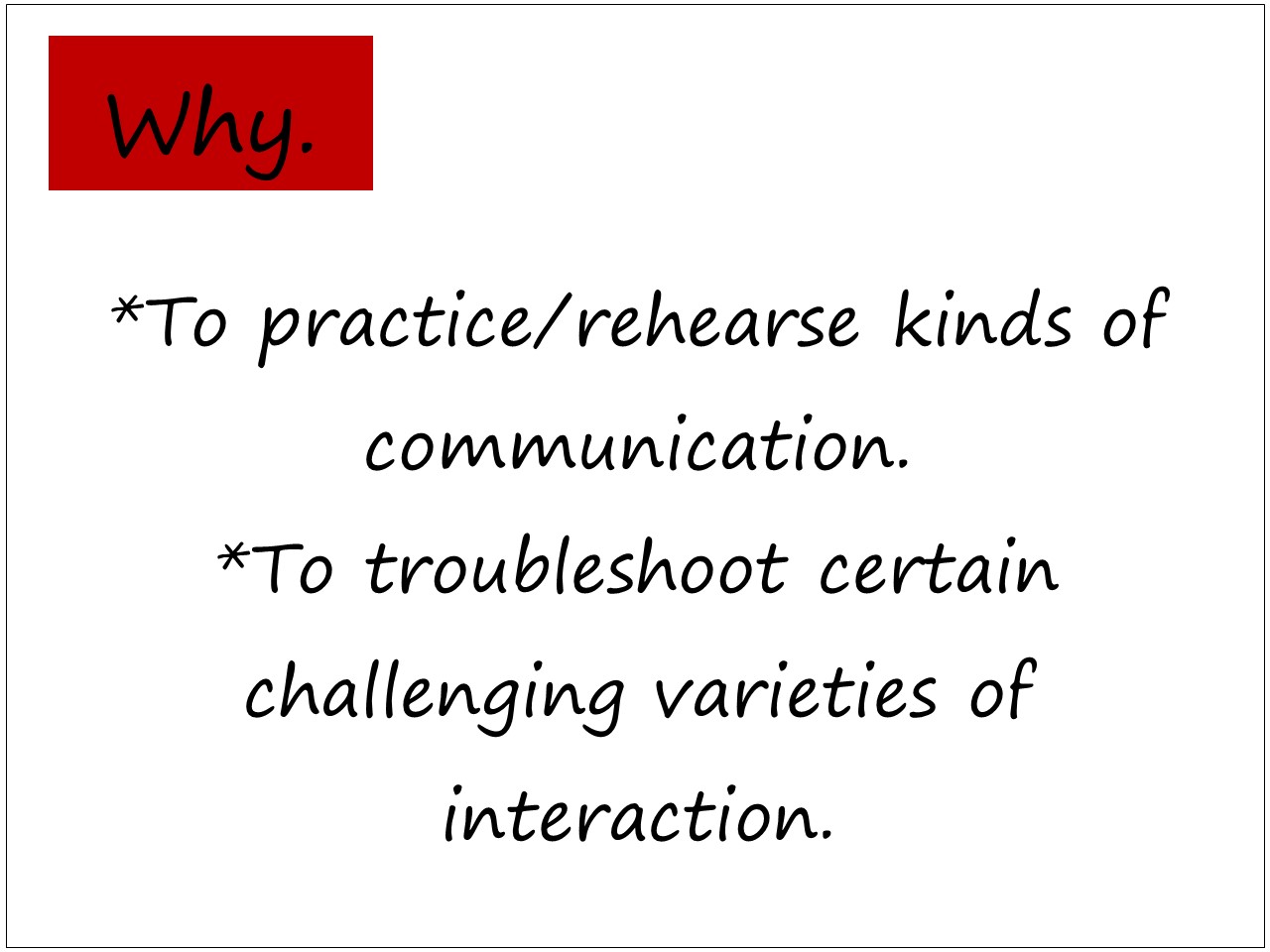
When we are teaching young people with autism what to say and do in social situations, we should never just expect them to implement this learning on their own. They need to practice it in a safe setting where they can be coached, guided and encouraged.

We should be doing role playing often enough in our work that our clients expect it. I have a few clients who actually ask for it.

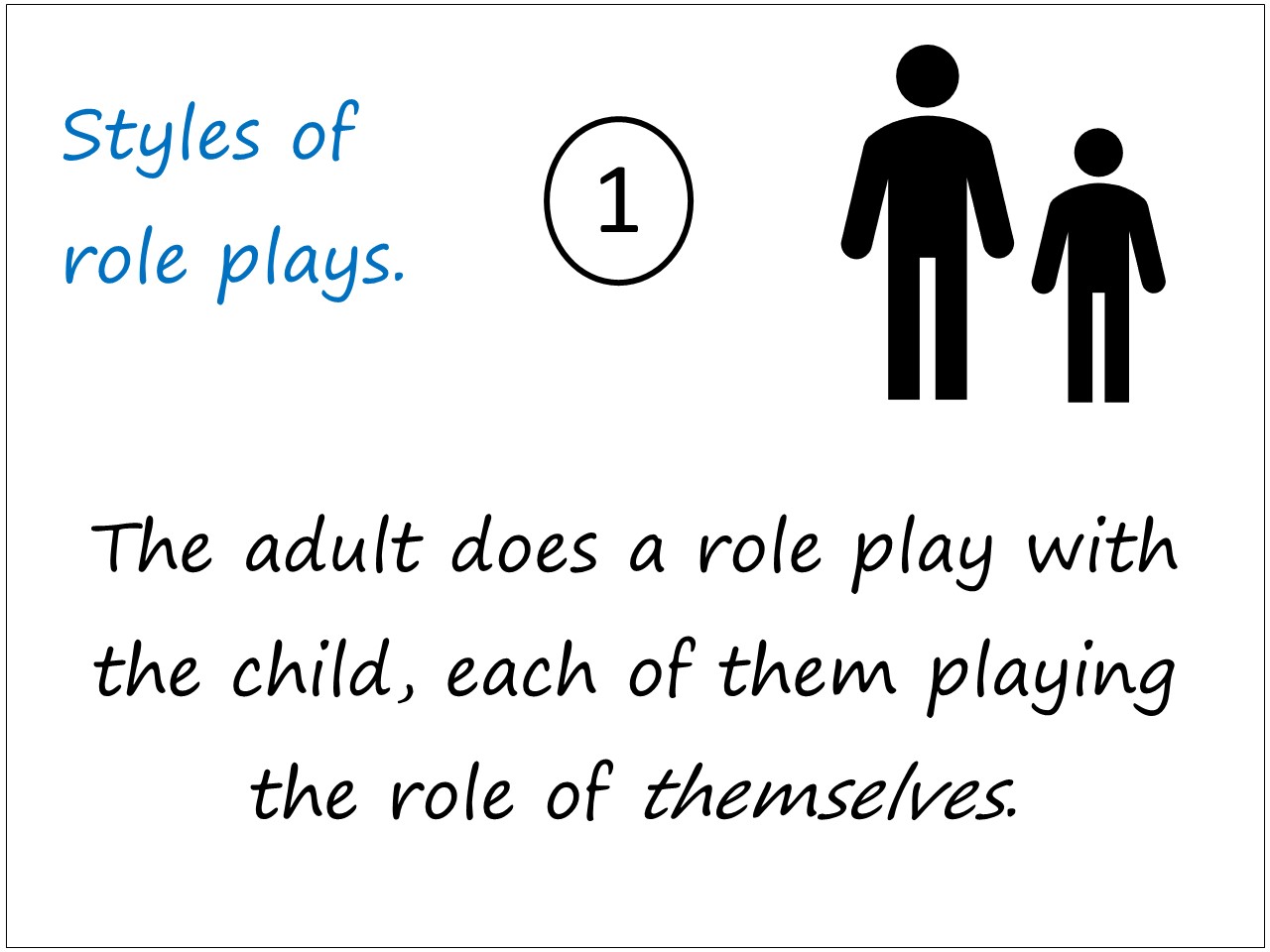
A simple role play set-up can be carried out by printing these How Was Your Day? script sheets and then following the prompts, with both you and the child being yourselves.

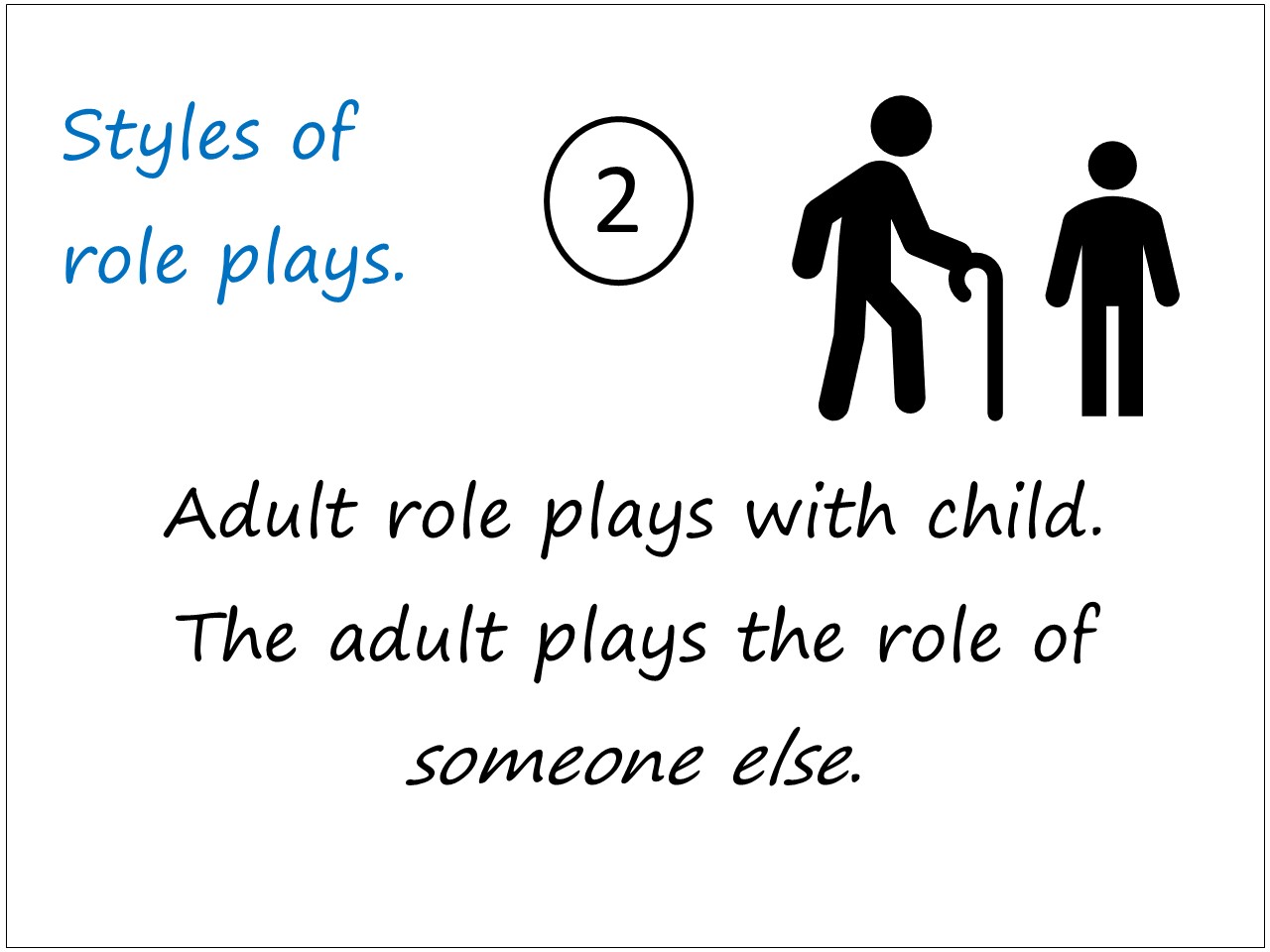
In my own work, my clients are accustomed to me saying things like, “Okay, I am going to play the role of Maria, a girl in your lunchroom.” You might assume that children with autism are too concrete to allow this, but actually that is seldom the case.

When you are setting up role plays like this, make your own role as executive director clear. A fun accessory is this free download to create a “Director” lanyard for you to wear when you are running the role plays.

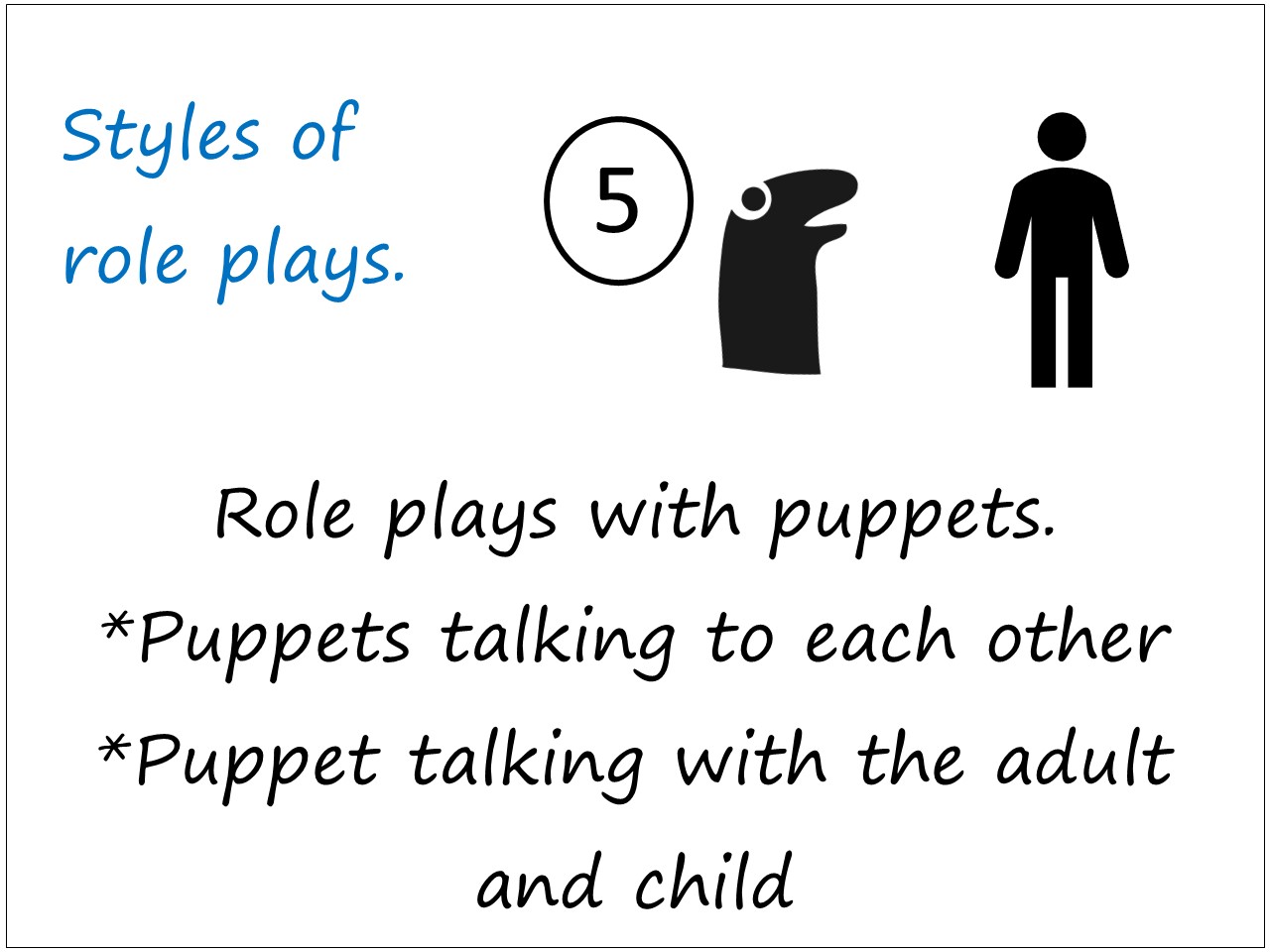
Here is a guide to using puppets in teletherapy – something you really should try if you do teletherapy.

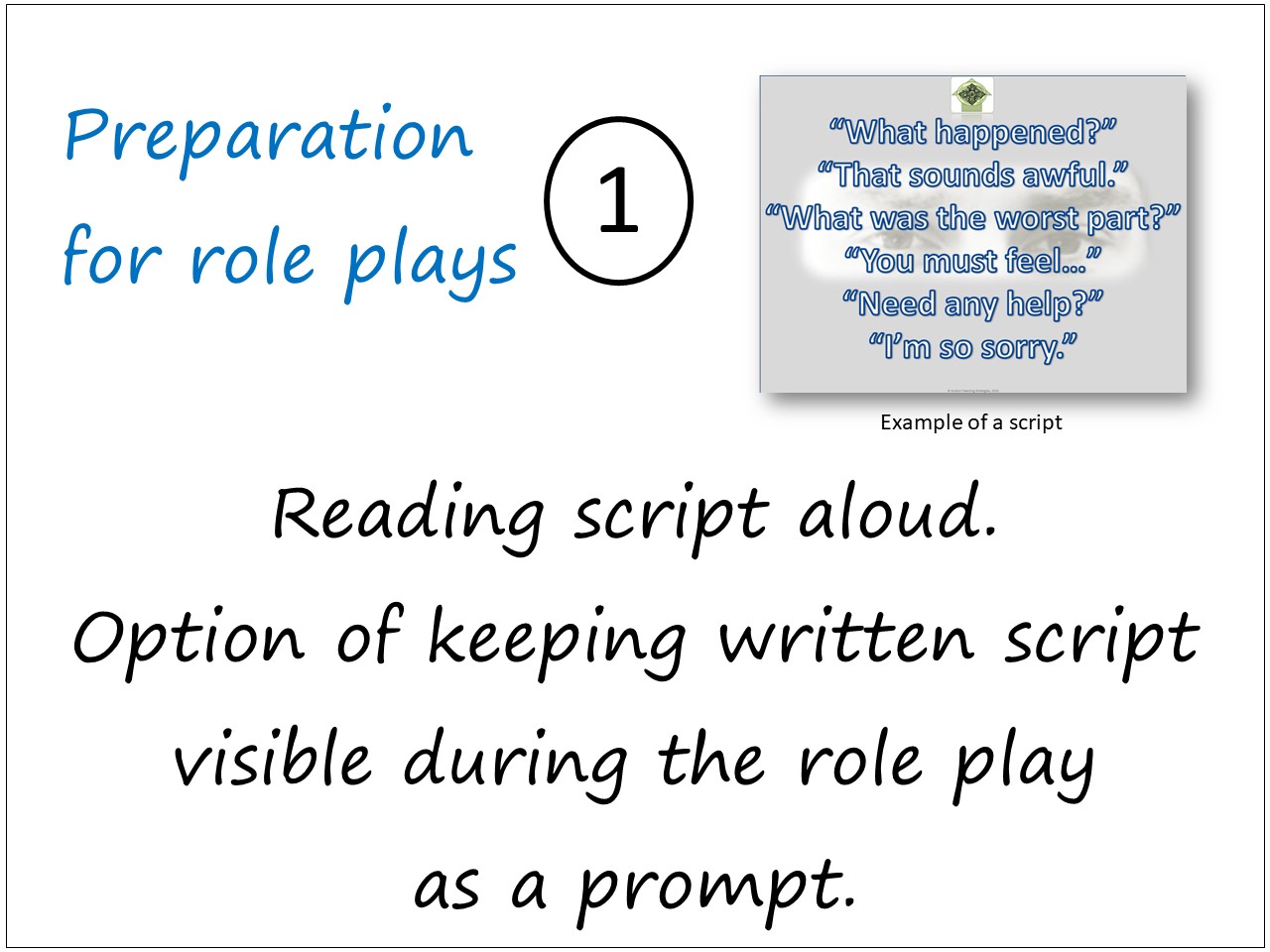
On my website, I have a great many written scripts to help guide role plays. Shown above is part of a free download on empathy / showing concern skills. A related empathy kit sets up role plays with pictures and brief scenario descriptions.

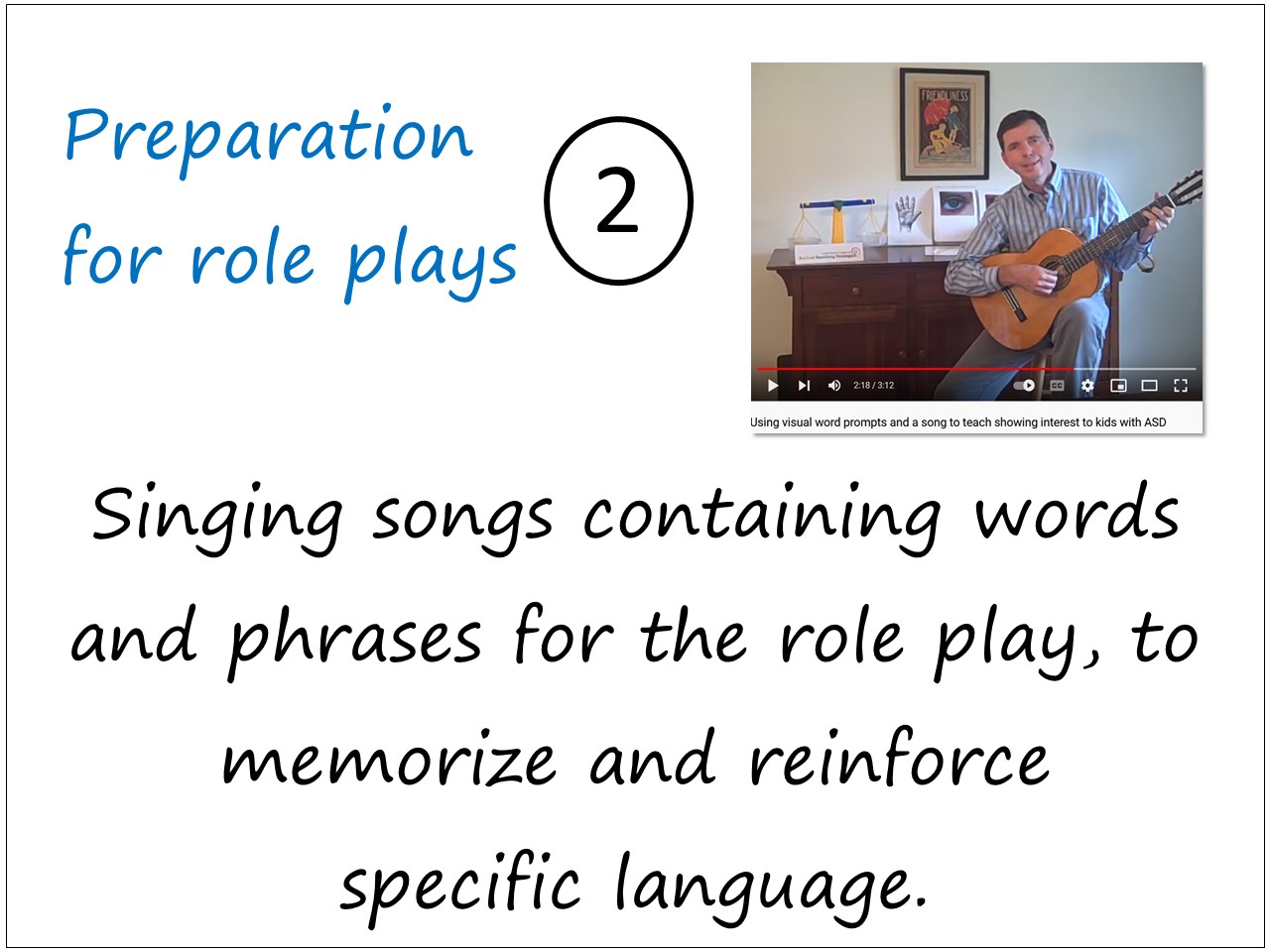
Don’t worry if you are kind of a bad singer (like me). Here is a short YouTube video in which I demonstrate a simple demo of useful language to “script” for showing concern for another person.

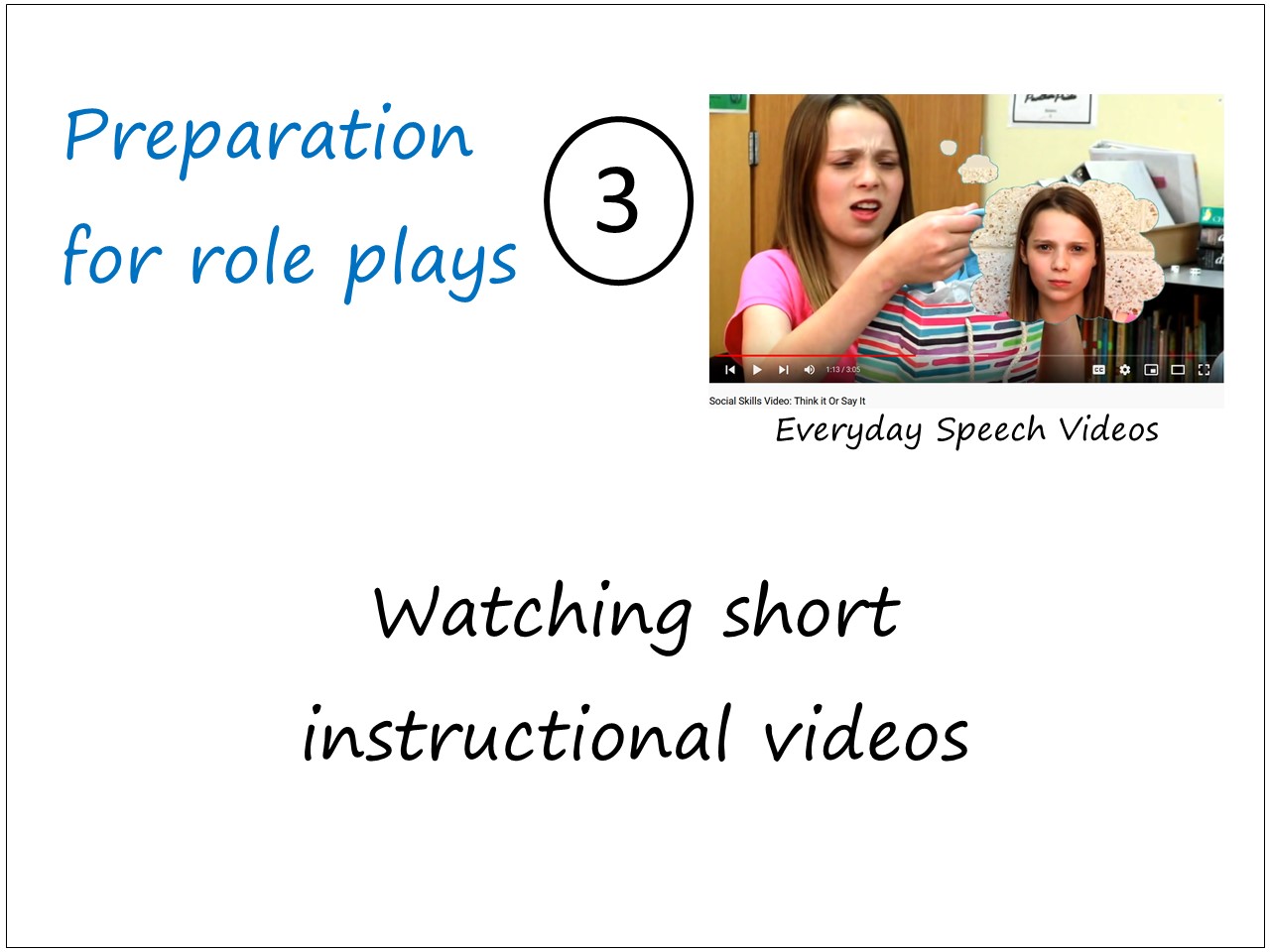
Everyday Speech Videos are invaluable for setting up role plays. You get them via subscription – they are well worth the cost. Here is a free sample on YouTube.

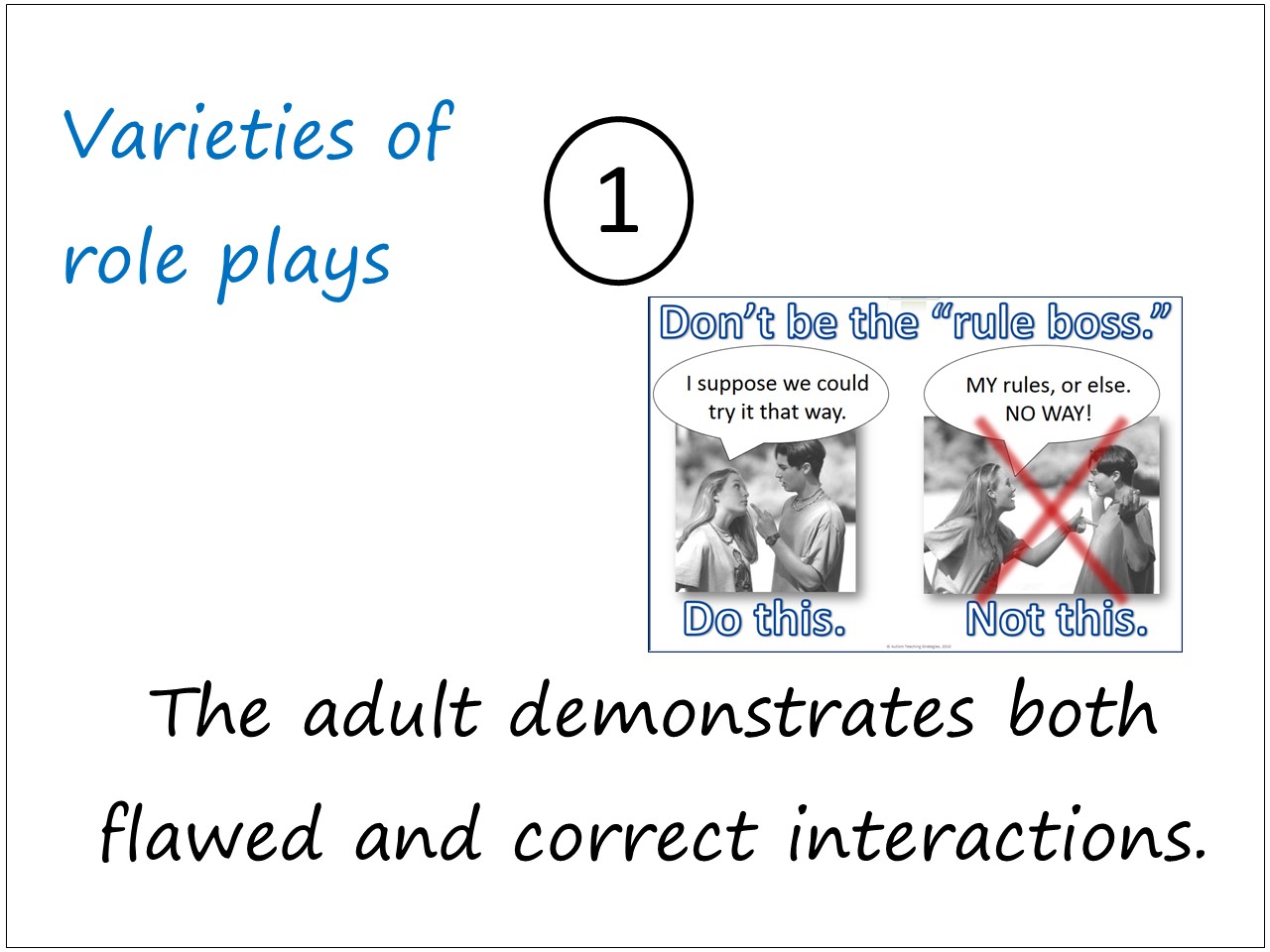
It is very useful for the adult to show what the incorrect social response looks and sounds like. Don’t have the child do it – just you, for instructional purposes. The image above is from a set of illustrated social skills print-outs on dealing with losing and disappointment.

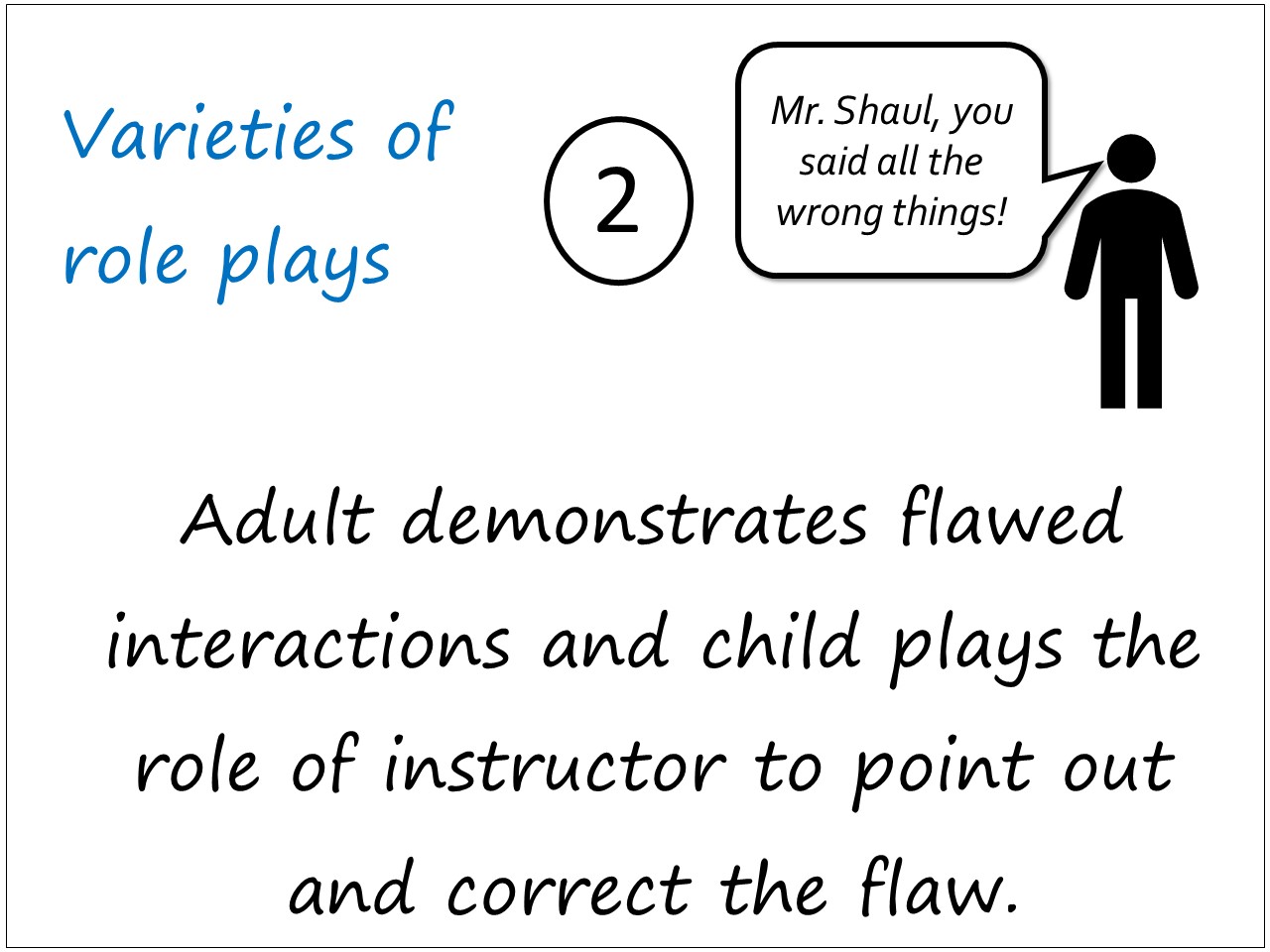
Children receiving social skills training get sick of being scrutinized, criticized and corrected by adults all the time. They always appreciate the opportunity to be the “expert” and point out flaws in somebody else. There are no downsides to using this technique – I do it all the time in my own work.

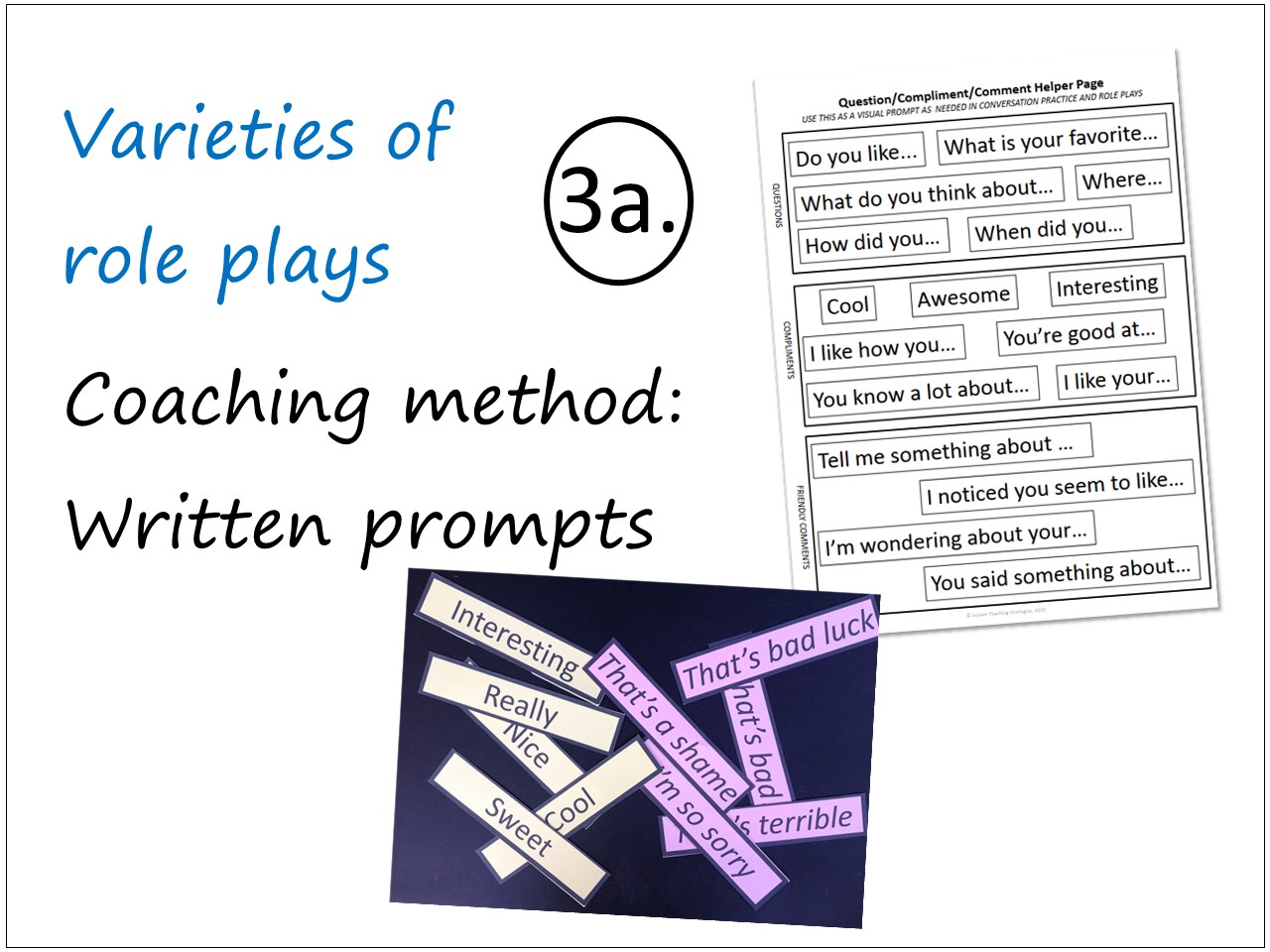
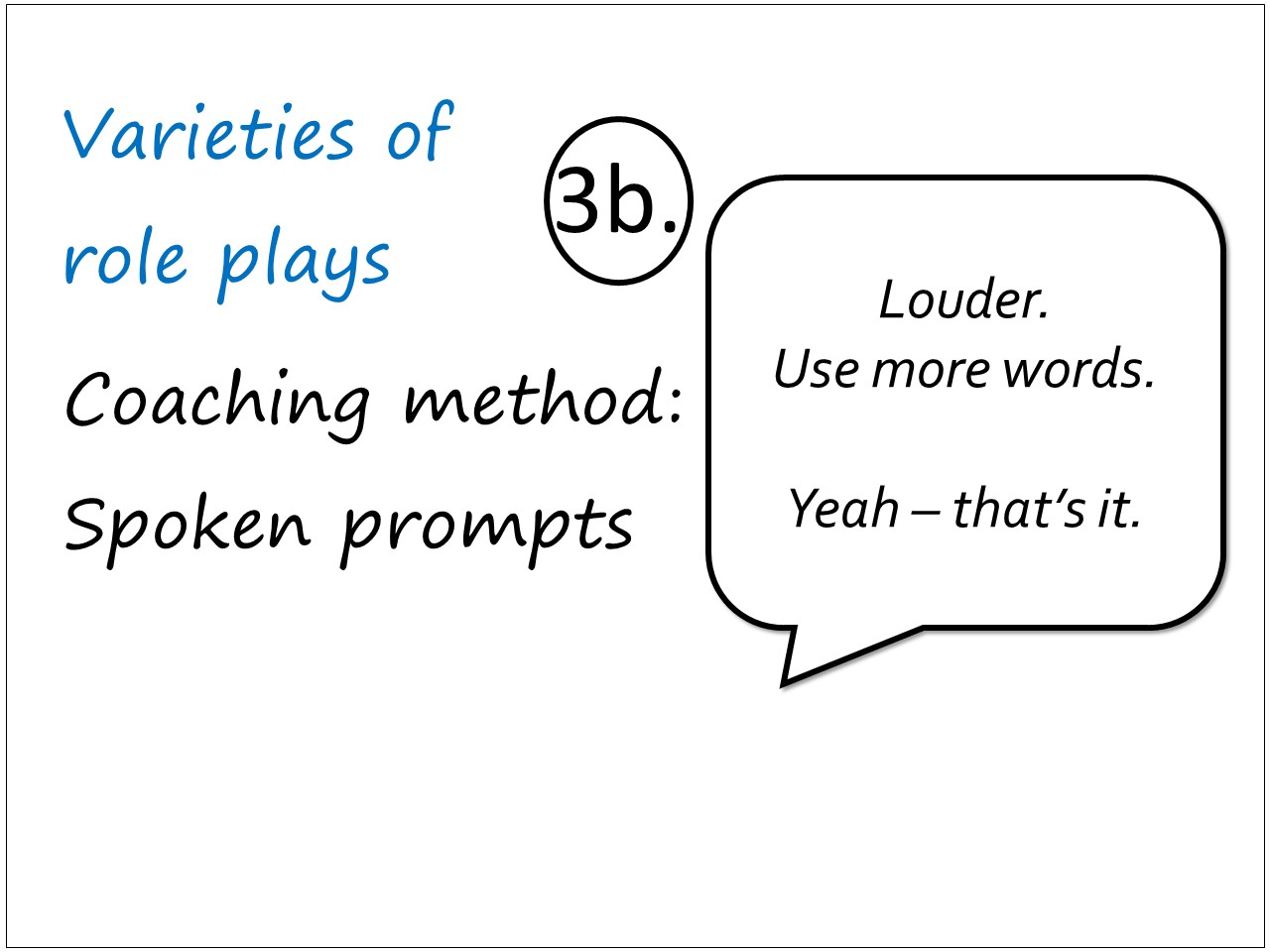
The scripts shown above are Validation Word Prompts and Question, Compliment and Friendly Comment prompts (go to page 8 of download).

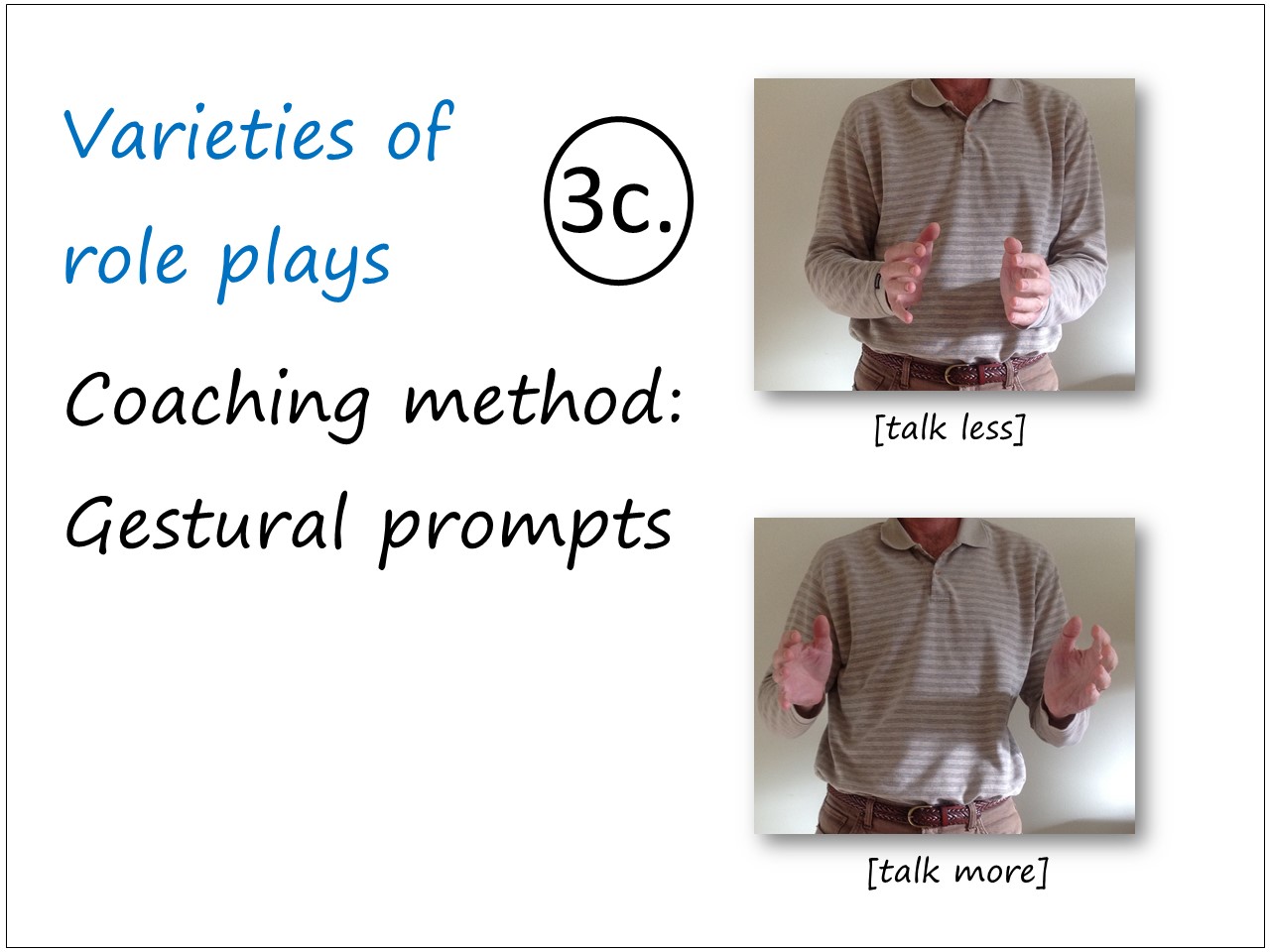
Other common gestural prompts include the one for “Cut!” and the one-handed gesture signalling “That’s enough…wrap up what you’re saying.”

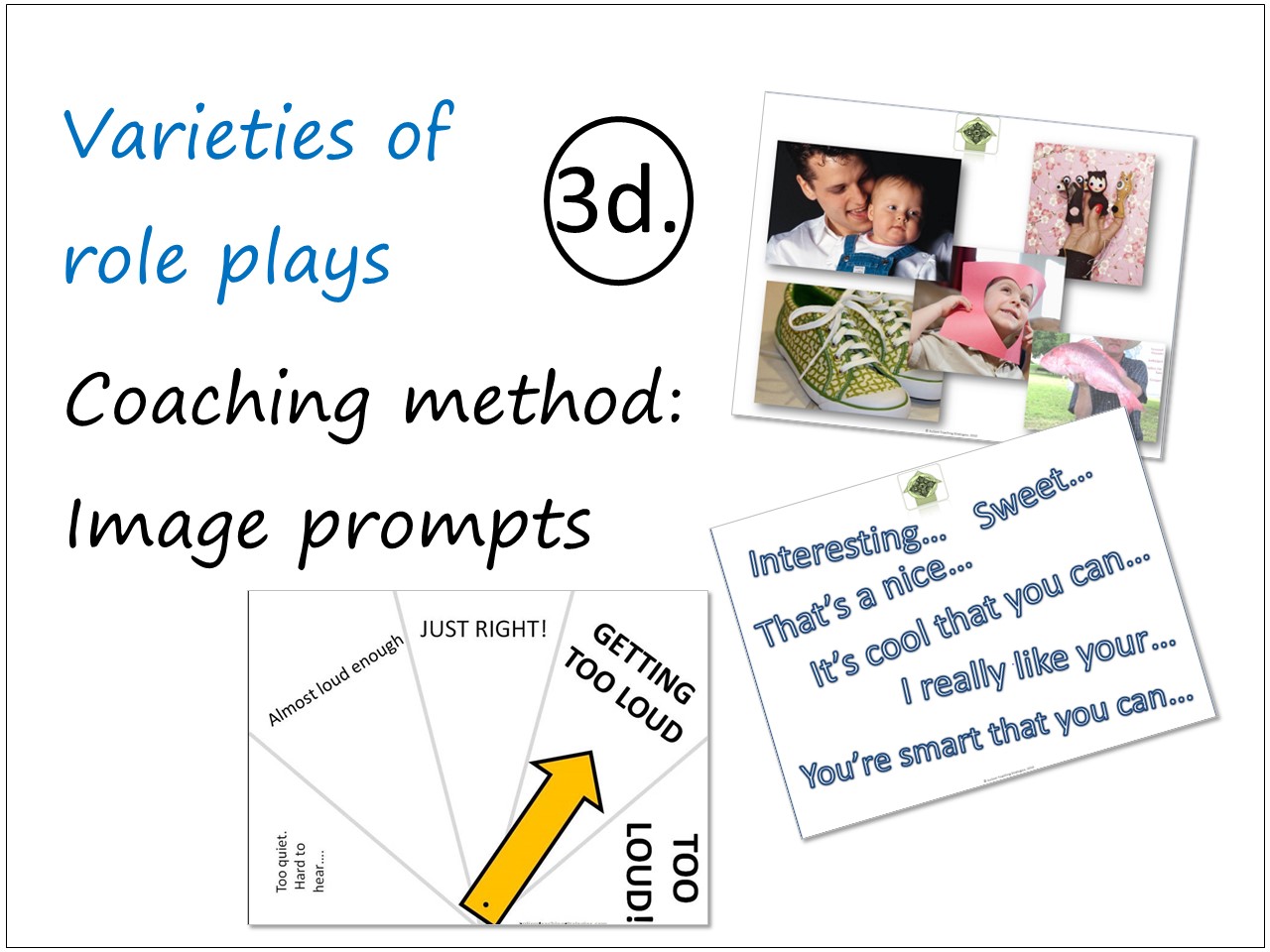
The resources shown above are Volume Meters and Compliment Picture Word Prompts.

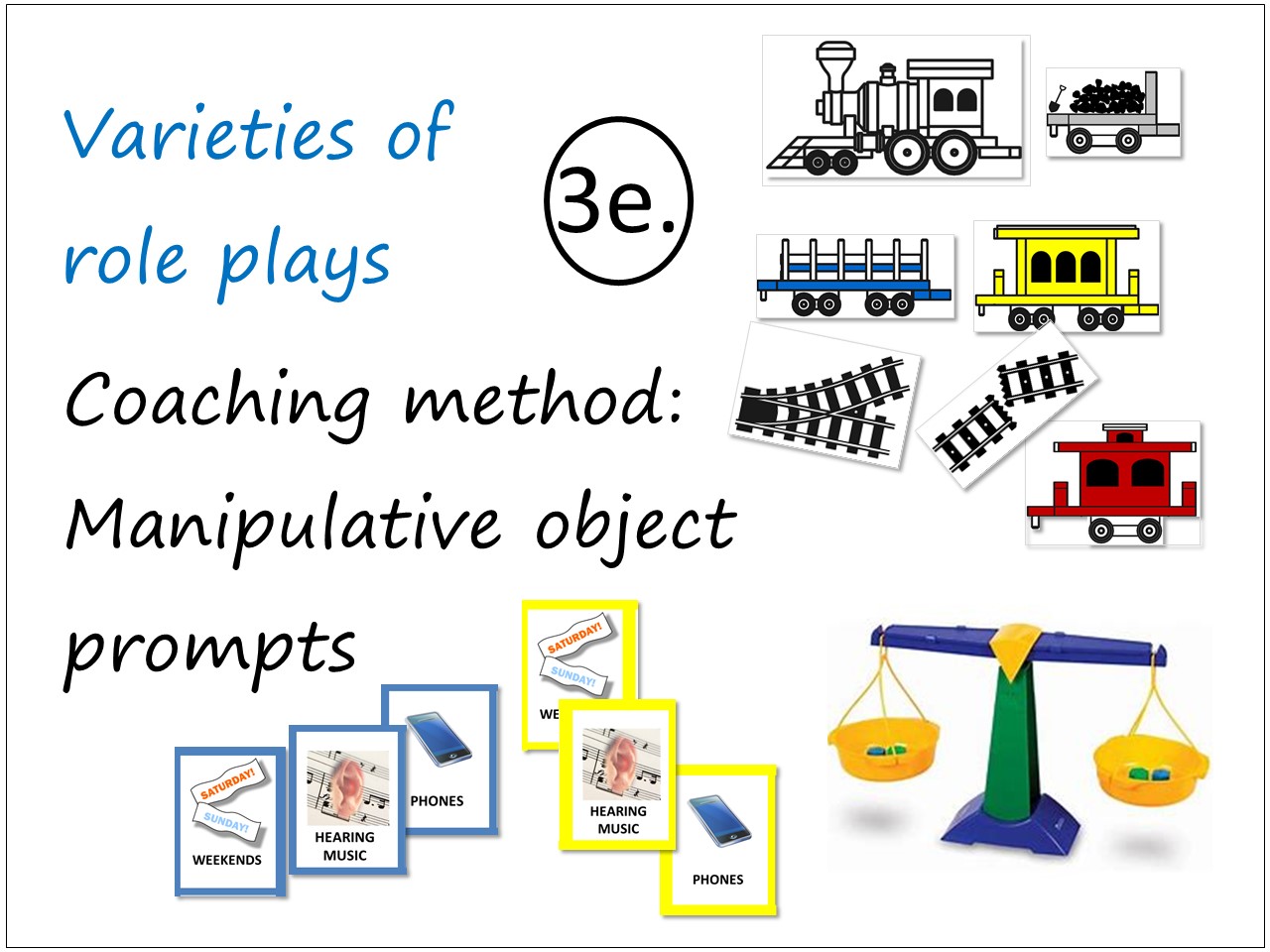
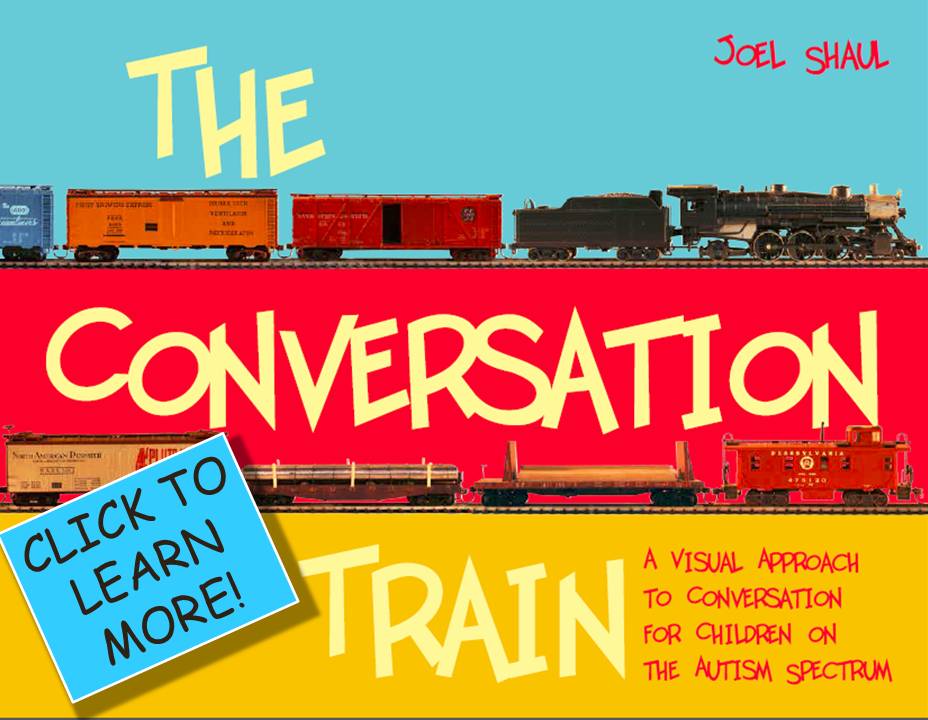
It might sound strange if you have never tried it, but it can be very engaging and effective to conduct role pays at the same time you manipulating objects between the role play participants, or having them move the objects themselves. The balance is an extremely useful, moveable prompt for reciprocal role plays. I explain how to use it here. The Train Conversation Printable Kit is used to map out a conversation in real time while it is happening, with beginning, ending, changing topics and “off track.” The picture cards shown are two pairs of matching 23-card decks which two conversation participants use to compare interests and find common ground (Green Zone Picture Card Activity).

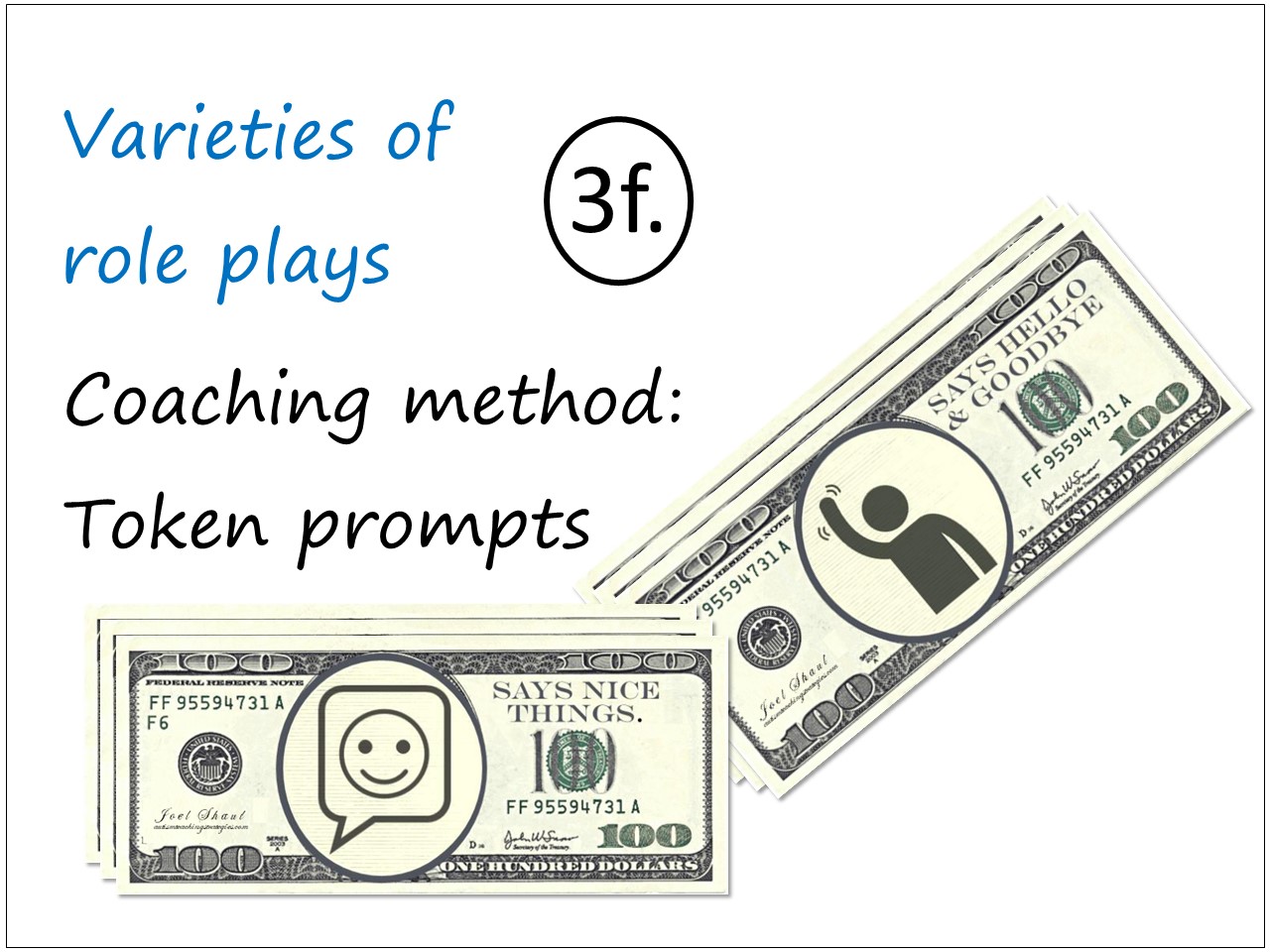
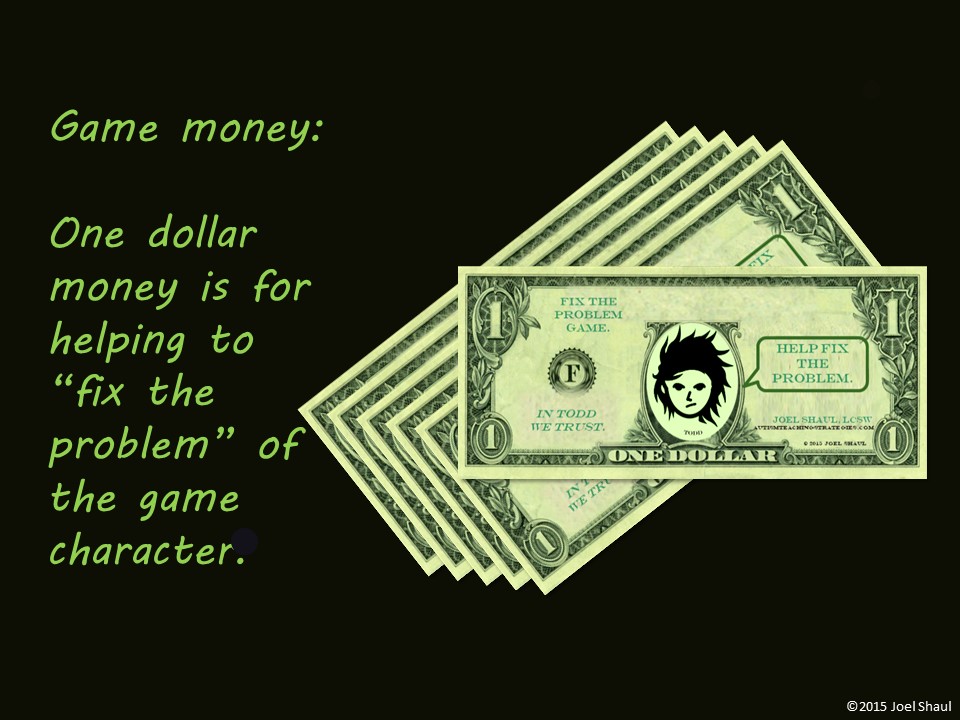
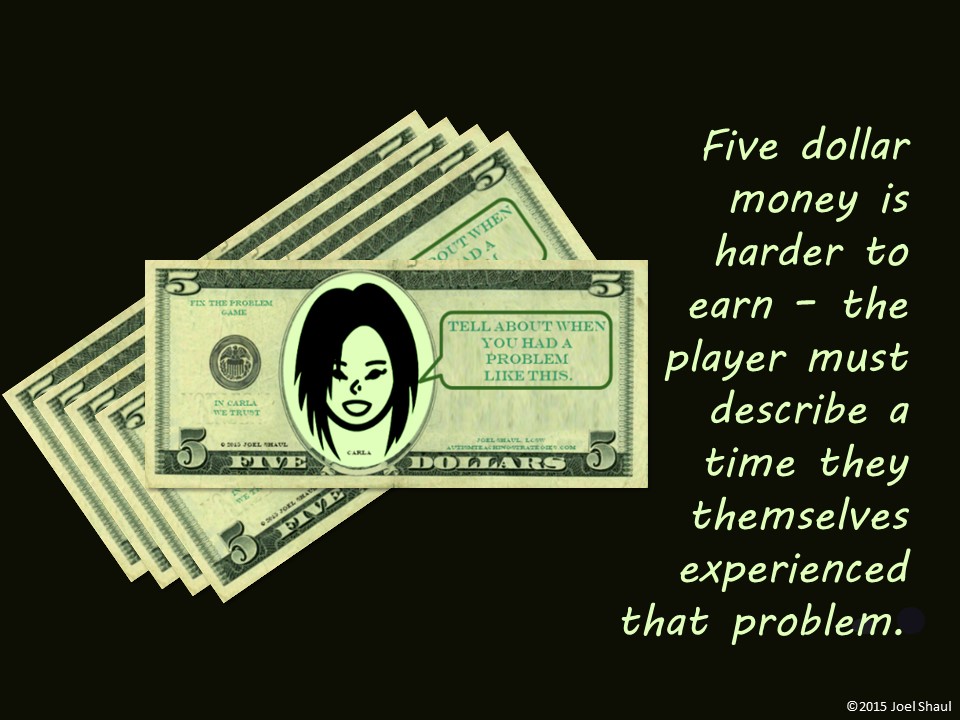
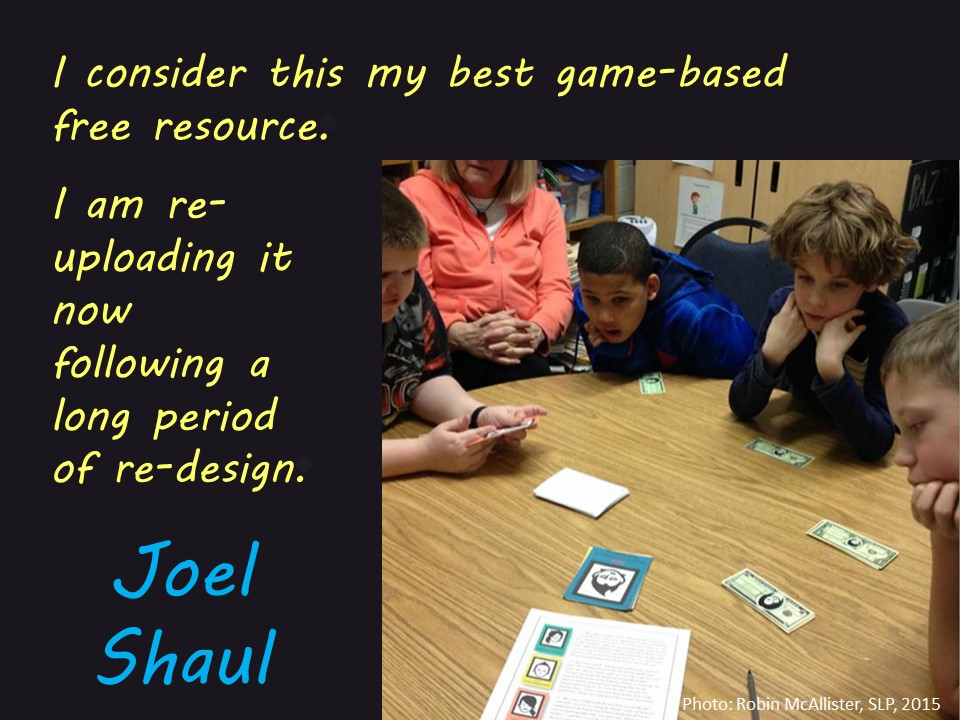
You can use token prompts in a variety of ways in role plays. For example, if you are trying to get a child to practice hellos and goodbyes, or give compliments, you could hand out these free downloadable money tokens.

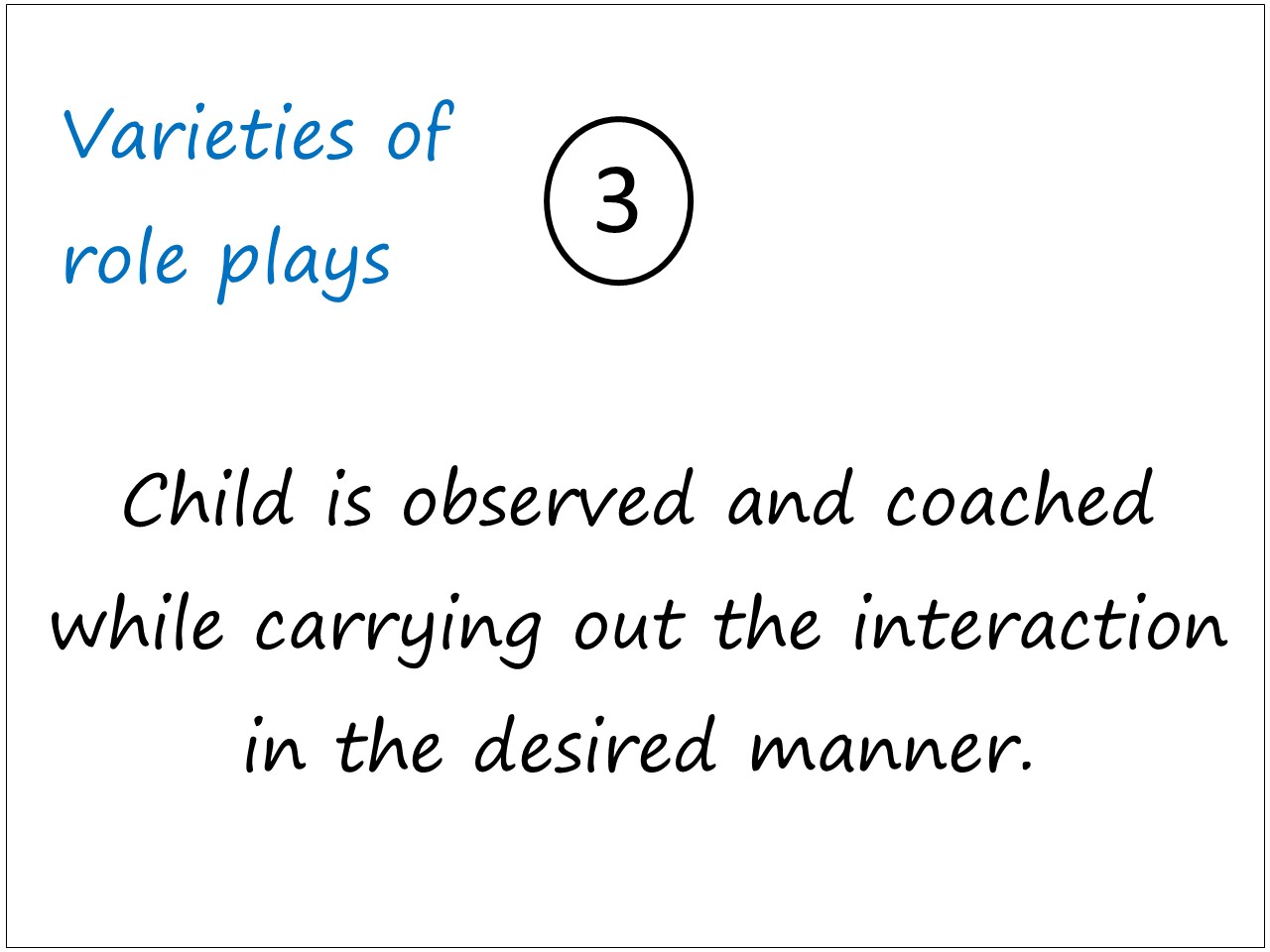
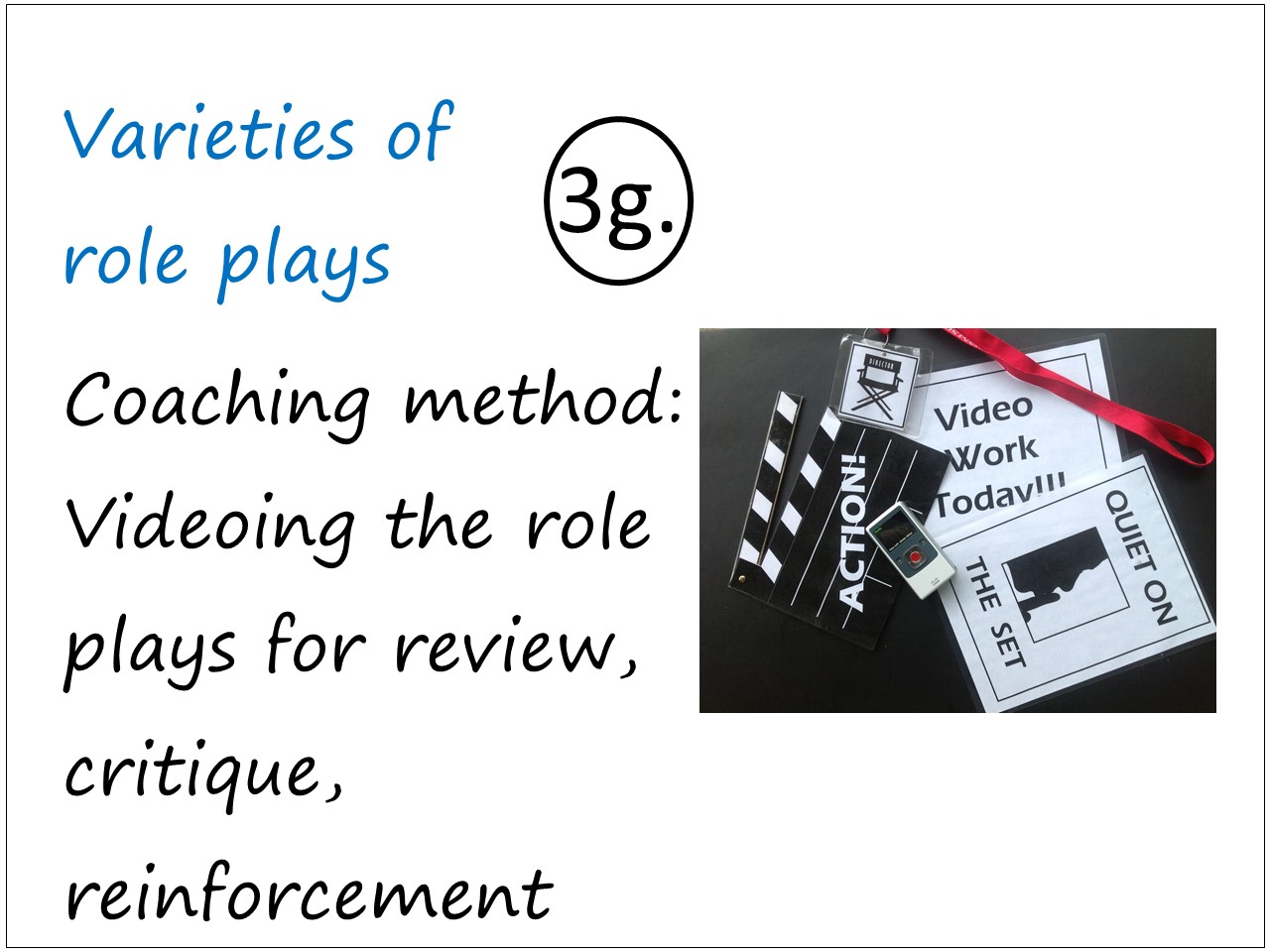
I shoot video and replay video all the time in my sessions. It almost always makes role play work better. Most young people like it a lot. I honestly cannot figure out why other clinicians don’t use video cameras very much these days, except to avoid having to fill out permission forms and so forth.

I have a very good tutorial on using video cameras, and some nice download accessories, on this website.

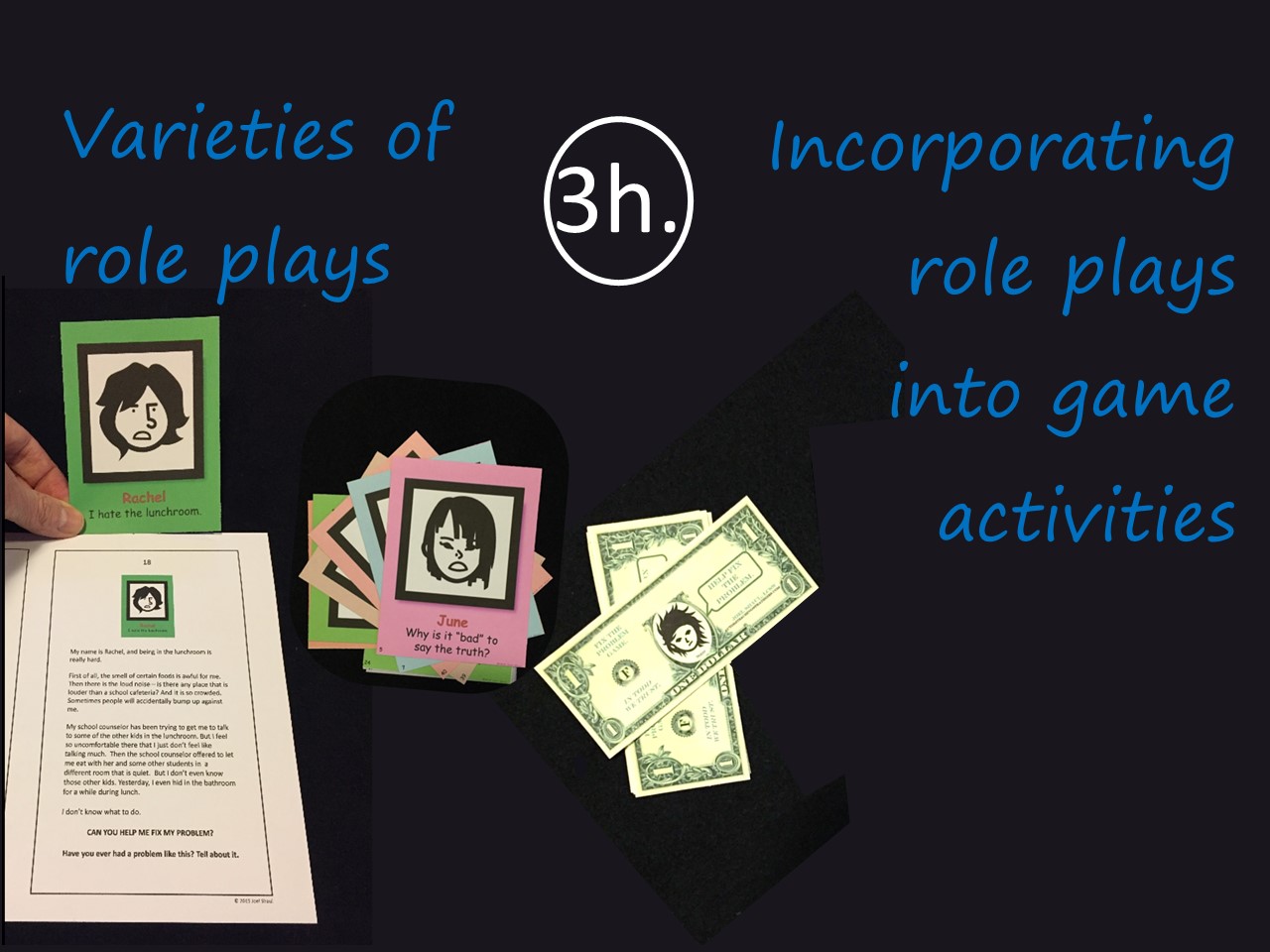
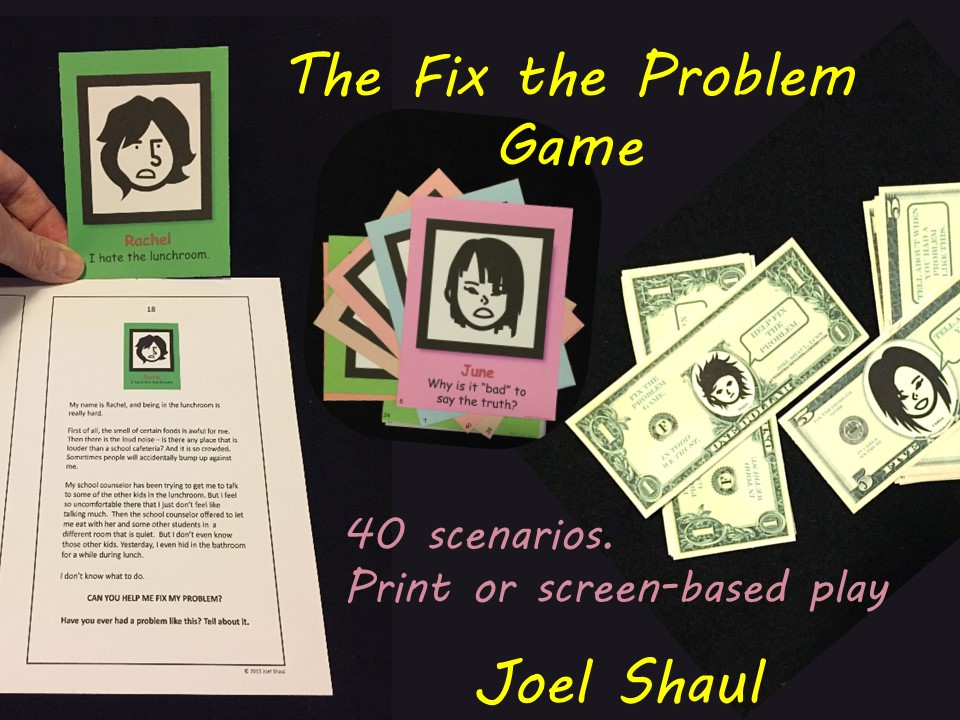
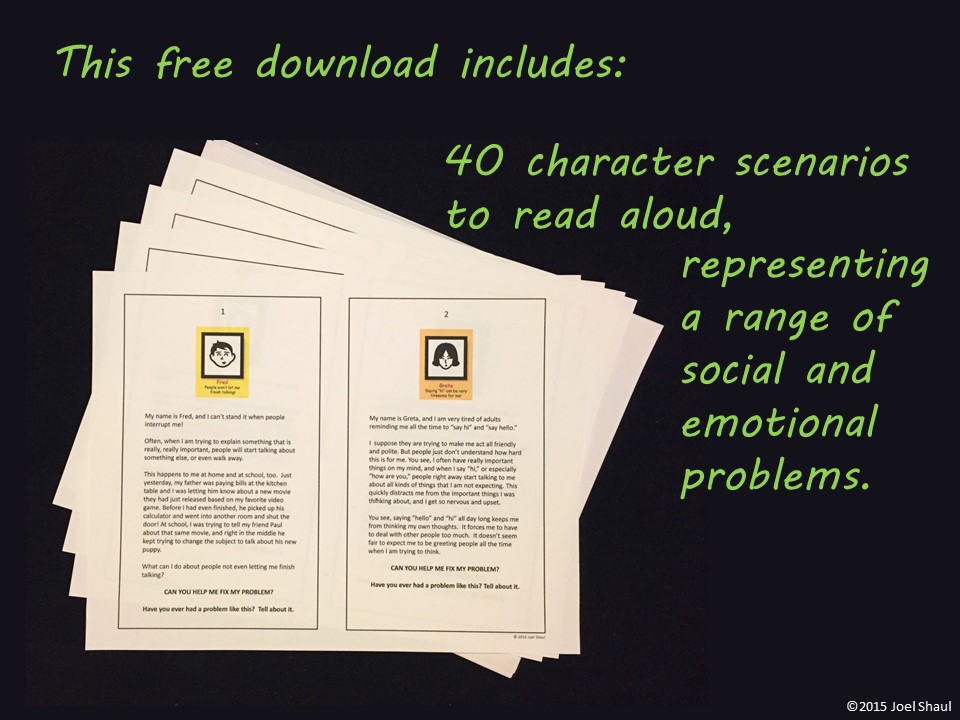
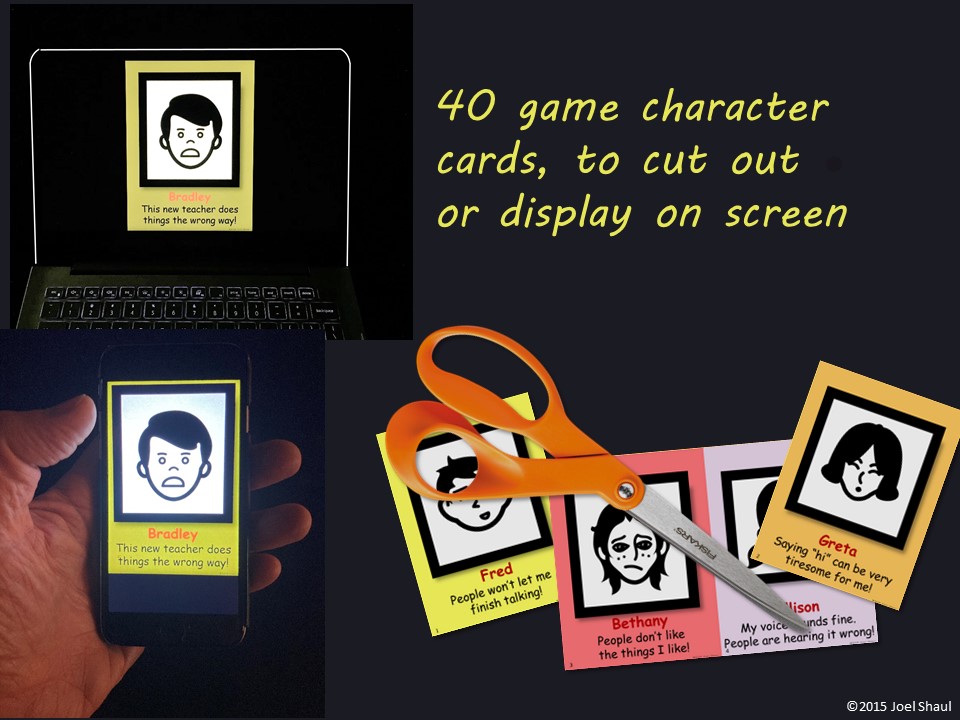
Many of the card game activities on my website have role plays built into the game. One of them, Fix the Problem Game, is shown above.


I hope this information, and these resources, helps to make your role play work engaging and productive.

Joel Shaul, LCSW

“Fix The Problem” Social Skills Game – Free Download

Fix the Problem

In German: Problemlösungs-Spiel

Don’t miss these other free social & emotional skills games, worksheets and teaching / therapy resources for children & teens with ASD:

Free social skills games & activities, emotional regulation skills for kids with ASD

Free social skills games & activities, communication / conversation skills for kids with ASD

Free social skills games & activities, social interaction skills for kids with ASD


The Conversation Train Book

Green Zone Book Cover Click to Learn More


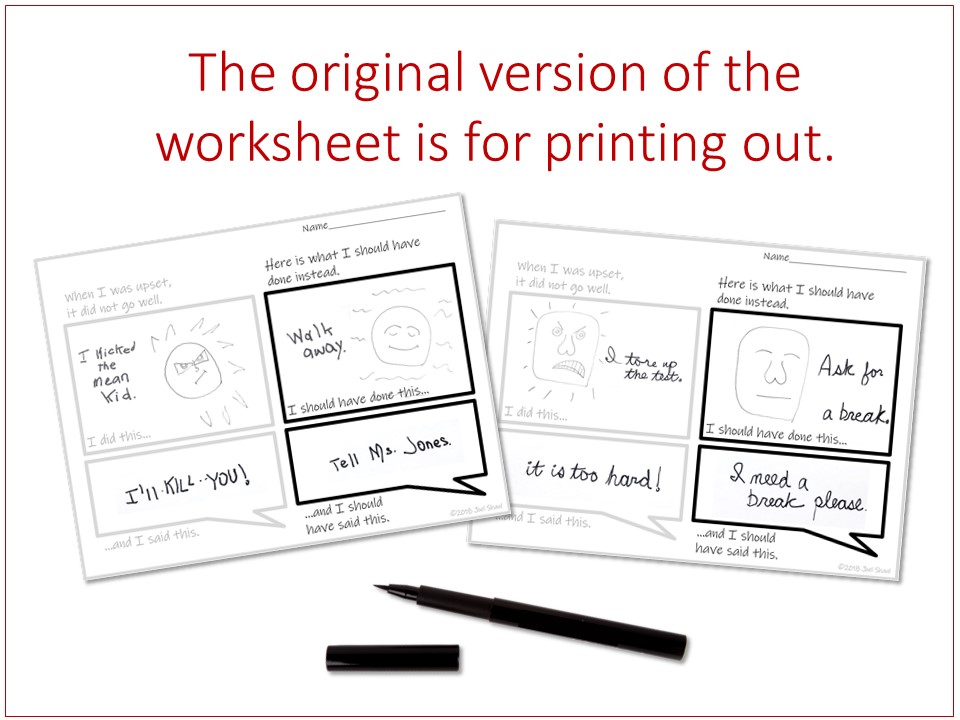
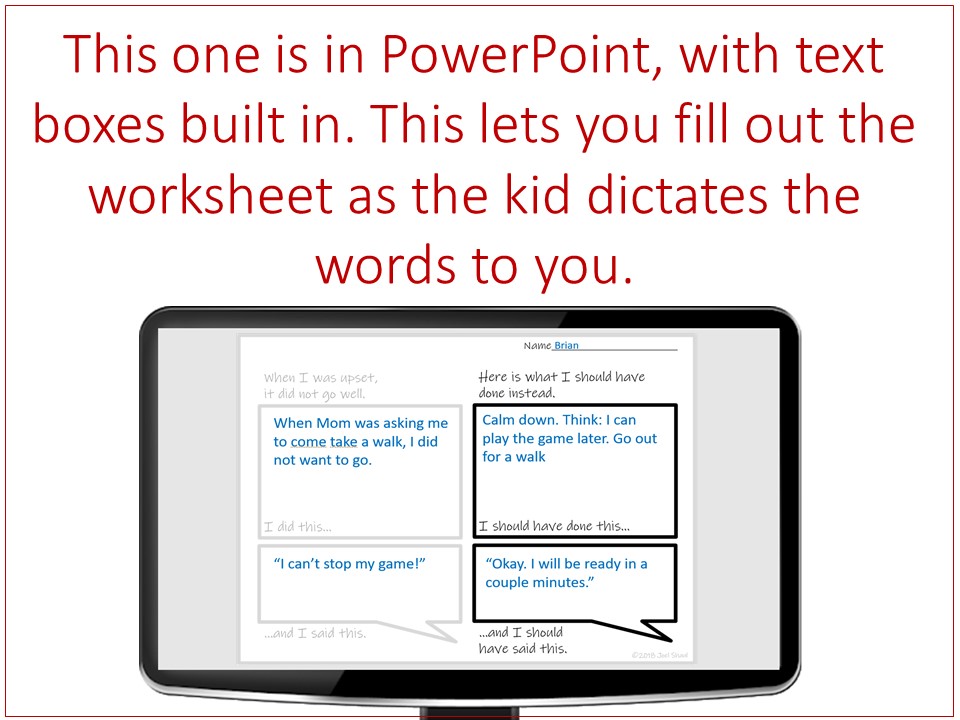
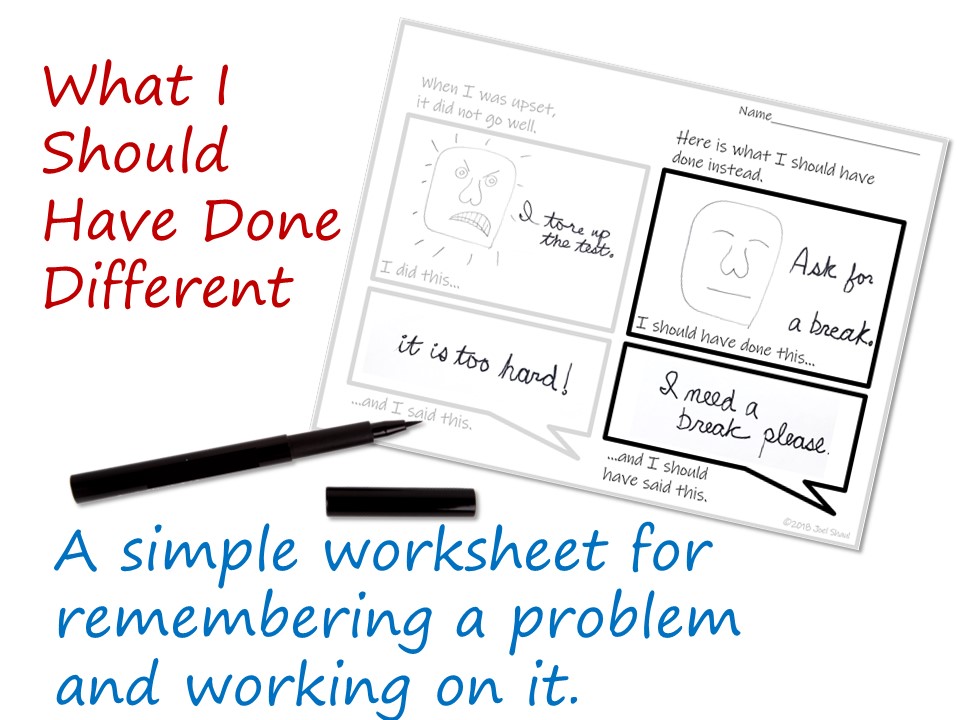
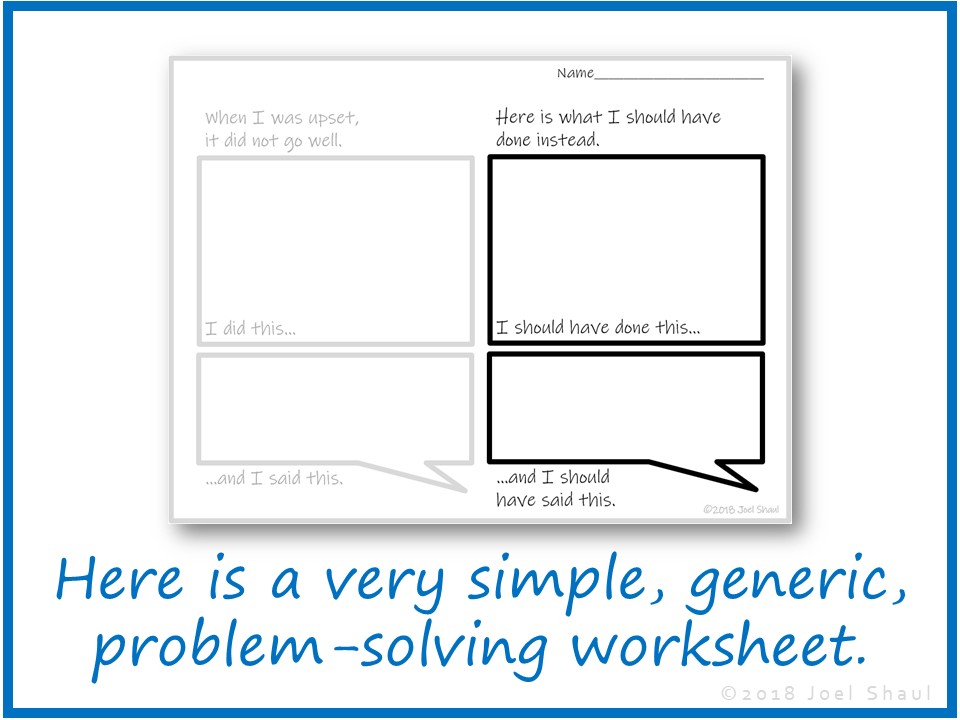
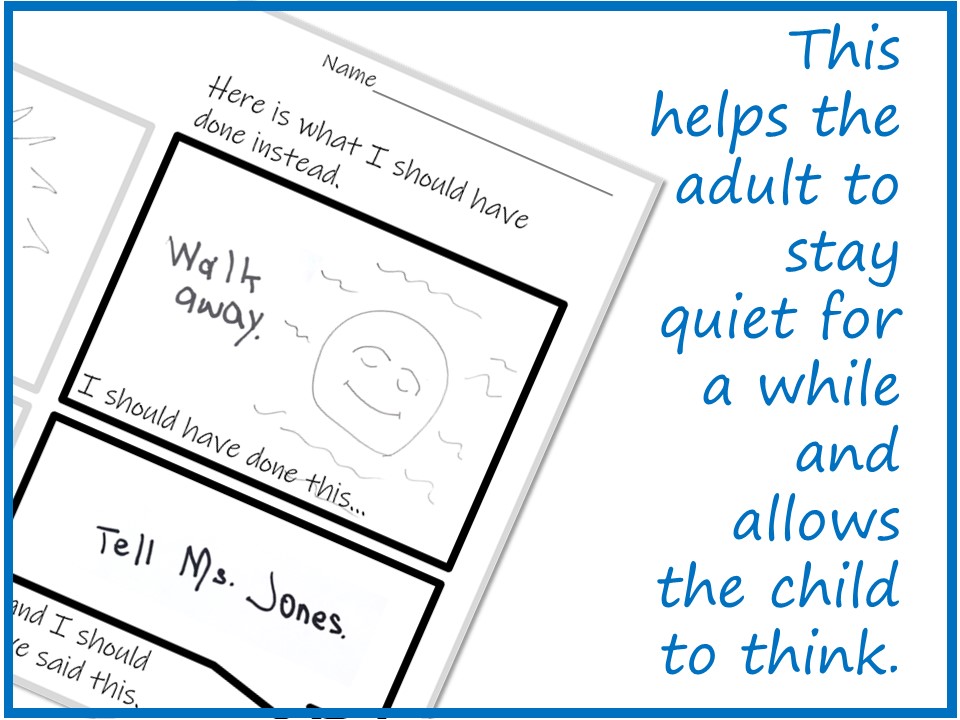
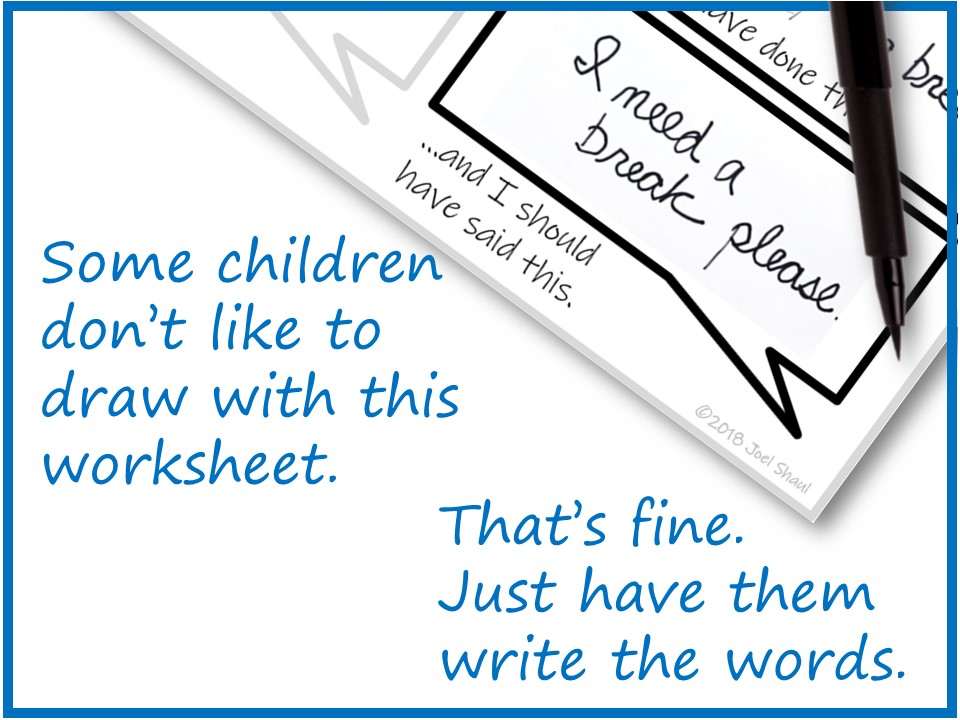
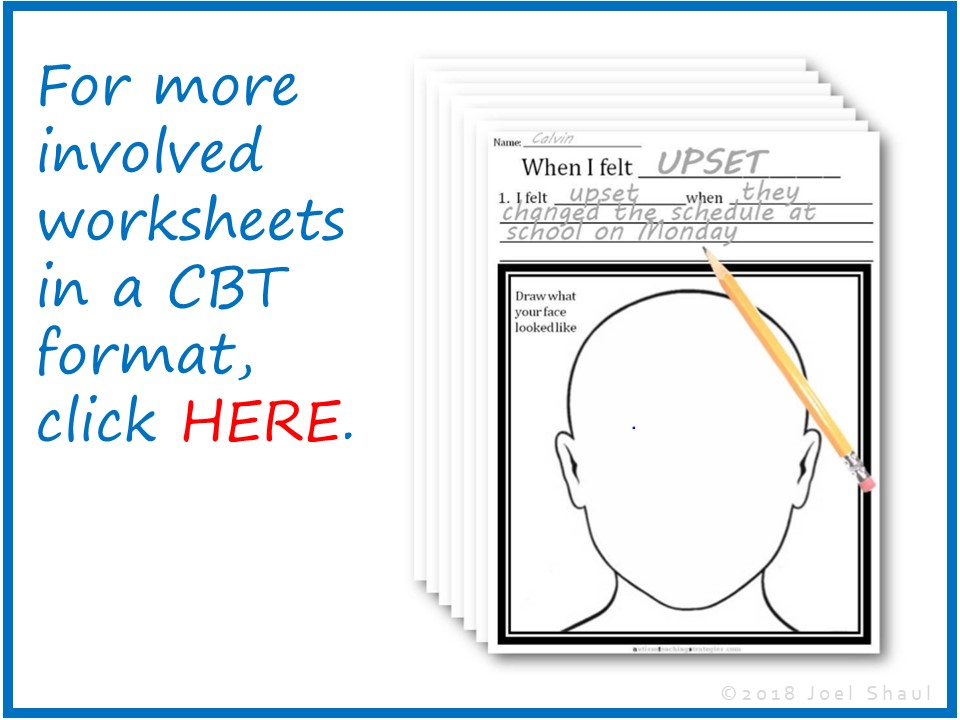
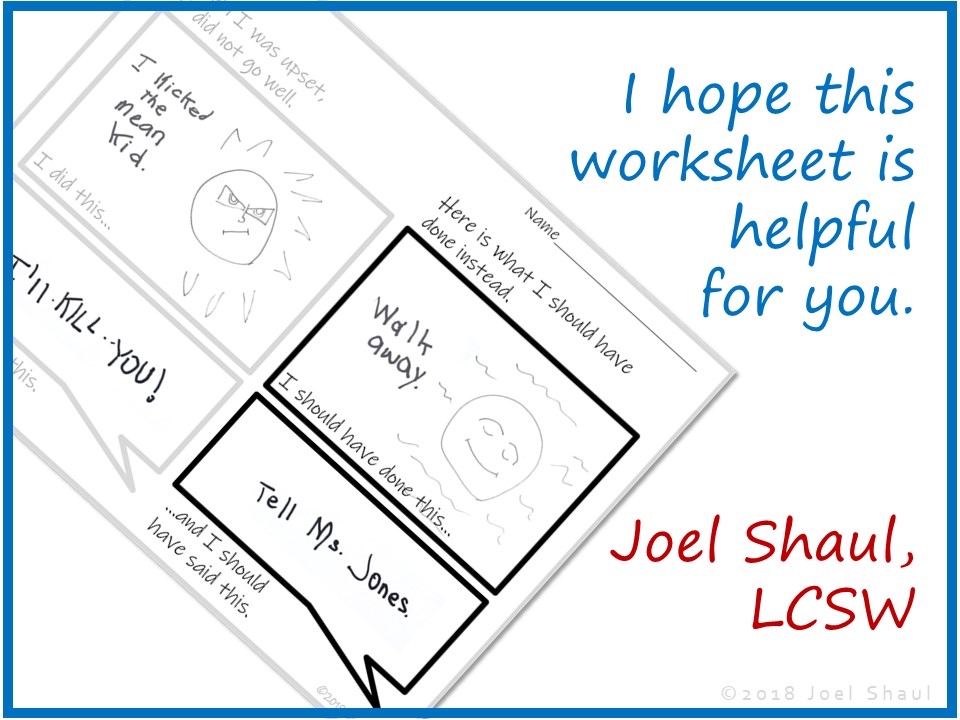
What I should have done different – A simple worksheet for children to work on a problem

problem solving CBT worksheet for children

German translation of this resource: Was-ich-hätte-anders-machen-sollen-ein-einfaches-Arbeitsblatt

en español – Lo que debe hacer diferente

What I Should Have Done Different Telehealth Version

Hebrew translation of this resource

anger management worksheet for children

Slide3

Slide4

Slide5

Slide6

Slide7

Slide7

If you are looking for the telehealth version of this resource, click on this link:

What I Should Have Done Different Telehealth Version


Your comments on these resources are most welcome, and often helpful. Click HERE to send an email.

Don’t miss these other free worksheets, games, and teaching / therapy resources for children on the autism spectrum:

Free social skills games & activities, emotional regulation skills for kids with ASD

Free social skills games & activities, communication / conversation skills for kids with ASD

Free social skills games & activities, social interaction skills for kids with ASD

ASD Feel Better Promo square directing to JKP