Talk-to-dad conversation starter worksheets for kids with Asperger’s and other autism disorders

conversation reciprocity worksheet for kids with Asperger's

IMG_7749

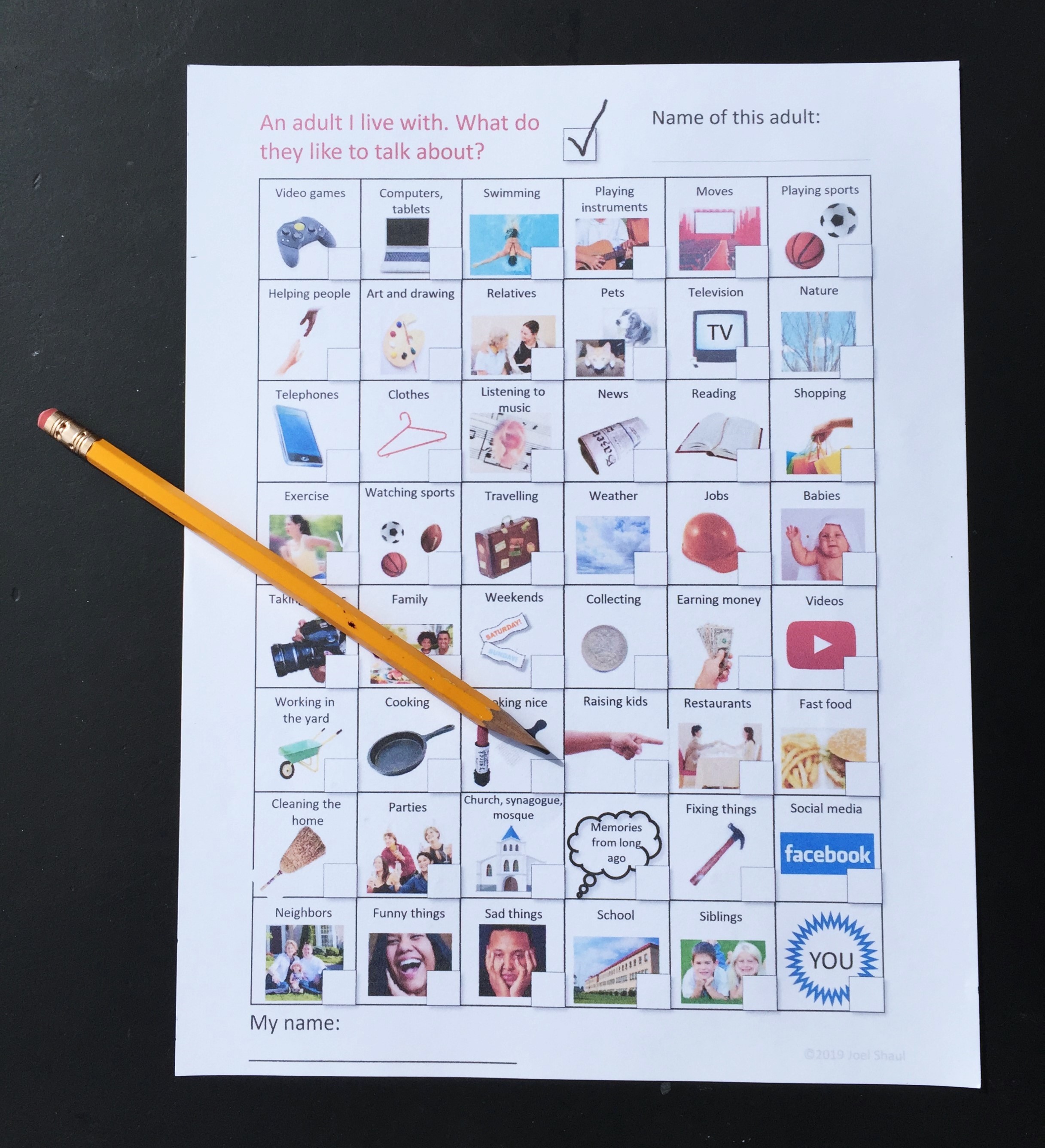
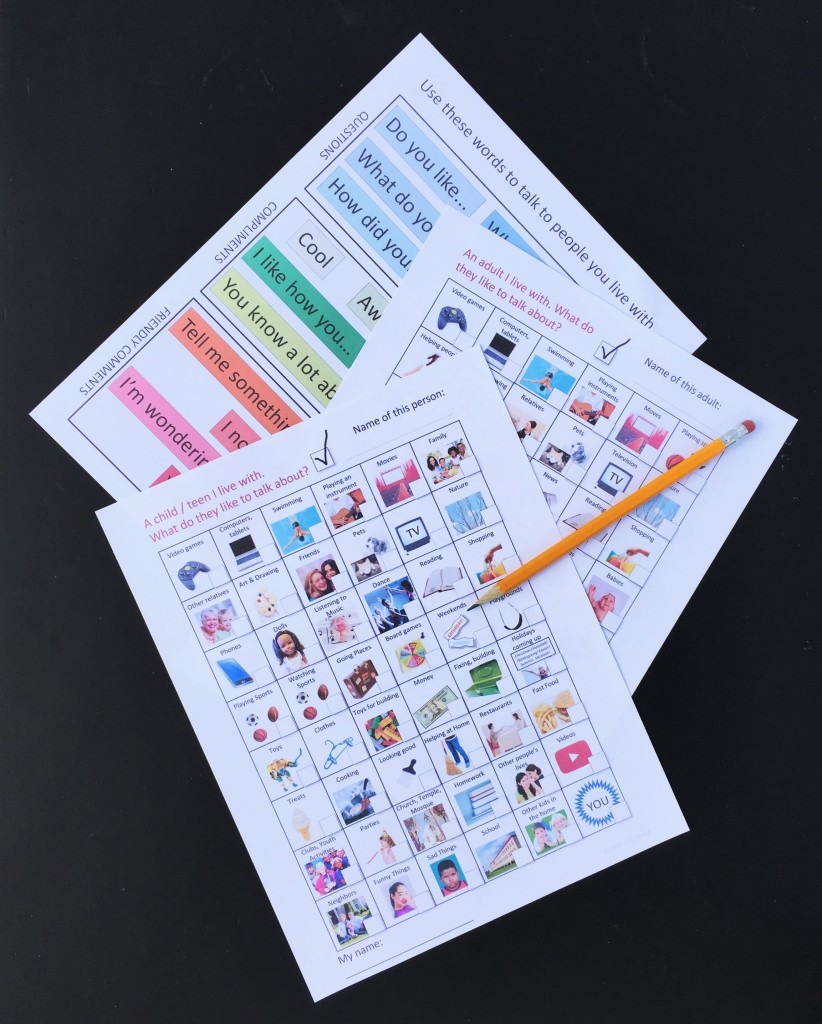
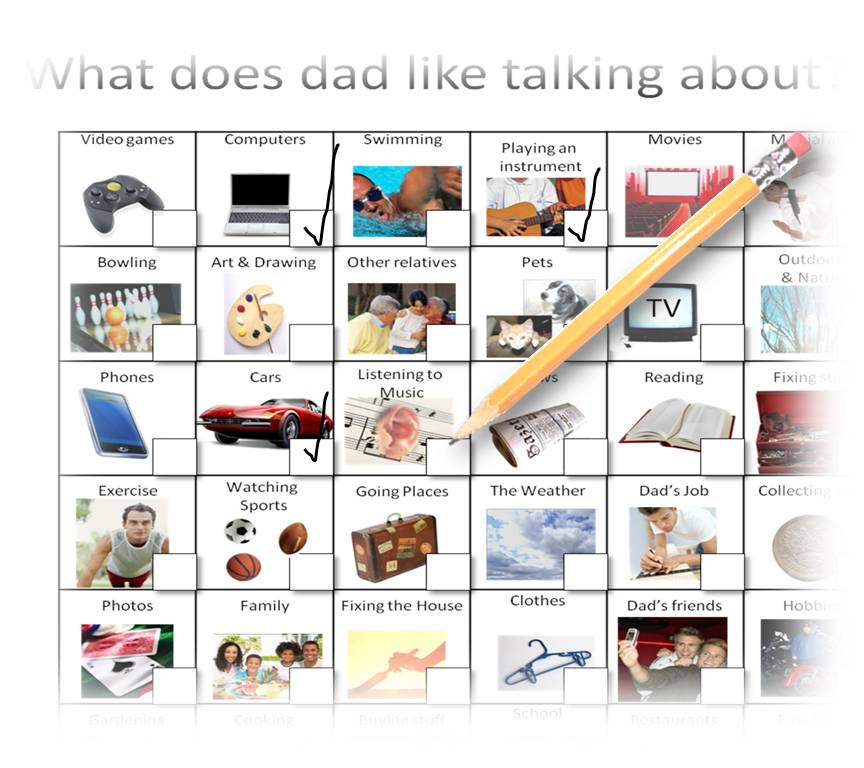
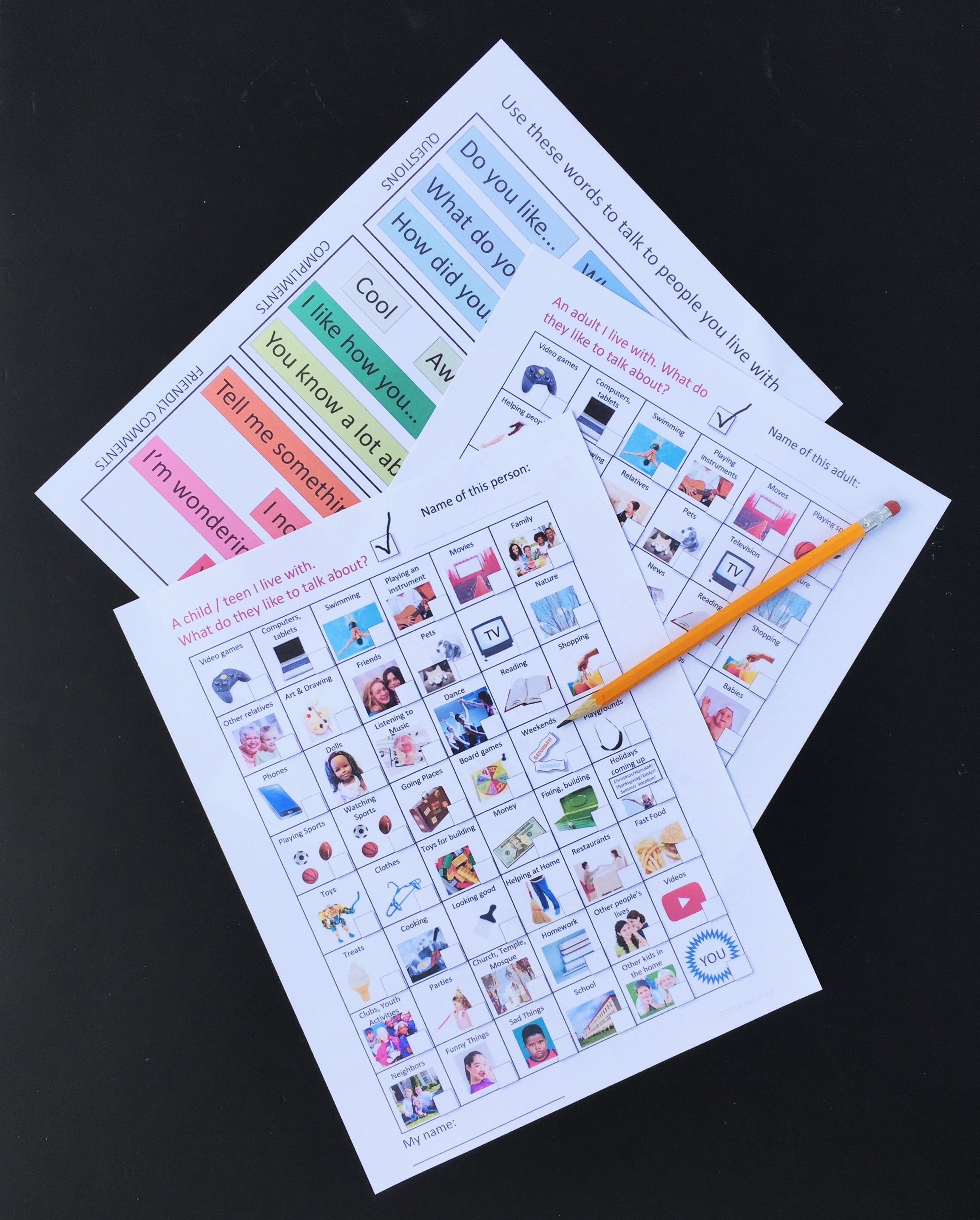
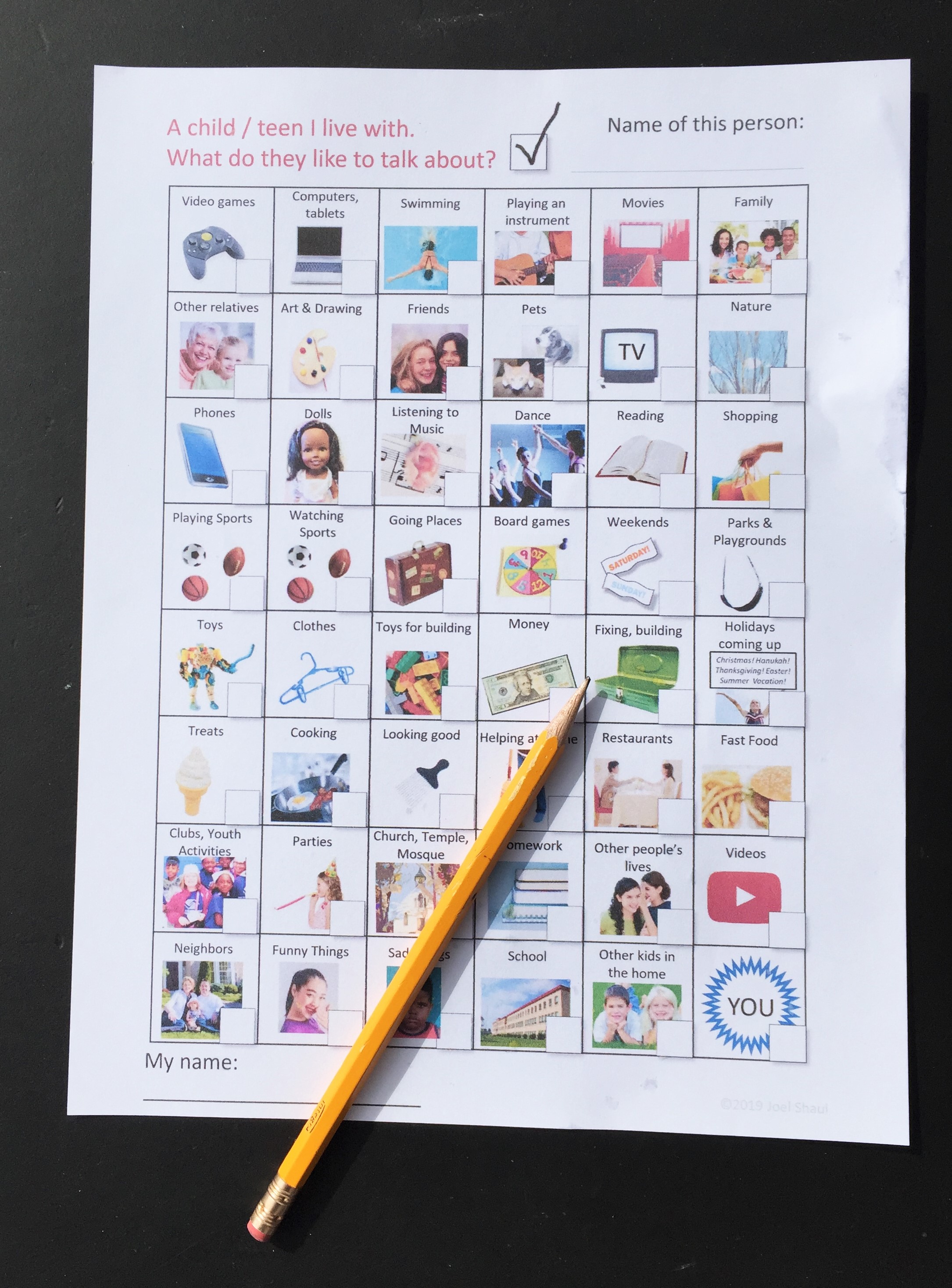
Free check-off worksheets for children with ASD’s to explore conversation topics with family members

Children with autism spectrum disorders often have difficulties having conversations with the people they live with. It really helps to use picture guides. Here is a set of easy-to-use worksheets for classroom, speech room and home.

IMG_7751

 IMG_7750

IMG_7752

Hot to use the worksheets:

1.  Have the child put check marks next to the photos they think represent the person’s interests.

2.  Go over the images one at a time with the child. Explain that the family member probably has many interests that are different from the child’s own interests.

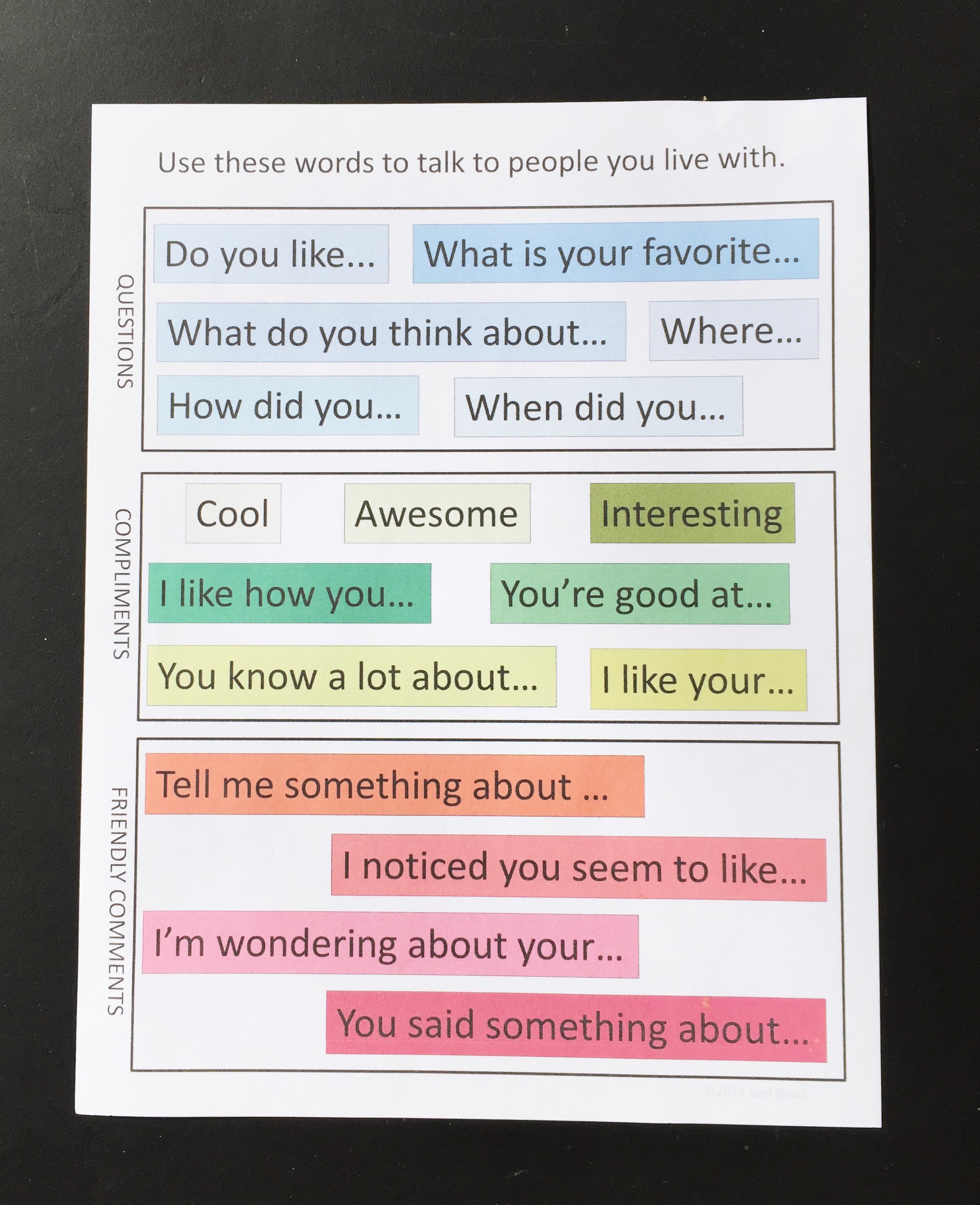
3.  The sheet “Questions, Comments, Compliments” can be used to set up role plays and actual conversation practice with family members.

4.  Have family members fill them out for the child to use as a reference.

5.  Project the sheets using a smart board or projector – this really helps for small group or classroom discussions about family members.

I hope these worksheets are useful for you.

Joel Shaul, LCSW

Your comments on these resources are most welcome, and often helpful. Click HERE to send an email.
Your Interests Promo image for website


The Conversation Train Book

Green Zone Book Cover Click to Learn More

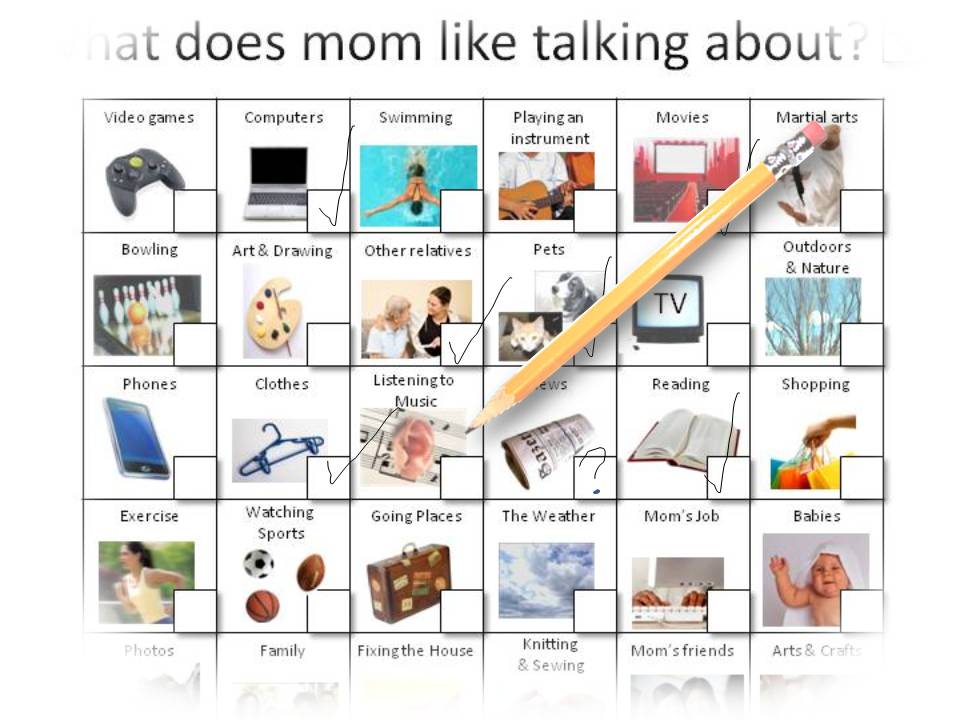
“Talk to Mom” illustrated social skills worksheets for kids with Asperger’s and other ASD’s

social skills worksheet autism

In French: Comment-discuter-avec-membres-de-votre-famille-fiches-de-travail

IMG_7749

Free check-off worksheets for children with ASD’s to explore conversation topics with family members

Children with autism spectrum disorders often have difficulties having conversations with the people they live with. It really helps to use picture guides. Here is a set of easy-to-use worksheets for classroom, speech room and home.

IMG_7751

IMG_7750

IMG_7752

How to use the worksheets:

1.  Have the child put check marks next to the photos they think represent the person’s interests.

2.  Go over the images one at a time with the child. Explain that the family member probably has many interests that are different from the child’s own interests.

3.  The sheet “Questions, Comments, Compliments” can be used to set up role plays and actual conversation practice with family members.

4.  Have family members fill them out for the child to use as a reference.

5.  Project the sheets using a smart board or projector – this really helps for small group or classroom discussions about family members.

I hope these worksheets are useful for you.

Joel Shaul, LCSW

Your comments on these resources are most welcome, and often helpful. Click HERE to send an email.

Your Interests Promo image for website


The Conversation Train Book
 
Green Zone Book Cover Click to Learn More


Seven social skills worksheets for kids with ASD who are socially isolated

Isolation Worksheets Blog Image Display

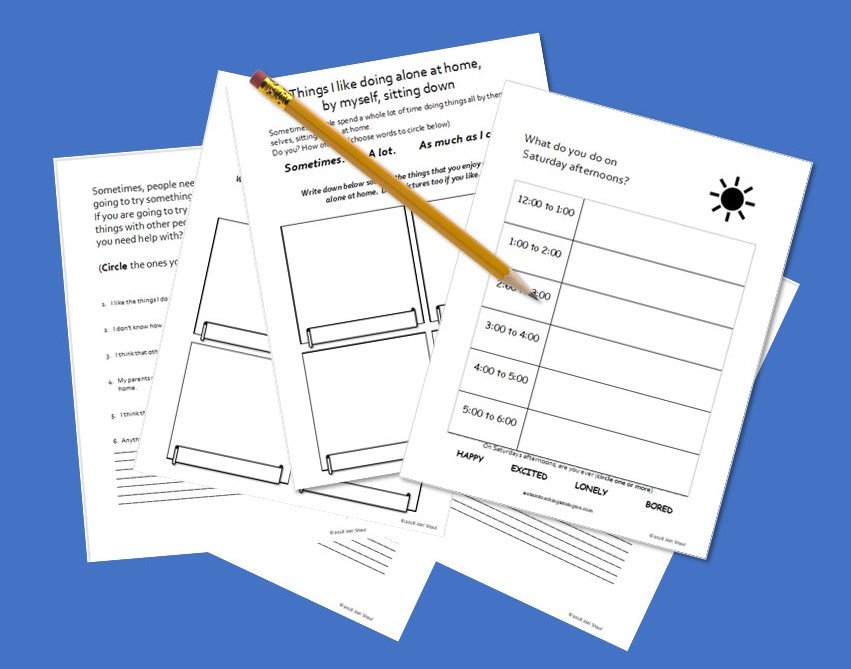
In an earlier post, I provide an isolation card activity for you to download and use in your social skills teaching activities with children on the autism spectrum.  Here are some additional materials for you to use, simple worksheets.There are many reasons that children with Asperger’s and other autism spectrum disorders often struggle with social isolation.  They may be motivated to socialize, but their efforts may not be fruitful.  They might be enthralled with solitary activities based on their preferred interests.  Kids with ASD can find their days at school exhausting, and they sometimes over-compensate with down time to recover.  Typical children can reject or bully children with ASD.The worksheets are to support your social skills teaching efforts on this topic.  The most important worksheets are the daily schedule records, which you can use separately if you like if you don’t wish to use the other four worksheets.If you do not download the card activity from the earlier blog post, I do suggest you check out the content of the cards anyhow.  I believe it will help you cover more dimensions of this social skills activity.

My best wishes to you, and the children you are helping, as you work on this issue.

To download the worksheets:

Follow the directions below to download the PDF files for the worksheets.

PDF blog insert

CLICK HERE: Seven Worksheets to explore social isolation

CLICK HERE for telehealth version of this resource

Hebrew translation: 7 worksheets for children who are socially isolated

Your comments on these resources are most welcome, and often helpful. Click HERE to send an email.

Your Interests Promo image for website


 The Conversation Train Book

 Green Zone Book Cover Click to Learn More

Social skills card teaching activity for children with ASD who are isolated

social skills game activity
This shows a social skills card game you can download and make pretty easily. It’s to help children with ASD to explore issues related to social isolation.

To download the pdf of this kit, click on the red link here:

Social Cards PDF Download

 This resource is available in Polish

This activity is also available in a PowerPoint version in case you want to “show it” rather than cut it out:

Social Cards PowerPoint Version

Social isolation is common in children with autism spectrum disorders.  The reasons are obvious.  They can become enthralled with preferred activities that they carry out in solitude. The social world can be tiring and frustrating and children with autism can over-compensate with down time to recover.  Modern technology provides engaging self- stimulation without face-to-face social contact.  Children with ASD can become bewildered and discouraged when they go about trying to socialize.  The peers of children with ASD can be unaccommodating and rejecting.

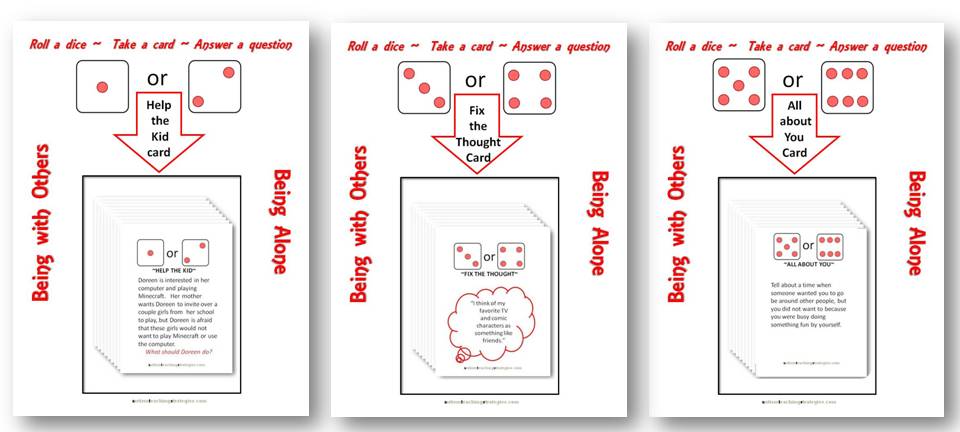
I have provided for you here a social skills teaching activity to help children with ASD’s to explore social isolation.  It can be played in a small group or one-on-one between an adult and a child.  To play it, you need a single die.  When you roll it, it directs the participant to draw a card out of one of three piles of 12 cards.

Why bother with dice in this activity? To add levity and to take an edge off the challenging content. For more on game-like elements in social skills teaching, click on the dice picture.

Roll 1 or 2:  “Help the Kid” card. Each card describes a different child experiencing a unique isolation problem.  You have to figure out some way to “Help the Kid” with their problem.  There is more than one possible solution to each.

Roll 3 or 4:  “Fix the Thought” card. Each card shows a different thought or belief which can either contribute to social isolation or make loneliness hurt more.  You have to think of one or more thoughts or beliefs to counter the negative thought.

Roll 5 or 6:  “All about You.” These questions explore the child’s own social isolation.

Hot to make the cards and card holders: Click on the PDF download link at the top of this post.

I hope you find this social skills game activity useful.

Joel Shaul


Here is a free download of worksheets on the topic of social isolation for children on the autism spectrum.

Worksheets for Exploring Social Isolation

Your comments on these resources are most welcome, and often helpful. Click HERE to send an email.

Your Interests Promo image for website

 The Conversation Train Book

Green Zone Book Cover Click to Learn More

Flexibility in kids with ASD – Card activity to teach this social skill to children on the autism spectrum

Flexibility Cards Blog Image Display
 
 
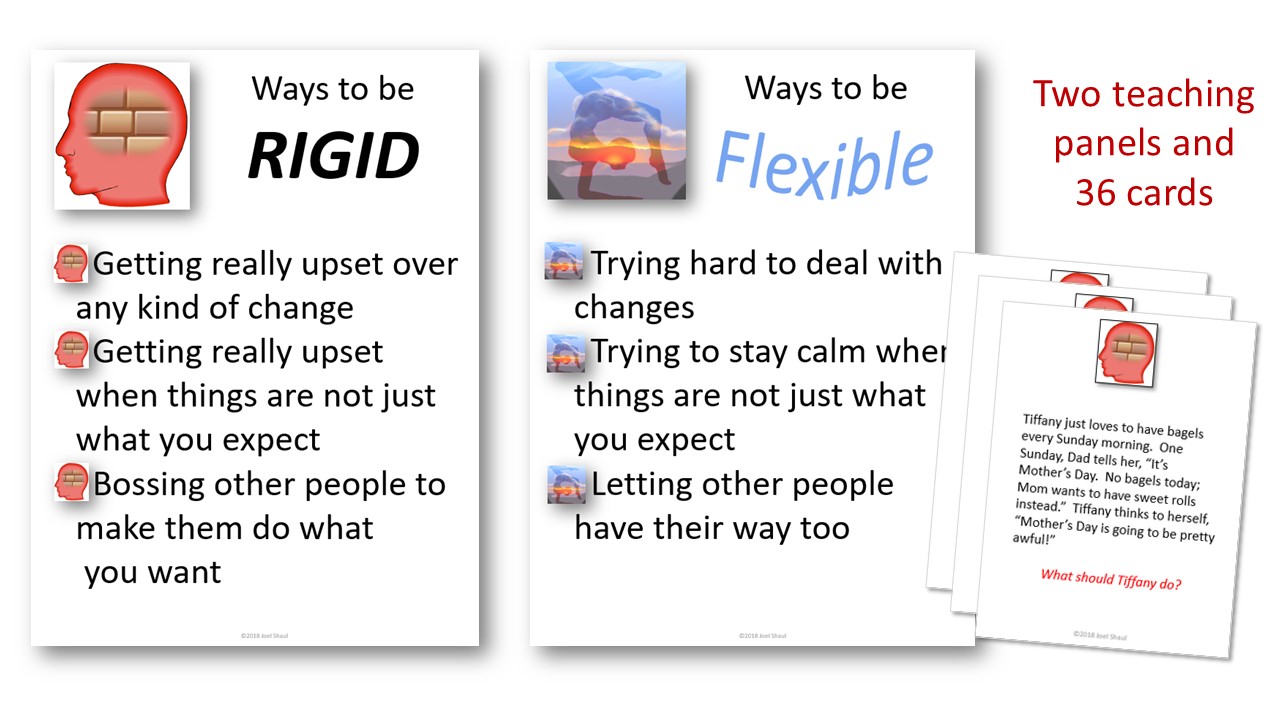
Children with autism spectrum disorders often experience challenges relate to rigidity.  They can find if difficult dealing with changes and trying things new ways.  Children on the autism spectrum can find it hard to imagine the points of view of other people and they often don’t make accurate predictions about how others will react to their own strong opinions.
 
The free resource featured here is one of many I offer to help raise awareness regarding rigidity and flexibility in social situations.
 
To print out the 36 cards and the two panels, click here:

Flexibility Cards, Activity to explore rigidity

Also available in POLISH language version

*But in case you prefer to “show” this activity rather than print it and cut it out, click below instead:

Flexibility Cards PowerPoint Version

When you print out the cards, I suggest you use cardstock or else paper which you will then laminate.
The two panels describing Rigidity and Flexibility can be used separately as a wall display or teaching aid, if you don’t intend to use the cards.
 
Suggestions on how to introduce the topic of Rigidity:
1.  I suggest that you select your terminology carefully.  Many kids with ASD learning the social skill of flexibility might not have the capacity to learn and use words such as “rigidity,” flexibility,” “cooperate,” “compromise,” etc.  Far more children will be able to grasp the meaning of simpler words like  “stubborn,” “bossy,” “get along with,” “let others have their way,” etc.
 
2.  Try using language like this when starting on this topic: 
 
“Some things around us are hard.  What are some objects in this room that are hard? Other things are soft.  Name some soft objects in this room.  Now let’s talk about how things that we cannot see can also be hard or soft.  Like our thoughts.  Here are some words for thoughts that are HARD:  Bossy, stubborn, [rigid], unchanging. Here are some words for thoughts that are SOFT: Flexible, agree, willing to change, willing to try, [cooperate].  Sometimes it is okay or good to to be stubborn and bossy.  Like if someone is trying to get you to do something really bad, it’s great to be really stubborn and say no.  Sometimes it feels really good to do something the same way over and over to make you feel safe and calm.  But very often, it is not good to be rigid.  Being rigid can keep you from doing good, new things.  Being rigid can annoy other people. Being rigid can keep you from having friends.”
 
3.   I have a children’s YouTube video on Rigidity – This might be a good introduction to this topic.
 
How to use the cards:
The cards are designed to help kids with  autism to learn more about the social skills of flexibility associated with accepting other people’s thoughts and ideas and dealing with unexpected and unwanted changes.  You can shuffle the cards randomly or else “stack the deck” so that cards most fitting for the child(ren) present will be drawn. Remove from the deck any cards you don’t consider relevant.
 
My first suggestion is that you do lots of role plays when you are doing this social skills game activity.  For example, you, the adult, can pretend to be the rigid person depicted in the card.  You can do the role play with another adult or with the children who are present.   My second suggestion is that you strongly reinforce children when they show awareness of their own rigid traits.  You can try passing out tokens or keeping score in some way to acknowledge learning about flexibility and admitting to rigid habits.
 
Below the downloads, you will find some links to other downloadable social skills activities on the website that particularly focus autism social skills having to do with rigidity.
 
I hope you enjoy this social skills activity.

Joel Shaul, LCSW


There are dozens of other free social skills games, worksheets and card activities you can download for children on the autism spectrum. Don’t miss them!

Free social skills games & activities, communication / conversation skills for kids with ASD

Free social skills games & activities, social interaction skills for kids with ASD

Free social skills games & activities, emotional regulation skills for kids with ASD

Your comments on these resources are most welcome, and often helpful. Click HERE to send an email.



Your Interests Promo image for website

ASD Feel Better Promo square directing to JKP

The Conversation Train Book
Green Zone Book Cover Click to Learn More

TALK less and SHOW more: Many kids with autism need fewer words in social skills teaching

image of mouths

Many children with autism spectrum disorders can get bogged down with our spoken teaching. In this blog post, I offer some guidance on how to establish a visual oriented social skills training style for those children on the autism spectrum who appear to favor this modality.If you work a lot with children who have  autism spectrum disorders, you have seen the following:  A child listens to your words for a short time, and then their brain hits a kind of inner mute button, and your session or lesson is effectively finished.

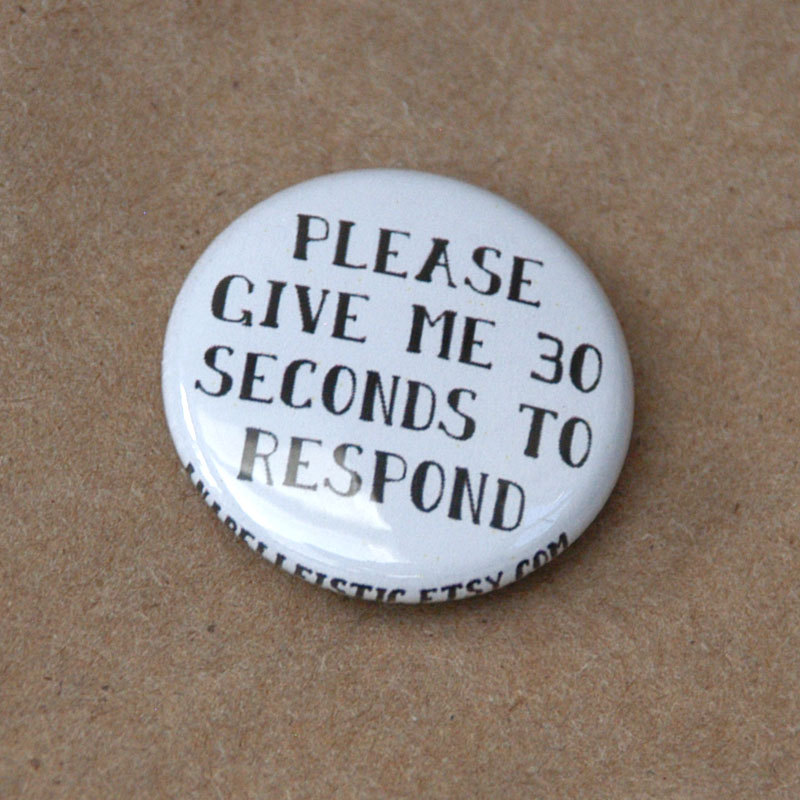
button created by autistic woman
An autistic woman who at times finds verbal communication overwhelming (her website is shown on the bottom of this button) creates and sells cool jewelry, including buttons featuring visual prompts

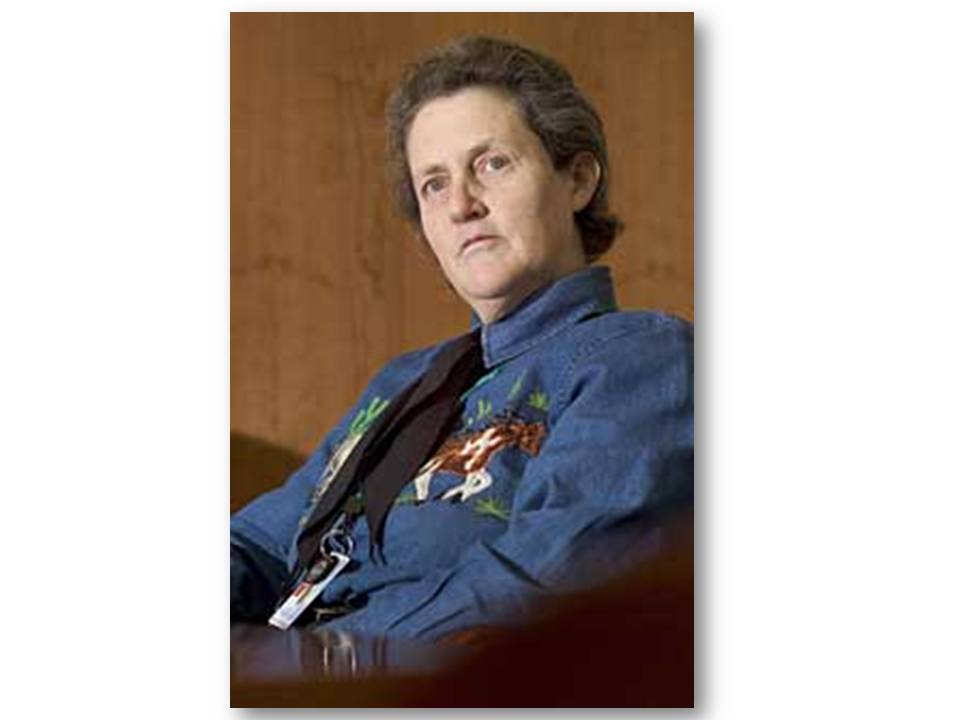
There can be a number of reasons for this.  We might be using boring words, speaking too fast, using language that is too complex, or neglecting to reference the child’s preferred interests.   But a common reason for “losing your audience” in social skills training with kids on the autism spectrum is that many kids with ASD seem to learn better in a visual modality. Temple Grandin is a well-known example of a person with autism who learns visually.  She articulates this beautifully in this quote:  “When I think about abstract concepts such as relationships with people, I use visual images such as a sliding glass door.  Relationships should be approached gently because barging forward too quickly might shatter the door.” (From Teaching Children with Autism, by Kathleen Ann Quail )

Temple Grandin, autistic person with visual learning style
Temple Grandin

There are certainly many children with autism who do not learn in a visual manner like Temple Grandin.  But for the ones who do, I believe is important to keep on hand a variety of engaging and meaningful props for your social skills learning activities.   Here are a few examples.

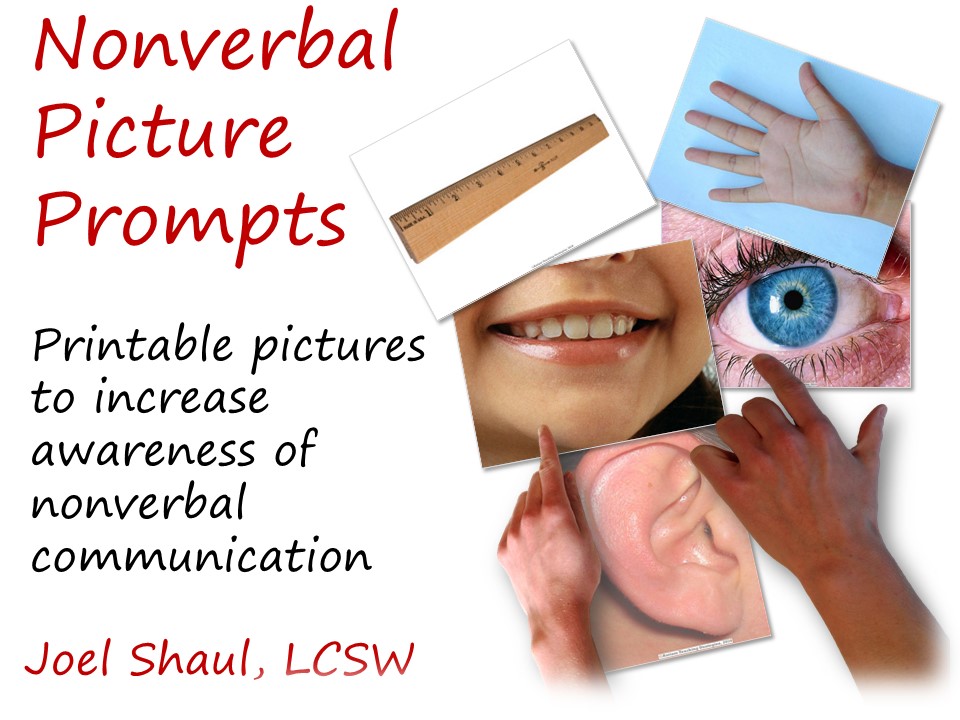
For many kids with ASD,  our frequent verbal prompts regarding nonverbal factors just become part of the unwanted noise they tune out.  But when you keep on hand pictures of eyes, hands, a face and a ruler, and use these as visual prompts during social skills activities, you can get much better attention and retention.

autism nonverbal communication free download

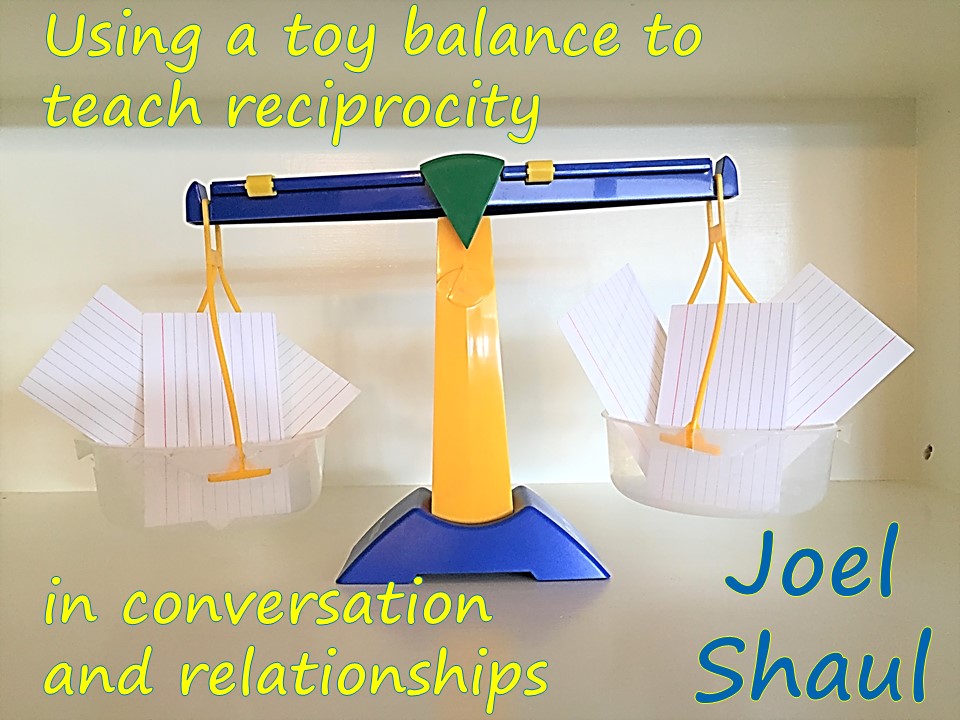
Children with ASD can tune out our words after years and years of verbally prompting to talk less, talk more, stop talking about that, and so forth.  For individuals who might be withering under all this scrutiny and badgering, try a social skills teaching approach.  This toy balance, available for about 15 dollars online, is terrific for social skills activities to teach reciprocity in conversation and relationships. Learn more about this here.

I invite you to explore dozens of other visual-based, engaging autism social skills training methods on this website.

Here is a one minute video that explains much of this.

Joel Shaul

Your comments on these resources are most welcome, and often helpful. Click HERE to send an email.

Teaching children with autism the social skill of discerning silly from serious

social skills training activity

Silly to Serious Set placement featured image 2020A free downloadable kit to help children with ASD to increase awareness of different levels of formality

Silly to Serious Explanation and Panels

Silly to Serious cards only

Silly to Serious Set, PowerPoint Version

This is also available in Polish

Young people with other autism spectrum disorders often struggle to understand what I call “levels of formality” in social situations.  In a milieu where a serious bearing might be indicated for a child, a young person on the autism spectrum might behave and speak in a casual and informal manner.  For some kids with ASD, the opposite can occur also, and they can at times act too proper around peers where more laid back words and actions would be more appropriate.

There are several reasons why children on the autism spectrum find this set of social skills hard to grasp.  First, they tend to not easily understand the subtleties of social hierarchies and how they themselves rank within them.  Second, a child with ASD often tends to  have difficulty making quick shifts in attention, so if such a child is transitioned suddenly from, say,  playing Wii to meeting Mom’s boss who has just stopped by the house, the child might find it extremely difficult to alter his behavior and words quickly enough.  Third, many kids with autism have difficulty regulating extremes of emotion.  Exerting control over feelings of excitement can be hard for them.

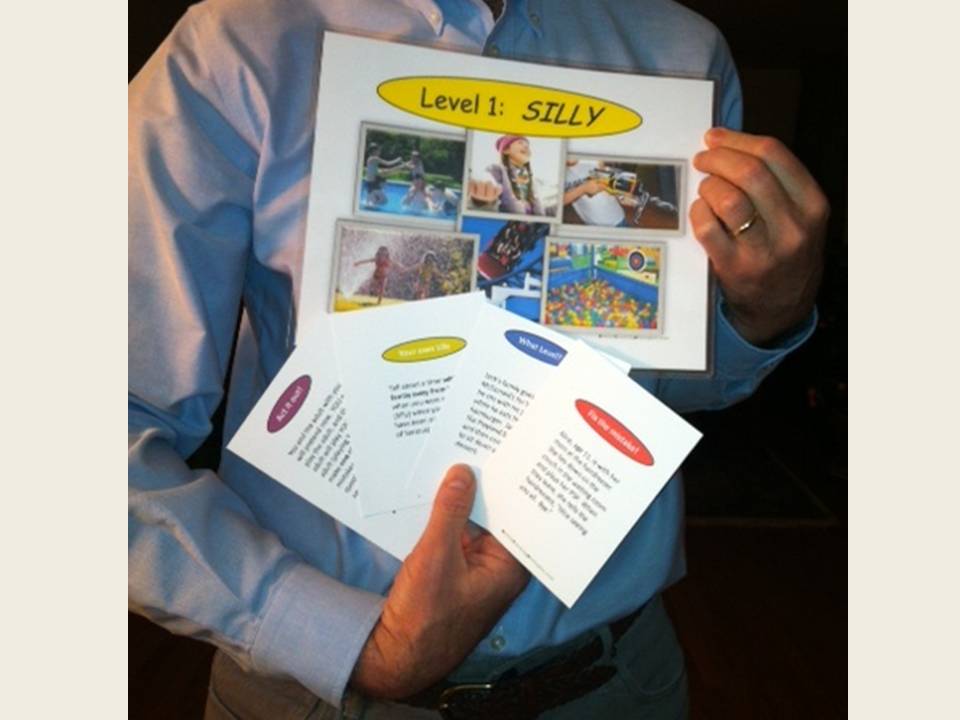
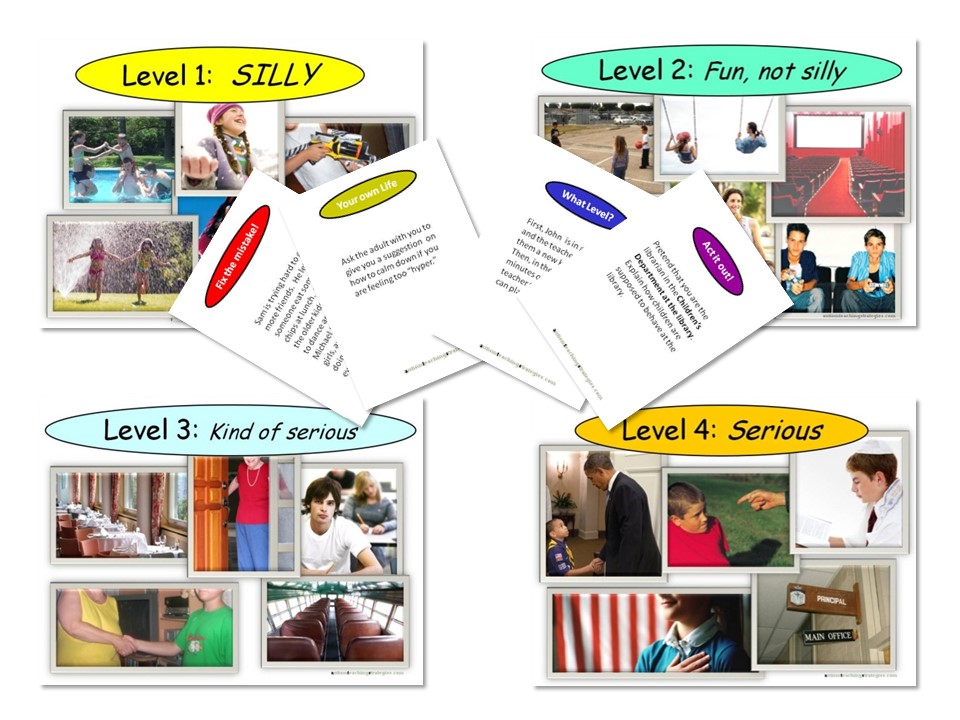
To help children with ASD to learn this social skill, I find it very helpful to divide levels of formality into four different levels.  They are basically defined in the visual above.  Then, you can help the child by saying, “We’re going into Chucky Cheese.  You can be level 1 in there.”  Or, at a big family get-together, you can help the child by saying, “In the backyard pool, that’s a level one. When we go inside to see great-grandpa, who is sick, that is a level 3.”

What is included in the Silly to Serious Card Activity:

1. A set of eight 8 1/2 by 11 illustrated panels

components of this ASD social skills activitiy
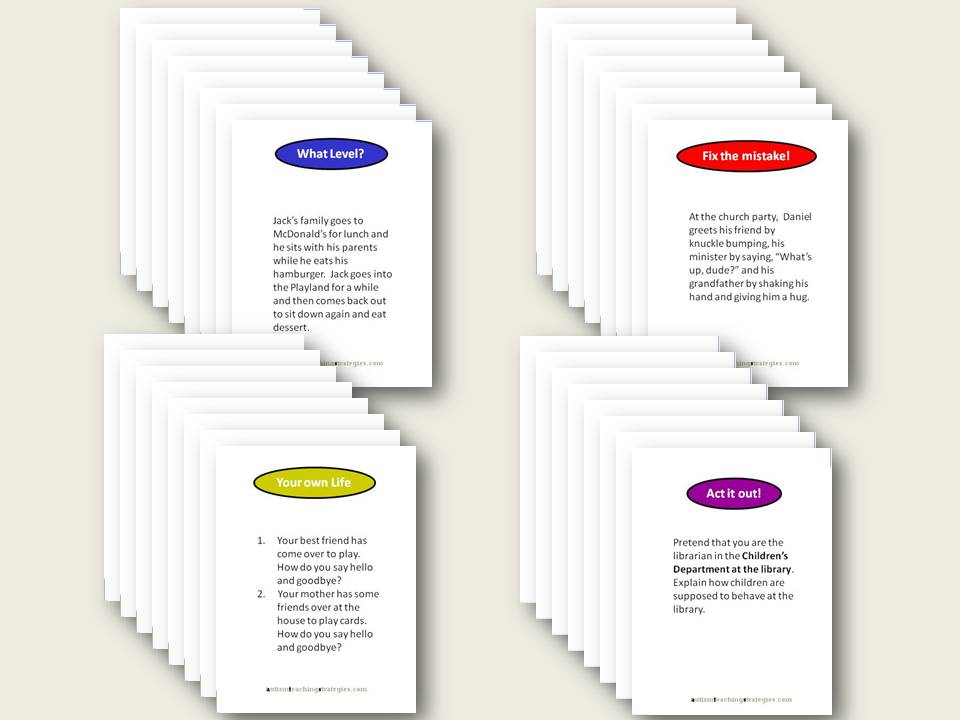
These are the Silly to Serious visual and word prompts for the four levels. You post them on the wall or lay them on the floor. The visuals shown here can be used alone with kids on the spectrum for social skills lessons. Printing out the socials cards below is recommended if you want to make a game out of it.These are the Silly to Serious social skills cards. There are 32. Each card poses a question or sets up a role play.  These are the Silly to Serious social skills cards. There are 32. Each card poses a question or sets up a role play.

 2. A set of 32 question cards you use in a game-like format to increase awareness of levels of formality in diverse social situations.

social skills game cards for kids with Asperger's

How to introduce the activity:

“People can’t be serious all the  time when they are around other people.  People can’t be silly all the time either.  They have to be the right amount of serious or silly, depending on who they are with and what is happening.”

Now, show the Level Cards to the kids and help them to understand the varieties of social situations within each of the levels.  Practice greetings and goodbyes within each of the levels.  As you get into this, you may easily find you have enough to do for one or two classes or sessions without even getting to the card activity.

“We are going to play the Silly to Serious game.  There are four different kinds of cards in this deck, and when you draw a card you have to do what the card says.

If you draw a “What Level” card, you have to figure out which of the four levels the person in the card is going through.

If you draw a “Fix the Mistake” card, you have to find out how the person in the card is either too serious or too silly and then fix their problem.

If you draw a “Your Own Life” card, you have to answer the question about about YOU.

If you draw an “Act it Out” the card, you have to act out what the card tells you to act out.”

I hope this social skills activity is helpful for you.

Joel Shaul, LCSW

Your comments on these resources are most welcome, and often helpful. Click HERE to send an email.
The Conversation Train Book
Green Zone Book Cover Click to Learn More

Eye contact in children with autism – Times to AVOID it in social skills teaching with kids on the autism spectrum

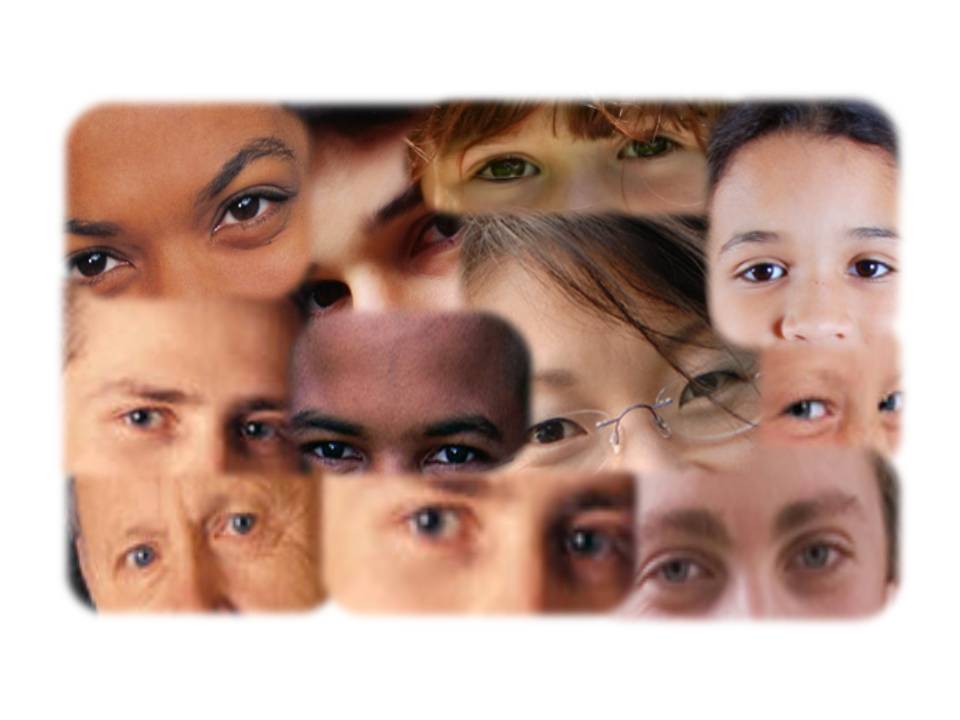
eye contact in kids with ASD

eye contact in kids with ASD
There are times when insisting on eye contact runs contrary to our goals in teaching and counseling when we are helping kids on the autism spectrum with social skills.

Teachers, mental health professionals and speech and language therapists all work hard to help children on the autism spectrum to improve their use of face and eye contact.  However, when we rigidly insist on eye contact, we actually risk diminishing engagement in our social skill teaching activities.
All of us who are  experienced in teaching young people with ASD becomes aware of this dilemma.  Children with ASD ought to enhance their orientation towards others strategically in order to get more useful information during conversation.  But for so many kids on the autism spectrum, practicing this social skill comes at the price of increased distress and anxiety – and decreased attention to your social skills learning activity!
Brian R. King, LCSW, a psychotherapist with autism, provides some useful insights and advice on this topic in his book, Strategies for Building Successful Relationships with People on the Autism Spectrum.  As an individual with ASD, he  finds prolonged eye contact uncomfortable and actually a hindrance to communication. He notes that blind people function quite adequately in conversation without the benefit of eye contact.
I have devised here a series of visuals to suggest alternatives to traditional face-to-face teaching when we are counseling and teaching children with autism spectrum disorders.
I hope you find these ideas helpful.
Joel Shaul, LCSW

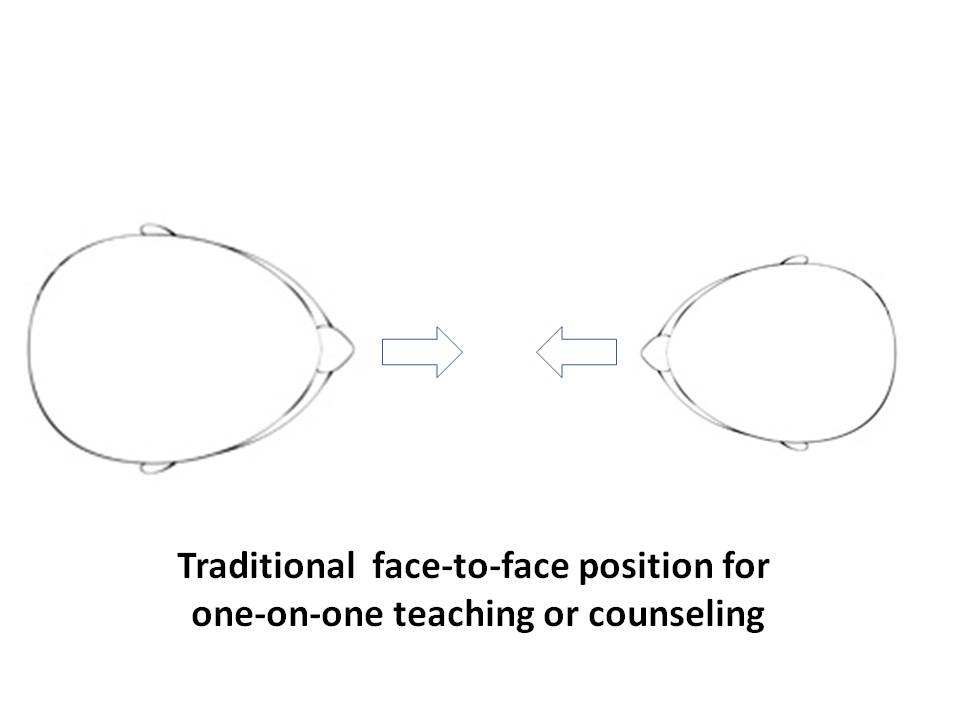
traditional face to face eye contact
This is more or less the way I was trained as a psychotherapist thirty years ago.

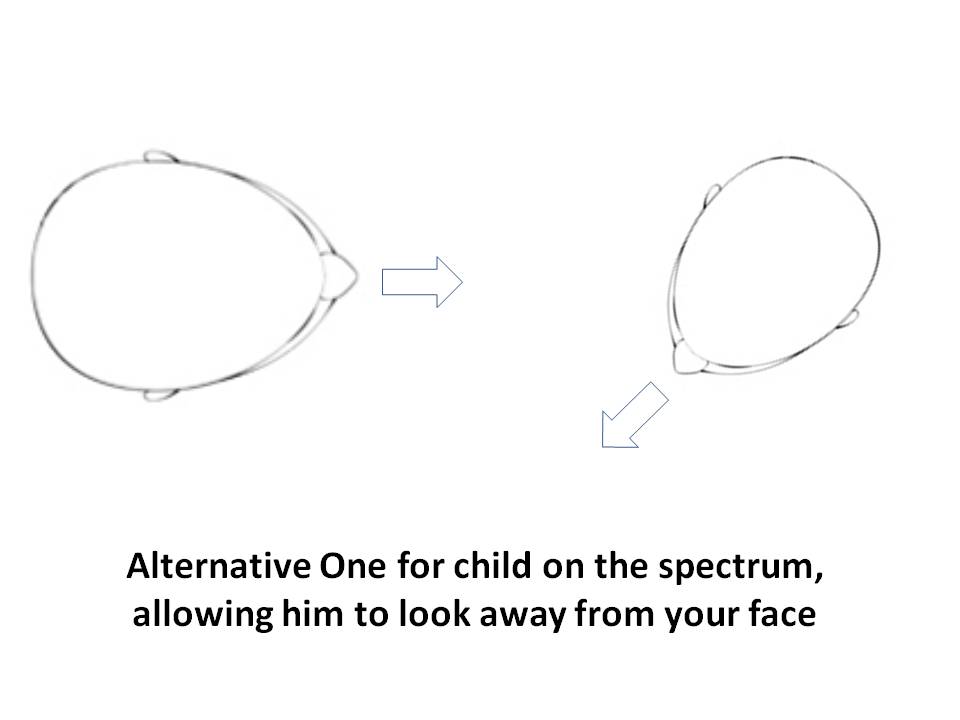
Here is one alternative. The child with autism may be able to concentrate better on what you are saying.

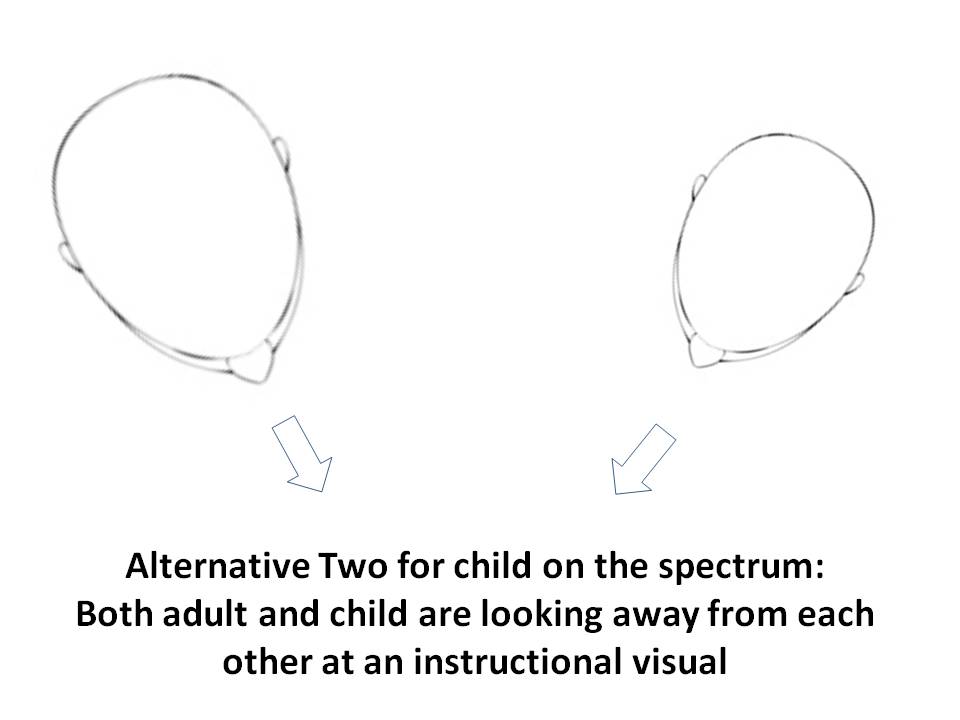
Here, you are dispensing with most eye contact and both you and the child with ASD are looking at the same computer screen, IPAD or other instructional visual

In my own work, I keep on hand dozens of meaningful visuals. For some kids on the spectrum, it is more productive to teach by having us both look at the same object than for us to look at each others’ eyes.

The Conversation Train Book
Green Zone Book Cover Click to Learn More

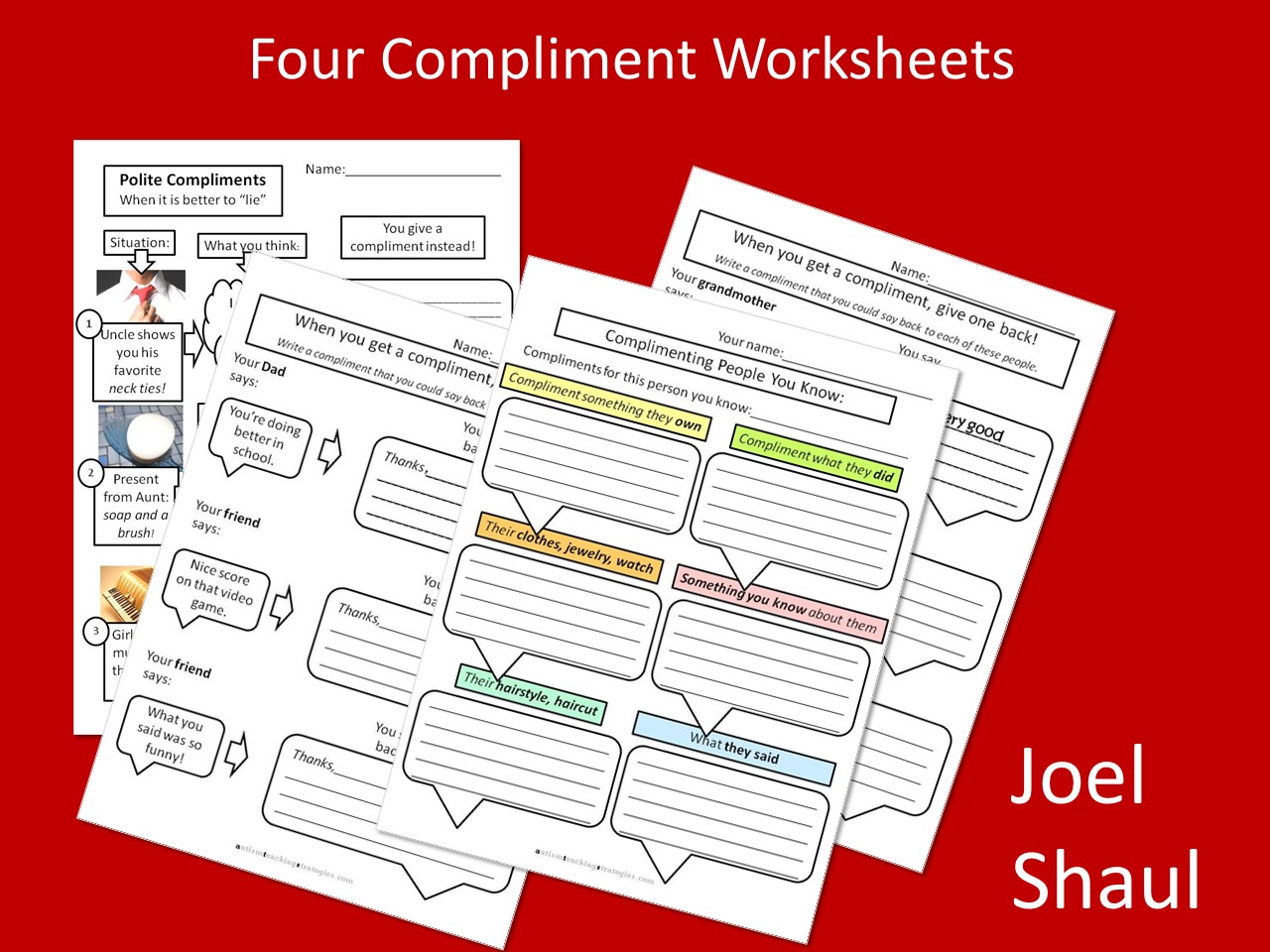
Helping kids with Asperger’s to give compliments: Worksheets for social skills teaching

worksheets for autism social skills teaching

There are many other resources on the website to help children with ASD to learn and practice giving compliments.

Here are several:

Compliment Picture Panels

Say Something Nice Board Game

Paper Fortune Teller for Compliments

How to Play Compliment Tag

Your comments on these resources are most welcome, and often helpful. Click HERE to send an email.


The Conversation Train Book

Green Zone Book Cover Click to Learn More

Empathy autism social skills training, Part 2: Teaching concern using photos (22 downloads for you here)

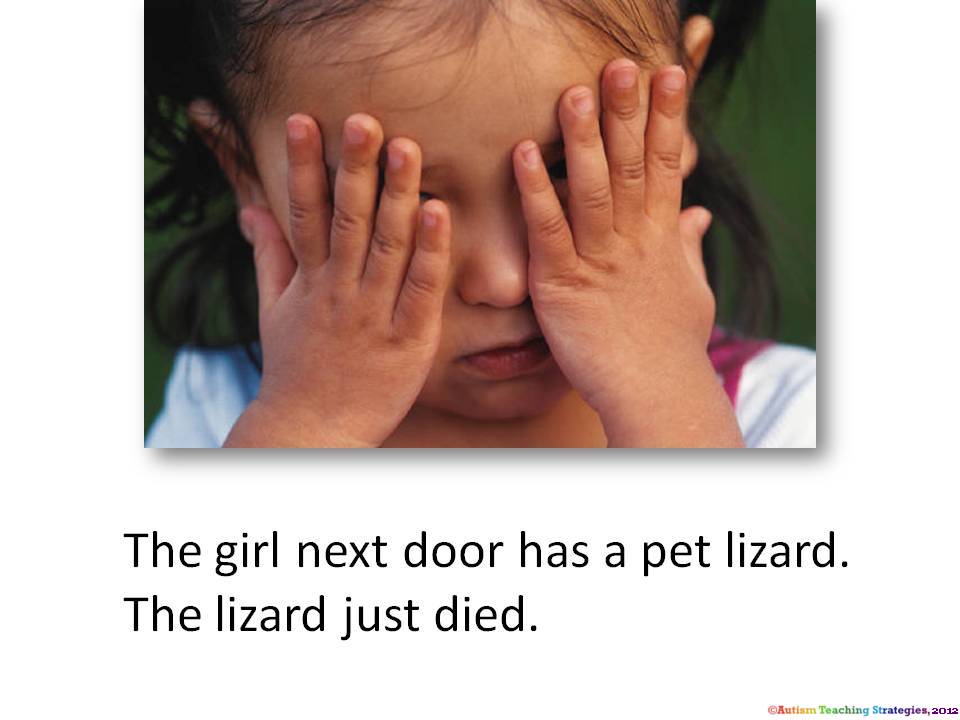
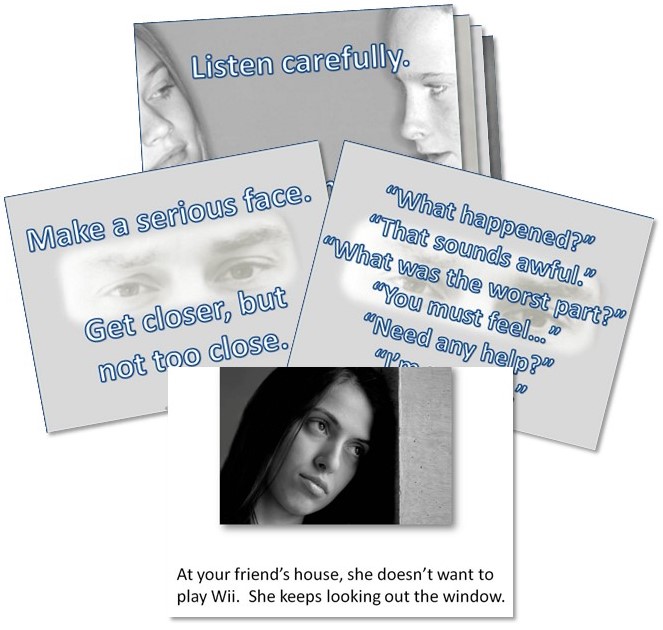
In this download, there are 22 photographs of people in distress, accompanied by very simple word descriptions. These are to help set up role plays for practicing empathy / showing concern skills with children on the autism spectrum. It is very useful to use the Showing Concern Picture Cards in combination with the Showing Concern Wall Display.

To download the Showing Concern Wall Display, please click on the link below:

Showing Concern Wall Display Download

To download 22 picture cards to practice showing concern, click on this next link below:

Showing Concern Picture Cards


Suggestions on using these empathy social skills materials:

Use the panels in the Wall Display, especially the one showing specific things to say, as word prompts.

Role play where you, the adult, play the person in distress

Role play where pairs of children play roles of distressed person and helper

Role play where you play the role of the person showing concern, but you make mistakes when you do it–with eye contact, tone of voice, what you say, etc. The kids watch and point out your mistakes. Have the kids point out your mistakes.


Joel Shaul, LCSW

Your comments on these resources are most welcome, and often helpful. Click HERE to send an email.


Green Zone Book Cover Click to Learn More