
Part 3: Workplace preparation Q & A cards (printable & screen-based)

A game-like card activity to promote workplace readiness in teens and young adults on the autism spectrum, in printable and screen-based versions.

In German: Bereit für den Arbeitsplatz – Karten

Hebrew translation of this resource

Why I made these cards

To engage teens and young adults on the spectrum in productive discussions about preparing for adulthood, I have found it useful to employ various media and game-like methods. Q & A card resources are one of my mainstays. This method helps to break up the usual adult-questioning-the-child dynamic in therapy and teaching. And in small-group and classroom work, the turn-taking format helps to give everyone, including quieter participants, the chance to talk.

Ways to use these cards

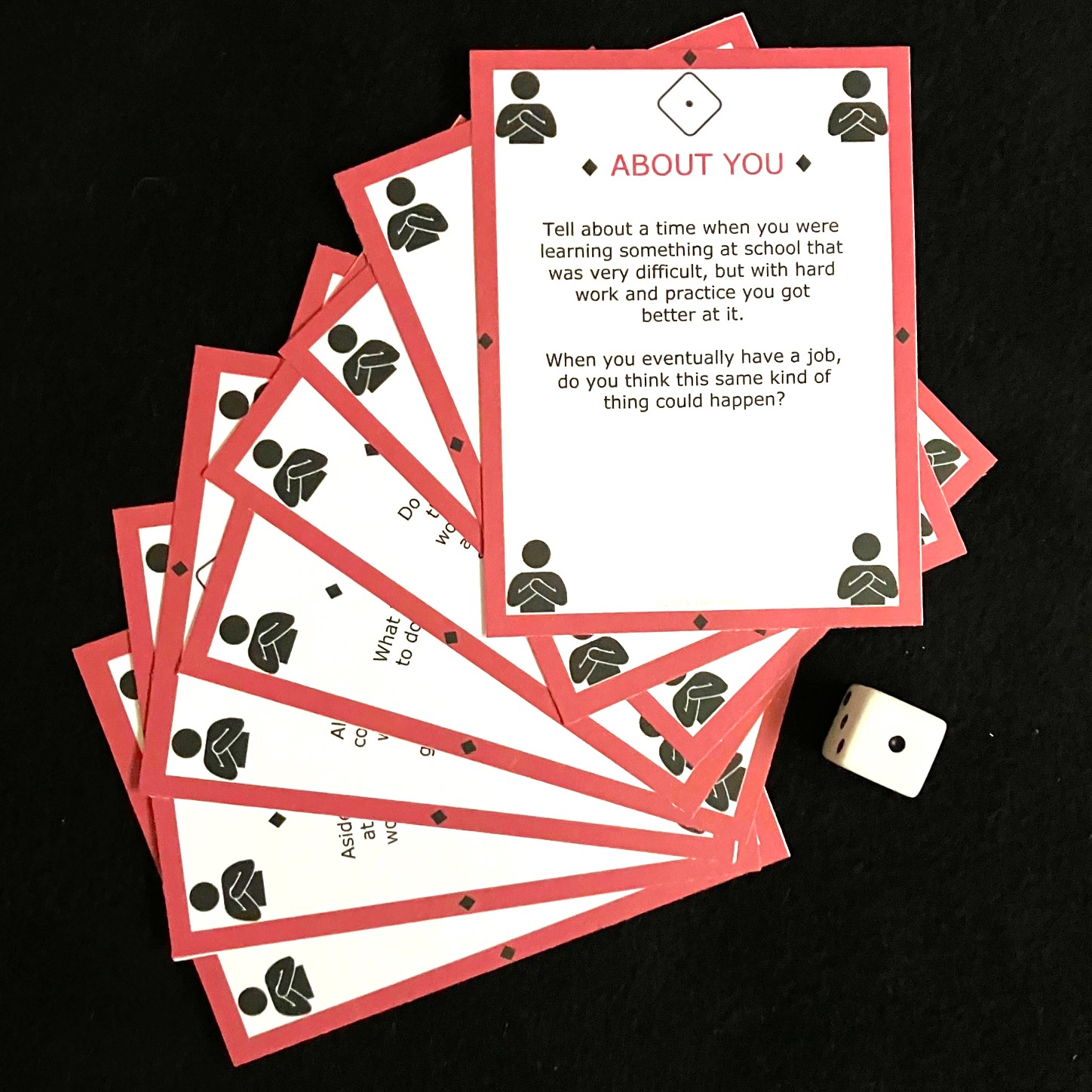
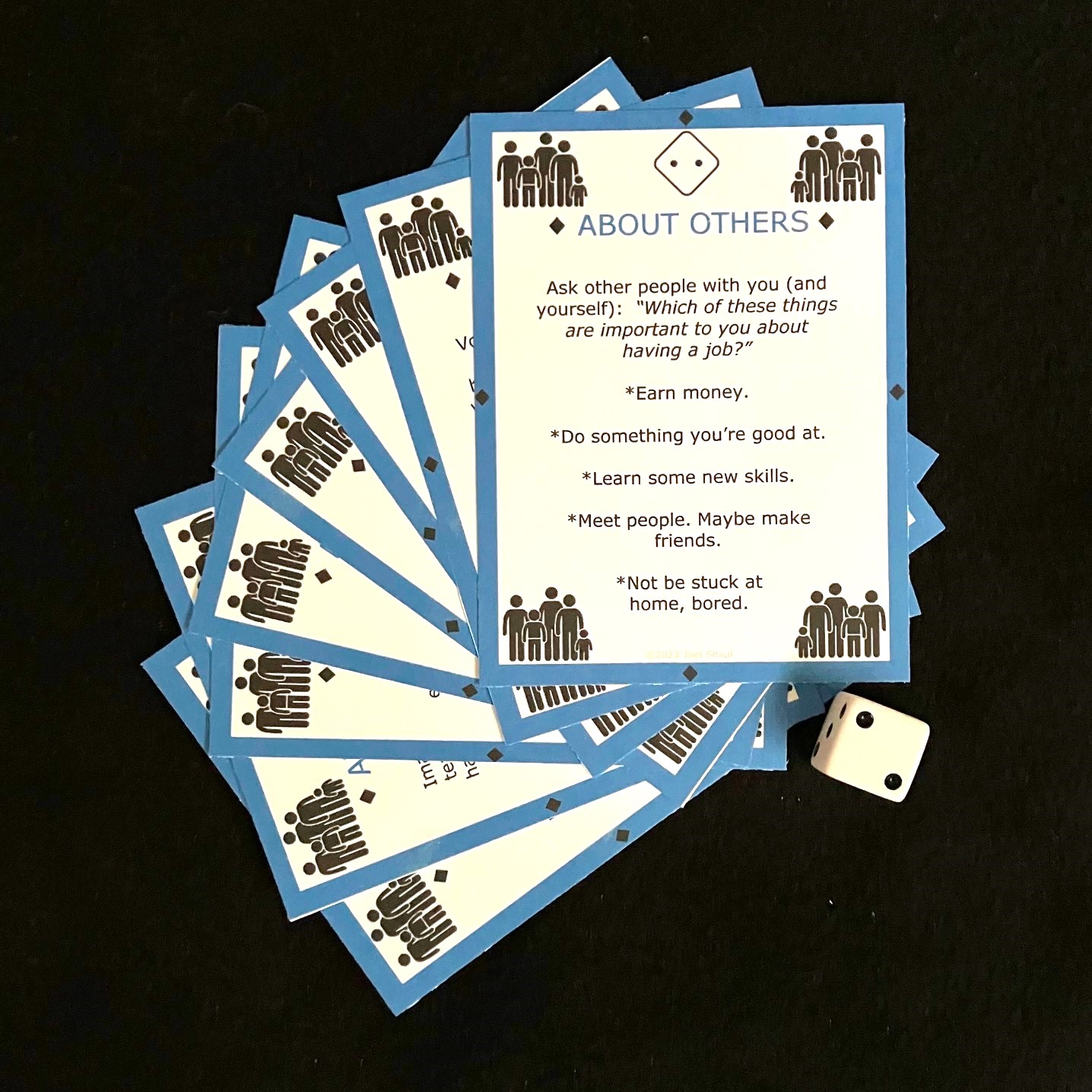
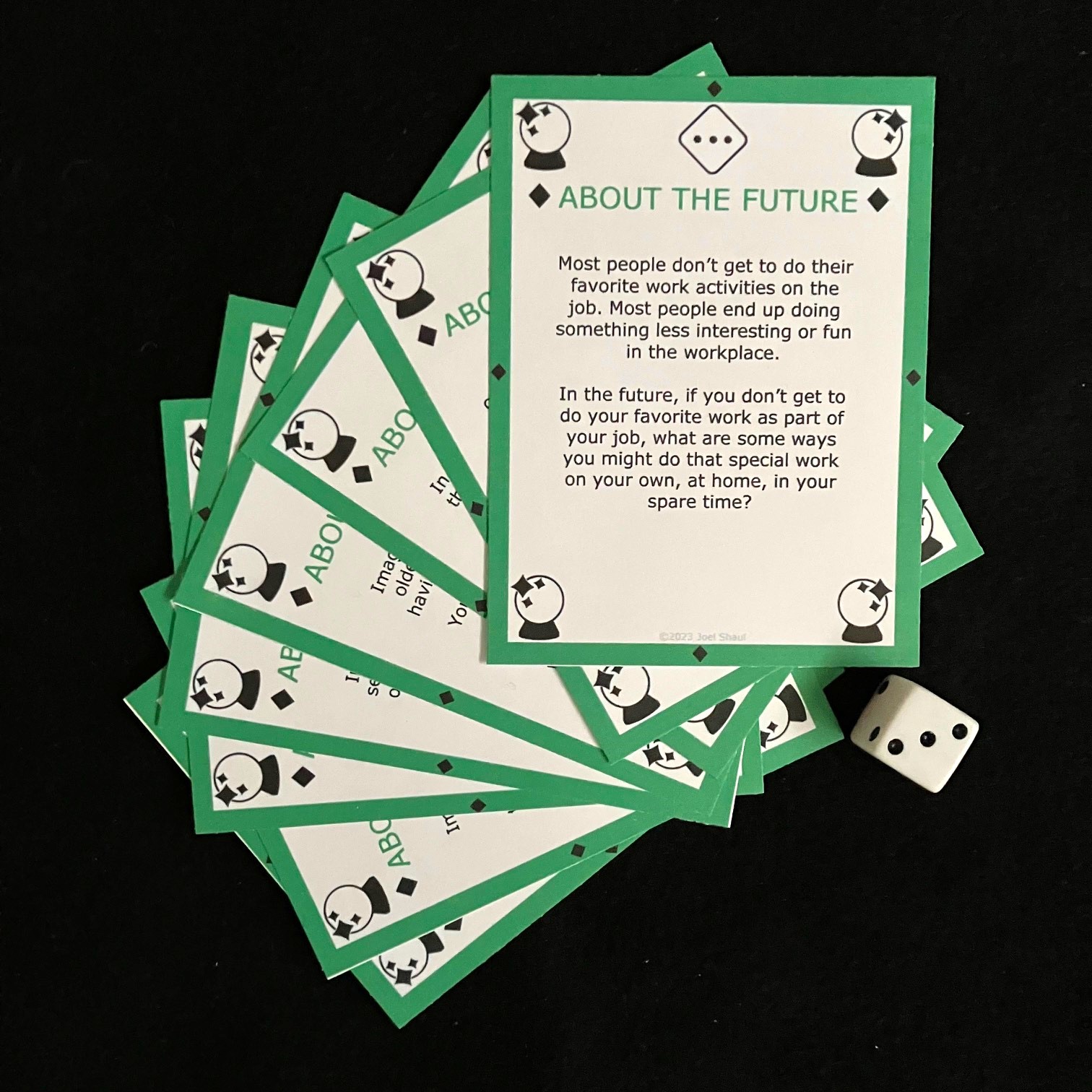
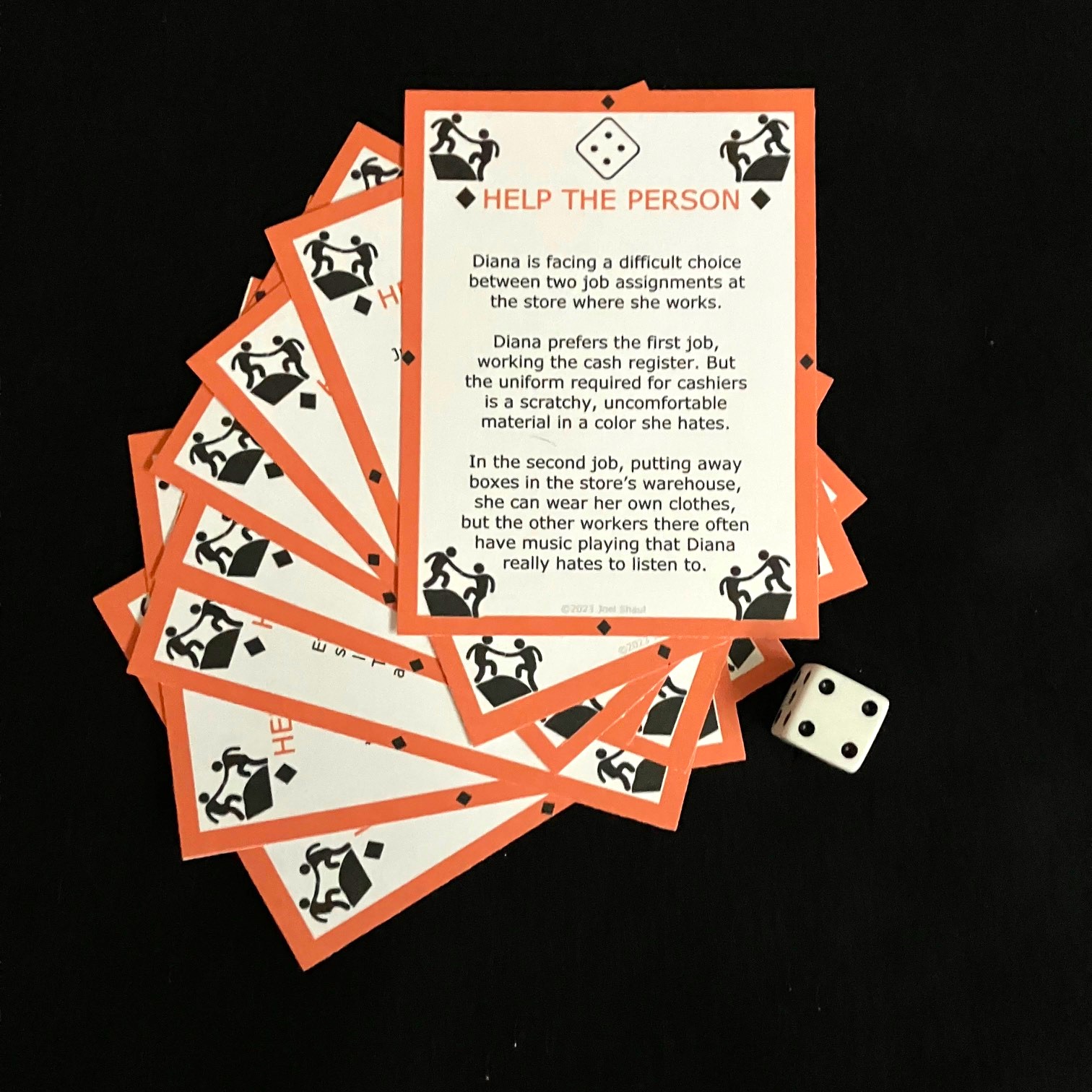
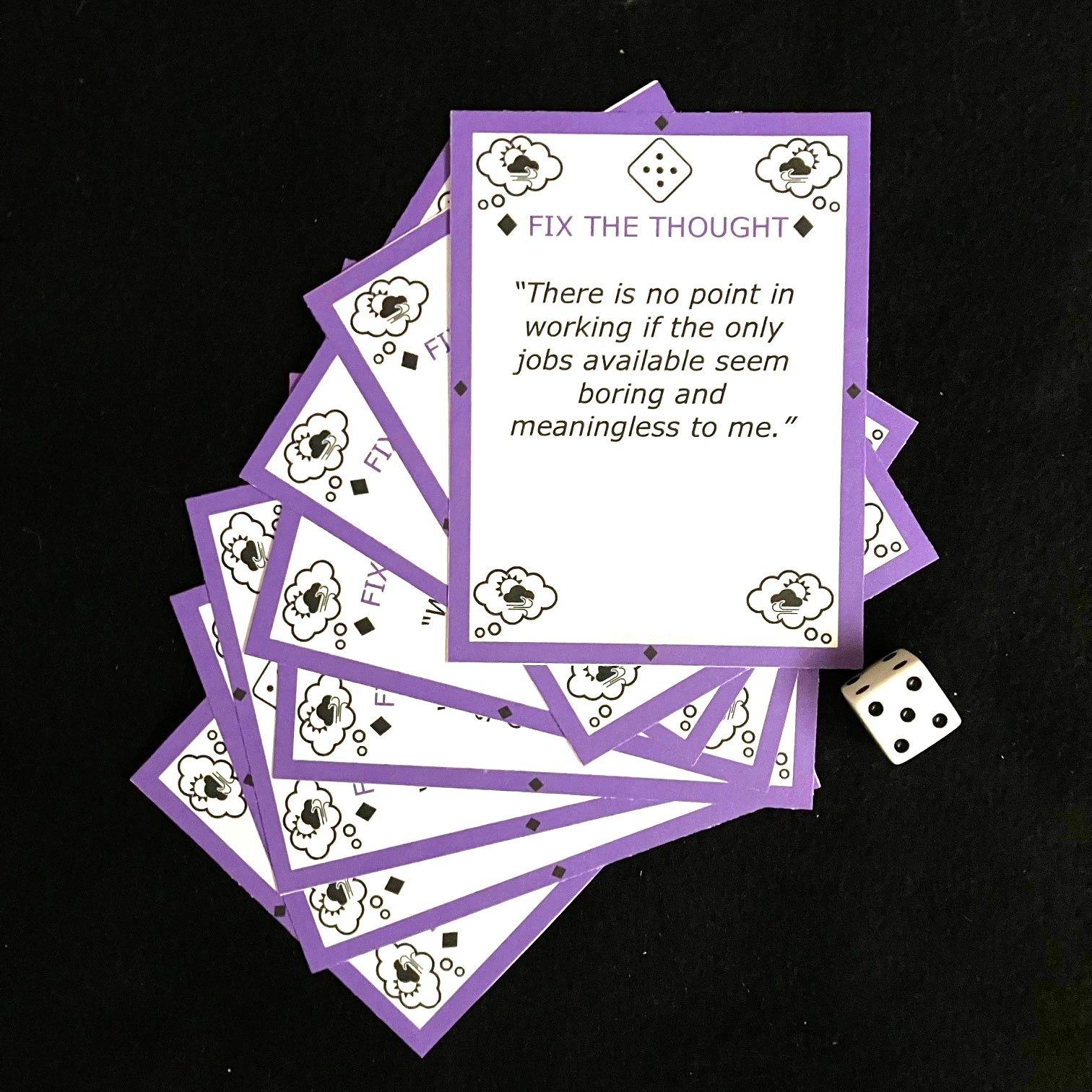
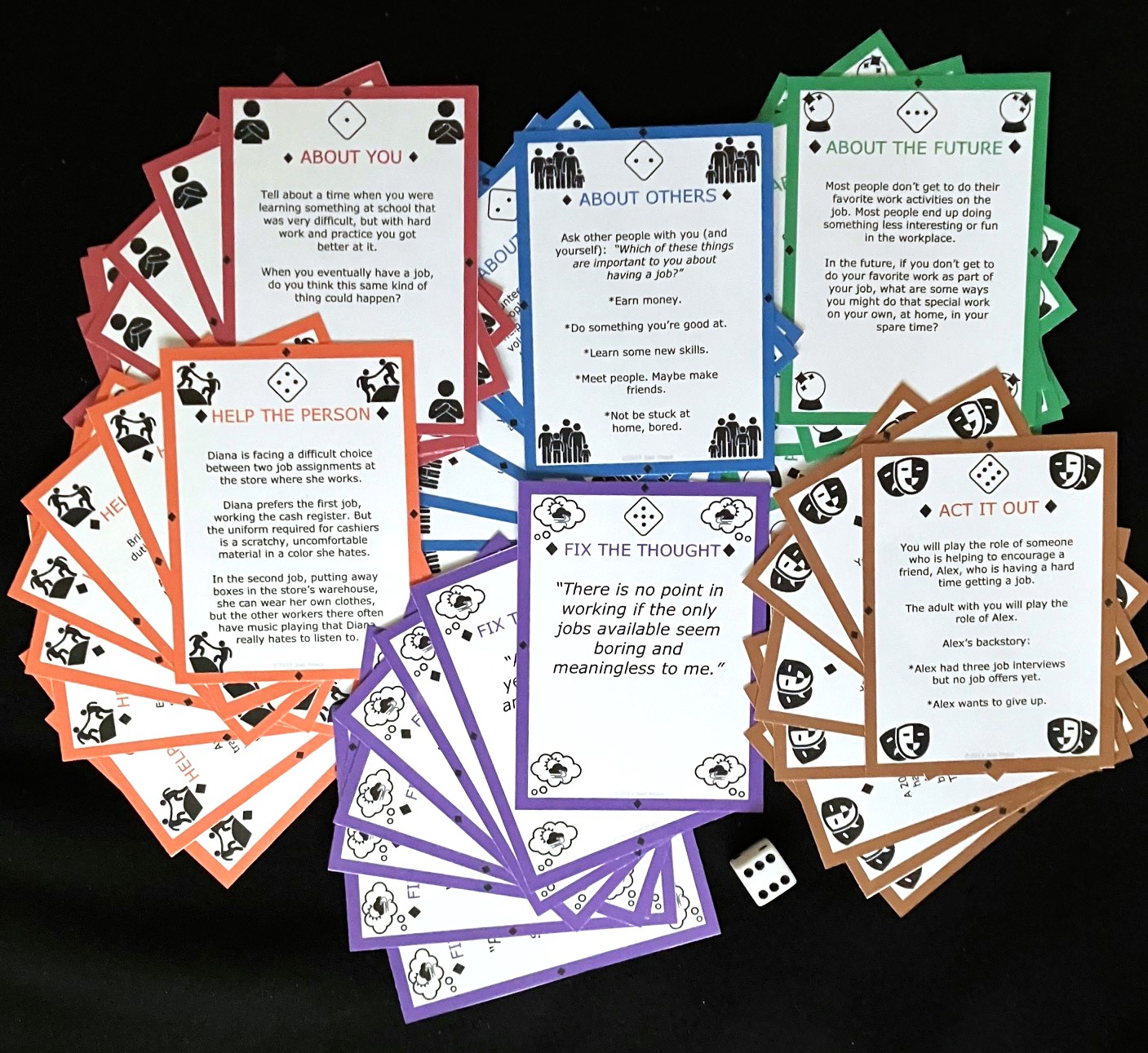
There are six categories of cards, allowing for a game-like element by rolling a die to determine which card a participant has to select.

But you may feel free to use these cards however you like. For example, you can pick through the deck and select the cards you think are most relevant and helpful for the young people you are assisting. You may decide to focus on just one single category of card.

For another card-based resource to explore much broader themes of preparing for adulthood, check out Young Adult Future Cards.

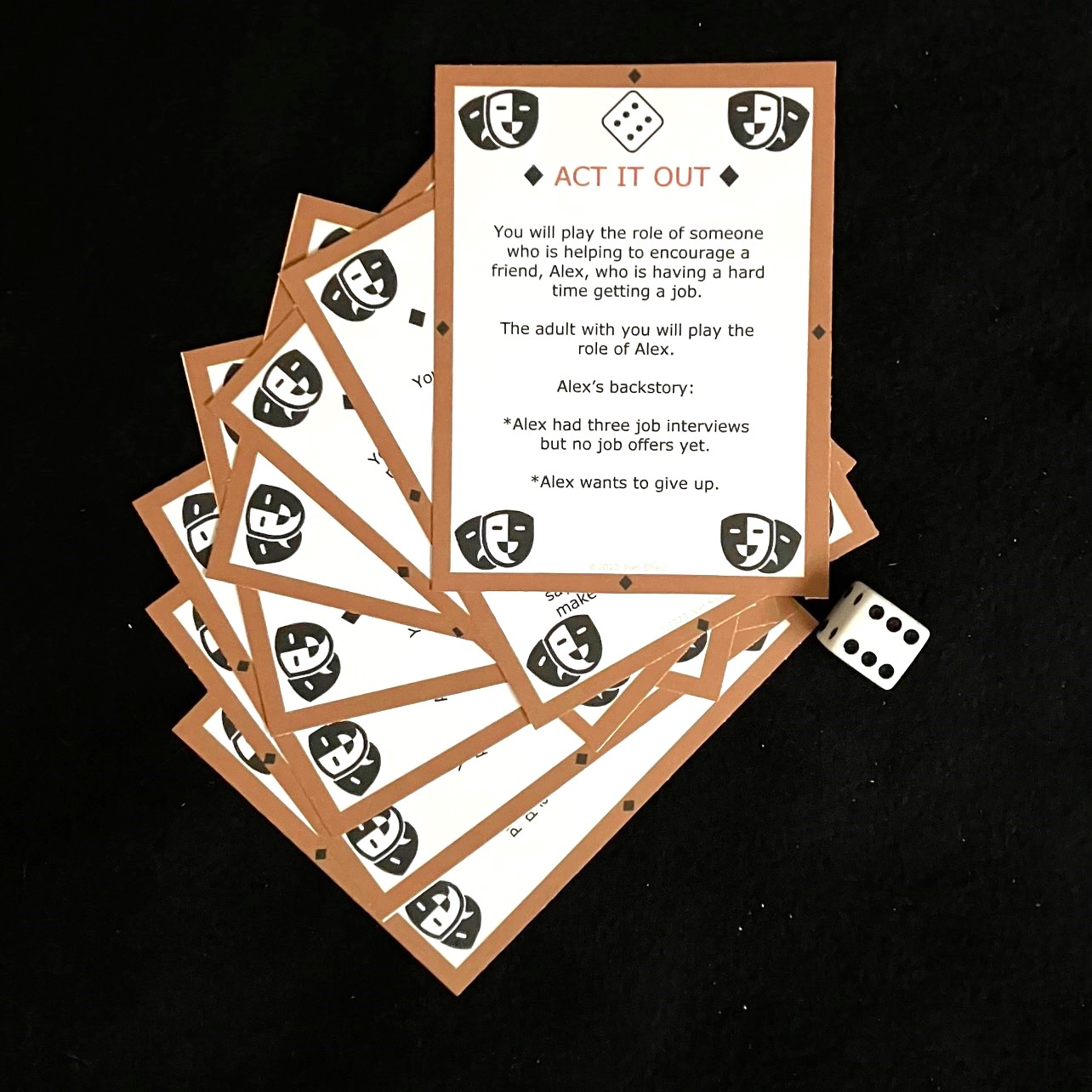
Here are the six different card categories.

You, the facilitator in this activity, can use the “Fix the Thought” cards in the following manner if you like: You, the facilitator, play the role of a person having this thought. The participants talk to you and offer you alternative ways of thinking.

If you would like to expand on the theme of automatic negative thoughts, check out this video and this resource on “Poison Thoughts.”

You, the facilitator, play an active role with these “Act it Out” cards. Each card gives “stage directions” for carrying out a very short role play.


These cards are part of a series of vocational preparation materials, which you may access by clicking on the links below.

Joel Shaul, LCSW


Intro: Workplace preparation resources for young people with ASD

Part 2: Workplace preparation – printable teaching panels

Part 3: Workplace preparation – Q & A cards

Part 4: Job interview skills – how to teach it and provide practice
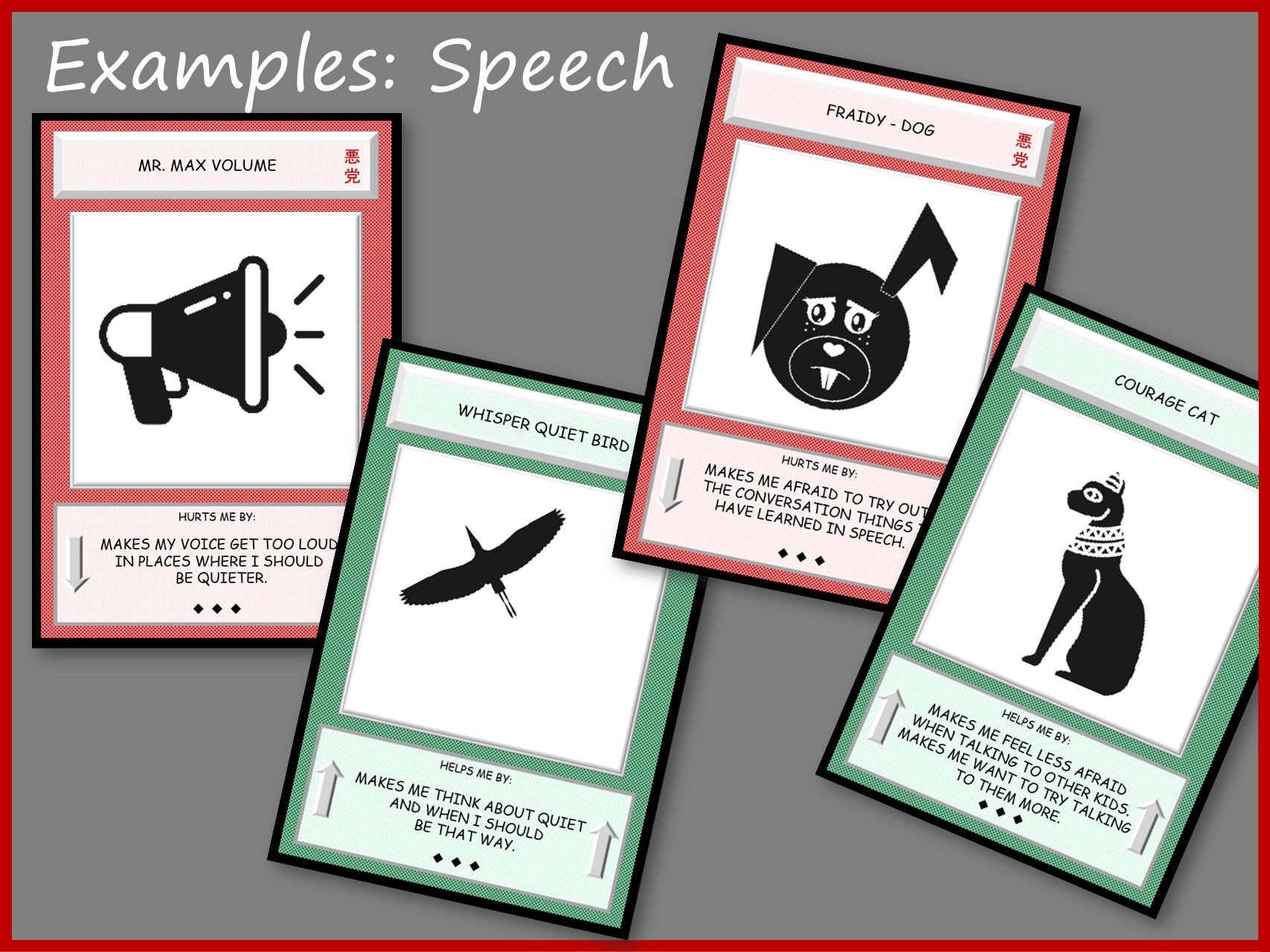
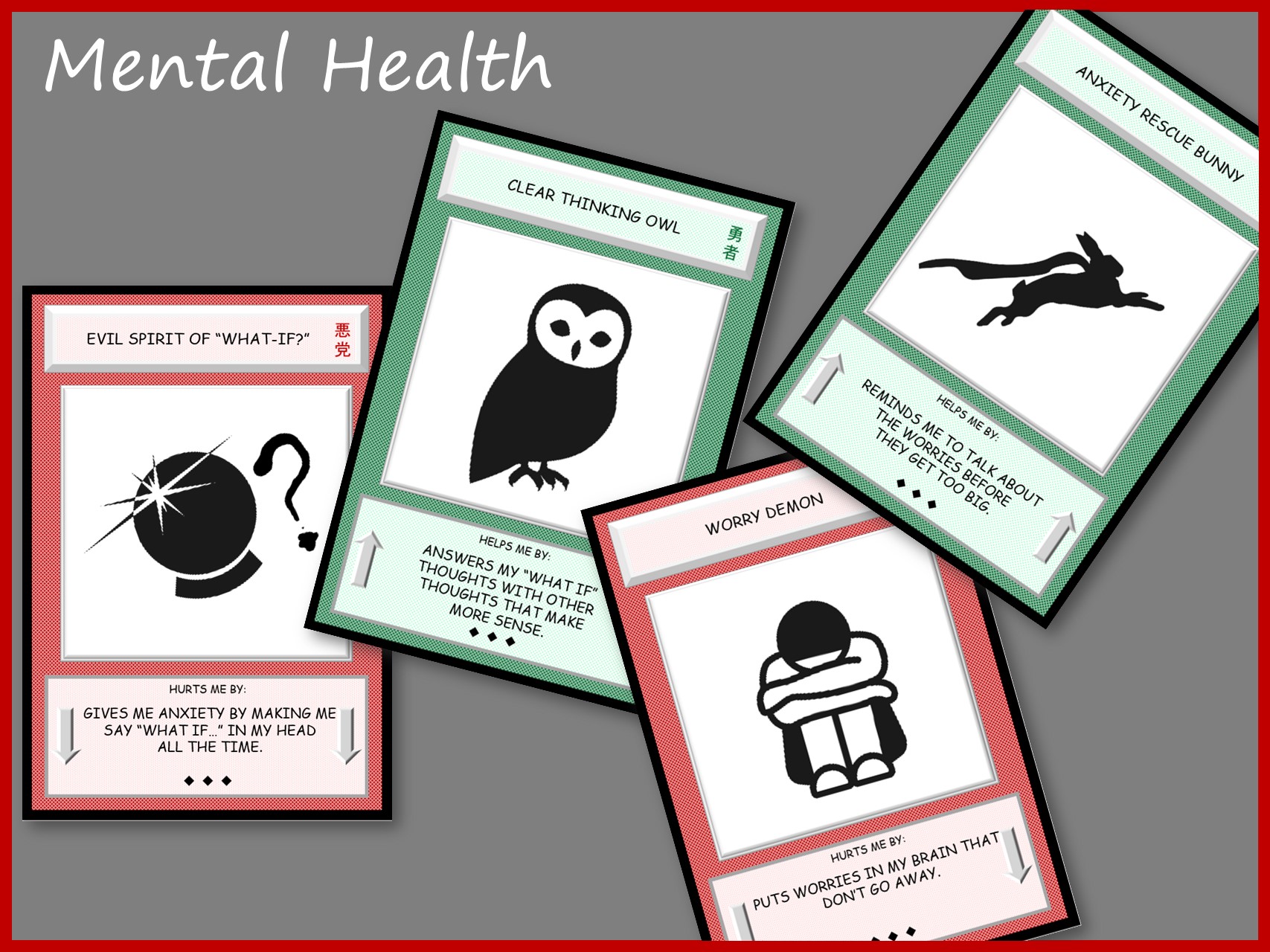
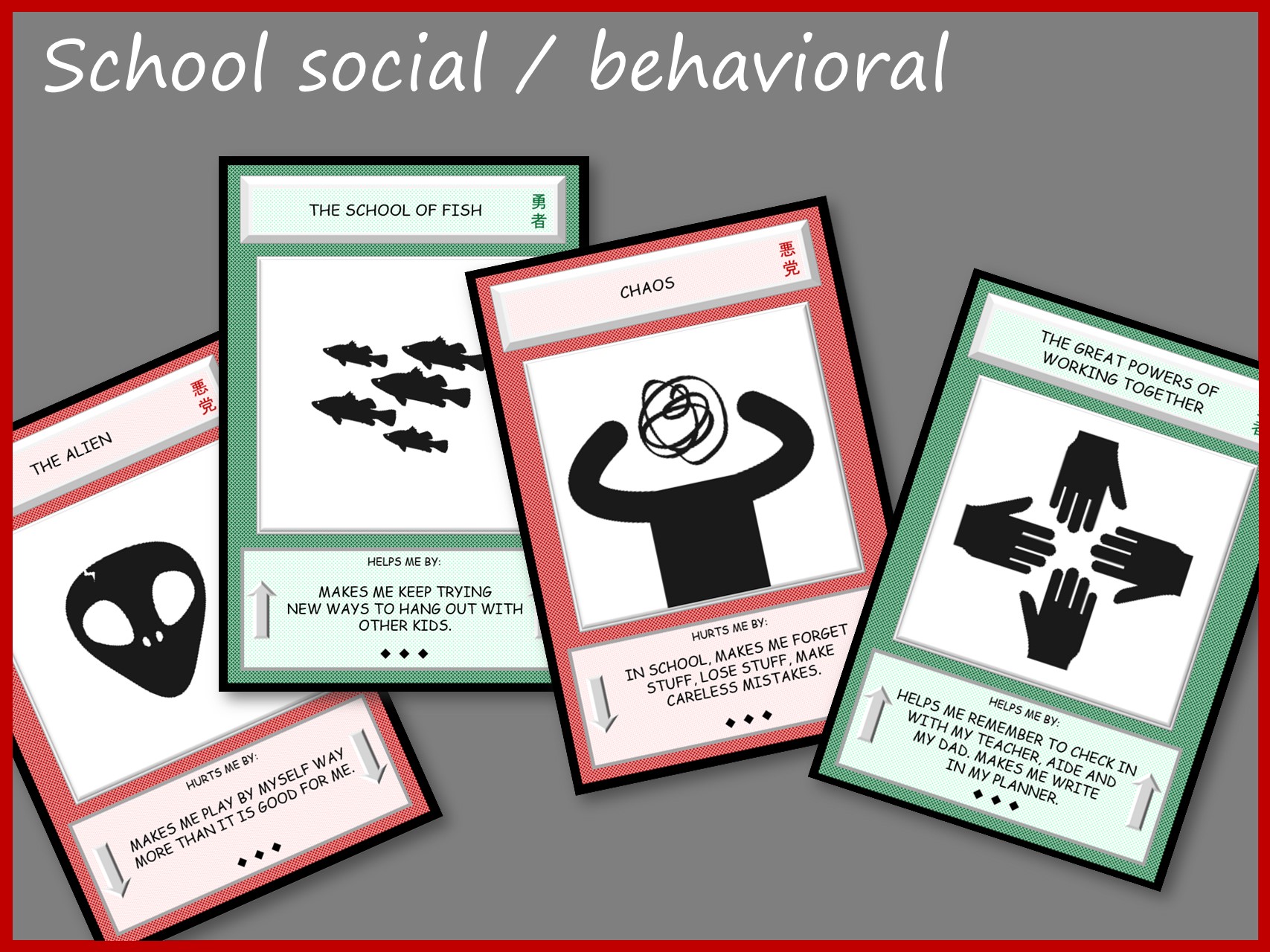
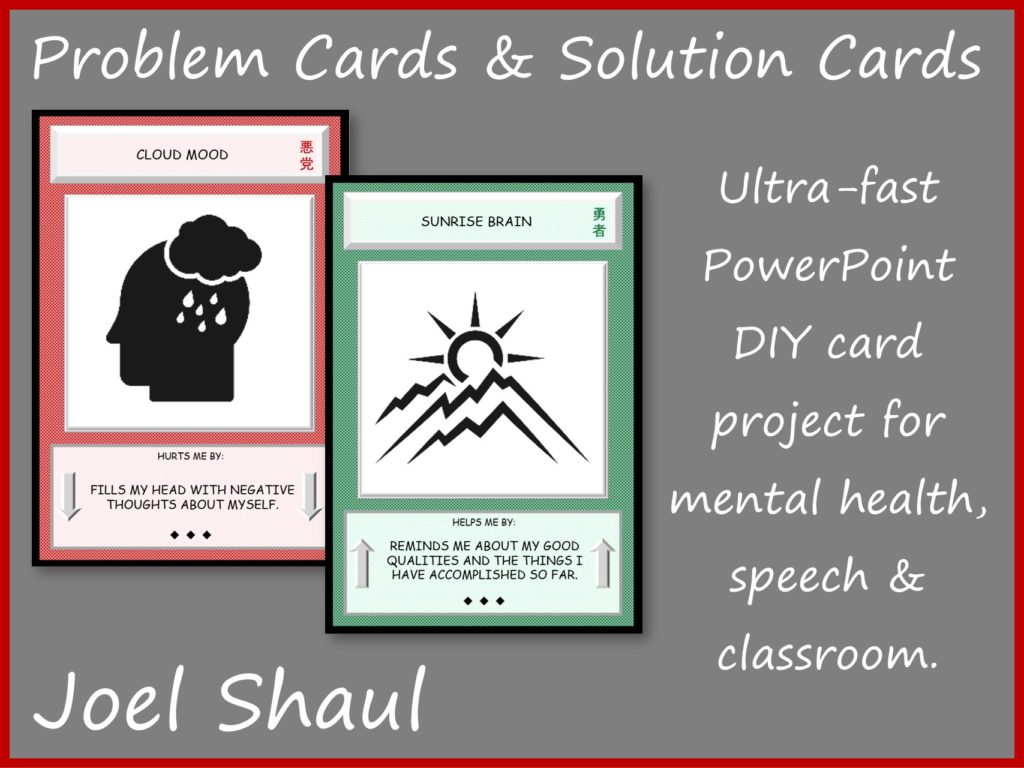
Problem and Solution Cards ~ Fast and fascinating self-awareness project easily completed with child during sessions

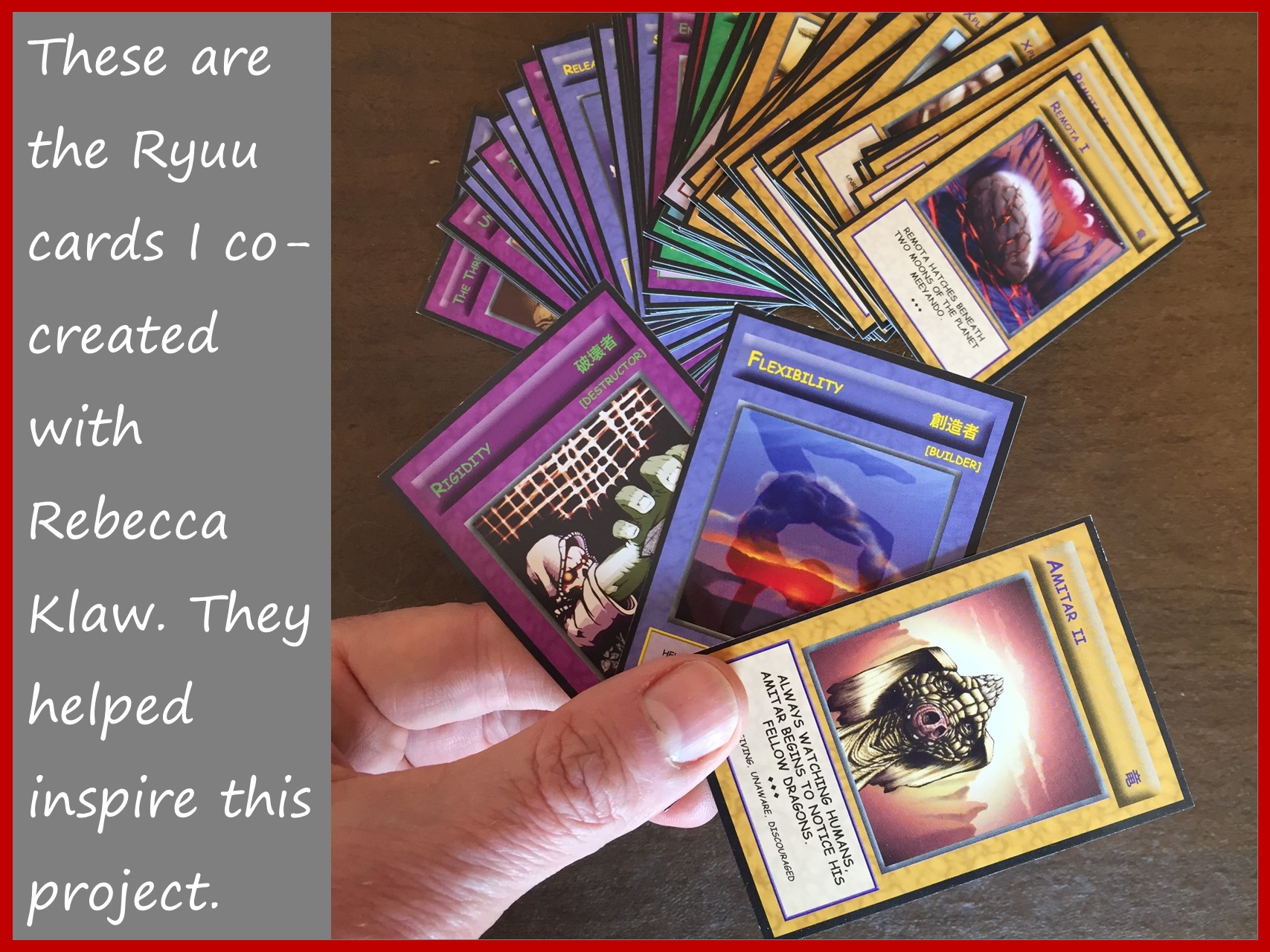
Do-it-yourself social skills cards designed to look like Pokémon and Yu-gi-oh

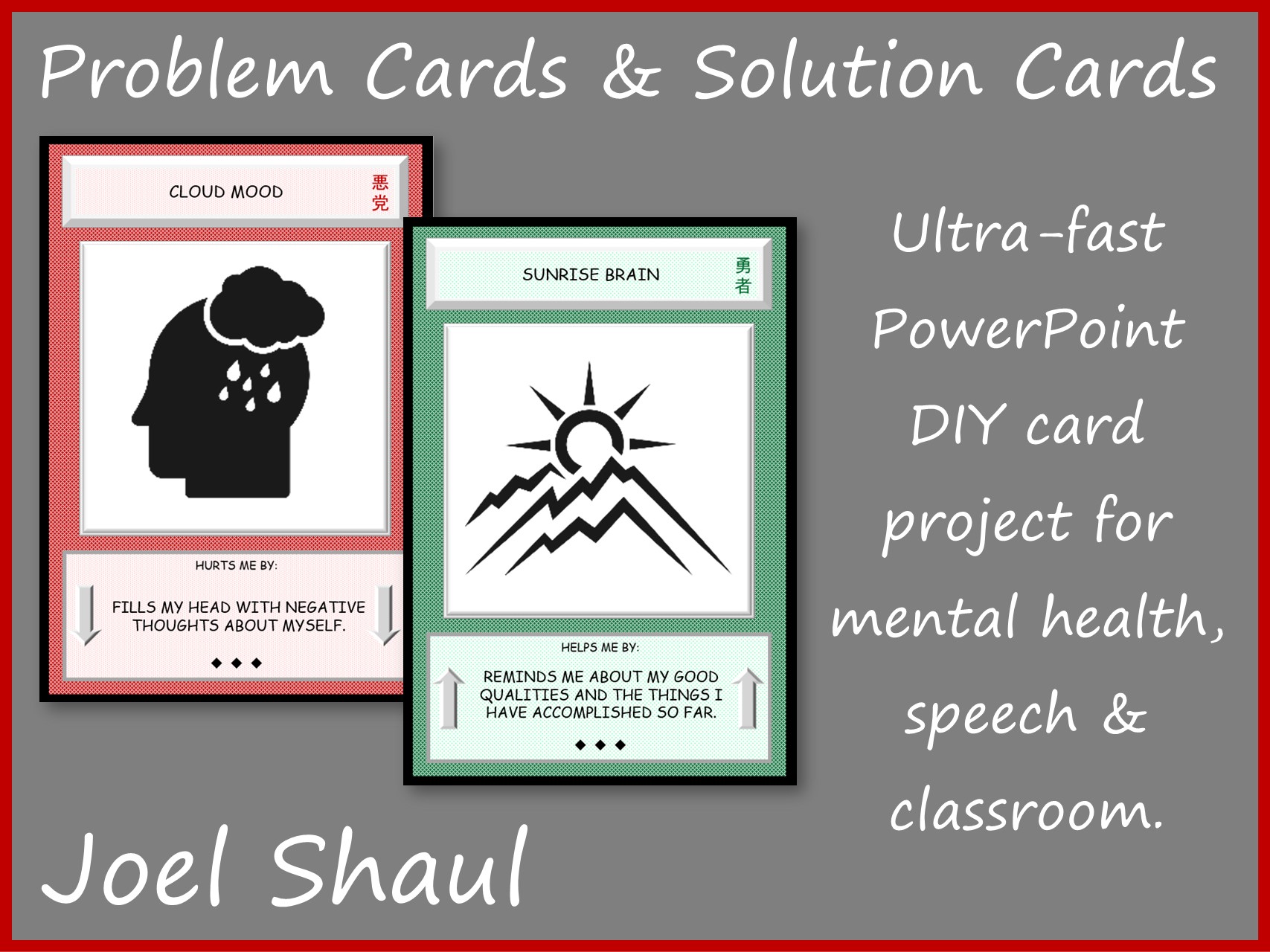
In mental health, special education and speech therapy, children experiencing multiple challenges can feel demoralized by being the “problem child” all the time. It can be useful sometimes to help our young clients externalize their problems onto fantasy characters which we can help them to fight against.

Many young people relate strongly to youth culture themes of “good guys” and “bad guys” through movies, stories, video games, and in trading card sets such as Pokémon and Yu-gi-oh.  To capitalize on this, I designed this free, easy card-making project to help children focus on therapy issues and coping strategies.

Although this is designed for in-person work, it is also ideally suited for teletherapy, since the collaborative work takes place on a shared computer screen and you can mail or email the finished product to your client.

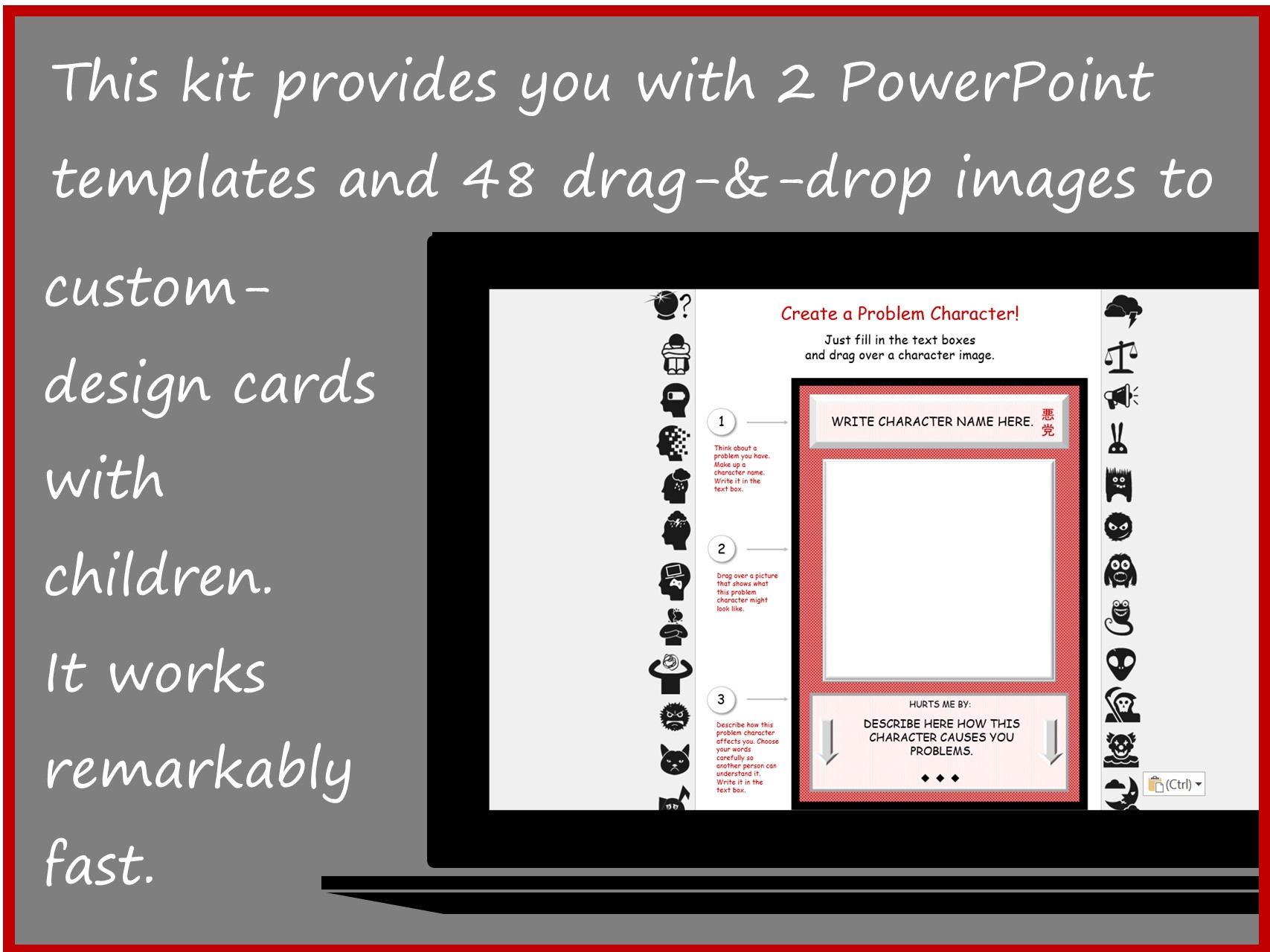
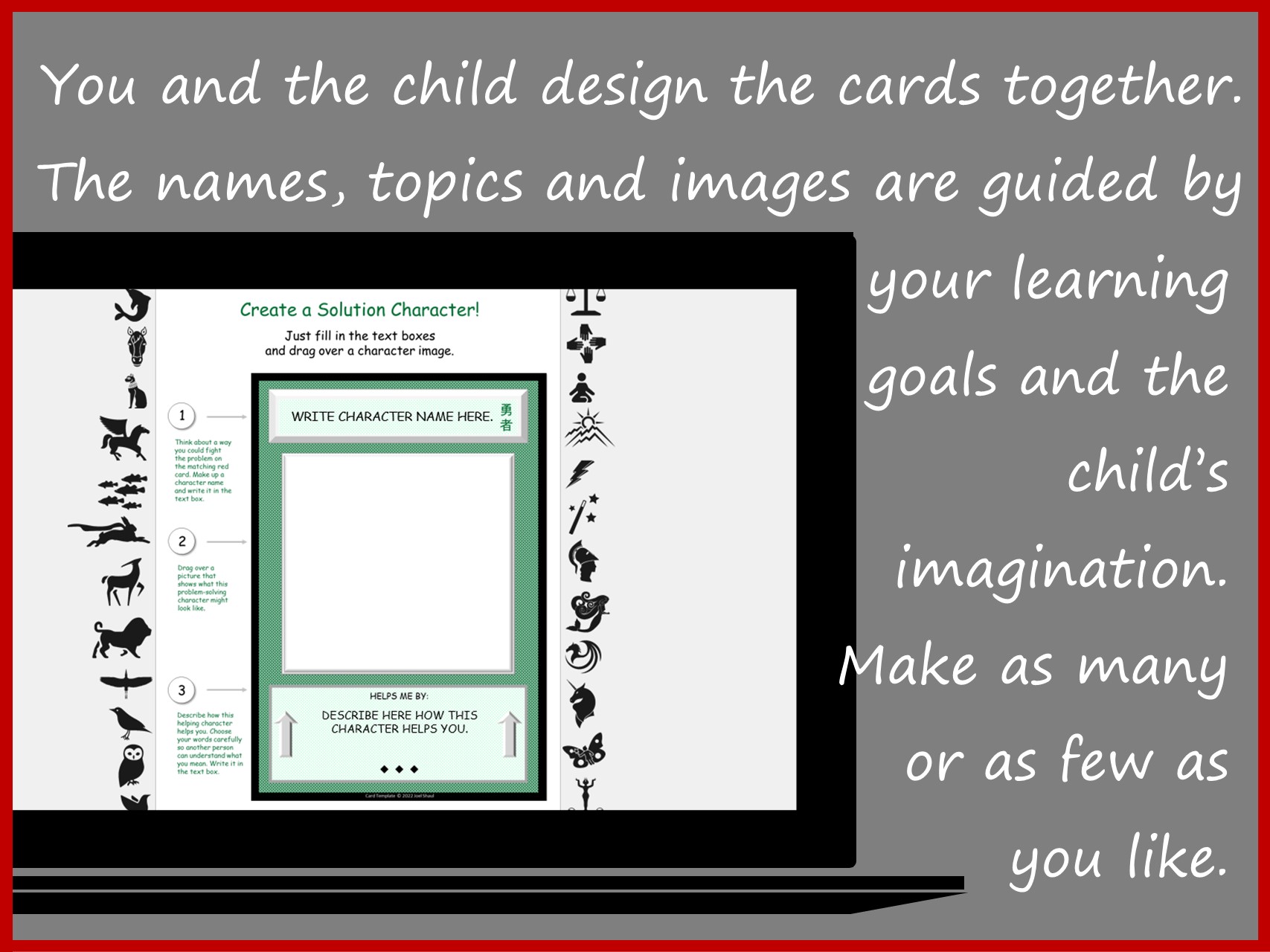
In my own work with children and teens on the autism spectrum, I typically can co-create as many as five pairs of cards in a 45 to 50 minute session. Children appreciate being able have input into naming the characters and selecting among the 48 drag-and-drop images.

There is great potential to add more cards, or modify existing cards, in subsequent sessions.

Although I am a mental health professional, in my own work with young people who have ASD, I do a great deal of work on social communication. In my experience, most of the children I work with can quickly make up clever character names. Most can come up with a coherent narrative under “helps me by…” [Obviously, the sample cards shown were not created by clients 🙂 ]

For my fellow mental health professionals: These DIY cards are ideally suited for CBT.

Please note that I have a completely separate CBT-based Problem Solutions Cards kit available with drag-and-drop images specifically selected for mental health therapy.

I am not currently working in schools, but the fact that this project is carried out on-screen in PowerPoint would seem to make it well-adapted for groups and small classroom work for children with emotional and behavioral concerns.

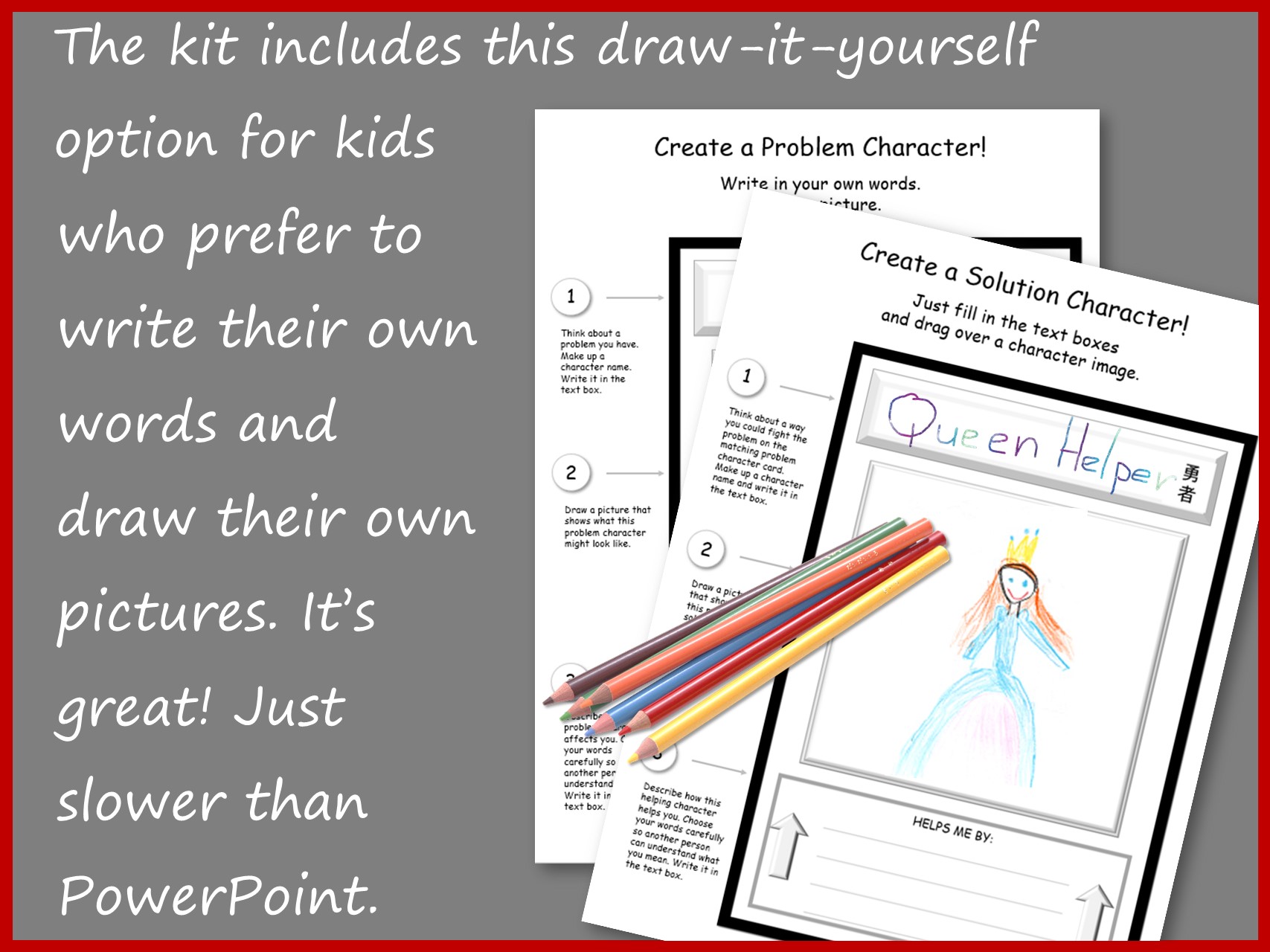
The draw-your-own version of this is similar to a popular download I posted years ago, Dark Force / Light Force Worksheets. In my own work, I like to get children to draw as much as possible in structured therapy projects. Having done this project many times both ways, both through drawing and via drag-and-drop image selecting, I would say that both versions have advantages. One important consideration is that many young people just don’t want to draw. Another consideration is that many of them draw slowly.

For many years, until 2019, Rebecca Klaw and I sold these cards that we invented, along with related therapy materials.

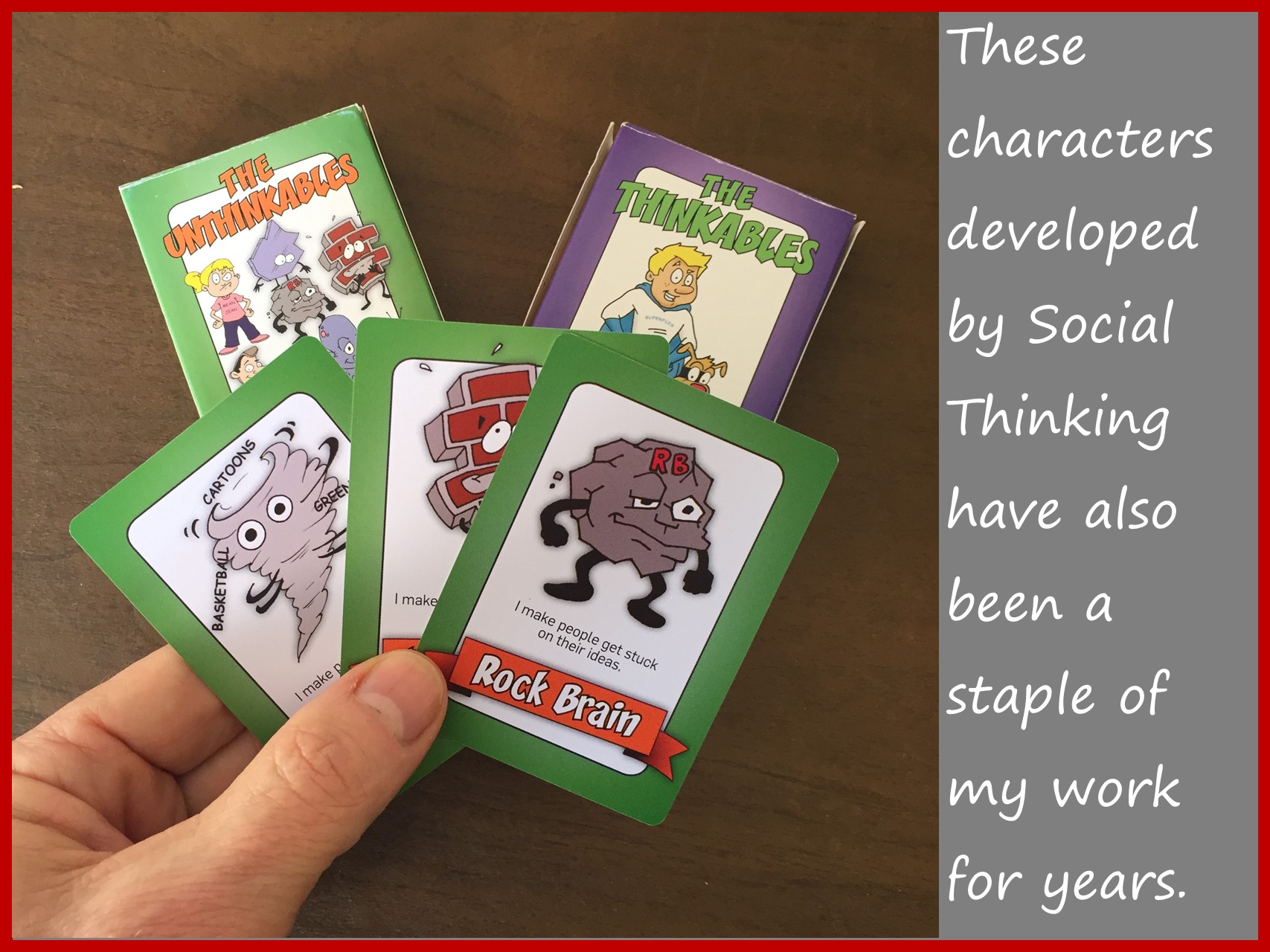
You are probably familiar with these Social Thinking materials based on Unthinkables and Thinkables characters. If not, you should check them out.

14 free social skills resources for kids with ASD who don’t speak English

Social skills resources for children who are not English-speakers

I have many free resources translated into Spanish, German, Polish, French and Hebrew. I also have have many other resources, for parents or professionals providing social / emotional skills teaching to children who do not speak English. These include:

*Resources that are based mainly on images instead of words

*Resources that are editable, so you can easily add text in your own language

(Elsewhere on this website, I have a number of resources translated into Polish, German, French, Spanish, Hebrew and Albanian.)

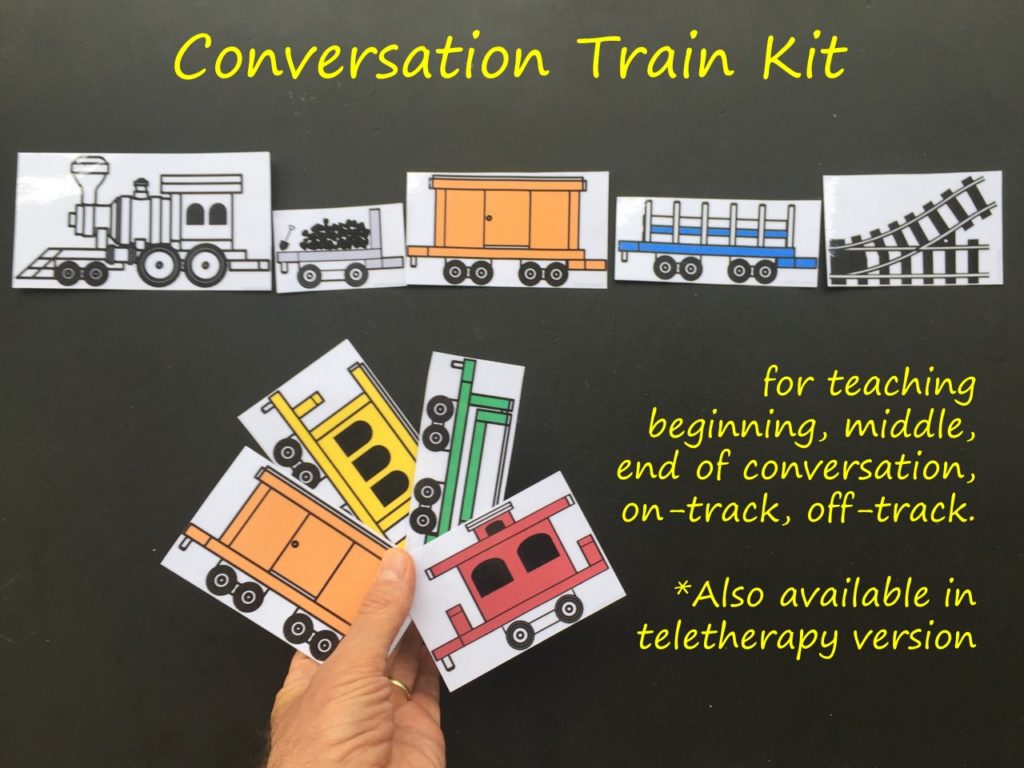
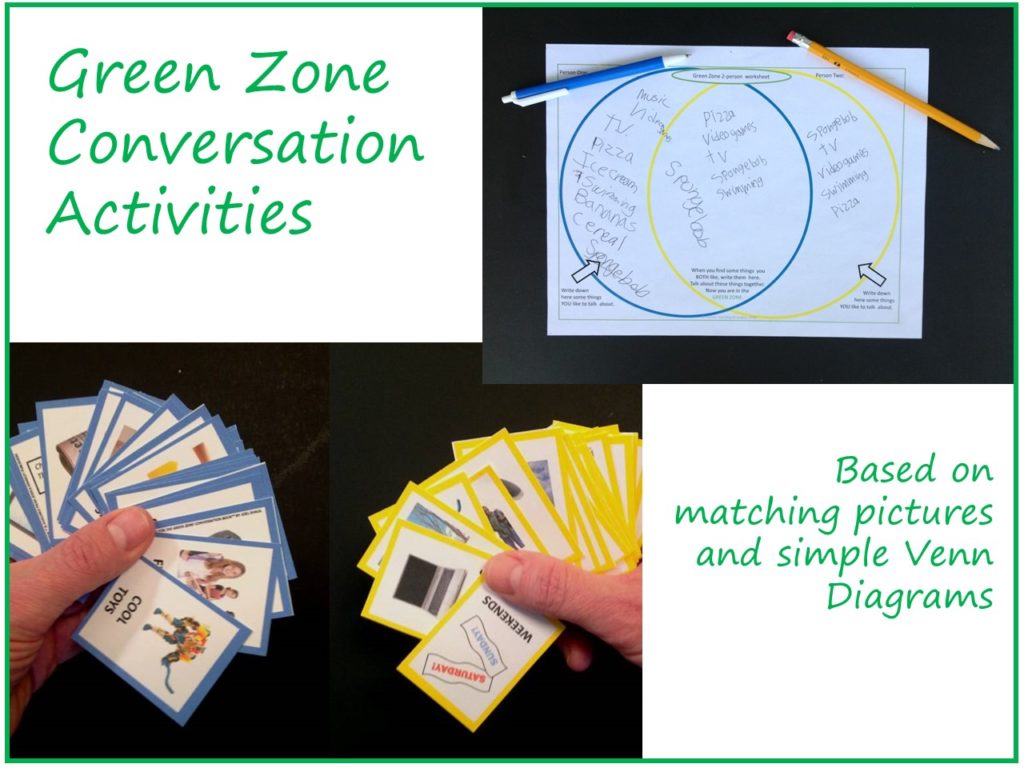
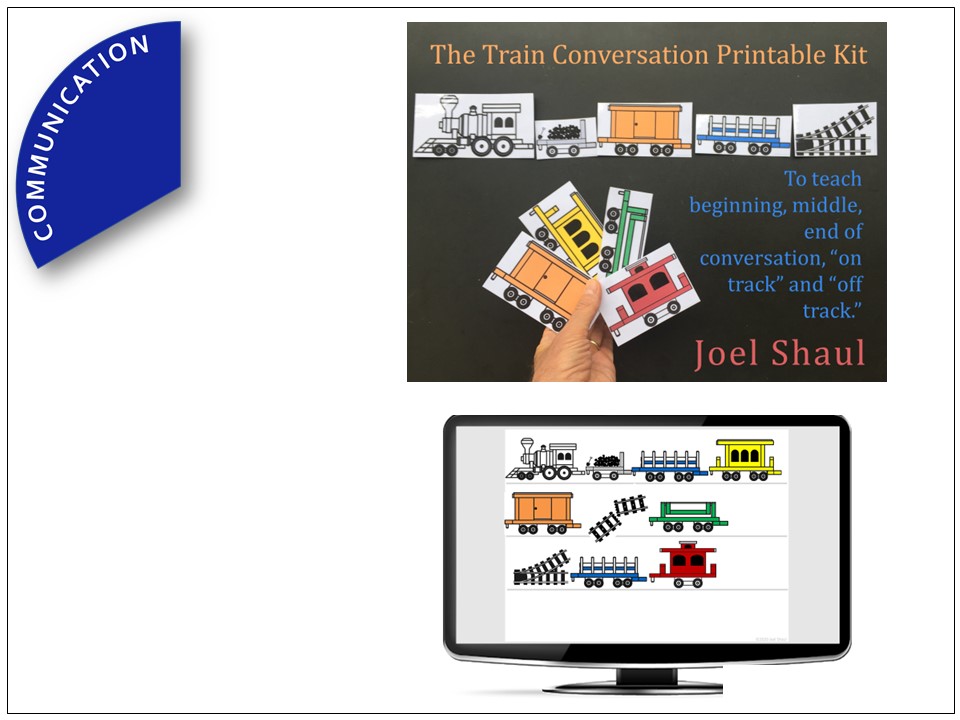
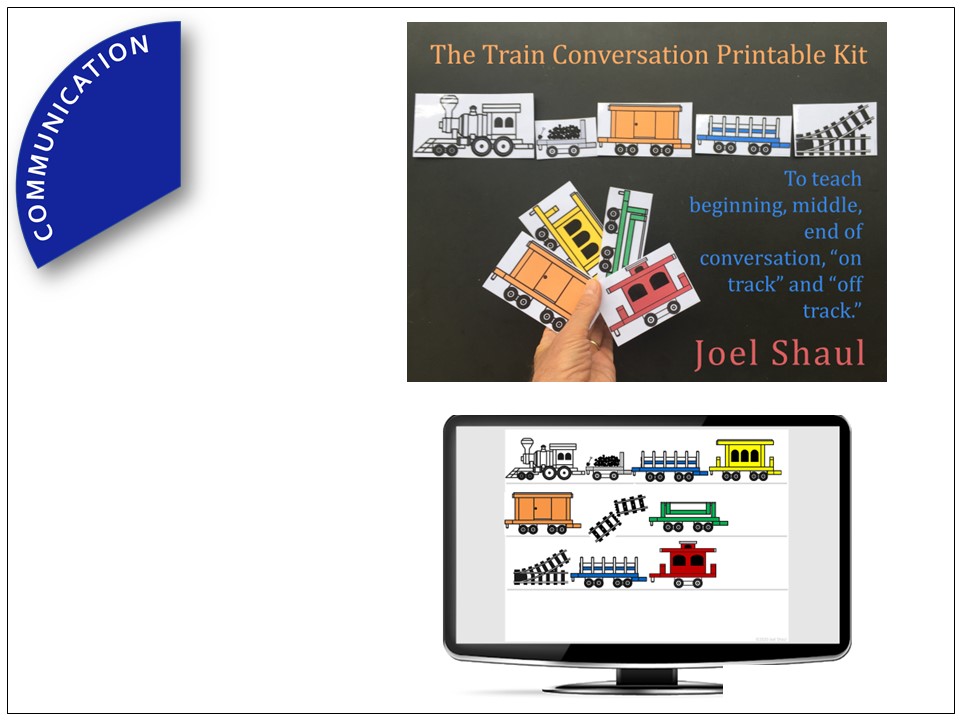
This is one of my best hands-on resources for helping children practice conversation basics including greetings, “how are you’s,” staying “on track,” switching topics, and ending the conversation. There is also a screen-based version that works really well. The principles are derived from my book, The Conversation Train.
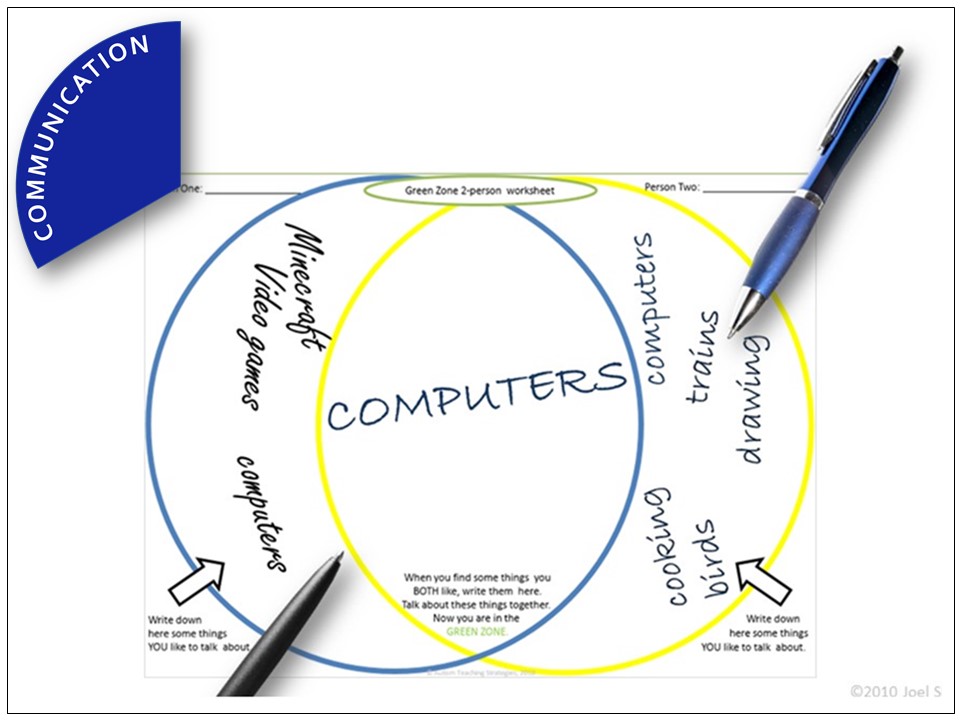
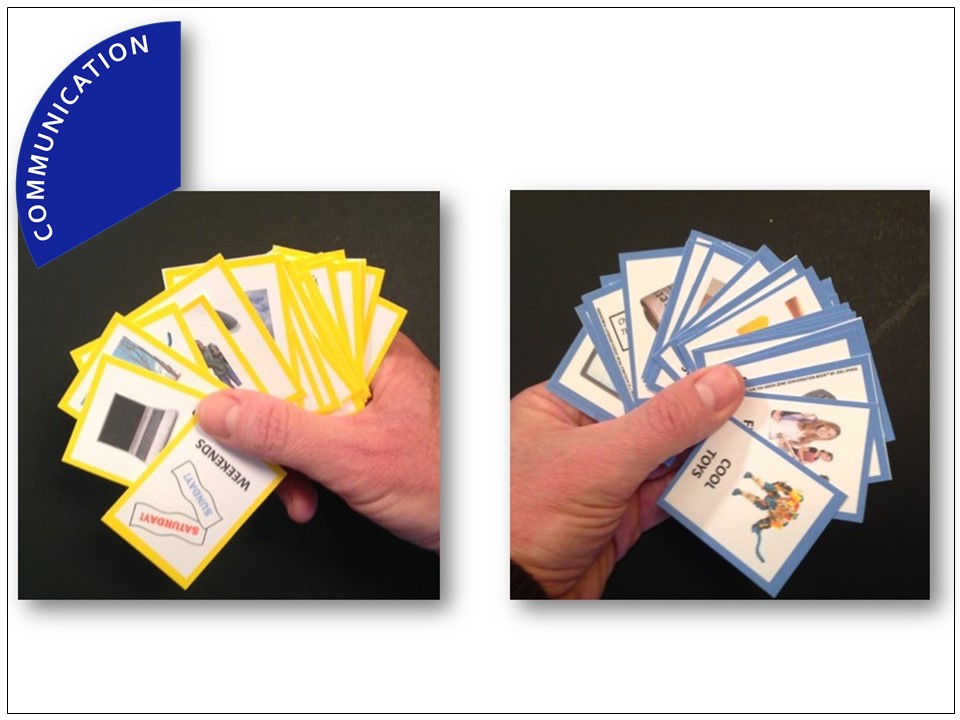
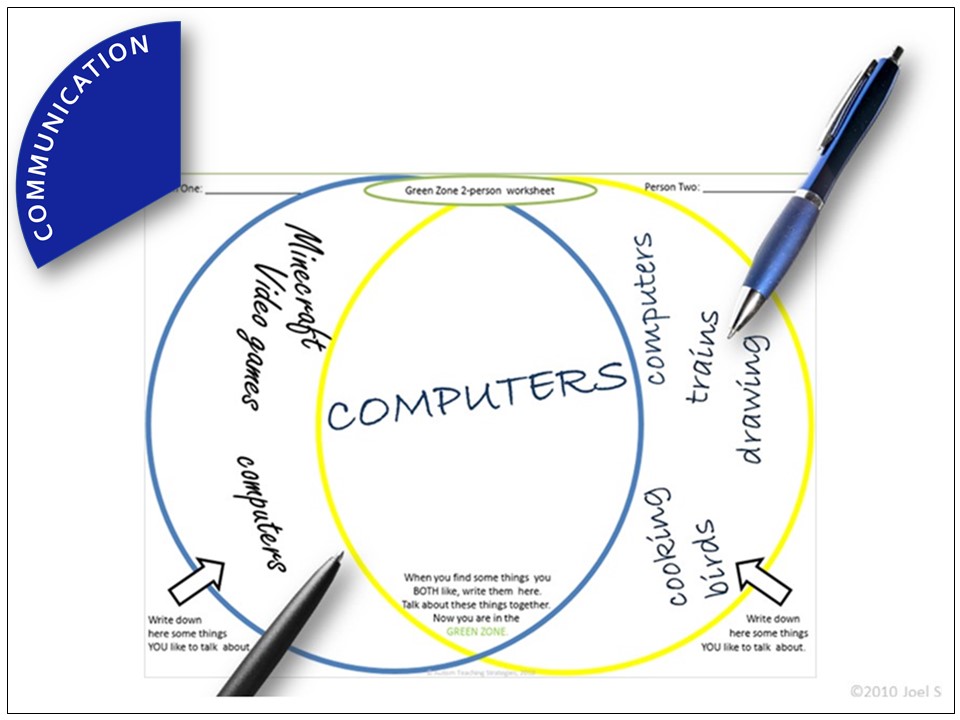
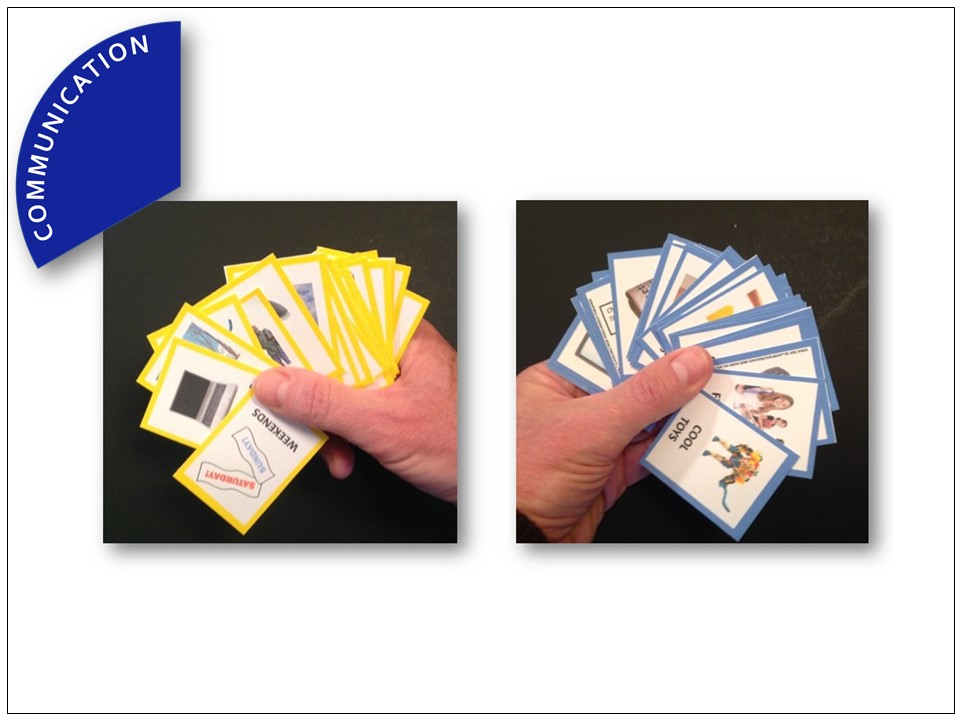
The simple Venn diagram worksheet can easily be modified for non-English speakers. (It is currently translated into Spanish and Polish). Most of the picture cards work fine without being able to read the English text. These resources are derived from my book, The Green Zone Conversation Book.

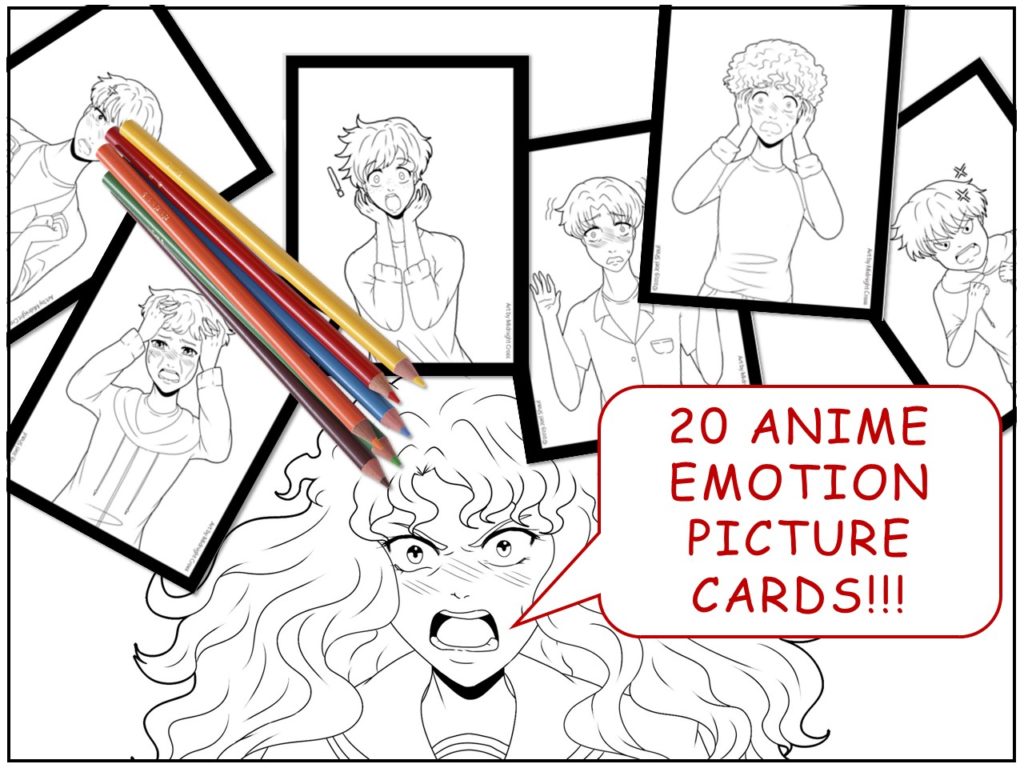
I collaborated with an Australian to produce this popular set of resources. The emotions appear to be universal. You don’t have to color them, but children enjoy doing it. (It is currently translated into Spanish, German, French and Hebrew.)

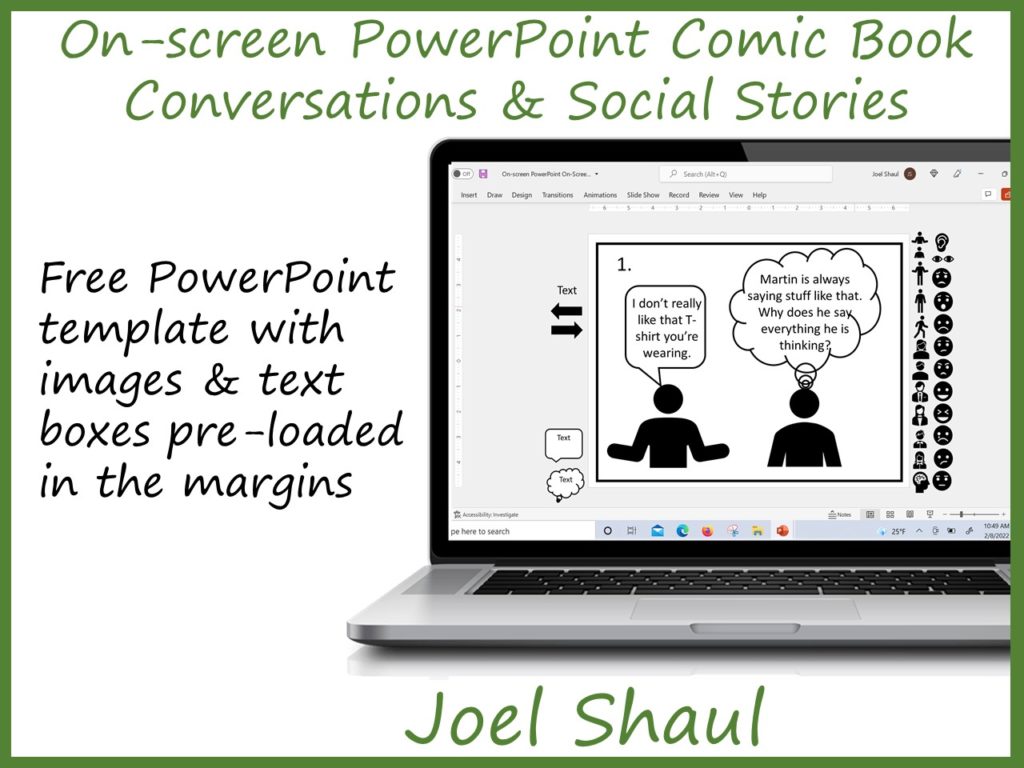
This will work in any language. The card templates are in PowerPoint and you add your own text – in any language.

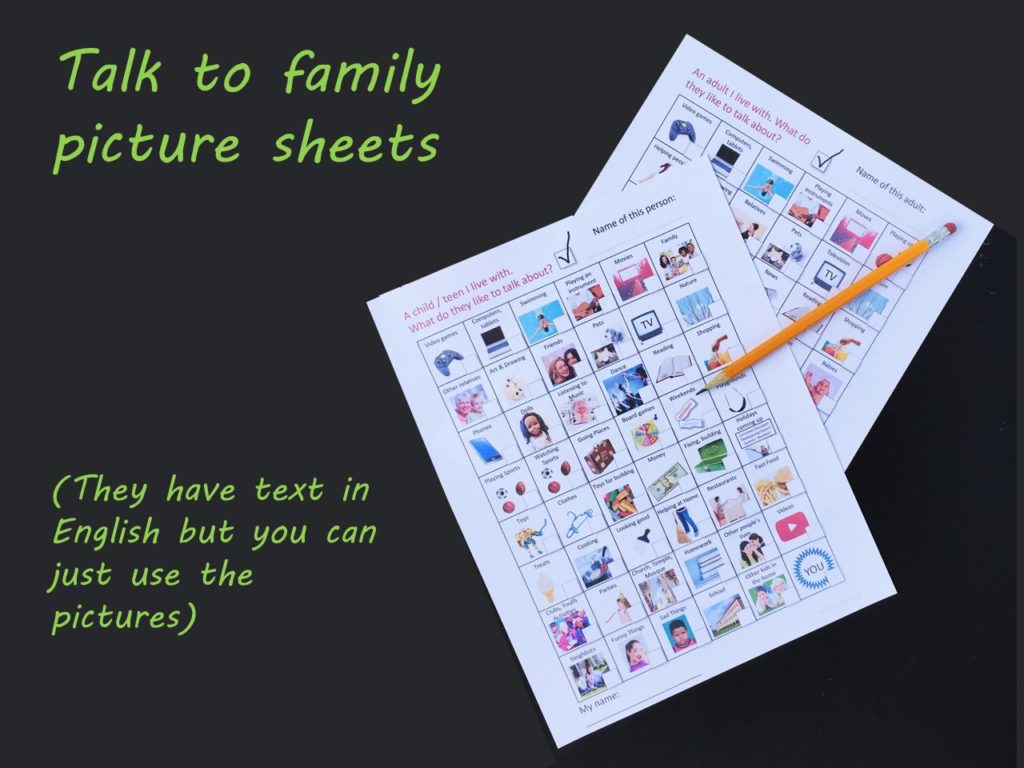
Talk to Family sheets are currently translated into French and Spanish.

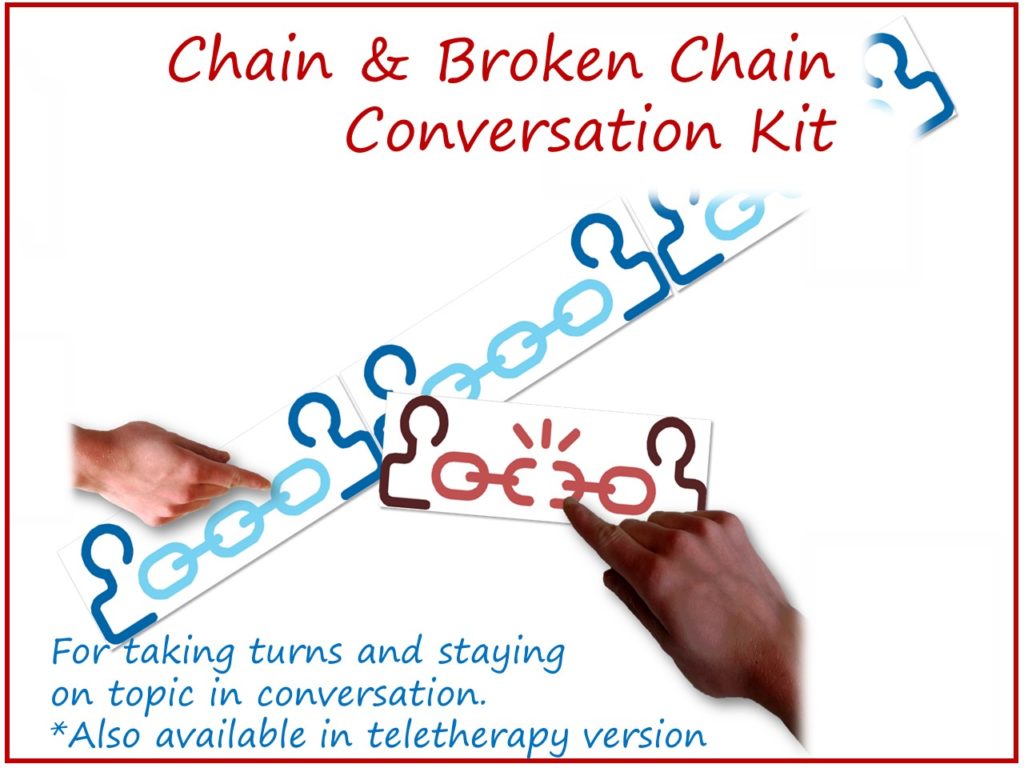
This resource is used in a similar manner to The Conversation Train printables, except the broken chain image is used instead of the broken train track to represent “off topic” statements. (This resource is currently transferred into German and Polish).

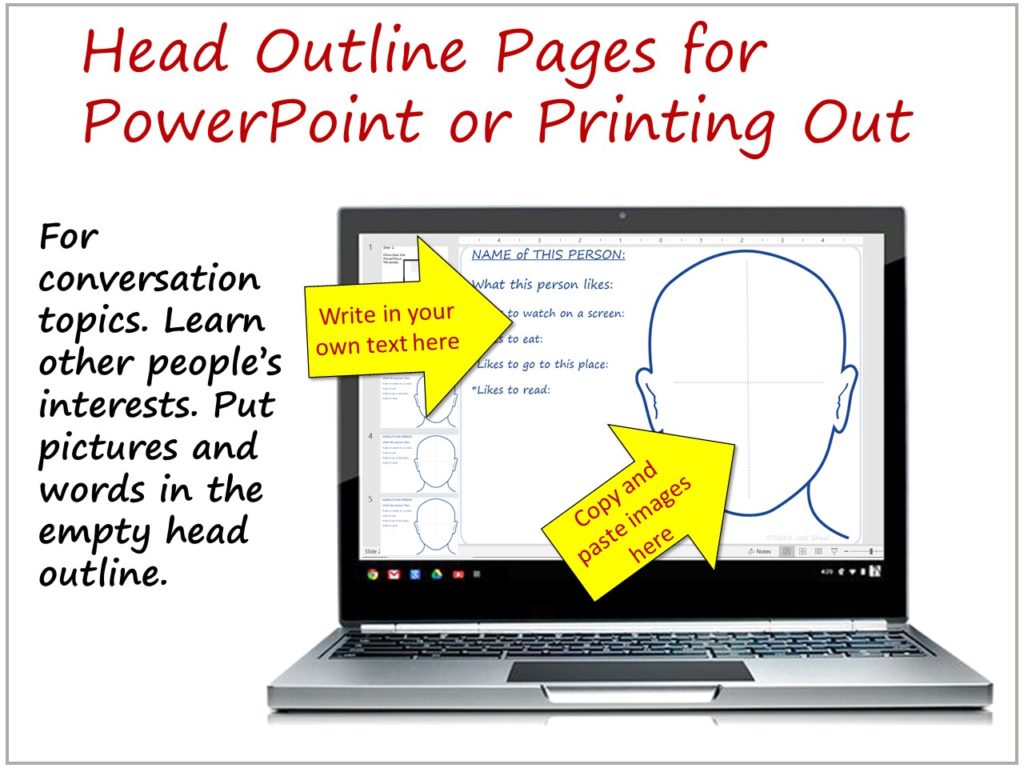
Head Outline Pages is available in a Spanish translation.

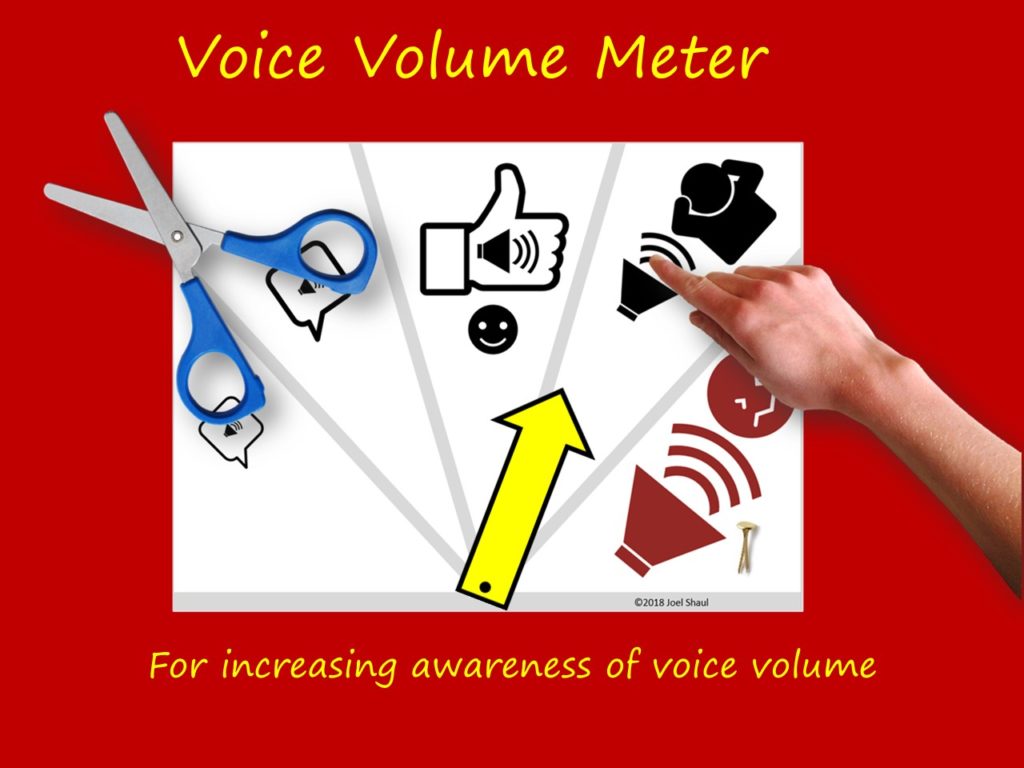
Voice Volume Meter is available in a Spanish translation.

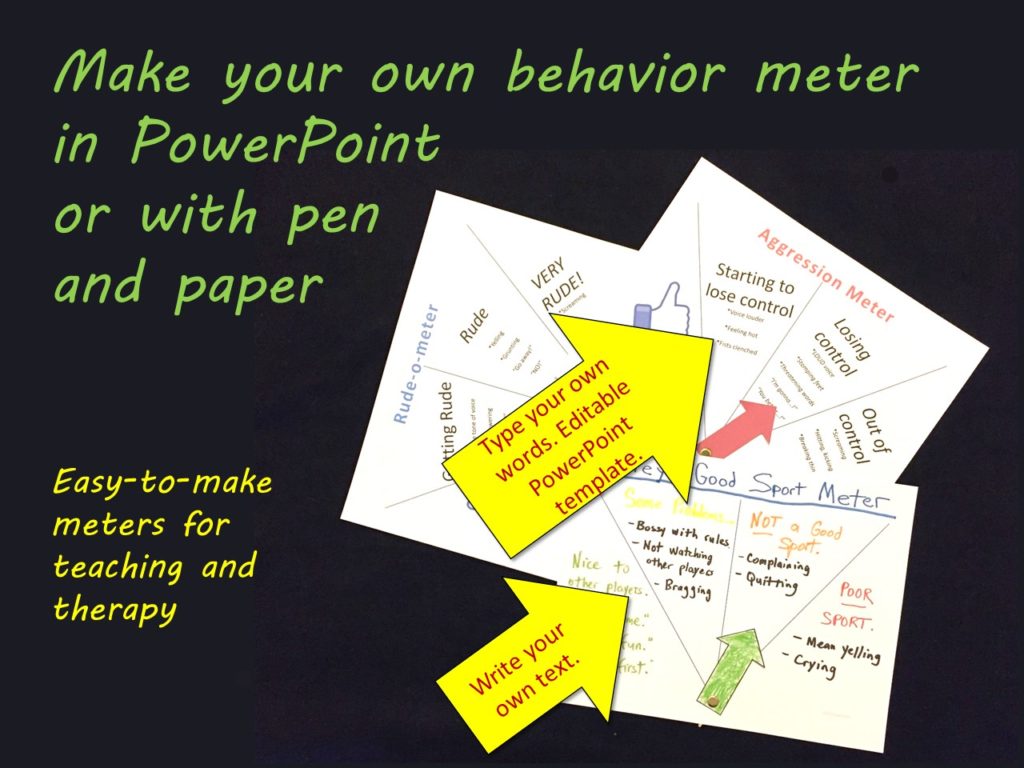
This is a very useful resource. In my own work, I use it several times a week. Children enjoy taking part in the creation of the meters, and it provides helpful continuity between one therapy session and the next.

Add you own text – in any language.

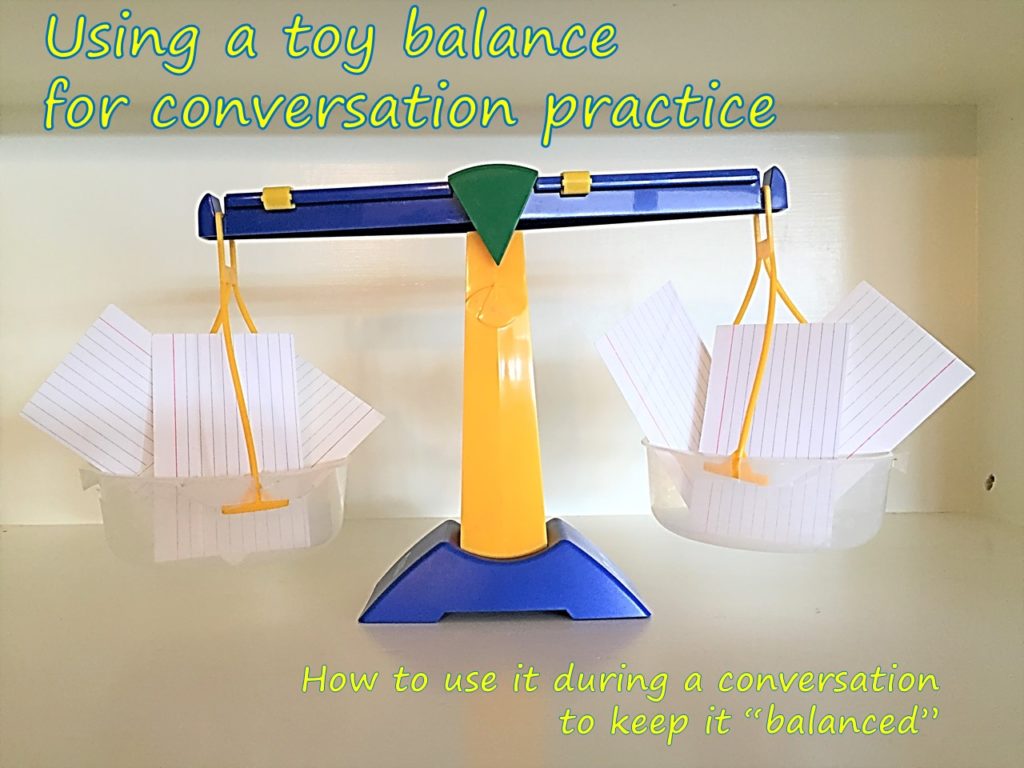
A toy balance is an invaluable social skills resource for your office, speech room or classroom.

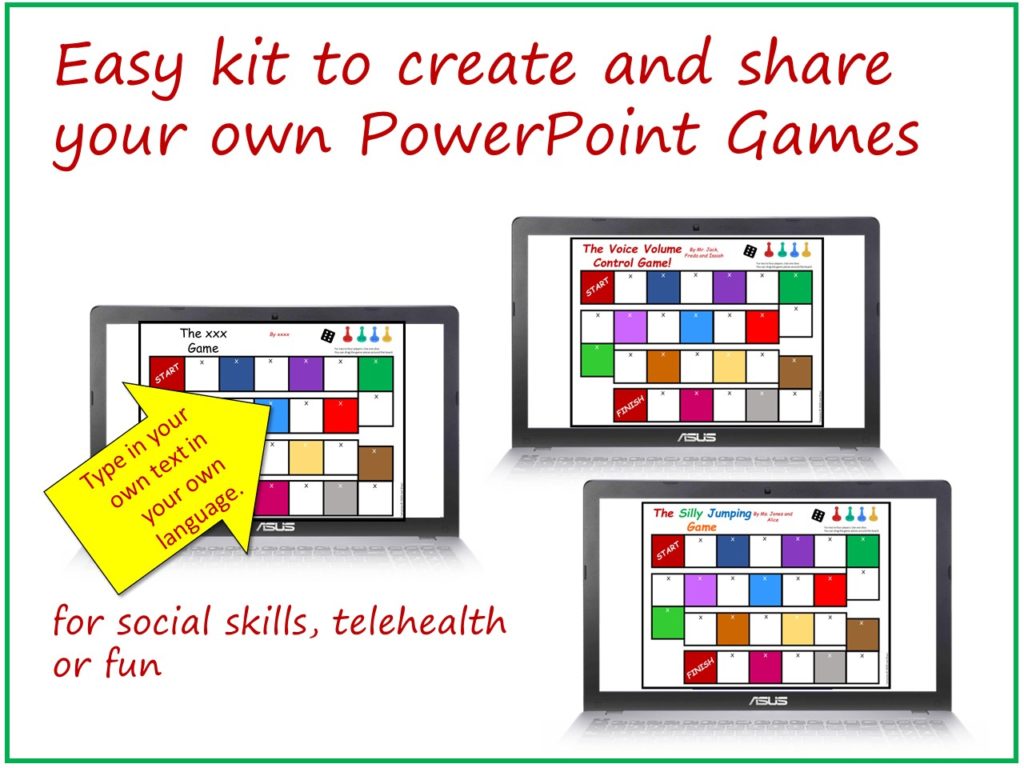
I designed this resource carefully so that it is easy to use. You can create a game ahead of time for the children, but in my own work I prefer to create the game with the children, during our time together, so that the children are actual co-creators of the game.

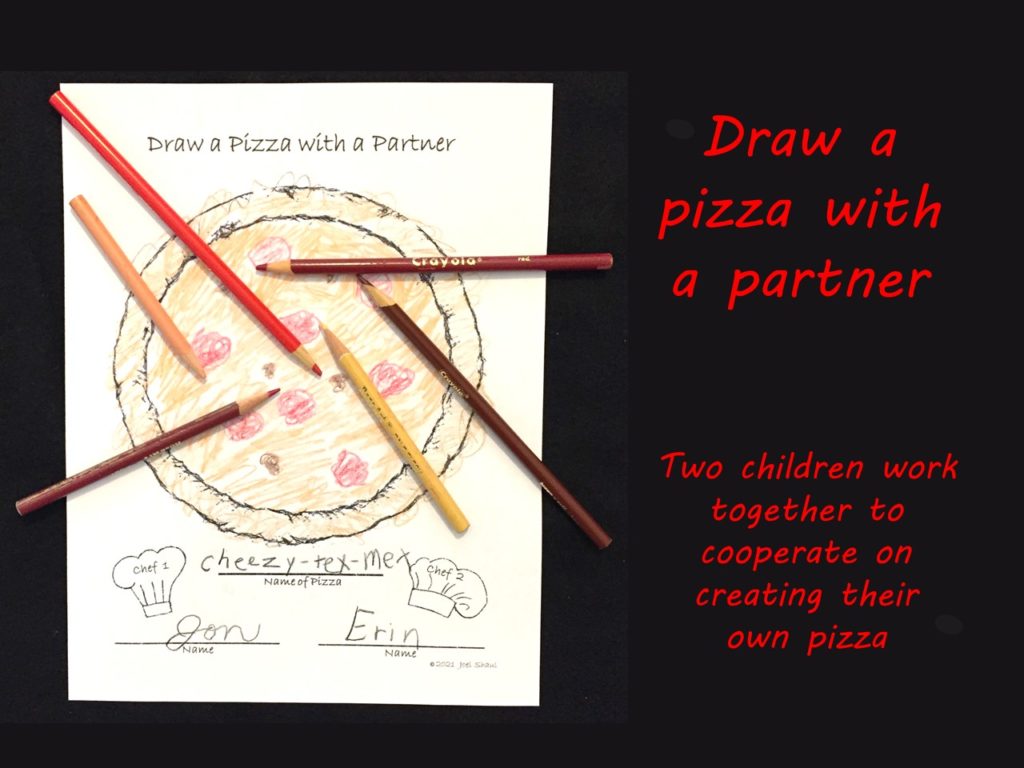
Draw a Pizza sheets are available in Spanish.

Your comments on these resources are most welcome, and often helpful. Click HERE to send an email.

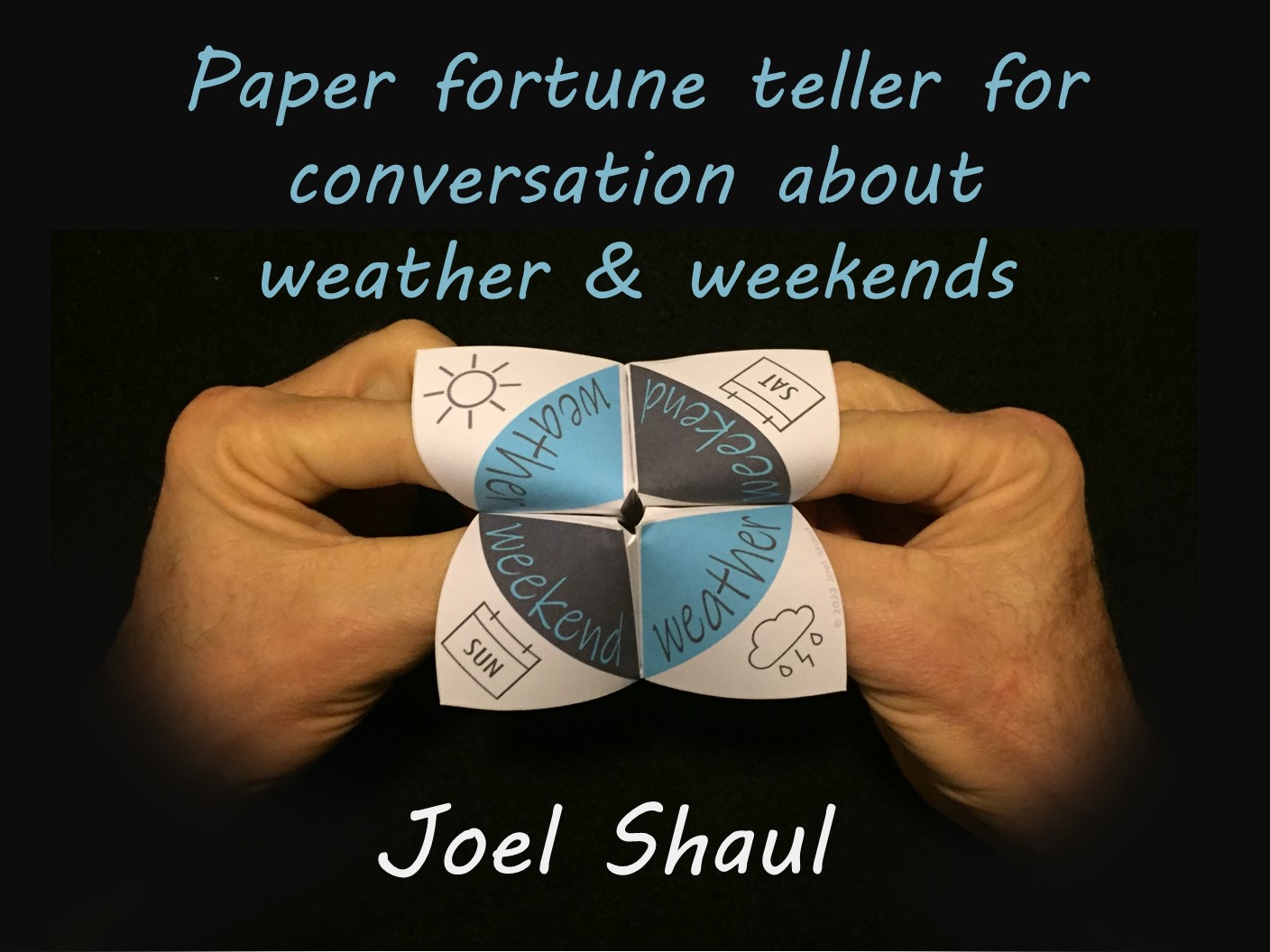
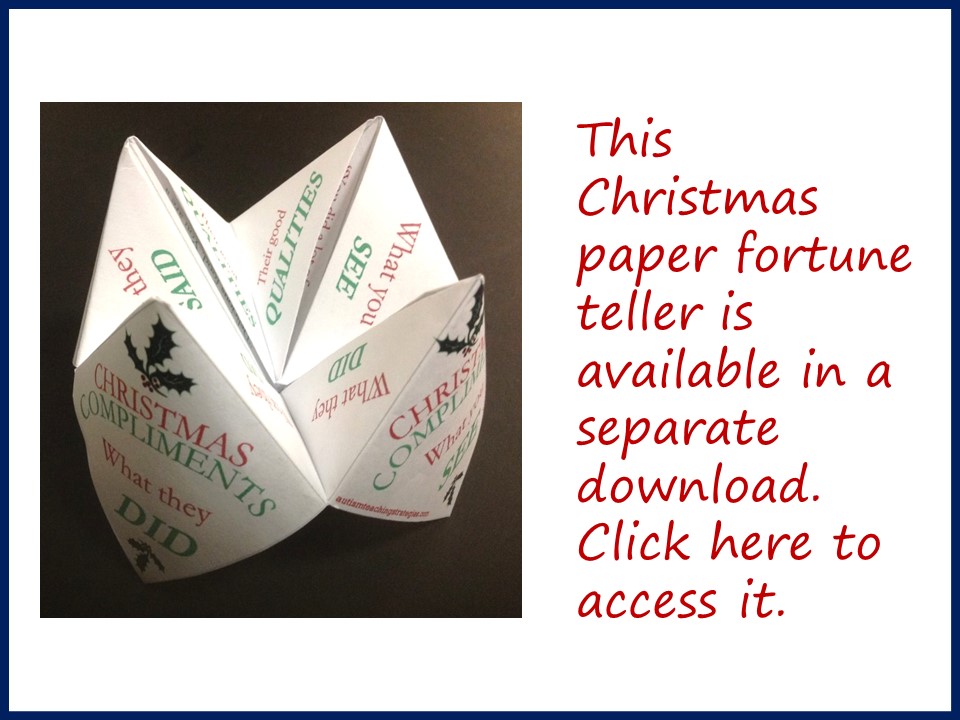
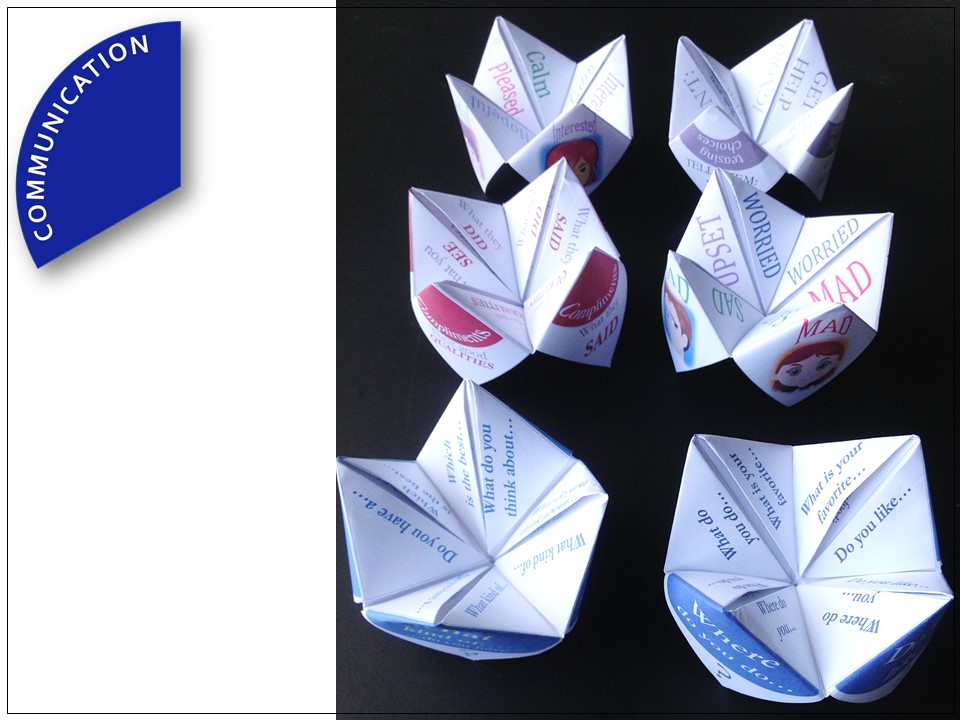
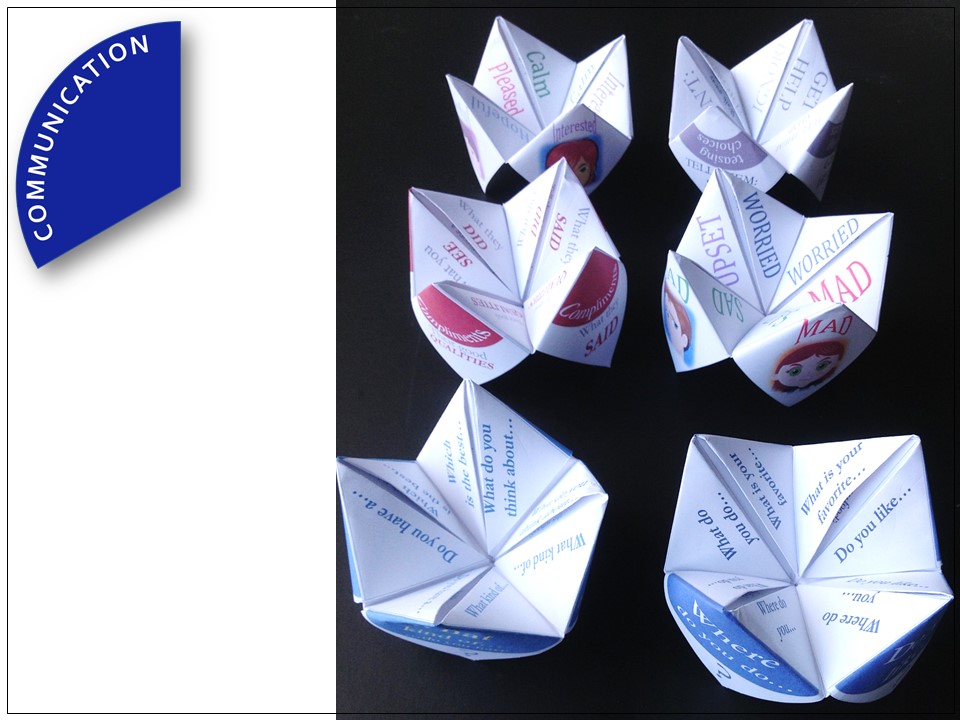
Paper fortune teller for conversation practice of small-talk topics – Weather & Weekends
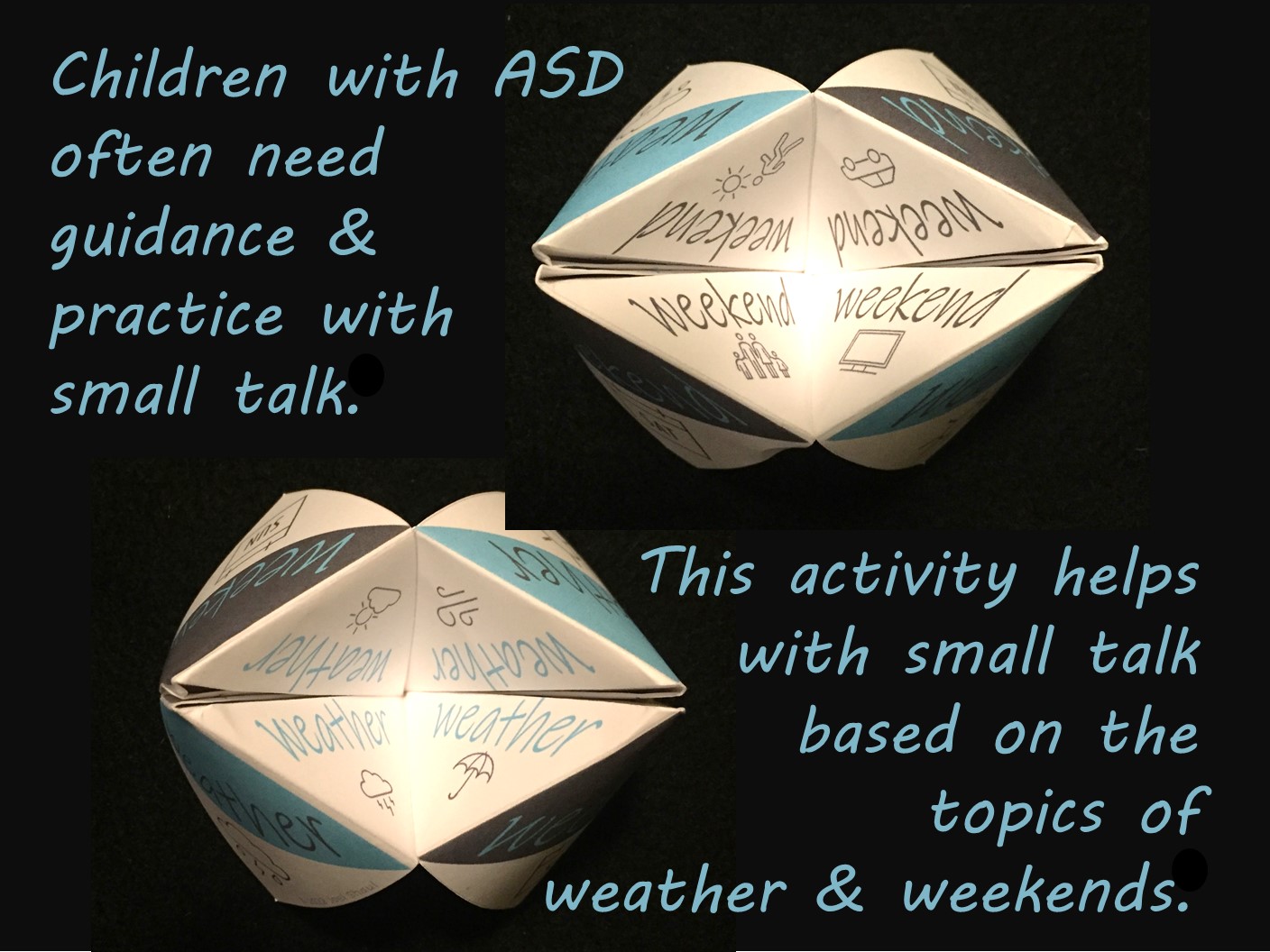
Social skills conversation game to help children with autism practice small talk
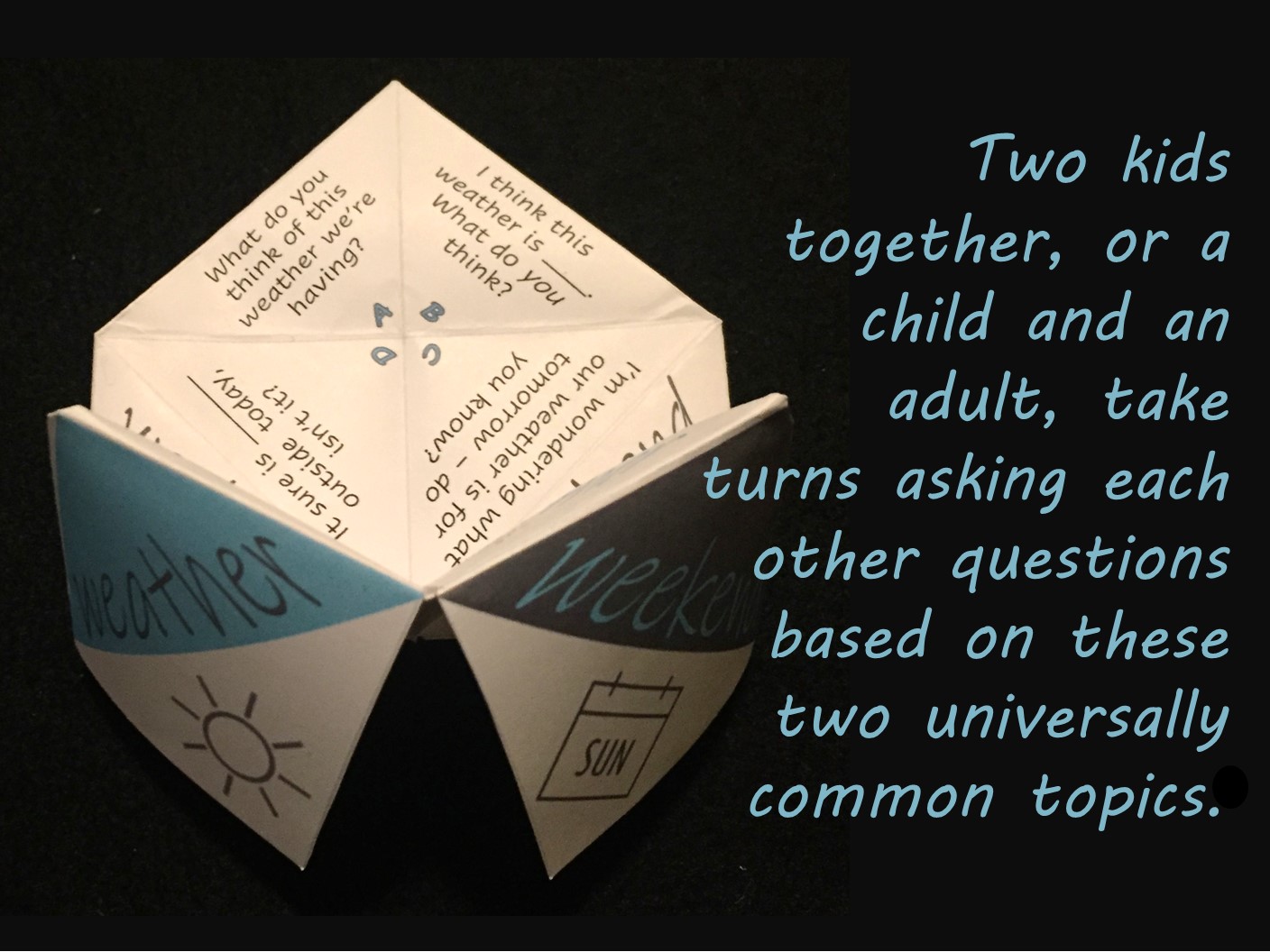
For many young people on the autism spectrum, doing small talk does not come naturally, and in fact it can be really difficult. Many benefit from mastering certain typical, common ground topics. Since learning these skills is very hard work, we need to keep it as enjoyable as possible.

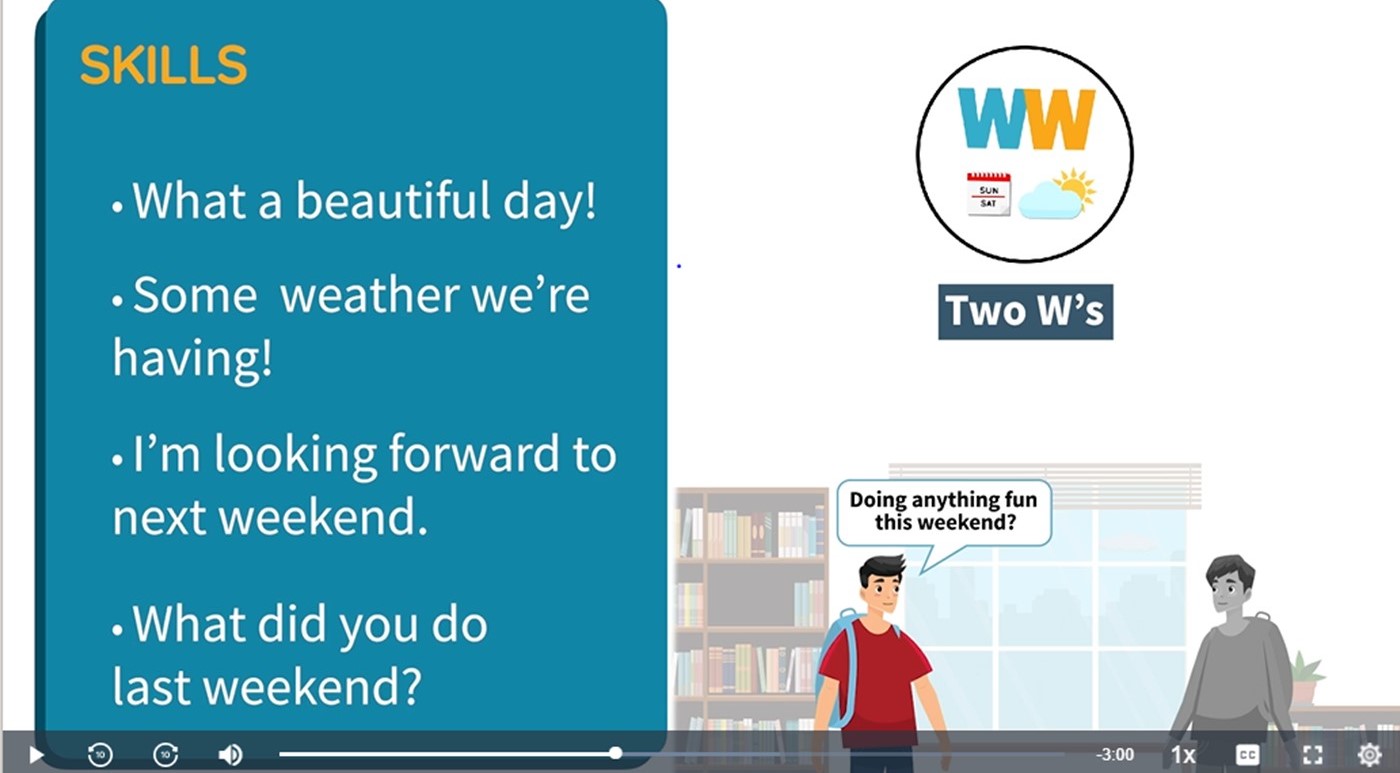
For some time, in my own work, I have been helping children practice conversation by introducing typical topics of weekends and weather, among others. In March 2021, Everyday Speech Videos featured a training video for children on the spectrum on this topic.

Screen shot from Everyday Speech Video on this topic. This company’s videos are pretty terrific.

I felt inspired to create a paper fortune teller on this theme.

Your comments on these resources are most welcome, and often helpful. Click HERE to send an email.

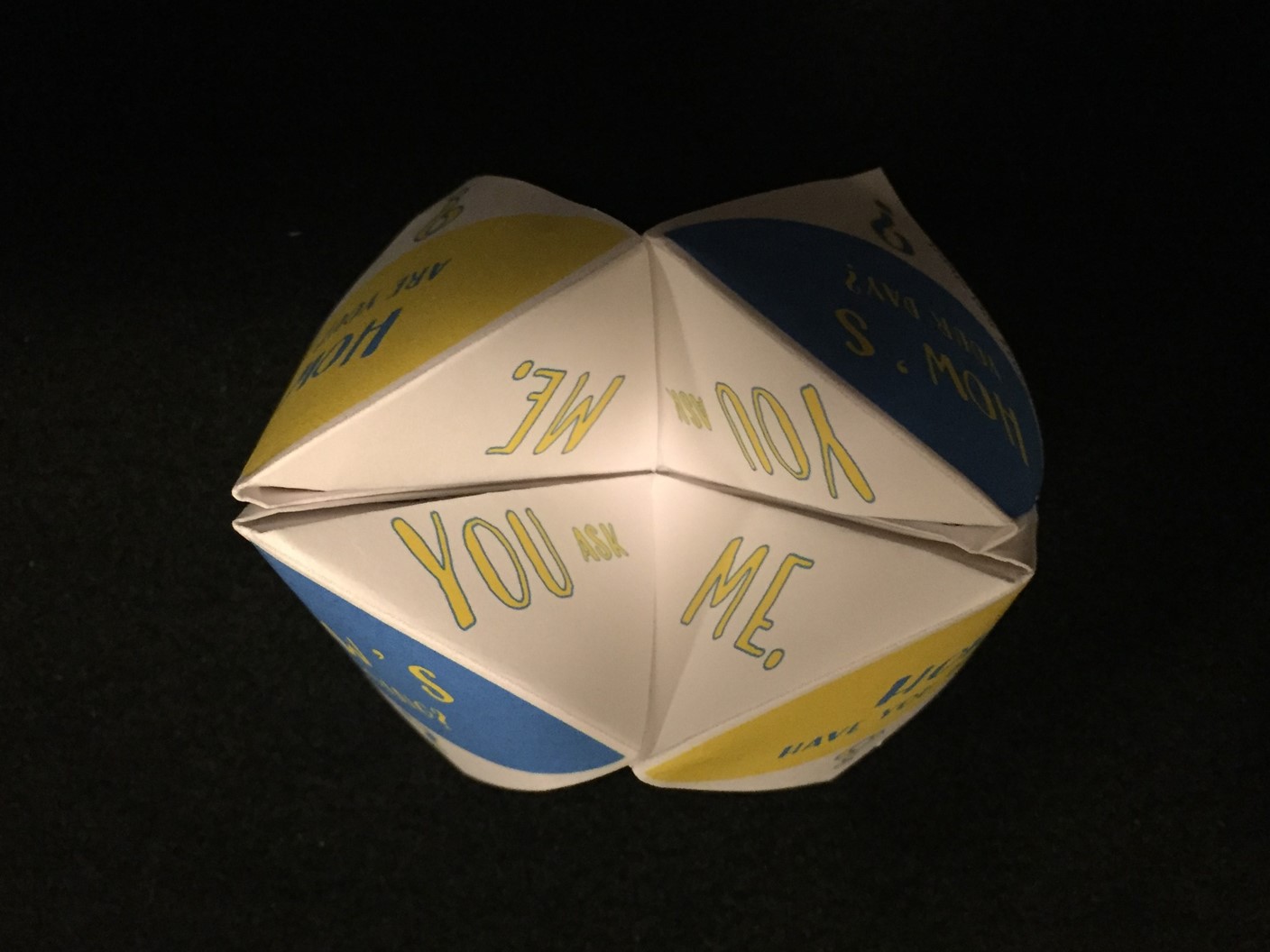
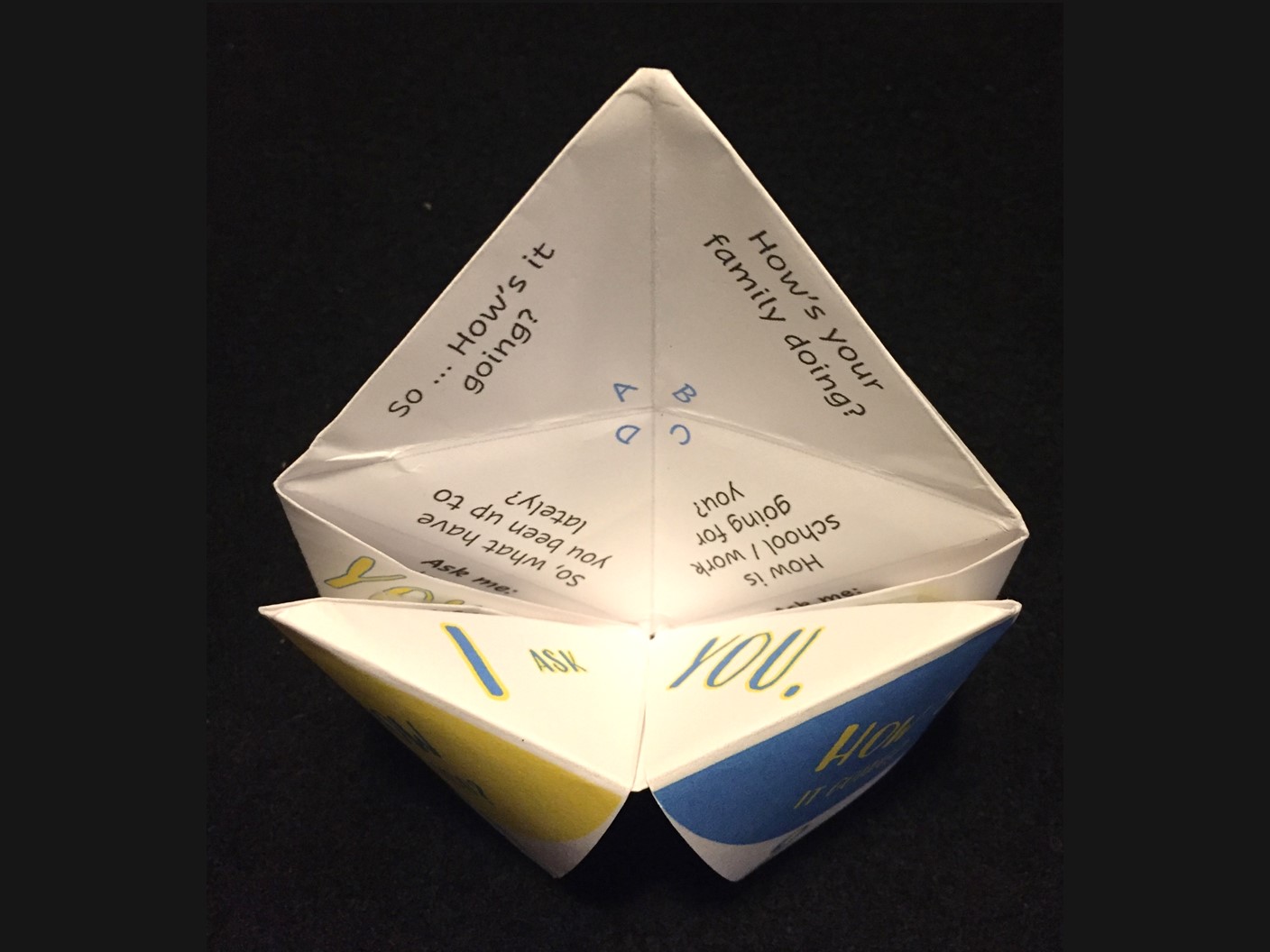
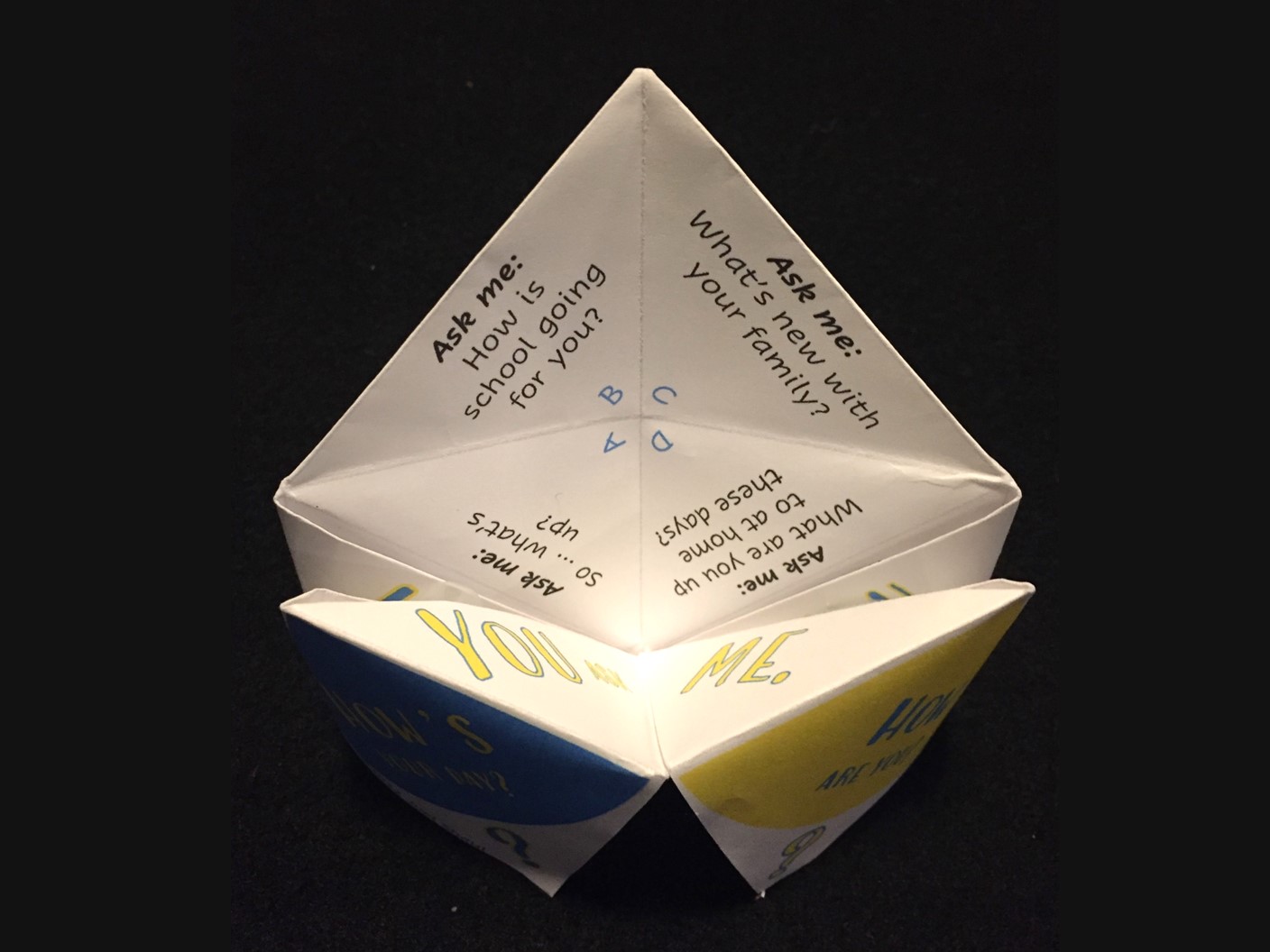
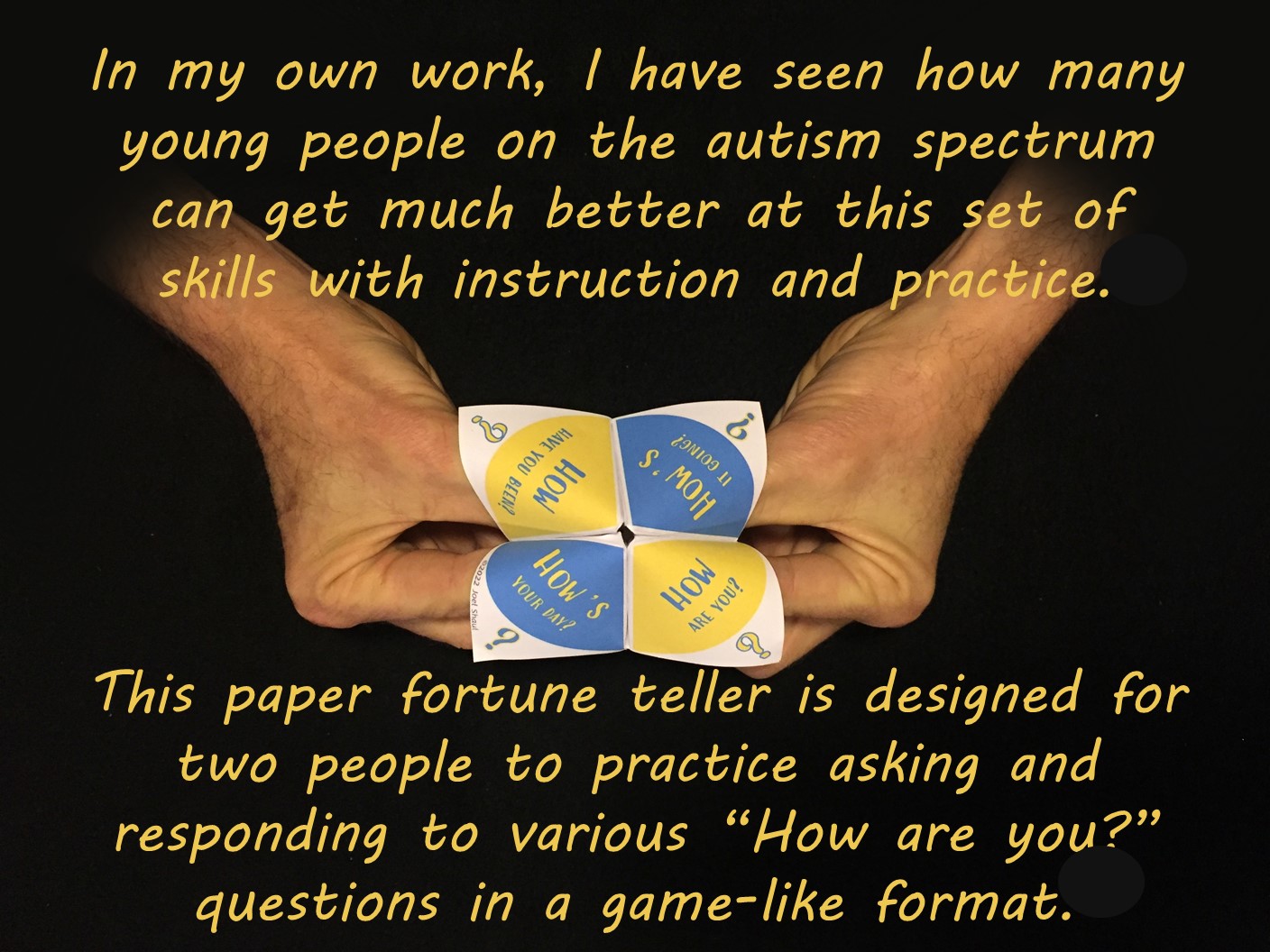
Paper fortune teller for practicing “How are you?” questions

This same resource, translated into German

[This is page 10 of the English and French versions of my book, The Conversation Train.]

Young people with autism and “How are you?” questions

When people with ASD are asked open-ended questions like “How are you doing?”, “What’s up?” or “How’s it going?”, they often can’t figure out just what it is the other person wants to know.  Also, individuals with autism might be inexperienced at employing various quick, formulaic replies like “Fine, thanks” or “I’m doing okay. You?”

When people with autism are expected to ask other people “How are you?” or “How’s it going?”, many just avoid saying it altogether. There are several reasons for this. First, the unfolding of a conversation containing “How are you?” can be very unpredictable in length and in content.  Asking a person how they are doing often elicits a lot of information that someone with ASD may feel unprepared to take in. Second, a person on the autism spectrum might not grasp the imperative of reciprocity in conversation, so when someone asks them “How are you?” they don’t end up asking the same thing in reply.

There are many other conversation-based paper fortune tellers on the website to practice other elements of social communication. I also show how to fold them.

Don’t miss these other free worksheets, games, and teaching / therapy resources for children on the autism spectrum:

Free social skills games & activities, emotional regulation skills for kids with ASD

Free social skills games & activities, communication / conversation skills for kids with ASD

Free social skills games & activities, social interaction skills for kids with ASD

Your comments on these resources are most welcome, and often helpful. Click HERE to send an email.

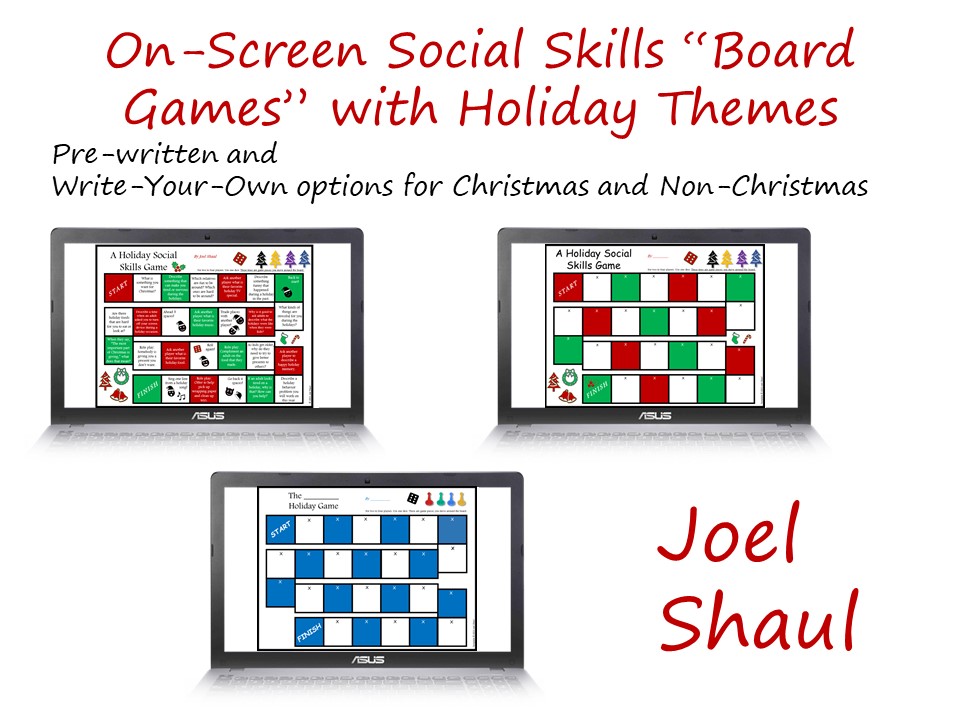
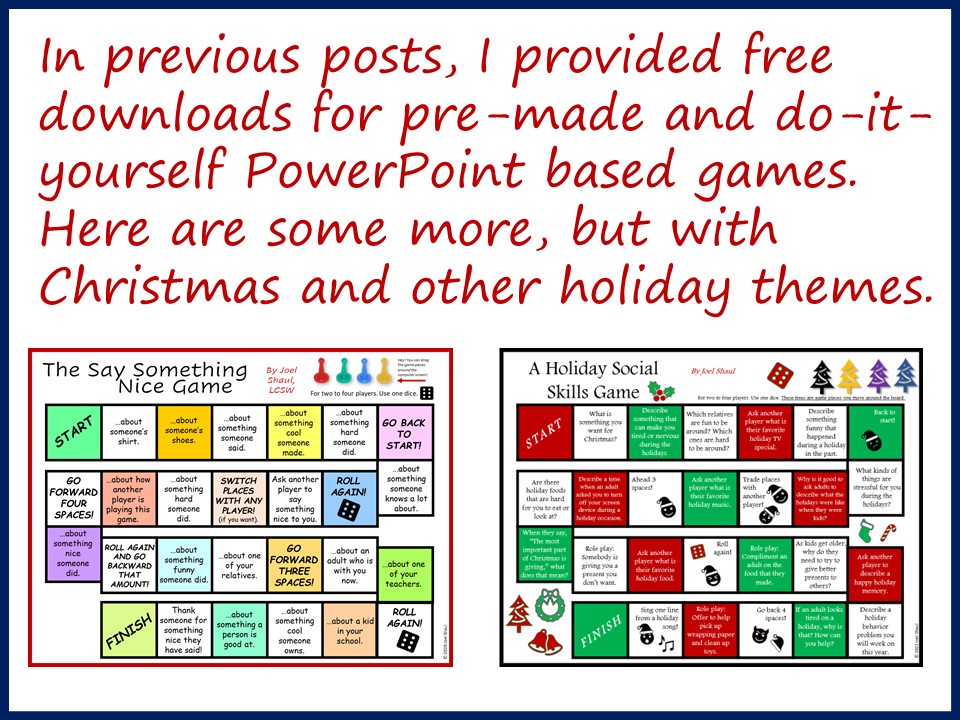
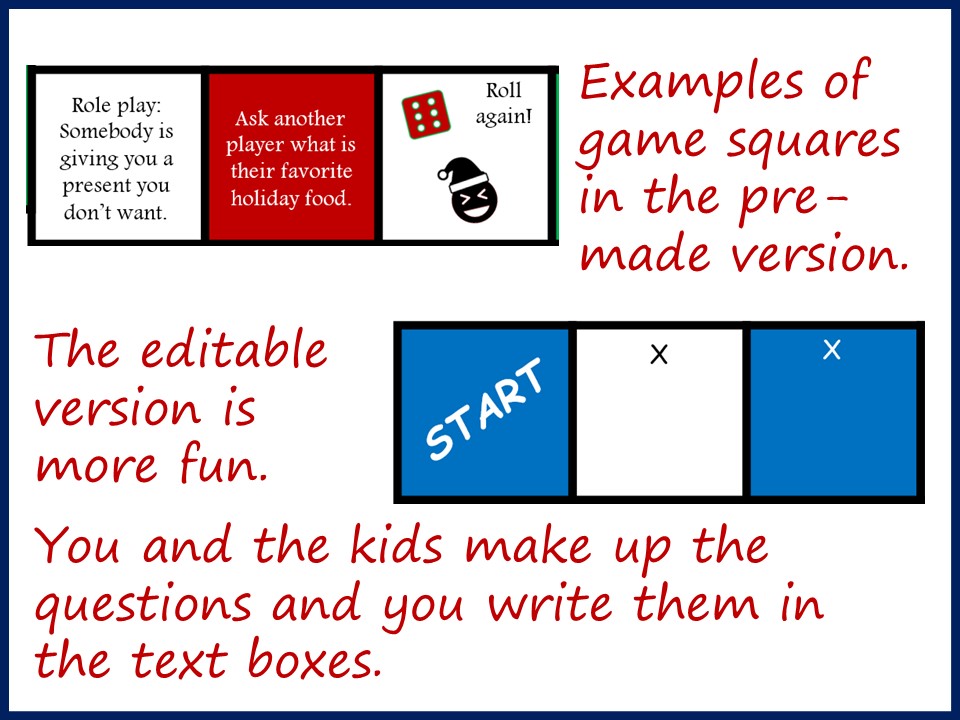
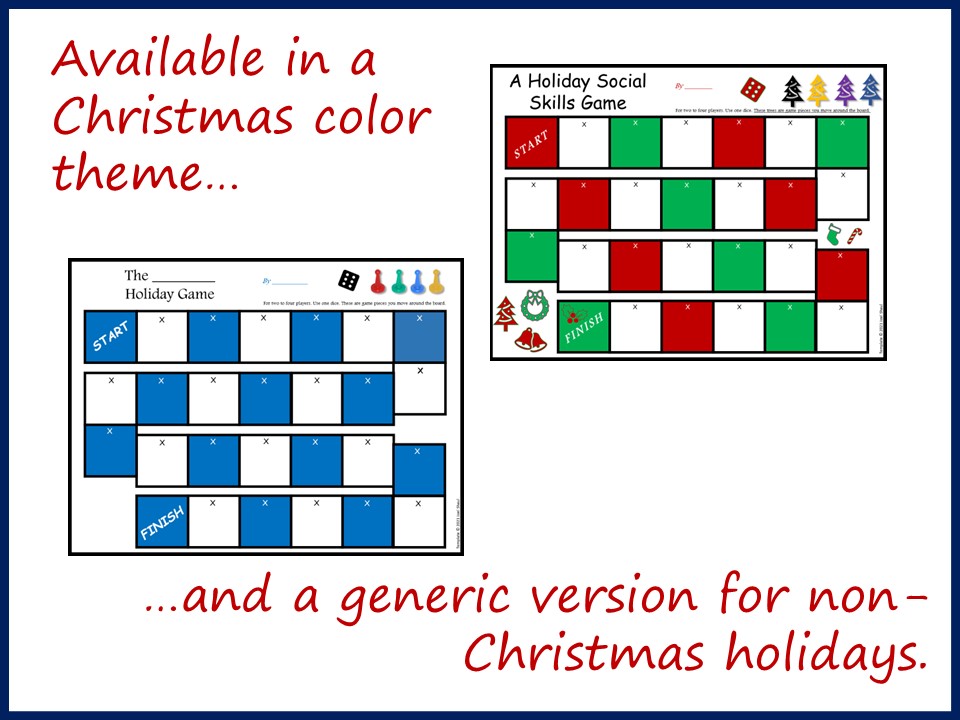
On-screen Holiday social skills “board games” for Christmas (and other holidays) social skills

(For OTHER on-screen social skills games, click here)

Christmas (and other holiday) social skills challenges for children with ASD

All children, including children on the spectrum, get excited about upcoming holidays. As teachers, therapists and parents, there are some things we can help them with ahead of time so they can enjoy the holidays as much as possible and cope with aspects of holidays that might be difficult for them.

Sensory issues: Children with ASD might experience aversion to unfamiliar foods and cooking aromas. They might feel uncomfortable in loud, crowded spaces such as family get-togethers and holiday concerts.

Conversation: Children with ASD often benefit from preparation and practice for the unique social communication opportunities that can occur during holidays.
Emotional regulation: Children who derive comfort from knowing what is going to happen next can find the unpredictable characteristics of holidays challenging, such as receiving unexpected  gifts and  experiencing sudden schedule changes.

Social expectations: During the holiday season, children with ASD can experience confusion regarding such social expectations as reciprocating generosity and acting more mature with increasing age.

Your Interests Promo image for website

Don’t miss these other free worksheets, games, and teaching / therapy resources for children on the autism spectrum:

Free social skills games & activities, emotional regulation skills for kids with ASD

Free social skills games & activities, communication / conversation skills for kids with ASD

Free social skills games & activities, social interaction skills for kids with ASD

Your comments on these resources are most welcome, and often helpful. Click HERE to send an email.

Friendship Growing Cards ~ social skills game to teach friendship skills for children with ASD

This resource in German: Karten für wachsende Freundschaften

This resource in Hebrew

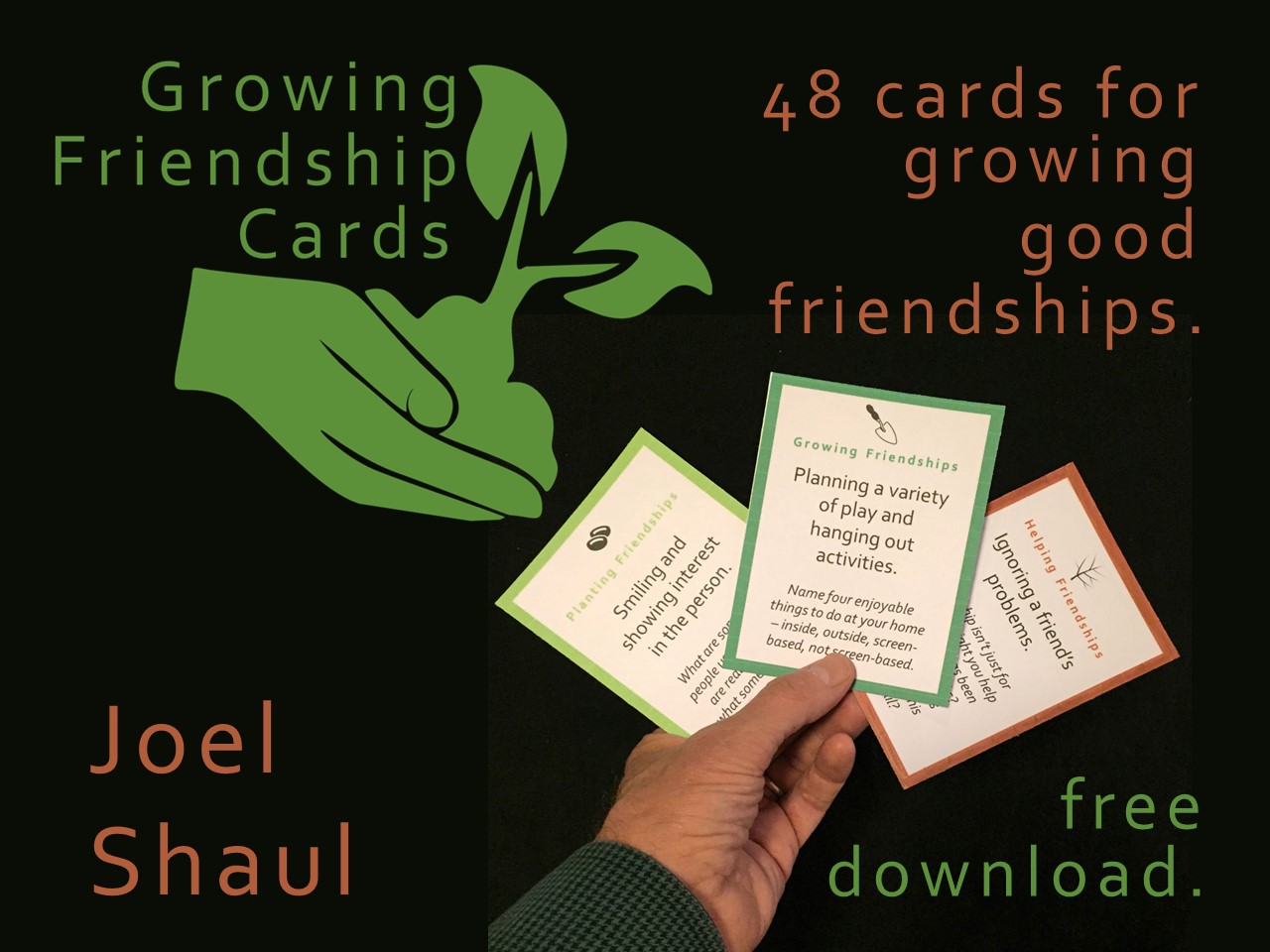
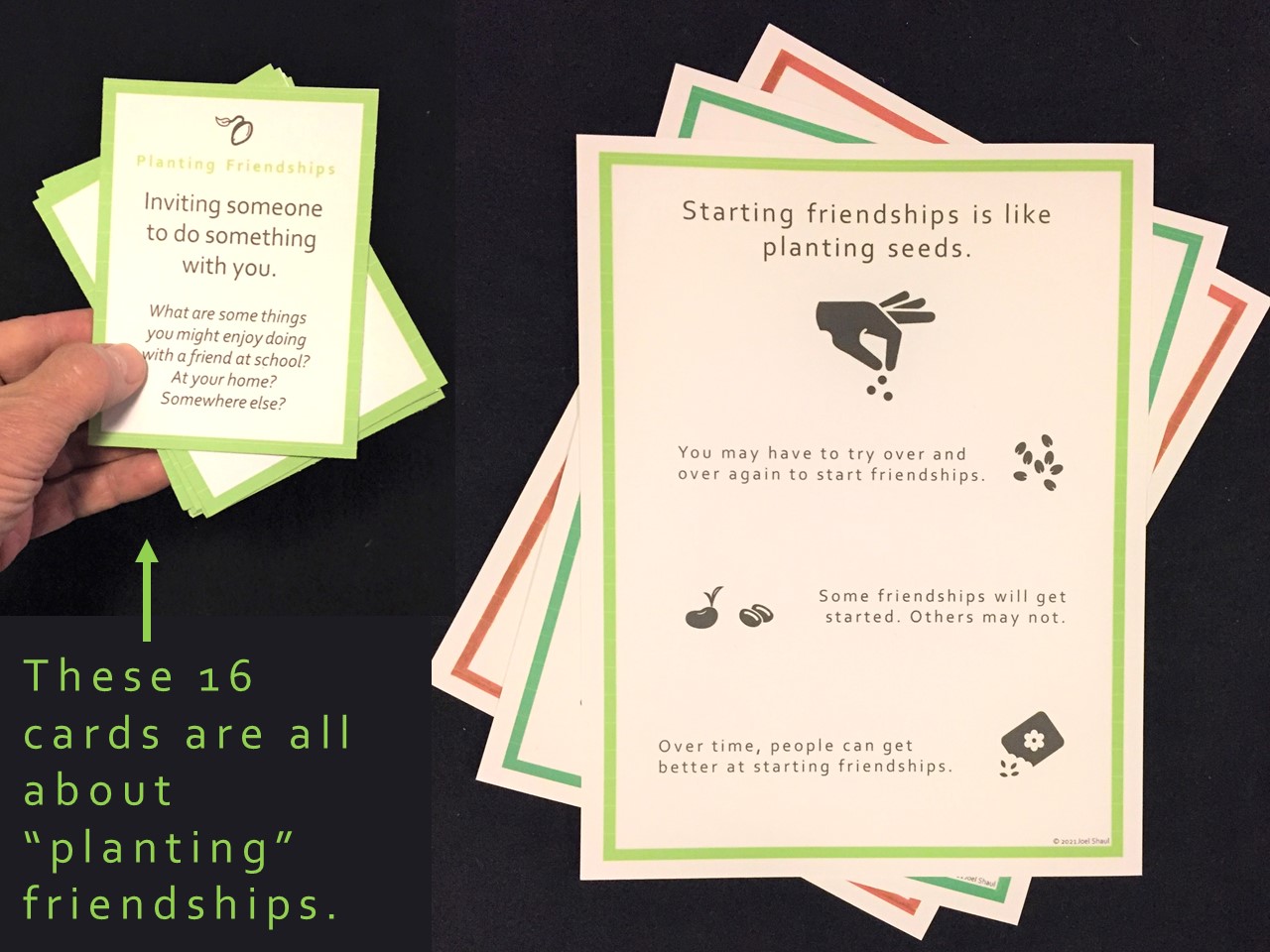
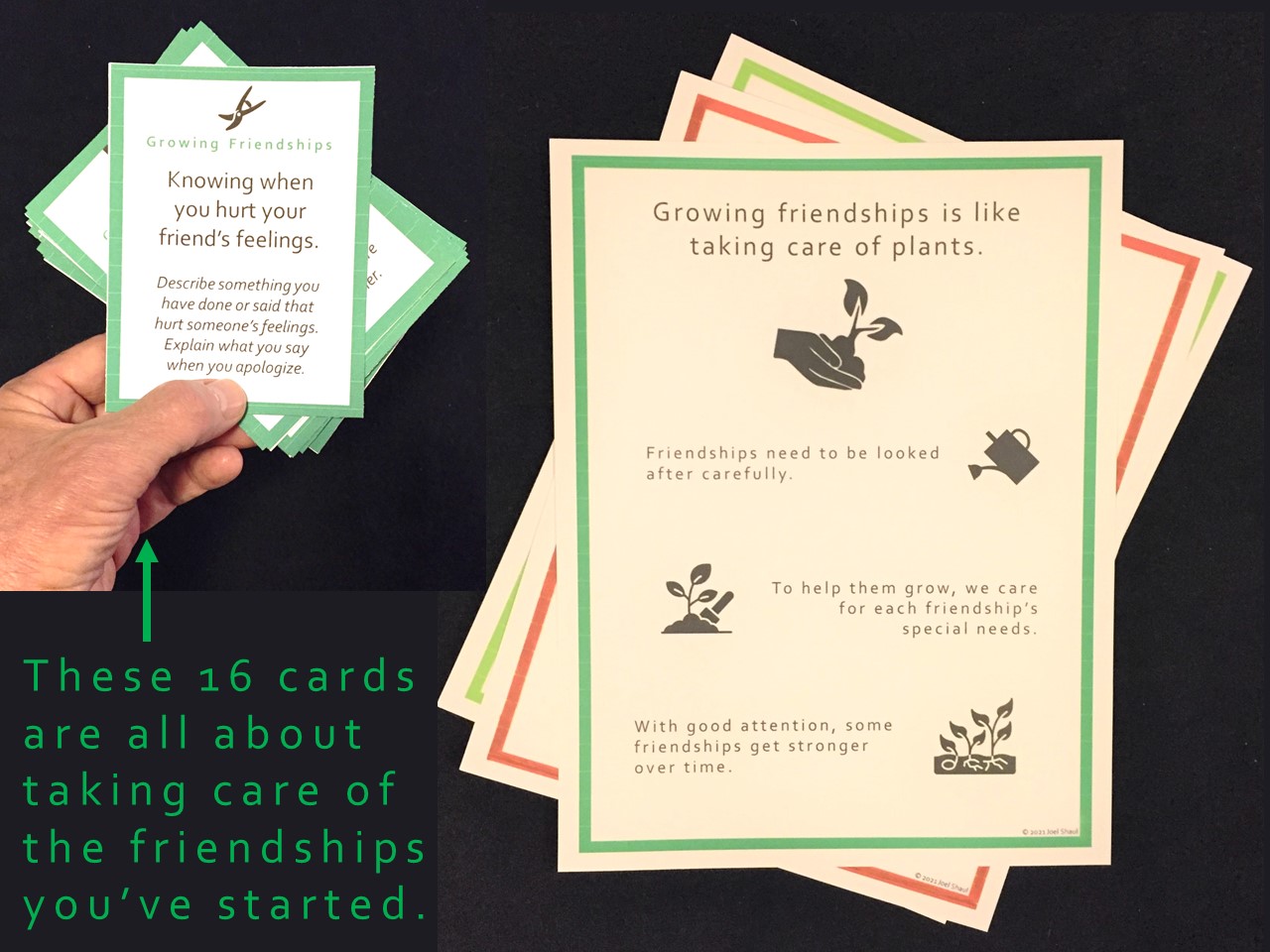
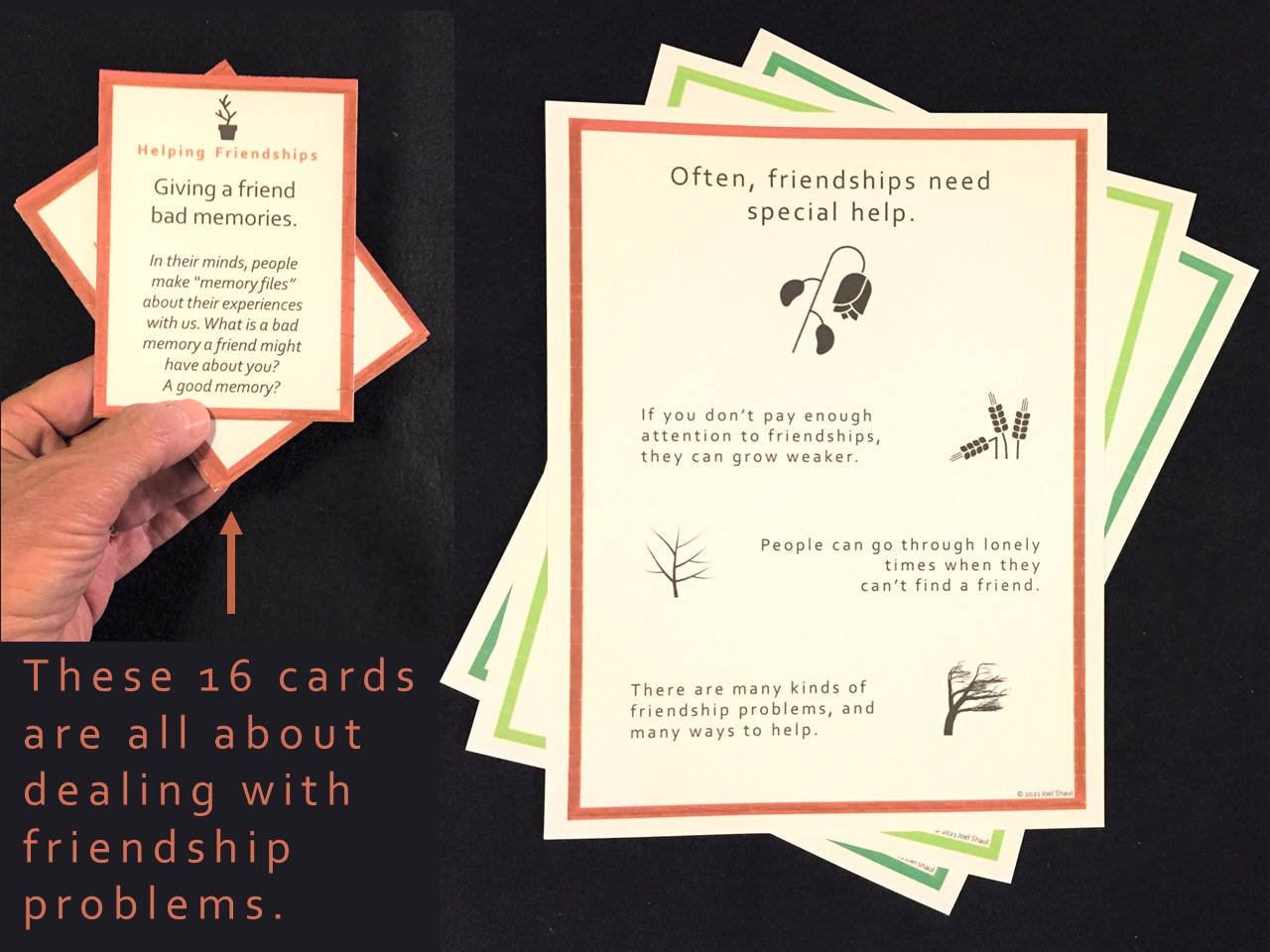
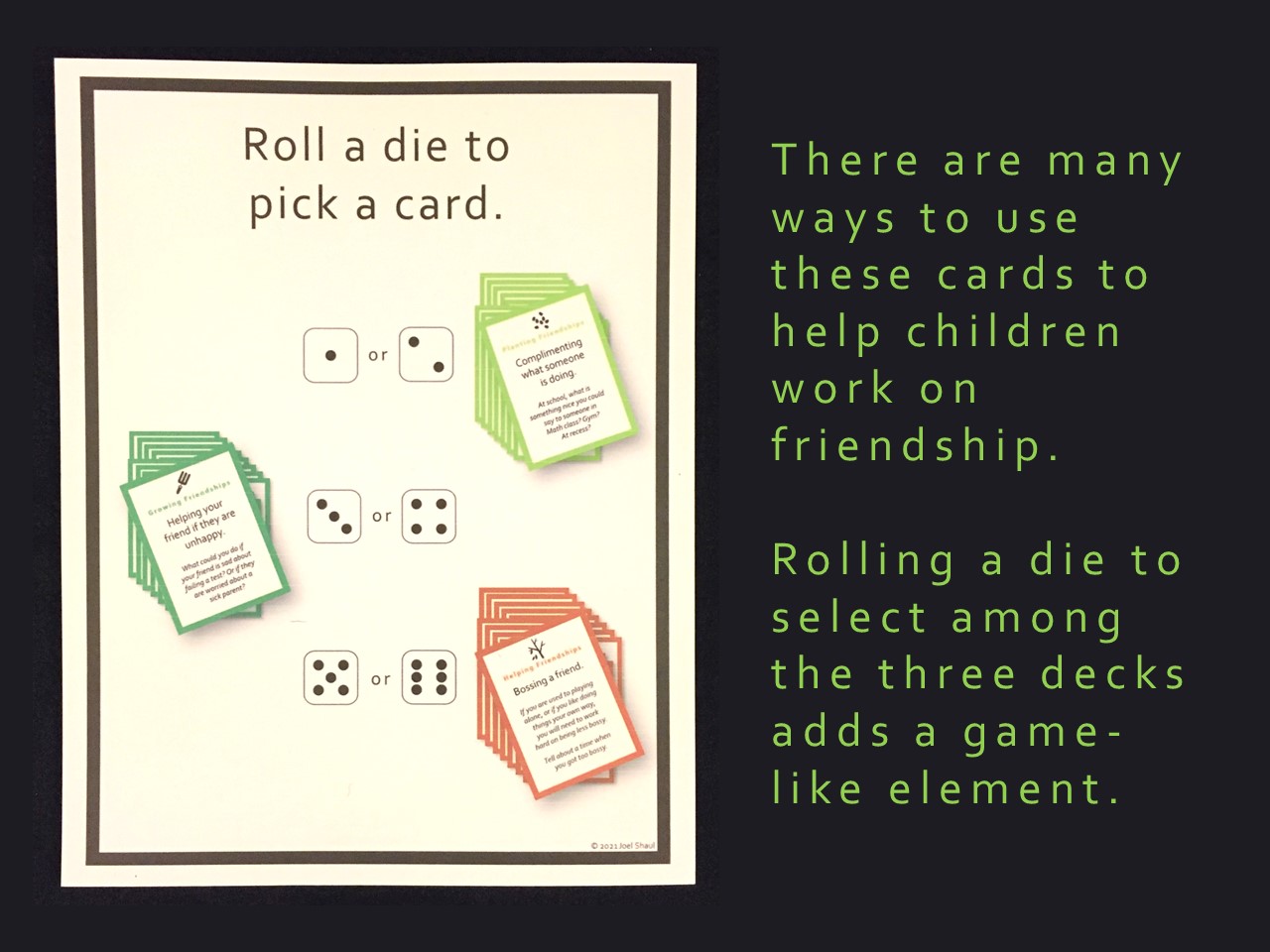
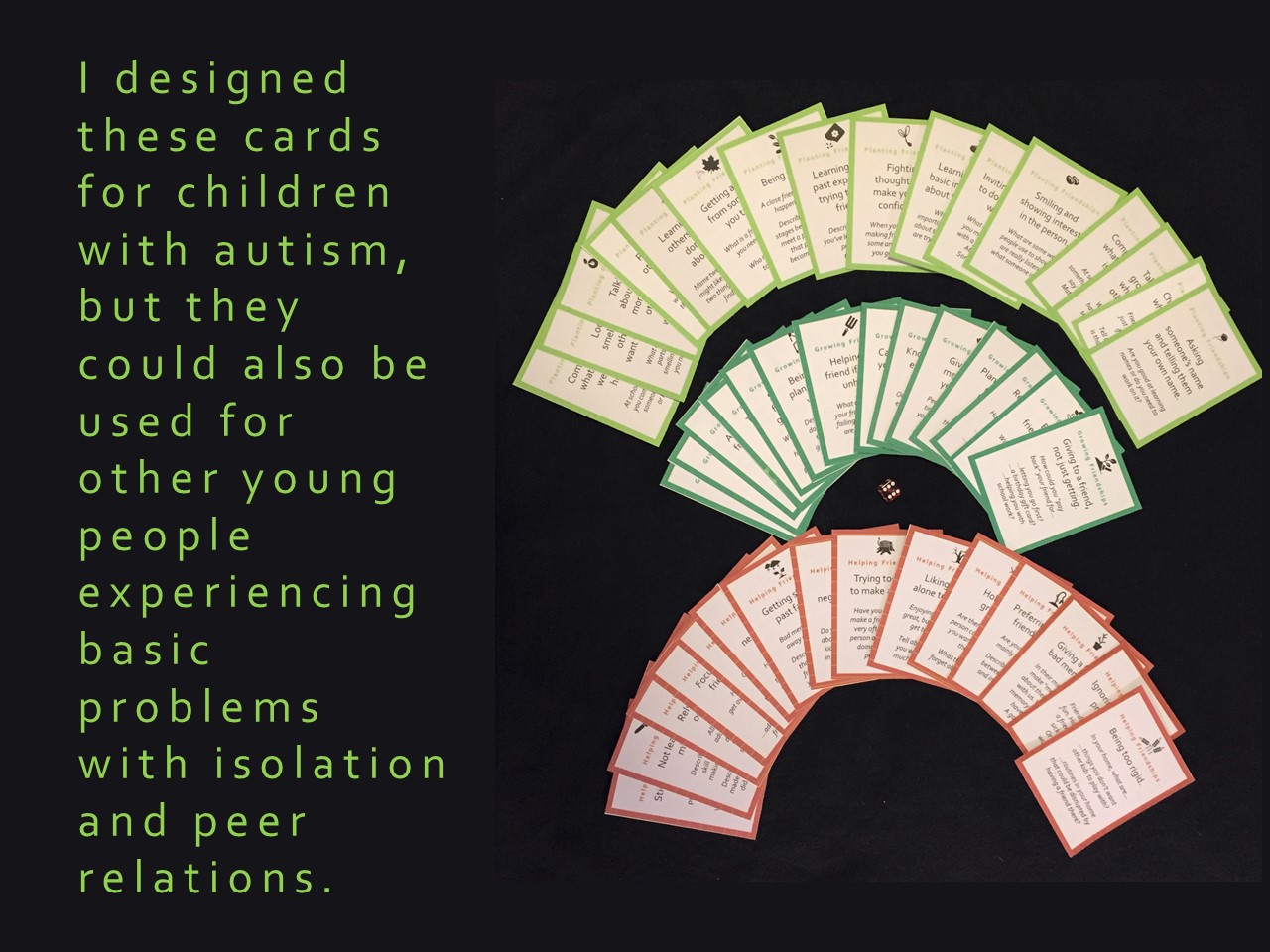
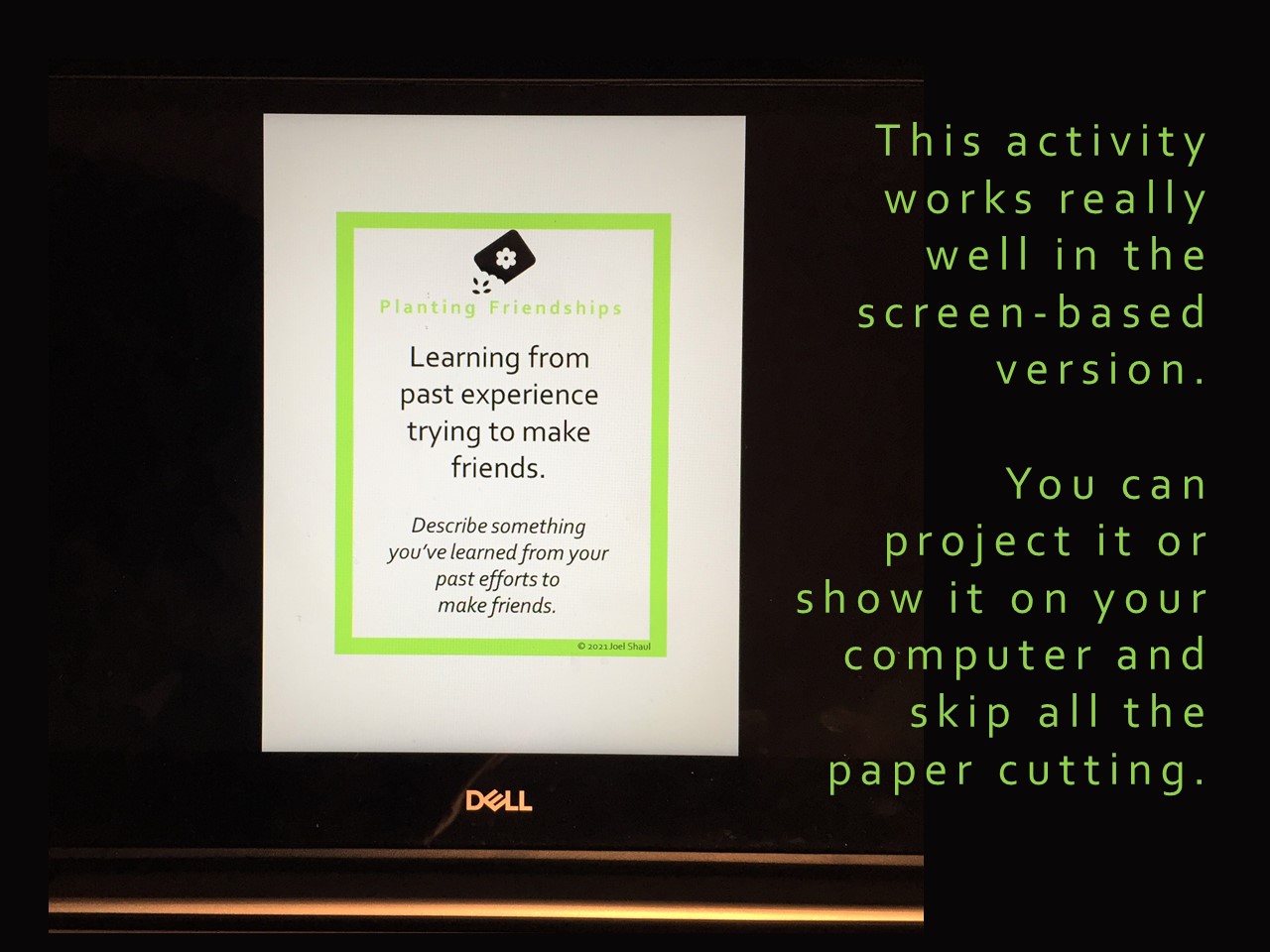
This social skills card game is designed to help children with autism to explore friendship. It can be used in a variety ways. You can print out the friendship social skills cards and use them with dice in a social skills game or you can use them in an unstructured Q & A format. A separate download allows you to skip printing the cards and instead display them on a computer, which makes this social skills activity adaptable for teletherapy or classroom use.
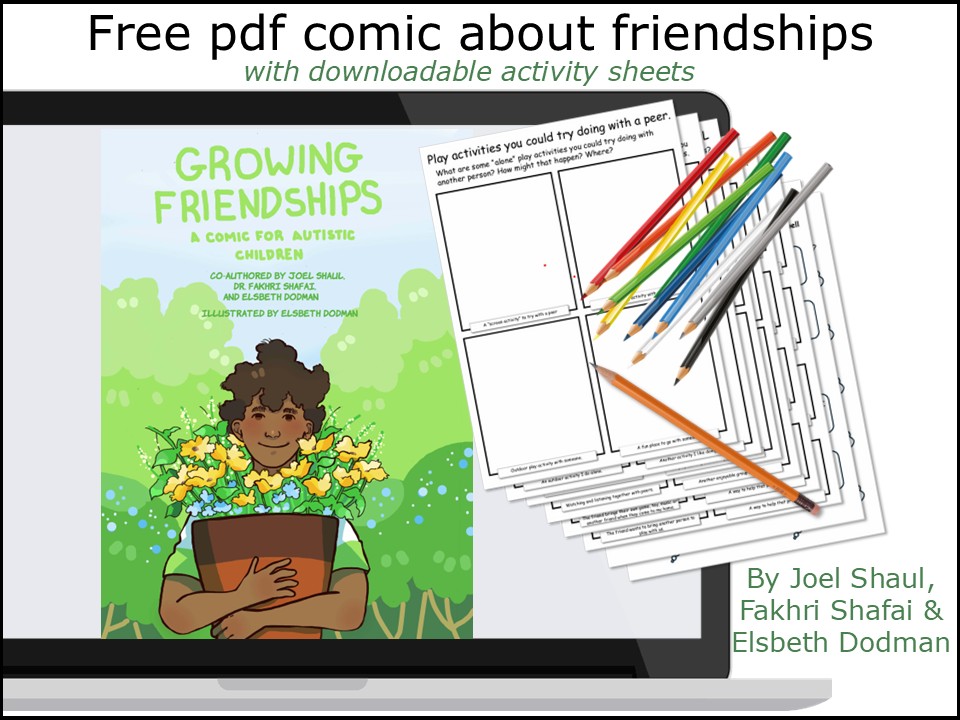
Here below is a free comic based on Growing Friendship themes: Growing Friendships – A Comic for Autistic Children.

Don’t miss these other free social & emotional skills games, worksheets and teaching / therapy resources for children & teens with ASD:

Free social skills games & activities, social interaction skills for kids with ASD

Free social skills games & activities, communication / conversation skills for kids with ASD

Free social skills games & activities, emotional regulation skills for kids with ASD

Your comments on these resources are most welcome, and often helpful. Click HERE to send an email.

Your Interests Promo image for website

testing testing

Things learned from teletherapy to make us better in-person therapists

September 2021

Many of us in education, mental health and speech spent hundreds of hours providing services remotely through our computers in 2000 and 2021.

At times, it certainly made us feel burnt out. Not to mention how it may have affected our students and clients.

Maybe you, like me, have also learned from working remotely and grown professionally because of it. Although I went through lots of frustration, I have to say it really had some very positive effects on my work. I started out with limited skills in teletherapy but then I got much better at it, to the point that a majority of the families I work with would have preferred continuing in remote services with me if insurance providers and regulatory agencies would have allowed it.
While doing all that therapy remotely through computer screens, I did a few things which have affected the way I now do my in-person mental health therapy and social skills training for young people with autism.

Some Ways Teletherapy Experience Can Make Us Better In-Person Therapists

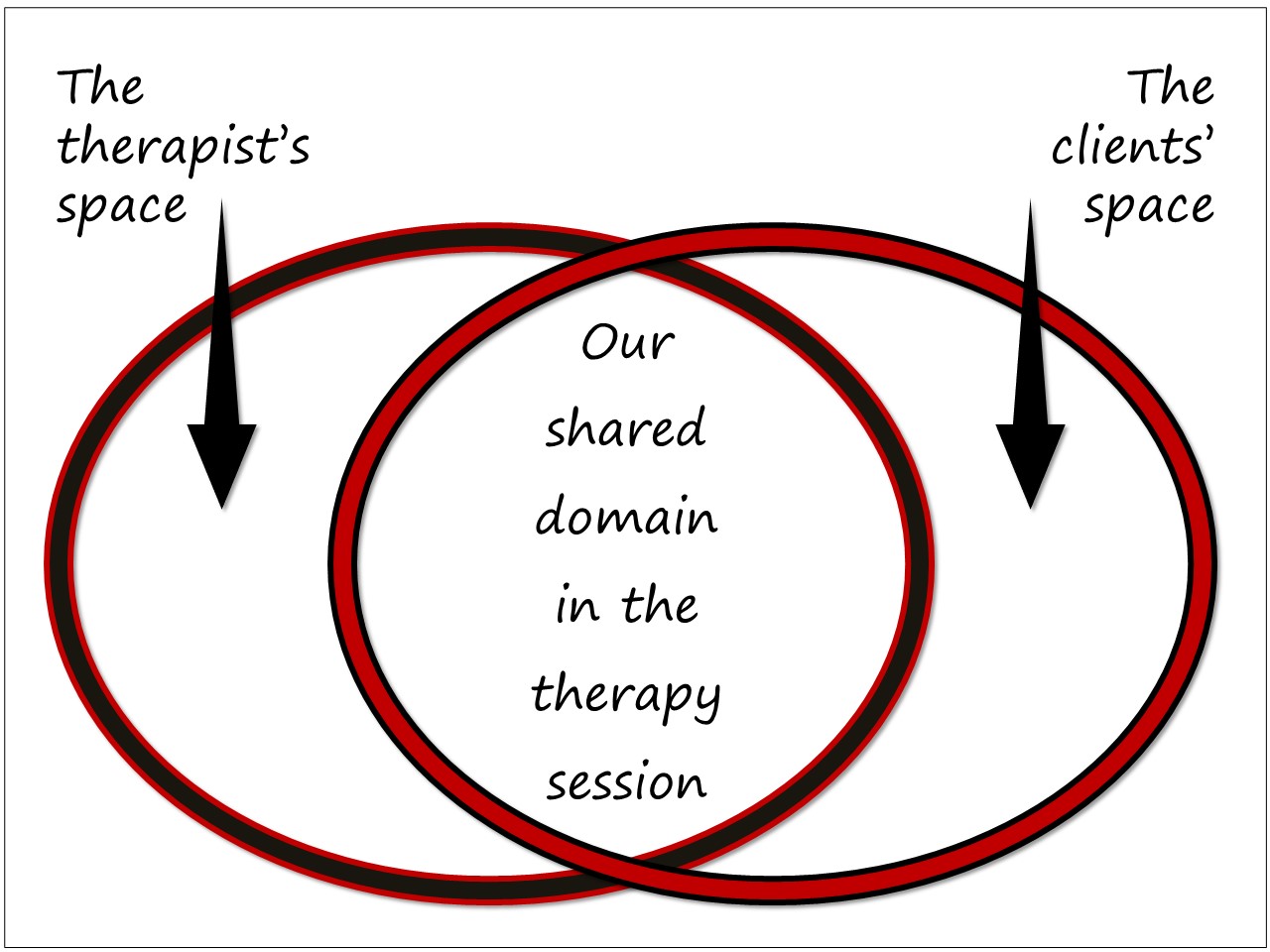
Doing teletherapy, in a shared, virtual space instead of our own offices, can have the effect of breaking down some power dynamics that might not be beneficial to the needs of the child and the family. We – the professional, the child, the parent – work together in teletherapy in a space we jointly nurture and develop. It sometimes does not work so terrific, but when it does, it’s great.

Now that we are back in in-person sessions, providing services in our professional space, there are many things I can do to continue to work together with families in an egalitarian and collaborative manner. I can get out a drawing the child made in the past and stick it on the wall during the session. I can work more diligently with the parent as a therapeutic ally and perhaps have them in the therapy room for more of the session.

Engaging Visuals Are Just As Important with In-Person Therapy as in Teletherapy

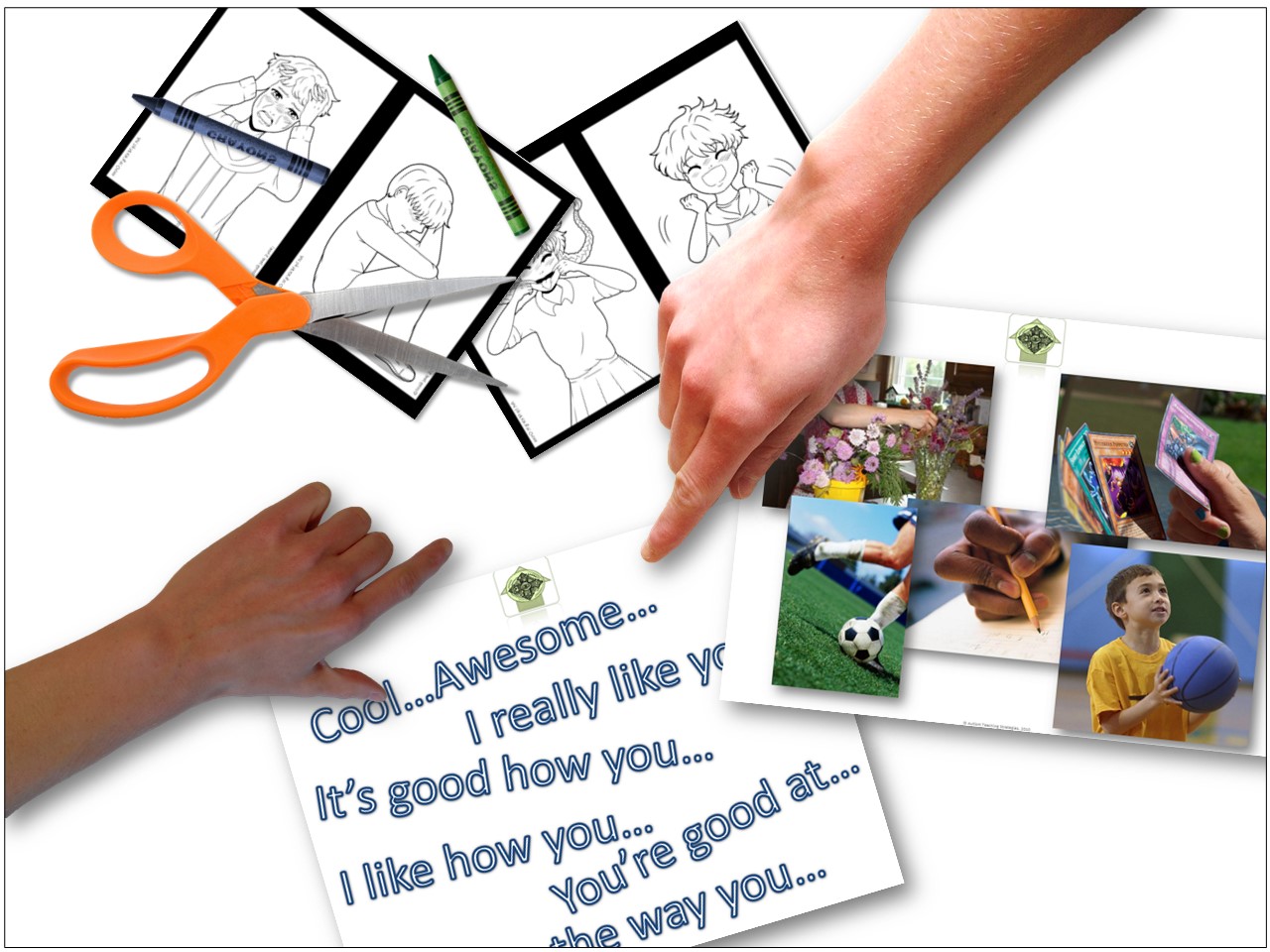
The experience of doing teletherapy made it more clear than ever how important it is to use the clearest and most engaging visuals I can find. I noticed, in teletherapy with young people on the autism spectrum, that I needed to use colorful, engaging and strategic visuals on the shared screen as much as possible to supplement the verbal exchange and engage distractible eyes. Now that I am back to seeing children in person, I find I am using visuals – social skills games, picture cards, very simple worksheets – more than ever, since for so many months I had no other choice while carrying out teletherapy sessions with children on the autism spectrum.
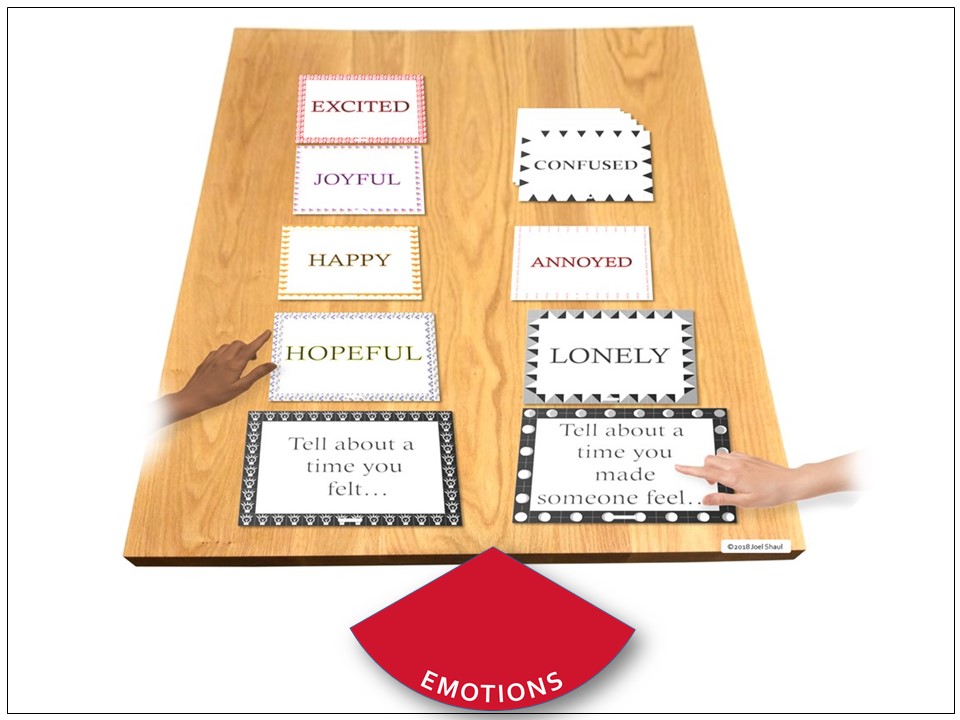
In your own in-person teaching and therapy, you are invited to supplement your own repertoire of engaging visuals with whatever you might find on my website. My website’s download section has dozens of free printable games, pictures, coloring sheets and simple worksheets.

Screen-based Therapy Tools Can Work Great with In-Person Therapy Too

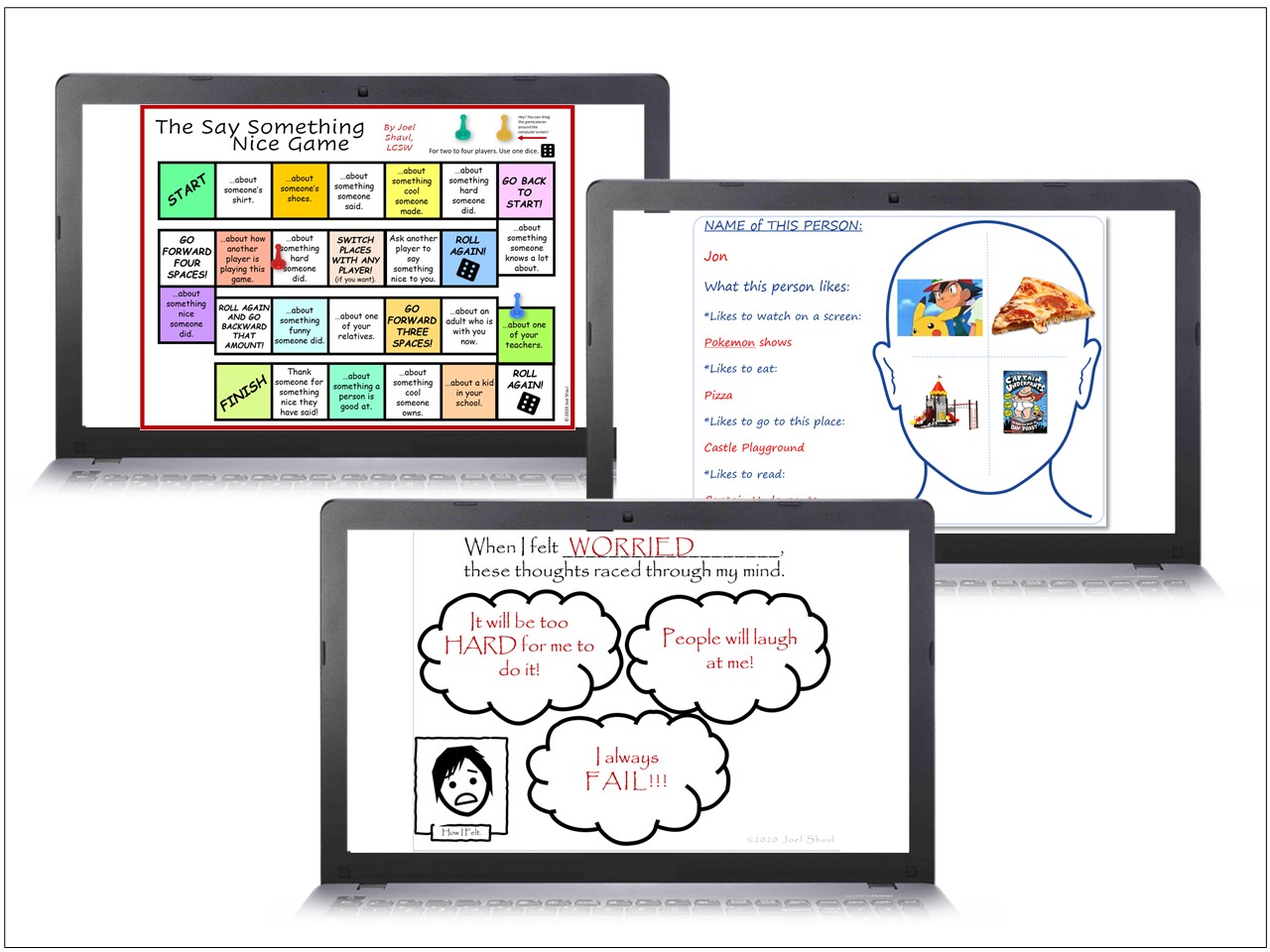
Many kids with ASD will lose focus and feel uncomfortable if obligate them to face us directly for too long. In teletherapy, I often spent more than half the session working with them while we looked together at a game, online worksheet or video. Although I used to use screen-based therapy tools often before the pandemic, I find I am employing them even more now after 18 months of teletherapy experience.

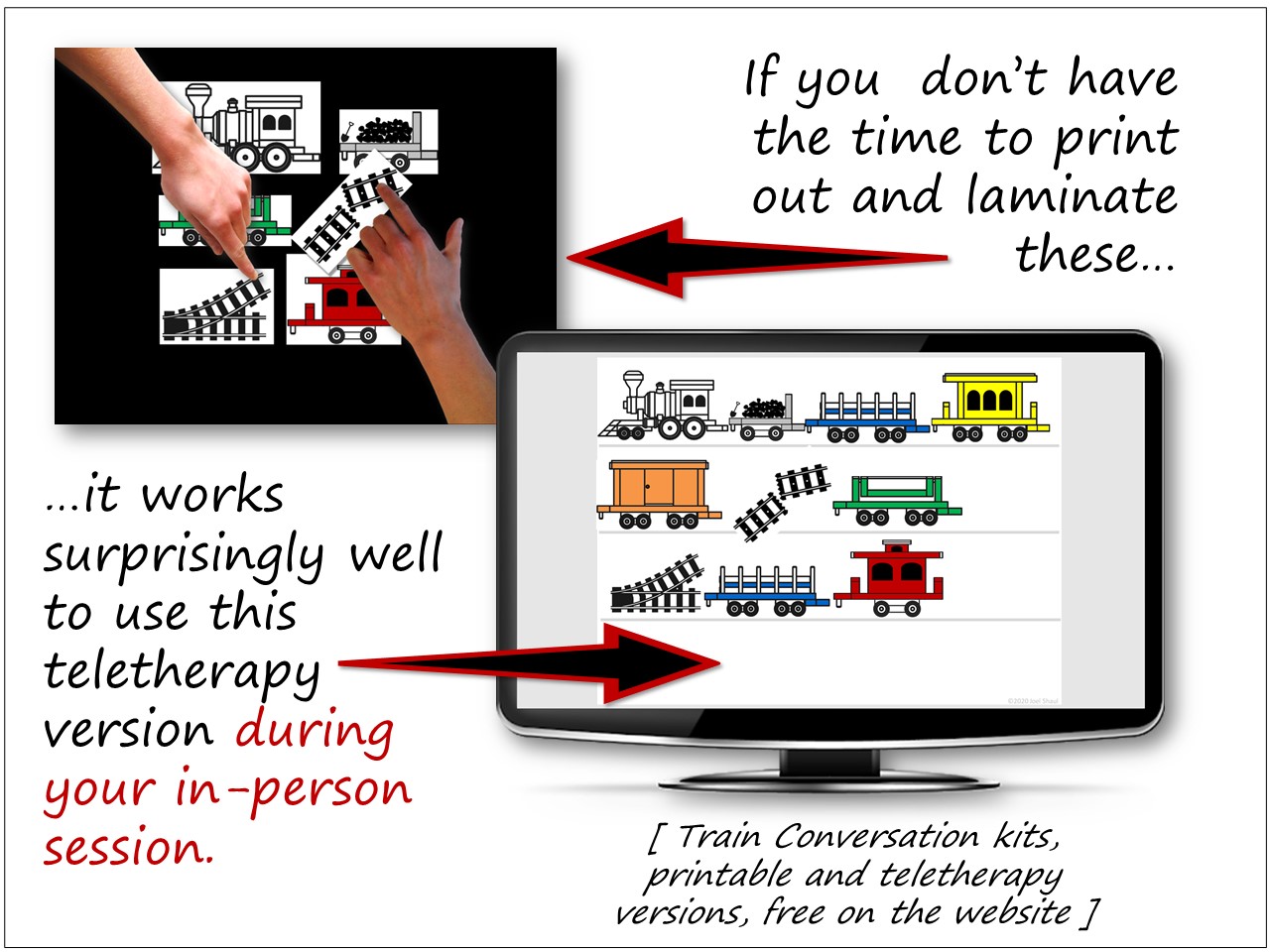
Some of these screen-based teletherapy resources I developed work even better than the printable resources I based them on. See this example below.

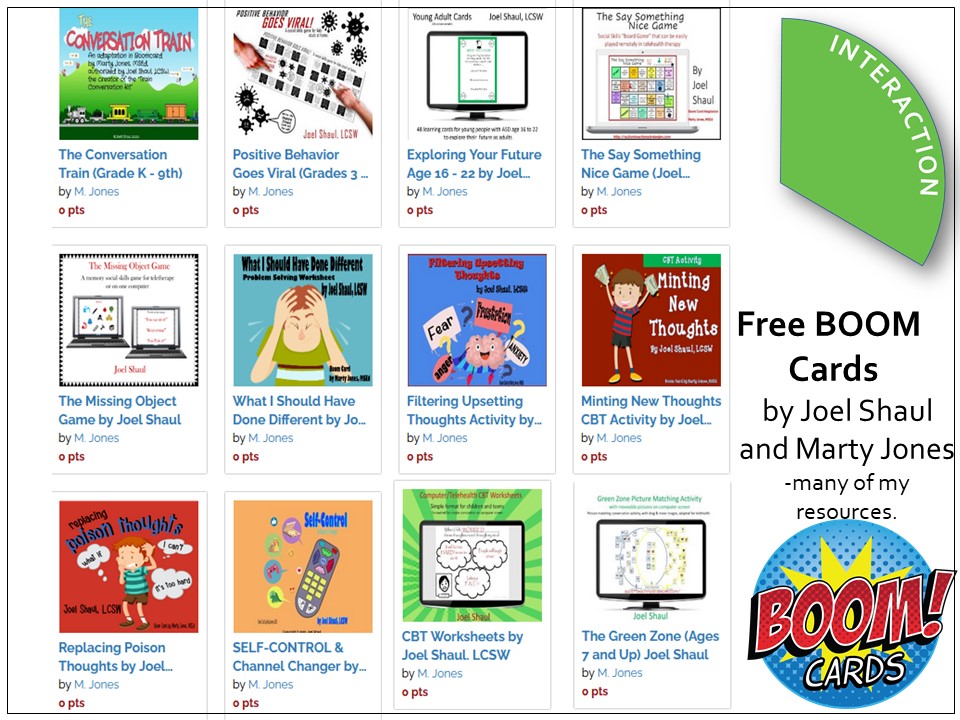
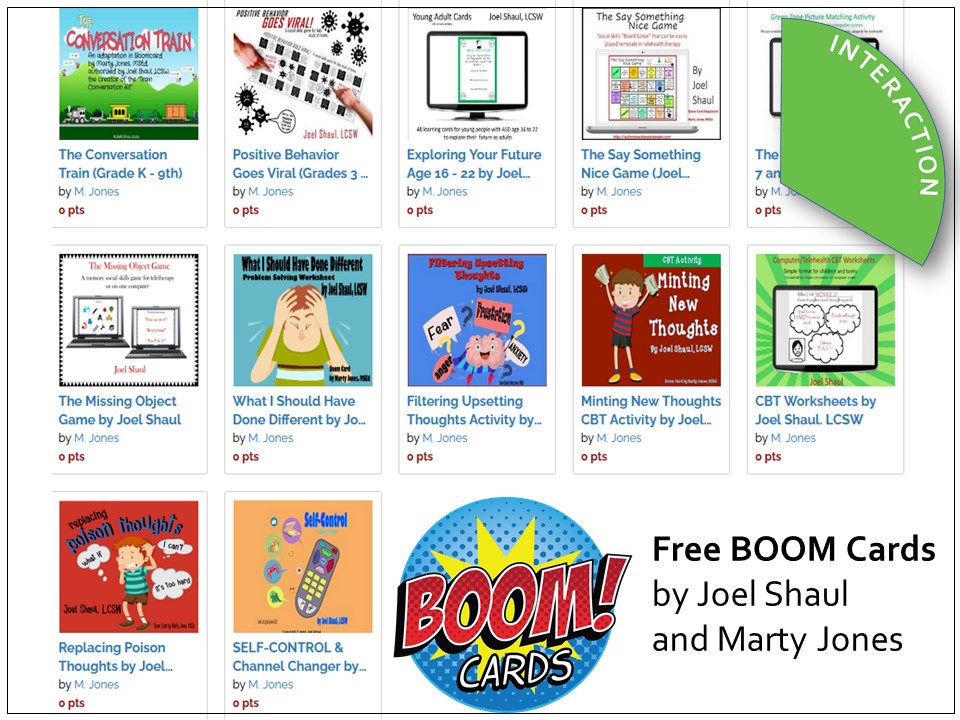
You are welcome to try, in your own office-based counseling and therapy, my own free teletherapy resources (various formats including Boom Card).

I hope you also have a successful resumption of your in-person work with children.

Joel Shaul

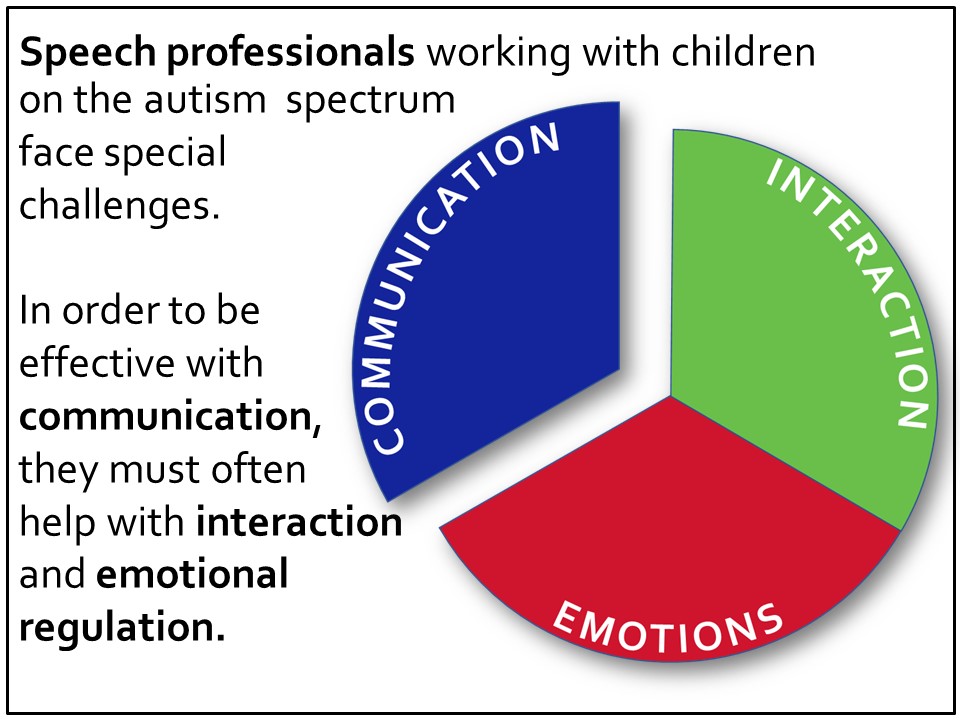
Speech Professionals

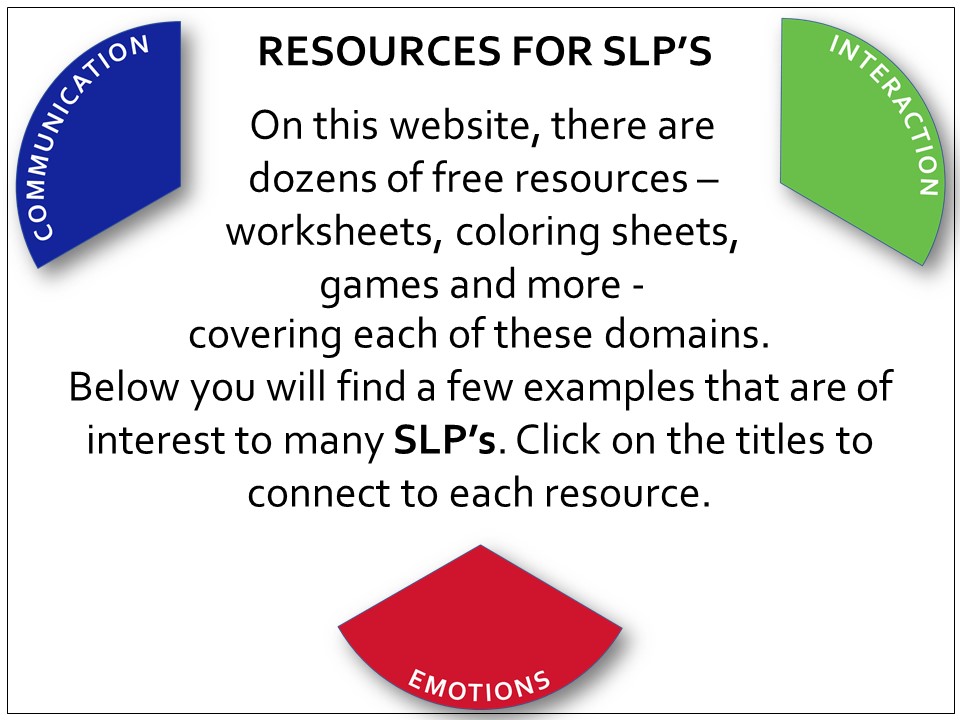
To view the remainder of the free resources on social communication, click HERE.

To view the remainder of the free resources on interaction, click HERE.

To view the remainder of the free resources concerning emotions, click HERE.

To learn about workshops, professional training and webinars offered by Joel Shaul, click HERE.