Growing Friendships: A Comic for Autistic Children
Illustrated by Elsbeth Dodman. Written by Joel Shaul, Fakhri Shafai & Elsbeth Dodman
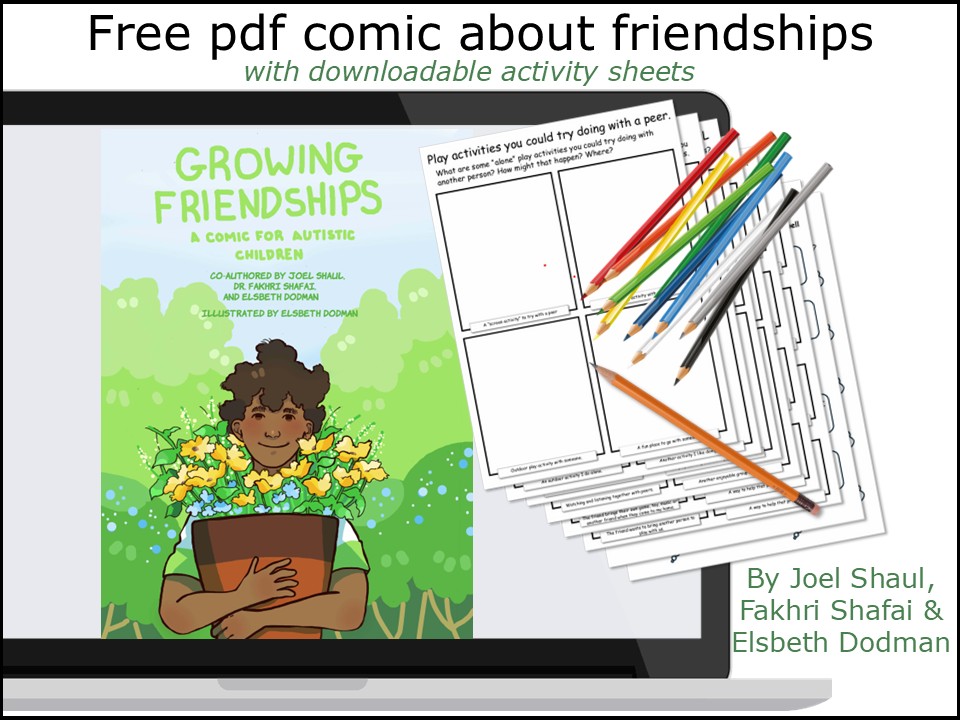
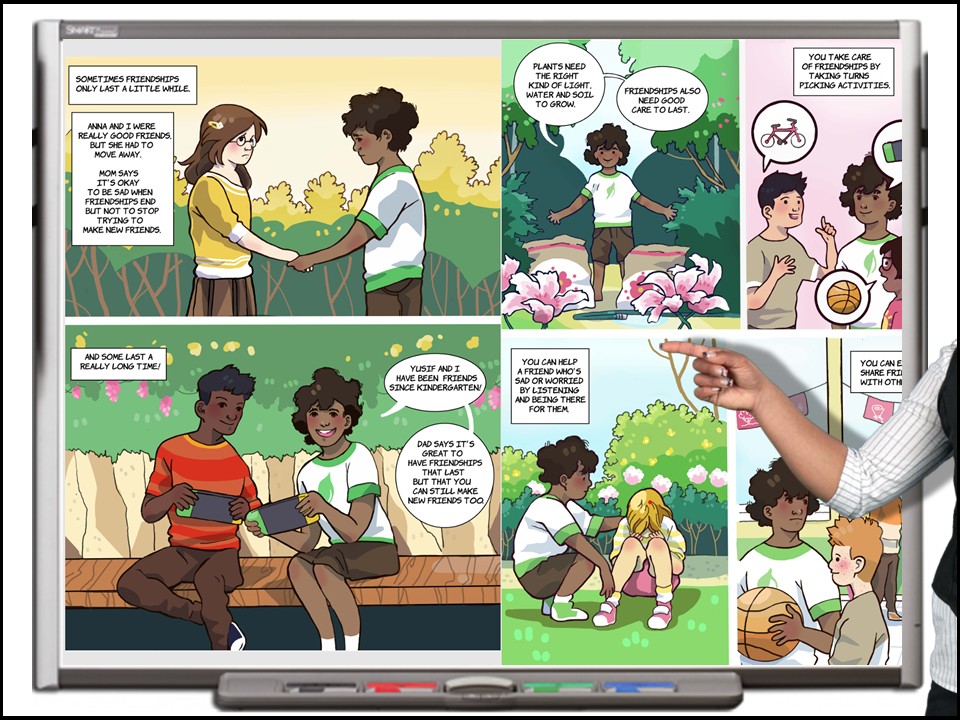
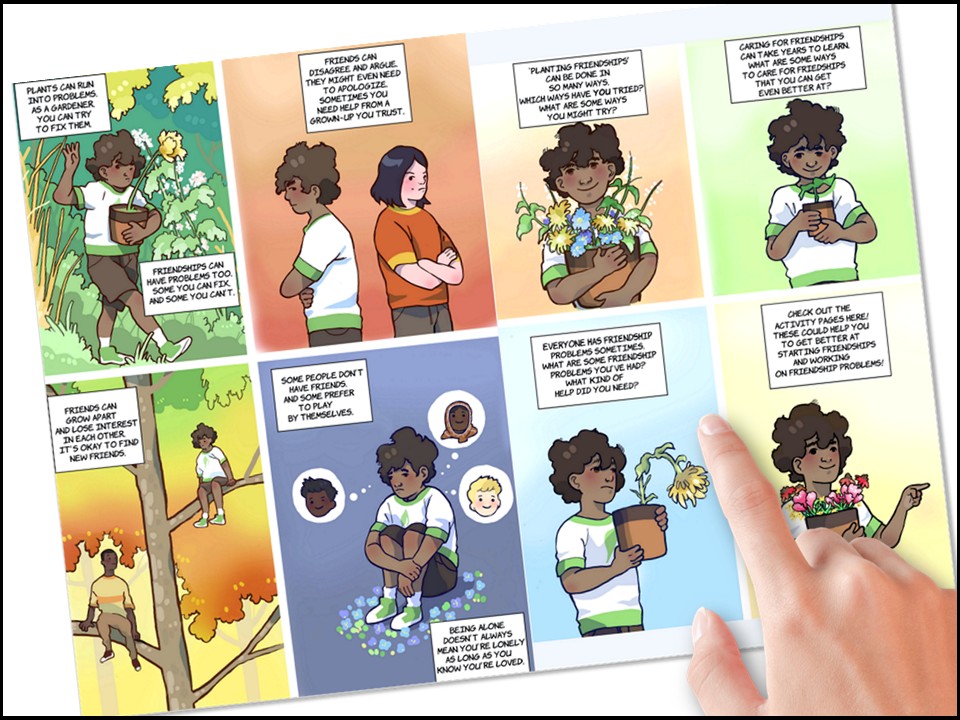
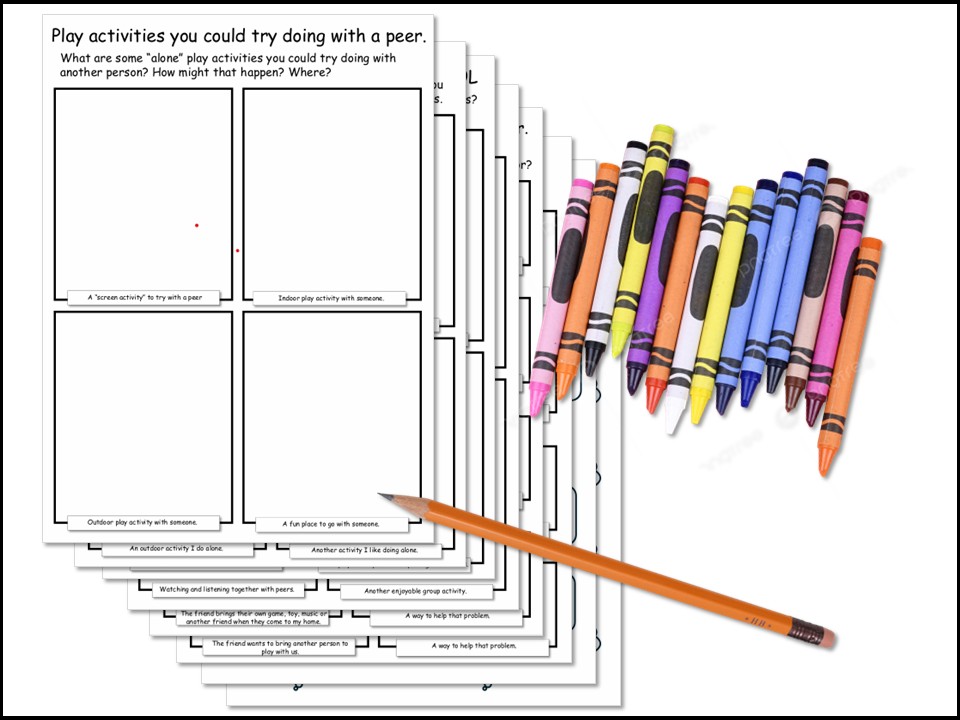
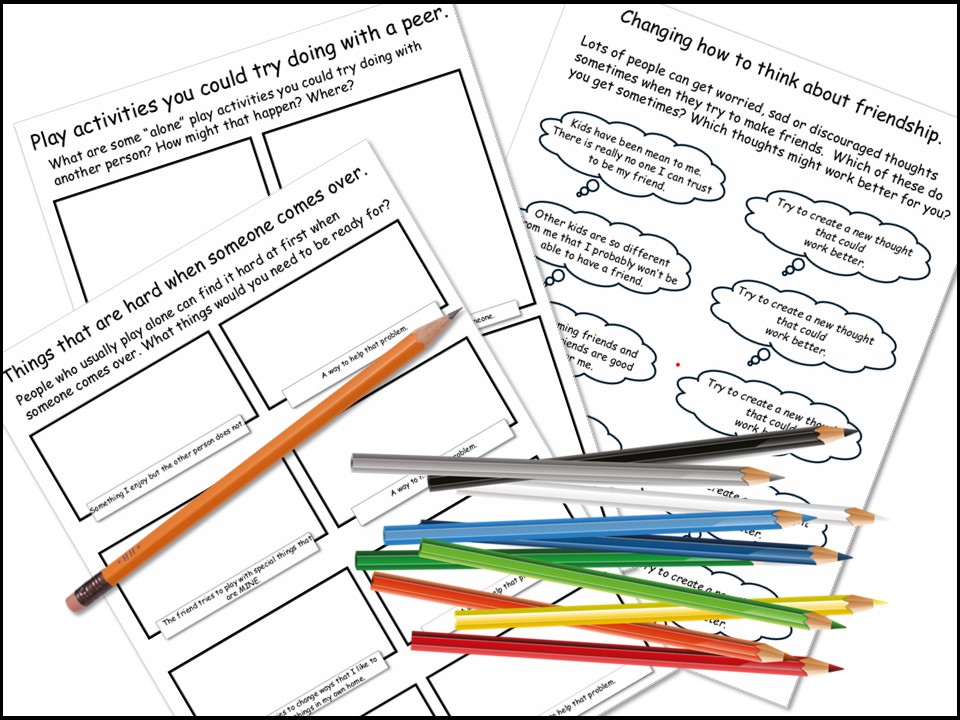
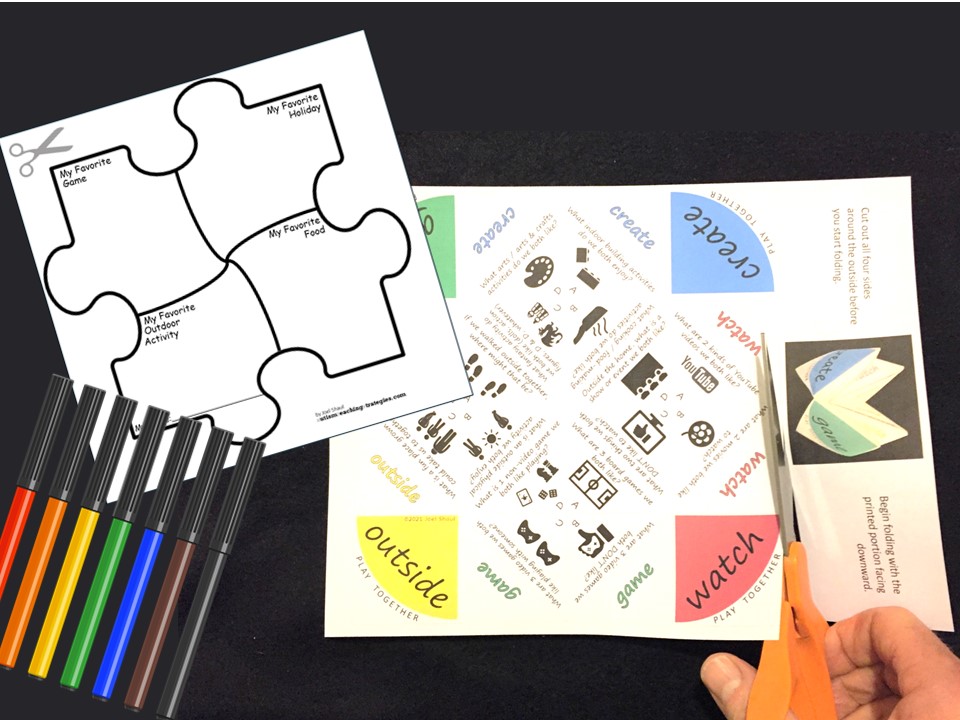
Here is a fine, free comic made available for download by Aide Canada. It is inspired by a free card activity on my website, Friendship Growing Cards. There are some great activity sheets to use in combination with the comic book.
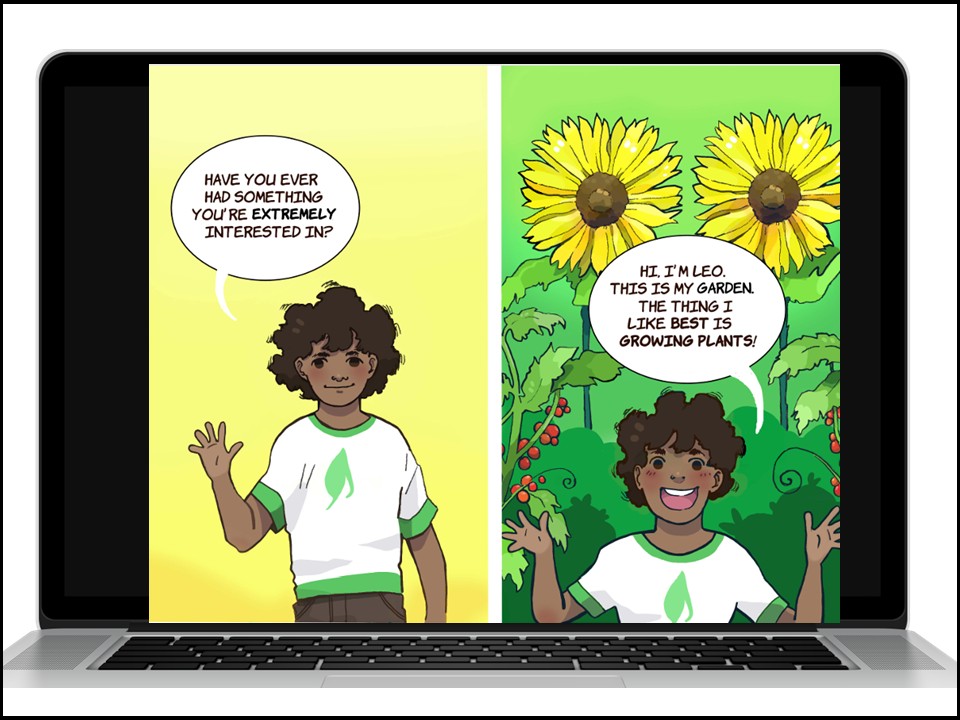
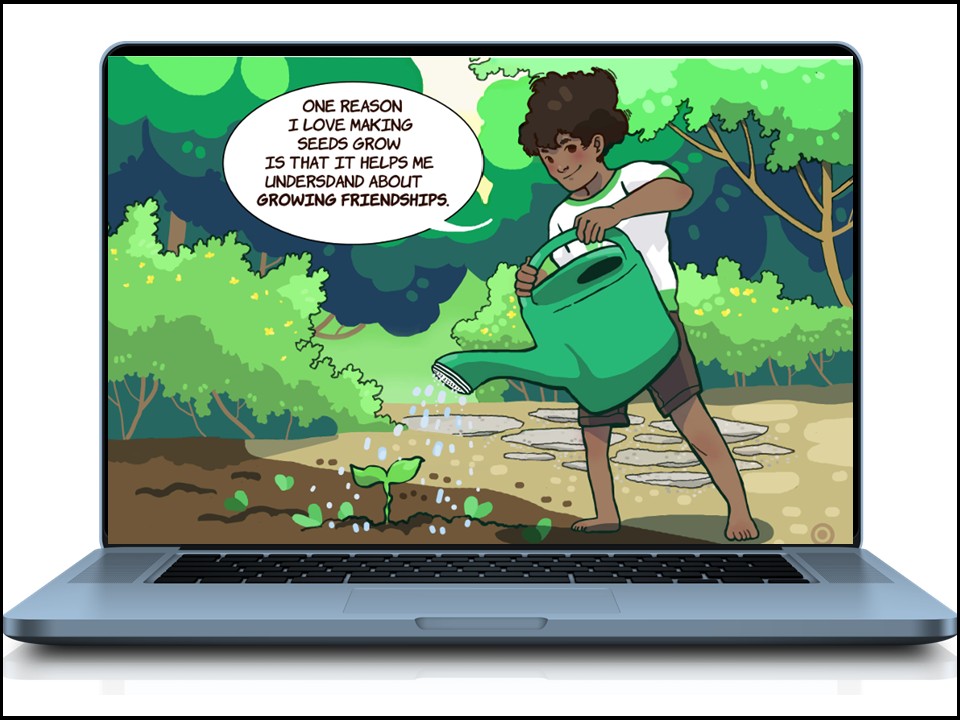
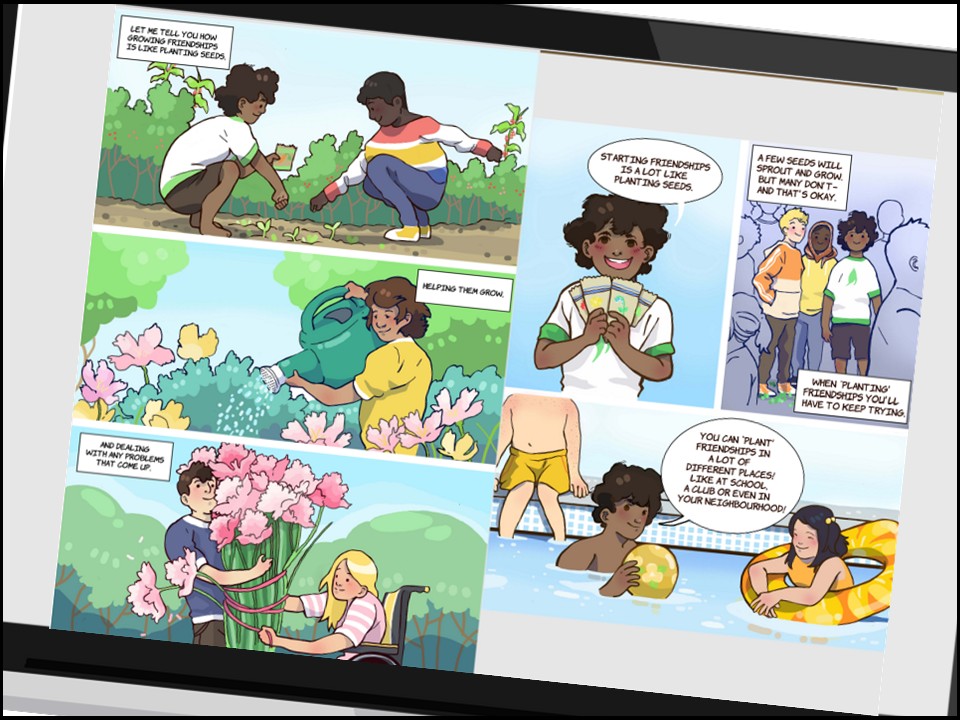
Here are some excerpts.
Growing plants is a useful metaphor for “growing friendships.”
You can show the comic on a computer screen to one child or a small group. Its high-definition images and text can also be projected or shown on a smart board.
Although the comic is designed to be viewed on a screen, it is possible to print the individual pages.
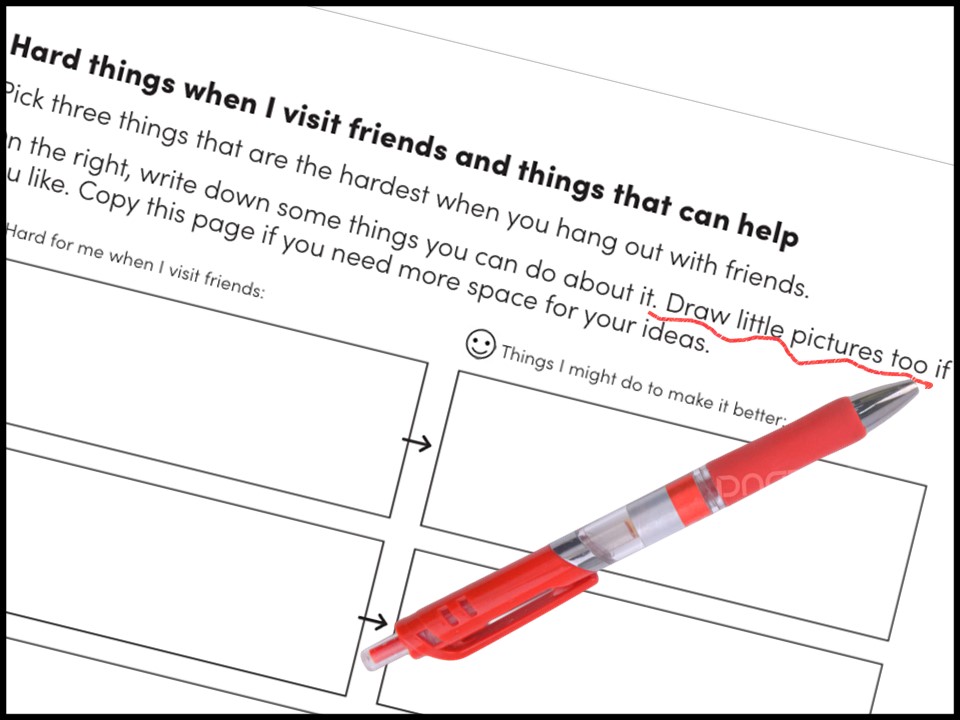
The eight activity pages are very useful to explore the particular ways children are affected by the matter of friendship. The sheets are designed to allow both short answers in written format and simple drawings.
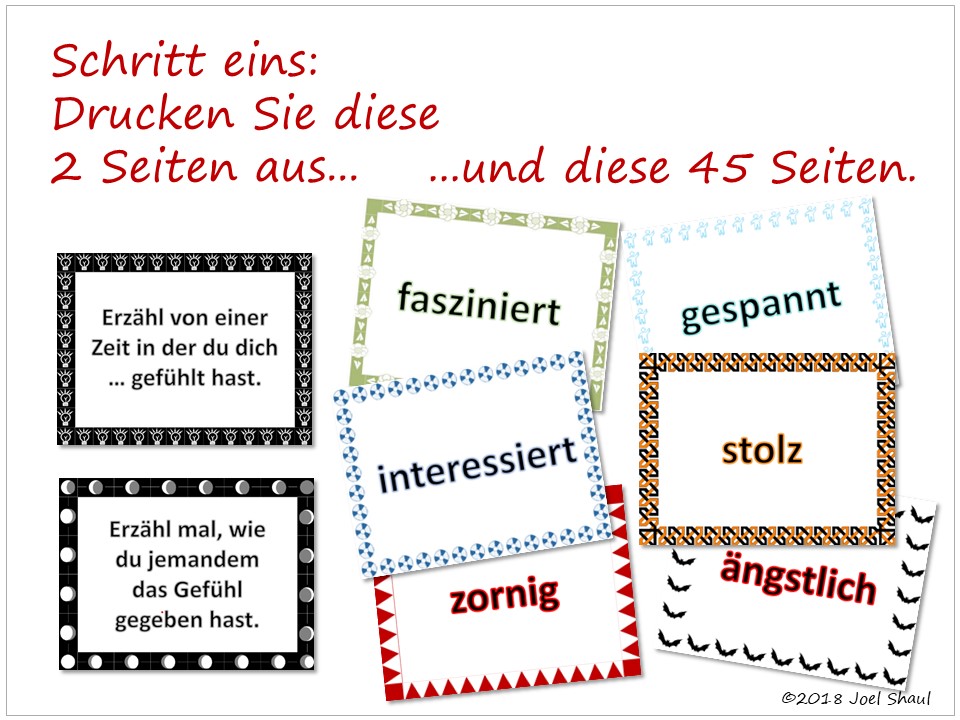
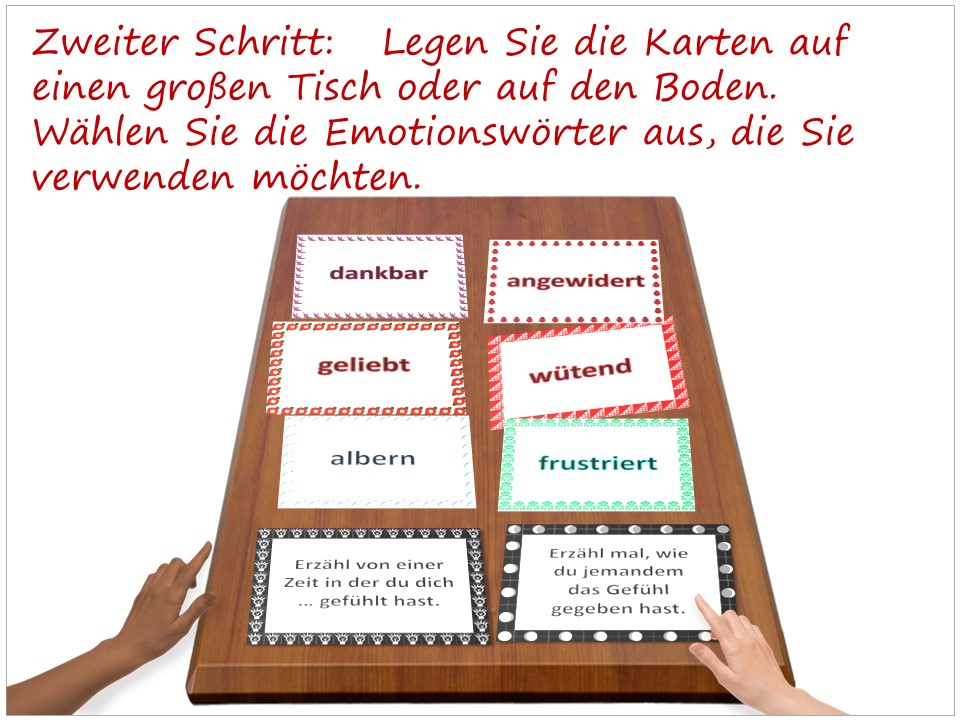
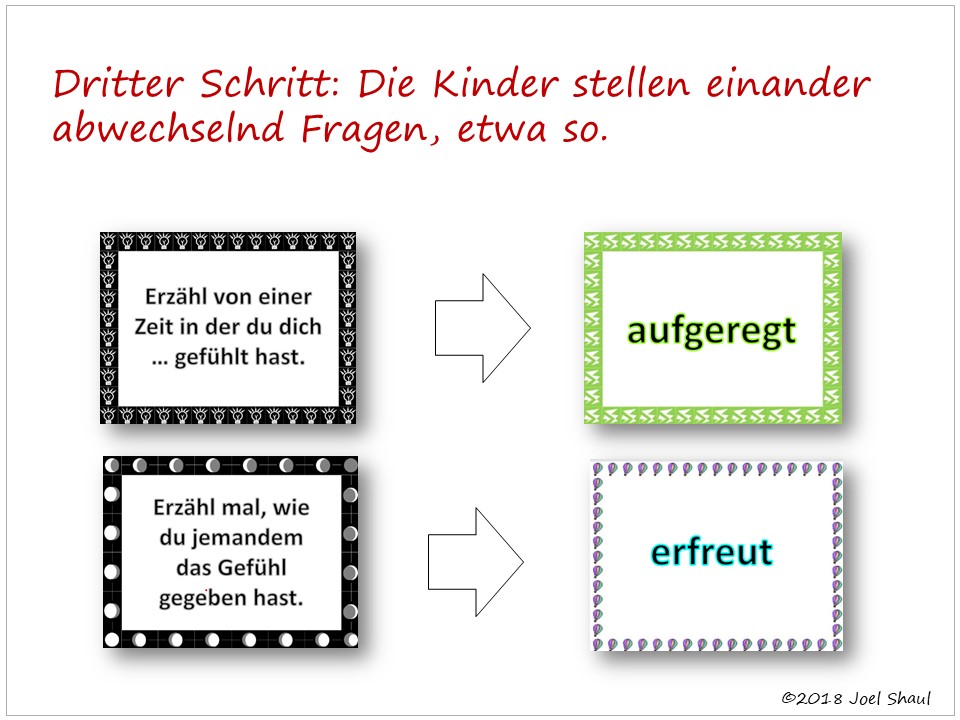
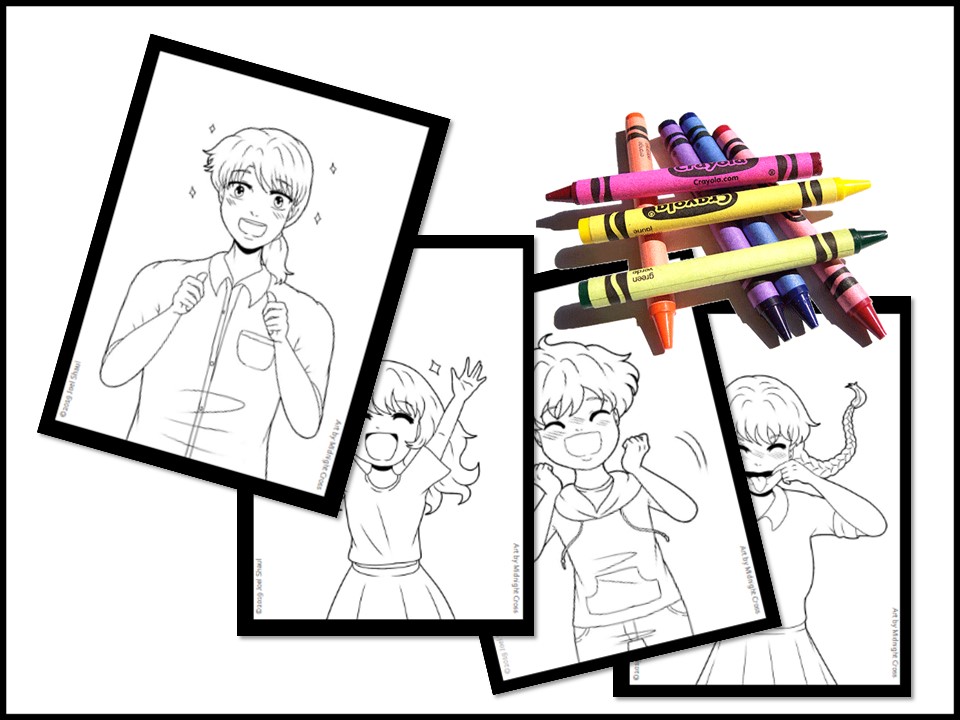
Friendship Growing Cards, which can be printed or else shown on computer screens, add a game-like element to this social skills learning activity and may be used in conjunction with the comic.
I hope you find this collaboration with Aide Canada helpful. And I thank Aide Canada for making this free resource available to you.
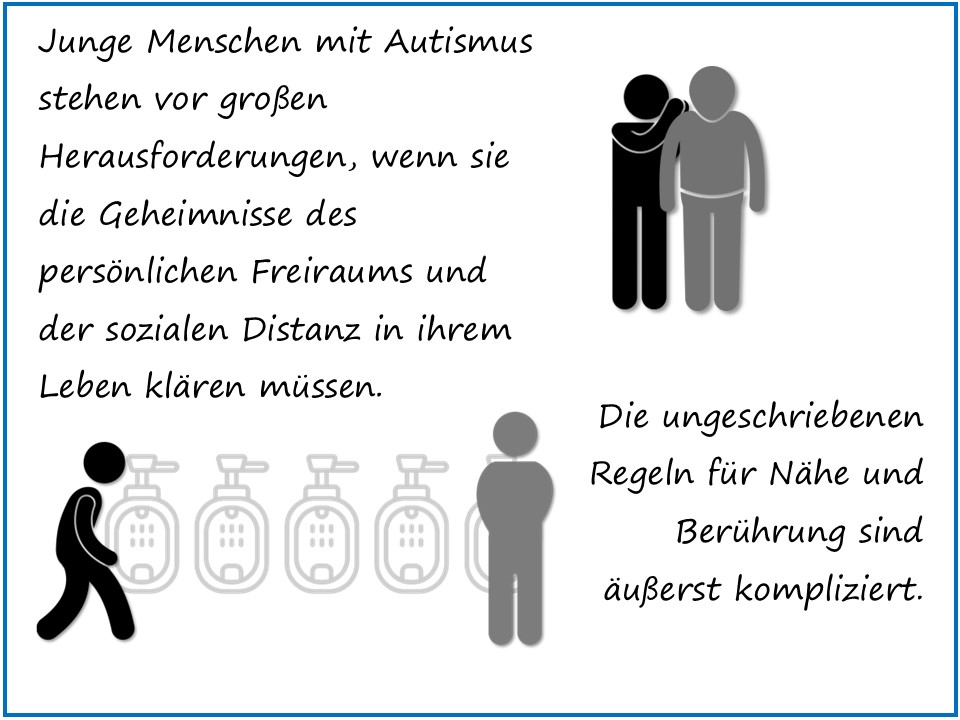
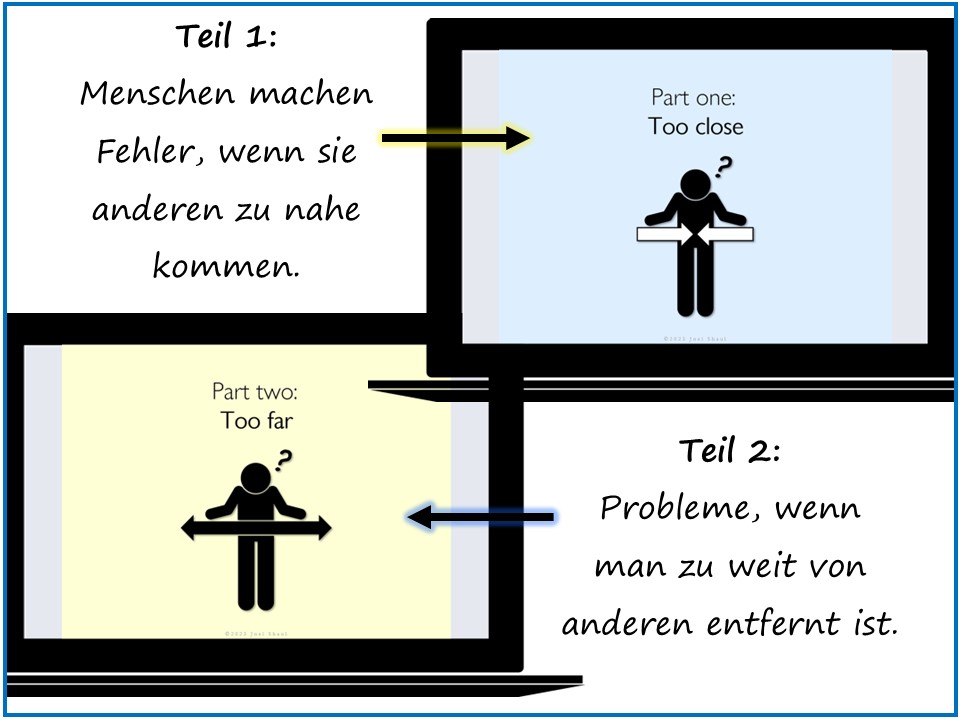
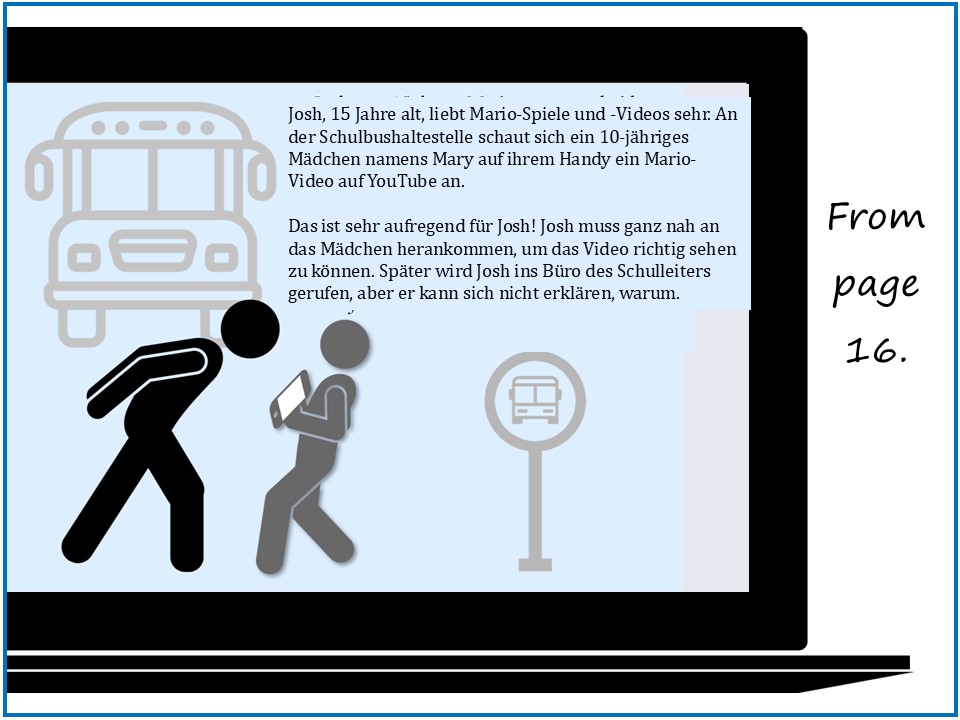
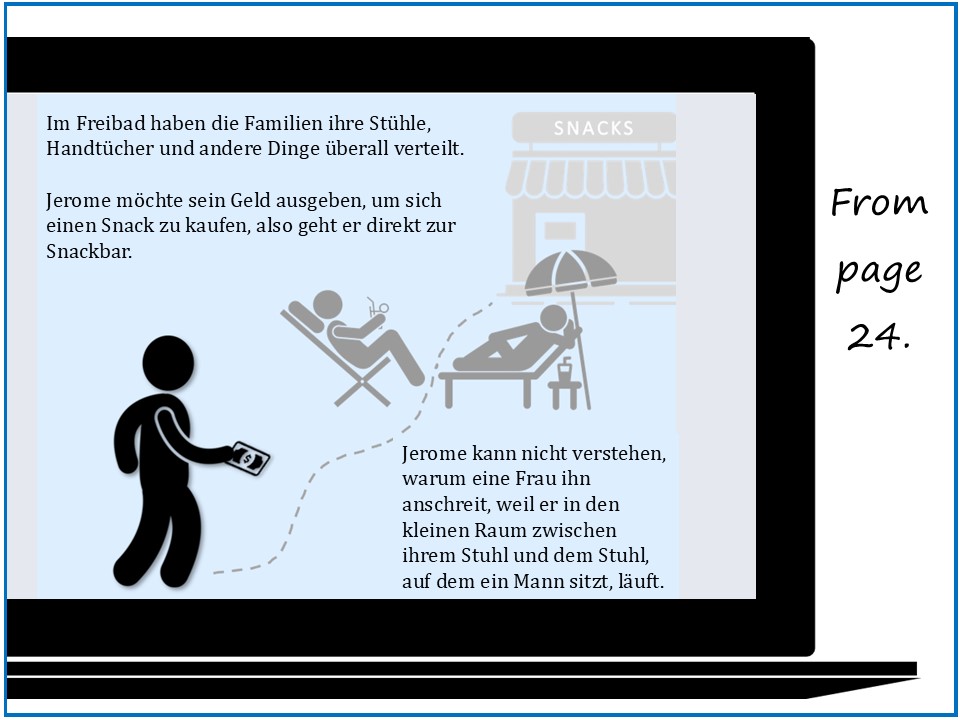
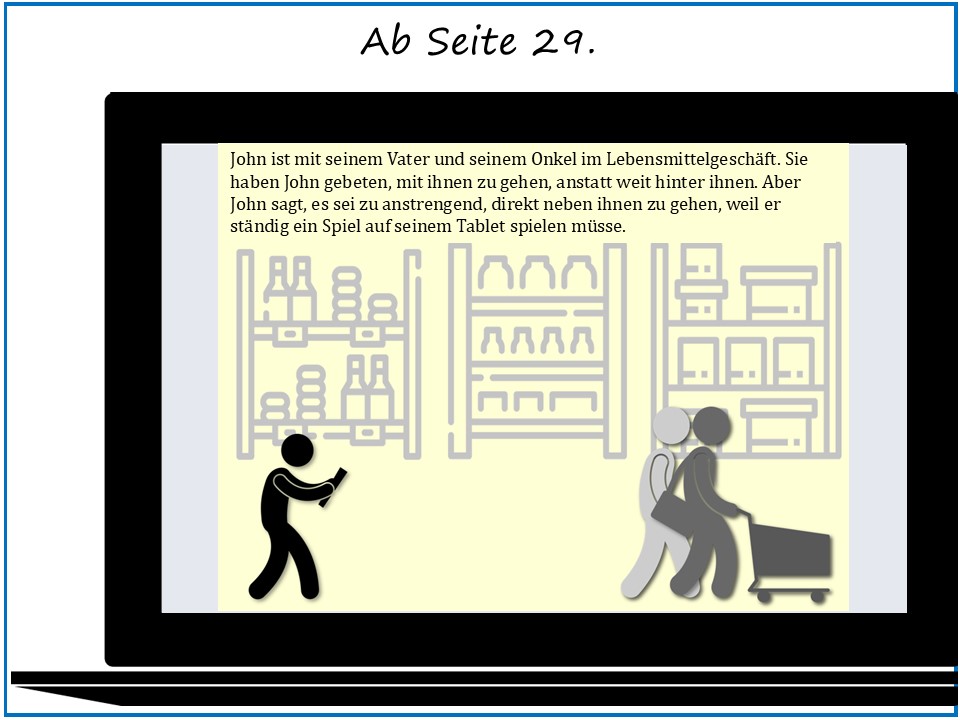
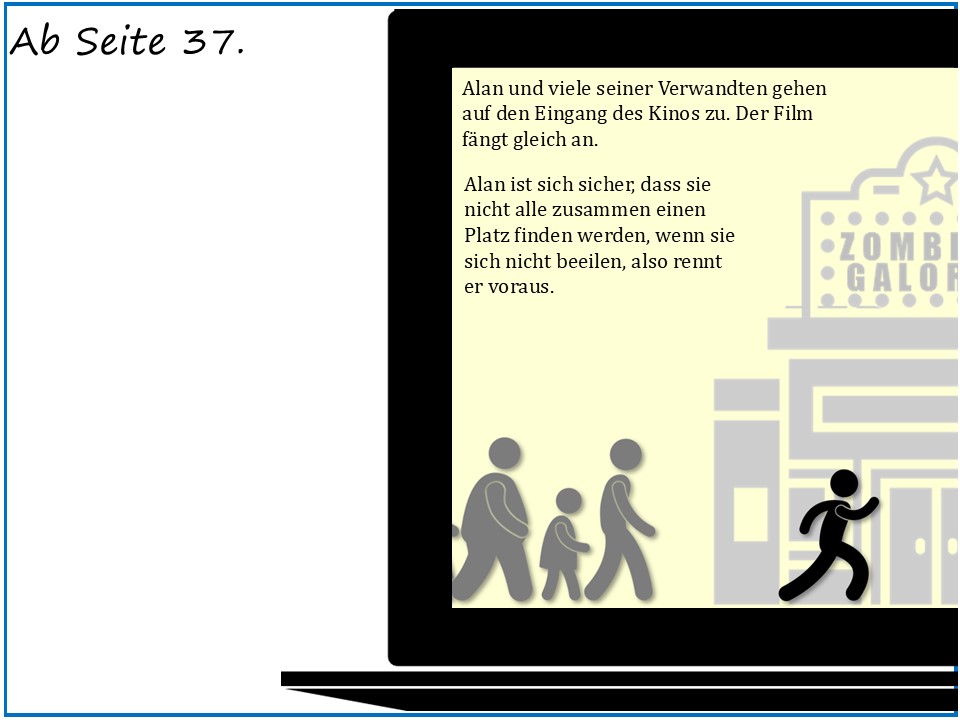
Junge Menschen mit Autismus stehen vor großenHerausforderungen, wenn es darum geht, die Geheimnissedes persönlichen Raums und der sozialen Distanz in ihremLeben zu klären.
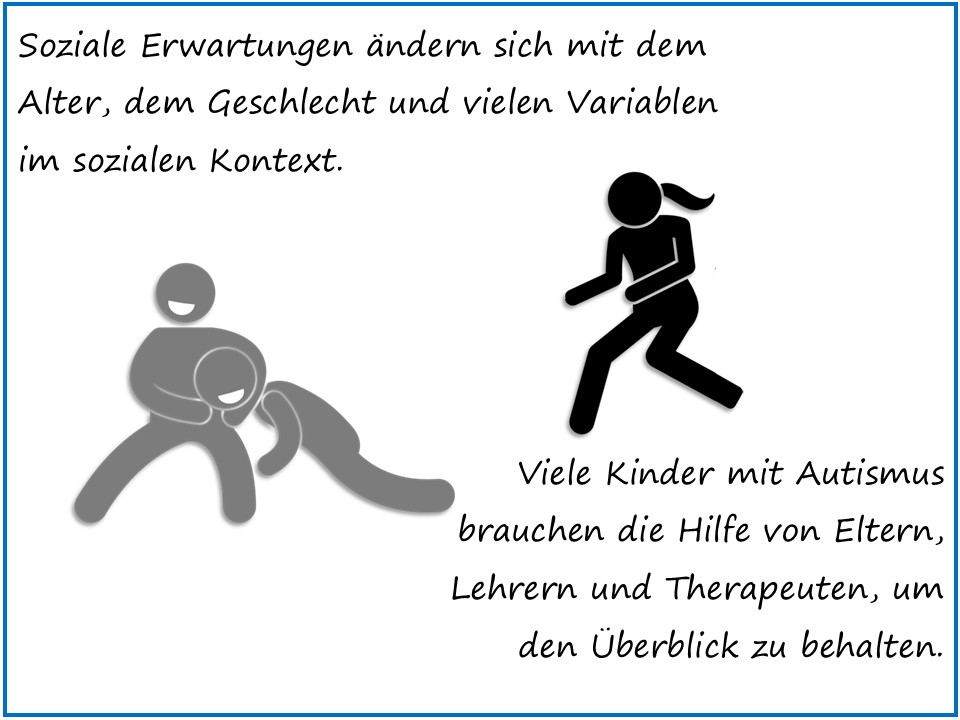
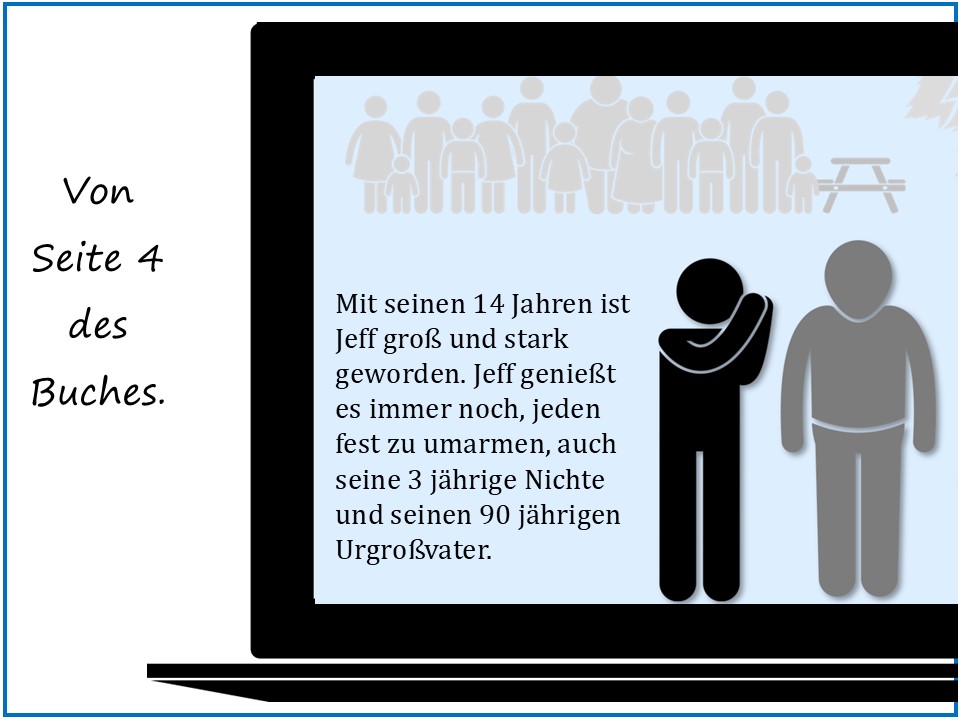
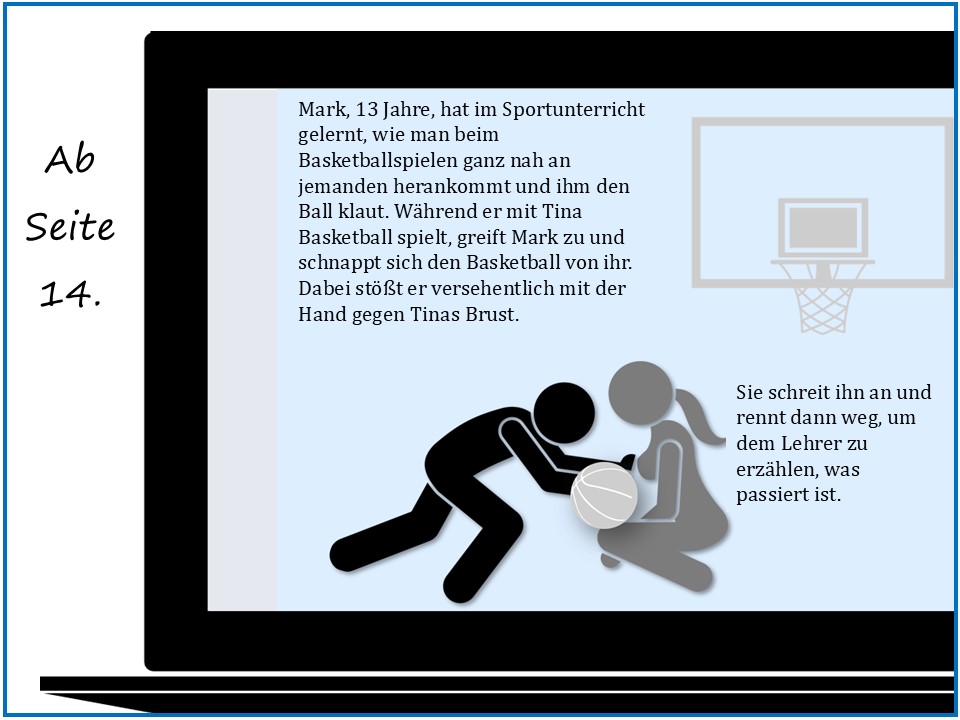
Die ungeschriebenen Regeln für Näheund Berührung sind äußerst kompliziert. Die Erwartungenändern sich je nach Alter, Geschlecht und vielen Variablenim sozialen Kontext. Viele Kinder mit ASS brauchen die Hilfevon Eltern, Lehrern und Therapeuten, um das alleszu verstehen.
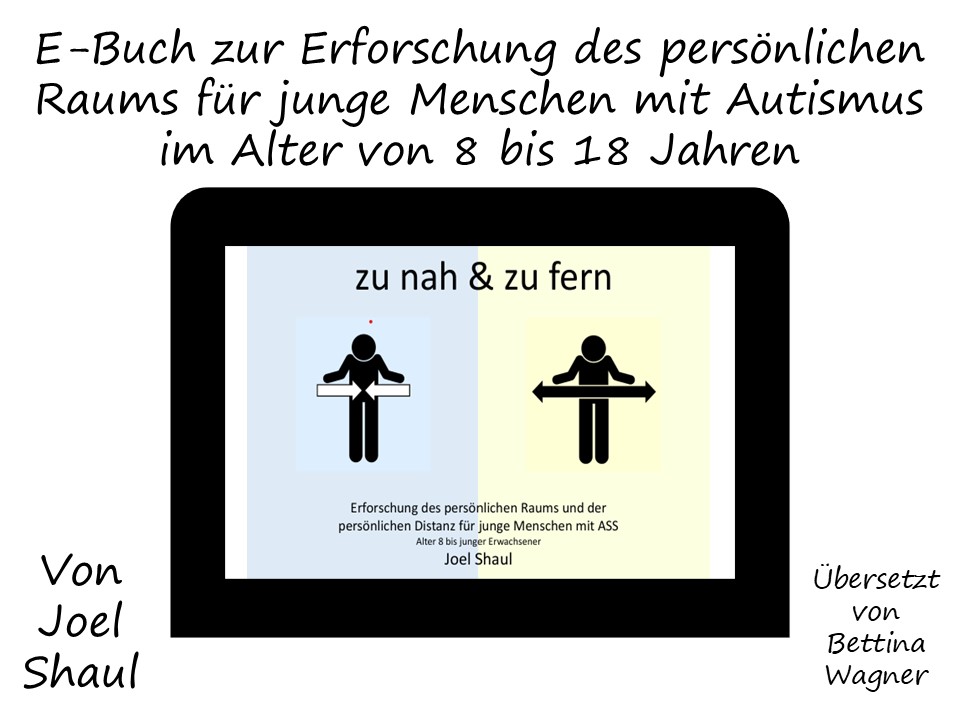
Ich habe dieses Buch geschrieben, um jungen Menschen mit Autismus zusammen mit ihren Familien, Lehrern und Therapeuten zu helfen, an einigen häufigen Problemen mit dempersönlichen Raum zu arbeiten.
Es ist so konzipiert, dass eszusammen mit einem Erwachsenen gelesen wird. Es sollte ausreichend Zeit für Diskussionen eingeplant werden. Sie werden feststellen, dass die Lösungen für vieleder Szenarien kompliziert sind und es möglicherweise mehr als eine “richtige”Antwort gibt. Teenager können das gesamte Buch durcharbeiten,aber wenn Sie es mit einem jüngeren Kind lesen, können Sieeinige Seiten, die sich ausschließlich an Jugendliche richten, überspringen.
Teachers and therapists working with young people on the autism spectrum face a dilemma.
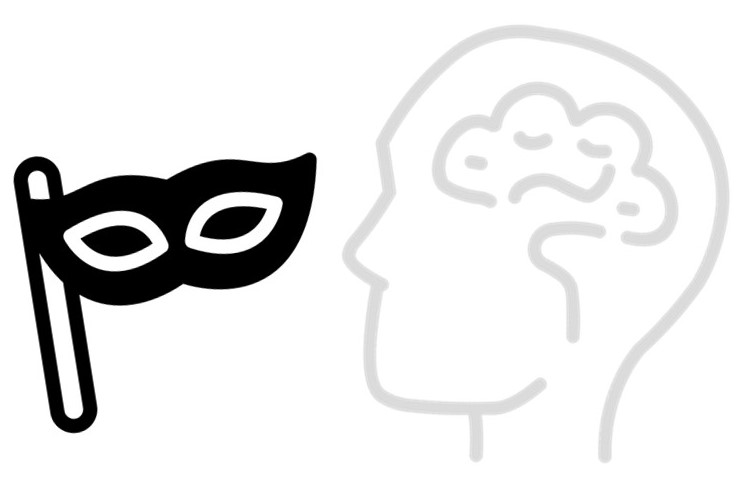
While we are facilitating social survival by addressing certain patterns of behavior associated with autism, we must somehow, at the same time, help young people with ASD to value their essential autistic selves and to avoid excessive and harmful “social masking.”
Among professionals in mental health, speech and education, and particularly among autistic people themselves, there has been much useful discussion regarding social masking in recent years. There are important ramifications for professionals who are trying to help young people with ASD.
Validate the emotional strain of how “fitting in” can affect people with ASD.
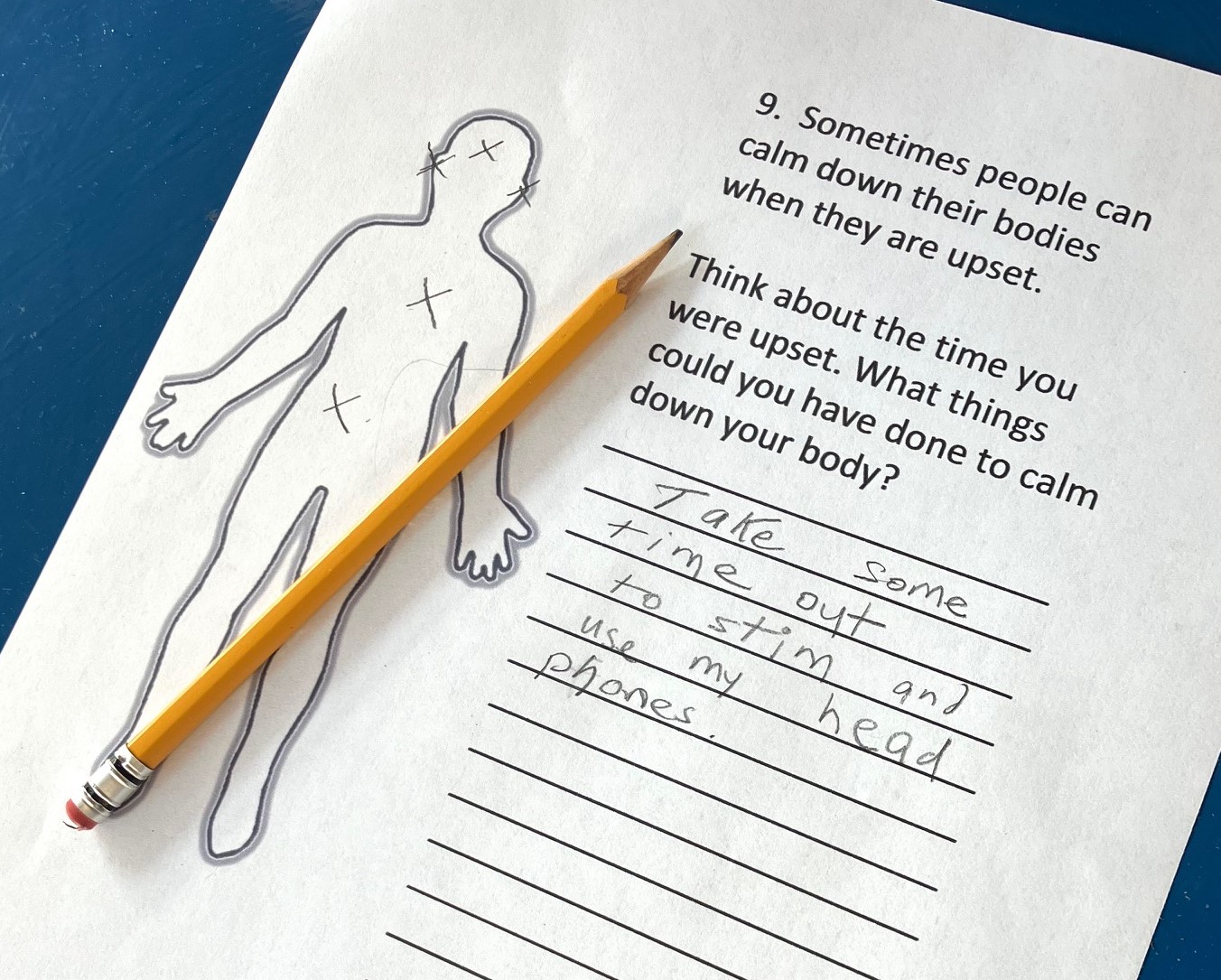
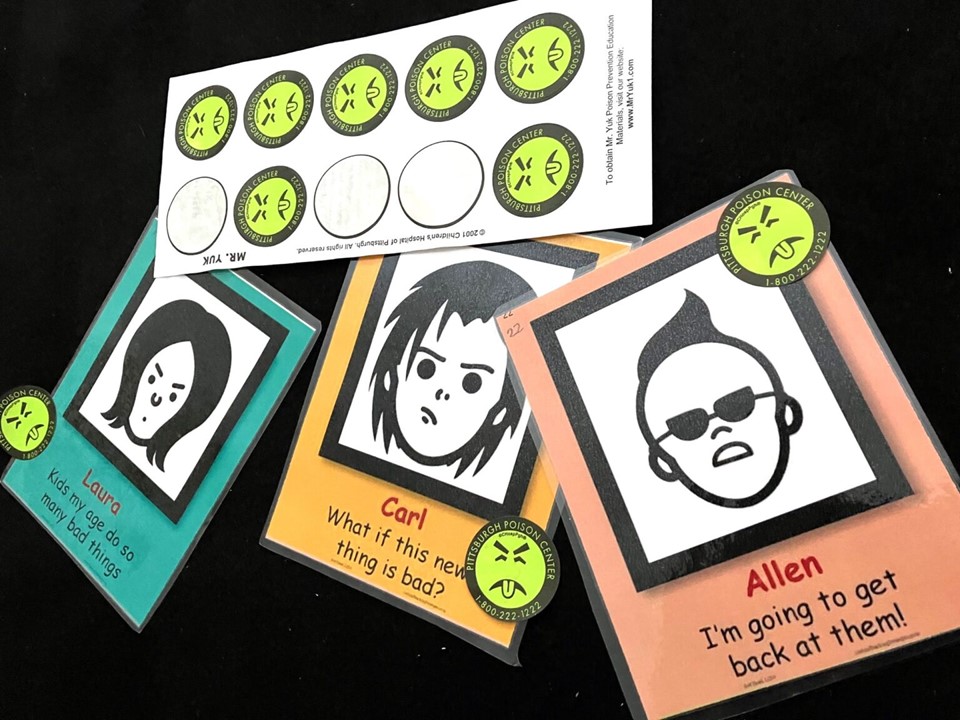
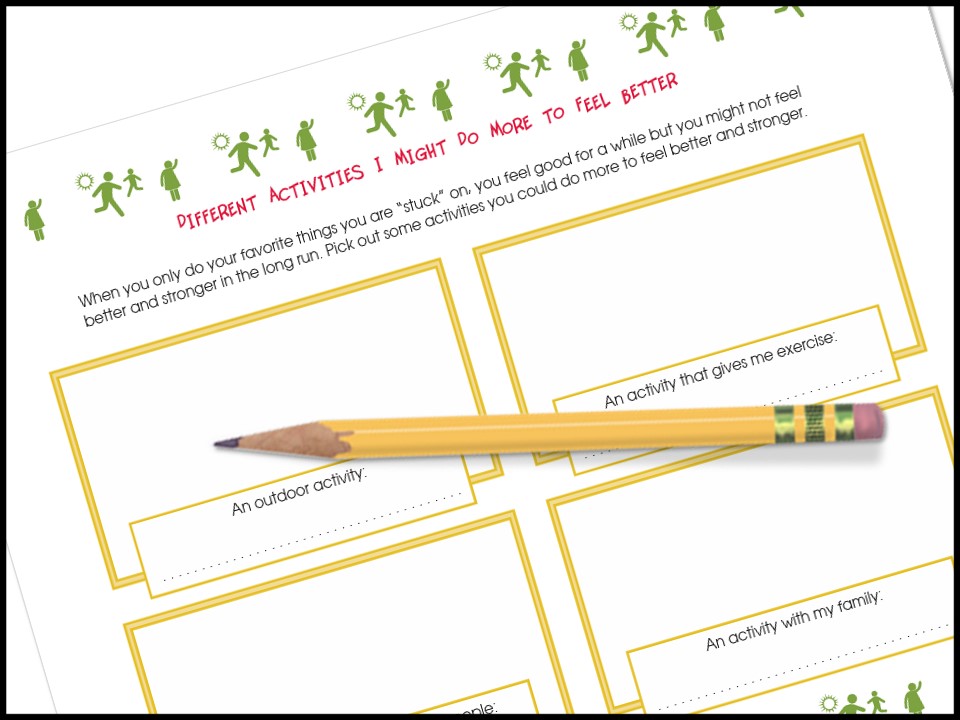
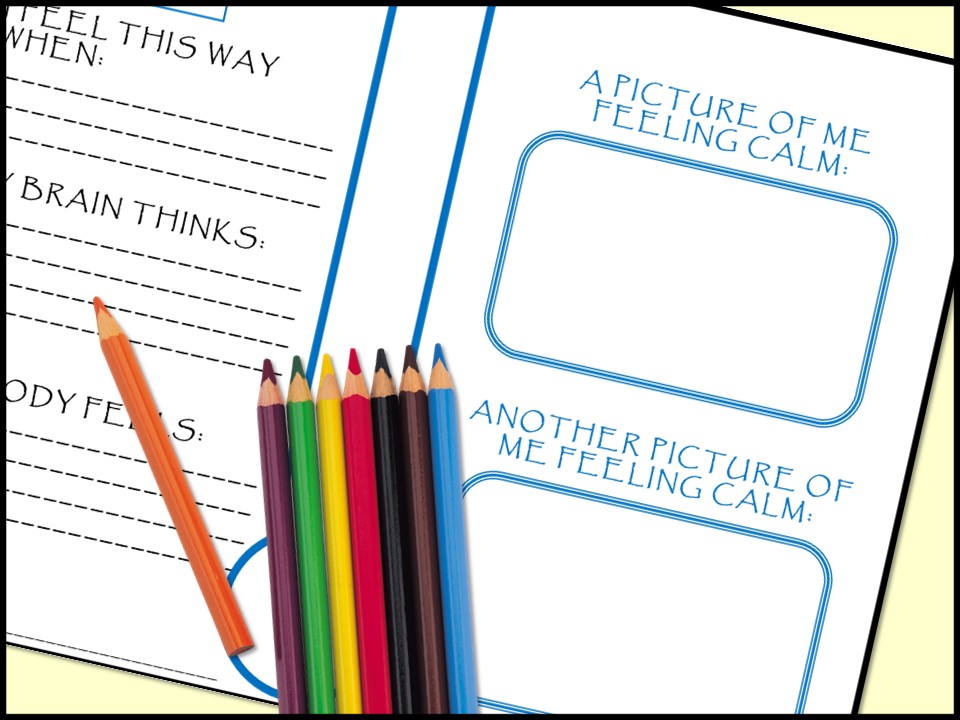
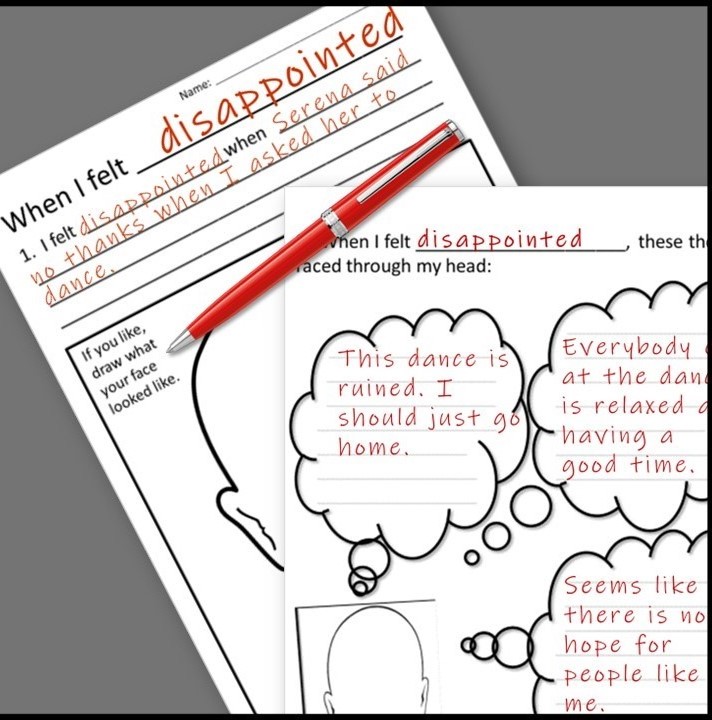
The effort required to decipher and conform to social rules, and to suppress behavior such as public stimming, can be enormous for people with autism. Some experience depression and anxiety from this constant strain. In our classrooms and offices, we should all check in on this frequently. We may need to back off of some things we are asking the child to do, and develop more reasonable expectations. (Photo below is one page from Simplified CBT Worksheets for Children.)
Foster mutual tolerance, respect and accommodation.
Working with families and peer networks and families, we can all do a lot to foster forbearance. Interestingly, most of my own work over the years encouraging tolerance of “autistic” behavior has been helping young people with ASD to tolerate stimming, self-talk, and topic perseveration in other autistic youth with whom they attended social skills groups and my summer teen day camps.
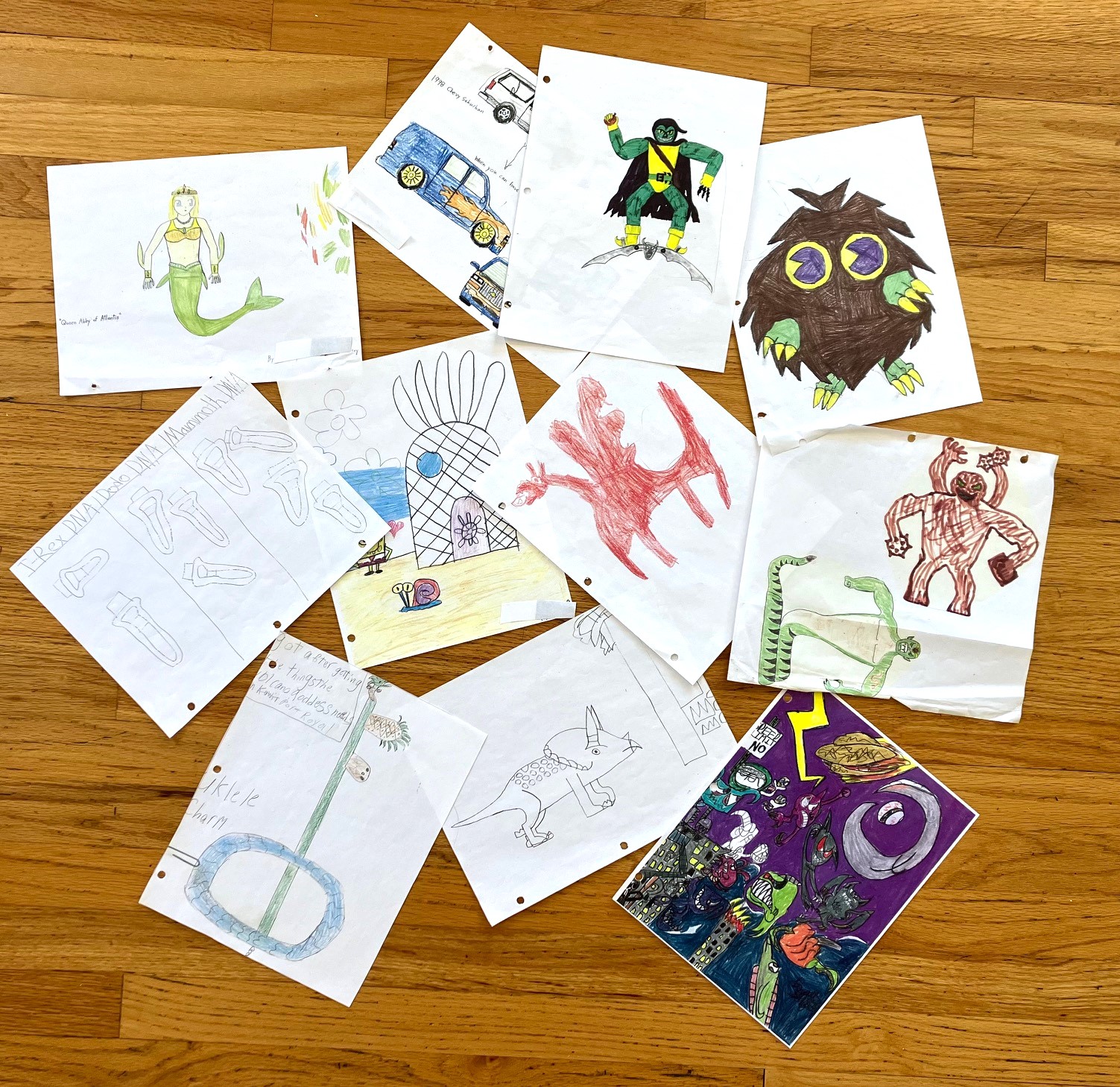
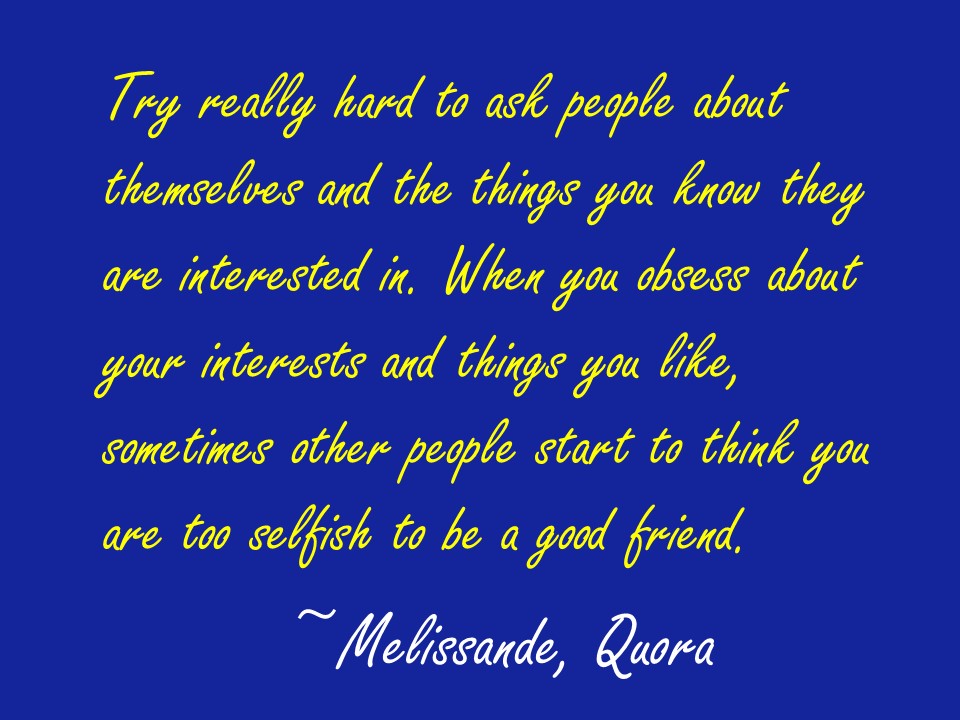
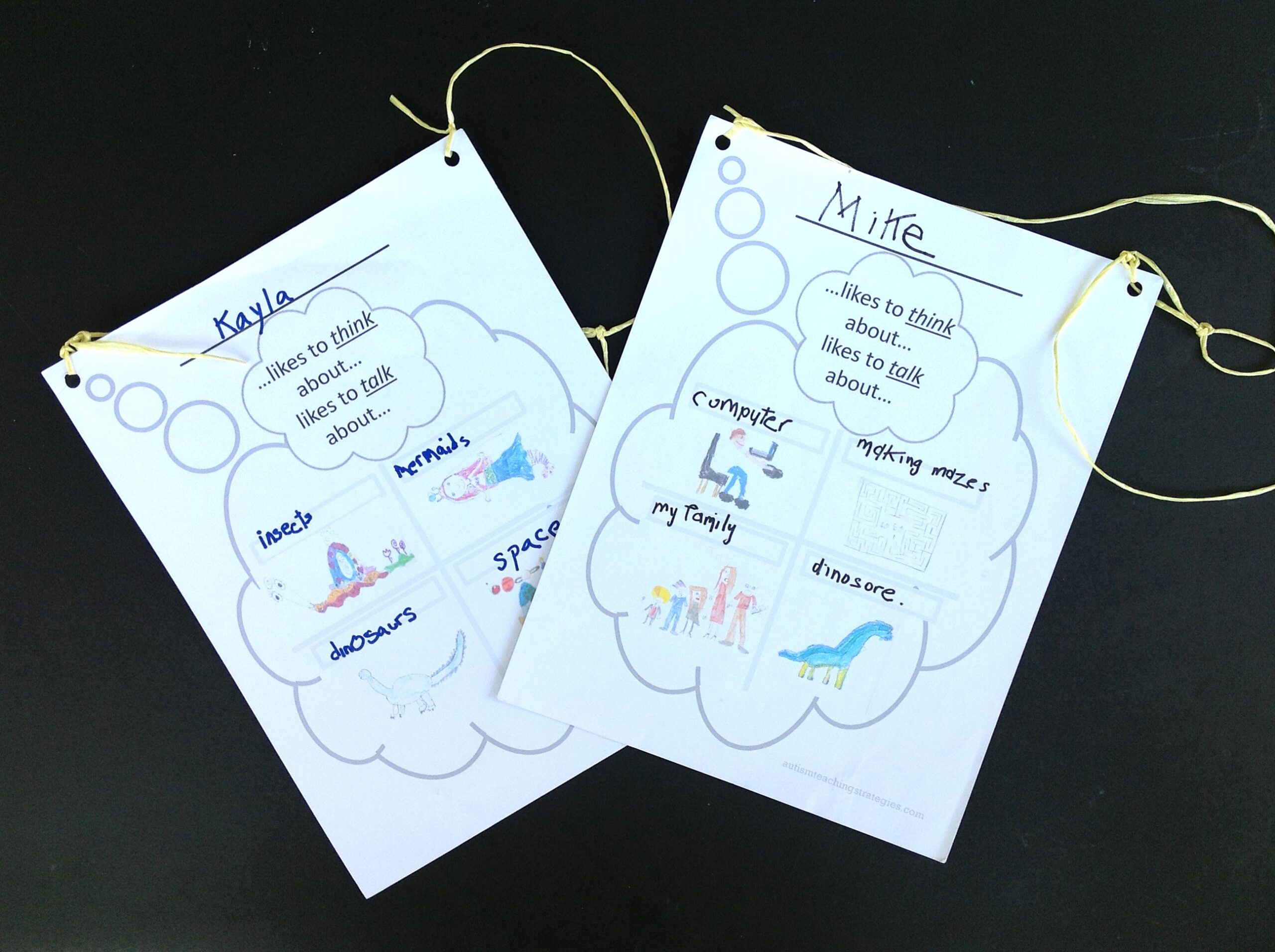
This photo shows a collection of art by a number of attendees in one of my summer teen autism programs. My first objective was to get autistic peers to increase comfort revealing their own “obsessive” interests by drawing pictures proudly displaying those interests. The second objective was to get autistic youth to respect the preferred interests of their autistic peers instead of conveying negative judgment, disdain or annoyance, which I actually ran into a lot among autistic teens getting to know each other.
Working with families where there are autistic children, I promote the same kind of both-way respect.
Parents of a child with a very strong interest in comic culture are encouraged by their family therapist to attend Comicon with her and to make a sincere effort to master some basic information about comic culture. This autistic child, in turn, would reciprocate by attending a football game occasionally with the parents (with accommodations for sensory issues).
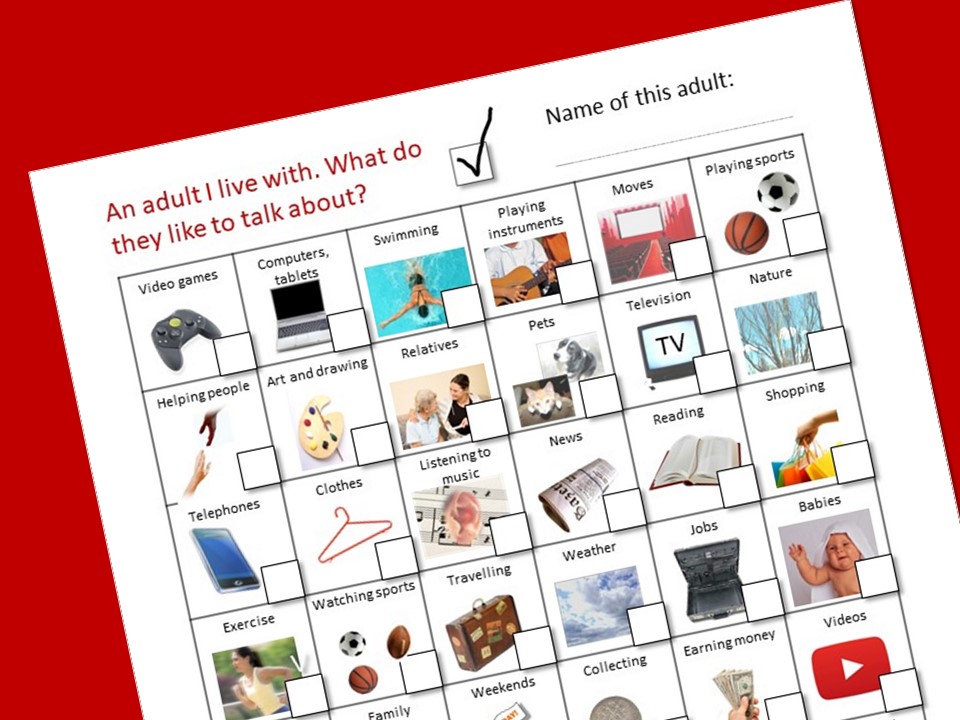
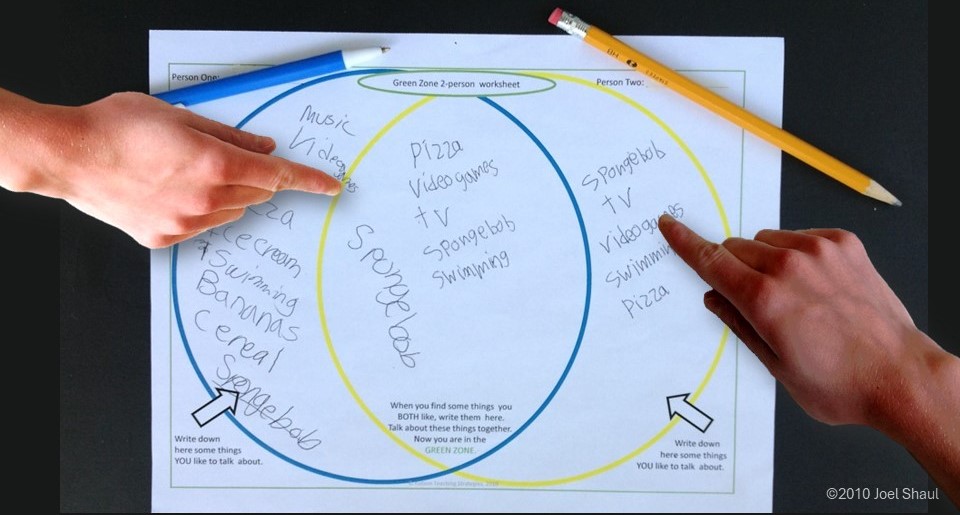
An autistic boy’s powerful interest in escalators is facilitated by the father taking him to various escalators in their city. The mother helps the boy access online communities devoted to appreciation of escalators. The boy, with help from his speech therapist, increases his repertoire of conversation topics with family members about things that interest them. (Photo below shows part of the Talk to Family free resource offered on this website).
Identify patterns of problematic thoughts associated with social masking.
Our young clients might become discouraged with their setbacks or slow progress in their social worlds. In psychotherapy, I have seen many young clients show intense negative thinking about themselves when their efforts to filter social expression of their autistic selves yield disappointing results.
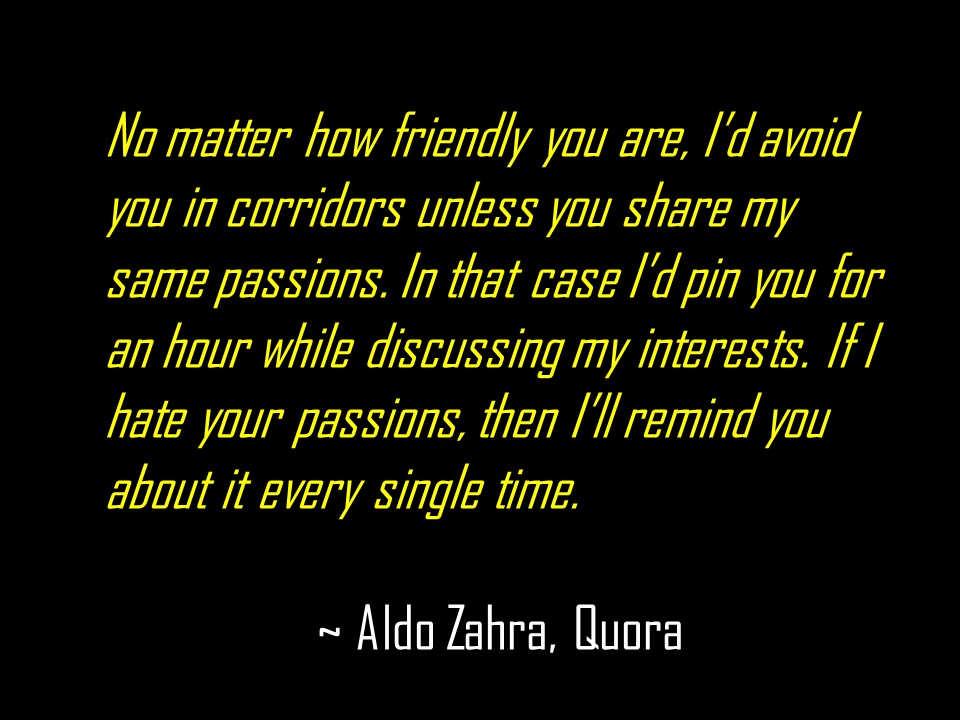
It’s easy to see how some autistic people can develop jaded attitudes regarding society in general from the strain of social masking. Here is an example I found on social media:
I had a young autistic adult client who, after reading online about “autism burnout,” told me that that his own burnout from masking all the time was so severe that he should drop out out of therapy. I validated his distress and discouragement but also encouraged him to keep trying for a while, and he subsequently did noteworthy and successful work overcoming some of his social anxiety issues.
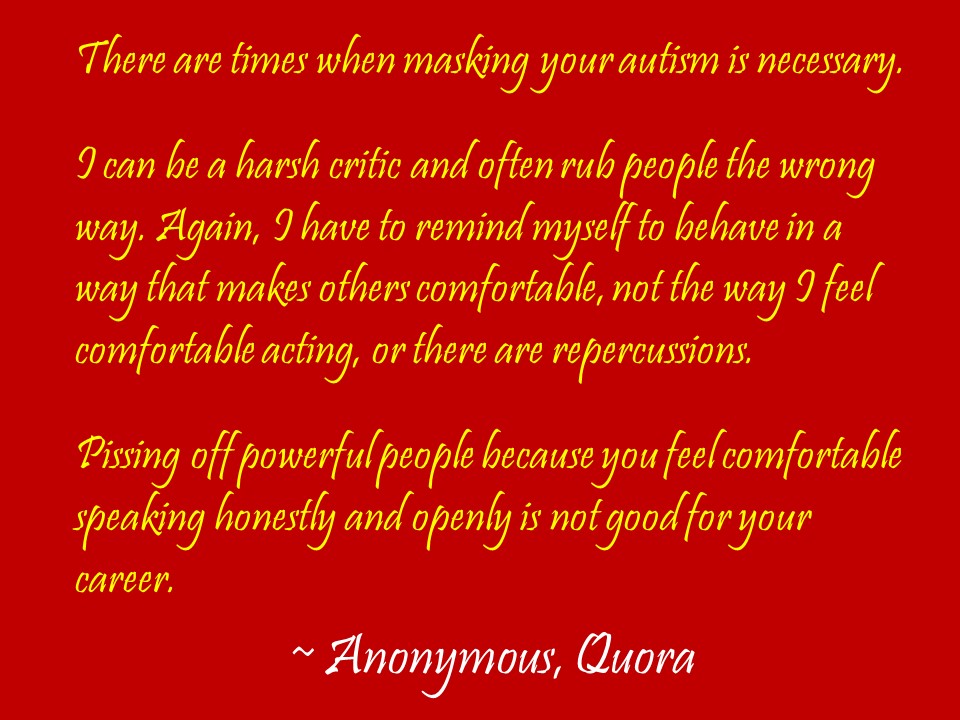
I like to point young people with ASD towards role models of fellow autistic people who aspire to a more nuanced attitude regarding social masking. These two quotes, also from social media, are good examples of developing a strategic and selective approach to masking.
Promote tolerance, but avoid unnecessary accommodations that may not actually be in the long-term interest of the autistic person.
Here are some examples of averting social masking that seem to over-accommodate — at the expense of long-term social goals:
High school teachers enable an autistic student’s fascination with Amtrak trains far in excess of the young man’s actual need for validation and appreciation. The student’s focus on academics and life skills work is adversely affected by the staff’s zeal to cater to the student’s predilections.
A job coach, accompanying a young autistic man to his first part-time job, tells the man’s work supervisor that his client will require his lunch break to be never later than 11 am “or he’s gonna have a big meltdown.”
A 12-year-old boy with a Santa fixation receives a Santa costume from his father and is encouraged to wear it on family summer outings to the local grocery and to a school picnic.
Allow and facilitate autistic people’s reasonable expression of what feels normal and natural to them.
At times, a little tolerance and understanding can go a long way.
A couple summers ago, I was sitting in the outdoor portion of a brewpub near a large, outdoor fountain. I was pleased to see that a family there was encouraging their autistic son, about age ten, to enjoy verbally stimming and dancing around the fountain while they enjoyed drinking their beer.
In my suburban neighborhood, our postal service letter carrier, who I assume is autistic, often talks quietly to himself while delivering mail. I am pleased to observe that my neighbors don’t seem to make a fuss about this and just let the fellow go about his work.
I hope that some of this discussion is helpful to you in your own work, as a therapist, teacher or parent, in determining helpful ways to address social masking.
Contact me to learn about my in-service trainings for speech-language pathologists.
I am available to present on-site at events hosted by your organization, or remotely via Zoom or Teams, in time frames varying from 90 minutes to all day, or two days.
Possible topics include:
Social communication games, activities and worksheets – free, downloadable kits
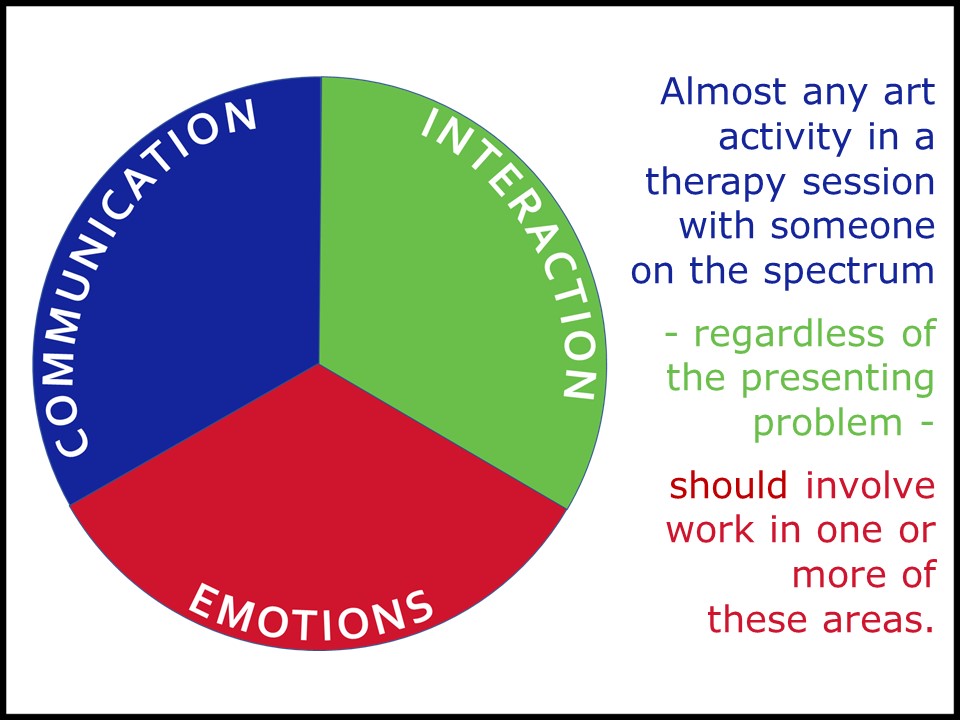
Communication learning activities for ASD that also address emotion and interaction concerns
Interaction and communication challenges for teens and young adults with ASD – therapy approaches and free resources
Contact me to learn about my in-service trainings for educators.
I am available to present at events hosted on site by your organization, or remotely via Zoom or Teams, in time frames varying from 90 minutes to all day, or two days.
Possible topics include:
Lessons, games and activities to address social communicationchallenges in autistic students
15 free kits for addressing emotional and communication skills in elementary and middle school students with ASD
15 free kits for addressing social, emotional and maturity issues in students with ASD
Contact me to learn about my in-service trainings for mental health professionals.
I am available to present on-site at events hosted by your organization, or remotely via Zoom or Teams, in time frames varying from 90 minutes to all day, or two days.
Possible topics include:
Mental health interventions for children with autism which also address interaction and communication concerns
Engaging CBT interventions for autistic children and teens – methodology and free materials
Targeted lessons & tools for school-based mental health intervention with autistic students
Social & emotional challenges for teens and young adults with ASD – therapy approachesand free resources
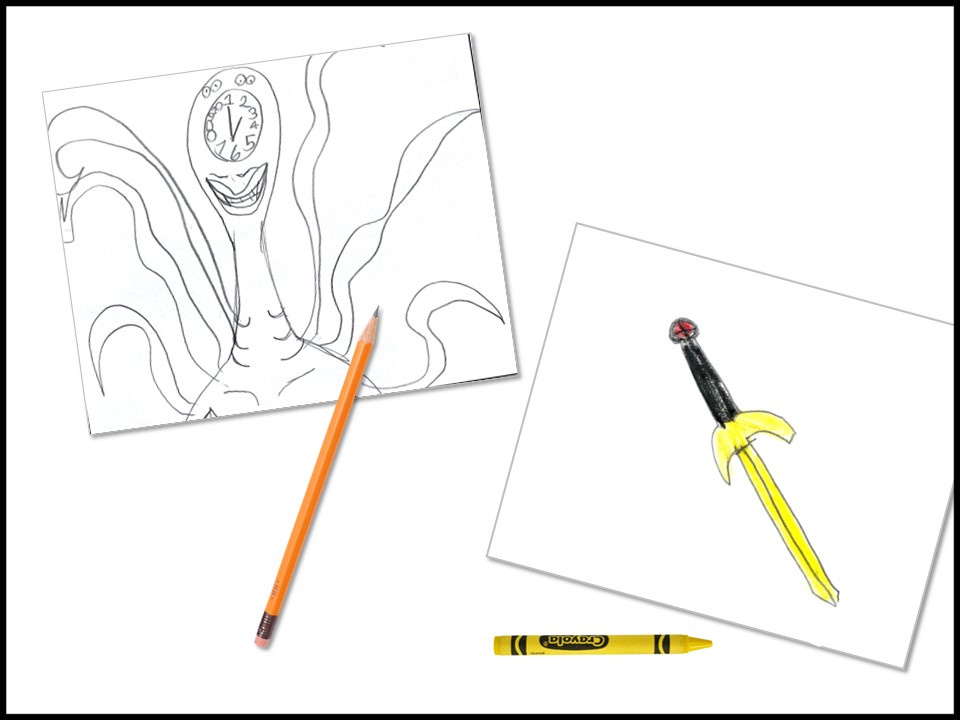
So many autistic children love to draw. Doing art with others is new to most of them.
Here are some art projects that emphasize the social potential of art – children showing their art, enjoying others’ creations and working together on various creative endeavors. Some examples shown below are projects that you organize from scratch yourself. Others are facilitated by free downloads from my website.
Autistic kids who enjoy creating art may be accustomed to doing so entirely alone – which of course is fine! However, they may have limited experience with the many ways that people can be creative in social contexts, viewing other people’s work and even collaborating on art projects.
In section A, I describe four art projects to put together on your own, each with a different social component.
In section B, I describe four socially collaborative projects that make use of my free downloads.
SectionA: Four social component art projects for you to put together on your own.
Facilitating interaction between children drawing together
Children accustomed to drawing alone might take little notice of other children nearby and what they are doing.
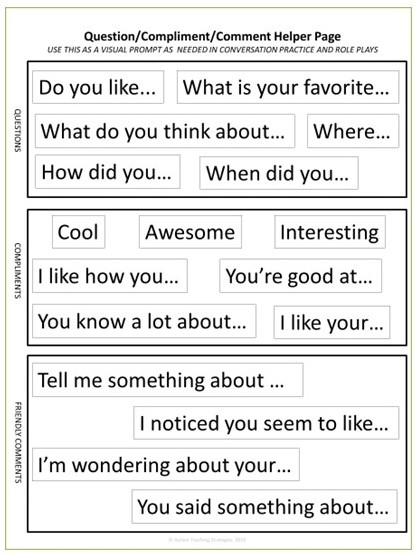
An adult’s careful and tactful social coaching has the potential to transform this solitary, parallel play scenario into a more interactive experience. One way is to offer verbal prompts to offer a comment, compliment or question regarding another child’s drawing. Another way to do this is to set a timer to go off every few minutes, at which point each participant has to stop drawing, take stock of what others are doing, and make some comments or compliments. In both cases, providing simple written scripts nearby for children to refer to (if they read) can be very helpful (see the verbal prompt example below).
You can download this prompt sheet via page 8 of this link.
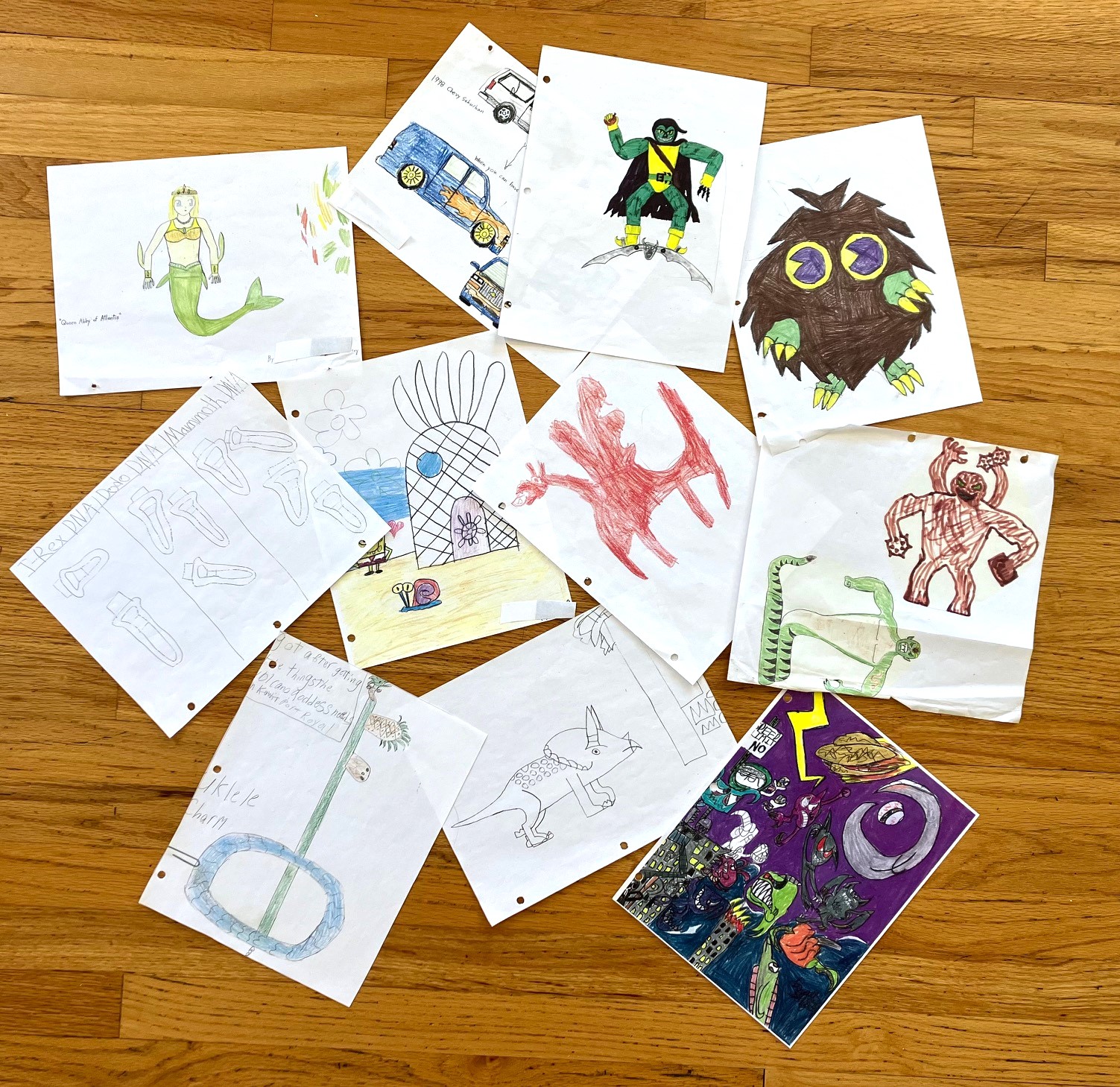
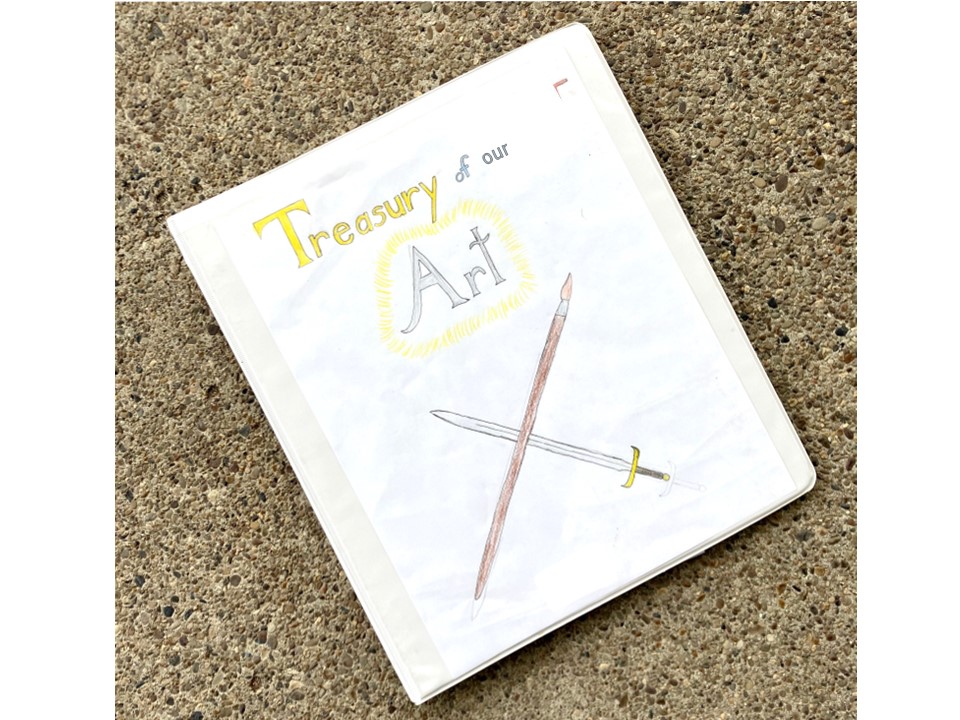
Organizing an art collection featuring individual works by members of a group or classroom
I often facilitated projects like this at a summer teen program that I ran for some years. With groups of teens that included many who enjoyed drawing, it was a favorite activity and really helped some solitary autistic artists to more fully appreciate the creativity of their peers.
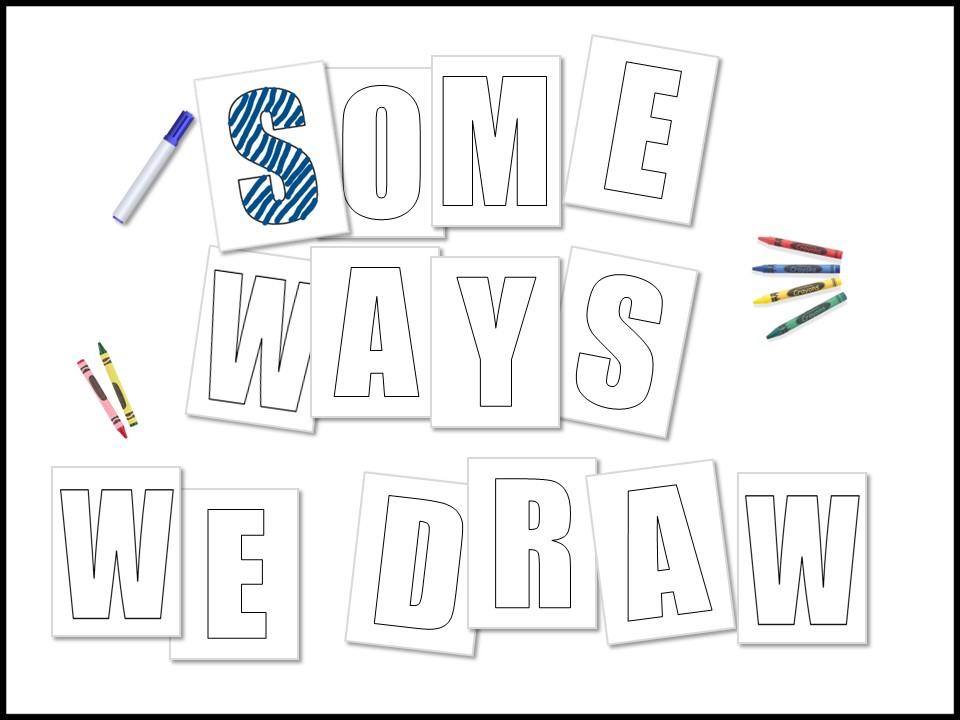
Collaborative sign coloring project
First, each child colors one letter in a sign.
Then, you combine the letters to form the entire sign.
The first step of this project is for you to prepare a number of separate pages featuring the outlines of letters comprising the words you want to display on the wall of your classroom, office, social group room, etc. You can draw the letter outlines by hand, or else type them on your computer.
If you do it on your computer, I suggest you select the font “Impact,” configuring the letters in white with a black outline. Make each letter take up one full sheet of paper.
Each child is assigned to color and decorate one letter. When you finally assemble the letters to make the sign, it creates a sort of entry-level collaborative art project.
I used this project often in social skills groups and a summer teen program.
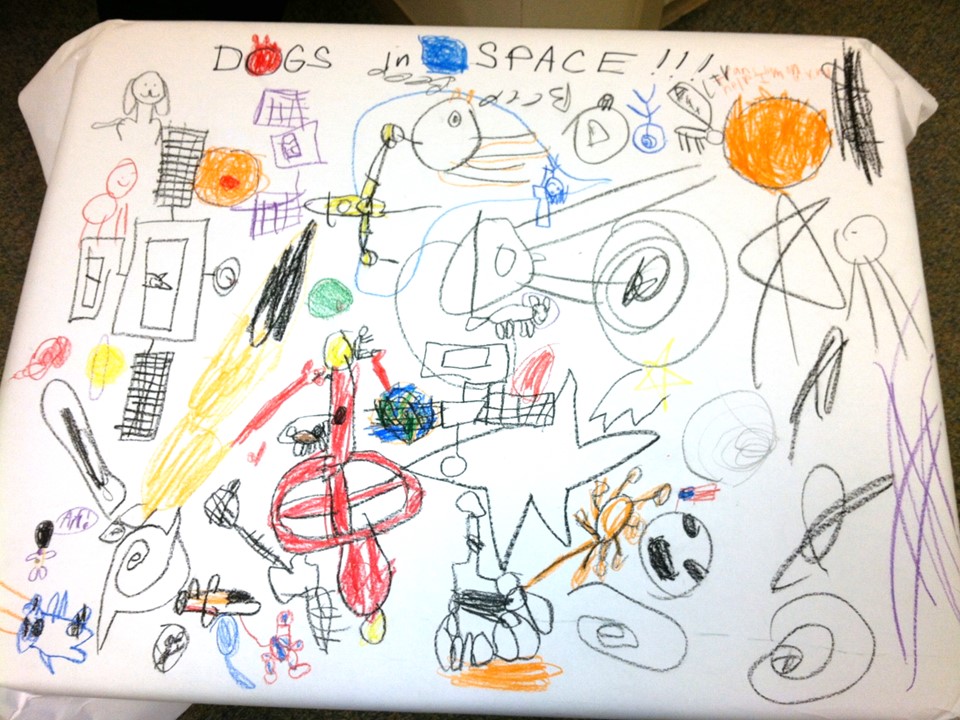
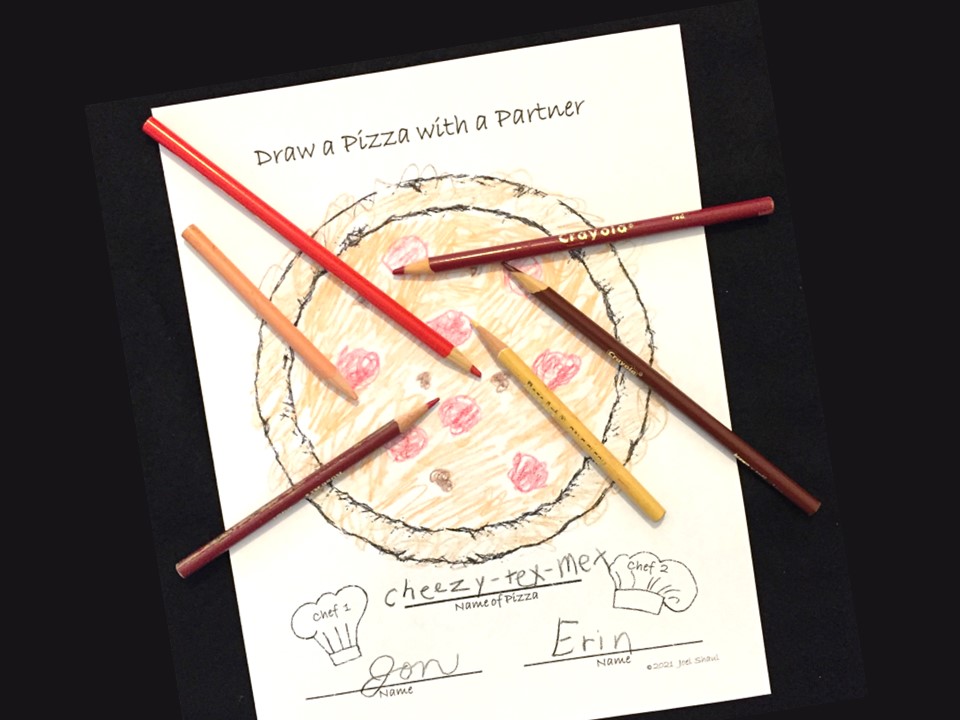
Assigning a few children to create a unified drawing together in the same space
This is a fun project, but also challenging and potentially very frustrating for young people on the autism spectrum. It’s very worthwhile provided you set it up carefully and offer coaching and troubleshooting from beginning to end.
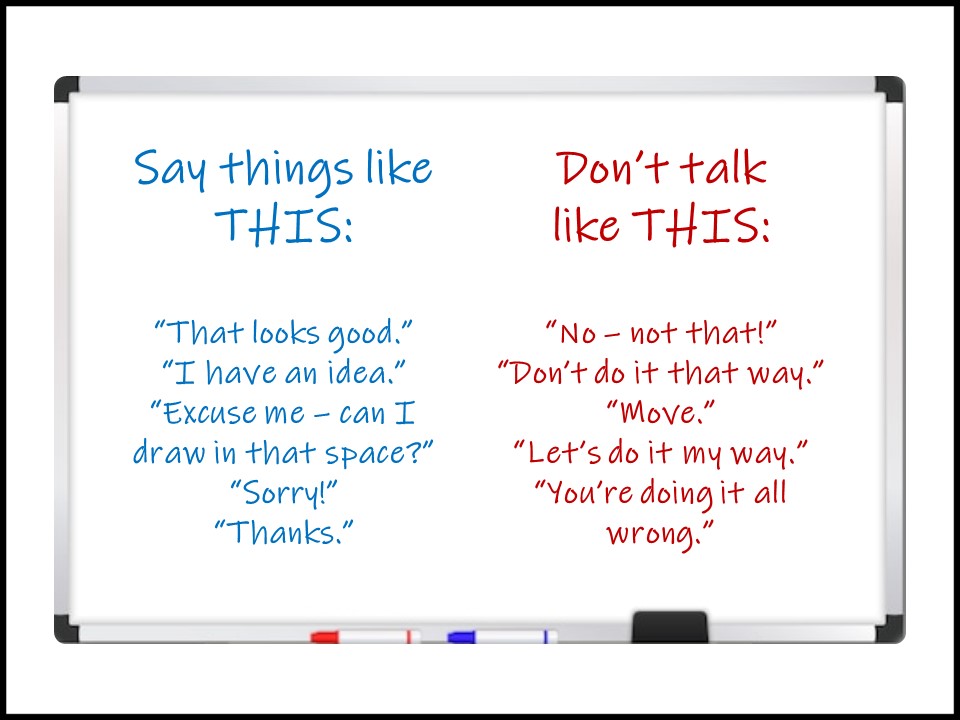
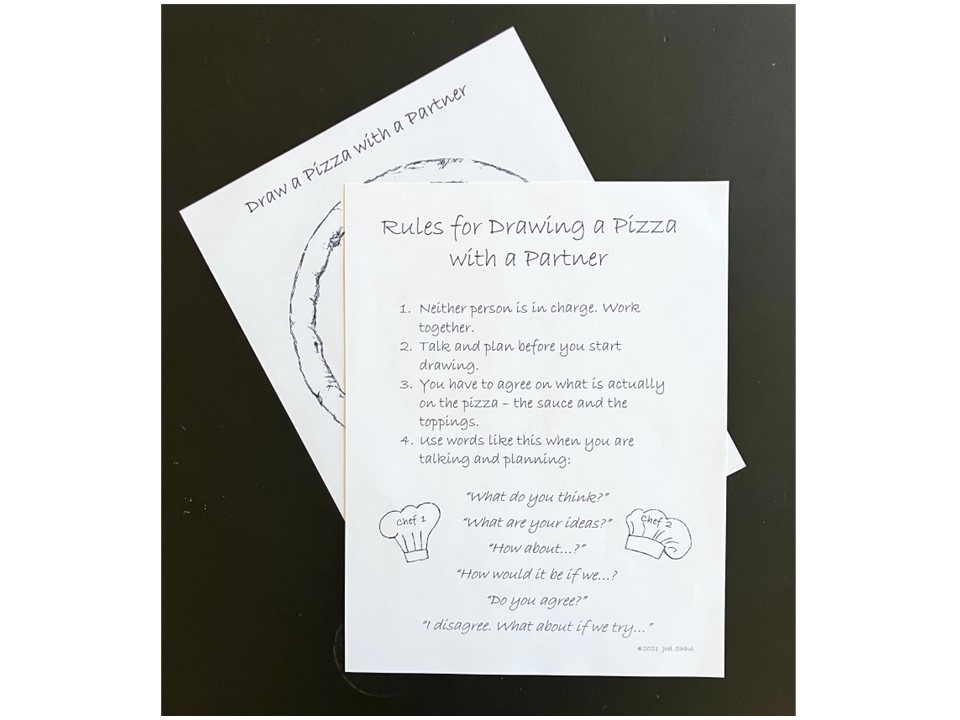
After clearly describing the scope of the assignment, you should post written rules that include language children should use and not use with one another while working together. It’s also worthwhile to enact instructive role plays in which you, the teacher/therapist, demonstrate “right” and “wrong” ways to verbally interact in a collaborative activity.
Suggested wording for the project’s cooperative language rules.
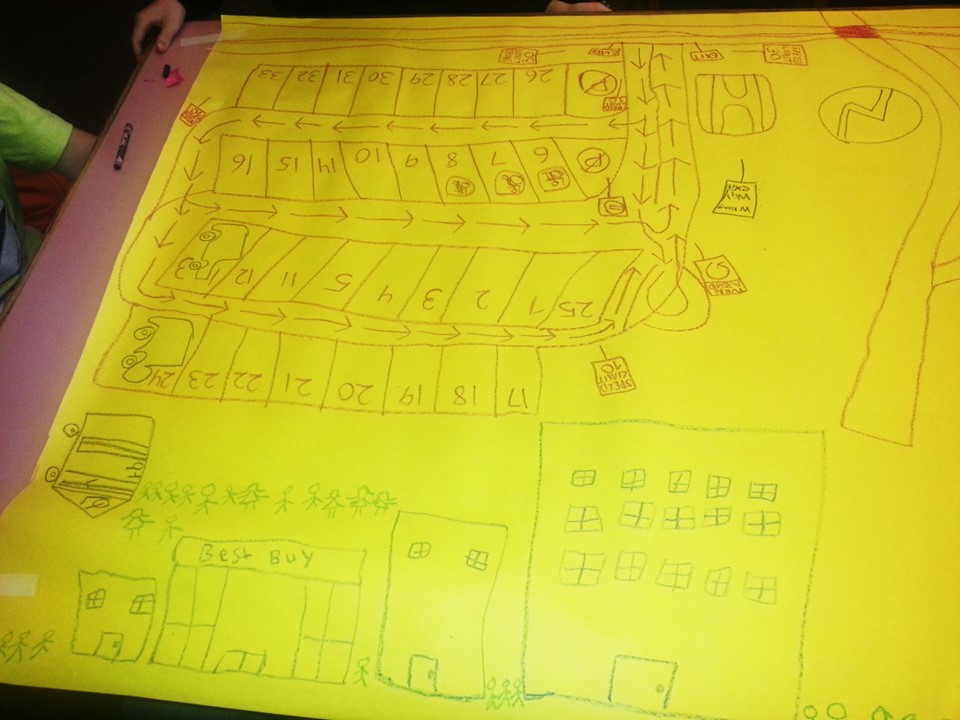
The finished project could end up looking something like these pictures below.
A unified drawing of a shopping mall by a small group of children with ASD
Section B: Four collaborative art projects using free downloads from the website
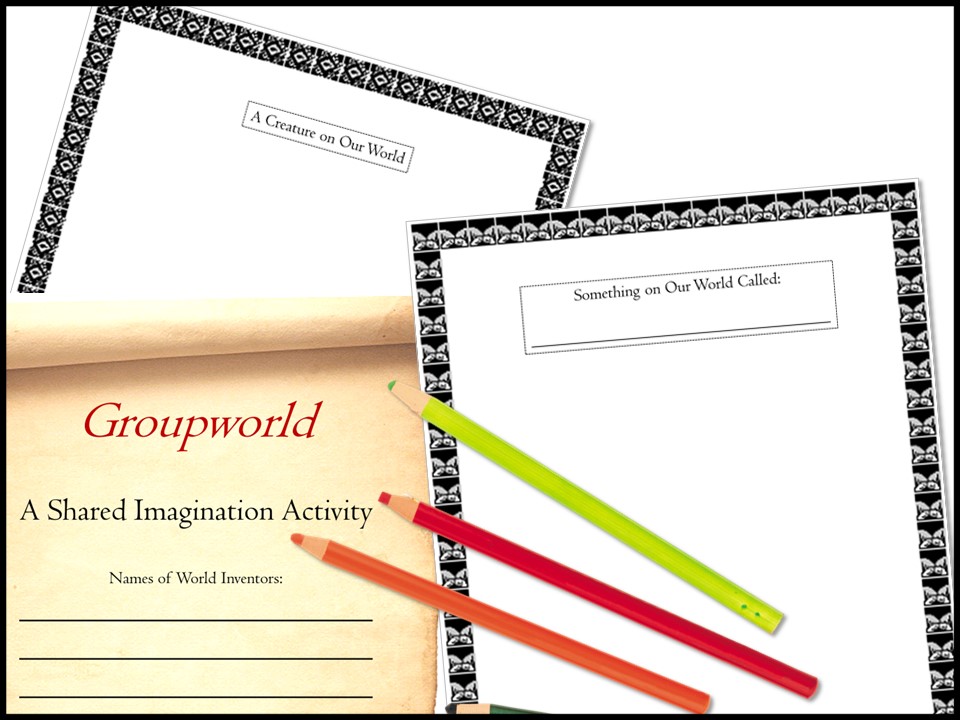
This is a more involved project involving both writing and drawing. The adult facilitator will need to get involved to a significant extent to mediate and keep the work collaborative. It’s easy for this activity to dissolve into a bunch of kids drawing and writing apart from one another, quite disengaged from their peers.
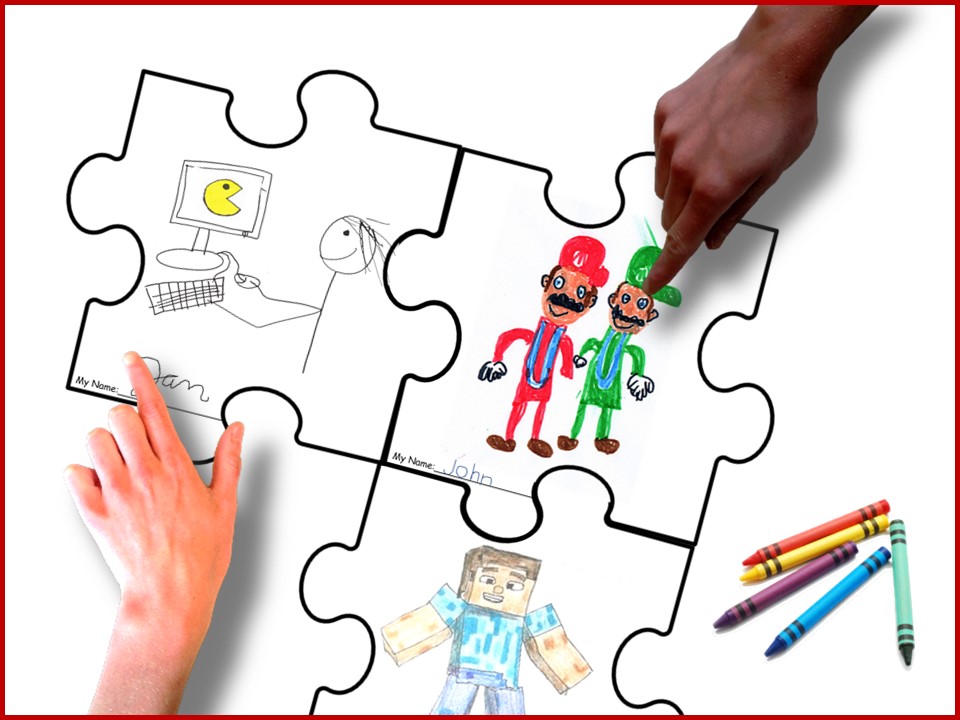
This free download provides several kinds of puzzle templates which, when completed, allow the participants to put together a puzzle representing the connection of their interests. It’s a great activity, but be advised that you will need to cut out the puzzle pieces in advance and that is time-consuming.
Why should teachers and therapists have a child on the autism spectrum color and draw while trying to help them with social and emotional skills? Please see Part 1, where I spell out some of the reasons.
There are so many ways to engage children in therapy by asking them to draw something.
Here are a few examples from among the free downloads on this website and my published children’s books. Click on the blue text to access resources.
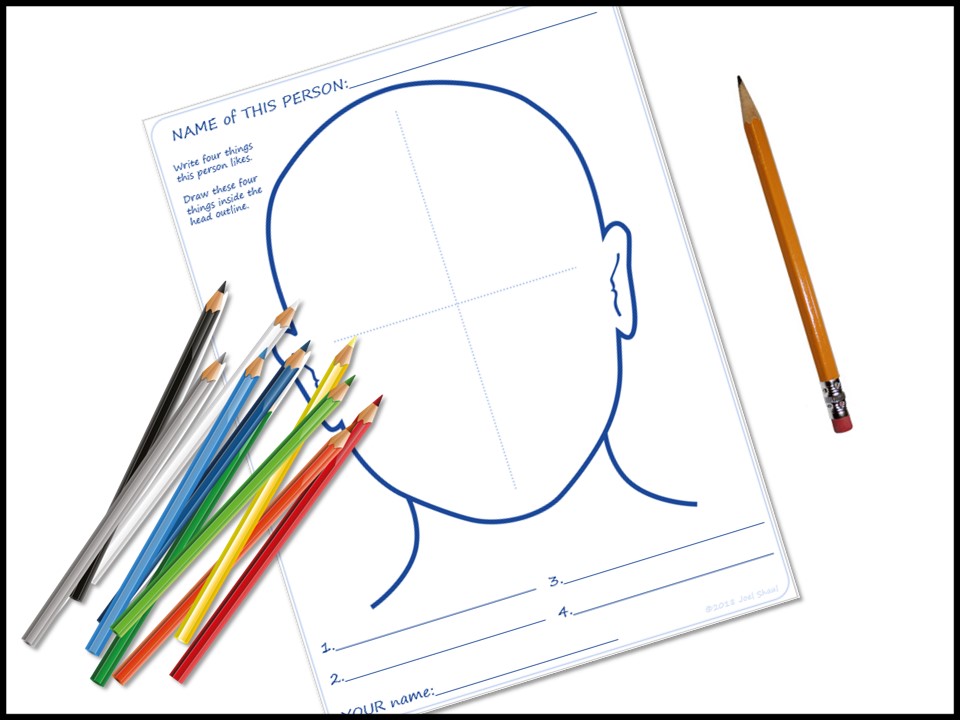
This activity also comes in another version requiring no drawing. In that alternative version, you use my prepared PowerPoint download and then copy and paste internet images into the head outline. When you try this activity, you select one option or the other based on the child’s preference and how much time you can devote to this project.
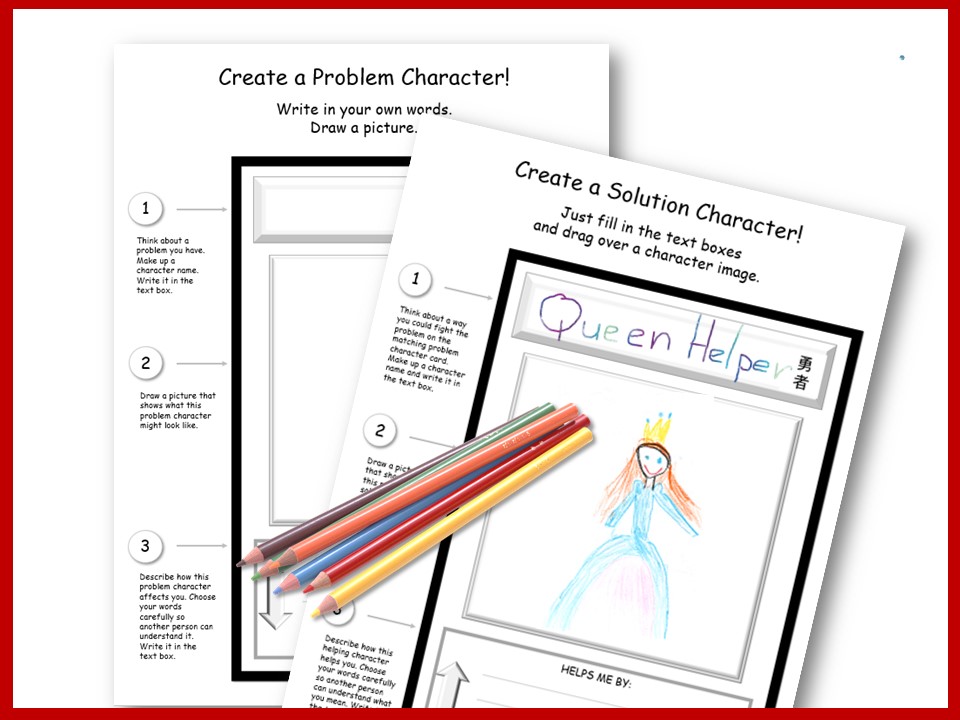
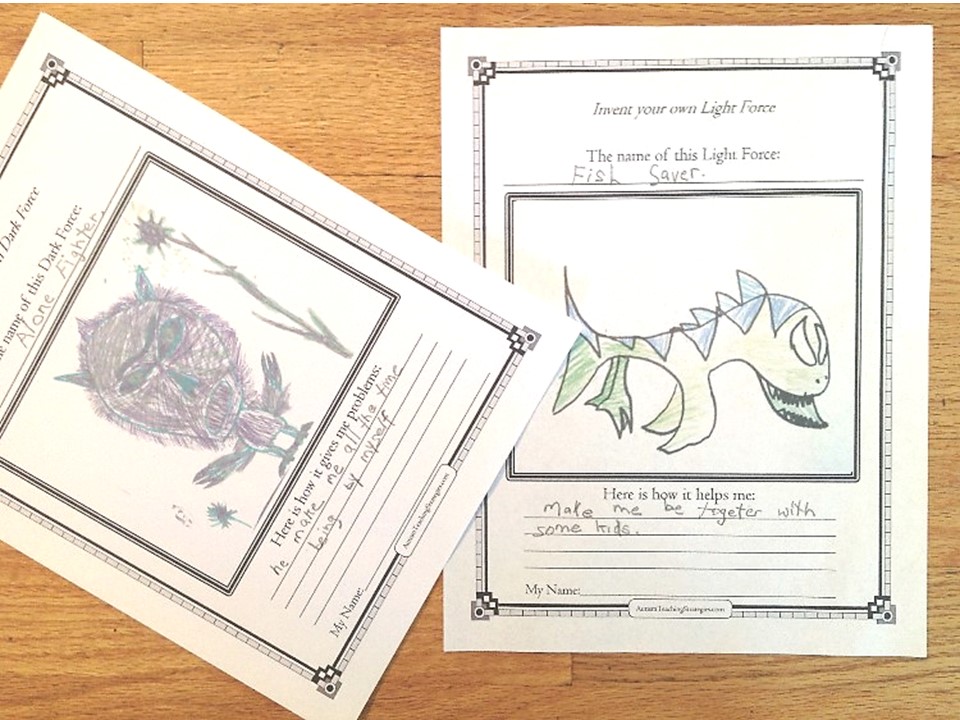
Children experiencing multiple social and emotional challenges can feel demoralized by being the “problem child” all the time. One way to help is to show our young clients how to externalize some of their problems onto fantasy characters which we can help them to fight against. Then, we can show children how to create solution “hero” characters representing various ways children can help themselves.
This resource is also available in a much quicker-to-implement version in which you drag and drop stock fantasy images to create the cards. Which option you select depends on how much time you have available and the child’s inclination.
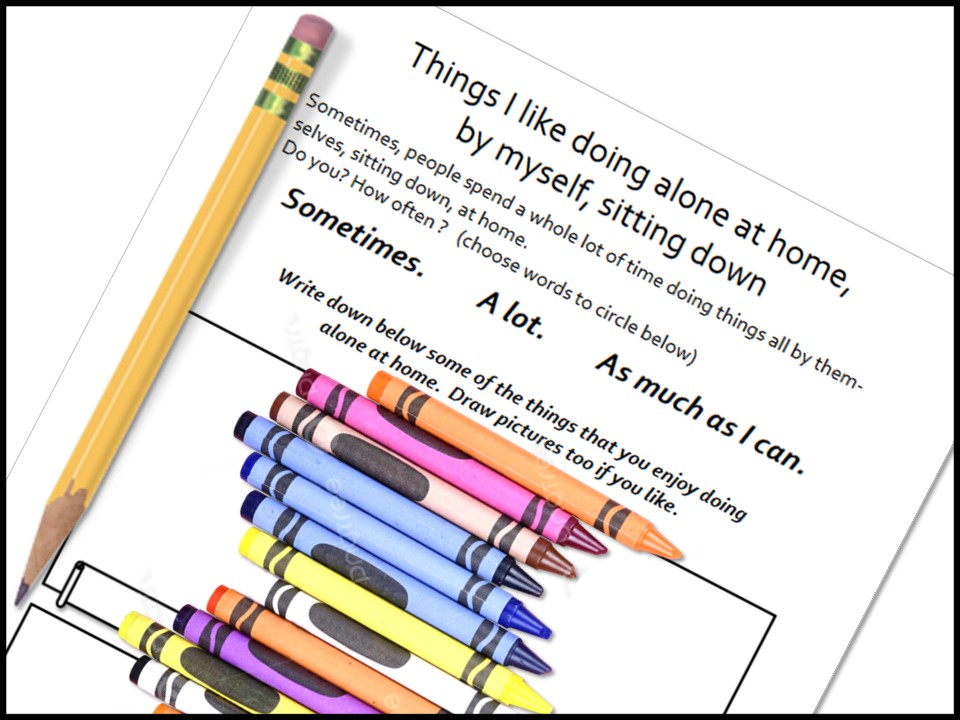
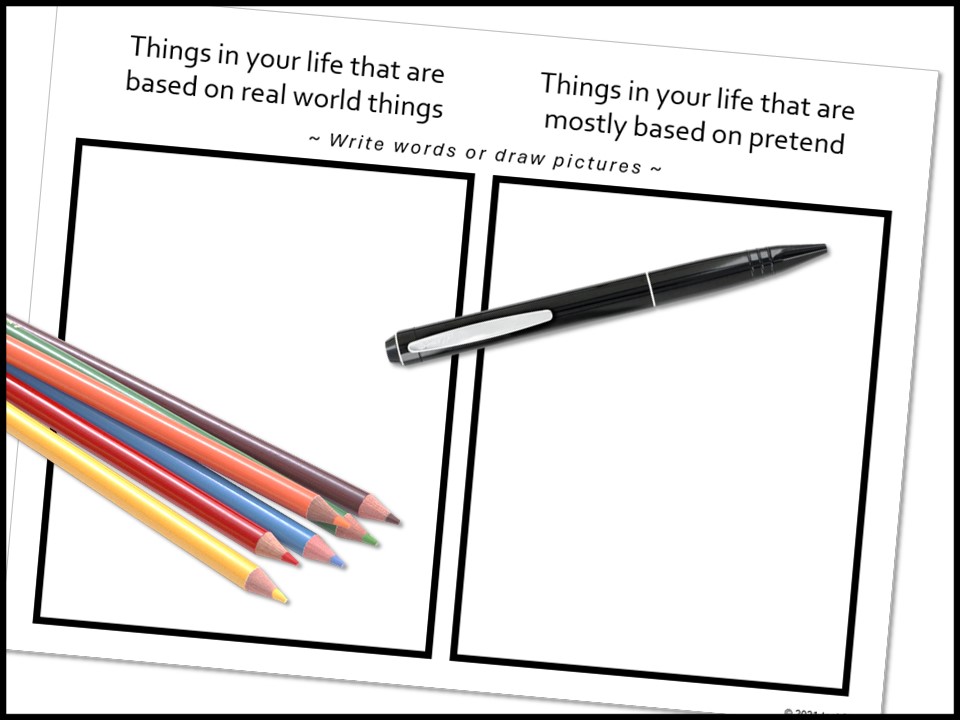
This drawing activity is part of a large group of free resources to help raise a child’s awareness of how they are affected, in both helpful and potentially harmful ways, by various kinds of fantasy and pretend. Given the option of writing down words or drawing, on this worksheet many children opt to draw or to combine both writing and drawing.
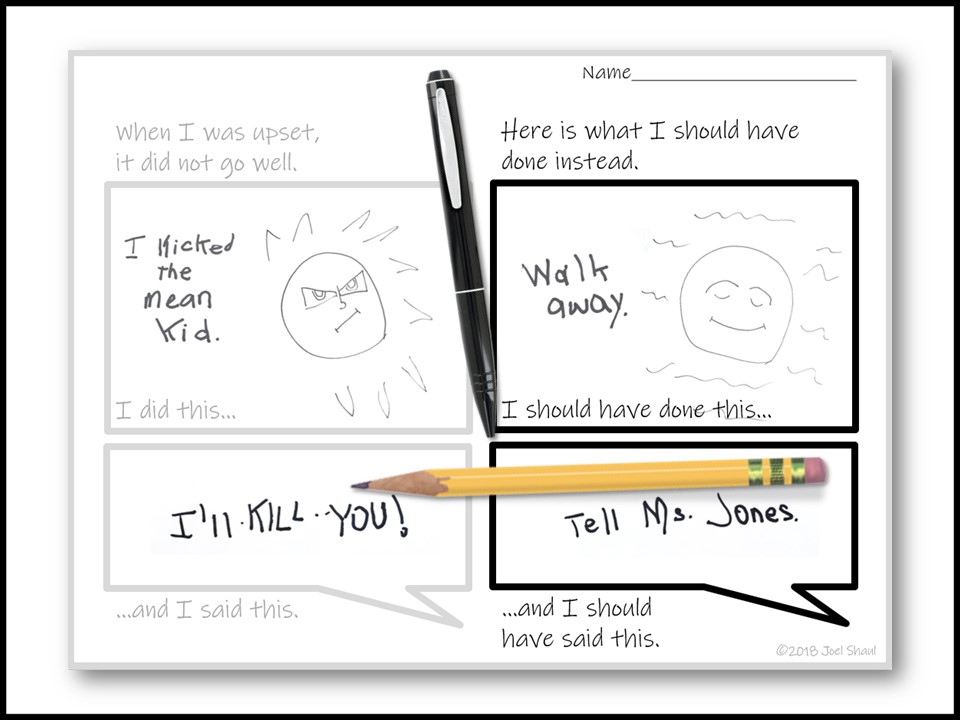
This simple, one-page worksheet is designed to facilitate reflection and retrospective problem solving. Children, when given the option of drawing on it, frequently do so.
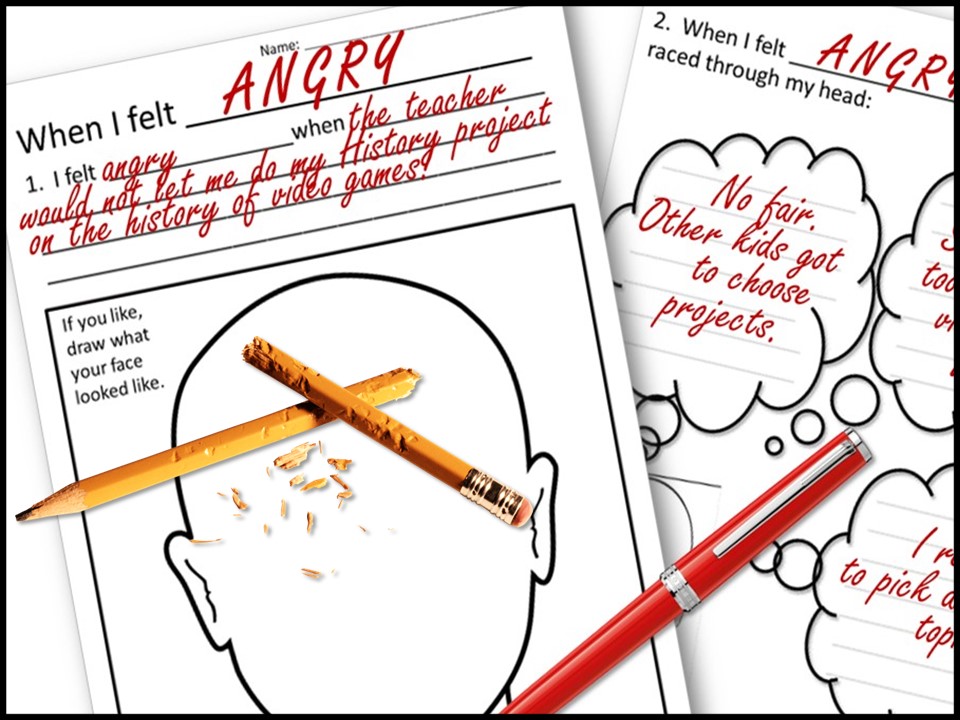
When I use these worksheets with children, at least half the time children go on to page two and skip the drawing. Other children dwell on the task of drawing their face. This seems to help them to recall the incident and what they were feeling at the time.
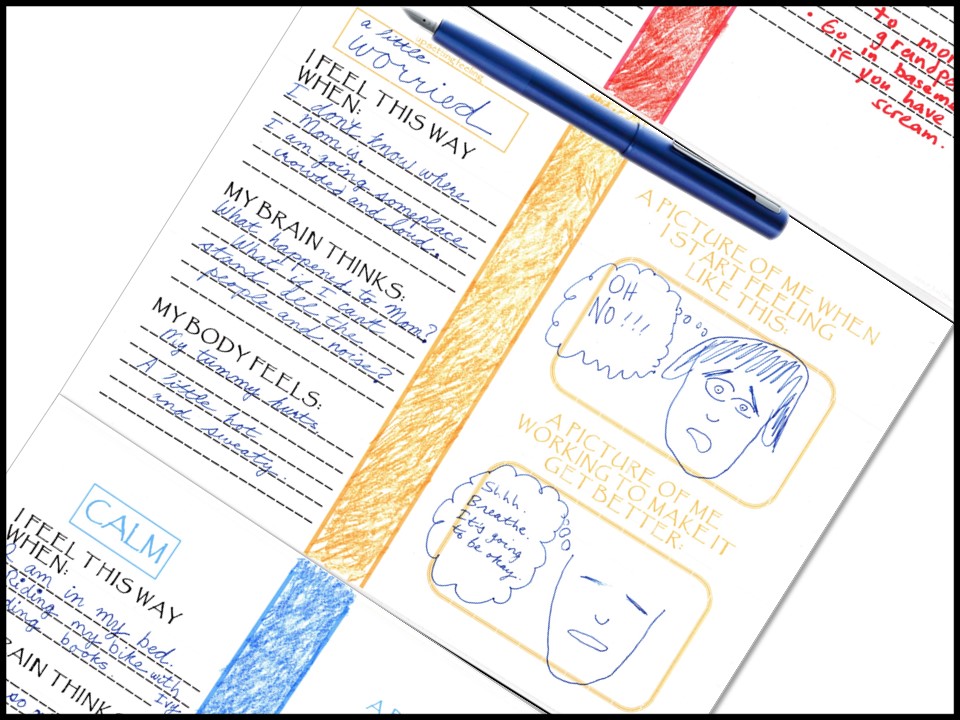
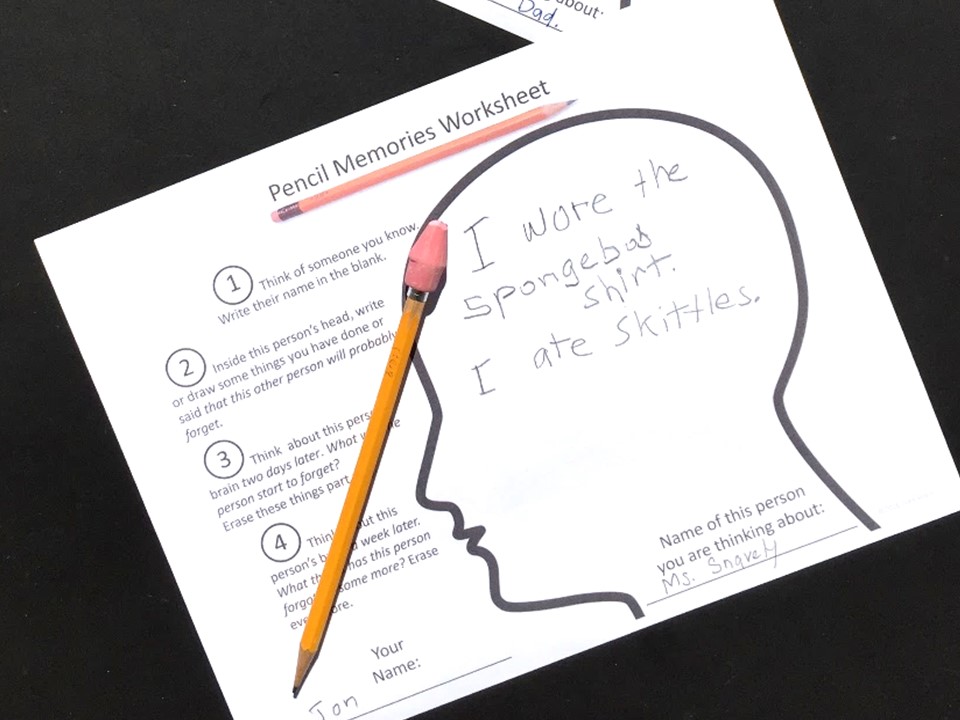
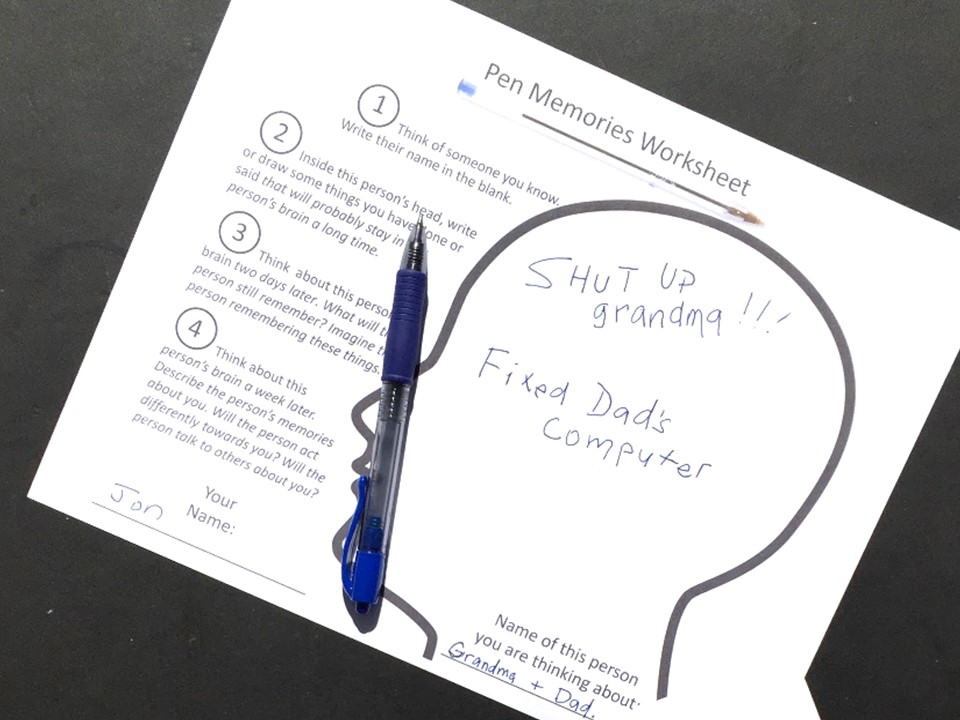
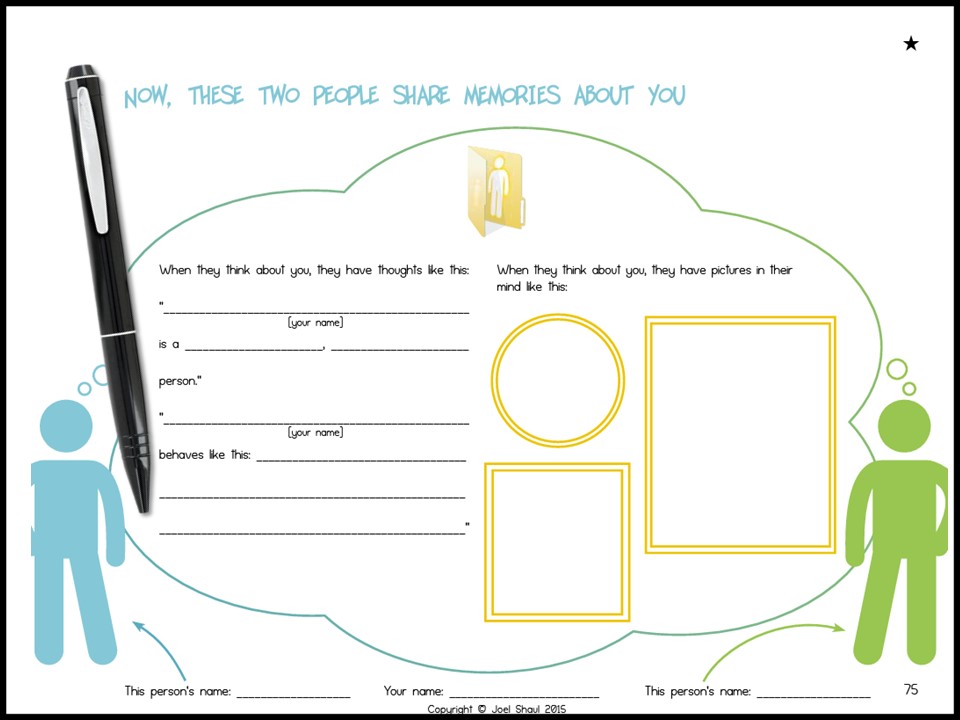
This set of worksheets is to help children to think about social cause and effect, and how their words and actions might be remembered by others for a short time or a long time. Children can opt to either draw, or write, or both.
Examples of drawing worksheets from my published books
My six published children’s books contain lots of worksheets, some of which involve the option of drawing. Here are a few examples.
By the time young people with ASD find themselves in our offices and classrooms, they may have experienced a lot of stress, confusion and disappointment with their social and emotional learning. Incorporating some art into our therapy and teaching activities can be one good way to make this difficult work fresh and interesting for many of them.
B. Incorporating art into therapy activities can help to reduce emphasis on spoken exchange in our counseling and teaching.
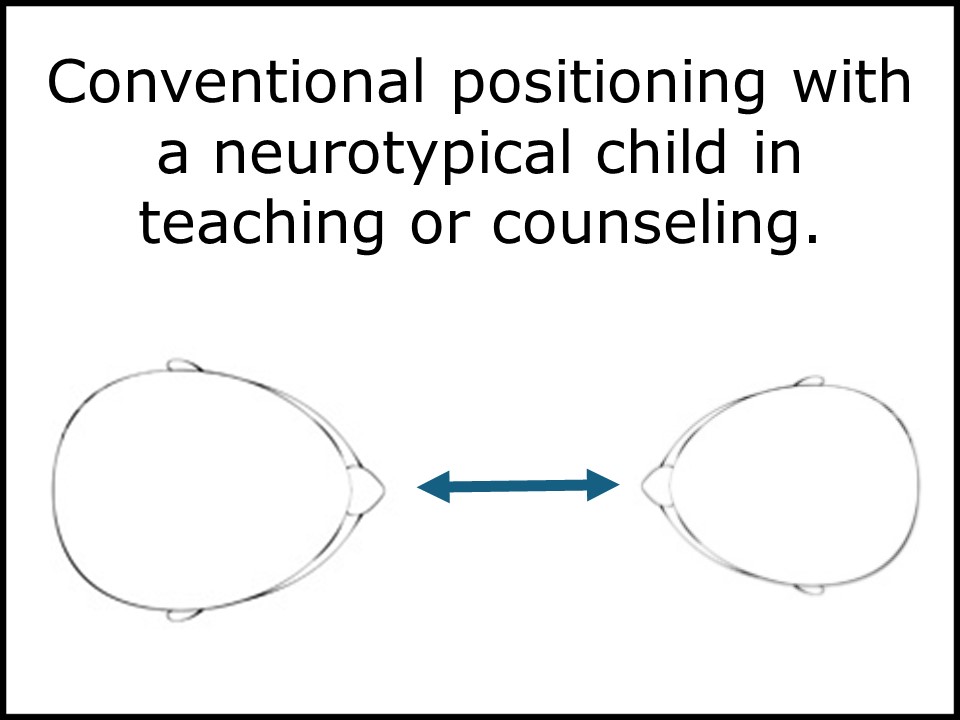
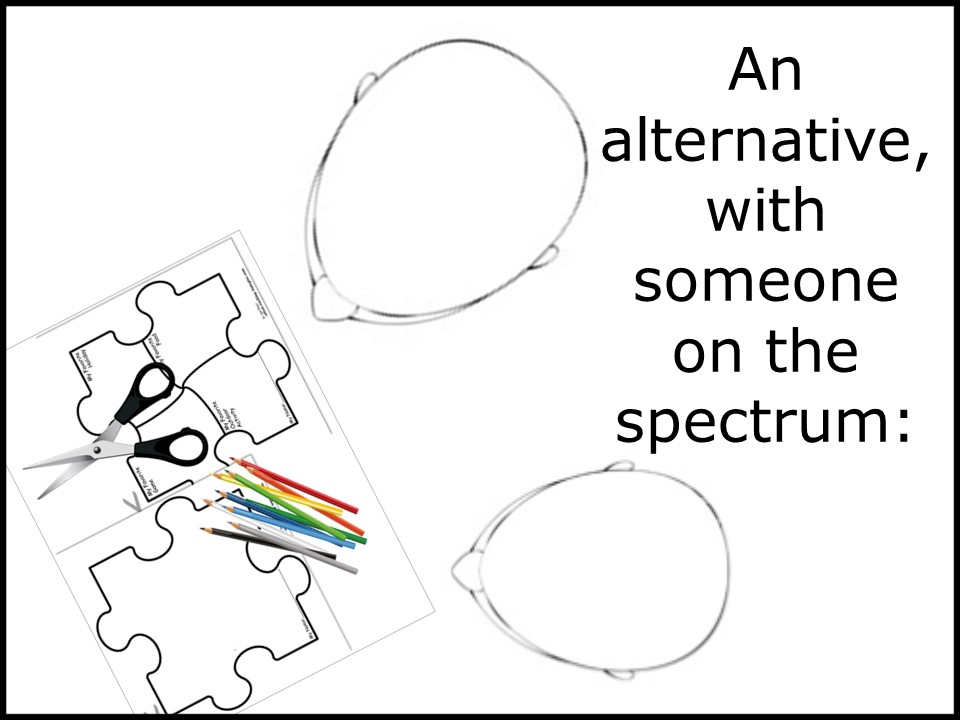
For many young people with autism, uninterrupted, reciprocal spoken exchange – especially face-to-face – can cause fatigue and resistance.
Having the child look downwards towards a therapeutic art project, rather than constantly upward to meet the adult’s gaze, can actually have the effect of increasing focus and stamina.
In my own work, the above applies to most children, but especially for those on the autism spectrum.
C. Artistic expression can enhance self-revelation and self-reflection.
We often ask children to do hard and painful work in our therapy sessions. Our queries about their problems must feel like relentless interrogation sometimes. Furthermore, the thoughts and feelings we ask children to reveal might be challenging to articulate or uncomfortable for them to put into spoken words. Drawing and coloring offer children other ways to communicate with us.
Helping children to feel good and relaxed during our sessions with them can help them get ready to talk about problems. I have often seen young people in individual or group therapy calm themselves while coloring and drawing. Frequently, while holding crayons, markers and colored pencils, they seem more amenable to talking about things that are troubling them.
E. Artistic expression can offer a medium for collaboration and connection.
Employing creative expression can help a child to work more effectively with an adult.
Introducing even a little bit of drawing, coloring or cutting something out can help a child to feel engaged with therapy activities introduced by the adult.
Facilitating art activities can connect socially isolated children with other people.
In my group therapy sessions and classroom interventions, I have often observed children forming social and emotional bonds while looking at the drawings and artistic creations of other young people. Helping children to show their art to others can facilitate social connections for autistic youth, many of whom are accustomed to doing their art entirely in private.
Facilitating collaborative art activities can strengthen perspective taking and working with others.
Coaching autistic children while they are working on creative group projects can help them acquire valuable experience in understanding other points of view and creative preferences.
Principles & professional practices when using art in social-emotional teaching
A. Maintain focus on your therapeutic agenda.
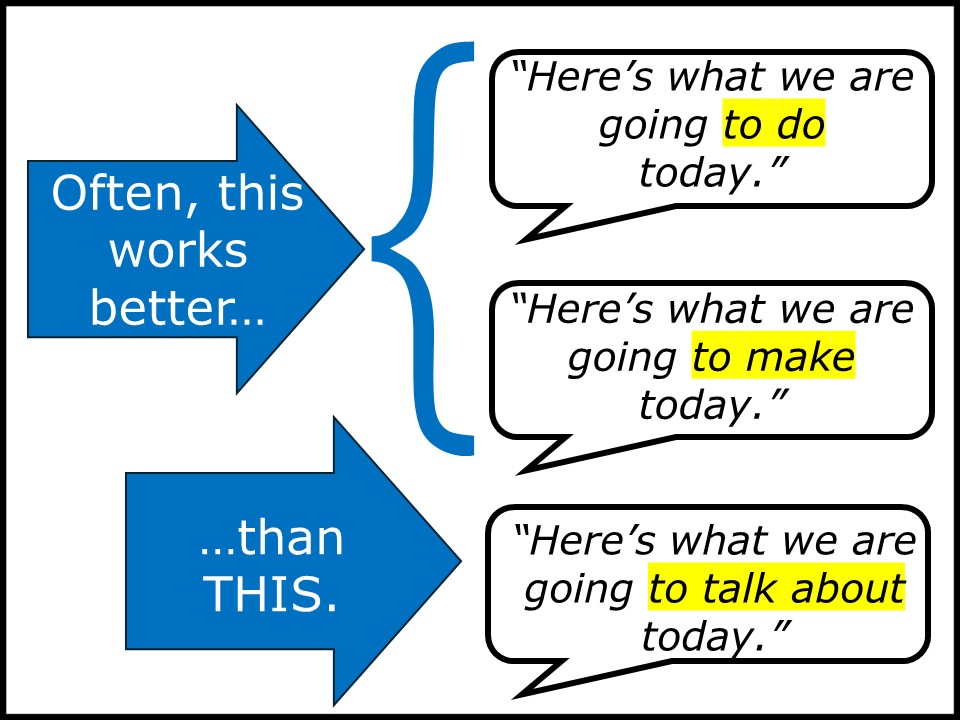
Therapy activities involving art should always have therapeutic benefit – that is, they should all work towards promotion of improved social communication, interaction and emotional regulation.Our art-based activities should focus attention on the therapy, and if drawing and coloring is merely diverting, it’s best to switch methods. Although it may be useful on occasion to use an art activity as a reward, as a rule a therapist or teacher should avoid doing art just for fun or to “kill time.” Above all, we should resist the temptation to assign art activities just because kids find it enjoyable or because we happen to find their art interesting or endearing.
B. Facilitate artistic expression. Don’t force it.
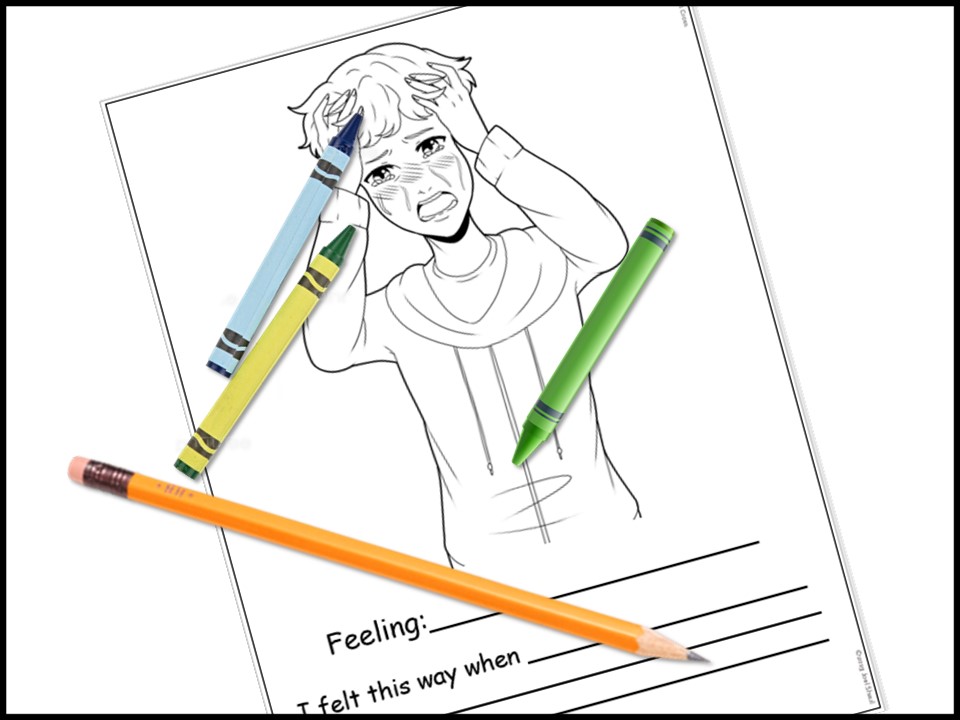
Usually it’s best to provide the options of drawing, or writing, or both. Here is an example below. The person using the CBT Worksheets shown here can draw in the face outline or leave it blank.
Since an art-based intervention might not work out, we should always be prepared with back-up activities that do not emphasize artistic expression.
C. Account for ability levels and preferences.
Allow for different kinds of intelligence, dexterity, drawing ability, writing ability.
Many “art therapy” activities are too hard for younger children or for young people who have issues with attention span, dexterity or overall artistic ability.
Take into account the age level of participants, but don’t dismiss activities that might be perceived as too juvenile by neurotypical youth. Autistic teens and even young adults might accept and greatly benefit from activities that neurotypical teens might consider too “childish.”
D. Respect privacy and authorship.
Avoid sharing, distributing or posting a child’s art unless you have the child’s permission, a parent’s permission and a valid therapeutic reason for sharing the art.