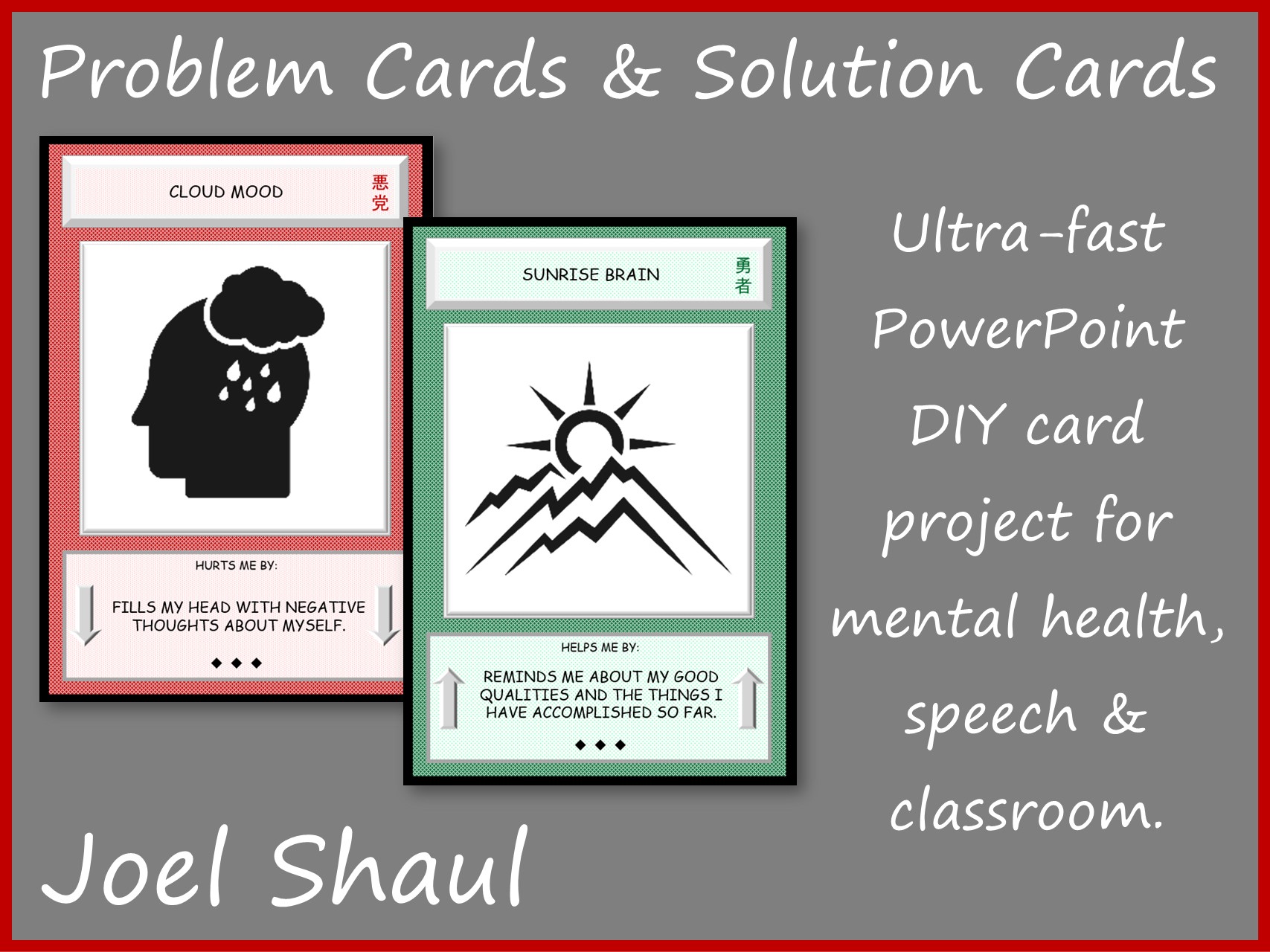
Do-it-yourself social skills cards designed to look like Pokémon and Yu-gi-oh
In mental health, special education and speech therapy, children experiencing multiple challenges can feel demoralized by being the “problem child” all the time. It can be useful sometimes to help our young clients externalize their problems onto fantasy characters which we can help them to fight against.
Many young people relate strongly to youth culture themes of “good guys” and “bad guys” through movies, stories, video games, and in trading card sets such as Pokémon and Yu-gi-oh. To capitalize on this, I designed this free, easy card-making project to help children focus on therapy issues and coping strategies.
Although this is designed for in-person work, it is also ideally suited for teletherapy, since the collaborative work takes place on a shared computer screen and you can mail or email the finished product to your client.
I developed this resource over a number of years of drafts and refinements. I thoroughly tested it in my own work with autistic youth and can attest to its usefulness.
The images below explain how to set it up and use it in your own work.
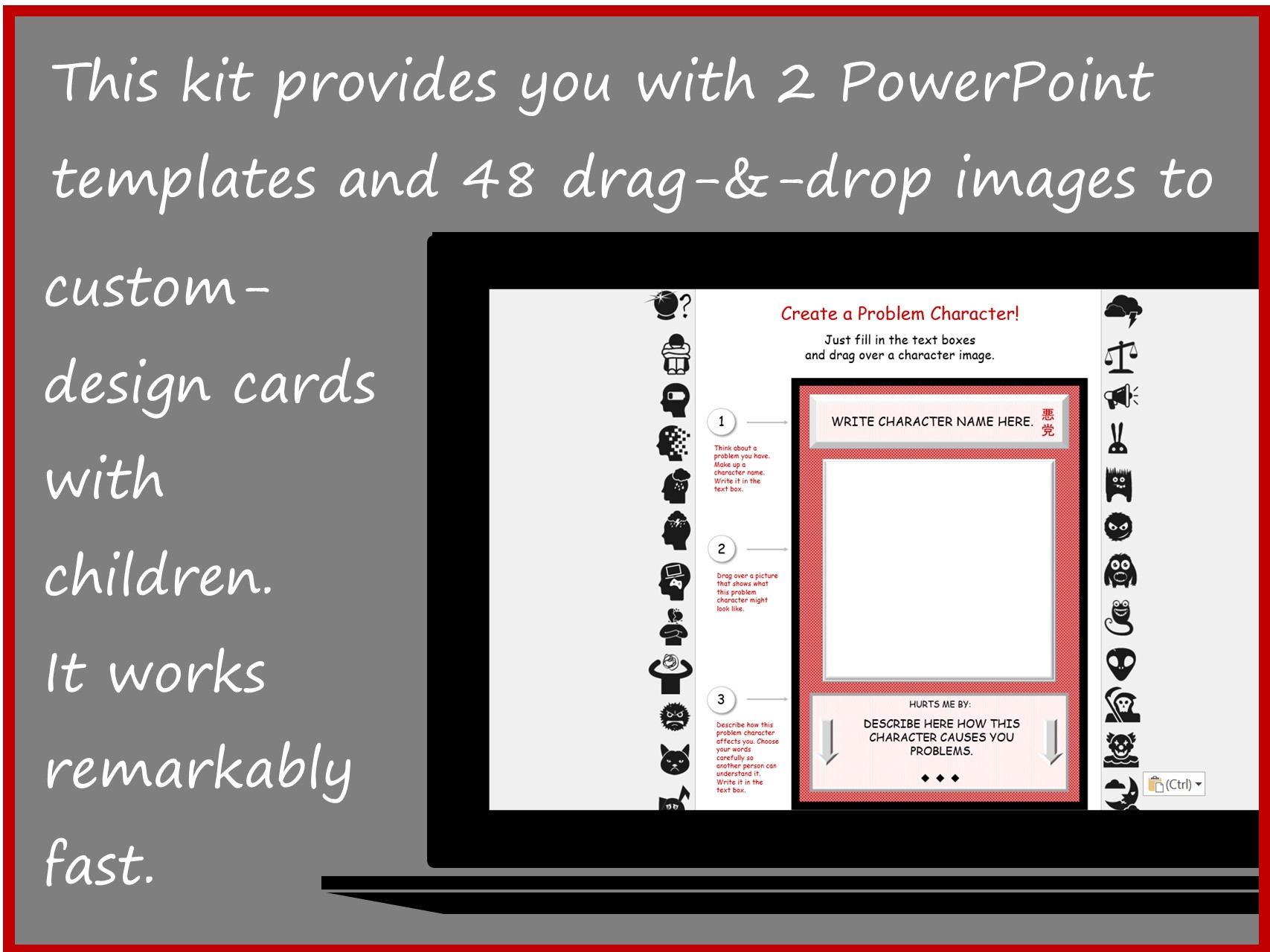
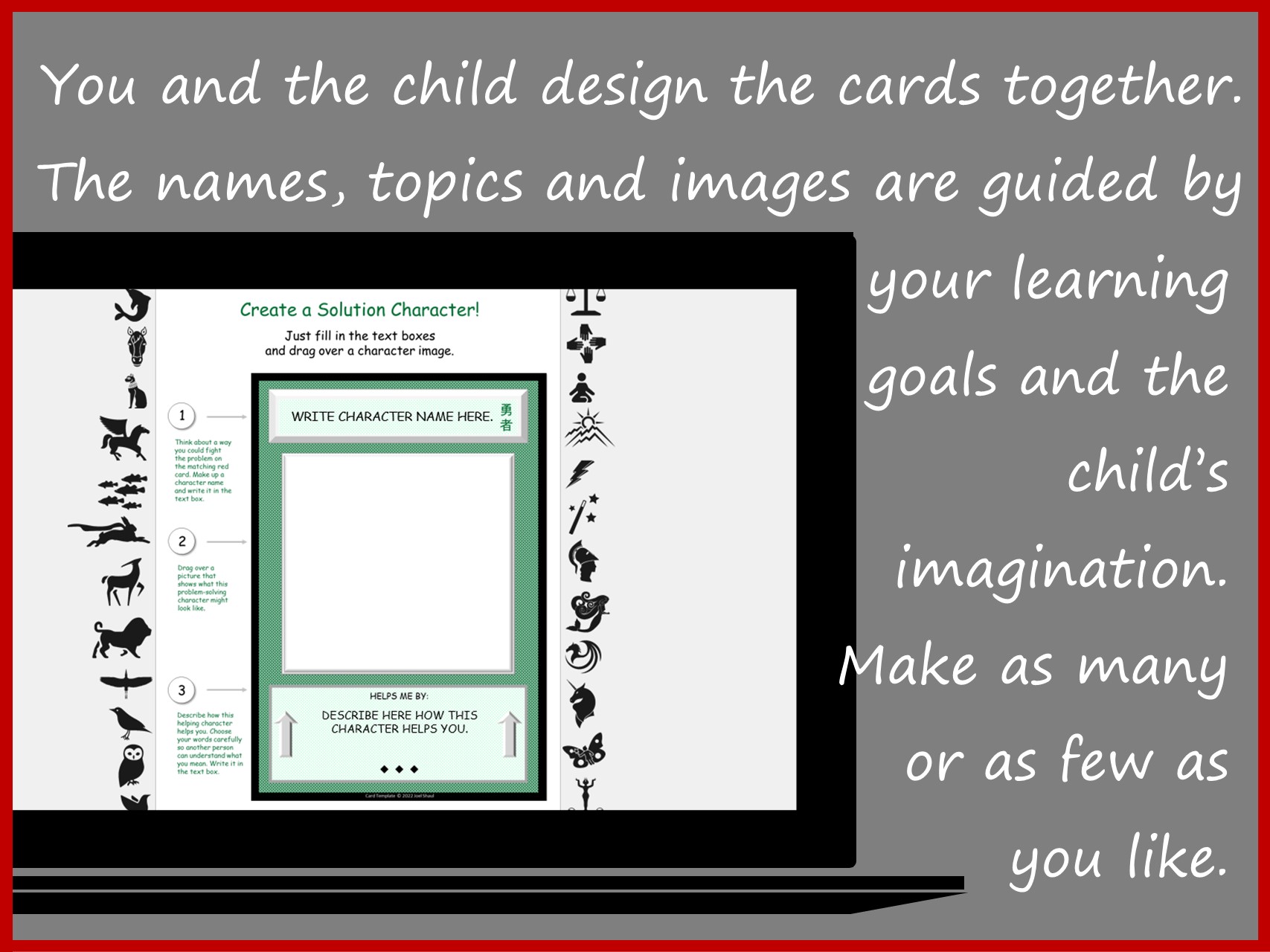
By dragging images onto the card, and filling in the text boxes to name and describe the character, you and the child can quickly create instructive and “cool” cards.
In my own work with children and teens on the autism spectrum, I typically can co-create as many as five pairs of cards in a 45 to 50 minute session. Children appreciate being able have input into naming the characters and selecting among the 48 drag-and-drop images.
There is great potential to add more cards, or modify existing cards, in subsequent sessions.
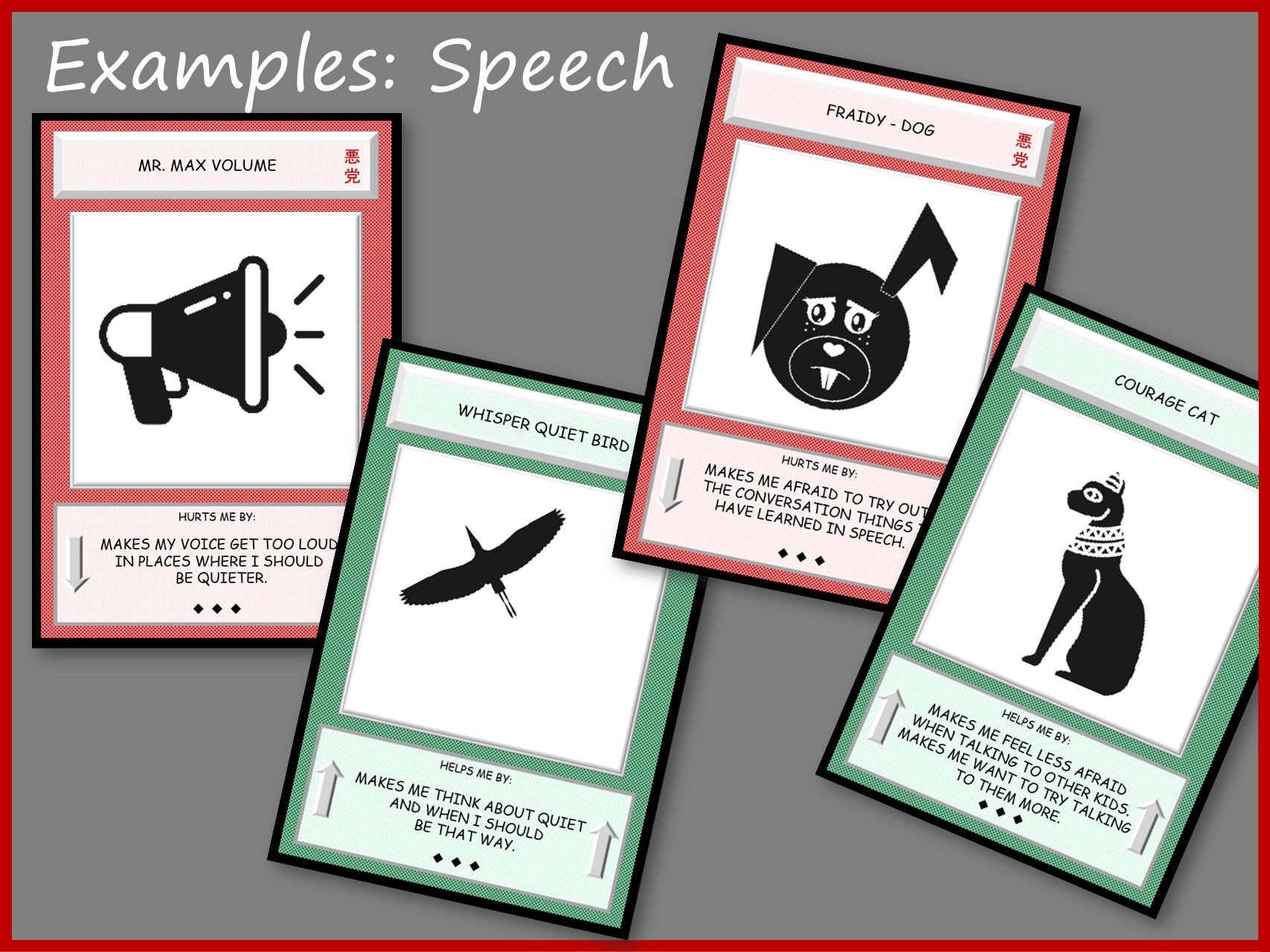
The picture above shows some possible cards that a speech and language therapist could create, corresponding to typical speech goals.
Although I am a mental health professional, in my own work with young people who have ASD, I do a great deal of work on social communication. In my experience, most of the children I work with can quickly make up clever character names. Most can come up with a coherent narrative under “helps me by…” [Obviously, the sample cards shown were not created by clients 🙂 ]
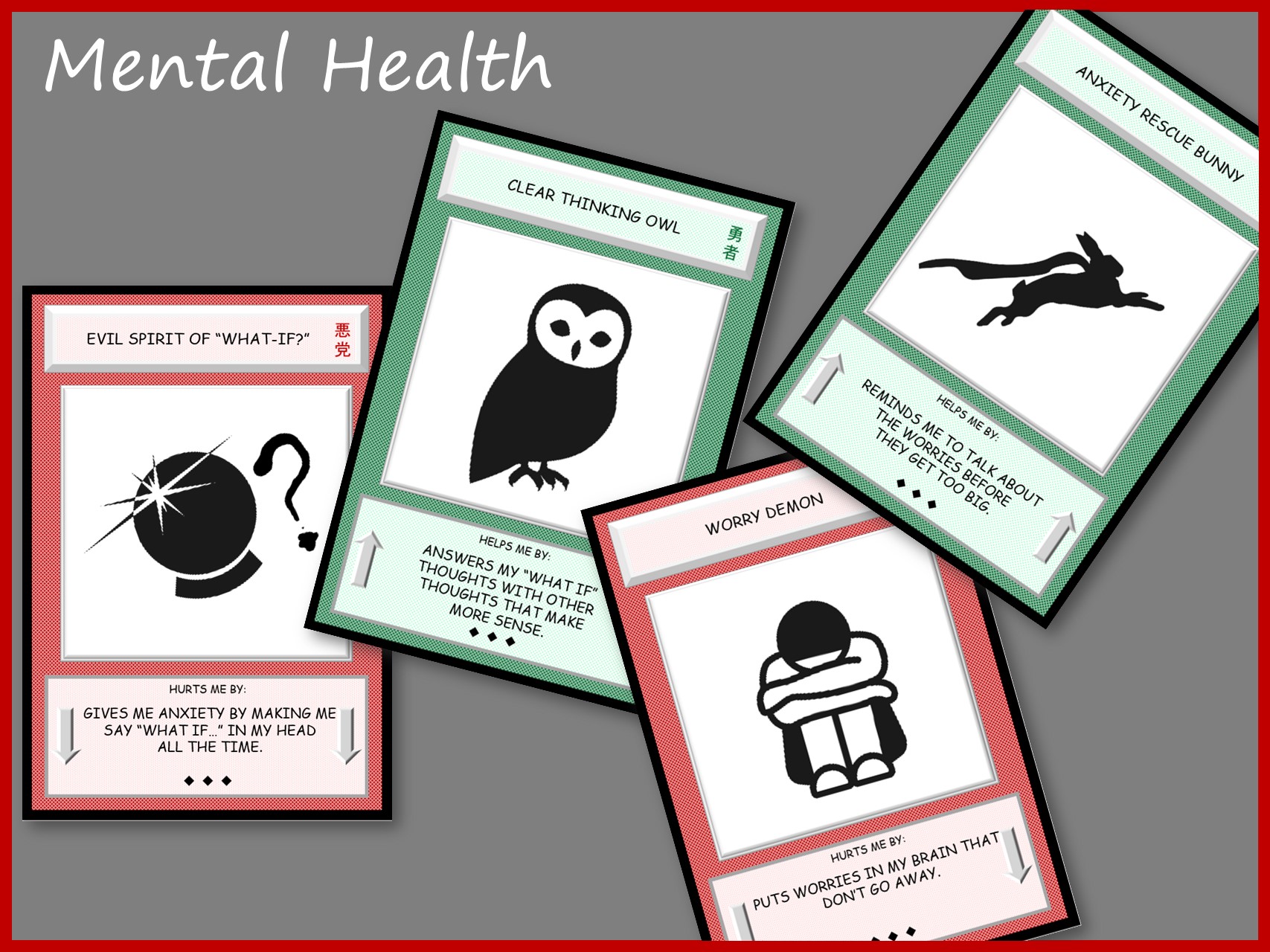
Here above are some examples of cards that could be created for mental health applications. For my fellow mental health professionals: These DIY cards are ideally suited for CBT.
Please note that I have a completely separate CBT-based Problem Solutions Cards kit available with drag-and-drop images specifically selected for mental health therapy.
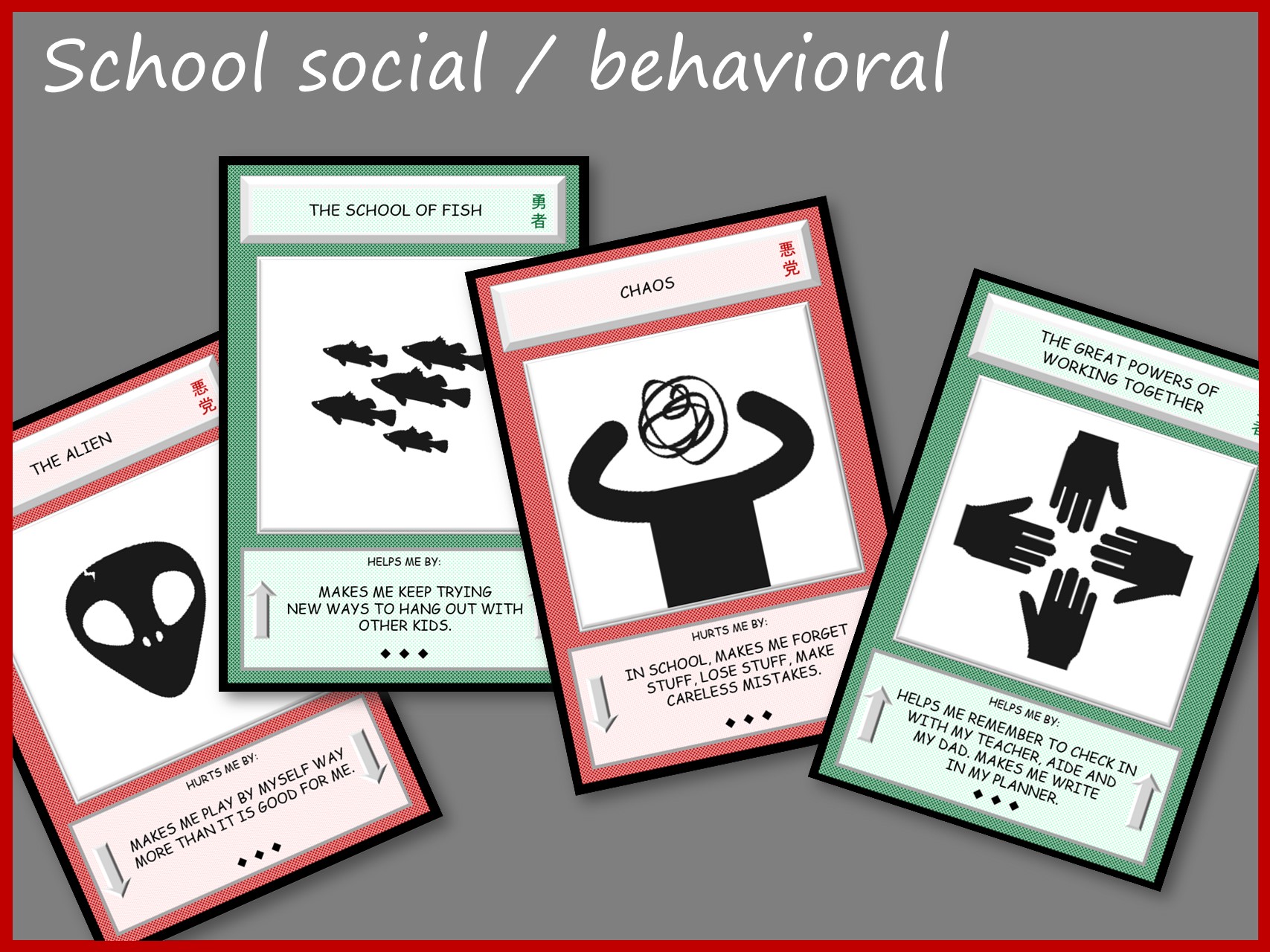
Shown above are four examples of cards that could be created to highlight typical social and behavioral goals in the school setting.
I am not currently working in schools, but the fact that this project is carried out on-screen in PowerPoint would seem to make it well-adapted for groups and small classroom work for children with emotional and behavioral concerns.
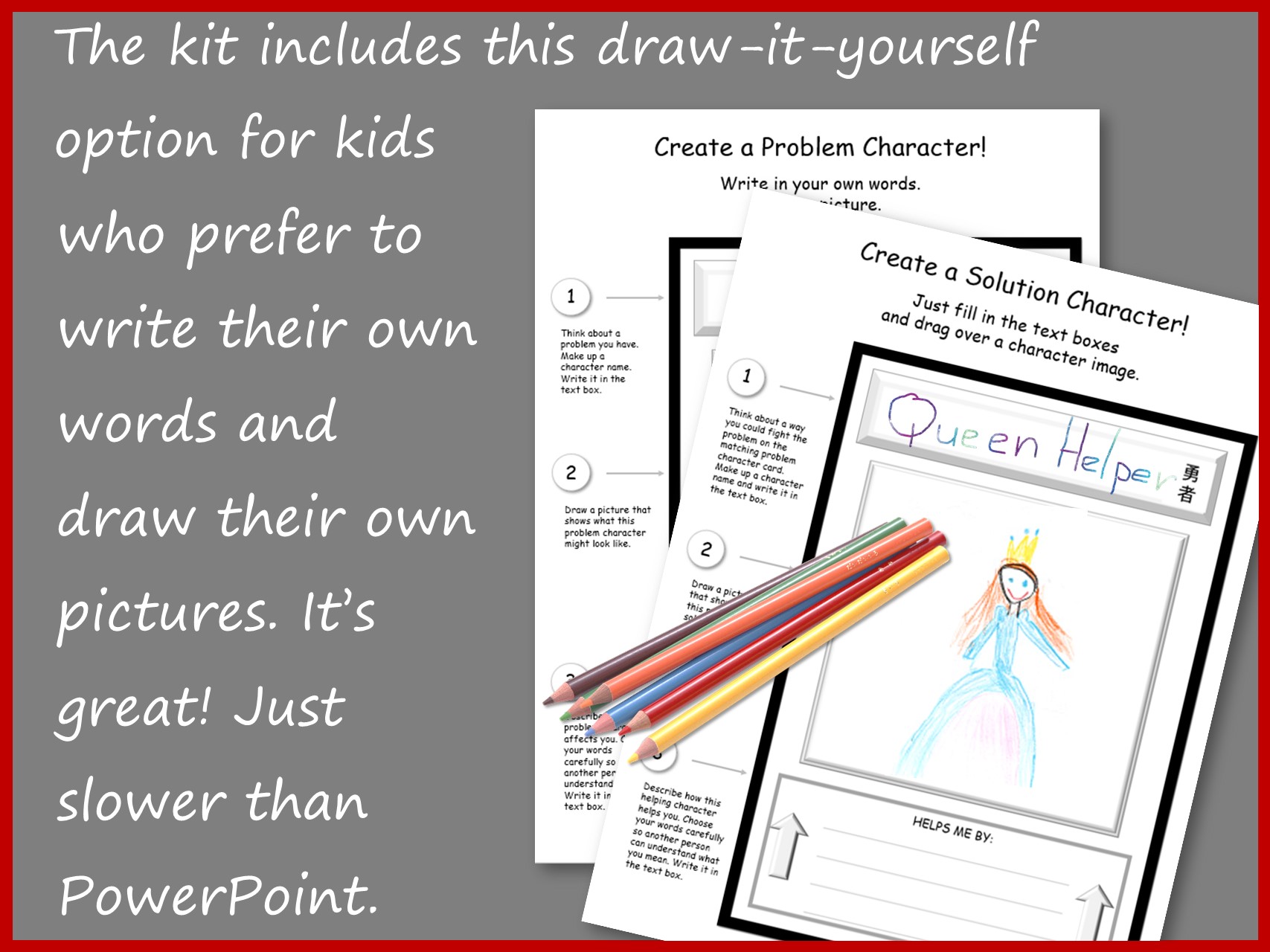
The draw-your-own version of this (shown in the picture above) is similar to a popular download I posted years ago, Dark Force / Light Force Worksheets. In my own work, I like to get children to draw as much as possible in structured therapy projects. Having done this project many times both ways, both through drawing and via drag-and-drop image selecting, I would say that both versions have advantages. One important consideration is that many young people just don’t want to draw. Another consideration is that many of them draw more slowly than might be useful or convenient in the context of a therapy session.
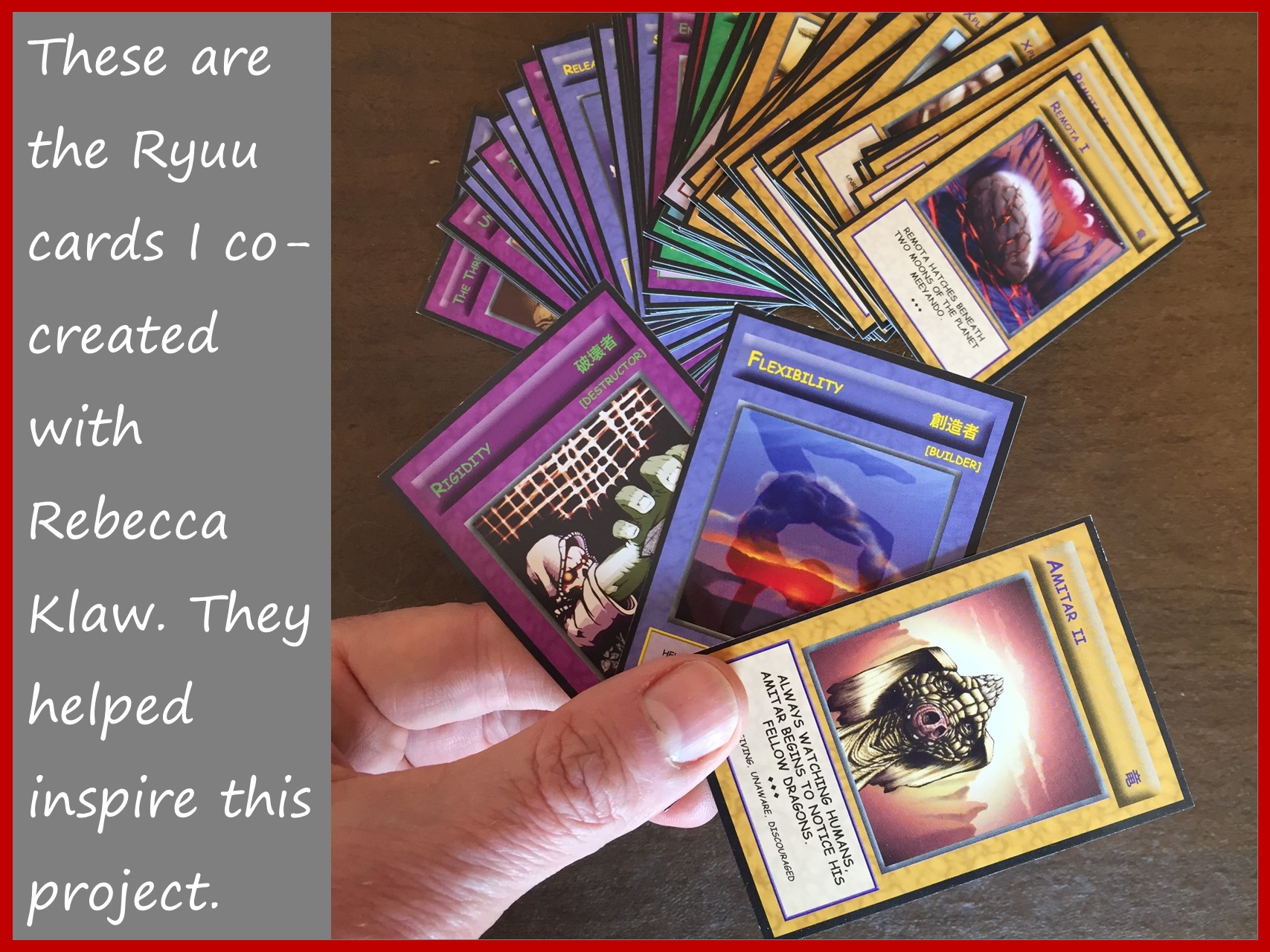
For many years, until 2019, Rebecca Klaw and I sold these cards that we invented, along with related therapy materials.
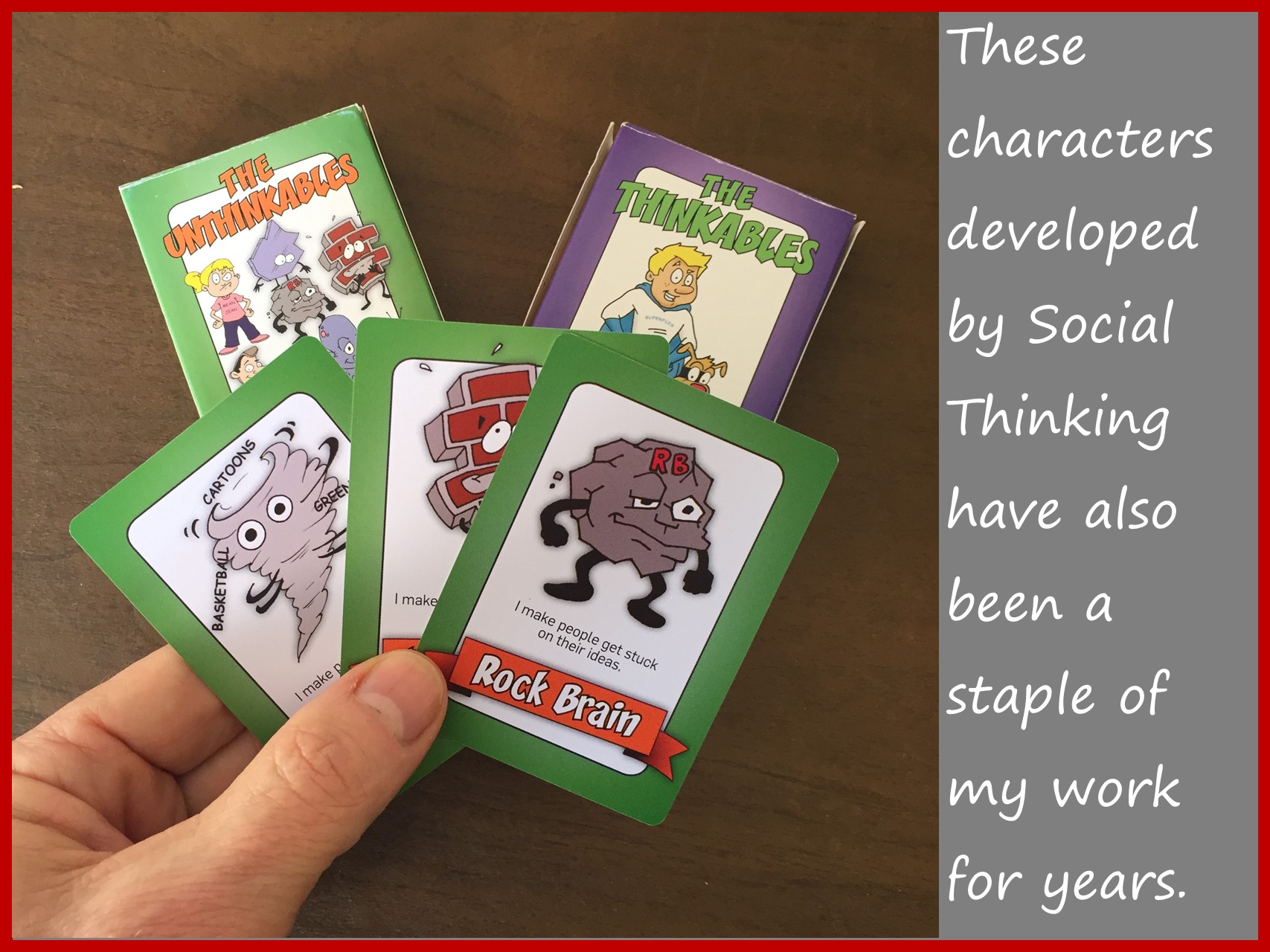
You are probably familiar with these Social Thinking materials based on Unthinkables and Thinkables characters. If not, you should check them out.