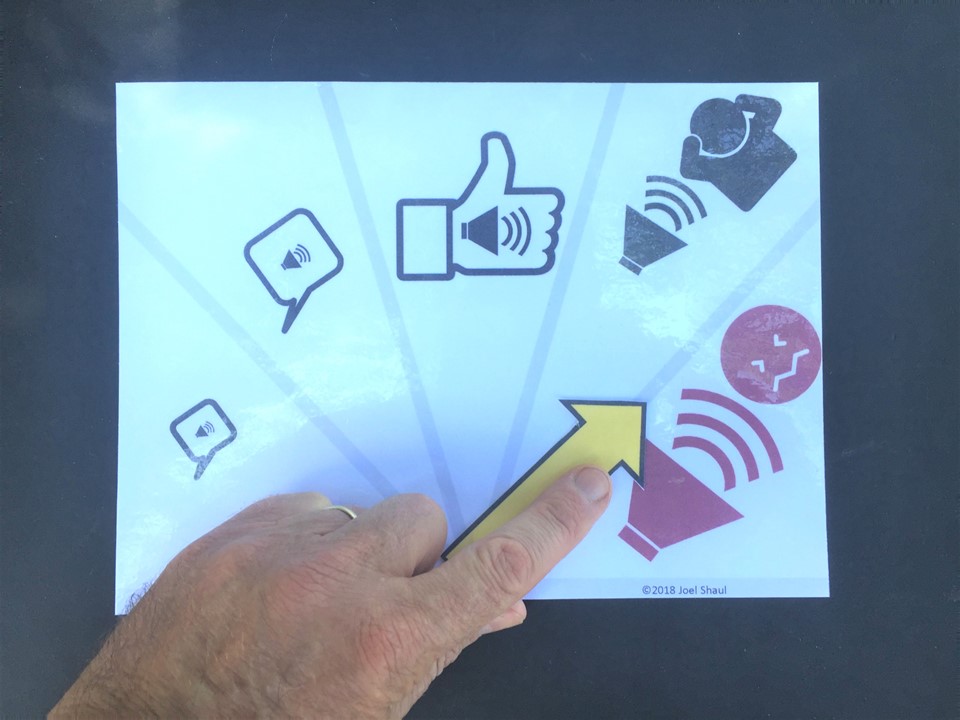
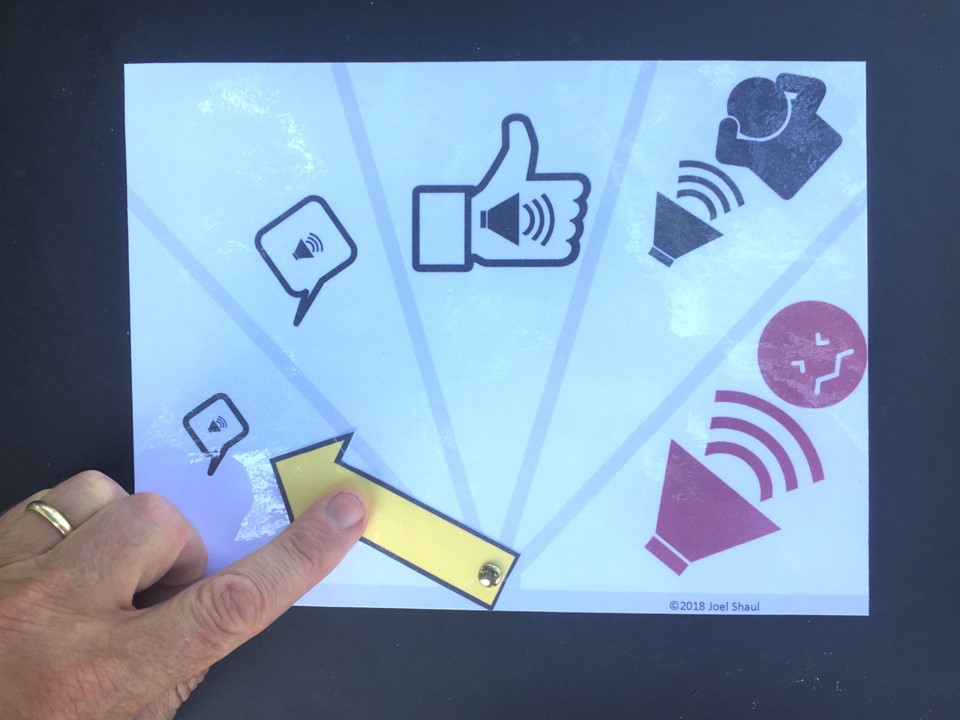
Para muchos niños con autismo puede ser difícil controlar el volumen de su voz en diferentes contextos sociales.
Por lo general, se debe a que es difícil imaginar qué tan fuerte o suave puede sonar su voz para otra persona. Este controlador de volumen puede ayudar a que un niño sea más consciente de cómo suena su voz para otras personas.
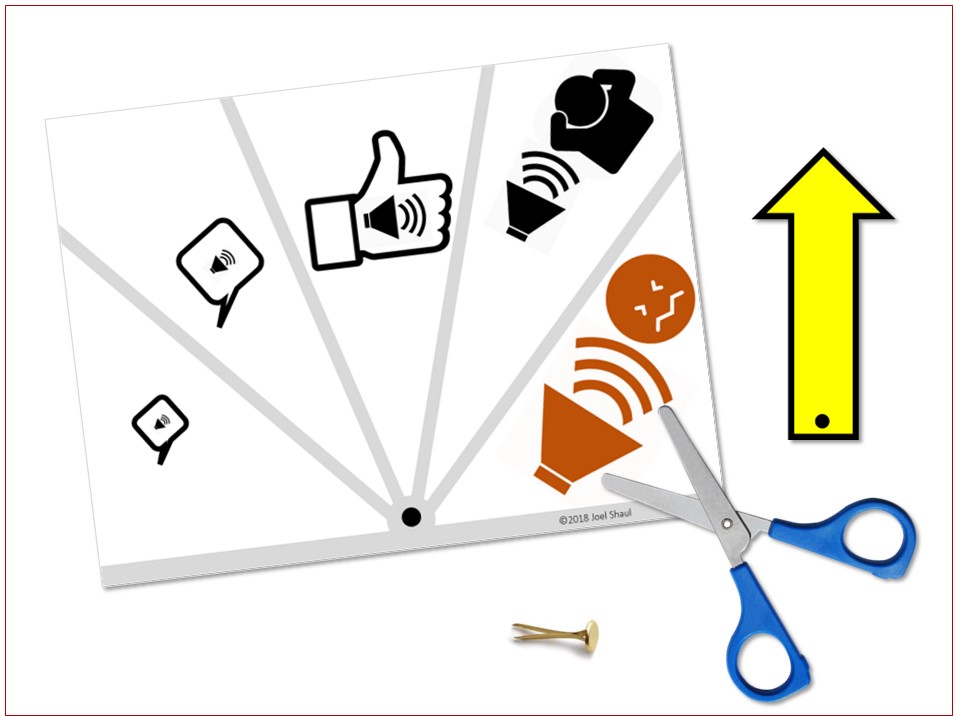
Como hacer el Escalador de Control de Volumen
Imprima las páginas 3 y 4 de este pdf. Recorte la flecha. Plastifique todo si puede.
Use un sujetador de metal flexible para sostener la flecha.
Deje que el niño lo ayude a imprimirlo y recortarlo.
El Escalador de Control de Volumen es útil tener en algunos salones de clase. Puede ser útil en logopedia. Déselo a las familias para usar en casa.
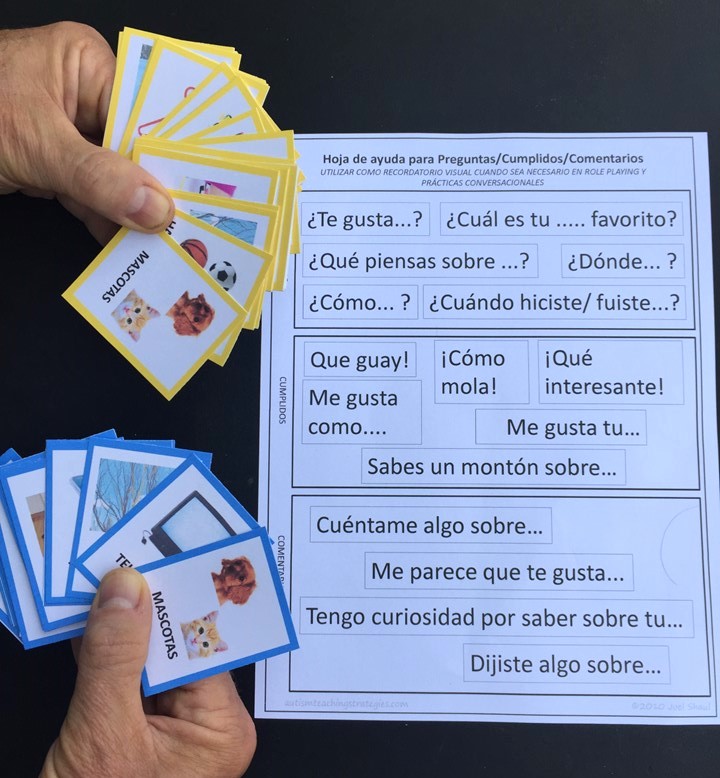
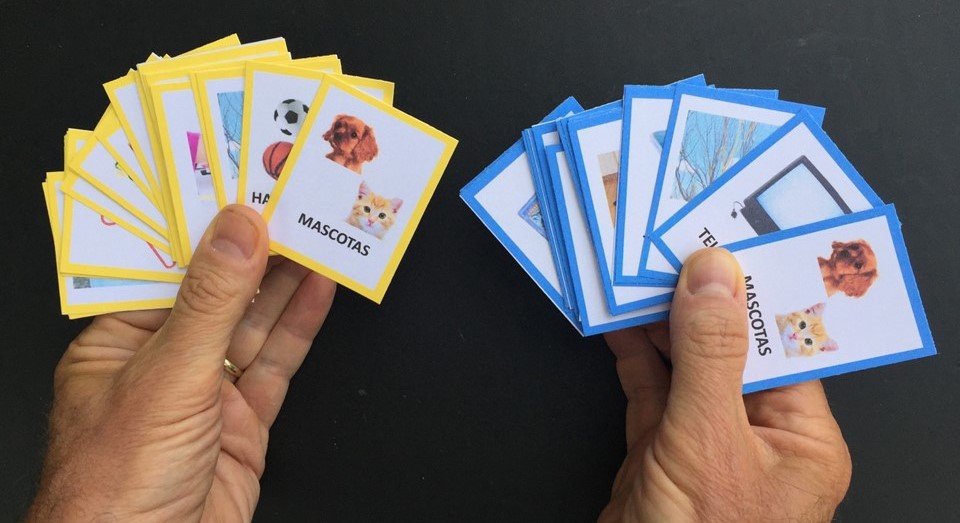
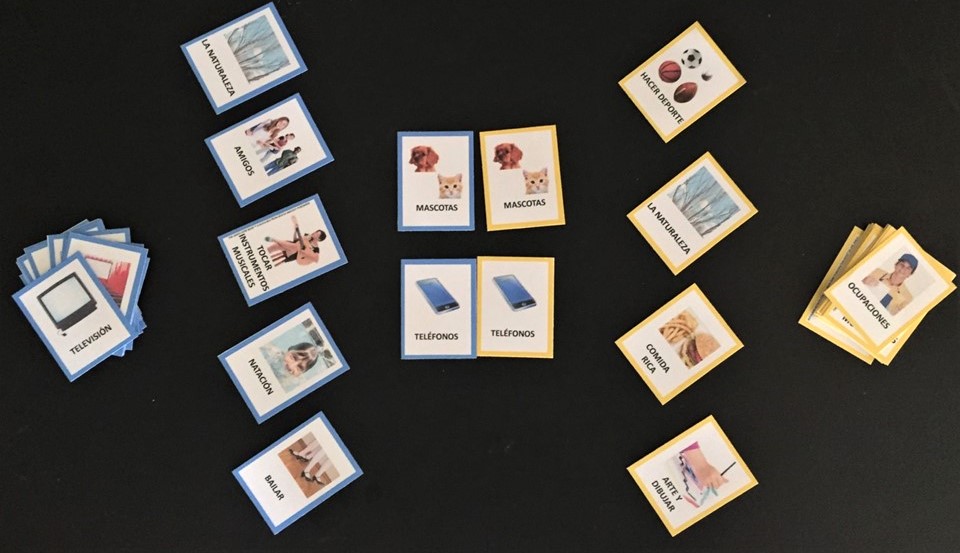
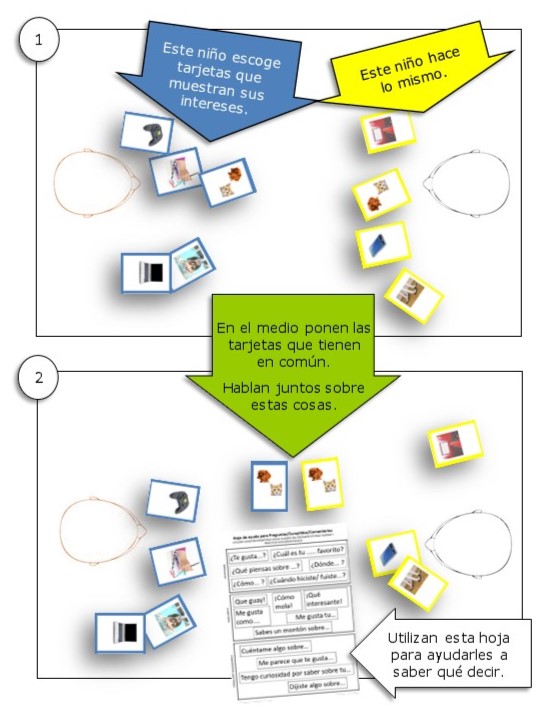
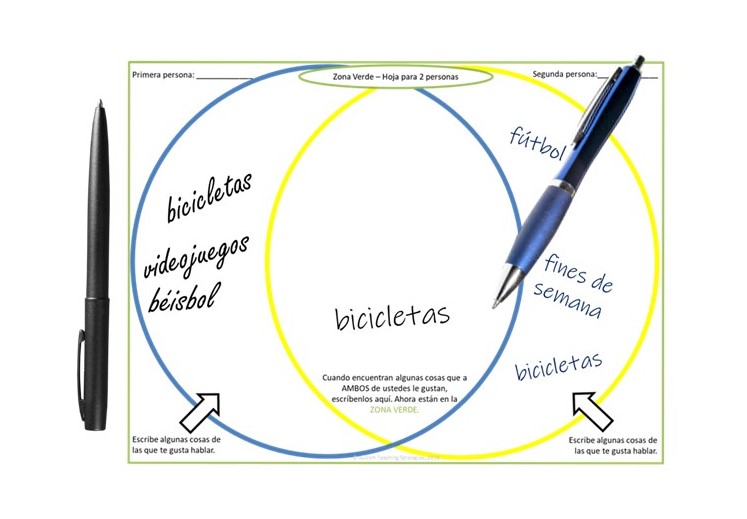
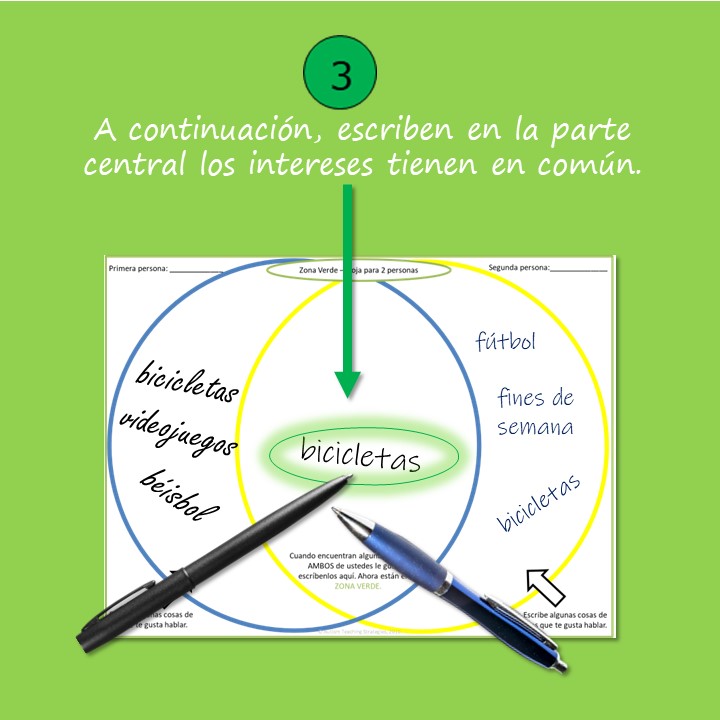
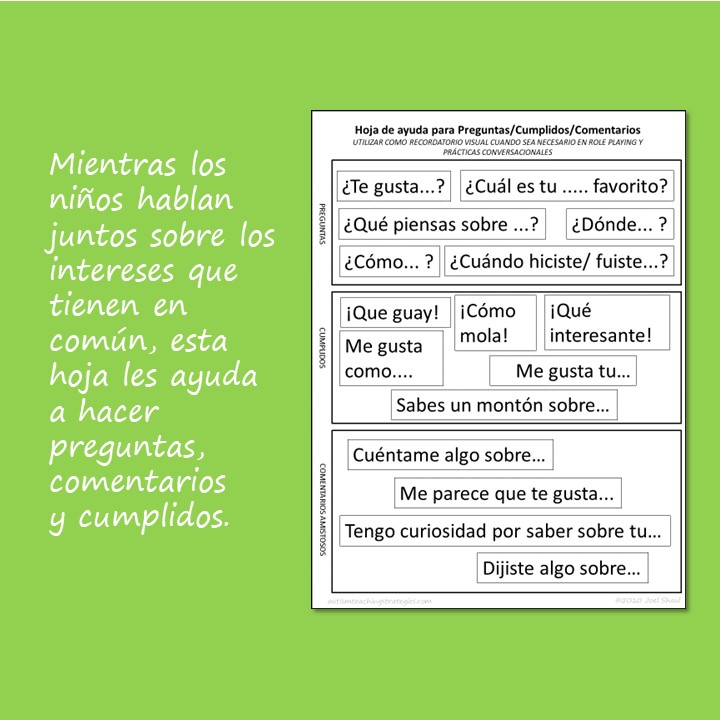
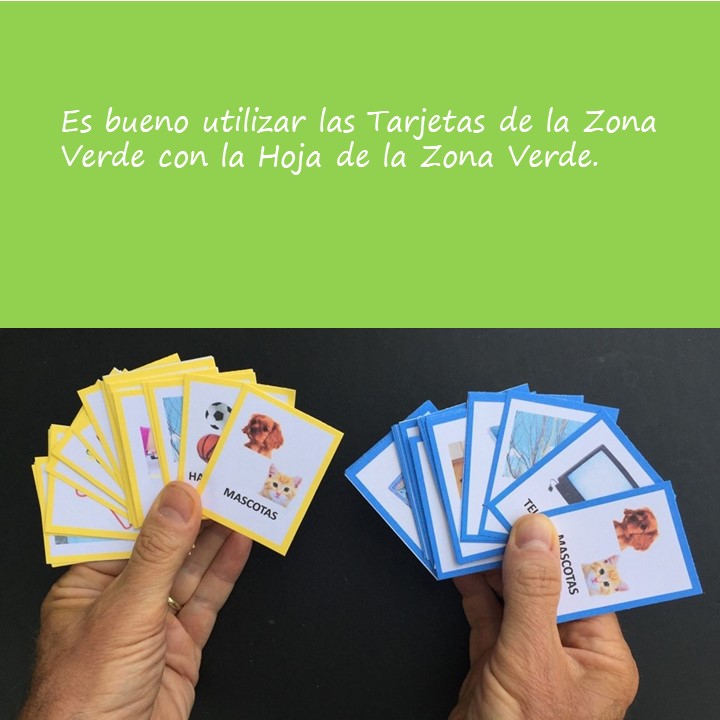
A muchos niños autistas les cuesta hacer preguntas sencillas.
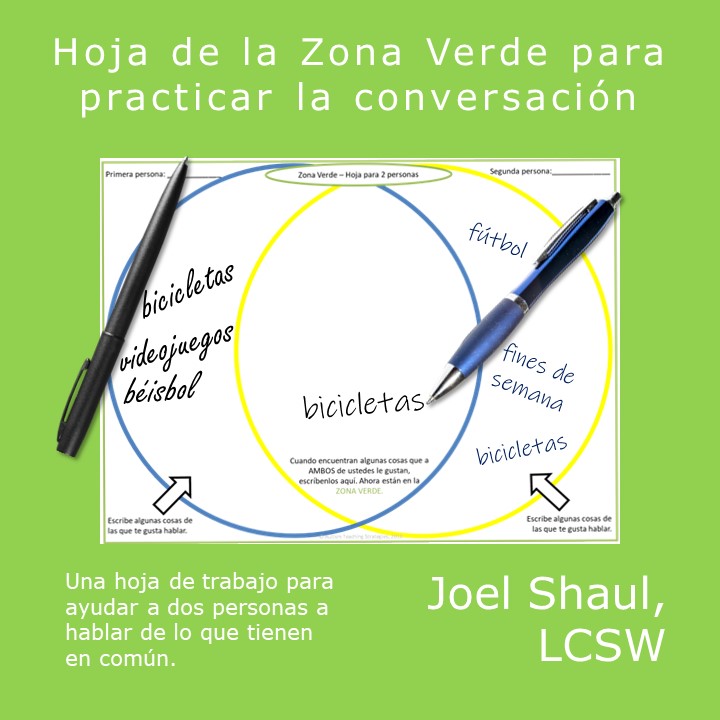
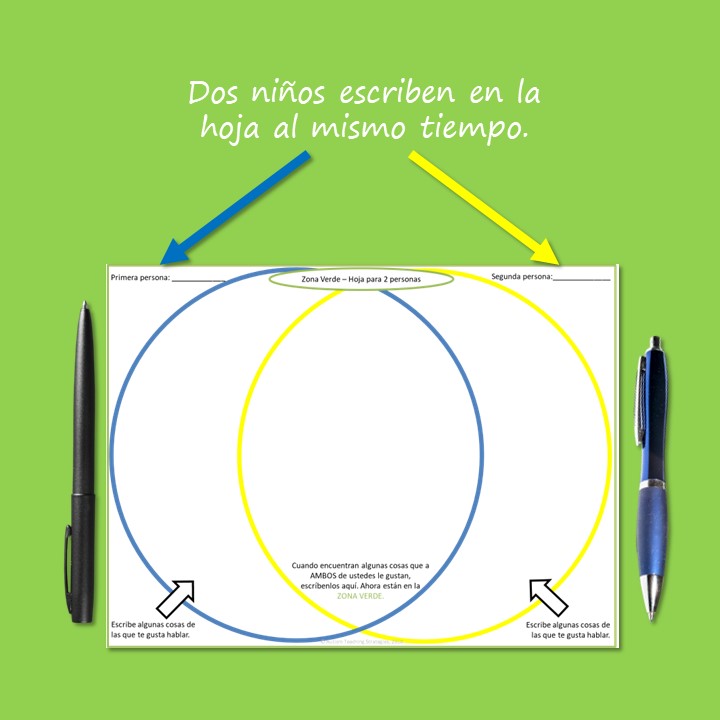
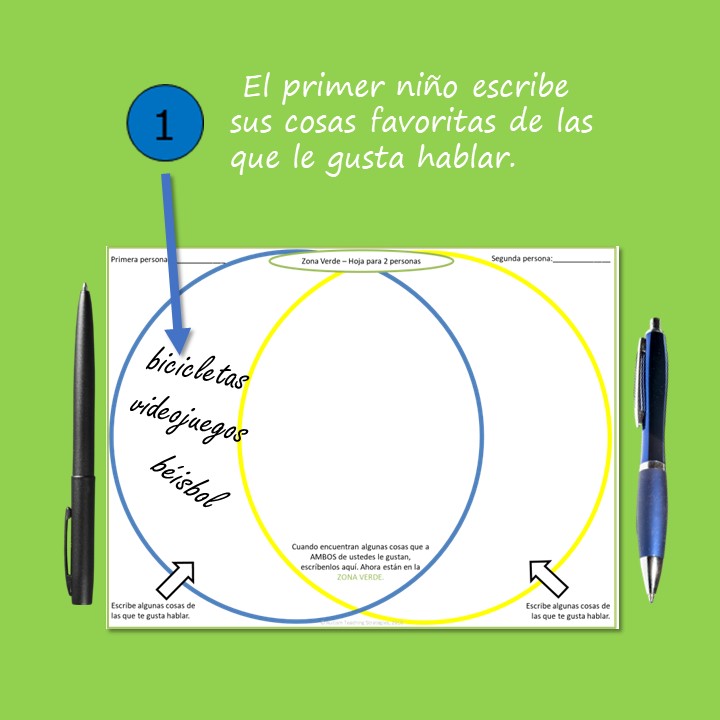
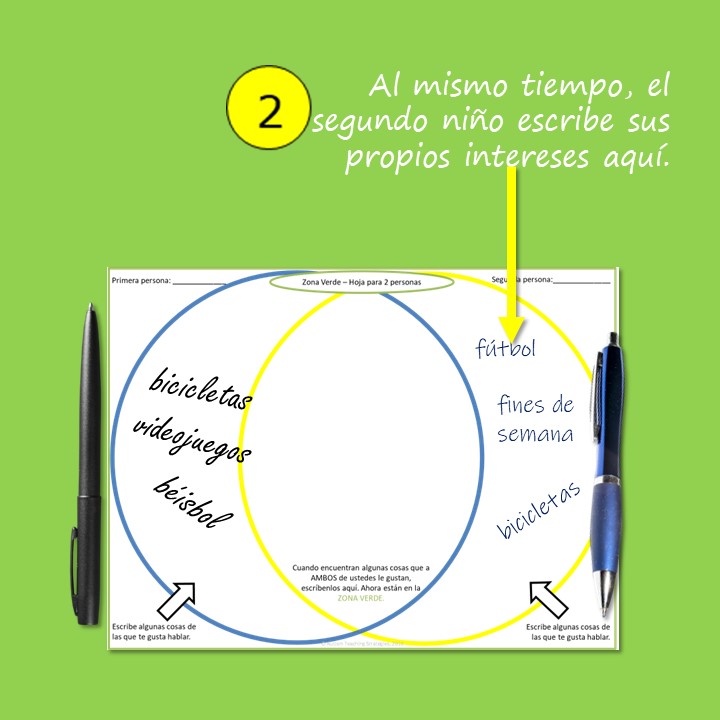
Hablar sobre temas de conversación habituales puede ser todo un reto. Esta es una actividad para ayudar a los niños con autismo a practicar esta importante habilidad de conversación.
Almost all of us find interviewing for a job to be a daunting social experience.
There is so much at stake in a short, intense conversation. And everything about us – our words, demeanor, appearance, and life history – is under focused scrutiny.
Young people on the autism spectrum preparing for job interviews often feel this pressure with great intensity. The demands to answer unfamiliar questions and make a good impression can feel overwhelming to them.
In my own work helping young people with ASD to cope with social and emotional challenges, I have spent many hours helping individuals and groups to get ready for job interviews. My impression overall is that my clients have enjoyed this work and benefited from it. Some have told me later that job interview practice really helped them feel more confident and competent in a job interview.
Here I would like to summarize some of the methods I have used to boost job interview skills in young people with autism.
Raise awareness about realities of employment and the role of employers and employees.
Young people in general, and those with ASD in particular, often lack essential knowledge regarding the employer/employee relationship. So far in their lives, the adults in the lives of young people have been primarily parents and teachers providing nurturance and education. In employment, it’s different – you are the adult now, the one providing the service to others.
Parts 1, 2 and 3 in this series are to reinforce basic knowledge about employment. If you have not done so already, I suggest you reference at least some parts of the earlier resources before attempting practice job interviews.
Obviously, the responsibilities of employment may be beyond the capacity of some of our young adult clients, who might be very strongly affected by some debilitating aspects of ASD or by co-occurring issues such as intellectual disability or clinical anxiety and depression. Still, in my own work in groups and classrooms, I have generally had everyone take part in workplace awareness education and job interview practice, including individuals who did not appear ready to move into conventional work situations. I feel those not destined for regular employment still benefited by learning important information about what employment is like.
A great way to build interest and awareness about employment is to show YouTube videos on the subject.
I have used the “Snagajob” series below over and over again. It has a tone of levity, but is very informative. It focuses on an aspect of job interviewing that many people with autism find especially difficult: answering tricky questions. Click on the picture below to link to these videos.
Address non-verbal elements of job interviewing.
Points of discussion should include:
*Shaking hands. See the video below. I have spent whole sessions practicing this with individuals and groups.
*Non-verbalDo’s and Don’t’s of job interviews. Years ago, in a practice job interview, a student of mine elected to end the interview by skipping the handshake and giving me, the interviewer, a warm embrace instead.
*Eye contact. Troubleshoot workarounds for when someone is expected to use eye contact but they have an aversion to doing this.
*Posture.
*Attire and hygiene.
Increase awareness of the most common interview questions, and acceptable replies.
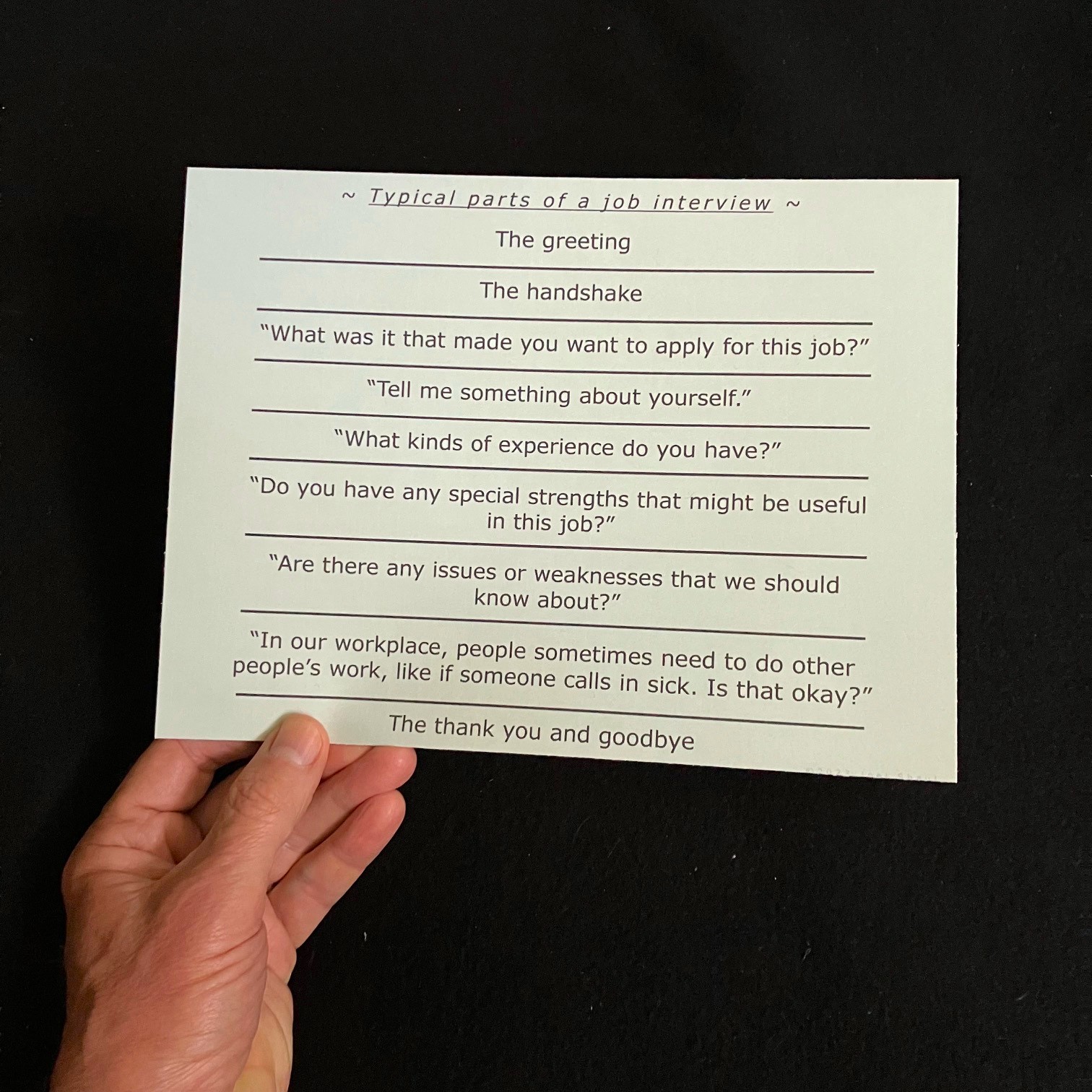
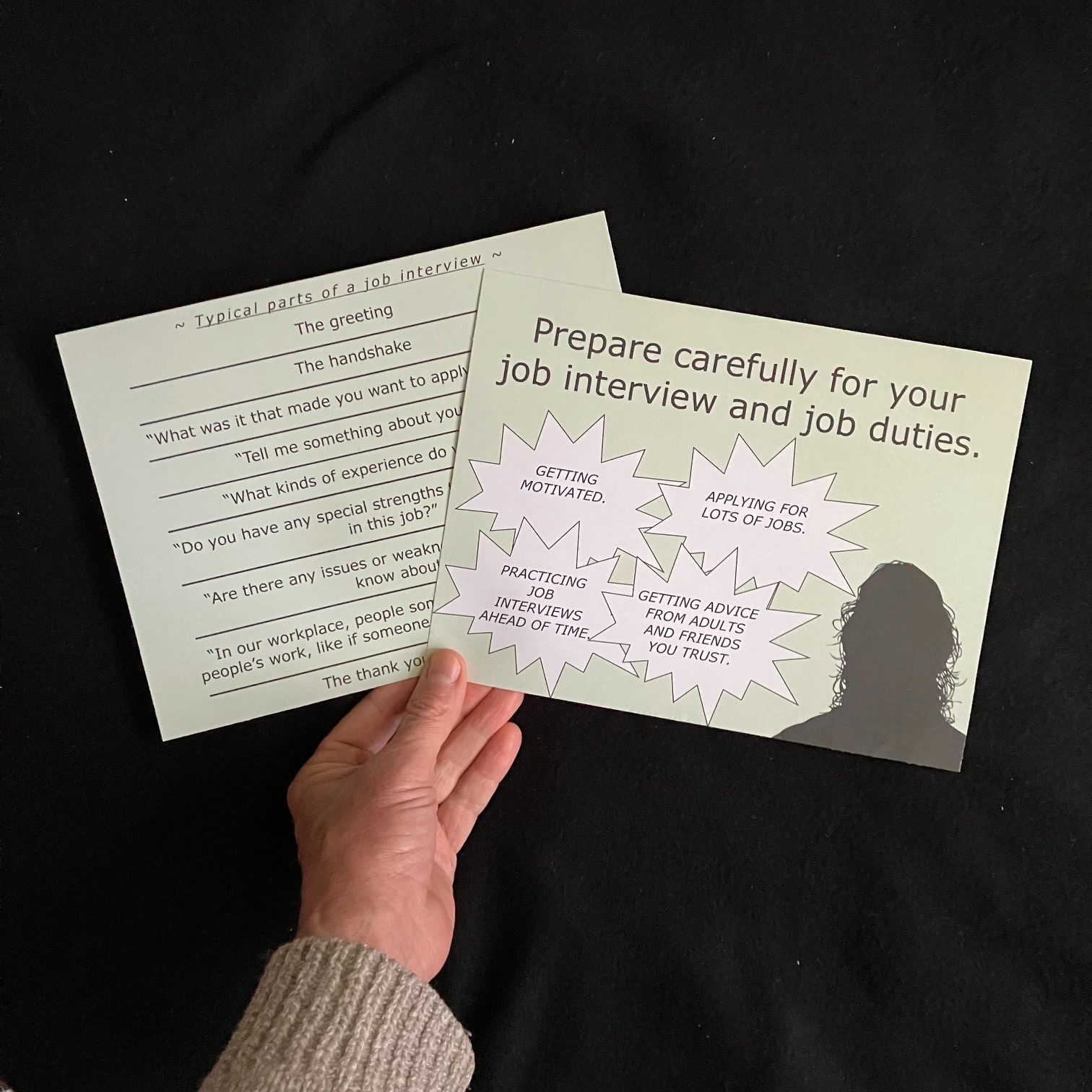
Print out the single-page list of common interview questions. When you start with the practice interviews, I suggest you mainly stick with these questions at first.
Video the practice job interviews if you can! Most young people really like this, and it makes practice interviewing a much more effective teaching tool.
To engage teens and young adults on the spectrum in productive discussions about preparing for adulthood, I have found it useful to employ various media and game-like methods. Q & A card resources are one of my mainstays. This method helps to break up the usual adult-questioning-the-child dynamic in therapy and teaching. And in small-group and classroom work, the turn-taking format helps to give everyone, including quieter participants, the chance to talk.
Ways to use these cards
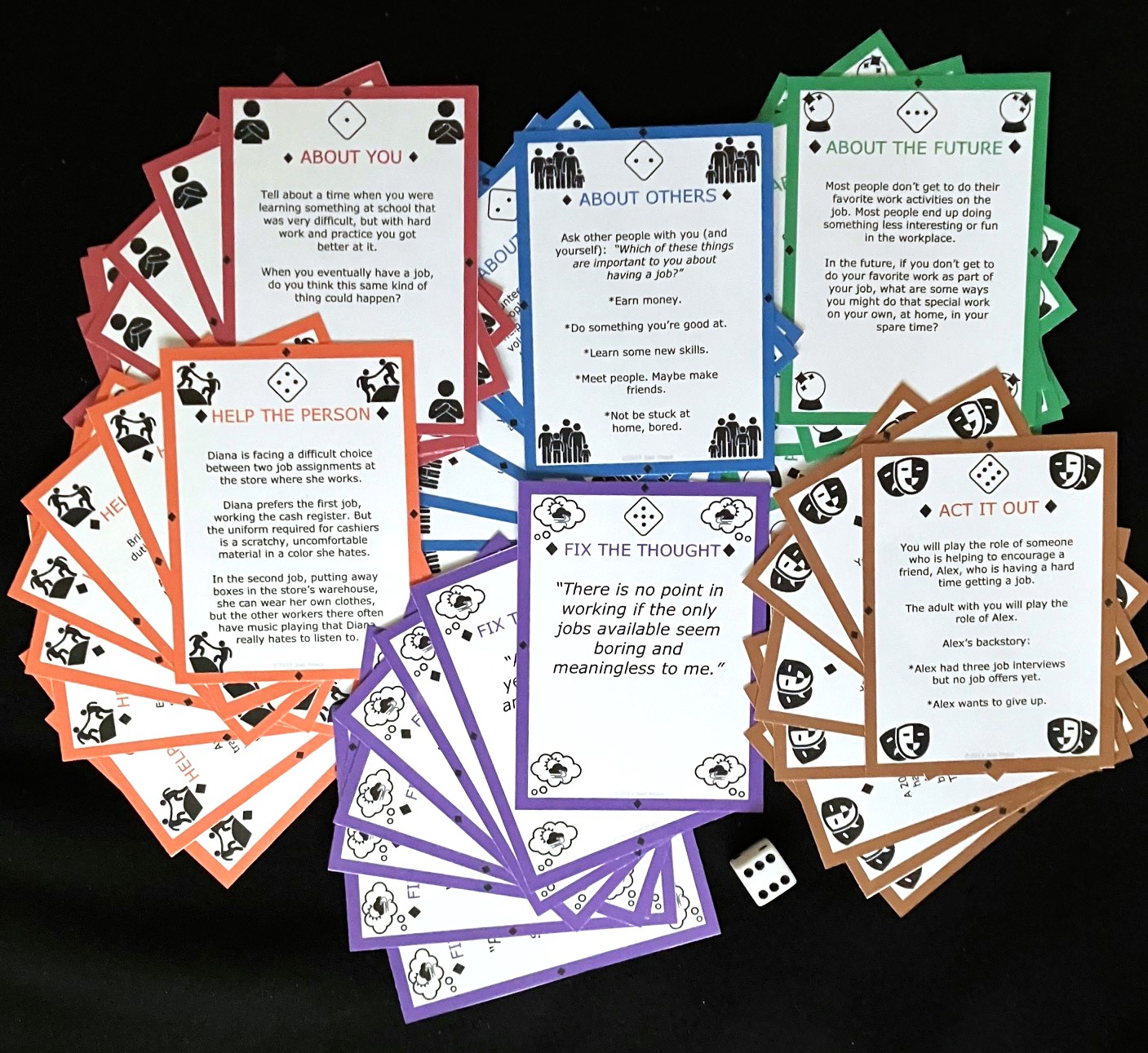
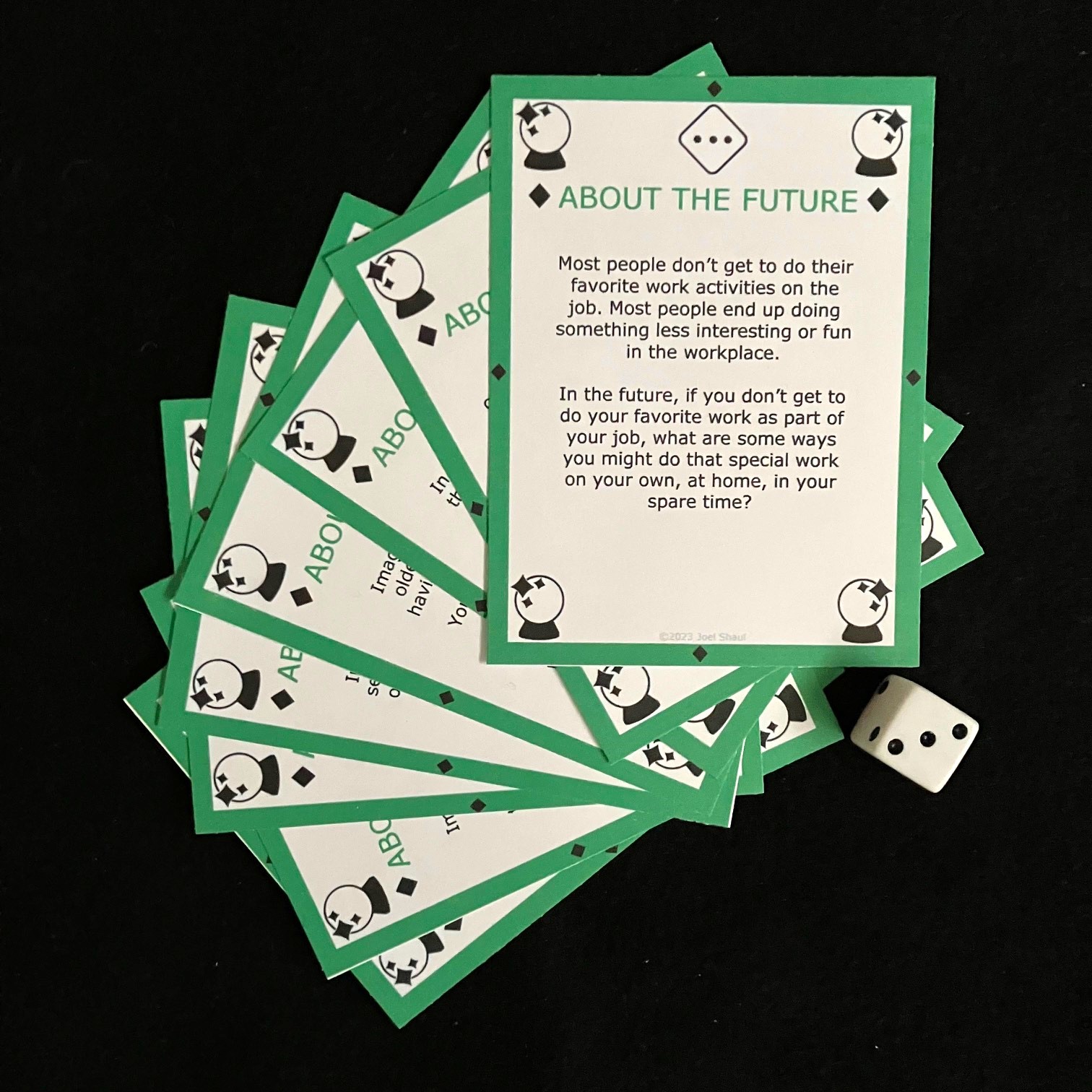
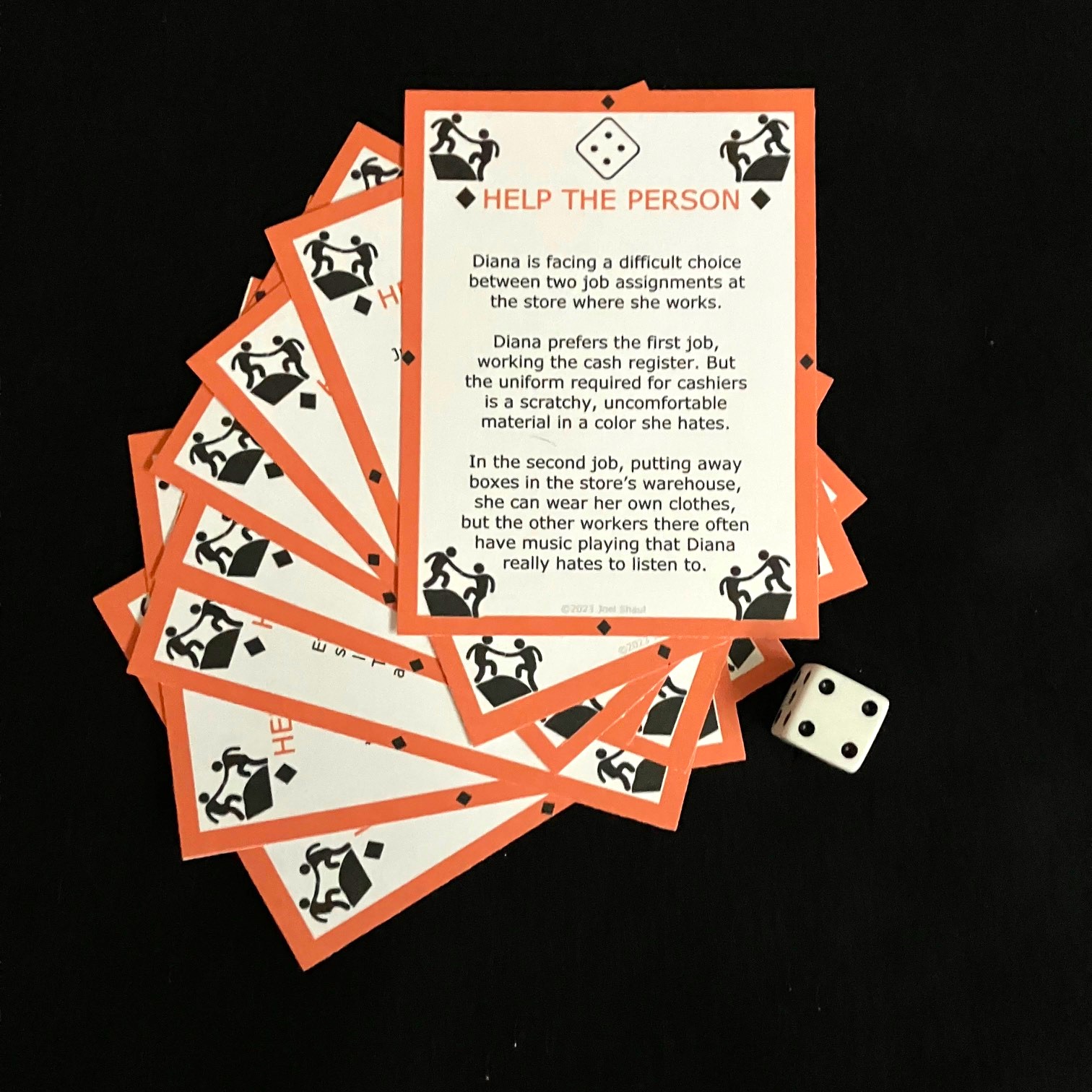
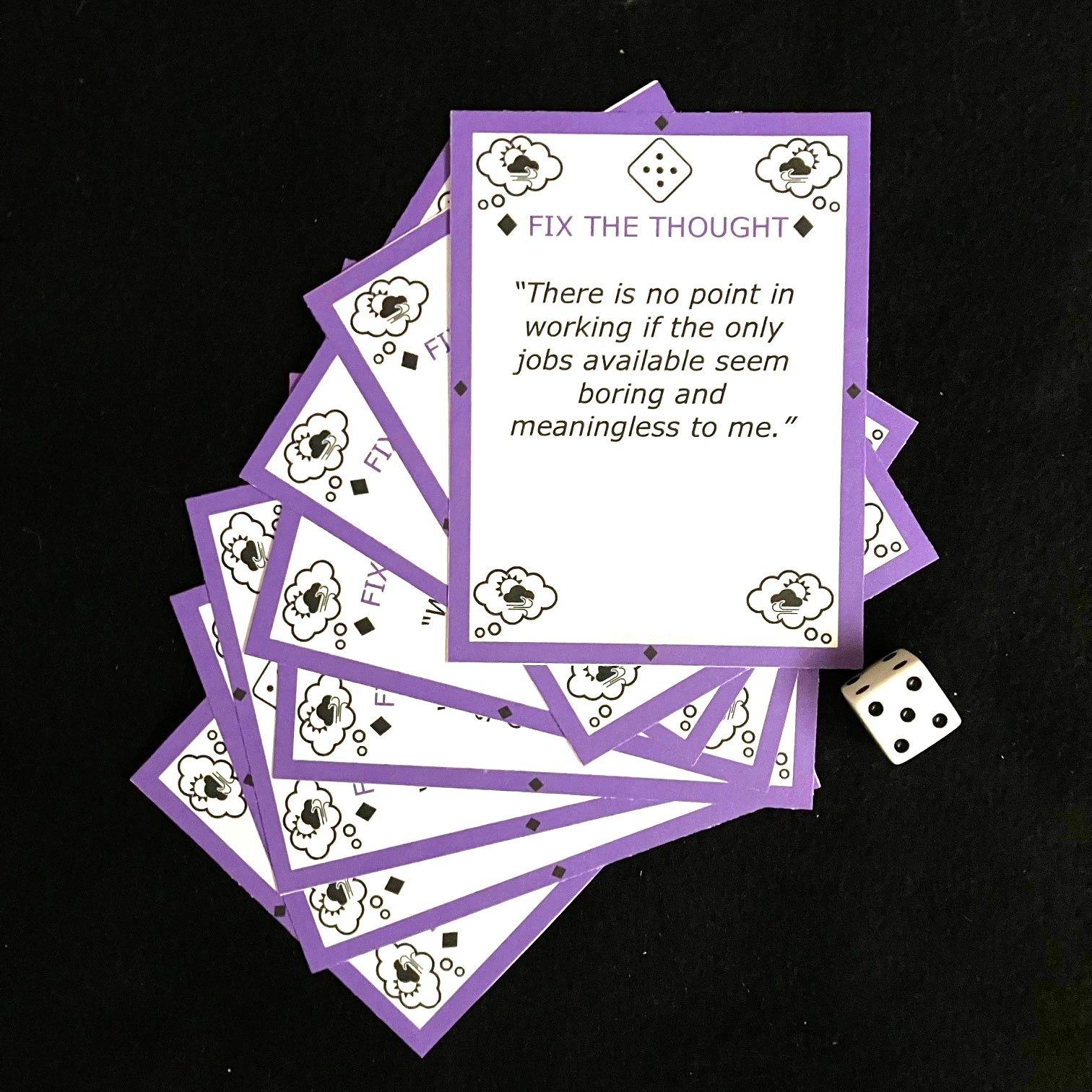
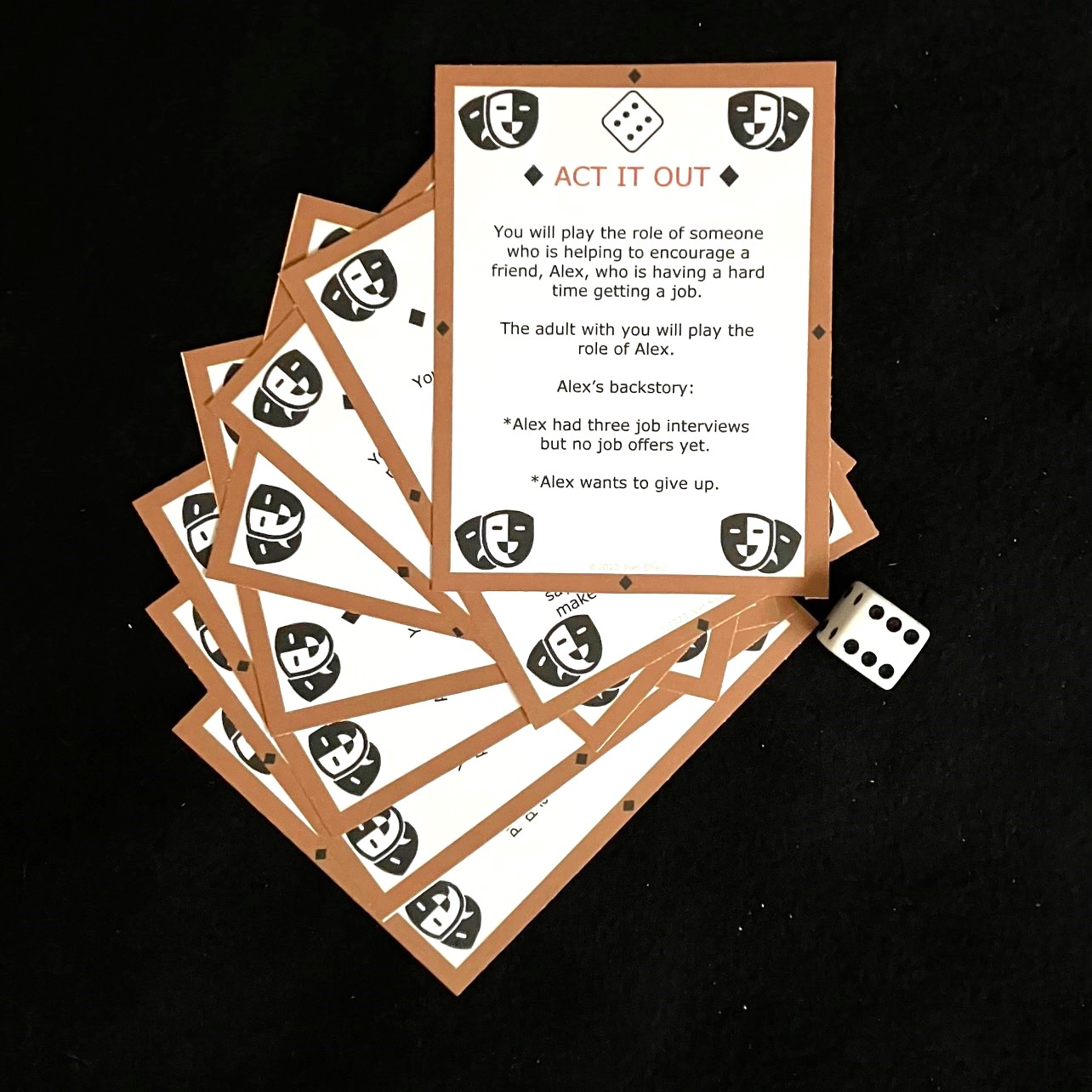
There are six categories of cards, allowing for a game-like element by rolling a die to determine which card a participant has to select.
But you may feel free to use these cards however you like. For example, you can pick through the deck and select the cards you think are most relevant and helpful for the young people you are assisting. You may decide to focus on just one single category of card.
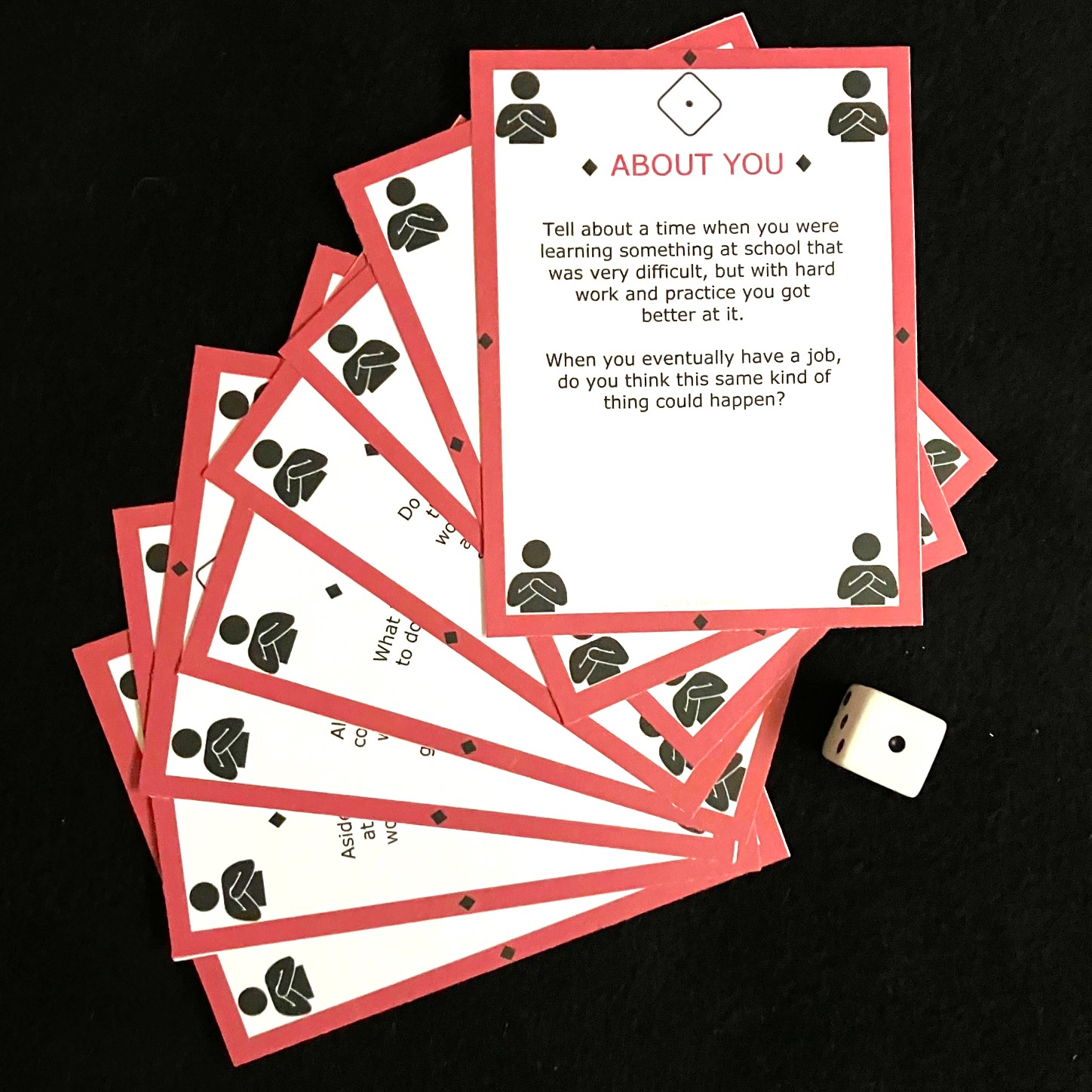
Category 1: About you (shown below). The question posed on each of these cards asks a work-related question pertaining to the person who drew this card.
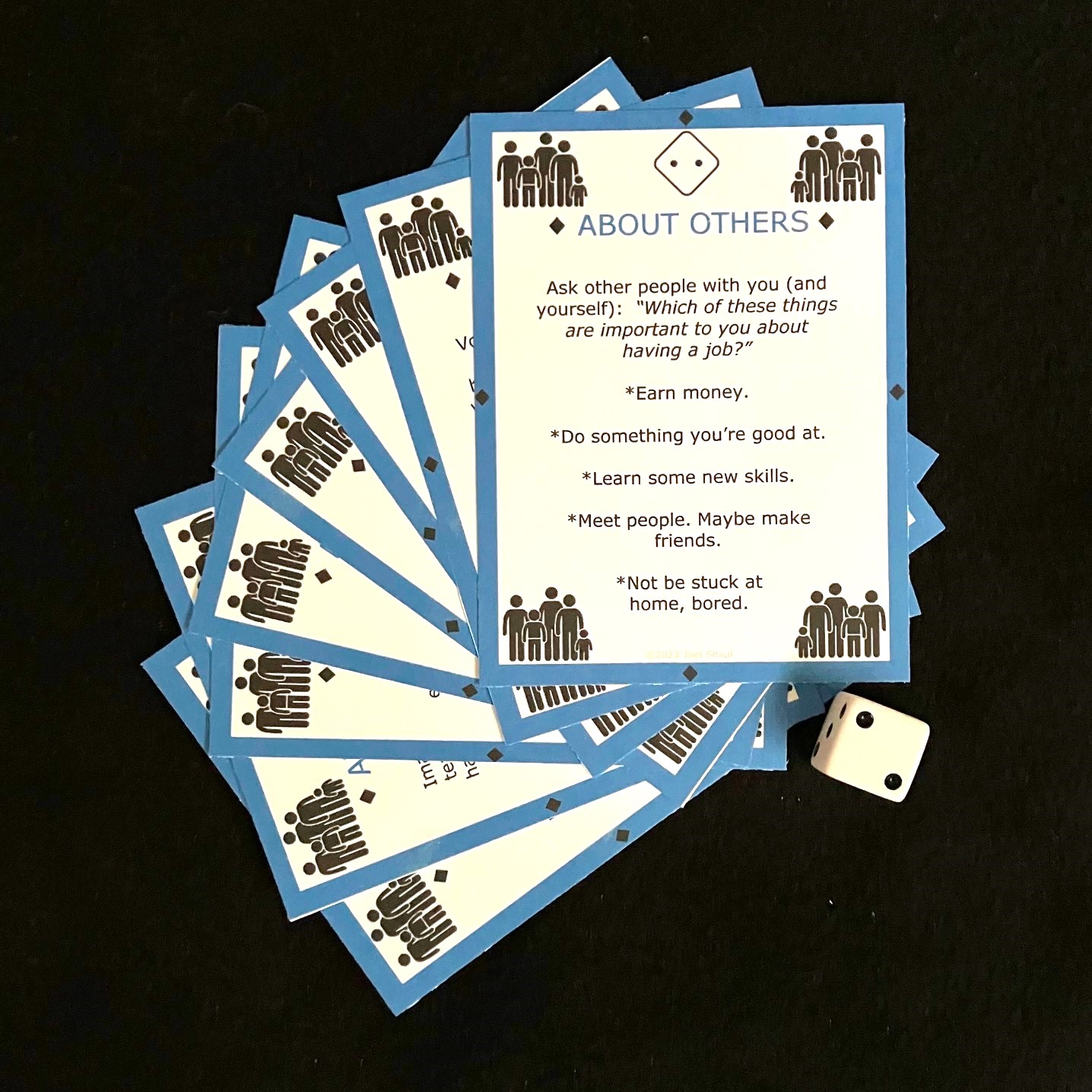
Category 2: About Others (shown below). These cards ask the person drawing the card to pose a certain question to others who are participating in the game.
Category 3 (shown below): About the Future. Each question posed pertains to a work-related matter in the future of the person who draws the card.
Category 4: Help the Person (shown below). Each card poses questions about a hypothetical young adult facing a work-related problem.
Category 5 (shown below): Each card describes a typical negative thought which a young adult with ASD might have in response to a workplace issue.
You, the facilitator in this activity, can use the “Fix the Thought” cards in the following manner if you like: You, the facilitator, play the role of a person having this thought. The participants talk to you and offer you alternative ways of thinking.
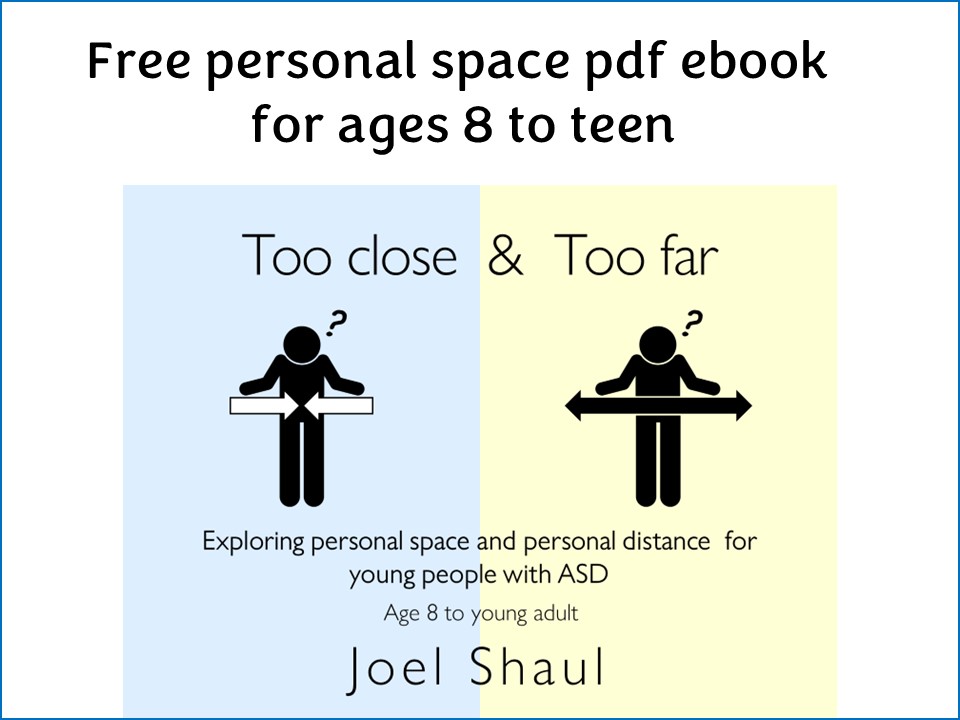
First, although there are many resources available to help children with autism to learn about personal space, the resources tend to be simple and formulaic. In my own experience helping young people on the autism spectrum to learn about personal space, the actual unwritten rules are so complicated that merely relating some simple rules isn’t good enough.
Second, there are few resources on personal space and distance designed to help older children, teens and young adults. As children on the spectrum grow up, the personal space rules affecting them get more and more complicated, especially if the young person is involved in a variety of challenging interactions in the community.
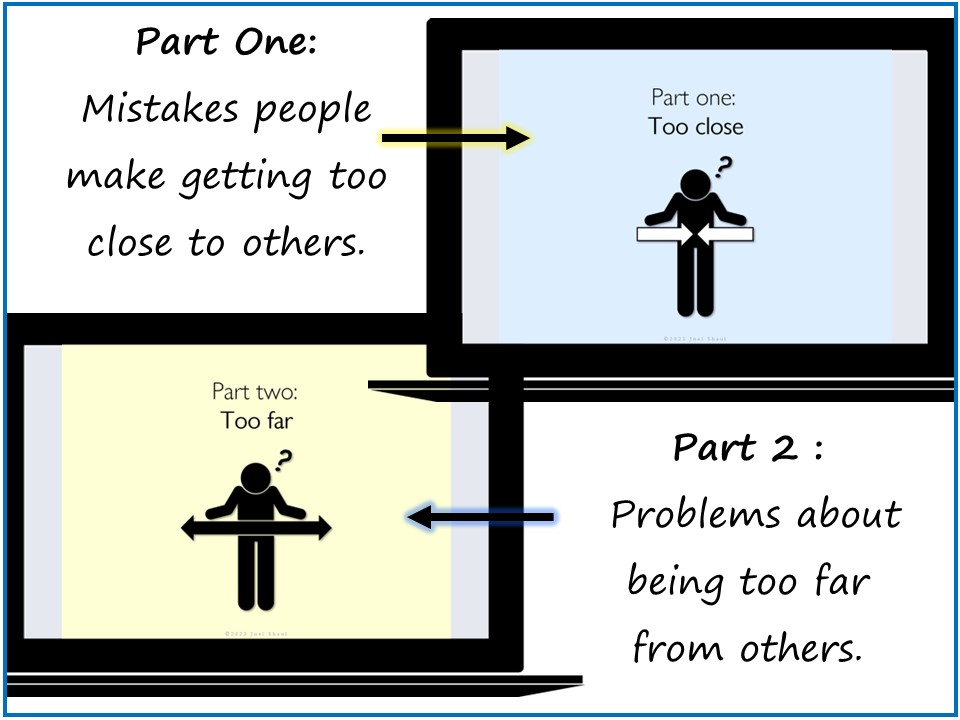
Third, I have come to view problems with getting too closeas part of a spectrum of personal distance perception challenges that also includes getting too far away. My own clients over the years who tended to make mistakes with getting too close or inappropriately touching people also had difficulty with getting too far away from the expected social grouping.
I designed this eBook to help young people, over a wider range of ages, with a more broadly defined set of challenges involving personal space and distance.
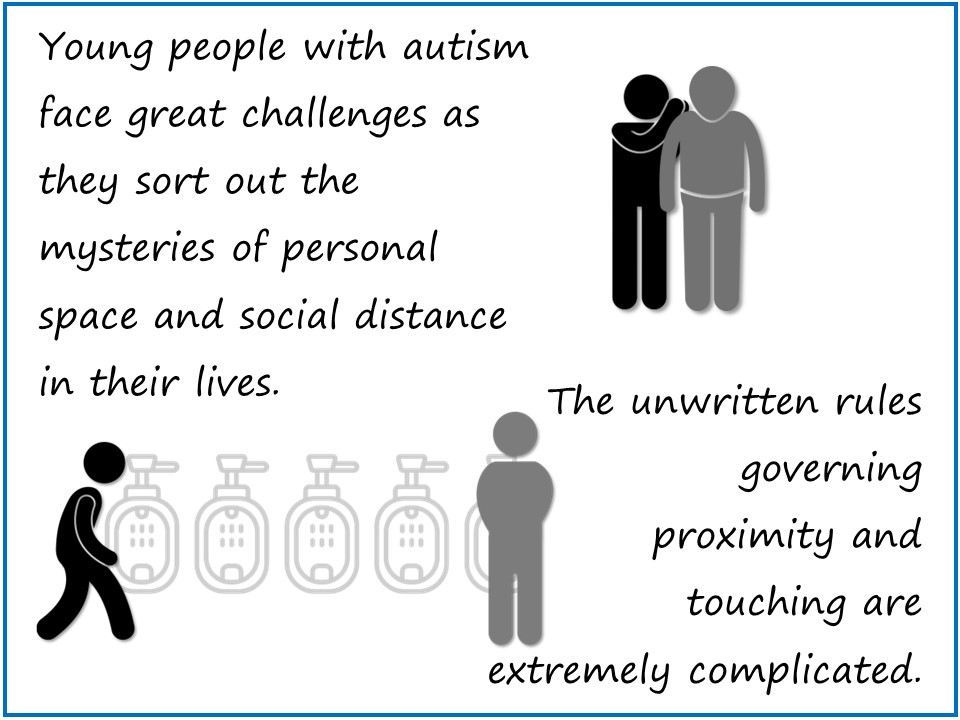
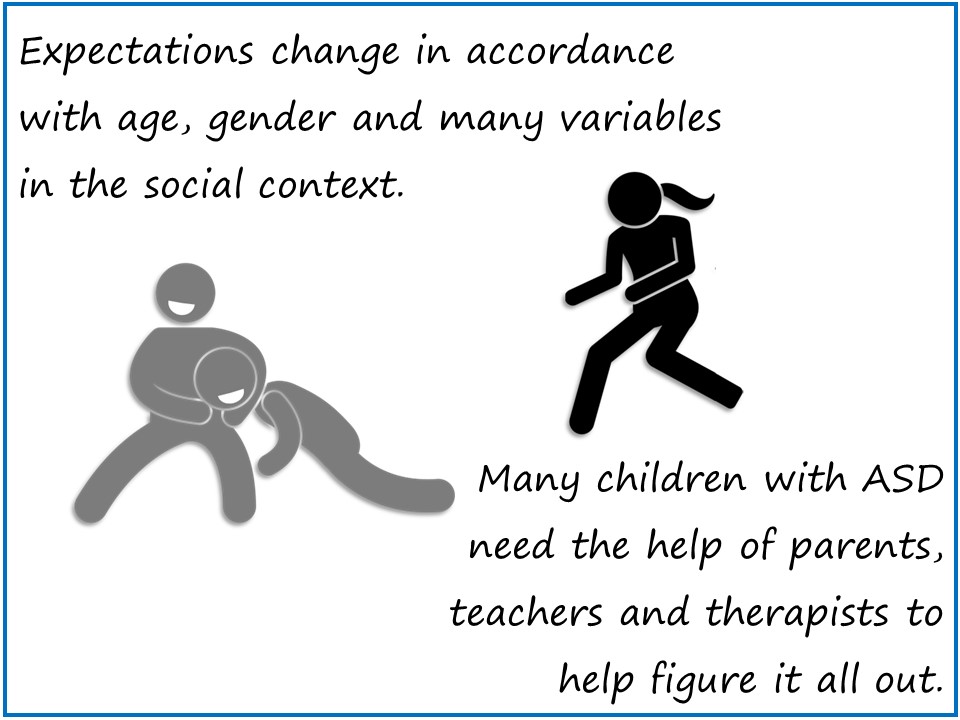
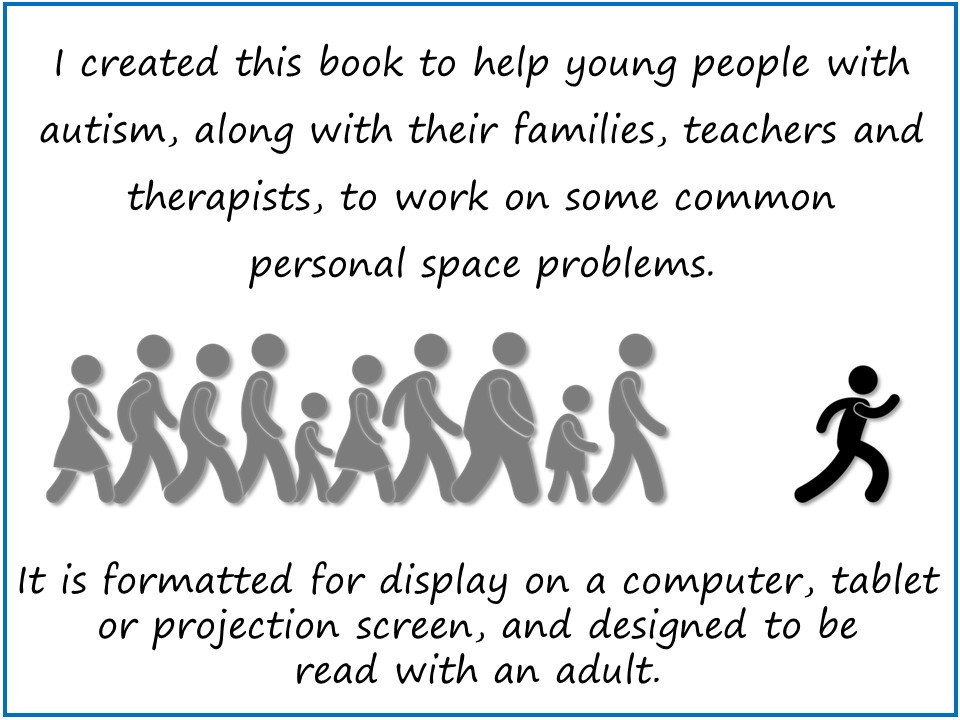
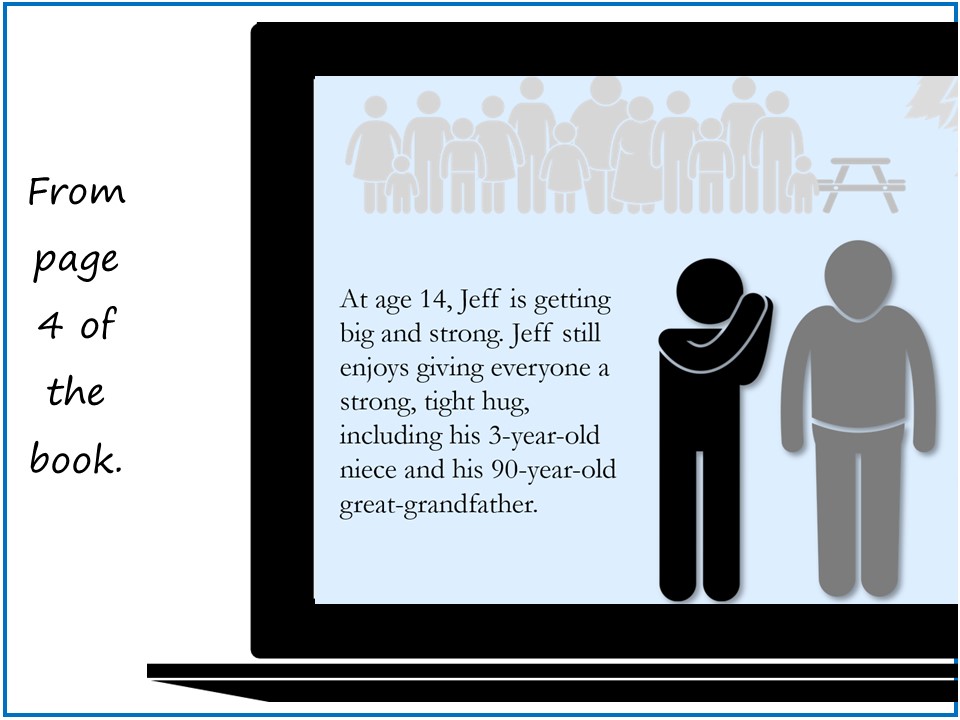
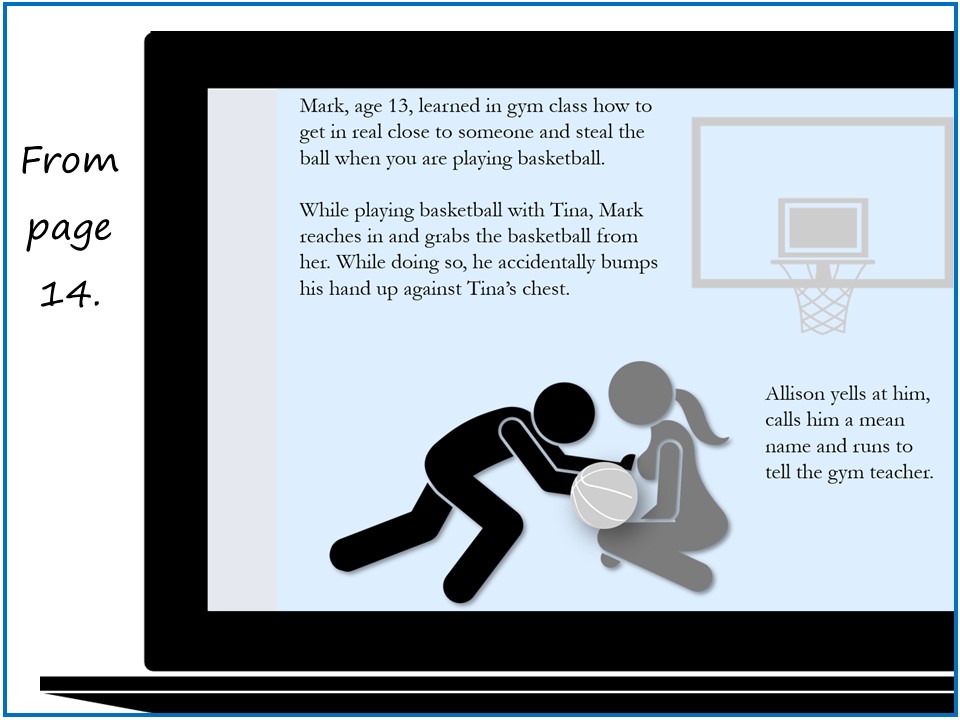
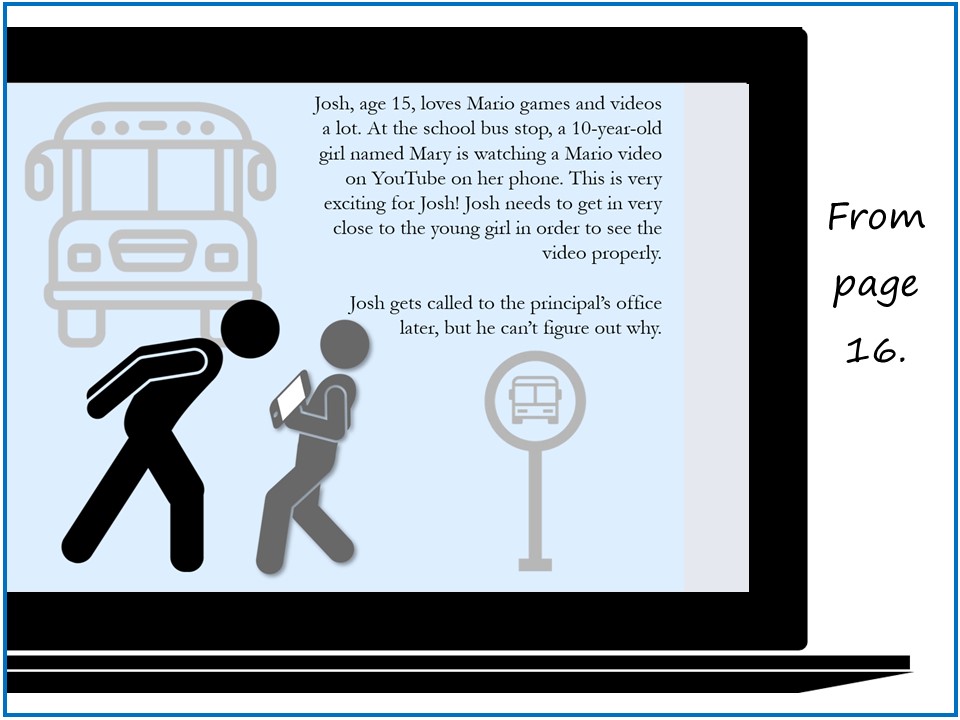
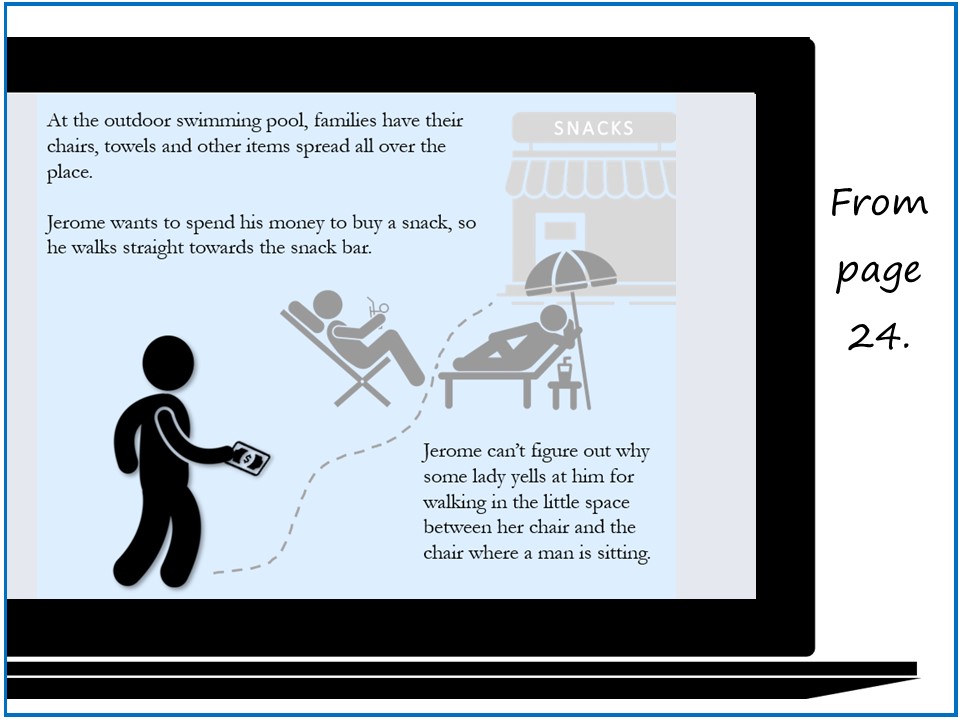
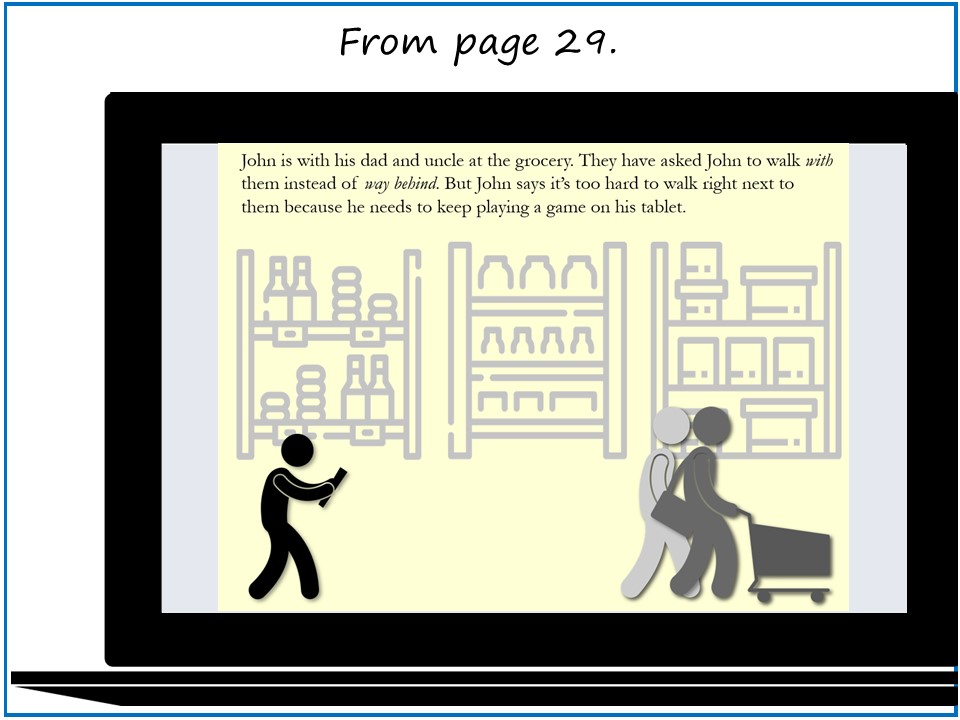
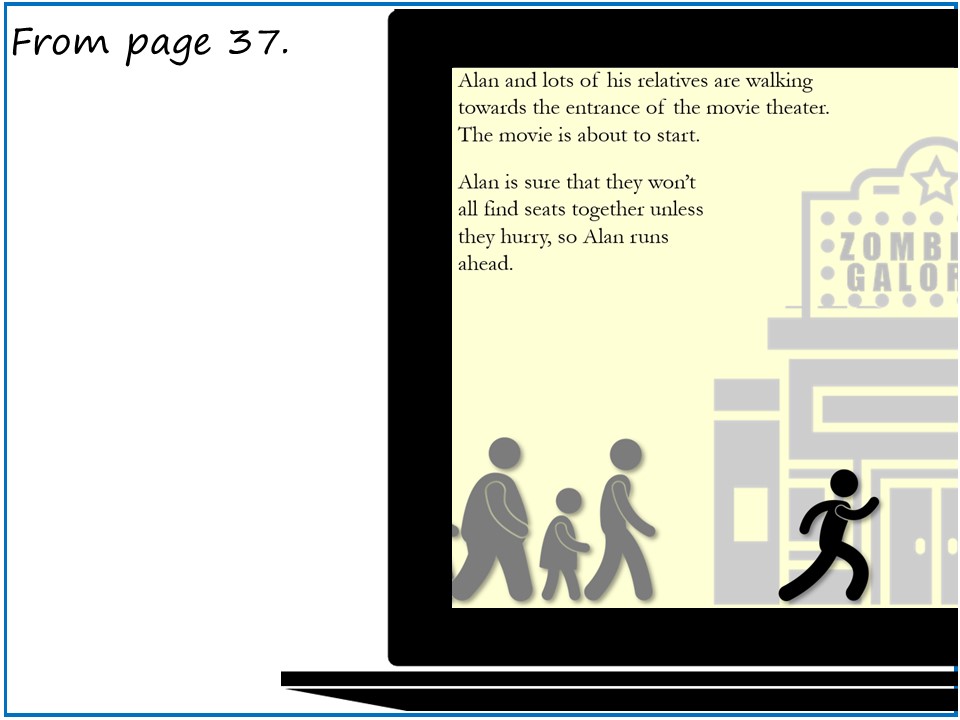
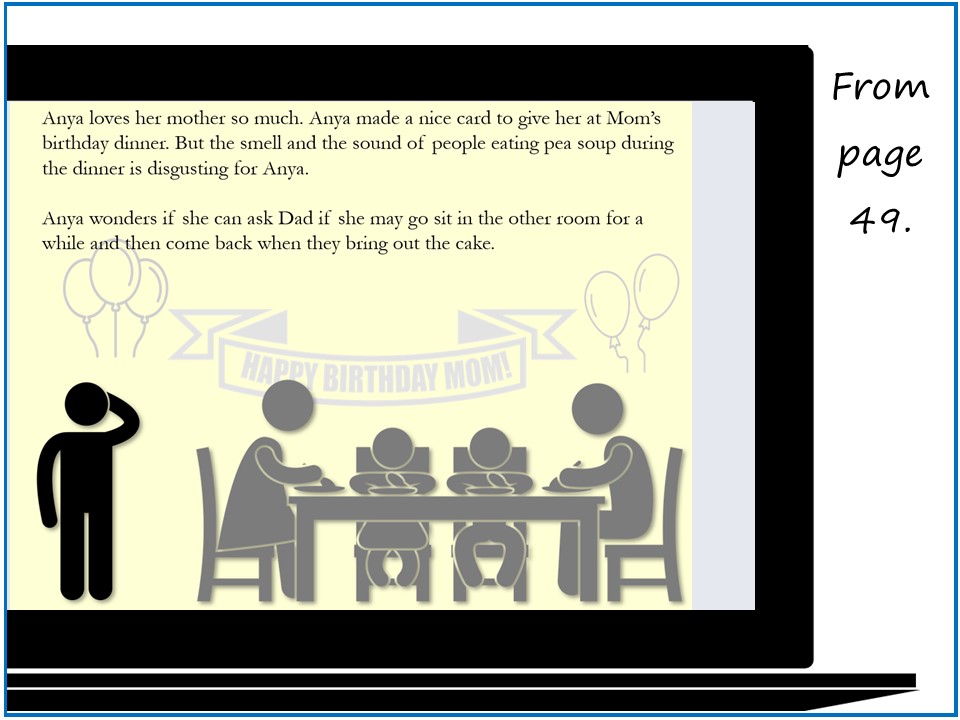
The pictures below show some pages from the book, illustrating the wide variety of personal space problems that autistic youth are constantly under pressure to solve. The examples come from my many years of work with autistic children and teens in therapy, classrooms and especially in my ten years of running summer youth programs for teens on the spectrum.
Our aim in doing CBT with children should be to extract helpful and useful methods from CBT concepts. The children we see vary a great deal in age, intellect, temperament and predilections, so we should avoid getting locked into CBT treatment practices that are too rigid. As much as possible, we should allow our interventions to be shaped by the individual child we are treating.
Factors one should consider when selecting psychotherapy tools for children
There are so many different things to be considered when planning therapy interventions. Here are some factors I have thought of, along with examples of resources I have developed in an effort to accommodate different learning styles. Although I do quite frequently employ resources developed by others in the field, in this article I am primarily displaying resources I have developed myself, available for free download or in my books.
Attention span
Many children need frequent, positive prompting to stay focused. Some benefit from token prompts, like the ones shown below.
Preference to face towards therapist directly vs. indirectly
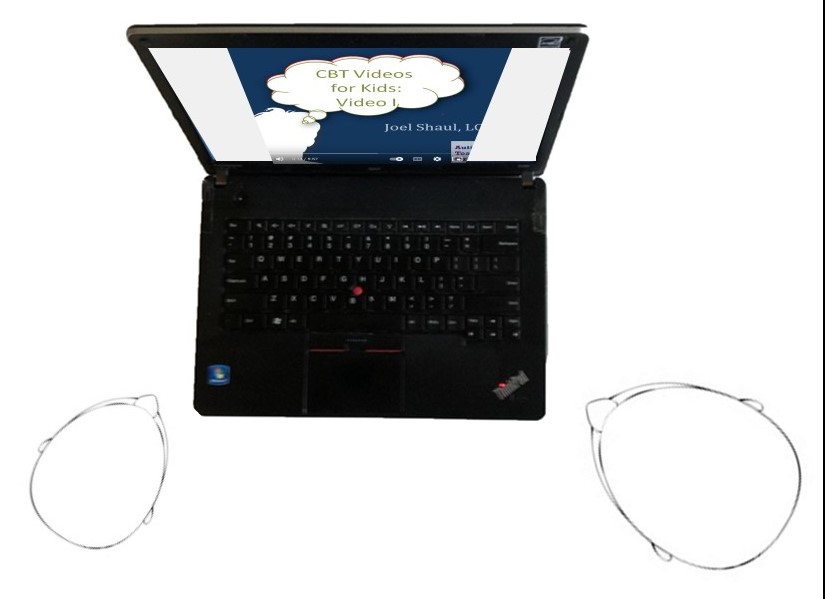
Many children, especially children with autism, have a limited capacity to look directly towards the therapist. It can really help to arrange for both you to direct gaze towards something in between both of you. The example shown below is a laptop with one of my CBT videos on the screen.
Levels of intellect, education, language comprehension and reading ability
It is easy for us to end up confusing our young clients with our language and concepts. There are some resources available that are simple, appealing and very helpful. An example, shown below, is a screen shot from one of the hundreds of Everyday Speech Videos.
Special interests
Many children, especially children with autism, are strongly motivated by therapy content that references their particular interests. For example, a child with an interest in Godzilla movies could be reinforced by an anger management activity that involves drawing Godzilla.
Ability to remain seated vs. need to stand and move around
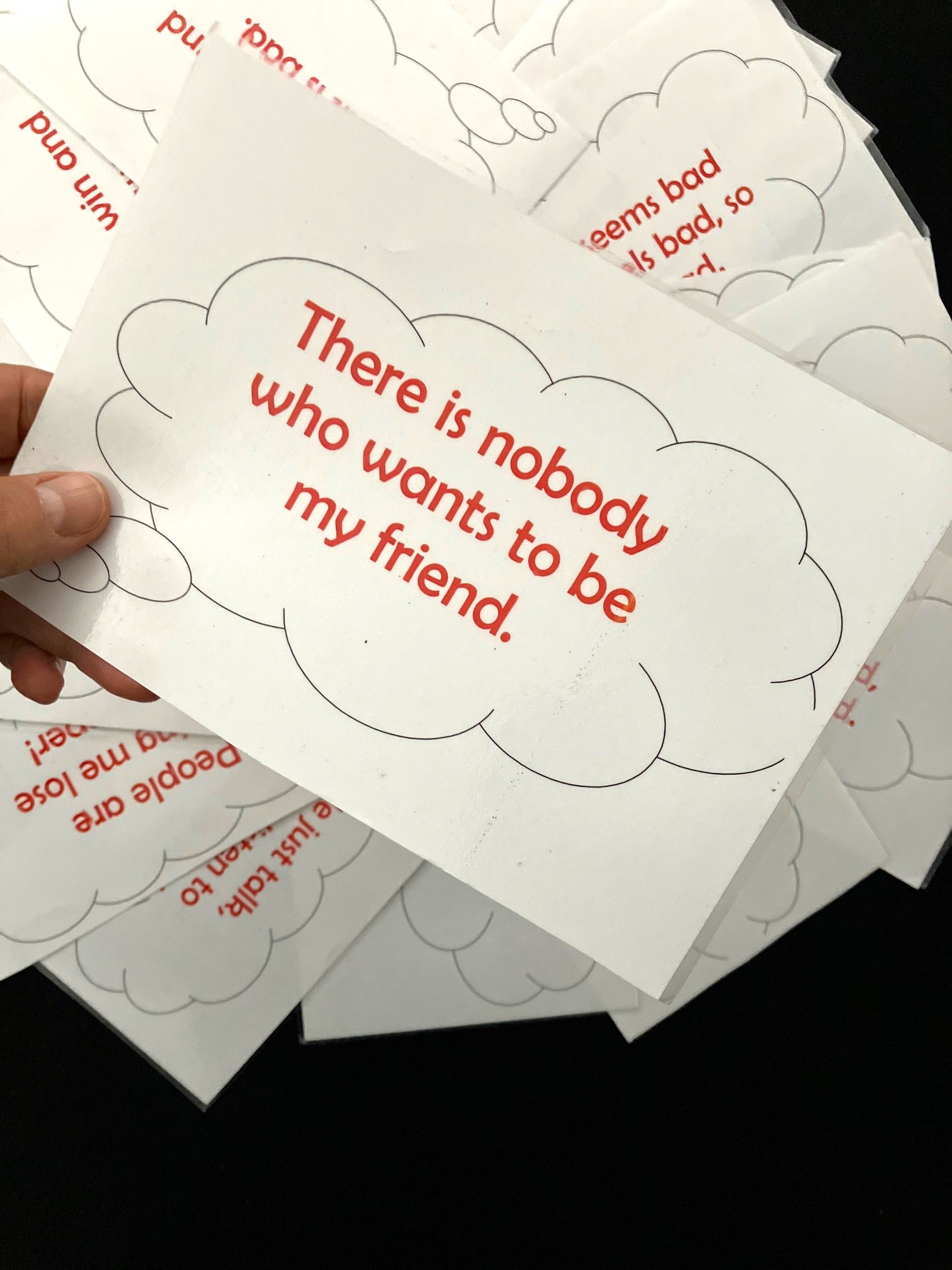
In my own work years ago in a community-based summer teen program for kids with autism, we sometimes did CBT-based activities in small groups while standing. In one such activity, I spread CBT Thought Bubbles all over the floor and asked the participants to walk around and match up “Poison Thoughts” with corresponding “Antidote Thoughts.”
Receptivity to information and instruction coming from a computer screen
Many children are strongly conditioned to pay close attention to information presented on a computer screen. We therapists sometimes overvalue our spoken words. Most kids, and not just the ones with ASD, often consider information viewed on a screen as somehow more noteworthy that the same thing viewed in the “real world.”
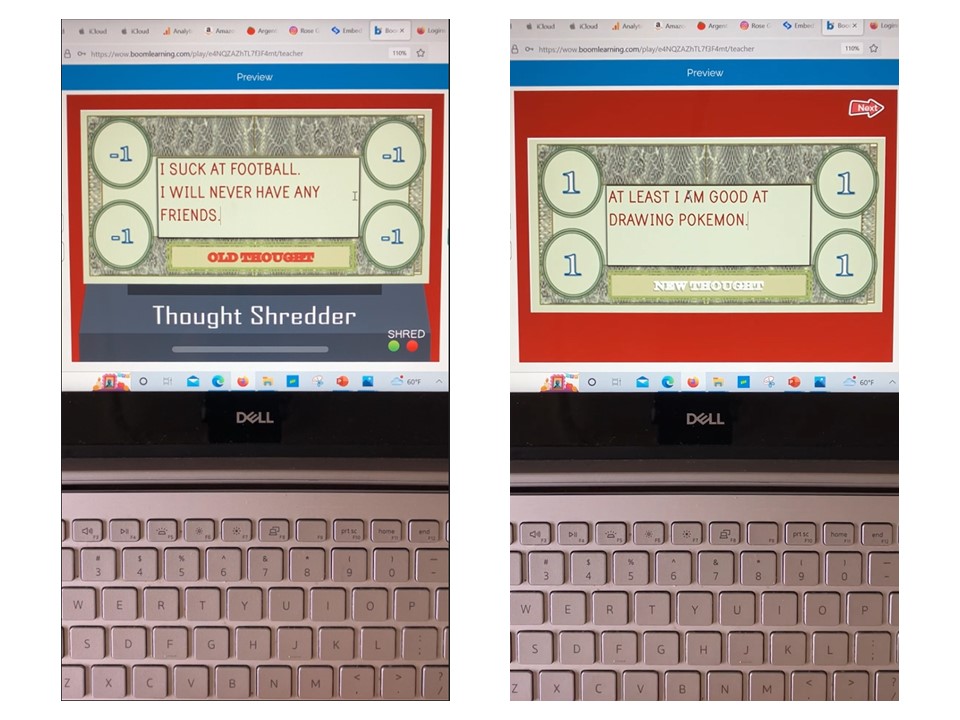
For that reason, quite a few of the CBT activities on my website can be accessed in both printable and screen-based versions. One example is the Mint New Thoughts activity, in which “Old Thought” play money is torn up or shredded and then replaced with “New Thought” money. When I later made it available in an animated, screen-based version, most of my clients came to prefer it that way. See the example below – check out the short YouTube demo.
Preference / need for having something in their hands
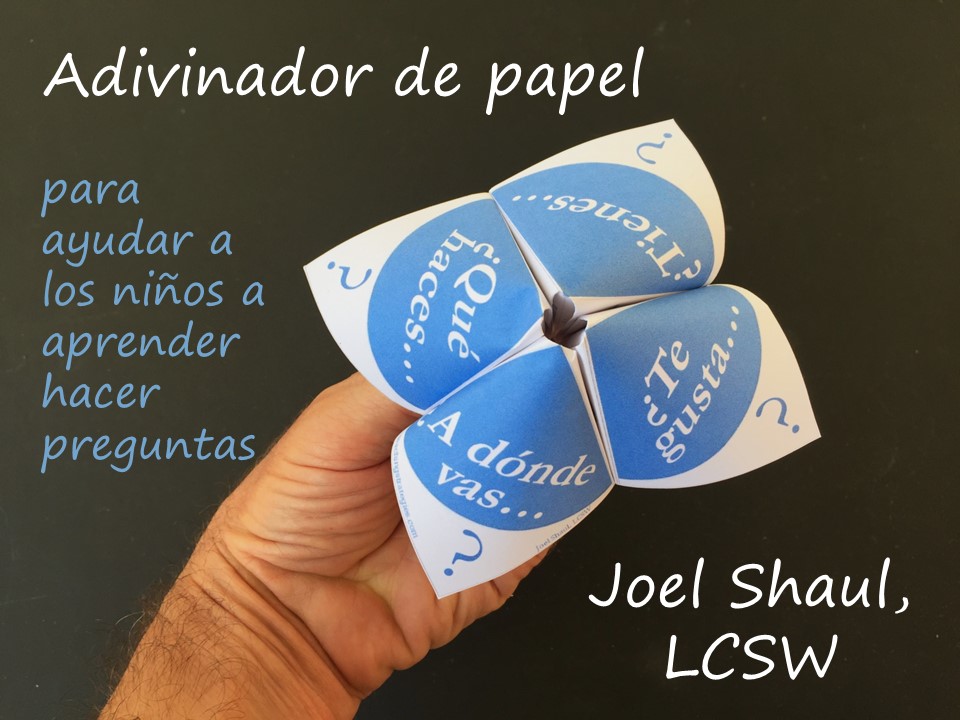
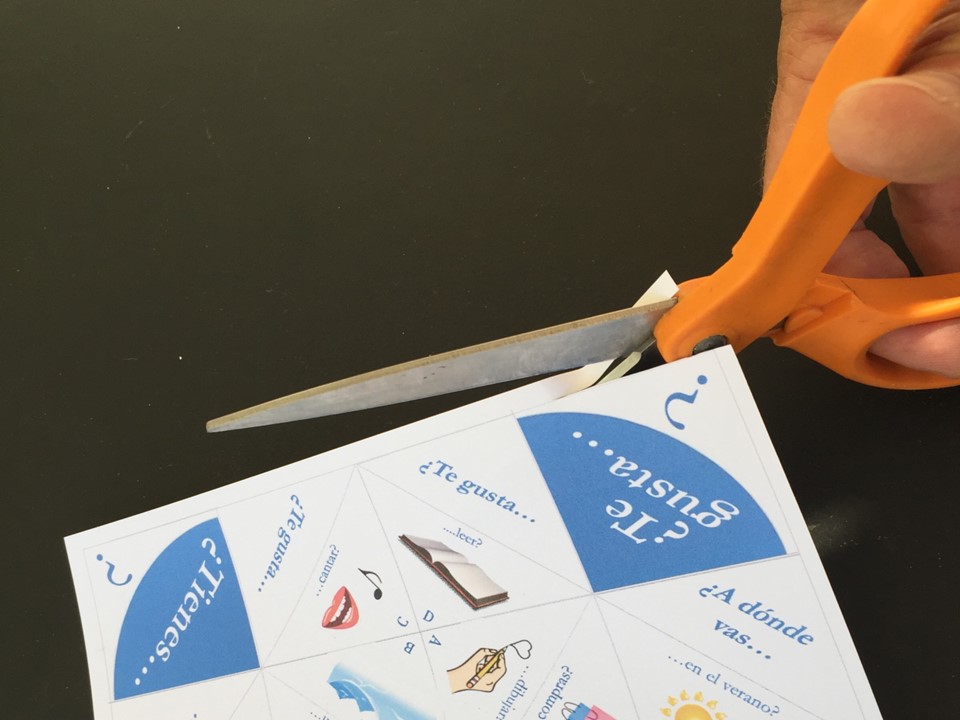
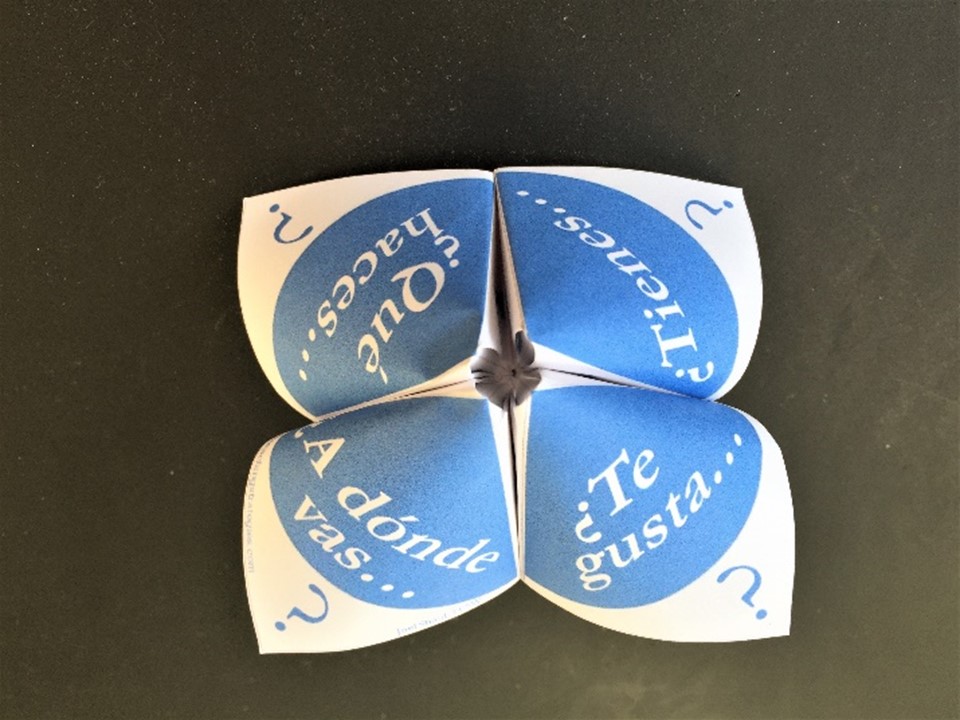
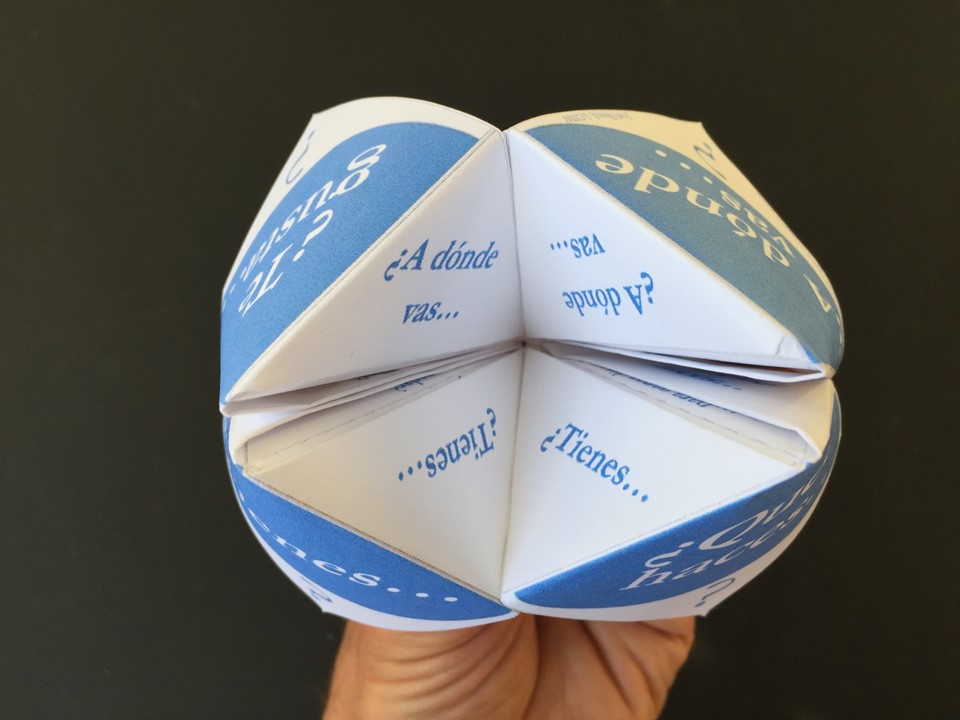
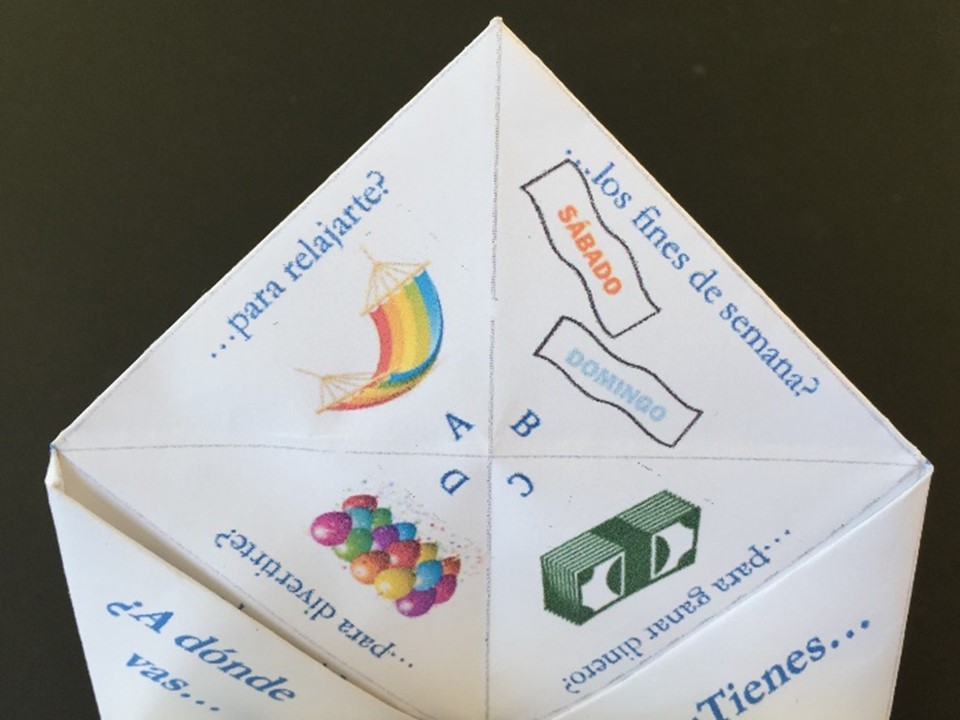
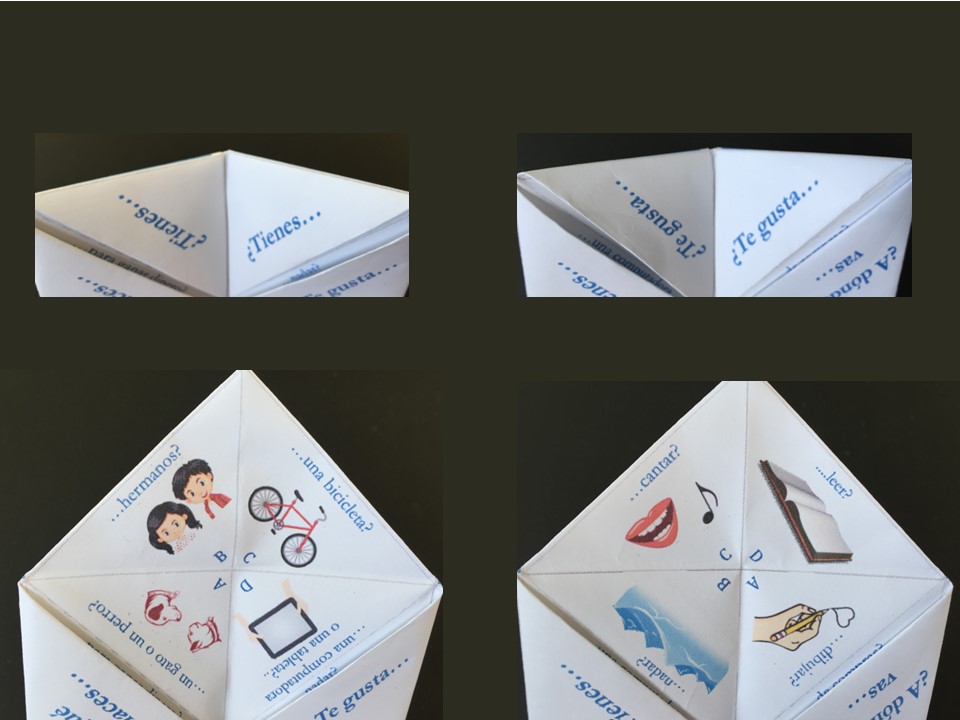
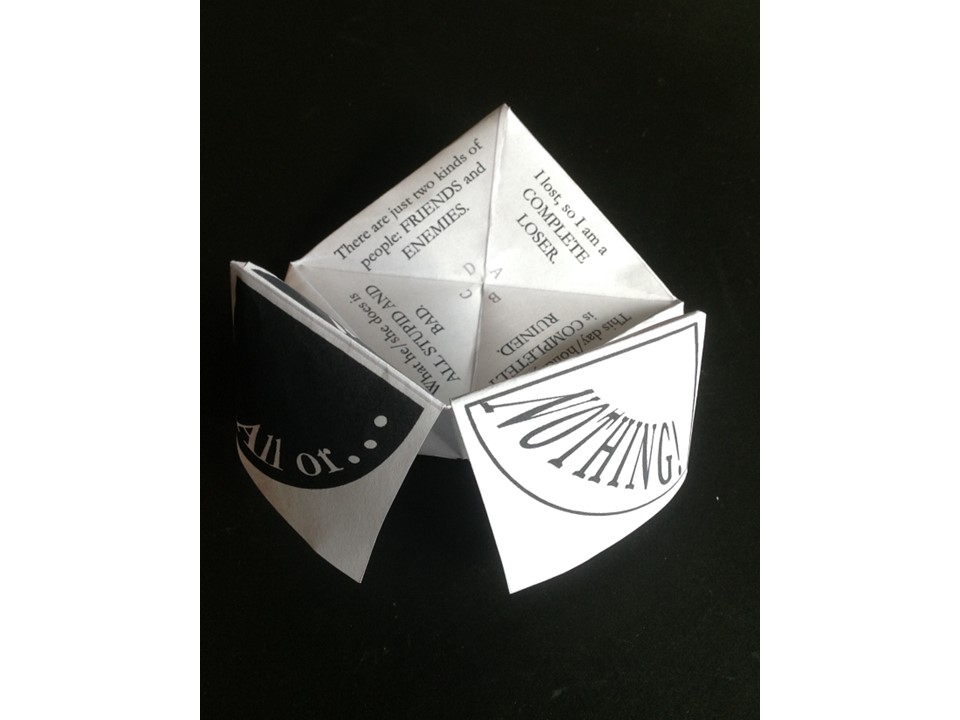
Quite a few of the children I have seen in therapy, especially children on the autism spectrum, need to be holding something while they are talking with me. I have spent a lot of time creating things for them to hold which are related to our therapy work. An example, shown below, is one of three CBT-themed paper fortune tellers on my website.
One of three CBT paper fortune tellers.
Aversion to prolonged out-loud verbal interaction with the therapist
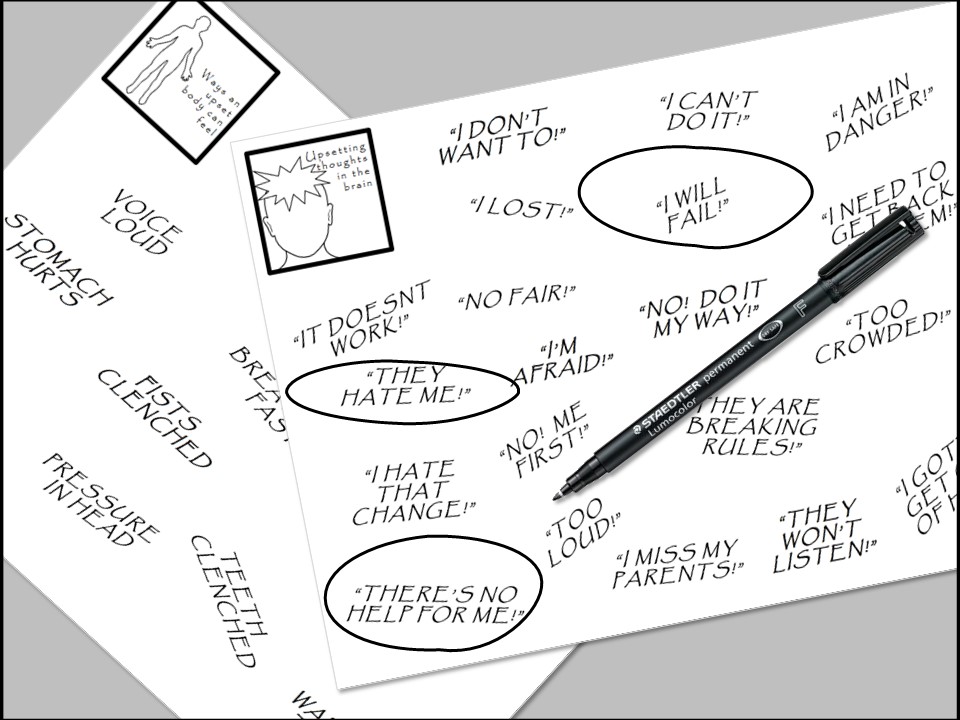
Many children, most notably ones with ASD, need to be offered productive alternatives to merely talking in therapy sessions. Many children highly value activities in session in which the therapist is saying relatively little while the child works on something meaningful. Below are two worksheets that go along with the Emotional Thermometer download from this website. These simple sheets can expedite an inquiry while affording the child a chance to not hear the therapist talk for a little while. Many children will in fact express things by writing, circling or drawing that they would be averse to saying aloud.
Preference for tangible product of the therapy session
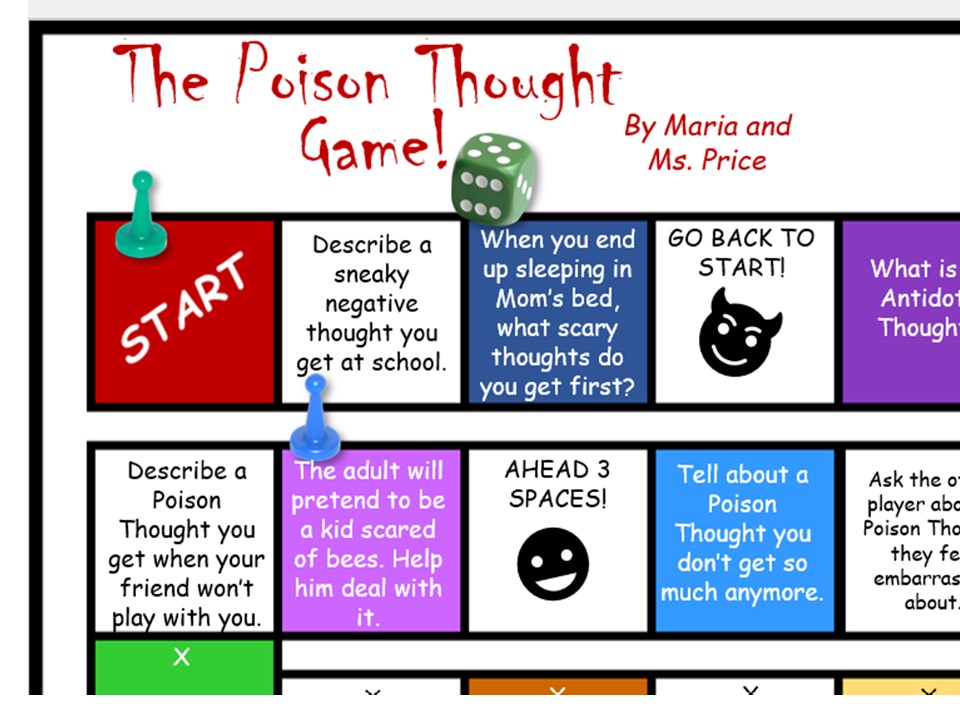
Many children value doing and making things in therapy sessions more than talking about them. The image below shows a “board game” similar to ones I have made with children in therapy sessions. You create these in PowerPoint and after you play the game with the kid, you can print it out, or email it to the child’s home, if the child feels this would be helpful.
Need for family participation to generalize learning
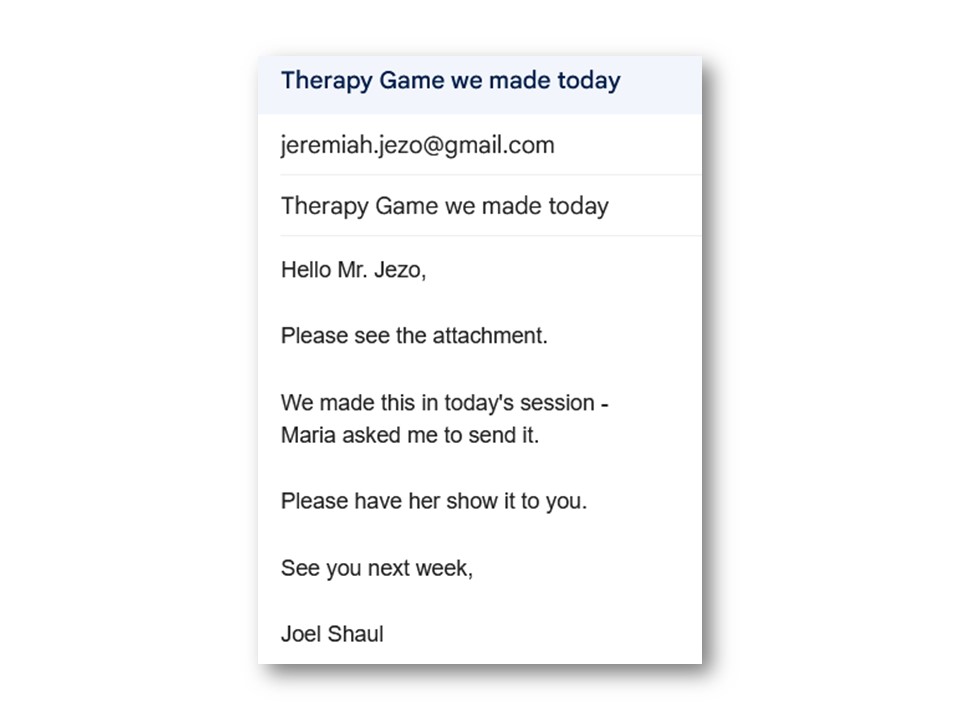
Most of the kids we see in therapy will need to follow up at home with real-world practice. If children want or need parental involvement, then it helps if the tangible product of the session is something the child can actually help show and explain to the parents. Below is a mock-up of the sort of email one might send in these kinds of situations.
I wish you success with your own CBT interventions with children.
Joel Shaul
Click on links below to access other parts of this series on CBT refinements for children.
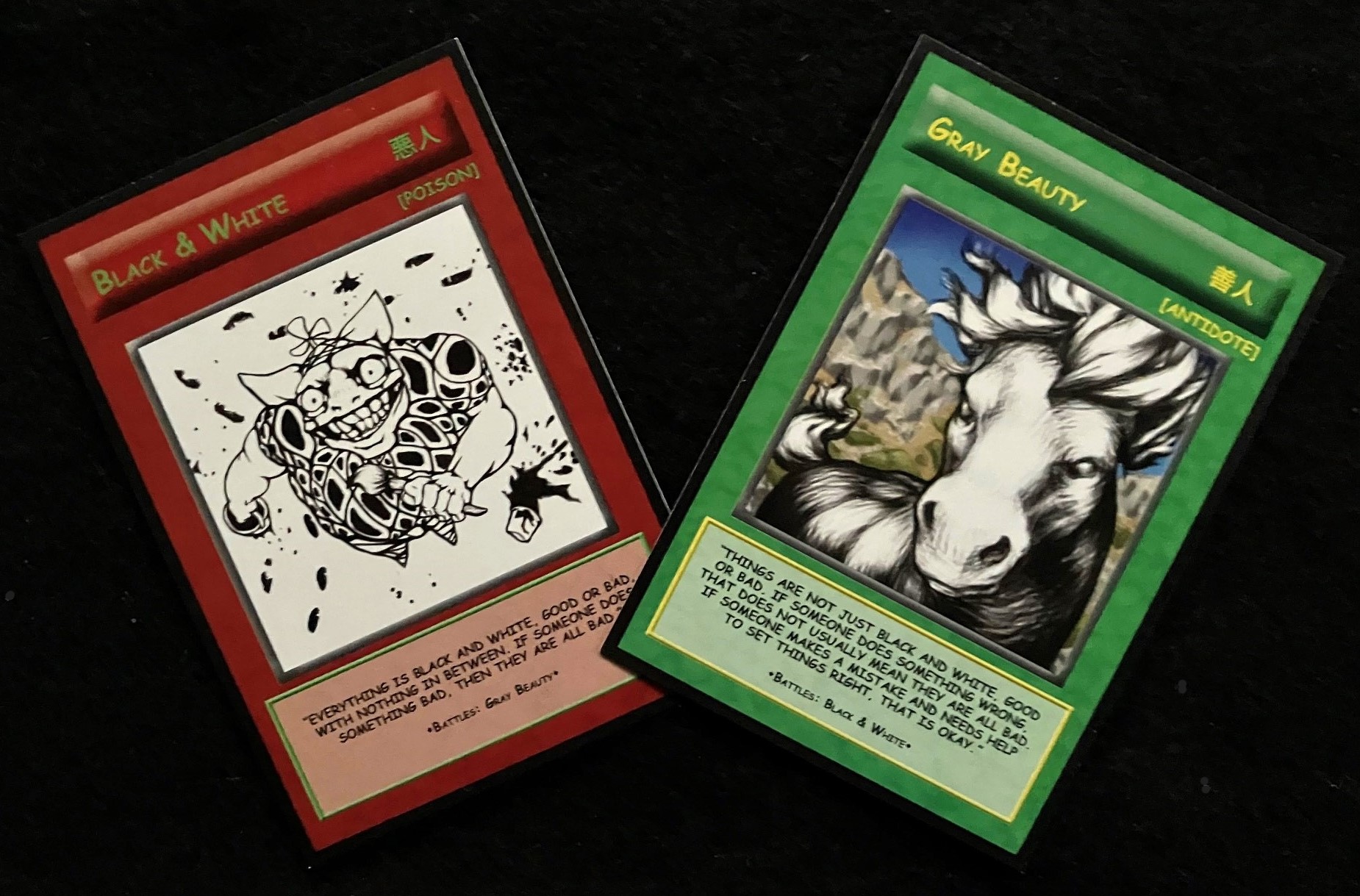
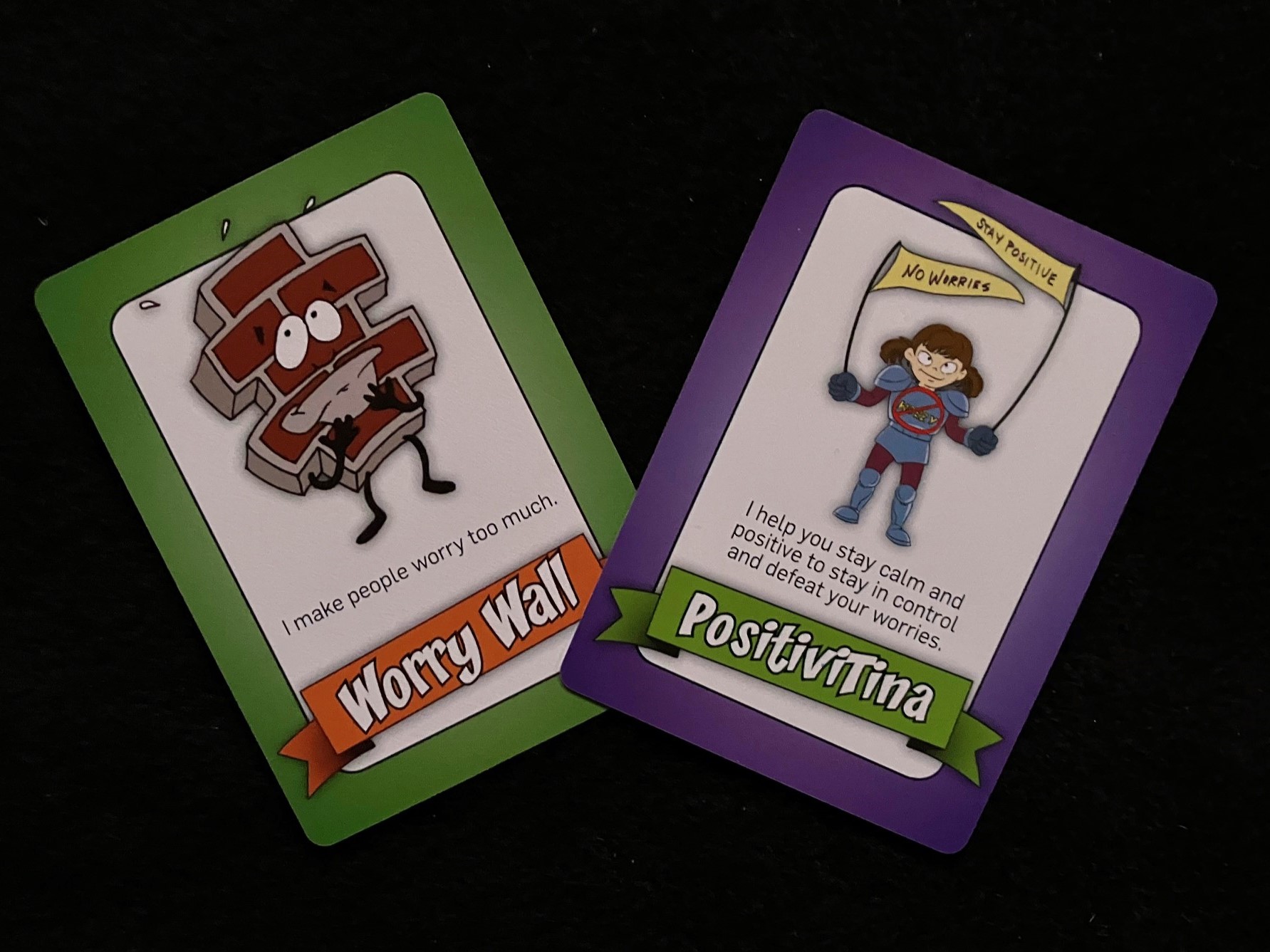
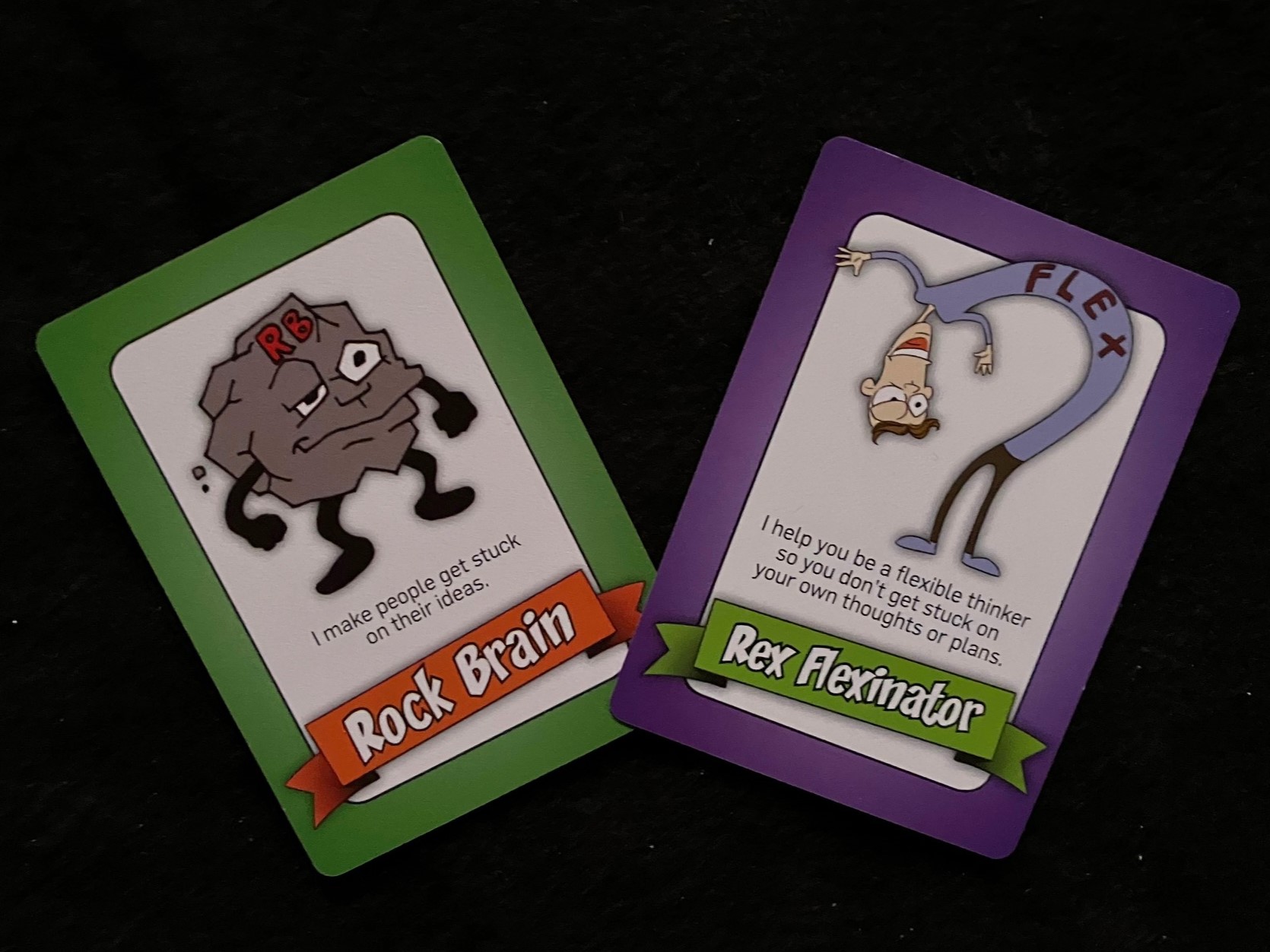
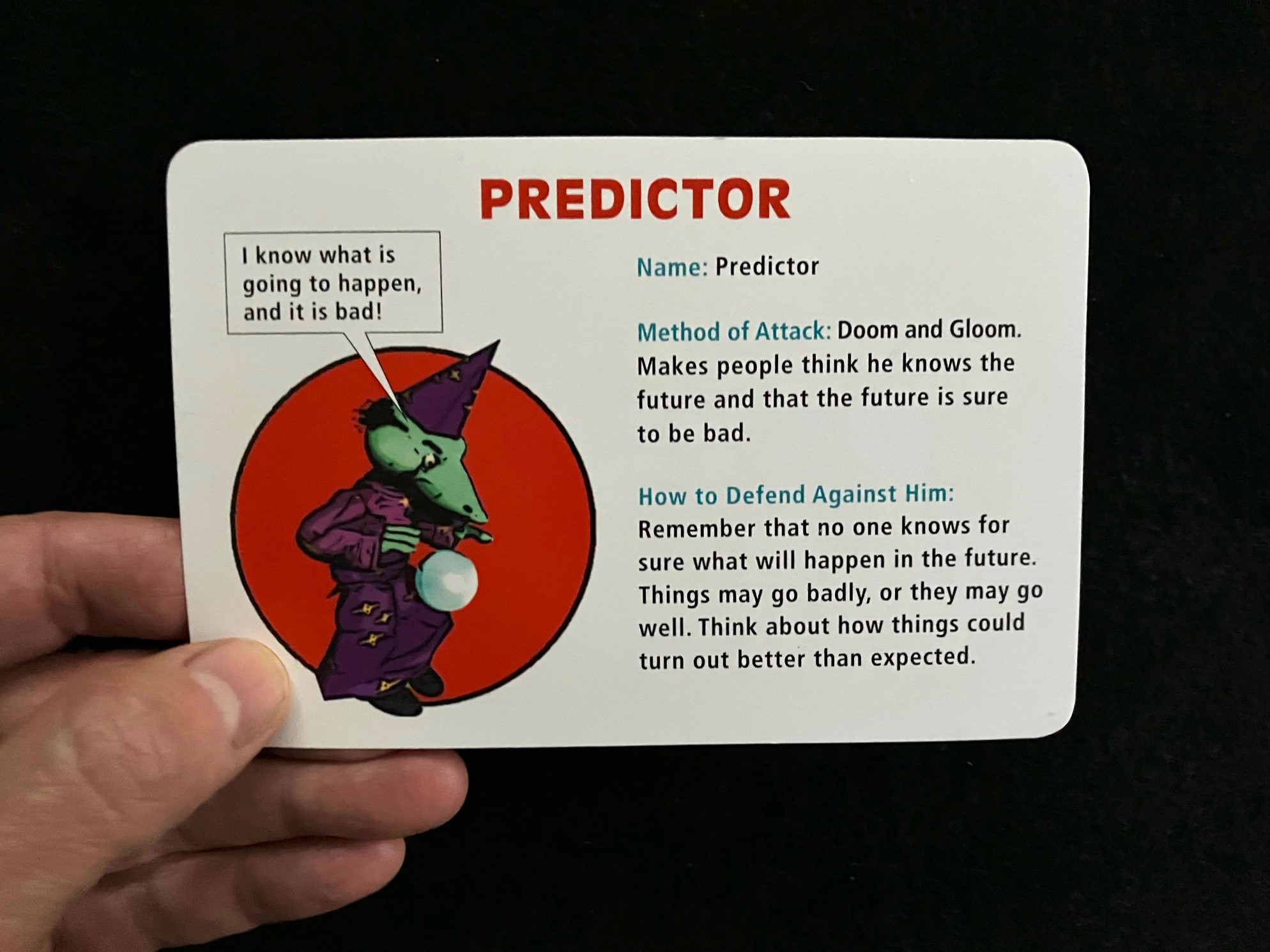
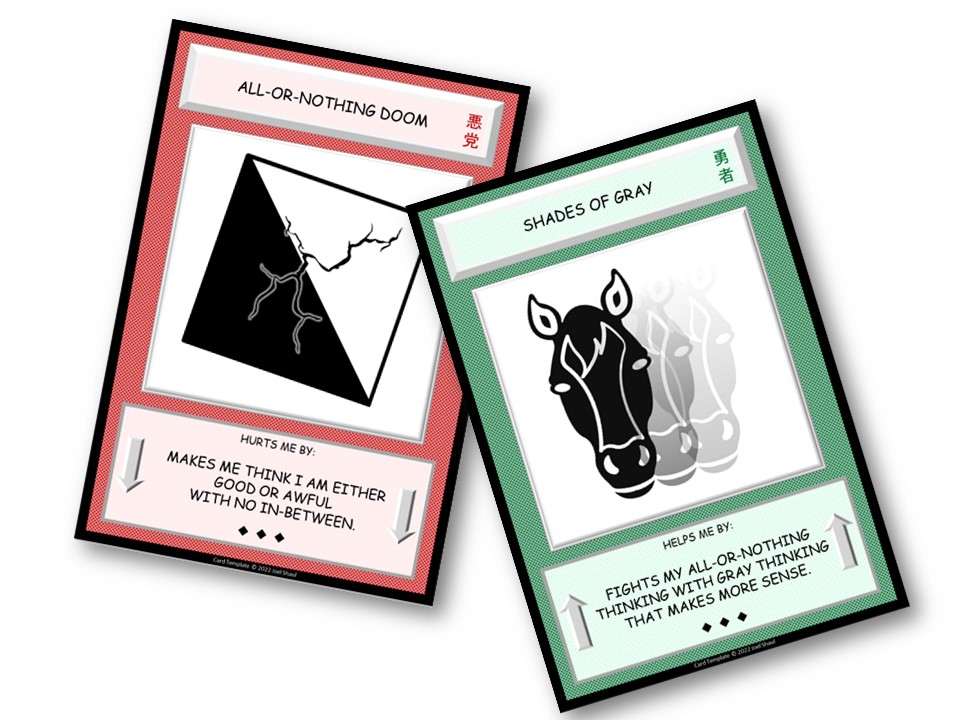
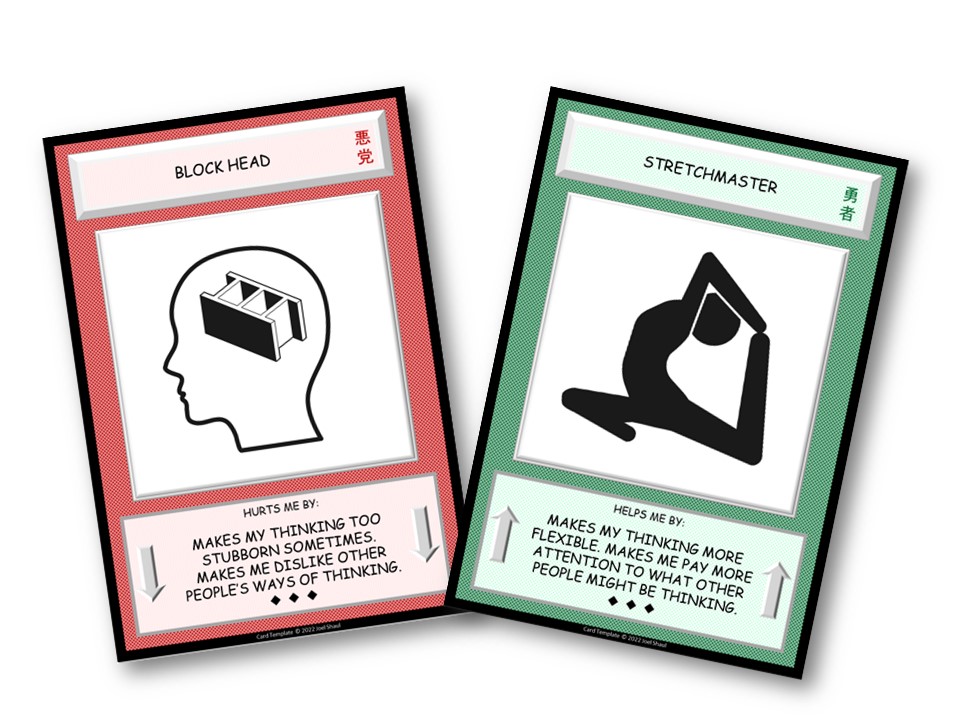
For a long time, people helping children with social and emotional skills have employed imaginary characters to represent various desired and undesired child behaviors. Many of these efforts are more preachy and pedantic than actually helpful, but other systems of “problem and solution” characters have the potential to be really useful in child therapy applications. This article briefly surveys a few of these, and references a character creation kit I made that enables you and a child to quickly fashion custom-designed “problem / solution” characters.
Reasons to employ problem and solution imaginary characters in CBT therapy with kids
A child with serious and persistent social and emotional problems can become demoralized by their constant struggles. The “problem child” can end up feeling so closely linked to their problems that they end up disliking themselves.
Creating problem and solution characters can enable a child to feel little more separate from their problems. Using this method can help a child to view their social or emotional challenge as a sort of adversary that can be fought against with the help of therapists, teachers and family.
Here are the therapeutic elements of creating problem and solution characters with children in therapy, from my perspective. First, this therapy activity can help restore a child’s self esteem by differentiating their essential self from the problems they experience. Second, this method can help a child to focus on central therapy issues. Third, this fantasy-based technique capitalizes on hero / anti-hero narrative systems that are well established in youth culture.
Ready-madeproblem&solution characters
There are many problem and solution character systems out there. Many are not very good. Here is one I recall from my youth.
Example of a not very good or helpful problem / solution system.
Here are some problem and solution tools that I have found can be pretty useful in CBT applications.
from Social Thinking, “Unthinkables.”
More from Social Thinking.
One of the characters in the Psymon game.
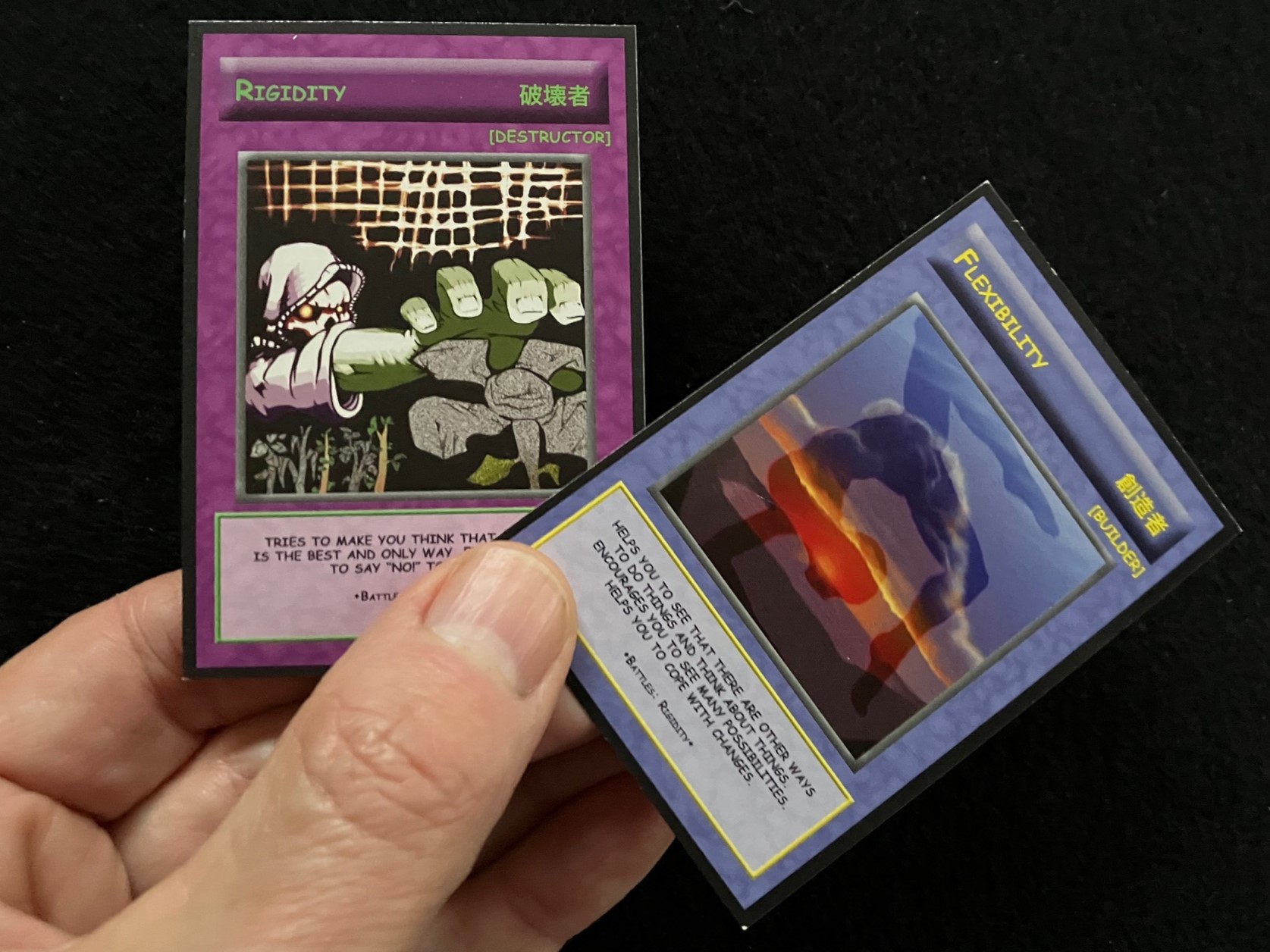
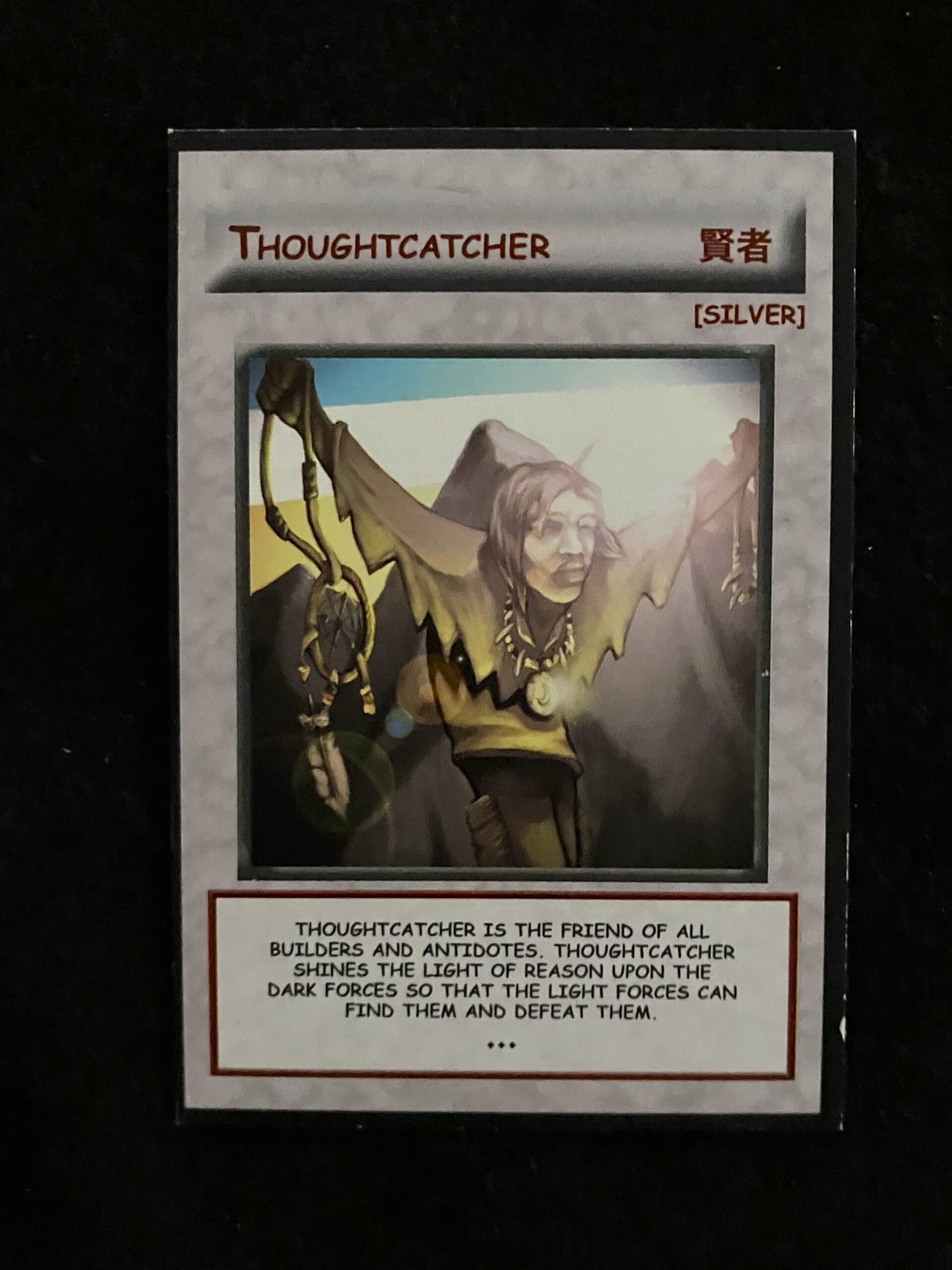
Another pair of Ryuu cards (Ryuu cards are no longer in production)
One more Ryuu card.
Problem andsolution characters that children can create on their own with your guidance
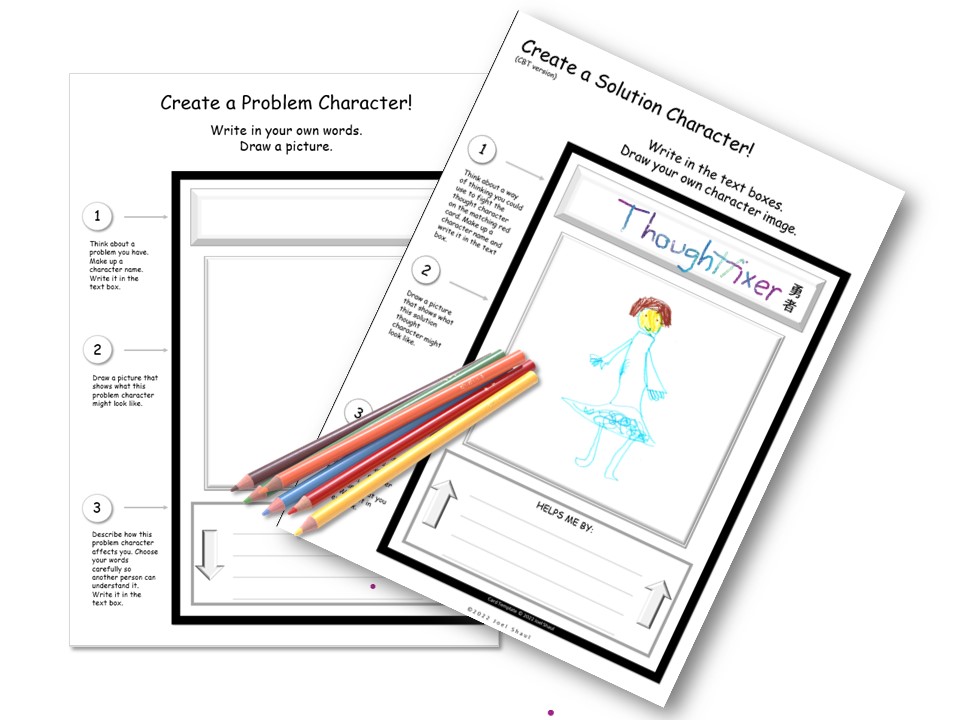
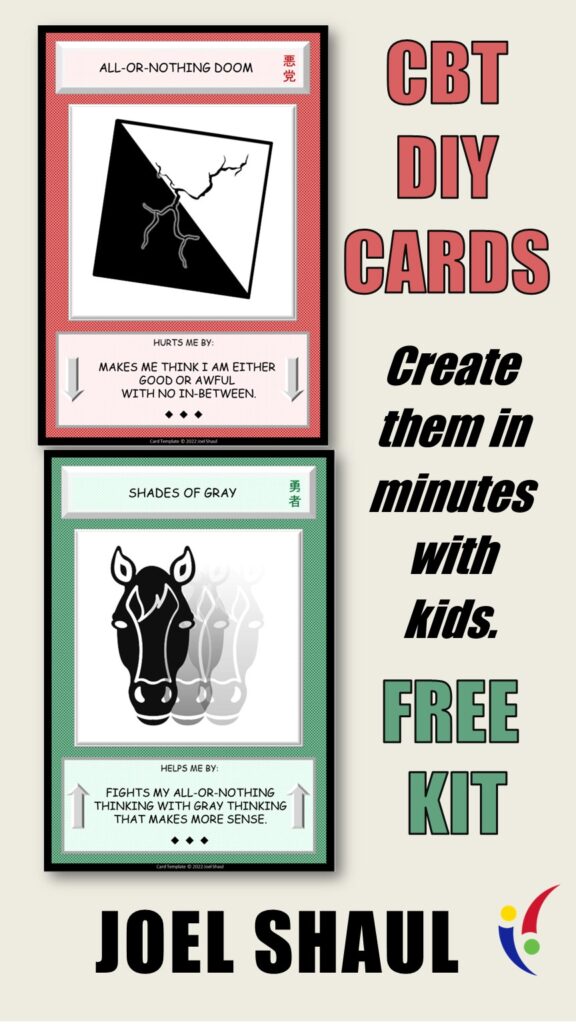
In previous blog posts, I presented a free kit enabling children to create problem and solution characters by either drawing them or via a simple drag & drop system in which numerous images are pre-loaded to select. Here are some pictures showing typical results you might expect. I have used this kit a great deal in my CBT work.