Since 2011, Joel Shaul has provided dozens of presentations on techniques for working with young people with autism spectrum disorders and other social and emotional challenges. His specialties are:
How to provide appealing and effective psycho-education
Strategic use of visuals
Cognitive behavioral techniques
Building your organization’s social skills teaching repertoire through free, online resources. All presentations show how to use free materials that you can use right away.
Teletherapy resources for children on the autism spectrum
Contact him for:
Presentations at conferences
Trainings at agencies, schools or organizations
Webinars hosted by your organization
Potential audiences:
Educators, mental health professionals, speech-language pathologists
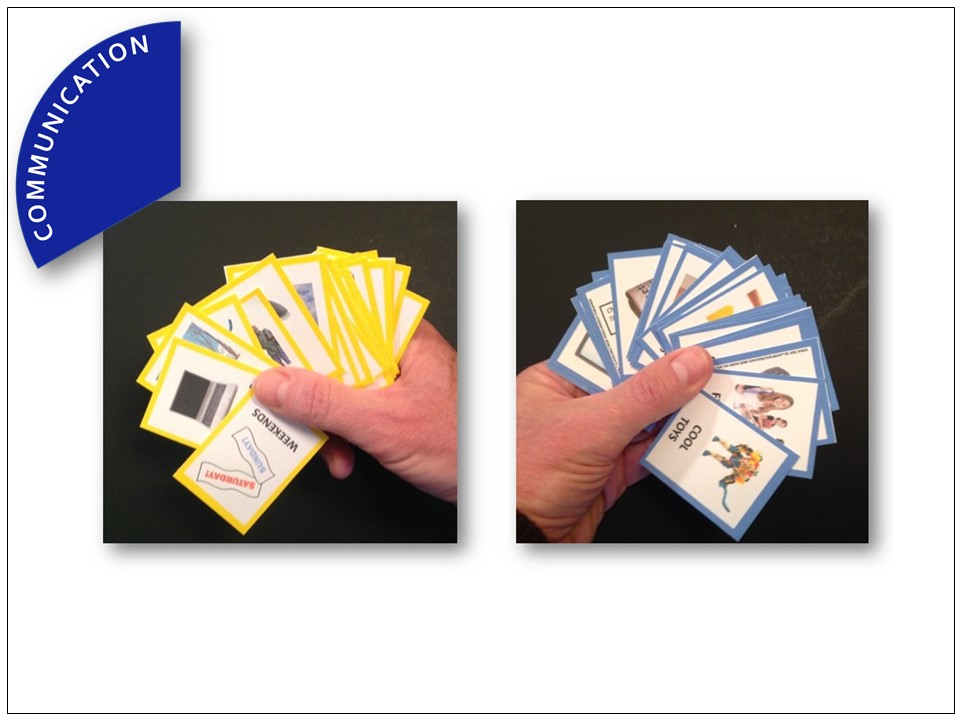
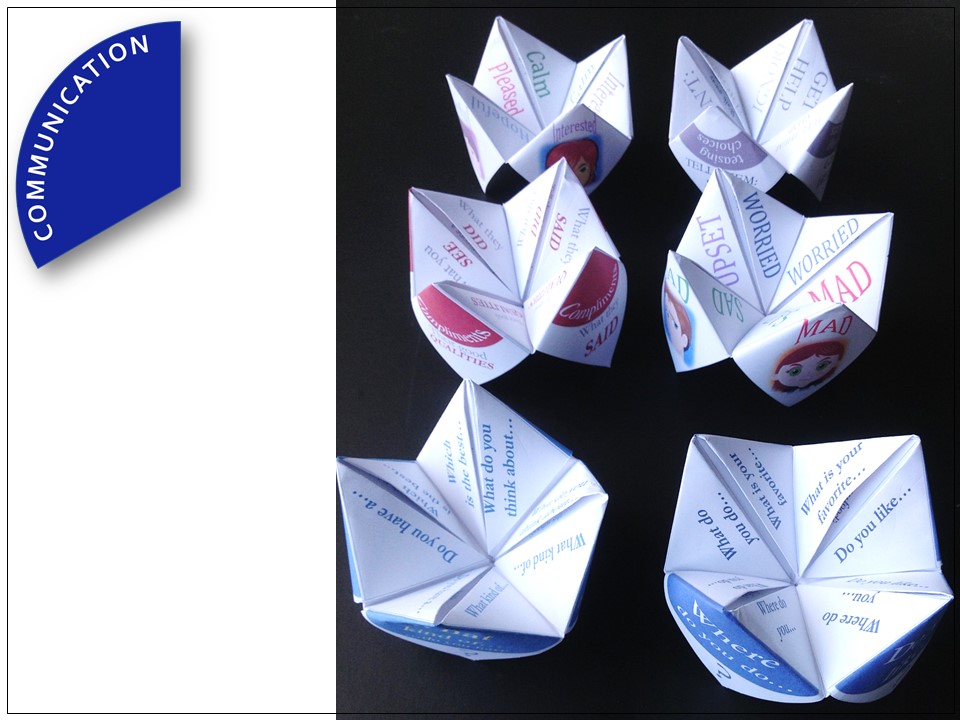
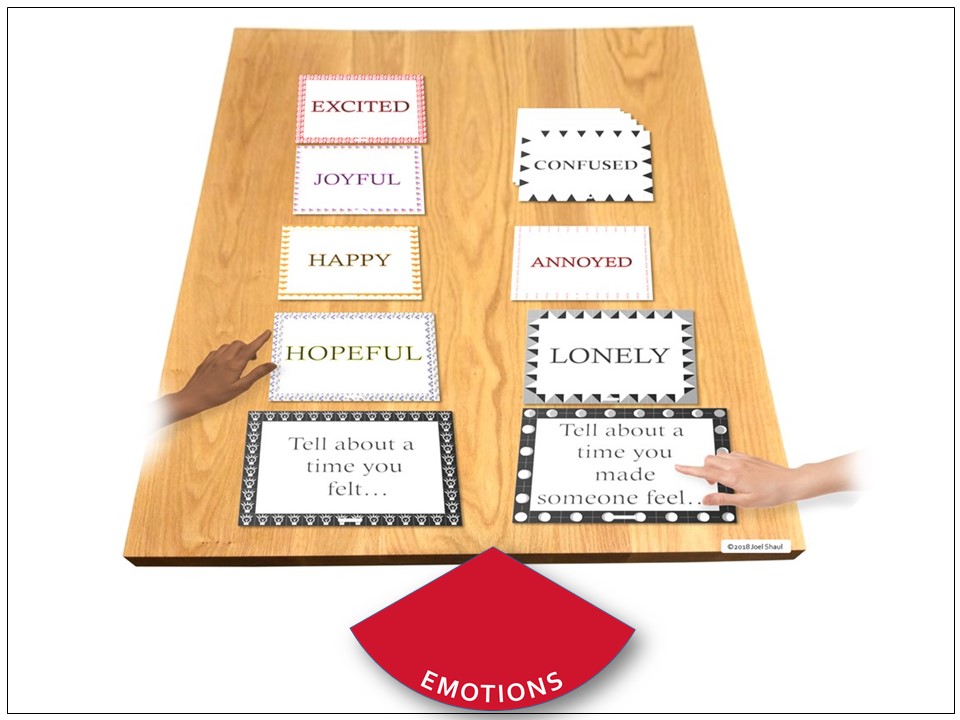
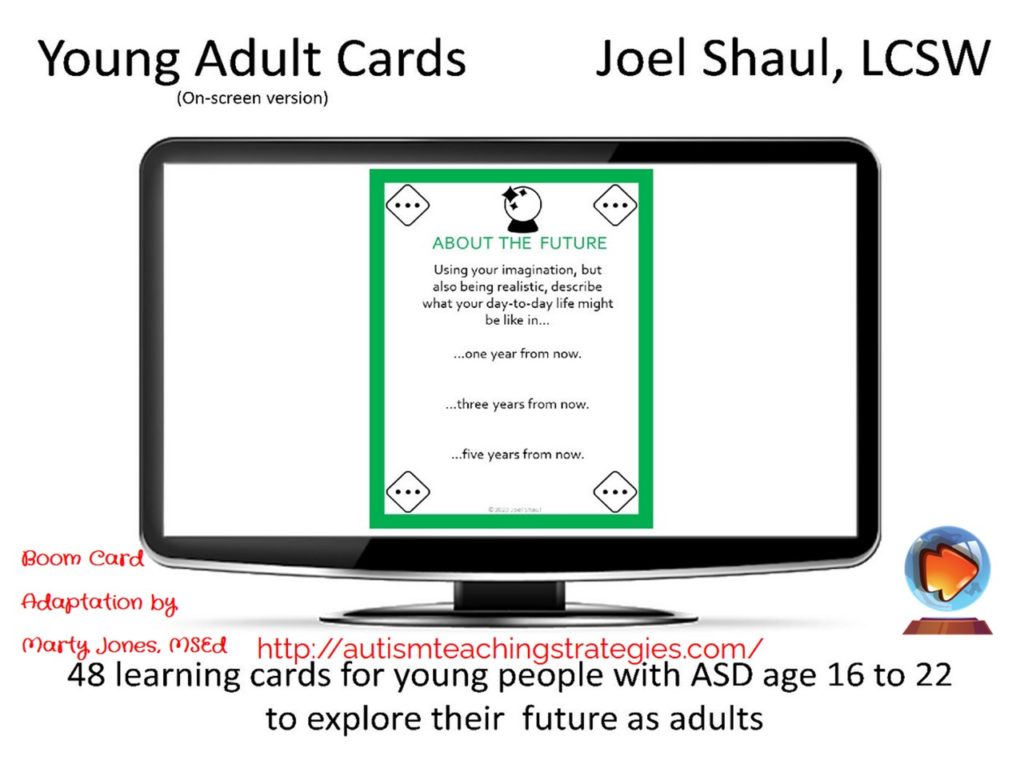
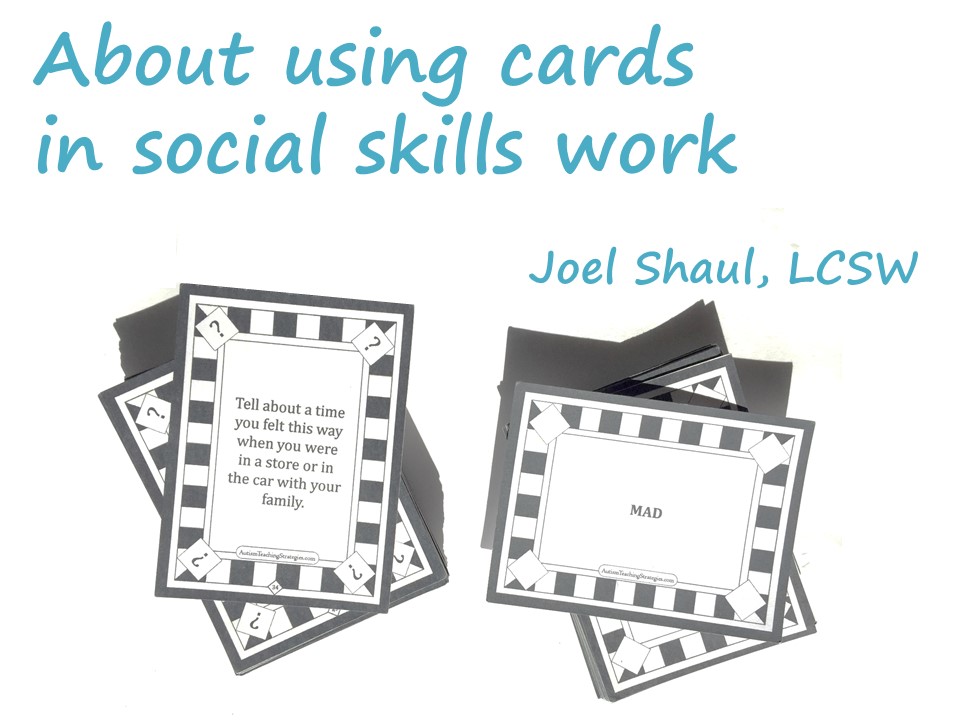
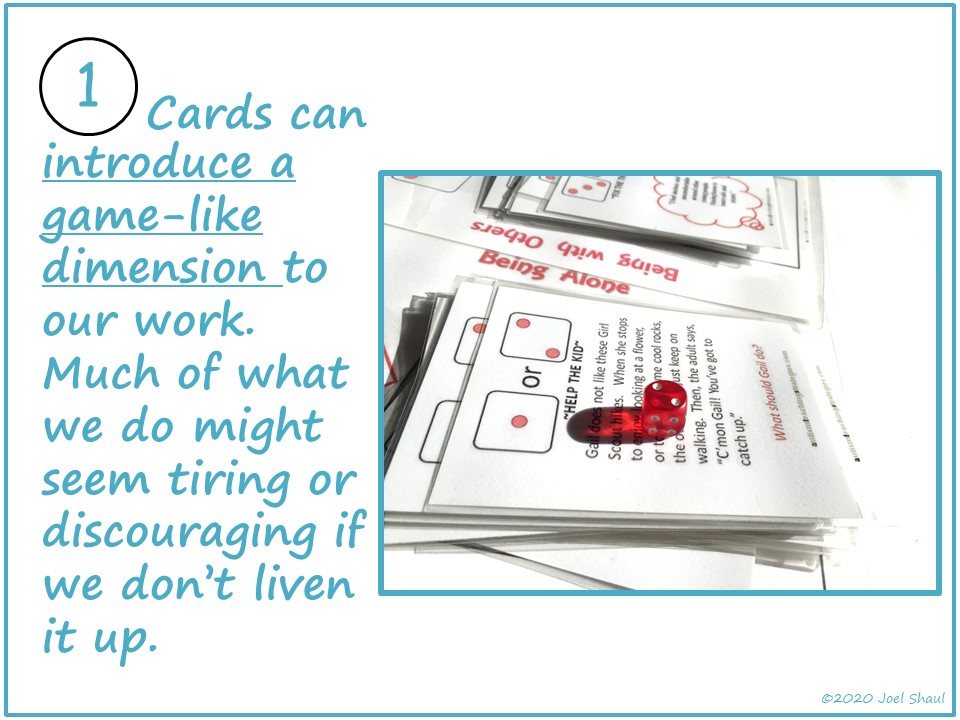
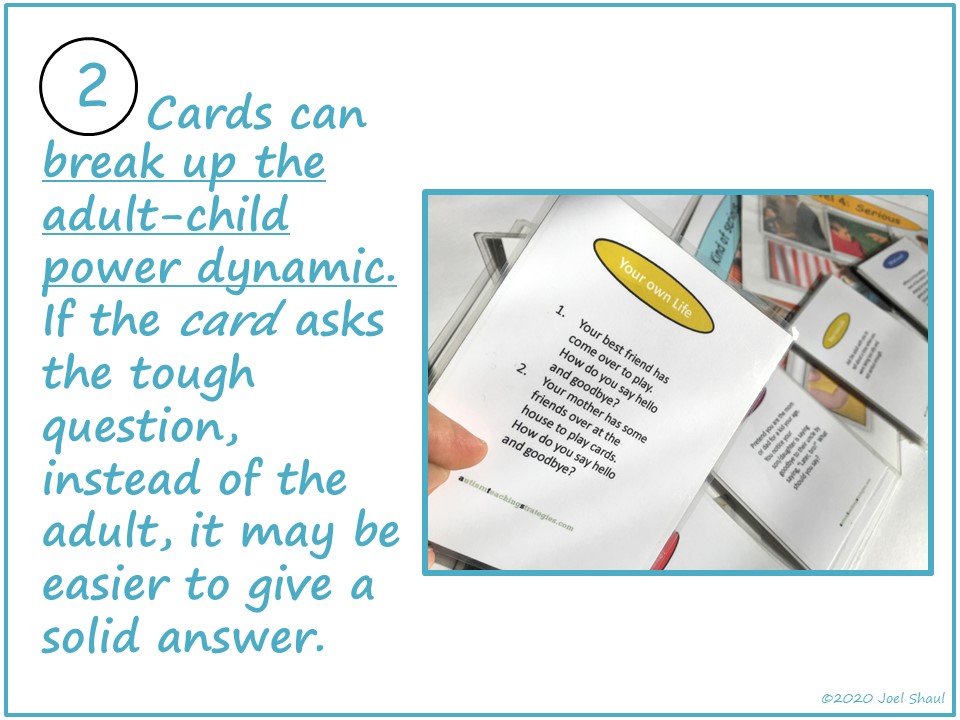
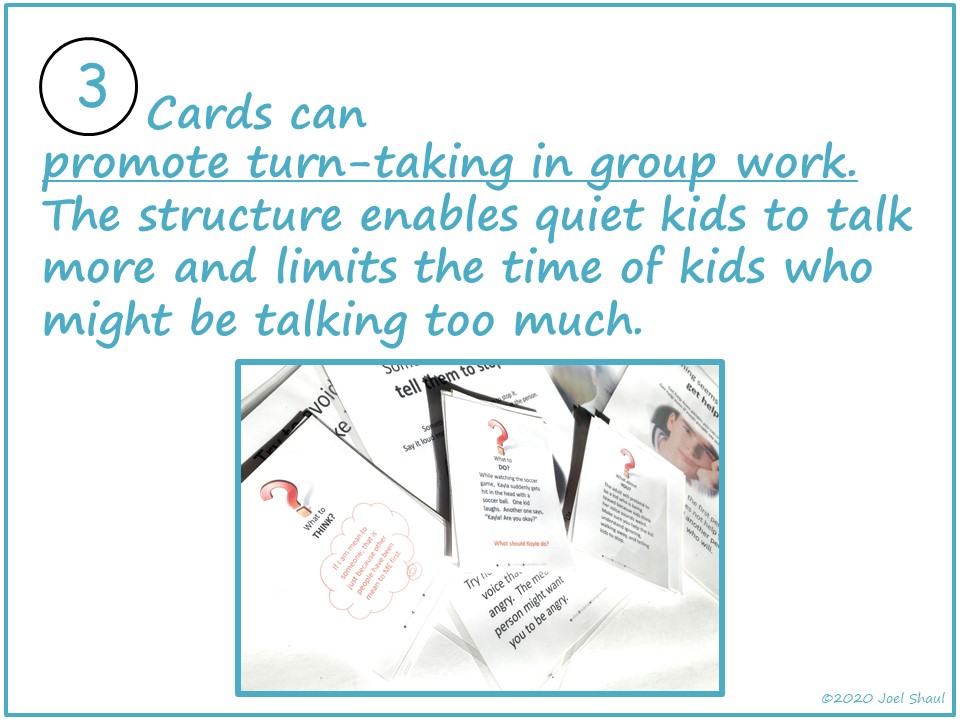
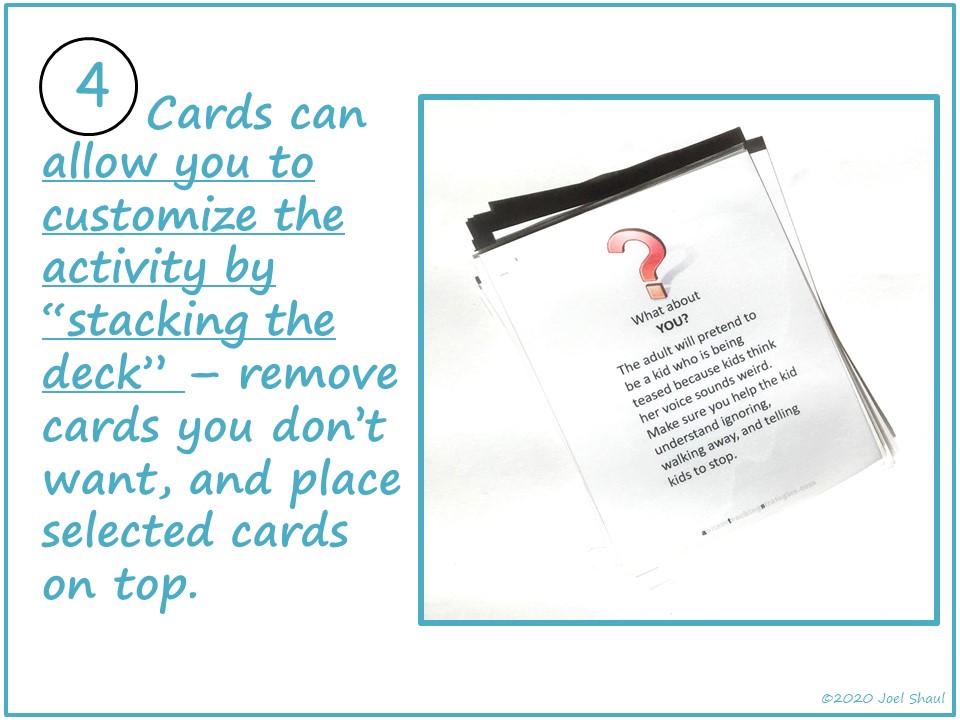
There are some strategic reasons to use cards in social-emotional teaching and therapy with children. Cards can introduce a useful game-like dimension to the work. Much of what might be taught in a card activity might feel tired or discouraging without this playful aspect. Cards can help to break up the adult-child power dynamic. If the card asks a tough question instead of the adult, it might be easier for the child to give a solid answer. Cards can promote turn-taking in group work. The structure allows quieter kids to talk more and can help place reasonable limits on children who might be talking too much.
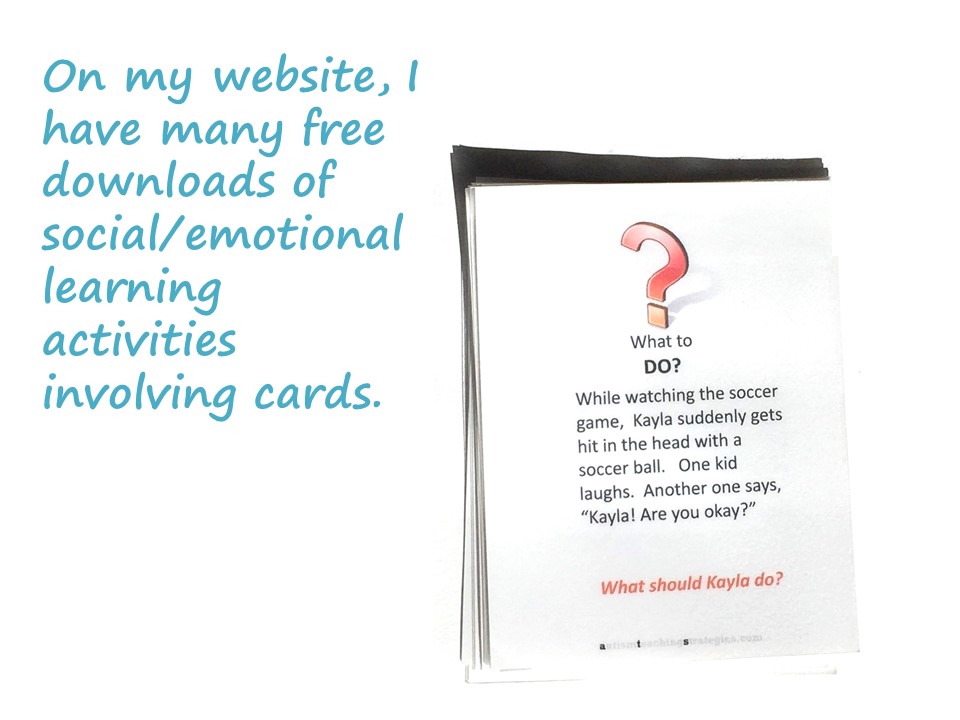
There are many activities on this website that include downloadable cards. Check them out.
To download the PowerPoint, find the link at the top of this post.
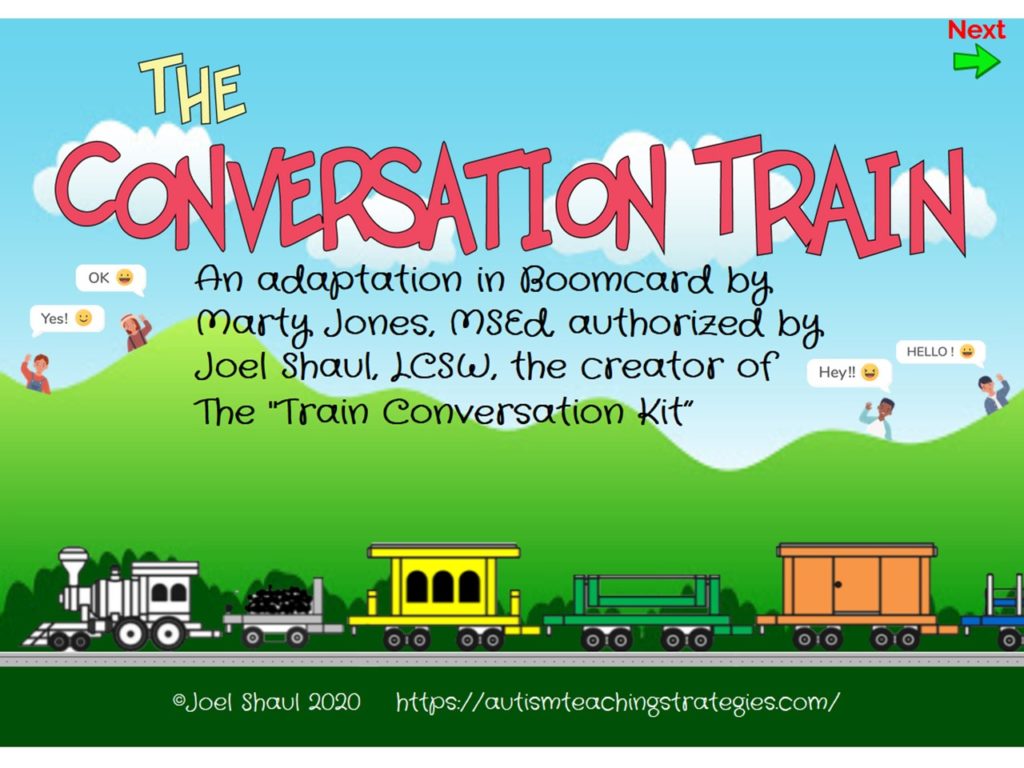
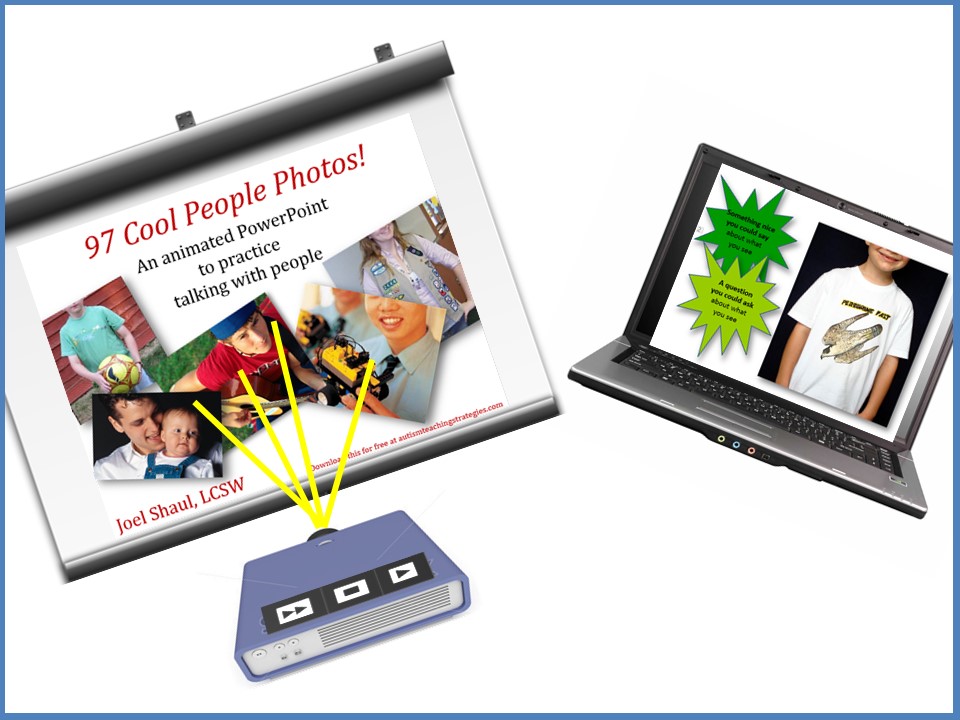
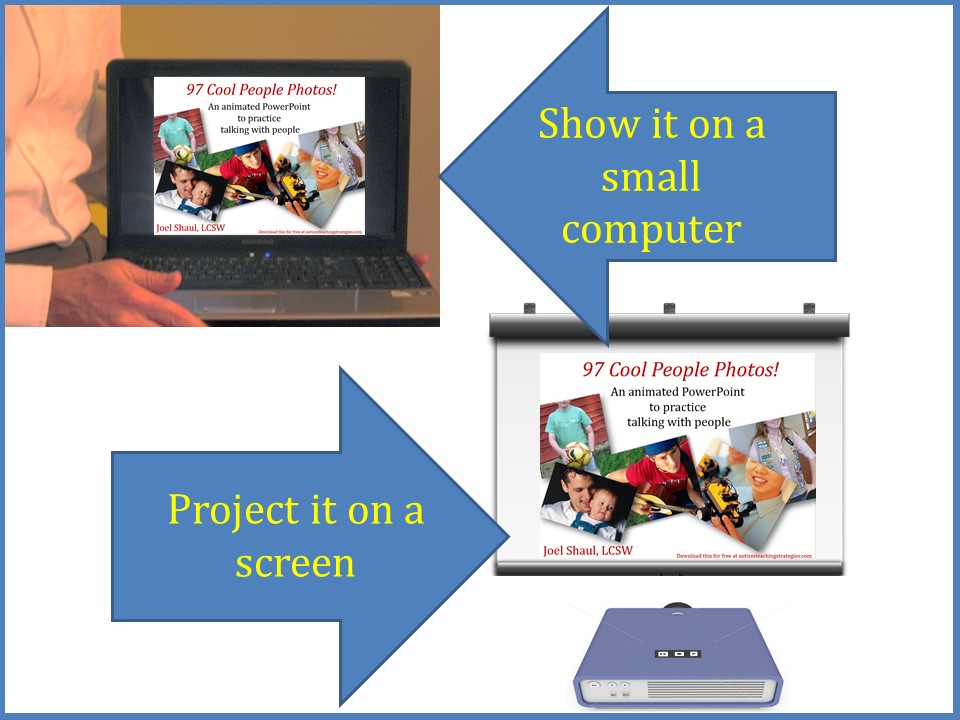
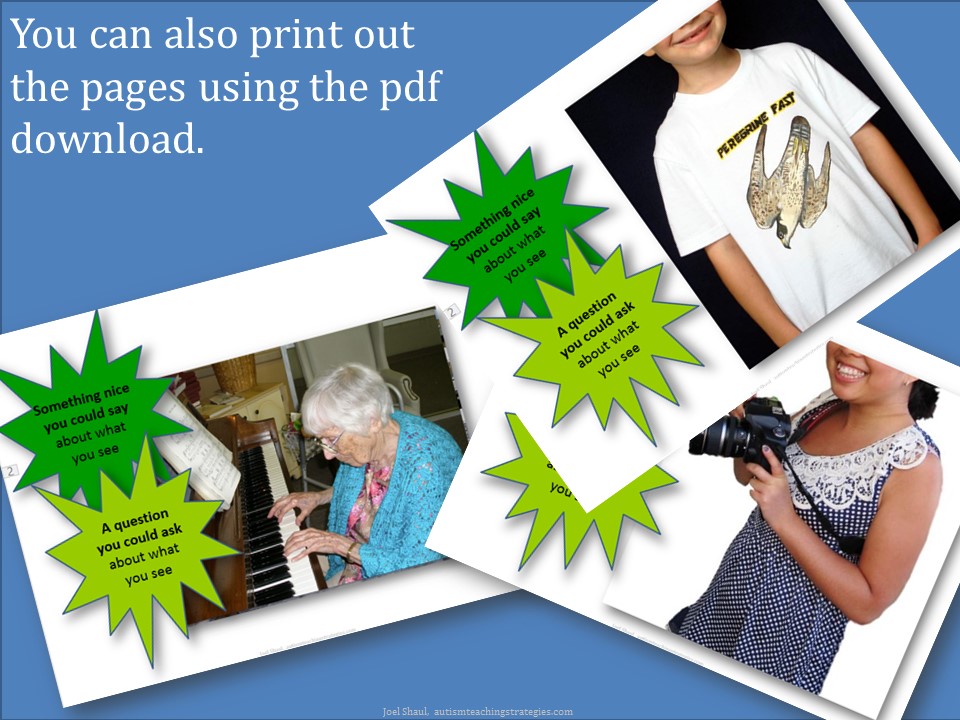
A conversation starter photo kit to project, use on a laptop, use in your tablet in PDF, or print out
Children with autism spectrum disorders usually face enormous difficulties figuring out what to say in diverse social situations. When we are helping such children in counseling, speech sessions and in the classroom, we need to provide them with engaging activities to explore what other people are up to, what other people are thinking, and how to begin conversations based on other people’s interests and circumstances.
Over a period of years I put together a 100 diverse photos that work well for conversation practice. Children really love looking at the pictures and trying to think of something to say.
I put a lot of interesting animated features into this… anything to keep kids engaged in work that is very challenging for them.
Suggestions for using this kit:
1. It works well if you, the adult, act out the role of the person in each slide. The child then talks to you while you stay in character.
2. For children who read, print out the Question/Compliment/Comment Page (next slide) for each child to use as a reference for words and phrases.
3. It helps enormously if you give out any kind of tokens while you are going through the various scenarios. Here is some cool play money I made.
I hope that you enjoy this social skills activity for children on the autism spectrum. I enjoyed creating it.
Joel Shaul, LCSW
*Don’t miss these other free social skills games, worksheets, speech activities and teaching / therapy aids for helping kids with autism:
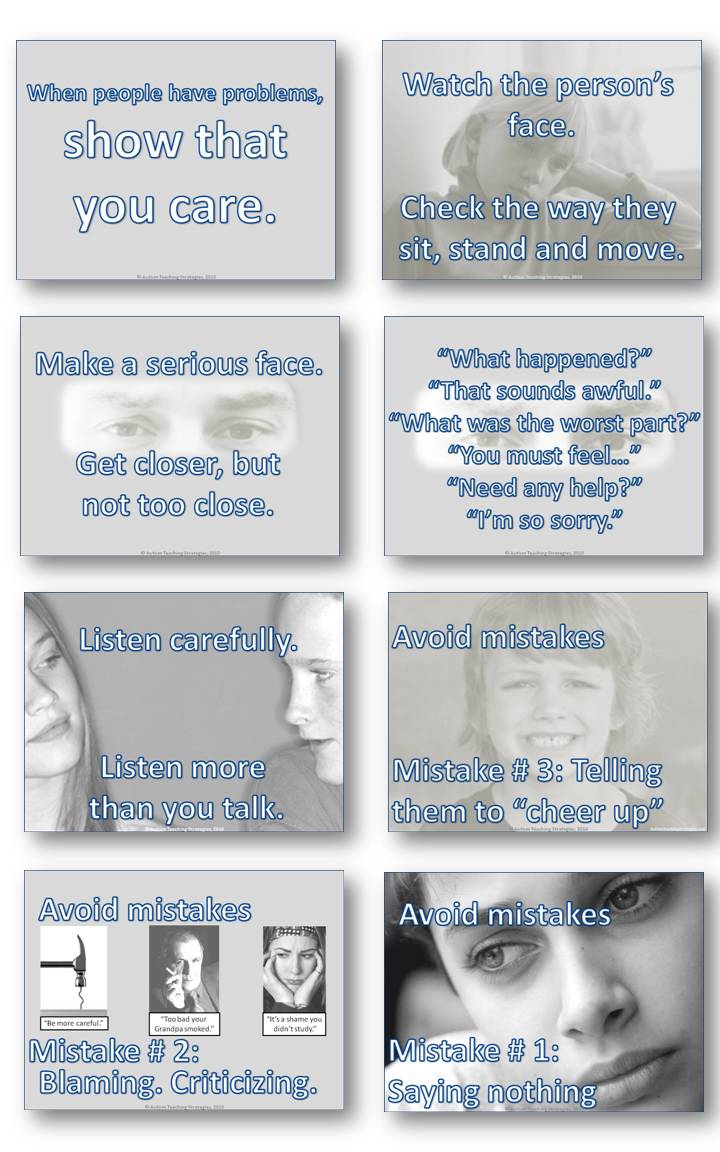
Autistic children and showing concern for others / empathy
Children on the autism spectrum often have great difficulty with this important skill. They often spend less time observing others than typical children, and they might not notice another person’s distress. They often are perplexed by the typical signs of upset feelings in another person. They might have normal feelings of sympathy for the other person, but they might be at a loss regarding the necessity to express concern and the social conventions for going about it.
It is well known that there is quite a lot of variability in the distribution of empathy skills both among autistic people and among neurotypical people. But even autistic children who have a refined sense of feeling for others may lack in willingness and ability to show their concern and display it tactfully.
How to use the illustrated panels:
You can use them as a wall display. You can also use them in preparation for role play practice.
I hope you find these materials useful.
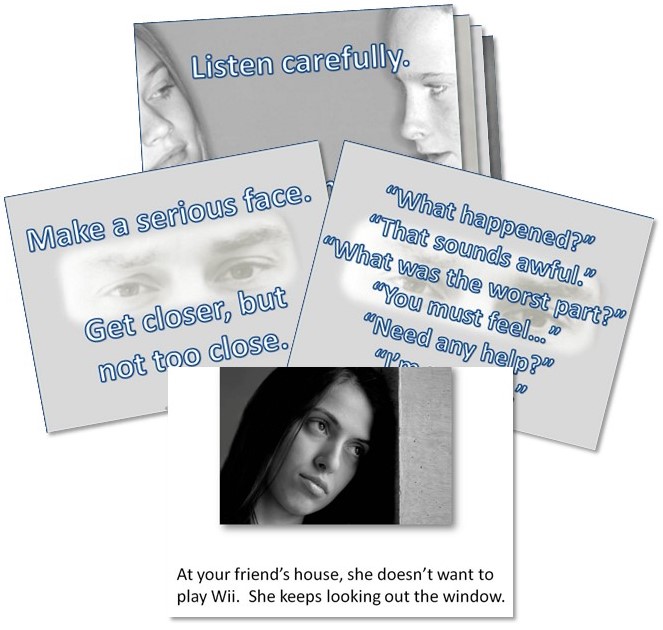
Using the Showing Concern Wall Display panels in combination with the Showing Concern Picture Cards:
It is very useful to use both these resources together.
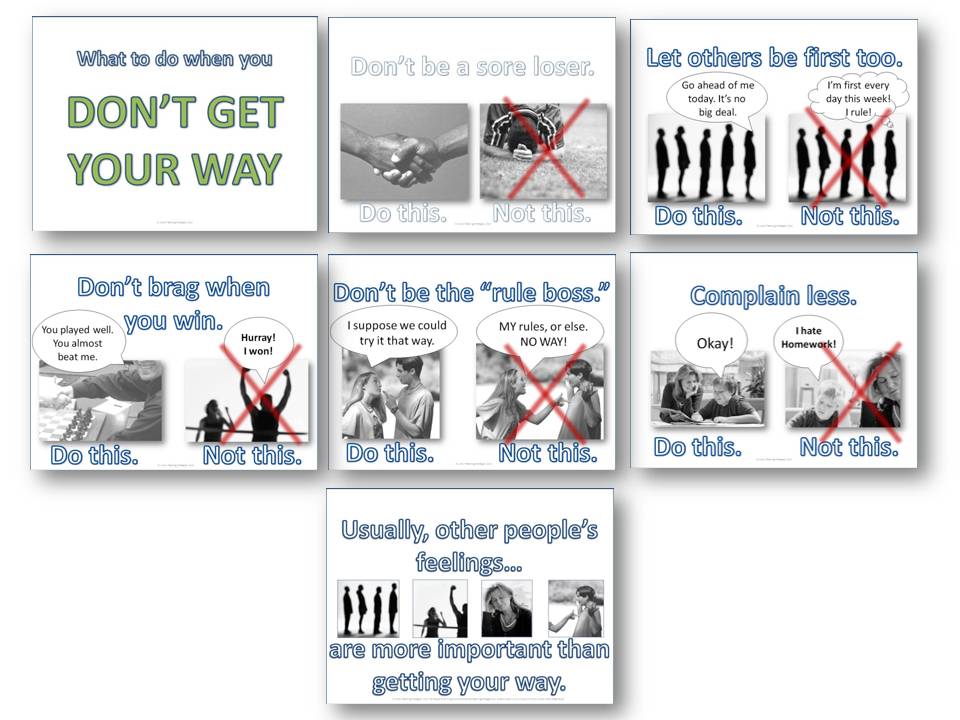
Helping children with autism spectrum disorders to deal with losing and disappointment
Children with ASD often have particular problems with losing: Not getting their way, not being first, not being chosen or called on, not winning. Here are some reasons for this. First, their lack of perspective-taking abilities can make children with ASD less aware of unwritten social agendas: others also want to be first; others like to win, too. Second, many children with autism struggle with problems regulating upsetting emotions. Third, lots of kids with ASD have tough lives day to day. When something does not go their way, it might be the last straw in a long string of deeply frustrating experiences.
The illustrated panels are for you to use either as talking points in a discussion in a social skills lesson or counseling session, or to place on your wall. The lessons apply to all children, not just those on the autism spectrum.
Good luck in your social skills counseling and social skills teaching.
Joel Shaul, LCSW
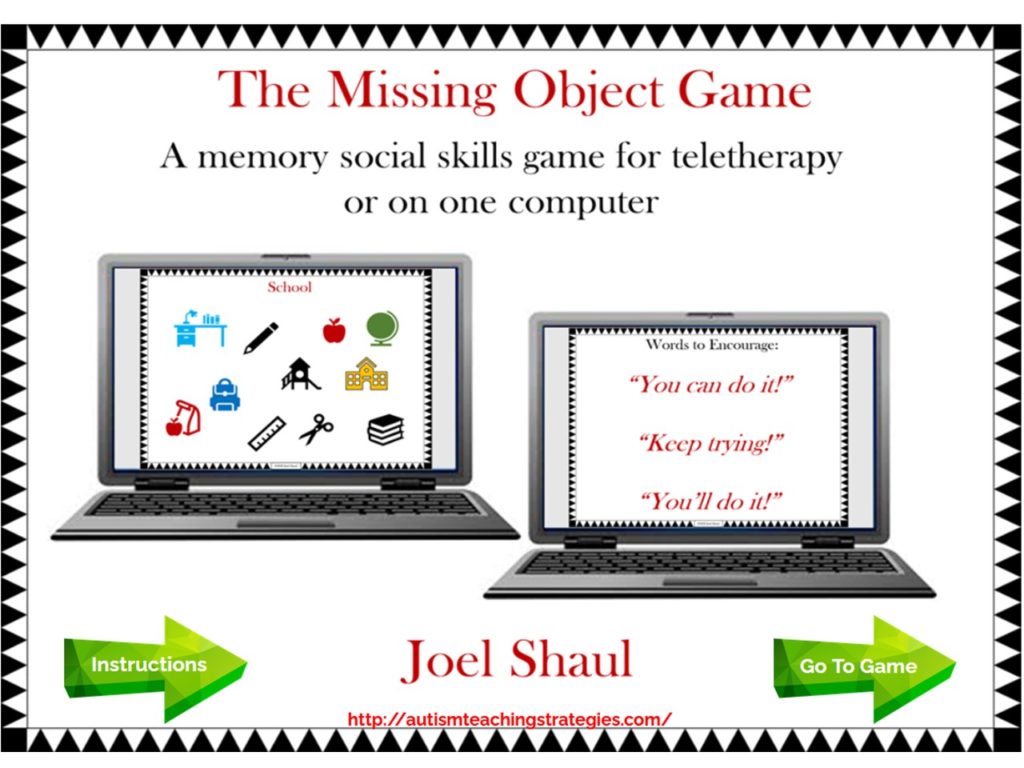
Here is a related resource to explore, a free social skills game for children with autism designed to teach sportsmanship skills, The Missing Object Game.
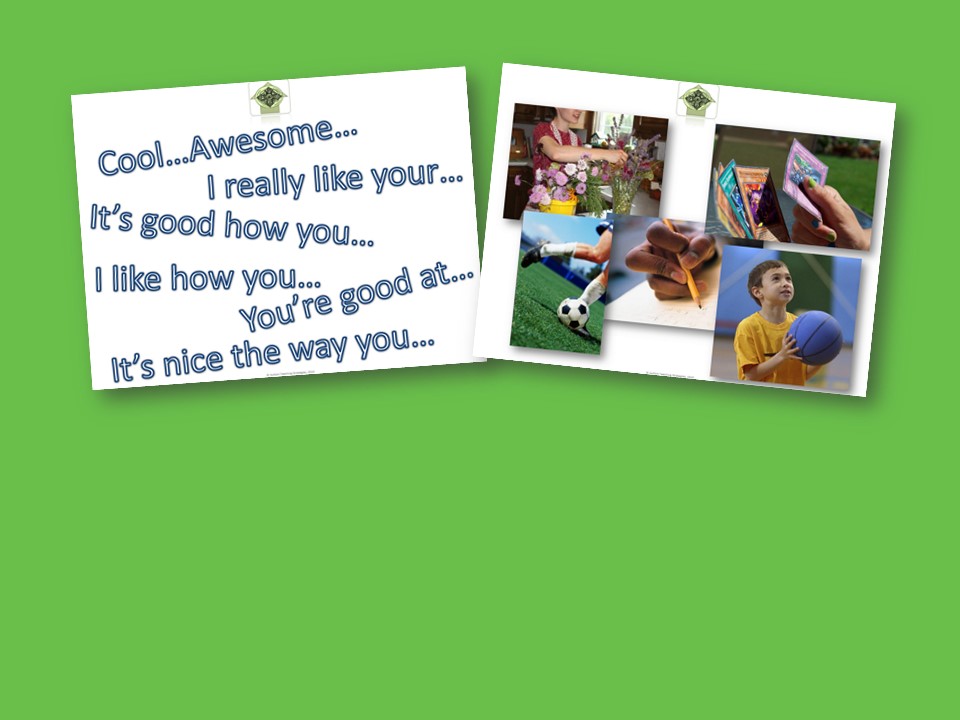
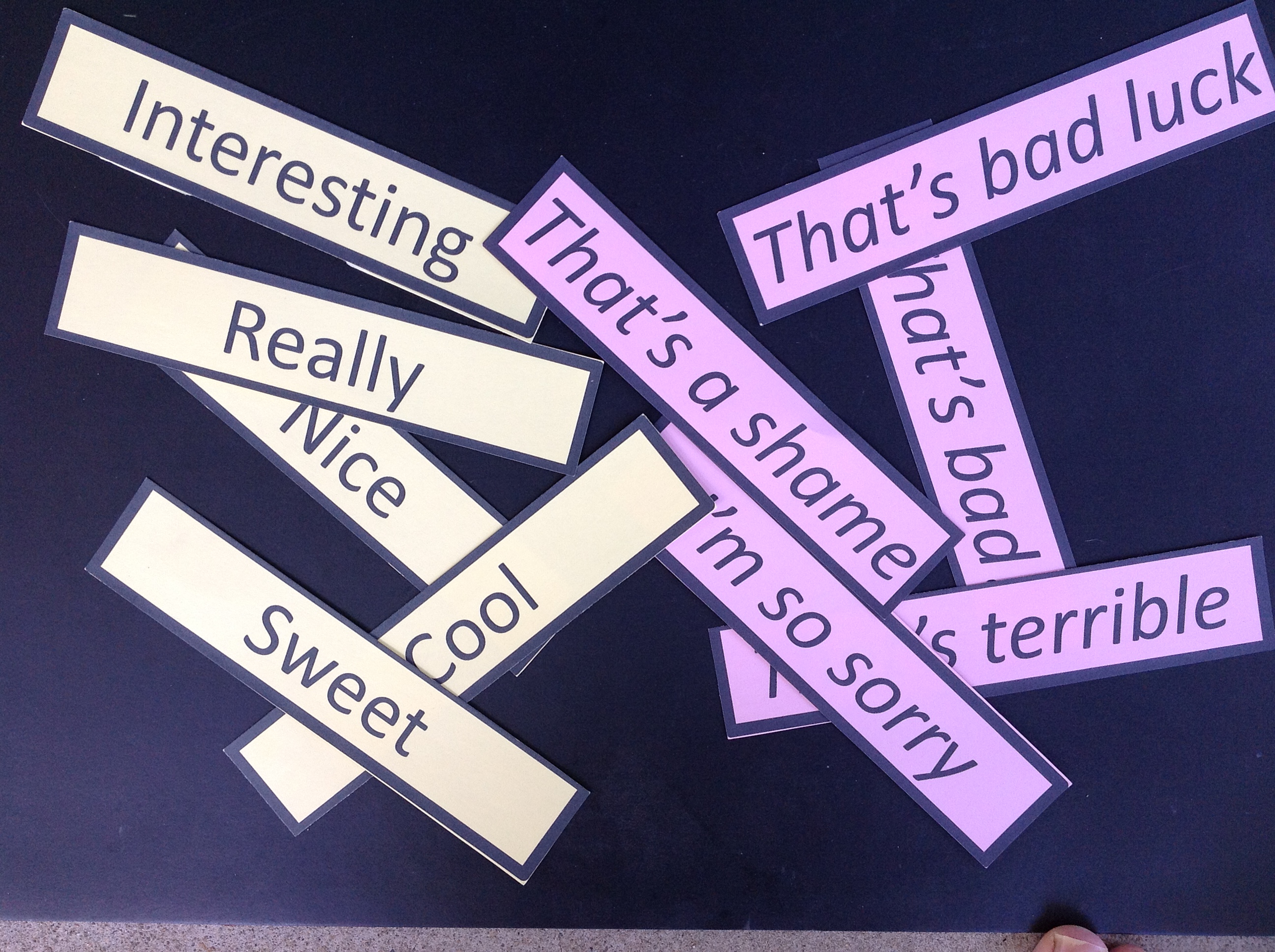
Children on the autism spectrum often do not make typical and expected statements in conversation to indicate interest. This happens for two reasons. First, they might not be at all interested in what the other person is saying. Second, they might be interested, but they are not aware of the importance of validating words and phrases in conversation and they are not well practiced in using them.
Validating words and phrases, such as “cool,” “you don’t say,” “really,” how about that” and others are very common in typical conversation. But many individuals with autism spectrum disorders use these words very seldom. Without the special lubrication of validating words and phrases, the conversation can fall flat.
My short Youtube video on how to use validating language prompts is available through this link: http://bit.ly/wiL3dW . If you watch it, a lot of this will probably become much more clear.
How make the written prompts:
Print out the PDF onto card stock or else paper that you laminate.
How to use the written prompts:
1. Hold up the prompts during times when validating language is called for.
2. Switch roles. You play the person who does not know how to use these words. Have the kids hold up the cards while you are talking to someone so you know what to say.
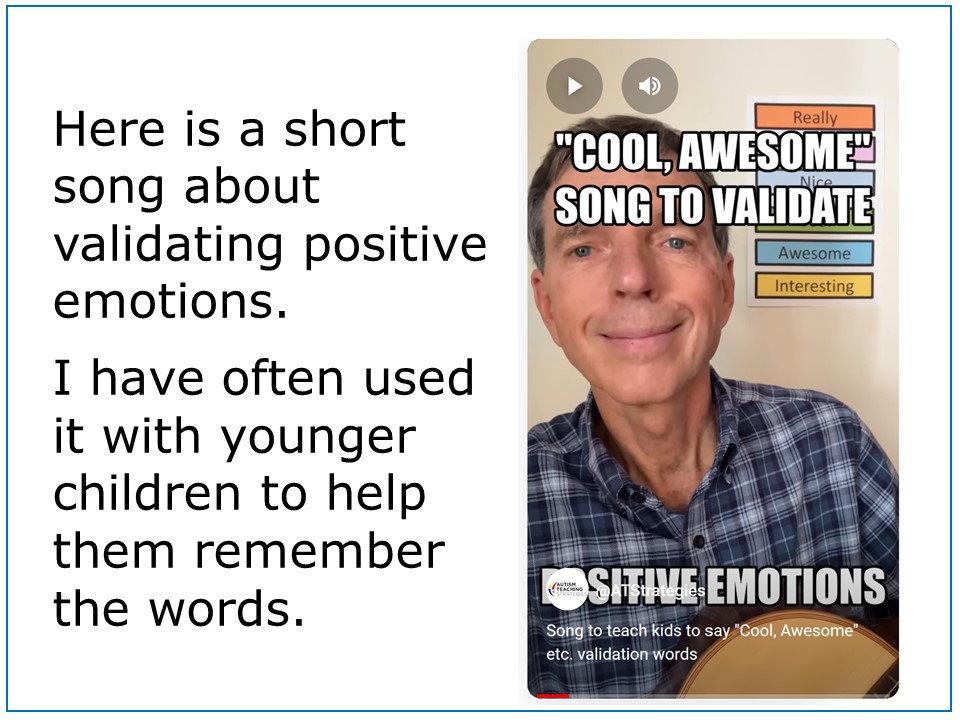
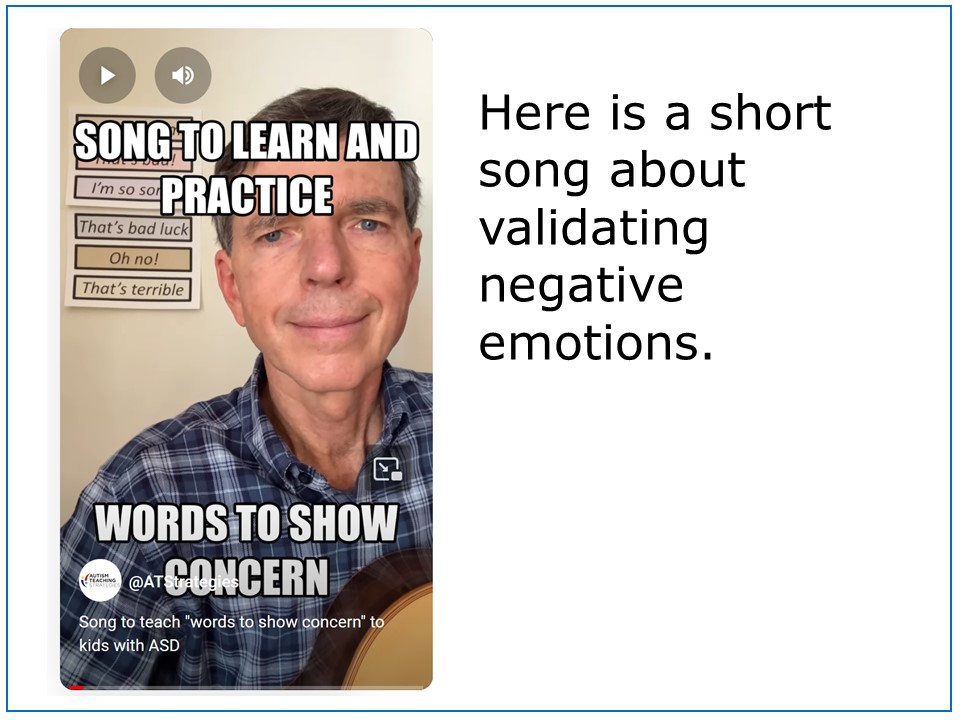
3. Learn and use these short, easy songs from the YouTube video (with younger kids). This helps them to learn and remember these important words.