
“Fix The Problem” Social Skills Game – Free Download

Fix the Problem
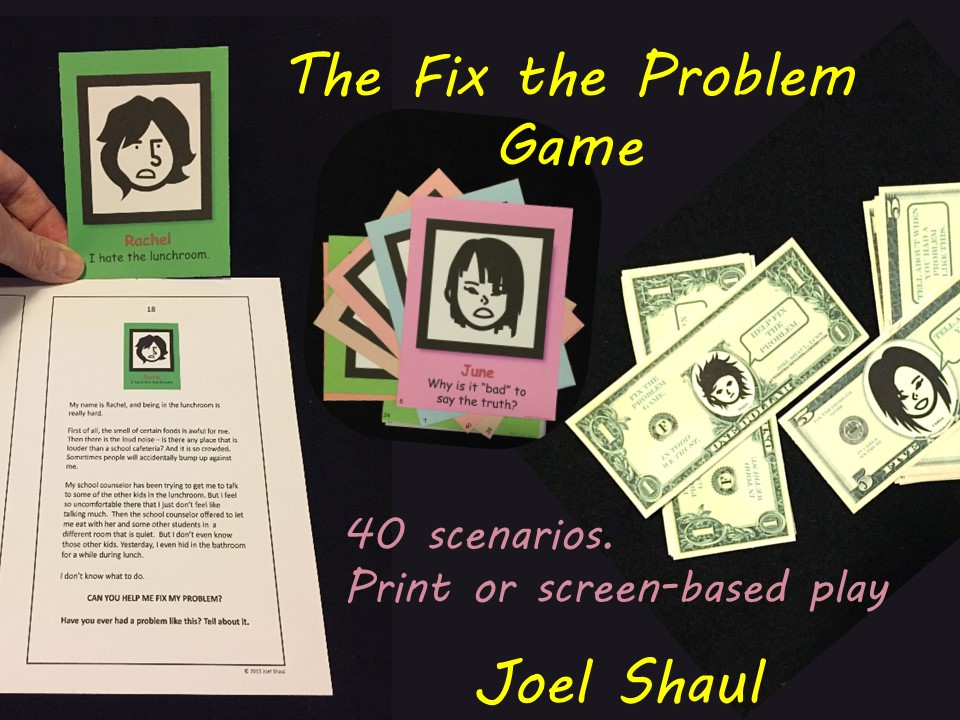
The Fix the Problem Game for young people with autism. A complete downloadable social skills game with cards, questions, play money.

In German: Problemlösungs-Spiel


In my work as a psychotherapist and social skills trainer in individual and group settings, I spent years developing game-like activities to engage autistic youth in learning challenging social and emotional skills. The Fix the Problem Game evolved over about ten years of experimentation and refinement. Children and teens usually like it a lot. It is frequently downloaded by users of this website, who have provided positive feedback regarding its usefulness.
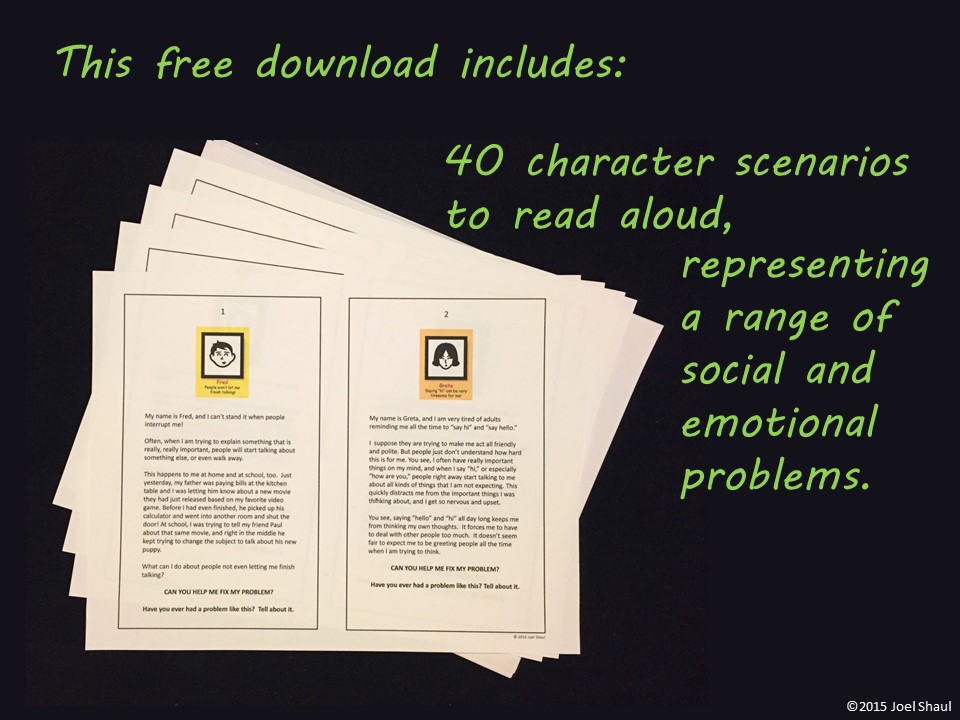
These are the 40 character scenarios to read aloud, representing a range of social and emotional problems.

The first download includes 40 first-person character scenarios to read aloud, representing a wide range of social and emotional problems.
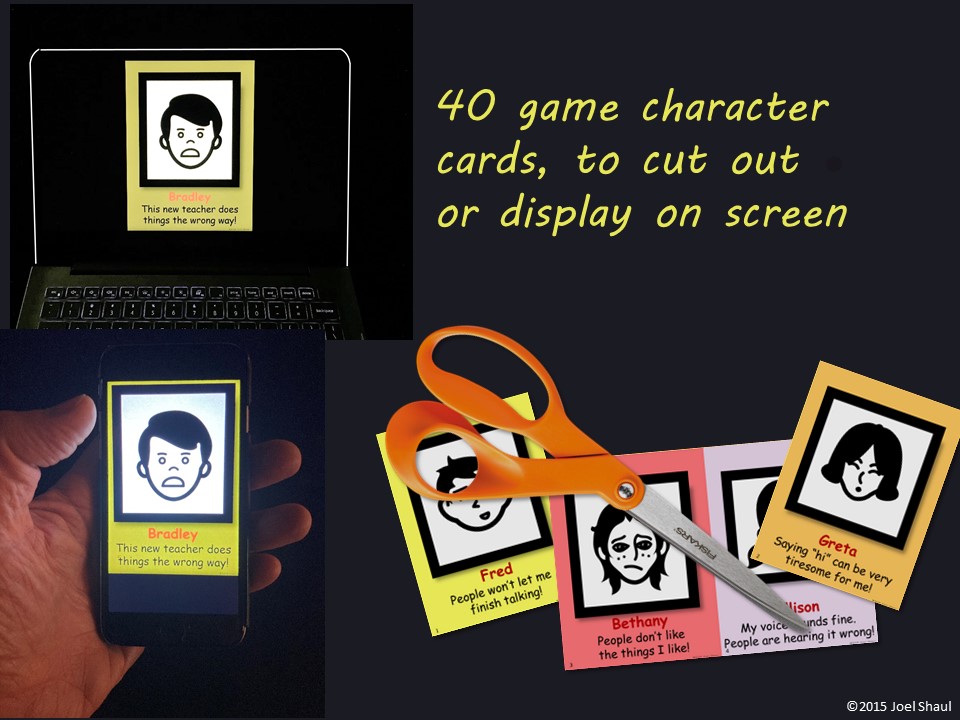
Also included are 40 game character cards (shown above), to cut out or display on a screen.
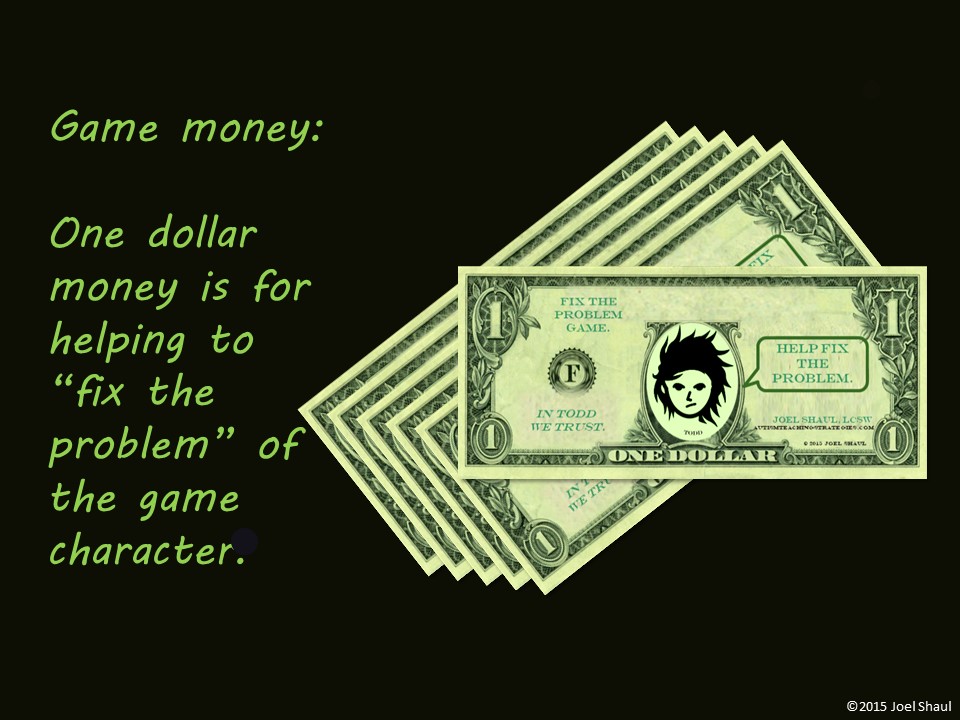
Special game money (shown above) is provided. You give it out to players who provide the most useful suggestions on “fixing the problem” presented by the game character.
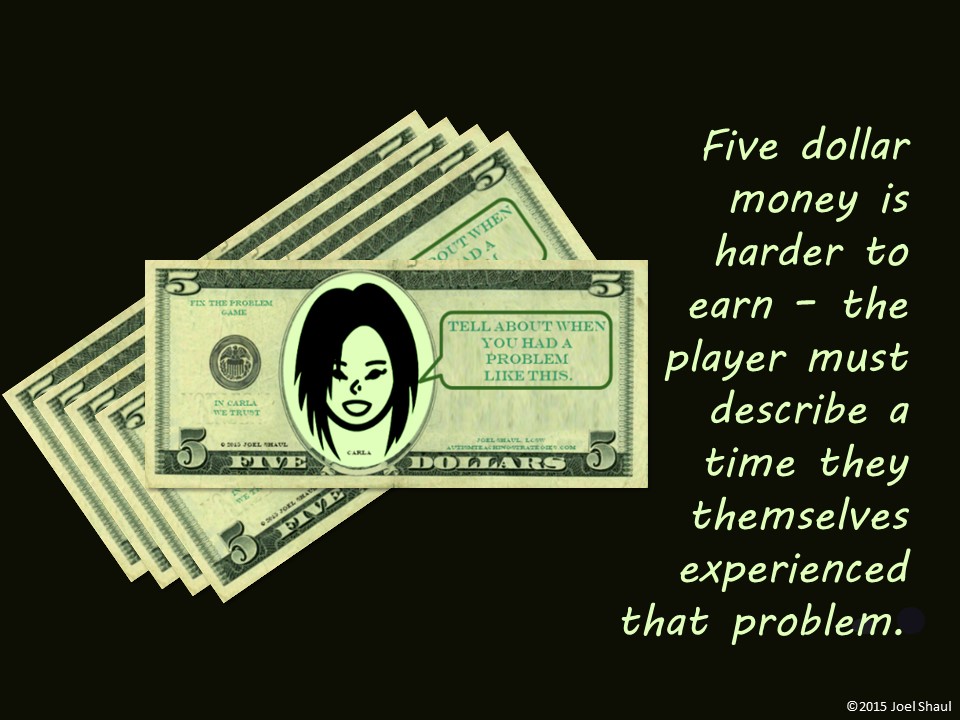
This 5-dollar game money is harder to earn – the player must describe a time when they themselves experience the problem described by the game character.

More about the Fix The Problem Game

Children with autism spectrum disorders often get tired of scrutiny and criticism. They may be quite aware of their need to work on things like conversation, social skills and difficult emotions. But it can feel confrontational and discouraging to have parents, teachers and therapists pointing out their problems all the time.

The Fix the Problem Game takes a different approach which many children find more relaxed, engaging and even fun. Rather than zeroing in immediately on the child’s own difficulties, we back off and look at other people’s problems instead. Often, when children learn about somebody else’s problem, they are able to examine the situation objectively and come up with useful solutions. This indirect problem solving seems less personal – more like a game or puzzle. Then, once children experience the success of solving a hypothetical problem, they are more open to an examination of their own issues.

The Fix the Problem Game is designed to help children with ASD to examine their own social and emotional challenges by engaging them in the process of analyzing somebody else’s problems first. The game features 40 child characters and 40 first-person scenarios, each describing problems experienced by many young people on the spectrum. For each scenario, the reader is asked by the game character to “fix my problem.” Afterwards, the game questions ask, “What about you? Have you ever had a problem like this?”

After experiencing success helping game characters, children are often more insightful and confident with their work on their own similar problems.
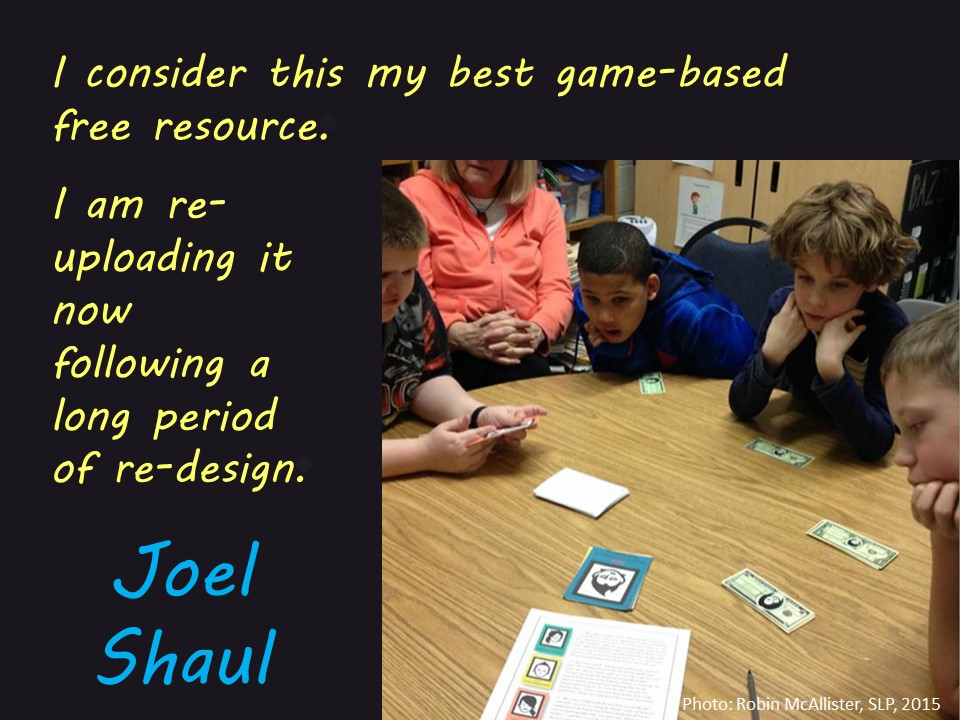
This is Joel Shaul's very best social skills game for young people with autism.

Don’t miss these other free social & emotional skills games, worksheets and teaching / therapy resources for children & teens with ASD:

Free social skills games & activities, emotional regulation skills for kids with ASD

Free social skills games & activities, communication / conversation skills for kids with ASD

Free social skills games & activities, social interaction skills for kids with ASD
 

The Conversation Train Book

Green Zone Book Cover Click to Learn More


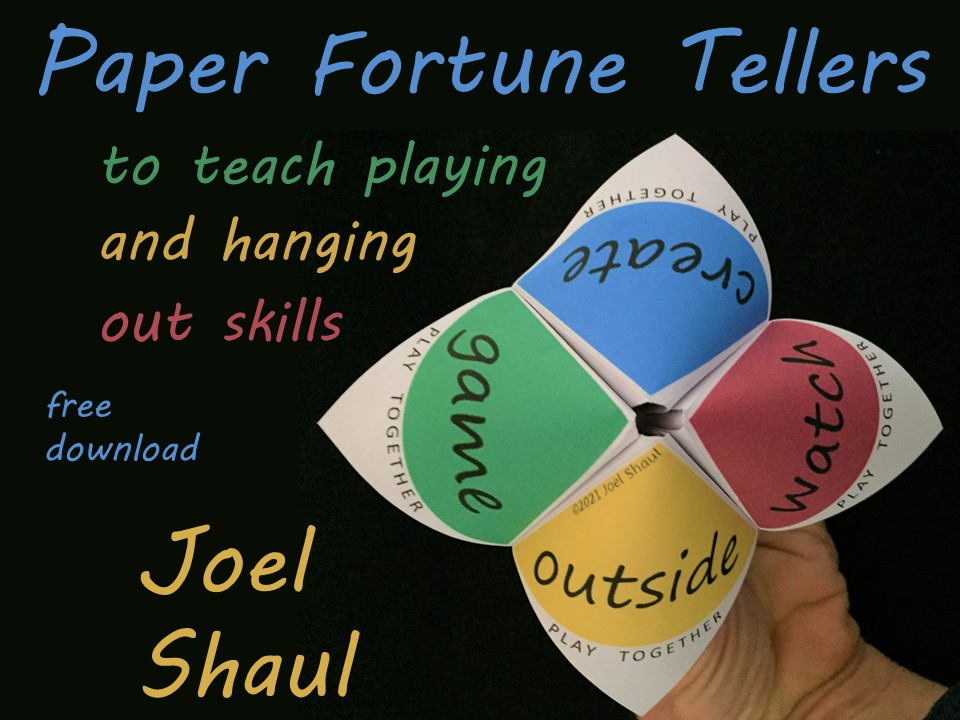
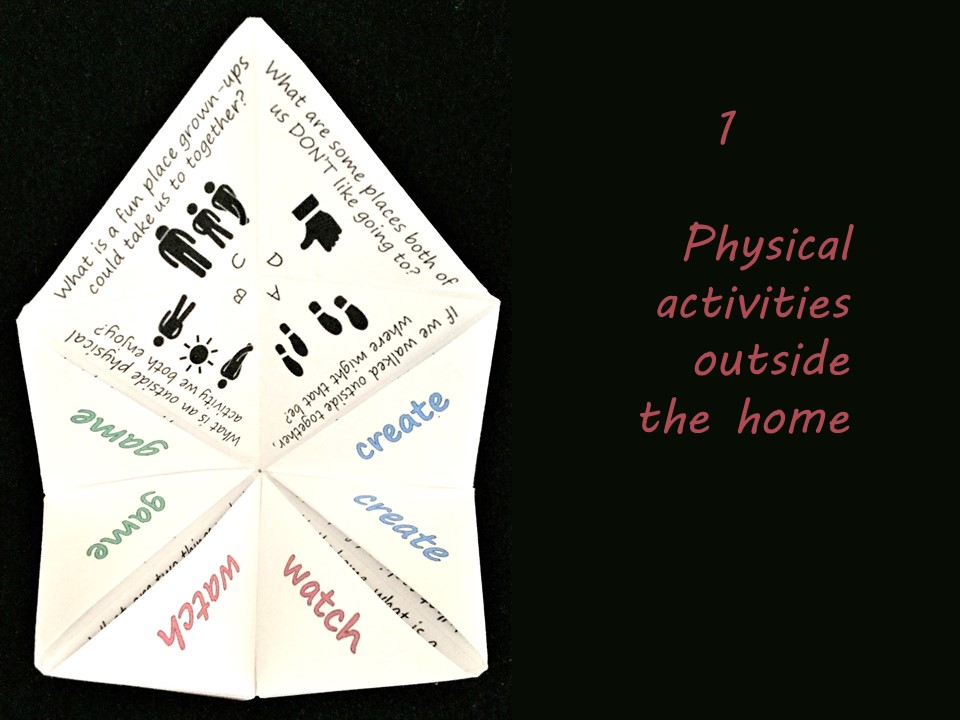
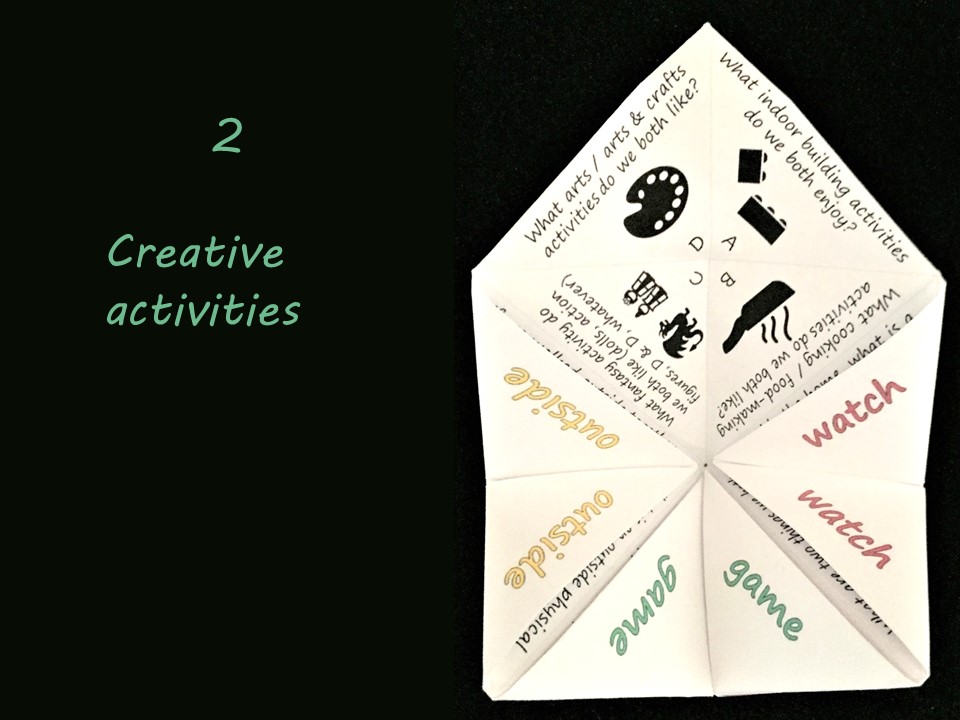
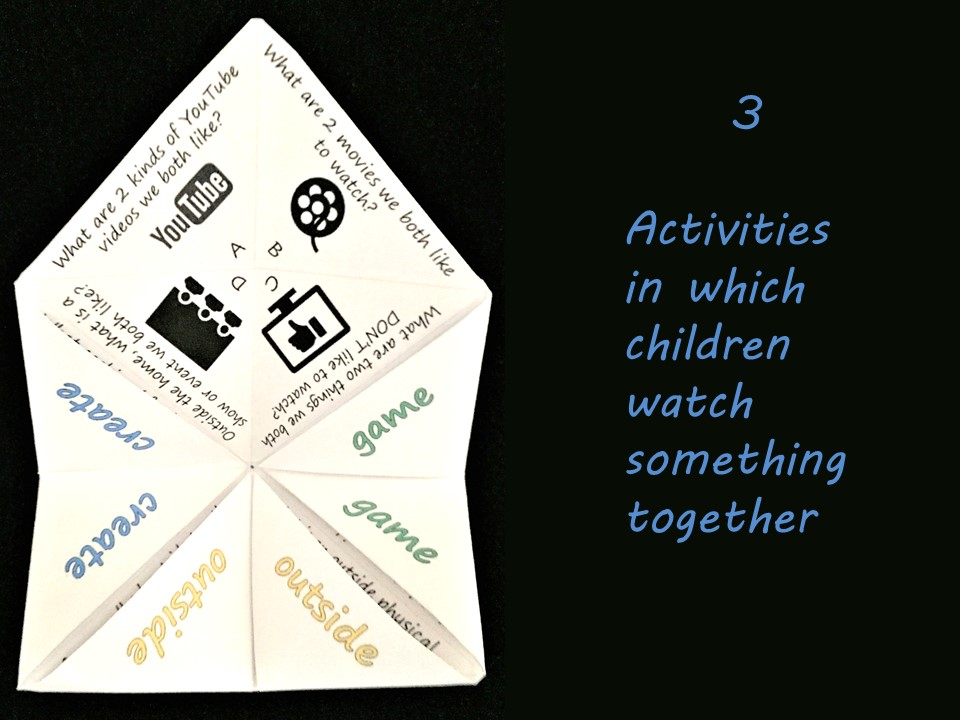
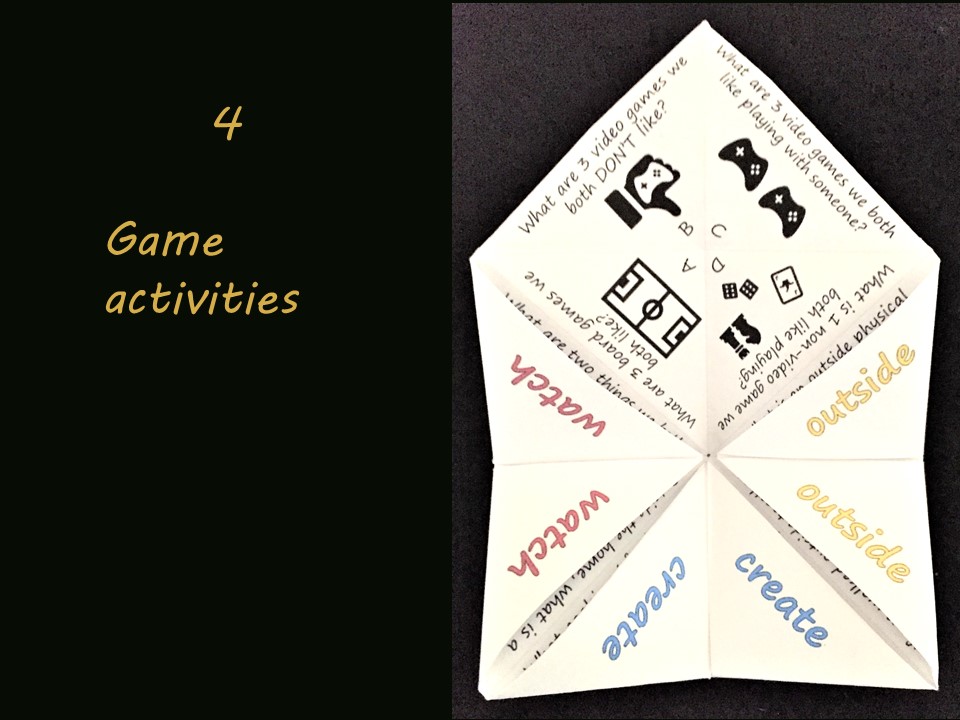
Paper fortune teller for playing and hanging out social skills

German language version

Many years ago, I got interested in paper fortune tellers. After learning how to fold them, I figured out how to custom design them to teach various social and emotional skills, and to facilitate reciprocal conversation between pairs of autistic children in group therapy and classroom settings.

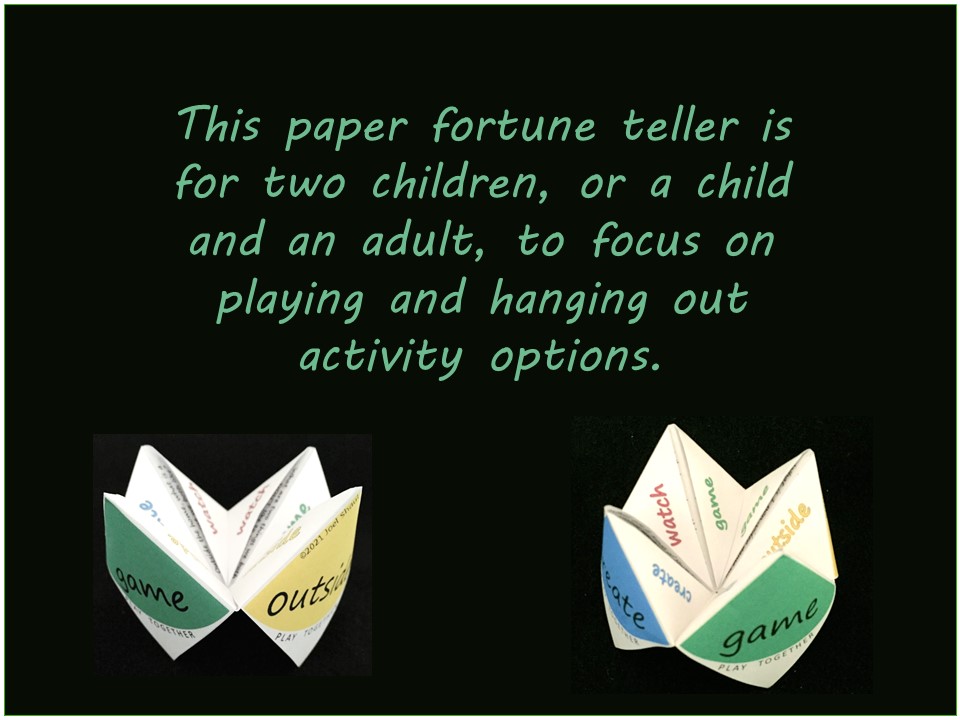
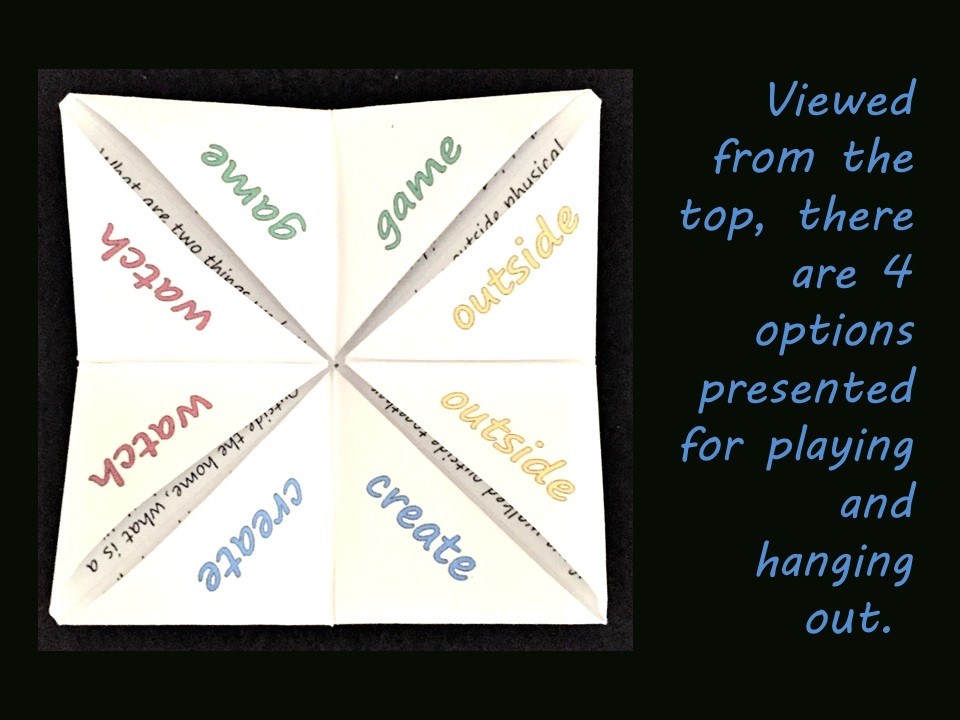
This paper fortune teller is to help two children to jointly explore playing and hanging out activities.

Here are some pictures to show what the paper fortune teller looks like as the two players unfold it during play.

This is a great activity, but keep in your planning, keep in mind that there is significant prep time involved. In my experience, most children cannot fold these together adequately in a group setting – you are much better off starting the activity with the paper fortune tellers already made.

Your comments on these resources are most welcome, and often helpful. Click HERE to send an email.

Your Interests Promo image for website

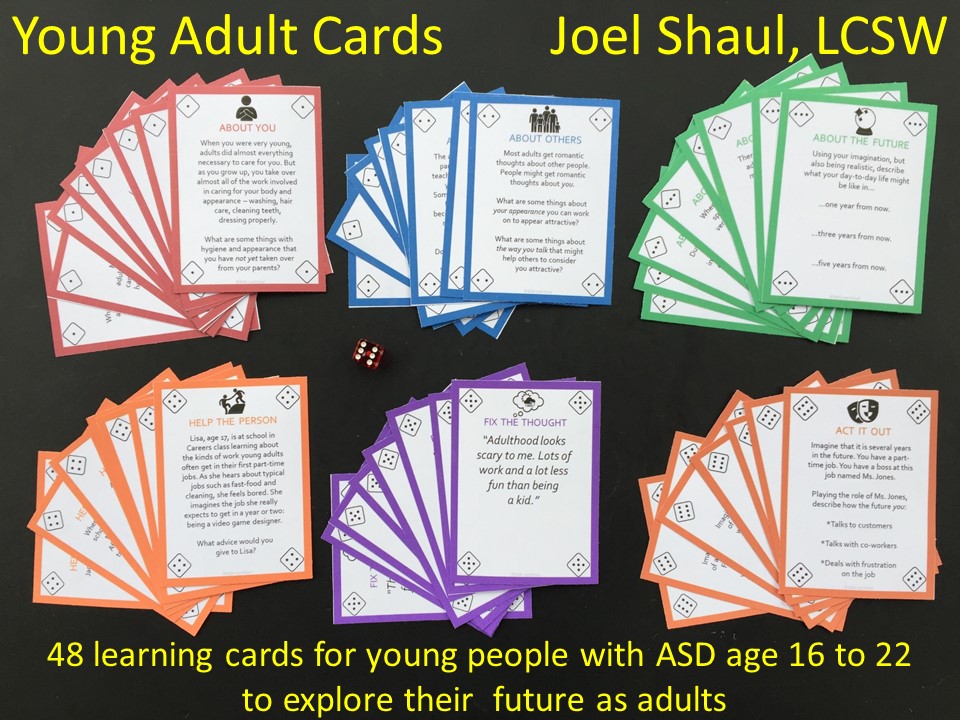
Young Adult Cards – free print-out & teletherapy resource for ages 16-22 exploring their future

Young Adult Cards in Boom Cards format, click HERE.

German translation of this resource

For Young Adult Cards specifically for workplace readiness skills, click HERE.


In my work with young adults on the spectrum, in individual therapy, school settings and group therapy, I often found it useful to incorporate game-like activities to promote productive discussion and problem solving of diverse young adult challenges. After some experimentation I eventually finalized this set of Young Adult Cards, which I then often used in my own work.

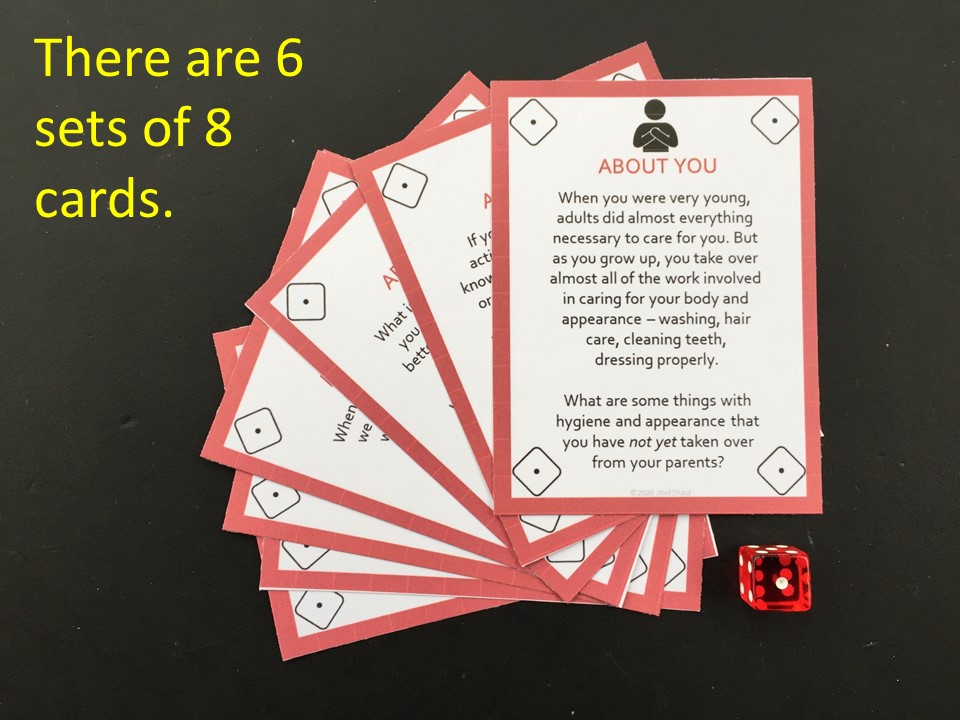
The first of the 6 card categories, About You, poses questions pertaining to typical problems faced by young adults on the spectrum. There are 8 cards in each of categories.

The second category, About Others, poses questions about how the young adult’s words and actions might affect others in the social network.

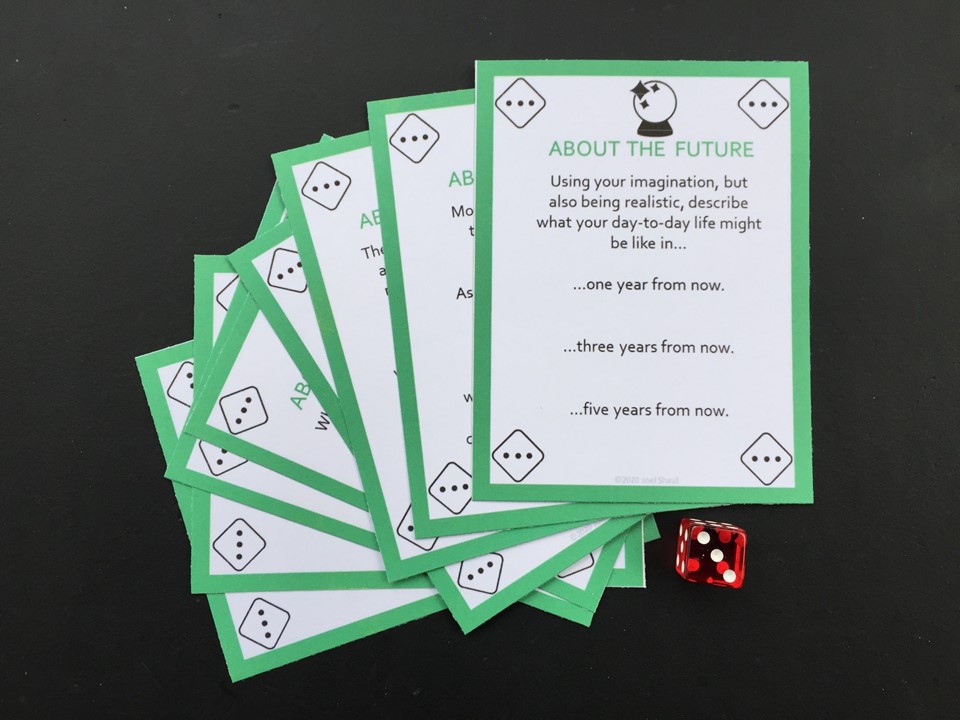
The About the Future cards task the player with imagining their future as an adult and how they will cope with new opportunities and challenges. Here they are.

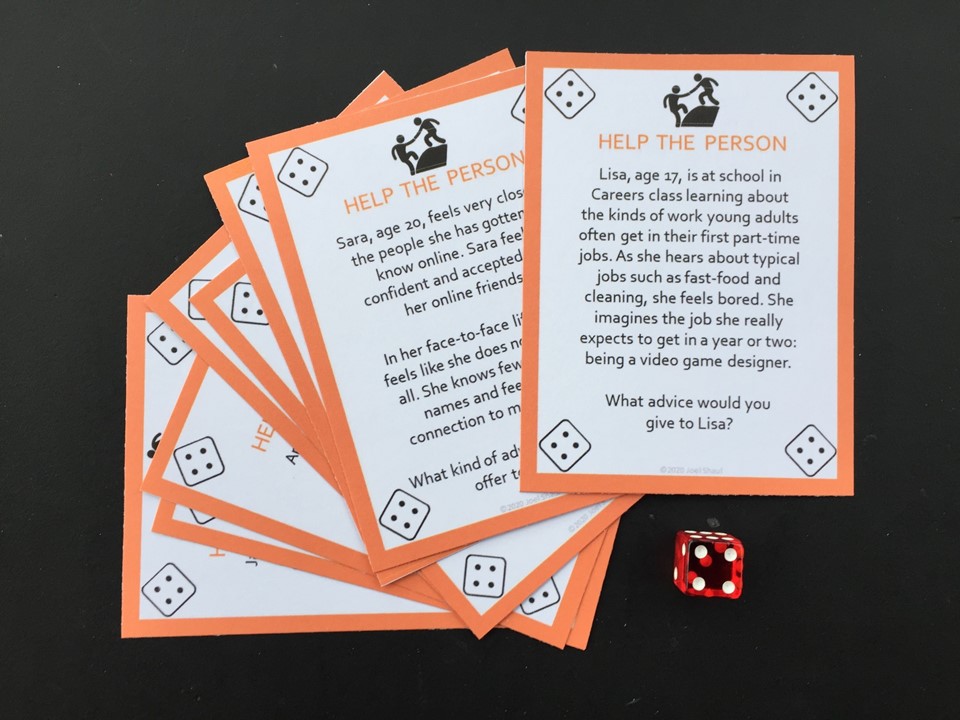
The Help the Person cards describe hypothetical social dilemmas faced by various young adults, for which the card player must offer solutions. Check out the examples below.

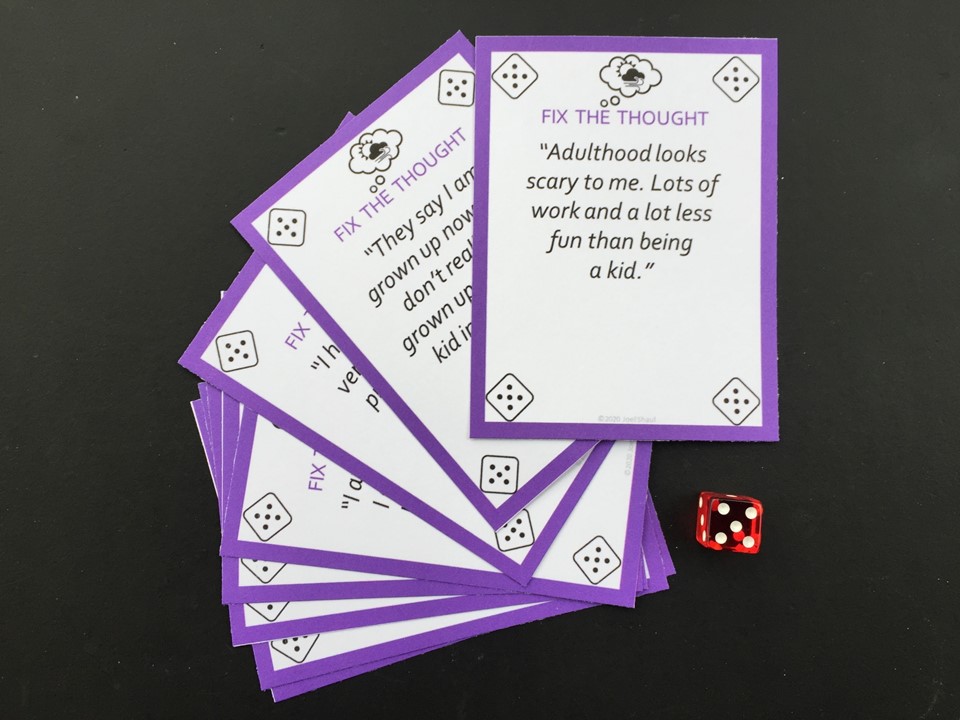
The Fix the Thought cards each describe typical negative thoughts experienced by many young adults with autism, and asks the card player to offer positive, rational counter-thoughts. See example below.

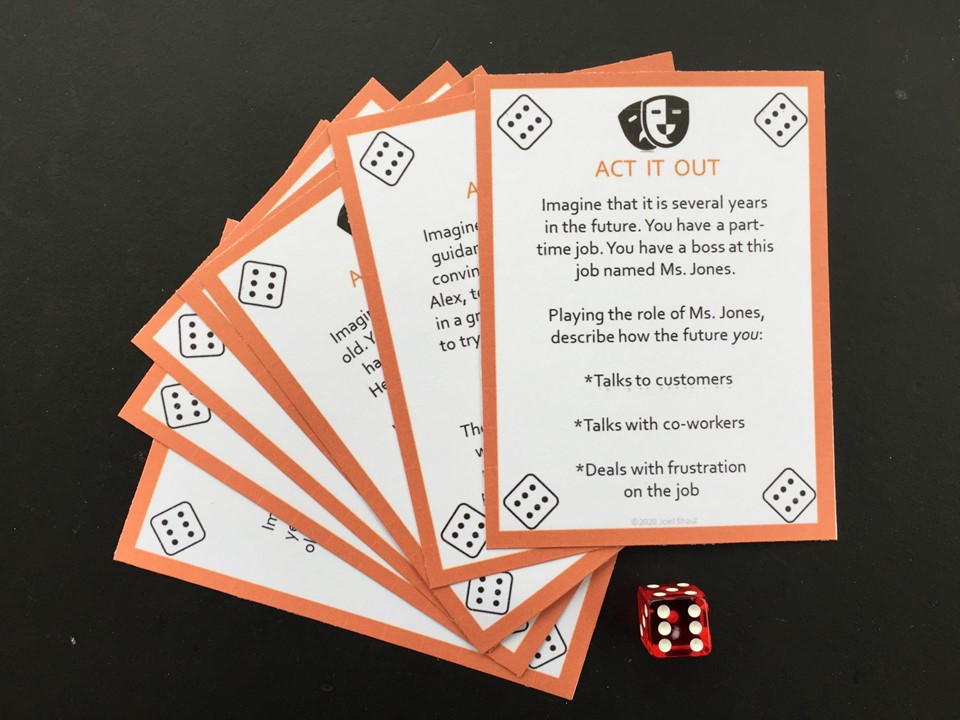
The Act it Out cards set up short role play scenarios on various social dilemmas described on the cards. Here is an example.

There are many ways to use these cards, in individual therapy, small group, or classroom settings.

There is a similar set of cards available on a specific young adult theme, preparing for the workplace. They are called Workplace Preparation Q & A cards.

Your comments on these resources are most welcome, and often helpful. Click HERE to send an email.

Your Interests Promo image for website

Say Something Nice – free social skills “board game” to easily play remotely in telehealth therapy

For the free Boom Cards version of this activity, click HERE.

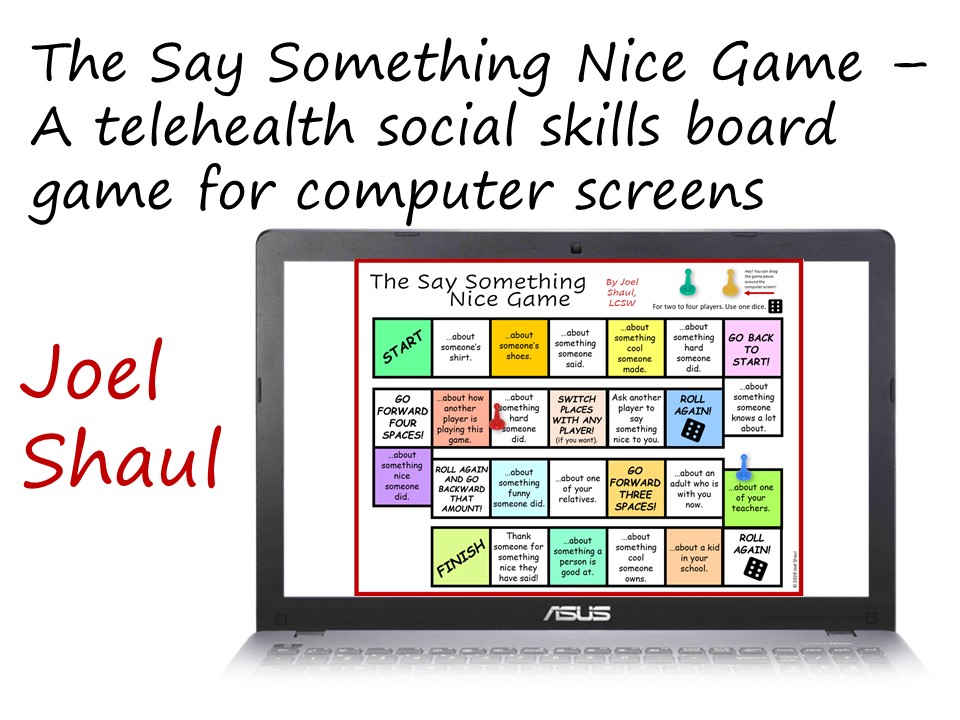
The use of affirming, supportive and validating language is fundamental in social interaction, and all children need to learn how to do it. Many kids with autism need special help to learn and practice this set of skills. This free resource is a “board game” on the theme of “saying something nice” to others. It’s set up to play on a computer screen, and you can move the game pieces around easily with your computer cursor.

The images below walk you through the set-up, introduction and application of this child-friendly social skills activity. In my own work, I found that children usually like it a lot.

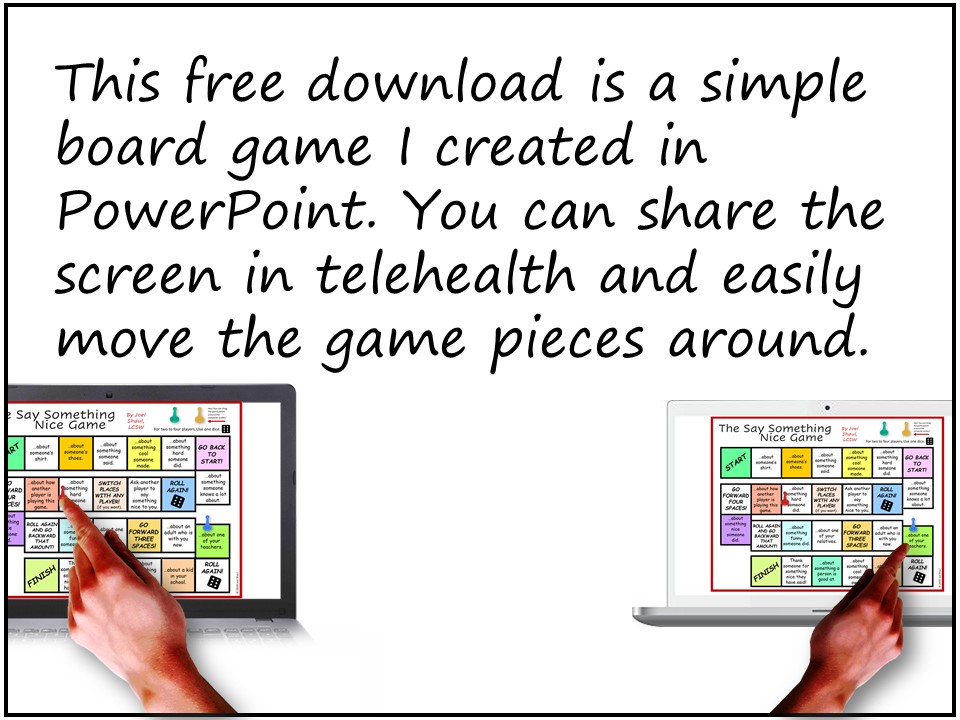
This free download is a simple board game I created in PowerPoint. You can easily move the pieces around the board with your computer cursor.
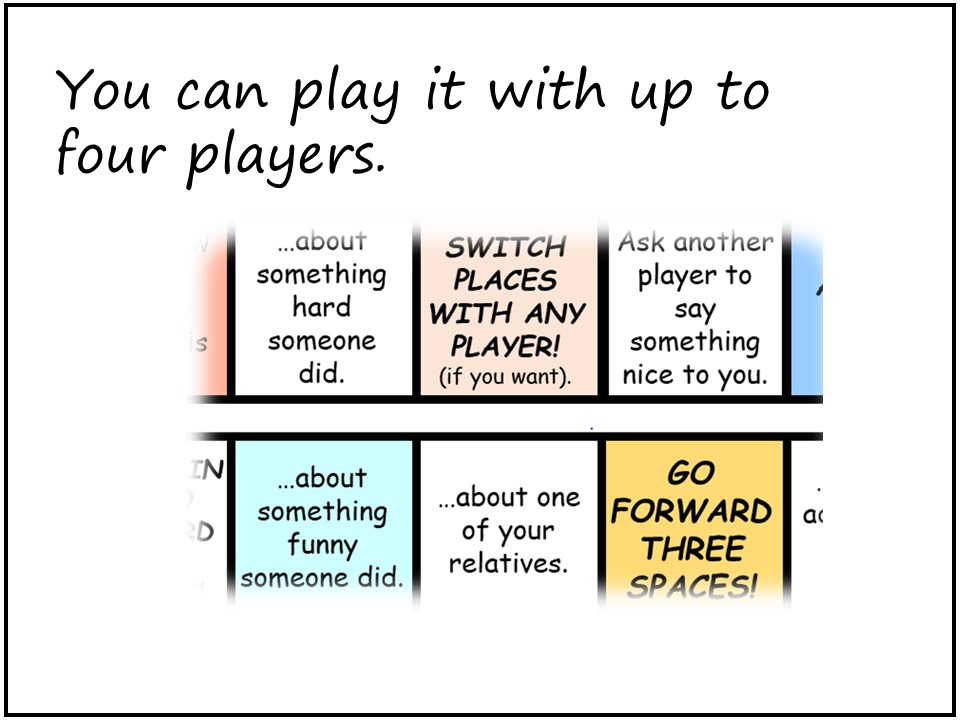
You can have up to four players.
There is another free download that allows you to create your own game.

Your comments on these resources are most welcome, and often helpful. Click HERE to send an email.

Here are some other free resources to help children with autism to learn and practice giving compliments.

How to Play Compliment Tag

Paper Fortune Teller for Compliments

Compliment Picture Panels

Compliment Worksheets

Validation “Cool, Awesome” Word Prompts

Game-like elements for teaching social skills to children with Asperger’s and other autism spectrum disorders, Part 1

Teaching social skills to children with autism spectrum disorders can be much more effective when it is engaging and fun.  By the time children with autism ends up in our classrooms  or psychotherapy offices, they are often feeling pretty weary and discouraged with their problems.  If we don’t introduce some elements of levity, we may lose their attention altogether.

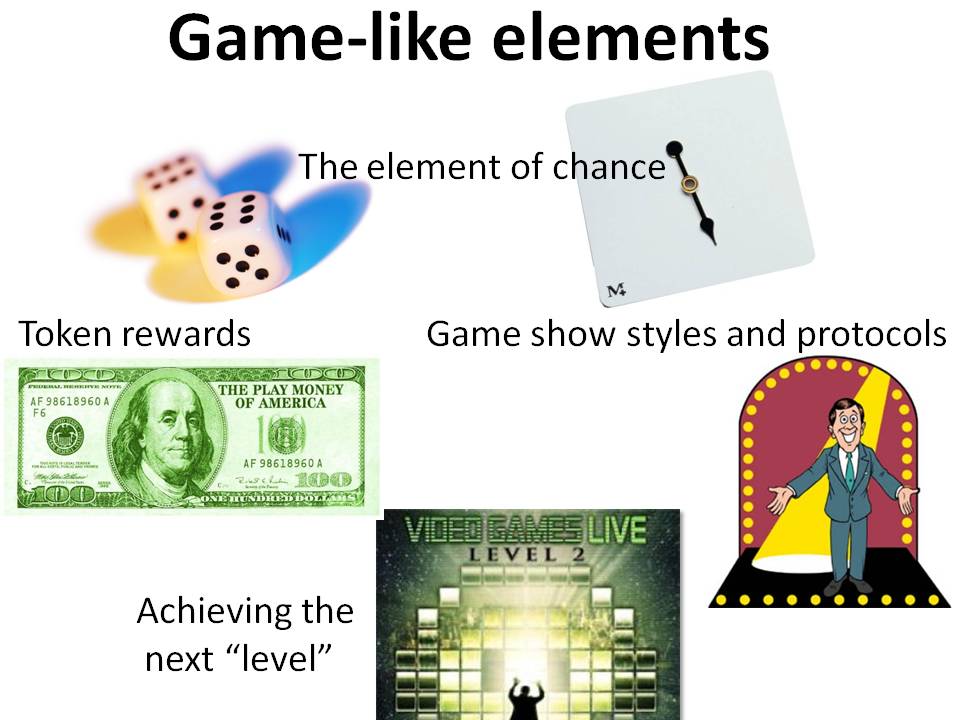
Here are some tips for making your social skills training engaging and “game-like.” Much of this is summarized in this Youtube video, check it out: http://bit.ly/x9TvvO

Use the element of chance to make your social skills teaching seem like a social skills game
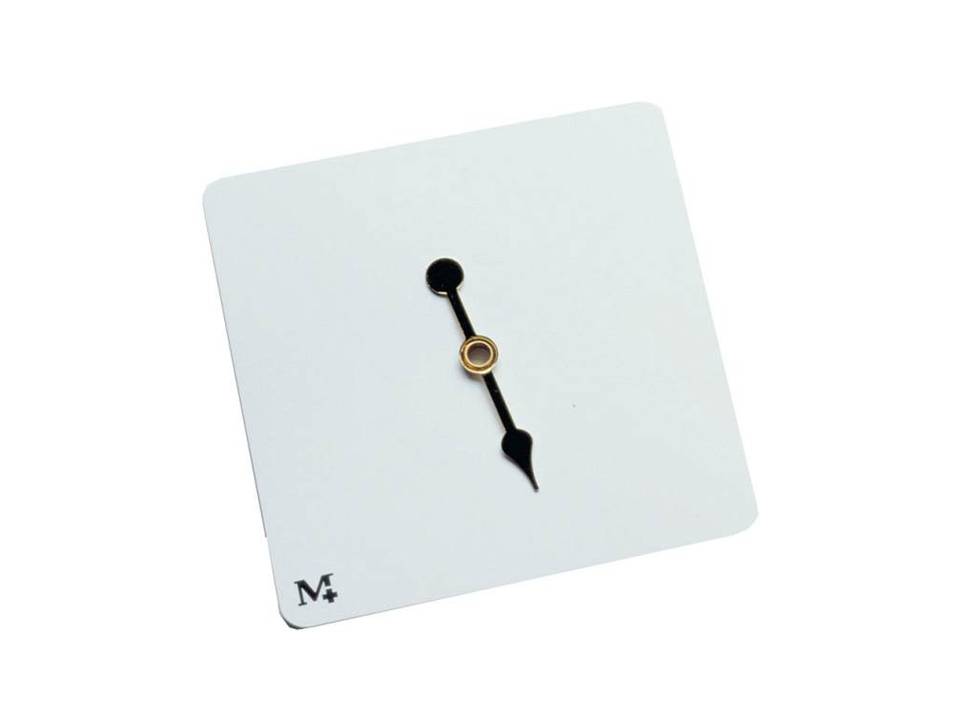
  1. Introduce the element of chance. A simple way to do this is to use some dice, or a blank spinner (available from teacher supply stores).

Here is an example:  “Kids, we are going to play the compliment game today.  A compliment is when you say something nice to someone about  how they look, or about what they do, or about how they are.  When it is your turn, if you roll a one or two with the dice, you have to give someone a compliment here about how they look.  If you roll a three or a four, give a compliment to someone about what they are doing.  If you roll a five or a six, give a compliment to someone about how they are (nice, funny, smart, fast, clever, etc.)”

Customize a blank spinner to create social skills games for students/clients on the autism spectrum

social skills learning autism

You can download this cool play money that I made! Click here.

2.  Use tokens or scoring systems. These fall into two categories.  The first kind of scoring system is to give out token objects (play money, marbles, etc.).  These you have the kids keep in cups so they are not overly distracted by them.  The second scoring system is to create a score board.  Simply write the names of the children on a dry erase board, and add a hatch mark next to their names each time they score. (This is the preferred system if your kids on the autism spectrum get distracted by wanting to touch and handle the token items.)

Use “levels” to add interest to social skills lessons and social skills training

3.  Use achievement levels. Most kids on the autism spectrum play a lot of video games.  Video games are usually all about “levels” and getting from one level to the next.  Here is an example of how to incorporate this into an activity teaching compliments: “Kids, there are three levels of giving compliments.  We are going to play a compliment game.  Who will get to level three?  Level one is easy.  You say something nice about how someone looks.  Level two is harder.  You have to say something nice about the thing the person is doing.  Level three is the top level.  You have to know the person well enough to know their special inside qualities, like “Generous,” “Smart,” or “Helpful.”

Create a “game show” to turn the social skills lesson into a social skills game

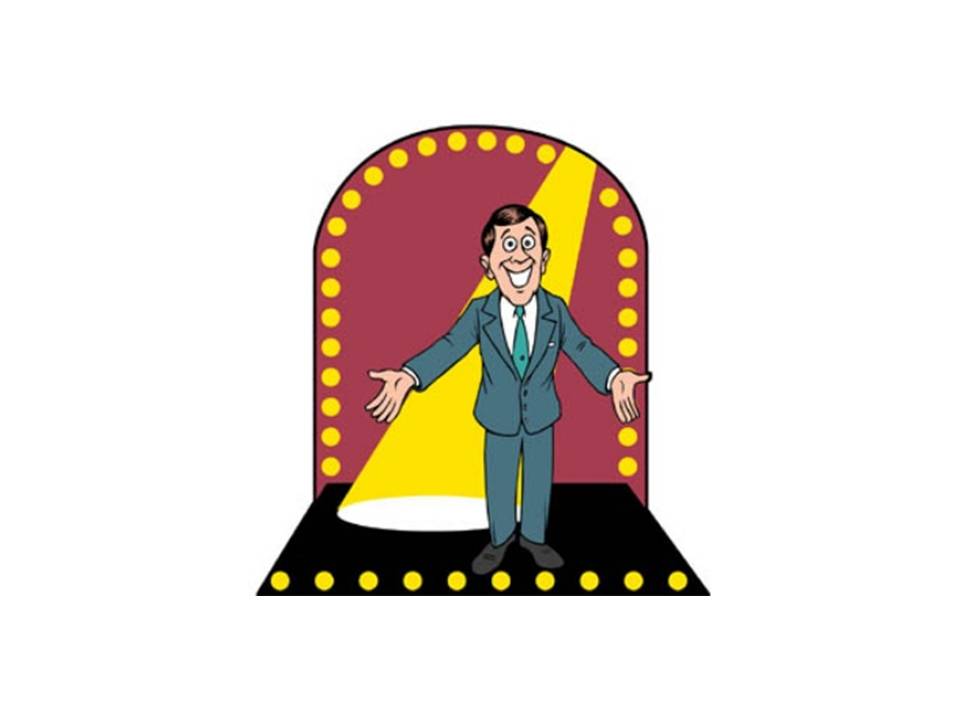
4. Build in Game-show elements. Children with autism spectrum disorders seem to appreciate it when their counselor or teacher is willing to pretend to be a game show host.  Copy and print out the picture of the game show guy shown in the picture above, and stick it on the wall.  If you want to get fancy,  play game show music. Here is a link to Jeopardy music sound clip: http://www.youtube.com/watch?v=vXGhvoekY44 Then,  abandon your professional decorum , and say something like this: “Kids, welcome to the Elmhurst School Game Show.  I am your host, Ms. Apple.  Today, we are going to test people’s ability to give compliments.  Please welcome our first contestant, Tiffany.  Tiffany, come on down!”

I wish you good luck with introducing levity and game-like qualities to your social skills training for kids on the autism spectrum.

Joel Shaul, LCSW

Your comments on these resources are most welcome, and often helpful. Click HERE to send an email.

Compliment tag, game to teach kids with ASD an important social skill
Many young people on the autism spectrum have difficulties with the skill of giving and receiving compliments.  They might not see the point in saying something kind or flattering to another person. They tend to miss opportunities to use kind words to strengthen relationships with others.

Here is a fun and hilarious game I have used with all ages of kids, from six to 18.

Tell the kids:  “This is Compliment Tag.  A compliment is when you say something nice to someone — about the way they look, something they have, something they did, something they said, or they way they are.  When you play Compliment Tag, the person who is “it” tries to tag you.  To keep from becoming “it,” you have to give this person a compliment quickly before they tag you.  If they tag you before you can give them a compliment, then you are ‘it.’ ”

Easy Compliment Tag:  Compliment something the person is wearing, hair, shoes, appearance.

Harder Compliment Tag:  Compliment something the person is good at.

This is a social skills activity for kids on the autism spectrum that seldom fails to engage kids.  Enjoy it.

Joel Shaul, LCSW

Here are some other free social skills resources for children with ASD to teach giving compliments.

Validation “Cool, Awesome” Word Prompts

Compliment Worksheets

Compliment Picture Panels

Say Something Nice Board Game

Paper Fortune Teller for Compliments

Your comments on these resources are most welcome, and often helpful. Click HERE to send an email.

______________________________________

The Conversation Train Book

 Green Zone Book Cover Click to Learn More