Hoja de trabajo y tarjetas ilustradas para enseñar acerca de escuchar

[In English.]

Imágenes y palabras simples para ayudar a los niños autistas a mejorar sus habilidades de escucha

A los niños autistas les puede resultar muy difícil a veces escuchar con mucha atención lo que dicen otras personas. A veces se distraen con cosas más interesantes cercanas. El niño autista también puede distraerse con sus propios pensamientos internos.

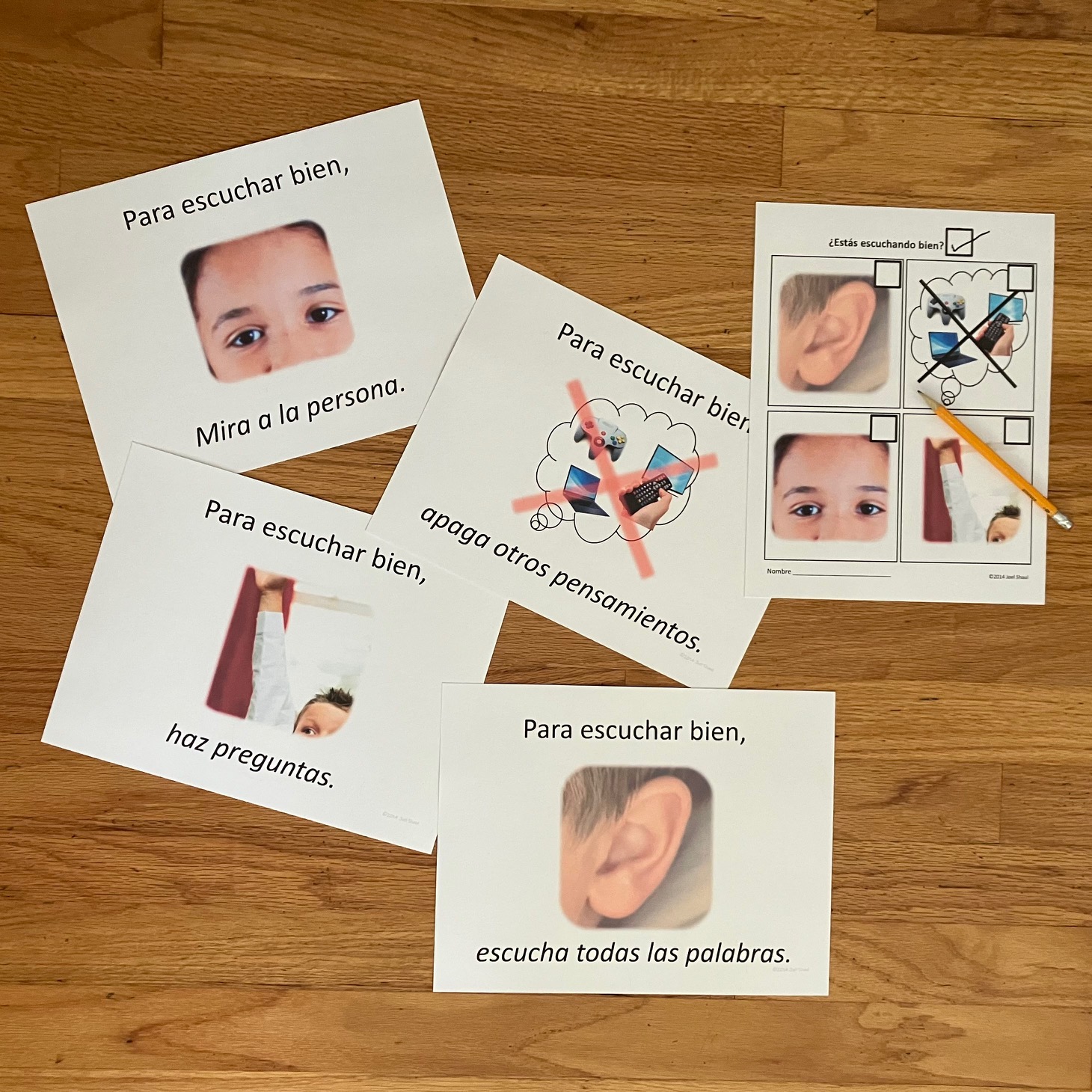
He hecho estas sencillas hojas para ayudar a los niños a prestar atención cuando habla el profesor u otra persona.

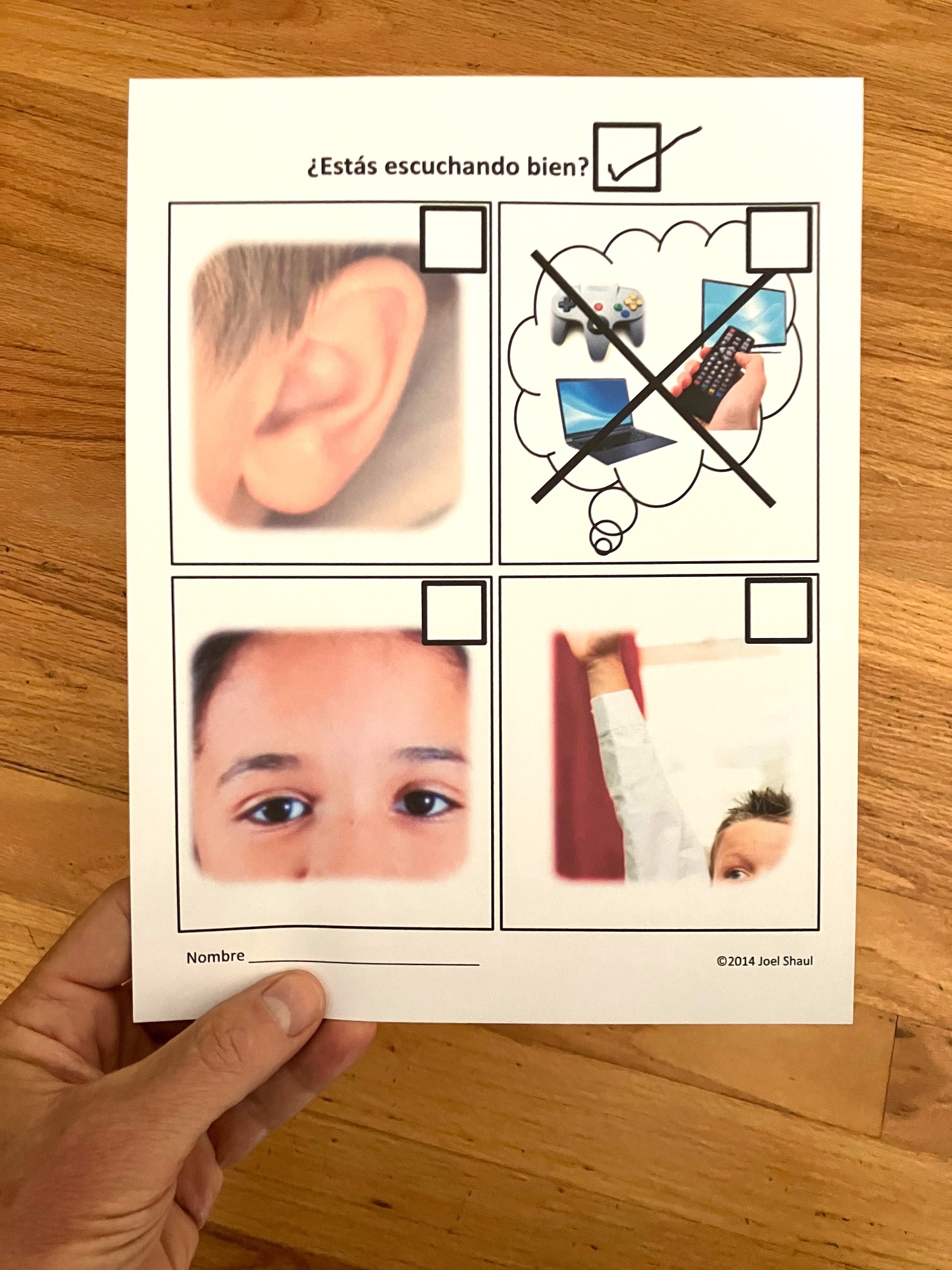
Aquí hay una sugerencia sobre cómo usar la primera hoja. Póngala en el escritorio del niño. Puede poner marcas de verificación en la hoja, ya sea una o varias veces, para indicar qué tan bien parece estar escuchando el niño. También puede usar pegatinas de recompensa.

Cómo usar las otras cuatro hojas

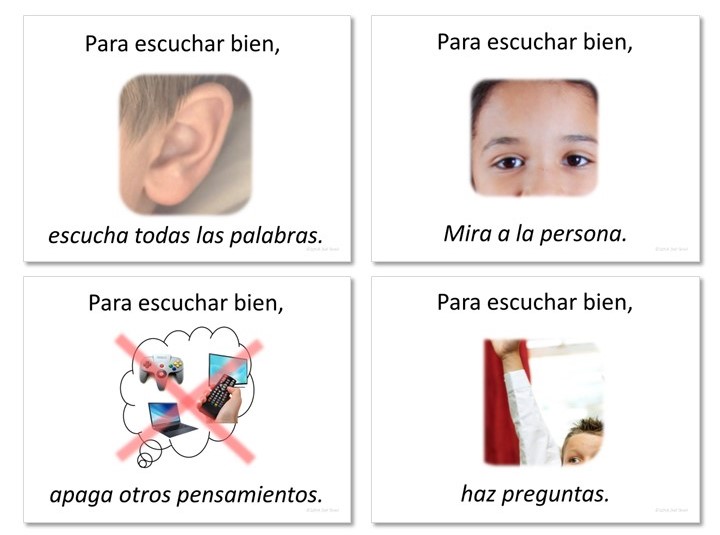
Diseñé estos con un lenguaje simple para que puedan usarse con una variedad de edades. Así es como se verían enla pared de su aula u oficina.

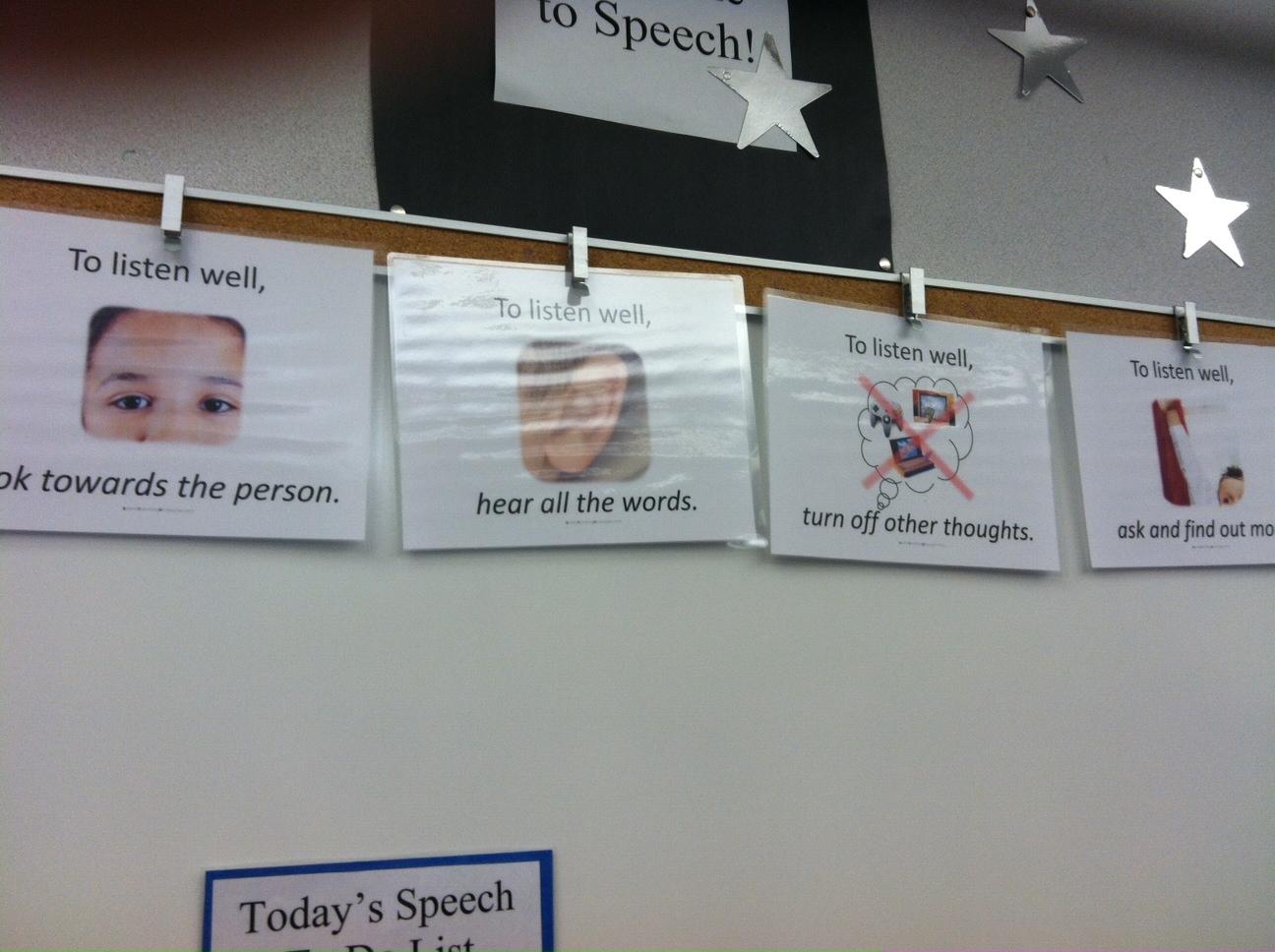
A speech language professional in California sent in this photo.

Espero que esto sea útil para usted y sus estudiantes.

Joel Shaul

The Learning Center, June 9 2023 Links to Featured Resources

Here are links to the resources featured in my presentation. They appear here roughly in the order that they were presented.

All of my 100+ free downloadable resources

My 6 published books

All of my 100+ free downloadable resources

All of Joel Shaul’s Boomcards

Token money for social skills work

Nonverbal communication picture prompts

Are You Listening sheets / prompts

Voice Volume Control-o-meters

Validating phrase cards

Train Conversation printable kit / screen-based kit

Pie chart talking visuals

Don’t interrupt “buffering” illustrated social story

Green Zone Venn diagram conversation worksheet

Green Zone picture cards

Green Zone Mat – How to make & use one

Talk to family picture sheets

Head outline PowerPoint picture activity

Self control channel changer for conversation topics

How to use a toy balance for conversation & social skills work

How Interesting is it? conversation kit

Paper fortune tellers – link to 15 pdf downloads and tutorials

All about me signs

Illustrated eBook on personal space / personal distance

Draw a pizza / draw a cookie drawing sheets

Customizable meters for conduct, emotions

Worksheets to explore social isolation

Make your own PowerPoint social/emotional skills board game

The Fix the Problem Game

Google Street View for learning about peers

Growing Friendship Cards, printable and on-screen

Google Street View for learning about peers

Silly to Serious Cards and panels for learning formality / informality

Google Street View for learning about peers

Tattling & Correcting Cards & Panels

Problem & Solution Cards kit

Anime emotion cards & worksheets

What I Should Have Done Different worksheet

Emotion word printables

Filter the Angry Words printable kit / screen-based version

CBT Videos for Kids, first of 8 videos

CBT thought bubble printables

Minting New Thoughts kit

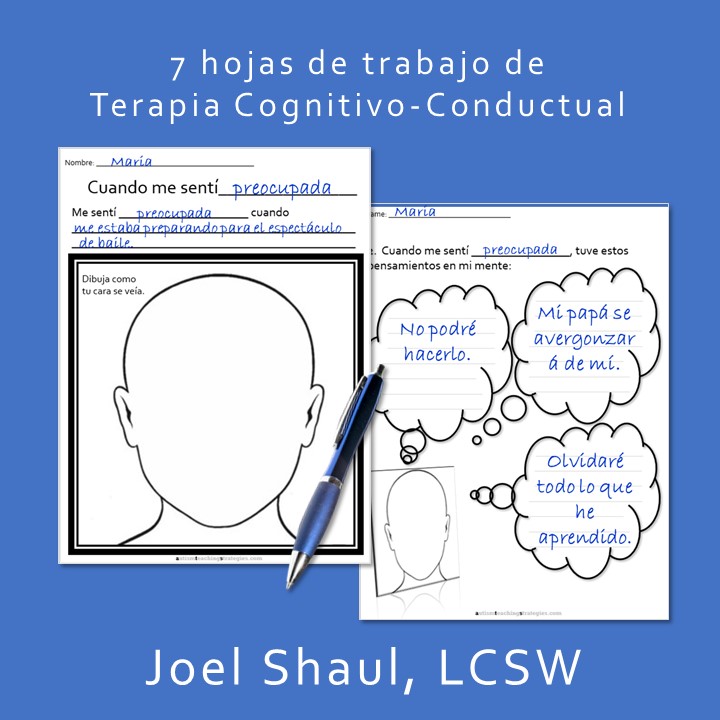
Simple CBT worksheets

Emotion thermometers

Flexibility Cards

Worry Cards

Words Hurt / Words Help worksheets

Two printable kits for empathy / showing concern

Escalador de Control de Volumen de Voz para niños con autismo

( Controles personalizables para otros comportamientos )

Voice Volume Control, in English

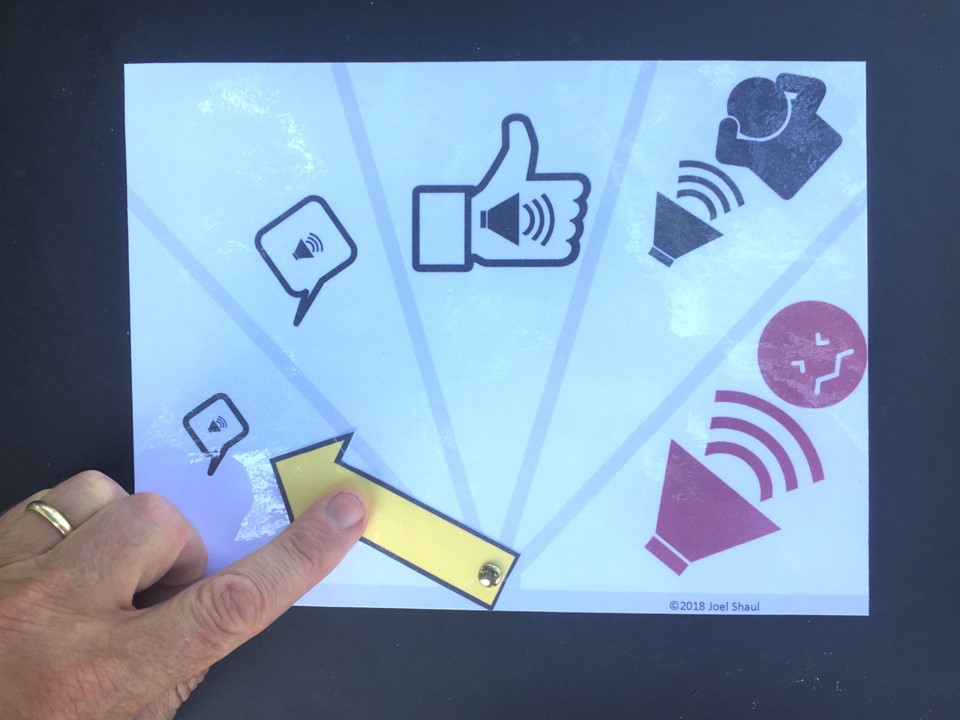
Para muchos niños con autismo puede ser difícil controlar el volumen de su voz en diferentes contextos sociales.

Por lo general, se debe a que es difícil imaginar qué tan fuerte o suave puede sonar su voz para otra persona. Este controlador de volumen puede ayudar a que un niño sea más consciente de cómo suena su voz para otras personas.

Como hacer el Escalador de Control de Volumen

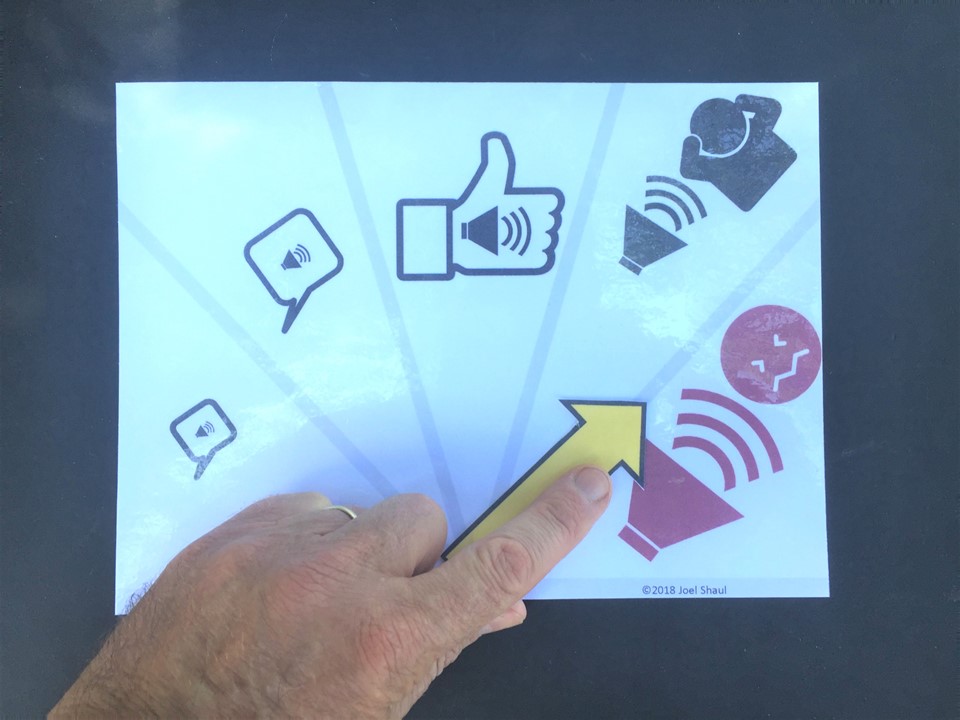
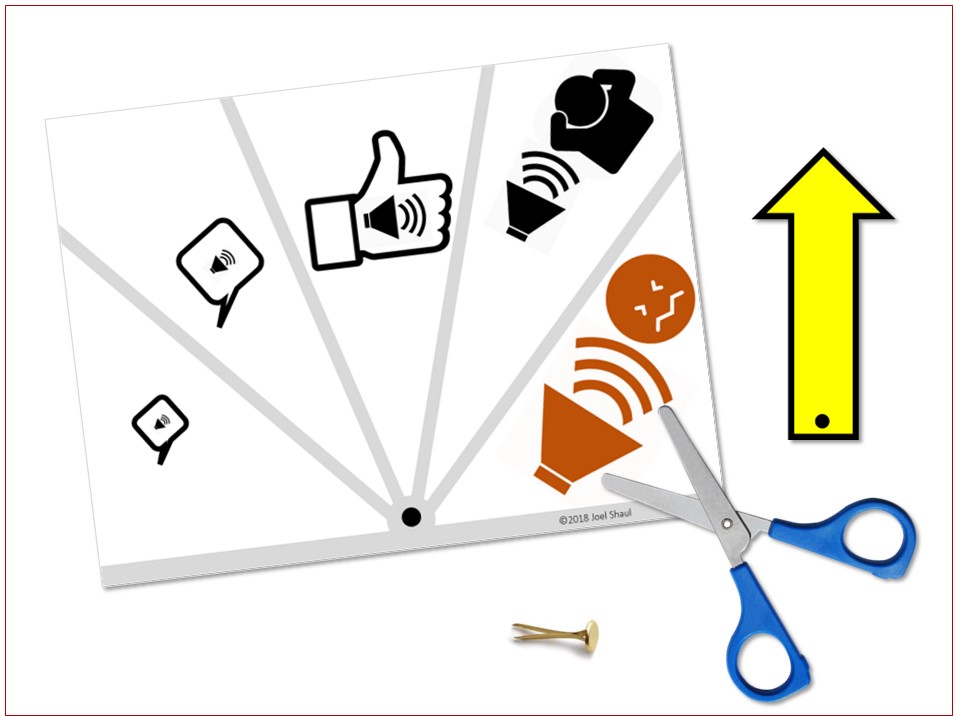
Imprima las páginas 3 y 4 de este pdf. Recorte la flecha.  Plastifique todo si puede.

Use un sujetador de metal flexible para sostener la flecha.

Deje que el niño lo ayude a imprimirlo y recortarlo.

El Escalador de Control de Volumen es útil tener en algunos salones de clase. Puede ser útil en logopedia. Déselo a las familias para usar en casa.

Espero que esto le sea útil en su trabajo.

Joel Shaul, LCSW

Fichas Sobre Miedos- Tarjetas de preguntas para aprender cómo afrontar la ansiedad

Original version in English: Worry Cards

La ansiedad afecta a niños y adolescentes de muchas maneras.

Hice estas fichas para ayudarles a aprender cómo afecta la ansiedad a su forma de pensar, a su cuerpo y a su comportamiento.

Creé estas tarjetas para utilizarlas con niños con autismo, pero muchas de ellas también se pueden utilizar con niños ansiosos que no tienen autismo.

Las escribí en inglés (“Worry Cards”) hace años. La mayor parte del texto de las fichas fue traducido por Juan Cano.

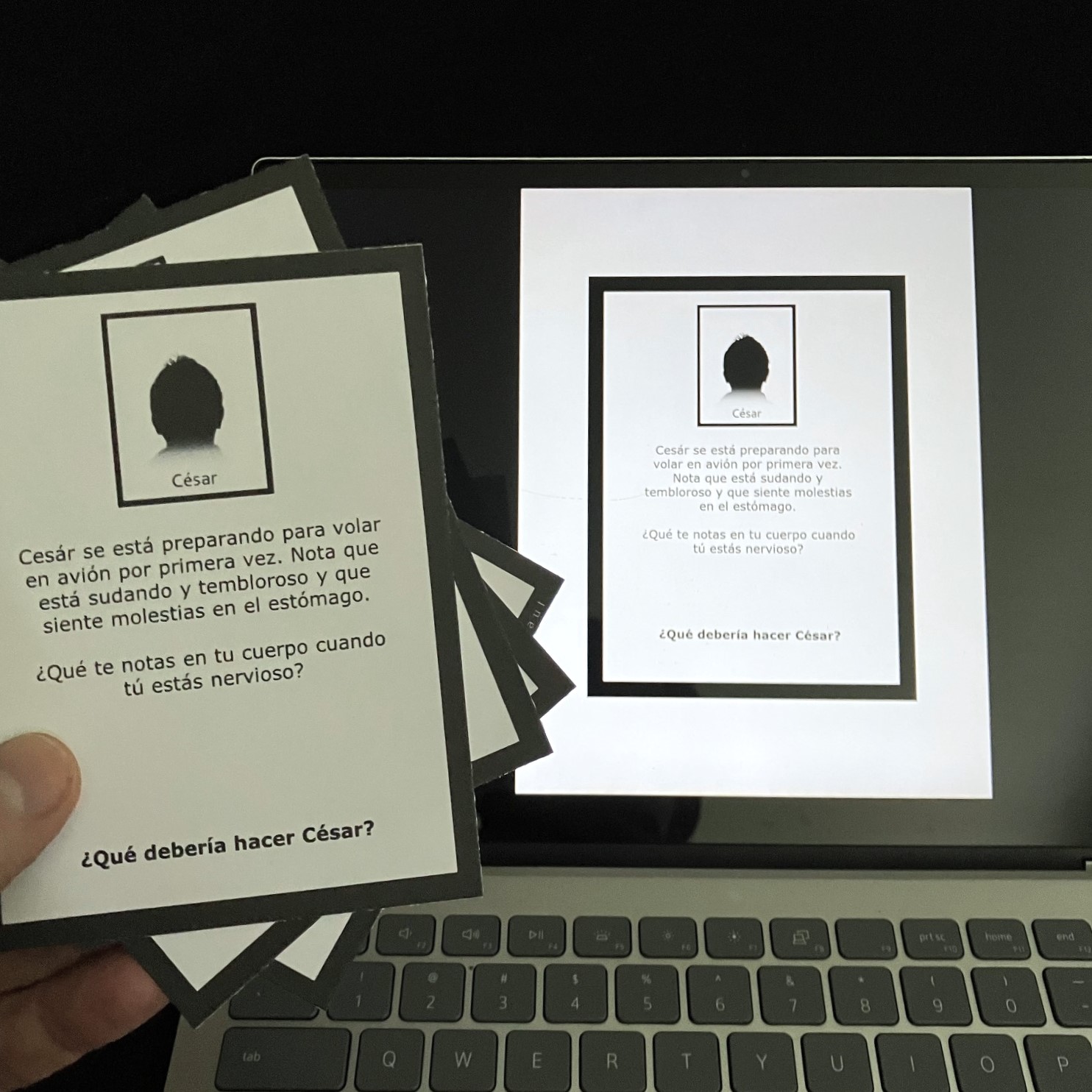
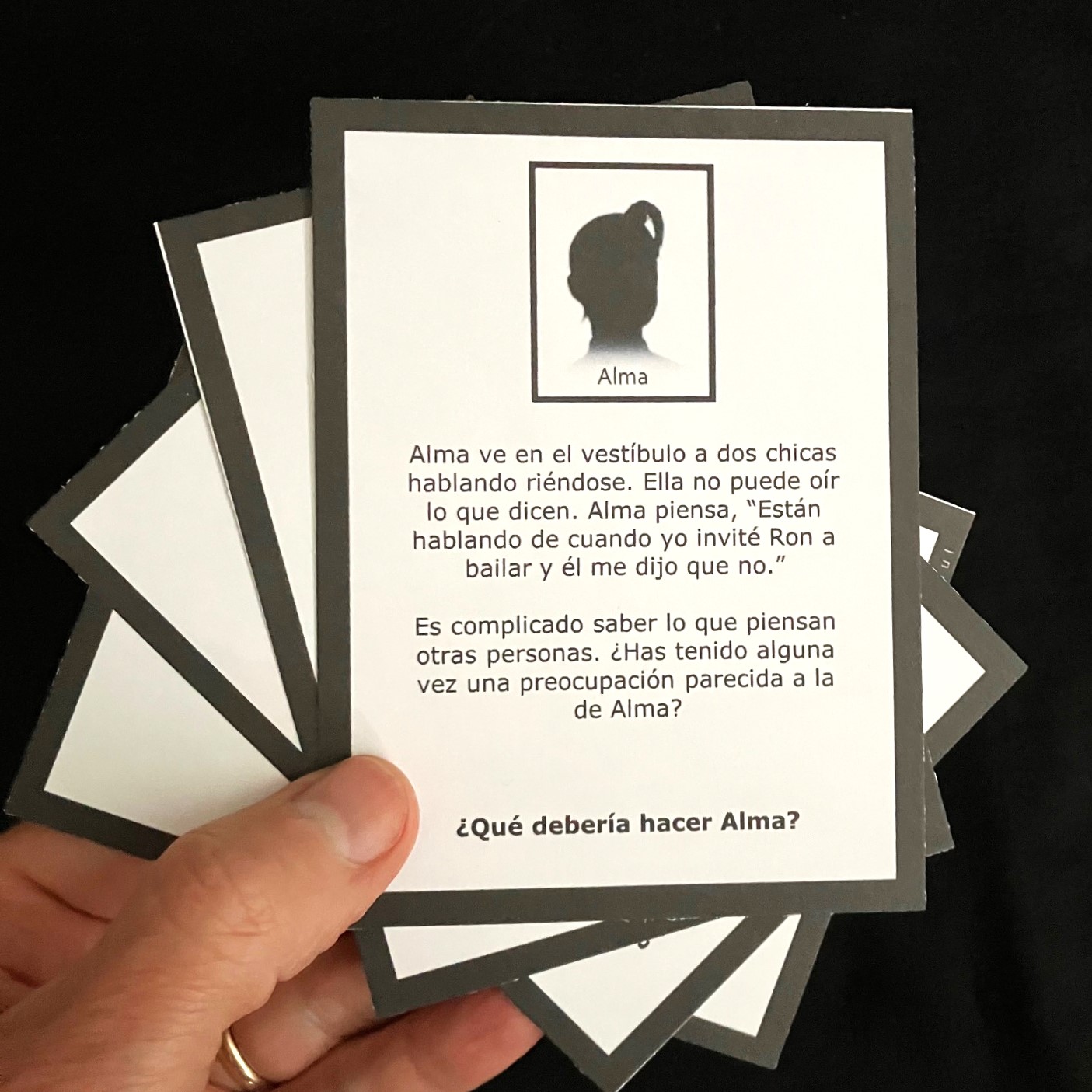
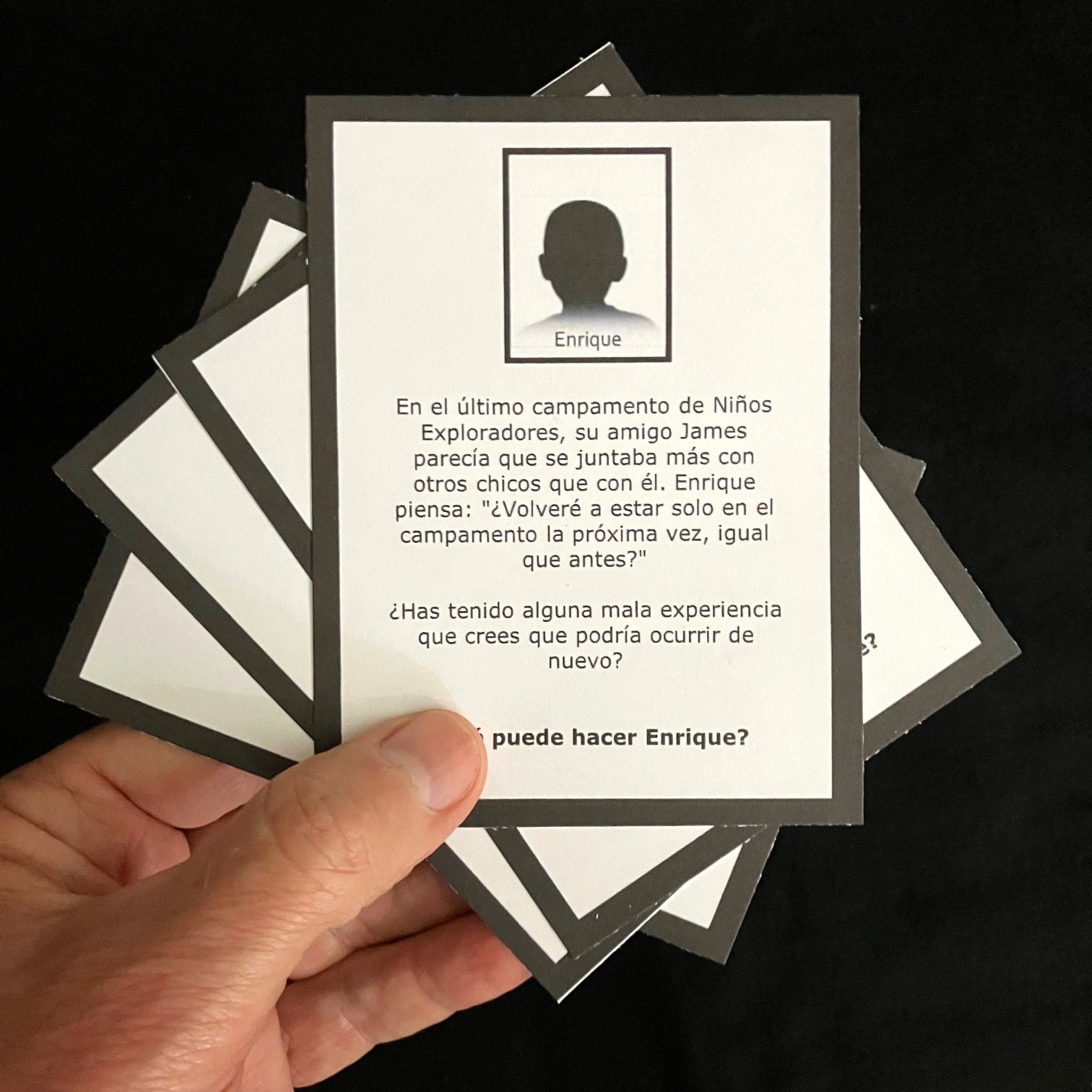
Puedes recortar las tarjetas o mostrarlas de una en una en el ordenador.

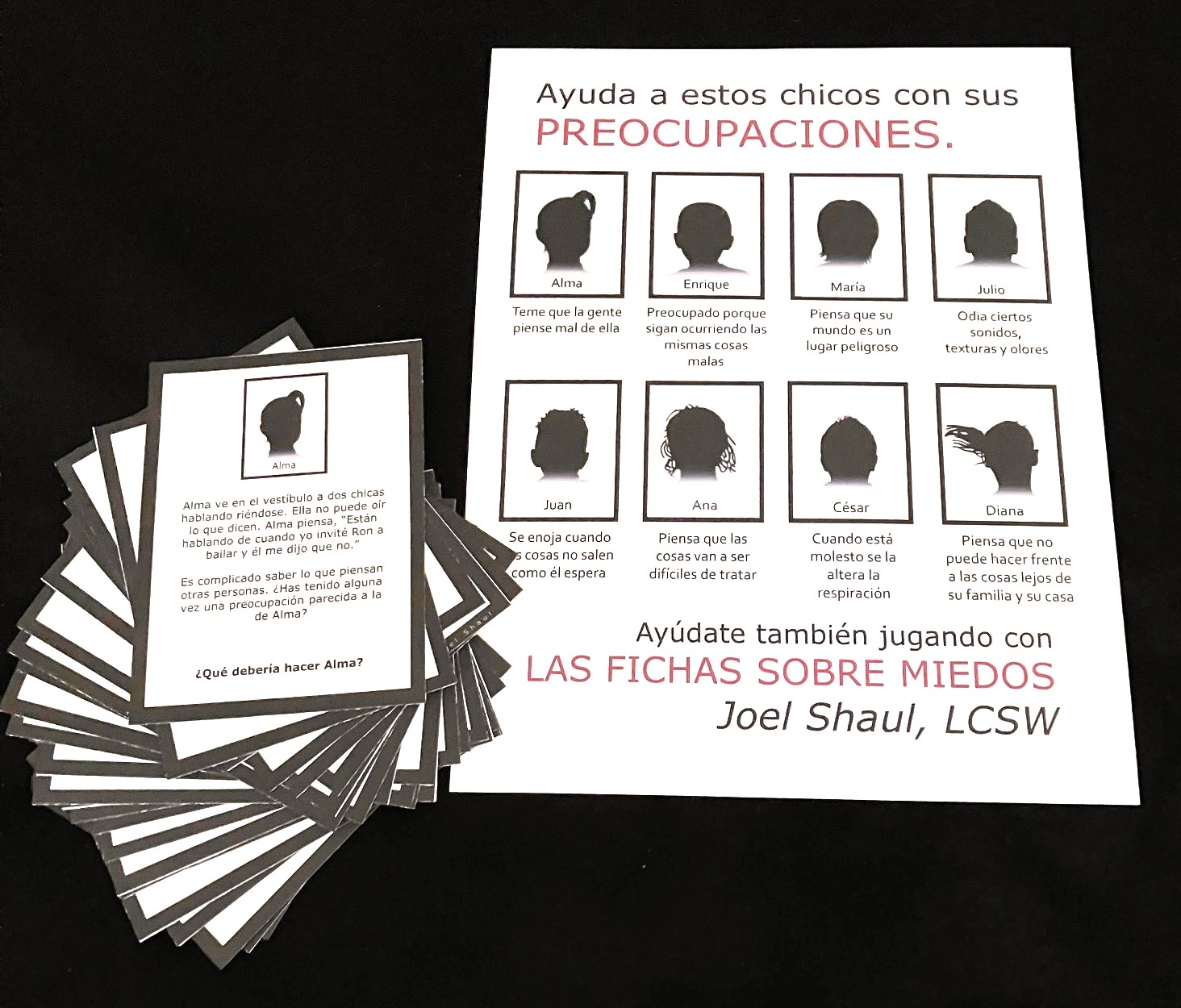
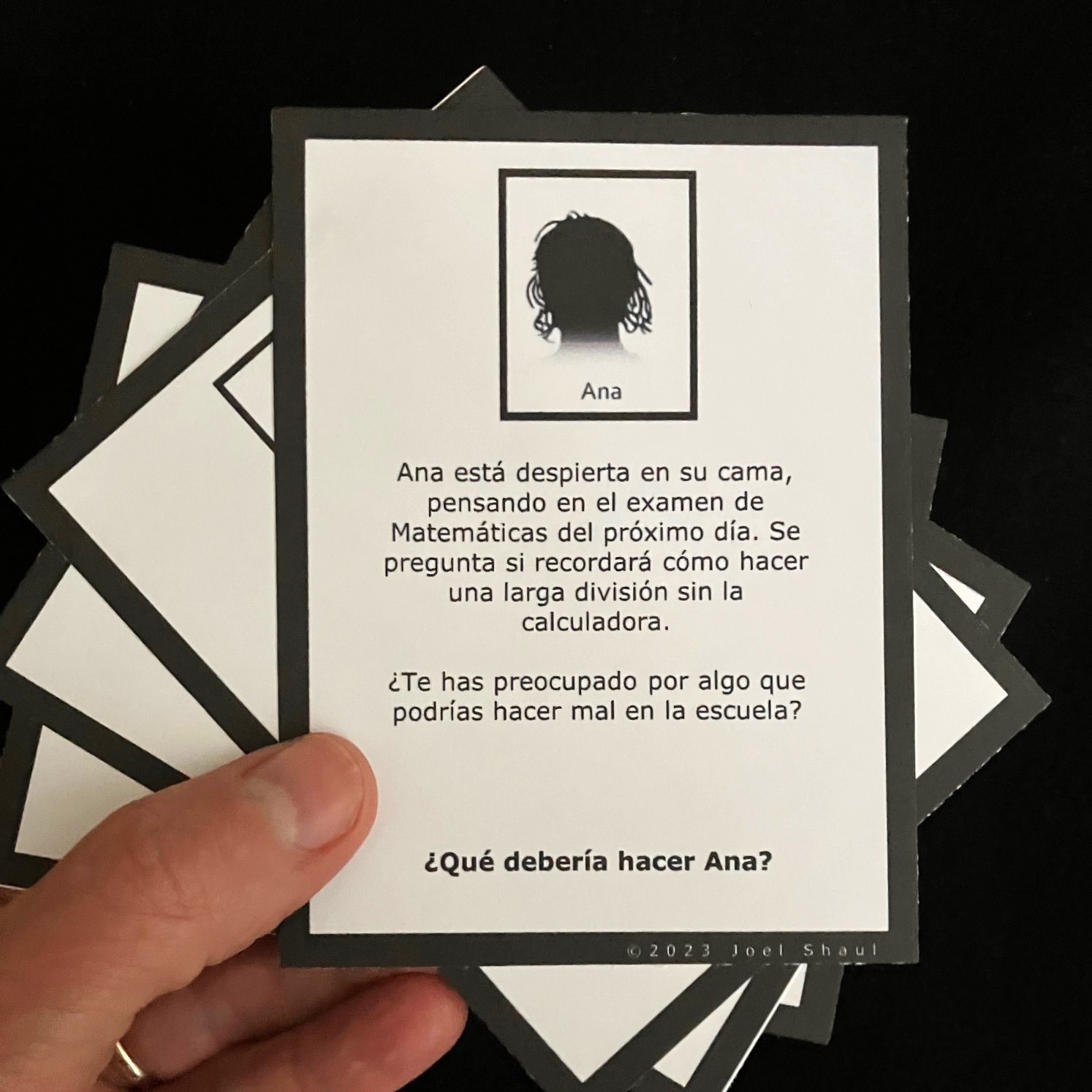
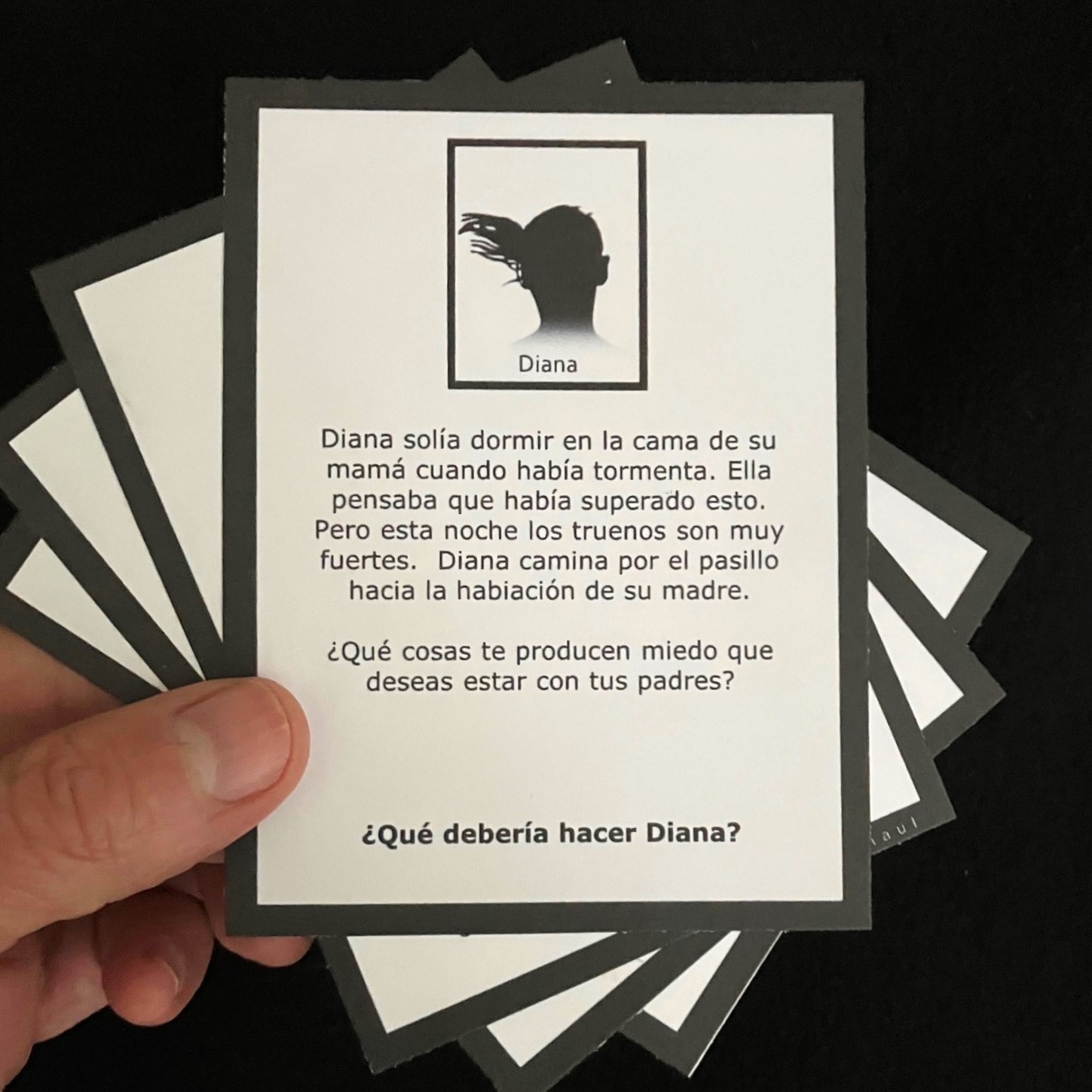
Cada uno de los ocho chicos que se muestran en las fichas tiene ansiedad de una manera distinta.

Alma teme que la gente piense mal de ella.

Enrique está preocupado porque sigan ocurriendo lasmismas cosas malas.

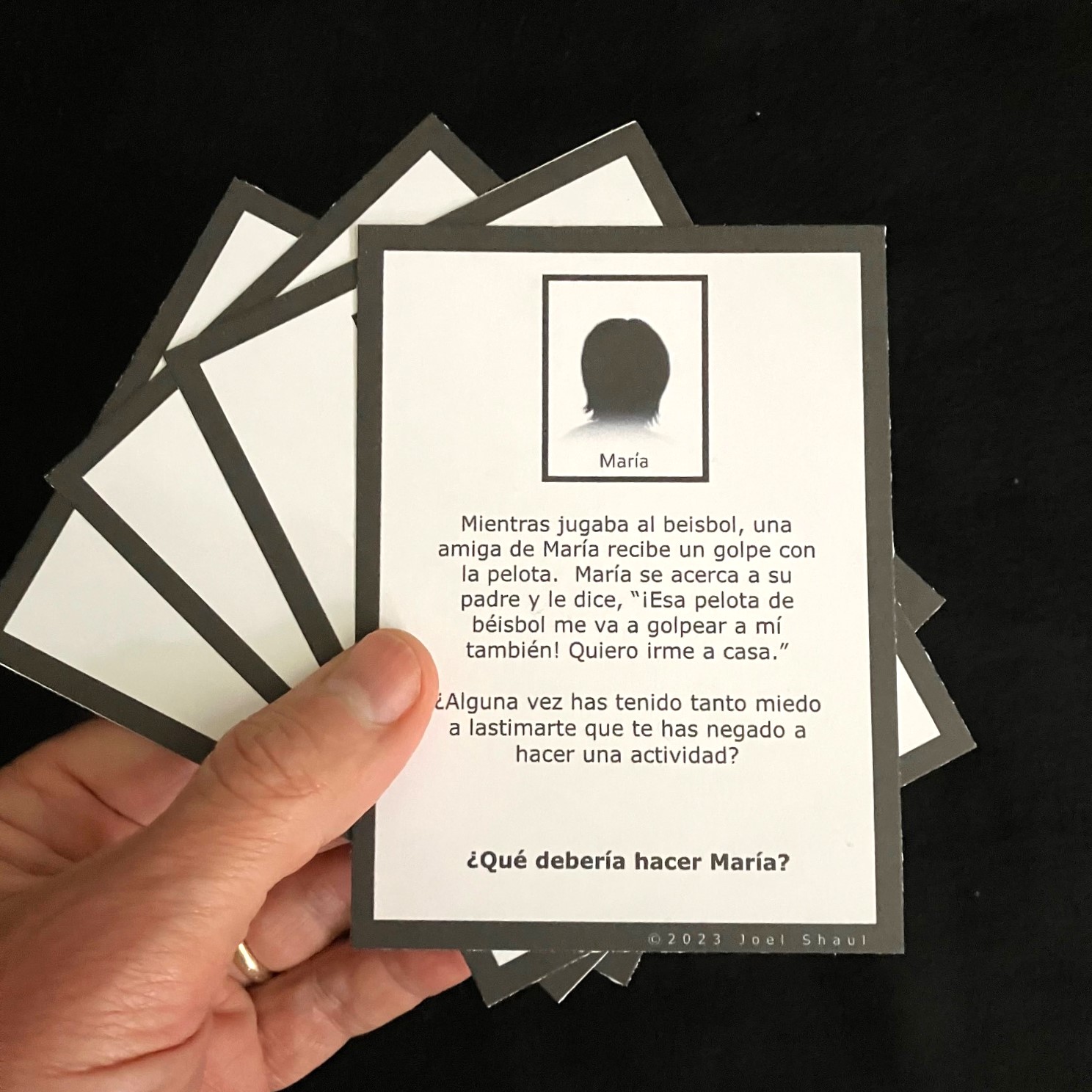
María piensa que su mundo es un lugar peligroso.

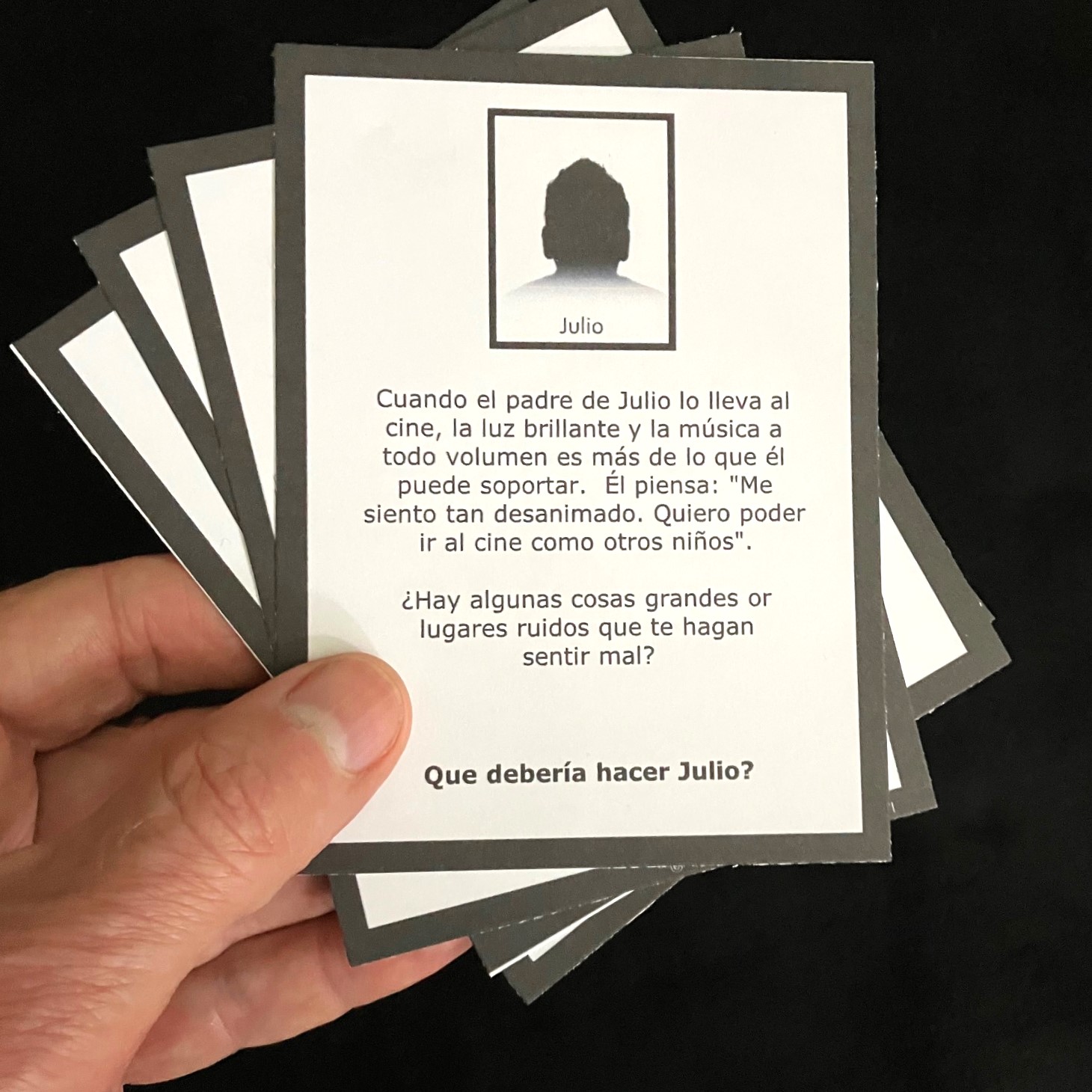
Julio odia certos olores, texturas y ruidos.

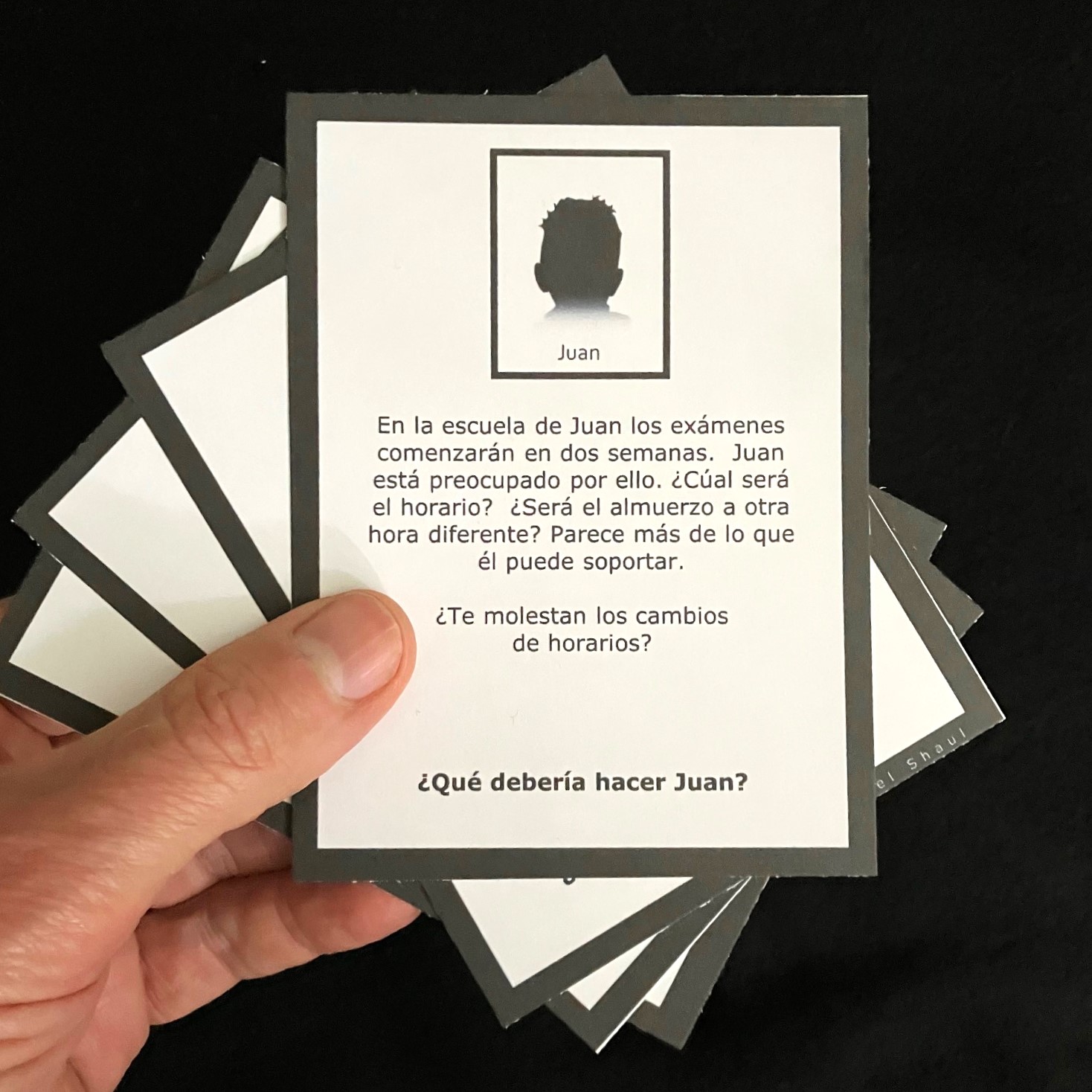
Juan se enoja cuando las cosas no salen como él espera.

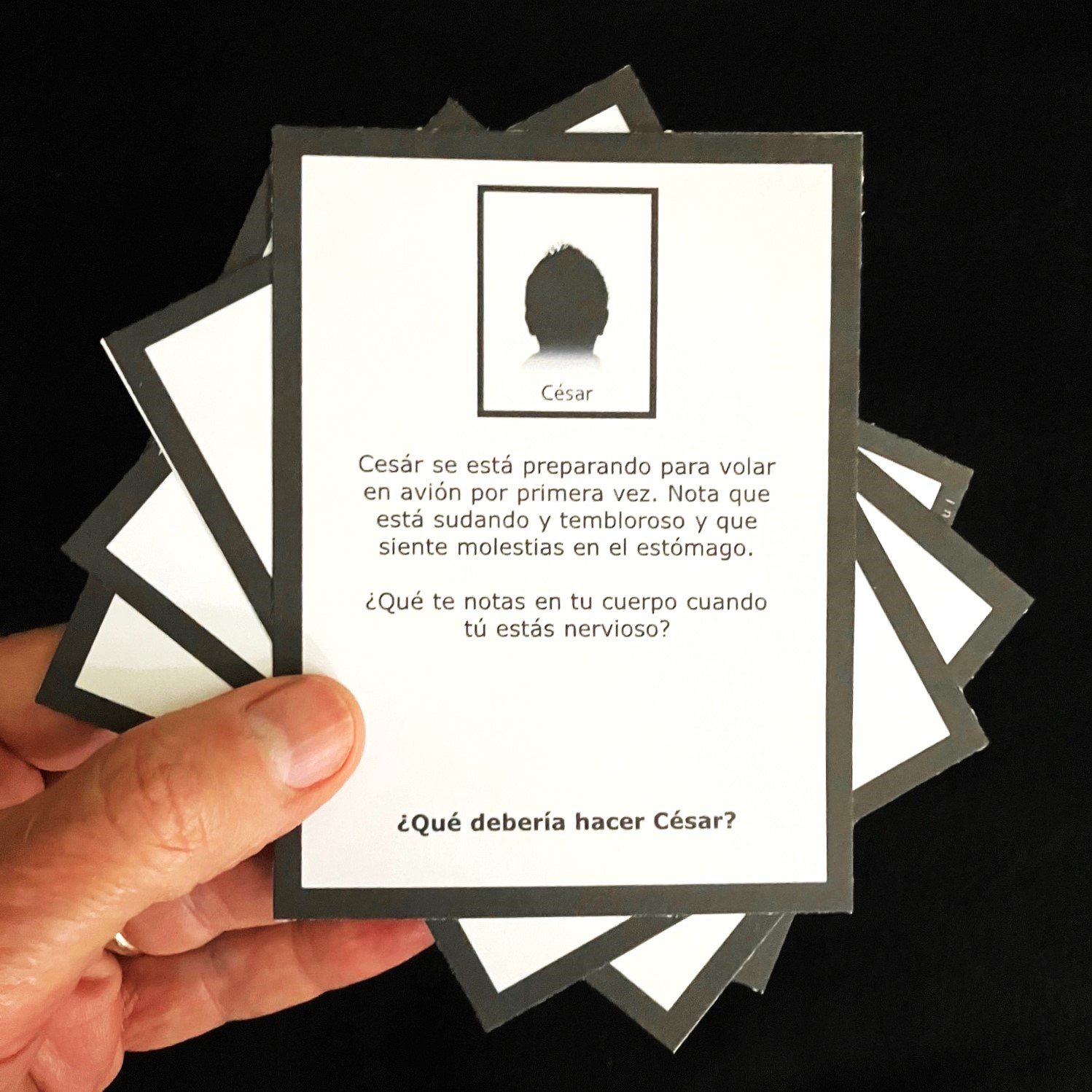
Cuando está molesto, César se la altera la respiración.

Ana piensa que las cosas van a ser difíciles de tratar.

Diana piensa que no puede hacer frente a las cosas lejos de su familia y su casa.

Para obtener información más detallada sobre el uso de estas tarjetas, siga este enlace.

He traducido al español muchas más fichas, tarjetas y otros materiales. Puedes encontrarlos en mi website.

Joel Shaul, LCSW

Tarjetas de la Zona Verde para practicar la conversación

The original Green Zone Conversation Cards in English

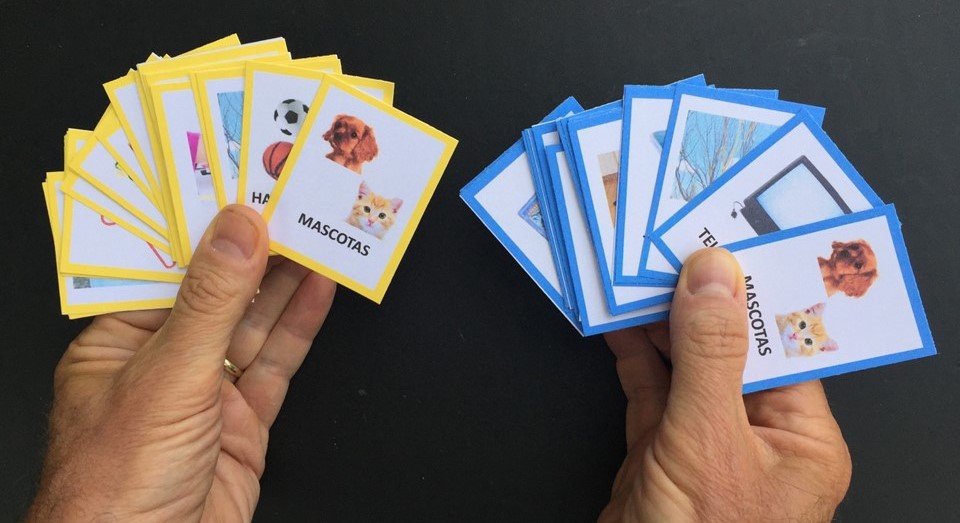
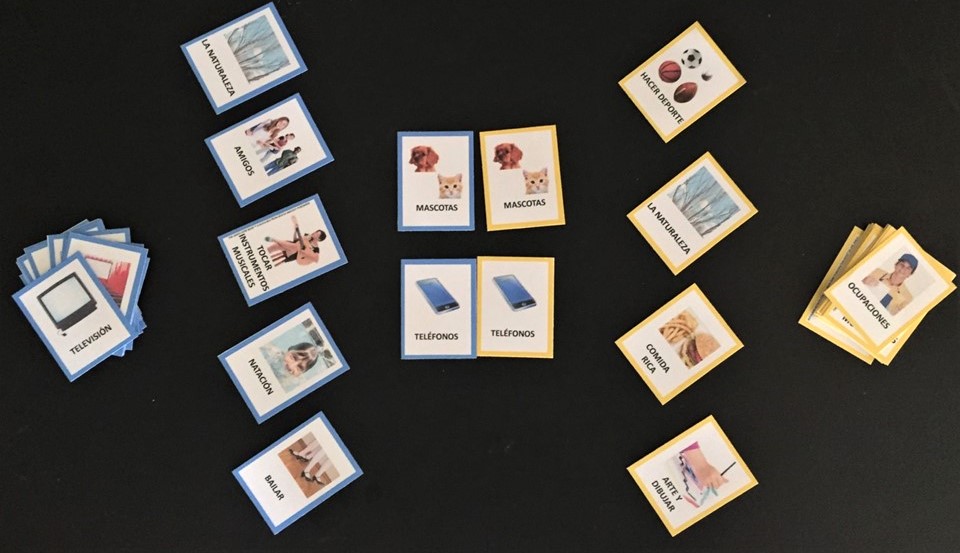
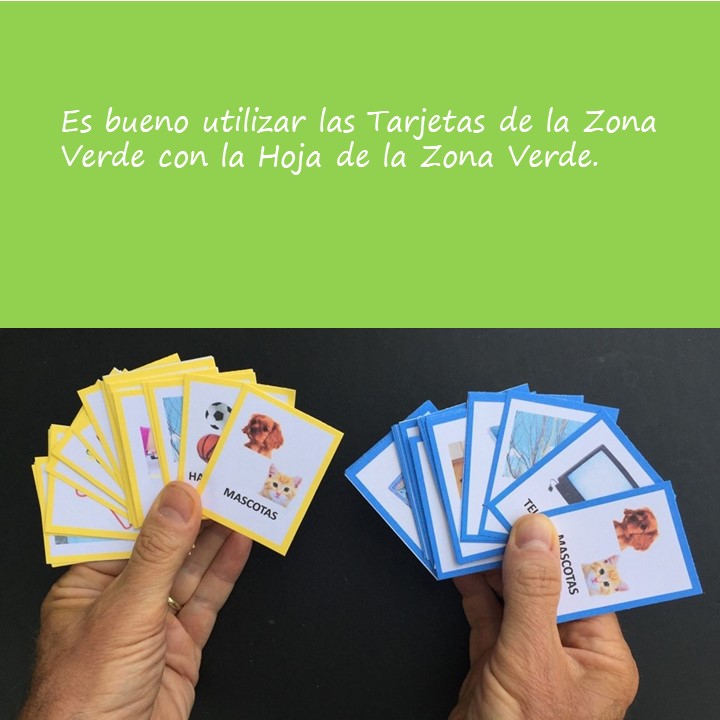
Dos barajas de 24 cartas ilustradas. Para ayudar a dos niños a encontrar cosas en común para conversar.

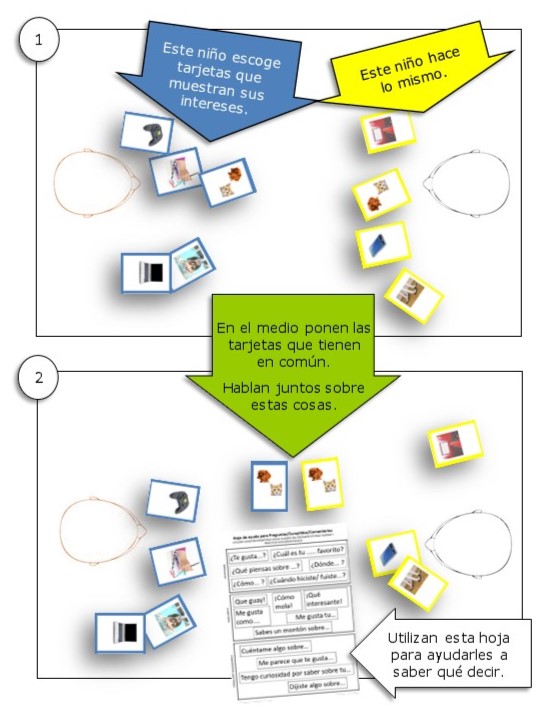
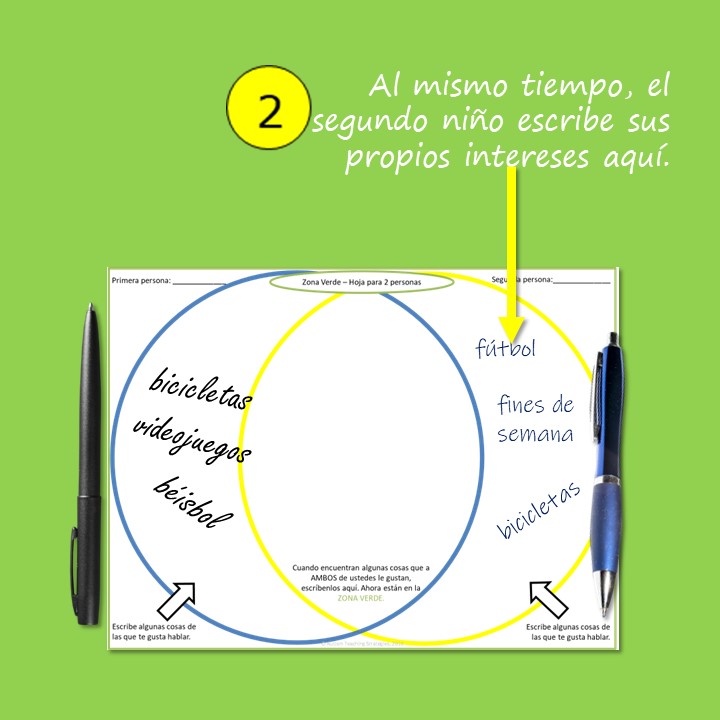
El primer niño escoge las tarjetas que le interesan. Mientras tanto, el otro niño hace lo mismo.

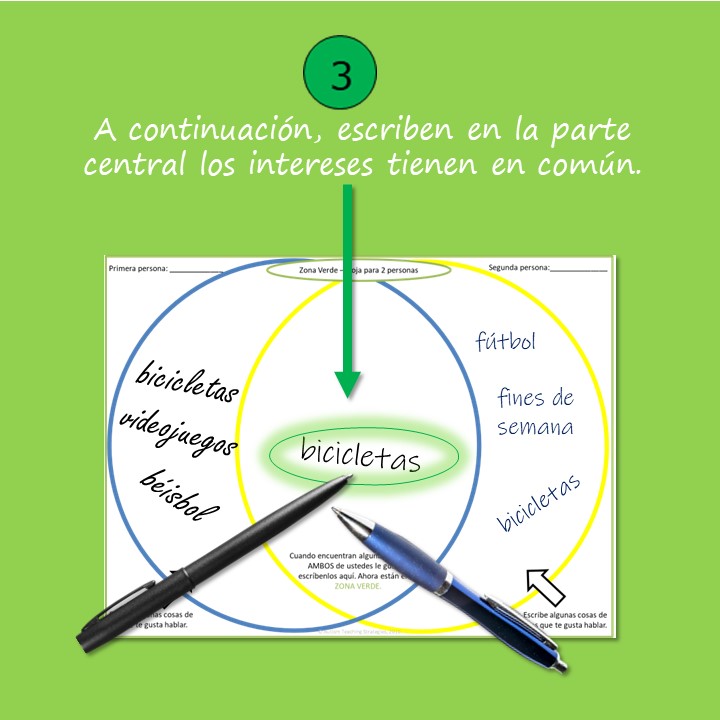
Después, los dos niños descubren qué tarjetas coinciden con las que ha elegido su compañero.

El adulto supervisa a los niños mientras hablan de sus intereses comunes.

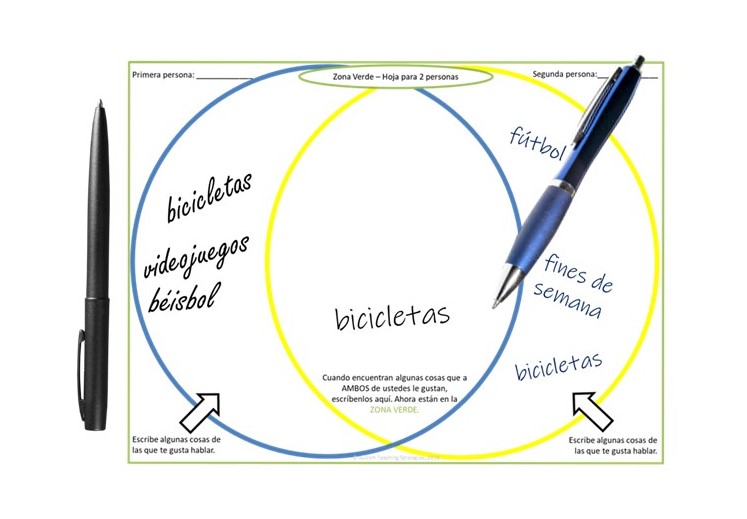
Si lo desea, puede utilizar las tarjetas en combinación con la Hoja de conversación de la Zona Verde para dos personas.

Espero que esta actividad te resulte divertida y útil. Aquí tienes más traducciones al español.

Joel Shaul, LCSW

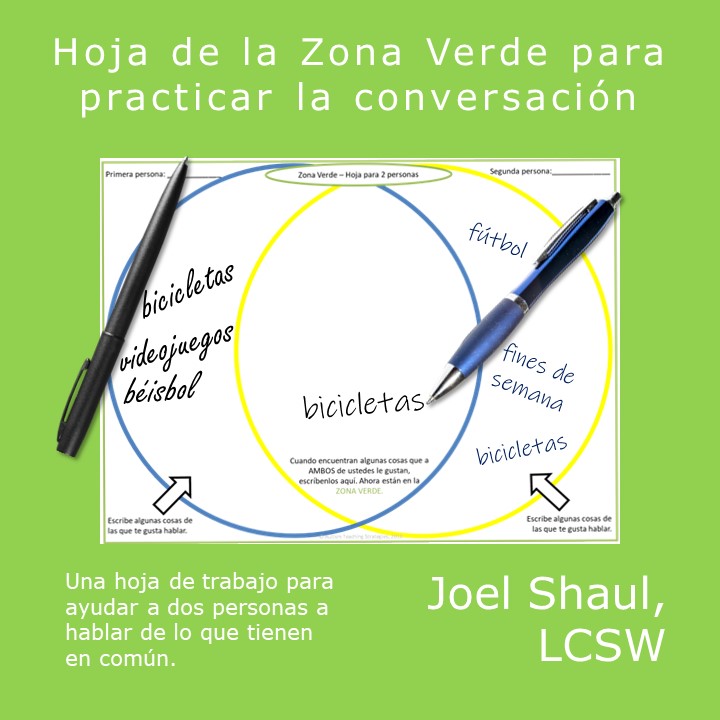
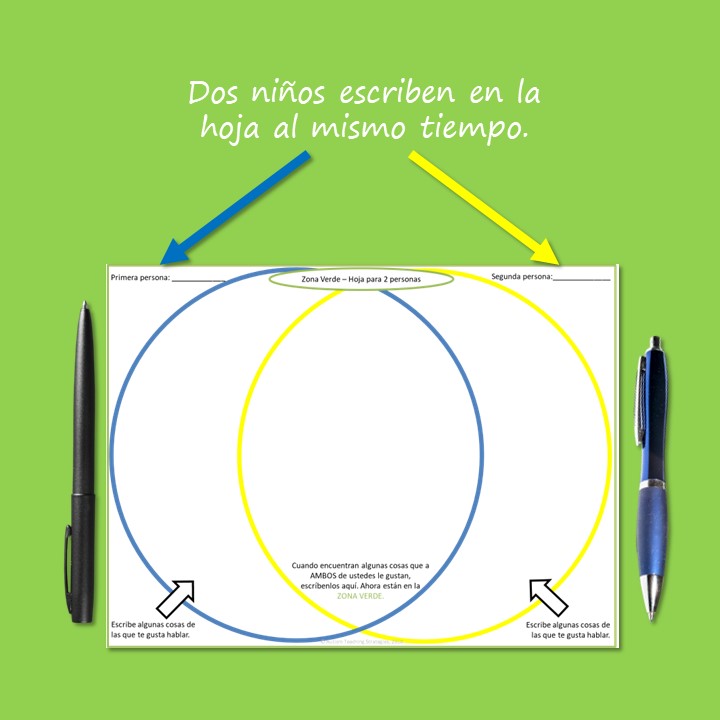
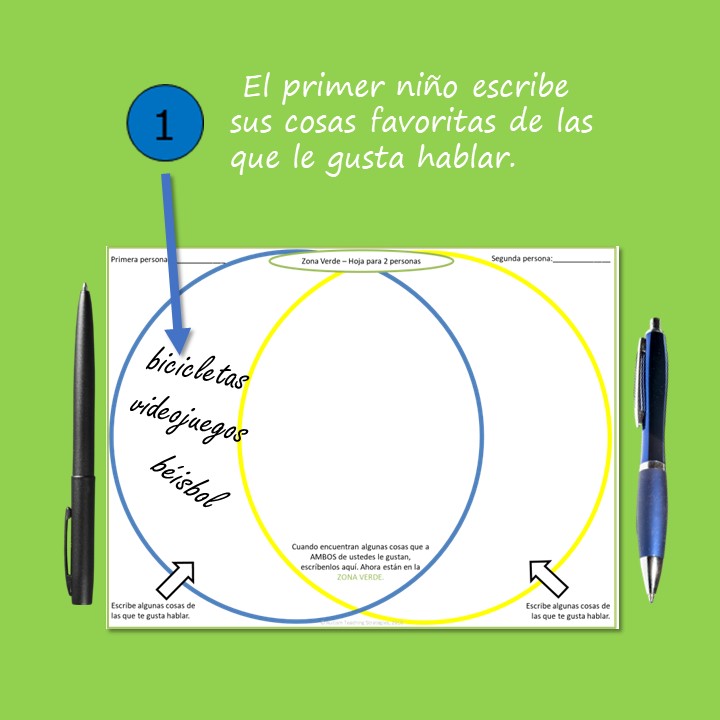
Hoja de conversación de la Zona Verde para dos personas

The original Green Zone Two-Person Worksheet in English

Es mejor que los dos niños escriban al mismo tiempo en lugar de hacerlo por turnos.

Pide a los niños que se detengan de vez en cuando para mirar lo que escribe su compañero. Diles que es bueno encontrar intereses comunes.

Una buena razón para utilizar estas tarjetas es ofrecer algunas ideas sobre intereses comunes. Puede descargar estas tarjetas aquí.

Espero que estos recursos te sean útiles en tu trabajo. Aquí tienes más traducciones al español.

Joel Shaul, LCSW

This image has an empty alt attribute; its file name is Slide1-17-1024x456.jpg

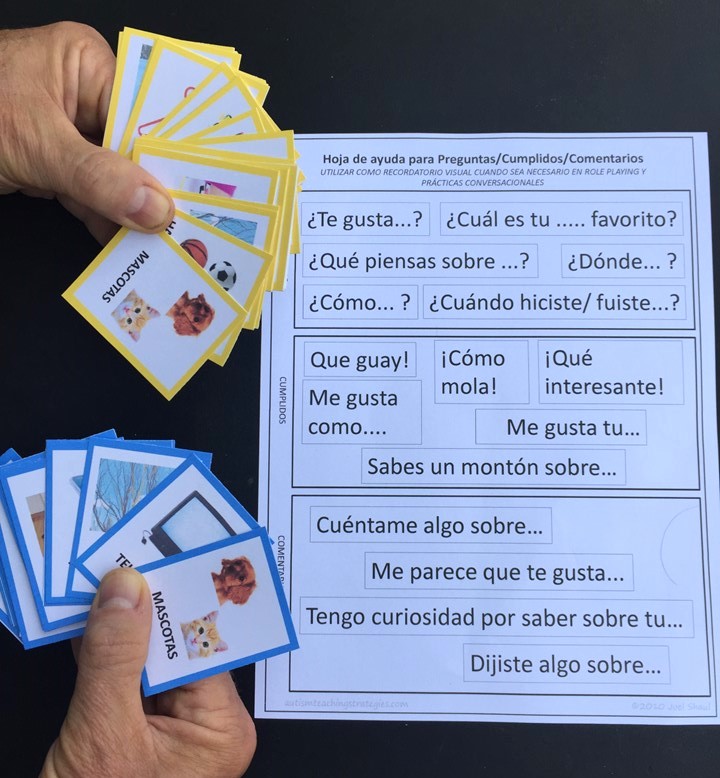
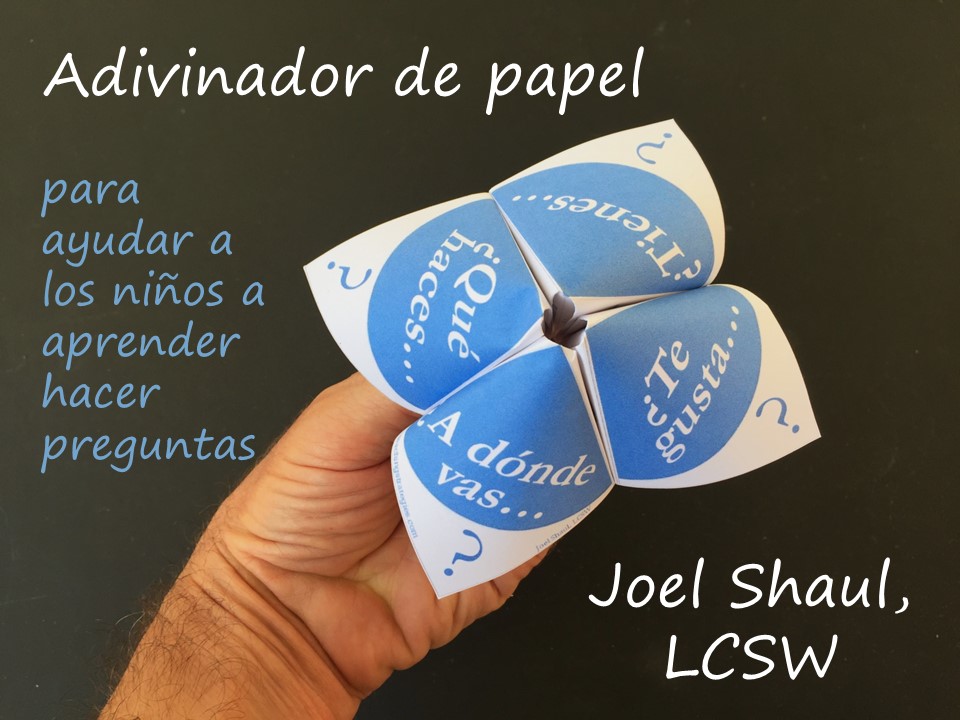
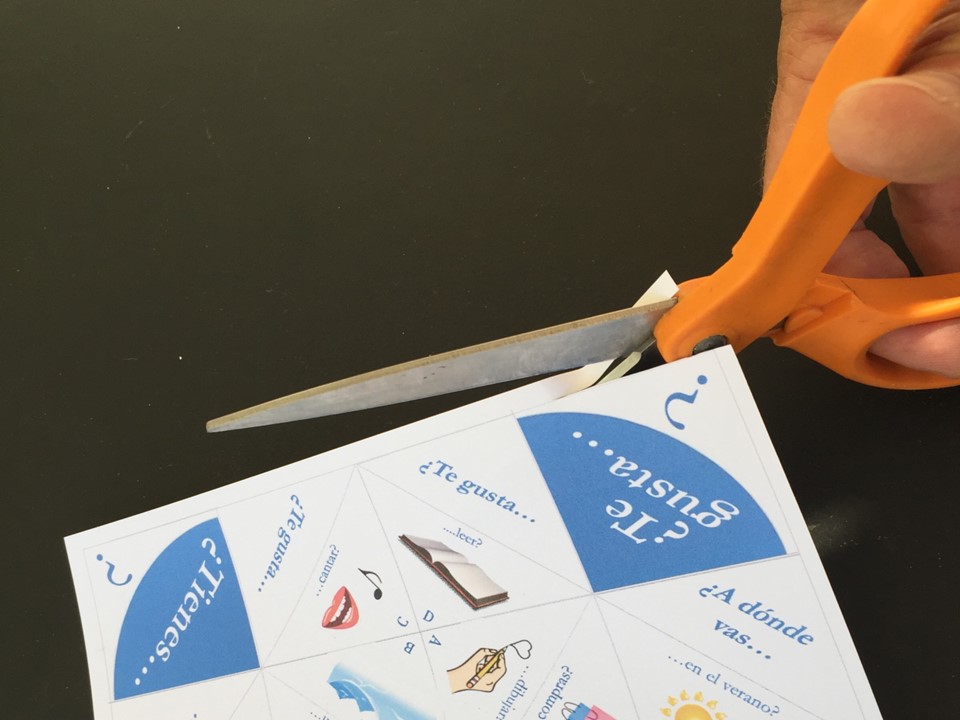
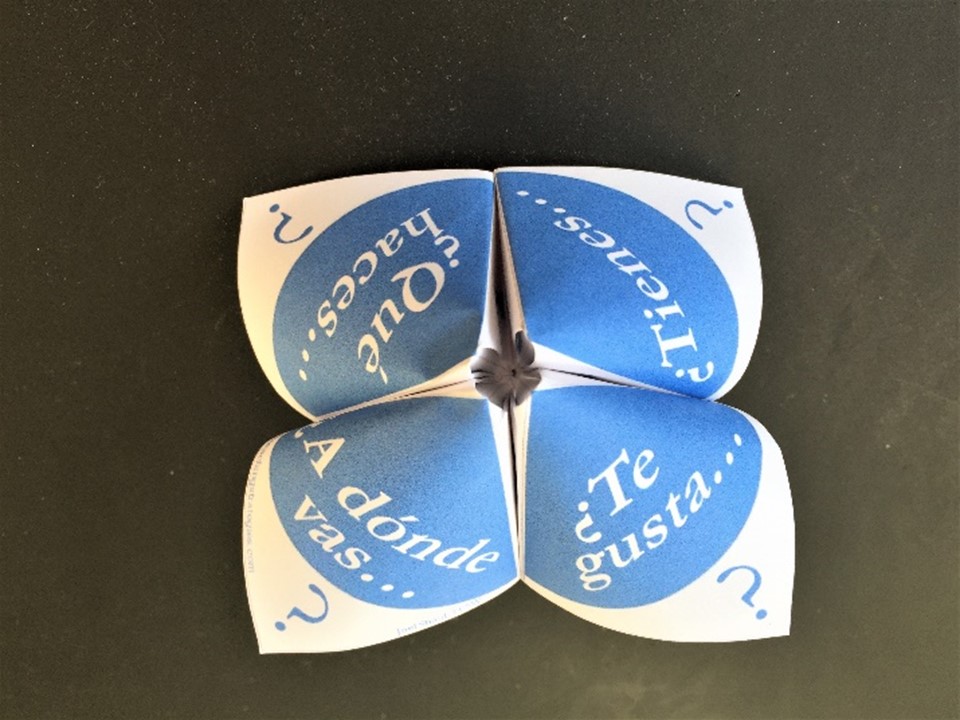
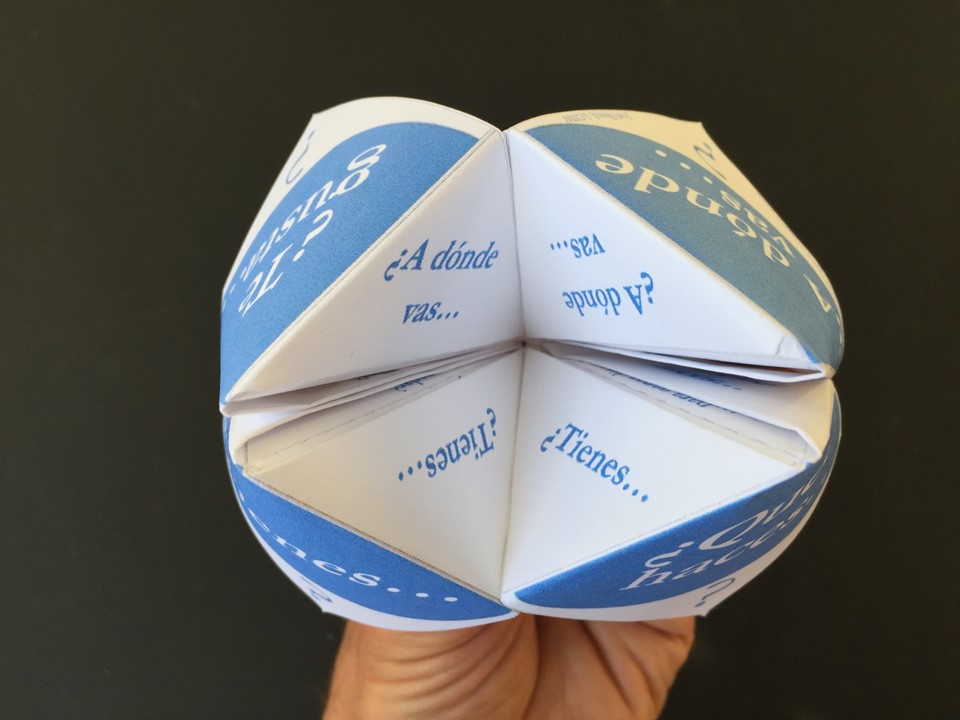
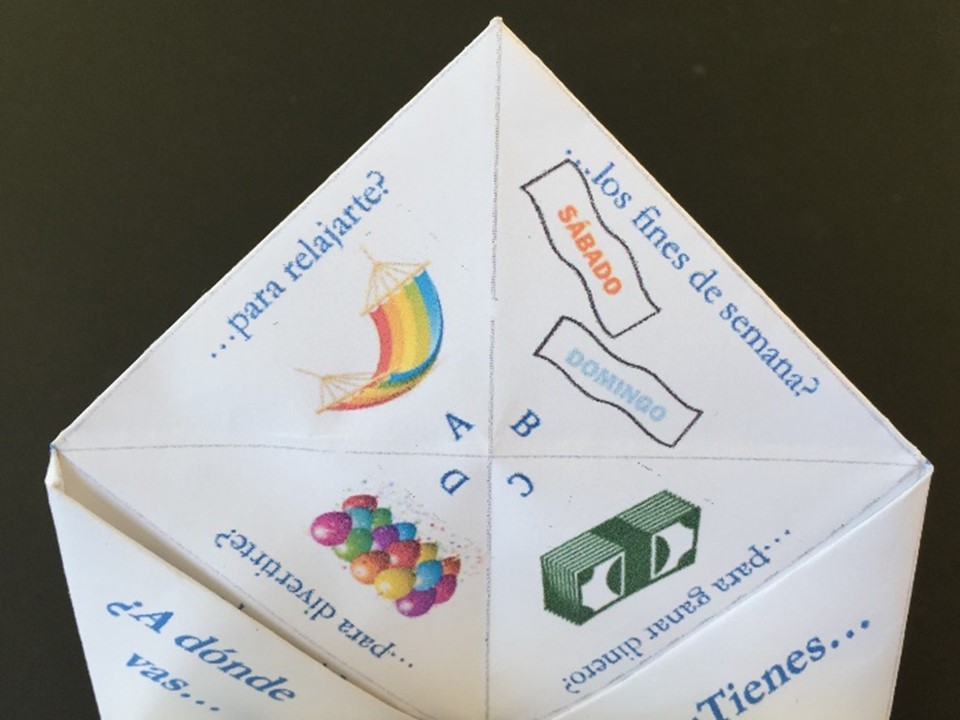
Adivinador de papel para ayudar a los niños a aprender hacer preguntas

A muchos niños autistas les cuesta hacer preguntas sencillas.

Hablar sobre temas de conversación habituales puede ser todo un reto. Esta es una actividad para ayudar a los niños con autismo a practicar esta importante habilidad de conversación.


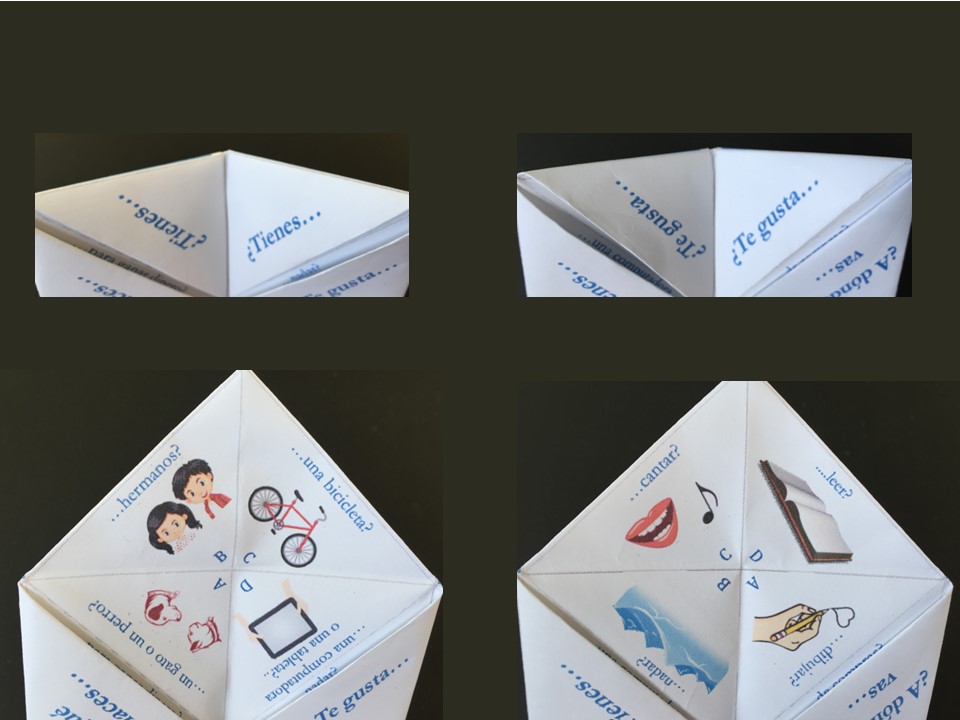
Hace años, hice muchos de estos en inglés. Aquí hay un ejemplo en español.

Estos pueden ayudar a los niños con autismo practicar haciendo diferentes tipos de preguntas usando una serie de temas.

Espero que esta actividad te resulte divertida y útil. Aquí tiene más traducciones al español.

Joel Shaul, LCSW

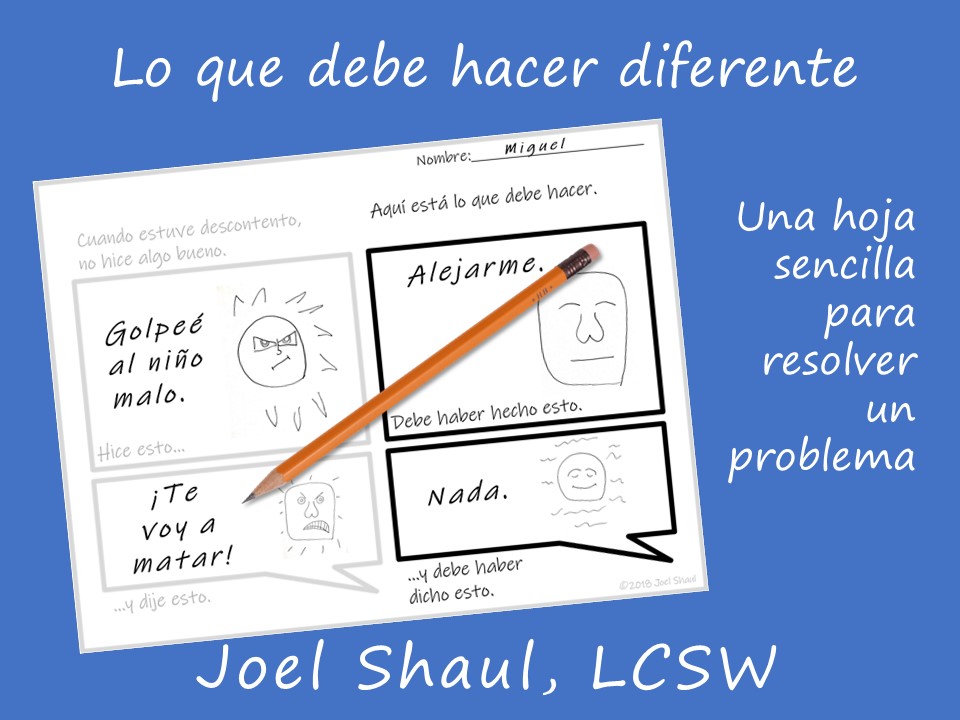
Lo que debe hacer diferente – una hoja sencilla para resolver un problema

What I should have done different worksheet, in English

Muchos niños pueden trabajar mejor un problema si se les pide que escriban unas palabras y hagan un dibujo.

Esto ayuda a que el adulto se quede callado un rato para que el niño pueda pensar.

A algunos niños no les gusta dibujar con esta ficha. No pasa nada. Usted puede pedirles que escriban un poco.

Si quiere, puede ofrecer a los niños lápices o bolígrafos de colores.

Espero que esta ficha le resulte útil. He aquí más traducciones al español.

Joel Shaul, LCSW

Part 4: Workplace preparation – Job interview skills, ways to teach them

Almost all of us find interviewing for a job to be a daunting social experience. 

There is so much at stake in a short, intense conversation. And everything about us – our words, demeanor, appearance, and life history – is under focused scrutiny.

Young people on the autism spectrum preparing for job interviews often feel this pressure with great intensity. The demands to answer unfamiliar questions and make a good impression can feel overwhelming to them.

In my own work helping young people with ASD to cope with social and emotional challenges, I have spent many hours helping individuals and groups to get ready for job interviews. My impression overall is that my clients have enjoyed this work and benefited from it.  Some have told me later that job interview practice really helped them feel more confident and competent in a job interview.

Here I would like to summarize some of the methods I have used to boost job interview skills in young people with autism.

Raise awareness about realities of employment and the role of employers and employees.

Young people in general, and those with ASD in particular, often lack essential knowledge regarding the employer/employee relationship. So far in their lives, the adults in the lives of young people have been primarily parents and teachers providing nurturance and education.  In employment, it’s different – you are the adult now, the one providing the service to others.

Parts 1, 2 and 3 in this series are to reinforce basic knowledge about employment. If you have not done so already, I suggest you reference at least some parts of the earlier resources before attempting practice job interviews.

Obviously, the responsibilities of employment may be beyond the capacity of some of our young adult clients, who might be very strongly affected by some debilitating aspects of ASD or by co-occurring issues such as intellectual disability or clinical anxiety and depression. Still, in my own work in groups and classrooms, I have generally had everyone take part in workplace awareness education and job interview practice, including individuals who did not appear ready to move into conventional work situations. I feel those not destined for regular employment still benefited by learning important information about what employment is like.

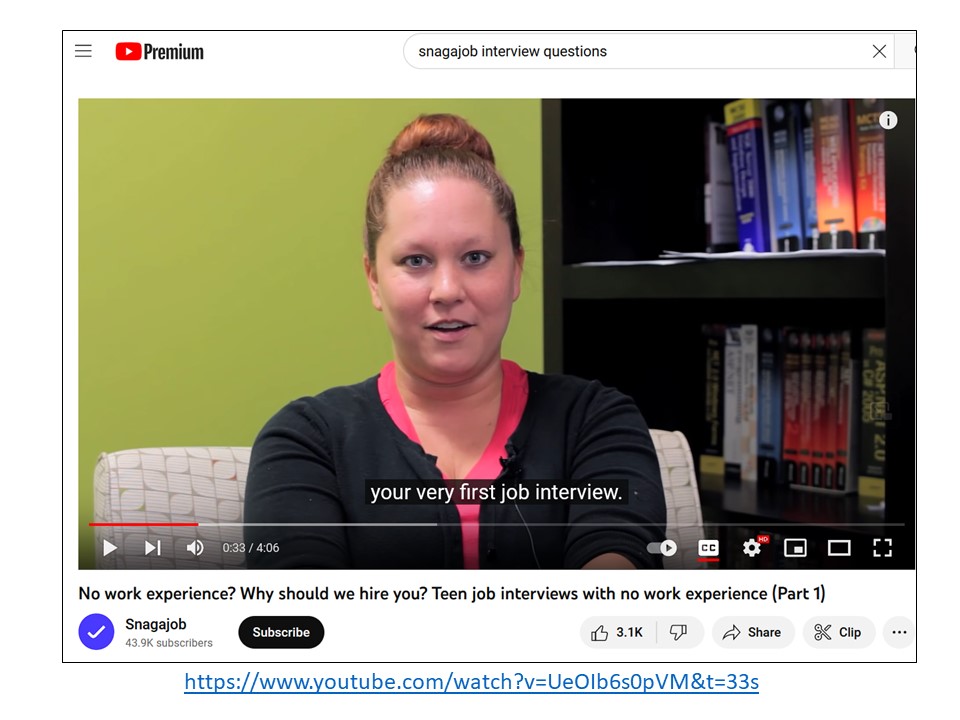
A great way to build interest and awareness about employment is to show YouTube videos on the subject.

I have used the “Snagajob” series below over and over again. It has a tone of levity, but is very informative. It focuses on an aspect of job interviewing that many people with autism find especially difficult: answering tricky questions. Click on the picture below to link to these videos.

Address non-verbal elements of job interviewing.

Points of discussion should include:

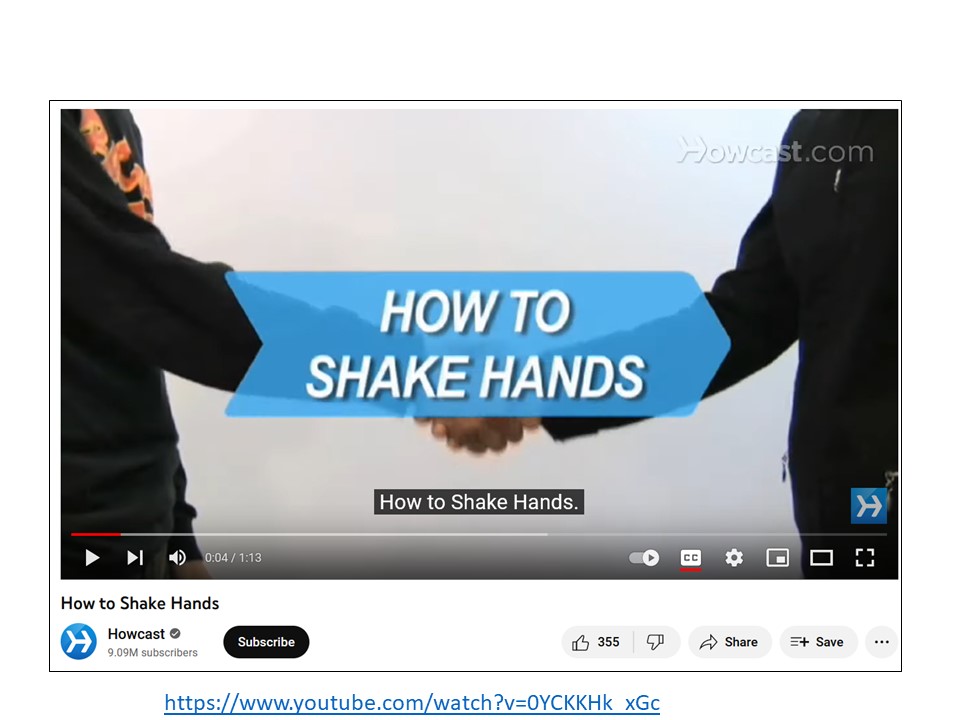
*Shaking hands. See the video below. I have spent whole sessions practicing this with individuals and groups.

*Non-verbal Do’s and Don’t’s of job interviews. Years ago, in a practice job interview, a student of mine elected to end the interview by skipping the handshake and giving me, the interviewer, a warm embrace instead.

*Eye contact. Troubleshoot workarounds for when someone is expected to use eye contact but they have an aversion to doing this.

*Posture.

*Attire and hygiene.

Increase awareness of the most common interview questions, and acceptable replies.

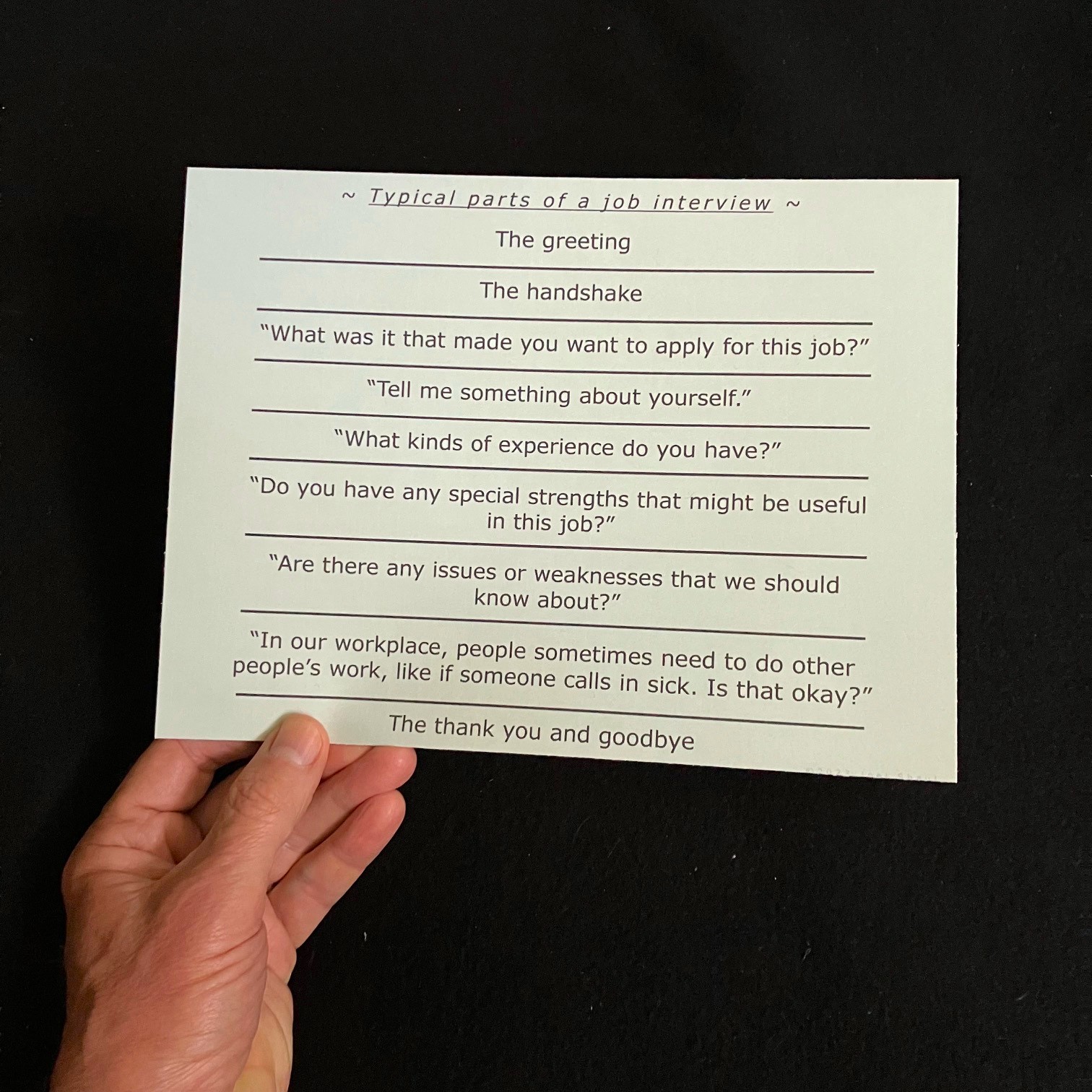
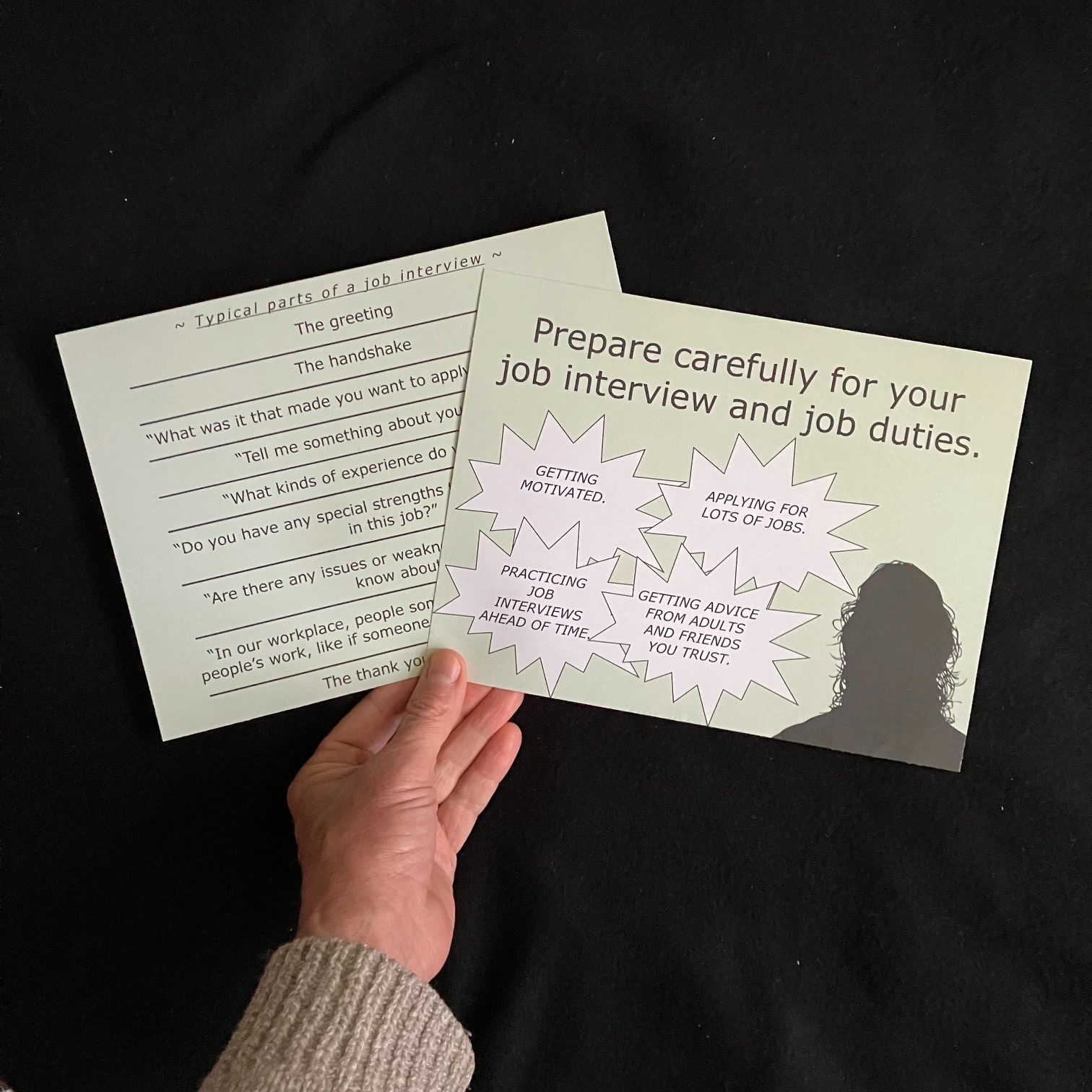
Print out the single-page list of common interview questions. When you start with the practice interviews, I suggest you mainly stick with these questions at first.
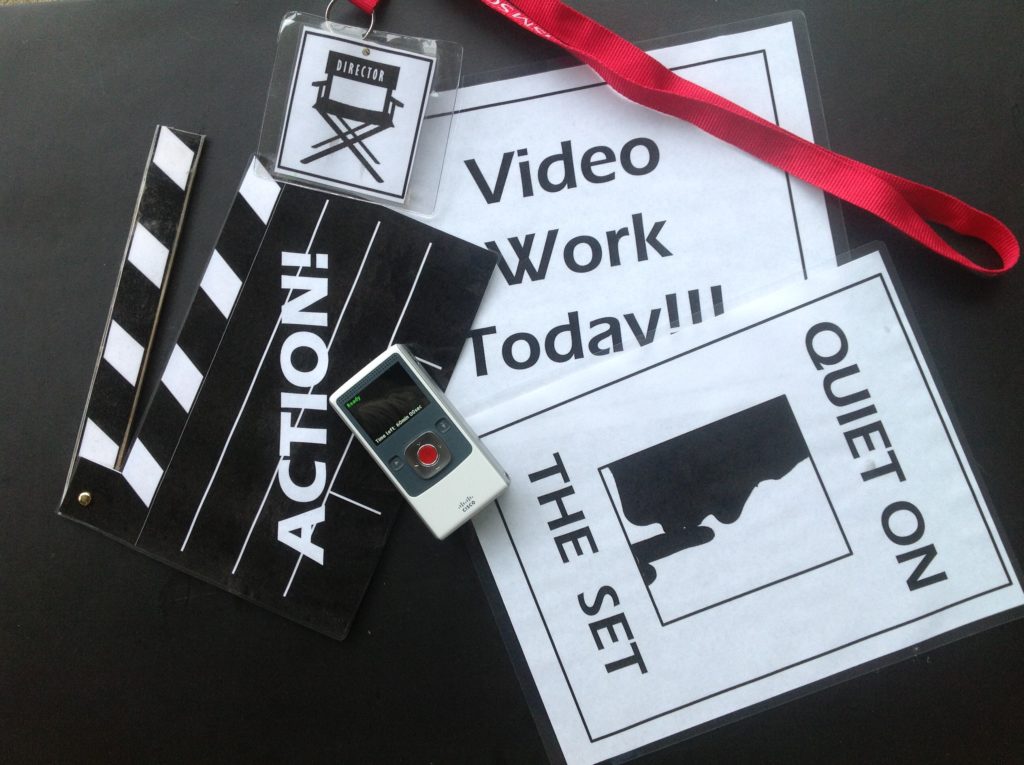
Video the practice job interviews if you can! Most young people really like this, and it makes practice interviewing a much more effective teaching tool.
I have a tutorial on simple ways to do video modelling. I hope you will try doing this.

This image has an empty alt attribute; its file name is Social-Skills-Teaching-Video-Modeling-1-2-1024x765.jpg

Joel Shaul, LCSW


Intro: Workplace preparation resources for young people with ASD
Part 2: Workplace preparation – printable teaching panels

Part 3: Workplace preparation – Q & A cards

Part 4: Job interview skills – how to teach it and provide practice