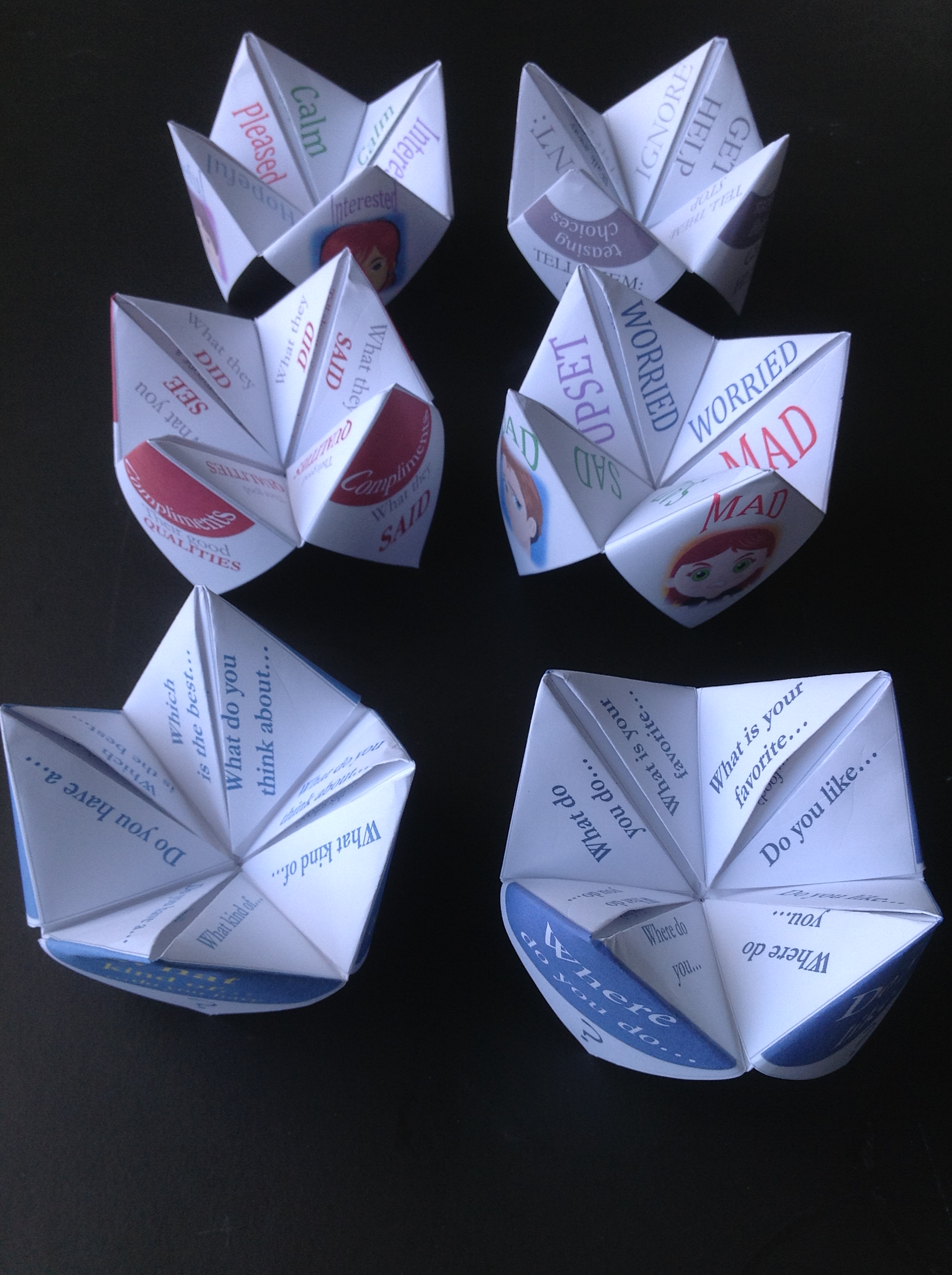

Ways to use these paper fortune tellers in your social /emotional skills teaching

How to use a paper fortune teller in social skills work with children.

I have created many paper fortune tellers and over some years I have often found good uses for them in small groups, classrooms and individual therapy.
My custom designed paper fortune tellers can be used in many ways.

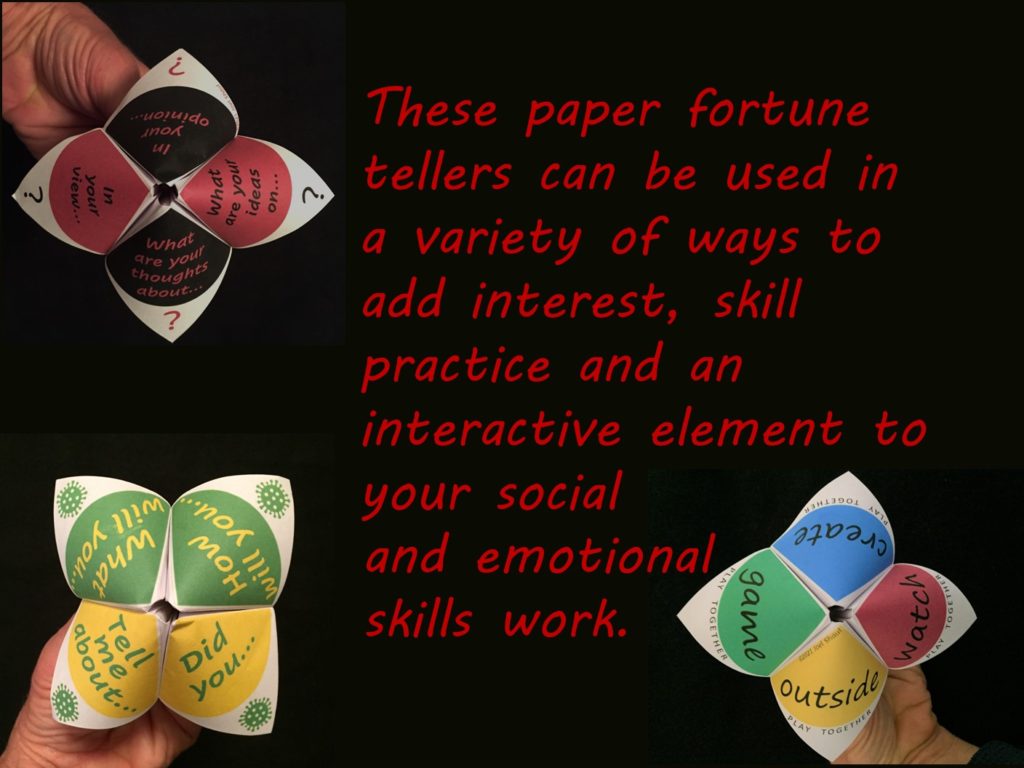
Paper fortune tellers can be used in a variety of ways to add interest, skill practice and an interactive element to your social and emotional skills work.
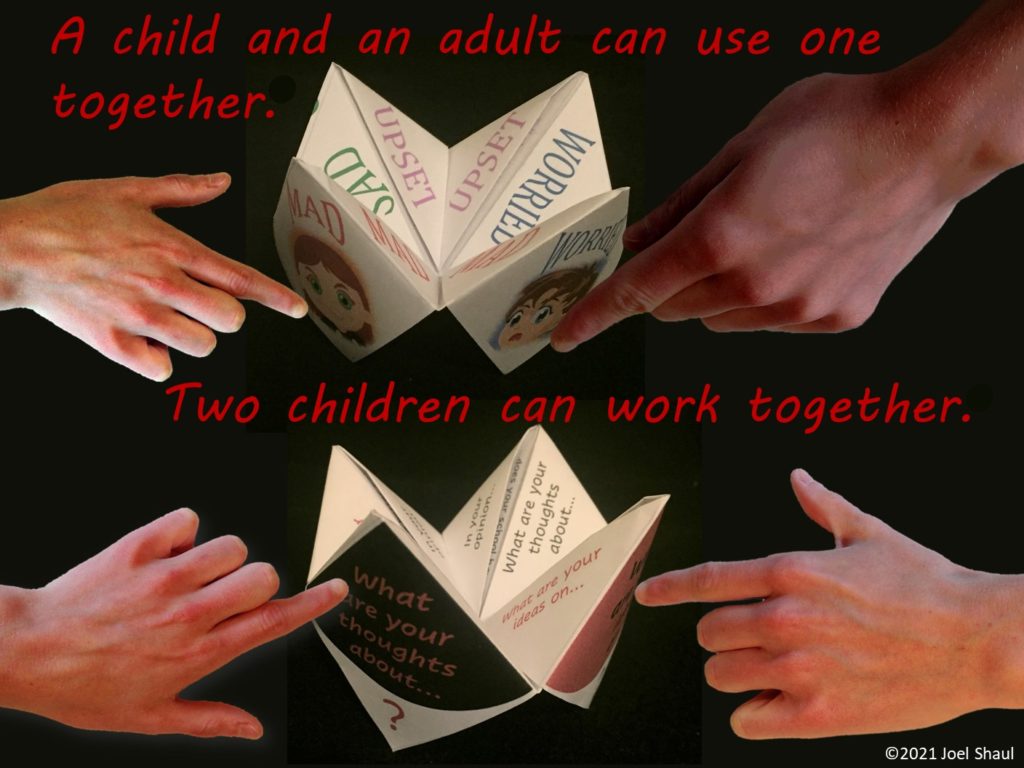
Two children can use one together. An adult and a child can use one together.
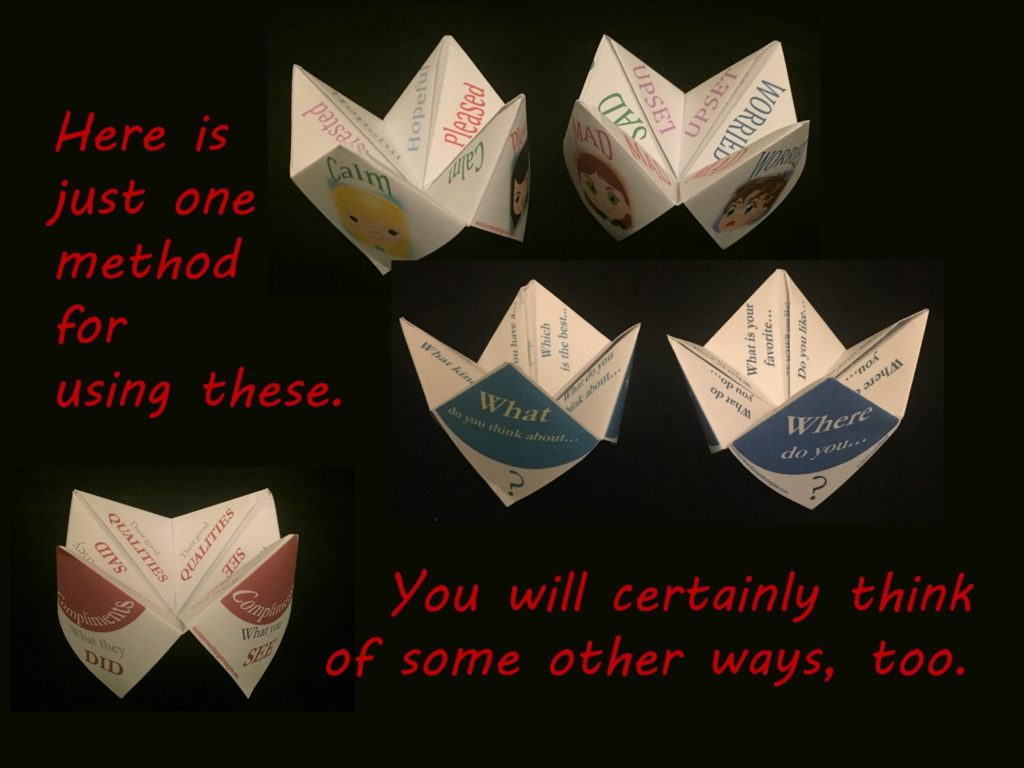
Here is one method for using these. You will certainly think of some other ways, too.
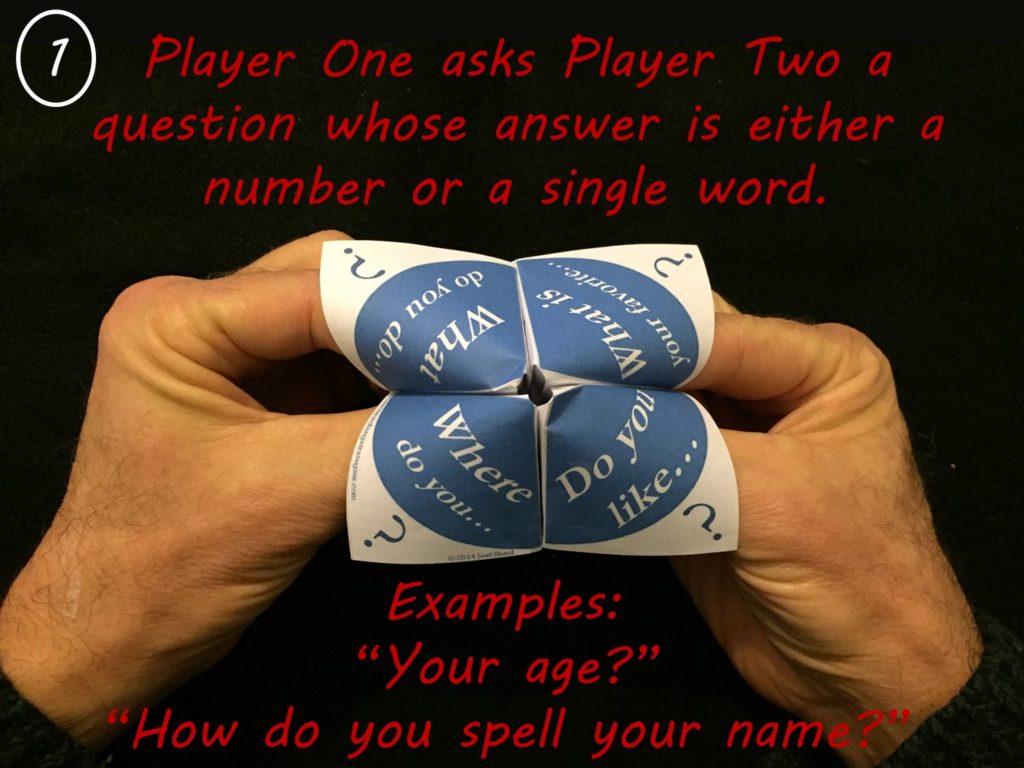
Step one: Player 1 asks player 2 a question whose answer is either a number or a single word. Examples: “What is your age?” “How do you spell your name?”
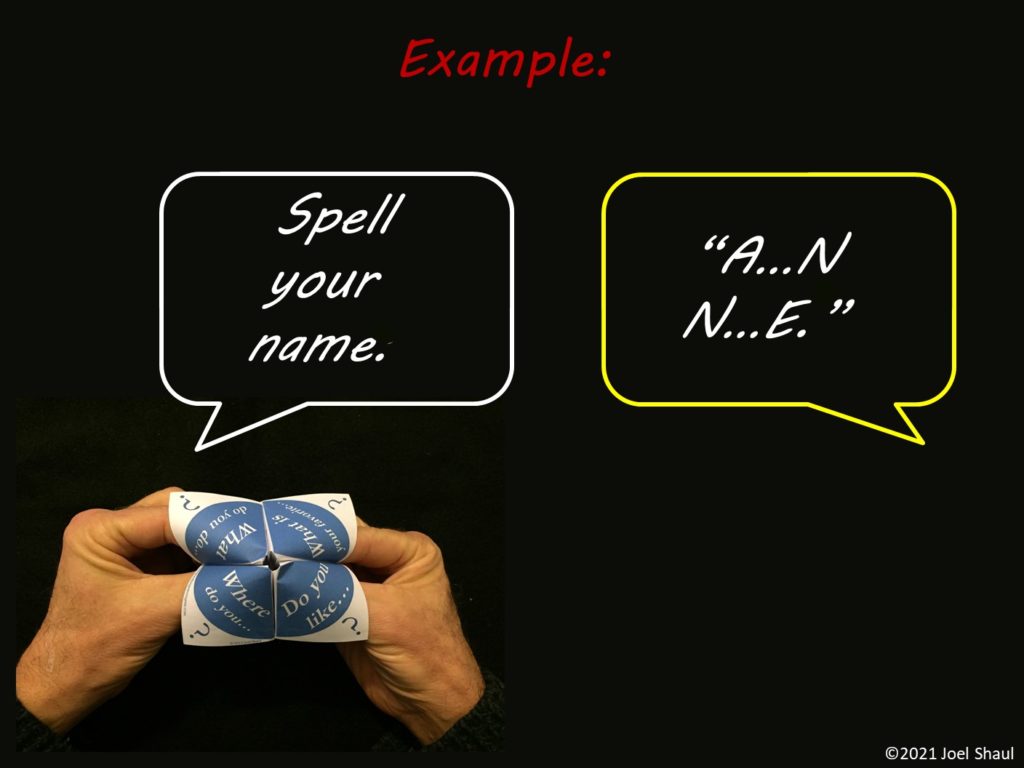
"Spell your name."
"A...N...N...E."

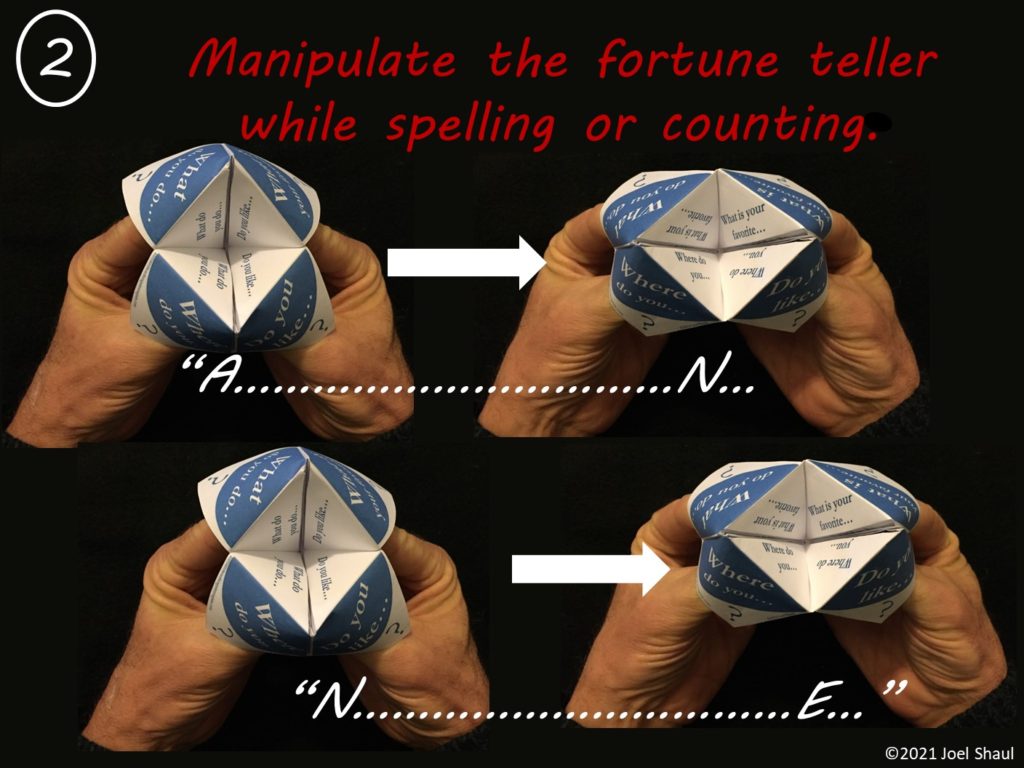
Then, manipulate the paper fortune teller while spelling or counting.
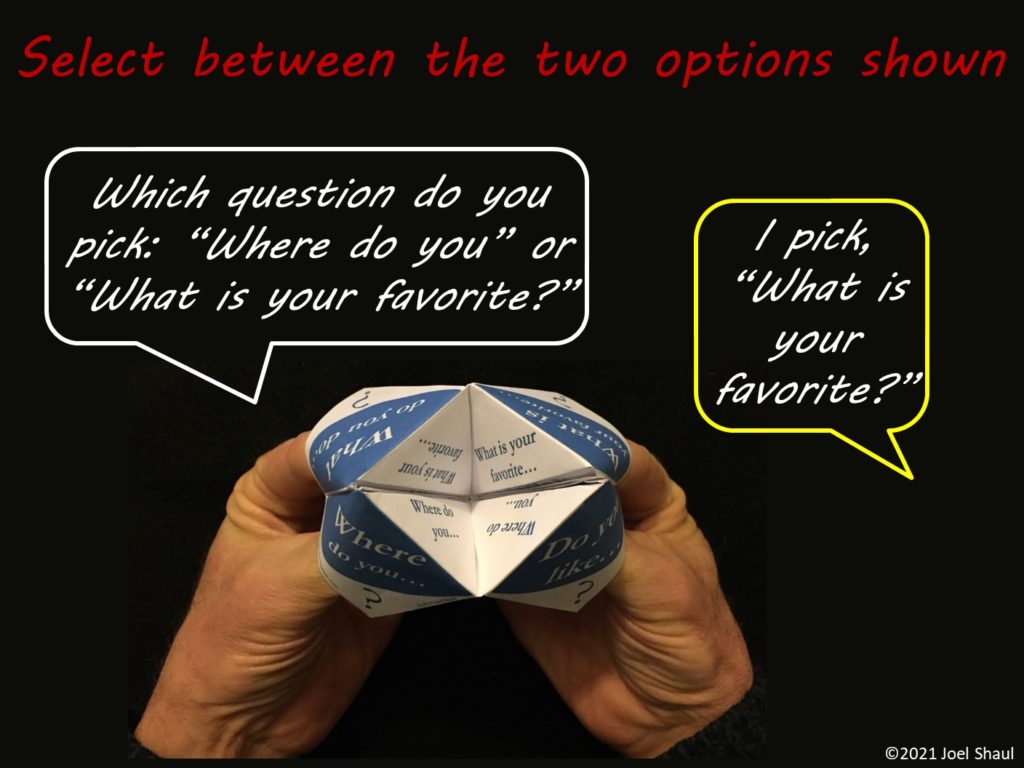
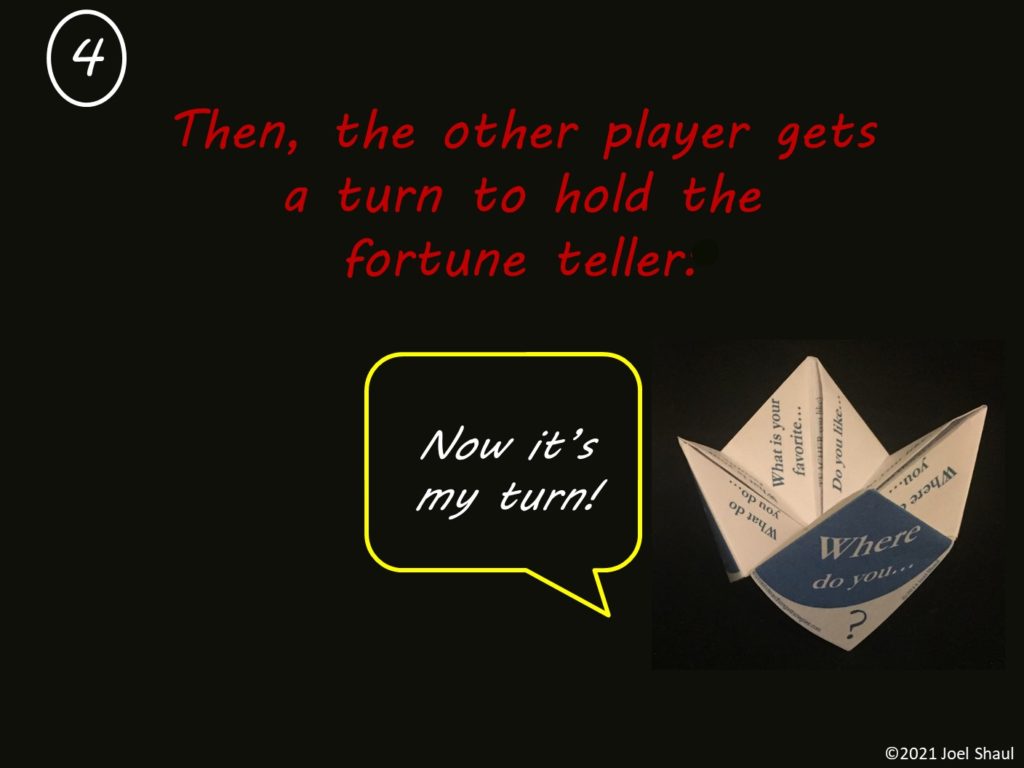
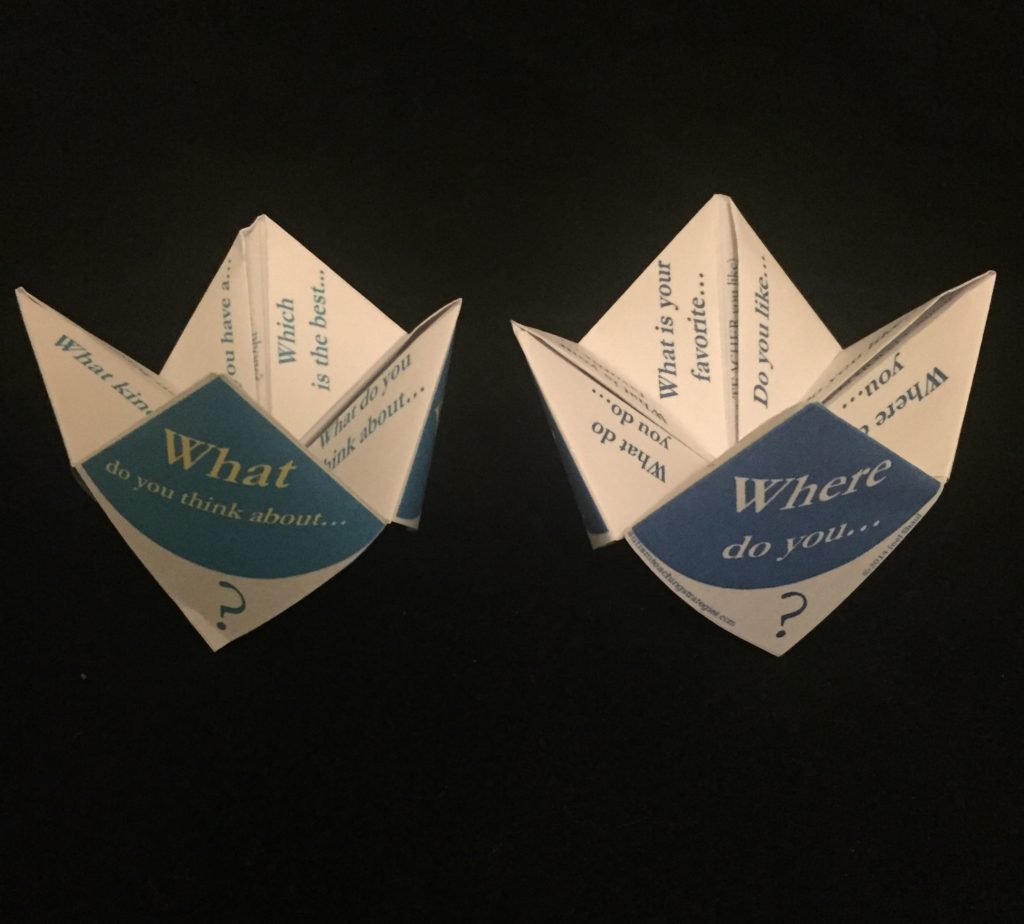
Say, “Which question do you pick: ‘Where do you…’ or ‘What is your favorite…?”
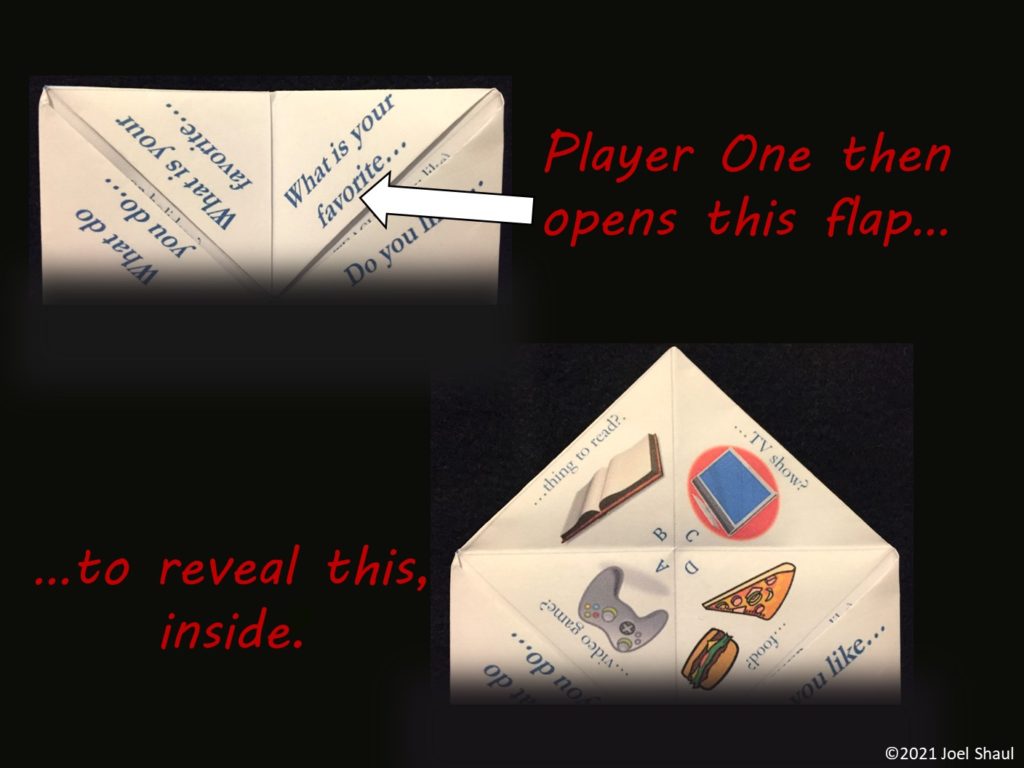
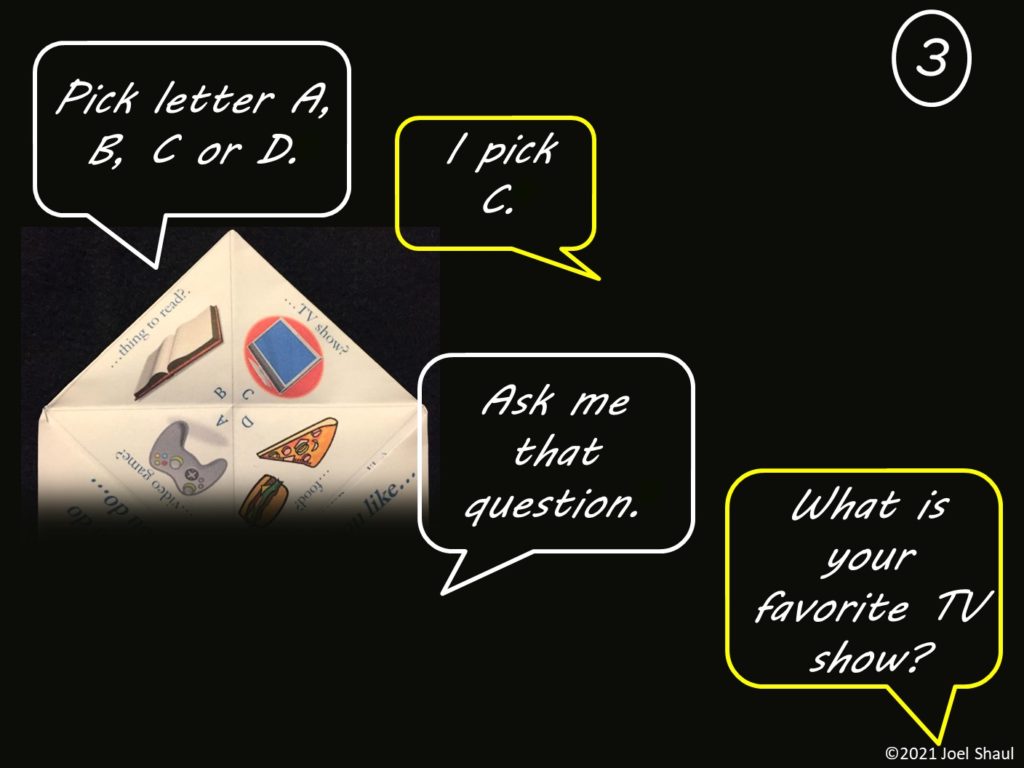
Always have two children use one paper fortune teller. If each child has their own, it enables solitary play instead of an interactive activity.
Your comments on these resources are most welcome, and often helpful. Click HERE to send an email.
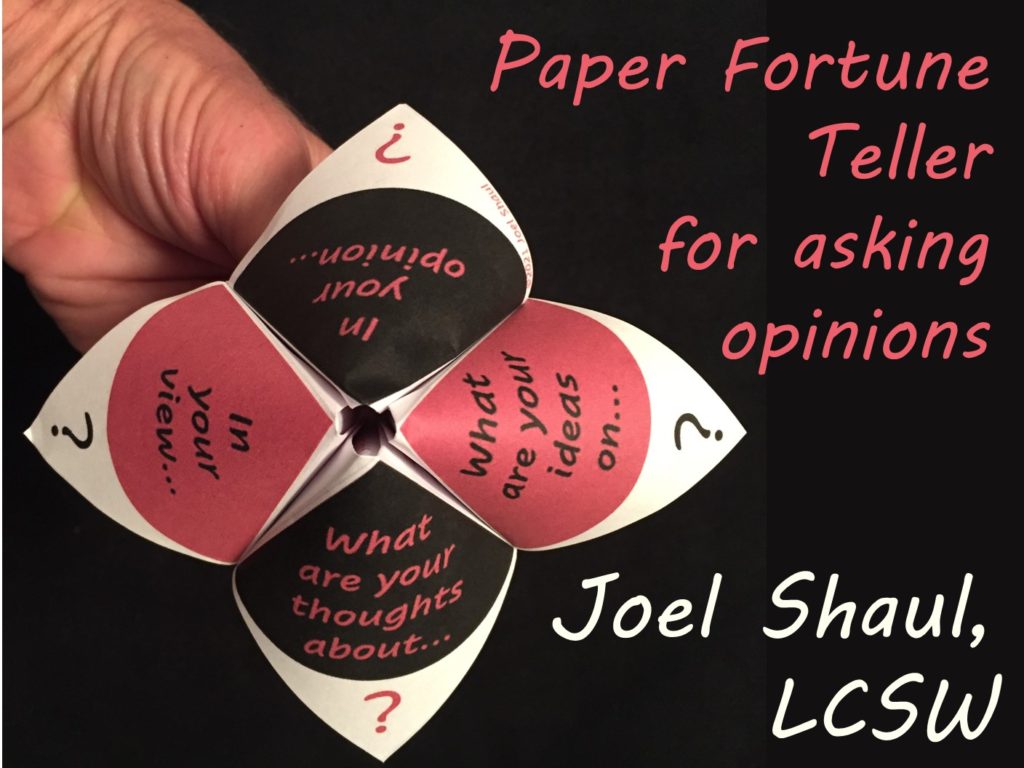
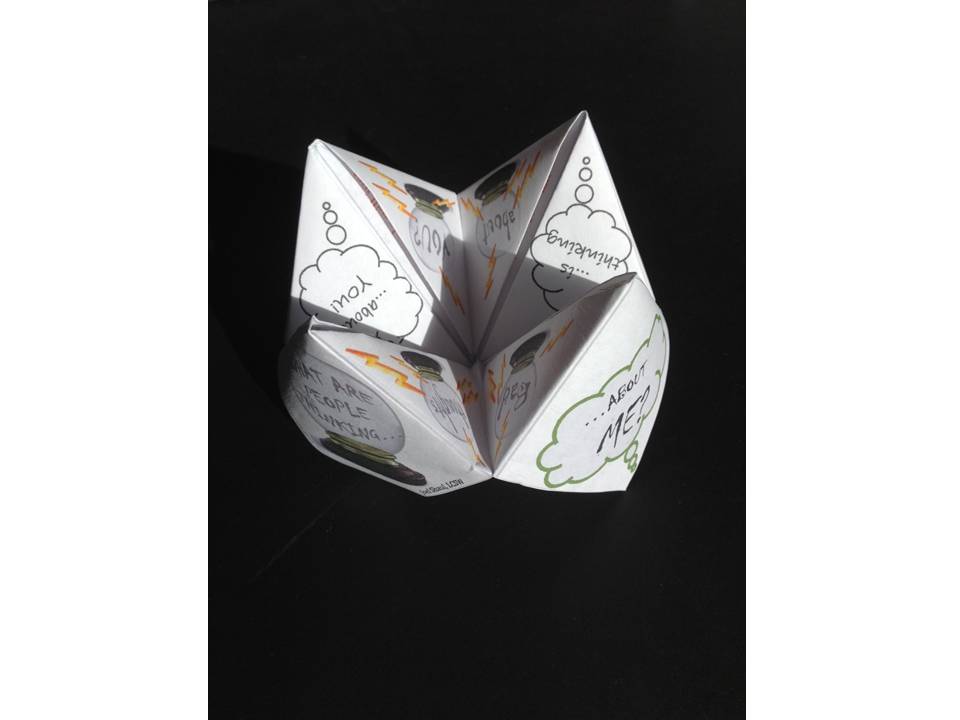
Paper fortune teller for asking other people about their opinions

Paper fortune teller for asking about others' opinions.

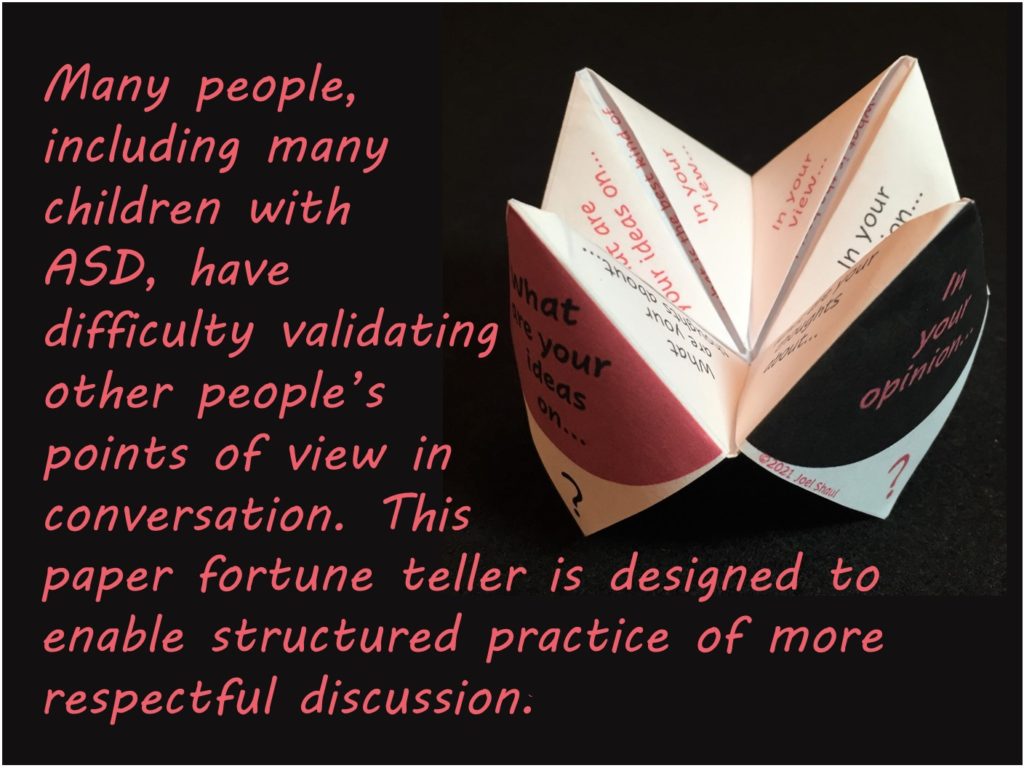
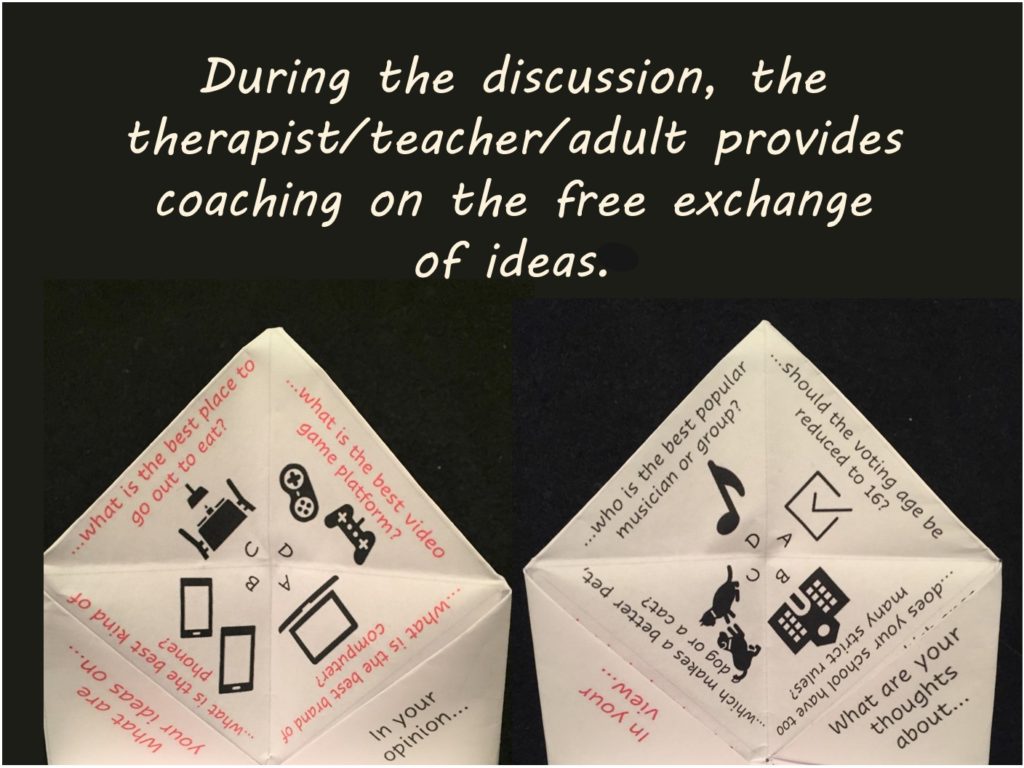
Children with autism may have a difficult time exploring other people’s opinions. Children on the spectrum might be preoccupied with their own established viewpoints, and in the rapid exchange of typical conversation, the contrasting point of view might catch them off guard. In my own work with kids on the spectrum, I have found it very useful to provide specific question language to employ when asking other people their opinions. And providing practice is essential. That’s why I developed this paper fortune teller. It’s useful for having two children, or the child and the helping adult, to take turns inquiring about the other person’s point of view. I used it fairly often in my work, and found it useful for children capable of reading the text on the paper fortune teller.

The following images walk you through how to introduce the paper fortune teller and use it with a child.

Many children with ASD have difficulty validating other people's points of view. This paper fortune teller is enable structured practice of more respectful communication.
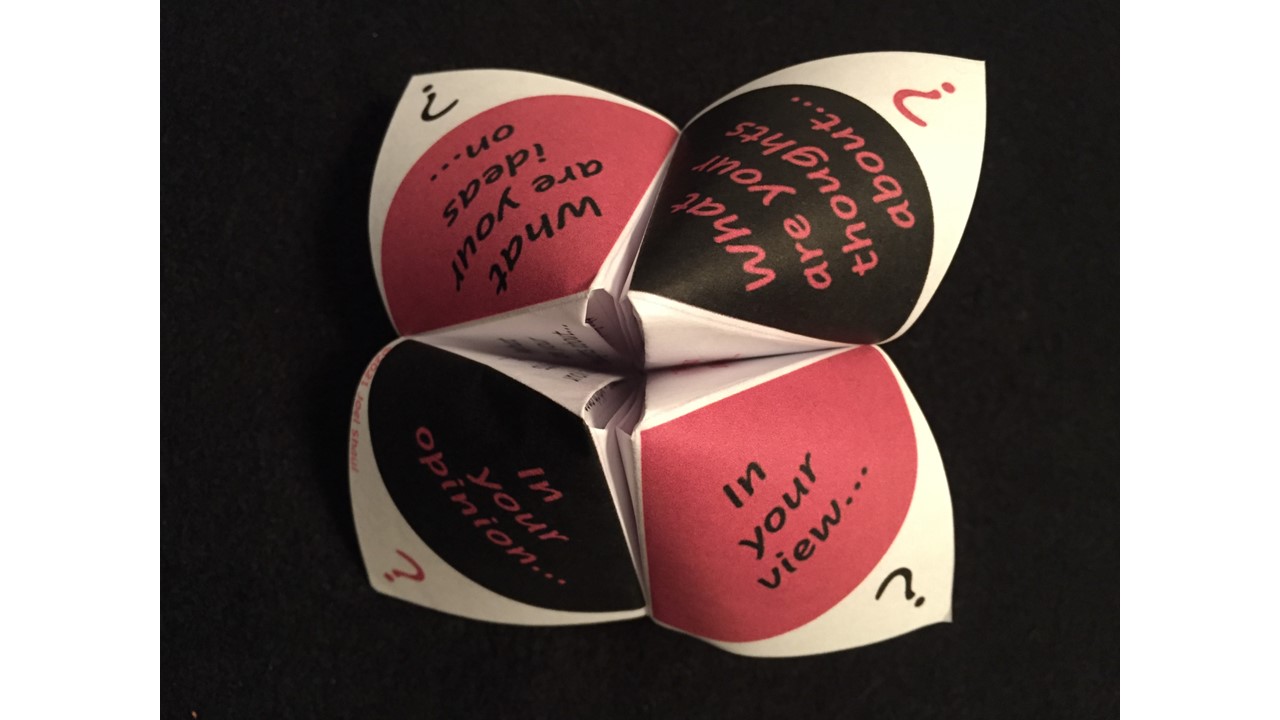
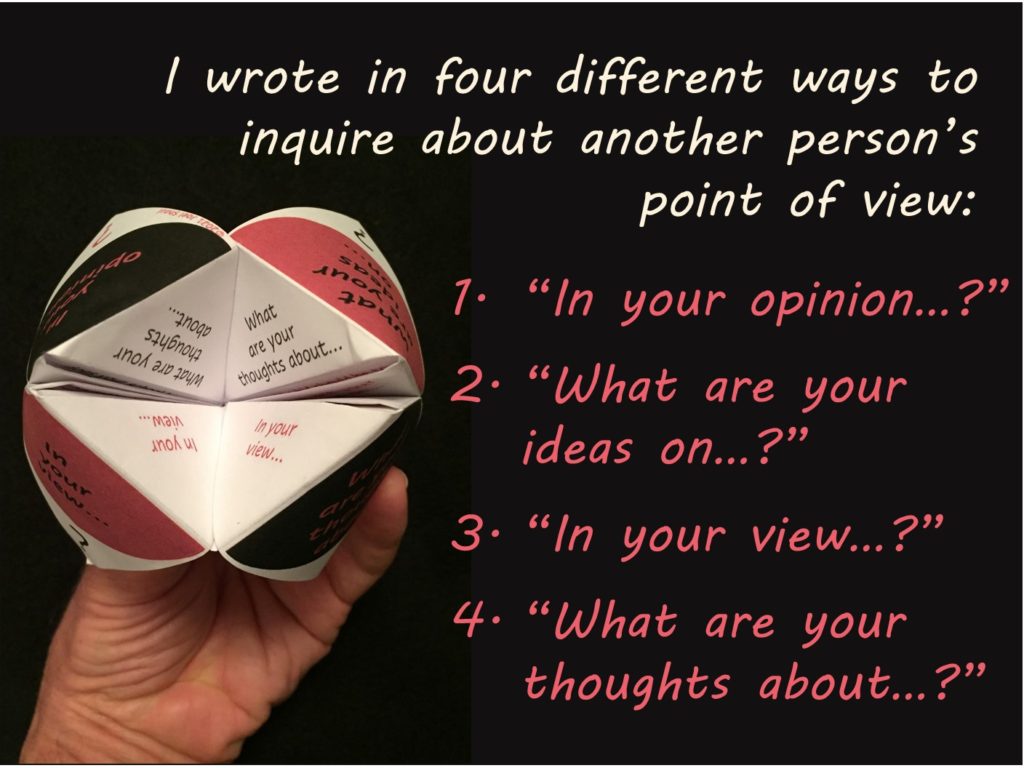
This paper fortune teller shows how to ask, "In your opinion...", "What are your ideas on...", "In your view..." and "What are your thoughts about..."
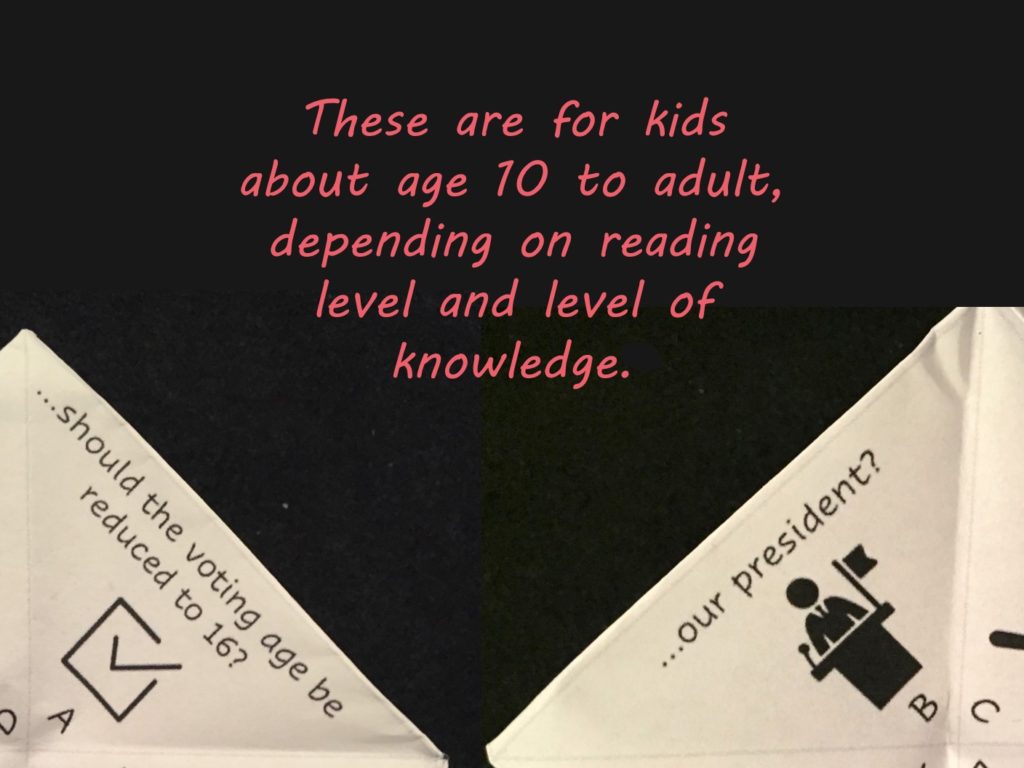
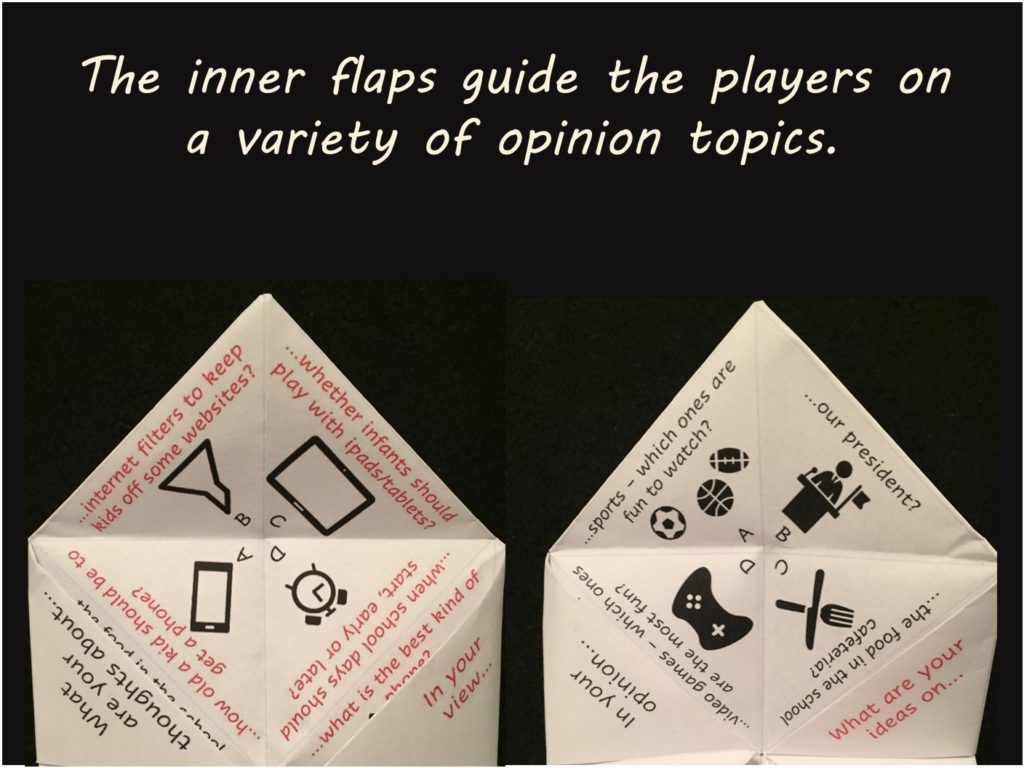
The inside of the paper fortune teller gives 16 examples of different opinion topics one can practice asking about.
These are for age 10 to adult.

Your comments on these resources are most welcome, and often helpful. Click HERE to send an email.
Green Zone Book Cover Click to Learn More

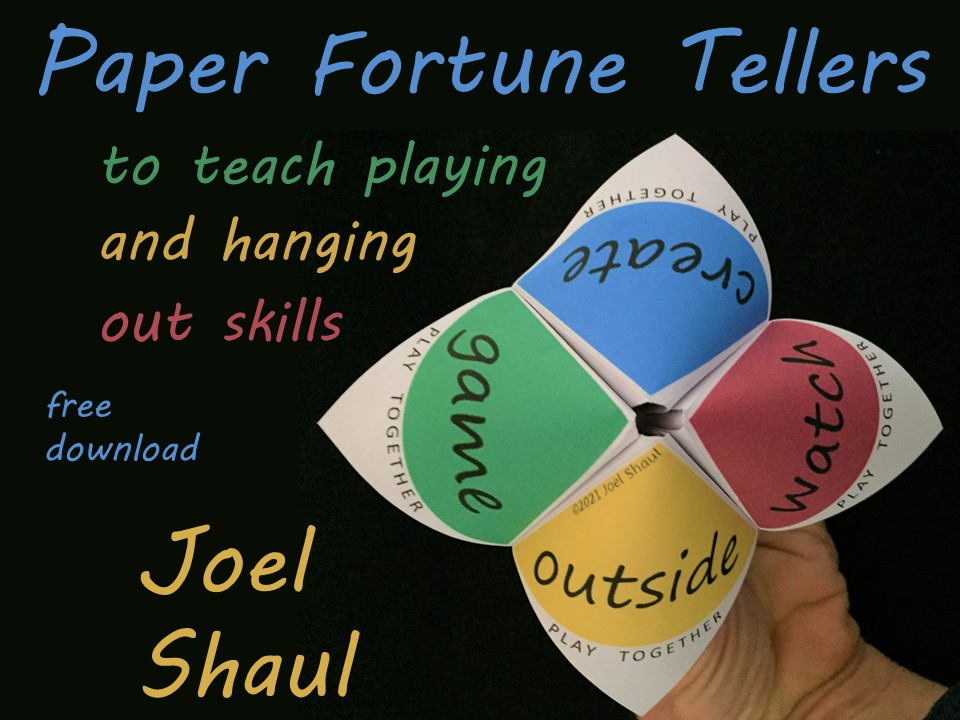
Paper fortune teller for playing and hanging out social skills

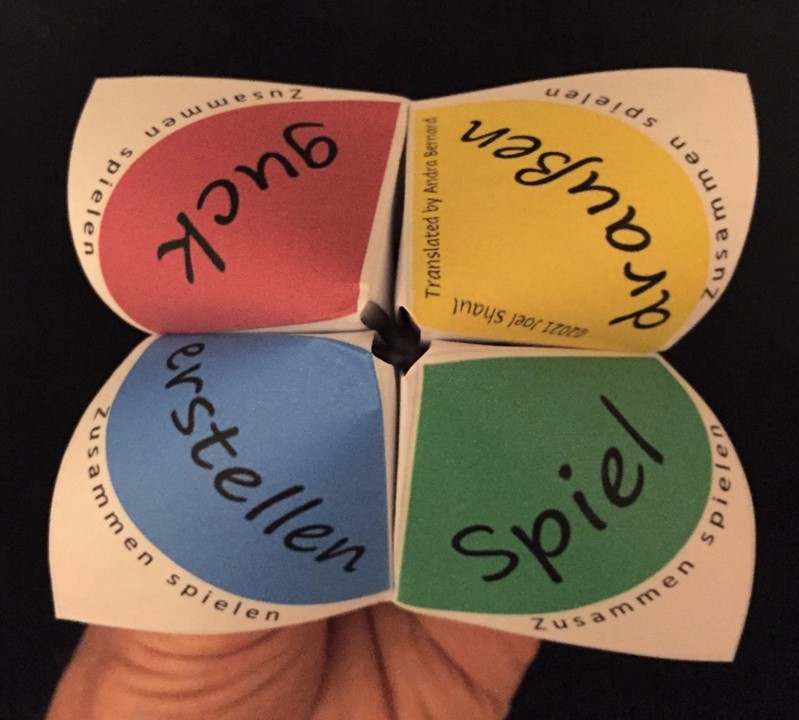
German language version

Many years ago, I got interested in paper fortune tellers. After learning how to fold them, I figured out how to custom design them to teach various social and emotional skills, and to facilitate reciprocal conversation between pairs of autistic children in group therapy and classroom settings.

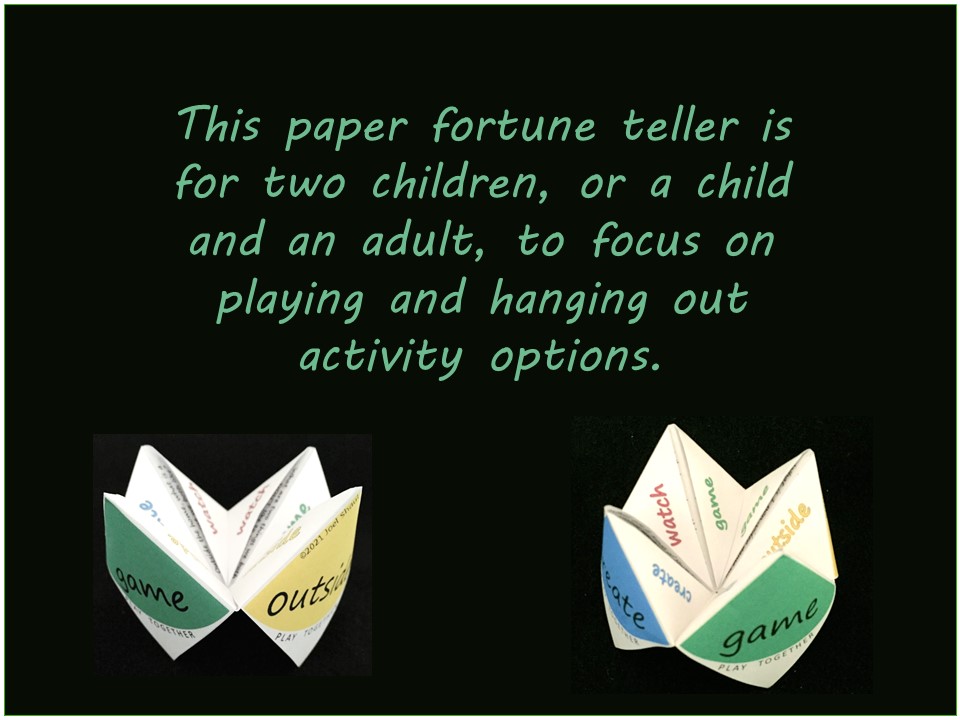
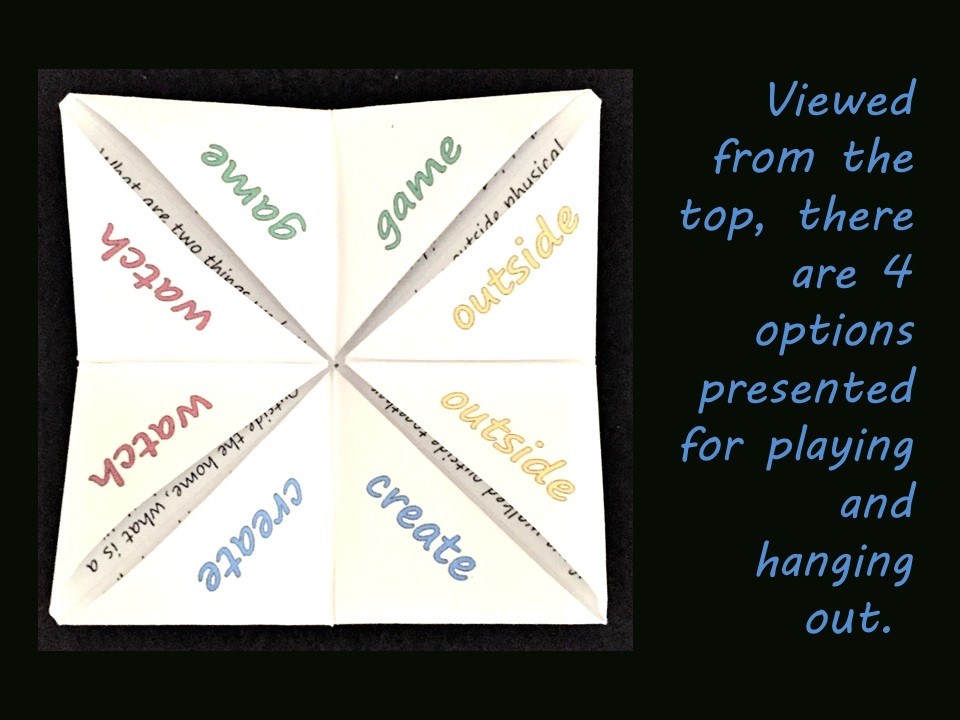
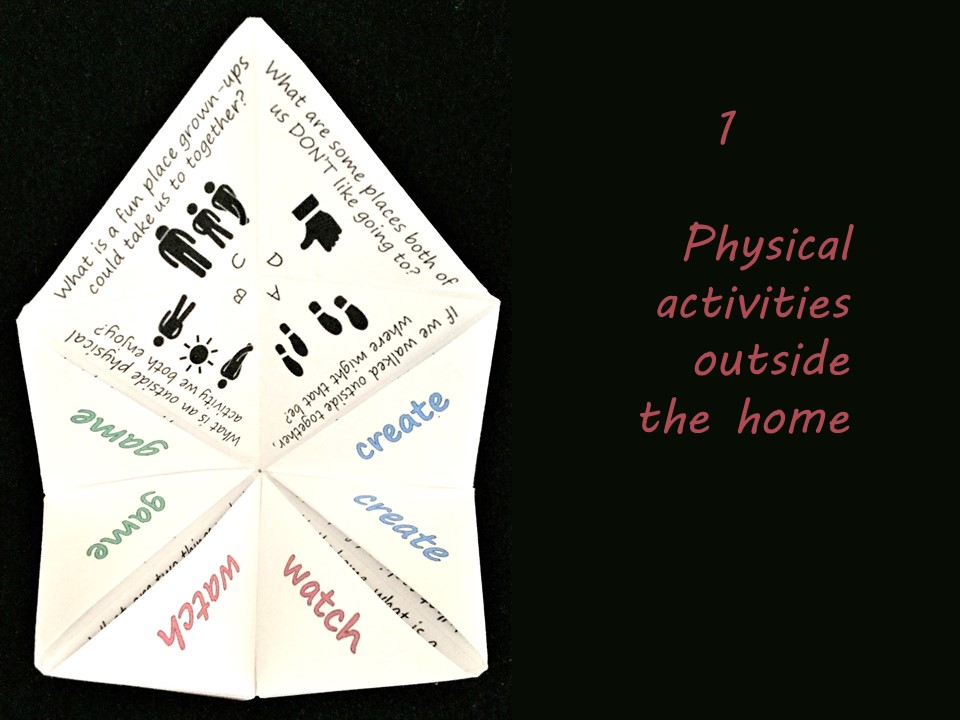
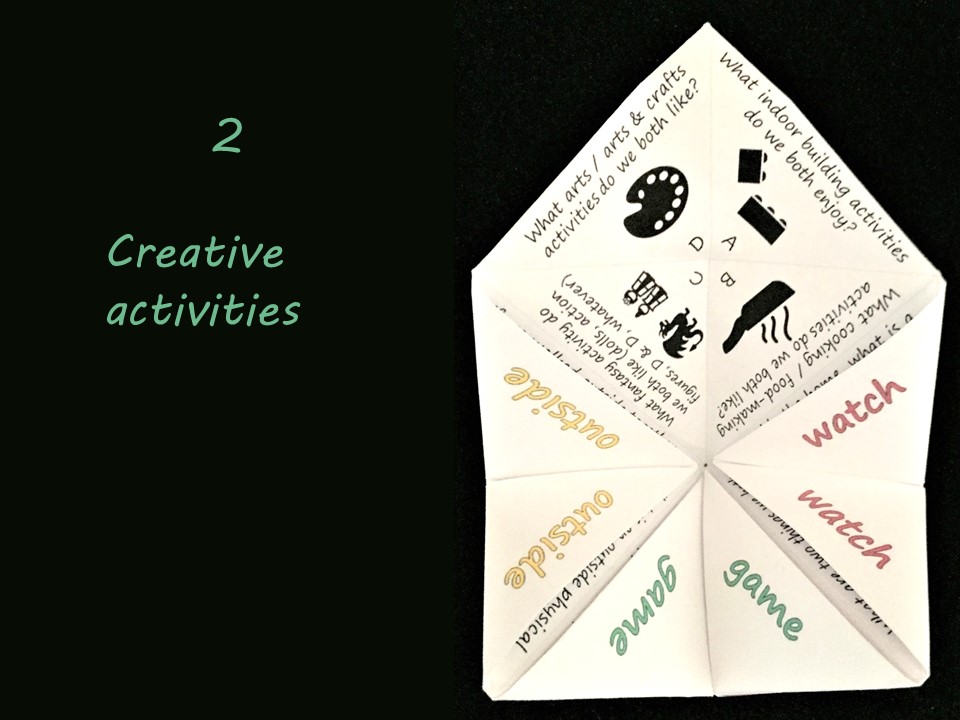
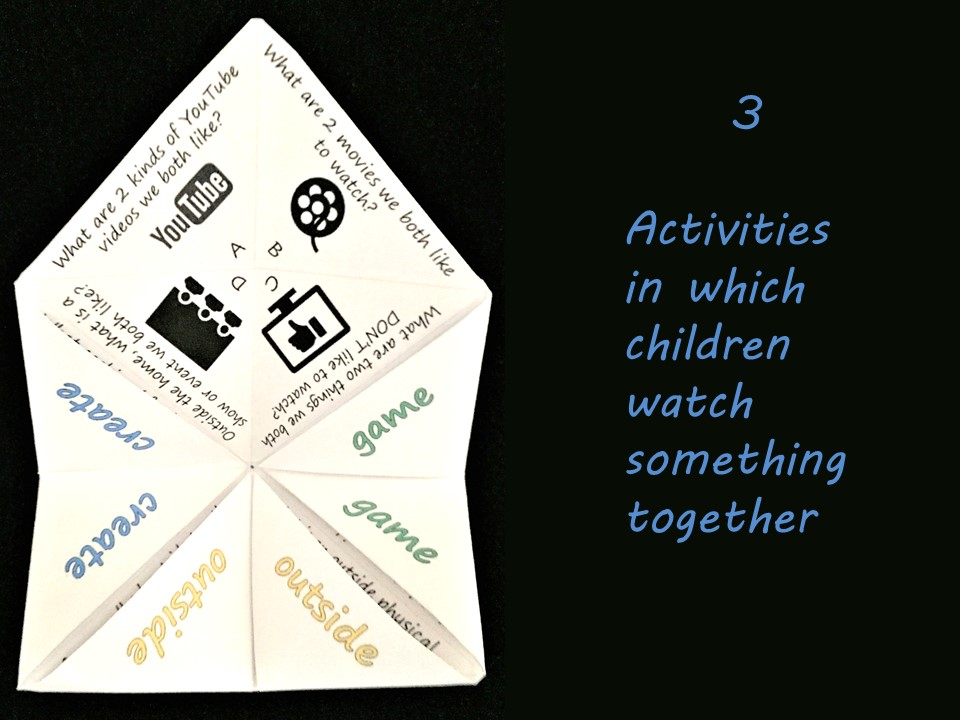
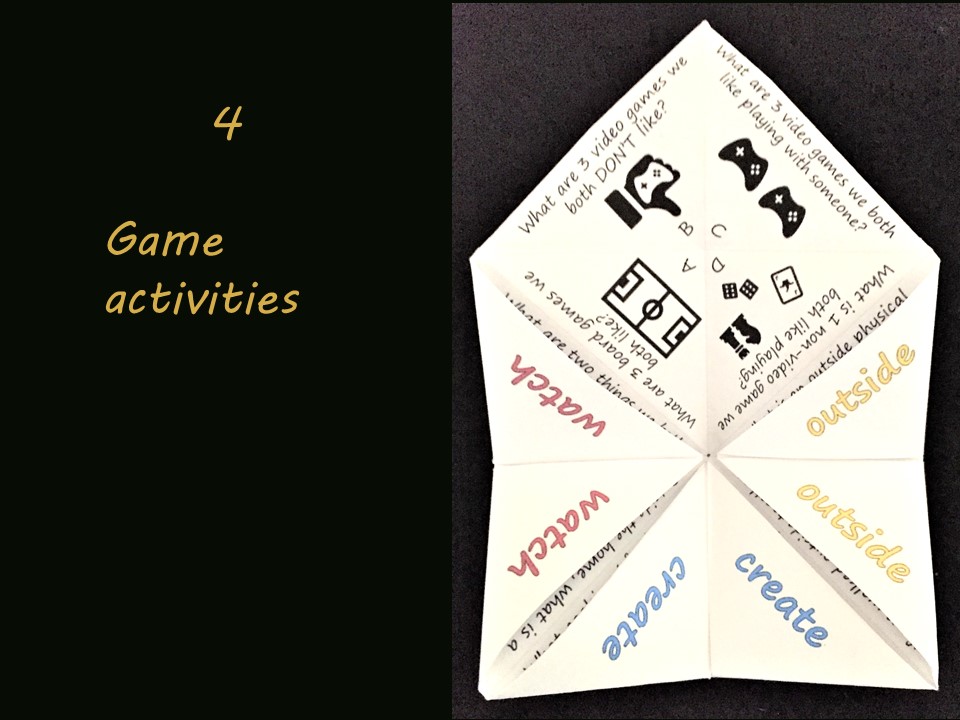
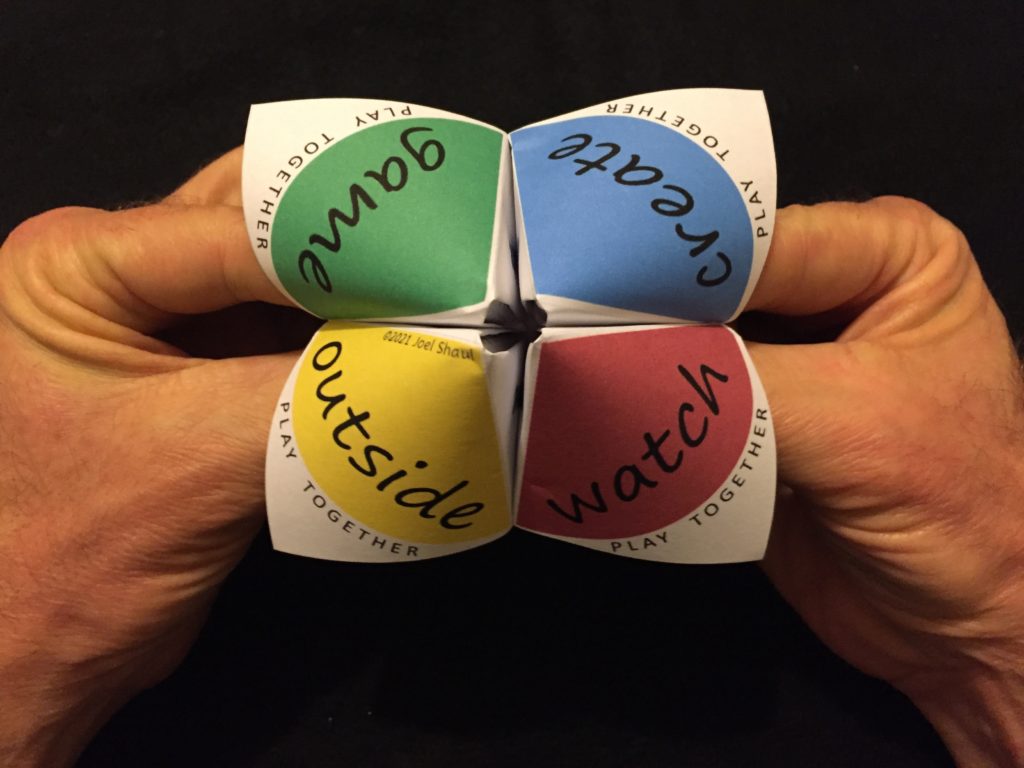
This paper fortune teller is to help two children to jointly explore playing and hanging out activities.

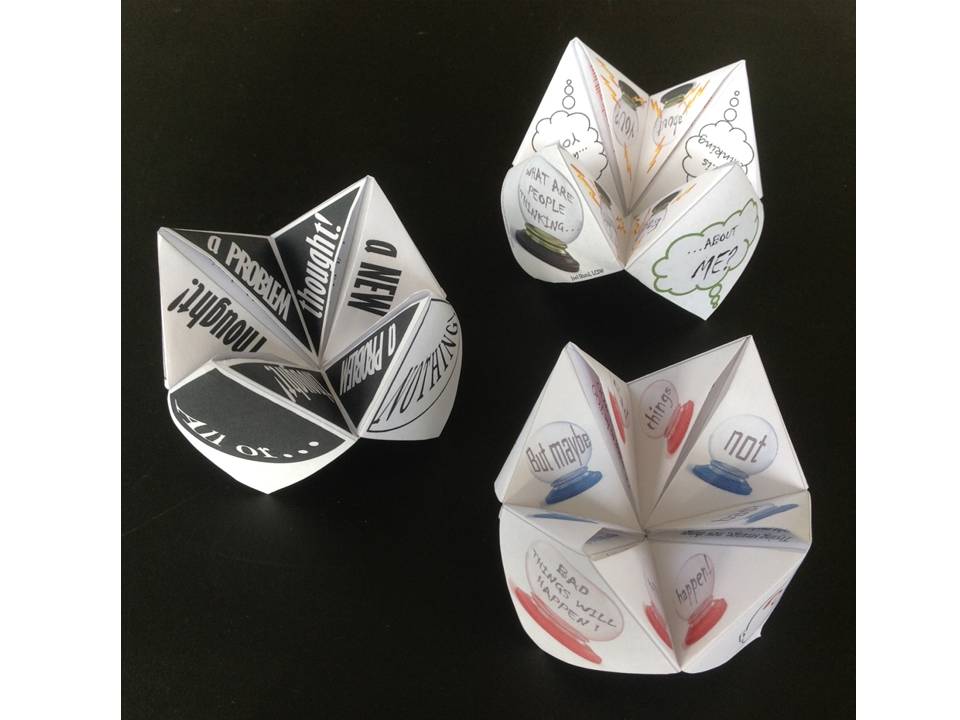
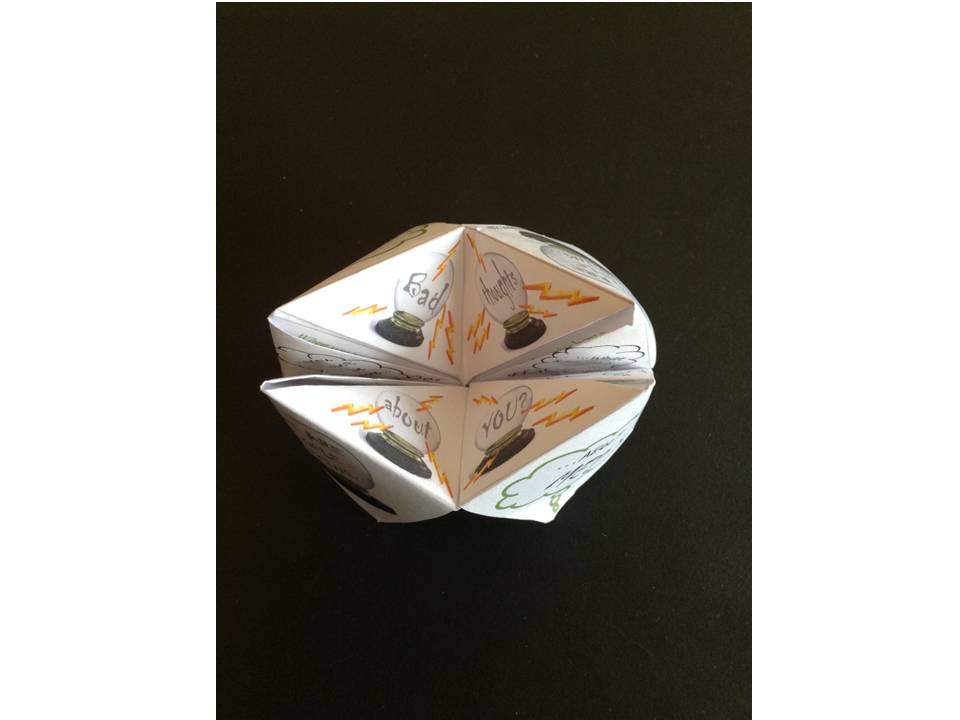
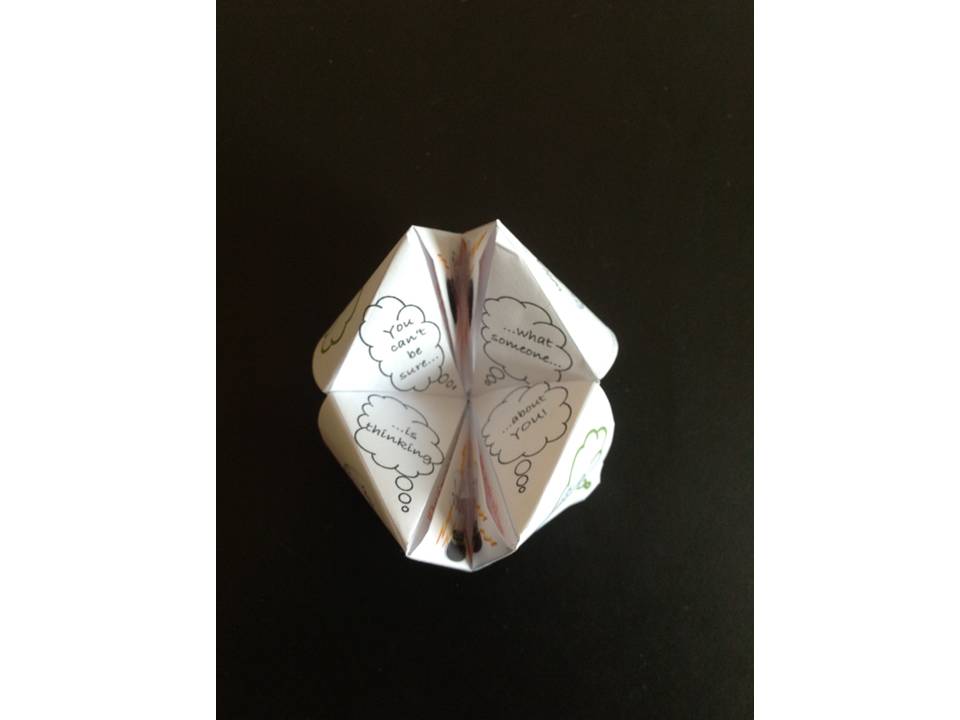
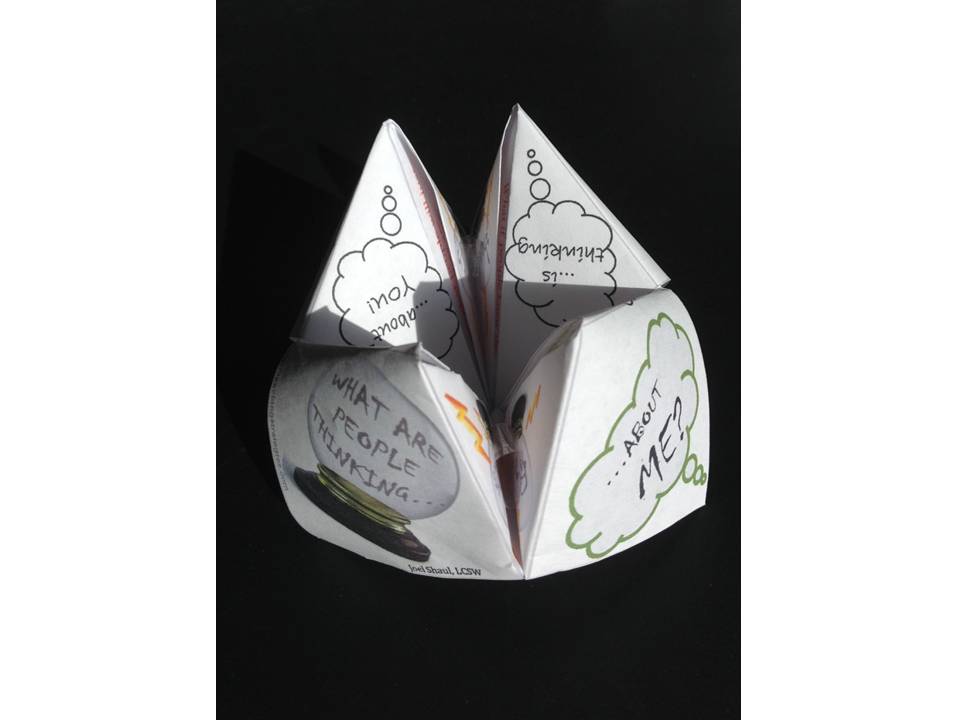
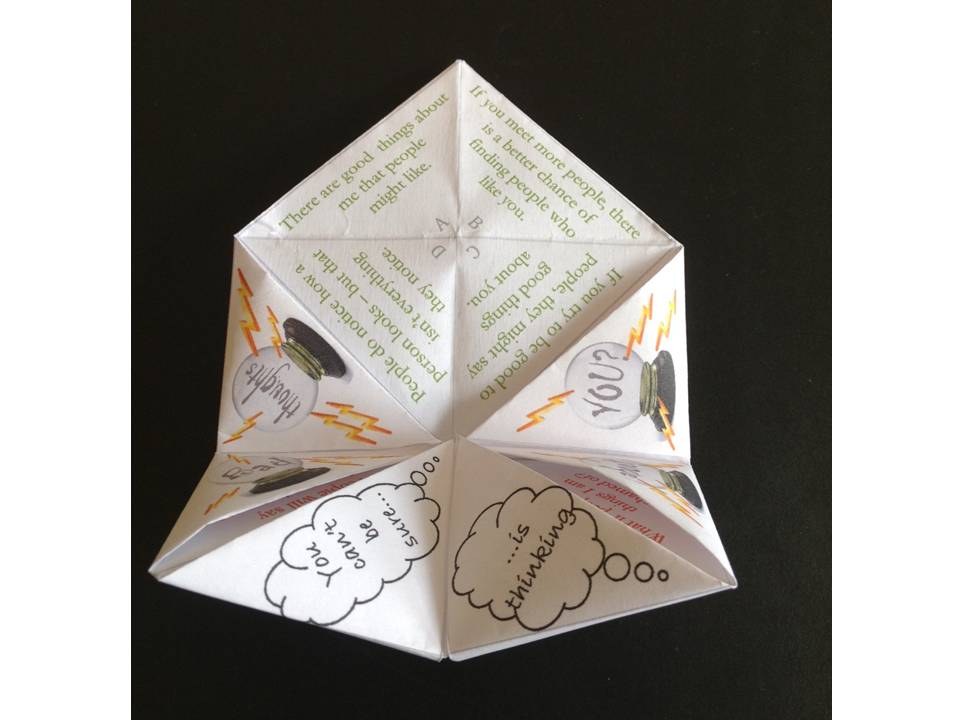
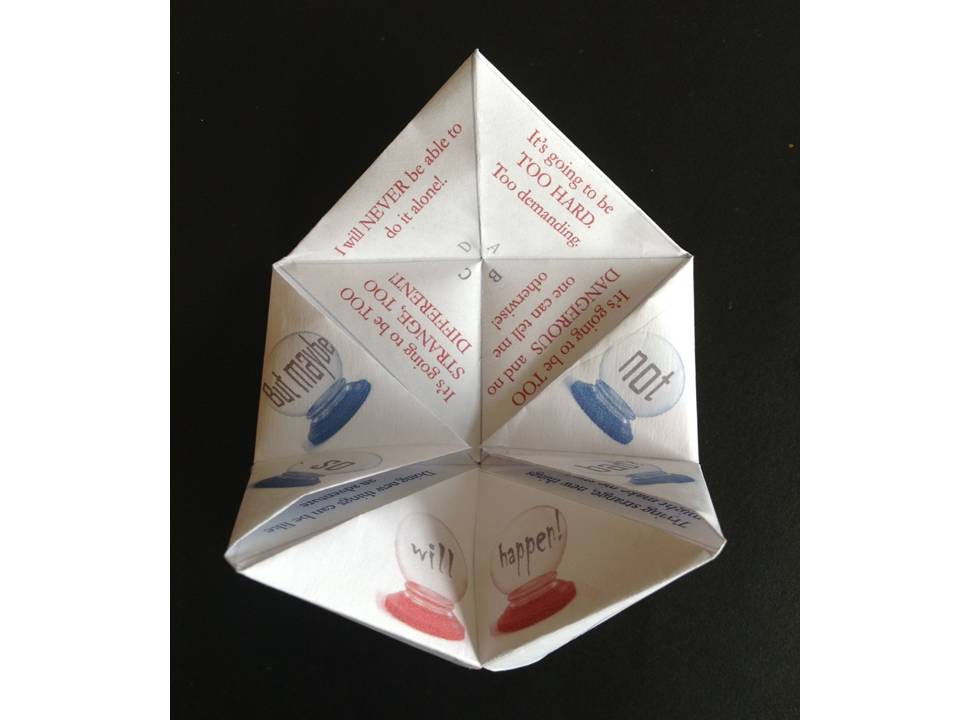
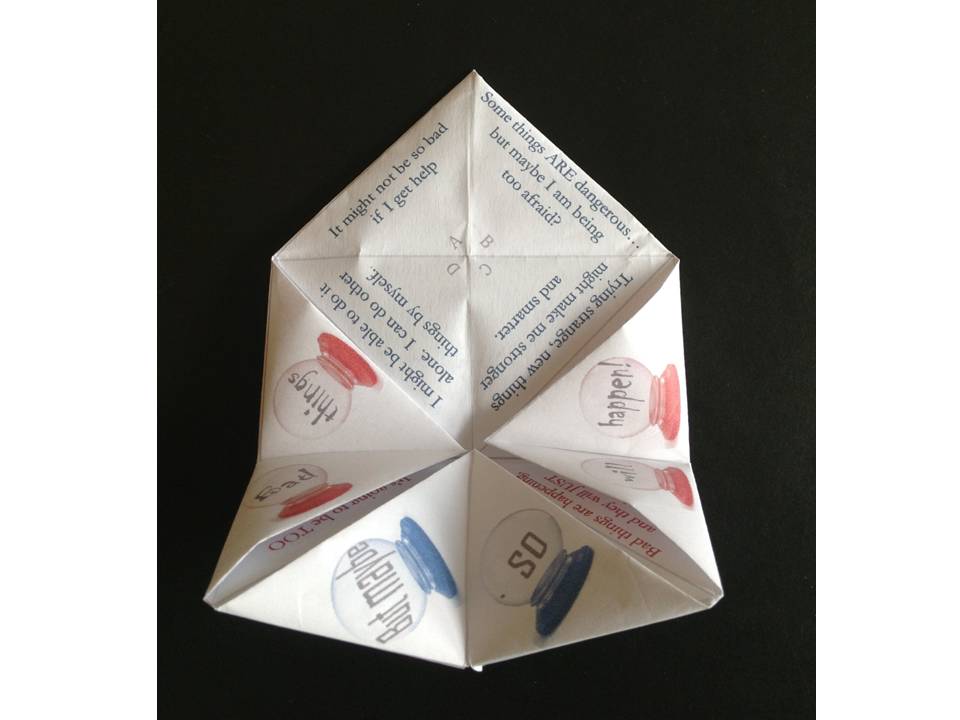
Here are some pictures to show what the paper fortune teller looks like as the two players unfold it during play.

This is a great activity, but keep in your planning, keep in mind that there is significant prep time involved. In my experience, most children cannot fold these together adequately in a group setting – you are much better off starting the activity with the paper fortune tellers already made.

Your comments on these resources are most welcome, and often helpful. Click HERE to send an email.
Your Interests Promo image for website

Free Paper Fortune Tellers: Cognitive Behavioral Therapy Games for Counseling and Classroom

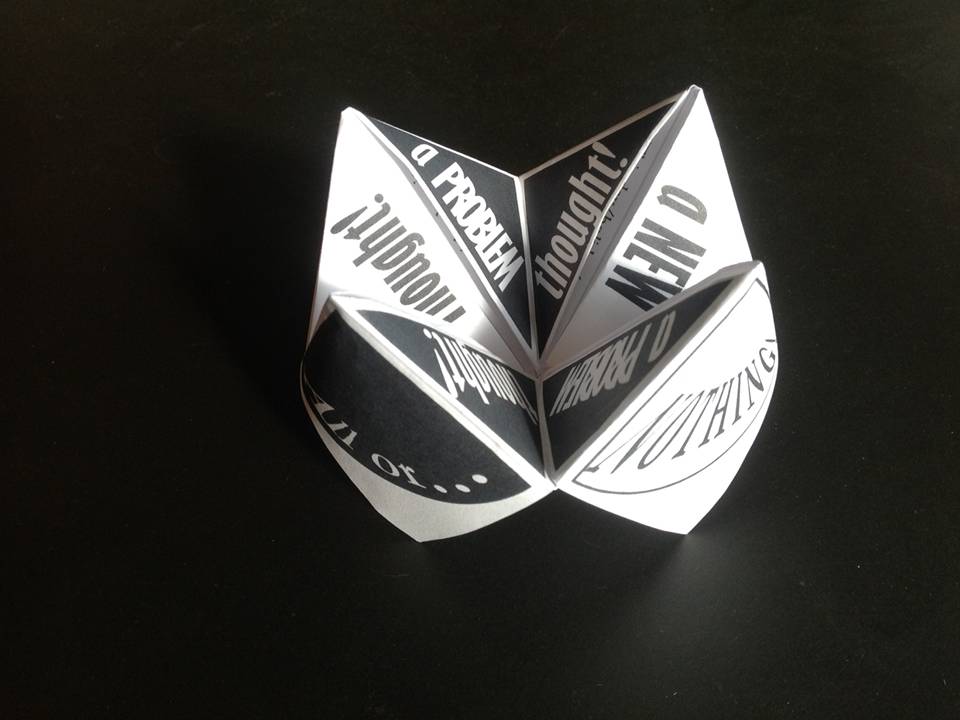
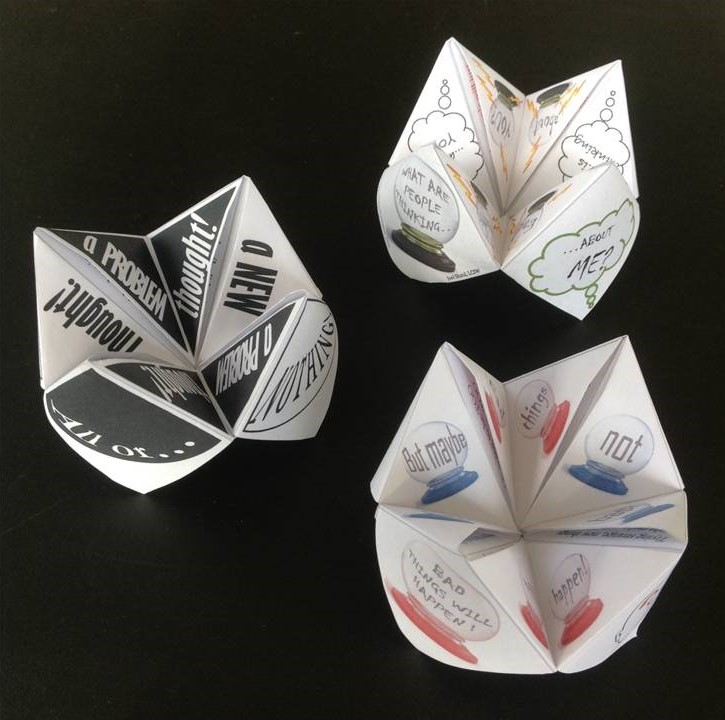
Cognitive Behavioral Therapy Paper Game for Children

To download the PDF files for these three paper fortune tellers, click on the RED link right below here:

CBT Paper Fortune Tellers for Anxiety & Other Issues

Helping children to work on upsetting emotions using cognitive behavioral therapy game activities

Many young people have persistent problems with anxiety, sadness, anger and other upsetting emotions.  To maintain engagement in counseling and psycho-education, we need to provide novel approaches and introduce some levity whenever possible.

To check out a dozen other paper fortune tellers, on diverse social skills themes, please click here.

For a summary and links to all the free CBT materials on my website, please click here.

Some suggestions for introducing these  Fortune Tellers:

1.     Introduce some basics concerning the connection between automatic  negative thoughts and negative emotions.  I suggest you do this by viewing , with children, this very short video I made:

2.     Working in pairs, and taking turns, person number one says, “Spell your name.”  For each letter, the child holding the Fortune Teller manipulates the device back and forth.

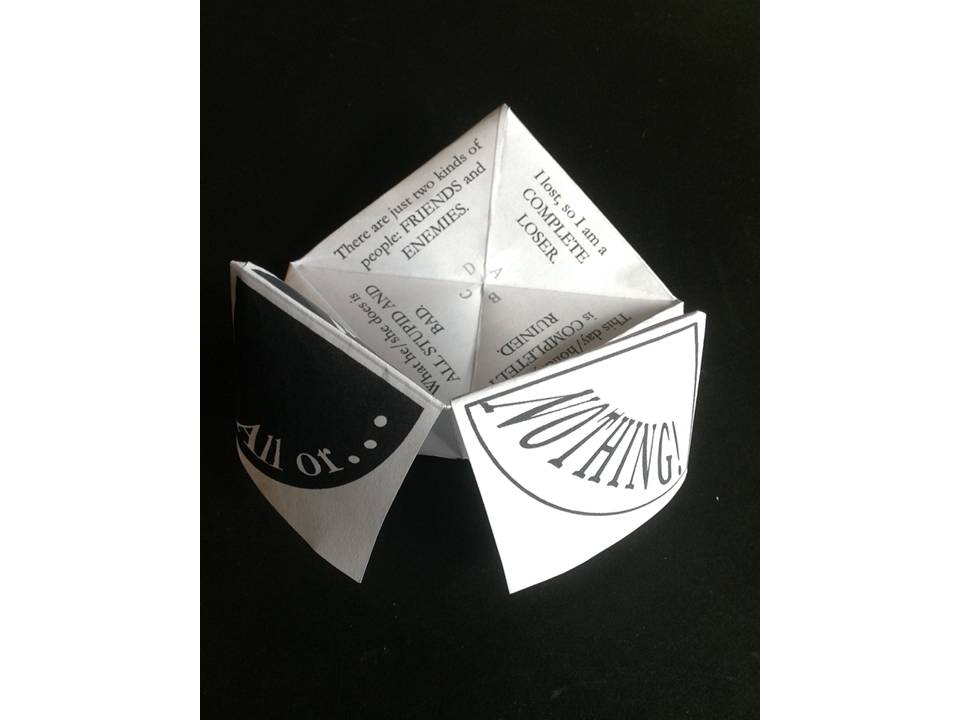
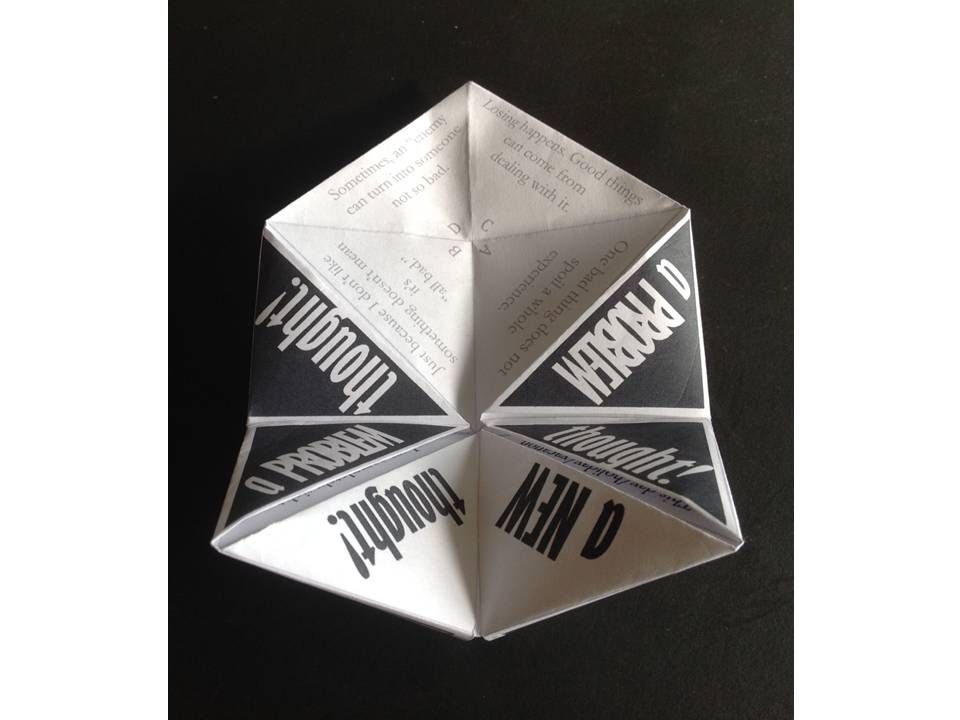
3.     Person number two is then shown the two options appearing on the inner triangles.  Person one says, “Pick which one you want.”  You can see photos of this farther down on this page.

4.     Person one opens up the innermost petals, where four options appear.  He tells person two, “Pick A, B, C or D.” Person one reads the option selected.  If the option read is a negative thought, person two has to tell how to deal with such thoughts.  If the option selected is a positive thought, person two must describe a time when he needed to use such a thought to solve a problem.

I really enjoyed creating these paper devices.  Don’t be afraid to try folding them.  Here is an illustrated guide to folding them.

My best wishes for your work with children,

Joel Shaul, LCSW

paper fortune teller cognitive behavioral therapy children

Slide14

Slide13

Slide12

Slide11

Slide10

Slide9

Slide8

Slide7

Slide6

Slide5

Slide4

Slide3

Slide2

Slide1


Your comments on these resources are most welcome, and often helpful. Click HERE to send an email.
ASD Feel Better Promo square directing to JKP

The Conversation Train Book

Green Zone Book Cover Click to Learn More

Your Interests Promo image for website

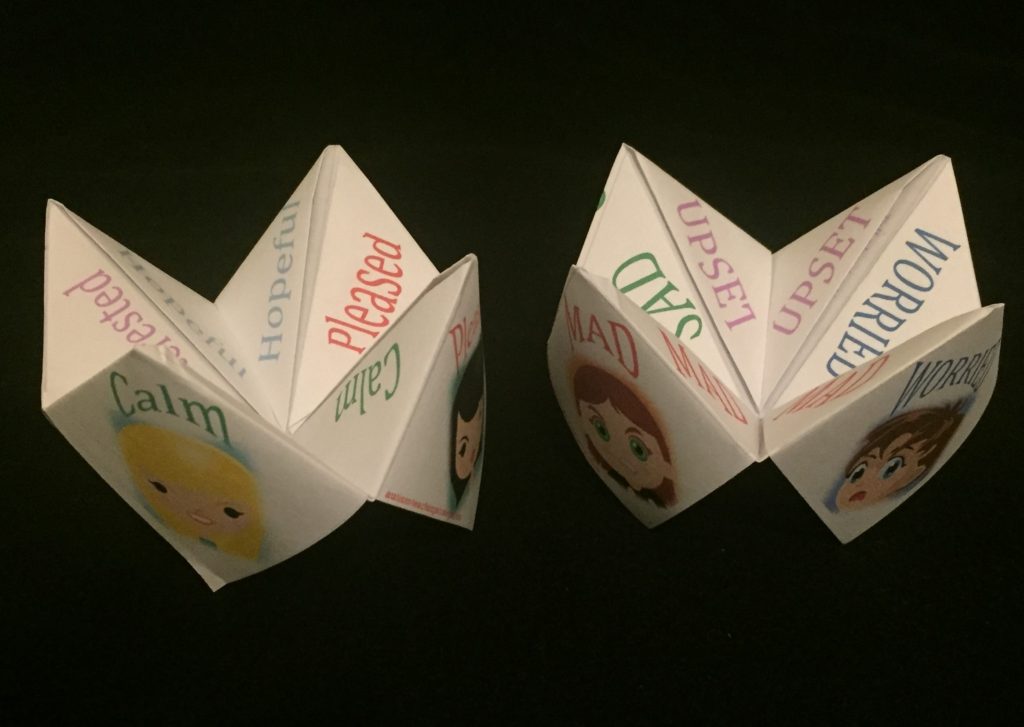
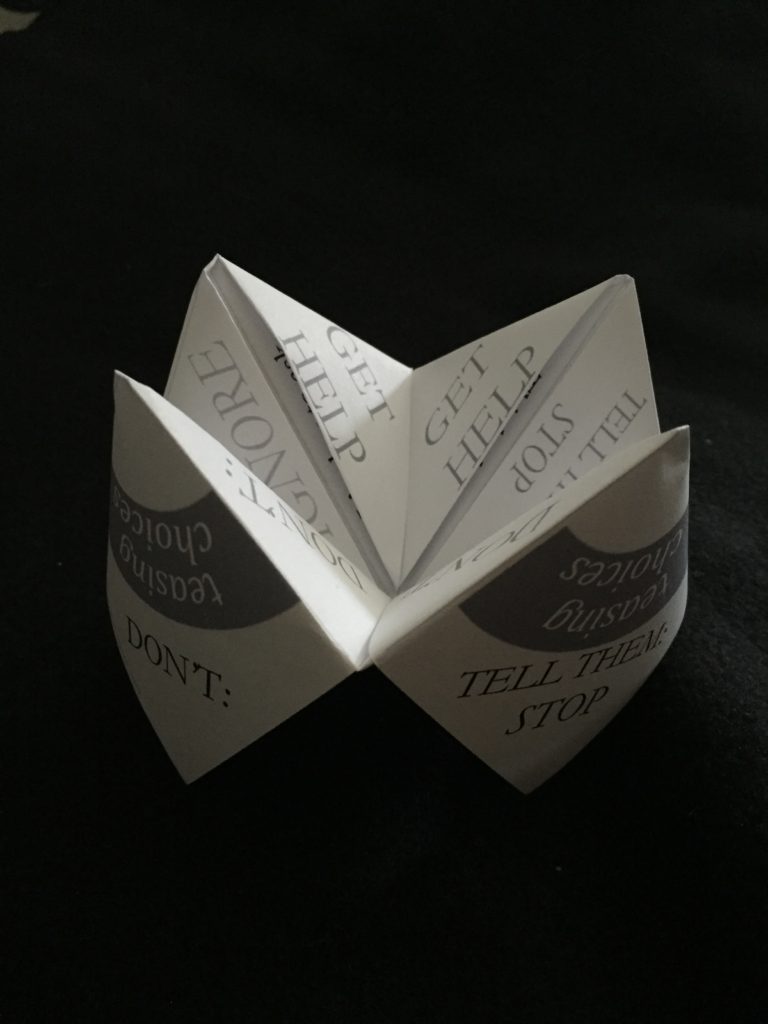
Paper Fortune Tellers – social skills games for children with ASD’s (and other children too)

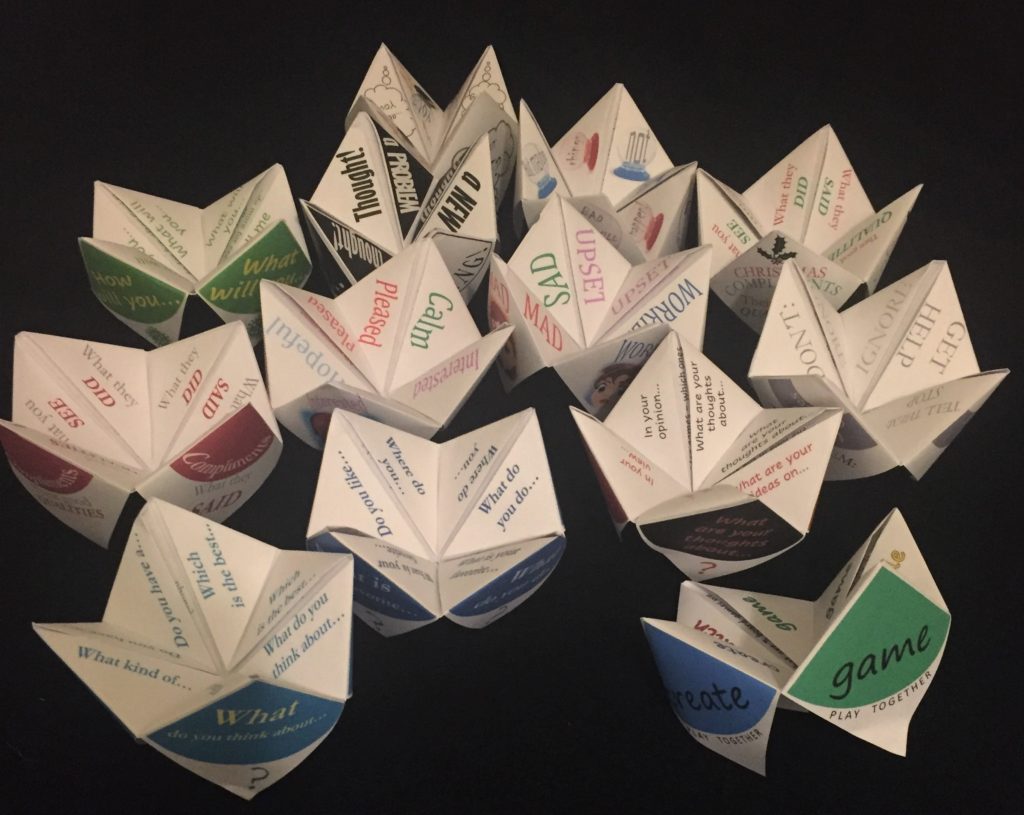
This is the main page for my social skills paper fortune tellers. Scroll down to view photos.

Click on these links below for explanations and free downloads of 17 paper fortune tellers.

Quick Picture Guide for Folding Paper Fortune Tellers

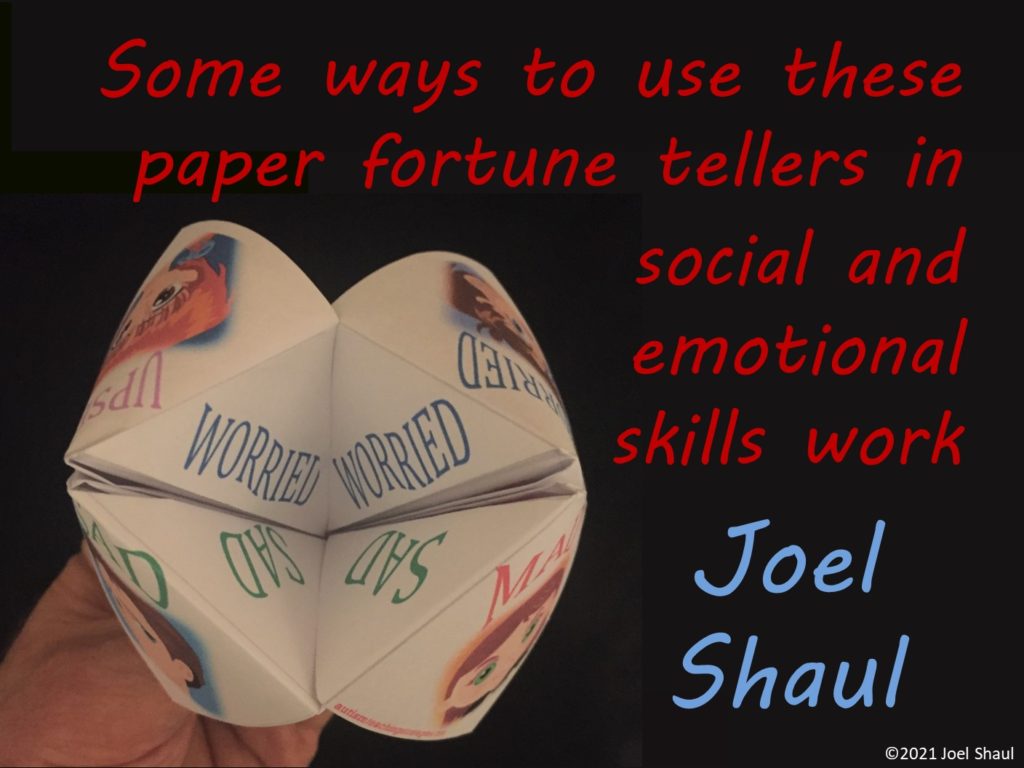
Quick Picture Guide for Using These Paper Fortune Tellers in Social / Emotional Skills Work

*For a video demo on folding and using these things by Carla Butorac, SLP, click HERE.

Paper fortune tellers can be useful therapy / teaching tools, especially for young people with ASD.

*The turn-taking that naturally occurs when two people use a paper fortune teller promotes the reciprocal conversations we are trying to promote.

*Each paper fortune teller emphasizes an important skill area in our social/emotional teaching.

*Paper fortune tellers are engaging and fun.

Here are some tips for using these many paper fortune tellers in your work.

  1. You need to make them in advance yourself. Although some children can fold these things with your supervision, most won’t be able to manage it.
  2. Assess in advance to what extent your client(s) can manipulate the paper fortune tellers with their fingers. Some might not be able to manage it.
  3. Provide one paper fortune teller for each pair of participants. If you give out one per participant, you can end up with solitary play rather than reciprocal interaction.

Joel Shaul, LCSW

Paper Fortune Teller for Playing & Hanging Out Skills

Himmel und Hölle um spielen und einander kennenzulernen

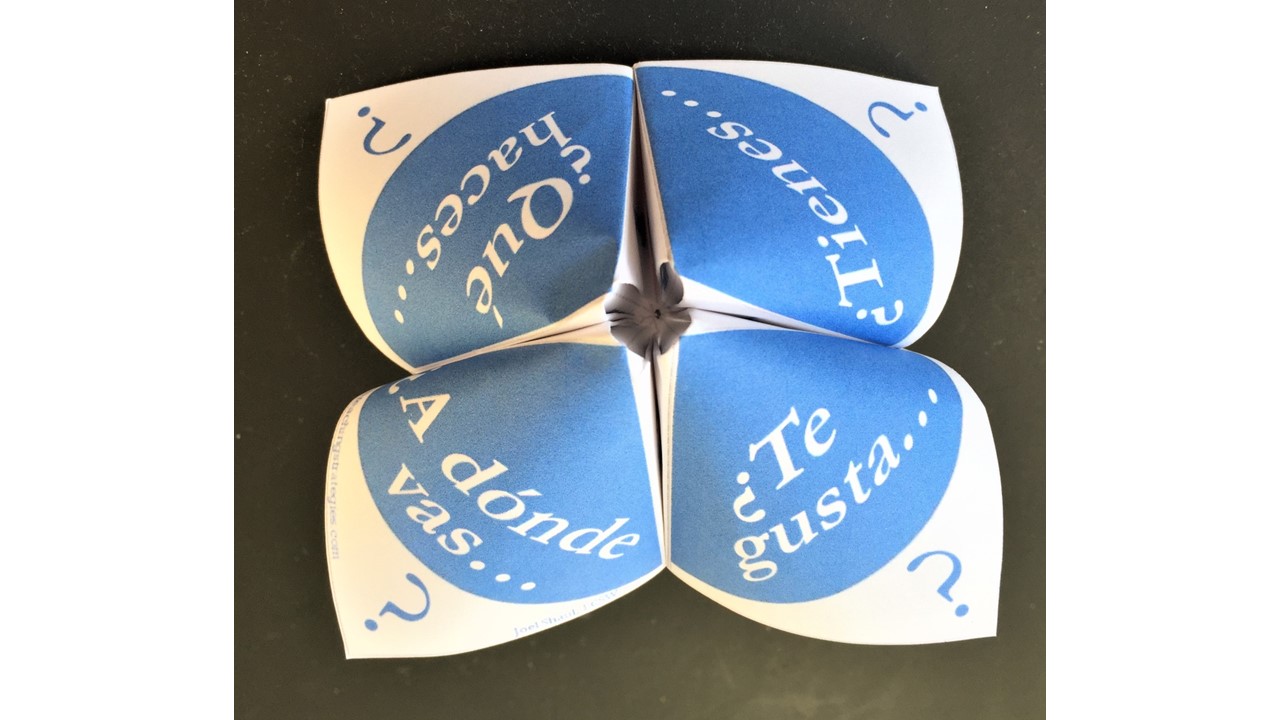
Adivinador de papel para ayudar a los niños a aprender hacer preguntas

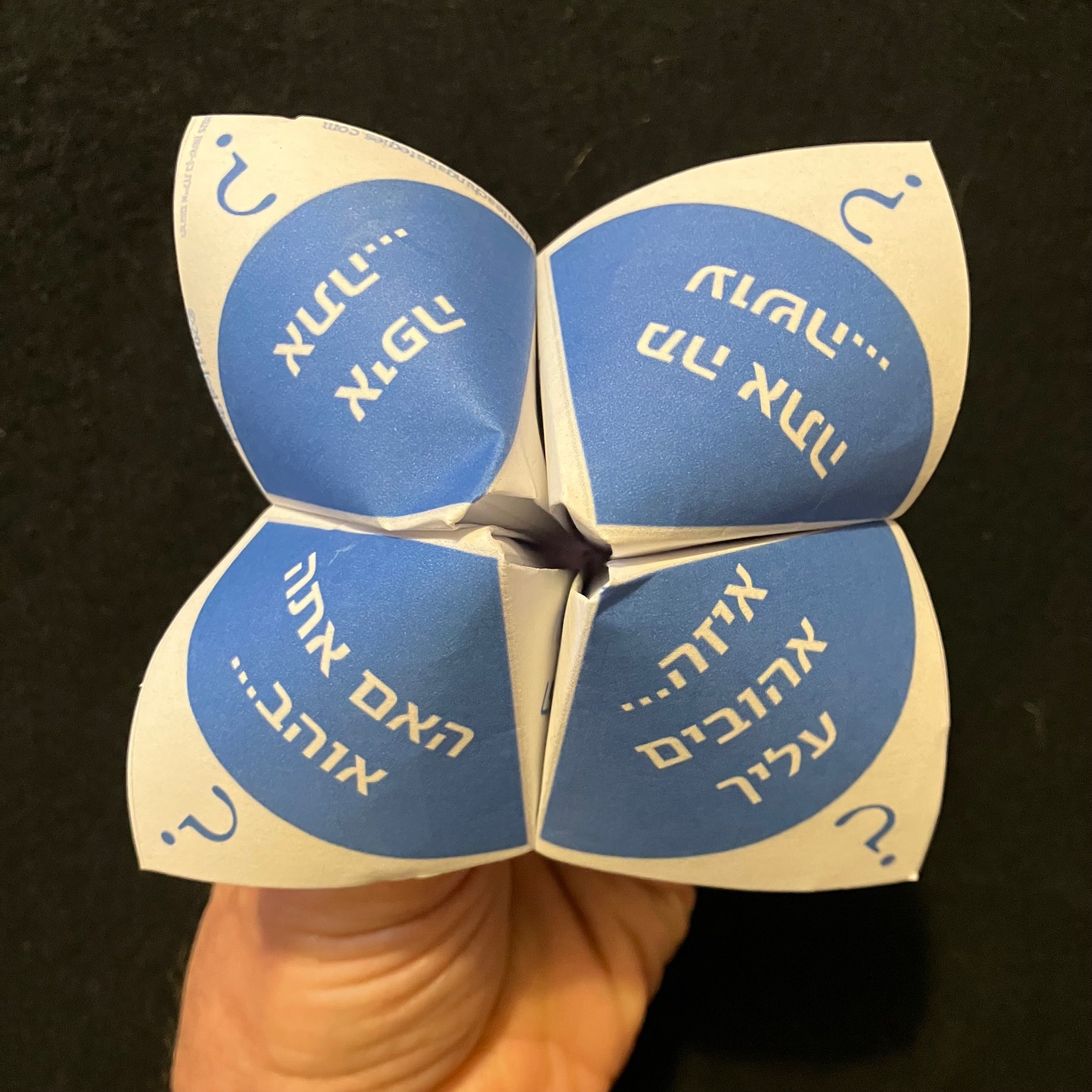
Paper fortune teller for asking questions, Hebrew version

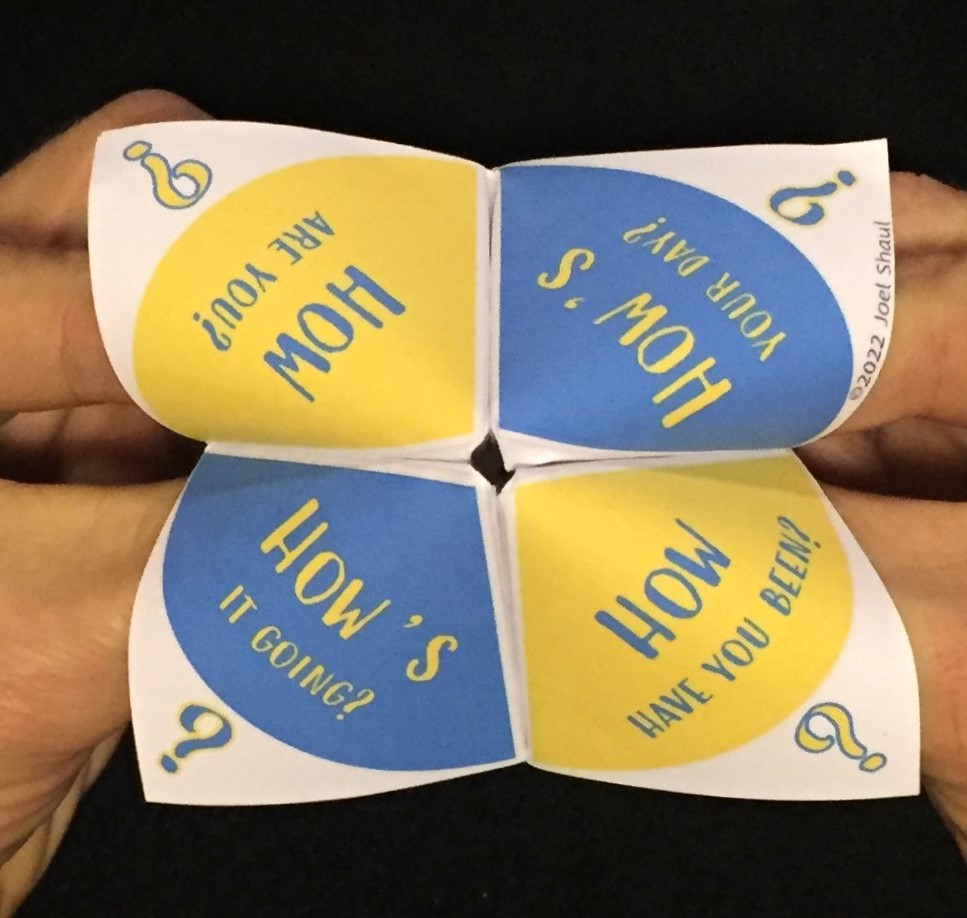
Paper Fortune Teller for Asking “How are you?” questions

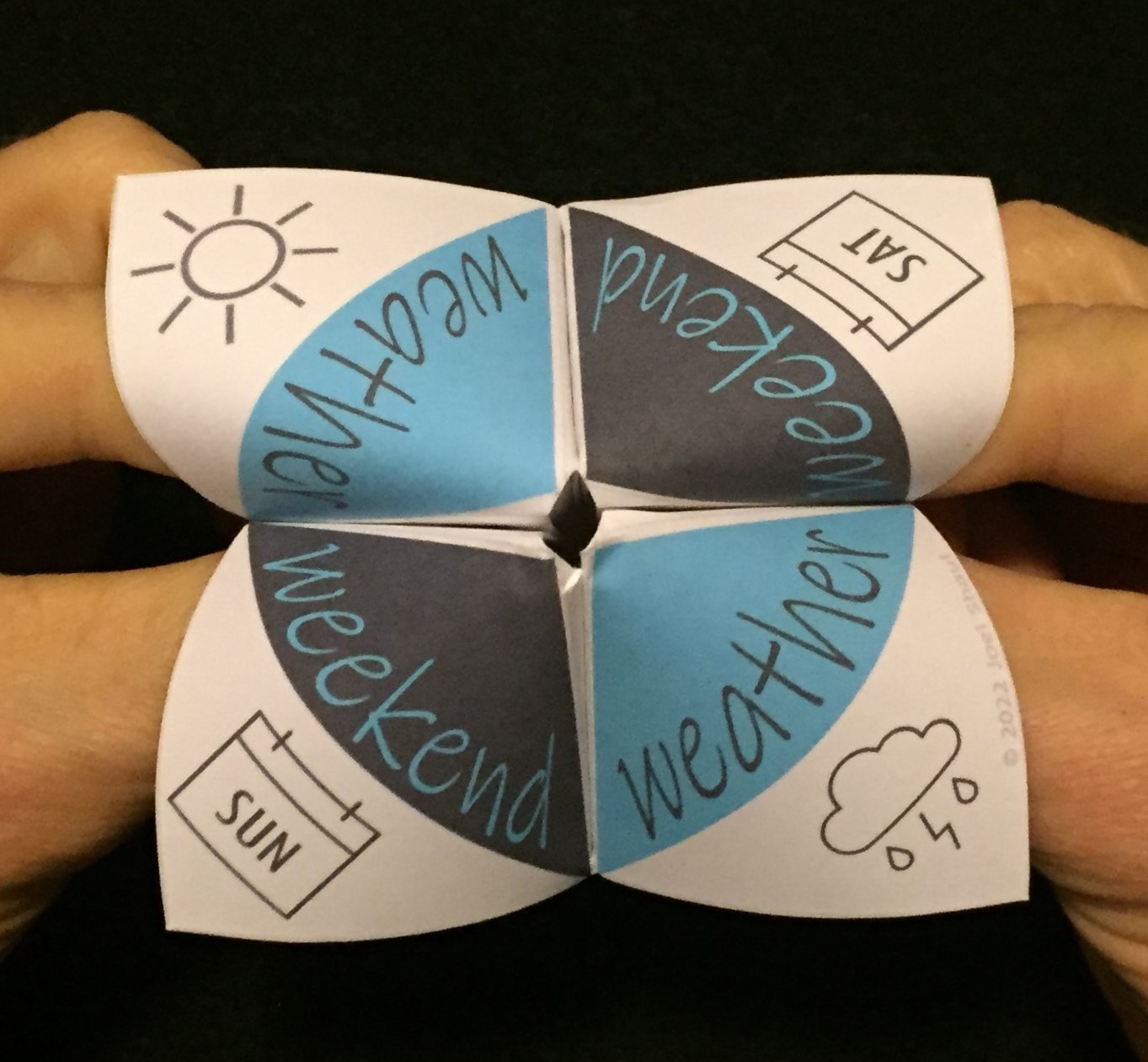
Paper Fortune Teller for Topics of Weather & Weekends

Paper Fortune Teller for Asking Opinions

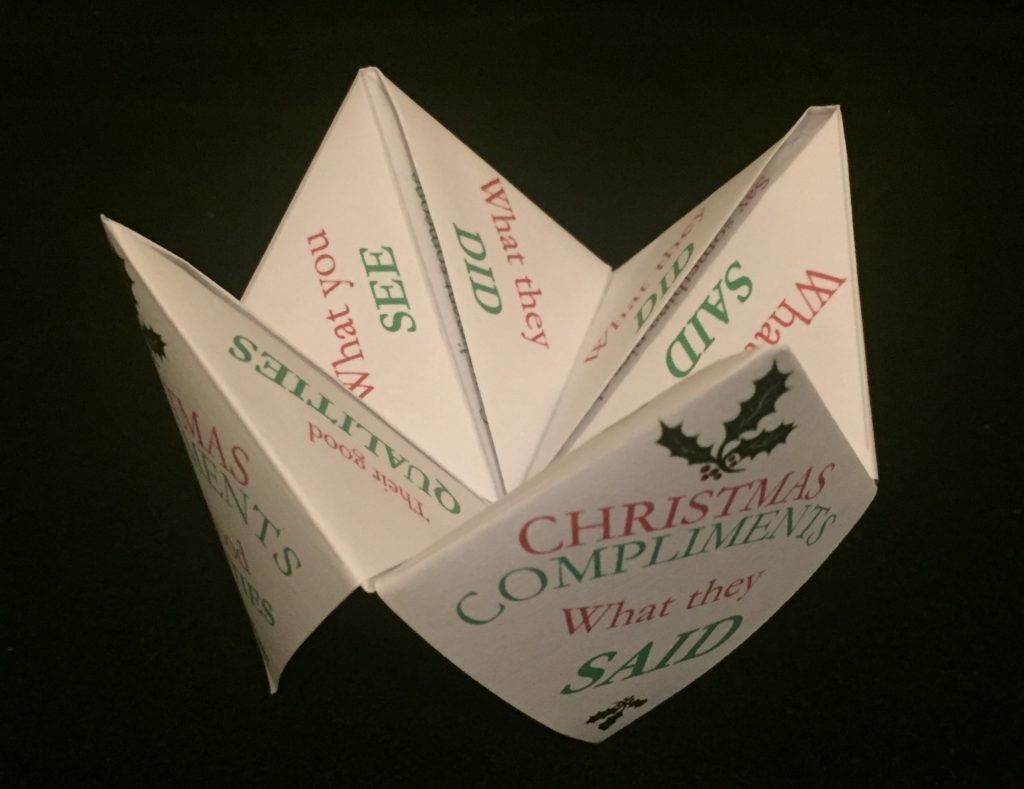
Paper Fortune Teller for Christmas Social Skills

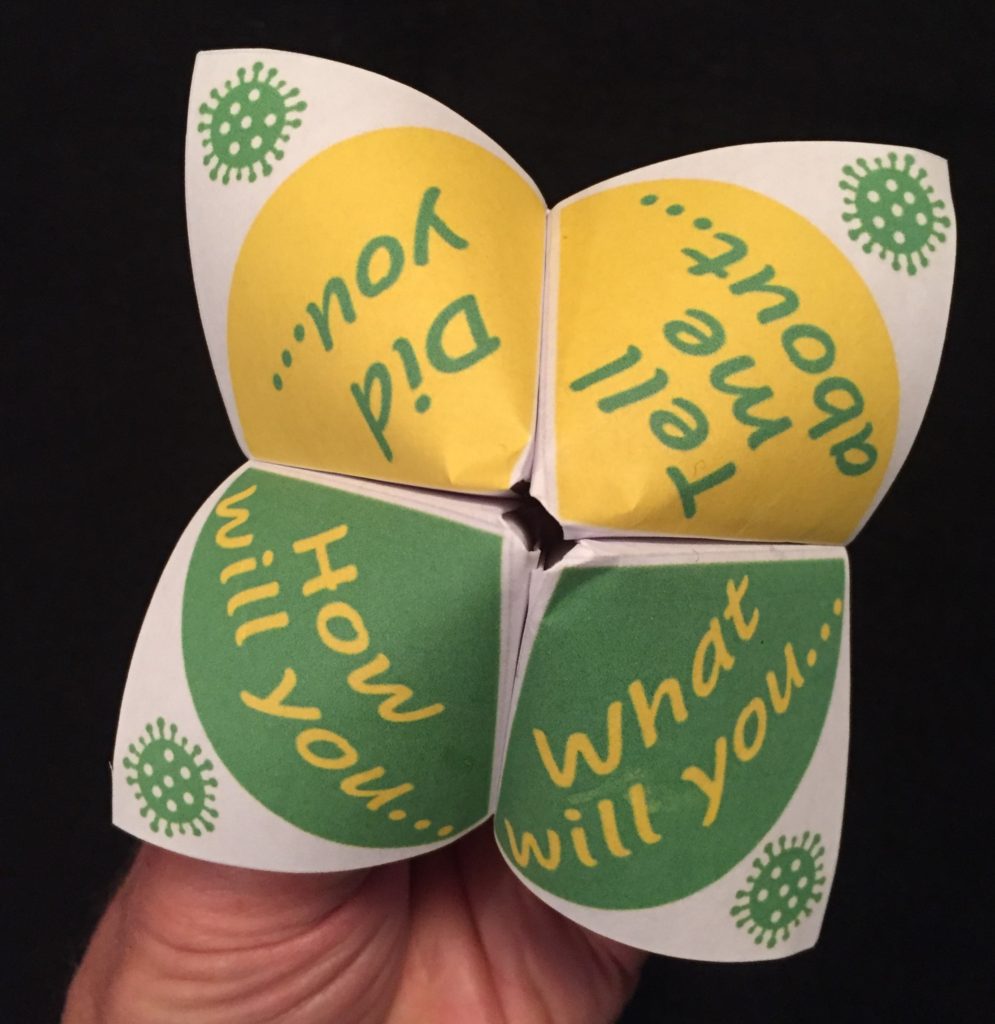
Paper Fortune Teller for Talking about Covid-19

*Don’t miss these other free social skills games, worksheets and therapy resources for children on the autism spectrum:

Free social skills games & activities, communication / conversation skills for kids with ASD

Free social skills games & activities, social interaction skills for kids with ASD

Free social skills games & activities, emotional regulation skills for kids with ASD

Your comments on these resources are most welcome, and often helpful. Click HERE to send an email.