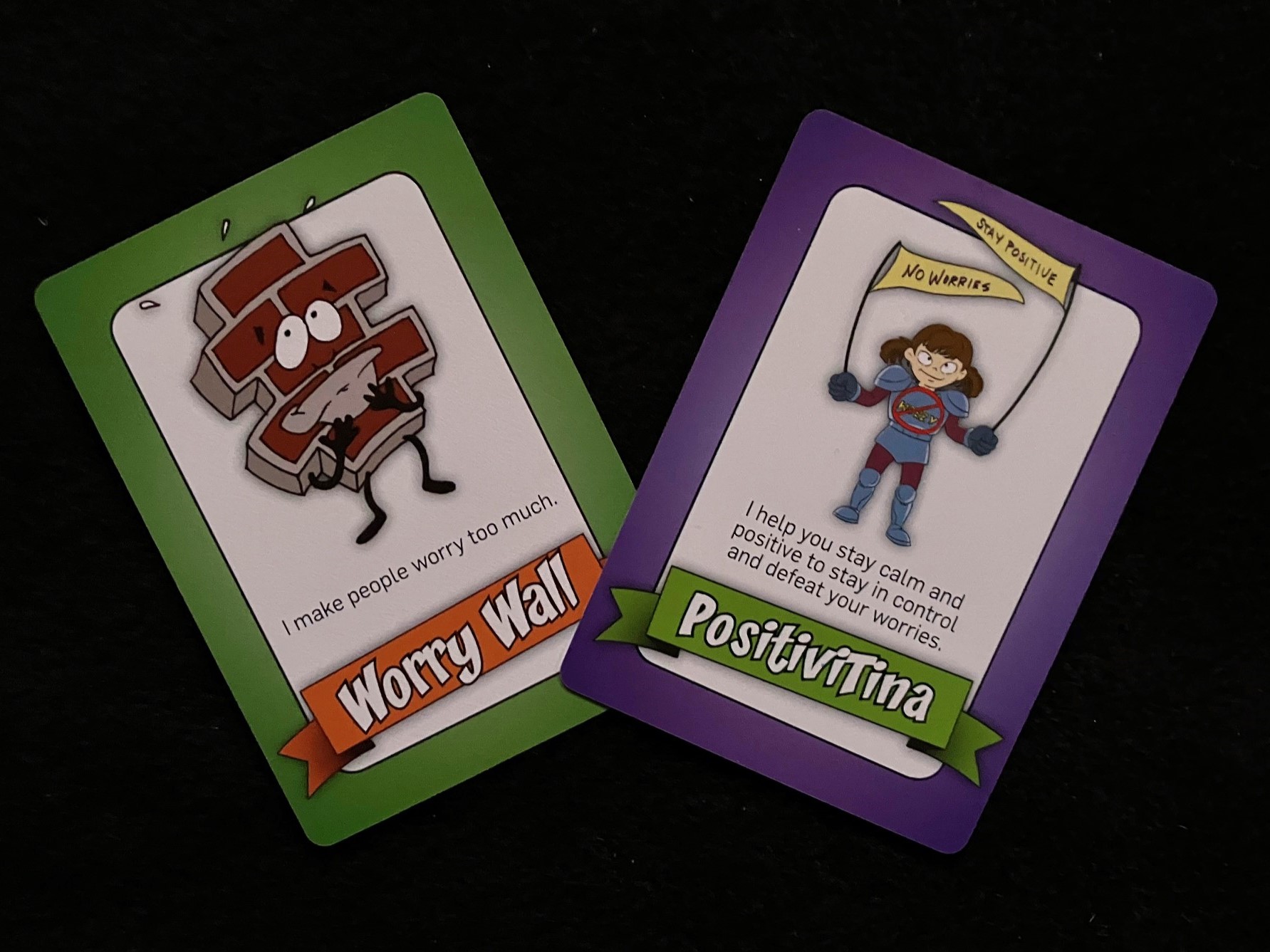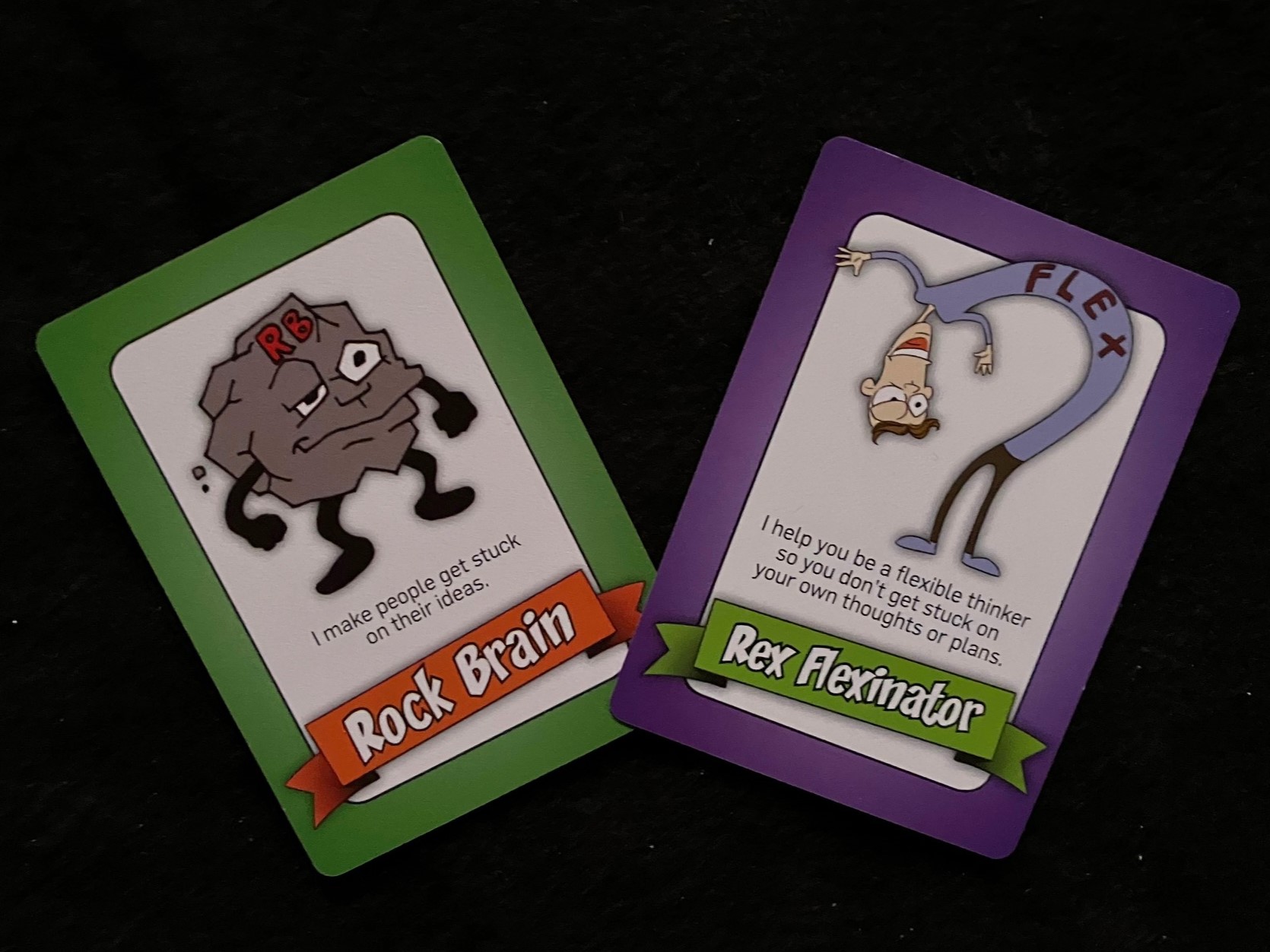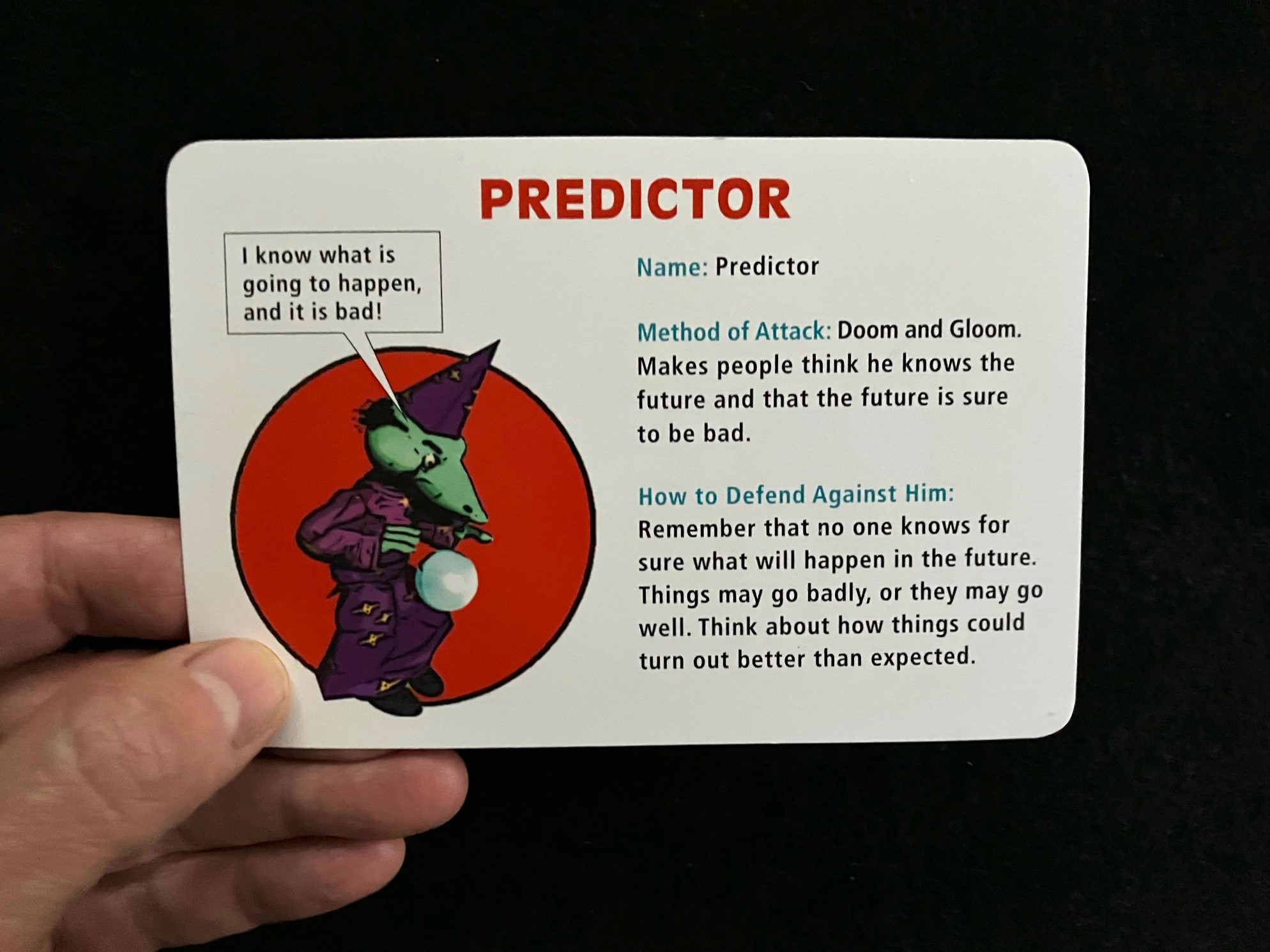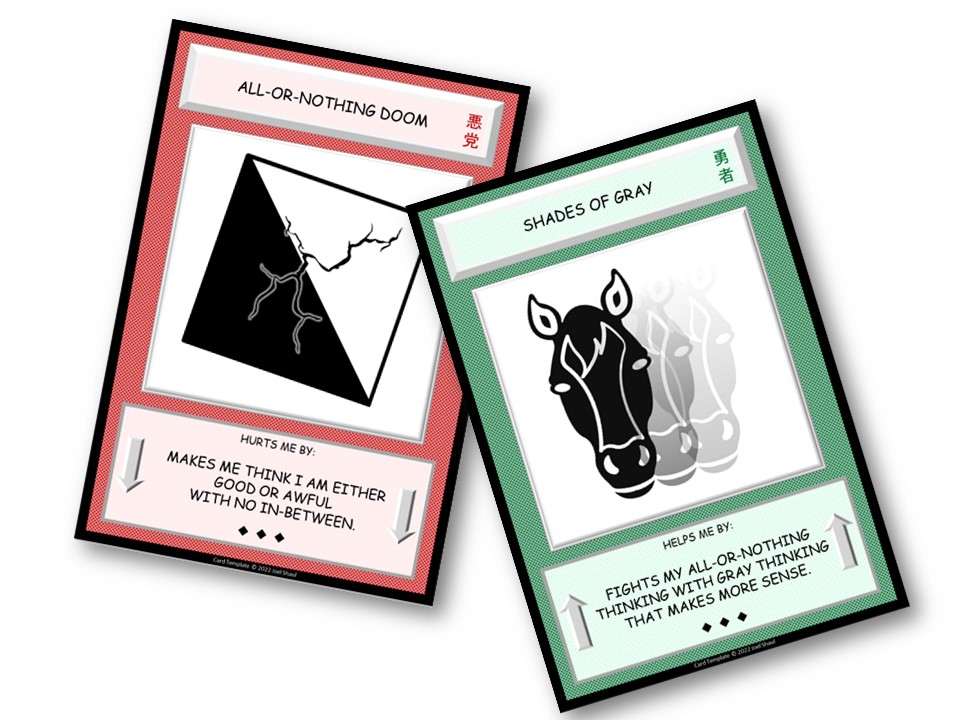
Part 6: Encouraging & validating the child’s own artistic expression.

There is a lot we can do as therapists and teachers to support the mental health of young people on the spectrum by appreciating and supporting the art they create when they are not with us.

It is well known that some of the world’s most original creators of art have autism. Many individuals on the spectrum, including quite a few young people in our therapy offices and classrooms, are dedicated practitioners of art.
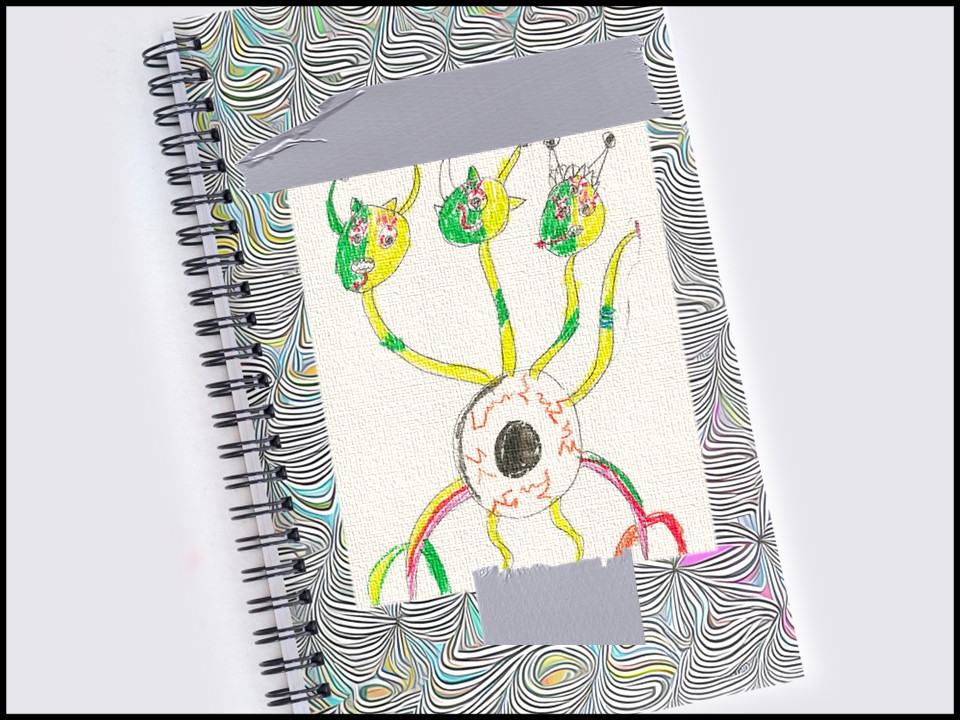
For therapists and teachers, it is common to see kids on the spectrum carrying around private collections of their drawings.

Here are some reasons to explore the art of a young person with autism.

~ To help children to more fully appreciate their own unique interests, perspectives and talents.

People with mind differences might not sufficiently value their own creativity. In fact, they may regard their atypical art as evidence that they are somehow weird and different.

When young people with autism make something that is amazing, they should be made aware of its essential worth. If a child uses a glue gun to fashion new superheroes out of discarded old action figures, or makes alien monsters out of aluminum foil, or creates an imaginary “family” of cartoon characters on their computer, they should know that their work has special value.
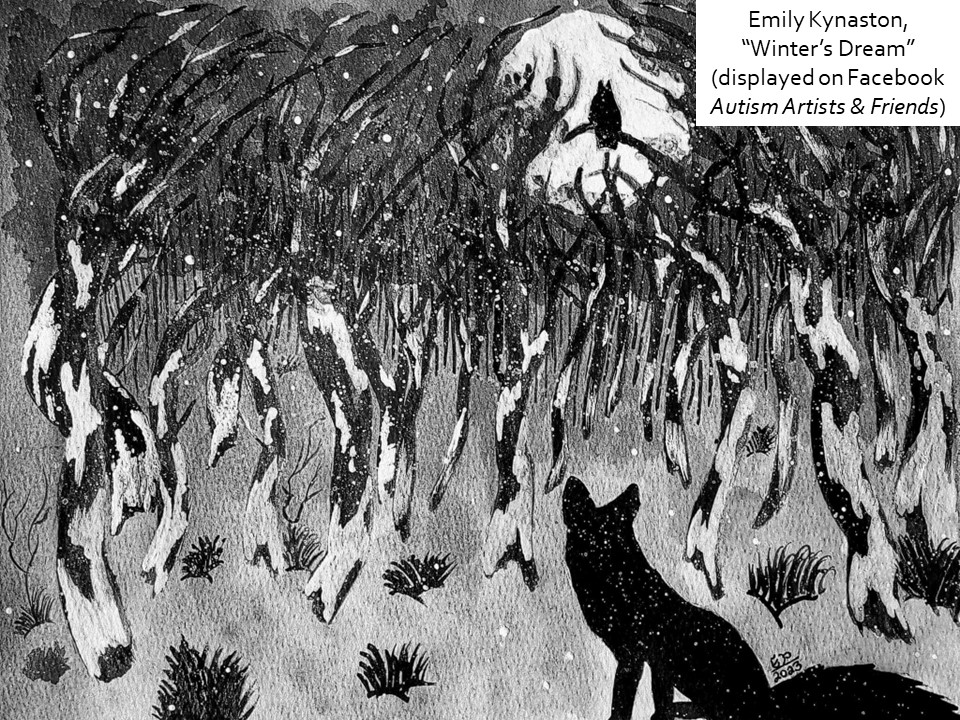
Some young artistic artists get beneficial exposure and appreciation through social media.

~ To gain insights enabling us to help them more effectively.

Having better awareness of a child’s interests can increase our ability to motivate a child and sustain their interest. For example, seeing a child’s sketchbook full of Harry Potter-themed art might help a therapist to expand therapy session content to include discussion of social skills lessons Hermione offered to Harry and Ron at Hogwarts.

~ To better understand imaginary thinking, and bring to light aspects of fantasy worlds that are helpful or potentially problematic.

Art by a young person based on their private, imaginary world could turn out to be something you, the therapist, might encourage as a healthy expression of individuality and a useful source of relaxation and recharging.

Alternatively, you might discover that the creative, imaginary activity has taken dominion over so much of the young person’s time and energy that it arrests their personal development and adversely influences their mental health. (To learn more about autism and imaginary worlds, see my separate post on that topic).

~ To encourage a child’s own efforts to creatively and independently expand their own social-emotional learning.

It is not uncommon for children receiving social-emotional teaching to amplify or reinterpret their learning through their own art at home.

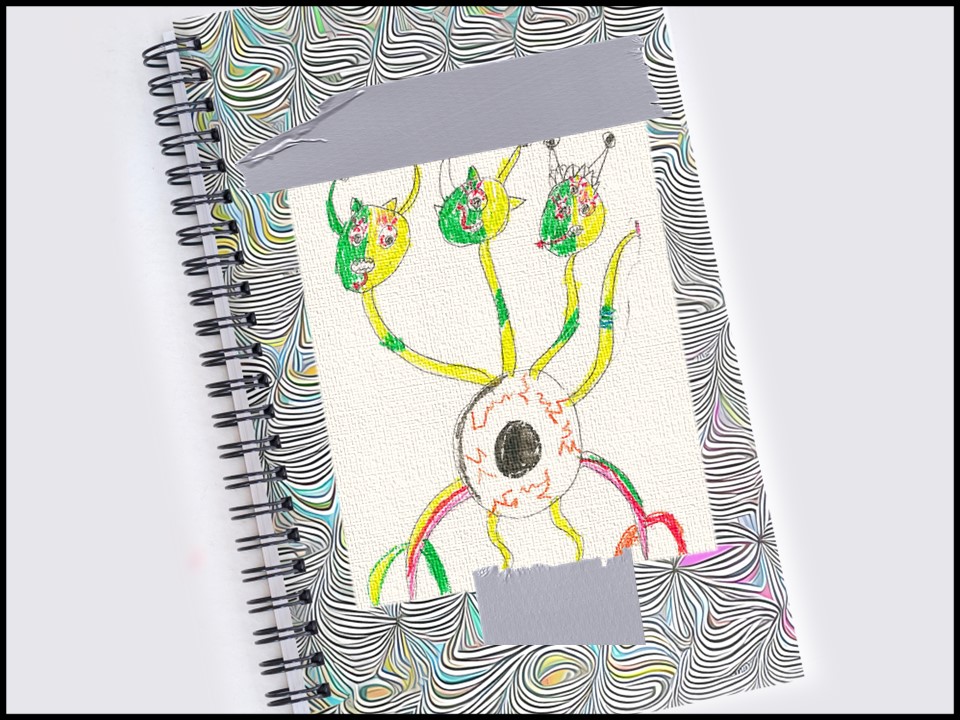
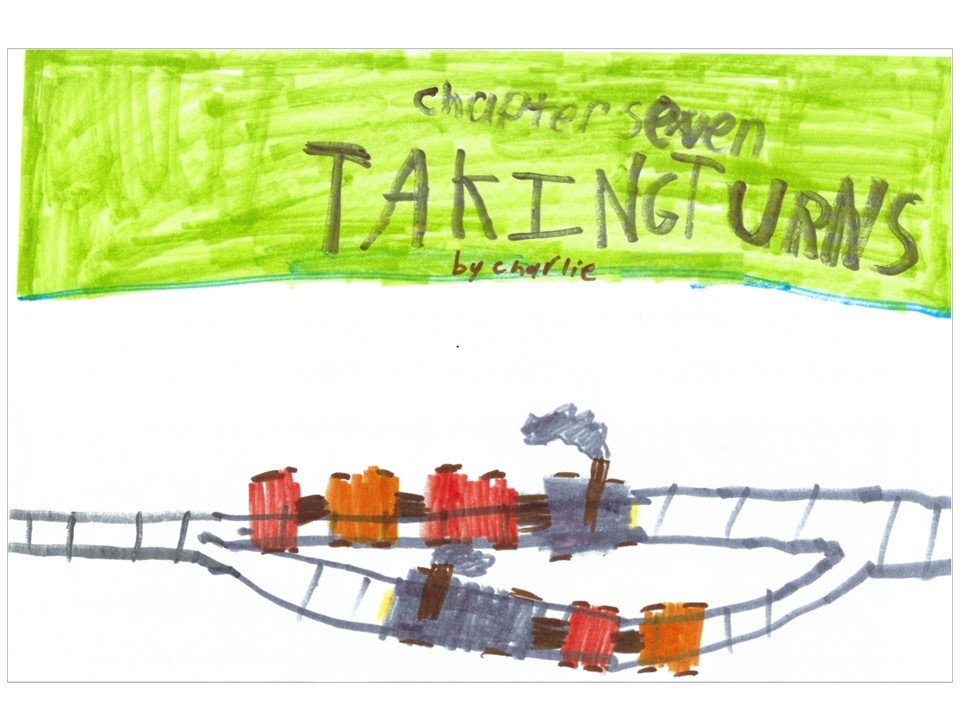
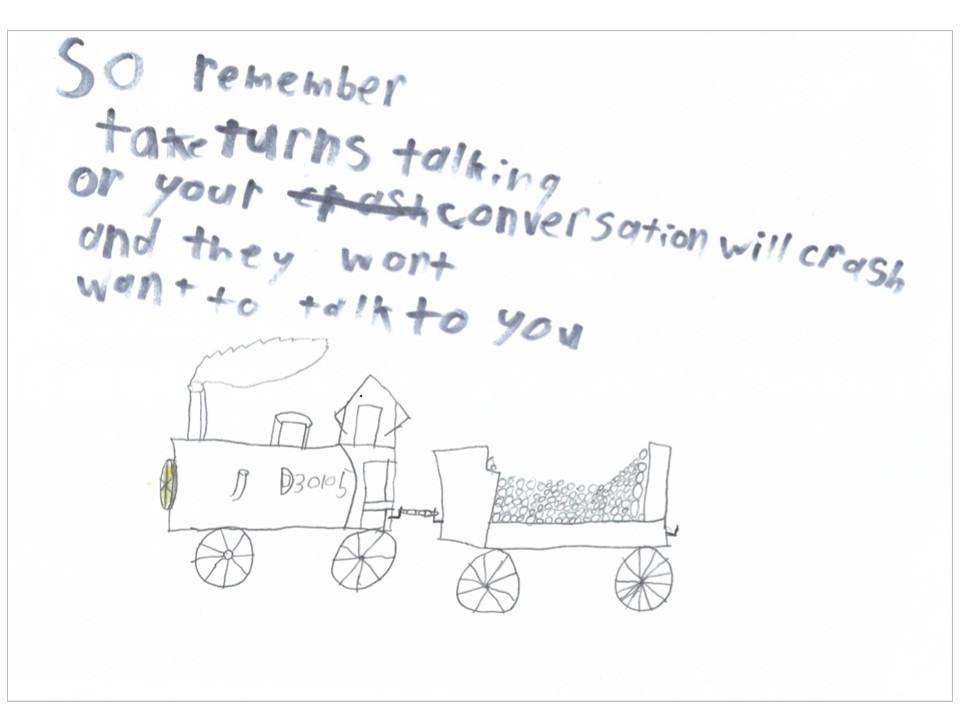
For example, this young artist below created a new “chapter” for my book, The Conversation Train Book. [Images were offered for website display by the child and his parent, who contacted me via my website.]
From my own experience as a therapist, there are are abundant examples of children artistically working on therapy issues on their own at home.

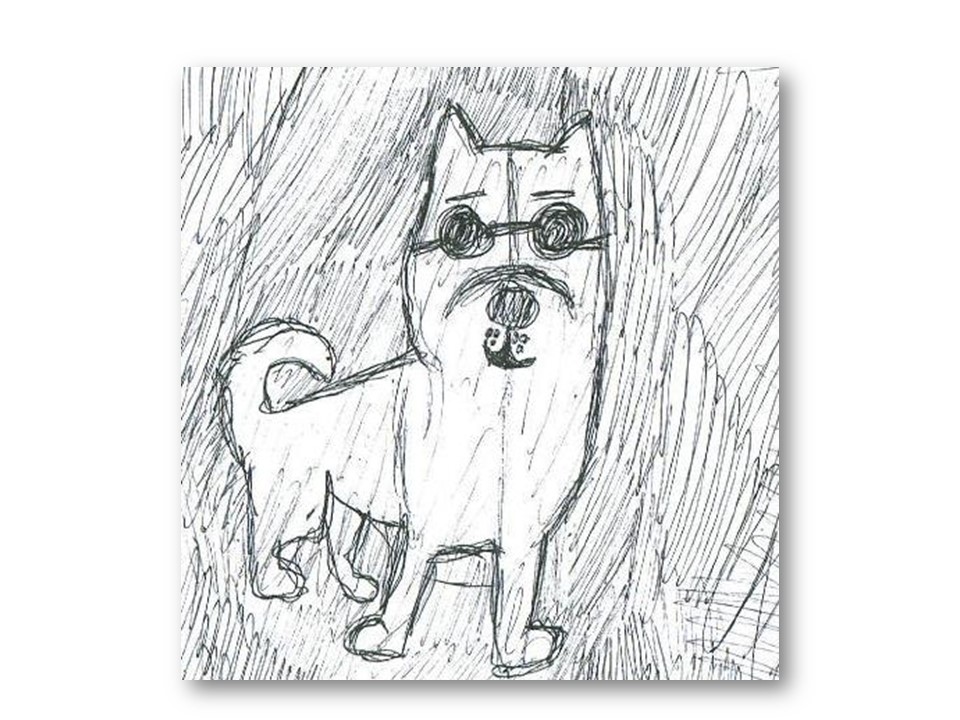
One child fashioned decorated conversation tools such as a “communication tube” out of cardboard. Another child invented and drew humanized dog characters that work on social adjustment problems.

In my work, I have really enjoyed learning new ways for young people to use artistic expression to help them with social and emotional growth. If you have any “art therapy” ideas you wish to share with me, I would sincerely appreciate hearing from you. It’s easy to reach me here.

Joel Shaul, LCSW


Introduction to series.

Part 1: Reasons to use art in social & emotional teaching. Some guiding principles & professional concerns.

Part 2: Assigning individual drawing tasks for social & emotional learning.

Part 3: Assigning collaborative drawing tasks for social learning.

Part 4: Coloring & decorating to add interest & levity to social & emotional learning.

Part 5: Creative use of others’ images and AI for social & emotional learning.

Part 6: Encouraging & validating the child’s own artistic expression in therapy & teaching.
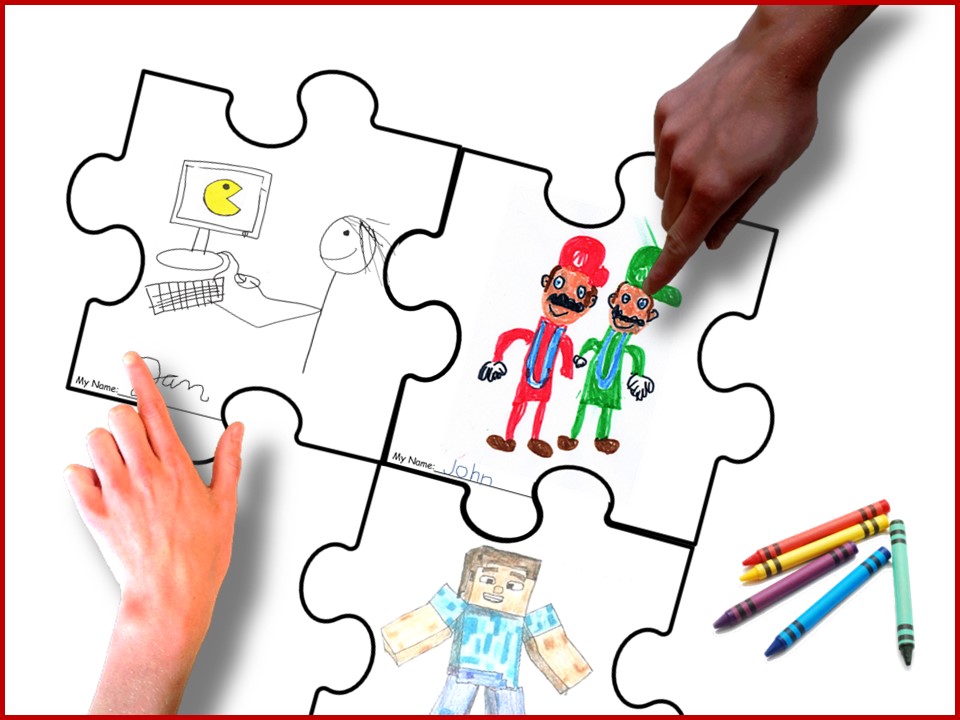
Some ways to use art to promote social & emotional learning in children with ASD. Introduction to 6-part series including free downloads.

In my own mental health and social skills work with individuals, groups and classes on the autism spectrum, art-based interventions have for some time been an important part of my repertoire.

Although I am neither an artist nor an “art therapist,” many of my free resources, as well as portions of my published books, include therapeutic exercises incorporating sketching, drawing, coloring and various creative applications of provided images.

This six-part series summarizes my ideas and resources for using drawing, coloring and other kinds of visual creativity to facilitate social and emotional learning, particularly with young people on the autism spectrum.

Most of the printable materials shown can be downloaded for free from this website.

Access the six parts of the series via the links below.

Joel Shaul, LCSW


Part 1: Reasons to use art in social & emotional teaching. Some guiding principles & professional concerns.

Part 2: Assigning individual drawing tasks for social & emotional learning.

Part 3: Assigning collaborative drawing tasks for social learning.

Part 4: Coloring & decorating to add interest & levity to social & emotional learning.

Part 5: Creative use of others’ images and AI for social & emotional learning.

Part 6: Encouraging & validating the child’s own artistic expression in therapy & teaching.
Getting the most out of family participation in a child’s individual therapy

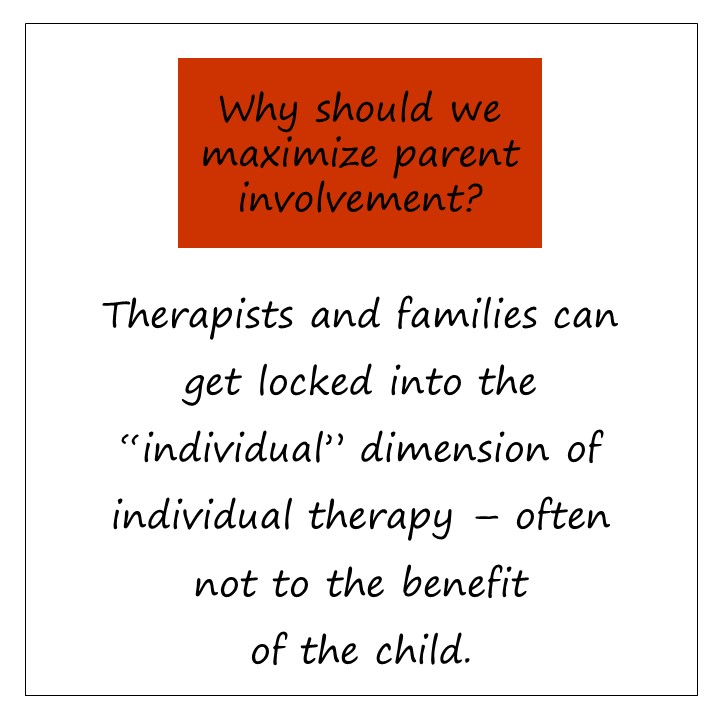
In individual therapy involving children, we therapists sometimes limit progress by making insufficient use of parents’ energy and ideas.

Each participant in therapy can get locked into a habitual pattern that is not really productive, even though each person may think they are “doing their job.” The parent delivers the child to the child’s individual session. While the parent dutifully waits in another room for an hour, the therapist diligently applies their therapeutic repertoire. The child is then returned to the parent until next week’s session.

In family therapy, the therapist’s role is clearly spelled out as we help family members to resolve conflicts and improve communication. But when the child is the designated client in individual therapy, the parents [in this article, this includes other adult guardians as well] often spend too much time in the waiting room with wasted potential.

This article explores ways that we therapists can optimize the therapeutic potential of families in individual therapy.

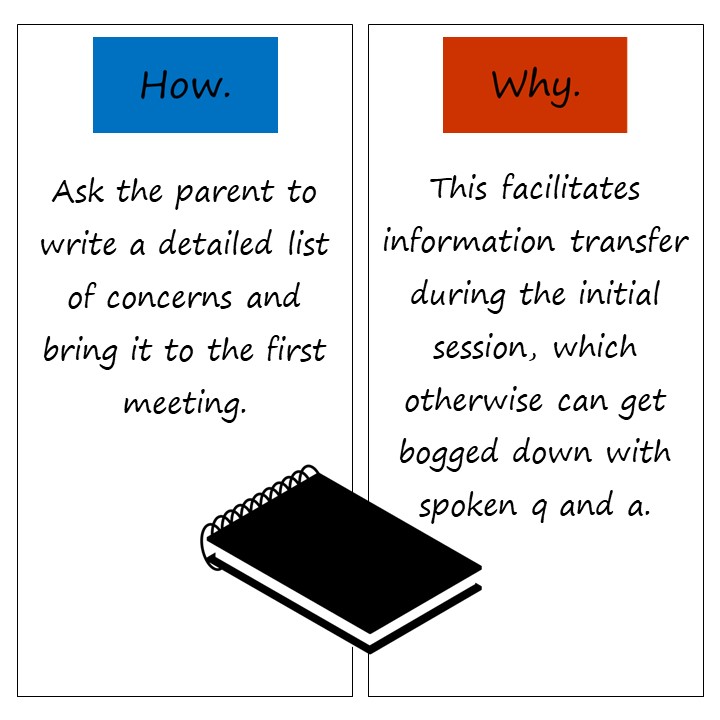
Whenever possible, for the intake session I ask parents to bring in written information, in addition to the standard intake form, regarding the child. This is not only enormously helpful when I am putting together the patient history, but it empowers the parent from the start regarding the importance of their own contribution to therapy.

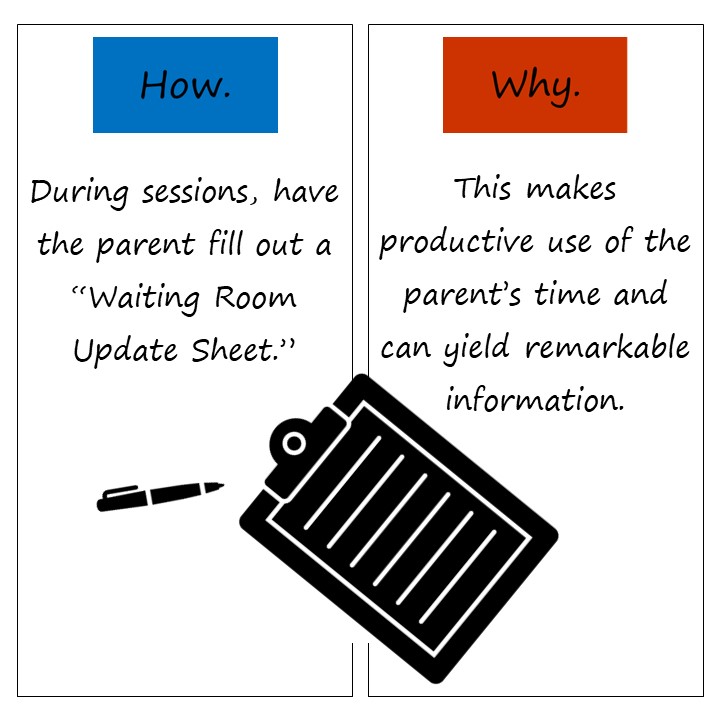
I believe that many parents overestimate the therapist’s ability to get a well-rounded impression of how the child is faring in between sessions. I have often used “Waiting Room Update” forms for this reason.

Over a number of years, about 70 percent of my individual clients have been on the autism spectrum. For my sessions to be really worthwhile, I have often needed to be prepared with specific materials and activities ready to go. A few emailed sentences from a parent can be a real blessing when preparing for an individual session.

Another benefit of expecting the parent send a short email is to remind them of their stake in the therapy enterprise. It can help them to think, “What are my priorities this week helping my child? What is something that the therapist and I can troubleshoot together with my child?”

It is important to maintain proper boundaries when having them email between sessions. First, use encrypted email and use your professional email exclusively. Second, email is for you to receive brief information, and not for you to email back and provide advice – that is for the session only.

This is derived from a tip I got 30 years ago in a workshop by Bill O’Hanlon.

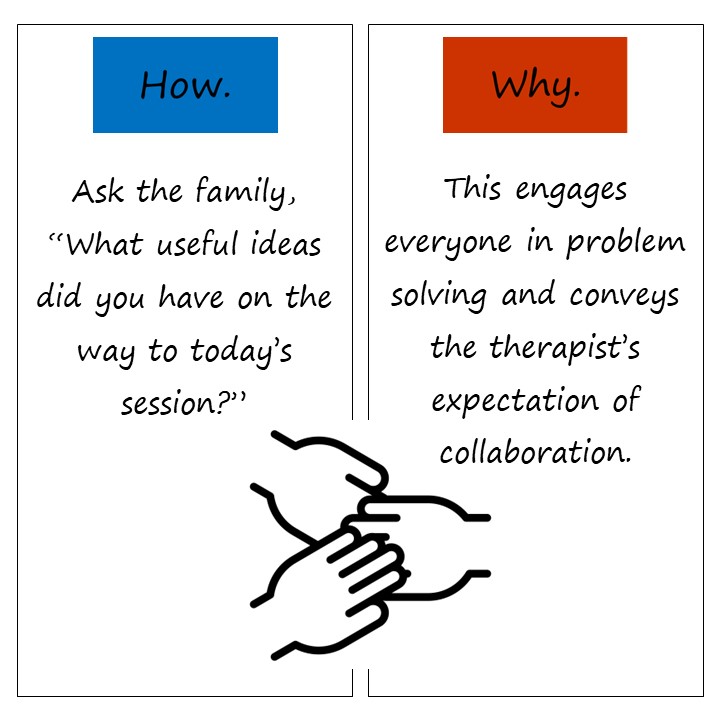
The idea is to convey to families that a good idea or beneficial movement towards change might happen at any time and be initiated by anybody – the therapist, the parent or the child. Many times, it seems as if families begin to solve a problem on the way to the session and then the therapist’s role is to refine, reinforce and endorse that change. If the family ends contributing more to the problem’s resolution than the therapist, that is the best possible outcome.

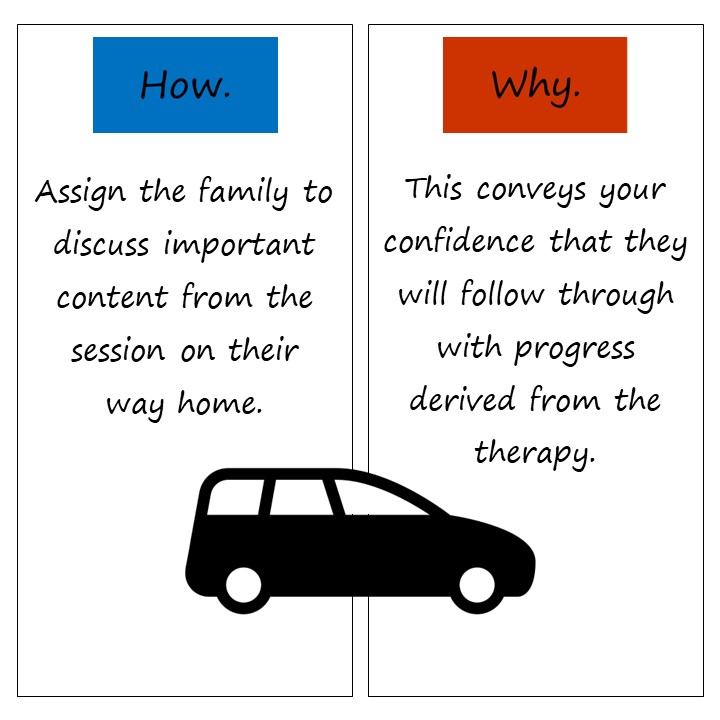
People often drive a long way to and from their appointments with us therapists. Their whole therapy experience might be viewed as lasting three hours – an hour to get to the appointment, an hour of therapy and an hour to get home. I have often “assigned” families to talk about a certain aspect of the session, or practice a certain skill, during at least part of the drive home.

Planning the right kinds of parent meetings, with the right frequency, is important for maintaining alliances with parents.

Many times, parents don’t really need to have separate parent meetings. But some parents don’t communicate clearly, or only speak in euphemisms, when the child is present. Or they might have their own issues that could affect the child’s presenting problem. For example, a mother disclosed to me in a parent meeting that memories of her own childhood abuse were being triggered by certain aspects of her child’s behavior.

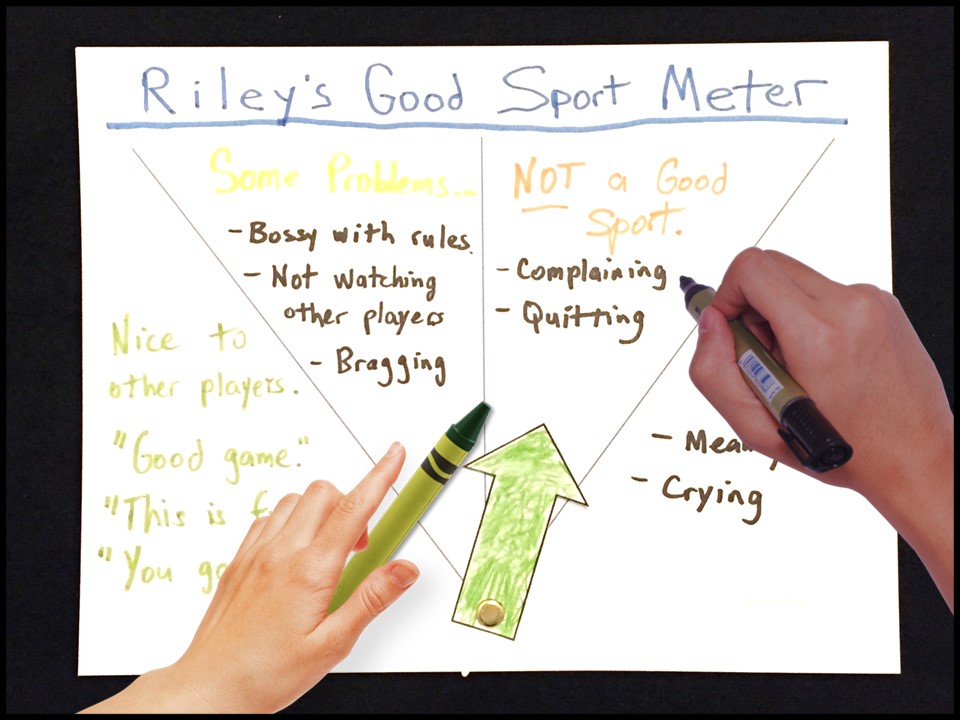
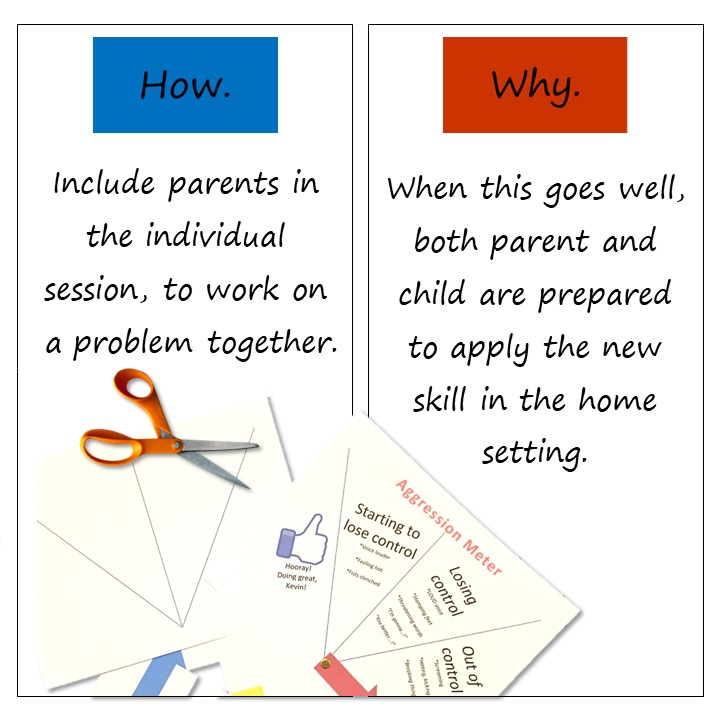
I have found that having parents participate in creative therapy activities has been enjoyable and productive. Most parents seem to look forward to participating in this way. For example, I have often involved parents in the creation of these customizable behavior meters, which is one of the free downloads on this website.

Many of these therapy activities just go better if parents are there to observe and take part. And quite a few therapy activities I do in individual therapy actually require multiple participants. This is especially true with carrying out with role plays, even more so if we are videoing the role plays to play back.

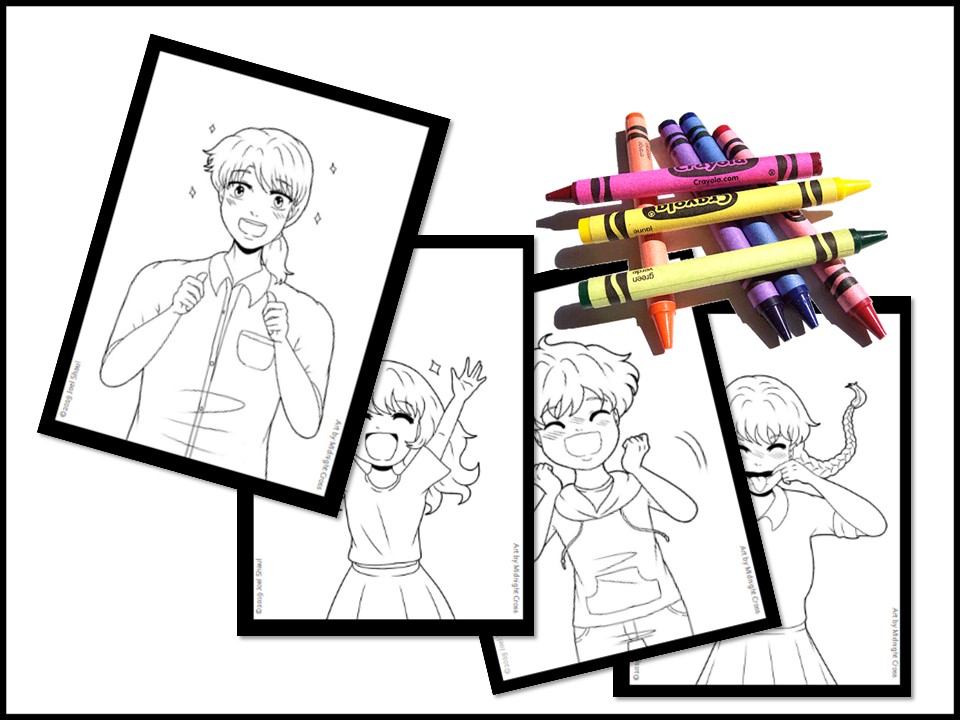
The free resource shown here is Anime Emotion Worksheets.

It has been a great experience for me as a therapist over the years to meet and to work with the helpful siblings of my autistic clients. Many of these siblings of special needs kids have already grown into the helping role at home and their participation in sessions can be invaluable.

Here are just a few of ways that siblings have helped in sessions:

*Being the video camera operator during the recording of role plays

*Operating the laminator when we are creating therapy materials to take home

*Serving as informants regarding the designated client’s social relations at home and in the neighborhood.

The resource shown above is one of 17 therapeutic paper fortune tellers you can download on this website.

Of course, increasing parent involvement in sessions is not always helpful. Inviting parents into individual sessions should not become automatic by any means.


Fellow therapist, I hope you find some of these ideas helpful to you in your own work.

Part 5: Tailoring CBT methods & media to the individual

Our aim in doing CBT with children should be to extract helpful and useful methods from CBT concepts. The children we see vary a great deal in age, intellect, temperament and predilections, so we should avoid getting locked into CBT treatment practices that are too rigid. As much as possible, we should allow our interventions to be shaped by the individual child we are treating.
Factors one should consider when selecting psychotherapy tools for children

There are so many different things to be considered when planning therapy interventions. Here are some factors I have thought of, along with examples of resources I have developed in an effort to accommodate different learning styles. Although I do quite frequently employ resources developed by others in the field, in this article I am primarily displaying resources I have developed myself, available for free download or in my books.

Attention span

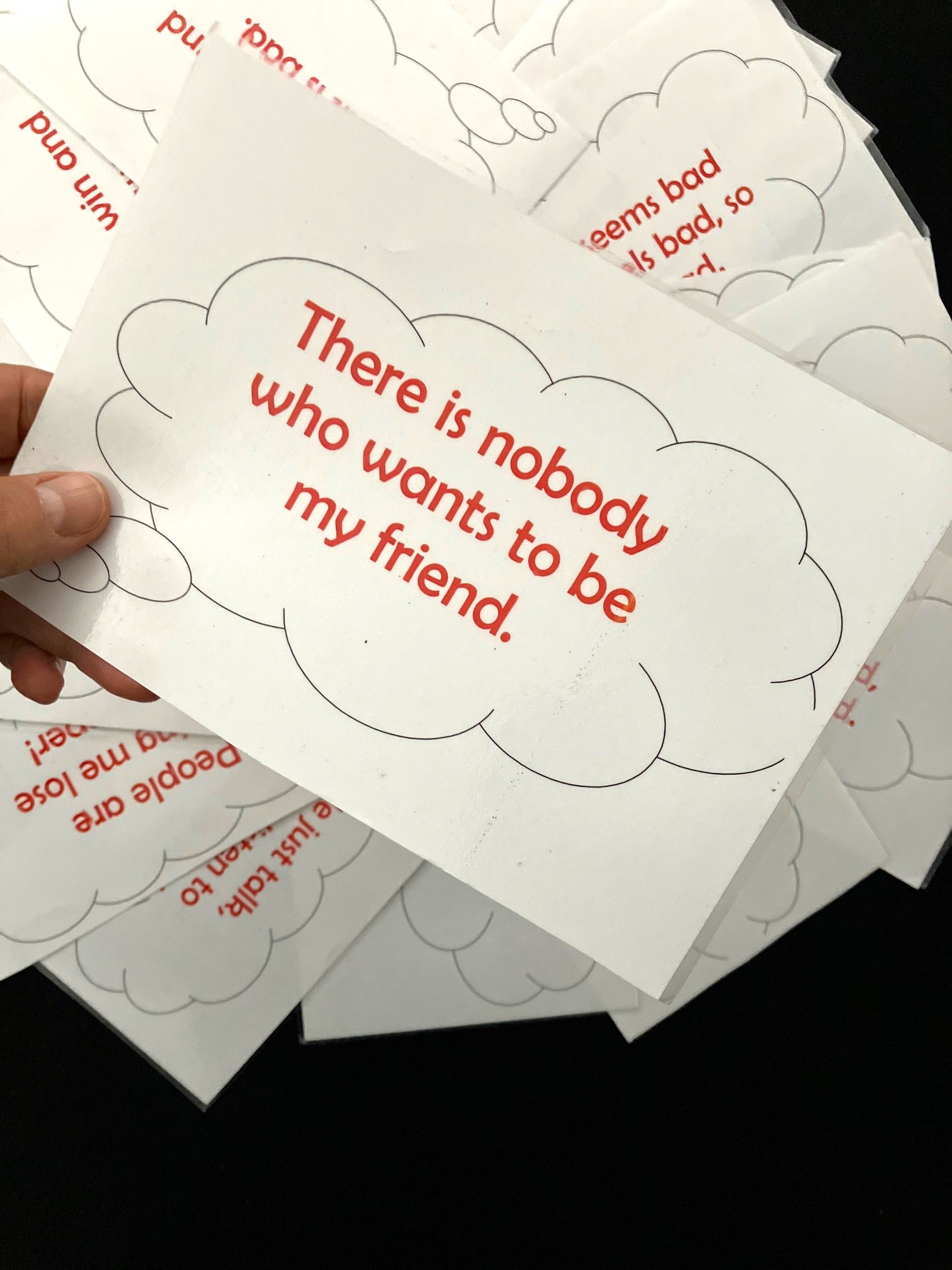
Many children need frequent, positive prompting to stay focused. Some benefit from token prompts, like the ones shown below.

Preference to face towards therapist directly vs. indirectly

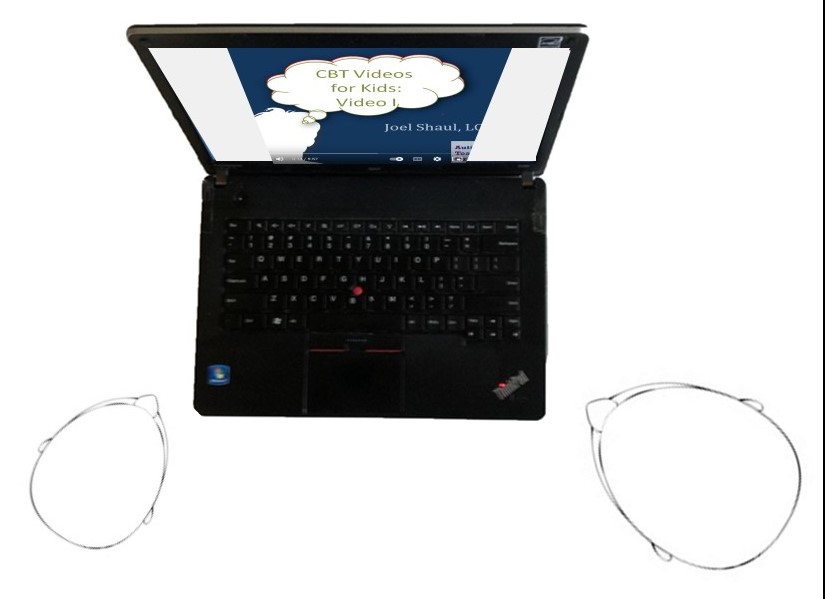
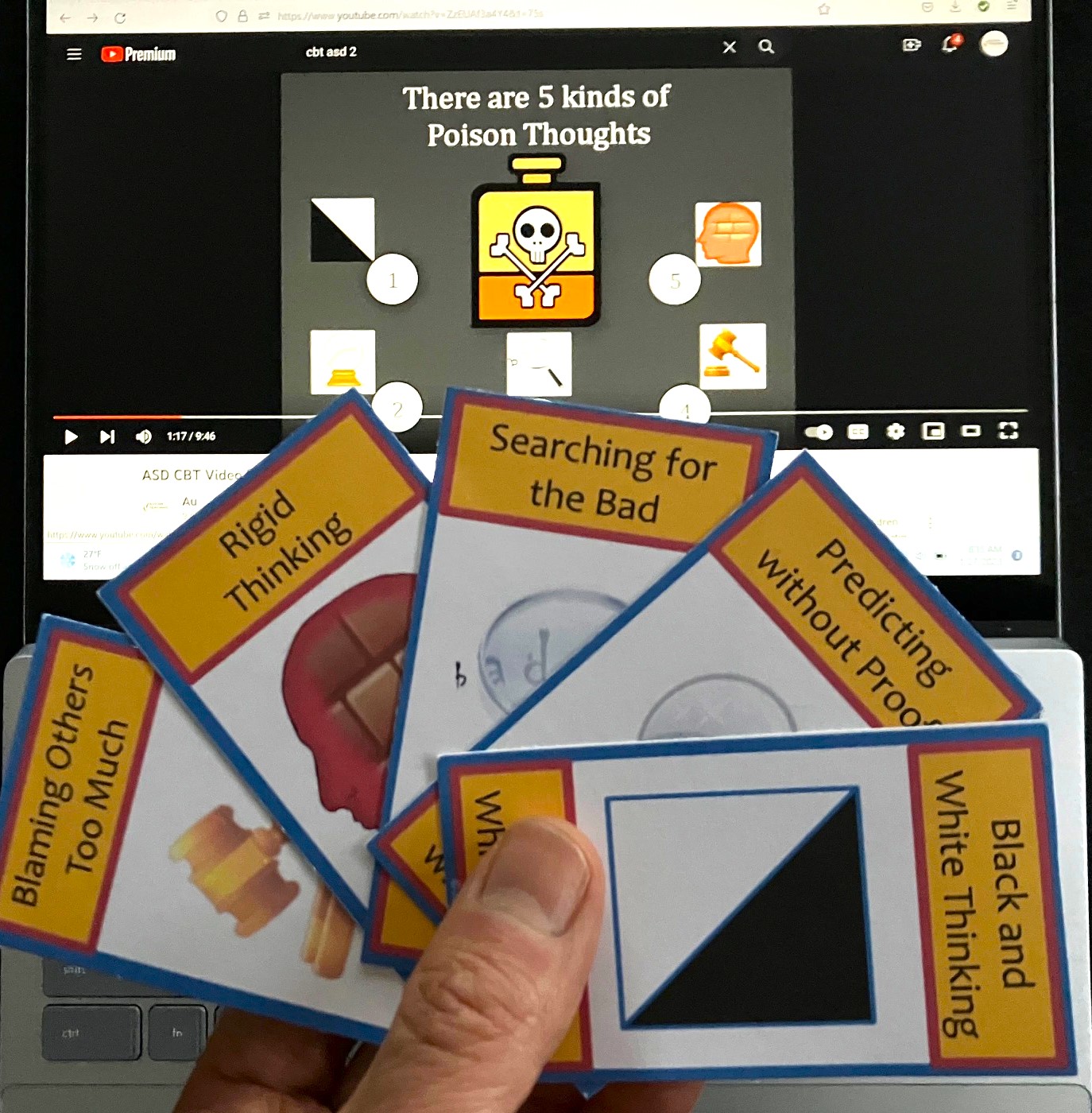
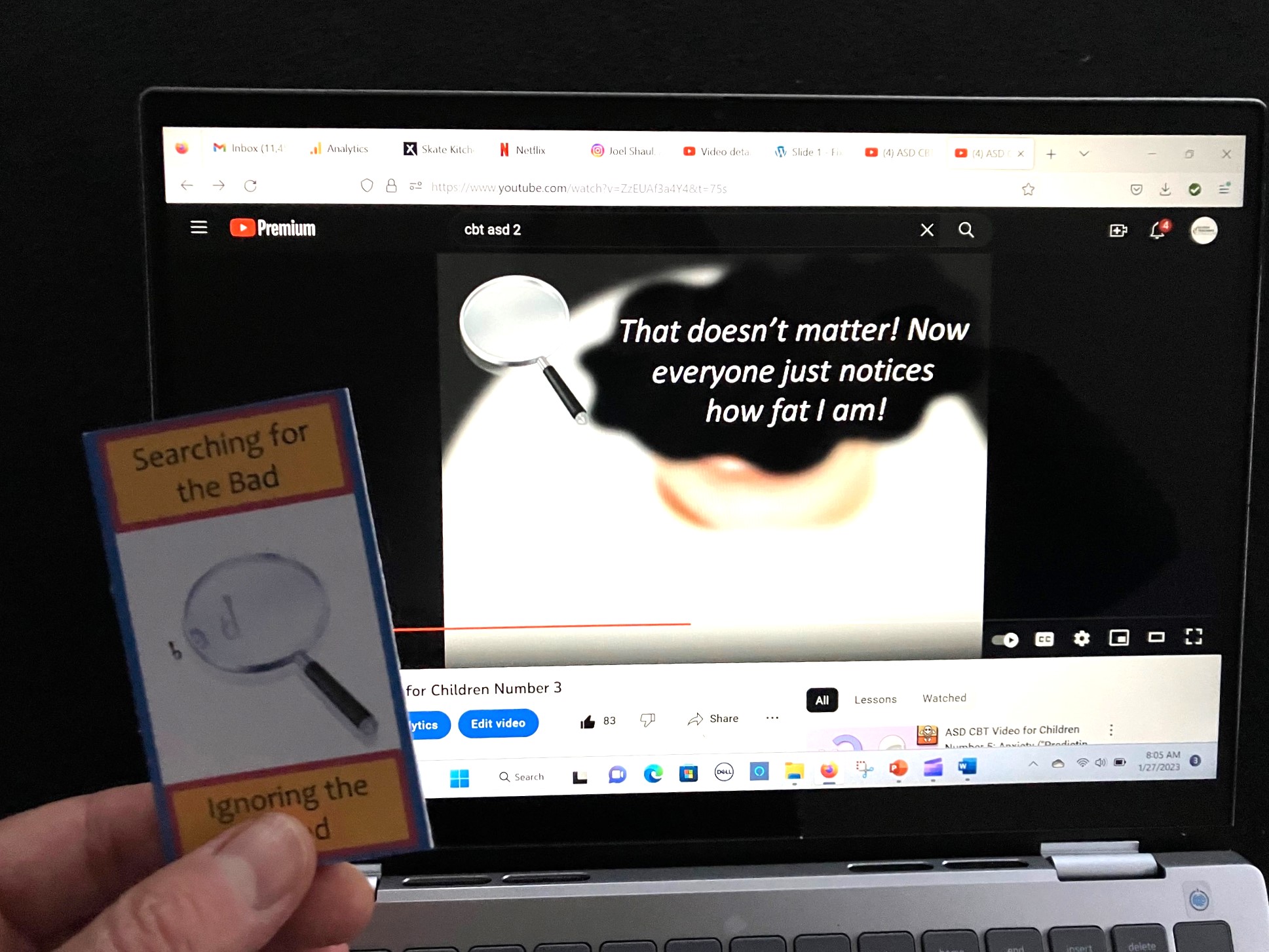
Many children, especially children with autism, have a limited capacity to look directly towards the therapist. It can really help to arrange for both you to direct gaze towards something in between both of you. The example shown below is a laptop with one of my CBT videos on the screen.

Levels of intellect, education, language comprehension and reading ability

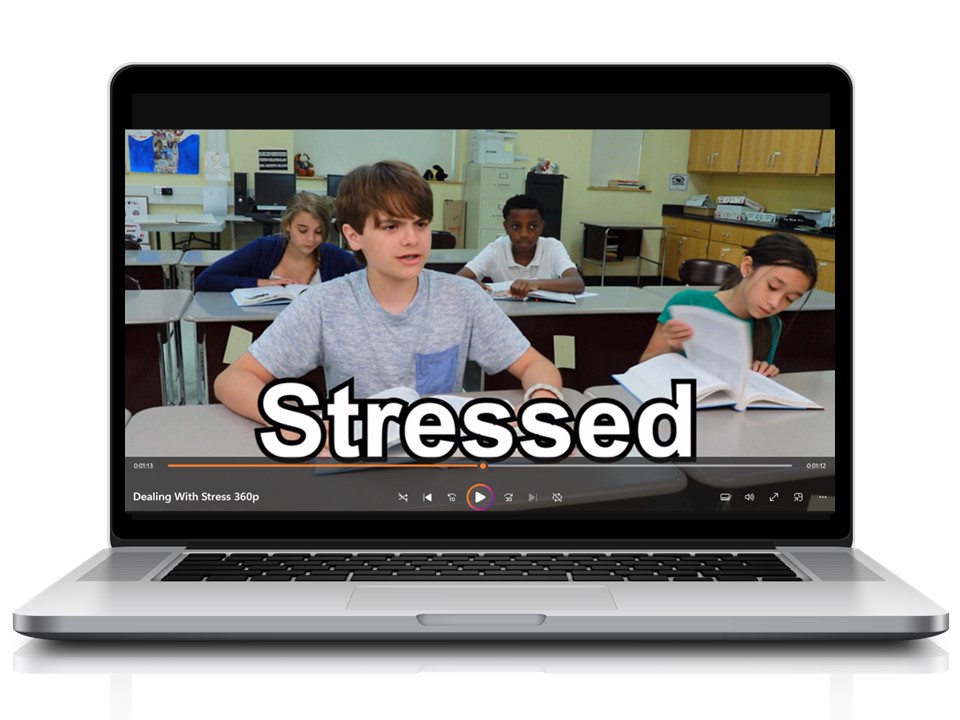
It is easy for us to end up confusing our young clients with our language and concepts. There are some resources available that are simple, appealing and very helpful. An example, shown below, is a screen shot from one of the hundreds of Everyday Speech Videos.

Special interests

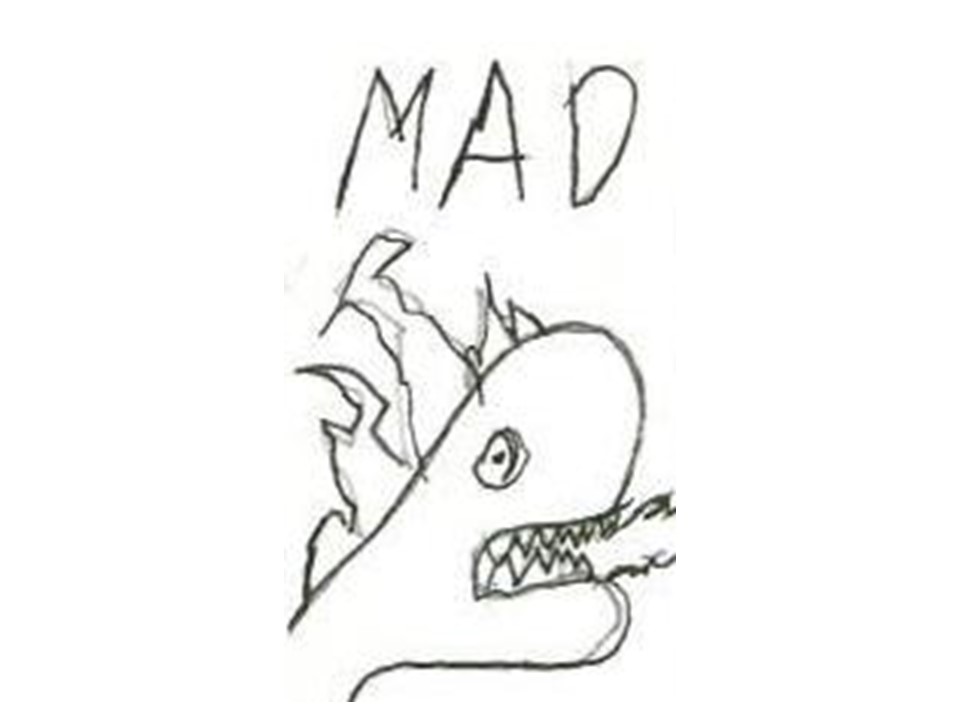
Many children, especially children with autism, are strongly motivated by therapy content that references their particular interests. For example, a child with an interest in Godzilla movies could be reinforced by an anger management activity that involves drawing Godzilla.

Ability to remain seated vs. need to stand and move around

In my own work years ago in a community-based summer teen program for kids with autism, we sometimes did CBT-based activities in small groups while standing. In one such activity, I spread CBT Thought Bubbles all over the floor and asked the participants to walk around and match up “Poison Thoughts” with corresponding “Antidote Thoughts.”
Receptivity to information and instruction coming from a computer screen

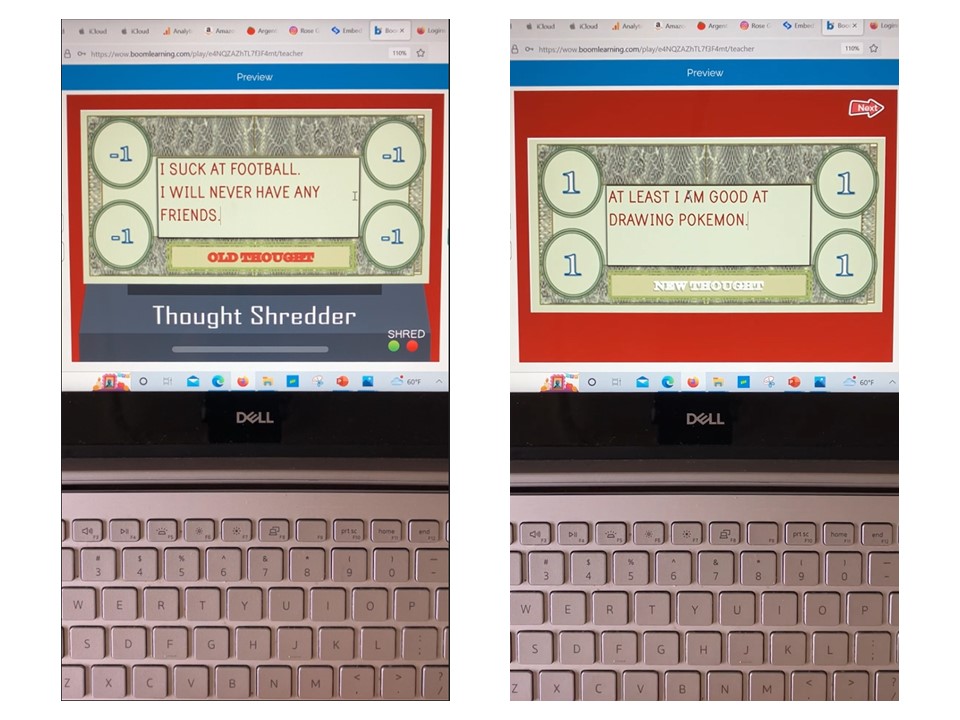
Many children are strongly conditioned to pay close attention to information presented on a computer screen. We therapists sometimes overvalue our spoken words. Most kids, and not just the ones with ASD, often consider information viewed on a screen as somehow more noteworthy that the same thing viewed in the “real world.”

For that reason, quite a few of the CBT activities on my website can be accessed in both printable and screen-based versions. One example is the Mint New Thoughts activity, in which “Old Thought” play money is torn up or shredded and then replaced with “New Thought” money. When I later made it available in an animated, screen-based version, most of my clients came to prefer it that way. See the example below – check out the short YouTube demo.

Preference / need for having something in their hands 

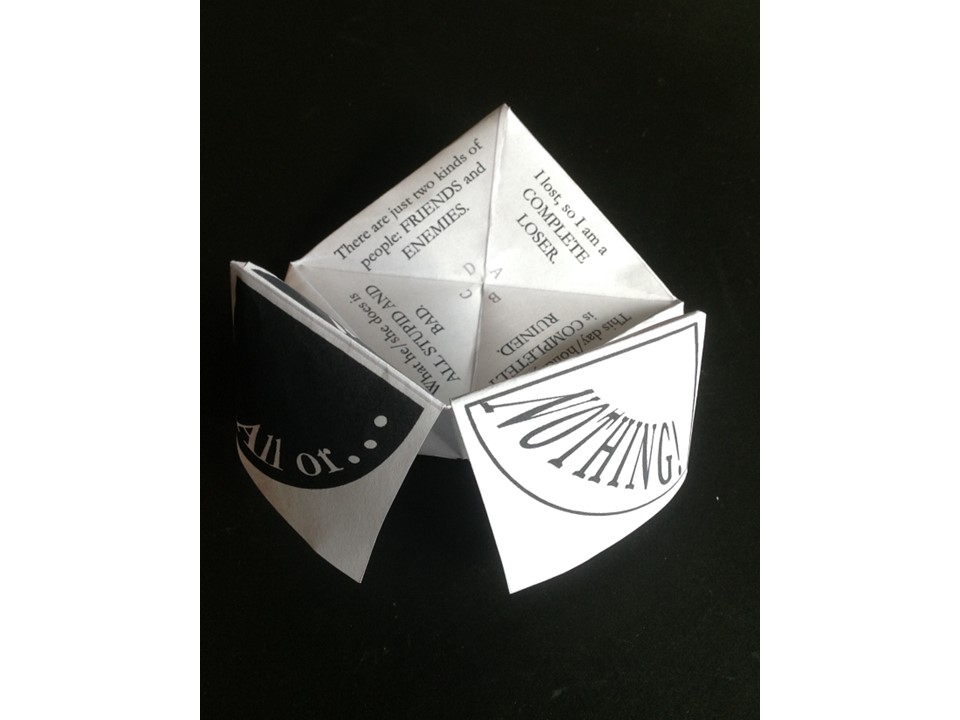
Quite a few of the children I have seen in therapy, especially children on the autism spectrum, need to be holding something while they are talking with me. I have spent a lot of time creating things for them to hold which are related to our therapy work. An example, shown below, is one of three CBT-themed paper fortune tellers on my website.

One of three CBT paper fortune tellers.

Aversion to prolonged out-loud verbal interaction with the therapist

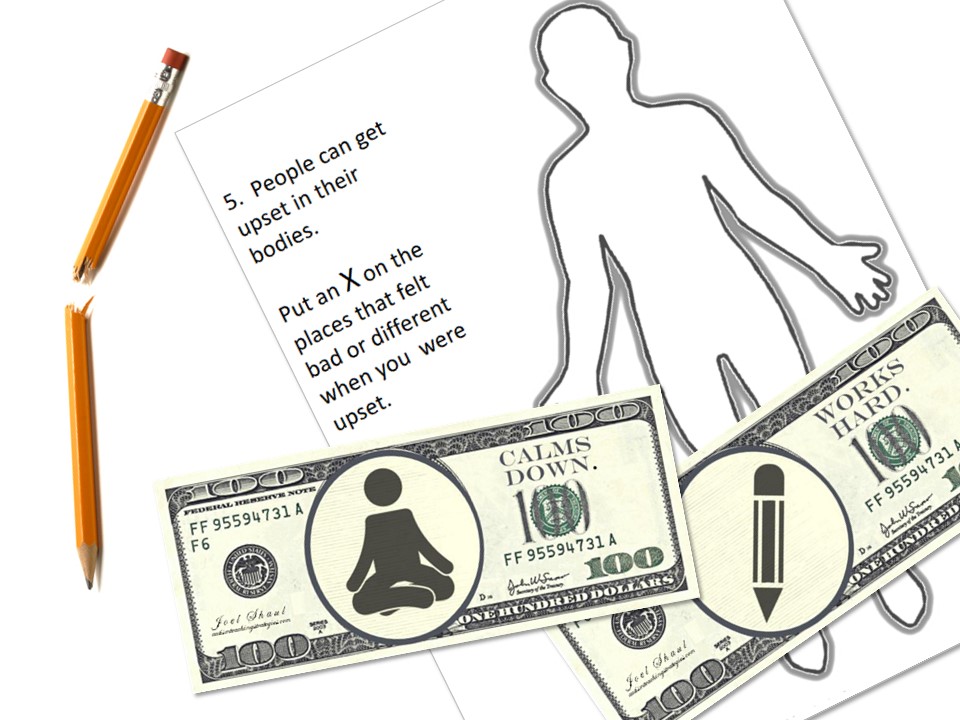
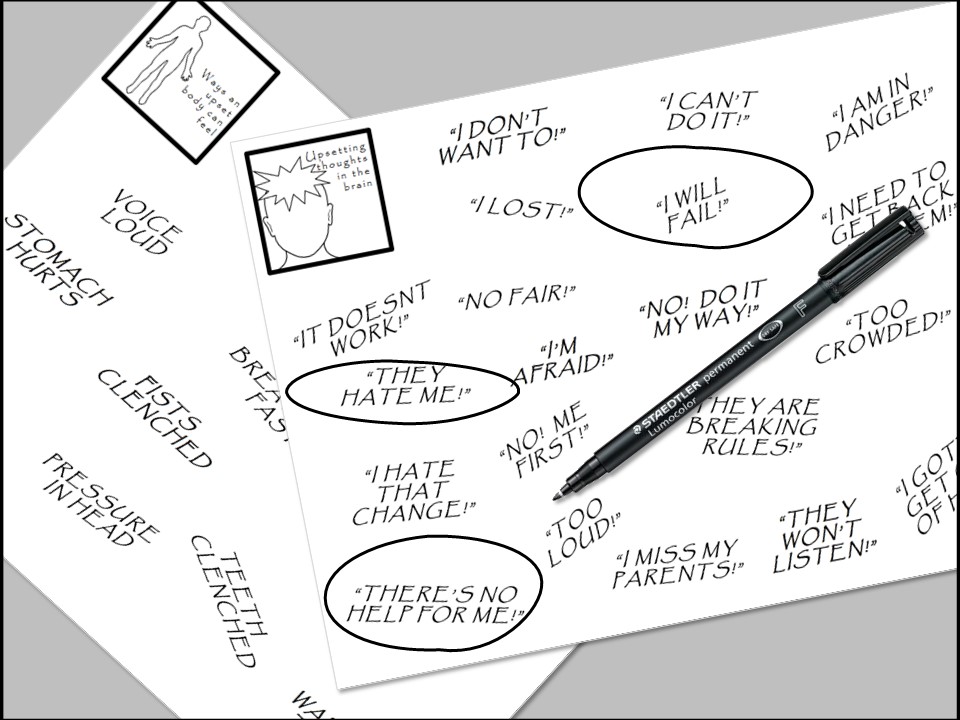
Many children, most notably ones with ASD, need to be offered productive alternatives to merely talking in therapy sessions. Many children highly value activities in session in which the therapist is saying relatively little while the child works on something meaningful. Below are two worksheets that go along with the Emotional Thermometer download from this website. These simple sheets can expedite an inquiry while affording the child a chance to not hear the therapist talk for a little while. Many children will in fact express things by writing, circling or drawing that they would be averse to saying aloud.

Preference for tangible product of the therapy session

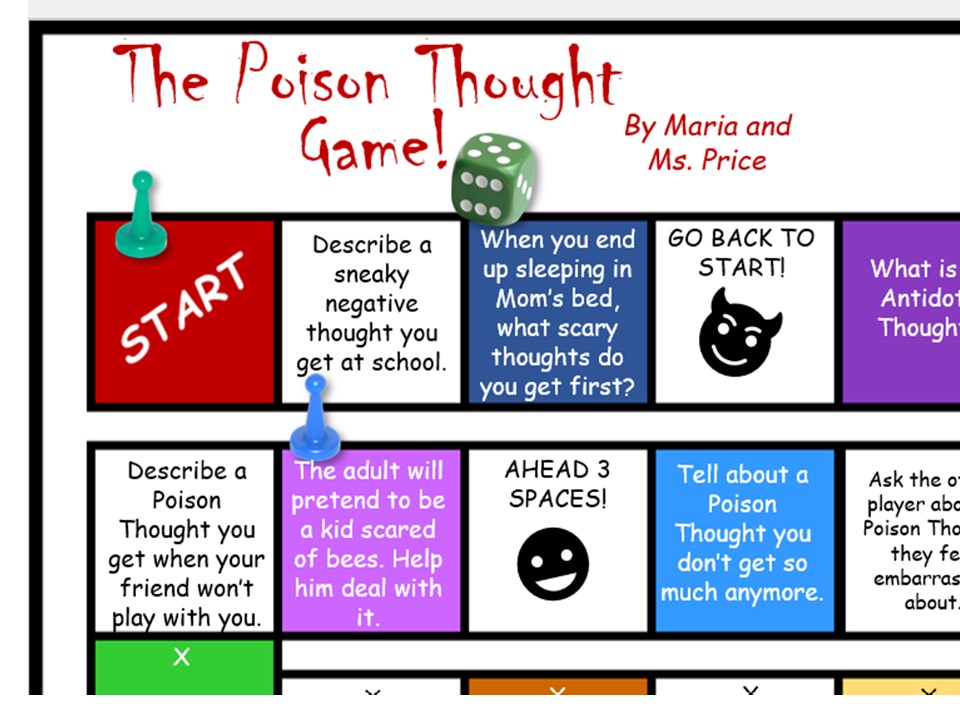
Many children value doing and making things in therapy sessions more than talking about them. The image below shows a “board game” similar to ones I have made with children in therapy sessions. You create these in PowerPoint and after you play the game with the kid, you can print it out, or email it to the child’s home, if the child feels this would be helpful.

Need for family participation to generalize learning

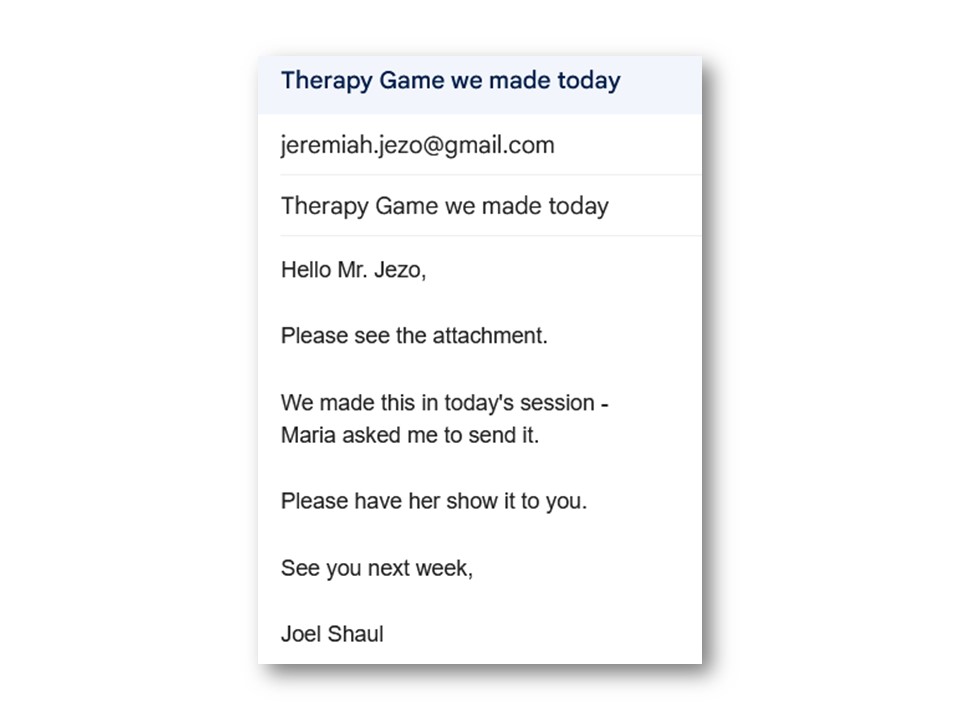
Most of the kids we see in therapy will need to follow up at home with real-world practice. If children want or need parental involvement, then it helps if the tangible product of the session is something the child can actually help show and explain to the parents. Below is a mock-up of the sort of email one might send in these kinds of situations.

I wish you success with your own CBT interventions with children.

Joel Shaul

Click on links below to access other parts of this series on CBT refinements for children.

Intro: Refinements to Make CBT Better Suited for Kids [link]

Part 1: About CBT YouTube Videos & How to Use Them [link]

Part 2: CBT Token Systems – CBT Cards, a Free Download [link]

Part 3: More CBT Token Systems – Using Mr. Yuk Stickers [link]

Part 4: Creating Thought “Enemies” and “Heroes” in Child CBT [link]

Part 5: Tailoring CBT Methods & Media to the Individual [link]

Part 4: Creating thought “enemies” and “heroes” in child CBT

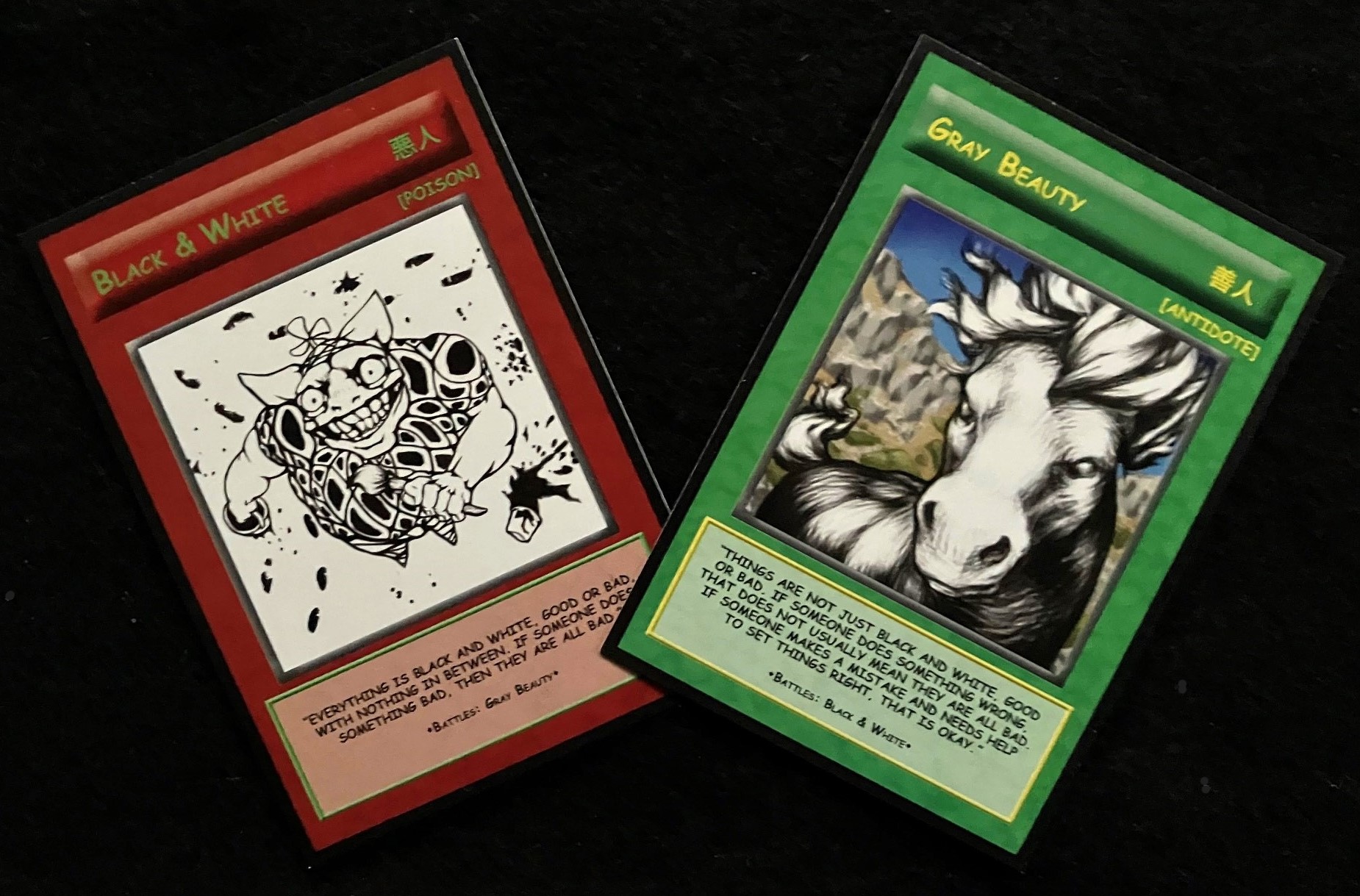
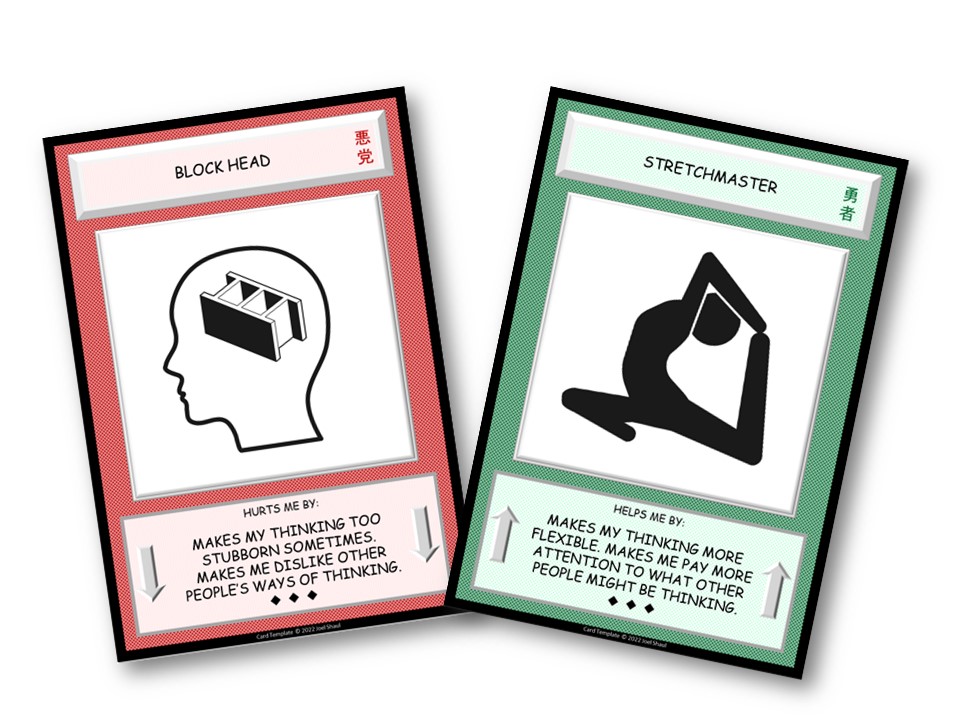
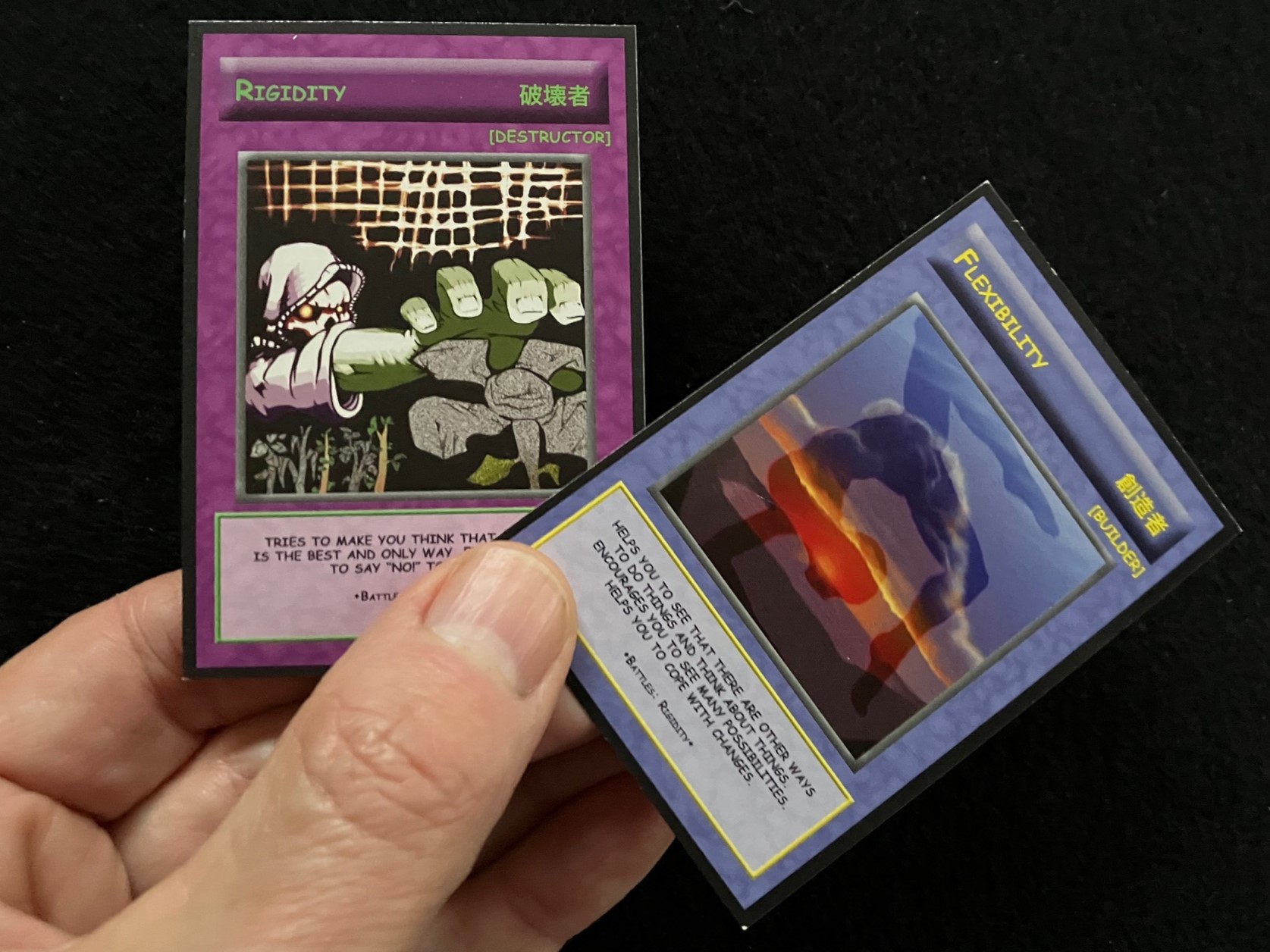
Two Ryuu cards, designed by me and Rebecca Klaw

Creating  thought “enemies” and “heroes” in CBT

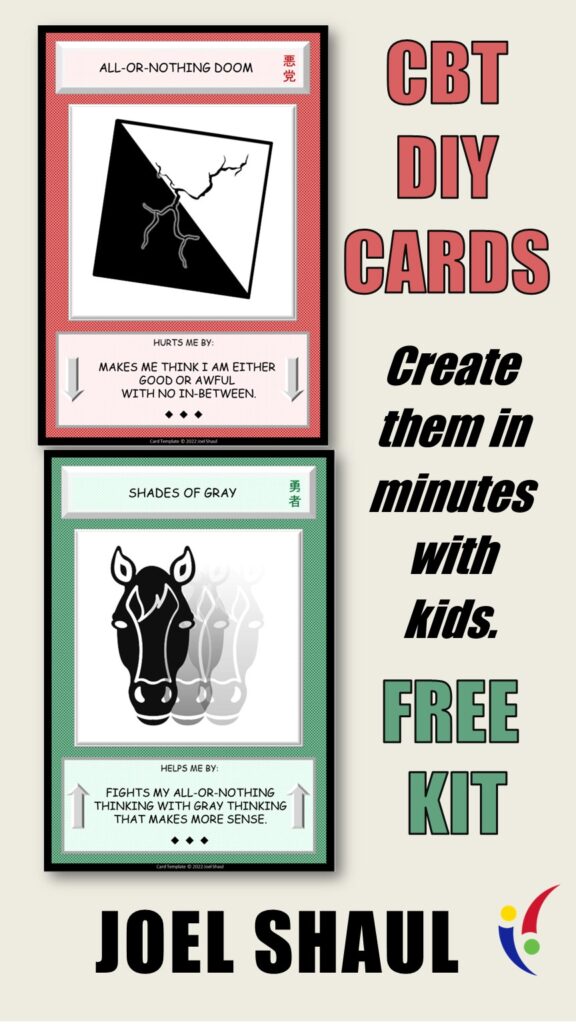
For a long time, people helping children with social and emotional skills have employed imaginary characters to represent various desired and undesired child behaviors. Many of these efforts are more preachy and pedantic than actually helpful, but other systems of “problem and solution” characters have the potential to be really useful in child therapy applications. This article briefly surveys a few of these, and references a character creation kit I made that enables you and a child to quickly fashion custom-designed “problem / solution” characters.

Reasons to employ problem and solution imaginary characters in CBT therapy with kids

A child with serious and persistent social and emotional problems can become demoralized by their constant struggles.  The “problem child” can end up feeling so closely linked to their problems that they end up disliking themselves.

Creating problem and solution characters can enable a child to feel little more separate from their problems. Using this method can help a child to view their social or emotional challenge as a sort of adversary that can be fought against with the help of therapists, teachers and family.

Here are the therapeutic elements of creating problem and solution characters with children in therapy, from my perspective. First, this therapy activity can help restore a child’s self esteem by differentiating their essential self from the problems they experience. Second, this method can help a child to focus on central therapy issues. Third, this fantasy-based technique capitalizes on hero / anti-hero narrative systems that are well established in youth culture.

Ready-made problem & solution characters

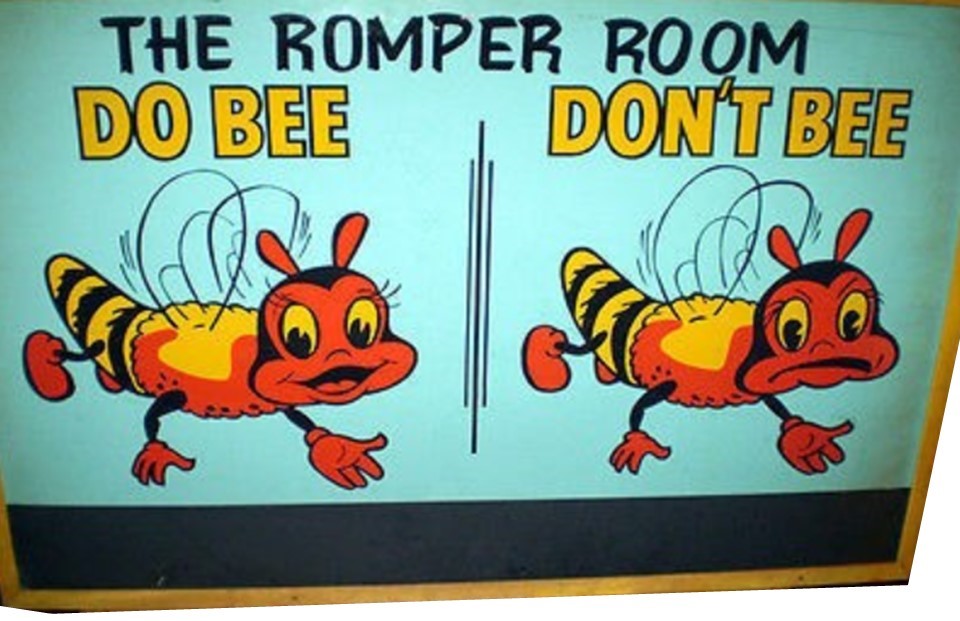
There are many problem and solution character systems out there. Many are not very good. Here is one I recall from my youth.

Example of a not very good or helpful problem / solution system.

Here are some problem and solution tools that I have found can be pretty useful in CBT applications.

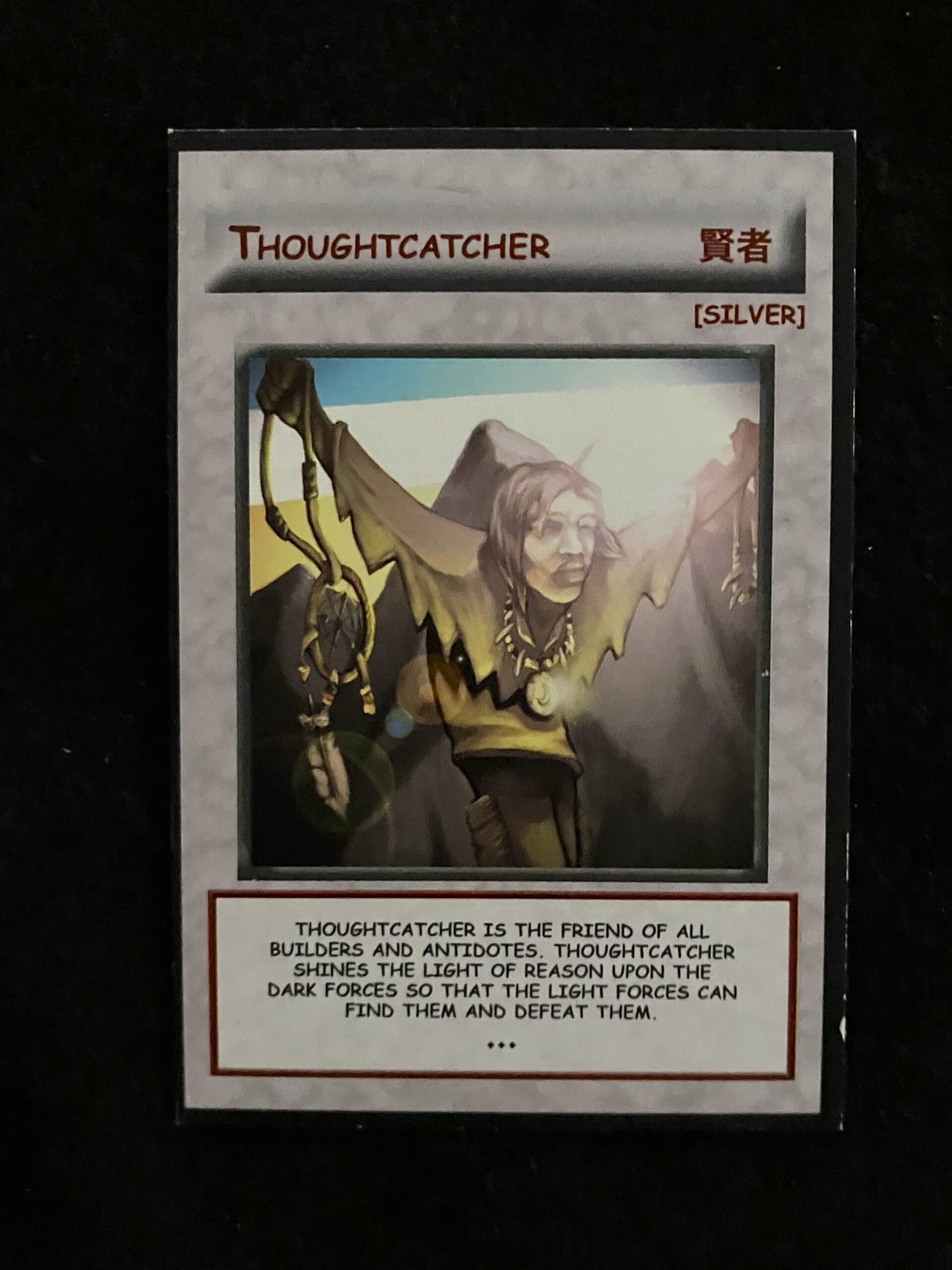
from Social Thinking, “Unthinkables.”
More from Social Thinking.
One of the characters in the Psymon game.
Another pair of Ryuu cards (Ryuu cards are no longer in production)
One more Ryuu card.

Problem and solution characters that children can create on their own with your guidance

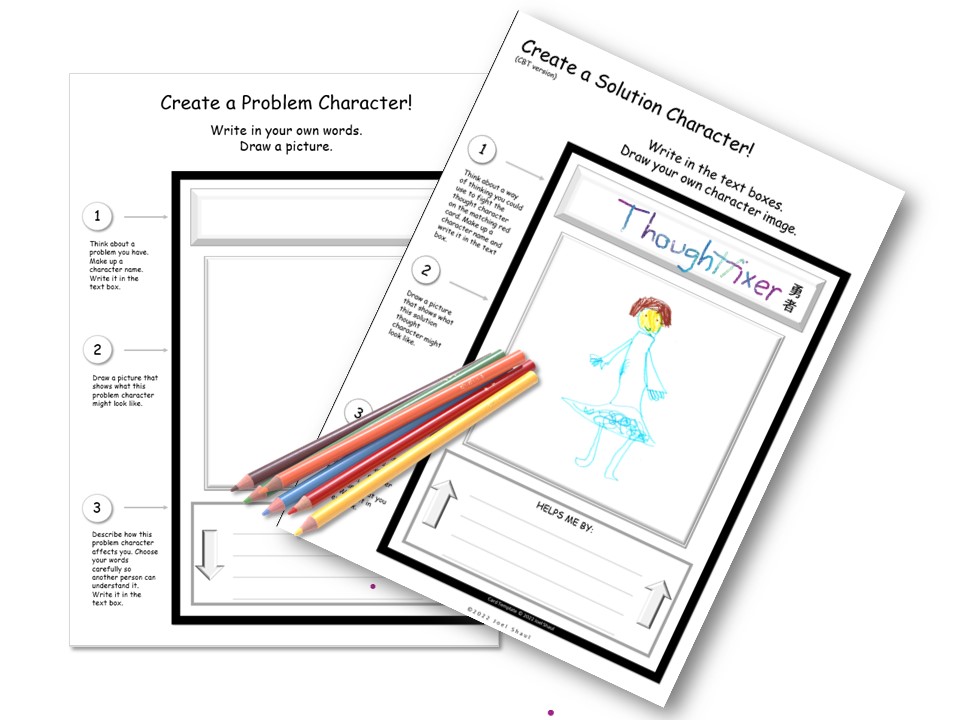
In previous blog posts, I presented a free kit enabling children to create problem and solution characters by either drawing them or via a simple drag & drop system in which numerous images are pre-loaded to select. Here are some pictures showing typical results you might expect. I have used this kit a great deal in my CBT work.

Problem and Solution Card make-your-own kit. Drawing the characters is one of the options available.

This short YouTube video demonstrates how to do use the rapid PowerPoint template to create the cards without drawing.

Problem and solution cards made with the free kit, using drag-and-drop icons on a PowerPoint template.
Another example.

Joel Shaul, LCSW


Click on the links below to connect with other parts of this series.

Intro: Refinements to Make CBT Better Suited for Kids [link]

Part 1: About CBT YouTube Videos & How to Use Them [link]

Part 2: CBT Token Systems – CBT Cards, a Free Download [link]

Part 3: More CBT Token Systems – Using Mr. Yuk Stickers [link]

Part 4: Creating Thought “Enemies” and “Heroes” in Child CBT [link]

Part 5: Tailoring CBT Methods & Media to the Individual [link]

Part 3: More CBT token systems – Using Mr. Yuk stickers

When we are doing CBT with children, we often need to add some game-like element or levity. CBT is hard and serious work, but these are kids after all.

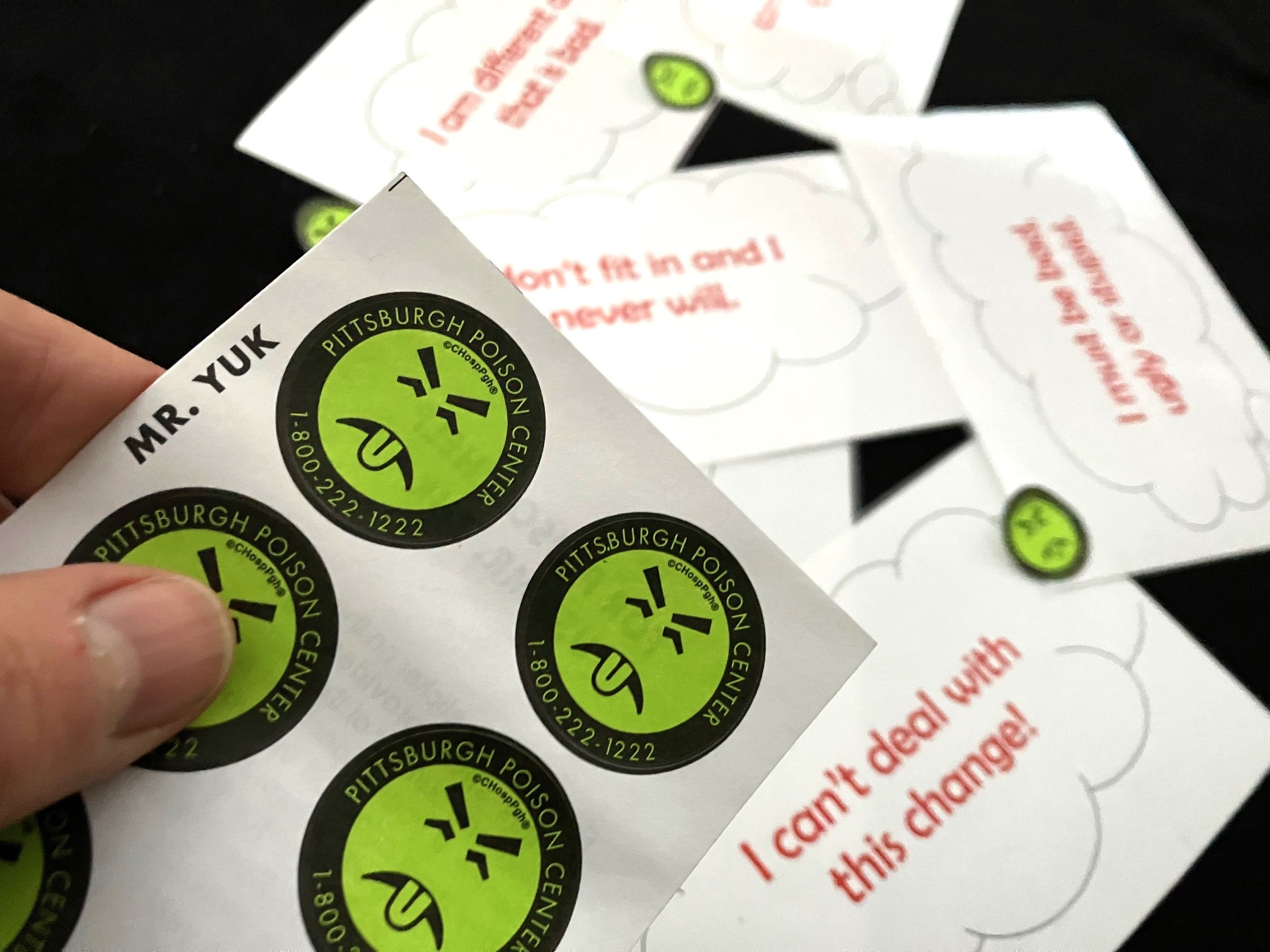
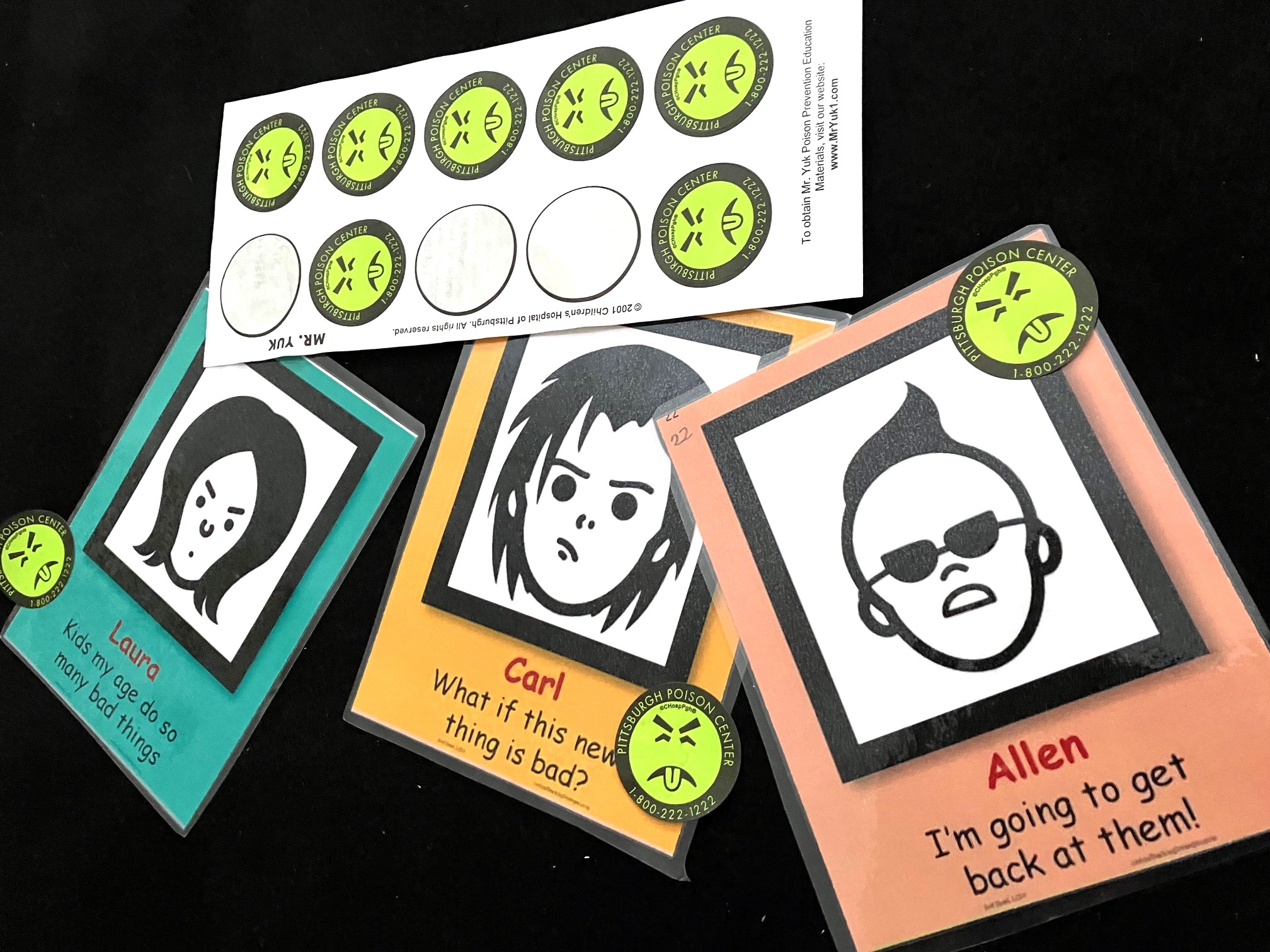
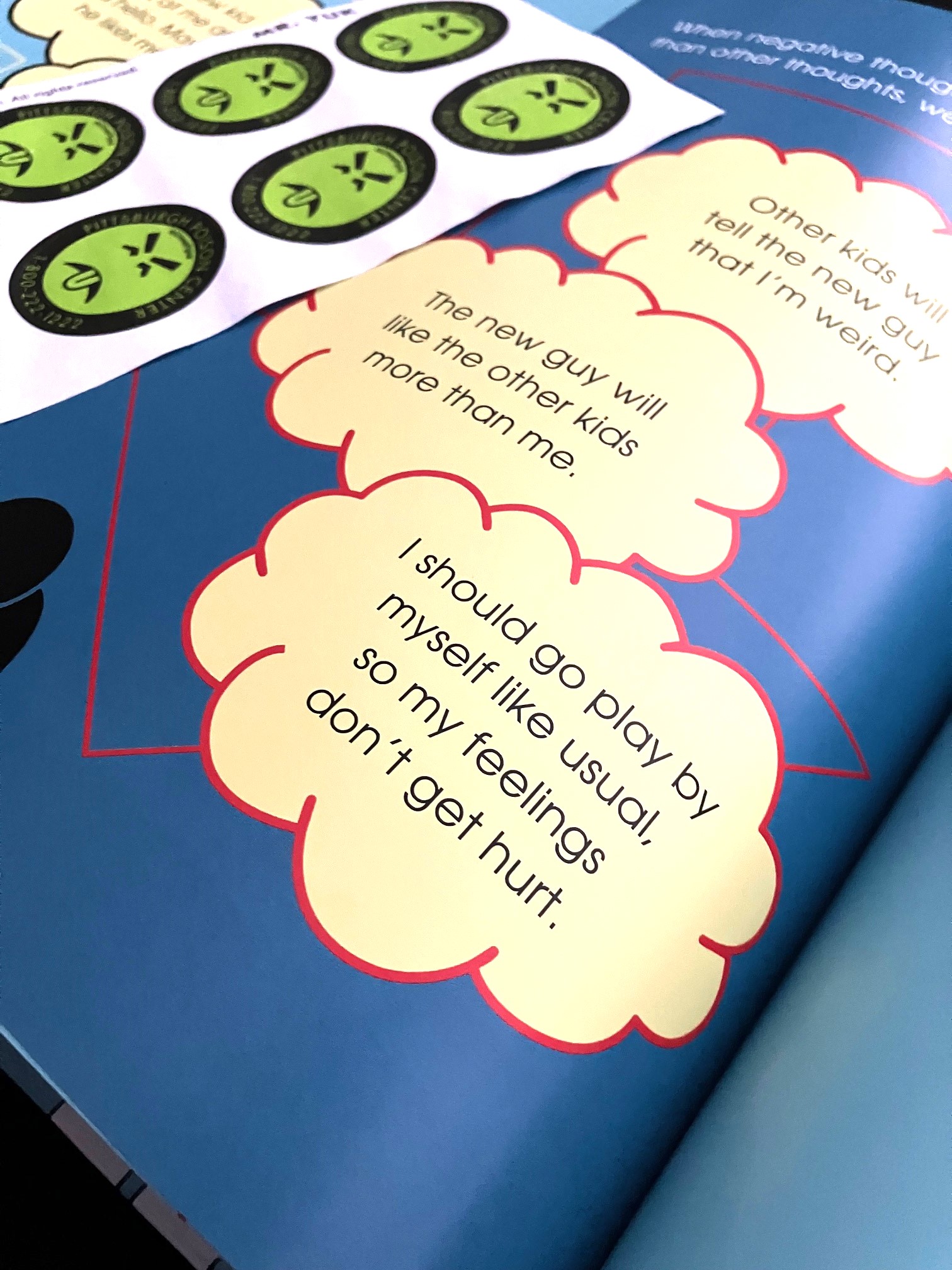
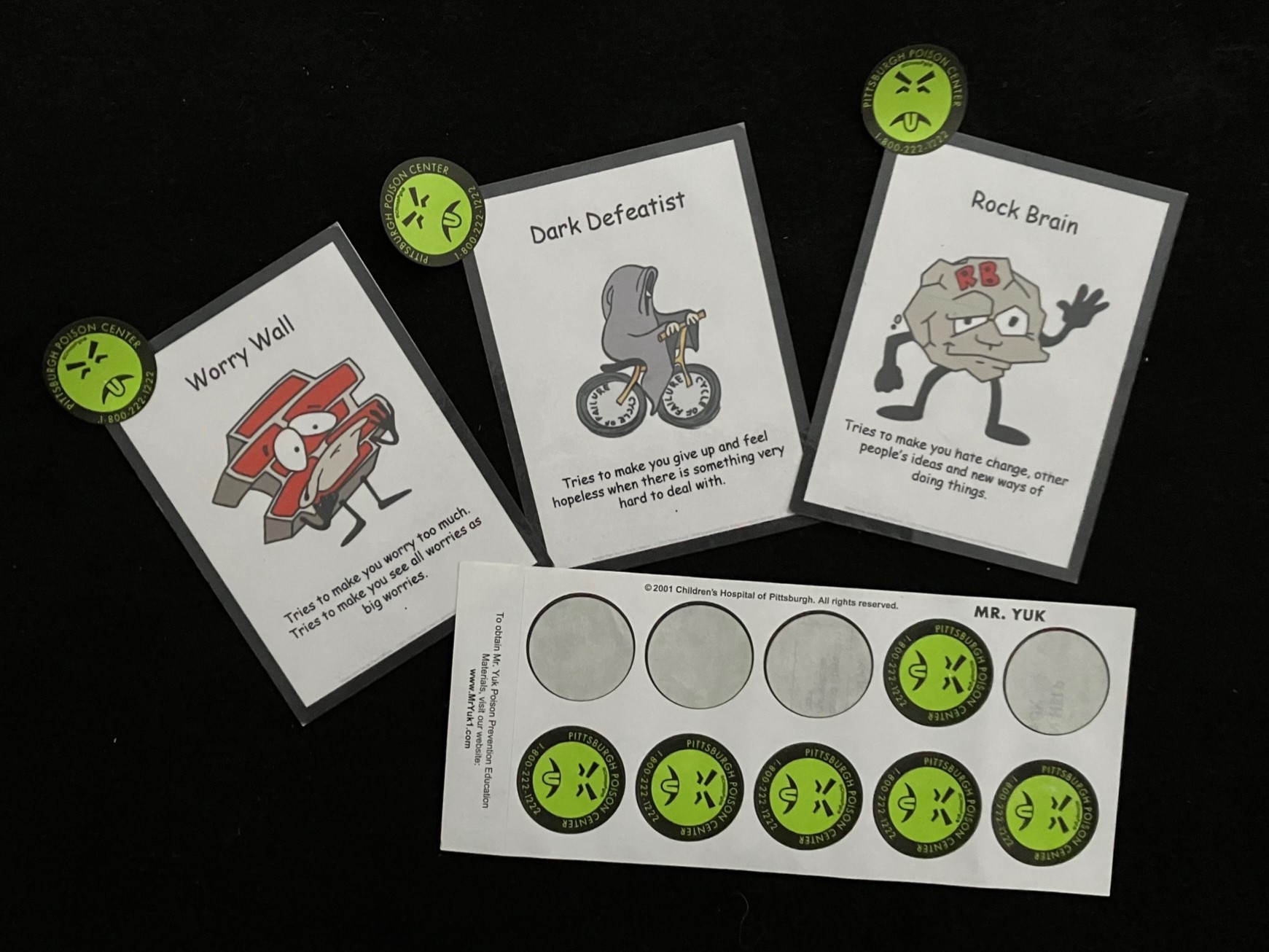
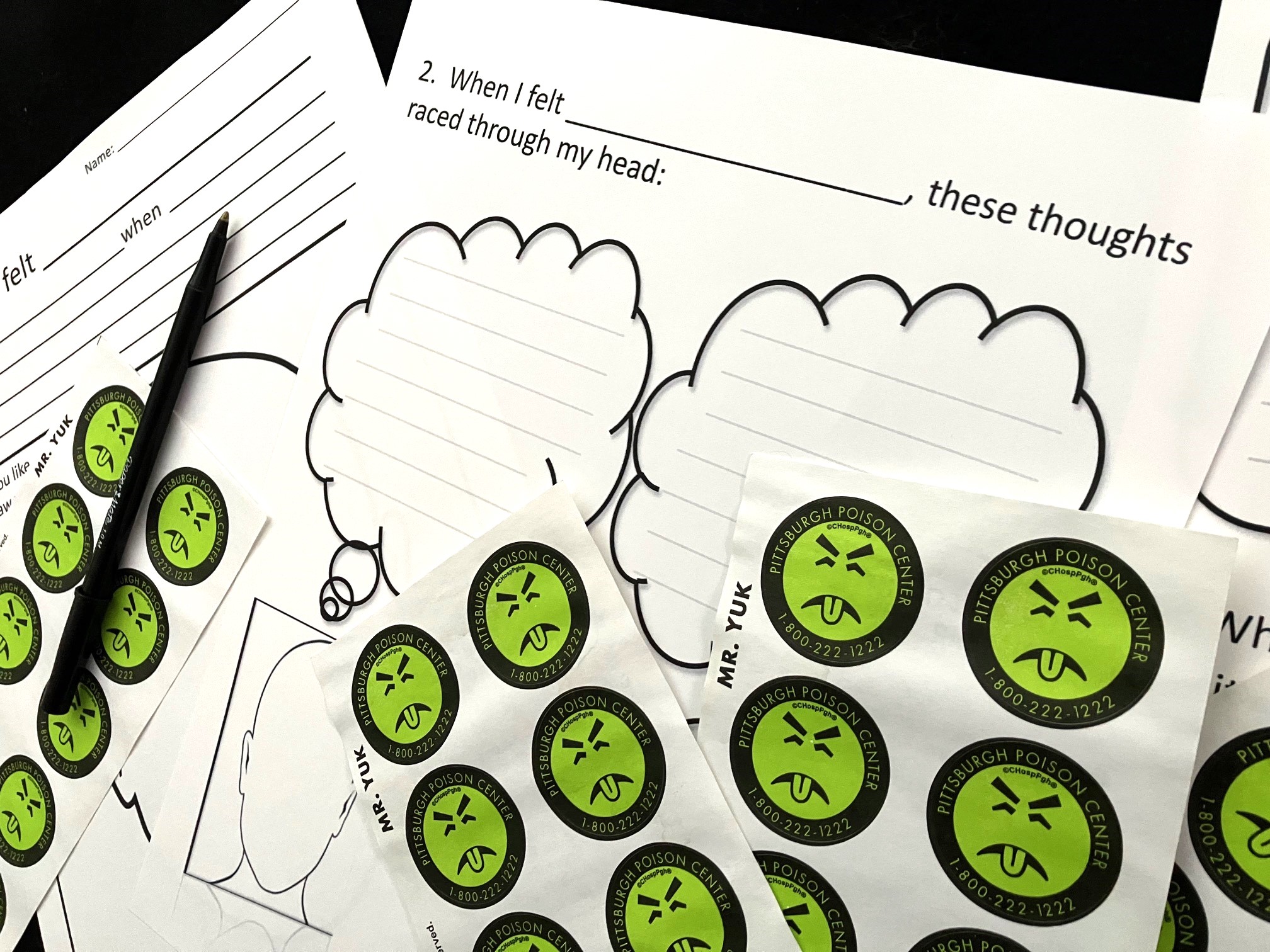
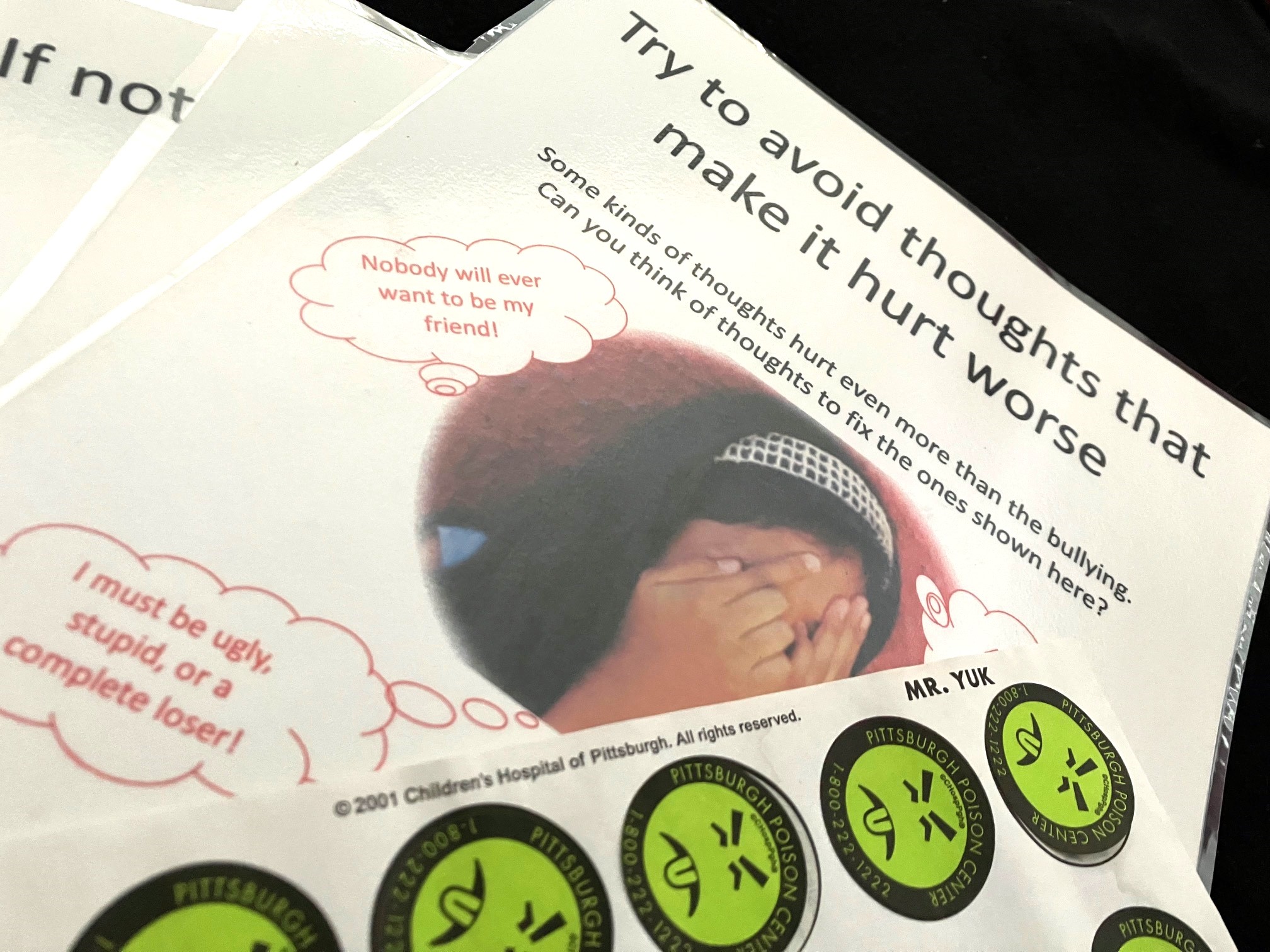
A useful and simple add-on to try sometime is using Mr. Yuk stickers. This is not for every session, but perhaps just once or now and then, to make the point, in an engaging manner, that automatic negative thoughts are like poison, which we should avoid, or use antidote thoughts to be rid of them. Mr. Yuk stickers are available on Amazon – the last time I checked they were $16.99 for 200 of them.

About Mr. Yuk stickers

These are used all over the US, and perhaps elsewhere, to warn children away from poisons. I believe that nearly all children in the US understand the meaning of the Mr. Yuk icon.

Comments about their appropriate use

Obviously, these stickers were not designed and manufactured for counselors, therapists and other professionals to use in therapy. You of course would need to explain carefully to children that this is a special activity with the stickers and that if they see Mr. Yuk stickers anywhere in the home, school or community they should not touch them because it means POISON. Don’t give the stickers out to children to play with randomly.

Using them in CBT work

First, show children this short video which explains the meaning of “Poison Thoughts.”

Introduce the stickers using language something like this:

“Everyone knows you must never touch poison or let it get inside you. Mr. Yuk stickers are to warn us that poison can harm us.

We have been learning about sneaky thoughts called Poison Thoughts. They try to get inside our minds.

Let’s use these Mr. Yuk stickers today by placing them on words and objects that have to do with these automatic negative thoughts we call Poison Thoughts.”

After that, use the Mr. Yuk stickers once or twice, or once in a while, to drive home to kids the essential toxic nature of automatic negative thoughts.

Playful elements in CBT do not imply that CBT is “play.”

Maybe this should go without saying, but I will say it anyway. Anxiety, depression and other debilitating emotional conditions are real in children, and work involving Mr. Yuk stickers is not some kind of “lite” version of therapy. These game-like elements are calculated measures taken to help our young clients persist with their CBT therapy.

Used with some of my Fix the Problem Game cards
Used as an accessory with my book, The ASD Feel Better Book.
With Social Thinking Unthinkables characters.

Joel Shaul, LCSW


Click on the links below to view the other parts of this CBT series.

Intro: Refinements to Make CBT Better Suited for Kids [link]

Part 1: About CBT YouTube Videos & How to Use Them [link]

Part 2: CBT Token Systems – CBT Cards, a Free Download [link]

Part 3: More CBT Token Systems – Using Mr. Yuk Stickers [link]

Part 4: Creating Thought “Enemies” and “Heroes” in Child CBT [link]

Part 5: Tailoring CBT Methods & Media to the Individual [link]

Part 2: CBT token systems – CBT Cards, a free download

These free download cards are designed to accompany my CBT Videos for Kids.

CBT token systems – CBT cards, a free download

Cognitive behavioral therapy, whether it’s for a kid or an adult, can be hard and discouraging. After all, the main work involves the arduous process of finding and rooting out automatic negative thoughts that get stuck in our minds. When we are doing CBT with children, we obviously can’t turn this therapeutic activity into something “fun,” but by adding some game-like elements we can can help propel our work forward.

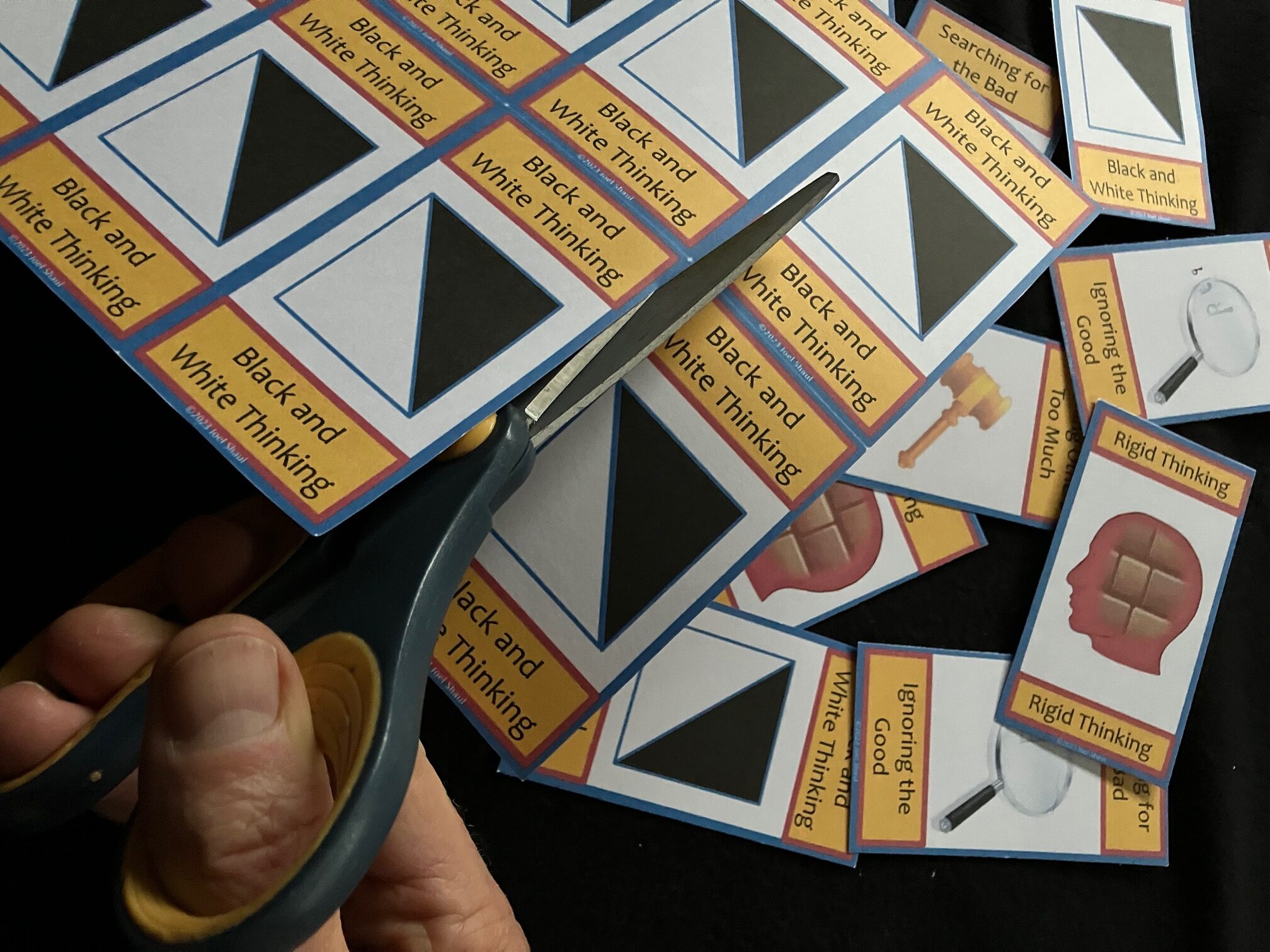
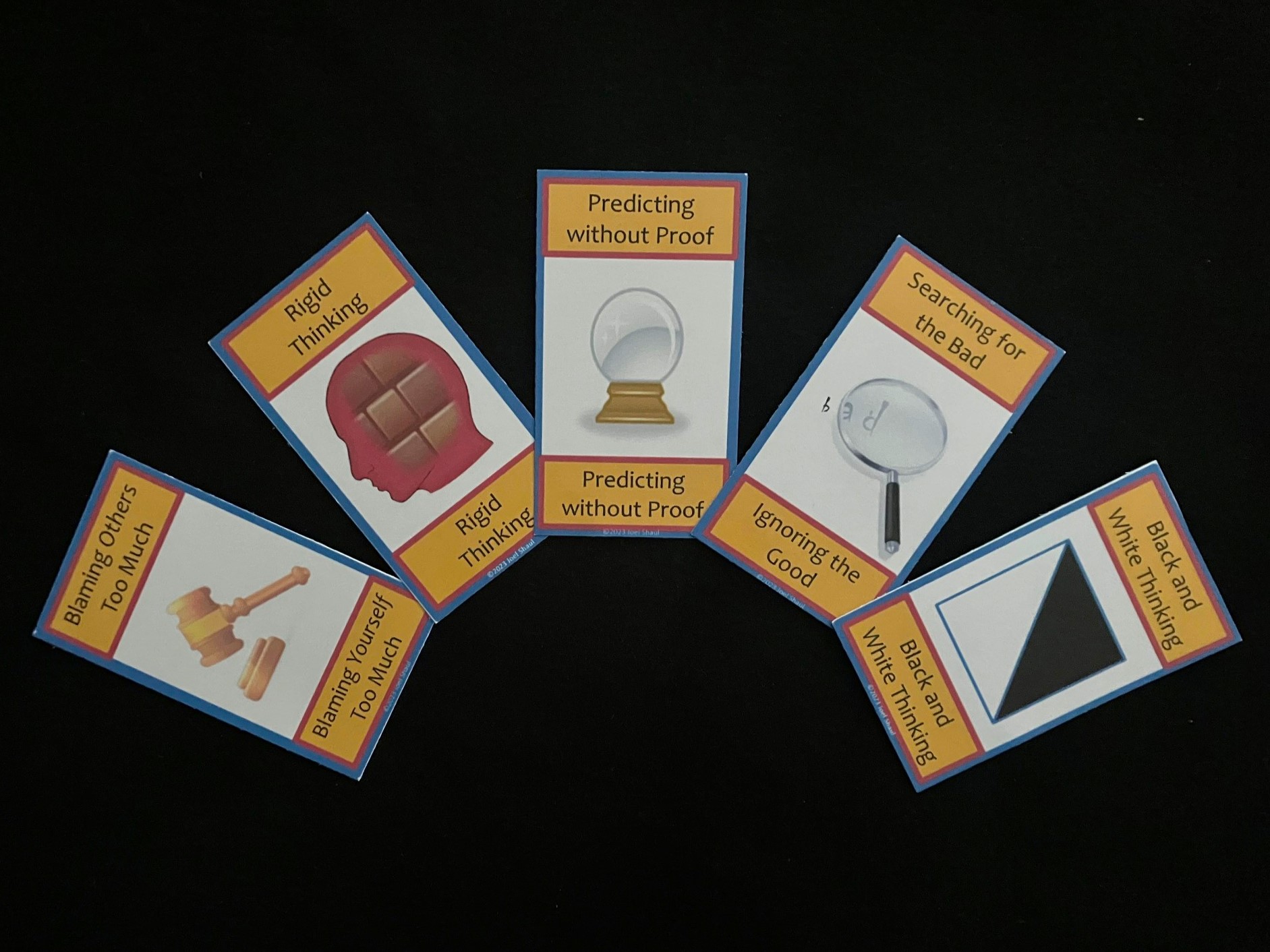
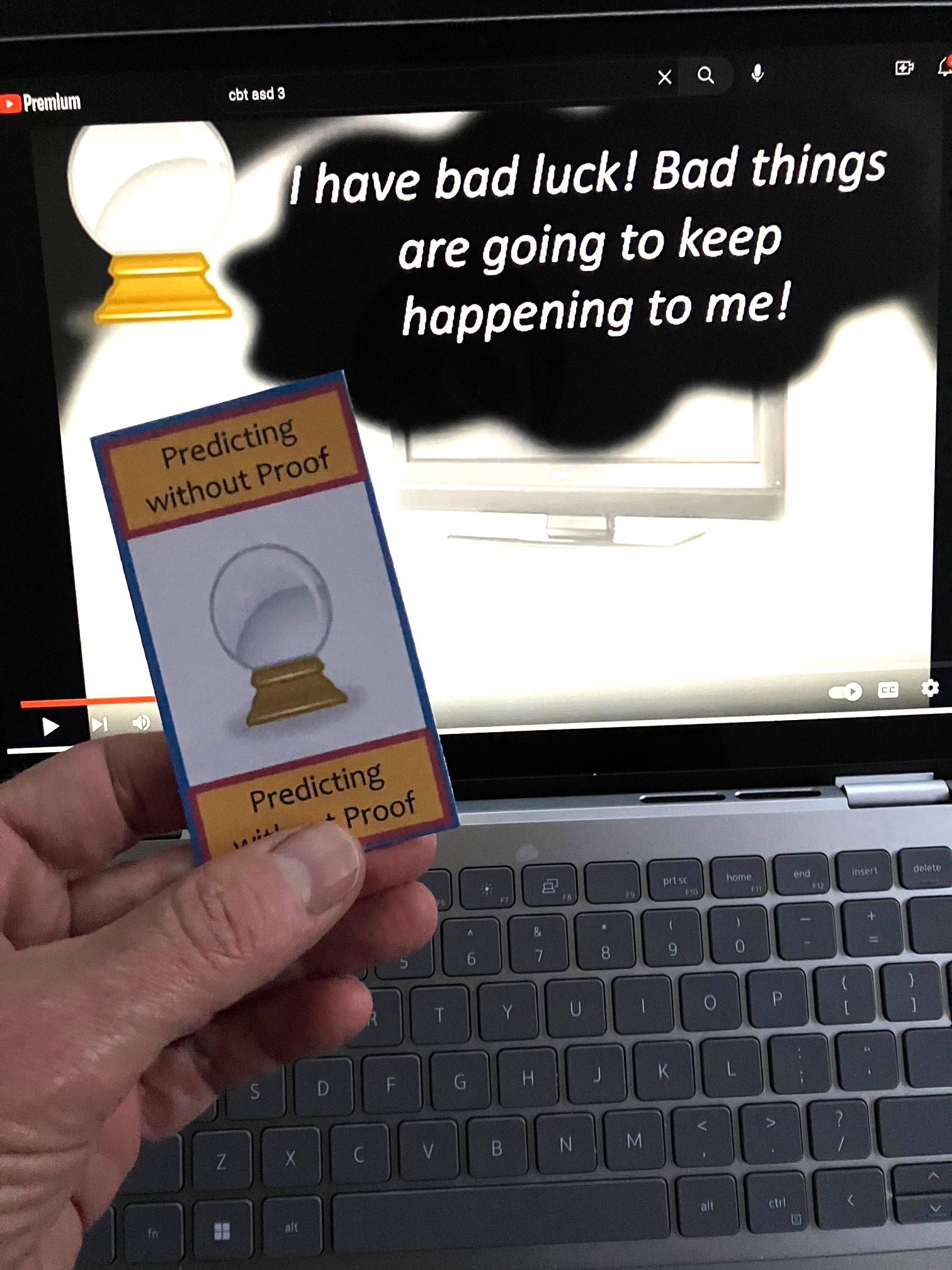
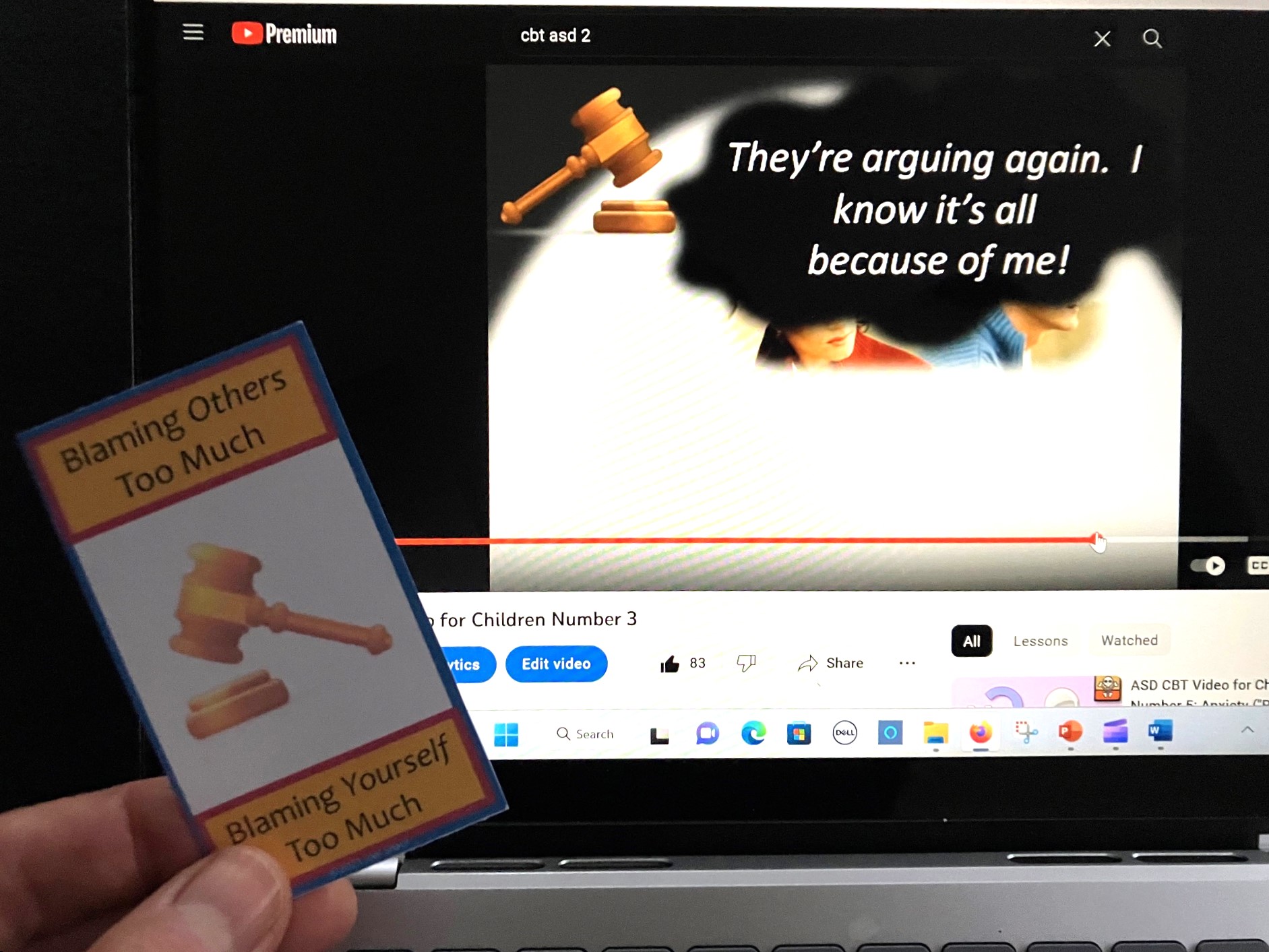
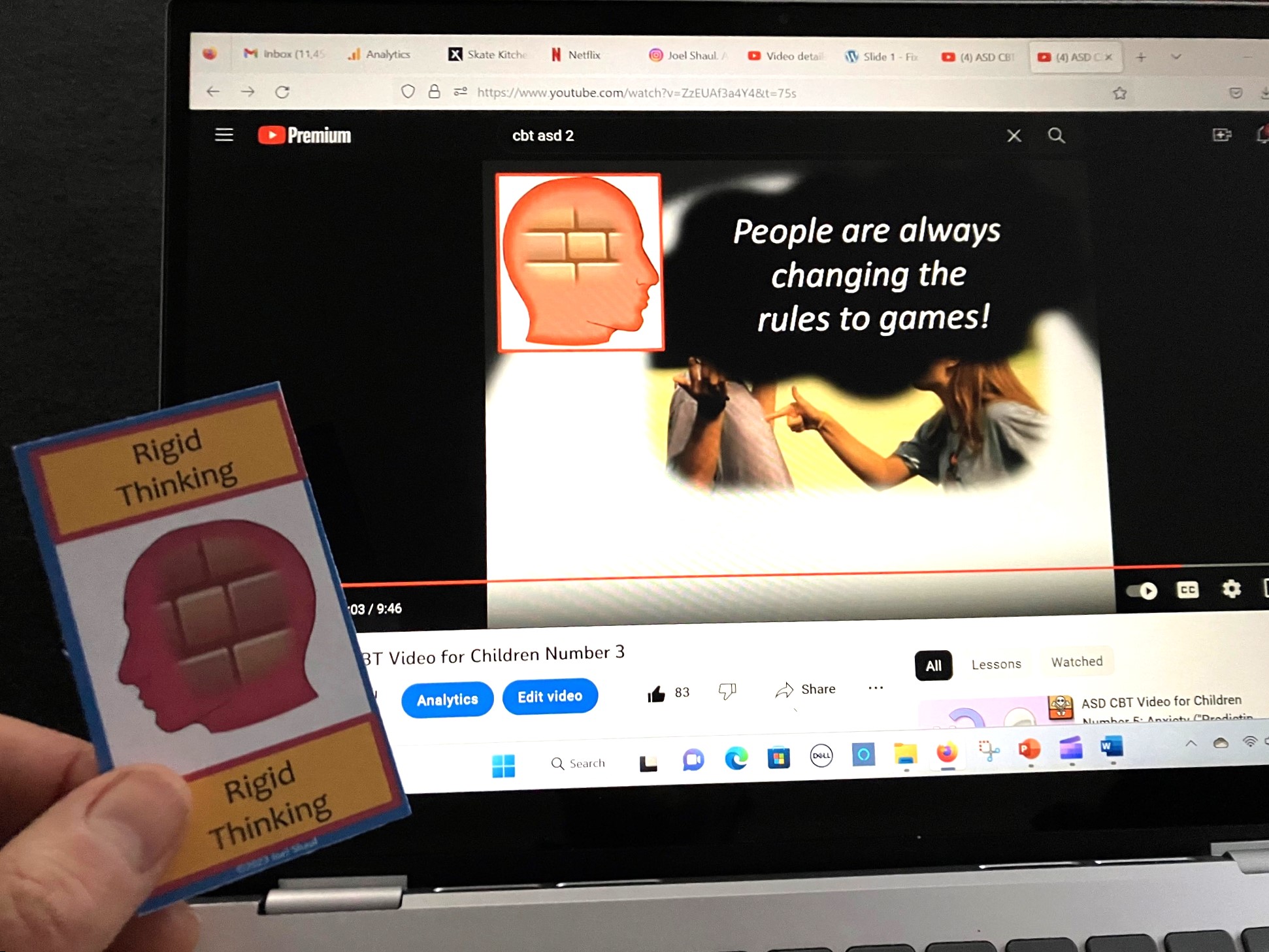
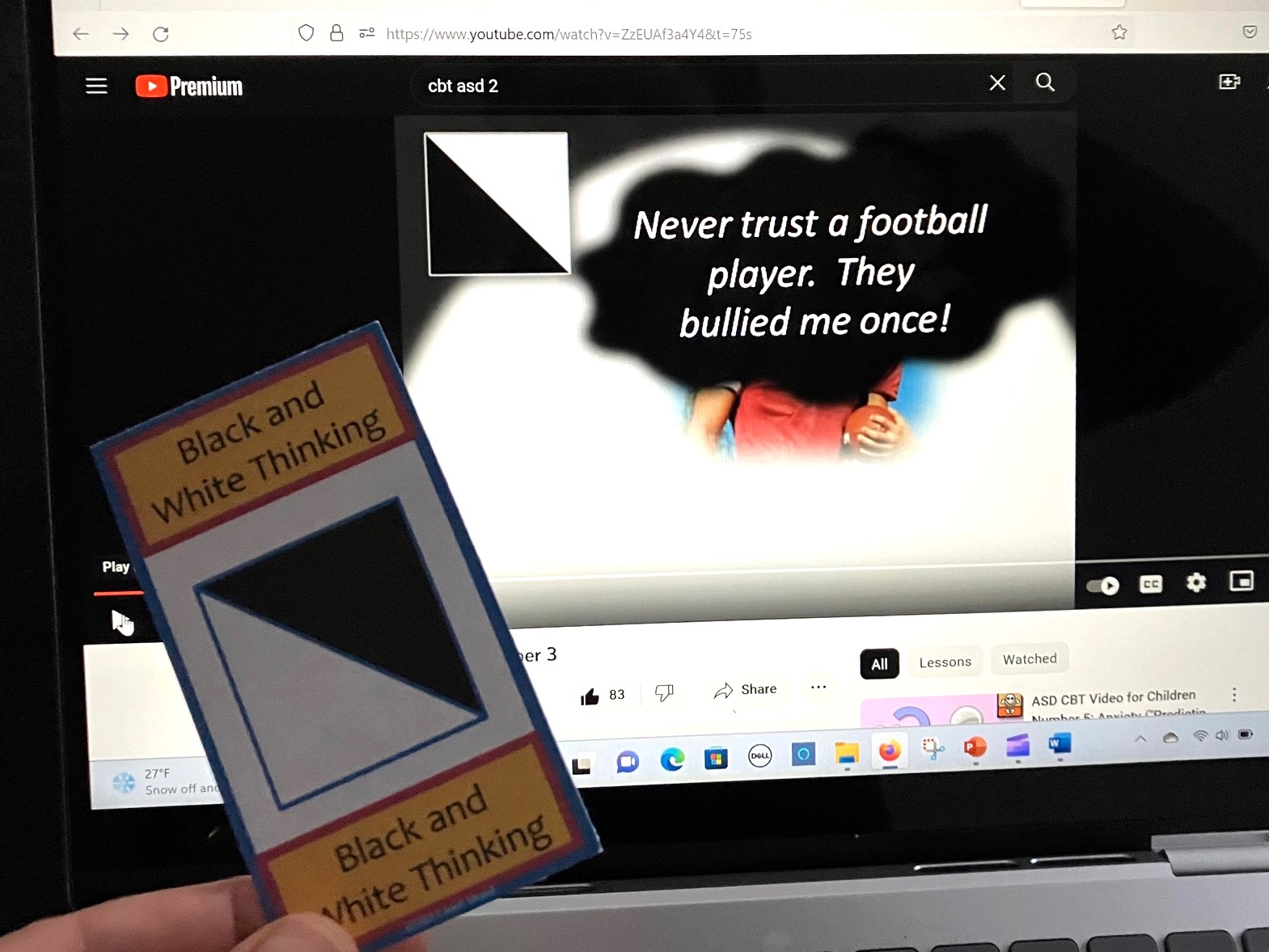
This article introduces a game-like token system with a free download. It is a set of cards you can use along with the CBT YouTube Videos for Kids (these videos are explained in much detail here).You use the cards to reward the child for identifying automatic negative thoughts in the videos and in their own minds.

How to make the cards

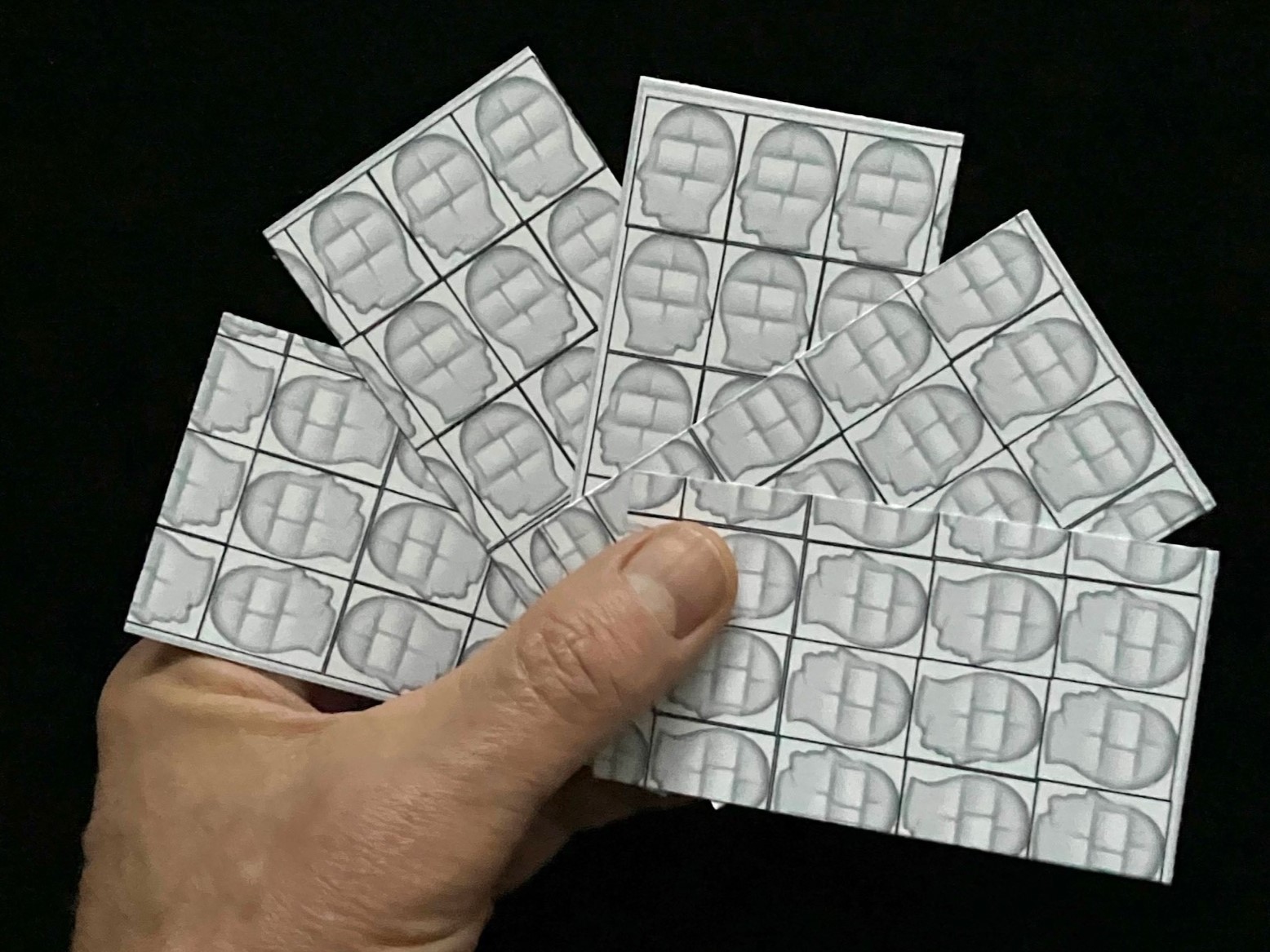
Print the cards on card stock, or on paper that you will then laminate. If you want to get fancy, print the decorative back before printing out the front of the cards.

The back of the cards.

How to use the cards

Once you have introduced the five Poison Thought categories, you can keep five piles of the Poison Thought Cards handy while viewing the CBT Videos for Kids. Then, you can hand out the cards one by one to children in order to recognize and reinforce a child’s success in:

a. Identifying a Poison Thought experienced by a child in the video

b. Identifying one of their own Poison Thoughts

c. Thinking of  Antidote Thoughts which might apply.

Certain kinds of children tend to like token systems like the CBT cards

I have often used these cards when doing CBT activities with children on the higher end of the autism spectrum. I have found that children and teens with ASD are often very receptive to these game-like devices in therapy. First, young people with ASD might not notice or be sufficiently reinforced by the subtle, spoken encouragement offered by clinicians during therapy sessions. They may actually prefer a small pile of CBT cards as tangible evidence that they are “getting it” during therapy. Second, neurotypical children, when they approach teenage years, tend to become averse to these playful gambits and they can feel manipulated by them. But teenagers with autism are actually seldom put off by these CBT cards, so with them I use them often.

I have used cards like this in my work for years. I have to say that it is a really straightforward and useful tool to use. It adds a little levity to hard work without undermining the serious nature of CBT. If you print out these cards, you probably will end up using them over and over when you work with the CBT Videos for Kids.

Joel Shaul, LCSW


Follow these links to other posts in this series.

Intro: Refinements to Make CBT Better Suited for Kids [link]

Part 1: About CBT YouTube Videos & How to Use Them [link]

Part 2: CBT Token Systems – CBT Cards, a Free Download [link]

Part 3: More CBT Token Systems – Using Mr. Yuk Stickers [link]

Part 4: Creating Thought “Enemies” and “Heroes” in Child CBT [link]

Part 5: Tailoring CBT Methods & Media to the Individual [link]

Intro: Refinements to help make CBT better suited for kids

Refinements to make CBT better suited for kids

Cognitive behavioral therapy was developed originally not for children, but for educated adults. Over time, child psychotherapists have incorporated various refinements to make CBT accessible and useful for children.

This 5–part series pulls together some of my own efforts to make CBT as helpful as possible for young people.


The titles for each part are listed below. Read them in order or select any one by clicking on the link.

Intro: Refinements to Make CBT Better Suited for Kids [link]

Part 1: About CBT YouTube Videos & How to Use Them [link]

Part 2: CBT Token Systems – CBT Cards, a Free Download [link]

Part 3: More CBT Token Systems – Using Mr. Yuk Stickers [link]

Part 4: Creating Thought “Enemies” and “Heroes” in Child CBT [link]

Part 5: Tailoring CBT Methods & Media to the Individual [link]