
Part 5: Creative use of others’ images and AI for social & emotional learning.

I have included this additional category of art-related therapy resources – use of images not actually created by the child – because I do consider doing this “creative” and since it has its own special utility in social-emotional teaching.

First, it has the potential to create results very quickly.

Second, using borrowed and AI-generated images can be really useful for people who are creative but don’t draw very well. Like me, for example – and like many young people we work with.

These first two examples employ borrowed images. The third example demonstrates some entry-level use of AI pictures. The blue text links to the free downloads.

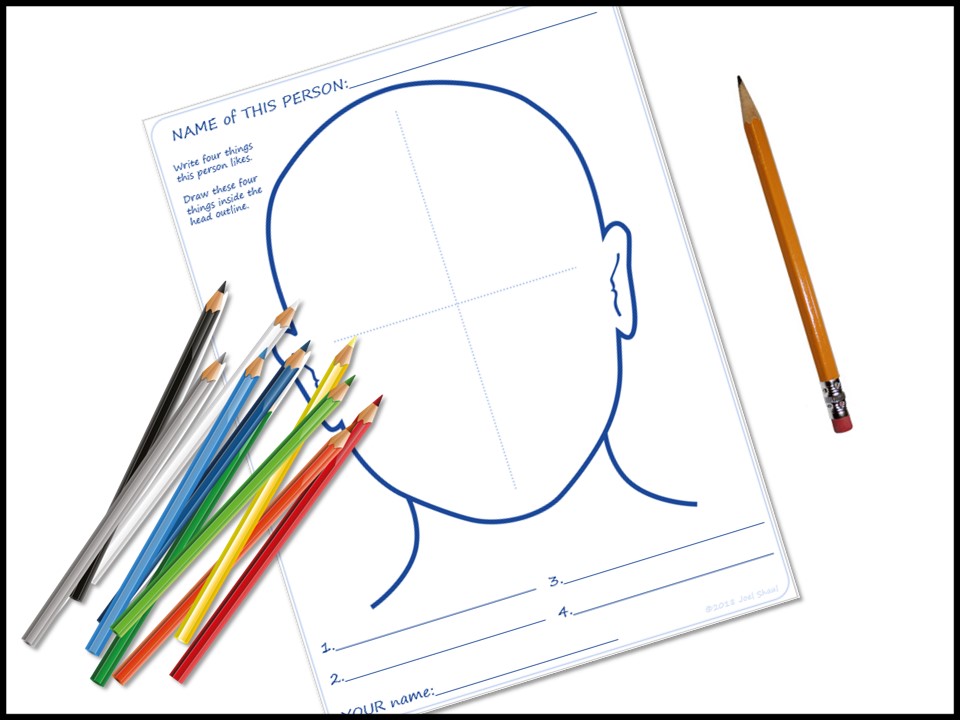
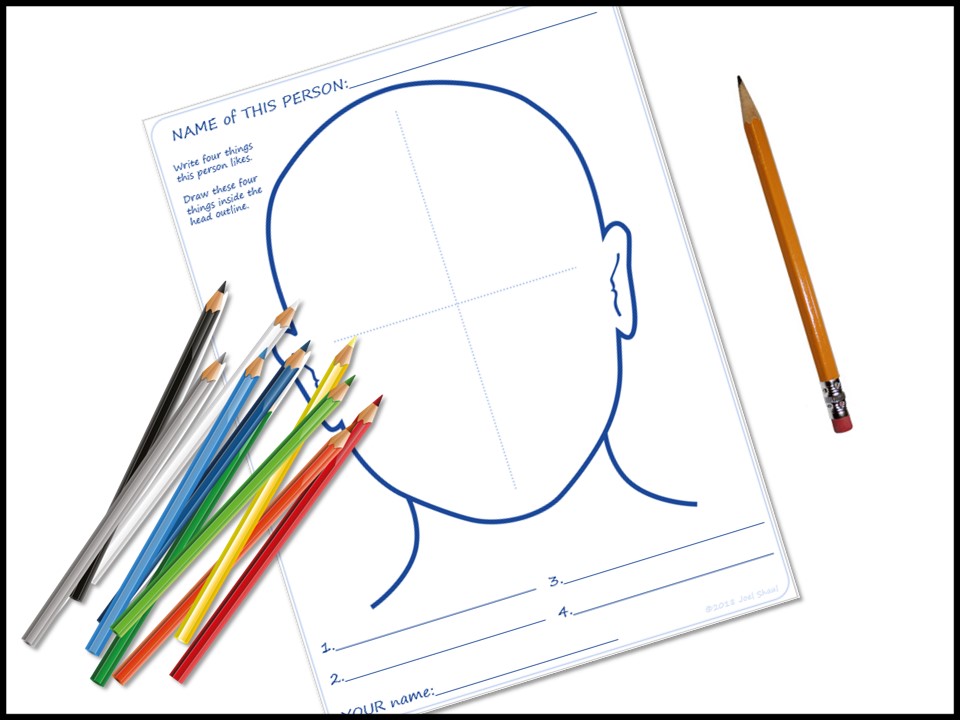
Head Outline Picture Activity to learn about peer interests
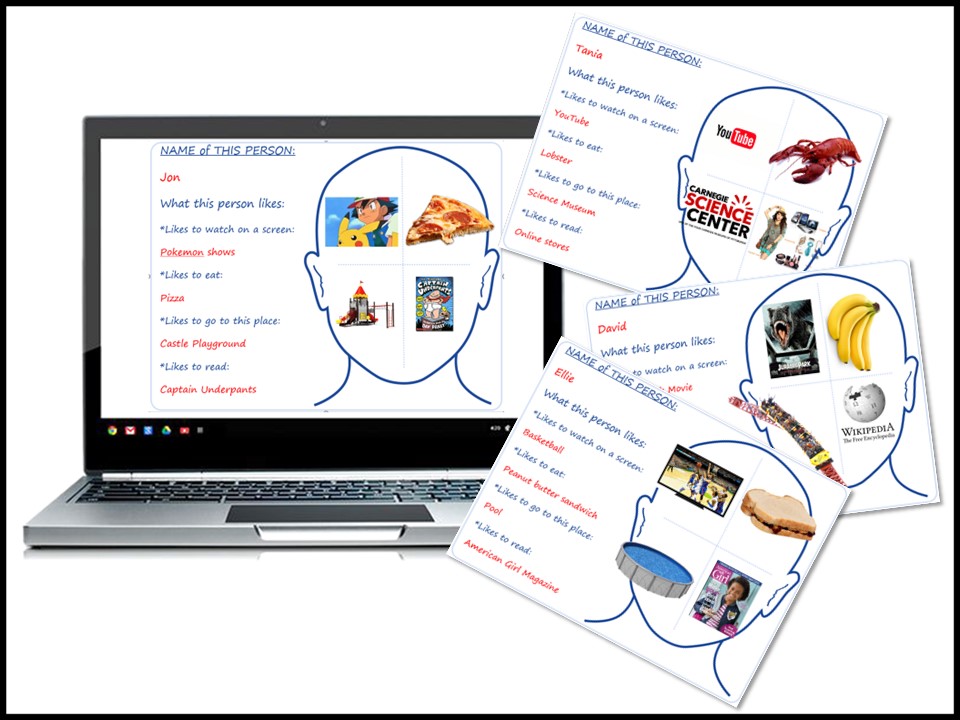
This free download enables you and a child, working side by side at a computer, to quickly put together useful, illustrated guides to other people’s interests. Starting with a PowerPoint template provided in my free download, you copy and paste Google images into the head outlines. Before long, you have picture-based references to other people’s interests.

Some children prefer to complete this activity by producing their own small drawings depicting others’ interests, but quite a few other kids just don’t like drawing, or when they do draw, the results look disappointing to them. Even when children copy and paste pictures in this project, it still qualifies as “creative” in my opinion.
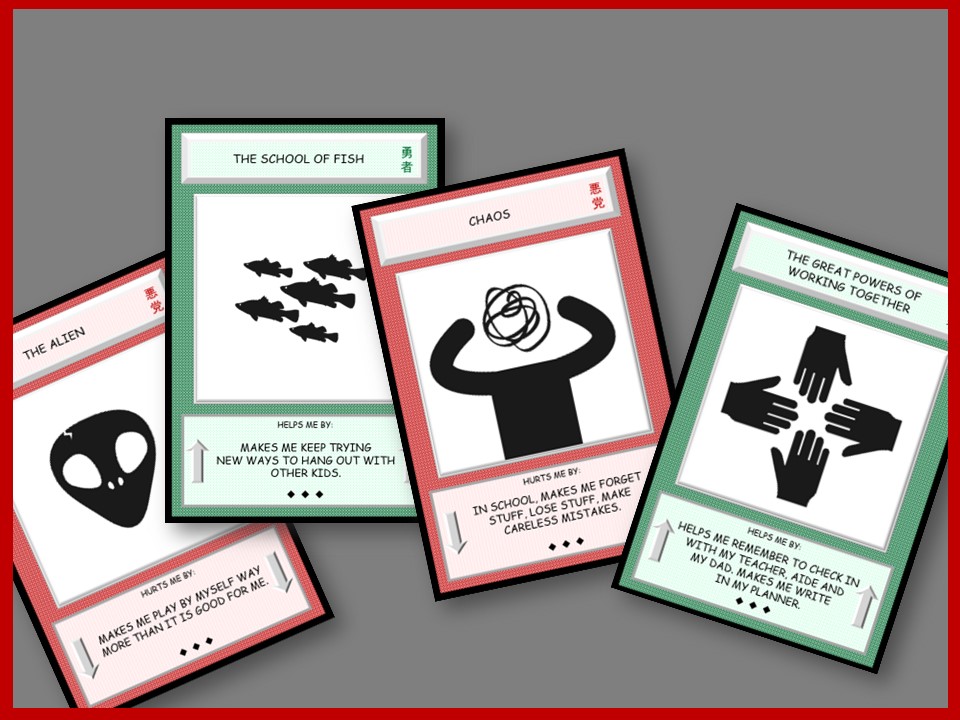
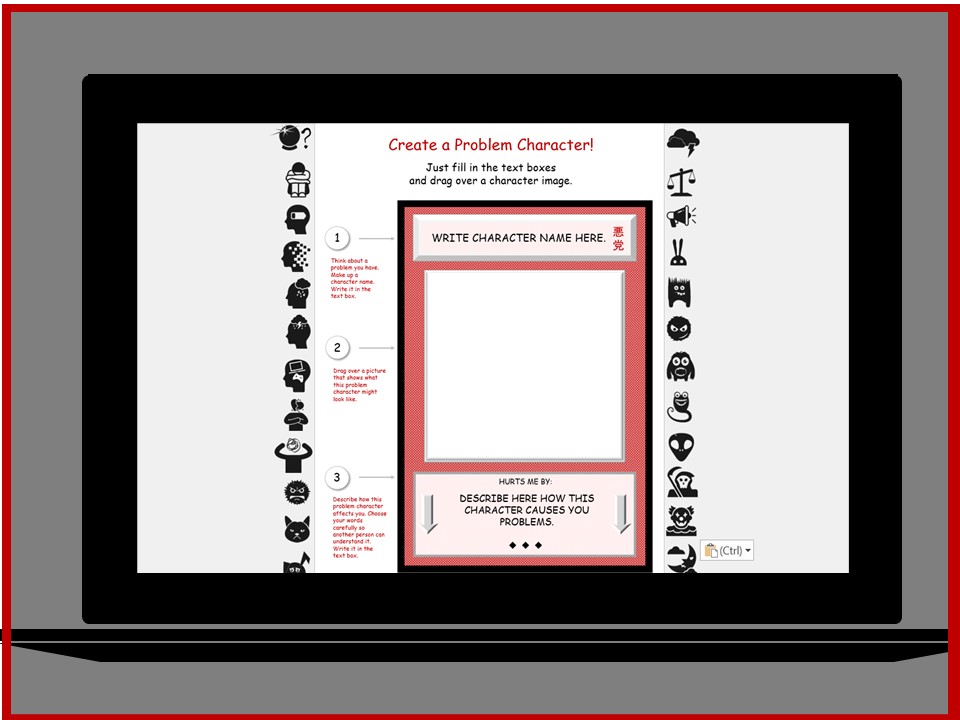
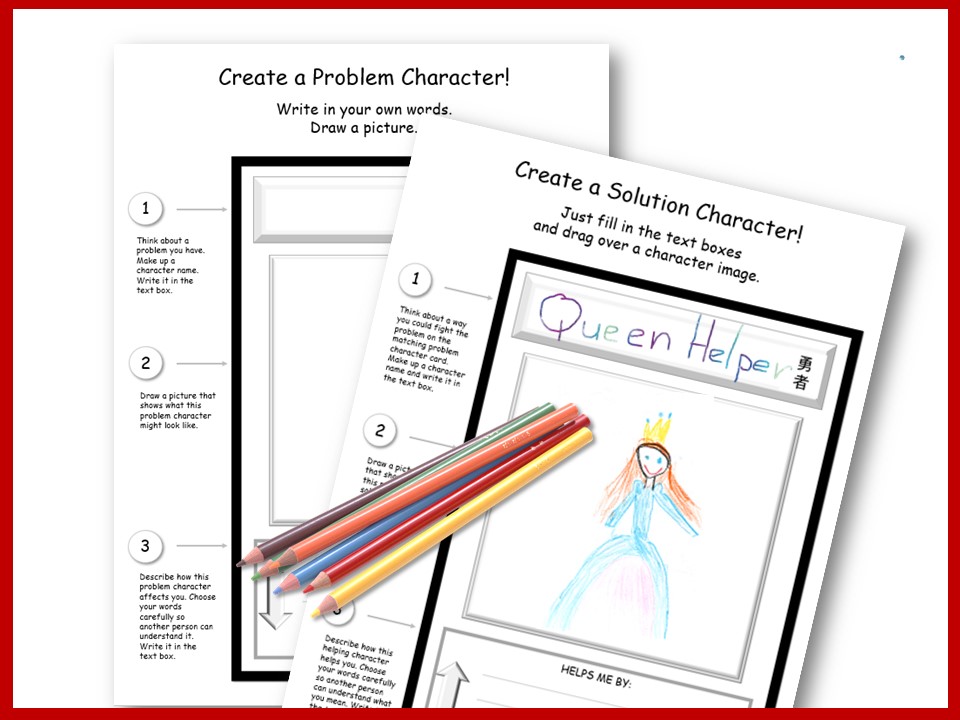
Problem & Solution Cards

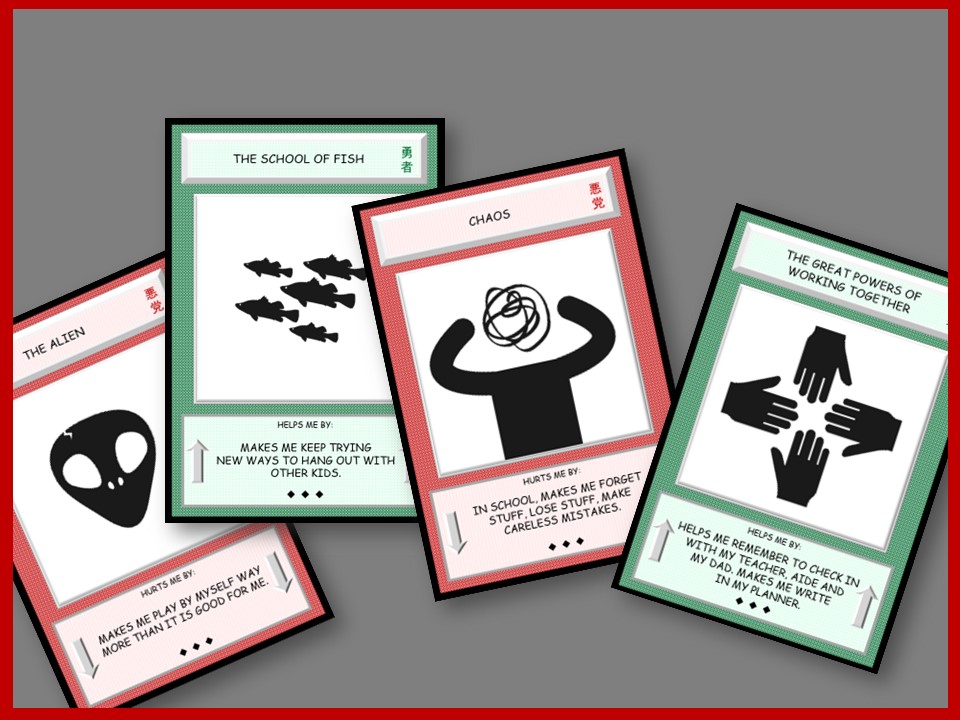
This free download allows you to quickly produce cards resembling Pokémon and Yu-gi-oh to represent problems the child is working on and possible solutions to these problems. The project can also be completed by having the child draw their own pictures, but I generally find that even artistic kids elect to drag and drop the stock images instead of drawing.

Using AI-generated images as a creative element in therapy

I am writing this in early 2024, just a year or so after basic web-accessible AI image generating became available. I have a feeling the following information and examples will soon become outdated, as the quality and variety of AI images gets better and better. Anyhow, here is what I have learned so far.

AI image-creating has terrific potential for introducing an “artistic” visual component to child psychotherapy. Here are a couple quick examples I came up with in just a few minutes on my computer.
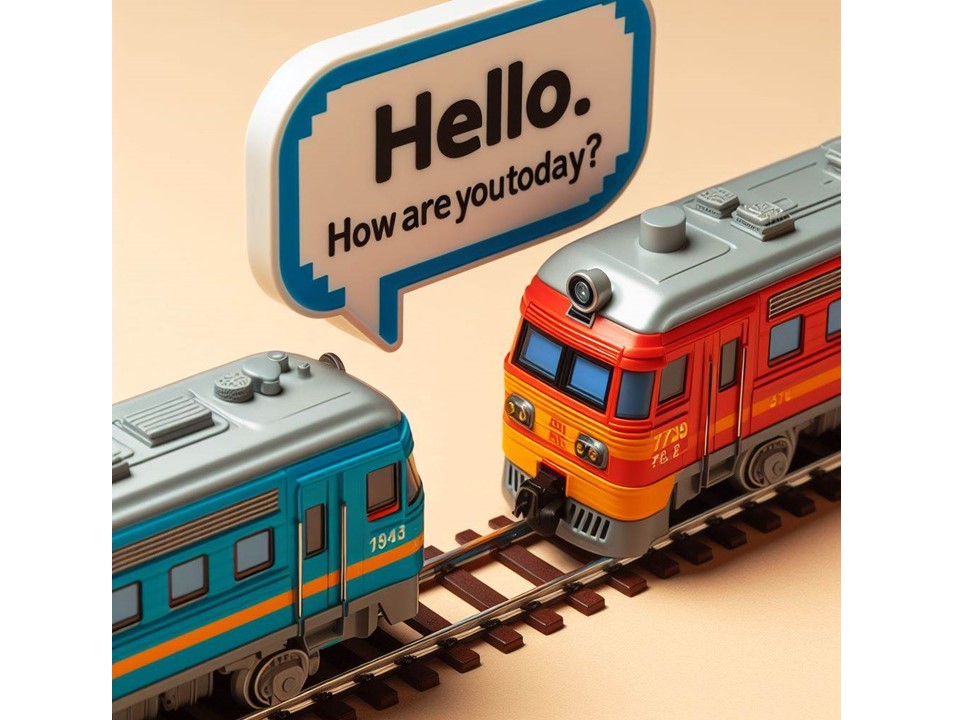
first AI image I created

In reference to the AI image shown above: I imagined having a young autistic client who needed help with some rudiments of social communication. I supposed that the child had a strong interest in trains. I created the picture above by telling the online image generator, “Create an image showing two realistic train cars talking together. One says, ‘Hello. How are you today?'”
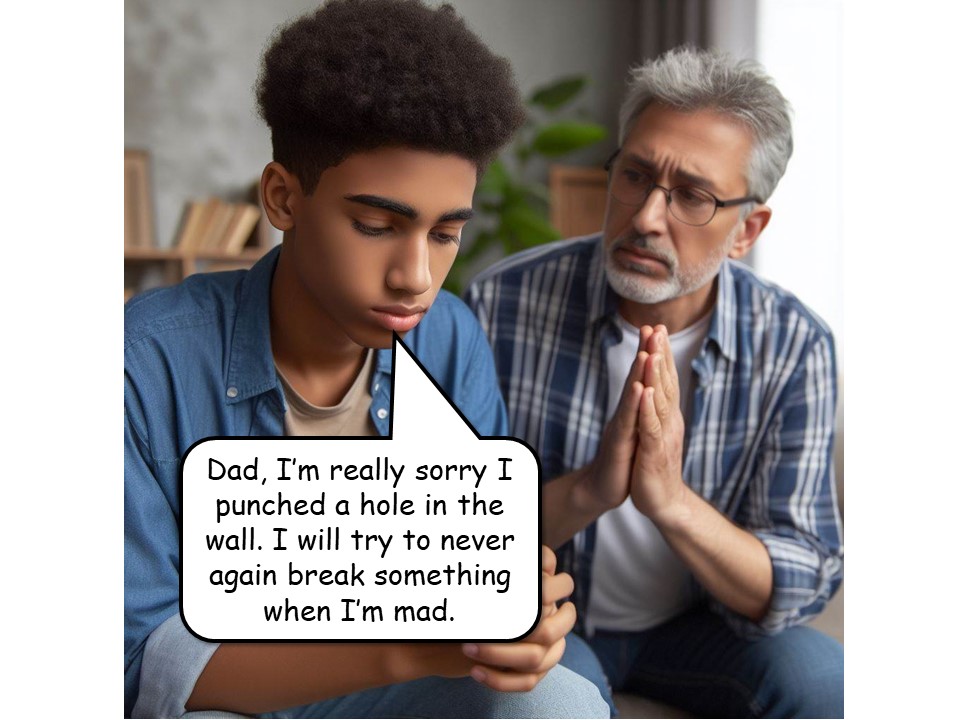
second AI image I created

In reference to this second AI image above: I imagined having a teen boy client who was working on some anger management and conflict resolution. I told the online image generator, “Create an image showing a teenage boy apologizing to his father after losing his temper.” I then added, on my own computer, the word bubble and the text.


The next in this series: Part 6: Encouraging & validating the child’s own artistic expression in therapy & teaching.

Joel Shaul, LCSW


Introduction to series.

Part 1: Reasons to use art in social & emotional teaching. Some guiding principles & professional concerns.

Part 2: Assigning individual drawing tasks for social & emotional learning.

Part 3: Assigning collaborative drawing tasks for social learning.

Part 4: Coloring & decorating to add interest & levity to social & emotional learning.

Part 5: Creative use of others’ images and AI for social & emotional learning.

Part 6: Encouraging & validating the child’s own artistic expression in therapy & teaching.
Part 4: Coloring & decorating to add interest & levity to social & emotional learning.

Doing coloring during therapy activities can be beneficial in several ways.

In Part 2 and Part 3 in this series, I described ways that drawing can be used to help social emotional learning in various ways. In this following section, I provide examples and explanation regarding a rather different use of crayons, pencils and markers – coloring and decorating – and how this can enhance our therapy initiatives.

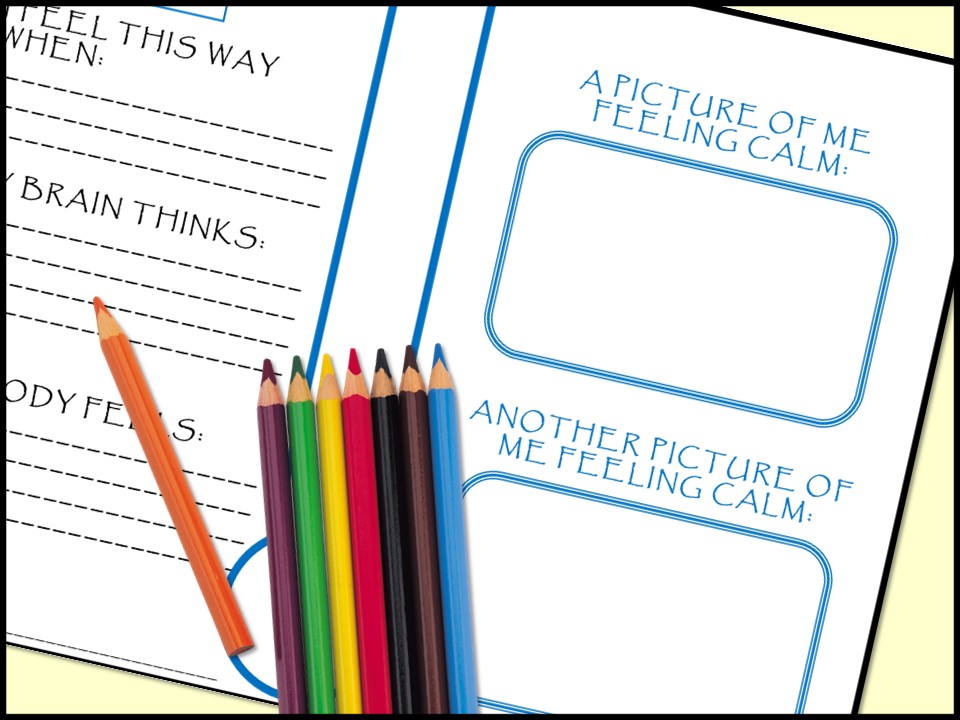
Coloring and decorating might seem like pointless and distracting activities to encourage in a therapy setting. But when used periodically and strategically, coloring can help a child to relax, focus on a therapy task and prolong their attention to an issue of concern during the session. Having the child color or decorate a therapeutic tool has the potential to personalize the task and to help a child to increase investment and commitment to the work.

Here are some examples of therapeutic coloring from my free downloads and from one of my children’s books.

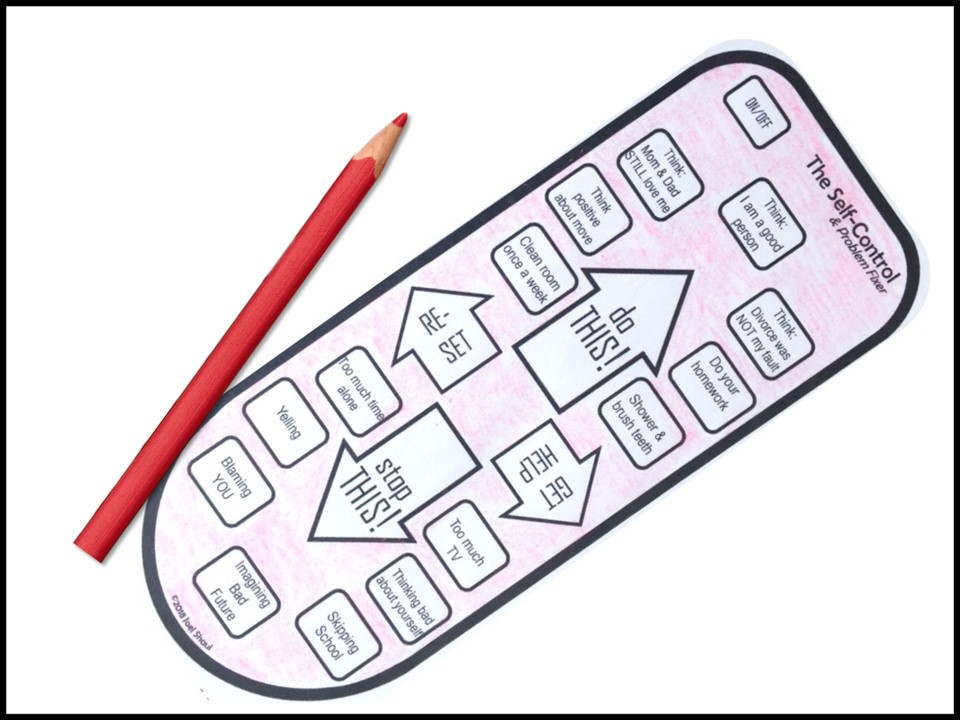
The Self-Control and Problem Fixer

autism child emotion art therapy free

This text on this customizable resource is typed into textboxes on the free download. You assist the child with this at the computer, acting as advisor and “secretary.” After you print it and help the child to cut it out, the child picks out colors and shades the background. This coloring portion can be time consuming, but it affords you, the therapist, a very good opportunity to discuss therapy issues while the child is looking downward, relaxing and coloring.

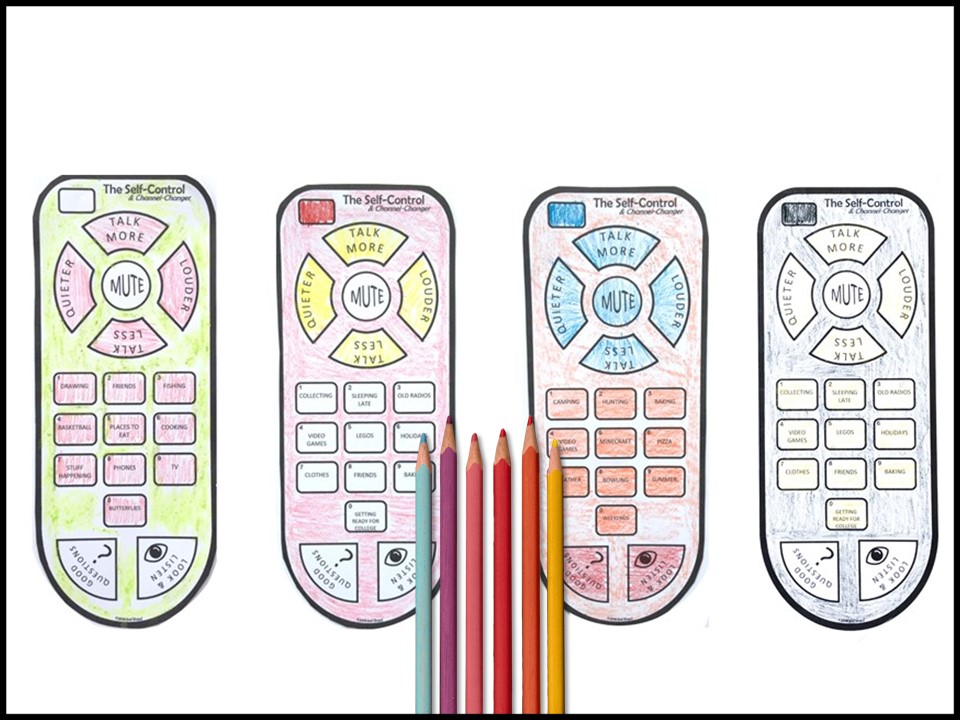
Remote control channel changer for conversation topics

The Remote Control Channel Changer looks something like the Problem Fixer – but it has a different purpose.

The Remote Control Channel Changer looks like the Problem Fixer shown above, but it has an entirely different function – to help raise a child’s awareness of diverse conversation topics. Each of the ten central buttons is blank to begin with and then you fill them in with the child. The free download provides a PowerPoint option in which each button contains a small text box. You and the child type in topics while seated at the computer together.

After you print it and help cut it out, the child colors it in. This provides a relaxed occasion to try out some of the conversation topics listed on the buttons.

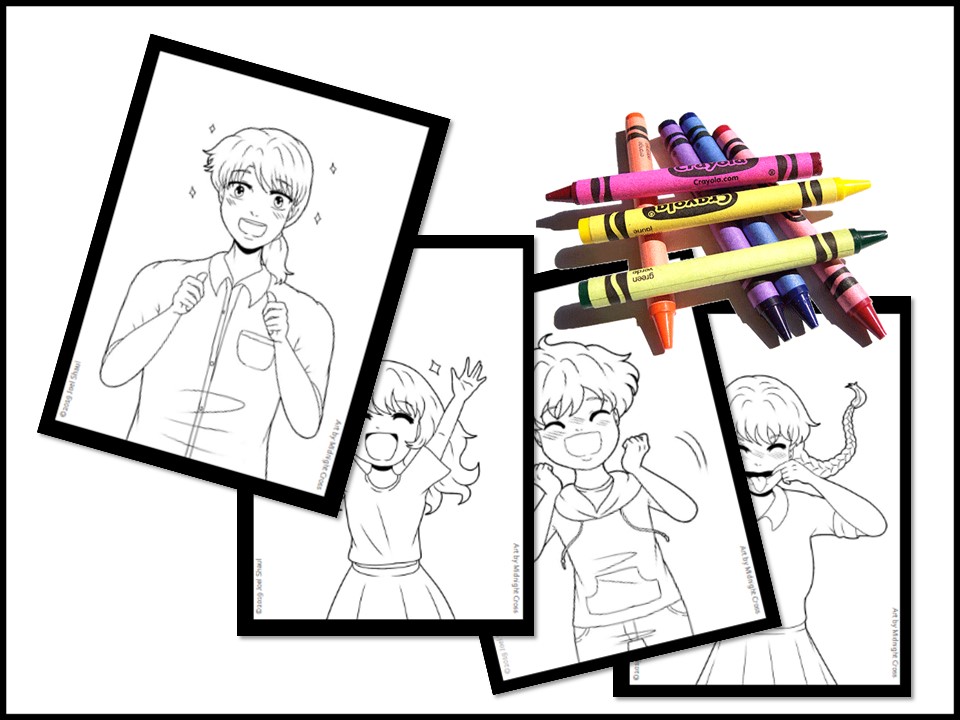
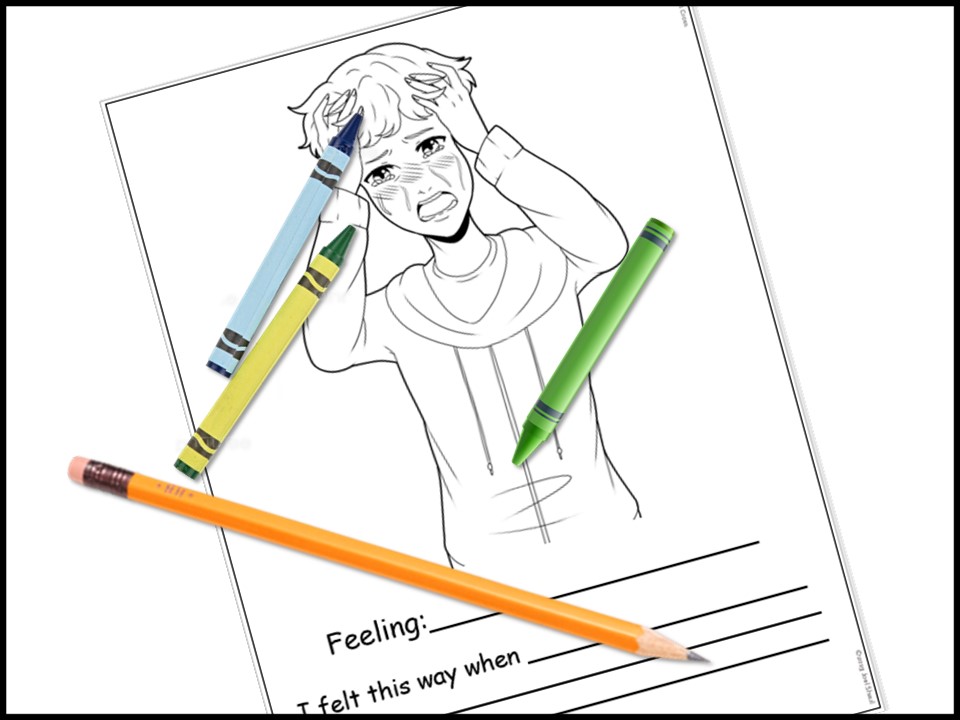
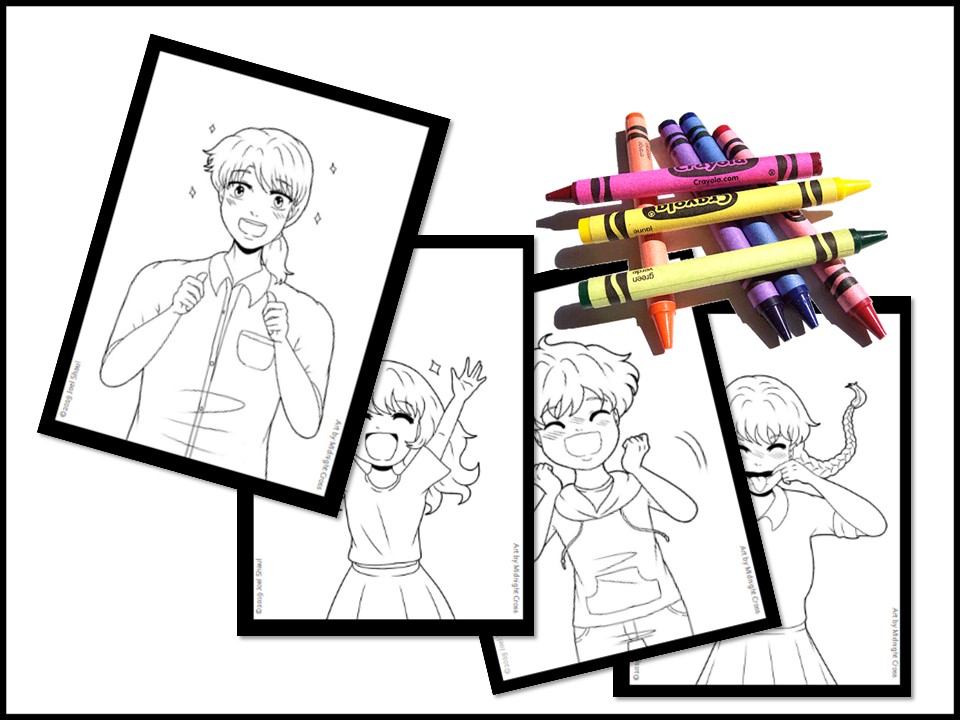
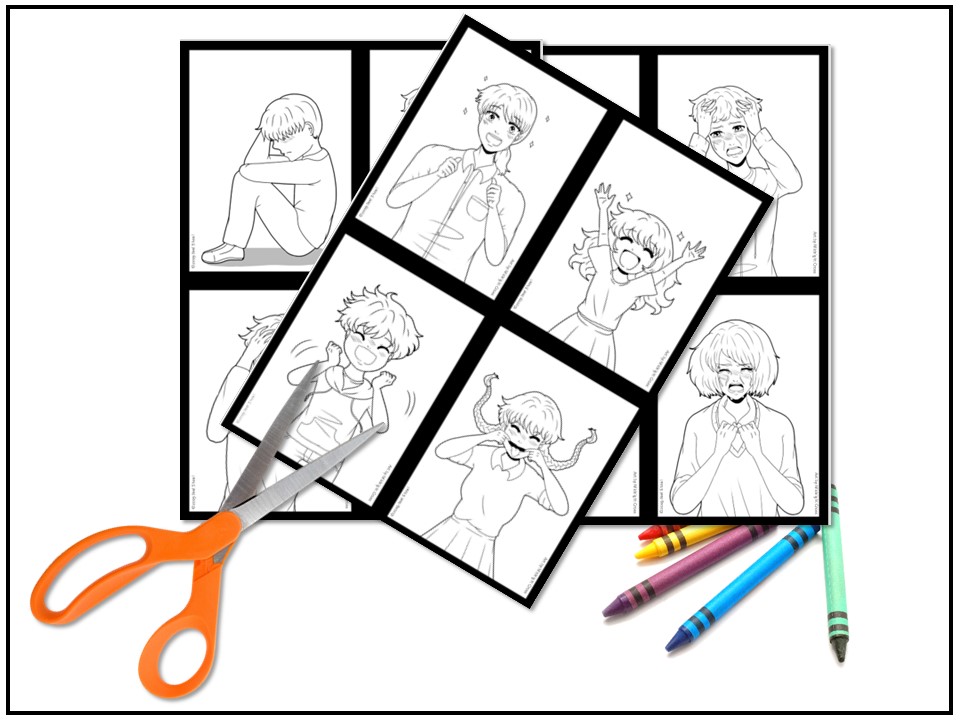
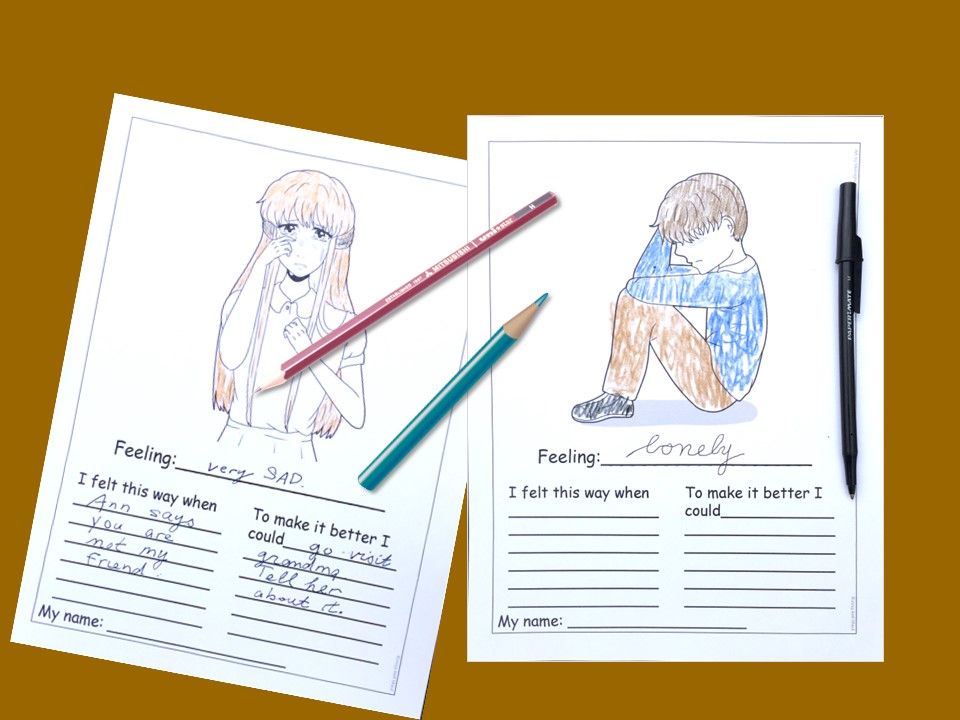
Anime emotion cards and coloring worksheets

autism child anger management free

In my extensive experience using these resources in my own work, nearly all young people on the spectrum, from young child to young adult, elect to color these when given the option of coloring or not coloring. Some adjust the skin tones to more closely resemble their own skin color.

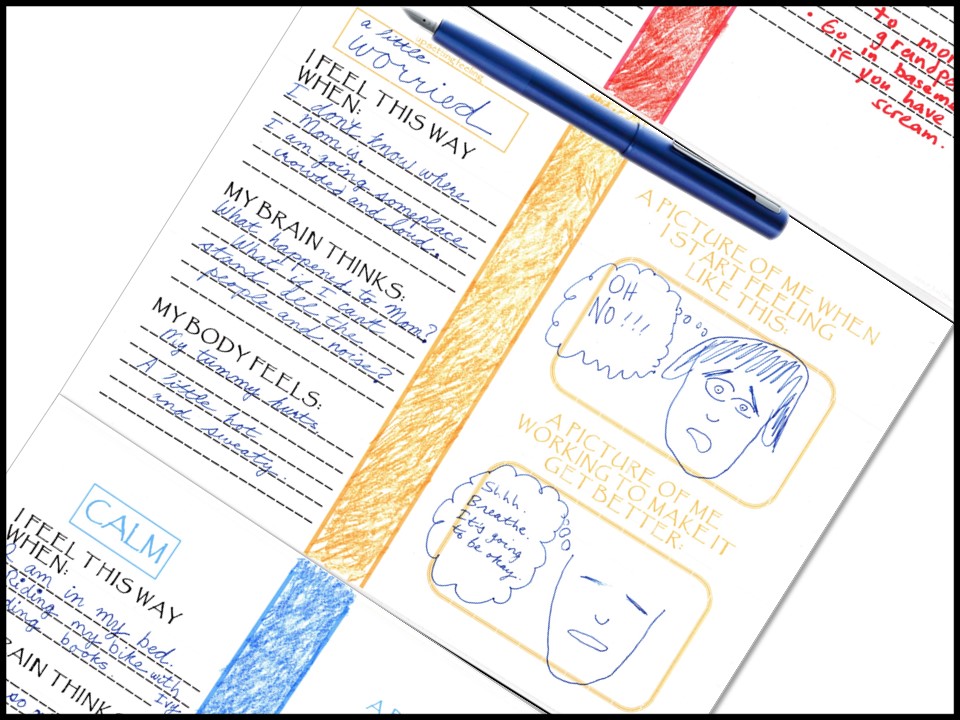
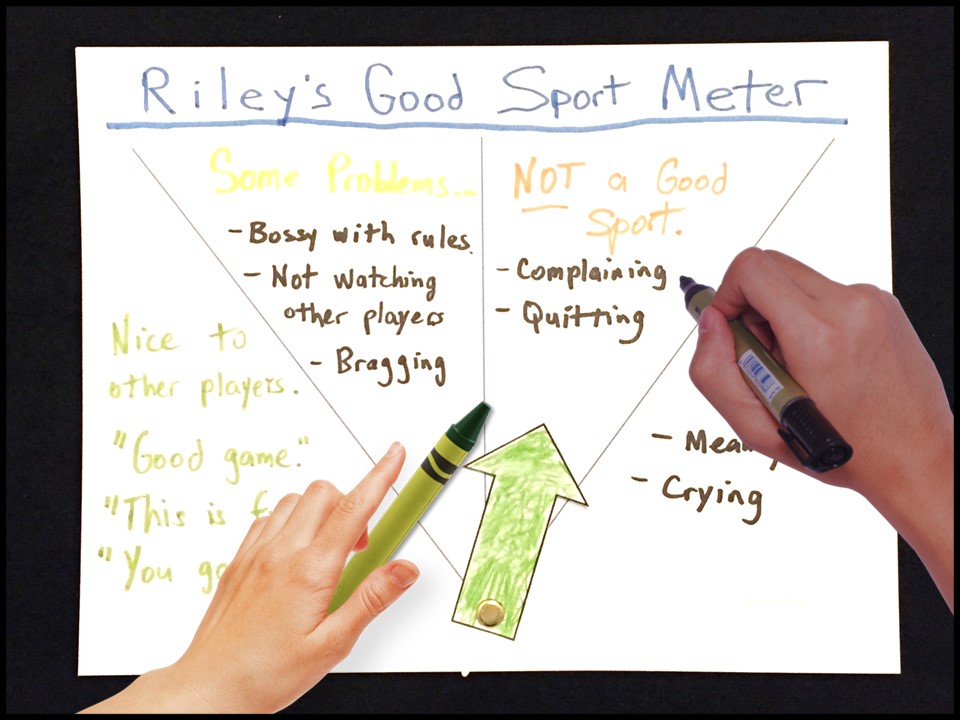
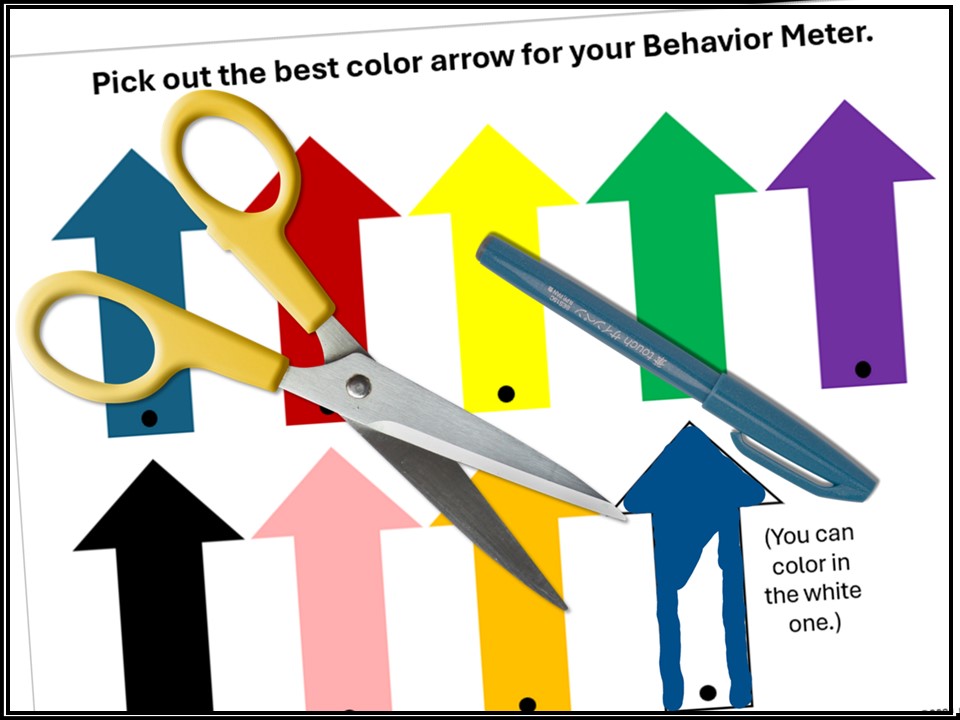
These arrows are components of the Customizable Behavior Meters resource featuring the option of coloring. I include this small example here to emphasize the value of allowing the child to personalize the therapy tools we employ, even in little ways like this, to enhance their own commitment to the work.

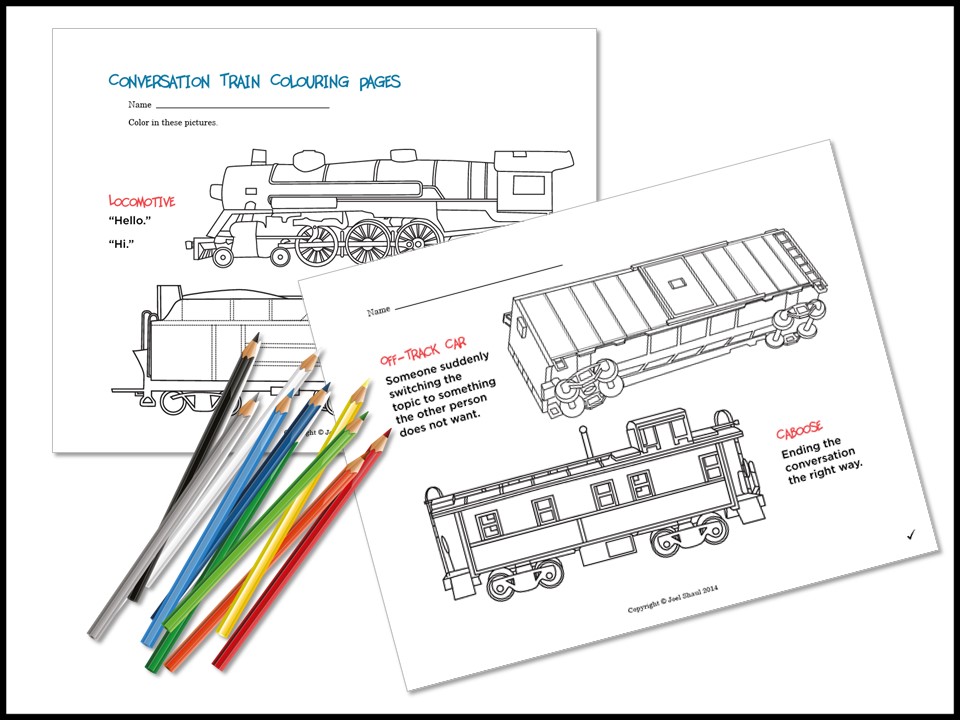
Train coloring pages from The Conversation Train Book (2014 Jessica Kingsley Publishers)

This is a page from my book that uses the parts of a train to represent the different parts of conversation.


The next in this series: Part 5: Creative use of others’ images and AI for social & emotional learning.

Joel Shaul, LCSW


Introduction to series.

Part 1: Reasons to use art in social & emotional teaching. Some guiding principles & professional concerns.

Part 2: Assigning individual drawing tasks for social & emotional learning.

Part 3: Assigning collaborative drawing tasks for social learning.

Part 4: Coloring & decorating to add interest & levity to social & emotional learning.

Part 5: Creative use of others’ images and AI for social & emotional learning.

Part 6: Encouraging & validating the child’s own artistic expression in therapy & teaching.
Part 3: Assigning collaborative drawing tasks for social learning.

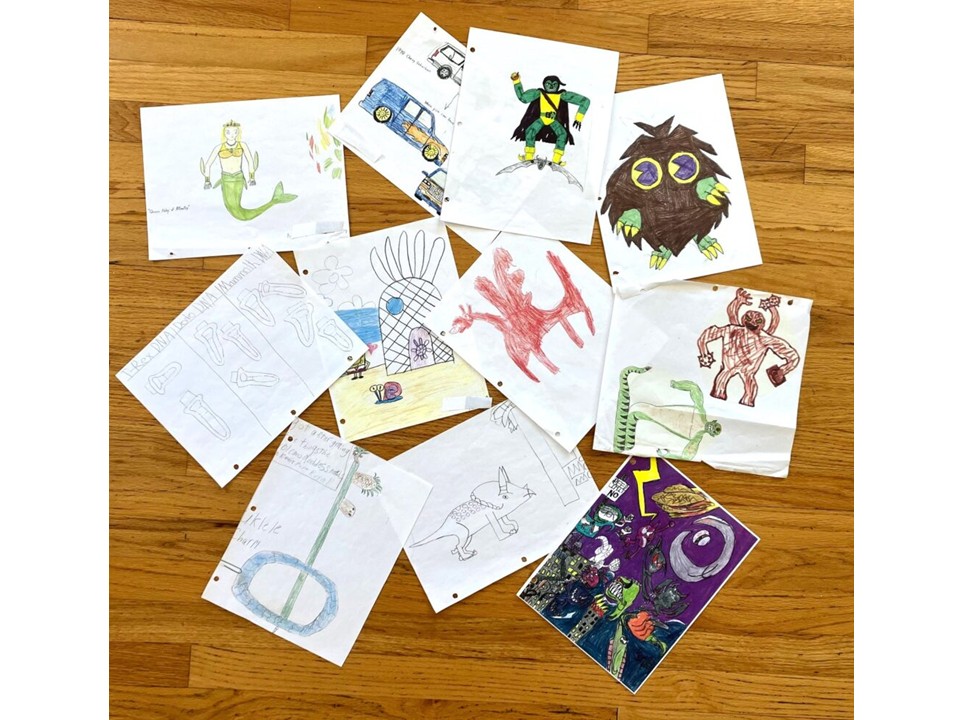
So many autistic children love to draw. Doing art with others is new to most of them.

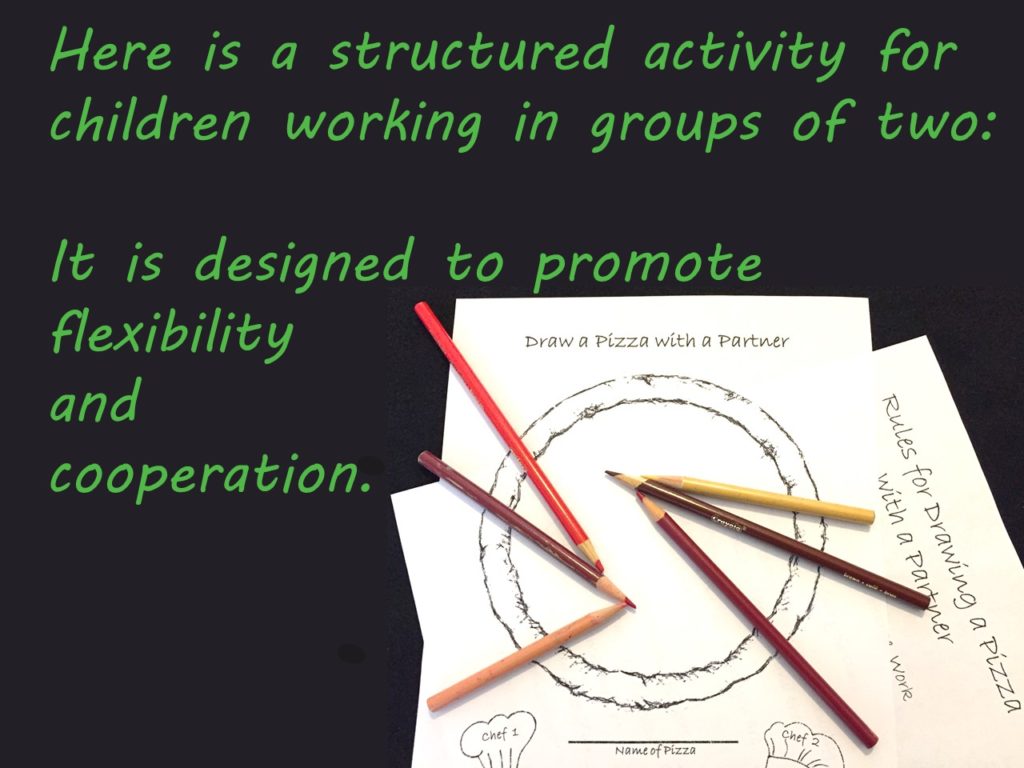
Here are some art projects that emphasize the social potential of art – children showing their art, enjoying others’ creations and working together on various creative endeavors. Some examples shown below are projects that you organize from scratch yourself. Others are facilitated by free downloads from my website.

Autistic kids who enjoy creating art may be accustomed to doing so entirely alone – which of course is fine! However, they may have limited experience with the many ways that people can be creative in social contexts, viewing other people’s work and even collaborating on art projects.

In section A, I describe four art projects to put together on your own, each with a different social component.

In section B, I describe four socially collaborative projects that make use of my free downloads.

Section A: Four social component art projects for you to put together on your own.

Facilitating interaction between children drawing together

Children accustomed to drawing alone might take little notice of other children nearby and what they are doing.

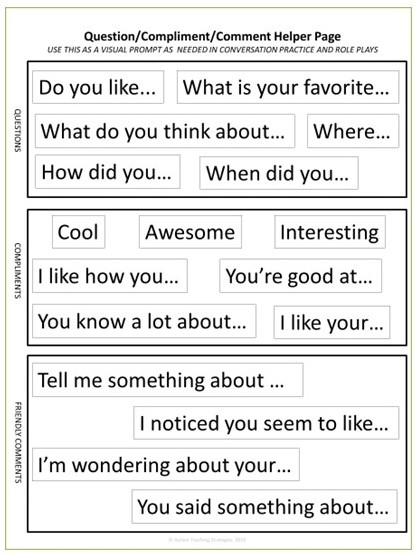
An adult’s careful and tactful social coaching has the potential to transform this solitary, parallel play scenario into a more interactive experience. One way is to offer verbal prompts to offer a comment, compliment or question regarding another child’s drawing. Another way to do this is to set a timer to go off every few minutes, at which point each participant has to stop drawing, take stock of what others are doing, and make some comments or compliments. In both cases, providing simple written scripts nearby for children to refer to (if they read) can be very helpful (see the verbal prompt example below).

You can download this prompt sheet via page 8 of this link.

Organizing an art collection featuring individual works by members of a group or classroom

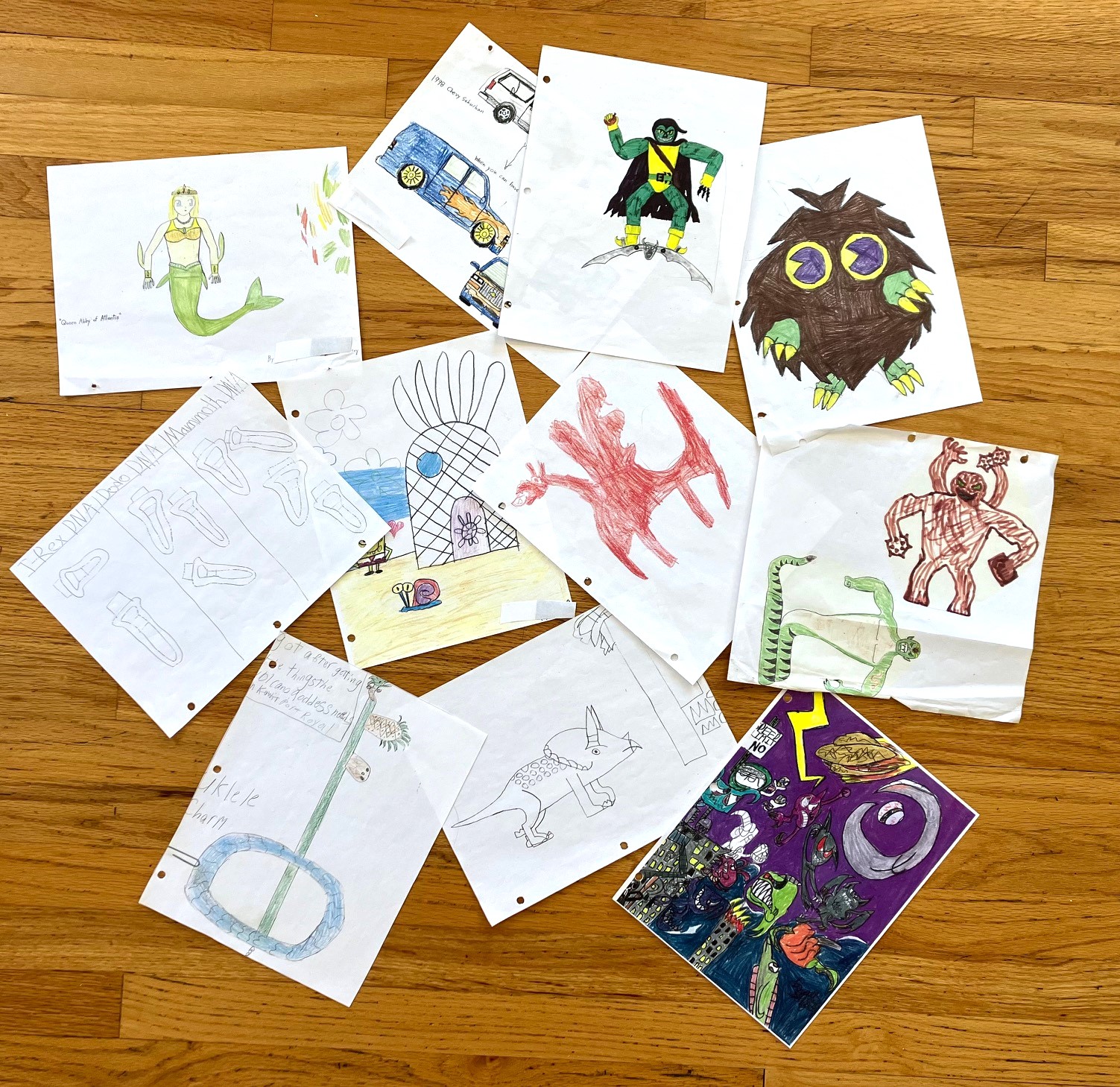
I often facilitated projects like this at a summer teen program that I ran for some years. With groups of teens that included many who enjoyed drawing, it was a favorite activity and really helped some solitary autistic artists to more fully appreciate the creativity of their peers.

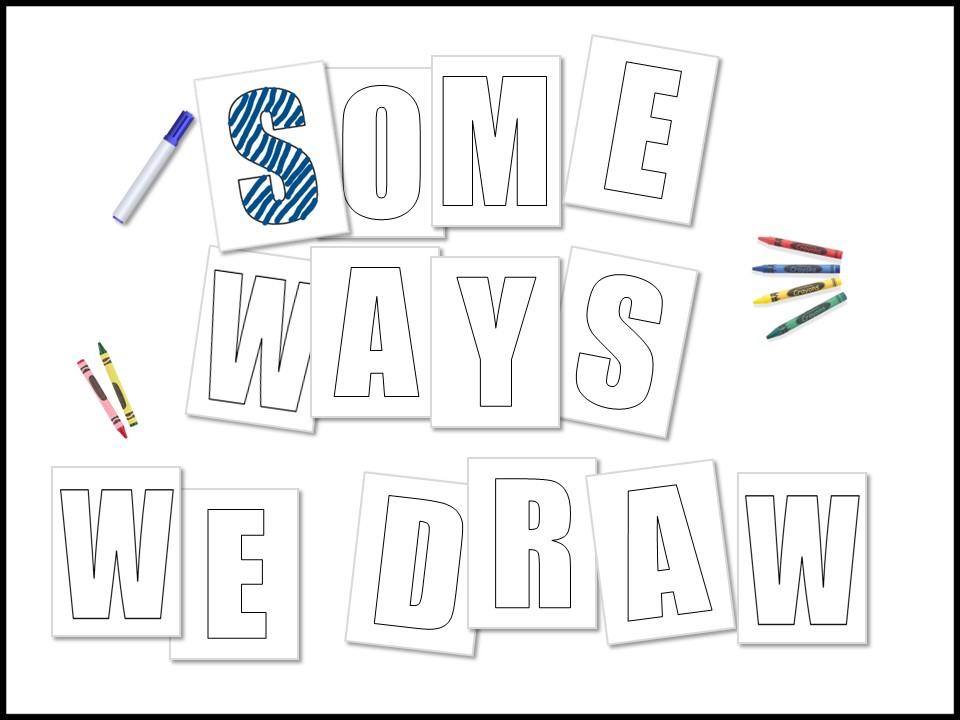
Collaborative sign coloring project

First, each child colors one letter in a sign.
autism child art therapy resource free
Then, you combine the letters to form the entire sign.

The first step of this project is for you to prepare a number of separate pages featuring the outlines of letters comprising the words you want to display on the wall of your classroom, office, social group room, etc. You can draw the letter outlines by hand, or else type them on your computer.

If you do it on your computer, I suggest you select the font “Impact,” configuring the letters in white with a black outline. Make each letter take up one full sheet of paper.

Each child is assigned to color and decorate one letter. When you finally assemble the letters to make the sign, it creates a sort of entry-level collaborative art project.

I used this project often in social skills groups and a summer teen program.

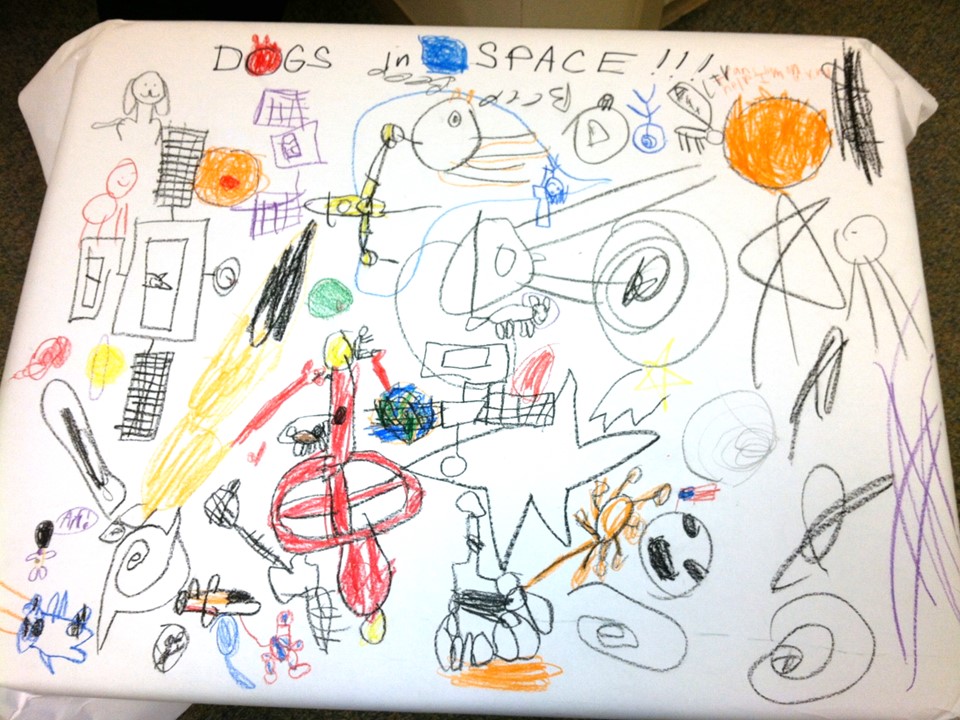
Assigning a few children to create a unified drawing together in the same space

This is a fun project, but also challenging and potentially very frustrating for young people on the autism spectrum. It’s very worthwhile provided you set it up carefully and offer coaching and troubleshooting from beginning to end.

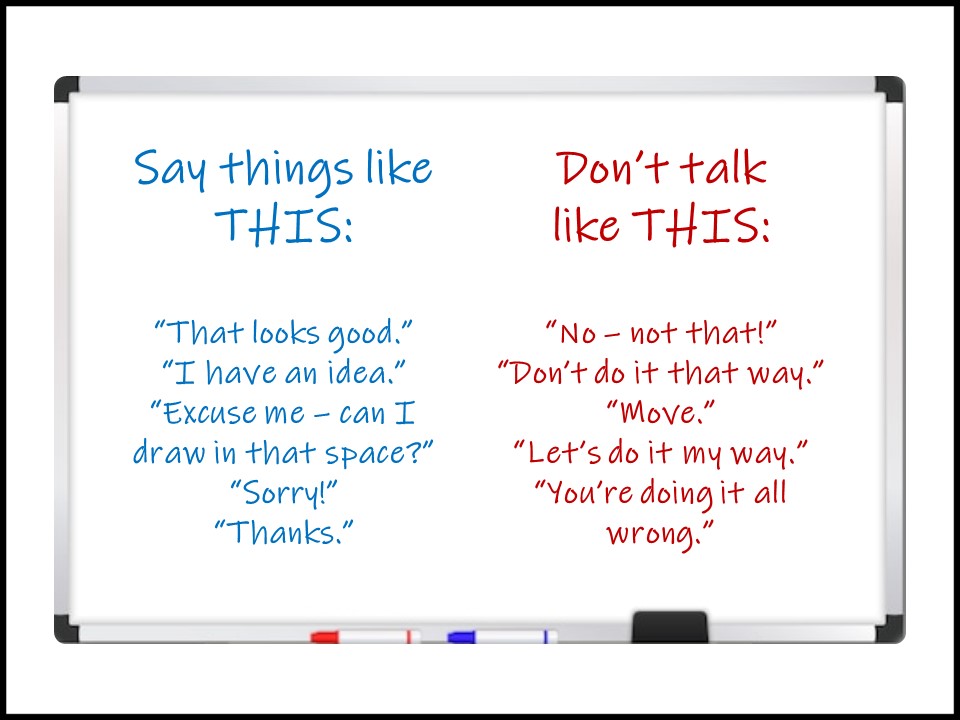
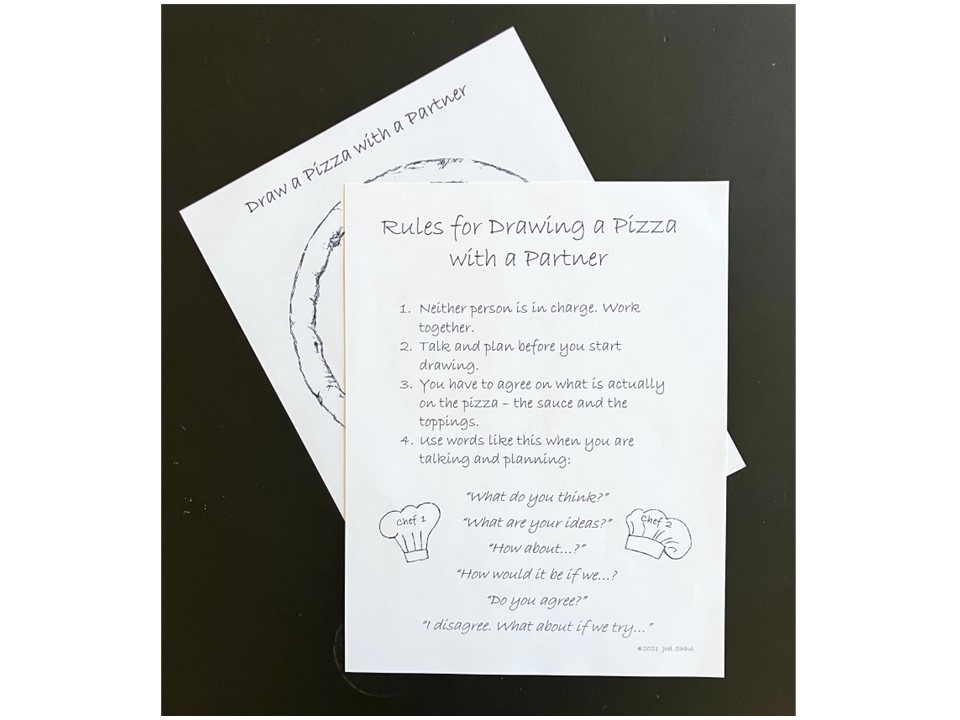
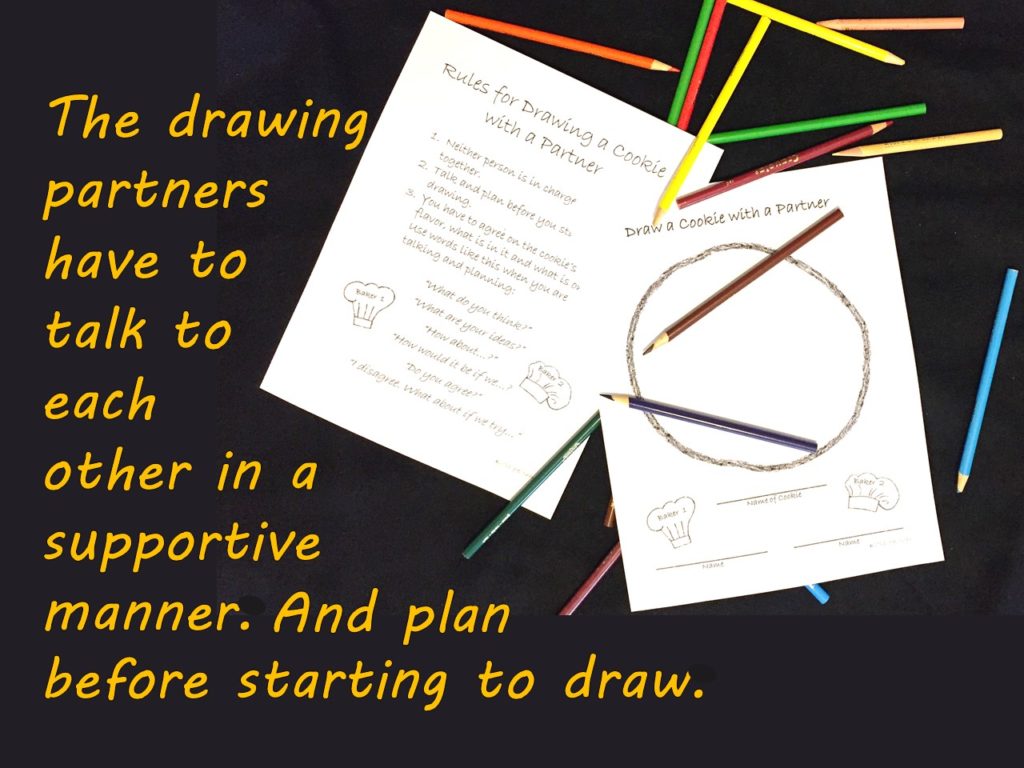
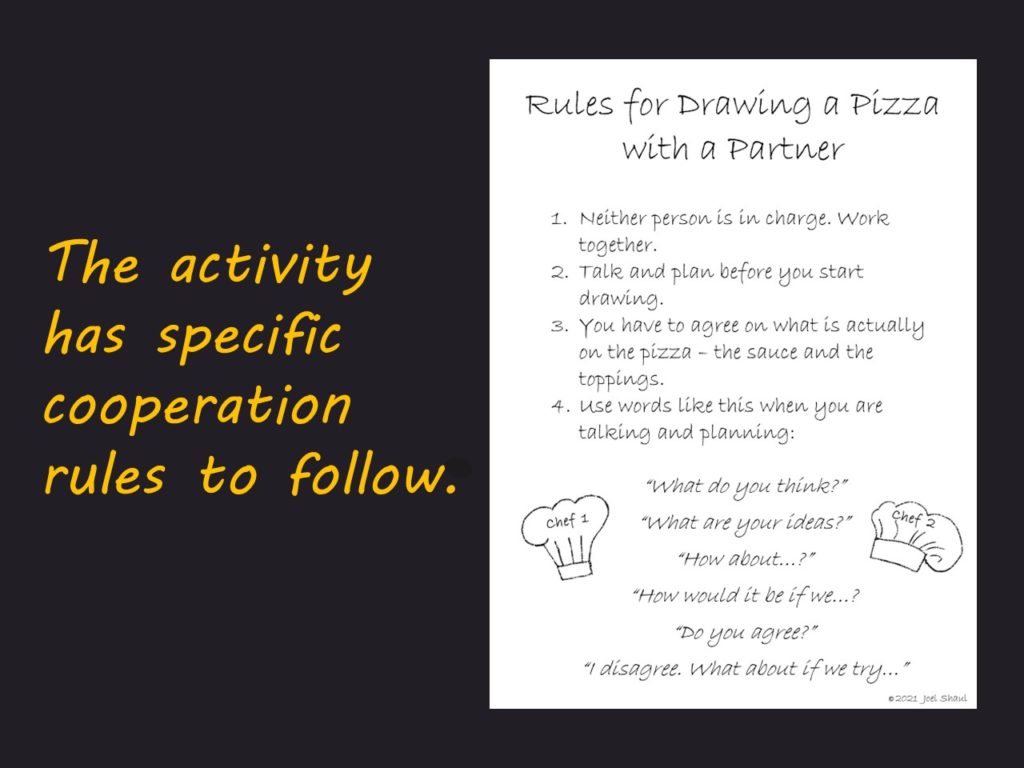
After clearly describing the scope of the assignment, you should post written rules that include language children should use and not use with one another while working together. It’s also worthwhile to enact instructive role plays in which you, the teacher/therapist, demonstrate “right” and “wrong” ways to verbally interact in a collaborative activity.

Suggested wording for the project’s cooperative language rules.

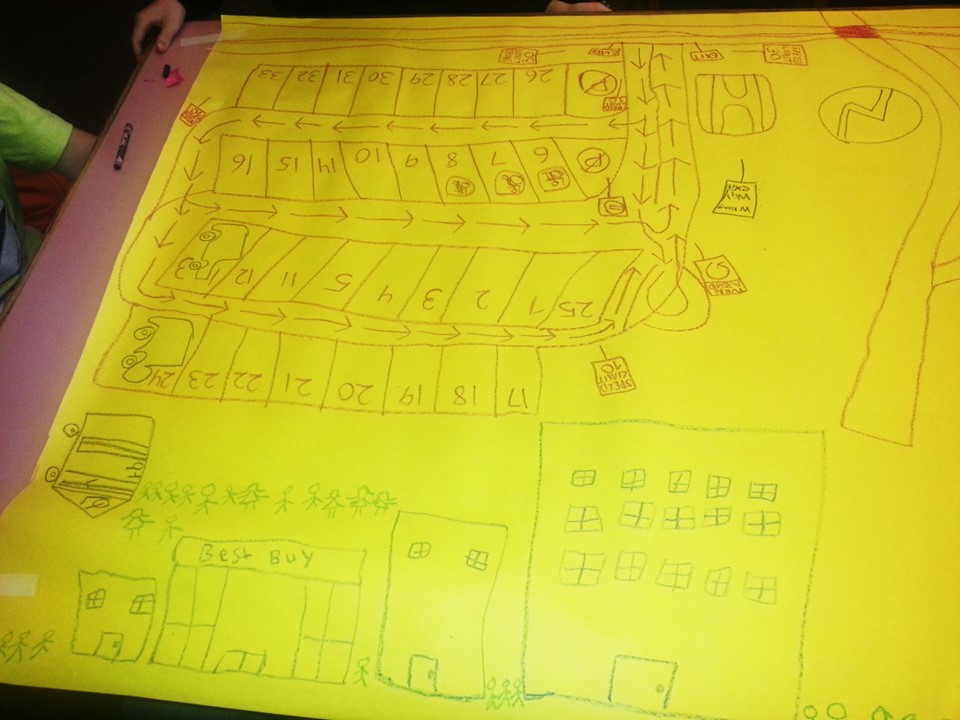
The finished project could end up looking something like these pictures below.

A unified drawing of a shopping mall by a small group of children with ASD

Section B: Four collaborative art projects using free downloads from the website

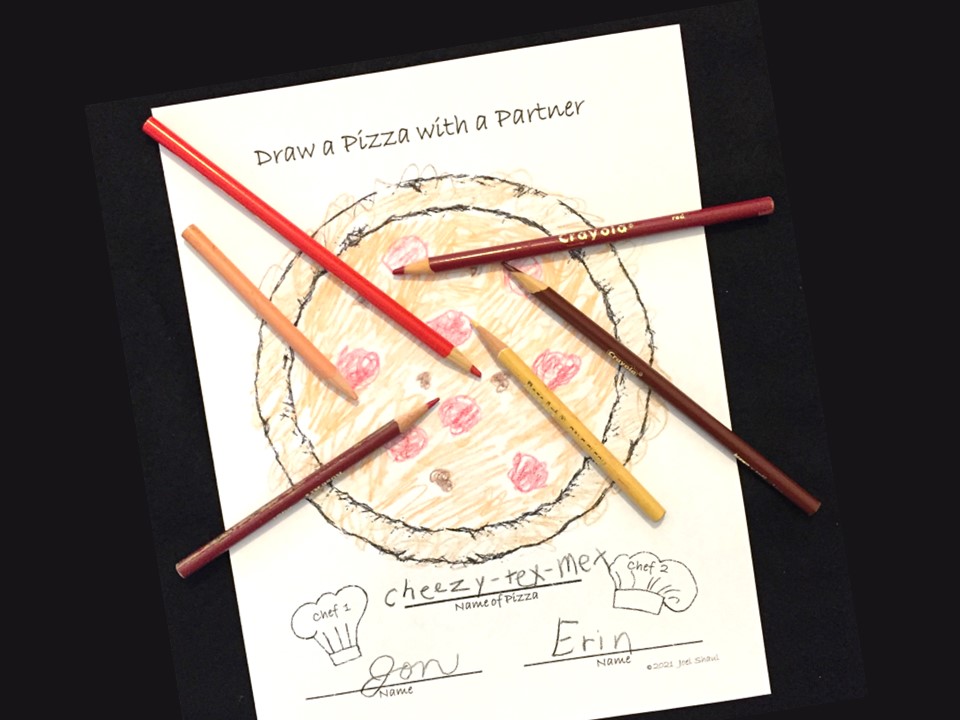
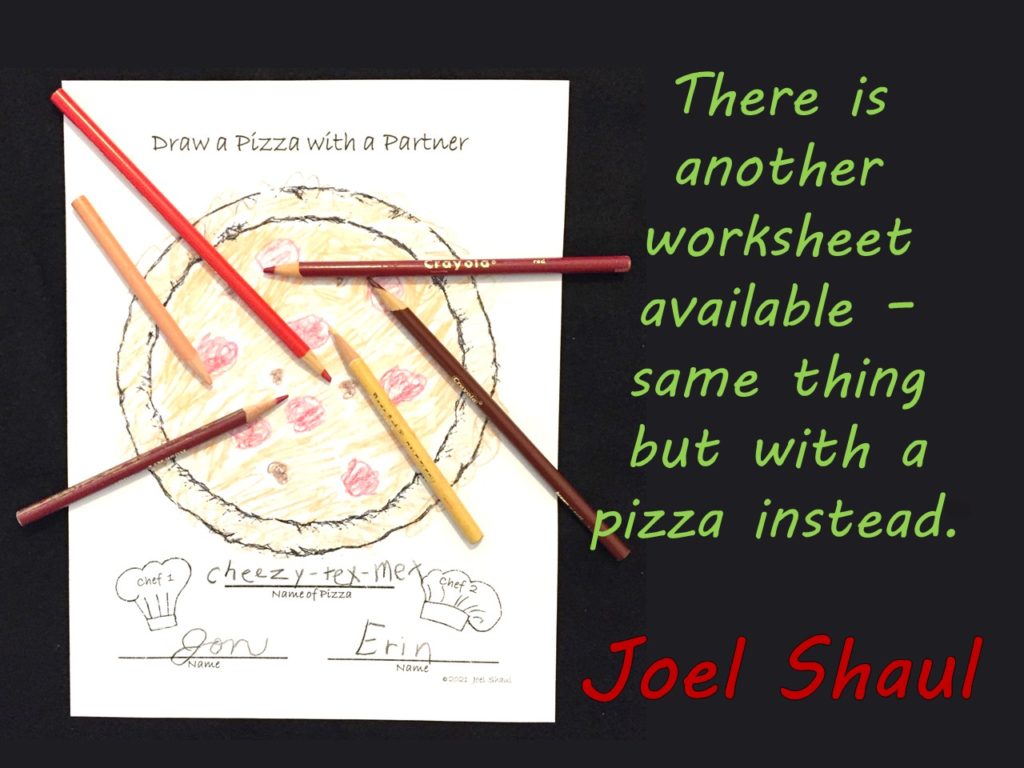
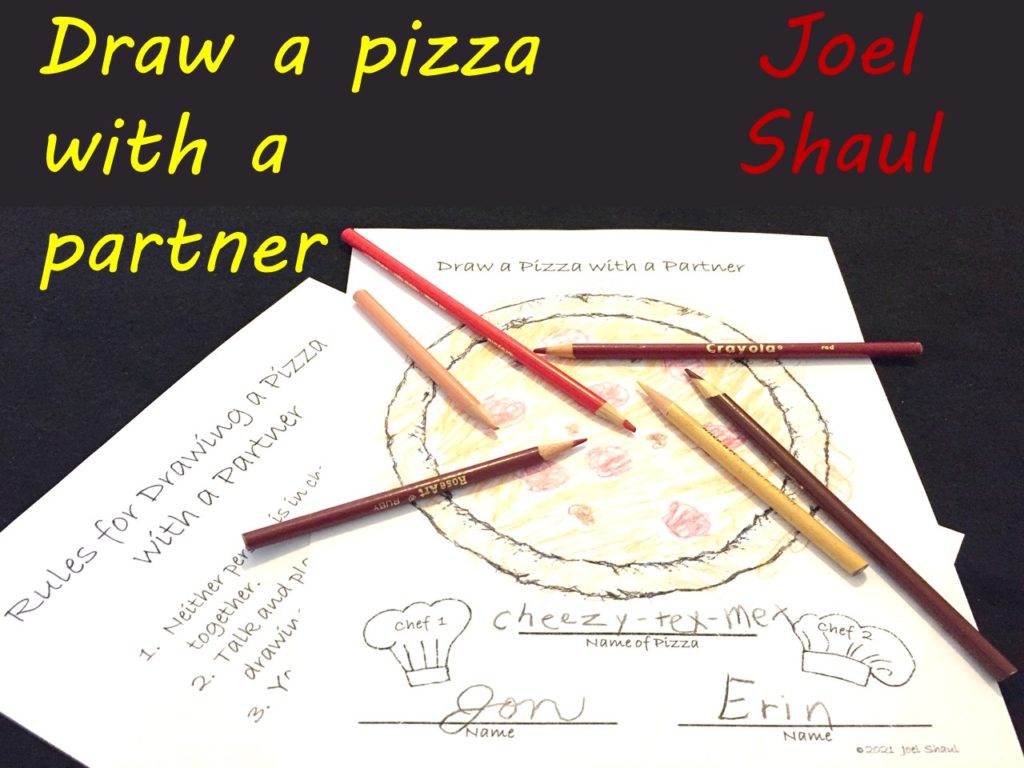
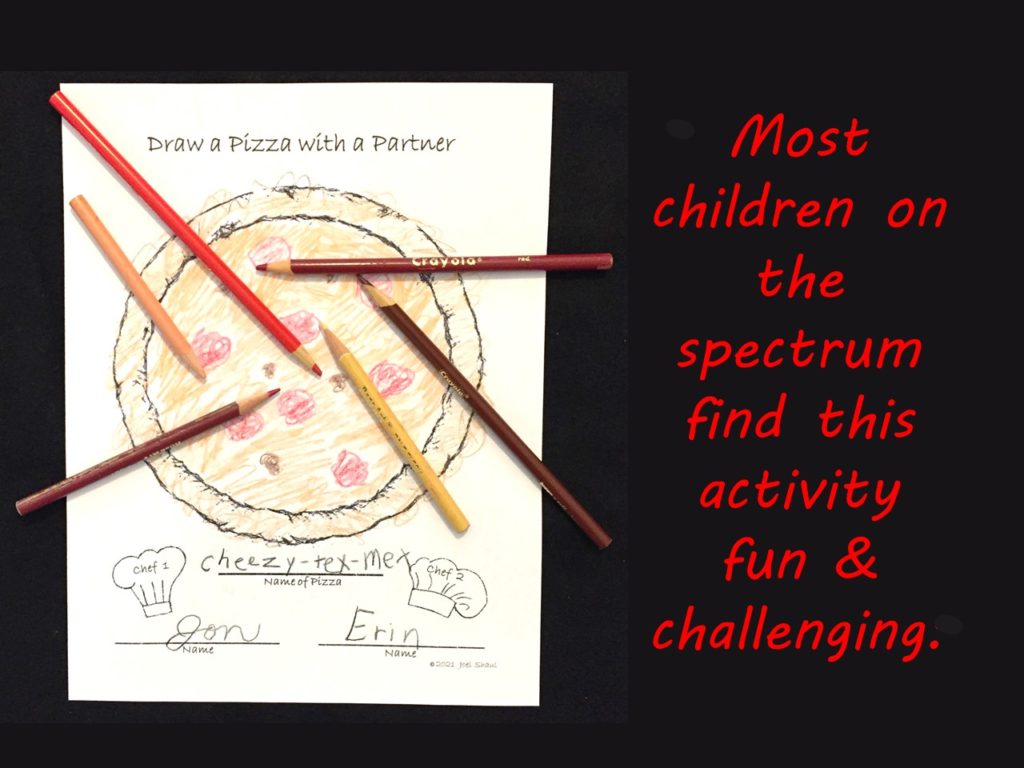
Draw a Pizza with a partner

This download comes with the worksheet and the rule sheet below.

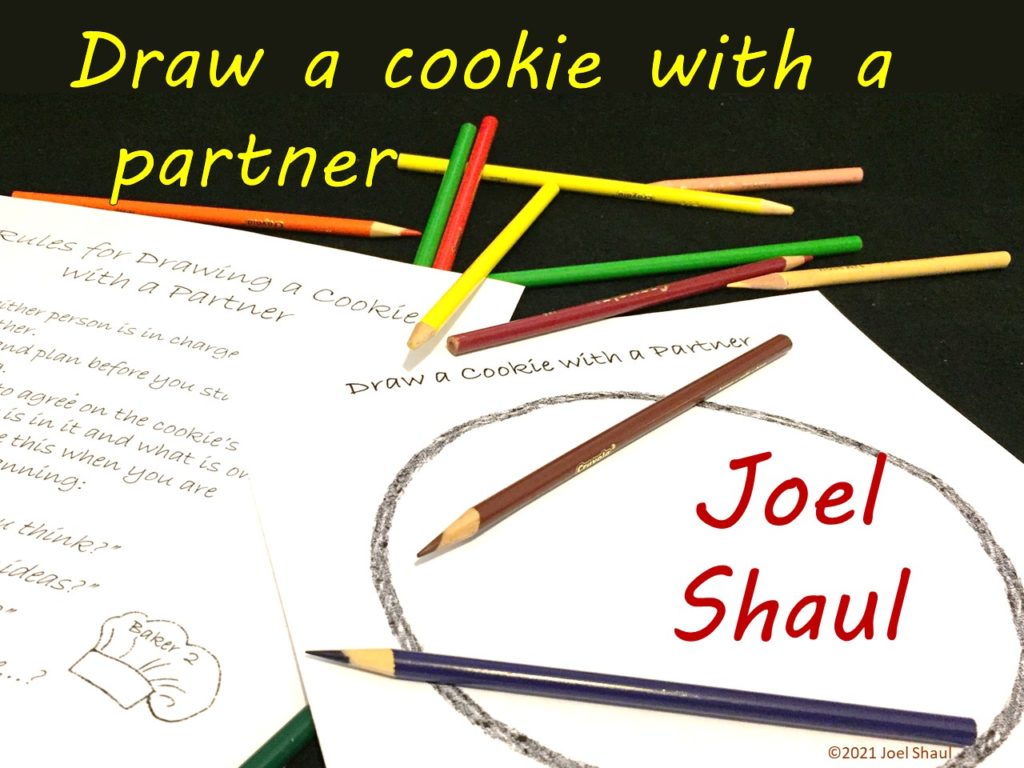
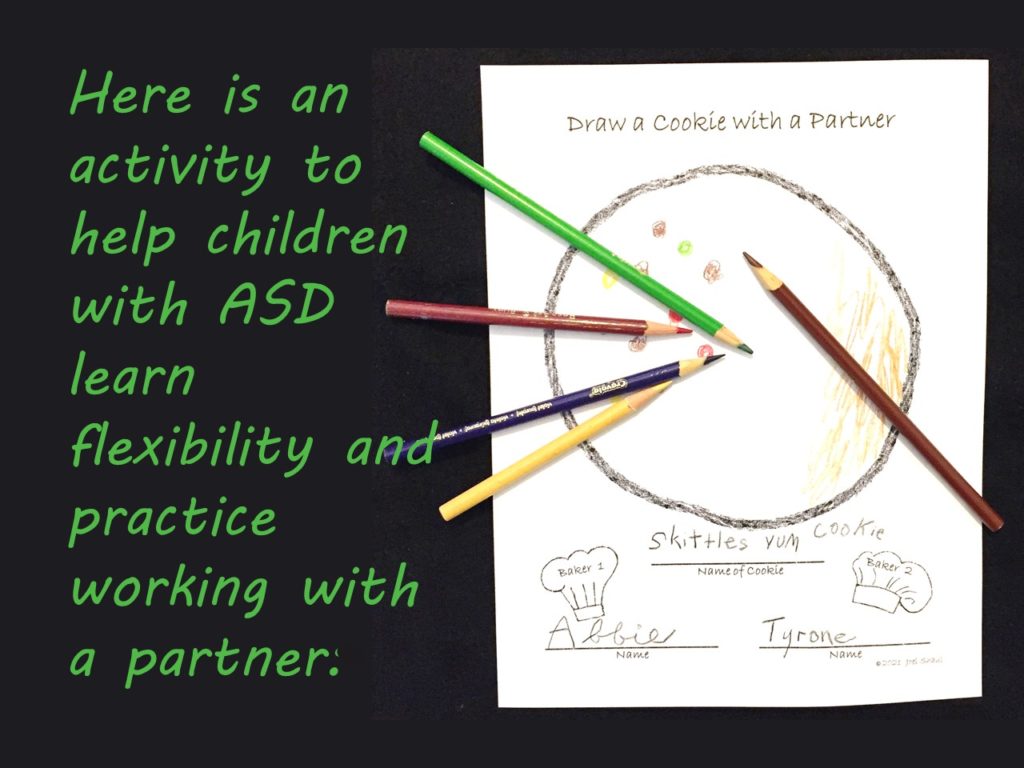
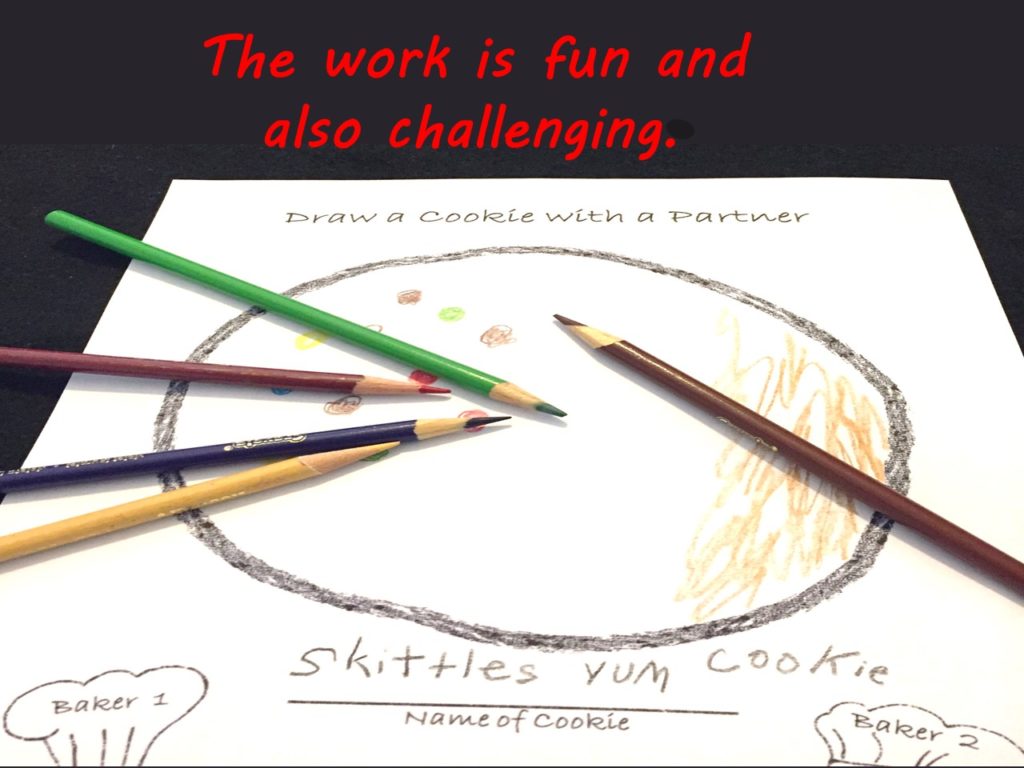
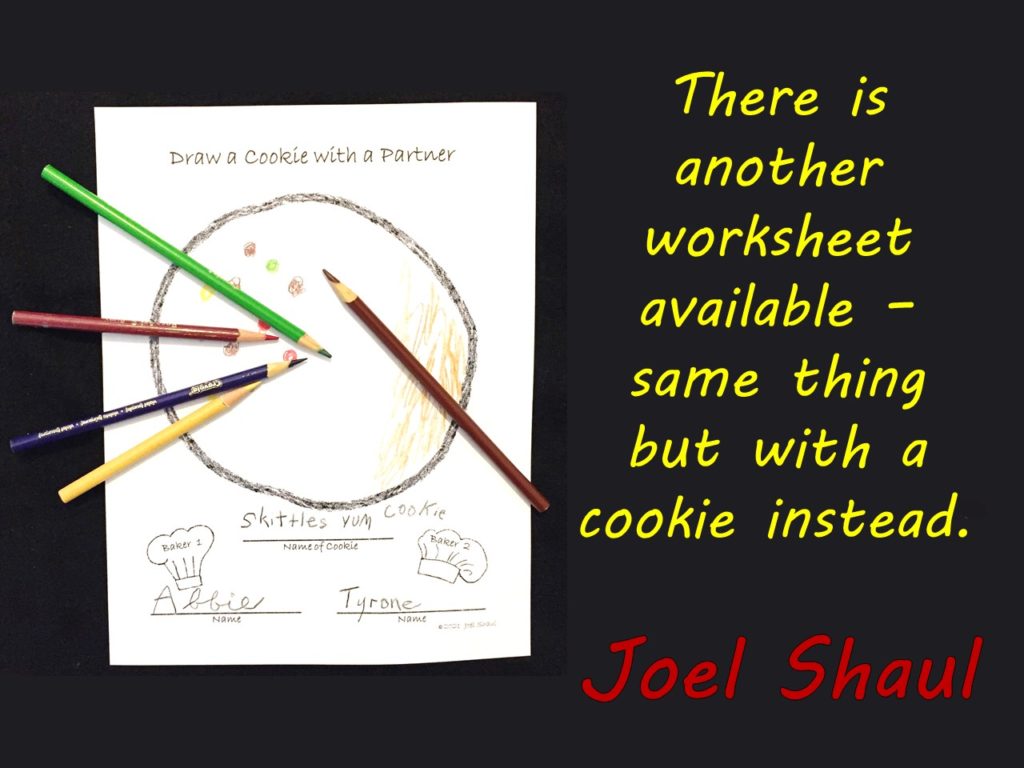
If your young clients like drawing the pizza, there is a another very similar project for you to try, Draw a Cookie with a Partner.

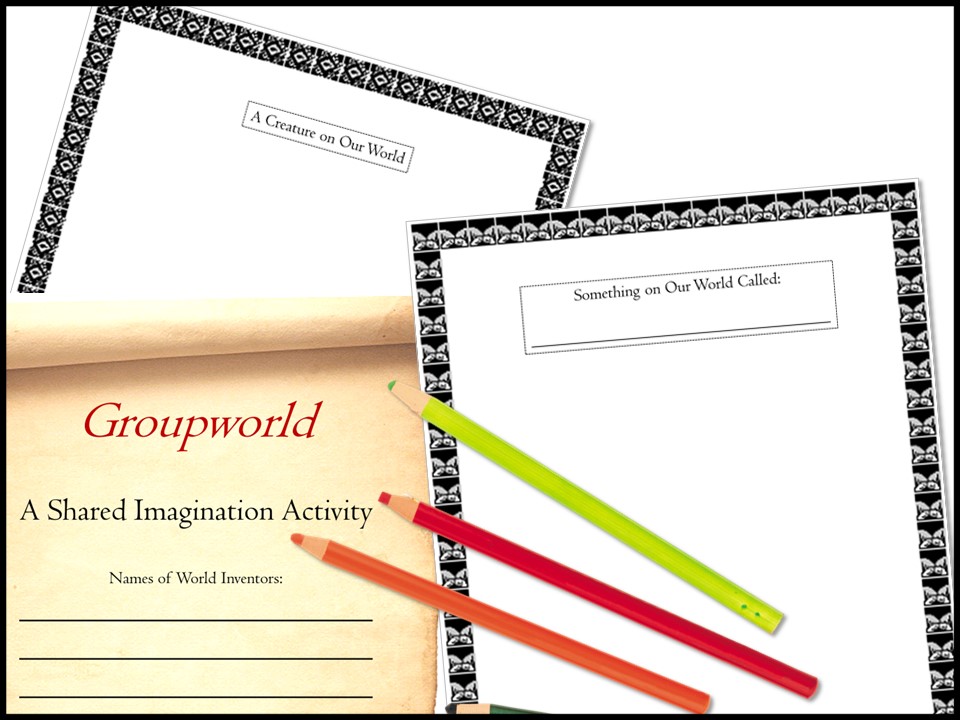
Groupworld project for three or more children or teens

This is a more involved project involving both writing and drawing. The adult facilitator will need to get involved to a significant extent to mediate and keep the work collaborative. It’s easy for this activity to dissolve into a bunch of kids drawing and writing apart from one another, quite disengaged from their peers.

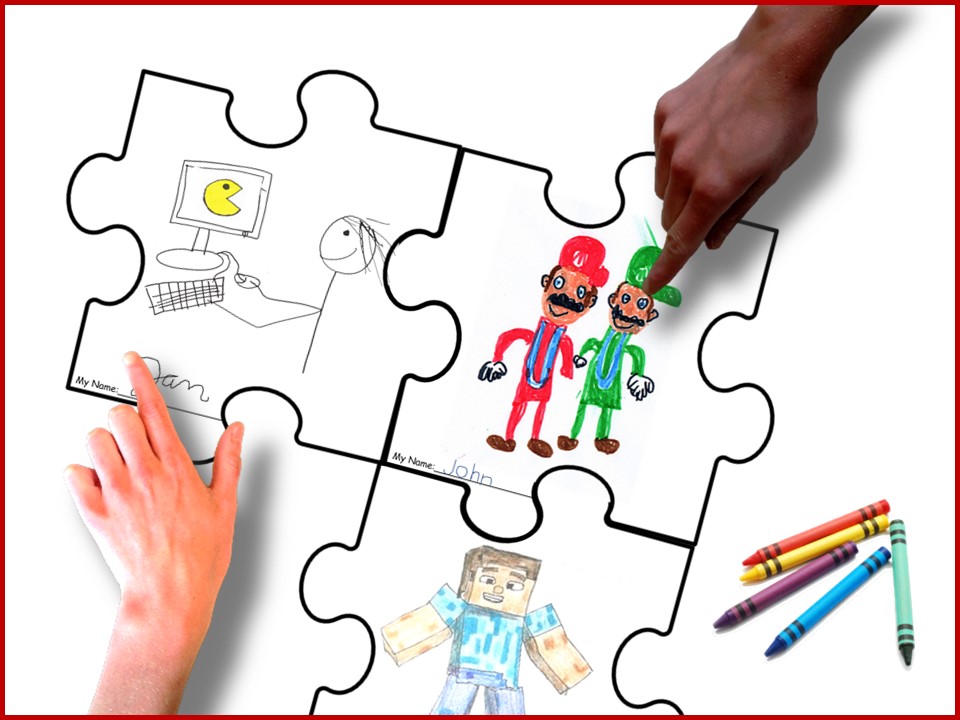
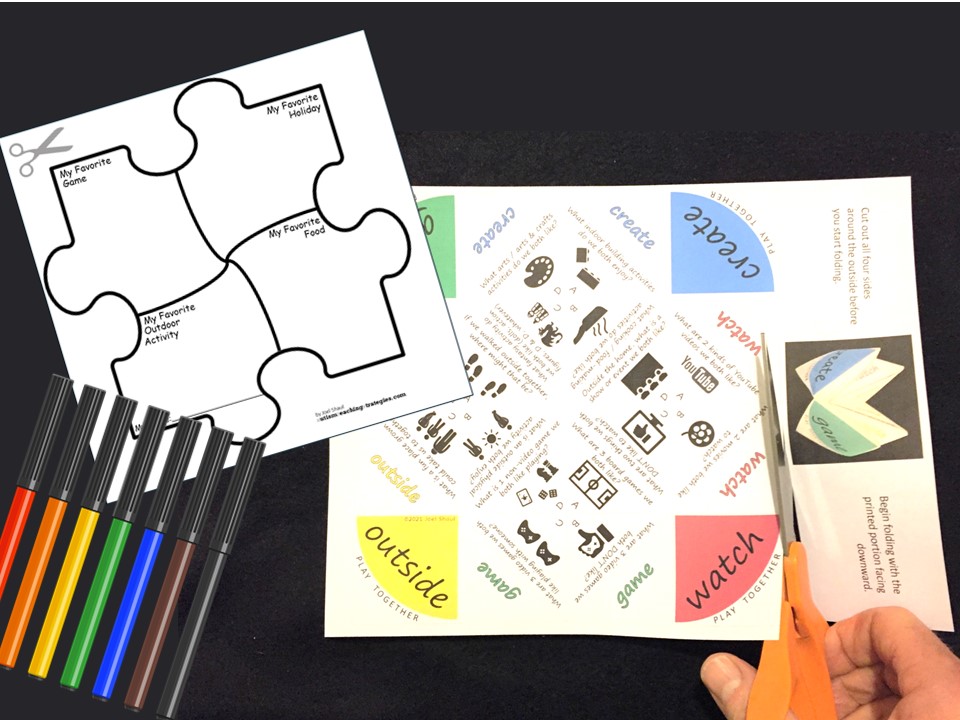
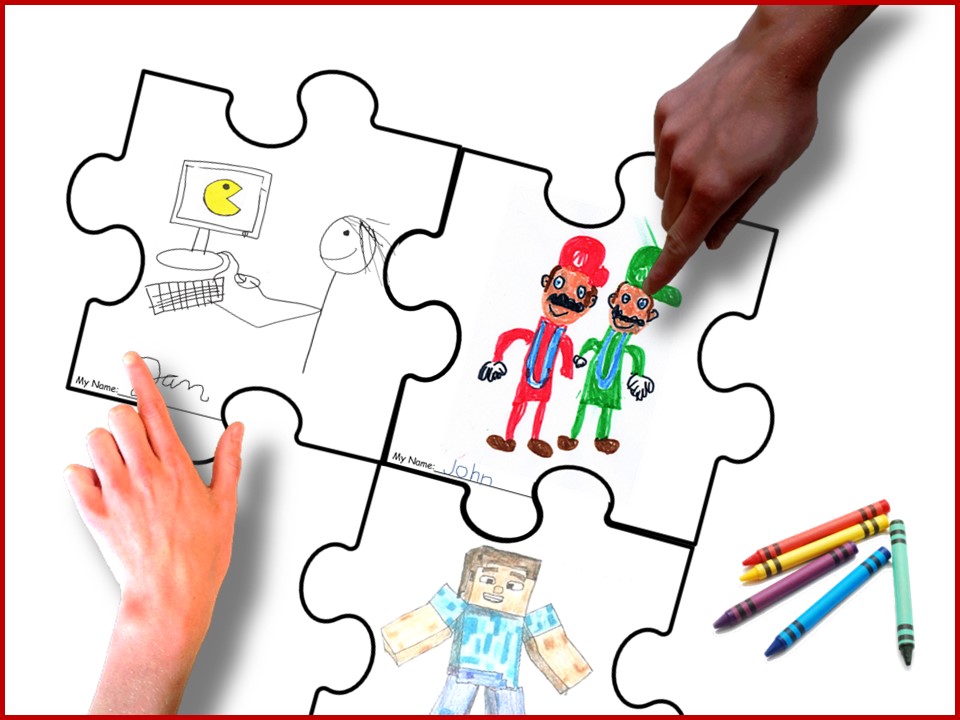
Puzzle Piece Drawing Sheets

autism social skills collaboration play therapy free

This free download provides several kinds of puzzle templates which, when completed, allow the participants to put together a puzzle representing the connection of their interests. It’s a great activity, but be advised that you will need to cut out the puzzle pieces in advance and that is time-consuming.

The next in this series is: Part 4: Coloring & decorating to add interest & levity to social & emotional learning.

Joel Shaul, LCSW


Introduction to series.

Part 1: Reasons to use art in social & emotional teaching. Some guiding principles & professional concerns.

Part 2: Assigning individual drawing tasks for social & emotional learning.

Part 3: Assigning collaborative drawing tasks for social learning.

Part 4: Coloring & decorating to add interest & levity to social & emotional learning.

Part 5: Creative use of others’ images and AI for social & emotional learning.

Part 6: Encouraging & validating the child’s own artistic expression in therapy & teaching.
Part 2: Assigning individual drawing tasks for social & emotional learning.

Why should teachers and therapists have a child on the autism spectrum color and draw while trying to help them with social and emotional skills? Please see Part 1, where I spell out some of the reasons.

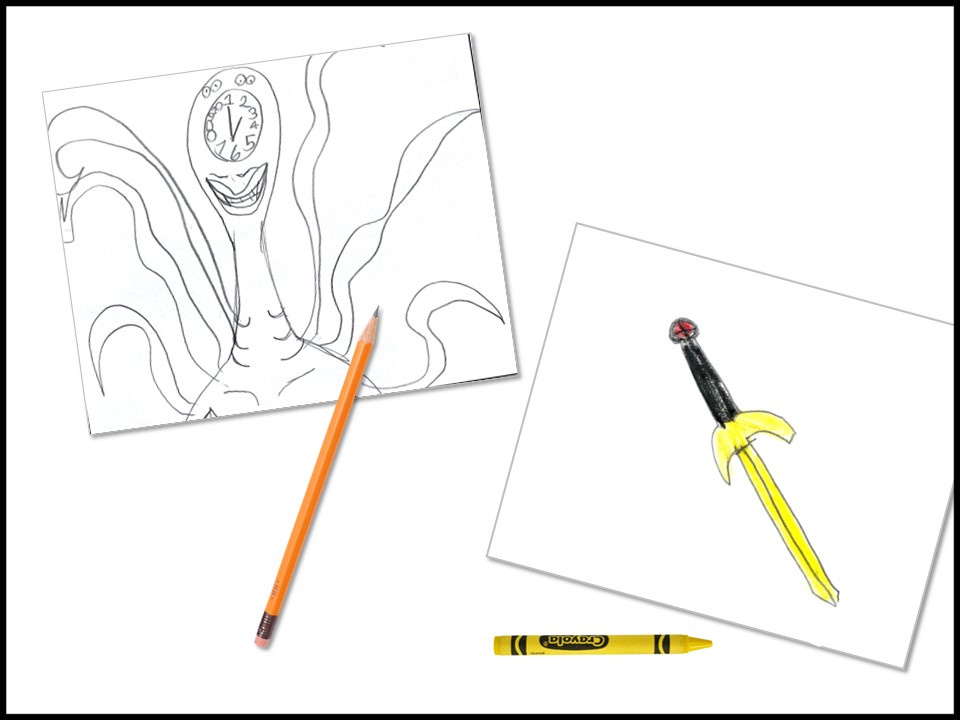
There are so many ways to engage children in therapy by asking them to draw something.

Here are a few examples from among the free downloads on this website and my published children’s books. Click on the blue text to access resources.

Head Outline Picture Activity to learn about peer interests [drawing option]

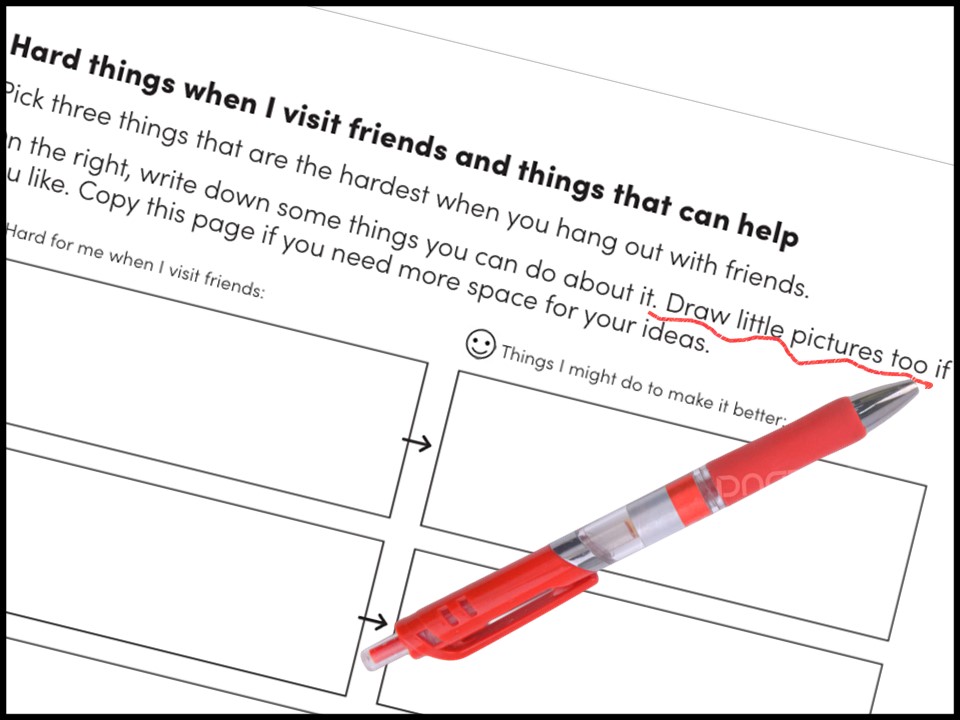
This activity also comes in another version requiring no drawing. In that alternative version, you use my prepared PowerPoint download and then copy and paste internet images into the head outline. When you try this activity, you select one option or the other based on the child’s preference and how much time you can devote to this project.

Problem & Solution Cards [drawing option]

Children experiencing multiple social and emotional challenges can feel demoralized by being the “problem child” all the time. One way to help is to show our young clients how to externalize some of their problems onto fantasy characters which we can help them to fight against. Then, we can show children how to create solution “hero” characters representing various ways children can help themselves.

This resource is also available in a much quicker-to-implement version in which you drag and drop stock fantasy images to create the cards. Which option you select depends on how much time you have available and the child’s inclination.

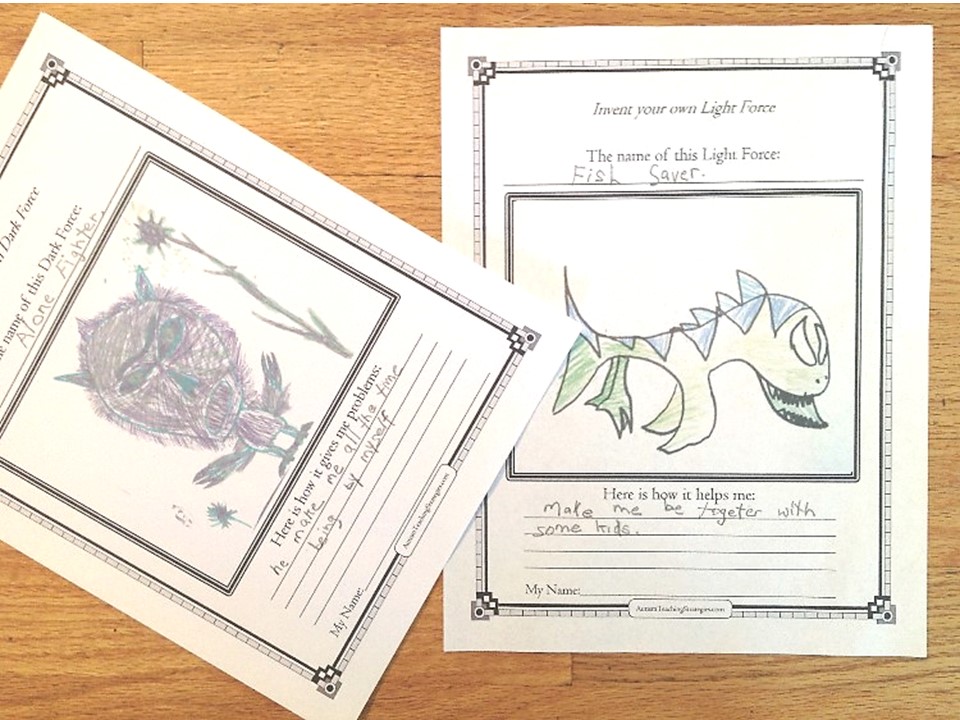
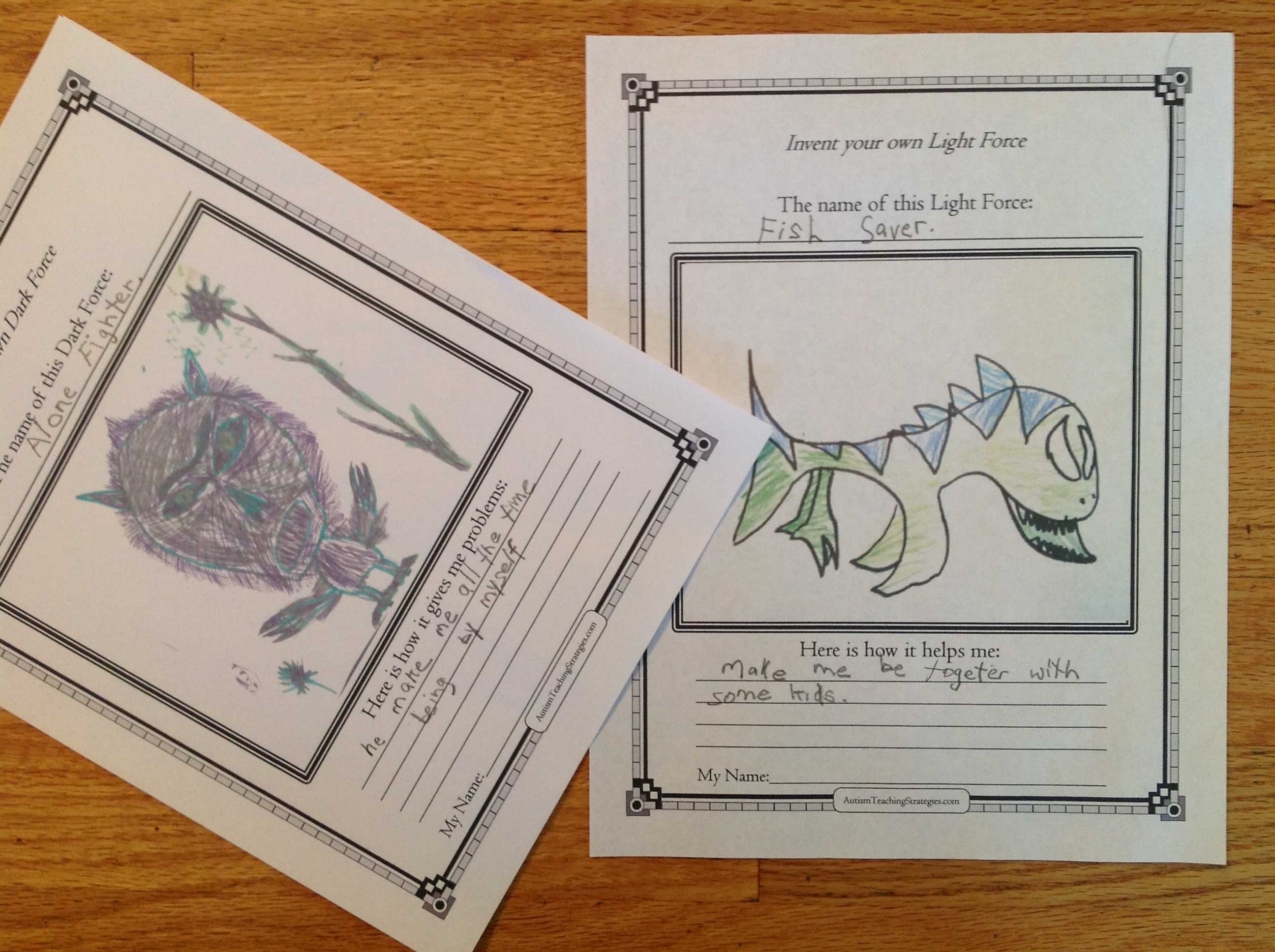
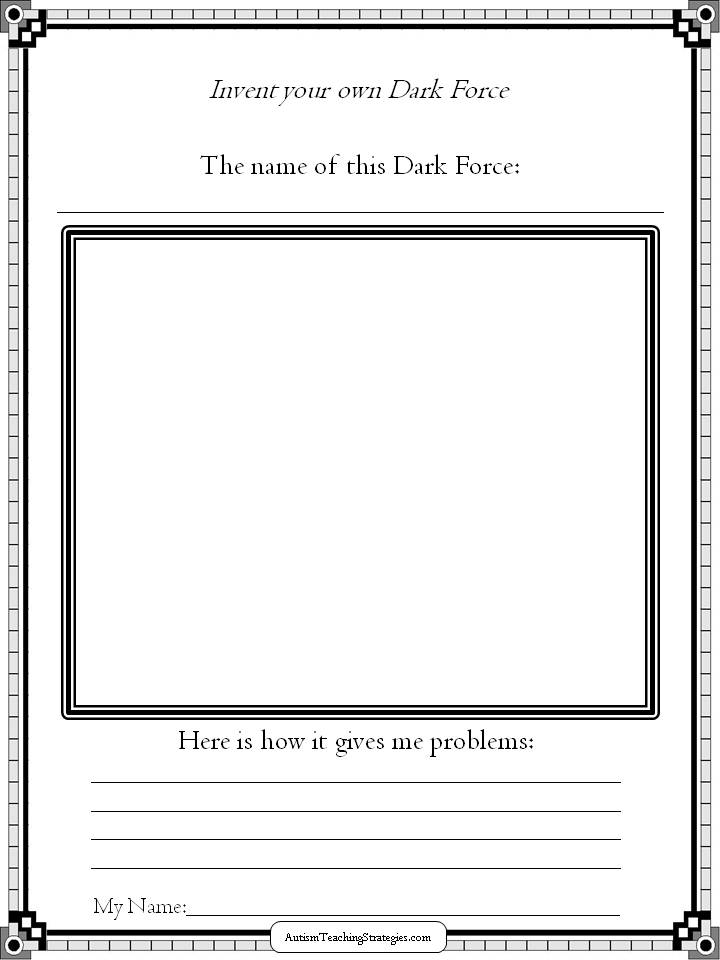
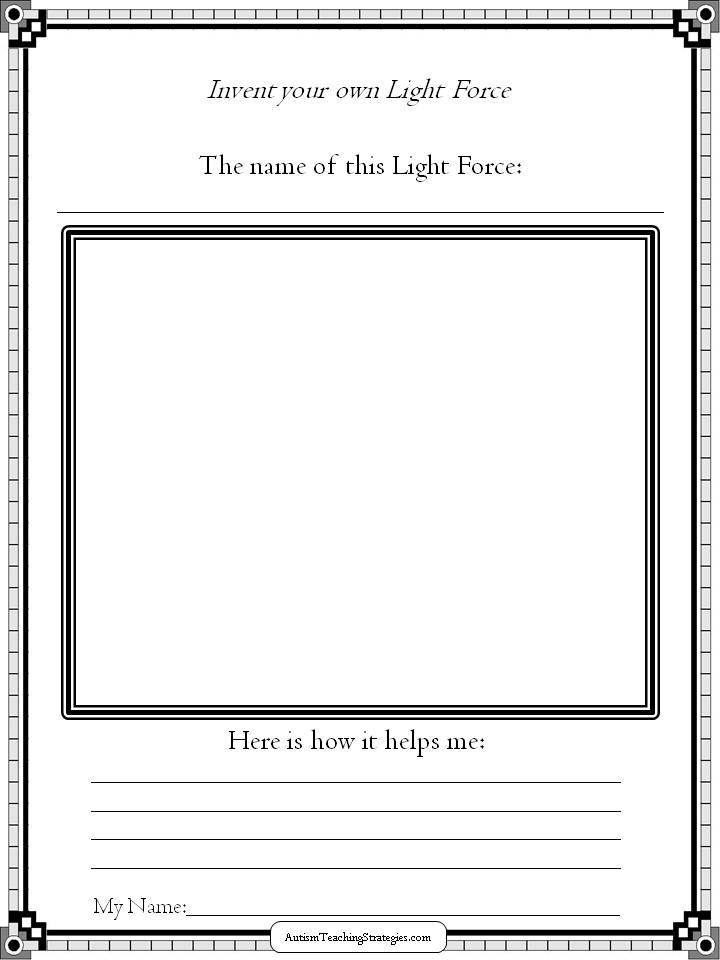
Light Force Dark Force drawing worksheets

This is an earlier version of the Problem and Solution Cards.

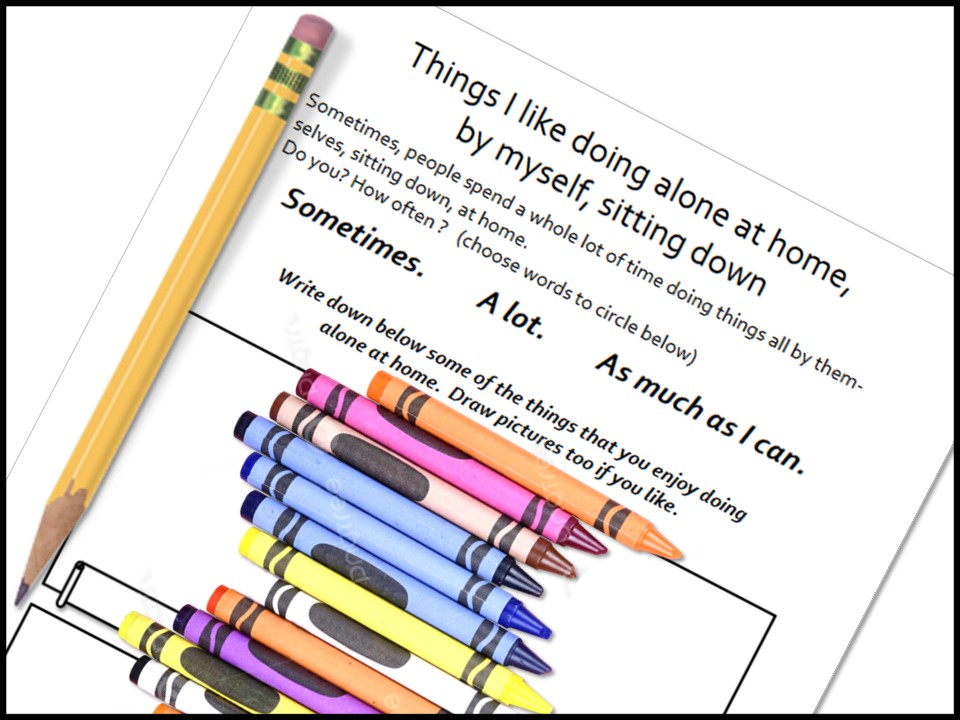
Seven social skills worksheets for children who are isolated

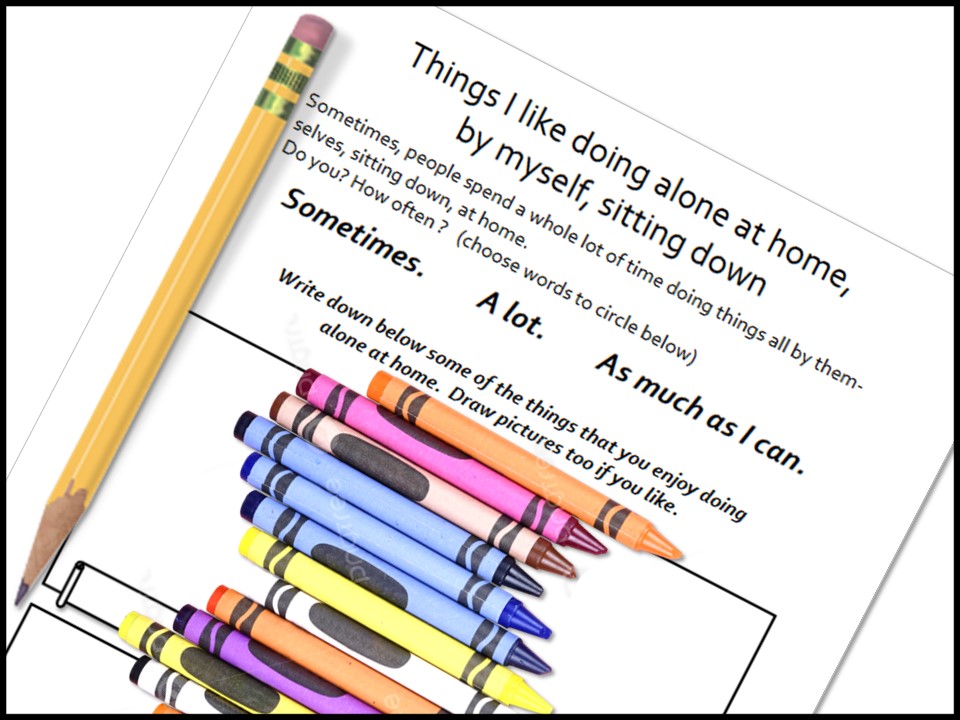
On a couple of these worksheets, there is an option to draw small pictures. When I use these worksheets, many kids do select the option of drawing.

Fantasy Obsession worksheets & checklists with drawing options

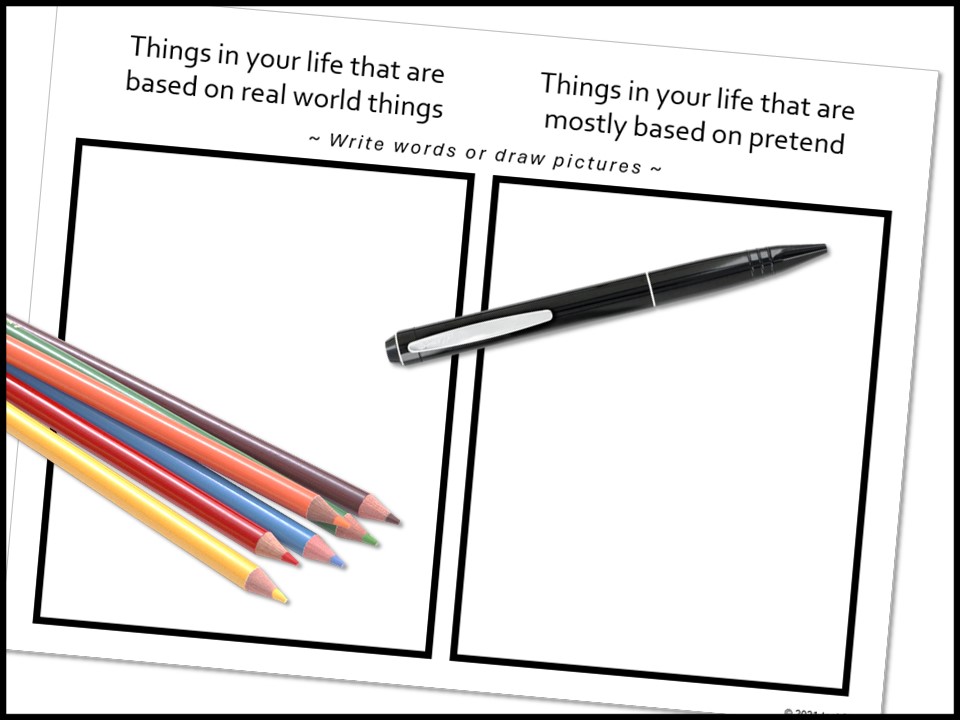
This drawing activity is part of a large group of free resources to help raise a child’s awareness of how they are affected, in both helpful and potentially harmful ways, by various kinds of fantasy and pretend. Given the option of writing down words or drawing, on this worksheet many children opt to draw or to combine both writing and drawing.

What I Should Have Done Different worksheet

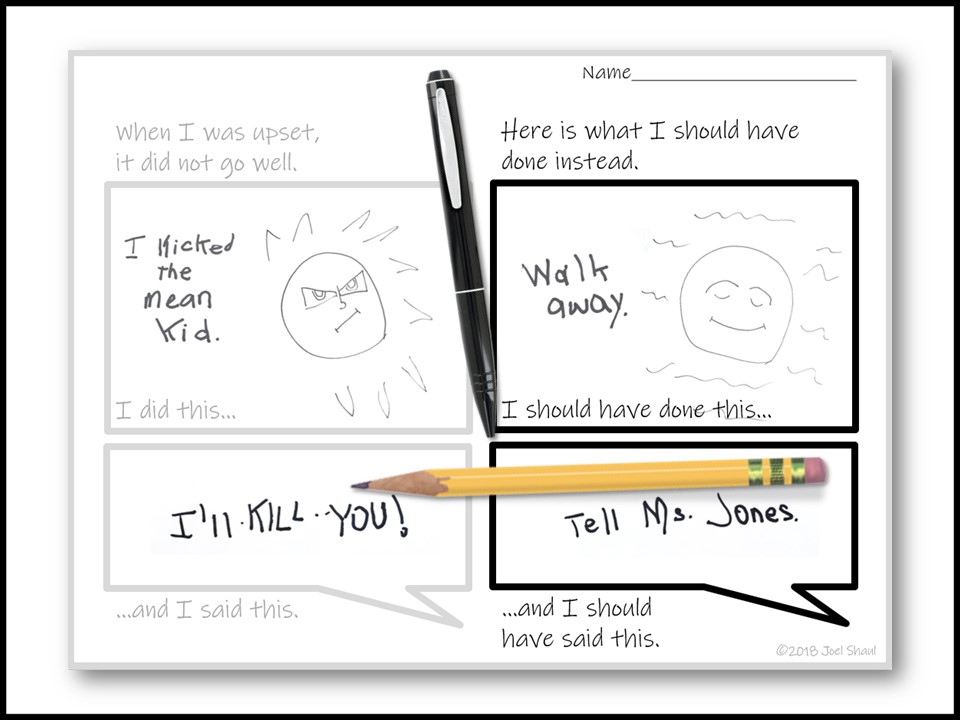
This simple, one-page worksheet is designed to facilitate reflection and retrospective problem solving. Children, when given the option of drawing on it, frequently do so.

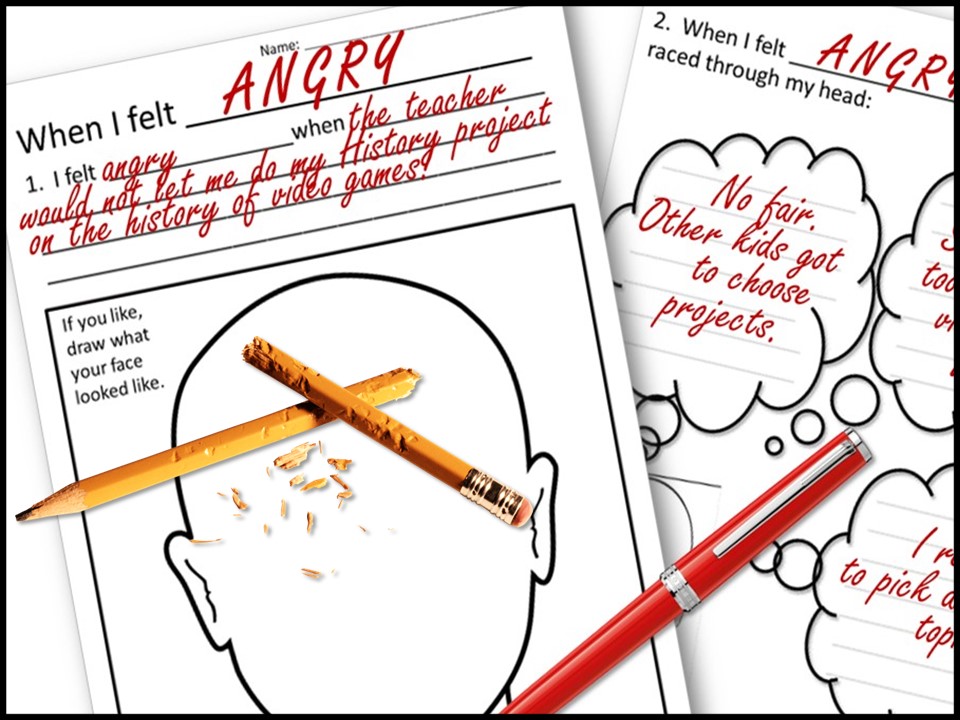
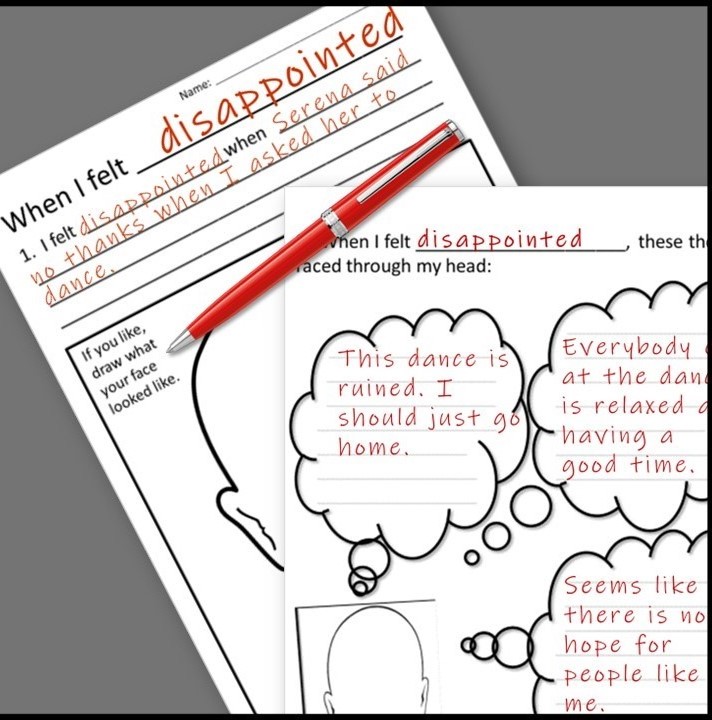
Page 1 of seven-page CBT Worksheets

When I use these worksheets with children, at least half the time children go on to page two and skip the drawing. Other children dwell on the task of drawing their face. This seems to help them to recall the incident and what they were feeling at the time.

Emotion Thermometers

This set of emotion thermometers requires coloring and there is the option of drawing small pictures.

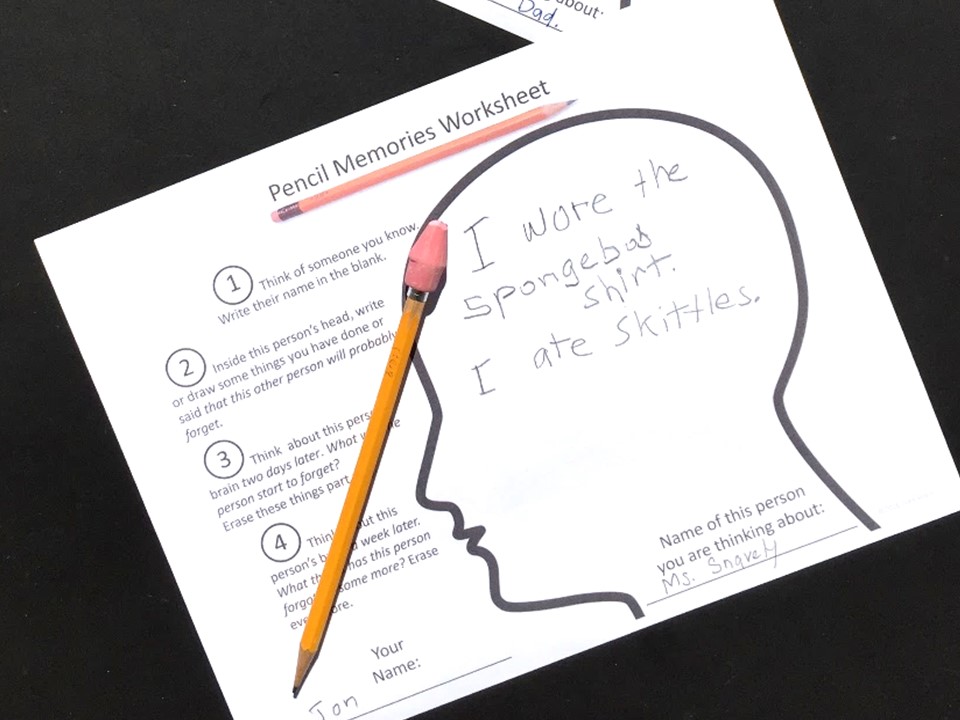
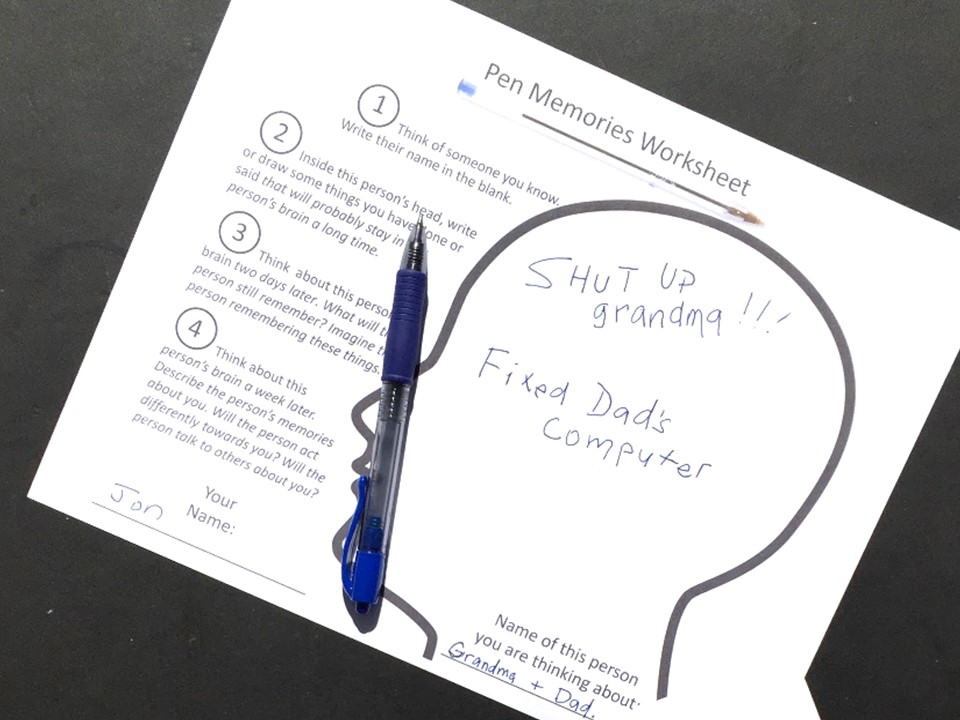
Pencil Memories, Pen Memories worksheets

This set of worksheets is to help children to think about social cause and effect, and how their words and actions might be remembered by others for a short time or a long time. Children can opt to either draw, or write, or both.

Examples of drawing worksheets from my published books

My six published children’s books contain lots of worksheets, some of which involve the option of drawing. Here are a few examples.

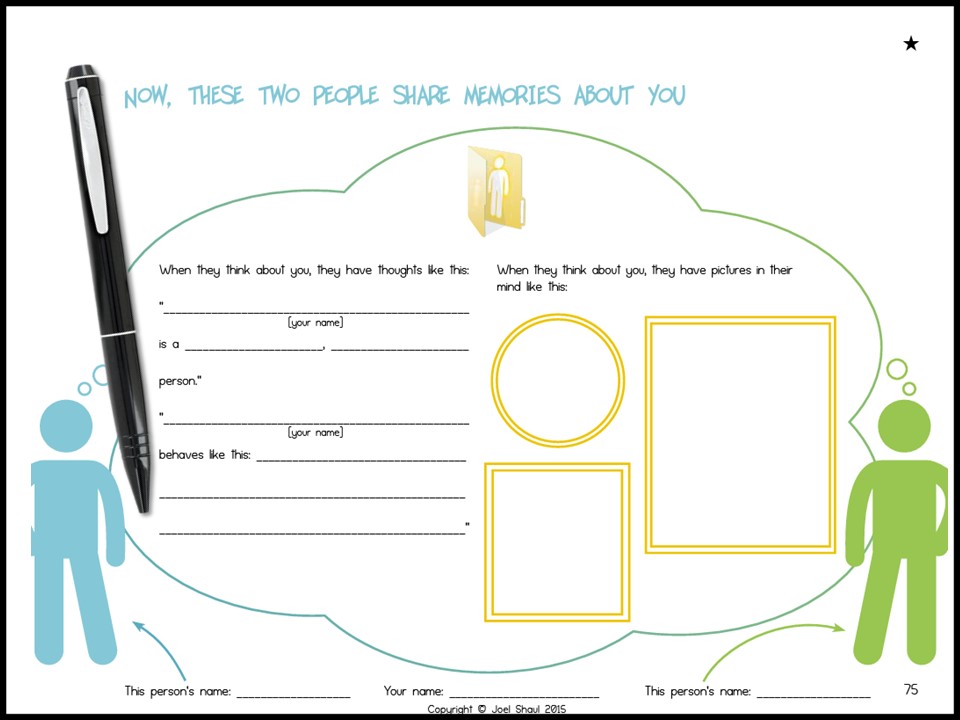
Social cause & effect worksheet from Our Brains are Like Computers

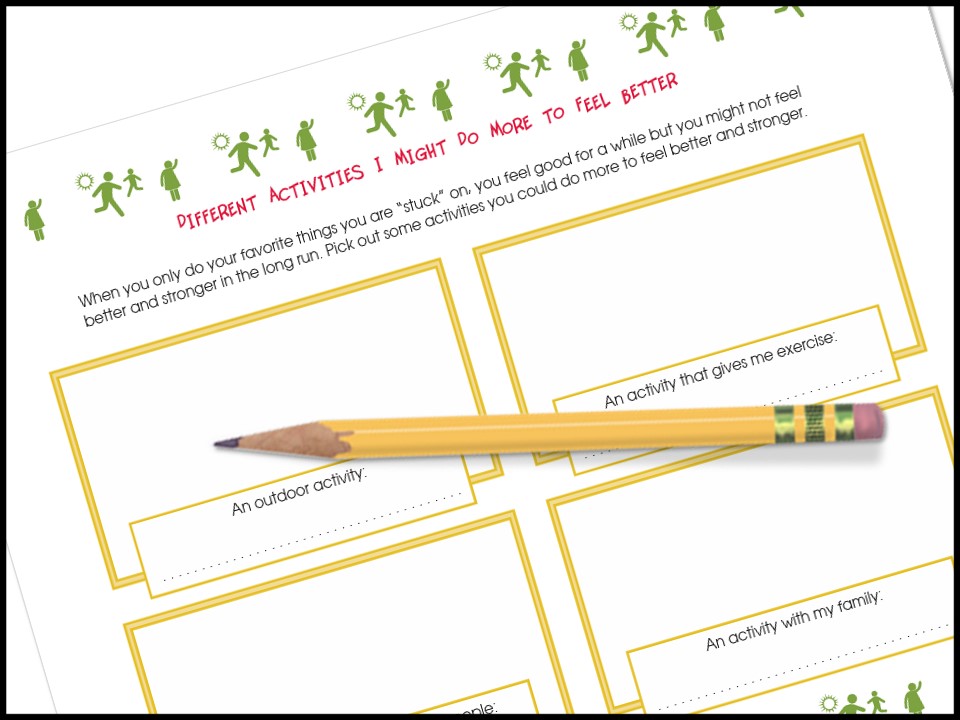
Writing/drawing worksheet from The ASD Feel Better Book

Drawing/writing worksheet from Your Interests, My Interests

The next in this series is: Part 3: Assigning collaborative drawing tasks for social learning.

Joel Shaul, LCSW


Introduction to series.

Part 1: Reasons to use art in social & emotional teaching. Some guiding principles & professional concerns.

Part 2: Assigning individual drawing tasks for social & emotional learning.

Part 3: Assigning collaborative drawing tasks for social learning.

Part 4: Coloring & decorating to add interest & levity to social & emotional learning.

Part 5: Creative use of others’ images and AI for social & emotional learning.

Part 6: Encouraging & validating the child’s own artistic expression in therapy & teaching.
Part 1: Reasons to use art in social & emotional teaching. Some guiding principles & professional concerns.

Some reasons to use art

A. Art can add levity and variety to social-emotional learning.

art therapy emotional regulation autism
Shown here: Anime Emotion Cards

By the time young people with ASD find themselves in our offices and classrooms, they may have experienced a lot of stress, confusion and disappointment with their social and emotional learning. Incorporating some art into our therapy and teaching activities can be one good way to make this difficult work fresh and interesting for many of them.

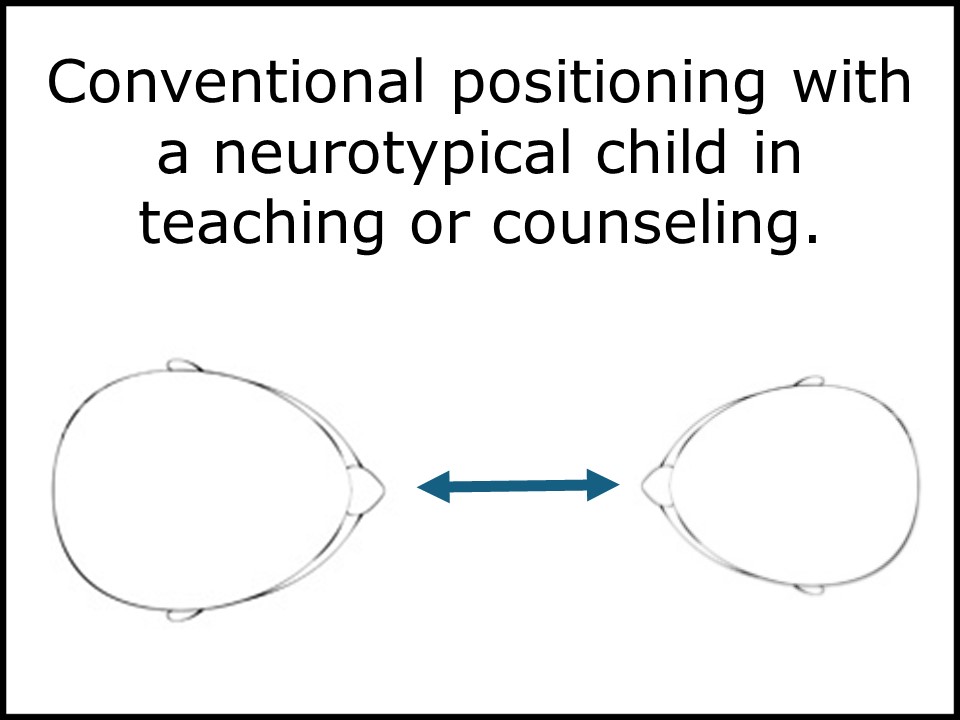
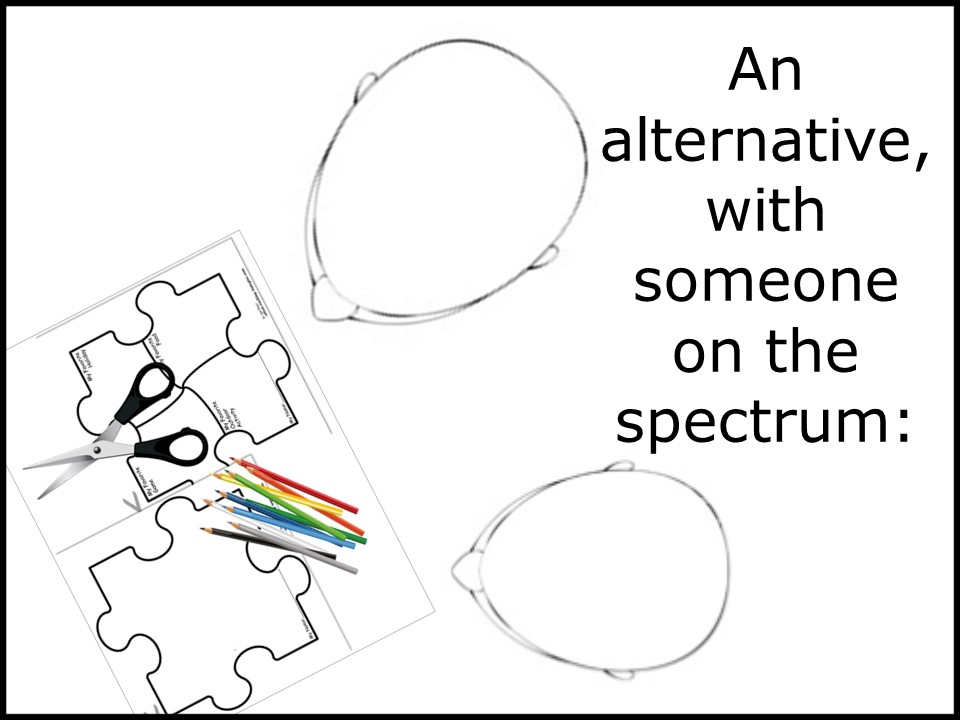
B. Incorporating art into therapy activities can help to reduce emphasis on spoken exchange in our counseling and teaching.

autism child therapy eye contact

For many young people with autism, uninterrupted, reciprocal spoken exchange – especially face-to-face – can cause fatigue and resistance.

autism art eye contact free

Having the child look downwards towards a therapeutic art project, rather than constantly upward to meet the adult’s gaze, can actually have the effect of increasing focus and stamina.

In my own work, the above applies to most children, but especially for those on the autism spectrum.

C. Artistic expression can enhance self-revelation and self-reflection.

We often ask children to do hard and painful work in our therapy sessions. Our queries about their problems must feel like relentless interrogation sometimes. Furthermore, the thoughts and feelings we ask children to reveal might be challenging to articulate or uncomfortable for them to put into spoken words. Drawing and coloring offer children other ways to communicate with us.

D. Drawing and coloring are activities which in themselves can be calming and centering for many people.

Part of one of the Emotion Thermometers.

Helping children to feel good and relaxed during our sessions with them can help them get ready to talk about problems. I have often seen young people in individual or group therapy calm themselves while coloring and drawing. Frequently, while holding crayons, markers and colored pencils, they seem more amenable to talking about things that are troubling them.

E. Artistic expression can offer a medium for collaboration and connection.

Employing creative expression can help a child to work more effectively with an adult.

Introducing even a little bit of drawing, coloring or cutting something out can help a child to feel engaged with therapy activities introduced by the adult.

Facilitating art activities can connect socially isolated children with other people.

In my group therapy sessions and classroom interventions, I have often observed children forming social and emotional bonds while looking at the drawings and artistic creations of other young people. Helping children to show their art to others can facilitate social connections for autistic youth, many of whom are accustomed to doing their art entirely in private.

     Facilitating collaborative art activities can strengthen perspective taking and working with others.

Coaching autistic children while they are working on creative group projects can help them acquire valuable experience in understanding other points of view and creative preferences.

Principles & professional practices when using art in social-emotional teaching

A. Maintain focus on your therapeutic agenda.

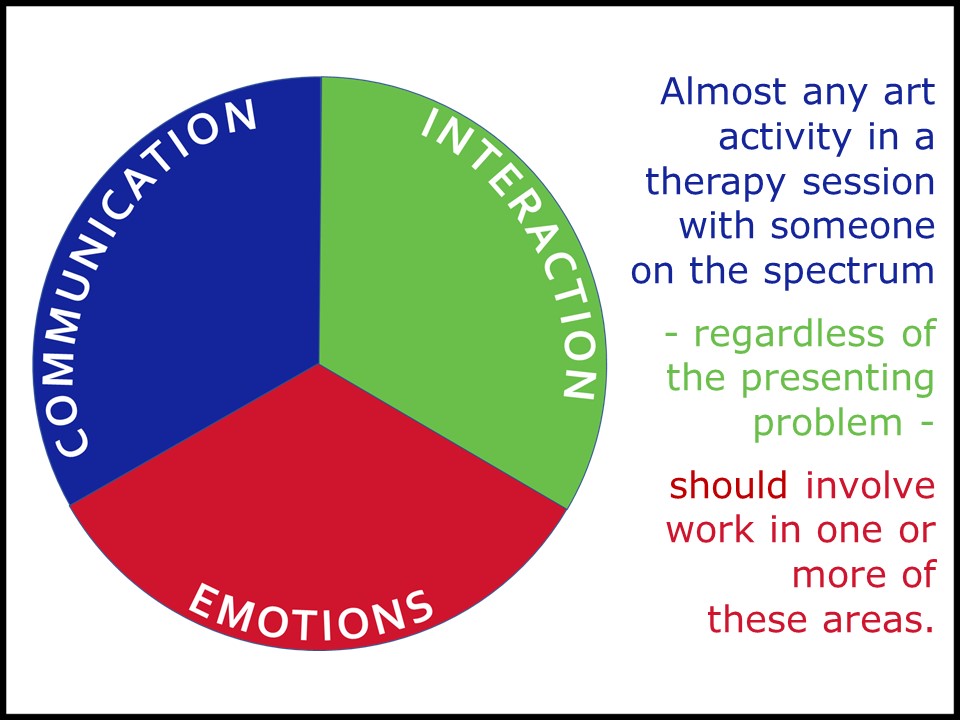
Therapy activities involving art should always have therapeutic benefit – that is, they should all work towards promotion of improved social communication, interaction and emotional regulation.Our art-based activities should focus attention on the therapy, and if drawing and coloring is merely diverting, it’s best to switch methods. Although it may be useful on occasion to use an art activity as a reward, as a rule a therapist or teacher should avoid doing art just for fun or to “kill time.” Above all, we should resist the temptation to assign art activities just because kids find it enjoyable or because we happen to find their art interesting or endearing.

B. Facilitate artistic expression. Don’t force it.

Usually it’s best to provide the options of drawing, or writing, or both. Here is an example below. The person using the CBT Worksheets shown here can draw in the face outline or leave it blank.

autism child therapy free

Since an art-based intervention might not work out, we should always be prepared with back-up activities that do not emphasize artistic expression.

C. Account for ability levels and preferences.

    Allow for different kinds of intelligence, dexterity, drawing ability, writing ability.

Many “art therapy” activities are too hard for younger children or for young people who have issues with attention span, dexterity or overall artistic ability.

Take into account the age level of participants, but don’t dismiss activities that might be perceived as too juvenile by neurotypical youth. Autistic teens and even young adults might accept and greatly benefit from activities that neurotypical teens might consider too “childish.”

D. Respect privacy and authorship.

Avoid sharing, distributing or posting a child’s art unless you have the child’s permission, a parent’s permission and a valid therapeutic reason for sharing the art.

The next in this series is: Part 2: Assigning individual drawing tasks for social & emotional learning.

Joel Shaul, LCSW


Introduction to series.

Part 1: Reasons to use art in social & emotional teaching. Some guiding principles & professional concerns.

Part 2: Assigning individual drawing tasks for social & emotional learning.

Part 3: Assigning collaborative drawing tasks for social learning.

Part 4: Coloring & decorating to add interest & levity to social & emotional learning.

Part 5: Creative use of others’ images and AI for social & emotional learning.

Part 6: Encouraging & validating the child’s own artistic expression in therapy & teaching.
Some ways to use art to promote social & emotional learning in children with ASD. Introduction to 6-part series including free downloads.

In my own mental health and social skills work with individuals, groups and classes on the autism spectrum, art-based interventions have for some time been an important part of my repertoire.

Although I am neither an artist nor an “art therapist,” many of my free resources, as well as portions of my published books, include therapeutic exercises incorporating sketching, drawing, coloring and various creative applications of provided images.

This six-part series summarizes my ideas and resources for using drawing, coloring and other kinds of visual creativity to facilitate social and emotional learning, particularly with young people on the autism spectrum.

Most of the printable materials shown can be downloaded for free from this website.

Access the six parts of the series via the links below.

Joel Shaul, LCSW


Part 1: Reasons to use art in social & emotional teaching. Some guiding principles & professional concerns.

Part 2: Assigning individual drawing tasks for social & emotional learning.

Part 3: Assigning collaborative drawing tasks for social learning.

Part 4: Coloring & decorating to add interest & levity to social & emotional learning.

Part 5: Creative use of others’ images and AI for social & emotional learning.

Part 6: Encouraging & validating the child’s own artistic expression in therapy & teaching.
Using imagination, imaginary creatures and art to engage children with ASD in work on social and emotional skills, Part 2: Free worksheet downloads

Here is a pair of worksheets designed to help children with high functioning autism to increase their awareness of social skills issues.

To download the PDFs for these worksheets, click on the red link below:

Light Force Dark Force Drawing Worksheets Download

NOTE: For an updated variation of this activity with the option of drag-and-drop images in PowerPoint, follow this link to “Problem & Solution Cards” below:

Problem & Solution Cards


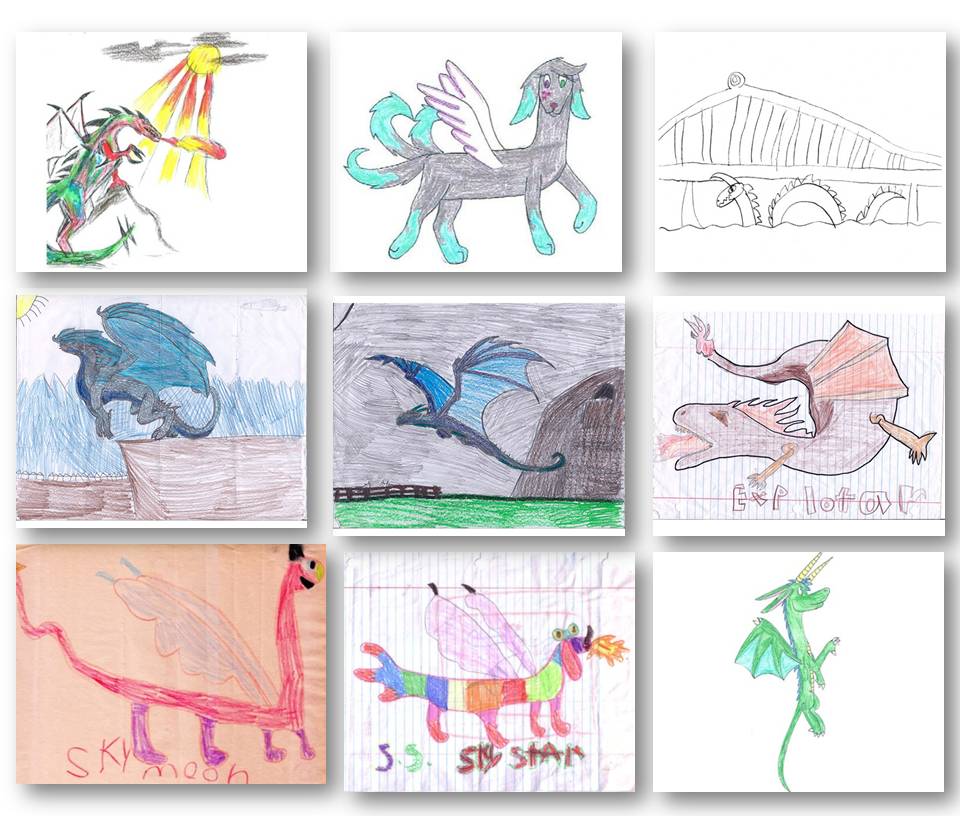
Many children with autism spectrum disorders are quite fond of fantasy characters.  Social skill teaching interventions which employ fantasy characters can tap into these predilections, increase insight and sustain interest in the social skills teaching work.
 
These “Dark Force – Light Force” social skills worksheets are a great way to help children and teens with ASD’s to think about issues affecting them and possible solutions.


Many children can be engaged in learning activities quickly if we employ imagination to capture and sustain their interest.

Why bother to incorporate imagination and art into social skills work with kids on the spectrum?

1.  Children with ASD lose stamina in social skills work if we don’t lighten it up a little. Think about it. Many are in for years of listening to people like us scrutinize and edify them.
 
2.  Children with Asperger’s and other autism spectrum disorders very often have a special fondness for fantasy worlds.
 
3.  Children with ASD often do much better identifying problems if we employ a strategic, indirect approach to it. If you ask a child on the spectrum, “Are there ever any problems with changes or dealing with new schedules and routines?”, the child might answer “No, not really.” But if you show the same child a picture of Rock Brain (from Social Thinking) or Rigidity (a Ryuu character), and ask, “Do these characters ever cause any problems for you?”, you will very often get a completely different answer.

Drawing worksheets, based on fantasy characters, to explore social skills challenges in kids with ASD

Start by introducing social skills fantasy character kits such as the two introduced in Part 1 of this blog series.
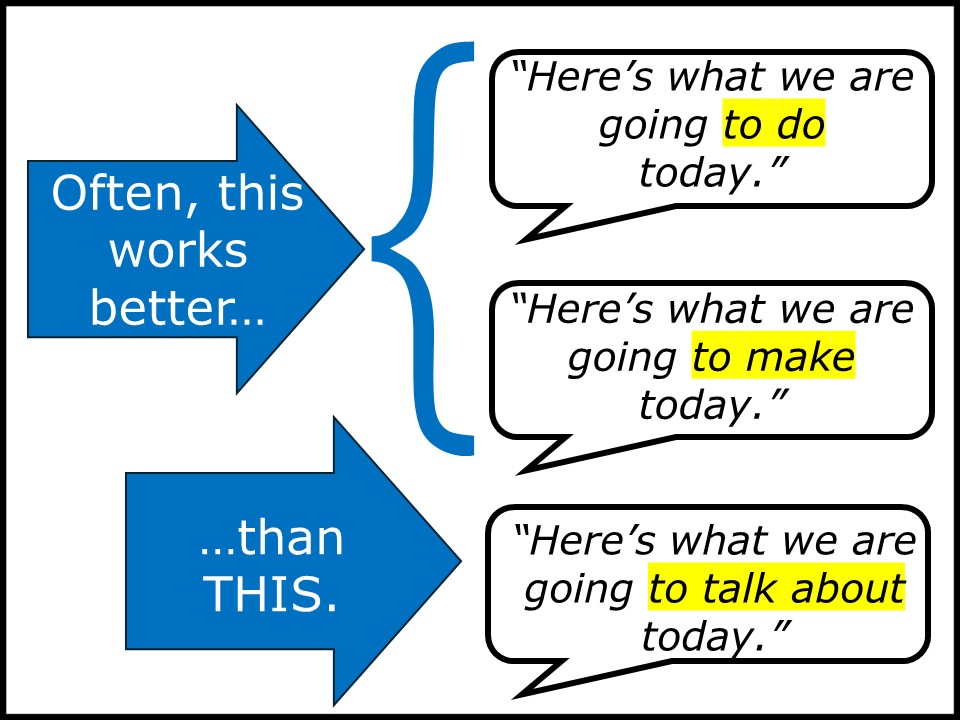
Then, to introduce the drawing activity, you can try using language like this:
 
“No one is perfect.  Almost everyone has lots of problems.  There is a very important kind of smartness called “insight.”  That means, you are able to look inside yourself to see what things you are good at and also what things are hard for you.  People who have lots of “insight” are especially good at noticing what problems they have.
I wonder which of you kids is going to be good at knowing what your problems are?
 
To find out, we are going to do a fun and challenging drawing activity.  Here is how to do it. Think of a problem that you are working on. Now, give it a name, and think about what it might look like if it were actually alive! Draw a picture of it on the Dark Force sheet and write about it in the blank on that page.
 
Next, think about how you could work on that problem. Imagine that this “Light Force” is also a creature with a name. Write down the name of this Light Force, draw a picture of it, and then write about it on that page.”
 

The worksheets are are designed to be completed in pairs, with a “Light Force” opposing a “Dark Force”

You can suggest these possible categories below before the kids start inventing and drawing.
1.  Dealing with anger
2.  Dealing with worries
3.  Dealing with sadness
4.  Calming down your body.  This could cover hyperactivity, or else finding appropriate places and times to stim.
5.  Getting along with others.  This could cover cooperation, conflict avoidance, concern for others, friendship skills.
6.  Spending too much time alone
7.  Trouble being organized
8.  Talking too loud or too soft
9.  Talking too much about what YOU like

How to print out the worksheets:

Click on the red PDF link at the top of this blog post.


Joel Shaul, LCSW

Your comments on these resources are most welcome, and often helpful. Click HERE to send an email.

social skills art worksheet
.
art therapy worksheet asperger's
.
The Conversation Train Book
Green Zone Book Cover Click to Learn More