Part 2: CBT token systems – CBT Cards, a free download

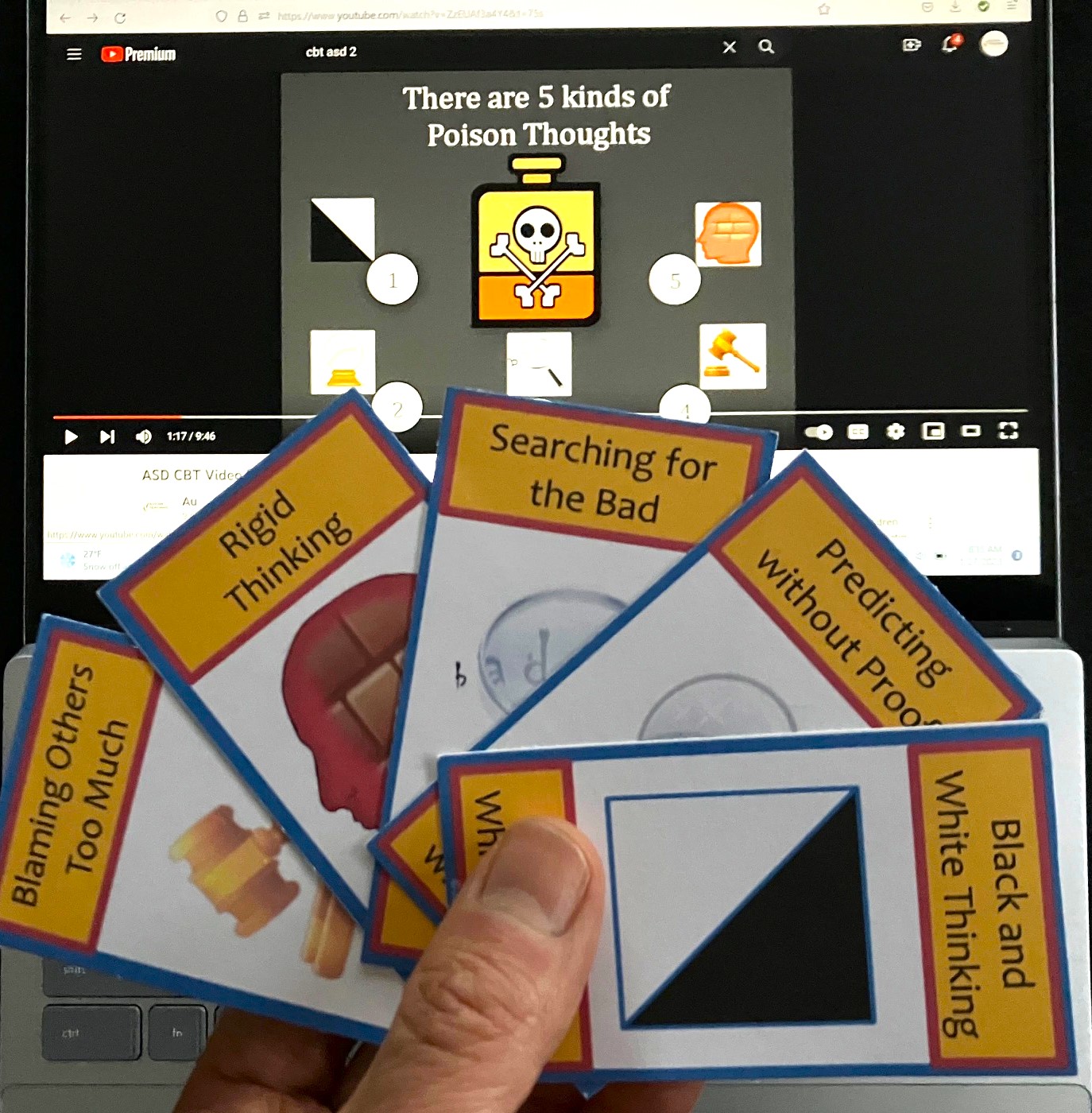
These free download cards are designed to accompany my CBT Videos for Kids.

CBT token systems – CBT cards, a free download

Cognitive behavioral therapy, whether it’s for a kid or an adult, can be hard and discouraging. After all, the main work involves the arduous process of finding and rooting out automatic negative thoughts that get stuck in our minds. When we are doing CBT with children, we obviously can’t turn this therapeutic activity into something “fun,” but by adding some game-like elements we can can help propel our work forward.

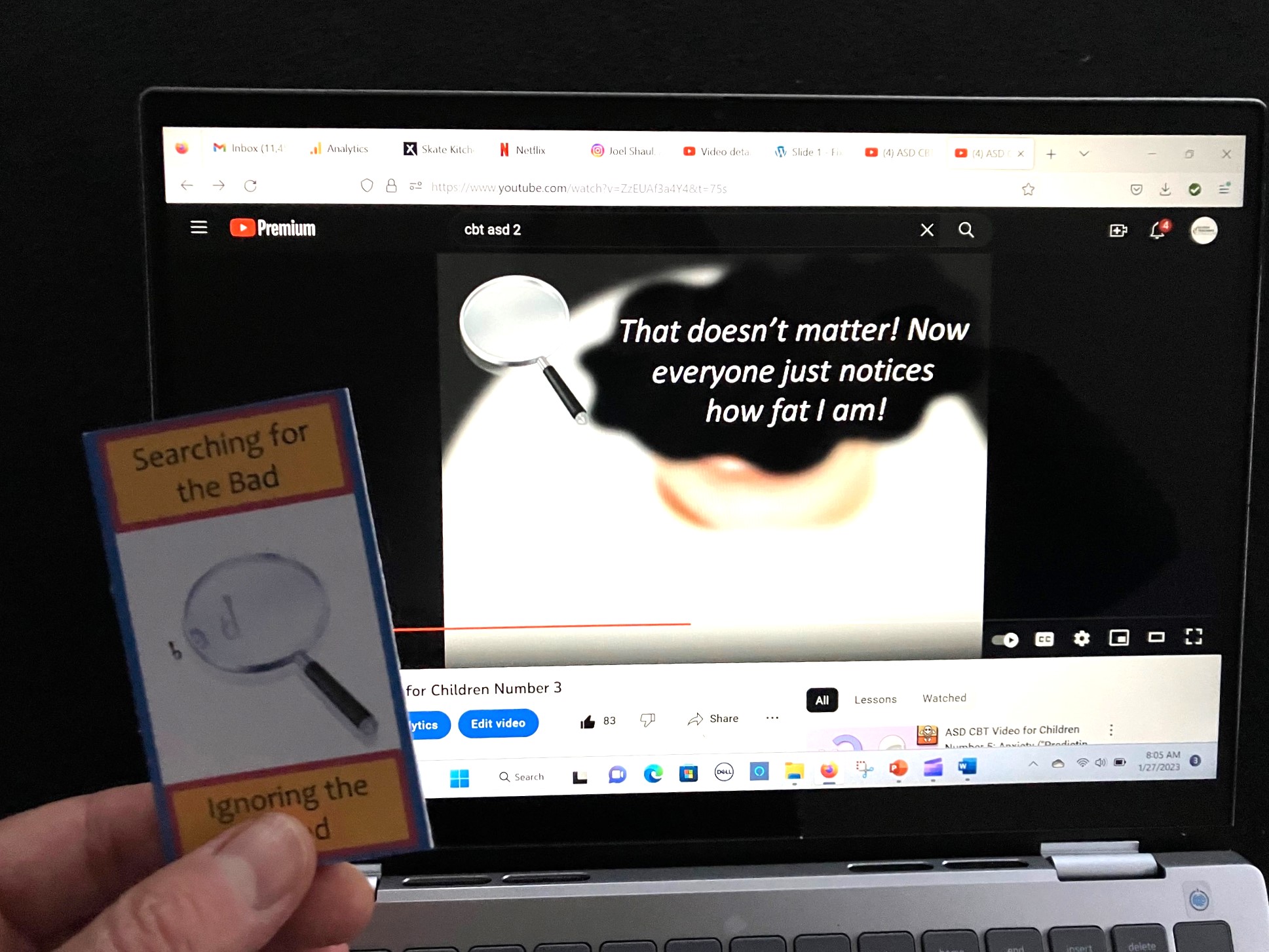
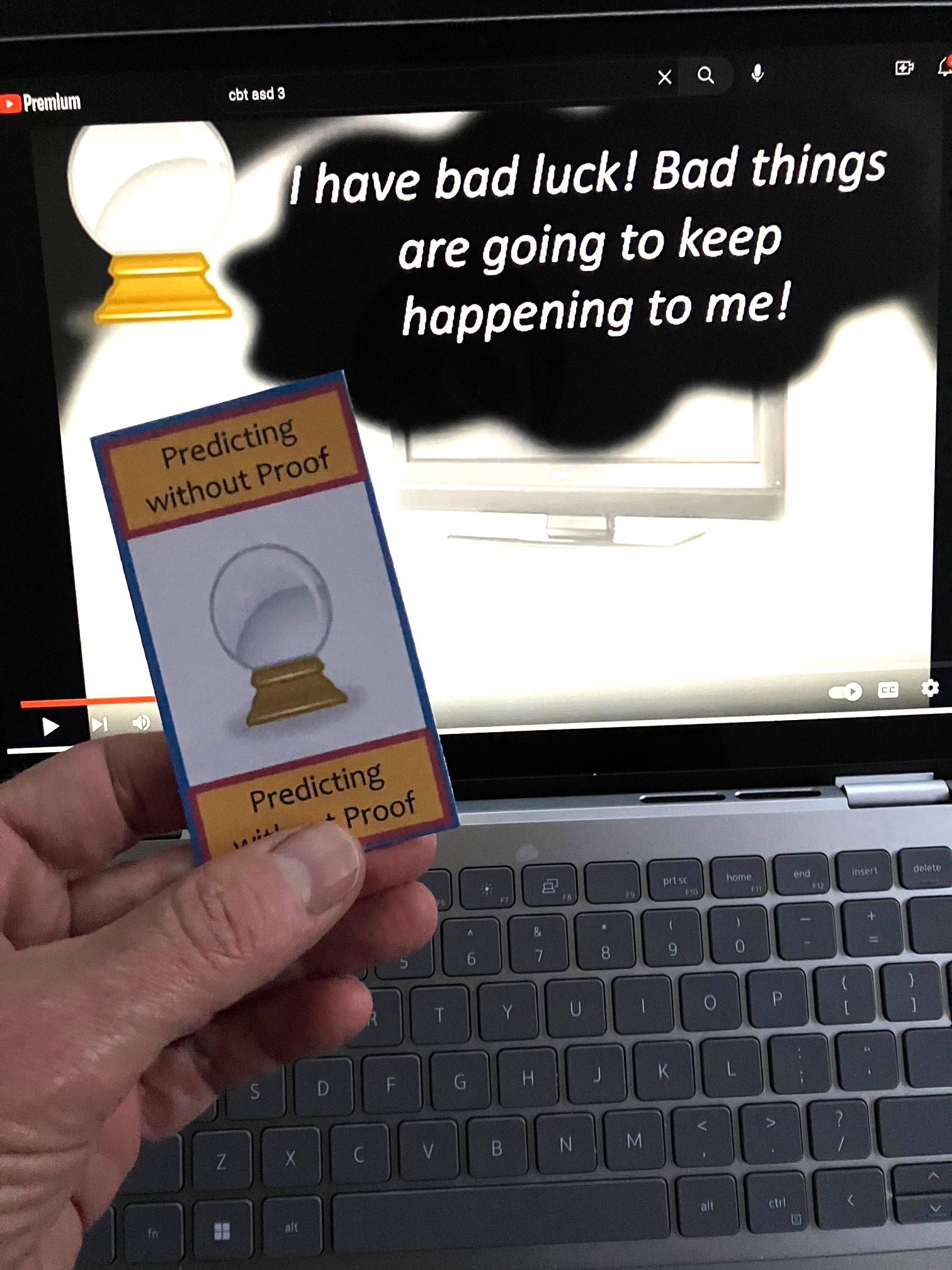
This article introduces a game-like token system with a free download. It is a set of cards you can use along with the CBT YouTube Videos for Kids (these videos are explained in much detail here).You use the cards to reward the child for identifying automatic negative thoughts in the videos and in their own minds.

How to make the cards

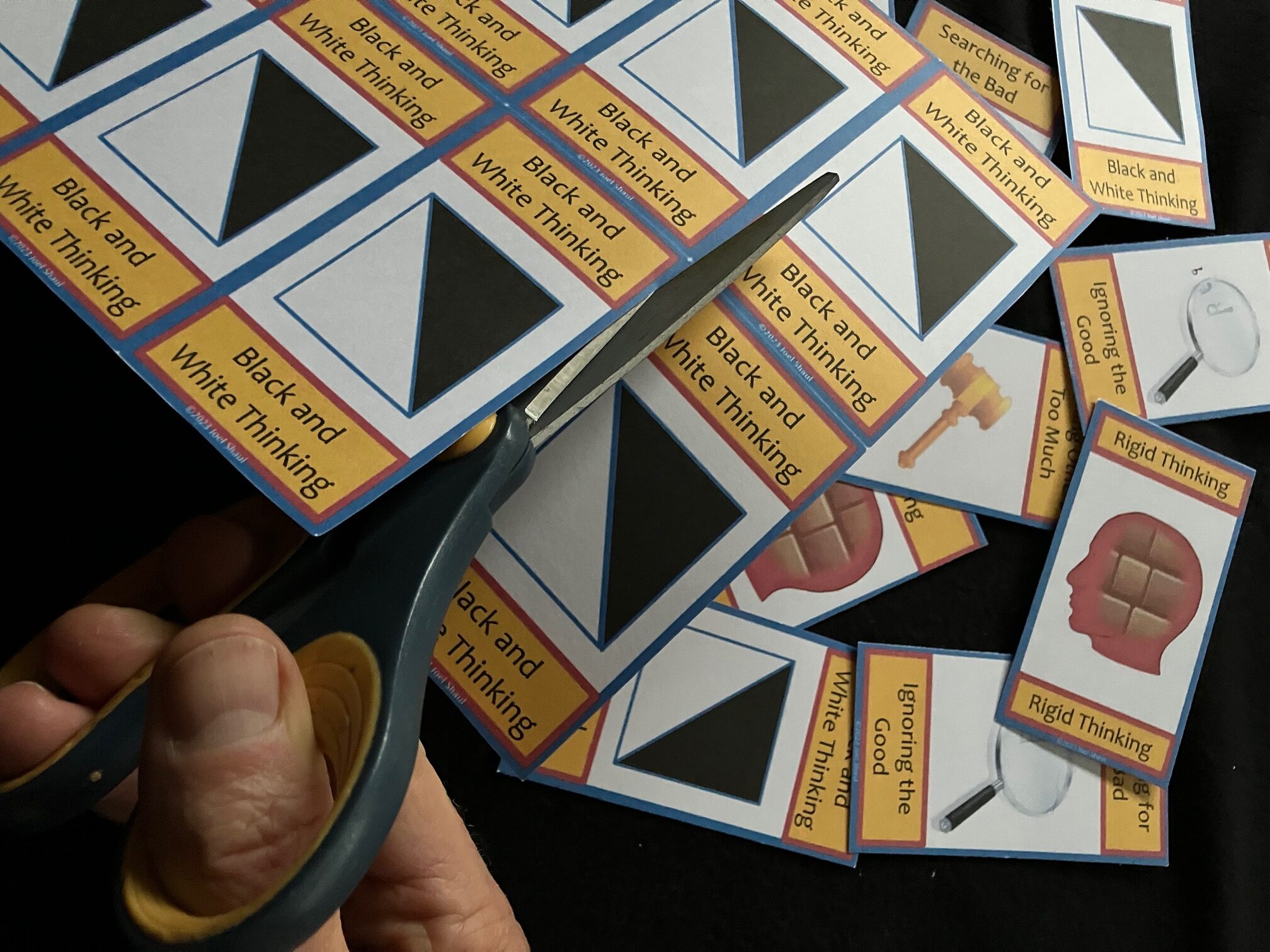
Print the cards on card stock, or on paper that you will then laminate. If you want to get fancy, print the decorative back before printing out the front of the cards.
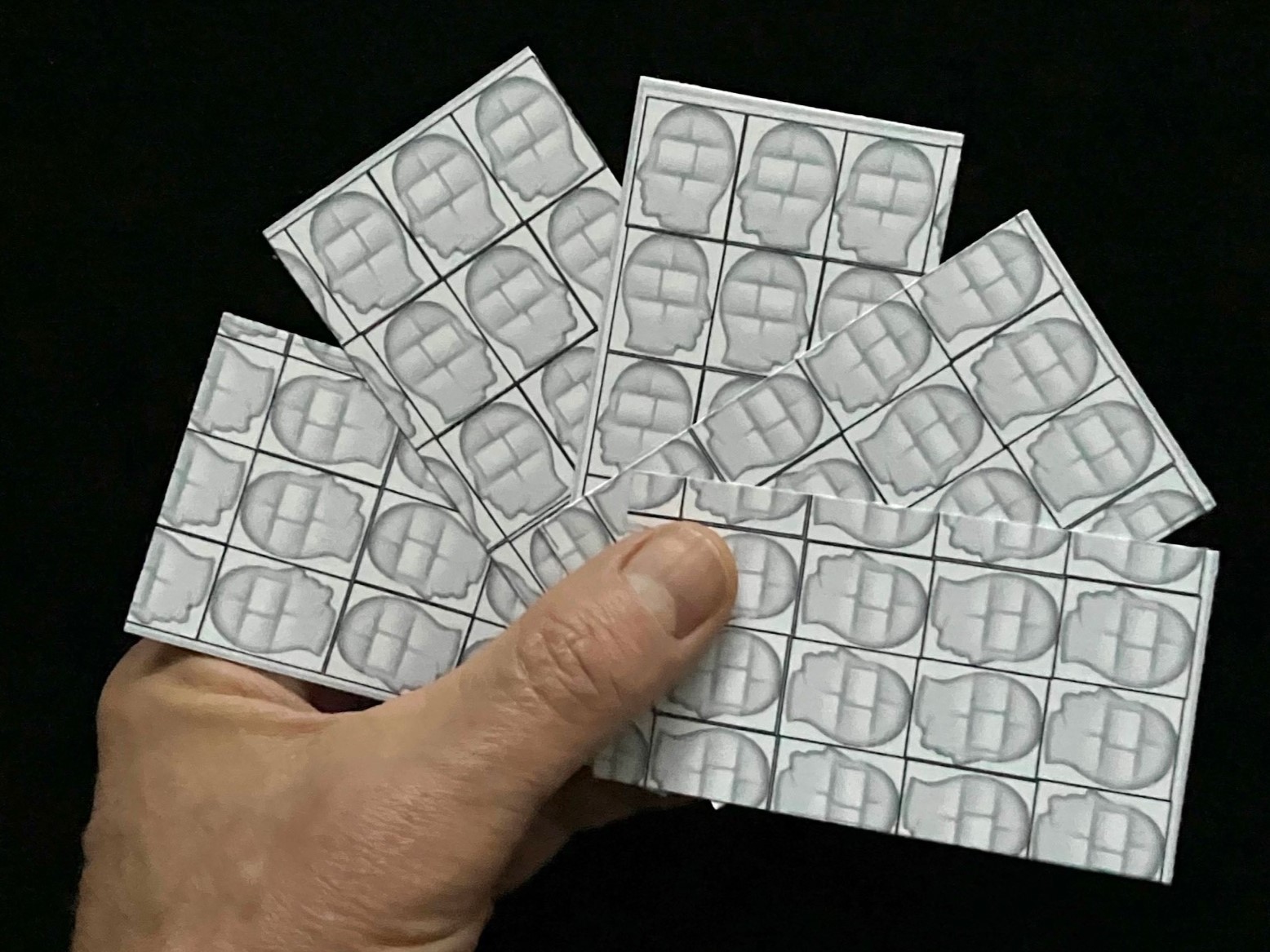
The back of the cards.

How to use the cards

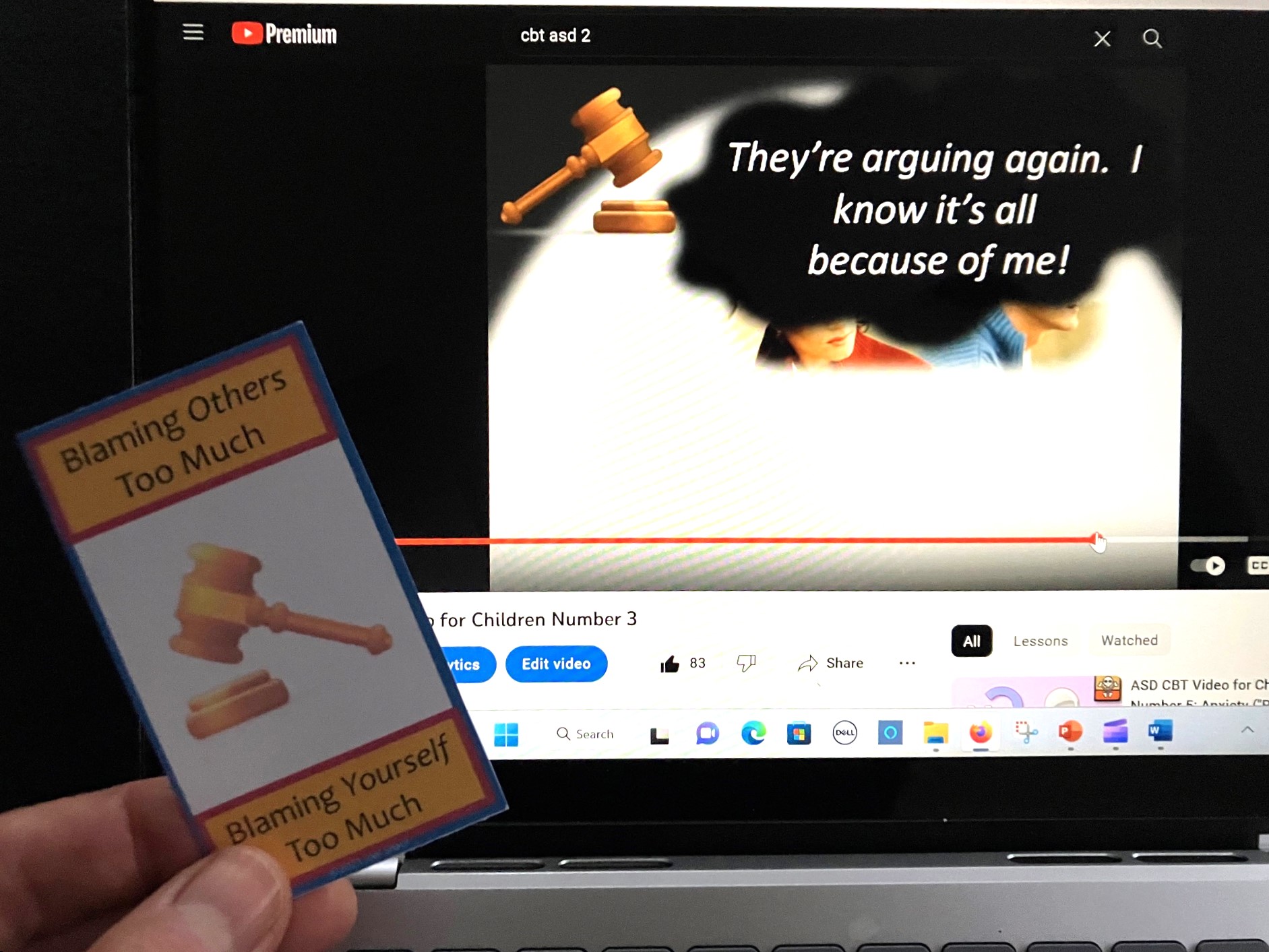
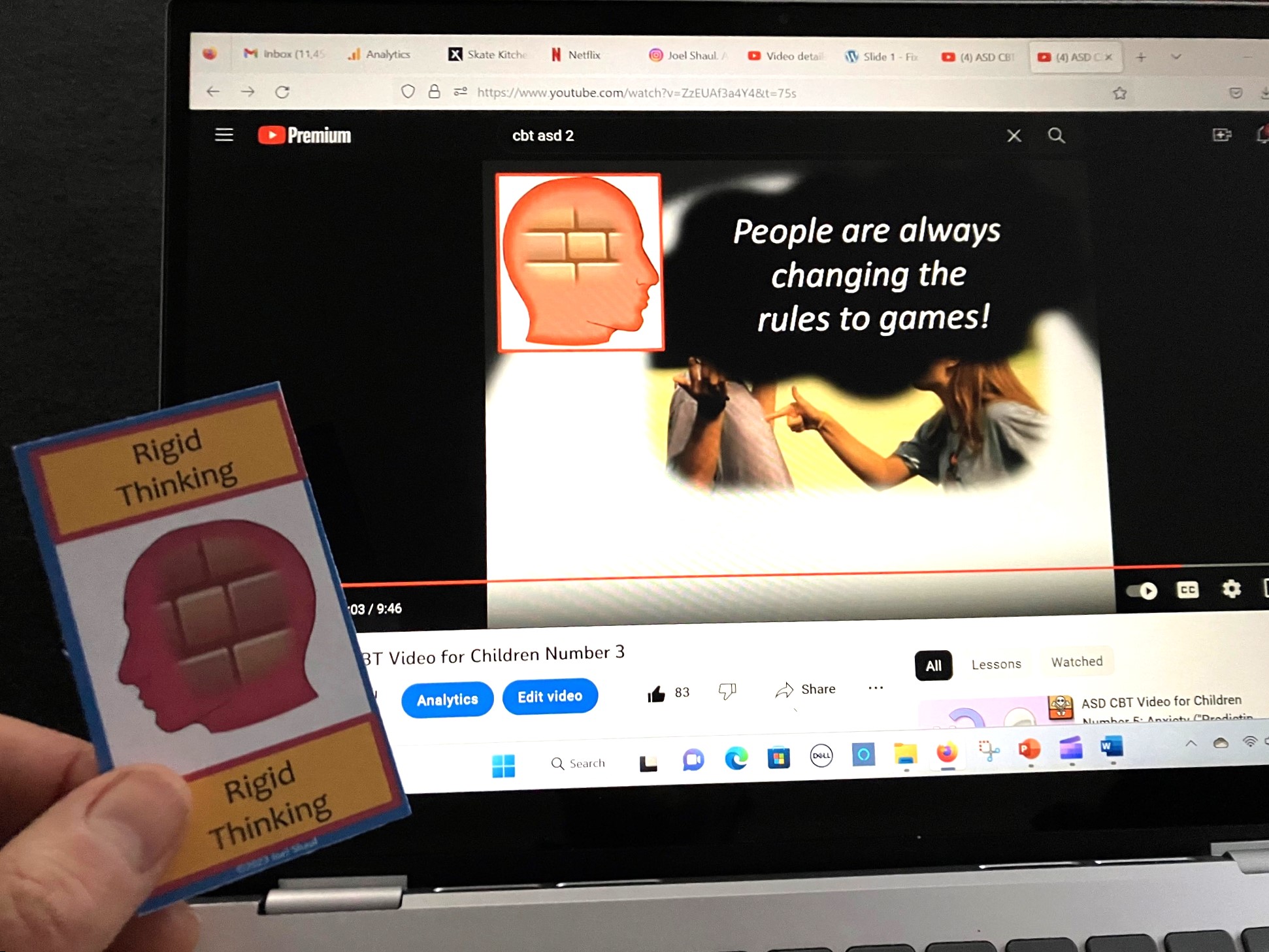
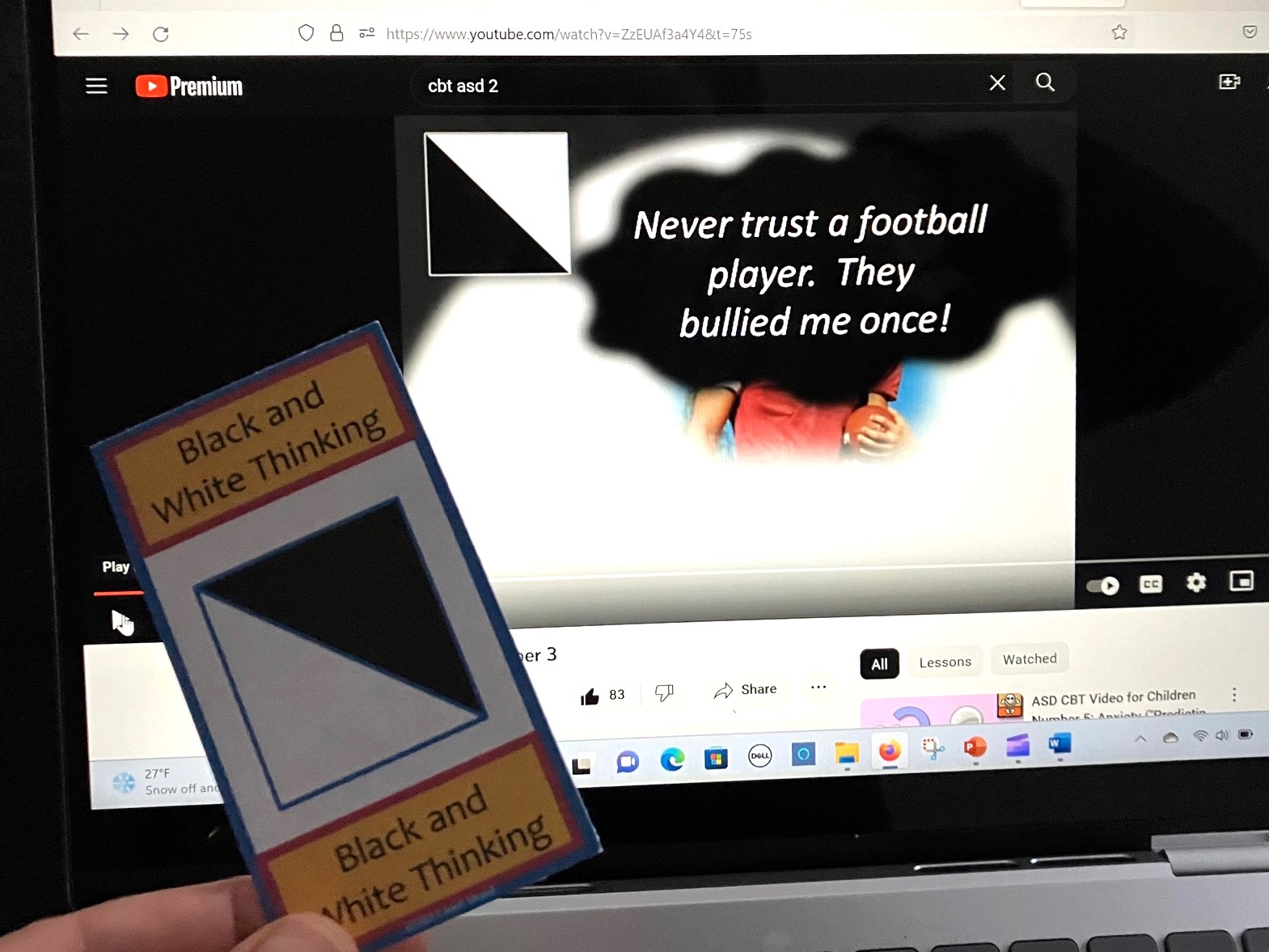
Once you have introduced the five Poison Thought categories, you can keep five piles of the Poison Thought Cards handy while viewing the CBT Videos for Kids. Then, you can hand out the cards one by one to children in order to recognize and reinforce a child’s success in:

a. Identifying a Poison Thought experienced by a child in the video

b. Identifying one of their own Poison Thoughts

c. Thinking of  Antidote Thoughts which might apply.
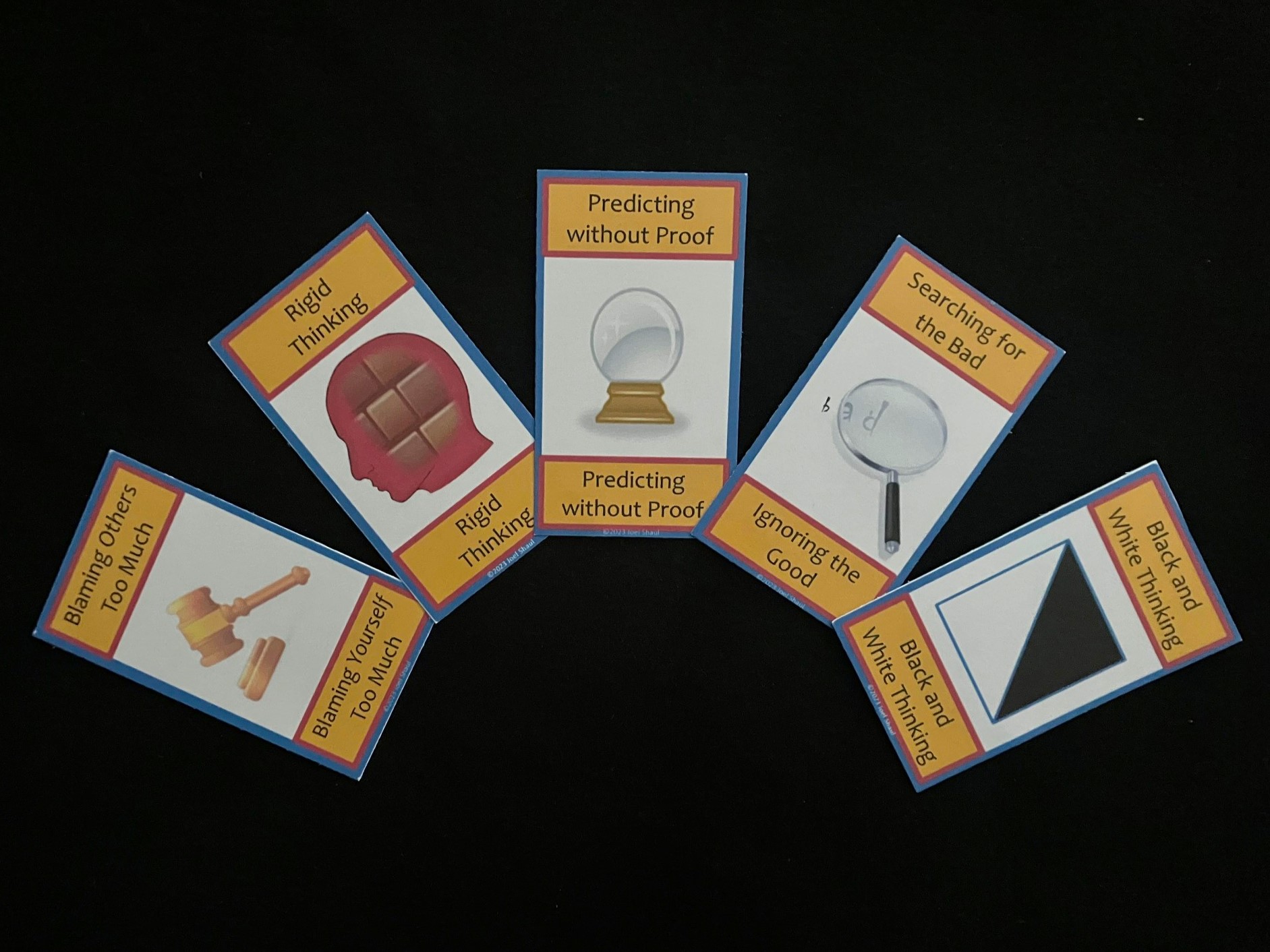
Certain kinds of children tend to like token systems like the CBT cards

I have often used these cards when doing CBT activities with children on the higher end of the autism spectrum. I have found that children and teens with ASD are often very receptive to these game-like devices in therapy. First, young people with ASD might not notice or be sufficiently reinforced by the subtle, spoken encouragement offered by clinicians during therapy sessions. They may actually prefer a small pile of CBT cards as tangible evidence that they are “getting it” during therapy. Second, neurotypical children, when they approach teenage years, tend to become averse to these playful gambits and they can feel manipulated by them. But teenagers with autism are actually seldom put off by these CBT cards, so with them I use them often.

I have used cards like this in my work for years. I have to say that it is a really straightforward and useful tool to use. It adds a little levity to hard work without undermining the serious nature of CBT. If you print out these cards, you probably will end up using them over and over when you work with the CBT Videos for Kids.
Joel Shaul, LCSW


Follow these links to other posts in this series.

Intro: Refinements to Make CBT Better Suited for Kids [link]

Part 1: About CBT YouTube Videos & How to Use Them [link]

Part 2: CBT Token Systems – CBT Cards, a Free Download [link]

Part 3: More CBT Token Systems – Using Mr. Yuk Stickers [link]

Part 4: Creating Thought “Enemies” and “Heroes” in Child CBT [link]

Part 5: Tailoring CBT Methods & Media to the Individual [link]
Part 1: About the CBT YouTube videos and how to use them

(click HERE to link to the CBT Videos for Kids)

About CBT YouTube videos and how to use them

Many years ago, I had noticed that many children and teens appeared disengaged and discouraged in cognitive behavioral therapy.

First, lots of children and teens found the conventional CBT terminology too complex and the automatic thought categories too numerous. Second, the heavy and exclusive focus on the child’s problem thinking seemed too intense for many children, causing them to back away from the work.

In 2014, I developed the eight CBT videos in an effort to address these sources of resistance in CBT work.

Fewer categories and simpler language

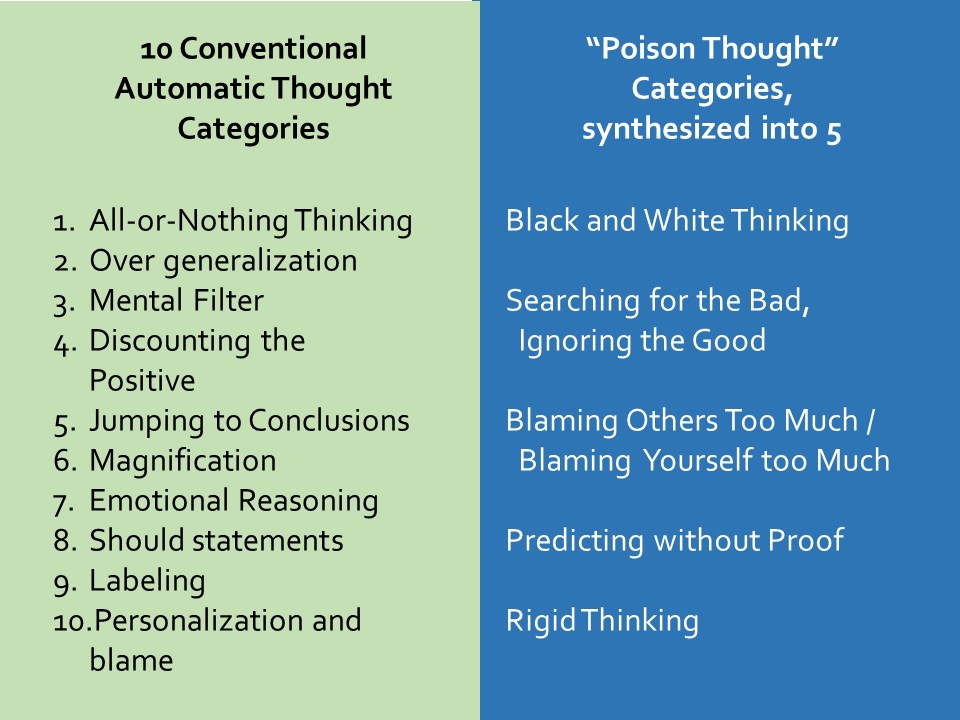
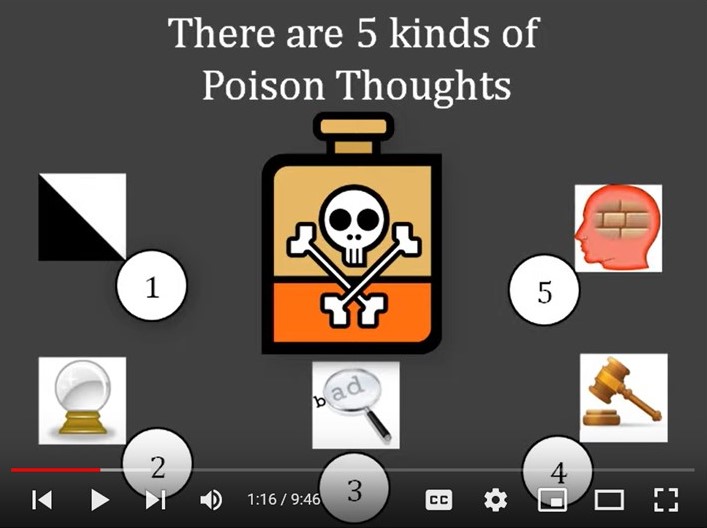
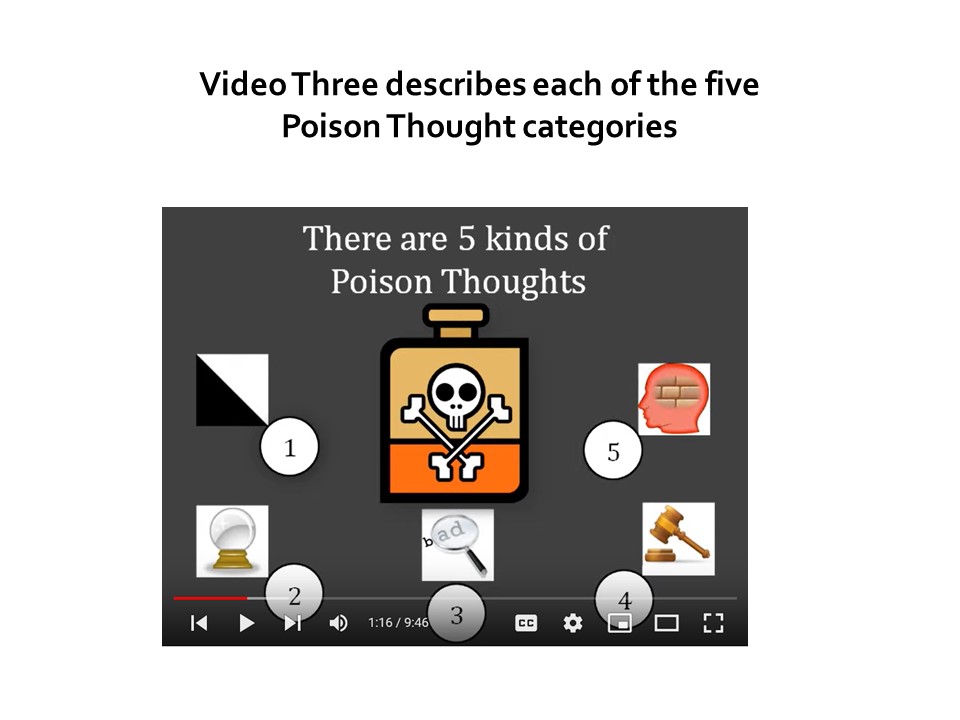
Finding the conventional 10 CBT thought distortions too numerous, wordy and overlapping for children, I crunched them down to 5 categories, using language that is less complicated. I then created icons to go with each category. I found that most children could grasp the basics of these  five modified categories of automatic negative thoughts, so I made them the foundation of the CBT videos.

The ones on the right I devised to create simpler categories for children.
CBT Automatic Negative Thoughts
5 “Poison Thoughts,” screen shot from CBT Video Number 3

Initial focus on hypothetical examples

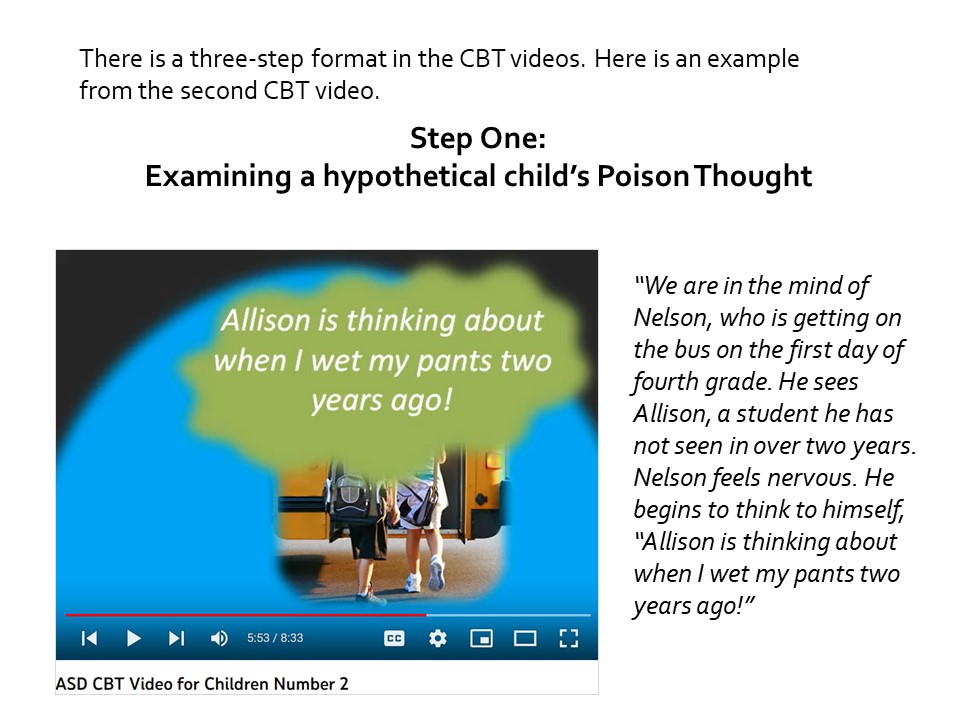
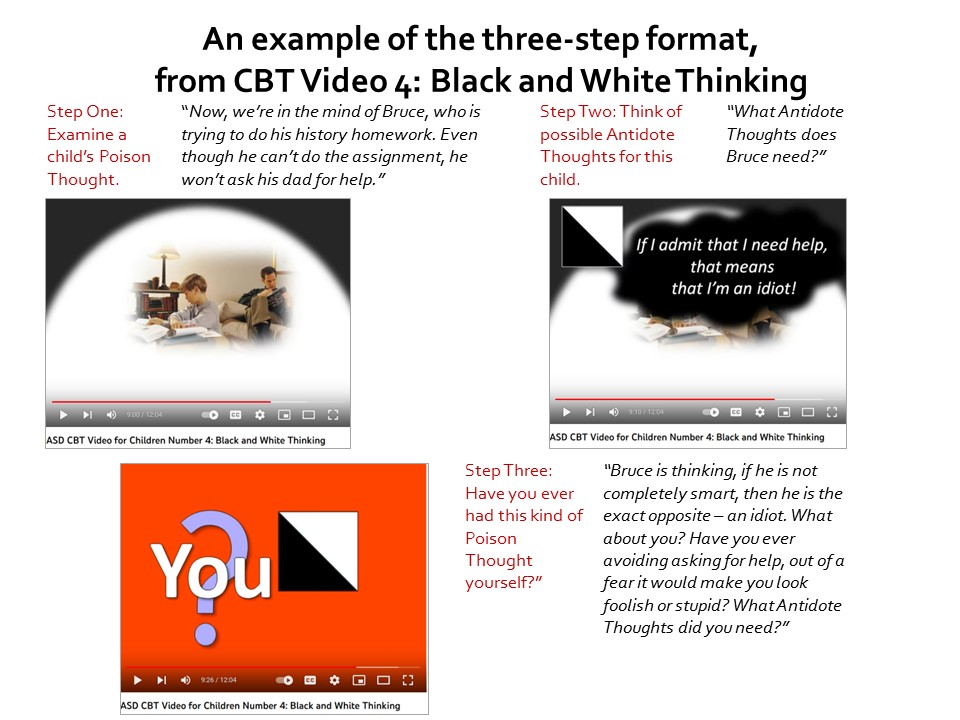
In the videos, I placed less initial emphasis on the problem thinking of the child viewing the video, and instead directed attention to hypothetical problems of other children. I found that by beginning the work in this manner, children subsequently were more confident and successful in assessing their own self-defeating thoughts and actions.

The videos were designed for children with ASD, but you can use them with neurotypical kids.

I created these videos originally for use with children on the higher end of the autism spectrum.  You will notice that  quite a few of the hypothetical scenarios deal with challenging situations typically encountered by autistic children. However, quite a lot of the videos’ content concerns problems that neurotypical children would also encounter, and in fact I have gotten feedback from many clinicians who use the videos with neurotypical kids and just skip over the parts that appear tailored for autism.

How to use the videos

The videos are designed to be viewed with an adult, with very frequent pauses for discussion. Although the first three videos are important to view in full, it is not always necessary to watch every subsequent video or every part of any video that you start. You can skip around, placing more emphasis on the videos that address the most relevant concerns.

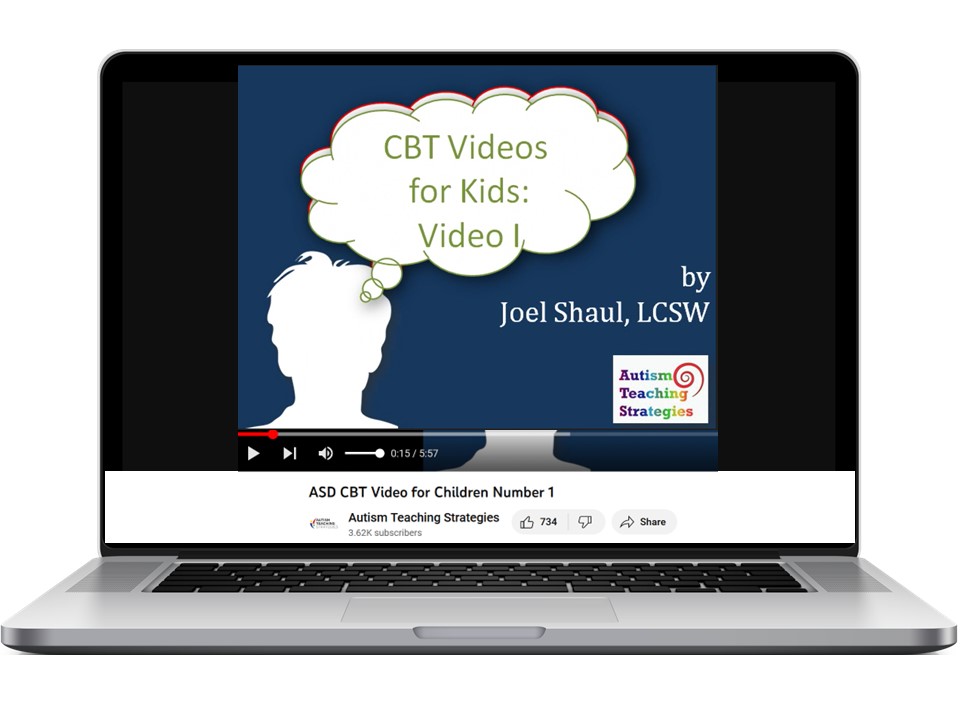
Video Number One is shorter and simpler than the remaining seven. It introduces Poison Thoughts (automatic negative thoughts) and Antidote Thoughts.

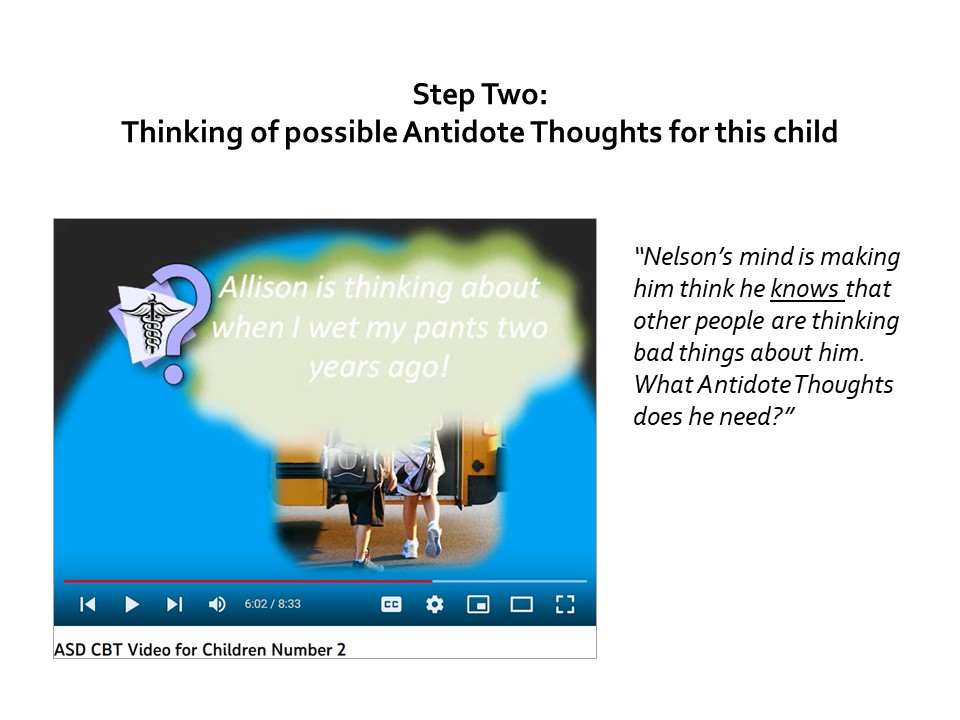
Video Number Two takes the viewer into the minds of various children experiencing Poison Thoughts, and demonstrates how these can be countered with Antidote Thoughts.

Video Number Three (see screen shot above) introduces the 5 Poison Thought categories, showing examples of each in the minds of various children.

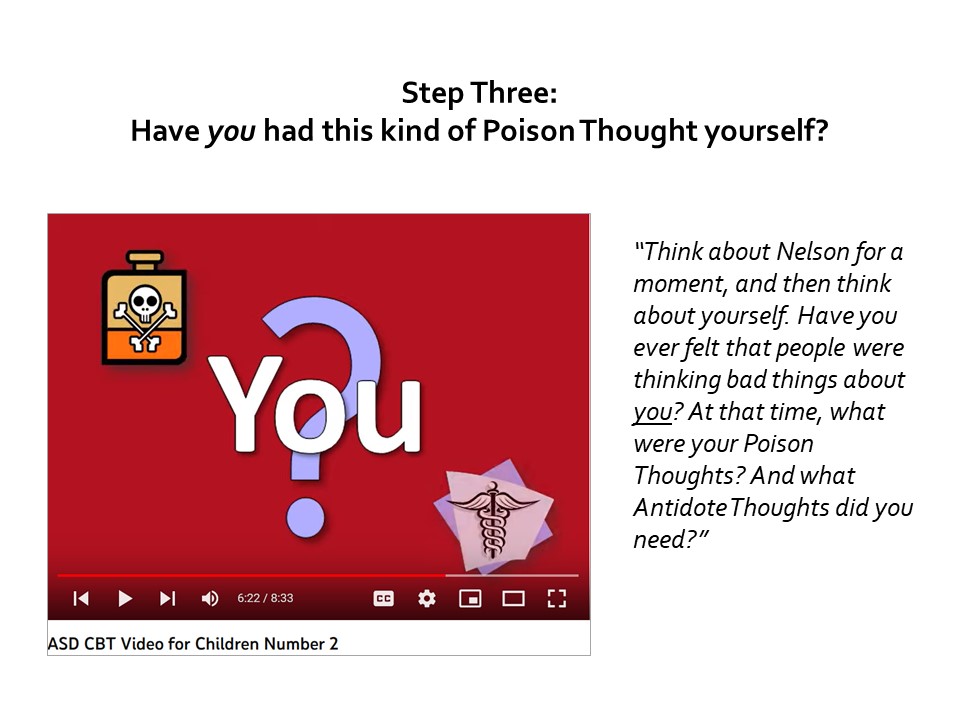
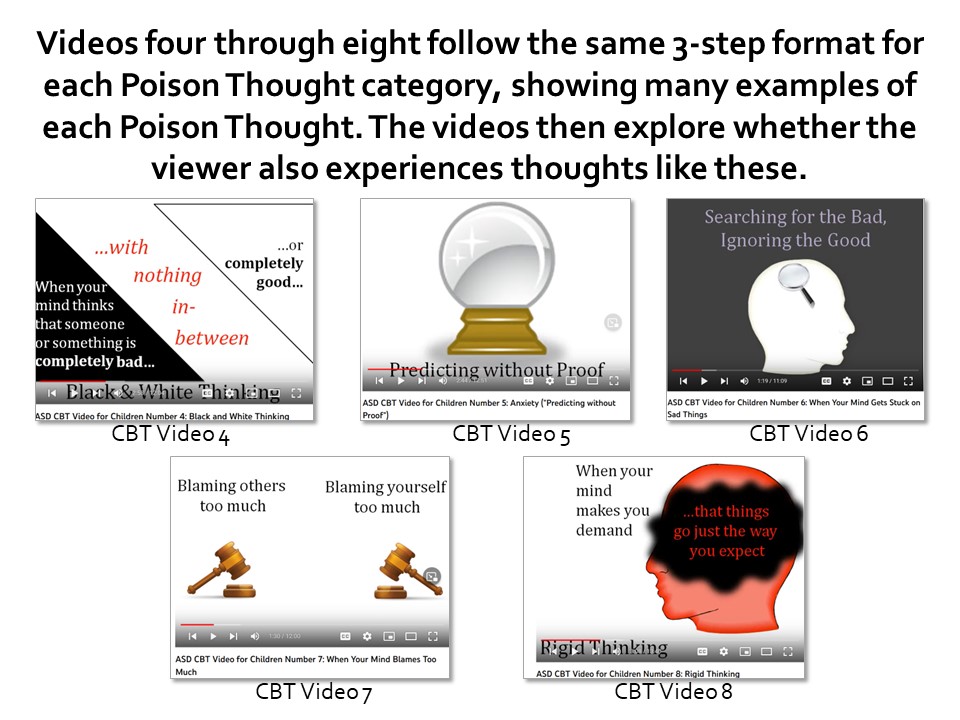
Videos Four through Eight go over each of the 5 Poison thought categories in turn, using many examples of how various children are affected by the thoughts. In each example, after first identifying and “fixing” the problem shown in the example, the viewer is asked whether they themselves are affected by such thoughts. Again, pausing frequently for discussion, especially when a child is talking about their own “Poison Thoughts,” is important.

Joel Shaul, LCSW


Here are links to the other parts of this series, Refinements to help make CBT more suitable for kids.

Intro: Refinements to Make CBT Better Suited for Kids [link]

Part 2: CBT Token Systems – CBT Cards, a Free Download [link]

Part 3: More CBT Token Systems – Using Mr. Yuk Stickers [link]

Part 4: Creating Thought “Enemies” and “Heroes” in Child CBT [link]

Part 5: Tailoring CBT Methods & Media to the Individual [link]