Part 3: Workplace preparation Q & A cards (printable & screen-based)

A game-like card activity to promote workplace readiness in teens and young adults on the autism spectrum, in printable and screen-based versions.

In German: Bereit für den Arbeitsplatz – Karten

Hebrew translation of this resource

Why I made these cards

To engage teens and young adults on the spectrum in productive discussions about preparing for adulthood, I have found it useful to employ various media and game-like methods. Q & A card resources are one of my mainstays. This method helps to break up the usual adult-questioning-the-child dynamic in therapy and teaching. And in small-group and classroom work, the turn-taking format helps to give everyone, including quieter participants, the chance to talk.

Ways to use these cards

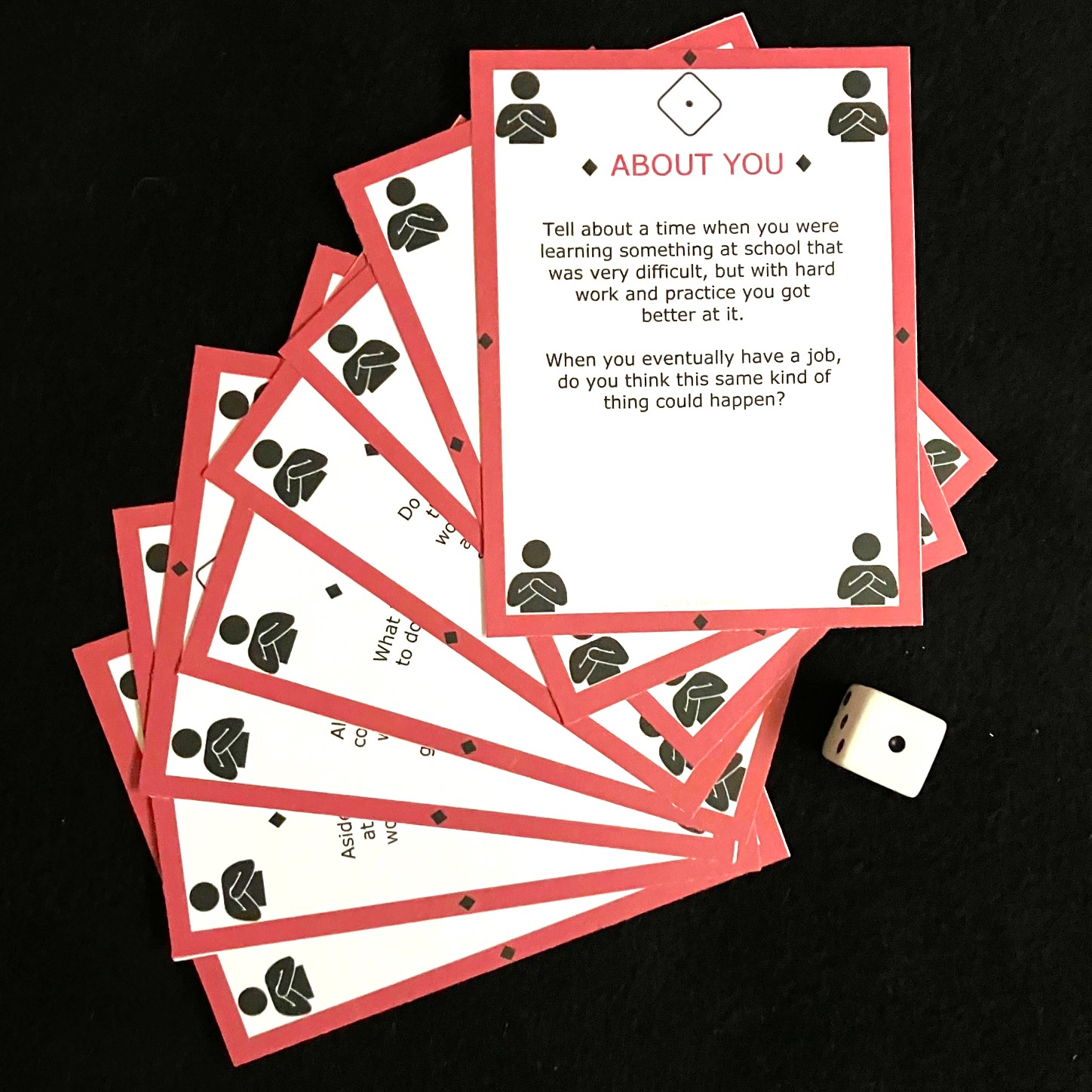
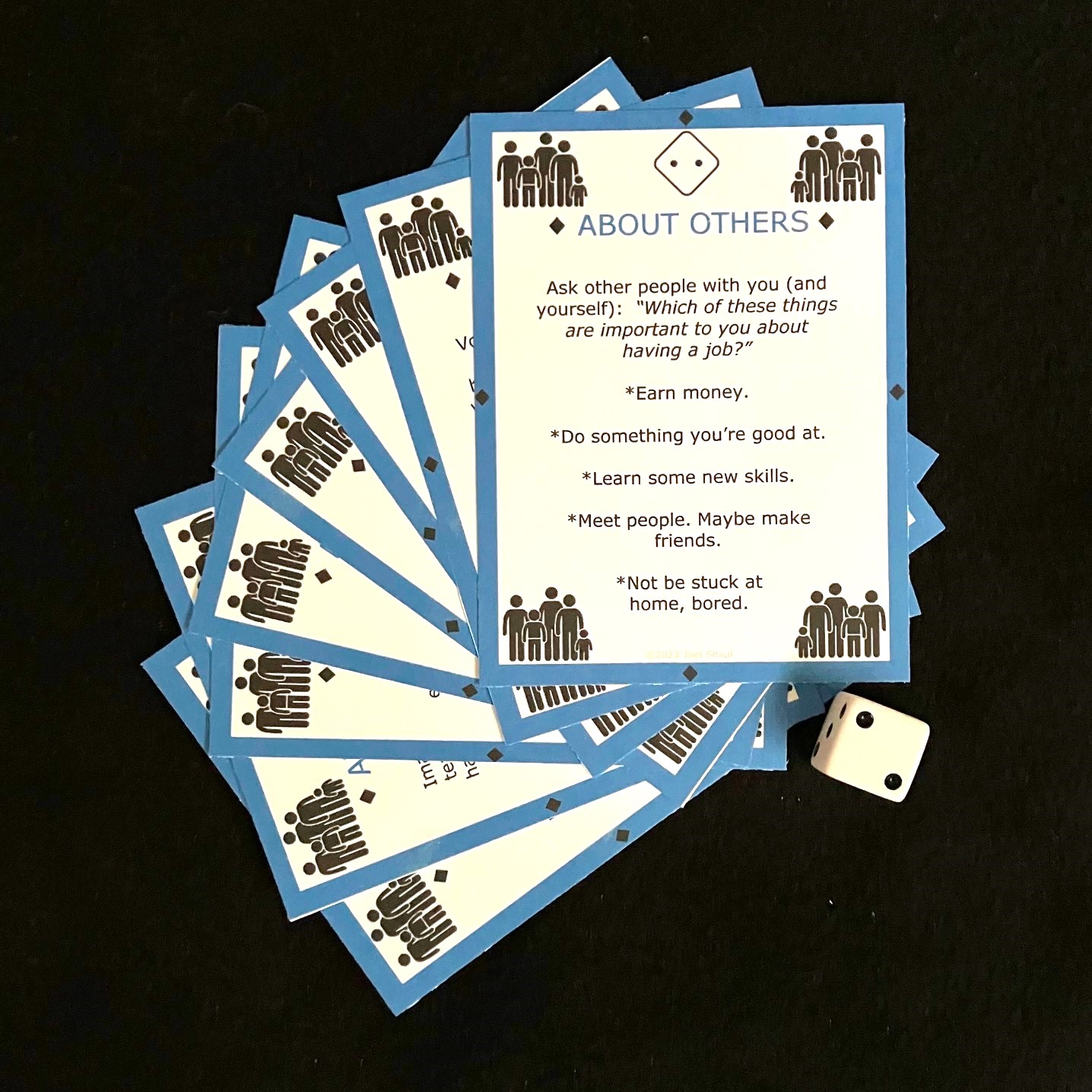
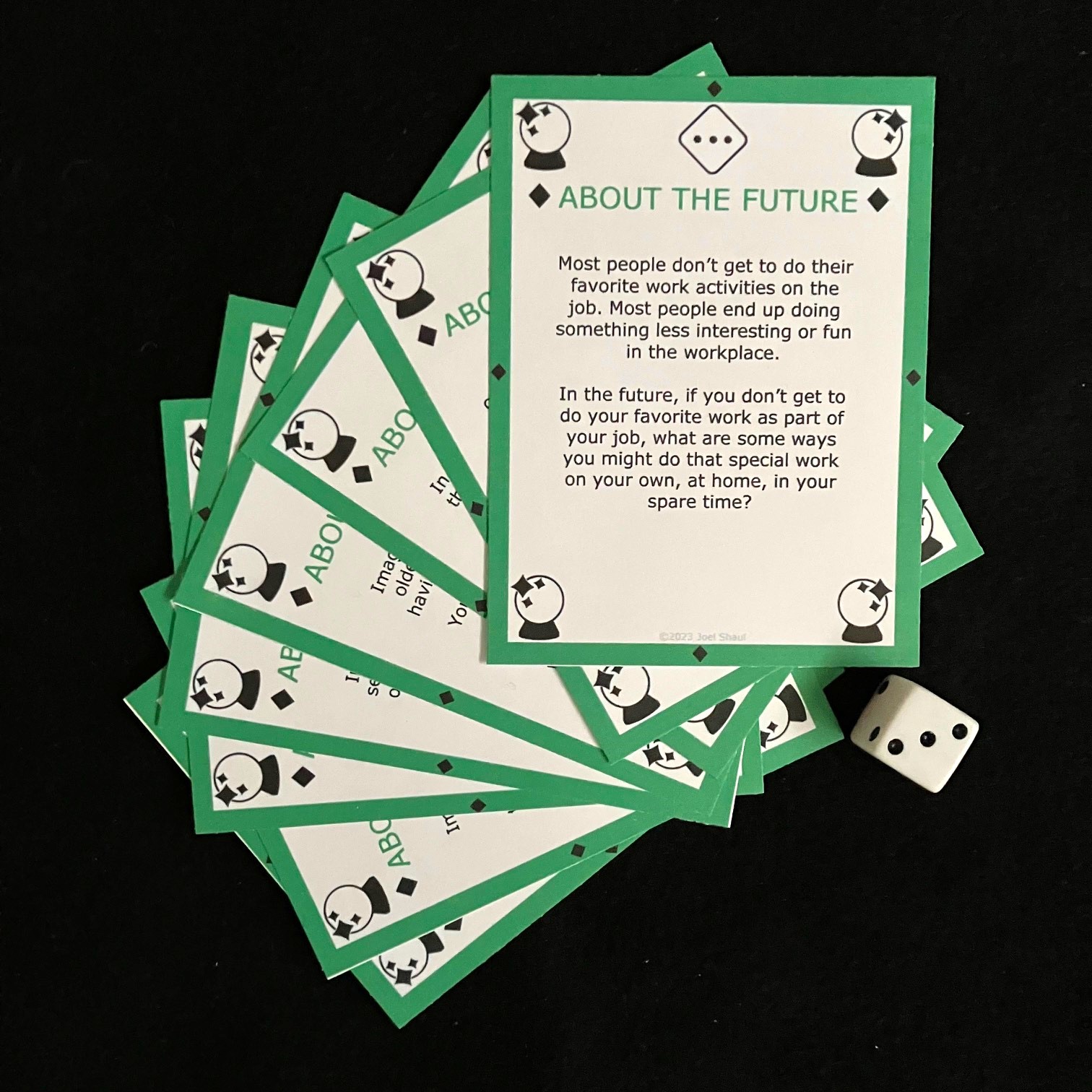
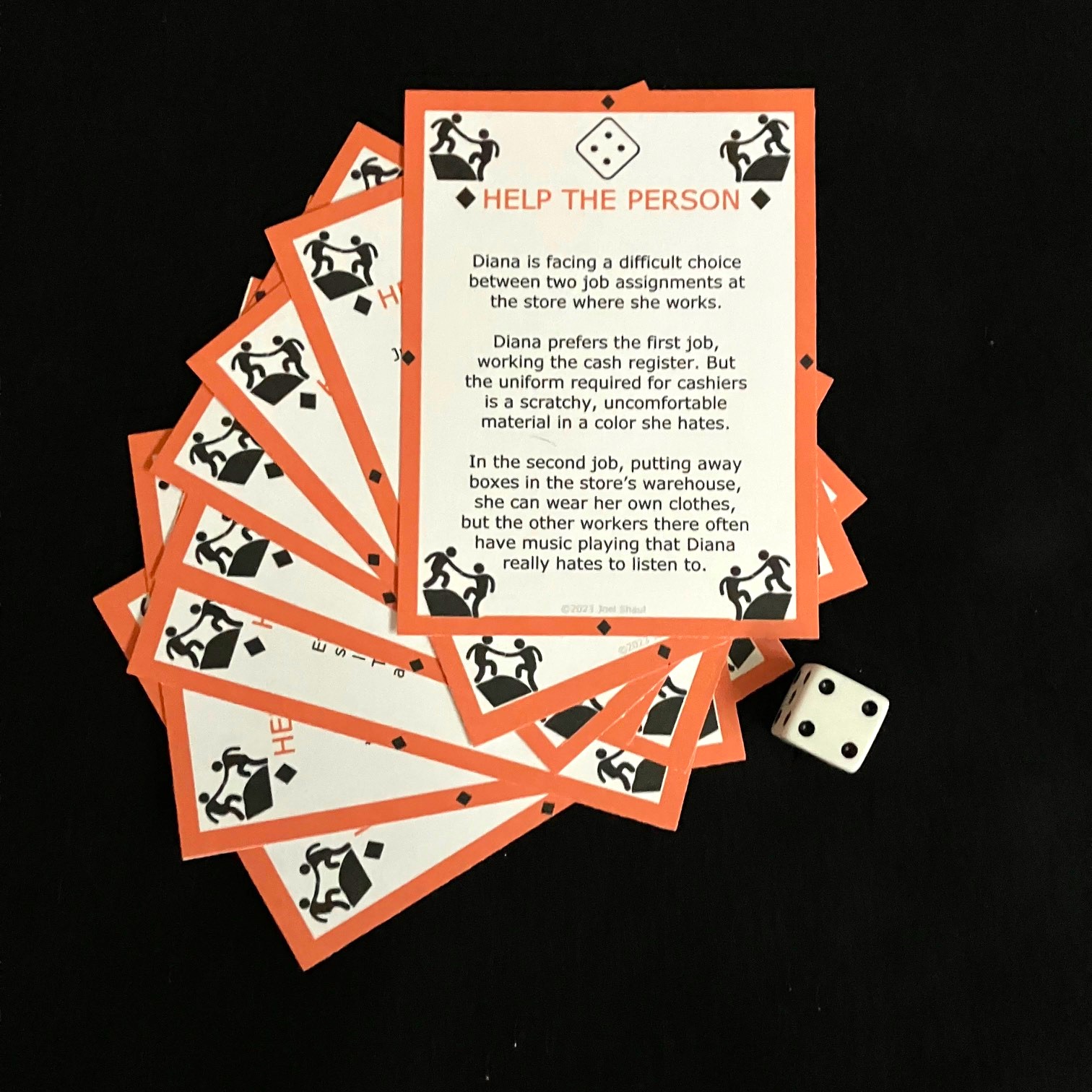
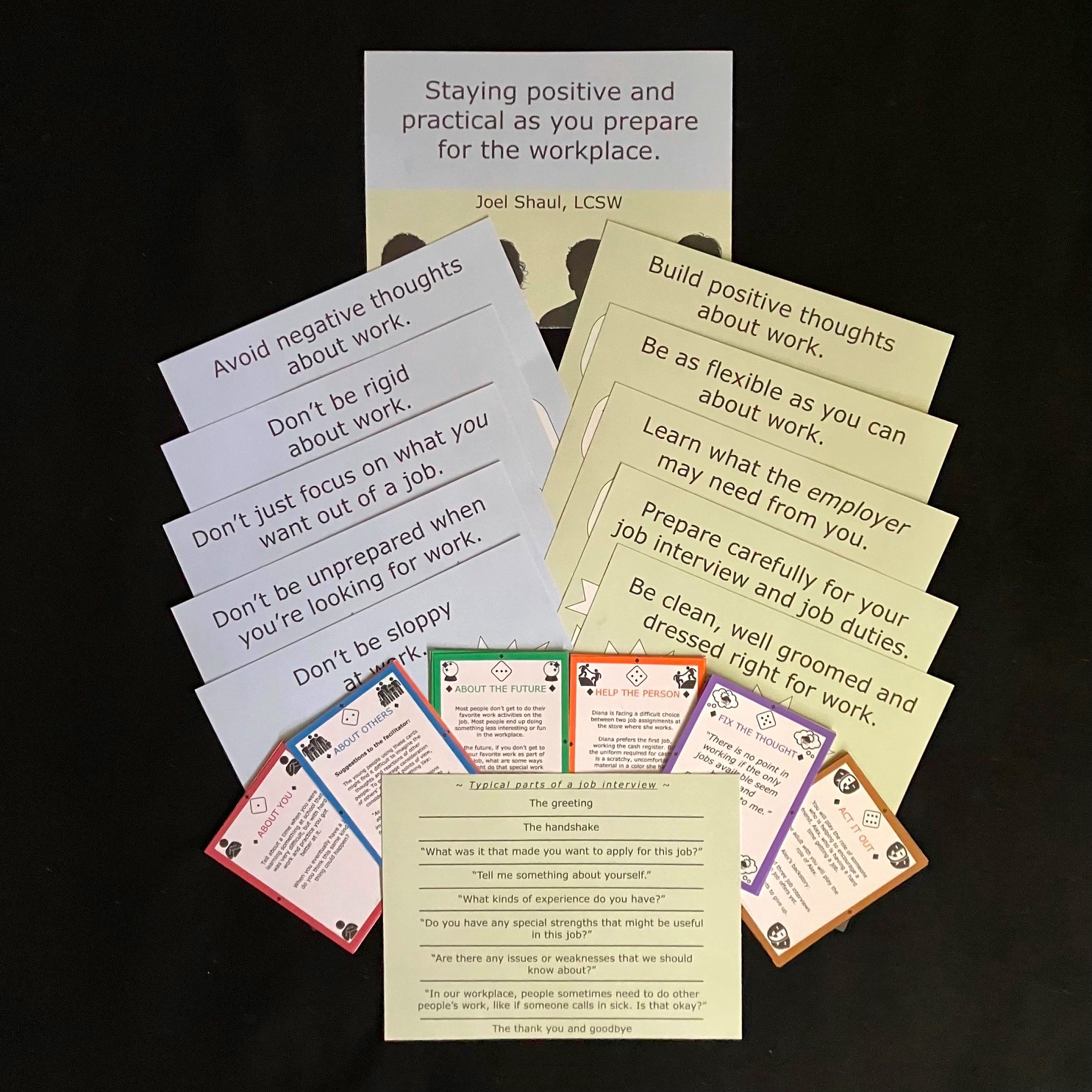
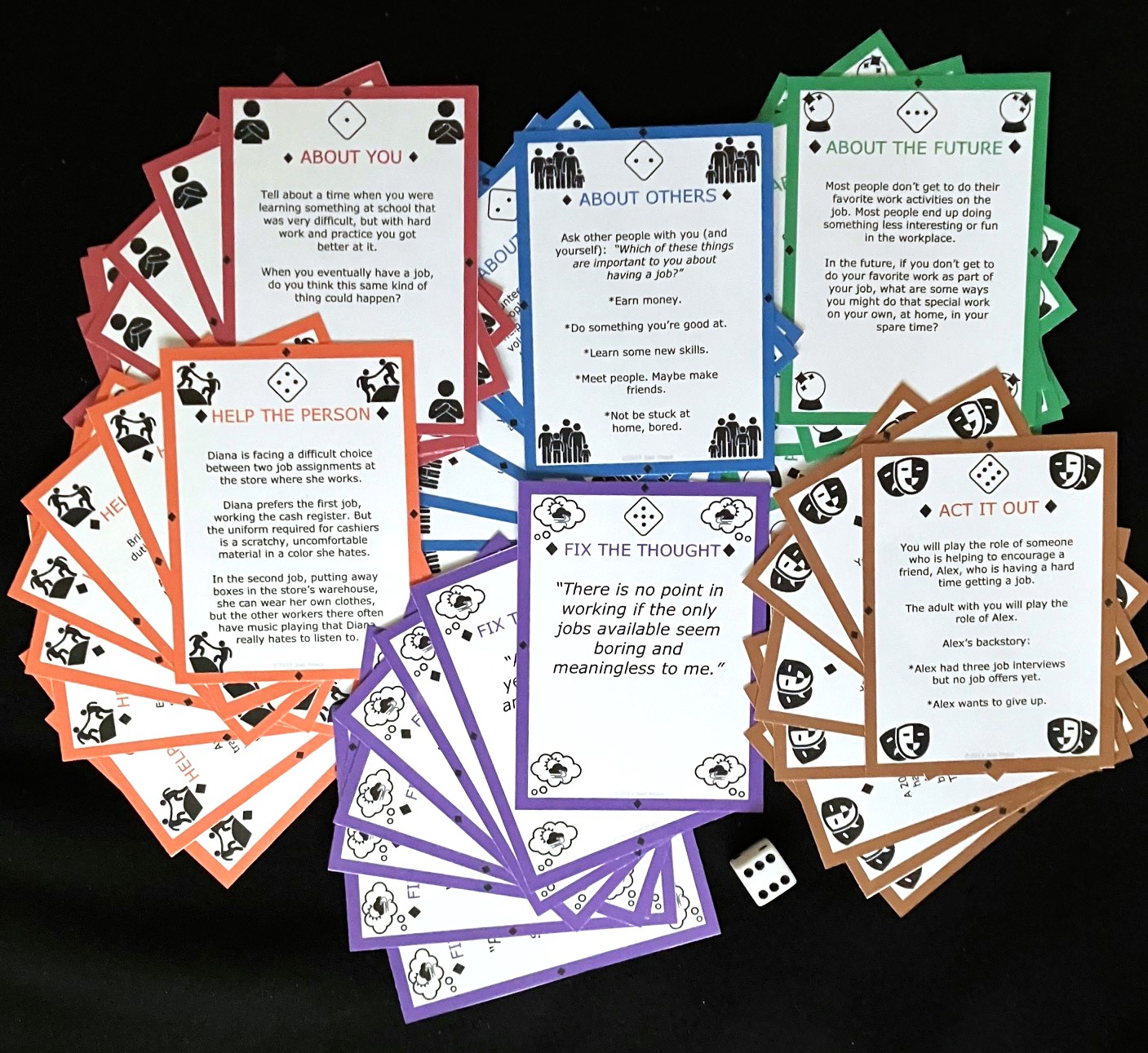
There are six categories of cards, allowing for a game-like element by rolling a die to determine which card a participant has to select.

But you may feel free to use these cards however you like. For example, you can pick through the deck and select the cards you think are most relevant and helpful for the young people you are assisting. You may decide to focus on just one single category of card.

For another card-based resource to explore much broader themes of preparing for adulthood, check out Young Adult Future Cards.

Here are the six different card categories.

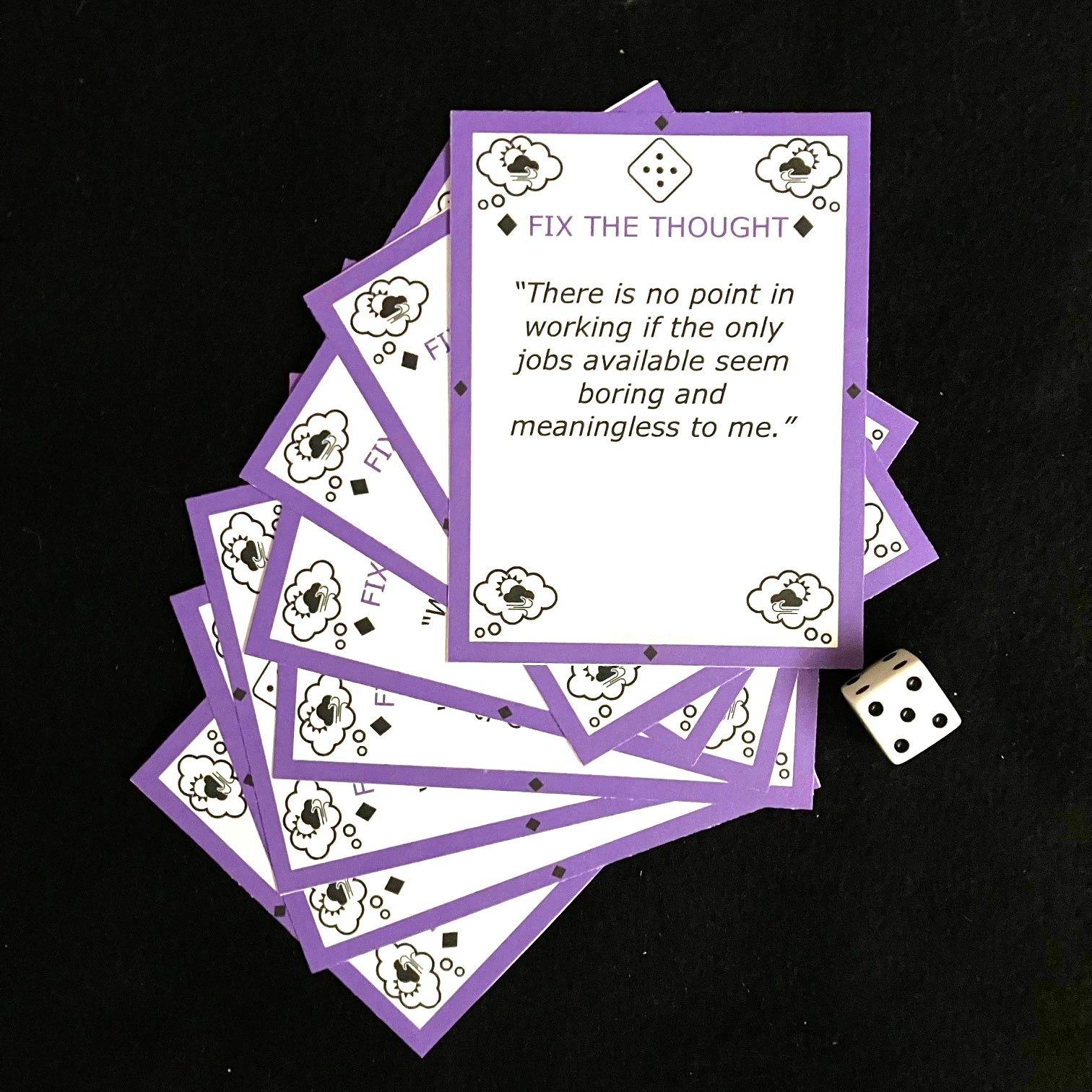
You, the facilitator in this activity, can use the “Fix the Thought” cards in the following manner if you like: You, the facilitator, play the role of a person having this thought. The participants talk to you and offer you alternative ways of thinking.

If you would like to expand on the theme of automatic negative thoughts, check out this video and this resource on “Poison Thoughts.”

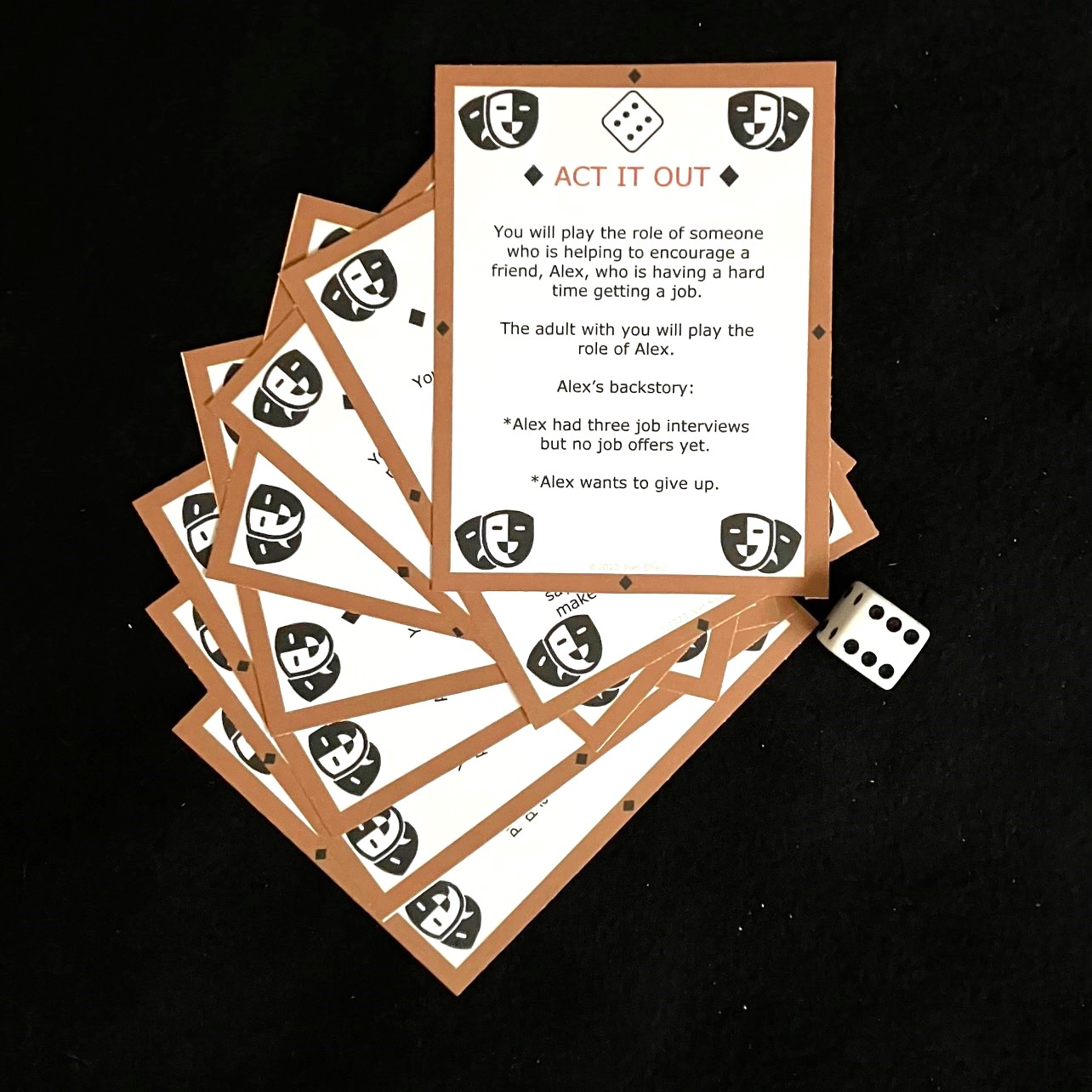
You, the facilitator, play an active role with these “Act it Out” cards. Each card gives “stage directions” for carrying out a very short role play.


These cards are part of a series of vocational preparation materials, which you may access by clicking on the links below.

Joel Shaul, LCSW


Intro: Workplace preparation resources for young people with ASD

Part 2: Workplace preparation – printable teaching panels

Part 3: Workplace preparation – Q & A cards

Part 4: Job interview skills – how to teach it and provide practice
Part 2: Workplace preparation printable teaching panels

Workplace preparation panels, Hebrew translation

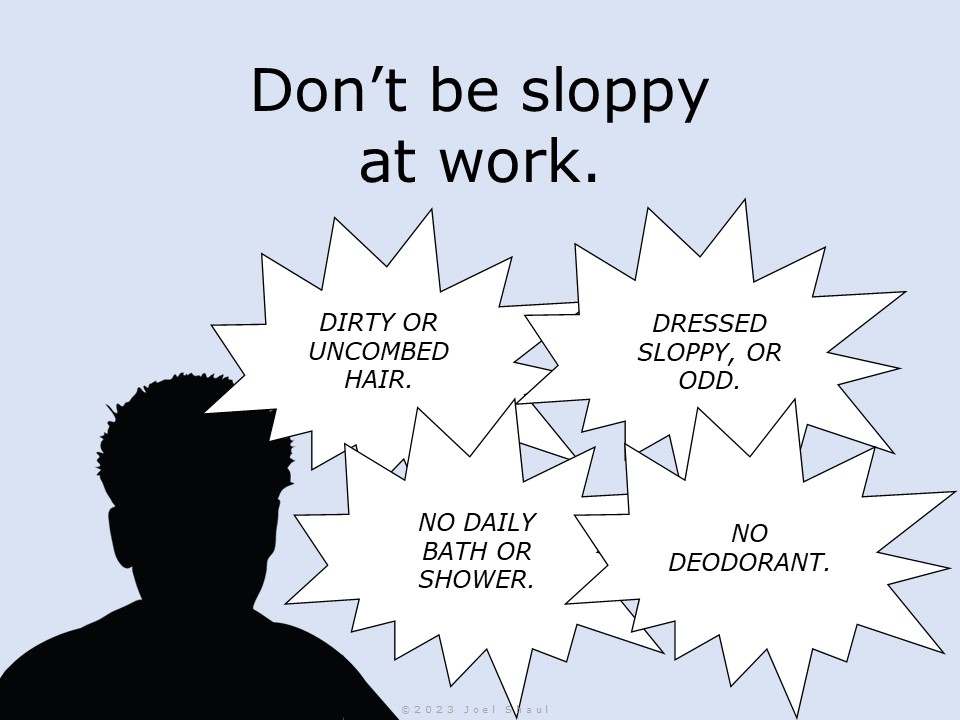
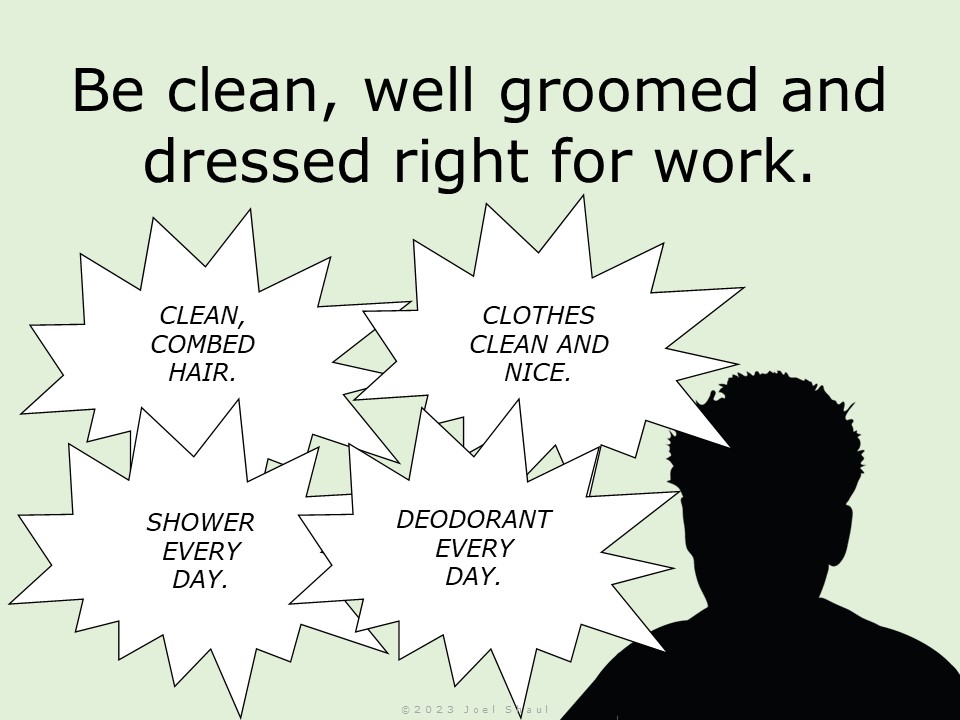
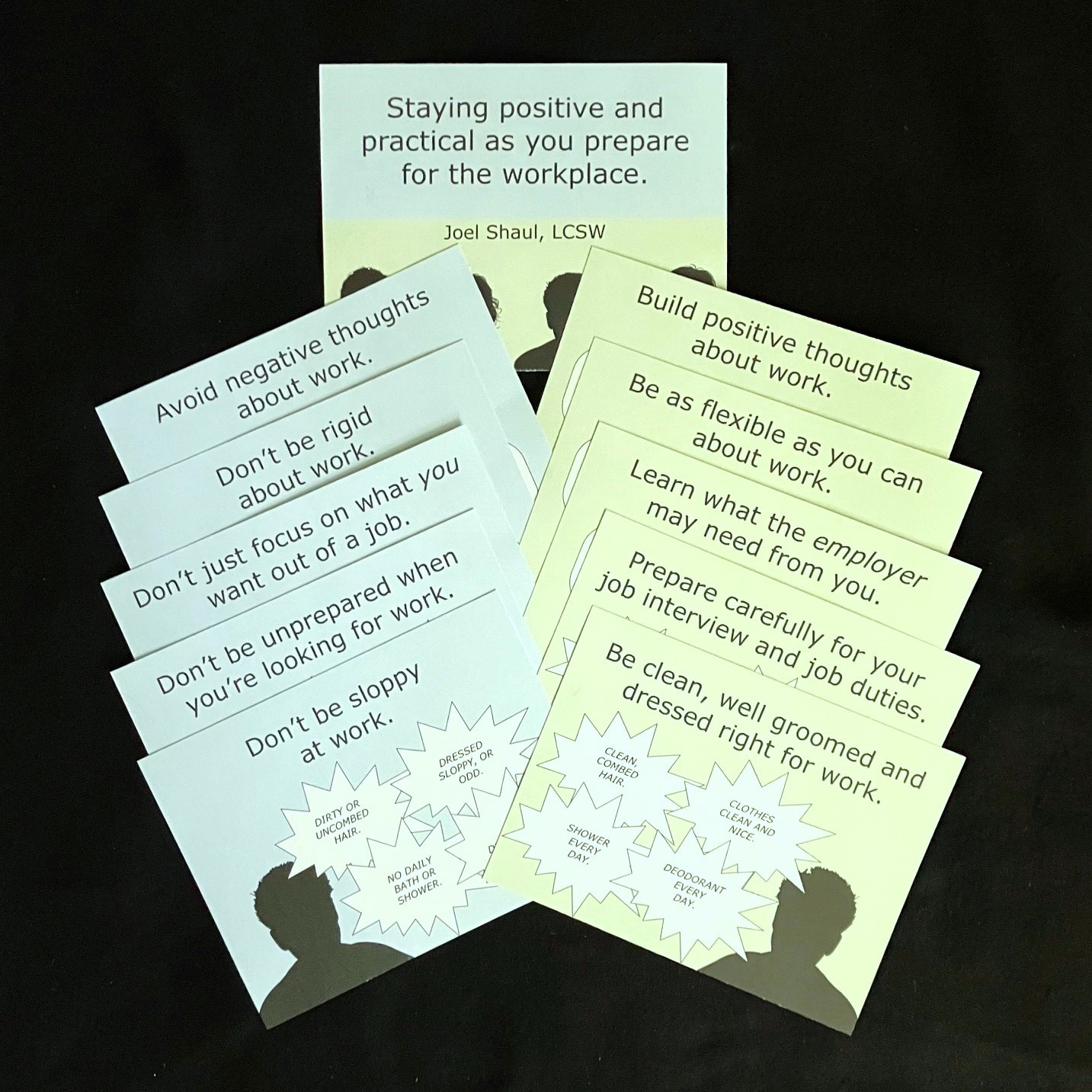
This set of 10 simply-designed teaching panels is designed for individual or group work as well as small classroom work. This resource is to help guide teaching/therapy and provide structure for essential points of discussion with regard to getting ready for the workplace. The panels may also be suitable for wall display.

Projecting the pdf display or showing it on a Smart Board is a useful way to guide group discussion on the topic of vocational preparation.

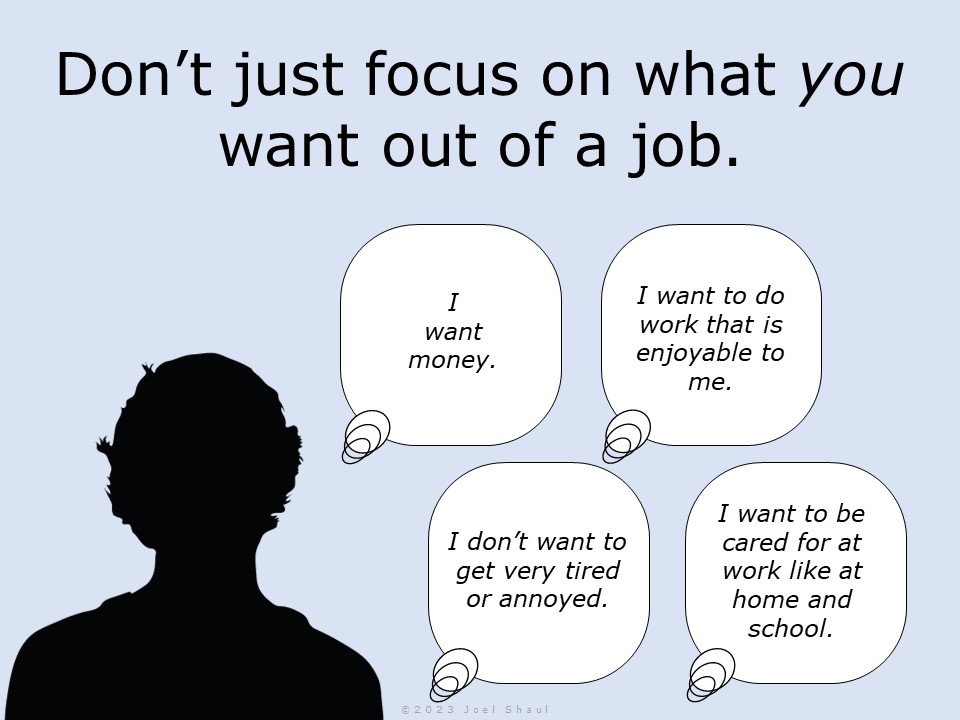
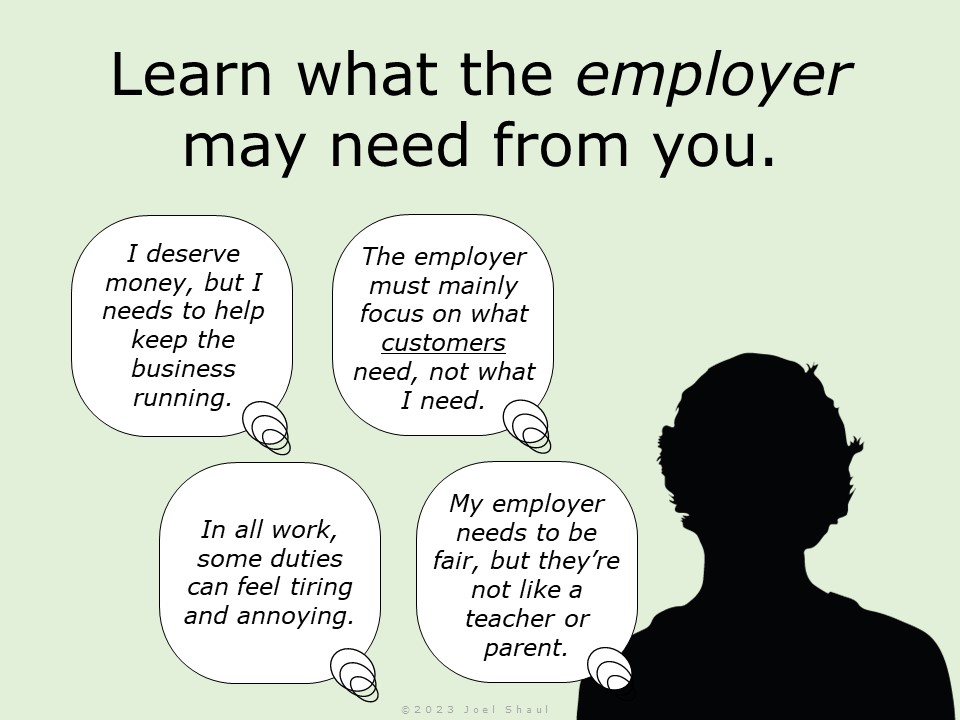
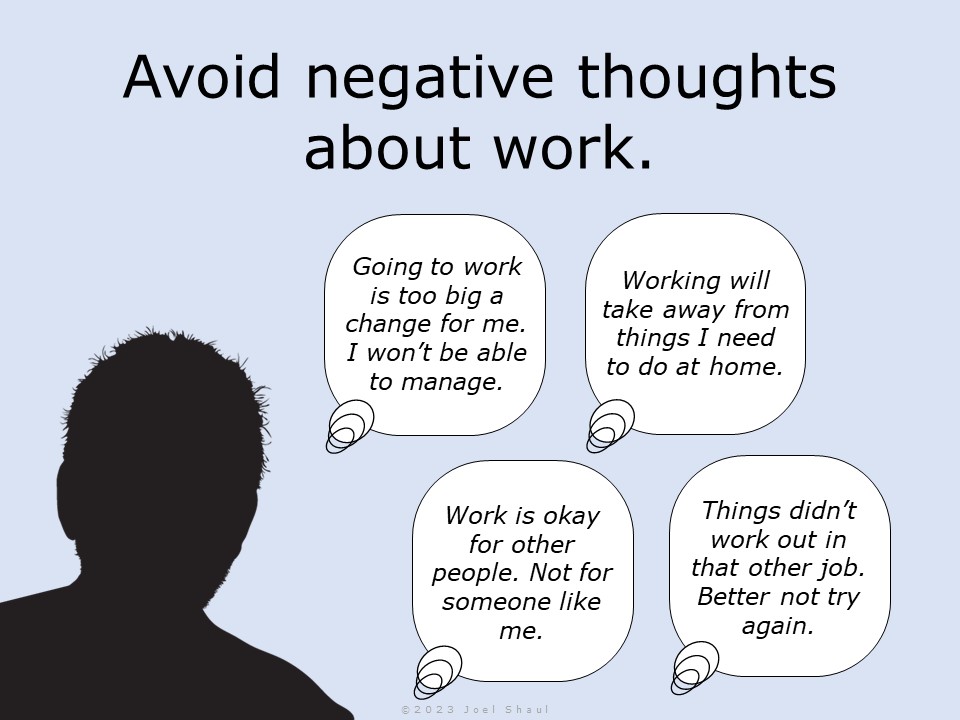
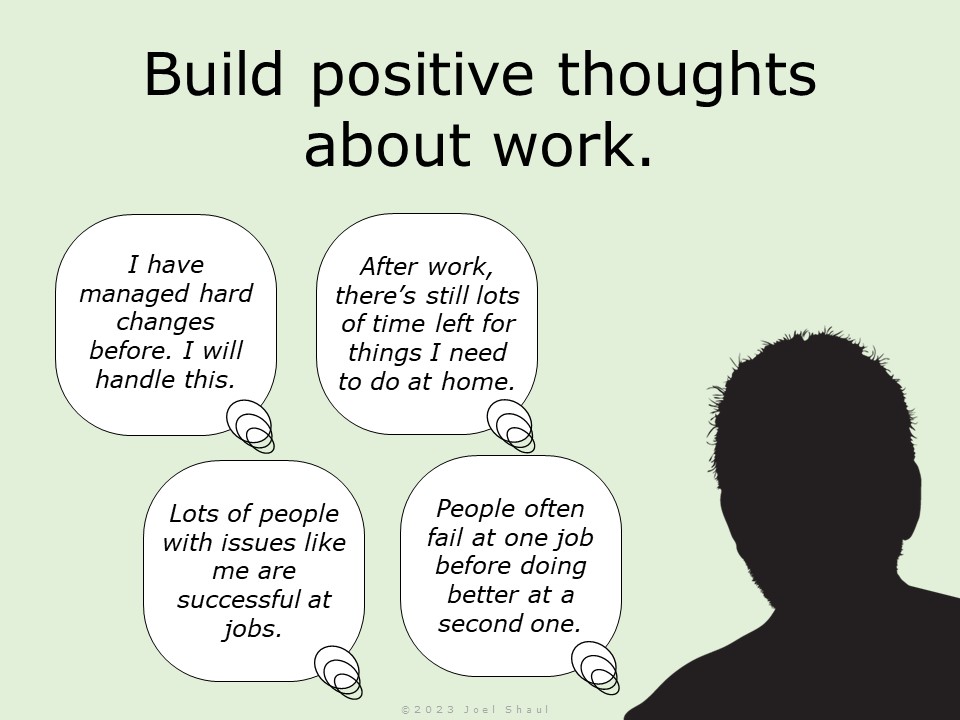
This first pair of teaching panels concerns typical thoughts that can discourage young people with autism who are contemplating the prospect of work.

Our aim should not be to gloss over real challenges and obstacles – young people with autism may have many – but rather, to reduce the debilitating potential of some exaggerated or unsubstantiated concerns.

If you want to explore further regarding automatic negative thoughts, you might check out this short video and these CBT thought bubble materials.

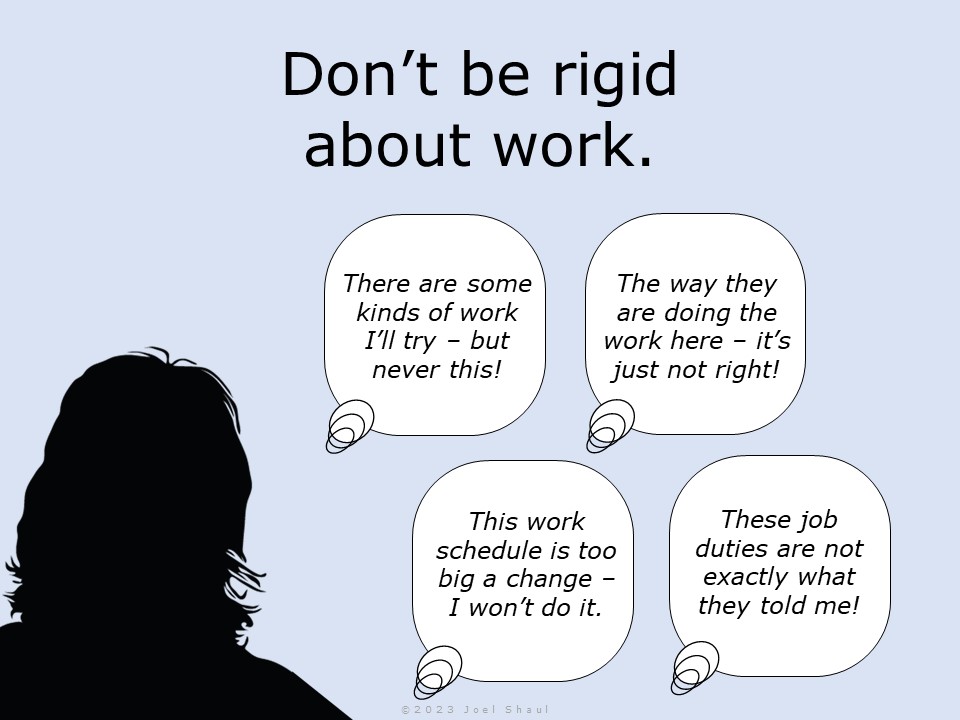
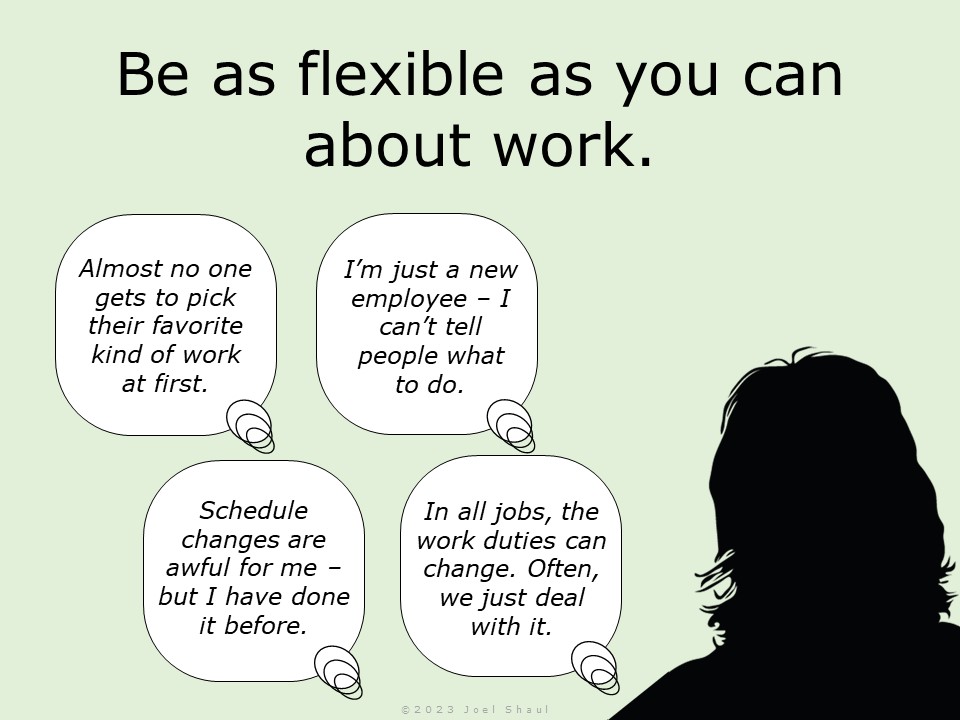
Many people with autism are successful in work, but aversion to changes in expectations and routines can hit them hard, especially at first.

If you would like to broaden your discussion of rigidity, you could check out this video on rigidity or these Rigidity/Flexibility Cards.

Young people with autism are familiar with hierarchies in their homes and schools, but when entering the workplace, they might be confused with new and complex systems of authority and accountability. You might wish to reference portions of this simple and visual guide to hierarchies based on moveable sticky notes.

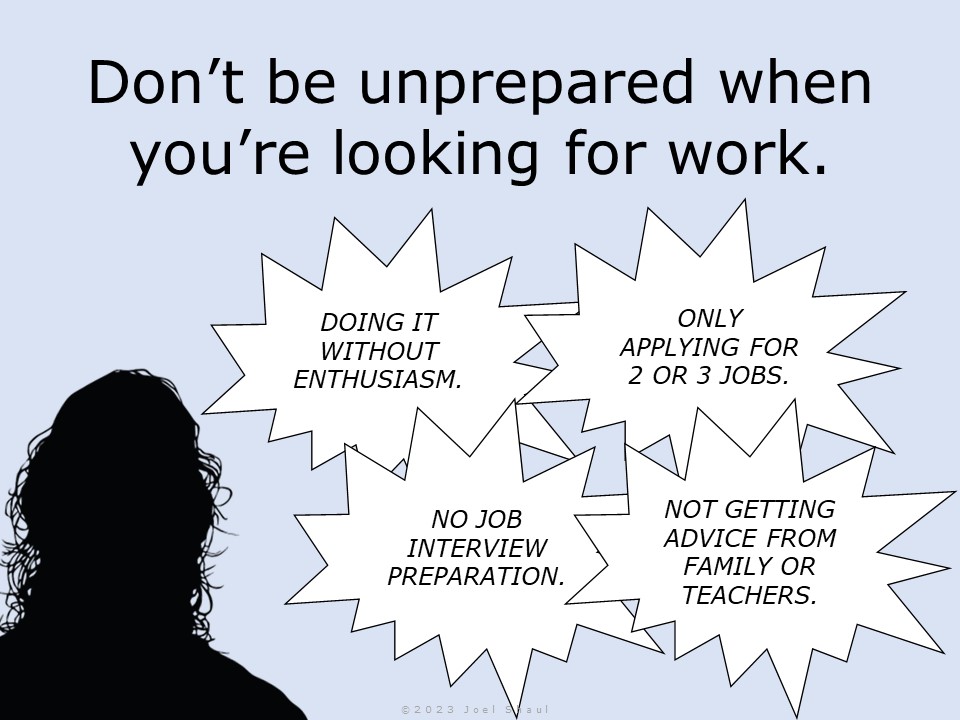
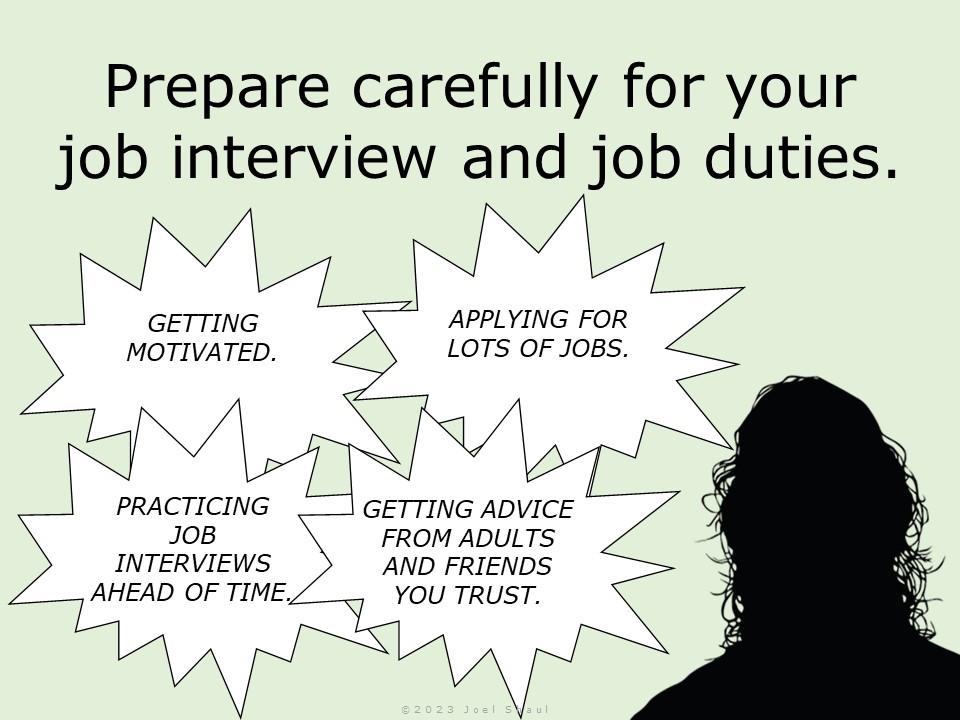
Please reference the videos and learning materials in Section 4 of this series, which is all about job interviews.

YouTube videos by autistic people about their own job preparation and interview strategies are a rich source of practical advice and inspiration – also reference in Section 4.

Quite a lot of the advice to young workers would of course apply to everyone – not just young people on the autism spectrum.


This resource is designed to be used with other materials you may access below.

Joel Shaul, LCSW

Intro: Workplace preparation resources for young people with ASD

Part 2: Workplace preparation – printable teaching panels

Part 3: Workplace preparation – Q & A cards

Part 4: Job interview skills – how to teach it and provide practice
Part 1: Intro – Workplace preparation for young people with ASD. Therapy strategies & free resources.

This four-part series, containing ideas for teaching and therapy as well as free, downloadable materials, is to help mental health professionals, educators and speech therapists to promote motivation, practical understanding and positive attitudes about work for their young clients on the autism spectrum.

There are links to each of the four sections at the bottom of this page.

Reasons to build workplace readiness into teaching, therapy and speech:

1. Young adults on the spectrum with work exposure tend to do better, socially and emotionally.

In my own professional experience, my clients who have had work opportunities, either paid or volunteer, have done better overall socially and emotionally as young adults compared to those who have not worked.

After their formal education has stopped, work can provide opportunities for continued growth and accomplishment outside the home. Young people on the spectrum who work, even a few hours a week or in volunteer positions, tend to maintain better self-care skills and social skills. Many are assets to their employers. Those of us who can sometimes “recognize” autistic people out in the working world appreciate their being there so much.

A few of my young, autistic clients have had gifted intelligence or rare abilities. Helping these young people to negotiate some of the social and emotional challenges of initial work experiences has sometimes helped them to aspire to their potential.

2. Filling in knowledge gaps, reinforcing emotional preparation and troubleshooting problems can make young people with ASD more successful in their initial work experiences.

Although there are limits to what we can do in our therapy offices, speech rooms and classrooms to promote work readiness, we should all do what we can.

Once years ago, I happened to be standing next to one of my students when he got a call on his cell from a grocery store supervisor who had received his application and wanted to set up an interview. I overheard this student quote directly from some of the stock answers to job interview questions that we had recently practiced in our social skills group. Clearly, what he had learned in our sessions was helpful to him. He ended up getting hired there – his very first job.

3. Workplace preparation is even useful for individuals who are not destined for the workplace.

Some young people with autism might have co-occurring disorders, such as intellectual disability or severe mood or anxiety disorders, making work difficult to realize outside of sheltered workshops. 

In my experience, isolated young people on the spectrum, whose exposure to the world has been largely confined to their homes, schools and computers, show curiosity and lively interest nevertheless in workplace readiness activities, even if conventional employment is not in their future. Although some of the teenagers I have seen in schools and in my office have subsequently not gone on to work very much as young adults, I believe that what they learned about the workplace still has value. They may be able to apply this knowledge later in life if vocational opportunities come up. At the very least, they are building a worthwhile fund of knowledge about the workplace, which may give them useful insights into the lives of family members and other people they know.

Here are the links to all the parts of this series on vocational preparation.

Intro: Workplace preparation resources for young people with ASD

Part 2: Workplace preparation – printable teaching panels

Part 3: Workplace preparation – Q & A cards

Part 4: Job interview skills – how to teach it and provide practice
Joel Shaul, LCSW