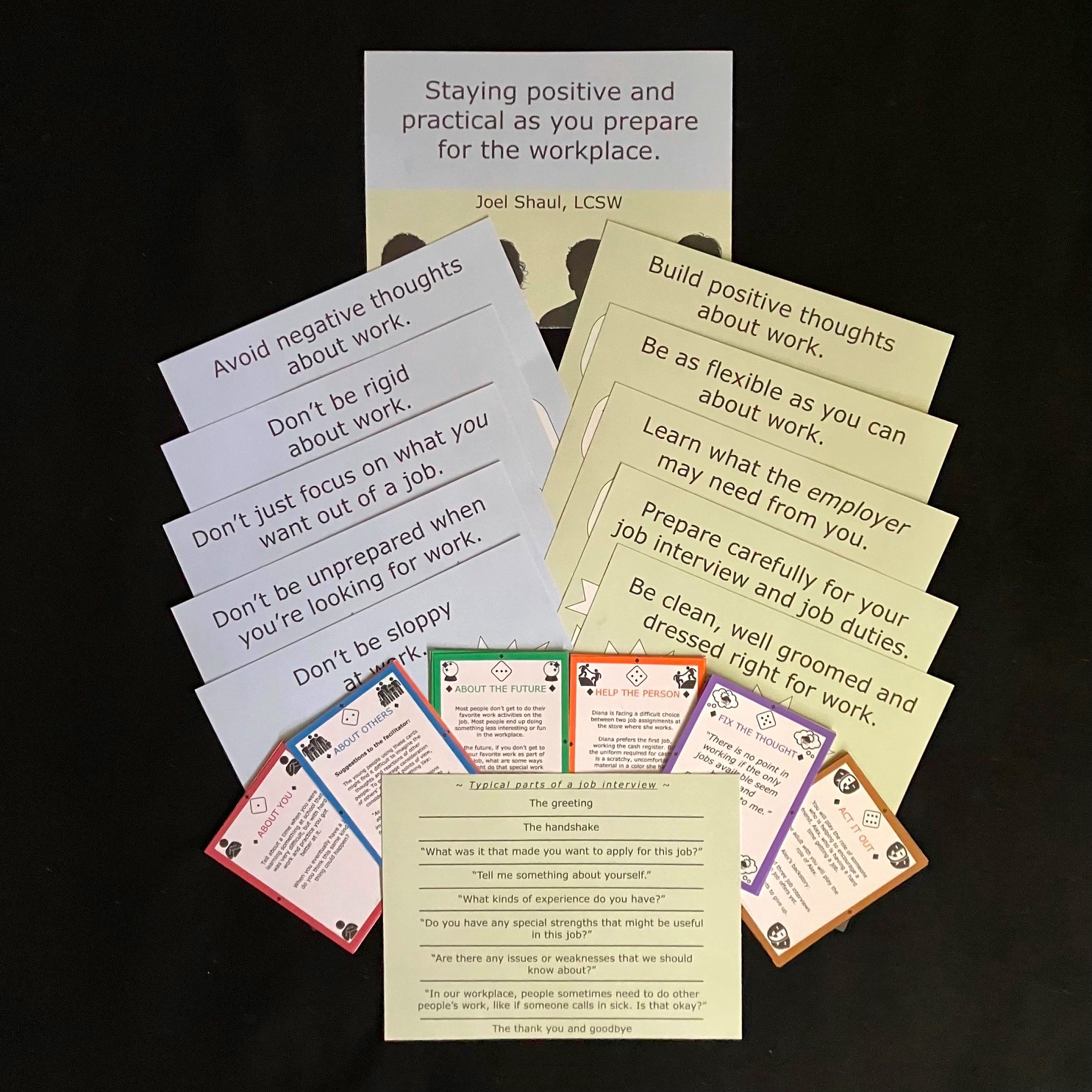
Part 4: Workplace preparation – Job interview skills, ways to teach them

Almost all of us find interviewing for a job to be a daunting social experience. 

There is so much at stake in a short, intense conversation. And everything about us – our words, demeanor, appearance, and life history – is under focused scrutiny.

Young people on the autism spectrum preparing for job interviews often feel this pressure with great intensity. The demands to answer unfamiliar questions and make a good impression can feel overwhelming to them.

In my own work helping young people with ASD to cope with social and emotional challenges, I have spent many hours helping individuals and groups to get ready for job interviews. My impression overall is that my clients have enjoyed this work and benefited from it.  Some have told me later that job interview practice really helped them feel more confident and competent in a job interview.

Here I would like to summarize some of the methods I have used to boost job interview skills in young people with autism.

Raise awareness about realities of employment and the role of employers and employees.

Young people in general, and those with ASD in particular, often lack essential knowledge regarding the employer/employee relationship. So far in their lives, the adults in the lives of young people have been primarily parents and teachers providing nurturance and education.  In employment, it’s different – you are the adult now, the one providing the service to others.

Parts 1, 2 and 3 in this series are to reinforce basic knowledge about employment. If you have not done so already, I suggest you reference at least some parts of the earlier resources before attempting practice job interviews.

Obviously, the responsibilities of employment may be beyond the capacity of some of our young adult clients, who might be very strongly affected by some debilitating aspects of ASD or by co-occurring issues such as intellectual disability or clinical anxiety and depression. Still, in my own work in groups and classrooms, I have generally had everyone take part in workplace awareness education and job interview practice, including individuals who did not appear ready to move into conventional work situations. I feel those not destined for regular employment still benefited by learning important information about what employment is like.

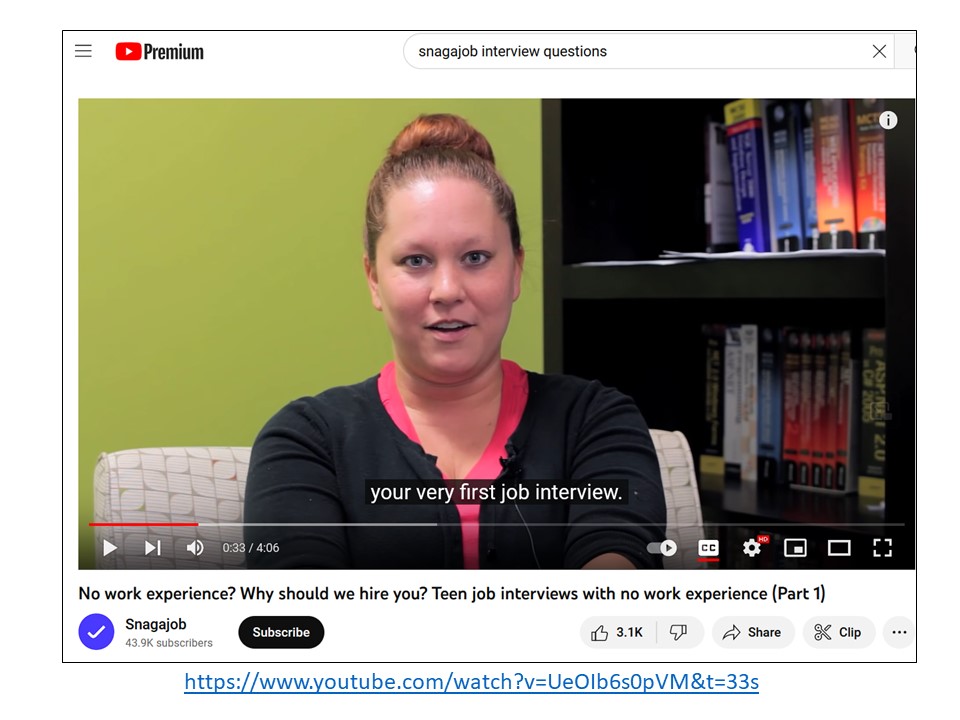
A great way to build interest and awareness about employment is to show YouTube videos on the subject.

I have used the “Snagajob” series below over and over again. It has a tone of levity, but is very informative. It focuses on an aspect of job interviewing that many people with autism find especially difficult: answering tricky questions. Click on the picture below to link to these videos.
Address non-verbal elements of job interviewing.

Points of discussion should include:

*Shaking hands. See the video below. I have spent whole sessions practicing this with individuals and groups.

*Non-verbal Do’s and Don’t’s of job interviews. Years ago, in a practice job interview, a student of mine elected to end the interview by skipping the handshake and giving me, the interviewer, a warm embrace instead.

*Eye contact. Troubleshoot workarounds for when someone is expected to use eye contact but they have an aversion to doing this.

*Posture.

*Attire and hygiene.

Increase awareness of the most common interview questions, and acceptable replies.

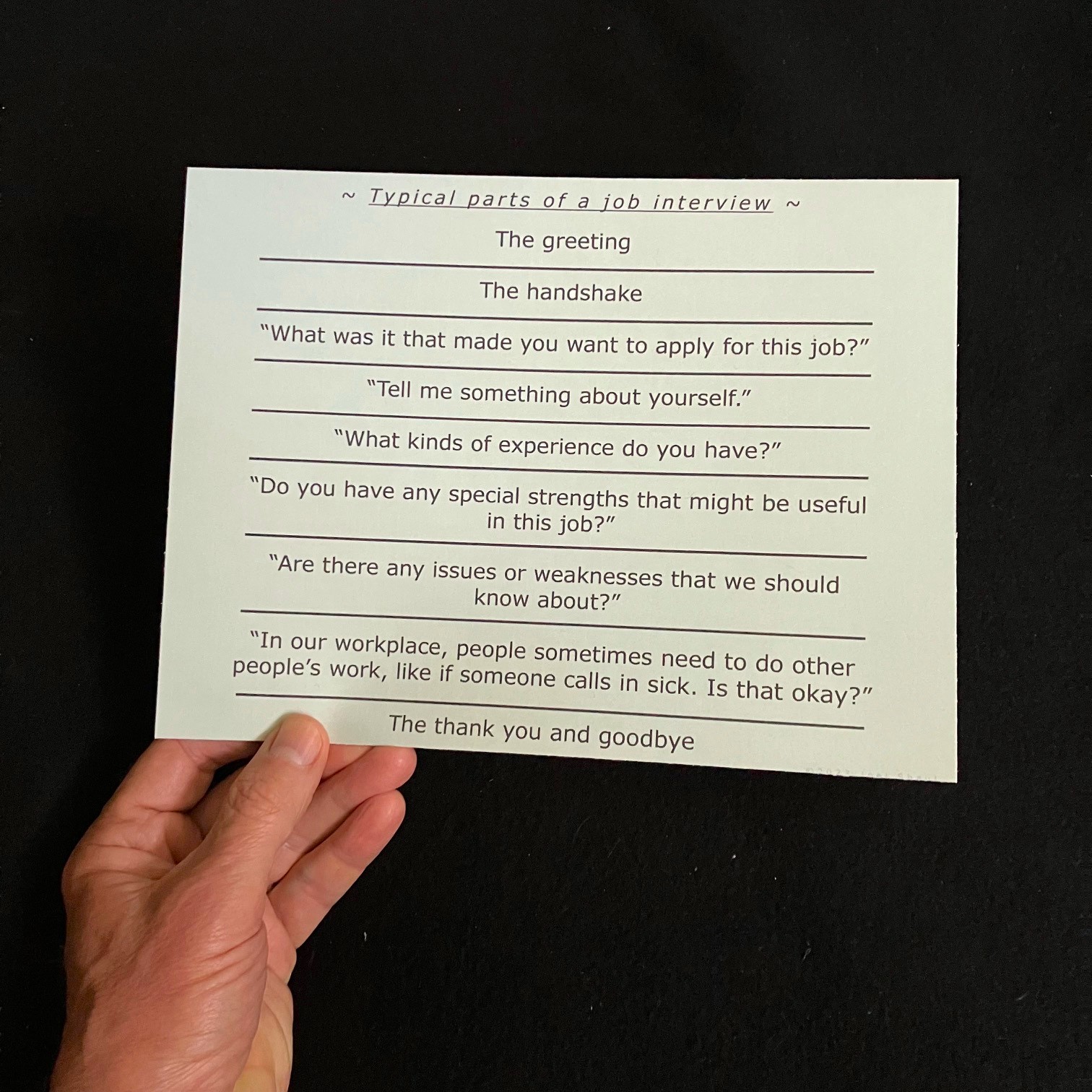
Print out the single-page list of common interview questions. When you start with the practice interviews, I suggest you mainly stick with these questions at first.
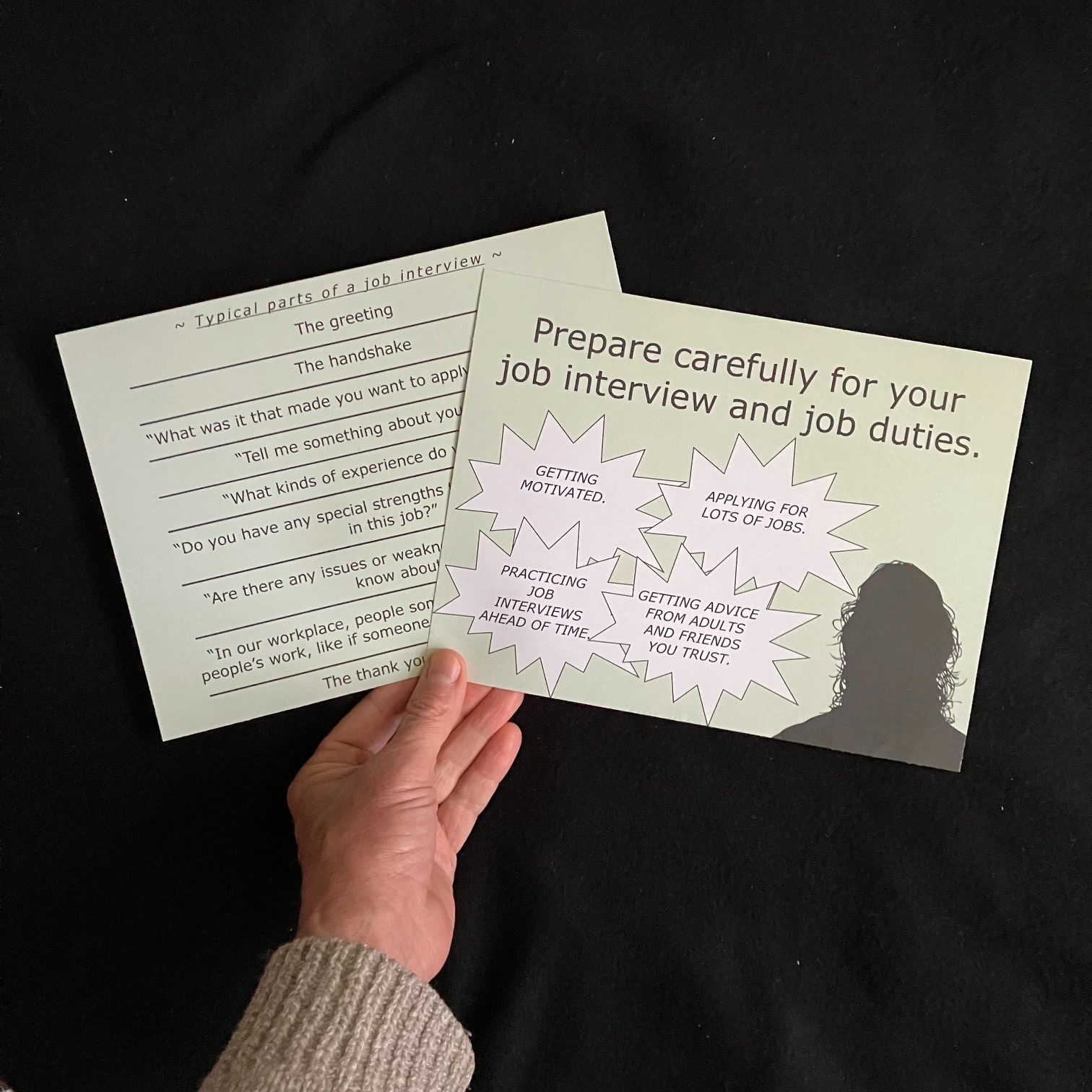
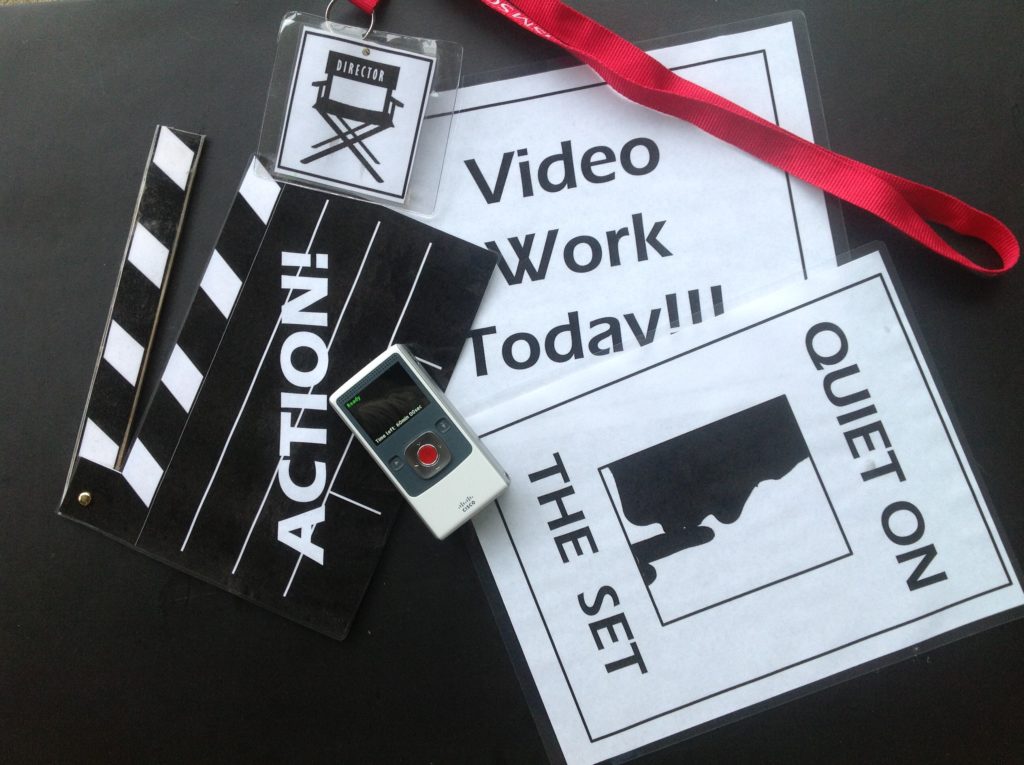
Video the practice job interviews if you can! Most young people really like this, and it makes practice interviewing a much more effective teaching tool.

I have a tutorial on simple ways to do video modelling. I hope you will try doing this.
This image has an empty alt attribute; its file name is Social-Skills-Teaching-Video-Modeling-1-2-1024x765.jpg

Joel Shaul, LCSW


Intro: Workplace preparation resources for young people with ASD

Part 2: Workplace preparation – printable teaching panels

Part 3: Workplace preparation – Q & A cards

Part 4: Job interview skills – how to teach it and provide practice
Part 3: Workplace preparation Q & A cards (printable & screen-based)

A game-like card activity to promote workplace readiness in teens and young adults on the autism spectrum, in printable and screen-based versions.

In German: Bereit für den Arbeitsplatz – Karten

Hebrew translation of this resource

Why I made these cards

To engage teens and young adults on the spectrum in productive discussions about preparing for adulthood, I have found it useful to employ various media and game-like methods. Q & A card resources are one of my mainstays. This method helps to break up the usual adult-questioning-the-child dynamic in therapy and teaching. And in small-group and classroom work, the turn-taking format helps to give everyone, including quieter participants, the chance to talk.

Ways to use these cards

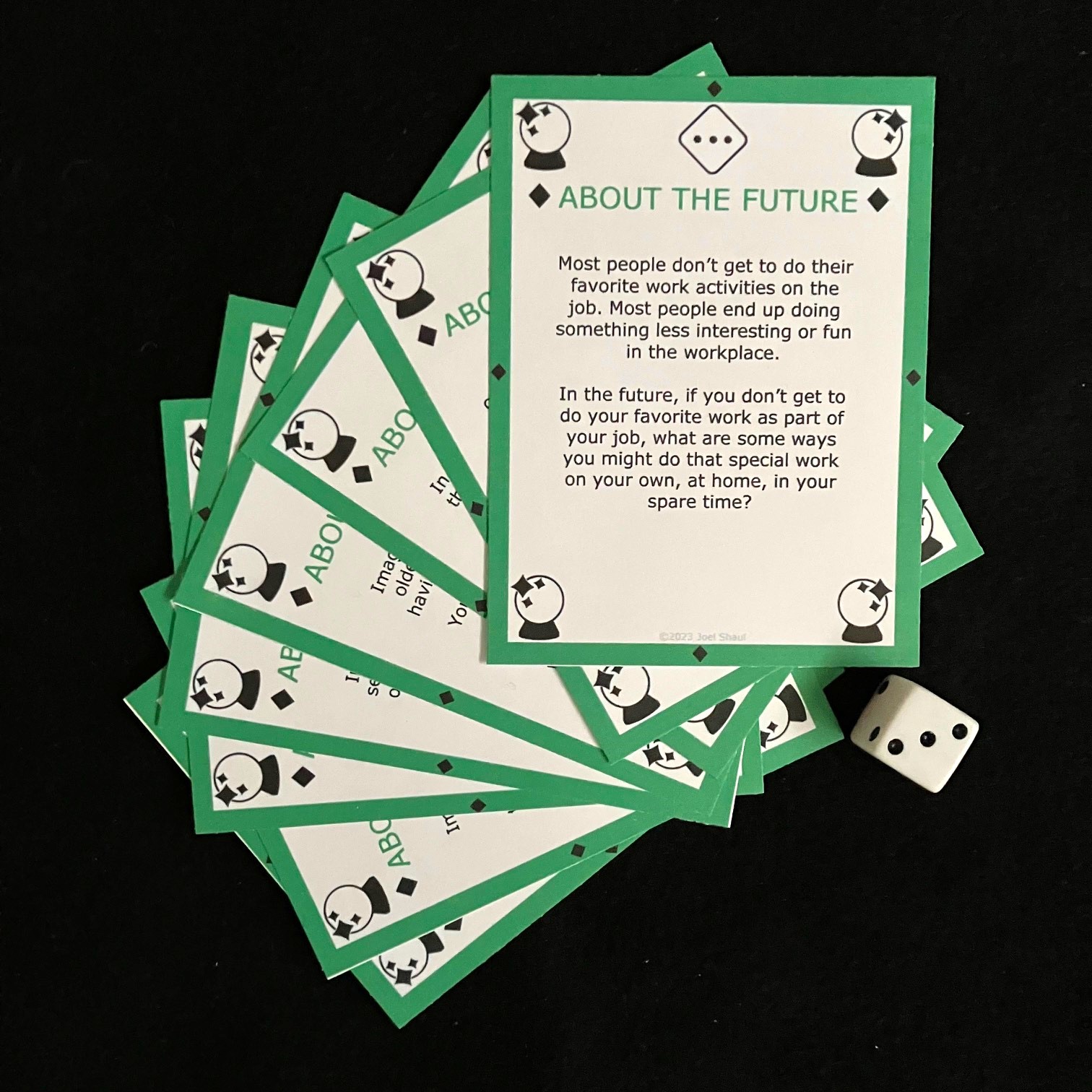
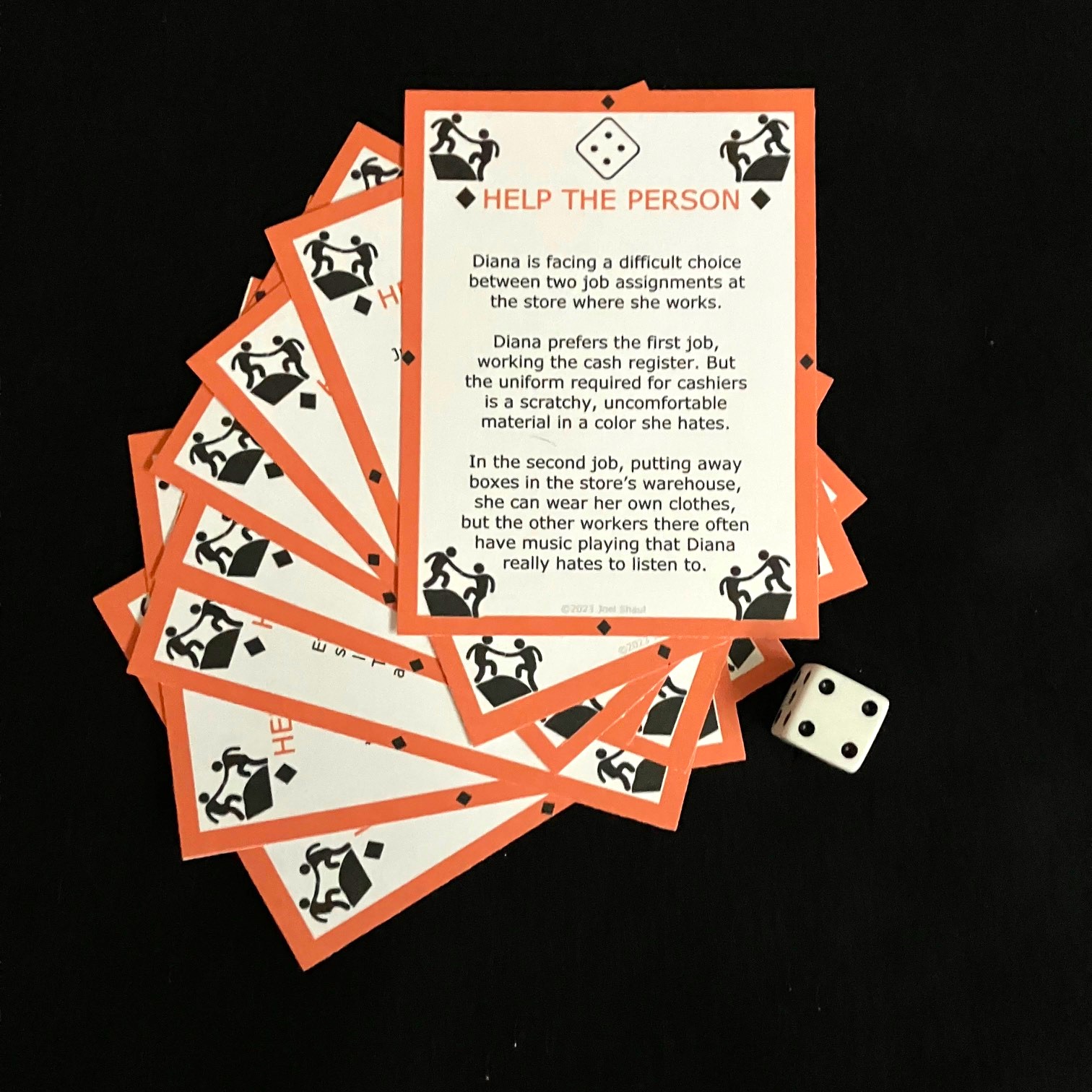
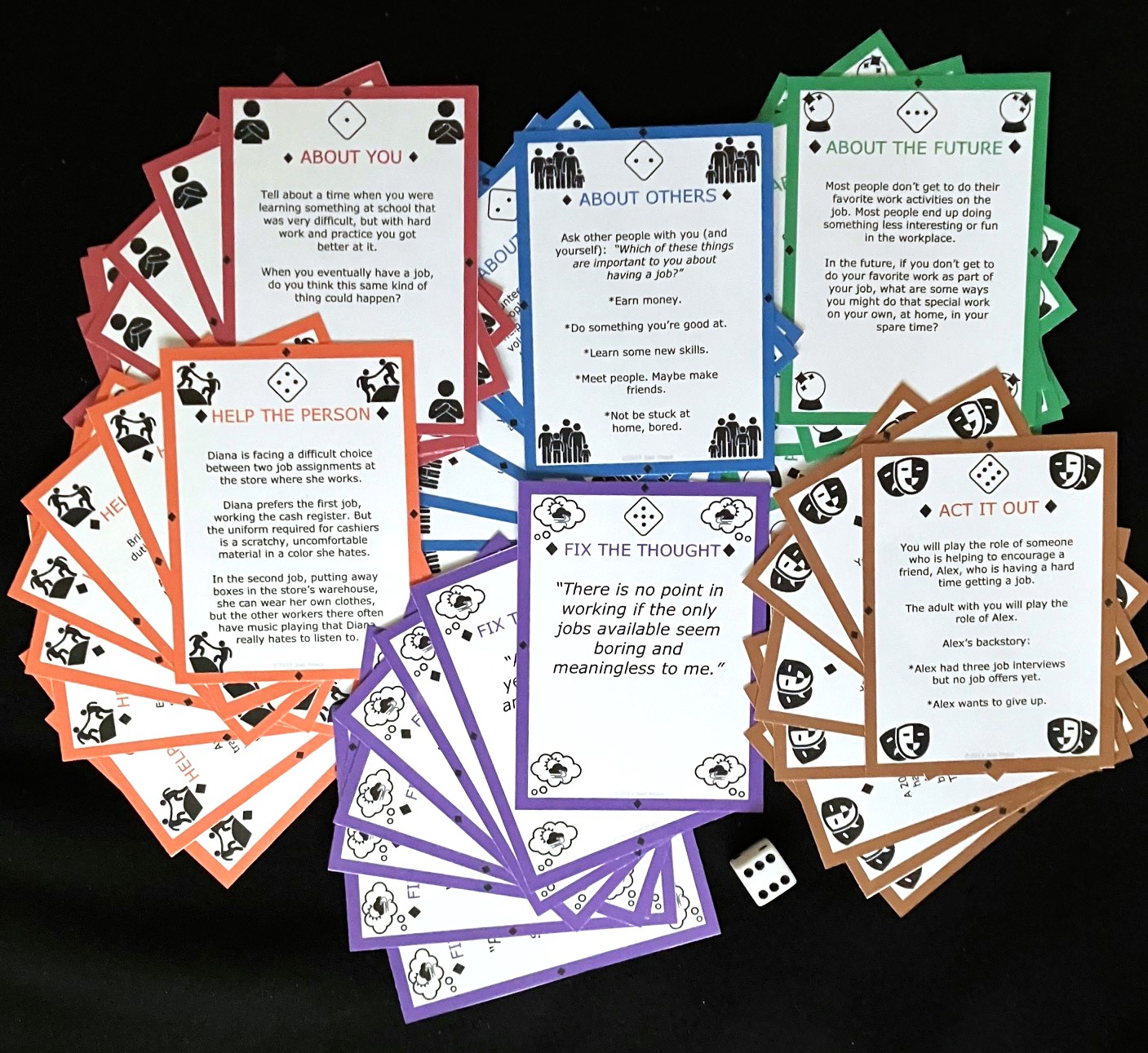
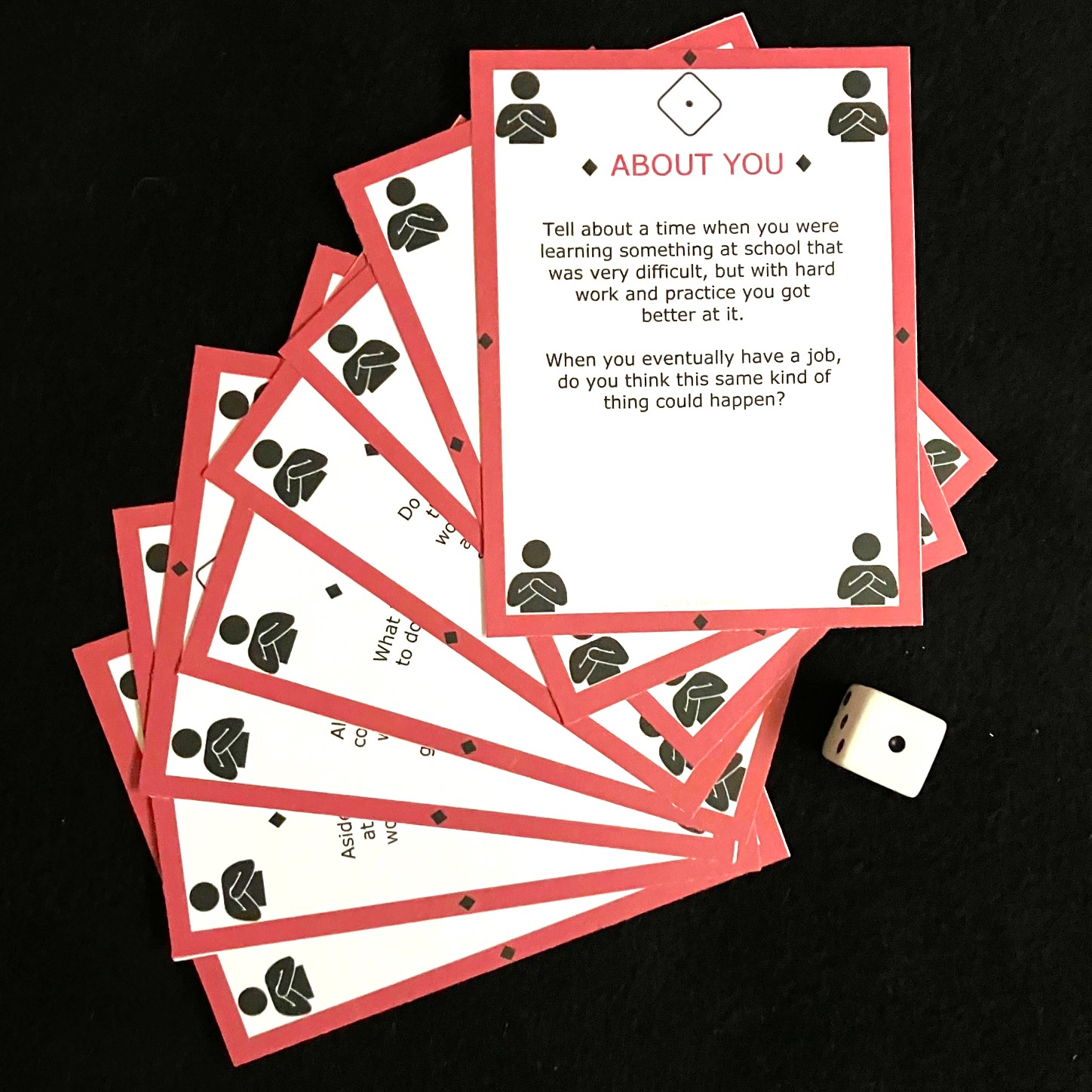
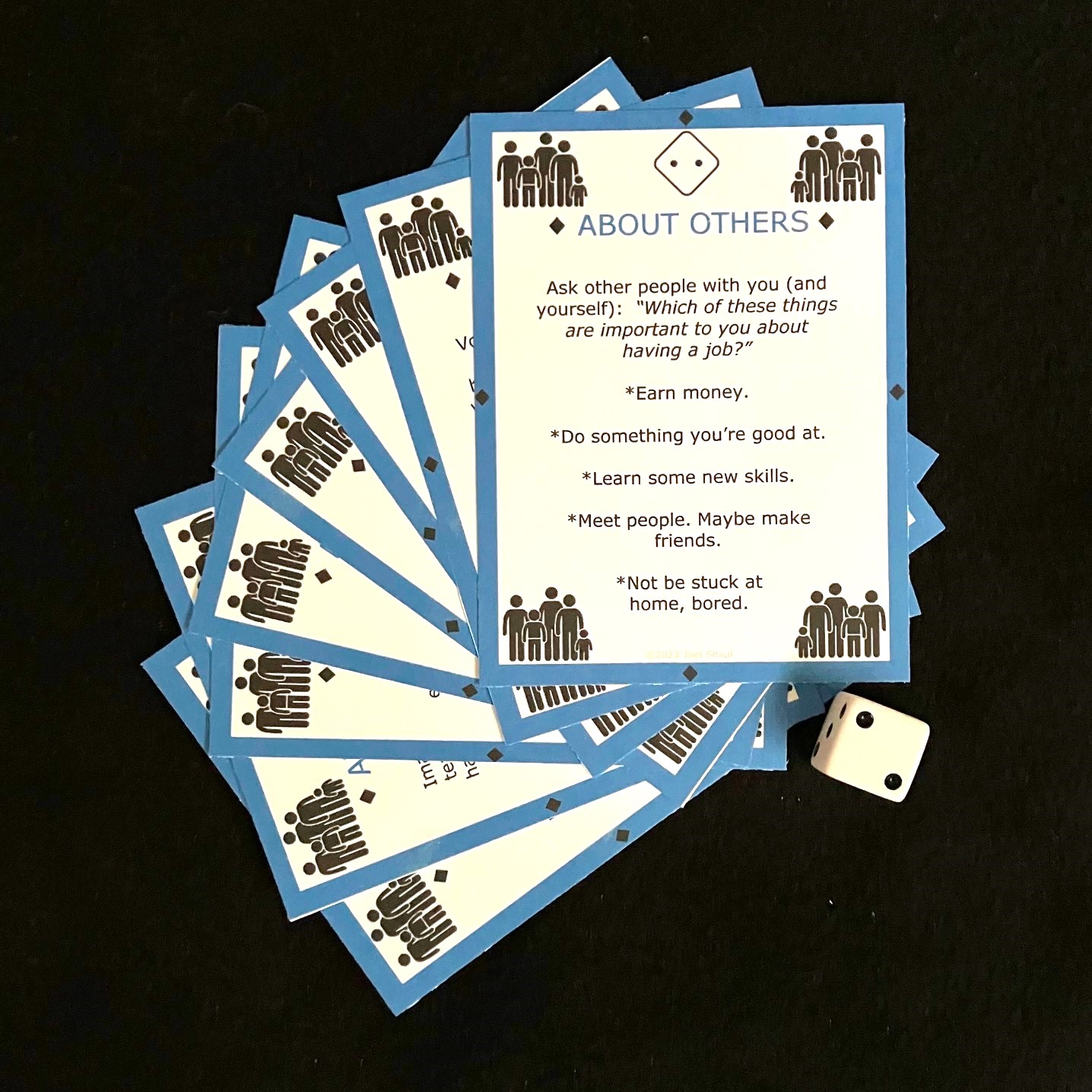
There are six categories of cards, allowing for a game-like element by rolling a die to determine which card a participant has to select.

But you may feel free to use these cards however you like. For example, you can pick through the deck and select the cards you think are most relevant and helpful for the young people you are assisting. You may decide to focus on just one single category of card.

For another card-based resource to explore much broader themes of preparing for adulthood, check out Young Adult Future Cards.

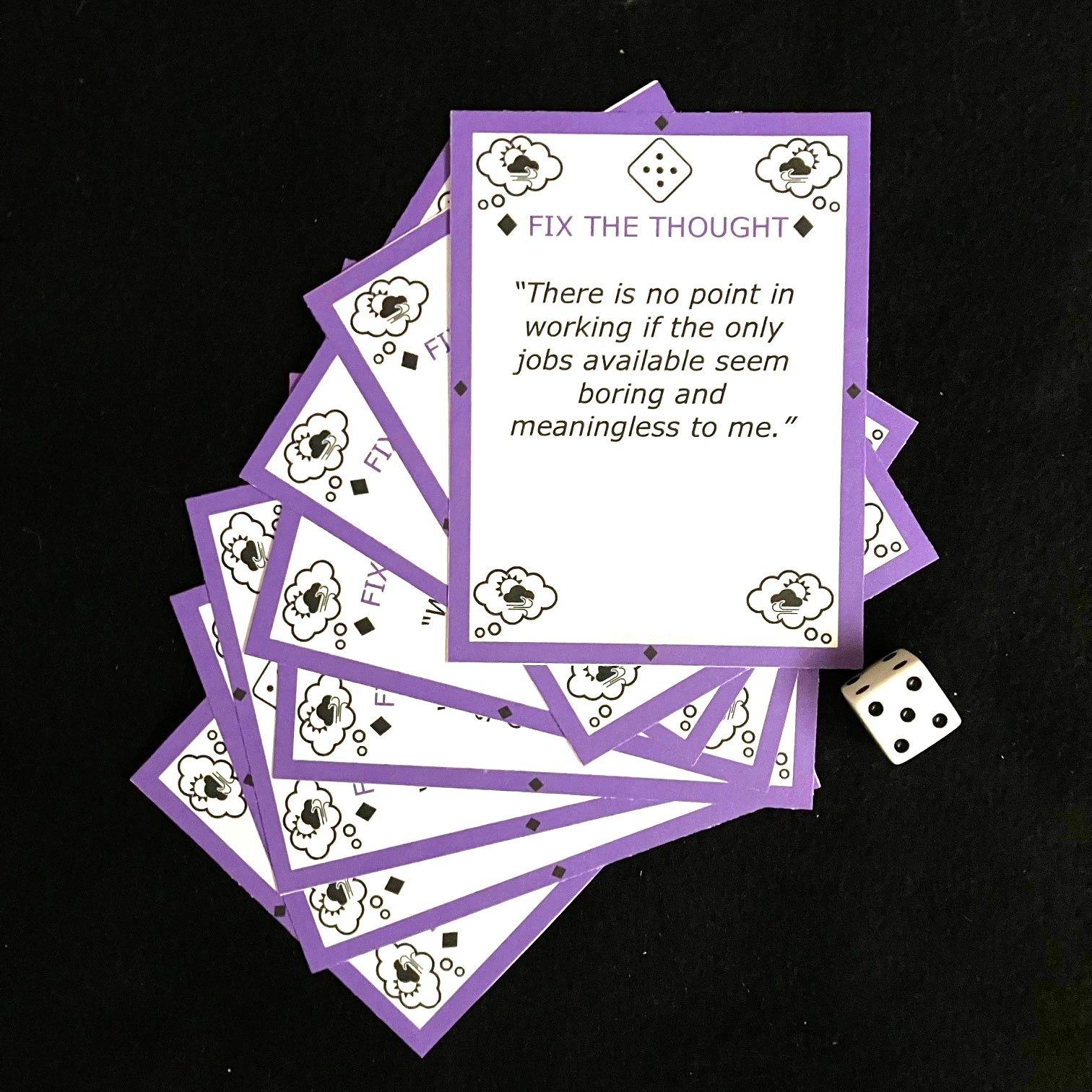
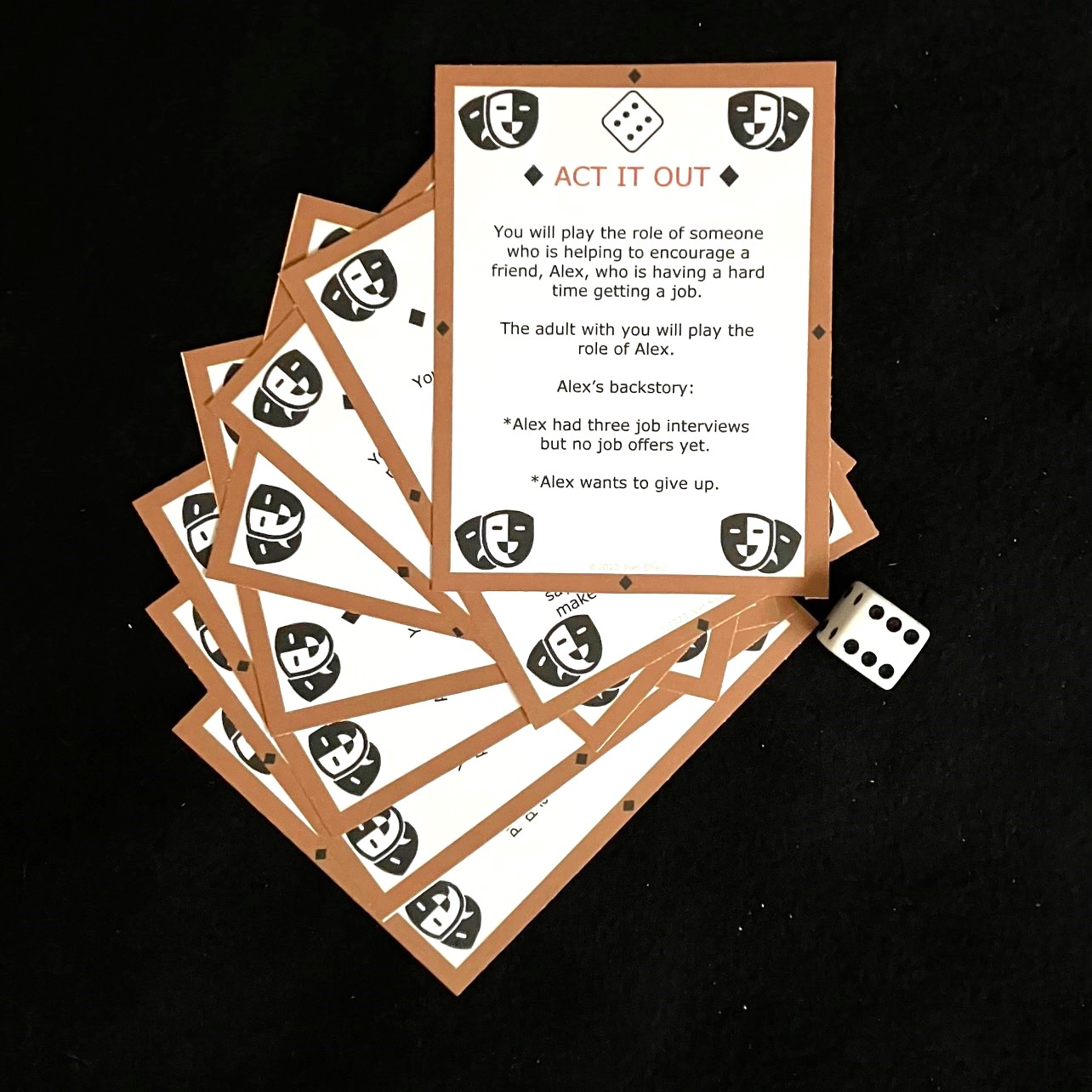
Here are the six different card categories.

You, the facilitator in this activity, can use the “Fix the Thought” cards in the following manner if you like: You, the facilitator, play the role of a person having this thought. The participants talk to you and offer you alternative ways of thinking.

If you would like to expand on the theme of automatic negative thoughts, check out this video and this resource on “Poison Thoughts.”

You, the facilitator, play an active role with these “Act it Out” cards. Each card gives “stage directions” for carrying out a very short role play.


These cards are part of a series of vocational preparation materials, which you may access by clicking on the links below.

Joel Shaul, LCSW


Intro: Workplace preparation resources for young people with ASD

Part 2: Workplace preparation – printable teaching panels

Part 3: Workplace preparation – Q & A cards

Part 4: Job interview skills – how to teach it and provide practice
Part 1: Intro – Workplace preparation for young people with ASD. Therapy strategies & free resources.

This four-part series, containing ideas for teaching and therapy as well as free, downloadable materials, is to help mental health professionals, educators and speech therapists to promote motivation, practical understanding and positive attitudes about work for their young clients on the autism spectrum.

There are links to each of the four sections at the bottom of this page.

Reasons to build workplace readiness into teaching, therapy and speech:

1. Young adults on the spectrum with work exposure tend to do better, socially and emotionally.

In my own professional experience, my clients who have had work opportunities, either paid or volunteer, have done better overall socially and emotionally as young adults compared to those who have not worked.

After their formal education has stopped, work can provide opportunities for continued growth and accomplishment outside the home. Young people on the spectrum who work, even a few hours a week or in volunteer positions, tend to maintain better self-care skills and social skills. Many are assets to their employers. Those of us who can sometimes “recognize” autistic people out in the working world appreciate their being there so much.

A few of my young, autistic clients have had gifted intelligence or rare abilities. Helping these young people to negotiate some of the social and emotional challenges of initial work experiences has sometimes helped them to aspire to their potential.

2. Filling in knowledge gaps, reinforcing emotional preparation and troubleshooting problems can make young people with ASD more successful in their initial work experiences.

Although there are limits to what we can do in our therapy offices, speech rooms and classrooms to promote work readiness, we should all do what we can.

Once years ago, I happened to be standing next to one of my students when he got a call on his cell from a grocery store supervisor who had received his application and wanted to set up an interview. I overheard this student quote directly from some of the stock answers to job interview questions that we had recently practiced in our social skills group. Clearly, what he had learned in our sessions was helpful to him. He ended up getting hired there – his very first job.

3. Workplace preparation is even useful for individuals who are not destined for the workplace.

Some young people with autism might have co-occurring disorders, such as intellectual disability or severe mood or anxiety disorders, making work difficult to realize outside of sheltered workshops. 

In my experience, isolated young people on the spectrum, whose exposure to the world has been largely confined to their homes, schools and computers, show curiosity and lively interest nevertheless in workplace readiness activities, even if conventional employment is not in their future. Although some of the teenagers I have seen in schools and in my office have subsequently not gone on to work very much as young adults, I believe that what they learned about the workplace still has value. They may be able to apply this knowledge later in life if vocational opportunities come up. At the very least, they are building a worthwhile fund of knowledge about the workplace, which may give them useful insights into the lives of family members and other people they know.

Here are the links to all the parts of this series on vocational preparation.

Intro: Workplace preparation resources for young people with ASD

Part 2: Workplace preparation – printable teaching panels

Part 3: Workplace preparation – Q & A cards

Part 4: Job interview skills – how to teach it and provide practice
Joel Shaul, LCSW