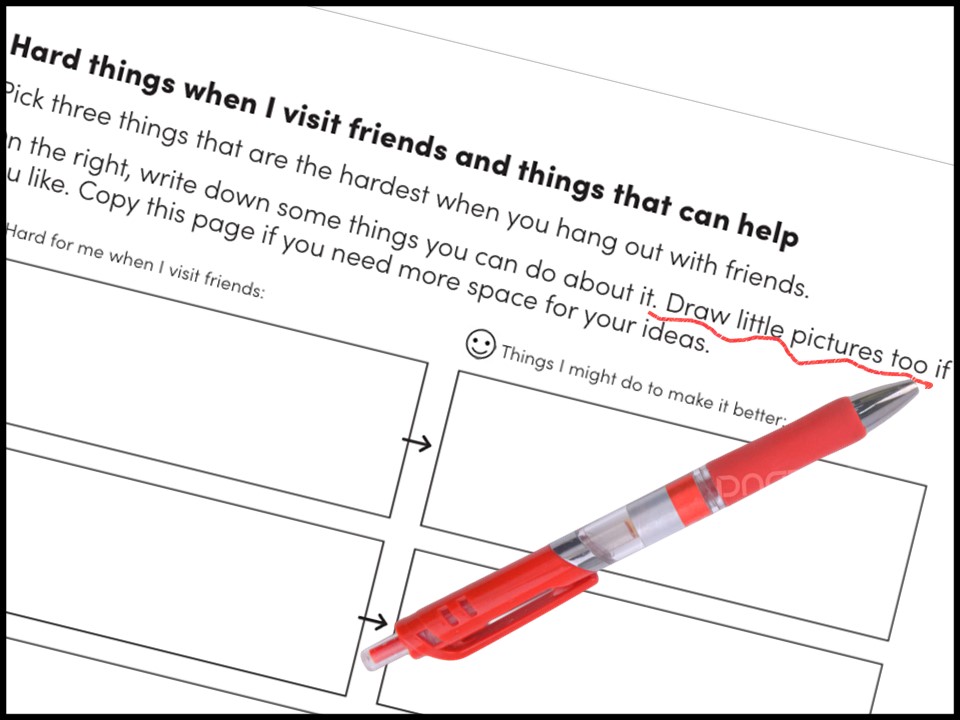

Part 4: Coloring & decorating to add interest & levity to social & emotional learning.

Doing coloring during therapy activities can be beneficial in several ways.

In Part 2 and Part 3 in this series, I described ways that drawing can be used to help social emotional learning in various ways. In this following section, I provide examples and explanation regarding a rather different use of crayons, pencils and markers – coloring and decorating – and how this can enhance our therapy initiatives.

Coloring and decorating might seem like pointless and distracting activities to encourage in a therapy setting. But when used periodically and strategically, coloring can help a child to relax, focus on a therapy task and prolong their attention to an issue of concern during the session. Having the child color or decorate a therapeutic tool has the potential to personalize the task and to help a child to increase investment and commitment to the work.

Here are some examples of therapeutic coloring from my free downloads and from one of my children’s books.

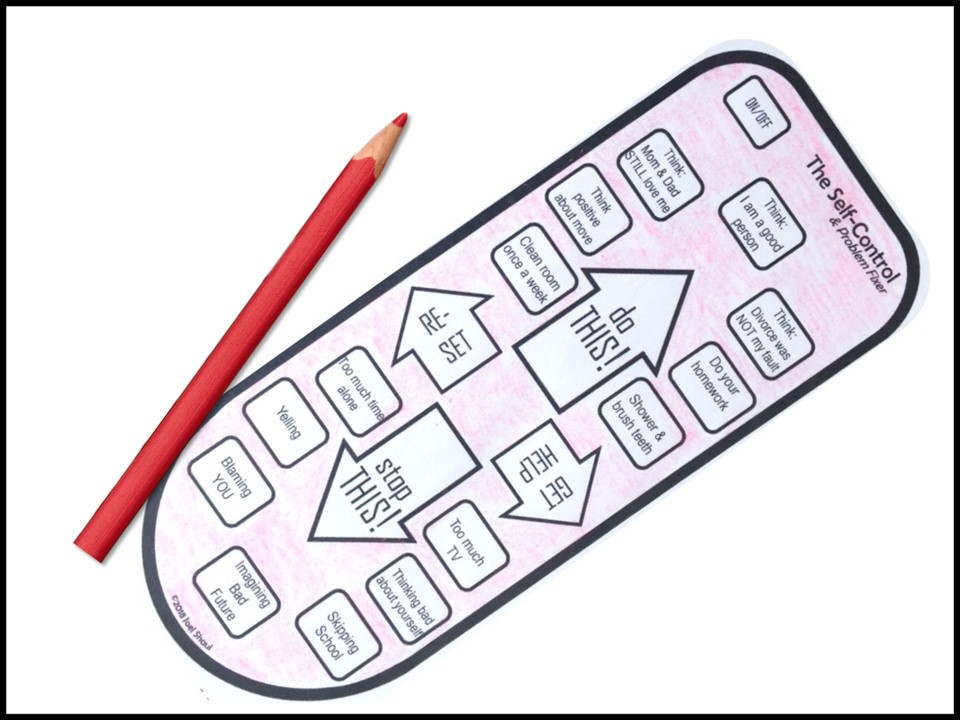
The Self-Control and Problem Fixer
autism child emotion art therapy free

This text on this customizable resource is typed into textboxes on the free download. You assist the child with this at the computer, acting as advisor and “secretary.” After you print it and help the child to cut it out, the child picks out colors and shades the background. This coloring portion can be time consuming, but it affords you, the therapist, a very good opportunity to discuss therapy issues while the child is looking downward, relaxing and coloring.

Remote control channel changer for conversation topics
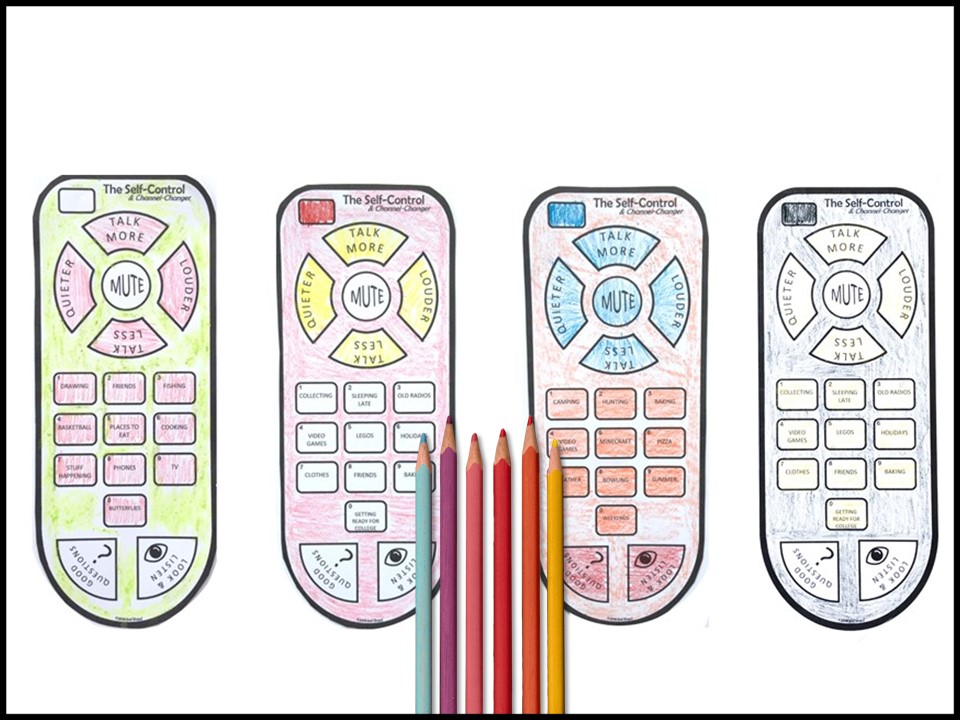
The Remote Control Channel Changer looks something like the Problem Fixer – but it has a different purpose.

The Remote Control Channel Changer looks like the Problem Fixer shown above, but it has an entirely different function – to help raise a child’s awareness of diverse conversation topics. Each of the ten central buttons is blank to begin with and then you fill them in with the child. The free download provides a PowerPoint option in which each button contains a small text box. You and the child type in topics while seated at the computer together.

After you print it and help cut it out, the child colors it in. This provides a relaxed occasion to try out some of the conversation topics listed on the buttons.

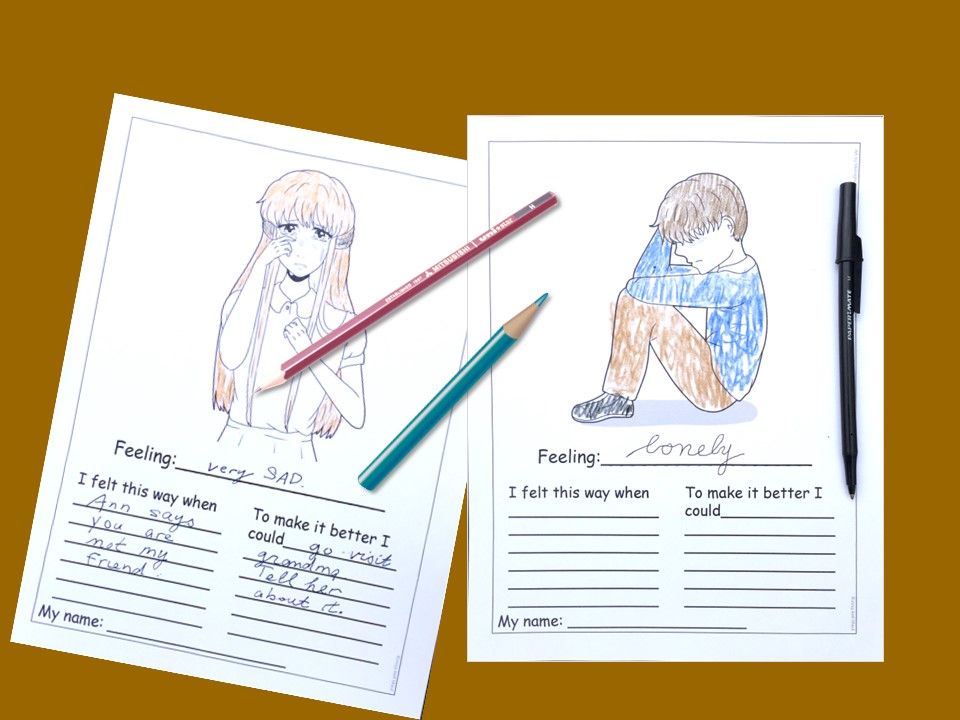
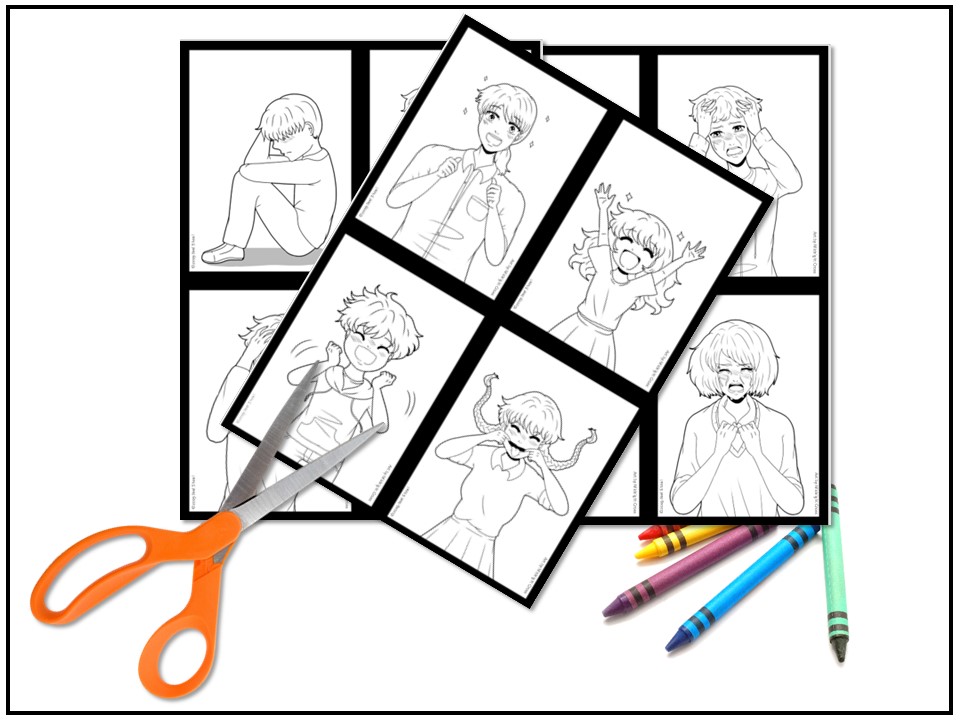
Anime emotion cards and coloring worksheets
autism child anger management free

In my extensive experience using these resources in my own work, nearly all young people on the spectrum, from young child to young adult, elect to color these when given the option of coloring or not coloring. Some adjust the skin tones to more closely resemble their own skin color.
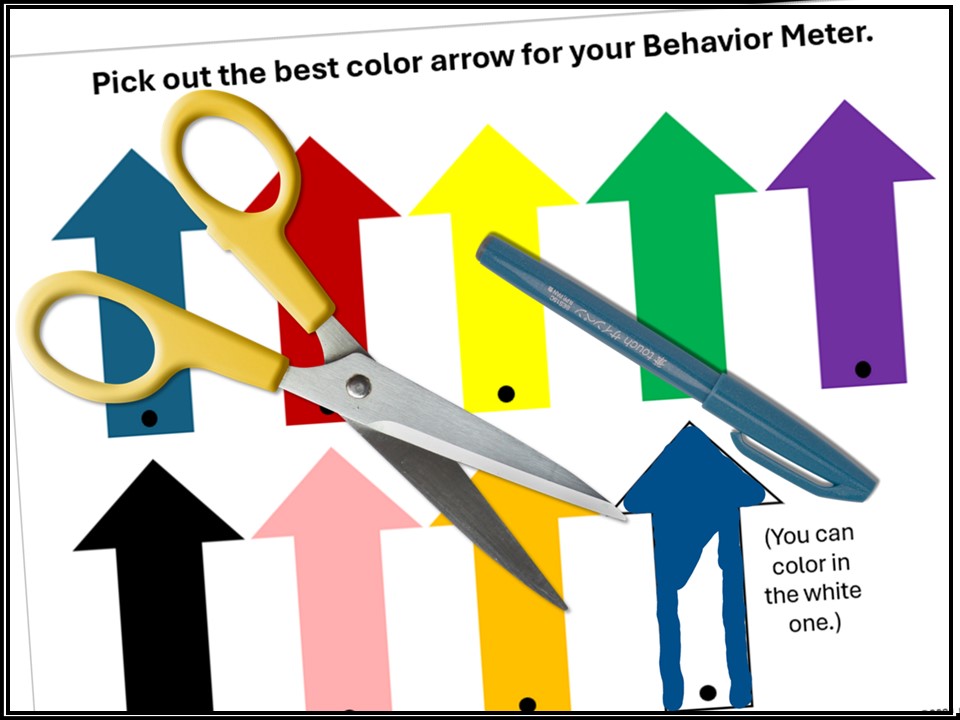
These arrows are components of the Customizable Behavior Meters resource featuring the option of coloring. I include this small example here to emphasize the value of allowing the child to personalize the therapy tools we employ, even in little ways like this, to enhance their own commitment to the work.

Train coloring pages from The Conversation Train Book (2014 Jessica Kingsley Publishers)
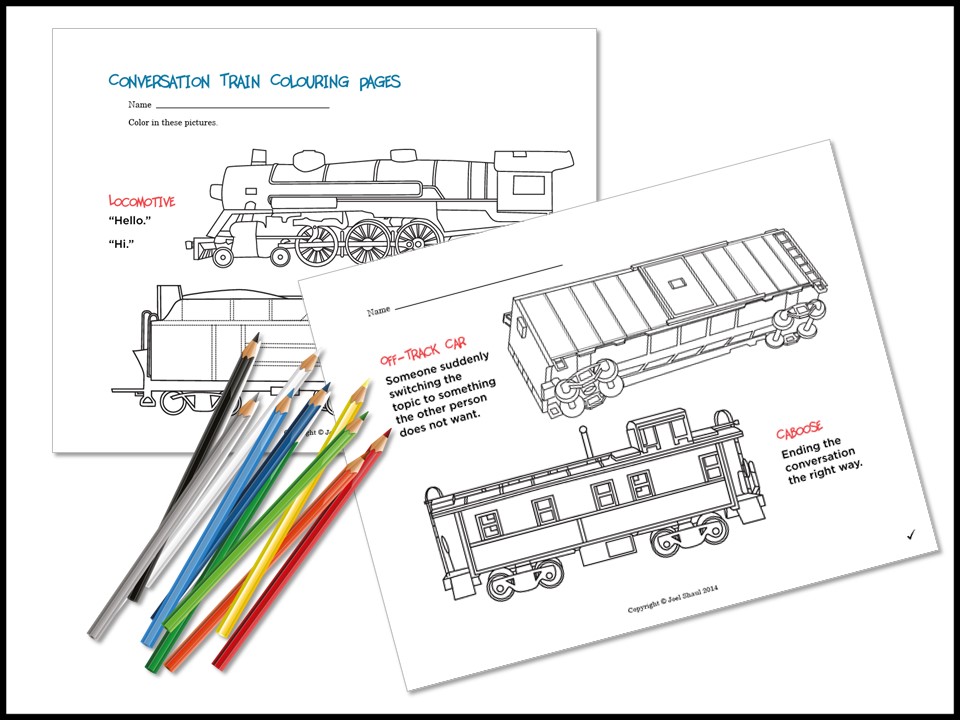
This is a page from my book that uses the parts of a train to represent the different parts of conversation.


The next in this series: Part 5: Creative use of others’ images and AI for social & emotional learning.

Joel Shaul, LCSW


Introduction to series.

Part 1: Reasons to use art in social & emotional teaching. Some guiding principles & professional concerns.

Part 2: Assigning individual drawing tasks for social & emotional learning.

Part 3: Assigning collaborative drawing tasks for social learning.

Part 4: Coloring & decorating to add interest & levity to social & emotional learning.

Part 5: Creative use of others’ images and AI for social & emotional learning.

Part 6: Encouraging & validating the child’s own artistic expression in therapy & teaching.
Part 2: Assigning individual drawing tasks for social & emotional learning.

Why should teachers and therapists have a child on the autism spectrum color and draw while trying to help them with social and emotional skills? Please see Part 1, where I spell out some of the reasons.

There are so many ways to engage children in therapy by asking them to draw something.

Here are a few examples from among the free downloads on this website and my published children’s books. Click on the blue text to access resources.

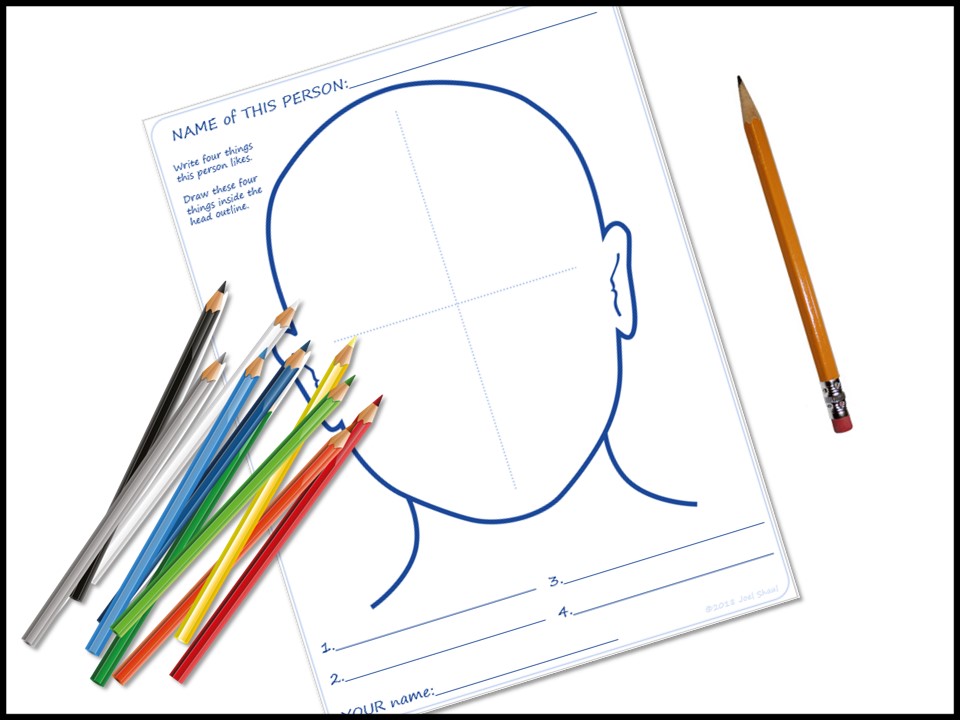
Head Outline Picture Activity to learn about peer interests [drawing option]

This activity also comes in another version requiring no drawing. In that alternative version, you use my prepared PowerPoint download and then copy and paste internet images into the head outline. When you try this activity, you select one option or the other based on the child’s preference and how much time you can devote to this project.

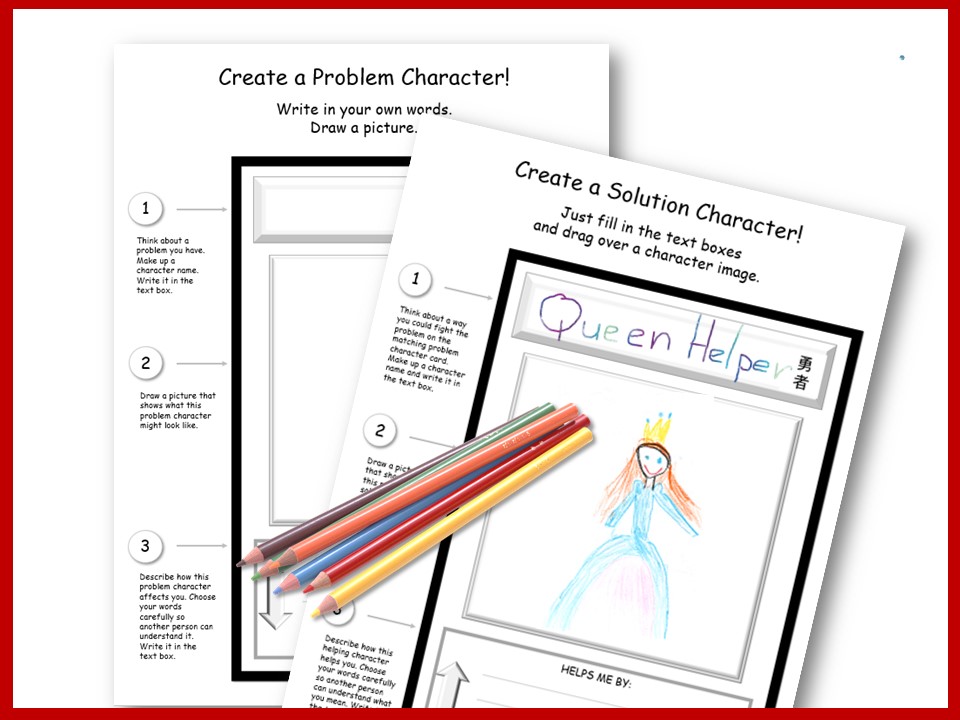
Problem & Solution Cards [drawing option]

Children experiencing multiple social and emotional challenges can feel demoralized by being the “problem child” all the time. One way to help is to show our young clients how to externalize some of their problems onto fantasy characters which we can help them to fight against. Then, we can show children how to create solution “hero” characters representing various ways children can help themselves.

This resource is also available in a much quicker-to-implement version in which you drag and drop stock fantasy images to create the cards. Which option you select depends on how much time you have available and the child’s inclination.

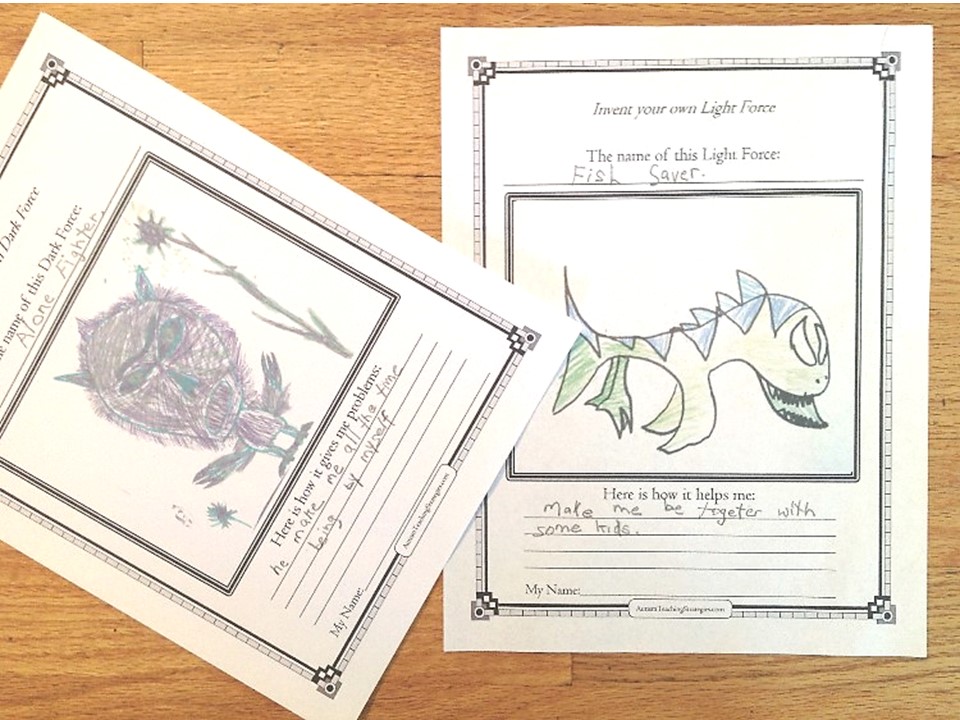
Light Force Dark Force drawing worksheets

This is an earlier version of the Problem and Solution Cards.

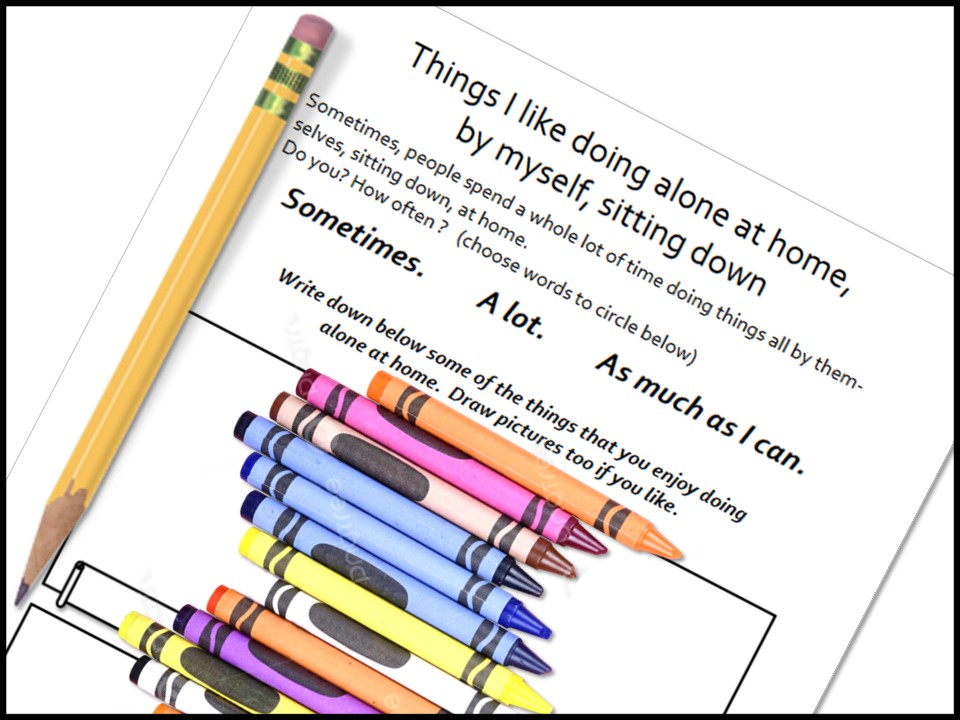
Seven social skills worksheets for children who are isolated

On a couple of these worksheets, there is an option to draw small pictures. When I use these worksheets, many kids do select the option of drawing.

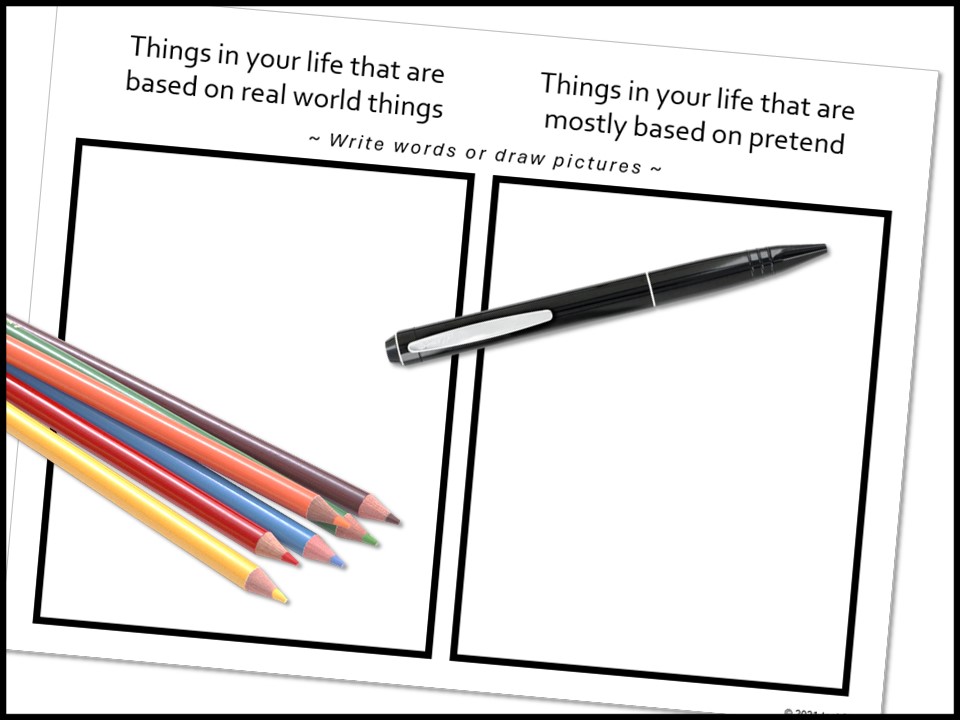
Fantasy Obsession worksheets & checklists with drawing options

This drawing activity is part of a large group of free resources to help raise a child’s awareness of how they are affected, in both helpful and potentially harmful ways, by various kinds of fantasy and pretend. Given the option of writing down words or drawing, on this worksheet many children opt to draw or to combine both writing and drawing.

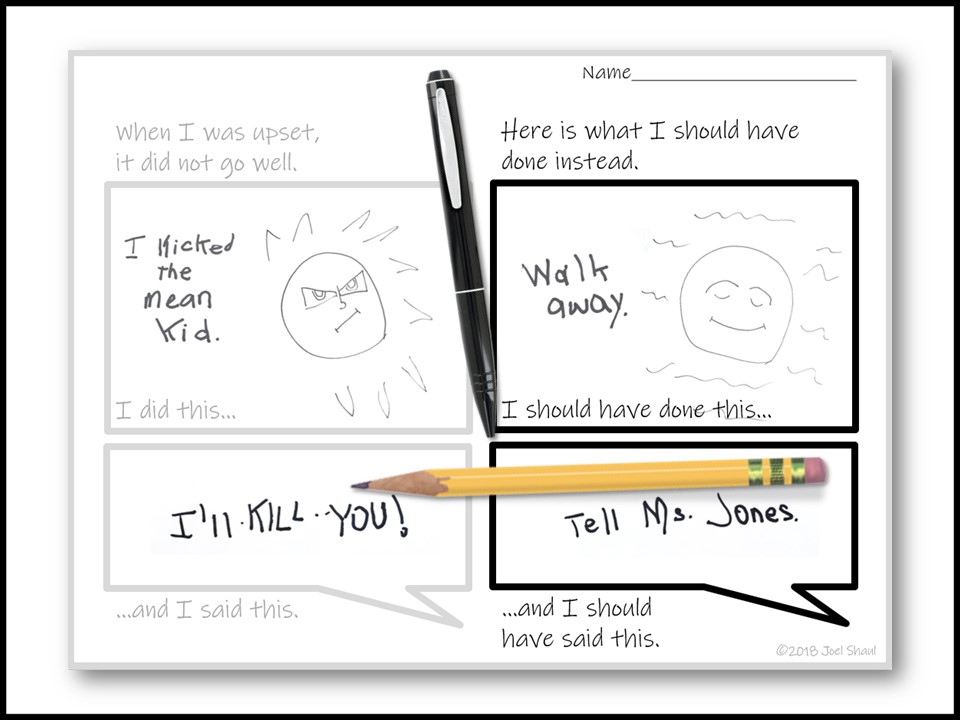
What I Should Have Done Different worksheet

This simple, one-page worksheet is designed to facilitate reflection and retrospective problem solving. Children, when given the option of drawing on it, frequently do so.

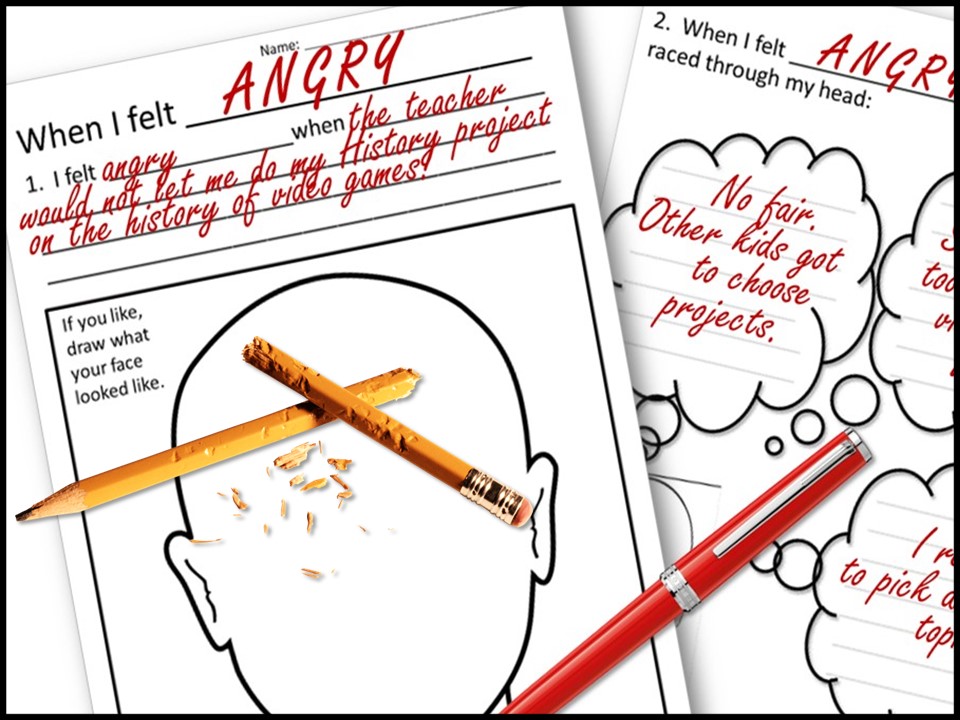
Page 1 of seven-page CBT Worksheets

When I use these worksheets with children, at least half the time children go on to page two and skip the drawing. Other children dwell on the task of drawing their face. This seems to help them to recall the incident and what they were feeling at the time.

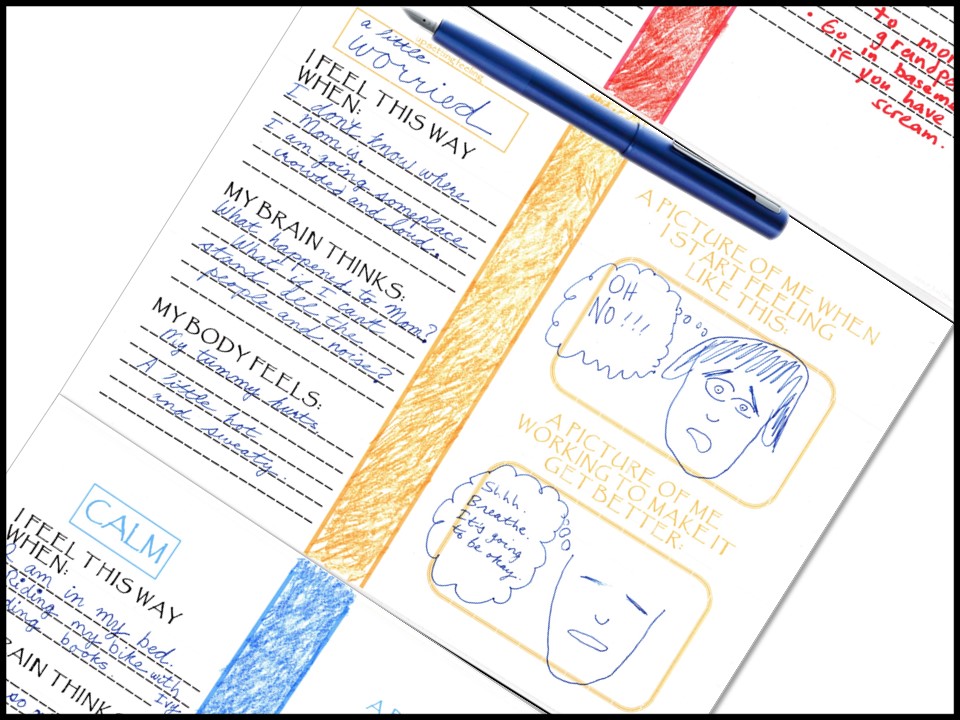
Emotion Thermometers

This set of emotion thermometers requires coloring and there is the option of drawing small pictures.

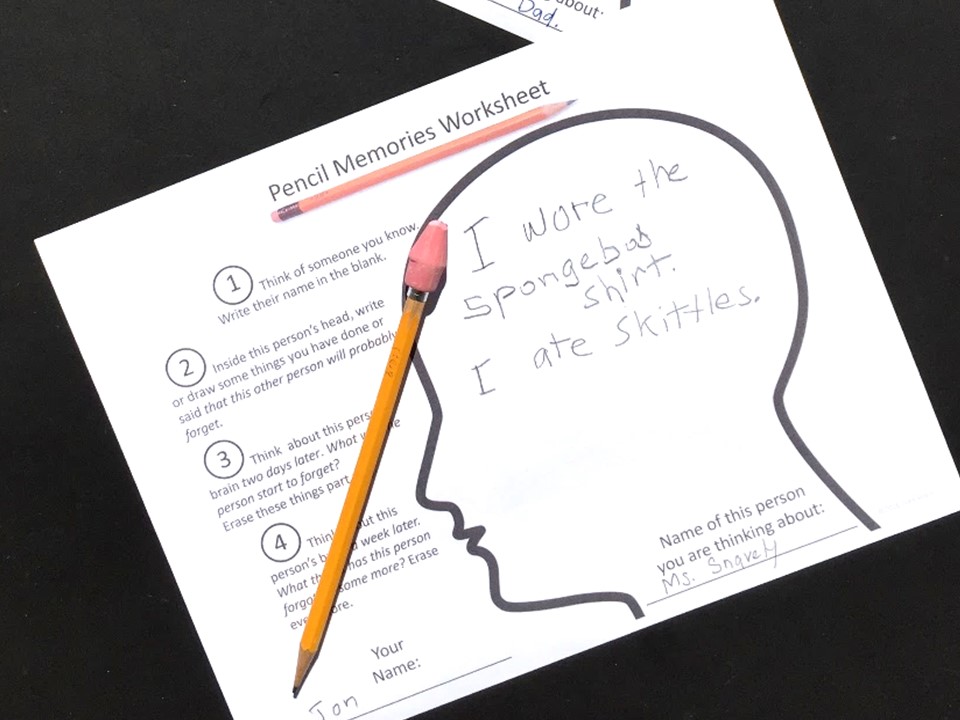
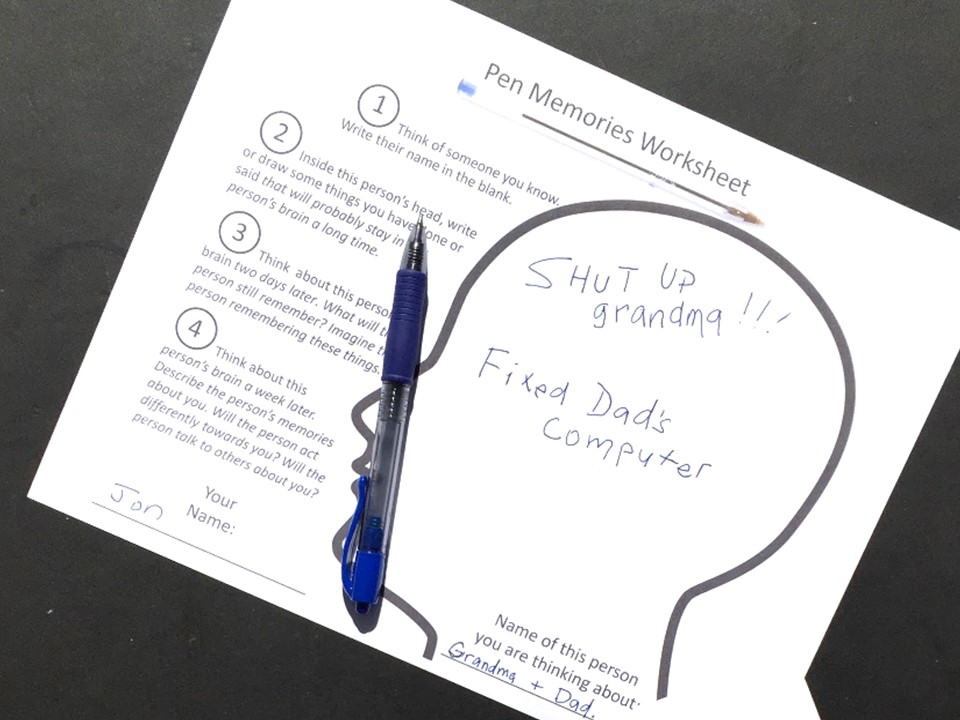
Pencil Memories, Pen Memories worksheets

This set of worksheets is to help children to think about social cause and effect, and how their words and actions might be remembered by others for a short time or a long time. Children can opt to either draw, or write, or both.

Examples of drawing worksheets from my published books

My six published children’s books contain lots of worksheets, some of which involve the option of drawing. Here are a few examples.

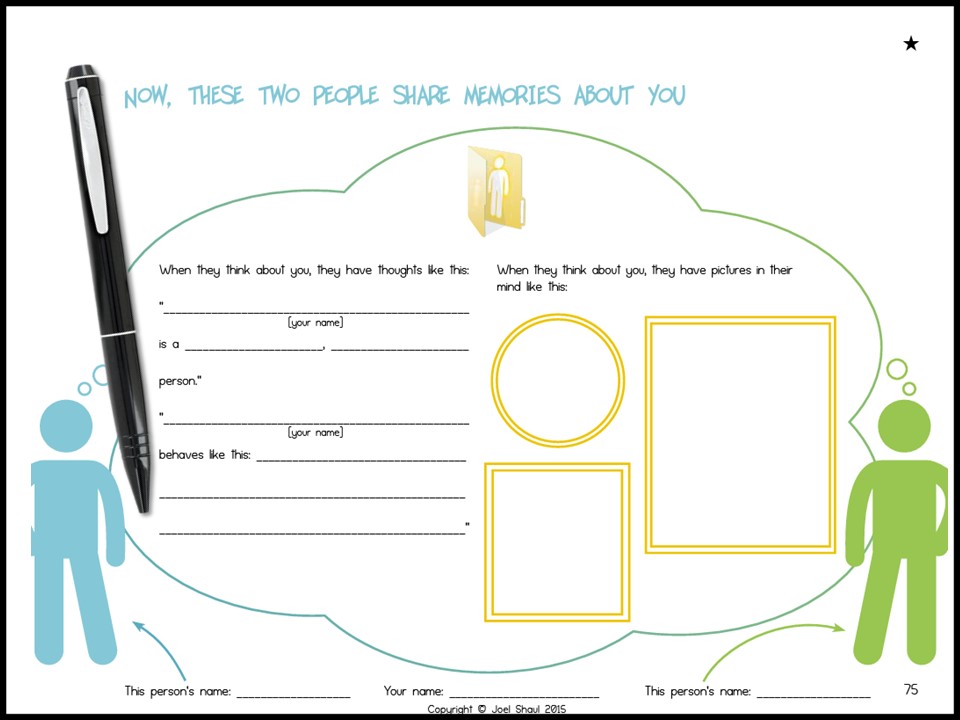
Social cause & effect worksheet from Our Brains are Like Computers

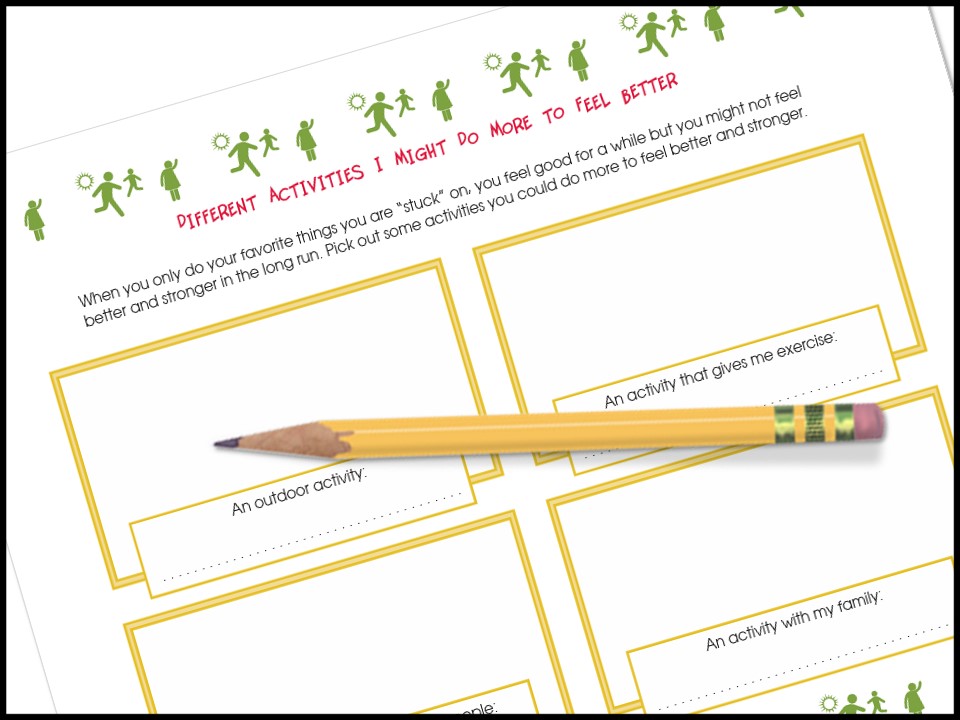
Writing/drawing worksheet from The ASD Feel Better Book

Drawing/writing worksheet from Your Interests, My Interests

The next in this series is: Part 3: Assigning collaborative drawing tasks for social learning.

Joel Shaul, LCSW


Introduction to series.

Part 1: Reasons to use art in social & emotional teaching. Some guiding principles & professional concerns.

Part 2: Assigning individual drawing tasks for social & emotional learning.

Part 3: Assigning collaborative drawing tasks for social learning.

Part 4: Coloring & decorating to add interest & levity to social & emotional learning.

Part 5: Creative use of others’ images and AI for social & emotional learning.

Part 6: Encouraging & validating the child’s own artistic expression in therapy & teaching.