

Role playing is an essential social skills training method when we are working with young people on the autism spectrum. Most of us probably employ them often in our work. But years ago when I was learning how to use role plays, I muddled through it on my own, and if there was anything out there that instructed professionals how to do role plays, I was unaware of it.
Here is a summary of using role plays for social skills training, with links to free download resources which support the use of role plays.
When we are teaching young people with autism what to say and do in social situations, we should never just expect them to implement this learning on their own. They need to practice it in a safe setting where they can be coached, guided and encouraged.
We should be doing role playing often enough in our work that our clients expect it. I have a few clients who actually ask for it.
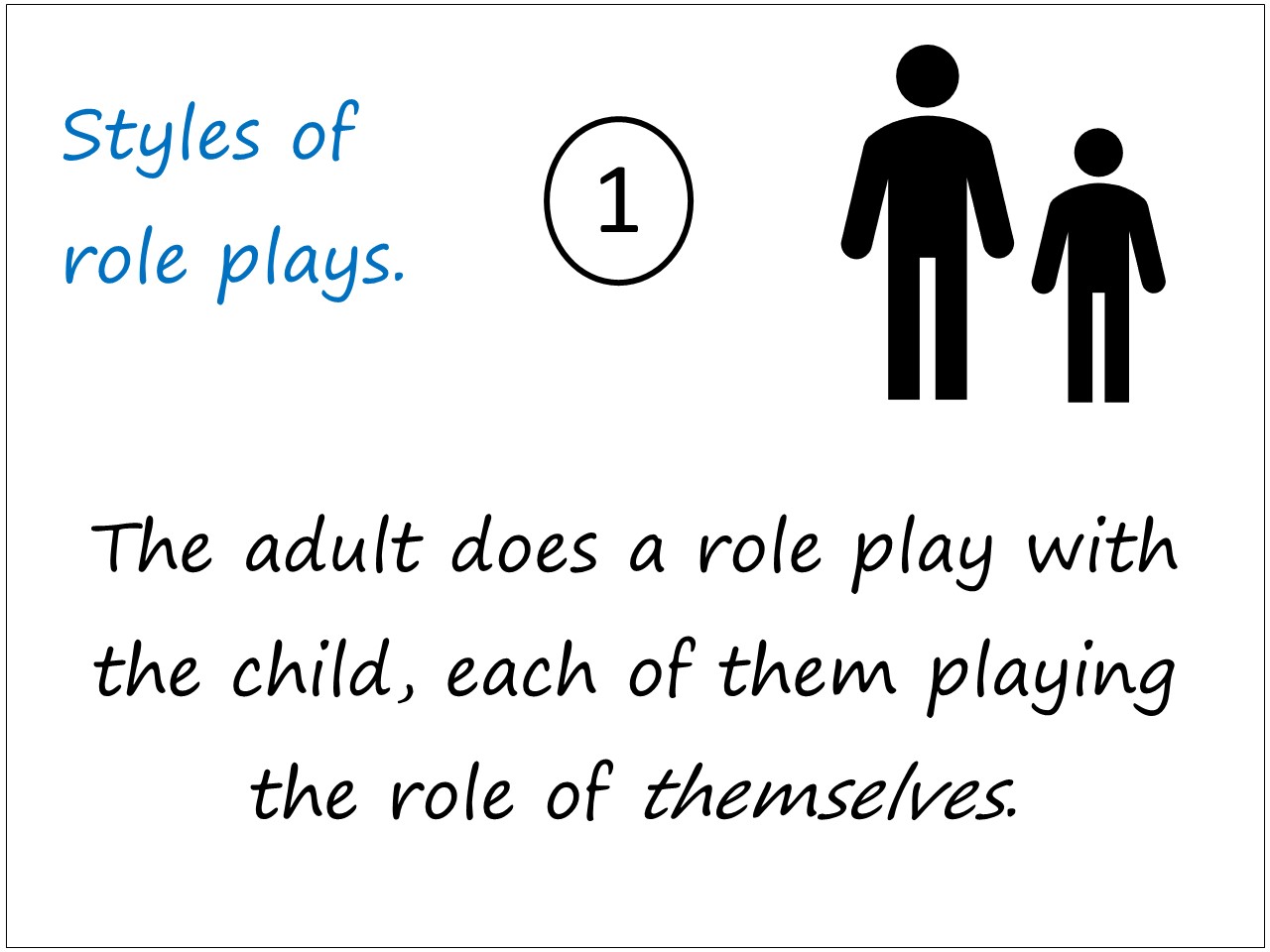
A simple role play set-up can be carried out by printing these How Was Your Day? script sheets and then following the prompts, with both you and the child playing the role of yourselves.
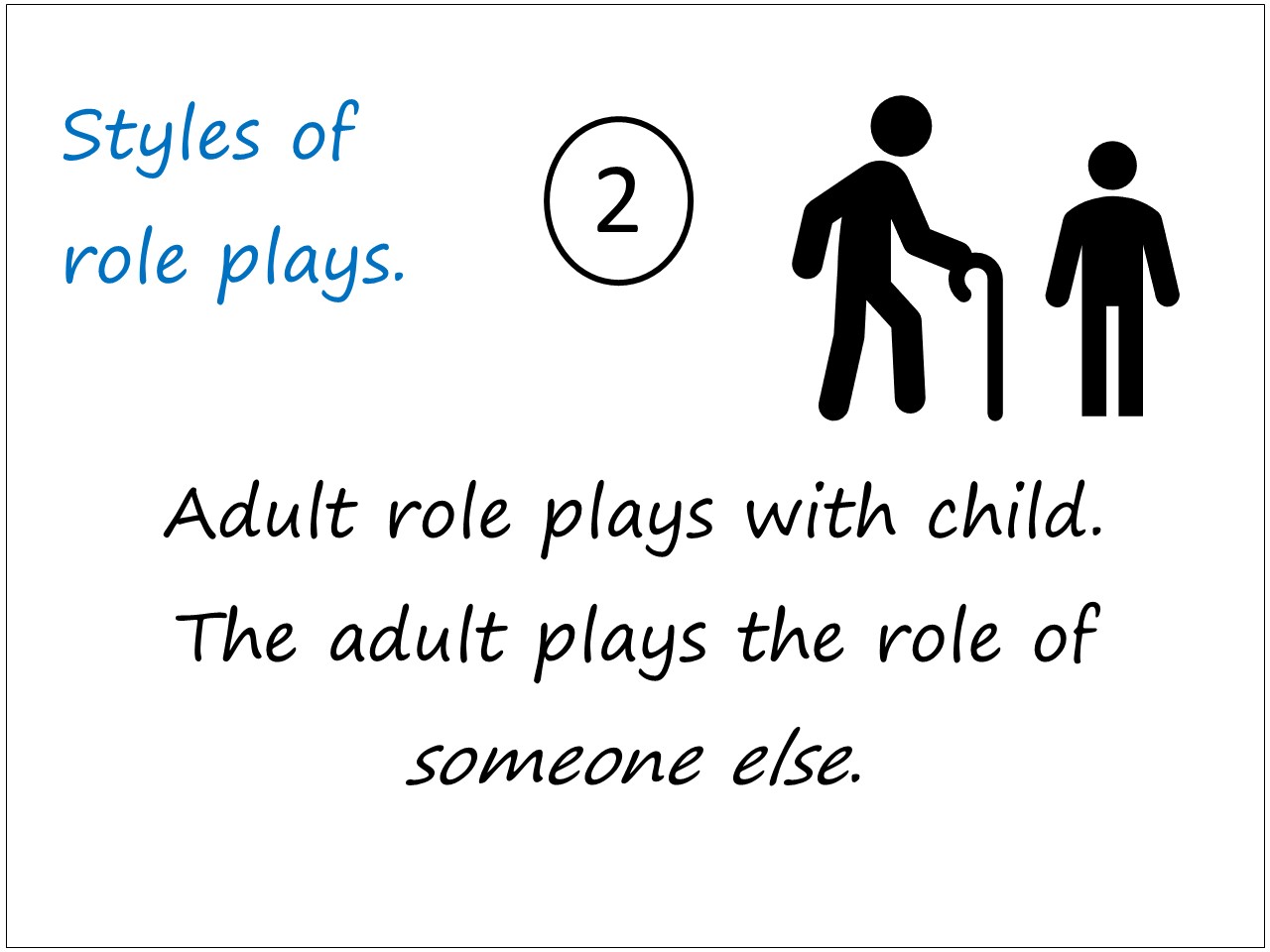
In my own work, my clients are accustomed to me saying things like, “Okay, I am going to play the role of Maria, a girl in your lunchroom.” You might assume that children with autism are too concrete to allow this, but actually that is seldom the case.
When you are setting up role plays like this, make your own role as executive director clear. A fun accessory is this free download to create a “Director” lanyard for you to wear when you are running the role plays.
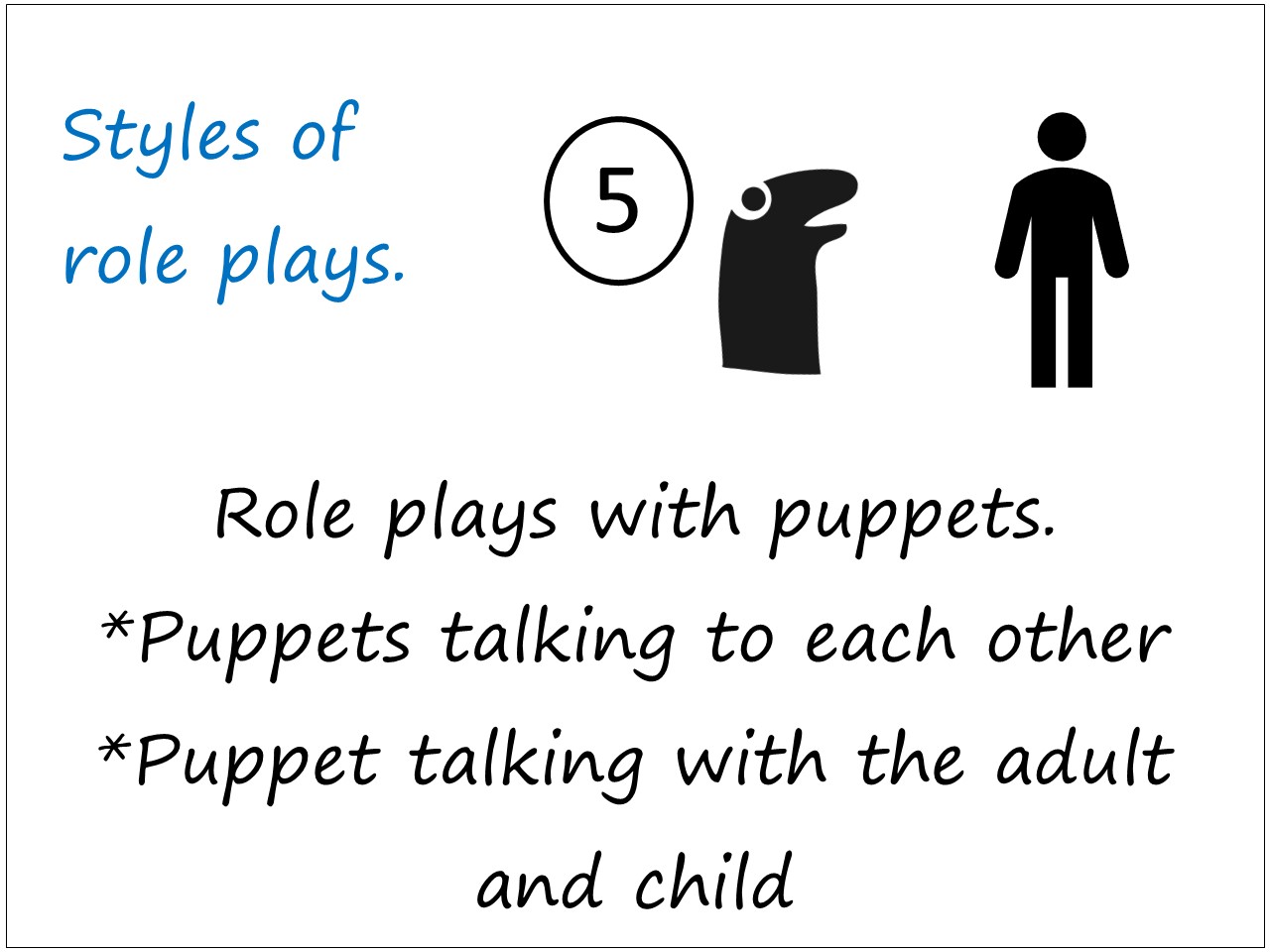
Here is a guide to using puppets in teletherapy – something you really should try if you do teletherapy.
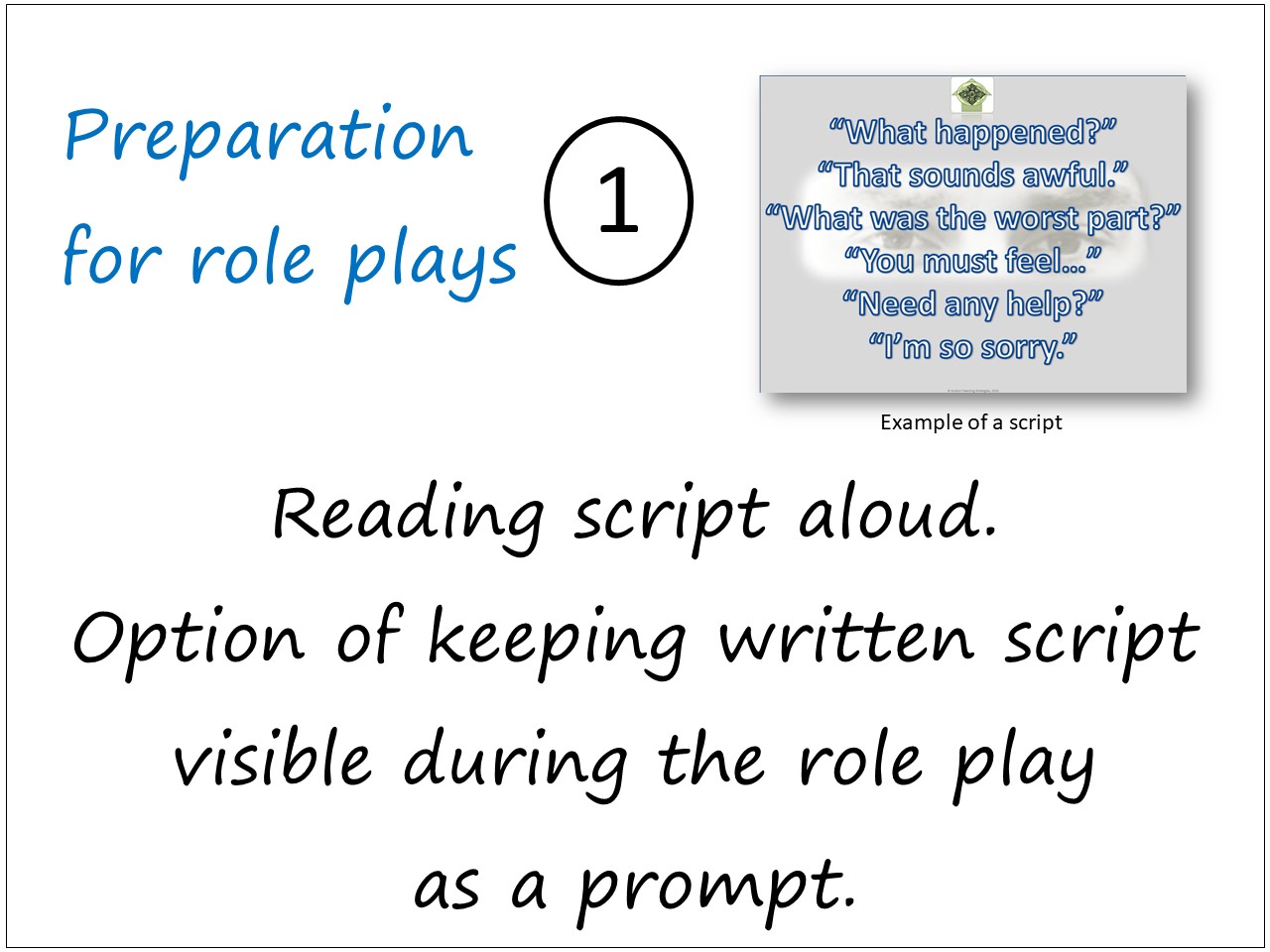
On my website, I have a great many written scripts to help guide role plays. Shown above is part of a free download on empathy / showing concern skills. A related empathy kit sets up role plays with pictures and brief scenario descriptions.
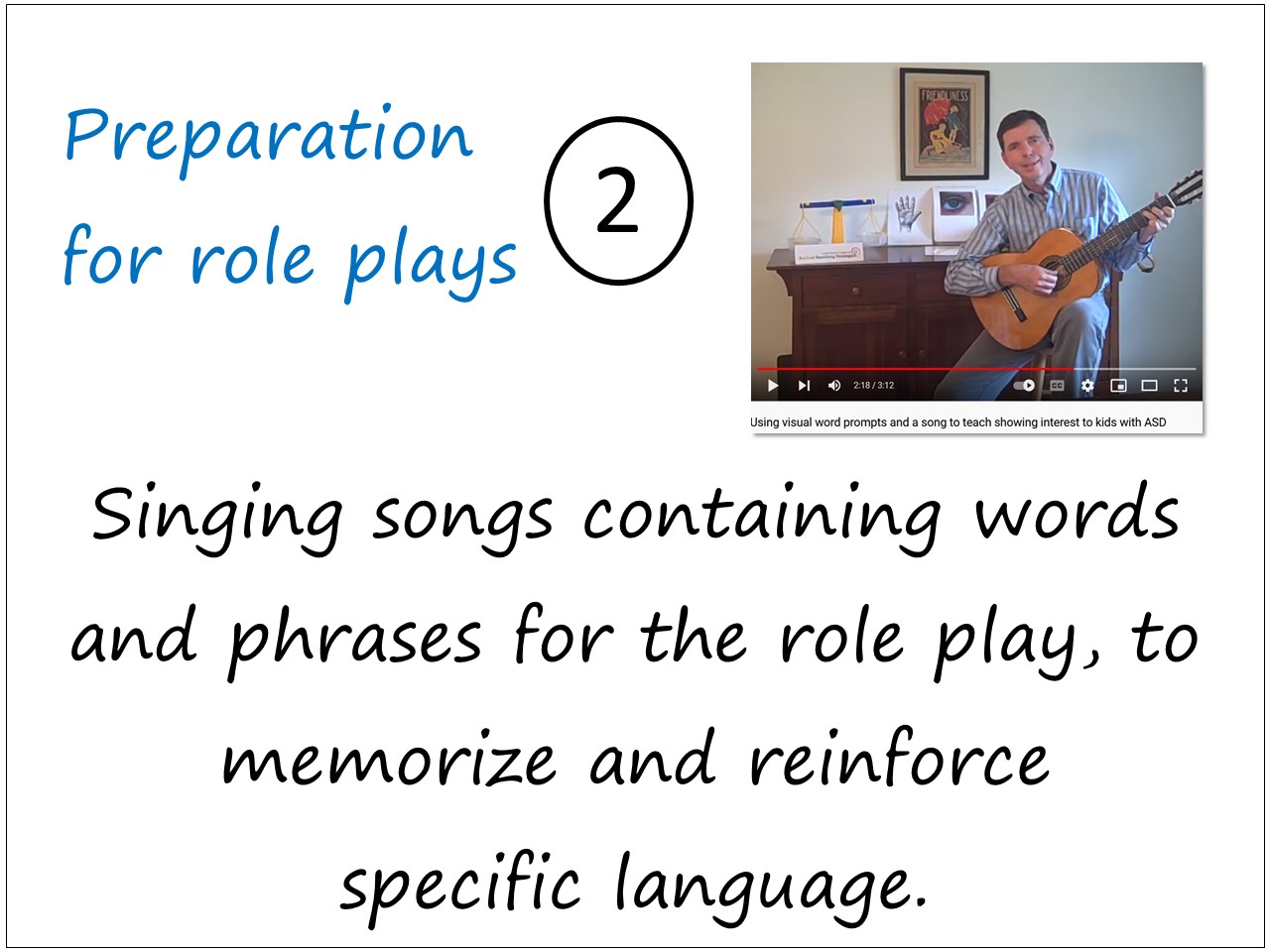
Don’t worry if you are kind of a bad singer (like me). Here is a short YouTube video in which I demonstrate a simple demo of useful language to “script” for showing concern for another person.
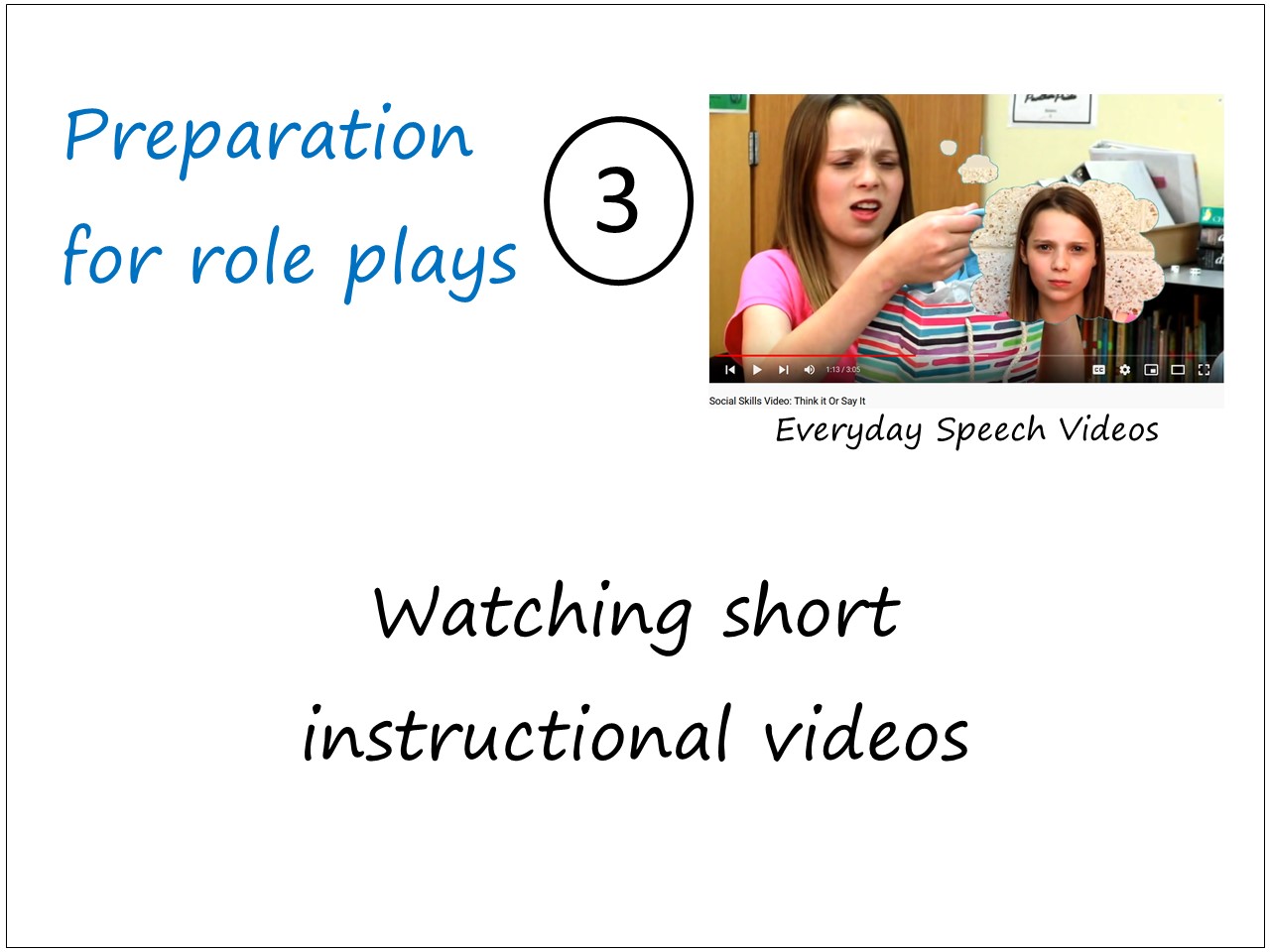
Everyday Speech Videos (shown above) are invaluable for setting up role plays. You get them via subscription – they are well worth the cost. Here is a free sample on YouTube.
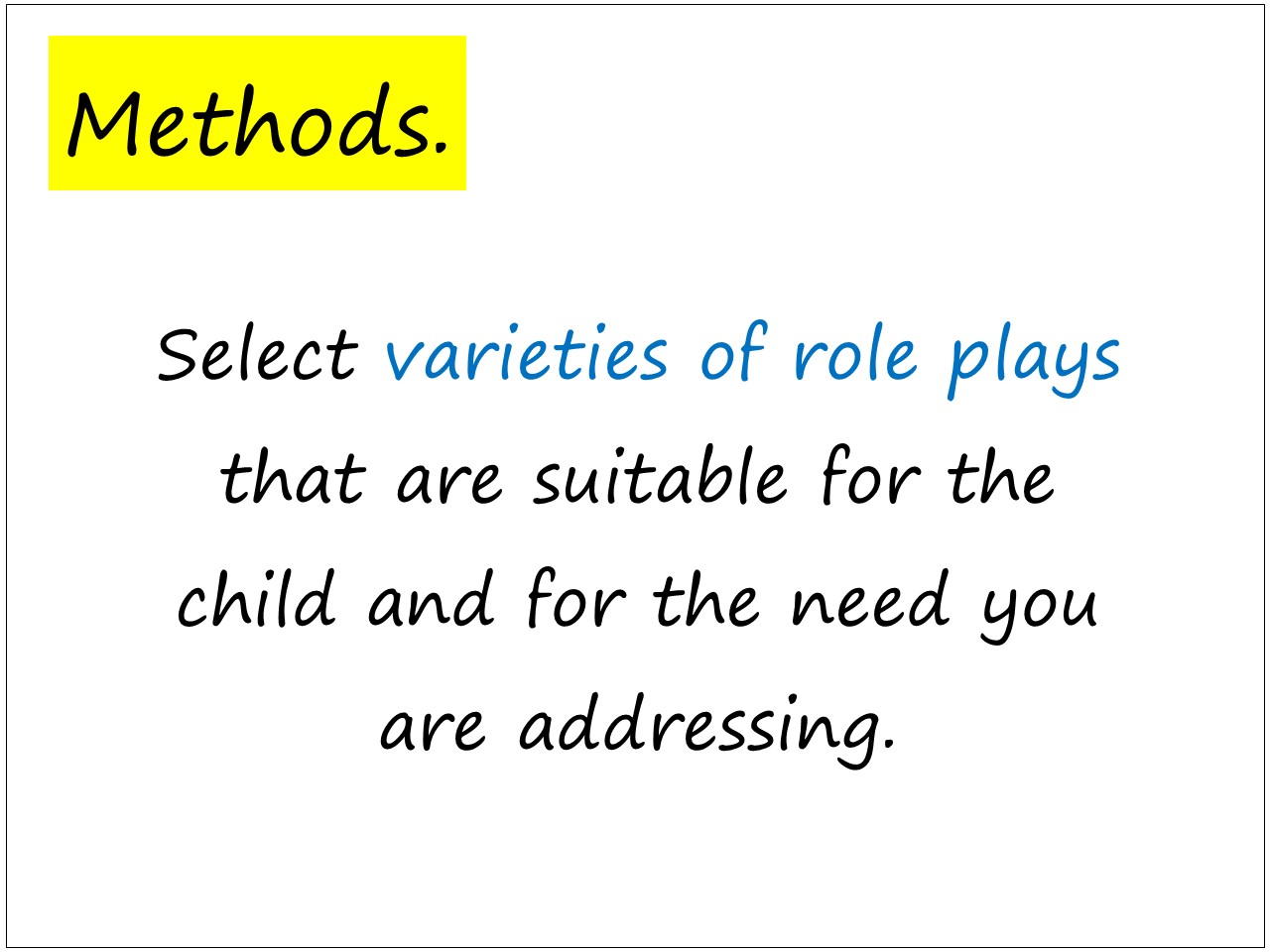
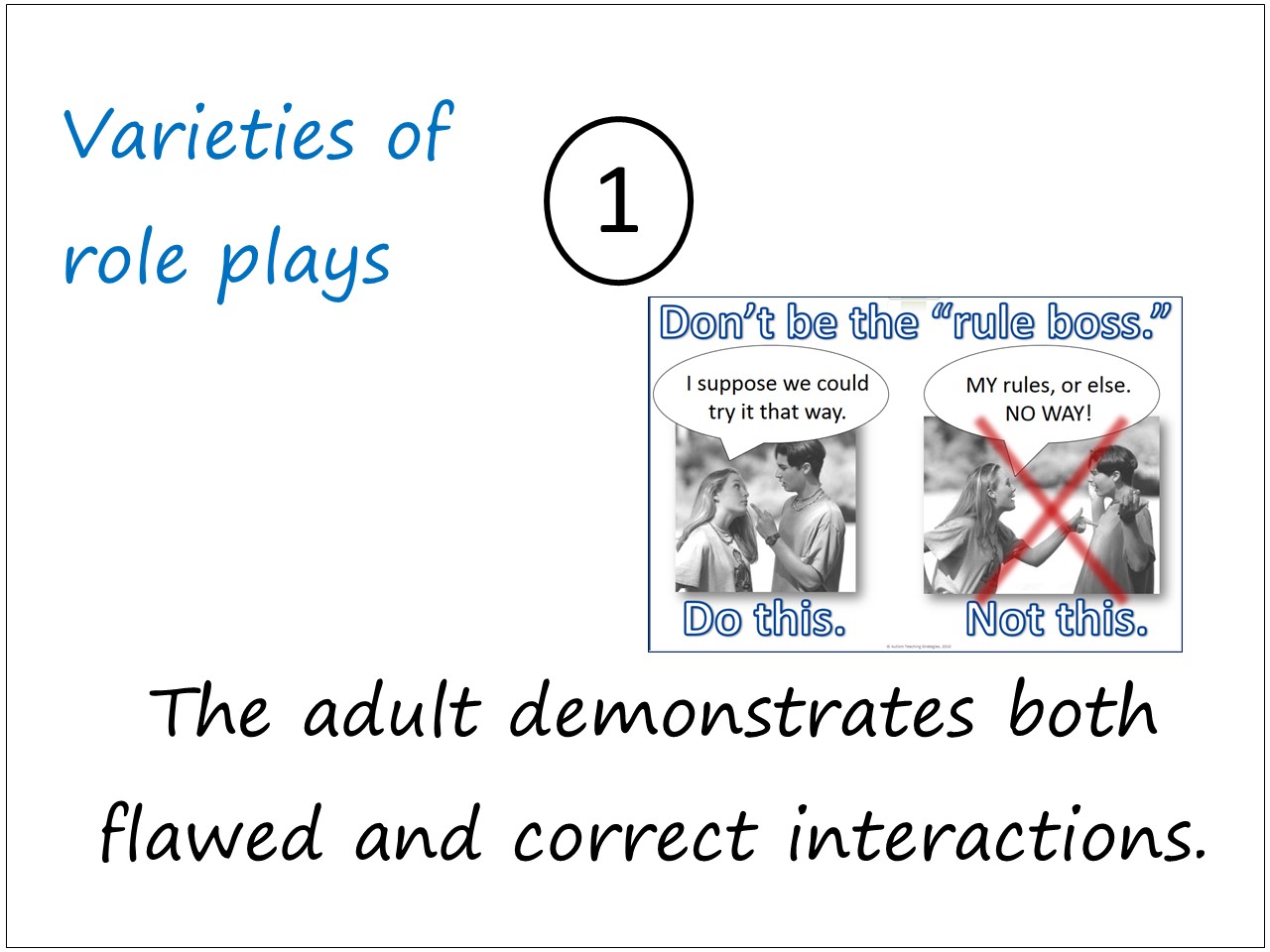
It is very useful for the adult to show what the incorrect social response looks and sounds like. Don’t have the child do it – just you, for instructional purposes. The image above is from a set of illustrated social skills print-outs on dealing with losing and disappointment.
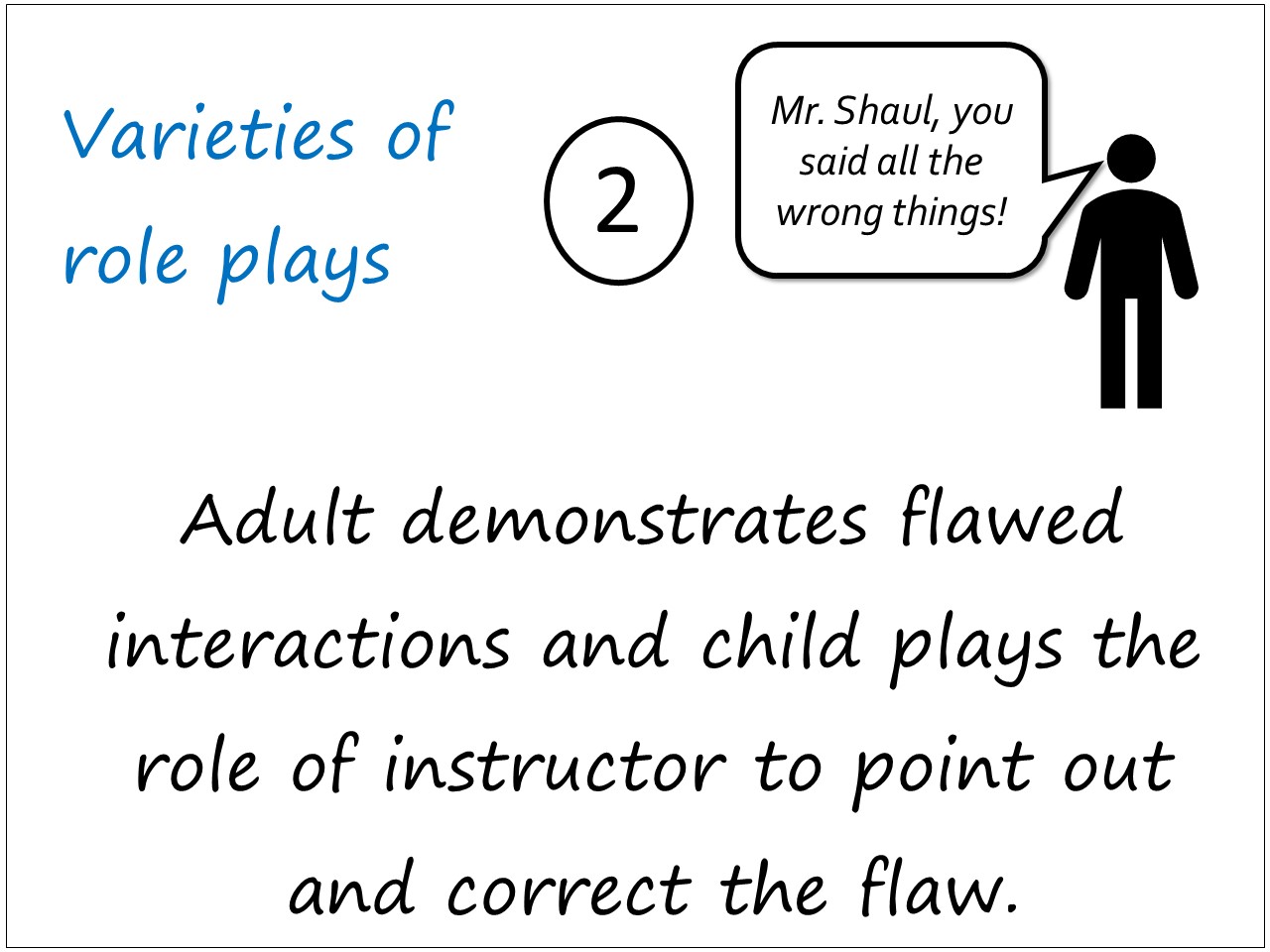
Children receiving social skills training get sick of being scrutinized, criticized and corrected by adults all the time. They always appreciate the opportunity to be the “expert” and point out flaws in somebody else. There are no downsides to using this “flawed adult” technique – I do it all the time in my own work.
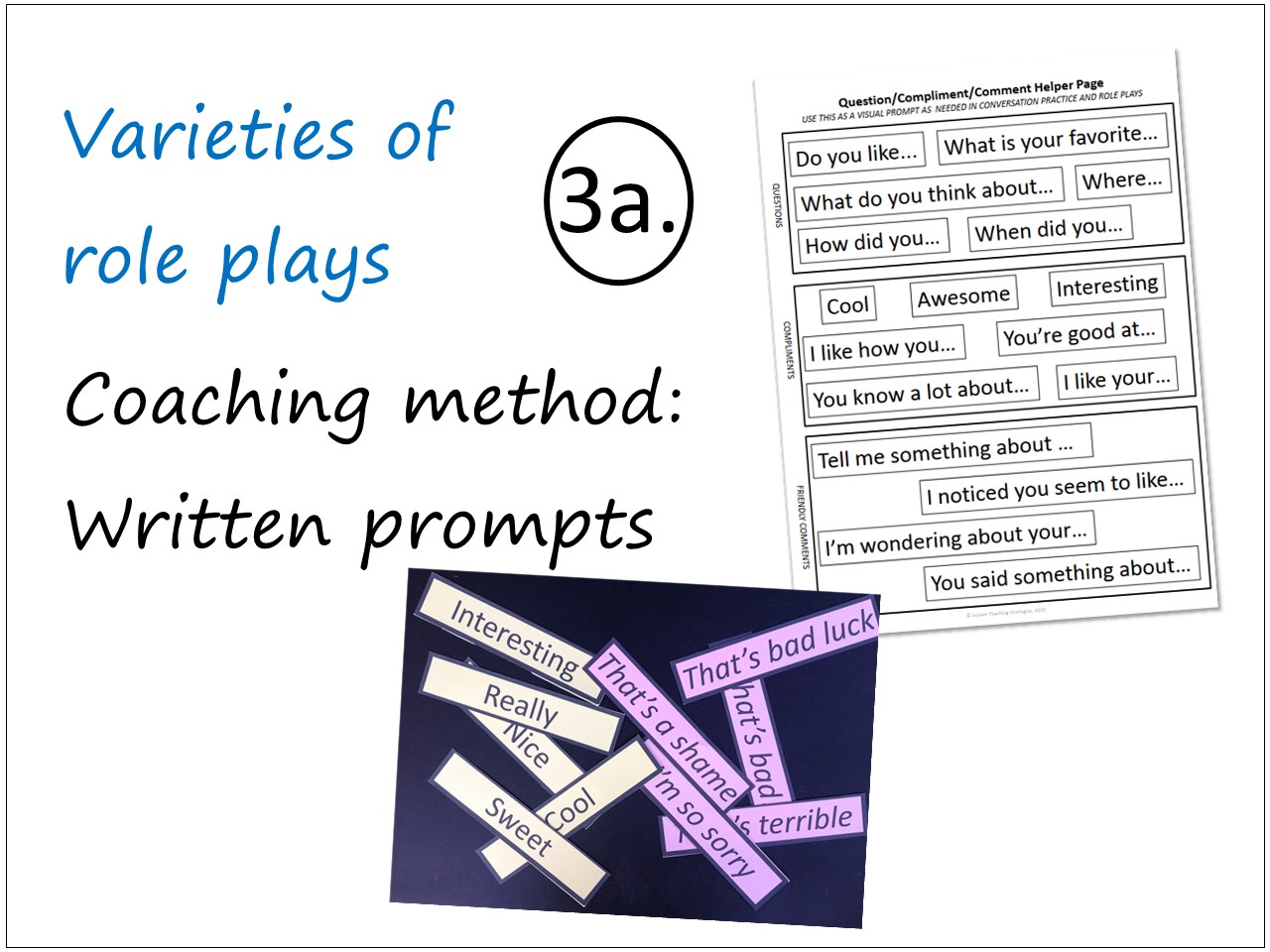
The scripts shown above are Validation Word Prompts and Question, Compliment and Friendly Comment prompts (go to page 8 of download).
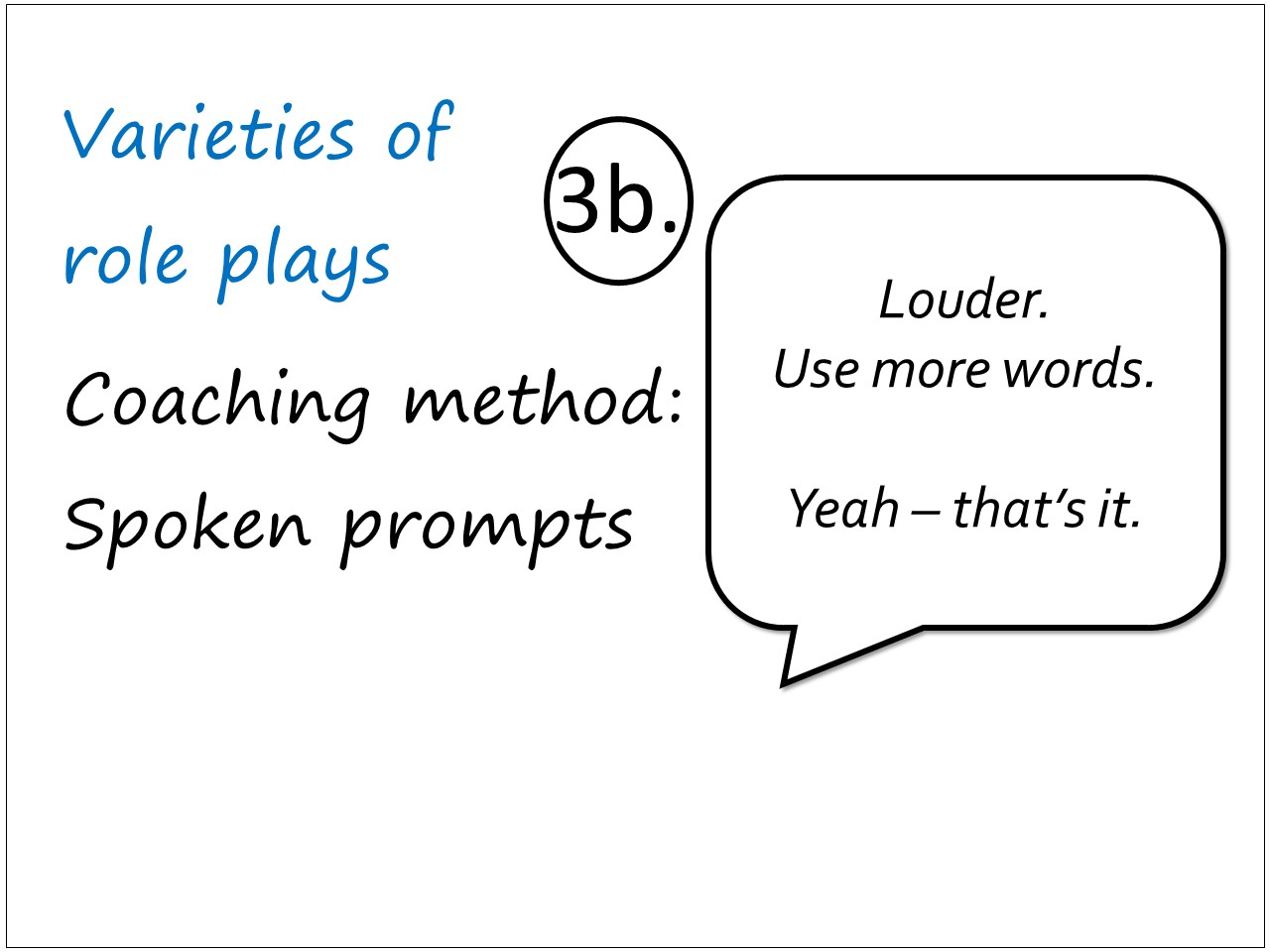
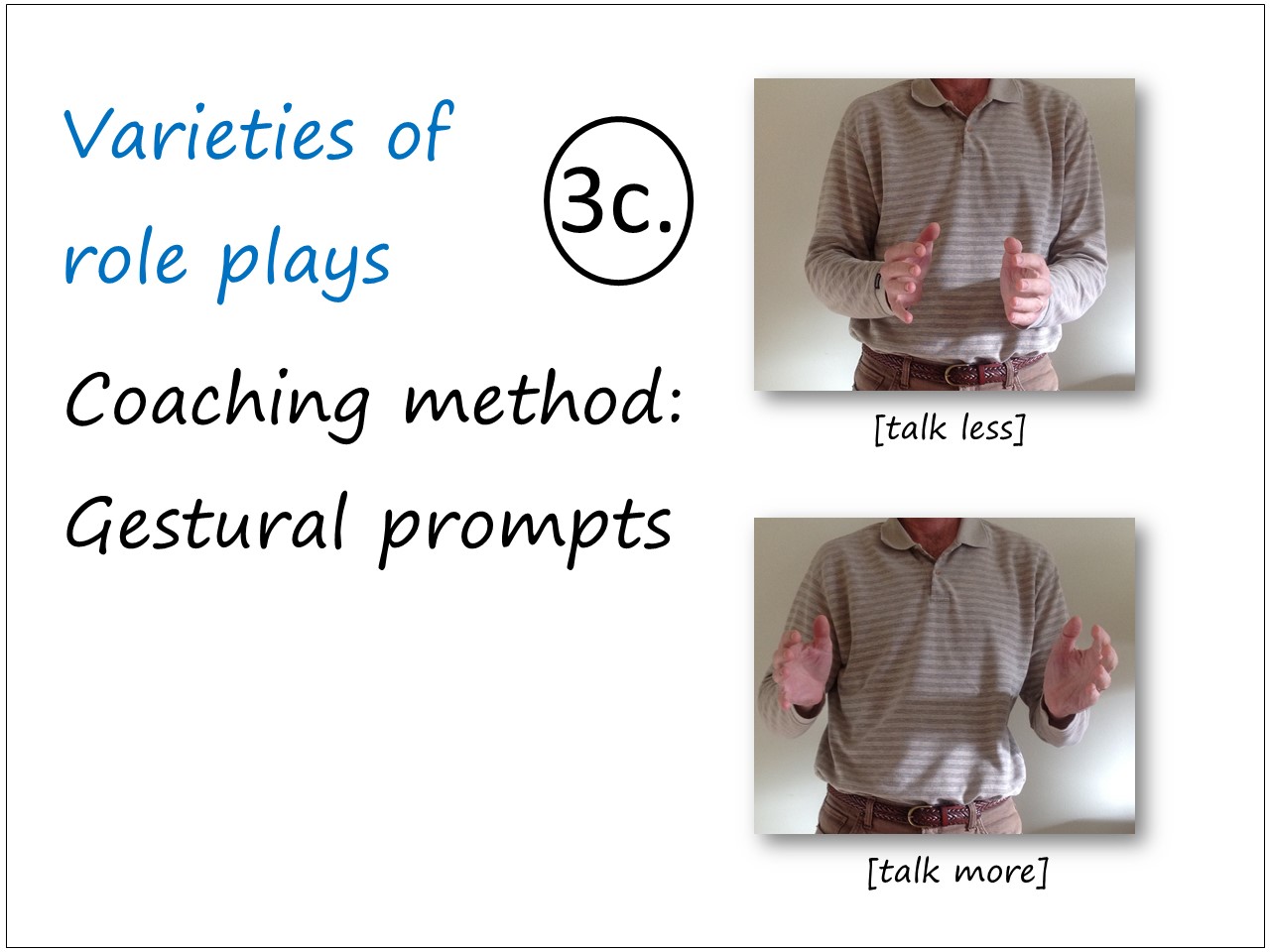
Other common gestural prompts include the one for “Cut!” and the one-handed gesture signaling “That’s enough…wrap up what you’re saying.”
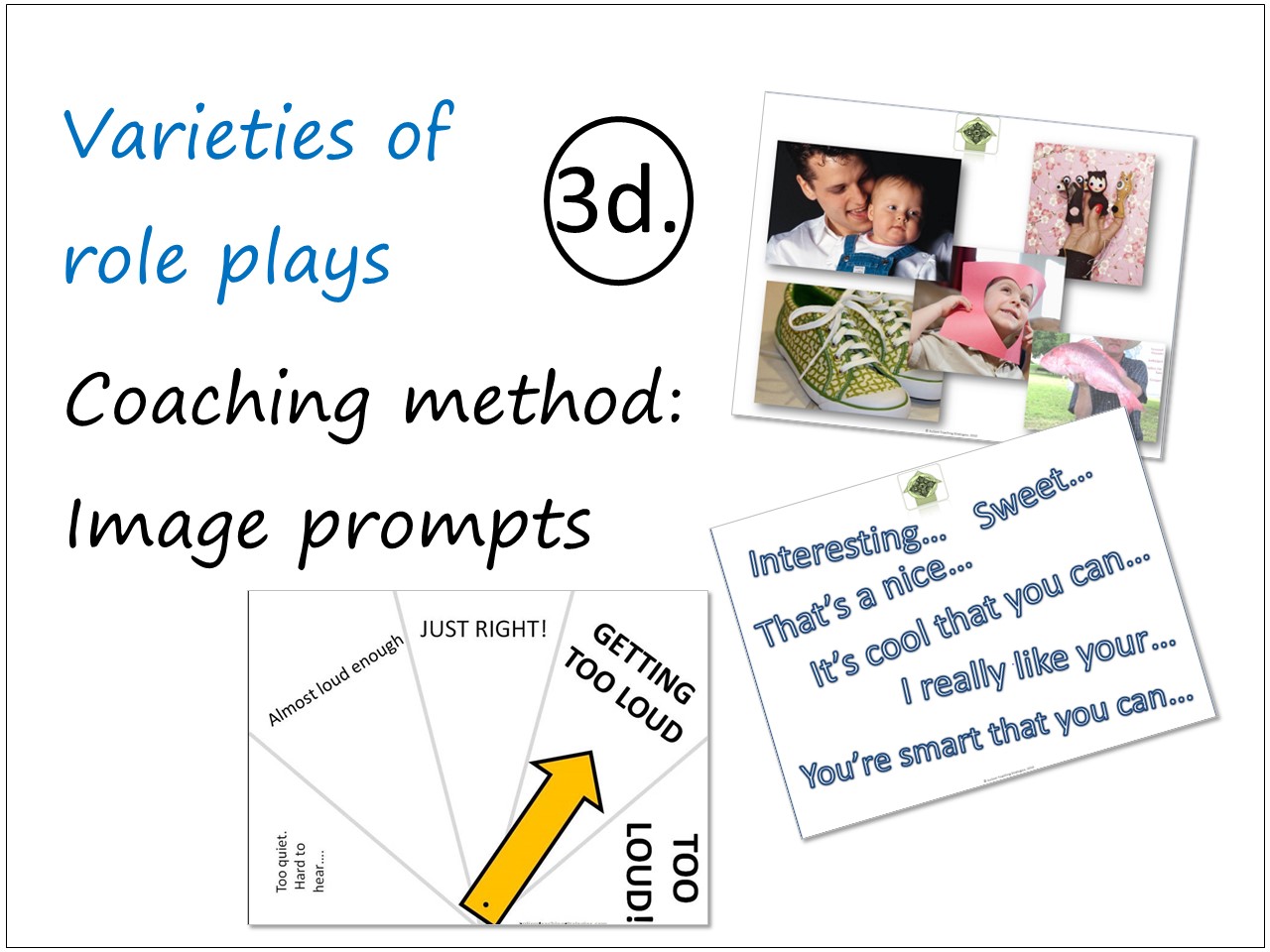
The resources shown above are Volume Meters and Compliment Picture Word Prompts.
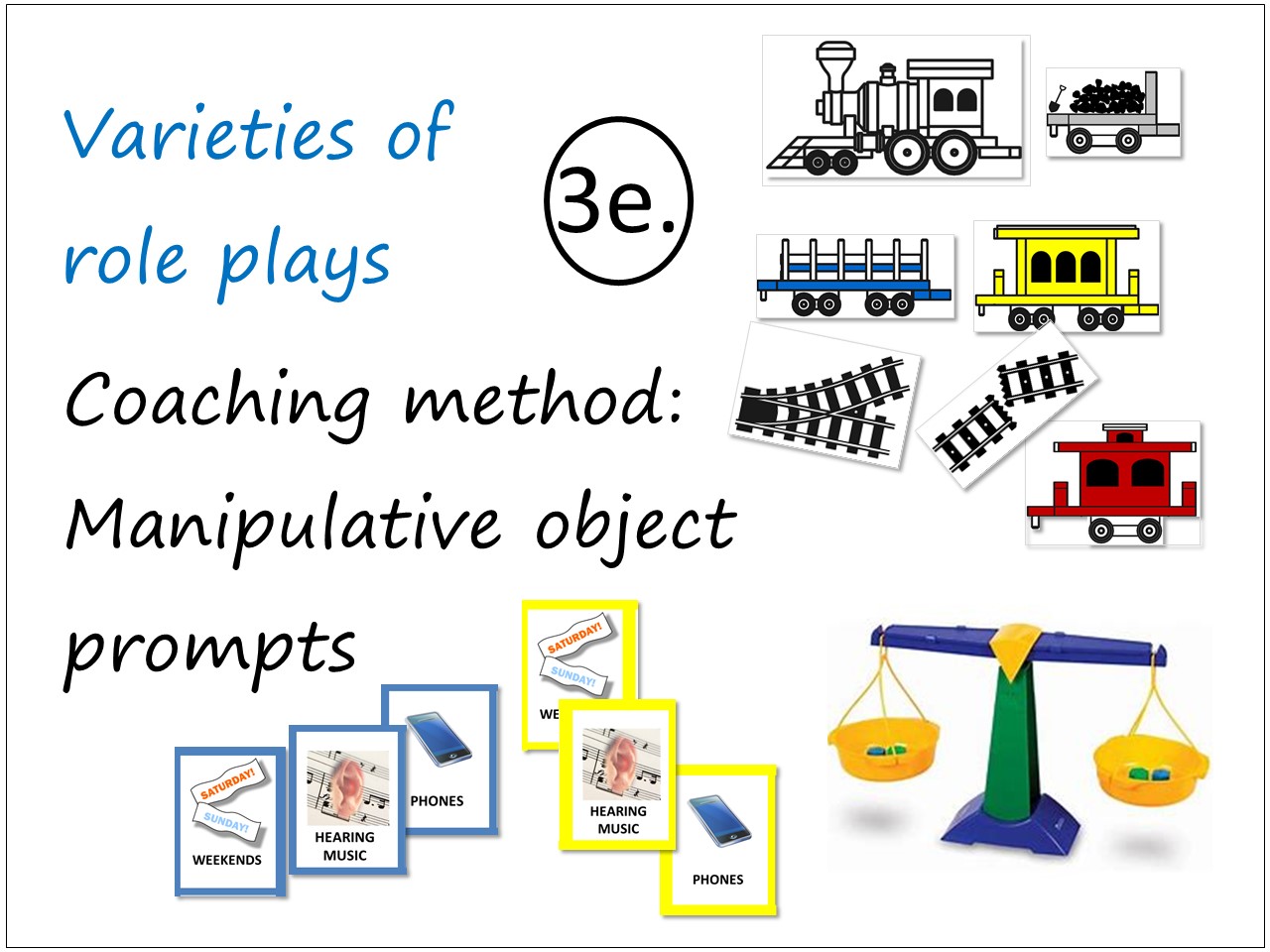
It might sound strange if you have never tried it, but it can be very engaging and effective to conduct role pays at the same time you are manipulating objects between the role play participants, or having them move the objects themselves. The balance (shown above) is an extremely useful, moveable prompt for reciprocal role plays. I explain how to use it here. The Train Conversation Printable Kit is used to map out a conversation in real time while it is happening, with beginning, ending, changing topics and “off track.” The picture cards shown are two pairs of matching 23-card decks which two conversation participants use to compare interests and find common ground (Green Zone Picture Card Activity).
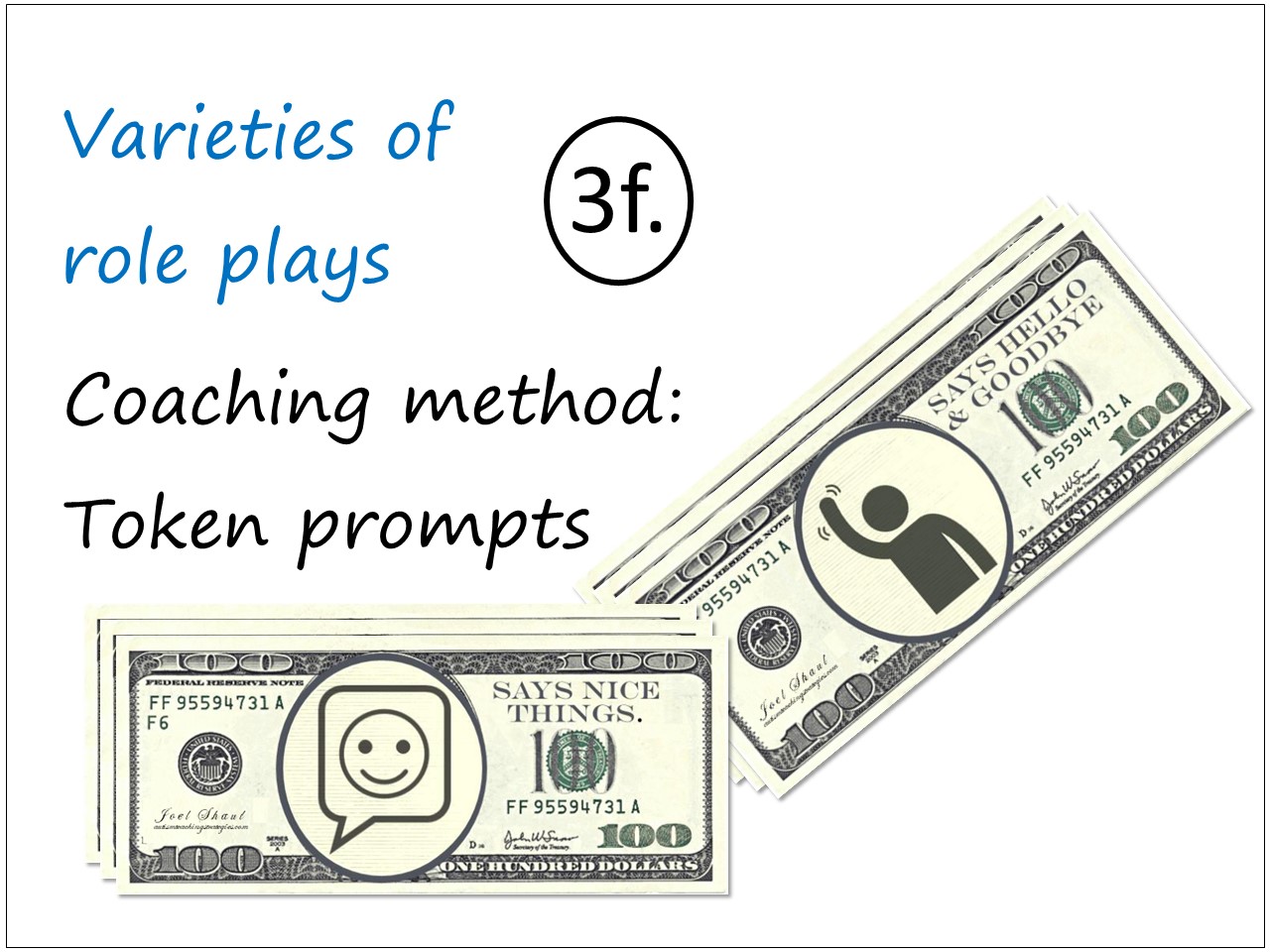
You can use token prompts in a variety of ways in role plays. For example, if you are trying to get a child to practice hellos and goodbyes, or give compliments, you could hand out these free downloadable money tokens (shown above).
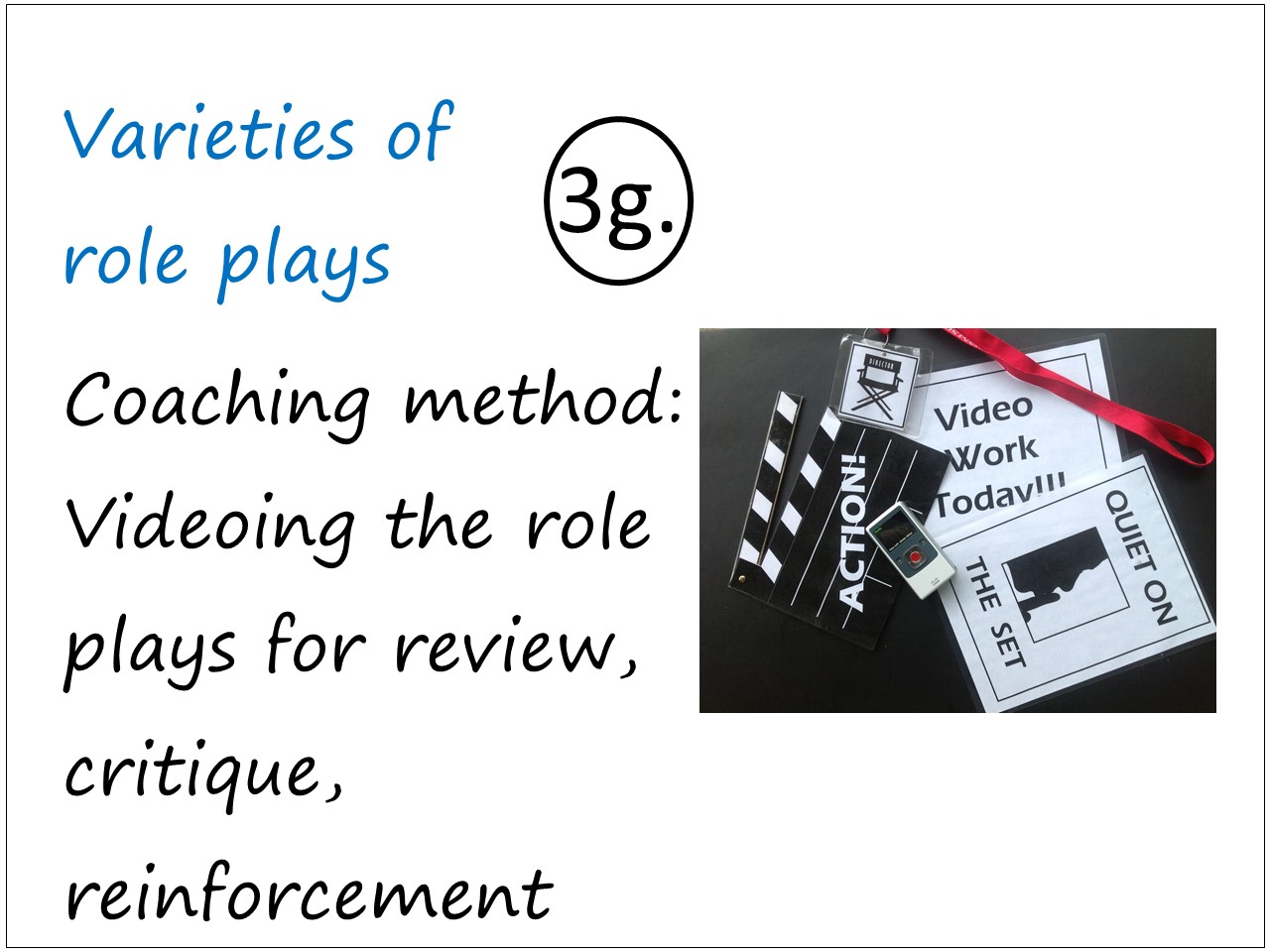
I shoot video and replay video all the time in my sessions. It almost always makes role play work better. Most young people like it a lot. I honestly cannot figure out why other clinicians don’t use video cameras very much these days, except to avoid having to fill out permission forms and so forth.
I have a very good tutorial on using video cameras, and some nice download accessories, on this website. (The photo above shows some of the downloadable accessories.)
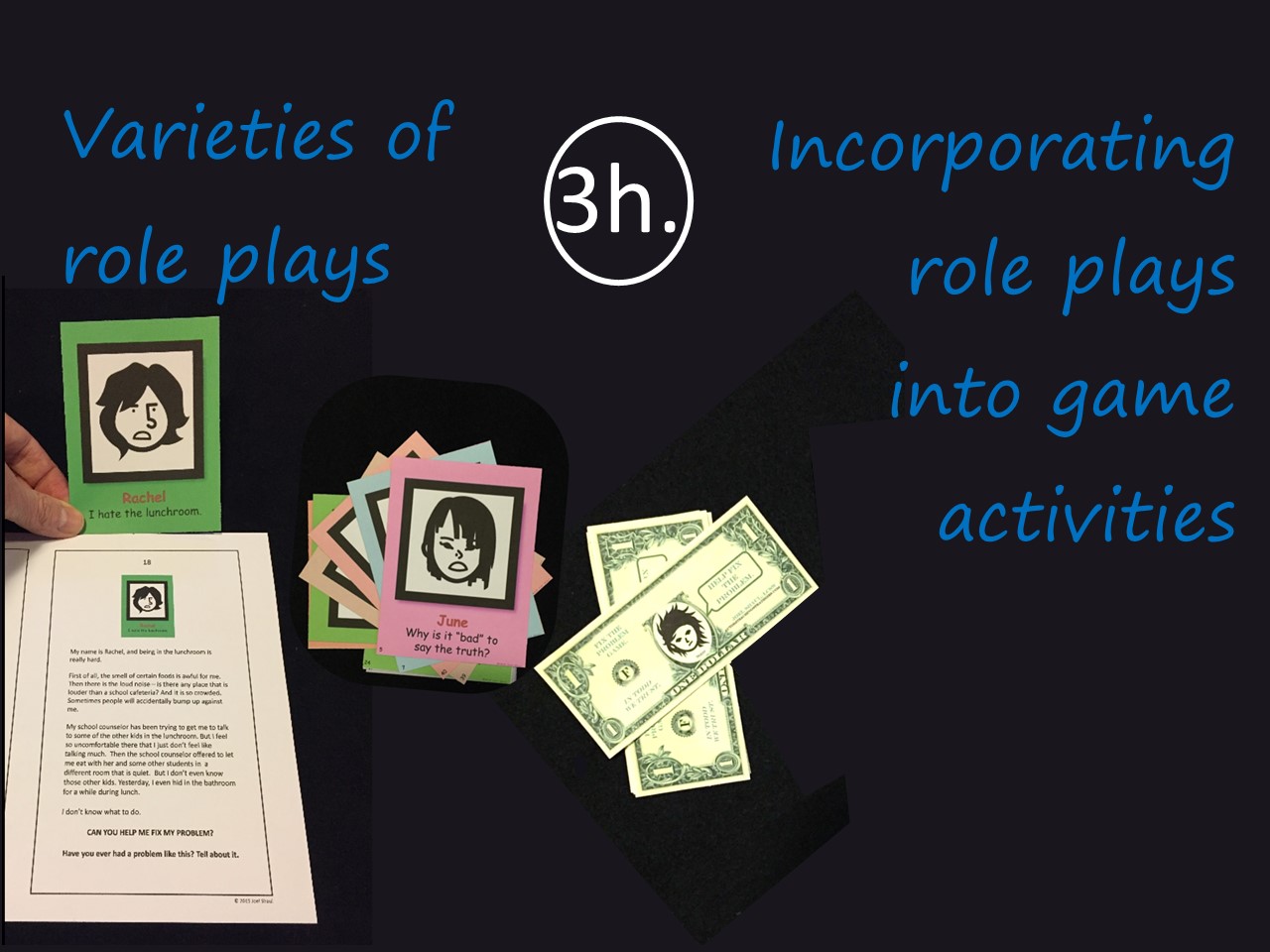
Many of the card game activities on my website have role plays built into the game. One of them, Fix the Problem Game, is shown above.
I hope this information, and these resources, help to make your role play work engaging and productive.
Joel Shaul, LCSW