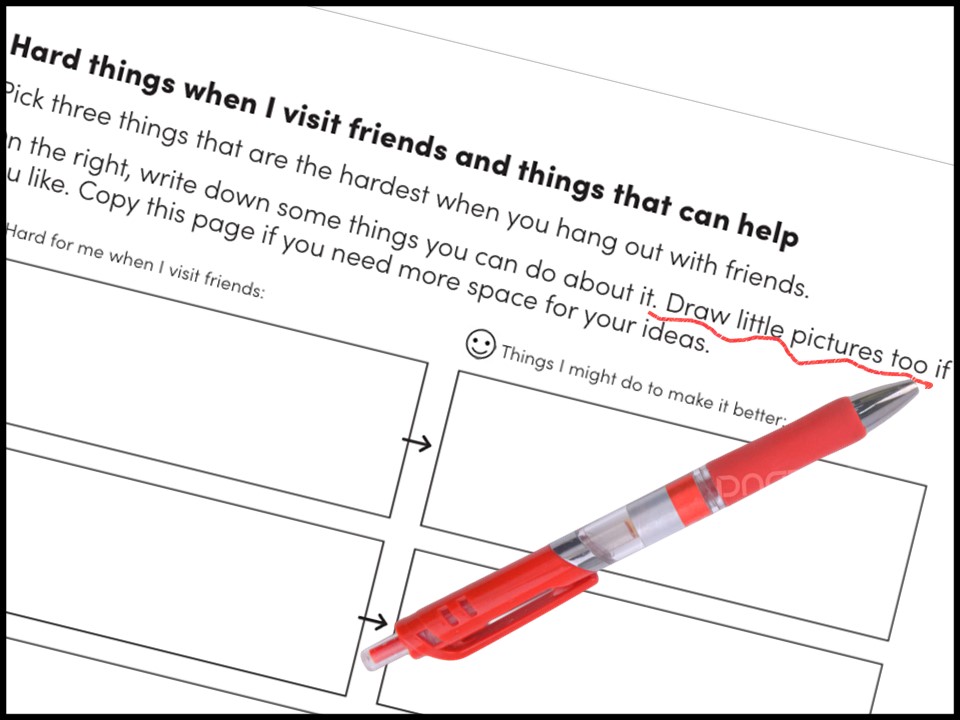

So many autistic children love to draw. Doing art with others is new to most of them.
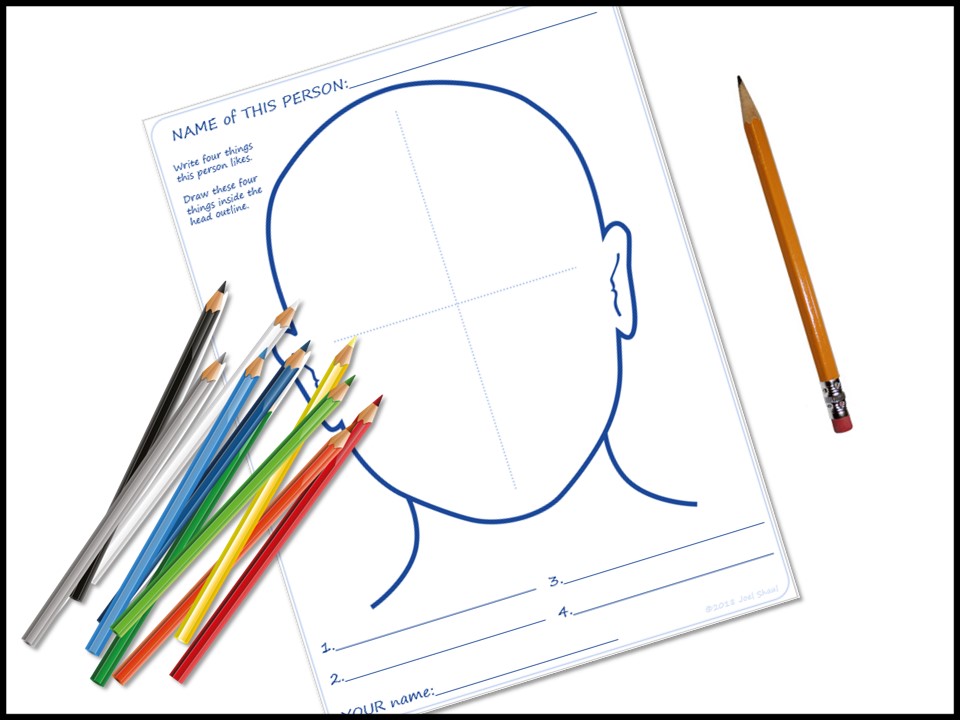
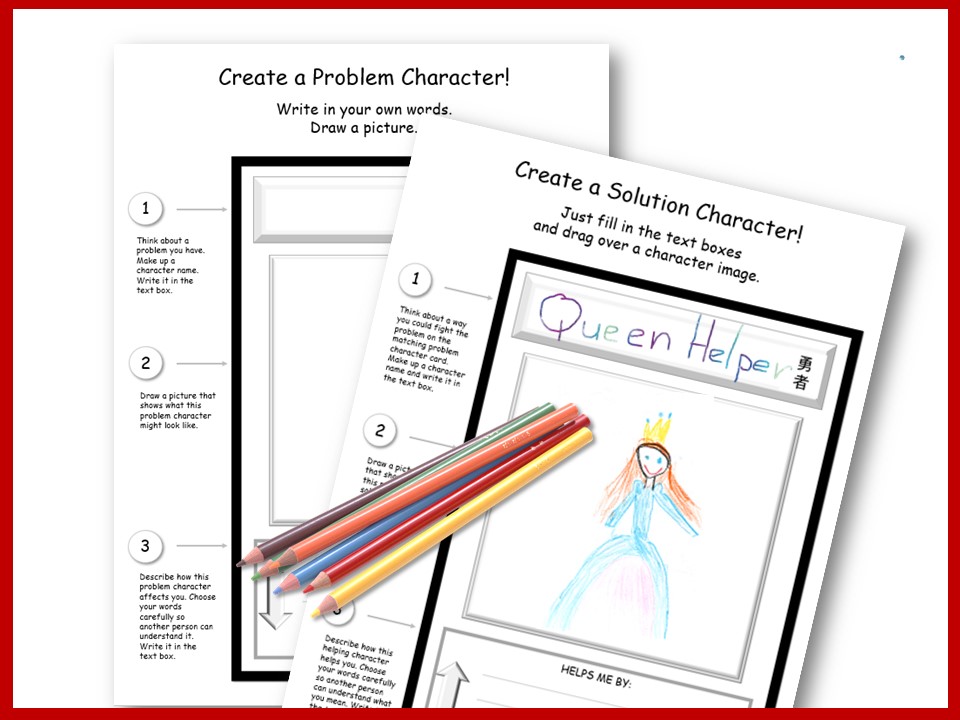
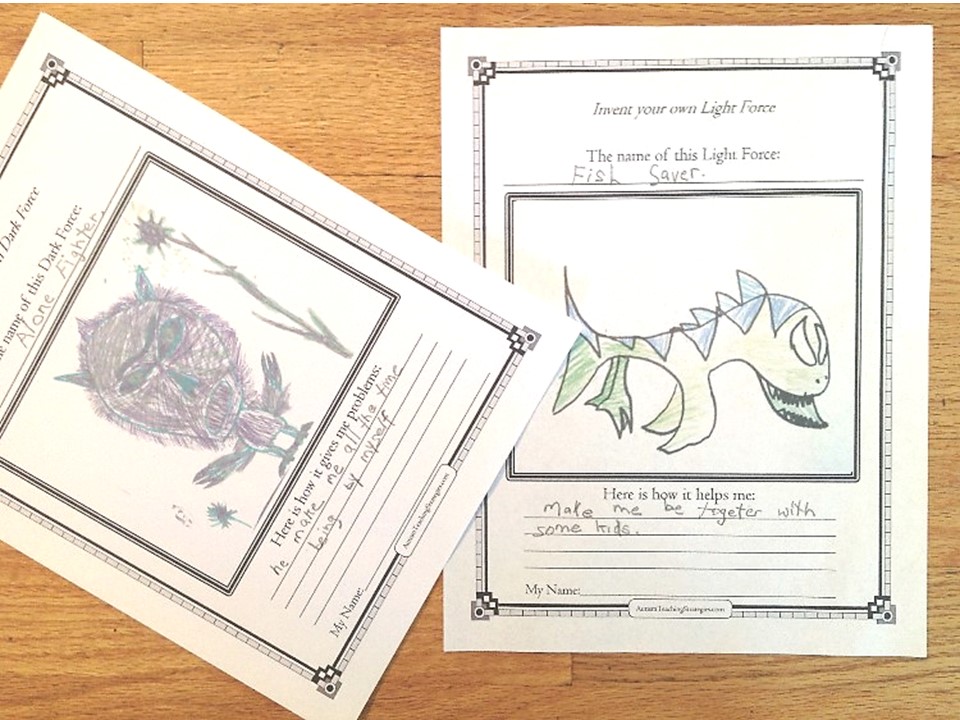
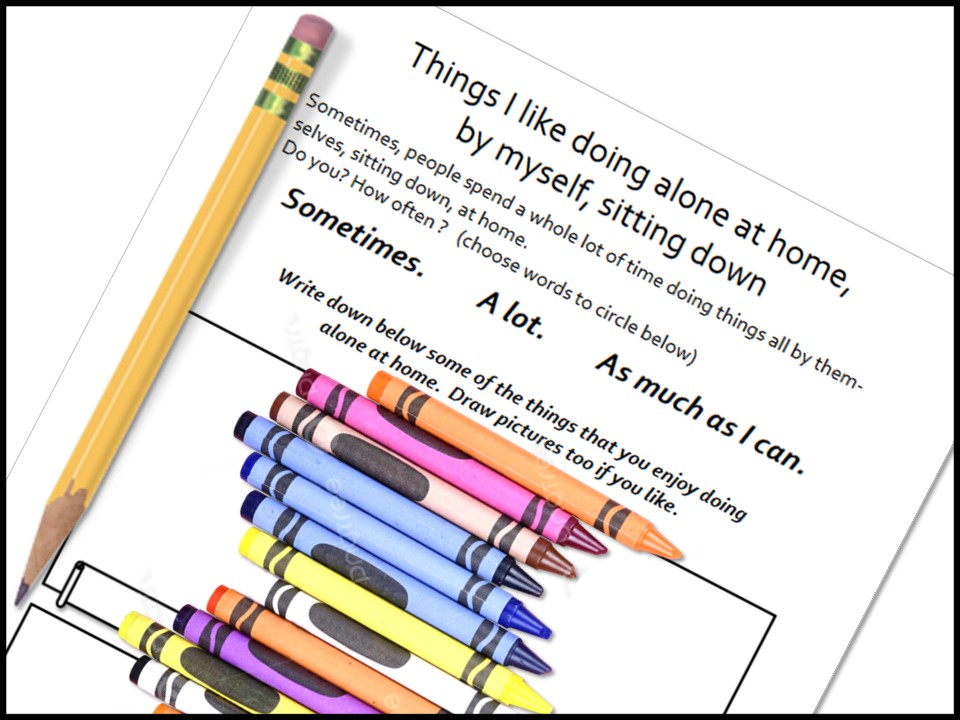
Here are some art projects that emphasize the social potential of art – children showing their art, enjoying others’ creations and working together on various creative endeavors. Some examples shown below are projects that you organize from scratch yourself. Others are facilitated by free downloads from my website.
Autistic kids who enjoy creating art may be accustomed to doing so entirely alone – which of course is fine! However, they may have limited experience with the many ways that people can be creative in social contexts, viewing other people’s work and even collaborating on art projects.
In section A, I describe four art projects to put together on your own, each with a different social component.
In section B, I describe four socially collaborative projects that make use of my free downloads.
Section A: Four social component art projects for you to put together on your own.
Facilitating interaction between children drawing together
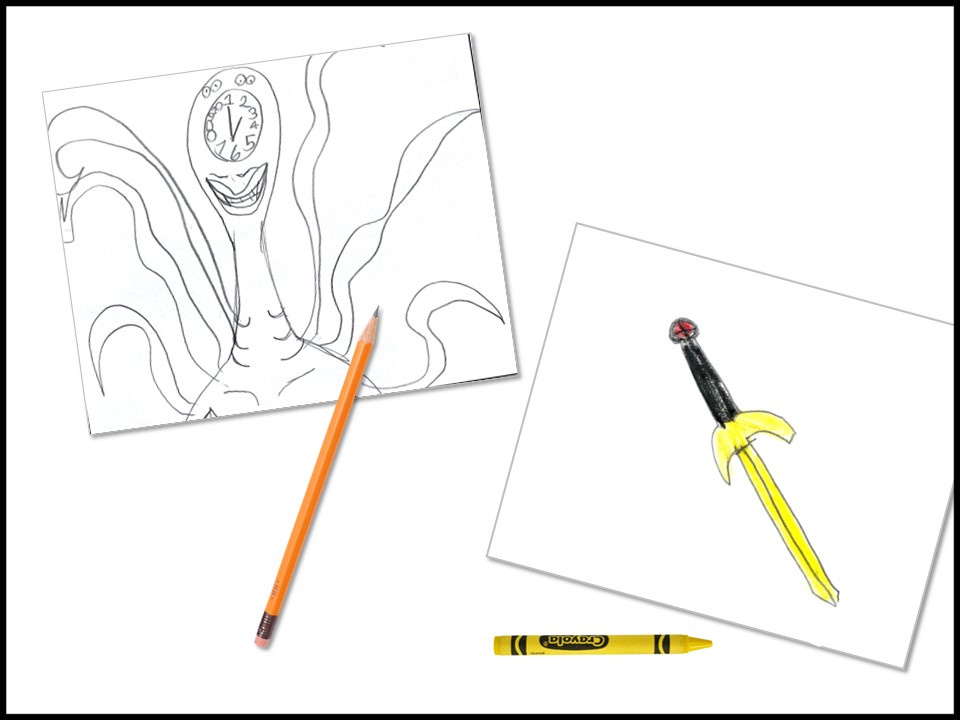
Children accustomed to drawing alone might take little notice of other children nearby and what they are doing.
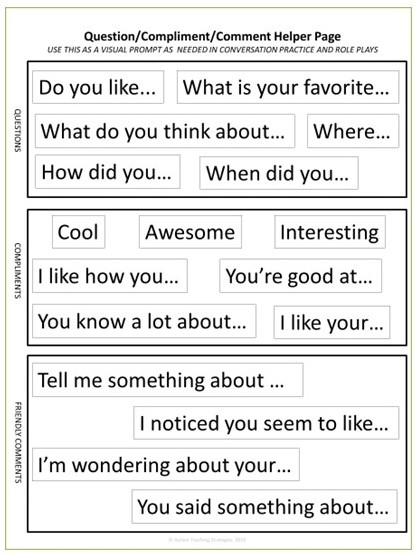
An adult’s careful and tactful social coaching has the potential to transform this solitary, parallel play scenario into a more interactive experience. One way is to offer verbal prompts to offer a comment, compliment or question regarding another child’s drawing. Another way to do this is to set a timer to go off every few minutes, at which point each participant has to stop drawing, take stock of what others are doing, and make some comments or compliments. In both cases, providing simple written scripts nearby for children to refer to (if they read) can be very helpful (see the verbal prompt example below).
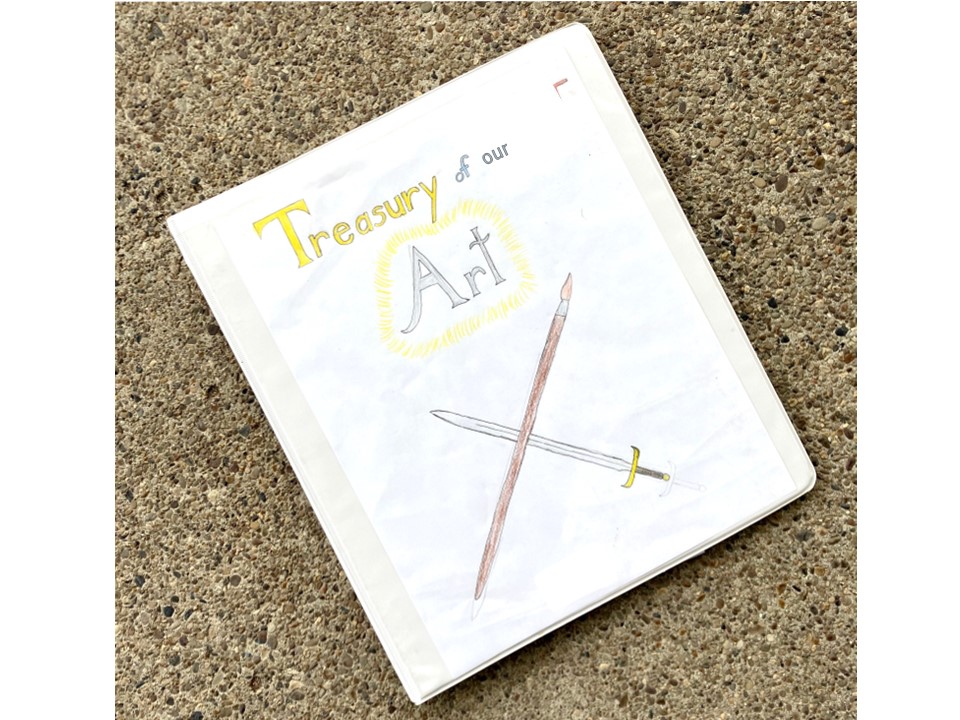
Organizing an art collection featuring individual works by members of a group or classroom
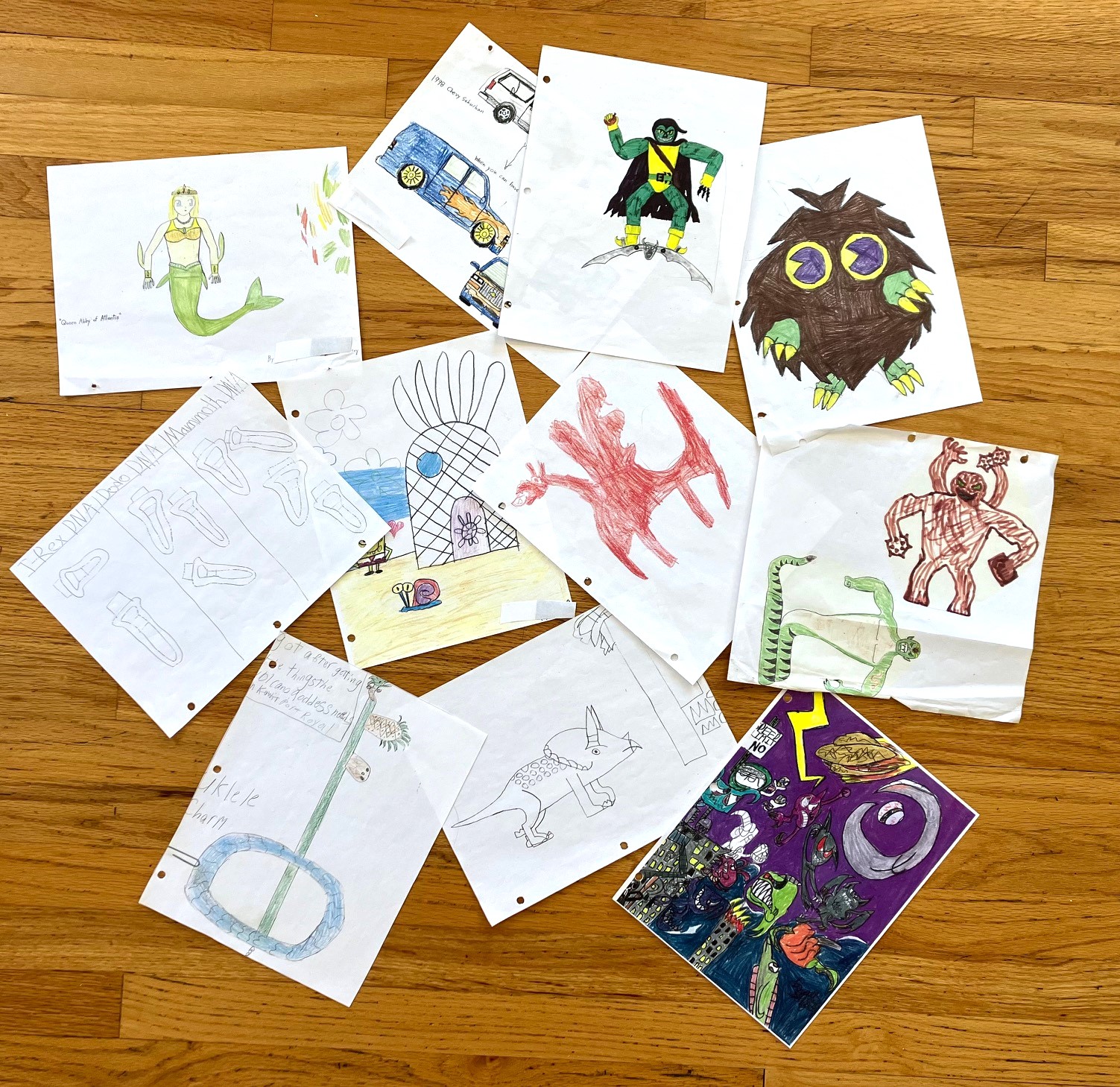
I often facilitated projects like this at a summer teen program that I ran for some years. With groups of teens that included many who enjoyed drawing, it was a favorite activity and really helped some solitary autistic artists to more fully appreciate the creativity of their peers.
Collaborative sign coloring project
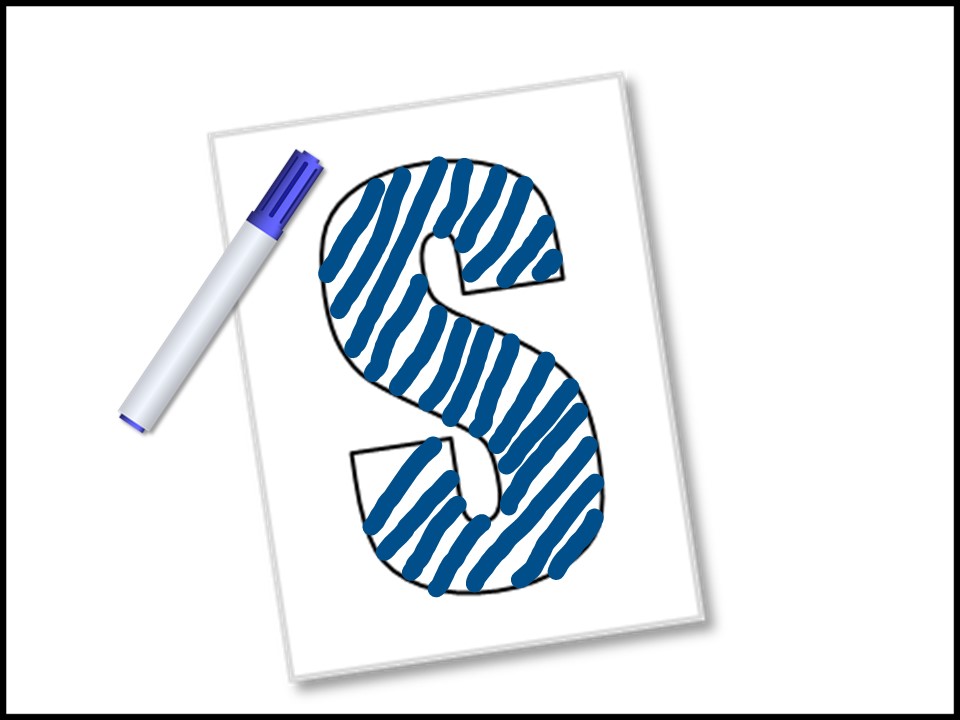
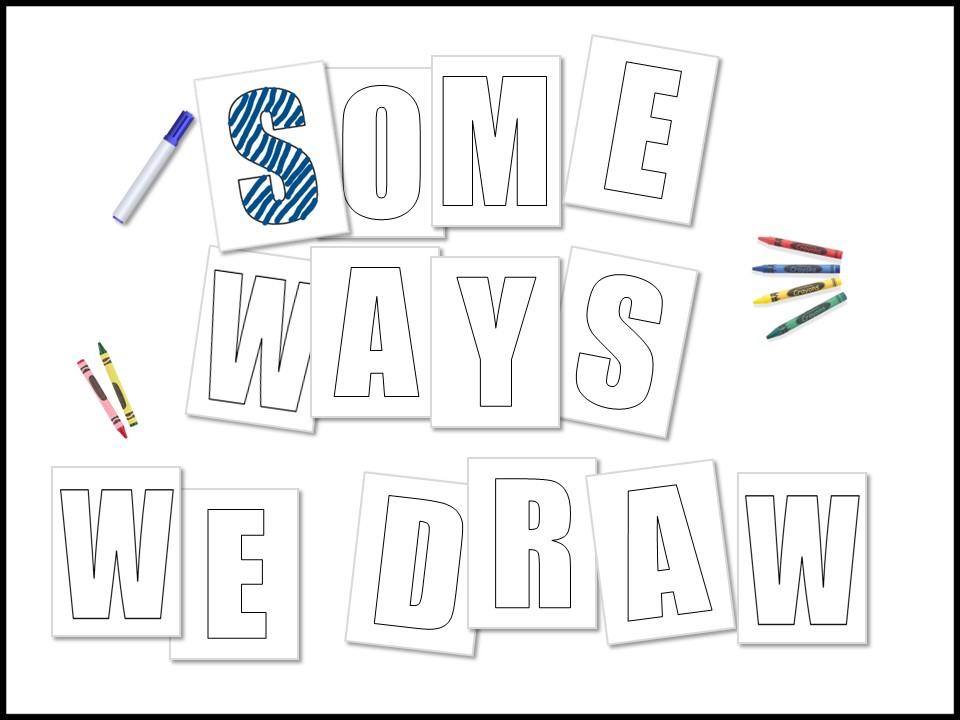
The first step of this project is for you to prepare a number of separate pages featuring the outlines of letters comprising the words you want to display on the wall of your classroom, office, social group room, etc. You can draw the letter outlines by hand, or else type them on your computer.
If you do it on your computer, I suggest you select the font “Impact,” configuring the letters in white with a black outline. Make each letter take up one full sheet of paper.
Each child is assigned to color and decorate one letter. When you finally assemble the letters to make the sign, it creates a sort of entry-level collaborative art project.
I used this project often in social skills groups and a summer teen program.
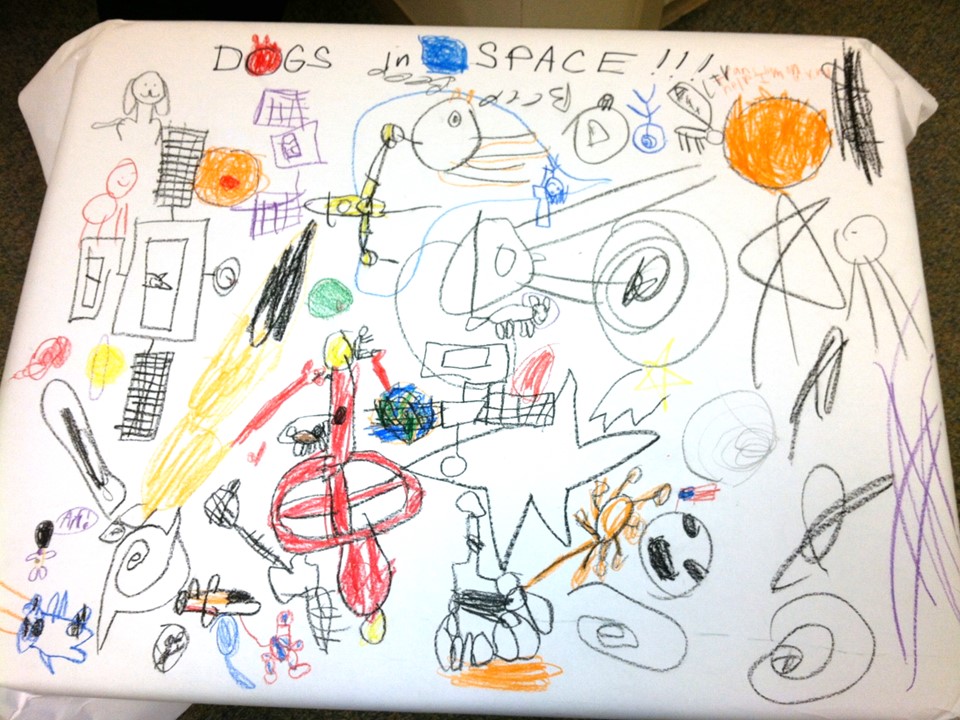
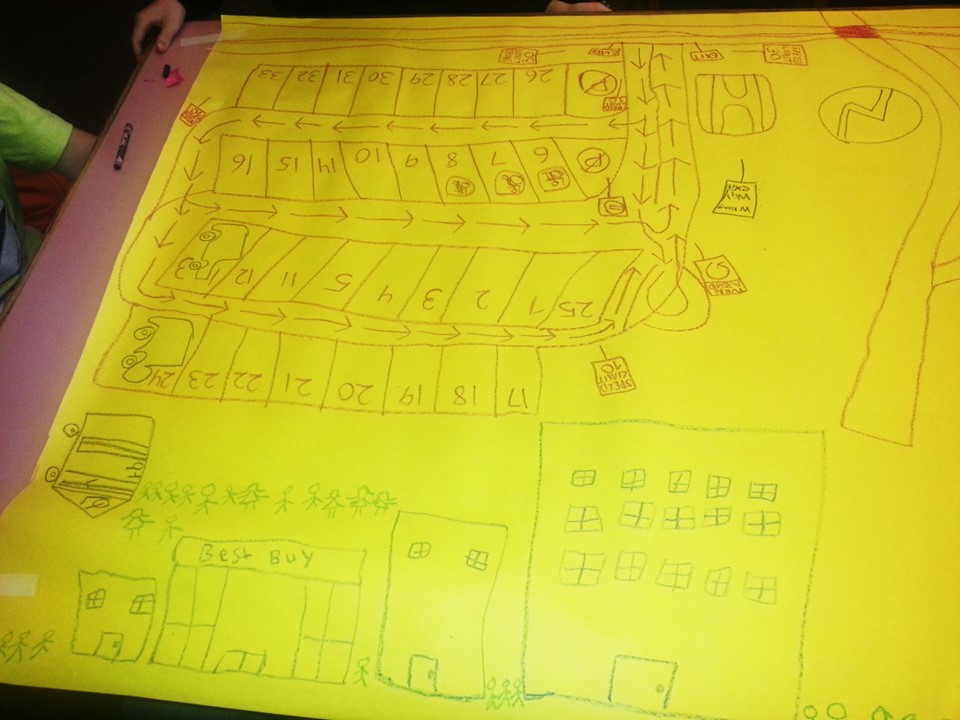
Assigning a few children to create a unified drawing together in the same space
This is a fun project, but also challenging and potentially very frustrating for young people on the autism spectrum. It’s very worthwhile provided you set it up carefully and offer coaching and troubleshooting from beginning to end.
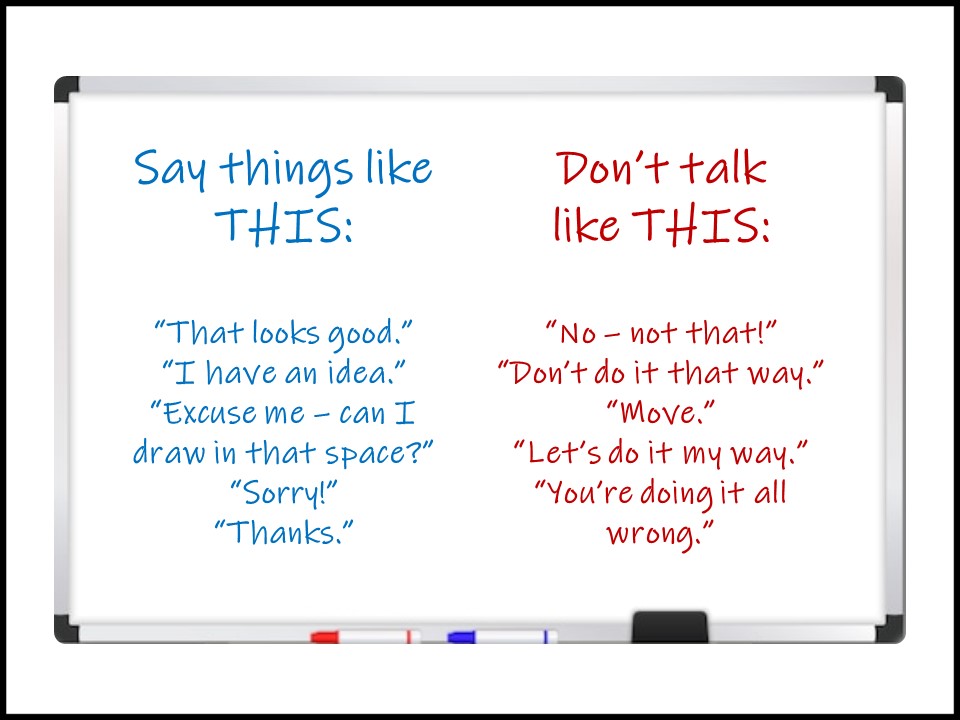
After clearly describing the scope of the assignment, you should post written rules that include language children should use and not use with one another while working together. It’s also worthwhile to enact instructive role plays in which you, the teacher/therapist, demonstrate “right” and “wrong” ways to verbally interact in a collaborative activity.
The finished project could end up looking something like these pictures below.
Section B: Four collaborative art projects using free downloads from the website
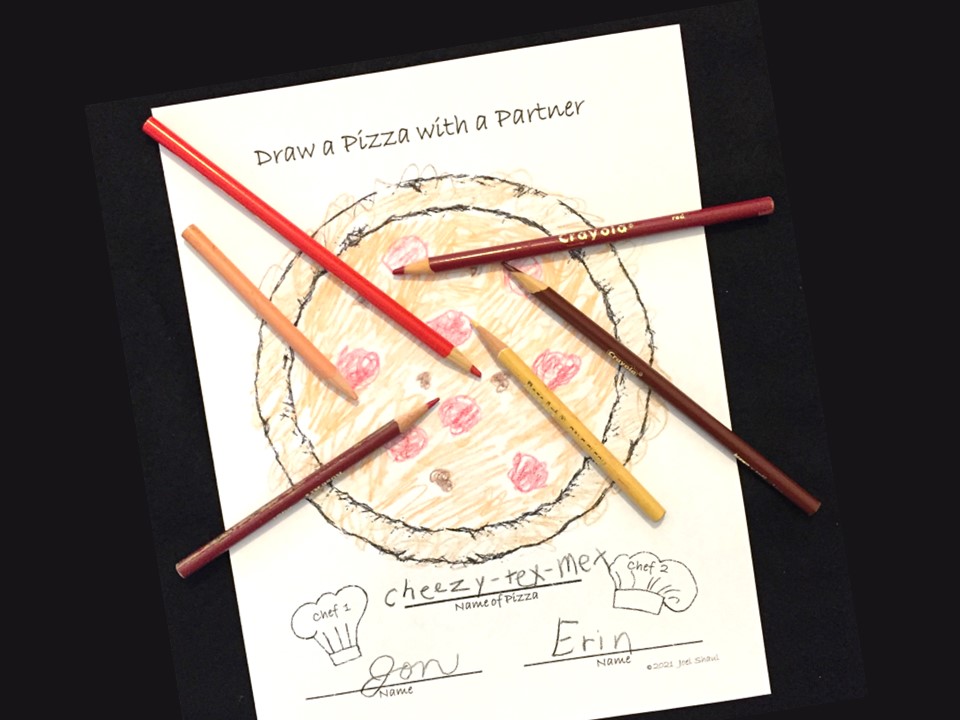
This download comes with the worksheet and the rule sheet below.
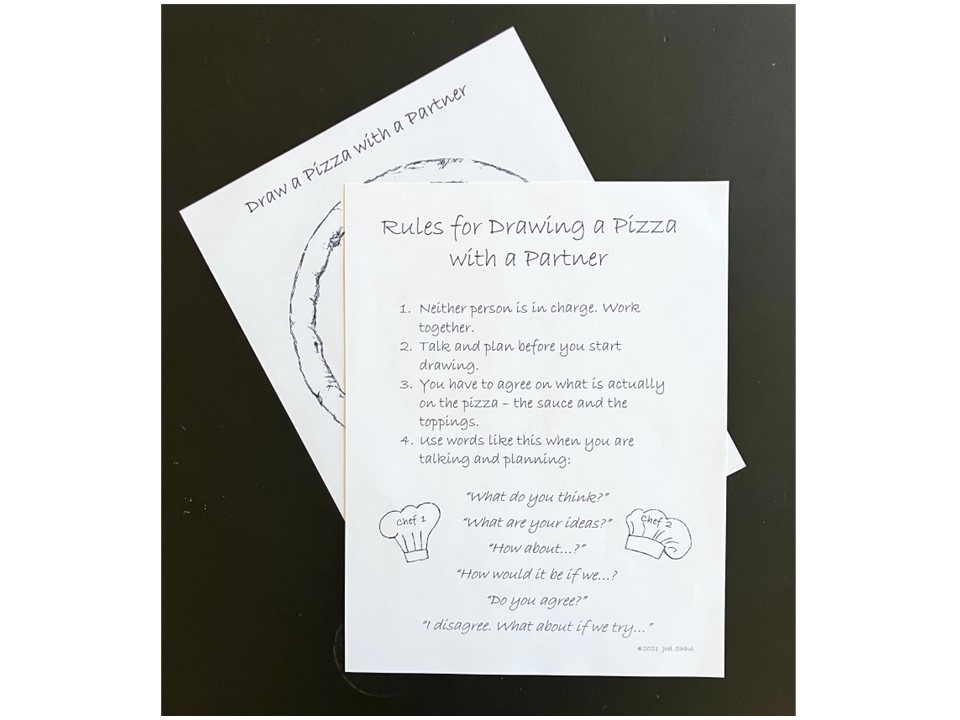
If your young clients like drawing the pizza, there is a another very similar project for you to try, Draw a Cookie with a Partner.
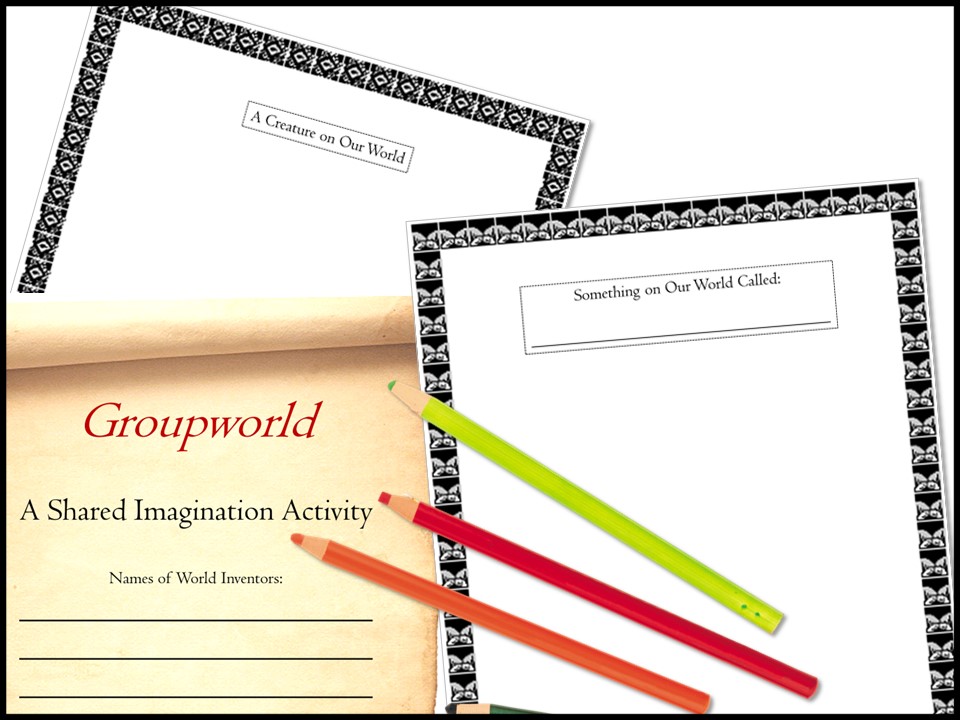
Groupworld project for three or more children or teens
This is a more involved project involving both writing and drawing. The adult facilitator will need to get involved to a significant extent to mediate and keep the work collaborative. It’s easy for this activity to dissolve into a bunch of kids drawing and writing apart from one another, quite disengaged from their peers.
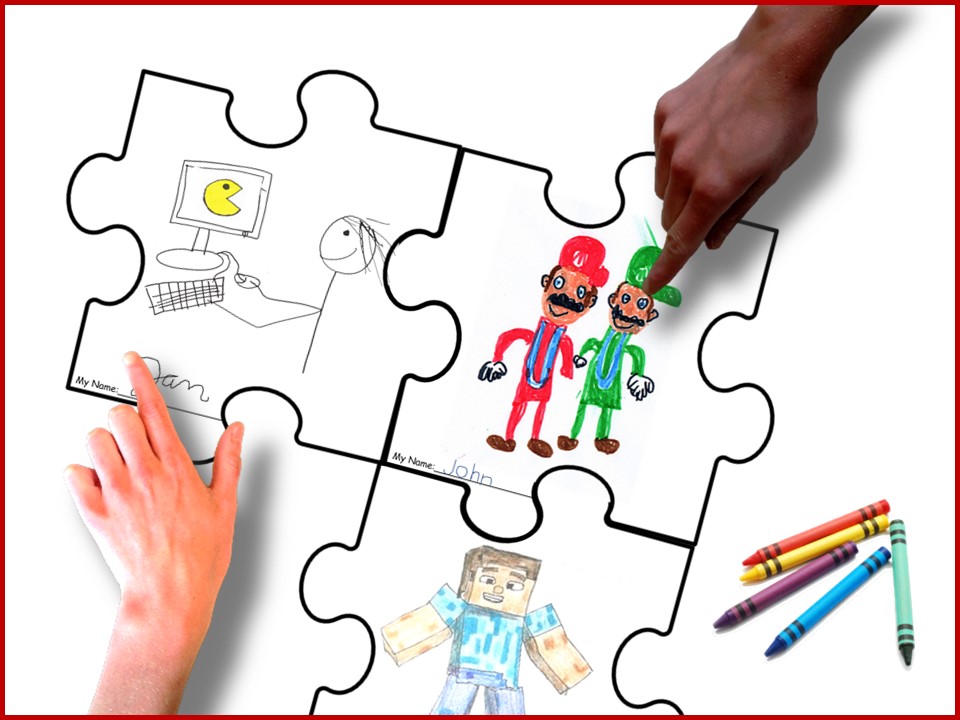
This free download provides several kinds of puzzle templates which, when completed, allow the participants to put together a puzzle representing the connection of their interests. It’s a great activity, but be advised that you will need to cut out the puzzle pieces in advance and that is time-consuming.
The next in this series is: Part 4: Coloring & decorating to add interest & levity to social & emotional learning.
Joel Shaul, LCSW
Part 2: Assigning individual drawing tasks for social & emotional learning.
Part 3: Assigning collaborative drawing tasks for social learning.
Part 4: Coloring & decorating to add interest & levity to social & emotional learning.
Part 5: Creative use of others’ images and AI for social & emotional learning.
Part 6: Encouraging & validating the child’s own artistic expression in therapy & teaching.