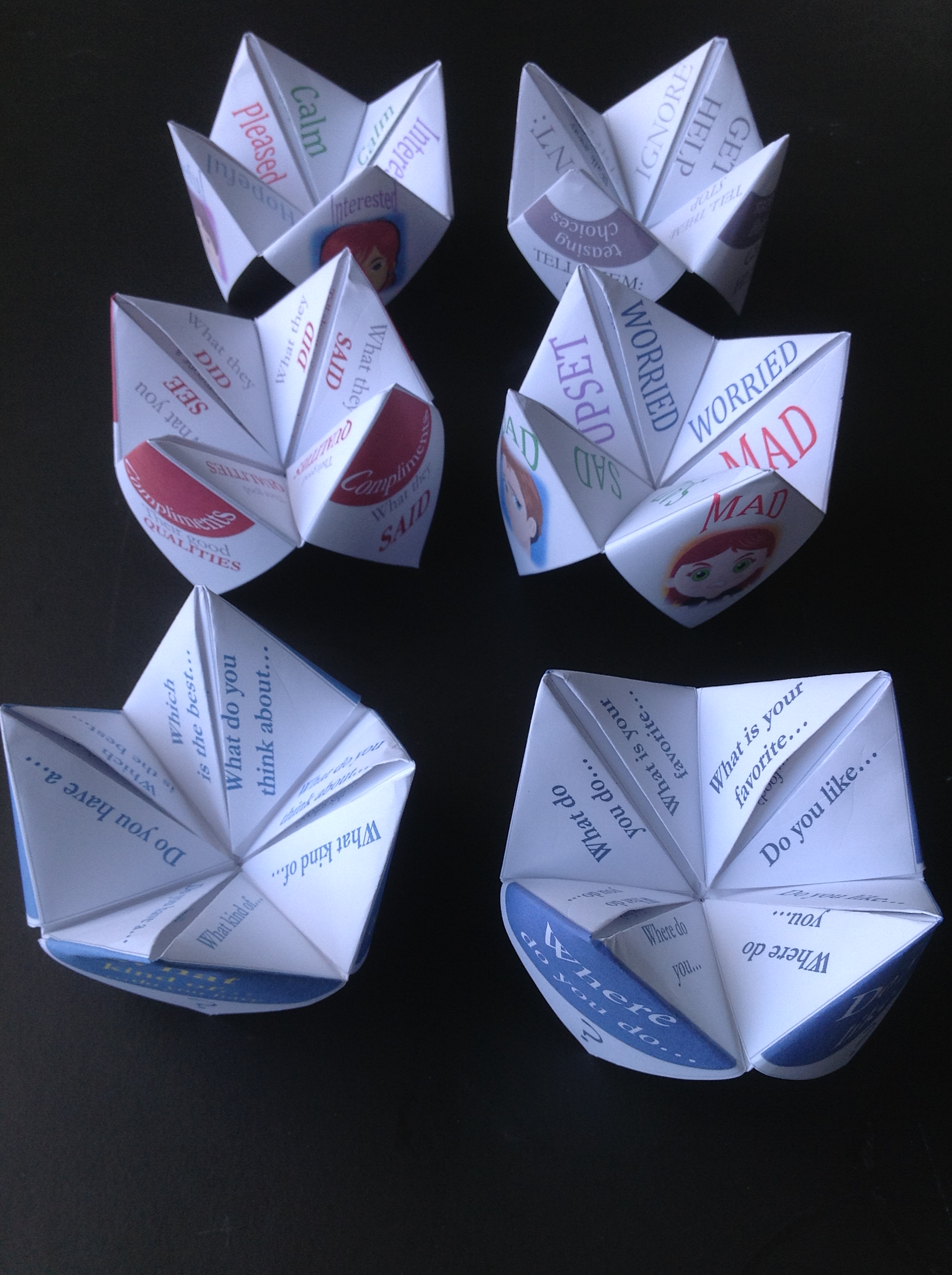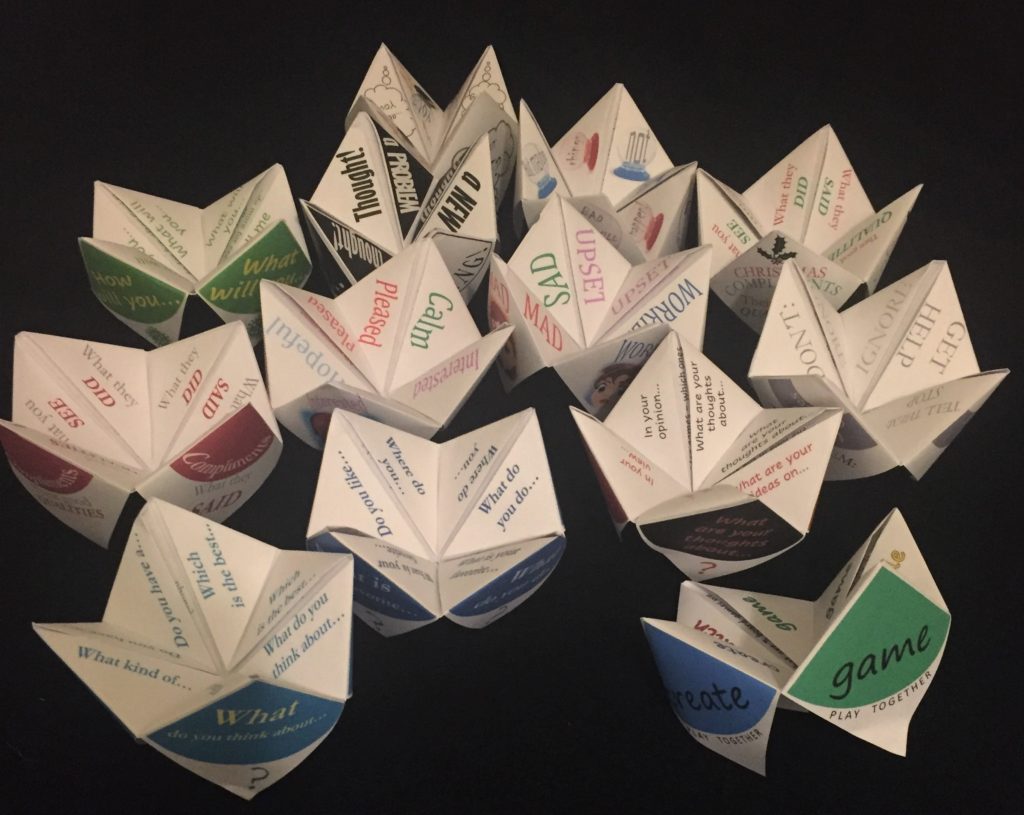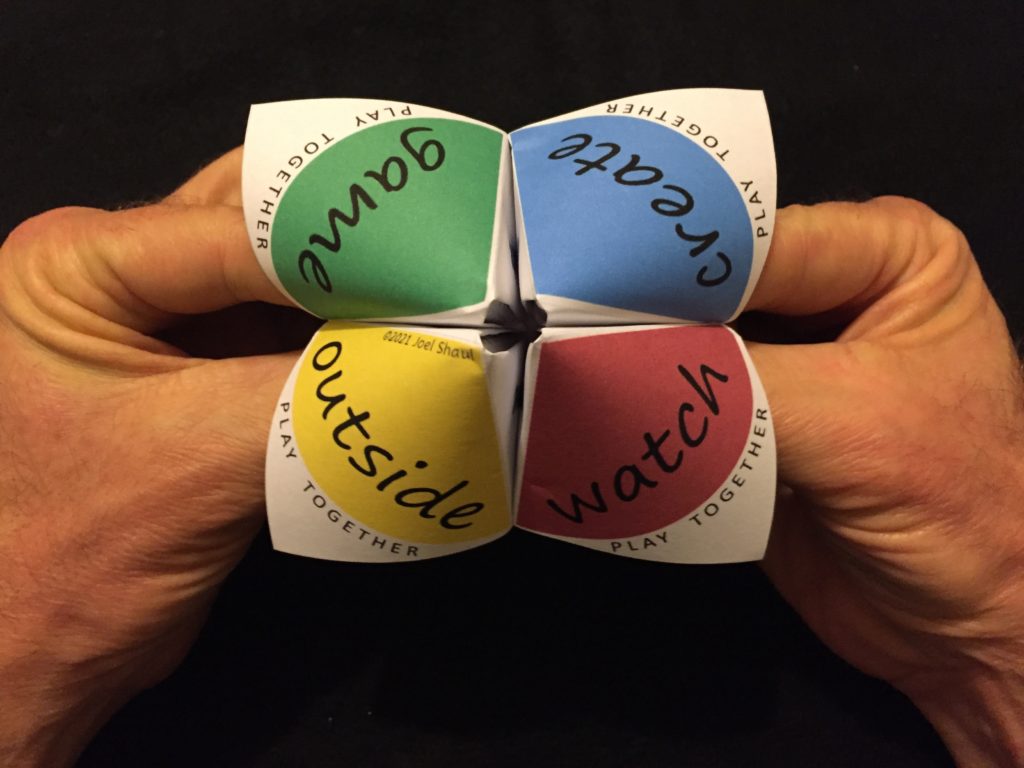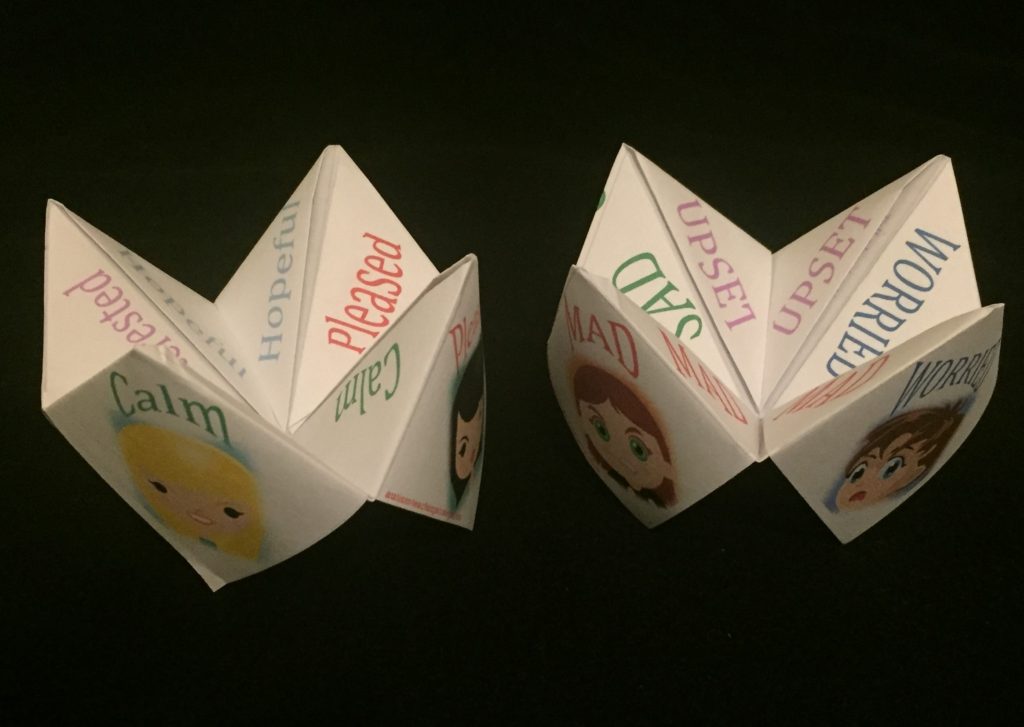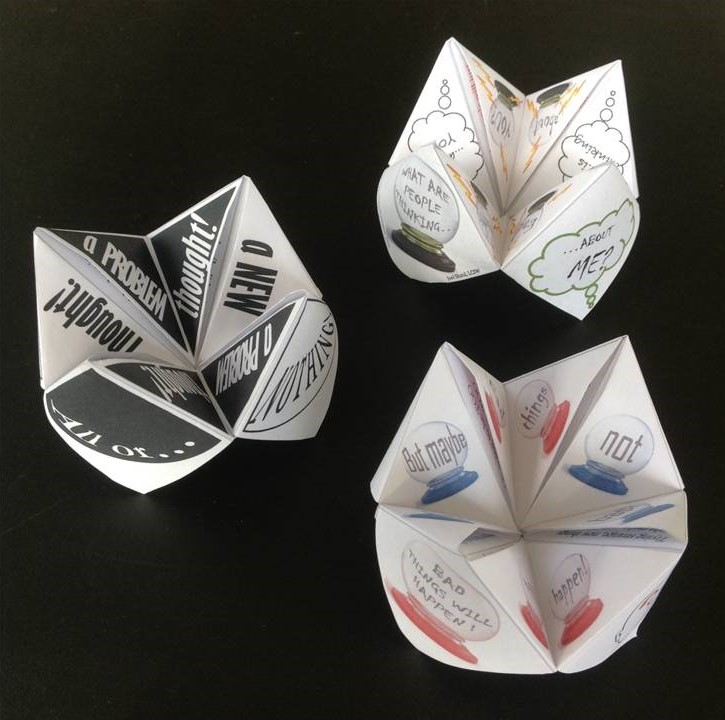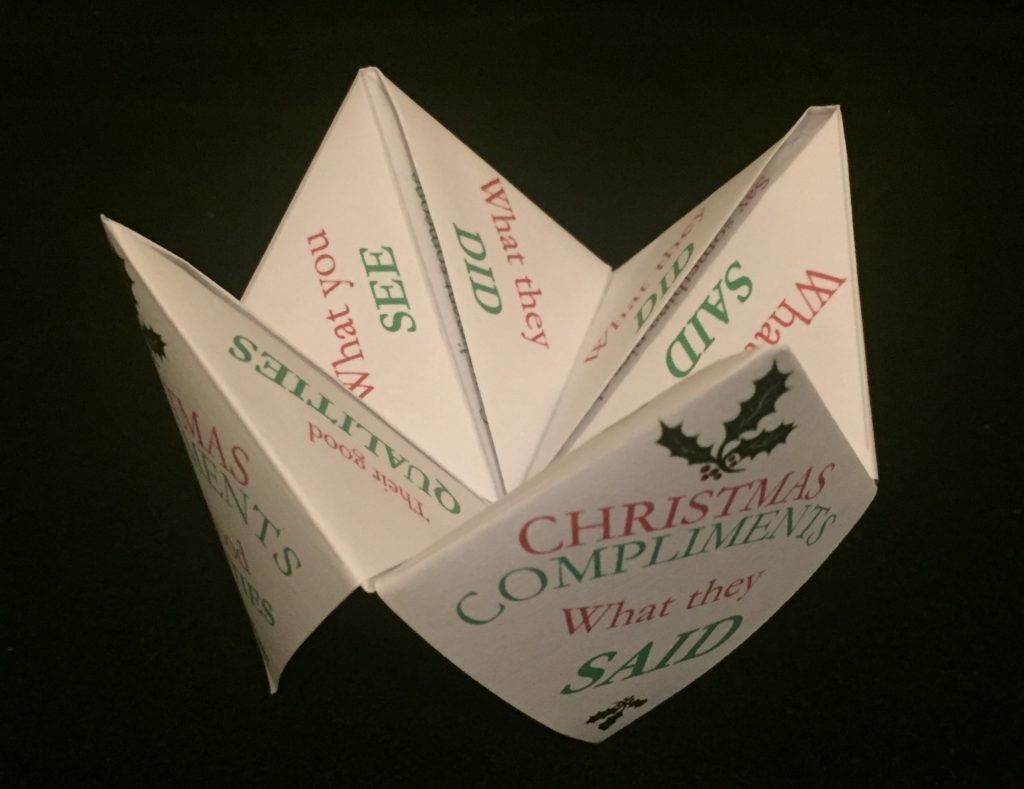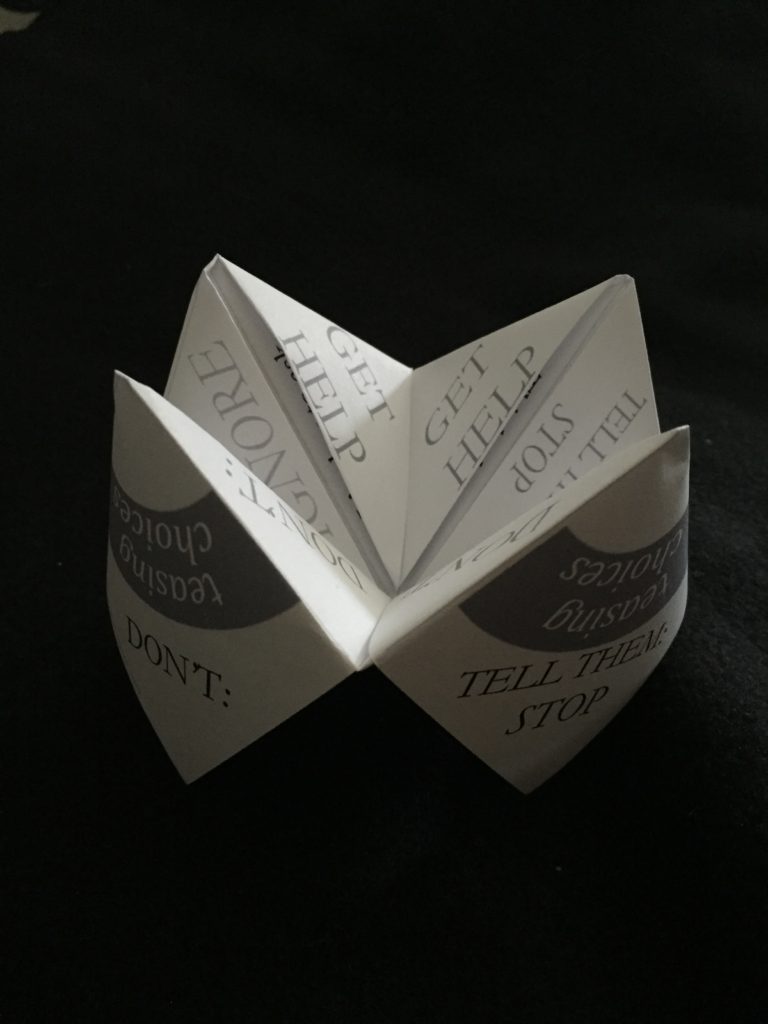

Paper Fortune Tellers – social skills games for children with ASD’s (and other children too)

This is the main page for my social skills paper fortune tellers. Scroll down to view photos.

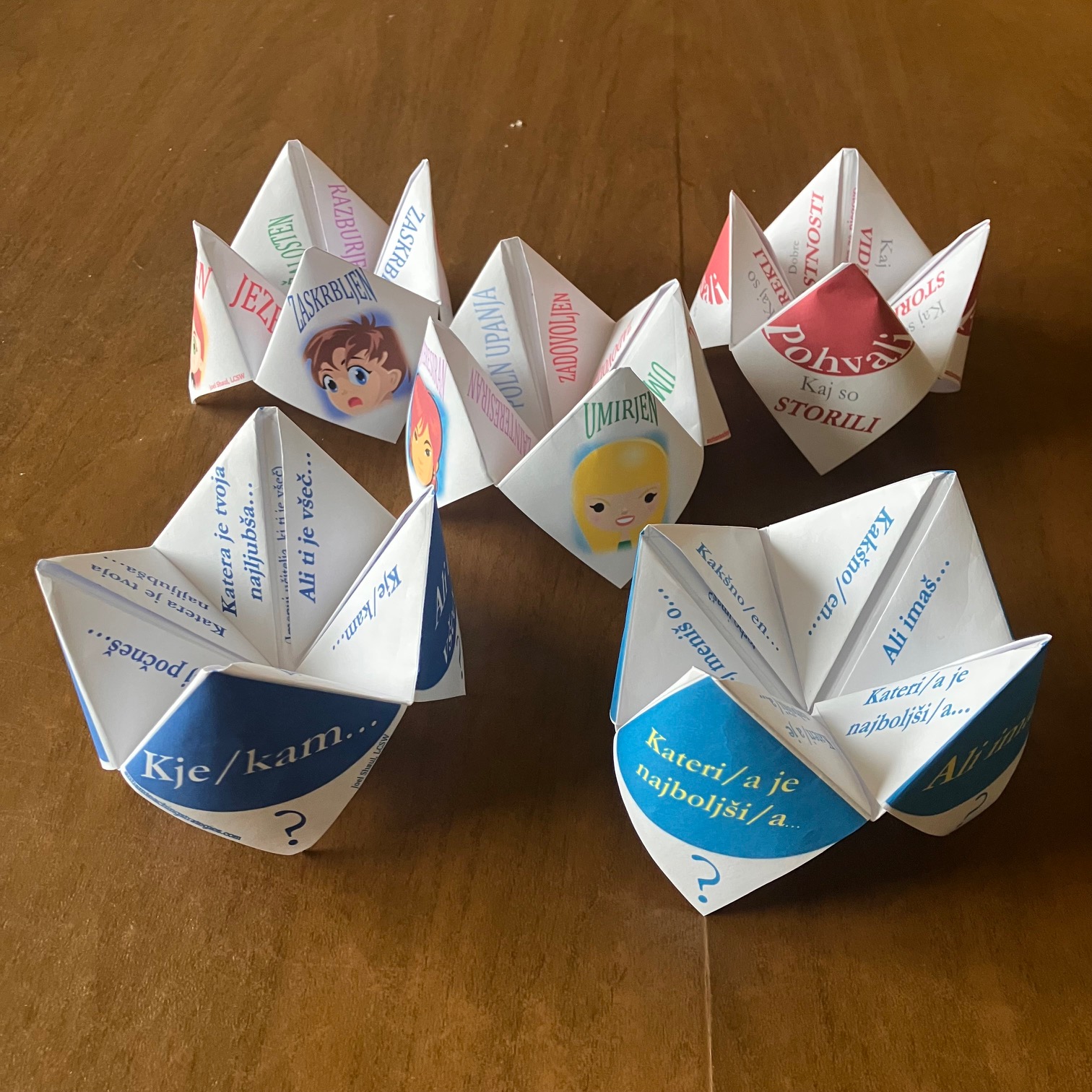
Click on these links below for explanations and free downloads of 17 paper fortune tellers.

Quick Picture Guide for Folding Paper Fortune Tellers

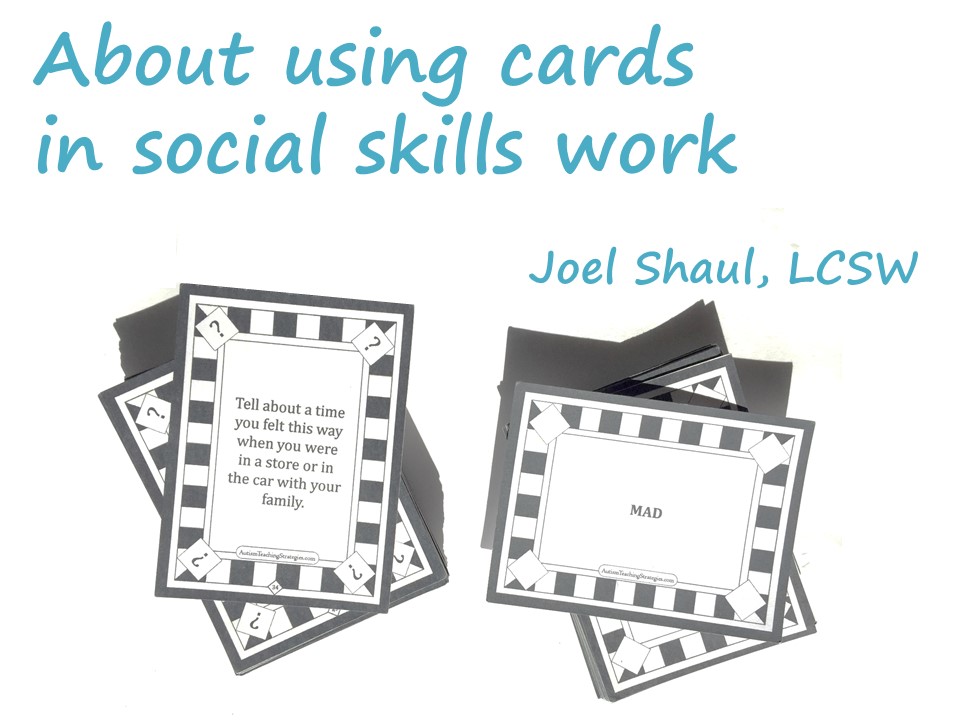
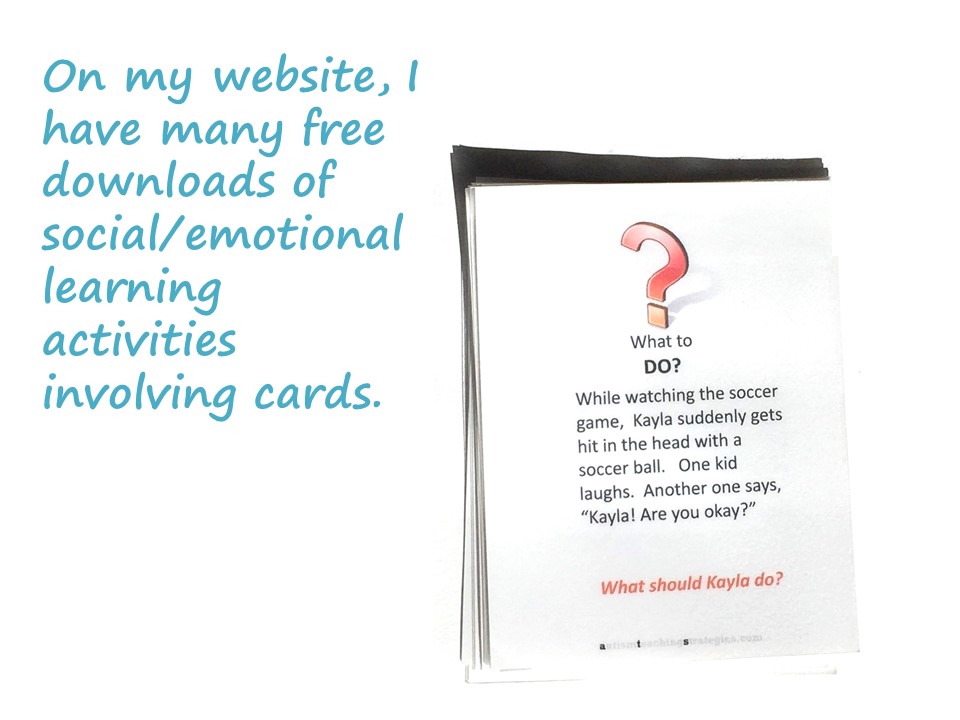
Quick Picture Guide for Using These Paper Fortune Tellers in Social / Emotional Skills Work

*For a video demo on folding and using these things by Carla Butorac, SLP, click HERE.

Paper fortune tellers can be useful therapy / teaching tools, especially for young people with ASD.

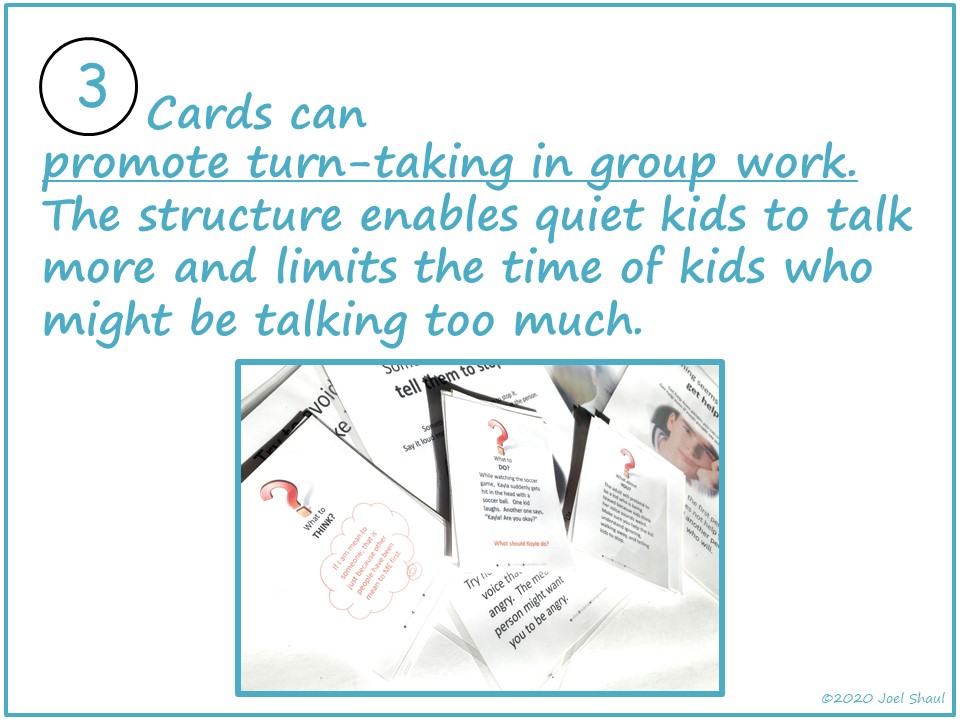
*The turn-taking that naturally occurs when two people use a paper fortune teller promotes the reciprocal conversations we are trying to promote.

*Each paper fortune teller emphasizes an important skill area in our social/emotional teaching.

*Paper fortune tellers are engaging and fun.

I enjoyed creating these. I hope you find them useful.

Joel Shaul

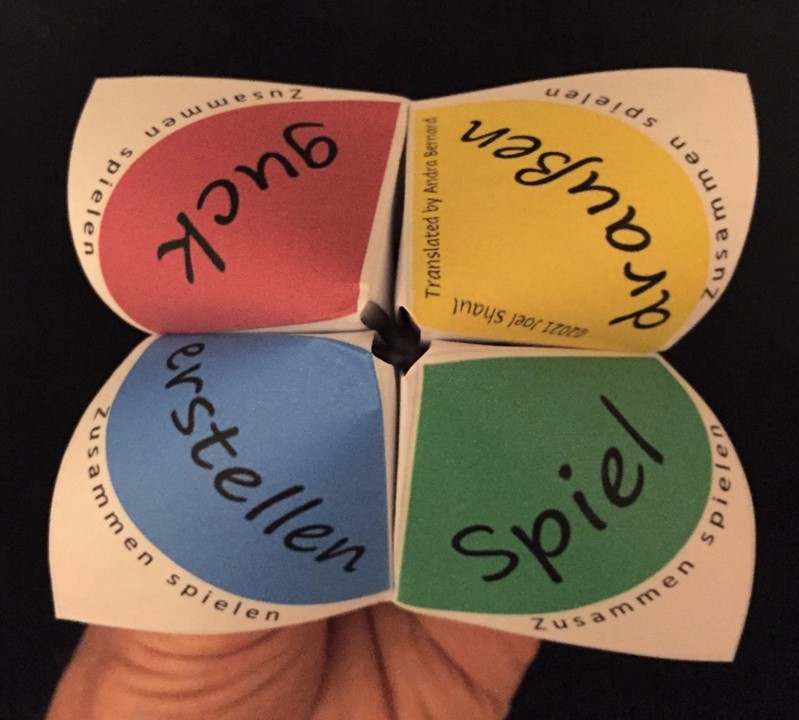
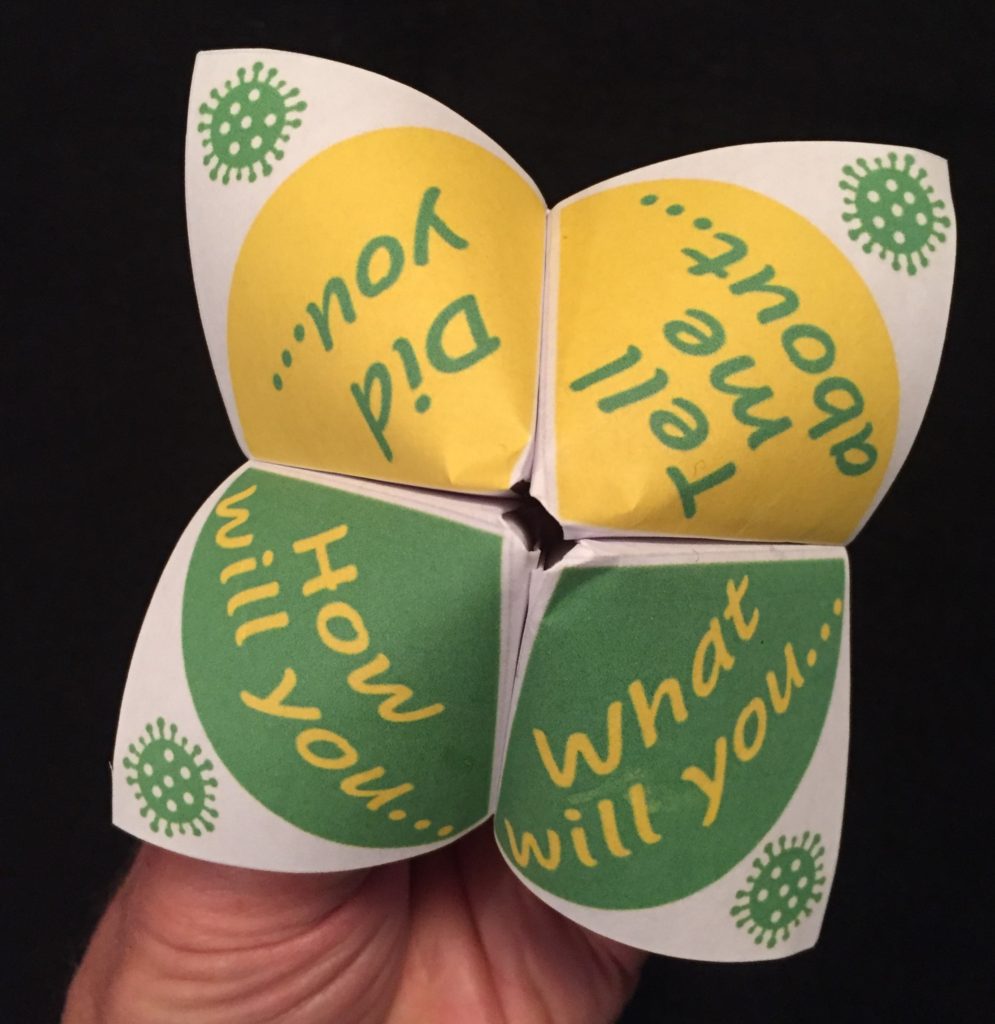
Paper Fortune Teller for Playing & Hanging Out Skills

Himmel und Hölle um spielen und einander kennenzulernen

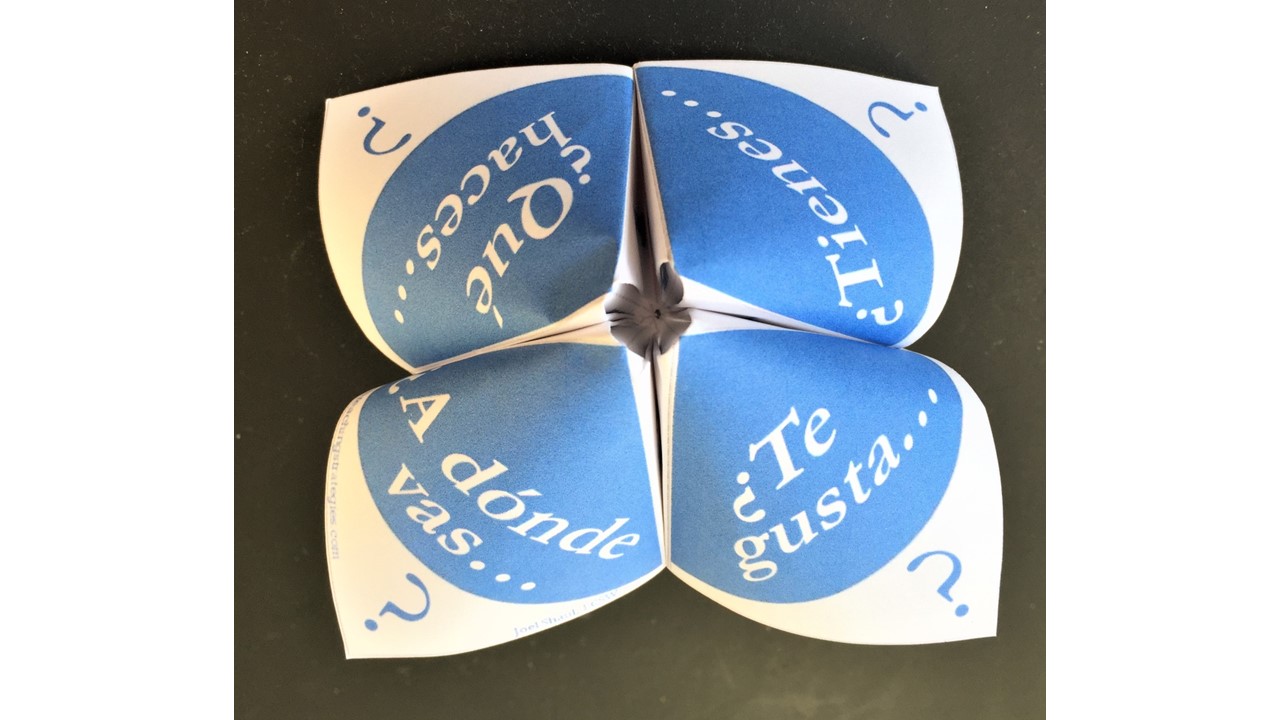
Adivinador de papel para ayudar a los niños a aprender hacer preguntas

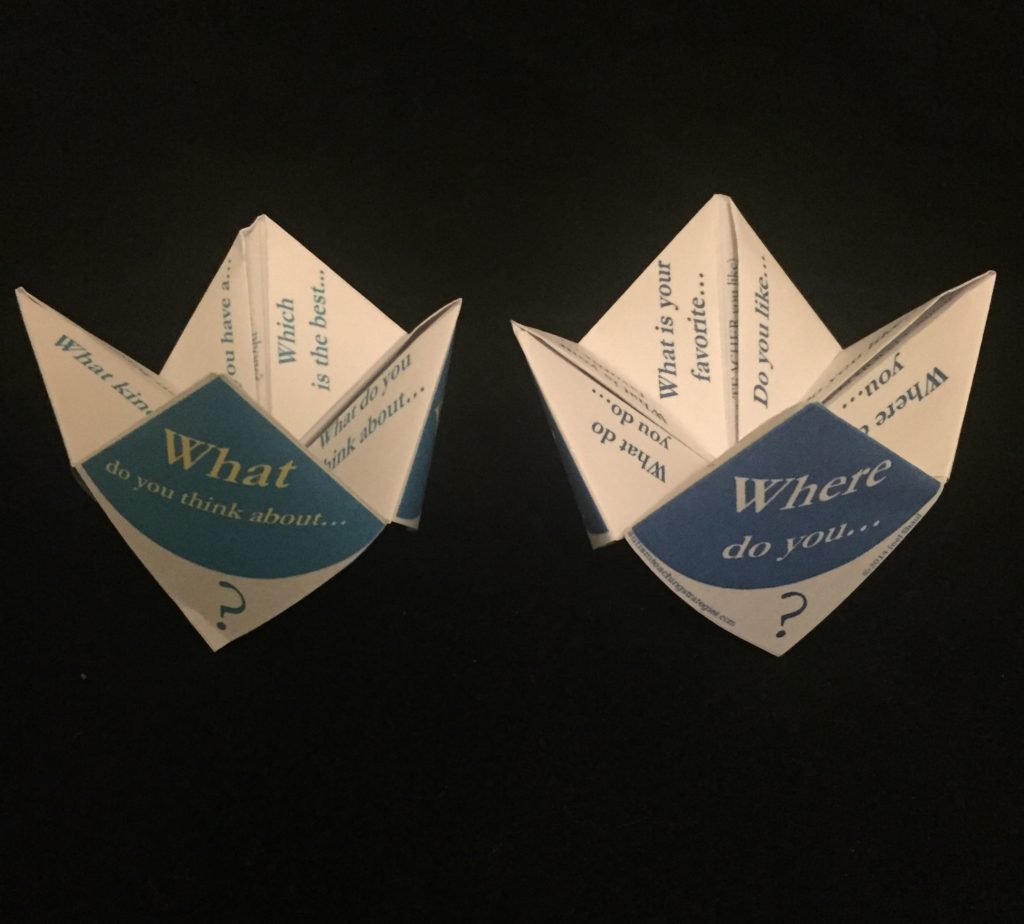
Paper fortune teller for asking questions

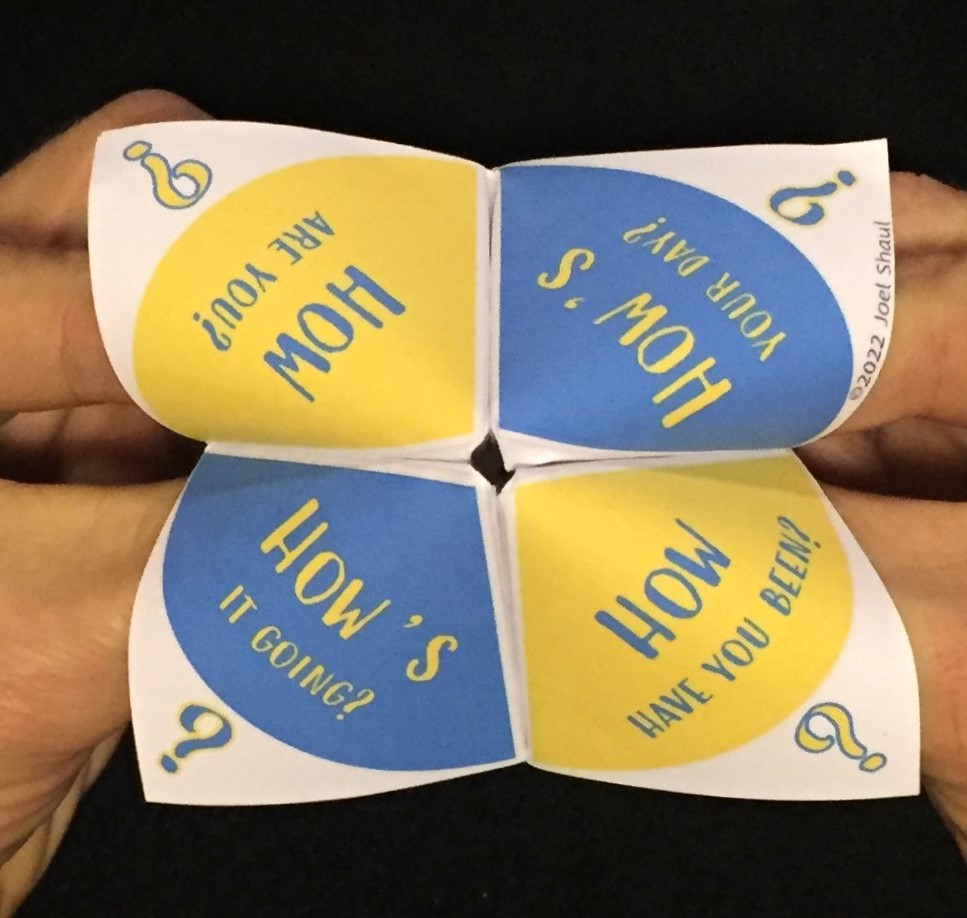
Paper Fortune Teller for Asking “How are you?” questions

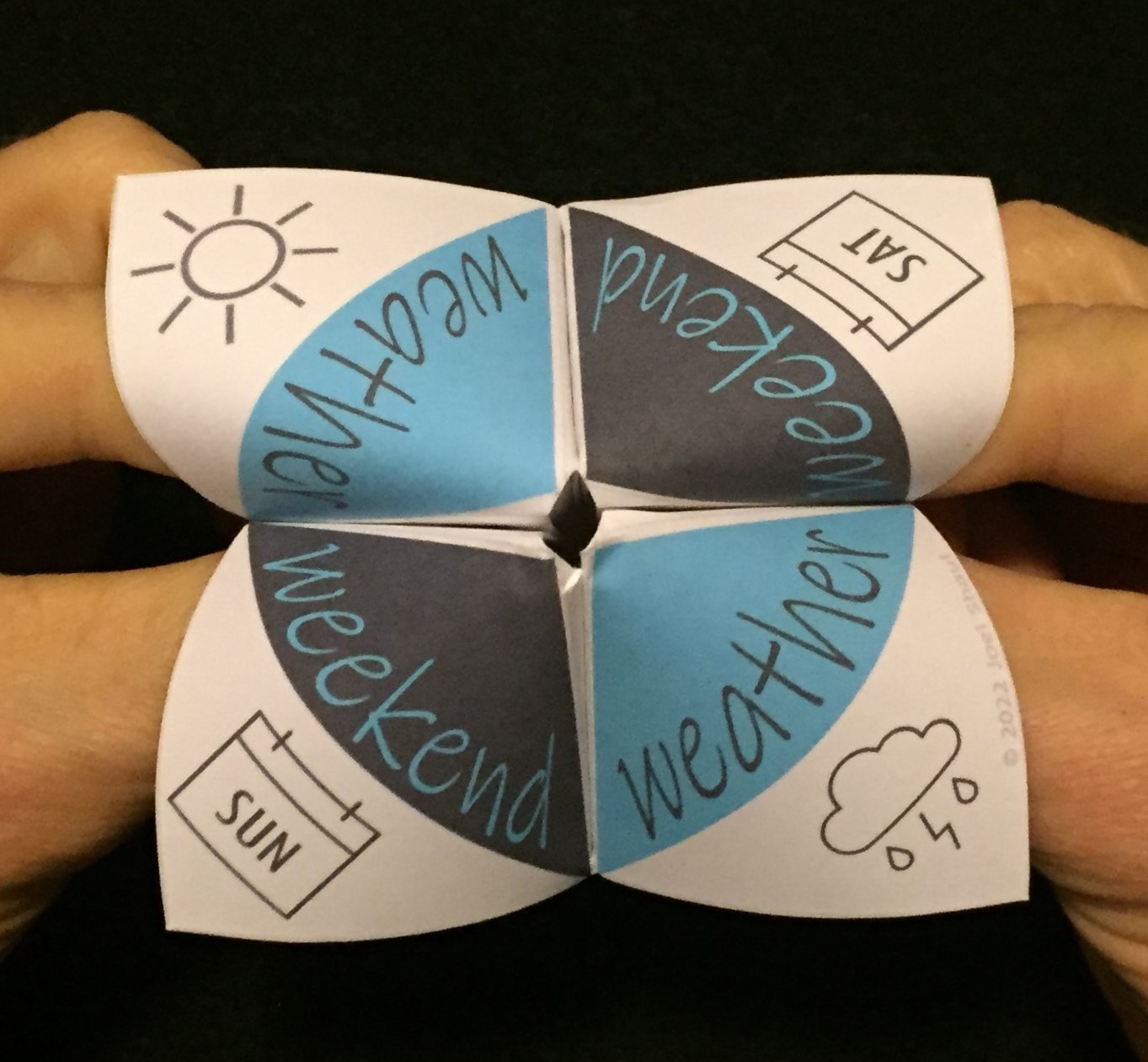
Paper Fortune Teller for Topics of Weather & Weekends

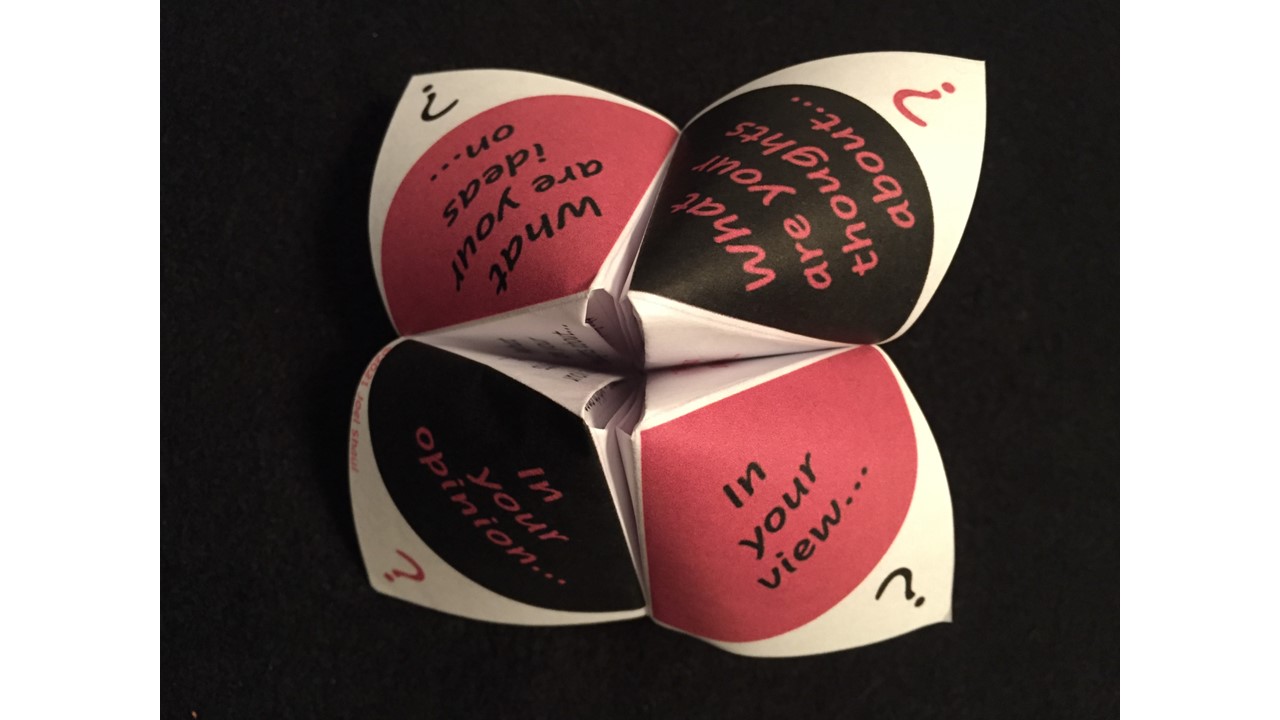
Paper Fortune Teller for Asking Opinions

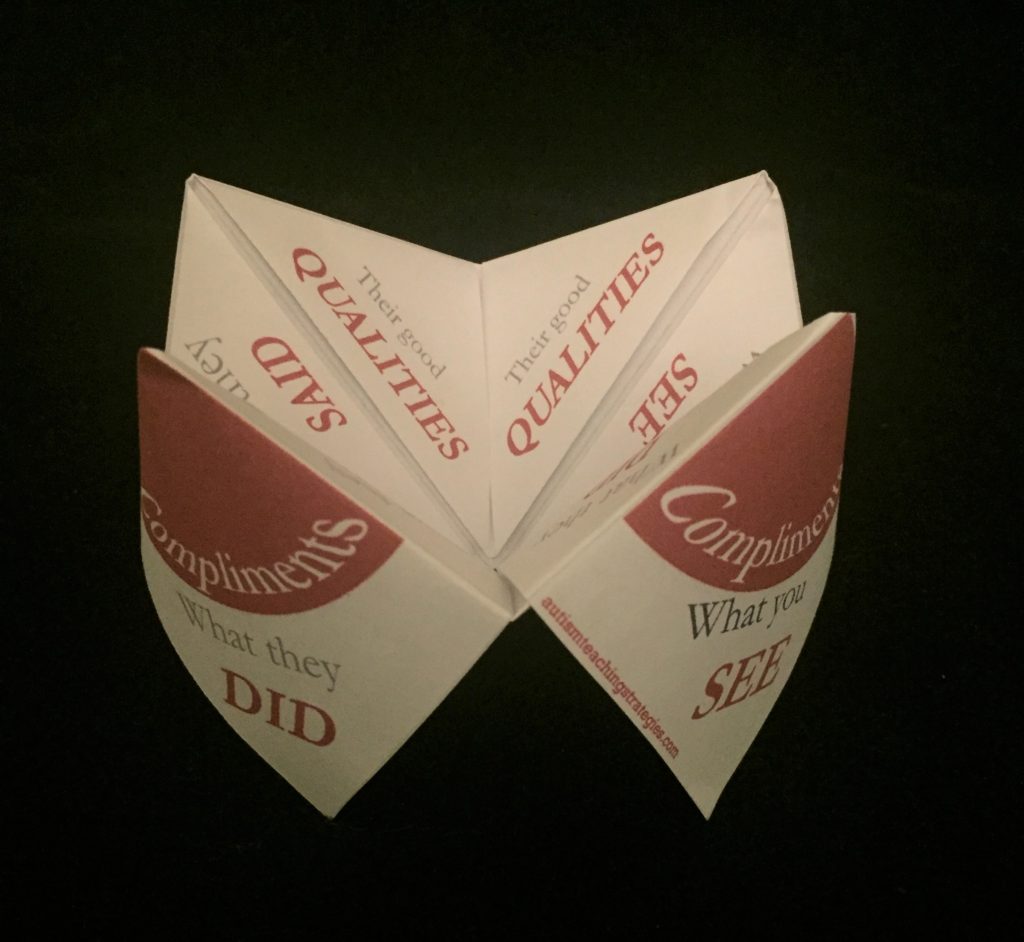
Paper Fortune Teller for Christmas Social Skills

Paper Fortune Teller for Talking about Covid-19

*Don’t miss these other free social skills games, worksheets and therapy resources for children on the autism spectrum:

Free social skills games & activities, communication / conversation skills for kids with ASD

Free social skills games & activities, social interaction skills for kids with ASD

Free social skills games & activities, emotional regulation skills for kids with ASD

Your comments on these resources are most welcome, and often helpful. Click HERE to send an email.
Using a rope to demonstrate “social ties” for children with autism

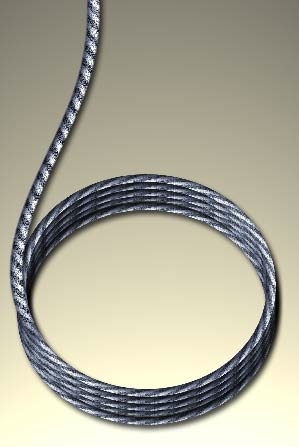
  Many young people on the autism spectrum can get confused regarding personal space when they are walking together with other people.  Professionals working with youth on the spectrum in therapeutic recreation programs encounter these problems frequently.  At a mall or on a trail in a park, it is not uncommon for some individuals to remain rather solitary during these group outings.  Some dart ahead of the group, restless and lost in thought.  Others lag far behind, examining an interesting flower, stone or store merchandise.  In either case, they are not well acquainted with the set of skills associated with walking together, keeping appropriate distance from others and conversing with them. A big rope, about fifteen feet long,  is a very useful visual device for increasing awareness of “connectedness” during outings.   Before the walk, you can get together with the young people and say something like this, using the rope as your prop: “When people are together on a walk, it’s like they are connected together by an invisible rope.  Even though they are all walking separately using their own legs, they are also walking together.  If you get too far behind the other people, then if they think of something interesting to tell you or show you, you are too far away to hear them.  They might feel like you are slowing them down.  If you run ahead, the people you are with might feel like you are trying to get away from them or rush them.  When you are walking with your friends, try to stay between this distance … and this distance.” [Here us where you have everyone gather around, and you use your rope to show “too far ahead” and “too far behind.”] Later, when I am on the walk following this mini-lesson employing the rope, I  use a “hauling in the rope” pantomime gesture to remind kids who are drifting away that they need to remain “tied together” with their companions. I hope you this visual-based social skills training method is helpful for your students and clients on the autism spectrum.

Joel Shaul, LCSW

Your comments on these resources are most welcome, and often helpful. Click HERE to send an email.
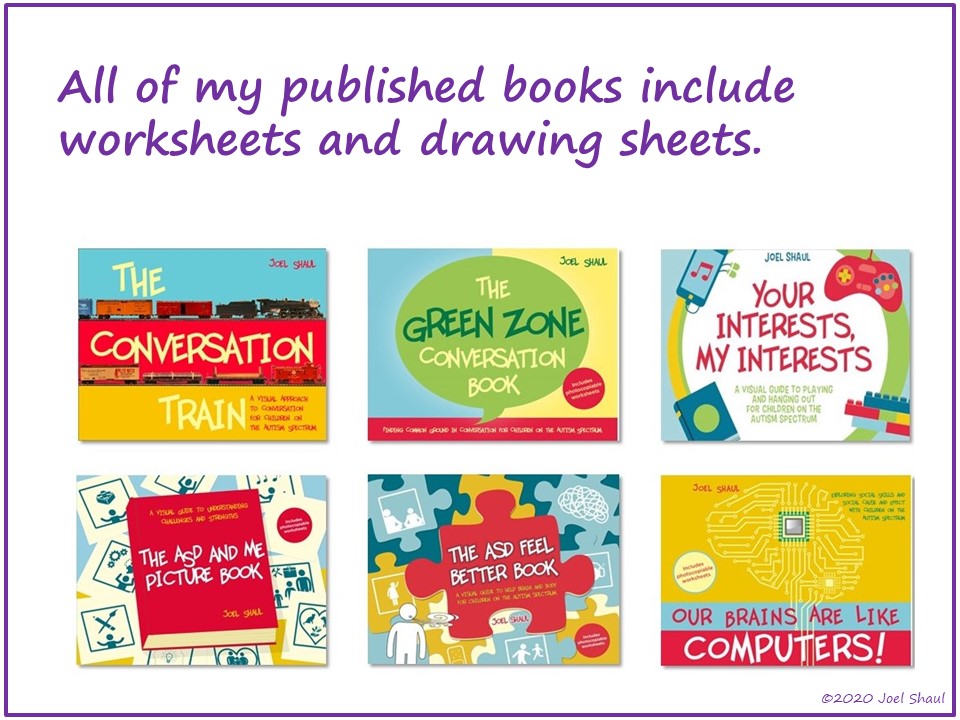
The Conversation Train Book

Green Zone Book Cover Click to Learn More