

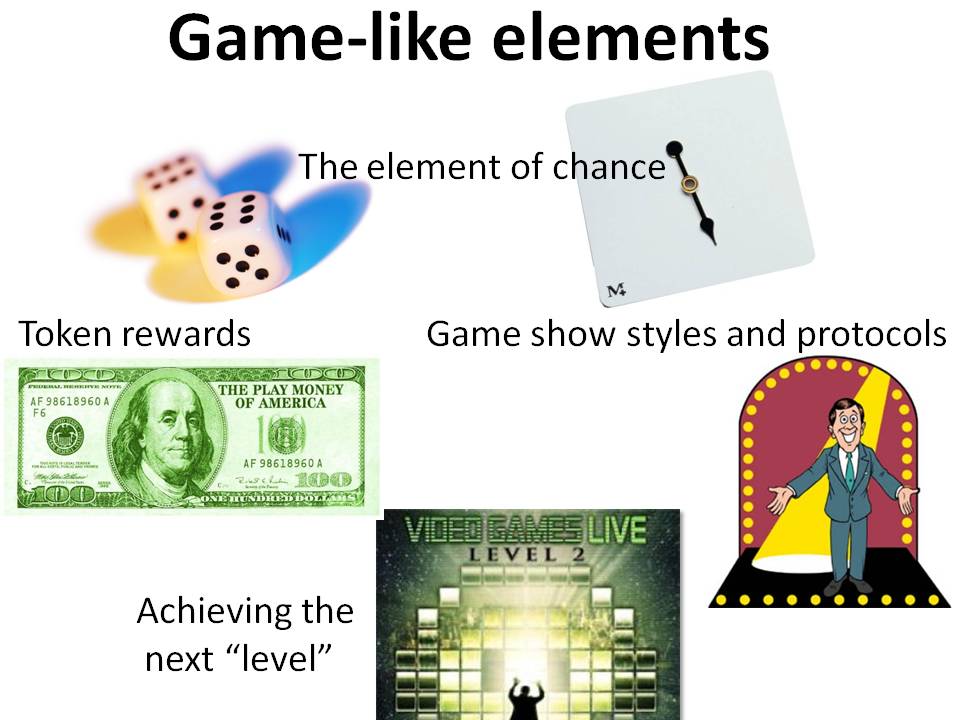
Game-like elements for teaching social skills to children with Asperger’s and other autism spectrum disorders, Part 1

Teaching social skills to children with autism spectrum disorders can be much more effective when it is engaging and fun.  By the time children with autism ends up in our classrooms  or psychotherapy offices, they are often feeling pretty weary and discouraged with their problems.  If we don’t introduce some elements of levity, we may lose their attention altogether.

Here are some tips for making your social skills training engaging and “game-like.” Much of this is summarized in this Youtube video, check it out: http://bit.ly/x9TvvO

Use the element of chance to make your social skills teaching seem like a social skills game
  1. Introduce the element of chance. A simple way to do this is to use some dice, or a blank spinner (available from teacher supply stores).

Here is an example:  “Kids, we are going to play the compliment game today.  A compliment is when you say something nice to someone about  how they look, or about what they do, or about how they are.  When it is your turn, if you roll a one or two with the dice, you have to give someone a compliment here about how they look.  If you roll a three or a four, give a compliment to someone about what they are doing.  If you roll a five or a six, give a compliment to someone about how they are (nice, funny, smart, fast, clever, etc.)”
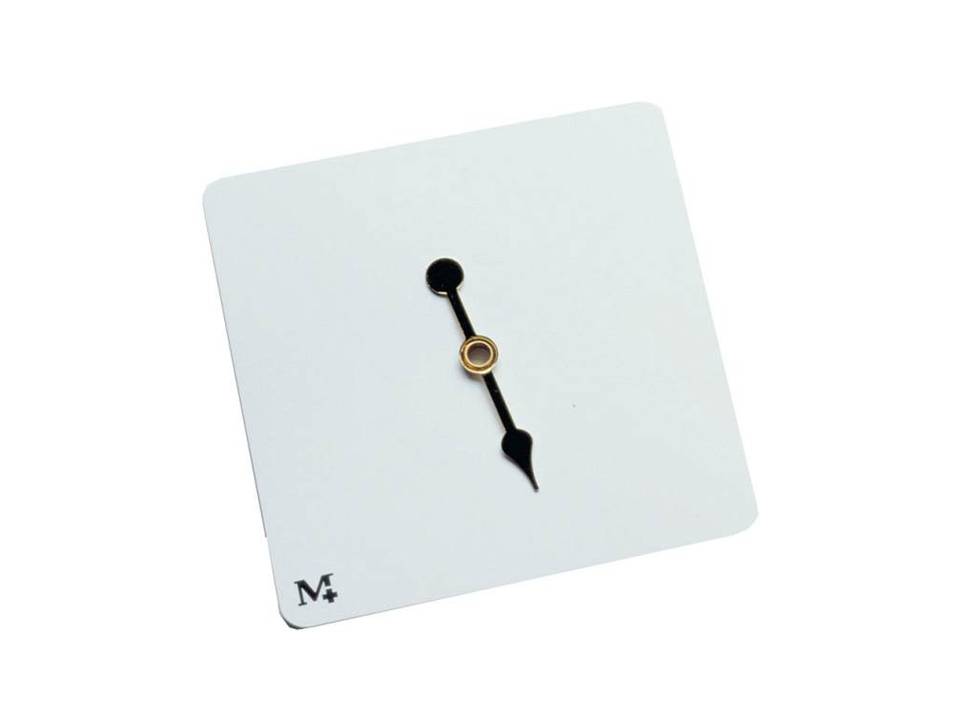

Customize a blank spinner to create social skills games for students/clients on the autism spectrum

social skills learning autism

You can download this cool play money that I made! Click here.

2.  Use tokens or scoring systems. These fall into two categories.  The first kind of scoring system is to give out token objects (play money, marbles, etc.).  These you have the kids keep in cups so they are not overly distracted by them.  The second scoring system is to create a score board.  Simply write the names of the children on a dry erase board, and add a hatch mark next to their names each time they score. (This is the preferred system if your kids on the autism spectrum get distracted by wanting to touch and handle the token items.)

Use “levels” to add interest to social skills lessons and social skills training

3.  Use achievement levels. Most kids on the autism spectrum play a lot of video games.  Video games are usually all about “levels” and getting from one level to the next.  Here is an example of how to incorporate this into an activity teaching compliments: “Kids, there are three levels of giving compliments.  We are going to play a compliment game.  Who will get to level three?  Level one is easy.  You say something nice about how someone looks.  Level two is harder.  You have to say something nice about the thing the person is doing.  Level three is the top level.  You have to know the person well enough to know their special inside qualities, like “Generous,” “Smart,” or “Helpful.”
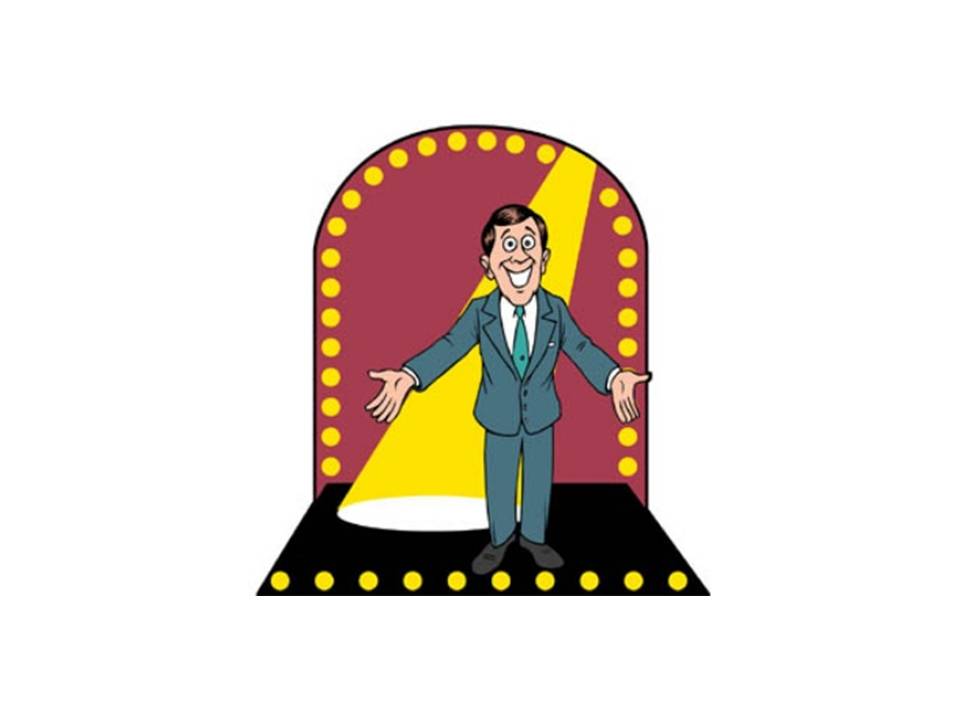
Create a “game show” to turn the social skills lesson into a social skills game

4. Build in Game-show elements. Children with autism spectrum disorders seem to appreciate it when their counselor or teacher is willing to pretend to be a game show host.  Copy and print out the picture of the game show guy shown in the picture above, and stick it on the wall.  If you want to get fancy,  play game show music. Here is a link to Jeopardy music sound clip: http://www.youtube.com/watch?v=vXGhvoekY44 Then,  abandon your professional decorum , and say something like this: “Kids, welcome to the Elmhurst School Game Show.  I am your host, Ms. Apple.  Today, we are going to test people’s ability to give compliments.  Please welcome our first contestant, Tiffany.  Tiffany, come on down!”

I wish you good luck with introducing levity and game-like qualities to your social skills training for kids on the autism spectrum.

Joel Shaul, LCSW

Your comments on these resources are most welcome, and often helpful. Click HERE to send an email.
Missing Objects Game–Social skills therapy for kids with ASD

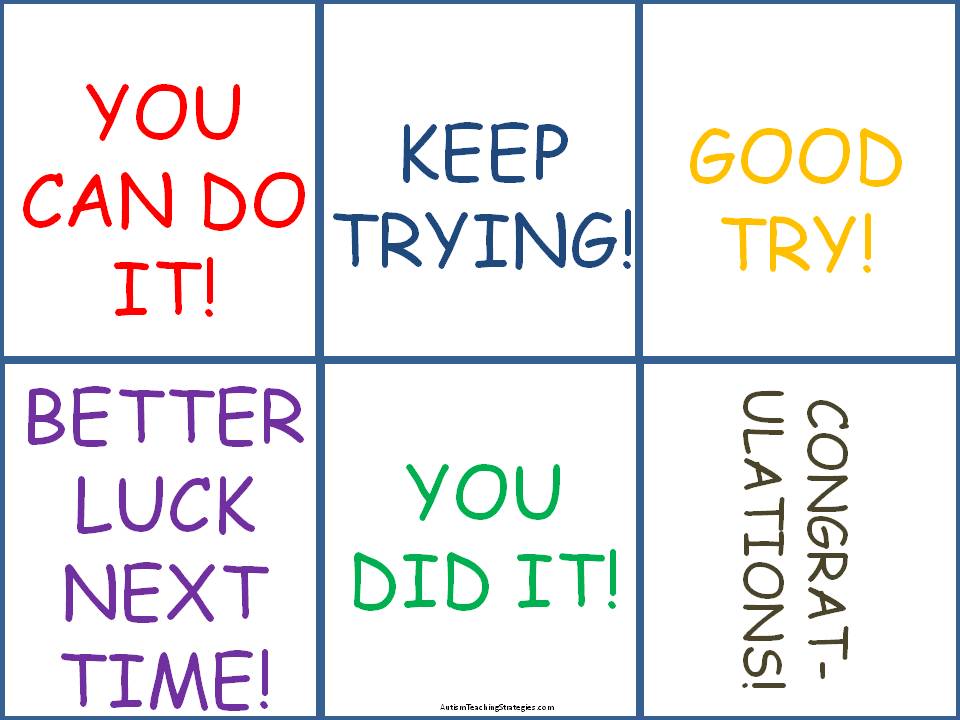
This is an easy, fun and very useful social skills game to help kids on the autism spectrum to  learn how to encourage others.  Children on the autism spectrum often need help learning to use kind and encouraging words.  This is a “game within a game.”  The object is to remember what item is missing when it is removed when the player is not looking.  The underlying game is to “score” lots of encouraging remarks to the other player when they are playing and it is not your turn.

To download the encouragement word prompt cards for this activity, click HERE.

To download the on-screen / teletherapy version of this activity, click here.

To access the Boom Card version of this activity, click here.

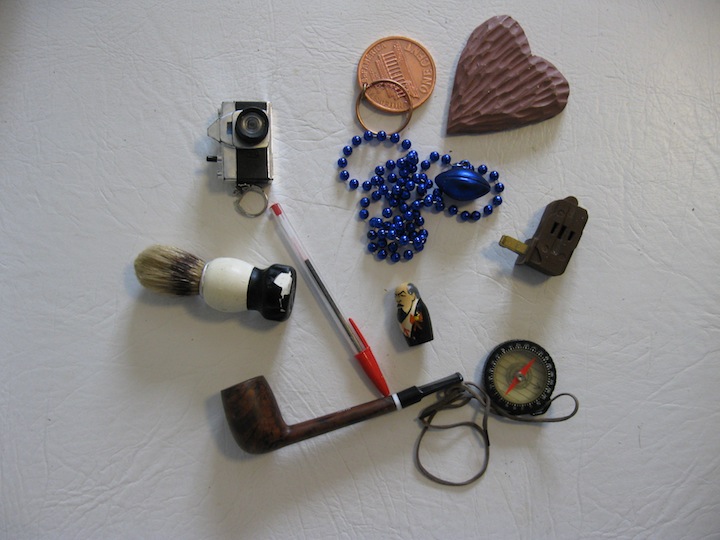
  1. Assemble a collection of eight to twelve very small objects (very small toys, or even just assorted items out
    of a desk drawer).


    Missing Objects Game, a therapeutic game to teach children on the autism spectrum the social skill of encouraging others
    Here is the collection of random objects I keep handy so that I can play The Missing Objects Game with kids on the autism spectrum whenever I feel like it.
  2. Print out the Encouragement Word Prompts and keep them handy to display during the game.
  3. Tell the kids:

“We are going to play the Missing Objects Game.  This is a memory game that works like this.  I will place on the table these small objects.  When it is your turn, you will get one half a minute to look at the objects and try to remember them. Then, we will ask you to step out of the room for a few seconds.  While you are out, we will take away just one of the objects.  Then, you must try to figure out which object is missing!  This can be hard!While you are trying to remember what object is missing, the other kids have an important job.  They have to try their best to say nice things to you, to encourage you and to make you feel okay if you can’t figure out which object is missing.  I will keep track of who is being the nicest, and I will decide then who is first, second and third place at being nice and “encouraging” to the person who is trying to find the missing object.”

4.  Hold up the various encouraging phrase prompts to help the kids know what to say to the child who is trying to remember what is the “missing object.”

 I have found that kids really try hard to be the one who does the best “encouraging”  and that this becomes the main point of the game instead of correctly remembering the missing object.

Get out the encouragement prompts to use on other occasions when such skills are called for.

[Reference:  This is derived from a social skills book called Superskills, by Judith Couccouvanis.]

Joel Shaul, LCSW

Your comments on these resources are most welcome, and often helpful. Click HERE to send an email.
The Conversation Train Book

Green Zone Book Cover Click to Learn More