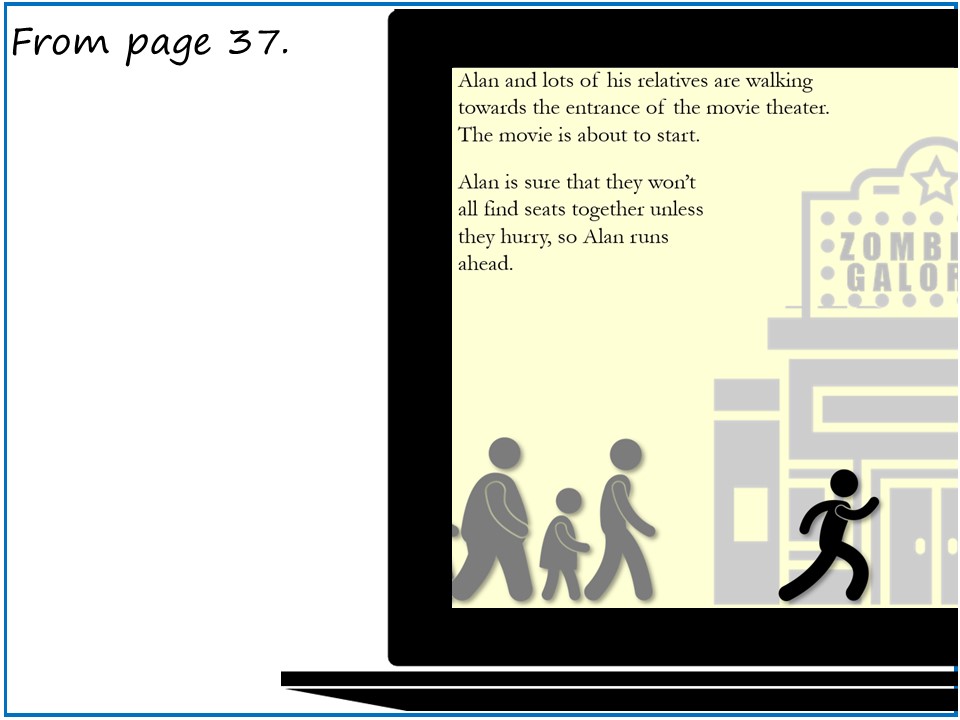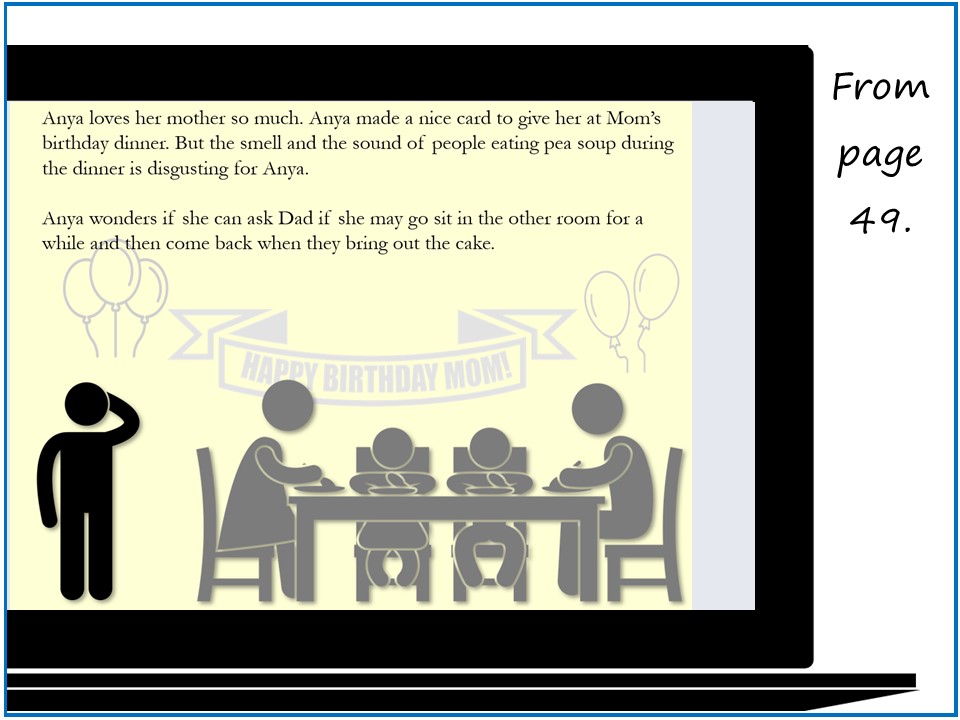

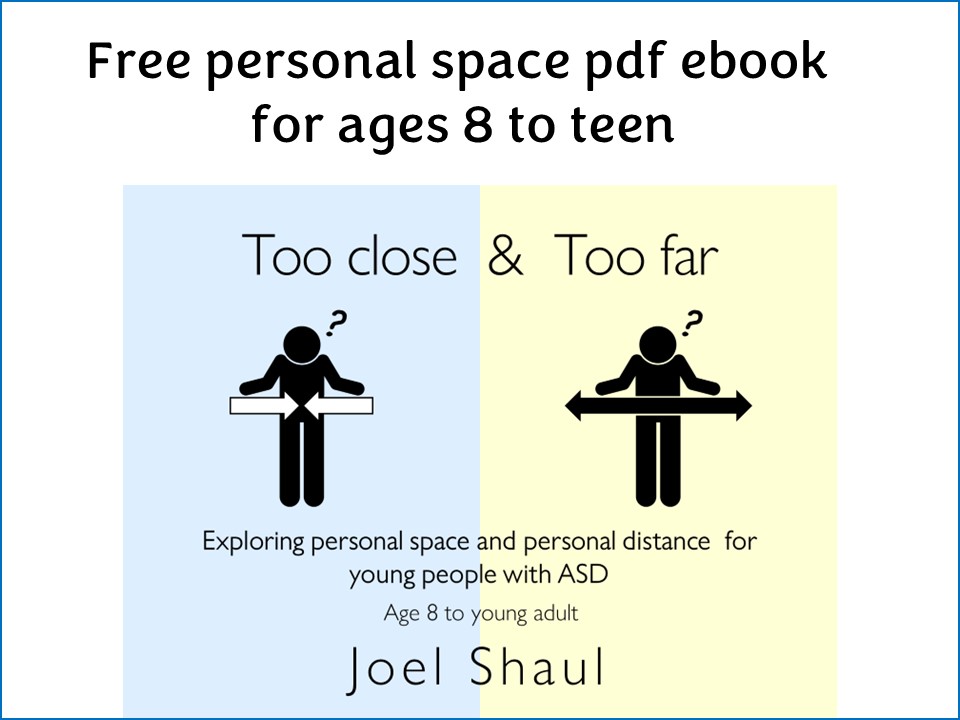
Personal Space, Personal Distance ~ free, illustrated pdf eBook for ages 8 to teen

German translation of this book

Irish translation of this book

Hebrew translation of this book
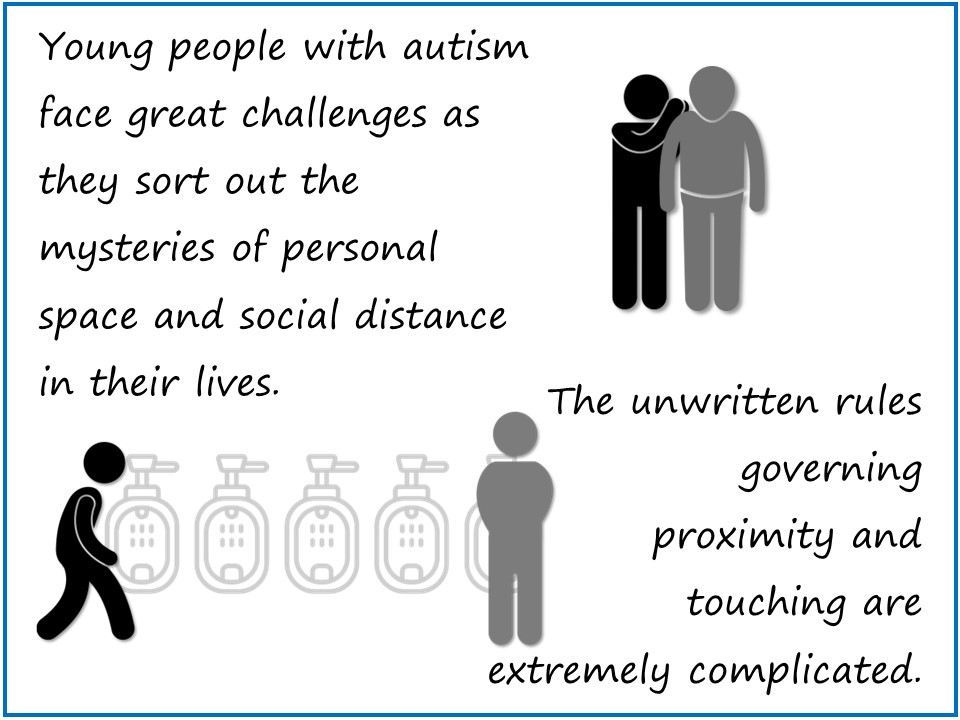
I created this resource for several reasons.
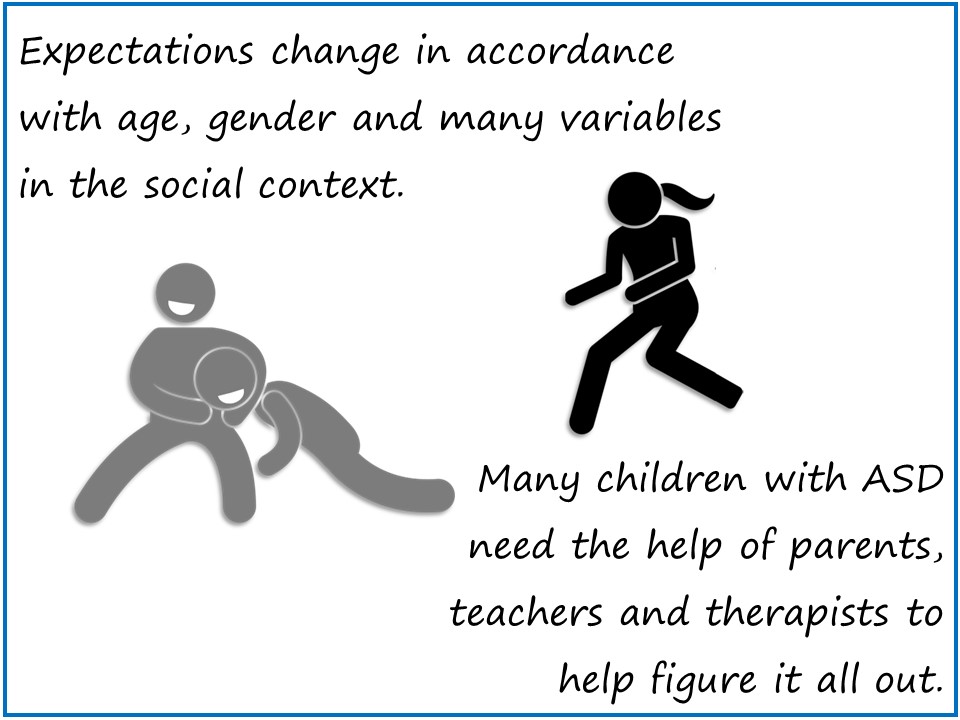
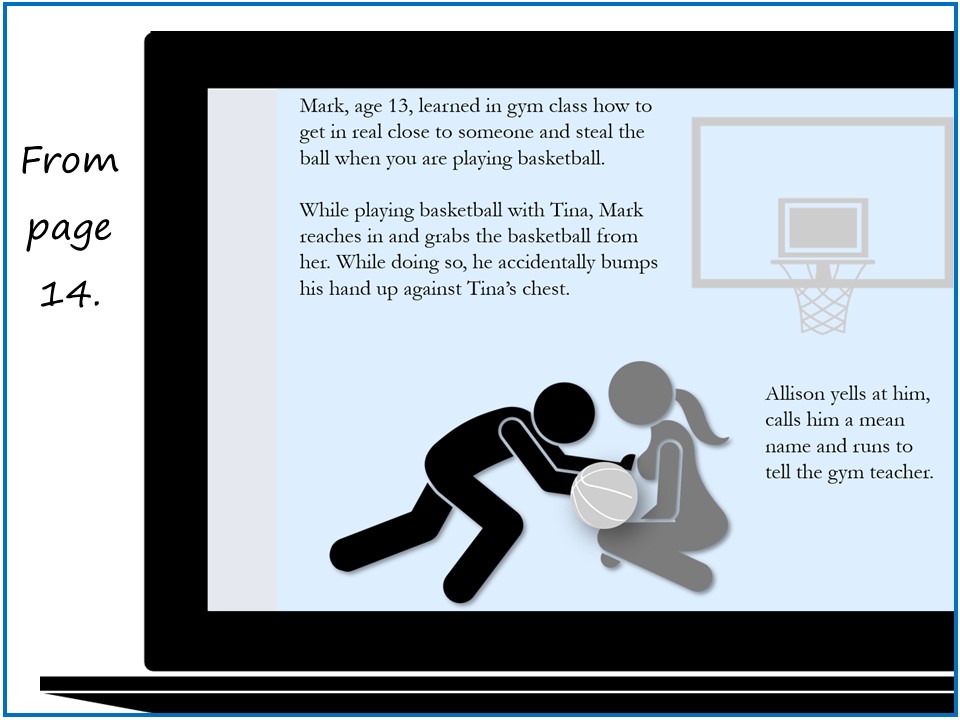
First, although there are many resources available to help children with autism to learn about personal space, the resources tend to be simple and formulaic. In my own experience helping young people on the autism spectrum to learn about personal space, the actual unwritten rules are so complicated that merely relating some simple rules isn’t good enough.

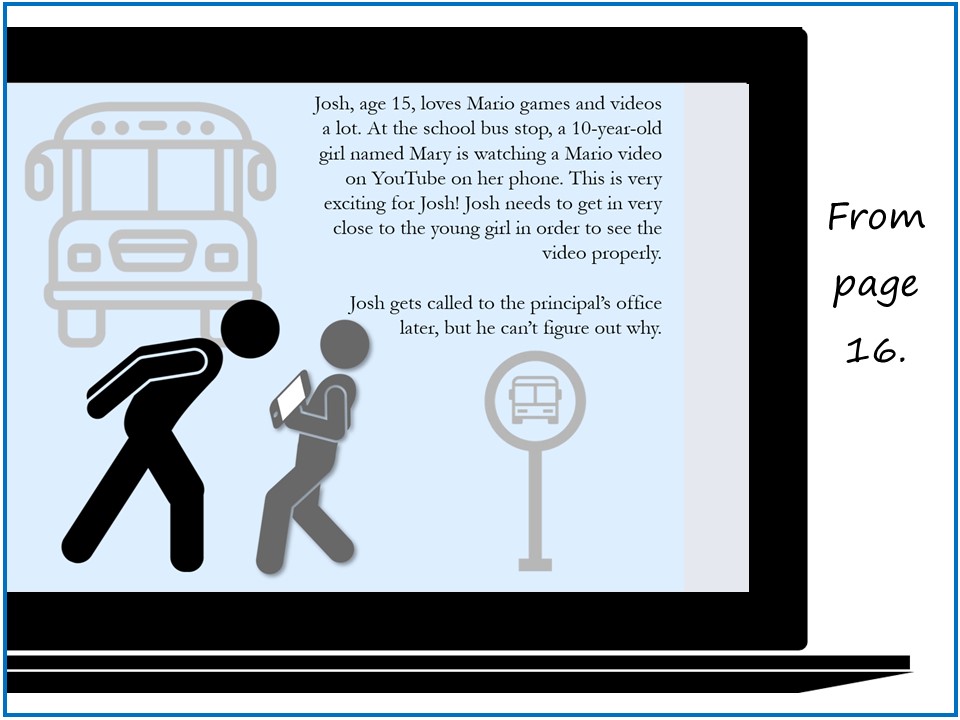
Second, there are few resources on personal space and distance designed to help older children, teens and young adults. As children on the spectrum grow up, the personal space rules affecting them get more and more complicated, especially if the young person is involved in a variety of challenging interactions in the community.

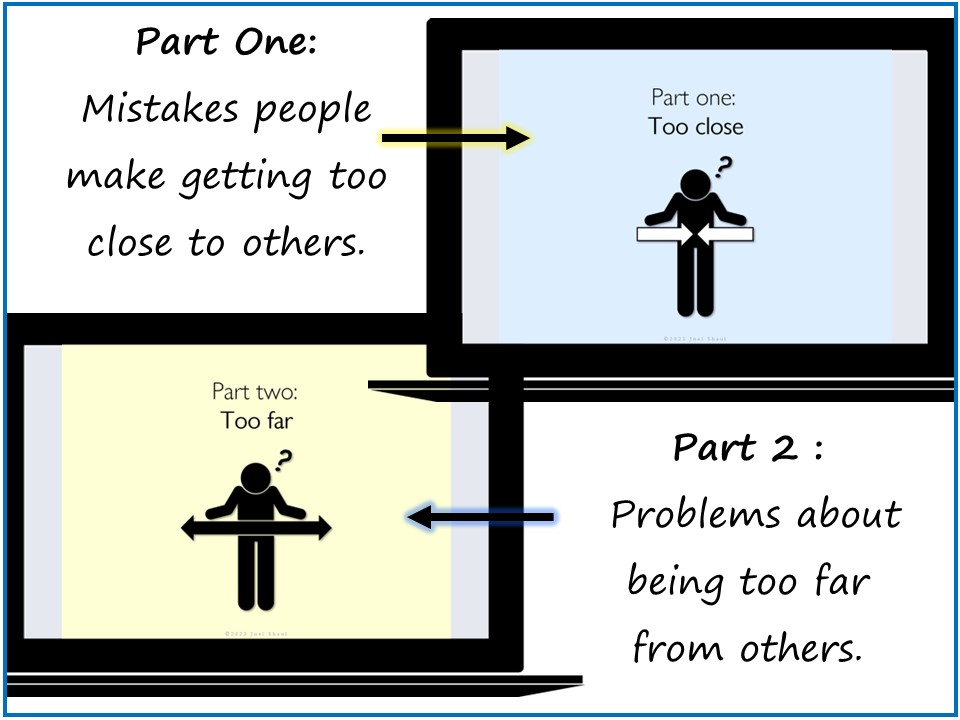
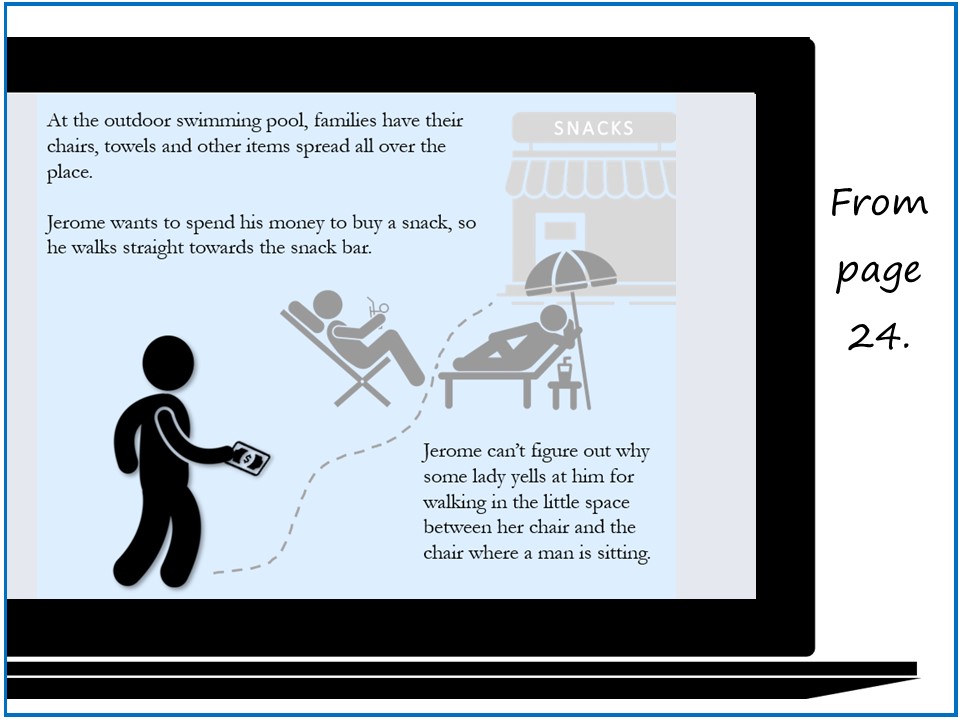
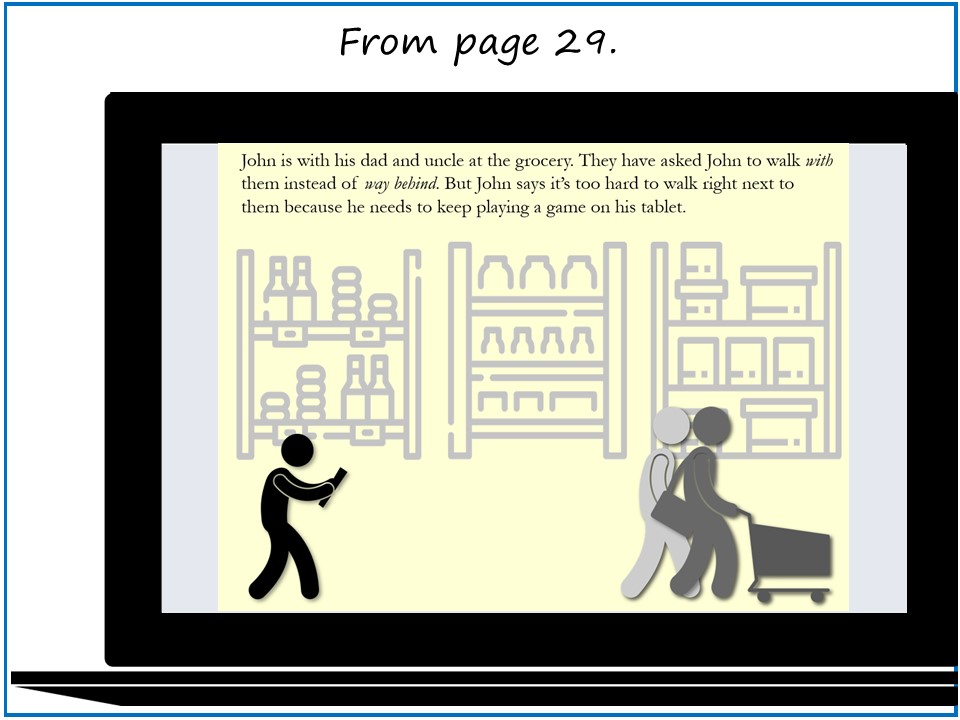
Third, I have come to view problems with getting too close as part of a spectrum of challenges that includes getting too far away. My own clients over the years who made mistakes with getting too close or inappropriately touching people also had difficulty with getting too far away from the expected social grouping.

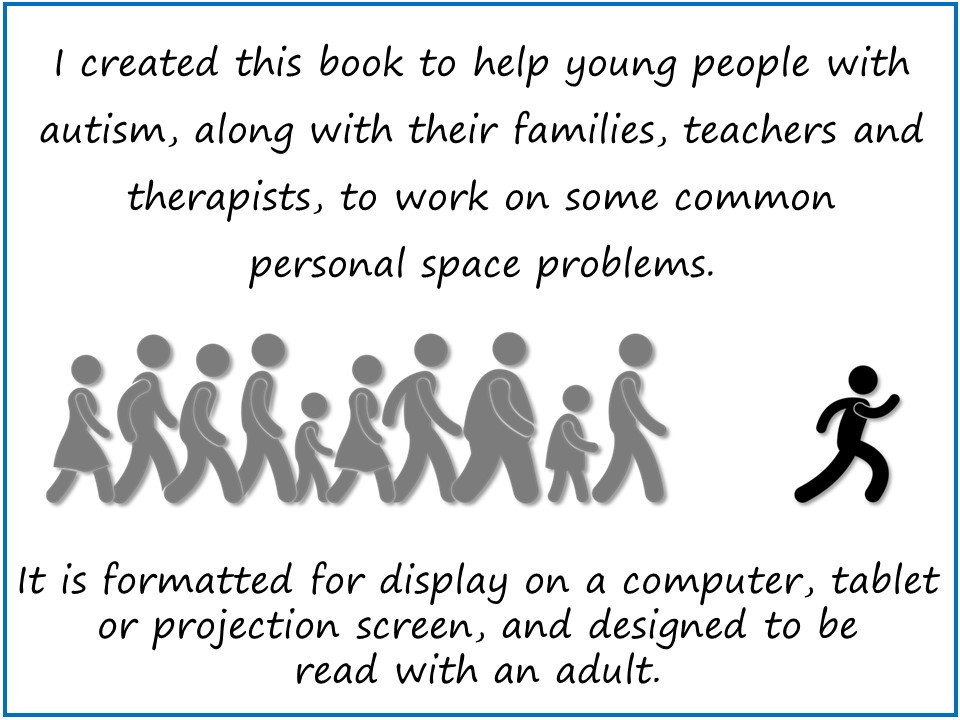
I designed this eBook to help young people, over a wider range of ages, with a more broadly defined set of challenges involving personal space and distance.

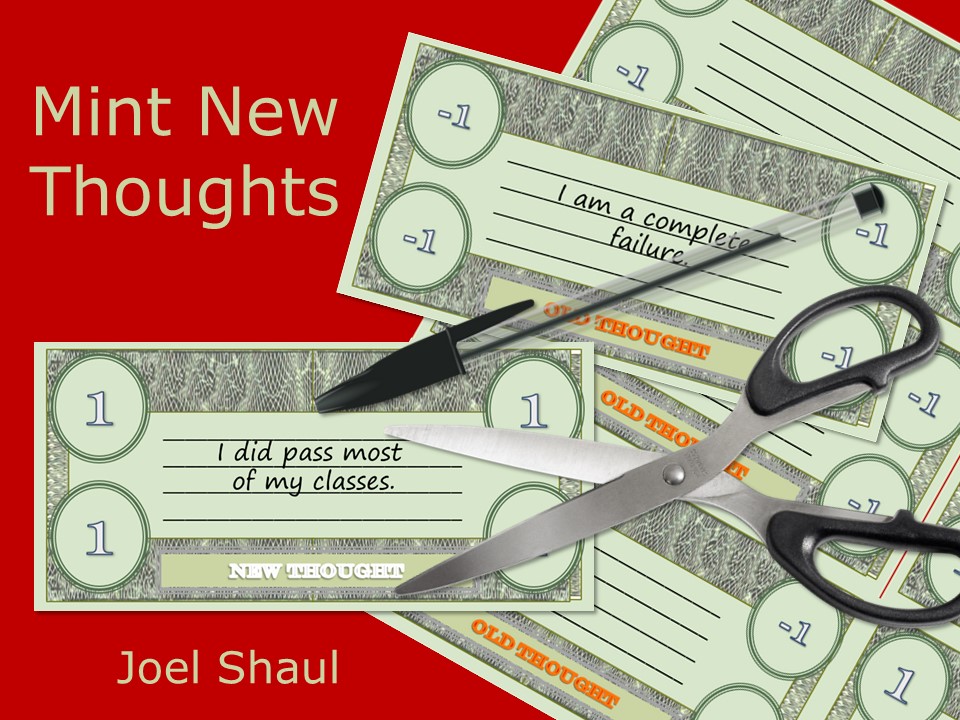
Minting New Thoughts: Engaging CBT Activity for kids with ASD and others

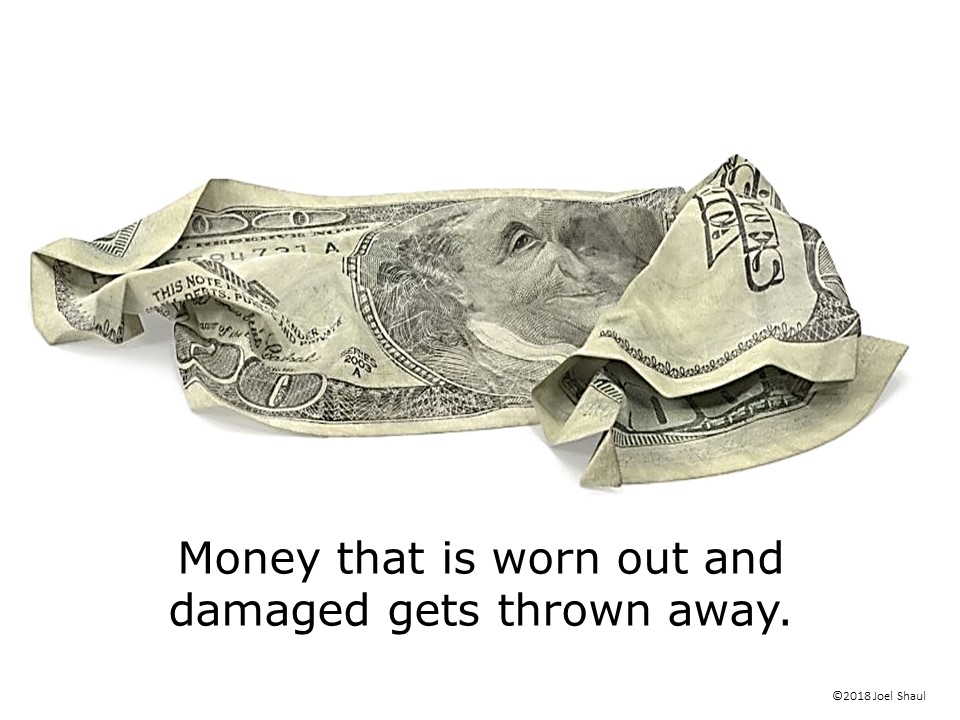
Here is a great activity for individuals or groups of kids to introduce or expand on how to cope with upsetting feelings.  It uses the metaphor of paper money that is first minted, and then shredded if it is defective or worn out. To do the Mint New Thoughts activity you need to print out lots of the special play money (the link for the download play money is found below) and a paper shredder (or you can just tear up the old money).

Print out the OLD THOUGHT money and NEW THOUGHT money in quantities large enough for each participant to have about six to use. To download and print the money, click here:

This kit is available in Polish

Spanish: Acuñar nuevos pensamientos

For free access to an excellent Boom Card version of this resource, click HERE.

To introduce this activity:

Try using language like this:  “Did you ever wonder where money comes from, and what happens to it when it is no good anymore?  Money comes from a huge printing factory called a “mint.”  All of our money comes from these places called mints.

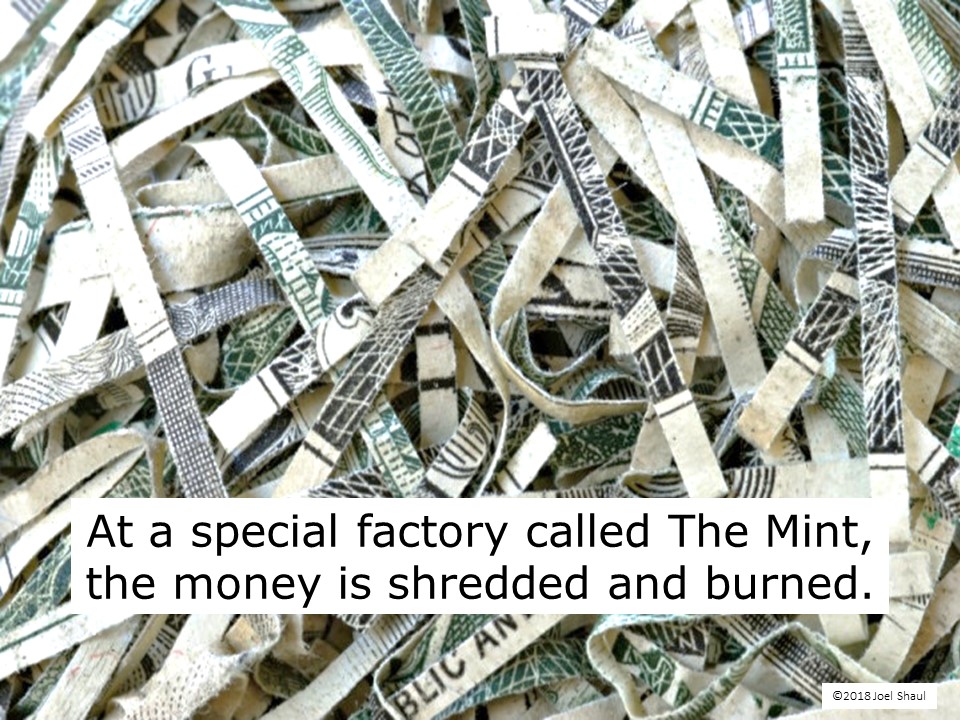
“Often, when the money is not printed right, they have to destroy it.  They use something like the paper shredders you see in an office.  Also, other money gets worn out, and they have to shred that money too.

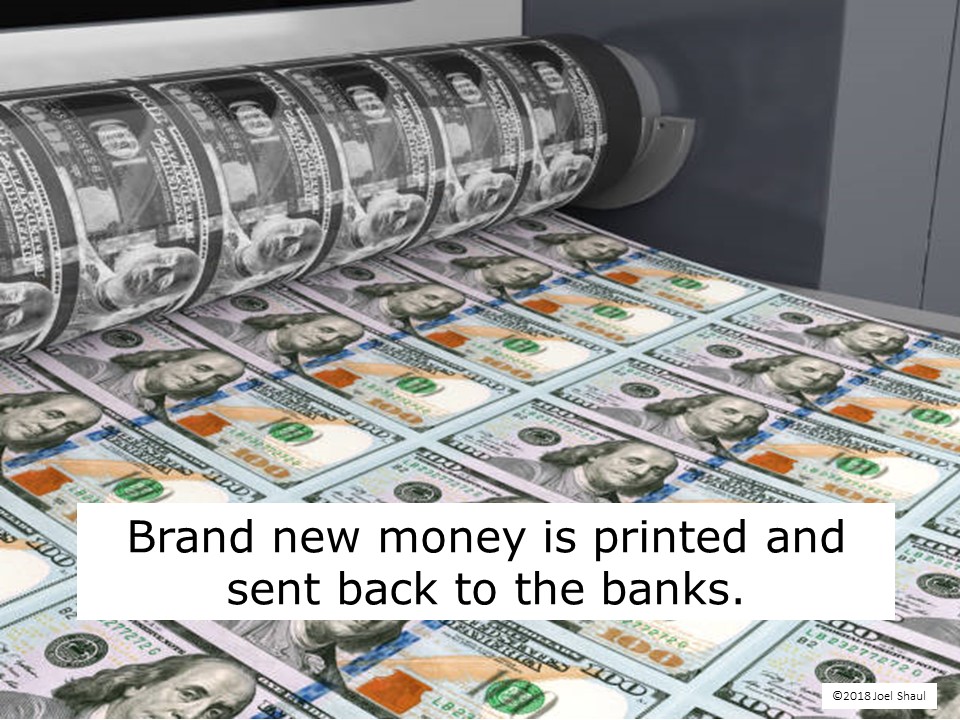
“To replace the destroyed money, the mint prints brand new money.

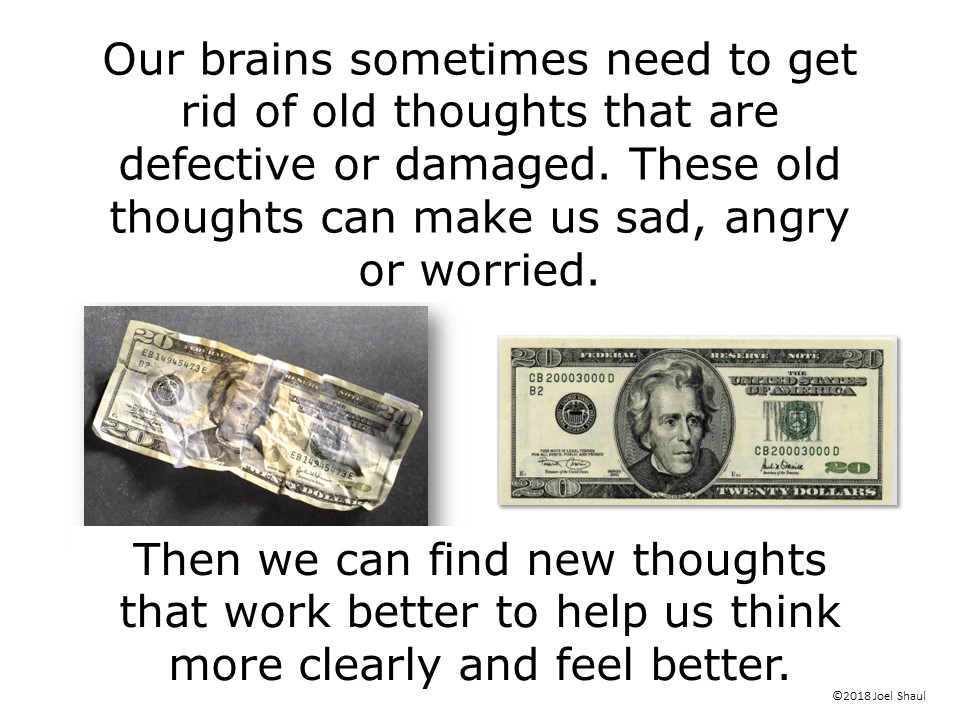
Your mind is something like a mint that makes money, except your mind makes thoughts instead of dollars.  Hundreds of thoughts, thousands of thoughts, every day.  Most of the thoughts are good and helpful to you.  But some kinds of thoughts aren’t good because they just make you upset too much.  When you get these thoughts, they are like bad or worn-out money that needs to be destroyed.  Then, you need new and better thoughts to make you feel good and calm instead of upset.”

  1. Now, show the kids how to fill out the OLD THOUGHT money.  If you have not already introduced the kids to “poison” and “antidote” thoughts, you will want to do this slowly and carefully.  There are lots of other CBT resources available on the website.
  2. Have the kids fill out the NEW THOUGHT money now.  Provide plenty of extra blank money for them to practice.  Tell them that they can use more than one NEW THOUGHT to replace the OLD THOUGHT.
  3. Have the kids run the old money through a paper shredder.  If you have the opportunity to work outside and actually burn them, like on a charcoal grill, this really gets kids’ attention.
  4. If you like, you can laminate the new money now, and with the kids’ permission, display it.


To access a summary of all the CBT materials on this website, click HERE.

Derived from a method described in Cognitive Therapy with Children and Adolescents, ed. By Reinecke, Dattilio and Freeman, 2006, Guilford Press.

Joel Shaul, LCSW

Your comments on these resources are most welcome, and often helpful. Click HERE to send an email.

ASD Feel Better Promo square directing to JKP

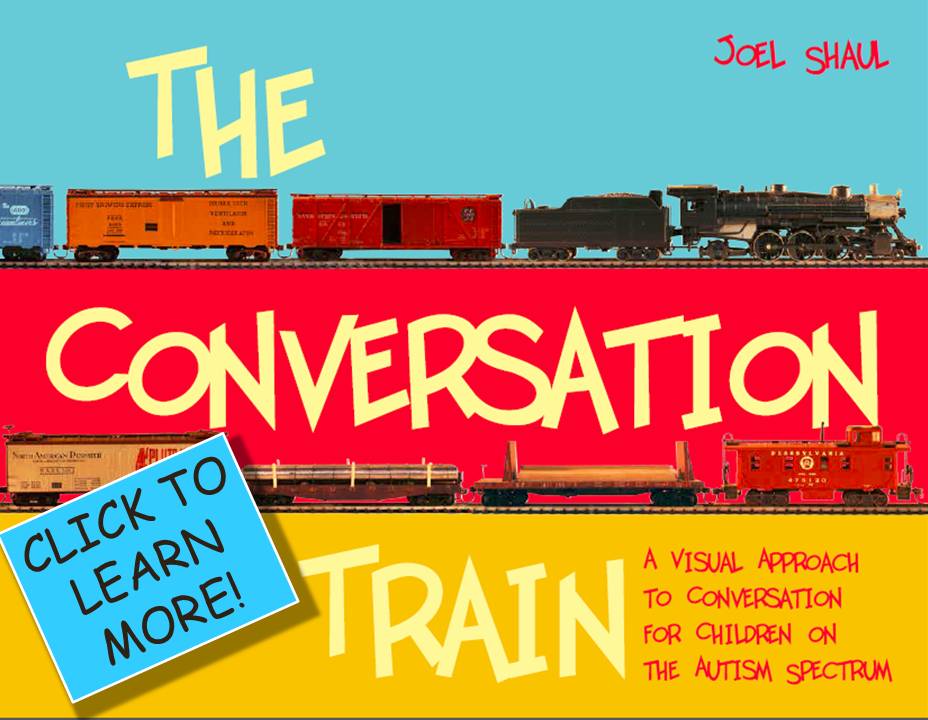
The Conversation Train Book

Green Zone Book Cover Click to Learn More