
Personal Space, Personal Distance ~ free, illustrated pdf eBook for ages 8 to teen

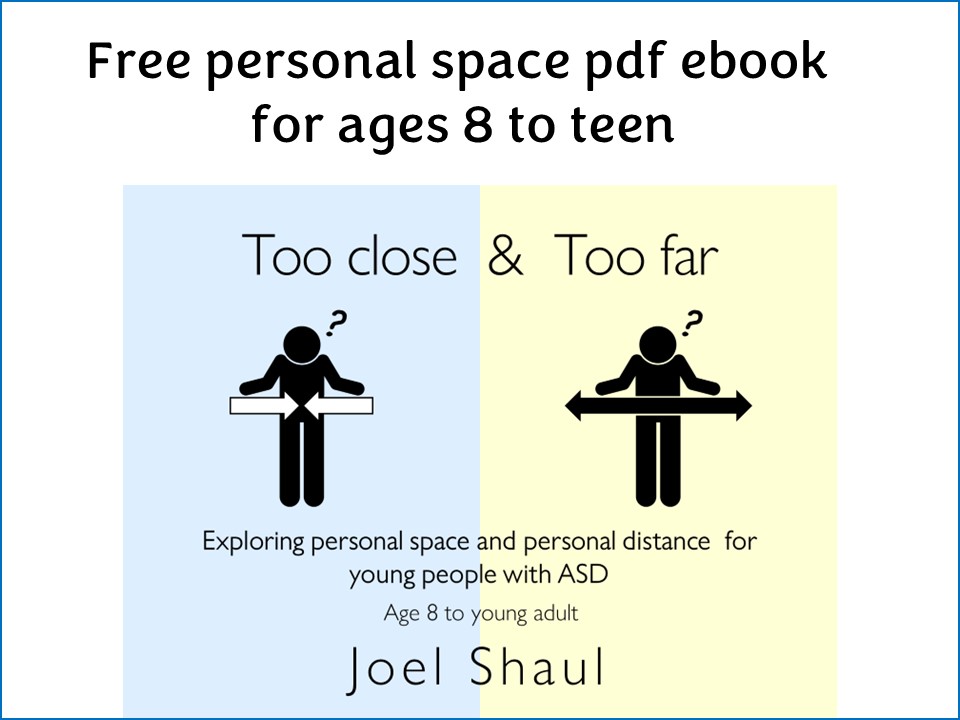
The cover of the book on personal space by Joel Shaul

German translation of this book

Irish translation of this book

Hebrew translation of this book
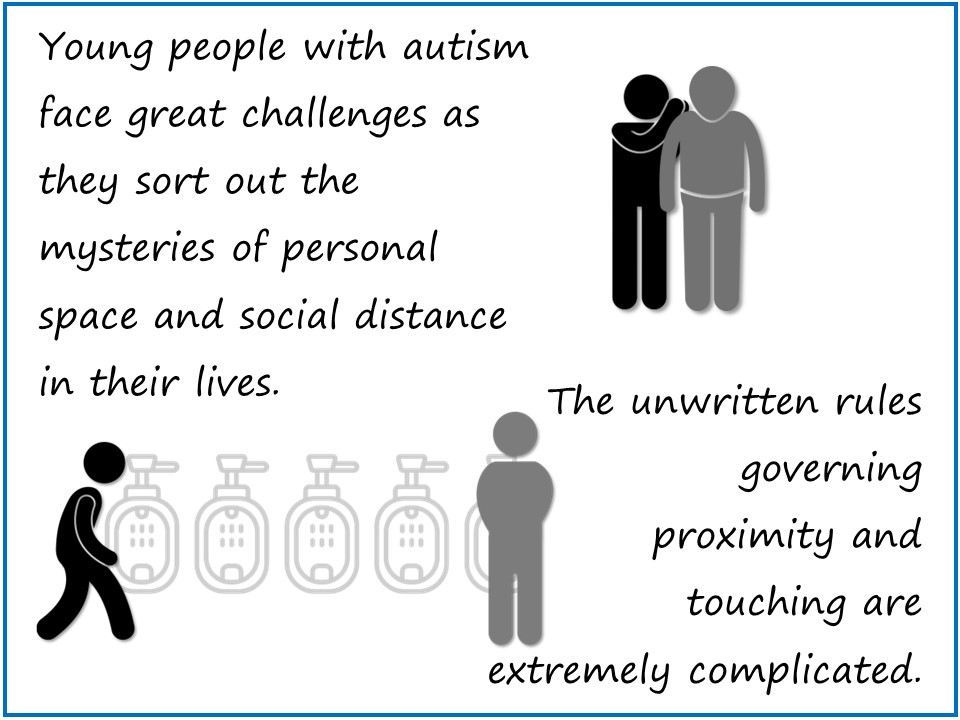
"Young people with autism often find it very hard to figure out personal space."
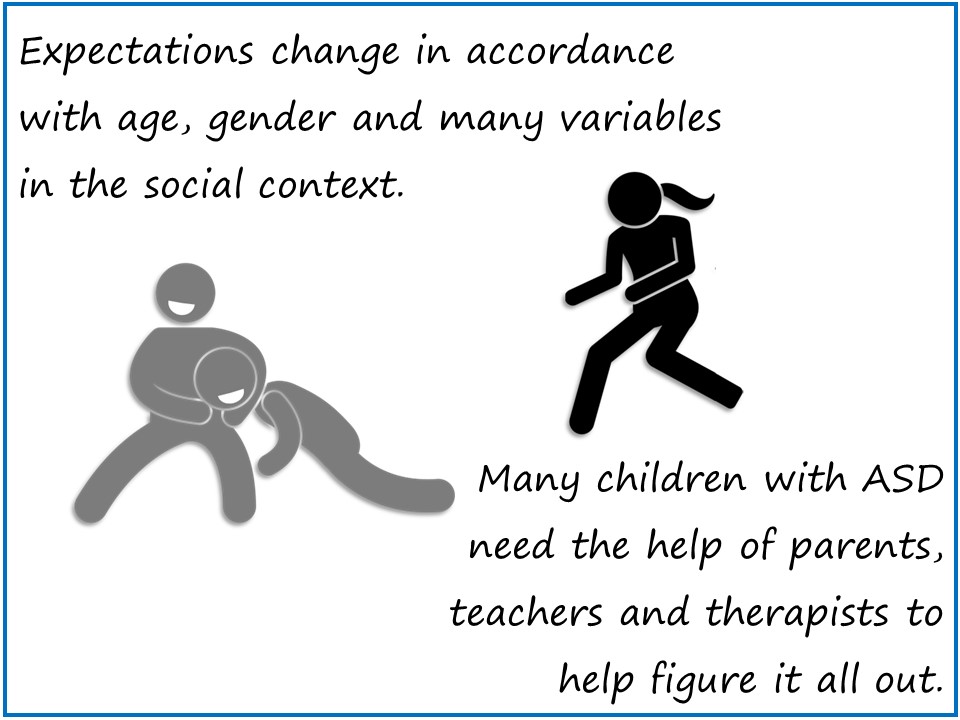
"Most autistic children need the help of parents, teachers and therapists to figure out personal space."
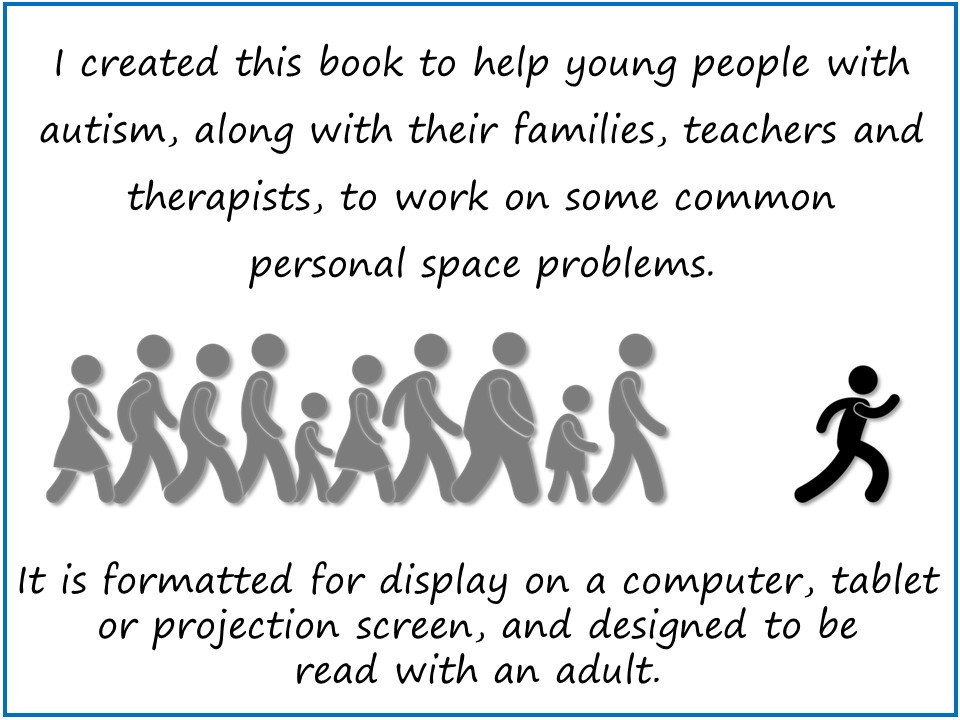
"This personal space book is formatted to display on a computer, tablet or projection screen. It is to be read with an adult."

I created this resource for several reasons.

First, although there are many resources available to help children with autism to learn about personal space, the resources tend to be simple and formulaic. In my own experience helping young people on the autism spectrum to learn about personal space, the actual unwritten rules are so complicated that merely relating some simple rules isn’t good enough.

Second, there are few resources on personal space and distance designed to help older children, teens and young adults. As children on the spectrum grow up, the personal space rules affecting them get more and more complicated, especially if the young person is involved in a variety of challenging interactions in the community.

Third, I have come to view problems with getting too close as part of a spectrum of challenges that includes getting too far away. My own clients over the years who made mistakes with getting too close or inappropriately touching people also had difficulty with getting too far away from the expected social grouping.

I designed this eBook to help young people, over a wider range of ages, with a more broadly defined set of challenges involving personal space and distance.

The pictures below show some pages from the book, illustrating the wide variety of personal space problems that autistic youth are constantly under pressure to solve. The examples come from my many years of work with autistic children and teens in therapy, classrooms and especially in my ten years of running summer youth programs for teens on the spectrum.
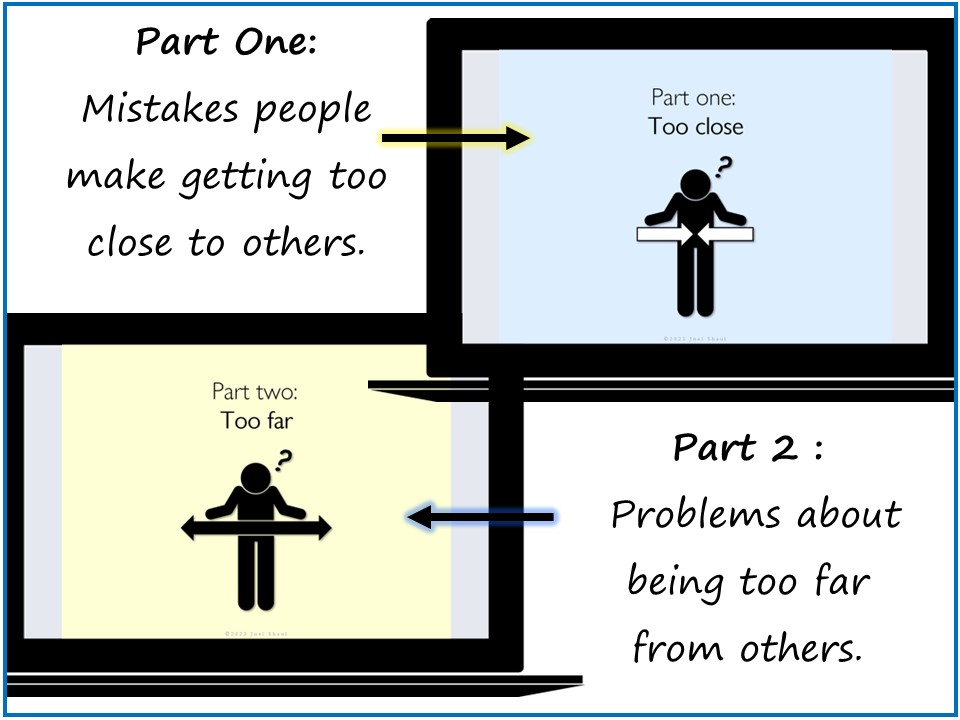
"Part one of the book is about getting too close to others. Part two is about getting too far from others."
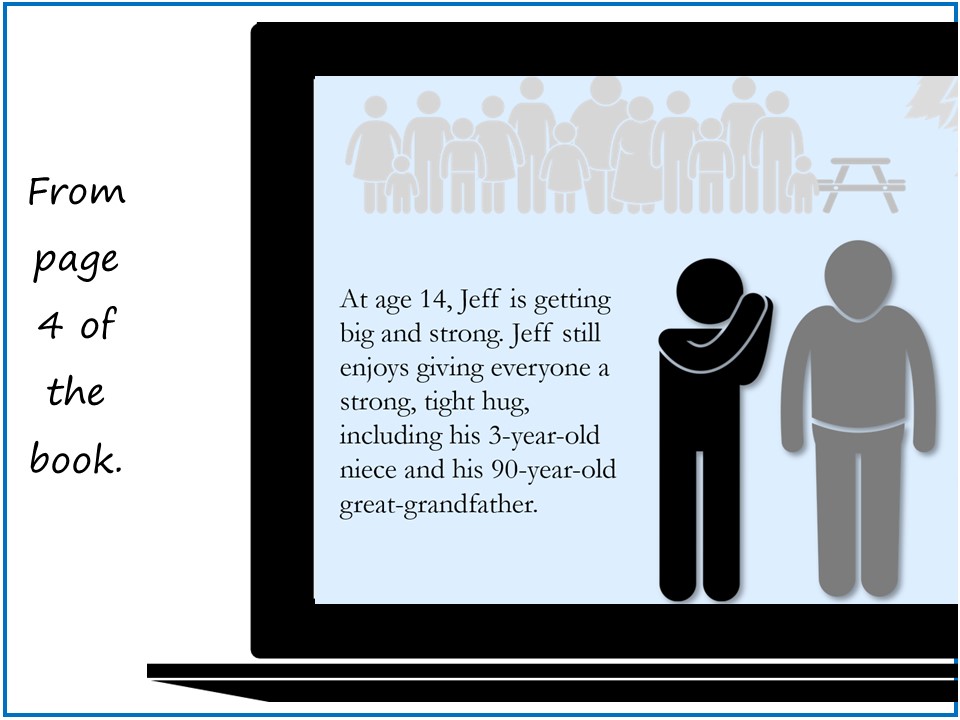
This shows page 4 of the book, featuring a 14 year old who hugs his great-grandfather too tightly.
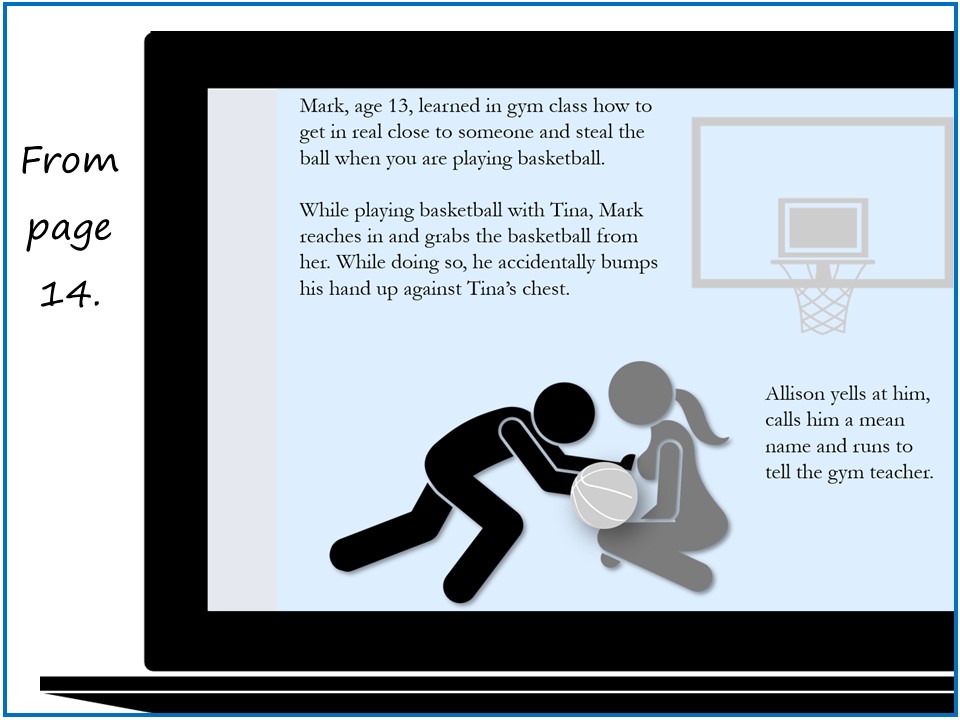
This shows page 14, the graphic shows a boy carelessly touching a girl in the chest.
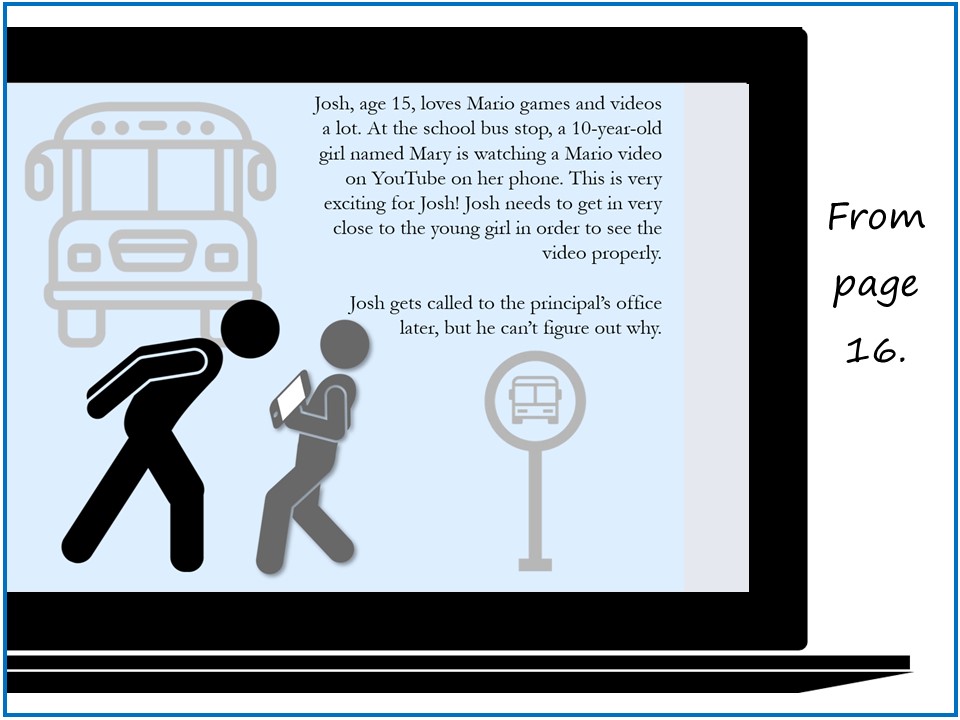
This shows page 16, showing a boy getting too close to someone to view that person's phone.
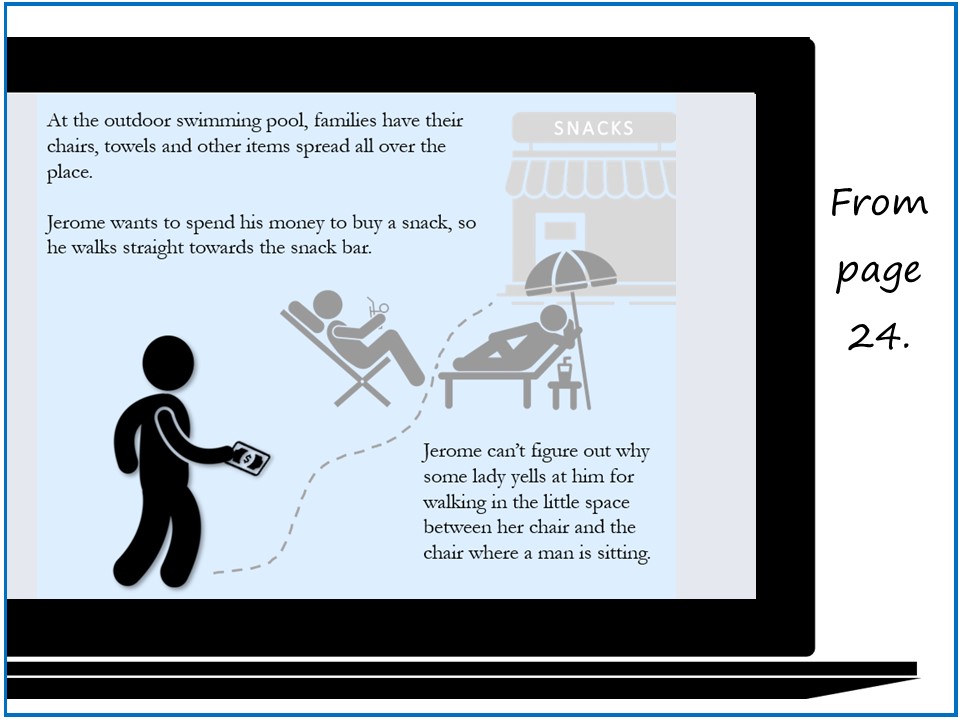
This shows page 24 - a boy walking too close to others at a public pool.
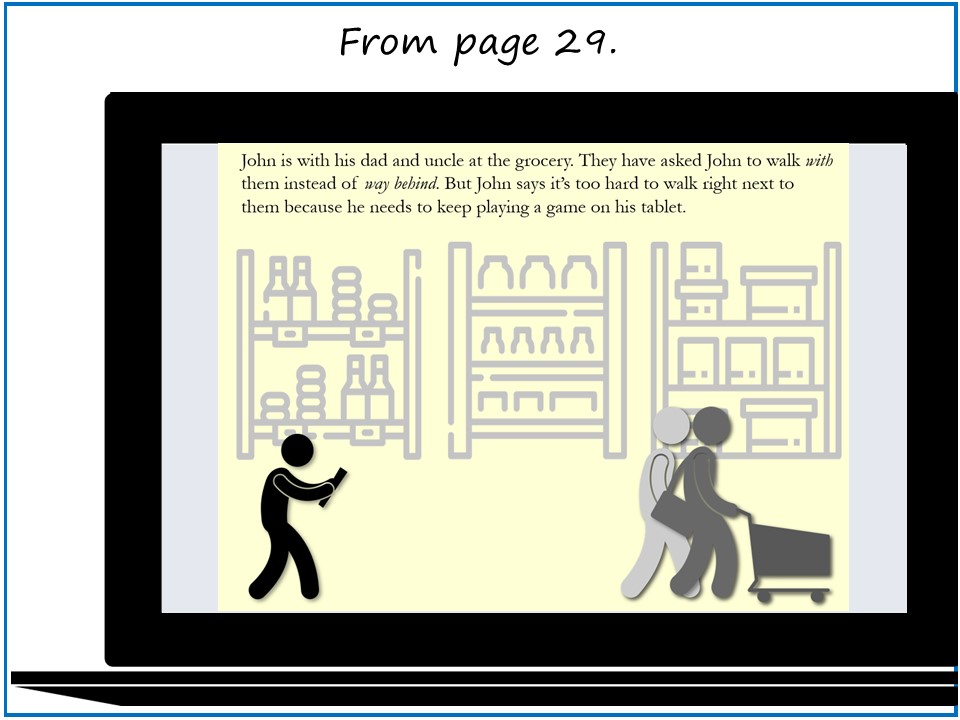
This shows page 29, in which a boy gets too far from his parents in a grocery store.
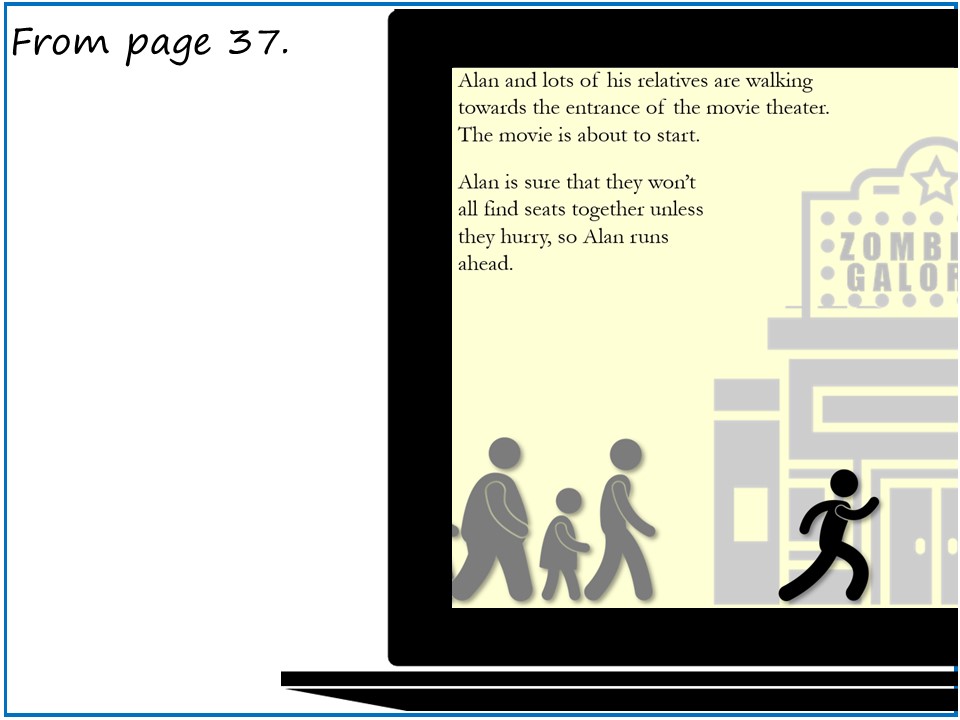
This shows page 37 - a boy running far ahead of his family at a movie theatre.
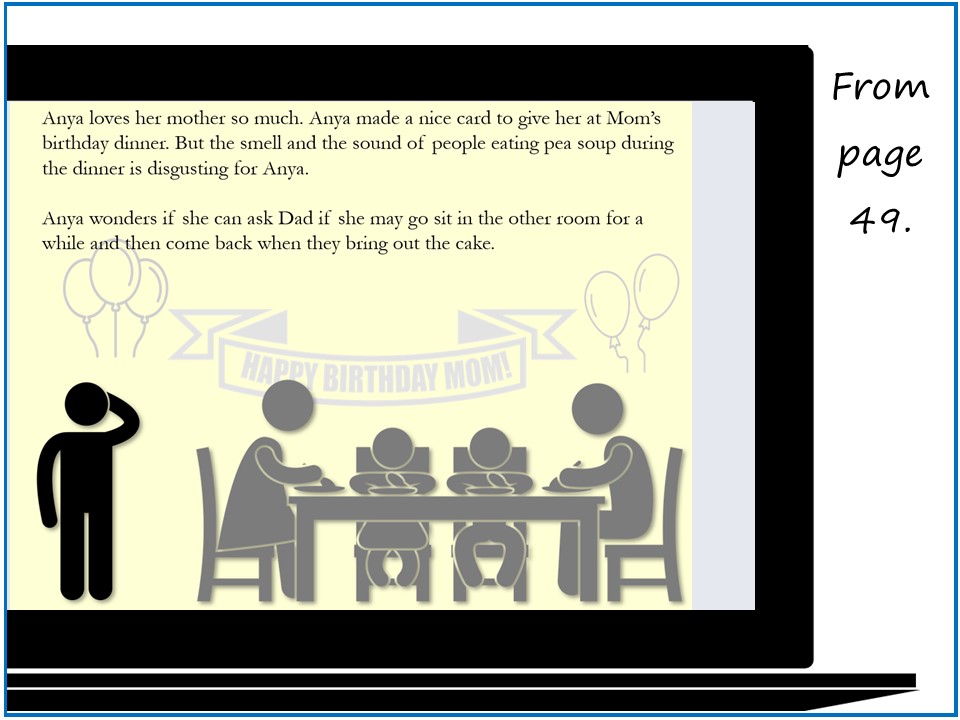
Picture showing a personal space problem at home during meal time.

Autism and listening skills: Visual prompt sheet and wall display to help

In this blog post, you can download this worksheet (shown in color and black and white).

 CLICK HERE TO DOWNLOAD THIS RESOURCE:

Listening picture sheets and panels

Hoja de trabajo y tarjetas ilustradas para enseñar acerca de escuchar
Hörbild-Checkbogen & Hörbild-Aufforderungen
Polski: Aktywne s?uchanie arkusze oceny ipodpowiedzi wizualne
Listening picture prompts, Hebrew translation

Visuals to help children with autism spectrum disorders to improve listening skills

Children on the autism spectrum can find it painfully difficult to tune into the words and meaning of other people.  They may hear extraneous sounds in the room.  They may be distracted by more interesting things to look at.  The person talking may be competing unsuccessfully with the autistic child’s inner thoughts.

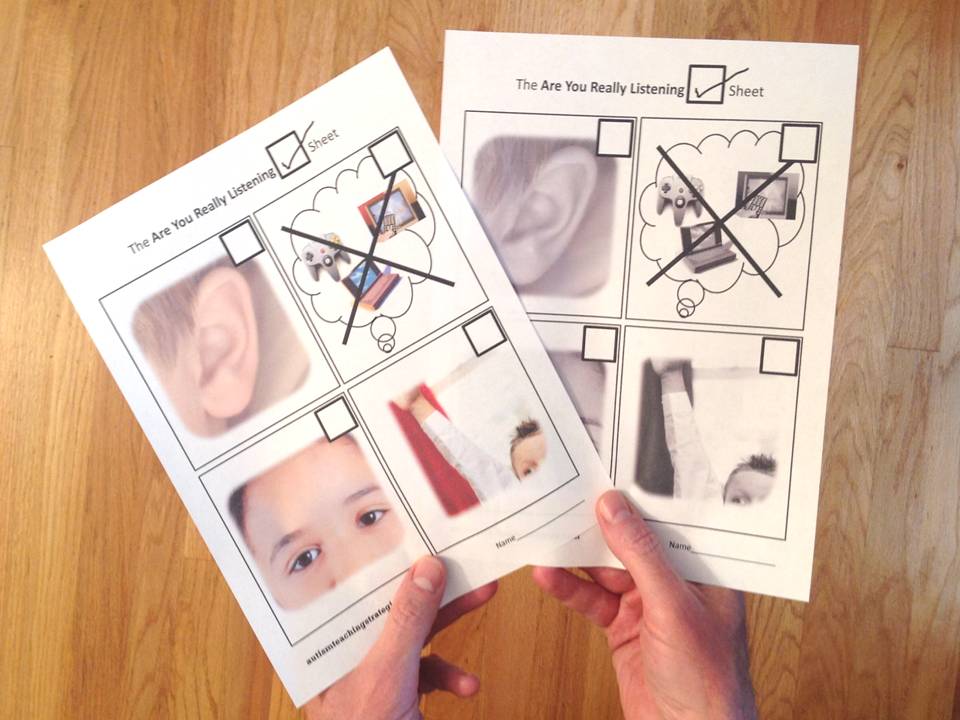
Picture worksheet  to raise awareness of the components of listening

I have made a very simple sheet to help kids to focus when the teacher or another person is talking.  Here are two suggestions on how to use it.

1. Place it on the child’s desk.  Taping it down securely might be a good idea for some kids.  Either you or the child can be the one to put check marks on the sheet.  Putting little reward stickers on the various boxes should work nicely as well.

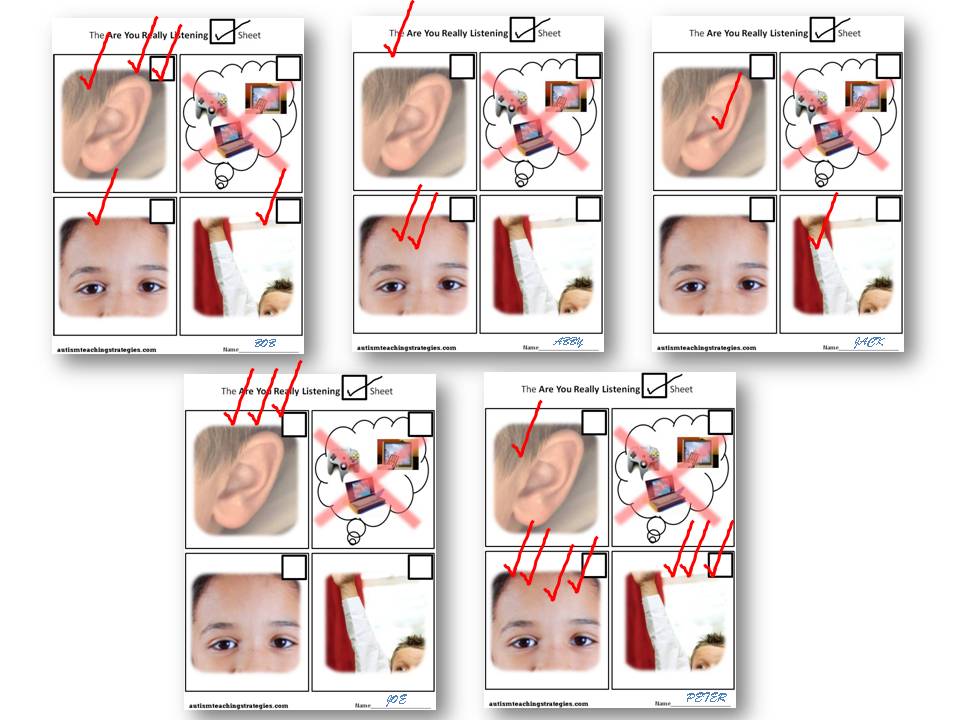
2.  When you are working with a small group:  Get a worksheet for each child in the group, and write their names on them.  Place these worksheets on a vertical surface next to you,  facing the group participants.  As your group activity progresses, put check marks on each worksheet within the various categories to indicate observed success within the various categories.  If you happen to be running your activity with a co-worker, this system works even better.

Here is one way to use the worksheets, which is explained above.


Here is one very simple use of the worksheet, sent in to me by someone who downloaded the images from the website. She put the sheet in a plastic sheet in a student's folder to reinforce his listening during class time.
Here is one very simple use of the worksheet, sent in to me by someone who downloaded the images from the website. She put the sheet in a plastic sheet in a student’s folder to reinforce his listening during class time.

A speech language professional in California sent in this photo.

Wall display to help kids with ASD with listening skills

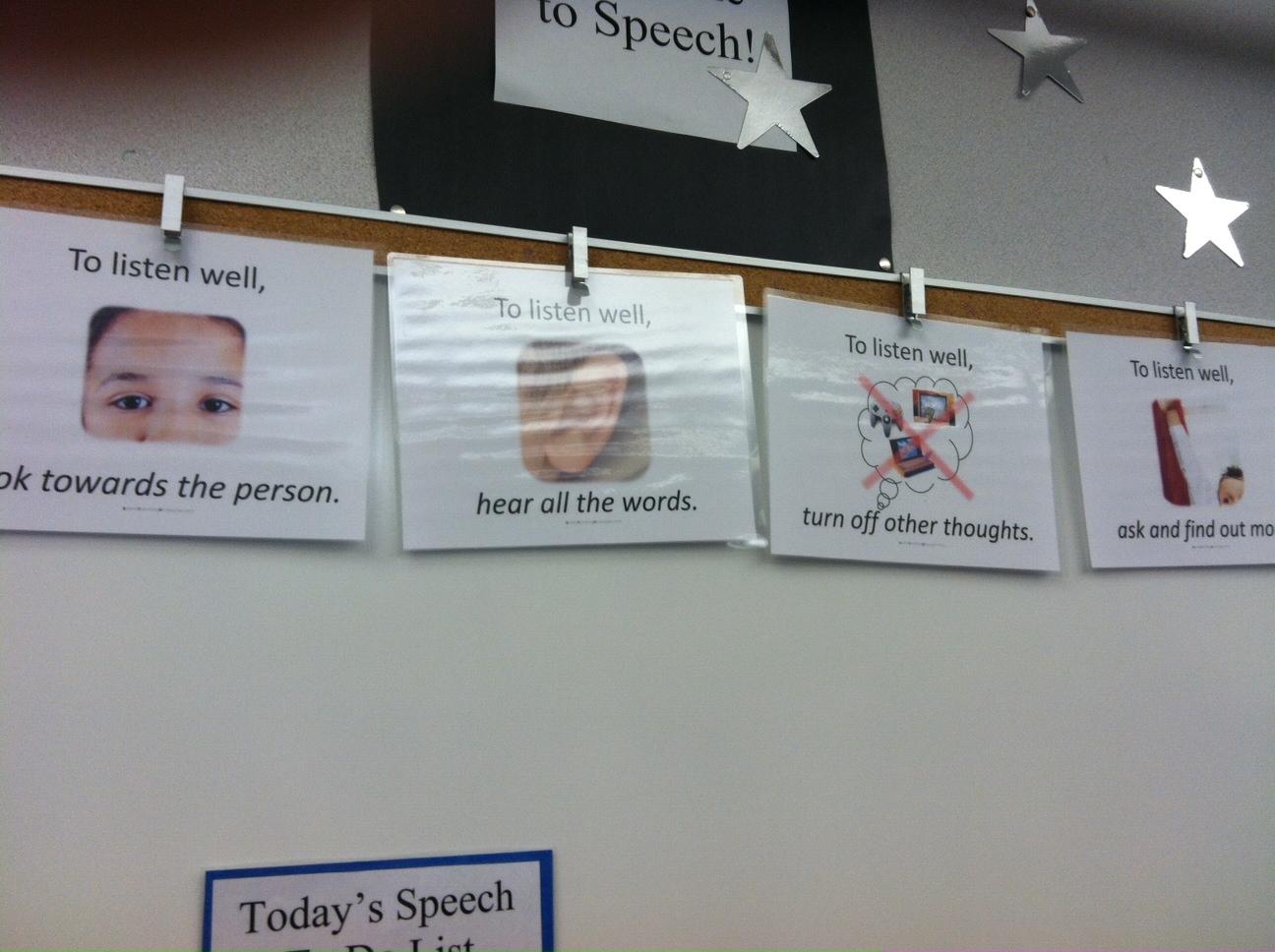
I designed these wall panels as simply as possible with a minimum of words, so they might be used in a range of grade levels.  Here is what they might look like on your wall:

Listening-blog-post-Wall-Display-blog-display[1]

A speech language professional in California sent in this photo.
An SLP in California sent in this photo showing how she displayed this resource.

Joel Shaul, LCSW

Your comments on these resources are most welcome, and often helpful. Click HERE to send an email.

The Conversation Train Book

Green Zone Book Cover Click to Learn More