
Visual strategy for autism social skills training: using a toy balance

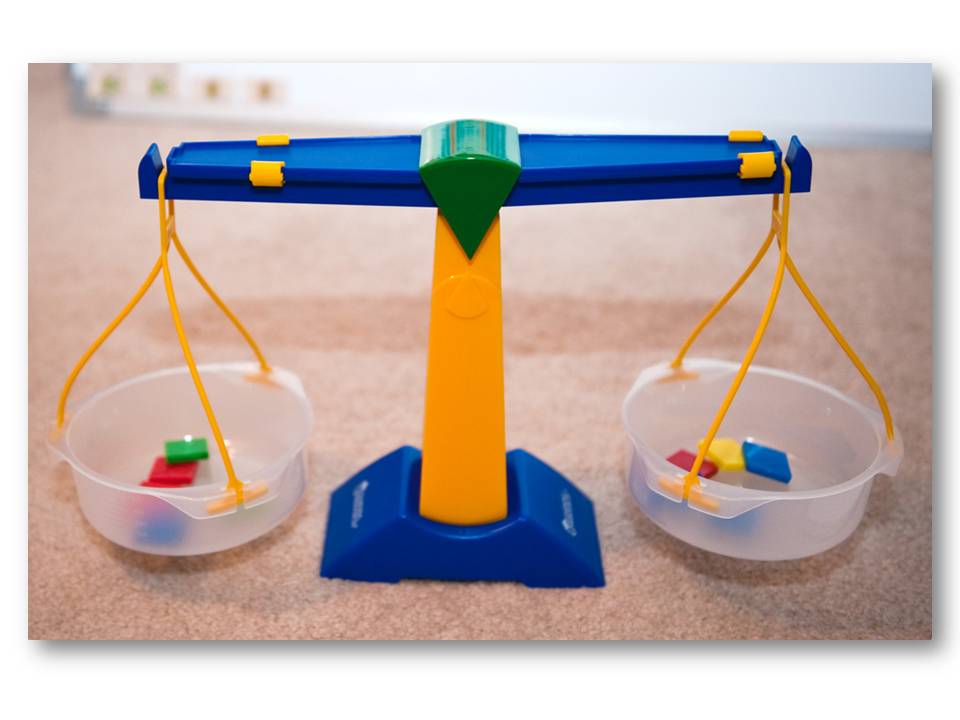
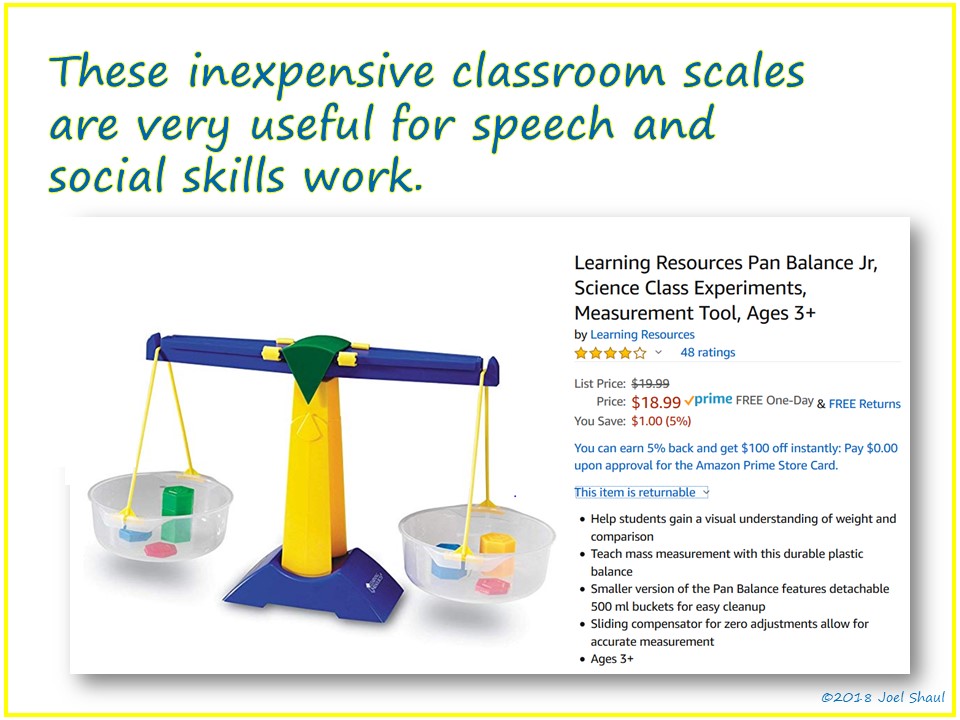
Inexpensive toy balances are terrific for teaching and practicing reciprocity in conversation and social interaction. If you have one on hand for your work with kids on the spectrum, I think you may end up using it frequently, as I have in my own work.

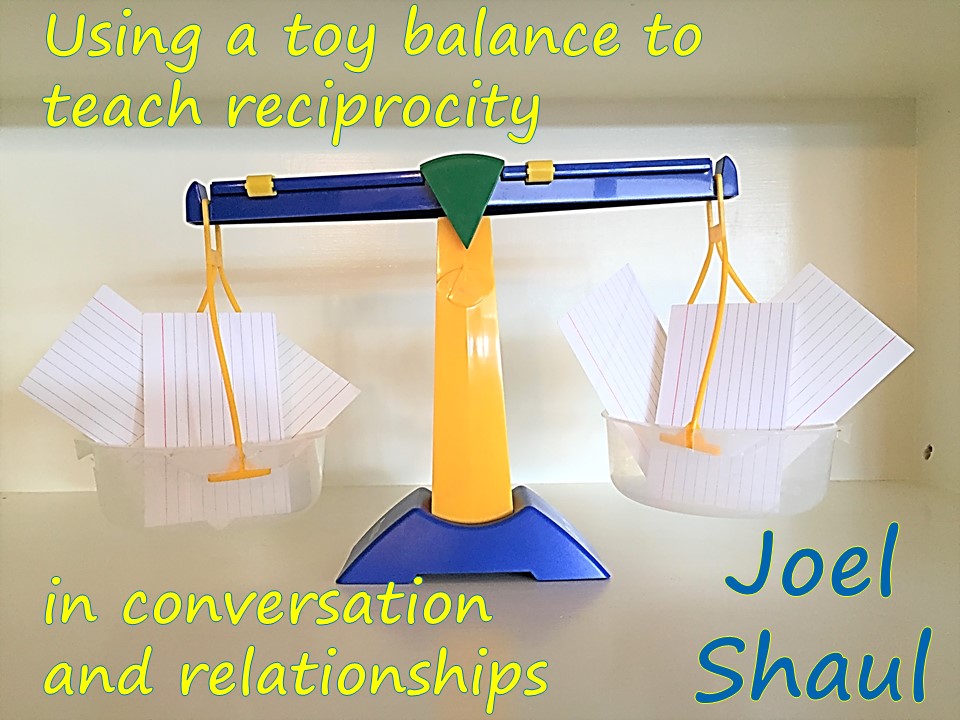
This illustrated tutorial shows you how to use the manipulate the balance and place 3×5 cards on the balance to demonstrate how to have a “balanced” conversation in which both people take and equal part. Children on the spectrum who many sometimes “monologue” can find this hands-on learning method engaging and valuable.
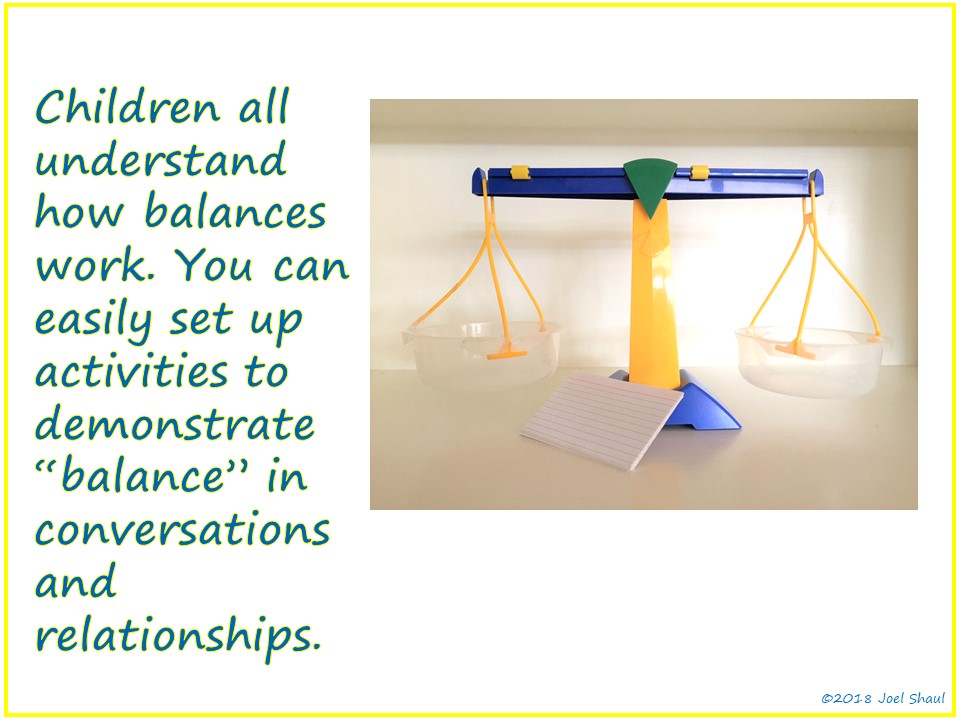
Children all understand how balance scales work. You can use balance scales to demonstrate "balance" in relationships and conversation.
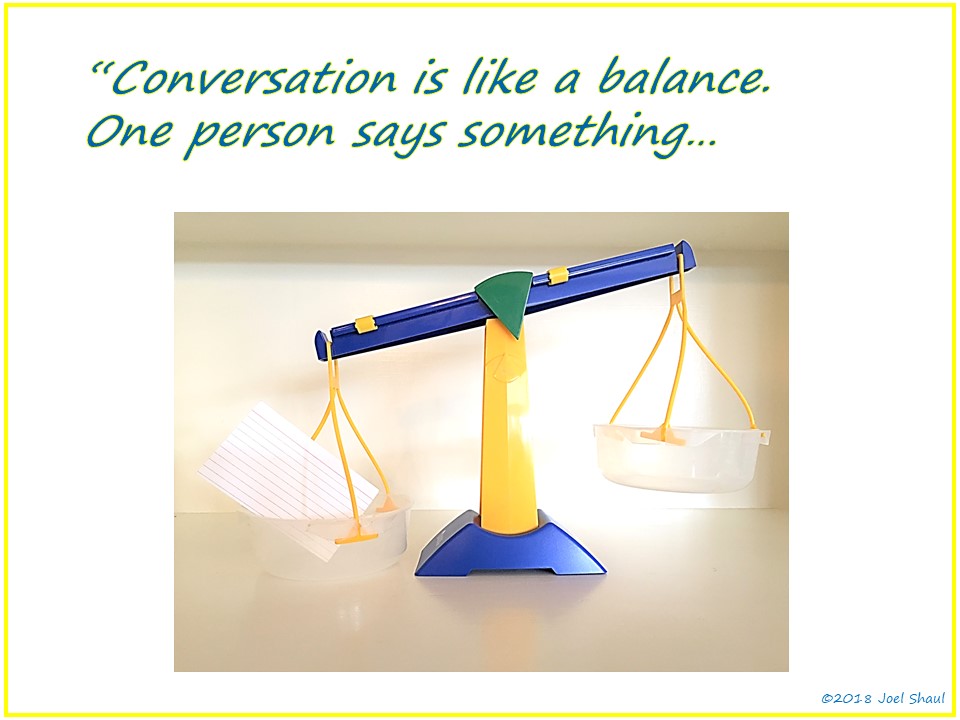
Use 3 x 5 index cards as weights.
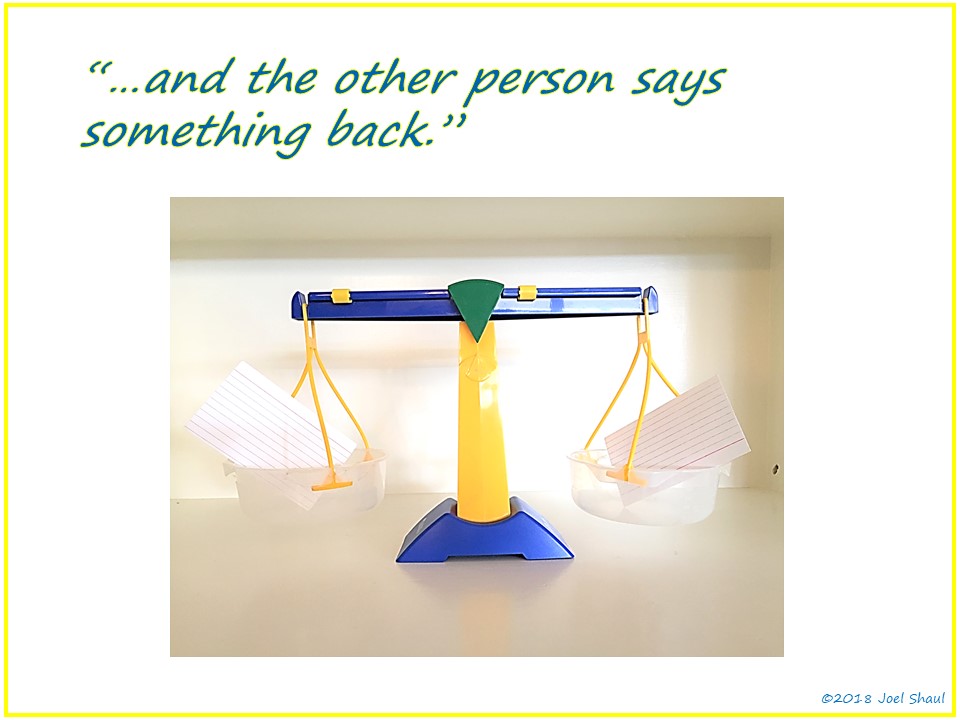
Conversation is like a balance. One person says something and the other person says something back.
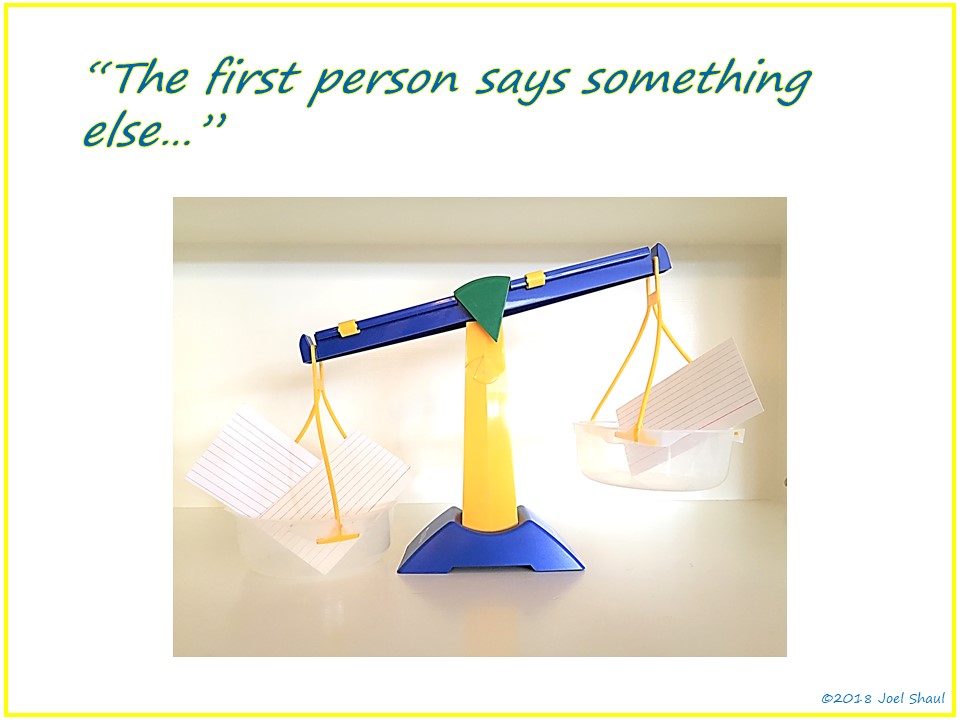
Then, the first person says something else.
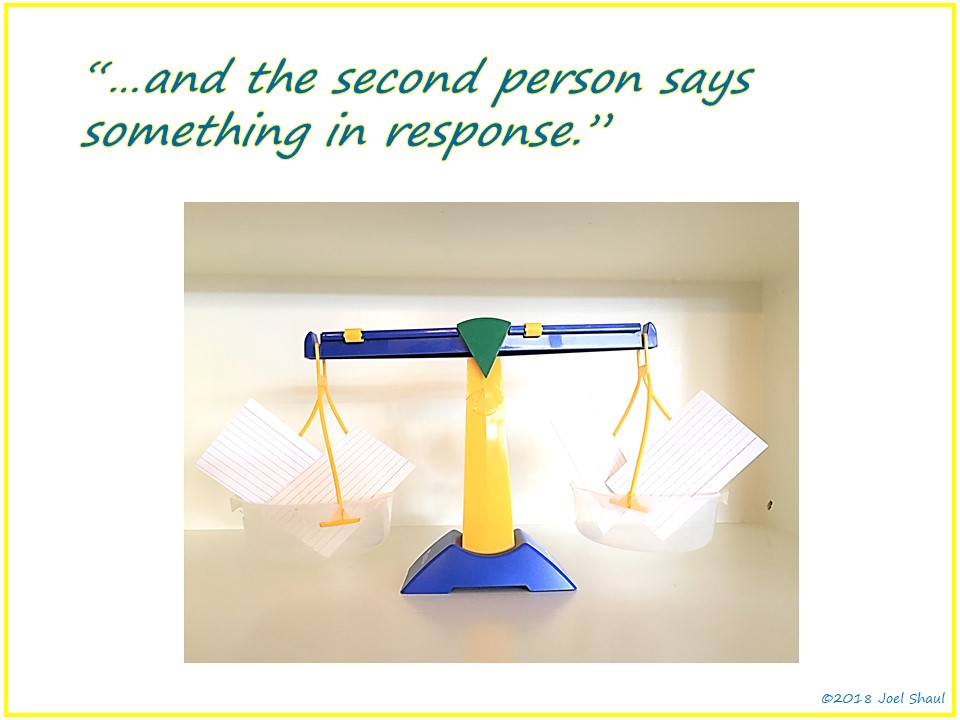
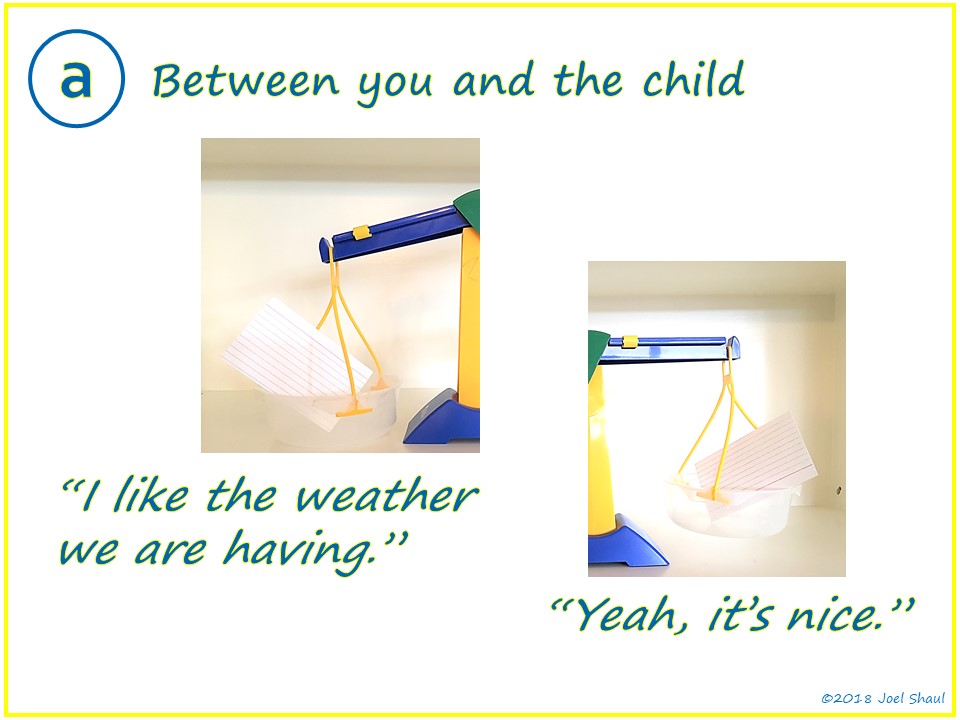
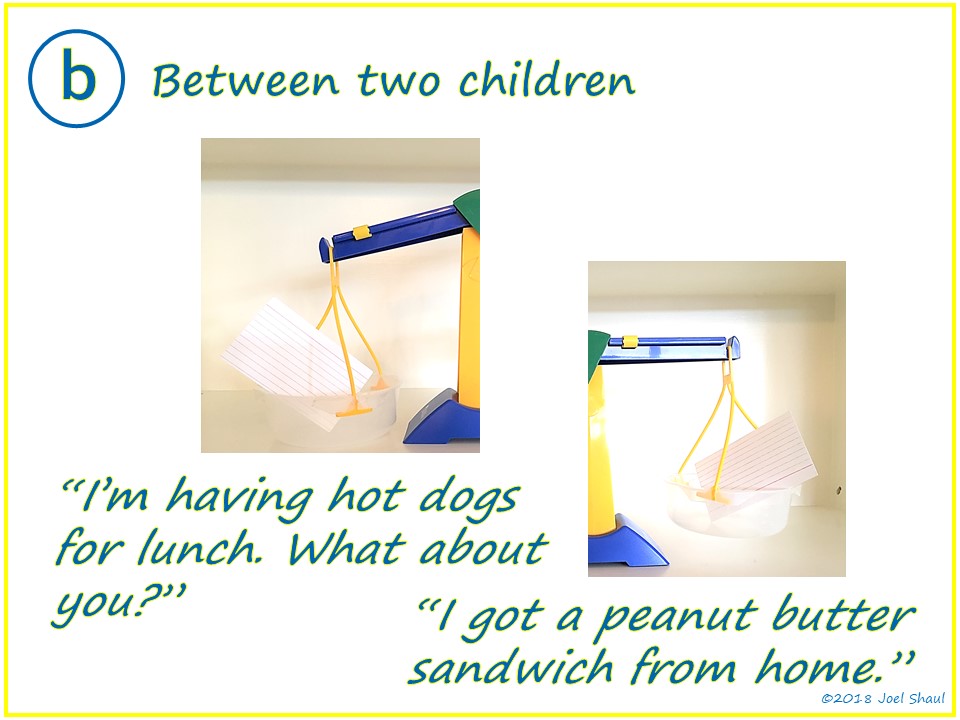
And the second person says something in response. You put a card on one side of the scale or the other as the two people talk back and forth.
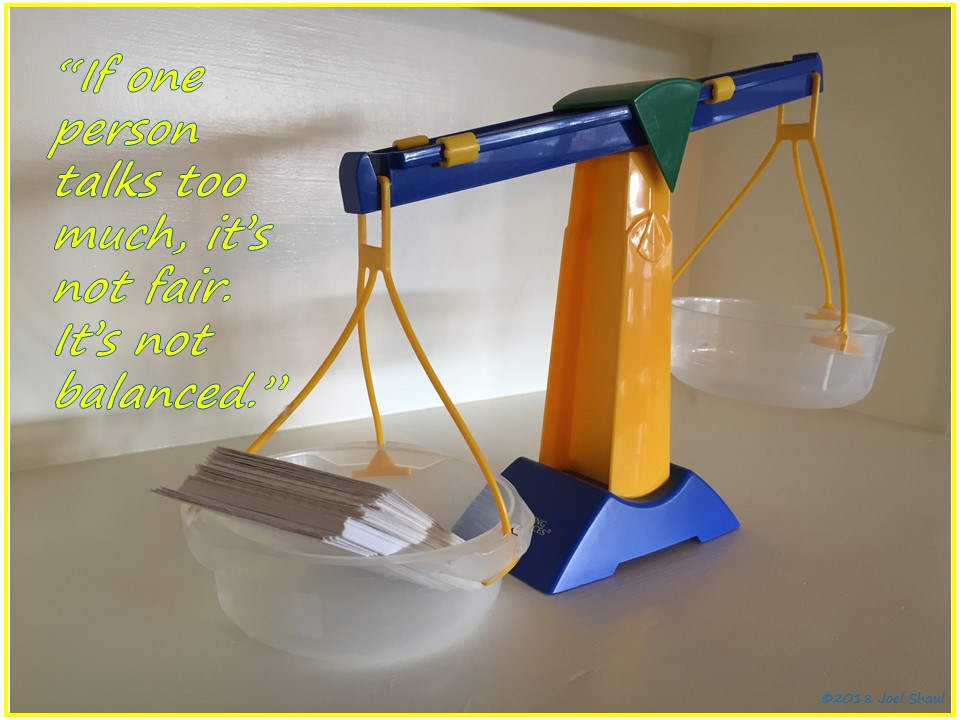
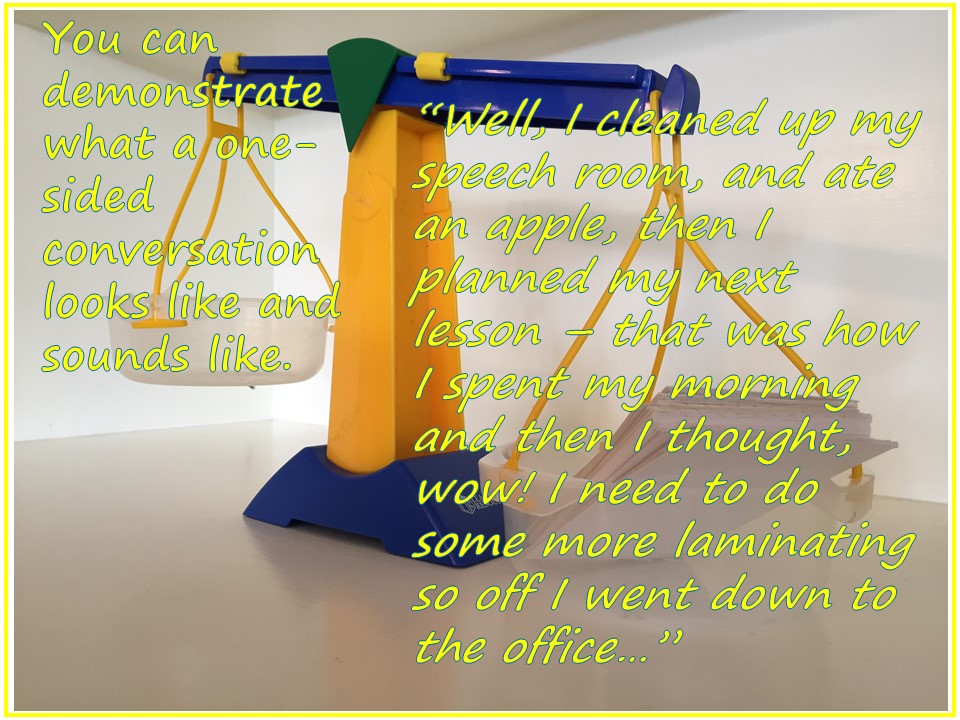
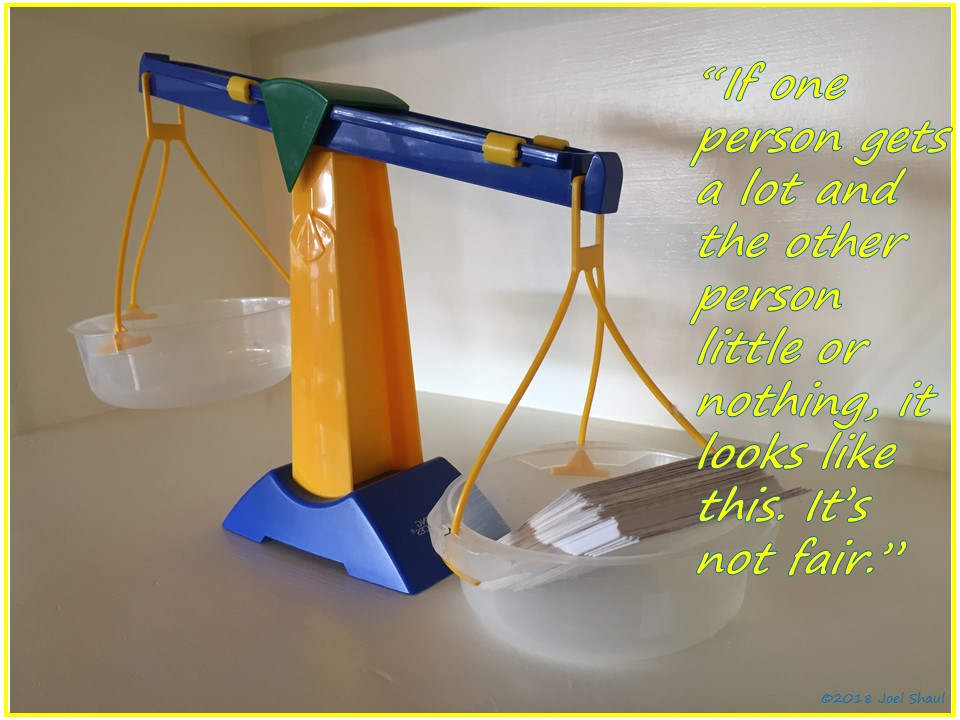
You can demonstrate what an unbalanced conversation looks like - by putting most of the cards on one side of the scale.
You can use the balance to practice balanced conversations with the child.
You can use the balance to demonstrate balanced conversation between two children.
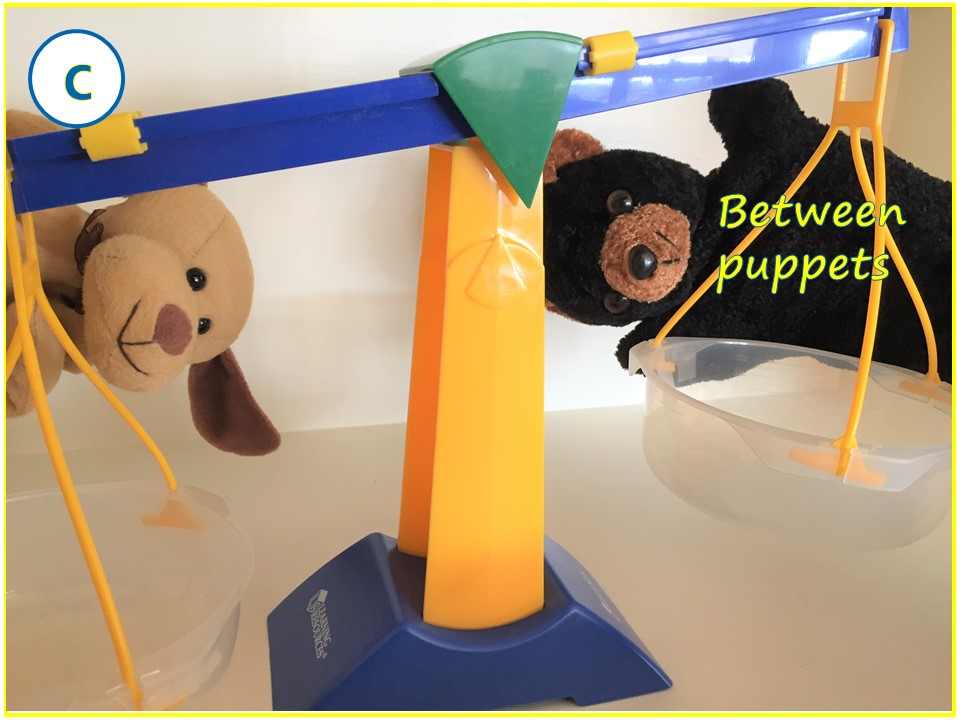
You can use the balance to demonstrate balanced conversation between two puppets.

In a similar manner, you can use the toy balance to demonstrate reciprocity in social interaction. You can use the balance to demonstrate such social skills essentials as taking turns, giving and receiving, and paying back favors. The following pictures demonstrate how to use the balance and what to say while you are teaching.
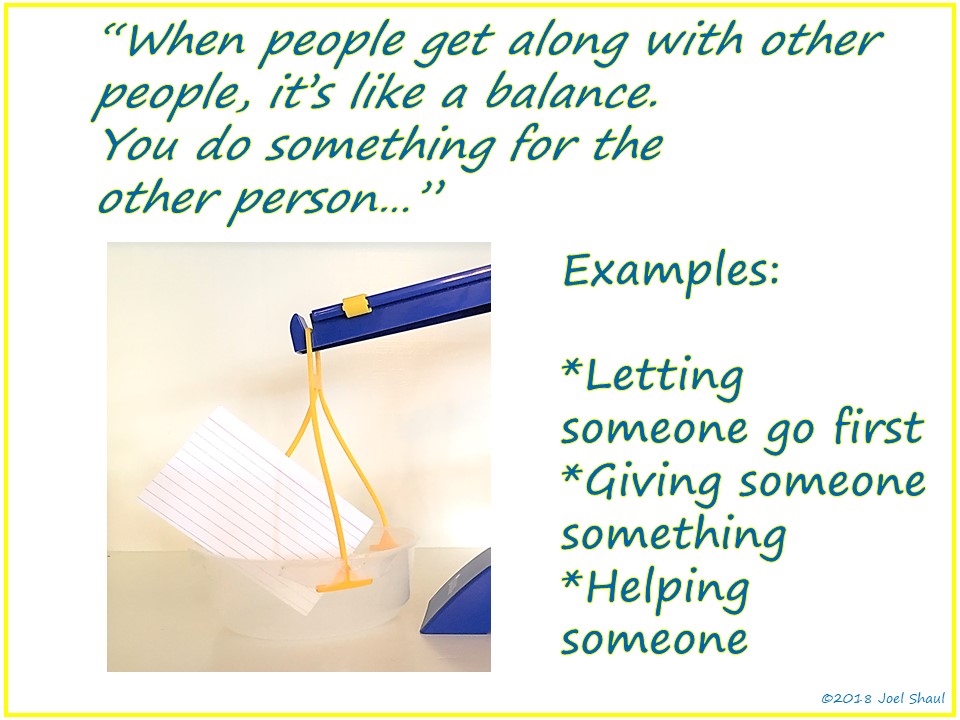
The other way to use the balance is to demonstrate reciprocity in social interactions.
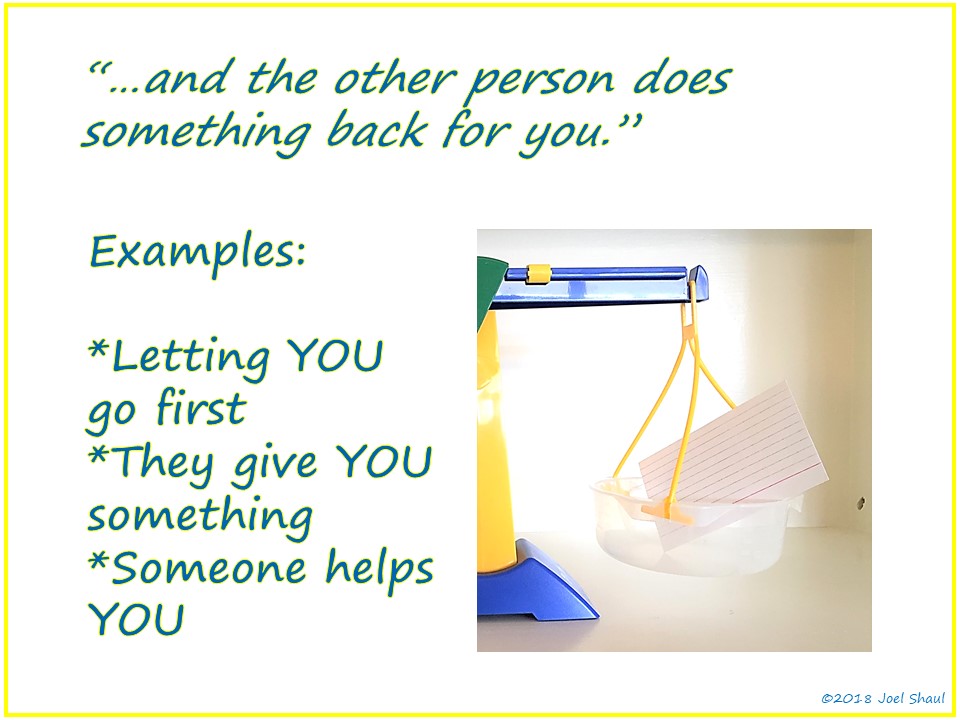
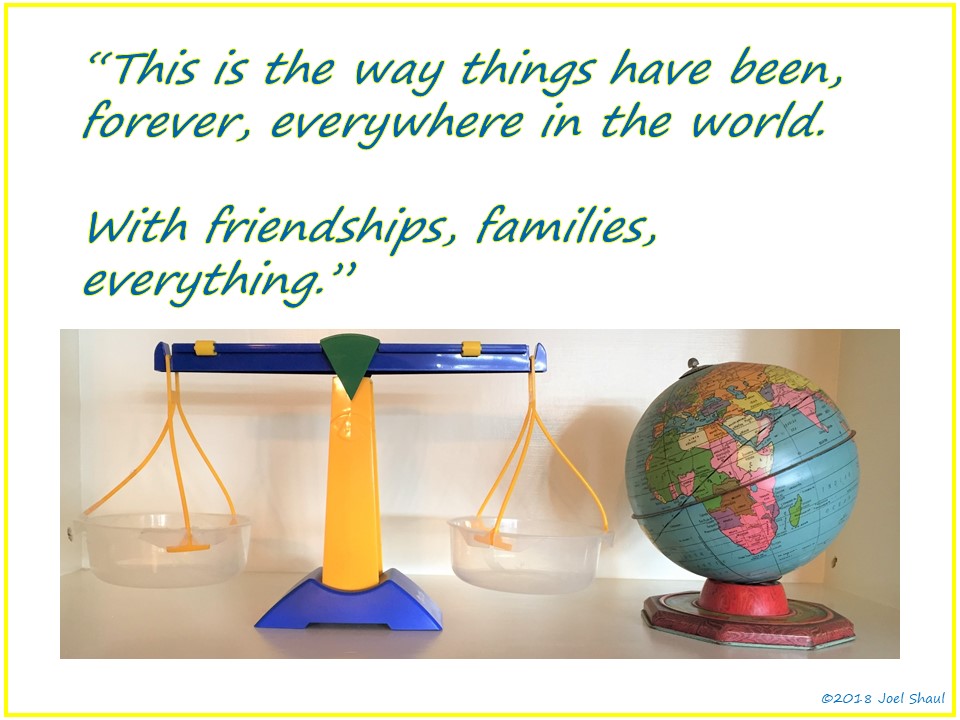
You say, "When people get along with other people, it's like a balance. You do something for a person, and then later that person does something for you.
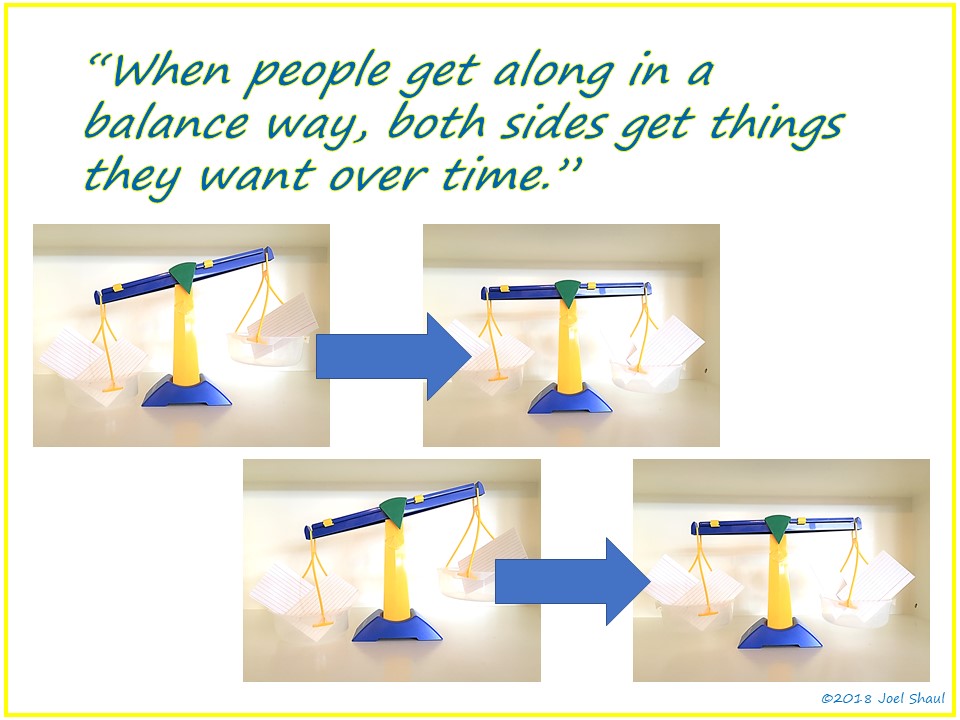
"When people get along in a balanced way, both sides get what they want over time."
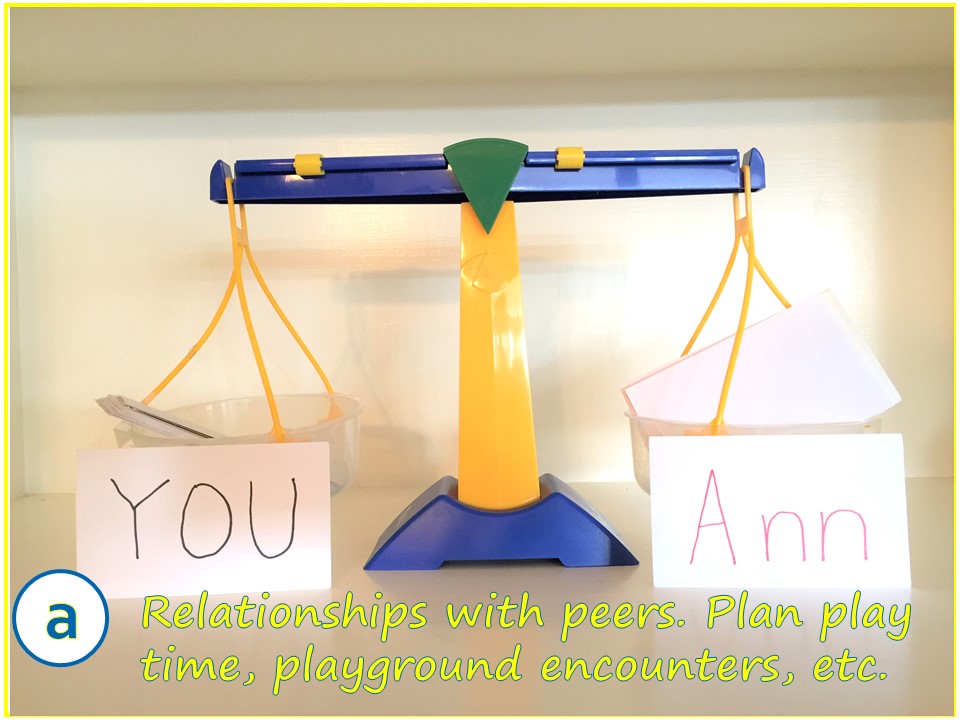
When demonstrating social interactions, you add cards to each side of the scale to show how people take turns getting what they want.
You can use a balance to demonstrate reciprocity in friendships.
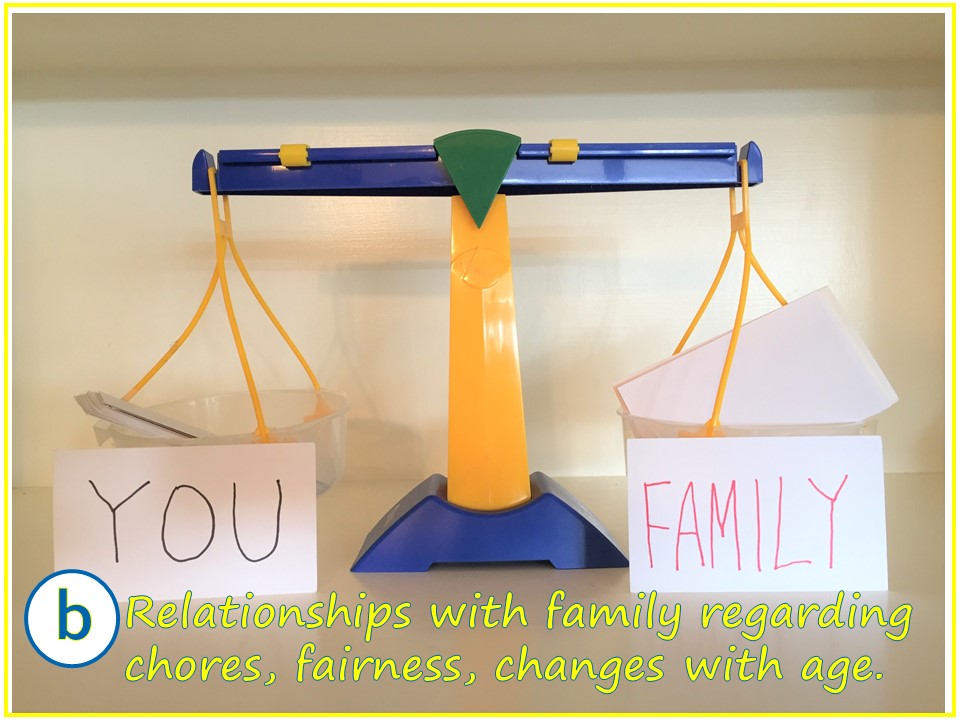
You can use a balance to demonstrate reciprocity in families.
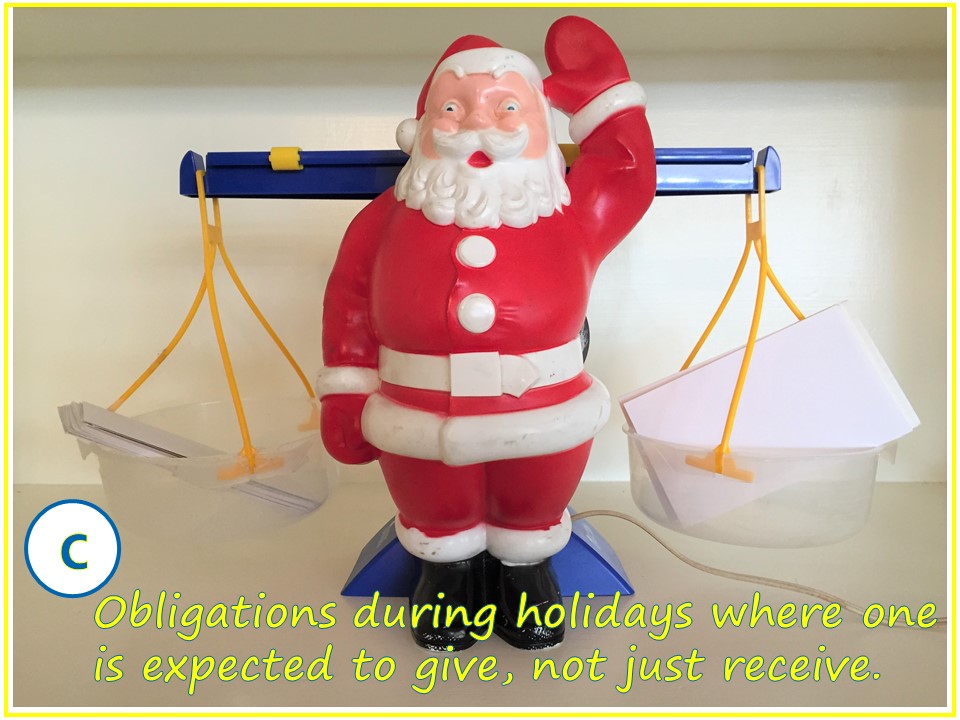
You can use a balance to demonstrate reciprocity during holidays like Christmas. Many older autistic children don't realize that they need to give family members gifts instead of just receiving gifts.

Here is another free conversation social skills resource for teaching reciprocity, but with more than two people present:

Pie Chart Prompt for Proportional Talking

Your comments on these resources are most welcome, and often helpful. Click HERE to send an email.
The Conversation Train Book